Irgendwo zwischen Planet Punk, Milchstraße Retro-Pop, Mikrokosmos New Wave und Hinterwelt Thüringen befindet sich das Universum MAMORÉ. Es sendet schrille Signale aus, wird Tag und Nacht von einer rosaroten Sonne beleuchtet. MAMORÉ ist ein Ort, an dem alles erlaubt ist: Zu feierlichen Synth-Melodien und schroffen Rockgitarren wird simultan ruppiger Pogo, romantischer Paartanz und Bowie-esker Hüftschwung praktiziert. Drama und Behaglichkeit, Anachronismus und Innovation, Herzschmerz und Augenzwinkern aggregieren hier zu einem blumigen Gefühlsgewirr. Im Zentrum des Treibens: Fünf in extravagante Outfits aus der Vintage-Kleiderkiste gewandete junge Männer, die hin und wieder selbst nicht so ganz fassen können, was um sie passiert.
Jetzt, im Dezember 2023, legen MAMORÉ endlich ihren langersehnten ersten, nach dem Bandnamen betitelten Langspieler vor. »MAMORÉ« ist eine wilde Experience, ein heißkaltes Wechselbad — hier tippelnd-euphorisch, konsonant und tanzbar, da abgründig-absurd, schnell und kalt. Was alle zehn Anspielstationen eint, ist ihre nonchalante Eingängigkeit: MAMORÉ haben Hits gemacht, die eigentlich gar keine sein wollen, sich keineswegs anbiedern und trotzdem im Ohr bleiben. In manchen Momenten erinnert ihr Album an die ersten Veröffentlichungen der Band Abwärts, hin und wieder scheinen die frühen Die Ärzte durchzuschimmern — und doch ist »MAMORÉ« in seiner Attitüde stets eigenwillig, modern und neu. Der in neuer Bandbesetzung re- ecordete, von hysterischen Klangmustern gespickte Opener »Voll im Visier« signalisiert direkt, wo die Reise hingeht: »MAMORÉ« piepst, knallt und explodiert fortwährend, klingt dabei voll und gravitätisch.
Im bittersüß-verträumten »Du fehlst« crashen harte Brüche in sanfte Schlager-Ästhetik, in »Ich Sehe Dich« treffen raue Gitarrenriffs auf NDW-typisches Synthie-Spiel. Die Neuauflagen der 2021 veröffentlichten Stücke »Meine Liebe Nicht« und »S.O.S« gehen der von seichtem Piano-Spiel eingeläuteten Dark-Wave-Schnulze »Pfeil Ins Herz« voraus. Die bereits erschienene Single »Wolke 7« baut in den Parts kitzelnde Spannung auf, um in Richtung Hook wie ein Vulkan auszubrechen — und auch die darauffolgende Punk-Hymne »Melancholie«, ein Feature mit NNDW-Sternchen Gwen Dolyn, schraubt sich in ihrer Dynamik von Sekunde zu Sekunde weiter hoch. Im Zuge vom hallig-darken, Gitarren-getragenen »Die Hatz« erreicht das Rabbit Hole »MAMORÉ« seinen tiefsten Winkel, bevor das abschließende »Keine Bewegung« dort anknüpft, wo die LP begonnen hat: Auf der klammen Tanzfläche einer Diskothek. »MAMORÉ« kreist inhaltlich stetig um das Thema Zweisamkeit — inmitten von Liebeskummer und Euphorie, gebrochenen Herzen und kochendem Blut, »Rennen gegen Einsamkeit«, Nervendoktor und Oktobertristesse liefert das Album ein geballtes ABC der Gefühlsausbrüche.
quête:send
Soliton maximizes the compact format by further illuminating lesser-traveled paths. Contemplation and exploration weave harmoniously through five mysterious tracks. Influenced by a wide range of styles and sounds, such as Japanese ambient, the muted dissonance of Pharoah Sanders, and the chilly dub of the Scape catalog, Soliton evokes visions of lonely night drives punctuated by bright moments of bliss. The Calque EP from January 2023 saw them pursuing the minimal electronic side of their work even further. The opening track, "Kottbusser Tor,” showcases a conspicuous absence of the processed guitars that characterize most of their work, and instead explores sequenced filters, tape delays and analog synth patterns for eight minutes. On "Ammosel", they dive directly into dubby soundscapes, with crackling electronics and deep basslines, while "Kiyosumi" and "Fade Into Air" pay a visit to more familiar ambient territory. A darker undercurrent pervades on this EP, but one that goes particularly well with the coldest of seasons and its frosty air. The duo, consisting of Jason Kolb (Michigan, US) and Jonas Munk (Denmark) started working together in 2006, sending each other tracks across the Atlantic, eventually resulting in a full-length release on Felte in 2012. What started out as a side project to their respective main projects (Auburn Lull and Manual) have slowly become the main activity for both artists, now with a total of four full-lengths under their belt. Their music has also evolved and matured over the years, reaching a level of perfection that’s only granted producers who've been in the game for decades. Billow Observatory have by now established themselves as purveyors of highly refined ambient music and the Soliton EP sees them elegantly blend new and old, electronic and organic, into a gently drifting, enveloping whole. “.. mind drenching sunrises, glittering constellations, and sailing clouds, richly furnishing the familiar sense of hovering over vast natural orders that you're also inside. – Pitchfork // “So the world it inhabits is essentially that one between states, simulating a quietly vibrant ecology of sub-aquatic bass rumbles, washed out expanses of mid-range swirl and keening top end whose elusive colours seem to fade and coruscate in the low light. Lovely
Serene, invoking imagery of darkness, sweeping soundscapes tear and twist at
the emotions. The latest album by THE ANSWER LIES IN THE BLACK VOID is a
work of magical beauty. The duo, a collaboration of Martina Horvath from avantgarde metal project Thy Catafalque and Jason Kohnen from Celestial Season,
The Lovecraft Sextet, Bong- Ra, ex- The Kilimanjaro Darkjazz Ensemble, have
followed up on their 2021 debut "Forlorn" with a haunting sophomore release that
is of exceptionally high quality.
The prevalent element here is doom, but there is so much more buried deep
within the dark vaults of this compelling record. The opening song "Ataraxia" is a
deep, richly layered song, with Horvath demonstrating her stunning vocals over
the complex creativity of Kohnen, the multi- instrumentalist who takes
responsibility for everything instrument- driven here. There are crushing riffs,
harrowing passages which send shivers down the spine, and all the time the
atmosphere builds. Tendrils of darkness curl around the throat on "To Kill The
Father", with Horvath's shimmering vocals duelling with the echoing lead guitar
work.
Telephone Explosion proudly presents the self-titled debut LP from Toronto’s UH HUH, out physically and digitally on April 14, 2023. The album features eight tracks of dub-damaged art rock which conjure a potent vision of spaced-out 1980s post-punks feeding their angular rhythms and bass-heavy grooves through layer upon layer of grime-spattered spring reverb.
There is a palpable sense of discovery and exploration throughout UH HUH’s 37 heady minutes. Elastic basslines and serpentine guitar phrases throb and glide, cutting through dubwise reverberations like hands moving through an opaque cloud of reefer smoke.
Formerly known as Teenanger, the reconfigured (and reinvigorated) group’s newfound sense of sonic identity is put on display the moment the door kicks open. The percolating spaciousness of opener “Somewhere Beyond” is followed by the cyclical grooves of “Redemption Pause.” Vocalists Christopher Swimmings and Melissa Ball each take respective turns at lead vocal duties, showcasing their contrasting yet complimentary styles.
“Babylon”, a slab of overcast, loping funk features both singers on the same track, alternating between Swimmings’ stoned syncopation and Ball’s saccharine melancholy. This juxtaposition leans against a backdrop of reverb-soaked drums, watery guitar chords and rippling trumpet.
The slinking, fractured grooves of “Rain (In The Afternoon)” and “Citrus Song” call to mind the deranged minimal dub-wave of Naffi or Vivien Goldman. Both songs feature lyrical content heavily inspired by the Florida swamplands, although the aural landscape on these tracks is decidedly more brutalist than Boca Raton. Two of the songs included here are reworkings of previously released Teenanger numbers. “Blinds Drawn” is reduced to its core elements of bottom-heavy rhythm, spliced guitar shanks and Swimmings’ murmured ruminations. “Good, You”, on the other hand, is completely re-imagined as a blissed-out melt of opiated bossa nova.
After countless hours of experimentation during the album’s recording sessions at Toronto’s Studio Z, the band decided to send their drum machines, snare drums and percussion through an obscure 1960’s Japanese Guyatone guitar amp with a notoriously ecstatic spring reverb sound. The result was immediately inspiring.
The dank, busted and clanking tones produced by the Guyatone evoke a muggy, humid atmosphere that mimics the photo on UH HUH’s cover. The process of re-amping is literally the means through which UH HUH found the sound of this record. UH HUH is a record that asks more questions than it does provide answers. This is searching music that requires that the listener lean into it, the more time you spend in between the beats, bars, notes contained within, the more vivid the picture becomes.
On "Hy!", industry newcomer A.L. Viktor combines experimental song structures, electro acoustics, and 4th world-infused sound design to create a unique blend of rhythm-driven electronics, psychedelic ambient, and archaic percussion jams.
Delicate melodies collide with primitive drum work outs - An audio version of a bull in a ceramics shop.
Written, recorded & produced in Berlin, Wedding in 2022, mastered by The Cologne Wizard,
recorded on Studer A80 Mastering Recorder
#40 ON ROLLING STONE'S 500 GREATEST ALBUMS OF ALL TIME: ANTICIPATES LATE 1960S TURBULENCE VIA PROPHETIC SONGS AND DARK THEMES
1/4" / 15 IPS analogue master to DSD 256 to analogue console to lathe
Any discussion about the finest psychedelic rock record ever recorded is incomplete if it doesn't grant consideration to Love's Forever Changes. Ranked by Rolling Stone as the 40th greatest album ever made, and named by Mojo the second-greatest psychedelic set in history, the effort is an internationally recognized seminal work of art. Transcending language and convention, its magnitude and magnificence need to be heard again and again. For here is an effort whose mind-boggling acoustic complexities and kaleidoscopic nuances are tailored for high-fidelity playback.
Nearly unlimited headroom, vast instrumental separation, transparent clarity, artifact-free atmospherics, and faithful balances appear out of jet-black backgrounds. Turn it up as loud as you want; the sole limitation will be your system's potential.
Commercially ignored upon release in November 1967, Forever Changes confronts the alienation, paranoia, violence, and strife that would soon plague the countercultural movement and send the Summer of Love into a tailspin. Apart from its lyrical themes and prescient malaise, the record's enduring nature equally owes to intertwined arrangements sewn together with Latin guitar-picked lines, finessed folk harmonies, mariachi-inspired horn charts, and subdued strings.
The seemingly opposing combination – ominous, dark reflections situated amidst lush, light melodic beds – affords Forever Changes a distinguished tension of claustrophobia and openness, dourness and ecstasy, ugliness and elegance enjoyed by no other record in the rock canon. Much of the contrast owes to leader Arthur Lee's mental state and pertinent observations. Lee, whose suppressed romanticism often surfaces even amidst the blackest shadows and most cynical moments, believed he would soon die, and hence channeled everything from lasting hopes to acid-addled decay to the chilling testimony of a Vietnam veteran in his narratives.
Alternatively sad and beautiful, the album-opening and flamenco-inspired "Alone Again Or" establishes the mood for what follows. Vocals overlap and soar; tempos rise and fall; surrealism trades places with reality.Forever Changes thrives both because of and in spite of a surfeit of labyrinthine chords and difficult notes that never repeat. Its ambitious construction almost forced the already fractured band to cede responsibilities to session musicians, which appear on two tracks. The quintet's resolve to not only complete the album, but to do so with such poignancy and curiosity, further enhances Forever Changes' standing.
No wonder that, in the twilight of his troubled career, Lee performed the record in its entirely during concerts met with overwhelming critical acclaim. It was, and will always be, a personal manifesto of timeless relevance and appeal.
Seven suites of deep and sprawling sonic meditations built around ‘call and response’ improv sessions between Randy Raine-Reusch and Michael Red.
Slow and tempered recordings of Asian flutes, African harps, temple gongs and a myriad of obscure instruments from Randy Raine-Reusch's deep collection mutate and ebb into swirling gossamers of tone. Sonic incantations stretched and magnified further by Red's Sends. An otherworldly play between light and shadow worlds; at times idyllic and light-filled, at times dark and eerie– all engrossing. Dream-reality reconciliations weave between the spectral world of Michael Red's sound processes and the direct physicality of Raine-Reusch's playing. The tension across the pieces builds between the live playing and processing techniques, dutifully revealing a growing familiarity with collective transcendence through sound (bigger than the sum of its parts). Real-time interactive dream music.
Initially realized over the course of a few days in Randy’s instrument museum in Vancouver BC December, 2014 'ERAS' is made up of processed, and sometimes multi tracked, improvisations between Randy and Michael. Through these sessions Randy would choose instruments he sensed possibilities within, and Michael then revealed and sculpted these possibilities. Both resonating, sensing sonic structures, environmental nuances, and further worlds in each other’s art, all within the moment. Being present for each other, they acted on instinct, trusting a first thought, trusting each other; committing, responding to that commitment, then mutating and letting go. Always moving forward, synthesizing and letting the living moment lead the way.
The recordings were left to distill and mature for many years before the composers felt it was ready. With minimal judicious edits and a very light dusting of FXs, both careful to preserve the direct and intuitive process that permeates the recording, ERAS now emerges.
Chunklet Industries is proud to announce a breakthrough in broadcasting technology. For the first time, the BBC working hand-in-hand with intergalactic audio pioneers Man…or Astro-Man? present to you seven volumes of their famed U.K. radio sessions.The band’s debut session in Maida Vale 3 was also the first time they stepped foot on English soil. It all started with Birdstuff sending a postcard to John Peel insisting that he not play the band's music and it led to December 1993, at the special request of the legendary, who became one the earliest, most visible and most vocal supporters of the band on English soil, five songs were recorded and three tracks are being released on this initial single.t to you seven volumes of their famed U.K. radio sessions.
Sparky Deathcap AKA Los Campesinos! multi-instrumentalist R N Taylor is the first to admit he’s an unlikely candidate for viral stardom. And yet, almost 15 years on from his final EP, Taylor’s alt-folk solo project is now getting a much-deserved reappraisal, entrancing a whole new generation of listeners. Championed by prominent Twitch streamer/YouTuber Wilbur Soot, his beautifully bruised pocket symphony ‘September’ has racked up over 36m streams on Spotify and soundtracked more than 750,000 creations on TikTok. Now, Los Campesinos!’s own indie imprint Heart Swells are delighted to release a newly mixed edition of its parent EP, Tear Jerky. Musically, you can trace the influence of Phil Elverum’s Microphones, of Magnolia Electric Co and Sufjan Stevens, and of Ys-era Joanna Newsom. From the beautifully lo-fi baroque-pop of ‘Glasgow Is A Punk Rock Town’ to ‘Send It To Oslo’s’ maximalist mix of analogue sounds, these ambitious yet intimate compositions prove the perfect foil for deeply autobiographical tales of heartbreak and recovery.
- On The Sunny Side Of The Ocean
- Special Rider Blues
- St Louis Blues
- How Green Was My Valley
- (Poor Boy) Long Way From Home
- The Death Of The Claptop Peacock
- Spanish Two Step
- In Christ There Is No East Or West
- Steam Boat Gwine Round The Bend
- Sligo River Blues
- Poor Boy
- When The Springtime Comes Again
- On The Sunny Side Of The Ocean
David Tattersall, the Wave Pictures guitarist and frontman releases a solo album of interpretations of John Fahey tunes, recorded live in the studio. "I have been a fan of John Fahey's music since I was very young; it has always been with me and I can't remember a time when I wasn't affected by it. It is weird music, and very good. Of course, Fahey is an important cult figure in the history of music: as the first man to find a language for steel string guitar that can stand proudly alongside the established tradition of nylon string classical guitar; as one of many men who rediscovered obscure old blues musicians and recorded them for a new generation in the 1960s; as one uniquely able to reconcile 20th century avant-garde music with folk tradition; as an early indie-label DIY pioneer. For me personally, Fahey went beyond technique, and to some extent beyond historical or intellectual justifications for his work. He explored his emotions through his instrument of choice, and in so doing made the case for the guitar as the ultimate conduit for emotional expression. While there are many imitators who try to play ''like Fahey'', I avoided using his fingerpicking style or sense of rhythm, and tried instead to use his music to explore my own emotions, my own dreams and memories. I was more interested in the lyrical and expressive aspects of Fahey's music than in the techniques of it. I tried to find myself within his compositions and without composing anything I feel that I have managed to make a David Tattersall record that says as much about me as any of the many albums that I have written. John Fahey's beautiful discography shows that the guitar can carry as much mystery and soul as the human voice, and simply put, I wanted in on a little of this action. This is my second all-instrumental solo acoustic album, and where this differs from my first attempt, Little Martha, is that here I improvised freely. I used Fahey's originals only as guides. I'm not sure what I was looking for, perhaps something beyond explanation, but I tried to be as free as possible, and I am delighted by the spontaneous results. Hopefully, they will make the listener feel happy and dreamy, just like the effect that Fahey's many albums have on me. One of the most important things that Fahey ever said was his advice to guitarists to try to feel the emotions that each chord they play on a guitar brings forth. He is telling guitarists to not only play the guitar, but to let the guitar play them. I did my best to follow this advice. I hope you enjoy listening to the album, that it brings you some dreamy moments, and that it sends you back to happily explore the originals. I had a great time recording it. Naturally, I can't put the experience adequately into words but that's the whole point. I think Fahey was a genius of the kind that creates a whole genre single-handedly. There could be thousands, millions, of reinterpretations of his compositions. In fact, there probably already are. And long may this continue. All tracks were recorded live with no tampering."
- A1: Godzilla-1.0 Fear
- A2: Godzilla-1.0 Portent
- A3: Godzilla-1.0 Confusion
- A4: Godzilla-1.0 Godzilla Suite
- B1: Godzilla-1.0 Divine
- B2: Godzilla-1.0 Elegy
- B3: Godzilla-1.0 Mission
- B4: Godzilla-1.0 Hope
- B5: Godzilla-1.0 Honor
- B6: Godzilla-1.0 Pride
- C1: Godzilla-1.0 Pain
- C2: Godzilla-1.0 Resolution
- C3: Godzilla-1.0 Godzilla Suite
- D1: Godzilla-1.0 Unscathed
- D2: Godzilla-1.0 Last
- D3: Godzilla-1.0 Pray
- D4: Godzilla-1.0 Godzilla Suite
Seven years after Shin Godzilla, the worst "despair" in history strikes.
Director Takashi Yamazaki's 70th anniversary film.
Since its first appearance in 1954, the monster "Godzilla" has fascinated and shocked not only Japan but the world. Godzilla-1.0" (Godzilla minus one)
marks the 70th anniversary of Godzilla, the 30th live-action Godzilla produced in Japan, and the first Godzilla produced in "2025". The film is directed, written,
and VFX directed by Takashi Yamazaki, who professes to be a Godzilla fan himself. Ryunosuke Kamiki plays the lead role. The heroine is played by Minami Hamabe.
The film also features a cast of talented actors, including Hiroki Yamada, Takataka Aoki, Hidetaka Yoshioka, Sakura Ando, and Kuranosuke Sasaki,
all of whom are ready to take on Godzilla. The music is composed by Naoki Sato, who has composed music for many of Yamazaki's films, including "Always: Sunset on Third Street,"
"Destiny: The Kamakura Story," and "Archimedes' War. The overwhelmingly powerful visuals and music will send viewers into a whirlpool of excitement.
- A1: Movimento Da Cidade 02 27
- A2: Meus Guardados 03 02
- A3: Batuque De Índio 02 21
- A4: Adão Pecou 03 03
- A5: Mensagem Ao Divino 02 14
- A6: Pedido A Padre Cicero 02 58
- A7: Pedida A São Jorge 02 33
- B1: Sinhá Olímpia 02 14
- B2: Baião Macumba 02 27
- B3: O Criador 02 30
- B4: Evolução 02 48
- B5: Garganta De Cera 02 30
- B6: Visite O Terreiro 02 31
- B7: Bate Malva 02 17
- B8: Nêgo São 02 10
"Der aus Belém do Para im Norden des Landes stammende Ary Lobo war bereit, seinen Wahlkampf im Süden des Landes zu beginnen und machte sich im Oktober 1955 auf den Weg nach Rio de Janeiro. Dort stieß er auf die üblichen Vorurteile des Südens gegenüber Sängern aus dem Norden, und erst nachdem er Gadé, einen angesehenen Pianisten, kennen gelernt hatte, konnte er sich ein Vorsingen bei Rádio Mauá sichern. Doch diese Chance hätte sich beinahe in eine Katastrophe verwandelt, da er in einem so schwachen Zustand zu dieser Sitzung erschien, dass er nicht auftreten konnte. Die unzureichende und unregelmäßige Ernährung hatte seine Atmung beeinträchtigt, so dass es unmöglich war, seiner Stimme die nötige Kraft zu verleihen. Glücklicherweise wurde das Vorsingen verschoben, und bei seinem zweiten Versuch konnte er sich einen Fünfmonatsvertrag mit dem Sender sichern, wo er als Samba-Sänger bekannt wurde. Als sein Ruf wuchs, wurde er bei RCA unter Vertrag genommen im Juni 1956." Die Musikszene in Rio wurde auf den Newcomer aufmerksam, der die Persönlichkeit eines nordöstlichen Sängers mit tiefen Wurzeln im afro-brasilianischen Erbe pflegte. Er begann das neue Jahrzehnt mit dem Album "Aqui mora o ritmo" (Hier lebt der Rhythmus), das 1960 veröffentlicht wurde und von vielen als sein bestes Werk bezeichnet wird. Wie so viele Genres erlebte auch der Forró seine Blütezeit, aber Ende der 1960er Jahre begann seine Popularität zu schwinden, und Ary Lobo war gezwungen, auf der Suche nach Arbeitsmöglichkeiten von einer Stadt in die andere zu ziehen. Schließlich kam er nach Fortaleza, wo er bis zu seinem Tod im Jahr 1980 lebte. Unter den Sängern und Songschreibern, die in den 1950er Jahren aus Pará hervorgingen, erlangte Ary Lobo einen für seine Zeit einzigartigen nationalen Ruhm.
Orphax & PONI (person of no importance) is a collaboration between the two Dutch brothers, Sietse (Orphax) and Tjeerd (PONI) van Erve. Since their early years they share a broad interest in music, fed mostly from their fathers’ record collection, ranging from early blues to Pink Floyd or Beethoven. But also listening to Belgian radio channel Studio Brussels (which during the late 80s and early 90s was a common listening close to the borders between The Netherlands and Belgium), and the late night Dutch radio inspired them in exploring the rough edges of underground music.
An exploration that gave them a common interest in indie and noise rock, but soon enough both followed their own path in music. Tjeerd moving more into underground guitar music, whilst Sietse developed a wider interest in (experimental) electronic and contemporary music. Both as listeners, but also exploring their own interests as musicians.
Now many years later these musical paths cross again in this album Inheritance (with a slight imagination, a translation of their last name van Erve). An album where Tjeerd brings in his dark and noisy lo-fi guitar songs and Sietse brings in his drones and electro-acoustic composition styles.
The album opens with its longest track, “As Received”. This combination results in a slow developing drone, with the intensity and tension of a well build-up post-rock track, that slowly unfolds Tjeerd his guitar layers and vocals. The title of the song refers to one of the PONI projects, where Tjeerd would send rough recordings to befriended musicians who than would rework those recordings without any restrictions which then would be released side by side with the original rough recordings. A project which actually sparked the idea of this collaboration (and that can still be listened to on PONI’s bandcamp-page).
On the flip side of the record, three shorter works give more room for regular song structures. In “Sunburns” this results in slowcore with subdued vocals, melancholic guitars and nasty synth and organ drones. When Tjeerd wrote the basis for the song, he actually had been listening to a lot of Codeine and Bedhead. One does not need much fantasy to recognize the influences of these bands.
“The Tears Are Necessary” is build up around various broken up piano tracks accompanied by moody drones to develop a fragile song.
The album closes with “Lockdown”, opening with silence as a moment of contemplation after the previous work but then quickly develops in a playful song where improvised play on piano, guitar and modular synthesizer create a lo-fi gem that clearly shows that both brothers still haven’t lost their love for Sentridoh or Guided By Voices.
All together resulting in an album that is an ode to the love of music, experiment, and creativity and a celebration of brotherhood.
NOTON IS PLEASED TO RELEASE RAY COLLECTOR - A LIMITED EDITION VINYL FEATURING RECORDINGS SOURCED FROM TAPES PRODUCED BY CARSTEN NICOLAI' FOR HIS 2023 SOLO EXHIBITION STRAHLEN/RAGGI AT FONDAZIONE MODENA ARTI VISIVE.
IN FEBRUARY 2022, CARSTEN NICOLAI DISPATCHED TEN PARCELS FROM BERLIN TO VARIOUS DESTINATIONS. EACH PACKAGE CONTAINED A BLANK MAGNETIC TAPE CASSETTE, AN ILFORD DELTA 3200 ISO 1000 BLACK-AND-WHITE FILM, AND A KODAK ISO 800 COLOR NEGATIVE FILM. ALL PARCELS WERE ADDRESSED TO THE SAME RECIPIENT, MR. NEMO, THE UNFORGETTABLE CAPTAIN OF THE SUBMARINE NAUTILUS IN TWENTY THOUSAND LEAGUES UNDER THE SEA. THE IDEA WAS FOR THE RECIPIENTS TO RETURN THE PARCELS TO THE SENDER. EACH PACKAGE HELD MAGNETIC TAPES AND PHOTOSENSITIVE FILMS THAT WOULD BE EXPOSED TO ELECTROMAGNETIC WAVES AND RADIATION DURING THEIR JOURNEY. UPON THEIR RETURN TO THE SENDER, THE LATENT IMPRESSIONS WERE DEVELOPED, DIGITIZED, AND THUS MADE BOTH VISIBLE AND AUDIBLE.
Temple, Bassey, MacLaine and now, Hurt; in a world of Shirleys, the name Sophia Ruby Katz has chosen for her music is perhaps prophetic as it captures her stunningly emotive vocal approach. And whilst Shirley Hurt might be the perfect nom de plume for the creative Toronto-based artist, it’s her self-titled debut album which positions her as protagonist of her own universe.
Traversing sonic landscapes, Shirley Hurt’s vocals ebb and flow like lyrical Ley lines tracking the contours of her own well-travelled map. By the age of 18, Hurt had travelled extensively, having lived in upwards of 20 different apartments and houses, as a result never really feeling “at home” anywhere. At this age was when Hurt found herself in New York, dipping her toes into various scenes and musical realms. The first and only place she ever felt at home, and a partial home-base for her, she travelled between Toronto and New York until the age of 26.When the project she was working on in New York reached a dead-end she returned West, moving in with musicians Harrison Forman (Hieronymus Harry, Zones) and Patrick Lefler (Roy, Possum). Being surrounded by their improvising at all hours, a new approach emerged. “Harrison is a virtuosic guitar player, and I hadn't picked up a guitar in any serious way since I was 16,” she says, “by osmosis I started playing again for fun.” Without agenda, the process grew organically from there.
Hurt and Forman decided to travel across the US and Canada in a trailer for half a year, with the entire album written in the final months of their trip. Hurt had been writing loose ideas here and there but felt blocked creatively. When the pair reached Berkley, they wound up house-sitting for a tuned-in friend who recommended she pray, in a very direct way, to remove the block. “I took her advice and to my surprise it worked. The album was conceptualized and finished within a couple of months.” Shapeshifting in tone and phrasing, Hurt’s music alchemizes the furthest corners of experimental indie folk, pop, and country into a singular sound with elegant unpredictability.
Whilst Shirley Hurt’s lyrical and structural ideas may have emerged on the road, the album was self-produced and recorded at Joseph Shabason (The War on Drugs)’s Aytche studio in Toronto’s West End. It was engineered by Nathan Vanderwielen and Chris Shannon (Bart), and Hurt enlisted collaborators Jason Bhattacharya, Nick Dourado, Patrick Lefler, and Harrison Forman to hone her vision. “I wasn’t sure what was going to happen with the songs until we returned to Toronto,” she recalls. “Joseph and I had been talking about working together after sending across some demos and Jason happened to recommend his studio at the exact same time, so everything came together naturally at that point.”
Whilst her most recent adventures may have seen Shirley Hurt bound for Texas as an official SXSW artist (hand-picked by Gorilla Vs Bear to perform at their own showcase), she currently resides in her native Canada, more specifically rural Ontario, close to friends and family, and is already working on her second album. The ties to lineage are interwoven in the fabric of the music. Hurt’s mother, artist Leala Hewak, instilled a lust for life and innate value of creativity in her from a young age as she explored the role of gallery owner, vintage jewellery show host, mid-century modern furniture expert, real estate agent, painter. Hurt’s father, a civil litigation lawyer and new-wave obsessed music lover with an extensive vinyl collection, introduced Hurt to a wide-range of artists at a young age such as Nina Hagen, Laurie Anderson, Tom Tom Club, and endless others.
In her video for ‘Problem Child’ Hurt’s grandmother walks her through a generationally revered pie-making process. One would be tempted to hear this, and other songs, as autobiographical. Yet, Hurt’s lyrics are rarely pulled from her relationships or personal history––at least not consciously. Rather, they arise from somewhere less tangible or defined. “Lyrics tend to come to me when I am doing non-musical things - washing dishes, brushing my dogs, walking to the grocery store. I have a lot of voice memos on my phone and half-filled notebooks and when I hear something, I have to stop what I'm doing to get the idea down. Usually it’s bits and pieces. It's rare a full song comes to me in one go, but it's great when they do, and those are often my favourites.”
Carving out a space of her own in an all-encompassing universe, Shirley Hurt is the introduction to a long artistic story, and if the journey so far is anything to go by, it will be stippled with evermore unpredictable chapters.
- 01: Eeoo (Feat. Tam Bor)
- 02: Shhh (Feat. Simone Aubert)
- 03: Bravo (Feat. Kevin Shea)
- 04: Amen (Feat. Bernard Trontin)
- 05: Ciao (Feat. Ema Matis)
- 06: Sdeng (Feat. Julian Sartorius)
- 07: Boo (Feat. Hugo Panzer)
- 08: Mhh (Feat. Simon Berz)
- 09: Bzzz (Feat. Beatrice Graf)
- 10: Pouf (Feat. Domi Chansorn)
- 11: Wow (Feat. Cosmic Neman)
Drum To Death is a collection of 11 experiments by Peter Kernel and their favourite drummers. Throughout 2020-2023 Peter Kernel invited eleven of their most esteemed drummers to send them rhythms with which they composed these eleven tracks. Each song was written and dedicated to the inherent drummer as an ode of appreciation to the beat creator. These eleven songs come together as a unique collection of an odd collaboration based on appreciation for different styles and people, a microworld made of different feelings, patterns, colours, intentions and attitudes. The album features collaborations with Bernard Trontin (The Young Gods), Cosmic Neman (Zombie Zombie), Beatrice Graf, Domi Chansorn, Ema Matis, Tam Bor, Hugo Panzer, Julian Sartorius, Kevin Shea (Storm & Stress, Lydia Lunch), Simon Berz, Simone Aubert (Hyperculte, Massicot).
With Observatories, we see longtime Dauw-collaboraters Ian Hawgood (Home Normal) and Craig Tattersall (the humble bee) joining forces. If their debut on IIKKI was still rooted in a dialog with photographical work, the duo now offers a more autonomous work. Both being experts in the use of tape in their productions, it’s no surprise that sending loops back and forth was the starting point of this fourth album. On »autumn diffusion – winter seclusion’« we hear 2 longform pieces consisting of several tape-collages in which harmonium, voice and electronics weave together and form structures on which crackling piano sounds can do their magic. A new episode in their growing catalog and one which truly displays the strength of their collaboration.
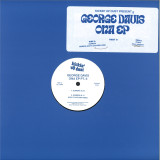
George Davis drops part 2 of his ‘Ona’ EP: heavenly house featuring a remix by the legendary Roy Davis Jr.
kickin’ up dust drops part 2 of the ‘Ona’ EP by George Davis. A jazzy bassline, snazzy piano keys and a rhythmical vocal send hips swinging and shoulders shaking in ‘Gomera’, a track which Chicagoan legend Roy Davis Jr. then remixes with a ‘Chitown Vibe’. Squelchy synths and organic percussion enter his version with a stylish swagger, maintaining the keys while moving the vocals to the back of the mix. Next up, ‘Bumpa’ is built for the dancefloor, an infectious groove forming the base for whimsical flute-like melodies, before ‘Soul Journey’ closes out the record with a gorgeous slow-burning vision of sunset shores and distant views.
Following on from his first ‘Ona’ EP which dropped on kickin’ up dust in March, and which won the support of artists like Honey Dijon, Nightmares On Wax, DJ Sneak and many more, George Davis now drops part two in the series. The german label, which initially started in 2021 as a party in the techno capital of Berlin, first turned heads hosting artists with a funkier edge to them such as Maurice Fulton, DJ Deep, and Louie Vega.
In a recent interview, the California artist Jim Haynes was asked to name his top five noise albums. In quick fashion, he listed off Kill The King, Send, Desnos, Persona, and Carcinosi. Since then, he's equivocated on which albums to choose, but the artists behind such works remain as the adjacent signposts and landmarks to his own constructions of industrial noise. How those records connect to the output from Haynes is found in their unique combination of smoldering dynamism and psychological inquest. For over twenty five years, Haynes has been an autodidactic clinician into the processes of corrosion, decay, and rust, turning his attention away from visual practices and more to the metaphoric crucible of noise and sound. By now, it seems like a cliche that the pandemic changed everything; but since that viral encroachment, there is a noticeable shift in Haynes' work post 2020. It's more aggressive and yet more controlled: a rarification and telescoping of the research into decay for more potent noise and more potent metaphor.
The tools for Haynes' work remain limited: motors, electronics, shortwave radio, found objects, all applied with considerable pressure. Compositionally, Inauspicious is a very rough moire pattern from overlapping elliptical structures that can negate and obfuscate just as easily as they can compound and aggregate. The album surges and collapses upon the two twenty minute chunks of controlled noise that follow an internal logic that snakes from brooding power drones, spectral radio transmission, and an aktionist demolition cast upon metal, glass, and unfortunate wooden objects. Rupture and release. Purge and pulse.