"Life & Death has been a bucketlist label for me since day one. I've always been inspired by the way DJ Tennis approaches music and the whole philosophy around the label. What always stood out to me is the variety in the releases. One record can be deep and emotional, the next one raw and club-focused, but it still feels like it belongs to the same world. That balance is something I am always chasing in my music. Next to this: in a world that is focussed more and more on short term wins and commercial performance, i really can tell that Tennis still values the art and process of making music the most, which is something i really appreciate"
I remember hearing him play at Circoloco in Ibiza and later in the Loft in Amsterdam and thinking: 'fuck, I should've send him the tune I made last week.' When I came back home, I immediately put together a pack of tracks to send to him. Two were released as part of the Fabric release, and 4 of them are on this EP.
For me, this release is a next step in my career, and I'm happy and proud to be part of a label that is both legendary and super relevant in 2026."
Buscar:send
“Bâzsâzi” sees the group rearranging their oeuvre for the dancefloor, starting with a raw excerpt of Zolfonoon, taken from their first ever show in August 2023, before they had a name. Caleb dons his Wavemap alias to rework it into a tunnelling, heads-down groover, in the lineage of Mike Dehnert and Luke Hess. Raf Reza (as Raf Rizzla) sends Parisa shapeshifting through the hardcore continuum with a nod to UK Drill, in continuation from his recent debut Ekbar Telephone Explosion. Jason (as Neonlichter) turns Delkash into a jungle montage – all mutant bass and vocal tessellations.
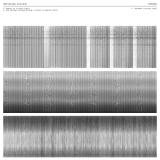
Faitiche welcomes a new artist: Christina Kubisch belongs to the first generation of sound artists. Her practice ranges from performances, concerts, to works with video and visual art, but she is best known for her sound installations and electro-acoustic compositions.
TUNING brings together three pieces by Christina Kubisch from different periods of her oeuvre. What they have in common is the way they transform sound phenomena originally considered “non-music” into compositions.
Jan Jelinek: Gaming in Silence (2024) is the most recent work on this compilation. It’s a collage of electromagnetic waves, voice, and abstract sound textures. How did this combination come about?
Christina Kubisch: Gaming was commissioned as a fixed-media composition for the Sound Dome at ZKM Karlsruhe. Since Resonances: The Electromagnetic Bodies Project (2005), I’ve been making recordings in the old and new server rooms at the ZKM and in their permanent collection of historical computer games. Computer games like Asteroids (Atari, 1979) and Poly-Play (VEB Polytechnik, 1986) have specially generated analogue electromagnetic waves that interest me in particular on account of their density, rhythms and textures. I originally studied painting and to me the work of composition often feels like painting an abstract picture. I alter my source material as little as possible, layering and overlapping until a distinctive sound space emerges. In recent pieces, I sometimes combine magnetic waves with field recordings or live instruments. In Gaming it’s my recording of a Chinese song about silence.
JJ: Two persons walking through a street in Madrid (2004) is a recording from your Electrical Walks series. Here we should give a brief explanation of one of your best known works: participants in an Electrical Walk move through public spaces wearing prepared headphones that allow them to receive electromagnetic waves from their surroundings – for example from security gates, ATMs or neon signs. They discover a situation that normally is inaudible to the human ear and they can actively shape it by choreographing their movements. I really admire this piece, not least because there’s no clear dividing line between participants and artist. What exactly do we hear in Two persons walking through a street in Madrid (2004)?
CK: With this early work, I wanted to understand what is heard by people participating in an Electrical Walk in the same place but moving in different ways. The Spanish composer Miguel Alvarez-Fernàndez and I set off from opposite ends of a major shopping street in Madrid, met briefly in the middle, and then continued to the end. We both recorded our walks and I then layered them over one another. You might call it a work of electromagnetic conceptualism.
JJ: Diapason (2009 version) is an installation that plays a composition based on sounds from fifteen tuning forks. This setting is audible in the recording: there’s no dramatic arc, no beginning or end – instead, it recalls a piece of aleatoric music focussing on the decay phase. How did you come to make this work and could you tell us something about your compositional method?
CK: Diapason is part of a series of three pieces that deal with “non-instruments” or instruments that no longer exist: electrical mine bells used to send signals to the workers underground; a historical glass harmonica originally used for medicinal purposes; and tuning forks that were used by doctors to test people’s hearing. All of these methods are no longer in use. The sound of the tuning forks, audible only if held close to the ear, was recorded at the electronic studio at Berlin’s Technical University in such a way that even their decay remained audible. The frequencies range between 64 and 2048 Hertz and they can be adjusted at micro-intervals using small movable weights. The sequence and the duration of the pauses are dictated by chance and were not defined in advance. The 2009 version was created for an installation in the historic Holy Cross Church (Korskirken) in Bergen. Visitors could enter and leave the space at any time, deciding for themselves where and for how long they wished to listen to the sounds played back over an array of small loudspeakers placed on the floor of the apse.
Credits:
Gaming in Silence: commission of the ZKM/Hertzlab, Karlsruhe 2023
elektronic sound processing: Tom Thiel
sound engineering and mixing: Eckehard Güther
Diapason: produced at Elektronisches Studio of TU Berlin
rearrangement: Eckehard Güther
Christina Kubisch, published by Edition Christina Kubisch / Random Musick Publishing
image front: Transitionen 2021 by C. Kubisch, sonagrams of electronic waves (courtesy: Galerie Mazzoli Berlin)
image back: Diapason Tuning Fork, property of Folkmar Hein, Photo: Archiv Christina Kubisch
design by Tim Tetzner
mastered by Giuseppe Ielasi
Thanks to Miguel Álvarez-Fernández, Folkmar Hein, Dominik Kautz and Mario Mazzoli
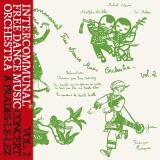
Concert at Prades-le-Lez marks the origins of the Intercommunal Free Dance Music Orchestra. In 1974, François Tusques and his companions (Michel Marre, Jo Maka, Adolf Winkler and Guem), in the spirit of Don Cherry or Chris McGregor, playfully dismantle all borders and all styles of creative music.
On this second volume, the Intercommunal builds unprecedented soundscapes around a song of revolt, a dance tune, or a burst of dissonance. The journey is unforgettable, no question about it. On repeat listening, it even becomes… lunar!
“The music that we make is primarily meant to be listened to live,” warned a leaflet from the Intercommunal Free Dance Music Orchestra. This is precisely why the (restored!) reissue of the two volumes of Concert at Prades-le-Lez, recorded on January 25 and 26, 1974 by François Tusques and his comrades, is such an important event.
In 1971, after recording a series of albums that would leave a lasting mark on French jazz (Free Jazz, of course, with Michel Portal, François Jeanneau, Bernard Vitet, Beb Guérin and Charles Saudrais, but also Le Nouveau Jazz with Barney Wilen, or the solo Piano Dazibao), François Tusques founded the Intercommunal—a grouping whose very name called for the fraternization of the various communities making up the country: Our music will help, we hope, to resolve the contradictions that exist between workers be longing to different communities, by breaking down various forms of national chauvinism, and more particularly the chauvinism of certain French people toward the cultures of Third World countries… Long live the friendship between the peoples of the whole world!
Among the great records made by the Intercommunal Free Dance Music Orchestra, the two volumes of Concert at Prades-le-Lez come first, before L’Inter Communal, Vol. 4, Le Musichien, and Après la marée noire (four titles already reissued by Souffle Continu). François Tusques and his companions (Michel Marre and Jo Maka on saxophones, Adolf Winkler on trombone, and Guem on percussion) performed on January 25 and 26, 1974 at the Moulin de Prades-le-Lez, a few kilometers from Montpellier. It was thus in the southern region of Occitanie that the first echoes of this musical vision of a borderless brotherhood were recorded.
“We’re not among the Colonels,” the Intercommunal reassures us right away, performing a stride piano tune carried by African winds that the audience cannot resist for long. The energy is already striking and it never lets up throughout these two recordings, from start to finish: jazz, blues, traditional music, minimalism, even funk… The musicians of the Intercommunal have heard a lot of great music and now delight in reinventing it by mixing it all together.
“We want the song form to take its place as a weapon in the struggle against capitalist exploitation and all those who oppress us morally and materially,” declared an Intercommunal leaflet, quoting Jean-Baptiste Clément, author of the lyrics to “Le Temps des cerises.” The struggle was therefore serious—but it did not prevent François Tusques and his group from waging it in a festive spirit: each piece on Concert at Prades-le- Lez sends out a call for love and fraternity. Fifty years later, the message remains as relevant as ever—and once again, it is François Tusques who makes it heard.
- On N'est Pas Chez Les Colonels
- Intercommunal Blues
- Mazir
- Kan-Ha-Diskan - We Shall Over Come
- African Rythm-N-Logy
2[23,95 €]
Concert at Prades-le-Lez marks the origins of the Intercommunal Free Dance Music Orchestra. In 1974, François Tusques and his companions (Michel Marre, Jo Maka, Adolf Winkler and Guem), in the spirit of Don Cherry or Chris McGregor, playfully dismantle all borders and all styles of creative music.
On this first volume, the Intercommunal takes its audience from New Orleans to Brittany and on to North Africa. The journey was bold, without a doubt—and its memory remains unforgettable.
“The music that we make is primarily meant to be listened to live,” warned a leaflet from the Intercommunal Free Dance Music Orchestra. This is precisely why the (restored!) reissue of the two volumes of Concert at Prades-le-Lez, recorded on January 25 and 26, 1974 by François Tusques and his comrades, is such an important event.
In 1971, after recording a series of albums that would leave a lasting mark on French jazz (Free Jazz, of course, with Michel Portal, François Jeanneau, Bernard Vitet, Beb Guérin and Charles Saudrais, but also Le Nouveau Jazz with Barney Wilen, or the solo Piano Dazibao), François Tusques founded the Intercommunal—a grouping whose very name called for the fraternization of the various communities making up the country: Our music will help, we hope, to resolve the contradictions that exist between workers be longing to different communities, by breaking down various forms of national chauvinism, and more particularly the chauvinism of certain French people toward the cultures of Third World countries… Long live the friendship between the peoples of the whole world!
Among the great records made by the Intercommunal Free Dance Music Orchestra, the two volumes of Concert at Prades-le-Lez come first, before L’Inter Communal, Vol. 4, Le Musichien, and Après la marée noire (four titles already reissued by Souffle Continu). François Tusques and his companions (Michel Marre and Jo Maka on saxophones, Adolf Winkler on trombone, and Guem on percussion) performed on January 25 and 26, 1974 at the Moulin de Prades-le-Lez, a few kilometers from Montpellier. It was thus in the southern region of Occitanie that the first echoes of this musical vision of a borderless brotherhood were recorded.
“We’re not among the Colonels,” the Intercommunal reassures us right away, performing a stride piano tune carried by African winds that the audience cannot resist for long. The energy is already striking and it never lets up throughout these two recordings, from start to finish: jazz, blues, traditional music, minimalism, even funk… The musicians of the Intercommunal have heard a lot of great music and now delight in reinventing it by mixing it all together.
“We want the song form to take its place as a weapon in the struggle against capitalist exploitation and all those who oppress us morally and materially,” declared an Intercommunal leaflet, quoting Jean-Baptiste Clément, author of the lyrics to “Le Temps des cerises.” The struggle was therefore serious—but it did not prevent François Tusques and his group from waging it in a festive spirit: each piece on Concert at Prades-le- Lez sends out a call for love and fraternity. Fifty years later, the message remains as relevant as ever—and once again, it is François Tusques who makes it heard.
- Checkerlads - Baby Send For Me
- Checkerlads - You Just Can't Hide
- White Knights - Love That's True
- White Knights - Promise Her Love
- Tomorrow's Keepsake - High And Mighty
- Plague - Face Of Time
- Plague - High Flyin' Bird
- Lexington Avenue - Bird Collector
- Lexington Avenue - Sound The Alarm
- Nrg - Take Me Back Home
- Solid Reputation - Brown Eyed Girl
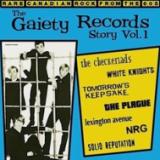
Formed by Don Grashey and Lloyd Palmer in Winnipeg, Manitoba, Gaiety Records was an outlet for many relatively obscure but excellent Canadian garage and rock bands during its existence. They released their own singles as well as sub-licensing material to other labels, such as RCA (49th Parallel), Columbia (Jarvis Street Revue and Souls of Inspyration), Decca, Epic, Musicor, and others. Features the Checkerlads , White Knights , Tomorrow's Keepsake, Lexington Avenue, NRG , Solid Reputation, and the Plague , including their face melter, 'Face of Time' and the essential psych classic 'High Flyin' Bird'.
- Love You Still
- Learning To Drive
- 50:
- Responsible Friend
- Bored Of Myself
- When The Doctor Needs A Doctor
- Goodbye Wisdom
- 90: Years Long
- Lost Time
- Cellophane
- Stay
Responsible Friend is an album about the ways in which we show up for one another. What does it mean to be a responsible friend - to be there for someone you love without trying to save them - in a society steeped in conflict and injustice? Some of the songs on Responsible Friend are joyful dedications while others feel more like letters Elizabeth wasn't sure she wanted to send. Taken together, it's a record about slowing down in a world that keeps accelerating. It's a commitment to friends, family, and self, at a time when everyone seems to be carrying more than they can reasonably hold.
- A1: Brothers To Brothers
- A2: Gs & Locs
- A3: Gangsta Shit
- B1: Send That Crab Off To Die
- B2: Mafia Lane
- B3: Fuck Crab (Skit)
- B4: Can't Stop, Won't Stop
- B5: Time Is Gone Nigga
- C1: Set Trippin
- C2: East Side Rip Riper
- C3: 187 (Skit)
- C4: Slob 187
- C5: Slobs Keep On Slippin
- D1: Every Dog Has His Day
- D2: Crip 4 Life
- D3: Wish You Were Here
2 x LP Red & Blue (Half & Half Effect) Vinyl in Gatefold Sleeve
The Bloods and Crips’ debut Bangin’ on Wax (1993) — which we reissued in 2023 to an incredible reception — inspired us to dig even deeper into this iconic catalogue. The follow-up, The Saga Continues, originally dropped only on CD in 1994. Now, for the first time ever, we’re proud to bring it to wax — pressed on solid Blue and Red vinyl, of course. This concept was a pivotal moment in West Coast gangsta rap, uniting members of L.A.’s two most infamous sets. Crips from Compton, Watts, and Long Beach, and Bloods from Inglewood and Los Angeles auditioned for the project, with the sharpest MCs selected for the final lineup. All proceeds from the original Bangin’ on Wax album went toward improving local schools and parks for the community’s children. Over 30 years later, the lone CD pressing regularly fetches £50+ on the secondary market — and now the album finally arrives on vinyl. Sleeker in production and delivery, this record carries that true G-Funk swagger, tipping its hat to Warren G, Snoop, DJ Quik, and even Dr. Dre.
- A1: We Got To Hit It Off (Jim Burgess Mix) - Millie Jackson
- A2: Night Fever (Full Length Version) - Fatback Band
- A3: Sending My Best Wishes - Garland Green
- B1: Love Contest - The Joneses
- B2: Love Vibration (Disco Version) - Joe Simon
- B3: Mucho Macho (Extended Version) - Macho
- C1: Snake - Fatback
- C2: I Wanna Get Over - Street People
- C3: Don't Send Nobody Else - Millie Jackson
- D1: Groovy Kind Of Day - The Fatback Band
- D2: I Wanna Taste Your Love - Joe Simon
- D3: What Went Wrong Last Night (Part Ii) - Millie Jackson
- 1: Screwdriver
- 2: Nearest Distance
- 3: Fields
- 4: Favourite Narrative
- 5: Pale
- 6: Coming Home
- 7: Project Dada
- 8: My New Shirt
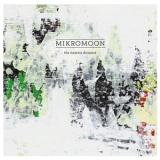
Transparent grünes Vinyl. Mikromoon sind fünf erfahrene Musikerinnen und Musiker aus Saarbrücken, die in zahlreichen Bands aktiv waren/sind (u.a. Blind, Pure Bug Beauty, Britney und Oaks) und in dieser Formation seit 2022 Songs ins Universum senden. Ihr Sound ist eine exklusive Mischung aus Indierock, Wave, Postpunk, Folk, TripHop, Grunge, Pop und einer Prise Psychedelik. Mit ihrem Debütalbum "The Nearest Distance" formulieren sie ein trotziges Gegengift zur allgemeinen Weltlage. In acht intensiven Songs tauchen wir ein in eine Welt aus hoffnungsvollen und melancholischen Klängen, die zwischen bedingungsloser Liebe, hemmungsloser Wut, gnadenloser Isolation, Identitätsverlust und dem Finden inneren Friedens oszillieren.
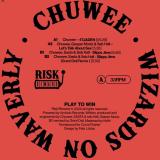
Risk/Reward’s third installment comes from Brooklyn-based California native Chuwee, a rising star with records in the bags of the scenes most discerning selectors. Teaming up with homies Sasta, Seb Hall and Gaspar Muniz to form the Wizards on Waverly, they deliver a wildly creative and versatile collection of funk-drenched floor fillers.
On the a side: 4TJADEN combines crunchy electro house drums with a twisting, monstrous analog bass lead and 80s synth pop strings, before euphoric chords and a killer acid line send this one in to the cosmos!
Let’s Talk About Sex is a big, bad, booty bouncing slice of West Coast electro funk. An ultra groovy and addictive bass line, naughty vocals, spooky synth lines and rays of acid sunshine straight from California, make for an infectious party cut that gets the floor rocking every time.
On to the b-side: Slippy Jim’s is a laid back, dubwise, chugger, perfect for warming up, day time sessions or late in the afters. Crunchy analog drums patter over a warm, playful bass groove, speckled with dubby stabs, an imposing synth lead and vintage Jamaican spoken word vocals transport you to Kingston after party where the rum and vibes flow in equal measure.
Pioneer of the dub tech house sound Grant Dell delivers a gargantuan remix, with enough weight to break even the sturdiest of scales. Chunky yet detailed drums, a sub-heavy & driving bass line, acid squelchs and dubbed out stabs create an absolute weapon of a track, with a truly epic breakdown featuring a legendary vocal that gets right under your skin and stays there.
Heavy support from Enzo Siragusa, Harry McCanna, Bushwacka!, Dyed Soundorom, Anna Wall, CHKLTE and more.
- 1: Nuvole I
- 2: Nuvole Ii
- 3: Nuvole Iii
- 4: Nuvole Iv
- 5: Nuvole Ix
- 6: Nuvole V
- 7: Nuvole Vi
- 8: Nuvole Vii
- 9: Nuvole Viii
- 10: Nuvole X
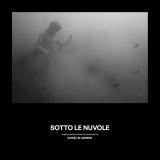
In Gianfranco Rosi’s portrait of Naples, Sotto le Nuvole, the ground shakes periodically. Between Mount Vesuvius and the Tyrrhenian Sea, the fumaroles of the Phlegraean Fields hiss volcanic gas and steam. Below the sleeping volcano, modern day Naples emerges in black and white and fills with voices, with lives. From the traces of history and the concerns of the present, Rosi documents a city immersed in its continuous past, with Daniel Blumberg’s minimal soundscape hovering in a sonic space between liquid and air.
Tasked with creating a soundscape that would suspend space within Rosi’s film, Blumberg called upon the extended technique of saxophonists Seymour Wright and John Butcher to create a gossamer fabric of traces and sounds abstracted from their instruments. Having transitioned from theoretical physics to the saxophone, John Butcher has always deeply considered space in the context of his playing. His concerns are with flow, density and how the saxophone is situated in the living world. Zeroing in on the core sonic properties of the mechanical and acoustic components of the saxophone, Seymour Wright has integrated its every breath, reed vibration, keypad clatter and hissed microtone of his alto into his own, unique improvisational language. In his work with these two seminal players, Blumberg makes his most concentrated soundtrack to date - reinforcing the film's sense of overlapping time and space, and pushing at the limits of experimentation.
Initially recorded in Daniel’s flat in London, Butcher and Wright centre themselves around long, consistent tones, so soft that it seems breath is being gently pulled from the saxophone's bell by an invisible hand. Blumberg himself adds haunting bass harmonica, and recordings of Wright’s launeddas - a traditional and ancient triple pipe polyphonic reed instrument from Sardinia, Italy. Blumberg then travelled to the volcanic region of Baia, next to Pompeii. Once a flourishing classical Roman city loved by Nero, Baia slowly sank under hydrothermal pressure, leaving the city in a kind of geological purgatory. Using specialised geophones and hydrophones, Blumberg took those initial recordings and amplified them underwater, sending them calling out across the ruins of Baia’s mosaics, Nymphaeum statues and villas.
“It was important to me that the music was whispered in the same landscape that Gianfranco has worked for the past three years, so that you can hear the volcanic air gulping, the lapping of the waves, the steam and bubbles popping against John and Seymour’s saxophone breaths – an echo from a suspended time.”
What emerges is deeply melancholic, tender, subtle and right at the edges of audio technology. Submerged in an aquarian mausoleum, the mysterious vibrations of the saxophone and its bell become an echo of an echo, wading from the future into the past. ‘Sotto le Nuvole’ is less a soundtrack than a process of aeration - a sonic puncture in the material of the film which allows its central message to breathe, and a remarkable experiment at the limits of the saxophone’s possibility.
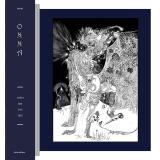
Onna Last Live 1983 includes the final performance by the original line-up of Onna, the psych-rock project of revered Japanese manga artist, Keizo Miyanishi. Onna’s legend has largely rested, until now, on one self-released and self-titled seven-inch from 1983. Reissued by Holy Mountain in 2009, its rediscovery, along with several archival live and studio sets that leaked out across the 2000s, signalled to a wider audience the power of Miyanishi’s strikingly hypnotic songwriting. With Onna Last Live 1983, though, we hear the group’s perfect line-up performing at its peak.
While Miyanishi was the core member and conceptualist of Onna, the other members of the group would also go on to make significant contributions to the Japanese underground. Guitarist Michio Kurihara would eventually be known for his membership of YBO2, Ghost and White Heaven, and collaborations with the likes of Boris and Damon & Naomi. Drummer Ken Matsutani formed Marble Sheep & The Run-Down Sun’s Children and The Mickey Guitar Band, while also running the Captain Trip label. Joined by the late bass player Yasui Yutaka, to whom the album is dedicated, this quartet only performed live in 1983; the live set here was recorded at Silver Elephant.
It’s a different line-up to the Onna duo that’s documented on their single. After Miyanishi and fellow manga artist Mafuyu Hiroki recorded that material, Miyanishi decided he wanted to start playing gigs; Hiroki left, and Kurihara, Matsutani and Yutaka joined soon after. This line-up allowed Miyanishi to significantly expand Onna’s powers, leading to a sound that Kurihara once described to Ptolemaic Terrascope magazine as “repetitive and heavy, yet quite orthodox.”
The songs here are simple yet deeply effective in their repetitive power, generally revolving around two or three simply strummed chords for guitar. Bass and drums repeatedly lock into mantra-like grooves as Kurihara’s guitar scales the walls, with Miyanishi’s consumptive moans and sighs sent torquing through FX. The cumulative effect of the seven songs here is very heavy indeed; if the prologue “Always…” drifts beautifully through five minutes of placid, beseeching melancholy, the epilogue, “Never Seen A Light Like This”, spirals out into sixteen minutes of glazed-over psych-rock, completely monomaniacal and thrilling in its slow-motion tumult.
Throughout, you can hear Miyanishi and co. reaching for something ineffable, something beyond and between the notes. It’s a phenomenal performance; it’s also no surprise that the group disintegrated after this show, given its intensity. Matsutani and Yutaka left after the Silver Elephant show, with Miyanishi and Kurihara continuing through the first half of 1984 firstly as a duo, and then a trio with new drummer Yoshiki Ueonyama. Kurihara left soon after. But Onna Last Live 1983 is proof plenty of the powers of the original Onna quartet, sending their Rallizes/Velvets dream-mantras off into darkened, stormy skies.
Mark Reeve starts 2026 in prime form with ‘Body Drops’, a quick-fire follow-up to his recent A-Sides contribution ‘My Mind’.The veteran artist has an inimitable touch in the studio going back over 15 years and can always be relied upon to deliver high-impact techno creations. Tracks such as ‘Run Back’, ‘Distance’ and his collaboration with Adam Beyer ‘Nine of You’ make thrilling reference points.‘Body Drops’ found its way onto Drumcode via Bart Skils. “Bart and I have a very good musical understanding and we really respect eachother. So, when he said I think this would fit to Drumcode, I was like ok let me send it. Adam came back to me with a massive yes, and it went from there.”He continues: “I can see that a new peak-time sound is evolving. Very modern and groovy sounding, which is exactly what I like. I guess all the other tracks on Drumcode that have come out recently got me very inspired.”The track is a gem. Driven by an otherworldly stomping riff, it immediately strikes you with its unique sonic character. Huge without being banging, watch this fit a variety of high-impact moments.‘Feed My Fire’ is a rolling big-bodied track that sees elements of prog,techno, psy and silky chords combine for a chugging dancefloor cut.“This is a personal favourite of mine simply because it’s so groovy andfits more intimate sessions. But I also tested it in front of bigger crowds and it really does the job.
“Tako” means “octopus”, “kite”, and even “bunion” in Japanese. Bald men or men with shaven heads, as well as red-faced, staggering drunks, are also referred to as “tako”. It’s a word that appears in a lot of slang and sayings. Taco is also the name of an 80s music and performance collective whose performances were like nothing before or since. The Japanese band Taco, formed at the beginning of the 80s, is a loose group/collective of varying members that belongs to the post-punk alternative music movement. The network of members were all friends and acquaintances of Harumi Yamazaki, ex-member of Gaseneta and Taco’s central member.
Taco can be described as a band of guerrillas who, over the years, continued to connect, collect, interrupt, and scatter while sending out into the world music and sounds that can best be described as transient. Taco also performed without Harumi, and so it is as though the band is an anonymous group of mercenaries. Taco’s first album was released in 1983 and had a huge impact on Japan’s underground music scene as an anomalous and collaborative album involving various participating artists (the stars of Japan’s underground music scene!) and Harumi, who provided the lyrics. Although each track represents a reverberating conglomeration of sounds created by this transient local network, common to all the tracks are Harumi’s expressive lyrics. This has the effect of transforming all the tracks into a single powerful force which, in turn, spawns an “incident” which spreads like a giant ripple. However, because of another incident in which the records were recalled due to the scandal caused by some of the lyrics, only a limited number of people actually own a copy of the album. Taco’s second album (a 12” EP), released in 1984, features a live recording of a performance that was held at the end of 1982. Taco is a band of indeterminate members which only ever played one-off performances, but this is an album that reveals a unit whose performance was unusually musically coherent. This is an album which effectively conveys the power of Taco’s astounding and legendary live performances, as well as Harumi’s inflammatory, sensational, and masochistic presence on stage. Her mutterings and screams, which practically ignore the detached beat, confront the audience like an overwhelming groundswell.
The following is a description of Taco by one of its members following one of its live performances: “Taco’s like a project where the indeterminate participants fan each other’s heightened emotions of wanting to wreak personal revenge and retribution. It’s an ecosystem of tangible and intangible mouldy slime which accumulates in order for emotions to be acted out, both indoors in the studio, or outdoors on stage. That’s why the avenger can often end up being the victim.”
Nameless, March 1985
Transmitting from deep in the Finnish underground, Nazar sends out a signal of mysterious, synthetic auras and shadowy, skittering sequences. From smoky outsider techno to rainy-day electro abstraction, the label’s emphasis is on expression and intrigue as each release reaches across the energetic spectrum of moody machine music.
The first release on Nazar presents a cast of protagonists from the Helsinki scene who share precisely the kind of nocturnal tendencies the label is seeking out. Seasoned duo General Electrix open up the A side with ‘Redshifter’, a silken web of 606-powered electro and warmly haunted synth work that nods to the early years of Autechre. Making an early step out into the public domain, Asyx follows up swiftly with the exquisitely detailed machine funk of ‘kVelorum ‘, where a vivid tapestry of noise, squelch and bleep techno gets smartly woven between airy pad tones and a rock-solid rhythm section.
On the B side, Helsinki mainstay Kaiunta brings a dramatic flourish to mid tempo creeper ‘Phantasm’, matching a densely packed rumble of live drums with sweeps of nervy atmospherics and a murky inversion of the classic gated trance lead. 53X rounds out the Nazar mission towards broad BPMs and fresh ideas with a crunchy swerve towards sample-heavy downtempo laced with a generous dose of psychedelics and angular noise.
NAZAR001 is the kind of record that yields surprises and slots into unexpected moments depending on when and where the needle drops, providing versatile moments for adventurous selectors and continuing the fine tradition of outsider electro and techno from Finland.
With Get Together III, the journey moves into its next chapter, as four artists come together once again to bring the many colors of electronic music to life.
modul808 opens the journey with deep, warm chords and a driving groove that instantly pulls the listener into the depths of its sonic landscape. In “Kamuro”, shimmering details line the explorer’s path, while the magical vocals of Igor Pose are elegantly woven into the arrangement, creating a dense and hypnotic atmosphere. With “Habits”, Heidmann continues the journey in a similarly groovy fashion, leading the way to sunlit clearings filled with memorable melodic gems. Cie effortlessly picks up the uplifting mood on the B-side, where the magnificent “Schlosshotel” unfolds with majestic chords and shimmering strings, inviting every house lover to stay for a while.
Finally, the journey home begins with Dip’s “Module”, which follows a deep path once more, uncovering sparkling sonic secrets along the way.
Together, the four tracks form another chapter in the Get Together series - a warm and timeless deep house journey shaped by four distinct artistic voices.
Mit Get Together III geht die Reise in ihr nächstes Kapitel: Vier Künstler kommen erneut zusammen und bringen die vielfältigen Farben elektronischer Musik zum Leuchten.
modul808 eröffnet die Reise mit tiefen, warmen Chords und einem treibenden Groove, der den Hörer sofort in die Tiefen seiner Klangwelt zieht. In „Kamuro“ säumen glitzernde Details den Weg des Entdeckers, während die magischen Vocals von Igor Pose elegant in das Arrangement verwoben sind und eine dichte, hypnotische Atmosphäre entstehen lassen. Mit „Habits“ führt Heidmann die Reise ebenso groovig fort und öffnet den Weg zu sonnendurchfluteten Lichtungen voller einprägsamer melodischer Klangperlen. Die gute Laune greift Cie auf der B-Seite mühelos auf: Vor ihm erhebt sich das prächtige „Schlosshotel“, das mit majestätischen Chords und schimmernden Strings jeden House Liebhaber zum Verweilen einlädt. Beschwingt beginnt schließlich die Heimreise mit Dip’s „Module“, das erneut einen deepen Pfad einschlägt und auf seinem Weg funkelnde klangliche Geheimnisse offenbart. So entsteht ein weiteres stimmiges Kapitel der Get Together-Reihe - vier Künstler, vier Perspektiven und eine gemeinsame Reise durch warme, zeitlose Deep-House-Landschaften.
Early DJ Feedback:
Christian Seitz / Show "Neuland" on Radio Z
A beautiful compilation that brings together deepness and dancefloor
Sebastian / f.a.r.e.s / Bass And Space
Great EP, thanks!
ed2000 / Dangerous Drums, Cashmere Radio, Face Radio, dub intervention
Very nice set of tracks, support and thanks radio and dj set plays.
Sasha / Circus Recordings, Renaissance, Global Underground
Cool from Cie
Anthony Pappa / Selador / Renaissance
Nice tunes. Thank you.
Timo Maas / Cocoon Recordings, Crosstown Rebels, Rockets and Ponies, Mobilee, Moon
Harbour, Tenampa, etc etc
Nice Heidmann
Stéphane Chambord / Radio Resonance ("DeeJay Academy" Radio Show)
repérages : Kamuro & Habits je prépare une émission spéciale avec un mix des productions du label
Cyprien Rose / Lui, Houz-Motik, Waxdoesmatter
Amazing > Modul808 - Kamuro feat. Igor Pose
Rob Zile / Brain Food Radio (Kiss FM) / Brain Food Records
Great deep tunes
John Digweed / Bedrock Records
Downloading
T. Carlita / In My House
Good Vibe
Laurent / WTM
Another wtm's playlist is coming soon…;)
Douglas Arellanes / Radio 1
Cool chilled out vibe on this record.
Valerio Vaudano
I like "Kamuro" and "Habits". Will try these warming up the dance floor. thx for sending
Stuart Bruce / Chain DLK
Downloading for possible review on ChainDK
Noah Pred / Thoughtless, Biotop, Highgrade
Some nice ones here, thanks.
Ninu / Hipodrome
I like Habits
BARRcode / Backseat Mafia
Solid release.
Carl Craig / Planet-E
dl 4 erno thx!
Ilario Alicante / Cocoon Recordings, Alphahouse, Bosconi, Prism
Downloading for Ilario Alicante, thanks for the music!
Andrew Till / Machine, Fnoob
Cool dubbed out grooves ,,,Heidmann - Habits is my pick.
Ju / Upperberry
Dope =)
Kat Davids
nice and smooth!
Como Las Grecas / Kali Modernphase, Denis Yurgens, Alejandro Club, German MT, Como Las
Grecas
Deep mind in house groove. Interesting VA of deep house.
Dole & Kom / Death By Disco, Mixmag
Really liking Modul808's and Cie's traxxx Thank you
With Get Together III, the journey moves into its next chapter, as four artists come together once again to bring the many colors of electronic music to life.
modul808 opens the journey with deep, warm chords and a driving groove that instantly pulls the listener into the depths of its sonic landscape. In “Kamuro”, shimmering details line the explorer’s path, while the magical vocals of Igor Pose are elegantly woven into the arrangement, creating a dense and hypnotic atmosphere. With “Habits”, Heidmann continues the journey in a similarly groovy fashion, leading the way to sunlit clearings filled with memorable melodic gems. Cie effortlessly picks up the uplifting mood on the B-side, where the magnificent “Schlosshotel” unfolds with majestic chords and shimmering strings, inviting every house lover to stay for a while.
Finally, the journey home begins with Dip’s “Module”, which follows a deep path once more, uncovering sparkling sonic secrets along the way.
Together, the four tracks form another chapter in the Get Together series - a warm and timeless deep house journey shaped by four distinct artistic voices.
Mit Get Together III geht die Reise in ihr nächstes Kapitel: Vier Künstler kommen erneut zusammen und bringen die vielfältigen Farben elektronischer Musik zum Leuchten.
modul808 eröffnet die Reise mit tiefen, warmen Chords und einem treibenden Groove, der den Hörer sofort in die Tiefen seiner Klangwelt zieht. In „Kamuro“ säumen glitzernde Details den Weg des Entdeckers, während die magischen Vocals von Igor Pose elegant in das Arrangement verwoben sind und eine dichte, hypnotische Atmosphäre entstehen lassen. Mit „Habits“ führt Heidmann die Reise ebenso groovig fort und öffnet den Weg zu sonnendurchfluteten Lichtungen voller einprägsamer melodischer Klangperlen. Die gute Laune greift Cie auf der B-Seite mühelos auf: Vor ihm erhebt sich das prächtige „Schlosshotel“, das mit majestätischen Chords und schimmernden Strings jeden House Liebhaber zum Verweilen einlädt. Beschwingt beginnt schließlich die Heimreise mit Dip’s „Module“, das erneut einen deepen Pfad einschlägt und auf seinem Weg funkelnde klangliche Geheimnisse offenbart. So entsteht ein weiteres stimmiges Kapitel der Get Together-Reihe - vier Künstler, vier Perspektiven und eine gemeinsame Reise durch warme, zeitlose Deep-House-Landschaften.
Early DJ Feedback:
Christian Seitz / Show "Neuland" on Radio Z
A beautiful compilation that brings together deepness and dancefloor
Sebastian / f.a.r.e.s / Bass And Space
Great EP, thanks!
ed2000 / Dangerous Drums, Cashmere Radio, Face Radio, dub intervention
Very nice set of tracks, support and thanks radio and dj set plays.
Sasha / Circus Recordings, Renaissance, Global Underground
Cool from Cie
Anthony Pappa / Selador / Renaissance
Nice tunes. Thank you.
Timo Maas / Cocoon Recordings, Crosstown Rebels, Rockets and Ponies, Mobilee, Moon
Harbour, Tenampa, etc etc
Nice Heidmann
Stéphane Chambord / Radio Resonance ("DeeJay Academy" Radio Show)
repérages : Kamuro & Habits je prépare une émission spéciale avec un mix des productions du label
Cyprien Rose / Lui, Houz-Motik, Waxdoesmatter
Amazing > Modul808 - Kamuro feat. Igor Pose
Rob Zile / Brain Food Radio (Kiss FM) / Brain Food Records
Great deep tunes
John Digweed / Bedrock Records
Downloading
T. Carlita / In My House
Good Vibe
Laurent / WTM
Another wtm's playlist is coming soon…;)
Douglas Arellanes / Radio 1
Cool chilled out vibe on this record.
Valerio Vaudano
I like "Kamuro" and "Habits". Will try these warming up the dance floor. thx for sending
Stuart Bruce / Chain DLK
Downloading for possible review on ChainDK
Noah Pred / Thoughtless, Biotop, Highgrade
Some nice ones here, thanks.
Ninu / Hipodrome
I like Habits
BARRcode / Backseat Mafia
Solid release.
Carl Craig / Planet-E
dl 4 erno thx!
Ilario Alicante / Cocoon Recordings, Alphahouse, Bosconi, Prism
Downloading for Ilario Alicante, thanks for the music!
Andrew Till / Machine, Fnoob
Cool dubbed out grooves ,,,Heidmann - Habits is my pick.
Ju / Upperberry
Dope =)
Kat Davids
nice and smooth!
Como Las Grecas / Kali Modernphase, Denis Yurgens, Alejandro Club, German MT, Como Las
Grecas
Deep mind in house groove. Interesting VA of deep house.
Dole & Kom / Death By Disco, Mixmag
Really liking Modul808's and Cie's traxxx Thank you
&Co. debut on A Quiet Village. The US-based trio drop the third release on Quiet Village’s eponymous imprint March 20th. &Co. Is a project from multi-hyphenate and Bianca Chandon founder, Alex Olson, pianist, composer and producer Alberto Bof (known for his work on ®Oscar ®Bafta ®Golden Globe and ®Grammy award winning ’A Star is Born’) and DJ/fashion luminary, Paul Takahashi. The trio’s second release, ‘Staycation’ follows 2015’s ‘Best of Friends’, and sees these rare talents create a two-tracker that explores a uniquely evocative, cinematic and dubby Balearic aesthetic. ‘Staycation began as a follow-up to the first EP, Best Friends.
As a result, ‘Staycation’ came together in fragments. The first track was built over a handful of short studio sessions, each only about an hour long, driven by brainstorming and reworking ideas. With Alex away, Alberto and I continued refining the piece in Los Angeles, sharing updates for Alex’s approval until it was completed. The track remained unmastered and was quietly circulated to a small circle as a promotional piece. The second track, “Lean Like a Cello,” was initially conceptualized together. However, with Alex now based in New York and less available, we completed the arrangement in Los Angeles, sending versions back and forth for Alex’s input and feedback. Nearly a decade later, the idea resurfaced, and the recordings were finally mastered and released. A friend, Justin Van Der Volgen, handled the mastering. What began as a plan to give the tracks away as a promo evolved when Justin encouraged the group to shop the release. With help from Eric Duncan of Rub N Tug, the music reached Matt (Edwards, aka Radio Slave/ 1/2 of Quiet Village).
Ten years after the first sessions, Staycation arrives as a document of distance, collaboration, and time. A project shaped as much by separation as by shared intention.’ (Paul Takahashi, Feb 2026)
A piece of art from a powerhouse creative team operating at the intersection of skate culture, music, design and fashion, ‘Staycation’ by &Co. Arrives on The Quiet Village 12” and digital/streaming on March 20th.
- 1: Legowelt Bos - Ochtendmist
- 2: Aurora Halal - Spiral
- 3: Antenna Break - Flute
- 4: Sfv Acid - Urbanfury
Different strokes for different folks. The celebrative 11-track 'xoxo' compilation, originally pressed as a 3xLP, is now also available as three separate EPs. On EP 1, Legowelt lures you in with Bos Ochtend Mist, before Aurora Halal's deep chords on Spiral send you ascending. Antenna's Break Flute shifts the pace and prints a ghostly image on your retina, and SFV Acid rolls the credits with UrbanFury128, a groover that goes down smooth.