Chemistry between individuals is an amorphous and elusive notion. It is usually seen as something that occurs between two people who are sharing a physical space, with access to each other's body language and energy. However, modern technology has provided many other opportunities for chemistry to blossom and be explored and this record is just one example of that: Vent is proud to present Kina, a double LP of musical collaborations between MAYa and Tolga Baklacioglu.
Tolga Baklacioglu is an associate professor in aeronautical engineering. He is also a musician. For several years, he has been steadily building a body of work that explores the outer boundaries where techno and abstract textures merge and blur. In 2014, Tolga created a label, VENT, as a platform for his explorations and those of likeminded travelers within this sonic realm.
MAYa Hardinge works in film. She is also a musician. She has collaborated with numerous artists. Beginning in 2008, She released 4 EPs under her solo guise MAYa. Considering her background in film, it comes as no surprise that her work has a strong visual element. Pre- dating Beyonce´'s Lemonade by many years, her last two EPs were visual albums made in
collaboration with various directors.
It makes total sense that MAYa and Tolga should have made an album together. Their interests and backgrounds overlap and diverge meaningfully in a way that has all the hallmarks of good musical chemistry. There is however one unusual element to their collaboration: they have never met. Tolga lives in Eskisehir (Turkey) and MAYa lives in New York City.
Always on the look out for inspiration and new collaborators, Tolga stumbled across MAYa's videos online. What he saw and heard inspired him to reach out and contact her. After some correspondence they decided to experiment with the prospect of making music together. Perhaps deprived of the traditional notions of chemistry defined by proximity, they found inspiration across time and space in the name of exploration and discovery. Tolga began by sending MAYa files of beats and ambiance. Upon finding the ones that spoke to her, MAYa went to work disassembling, adding, subtracting and rearranging. MAYa's work would then go back to Tolga, a world away, for further input and then back again. In this way each track was painstakingly constructed and a true chemistry was born. One built on sensitivity, support and honest artistic communication. In a word: LISTENING.
The songs cover a broad spectrum of topics, from the deeply personal feelings and experiences, to world events, and the fundamental aspects of life and death. Kina is a document of two artists from different backgrounds and their shared visions of the interplay
between one's private microcosm and the global macrocosm of our time; a testament to the fact that, for all its vastness and diversity, this world offers inspiration and potential collaboration around every corner. The music contained within has traveled around the world many times before reaching your ears. As MAYa and Tolga have done before, it is now your turn to LISTEN.
TUTTI is comprised of eight soundscapes: an audio self portrait comprising of manipulated sound recordings from Cosey's life, music and art:
'It's the only album I've made that is an all encompassing statement expressing the totality of my being. A sense of the past in relation to the present and everything in between.'
These eight pieces were originally conceived as the soundtrack to the autobiographical film 'Harmonic Coumaction', and performed live in February 2017, part of a series of events that accompanied the COUM Transmissions retrospective which opened Hull UK City of Culture 2017. Later that year, 'Harmonic Coumaction' was presented as an audio-visual installation for Cosey Fanni Tutti's solo exhibition at Cabinet Gallery, London.
Cosey Fanni Tutti explains: 'Working on the COUM Transmissions exhibition also coincided with writing my autobiography - collating archive material and re engaging with my past. My work is a continuum, the past feeding the present and vice versa. The album is an interpretation of my past and present, of my understanding the shifting perceptions of how they inform one another. One form creating another through a metamorphic process.'
On TUTTI, the music has been updated and enhanced with elements of the original tracks re-recorded and further processed specifically to create a unique stand-alone document, separate to the live performance and installation. Recorded at Cosey Fanni Tutti's studio in Norfolk, the album, as on her debut release, Time To Tell, merges Cosey's art activities with her exploration of sound: The album's autobiographical theme is not locked into any specific time or place, the 'voices', instruments and sounds together span decades of my life, music and art. In this context my name 'TUTTI' shifts from its role as a noun to perfectly represent the concept of the album, also acting as sign for me the artist.
TUTTI is Cosey Fanni Tutti's only solo album release since 1982's Time To Tell. Time To Tell was recently given its first release on vinyl, on a long awaited official deluxe edition. The interim years between solo releases has seen a blisteringly prolific output as an artist and musician. Renowned for her art, her work in the sex industry, as co-founder of Industrial music and Throbbing Gristle, and her pioneering electronic music solo and as Chris & Cosey, Carter Tutti and Carter Tutti Void, she has created throughout with the motto 'my life is my art, my art is my life'.
Cosey's autobiography ART SEX MUSIC was published to worldwide acclaim by Faber & Faber in 2017, a Japanese edition has just been published with further translations and an audio book to follow. TUTTI
2018 played host to a bumper crop of sounds from some of Philly's grittiest, including Great Circles mainstays M//R and Chaperone. To close out the year that was, we are pleased to present Heckadecimal's 'Murder Tape.'
A Minneapolis-based producer and acid auteur, Heckadecimal has been a fixture within the vibrant Midwestern electronic music community for nearly 20 years. Founder of the legendary 'Anti-human' events and co-curator of the ever-prolific Always Human Tapes imprint - alongside Ryan Wurst and Peter Lansky - Heckadecimal's reputation is one of unrelenting creativity and tireless advocacy for sonic experimentation. His work has found its way to light via a slew of pseudonyms and stage monikers, including The Worm, noface and Wonder Sirens.
In short - Heckadecimal lives and breathes the sonic matter that he leaves pouring out of studio monitors, busted bar systems and finely tuned rave stacks, wherever his travels take him.
Live performance lies at the core of Heckadecimal's practice. When he stormed through Inciting HQ in Philly earlier this summer, he took command over an arsenal of hardware that reminded us of how Octave One or Shawn Rudiman might show up. These were machines that he had lived with; touched with custom modifications, hand-drawn stickers and pockmarks incurred in battle, one got the sense that the gear was a personal extension of the artist.
Perhaps it's a bit maudlin, but we feel a certain kinship with this project. Indeed, these tracks at times feel very much of a piece with the gnarled tonalities in which our stable typically traffics; all low-slung riddims that reach at equal lengths towards mutated IDM aesthetics and post-Packard Plant techno extrusions. These are future perfect grooves that glide along under the vast Midwestern sky, providing a fertile communication conduit with the City of Brotherly Love.
Give thanks for acid. Great Circles will see you in the New Year..
Black Rain returns with Computer Soul: the final part of a sequence of Blackest Ever Black releases that began with 2011's Now I'm Just A Number: Soundtracks 1994-95, and a first glimpse of the project's richly imagined future. For this outing Stuart Argabright (Ike Yard, Dominatrix, Death Comet Crew) is joined by BR founder member Shinichi Shimokawa as well as more recent recruit Soren Roi and Zanias (vocalist on 2015's Dark Pool) - making for the most most group-oriented iteration of Black Rain since its earliest days. Sonically too, there is a sense of evolution but also of coming full circle: the cyberpunk techno of Argabright's celebrated William Gibson soundtracks (compiled on Now I'm Just A Number) and extrapolations of Dark Pool's neuromantic yearning cut with glimpses of the thrash and industrial rock energies that animated Black Rain's incendiary live shows - and sought-after tapes for Kombinat and TPOS - in the early 90s. More than ever, Black Rain is propelled by a powerful science fiction impulse, whether responding to the themes and characters of Gibson's Sprawl or the Blade Runner universe (particularly K.W. Jeter's spin-off/continuation novels which extended its mythology, and timeline, further). It's not news that many of these works' most powerful predictions and prophesies have come to pass - the replicants are already living among us - so Computer Soul projects further into several possible unforeseen futures, its events 'set' in the second half of the current century, fifty or so years after those of Dark Pool. The hyperpopulated metropolises of Dark Pool are no more; the apartments are empty, haunted by ghosts of AC current, devices and machines running lonely without their owners...a melancholy internet of things. Where has everyone got to Gone but perhaps not gone. Oblivion beckons - always does - but on the other side of that, something else... another time, another place, a river....and a new way of living.
Norwegian artist Tarjei Nyga°rd first touched on the ESP Institute spectrum in 2016 with a limited red flexidisc of Bleusa that accompanied issue 21 of New York City's acclaimed Love Injection fanzine, and since then, his poetic music has been a staple in our arsenal (especially during Summer), for its ability to effectively direct moods is second to none. Across the four tracks on this debut EP, Tarjei paints quite viscerally using the most fundamental of tools—melodic and rhythmic hooks—and as obvious as this may sound on paper, its his deliberate approach to songwriting that brings these productions to life. Bleusa is literally dripping with a sense fantasy and adventure—island pads, golden bent notes, even a cameo bird-call from the infamous Acid House loon—yet Tarjei exhibits a mature level of restraint, a highly sophisticated sleaze recognizable to refined pleasure-seekers. Forus Echo furthers this notion but expands into full-blown rapids of ecstasy, rolling over soft-thumping percussion that mimics the human heart while smothering the listener in euphoric waves of pads and delays. Side B shifts us from the melodic dynamic heard thus far over to a strong rhythmic palette, not acknowledging any specific reference point but loosely hearkening back to early-era turntablism, the demented title track Lost In Lindos is a aquatic beat thats both deep and buoyant, the type of liquid tool that works at any BPM. Øylie closes the EP with a signature ESP vibe that has us lying on our backs, drawing finger pictures in the opium smoke above, feeling the warm embrace of collective consciousness while telepathically harmonizing our plans for a bright utopian future.
Returning for his second full-length LP of 2018, DJ Bone steps up once more to his own Subject Detroit imprint to present 'Beyond', a full-length and physical rumination on his own emotive and psychedelic contribution to contemporary techno. Loaded with the dynamics, charisma and widescreen appeal of his finest work, 'Beyond' sees Bone enter a musical state that reflects it's ambitious title, celebrating underground ideals in a style that could only be his own.
The second in a trilogy of albums to be completed in early 2019, 'Beyond' is culled from a sequence of no less than fifty tracks completed by the esteemed Detroit DJ and producer upon returning to his home city in 2017. With it being "unfathomable" to release an LP of that length, Bone has nonetheless captured this wave of creativity and a reconnection with his home city, along with the cathartic sense of soul and energy at the heart of his attitude to dance music.
Across 'Beyond' listeners can sink into an unrelenting sequence of tracks that speak from his experimental, musical and always unexpected mind. LP opener 'Dreamers 7' reaffirms his taste for offbeat electronics shot through with rigid dance floor dynamism; a theme reaffirmed quite literally on the forceful centrepiece, 'With A Vengeance'. Elsewhere, Bone delights in blurring the lines between exotic, futurist ambience on tracks such as 'Techno Aint Techno' and 'Ahhh Life', while further cementing his reputation as master of sheer, unrelenting rhythm on 'True Definition' and 'Rosedale Park'.
2018 played host to a bumper crop of sounds from some of Philly's grittiest, including Great Circles mainstays M//R and Chaperone. To close out the year that was, we are pleased to present Heckadecimal's 'Murder Tape.'
A Minneapolis-based producer and acid auteur, Heckadecimal has been a fixture within the vibrant Midwestern electronic music community for nearly 20 years. Founder of the legendary 'Anti-human' events and co-curator of the ever-prolific Always Human Tapes imprint - alongside Ryan Wurst and Peter Lansky - Heckadecimal's reputation is one of unrelenting creativity and tireless advocacy for sonic experimentation. His work has found its way to light via a slew of pseudonyms and stage monikers, including The Worm, noface and Wonder Sirens.
In short - Heckadecimal lives and breathes the sonic matter that he leaves pouring out of studio monitors, busted bar systems and finely tuned rave stacks, wherever his travels take him.
Live performance lies at the core of Heckadecimal's practice. When he stormed through Inciting HQ in Philly earlier this summer, he took command over an arsenal of hardware that reminded us of how Octave One or Shawn Rudiman might show up. These were machines that he had lived with; touched with custom modifications, hand-drawn stickers and pockmarks incurred in battle, one got the sense that the gear was a personal extension of the artist.
Perhaps it's a bit maudlin, but we feel a certain kinship with this project. Indeed, these tracks at times feel very much of a piece with the gnarled tonalities in which our stable typically traffics; all low-slung riddims that reach at equal lengths towards mutated IDM aesthetics and post-Packard Plant techno extrusions. These are future perfect grooves that glide along under the vast Midwestern sky, providing a fertile communication conduit with the City of Brotherly Love.
Give thanks for acid. Great Circles will see you in the New Year..
john Yancey' Is The Second Album Illa J Will Release On Jakarta Records, Following The Successful
Release Of Home Last Year. The Project Is The Second Collaboration With Los Angeles
Based Producer Calvin Valentine, Who Once Again Contributed All Of The Production For The Long
Player. While home' Was Largely Inspired By Illa's Native City Of Detroit, john Yancey' Now
Focuses On His Time In California.
(this Album Is) Definitely More Personal Than All Of My Projects, Nothing Specific, But I Basically
Talk About About The Ups And Downs Of All My Relationships Over The Past 10 Years, Still Grieving
About My Bro, Etc. This One Is Trippy Because The First Single Comes Out A Day Before My 32nd
Birthday And The Original Title Was 32 Because This Is A Special Year To Me Because My Brother Died
At That Age So It Had A Lot Of Meaning. But It Makes Sense That It Ended Up Being Called John
Yancey Because For So Long In My Career I Felt Like I Was Tryna Be Me And My Brother, And I'm Finally
At Peace, Like I'm Not J Dilla's Younger Brother Illa J, I'm James Younger Brother John.'
While The Story Of The Album Might Have Changed, There Are Certain Continuities As Well, Built
Around The Strong Foundation Of The Combination Of Illa's Voice And Calvin Valentine's Soulful
Sample Based Production. The Previous Album Already Saw Illa J Incorporate More Singing Into
His Raps And He Goes Down This Path Even Further: i Wanted To Emphasize The Singing But Use
More Of My Natural Singing Voice, As Well As Rap More Than On Home.' In Regards To The Music,
Calvin Wanted To Make The Project Sound a Bit More Polished Where Home Was Purposely
Rough Around The Edges.' Still, The Production Remains Soulful And Rich With Layers To Leave Things
Interesting For The Listener, The More Spins You Give The Record.
The Cover Was Created By Robert Winter, A Cologne Based Photographer Who Was Also Behind The
Visual Appearance Of Home.
Snaketime Series is one of the earliest and rarest of Moondog's recordings, originally released in 1956. Snaketime' is what Moondog himself referred to as his unique sense of time in music, what he called a slithery rhythm'. And indeed, almost nobody else was making music as unique as this in the 1950s, drawing influence from city sounds, and working on many of his own instrumental invitations, Snaketime Series is truly cutting edge American avant-garde. Reissued on 180 gram LP with deluxe jacket, and a download card.
Moscow Is The City Full Of Posh Decorations. Like A Black Hole, It's Gorging Clouds Of Chaotic Ideas. Madly Fast, It's Flooded With Shallow Hippies, Jealous Dealers And Susceptible Artists. Everyone Desires To Have Its Own Piece Of Luck, Looking For The Shortest Way To Some Easy Life. Most Of The Nomads Arrive From The Capital Suburbs And Other Big Cities Of Immensely Corrupted Russia. Everyone Can Tell A Tale From Outskirt. Senseless Rivalry And Art Falsity Together Make The Special Demands: Your Tale Has To Amaze, To Inculcate, You Must Do Something Notable, Freaky One And Truthful. To Dare To Let It. There Are No Any Rules. Your Voice Has No Matter, The Only Important Is A Sales Skill. The Local Scene Is Tired Of Identical Copying Outside World's Standards. Thereby The More Your Approach Is Unacceptable, The More Valued Is It. But The More It's Valued, The Faster It Will Depreciate. The Glossy Shell With Cheap Content Is The Way To Survive In Such A Tight Plexus Of Cruel Love, Substance Abuse And Electronic Music.
Norm De Plume has been quietly making a name for himself the last eight years with remixes for Tornado Wallace and Ben La Desh and EP's for Kolour LTD and his own vinyl only imprint Plumage winning him a solid fol- lowing along the way. His passion for all things disco and deep, dubby, un- derground house inspired by his musical hero Ron Hardy feeds through into his production style as well as his recently formed Peaches & Prunes party which boasts an audiophile sound system and vinyl-only sets from the DJ's. So when the opportunity arose to do a full EP with Norm we jumped at it. Here we present you with the Castlecrag EP, a nod to the Londoner's new adoptive home of Sydney, Australia, and whilst his sound may be more akin to the recent musical movements of Melbourne, the laid-back sun-kissed melting pot of The Harbour City certainly shine through in the two originals and Folamour remix on offer here.
Title track Castlecrag leads the charge with a deep mood-setter driven by a cowbell riff and filtering pads. The spacious mix and less is more arrange- ment ensures that the drums and rolling bassline punch through making for a track that sounds both unique yet accessible and demonstrates Norm's sense of musicality as well as DJ instinct for setting the right mood on the dancefloor. Next up we have Whole In One which treads a similar path whilst dropping the BPM's a touch and building up layers of synth strings to create a subtle yet engaging track to immerse yourself in. Finally, man of the moment Folamour gets busy on the remix of Whole In One working his magic by upping the tempo and going heavy on the jazz- inspired drums. By laying down a driving groove and pushing the string stabs to the fore, the Lyonnais producer behind the wonderful Moonrise Hill Material label has delivered a fresh-sounding take that will work like magic on discerning dance floors out there.
"After a deceptively quite 2017, Especial picks up the pace pace by welcoming back the peroxide, youth filled Fairplay (re)version and a 2nd EP of old-skool-meets-the-new-school flavoured House and Breaks to lock, jock and spin.
After the criminally overlooked 'How Do You Like Me Now' EP - how is Classic Version not a...classic...version - Junior gets back on the (lino) floor. The EP starts with a look north to the 'other city of 7 hills' that birthed a Warp'd British retake on House in his bleep-dub ode, End Of Love. The autobiographical title belies a forward approach with his trademark echobox kick'n'hats underpinning uplifting keys and nodding bleep finger solo.
Who to join the party then, than another man of mystery, Roy Of The Ravers. After his debut EP on sister label Emotional Response became a most played from Aphex et al, it is only right bring him to E'Special. His brooding, hoover rush Remix 1 heightens the vibes with a heads down bleeping half-steppa. Righteous!
The flip is given over to Junior's roots, bringing the hip-hopper back with the anthemic The Shazsquatch Goes Back Into The Woods. No shoc(k) horror here, just more upwardly mobile breakbeat meets UK techno licks. You can hear Fairplay at one with man and machine, pushing a sound that looks back but most definitely goes forward with 'Sunrise' on the mind.
To close is the swagger of EP title cut, Faxes From The Future. Hair of the (black) dog fuses a swinging break with proto-dub-meets-Giallo stylings to rework the senses and say, now is (still) the time!
A return to making the noise while keeping tongue planted firmly in cheek. What are u like Top. Buzz."
- Coming off Transmission, Death in Vegas's critically acclaimed 6th album which saw the band collaborating with Sasha Grey, are three unique remixes by Silent Servant and Rudolf Klorzeiger.
- Silent Servant delivers two stunning mixes of You Disco I Freak. In his first remix he elevates the discordant melody in You Disco I Freak and adds a sense of menace with a new sequence, taking the track in a more sinister direction. With his second version, he takes the heat up a notch with a brutal workout synonymous with his signature abrasive sound.
- Dopplereffekt, Drexciya, Arpanet, Der Zyklus, Japanese Telecom, Heinrich Mueller, Rudolf Klorzeiger: Death in Vegas are huge fans of Gerald Donald in all his forms. He choose to 'reproduce' Metal Box, keeping certain elements of the original field recordings, the sounds of the Steel Factory opposite Drone's studio, the incessant drones from the planes landing at City Airport and the dial tones of the studio's VHF radio and layered over these with his own sonic tapestry.
Includes 12' Vinyl and Deluxe CD album, 30 page hard back book
Now that I've been to Nashville,' Kylie Minogue says with audible affection, I understand. It's like some sort of musical ley-line...'
Golden, Kylie's fourteenth studio album, is the result of an intensive working trip to the home of Country music, a city whose influence lingered on long after the pop legend and her team returned to London to finish the record: We definitely brought a bit of Nashville back with us,' she states. The album is a vibrant hybrid, blending Kylie's familiar pop-dance sound with an unmistakeable Tennessee twang. It was Jamie Nelson, Kylie's long-serving A&R man, who first came up with the concept of incorporating a Country element' into Kylie's tried-and-trusted style. That idea sat there for a little while, with Minogue and her team initially unsure about how to bring it to life. Then, when Grammy-winning songwriter Amy Wadge's publisher suggested Kylie should come over to collaborate in Nashville, a city Kylie had previously never visited, something clicked. You know when you're so excited about something,' she recalls, that you repeat it an octave higher and double the decibels I was like that. 'Nashville! Yes! Of course I would!'. I hoped it would help the album to reveal itself. I thought 'If I don't get it in Nashville, I'm not going to get it anywhere.''
Kylie's Nashville trip involved working alongside two key writers, both with homes in the city. One was British-born songwriter Steve McEwan (whose credits include huge Country hits for Keith Urban, Kenny Chesney and Carrie Underwood), and the other was the aforementioned Amy Wadge, another Brit (best known for her mega-selling work with Ed Sheeran). It was then a truly international project: Golden was mainly created with African-German producer Sky Adams and a list of contributors including Jesse Frasure, Eg White, Jon Green, Biff Stannard, Samuel Dixon, Danny Shah and Lindsay Rimes, and there's a duet with English singer Jack Savoretti.
However, the album's agenda-setting lead single Dancing was, significantly, first demoed with Nathan Chapman, the man who guided Taylor Swift's transition from Country starlet to Pop megastar. If anyone knows how to mix those two genres, Chapman does. Nathan was the only actual Nashvillean I worked with. He's got a huge studio in his house, which is probably due to his success with Taylor... there's plenty of platinum discs of her, and others on his walls.' There's something of the spirit of Peggy Lee's Is That All There Is, of Dylan Thomas' Do Not Go Gentle Into That Good Night, even of Liza Minnelli's Cabaret about Dancing, a song which not only opens the album but sets out its stall, providing a microcosm of what is to come. You've got the lyrical edge, that Country feel, mixed with some sampling of the voice and electronic elements, so it does what it says on the label. And I love that it's called 'Dancing', it's immediately accessible and seemingly so obvious, but there's depth within the song.'
The experience of simply being in Nashville was an overwhelming one, before Kylie had even arrived. Once I knew I was going to Nashville, people talked about the place with such enthusiasm. They said without doubt I would love it and, I would come back with songs. They were sending lists of restaurants, coffee shops and bars. It really was a beautiful and genuine response and it felt like I was about to have a life changing experience and in a way, I did.' The reality came as something of a surprise, when she found a far more modern metropolis than the vintage one she'd envisaged. I thought it would be like New Orleans: little houses and bars, with music spilling out onto the street. It reminded me more of Melbourne: apartment blocks going up everywhere! The main strip, Broadway, where the honky tonk bars are, that's where the street was filled with music and it was just amazing.' Mainly, Minogue remembers the heat and humidity. It was 100 degrees. It was like it was raining with no rain.' She also relished the chance to wander around unrecognised, visit a few venerable music bars and soak in the atmosphere. I didn't get to the Grand Ole Opry or the music museums but I managed to go to a couple of the institutions there like The Bluebird Cafe and The Listening Room, and just by being there, through some kind of osmosis, you get this rejuvenated respect for The Song, and the writing of The Song. There's no hoo-hah around it. There's a singer-songwriter there, talking about the song and singing the song, to an audience who are there to listen. Although, I have to confess I was guilty of starting to clap too soon during a long pause at the end of one of the songs. The guy made a bit of a joke out of it and got a laugh from it, but I thought 'Of all people in the audience, no...''
It's probably no coincidence, therefore, that every track on Golden is a Kylie co-write, making it arguably her most personal album to date. The end of 2016 was not a good time for me,' she says, referring to well-documented personal upheavals, so when I started working on the album in 2017, it was, in many ways, a great escape. Making this album was a kind of saviour. I'd been through some turmoil and was quite fragile when I started work on it, but being able to express myself in the studio made quick work of regaining my sense of self. Writing about various aspects of my life, the highs and lows, with a real sense of knowing and of truth. And irony. And joy!'
The songwriting process allowed Kylie to get a few things out of her system. Initially, she admits, it was cathartic, but it also wasn't very good. I think I was writing too literally. But I reached a point where I was writing about the bigger-picture, and that was a breakthrough. It made way for songs like Stop Me From Falling and One Last Kiss. It also meant I had enough distance to write an autobiographical song, like A Lifetime To Repair, with a certain amount of humour. The countdown in that song: 'Six-five-four-three, too many times...'. I don't know if that will be a single, but I can just imagine a girl with framed pictures of past boyfriends, and kind of going 'Oh god, when am I going to get this right'' When she listens back to Golden, Kylie can vividly hear the Nashville in it. It is, she'll agree, probably the first time that a Kylie album has sounded like the place it was made. You wouldn't normally relate my songs to the cities. Can't Get You Out Of My Head sounds more like Outer Space than London. But Shelby '68, for example, was written in London but it was done with Nashville in mind. It's about my Dad's car, and my brother recorded Dad driving it! I don't think I'd have written a number of the songs, including Shelby '68 and Radio On without having had that Nashville experience.'
The latter, she says, is about music being the one to save you.' Throwing herself into the making of the record, she says, crystallised that idea. If there's one love that will always be there for you, it's music. Well, it is for me, anyway.' That song, in particular, carries nostalgic echoes of the golden age of Country, as heard through Medium Wave transistors and tinny home stereos in the distant past. Like any child of the Seventies, Kylie had a basic grounding in Country music, mainly absorbed from older family members. My Step-Grandfather was born in Kentucky and though he lived most of his adult life in Australia, he never stopped listening to his beloved Country artists.' If there's any classic Country singer whose imprint can be heard on Golden, it's Dolly Parton.
Kylie saw Dolly live for the first time at the end of 2016, at the Hollywood Bowl. It was like seeing the light,' she beams. It was incredible. Everyone, whether they know it or not, is a Dolly Parton fan. When I was in Nashville, I did pick up a T-shirt that said 'What Would Dolly Do' Maybe that should be my mantra.' And, whether consciously or otherwise, there's a timbre and trill to Kylie's vocals on Radio On that is distinctly Parton-esque. My delivery is quite different on this album,' she says. A lot of things are 'sung' less. The first time I did that was with Where The Wild Roses Grow. On the day I met Nick Cave, when I recorded my vocals, he said 'Just sing it less. Talk it through, tell the story.' This album wasn't quite to that extreme, but a lot of the songs were done in fewer takes, to just capture the moment and keep imperfections that add to the song. I remember on my last album, a lot of producers were trying to take out literally every vibrato they heard. And that's not natural to my voice. I mean, I can make myself sound like a robot, but it's nice to sound like a human!' Working within the Country genre also gave Kylie permission to write in the Nashville vernacular. Because we were going there, I wasn't afraid to have lines like 'When he's fallen off the wagon we'd still dance to our favourite slow song', 'Ten sheets to the wind, I was all confused', 'I'll take the ride if it's your rodeo'. The challenge of bringing a Country element to the album made the process feel very fresh to me, kind of like starting over. I started to look at writing a different way, singing a different way.'
If ever Kylie lost confidence in the Country-Pop concept, and found herself pondering This is great, but back in the real world - my real world - how will this work', Jamie Nelson was there to badger her into sticking to the path. We found a way to make it a hybrid with what we'll call my 'usual' sound. It had to stay 'pop' enough to stay authentic to me, but country enough to be a new sound for this album. The closer we zoomed in, and the more we honed it, I knew Jamie was right. We sacrificed good songs that weren't right for this album, because we wanted it to be as cohesive as possible. The songs that were hitting the mark were these ones, so we decided to be strong, and that's how we wrapped up the album. What he said, that stuck with me, was that 'I'd hate to get to the end of this and really wish we'd gone for it.'' Having worked with Kylie for so long, Nelson was able to put this latest shift of direction into perspective. He said 'You've traditionally done it throughout your career. You had your PWL time, then you did a complete turn when you went to deConstruction, then another complete turn with Spinning Around, and R&B dance-pop, and then another turn with Can't Get You Out Of My Head, icy synth-pop, and this is another one.' He was right. It felt like the right time to have a change sonically. New label, new stories to tell, and a new decade almost upon me.'
Kylie Minogue will, it's scarcely believable, turn 50 this year. This looming milestone is partly behind the album's title, and title track. I had this line that I wanted to use: 'We're not young, we're not old, we're golden' because I'm asked so often about being my age in this industry. This year, I'll be 50. And I get it, I get the interest, but I don't know how to answer it. And that line, for my personal satisfaction, says it as succinctly as possible. We can't be anyone else, we can't be younger or older than we are, we can only be ourselves. We're golden. And the album title, Golden, reflects all of this. I liked the idea of everyone being golden, shining in their own way. The sun shines in daylight, the moon shines in darkness. Wherever we are in life, we are still golden.' One of the album's shiniest moments is Raining Glitter, an exuberant banger which ventures closest to Kylie's traditional dance-pop comfort zone. Eg White, who is one of the producers and writers and a great character, was talking about disco one day. I said 'I love disco, but you know the brief.' We needed to be going down the Country lane, so to speak. But we managed to bring them both together. When I wrote it, I was thinking about the Jacksons video for Can You Feel It where they're sprinkling glitter over everyone. And I think there's a Donna Summer record that's got that feel to it. I think that's my job: I basically leave a trail of glitter after every show I do anyway.'
Kylie is looking forward to the challenge of incorporating the Golden material into her live shows. Mixing these songs in with my existing catalogue is going to be fun. And it could be fun to do some of those songs with just a guitar. It'll make my acoustic set interesting...'Her incredibly loyal fans - to whom one Golden song, Sincerely Yours, is intended as a love letter' - will, she believes, have no problem with her latest stylistic shift. My audience have been with me on the journey, so I shouldn't be afraid that they won't come with me on this part. I've had fun with it, and I'm sure they will too.'
The time spent making Golden has, Kylie says, been a time of creative and personal renewal. I've met some amazing people, truly inspiring writers and musicians. My passion for music has never gone away, but it's got bigger and stronger.' And if there's an overriding theme to the record, it is one of acceptance. We're all human and it's OK to make mistakes, get it wrong, to want to run, to want to belong, to love, to dream. To be ourselves.'
I was able to both lose and find myself whilst making this album.'
This follow-up to 2014's post-rock paragon SUNLESS has an added immediacy due to the soaring nature of guitarist Michael Marshall's step toward the mic. Yes... There are vocals! Post-rock for the most part, has mainly utilized vocals as a texture or afterthought. Yet, To Destroy A City have adeptly included vocals into their cinematic tapestries with ease, and in the process added another layer of melody, modesty, and a surprising sense of hope to their already affecting guitar-driven compositions.
There is an air of instant grati- fication with Go Mirage. It seems to push you forward to the next horizon, much as its title might suggest. Idealists might bark that To Destroy A City can't continue to fly the post-rock flag with such a vocalic album.
The enlightened will find that the addition of vocals places the band as contemporaries to artists such as Caspian, Mogwai, and Album Leaf which have effectively used vocals as key components in their music.
Techno Album of the month March 2018 in Mixmag UK!
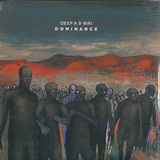
Central to the Israeli club scene, Deep'a & Biri have long been defying expectations even within a community they helped construct. Serving as resident DJs, activists and bookers for Tel Aviv's legendary Barzilay Club, the pair helped build a transcendent club scene. Hugely influential artists such as Robert Hood, Derrick May, Rødhad, Ben Klock and Moritz Von Oswald passed through the club, enjoying legendary crowds and what they could surely sense was a genuine air of anarchy, rebellion and unadulterated rave pleasure.
As the duo held down dozens of parties with dozens of DJs, there was no 'eureka' moment for their emerging sound; just a steady stream of brilliant, inspiring electronic music, much of which left an indelible imprint on the pair. Now based in Berlin, for Deep'a & Biri, things are much the same, even if the landscape and the city is different. Always rooted in the fertile ground between machines and emotion, on their second full-length LP, 'Dominance', the duo demonstrate their unique grasp of the sensitive, unfolding relationship between man and machine. Steadfast in their insistence never to remain in one lane in terms of their sound, 'Dominance' flawlessly segues between forcefulness and weightlessness. From beginning to end, this is not a record afraid to show its teeth with an uncompromising, instantly recognisable techno palette that kicks the foundations of any sound system with menace, anger and determination, particularly on tracks such as the dense 'Voltage' and pulsing throughout the more industrial flourishes of 'Ecole De Nancy' and 'Seeking Solace'.
Beyond these grittier, although never mindless, moments of authority, a sense of escapism and curiosity imbues the album. 'Alpha Cephei' offers the first hint of Deep'a & Biri's more wistful concepts, producing a smoke trail of twinkling electronics out of a smudged but distinctive bassline. That understated sense of emotional catharsis carries throughout, to be found between the complex-yet-familiar bells that drive 'Flow Diverter's' rhythm to a Detroit-indebted landscape that will surely instantly elasticate any keen dancers, while 'False Memories' offers big-room techno fulfillment with none of the character or sincerity removed for cheap thrills. Saving the most remarkable moments for last, the pair sign off 'Dominance' with the poignant and purifying 'Astral Trails', fusing an ethereal, ambient landscape with the more pronounced rhythms of their hardware.
The album's distinctive artwork comes from the studio of Jewish orthodox artist Avraham Guy Barchil, who forged a powerful connection with Deep'a, both was immediately drawn to 'weird atmosphere, amazing technique and emotions involved with his work'. Perhaps one of the most interesting painters from Israel, Avraham is known for his unique perspective, taking his inspiration from the Zohar - the foundational work in the literature of Jewish mystical thought known as Kabbalah. The ambiguous figures represent mystical aspects of the Torah (the five books of Moses), as well as material on mysticism and mythical cosmogony.
Ensuring their natural, conscious touch always remains at the forefront of this unapologetically machine-driven music, Deep'a & Biri have produced an album in the lineage of their heroes and greatest influences. Cerebral yet satisfying, deep yet always engaging, 'Dominance' both reasserts and evolves Deep'a & Biri's forward facing and singular sound.
Strata-Gemma's eponymous debut album is set to provide a soundtrack to 2018.
The trio hail from Modena, the Northern Italian motor city. As with the Ferrari and Maserati cars that are designed and manufactured in Modena, Strata-Gemma produce a music of beautiful symmetry.
Strata-Gemma create jazz for the head, the heart and the body. Their sound is shaped by the ambient adventures Miles Davis and Ron Carter engaged in alongside the electronic pulse Mo' Wax and Ninja Tune carved out of clubland. Add to this a touch of Nino Rota's Fellini film scores, employ a pinch of Balkan and klezmer brass arrangements, and you have an instrumental trio who create music so fresh it stimulates the senses.
Strata-Gemma are a collaboration between Billy Bogus, Luca Cacciatore and Andrea Moretti. The trio first took shape as a club jam between DJs and musicians. Their ability to create atmospheric music, pulsing with rhythm but never solely reliant on beats, music that breaks free and explores sonic possibilities, quickly won notice and lead to the trio playing their freeform music in clubs, music venues and festivals across Italy.
Strata-Gemma consist of producer Niccolò Bruni (aka Billy Bogus), horns player Luca Cacciatore, double bassist Andrea Moretti. Bruni is a DJ, producer and founder of Pizzico Records. Over the past two decades he has striven to mix jazz, beats, soundtracks and funk. Coming together with Luca and Andrea allowed Bruni to explore a vision of post-club jazz that is as rich as Modena's food and as elegant as Modena's cars. Strata-Gemma create a sensual sonic storm, music to be savoured and explored, the opposite of much of today's fast-food music.
Lorenzo Bandiera, the London-based Italian founder of Fly By Night Music, heard a Strata-Gemma demo via friends and was immediately impressed. "I thought 'this is great!", he says. "Music as strong as this can't be ignored. I'm excited about releasing Strata-Gemma."
For her first single, the sublime title 'Loverboy' comes out as a big urban spleen, released in a space made of asphalt and artificial paradises. Groups like Hooverphonic or even Portishead play around this throbbing softness that is Loverboy, splashing about in the electronic lounge of the 90s.
The opener, 'Alien Lady' features a flute-driven solo backed up by a funky guitar riff that then transitions into a tropical beat and Tanja narrating the story of feeling a stranger in a big city, not understanding the social codes and clues 'I don't speak the language in the way that you know' while Worth to you is a dreamy, glitched-out hypnotic track which maintains an edge of mysterious sexuality and her signature sense of intimate detachment.
If the atmosphere coming out of Lomboy's work can be sometimes felt as prude and even shy, it certainly does not intend to hide with embarrassment the aphrodisiac scent that permeates it. On the contrary, this modesty perceived in the interpretation and in the production sensually envelops the different compositions, and imparts to this guilty pleasure the feeling of a stolen kiss. Warped Caress brings us to vertiginous heights and takes us into abyssal depths throughout the five tracks. This suggests at times a diegetic representation of this erotic world seen through the insolent prose and at other times a mimetic representation where each instrument plays an important part in every story told.
Answer Code Request returns with his sophomore album Gens on Ostgut Ton, entering darker but equally bass-heavy territory.
Answer Code Request's 2014 debut LP Code was an exciting moment for electronic music in Berlin - one that offered a break from the eternal hall and monolithic 4/4 kicks that ruled the city's club landscape. As a hybrid gesture, the album's spirit recalled an especially fruitful era in the German capital from the mid-90s to early 2000s, when dub and paddriven Detroit techno cross-pollinated with Berlin's industrial aesthetic to create one of the city's most exciting musical chapters.
Today the musical vision offered by Berghain resident Answer Code Request, real name Patrick Gräser, has proved far-sighted. While at first glance electronic music in 2018 seems increasingly balkanized, borders between genres have once again become fuzzier.
Now, on his follow up LP Gens, Gräser looks beyond the bass euphoria of Code toward darker horizons and a desolate atmosphere befitting of current global circumstances.
In a sense, Gens (Latin for tribe or lineage) reverses the notion of the hardcore continuum as proposed by music journalist Simon Reynolds: embedded in a tradition of US andcontinental European techno, Gräser seeks its disruption through hardcore outgrowths, from ambient jungle to later variations of British bass music and IDM. It's an interesting twist when seen in the larger biographical context of Gräser who, born and raised outside of Berlin in early 1980s, jumped from East German youth radio DT64 to American hip-hop, acid and early UK hardcore - a radical shift of musical interest born of a radical shift in political circumstances. On Gens, the unsettling atmosphere is established early on with the fading rave opener of the album's synonymous title track, and continues through the scrambled military communications and post dubstep rhythms of 'Sphera'. From there, sci-fi pads, heavy phasing and alien syncopation lead explorative third track 'Ab Intus' out into space. Aglimmer of otherworldly positivity arrives with the warm, distorted breakbeats and interwoven synth melodies of album standout 'knbn2', while Gräser's most dancefloororiented melds jungle and techno, Amen and 4/4 kicks, on 'Cicadae'.
out of Stock
Last delivered 15 months ago available to reorder, subject to availability
Jerome Derradji + Still Music are proud to present Let's Dance Records - Mike Macharello & Duane Thamm Jr. Chicago 1983-85. The origin of house music, at least in a commercial sense, is generally associated with young African American producers from Chicago's South Side, but one of the first Chicago house music labels was started by a young, white, gay DJ from the far west suburbs.
The Let's Dance story will take you back to the beginnings of Mike Macherello and Duane Thamm Jr. when Chicago's house music was in its infancy.
Back then, after starting as young roller disco Dj in the late seventies, Mike Macherello gradually made its way to the best radio station in 1981 - WBMX - and started a movement that still ripples through the city today. Let's Dance's founder, Mike Macharello, was a DJ who bridged diverse music scenes, from rock clubs to discos. The Let's Dance record label helped establish Chicago's dance music industry between 1983 and 1985, before becoming Play House Records (which will be reissued by Still Music in an upcoming set). Macharello's pal, DJ Duane Thamm Jr., also from the 'burbs, became the label's main producer and one of house music's most important studio engineers and producers. Mike and Duane went on to release a few legendary singles for Let's Dance that are still to this day considered to be the earliest House music records coming from Chicago.The 12' pack includes faithful reissues of Selenia's 'Single Girl', Duane Thamm Jr. 'Jump Trax', the insane Knight Action 'R-Trax/D-Rail' 12's along with a 5 tracks 12' compilation and an accompanying poster insert including rare pictures and artifacts with the story of the label.
Mandala Trax aka Shingo Suwa and DJ Mori is releasing a first EP on Merkur Schallplatten.
Shingo has established the Label in 2008.
DJ Mori is working as resident DJ at suicide circus Berlin.
They often performed at many clubs in the city.
Their first collaboration includes two different versions of rave influenced techno remixes by Anna Bolena.
Anna is Music producer, Promoter and Video maker, she is an underground activist since the 80`s.
She runs the label Idroscalo Dischi since 1999 and since 2005 the Video Production Company Idroscalo Digitale.
They both are working as resident for Button's party at ://about blank.
A1, their very first track, is called 11pm. The main solid synth line features deep kick drums surrounded by dubby industrial effects in the background.
On A2 we find a heavy bottom groove, surrounded by echoes in a dark atmosphere. Hand claps and white noises are driving any techno floor.
The B Side includes two different version by Anna Bolena. She produced some 90's rave structures affected by her experimental senses.
Bursting through the vapour trails of previous Solar Phenomena pilot Antonio Ruscito, London's Roberto is invited to the take the controls of the forward-thrusting new label's third adventure.
With turbine pads raising hairs at 20 paces, opening track 'Into The Blue' is an alluring statement. Adorned with breathing atmospherics and stately kicks, it builds perfectly on Roberto's previous work both on his own highly respected label Fossil Archives and other eminent imprints such as Emmanuel's Arts and Dehnert's Fachwerk as a fusion of contrasts and shades.
'DX Waves' takes us up a gear as it heads nose-first into a techno vortex. Relentless, driving and hypnotic, there's a pneumatic funk to the drums while the riff ripples and stimulates with a warmth and fluidity that instantly recalls the legacy of Motor City while remaining plotted to a path of its own.
This sense of unbridled drive and energy continues on Roberto's final original of the EP: 'Chord Recall'. Here the drums take more of a central position on the stage as the warped, melting tones and textures wrap themselves around the punctuated kicks and occasional deep-splash cymbals. Laced with a deep sense of space and a bewildering sensation of an unknown destination, it s another innovative voyage for Solar Phenomena that's brought home with an exciting revision conclusion from the one and only Peverelist.
A Bristol beat explorer who needs no introduction, Peverelist's take on 'Chord Recall' takes off where his recent album 'Tessellations' left us at the start of the summer. With his loose broken drum signature, Peverelist provides space for Roberto's original textured elements to take place at the centre of the stage and roam and evolve freely and hypnotically. A fitting end to another exceptional and innovative exploration, both Roberto's originals and Peverelist's remix set us up eagerly for the next Solar Phenomena chapter
out of Stock
Last delivered 3 years ago available to reorder, subject to availability
Distant Images is D.K.'s fourth release on Antinote and we can say quite safely that Dang Khoa Chau fueled a few identifiable obsessions over the years - for those familiar with his work, it probably won't feel like uncharted territory when they'll hear a somehow well-known guitar in the background of the title-track.
.
What time spent collaborating with D.K. also showed us is how much his sound magnified itself and its textures sharpened for the past three years. We now know for sure that his music only seems versatile on the surface as Distant Images confirms that the Paris-based musician has been, in fact, digging deeper in the same direction, each new record working like a diaphragm, always more precisely adjusted to capture his inner vision. It feels, for instance, like D.K.'s music is constantly trying to reach a higher level of evanescence from one record to an other, a process which possibly accelerated after a visit from Suzanne Kraft - who he recorded an album with, earlier this year (coming out on Melody As Truth).
With Distant Images, D.K.'s sound also took a step further into reality - the most attentive ears will hear seagulls on Distant Images while rain is softly falling on Leaving - and slightly departed from the digital universes that his previous records seemed to set in motion. From the most abstract songs - like the Steve Reich-ian Shaker Loops
- to the most evocative ones, the five compositions on Distant Images are like stained glass, gently filtering natural light. It is therefore no coincidence if, of all the senses, the titles of the songs mostly refer to Sight: close your eyes while listening to the cinematographic Days Of Steam and visions of an industrious city might appearbefore you.
The beauty that emanates from Distant Images is of a diaphanous kind and the record a collection of kaleidoscopic moments.
After their highly acclaimed album - Dis Side Ah Town Roger Robinson and disrupt are returning with a reel full of new tales about survival in a Dog Heart City. These stories, delivered in Robinson's full vocal spectrum between low-end dub poetry tremors and haunting falsetto singing, are trying to make the invisible lives visible: giving people affected by gentrification, racism, unemployment and low wage work a sense of authority and aesthetic nobility.
Each song on this album became a story in that city, while the record itself is like the city holding these stories. Nightshift' tells about the workers who clean the buildings where power
is held, and the contrast between their lives and where they clean. Flowers' comments on the rate of young black men getting killed, where another victim dies even before the last mourning flowers have dried. There are stories about tower block life, the claiming of a postcode or how the city wears a Swastika like a proud badge in Post-Brexit UK.
This beautiful LP collects a pile of special riddim cuts from the Jahtari vaults, from re-edited classics by Bo Marley, unreleased gems by John Frum to completely new experiments, all lovingly dubbed live and soaked in analogue goodness by disrupt.
Stunning hand-painted cover art by Kiki Hitomi.
If Psychic Health's self-titled debut album took the lessons the LA duo learned in the teeming clubs of Berlin and Melbourne, their latest LP, Exclusion, look inward, a document of the duo tunneling down the studio wormhole. As such, Exclusion is a remarkably dynamic effort, adeptly jumping between evocative ambience ("Jamaica 88," "Ryso") and equally expansive dance floor fair.
Examples of the latter, such as the album's obvious centerpiece and titular track, Exclusion, document Gabriel Mounsey and Devon Steffens's harnessing modular beast technology for peak techno utility, finding a clear thoroughfare between the soaring strings of Derrick May's classic Transmat releases and Ostgut Ton's current EBM-inflected precision.
As you'd expect from Mounsey's background in film composition, Exclusion whirls with imagery. It's a Los Angeles album, but focuses on raw beauty of the city at night—the lights in the distance, and the desolate downtown streets where kickdrums often waft from disused warehouses. While their debut album opened notable doors for the group, landing distribution from Hard Wax and featuring in the Netflix series Sense8, Exclusion is an altogether masterful turn for Psychic Health, their complete studio immersion easing the listener into deeply hypnotic states.
children are laughing and playing in the back, a baby screams happily: handsome field recordings welcome the listener to the final chapter of fred p's fp-oner trilogy for mule musiq.
the opening tune is called smiles, so children's laughter fit the mode. the idea is that smiles and cries are natural for children and as they grow to adulthood the reality becomes more, therefore the duality of life itself is obvious in the mood of the song.
the new york city native that is working on his very own music for almost 20 years explains about the beginning of his new album that features eleven tunes for deep meditative club use and beyond.
it brings the listener house music full of cosmic realities, odd jazzing moments, japanese spoken word pop, synth spheres for ambient use and an overall outer-national atmosphere, that handsomely dances between roughness and subtle tuned in deepness.
i chose to base this project on numbers in order to impart a bit of depth and substance. 5, 6 and 7 have a meaning in both the literal and esoteric sense. we as a species are a combination of matter and energy, so it is a matter of relating the two in harmony.
my experience as an artist expresses this. it's like a testimony to the human condition and how we relate to treat and mistreat one another. this view is the base of a philosophy that is close to me, be-cause art imitates life.
so rather than doing a project that highlights ego posture, my intent is more about what can i give to the listener. as a human being, as an artist, what can i share it's a part of a philosophical tug of war that goes a lot deeper than the expectation of what one might think a dance album or rather an elec-tronic music album should be.
it's food for thought, not candy and a soft drink, but real substance that stays with you.he reveals about the profundity of his trilogy. at large it is a journey inward, compelling, mesmerising and en-chanting.
for the final chapter fred p mostly produced in his studio in berlin on various synths and with a bunch of mysterious samples, all later organized and programmed in ableton. this project has a beginning mid-dle and end. the record 5 was intended to introduce a meditative energy within a rhythmic construct as the number 5 represents the dynamic and unpredictable.
the whole album carries the energy of that ilk. the album 6 is of an earthly and more harmonious dis-cord. i attempt to bring the inner conflict in the form of natural unnaturalness. the raw energy of the search in this project i think is self explanatory, which is the point i believe to show how flawed one can be but express very specific themes honestly.
finally, with 7 my goal is to merge the two into balance, as one focused state of mind as 7 is the thinker beyond understanding or beyond the illusion. this is my hope people take away from this: a feeling of growth, optimism and positive energy. we are dealing with vibrations every person resonates with, so the idea is where do you want to take that
what do you want to do with that as an artist you can do some good or some harm. for me i choose to give the best that i can and i hope that the people that participate get a sense of that.' true words by a kind and gentle soul that loves to speak in music.
they explain much and then leave things in the dark too, as he basically says: let the music play. so listen deeply, open your doors of perception, dance the atomic mess around, stay small, be true and don't forget: fp oner's music is a traveling zone with a universal meaning. it can mean many things to different people. but thus is the purpose of art.
As felines usually do, TYV's latest effort and Gop Tun's fourth enterprise purrs and prances along with elegance and nonchalance. From the first elements of percussion up until the last trace of reverbed and delayed textures leave the speakers finally at rest, Miau engulfs its listeners in a powerful stream of melodic strength and rhythmic intensity. Not surprisingly all of this mojo relies heavily on very typical chromatic nuances, familiar to anyone who's acquainted with Brasil's rich musical diversity and solid foundations.
Miau is a ritualistic utterance, an onomatopoeic journey that takes us deep into an utopic place where innocence is untainted and our best memories are left untouched, but never forgotten. Features that are somehow enhanced in Tuff City Kid's own Lauer's version, which is Idyllic in its pads and entrancing in its beats, but still elegantly nostalgic in its feel.
Da Terra maintains the festive atmosphere and heats up the oven a tad more. Some earthly delights await those willing to cross the dense layering of percussive vegetation and arrive at a beautiful glade where the main hook meets the strings and chants that conjure a particular vibe of uplifiting melancholia.
This is a feast for your senses, guaranteed to overload your neurotransmitters just like our native meals.
Detroit's Burden Bros have long been looked upon with immense respect within contemporary dance music. Having been in operation since 1990 with their 430 West imprint they have long encapsulated the forward thinking vibe of Detroit Techno with their output over the last 20+ years, gaining praise from their motor city peers as well as fans worldwide. Having had success in the mainstream and an enduring underground presence they are well versed in the art of music.
This double-pack 'Cymbolic' originally came out in 1995 and found favour with electronic music fans who sought a deeper edge in their music. It's all here, the trademark drum programming, the epic sense that all of the Burden Bros productions have within them. This is dancefloor music, music for DJ's to utilise, tools, but tools with the deepest soul imaginable. Listen to 'Terraforming' or 'The Symbiont' - perfect examples of driving, almost tribal-esque rhythms fused with strings, synth pads and human feeling. 'Cymbolic' is for you if you're a fan of Detroit Techno, but it's also for those who enjoy the deepest electronic sounds. That's not to say it isn't funky though, these tracks will decimate most dance-floors, and therein lies the secret. Essential release here, that classic 430 (mid) West flavour re-mastered, re-pressed and re-released in conjunction with the Burden Brothers / 430 West Records, Detroit USA
Inner8 is Daniele Antezza, a multi-faceted thinker and electronic music producer, member of Dadub duo, co-founder of Artefacts Mastering Studio, Dadub Studio owner and Holotone label manager, whose regular invocation of the term praxis begins to hint at his creative aims: a primary synthesis of contemplation and action that, in turn, encourages a secondary and entirely unpredictable set of syntheses dependent upon the listener's unique interpretation. Though the Inner8 moniker has been in existence for several years as a private nickname for, as Antezza puts it, his 'experimental anarchist sounds,' his recent releases are just now surfacing which will reveal just how much this project has to communicate.
Like many transplants to Berlin's pulsating sonic underground (Antezza moved there from Italy in 2009), his past work seems to communicate traces of the ecstatic with the argot of technical precision and / or scientific rigour. However, Antezza is not what one would call a 'Berlin artist' despite sharing these traits in common with the city's most visionary producers: his work gives off an impression of restless nomadism that has little to do with representing a localized scene. Rather than carrying on the territorial / parochial projects of reinforcing an arts scene's geographic boundaries (or even redefining the boundaries of a musical genre), Inner8 is more concerned with a holistic 'deconstructive approach' through which 'it's possible to reveal the paradoxes of the dominant thought, the paradoxes behind the status quo.' His fascination with concepts as diverse as asymptotes and particle physics, though often trendy among those looking for a seat at the table of the avant-garde, is a heartfelt fascination - moreover, these interests merge perfectly with his relentless theoretical questing.
Antezza's relationship with that city's Stroboscopic Artefacts techno label has been a particularly fruitful one, to the point where his sound work prior to Inner8 is almost synonymous with SA's own development. As one half of the psychonaut duo Dadub along with Marco Donnarumma, Antezza has sculpted deep and immense tracks that mesmerize with their harmonious interplay of force and ambiguity. After having co-founded and managed for years Artefacts Mastering Studio, he recently launched his brand new audio postproduction Studio (Dadub Studio), where Antezza lends his sonic signature to an eclectic variety of electronic recordings. That signature can be identified by its hyperreal sense of presence and immediacy, qualities that have become crucial to the presentation of a music that generally relies on only a few sonic elements per track to communicate its message.
Antezza also takes pride in the ritualistic quality of Inner8's live sets; a mobile laboratory of dynamic tension in which his theories manifest as massive physical vibrations (here we can also see / hear / feel just how well Daniele has absorbed the lessons of the dub 'sound system' aesthetic).
'Spirit Reflection' is the third album LP from Los Angeles singer-songwriter
Gaby Hernandez. Blissful layers of instrumentation, electronics, vocal harmonies and folkloric percussion intertwine with west coast feel to create aunique, beautiful and multi-layered album.
The album features a stellar line-up of LA talent, jazz star Kamasi Washington, Stuart Howard (AKA Lapalux), Kelis and Gaslamp killer collaborator Dexter Story, plus Ninja Tune, Plug Research and Soul Jazz artist Carlos Niño, Miguel Atwood-Ferguson and Gabriel Reyes-Whittaker all accompany Gaby, with stunning results. Even before Spirit Reflection had been finished, the demo mixes caught the ear and gained support from Gilles Peterson, Lefto, Toshio Matsuura (U.F.O.) and JRocc (Beat Junkies). Born, raised and based in Los Angeles and of Chilean descent, Gaby Hernandez has been writing and recording since 2001. She was a founding member of the 'creative music ensemble' Build An Ark alongside others including Carlos Niño, Dexter Story and Dwight Trible.
Gaby was the only vocalist on Teebs' debut Brainfeeder release Ardour. She made major contributions to AmmonContact's Ninja Tune releases New Birth and With Voices, plus The Life Force Trio's Plug Research album Living Room. She was also the vocalist on Dimlite's Outernational Duet - released as part of his highly acclaimed Sonar Kollektiv longplayer This Is Embracing.
Hernandez was invited by Mia Doi Todd to sing on the Jonathan Wilson produced song Canto de Iemanja, which was included on Todd's City Zen record Cosmic Ocean Ship and the Red Hot + Rio 2 compilation, which also featured Beck, Seu Jorge, Aloe Blacc, David Byrne and Madlib. Among her main musical comrades is the prolific multi-instrumentalist, composer and producer Dexter Story, for whom Hernandez sang on the track Water Bearer from his LP Seasons, on Kindred Spirits. David and Graham from Mr Bongo met Gaby and Carlos Nino at the end of their hugely successful Arthur Verocai album launch and rare record sale at the RAPPCATS venue in LA. Gaby and Carlos passed us a copy of 'Spirit Reflection'.and we put it on the deck. It immediately grabbed us and we couldn't stop listening to it. When we got back to the UK we got in contact straight away and signed the album. We're very proud to be releasing it'... ...this is a future classic, an 'album' in the truest sense of the word. Brilliant.' says Graham.
Progression..., like a spark shooting through fiber optic cable or a bullet train churning through the next tunnel, the acid-techno arrangements of Detroit-based DJ/producer Rebecca Goldberg have a velocity to them that's spurred by reverence for the roots of electronic and techno music conceived in her hometown, from the Belleville Three to 'the Godmother of House Music,' DJ Stacey 'Hotwaxx' Hale.
Palpable in the pulse of Goldberg's latest EP 313 Acid Queen is an urgent and inspired, cool and confident sense of picking up a proverbial torch, of propulsion along with preservation, of continuation as well as re-invention. Born vigorously forth upon the blooms and grooves of her synth scores for these five songs is the sharpest demonstration, yet, of her signature sound and vision.
313 Acid Queen reaches to and re-enlivens the traditions of Detroit techno with Roland's contemporary iterations of the 808, 909 and 303 drum machines, quintessential sonic characters utilized by the region & genre's seminal producers. The title refers, also, to the Detroit area's predominant telephone area-code, as she audibly reaches out to touch the essence of her city's distinct and dynamic neighborhoods and landscapes, most evidently with the field recordings from city streets and the animal populace inhabitants in the majestic Belle Isle Aquarium.
These kinetic, contemplative and coolly exhilarating tracks were conceived to carry on the tradition of Detroit acid techno in the contemporary world. Fittingly, Goldberg's first vinyl release comes on March 13t h (3/13), distributed internationally through Detroit Underground, a multidisciplinary arts collective & record label. Goldberg's fellow Detroit producer Ryan McCray has a deep sound and keen sensibility for acid techno all his own; he fell in love with the 313 Acid Queen track 'Aquarium' and remixed it to be an exclusive bonus track for the vinyl release.
Following their much-acclaimed surprise debut album VERMONT from 2014, Motor City Drum Ensemble's Danilo Plessow and Innervisions' Marcus Worgull reunite for more synth daydreaming on the suitably titled II'. The new outing continues where the first full-length left off, strolling further down the luminous and undulating path that the duo turned into, influenced in equal measures by kosmische, krautrock, minimal wave and synth soundtracks.
This latest batch of instrumental cuts opens with the strictly balearic vibe of NORDERNEY, a softly swinging, light-footed recording with a keen sense for structure. Featuring a guest performance from Robbert Van Der Bildt (aka Kaap) on guitar, it's a telling starting point for the album that - similar to Vermont's self-titled debut - successfully navigates between economic, careful studio arrangements and playful, incidental exploration further pushing into jam session territory. Van Der Bildt's guitar returns on the plucky, curious UFER, where Vermont showcase a renewed sense for jazz-like improvisation - same as on the cuts DSCHUNA, CHANANG and WENIK, which also include contributions from Dermot O'Mahony and Tadhg Murphy on strings.
Still, Vermont's synth contraptions remain the album's main attraction, with the extensive array of gear encompassing an entire panopticon of analog bling - from Arp Oddysey and Moog Prodigy to Fender Rhodes, Juno and Prophet, list-studying gear heads will find lots to drool upon. Consequently, tracks like CHEMTRAILS, UNRUH or GEBIRGE err on the machine side of things, expertly interweaving arpeggiated sequences for maximum atmospheric effect. Foreboding, slightly menacing synth motives as on SKORBUT or CHEMTRAILS are perfectly balanced with the casual ambient of HALLO VON DER ANDEREN SEITE and the nostalgic warmth of DEMUT - while the gentle push of the masterful KI-BOU even carries a whiff of classic deep house, linking the Vermont project to Plessow and Worgull's main careers as dance floor movers and shakers.
Continually intriguing, immersive and texturally rich, each one of Vermont's new pieces betray the experience, precision and determination of the producers involved - while opening up Worgull and Plessow'a vocabulary for patient experimentation and subtle discoveries. A musical treat for synth aficionados - and everyone else, if you ask us.
It's been five years since his acclaimed debut 'Severant' and time has proved it prescient, its futuristic trap influence is now ubiquitous. 'Slow Knife' seems to return to where 'Severant' left off, but with the intricate sound design of last year's haunting EP 'Assertion Of A Surrounding Presence' subsumed into the compositions, making them more exacting and beautifully crafted. Between albums Kuedo has been working as a sound designer and composer for hire and the application of intent and widescreen rigour that commercial work requires has definitely found its way into the new album. 'Slow Knife' has the subtlety, ambition and pacing of a brilliant soundtrack - a sense of an album of scenes, that easily lends itself to an impressionistic narrative. But, as with 'Severant', the title suggests relationship unease, with the slow knife being a metaphor for the building resentment in any close relationship. 'Slow Knife' is almost two albums, the first half, according to Kuedo, invokes the seduction of the city, taking the music of Michael Mann's 'Manhunter' as a cue, with the latter half being inspired by the bloody starscapes and voodoo wilderness of films such as 'Angel Heart', 'Night Of The Hunter' and more recently the 'True Detective' series. Both halves of the album are also in thrall to Mica Levi's inspiring 'Under The Skin' soundtrack, especially in the turbulence of the mid-section. The songs of the albums first half are synthetic and seductive, a gelatinous veil with shades of the pseudo-sophisticated trance of Enigma, of all things, underpinned with dusky unsettling shadows and atmosphere. 'In Your Sleep', perhaps surprisingly, features the vocals of Hayden Thorpe from Wild Beasts, who settles his dark, whispered vocals into the moonlit shadowy atmosphere. 'Floating Forest' is the first track to allow back some of Kuedo's experimentation with the Southern rap template, which he explored before it became commonplace, with echoed drum splashes and a sinister repetitive motif, ending with a haunting growl. The second half of the album enters wilderness territory with 'Approaching's slow descending notes, before 'Broken Fox - Black Hole' throws the record into the cathartic darkness, as undulating chords play hide and seek with riotous reeds and scratchy strings grown from challenging collaborations with cello player Koenraad Ecker (from Lumisokea). 'Breaking The Surface' shivers and coils, before metal and strings dominate while 'In Your Skin' feels like being lost in a vast hinterland before 'Warmer Light' introduces some memories of sunshine, with its plucked bassline and spiralling dub. 'Halogen Light' opens with the sound of crickets and a clear piano, cleansing the soul before 'Lathe' brings things down to earth with a short, yet powerful coda.
The second release on the vinyl only series of Apes Go Bananas finally drops. The label is the new imprint from Steve Bug and Clé, who together make up the production team for the releases. As with the well-received first EP, 'All We Have ' is straight-up, no-nonsense, dance floor-filling house tracks. Lead cut 'All We Have' settles right into the groove with crisp and funky percussion, chi-town chords and amazing vocal samples. It's got peak time written all over it. 'She Cargo' makes its influences pretty clear via the title, and the track certainly references some of the iconic sounds of the home of house. Thick, rubbery bass lines, squiggly synths and firing percussion combine to deliver a suitable a homage to the windy city. 'Ape Parade' is built from some similar materials, but the chords are a little more lush and deep - synth strings and keys add a sense of the epic, and everything is tied together with a sick kick / snare / hat pattern. Three modern killers for the floor, infused with the spirit of classic house.
Following the success of their 4th album 'Malamore' released in April this year, French duo The Limiñanas have now trusted London star DJ, producer and friend Andrew Weatherall to remix the flagship single Garden Of Love (feat. Peter Hook). The collaboration has resulted in two unique remixes. When we released Je Ne Suis Pas Très Drogue in 2009, Andrew played it in his radio show in London. Then Bernie Fabre contacted me because Andrew wanted us to play in his festival De La City A La Cité in Carcassone. That's how we met. When we worked with Peter Hook, the idea of a maxi with one or two remixes made sense. So we did this record with the original edit of Garden Of Love and two remix edits by Andrew Weatherall. - Lionel Limiñana
The sixth release on Deep'a & Biri's Black Crow label welcomes another new name into the fold: Nico Campanella has been quietly building a stellar reputations for himself over the past few years, working under a variety of aliases to explore a sound that much like Deep'a & Biri draws deeply from techno's Detroit heritage as well as the propulsive dub techno of Basic Channel. With releases for several high quality under-the-radar European techno labels, including Construct Re-form, CLFT, Monnom Black and his own label Subosc, Campanelli's Kaelan and 2030 projects in particular have won him some ardent admirers & plenty of tips as a talent to keep an eye on. It's as 2030 that he joins Black Crow, for the Timeworm EP, which is completed by remixes from FXHE's Luke Hess and the label's Tel Aviv-based founders. The EP's original track are a pair of lushly-produced classic Detroit-influenced excursions, redolent of the cascading ambient textures and string melodies found within the work of the city's first wave pioneers. A1 cut 'In aeternum' could easily be mistaken for a lost early 90s classic in the best possible sense, while the title track also draws on a similarly timeless quality. With the original track ensuring the EP package will win other home listeners, it's the remixers who shape them for the dancefloor. Luke Hess's 'In aeturnum' remix is powerful dancefloor workout that retains a softer edge, recalling the producer's recent collaboration with OB Ignitt. On the B side, Deep'a & Biri offer two of their own interpretations of the title track, pulling the track across the dub techno galaxy with their trademark dexterity. Completing a truly exceptional package is beautiful hand drawn artwork by Israeli artist Avraham Guy Barchil.
OID is the solo project of Russian producer Andrei Antonets who is set to release his latest track 'Bright Side of Life' on PNN Records (13/07/2015) Born in Riga and having lived in Berlin, OID is now based in Moscow, where he is inspired by the city's rapidly changing scene. 'Bright Side of Life' translates a sense of potential, it is upbeat without being commercial. The track's singular sound has prompted The Field, Popnoname & J.P Janzen (Von Spar) and Mujuice all to produce remixes which will appear on the EP alongside the original. Each of these deliver a unique take on this uncommon yet catchy tune.
Over the past few decades, there has been a seismic shift in Brazil's musical landscape. A plethora of varying musical undergrounds has developed across the nation. While Rio and São Paulo have been overwhelmed with networks of talented musicians for a long time, creative life is now bursting all over the country. Amplificador exists to document and propagate the wonderfully diverse music currently blossoming from Brazil's vivacious and geographically varied musical undergrounds. Presenting an up-to date insight into Brazilian music, this compilation draws together some of the components of 'Novíssima Música Brasileira' (brand new Brazilian music), ranging from afro-grooves to rock, to modern samba and MPB. The music reaches back across Brazil's incredibly rich musical and cultural traditions, while also taking in influence from other movements around the globe.
Having begun life in 2012 as a Brazilian music blog run by Marcelo Monteiro, Eduardo Rodrigues, Mateus Campos, and Ricardo Calazans, the aim of Amplificador is to document and propel to wider audiences, Brazilian music of the '00s and '10s generation. This is a task made more significant by obvious changes in the way music is consumed. 'People are no longer obliged to listen to what the radio and TV are presenting. There is a whole new generation that wants to listen to new bands and new sounds and we try to connect those bands with other bands, producers, fans and even the mainstream.' These changes in technology and the way music is discovered and shared have developed parallel to the proliferation of these emerging scenes. The ostensible decentralization of the music industry means the promoting and filtering work of journalists and blogs, like Amplificador, have become increasingly important, as people try to keep up with the tsunami of new music and media flooding the country on a daily basis.
Marcelo uses the example of the Mangue Beat movement to explain a trend in contemporary Brazilian music that looks both inwards, to Brazil's own musical traditions and outwards, to movements around the world to create a novel, localised identity: 'The 90's Pernambuco art-social movement was inspired by Coco, Maracatu and Forró all mixed with modern riffs and grooves. The mythical
revolutionary Chico Science, his Nação Zumbi, Mundo Livre, Siba, and many others do this blend perfectly. There are also the references to the older generations and masters - Gil, Caetano, Luiz Gonzaga, João Gilberto, Tim Maia, Jorge Benjor - as a constant inspiration for all bands.' This is very much the case for the Brazilian artists of today.
Music is unquestionably informed by place. Brazil has always been famed for its regional differences in this sense. Indeed there are still pronounced variations between the scenes of Rio, Sao Paulo, Natal, Goiânia, Belo Horizonte and Belém for example, there are also great divergences within cities and while technology has brought changes to the way musical influences are shared, there are cultural differences, rooted in folkloric traditions, that aren't going away. Expressing his appreciation for this fact, while highlighting the potential of Brazil's spread of musical flavours, Marcelo explains that 'what we have now is new ingredients to make an even better mixture.'
This compilation heavily features music from a scene in Brazil's current musical make-up, which draws inspiration from African music, particularly Afro-beat music. Abayomy Afrobeat Orchestra from Rio formed because of their shared love of the music of Fela Kuti, uniting initially in 2009 for a jam session in his honour. But what sets Abayomy apart from other groups of a similar nature, is the fact that their sound also brings with it the songs and rhythms of candomblé. In this sense, Abayomy was the first band of its kind. The thirteen members of the orchestra have a palpable current of Rio's musical heritage - its rhythms and culture - running through them. So while their sound is distinctly African, it is also inherently Brazilian. Similarly, Zebrabeat Afro-Amazônia Orquestra draw upon traditional guitarradas and carimbos from the state of Pará and fuse these with the poly-rhythms of Afrobeat to create another regional hybrid, which stays true to both its Amazonian and African roots, yet which results in a very fresh, Brazilian sound. From Belo Horizonte (capital of Minas Gerais), Iconilli are another key band on Brazil's Afro-groove scene. With influences as varied as funk, jazz and psychedelic rock, congado, mining harmonies, maracatu, coco, ijexá, carimbó, Iconilli somehow manage to balance all of these sounds in such a way that makes it impossible to pin them down. From the Northeastern city of Joao Pessao, Parayba, Burro Morto's pshychadelic afro sound leans more towards rock and funk influences, with hint of regional Brazilian rhythms such as frevo and forro. They add another flavour to the Brazilian afro-groove scene: just one of the many exciting facets of Novíssima Música Brasileira.
While African-inspired music features heavily on the compilation, it is just one of the many styles within. Ive Seixas has a fresh approach to MPB, based on traditional rhythms and instrumentation, punctuated by a pop sensibility, coupled with a powerful female vocal. As an artist she is a product of a 'Do It Yourself' outlook to creativity, taken from her love of rock growing up. In 2013 she embarked on a project of street performance: wandering, like a lonely troubadour with just her guitar. Ive and her project began to gain notoriety and shortly after, her first EP was recorded, featuring some important names of South Rio's underground scene. 'Cervejas Populares' taken from the EP, is a beautiful, sombre piece of modern Brazilian pop, with a traditional samba rhythm. Another artist of the new MPB scene is Fabricio, from the city of Vitoria, who's 'Feito Tamborim' melds rock and funk and is also clearly reminiscent of the old Brazilian masters. It's an appreciation for the national musical heritage, alongside a keen ear for melody and an acceptance of foreign influences that results in these promising new sounds of Brazilian MPB.
Sao Paulo's super group of the underground 'Passo Torto' have been at the helm of an emerging scene in the city: an innovative approach to samba which draws in and experiments with afro grooves, jazz melodies and rock structures. Their sound is naturally very Brazilian, but the nylon twang of Faira Lima Pra Ca, interspersed with ominous strings and light rolling percussion, seems reminiscent of Captain Beefheart or Tom Waits, as the band lament their frustrations with their native city through their music.
The Future of Novíssima Música Brasileira looks very bright. The main challenge (and purpose of this album) is to get the music beyond Brazil's underground and into view of international audiences. In the last 10 years this goal has become somewhat more attainable, as the Brazilian government has begun to see the internationalisation of the nation's culture as a strategic objective, with public projects gaining increased investment and backing. The continuing project of Amplificador is to reinforce this international bridge by writing, filtering and promoting the scene as a whole. There is a wealth of great music currently blooming in Brazil and using new media tools, Marcelo and the team, alongside many others, will passionately continue to get the voices of Brazil's underground heard.
'We Start Over' arrived on the desks at International Feel and it felt perfect for us. Deep electronics, a lovely mood, forward thinking and a gorgeous vocal from Trudie Dawn Smith. Lots to play with from a remix perspective and a great original track in itself. Steve Cobby is a British producer, musician, composer, and DJ, based in Kingston-upon-Hull, Yorkshire. He co-founded Fila Brazillia in 1990 and released 10 critically acclaimed LP's and produced over 70 remixes for artists as diverse as Radiohead, Busta Rhymes, Black Uhuru and A Certain Ratio. Cobby now releases music via his own label Déclassé label. His latest and third solo LP 'Saudade' was released in March 2014 and received considerable critical acclaim.
The first 12" consists of the original version and on the flip a remix by Apiento & Lx (their first track together since the underground classic 'The Orange Place' ). The remix is slow trance in its purest sense, made for lasers and dark nightclubs. It's already receiving club play and has been named by Andrew Weatherall and Sean Johnston's ALFOS as "one of the records of the summer". High praise.
On the second 12" the reins have been handed to Gerd Janson & Phillip Lauer a.k.a Tuff City Kids - two people making some of the finest house at their at the moment with Janson also getting massively known globally for his DJing. Their remixes are made for the clubs. The 'Garage Dub' is classic New York house that is as deep as you like and one of those hooky ones that does everything perfectly. The other, 'Private Acid Mix ' goes heavy on the beats and drops the 303 in a fine style with the vocal looped and twisted.
As you would expect from International Feel this is classy and classic club music covered from all angles from a balearic original, a deep chug remix from Apiento & Lx and the Tuff City Kids bringing the house vibe. Deep deep deep.
out of Stock
Last delivered 18 months ago available to reorder, subject to availability
Six years on from his debut album on Cadenza, Swiss DJ/producer Mirko Loko comes with the follow up to 2009's 'Seventynine' as he catapults us into the techno and electronica galaxy with 'Comet Plan'. 'Un voyage entre toute mes influences,' Mirko Loko shares, breaking into his mother tongue to describe the essence of his sophomore longplayer that was conceived in Berlin and later birthed in his hometown of Lausanne after a two-year gestation period. Literally translated as 'to travel between my influences', it's a fitting summation of an artist whose work has respectfully mined early inspiration from Detroit and Chicago that laid the foundations of the emotion-filled productions that we know of him from today. In addition to this, Mirko sees his connection with Luciano's Cadenza Music, a relationship that's been in existence since dot one and saw the likes of Ricardo Villalobos, Melchoir, Pedro and Rahdoo make up one of the most innovative crews in dance music, as leaving an indelible imprint on his musical DNA to this day. It's Mirko's strong sense of musical identity that is at the core of 'Comet Plan', a work that's equally informed by the artist's spiritual connection with the Motor City as his halcyon Cadenza roots. And one thing's for sure; he knows how to captivate: take 'Venus' whose trickles of melody and syncopated drum rhythms increases in intensity with each bar towards an eerie crescendo. Then there's 'U Special' that builds the kind of subtle party vibes you could imagine Luciano dropping to create one of those moments to a heaving blissed out dancefloor. 'Kolor' - the album's early single (also remixed by Carl Craig as part of an excellent EP package) is sprinkled with a dusting of xylophones, chimes and other bells as the melody is driven forward for a heady trip across the electronic galaxy.