Layers of fog, hazy synths, solid percussion, and liquid basslines – Esaïa's debut album Mindscapes invites listeners into a dreamlike soundscape. A sonic experience where Berlin’s Berghain meets the vibrant streets of Kingston, Jamaica.
With its cinematic chiaroscuro lined with sub-bass, the album blurs the boundaries between genres. Inspired by the pioneers of dub, Esaïa seamlessly blends hybridisation and experimentation, pushing musical limits to carve out her own sonic space.
An album designed for both the dance floor and introspective listening, 4-to-the-floor techno-driven beats fuse with blissful instrumental flows. Paired with Madame Ipsum’s luminescent visuals, Esaïa’s work creates a multi-sensory experience that sparks the synapses.
Suche:sensor
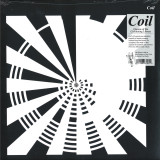
Queens Of The Circulating Library stands alongside Time Machines and Nurse With Wound's Soliloquy For Lilith as a post-industrial pinnacle of sensory-warping long-form drone.
Crafted by the distilled duo of Thighpaulsandra and John Balance, the 49-minute piece unfurls in swirling, cyclical waves, tidal as much as textural, channeling the spirit of levitational minimalism pioneered by La Monte Young. Touted as the first part in "a continually mutating series of circulating musickal compositions" upon its initial release in 2000, the album remains a compelling case study in Coil's exceptional capacity for mutation and extremes. The theatrical introductory monologue delivered by Thighpaulsandra's mother - a career opera singer, in her 80's at the time of recording - sets the stage for a grandiose ascension. Written by Balance, the text is declamatory but dreamlike, refracted through megaphone echo: "Return the book of knowledge / Return the marble index / File under "Paradox" / The forest is a college, each tree a university." As her voice fades, the lulling synthetic infinity deepens, congealing into transient crests of volume and haze, like slow-motion surf misting in moonlight. Thighpaulsandra describes their aesthetic intention as a "bliss out," static but shape-shifting, an amniotic drift towards an eternal vanishing point. A supreme sonic embodiment of the slogan on the sleeve of Time Machines, two years prior: "Persistence is all."
DJ Stingray 313's INDUSTRY 4.0 EP is a sonic exploration into modern manufacturing concepts and the impact on humanity.
Moods and titles across the EP cover artificial intelligence (LARGE LANGUGE MODEL), the internet, and robotics (MULTI FUNCTIONAL ROBOTICS and SENSOR DATA) – all set to his signature high-energy, industrial, cyborg-style productions.
Together, the tracks on INDUSTRY 4.0 work as a striking and current introspective of humanity’s uncertain evolution, moving as fast as the technology it creates.
Ruby Red - Transparent - Galaxy effect vinyl in dub style jacket (jacket sleeve with center hole cut out so label of LP shows through) a black paper inner sleeve and poly bag.
PART ONE’ METAL HAMMER - 8/10 review. FOR FANS OF : Lustmord, Om, Sunn O))) . “An exercise in freeform ambience, ritualistic repetition and the rapturous, womb-like power of bass…strange and affecting. We remain lucky to share in the great man’s vision.”
At its heart, music has always been a questioning of inheritance – a dialogue with predecessors and forebears, the forging of one’s own perspective in relation to what has come before, and for some, a plunge into the boundless realms between. For Steve Von Till, that process has always taken on an added dimension to become the most sacred of tasks. Whether through the apocalyptic uprising of Neurosis, the sonic deconstructions of their sister project, Tribes of Neurot, the invocatory intimacy of his eponymous solo albums or his instrumental psychedelic reveries in the guise of Harvestman, that dialogue has never just been with musical influences, but with what underpins them: the primordial, elemental forces now banished to the peripheries of our contemporary consciousness, yet still broadcasting a signal for all who will listen.
Drawn to the megaliths, ruins and ancient sites mapped out along the British and European mainland’s geographical and psychic landscapes, the folklore and apocrypha forever resurfacing as portals from a rational world, “Triptych” is a meditation forged from traces and residues, and an hallucinatory recollection of artists who have tapped into that enduring otherworldliness embedded within us all. It’s a dream diary narrating a passage through Summer Isle where Flying Saucer Attack are wafting out of a window, a distant Fairport Convention are being remixed by dub master Adrian Sherwood, celestial scanners Tangerine Dream are trying to drown out Bert Jansch and Hawkwind are playing Steeleye Span covers, all prised out of time yet bound to its singularity.
Woven together from home studio recordings that span two decades, this latest outing as Harvestman finds parallels with nature’s cycles not just in its release dates but in the repeated structure that binds each album, like an imprint refracted through three separate strata. As with April’s “Part One” and the forthcoming “Part Three”, “Part Two”, starts on a collaboration with Om bassist and long-term friend of Steve’s, Al Cisneros, with a dub take opening the B-Side. Here, the opening track, “The Hag Of Beara Vs The Poet”’s languid, tribal groove expands into a chromatic wash, like an endless drip of oil spreading out under a midsummer haze.
A filtering of the alpha-state travelogues of its predecessor, “Part Two” reaches even deeper into primal yet pristine states. It journeys from the undulating drone and slow-thawing wonder of “The Falconer”, as if the Myst soundtrack were being broadcast from outer space, through “Damascus”’s perpetual-motion, dreamtime bazaar and “Vapour Phase”s seismograph frequencies measuring supernatural tremors to “The Unjust Incarceration”s distorted bagpipes, sounding a noise-frayed lament
If “Triptych” is a multi- and extra-sensory experience, it extends to the remarkable glyph-style artwork of Henry Hablak, a map of correspondences from a long-forgotten ancient and advanced civilization. As with “Triptych” itself, it’s an echo from another time, an act of binding, a guide to be endlessly reinterpreted, and a signpost to the sacred that might not indicate where to look, but how.
From da Split V, is composed of House, Electro-House, Progressive tracks. An EP of 3 tracks/side, with on the A side, an EP of GRiNCH and on the B side, an EP of Tim B. The idea of these mini EP is to "Increase" the music through genres and bpm to make the public travel in the universe of each artist.
After touring the globe showcasing their A/V moshpit-inducing live show, they are revealing their new musical creations to an unsuspecting public. Never Sleep are proud to present a landmark moment in the Japanese hardcore new rave scene. The blinding lights of DEATH RAVE point to an untraveled journey, a sci-fi fusion of black metal, gabber, cyberpunk, performance art and techno. It’s their first for the Berlin label (founded by Gabber Eleganza) following 2021’s EP Principle of Light Speed Variance. Full description VMO aka Violent Magic Orchestra break through the darkness and herald a spectacular mould-melting sound on their forthcoming album DEATH RAVE. After touring the globe showcasing their A/V moshpit-inducing live show, they are revealing their new musical creations to an unsuspecting public. Never Sleep are proud to present a landmark moment in the Japanese hardcore new rave scene. The blinding lights of DEATH RAVE point to an untraveled journey, a sci-fi fusion of black metal, gabber, cyberpunk, performance art and techno. It’s their first for the Berlin label (founded by Gabber Eleganza) following 2021’s EP Principle of Light Speed Variance. Ahead of the release VMO have brought their digital harcore to festivals around the globe, including Roadburn Festival, BANG FACE Weekender, Brutal Assault extreme music festival, Le Guess Who?, CTM Berlin and Dark Mofo. Their performance is the ultimate extreme visual music project in which techno, black metal, and industrial unite to create a ritual from the near future, 2099. All visual art and stage setting is provided by non-touring member, artist and programmer Kezzardrix (who has been visual director for millennium parade and BABYMETAL previously).The power consumption of a VMO show is equivalent to 56 guitar amplifiers, 5000W, a mind-expanding supreme noise and light experience. The band members all go by the names of classic black metal bands rendered in the Japanese katakana script; “ダークスローン”; “メイヘム”, and “エンペラー”. Their new LP is the first to feature lead vocalist ザスター. The record features guest vocals from extreme metal icon Attila Csihar, known for singing with Mayhem and Sunn O))). Other featured artists include Dylan Walker, singer of Full of Hell, punk-techno artist Infinity Division (aka Ash Luk), Icelandic darkwavers Kælan Mikla and Ican Harem of Gabber Modus Operandi. The result is a leap forward from their 2016 debut, where they have found a singularity where death metal meets Kraftwerk, or Rephlex goes black. Dressed in corpse paint and other hell-raising looks, onstage they are like “Shinigami (death gods) from the Death Note manga”. Singles Venom, Supergaze and Martello Mosh Pit featuring Gabber Eleganza have been released in the lead up to the record and have been shocking techno dance floors too with their hi-NRG-symphonic doom-gaze. They have shared their video for Planet Helvetech (here), created by Berlin-based Patrick Defasten. Helvetech combines the Norwegian word for hell (hevlete) with techno and is a reference to the infamous black metal shop founded by Mayhem’s Euronymous. It’s a song that imagines time travel from 2099 on the planet Helvetech (where VMO comes from) to 1990s Oslo. In 2023, they performed at the CTM festival in Berlin, as well as at Berghain, receiving rave reviews. At Sydney’s leading multi-sensory SOFT CENTER festival they drove the crowd into a frenzy on the 17 metre X 30 metre jumbo screen. They have also collaborated with artists, performing at the two day installation by the trailblazing Tianzhuo Chen - The Shepherd - at the Kyoto International Performing Arts Festival in 2021 here. At Sónar 2023, VMO provided the music for Taiwanese visual artist Yuen Hsieh’s work about virtual life after death DIGITAL AFTERLIFE AGENCY here. VMO will tour the world again for the new record, with appearances at ROSKILDE and media art and music fest Sónar 2024 announced so far and the DEATH RAVE experience getting bigger and bigger.
(comes with a poster) The Klein blue horizon, gliding seagulls, a ferry purring between two languid islands, dotted with ultra-white villages and ancient ruins... These idyllic visions run through Glika, the ultimate musical project of Les Cyclades. An exciting electronic odyssey from West to East, from Belgian effervescence to Greek mysticism.
In 2020, confined to the neighborhoods of Yser and Mystère in Brussels, Alex and Ludo dream of Greek islands, of scorching sun on their skin, of salty baths, chilled ouzo and braised octopus. But everywhere, time stands still. Must one necessarily move to travel? To levitate? In the absence of Elsewhere, the Franco-Canadian duo will compose the imaginary soundtrack to their escape.
Glika (which means "sweet" in Greek) perfectly synthesizes the musical influences of Les Cyclades: a cosmic saxophone inherited from Alex’s dub and free jazz past, an architect-pastry chef-botanist from Normandy, and Ludo’s "Balearic" tracks, a musician-performer-wine lover who frequented his first raves in 1995 in Houston, Texas.
From a hedonistic encounter on a friendly terrace in the 19th arrondissement of Paris to their chosen exile in Brussels, these hypersensitive jacks-of-all-trades first danced and mixed records. Before creating their own phantasmagorical sonic territories, where cinema and poetry meet more or less human voices, brass instruments, synthesizers and analogue drum machines.
A searing fragment of Greek filmmaker Theo Angelopoulos's "Eternity and a Day" preludes Glika. Then, on Yser Mystère - the names of the two stations on tram 51 that physically linked Alex and Ludo's psyches during the lockdown - Alex's astral sax balances out the industrial mechanics of a locomotive, against a backdrop of urban soundscapes.
And then a rising bpm dominates Alocasia, with its deep and sensual light foot. So sunny. From one track to another, there are interludes influenced by Xenakis, Vangelis and Jean-Michel Jarre. Seminal heroes of the Cyclades... But soon, the duo unleash hostilities at the helm of Epigone, their meta-techno anthem. "I know", "You know", echoes Alex.
Laughs of friends, "mouth noises," and "bizarre rhythms" still dominate Parc Fou, while DRAM eyes the minimalist techno of Detroit. So dear to Ludo's heart... And what about PAME, that post-modern Greek epic.Or Glossa, a timeless track that finishes with a fascinating - because diffracted - elegance, this multi-sensory journey through Les Cyclades. Let's close our eyes. Silencio! Hay Banda!
By Eléonore Colin, journalist (and friend!!)
ABRAN, the young French electronic music producer, presents 'Doppler'. This new EP is the fruit of new experiments in the studio. He has found a way to distort the sound and spatialise the instruments so as to immerse the listener in a unique sensory journey. The aim: to translate the famous scientific phenomenon of the Doppler effect into sound and image.
Embark on a journey that combines space observation, underwater movements, interstellar travel and extraordinary sensory phenomena... 'Doppler': new EP soon available in Dolby Atmos!
For SPACEDUST7, we welcome Jay Gadian to the label, who steps up 4 forward-thinking electro cuts for 'The Mispress' EP.
On side A, murmurs from beneath the warbling top line of 'Sensory' evoke memories of dark, heady corners of the dance floor, whilst the fog clears with the sharp percussion work of Green Dimension.
The flip opens in a more subdued manner with the circuitry of '20 or More' gently weeping, before 'East' closes off the record with laser beam synths cutting through washes of tense strings alongside further crisp drum work.
“Owelle”: frenchified word derived from the English expression “Oh well”. Repurposed by Valérie Siron as her pseudonym to reflect her work ethos: serious, but without making a fuss.
Surfacing from Geneva’s club culture with a graphic design background, Owelle’s drive to synergise the audio and the visual power her expression of creative identity. Her compositions are imagined and built without boundaries, albeit replete with nods to previous genres ranging from early 2000s breakbeat, braindance and broken beat techno.
Intrigued by sensory immersion, Owelle further laces her art with interactive tools including programming, sound spatialisation and installation. Diving into a spatiotemporal journey, subtly incorporating their uses into her musical works. By blending her passion for diligent sound designing, field recordings and psychedelic vocals is how Owelle presents her approach to experimental music. Owelle’s creativity offers an intrinsic connection of her tailored rhythms and melodies to birth an original hybrid of sound and visual art.
The music within this record questions the importance of sound in relation to the individual’s environment. To blur the border between noise and aesthetically pleasing. To ride the waves between discomfort and delight and to find the potentially hidden role of situational awareness and relating it to musical endeavours derived from the emotions within.
- A1: Future Testaments (4 13)
- A2: Resting Point (2 16)
- A3: A Desolate Stretch Of Night Road (5 50)
- A4: Where All Is Ending (4 37)
- A5: Overwrite (4 11)
- A6: I'm Eating Here (4 01)
- B1: Echos Of Inherent Sense (1 21)
- B2: A Space In The Subsequent Familiar (4 23)
- B3: Drift Incline (4 52)
- B4: Trichome (4 19)
- B5: Absence Of Solution (4 23)
- B6: Kwaahu (5 02)
FSOL present the final instalment in the Environments Trilogy. “7.003” goes deeper and darker than the previous two albums, the flavour here harping back with memories of the group’s 90’s sounding pre “Dead Cities” album. On this release we have swamp laden electronics dripping from cavernous breakbeats weaving in and out of otherworldly chords and strings firmly back in the driving seat.
FSOL deliver not only the final piece of the jigsaw but a clever jaw-droppingly sensorium.
Jordon Alexander (pen name Mall Grab) brilliantly carved out his very own niche in dance music. Influenced by hardcore punk skateboarding and high fashion (Linea Rossa!) in equal parts the young Australian delivers precise studies in house and techno. As entertaining as they are excitatory there hasn’t been a bump on his road so far. Alexander’s debut for Running Back proves this point. How The Dogs Chill Vol.2 delivers four high octane tracks whose DNA contains traces of deep house and a penchant for atmospheric and dulcet melodies. But they are also muscle-bound soaring and cater to the aptitude of shaking legs. Written in 2022 while he was around the flora and fauna of Australia these tracks are also supposed to sound somewhat botanical – or at least evoke the sensory experience of a visit to a greenhouse. Carefully sequenced and crafted one is left with an appetite as soon as the playtime is over. Proper nutriment for party people and serious music pendants alike.
White Vinyl
Greyscale #10 is here for the masses! To make things even more exciting, the long awaited is a double vinyl edition! Submersion has been on many top deep and dub techno labels in the past 15 years such as Silent Season, Space of Variants, Milieu Music, Deep Electronics, diametric, Rohs! and more. A landing at Greyscale makes complete sense for the quality Submersion is known for. 'Entrainment' is for those deep dub techno fans that like extended atmospheric tracks surrounded by a heavy ambience. 3 of the 4 sides have 1 track to its entire side making the fidelity of these top notch! 'Transversal, Planetary, Capsule' fills up side A with an amazing and gentle intro that has ominous clouds on the horizon. The beat is distance, while the nuances of the airspace is fully dedicated to submerging you deep within. A truly magical and enveloping sound. The next track to uncover is 'Filter, Gradation, Centrifuge'. Imagine that the earth is a ever-evolving dub techno track and you were viewing or listening to it from the distance of the moon. This would be it! There is a tremendous distance that is created in this track where chords flow and move like clouds over large areas of distance. Sometimes, the best description is a visual one if it helps. Breathtaking! 'Stimulant, Perspective, Sensory' starts the next piece of vinyl with another epic one. It morphs like a planet is being formed before your eyes. Basslines move like mountains while chords strike like distance thunder. The last side has 2 tracks sharing the side. 'Reflectance, Reverberant, Cortisol' and 'Predawn'. The first is a grandious ambient number that sounds heavenly while the last featured song is equally stunning as almost a reprise of a previous. Entrainment will be available on white 180-gram double vinyl as well as CD digipak and digital. These are all supersonic soundscapes to immerse yourself in! Masterpieces!
Verum returns for its next musical odyssey with Macarie at the helm. The voyage begins with an entrancing bassline resonating above the surface —marking the onset of a new sensory journey. Macarie’s undeniable production prowess steers through twists and turns offering moments of contemplation intermingled with bursts of euphoria. Together we present a novel sonic landscape that blurs the boundaries between what is familiar and alien, advancing the notions of what music can be.
Welcome to Recreational Kraut, the latest release on the recently relaunched Source Records label. This collaboration between Jordan Czamanski (aka Jordan GCZ) and David Moufang (aka Move D) links back to the ambient experimental beginnings of Source Records in the early 90s, as well as to Conjoint, a project exploring the borders of
improvised music based on ambient, experimental electronics and jazz featuring Karl Berger, Jamie Hodge, Gunter “ruit” Kraus and David Moufang. Recreational Kraut was recorded live in in three sessions in Jordan’s Amsterdam studio in 2018 and 2019. As the title suggests, the album §irts with the term and the “genre” krautrock and it’s prolonged, often improvised instrumental passages.
The equipment used in the late 60s and early 70s was often rather conventional like electric piano, old synthesizers and electric bass guitar - all present on the album’s opener “recreation parts 1-3”. The two instruments shaping the album and giving it a coherence, despite the varied styles and tempos are Czamanski’s Fender Rhodes and Moufang’s lyra-8, an 8 oscillator drone synthesizer which is played
manually via touch sensors, giving it a very expressive sometimes violin-like other times outer-worldly, atonal character. Recreational Kraut’s 11 tracks span beat-less ambient soundscapes to jazzy psychedelia, as well as hints of house, techno, broken beat and funk. Let yourself submerge in the gravitational ¦elds of Recreational Kraut
“Somaesthesia” is for the body, for how the body feels and how the body communicates with its soul. It was written through a year of growth and sickness, which stimmed inflection to a body at rest, a body aroused, a body communicating needs, a body happy, a homeostatic body, a friend body.
These four songs drift through different dimensions of somatic sensation. Deep corporal sensuality, spectrums of control of self, identity, and their relation to others, plateau, release, extra sensorial touch, extraterrestrial encounter, novelty, experiment, finding self where you thought you stood alone, finding self in bass, basing self in body.
Do not disembody, hold closeness to body, trust body, body as a litmus, body as a truth, truth as unmovable, unmovable as grounded, rooted, dense body, flesh body, REAL body, this is your body, feel your body feel.
Somaesthesia: the faculty of bodily perception; sensory systems associated with the body; includes skin senses and proprioception and the internal organs
This almost lost treasure from 1993 was heavily supported by Sven Väth during his Omen times and was released by the label Ongaku which was run by Ata and Heiko M/S/O. It was produced by the Frankfurt based techno mentors Kay Praag and Jörn Elling Wuttke (Alter Ego, Sensorama) and celebrates its 30 year anniversary. „What is soul?“ is one of those classics which has not been played to death and comes along with brand new interpretations by no one else than Joris Voorn and Joseph Ashworth. Now we recall what soul really is…
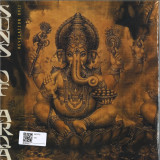
Suns of Arqa is a sonic mission created by luminary Michael Wadada, who began in 1979 after receiving higher guidance in Jamaica while working with roots reggae chanter Prince Far-I. It is a prolific traveling music collective that has seen over 200 collaborators, meant to connect people from all cultures and walks of life through a “deeply spiritual vibration that merges cultures, faiths and musical genres”. Wadada combines ancient Hindustani raga systems with Piobaireachd and Nyabinghi roots drumming, creating ritualistic world music infused with dub and reggae.
The lyrics combine both mystical and sensory elements, often including prayer and referencing a higher power but finding root in experiences common to all people- memory, sight, and physical sensation.
Their first album, Revenge of the Mozabites, was a collaboration between Wadada and On-U Sound creator Adrian Sherwood. Following its 1980 release,Peter Gabriel invited them to perform at the first WOMAD festival. Today, the record is regarded by some as a cult classic. Over the years they have played at many major music festivals including Glastonbury, Big Chill, Telerama Dub Festival, and Transmusicales, and released over 40 albums on Virgin, EMI, Interchill Records, Antler Subway, Red Rhino, and their own label, Arka Sound.
Suns of Arqa has had a seminal influence on the World Beat sound, and continued to make appearances at seasonal festivals and sacred ritual spaces all over the world until 2021. Michael Wadada passed away in the midst of planning their U.S. tour for this release. The record is a compilation of some of Wadada’s and Sleepers Record’s favorite old Sun of Arqa tracks, mixed by Youth and Adrian Sherwood, and mastered by Eroc (drummer of Grobshnitt).
Notable collaborating artists include: Guy Called Gerald, UK producers Youth and John Leckie, Greg Hunter, 808 State's Graham Massey, Finley Quaye, Sounds From the Ground, Bryn Jones aka MuslimGauze, Adrian Sherwood, John Cooper-Clarke, The late great Professor Stanley Unwin, Eric Random, New age guru Tim Wheater, Astralasia, Prince Far-I, The Orb's Alex Patterson, Zion Train, and Gaudi.
"And although the Great Spiritual being Michael Wadada has returned to source and his body to earth at our time, his music is alive and will continue to be a great force for higher spiritual realms and raising vibration through occult frequencies...Suns of Arqa will continue to raise the vibration of the hearts and minds of humanity" – Angela aka Angel-Eye (Wadada's wife and bandmate)
Since he started producing music, Berlin-based American sound artist Jake Muir has been obsessed with sampling. His 2018 album "Lady's Mantle" was based on manipulated chunks of vintage Californian surf rock, and its follow-up, 2020's midnight symphony "The Hum Of Your Veiled Voice" was sourced from a wide variety of old records, and inspired by the work of experimental turntablists like Marina Rosenfeld, Janek Schaefer and Philip Jeck.
On "Mana", Muir looks back to a misunderstood musical movement. Around 1995, a group of New York producers and DJs - including DJ Olive, DJ Spooky and Spectre - pioneered a genre-dissolving sound by unifying hip-hop techniques with ideas pulled from dub, jungle, ambient music and industrial noise. Badged "illbient", it was a short-lived genre that felt like a high-minded psychedelic cousin of the UK's trip-hop.
Muir uses illbient as the springboard for "Mana", utilizing a selection of samples to inform his frothy drones and foreboding atmospheres. He ushers the material into 2021 by diverting it through his own contemporary worldview, attempting to recreate the hyperreal fantasy histories of Japanese RPGs (think "Dark Souls" and "Final Fantasy") and nod to sensual, tactile soundscapes of European industrial labels Staalplaat and Soleilmoon. The result is a magickal, sensory journey that's as physical as it is representational.
If the illbient producers were encouraging a burgeoning experimental music landscape to emphasize the tactile feeling of turntablism and sample manipulation, Muir is doing the same with "Mana". Each track heaves and breathes not just with his cultural reference points, but with layered, complicated emotions. We can hear joy, sadness, desire and anguish, obscured by disintegrating noise, hallucinogenic harmonies and sub-aquatic bass. It's electronic music that's rooted not in technology, but in touch.
Out of Tune Records is glad to introduce you to Zarkoff, the owner of Sensorium studio in Croatia where is running many collaborations and projects. The producer keeps his musical output diverse, scattered into many genres and scenes, usually with a dark edge. This time he delivers three synthy instrumentals layered with subtle field recordings and one electro vocal rant.
Charlotte de Witte's mighty KNTXT label rolls on with another big new EP from Italian wonderboy Alignment. The Berlin based techno talent serves up four suitably supersized cuts that follow on from his Time EP, which landed earlier in the year.
For the last five years, this artist has been amassing a fine discography of thrilling techno. This has earned him a worldwide reputation amongst the techno cognoscenti, and despite the global
pandemic this year, he has still put out plenty of red hot new material that proves he has used his extra free time at home wisely. He can do old school inspired bangers as well as refined futuristic techno rollers with equal style, and proves that once more with this fantastic new EP.
He says it, “reflects more the ‘sentimental' moments during these hard times. Nevertheless, you can also expect trippy and hypnotic vibes that will make you dream to dance again until the early hours.“
While Charlotte adds, "Ever since I started playing these tracks, people started asking for track IDs. They stood out and always were one of the highlights of my sets. These tracks are made to
destroy any type of dancefloor. A true masterpiece by one of the most exciting artists around.”
Opener Nothingness is a hunched over techno power-groove, with high pressure kicks and scraping synths peeling off the drums. It's a big wall of irresistible sound, then Injection brings
even bigger and more kick drums that are sure to rattle any club to its foundations, while the rave synths will get hands in the air.
Reverberated keeps up the good work with a more all-consuming techno cut thanks to the laser-like synths that light up the track from above. It has superbly dark and unsettling vocals stitched into the groove for extra layers of mental intensity. Last of all is the dark and urgent Sensory Deprivation with its edgy synth motifs and unrelenting energy.
These are four more high powered tracks from man of the moment Alignment.
Remastered for 2025
Drumcode has become a label synonymous with some of the most-cutting edge and forward-thinking techno over the last 20 years. Their artists include both emerging and established names, and one of those well recognised is Enrico Sangiuliano. Now announcing the very first concept album of his career.
iomorph is born. A very special concept album designed to take the listener on a journey of evolution. A musical adaptation describing how biological and technological advances over numerous generations of time have all started from the same first step in our own biological journey.
Divided into 4 parts, Organisms opens with atmospheric tones, gradually blending complex textures and timbres to begin the evolutional process. The beginning of this section combines full sounding arrangements before stripping it all back to basics. From here it dissolves into the atmosphere. Organisms then progresses into a break-beat influenced, down tempo track using synths to add complexity to the straight, broken rhythms.
Galactic, futuristic elements are found in both tracks in Cosmic Forces. Upbeat, groovy, electronic synths resonate, before 'Hidden T' brings the tension to get things pumped up with stratospheric swirls and twirls to lay down one of the most mind meltingly deep drops.
Metamorphosis is mysterious, its opening beat is a deep and piercing tone that sends the listener into a sensory awareness of their surroundings before breaking into a fully charged, techno track, with Enrico's trademark sounds and textures.
All evolution has an ending.
Two Probabilities shows the positive, starting out evocative and emotional, with a gentle harmony, gazing towards a 'New Dawn'. On the other side of the spectrum lies the negative. This is influenced with a rhythm that articulates the beat of death, mathematical, cold and metallic in texture, it shows the unsustainability of its nature, with a hectic, anxious break beat influenced ending.
Castanea Records returns with its seventh release, we are talking again about an LP this time signed by Paradroid. The artist is the new entry in the label and returns after a long time with an album that draws a definitely microhouse sound which characterizes him being a pioneer of this genre.
An old school sound unique and characteristic perhaps missing in the market since long. 8 tracks cared in minimum and the high quality details mixed and registered 100% in analog tape.
This icing cannot miss in the disk bag of any connoisseur in gender or non. There will be a novelty even on artwork level, this time we have decided to adapt to release a beautiful gatefold rough collectible cover.
We welcome our very own Kessell to Pole Group Recordings, being a pivotal part of the Spanish techno scene with his project Exium with Hector Sandoval, he runs his label Granulart curating the repertoire with the best producers out there. Now is time for his debut as a solo artist with this four tracker, including three original tracks and a Reeko remix.
First cut is Cloned motions, a relentless number made of an obsessive sequence that runs over a percussive sea of sharp elements that grow in space with reverberated washes and a continuous arrangement. A mental exercise.
Chains of abstraction goes more bleepy, with a low filtered start that soon is filled with cosmic sinoidal sequences running all over the track while drums mutate and take turns to add an alien groove to the overal feel.
B side track one is for Reeko, remixing Sensorium, opaque kick drums, subtle sequences and white noise drones combine their movements in a dense exercise that fills every possible frequencies in the sound spectrum.
The original mix of Sensorium is based on bell like fm synth lines, lots of reverb, noise crescendos and an hypnotic groove below to keep things movable.
A precission work from the hands of a veteran expert producer.
Music For Parents is a low-frequency, vibroacoustically informed album developed through research into sound, rest, and nervous system regulation. Composed between 2019 and 2020, the record explores slow-moving bass structures and reduced harmonic density, inviting a form of listening that is felt as much as heard.
The work emerged from a personal process, shaped by a desire to support rest and release through sound. Music For Parents takes its title reflecting on the dynamics of parent–child relationships - formative environments that shape emotional, sensory, and relational orientation, often without clear language or shared understanding.
While effective on standard playback systems, the album can also be paired with vibroacoustic devices such as bass transducers or wearable low-frequency systems for enhanced somatic engagement.
Taking the helm for this mission is Gamayun, a top-tier pilot specializing in precision orbital maneuvers. Gamayun's expertise in navigating complex gravitational anomalies is critical for the "Data Sciencer" mission's success, ensuring the orbiter maintains the perfect trajectory for long-range sensor deployment.
- A1: Transe
- A2: Parkour
- A3: Run
- A4: Live
- B1: Andromède
- B2: Grande
- B3: 360
The soundtrack features music from the show 360, choreographed by Mehdi Kerkouche.
In 360, French choreographer Mehdi Kerkouche breaks away from traditional choreographic codes to harness the immersive energy of a live concert, heightened by Lucie Antunes’ electronic score and set within Emmanuelle Favre’s grand scenography. Standing all around a circular stage, the audience becomes an integral part of the experience. Through a series of vibrant tableaux, eight dancers deliver a striking portrait of contemporary youth, in search of a voice and representation.
Conceived as a collective driving force, the original soundtrack composed by Lucie Antunes plays a central role in the 360 experience. At the crossroads of electronic music, live energy and percussive writing, the score envelops the space, interacts with the dancers’ bodies and propels movement into a continuous dynamic. More than an accompaniment, it acts as a unifying force, creating a vibrant tension between pulses, textures and silences, and transforming listening into a sensory and celebratory experience.
360 will be performed on March 9, 10 and 11 at the Élysée Montmartre in Paris.
- A1: Sunlight Zone
- A2: Clarion-Clipperton Zone
- A3: Oreison
- B1: Twilight Zone
- B2: Fracture
- B3: Abyss
- B4: Polymetallic Nodule
- B5: Hadal
- B6: Sunlight Zone (Strings Version) *
Laurel Halo returns with an album of original soundtrack music, composed for the film Midnight Zone by visual artist Julian Charrière. Following the path of a drifting Fresnel lighthouse lens as it descends through the Clarion-Clipperton Fracture Zone — a remote abyssal plain in the Pacific Ocean, rich in rare metals and increasingly targeted for deep-sea mining — the film traces a descent into one of Earth’s last untouched ecosystems.
Charrière’s film reveals the deep not as void, but as a luminous biome teeming with fragile life: bioluminescent creatures, swirling schools of fish, and elusive predators. The suspended lens becomes an abyssal campfire, attracting species caught in the tides of uncertainty, their futures hanging in the balance.
Echoing this tension, Halo’s compositions evoke a sensory freefall, where gravity falters and light and sound flicker in uncertain rhythms. Midnight Zone is a sonic drift through the space between what we seek to extract, fail to understand, and must protect.
Halo’s score evokes the life that exists beyond our physical airbound capacity. The material features long, subtle passages of electro-acoustic ambient, drone and sound design, slowly flowing and unfolding with rich detail. The music, composed largely on a Montage 8 synthesizer and Yamaha TransAcoustic piano at the Yamaha studios in New York City, possesses an uncanny quality: that of synthetic waveforms being amplified and sung through the stringboard of the physical body of the TransAcoustic piano. Combined with stacks of violin and viol da gamba, the music on Midnight Zone possesses trace elements of a human hand in an otherwise sunken landscape. Patient, submerged, and alive. The album will be the third on Halo’s imprint, Awe.
The film is central to Charrière’s current solo exhibition Midnight Zone. The exhibition engages with underwater ecologies, exploring the complexity of water as an elemental medium affected by anthropogenic degradation. Reflecting upon its flow and materiality, profundity and politics, its mundane and sacral dimensions, the solo show acts as a kaleidoscope, inviting us to dive deep.
- You Smile When It Hurts
- Dreamin
- Time
- Blue Draginfly
- Arabian Night
- Reality
- Walking Alone
- Dar Tunnel
- I Try Alone
- Open My Head
- Tired To Follow
- Happy Birthday
Far from being a nostalgic exercise, the record reasserts their daring artistry, merging legacy and rebirth. Known for melodic minimalism, elegant melancholy, and pulsing electronics, the band has often been compared to Depeche Mode, New Order, or Joy Division, yet their singular identity has always set them apart. On this new album, they reinvent their sonic language, blending vintage synths with classical textures and luminous modern production. The result is a sensory journey where light and shadow converse, where poetry meets pulse, reaffirming their timeless relevance. Their influence extends across genres: sampled by Madlib, reinterpreted by Tricky, reimagined by Theophilus London, and remixed by DJs such as Marcel Dettmann. Tributes, reissues, and appearances in cinema and fashion underscore their resonance, from Lucie Borleteau's Chanson Douce movie to catwalks by Chloe.
Born in Marseille in the early 1980s and led by Alain Seghir alongside Catherine Loy , Brigitte Balian , and Beverley Jane Crew , Martin Dupont left a mythic legacy with tracks like ' Inside Ou't and 'Just Because...' before dissolving in 1987. Rediscovered through Minimal Wave reissues, their music captivated a new generation of underground and electronic enthusiasts. Today, Martin Dupont are reborn. Seghir and Crew, joined by Sandy Casado, Thierry Sintoni, and Olivier Leroy, embark on a world tour that affirms their unique ability to move and inspire. You Smile When It Hurts proves that their visionary sound has never been more alive
B. Chamber (Stratum A), by B. Close, is the first full length solo release by Los Angeles-based multi-disciplinary artist Brian Close. The first of two volumes assembled from some thirteen hours of music produced by Close while residing in Connecticut from 2021-2025, B. Chamber (Stratum A) offers a vivid, fractal afterimage of a prolific, specific time and space in the artist’s oeuvre.
After leaving New York City early in the pandemic to a farmhouse in the countryside with dedicated spaces for multiple sound stations, Close developed an intensive daily practice of melding with the machines. The vast, pastoral backdrop of rural CT provided inspiration and contrast for his ongoing investigations into dynamic, poly-rhythmic electronic music. The sounds on B. Chamber (Stratum A) range from the machine-modeling of acoustic instruments and natural environments to the utterly unhuman, spinning on the axis between crystalline, pointillist precision and shifty blown-cone distortion. Close’s atypical interpretations of rhythm, noise and other undefined musics land in a hybrid zone of their own.
Throughout B. Chamber (Stratum A), Close’s productions are in perpetual motion. Foxtrot’s shifting hi-hats and disembodied voices rise like cicadas propelled by glitching machines and tangled rhythms, Many Drive draws momentum from dubby stabs and twinkling atmospherics. Character Community’s nimble, drifting snares and erratic static are uplifted by swelling synths, and Mpan’s modular mining forgoes drums but is no less propulsive for it. Acre Voices’ seasick pads and deft drum patterns tap an energizing nerve, and closer 5D Bow’s ambush of pummeling machine gun fire spirals into the tryptamine palace and emerges completely rinsed and refreshed.
Equally powerful in the club as in the outdoors, in the headphones eyes closed or on the move, B. Chamber (Stratum A) grants an immersive temporary trip on B. Close’s unique wavelength, with Stratum B to complete the picture in the summer of 2026.
RIYL - Mark Fell, muay thai, Vladislav Delay, gaming, Errorsmith, modular synthesizer.
+++++
Brian Close (b. 1979, NYC) uses the cold logic of mathematics to trigger states of total sensory displacement. Close co-founded multiple AV studios to explore the "hypnotic"—a ritualistic practice of motional-graphism and improvisational sound. His work is a study in synesthesia and the architecture of trance, using geometric precision to dissolve the sense of time. It is a digital-visceral experience built on heavy logic, designed for large-scale immersion and timelessness.
Close is one half of Georgia who have released records on Palto Flats, Firecracker Recordings, Meakusma, Youth, OOH-Sounds and EM Records, and have a long-running residency on NTS.
B. Chamber was written, produced and mixed by Brian Close.
Mastered by Rashad Becker.
Artwork by Brian Close.
- A1: Talisman & Hudson - Warmth Re-Heated
- A2: Conscious - Morpheus
- B1: Treacle People - Rupununi Rhythm
- B2: The Obsession Project - The Dream
- C1: Interphaze - Aman
- C2: So-Low - The Hourglass (Time Mix)
- C3: Jay Trance - Ridiculous
- D1: Connective Zone - Multiple Sensory Contact
- D2: Cxx - The Comfort Of Strangers (Rhythm Doctor Mix)
- D3: C Hudd & P. Lazonby - The Colours (Mix 2)
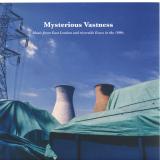
Barking-born Jane Fitz, and Transmigration label founder David Fogarty, curate a collection of tracks from East London and Essex’s rich but largely overlooked constellation of independent record labels and distributors operating from London’s E16 to the edges of the Thames estuary during the 1990s.
Mysterious Vastness documents a hidden and largely detached scene that only forms into something coherent with hindsight. From a time when record labels could press and hand-distribute 1000 copies locally, the late 80s acid house and outdoor rave scenes were moving from the fields to the clubs of London and DJs such as Colin Dale, Colin Faver and Darren Emerson were dominating the airwaves and parties with a distinct mix of other-worldly techno, trance and out-there house music. Among the seemingly bland post-war housing estates and factories, a scattered handful of producers were experimenting with early versions of music production software to create an exotic, end-of-the-century soundtrack to the suburban-meets-industrial landscape.
The compilation features a selection of finds from East London’s second hand record or charity shops over a period of 15 years. Many of which have featured in Jane’s sets over the years, most notably the “Beyond The A13" Podcast for Furthur Electronix. A mix she described at the time as the soundtrack to an area of London “totally bereft of natural beauty, but to me, somehow always full of mystery and wonder.”
Roads Box by Thylacine brings together the entire collection: the three ROADS LPs and three corresponding CDs. This box set offers a complete and coherent experience for Thylacine enthusiasts, transforming listening into a true multi-sensory journey.
Killer Groove Records proudly presents the debut 45 by Italian cinematic funk trio Atabasca. A syncopated journey where funk, psychedelia, and cinematic groove merge into a timeless narrative suspended between rhythm and vision.
"Cacopoulos" and "Kundela Mawedi" mark the birth of Atabasca's sonic universe: the first two singles from the upcoming self-titled debut album,which will be released on March 27 in limited-edition LP, CD digipack, and digital formats.
On the A-side, "Cacopoulos" is an impetuous, visionary ride that fuses the power of instrumental groove with the evocative imagery of library music and Italian golden-age soundtracks. From the first beat, listeners are drawn into a dry, dusty landscape driven by a primal drum groove and the acid twang of a guitar that evokes the spirit of classic Westerns. Indeed, "Cacopoulos" pays homage to I Quattro dell'Ave Maria (Ace High) and to the legendary Eli Wallach, the sly outlaw who turns deception into revenge, a subtle yet powerful nod that ties the trio's sound to imagery steeped in dust, dreams, and redemption.
On the flip side, the sound of an old lap steel guitar evokes the gentle waves of the sea, opening the doors to "Kundela Mawedi", a dreamy track with exotic tones and heavenly atmospheres. The sonic journey unfolds through hypnotic rhythms and echoes of ancient cultures, where ethereal voices and warm, entrancing bass lines intertwine with psychedelic riffs and evocative guitar melodies, merging into a soundscape rich in warmth and mystery. The chorus, with its unexpected choral chant, adds a spark of magic. An elegant twist that gently stirs the dreamlike mood and transports the listener into a new sonic dimension, steeped in mysticism and tribal vibrations. "Kundela Mawedi" is more than just a song: it's a sensory experience, a musical ritual where tradition meets psychedelia, sand meets sea, and the soul dances upon the waves of time.
Recorded in a single take, the session captures the raw energy and natural atmosphere of the performance. Artistic production was handled by the trio alongside Andrea Fabrizii (digger, musician, producer, and catalogue curator for CAM Sugar), while Riccardo Ricci mastered the tracks at Velvet Room Mastering Studio in Brighton.
A killer double-sider, blending psychedelic and funk moods with percussive, jazzy textures. A must-have gem for every groove-loving DJ.
Like a desert blooming within the evergreen forests of the planet's far north, a unique, alien, disruptive environment: this is the vision behind Atabasca, the project of Luca Mongia (guitars, lap steel, keyboards, vocals), Paolo Mazziotti (bass, keyboards, vocals), and Valerio Pompei (drums, percussion, vocals). Individually active for over twenty years on both national and international scenes, the three musicians came together in 2023 to create a project that merges experience, experimentation, and creative freedom. Their music is imaginative and at times dreamlike, blending the classic concept of the instrumental trio with the worlds of film scoring and sound design.
Atabasca's sound moves through jazz-funk, world, and cinematic territories, weaving together afrobeat, desert, and psychedelic influences into a personal and timeless language. Each piece is a scene; each sound, a fragment of a world, a journey between reality and imagination where groove, texture, and organic timbre merge into a singular sonic ecosystem: a perpetually shifting balance that generates new inner landscapes.
Fans of Khruangbin, Surprise Chef, and instrumental psych-funk, take note!
For over six decades, Charlemagne Palestine (b. 1947, New York) has been a pioneering composer, performer, and multimedia artist, celebrated for his ecstatic sonic explorations and ritualistic, metaphysical performances. Emerging from the cross-disciplinary New York art scene of the 1960s and ’70s, he helped shape a heretical edge of minimalism alongside figures like Conrad, Riley, Niblock, and Glass. Trained as a Jewish cantor and later as the carillonneur at St. Thomas Church, Palestine cultivated a deep fascination with resonance and overtone—an obsession that evolved through his use of percussion, early synthesizers, and monumental piano works, influencing artists from John Cale to Nick Cave.
Animated by a spirit of ecstatic play and what he calls his »meschugge« (Yiddish for »crazy«) sensibility, Palestine’s universe blends the sacred and the absurd, filled with soft toys, ritual gestures, and immersive sound environments. Rejecting the »minimalist« label in favor of a maximalist, »spontanimalist« approach, he creates long-form, resonant performances that transform spaces into vibrating, living organisms—opening portals into the nature of time, sound, and devotion.
In the same vein, the aptly titled live record »The Organ is the World’s Greatest Synthesizer« – performed during the Sonic Acts Festival at Amsterdam’s Oude Kerk in 2025, and taking its title and cover art from a drawing realized by Palestine himself during the concert – adds to his opaque yet vibrant personal mythology and intimate transcendence, marking a return to the Staalplaat catalog after »Fffroggssichorddd« (2020) and »Music for Big Ears« (2001).
Beginning with a resonating bell and his falsetto overtone singing, then surrendering to the endless, wild soundscapes of tone-feeling and beat frequencies generated by the church’s organ, across 40+ minutes, single sound sources evolve into clusters, entangle fully with one another, and establish their own spatial existence and aural architectures. We witness the traces of something that can be described as a perpetual performance, a test for the ever-changing interaction between artist, instrument, space and, ultimately, us.
Since Palestine has always defined his execution as a form of anti-composition - of simply »being in the music« as if inhabiting a space - the true power of »The Organ is the World’s Greatest Synthesizer« lies in encapsulating a moment of Palestine’s practice in its most authentic, live dimension. Sound becomes at once subtle substance and strange telluric force, animating physical forms from some unknown channel beyond and within, accessible only through our sensorium. The point in this liminal temple of tone, timbre and frequency is not to learn anything but to simply enter. Palestine earns once again his self-given title of contemporary shaman by keeping this sonic portal open, allowing us to witness and make it last.
»I have always felt and heard and mixed the sounds in my world as liquids not as solids. Sonic liquids are material that is endlessly transformable. But I’m not crazy about people who go around defining stuff.«
Limited to 250 copies !
The Deadheads had never had much luck with spaceships. Their first mission had ended in a catastrophic engine failure, leaving them adrift in deep space for weeks. This time, their craft was hardly more reassuring. A hodgepodge of outdated technology and shoddy repairs made it more of a floating death trap than a reliable cruiser. As they began their descent toward the strange planet, the hull creaked and rattled, sending a wave of dread through the crew.
"Hold on," Matt's voice crackled over the intercom, without much conviction, as if he himself doubted they would make it out alive. Outside, a thick, grayish atmosphere swirled ominously, while the planet's gravity became far stronger than anticipated.
“Fuck, we’re gonna burn at the entrance!” M yelled, his hands flailing on the console as sparks flew from the control panel. The ship’s sensors were completely jammed, and the navigation system flickered intermittently, like a dying light. Below, the planet’s surface was a tangle of lava rivers and jagged rock formations, the kind of place no sane person would ever land. But the Deadheads had never pretended to be. They lived in a state of constant emergency.
As the descent intensified, the alarms blared. On the bridge, the screens lit up with red warnings and flashing messages: "SYSTEM ERROR," "UNSTABLE TRAJECTORY," "SUIVITY SYSTEM COMPROMISED." The lines of code scrolled by too quickly to be read, while a mechanical voice repeated relentlessly: "Imminent impact. Structural integrity at twenty percent."
The once pristine shell of the vessel began to disintegrate, with shards of metal breaking away and disappearing into the atmosphere.
With a final, piercing screech, the ship crashed onto the planet's surface, sending up a cloud of dust and debris. The crew was violently thrown from their seats, stunned but barely alive. They struggled to their feet amidst the wreckage, the ship reduced to a charred shell around them.
"Well," M said, wiping the dirt off his suit with a grimace, "at least the air is breathable." Matt scanned the hostile expanse stretching before them and smiled slightly. "Perfect. Let's hope we have better luck with the planet than with our ships."
With that, the Deadheads gathered their equipment and headed into the unknown, while the remains of their ship slowly sank into the unstable soil of the planet.
- A1: Verflossen Ist Das Gold Der Tage
- A2: Staub Und Sterne
- A3: Hinter Uns Die Wirklichkeit
- B1: Bedingungslos
- B2: Die Nächte Sind Erfüllt Von Maskenfesten
- B3: Umschlungen Von Milliarden
- C1: Sanft Verblassen Die Geschichten
- C2: Es Ist Alles Schon Gesagt
- C3: Schwarzer Regen Fällt
- D1: Jeder Gedanke Umsonst Gedacht
- D2: Welche Welt
- D3: Ist Es Das, Was Du Willst
II[29,37 €]
Reissue of the 3rd full length by Thomas Bücker aka Bersarin Quartett.
Melancholia. Longing. It is difficult to speak about these moods or states of the mind without invoking stereotypes. In ancient medicine, melancholia was considered to be one of the four temperaments, matching the four humours. In fact, melancholia, meaning "black bile" in Ancient Greek, was thought to be caused by an excess of this very body substance. By contrast, in more modern interpretations, literates and Freudians relate many variations of longing to the one primordial longing, the desire to return to one's mother's womb. In this context, the womb is considered to be the place of absolute comfort and cosiness, of total bliss. Thus it should not be surprising that to many of us melancholia is a mood which we like to invoke and to maintain, we like to envelop ourselves in it like in a warm blanket. Our brain and our sensory systems appear to be made for perceiving and emotionally responding to music in a very immediate fashion. Consequently music is the obvious drug for all of us melancholia-addicts. However, there is a thin line between melancholia and sadness, and music which is meant to be melancholic too often crosses this line by far. Only very few artists succeed in avoiding this crossing, and in creating music which is melancholia in its most pure form. It is safe to say that BERSARIN QUARTETT - the electronic music project of Thomas Bücker - is one of them.
After his debut in 2008 and the sophomore "II" in 2012 - album of the month in many magazines and in numerous "Best of the year" lists - Bücker in 2015 returned with his third BERSARIN QUARTETT album "III". Much like his two predecessors, III is a pure paradox. It is the creation of a perfectionist, an adamant control freak. Every element, be it a note, an ambience layer, a string arrangement, a field recording, a baseline, a vocal (Clara Hill on Track 11) or a beat, is meticulously modified and then assigned its place in Bücker's vast but still minimalistic arrangements. Thus, superficially Bücker's pieces seem to radiate a certain mechanical bleakness. However, there is a unique reduced warmth and liveliness emerging from these stainless compositions and transcending them. This transcendence is precisely the point where Bücker ironically looses control over his creations. In contrast to the first two BERSARIN QUARTETT albums, III offers a few darker shades and succeeds even further in narrowing down the arrangements to the absolute essentials without loosing the characteristic grandeur of Bücker's sound. Whereas BERSARIN QUARTETT's debut was merely a description of melancholia in its most pure form, III maybe even goes as far a defining what melancholia really is. It is the only emotion in the vast spectrum of human states of mind which one can bear forever.
- A1: No Such Place
- A2: London
- A3: Run Into The Sun
- A4: Shimmer
- B1: Shapeshifter
- B2: Borders
- B3: Sensory Overload
With their highly anticipated fourth album, The Third Sleep, Norwegian progressive rock band Oak delivers a striking exploration of societal complacency and the struggle of the individual. The album contrasts light and darkness, both thematically and musically, seamlessly blending folk-inspired acoustic passages with the raw intensity of progressive metal, evoking echoes of Opeth and beyond. Expanding on the lyrical themes of The Quiet Rebellion of Compromise, The Third Sleep ventures deeper into the subconscious, weaving suggestive and poetic storytelling with sharp social commentary. More outward-looking than its introspective predecessor, the album invites the listener to engage, interpret, and reflect. With a rich musical foundation that spans classical piano, electronica, progressive and hard rock, Oak has carved out a distinctive sound-both captivating and challenging in equal measure. Recorded in Ljugekroken (Oslo), the album was mixed by David Castillo (Katatonia, Leprous, Opeth) and mastered by Jacob Holm-Lupo (White Willow, Donner) at Dude Ranch Studio, Sandoya. Prepare to experience The Third Sleep, a thought-provoking journey through sound and emotion.
TIMEPOINT is the studio album distilled from Stéphane Bissières’ eponymous audiovisual performance, where modular synthesis meets generative real-time visuals. In the live show, sound and image are intertwined: each musical gesture informs a visual response, creating a dynamic, evolving environment where music and visuals interact organically.
Paris-based composer and new media artist Stéphane Bissières works at the intersection of electronic music, generative art, and cybernetics. He develops algorithmic systems that explore timbre, structure, and the interplay of energies, translating data into immersive sensory experiences.
For TIMEPOINT, Bissières transforms the live, algorithmic energy into a self-contained sonic journey. Using modular synthesis and generative composition, he builds intricate, evolving textures that balance chaos and structure — a sonic ecosystem reflecting movement, pattern, and organic order.
The music explores timbre as a central element, sculpting sounds that resonate with the visual patterns of the performance. Each track functions as a microcosm of the show: algorithmically generated sequences, cybernetic textures, and evolving layers converge to form a lush, immersive soundscape.
TIMEPOINT invites listeners to explore a world where technology, imagination, and organic structure coexist. It’s an intimate translation of a live audiovisual universe, now accessible as a focused listening experience.