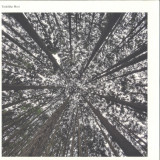
The album’s title deftly gestures to the sheer vastness of astronomical dimensions, while simultaneously capturing the musical breadth within, where the eight planets are imagined as the eight notes of an octave. The work draws inspiration not only from earlier compositions —most notably Gustav Holst’s The Planets—but also from the rich astronomical and cultural contexts surrounding these celestial bodies. Here, the focus transcends direct citation of melodic motifs, instead embracing an intriguing conceptual approach on a meta level, unfolding in a series of vividly contrasting soundscapes. These contrasts shape a sweeping sonic journey, one that fully embraces the album format with both arms, inviting the listener to venture into realms both strange and wondrous, feeling the immensity of the interstellar space that lies between them. Contrast, after all, is the brushstroke that enriches our world.
Embarking on an auditory voyage, "Astral Guide" establishes the sonic framework that propels us into the boundless expanses of the cosmos. Its ethereal tones evoke the vastness of space, crafting a mood ripe for exploration within the realms of sci-fi. The subsequent tracks unfold like constellations, weaving a rich tapestry of sound that seamlessly marries cinematic soundscapes with pulsating, club-oriented rhythms. This album invites listeners to traverse its immersive landscapes, whether nestled in the comfort of home or dancing under the starlit sky, each note a guide through the transcendent experience of a nocturnal journey.
"Solar Flares" draws its inspiration from the awe-inspiring expanse of solar phenomena, capturing the majestic power of the sun as it reaches into the cosmos. This track resonates with the idea that energy, while vital, can also be a force of destruction when unleashed with overwhelming intensity. The composition beautifully mirrors the sun’s duality, where brilliance and devastation coexist, inviting listeners to reflect on the delicate balance between creation and annihilation. Through its rich textures and dynamic shifts, "Solar Flares" serves as both a homage to the celestial and a poignant reminder of nature's formidable power.
"Mercury – The Winged Messenger" embodies a meticulously crafted soundscape where artistry meets astronomy. The tempo of 173.6 BPM, derived from precise astronomical data, propels the composition into a vibrant realm that resonates with cosmic energy. Synthwave sound design intertwines seamlessly with the fluid rhythms of Drum’n’Bass, imbuing the piece with an uplifting dynamism that evokes the ethereal grace of Mercury itself. In this sonic exploration, listeners are invited to ascend on wings of sound, navigating the celestial tapestry of the universe with each invigorating beat.
"Venus, The Bringer of Peace" strikes a decidedly cozy note, presenting a poignant contrast to the more tempestuous themes often found in cosmic narratives. This composition evokes a nostalgic vision of an optimistic era, one in which humanity transcended borders and embraced the infinite possibilities of space exploration, where no destination felt too distant. The dense, languid atmosphere envelops the listener, creating a tangible sense of serenity that unfolds gradually, allowing for a meditative journey through sound. Each note serves as an invitation to linger in this tranquil embrace, reflecting on the harmonious potential of our collective aspirations and the beauty of connection in a vast universe.
The central theme of „Gaia, The Bringer of Life“ —originally not part of the planetary cycle— is the profound enabler of life on Earth. The arrangement delicately mirrors the slow, tentative unfolding of this potential, marked by an initially sparse orchestration that gradually builds in momentum. This progression crescendos, embodying the explosive dynamism of the Cambrian burst of life, ultimately culminating in a euphoric fanfare—a triumphant, celebratory flourish echoing life’s victorious emergence.
"Blue Moon" unfolds as a contemplative reverie on the tranquil clarity of a night sky, now seldom glimpsed in its natural purity, unclouded by the relentless haze of urban light. The listener is drawn into the vast embrace of the star-strewn firmament, a journey that sways between euphoric awe at nature’s sublime beauty and a profound melancholy for its fragile and imperiled state. Musically, this duality finds expression in the delicate interplay of modal mixtures, while an ever-shifting triplet groove, poised at the intersection of Outrun and melodic house, lends a pulse that is both nostalgic and forward-looking—echoing the beauty and transience of a world on the brink.
Rather than replicating the original composition of „Mars, The Bringer of War“, this interpretation seeks to evoke its profound, foreboding atmosphere. Cyberpunk emerges here as an ideal genre, channeling the dark, relentless march synonymous with Mars, the ancient god of war. The piece reverberates with intensity, as distorted vocalizations rise, embodying the anguish and visceral torment that shadow war’s violent crescendo. This auditory descent into conflict captures the relentless pulse of warfare, where sound itself becomes an embodiment of suffering and fury.
Majestically, "Jupiter, the Bringer of Jollity" emerges on the celestial stage, sweeping away the somber tones with its radiant vigor. Drawing inspiration from the triumphant strains of the original, and borrowing a melodic motif in the refrain, the piece expresses joy and buoyancy through a shift to a major key and the lilting sway of a danceable 12/8 meter. Spirited and exuberant, it leaps boldly from major to minor and back again, playfully shifting time signatures to capture a mood of unbridled festivity and jollity.
Here, a more conciliatory concept is chosen than in the original inspiration. „Saturn“ aligns with the number six, being the sixth planet from the Sun and bearing the iconic hexagonal pattern at its northern pole. What, then, could be more fitting than to render this piece in a 6/8 time signature? The arrangement unfolds with a multifaceted richness, mirroring the countless stones and ice fragments that form the foundations of Saturn’s majestic rings.
„Uranus“ adopts the theme of a light-footed, dancing instrumentation, giving the impression of perpetual motion, never quite settling. This musical choice harmonizes with the planet’s own orbit, as it spins with breathtaking velocity, teetering and swaying, seemingly unable to attain rest or stability.
The chill and vastness of the cosmos find expression in „Neptune, The Mystic“. At its core, an electronic soundscape envelops a classical arrangement, its unreachability intensified by an ethereal, otherworldly choir. Hovering at the outermost boundaries of the solar system, where warmth is but a distant memory, the composition lingers in a slow, contemplative tempo, evoking a realm where space for speculation stretches wide and silence reigns supreme.
Though Pluto may have lost its planetary status, and its companion Charon never achieved one, this shift in classification subtly aligns with the cosmic scale invoked here—one that mirrors the musical tradition of an eight-note sequence. Fittingly, the album closes with „Kuiper Belt“, a composition emblematic of the turbulence and vitality of countless smaller
celestial bodies that, though diminutive, find their rightful place within the vast architecture of the solar system.
They say nature is the greatest composer, shaping the universe with a symphony of chaos and order, beauty and danger. It is this duality that fuels the artistic vision of Edictum—a producer who, armed with a doctorate in chemistry, delves as deeply into the mysteries of molecules as he does into the depths of sound. In the tension between the vastness of the cosmos and the microscopic processes that dictate life’s rhythm, Edictum creates sonic landscapes that dissolve the boundaries between science and art.
His music is a story of contrasts—a sonic tale where the raw forces of nature clash with the intricate structures of human culture. Opposites intertwine to form a harmonious whole: the primal rhythms of the earth meet the celestial melodies of the cosmos, the rigid laws of physics blend with the boundless freedom of art. Edictum explores these polarities with meticulous devotion, each composition an expedition into uncharted soundscapes—a quest to give voice to the unfathomable.
With over 20 years immersed in the realms of electronic music, Edictum has honed a keen sense for rhythm and movement. His driving beats compel both body and mind into a hypnotic flow. Yet beyond the pulse of dance lies a complex framework of conceptual thought. Today, his creative focus revolves around holistic album projects—self-contained worlds with overarching narratives that embrace contrast and complexity. Each track stands alone as a fragment of the whole, but together, they weave a cohesive tapestry, much like the chapters of a novel that guide the listener on an emotional and sonic journey.
Edictum’s distinctive musical signature has earned him international recognition. With over 150 releases, many on prestigious platforms like the iconic *NewRetroWave* label, and collaborations with artists such as Jan Johnston, Azumi Inoue, Powernerd, and Turbo Knight, he has solidified his place in the global electronic music scene. His latest work, *A Cosmic Scale*, marks his seventh vinyl album and is released under his own label, *Echoes of Expanse*. The label’s name is no coincidence—it captures the essence of his art: echoes of infinity, the vibrations of the universe distilled into a singular sonic experience that carries the listener ever further into the boundless expanse of sound and space.
Buscar:sequence
Archeo Recordings serve a special delight with two extended and alternate reworks from the all star cast behind the recent AR025 Aqua Cheta remix 12”. Dipping into the cool waters of Infradisco’s original LP once again, Hear & Now and Manu Archeo look to the horizon and channel the horizontal with a couple of ambient suites, new age dreamscapes and day trippers, each awash with positive vibrations and healing frequencies.
Perugia's peerless Hear & Now open the 12", cultivating pulsing chords, hazy reverb and elegiac fretwork for a White Isle romance steeped in the sunset lineage of the Café Del Mar. Heart-swelling piano and restrained bass throbs conspire to see the rest of the world melt away, with occasional percussion the only reminder that time is still passing. Though radically different from their dance-floor driven revision on the 12", this is no less impactful, swapping the club sonics for the sensation of sheer beauty.
Not content with making a spectacular production debut via his dubbed out diversion of "Dulcis" last time out, Manu Archeo makes further waves with a meditative masterpiece - spaced out and sprawling through a sultry thirteen minutes. An echo drenched meditation script gradually sinks into the immersive ripple of balmy horn, delicate hand percussion and watery pads, making room for a succession of stunning lead-lines and glistening sequences. If you thought the new age of New Age was over, it's time to open your mind.
- A1: E Nun Ce Voio Sta
- A2: Squadra Antifurto (Suspense)
- A3: Squadra Antifurto (Azione E Mistero)
- A4: Squadra Antifurto (Azione)
- A5: Squadra Antifurto (Nico A New York)
- A6: E Nun Ce Voio Sta (Versione Fisarmonica E Chitarra)
- B1: Squadra Antifurto (Nico A New York #2)
- B2: Squadra Antifurto (Azione #2)
- B3: Squadra Antifurto (Suspense #2)
- B4: Squadra Antifurto (Azione #3)
- B5: E Nun Ce Voio Sta (Versione Chitarra)
- B6: Squadra Antifurto (Azione E Mistero #2)
- B7: Squadra Antifurto (Azione E Mistero #3)
- B8: E Nun Ce Voio Sta (Titoli Di Coda)
Transparent Amber[31,51 €]
Here at Four Flies, we kind of feel we need a bigger word than 'proud', this time, to present, in collaboration with Beat Records, the first-ever release of the original soundtrack written in 1976 by Guido & Maurizio De Angelis for the legendary Squadra Antifurto, the second chapter of the comedy-infused crime saga directed by Bruno Corbucci and starring Tomas Milian as the iconic Italian Police Marshal Nico Giraldi.
The excitement in this case is nothing short of gigantic, difficult to rein in for those who, like ourselves, grew up adoring the character played by Milian as one of our cult heroes, and dreaming that the soundtracks of the first three films in the saga – the only ones composed by the De Angelis brothers – would one day be released.
Since the launch of our label, Squadra Antifurto has been at the top of the list of film scores we most wanted to release. Until a few months ago, this dream of ours seemed destined to remain just that, so strong was the conviction in all of us that the master tapes were definitively lost, that they had forever vanished into thin air. That's why their recovery, made possible by Maurizio De Angelis himself and the persistence of our friends at Beat Records, is an extraordinary feat.
Nearly 50 years after it was first heard in cinemas, the soundtrack penned by the De Angelis brothers is resurrected in its entirety and can finally shine its incredible power all over us.
Beautifully seeping through this score – like many others composed by the golden duo in the 1970s – are elements from the Italian, and especially Roman, folk tradition, for instance in the warm, heartfelt ballad sung by Alberto Griso, "E nun ce voio sta," which first plays in the opening credit sequence and is then reprised in various forms throughout the film, culminating with the soul-stirring orchestral version that closes the album's tracklist.
But as in any Italian crime film worthy of that name, a different soundscapetakes centre stage: it's the music that accompanies the countless scenes of tension, action, and pursuit that punctuate the film, and which has made us fall madly in love with this score.
The main theme is a prog-funk joyride, drawing inspiration from the traditional tarantella but elevated to irresistible energy thanks to a rock orchestration featuring psychedelic flutes, wild percussion, distorted electric guitars, piano chords, and various feedback and delay effects.
The resulting groove is just mind-blowing, and we almost can't believe it's finally available on a record, completely remastered for vinyl.
We really couldn't be prouder, and dedicate this release to all passionate fans of Italian crime films, the De Angelis brothers, and Tomas Milian aka Nico Giraldi.
Available starting April 12th on standard black vinyl and limited coloured vinyl (transparent amber, limited to 300 copies).
NEW LP PRESSING on Opaque Yellow Wax
Released in September 1978, a mere two months before YMO’s debut, Cochin Moon is a clear precursor to the groundbreaking synth and sequencer-dominated sounds that would come to define the iconic trio. Huge tip!
Credited to Hosono and Pop Art legend Tadanori Yokoo (who created the cover art), Cochin Moon is a fictional soundtrack to a journey into unknown worlds, inspired by Hosono and Yokoo’s trip to India.
The unbelievably prolific Haruomi Hosono is one of the major architects of modern Japanese pop music. With his encyclopedic knowledge of music and boundless curiosity for new sounds, Hosono is the auteur of his own idiosyncratic musical world, putting his unmistakable stamp on hundreds of recordings as an artist, session player, songwriter and producer. Born and raised in central Tokyo, his adolescent obsession with American pop culture informed his early forays into country music, which he would revisit later in his career. Hosono made his professional debut in 1969 as a member of Apryl Fool, whose heavy psychedelia was somewhat at odds with his influences, which leaned towards the rootsy sounds of Moby Grape and Buffalo Springfield. The latter was one of the main inspirations for his next group, Happy End, whose unique blend of West Coast sounds with Japanese lyrics proved to be highly influential over the course of three albums. After the band’s amicable break up in 1973, Hosono began his solo career with Hosono House, an intimate slice of Japanese Americana recorded inside a rented house with recording gear squeezed into its tiny bedroom. Hosono’s solo career would take many twists and turns from this point forward, with forays into exotica, electronic, ambient, and techno, culminating in the massive success of techno pop group Yellow Magic Orchestra (YMO).
Released in September 1978, a mere two months before YMO’s debut, Cochin Moon is a clear precursor to the groundbreaking synth and sequencer-dominated sounds that would come to define the iconic trio. Credited to Hosono and Pop Art legend Tadanori Yokoo (who created the cover art), Cochin Moon is a fictional soundtrack to a journey into unknown worlds, inspired by Hosono and Yokoo’s trip to India. Initially the album was to be a kind of ethnographic musical document, using found sounds and field recordings made by Hosono himself. Instead, after Yokoo introduced Hosono to the sounds of Kraftwerk and krautrock during the trip, Cochin Moon became something much stranger. Created almost entirely on synthesizers and sequencers with the help of future YMO collaborators Ryuichi Sakamoto and Hideki Matsutake, the music on the album is the perfect encapsulation of Hosono’s concept of “sightseeing music,” transporting the listener to an exotic place that may or may not exist. This highly sought-after album sees its first-ever official release outside of Japan.
The late KAGAMI was the producer who sparked the "TOKYO DISCO" phenomenon and reigned over the Japanese techno scene in the early two thousands. From his first album "Broken Sequencer", released by Frogman Records in 1998 and which made a huge impact on a bunch of Techno Heads in Japan, the robust techno banger "Hyper Wheels" is refocused by Abend Kollektiv, and revives as "Hyper Wheels Redux". This long awaited 2024 version has been remastered and also remixed by DJ SHUFFLEMASTER, known as one of the first generation of the Japanese techno scene, and even includes a remix by KAGAMIs buddy TOKTOK from Berlin.
Emotional Especial returns to the music of Peter Reilly aka Persian, with a second EP diving into his extensive catalogue to celebrate this cult artist and evaluate his recent decision to retire from music production.
For over 20 years Reilly has been an exemplary electronic producer, a producer’s producer, a DJs producer, releasing over 50 EPs that crossed genres, from Breaks to Digidub, Electro to Garage, House to Jungle and on and on.
If this release is to act as an epitaph, then its exploration of Reilly’s wonderful programming, sampling and understanding of emotions is laid bare. Spread across a series of self-released edits hidden within limited run EPs, Questions appeared as something akin to beats interludes, across numerous releases over the last 10 years.
Bringing the best versions together on one EP, Questions 1, 2, 5, 3 and 7 have been re-edited, extended and sequenced into a continuous mix especially for this finale. Starting with the ambient breaks of Questions 1, this is a Balearic beginning where bubbling acid meets haunting refrain, before segueing effortlessly into the sunrise breaks of Questions 2. A nod to Carl Craig’s classic Incognito remix, the solo keys add a touch of jazz to a glide by shooting melody.
Side 2 rises. Question 5 heralds a half stepper Dub bassline riding the Amen breaks, the now familiar Brando sample, a wormhole in your brain that ties the EP together, joining the dots as strings float skywards, allowing Questions 3 break it all back down. Herbie Handcock inspired Funk Boogie beat, shouts out to his own Existence To Resistance label, leads to the pure ambient closing of Questions 7. A showcase again of Persian’s multi-genre dexterity and maybe, just maybe brings an influential music chapter to a close.
“Sonically, the Swedish duo SHXCXCHCXSH distort the club context they work from by rendering functionality with an exceptionally refined and idiosyncratic palette. As logophiles, they contort the little descriptive context they afford audiences by imploding language into splintered and barely comprehensible character sequences. The impression is that each is the result of mutual process-driven experiments.
This is all true of '......t', their new album and debut recording for Northern Electronics.
However, working at this scale, SHXCXCHCXSH play with wider parameters and explore broader functions to produce their most comprehensive and focused work to date.
Across fifteen tracks, their bespoke dark matter is stacked with drone pyrotechnics, shredded vocals, and oblique, snatched sounds that eddy into frantic melodic storms. Sublime intensity is spiked with effervescent yet brooding intermissions throughout, staking '......t' as the most crucial volume of their catalogue as it gestures toward new references. ”
- A1: The Soul Leaders & Carib Beats - Pour On The Sauce 2 45
- A2: Lynn Taitt & The Jets - I Spy 2 50
- A3: The Kilowatts - Real Cool Operator 2 20
- A4: Sir Collins & The Black Diamonds - Black Diamonds 2 43
- A5: Clive’s All Stars & George Murphy - San Sebastian 2 05
- A6: Eric Monty Morris - Cinderella 2 2
- A7: Dell Williams - Searching For Your Love 2 52
- B1: Derrick Morgan - I Who Have Nothing 3 45
- B2: Chenley Duffus - To Be A Lover 3 10
- B3: Lloyd Charmers - President Version 2 49
- B4: Tony Bins - Musical Shower 3 49
- B5: Annette Clarke - Just One Look 2 20
- B6: The Jay Boys - Del Gago 2 45
- B7: Desmond Riley - Tear Them 2 58
Here is our Hot Sauce Volume 5 showcasing some seriously groovy and rare Rocksteady,
Boss and Reggay tracks mixed expertly for yet another thrilling early Reggae experience on vinyl.
Here is the much anticipated volume 5 of the HOT SAUCE compilation LPs dedicated to the Trojan related labels between 1965 and 1975.
HOT SAUCE volume 5 features outstanding original Rocksteady, Boss Reggae and early Reggae (“Reggay”) tracks including rare songs, overlooked gems, hidden treasures and a couple of hits. The record labels showcased on this fourth volume are Amalgamated, Bread, Downtown, Duke, Explosion, Grape, Harry J Records , JJ Records, Rio, Splash, Upsetter and Techniques.
The tracks here have been selected according to their musical interest firstly, their rarity, and their complementarity.
These tracks are all outstanding tracks, “killer tracks”, there is no “filler” whatsoever.
Particular attention has been paid to the way the songs are sequenced (or “mixed”) so that the album builds up nicely and gradually, generally starting
with the Rocksteady songs on the A side and the 70s songs on the B side.
The HOT SAUCE series is a musical journey across Trojan and its labels showcasing early Jamaican Reggae’s diverse musical genres and outstanding artists.
Since the early 70s’ “Tighten Up” and “Club Reggae” series, no compilations have really explored these labels in depth on vinyl.
It might be the last volume of the series as we know it so we wanted to make a splash for volume 5.
It is a nod to self-censored lewd Reggae covers from Trojan and Pama in early 70s. So don't fret,
a collectible yellow sticker has been strategically applied on the shrink-wrap to cover Miss Rocksteady's bottom!!
With its striking cover and its thrilling Reggay selection, volume 5 is bound to become another successful album in the Hot Sauce series...
Since launching her own club night, “Motivation,” back in 2018, B.AI has played a key role in bringing the underground’s club sounds to her home country, China. While introducing some of the scene's most exciting artists to her local audiences, she emerged as one to look out for as well: first as a DJ and quickly thereafter as a producer. Her original takes – a sensitive, highly personal approach to melody and a knack for playing with expectations – crystallized in a slew of A+ releases and a couple of international tours. This trajectory, shaped by taking matters into her own hands and self-empowerment, now sees a logical next step, with the inception of a label that will also operate under the “Motivation” banner and features her own “Hope” EP as its first release.
Sparkling mallets, with synth-pop quality catchiness, open the title track. Rather than further evolving, their two-bar arrangement gets looped over and again, serving as the foundation for a slick FM bass rhythm and a variety of hooks. Although these incline to the bright, the overall vibe is melancholic. In vintage B.AI style, the aptly titled “Hope” is more ambiguous than its patches suggest. Similarly, the vocal this type of palette would call for ultimately comes in the form of aloof, covert musings. A bit buried in the mix, they are most efficient – just like the tension that keeps brooding underneath the surface.
“Murderbot Diaries 1991” turbocharges four-to-the-floor synthetic drums with an arpeggiated rolling bass. The blue note melody on top feels sequenced via a pocket calculator, and the dissonant, electroclash-reminiscent stabs that follow might sound even more angular. The tune is frantic, sinister – and perhaps above all tongue in cheek. It reaches fever pitch with the arrival of a tubular bell theme between the two breaks.
“Once”’s slomo cutoff modulation on the 16th note mid-bass instantly creates a sultry atmosphere that meshes greatly with the pastel cool of the gently delayed DX7 leads. The energy drifts between effortless control and uncertain outcome. These contrasts are amplified as the drums alternate amidst moderation and beat-repeat rendered havoc.
On “Only We Know,” a progressive sine lead lays out the central motif. Yet as briskly as it appears, it makes way for detuned, gliding square waves taking on the same theme. This outlines the track’s structure: as slightly morphed repetitions keep getting introduced almost haphazardly, a dreamlike, mesmerizing ambience unfolds. Techy drum rhythms and a 101-type bass make sure everything stays fuelled. Within the ingenious tapestry of melodies and new twists, it never loses touch with the dance floor. It illustrates B.AI’s club savvy neatly and is therefore a perfect closer for this EP.
2026 Repress
Oscar Mulero keeps busy in his studio facilities as usual. His musical output keeps growing and always wandering into new directions and flavors while preserving his artistic integrity. For this Ep on his very own Pole Group imprint he showcases his combative side after some excursions into more profound and intricate territories.
Poisonality EP is about the wise use of distortion on techno, is about non conforming with the seasonal standards, about investigating new rhythms, new types of arrangements and new boundaries in sound design, always remembering the roots.
Aroma de Falso Amor is the first exercise, exploring the abrasive power of broken distorted beats, overdriven drones and textures and hyper dynamic song structures. The result is a non conventional techno workout, essential to give spice to any set.
Poisonality gives name to the EP and works with asymmetry combined with the right dose of crispiness, creating a super shuffled hi tech jam. Chaotic, hypnotic and mental.
Iris Malicioso opens the B side with an eye on the funkier Detroit tradition combined with the power of the best British influences from the nineties. Here drums and stabs are the main ingredients, interleaving, mutating and constantly evolving. Hi tech funk in its purest expression.
Dos Pequeños Zorros closes the tracklist, again focusing on the dancefloor and keeping the ingredients minimal, continuous and obsessive with a rugged, constantly twisted sequence running over a precise groove, keeping things busy through all the structure
SPLIT#4 is the final release for the 10th anniversary year of the Pi project featuring Elements of Joy (a.k.a. UVB) and Stave both returning to the label after their earlier appearances with PI08 and PI07 respectively.
The vinyl release showcases six original tracks--three from each artist--with bonus tracks included in the digital release.
On the A-side Elements of Joy delivers 3 original tracks of New-Beat leaning techno including one song that features vocals by Zanias. The opening track "Prutaneousa (A1)" connects the dots between his previous entry on the label and this one with the use of retro 80s inspired vocal samples but this time on a rather driving beat sequence than an industrial/noise one. "A Master of Distress (A2)" dives deeper into a hypnotic mood while "Vampiric Habits (A3)" takes it even further to an ethereal atmosphere through the input of Australian vocalist Zanias.
On the B-side Chicago producer Stave presents his signature hypnotic broken-beat techno. The side opens with "Weingart (B1)" a characteristically Stave textured track. "900MPH (B2)" combines IDM elements with dynamic broken rhythms while "Capital, Selves (B3)" blends experimental with Grey Area influences.
The digital release includes two more bonus tracks: an energetic EBM techno piece by Elements of Joy and an atmospheric techno by Stave completing this diverse split release.
SPLIT#4 is a fitting close to the project's milestone year celebrating a decade of our Pi vision.
1. Watermelon Man
This track version actually came from an improvisation that Allesandro IIona (Keys) made on a live show at RonnieScott's at the start of the year. I think we were were having some issues with one of the monitors on stage and it juststarted making this beeping sound. Then I remember Alleh just came in with that piano riffat the start and the rest was history. This one of thefirst tracks we recorded for the EP and I'm super pleased with how this one turned out. Afterseeing Herbie Hancock live for thefirst time the year before, this felt like the perfect tribute to him!
2. Mandible
The majority of the writing on this album was done at my studio space in Hither Green, where I am every tuesday! I usethis space to record but mainly a space to develop my art. So this EP all came from a few sessions there. We all haveour own creative things going on so it was really great to collaborate as a band and trash out some ideas we had.Mandible is one of my favourite tracks on the EP. It's very simple but leaves us a lot of space to explore some more freeimprovisation. I think in some of my previous recorded music I was more focused on creating well crafted music withgreat melodies and harmony. Whereas here there's a bit more focus on playing as a group and being more explorative inimprovisation. We also didn't have a melody for this track until a week before the recording! Sometimes it just takes awhile tofind that melody or it might just pop into your head one day.
3. Slum
This is a tune that was actually written by myself in 2017/18. Round about that time, I had been playing at a jam night ata warehouse unit in Limehouse called Unit 31. The night was ran by Pianist Raffy Bushman and Drummer Sam Michnikand was focused on hiphop and Jazz fusion. We would usually play a set of instrumental music before it opened up forvocalists and other instrumentalists to come and jam. It was a great place to try out new ideas, so I wrote this tune for itbut we never recorded it. It was really nice to revisit this tune and get it recorded properly at 'That SoundStudios' (Seven Sisters). This track is all about dynamics and a slow build throughout. Descending to more chaos at theend!
4. Red Pistachio
For thefirst two sessions we wrote with a different bass player to Edmondo Cicchetti who is on the recordings. A greatbass player and friend of mine Tom Driessler. This track started kinda exactly how it starts on the record, with that basshook. I'm very influenced by Christian Scott Atunde Adjuah and his melodic writing. Particularly on his album 'StretchMusic'. So this felt really inspired by that album. The chords don't really move around too much until the solo sectionwhere it becomes more like a blues. Then Allesandro get's a bit more loose at the end with the descending sequence.
5. Jerome arrived Late
Quite simply we started writing this tune before Jerome (Drums) arrived late. In the recording session we were a bitundecided about what to do in the solo section. We tried out a few different options before we eventually landed onfeaturing Gabriele Pribetti on Sax. I'm really into his solo on this as it's rhythmically and dynamically really exciting. As Imixed the record it was also a great solo to mess with and run through lots of different plug-ins. There's some weirddelays and phasing going on that and I added some octaves too in places.
Valerio Vaudano joins the roster of Cinthie’s 803 Crystal Grooves sub-label Collective Cuts with his ‘Lose My Mind’ EP.
Valerio Vaudano ‘: ’I'm a fan of Cinthie and feel honoured to release these tracks on 803 Crystal Grooves! This is the kind of sound I mostly love to play and produce at this time: house sound that blend energy, groove and 90s nostalgic melodies with Detroit, Chicago and Italo flavours. this new EP represents me best and explains better than words. The entire EP was produced using a 90s sampler without using a computer, I'm very proud of
the result! I hope you enjoy it!’’ Title-cut ‘Lose My Mind’ leads, laying down crisp saturated drums, crunchy stab sequences, choppy vocal hooks and bright strings all dynamically evolving throughout for ultimate dance floor impact. ‘Sunday Remedy’ follows with bumpy breaks, a weighty kick
and amalgamation of vocal samples in combination with gritty bass stabs and classic piano chords to perfectly encapsulate the essence of house.
Opening the flip-side is ‘Down The Street’, diving deeper with airy chords, breathy vocal chants and bouncy bass stabs intertwined with a more raw, reduced rhythm section. The aptly titled ‘Smooth As Butter’ then rounds out the release with a nod to the Detroit House sound, fusing shimmering keys with jazzy drums, twinkling chime melodies and lowpitched vocals across its near five minute duration.
Toshihiko Mori – a former keyboard player with Riuichi Sakamoto – has made an EP for Biophon Records using the legendary Prophet 5 synthesizer as the main instrument.
Toshihiko Mori was born and lives in Tokyo. He toured with Riuichi Sakamoto all over the World in the 90s as a keyboard player and rhythm arranger. He also did all the drum programming on Sakamoto´s album Smoochy released in 1995.
Jinen is a different affair though. It contains no drums or sequencers, only improvisations on the Prophet 5, plus the occasional vintage Yamaha VSS-30 8-bit sampler, a few granular guitar pedals and some field recordings from Mori´s walks in the Japanese forests and mountains. Jinen is Japanese for Spontaneity.
"I was thinking Japanese culture, hi-tech and nature, Shinkansen, film directors like SABU, Masaki Kobayashi and Akira Kurosawa, and Riuichi Sakamoto´s first solo album B-2 Unit when I heard his music." (Geir Jenssen, aka Biosphere).
- A1: Do Not Fire! (Demo)
- A2: Bistro (Demo)
- A3: One False Move (“Great Day” Demo)
- A4: America’s Most Blunted (Demo)
- A5: Operation Lifesaver… Aka Mint Test (Demo)
- A6: Figaro (Demo)
- A7: Rainbows (Demo)
- A8: Just For Kicks ("Meat Grinder" Demo)
- B1: Fancy Clown (Demo)
- B2: Shadow Of Tomorrow (Demo)
- B3: Money Folder (Demo)
- B4: Stakes (“Supervillain Theme” Demo)
- B5: All Caps (Demo)
- B6: One False Move (“Great Day” Demo Instrumental)
In 2002, before Madlib and MF DOOM finished Madvillainy, the first demo sequence of the album leaked online – early vocal cuts from DOOM, recorded then quickly mixed in LA at Madlib’s Bomb Shelter studio. The leak spread around the world, and while the tracks may have been unfinished, it was clear that this was a hip-hop album unlike any other…
In celebration of the 20th anniversary of Madvillainy, 'The Demos' is being released on vinyl for the first time, mastered by Dave Cooley, and with a new cover photo and insert of photographer Eric Coleman's contact sheets from the original album shoot. Vinyl mastering by Phil Rodriguez.
After the success of the previous three chapters, Cristian Cosignani, also known as 5UNIVERSOS, presents a compelling fourth volume, a richly layered album infused with rhythmic elements that are perfect for the dance floor. With a distinctive blend of sophisticated house and minimalist dub, the Mantra EP is crafted to immerse the listener in the elevated vibrations of its four tracks, each serving as a meticulously designed groove instrument.
The journey begins with "Mantra," featuring a sequence of syncopated bass lines and deep vocals laid over a strict, minimalist drum pattern. "Thastha" follows with a funky bass progression, complemented by a sensual female chorus and a retro drumbeat, evoking a sunrise at sea.
On the B-side, "Greet" delivers a dry, rhythmic punch with a bassline that aims to make listeners smile with their eyes closed, as the filter opens and closes.
The EP concludes with "Tolerance," which introduces a Balearic string arrangement, adding a deeply spiritual and introspective layer to the overall experience.
This album is undeniably a pure expression of rhythm and the club atmosphere - an essential addition to any collection.
Chileans Are Playing
Master by Claudio Solis
Schrödinger’s Box welcome Catalonia’s Adrian Marth into the fold. The Iberian artist has been drawing crowds and turning heads with his analogue inspired productions and dancefloor inhibitions.
This five tracker sees the Italo Moderni founder explore the glittering angles and brooding shadows of his machines. The punishing percussion and beaming laser lights of “Labyrinth Mind” give way to the tumbling drums and racing synthlines of the addictive “Sex Tonight.” The flip opens with the sleazy grandeur of “Beverly Hills”, looming melodies and retro flourishes combine in this operatic ode to the 1980s. Speaking of the 80s, the inspiration for the penultimate comes from a figure who symbolised the bombastic bravado of the era. “Divine on the Late Show 88” is a tribute to the Pink Flamingos legend, beats sparkle as her sequenced dresses and larger-than-life attitude screams into the present. Danny Wolfers takes the helm to close. Donning his familiar Legowelt moniker, the behemoth of all thing electronics delivers a saturated and spiralling rework of “Divine on the Late Show 88” to the close.
More Rice Co-Founder DOTT returns with his first solo EP on More Rice since MR002.
One the A-side Semitone Revolution brings a groovy repetitive bassline with an unpredictable transparent rhythm with a combination of different sounds and a quirky sequence that makes it a dancefloor track for many occasions. One Foot Forward, not a typical Tech-House track that uses detailed sounds and interesting swing. The original track is accompanied by a remix from groove addict Sweely, adding that Sweely touch, making it playable at almost any time.
On the flip side, About Quality Time, DOTT shows off his signature bassline with his interpretation of House music with his groovy rhythm, a track that truly combines after hours and peak time. About Quality Time comes equipped with a remix from Mr_Barcode or Jay Tripwire, putting a super trippy spin on the original track.Sleep deprivation is the secret sauce to his sound.
Either Recordings welcomes Icelandic artist Hjalti onto its roster with the Skarðsheiði EP, accompanied by a remix from Thor under his Sanasol guise.
Jamie Clarke’s Either Recordings has moved from strength to strength since its inception back in 2020, acting predominantly as a home for the label bosses own music while also welcoming remixes from the likes of Barac, Silverlining and Ryan Crosson, plus original material from Jay Tripwire and now, Hjalti.
Title-track ‘Skarðsheiði’ opens, an eight minute dynamic excursion through delicately intertwined synth melodies, bass grooves and expansive effects before ‘One Small Step’ shifts gears into a more loop-led territory, fusing organic percussion with classic stab sequences, airy chord melodies and weighty subs.
Icelandic icon of Dub Techno Thor then steps up under his Sanasol alias to open the flip side, reworking ‘Skarðsheiði’ with their unique twist on the ‘Found Space Mix’, extracting fragments of the original and shaping it into something deep and atmospheric whilst still retaining a sturdy dance floor focused foundation. ‘Kjölur’ then concludes the EP, embracing minimalistic rhythms with cinematic electronica textures and classic stab sequences throughout.
Back In Stock!
Throughout the past decade Paris-based producer, DJ and label owner Dj Steaw has gained widespread recognition as a bastion of raw, authentic music in the contemporary scene.
His material has found its way onto the likes of PIV Records, Hot Haus, Meta and of course his own Rutilance, Steaward and House Puff imprints.
Here we see him joining Kerri Chandler’s Kaoz Theory with his latest release and the title-track ‘Colour Of Mind’ opens the package with shuffled, dynamic drums and hypnotic vocal chants alongside bumpy stabled bass, squelchy acid licks and airy dubbed out chords.
‘Dance To The Rhythm’ follows next, stripping things back to low slung drums, echoing stab sequences, subby swells and breathy vocal cuts.
‘I Can’t Feel It’ follows on the flip-side next, heading back to a more classic house aesthetic with a gritty bass hook, organ lines and ethereal textures running atop crunchy drums.
‘Star Ready’ finally concludes the EP on a deeper tip, bringing circling synth swells, elongated bass tones and skippy percussion into the limelight.
Upfront DJ Support:
Kerri Chandler
Dennis Quin
Chris Stussy
Fabe
Cinthie
Franck Roger
Ben Rau
Jimpster
Ruff Stuff
Julietta
Chrissy
Demuir