
5
Second volume in Vuo's Moodsurf series. Finnish, functional, no filler. Solid. Nothing here is loud. It works because it holds back, letting space and repetition do the job a drop usually does.
In StockReady to ship
Ready to ship
12,19 €
Second volume in Vuo's Moodsurf series. Finnish, functional, no filler. Solid. Nothing here is loud. It works because it holds back, letting space and repetition do the job a drop usually does.
Ready to ship

VOL. 3[25,84 €]
Following the success of Denshi Ongaku No Bigaku Vol. 1 and Vol. 2 in 2023, Cosmocities returns in 2026 with two new chapters in its acclaimed compilation series dedicated to the rich heritage and continuing evolution of Japanese electronic music.
Compiled by label owner Matt Soulie, Denshi Ongaku No Bigaku Vol. 4 further explores the depth, sophistication and diversity that have long made Japan's electronic underground one of the world's most inspiring musical landscapes.
Since its inception, the Denshi Ongaku No Bigaku project has celebrated the artists and sounds that have profoundly influenced the Cosmocities vision. Across four volumes, the series has journeyed through ambient soundscapes, deep house, boogie, jazz-infused electronics and forward-thinking club music. Volume 4 shifts the focus firmly towards the deeper end of the dancefloor, bringing together timeless classics, rare gems and sought-after reinterpretations from some of Japan's most respected producers.
Opening proceedings is Kaoru Inoue's remix of Soft's "Art Farmer", a rolling percussive Afro-house excursion rich in hypnotic groove and organic rhythm. XTAL's "Heavenly Overtone" follows with a beautifully cosmic house journey, combining shimmering keys and celestial atmospheres that perfectly capture the compilation's expansive spirit.
On the B-side, Slow Didi's "Follow Me (Hidaway Mix Instrumental)" delivers a deep and hypnotic groove before Tokyo Black Star's "Fantastique Voyage" channels the soulful, sophisticated energy of classic 1990s deep house. The journey continues with Manabu Nagayama and Soichi Terada's "Low Tension", presented here in a sublime instrumental remix by Satoshi Fumi and Yoshi Horino, where warm piano melodies and elegant synth work create a timeless late-night mood.
The final stretch moves into more driving territory. Hiroshi Watanabe's "The Orionids (2025 Revised)" subtly raises the tempo, blending deep house sensibilities with sleek tech-inflected textures. Kaoru Inoue's "Ground Rhythm", reworked by The Backwoods, plunges deeper into hypnotic territory with a heads-down groove designed for intimate basement spaces and low-lit dancefloors.
Closing the compilation is Bitowa and YAMADAtheGIANT's "Forest (Mixtacy Exclusive Version)", a trippy, immersive finale that leaves listeners suspended in a dreamlike state between nature, rhythm and imagination.
A carefully curated collection of deep, cosmic and forward-thinking sounds, Denshi Ongaku No Bigaku Vol. 4 once again showcases the enduring creativity, innovation and global influence of Japanese electronic music.
expected to be published on 22 Oct

HouseDeepMinimalTechVinyl OnlyTechnoTechno
As part of the 20 Years of BM anniversary celebrations, Bondage-Music proudly presents Bondage Games Pt. 11 — a special five-part vinyl series. Each release is named after a constellation, together forming a unique tribute to two decades of Bondage-Music.
With Bondage Games Pt. 11, the label's iconic vinyl series returns in its most ambitious edition to date. Created to celebrate 20 years of Bondage-Music, the series unfolds across five constellation-themed releases, each featuring four exclusive productions from artists closely connected to the label.
The first chapter, Ursus, brings together four exclusive tracks from Roger Gerressen, Sascha Dive, Rhadow and Lola Palmer. From Roger Gerressen's hypnotic groove-driven Patterned Shards and Sascha Dive's unmistakable deep house craftsmanship on Dub Chronicles #10 to Rhadow's atmospheric Ripples and Lola Palmer's warm and emotional Slow Down, the record perfectly reflects the timeless musical identity that has defined Bondage-Music since day one — deep, soulful, groove-focused and made for both intimate listening and late-night dancefloors.
Pressed on heavyweight 180g vinyl and housed in an individually printed sleeve, Ursus continues Bondage-Music's longstanding commitment to exceptional quality in both music and design. The artwork was created by BM's longtime Head of Artwork, Pete Bombart — a close friend and an integral part of the label since its earliest days. His unmistakable visual language has become inseparable from the Bondage-Music identity, earning a loyal following far beyond the music itself.
Whether collected as part of the complete anniversary series or enjoyed on its own, Bondage Games Pt. 11: Ursus is a celebration of the artists, the friendships and the unmistakable sound that have shaped Bondage-Music over the past twenty years.
Item already on its way to us

HouseDeepMinimalTechVinyl OnlyTechnoTechno
As part of the 20 Years of BM anniversary celebrations, Bondage-Music proudly presents Bondage Games Pt. 11 — a special five-part vinyl series. Each release is named after a constellation, together forming a unique tribute to two decades of Bondage-Music.
With Bondage Games Pt. 11, the label's iconic vinyl series returns in its most ambitious edition to date. Created to celebrate 20 years of Bondage-Music, the series unfolds across five constellation-themed releases, each featuring four exclusive productions from artists closely connected to the label.
The first chapter, Ursus, brings together four exclusive tracks from Roger Gerressen, Sascha Dive, Rhadow and Lola Palmer. From Roger Gerressen's hypnotic groove-driven Patterned Shards and Sascha Dive's unmistakable deep house craftsmanship on Dub Chronicles #10 to Rhadow's atmospheric Ripples and Lola Palmer's warm and emotional Slow Down, the record perfectly reflects the timeless musical identity that has defined Bondage-Music since day one — deep, soulful, groove-focused and made for both intimate listening and late-night dancefloors.
Pressed on heavyweight 180g vinyl and housed in an individually printed sleeve, Ursus continues Bondage-Music's longstanding commitment to exceptional quality in both music and design. The artwork was created by BM's longtime Head of Artwork, Pete Bombart — a close friend and an integral part of the label since its earliest days. His unmistakable visual language has become inseparable from the Bondage-Music identity, earning a loyal following far beyond the music itself.
Whether collected as part of the complete anniversary series or enjoyed on its own, Bondage Games Pt. 11: Ursus is a celebration of the artists, the friendships and the unmistakable sound that have shaped Bondage-Music over the past twenty years.
Item already on its way to us

Following the success of the inaugural all-Jiri Jiri edition, Batov Records returns with the second instalment of its Give Me Disco series, once again curated by label co-founder and globe-trotting selector DJ Kobayashi. Rather than revisiting familiar disco classics, Give Me Disco Vol. 02 digs deeper, bringing together four dancefloor discoveries from across Europe and Asia, including two previously unreleased tracks available here for the first time.
Spanning Portuguese jazz-funk, Norwegian cosmic oddities, Japanese-inspired psychedelic disco and cinematic groove, the EP reflects the breadth of Kobayashi's record bag - a carefully assembled selection of tracks that have soundtracked his DJ sets for years alongside exclusive material rescued from the vaults.
Opening the record is The Bam Jam Band's brilliantly understated "Theme", a soaring slice of jazz-infused disco from Portuguese musicians Sérgio Alves and Pedro Tenreiro. Originally released only as a now long-sold-out 7 inch on Mad About Records, the track has become one of Kobayashi's trusted secret weapons, championed by discerning selectors including Darryn Jones and Red Greg. Built around Alves' dazzling synthesiser work, "Theme" finally gets the wider audience it deserves. The EP's first exclusive arrives courtesy of D. Apal, instrumentalist and member of Norway's Flammer Dance Band. His only solo release, issued on the band's Lysketrekk Records, has become a cult favourite among adventurous record collectors. Batov now unveils the previously unreleased "60 Meter'n (Rytme)", an extended instrumental dub that strips away the vocals to let the handclaps, cavernous bassline, dub effects and wonderfully eccentric synthesisers breathe, transforming an underground favourite into an irresistible dancefloor weapon.
Side B opens with YĪN YĪN's "Tokyo Disco", taken from the band's acclaimed third album Mount Matsu on Glitterbeat Records. Long-time admirers of the Dutch quartet, Kobayashi has championed them since first hearing the breakthrough pairing of "Dis ̄ kô Dis ̄ kô" and "Dion Ysiusk" on Bongo Joe. Since then, he has hosted the band twice on Soho Radio and supported them live in London. "Tokyo Disco" perfectly captures YĪN YĪN's distinctive blend of Japanese-inspired psychedelia, Southeast Asian influences, post-punk funk and shimmering disco grooves, making it a natural fit for the Give Me Disco series.
Closing the EP is another exclusive from Jiri Jiri, whose contribution helped launch the series on Vol. 01. Ahead of their forthcoming album later this year, the duo unveil the previously unreleased "Spaghetti Western", a wonderfully off-kilter fusion of Morricone-esque cinematic atmosphere, taut funk rhythms and the soulful modern groove of SAULT. Equal parts soundtrack and dancefloor curveball, it provides a fitting finale while offering another tantalising glimpse of what's still to come. With two exclusive cuts sitting alongside two carefully chosen modern classics, Give Me Disco Vol. 02 is another lovingly curated snapshot of DJ Kobayashi's musical universe: borderless, groove-driven and unapologetically built for adventurous DJs, discerning collectors and open minded dancefloors alike.
expected to be published on 23 Oct

Max Cooper delivers the latest instalment in the acclaimed fabric presents series, marking a landmark release as the first tracks to be presented in Spatial Audio. Fusing his signature blend of emotive electronica, immersive sound design and club-focused energy, the project captures Max’s ability to bridge the gap between cutting-edge technology and deeply human storytelling. Featuring exclusive material alongside carefully curated selections, the mix places him alongside previous fabric presents contributors including Daniel Avery, Overmono, Helena Hauff and Mount Kimbie, while pushing the series into new sonic territory.
Leading the accompanying EP is Flecks, a collaboration with LSB that pairs fast drum & bass breaks with Max Cooper’s unmistakable immersive production. Referencing the iconic Hurt You So break, the track fuses old-school jungle influences with a modern, spatial mix, hypnotic synth lines and subtle vocal fragments draw the listener deeper into its expansive soundscape. Also featured is Bredren’s Hash (Max Cooper Remix), a tension-filled drum & bass track built around distorting basslines and constantly evolving movement.
The EP's focus track, AO, sees Max Cooper reunite with Rival Consoles for a more introspective moment. Swapping high-tempo breaks for a slower electronica and house framework, the track unfolds through beautifully detailed percussion, organic rhythmic textures and sweeping synth melodies, culminating in a soaring central passage that showcases the pair's shared gift for emotionally resonant electronic composition.
Released via fabric Records, fabric presents: Max Cooper represents another evolution of the long-running series, a release that is equally at home on immersive listening systems and the dancefloor.
expected to be published on 23 Oct

JUDDER announces the second installment of its vinyl series, bringing together a diverse selection of artists united by their passion for experimental bass music. This time, the record is fully focused on a raw, soundsystem-driven aesthetic. On Side A, French producer Amor Satyr—known for effortlessly navigating between dembow, breakbeat, and techno—ventures into dubstep territory for the first time. On 'Over', he translates his signature style onto the genre’s foundations while retaining the distinctive energy that defines his sound. The record continues with a collaborative effort from Thematic and Nattah. ‘Aurora Pulse' is a cold, restrained piece of leftfield bass at 130 BPM, where a sharp, syncopated subline forms the backbone of the groove, pulsing like the heartbeat of a northern metropolis. Opening Side B, Dawn RAzor and Mani Festo deliver 'Awared', a track where techno and breakbeat converge through layered sound design and spring-loaded drum fills. As it unfolds, the composition gradually draws the listener into a hypnotic journey, dissolving familiar genre boundaries along the way. The release closes with ‘Lockjaw'—a true soundsystem slow-burner from Kahter and Mercy System. Broken tribal rhythms and a constantly evolving arrangement keep the listener suspended in a state of mounting tension, one that intensifies with every new detail introduced. Tracklist: A1 Amor Satyr — Over A2 Thematic & Nattah — Aurora Pulse B1 Dawn RAzor & Mani Festo — Awared B2 Kahter & Mercy System — Lockjaw
expected to be published on 23 Oct
Naarm/Melbourne-based artist Now Always Fades returns with Coalesce, the follow-up to his widely acclaimed 2025 album Into The Doldrums. The project of Xavier Bacash, Coalesce sees the musician evolving his modernised approach to downtempo and trip-hop, genres in which he has been heralded as a leading new voice amid their growing popularity. Across the record, NAF's musical and thematic universe expands with the return and addition of a series of new vocal collaborators, speaking to the versatility of a voice as a contextual instrument. In doing so, throughout 'Coalesce', he continues to develop a kind of sonic consistency that focuses on shared emotion above all else. In pursuing those feelings, Now Always Fades finds himself alongside a series of strong and soulful voices: Alia Seror-O'Neill, otherwise known as Alias Error; Lili Hall; and Olive Kimoto, NTS Radio host and singer behind influential 90s band Locust. Throughout the record, each vocalist finds themselves on tracks entirely for them, and in doing so, the NAF project provides everyone involved, and the listener, with something sonically new but emotionally familiar at every turn.
expected to be published on 23 Oct
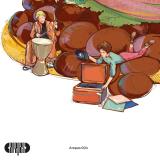
This is our first VA on Arepas Records. A selection of tracks from befriend artists we admire a lot, collected on our Umami Series I. Each track carries its very unique taste and vibe. VINYL ONLY!
expected to be published on 23 Oct

Hip-HopDancehallReggaeBeatsBass
Dub-Stuy continues its one-riddim series with Punchliner riddim, an original production crafted by DJ Madd, returning on beatmaking duty since his 2021 relick of the classic Answer Riddim. Driven by syncopated rhythms and a rolling bassline, this new addition to the series provides the perfect backdrop for three standout cuts from an international cast of vocalists.
The late Nazamba offers "Thief," a powerful social commentary in the tradition of dub poets like Linton Kwesi Johnson. UK-based Ras Demo showcases his versatility with "Lyrical Designer," while Spanish vocalist Lasai unleashes rub-a-dub energy on "The Punchliner." An instrumental version is also included.
expected to be published on 23 Oct
Ediciones Espectro Oculto returns with EOD003, its third release and the opening instalment of a new Split Series — a side each for two artists who deal in the shadows: Mick Wills & Blackmoon77.
Mick Wills handles the A-side in familiar territory, mining the margins of European DIY synth culture for cuts & edits. A1, “Six Six Six Sex”, resurrects a forgotten wave track laid down in 1983 by Venlo duo Carin & Henk, Carin Kollenbrander’s conspicuous, sexed-up vocals carrying the unmistakable spirit of the early-’80s minimal synth underground. A2 cuts “New York” by MCL a new beat staple first issued on German’s Boy Records, tightened into a playful, dancefloor-ready tool. Closing the side, Mick Wills turns to Folkvett’s “Kommando Kamprad” — originally out on Pater Noster Ltd. in 2012 — an ethereal, out-of-body drift that pulls the mood inward.
On the flip, Blackmoon77 doubles down on their signature across three originals: dark, raw and hypnotic wave built for bold & audacious DJs and fierce dancers.
All tracks mastered by Alden Tyrell.
As always, this is a one-time pressing of 250 copies — no repress, and no digital until the vinyl is gone.
expected to be published on 23 Oct

Since its original release, Aging has taken on an interesting wider significance. OCA’s music came to the attention of Kelela, who featured the duo in her Aquaphoria mix before later working with Yo van Lenz and Florian T M Zeisig in their Berlin studio. Those sessions would go on to play an important role in shaping the sound of her acclaimed 2023 album Raven, on which both artists are credited.
2019 Press Release:
Berlin based duo OCA present Aging, their sophomore album and first for Métron Records. Following up last year's Preset Music (recently featured in Kelela's Aquaphoria mix) Aging is an album that focuses on memory, experience and the passing of time.
A collaboration between producers Yo van Lenz and Florian T M Zeisig, OCA formed after the pair met and became friends while studying in Berlin. Originally from small towns in Bavaria, the duo now live and work in the German capital.
Through a series of 10 vignettes, Aging transports the listener on a trip across a series of life events that retain a special personal importance to both of the artists. These emotional touchstones range from the profound to the prosaic - the discovery of something new, the relief from annoyance or the familiarity found in an old companion - and have been fully explored with playful sonic introspection.
Whilst the concept retains a certain ambiguity, it is the sound palette, created solely on an Alesis QS6 synthesiser - that brings these experiences to life. OCA blend and weave classic dance music motifs with shimmering synths, Japanese wet ambient, and even anthemic 80s rock to create a soundscape rich with texture and sensation.
The bass notes and tentative lead of ‘Baby’s First Blade of Grass’ reference the memory of first consciously or subconsciously experiencing something new, whilst the decaying ripples of ‘Stretching in Water’ paired with sounds of flowing streams conjure up images of tranquil pools. Their most developed work to date, Aging showcases OCA as rising stars of progressive pop and modern ambient.
expected to be published on 23 Oct

After some years of (non)hiatus, Contagious are back with a new album that
furthers the evolution of their uncompromising sound. The album features the high
caliber talents of guests: Valentina Magaletti, Sofia Jernberg and Andrea Belfi.
“Being” is conceived around the different activities pursued by the band since the
release of their first (self-titled) album. Members: Sabine Erklenz, Andrea
Neumann and Mieko Suzuki have been concentrating on performing, composing
and organizing their own event series “Partners in Crime” at Morphine Raum,
Berlin.
This series is an ongoing process of inviting musicians to collaborate, share
and record new material - unrestricted by genre or anything else. It was during
these sessions, “Being" was conceived and recorded. Inspired by the wide range
of lifeforms found in nature, the track titles are once again dedicated to species
that challenge binary notions of sex.
The album conveys the band’s brutal approach to improvised processing - tense
buildups, powerful grooves and delicate release. Contagious’ signature sound
very much suits the wild vocal extensions by Sofia Jernberg, obsessive drum
patterns by Valentina Magaletti and the Moondog-esque, hypnotic percussion of
Andrea Belfi, all of whom offer powerful contributions to a tracks on the LP.
The overall result is a blissful and loving punch in the stomach
expected to be published on 23 Oct
Hip-HopInstrumentalBeatsAmbientExperimental
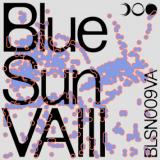
Budapest based concept label Blue Sun arrives with the 3rd edition of their annual VA series, showcasing a colorful taste of the local underground music scene, with some international sidenotes.
Following up on the label’s customs, the 19-track selection is not only released digitally, but also on a limited 200-piece cassette series. Curated by the label heads, the tracks follow Blue Sun's listening-oriented concept without genre restrictions with downtempo, trip-hop, jazz, dub, balearic, ambient, experimental, and electronica as highlights, with pieces that are more difficult to classify.
As before, instead of the usual A-B markings, the two sides are divided by the label's colors: “ORANGE” contains more organic and high-energy music, while “BLUE” contains more pensive and experimental tracks. Moreover, the selection has been carefully curated so that it can be listened to as an endless loop: the end of a side always resonates with the beginning of the other, wherever the listener begins.
The list of contributing artists this year are truly various and just as impressive. From uniqe debuting local artists to internationally recognised performers, it gives a taste of how the Hungarian underground scene sounds like atm. Important to note, that the release marks another debut: the label’s new visual identity by Blue Sun’s new designer, Péter Tóth.
expected to be published on 23 Oct
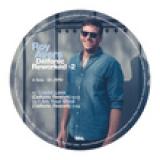
The vibraphone may have gone quiet, but the groove hasn't. Roy Ayers passed away on March 4, 2025, in New York City, at the age of 84, but the man they called the Godfather of Neo-Soul left behind a vault deep enough to keep dancefloors moving for generations. BBE Music now hands the keys to Berlin's own Delfonic, whose second volume of reworks digs even further into that treasure chest for six fresh, floor-ready reimaginings. The series began when Delfonic shared a spontaneous edit with BBE founder Pete Adarkwah, and listener demand for a vinyl pressing turned the idea into a full official release. Volume 1 sold out fast and moved through collector circles at speed; Volume 2 arrives with even higher expectations attached, and record heads who missed out the first time won't want to sleep twice. Everything here is pulled from deep, previously-vaulted Ayers sessions. The reworks draw from BBE's celebrated Virgin Ubiquity compilations, a trove of unreleased Roy Ayers recordings cut between 1976 and 1981. These are the rarer cuts serious collectors have been chasing for years, now given a second life courtesy of BBE Music Delfonic is the alias of Markus Lindner, a Berlin lifer. He's been DJing professionally since 2004, building his name across Berlin and wider Europe with a sound rooted in hip-hop but stretched across many genres. For anyone who needs the primer: Ayers pioneered jazz-funk through his group Roy Ayers Ubiquity and was widely regarded as the godfather of neo-soul. His breakthrough came young; he got his first vibraphone mallets at age five after watching Lionel Hampton's band, and by 1963 he had his own recording contract. His records have been sampled for decades by artists including Mary J. Blige, A Tribe Called Quest, Common, and Kanye West, cementing him as one of the most sampled figures in soul-jazz history; a status that only grows with every year that passes. About BBE Music: This is a label with real archival credibility on Ayers specifically. BBE has held the license to the Virgin Ubiquity sessions since 2004, and this rework series is a natural extension of that decades-long relationship. Buyers trust the BBE stamp on soul-jazz reissues and edits precisely because of that history and the care, thought and quality that goes into every physical release, as BBE celebrates 30 years of real music for real people.
expected to be published on 23 Oct
HouseElectronicaDeepBreaksPopDisco
‘Finally’, the forthcoming new record from Catz ’n Dogz, belongs to the latter.
There are albums you listen to, and there are albums you live with. ‘Finally’, the forthcoming new record from Catz ’n Dogz, belongs to the latter.
Across sixteen tracks, Voitek and Greg have created their most creatively ambitious and emotionally open work to date. An album about relationships, friendship and the people and places that shape us. At its heart is a simple idea: music should make you feel something, and sometimes the most meaningful moments are the quiet ones when you finally have time to yourself.
Finally is rooted in the emotional contradictions that make memories so powerful. Inspired by classic American Folk and Soul, its songs are happy and nostalgic; hopeful without pretending that the past doesn’t exist. There is melancholy inside the euphoria and warmth inside the sadness, a constant interplay between looking back and moving forward.
The album begins with the soulful breakbeat glow of 'We’re Gonna Be Alright' featuring Ajii, before moving through the smoky jazz and piano-led intimacy of 'Dance For You' with Miller Blue and the bass-driven energy of 'Sun Goes Down' featuring Charlotte Haining. Closing with the reflective 'Miss You' featuring Mateusz Krautwurst, the record takes in a rich cast of vocalists, musicians and producers, alongside a series of deeply personal Catz ’n Dogz solo productions.
Those collaborations are central to Finally. The album is, in many ways, a celebration of the creative friendships Voitek and Greg have built throughout their journey. Relationships that have allowed them to step outside their comfort zone and rethink what their music can be.
Written and recorded between Madrid, New York, Warsaw and the road, the album finds the duo placing renewed emphasis on songwriting, chord progressions and musical craft. Rather than simply chasing the next track, they took the time to learn, experiment and create something with a sense of permanence.
This is an album for driving without a destination. For watching the sun go down. For remembering somebody you haven’t thought about in years. For those rare stretches of time when there is nowhere else you need to be.
Item already on its way to us

Breakbeat Paradise Recordings proudly welcomes back one of the undisputed heavyweights of the international funk and breaks scene, Basement Freaks, for another scorching edition of the Toxic Funk series.
The brainchild of Greek producer George Fotiadis, Basement Freaks has spent more than two decades building a worldwide reputation for infectious grooves, heavyweight beats and dancefloor-destroying funk. With releases on labels including Jalapeño Records, Bombastic Jam, Good Groove Records and many more, Basement Freaks has become a staple in DJ sets around the globe and one of the most respected names in modern funk.
Opening the release is Got That Funky Stuff, an irresistible slice of raw party funk packed with chunky breakbeats, killer basslines and soulful samples that are guaranteed to get any crowd moving. Flipping over, Life For Dat Sweet Ting keeps the energy flowing with another irresistible groove, combining vintage funk flavors, rolling drums and signature Basement Freaks swagger into a certified dancefloor weapon.
Whether you're a funk DJ, breakbeat selector or simply a lover of timeless grooves, Toxic Funk Vol. 25 delivers two expertly crafted cuts that showcase why Basement Freaks remains at the very top of the global Nu Funk scene. Another essential 7-inch for collectors and DJs alike, and another dose of pure funk from Breakbeat Paradise Recordings.
expected to be published on 23 Oct

Wie Amerika selbst ist auch die Geschichte von Chess Records eine Geschichte von Chancen in neuen Ländern, in denen Grenzen zwischen Hautfarbe und Kultur überwunden wurden, um Rhythm and Blues-Musik
zu schaffen, die Zuhörer auf der ganzen Welt beeinflusste. Das beeindruckende Künstleraufgebot von Chess
– und seine Gründer – haben den Blues von Volksmusik zu populärem Sound weiterentwickelt und verändert.
Chess Records wurde 1950 von den polnischen Einwanderern Leonard und Phil Chess gegründet und entstand im Süden Chicagos, aber der Einfluss ist weltweit und über Generationen der Popmusik hinweg spürbar
– von Acts der British Invasion wie den Beatles, den Rolling Stones und Eric Clapton, die Chess-Künstler
als ihre Vorbilder nannten, bis hin zu den heutigen Stars wie Beyoncé, Jack White, Questlove und Bruce
Springsteen.
Die fortlaufende monatliche Serie wird Veröffentlichungen von legendären Künstlern aus dem renommierten
Chess-Kader präsentieren, diesmal Chuck Berry ”Back Home” und Muddy Waters ”Sing ”Big Bill” Broonzy.
expected to be published on 23 Oct

Wie Amerika selbst ist auch die Geschichte von Chess Records eine Geschichte von Chancen in neuen Ländern, in denen Grenzen zwischen Hautfarbe und Kultur überwunden wurden, um Rhythm and Blues-Musik
zu schaffen, die Zuhörer auf der ganzen Welt beeinflusste. Das beeindruckende Künstleraufgebot von Chess
– und seine Gründer – haben den Blues von Volksmusik zu populärem Sound weiterentwickelt und verändert.
Chess Records wurde 1950 von den polnischen Einwanderern Leonard und Phil Chess gegründet und entstand im Süden Chicagos, aber der Einfluss ist weltweit und über Generationen der Popmusik hinweg spürbar
– von Acts der British Invasion wie den Beatles, den Rolling Stones und Eric Clapton, die Chess-Künstler
als ihre Vorbilder nannten, bis hin zu den heutigen Stars wie Beyoncé, Jack White, Questlove und Bruce
Springsteen.
Die fortlaufende monatliche Serie wird Veröffentlichungen von legendären Künstlern aus dem renommierten
Chess-Kader präsentieren, diesmal Chuck Berry ”Back Home” und Muddy Waters ”Sing ”Big Bill” Broonzy.
expected to be published on 23 Oct

Following up 2007s well received X-dub was the Phalaenopsis 12inch that came out later that year. A track selection that came from the same hyped mysterious MySpace track folder, but now transmitted through Frustrated Funks subsidiary, the now defunct Frantic Flowers imprint that was emerging through the early Clone channels. Signing there, without the staffs knowledge of the producers identity, further muddied the waters. Exploring a more housy dub-techno vibe and diving deeper into experimental dub territory. And with it deploying an even bigger smokescreen around Ovatows real identity. Both Phalaenopsis versions re-appear now, for the first time after almost 20 years, fully retouched and remastered, together with an unknown unreleased track (edit) called So It Goes. This is the second in a series of Ovatow work, revived for the heads that appreciate the foggy deep of the Undacurrnt.
expected to be published on 23 Oct

2026 Repress
Third part in the very exclusive 'Schatrax' repress series.
expected to be published on 23 Oct

"CHICAGO STATE OF MIND PT. 2" is the second in a series of releases on Organix from Glenn Underground. All mixes on this release are composed, produced, mixed and mastered by Glenn Underground.
expected to be published on 23 Oct
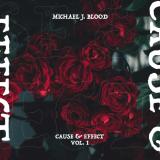
Crash landing onto the scene in 2017 with his now legendary NTS broadcast of 2 hours of unheard music, the ultra-mysterious and enigmatic Michael J. Blood has gone on to release a series of sought after, lush and rugged future classics on his own imprints Blood Inc. and BodyTronixxx. Allegedly hailing from Manchester in the North of England, Blood’s sound is hard to pin down but instantly recognisable. Rooted in the twin foundations of modern dance music—Detroit and Chicago—while schooled in the sweaty basements of Manchester’s fêted club scene, his music feels both original and familiar, timeless yet unplaceable.
Weaving together a hypnotic narrative that feels both archival and futuristic, Cause & Effect Vol. 1 brings together some of Blood's rare and hard to find bangers from a variety of his early sold out projects. The collection mixes the pulse of Chicago with the grit and cosmic dreams of Detroit, while never losing sight of the North of England’s sophisticated late-night sleaze. Blood’s dance-floor eclecticism and raw, infectious mutant beats drive a soulful, jazz-louche energy into every track. The result is a collection of atmospheric grooves that weave together hypnotic rhythm and smoky texture, blurring house, techno, broken beat, and jazz-soaked electronics into a heady trip. Cause & Effect Vol. 1 maps out the restless evolution of Blood’s sound, a testament to his instinct for rhythm, atmosphere and dance-floor alchemy. House for the heart, techno for the mind, both built for the body. It’s in the Blood.
expected to be published on 23 Oct

Vinyl[19,12 €]
Nine-time GRAMMY® winner Anderson .Paak and GRAMMY®-nominated rapper Cordae have been operating on the same wavelength for years. What started as pure chemical reaction on 2019’s “RNP” slowly turned into one of hip-hop’s most natural, low-ego partnerships, fueled by back-and-forth gems like “Two Tens” and “Summer Drop” and a series of dynamic TV performances that felt more like two best friends hanging out than a polished routine. On their debut collaborative album, Heavy Is The Crown, that organic bond gets the full-length treatment it’s always deserved.
At its core, the project is a tightrope walk between serious real-life stakes and uncompromising fun. The title isn't just bravado—it speaks directly to the shared weight both artists carry as the primary providers and anchors for their families. But instead of letting that pressure crush the vibe, .Paak and Cordae lean into each other. Meeting as total equals, .Paak’s elastic, soul-drenched musicality anchors Cordae’s razor-sharp lyricism, allowing both to unpack the heavy reality of success and family responsibility without ever losing their spark.
That balance is what makes the album tick. To drive the point home, the album art pays homage to the cult comedy Step Brothers—a nod to the silly, irreverent friendship that birthed the music in the first place. Heavy Is The Crown doesn't feel like a forced corporate crossover or a calculated career move. It’s a record about brotherhood, family, and what happens when two masters of their craft step into the studio simply because nobody makes them laugh, rap, or create quite like the other.
expected to be published on 23 Oct

Cassette[14,50 €]
Nine-time GRAMMY® winner Anderson .Paak and GRAMMY®-nominated rapper Cordae have been operating on the same wavelength for years. What started as pure chemical reaction on 2019’s “RNP” slowly turned into one of hip-hop’s most natural, low-ego partnerships, fueled by back-and-forth gems like “Two Tens” and “Summer Drop” and a series of dynamic TV performances that felt more like two best friends hanging out than a polished routine. On their debut collaborative album, Heavy Is The Crown, that organic bond gets the full-length treatment it’s always deserved.
At its core, the project is a tightrope walk between serious real-life stakes and uncompromising fun. The title isn't just bravado—it speaks directly to the shared weight both artists carry as the primary providers and anchors for their families. But instead of letting that pressure crush the vibe, .Paak and Cordae lean into each other. Meeting as total equals, .Paak’s elastic, soul-drenched musicality anchors Cordae’s razor-sharp lyricism, allowing both to unpack the heavy reality of success and family responsibility without ever losing their spark.
That balance is what makes the album tick. To drive the point home, the album art pays homage to the cult comedy Step Brothers—a nod to the silly, irreverent friendship that birthed the music in the first place. Heavy Is The Crown doesn't feel like a forced corporate crossover or a calculated career move. It’s a record about brotherhood, family, and what happens when two masters of their craft step into the studio simply because nobody makes them laugh, rap, or create quite like the other.
expected to be published on 23 Oct

2026 re-issue, 180g vinyl, remastered from the original tapes
Be With have raided the KPM archives to re-issue another of our favourites from the KPM 1000 series. They say: Hard Afro Pop featuring large percussive rhythm section and front line. We say: One of the best-loved of all the KPM LPs. Afro Rock was recorded at Morgan Studios by John Cameron and Alan Parker in London in 1973 as a collection of stripped-down African rhythms, virtuoso jazz instrumentation, fuzzed up wah wah guitars and spaced out library breaks. The percussion is effortlessly funky, and those flutes so melodic, it’s as if the LP was crafted with the beat lovers of the future firmly in mind. As Cameron himself described it in Unusual Sounds, this is “heavy duty drum-and-bass salsa music”. As with all of our KPM re-issues, the audio for The Road Forward comes from the original analogue tapes and has been remastered for vinyl by Be With regular Simon Francis. We’ve taken the same care with the sleeves, handing the reproduction duties over to Richard Robinson, the current custodian of KPM’s brand identity. And don’t worry! Those KPM stickers aren’t stuck directly on the sleeves!
expected to be published on 23 Oct
HouseElectronicaPopBeatsAmbient
Theory Therapy presents “Smoker’s Choice,” the second release and first full-length from Alien D, the project of New York producer Daniel Creahan. Following last year’s “For the Early Hours of a World in Bloom” EP, the record takes on a decidedly more spacious, inward bent, with softened rhythms and arrangements given more room to breathe, folding electronics and acoustic composition into a shifting, ethereal wash.
Featuring a range of collaborations across the record, including guest vocals from his wife Ellen, Creahan’s electronics serve as a base for a series of dubwise interpolations of his collaborators’ work, from washed-out zither and bowed banjo to scorching saxophone leads.
There’s a particular pleasure in the obfuscation here, each instrument buffed into a mass of sound. A sub-bass tone might linger beneath the surface before receding into the haze; a groove can feel steady one moment and subtly shift the next. Repetition becomes less about locking into a pattern than watching it slowly change, like the same view seen through moving water.
“Smoker’s Choice” finds its depth in these small shifts, with dub rhythms, soft-edged electronics and acoustic inflections reaching something dreamlike but tactile, where atmosphere and groove are never quite separate. The record feels like a snapshot of several forces moving in slow motion – a landscape of drifting forms and blurred boundaries, where nothing feels entirely fixed.
expected to be published on 23 Oct
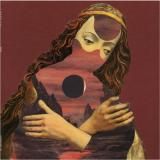
After opening the DOMU catalogue with our first release, Tensal returns to mark another chapter for the label. Huge Rings of Hot Plasma inaugurates our label’s physical series, bringing his unmistakable language back into focus. Across four tracks, repetition becomes momentum as tight rhythmic structures shift through layers of tension and movement. The record stays locked on its course, carrying the mental drive of Tensal’s sound through a continuous pull towards the floor.
Item already on its way to us

With his last three records all landing within a calendar year (2024-25), enigmatic Swedish producer Civilistjävel! (aka Tomas Bodén) is on a hot streak of releases, his singular vision increasingly ambitious and expansive. There are few artists working at this level so consistently right now, reinventing, revising and continually developing their language. Following on from 2025’s radically re-worked ‘Versions’ (of Mayssa Jallad’s ‘Marjaa…’), Bodén returns to break further fresh ground with his new album, ‘Älvgång’. Featuring contributions from Soccer Committee, Carrier and guest (aka Jabu’s Jasmine Butt), ‘Älvgång’ foregrounds a more brittle and insistent rhythm-based sound, whilst comprising his most broad-ranging collection of material to date.
‘Älvgång’ grew out of a series of sketches made from late ‘24 and throughout the whole of ‘25 at Stockholm’s renowned EMS Studios, which gave Boden free rein to its extensive collection of vintage analogue equipment and rare modular synthesizers such as the Serge and Buchla systems. As a loose framework of tracks began to take shape, so did a reflection of sorts, on family and foundations, underpinned or influenced by sounds that drifted into Tomas consciousness around this time - ancient Swedish pastoral music, Georgian lithurgical chants, gongs, chimes. An idea settled into place, a dedication to his Grandfather, as the earlier release Fyra Platser (tr. ‘Four Places’) was to his Grandmother. Älvgång is grounded with the sense of time and place of an old family photograph, with the tracks over each side bearing one of two names that are more or less the same location - Strinne was the old name for a this loose collection of villages. These days it is more commonly known as Bjärtrå. Metaphorically speaking, the river runs through both.
Civilistjävel! conjures so many adjectives and descriptors, ‘glacial’ and ‘ambient’ frequently among them - but while not altogether untrue, such terms belie the tension and drama so often present in Tomas’ music. Listening to ‘Älvgång’ is not a passive experience. The eight tracks here feel like a patchwork of memories that bathe in the same ethereal, otherworldly glow of Tarkovsky’s polaroids’.
The machine pulses that dominate this landscape are reigned in and tempered by a human hand; lithe, untethered coils, breathing in and out. ‘Strinne Ett’ sets out with purpose, sensing awe and wonder through the murk, but as the final tone unfurls like a question mark, another chapter begins, unfolding/building like a Tarjei Vesaas novel. These lyrical, abstract miniatures combine to reveal a wider context, fragile humanity standing alone against nature.
Guest appearances on Civilistjävel! records have become a regular occurrence (including recent collaborations with Mayssa Jallad, Laila Sakini, Cucina Povera, Thomas Bush, Eldon + Withdrawn), but are used sparingly and with increasing precision. On ‘Strinne Tre’ Mariska Baars’ (Soccer Committee) voice feels like a balm, a clearing. But as her simple, three-word incantation drifts further into fog, the meaning changes, and her words seem to curdle. Carrier’s beats widen the parameters on ‘Strinne Fyra’, a skittering promise that builds tension then refuses to release it; all false starts, Photek gongs, and trinkling modulars. Jabu’s Jasmine Butt pulls all the threads together for the final track, Thomas Tallis’ ghost walking over offset machine impulses, that work against their own symmetry.
Side two begins inquisitively, scanning bleached, alien surroundings, its sparse pads recalling Aphex Twin’s ‘Selected Ambient works Vol 2’. 'Bjärtrå Två’ picks up the baton from ' Strinne Fyra’ with a ruptured Simmons SDS200 analogue drum synth set free from its shackles, the rhythm eventually slotting into the spaces that were hiding in plain sight. What follows seems like an epiphany; ‘Bjärtrå Tre’ is achingly beautiful, a euphoric, winding ascent that leads to devotional plainsong. ‘Bjärtrå Fyra‘s final unheralded shift feels both tragic and haunting.
expected to be published on 23 Oct
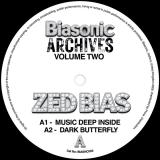
Zed Bias (aka Maddslinky) is a pioneering producer and DJ whose influence has helped shape UK Garage, 2-Step, Broken Beat and UK Funky.
The second release in the archival series opens the Biasonic vaults once again, uncovering rare and essential recordings that span multiple genres and decades of groundbreaking music.
Pressed in strictly limited quantities, this is a collector’s edition for devoted fans and curious crate-diggers alike. Once it’s gone, it’s gone—secure your copy while you can.
expected to be published on 23 Oct

Nicola Conte & Gianluca Petrella’s 2021 brilliant collaborative jazz dance album People Need People channelled a vision of togetherness and used the universal language of music to elevate our spirit during these trying times. This vision can’t be more relevant today and the album’s legacy is kept alive with the same spirit of collaboration that distinguished the project.
“Inner Light” - featuring Raashan Ahmad on vocals - is the first song from the album chosen for a series of reinterpretations of the project that will be released throughout 2022. Joaquin Joe Claussell needs no introduction, the Body & Soul founder and Sacred Rhythm label honcho is a true legend and purveyor of spirituality – a cosmic messenger that brings us two versions of “Inner Light”; his work here is not to be solely intended as a remix but, as the title suggests, delivers two new proper versions of the original song.
This EP is the first in a trilogy of 12” releases that will also feature further reinterpretations of tracks taken from the “People Need People” album, by none less than Anthony Nicholson, DJ Spinna and Tall Black Guy!
Item already on its way to us

Following the acclaimed Milano Undiscovered, Italia Undiscovered and Italia Synthetica series comes Italo International: a new collection celebrating the enduring legacy of Italo Disco. Eight exclusive tracks by established European artists reimagining one of Italy's most influential musical movements with originality, respect, and a contemporary vision.
Italo International is a journey through the many shades of elegant and visionary electronic music, moving between Italo Disco, Synth Pop and dancefloor-oriented sounds. The talented and steadily rising Polish producer Rafał Lachmirowicz, aka Also Playable Mono; Hungarian artist Gianni Durante, aka Electro Potato, who for years has been bringing back the sound of early-Eighties Italo Disco with passion and a contemporary sensibility; Norwegian Tommy Holsen, aka DJ TinTin, who together with the Eighties band Go explores the classic sounds of Nordic Synth Pop; British producer Mark Wilkinson, aka Kid Machine, who for over fifteen years has been creating productions made for the dancefloor; Tyrell Corporation, the alias of Dutch producer Alden Tyrell, who joins forces with Italian duo Italoconnection to rework a track destined to set the dancefloor on fire; Swedish multidisciplinary artist Tobias Bernstrup, who for three decades has been reinventing the more sophisticated side of Italo Disco with elegance and a distinctive vision; the Dutch project Sfera Celeste Project, which blends Moroder-inspired sounds with a hypnotic minimalism reminiscent of Jeff Mills; and, closing the journey, British artists Heartbreak, Ali Renault and Sebastian Muravchik, with a poignant and slow-burning excursion into the melancholic world of Synth Pop.
expected to be published on 23 Oct
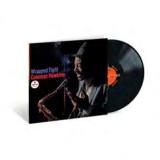
Bereits in den frühen 1920er Jahren hatte sich Coleman Hawkins in der New Yorker Jazzszene als einer
der ersten großen Improvisatoren auf dem Tenorsaxofon etabliert. Bis sich sein Gesundheitszustand 1966
rapide verschlechterte, hielt er stets mit der Entwicklung des Jazz Schritt. In seiner letzten Schaffensphase
zwischen 1960 und 1965 war er unter anderem auf Max Roachs Klassiker “We Insist!” und zusammen mit
Sonny Rollins auf dem gemeinsamen Album “Sonny Meets Hawk!” zu hören. Darüber hinaus spielte er
in diesen Jahren vier Alben für das damals trendsetzende Label Impulse! Records ein. Das letzte dieser
vier Alben, “Wrapped Tight”, war 1965 zugleich auch das letzte Album, das von Coleman Hawkins als
Bandleader noch zu Lebzeiten veröffentlicht wurde. Mit einem Sextett interpretiert er hier ein breitgefächertes Repertoire, das neben klassischen und zeitgenössischen Jazzstandards mit “She’s Fit” auch auch
ein Hawkins-Original enthält. Scott Yanow bewertete das Album in seiner Rezension bei AllMusic mit vier
Sternen und schrieb: “Auf Hawkins’ letzter starker Aufnahme improvisiert der Veteran - 43 Jahre nach
seinem Plattendebüt mit Mamie Smiths Jazz Hounds - kreativ über ein breit gefächertes Repertoire …
Glanzstück ist eine gewagte Version von ‘Out of Nowhere’, die zeigt, dass der Tenorsaxofonist auch 1965
noch neue Ideen hatte.”
expected to be published on 23 Oct

LA-based producer Real Bad Man and multi-JUNO Award winning Toronto-based artist TOBi release their collaborative album The Perfect Blue via the producer’s own Real Bad Man Records. The album collects a diverse array of sounds,highlighted by the album’s two advance singles “When I’m Home, ” which Stereogum described as “a moody,graceful soul song with a serious groove, ” and the funk-laden “Over The Moon, ” released last week.
TOBi and Real Bad Man’s work together on The Perfect Blue encapsulates the producer’s mission for 2025, a year in which he released intricate collaborative albums with a wide swath of artists. His work with TOBi was seamless and began quickly after the two first met, finding kinship in their ability to push past their comfort zones in genre and familiar sounds. The result is eclectic and boundless, jumping from straightforward and unflinchingly personal rap moments, to the flared funk of “Over the Moon” and understated contemporary soul flourishes that prove the Toronto emcee can confidently make each of these sounds his own.
The Perfect Blue marks Real Bad Man’s fifth full-length collaborative album of the year, bookending a prolific 2025 that began with his collaborative album with ZelooperZ, Dear Psilocybin. Over a celebrated catalog spanning years, Real Bad Man, also known as Adam Jay Weissman, has cemented himself as a force in underground hip-hop, but his impact extends beyond work with contemporaries like Boldy James, Pink Siifu, Blue and more. Each of Weissman’s five collaborative albums this year showcases a different side of his craft, appeasing fans familiar with his gritty hip-hop production on his third album with Boldy James Conversational Pieces. He also surprised listeners with a bold turn in sonic direction, well outside of his traditional production palette, with his reunion with former Pollyn bandmate Genevieve Artadi on Everything Is Under Control.
Nigerian-born, Toronto-raised artist TOBi has carved out a distinct lane for himself with a celebrated discography of releases that explore themes of vulnerability, self-reflection and contemporary masculinity with a pointed nuance. His 2023 album PANIC swept the rap categories (Best Rap Album, Best Rap Single for “Someone I Knew”) at the 2024 JUNO Awards and his catalog has been praised by the likes of Billboard, Rolling Stone, i-D and more. Expanding on his ELEMENTS project series with the second volume released earlier this year to high praise, The Perfect Blue cements TOBi’s bonafides as an adept collaborator.
expected to be published on 23 Oct
Blume presents The Days Pass Quickly Immersed in the Shadow of Eternity, a new work by Lea Bertucci commissioned by the ZKM Center for Art and Media Karlsruhe and premiered in Karlsruhe in November 2025. Written for, and created in collaboration with, the flutist Norbert Rodenkirchen, it draws on his collection of Renaissance, Medieval, and Neolithic instruments, harnessing sounds that have been largely absent from the modern world. What does it mean to employ one of humanity's oldest known technologies, the flute, appearing in human hands tens of thousands of years before the advent of the wheel, within an experimental, electroacoustic composition that is inherently forward-thinking?
Since her emergence within New York City's Noise scene during the early 2010s, Bertucci has balanced a fierce dedication to the DIY ethos and immediacy of the underground with a refined sense of creative rigor and ambition, moving from brittle, challenging compositions for saxophone, electronics, and tape toward investigations of acoustic phenomena, site-specific resonance, and complex harmonic interplay. Following her return to the rural environments of Upstate New York where she was born and raised, her work has entered a more introspective phase, with an expanded instrumental, technical, and vocal palette that has found her increasingly composing for others, as on 2023's Of Shadow and Substance and on Fata Morgana, a work for organ released earlier this year.
The piece grew from a meeting with Rodenkirchen after a performance by the early music ensemble Sequentia, to which he belongs. Struck by his ability to conjure "spirits from deep within human memory, as a clarion call into the present", Bertucci began a series of conversations that led the pair into the studio at ZKM in the summer of 2024. Conceived for ZKM's 42.4 speaker system, grouped into 8 discrete outputs before being mixed down to stereo, the work aligns with the collaborative process she has honed alongside her solo efforts, in duos with Ben Vida, Lawrence English, and Olivia Block: a dialog with personal and responsive agency offered to both musicians.
It carries forward her inquiry into the fundamentally human aspects of listening ("I am looking for sounds that call from somewhere deep within the listener and that tap into archetypal human knowledge and feeling") and her investigation of psychoacoustic phenomena and otoacoustic emissions through a meticulous alignment of pitches and timbres. Where many of her most celebrated efforts played, and played with, the room, this one is rooted in an implied space: the flutes recall and blur the boundaries between the eras and environments in which those instruments were originally played, from acoustically engineered Renaissance and Medieval halls to the naturally reverberant caves of the Neolithic, and those of the present.
Bertucci is not the first to bring ancient sound sources into experimental music: Harry Partch's instruments drew on Greek, Chinese, and Japanese precursors, Alvin Curran regularly plays a conch shell, and Walter Maioli has spent decades working at the borders of experimental music and archaeology. Her piece occupies a more rarefied position through its hybridity, combining advanced technology with archaic sound sources while sidestepping the exoticism and romantic primitivism that can hobble such efforts. Compared with its closest cousin, Phill Niblock's Four Full Flutes, where the instruments are manipulated beyond clear recognition, here the flutes remain recognizable and embrace the layers of history they carry. The result is an electroacoustic work that largely forgoes the auditory signifiers of the idiom: it could easily pass for a live ensemble, and only attentive listening reveals that it could only have been made through advanced technology.
As Rodenkirchen's playing interweaves with Bertucci's computer-facilitated arrangements of flute samples, ranging from pulsing clusters to dense combinations of sustained tones, timbres, and distances, the piece draws connections with folk and spiritual traditions across human history: Medieval polyphonic ecclesiastical music, Sardinian canto a tenore, Pygmy vocal music, Buddhist chant. By conjoining one of our earliest known technologies with our most advanced, Bertucci proposes that our tools are not the message, but rather the unending continuum of humanity itself. Issued by Blume in a highly limited vinyl edition of 300 copies on transparent light blue vinyl, with newly commissioned liner notes by Bradford Bailey.
expected to be published on 23 Oct

2026 Repress
Cosmo Dance is the artistic alias of Cosimo Mandorino, an Italian producer and DJ who has been active in the electronic music scene for more than twenty years, as well as the founder of the label Mirella. Produced and finalized in Napoli during a series of short stays, and developed with the contribution of Raffaele Arcella and Dario di Pace, "Cosmo-logic" unfolds within a parallel, plausible, and dystopian universe where humans and machines coexist in constant tension and perpetual conflict. A musical narrative shaped by rebellious computers, wars between binary systems, and universal unified languages, the record stands as a manifesto to the early era of Italo-Disco, while remaining deeply infused with influences from cosmic disco and stripped-down electronic funk. The tracks make extensive use of mechanical rhythms, voice modulators, vocoders, and analog effects, exploring sonic territories forged through iconic instruments such as the Korg MS-20.
expected to be published on 23 Oct

Molecular Recordings proudly announces the release of "Structure Series 1," a special vinyl collection marking the label's 30th anniversary.
This release features unreleased tracks from both veteran artists and emerging producers, highlighting the label's ongoing commitment to innovative and high-quality techno music.
For three decades, Molecular Recordings has been a leader in the techno scene, continually pushing the genre's boundaries and redefining its sound. "Structure Series 1" is a testament to this legacy, blending the work of established artists who have shaped the label’s history with fresh talent poised to influence its future.
"Structure Series 1" is more than a collection of tracks; it is a celebration of Molecular Recordings' journey and a glimpse into its future. This release commemorates 30 years of musical innovation and signals the beginning of a new chapter in techno.
Ready to ship

The Discos Panorama series heads back to Colombia again for PAN016, pairing a heavyweight cumbia classic from Andrés Landero Y Conjunto with a wild Colombian take on one of the great Afro-funk records.
On the A-side, “La Pava Congona” is Landero in full flight. Known as El Rey de la Cumbia, Landero had that rare ability to make the accordion feel raw, hypnotic and completely dancefloor-ready. This one is all about the rolling rhythm, the call-and-response feel, and that unmistakable sabanero swing. Proper Colombian cumbia with weight behind it.
On the flip, Afrosound take on Manu Dibango’s “Soul Makossa” and send it straight from Colombia’s northern coast. Where the original is already a landmark Afro-funk groove, Afrosound bring their own Colombian flavour to it: fuzzed-out guitar, tropical percussion and loose psychedelic touches and that brilliant energy that made their records so special. A track that when we heard Hugo “Crucial Juice” spin, we knew we had to reissue.
Together, it’s exactly what the Discos Panorama series is about.
As always, PANORAMA Records is here to bring rare and essential music back into circulation with care, respect and admiration. Proper records, properly pressed, and ready for the dancers.
Ready to ship

HouseJazzyBalearicBreaksPopJazz
On Last Night At Marienbad's latest, the imprint brings together three of the brightest souls found within the realms of Jazz, namely Mauricesax, 9ick and Milan93, with their collective talents synergising effortlessly on 'A Garden Between Us', alongside a stellar cast of remixers who add even further delight between the grooves….
As a genre, Jazz has perhaps lent itself the most to other musical universes, in that its curious heart, endlessly experimental nature, and parameter-defying spirit have wrapped itself deep within the core of countless albums, scenes, and music makers. It's a genre that welcomes reinvention, consistently defying its contents and always reaching out to find new methods of expressionism. Electronic music, in its many forms, has truly embraced Jazz perhaps like no other movement of music has, with a truly astonishing array of records surfacing in the past 40 years which have blended Jazz's unique motifs with grooves, chords, and emotive excellence. From 90s Jazz house and UR Techno, through to Future Jazz, downtempo, and Hip Hop, and around many other suns, there remains such an intrinsic and symbiotic relationship between the two musical realms that caters to those who wish to live music both within and out with themselves.
As practitioners of blending electronica and Jazz, few do it like the trio of Mauricesax, 9ick, and Milan93. All three are known for their distinctive soundscapes, yet share commonalities in terms of musical language, feel, and sense of progression. Bringing them together allows for overlaps in their sounds to emerge, and just like Jazz itself, this is where the intrinsicness of sound begins to blossom. 9ick brings his softly evolving vibe to the table, one which was so prevalent and celebrated on his 2025 album 'SMIL'; Milan93 draws from his focal point of exploring fill-laden grooves and a myriad of emotive sensibilities; and Mauricesax draws up his extensive musicality that exists at the corner of jazz, electronic, and experimental music, along with running musical workshops all over the globe.
'A Garden Between Us' represents the trio's core tenets, with this immediately obvious from the record's opener, 'Rhodora'. A gentle solo piano quickly evolves into a series of powerful rhythmic pulses, with brass lines bringing vitality and feel to proceedings. The track shifts gears with purpose, transitioning between musical vignettes of the highest order, with the synth work doing much to bind the transitions together. 'Tulip' emerges slightly differently, with glossy Rhodes tones and an unravelling rhythmic undercurrent setting an enthralling stage. The track flourishes amongst sweeping textures, coming up for air amongst a deeply hypnotic rhythmic section that holds on and never lets up. 'Honeysuckle' lands next, which sees the trio emerge with a boundless, dynamic soundscape. The drums shift within the undertones, as keys, chords, horns and hip-hop vocal samples dance around the pulse, capturing the imagination with their narrative-like placement. Wrapping up the A side comes 'Camellia'. A dazzling array of harmonic sounds converges around the transfixing rhythm section, which emerges from deep below to lavishly roll out over the midsection, with the delicateness of the instrumentation a real highlight here.
The B side features two exquisite remixes, with Pacific Coliseum's version of 'Tulip' landing first. Beginning with a signature four to the floor to get things going, his careful handling of the source material is seen in the tactful introduction of the blissful elements that made the original cut so impactful, with great focus placed on emotive fidelity. The result is a summer-bound house number that reimagines the original in all the right ways, flipping it into a euphoria-driven jazz-laden pacer that reaches for the heavens as much as it drives right into the heart. Teuteu then showcases their take on 'Honeysuckle', and at 9 minutes long, represents the longest cut on the record - and the experience is all the richer for it. Leaning heavily into dance music flavours, Teuteu shifts perspective totally into the realm of the club, with the walls beating hard to the kicks. The sax lines that drift ethereally up top keep eyes closed and souls full, as the dance shifts into the next phase.
An experience that drifts from the daydreaming, to soul-warming through to the club shaking - what else is left to experience, except for 'A Garden Between Us' and how it will brighten up life itself….
Ready to ship

Raw Disco Traxx Vol. 001 is the second release on Complejo Records and the label’s first Various Artists compilation, born directly from Raw Disco, our series of parties in Bogotá. Five tracks bringing to vinyl the music played at these nights and the sound we have built on the dancefloor.
From the melancholy of Darkwave to the energy of Acid and Techno, from the roots of Post Punk to futuristic EBM, the compilation brings together Delectro feat. D TRON X, Alpha Sect, CIERŃ remixed by Neu-Romancer, Delectro & Munsinger, and Asymetric80.
Ready to ship