In 2019 we released the Discodrums 12'' on our own newfound The Night Land Records. With its screen-printed cover and limited edition it was a tribute to a format and culture dear to our hearts: Vinyl. Our intention was to keep releasing records in this style, with songs already mixed, mastered and ready to fly.
Had we known it would take three years to get the next EPs out we would probably have reconsidered everything. Series of strange incidents, accidents and negligence made us think this project was cursed but the music felt too important to us to let it go. We kept working to get it out and now we finally arrive with two "new" EPs: Melbourne Bolero and Bosco/Bosca. This is classic Talaboman; Chuggy, hypnotic, dub flavoured Latin-Scando house music, released on vinyl with beautiful screen-printed covers designed by DR.ME in Manchester. Three years too late but a hundred years too soon? Dance is timeless, thanks for listening.
Cerca:serie rec
Brazilian singer, guitarist and actor Seu Jorge returns with an intimate and stripped back session and album, a collaboration with his close friend and kindred spirit Rogê, for new UK based, direct-to-disc record label, Night Dreamer.
Recorded and cut direct-to-disc on Thursday 22nd & Friday 23rd August 2019 at Artone Studio, Haarlem, The Netherlands. Brazilian singer, guitarist and actor Seu Jorge turns to brother-in-arms Rogê, for their first ever album recording, celebrating 25 years of friendship and companionship as part of the latest instalment on UK based, direct-to-disc record label, Night Dreamer.
From concept to completion in four days, the Night Dreamer session commits a lifetime of collaboration and companionship to record for the first time, encapsulated by ‘Caminhão’ - the first song the duo ever wrote together 25 years ago.
Similar to his breakout album and Bowie homage, The Life Aquatic Studio Sessions, the new record is stripped back and raw but with an altogether different ambition - to create a 'classic Brazilian record'. Featuring both Seu Jorge and Rogê on guitar and vocals it also enlists the additional talents of two of Brazil’s most sought-after percussionists, Peu Meurray and Pretinho da Serrinha.
The seven original compositions recall the pairs plaintive and idiosyncratic melancholy and draws on the likes of Brazilian greats like Milton Nascimento, Gilberto Gil and orge Ben.
From Rio De Janeiro in Brazil, Jorge’s success has been witnessed by close friend Rogê – a story which has seen Jorge go from humble beginnings in Rio to working with the likes of Beck and Bowie, and starring in major film and television productions. Well known for his acting roles in,
City of God and the current Netflix hit series Irmandade (Brotherhood), it was Wes Anderson’s A Life Aquatic film that global audiences first saw Jorge on the screen performing as a troubadour strumming Portuguese-language covers of David Bowie classics. All in all, Seu Jorge has been a pioneering force in revitalising Brazilian popular music across the globe.
A songwriter, composer and musician in his own right, Rogê has received a Latin Grammy Nomination for ‘Na Veia’, his collaboration with samba legend Arlindo Cruz. With a strong catalogue of 7 albums and countless collaborations with Brazilian and international producers, Rogê represents the new generation of artists of the Brazilian Popular Music movement and has been instrumental in the pair building an archive of unrealised songs, sketches and ideas, some of which ultimately comprise the backbone of this session.
Like eavesdropping on a campfire session, the one-take direct-to-vinyl process at Artone captures the intensity of the duo’s relationship, setting the conditions for an extraordinarily intimate recording.
arbitrary presents Dissolvè / Scillions by Antoine Hubineau. Derived from the same series of compositions, Dissolvè and Scillions are drawn from modular synthesizer recordings which have been reworked, treated and composed in the computer.
First release on the new french label Disques de la Spirale, featuring an experimental motorik-kraut-dub infused, semi-improvised live act built by Tamara Goukassova, Axel Larsen & Théo Delaunay (Panoptique, Succhiamo, Violent Quand on Aime, Radiante Pourpre..) from Simple Music Experience ; featuring Maoupa Mazzocchetti, Fiesta en el Vacío, Ventre de Biche, Kyle Knapp (Deliluh) …
For fans of Faust, Tomaga, Tony Conrad...
French non-jazz trio overflowed by Simple Music Experience’s funders Tamara Goukassova, Théo Delaunay & Alexandre Larcier, offering a 40mn of non-simple music madness, and navigating between a dozen of etiquettes from undecided space rock to motorik-infused-dub, medieval folk, cartoon trance; everything under the seal of psychedelia and half-improvisation.
Built from drums, violin, springs, samples, reiterations, overdubs, trumpets, synths, distortions; and the appearances of L. Cedrón (Fiesta en el Vacío), L. Retraite (Ventre de Biche), K. Knapp (Deliluh), F. Mazzocchetti (Maoupa Mazzocchetti).
Chimera embraced by three members of the Simple Music Experience label, also (co-) liable at one point for the acts of Axel Larsen, (The) Simplists, Violent Quand On Aime, Constance Chlore, T. Goukassova, Radiante Pourpre, Succhiamo or Panoptique; Parasite Jazz emerged in 2016 in the smoke of a suspicious performance on Simple Music TV. An improvised and protean artifact at birth, the project settled down at the end of 2020 as a trio (Axel Larsen, Constance Chlore, Tamara Goukassova) in Marseille, then as a sextet during the Illusio festival in the summer of 2021. A series of concerts with a shifting line-up followed - Kyle Knapp, Luca Retraite and Luna Cedrón sometimes appeared and with them, spontaneous incandescences. This first series of collective hallucinations took the form of an album during a perilous recording at Grrrnd Zero (Lyon) in October 2021, and is completed by live recordings gleaned over the course of the summer episodes.
All tracks are composed and performed by Parasite Jazz:
Alexandre Larcier: bands, FX, springs
Tamara Goukassova: violin
Théo Delaunay: drums, percussion, synthesizer, tapes
Florent Mazzocchetti: trumpet on "Carton Jazz" and "Alarm Twist" (sampled)
Luca Retraite: bass on “Terciopelo” and guitar on “Alarm Twist”
Luna Cedron: vocals on “Terciopelo”
Kyle Knapp: lap steel on “Terciopelo” and “Untitled live at Gigors”
Around Function: Sketches, band lettering
Recorded and mixed by Théo Delaunay at Grrrnd Zero (Lyon) and l'Embobineuse (Marseille) except "Terciopelo" recorded at Illusio (Pradelles) and "Untitled live at Gigors" at La Sye Electric (Gigors-et-Lozeron).
Mastering: Rupert Clerveaux
Cover: Diane Malatesta
Design: Alan Briand
Parasite Jazz thanks: Quentin Mosko, the Groovedge/Illusio crew, Théo & Clyde, Maoupa Mazzocchetti, the 3 jokers Luna Luca and Kyle, Grrrnd & the Embobineuse.
Limited Edition of 2,000 copies, First time ever on vinyl. RIYL: Brian Eno, Max Richter, Eluvium, Tim Hecker, John Cage. Originally released a year after the increasingly iconic The Disintegration Loops, a decade later Melancholia still stands as William Basinski's second most beloved album. To commemorate its 10-year anniversary, we are honored to present the first-ever vinyl edition of this otherworldly piece of music. Remastered from the original recordings and pressed onto audiophile-quality 100% pure virgin vinyl, this limited-edition vinyl reissue is packaged in a stunning gatefold jacket featuring all-new artwork. It is truly a sight and sound to behold. Like many of Basinski's most soul-stirring works, Melancholia began as a series of short tape loops captured in the early 1980s. Basinski then stored them away for decades, revisiting them at a different time in his life, at which point they took on a stunning new sound all their own - one that many consider to be among the finest of the past decade. "Melancholia is probably the best of Basinski's records until now, even if this is hard for me to say given my love for each one of his releases. This music is so beautifully delicate and sad in its auto-reflective moods, it stands right there with everything ranging from the usual suspects in the 'ambient' field, to a distorted damp ghost of Claude Debussy or Maurice Ravel put into a time machine.' - Touching Extremes //
repress
Michael George Henry (aka Ras Michael and, for this lone release, Dadawah) was born in 1943 in Saint Mary Parish, in northeastern Jamaica. Henry was raised in a Rastafari community when the religious movement was still in its infancy and marginalized within Jamaica. It was there that he began performing Nyahbinghi, the Rastafarian devotional music that combines the influences of African drumming and Black gospel.
Henry found himself in Kingston in the late 1950s where he worked for Coxsone Dodd at the legendary Studio One. By 1968, he had formed the group Sons of Negus and the first overtly Rasta record label, Zion Disc. As Rasta filtered into the mainstream, Henry released more music including albums for Trojan, Dynamic and Grounation labels.
Originally released in 1974, Peace And Love - Wadadasow is Dadawah’s magnum opus. Produced by Lloyd Charmers, the album features slinky basslines, wah-wah guitar, hypnotic keyboards, dubbed-out studio trickery and, of course, the propulsive drumming and rhythmic chanting characteristic of Nyahbinghi.
Antarctica Starts Here presents the first widely available domestic release of Peace and Love - Wadadasow. This reissue is part of an archival series that focuses on Trojan’s essential ’60s and ’70s catalogue. Liner notes by JR Gonne.
Swedish drone alchemist Mats Erlandsson is sitting in a fictional room on ‘Gyttjans Topografi’, imagining a virtual chamber orchestra using zithers, tapes, double bass, harmonium, organ, and various synthesisers to draft a treatise on alternative tuning and non-normative harmonic structures. Transcendent material.
“The music on this recording is performed by a kind of fictitious chamber ensemble situated in an imaginary room outlined by textures that alternate between gestural foreground and passive landscape. The three pieces contained within this release are tied together by sharing similar harmonic material and instrumentation and could ideally be perceived as parts of one long performance stretching through the two sides of the record. The textural room in which this musical performance operates is unreliable, unstable, constantly shifting in size and activity from sparse and open to dense and claustrophobic. Inside this non-euclidean performance space a chamber ensemble made up of zithers expanded through analog tape transposition, harmonium and organ, double bass, digital FM, feedback-convolution and Serge modular synthesizer perform a music made from justly tuned intervals arranged in a way that blurs the distinction between traditional minor and major tonal harmony in favour of harmonic progression within an essentially modal framework.
‘Oxidationstabell för Hytta A’ unfolds the harmonic material slowly in three sections where individual lines move independently initiated by the attack of the zither while the textural properties of the room shifts and shimmers. ‘Törnar’ forms a dense harmonic counterpoint where lines built from the same intervallic relationships gradually shift the balance from one spectral focal point to the next while the textural-spatial elements move under pressure and permeate the harmonic layers. The double bass heard on this piece was performed by Yair Elazar Glotman.
The whole of Side B is made up of one piece - ‘Sänka’, using a series of chords made from harmonic inversions of a single set of intervals as an anchor, or synchronisation point, for voices gliding towards, or away, from their designated goal as parts of the harmonic structure of the piece. In addition to the harmonic and textural layers previously present, a third percussive voice is present here whose rhythmic material is intimately tied to the intervallic relationships present throughout the record.
The material used to make these pieces included non-harmonic sounds and contaminated field-recordings that have gone through a sort of feedback process between digital and analog, or acoustic, processing where the recordings were edited, processed and re-amplified and recorded again in acoustic spaces to shape their character and imprint acoustic identities on the recordings. The tonal instruments were treated in a process analogous to this - harmonic material built from recordings and digitally generated synthesis recorded, transcribed, rearranged and overdubbed again with additional electronic or acoustic instruments to form a composite electroacoustic instrumental sound.
Mats Erlandsson is a composer and musician, part of the vibrantly reemerging field of drone music in Stockholm, Sweden, associated with practices characterised by the extensive use of sustained sound. Erlandsson presents his work both as a solo artist and in collaborations, most notably together with Yair Elazar Glotman and Maria W Horn.
- A1: Made My Day
- A2: Geeked N Blessed
- A3: Kapitol Denim (Feat Future)
- A4: Coincidence
- A5: Been A Minute
- A6: White House (Feat Babyface Ray)
- B1: 13
- B2: Archive Celine
- B3: How Tf!?
- B4: Dna
- B5: Goodfellas
- B6: I Get It, Twin
- C1: Vvs Keyski
- C2: Brazy Weekend
- C3: Droughtski
- C4: Life Mocks Art
- C5: Noticed Ya
- C6: 10 Pm In Lndn
- D1: Out Of Lve
- D2: On Point
- D3: Free Sex!
- D4: My Way/Codeine Cowboy
- D5: Super Urus (Bonus Track)
- D6: Y Not? (Bonus Track)
Lucki Camel Jr. known professionally as LUCKI, is an American rapper and record producer from Chicago, IL. His debut single, “Untouchable Lucki,” was produced and premiered by music blog ELEVATOR. Lucki followed with his first project, “Alternative Trap,” in 2013 and has continued to work with prominent music figures ever since including Chance the Rapper, FKA Twigs, Danny Brown, Earl Sweatshirt, and Lil Yachty. In 2021, he collaborated with Philadelphia producer, F1thy, on “Wake Up Lucki.” Throughout the next year he released a series of standalone tracks. And in June 2022, he released “Y Not?” which is included here as a bonus track. Album includes appearances by Future and Babyface Ray. 24 tracks total.
Abstract Sounds, in partnership with Bianchi, present the second instalment of their special collaborative series. This latest immersive minimal house/deep tech project has sought out the creative intellect of artists ChrisOdt, Máté Si, and Nerve Maze, alongside the label head himself, Staniz. Each producer has an instantly recognisable taste in sound, yet they still manage to harmoniously glide together, moulding into a grouping of tracks set to fly.
Staniz is the primary figure behind two of Italy’s most exciting musical projects to emerge over the past few years, Bianchi and Abstract Sounds. The brands support rising Italian talent, whilst stressing the importance of upholding the intrinsic value of art and music, through a preference for physical merchandising, resulting in the flourishing of musician and fan communities alike.
ASBV002 takes us on a comprehensive and fluid journey through aerial chords, scintillating keys, raw, tech-permeated beats, and enthralling, rough textures. This star line-up shows total control and confidence over each composition, letting all the individual sonic elements chosen to shine in their own right with their discerning individuality and signature tonalities. In combination, the works harness an aesthetic full of instrumental flavour, unlikely to be forgotten with time.
Spatial & Co Vol. 2 may well be the best album in the Spatial & Co series. It's absolutely flawless. Again created by French disco lord and Arpadys maestro Sauveur Mallia for French library label Tele Music in 1979, it leans far more into the space disco sound than the clean cosmic funk of its predecessor. And it's all the more thrilling for it.
Wide-eyed opener "Discomax" is starts as pure piano-disco brilliance with a bassline to die for before heading off into wigged out territory, all acidic squelches and jaw-dropping percussive breakdowns. Perfection. "Space People" follows, an eerie, half-beatless sci-fi synth workout played out against a hauntingly metronomic pulse for the first half - proper slow-mo space disco business - before the beat kicks in, the electric guitar solo wails beautifully and the bassline that emerges at its conclusion rides in on some other shit.
Closing out the A-Side, the six minute long "Bass Power" is, unsurprisingly, a deep, low-end roller with head-nod drums, whizzing synths, blissed out ambient vibes and Mallia's otherworldly bass playing super high in the mix. It's white hot funk, make no mistake, and it sounds like a re-geared library version of Roxy Music. Yes, *that* good.
Side B is laced firstly by "Holidays Morning", an emotional disco-pop groover, all electric guitars, skipping drums and synthy bleeps with more than a few moments of pure driving funk.
One for the deep heads, longtime favourite "Electric Maneges" follows, a bleepy, haunted dancehall gem, uncut tropical balearic-funk from another dimension. The sophisticated digi-soul of "Loving Discovery" comes on like a weird, interplanetary Sade instrumental, all swelling synths, warm keys and syrupy guitar rhythms. Hearing is believing.
Arguably saving the best til last, the fierce, proto-techno of "Exotic Guide" closes out this extraordinary set. The intro genuinely sounds like Detroit would a good few years later - just wild - before it glides into a driving percussive funk break complete with both stabbing, insistent synths and those of a more winding, laconic variety. The one complaint? It's over far too soon. Remarkable.
Sauveur Mallia is a crucial figure in the history of electronic and dance music and a hugely underrated French library bass player and composer from the Arpadys / Voyage crew. This is just the beginning of Be With's Mallia - Tele Music reissue campaign!
The audio for Spatial & Co Vol. 2 has been remastered by Be With regular Simon Francis, ensuring the punch of Sauveur's bass and those sick drums come through to the fullest. Pete Norman’s expert skills has made sure nothing is lost in the cut whilst the original and iconic sleeve has been restored here at Be With HQ as the finishing touch to this long overdue re-issue.
In recent years, SadhuGold has emerged as one of hip-hop's most exciting new sonic architects. Specializing in raw, dusty vibes with an otherworldly feel, the Philadelphia native has crafted tracks for acclaimed artists like Mach-Hommy, Westside Gunn, Your Old Droog, Rome Streetz, Tha God Fahim, and more.
Originally released on cassette tape in extremely limited quantities, the "Golden Joe" trilogy helped establish SadhuGold's signature sound and fuel the growing mystique surrounding his unique artistry. With those cassettes now rare collectibles, the enigmatic producer is unveiling an official pressing of "Golden Joe Vol. 1", launching the first ever vinyl release of his acclaimed instrumental series. Fully remastered, the collection is a journey through the imagination of the alchemically psychedelic mind that is SadhuGold.
Cosmic Elements' first ever vinyl release is a 10 track album of chillhop, LoFi, old school and funky hip hop beats from Thylacinus & Da Funksta entitled 'A New Beginning'.
For fans of chilled downtempo beats in the style of Pete Rock, MF Doom’s Special Herbs series, Mushroom Jazz and LTJ Bukem’s Cookin Records imprint ‘A New Beginning’ was greatly influenced by these legendary artists and imprints, with none other than Mark Farina, the main man behind Mushroom Jazz, providing the artwork for the record sleeve and centre labels.
From the lush sunshine vibes of 'A New Beginning' with it's dreamy strings and infectious guitar lick, to the thought provoking keys of 'The Times We Had' through to the funky RnB influenced bass heavy 'Ready For The New Day', the album is a journey through all things chill.
Both prolific producers and label owners in their own right under various aliases, expect to see much more from Thylacinus & Da Funksta both individually and as a duo.
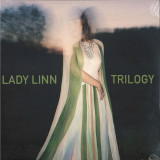
It is no longer a secret that Lady Linn has a very rich and unique voice with a versatility that is second to none, ensuring that she is right at home in a myriad of styles.
She proved exactly that in her new 'trilogy', a series of three E.P.'s - 'I'm Fine', 'Sea of Trees' & 'Nocturne'- each one telling its own unique story, and now bundled on the album 'Trilogy'.
The common thread throughout the album is her affinity with jazz, soul and dance, but also lyrically, various themes return: the tenderness within family life, melancholy, nature, and the magic of the dance floor.
There is also a clear evolution with the arrangements going from a sober, stripped-down quasi-electronic sound of the JX-03 on 'I'm fine' (with contributions from Gustaph, Gregory Frateur and producer Frederik Segers) to dreamy and warm analog synths by producer Joris Caluwaerts on 'Sea of Trees', to an organic, energetic sixties sound on 'Nocturne' with starring role for her partner and bass player Filip Vandebril and partners in crime: The Magnificent Seven, arranger Frederik Heirman and producer Jan Chantrain.
In addition to a selection of the three EPs, 'Trilogy' also includes the extra song 'Hurricane', one of Linn's personal favorites, recorded at Daft Studios with The Magnificent Seven:
'I had just watched a documentary on Laurel Canyon (on the topic of Los Angeles - the epicentre of the 'counter culture' or better 'hippie culture' - in the late 60's and early 70's and the habitat of The Mamas and the Papas, Frank Zappa, Jim Morrison, etc.) which fed my fascination for the 60's that I already had thanks to my parents. The way in which music was created and recorded in that era is a dream for every musician, me included. With the surplus in time due to the lack of gigs during the pandemic the time was right to follow my dream and record in the Daft Studios with my own band. I felt a bit like Carol King behind my piano, but I was also inspired by Joni Mitchell.'
A quote from the lyrics of 'Hurricane': 'I wanna feel the wind like the birds outside/Dive like a seagull, enter the water from flight/Into the deep I slide'.
'A very personal song about losing yourself and the longing for freedom. I composed this one specifically with 60's songs in mind, with loads of modulations and pretty complex chords.'
Lady Linn wrote a versatile trilogy, inspired by a diverse set of influences that had her digging in music history in a very original and contemporary way. She also made her mark on the sound of the productions. On both 'I'm Fine' and 'Nocturne' she was co-producer.
Brainticket was an obscure Krautrock band born out of a 60's jazz group featuring Belgian born keyboardist Joel Van Droogenbroeck, based in Switzerland. The leader went for a fortunate solo career after the former group disbanded, reaching a cult status especially in Italy with a series of sought after libraries. Released in 1978 on Cenacolo, Images Of Flute In Nature is pure magic translated in music. Conceived by Joel with a little help from vocalist Carole Muriel (an American performer already involved in Brainticket and Drum Circus), the album is literally a deep connection between kosmische music, ambient and ethno-global rhythms.
Stacey Kent is a jazz singer in the mold of the greats, with a legion of fans worldwide, a host of honors and awards including a Grammy nomination, album sales in excess of Millions, Gold and Platinum-selling albums that have reached a series of Number 1 chart positions during the span of her career.
'The Boy Next
Door' became Kent's breakthrough and her biggest hit to date when it was released in 2003, establishing her as a household name in France and the UK. Remastered By Bernie Grundman.
Beautiful, soulful jazz record by Jimetta Rose and The Voices of Creation, a Los Angeles-based community choir, a mainstay of the local scene. Highly recommended!!
The Voices of Creation are a community-based choir led by vocalist, songwriter, arranger, producer and mainstay of the Los Angeles scene Jimetta Rose. Made up of a multigenerational group of mainly non-professional singers backed by some of the city’s finest musicians,their music marries hip strains of gospel with layers of jazz, soul and funk. While aspects of their music might recall Kamasi Washington, The Staple Singers or Sly Stone, Jimetta’s unique vision has resulted in new spiritually-charged forms of music whose whole-hearted embrace of love, joy and peace act as sonic healing balms for the soul.
For Jimetta - whose resume includes collaborations with Miguel Atwood Ferguson, Georgia Anne Muldrow, Sa-Ra Creative Partners, Angel Bat Dawid, Shafiq Husayn, MED and Blu - the very act of creation was part of a healing process: “I was very low at the time and I wrote most of the songs going through hardship. But I found comfort in the songs and a way to adjust my mindset to where things got better. So I thought ‘if this music works for me, maybe it will work for other people’ I believe that every person has their own voice and their own note and that we can use our voices to heal ourselves. That’s the intention behind creating the project.”
After putting out a call on social media for people interested in joining her choir she was met with a sea of replies. Members were chosen in less-than conventional fashion: “I recruited people based on their interest in healing themselves and others, not necessarily on their musical experience or being seasoned performers” she says. Among those accepted into the ever-evolving collective, which was begun initially as a community choir, were the likes of Sly Stone’s daughter Novena Carmel, better known as a radio DJ for KCRW’s flagship breakfast show. Jimetta’s upbringing in the Pentecostal church, where she was a youth choir director, fed into her otherwise intuitive teachings of her songs and arrangements to the inexperienced members with help from the group’s seasoned organ player/co-musical director Jack Maeby.
Produced by Mario Caldato Jr. (Beastie Boys, Seu Jorge) and his wife Samantha Caldato the results show the incredible sense of togetherness and communal spirit that the group had built up over time in the rehearsal sessions. The six tracks of their debut album, a mixture of originals and rearranged covers, are performed in a wide-eyed mix of styles that reflect Jimetta’s vision for borderless music: “It’s new black classical music,” she explains. “It’s all the hodgepodge of being an African American but also with creativity and vision for the future. It has a taste of what is to come and what we can do. What we have gone through and who we are now.”
The group’s propensity for warm and buoyant sonics finds representation on album opener Let The Sunshine In, a sparkling rework of the Sons and Daughters of Lite’s deep jazz classic. Their version finds the group’s dynamic group harmonies offset with Allakoi Peete’s nimble afro-percussive touches and plenty of soul- drenched keys courtesy of pianist Quran Shaheed and organ player Jack Maeby. A similarly uplifting take on Rahsaan Roland Kirk’s choral jazz classic Spirits Up Above follows, with Maeby’s groove-laden organ lines inspiring some gorgeous group harmonies as well as prime solo turns from the likes of Kellye Hawkins, Zavier Wise, Tamara Blue, and Khalila Gardner.
Another Sons and Daughters of Lite cover follows as Jimetta leads the choir in the groove-drenched ode to self-affirmation Operation Feed Yourself. Written as a series of mantras for everyday living, the Jimetta-penned composition How Good It Is harnesses the full transformative power of music to generate a stirring and joyful ode to positivity - it’s chanted declarations bringing out some of the group’s most deeply-felt and affecting vocal performances over some superlative piano and organ accompaniment with a surprise feature vocal from Novena Carmel.
Jimetta’s talent for re-imagining songs in her own light is highlighted in Answer The Call, her vivid re-telling of Funkadelic’s Cosmic Slop: “When I listened to the original song, the Mom in the story was really going through it. I thought of how I could turn this into a song that can encompass the glorification of all mothers and I thought of the Egyptian cosmic goddess Nut. To that mother we’re all the seeds planted in the garden. Answering the call in your life is literally that. Finding out exactly what you’re here for through your heart.”
The album finishes with the standout original gospel number Ain’t Life Grand. Over swaying organs and clapped percussion Jimetta’s lyrical mantras serve to emphasise the good feelings that come to those with a grateful heart. Good feeling is an apt descriptor for the mood of the album as a whole. Its shining positivity provides a welcome ray of light in an increasingly dark world. “It’s a shortcut if you will to the better feelings” Jimetta says. “The hope that we need to keep pressing forward. We are saturated and inundated with images of chaos and destruction, death and hatred. There’s so much we can witness. So, I want to make sure that there is a representation sonically of the other parts that are still there to witness so that we can continue to build those things. So that the systems we support actually reflect what we want to experience. So it’s like: “Don’t give up and Let The Sunshine Into You” and then find out what your purpose is and answer the call.”
In the label's own words:
"Kennedy returns to another musical dream state bringing nocturnal visions to life through the power of machines. Including three tracks of borderless Hi Tech Soul music, on this third 12" in the series he widens his sonic scope via elements of Jazz and African rhythms next to his own distinctive take on the original sounds of Detroit.
It's another musical offering that comes from deep within mind, body and soul. Side a sounds like a warm fusion of loose rhythms and glowing synths determined by machines, whereas the b-side is more explicitly human-made with flute recorded live by Amsterdam Jazz man Han Litz, bringing a lightness of touch that imbues the music with hope and optimism. Beneath that, a battery of drums is set free calling up acoustic sounds driving from deep inside in a dense forest.
This third translation of thoughts, sensations and sounds is another emotive coming together of man and machine that will find yourself invited to gaze off into an infinite sonic cosmos."
Kevin McCormick's unreleased bedroom studio tape material (1982-1984). Moods similar to Durutti Column, Woo, Crosby’s spacey moments, and Boards Of Canada’s nostalgia.
Following the release of Light Patterns in 1982, Kevin recorded a series of songs onto tape that explored the sonic possibilities of a solitary guitarist. Shedding the acoustic sound of his previous effort, he adopted a swelling electric palette to apply his moods to. These recordings are a shift in direction to a sparse and ambient style, and their hazy, repetitive movements create room for evocative melodies.
Kevin fills a deficiency of guitar-forward music with his minimalistic approach that is somewhere in the space between ambient, rock, jazz, and avant-garde. On Sticklebacks, he casts away the morning elegance of Light Patterns and leans further into the introverted feelings of the small hours. It is a nascent springtime journey that shows just what Kevin is capable of with six strings.
Following up his score for the japanese Netflix Anime series “Carole & Tuesday”, Mocky returns to album mode with his new orchestral opus “Overtones For The Omniverse”. Just days before the first Covid lockdowns, Mocky brought a 16 person orchestra comprising of his usual who’s who of underground talent into LA’s Barefoot Studios (and into the same room where Stevie Wonder recorded “Songs in the Key of Life”) to record a pile of scores he had come up with during his previous year’s sabbatical in Portugal. The result is a stunning orchestral album recorded in 36 hours in one or two takes straight off the written page. Shunning the “possible perfection” of today's recording techniques, Mocky looked back as a way to find an alternate future.
According to Mocky:
“We had to do it quick with no rehearsal to capture that big open sound of people working together in a room - in all its imperfect glory. In the imperfections you find the humanity. And in today’s tech driven spaces you have to fight to preserve a space for humanity. I felt a deep desire to create a sonic trajectory path for us to follow as we ascend and evolve our understanding of love and what it means to be human. This is the inspiration for „Overtones for the Omniverse“”.
The album runs the gamut from Steve Reich infused minimalism overlaid with Dorothy Ashby style harp runs (“Overtures”) to atonal analogue synth sounds over Martin Denny style percussion (“Bora!”). There's a classic Mocky crooning number that gives a Jim Henson-esque take on the state of “Humans” and the album as a whole captures Mocky's skill of bringing together the joyful energy of a unique cast of LA collaborators.
Featuring:
Randal Fisher / Flute, Vicky Farewell / Piano, Vocals, Harry Foster / Bass, Vibraphone, Tubular Bells, Vocals Joey Dosik / Organ and Glockenspiel, Vocals, Guilermo E. Brown aka Pw / Percussion, Vocals, Jhan Lee Aponte (TossTones) / Percussion, Vocals, Timpani, Paul Cartwright / Violin, Molly Rogers / Viola, Gabe Noel / Cello, Contrabass, Liza Wallace / Harp, Coco O. / Vocals, Mocky / Compositions, Drums, Vocals, Roland Sh-1000
O for the O Choir :
Nia Andrews, Leslie Feist, Moses Sumney, Durand Bernarr, Eddie Chacon
Recorded at Barefoot Studios, Los Angeles March 6 + 7, 2020.
All songs written by Dominic “Mocky” Salole and published by Heavy Sheet Music/Warner Chappell except "Wishful Thinking" written by Dominic “Mocky” Salole and Matt Corby and "Bora!" written by Dominic “Mocky” Salole, Guillermo Brown, Aponte Poro.
Produced by Mocky, Justin Stanley and Renaud Letang. Mixed by Renaud Letang at Ferber Studios Paris
Mastered by Emilie Daelemans. Cover artwork by Rand Sevilla. Photo by Vice Cooler.
ABOUT MOCKY
Performer, producer, songwriter, composer and multi-instrumentalist, Dominic "Mocky" Salole came to prominence in the Berlin electronic scene of the mid 2000s, releasing three acclaimed solo albums, co-writing and producing classics like Jamie Lidell's "Multiply" and Feist's "The Reminder" and making waves on stage with close collaborators (and fellow Canadians) Peaches, Feist and Chilly Gonzales.
In 2009, his music took a jazz-inflected turn to the acoustic with the release of "Saskamodie" and in 2011, after work in Big Sur on Feist's "Metals", Mocky relocated to Los Angeles, where he quickly established himself as a co-writer with uncommon credentials and eccentric working methods collaborating with L.A.’s brightest breakthrough artists like Kelela, Joey Dosik, Vulfpeck or Moses Sumney.
Whilst in L.A. songs he has written have been sung by Mary J. Blige, Jill Scott and many more and he has collaborated with artists as diverse as Mali’s Bassekou Kouyate and the GZA. His monthly rooftops gigs at the ACE Hotel breathed new life into the LA live scene and Mocky channeled those new creative energies into his fifth full length album "Key Change" and four digital mixtapes/EPs "The Moxtapes" Vol. I-IV.
After co-producing and co-writing Feist's "Pleasure", Kelela's "Take Me Apart" and Joey Dosik's "Inside Voice", in 2018 Mocky released two albums: "Music Save Me (One More Time)" - a collection of the best of Japan-only/unreleased gems and favorites from his so far digital only "Moxtapes" series and "A Day At United", an instrumental jazz album, recorded in a single day in the legendary LA recording studio United Recording.
In 2019 Mocky delved into soundtrack work by collaborating with legendary Anime director Shinichiro Watanabe (Cowboy Bebop) on the first two seasons of the breakthrough show “Carole and Tuesday” (Netflix) for which he won Best Score at the Anime Awards 2020.
Bjarki launches creative hub Differance Engine with new four-track EP, ‘Look At Yourself Pt.1’
The project sees the founder combine with creative Thomas Harrington-Rawle, building on the pair's recent AV show ‘Look At Yourself’ with a wealth of new projects and releases slated for 2023.
DJ, producer, live artist and label owner Bjarki, full name Bjarki Rúnar Sigurðarson, launches his latest creative project Differance Engine and label Differance with a brand new EP in February. Welcoming a new home for the Icelandic favourite to release and showcase audio-visual projects, the creation of Differance Engine sees him reunite with London-based creative and partner-in-crime Thomas Harrington-Rawle - the creator of Care More, featured on Nowness, ARTE and more.
Set to become the central focus for all things creative, Difference Engine will serve as a diverse ‘mother hub’ for a myriad of new projects from the pair, including GUM Magazine - an experimental print publication set to challenge existing publications and zines with a focus real conversations and forward-thinking audiovisual work - while also absorbing Bjarki’s longstanding imprint bbbbbb recors next year. The launch arrives on the heels of the duo's recent conceptual audiovisual show ‘Look At Yourself’ exploring and experimenting with ‘AI’ technology during ADE at Amsterdam’s renowned Nxt Museum, with forthcoming appearances in Foligno, Italy on 29th December and in London in the New Year.
Opening 2023, the label boss unveils the first EP in a three-part series, ‘Look At Yourself Part 1’. Comprised of four expansive originals, the release welcomes a first look at the new audiovisual direction crafted and shaped by Sigurðarson and Harrington-Rawle, featuring his recently released single ‘Do You Like Yourself’, and new single ‘I Wish I Was A Mode’ - out 9th December..
“Differance Engine is mine and Thomas’ new platform where we will be testing out all kinds of material. It will also operate as a label and an engine which will run both bbbbbb records and GUM Magazine. There are a lot of magazines dying out and having a hard time surviving. Thomas and I want to show some depth into the hearts and minds of individuals through music, visuals and with words. 2023 will be the year of vulnerability and real talks.” - Bjarki.
Wandering the line between perceived and actual reality, the four productions balance playful AI-generated voices with darker sonics, deconstructing societal issues and exploring human-to-human interaction within cyberspace. Accompanied by a warping video, B2 ‘I Wish I Was a Model’ is a trippy dive into Harrington-Rawle’s ever-evolving world as he warps and twists human subjects amongst their surroundings.