Isle of Jura teams up with French digger Switch Groove on the next compilation titled ‘Archipelago – Cosmic Fusion Gems from France (1978-1988)’.
Switch Groove explains the concept “When I seriously began to search for and collect records, I was mostly interested in sounds from african-american, afro-latin and UK contemporary scenes. Sounds from distant territories, faraway from my native Massif Central, a highland region in the middle of France. The grass is always greener, I guess however, as I was digging in fleamarkets in the early sunday morning light, as well as spending regular sessions in second hands record shops, I began to discover hidden treasures, underground gems and side-projects of an unknown French musical repertoire.
French music is often reduced to its most famous musical forms, characters and signatures : French songwriting and voices, 60s yéyé, prog rock concept albums and soundtrack explorations, 80’s indie rock scene or more recently electronic French touch. All these sounds have a common feature : a geographical link, forged on mainland French territory, following the contour of the so-called Hexagone, the border that shapes the grounds for an homogeneous cultural expression. But beyond this showcase lie more complex, hybrid and global French productions. From French Caribbean Antilles to Parisian suburbs - especially during the ‘Sono Mondiale’ era -, in French areas outside urban cultural centers, musicians have created fusion and cosmic musical expressions. As the mid-seventies meant a greater freedom to make and record music, a wider use of electronic instruments like synthesizers and drum machines helped to deliver some magical projects you could only find lost in the middle of cheap records during a sunny record digging session. I selected these tracks, in an attempt to shape an ARCHIPELAGO that highlights significative contributions of African diasporas and ultramarine territories into French musical borders. It is the map of a land I have gradually drawn, thanks to deep listening of amazing cosmic and fusion tunes. I hope you enjoy the journey.”
The album’s title deftly gestures to the sheer vastness of astronomical dimensions, while simultaneously capturing the musical breadth within, where the eight planets are imagined as the eight notes of an octave. The work draws inspiration not only from earlier compositions —most notably Gustav Holst’s The Planets—but also from the rich astronomical and cultural contexts surrounding these celestial bodies. Here, the focus transcends direct citation of melodic motifs, instead embracing an intriguing conceptual approach on a meta level, unfolding in a series of vividly contrasting soundscapes. These contrasts shape a sweeping sonic journey, one that fully embraces the album format with both arms, inviting the listener to venture into realms both strange and wondrous, feeling the immensity of the interstellar space that lies between them. Contrast, after all, is the brushstroke that enriches our world.
Embarking on an auditory voyage, "Astral Guide" establishes the sonic framework that propels us into the boundless expanses of the cosmos. Its ethereal tones evoke the vastness of space, crafting a mood ripe for exploration within the realms of sci-fi. The subsequent tracks unfold like constellations, weaving a rich tapestry of sound that seamlessly marries cinematic soundscapes with pulsating, club-oriented rhythms. This album invites listeners to traverse its immersive landscapes, whether nestled in the comfort of home or dancing under the starlit sky, each note a guide through the transcendent experience of a nocturnal journey.
"Solar Flares" draws its inspiration from the awe-inspiring expanse of solar phenomena, capturing the majestic power of the sun as it reaches into the cosmos. This track resonates with the idea that energy, while vital, can also be a force of destruction when unleashed with overwhelming intensity. The composition beautifully mirrors the sun’s duality, where brilliance and devastation coexist, inviting listeners to reflect on the delicate balance between creation and annihilation. Through its rich textures and dynamic shifts, "Solar Flares" serves as both a homage to the celestial and a poignant reminder of nature's formidable power.
"Mercury – The Winged Messenger" embodies a meticulously crafted soundscape where artistry meets astronomy. The tempo of 173.6 BPM, derived from precise astronomical data, propels the composition into a vibrant realm that resonates with cosmic energy. Synthwave sound design intertwines seamlessly with the fluid rhythms of Drum’n’Bass, imbuing the piece with an uplifting dynamism that evokes the ethereal grace of Mercury itself. In this sonic exploration, listeners are invited to ascend on wings of sound, navigating the celestial tapestry of the universe with each invigorating beat.
"Venus, The Bringer of Peace" strikes a decidedly cozy note, presenting a poignant contrast to the more tempestuous themes often found in cosmic narratives. This composition evokes a nostalgic vision of an optimistic era, one in which humanity transcended borders and embraced the infinite possibilities of space exploration, where no destination felt too distant. The dense, languid atmosphere envelops the listener, creating a tangible sense of serenity that unfolds gradually, allowing for a meditative journey through sound. Each note serves as an invitation to linger in this tranquil embrace, reflecting on the harmonious potential of our collective aspirations and the beauty of connection in a vast universe.
The central theme of „Gaia, The Bringer of Life“ —originally not part of the planetary cycle— is the profound enabler of life on Earth. The arrangement delicately mirrors the slow, tentative unfolding of this potential, marked by an initially sparse orchestration that gradually builds in momentum. This progression crescendos, embodying the explosive dynamism of the Cambrian burst of life, ultimately culminating in a euphoric fanfare—a triumphant, celebratory flourish echoing life’s victorious emergence.
"Blue Moon" unfolds as a contemplative reverie on the tranquil clarity of a night sky, now seldom glimpsed in its natural purity, unclouded by the relentless haze of urban light. The listener is drawn into the vast embrace of the star-strewn firmament, a journey that sways between euphoric awe at nature’s sublime beauty and a profound melancholy for its fragile and imperiled state. Musically, this duality finds expression in the delicate interplay of modal mixtures, while an ever-shifting triplet groove, poised at the intersection of Outrun and melodic house, lends a pulse that is both nostalgic and forward-looking—echoing the beauty and transience of a world on the brink.
Rather than replicating the original composition of „Mars, The Bringer of War“, this interpretation seeks to evoke its profound, foreboding atmosphere. Cyberpunk emerges here as an ideal genre, channeling the dark, relentless march synonymous with Mars, the ancient god of war. The piece reverberates with intensity, as distorted vocalizations rise, embodying the anguish and visceral torment that shadow war’s violent crescendo. This auditory descent into conflict captures the relentless pulse of warfare, where sound itself becomes an embodiment of suffering and fury.
Majestically, "Jupiter, the Bringer of Jollity" emerges on the celestial stage, sweeping away the somber tones with its radiant vigor. Drawing inspiration from the triumphant strains of the original, and borrowing a melodic motif in the refrain, the piece expresses joy and buoyancy through a shift to a major key and the lilting sway of a danceable 12/8 meter. Spirited and exuberant, it leaps boldly from major to minor and back again, playfully shifting time signatures to capture a mood of unbridled festivity and jollity.
Here, a more conciliatory concept is chosen than in the original inspiration. „Saturn“ aligns with the number six, being the sixth planet from the Sun and bearing the iconic hexagonal pattern at its northern pole. What, then, could be more fitting than to render this piece in a 6/8 time signature? The arrangement unfolds with a multifaceted richness, mirroring the countless stones and ice fragments that form the foundations of Saturn’s majestic rings.
„Uranus“ adopts the theme of a light-footed, dancing instrumentation, giving the impression of perpetual motion, never quite settling. This musical choice harmonizes with the planet’s own orbit, as it spins with breathtaking velocity, teetering and swaying, seemingly unable to attain rest or stability.
The chill and vastness of the cosmos find expression in „Neptune, The Mystic“. At its core, an electronic soundscape envelops a classical arrangement, its unreachability intensified by an ethereal, otherworldly choir. Hovering at the outermost boundaries of the solar system, where warmth is but a distant memory, the composition lingers in a slow, contemplative tempo, evoking a realm where space for speculation stretches wide and silence reigns supreme.
Though Pluto may have lost its planetary status, and its companion Charon never achieved one, this shift in classification subtly aligns with the cosmic scale invoked here—one that mirrors the musical tradition of an eight-note sequence. Fittingly, the album closes with „Kuiper Belt“, a composition emblematic of the turbulence and vitality of countless smaller
celestial bodies that, though diminutive, find their rightful place within the vast architecture of the solar system.
They say nature is the greatest composer, shaping the universe with a symphony of chaos and order, beauty and danger. It is this duality that fuels the artistic vision of Edictum—a producer who, armed with a doctorate in chemistry, delves as deeply into the mysteries of molecules as he does into the depths of sound. In the tension between the vastness of the cosmos and the microscopic processes that dictate life’s rhythm, Edictum creates sonic landscapes that dissolve the boundaries between science and art.
His music is a story of contrasts—a sonic tale where the raw forces of nature clash with the intricate structures of human culture. Opposites intertwine to form a harmonious whole: the primal rhythms of the earth meet the celestial melodies of the cosmos, the rigid laws of physics blend with the boundless freedom of art. Edictum explores these polarities with meticulous devotion, each composition an expedition into uncharted soundscapes—a quest to give voice to the unfathomable.
With over 20 years immersed in the realms of electronic music, Edictum has honed a keen sense for rhythm and movement. His driving beats compel both body and mind into a hypnotic flow. Yet beyond the pulse of dance lies a complex framework of conceptual thought. Today, his creative focus revolves around holistic album projects—self-contained worlds with overarching narratives that embrace contrast and complexity. Each track stands alone as a fragment of the whole, but together, they weave a cohesive tapestry, much like the chapters of a novel that guide the listener on an emotional and sonic journey.
Edictum’s distinctive musical signature has earned him international recognition. With over 150 releases, many on prestigious platforms like the iconic *NewRetroWave* label, and collaborations with artists such as Jan Johnston, Azumi Inoue, Powernerd, and Turbo Knight, he has solidified his place in the global electronic music scene. His latest work, *A Cosmic Scale*, marks his seventh vinyl album and is released under his own label, *Echoes of Expanse*. The label’s name is no coincidence—it captures the essence of his art: echoes of infinity, the vibrations of the universe distilled into a singular sonic experience that carries the listener ever further into the boundless expanse of sound and space.
‘Belgium is too small for pianist Alex Koo’ – De Tijd
‘Stunningly original’ – Downbeat Jazz Magazine
‘Fabulous technique, sounding downright genius at times.’ – London Jazz News
‘When listening, Keith Jarrett’s name came to mind several times. Not because Koo’s playing is similar to that of the American master, but because it is of the same exceptionally high level.’ – Trouw
‘Koo’s compositions and playing are absolutely world class.’ – Written in Music
The son of a Belgian missionary sent to Japan in the seventies and a Japanese peace activist, pianist and composer Alex Koo refuses to be boxed into any traditional category. As the renowned German Jazzthetik magazine put it, "Alex Koo defies categorization."
With ten uniquely personal tracks, Blame It on My Chromosomes is more than a musical statement; it is a form of self-therapy. "The only way not to spiral into depression as a jazz musician nowadays is to vent and lose yourself in the music," Koo shares. "Music needs a purpose beyond self-promotion. For me, it's about accepting who I am and letting go of anything else."
Featuring celebrated trumpeter Ambrose Akinmusire on two tracks, Blame It on My Chromosomes highlights Koo's fearless versatility. One of these tracks, "Jonass," is dedicated to Koo's childhood friend who tragically passed away, adding a deeply personal layer to the album. "When we were kids, we would skate and do stupid things with shopping carts, inspired by Jackass," Koo recalls. "That's why we called Jonas 'Jonass'-he had the biggest smile you could imagine, his laugh was contagious, yet he also was the most reckless one among us."
Koo, praised as "stunningly original" (Downbeat Jazz Magazine), is known for creating music that transcends genre boundaries, blending jazz, indie, contemporary classical and film music with innovative freedom. A native of rural West-Flanders, Belgium, he began his musical journey as a classical piano prodigy at the age of five. In his teens, he developed a passion for jazz and improvisation, earning praise from jazz legends such as Kurt Elling, Kenny Werner, and Brad Mehldau. Koo has even been described as "of the same rare high level as Keith Jarrett" (Trouw). His 2019 album, Appleblueseagreen, featuring Mark Turner and Ralph Alessi, was included in Downbeat's Best Albums of the Year.
Alongside Koo, Blame It on My Chromosomes features his longstanding trio, whose fearless interplay brings the album's narrative to life. The trio, with Koo on piano, Dré Pallemaerts on drums, and Lennart Heyndels on bass, represents the very best of the Belgian jazz scene. Their intuitive chemistry and artistry are the driving force behind the album's emotive power, with special guest Ambrose Akinmusire adding a transcendent layer on two standout tracks.
The Alarm 40th Anniversary release History Repeating is new Double CD and LP collection. The CD features 44 of The Alarm’s biggest singles and greatest songs and the double LP features 27.
Spanning all eras of The Alarm Timeline, History Repeating brings together all of the band’s ‘Crown Jewels’, including a brand new and previously unreleased recording of the title track.
History Repeating features all of the keynote tracks that have helped create The Alarm’s phenomenal and loyally dedicated following. The Double CD comes in a replica LP gatefold sleeve configuration and is the most comprehensive ‘Best Of’ ever released by the group since 1998’s Best of The Alarm and Mike Peters.
The Double LP comes in a gatefold configuration and is the first ‘Best Of’ compilation to appear on vinyl since 1990’s Standards. This is the record every single Alarm fan will want to own with its distinctive Red Poppy cover and beautiful depiction of The Alarm family across the inner gatefold.
Upon release, lead singer Mike Peters will be hosting a series of completely SOLD OUT Alarm Rock and Roll Staycations in the band’s hometown while telling the story of The Alarm through thealarms internet broadcast platform
The Big Night In, that will feature weekly shows dedicated to every single year of the band’s history.
In 2022, a major touring itinerary begins with the already SOLD OUT official 40th Anniversary Concert in St. David’s Hall, Cardiff Wales on January 21st 2022 followed by an international 40th Anniversary concert schedule all the way through to 2023.
Musician and Zoitrax record label owner ZOiD, also known as Daniel Jacobson, announces the release of his sixth album, ZOiD Vs Musicians Vol 2.
Featuring thirteen tracks digitally, seven of which will be released on a 12” purple marbled translucent vinyl album distributed by Rubadub, ZOiD Vs Musicians Vol 2 will be available in record shops and on all streaming services and Bandcamp starting Friday, 22 November 2024.
ZOiD Vs Musicians Vol 2 is an electronic music album showcasing ZOiD's global collaborations with jazz musicians, creating a unique form of electronic jazz. Notably, his work with jazz drummer and brother Matthew Jacobson shines on the first single “Fit In Tree” debuting on September 13. Building on this momentum, the second single, "Module Bone, " featuring jazz trombonist Colm O'Hara, will be released on September 27, followed by the third single, "ZVSW, " featuring saxophonist Steve Welsh, on October 11. A special REMIX EP by Kirk De Giorgio, Sunken Foal, Americhord, and TR-One will be out on October 25.
Expanding the album's diverse sound, ZOiD collaborated with Dublin vocalist, composer, and jazz improvisation specialist Jenna Harris on “ZVJH” and with Niwel Tsumbu, a Cork-based Congolese guitaristwho tours with Rhiannon Giddens on “ZVNT.”
ZOiD Vs Musicians Vol 2 is further enriched by the talents of Shane O’Donovan (H-Ci), who combines electronic and jazz elements, Australian saxophonist Daniel Rorke, US-based free improviser Catherine Sikora, Galwegian multi-instrumentalist Matthew Berrill, Dublin saxophonist Matthew Halpin (flute), and trumpeter Bill Blackmore, a key figure in Dublin's jazz scene.
ZOiD released his debut album, ZOiD Vs The Jazz Musicians of Ireland Vol. 1, in 2007. Production of ZOiD Vs Musicians Vol 2 began soon after, taking nearly 17 years. For Vol. 2, some musicians recorded their parts independently, while others recorded in Arad Studio with Les Keye and ZOiD's Dublin studio.
The album artwork is by New York-based artist Shane Ingersoll. The front cover displays black-and- white illustrations of Dublin in the year 2116, a city at war centred around a bold purple "ZOiD" logo, with the title "ZOiD Vs Musicians Vol 2" on the upper left. On the back cover is a 12-panel comic book story (originally written by ZOiD using stick figures) and a glowing robotic hand.
10 years since the last installment, Herbert returns to the seminal Parts series synonymous with his trailblazing work in leftfield house music that began with Part One nearly 30 years ago.
It features the first of a series of pieces written with, and sung by artist, producer and drummer Momoko Gill (fka Metta Shiba and performer with Tirzah, Coby Sey, Alabaster de Plume amongst others).
Part 9is the first in a planned resurgence of forthcoming Herbert releases, withPart 10lined up for later in 2024 and his seventh album under this moniker slated for early next year.
There are few people across the globe, who will have not been touched by the work of Frankie Knuckles. Forever regarded as ‘The Godfather of House’ for his unrivalled contribution to the house music we know today; what started as an underground movement in Chicago has grown to international heights thanks to Frankie. His records earned him recognition on a global scale, allowing him to work with some of the globes biggest names including the likes of Diana Ross, Whitney Houston and Michael Jackson.
Frankie passed away in Chicago on 31st March 2014 leaving behind one of the greatest house music legacies spanning almost four decades. Now he is commemorated by long time writing and production partner Eric Kupper. Eric, himself a seasoned DJ producer and writer, has worked on over 116 Billboard #1 Dance Records and played a pivotal role in many of Frankie’s productions. Having both worked together for many years they established themselves as ‘Director’s Cut’ from 2011 and set about producing original releases and remixes based on the classic ‘Def Mix’ sound while sharing equal credits for their creations.
Together they re-produced and re-purposed classic cuts for modern dancefloors, with reworks including tracks from Marshall Jefferson, Ashford & Simpson, Artful & Ridney and The Sunburst Band, alongside Frankie Knuckles originals. These releases have now been brought together by Eric to feature on special album called ‘The Directors Cut Collection’ on SoSure Music.
For the third volume classic cuts such as Inaya Day & Robin S. - Right Now (A Director’s Cut Master) and Marko Militano - Good People (Director’s Cut Signature Mix) are nestled alongside equally absorbing Directors Cut mixes of Vintage Lounge Orchestra covering 'Dreams' and Art Department pres. Martina Topley Bird feat. Mark Lanegan & Warpaint covering 'Crystalised'.
The Director’s Cut Collection is a fitting tribute to commemorate the seventh anniversary of Frankie’s passing whilst giving Eric a platform to tell his side of the creative story. This album is to be released in collaboration with The Frankie Knuckles Foundation who work to continuing Frankie’s legacy well into the future.
Axel Boman - 5/5 - "It's all about love - not about emotions!!!!
Adam Beyer - 5/5 - "<3"
Space Dimension Controller - 5/5 - "Always"
Tensnake - 5/5 - "Classic Love It"
Jonny Rock - 5/5 - "Hot!!!"
Prins Thomas - 4/5 - "very nice! fresh take on an all-time classic"
Len Faki - 5/5 - "It's been a while listening to this masterpiece - and yes - it's timeless and I love the new touch on the new version. thanks Frankie!"
robdabank (Radio 1) - 5/5 - “One of my all time faves and great mixes here!”
“We kick the label off with our inaugural release from label head Drum Dance; an eclectic four-tracker opening with ‘Zani!’, an outernational cosmic head-nodder meets Chicago footwork influenced ode to the great Zani Diabaté. Low-slung Latin flavoured boogie number ‘Body Heat’ switches up the tempo but keeps those limbs moving with its percussive four-to-the-floor beat, steamy disco vocals and jazzy keys. 80s jazz Balearic goes to Kingston for a bass-heavy dub makeover on ‘Venus Dub 2’.
Signing things off is ‘Adan On Dòt Soley’, a personal dedication to the beautiful country of Gwadloup. A common farewell in the local tongue, it translates poetically as “until another sun”. The track begins with off-kilter spaced-out synths and emerges into a dubby percussive jam featuring the gorgeous keys of Andy Wileman. Field recordings capturing glimpses of birds singing, waves lapping and the sound of gwo ka on the beach close things out, until another sun.”
Full sleeve artwork printed on reverse board
Mastered and cut by Beau Thomas at Ten Eight Seven Mastering
Pressed and printed by The Vinyl Factory
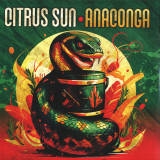
Anaconga”, the fourth Dome album by Bluey and Citrus Sun, is an homage to jazz and soul greats from back in the day, and is the band’s first to be released as a gatefold 2LP.
The album opens with the gorgeous Maynard Ferguson tune “Mister Mellow” from the Seventies, with backing vocals from Tony Momrelle and Deborah Bond. Bluey and Richard Bull share the production . “Down For The Third Time”, the album’s lead single, is a deliciously funky remake of a classic Bobby Caldwell groove from 1978, with Natalie Duncan on vocals and Dominic Glover and Charlie Allen tearing it up on trumpet and guitar respectively.
“Mystic Brew” was originally written and recorded in the Seventies by funk, soul and jazz keyboard legend Ronnie Foster and Bluey includes it “to say thank you for his massive contribution to the music we love and are inspired by”. Erykah Badu’s “Honey”, also with vocals by Natalie Duncan, features beautiful trumpet and flugelhorn from Kevin Robinson.
The stand-out new songs on the album are “Santiago”, which features the young Indonesian harmonica player Rega Dauna, who starred on the band’s “Hard Boiled” instrumental hit from their last album “Expansions & Visions”, and “In Search of the Blue Note”, with Dominic Glover on flugelhorn and Graham Harvey on keyboards, which Bluey says is “inspired by New York City’s jazz history and nightlife”.
Bluey sums up the mood of the album: “I hope that the rhythms wrap themselves around your consciousness and the music slithers into your soul, whilst you bask in the light of the Citrus Sun! Unconstricted love, Bluey”.
Citrus Sun is the mainly instrumental-oriented side project which runs alongside Incognito and features many of the same musicians. The band released their first Dome album “People Of Tomorrow” in 2014.
Doc Sleep returns to Dark Entries with Cloud Sight Fade, an album of ethereal house and techno. Doc Sleep is the alias of DJ and producer Melissa Maristuen. Following 2023’s Birds, her ambient and IDM-leaning debut album, Cloud Sight Fade shows Doc drawing on her years of queer clubbing to bring us seven diverse tracks sitting between muscular New York house, Berlin twilight techno, and funky West-coast breakbeats. Production began in the Bay Area and was completed in Berlin; Maristuen says that this work became a love letter to the West Coast’s magnificent natural landscape, the light of the Pacific sunrise. While draped in dreamlike textures and melodies, this is also a record about embodiment and the memories that live within our corporeal forms. The powerful grooves on the breakbeat-inflected “Lemon Zest” and the propulsive “Cloud Sight Fade” remind us that dance music is for bodies dancing. Meanwhile, tracks like the sparkling album-closer “Enchanted Static” or the brooding groover “Water Sign” plunge us deeper into hypnotic depths. On Cloud Sight Fade, Doc Sleep guides us through slumber and wakefulness, in and out of our bodies, with the mastery of a seasoned DJ and clubgoer.
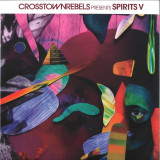
The release of Crosstown Rebels’ SPIRITS compilation is always a bastion moment for the label. The first edition came to prominence in 2017 and we’ve been graced with an annual compilation ever since, showcasing a consistent habit to champion established artists and breakthrough ones alike. Now, Crosstown Rebels’ lauded SPIRITS series will see the light of day once more in June, with the release of SPIRITS V.
NYC-native Layla Benitez leads proceedings with Fides, a progressive-leaning, introspective number that retains an inherent danceability throughout. It kicks off the compilation with a driving energy, one that’s perfectly matched by Trabajar - the Crosstown Rebels debut of recent Hot Creations inductee Mr.Diamond.
A techy-inspired cut, punchy four-four drum patterns create a distinctive late-night feel, as UK-talent Denney soon arrives with Kill The Soundboy. Showcasing the groove-laced house sound with which he’s become best known, the near seven-minute piece is sure to light up many a club setting this year, paving the way for Talk To Me. It’s a collaborative venture between Munich-based artist ASK:ME and El Muerto, with Soulfoot featuring on vocals. Retaining a vintage Detroit style, the fast-paced tempo creates a natural excitement before Romanian-born mainstay GruuvElement’s gifts us the minimal-toned Boom Room.
Building with tribal-like percussion and salsa-inspired instrumentals, it’s a playful excursion into dance music’s outer realms, paving the way for young Peruvian producer Chinonegro with My Moment. Whether it be the pluck of a guitar string or a jazzy trumpet solo, there’s an inherent authenticity to the six-minute piece, as a mid-track breakdown gives way to whispering hats and a rhythmic underlying backbone.
The penultimate offering comes from French-born, London-based regular Maglia, who serves up the enchanting Rayiys. The chirping of birds resides atop an ever-changing bassline, leaving us open and ready for the VA’s closing saga: Thanks Moon, by Spain’s I AM JAS. A heady combination of beautiful lyrical contributions combines with softly moving electronic elements, to leave us in a state of calm, inward reflection. Rounding off proceedings on a note of quietude, it reminds us of the final moments in clubland, transporting our psyche to sunrise, fond memories and everything in between.
Over a period of nineteen years, Damian Lazarus’ Crosstown Rebels has evolved into a world-renowned institution, garnering global audiences thanks to a consistent schedule of quality releases. In years since it’s earliest beginnings, the likes of Maceo Plex, Art Department, Seth Troxler, Ali Love, Mathew Jonson, Pier Bucci, Acid Pauli, Dennis Kurtel, Francesca Lombardo, Glimpse, Aphrohead, Fur Coat and a plethora of other figureheads have all found their home on the label.
The roster is international, showcasing how Crosstown has shaped a truly global scene. Releases are born in different continents by artists who hail from different countries, resulting in a sound that resonates worldwide. Perhaps most pivotal to the label’s success is its musical output: no part is governed by boundary or genre. It’s underpinned by a truly eclectic sound, one that reflects the diversity of Damian’s love for music itself. An album from drum and bass icon DJ Krust here, a maiden LP from Audiojack there… traversing genres has been Damian’s forte for decades - and Crosstown epitomises that as a result.
Ever amazed by the external world and its natural surroundings, Belgian producer Dijf Sanders has a habit of turning himself towards the unknown for inspiration. After praised albums based on field trips to Indonesia (Java, 2017) and Nepal (Puja, 2020) he found himself challenged by the traditional chants from Georgia. Diving deep into its sounds, people and heritage with open eyes and ears, he traveled to the Eurasian land in the South Caucasus in 2022. The field recordings and impressions of this journey make the blueprint for new, meticulously crafted compositions that ripened in his studio and transcend its original source material in time and space.
SUPRA offers nine diverse explorations ranging from spaced-out folk, ethereal trance, ambient with a melodic sense of drama and lush electronica channeling 90's IDM energy fields. Bound by dynamic depth in sound design, this is electronic music with a heavy heart - for all tracks share a primal sense of nostalgia in which traditional music from the Georgian motherland baths. From a pastoral love song about a buffalo (Mingrelian Song) or a ceremonial wedding hymn (What You Give Away Is Yours, What You Don't Is Lost) to a lullaby (Bird's Milk)... Georgia is a land of contemplative singing and its music scene today is still dominated by modal vocalists and harmonic choirs with pride.
With the help and recording equipment of the Folklore State Centre (Tbilisi) and in collaboration with Europalia Georgia festival, Dijf Sanders found contemporary choirs willing to lend their voices for this project. Next to these voice samples, the Georgian countryside and nature delivered source material for more samples and textures as well. The name of the record refers to the traditional Georgian feast where a large table filled with food, drinks and singing.
This is the second time out for the Wormholes on AllChival following on from their You Never See the Stars When it Rains anthology release. This one is a previously unreleased album recorded in a concise burst of seven nights in Dublin’s Sun Studios in the spring of 1996. It was originally envisaged as being The Wormholes’ second album, the follow up to their 1994 debut Chicks Dig Scars. Unfortunately the end result of the sessions - Parijuana - would not only be ignored by their label of the time (Roadrunner Records) - but would also just as quickly be dismissed by the band themselves.
Eamonn Crudden, the manager of the band, had manged to extract some money from Roadrunner to record demos of new tracks as soon as the release cycle for their debut was over. The budget was so tight that it covered studio time but was not even enough to buy the master tapes. With things going south with the label – a classic 90’s tale of the A&R man who championed their cause heading off elsewhere the minute they signed - the intention was to go in and aim to record an album rather than demos - with the intention of releasing it on another independent label to keep the momentum around the band going.
However by this stage the Wormholes were totally wrapped up in listening to Can, Faust and generally exploring music based on casual recording, improvisations and extemporization. For them the album was too ‘rock’ and – having been dropped by Roadrunner - they no longer felt under any obligation to release it. To them it was time for a fresh start. Their next recordings would not be ‘for’ anyone but themselves. Today bassist Anto Carroll admits that “at times we were our own worst enemies” and with the benefit of hindsight both he and guitarist Graham Blackmore wish they had gone ahead and released this album at the time. However, back then, they thought they could do better and they did go on to make inventive and unique sounding versions of some of these songs with Stan Erraught producing just a short time later. These recordings were eventually released by Dead Elvis in 1999 - along with a couple of ‘adjusted’ tracks from the Sun Studios sessions - on Parijuana: 4 Years in Captivity.
It’s highly unlikely that listeners today will share the band’s view that the abum was too ‘clean’. This version of Parijuana is dirty, raw, messy with plenty of experimentation and extemporisation. The songwriting is as strong as that on their Chicks Dig Scars debut. The music is played with a new confidence and swagger, very much the sound of a band rooted in a wave of US ‘lo-fi’ finding their own sound. It’s the missing link between their conventional Pavement/Sebadoh influenced debut to the more drawn out, free roaming and extemporised second album proper Scorpio The Album.
Polish septet EABS apply an innovatve approach to jazz, distlling it
through the prism of hip-hop, blending it with elements of soul, funk and electronic music. ‘Slavic Spirits’ was 2 years in the making and contains 100% original material. They are joined by 22a head-honcho Tenderlonious who lends his exceptonal soprano saxophone and flute playing to all seven tracks.
Afer their very well-received 2017 debut album ‘Repettons (Leters to Krzysztof Komeda)’, focusing on the lesser-known works of the legendary Polish composer, the Wroclaw-based EABS decided to further expand this lead and released two more vinyl records, ‘Live At Jazz Club Hipnoza (Katowice)’ and ‘Kraksa / Svantetc’, the later recorded directly on tape and released via 22a, which crowned the “Kom eda triptych”. The astounding recepton of these releases built up loyal following outside of their natve Poland and whet listeners’ appette for completely new recordings.
For this LP the musicians turned to Slavic mythology and Polish demonology, while pondering upon the contemporary spiritual conditon of Poles. The enigmatc “Slavic melancholy” remains the main inspiraton, as the band tried to extract it from their own DNA. ‘Slavic Spirits’ is an endeavour to get in touch with the world of a long and brutally lost culture which, due to lack of sources, will never be thoroughly explored.
Personnel: Marek Pedziwiatr (piano, synths & vocal), Vojto Monteur (guitar), Pawel Stachowiak (bass), Jakub Kurek (trumpet), Olaf Wegier (tenor saxophone), Marcin Rak (drums), Spisek Jednego (samples, sound fx & percussion), special guest: Tenderlonious (soprano saxophone & flute)
Reissue of the 2011 album Tao of the Dead by American alternative rock band ...And You Will Know Us By The Trail Of The Dead. First time available on vinyl since its release year. Features a replica of the original comic book insert. Tao of the Dead is their seventh album. The band stripped down to its core four-piece lineup for the record, deviating from the past two records that featured a filled-out six-piece band. This resulted in a stripped-down record with heavy emphasis on guitar. It’s a two-part record, each side with a specific musical tuning; Part One in D and Part Two in F. The album can be listened to as 16 different movements or two lengthy tracks. Part One: Tao Of The Dead is split into eleven tracks, whereas Part Two: Strange News From Another Planet is five songs combined into one. Lead singer Conrad Keely described the album's composition; "It's the way I listened to albums when I was a kid, seeing as some of my favorite records were Pink Floyd's Dark Side of the Moon, Yes' Relayer and Close to the Edge... I always liked listening to records that were just a continuous piece, like an orchestra or a symphony."
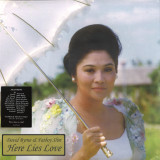
David Byrne & Fatboy Slim’s acclaimed 2010 album Here Lies Love receives its first-ever vinyl release to coincide with a new production opening on Broadway this summer. Here Lies Love is a double-disc song cycle – improbably poignant, decidedly surreal, surprisingly thought provoking – about the rise and fall of the Philippines' notorious Imelda Marcos. It was conceived by David Byrne; composed by Byrne and DJ/recording artist Fatboy Slim, AKA Norman Cook; and performed by a dream cast drawn from the worlds of indie rock, alt country, R&B and pop. Byrne's taste in collaborators is as imaginative as it is impeccable, including Cyndi Lauper (who recounts, to lighthearted disco beats, Imelda's courtship with Ferdinand Marcos), Steve Earle (as the power-hungry Ferdinand), Dap-Kings vocalist Sharon Jones (recalling Imelda's introduction into New York society) and Natalie Merchant (as spurned Imelda confidante Estrella, anticipating the onset of martial law). Along with vocals turns from such stars as Tori Amos and the B-52's Kate Pierson, Byrne works with rising indie rockers St. Vincent and My Brightest Diamond; New York chanteuses Nellie McKay and Martha Wainwright; and dance-music divas Róisín Murphy and Santigold. Byrne himself appears as the voice of imperialistic America on ‘American Troglodyte’, a send-up that wouldn't have seemed out of places in Talking Heads' True Stories.
Byrne originally envisioned this as a musical theatre piece, to be mounted in disco and nightclub settings, reflecting the globe-trotting Marcos' taste for such velvet-roped spots as Studio 54 and Regine's. In 2006, he performed work-in-progress versions to enthusiastic audiences at New York City's Carnegie Hall and the Adelaide Festival in Australia. While plans for a US theatrical production continued to evolve, he delivered this unique recording. The award-winning theatrical production eventually premiered at The Public Theater in New York in 2013, travelled to London’s National Theater for a sold-out run (2014–15), and was remounted at the Seattle Repertory Theater (2017).
Here Lies Love has an effervescent disco feel, redolent of Fatboy Slim's own dance-floor anthems, with warm undercurrents of the Latin rhythms that have percolated through Byrne's recent solo work. The sunny arrangements act in counterpoint to the reality of the Marcos' increasingly repressive regime, reflecting the imagined inner life of the glamour-obsessed Imelda. Explains Byrne, "For me, the darker side of the excesses are, for the most part, a matter of record. A lot of the audience is going to come with that knowledge already. What's more of a challenge is to get inside the head of the person who was behind all of that, and understand what made them tick." Byrne offers no judgment and avoids the obvious – there is no mention of Imelda's infamous shoe collection.
Many of Byrne's lyrics are, astonishingly enough, constructed from actual Imelda quotes, including the project's title, the words that Imelda, now returned to the Philippines from US-assisted exile in Hawaii, would like to have inscribed on her gravestone. In addition to his new liner note, Byrne illustrates the story with archival photos. In a detailed preface, he reveals what drew him to this subject and the bumpy route he took to launch the project and, ultimately, record this album. The booklet is indeed a page-turner, just as Here Lies Love is a wonderfully old-school album that rewards start-to-finish listening. Once again, Byrne – beloved as musician, thinker and bicyclist-about-town – reveals the breadth and singularity of his vision.
The new production of Here Lies Love will premiere at the Broadway Theatre in New York City. Performances begin June 17, ahead of an official opening night on July 20. Tony Award winner Alex Timbers (direction) and Olivier Award nominee Annie-B Parson (choreography) reunite with Byrne (concept, music, and lyrics) and Fatboy Slim (music) to bring Here Lies Love to Broadway, continuing a ten-plus year collaboration on the project. Tom Gandey and J Pardo contribute additional music. Here Lies Love is produced on Broadway by Hal Luftig, Patrick Catullo, Diana DiMenna for Plate Spinner Productions, Clint Ramos, and Jose Antonio Vargas. The staging at the Broadway Theatre will transform the venue’s traditional proscenium floor space into a dance club environment, where audiences will stand and move with the actors. A wide variety of standing and seating options will be available throughout the theatre’s reconstructed space. The producers of Here Lies Love said, “As a team of binational American producers – Filipinos among us – we are thrilled to bring Here Lies Love to Broadway! We welcome everyone to experience this singularly exuberant piece of theatre. The history of the Philippines is inseparable from the history of the United States, and as both evolve, we cannot think of a more appropriate time to stage this show. See you on the dance floor!”
David Byrne’s recent works include the launch of Reasons to be Cheerful, an online magazine focused on solutions-oriented stories about problems being solved all over the world (2019); Joan of Arc: Into the Fire, a theatrical exploration of the historical heroine that premiered at the Public Theater in New York (2017); The Institute Presents: NEUROSOCIETY, a series of interactive environments created in conjunction with PACE Arts + Technology that question human perception and bias (2016); Contemporary Color, an event inspired by the American folk tradition of color guard and performed at Brooklyn’s Barclays Center and Toronto’s Air Canada Centre (2015); Here Lies Love; Love This Giant, a studio album and worldwide tour created with St. Vincent (2012); and How Music Works, a book about the history, experience, and social aspects of music (2012).
Byrne curated Southbank Centre’s annual Meltdown festival in London in 2015. A co-founder of the group Talking Heads (1976–88), he has released eight studio albums as a solo artist and worked on multiple other projects, including collaborations with Brian Eno, Twyla Tharp, Robert Wilson, and Jonathan Demme, among others. He also founded the highly respected record label Luaka Bop. Recognition of Byrne’s various works include Obies, Drama Desk, Lortel, and Evening Standard awards for Here Lies Love; an Oscar, Grammy, and Golden Globe for the soundtrack to Bernardo Bertolucci’s The Last Emperor; and induction into the Rock and Roll Hall of Fame with Talking Heads. Byrne’s work as a visual artist has been published and exhibited since his college days, including photography, filmmaking, and writing. He lives in New York City. In addition to 2019’s cast album for American Utopia on Broadway, Nonesuch has released eight other David Byrne records since 2003, including 2018’s American Utopia studio album and two versions of his musical Here Lies Love.
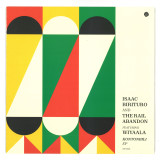
Following on from the successes of their first two LPs, "Kalba" and "Small Small", Isaac Birituro & The Rail Abandon return with the "Kontonbili EP". A collection of seven tracks that trace the traditional West African roots of their sound whilst adding their unique touch, largely courtesy of Isaac's xylophone, Sonny Johns' folky embellishments and the vocal prowess of powerful Ghanaian songstress Wiyaala.
The lead single "Hado Deeli" roughly translates to "My Rival" and is a vibrant discussion between two rivals, one of whom is always making a fuss about anything and everything, even when things are all good! "Gargar", with its collaboration of xylophone, whistles, Wiyaala's effervescent vocals and relentless groove represents, quite literally, the band's "joining together" for this EP. In contrast, "I Know" sees Sonny Johns takes over lead vocal duties to lament the breakdown of a relationship accompanied by muted horns and Wiyaala's soothing backing vocals. "Nimmbalia" continues in a mellow and reassuring tone before emerging as one of the most uplifting and simultaneously fierce cuts on the EP! The traditional version of "Bawa" - the original take of which can be found on last year's "Small Small" LP - strips things back a little, before culminating in a battle of xylophone, whistles and choir. "Yeri Villa" has a wonderfully laid back, sun drenched feel with some truly beautiful vocal refrains, and finally - only available on the digital version - comes the deeply percussive and trance inducing "Darpeny", rounding off a rather stunning EP from this cross continental outfit.
All tracks feature Ghanaian singer, song-writer, model and actor, Wiyaala. With a strong fanbase in Africa and beyond, "the lioness" made her mark on Wah Wah 45s and BBC 6 Music last year when she featured on the A-listed "Senye", described as "perfection" by Annie Mac and "pure joy!" by Tash LC.
Mind Maze is, amazingly, Trees Speak’s fifth album to be released on Soul Jazz Records in the space of little over two years– an output matched only by the intensity of their music created during this short time.
The first pressing only of the album comes with a bonus seven-inch single containing two tracks that are not available on vinyl anywhere else.
As with all their previous releases, ‘Mind Maze’ is a mind-boggling tightrope walk across an array of musical influences that seamlessly create the unique present-day world of Trees Speak.
The band’s sound is characterized by a combination of German krautrock motoric-beat rhythms, angular New York post-punk attitude, 60s spy soundtracks, psych, rock, jazz, and 70s synthesizers and vocoders. There is also a cosmic spatial awareness to their sound; both personal inner space and galactic outer space, as well as a wilful pushing of sonic boundaries.
Trees Speak are a musical duo based in Tucson, Arizona, composed of Daniel Martin Diaz and Damian Diaz. Their music is heavily influenced by the cosmic magic of the natural desert landscapes of Arizona, creating a unique and captivating sound that is both experimental and innovative.
Here you will find the myriad sounds of 1970s German electronic music (everything from Can to Cluster, Popul Vuh to Tangerine Dream); 1980s New York post-punk and synthcore (from No Wave to Suicide); John Barry’s 1960s movies, John Carpenter’s 1970s horror. You will also hear the influences of French and Italian progressive rock (Magma, Goblin) as well as cosmic, new age and experimental space soundscapes …. an almost endless list of diverse influences that ebb and flow like an ocean of sound, in the process creating a truly unique soundscape that Trees Speak have made wholly their own.
The name Trees Speak reflects their interest in the concept of using future technologies to store information and data in trees and plants, with the idea that trees communicate collectively. This interest in nature and technology, combined with their passion for experimentation, has led Trees Speak to create a truly one-of-a-kind listening experience that is both unique and engaging.
If you ever wanted to hear Can, Neu!, Destroy All Monsters, Pere Ubu, electric eels, John Cage, Liquid Liquid, Tangerine Dream, Suicide, Laurie Spiegel, Art Ensemble of Chicago, John Barry, Mother Mallard’s Portable Masterpiece Company, Sun Ra, Stockhausen, John Carpenter, Electro-Acoustic and Musique Concrete and Mars in one band - then this is it! Trees Speak are a band that defies categorization and offer an eclectic listening experience, both exciting and memorable.
The two bonus tracks (‘Seraphim’ and ‘Orpheus’) included with the album give us a further window into the complex mind maze of the group - two stunning acoustic tracks that explore a distinct early 70s sound of Yes, Argent and other progressive rock accolytes.
Das neue Album nach jahrelanger Pause setzt sich im bekannten Seven Impale-Stil fort und vermischt Jazz und Progressive Rock mit heftigeren Einflüssen zu vier kolossalen, epischen Tracks die auf die Namen 'Hunter', 'Hydra', 'Ikaros' und 'Sisyphos' hören. Ohne den Wahnsinn der Vorgänger von 'City Of The Sun' und 'Contrapasso' ganz hinter sich zu lassen, gibt das Album der Musik und den Texten den Raum und die Zeit, die nötig sind, um zu fesseln und zu blenden.
Für Fans von: Jaga Jazzist, King Crimson, Van Der Graaf Generator, Meshuggah u.s.w. Klassisch schwarze LP-Version!
Twin Cosmos is not only the name of the musical output of fraternal twins Morihito & Yasuhito Ito, but more philosophically, an album that encapsulates, “the universe of twins”.
The pair were born 1953 in Yokkaichi, Mie Prefecture. A port city 50 kilometres west of Nagoya, famous for its chemical plants. Despite their surroundings, they grew up in an environment that fostered learning and self-expression. From an early age, they began to carve out their own paths.
Morihito was fascinated with scientific endeavours, space travel and spirituality. His father, an electrician by trade - motivated him to build his own musical equipment. This led him to attend an acoustic engineering school in Tokyo from 1972-1974, after which, Morihito returned to Yokkaichi where he worked in the instrument and audio section of a department store. This helped him keep up to date with the latest equipment, while allowing him to simultaneously work on his own musical endeavours.
Morihito’s side of the ‘Double Action’ LP is a cohesive piece, which effortlessly drifts from one song to the next through samples of flowing water and rockets launching into space ,that were recorded while visiting his brother in the States. His music is carried by flowing vocal harmonies, guitar strums, and floating synths to create an eternal dreamlike ambiance.
In contrast, Yasuhito gravitated towards philosophy and the arts and in 1976 followed his Englsih teachers’ advice and moved to the ‘foreign world’ of the United States. It’s here that he further explored his interests in Christianity, sadomasochism and poetry. He was exposed to artists like John Cage and Sun Ra, as well as a variety of ‘Do It Yourself’ recording techniques that enabled him to record remotely.
Using samples, poetry, and an original approach to traditional folk & rock songs, he recorded his side of the LP. The outcome being provocative, dark and confronting realisations, which solely used English lyrics to represent his experiences in the ‘Western world’. In 1980, Yasuhito was wooed back to Japan by his brother and the prospect of a combined record release.
The self-released album ‘Double Action’, was completed at Victor studios in Japan. Without a distribution network, the release was sold mostly to family and friends and fell into obscurity. Despite not reaching commercial success, the pair have continued to make music over the past four decades, crediting it as their driving force in life. This 2022 release includes an insert with archival images & liner notes in both English & Japanese.
In a booming Swiss rocksteady and ska scene, COSMIC SHUFFLING is once again affirming itself as a rising star of the genre on a intergalactic scale. The band's first album, MAGIC ROCKET
SHIP, released in the midst of the pandemic, was a huge hit with fans of the Jamaican sound of the 1960s. Three years later, the Geneva-based septet is back in force with a new album, COSMIC QUEST, featuring eleven vocal tracks ranging from fiery ska worthy of the best years of the Skatalites and Soul Brothers ('Eclipse', 'Walk On By'), to exquisitely melancholy rocksteady ballads ('Birds of Spring', 'Dusk Till Dawn'), to bright early reggae with a touch of 1950s mento ('By The
Rivers').
Fans of vintage sound will be delighted by the sound of this new album elaborated in the raw and warm aesthetics of analog saturation that made the beauty of the golden age of Jamaican music.
Under the guidance of Swiss producer Mathias Liengme, the renowned Spanish sound engineer Roberto Sánchez has mixed this superb opus with class and character. The sound is just like the
cover of the album: against a lunar backdrop, in the glowing light of the setting sun, Cosmic Shuffling’s magnificent seven delight the hearts of the convinced as well as the undecided with the
exhilarating sound of their irresistibly danceable Cosmic Quest. Let yourself be carried away!
Mind Maze is, amazingly, Trees Speak’s fifth album to be released on Soul Jazz Records in the space of little over two years– an output matched only by the intensity of their music created during this short time.
The first pressing only of the album comes with a bonus seven-inch single containing two tracks that are not available on vinyl anywhere else.
As with all their previous releases, ‘Mind Maze’ is a mind-boggling tightrope walk across an array of musical influences that seamlessly create the unique present-day world of Trees Speak.
The band’s sound is characterized by a combination of German krautrock motoric-beat rhythms, angular New York post-punk attitude, 60s spy soundtracks, psych, rock, jazz, and 70s synthesizers and vocoders. There is also a cosmic spatial awareness to their sound; both personal inner space and galactic outer space, as well as a wilful pushing of sonic boundaries.
Trees Speak are a musical duo based in Tucson, Arizona, composed of Daniel Martin Diaz and Damian Diaz. Their music is heavily influenced by the cosmic magic of the natural desert landscapes of Arizona, creating a unique and captivating sound that is both experimental and innovative.
Here you will find the myriad sounds of 1970s German electronic music (everything from Can to Cluster, Popul Vuh to Tangerine Dream); 1980s New York post-punk and synthcore (from No Wave to Suicide); John Barry’s 1960s movies, John Carpenter’s 1970s horror. You will also hear the influences of French and Italian progressive rock (Magma, Goblin) as well as cosmic, new age and experimental space soundscapes …. an almost endless list of diverse influences that ebb and flow like an ocean of sound, in the process creating a truly unique soundscape that Trees Speak have made wholly their own.
The name Trees Speak reflects their interest in the concept of using future technologies to store information and data in trees and plants, with the idea that trees communicate collectively. This interest in nature and technology, combined with their passion for experimentation, has led Trees Speak to create a truly one-of-a-kind listening experience that is both unique and engaging.
If you ever wanted to hear Can, Neu!, Destroy All Monsters, Pere Ubu, electric eels, John Cage, Liquid Liquid, Tangerine Dream, Suicide, Laurie Spiegel, Art Ensemble of Chicago, John Barry, Mother Mallard’s Portable Masterpiece Company, Sun Ra, Stockhausen, John Carpenter, Electro-Acoustic and Musique Concrete and Mars in one band - then this is it! Trees Speak are a band that defies categorization and offer an eclectic listening experience, both exciting and memorable.
The two bonus tracks (‘Seraphim’ and ‘Orpheus’) included with the album give us a further window into the complex mind maze of the group - two stunning acoustic tracks that explore a distinct early 70s sound of Yes, Argent and other progressive rock accolytes.
For this uniquely personal retrospective spread over twelve vinyl discs, Sven Väth takes us back to the early days of his DJ career. On What I Used To Play we meet great pioneers of electronic music, gifted percussionists, obscure wave bands, and innovative producers of a bygone 'new electronic' era. Rough beats and irresistible grooves from the identification stage of house, techno, and acid remind us not just how far electronic music has evolved over the past four decades, but how great it was to dance to EBM, techno, and house for the very first time.
If there is one protagonist of the electronic music scene who has remained curious, innovative and at the very cutting edge of music for over four decades, it's Sven Väth. His multi-layered artist albums and Sound of the Season mix compilations have been defining the genre for over two decades, and even today, he is constantly on the lookout for the next top tune to add to the highlights of his next set. At least, that's the case when he's not producing them himself as an artist or remixer. "Actually, it's always been part of my DNA to think ahead," and nothing had been further from his mind than looking back at his past, but when in spring of 2020 the international DJ circuit had to be scaled down to virtually zero, the 'restless traveler' suddenly had time. Time to stop and reflect on "how it actually was back then, at the very beginning of my career..."
"It was a great trip and with every track, beautiful memories came flooding back".
In the London apartment, he had just moved into, Sven has set up a "little music room", where he cocooned himself for several days, "to look way back for the first time and review my musical journey through the eighties, so to speak."
The interim result was six thematically oriented playlists with a grand total of 120 tracks from 'early 80s' to 'Balearic late 80s', together with excursions into afrobeat, European new wave, and EBM sounds and a few epochal techno/house tracks from the USA in between. From these 'Best of Sven Väth's favorites', the project What I Used To Play crystallized. Sven remembers how the Cocoon team reacted to his proposal: "They found the idea of making a compilation out of it MEGA from the beginning and everyone said 'Sven, go for it', but then, of course, the work really started, namely, to clear the rights and to get clean sounding masters of the up to 40-year-old tracks. There was also disappointment, of course. We couldn't clear certain titles because the rights holders in the USA had fallen out with each other or simply disappeared from the scene. In short, it wasn't easy, but now I can safely say we got the most important tracks."
Finally, after two years of research, curation, design, and administrative fine-tuning, the "little retrospective" from 1981 to 1990 is available. The exquisitely packaged, and three-kilo heavy box set is not only physically impressive, WIUTP is also the definitive record of Sven Väth's musical development. On each of the twenty-four sides of vinyl, you can trace track by track, what influenced him during which phase, and how he took off as a DJ from his parents' Queen's Pub straight into the spotlight at Dorian Gray. There and at Vogue (later OMEN), Sven became the style-defining player in the DJ booth that he still is today.
1981 - 1990: Future Sounds of Now
In the early eighties, the crowd in clubs like Vogue and Dorian Gray danced to what nowadays we call 'dance classics' - mainly disco, funk, soul, and chart pop. It was up to a new generation of DJs, including Sven Väth, the youngest protagonist in the Rhine-Main area at the time, to create their own club-ready music mix. Good new tracks and potential floor-fillers were rarities that had to be sought out and found, in order to prove oneself worthy.
Without MP3s, internet streaming, or other digital download possibilities, music didn't just gravitate to the DJ, instead, it had to be tracked down. In well-stocked record stores in Frankfurt and Wiesbaden or even in Amsterdam, London, or New York, Sven and friends sourced the material for countless magical nights. On WIUTP we can follow Sven's very personal journey through this wild, innovative era in which synth-pop, funk, hip-hop, and disco were successively replaced as 'club music' by house, techno, acid, and breakbeat. By the end of the decade, it was clear to see that these once exotic 'fringe' phenomena would soon become 'mass' phenomena.
Early 80s
Dirty Talk by the Italian-American duo Klein & M.B.O. represents the most innovative phase of the Italo-disco genre in the early eighties like no other track. Mario Boncaldo (I) and Tony Carrasco relied entirely on the original synthetic drum and percussion sounds of the Roland TR-808, coupled with the raunchy vocals of Rossana Casale and guitar accents of Davide Piatto. Of course, other tracks from this period were also influential in style, most notably Unit by Logic System, which worked as the perfect soundtrack to the laser lighting system at the legendary Dorian Gray club. With stomping beats and robotic rap interludes, Bostich by Yello also belongs on Sven's eternal playlist - after all, it caught the attention of Afrikaa Bambaataa, who invited the Swiss duo to perform at the Roxy in New York in 1983.
EBM Wave - Mid 80s
From today's point of view, the almost ten-minute-long, downtempo track Giant by Matt Johnson's band project The The, would probably not be considered an obvious club classic. However, a closer (re)listen reveals the rhythmic intricacies of the percussion overdubs by JG Thirlwell (aka Foetus) on Johnson's composition, and it becomes clear why this exceptional piece of music is one of Sven's absolute favorites. Other classics from this phase include Kaw-Liga by the mysterious The Residents, the hypnotic-synthetic Our Darkness by Anne Clark (and David Harrow), and last but not least, the somber, monotonous anthem Where Are You? by 16Bit, one of Sven Väth's projects together with Michael Münzing, Luca Anzilotti from 1986.
US House - Late 80s
You certainly can't talk about Chicago house without mentioning Frankie Knuckles. The resident DJ at the Warehouse not only gave the name to an entire genre, but also produced epochal floor fillers on the Trax label like the timeless Your Love, sung (and moaned) by Jamie Principle. Acid house protagonists Phuture also hail from Chicago, and on We Are Phuture (also released on Trax) we hear the chirping acid sounds of the legendary Roland TB-303 in full effect. Another featured classic is No UFO's by Detroit's Model 500 aka Juan Atkins, who is rightly considered the 'Godfather of Techno' even if the genre-defining track from 1985 still breathes with the spirit of hip-hop and electro from the first breakdance era.
Afrobeat
Le Serpent, by Algerian-born Abdelmadjid Guemguem, is a track that sounds completely different from everything else on WIUTP. Made in 1978, it's a monumental, rousing groove created without bass or synths, just with five congas! Even though Guem sadly passed away in 2021, his immortal, acoustic beats are understood all over the world and will continue to enrich many thousands of DJ sets for years to come. Another classic that not only Sven appreciates beyond measure is Hugh Masekela's Don't Go Lose it, Baby. In addition to being one of the most important jazz pioneers, the trumpeter and freedom fighter from Johannesburg was very experimental, integrating electronic sounds into his music in later years, in a similar vein to Miles Davis and Herbie Hancock. Dutch jazz pianist Jasper van't Hof's afrobeat project Pili Pili has also aged well. The trance-like, almost sixteen-minute-long track of the same name, manages to fill a whole side on the seventh of twelve vinyl discs in the WIUTP box.
UK-US-Euro - Late 80s
Time for a change of scene, in the truest sense of the word, and from a musical perspective, this section is like landing on another planet. First up is Andrew Weatherall's classic remix of Primal Scream's Loaded, featuring the iconic Peter Fonda sample (lifted from the 1966 biker film Wild Angels) that came to personify the mood triggered by the British Second Summer of Love in the late eighties: "We wanna be free to do what we wanna do, and we wanna get loaded...". This period also saw the emergence of M/A/R/R/S whose only single, 1987's Pump Up The Volume, became a club classic with support from DJ legend CJ Mackintosh. In this most eclectic of sections, we also encounter New York house and reggae producer Bobby Konders and his seminal Nervous Acid.
Balearic - Late 80s
Those who know him, know that Sven had already lost his heart to the 'magic island' of Ibiza as a teenager, so with that in mind, the WIUTP project couldn't end without a Balearic chapter. Inspired by Manuel Göttsching's E2-E4, the immortal, eponymously titled Sueño Latino belongs in there without question. Equally popular on the island was, and still is Break 4 Love by Raze, which thinking about it, would also fit perfectly into the house chapter. Last, but not least, there's an overdue reunion with Sven Väth himself, in his role as frontman of the successful Frankfurt trio OFF. Together with Michael Münzing and Luca Anzilotti (later of Snap!) this 'Organization For Fun' created the off-the-wall club hit Electric Salsa in 1986 which incidentally turned into an international chart smash, putting Sven in the enviable position of having to decide between pop stardom and a DJ career. Well, we all know how that decision turned out and the rest, as they say, is history. A not insignificant part of his story is What I Used To Play. Enjoy!
As luck would have it, this seventh exclusive Deep Site Vinylized edition sees the pure class of Tojami Sessions (Dessous Recordings/Plastic City) with two stand out original tracks each offering remixes that contrast and compliment the full atmosphere of this release.
Falling (Original Mix) takes you on a late afternoon cruise filled with soft seductive whispers and a surprise percussion during the break. Falling (Manuel Sahagun Remix) adds more of a jazzy element, focus on inspiring words, and the laid back improvisation keep the groove flowing non-stop. Falling (Kessidis Remix) takes on a more mystical and minimal approach amidst modulating synths and the spoken words declaring what is to unfold. What Is Love (Original Mix) The extended intro and groovy bassline start this track off, bathing you in sunlight while the vocal samples splash over and refresh you creating a radiant joy. What Is Love (Deep Spelle Remix) layers some harder beats and an 808 bassline producing that contagious dancing feeling impossible to resist.
What Is Love (Funtom Remix) sends the track to high emotional levels with use of melody and dynamics making it a true anthem bound to leave its touch.
'A Winged Victory For The Sullen' is the first installment of the new collaboration between Stars Of The Lid member Adam Wiltzie and L.A. composer Dustin O'Halloran. The duo agreed to leave the comfort zone of their home studios and develop the recordings with the help of large acoustic spaces, hunting down a selection of 9ft grand pianos that had the ability to deliver extreme sonic low end.
Other traditional instrumentation was used including string quartet, French horn, and bassoon, but always juxtaposed is the sound of drifting guitar washed melodies. The recordings began with one late night session in the famed Grunewald Church in Berlin on a 1950's imperial B?sendorfer piano and strings were added in the historic East Berlin DDR radio studios along the River Spree. One last session on a handmade Fazioli piano in a private studio on the Northern cusp of Italy, before the final mixes took place in a 17th century villa near Ferrara with the assistance of Francesco Donadello. All songs were then processed completely analogue straight to magnetic tape.
Their secret to harvesting new melodic structures from the thin air of existence was for the duo to push themselves to dangerous territory, realising that clear thinking at the wrong moment could stifle the compositions. The final result is seven landscapes of harmonic ingemination. In 'Requiem For The Static King Part One' ? created in memory of the untimely passing of Mark Linkous ? they have taken the age-old idea of a string quartet and then shot it out of a cannon to reveal exquisite new levels of sonic bliss.
Of the 13 minute track 'Symphony Path?tique', Wiltzie says 'after almost 20 years of struggling to create interesting ambient drone music, I feel like I have finally figured out what I am doing'. Notable guest musicians include Icelandic cellist Hildur Gudnadottir, as well as Erased Tapes label comrade Peter Broderick on violin. A Winged Victory For The Sullen is not a side project ? it is the future of the late night record you have always dreamed of. A Major release for Forte, Non exportable.
Following the already classic Wamono A to Z trilogy, 180g presents an exceptional collection of jazz funk / rare groove tunes recorded in the mid-seventies at the Nippon Columbia studios by three giants of Japanese music: arranger Kiyoshi Yamaya, koto legend Toshiko Yonekawa and shakuhachi master Kifu Mitsuhashi.
- 180g heavy vinyl pressing, reverse board jacket
- Fully licensed Nippon Columbia masters available for the first time outside of Japan
- Mastering and lacquer cut by Jukka Sarapää at Timmion Cutting Lab, Helsinki, Finland
- Artwork by Nker
---
Born in 1932 in Tokyo, Kiyoshi Yamaya started his musical career in 1953 when he played in various jazz bands in town. In 1957, Yamaya joined Nobuo Hara's famous jazz big band Sharps & Flats as a baritone saxophone player and started composing, arranging, and recording for them and other big bands. He became a key jazz figure in Japan in the sixties together with Norio Maeda and Keitaro Miho, both jazz pianists, composers and arrangers, by forming the Modern Jazz Three Association – which aimed at improving the level of Japanese jazz composition and arrangement. In the mid-seventies, his Contemporary Sound Orchestra explored jazz funk fusions with traditional Japanese melodies and instruments such as the shakuhachi, koto, biwa, and shamisen. These works were recorded for a series of panoramic Japanese albums released domestically on Denon and Nippon Columbia, from which the tracks on this compilation are taken from.
Toshiko Yonekawa, born 1913 in the city of Himeji, not so far from Osaka, is the eldest daughter of koto and shamisen master Kin'o Yonekawa. She started studying both instruments with her talented father from the age of 3, played in her first concert at 8, and was only 12 years old when she first appeared on national radio. Her unique style of koto playing is widely recognized due to the extreme accuracy of the intonation and rhythm, as well as the unequaled beauty of the instrument's sonority. After a life decorated with awards and prizes, Toshiko Yonekawa was named a Living National Treasure in 1996.
Born in Tokyo in 1950, Kifu Mitsuhashi is a great master of Koto style shakuhachi. After completing the NHK Hōgaku Training Program in 1972, Mitsuhashi became a member of Pro Musica Nipponia, a group of leading composers and top-ranking musicians devoted to performing a wide-ranging repertoire of classical and contemporary compositions from both Japan and the West – in which all music is performed by traditional Japanese musical instruments. Mitsuhashi has toured the world for hundreds of recitals, also as a soloist, and has performed his art with the greatest ensembles such as the BBC Symphony Orchestra and the Berliner Philharmoniker. In 2020, Kifu Mitsuhashi was awarded the Order of the Rising Sun.
---
All tracks selected and compiled by Greg Gouty and Maxime Brottes, with the assistance of Ryohei "Nitchiku-kun" Tanaka.
All tracks licensed by Nippon Columbia, Japan.
Mastering and lacquer cut by Jukka Sarapää at Timmion Cutting Lab, Helsinki, Finland.
Artwork by Nicolas Kerembellec (Nker.fr).
Proofreading by Brian Durr (Diskotopia).
Executive producers: Greg Gouty and Maxime Brottes.
180GWALP04 - Manufactured and distributed by 180g.
For the first time ever repressed on FullTime Production the iconic disco record "Easy Going" by Easy Going!
That's a brand-new great landmark for the label as "Easy Going" set a milestone in the italian Disco culture.
If at the end of the Seventies you were at Piazza Barberini in Rome at night, you would have come across a small but crowded club half-hidden in the ascent of Via della Purificazione, a trendy gay club with elegant Fassbinderian furniture, but also a night crossroads for many prominent characters of the cultural and artistic life of the eternal city and a regular stop for the most popular national DJs at the time. Easy Going creature was founded by Claudio Simonetti (Goblin), as a homage to the place mentioned above.
The homonymous 33 rpm debut of 1978 is remastered and repressed on a glossy white vinyl and due next December 13th on FullTime Production!
It features the original LP cover highlighting the mosaic of masculine struggle between a sailor and a strictly naked policeman , photographed in the Roman club.
The music explodes with the piece that will define the group par excellence: "Baby I Love You" also released as the first single, sung by a very filtered voice on a hypnotic rug of keyboards and a captivating melody that define a real masterpiece of italian disco and beyond. The same goes for the remaining three tracks of the album, which are also set to set the dance floor on fire: "Do It Again" is pure dance from Studio 54 and on the flip side, Creedence Clearwater Revival's cover "Suzie Q" and the ballad "Little Fairy".
For the 10th release label owner Barbara Preisinger is gathering seven unreleased tracks on two seperate 12inches, by previous Slices Of Life artists as well by producers who have a relationship to the label through frindship, events and personal support. Each track presents the personal unique style of it´s producer, but all have a feeling for warm sounding organic house grooves in common, what Slices Of Life stands for since the beginnings in 2009.
6 weeks after SOL10.1 hit the stores with contributions by THE MOLE, BAAZ, DANA RUH and JOHN TEJADA, the 2nd part of the SLICES OF LIFE compilation celebrating release number 10 is following: The A side of SOL10.2 is dedicated to the legendary Berlin producers and Dj duo CAB DRIVERS: - A Complex Situation' catches us with its irresistable swinging groove and filigrane synth lines. OSCAR SCHUBAQ, DJ, Producer and co-owner of the label Tardis Records, starts the B-side with - K-Beat', a rough jackin house tune, which takes a surprising turn to a sunny sounding swing during the 2nd part. The great finale of SOL10 comes from the parisian Deeply Rooted label owner and extensive vinyl collector DJ DEEP. With - Spices Of Life' he created a wonderful, atmospheric and deep piece of music carried by rolling basslines and playful melody fragments.
- Dj Deep and Cab Drivers has been worldwide very well known and respected producers, label owners and DJ´s with a large fanbase since the 90 ies. Osacr Schubaq is co-ownung the label Tardis together with Eli Verveine
- first 500 copies come in dark red printed sleeve
Rating 4/5 "Independent UK"
This solo debut by Air’s Nicolas Godin explores various elements of Bach, but without slavishly transposing his music to modern instruments in the manner of Wendy Carlos.
Instead, Godin uses themes and fragments from Bach as the jumping-off point for diverse musical explorations. In “Club Nine”, he borrows the “Take Five” rhythm, brushed out behind a cyclical piano figure, stained with resonant Bach chords on vibes and keyboard; and for “Clara”, the husky Latin croon of Brazilian singer Marcelo Camelo swoons over a stately dub arrangement of strings and woodwind.
The seven-minute “Bach Off” is the most dramatic piece, a suite shifting between interlocking Latin percussion, African highlife sax, stalking piano and harpsichord/woodwind interplay; while the blend of music-box, cellos, French horn, pizzicato and vocal pad makes “Elfe Man” sound like an outtake from Pet Sounds. A rich, rewarding indulgence.
Common Primitives is the second collaborative album between Andy Bell (Ride guitarist, Oasis bassist) and Essex-based harp and synth duo Masal. It’s a stunning, meditative collection which veers from kosmische to astral jazz by way of Turkish folk tunes and all the way back again.
Their first outing, 2023’s acclaimed Tidal Love Numbers, consisted of four lengthy and almost ambient tracks and is included here on vinyl for the first time as part of a two-record set with the new album. By contrast, the seven tracks that make up Common Primitives are almost concise, but also a lot more layered and complex.
“We tend to work from initial, free-jammed ideas, building form and arrangement from there,” explains Masal’s Al Johnson. “Above all, we believe you should go where the vibe takes you.”
For Andy, that vibe was very much jazz legend Pharoah Sanders’ classic 1977 album Pharoah, which was reissued a few years ago.
“It puts me into a hypnotic state,” he explains. “That’s why I worked with more guitar loops on this record. The Tisziji Muñoz part on ‘Harvest Time’ has had me in a vice-like grip for the last three years and it arrives here via the Vini Reilly filter.”
For Özlem Simsek, there is nostalgia, too, and she even adds vocals as well as her heavenly harp to the opening track, ‘After Kâtibim’, based on a traditional Turkish folk song she had sung as a child growing up in Istanbul.
From there, the album takes us on a real journey, with the apt, impressionistic titles added by Andy once it had all been pieced together. There’s the beautiful, elegant ‘I Swear We Are Infinite’; the atmospheric ‘Yuzuki Fighting Spirit’ and the beatific ‘Soap And Water’. ‘Tower Of Babylon’ was named after the novelette by Ted Chiang, its structured creation reflecting that in the story; first single ‘The Morning Of The Trip’ finds Andy playing his guitar “as if it was a waterfall”. The journey ends with ‘Rudi’s Dream – The Third Bardo’, the trio accelerating onto the autobahn for a krautrock crescendo inspired by their studio’s resident cat.
Common Primitives is the second collaborative album between Andy Bell (Ride guitarist, Oasis bassist) and Essex-based harp and synth duo Masal. It’s a stunning, meditative collection which veers from kosmische to astral jazz by way of Turkish folk tunes and all the way back again.
Their first outing, 2023’s acclaimed Tidal Love Numbers, consisted of four lengthy and almost ambient tracks and is included here on vinyl for the first time as part of a two-record set with the new album. By contrast, the seven tracks that make up Common Primitives are almost concise, but also a lot more layered and complex.
“We tend to work from initial, free-jammed ideas, building form and arrangement from there,” explains Masal’s Al Johnson. “Above all, we believe you should go where the vibe takes you.”
For Andy, that vibe was very much jazz legend Pharoah Sanders’ classic 1977 album Pharoah, which was reissued a few years ago.
“It puts me into a hypnotic state,” he explains. “That’s why I worked with more guitar loops on this record. The Tisziji Muñoz part on ‘Harvest Time’ has had me in a vice-like grip for the last three years and it arrives here via the Vini Reilly filter.”
For Özlem Simsek, there is nostalgia, too, and she even adds vocals as well as her heavenly harp to the opening track, ‘After Kâtibim’, based on a traditional Turkish folk song she had sung as a child growing up in Istanbul.
From there, the album takes us on a real journey, with the apt, impressionistic titles added by Andy once it had all been pieced together. There’s the beautiful, elegant ‘I Swear We Are Infinite’; the atmospheric ‘Yuzuki Fighting Spirit’ and the beatific ‘Soap And Water’. ‘Tower Of Babylon’ was named after the novelette by Ted Chiang, its structured creation reflecting that in the story; first single ‘The Morning Of The Trip’ finds Andy playing his guitar “as if it was a waterfall”. The journey ends with ‘Rudi’s Dream – The Third Bardo’, the trio accelerating onto the autobahn for a krautrock crescendo inspired by their studio’s resident cat.
Downtempo legends Coyote offer up a full length of Balearic bliss with Go With The Tide on Universal Cave Records. With one foot in timeless chillout electronica and another in the dubby soundsystem psychedelia of our times, Coyote expand on their distinct cosmic groove with seven songs that dive deep into the sonic underground.
Go With the Tide is a tale of three islands. Coyote drop a heavy dose of modern UK stylings, rumbling bass and chilling vocals, on top of a familiar White Isle dream state while radiating Jamaican dub sensibilities. It’s like coming home from summer holiday and returning to the day to day of city life. The nights grow longer and the air chills, but the shimmering sparkles of sunshine still reflect and refract through your soul.
Coyote pick up that tension between the escapism of summer and the heavier waves of fall, and weave it into a remarkable LP that makes as much sense for a forever summer as it does for an impending winter. For whichever side of that you fall, just Go With The Tide.
Their music was never confined by genre limitations. It drew equally from Doom Metal's oppressive weight, Gothic Rock's romantic desolation, and the emotional grandeur of Dark Wave, creating a soundscape that was uniquely their own. "Seasons " marked the beginning of this remarkable journey. A debut album rich in atmosphere and emotional depth, it introduced a band already possessing a mature artistic identity. Its songs unfold like chapters from a forgotten gothic novel, where every melody is wrapped in shadows and every lyric resonates with profound emotional sincerity. EverEve expanded their vision with "Stormbirds", an album that many regard as one of the defining moments of European Gothic Metal. Majestic, dramatic, and emotionally overwhelming, it elevated the band's songwriting to extraordinary heights. The interplay between crushing guitars, haunting keyboards, and deeply evocative vocal arrangements created a listening experience that remains as captivating today as it was upon its release.
Their music was never confined by genre limitations. It drew equally from Doom Metal's oppressive weight, Gothic Rock's romantic desolation, and the emotional grandeur of Dark Wave, creating a soundscape that was uniquely their own. "Seasons " marked the beginning of this remarkable journey. A debut album rich in atmosphere and emotional depth, it introduced a band already possessing a mature artistic identity. Its songs unfold like chapters from a forgotten gothic novel, where every melody is wrapped in shadows and every lyric resonates with profound emotional sincerity. EverEve expanded their vision with "Stormbirds", an album that many regard as one of the defining moments of European Gothic Metal. Majestic, dramatic, and emotionally overwhelming, it elevated the band's songwriting to extraordinary heights. The interplay between crushing guitars, haunting keyboards, and deeply evocative vocal arrangements created a listening experience that remains as captivating today as it was upon its release.
Written in collaboration with British jazz pianist and organist Kit Downes, the album was recorded in the hushed, reverberant atmosphere of Bragernes Kirke in Norway in November 2024 - a setting that lends the record an intimate, almost sacred stillness. The album was mixed and mastered by Jorgen Traeen. The album takes its title from the landmark 14th- century mystical text by Julian of Norwich - the first book known to have been written in English by a woman. Sundfor encountered Julian's writing around the same time she and Downes were performing together in churches in 2024, and the timing felt fated. Drawn to the text's extraordinary themes of hope, resilience, and its quietly radical feminine perspective, she found in Julian's words a natural spiritual and artistic continuation from her acclaimed 2023 album Blomi . The connection felt so immediate and profound that she invited Downes to join her as a full collaborator on the project.
If you've yet to succumb to the charms of Children of Zeus - and there can't be many out there who haven't - then this "odds and ends" LP offers a neat introduction. Five of the seven tracks have been plucked from the Manchester crew's previous full-length excursions, while the other two - seductively soulful two-step garage reworks of "Vibrations" and "Slow Down" by fellow Manchester resident Zed Bias - have previously been almost impossible to get hold of. Setting aside the club-ready remixes, what "Excess Baggage" proves is that Children of Zeus are one of British music's most essential outfits right now, delivering sensual and life-affirming cuts that brilliantly blend the best aspects of hip-hop, R&B and modern soul.
out of Stock
Last delivered 7 years ago available to reorder, subject to availability
The Yummy Fur’s first album of new material in over 25 years is seductive and ambiguous; a fast-paced flip through scenes from art, myth, life and fantasy; a witty whole made from glittering scraps. The band’s original incarnation – fronted by singer, songwriter and guitarist John McKeown from 1992 to 1999 – morphed from making quick-hit cartoon-art songs to Eno and Cale-influenced creepers, populated by characters from McKeown’s life in Glasgow and the films, books and poetry that he lived a parallel life through. Everybody Talks About The Weather delights in using every past iteration of the band as potent collage material: a melee of sounds and ideas existing at once, revealing themselves then dipping back into hiding.
Recorded by the original core trio of McKeown, Brian MacDougall (guitar) and Paul Thomson (drums), Everybody Talks About The Weather comes 17 years after the band reformed for sporadic live shows, and seven years after the release of their sorta-greatest hits compilation Piggy Wings (Rock Action). Ten tracks long with nothing to spare, it is as condensed and vital as their best songs, with a new clarity of sound that allows their ambiguities to come into the light.
The album begins with “Cogs”, a taunting inquisition from within. As McKeown stages a fight between his id and ego, the tension heats up between conversational guitar lines and minimalist repetition; threatening sing-song melody and real, palpable menace. The band members are forced in tandem only to break apart, sustaining a genuine sense of just-hidden danger throughout the whole record – except, arguably, “Headphones”, a looser moment which sees McKeown make an existential something out of nothing while waiting for someone in the car (“I should have brought a book.../My ears are bleeding from the compression on your album”)
The songs are riots of reference: “Unity Over Europe” is a slyly complex two act play about the Mitford sisters – Diana, Unity, and Nancy, in a wink to the YF canon – smashing tragic biographical detail together with allusions to Thomas Pynchon and Francis Bacon. Pynchon is also lifted to serve “Blue Sunshine”, a collision of school shooters, serial killers and fictional fuck-ups (“Fast forward to Compton/Fast forward to Pynchon/Fast forward to Columbine'”) whose buzzy guitar lines are taunting and confrontational like a smarmy teenager. The innocuous title of “My Lasagne” belies a song that exists in several time periods at once: a visit to see Guernica, 50 people with their backs to the portrait of Dora Maar; the time that Picasso painted from; the Reina Sofia and the dirty streets of the Malasaña; myth-making musicians and the myths they’re riffing off overlapping and leering at each other.
All this could be laboured in lesser hands, but cultural verbosity is second nature to The Yummy Fur, who transform all this source material into songs that are weird, sexy, funny and absurd. Meaning is not happily understood or flattened. Susan Sontag's essay Against Interpretation accompanied McKeown as he wrote this album, and she’s paraphrased in “Semolina Ballerina”, the album’s justification of artistic ambiguity. Thomson’s motorik beat leads a gathering of back-and-forth instrumental phrases – including a wiry contribution on saxophone – embodying the futility of trying to parse something definitive from repeated action. “Listen to the very first thing that’s in your head,” Sontag-via-McKeown commands directly, then slinks sideways: “Interpretation is a conversation in an unmade bed”
The album features two more focused portraits, or at least The Yummy Fur’s version of such a thing. “Wanda” merges the life of filmmaker Barbara Loden and the title character of her semi-autobiographical 1970 feature film, with Loden’s then-husband Elia Kazan joining the fray of no-good men in her film. It’s a mix of adaptation and avant-criticism, with McKeown’s wordplay and mannered pronunciation mirroring the way that non-fiction and fiction twist around each other in the song. The title track is a series of vignettes and impressions from the lives of the band’s ‘90s inner circle, positing painter Mac McNaughton as a kind of Falstaffian ringleader. As with Piggy Wings and the recent single “New T-Shirt”, McNaughton painted the cover of Everybody Talks About The Weather – like the album’s music, the image of a coy girl in a white dress is an uncanny amalgamation of styles, suggestions and references just out of reach, as though seen in an art museum in a dream.
The album ends with two reads of the same frustration. “King of Nothing” is the closest The Yummy Fur will ever get to sludge-rock: the band melts together into a dusty, dreary haze as McKeown drowns in a drudgery of personal struggle (“Two jumpers on in Babylon/And only cats to talk to”) and the rhythmic toppling of heroes (Rowlands, Duvall, Munro). The majority of visible dirt is cleaned off for “Say Hello”, an uncharacteristic depiction of throwing the windows open after a dark night of the soul. Here, the situation is still cold and hard (“When the sun burns gold, but the heat never reaches your fingertips”) but it feels surmountable. Everybody Talks About The Weather is an unpredictable album from an unpredictable group, but ending on a moment of almost uncomplicated light is maybe its biggest surprise. - Claire Biddles (2026)