Rhythm by Nature is back with Somefink Old, Somefink New, a three-tracker from seasoned producer Grant Dell that bridges past and present: sketches first laid down in the mid-2000s rediscovered and reworked alongside a brand-new cut, forming a dialogue between memory and renewal.
The EP opens with Feel Me?, a deep tech construction driven by a heavy low-end, its groove unfolding patiently while flashes of disco glimmer through the framework. On Light of Day, Dell shifts into full deep house territory — spacey pads and floating strings suspended across open structures until acidic stabs break through, twisting the track into brighter, playful directions. Closing with Death Disco in Dub, Dell channels the hallmarks of his Tribalation project: dub-infused atmospherics, light percussion and echo-drenched fragments circling around a hypnotic core, equally suited to open or dissolve a night.
With Somefink Old, Somefink New, Rhythm by Nature traces the arc of an artist deeply embedded in the underground, reuniting past forms with present gestures in a release that reaffirms the label’s consistency in quality and commitment to timeless club music.
*Kissa* is an immersive ambient electronic project crafted by Mathias, drawing inspiration from the serene and evocative atmosphere of Japanese jazz kissa cafés. These intimate spaces, known for their deep reverence for music, serve as the foundation for *Kissa’s* sonic landscape—where warm nostalgia and futuristic minimalism intertwine. Consisting of eight expansive compositions, *Kissa* abandons traditional rhythmic structures, allowing sound itself to guide the listener. Ethereal textures, evolving drones, and subtle harmonic shifts create a meditative experience that blurs the lines between memory and imagination. Each track is a portal—an invitation to lose oneself in sound, to explore the spaces between notes, and to embrace stillness as a form of movement. With *Kissa*, Mathias redefines the boundaries of electronic music, crafting an experience that is at once deeply personal and universally resonant. Whether serving as a soundtrack for introspection or a companion for late-night contemplation, *Kissa* embodies the essence of timeless listening—where music is felt, not just heard.
Glasgow’s Hot Towel are a DJ & production duo, community dance party organiser and now record label reimagining the balearic spirit far from its original context and sunnier climes.
This debut EP contains 4 dance floor focused tracks tested and developed on the Hot Towel dance floor and beyond. Produced over the last 4 years in grey and rainy Glasgow these 4 tracks reinterpret the joy of warmth, connection and world building in dance music.
Warm in Your Office is a feet on the floor, head in the clouds, bouncing 90’s piano house inspired track with warm driving bass, punchy gated snare, percussion samples and a surprising nostalgic drop for fans of late 90’s and early 00’s Serie A.
The lo-fi beatbox rhythm of Low Pressure in Paradise features a melodic, rumbling bassline, vintage synth string stabs and a warm melancholic synth pad swell reminiscent of the day after the night before, or the thunderous ambience of an oncoming storm and the reflection that brings. Think warm orange and magenta sunset overcast with heavy mauve clouds and possibly a hangover from one too many negronis.
A sunbaked synth flute melody shimmers like heat haze in the latin / balearic inspired beach bar romp Last Minute Staycation. Cowbell and syncopated piano move the hips, while romantic synth strings pine for that magical other world away from the mundane. A shift in tone midway evokes the peril of a balearic dream turned nightmare, capped off with timbale and a shredding electric guitar solo serving Lambada meets Zappa.
Endless Cosmic Procession is a downtempo balearic builder that chugs along with minimal effort. Tuned percussion drives the groove, with bass and synth punctuations that reverberate into space and swirl with delay. A rising arpeggiator gently brings melody to complete the harmonic space of the track that rounds off the EP with a contemplative dance floor moment.
Ty Segall, precleared for flight in full rock congress with the band (Ben Boye/Evan Burrows/Mikal Cronin/Emmett Kelly), shifts Chrome. Songs of massive riffs, swung, tightly arrayed lines of fuzz & distortion, twin-guitar attack-and-parry, endopic keyboards kicking, precise & thudding power, a rhythmic core on the march in full BAND energy. The songs are lyrically allusive trips, dark passages in the labyrinth, everything in the air bristling collectively, as minds collide.
Glasgow’s Hot Towel are a DJ & production duo, community dance party organiser and now record label reimagining the balearic spirit far from its original context and sunnier climes.
This debut EP contains 4 dance floor focused tracks tested and developed on the Hot Towel dance floor and beyond. Produced over the last 4 years in grey and rainy Glasgow these 4 tracks reinterpret the joy of warmth, connection and world building in dance music.
Warm in Your Office is a feet on the floor, head in the clouds, bouncing 90’s piano house inspired track with warm driving bass, punchy gated snare, percussion samples and a surprising nostalgic drop for fans of late 90’s and early 00’s Serie A.
The lo-fi beatbox rhythm of Low Pressure in Paradise features a melodic, rumbling bassline, vintage synth string stabs and a warm melancholic synth pad swell reminiscent of the day after the night before, or the thunderous ambience of an oncoming storm and the reflection that brings. Think warm orange and magenta sunset overcast with heavy mauve clouds and possibly a hangover from one too many negronis.
A sunbaked synth flute melody shimmers like heat haze in the latin / balearic inspired beach bar romp Last Minute Staycation. Cowbell and syncopated piano move the hips, while romantic synth strings pine for that magical other world away from the mundane. A shift in tone midway evokes the peril of a balearic dream turned nightmare, capped off with timbale and a shredding electric guitar solo serving Lambada meets Zappa.
Endless Cosmic Procession is a downtempo balearic builder that chugs along with minimal effort. Tuned percussion drives the groove, with bass and synth punctuations that reverberate into space and swirl with delay. A rising arpeggiator gently brings melody to complete the harmonic space of the track that rounds off the EP with a contemplative dance floor moment.
Black Truffle is pleased to present Even Colder Spring, the latest release from the mysterious and wildly prolific Cities Aviv (a.k.a. Wilbert Gavin Mays, who also records as African-American Sound Recordings), a rare appearance from the artist outside his own D.O.T. Audio Arts label. For over a decade, Cities Aviv has twisted hip-hop conventions into the most skewed and splayed forms, layering and lacerating twitching loops, extreme production techniques and his mercurial vocal stylings into hermetic décollage. Across 16 tracks, Even Colder Spring charts Mays’ restlessly experimental approach: what sound like fully formed productions are interrupted suddenly after seconds; interjections of field recordings cue unexpected shifts; details drown under layers of fuzz. His vocal delivery takes in rhythmically intricate rap, barely articulate murmurs and freely melodic song, the latter often with a disorientating lack of connection to the track’s harmonies. The lyrical shifts are as paratactical as the musical movements. Apocalyptic visions of social and cultural uniformity alternate with reflections on mortality, glimpses of everyday life and head-scratching one-liners: ‘Maybe Mars is bougie?’ His reference points are as surprising as ever, the Dante quotes of previous releases joined here by a track named after Henri Bergson’s idea of the élan vital. Australian listeners, in particular, might be especially taken aback to hear ‘Closing Door’ open with the phrase ‘the tyranny of distance’.
While Mays’ work can sometimes be claustrophobically bleak, the productions here are often sparkling, at times touching on the shimmer of private-issue New Age sounds and the more playful end of krautrock. The instrumental ‘Martine Drift’ could almost be a snatch of Cluster’s Zuckerzeit caught through dial-up internet. The distant echoing drums of ‘L_area’ cross Persona’s Som with lo-fi IDM, while closer ‘Final Heaven’ dissolves a cloud of loops across almost seven minutes into ecstatic, rippling distortion. The graphic design, at the artist’s request closely modelled on the format of Corwood Industries, offers as good a clue as any to what awaits the listener on Even Colder Spring: a world at once impossibly opaque and intensely personal.
Structure Series 3 marks the next instalment in Molecular Recordings' ongoing vinyl series, bringing together a selection of artists connected by a common language: deep, functional, uncompromising techno.
Forged between machine pressure, hypnotic movement, and warehouse energy, the release continues the label's tradition of spotlighting both respected figures and emerging producers without distinction. The focus remains where it has always belonged — on the music itself.
Across four cuts, Structure Series 3 moves through shifting textures and intensities, balancing raw groove, atmospheric depth, and precise rhythmic architecture. Built for sound systems rather than algorithms, these tracks are designed to reveal their full weight in the physical space of the dancefloor.
Three decades after its foundation, Molecular Recordings continues to operate beyond trends and short-lived cycles, remaining committed to authentic underground techno and the artists shaping its future.
Structure Series 3 is another transmission from the Molecular network: Built from experience, driven by instinct. Structured for the underground
2026 Repress
Temudo - Meteora (FUSE06) by Noah Hocker
A leader of the Portuguese wave in techno co-founding Hayes Collective while boasting acclaimed releases on Klockworks, Blueprint, and Soma, Temudo grabs the reins to take club music back to its days of audacity and risk taking. A more than promising up-and-comer turned modern reference, Temudo defends his reputation with a release showcasing depth in his various sonic universes and a deep understanding of his music's history. For its seventh release, Temudo's 'Meteora' is a logical next step for the club's direction - a sweet spot between dancefloor efficiency and enduring aesthetic.
Combining the intrigue of mental soundscapes with the reliability of imposing rhythm, 'Meteora' finds itself collected, expressing effect through restraint. The title track, claiming the EP's A1, is just that - a force of interweaving sound design and powerful micro transitions. Some believe the best techno records are able to express emotion and attitude despite its dissonant and machinelike nature; if that's the case then Temudo has mastered the craft. 'When I Grow Up', however, puts the focus back on the body. What sounds like warbling tape modulation over a percussive lead makes this record an addictively delirious ride from start to finish, fitting in with the track before while shifting to different priorities. Proving his versatility, 'Vrthng' at first seems reminiscent of the minimal Berlin style with a higher pace, but quickly progresses into something intensely euphoric. With experience and measure, an out of the box approach can really pay off, and the added emotion in 'Vrthng' is certainly a turning point in the EP. This mindset is clearly carried over in the project's conclusion : 'It's Always Past'. A surprising use of harmony and storytelling, this final chapter ends with Temudo sealing his style with confidence. The track is mystified by its chords, ending 'Meteora' with a question mark that leaves us in anticipation for what Temudo dares to do next.
The fourteenth release on Early Morning brings Roy Rosenfeld back to the label for the first time since its second. The two years in between have not had a quiet stretch in them: new singles every few months across 2025 and 2026, and a touring year running from Mexico City and New York through Paris, Barcelona, Ibiza and Amsterdam to Montreal, Santiago and Buenos Aires. He is back in New York on the day this record goes global, and in Amsterdam for ADE later the same month. What arrives here is two long-form pieces, 15 minutes and 15 seconds together, both built on patience and both written for rooms where there is time to stretch out.
New Life takes its time. A full minute passes in suspended texture before the groove arrives, and when it does it carries the weight of everything that was withheld. The track moves in patient cycles, stepping away briefly at its midpoint before opening into an extended central passage where the rhythm withdraws and the harmony is left exposed. The return is the payoff, and Rosenfeld holds it to the final bar rather than letting it fade.
Seven Three Eight begins where New Life arrives. It is in motion from the first bar, with no preamble and no easing in. The low end breathes in long swells beneath a top layer that keeps shifting, and two breakdowns punctuate the arc without ever surrendering the momentum. It closes at full stride, running the seven minutes and thirty-eight seconds its title names.
Two tracks, near identical in length and opposite in approach. EARLY014 is a record about pacing, and about a producer who trusts the long form to do the work.
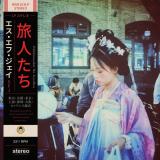
We’re delighted to announce the new SFJ album Tabibito-tachi 旅人達 (The Travellers) on WONDERFULSOUND
SFJ's album under the duo name, due for release at the end of November. As Oscar SHOLTO Robertson and David Bardon's first outing as recording artists in their own right — following years spent producing and playing session for other acts — the campaign is in its early stages, with the album's arrival set to anchor the wider push. A live launch party in London is planned around the LP's end-of-November release date, marking the duo's first live outing to celebrate the record. Radio and press activity is yet to come; the campaign will build from the single's release through to the album launch and live show.
Recorded in Rented apartments and rehearsal rooms on the move last year through Japan, China and London, the album grew out of a constantly shifting creative process.
"We set up wherever we were staying, turning temporary rooms into makeshift studios and capturing ideas as they emerged between journeys."
Magazine Announces 15th Anniversary Remaster of Barnt’s Techno Classic Geffen
Cologne-based record label Magazine celebrates the 15th anniversary of Barnt’s visionary anthem Geffen. One of electronic music's most defining tracks of the 2010s will be reissued in a 2026 remaster edition, marking the first time it receives its own dedicated standalone release.
Originally published on the legendary Cómeme imprint as part of the Various Artists EP The Power Of Now, the track rapidly became a global phenomenon. Looking back, one can hardly imagine Geffen without the 2010s, or, conversely, maybe even electronic music of that era without it. The composition mirrors the expressive possibilities of bedroom producers at the beginning of that decade—an era where artists could launch tracks into the world and have them resonate through their sheer sonic power, without major marketing efforts.
Barnt remembers: "It was one of my earliest tracks. I had just entered art school and didn't own much equipment. My MIDI keyboard only had two octaves. I would always play notes with my right hand while simultaneously shifting through the octaves with my left. This is how the hook line came to life. The production only consisted of seven or eight stems, and barely any equalizers were used during the mixdown. In hindsight, this sparse approach to production probably made it sound different and is why it hits so hard on big sound systems (while sounding unfinished to some on YouTube). At that time, we were doing a small festival on a playground in the center of Cologne. When I played the CDR there, Matias Aguayo demanded it right after. That is how it ended up on Cómeme."
The release comes with two very Magazine-esque reinterpretations from the label's two other co-founders alongside Barnt: a powerful atmospheric club remix by Jens-Uwe Beyer, and Magazine Hallucination, a wild, collaborative, psychedelic mutation by Crato and Beyer.
Jörg Burger, who already mastered the original track, is also responsible for the mastering of this release.
Abacus back in full effect — “The Earthly Pleasures” EP, a deep house gem celebrating 30 years since its original 1996 drop on 83 West.
Jazz-infused grooves, soulful rhythms, timeless vibes — this one still hits heavy.
A true classic from the Abacus catalog, reissued for the heads who know.
Pure deepness, no filler — essential wax.
Feedbacks:
Harri (Sub Club) : nice, will play and support
Hector Romero (Def Mix) : Proper deepness on Sunray - still sounds fresh! and the Bassline on Phonogrammeis a killer. Love it. H
Geir Aspenes (G-Ha (Sunkissed)) : Thank u
Pacific Coliseum (Dublab, Teen Daze, Noire & Blanche) : Moonbeamz is the jam for me; still sounds fresh all these years later!
Fred P : Nice..
Mr. V (Sole Channel Music / Strictly Rhythm / Salter Music / Defected) : Pure dopeness Thanks
Mark Farina : classic! nice.
Jimpster (Freerange) : Abacus doing what he does best and bringing the deep heaters! Loving all three tracks here.
Laurent Garnier : very elegant EP
Lea Lisa (Phonica Records / Folklor Club) : Play them since day one, good to repress for the new generation. Essential
Anthony Collins (Frank & Tony / Scissor & Thread) : great record
Franck Roger (Real Tone Records) : What a greta news to repress this old classic
Prosumer : 30 years later still hot AF
Red Eye (Crash Planet Rec, R.E.A.D., Red/Shift, Lavish Habits, Multipass) : Moonbeamz still out here holding its own!!!!
Felix Dickinson (Futureboogie, Rush Hour, Cynic) : Used to play Moonbeamz a lot when it first came out, nice to have the digis.
DJ Bone (FURTHER) : Crazy Hazy Days is really nice
Terry Farley : sunrays a legend
Antal (Rush Hour) : nice!!
Carista : love this thanks
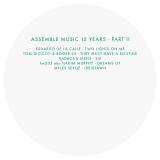
"ASSEMBLE MUSIC 15 YEARS - Part II : Founded in Lisbon in 2011, Assemble Music celebrates its 15th anniversary with a three-part vinyl compilation, bringing together fifteen artists who, in different ways, reflect the label's past, present and future. Released simultaneously in November 2026 and distributed worldwide by Clone Distribution, the three records are less a retrospective than a continuation of what Assemble has been building since the beginning: music with character, made by artists with their own language, away from trends and easy categorisation. Across fifteen years, Assemble has moved freely between house, techno, electro, dub and more experimental forms of electronic music. The catalogue has never been defined by one particular sound, but rather by a certain approach, personal, uncompromising and built to last. Part II begins with Eduardo de la Calle, whose uncompromising approach to techno and electronic music has made him a natural part of Assemble's more recent history. His contribution continues a relationship that has developed through releases and appearances around the label showcases. Tom Dicicco & Roger 23 move into deeper ambient techno territory, bringing together two producers whose work has always pushed beyond the conventional boundaries of house and techno. Radboud Mens is a Dutch sound artist and composer whose work has long explored the space between experimental electronics, minimalism and techno. Active since the early 1990s, his approach is built around repetition, texture and the physical qualities of sound. His contribution to the compilation reflects this perfectly with a deeply minimalist piece, stripped back to its essential elements, where subtle shifts and details gradually shape the track. Chicago's Hakim Murphy represents another long-standing Assemble connection. His relationship with the label goes back years, and his raw, instinctive approach to house and techno embodies much of what Assemble has always looked for in an artist, individuality before formula. Closing the second record, Myles Serge delivers a pure definition of deep techno, hypnotic, atmospheric and deeply immersive, built on subtle movement and timeless Detroit-rooted sensibilities, establishing a new connection with the label."
Claps and stomps through the wreckage of heartbreak. Jangly guitars and jubilant horns disguise the sharp edges of emotional neglect, asymmetrical desire, abandonment, and longing—while the music mirrors the fevered shifting of blame. Never bitter but brutally honest, Thao recounts love’s collapse in a delicate balance of near-obsessive detail and poetic ambiguity. A soundtrack for sad people who dance—even if it’s on the ruins of love. Produced by Tucker Martine, with guest appearances by Andrew Bird, Blitzen Trapper, Horse Feathers, Laura Veirs, and Tune-Yards.
Three decades deep and still as restless as ever. That's the energy Tokyo's Realrockdesign collective bring to this second anniversary split to mark 30 years of cross-disciplinary creativity. DOTT opens things with two tracks crafted from unpredictable basslines and razor-sharp vocal chops that never settle into anything predictable. Then Rio Kawamoto takes over and the shift is immediate: funky breaks laced with tribal samples give way to a heavier, acid-warped second cut that feels rather feral by the end. These tunes map out two different corners of Asia's underground but they share an unrelenting originality and shared allergy to the norm. A fitting way to mark three decades, then.
Perry Louis is a pivotal figure in the UK jazz dance movement. As a dancer and choreographer, producer, DJ, broadcaster, and founder of the internationally respected jazz dance collective JazzCotech Dancers, he is perfectly placed to curate this collection.
Perry has been at the heart of the scene since the early 1980s, from JAFFAS, the Electric Ballroom, Dingwalls, Acid Jazz, Hi Hat, and Messin’ Around, taking its energy and sound as far as Japan, the USA, St. Lucia, India, Canada, and across Europe.
This compilation celebrates 25 years of Shiftless Shuffle, with Perry as its ambassador and driving force. Over the years, he has collaborated with top DJs including Paul Murphy, Gilles Peterson, Snowboy, Colin Curtis, and Shuya Okino, helping shape the UK jazz dance sound into a global phenomenon.
The album blends deep jazz, fusion, Latin, and groove-driven tracks, reflecting both the scene’s rich heritage and its forward momentum.
From the brand-new exclusive track by Kyoto Jazz Massive, Get It Together (Samba Fusion Mix), to Bunny Brunel’s Fickle Funk appearing on vinyl for the very first time, and the hard-hitting Caribbean Fire Dance by Tom Grant, this compilation tells the story of a movement—an underground culture born on UK dancefloors that has now captured a worldwide audience.
Often credited as the father of multi-media theatre, Alwin Nikolais (1910-1993) took complete creative control over his productions - including cutting-edge approaches to lighting and costume that transformed human bodies into shifting sculptural shapes, while also composing wildly innovative electro-acoustic and synth-based audio as accompaniment.
After initially experimenting with musique concrète and tape manipulation (as demonstrated on the 1959 LP Choreosonic Music of the New Dance Theatre of Alwin Nikolais) Nikolais became the first owner of Robert Moog's synthesizer at the Audio Engineering Society convention in New York in late 1964. Relying heavily on the Moog and later the Synclavier synth/sampler, these 21 tracks document Nikolais' highly-prescient compositions across the mid 1960s through to the late 1980s - existing not only as extensions of his other-worldly choreographic productions, but standalone pieces of foundational mid-century American electronic and experimental music.
"Born in Southington, Connecticut in 1910, Nikolais’s early years and early career were in acting, music and puppetry. It was not until the late 1930s that he began his work as dancer/choreographer in Hartford, Connecticut, where he was commissioned by the Avery Memorial Theatre, a part of the Wadsworth Atheneum, to create an evening-length work to the music of Ernst Krenek. Previously his work and study as a pianist-organist found him accompanying silent films. This sort of accompaniment required from the musician not only a playing skill but also a versatility in improvisation, matching movement to sound, and evoking mood to situation.
Nik was drawn initially to dance by his involvement with the percussion scores used by the illustrious early twentieth century German dancer Mary Wigman. In trying to learn more about percussion, he was lured into dance class and thus his career began. His development of music and dance occurred simultaneously. His introduction to the twelve-tone technique opened his mind to the expanding areas of atonal music, and his dealing with music as sound per se. In 1948, after being appointed director of the Henry Street Playhouse in New York, Nikolais formed the Playhouse Dance Company, later known as the Nikolais Dance Theater, and began his aesthetic orientation toward dance as a study of motion. By the 1950s, he had ceased creating literal dances and began his explorations and eventual milieu as an abstractionist.
Sound became an important part of his abstract theatre. For his first dances, which involved his new thinking of dance as both a visual and kinetic art, he used live percussion scores in which he directed his dancers to play instruments of all nature. There was a combination of children’s toy instruments as well as harsh and resonant automobile brake drums, and other pitched auto parts which he also used to accompany classes. Once he installed his own tape recording machines, he quickly used the limited range these instruments provided in a new way, slowing and increasing speed and reversing sound. He also made the sounds adhere to the choreographic structure (not the other way around), thereby giving the dance its independence from the musical phrasing. But the real need remained: the search for new sound. Nik made a sound library, recording noises and percussion and vocal sounds, which the French aptly called musique concrète. Needless to say, he became a master at splicing bits and pieces.
From 1956 to 1962 Nikolais composed eleven major scores for his theatre pieces using such techniques. In 1963, James Seawright, who at the time was assisting Nik in his productions and also working at the Columbia-Princeton Center for Electronic Music, recorded a sound bank for the production Imago (1963). With this material, Nikolais created his first synthesizer score. Imago won the Paris Grand Prix in 1968 and launched the Nikolais Dance Theatre towards its national and primarily international acclaim.
During the same period, Seawright came to Nik and told him of a young man who had invented and constructed a simplified synthesizer and insisted that Nik visit the electronic fair currently being held in New York. Nik did so and met Robert Moog. He was completely taken by the new machine and after making some suggestions to Moog, (which Moog made), Nik bought the inventor’s first machine with the aid of a Guggenheim Fellowship. Moog himself was astonished by what his machine could produce for Nik. This machine was later acquired by the Museum of Musical Instruments at the University of Michigan at Ann Arbor as the first Moog synthesizer. The Synclavier was Nik’s next source of sound and since the mid-1970s remained the major instrument in the Nikolais soundroom.
Alwin Nikolais has been honored and awarded throughout the world. He has received the French Legion of Honor, the Kennedy Center Honors, National Medal of the Arts, two Guggenheim Fellowships, as well as Mellon, Ford, and Rockefeller grants. He has been a recipient of NEA grants since 1966, been awarded five honorary doctorates, all for his remarkable achievements in Dance Theater. His genius has influenced several generations of artists."
—Murray Louis
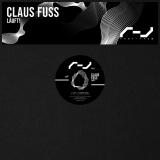
London-based Frankfurt export Claus Fuss brings his vibrant creativity to Rant & Rave with the Läuft! EP. Claus’ output includes a whole bunch of solo productions and collaborative projects with OneOneOne and LANDER, as well as co-productions with UK legends such as Zed Bias, Emerald a.o. His analogue-produced cuts have been signed to labels such as Khemia, Crème Organization, Neighbourhood, Heras and Kaizen. With his arrival on Rant & Rave, Claus drops four scintillating examples of rough and ready techno, including a collab with label head MAEDON. The EP kicks off with the title track ‘Läuft!’ (Running! in English), a mesmerising cut with a repetitive vocal snippet that forms part of the main riff. The beats are exquisitely programmed, and Claus keeps that track progressing, shifting and evolving masterfully.
Subtle layers add depth, while the main thrust of ‘Läuft!’ remains potent and captivating throughout. Next up is ‘Schwarze Löcher’ (Black Holes). As the title suggests, this one is dark and deep, sucking you into the sonic void. Elastic kick drums propel this one forward, as a rhythmically peppered, resonance shifting riff rises and falls. Claus gradually ramps up the intensity until we reach a breakdown, where that riff really works its magic. When the drums are reintroduced, it’s a powerful moment. Then we have ‘TopUp’, a lively, upbeat cut with contagious energy. Claus hooks the listener with an irresistible rhythmic structure, the bassline is especially addictive. Fast paced, dynamic drum programming keeps this one moving at a frenetic pace. On the surface it’s deceptively simple, but attentive listeners will pick up on all the details that make this one a compelling listening (and dancing) experience. Finally, we have ‘Zwanzig’ (Twenty), a heady collaboration with Rant & Rave boss MAEDON. This one brings together MAEDON’s earworm melodies and Claus’ penchant for hypnotic grooves. An insistent groove gives this cut a feel of urgency, while a relentless riff and punchy beats aim squarely at mind and body. A masterclass in dance floor engagement and connection.
Al Wahem (“The Illusion”) is the new full-length release by PRAED, the Swiss–Lebanese duo of Raed Yassin and Paed Conca. Recorded between Beirut and Berlin, the album returns to the group’s central aesthetic: a rhythm-driven weave of Egyptian shaabi, electronics, improvisation and the gritty pulse of street-level sound. Nearly twenty years into the project, PRAED have distilled their approach into four pieces that subtly shift the listener’s bearings, reordering grooves and fragments until familiar elements take on new identities.
The twenty-minute title track sets the tone. A tightly interlocking two-drum foundation from Pascal Semerdjian and Ayman Zebdawi shapes a structure that expands steadily: synth figures branch outward, clarinet and bass lines act as internal guideposts, and brief vocal calls from Yassin and guest singer Mayssa Jallad sit inside the texture rather than leading it. PRAED’s shaabi keyboard language is present, but the duo stretch it outward, building tension and movement through patient accumulation.
“Al Hathayan,” at 4:46, tightens the focus. Conca’s clarinet moves between melodic arcs and clipped rhythmic gestures, threading through electronic loops that surface and disappear. Zebdawi’s percussion adds a raw, tactile quality, placing acoustic patterns and electronics in direct conversation. The piece acts as a bridge between the album’s two long-form compositions.
Side B begins with “Al Maraya,” a thirteen-minute piece that relies on electronic, bass and clarinet interplay. The atmosphere nods to the breadth of PRAED Orchestra!, but remains anchored in the duo’s rhythmic foundations. Rather than building mass, the layering creates a sense of depth, as if new spaces were opening inside the groove.
The album closes with “Assarab,” featuring keyboardist Amr Said. Semerdjian and Zebdawi again form a dual percussive axis, while synths hover between melody and pulse, and themes recur in widening circles rather than building vertically. The porous boundary between electronic and acoustic sources — processed clarinet mistaken for a sequencer, rhythmic figures springing from live drums — is where the album’s theme of “illusion” shows itself most clearly.
Al Wahem follows a long arc: early releases on Annihaya, a key appearance on Ruptured Sessions Vol. 5 – Live at Radio Lebanon (2013), later albums on Akuphone, and the large-scale PRAED Orchestra! documented on Morphine Records. This new Ruptured/Annihaya co-release brings the duo back to a concentrated format, reorganizing their familiar materials with renewed clarity and intent.