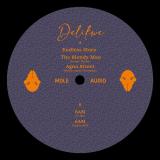
Suburban Architecture continue their series of sought after 4 track EP releases with their 7th offering, 'Vivid'. This latest release once again draws heavily on influences from the jazzier, atmospheric strains of mid to late 90s Drum & Bass. Putting a contemporary spin on sounds rooted in this golden era of dance music, this new 4 track collection spans sounds from jazzy atmospherics to slightly harder edged sonics.
Opening track 'Vivid' sets the mood with atmosphere by the pound. Deep, melancholy keys drowned in reverb underpin cycling chimes and haunting vocal samples before giving way to a tearing drum track. 'Waiting' meanwhile is all about layers and texture. Lush textured vocals marry with atmospheric pads, shimmering arps and flutes before releasing into punchy, intricately programmed drums.
Over on the flip 'After All' is led by a powerful vocal refrain which carries lush pad work into crashing breakbeats and a bassline that delivers matching energy. 'Rising' closes out the release with a jazzy roller that continually shifts gears, from horn-laden atmospherics and complex drum arrangements to rowsing vocals and strings.
Buscar:shift work
After two decades, the indietronic veteran returns with a powerful sonic reflection on today’s sociopolitical climate and a poignant reminder of music’s enduring ability to heal, unite, and inspire. Blending experimental electronics with krautrock sensibilities, the album thrives on spontaneity, collaboration, and the beauty of ‘happy accidents’.
While many of Nitrada’s sonic trademarks remain — intricate, rickety beats; enigmatic field recordings; and gut-punching string melodies — EVERYTHING THAT IS NOT COUNTED WILL BE LOST marks a shift in approach. Experimenting with different constellations of musical machines, Christophe Stoll, the mind behind Nitrada, recorded hours of improvisations (some shared on his Instagram). These sketches became the raw material for more elaborate, carefully structured arrangements.
True to his collaborative spirit, Stoll brought in like-minded artists to shape the final album: Jan Sturm (aka STURM) lends his touch to the shimmering FRAGMENTS OF LIGHT. The euphoric dystopian WE DANCE IN THE CHAOS features Landobe (Marco Heinle) and Patrick Siegfried Zimmer on vocals. Luca di Mira (of Giardini di Mirò fame) contributes synths, cello, and delicate textures to some tracks, while Johannes Schardt’s guitar work brings a visceral, post-rock edge to NO HYMN FOR NOBODY and IL ROMANTICISMO DELL’APOCALISSE, nodding to Stoll’s roots in punk and indie.
“The goal is to take listeners on a journey through different timbres and sonic landscapes — a collage of diverse ideas and inspirations,” says Stoll about his album which effortlessly juxtaposes experimental ambient soundscapes, heavy jagged guitars, and minimal techno pulses, making them feel as though they’ve always belonged together. Because, in the end, they do – all part of the shared vocabulary of our universal language: MUSIC.
- Sol Solet
- Es Fa Llarg Es Fa Llarg Esperar
- Cuatre Barres Blanc I Negre
- Brian A Clown
- Lluna Robada
- Maria
- Occident (Recepte De Cuina)
- Lluna Estimada
- Estrella De La Fortuna
Once again, Riba left everyone bewildered with a work that, on its own, gave early substance to what would eventually be known as roc català, of which Riba may well have been its most authentic representative. The album was recorded in the winter of 1975 with the help of the same group of musicians who had accompanied him a few months earlier at a concert at Zeleste to debut new songs: a mix of Valencian musicians from bands like Paranoia Dea and guitarist Eduardo Bort's group. "Electròccid àccid alquimístic xoc" marks a shift in Pau Riba's sound-now electrified and fully embracing rock with nods to Lou Reed, Ray Davies, and Kevin Ayers, but the core of "Electròccid_" is defined by Riba's own authorship. With lyrics that veer from poetic to absurdly ironic, Riba explores themes like the moon, the stars, death, love, women, the devil, and the bourgeoisie-fueling the originality that made him such a unique artist. It's striking how naturally and effortlessly Riba incorporated the Catalan language into the rock idiom-and vice versa. First vinyl reissue in over four decades!
With solid training as a classical musician, Sophie Agnel took a close interest in modern jazz before committing in the early 90s to the shifting, deliciously uncertain ground of free improvisation, thanks to her fascination for the powers of expression displayed by a few great keyboard-heretics such as Keith Tippett, Fred Van Hove or Christine Wodrascka. She began reworking the prepared piano techniques imagined by John Cage and transformed her instrument into a sort of extended piano.
Coming from a Punk music background Joke Lanz started in the mid 80s to play Experimental- and Noise music. Best known for his internationally acclaimed project Sudden Infant, Lanz is presenting his work since 30 years all over the world. Born in Switzerland and currently operating out of Berlin, he is one of the most prolific and profound artists working in the border zones where performance and body art meet Improvisation and Noise.
Agnel and Lanz have performed stunning live shows as a duo, now their debut album is coming out on Klanggalerie. Turntables and piano, a unique combination that is a lot of fun!
Civilistjävel! x Mayssa Jallad’s ‘Marjaa: The Battle of the Hotels (Versions)’ is a radical response to Mayssa Jallad’s 2023 original LP, a lyrical account of epochal events in Beirut at the dawn of Lebanon's civil war. ‘…(Versions)’ sees Civilistjävel! (aka Swedish producer Tomas Bodén) apply a stripped, dub methodology to Mayssa's rich stems, refracting the Arabic source through the hazy prism of Northern European electronica. Retaining ‘Marjaa…’s deep spatial framing and vaporous, shifting nature, traces are lifted and set down in a new landscape: a ghost of a ghost. Informed by Tomas' singular strand of ambient, minimalist, dub techno, ‘… (Versions)’ recalls the reductive, shimmering pulse of pioneering Berlin-based practitioners Basic Channel/Chain Reaction, but with the parameters stretched into the ether. Where versions typically focus on a rhythm, here the anchor is the tone and texture of Mayssa’s voice, around which a new world has been constructed. Disembodied and liminal, it conjures an eerie panorama that feels like a postscript to the original, further emphasizing the geopolitical events that have had such devastating effect in Mayssa’s homeland of Lebanon since that record’s release. ‘Marjaa…’ (tr. ‘reference’) combined Mayssa Jallad’s two main vocations: music and urban research/architectural history. The album was co-written with Fadi Tabbal and based on Mayssa's Historic Preservation master's thesis (‘Beirut’s Civil War Hotel District: Preserving the World’s First High-Rise Urban Battlefield’). The thesis examined a 5-month conflict that took place within Beirut's skyscraper-laden luxury hotel district of Minet El Husn near the start of the Lebanese Civil War. Addressing a post-war generation who have never been taught this difficult history, ‘Marjaa…’ was an attempt to process trauma, and “a call to protest for the renewal, rather than the recycling of the political class that once destroyed the country and holds us, to this day, hostage of its violence.” Often perceived as a mysterious, shadowy presence, Civilistjävel! has come increasingly to the fore in recent years through a consistently dazzling stream of records, released both anonymously and via Fergus Jones’ FELT imprint, often appearing with scant information and tracks for the most part untitled. Having featured tracks from ‘Marjaa…’ on mixes, and included the album in his picks of 2023, in early 2024 Tomas asked Mayssa to provide vocals for a track on his album ‘Brödföda’. Mayssa remembers, “Tomas asked me to choose one of the tracks he was working on. I was in Boston at the time, so I took a walk and chose a track. I wrote the lyrics at the public park, wondering if I was the only one around that was losing sleep over the genocide in Palestine and the war in South Lebanon. I went back to the apartment and recorded the vocals on my phone, while listening to the track on headphones. Tomas reworked it with the voice and sent it back. I liked it immediately.” Despite the geographical distance from Beirut to Uppsala, Sweden, where Tomas resides, Mayssa’s contribution sounds very much at home in Civilistjävel!’s atmospheric, contemplative sound-world. Tomas’ request was reciprocated by Mayssa soon after, resulting in the spectral, glassy ambience of ‘Etel, Kharita (Version)’. This was followed by an invitation to work on more tracks, which Tomas immediately embraced, intensively jamming out versions live to two-track tape in downtime between travelling. If not entirely dissimilar to his regular working practice, the immediacy of it was unusual. Much was improvised live with just a keyboard (not tethered to a grid), and a restricted set-up that largely forbade later edits - only the rhythm tracks are programmed. A sharp conceptual thinker and composer, Tomas takes creative liberties with Mayssa’s songs in a way that is deeply felt and sympathetically aligned, whilst unashamedly outside of the original context of the record. The voice is leaned into as an instrument, without the clear, specific details of language, and this axis provides an uncertain, amorphous footing - structure is often suggested or hinted at, before disappearing or collapsing into fog, and folding back into the message within the song. A somewhat unprecedented source for an album of versions, even those familiar with ‘Marjaa: The Battle of the Hotels’ may at points struggle to hear the songs these versions are rebuilt from, despite the vocal narratives remaining virtually intact. The light has shifted; eroded buildings are foregrounded; fragments of memories appear in chiaroscuro. Signs and signifiers have been replaced. Shorn of the original's warm guitar, ‘Baynana (Version)’ feels like an ominous visitation, the sun no longer visible. ‘Holiday Inn (March 21 to 29) (Version)’ is a molten, clattering invocation. The beat-less tracks nod towards the cold, otherworldly sound-scaping of late '90s isolationism. More propulsive and embodied, ‘Holiday Inn (January to March) (Version)’ and ‘Kharita (Dub)’ are strobing, iridescent techno - lithe, shifting and mutating with almost implausible finesse. A stunning addition to Civilistjävel!’s growing catalogue, ‘…(Versions)’ is a luminous counterpoint to ‘Marjaa…’, and a welcome reminder of how incredible that record remains.
Matching vivid world-building with a full house of kinetic rhythms, Polygonia delivers her latest album to Dekmantel as an invitation to experience 12 different dream scenarios.
As Polygonia, Munich-based Lindsey Wang has established herself as a constantly inventive, omnipresent operator within the modern electronic landscape, exploring varying shades of ambient and deep techno while increasingly spreading into downtempo and leftfield electronica with a playful yet mysterious spirit.
Dream Horizons is an instructive title — Wang approached her new album as a collection of different dream scenarios, with all the creative freedom the concept implies. From oceanic calm to artful propulsion, she was free to shift gears from track to track while relishing the strange and beautiful atmospheres her inspiration pointed towards. A multi-instrumentalist as well as a producer, Wang recorded her own voice, saxophone, flute, violin and percussion to inject organic, human vibrancy into the surreal spaces she was shaping out, capturing the uncanny sensation of alien and familiar that hangs over the places we visit when we sleep.
There are pointedly direct techno workouts on the album, from deft beatdown 'Soul Reflections' to shimmering ear worm 'Set Me Free', and 'Twisted Colours' relishes shifting blocks of flute around a sprightly, footwork-tickled framework. Elsewhere, there's space for softer expressions on pearlescent opus 'Crystal Valley' while elastic rhythms and tactile textures slither around at a lower tempo on 'Flakes Flying Upwards'. In between, Wang plays with fractured beat patterns and sharply sculpted sonic matter with a staggering level of detail and intention. 'Gate To Amygdala' is the perfect example of the bold scope of her expression — the midpoint track thrives on nervous tension and a dislocated sense of momentum without anything like a conventional techno trope. 'Mindfunk' equally pushes and pulls at sensory perception with an off-kilter, awkwardly looped synth phrase that relishes the opportunity to skew dance music conventions within the flexible rules of the dream world.
For all the smart production and knowingly experimental approaches that form the basis of the album's sound, it's also a record charged with the full range of emotions you might expect to experience on a break away from consciousness. Whether it's the melancholic impressions that smudge into incidental pauses on 'Metaphysical Scribbles' or the mantra-like breath and sax combination of 'Essential Breath' that closes the record, Polygonia's heart bursts out of the album's vibrant form as brilliantly as her exacting, studio-synced mind.
Glasgow-based Effective Dreaming—the solo project of Scottish artist and musician Iain Ross—unveils Dream Catalogue Vol. 1, arriving June 21st, 2025 (Summer Solstice) via Swedish experimental label Fluere Tapes.
Issued as a limited run of 50 cassettes, each adorned with hand-worked, corroded copper sheet inserts and labels, Dream Catalogue Vol. 1 feels less like a release and more like an unearthed artefact: weathered, humming, quietly alive. The materials echo the music’s exploration of fragile impermanence and erosion: oxidised metal, magnetic tape, hiss, hum. A tactile world where sound wears its decay like a patina.
Across its length, the album unfolds in a series of flickering vignettes—drifting, dissolving, reappearing. Shaped by synths, environmental recordings, tape loops, and soft drones, the pieces move like glints of light on water—never fixed, always in motion. Achingly beautiful melodies rise and vanish, tracing fragile pathways through a landscape of shifting sensations. Some moments glow with a gentle warmth, like sunlit glass or breath on a fogged mirror. Others slip into shadow: slow, submerged passages feel closer to memory than music. The album feels loose and weightless, yet dense with feeling—a presence more sensed than held.
There is no fixed narrative here—only fragments and artefacts, half-remembered places, echoes of dreams. Each track hovers just at the edge of clarity, evoking not specific stories, but moods, textures, and the quiet drift of time. It’s music that feels both intimate and remote, like overhearing a distant signal only you can understand.
The name Effective Dreaming is drawn from Ursula K. Le Guin’s The Lathe of Heaven, where a dreamer's visions alter the very fabric of reality—past and present reshaped, histories rewritten, unnoticed by all but the dreamer himself. In a similar spirit, Ross’s music inhabits a space where memory, perception, and matter blur—where each sound carries the residue of something once real, now transformed and dissolving as one drifts through the seams of the world.
Dream Catalogue Vol. 1 is a meditation on texture, transience, and the quiet resonance of what slips away.
For listeners of: Wave Temples, Dolphins Into the Future, Guenther Schlienz"
- Floating At Distance
- Still Quiet
- Fall Of Illusions
- Will You Follow
- When All Is Gone
- Can You See Me Now
- Will You Find A Way
Introducing "Still Quiet", the latest sonic exploration from The Soundbyte, the innovative project of guitarist and composer Trond Engum from the legendary The 3rd and The Mortal. The album Still Quiet transcends musical boundaries, seamlessly blending Norwegian folk traditions with electroacoustic textures and metal influences, creating a sound that defies conventional categorization. Central to the experience are Trond Engum's distinctive guitar style and Rune Hoemsnes' (The 3rd and The Mortal, Manes) signature drumming. They are joined by a carefully chosen ensemble of renowned musicians whose contributions complement the captivating vocal performances of Kirsti Huke and Andreas Elvenes. The album weaves together unsettling rhythms, innovative guitar work, haunting soundscapes, and strong melodic lines-each track forming part of a greater whole. The music captures the fragile tension between stability and uncertainty, shifting effortlessly from quiet melancholy to uncompromising rawness and intensity. Still Quiet invites listeners into a moving and immersive sonic experience, challenging musical norms and rewarding those who revisit it again and again. With this album, The Soundbyte deliver their most compelling and ambitious work yet.
The debut release on Caricia Records sees longtime collaborators VIL and CRAVO refine the language they've developed through years of joint work, both individually and as members of the Hayes collective. Between them, their output on labels like Monnom Black, Klockworks, Self Reflektion and the aforementioned Hayes Collective has consistently balanced precision with character, and this first chapter under their new imprint is no exception.
Opening with So Right, the record sets a distinct tone, with rolling percussion and a hypnotic vocal line threading through the mix with restraint and control. 420% FODA leans into classic swing and texture, tightly looped and built for movement without ever overreaching. On the B-side, CRAVO offers Future Detroit, a stripped-back piece with room to breathe, subtle in its shifts but firm in its intent. VIL rounds off the EP with Hard to Find, a playful closer that keeps things buoyant and dynamic, pushing forward without losing its shape.
Caricia 001 is about clarity of purpose. No filler, no theatrics, just four tracks that speak for themselves.
- Shiva Interfere (9:10)
- Ion Storm (4:20)
- Magic (1:35)
- Regno Potiri (10:20)
- Carpet Bombing (2:25)
- Final Conquest (5:59)
- Logic (1:01)
- Sonar Bliss (7:39)
- Completion (6:32)
- Outro (1:30)
To fans of black metal, Dødheimsgard need no introduction, being one of the great purveyors of the Norwegian Black Metal creative evolution.
The band was formed in 1994 by Aldrahn (Thorns) and Vicotnik (Ved Buens Ende). The early incarnation was that of a raw and at often melodic black metal band, with their debut album also featuring Fenriz of Darkthrone on bass. In recent years, Dodheimsgard has become known for its eclectic musical ventures and poignant mood shifts, with a less chaotic, more considered approach compared to their earliest works. Following the 'Kronet til Konge' and 'Monumental Possession' opuses, there was a shift in direction as demonstrated on 1998's 'Satanic Art' EP and by Dødheimsgard's third album, 666 International, Vicotnik had taken over a lot of the writing duties, with DHG's style becoming more technical yet ferocious black metal, with strong experimental ideas and industrial elements.
Vicotnik's riffs were inspired by cult bands such as Thorns and perfectly entwined with Aldrahn's delightfully twisted lyrics and immense vocals to create something truly unique. In its 666 International incarnation, DHG (as they were later to be known) featured a line- up of well- respected Norwegian musicians including Czral (Aura Noir, Ved Buens Ends, Virus), Apollyon (Aura Noir, Immortal), plus Mr Magic Logic (Fleurety) on keyboards, as the album was constructed over a period of time. All in all, 666 International is rightly regarded as a highly influential masterpiece of avant-garde metal by many since its release in 1999.
Hidden Sequence returns, this time to kick off a new label Magistrate, and hot on the heels of their quick-to-sell out 'Silent Roots' last year. This fresh EP seamlessly bridges classic 70s Jamaican dub with modern, bass-heavy and dubwise delights, starting with 'Isms & Schisms'. The horns are brilliantly inviting as are the low ends which have been well worked on a vast desk and come packed with echo and effects. 'Magistrates Dub' is an immediately infectious skank that shifts into a deep, dub-heavy exploration and unites past and present dub influences.
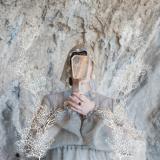
Iori Wakasa, one of the leading lights of the Tokyo club scene is set to release his second 12” from his own label, “BOTANICA” which he established to express his own primal sensibilities.
The Concept of the Label:
Tokyo-based DJ/producer, Iori Wakasa launched BOTANICA to assert that his label’s activities in itself is art and a palette for his creative, self-expression. It is also based on 2 main concepts: To integrate the sensibilities of both "nature" and “artificial and human activities" and to “contribute music that presents a scenery from the listener's point of view”.
For Iori, his label is an interface of some sort and is also a symbol of his own personal musical expectations.
Iori produced these 2 new tracks during the recent pandemic when the world was under severe restrictions. While taking into account and focusing on both 'his current outlook' and returning to “the roots of his own production aesthetic', he strived to produce something that would substitute it and as a result, created these two new tracks and the artwork that are presented in the label's second release, 'The Party Is Here EP’.
In this EP, he also attempts to express the sentiment that 'the experience that music provides to people is invaluably infinite' and that 'if you truly want to go out and party, it will happen, then and there!’.
About the tracks:
For the track, ’Bedroom Disco’, Iori tries to express his memories of 'a virtual night of partying’ that he experienced during Covid and created this track while being ‘in a state of wanting to break free from oppression’ and reminiscing about a party in a bedroom at night.
He also wanted to express the idea that no matter what situation or environment you are in, you can go to anywhere you want if you really want to and with that sentiment, he wanted to express a scenerio that transcends it and at the same time, he also wanted to convey his feelings of nostalgia for the past, rebellion against the environment and his feelings of desire.
For this track, Iori did not use any sampled voices or field recordings and created it by layering pure sonic imagery repeatedly folded and desolved which triggered the creation of new developments while imagining the thought that “a party actually begins when you step out” and the swaying of emotions that take place from it.
’Tropica' is a track that Iori produced by heavily mixing a utopian feel that people have inside of them with his own sensuality and is designed to ‘guide you to a tropical seaside', regardless of what the listener may have experienced in the past.
Unlike 'Bedroom Disco', this track uses a variety of samples and envisages "many elements intertwining with each other, working together to create this sound structure”. And it also expresses that equal opportunity exists for anyone who wants to visit an imaginary tropical land as well as the hope that even a brief break of the mind can be created by yourself and those close to you, if one pursues it.
About the artwork:
The cover of this new EP, the concept text 'Is your window open?', and the label's logo was designed by illustrator, HILOSHI SHINOZAKI who also worked on the first release, BOTANICA EP. For over 10 years, he has been a regular visitor of Hawaii, where he tries to cultivate his "true way of life” in his art.
And, artwork for the cover and label design of the EP is complemented by the label design and art direction of the record by hiro, a graphic designer who has been his partner and best friend since the first Botanica EP.
hiro expresses Bedroom Disco track's shifting compositional changes and its complex series of sound waves by creating an intricately multi-layered design that is a perfect representation of the way he sees it.
Also initially inspired by the fluctuations of waves, islands, sun, rays, sky and time, the artwork of Tropica also found inspiration from a drawing that made by Iori’s daughter who drew a picture of a scenery when she listened to the track. So through this design, one of the label’s concept of “the label’s activities is in itself art” was realised via the surprising contribution coming from his own family.
- Opening
- Sapphire
- Zephyrs I
- Nward Landscapes
- A Dark & Graceful Wilderness
- Spirit Masked Wolf
- Nights Tender Reckoning
- Mother Destroyer
- Concealed Descent
- Unworld
- Phoebus
HEXVESSEL erkunden auf ihrem epischen siebten Album "Nocturne" liminale Räume, z.B. zwischen Licht und Dunkelheit sowie Natur und Einsamkeit. Die sich kontinuierlich wandelnde finnische Band besinnt sich wieder auf ihre Wurzeln im Folk und im psychedelischen Rock, indem sie akustische Zwischenspiele, kosmische Synthesizer und geisterhafte Pianoklänge kunstvoll mit den frostgesponnenen Fäden ihres Black Metal Geflechts verwebt. "Nocturne" klingt sowohl vertraut als auch unverhohlen progressiv, da HEXVESSEL ihre eigene Tradition mit einer frischen Neuerfindung ihres charakteristischen Sounds vermischen. Der Keim für dieses Meisterwerk wurde durch die Aufführung eines Auftragswerks beim Roadburn Festival 2024 gesetzt, das ursprünglich den Titel "Music for Gloaming: A Nocturne" trug. Mit diesem Album nimmt das Projekt eine ausgearbeitete physische Gestalt an. Dieses opus magnum verbindet den rauen Geist von Quorthons Black Metal mit dem komplexen Minimalismus zeitgenössischer Komponisten wie Philip Glass, György Ligeti und Avro Pärt. Den eklektischen Charakter von "Nocturne" unterstreichen ausgewählte Gastauftritte wie der ätherische Gesang von Saara Nevalainen oder die harschen Stimmen der Avantgarde Black Metal Vorreiter Yusaf Vicotnik Parvez (DHG/DØDHEIMSGARD) und ORANSSI PAZUZUs Juho Vanhanen. HEXVESSEL stammen zwar aus dem finnischen Tampere, die Band wurde aber vom englischen Sänger und Songwriter Kvohst alias Mat McNerney gegründet, nachdem er im Jahr 2009 in das nordische Land gezogen war. In vielerlei Hinsicht spiegeln HEXVESSEL die Natur ihres Gründers wider. Der Sänger und Songwriter war schon in vielen erfolgreichen Gruppen und Projekten aktiv, deren Spektrum von der britischen Black Metal Band CODE über einen Abstecher bei den norwegischen Legenden DHG bis hin zu den Rock-Shootingstars BEASTMILK reicht, die er später mit GRAVE PLEASURES fortsetzte. Mit "Nocturne" laden HEXVESSEL alle dunklen Seelen der Erde zu einem transzendentalen Nachtritual ein, das unter anderem die Klangvisionen von DARKTHRONE, TANGERINE DREAM und Philip Glass aus der toten Vergangenheit erweckt und mit neuem Leben erfüllt.
With their seventh full-length "Nocturne", HEXVESSEL explore the liminal spaces between light and darkness, nature and solitude on an epic album. The ever evolving and shifting Finnish band has reawakened their treasured roots in folk music and psychedelic rock as they artfully weave acoustic interludes, cosmic synths, and spectral piano into the frost-spun threads on their black metal loom. "Nocturne" sounds both familiar and fearlessly progressive as echoes of tradition entwine with a fresh reinvention of their characteristic sound. The seed of this masterpiece was sown by the performance of a commissioned work at Roadburn Festival 2024 that was originally entitled: "Music for Gloaming: A Nocturne". With this album, it arrives fully fleshed in recorded form. This opus magnum blends the raw spirit of Quorthon's black metal with the intricate minimalism of contemporary composers such as Philip Glass, György Ligeti, and Avro Pärt. Its eclectic nature is elevated and underlined by select guest performances, including the vocals of Saara Nevalainen, as well as the avant-garde black metal luminaries Yusaf Vicotnik Parvez (DHG/DØDHEIMSGARD), and ORANSSI PAZUZU's Juho Vanhanen. While HEXVESSEL are based in Tampere, Finland, they were founded by English singer & songwriter Kvohst aka Mat McNerney after he moved to the country in 2009. In many ways, HEXVESSEL reflect their founder. The vocalist and songwriter has instigated and been involved in various bands ranging from UK black metal act CODE, a stint in Norwegian legends DØDHEIMSGARD, and to rock shooting stars BEASTMILK – later 'continued' with GRAVE PLEASURES to name but a few of his success stories. With "Nocturne", HEXVESSEL invite all souls on earth to a transcendental night ritual that is imbued with DARKTHRONE, TANGERINE DREAM, Philip Glass, and sounds unearthed from the dead past, now instilled with new life.
- Heavy Paws On The Purple Floor
- Not Here, Not Near
- Eves Apple
- Polar Bear Standing And Ready
- Urban Kilt
- Snow
- Underneath You Can See Too Much
- The Shapes In The Clouds Aren't Always Happy
- New Dark Park
- Wild Horses
Polar Bear's groundbreaking debut 'Dim Lit' (2004) is being released on vinyl for the first time, marking over two decades since its arrival reshaped the UK jazz landscape
Led by drummer and composer Seb Rochford, the album introduced a band whose fearless approach to improvisation, rhythm, and texture would go on to influence a generation. Blending raw energy with intricate composition, 'Dim Lit' set the blueprint for Polar Bear's signature sound - expansive, unpredictable, and entirely their own.
From the outset, 'Dim Lit' positioned Polar Bear as one of the most forward-thinking groups of their time. The album bridged jazz, electronic elements, and avant- garde sensibilities, carving out a new space in the contemporary music scene. The interplay between Rochford, saxophonists Pete Wareham and Mark Lockheart, bassist Tom Herbert, and electronics specialist Leafcutter John created a dynamic, shape-shifting sound that blurred genre boundaries. With its hypnotic grooves, explosive improvisation, and unexpected sonic detours, 'Dim Lit' remains a vital document of a band redefining what jazz could be.
This first- ever vinyl release offers a new perspective on 'Dim Lit's deep, layered soundscapes, giving longtime fans and new listeners alike the chance to experience the album in a fresh, immersive format. Edition Records now represents all digital rights to the Polar Bear catalogue, ensuring the band's visionary work continues to reach audiences worldwide.
Shell Company & Older Brother tap into the Mancunian continuum to deliver heavy sounds for heavy times on 'Shards', their debut release on Numbers.
Born from voice notes sent between Manchester, London and Lisbon, the release took shape remotely before being recorded inside Manchester’s The White Hotel, then refined in the sonic labs of Numbers and La Chunky in Glasgow.
Set across one night, 'Shards' is the fragments of the never ending process of breakdown and placing pieces back together. Along four tracks, the voices of Shell Company (Rosabella Allen) and Older Brother begin far apart, then argue, reflect and collide, trying to find the ground they stand on, with the music laid by brothers Rob and Chris Banks. The two voices work both together and against each other, rendering images that could only exist in limbo: running taps, cans on the floor, and crumbling walls.
Shell Company & Older Brother say of the release —
“Shards is a scream that sings softly. A record that shifts between confusion and sense, hopelessness and hope. Despite moments of intense and perfect connection, the shards rarely fit. Shards is a record not about giving up, but giving in. A recording of the victory that comes from surrendering to float, all because 'it will all make sense one day'. Shards is about love that begins and ends with broken pieces."
In Marking A Boundary With The Turning Point, Ard Bit and Radboud Mens explore the tension between stasis and movement. Operating within the realm of drone and electroacoustic music, they construct a sonic landscape where sustained tones and microscopic events constantly shape and reshape each other. What initially appears static reveals itself to be rich with detail: tiny acoustic shifts breathe life into apparent stillness, inviting focused and attentive listening. The album emerged from a process where sound research, improvisation, and sound design merge. Self-built instruments, the search for timbre and texture, and recordings of the learning process itself form the foundation of these compositions. Rather than following a traditional musical structure, the result is a sonic field in which the minimal continually transforms, depending on the listener's perspective. Ard Bit (Ard Janssen) is a composer, sound artist, and field recordist based in Rotterdam, trained at the Institute of Sonology in The Hague. His work moves between improvisation and system-based composition, exploring the space between ambient, drone, and sound art. Radboud Mens is a sound artist with a decades-long practice grounded in minimalism, acoustic subtlety, and physical resonance. His work focuses on the perception of sound, the materiality of audio, and the creation of spatial listening experiences. Together, they present a layered and handcrafted album that doesn't narrate but questions. Marking A Boundary With The Turning Point is not a boundary, it's an invitation to listen beyond expectation.
- A1: Aseurai
- A2: Not A Necessity
- A3: Mandarin Tree
- A4: Get Up
- A5: Playground Song Side
- B1: Fading Star
- B2: Static
- B3: Drifting
- B4: Blue Butterfly
- B5: Goodnight
o encapsulate the themes. “Aseurai means around you in the atmosphere, hard to reach, fading away,” Choi says. “It’s a poetic expression. You wouldn’t say it in normal conversation, but I like that.”
Following the four-piece band’s 2024 self-titled EP, Aseurai adds disco and city-pop influences while staying true to dream-pop roots. While Phoebe Rings was originally a solo project of Choi’s, Aseurai marks a shift with contributing songwriting credits from the whole band. The four musicians cut their teeth working on other notable NZ projects such as Princess Chelsea, Fazerdaze, Tiny Ruins, AC Freazy,, Sea Views and Lucky Boy.
With a more ambitious collection of instruments, Choi says this album heralds the start of true collaboration: “I feel more precious about this LP because it includes everyone’s gems.” Guitar/synthesist Simeon Kavanagh-Vincent spearheads unexpected arrangements, with bold fuzzy guitar textures, to spice up the mix. Benjamin Locke adds maturity to the lyrics, paired with perfectionist bass lines. And drummer Alex Freer’s slick production soars Aseurai to diverse and synergetic heights. The broth is richer with more cooks in the kitchen, and the brewing of textures creates a distinct ‘Phoebe Rings’ sound.
If the EP was spacey, then Aseurai settles on earth, rooted in tangible moments. “Without getting too gloomy, it’s a weird world out there. A lot has changed in the world since the EP came out,” says Kavanagh-Vincent on this transformation. The album delves into hope and longing across all possibilities, and this exploration of holding on and letting go is organically threaded throughout. Across ten songs, Phoebe Ring’s storytelling ranges from tongue-in-cheek musings on gentrification to tender autobiographical memories.
아스라이 흩어지는 하늘의 별이 (May the falling light of faraway stars) / 그대의 손 끝에 닿아 숨이 돼주길 (Reach your fingertips and let you breathe),” Choi sings in the title track “Aseurai.” Imagined as a breezy track inspired by a 90’s Korean pop band, Choi discovered, when fleshing out the lyrics, that it was about yearning for people she couldn’t see anymore. In the old-school disco track, “Get Up,” Locke addresses struggles with mental health in a Matrix-inspired driven mantra: ‘Just get up / Just get up.’ The groove persists with ‘Fading Star,” a quirky ballad filled with steely jazz/rock guitar solos dedicated to a suburban aging musician. Kavanagh-Vincent’s lead single ‘Drifting’ is an unrequited celestial love song with bouncing bass and playful synths.
The band wrote, produced, and engineered the album across studios and band members’ homes in 2023/2024 in Tāmaki Makaurau (Auckland). It features mixing/mix production by local legend Jeremy Toy (Bic Runga, Aaradnha, Princess Chelsea) and mastering by Kelly Hibbert. With Aseurai, Phoebe Rings mark out a brilliant new constellation in their sky, bringing their individual compositions to the fore whilst seamlessly threading them into one celestial body - launching skyward on Carpark Records in June 2025.
- In Another Way
- A Piece Of Mirror
- We Go Where We're Not Wanted
- Your Dream
- Good Memory
- Scissors
- Heavy Breathing
- Her Alphabet
- I Came Here To Harm You
- A Beast
"Evil is very real and having its way, and love is also real and hasn't lost yet." That's how Activity's Travis Johnson described their third album, A Thousand Years In Another Way. A friend had asked why these songs seemed to capture the strange, heavy feeling of being alive right now better than anything else_and that was his answer. The album doesn't try to explain this time we're living in; it simply feels like it. It's a mix of violence, alienation, and tenderness_reflecting the surreal, dreamlike (or nightmarish) rhythm of daily life. Across ten songs, Activity blends experimental rock, electronics, and found sounds with a sense of paranoia, flickers of hope, and a warped reality. Working with producer Jeff Berner (of Psychic TV), the band manipulated sounds and played with room acoustics to create a feeling that's disorienting_like the air is thick and the walls are listening. Coming out of a period of uncertainty, the Brooklyn-based quartet_Travis Johnson, Jess Rees, Bri DiGioia, and Steven Levine_pieced the album together from fragments: clipped samples, looping guitar lines, ghostly melodies. Rees, DiGioia, and Johnson share vocal and writing duties, shaping a record that feels both deeply personal and strangely alien. There's a constant sense that things could shift or fall apart at any second_nothing stays one thing for long. A Thousand Years In Another Way might not offer answers, but it captures the feeling of right now better than most. And maybe, it sounds a bit like your world too.
- 1: In Another Way
- 2: A Piece Of Mirror
- 3: We Go Where We're Not Wanted
- 4: Your Dream
- 5: Good Memory
- 6: Scissors
- 7: Heavy Breathing
- 8: Her Alphabet
- 9: I Came Here To Harm You
- 10: A Beast
“Evil is very real and having its way, and love is also real and hasn’t lost yet.”
That’s how Activity’s Travis Johnson described their third album, A Thousand Years In Another Way. A friend had asked why these songs seemed to capture the strange, heavy feeling of being alive right now better than anything else—and that was his answer. The album doesn’t try to explain this time we’re living in; it simply feels like it. It’s a mix of violence, alienation, and tenderness—reflecting the surreal, dreamlike (or nightmarish) rhythm of daily life.
Across ten songs, Activity blends experimental rock, electronics, and found sounds with a sense of paranoia, flickers of hope, and a warped reality. Working with producer Jeff Berner (of Psychic TV), the band manipulated sounds and played with room acoustics to create a feeling that’s disorienting—like the air is thick and the walls are listening.
Coming out of a period of uncertainty, the Brooklyn-based quartet—Travis Johnson, Jess Rees, Bri DiGioia, and Steven Levine—pieced the album together from fragments: clipped samples, looping guitar lines, ghostly melodies. Rees, DiGioia, and Johnson share vocal and writing duties, shaping a record that feels both deeply personal and strangely alien. There’s a constant sense that things could shift or fall apart at any second—nothing stays one thing for long.
A Thousand Years In Another Way might not offer answers, but it captures the feeling of right now better than most. And maybe, it sounds a bit like your world too.
Pierre Bastien and Michel Banabila return with Nuits Sans Nuit, their second collaboration following their Baba Soirée debut from 2023. Recorded as an intuitive exchange between Rotterdam and Valencia, the album emerged from a simple ping-pong process: Banabila sculpted sounds and atmospheres, to which Bastien responded with his distinctive instrumental palette: flute-augmented cornet, mechanised log drum, and more. Mixed by Banabila, the result is a raw yet immersive work that resonates with a somnambulant, wide-awake presence. Nuits Sans Nuit unfolds through shifting shades of melancholy. "I don"t know how to describe the feeling of these crazy times we live in," says Banabila. "Les plus désespérés sont les chants les plus beaux," Bastien quotes De Musset. Wordless yet deeply expressive, the album invites listeners into a space of contemplation, where meaning emerges through immersion - like ritual music carrying an unspoken message. Echoes of saudade, blues, fado, and soleá surface in the duo"s playful noise, reimagined through their singular vocabulary.
Recorded in Kobe, Kyoto, Tokyo, September 2015 Photos by Jim O'Rourke. Layout by Shunichiro Okada Despite decades of activity and having crossed paths in various collaborations Editions Mego is honoured to release the first ever duo recording from two of the most highly regarded citizens of planet experimental electronic. Individually, Jim O'Rourke and Christian Fennesz have been responsible for numerous legendary works which merge the traditional avant-garde with contemporary sensibilities. On It's Hard For Me To Say I'm Sorry these giants of experimental electronic practice come together for an immensely powerful sonic experience. The signature of both O'Rourke and Fennesz cohabit this new release with O'Rourke's gurgling harmonies swimming amongst the shimmering frequencies and strummed melodies produced by Fennesz. Two side long tracks situate themselves as a warm electronic adventure. Simultaneously radical and comforting these works shift from gentle sonorities to fully distorted explosions all of which reside within a template of tension between musical and non-music matter. Timeless in execution and presentation It's Hard For Me To Say I'm Sorry is a deeply rewarding sonic experience from two of the most romantic gentlemen active in experimental music today.
On the latest Soul Quest adventure, the imprint places the journey in the hands of Italian producer Flying Moth, who serves up an enriching palette of groove-laden cuts that are sure to chime along to bright days and sun-kissed evenings.
Flying Moth is the latest alias from producer Niccolò Terranova, who has already demonstrated his jazz-laden dance music chops through the Justnique project and others. Flying Moth is presented as the artist’s most personal project to date, with the ‘Oh Oh’ EP out on Apparel Music highlighting his ability to deliver highly danceable and beautifully presented soulful dance music that lives and breathes heartfelt moments and emotions.
Channelling a myriad of genres and eras, Flying Moth’s music is about catering to new kinds of experiences through displays of enriching musicality and deeply profound compositions. ‘Tides’ is the next step in Flying Moth’s journey, and it feels right at home amongst the sunny vistas and dancefloors of Soul Quest. The EPs opener, ‘Take you higher’ which was made alongside Renato Patriarca is a groover of the highest order. Allowing plenty of time to embed listeners deep within the mix, the first breakdown emerges with a delightful lead melodic line that embraces the chords. The further this track unravels, the more magic is presented—the flute solo is a notable example of this. ‘Bobby’s here’ shares connotations similar to the previous number, albeit with some subtle differences. The chords swirl and dance, with arpeggios adding cascades of melody alongside the hypnotic rhythm section. The track is one of diving deep through the layers in order to deliver a joyous forward momentum - one which feels like it will never cease.
‘Please, keep drinking with me’ begins with a typically upbeat feel. A semi-skippy drumming pattern provides the basis for an overflow of melodic brilliance to come forth, with the track retaining a powerful forward momentum through the mid-range. Inspired, breathy vocals and a one-of-a-kind key solo at the track’s halfway mark add personality and variance. ‘Always Groove in you’, a joint affair alongside Gondii, and this number wastes no time in getting going. A stripped-back yet varied groove weaves around a deep-set bass sequence, but the show that happens up top is a sight to behold - a continual shift between inspired key work and vocal snippets mean that the track never stands still, only evolves and grows. Wrapping things up is Toronto Hustle and Sean Roman providing their twist on ‘Please, keep drinking with me’, and as a remix, it adds an enormity of flavours in the form of sparkling keys, powerful bass notes, and infectious breakdowns.
‘Tides’ might only be Flying Moth’s second EP, but it is a sign of an exciting discography to come. For now, this EP contains all the ingredients to get dancefloors and living rooms moving. Filled to the brim with creativity, thought, and delicateness, ‘Tides’ has an infectious musicality to it - and, perhaps most importantly, a big heart. Time to revel in its emotive brilliance …
Spectral Bounce’s fifth instalment comes courtesy of L.A.’s rave archivist and dancefloor operative Dreams, A.K.A. Jesse Pimenta. Throughout his decade-long career the California native has inspected, dissected and concocted all manner of dance musics, leaving his mark with drops on Apron Records, Pinkman, BANK NYC and his own imprint Dance Data. On SPEC05 — Dangerous When Wet — he hijacks the synapses with 4 accomplished productions, plotting a high BPM course through manifold styles using the raw aesthetic that characterises his output.
“Losing Control” is a frenetic dancefloor invitation, immediately locking into a pacing groove. Beneath wild hand drums, Dreams plays with an insistent 303 bassline alternating between rasping buzz and oily squelch, while stern vocals are layered on top of breaks that have been processed to a viscerally satisfying end.
Taking things from delirious dance circle to underwater biosphere, the EP’s eponymous track explores a submerged 1980s Miami. Weighty & enveloping, “Dangerous When Wet” is pure aquatic pop-n-lock — hydraulic electro for a drowned world. Ocean floor caustics are transmuted into auditory form: arpeggios bubble up; drones shimmer mystically; hi-hats hiss like air from an open valve. Amongst the sonar bleeps, a barrage of pummeling low-end is sure to give subwoofers a workout.
“XTC Messenger” delivers an infectious paranoid dispatch, astutely balancing the sensual with the deranged. A slow-mo dial tone unfolds languidly, running counter to nervously twitching high frequencies. Its punchy percussion is tuned for maximum dopamine release; the track’s abrupt vocal chops and mechanical kick-snare pulsation evoke the leather jackets and jagged edges of 1980s industrial discotheque.
“Pressure Points” closes the EP on a heady and mesmerising polymetric trip. The parting track is a lithe yet spacious number, propelled by a rattling break. Here Dreams follows from track 2, creating an immersive environment in which sounds tightly twist and twirl. Shifting oscillators call out like tiny creatures as the bass throbs and wriggles further into your brain, long after the needle hits the runout groove.
- A1: Branches
- B1: Branches
For his last solo record ‘Through a Room’, Bill Nace shifted his usual saturated guitar sound and added tapes, hurdy gurdy, doughnut pipe, bird calls and the mysterious Japanese taishōgoto. Setting up for the final night of his three day residency at OTO with only the taishōgoto soundchecked, Nace hoped that Parker would arrive with his small soprano as its opposite. “I’ve been interested in state change, you know, playing until there’s a shift in time.” Known for his development of multiphonics to produce a constantly shifting pattern, Evan Parker has evolved an instantly recognizable sound - his work the soprano most distinct. Happily, it was the soprano Evan brought with him and as soon as the two start to play they entwine - taking off in a double helix of keys and reed primed for endless reconfiguration. Space warps under the velocity of playing, the pitch rising unrelentingly. It felt like unending lift off in the room, sheer energy until the last note makes remember your feet have been on the floor the whole time. Total time bending shredding.
German trio Cloud Management approached Digital-Sting in late 2023 and started a conversation concerning a loose configuration of improvisations, studio experiments and rehearsal jam recordings. The timing was particularly serendipitous with Feel Free Hi Fi fresh off a West Coast USA tour with Exotic Gardens where we had spent several long drives along the California coast listening to Cloud Managements prior records on Altin Village. The second of which included collaborations with Exotic Gardens. This release " Unfinished Business" inhabits much of the musical history and influences foundational to the Digital Sting sound and ethos making the link up an obvious one. I don't want to be overly predictable in the comparison to the great body of work created by German legends like Moebius, Roedelius, Plank and others but it is there. Also present are heavy doses of dub wandering not too far from the furthest out zones created by African Head Charge or Dub Syndicate. Some creeping psychedelic unease in the way of Industrial Records also sits in the mix. Comparisons aside, Cloud Managements embrace of collaboration and jammy experimentalism create a sound that is unique and a bit rare in the contemporary dub and electronic music continuum where perceptions of genre restrictions can guide a bit too much. The two side long continuous tracks documented in this release lock in and groove as much as they wander, drift and break apart in subtle shifting ways making for special repeat listening where something new is always waiting.
- It's Luxury
- Instinct (Backtosense)
- Under Glass
- Memories Of Skin And Snow
- The Spirit Behind The Circus Dream
- The Ghost Never Smiles
- A Second Breath
- Everybody Is Christ
- Disintegrate
Cindytalk is the mercurial, expressionist outlet of Scottish artist Cinder, inspired by the crossroads of exploratory UK post-punk and early European industrial. Her work thrives on chance and transformation, collaging elements of noise, balladry, soundtrack, catharsis, and improvisation. "We were trying to find our own space," says Cinder of the formative period Camouflage Heart emerged from, amidst a move from Edinburgh to London and Cinder's evolving exploration of gender identity, well before culture at large was equipped to understand. With contemporary discourse we see that the project manifested her transgender ideas as visceral music. The guttural, feral sound marked a notably darker turn from The Freeze's sixyear run on the fringes of punk. Changing the project's name became vital, not just because they kept hearing the former was already taken, but the desire to embody the spiritual and sonic shift, "to uncover new pathways_to feminize it," she says. Cinder, with bandmates David Clancy and John Byrne, arrived at Cindytalk, a winking nod to Sindy, the British fashion doll rival to Barbie known then for its pull-string talking mechanism. "The goal was to have a more interesting narrative, more interesting dialogue. Music was ultimately my only way of talking to people. That was my conversation with the world, an abstracted conversation_an attempt to make some kind of tiny, tiny mark, if possible, you hope somebody will notice." Over the years, Cinder has heard from fans who did pick up on the signals and find refuge in Camouflage Heart. Camouflage Heart plays with tension and pace, from creeping to feverish to claustrophobic. The percussion moves between restless marches and barely-there pulses; for some parts, they scratched and hit a tin bath, among other objects. Guitar lines vibrate and stab as Cinder contorts her voice freely. She pulls poetry from a cerebral abyss, like "make the snake in your eye, pierce the camouflage heart" on the slow-droning centerpiece "The Spirit Behind the Circus Dream." In that register is raw power, both vulnerable and menacing, an ability to locate something deep and emotionally charged within. "I still remember that person who was way too intense for their own good," Cinder reflects. "I couldn't make a record like that now, certainly not vocally, while that anger hasn't dissipated; there's still a kind of warrior." For all the destruction and disintegration of Camouflage Heart, Cinder maintains the objective was never full-on fatalistic; these songs seek not to destroy but to poke and provoke, to transform and heal, to find cracks of light in a crumbling world. She points to the last lines of the opening track, "It's Luxury": "Don't look down," the lyric pines through static and rhythm. Cinder extrapolates, "I'm essentially saying, just keep fucking going. As time went on, for me, that falling became flying. Camouflage Heart is the beginning of believing in flight."
After a collage tape collab with Bardo Todol back in 2022 (SUC52, Magnetic Road to Hell) Robert Millis finally gets his Discrepant debut proper, a much overdue entryin our random catalogue of lost musical oddities.
The not so self explanatory title Interior Music explores Millis obsession with hidden sounds and its anomalies. An hermetic rearrangement of emptiness could be another more big headed title. But I leave the man to talk about his thing:
‘’The phrase interior music occurred to me a few years ago as a way to describe some recent work. It’s about the resonances inside of hollow wooden chambers (and hollow heads) like gramophones and talking machines, music boxes, instruments, metal containers, and resonant rooms. It’s about exploring tiny audio fragments—single notes, vinyl and shellac surface noise, recording mishaps and anomalies—and arranging them into something meaningful. It is about my own interior mishaps and anomalies and attempts to arrange THEM into something meaningful. It also references “interior design” with the placement of sounds in specific locations, layers or in juxtapositions.
Inspirations include Steve Roden’s lowercase work, Toshiya Tsunoda’s field recordings, Eliane Radique’s slowly shifting ambiances, and the musique concrete of Pierre Schaeffer, as well as the dhrupad and kayal traditions of Indian classical music—especially Kesarbai Kerkar and the Dagar family who have a sublime way of stretching out individual notes and exploring their endless permutations, combinations and connotations.’’
Robert Millis is a sound artist known for his work with Climax Golden Twins, the Helen Scarsdale Agency, the soundtrack to cult horror film Session 9, the Victrola Favorites book and cassette series, and many releases on Sublime Frequencies including Indian Talking Machine, Paris to Calcutta: Men and Music on the Desert Road, compilations of the earliest music recorded in Korea, Japan and Myanmar, and the documentaries This World is Unreal Like a Snake in a Rope and Phi Ta Khon: Ghosts of Isan. Somehow he is a Fulbright scholar (to India 2012-13) and the recipient of a Guggenheim Fellowship (2020). He has or currently does play with AFCGT, Idol Ko Si, and/or Telescoping.
Punching our ticket for the tenth trip on the Drum Chums line, we rattle past the control centre, where Approach Release delivers another masterclass in genre-blurring brilliance.
Darting through emotional New Beat, psychedelic soul, stomping Afro-disco and coastal cosmic, AR keeps things right on track and perfectly off the rails.
'So Wrong' starts the party with a growl and a gurn, all gnarly sequences and robotic drums until that mournful vocal moves us into a land of Lynchian longing. Teardrops on the dance floor, clouds in your coffee, it's, it's, Goth Italo folks.
Shifting tone like McCrae shifted gears, Approach Release moves on from Main-Room Gloom into the smooth and sensual soul of 'LuvLuvLuv'. Low-slung, lilting, loose and lysergic, this versatile version-excursion works wonders as warm up and rub down, its brilliant bedroom vocals floating atop the synthetic and psychedelic groove.
Over on the B-side, 'E-Killa' bursts out the speakers with about 100,00 volts of Afro-disco energy, each one perfectly harnessed to whip a crowd into a grinning frenzy. Armed with an unstoppable arrangement, vital vocals and a stomping rhythm section, this delicious drink of tropical pop just keeps on fizzing.
For an encore, Approach Release drops the deeply dramatic 'Lou Cee', a full-hearted bit of Balearique-brilliance stacked with enough synth strings, faux-accordion and earnest outpourings to give Chris Rea a run in the anthem stakes.
100% Drum Fun Guaranteed. .
- A1: Take What You Need
- A2: K2
- B1: New Drunks (Revisited)
- B2: Pangolin Dance
- B3: Narmada
- C1: Fufo
- D1: Monarch
A double LP package from Bardo Pond, combining two of their super rare jam volumes on vinyl for the first time. A further edition in this celebrated series, ‘Volume 4’ and ‘Volume 5’ feature more freeform improvisational pieces from the hypnotic Philadelphia outfit.
Capturing the raw essence of the band, whose fearless exploration blurs the lines between structure, chaos, melody and noise. Bardo Pond's music traverses space rock, acid rock, post-rock, shoegaze, noise, Krautrock and psychedelia.
‘Volume 4’ hails from self-released sessions recorded in January 2002, its five tracks include the supremely tripped out heaviness of ‘K2’ and the balance-shifting ‘New Drunks (Revisited)’ with Isobel Sollenberger’s exquisite and, frankly, quite disturbing vocal. They’re shorter interrogations of sound by Bardo terms, almost succinct in their mesmerising riffage and off-kilter arrangements.
By contrast, ‘Volume 5’ consists of two lengthy mantras recorded between 2000 and 2004 and released as the tape spool spiralled out. ‘FUFO’ sounds like Cluster unravelling with Merzbow mixing, a post-industrial slew of hypnotic proportions, while ‘Monarch’ begins as a Current 93-like neo-folk mood piece before evolving into a wailing slice of drone-drenched Americana by way of a Velvets’ jam.
“We were pushing improvisations as far as we could. It was glorious having the studio. The more that our heads were spinning after a session, the better we knew that session would sound when we listened back. We were getting together two nights a week, usually three or four hours working on material and songs and the other half the time letting loose. Volumes 4 and 5 gather together some of these improvisations, and one early song that we felt like doing.” Adds Michael Gibbons of Bardo Pond.
For its latest release, Last Year in Marienbad welcomes back French producer Moonee, who delivers an EP brimming with his signature blend of euphoric and emotive grooves.
One of François Lefevre’s main aliases, Moonee explores the airier side of dance music, crafting deeply immersive sonic experiences that evoke introspection and escapism. While initially focused on deep house, his sound has evolved across recent releases, particularly on his Sandquest LP for OATH. His finely curated approach highlights fluid, intuitive soundscapes that invite repeat listens.
His new EP, Brotherhood, is perhaps his most refined and carefully poised work to date. The title track’s Glitched version opens with a sense of urgency, combining a stepping garage beat, lo-fi vocal snippets, and deep basslines. Existenzfollows, elevating four-on- the-floor energy with intricate rhythmic textures and a rich, orchestral-like melodic palette. Panorama rounds off the EP’s initial arc with playful vocal samples and an uplifting bassline—perfect for late-night city wanderings.
Closing out the release, Oath affiliate Moomin reinterprets the title track with an electro-infused remix. More understated than the original, his version builds gradually, offering a masterclass in energy control.For those seeking enriching grooves, entrancing melodies, and warmth, Brotherhood delivers. It’s a journey through electronic currents, shifting effortlessly between moments of calm and surging energy—press play and dive in.
- Demring (Dawn)
- Jakten På Det Kalydonske Villsvin (The Hunt For The Calydonian Boar)
- Gamle Mester (Old Master)
- Medusas Flåte (The Raft Of The Medusa)
- De Tre Gratier (The Three Graces)
- Skumring (Dusk)
LTD. MARBLED VINYL[43,49 €]
On his second solo album, "Gamle Mester" (Old Master), Lars Fredrik Froislie pays homage to the greats of the past. Drawing inspiration not only from the pioneers of progressive rock but also from art, literature, and mythology, the album reflects on timeless acts of creativity that still resonate today. The title is derived from the ancient oak tree "Den Gamle Mester," found at Krodsherad Prestegård, which also inspired a poem of the same name by Jorgen Moe. This symbolic tree serves as a unifying theme throughout the album, representing wisdom, endurance, and the passage of time. From the opening track "Demring" (Dawn) to the closing "Skumring" (Dusk), the album embarks on a dynamic journey filled with masterful instrumentation and some of Froislie's most compelling songwriting to date. The album reaches its crescendo with "De tre gratier" (The Three Graces), named after the daughters of Zeus. Spanning 12 minutes, this opus encapsulates everything that makes "Gamle Mester" a triumph. Shifting between light and dark, the track is a treasure trove of rich keyboard textures, soaring flute melodies, dynamic percussion, and the virtuosic bass work of Nikolai Hængsle. With "Gamle Mester," Lars Fredrik Froislie delivers an album steeped in history, mythology, and musical brilliance. A must-have for progressive rock enthusiasts and collectors alike.
Marbled vinyl, limited to 600 copies. On his second solo album, "Gamle Mester" (Old Master), Lars Fredrik Froislie pays homage to the greats of the past. Drawing inspiration not only from the pioneers of progressive rock but also from art, literature, and mythology, the album reflects on timeless acts of creativity that still resonate today. The title is derived from the ancient oak tree "Den Gamle Mester," found at Krodsherad Prestegård, which also inspired a poem of the same name by Jorgen Moe. This symbolic tree serves as a unifying theme throughout the album, representing wisdom, endurance, and the passage of time. From the opening track "Demring" (Dawn) to the closing "Skumring" (Dusk), the album embarks on a dynamic journey filled with masterful instrumentation and some of Froislie's most compelling songwriting to date. The album reaches its crescendo with "De tre gratier" (The Three Graces), named after the daughters of Zeus. Spanning 12 minutes, this opus encapsulates everything that makes "Gamle Mester" a triumph. Shifting between light and dark, the track is a treasure trove of rich keyboard textures, soaring flute melodies, dynamic percussion, and the virtuosic bass work of Nikolai Hængsle. With "Gamle Mester," Lars Fredrik Froislie delivers an album steeped in history, mythology, and musical brilliance. A must-have for progressive rock enthusiasts and collectors alike.
"After a first appearance on the "Various 1" EP, Oshana now makes her full release debut on Altered Circuits. The "Origins EP" is, in the artist's words, a collection of old-meets-new four-to-the-floor club flavours. Originating from her live set practice, it's a proper representation of where she's currently at: making a push for the bigger and bolder. Her obvious talent for meticulously stacking textures doesn't stop her from shifting to the stripped-back and straightforward when needed. The constant throughout is a sensibility for the dancefloor, which never lets anything get in the way of groove and rhythm. "Above We Soar" drops right into the action with a menacing bassline and equally gloomy synthesizer layering. The cut's gothic-black palette works a charm merging palpable tension with restraint. It builds for 4 minutes towards a drop - and then a slamming acid line succeeds in cranking the energy even up another notch. "Space And Time Dimensions" is a loopy roller which, by the sound of its reverb levels and ambient noises, might have been recorded at a missile silo. The stretched vocal samples and ever-evolving drums propel it forward in a vintage, Chicago house type way. There's a moment of calm when those briefly fall away; one of its quirky basslines subsequently makes room for a slick little polyrhythm sine, and everything clicks even more. On the other side, "Girls In The Front" doesn't loosen the reins either, as hefty kicks and another sturdy bassline immediately set the tone. The air appears charged with static electricity, and Oshana's way of niftily adding and subtracting seamlessly draws the listener into a groovy trip. 5 minutes fly by, and then the lead still has to emerge. The one that eventually comes in is huge and hypnotic. Topped off with a selection of vocals that burst with impatience, the track hints at the anthemic. Closer "Origins" taps into a more progressive and trance side with its modulated formant bassline, jittery arpeggiator lead and heavily flanged flourishes. A gust of electronic flutes and sleek chords take a turn for the - almost - idyllic. Not for long: not uncharacteristically, it switches back to the main beat and back into more ambiguous yet familiar territory."
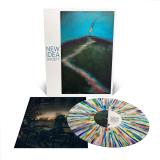
Emerging from the Minneapolis underground and heading straight towards the sky, IE arrive on Quindi with a full-length album of sparkling, sophisticated wonder. Touching on kosmische grandeur, Riley-esque cyclical patterns, lounge pop and dubbed out psychedelia, the five-piece allow their songs to unfurl with a natural, hypnotic elegance which can take many different forms.
There's a loose, live quality to the recordings IE's members commit to record, which reflects their steady presence gigging in Minneapolis and the surrounding area. Since putting out their first release in 2016, they've glided from drone and synth-led jam band ambience (2018's Pome) to strung out, stoner-tinted slowcore (on 2023's outstanding Junk Body). For Reverse Earth they strike a smoky note that wraps itself around your skull across extended run times that evolve with a meditative poise.
From the deceptively driving 4/4 thrum of the opening title track through 'Divination Bag's snaking tryptamine mantras on to 'Simplify's slow and smouldering indie-soul, IE's sound is bathed in a sumptuous warm glow that rounds out the lows and the mids, creating a nocturnal shroud in which their nebulous song structures can feel deliciously endless.
Meredith Gill's drums provide rolling and tumbling undercurrents for the slowly shifting phases of the instrumental players, as Michael Gallope and Travis Workman trade keyboard parts and Workman and Sam Molstad chop and pick at their six-strings. Atop the thrum of her bass, Mariel Oliviera's vocal adapts to the scenery, from a distant, dreamlike siren song on 'Reverse Earth' to a spoken word meditation on 'Babel'.
There's space in each track for every instrument to cut through and have its moment, from a spiralling key vamp to a chicken-scratch guitar flex. The gently twisting, head-feeding groove exercises of the first four tracks give way to a slow and powerful march on 'Dark Rome', closing the record on a noirish anti-ballad fit to peal out in the closing slot at Twin Peaks' Roadhouse (circa season three).
As much as the tracks teem with composition, musicianship, and production to savor, a sound like IE's has a soporific quality that soaks in unconsciously. It's an evocative portal where the band feel as if they could just play on each piece ad infinitum - where the time itself seems to dislodge from its moorings.
- Love Is A Distraction (Feat. J Mahon)
- Unstoppable (Feat. Emma Noble)
- Save (Feat. Gerry Love)
- Going Going Gone (Feat. J Mahon)
- Death Of A Hypocrite
- Heartbreak (In A Really Good Way)
- Caught In Your Web (Feat. Nicke Andersson)
- Swinging Party (Feat. J Mahon)
- Ride
- Maggot Brain (Feat. J Mahon)
- Common Stranger (Feat. Audrey Olleson)
Combines Northern Soul, Psychedelia, 90s Indie Rock and an orchestral soundtrack feel into a homogenous, convincing work that looks promising and feels damn good in a not so rosy time.
The fourth album by the Frank Popp Ensemble, will be released on Unique Records. Written. recorded and produced in Spain in 2024. As with the predecessor ,Shifting", various guest singers can be heard on the lI brand new tracks.
Gerry Love, once the lead singer of the legendary Teenage Fanclub, who, according to Popp, wrote and sang almost al of the Glasgow cult band's favorite songs. lends his captivating voice to an orchestral, soulful version of "Save", a rather unknown but brilliant piece that Love wrote for the Scots in 2004. Gerard Love already contributed a cover of Frank Popp's "The World Is Waiting" to the "Under Covers" compilation and has now done another wonderful job on Waves.
Another hero from Popp's record collection is Nicke Andersson. Formerly a drummer with the death &rollers Entombed. then singer of the incomparable Hellacopters and mastermind behind other top bands such as The Solution, Imperial State Electric, Lucifer, etc., can be heard on "Caught In AWeb". A Northern Soul stomper in classic "Magic Touch" mania.
Emma Noble, an up-and-coming soul singer from London sings on the girl-groupish soul anthem "Unstoppable". The second single from the album has what it takes to be the next UK floor filler and was already played and praised on Craig Charles' Soul Show on BBC a t the end of 2024.
An absolutely exceptional artist is J Mahon, who can be heard on 5 tracks on the album and contributed significantly to the album. His sweet voice works on his songs as well as on "Going Going Gone", which is the first single release and is reminiscent of certain young Motown artists in the early 70s with its catchy brass hooks and j's androgynous soul vocals.
Audrey Ollesen from Cologne, an old buddy from the Rhineland mod scene, joined by chance after Popp became aware of her singing skills through private recordings. On "Common Stranger" Audrey can be heard on a recording for the first time.
On "Waves" Frank Popp combines Northern Soul, Psychedelia, 90s Indie Rock and an orchestral soundtrack feel into a homogenous, convincing work that looks promising and feels damn good in a not so rosy time. We are all excited...
f Heartbreak (In A Really Good Way) [feat. J Mahon]
[f] Heartbreak (In A Really Good Way) [feat. J Mahon]
Dateline: April 10, 1970. Setting: The storied Fillmore West in San Francisco, CA. Context: Miles Davis, three days removed from his first session for Jack Johnson and, with newly recruited soprano saxophonist Steve Grossman in tow, opening shows for countercultural heroes the Grateful Dead on the latter’s home turf. Result: The initial rumblings of a thrilling era in which Davis and his cohorts would again upend jazz and popular conceptions of the genre with music steeped in groove, improvisation, and hang-on-for-your-life adventurousness. All captured on Black Beauty: Miles Davis at Fillmore West.
Mastered at MoFi’s California studio, pressed at Fidelity Record Pressing in California, and housed in a Stoughton gatefold jacket, Mobile Fidelity's numbered-edition 180g 33RPM 2LP set helps bring what went down that spring evening in Bill Graham’s venue to your listening room with exceptional clarity, balance, and presence. Originally only released in Japan in 1973 and unavailable in the United States until the late ‘90s on compact disc, this marks the first time Black Beauty has been issued on domestic vinyl. The wait is worth it.
Benefitting from quiet surfaces and excellent definition, these LPs present the band’s livewire energy and torrential storm of notes with captivating dynamics, pacing, and fullness. At its core, this audiophile reissue takes you into the walls of sound erected by a band learning on-the-fly the sheer power, will, and breadth of the electric jazz Davis was orchestrating and realizing, on the spot, would reach rock audiences that until that point had only a faint awareness of his mad-scientist experimentation. The sense of release and reach conveyed by these carefully restored records make it clear the veteran bandleader was in the process of a permanent shift that he’d chase for the next five years.
Given Davis was only a few months away from releasing the pioneering double album Bitches Brew, it shouldn’t come as a surprise that much of the fare here adheres to similar explorative approaches. Turbulent rhythms, provocative trumpet passages, and rich, saturated tonal colors that seemingly splash against a blank canvas take precedence over any traditional attempts at organization and melody. Davis and Co. intentionally play everything on a line with the bandleader signaling changes with his horn via coded phrases. The group speaks a common language — with each member having gone to achieve iconic status for their career contributions and technical prowess.
In the company of Grossman, Chick Corea (piano), Dave Holland (bass), Jack DeJohnette (drums), and Airto Moreira (percussion), Davis constructs themes around “Directions,” “Miles Runs the Voodoo Down,” “It’s About That Time,” the title track to Bitches Brew, and more from his then most-recent studio works and the in-progress Jack Johnson. His farewell to the popular standards that for nearly two decades remained a part of his repertoire arrive via a brief dalliance with “I Fall in Love Too Easily,” a shortened albeit aggressive “Masqualero,” and the “Theme” finale of “Spanish Key.” Initially, Black Beauty lacked specific track listings due to Davis’ increasing frustration with listeners over-analyzing his music.
In retrospect, it’s difficult to blame anyone for wanting to view what’s on display here with the aural equivalent of a magnifying glass. Leaning in rock directions, yet maintaining an ear for spaciousness and solos, Black Beauty survives as a snapshot of a thrilling moment amid a transitory period in which evolution came fast and furious. Just two months later, Davis would add another instrumentalist to the lineup in the form of organist Keith Jarrett, and the perpetually restless visionary would blast off to a more atmospheric and arguably more chaotic universe.
Consider, then, this live document a bridge to that galaxy and a breathtaking example of the possibilities of jazz itself.
Originally released in 1987 on a private cassette - this is the first vinyl release of the absolute gem. Comes with obi strip.
Masahiro Sugaya is a Japanese composer with a prolific career in music for film, television, and the performing arts. Renowned for crafting soundscapes that invite deep contemplation, his music blends synthesizers, field recordings, and traditional Japanese instruments, achieving a delicate balance between minimalism, ambient, and folk influences.
In addition to his experimental compositions, Sugaya has been a pivotal figure in Japanese television and cinema. He collaborated with NHK, Japan’s national broadcaster, creating soundtracks for documentaries and educational programs that explored both the everyday and the extraordinary. His ability to translate emotions and landscapes into sound has made him stand out in projects that connect the visual and the musical.
In cinema, Sugaya worked as an arranger for GONTITI, the iconic Japanese guitar duo, and contributed to soundtracks for renowned directors such as Hirokazu Koreeda. His work captures the stillness and subtleties of everyday life, resonating deeply with audiences.
The Pocket of Fever, originally conceived in 1987 as a soundtrack for Pappa Tarahumara’s avant-garde dance company, merges traditional Japanese elements with modern compositional techniques, reflecting the fluid and dreamlike choreography. The album shifts between nostalgia, as in Green of the Future, and the poetic hypnosis of Conversation with the Wind. These pieces invite the listener to explore deeply evocative and intimate sonic landscapes.
Now available for the first time on vinyl, this album was originally released solely on cassette and has been carefully remastered to preserve its delicate textures and vibrant sound. Presented in a limited edition, The Pocket of Fever remains essential for fans of ambient and experimental music. Inspired by figures such as Hiroshi Yoshimura, Midori Takada, and Brian Eno, this timeless masterpiece invites introspection and the appreciation of its serene beauty.
What happens when you combine SUMAC: a band that uses the volume, distortion, and guitar-centric approach of metal to make music that has the malleability of jazz and textural exploration of noise with Moor Mother: a poet and sound artist that has deconstructed hip hop to a point where it"s less about rhyme and rhythm (though obviously both are present in her work) and more about oratorical cadence and power.
The Film is an album that takes attributes of both artists" work and finds common ground in shifting musical patterns, and expressive force. The record is a musical thumbing of their noses at the more traditional approaches of their respective fields, an innovative, powerhouse of an album. The Film"s moniker speaks to the fact that it is conceived and delivered as a complete album, a full story or narrative. Moor Mother puts it best: "The idea is to create a moment outside of the convention. This is a work of art.
Thinking about the work as a Film, instead of an album or a collection of songs. This task is impossible in an industry that wants to force everything into a box of consumption. You won"t understand or get the full picture until the artwork is completed. This work is developing and is requesting more agency within the creative process." The Film is just such a work, a nebulitic collaboration between SUMAC and Moor Mother.
Belgian musician and filmmaker Jef Mertens has been an active force in the experimental music and film scene for nearly two decades. Known for his documentaries on artists like Sonic Youth and Borbetomagus, as well as his work with the now-defunct Dadaist Tapes label, Mertens continues to push the boundaries of sound exploration. His previous solo works include NO MATHEMATICS, released on KRAAK/Feeding Tube Records.
With Orchid Alto, Mertens dedicates himself to the taishogoto, a Japanese stringed instrument that became a new focal point in his sonic explorations. Initially drawn to its unique tonal qualities, he approached the instrument with an open-ended curiosity, using it as a means to reshape his musical language. The transition to taishogoto marked a shift away from guitar-based compositions, offering a fresh perspective on texture and resonance. Through these explorations, Orchid Alto serves as a blueprint for new sonic possibilities.
A bold and immersive sonic journey, Orchid Alto merges traditional resonance with modern experimentalism, further shaping Mertens' artistic voice—one influenced by artists like Michael Flowers, Turner Williams Jr., and Bill Nace.
- A1: Opening (3 11)
- A2: Crabby Beach (3 03)
- A3: Dark Ruins (3 02)
- A4: Cryptic Relics (3 08)
- A5: Stadium Attack (3 07)
- B1: Crumbling Castle (3 10)
- B2: Frosty Retreat (Inside) (3 09)
- B3: Frosty Retreat (Outside) (3 05)
- B4: Snowy Mammoth (3 24)
- B5: Specter's Factory (Outside) (2 05)
- C1: Thick Jungle (Woods) (2 55)
- C2: Thick Jungle (River) (3 04)
- C3: Molten Lava (2 52)
- C4: Results (1 03)
- C5: Molten Lava (T-Rex) (3 04)
- C6: Coral Cave (3 35)
- D1: Specter Circus (2 49)
- D2: Hot Springs (3 07)
- D3: Hot Springs (Maze) (3 08)
- D4: Laboratory (0 58)
- D5: Monkey Madness (2 58)
- D6: Wabi Sabi Wall (3 09)
- E1: Staff Roll (Normal) (2 59)
- E2: Opening (3 11)
- E5: Tv Tower (3 11)
- F1: City Park (3 04)
- F2: Stage Select (0 49)
- F3: Specter Boxing (2 54)
- F4: Primordial Ooze (3 22)
- F5: Western Land (3 12)
- F6: Fossil Field (3 10)
- G1: Staff Roll (2 59)
- G2: Dexter's Island (3 05)
- G3: Specter's Theme (2 57)
- G4: Ski Kidz Racing (Type A) (2 52)
- G5: Ski Kidz Racing (Type B) (3 04)
- G6: Ski Kidz Racing (Type C) (2 53)
- H1: Movie From Opening (1 05)
- H2: Movie From Shifting Time (1 34)
- H3: Crumbling Castle (Alternative Version) (3 11)
- H4: Hot Springs (Alternative Version) (2 59)
- H5: Specter Boxing (Training Version) (2 21)
- E3: Sushi Temple (3 17)
- E4: Peak Point Matrix (3 09)
4XLP. Hardcover slipcase box. Liner notes from Soichi Terada, Colour: translucent red, clear, blue, and yellow vinyl
It has been 25 years since the release of Saru Get You (サルゲッチュ), known stateside and in the UK as Ape Escape. Ape Escape marked a significant milestone for the PlayStation, as it was the first game to require use of the PlayStation's DualShock (analog) controller. In Ape Escape, the use of the analogue sticks goes beyond camera rotation and acts as an extension of Kakeru's (Spike's) own character, controlling his many gadgets like the stun club, time net, and sky flyer. It's a unique form of control that, really, didn't become popularized until the release of the Nintendo Wii. It feels like a distinctly Japanese design, the sort of off-the-wall design that is either embraced or rejected on a global scale. In Ape Escape's case, the mechanic caught on.
Ape Escape is fast, frantic, and—at times—downright frustrating. Pipo monkeys dash, taunt, and swim away from your advances. They ride water monsters, fly UFOs, and even shoot uzis! Whether it's Kakeru, his friends, or the monkeys themselves, the characters are always running across the levels. This mad dash is enhanced by the game's soundtrack, composed by legendary composer Soichi Terada. As he recalls, the director of the production said, "Spike and his friends always have the image of running." In response, Terada happily produced fast songs with an average speed of over 170bpm. The resulting gameplay and audio is a match made in heaven.
Ape Escape is the first game soundtrack Mr. Terada ever created. The producers of the game heard one of his singles, "Sumo Jungle," and thought his frenetic drum-and-bass (Jungle) would be perfect for the game. The marriage of Ape Escape's charming overworld and Soichi's upbeat compositions is nothing short
of sublime. Especially now, it is difficult to separate the mischievous Pipos and fast-paced action from Soichi Terada's silky smooth synthesizer and heart-pounding bass. Earlier this year (2024), Soichi Terada's Ape Escape work was celebrated by the six-track EP Apes in the Net, which includes music from Ape Escape 1 and 3 (Terada did not compose the series' second installment). The label, Rush Hour Music, has prestigiously championed almost all of Soichi Terada's music, especially his (specifically non-VGM) house, jungle, and drum and bass releases (Sounds from the Far East, Asakusa Light, and more).
Before Apes in the Net, Terada's Ape Escape music was only available on CD, released in Japan around 2010. This release featured reconstructed tracks created by Mr. Terada himself, identical to the music arrangements featured in the game. The biggest difference, of course, was that they were of higher fidelity than was originally available on the PS1 disk format. Completing all of the aforementioned releases is this box set, released by Far East Recording in partnership with Cartridge Thunder and officially licensed by Sony Computer Entertainment. This box set release includes four LPs, housed individually by a hardcover slipcase. This box set includes every song from Ape Escape 1, except those available on Apes in the Net. This box set release also includes one bonus song, previously unreleased anywhere else (including the game itself!).
The music on this box set was meticulously mastered by Justin Perkins of Mystery Room Mastering. Using Mr. Terada's premastered source files, the music was completely and specifically mastered for vinyl. Rounding out the audio is absolutely stunning artwork created by Gobo3D. CT worked with Gobo to recreate some of Ape Escape's most iconic characters, referencing the original Japanese guidebook and other promotional materials. The result is visually delicious 300dpi artwork that takes you straight back to 1999. As uber-fans of the original PlayStation game, Cartridge Thunder and Far East Recording are proud to celebrate Soichi Terada's music and pay our respects to such a legendary PlayStation franchise—on the original hardware's 30th anniversary no less! It's with a happy heart, then, that Far East Recording and CT present to you Soichi Terada's Ape Escape Originape Soundtracks in a Box.
Please note: due to licensing exclusivity, this release does not include tracks previously released on Apes in the Net