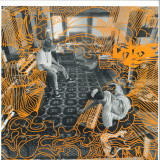
Almost as soon as Σtella Chronopoulou began writing Adagio, her fifth album as Σtella, she knew the time had finally come to sing in Greek, her native tongue. It would be a first. She started the record almost by accident in 2019, during an 11-hour boat ride to the island of Anafi. Σtella had recently gone through a patch of personal turmoil and needed a break from home. On the ferry, she pulled out her cell phone as the boat clipped through the Mediterranean and began with a simple melody, steadily piecing together a rough instrumental. As psychedelic keyboards twinkled and swayed above staccato drums, the track suggested some deep exhalation, as if Σtella were letting go of long-unnecessary baggage. For a spell, she set the instrumental aside. She wasn’t ready yet, or in a rush. Σtella, after all, grew up in a slow place. During her youth in a relatively rural suburb of Athens, Greece, she and her friends played unfettered in empty streets, not worried about cars or permission, and living felt easy. But in the last decade life has steadily become busier for Σtella, now based in the heart of Athens. She has become one of modern Greece’s most popular musical exports, with three sophisticated, playful pop albums rendered with international élan. After her Sub Pop debut, Up and Away, in 2022, she catapulted beyond three million monthly Spotify listeners. That success was a blessing, but Σtella sometimes found herself pining for the slower pace of her youth. That longing is the thread that loosely binds together her fifth album, the entrancing Adagio. Borrowing its name from the term for music that’s meant to be played slowly, Adagio is a pop record that feels like a very warm blanket, its nylon-string guitars and featherlight percussion swaddling its listeners for three minutes at a time. Written and recorded over the span of five years, with a consortium of international collaborators including !!!’s Rafael Cohen and British songwriter Gabriel Stebbing, Adagio is a 27-minute meditation on love and desire, rest and time. Though the bulk of it is sung in English, Σtella delivers her first two songs in Greek here—“Omorfo Mou,” the one that began on the boat, and a cover of a 1969 cult classic of the Greek New Wave, Litsa Sakelariou’s “Ta Vimata.” It is a sign of the self-assurance that radiates throughout these tender and smitten little tunes. Start to finish, Σtella sounds more at ease and comfortable than she’s ever been on Adagio. These fetching songs will not slow her career or grant her that title track’s wish. But, for half an hour, Adagio adds a measure of warmth to the world, with time loosening its grip even if it doesn’t slow down.● Athens, Greece-based Σtella’s new album Adagio is a pop record that feels like a very warm blanket, its nylon-string guitars and featherlight percussion swaddling its listeners for three minutes at a time.● Features Rafael Cohen and British songwriter Gabriel Stebbing.• Σtella’s breakout hit “Charmed” from her 2022 album Up and Away has nearly 100 million streams, and was recently featured in the hit Max show Industry.• On Spotify, Σtella has 3.4 million followers, 66k monthly listeners.
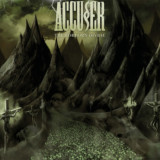
The Forlorn Divide by Accuser is back on vinyl, and it’s more intense than ever! Released by the German thrash metal legends, this 2016 album marked a triumphant return to their raw, relentless roots. Known for their blistering riffs, sharp precision, and aggressive vocals, Accuser captures the gritty essence of thrash metal with a modern edge, making this release essential for any fan of the genre. The Forlorn Divide dives deep into themes of alienation, societal decay, and inner turmoil, resonating with listeners through both its lyrical content and powerful instrumentation. The album’s standout tracks, including "Lust for Vengeance" and "Impending Doom," showcase Accuser’s refined songwriting and fierce musicianship, driving their iconic sound forward. With founding member Frank Thoms leading on guitar and vocals, supported by Dennis Rybakowski on guitar, Frank Kimpel on bass, and Olli Fechner on drums, Accuser creates a wall of sound that’s as intricate as it is unyielding. This reissue offers a chance to own a vital piece of thrash metal history perfect for collectors and metalheads everywhere.
The Forlorn Divide by Accuser is back on vinyl, and it’s more intense than ever! Released by the German thrash metal legends, this 2016 album marked a triumphant return to their raw, relentless roots. Known for their blistering riffs, sharp precision, and aggressive vocals, Accuser captures the gritty essence of thrash metal with a modern edge, making this release essential for any fan of the genre. The Forlorn Divide dives deep into themes of alienation, societal decay, and inner turmoil, resonating with listeners through both its lyrical content and powerful instrumentation. The album’s standout tracks, including "Lust for Vengeance" and "Impending Doom," showcase Accuser’s refined songwriting and fierce musicianship, driving their iconic sound forward. With founding member Frank Thoms leading on guitar and vocals, supported by Dennis Rybakowski on guitar, Frank Kimpel on bass, and Olli Fechner on drums, Accuser creates a wall of sound that’s as intricate as it is unyielding. This reissue offers a chance to own a vital piece of thrash metal history perfect for collectors and metalheads everywhere.
Introducing the vinyl reissue of "Defective Breakdown" by The Defects, a cornerstone album in the history of Irish punk. Originally released in 1982, this album captures the raw energy and rebellious spirit of Belfast’s punk scene during a turbulent period. Known for their uncompromising lyrics and driving rhythms, The Defects became anthems for youth discontent and anti-establishment sentiments. Fronted by the powerful vocals of Buck Defect, with infectious guitar work from Geoff "Duke" Gilmore, the band brought a visceral sound that resonated with audiences far beyond Northern Ireland. Tracks like "Survival" and "Brutality" showcase their fast-paced, no-holds-barred approach to punk, combining aggressive instrumentals with direct, hard-hitting lyrics. This vinyl edition brings "Defective Breakdown" back to life with enhanced clarity and depth, giving both long-time fans and new listeners the chance to experience The Defects’ iconic sound as it was meant to be heard.
Introducing the vinyl reissue of "Defective Breakdown" by The Defects, a cornerstone album in the history of Irish punk. Originally released in 1982, this album captures the raw energy and rebellious spirit of Belfast’s punk scene during a turbulent period. Known for their uncompromising lyrics and driving rhythms, The Defects became anthems for youth discontent and anti-establishment sentiments. Fronted by the powerful vocals of Buck Defect, with infectious guitar work from Geoff "Duke" Gilmore, the band brought a visceral sound that resonated with audiences far beyond Northern Ireland. Tracks like "Survival" and "Brutality" showcase their fast-paced, no-holds-barred approach to punk, combining aggressive instrumentals with direct, hard-hitting lyrics. This vinyl edition brings "Defective Breakdown" back to life with enhanced clarity and depth, giving both long-time fans and new listeners the chance to experience The Defects’ iconic sound as it was meant to be heard.
This is a recorded document performed by Mark Holub, Johanna Pärli and Sofía Salvo.
As a trio, they had not met until sound-checking for their gig at Berlin’s Cashmere Radio on September 1, 2023 — a fact that may be concealed by their immediate understanding as a musical entity but is obvious by their artistic freedom and curiosity towards each hoc encounters, flexible and steadfast in its performance, and that culminated in an experience that shook the floor of the radio station’s headquarters.
The day after, Sofía, Johanna and Mark gathered in Adam Asnan’s studio and deepened their quest for a communal language. They ignored any musical fetters or conventions, enjoyed the possibilities of a wider time frame without a live audience — and exceeded all hopes of what three personalities can achieve when they are given the space and time to experiment, detached from any restrictions.
Mark Holub is a drummer of outstanding versatility and responsiveness, full of ideas and quick on his feet. Through his playing as well as his experience as a band-leader and composer he is able to steer this coequal group towards thundering crescendo, but sits equally comfortable in the centre of complex and fine rhythm probing in response to impulses thrown in by his companions.
Johanna Pärli makes use of her double bass’s entire body, extracting an armada of multi- layered sounds with an immensely high sonic spectrum that is also reflected in the diversity of her musical projects. She is both patient and wildly adventurous in her performance, and in this trio her contribution wanders from considerate bow work to brisk fingerpicking, gnarly string strikes and pedal use to startling effects.
Sofía Salvo unleashes the full unbounded potential of her voice by taking advantage of her baritone saxophone’s broad range of possibilities. She is one of Berlin’s most singular musicians and her widely proven capabilities cover gentle additions to support and underline pulsive interplay just as masterfully as rapid licks and roaring bursts of noise, spurring the collective to unpredictable intensity.
If music of this particular kind often gives the impression of a constant search, this international trio certainly managed to find common ground and capture a special moment in time for listeners to (re-)discover. Contrary to what frequent misconception sometimes suggests, it’s also tremendous fun.
NERR — Filling Open Spaces was instantly composed and performed live in studio by Mark Holub on drums, Johanna Pärli on double bass and Sofía Salvo on baritone saxophone, recorded in Berlin on September 2, 2023 and mixed by Adam Asnan. Mastered and cut by Rashad Becker, vinyl pressed at Pallas. Artwork and design by Stefan Lingg, produced by Christoph Berg and Stefan Lingg.
Firstly, I want to thank Soulox & Soeneido for their patience because I have slept on their music for years haha
They have both been sending me music for a long time which I was pretty slack on checking (as a lot of people may have also noticed when sending me music, there's a huge backlog to get through and not enough hours in the day!) but it wasn't until Pete Dev/Null was in London for an event and we met up in person to record a mix for Blog To The Oldskool (our show on Jungletrain) that I realised what these two were capable of. Pete started the show with Lavish and I had to know what it was straight away, he told me it was by Soulox & Soeneido and I felt so bad that I had probably not bothered to check this tune if they had sent it to me, but I knew I had to have it!
I messaged Soen the next day asking about this tune and thankfully it was still available, one thing led to another and this release now exists. Big thanks to both of them for their wicked tunes, big up Comfort Zone on his quality remix of Lavish and a special mention to Jay Vaz (of Dreaming Vinyl) who did the design for the b-side of this release.
out of Stock
Last delivered 18 months ago available to reorder, subject to availability
Es ist ein Fall von popkultureller Archäologie. Eine Spurensuche der elektronischen Musik. Nach über 30 Jahren tauchen verschollene Tapes von Holger Czukay wieder auf, die er einst "zur freien Verfügung" eingespielt hatte. Eine Sound-Meditation von 1997, die nun erstmals neu gemastert im Original und in einer "Version" von die ANGEL (Ilpo Väisänen / Dirk Dresselhaus) und Zappi W. Diermaier von der Krautrock-Legende Faust vorliegt.
Die Arbeiten aus dem Czukay-Studio sind eigenwillige Klangstrukturen, die Mastering-Ingenieur Dresselhaus alias Schneider TM einschätzt als "futuristisches Kleinod, das für seine Entstehungszeit musikalisch weit vorne ist." Für ein abstraktes Klanggebilde "tief und emotional" wie er sagt. Eine Komposition, die mit Avantgarde oder Neue Musik nur unzureichend beschrieben ist. Ein echter Czukay eben. Die Genese dieser Aufnahmen führt in die freigeistigen 1990er, als Holger Czukay in Köln mit jüngeren Techno-Kollegen wie Dr. Walker von Air Liquide mit Beats experimentierte und sich ansonsten sehr für die leise Explosion der digitalen Medien interessierte.
Es war der Tech-Pionier und Medienkünstler Arthur Schmidt alias Gvoon, der ihn in langen Gesprächen auf die (damals futuristische) Data-Maschine "RealityEngine" brachte, mit der sich virtuelle Welten erschaffen ließen. Vom Full-Body-Tracking-System bis zum gemeinsamen Prototyp eines "Internet-TV-Senders". Darauf liefen experimentelle Czukay-Videos, die er mit neuen Samples und Klangfragmenten ausstattete. Später wurde eine kontemporäre Show namens "Czukay/Gvoon:Magazine" daraus und auch die "Can-Live-Soloprojekts" im März 1999, ausgestattet mit der Body-Tracker-Technik von Gvoon. Die DDR-Vergangenheit seines Tech-Sparringspartners Schmidt, der ihm von seiner Zeit in Stasi-Haftanstalten erzählte, setzte in Czukay einen kreativen Prozess frei. Er setzte dieses Trauma in Töne um und machte ihm ein musikalisches Geschenk. "Gvoon-Brennung 1", eine Gabe, die Schmidt "irgendwann" einmal verwenden könne. Einfach so. Ein Soundtrack, der ganz profan auf Digital Audio Tape übergeben wurde.
Über 20 Jahre später brachte Schmidt das "Czukay-Geschenk" für eine zum Kunstwerk umfunktionierte Verhörzelle des Ministeriums für Staatssicherheit (MfS) wieder zum Einsatz. Als Installation für einen stockfinsteren, bedrückenden Raum mit Gummiwänden. Hier stieß wiederum Dresselhaus auf das Material. Ihm wurde klar, dass er dort mehr hörte als irgendwelche 1990er-Fragmente: "Es ist irgendwie Blues-mäßig, auf eine kybernetische und abstrakte Art." "Mit einem sehr langsamen Groove, der einen die gesamte Strecke aufmerksam hält", sagt Dresselhaus. Er beschreibt den Mastering-Prozess sowie die Neubearbeitung in Form der "Gvoon-Version 1" als Balanceakt zwischen Respekt vor dem historischen Material und einer zeitgemäßen Studio-Bearbeitung.
Eine respektvolle Verbeugung zum 87sten Geburtstag von Holger Czukay im März 2025.
out of Stock
Last delivered 18 months ago available to reorder, subject to availability
Another foggy day in Yorkshire. A steel grey sky. Raindrops tracing one another down the windowpane. Kirk Barley sits in his studio and assembles compositions from scraps of found sound and live instrumentation. Melodies swell, withdraw and repeat like waves. Time slows. Accelerates. Slows again. The light bends, tweaked at the edges. Twisted by rhythms that never quite resolve.
Written, recorded and produced by Barley in Yorkshire in early 2024, Lux picks up where 2023 LP Marionette leaves off, conjuring a mystical, reflective space between formal minimalism and sonic imaginaries of northern landscapes.
And yet, where Marionette relied at times on more recognisable field recordings, Lux leans into Barley’s skill as an instrumentalist and sound designer, working from a palette of short samples and utilising a variety of alternate tuning systems to build, layer and coax his compositions into being. Most evident on tracks ‘Vita’, ‘Sprite’ and ‘Descendent’, these tunings create an otherworldly harmonic language that is easier to perceive than describe.
Alongside more familiar instruments of guitar, bass, drums, organ and clarinet, here Barley draws on plastic saxophones and bells, and recordings of glass, wood and metal sound objects to provide the organic matter. Rather than directly representative of the natural world, Lux enters into a dialogue with it which, like the grasses and flowers of the album’s cover, exists somewhere between reality and artifice.
On album opener ‘Cache’, Barley constructs his own sense of time from a recording of an umbrella crank, a sparse and spectral piece which hints at memories embedded in the track’s title. Introspection blossoms into new life on ‘Vita’, crumpling again into the percussive ambience of ‘Verre’. A track that takes its harmonic lead from the clinks of glass, it features Barley’s long-time collaborator Matt Davies on drums, whose nuanced, tonally sensitive playing gives ‘Verre’ a fizzing, ice-like quality.
There are several moments where Lux picks up on themes Barley explored under electronic moniker Church Andrews on recent works with Davies, stretching and distorting temporalities most explicitly on ‘Descendent’, whose ritualistic air unfurls around a pattern in exponential decline.
Embracing the surrealism Barley absorbed over years watching classic film noir and the works of David Lynch and Federico Fellini, Lux wends its way through the enchanted sound worlds of ‘Sprite’ and ‘Balanced’ before arriving at the album’s title track.
An expression of his recent experiments in live, prepared guitar, ‘Lux’ brings the album back to earth, returning us to the room where the rain has stopped, the clouds have parted, and the soft warmth of the spring sun is pouring in through the open window.
out of Stock
Last delivered 17 months ago available to reorder, subject to availability
DJ Support: Dave Lee, Danny Krivit, Dj Harvey, Brian Tappert, Michael Gray, Opolopo, Jimpster, Moplen, Birdee, Hot Mood, Richard Earnshaw.
Amazing Jazz-Funk mini Album from Italian Musician Paolo Fedreghini aka FAM Disco. 'Jazz On The Moon' is a 6 tracks ep full of emotional sounds. Live Horns,bass,guitars and synthesizers take us to a magic Journey. A project well done with a touch of class. All tracks encapsulate the essence of Jazz Funk Disco and should appeal to a wide range of music fans old and young.
out of Stock
Last delivered 5 months ago available to reorder, subject to availability
Marking the fourteenth chapter in the Swinging Flavors series, Beat Machine Records proudly unveils a gripping release by Helsinki-based producer DJ Sofa. Packed with deep, nostalgic energy, this installment delves into the darker side of drum and bass, with a sound inspired by the genre’s golden era of the late 90s and early 2000s.
DJ Sofa, known for their emotive and intricate productions, brings a raw, jungle-infused energy to the forefront. Drawing inspiration from jungle and breakbeat hardcore, their sound reflects a deep connection to the classic UK rave era while maintaining a forward-thinking edge. Known for captivating listeners with rich atmospheres and complex breakbeats, DJ Sofa’s music resonates strongly with audiences far beyond their Finnish roots, particularly within the UK underground scene.
“Drums For The Lost,” the lead track on Swinging Flavors #14, exemplifies this blend. A menacing roller, it marches forward with unwavering determination, offering a guiding light through shadowy soundscapes. With its haunting basslines, intricate percussion, and mysterious atmosphere, the track is a testament to DJ Sofa’s ability to create immersive and emotionally charged music.
The journey doesn’t stop there. Swinging Flavors #14 also features a remix of “Drums For The Lost” by Siu Mata. The Parisian producer reinterprets the track with their signature style, adding pulsating rhythms and hypnotic layers that elevate it to a peak-time dancefloor weapon. Siu Mata’s remix infuses the original with a modern edge, creating a vibrant and dynamic sound that bridges the gap between tradition and innovation.
Swinging Flavors #14 is available in both digital format and as a limited edition 7” vinyl, ensuring it finds its way into the hands of collectors and music lovers alike. DJ Sofa and Siu Mata’s contributions to the Swinging Flavors series underscore Beat Machine Records’ commitment to showcasing the best of underground electronic music. With its bold exploration of drum and bass and an eye on the future, this release is set to captivate audiences worldwide.
out of Stock
Last delivered 17 months ago available to reorder, subject to availability
Dev/Null is one of my earliest friends in music, having done radio with him (Blog To The Oldskool on Jungletrain) for a decade and previously working with him on TDD, which was on Meeting Of The Minds Vol. 1, as well as collaborations on Globex Corp, Lobster Theremin & other label releases.
I'm happy to be able to release his first solo EP of jungle tunes, as I've been a long time supporter of his music and I think that some of the tunes on this release are some of his best work yet :)
Many thanks to Dev/Null for the work put in for this release and to Dwarde & Sonar's Ghost for their remixes.
out of Stock
Last delivered 18 months ago available to reorder, subject to availability
During their short but prolific career, A2L released two albums & numerous EPs on labels such as 1st Bass / Big One and Force Inc between 1988 and 1990. This is a collection of early and rare underground British psychedelic house gems from 1989, blending the trippy, mind-expanding sounds of machine funk, new beat, industrial/ebm, samplers and turntables techniques, with the birth of acid house wonderlandand and captures the raw energy of the UK rave scene.
During their short but prolific career, A2L released two albums, one of which strangely landed on a South African label. They also dropped numerous EPs on labels such as 1st Bass / Big One (home to acts like Deskee, Longsy D, and King Bee) and the German label Force Inc (which hosted artists like Alec Empire, Porter Ricks, and Mike Ink), between 1988 and 1990.
While Acid House is synonymous with the Roland 303, A2L is unlikely an acid house act. Instead, they stand as one of the finest examples of British psychedelic house music from the late 80s, falling between the likesof S-Express, Funtopia, Eon, and Acid Angels. With standout tracks like "Even Though It's Make Believe" and "Come On," A2L delivers infectious grooves over strobelight sample jams.
This here is a collection of early and rare underground British psychedelic house gems from 1989, blending the trippy, mind-expanding sounds of machine funk, new beat, industrial/ebm, samplers and turntables techniques, with the birth of acid house wonderlandand and captures the raw energy of the UK rave scene.
This is one testament to the creative freedom and experimental nature of that era.
For fans of the burgeoning British psychedelic and acid house scene.
out of Stock
Last delivered 10 months ago available to reorder, subject to availability
On a creative roll of late, Linkwoods productions have branched out in many directions, a collaboration LP with jazz Genius Greg Foat, Another with Local Edinburgh Legend Other lands and a load more yet to surface. Linkwood now comes back to solo work with a hyper focused piece of electro goodness. Lo-fi but all the better for it, Mono comprises 14 deeply distilled tracks. After producing some more complex records it was time for a pure palate cleanser so we locked Nick in the Athens of the north studio for a week with his friends Moog and Oberheim to see what might happen. Somewhere between Electro, Early 80s Synth pop and techno the album is an extremely listenable piece as a whole, unpretentious and timeless. Sprinklings ofDave Stewart pop noodles, Newbuild, Early Era Nu Groove but very much Linkwood at the same time, I cant recommend this enough.
out of Stock
Last delivered 18 months ago available to reorder, subject to availability
‘The Return of Pachyman’ is a supernatural force
from a brave new world that’s a little bit San Juan,
a little LA, and a whole lot of Channel One in
Kingston, Jamaica. Designed to be a resurrection
of sound systems from the past through which we
can celebrate a post-Trump future, the record
shows that blasting off into reggae’s deep space
has never gone out of style.
Pachy García (aka Pachyman) is perhaps best
known as the drummer / vocalist for the LA-based
band Prettiest Eyes, a unique pop-noise project
that reflects his other formative interest, synth
punk. He thinks of ‘The Return of Pachyman’ the
same way King Tubby might - an ‘X-ray’ of reggae
music, breaking it down to its bare bones.
Originally a guitarist, he moved to Los Angeles in
the early 2010s and developed his passion for
dub. From there, he started recording bass, drums
and piano and collecting recording equipment in
his basement studio, which he calls 333 House.
With ‘The Return of Pachyman’, García wants to
show how the Caribbean flow is transnational, a
vibe that resounds from Jamaica to San Juan to
Southern California. “With this project, I was
looking to make positive music and radiate good
energy; something to kinda disconnect from the
negative things that were happening at the
moment,” Garcia explains. “I am trying to make this
project a service for humanity in the sense that I
just wanted to shine a positive light.”
out of Stock
Last delivered 18 months ago available to reorder, subject to availability
dreamcastmoe is the recording project of singer, songwriter, producer, and DJ Davon Bryant, a lifelong resident of Washington, DC. His music moves freely between moods and modes, hypnotic, romantic, traversing electronic, R&B, funk, soul, and hip-hop... Resident Advisor dubs it "soulful, cross-genre dance music." This ability to adapt and finesse, to twist in different directions while staying true and coherent in vision, can be traced to his home city and its complex cultural history. "Most Black kids in DC don't ever get to this point," he says. "This is what I am making this music for, in the DC tradition of soul and empathy and love that is rooted in this city. My music is for real people dealing with shit every day." A versatile, modern artist and collaborator, dreamcastmoe has thrived in the underground since his first uploads to Soundcloud and Bandcamp in 2017 and subsequent releases with labels like People's Potential Unlimited, Trading Places, and In Real Life Music. Bryant's laid-back personality, emotional honesty, and infectious energy shine through his work and how he talks about it, as Crack Magazine notes in their 2021 Rising feature: "a steady combination of confidence, creativity, and calmness." He grew up playing drums in church; he's worked dead-end jobs, had ups and downs, even sold off all his gear one time, but never stopped reinvesting in himself. He is quick to praise his co-producers, rattle off influences _ the visual feel of NBA 2K, the comedic timing of Bernie Mac, the savvy legacy of Duke Ellington, for starters _ and credit resourceful DC breakouts like Ankhlejohn that showed him the roadmap. His voice, a steady instrument, seemingly connects it all, capable of slow falsetto flow, swaggering talk-rap, and outright croon. His storytelling style is choppy yet fluid, like a mixtape, which is how Bryant sees Sound Is Like Water, his debut on Ghostly's International's freeform label, Spectral Sound. The two-part project culminates as a full-length LP release in November 2022. The first side, released as Part I, opens on the blurred beats of "El Dorado," which dreamcastmoe dedicates to his journey. It's a head-nodder, an off-kilter earworm co-produced by Max D (Future Times, RVNG Intl, etc.), with Bryant harmonizing hooks with synth jabs and a pitched-down presence. "Complicated" is the slow jam, delivered smoothly from a Saturday night crossroads. dreamcastmoe is contemplative and committed... gliding and locking ad-libs into skittering rhythms courtesy of co-producer Zackary Dawson _ but also willing to let something go, "acknowledging that everything in life IS NOT easy." "RU Ready" takes off from the jump as a tribute, challenge, and promise to his partner and his city ("The times you sat with me when I needed you the most / Told me the things that I needed to see / Young black man, really trying to be what I can be / And I'm really from DC). In its potent two-plus minutes, the sonics (co-produced by ZDBT) press the message, all cymbal crashes, breakbeats, and serrated synth lines. "Cloudy Weather, Wear Boots" is a blitzing dance-punk track made in collaboration with Jordan GCZ on Bryant's first trip to Amsterdam. The album's flipside opens on "Much More," the first of two synth-and-beat ballads co-produced by ZDBT. Later on "Long Songz," he claims, "I'm not writing love songs no more," prioritizing the vibe with "all my day ones." He calls it "a cry for more normal moments. Everything doesn't have to be a fantasy love story, more time spent getting to the money, growing, and making a way." He saves two of his most propulsive cuts for the finale, co-produced by Sami, co-founder of DC dance label 1432 R. As their titles suggest, "Take A Moment" and "Make Ya Mind" operate as anthems for movement, with Bryant free-flowing commands above wildly-styled percussion. Per Bryant, the latter is both "wake & bake jam" and a "dance floor bomb." His parting line: "Action / You got to show me action / Reaction." The world of dreamcastmoe straddles virtual reality and the realness of DC, images both imagined and lived-in. Bryant has a knack for unexpected melodies but what makes his music so exciting is his capacity to defy the expectations of genre and image. A fluid ingenuity and vulnerability bottled by Sound Is Like Water, and this is just the beginning.
out of Stock
Last delivered 18 months ago available to reorder, subject to availability
aya's incredibly inventive Hyperdub debut album im hole distilled the incisive sonic experimentation of her early run of releases, the tongue-in-cheek giggles of her DJ sets and radio show, and the identity-fluxing lyricism of her live shows into a delirious tug of war between pleasure and dysmorphia. The album was championed from all corners, 'Best New Music' in Pitchfork to Radio 6 DJ Maryanne Hobbs 'Album of the Year', followed by a run of incredible live shows which drew new listeners further into her world. hexed!, aya's second album, confronts the desperation and dysfunction of addiction. Internalised phobias and suppressed traumas haunt the corridors and golden hours once romanticised on 2021's im hole; daymares concealed by nocturnal afters-hopping and key bag circles. Opener `I am the pipe I hit myself with' exposes the gray portrait secreted somewhere between the 8th and 9th floors of her previous record. `I used to say some shit for sure', `I used to say it when I was me-less'. hexed! is about what happens when aya turns the lights on.
out of Stock
Last delivered 13 months ago available to reorder, subject to availability
After a 30-year interstellar silence, the enigmatic producer Alien Signal—pioneering alias of Italian electronic composer Alex Silvi—reemerges with Whispers from Distant Suns, a transcendent odyssey that bridges retro-futurism and modern electronica. Hailed as a magnum opus, this album transcends genre boundaries, captivating ambient purists, downtempo aficionados, and even experimental listeners with its hypnotic fusion of analog warmth and digital precision.
Cosmic Tapestry of Sound
Drawing comparisons to Vangelis’ Antarctica and Alpha—but reimagined through a 21stcentury lens—Whispers from Distant Suns marries nostalgic synth textures with cuttingedge production. Silvi’s mastery of melody shines through in tracks like “Stardust
Memories” and “Fragile Eden” where shimmering arpeggios and celestial pads drift over robotic, glitch-infused drum patterns and sparse, meditative percussion. The result is a paradox: a retro-futuristic soundscape that feels simultaneously ancient and alien, familiar yet unexplored.
Listener Testimonials
Fans and critics have flooded forums with praise:
“An auditory revelation! It’s like Vangelis met Jon Hopkins in a nebula—vintage soul with a futuristic heartbeat.”
“The textures are gorgeously cinematic. Closing your eyes, you’re adrift in a Tarkovsky film scored for the Andromeda galaxy.”
The Vinyl Experience
Pressed on heavyweight vinyl, the album’s physical release amplifies its immersive qualities. The gatefold sleeve, adorned with surrealist astrophotography and metallic
foiling, mirrors the music’s cosmic ethos. Side A leans into Balearic serenity, with sundappled grooves and aquatic synth ripples, while Side B delves into darker, more
experimental terrain—think Aphex Twin’s Selected Ambient Works colliding with the organic rhythms of Jon Hopkins.
Maturity in Motion
This album is a testament to Silvi’s evolution. Tracks like “Seeds Of Light” and “Message from Andromeda Galaxy” showcase his refined ear for dynamics, balancing silence and sound with surgical precision. Vintage drum machines spar with glitches, while field recordings of crashing waves and interstellar static blur the line between Earth and cosmos. The closing track, “The Star Charts We Shared” crescendos into a 6-minute ambient requiem, leaving listeners suspended in a state of weightless awe.
Final Transmission
Whispers from Distant Suns is more than an album—it’s a transcendent odyssey. Spanning time, space, and the artist’s own creative evolution, this immersive work invites listeners to lose themselves in its ebb and flow. Designed for moments both intimate and expansive, its balearic-tinged atmospheres resonate equally through dawnlit Mediterranean terraces or the solitary glow of headphones in darkness. These are compositions that pulse, morph, and haunt the air long after the final note fades. A living soundscape meant to accompany life’s quiet revelations and clandestine joys—a soundtrack to your most personal moments, crafted as what the artist calls ‘private dance music.’
Tailored for the Discerning Listener
Whispers from Distant Suns is designed with the true connoisseur in mind. This album is a must-have for:
Vinyl Collectors & Audiophiles: Those who value the warmth and tactile experience of heavyweight, limited edition pressings
Electronic Ambient and Downtempo Fans: Listeners who appreciate immersive soundscapes that merge retro analog charm with modern digital innovation.
Retro-Futurism Enthusiasts: Fans of pioneering artists like Vangelis, Boards of Canada, and early Warp Records who seek music that bridges nostalgic synth textures with futuristic experimentation.
Experimental Music Explorers: Individuals drawn to sonic narratives that invite deep, contemplative listening—perfect for both introspective moments and immersive listening sessions.
This release is not just an album; it’s a curated experience for those who desire music as a multidimensional art form, merging the vintage allure of analog sound with a contemporary, cosmic vision.
For fans of: Vangelis, Biosphere, Jon Hopkins, early Warp Records.
out of Stock
Last delivered 16 months ago available to reorder, subject to availability
Manchester-based original soul collective The 7:45s release their debut single.
Named after 7-inch 45-rpm vinyl, The 7:45s write short and snappy soul singles. Their debut is a double A-side, giving you two bops for the price of one. Inspired by Charles Bradley, 'The Way that I Love You' is full of contrasts: the piano chimes and horns respond, a man calls and a woman answers. It's laidback then intense, major then minor, nostalgic then heartbroken. On the flip-side, 'Too Little Too Late' is an upbeat northern soul stomper, featuring an earworm of a vocal hook over an infectious bassline that's sure to ruffle tail feathers.
Recorded with vintage equipment at EVE Studios in Stockport, both songs feature the captivating vocals of collaborator Martin Connor. On 'The Way that I Love You', Connor's vocal rises from a crooning baritone to a fever pitch, culminating in spine-tingling ad libs. Magic moments like this are heightened by songwriter and bassist Sam Flynn's perfectionist arrangements, which feature dozens of musicians: spotlighting vocal harmonies, horns, and even strings on 'Too Little... more
credits
releases March 7, 2025
Been in UK soul chart and played on all the indie soul stations , Starpoint , solar etc
Too little Too Late was Played on BBC radio six Craig Charles Funk and soul show twice and the Way That I Love You was played on BBC radio six Craig Charles day time show
Track of the week on Simon Phillips Jazz FM
Featured in Blues and Soul and Echoes Mag
out of Stock
Last delivered 18 months ago available to reorder, subject to availability
- Also available on black vinyl - First ever official reissue - Produced in full cooperation with Hiroshi Yoshimura's estate - Liner notes by contemporary music writer and professor Junichi Konuma - Remastered from original sources by John Baldwin - First time on vinyl, cassette, and streaming - 2xLP vinyl housed in gatefold jacket - Discs cut at 45 rpm for optimal sound quality // Following their 2024 reissue of Hiroshi Yoshimura's classic album, Surround, Temporal Drift proudly presents the first-ever reissue of FLORA, Yoshimura's underappreciated ambient classic. FLORA was originally recorded and completed in 1987, and remained unreleased until 2006, nearly three years after Yoshimura's passing in 2003. The album is chronologically and stylistically a follow-up to his acclaimed 1986 works GREEN and SURROUND, wherein Yoshimura continues to play with the ambience of sound and the sound of ambience, underscoring his mastery in the field of environmental music. Yoshimura's other recorded works include Music For Nine Post Cards (1982), originally produced to be played back inside a museum space, and Pier & Loft (1983), commissioned as accompaniment to a contemporary fashion show.
out of Stock
Last delivered 10 months ago available to reorder, subject to availability
Now and again, an album project with no home comes along out of the blue, demanding to be licensed and shared with the world.
It was unearthed on one of Paper's digging trips. BOM's album sounded like nothing else out there, only the future. Shrouded in mystery and country-of-origin unknown, Africa runs through its DNA, but sometimes mysteries are best left...
Ase - a Yoruba philosophy signifying the power that makes things happen and produces change; given to Gods, ancestors, spirits, humans, animals, plants, rocks, rivers, songs and prayers.
BOM takes influence from all corners of Africa and its diaspora, blending them with 25 years of Western electronic music into a melange of forward facing, leftfield afro futurism.
The album features one of Africa's brightest rising stars, Luka Productions (from Mali), cosmic poet Sirius Rush (UK) and master drummer & vocalist Felix Ngindu (DRC/Liverpool) for a journey into kaleidoscopic Afro-tech funk. Gqom, Shangaan electro and township funk rub shoulders with hip-hop, bass, deep house and dub for a psychedelic celebration of collaboration and possibility.
As geographical and musical barriers are broken down, BOM's 'Ase' album is leading the charge; London to Lagos, Lisbon to Sao Paulo, Bamako to Berlin, BOM captures the sound of the underground.
out of Stock
Last delivered 18 months ago available to reorder, subject to availability
Toulouse appears to be a proper soundsystem town, a real Dub and Bass music hot spot. We were happy to get in touch with with Stefan Dubs from the former Folklore crew, running a handmade soundsystem with up to 6 full super scoops. He released several records under Folklore and later Maquis Son SistÈm, started a liveact which meanwhile runs under SÚn Du MaquÌs, organises soundsystem gatherings and raves around town with the ComitÈ Des FÍtes collective.
Luckily we were able to invite Jan Loup and him to Leipzig in 2023 to shake Bassmaessage with their soundsystem, including the amazing multi-track tape into vintage FX & mixing desk performance. If you ever have the chance to catch them live, you'll hear a special vividly rooted analogue sound, incorporating modern influences, covering various BPM from 120 to 170, but definitely bass heavy all along!
Irie skanks keep you floating along "Mogale Stepper", which shows SÚn's warm but forward bass abilities and the knowledge to keep it steppy without any militant aggressive kicks. "Puur Dub" has a the same instant reminiscence of digital reggae skanking, but adding a brilliant layer of Think break incarnations on top - killing advanced sub connoisseur meetings with ease. On the first check this plate may appear a bit different from the label's cutalogue, but if you settle in these lush textures and twisted dubs you'll see: this is a definitive 45seven sound!
out of Stock
Last delivered 18 months ago available to reorder, subject to availability
Googling “paradise house”, the first results to pop up are an endless list of European b&b’s with whitewashed lime façades, all of them promising “…an unmatched travel experience a few steps from the sea”. Next, a little further down, are the institutional websites of a few select semi-luxury retirement homes (no photos shown, but lots of stock images of smiling nurses with reassuring looks). To find the “paradise house” we’re after, we have to scroll even further down. Much further down.
It feels like yesterday, and at the same time it seems like a million years ago. The Eighties had just ended, and it was still unclear what to expect from the Nineties. Mobile phones that were not the size of a briefcase and did not cost as much as a car? A frightening economic crisis? The guitar-rock revival?! Certainly, the best place to observe that moment of transition was the dancefloor. Truly epochal transformations were happening there. From America, within a short distance one from the other, two revolutionary new musical styles had arrived: the first one sounded a bit like an “on a budget” version of the best Seventies disco-music – Philly sound made with a set of piano-bar keyboards! – the other was even more sparse, futuristic and extraterrestrial. It was a music with a quite distinct “physical” component, which at the same time, to be fully grasped, seemed to call for the knotty theories of certain French post-modern philosophers: Gilles Deleuze, Félix Guattari, Paul Virilio... Both those genres – we would learn shortly after – were born in the black communities of Chicago and Detroit, although listening to those vinyl 12” (often wrapped in generic white covers, and with little indication in the label) you could not easily guess whether behind them there was a black boy from somewhere in the Usa, or a girl from Berlin, or a pale kid from a Cornish coastal town.
Quickly, similar sounds began to show up from all corners of Europe. A thousand variations of the same intuition: leaner, less lean, happier, slightly less intoxicated, more broken, slower, faster, much faster... Boom! From the dancefloors – the London ones at least, whose chronicles we eagerly read every month in the pages of The Face and i-D – came tales of a new generation of clubbers who had completely stopped “dressing up” to go dancing; of hot tempered hooligans bursting into tears and hugging everyone under the strobe lights as the notes of Strings of Life rose up through the fumes of dry ice (certain “smiling” pills were also involved, sure). At this point, however, we must move on to Switzerland.
In Switzerland, in the quiet and diligent town of Lugano, between the 1980s and 1990s there was a club called “Morandi”. Its hot night was on Wednesdays, when the audience also came from Milan, Como, Varese and Zurich. Legend goes that, one night, none less than Prince and Sheila E were spotted hiding among the sofas, on a day-off of the Italian dates of the Nude Tour… The Wednesday resident and superstar was an Italian dj with an exotic name: Don Carlos. The soundtrack he devised was a mixture of Chicago, Detroit, the most progressive R&B and certain forgotten classics of old disco music: practically, what the Paradise Garage in New York might have sounded like had it not closed in 1987. In between, Don Carlos also managed to squeeze in some tracks he had worked on in his studio on Lago Maggiore. One in particular: a track that was rather slow compared to the BPM in fashion at the time, but which was a perfect bridge between house and R&B. The title was Alone: Don Carlos would explain years later that it had to be intended both in the English meaning of “by itself” and like the Italian word meaning “halo”. That wasn’t the only double entendre about the song, anyway. Its own very deep nature was, indeed, double. On the one hand, Alone was built around an angelic keyboard pattern and a romantic piano riff that took you straight to heaven; on the other, it showcased enough electronic squelches (plus a sax part that sounded like it had been dissolved by acid rain) to pigeonhole the tune into the “junk modernity” section, aka the hallmark of all the most innovative sounds of the time: music that sounded like it was hand-crafted from the scraps of glittering overground pop.
No one knows who was the first to call it “paradise house”, nor when it happened. Alternative definitions on the same topic one happened to hear included “ambient house”, “dream house”, “Mediterranean progressive”… but of course none were as good (and alluring) as “paradise house”. What is certain is that such inclination for sounds that were in equal measure angelic and neurotic, romantic and unaffective, quickly became the trademark of the second generation of Italian house. Music that seemed shyly equidistant from all the rhythmic and electronic revolutions that had happened up to that moment (“Music perfectly adept at going nowhere slowly” as noted by English journalist Craig McLean in a legendary field report for Blah Blah Blah magazine). Music that to a inattentive ear might have sounded as anonymous as a snapshot of a random group of passers-by at 10AM in the centre of any major city, but perfectly described the (slow) awakening in the real world after the universal love binge of the so-called Second Summer of Love.
For a brief but unforgettable season, in Italy “paradise house” was the official soundtrack of interminable weekends spent inside the car, darting from one club to another, cutting the peninsula from North to centre, from East to West coast in pursuit of the latest after-hours disco, trading kilometres per hour with beats per minute: practically, a new New Year’s Eve every Friday and Saturday night. This too was no small transformation, as well as a shock for an adult Italy that was encountering for the first time – thanks to its sons and daughters – the wild side of industrial modernity. The clubbers of the so-called “fuoriorario” scene were the balls gone mad in the pinball machine most feared by newspapers, magazines and TV pundits. What they did each and every weekend, apart from going crazy to the sound of the current white labels, was linking distant geographical points and non-places (thank you Marc Augé!) – old dance halls, farmhouses and business centres – transformed for one night into house music heaven. As Marco D’Eramo wrote in his 1995 essay on Chicago, Il maiale e il grattacielo: “Four-wheeled capitalism distorts our age-old image of the city, it allows the suburbs to be connected to each other, whereas before they were connected only by the centre (…) It makes possible a metropolitan area without a metropolis, without a city centre, without downtown. The periphery is no longer a periphery of any centre, but is self-centred”.
“Paradise house” perfectly understood all of this and turned it into a sort of cyber-blues that didn’t even need words, and unexpectedly brought back a drop of melancholic (post?)-humanity within a world that by then – as we would wholly realise in the decades to come – was fully inhuman and heartless. A world where we were all alone, and surrounded by a sinister yellowish halo, like a neon at the end of its life cycle. But, for one night at least, happy."
out of Stock
Last delivered 3 months ago available to reorder, subject to availability
Each of the ten tracks on "mixtape suite" is likely to evoke such absurd associations in music lovers. The album authentically and unpredictably creates a feeling of total boundlessness with a global approach. Effortlessly uniting an entire record shop within itself. One time you think of Madlib or the Bee Gees, then of Joan Baez or Amon Düül, other times of Beck or Gorillaz. Between boom bap and Krautrock, disco styles, folk references and trip-hop vibes spread out organically. Analogue percussion blurs with 90s sampling sound aesthetics.
TIKHET sounds unplanned and anarchic, with a raw core and some well rounded patina on the outside.
1883 Magazin: "Keep an eye on this emerging act"
Mesmerized: "the project has all the elements needed for a powerful musical output..., an impressive debut for the visionary pair"
Indieshake: "Fucking love this"
out of Stock
Last delivered 18 months ago available to reorder, subject to availability
It was quite unexpected to see the very prolific and talended Pieter Kock featuring on Macadam Mambo - which is usualy used to new-comers - as he has released a lot in the past 2 years on very nice labels like RIO, Meakusma or Moonwalk X. But, the demos that he sent were so good that there was no question about doing something. And with a lot of possibilities, to prepare a double album that is now composed of 15 quality tracks for 1h20 of music... What vibes are in here! It’s heavy, loudy, loopy, mental, smokey, and always surprising. Pieter has is very own universe, and is without doubt one of the most interesting electronic musician at the moment.
Should we ask you to give chance to this opus, and tell you you won’t regret it ? We don’t think we need to do so... J
out of Stock
Last delivered 11 months ago available to reorder, subject to availability
Left Ear are delivering two previous unreleased Australian ‘experimental’ electronic tracks from the 80’s and honoring them with a split 12” release.
Side A: Features an unreleased full-length version of Tim Gruchy’s Jungles, a solo electro-percussive piece recorded in Tim’s Lab D’Avoid studio in Brisbane. The track is emblematic of his style during an era when he worked extensively in music, both as a percussionist and primarily with electronics, including early analog synths.
A shorter version was originally released on the Meanjin (Brisbane) art collective ZIP’s Eye Ear EP book package in 1986 and, more recently, on Left Ear’s Antipodean Anomalies 2 compilation.
This original version of Jungles was initially part of the soundtrack for the ZIP Performing Group’s infamous Ironing Board Dances. Footage of the performance was treated through a Fairlight synthesizer, mixed with hand-painted slides, and transferred to VHS for various film festivals.
Side B: Michael Krillich’s Arnhem Land began its journey in 1982 in a shared house in North Bondi. Inspired by Brian Eno and David Byrne’s My Life in the Bush of Ghosts, he experimented with tape loops, cut-ups, and samples, incorporating synthesizers, effects pedals, a drum machine, and an unknown sample from an Australian Aboriginal record. This creation became part of his cassette release, Thematic Variations. In 2010, Krillich uploaded an unreleased extended version of Arnhem Land from Thematic Variations to YouTube, which was shared by record dealer Matt Bowden with Left Ear Records, who pursued to release it on vinyl. Their search to uncover the sample’s origins led them to Arnhem Land Vol. 1 (1957), recorded by Peter Elkin in the Daly River region. After years of research and through the guidance of Professor Allan Marrett and local custodians, the sample was verified as a “Wangga” ceremonial song sung by George Morkai, an Emmiyangarl man. Rights to the song had passed through generations to Tobias Worumbu, who granted us permission for its use, bringing Arnhem Land full circle.
Soul music has always been in Paul Weller’s blood from early Jam covers of Martha & the Vandellas 1963 classic ‘Heatwave’. Along with other forms of music, soul found its way into Paul’s record collection, nourishing his ears and informing his own songwriting
We don’t need to recap a questing musical career from the Jam to the Style Council and then blossoming into one of the most productive and revered careers of any UK solo artist. Paul has written anthems, standards and a songbook that have always developed from his own feelings.
Whilst Paul has talked about his love of soul music he has, before now, simply been too busy to sit down and curate a collection of his favourite tracks and get it into the record racks.
Ace Records are honoured and delighted to finally release that Paul Weller curated collection which he has aptly titled, “That Sweet Sweet Music”.
This 2-LP set and CD open the curtains on 26 tracks that are some of Paul’s favourite soul records most of which nestle on vinyl in his own collection. He can still recall paying £70 for his copy of Jon Lucien’s 1971 ‘Search For The Inner Self’ 7” at a record shop in Leicester in the 90s. Some of these tracks are soul classics like James Carr’s 1966 ‘Pouring Water On A Drowning Man’ and Brother to Brother’s brilliant take on Gil Scott Heron and Brian Jackson’s ‘In The Bottle’ from 1974. Others are deliciously obscure wonderous gems like the A-side of Blackrock’s sole 1971 single ‘Blackrock “Yeah, Yeah”’, ‘Life Walked Out’ from the same year by the Mist or Syl Johnson’s ‘Black Balloons’ taken from his 1970 album “Is It Because I’m Black?”.
There are plenty of big vocal hitters such as Darrell Banks, Spinners, Joe Simon, O.C. Smith, the Dells and Betty Davis. Whilst the core is vocal soul the music does branch out with Paul selecting a wicked instrumental from the flipside of the Isley Brothers’ ‘Twist & Shout’ from 1962 and the funky jazz of the Headhunters ‘God Made Me Funky’, the A-side of their first 1975 seven-inch.
Diese Sonderveröffentlichung feiert den 20. Jahrestag von The Grind Date. Die LP ist als Splatter-Vinyl
in limitierter Auflage erhältlich und enthält neben dem Originalalbum 4 Instrumentalversionen der Haupttitel. Die 2CD enthält außerdem 2 brandneue Titel, die während derselben Sessions wie The Grind Date
aufgenommen wurden. Diese noch nie zuvor veröffentlichten Titel mit den Titeln „Respect“ und „Bigger“
ergänzen dieses bereits bekannte Album perfekt.
De La Soul ist eine einflussreiche Hip-Hop-Gruppe, die Ende der 1980er Jahre gegründet wurde. Das
Trio, bestehend aus den Mitgliedern Kelvin Mercer (Posdnuos), David Jude Jolicoeur (Trugoy the Dove)
und Vincent Mason (Maseo), ist für seinen einzigartigen Sound und seine innovative Herangehensweise an
Hip-Hop bekannt. Ihnen wird oft zugeschrieben, dass sie mit ihrem eklektischen Stil, ihrer Verwendung
von Sampling und ihren positiven Botschaften die Landschaft des Genres mitgestaltet haben.
„The Grind Date“ ist das sechste Studioalbum von De La Soul und wurde 2004 veröffentlicht. Das Album markierte eine bedeutende Rückkehr der Gruppe nach einer Pause seit ihrem letzten Album im Jahr
2001. „The Grind Date“ zeigt De La Souls charakteristische Mischung aus cleveren Texten, innovativer
Produktion und einer Mischung aus verspielten und introspektiven Themen. Das Album enthält eine Fülle
spannender Gastauftritte von Künstlern, darunter MF Doom, Ghostface Killah, Flava Flav und Sean Paul.
out of Stock
Last delivered 18 months ago available to reorder, subject to availability
“… it was dance music, it had lyrics, it had songs, it wasn’t all instrumental, it was basically uptempo soul music, to be exact.”*
This quote from Timmy Regisford already sums up everything you need to know about his remix of Basic Black’s “Don’t Make Me Fall In Love.” Signed to Motown during Regisford’s reign as vice president and A&R, their self-titled debut album from 1990 is a testament to the massive popularity of new jack swing at the time. In his remix, the co-founder, resident DJ, and key figure of Club Shelter reconfigures the song’s structure with the signature sounds of New York’s prime dance floor scene, while preserving the heartfelt storytelling of the lyrics and the group’s voices on top of an irresistible groove and a bassline to die for.
At the time, it was only available in the record crates of the Big Apple’s DJ elite and later on as a white label in specialist shops. This soulful, yet driving piece, however, never saw an official single release—until now. Lifted from a DAT tape in Tony Humphries’ archive and carefully and faithfully restored, it now even features a condensed, never-before-released instrumental version of the remix, as well as a bass-and-beats-only edit for mixing purposes by yours truly. New jack swing transformed into New York club music by a king. This remix is a testament to Timmy Regisford’s prowess in the studio, but also honors the roots of the music he loves and grew up on—serving as a perpetual piece of the city’s vast history in underground dance music.
Gerd Janson
out of Stock
Last delivered 13 months ago available to reorder, subject to availability
If every significant artist has an underrated gem in its catalog, then Mirage is that album for Fleetwood Mac. An obvious return to relative simplicity after the dramatic tension of Rumours and experimental ambitions of Tusk, the 1982 album finds the band re-grouping after a brief hiatus and again climbing to the top of the charts. Extremely well-crafted, well-produced, and well-performed, the double-platinum effort distills the group’s hallmark strengths into a filler-free set that never runs short of addictive pop hooks or daft accents.
Sourced from the original analog master tapes, pressed at Fidelity Record Pressing in California, and housed in a Stoughton jacket, Mobile Fidelity’s numbered-edition 180g 45RPM 2LP set presents Mirage in reference sound for the first time. The efforts co-producers/engineers Ken Caillat and Richard Dashut went to capture the splintered albeit formidable band can be heard with stunning accuracy, range, depth, and detail.
Though Rumours understandably gets a permanent spot in the audiophile hall of fame, the smooth, clear, and dynamic sonics on Mirage confirm that the record that stood as Fleetwood Mac’s last effort for five years deserves a place in the same vaunted arena. The presence and imaging of Mick Fleetwood’s percussion alone on this reissue might have you wondering how this slice of soft-rock bliss has gone under-noticed for decades. Other prized aural aspects — separation, definition, impact, tonal balance — are also here in spades.
Like much surrounding Fleetwood Mac in the 1980s, arriving at Mirage was not easy. Caillat searched for studios located outside of Los Angeles on a mission to change up the vibe of the band’s prior recording sessions. Everyone settled on Le Chateau in France, where relations between some members remained icy — and cooperation with the producers strained. Battles with exhaustion, bitterness, and addiction further informed the proceedings at the 18th century complex in the French countryside, where even communal meals were allegedly eaten in silence.
Inevitably, the feelings that co-producer Lindsey Buckingham, Stevie Nicks, Christine McVie, and company harbored — as well as the situations in which they found themselves — drifted into the songwriting. In its rapid ascent to rock-star royalty status, Fleetwood Mac drifted apart, embarked on solo pursuits, and found it was lonely at the top. Emptiness, the illusion of dreams, the longing for love, the want to escape to bygone times of innocence and happiness: Such themes inform a majority of the narratives. Even if the lyrics regularly take a back seat to easygoing arrangements that allow Mirage to come on like a refreshing breeze on a sunny summer afternoon.
Home to three Top 25 singles in the U.S. and having occupied the pole position of the Top 200 album charts for five weeks, Mirage rightfully resonated with the mainstream and attracted listeners on both sides of the pond. And how, via a smart blend of sugary melodies, warm harmonies, interlaced notes, nimble rhythms, taut structures, and passionate vocals. Not to mention the presence of what arguably remains Nicks’ signature song, the biographical “Gypsy,” a meditation on the loss of her close friend Robin Anderson that teems with majesty, mystery, and mysticism — and which gets an assist from Buckingham’s shaded tack piano and richly strummed guitar chords.
Its ranking as an all-time classic aside, that No. 12 hit has plenty of company when it comes to brilliant pop turns on Mirage. On the subject of Nicks, the raspy singer gets a little bit country on “That’s Alright.” Its clip-clopping pace and two-stepping progression complement subtle vocal swells that emerge during the final verse of a tune that is ostensibly about leaving but still conveys forgiveness and grace. And what would a Fleetwood Mac record be without Nicks drawing on the tools of the supernatural — cards, dreams, wolves, and the like — on the twirling “Straight Back.”
Despite the potency of Nicks’ primary contributions, Mirage seemingly unfolds as a tight competition between Buckingham and McVie — and one that ultimately ends in a draw. Buckingham’s salvos include the contagious “Can’t Go Back,” a yearning to time-travel back to the past that’s complete with hall-of-mirrors backing vocals; “Oh Diane,” out-of- left-field ear candy sweetened with hiccupped vocals and salt-and-pepper-shaken grooves; the chiming “Eyes of the World”; and “Empire State,” a delightfully fluttering track whose high-range vocals, lap harp notes, and ringing xylophones hint at the galaxies of sound that would erupt on Tango in the Night.
Then there’s McVie. As elegant, understated, and coolheaded as she’s ever been on record, she pours her heart out on cuts that revolve around her inevitable split with Beach Boy Dennis Wilson. In the process, she punctuates Mirage with a characteristic not always associated with catchy pop music: emotional weight, and the sense of dreaded acceptance in the face of dreams deferred.
“I wish you were here/Holding me tight,” McVie sings over a delicate melody on the album-closing piano ballad “Wish You Were Here.” Though they hoped otherwise, for the members Fleetwood Mac, distance and separation were always close at hand. Believing otherwise, inviting nostalgia, and pretending everything was fine only amounts to a mirage.
Foreigner's Double Vision album achieved success through a combination of well-crafted songs, strong songwriting, talented musicians, extensive radio airplay, and favorable timing within the music industry.
Double Vision, released in 1978, followed up the group's blockbuster debut with an album of FM mega-hits. Songs such as "Hot Blooded," "Double Vision," and "Blue Morning, Blue Day" became radio staples and resonated with a wide audience. Lou Gramm's powerful vocals and Mick Jones' guitar playing were key components of the band's sound, and their musical prowess was evident throughout the album.
The album peaked at No. 3 on the Billboard 200 chart and earned platinum-selling certification just a week after its release, and now has marked 7x platinum for sales in excess of 7 million units. "Hot Blooded," reached No. 3 on the Billboard Hot 100 chart. In September, it was followed by "Double Vision," which charted at No. 2. This was the highest position Foreigner had attained to that time. The third and final single, "Blue Morning, Blue Day," was released in December and climbed to No. 15 on the chart.
Foreigner was known for their energetic live performances, and they toured extensively to promote Double Vision. Their live shows helped to further connect with fans and promote the album.
Analogue Productions is proud to offer the definitive reissue deluxe 45 RPM 2LP of Double Vision. For Foreigner fans, this is a can't-miss addition to your album collection.
CSN was the trio's last fully realized album, and also the last recording on which the three principals handled all the vocal parts without the sweetening of additional voices. It has held up remarkably well, both as a memento of its time and as a thoroughly enjoyable musical work." — AllMusic
Crosby, Stills & Nash was a folk rock supergroup made up of American singer-songwriters David Crosby, Stephen Stills, and English singer-songwriter Graham Nash. CSN's 1977 self-titled album is a return to the harmony-soaked idealism with which the trio had been catapulted to popularity; it reached No. 2 on the charts, behind Fleetwood Mac's megasuccessful Rumours.
AllMusic says the songs on CSN show a "great deal of lyrical maturity and compositional complexity compared to those earlier albums (from a far more innocent time). "Just a Song Before I Go" was the latest of Graham Nash's radio-friendly acoustic numbers, and a Top Ten single. "See the Changes" and "Dark Star" ranked with the best of Stephen Stills' work, while David Crosby contributed three classics from his distinctive oeuvre: "Shadow Captain," "Anything at All," and the beautiful "In My Dreams."And Nash's multi-part "Cathedral," a recollection of an acid trip taken in Winchester Cathedral on his 32nd birthday, became a staple of the group's live repertoire.
Ground-breaking music perfection deserves definitive sound and top-notch packaging. This reissue was mastered directly from the original master tape by Chris Bellman at Bernie Grundman Mastering and cut at 45 RPM. Pressed on 180-gram vinyl at Quality Record Pressings, and housed in a tip-on old style gatefold double pocket jacket with textured stock by Stoughton Printing.
'It begins with a shoebox of mysterious provenance, full of recordings from the Vendée department on France’s western seaboard: songs of love and war, life and death, played out on land and sea. Songs passed down and sung by ordinary men and women, gracefully delivered with the poetic economy which unites the folk song of all peoples.
Next it takes a group of contemporary musicians to make selections from this treasure trove and sing these old songs anew; to sing them for their beauty, of course, and to reclaim the people’s tradition from those who would seek to exploit it for nefarious political ends. Who better for this task than Tartine de Clous, a singing trio from Vendée’s neighbouring department of Charente-Maritime, who burst into national and international consciousness with their debut album "Sans Folklore" in 2015? The result of their shoebox rummagings, the new album "Compter les dents", recorded in 2019 and finally seeing the light of day, is bound to delight old fans and win them many new ones.
Time makes many’s the alteration, and "Compter les dents" finds 'les garçons' - Geoffroy Dudouit, Thomas Georget and Guillaume Maupin - in a different state of being from their debut release. The trio, friends since youth, have certainly matured between albums, as one would expect; consequently the newer performances are more considered and poised, unfolding with a patient confidence. A relaxed domesticity prevails, something to do with the fact that the album was entirely recorded chez les amis, in contrast to the first album, which was mostly recorded at live performances in bars and night-spots across France.
Lending gravitas to the grain of their voices we mark a deepened richness, doubtless born of the various vicissitudes of daily existence which these gentlemen - and we too as citizens of this turmoiled globe - have weathered in the intervening years. Not too dissimilar, in fact,
from some of the vicissitudes detailed in those old Vendée songs. Plus 'ça change', right?
There’s a greater complexity and subtlety to their unique three-part harmonising, too. Their voices mesh in even stronger - almost telepathic - 'fraternité' than ever before: now commanding and mighty as a full-rigged counter-vessel, now gentle and lulling as a mother’s
cradle-croon, or as the whisper in a lover’s ear.
Three legendary figures of French traditional music, now sadly departed, preside as tutelary spirits over Compter les dents. They are: the late Claude Flagel, musician and ethnomusicologist; and the late Jean-Loup Baly of the well-known 1970s band Mélusine. Most of the album was recorded by Claude in the Brussels home he shared with his late wife Lou Flagel. The album is dedicated to the memory of Jean-Loup, Claude and Lou.
For the first time there are several guest instrumentalists working their magic to expand the Tartine de Clous sound. Jean-Loup plays a characterful accordéon on the song ‘La Veuve'. The other guests are: Maurice Artus (voice), Robert Thébaut (violin), Quentin Manfroy (piccolo, contrabassoon), Marceau Portron (cigar box guitar). Their contributions add even more conviviality to that which the trio of singers already share, a sensation which will doubtless be shared by those who happen to find a place in their lives for "Compter les dents".'
DJ Jewel Debuts with Mesmerizing 8-Track PHONK tape
Manchester DJ/Producer Glinks lands on Astral Black with ‘The Killaz’ his first project under the 'DJ JEWEL' alias, dedicated to diving deeper into the southern inspired phonk he explores monthly on @balamii with his 'the influence of memphis rap' show.
DJ Jewel's sound draws inspiration from Memphis rap, phonk, and ghettotech, infused with dusty soul and jazz samples, heavy 808s, and sharp snares that cut through the mix.
"This record is my introduction to the world as a producer," says DJ Jewel. "I wanted to pay homage to the sounds that shaped me while bringing my own twist to the genre." THE KILLAZ will be available on all major streaming platforms starting Feb 21st, with limited edition cassettes available via Astral Black.
out of Stock
Last delivered 18 months ago available to reorder, subject to availability
"Bloodshot Bill, the Canadian hickup rockabilly Trash LoFi King of One-Man-Bands meets Gerard Van Herk from the legendary Deja Voodoo duo to create music that comes direct out of a rotten crypt and smells like an obscure trashed up rock'n'roll bad-ass delinquent." -VVR Bloodshot Bill ist eine Ein-Mann-Band aus Quebec in Kanada. Keine Computer, keine Overdubs, einfach nur seine Gitarre mit Kickdrum und ein Hi-Hat, 2020 war er Gewinner von ,Ameripolitan Rockabilly Male Of The Year". Bloodshot Bill sei ,wie Roy Orbison mit einer Kopfverletzung", sagt Reg isseur John Waters. Er hat in den letzten 20 Jahren eine Menge Musik veröffentlicht (Norton, Goner, Squoodge etc und wurde auf Platz 8 der Top 10 Rock-Gitarristen des Vintage Rock Magazine gewählt. Gerard Van Herk, Gründer und Frontmann des legendären Duos Deja Voodoo aus Montreal in Kanada, veröffentlichte seit 1981 viele Platten auf u.a Midnight Records oder What Wave. Sie waren Pioniere in Kanada und schufen ihr eigenes Musikgenre Slugabilly. 2024 trafen sich die zwei Musiker und nahmen die vier Songs dieser EP auf. ,Shot of Blood" und ,Crawl" von Gerard Van Herk sowie ,She said no" und ,Shish Taouk" von Bloodshot Bill. Die Tracks gingen verloren und es wurde nur eine dünne MP3 gefunden die dann von Matt von den Ouside Inside Studios versucht wurde wiederherzustellen. Hören Sie selbst!!!
Black Fairy is a fairy tale, but not in the traditional sense. When writing this play, i did not want to re-create the types of fantasies which are so common in Childrens theater. There is no kind of magic that can relieve black children from the oppression that retards their development. However, i do feel giving them a better understanding of their heritage can help them achieve their true potential. And those of us who are concerned with their development should try to expose them to knowledge that gives them a positive sense of identity. Although i do feel a chldren's play should be entertaining, I also feel it should be educational. Also, because there are so few children's plays which reflect the black experience, I wanted to write a play that Black children could identify with.
"Black Fairy" is a musical drama about a black fairy who lacks pride in herself and feels she has to offer Black children. But when she meets Black Bird and Queen Mother (Who take her to ancient Egypt, East Afrika, a southern slave plantation and the streets of Harlem) she begins toget a better understanding of her heritage. Her journey through the past enables Black Fairy to meet Aesop, Brer Rabbit, Brer Fox, Uncle Remus, Stag-o-lee, Leadbelly and many other characters in Black folklore and Black history. At the end of her journey, Black fairy realizes that "Being Black is nothing to be ashamed of" and is then able to share her knowledge with other Black children. Even though Black Fairy doesn't completely resolve her dilemma, having a knowledge of her heritage does give her more confidence to cope with the future.
During ther summer of 1974 "Black Fairy" was performed for over four thousand children in Chicago. And, in April of 1975, it played to over two thousand children in Detroit at Mercy College.
"Black Fairy" is the only the first of many children's plays we hope to produce at the Better Boys Foundation. There is an Afrikan proverb which says: "Children are the reward of life". We at Better Boys Foundationm are dedicated to this belief, and feel that helping childrren to appreciate their heritage is one means of showing our concern for their development.
Rock and Rock roots, deep down under You'd better believe it! The roots of Australian rockers AC/DC lie in the whirlwind of original fifties rock and roll.
In the early days the group would cut their teeth on the club circuit with a live set that would include a handful of band originals,a few Rolling Stones numbers plus many crowd pleasing Rock and Roll classics.
The Sydney club and bar scene was rough so you had to get the punters on your side.
With their original singer Dave Evans at the helm the group who play residencies at the likes of the New Hampton Court Hotel in Sydney entertaining with their own brand of loud guitar takes of 'Carol' and 'Bye Bye Johnny'by Chuck Berry,'Tutti Frutti'by Little Richard,as well as rocking standards like 'Shake,rattle and roll' and 'Blue Suede Shoes'.
Cranking out cover versions didn't die even when the group composed more original material,a version of 'School Days' by Chuck Berry would appear on their second album' TNT',whilst 'Baby Please Don't Go' would be pulled from their original 1975 debut album'High Voltage' and issued as a single in America.
These roots are the reason that AC/DC have become one of the best loved bands on the planet who never fail to deliver the goods everytime.......
out of Stock
Last delivered 18 months ago available to reorder, subject to availability
Returning for another highly-anticipated album for Spatial, label stalwart Aural Imbalance breathes new life to a genre often starved of truly wide-ranging ambience blended with breakbeats that can move a dancefloor, elevating and surpassing expectations once again across a varied, cohesive selection of tracks.
A1 - Dream Assembly
Opening the LP we see Aural Imbalance showcase that inimitable world-building through swirling ambient soundscapes in full effect, a luscious intro welcoming sharp, snappy breakbeats, edited sublimely, collecting visceral cyberpunk debris on their long journey home. Subtle 808 basslines lie sleepily beneath as the composition forms a memorably soothing vibe that captures the mind.
A2 - Comet Cycle
Low filtered beats adorn an intro warning of energy to follow, forming a distinctive tone that is quickly elevated by surprisingly energetic and impeccably tuned breaks. Presently joined by inquisitive smatterings of ethereal effects, the track develops a curious and tuneful identity with harmonising melodies crafted across a varied mix, building and retaining a rousing, suspenseful vibe, leaving the listener in no doubt as to the ever-evolving skillset of Aural Imbalance.
B1 - Neptune
Setting the pace immediately with classy, imposing breakbeats, Neptune sees Aural Imbalance showcasing a wonderful ethos of dancefloor-friendly atmospherics with finely crafted edits toyed with at will for the listener with the breaks being the undoubted star of the show from an ambient legend. Subdued melodies and wide-ranging synthwork dances back and forth complementing the mix, all with a bouncy 808 bassline rumbling below.
B2 - Stasis
Changing the pace somewhat, next up we are treated to Stasis, a track which again opens with breaks, this time slightly more reserved with a thudding, analogue tone. Calming atmospherics crafted from delicious synthwork and reverberating melodies join forces with wisping pads that fly gently around the soundscape, with plinky rhapsodies delicately adding texture to a truly wonderful collage of sound.
C1 - Warpcore
Deceptively airy with incredibly light bongos and synths, the introduction to Warpcore entices the listener perfectly, smoothly introducing filtered breaks which suddenly reveal superbly programmed, distinctive amens that thrash around the mix with vigor. Clicky hats, striking cymbals and layers of tuneful effects deliver immense detail you can listen to over and over, hearing new elements each time.
C2 - Into The Void
Continuing the breaks-driven approach to the LP, Into the Void sees Aural Imbalance lay down a sublime selection of crisp, earthy old school breakbeats, edited to perfection with an immensely danceable beat pattern with delicate cowbell-style hi hats. Energising, vibrantly inspiring pads inject a warm sparkle to the mix, while a consistent, luscious classic 808 bassline playfully judders along below.
D1 - Thermal Isolation
Opening with an ever so slightly nervous tone, a plethora of layered ambient sounds create caution and intrigue, as Thermal Isolation's intro draws you in before a wonderful arrangement of messy breaks built with a delicious exuberance Aural Imbalance is clearly enjoying as his Spatial repertoire grows ever more impressive. Radiant effects are liberally flecked across the flourishing track in the latter half, adding grand texture and depth.
D2 - Forever
Closing the LP in style, Aural Imbalance delivers a mellow intro to Forever, consisting of filtered beats and a simple xylophone-style melody, before the true star of the show - some of the most finely crafted breaks you'll hear - thump their way into the mix and warmly seize our attention. Edited with a bold, effortless brilliance, the classic hats and kicks triumphantly jostle around long vocal samples and subtle ambient synths to round off this beautiful track - and album.
Words by Chris Hayes (Spatial / Red Mist)
out of Stock
Last delivered 25 days ago available to reorder, subject to availability