Die Welt war nie bereit für The Monsters, und The Monsters waren nie bereit für diese Welt. Nach vierzig Jahren, in denen sie zu einem echten Monster aus Fleisch und Blut herangereift sind, präsentieren sie ihr neuntes Album: gut ein Dutzend kompromissloser, wilder, lärmiger und fuzz-geladener Tracks. Ein Mix aus Ein-Riff-Beat, Trash, Garage, "Bern Metal", Boogie, Punk und Grunge - Songs, die einen von innen nach außen stülpen, aufgenommen mit "Miracle" Robert "Worker" Butler und abgemischt von Jim "Dirtbomb" Diamond - ein echtes Garage-Punk-Dreamteam. Vor vierzig Jahren, 1986, war die Jugendkultur-Revolution in Bern (Schweiz) in vollem Gange, Jugendliche und junge Erwachsene wollten sich aus den konservativen Fesseln befreien. Die Straßen brannten, Clubs entstanden und eine neue Schweizer Musikkultur wurde geboren. Dies markierte auch den Beginn von The Monsters. Vierzig Jahre später hat sich der Zustand der Musikkultur - oder vielmehr der Welt im Allgemeinen - wohl eher verschlechtert. Individuelles Denken und Schaffen sind nach wie vor nicht sonderlich anerkannt oder gar erwünscht (Hey KI!). Im März 2026 blieb der Band also nichts anderes übrig, als ihre Instrumente, das Aufnahme-Equipment und ihre Ideen in den Proberaum zu verfrachten. Sie verbrachten einen Monat mit Robert Butler (u. a. The Miracle Workers) und seinem mobilen "Two Cent Recording Studio". Sie schrieben Texte (insgesamt etwa 100 Wörter - mal sinnvoll, mal unsinnig, über das ganze Album verstreut), tüftelten am Sound und nahmen Gitarren in allen erdenklichen Variationen auf. Das Ganze wurde gewürzt mit Percussion, Schlagzeug, Bass sowie obskuren Orgeln und Synthesizern, die sie auf Flohmärkten oder in den Kellern von Freunden aufgetrieben hatten. Nach diesem vierwöchigen Trip schickten sie das gesamte Chaos an Jim Diamond (Ghetto Recorders Studios in Detroit, Dirtbombs, White Stripes, Gories, André Williams... klar, worum es geht, ne?!), um es einem umwerfenden Mix-Abenteuer zu unterziehen. Das Ergebnis ist ein Dutzend Songs ohne Kompromisse, Schwächen oder Stärken. Einfach nur roher, ungeschliffener Lo-Fi-Garage-Punk'n'Roll voller Energie - und das mit vierzig Jahren "Nicht-Erfahrung". Erhältlich sind schwarzes Vinyl und eine pinke Picture-Disc (beide mit Insert & DLC), eine höchst audiophile CD sowie Kassette, die bei doppelter Geschwindigkeit leiert! Für Fans von Reverend Beat-Man, VRR, The Mummies, Oblivians, Billy Childish, Damaged Goods, Monks, very early Hives, Garagepunk, Lo-Fi-Roll, Alternative Beat
What an unbelievable record. From the wild cover to the iconic breakbeats, Roots from Ian Carr’s Nucleus is one of the dopest albums we know. This is seriously thick, funky-prog jazz-rock heaven. Originally released on Vertigo in 1973, other than a couple of versions at the time for other territories, Roots was never re-pressed since so it’s gone on to become another one of those impossible to find records.
Maybe it was a little too out there for the time, but it’s aged very, very well indeed and this Be With re-issue, re-mastered from the original analogue tapes, shows off just why this deserves to be back in press.
Genius trumpeter and visionary composer Ian Carr was one of the most respected British musicians of his era. He was a true pioneer and saw the potential in fusing the worlds of jazz with rock, just as Miles Davis and The Tony Williams Lifetime did in the US. In late 1969, following the demise of the Rendell-Carr quintet, and tiring of British jazz, Carr assembled the legendary Nucleus. Regarding music as a continuous process, Nucleus refused to “recognise rigid boundaries” and worked on delivering what they saw as a “total musical experience”. We can get behind that.
Under bandleader Carr, Nucleus existed as a fluid line-up of inventive, skilled musicians. This constant evolution and revolution was all part of the continuous musical exploration and discovery that took jazz to new levels.
Working together with producer Fritz Fryer and engineer Roger Wake, the seven compositions by Carr, Brian Smith and Dave MacRae that make up Roots flirt with perfection, and Nucleus at that time made up of the cream of 1970s UK jazz with Brian Smith on tenor saxophones and flutes, Dave MacRae on piano and electric piano, Jocelyn Pitchen on guitar, Roger Sutton on bass, both Clive Thacker and Aureo De Souza on drums and percussion, Joy Yates delivering the vocals and of course Carr on trumpet.
The spellbinding title track immediately renders the album indispensable. Riding the illest of loping breakbeats, “Roots” is low-slung, doped-out heist-funk. An absolute monster. If it sounds familiar then that’s likely down to it being sampled by Madlib for Lootpack and Quasimoto’s “Loop Digga”, as well as by a whole host of beat manipulators. “Roots” conjures prime instrumental hip-hop / beat music, only 20 years ahead of its time. Truly, these are the roots. Through sinuous bass, twinkling keys and a hypnotic guitar riff, a smoky brass motif weaves its way into a gloriously deep haze around Carr’s solos. “Roots” is over 9 minutes long, but there’s not a single wasted second, not surprising given that this is a condensed version of an originally 40 minute long commissioned composition.
The soothing vocal fusion delight of “Images” follows. Meticulously constructed, with gorgeous flute work from Brian Smith, with Joy Yates’ silky vocals and Dave MacRae’s Rhodes never sounding better. The cool, driving “Caliban” closes out the first side. Originally the third movement in a four part commission to celebrate Shakespeare’s birthday it stands up on its own, all robust rhythms and blended brass. Keyboard colour and Carr’s trumpet are splashed across the funk drums and basslines (and there’s even some bamboo flute). This really is fusion: the elements of jazz and rock coming together in beautifully synthesis.
Side two opens in riotous fashion with the short, thrilling samba of “Wapatiti”. Next up, “Capricorn” forms a smoothed-out, jazzy constellation. Mellow and dreamy, its twinkling percussion and languid horns slowly build the vibe before head-nod drums and a killer bassline enter the fray. With a distinct heaviness that Black Sabbath would’ve envied, “Odokamona” is a venomous slice of riff-soaked jazz metal (yes, you read that right), elevated by Carr’s wah-wah horns.
The album closes with MacRae’s exceptionally cosmic “Southern Roots and Celebration”. Very much in conversation with Weather Report, it opens as a languorous, spiritual jazz of chiming keys and serene guitar that turns slowly, gorgeously into a mid-paced, brass-laced banger. It’s another sure-fire party starter and the sound of the band having a righteous blast, building an ecstatic chaos that ends with Yates screaming.
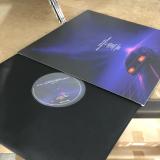
And of course we need to talk about Keith Davis’ cover for Roots. Perhaps the coolest record cover of all time? Certainly one of the most bonkers. Just your run-of-the-mill high-gloss, acid-tinged airbrush dystopian/utopian living-room party scene. Consider this your chemical flashback trigger warning.
Front-and-centre the hip-to-death green robot holds court with their giant ball of yellow barbwire wool, hooked up to… something(?) being teased out from under the stairs (probably best not to ask). A thoroughly zoned-out, long-legged Pop Art party-goer lounges half-plugged in to the painting behind her as a pair of legs flail into shot from the the top of the stairs opposite. We won’t even begin to guess what the chap’s up to in the middle, but the view out of the windows is rather nice, and someone’s already got the hoover out ready to tidy up. All of the Nucleus sleeves are something special, but this particular one? Crikey.
This Be With edition of Roots has been re-mastered from the original Vertigo master tapes, Simon Francis’ mastering working together with Pete Norman’s cut to weave their usual magic with these wonderful recordings. The crazy cover has been restored at Be With HQ as the finishing touch to this long overdue re-issue.
Locust, das Projekt des legendären englischen Elektronikmusikers Mark Van Hoen, freut sich, das neue Album „Spectral+“ über TODO Records zu veröffentlichen. „Spectral+“ ist eine vielseitige, einzigartig ausgefallene Sammlung, die klassische Einflüsse wie Giorgio Moroder, Brian Eno, My Bloody Valentine und Boards of Canada als Ausgangspunkte für neue Wege nutzt. Mit dabei sind Musiker wie Neil Halstead von Slowdive, Olive Kimoto, Natasha Morrow, Nick Holton von Black Hearted Brother und Griff Spex, dessen industriell-elektronischer Touch dem Album eine unerwartete und mitreißende Dimension verleiht.
Die Ankündigung des Albums folgt auf große Vorfreude seitens der Fans, seit Van Hoen eine neue Live-Besetzung zusammengestellt hat, mit der er seit September an ausgewählten Terminen in den USA neues Material uraufführt – darunter als Headliner beim „Elsewhere“-Takeover von Perfectly Imperfect, beim „And Always Forever Festival“ und beim „Flower Moon Festival“ –, was ihre ersten Live-Auftritte seit ihrer Zeit als Vorband von Massive Attack in den 90er Jahren markiert.
In den letzten Jahren hat das Projekt eine beeindruckende Kult-Anhängerschaft aufgebaut. Das Publikum besteht nicht nur aus denen, die sich an seine Tourneen mit Autechre und Aphex Twin erinnern, sondern auch aus einer aufstrebenden jüngeren Generation, die Locust durch das Trip-Hop-Revival und die Präsenz in den sozialen Medien entdeckt hat.
V Don and Da$h are not strangers to each other. Connecting in the past for memorable tracks like “Glad Bag”, “Redrum”, and “Now or Never”. They picked right up where they left off with a menacing five track EP back in July. “5 Deadly Venoms” put V Don’s expert production and the many flows of Da$h on front street. A duo that has always held themselves to high standards.
Back in November 2015, after years of collaborations with such as Ghostface Killah, Raekwon, Obie Trice, Sean Price, Kool G Rap, Eternia and countless others, Toronto-based producer MoSS released his debut producer album entitled "Marching To The Sound Of My Own Drum". Since the beginning of his career, the Canadian beatsmith, record digger and music connoisseur has been making a name for himself with his signature sound and on this record he gives an amazing display of what he's capable of doing being backed up by an all stars team that features AZ, Havoc, Slum Village, Onyx, Inspectah Deck, Ill Bill, Skyzoo, Guilty Simpson and 20+ other legendary MC's. A few years after its original release, we've decided to team up with MoSS to bring you this masterpiece on wax and, for the occasion, he's also added an unreleased bonus track called "We Here" that features Smif-N-Wessun that, together with "Emotional Redux", we've put on a 7" together with its instrumental. Limited edition of 500 hand-numbered copies, with the first 200 pressed on orange/black A-side B-side vinyl, and 300 on black vinyl.
BONUS 7”
A1. Emotional Redux (feat. Big Gov, Guilty Simpson, Jon Connor, Vstylez, Willie The Kid)
B1. We Here (feat. Smif-N-Wessun) UNRELEASED
B2. We Here (Instrumental)
The sun sat high above the desert outside Joshua Tree on October 17, 2024, baking the rocks and shrubbery outside the Farrington Observatory as a small group of invited guests ventured up a steep path towards the telescope. Kyle Simon, the artist and printmaker who founded the Observatory, was standing outside the print studio sat below the towering cylindrical building, greeting friends alongside his wife Sarah and lifelong friend Brian Weitz, the musician widely known as Geologist of Animal Collective. Simon and Weitz had spent the previous day testing and retesting a system that would transform the light of the oncoming full moon captured by the gigantic telescope into a signal that would modulate the control voltage of Weitz’s modular synthesizer. As the sun dipped below the horizon line, the audience gathered on a small wooden patio surrounded by speakers while Weitz readied himself behind the array of patches and knobs. Simon addressed the group, presenting the history of The Sirens, the sonic exploration of the night sky’s mystical and scientific significance about to unfold.
The music conjured under the Hunter’s Moon that night is now documented on this first official release of The Sirens, which was conceived by Simon and Weitz as a recurring performance piece and sound installation. Over a decade ago, Simon began immersing himself in literature on humanity’s sonic relationship to the celestial realm, including Homer’s Odyssey, Plato’s “Spindle of Necessity, ” Kepler’s Harmonices Mundi, and the field of astroseismology. He fitted homemade telescopes with photodiodes and optical sensors to make the images audible, finding latent patterns in the noisy sonic signals he began receiving from the stars. With Weitz, the process expanded as the signal was routed through an analog amplifier and set to modulate the pitch, filter, and other elements of his synthesizer. Together they developed a system of improvisation, with Simon adjusting the telescope to change the intensity of the light based on its relationship with the moon’s position (imagine a theremin player moving their hands in subtle, meaningful motion), and Weitz responding to that input in real time: bending it, amplifying it, or letting it stand on its own. The duo debuted the piece at the Integretron in Joshua Tree in 2018, providing a crucial proof of concept for the performance at Farrington featured here.
The first thing the listener hears on The Sirens is the opening of Farrington Observatory, the cranking of motor and metal. As the lens of the telescope is exposed to the evening air, a wavering drone emerges from the synthesizer, flickering at the margins, the tuning of the oscillators adjusting to the rapidly cooling desert air. The piece progresses and the drone becomes a luminous, spherical constant, bathing the listener in pure tone as Weitz draws out harmonically ambiguous melodies that spiral upwards. Electronics crackle and convulse, coalescing into dense dissonance before widening out into an open octave. Just as the moon orbits the Earth and the stars shift as the planet rotates, so each sonic element appears in flux, interrelationships slowly forming and falling away. Divided into two parts, The Sirens flows as a continuous conversation between the artists and the starlight completing its thousand-year journey across the galaxy.
The Sirens belongs primarily to a lineage beyond music: of sea captains navigating by looking skyward, of astrophysicists studying the formation of the Milky Way, of the modern myths of werewolves, of the stories embedded in constellations. As Simon writes in the album’s extensive liner notes, “These stories and explorations reveal a collective yearning to become conscious of our connection to the universe, our deep-seated desire to understand how we fit into it all.” This music underscores the history of the night sky as the place where poetry and science find common ground, where exploration hinges on the imagination. Driven by curiosity and ingenuity, Weitz and Simon look up and wonder.
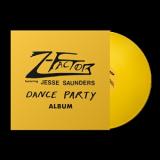
Proto-Jackin'-Hip-House/Punk-Funk von der ,Third Coast". Ursprünglich erschienen im Jahr 1984 auf dem für die Chicagoer Szene prägenden Mitchball-Label: Das ,Dance Party Album" von Z-Factor ist das Werk, mit dem die Kindheitsfreunde Jesse Saunders und Vince Lawrence die 909 für das Warehouse, WB MX und darüber hinaus neu erfanden. Kommen Sie wegen der spacigen, Lo-Fi-Italo-Synths, bleiben Sie wegen der mit minimalem Budget produzierten, vier-auf-den-Boden-Drum-Machine-Klänge.
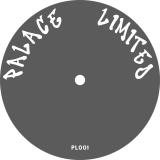
Palace Limited presents it’s inaugural release from the early UK tech-house duo, Lo-Kee aka Julian Phethean (aka Mr Cenz) & Rafael de Swarte. The record features long awaited represses of three highly sought-after Lo-Kee records from 1998 - 2003 compiled onto a single 12”.
The record features A1 from Organised Sound 005 titled ‘Second Sight’, A1 ‘Human Affects’ and B1 ‘Earth Humm’ from Organised Sound 003 and the B2 from Affected Music 002. Seminal early UK fusion of house and techno with a minimalist approach which laid the foundations for much that followed.
Written and produced by Julian Phethean & Rafael de Swarte.
In 1990, Pop Will Eat Itself released their third studio album. The British alternative rock band drew on many popular genres of the time, making them their own. Hip hop, industrial rock and alternative dance are all featured on Cure For Sanity.
The band also enjoyed success in the UK Singles Chart, with four singles reaching the top 40.
This album contains 1991 reissue of the album and is now available on a 2LP set for the first time.
Cure For Sanity is available as a limited edition on purple coloured vinyl and includes an insert.
The small print:
• Due to rights restrictions, this item is only available for customers in Europe.
Zum 50-jährigen Jubiläum der „Muppet Show“ singt und swingt Seth MacFarlane auf „Sings The Muppets“
beliebte Songs aus der „Muppet Show“, den Muppet-Filmen und der „Sesamstraße“ im Stil opulenter orchestraler Jazzstandards neu. MacFarlane, preisgekrönter Schöpfer von „Family Guy“ und gefeierter Sänger
im Bereich Swing und Jazz, verbindet dabei seine Leidenschaft für das klassische American Songbook mit
diesem legendären Repertoire. Mit Songs von Joe Raposo, Paul Williams und Jeff Moss sowie Arrangements von Andrew Cottee entstand das Album unter der Leitung von Dirigent John Wilson mit einem
erstklassigen Orchester im Studio der Skywalker Ranch. Inspiriert von legendären Arrangeuren wie Nelson
Riddle und Billy May, feiert das Album den warmherzigen Humor und die zeitlose Magie der Muppet-Songs.
It's hard to explain an album when one listen is enough. All the more so with MaMaMa: there's no room to stay passive. Listening to his new album, EST, means immersing yourself in an atmosphere that's softly psychedelic, comforting and organic all at once. A dreamy, electronic pop that proves this Strasbourg-at-heart, Paris-by-adoption musician, arranger, singer, songwriter and producer never stops reinventing himself. After changing his name — formerly Petit Prince — and delivering two critically acclaimed albums ("MaMaMa-gnificent." / "Hooks you carry in your head for a long time" / "sumptuous arrangements"), Elliott Diener now offers an even more sincere record. Real songs in French, after two albums where production sometimes took up all the space: "when you make heavily produced music, once you strip away the layers of sound, there's no fruit left underneath. On EST, I don't need makeup for the songs to work," he admits.
That's what this new album is about: the song and the French language first, then the pleasure of sound. An album less concerned with talking about its own making, more inhabited, more embodied, within a contemporary folklore. With this new album, don't expect to be bored: EST is his best record yet.
No pretense
Entirely conceived in his studio in Pantin — a room of his own, at last — imagined as a space free of any daydream, open to every sonic landscape, MaMaMa offers a record that's both hazy and downy soft. Often composed very early in the morning, it has become nostalgic without being dark, melancholic without being sad, with a few lineages showing through: Flavien Berger, Moodoïd, Feu! Chatterton for the taste for words and unease, Mount Kimbie for the approach to sound and rhythm. Unsurprising, given that EST was finalized with the British duo's producer. Live, MaMaMa is preparing a show in the style of Nicolas Jaar or UTO. Hypnotic and immersive.
The most liberating thing is that EST is an album without pretense. With it, we move through perseverance (in Aussi loin qu'il tiendra debout), the small arrangements we make to avoid facing reality (Tout sauf la vérité), and the fragility of bonds we thought were solid (Si bien ensemble). We also touch on lasting conflicts with the people we love (Anywhere You Are, There You Are), misunderstanding (Elle me parle une langue), and the erosion of friendships (S'envoler). EST draws an intimate and redemptive map of human relationships, in a body of work that's both lucid and sensitive — like when he also addresses social masks such as filial love (in Beau garçon, dedicated to his son) or relationships that have become impossible.
"It's really the album that sounds most like me, in terms of sonic landscape," Elliott points out. A record that rises above the noise of an imperfect, shifting world — like us — joyful in its words, liberating in its production. A true gem.
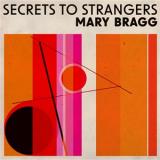
Die hochgeschätzte Sängerin, Songwriterin und Produzentin Mary Bragg aus Nashville legt ihr erstes neues Album seit über vier Jahren vor, das in den FAME Studios in Muscle Shoals zusammen mit dem Grammy-Gewinner John Paul White und dem gefeierten Produzenten, Toningenieur und Keyboarder Ben Tanner aufgenommen wurde. Jeder Song ist im Grunde ein Geheimnis, das man einem Fremden anvertraut. Wenn die Wahrheit klar wird, erkennt sich der Fremde darin wieder. Mit ihrem sechsten Album in voller Länge präsentiert Bragg der Außenwelt eine Sammlung zutiefst persönlicher Geschichten. Mary Bragg wird von einer Begleitband aus Größen des Southern Rock unterstützt, darunter Chad Gamble (Jason Isbell & the 400 Unit), Zac Cockrell (Alabama Shakes) und Jay Gonzalez (Drive-By Truckers), und liefert ein Album, das zugleich weitreichend und intim ist. Secrets to Strangers" ist ihr eindrucksvollster Beweis für Seele, Verletzlichkeit und hart erkämpftes Selbstbewusstsein, getragen von prägnantem Songwriting und unbestreitbarer Kunstfertigkeit. Auch wenn frühere Beiträge in Rolling Stone, NPR und Forbes bereits für sie gesprochen haben, zeigt sich Bragg hier in absoluter Bestform.
For more than 20 years, every CASPIAN album has been driven by a desire to stretch boundaries — a relentless ambition that's resulted in one of post-rock's most revered catalogs and established the Massachusetts quintet as an enduring, global force in the genre's modern era. On CASPIAN, the band’s first album in six years and debut for Wax Bodega, the more unexpected way forward was to stop searching for what they hadn’t yet done and instead trust what had defined them from the beginning.
The six-song, 39-minute effort draws freely from the musical vocabulary the band have spent their career writing: evocative melodic themes, dense textures, swelling crescendos and crushing heaviness that rolls in like a slow-moving storm on the horizon. But they still find new possibilities within those familiar contours, allowing patient development and repetition to carry as much weight as surprise. The nine-minute “Remain” turns a recurring melody into a sweeping study in tension and release, while “No One Left to Tell” layers subtle shifts around a hypnotic tremolo figure and “A Great Fire” sends serpentine guitars crashing into buzzsaw riffs. Even the graceful 3/4-time closer “Waltz for the End,” completed in a half-hour burst of inspiration, reflects the quiet confidence of five musicians comfortable enough in their skin to resist tearing everything down for the sake of reinvention, even as the circumstances surrounding them change dramatically.
Produced by François Tétaz and Luke Howard and recorded primarily at Melbourne's Synth Temple, Tina Arena's Way Of The World reimagines “True Faith” (New Order), “Way of the World” (Max Q / Michael Hutchence), “Enjoy the Silence” (Depeche Mode), “Ordinary World” (Duran Duran), “Torno Bambina” (Ada Mori) and “Cayendo” (Frank Ocean) through stunning orchestral arrangements, prepared piano, analogue synthesis and electronic textures.
Rather than traditional cover versions, these are complete artistic reimaginings that reaffirm Tina Arena as one of Australia's most expressive and enduring vocalists. Of first single “True Faith”, Tina says: “Making the deliberate choice to focus on the lyric of true faith was musically revelatory for me. It presented a blank musical canvas with endless vulnerability and space for me to explore.”
François Tétaz, a Grammy and ARIA-winning producer known for his work with Gotye, Kimbra and Architecture in Helsinki, contributes synthesisers, Rhodes, prepared piano and drum machines throughout, while pianist and composer Luke Howard shapes the EP's restrained, cinematic language. The pair are joined by an ensemble including the Budapest Art Orchestra, Peter Knight, James Rushford, Mindy Meng Wang and orchestrator Felix Watson, giving the collection its rich, orchestral backbone.
The EP announcement lands amid a landmark 50-year career anniversary for Tina — one of Australia's highest-selling artists of all time, having sold more than 10 million albums worldwide.
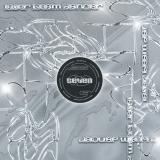
Norman Gervais and Charles Bals return after last year’s Transcoastal compilation with their first project for the Italian label Periodica Records and its newly founded imprint, Periodica International.
The concept behind SiRENE 89 is quite particular and took six years to develop. It is presented as the live recording of one long evening, with different bands taking the stage one after another on the terrace of a Mediterranean holiday resort in 1989, inspired by the places Charles and Norm remember from their summer holidays around that time.
The songs were recorded between 1982 and 1993 and gathered from small-time artists, beach-club vagabonds, local micro-labels, library records and privately released tapes. The music moves lightly between mystical ballads, digital samba and loose, sunburnt dance songs, carried by drum machines, not-quite-tuned guitars and college-band voices.
The audience on the terrace remains quietly present throughout, joining the tracks into one continuous, partly improvised set. By the end, it feels less like a compilation and more like a place where you have spent the night, proving that charm can carry further than perfection.
Another Day on Earth (2005) was Brian Eno’s first song-based album since Nerve Net in1992, and remains one of his most acclaimed solo records. It featured a young Jon Hopkins alongside long-standing collaborators Nell Catchpole, J. Peter Schwalm and Leo Abrahams, with lyrics co-written by Michel Faber and Danny Hillis. The album was launched with a public conversation between Eno and the writer Michael Bracewell at the Marble Palace in St Petersburg and its cover photograph was taken by Eno himself in Beijing, during his first Chinese audio installation in the city’s Ritan Park. Following Warner Bros’ purchase of Hannibal Records in 2006, the licence for Another Day on Earth lapsed in 2008 and the album has been unavailable outside Japan ever since.
“Grand, sweeping choruses ... that insinuate themselves deep into the memory, but also moments of whispering intimacy - a wistful, haunting record that runs warm with understated emotion. ★★★★★” - Matthew Collin, The Observer (2005)
7CIRCLE - Fracture EP - DTR005 Limited Edition, Hand Numbered, 180gr Silver Coloured Vinyl 7CIRCLE returns with Fracture EP, the fifth release in the DTR series, exploring techno through structure, tension and controlled disruption. Following his previous work released through the UNTOLD SERIES on cassette, the new EP brings together two original productions and two remixes, each approaching the material from a distinct perspective. “Fracture” builds a rigid rhythmic framework driven by repetition and forward momentum, while “Broken Morning”introduces a more melodic and atmospheric dimension. Conrad Van Orton takes “Fracture” into darker and more forceful territory, intensifying its physical impact while maintaining its relentless drive. Answer Code Request reshapes “Broken Morning” into a deeper and more immersive interpretation, expanding its melodic and atmospheric elements while preserving its hypnotic core. Fracture EP is released as DTR005 on strictly limited, hand-numbered 180gr silver coloured vinyl, housed in a coloured sleeve.
For more than 20 years, every CASPIAN album has been driven by a desire to stretch boundaries — a relentless ambition that's resulted in one of post-rock's most revered catalogs and established the Massachusetts quintet as an enduring, global force in the genre's modern era. On CASPIAN, the band’s first album in six years and debut for Wax Bodega, the more unexpected way forward was to stop searching for what they hadn’t yet done and instead trust what had defined them from the beginning.
The six-song, 39-minute effort draws freely from the musical vocabulary the band have spent their career writing: evocative melodic themes, dense textures, swelling crescendos and crushing heaviness that rolls in like a slow-moving storm on the horizon. But they still find new possibilities within those familiar contours, allowing patient development and repetition to carry as much weight as surprise. The nine-minute “Remain” turns a recurring melody into a sweeping study in tension and release, while “No One Left to Tell” layers subtle shifts around a hypnotic tremolo figure and “A Great Fire” sends serpentine guitars crashing into buzzsaw riffs. Even the graceful 3/4-time closer “Waltz for the End,” completed in a half-hour burst of inspiration, reflects the quiet confidence of five musicians comfortable enough in their skin to resist tearing everything down for the sake of reinvention, even as the circumstances surrounding them change dramatically.
Label co-founder CRYME releases his third solo EP on the Berlin-based imprint, paving the way for a new, more subtle direction. Across these four tracks we find the artist diving deeper into a sound he's been shaping over the last few months. More adventurous, experimental, still driving and dancefloor-focused. This one is for the early mornings at festivals - that moment when the sunlight starts to break through the fog and the night turns into day. From bubbly, techy and quirky minimal on the A-side to more dubbed and spaced-out cuts on the B-side with a more atmospheric feel. Overall complex music full of movement that's still easy to listen to but keeps the crowd moving.