Finally, the long awaited third part of the EXTRAWELT trilogy on Cocoon Recordings is on the way, and with this advance 12 release of 'Fear Of An Extra Planet (Blackout)' and 'Hail The Whale' we are given an incredibly strong first impression of EXTRAWELT's third Album. "Fear Of An Extra Planet (Blackout)' in particular, has the potential to become a monumental club hit. The title track from the new EXTRAWELT album is, strictly speaking, more than just a maxi-version, it's almost a separate EXTRAWELT remix of the original, fully optimized for the clubs. Arne Schaffhausen and Wayan Raabe have let loose a real bass and drum monster on us. From the very first second, the doubled-up kick bursts from the bassbins to signal the journey into this new EXTRAWELT adventure is underway. The acid-heavy bassline completes the pressure-packed arrangement until the track suddenly stops dead. Sometimes it's just so simple and effective to completely hit the brakes before re-energizing and building up to full speed again. The 12 version of 'Fear Of An Extra Planet (Blackout) 'is a powerful techno bomb and for us - one of the highlights of the year! The exclusive, non-album cut 'Hail the Whale", starts off a little more subdued. However, the cool old-skool cowbell intro with light Chicago house touches soon develops an energy through a driving electro bassline that shakes us from the initial calm. Although 'Hail the Whale' doesn't appear on the album, it perfectly represents the science fiction sound aesthetics on EXTRAWELT's new LP. Sci-fi FX, distorted vocals and dramatic synth lines envelop us in an extremely intense soundtrack atmosphere. From warp speed space travel to misty wastelands on strange planets and breathtaking pursuit scenes, 'Hail the Whale' conjures up all manner of images as it hammers from the speakers. To be honest, the notion of 'grand cinema' has already been used too
Поиск:signal
Все
Originally released by Legowelt's Strange Life on a CD-r back in 2007, 'Mons Testaceum' finally has its first vinyl press on Mannequin Records.
First full length released by Heinrich Dressel aka Valerio Lombardozzi, boss of the mighty Minimal Rome, 'Mons Testaceum' together with 'Escape From The Hill' and 'Completion Of The Amphoras Table ' represented the first of a trilogy dedicated to the 'Monte Testaccio', an artificial mound in Rome composed almost entirely of 'testae', fragments of broken amphorae dating from the time of the Roman Empire.
'Mons Testaceum' is the second appearance of Valerio Lombardozzi on Mannequin Records, after the noirish atmospheric 'Sighing Melodies Thru The Graves' mini lp released in 2012 as MNQ 027 on white vinyl.
The sound of the album is moving somewhere hidden between Fabio Frizzi ('Paura Nella Città Dei Morti Viventi') and Goblin ('Buio Omega'), thanks the extensive use of the Italian - better, Roman - legendary synthesizer Elka Synthex in every single track, with touches of the Berlin electronic school, 'mixed with irresistable futuristic soulfunk synth solos (Kool and the Gang goes cosmic!)'.
Impressive stuff, which influenced deeply the sound of Mannequin Records itself during the years after it was released. TIP! Mastered by Andrea Merlini.
Graphic design by Dave Grave and Alessandro Adriani.
Limited Edition of 400 copies.
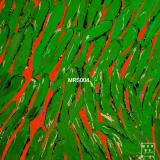
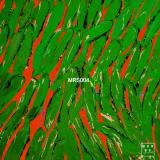
Outstanding monimal grooves! In Spanish, Salida means “exit”, but in this EP, it becomes a metaphor for emergence. Not a way out, but a way through. From beneath layered emotions and dormant states, a new force begins to pulse. Textures rise from the underlayer. Grooves fracture silence. Each track is a signal of rebirth, slow, deep, inevitable. The artwork reflects this moment. From cracks of vivid red, new life pushes forward in green. It’s not escape. It’s transformation. This is Salida, the first breath of something real.
Rave-o-lution - Teknology EP (HDK-3)is a manifesto disguised in project.
Forged in the raw energy of the underground, Rave-o-lution - Teknology EP explores the connection between machine, movement and collective consciousness. This is not nostalgia, it’s forward motion. Teknology as a tool, rave as a language, evolution as a necessity.
Across four different versions, the same core signal mutates and adapts, shifting pressure, tempo and density while staying locked to its original frequency. Each version is built for a different moment on the floor, from deep hypnosis to pure mechanical drive.
Sometimes a pad emerges in the break, a moment of suspension where emotion cuts through the structure. A brief opening. A breath inside the system. Proof that even the hardest teknology carries feeling beneath the steel.
HDK-3 is made for soundsystems at full power, bodies in sync, and minds ready to disconnect from the surface and dive deeper.
No compromise.
No decoration.
Just rave — evolved.
- Moonside
- On Our Own Time
- Blum House
- Virtue Signaling
- Help Is On The Way
- High School
- Lay Low
- Selfish Soother
- Poppi
- The Me (I Know)
- Me Time
- Beyond The Thicket
- Fight For Frequency
- Circling The Dream
Winnies Welt war nicht immer einfach. Manche sagen, er hätte berühmt werden können, aber es gab Probleme. Er hatte kurz Erfolg, aber das Leben kam ihm dazwischen. ,Manche Leute kümmern sich zu sehr. Ich glaube, das nennt man Liebe." Also lag es an Winston Hightower, die Chance zu ergreifen, sie festzuhalten und sich Gehör zu verschaffen. Ein Mann, der den Sound des amerikanischen Lofi liebt. Was befindet sich im Aschenbecher von Winston Hightowers "Day in the Life"? 14 Songs, die einem wehmütigen Herzen eine unbeschwerte Tarnung verleihen - es strahlt durch und durch. 33 RPM. Ein Pianist, der kein Klavier spielen kann und seine Melodien auf der Gitarre transponiert. Angenehme Klänge, überlagert von Gesprächen mit sich selbst. Was sieht dieser Ohio Player, wenn er in den Spiegel schaut? Nudge Squidfish? Daniel Johnson? Studio One Oldies Comps? Nach über 126 Songs auf Band sind wir immer noch dabei, das herauszufinden.
Faitiche welcomes a new artist: Christina Kubisch belongs to the first generation of sound artists. Her practice ranges from performances, concerts, to works with video and visual art, but she is best known for her sound installations and electro-acoustic compositions.
TUNING brings together three pieces by Christina Kubisch from different periods of her oeuvre. What they have in common is the way they transform sound phenomena originally considered “non-music” into compositions.
Jan Jelinek: Gaming in Silence (2024) is the most recent work on this compilation. It’s a collage of electromagnetic waves, voice, and abstract sound textures. How did this combination come about?
Christina Kubisch: Gaming was commissioned as a fixed-media composition for the Sound Dome at ZKM Karlsruhe. Since Resonances: The Electromagnetic Bodies Project (2005), I’ve been making recordings in the old and new server rooms at the ZKM and in their permanent collection of historical computer games. Computer games like Asteroids (Atari, 1979) and Poly-Play (VEB Polytechnik, 1986) have specially generated analogue electromagnetic waves that interest me in particular on account of their density, rhythms and textures. I originally studied painting and to me the work of composition often feels like painting an abstract picture. I alter my source material as little as possible, layering and overlapping until a distinctive sound space emerges. In recent pieces, I sometimes combine magnetic waves with field recordings or live instruments. In Gaming it’s my recording of a Chinese song about silence.
JJ: Two persons walking through a street in Madrid (2004) is a recording from your Electrical Walks series. Here we should give a brief explanation of one of your best known works: participants in an Electrical Walk move through public spaces wearing prepared headphones that allow them to receive electromagnetic waves from their surroundings – for example from security gates, ATMs or neon signs. They discover a situation that normally is inaudible to the human ear and they can actively shape it by choreographing their movements. I really admire this piece, not least because there’s no clear dividing line between participants and artist. What exactly do we hear in Two persons walking through a street in Madrid (2004)?
CK: With this early work, I wanted to understand what is heard by people participating in an Electrical Walk in the same place but moving in different ways. The Spanish composer Miguel Alvarez-Fernàndez and I set off from opposite ends of a major shopping street in Madrid, met briefly in the middle, and then continued to the end. We both recorded our walks and I then layered them over one another. You might call it a work of electromagnetic conceptualism.
JJ: Diapason (2009 version) is an installation that plays a composition based on sounds from fifteen tuning forks. This setting is audible in the recording: there’s no dramatic arc, no beginning or end – instead, it recalls a piece of aleatoric music focussing on the decay phase. How did you come to make this work and could you tell us something about your compositional method?
CK: Diapason is part of a series of three pieces that deal with “non-instruments” or instruments that no longer exist: electrical mine bells used to send signals to the workers underground; a historical glass harmonica originally used for medicinal purposes; and tuning forks that were used by doctors to test people’s hearing. All of these methods are no longer in use. The sound of the tuning forks, audible only if held close to the ear, was recorded at the electronic studio at Berlin’s Technical University in such a way that even their decay remained audible. The frequencies range between 64 and 2048 Hertz and they can be adjusted at micro-intervals using small movable weights. The sequence and the duration of the pauses are dictated by chance and were not defined in advance. The 2009 version was created for an installation in the historic Holy Cross Church (Korskirken) in Bergen. Visitors could enter and leave the space at any time, deciding for themselves where and for how long they wished to listen to the sounds played back over an array of small loudspeakers placed on the floor of the apse.
Credits:
Gaming in Silence: commission of the ZKM/Hertzlab, Karlsruhe 2023
elektronic sound processing: Tom Thiel
sound engineering and mixing: Eckehard Güther
Diapason: produced at Elektronisches Studio of TU Berlin
rearrangement: Eckehard Güther
Christina Kubisch, published by Edition Christina Kubisch / Random Musick Publishing
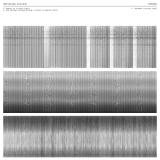
image front: Transitionen 2021 by C. Kubisch, sonagrams of electronic waves (courtesy: Galerie Mazzoli Berlin)
image back: Diapason Tuning Fork, property of Folkmar Hein, Photo: Archiv Christina Kubisch
design by Tim Tetzner
mastered by Giuseppe Ielasi
Thanks to Miguel Álvarez-Fernández, Folkmar Hein, Dominik Kautz and Mario Mazzoli
Niels Orens is an electronic producer and live performer working at the intersection of acoustic instrumentation and immersive electronic sound design, creating deeply textural compositions that prioritize atmosphere, space, and emotional weight overtraditional song structures. "Never Again EP" expands on the introspective tone of slow night/s, pushing further into rhythm and sonic detail while exploring themes of alienation, loneliness, and quiet internal violence.
After successful collaborations with Max Cooper, the new EP marks a pivotal moment in Orens' evolution. "Never Again EP" forms the foundation of a new live chapter currently unfolding across Europe, while signaling a deeper dive into experimentation, texture, and the evolving dialogue between acoustic sound and electronic manipulation.
- Amaliah - No Way Out
- Call Super - I Love Like Your Men
- Chaos In The Cbd - Orange Blank
- Charlie Dark - Foundation And History
- Dreamcastmoe - In And Out
- Isaac Carter - Take U There
- Joe Armon-Jones Maxwell Owin - Se Discoteque
- Kink Feat. Rachel Row - Its Already Here
- Manami - Scramble Clip
- Marcellus Pittman - #Eastsidechampions
- Mr. Redley Transatlantic Era
- Nat Wendell - Tell Me
- Niks - Lilac Skies
- Suze Ijó - Up There
- Yu Su - Flourish
GALA announce Ten Years of GALA – a compilation marking a decade of independent culture
Ten Years of GALA is both an archive and a horizon: a reflection on where GALA has come from, and a signal of what lies ahead.
Founded in 2016 as a one-day gathering in South London, GALA has grown into a global point of reference for dancers, artists and collectives drawn together by a shared commitment to independence, collaboration and underground music culture. Rather than charting success through scale alone, the festival has consistently prioritised integrity, community and musical curiosity – values that underpin this release.
Spanning fifteen tracks, Ten Years of GALA unfolds as a considered journey. It opens with an intimate spoken contribution from Charlie Dark, grounding the compilation firmly in GALA’s home of Peckham before gradually expanding outward into fuller, club-focused terrain. From there, the record moves between moods and tempos, tracing a path from reflective moments into the physical language of the dancefloor.
The compilation brings together longtime friends of the festival alongside newer voices drawn into its orbit in recent years. Each artist contributes a distinct perspective, but collectively the tracks form a coherent portrait – not of a single sound, but of a shared ethos shaped over ten years of gatherings, collaborations and days spent dancing together.
Rather than a retrospective in the conventional sense, Ten Years of GALA functions as a living document. It captures fragments of past editions, scenes and relationships, while remaining firmly oriented toward the future. These are not museum pieces, but records designed to be played, shared and folded back into the spaces from which they came.
Together, the compilation holds a piece of GALA’s first decade – not as a closed chapter, but as a foundation for what comes next.
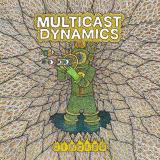
Several years after the release of ‘Metamorphosis’ (with Sid Hille), Multicast Dynamics (Samuel van Dijk) reemerges on Astral Industries with ‘Circles’ - an enchanting two-part work venturing into deep unconscious realms. Sonic landscapes unfold in a sequence of hidden spaces and intimate revelations, featuring detailed sound design and rich thematic content.
Circle One initiates the process, opening gently with glassy drones and the patter of distant voices. A faint light shimmers through swirling pools of liquid memories and melting forms. The atmosphere builds, and everything is engulfed in the act of transfiguration.
Passing through the threshold, Circle Two traverses further into cavernous territories. Boundless drifting soon becomes a gravitational pull toward something deeper. Submitted to the powerful undercurrent, incoming primordial pulsations signal a quest that reaches its fated culmination.
Perhaps the revelation of something long-lost, entering the Circle eludes to that which on the surface remains hidden, yet its rediscovery inevitable.
- A1: Even God Gets Stuck In Devotion
- A2: Plenty For All The Masses
- A3: Plenty For All Of Lifes Messes
- A4: Even God Gets Stuck In Devotion Featuring Zach Phillips
- A5: Garden
- A6: Photography The Hard Way
- A7: Why I Remember Each Day Of Summer
- B1: Ln60 - Jupiter Opposite Jupiter
- B2: Rose Of Mysterious Union
- B3: A Car With No Lights On
- B4: Her Masters Voice
- B5: Memory Always Sees The Loved One Smaller
- B6: In Filth Your Mystery Is Kingdom
- B7: To Live Happily
Cassette[16,77 €]
Nicaraguan-American artist Dagmar Zuniga makes music that feels both intimate and expansive: songs drift like disrupted signals, carried by harmony, tape hiss, and a strong sense of touch. Her debut solo album in filth your mystery is kingdom / far smile peasant in yellow music — written and recorded in New York, Norway, and Athens, Georgia over a period of five years on her longtime companion, the Tascam 424 — was uploaded to Bandcamp and YouTube in January 2025, quickly garnering over two hundred thousand views and the attention of artists such as Mount Eerie, who invited her to tour with them that summer. This year, what was once a jewel of tapped-in algorithms and message boards will meet the world at large, with in filth arriving digitally on March 4, and physically on April 10, via AD 93.
in filth is an atmospheric, devotional collage where one voice multiplies into a chorus of selves, sometimes delicate, sometimes severe; an effect created by Zuniga’s masterful layering of texture and complex harmonies. Synths glitter out like spears of sunlight from beneath clouds of moody, time-distorted guitars, and songs spin about themselves like tightly-wound music boxes, making use of a kind of hypnotic repetition, before melting apart into their components or slipping into the following track.
Zuniga began recording to tape as a teenager, drawn to the physicality of the medium — how a tape recording is fragile, mutable, and alive. Though her ethereal sound may draw easy comparisons to other female pioneers of psychedelic folk, she is influenced just as much by the darker sounds of Syd Barrett and The Fall. Like Barrett, Zuniga is a painter, and she is interested not only in recording music but in creating a full, self-contained artistic universe: she creates her own artwork, merchandise, music videos, and bootleg tapes of new and unfinished music that she exclusively sells at live shows (“If something is not material, it does not exist,” she insists). Her world has not gone unvisited, garnering her a monthly show on NTS Radio ‘World of Pain’, as well as a forthcoming appearance at Rewire Festival in April 2026.
Though Zuniga’s work explores themes of solitude and suffering, the suffering in her songs is not borrowed or displayed; it is held, then opened outward through empathy — an exacting practice of attention that insists on shared ground. Solitude, in her work, is not withdrawal but a starting point for connection. Likewise, over time, her recording process has become increasingly communal, with in filth featuring musicians Hayes Hoey, Austyn Wohlers (Tomato Flower), and Zach Phillips (Fievel Is Glauque). Newer recordings widen the circle even more. For Zuniga, collaboration is a way to “find a place between worlds,” echoing Badiou’s idea of love as a vision refracted through the prism of difference. Meaning emerges there — in the space between voices, between artist and listener. “I hope my music helps people work through difficult experiences,” she says. “The same way it helps me.”
- Even God Gets Stuck In Devotion
- Plenty For All The Masses
- Plenty For All Of Lifes Messes
- Even God Gets Stuck In Devotion Featuring Zach Phillips
- Garden
- Photography The Hard Way
- Why I Remember Each Day Of Summer
- LN60: Jupiter Opposite Jupiter
- Rose Of Mysterious Union
- A Car With No Lights On
- Her Masters Voice
- Memory Always Sees The Loved One Smaller
- In Filth Your Mystery Is Kingdom
- To Live Happily
COLOURED VINYL[23,11 €]
Nicaraguan-American artist Dagmar Zuniga makes music that feels both intimate and expansive: songs drift like disrupted signals, carried by harmony, tape hiss, and a strong sense of touch. Her debut solo album in filth your mystery is kingdom / far smile peasant in yellow music — written and recorded in New York, Norway, and Athens, Georgia over a period of five years on her longtime companion, the Tascam 424 — was uploaded to Bandcamp and YouTube in January 2025, quickly garnering over two hundred thousand views and the attention of artists such as Mount Eerie, who invited her to tour with them that summer. This year, what was once a jewel of tapped-in algorithms and message boards will meet the world at large, with in filth arriving digitally on March 4, and physically on April 10, via AD 93.
in filth is an atmospheric, devotional collage where one voice multiplies into a chorus of selves, sometimes delicate, sometimes severe; an effect created by Zuniga’s masterful layering of texture and complex harmonies. Synths glitter out like spears of sunlight from beneath clouds of moody, time-distorted guitars, and songs spin about themselves like tightly-wound music boxes, making use of a kind of hypnotic repetition, before melting apart into their components or slipping into the following track.
Zuniga began recording to tape as a teenager, drawn to the physicality of the medium — how a tape recording is fragile, mutable, and alive. Though her ethereal sound may draw easy comparisons to other female pioneers of psychedelic folk, she is influenced just as much by the darker sounds of Syd Barrett and The Fall. Like Barrett, Zuniga is a painter, and she is interested not only in recording music but in creating a full, self-contained artistic universe: she creates her own artwork, merchandise, music videos, and bootleg tapes of new and unfinished music that she exclusively sells at live shows (“If something is not material, it does not exist,” she insists). Her world has not gone unvisited, garnering her a monthly show on NTS Radio ‘World of Pain’, as well as a forthcoming appearance at Rewire Festival in April 2026.
Though Zuniga’s work explores themes of solitude and suffering, the suffering in her songs is not borrowed or displayed; it is held, then opened outward through empathy — an exacting practice of attention that insists on shared ground. Solitude, in her work, is not withdrawal but a starting point for connection. Likewise, over time, her recording process has become increasingly communal, with in filth featuring musicians Hayes Hoey, Austyn Wohlers (Tomato Flower), and Zach Phillips (Fievel Is Glauque). Newer recordings widen the circle even more. For Zuniga, collaboration is a way to “find a place between worlds,” echoing Badiou’s idea of love as a vision refracted through the prism of difference. Meaning emerges there — in the space between voices, between artist and listener. “I hope my music helps people work through difficult experiences,” she says. “The same way it helps me.”
HYPER GAL are restless. Since 2019, Kansai’s minimalist duo has been in persistent, perpetual motion.
In January of 2024, SKiN GRAFT Records introduced HYPER GAL to western audiences, giving the previously self-released album “Pure” a worldwide release. It was followed by “After Image”; a new full-length record; in September of that same year. In short order HYPER GAL left Japan to embark on a month-long European tour, performing at festivals such as Left of the Dial in Rotterdam and Le Guess Who? in Utrecht.
Consisting of Koharu Ishida (vocals) and Kurumi Kadoya (drums), HYPER GAL craft a sound all their own, characterized by avant-garde rhythms, looping landscapes, and hypnotic vocals. Their music resists traditional genre boundaries to carve out a truly singular sonic space.
With their fourth album “Our Hyper”, HYPER GAL thrust their sound into a deeper, harder core. Songs unfold into surprising shapes, embracing shadowy turns emboldened by a heavier low-end, while unearthing sharp takes on Japan’s harsh noise roots. The drums have grown even more acrobatic and unorthodox, while the vocals take on new colors, shifting from mesmerizing repetition to melodic, pop-tinged expression.
The album’s artwork is no less adventurous and features masks created by contemporary artist Tokiyoshi Akina and photographed in the band’s own hands, signaling resistance to the performative dualities of social media and a commitment to authenticity.
Despite the lean, unadorned two-piece setup, HYPER GAL’s music attains an intense and unmistakable presence - an unwavering momentum driven by an unrelenting intent. “Our Hyper” is HYPER GAL amplified.
"With each release they appear as mirage sculptors, using simple tools (drums, keyboards, vocals) in craft of multi-genre spanning work which only becomes more captivating the simpler their execution becomes...”
– MYSTIFICATION
legwork Barcelona launches its inaugural release, thoughtfully titled in Catalan: ‘PEUS I ÀNIMA’, dedicated to the global spirit of dance music.
All 4 cuts come from a live set recorded in 2025 at a legwork party. They were then postproduced and re-jammed in 2026 to create this 12" built strictly for the floor. This creative process is intended to continue in future EPs.
Across the tracks, the signal mutates while always keeping that raw energy alive. The whole concept comes from a deeply personal mix of self-doubt, determination, friendship, and a pure passion for music and dancing.
Solid, no-nonsense material.
Mastered by Johanz Westerman
Artwork & design by PEBE Studio
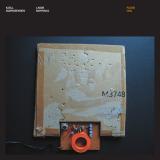
Some years ago, Kjell Bjørgeengen and Keith Rowe attempted to convert video signals into sound by setting up Rowe’s pickups next to an old CRT monitor, turning its magnetic field into a sound generator. Rowe further developed the system with David Jones at Alfred University, slimming down the setup using a copper coil, a circuit board, a video input, and a telephone pickup. Jones named it the »Flood Coil«, and it’s that instrument you can see on the album’s front cover and that lies at the core of these recordings, made without any physical live input from the artists themselves. In essence, it’s generative music in its purest form.
Bjørgeengen’s video feed is generated by oscillators, then routed into Marhaug’s pedals and then back into the Flood Coil, so any visual shifts alter the sound, and any modification to the sound changes the video. The duo have played this setup live many times, but for this studio version they left the system to do its thing without any intervention for two minutes at a time before moving onto the next idea. They recorded hours and hours using this process and then selected 18 highlights for this album, extracting harsh noise, power electronics, lulling feedback drone, and peculiar rhythmic snippets to show the scope of their technique.
A wall of growling, hi-octane Pulse Demon-style noise opens the set, gradually exposing us to more asymmetric textures, shifting through unstable repetitions that transform Merzbow’s metal-inspired screams into »Aaltopiiri«-era rhythmic noise. It’s remarkable, actually, how much Marhaug and Bjørgeengen can squeeze from the system, chancing on shivering, lower-case chugs and pops, galloping drums, soundsystem subs, and grinding blast beats that sound like Napalm Death’s »Scum« piped through a broken amp stack. It ain’t pretty, but noise/industrial freaks will revel in the fierce delights inside.
Sekhem opens a new portal. We are pleased to welcome Multivoq’s debut as Omega Tribe. He delivers four cuts engineered for the dancefloor, driven by razor-sharp grooves and strong basslines, with every element precisely tuned. Analog machines bring warmth, sequences pulse like coded transmissions, vocals drift through the mix as signals from space... Each detail shapes a journey built for powerful sound systems.
Mathias Kaden announces the ‘Three Decades’ LP on Rekids, releasing 3rd April 2026, with single ‘Fyutr’ featuring Zoë Xenia and a remix from the legendary Dennis Ferrer available now. His third full-length, following 2009’s ‘Studio 10’ on Vakant and 2015’s ‘Energetic’ on Freunden Am Tanzen, ‘Three Decades’ spans nine tracks and celebrates Kaden’s 30-year career as one of Germany’s most enduring House and Techno figures.
The ‘Three Decades' album opens with a title intro, in which Mathias Kaden expresses gratitude to those closest to him before moving into his signature deep, emotive House sound. Tracks like ‘Keep Balance’ set the tone with sub-heavy bass and crisp, driving drums, occasionally punctuated by vocal snippets, while ‘I Got You’ features Cassy for a high-energy, soulful dancefloor moment. Reminiscent of Kaden’s work as Mathimidori, the dubbiness of ‘Getting Closer’ sets the stage for ‘Inner Signal’, which leans into wiggy electro territory, before the second record shifts gears with ‘Next Wave’ and ‘Shelter’, returning to pacey, piano-fuelled rave energy.
‘Viral’ follows with tough drums and excellent stab work, before the album closes on ‘Fyutr’, Kaden’s collaboration with Zoë Xenia, already supported by Honey Dijon, DJ Deep, Laurent Garnier, and more. Active since the mid-90s, Mathias Kaden quickly became one of the artists at the forefront of Germany’s flourishing rave scene. He began releasing music in the early 2000s, first collaborating with Marek Hemmann on a series of EPs for Freude Am Tanzen, before establishing himself as a solo artist with more than two dozen EPs on labels including Desolat, Watergate Records, Pets Recordings, Diynamic, Ovum, and Cocoon. Since first appearing on Rekids in 2019 with the ‘Control Your Mind’ EP, Kaden has released multiple projects on the label and remains a regular contributor to its catalogue.
Alongside his own productions, he has remixed artists such as DJ Koze, KiNK, Monika Kruse, Trentemøller, and Sven Väth, while under his Mathimidori alias, he has explored more spacious territory with releases on Mule Musiq, Ornaments, and Freund der Familie, including an additional album, ‘Akebono’, on Echocord.
The latest in Field Records' run of essential vinyl pressings revisits Stephen Hitchell's 2009 masterpiece under his Variant alias, The Setting Sun. As part of Echospace and also celebrated for his productions as Intrusion and Soultek, Hitchell is considered a leading light in dub techno, with the versatility in his sound to range from rhythmic, physical pulses to purely tonal, abyssal drone. His work as Variant, which debuted with The Setting Sun, capitalises on this scope to deliver a compelling ambient-with-teeth set richly deserving of a proper vinyl pressing.
The Setting Sun first emerged on Echospace as a download-only release. Hitchell was at pains to map out the tools that went into the sound on the album — field recordings of storms in Berlin, Germany and train rides in Narita, Japan, outboard synths and samplers. Crucially, he declared no computers were used, and it shows. When The Setting Sun was recorded, in-the-box production was largely dominating electronic music and the technology had yet to replicate the warmth and character of analogue equipment. Hitchell's looming chords come baked with harmonic overtones, surface noise becomes another essential layer and fragments of distortion add to the narrative of these glacial, monumental pieces.
Hitchell threads his dub techno tendencies in subtle ways, from the kick pattering underneath 'As Time Stood Still' to the quintessential metallic delay ripples that define 'A Silent Storm'. 'Someplace Else' has a defined, albeit delicate, rhythm section guiding its lighter shades of pads and chords. However, drums are never a dominant aspect of the music, simply another layer in an intentionally coagulated whole. At times, flickering tones hint at space where percussion once stood, since muted to leave the wet signal setting a new course for the sound, somewhere far beyond drum duties. The hushed ceremony of tracks like 'Adrift' are the perfect scenario in which to absorb these microfibres of detail, where the genius of Hitchell can truly be savoured.
In line with the limitations of record pressing and Hitchell's proclivity for long-form tracks, 'The Setting Sun' is reserved for the digital edition of this reissue. It's a logical move, as the sound palette widens to encompass tangible, organic instrumentation evolving over the best part of half an hour. The presence of piano keys feels stark in the Variant sound world, but Hitchell ably folds these coded elements into his process bathed in the same curious luminosity that lingers around all his work. Evolving at a painstaking pace, the plaintive humanity in the cascading keys and plucked guitar strings renders one of the most personal expressions in Hitchell's considerable canon — a unique piece that holds its own space comfortably, while also adding to the overall weight of The Setting Sun as a profound benchmark in a stellar discography.
- A1: Chris Liebing - Unfold
- A2: Chris Liebing, Charlotte De Witte - Symphonie Des Seins
- A3: Chris Liebing, The Advent - Subjective Immortality
- B1: Chris Liebing - Roy Batty
- B2: Chris Liebing - Evolver
- B3: Chris Liebing - John Connor
- B4: Chris Liebing, Luke Slater - Double Split
- C1: Chris Liebing, The Alte Stuben Modular Ensemble - Entangled Circuits
- C2: Chris Liebing - Higher Things
- C3: Chris Liebing, Speedy J - Shaping Frequencies
- D1: Chris Liebing - Brooks Ave
- D2: Chris Liebing - Eye C
- D3: Chris Liebing - Endtrack
Chris Liebing's first full solo techno LP, 'Evolver' is released on 27th March 2026, via his own CLR imprint. The German techno don's LP features a host of collaborators across music, images, and artwork. Luke Slater, Charlotte De Witte, Speedy J, The Advent, Terence Fixmer, Pascal Gabriel, Daniel Miller contribute to the music, while long-time collaborators Studio Bergfors deliver design, and legendary photographer Anton Corbijn shot Liebing for the project.
The Evolver LP is the sum total of Chris Liebing's three decades at the beating heart of techno. It's the record only someone whose first break as a techno DJ was playing five hours at Sven Väth's infamous Omen in Frankfurt - and who has ridden out every twist and turn of life and subcultures since, while remaining rooted in the true school, dark, sweaty techno sweat pits of the world - could have made. It's the result of deep introspection, but it's about utter immediacy. It's the sound of someone previously driven along by compulsion and happenstance at last finding the confidence to be utterly intentional about their practice, allowing them to take the most classic, familiar, proven elements from the past and render them completely new.
Evolver is also Liebing's first completely solo album. There are collaborations, yes: with old friends from the OG techno generation, Luke Slater, Speedy J, and The Advent, all on uncompromising form, and with new generation figurehead Charlotte De Witte, who provides a thrilling narration of total surrender to the moment on acid clarion call "Symphonie des Seins". But unlike all Liebing's albums to date, there's no co-pilot. Every structure, every mixdown, every choice serves his singular vision of how his untold immersion in the surging currents of the world's greatest clubs should sound. The elements are all those forged in the white heat of Omen and Tresor in the mid 90s - brutal repetition, titanium kick drums, industrial atmospherics, but also dark rave euphoria, ever present surging acid lines just on the cusp of trance, and just enough human voices to remind you of bodies on the dance floor - but rendered with all the extraordinary accumulated skill and technological developments since then.
It's Chris's vision entirely, his musings on sound, technology, and life birthing tracks like "Roy Batty." Inspired by thoughts of AI becoming sentient and hungering for more life like Rutger Hauer's titular Blade Runner character, it was one of the first tracks to emerge and a foundation stone for the album. And in pursuit of that vision, it's built like a "proper album". The anticipation and menace of intro "Unfold" tip over into the glowing hot high drama psychedelia of "Symphonie…" then the breathless headlong rush of The Advent collab and on through an unfolding narrative that goes deep, goes dark, opens out into grand vistas, takes strange turns before finally landing on the alien landscape of… well… "Endtrack".
Not everything is pummelling on Evolver - the dazzling title track feels like you've been welcomed into the courtly dance of a higher dimension civilisation, and the audacious Speedy J collab "Shaping Frequencies" is a beatless flow that tests the boundaries between signal and noise. But for all its complexity, conceptualism, and stylistic branching out, every last part unmistakably powered by that dark techno-cavern energy above all else. All of it positively radiates the qualities of Liebing's greatest work and sets to date - but somehow even more so than before. Whether you're listening for aesthetic inspiration, cerebral stimulation or just that raw physical power, this album will sweep you up into its momentum and won't let go of you until it's done.