Harold McNair was a Jamaican born saxophonist and flautist who settle in London in 1960. He played regularly at Ronnie Scott's club and with contemporary UK Jazz musicians like John Cameron and was a member of Donovan's band in the mid to late 60s. His most famous recording 'The Hipster' comes from his second UK album and was issued on RCA as a 45 in 1968, which is now very in demand and sells for approx £300.
The track has become one of the most iconic 60s British Jazz dance tracks and was featured on Gilles Peterson Impressed Vol 2 compilation.

It's influence can be heard on recent UK Jazz recordings by Chip Wickham and others .
We are delighted to release this great track on 45 for the first time since its original issue 55 years ago, it still sounds remarkable ‘Hip’. It has been remastered from the original tapes with a look a like 4 prong centre image label. The single is likely to be met with significant demand.
quête:significant other
- A1: Nandele & A-Tweed - Deserto 05 20
- A2: Nadia Struiwigh – Lovessong 04 38
- B1: E-Saggila - Pr1Nt 04 18
- B2: Nvst - Heatstress (Tunnel Edition) 05 36
- C1: Ryan James Ford - Totes (Bath Mix) 04 42
- C2: Viikatory – Cinema 03 56
- D1: Jean Redondo – Hypersonic 03 52
- D2: Significant Other - Cellar One 04 30
- D3: Willis Anne - Späti System 03 28
- E1: Dj Sotofett Meets Kavadi - Kandhan Karunai 05 10
- E2: Ireen Amnes – No Longer Human 05 12
- F1: Solid Blake – Hexaghost 05 33
- F2: Nit. - Cirrus Virga 06 00
yet is a slippery word in English. Amorphous, these three letters in dierent contexts can define contrast or emphasis, set a place in time, show an expectation that something will occur or, paradoxically, that it is likely to stop.
It is this mercurial nature that makes yet the perfect title for Tresor’s latest compilation: the label follows on from the more explorative sections of 2021’s landmark Tresor 30 boxed set with a compilation, featuring 13 artists making music that resists easy definition.
Every track hints at and borrows from the familiar yet none follow the expected path: halfway through Deserto, Nandele & A-Tweed dramatically reveal a very dierent sonic landscape that was initially suggested; DJ Sotofett collaborates with Sri Lankan artist Kavadi with results that are unlike anything in the Norwegian producer’s catalogue as yet.
Further invention can be found as Jean Redondo’s Hypersonic moves across spaces inhabited by digital hardcore and hyperpop before swerving o-road and into a futuristic hip-hop section; on No Longer Human, Ireen Amnes takes a dierent path at the crossroads melding hyperpop, trance, and sci-fi soundtrack atmospherics, Significant Other heads towards UK Bass and Dubstep, and France’s Willis Anne skims by the outskirts of footwork with a piece that is almost completely uncategorisable.
Yet more sonic experimentation comes from E-Saggila, Nadia Struiwigh, NVST, Solid Blake, and Viikatory who oer unique takes on the well-established electro blueprint, while Ryan James Ford, and Nit. both find ways to blend elements normally found in ambient pieces with those heard on a dancefloor.
The feel of the compilation is yet again reflected in the enigmatic artwork by Malik Arbab, where shapes and colours suggest animals and plants but in a world that appears to be transient and constantly evolving.
(Produced, Arranged and Conducted by Claus Ogerman)
Not long after the dawn of her career, as a teenager in Rio de Janeiro, Joyce was declared “one of the greatest singers” by Antonio Carlos Jobim. Yet despite reputable accolades and the fact that she has since recorded over thirty acclaimed albums, Joyce never quite achieved the international recognition of the likes of Jobim, João Gilberto and Sergio Mendes, all of whom became global stars after releasing with major labels in the US.
There was a moment when it seemed she might be on the cusp of an international breakthrough. While living in New York, Joyce was approached by the great German producer Claus Ogerman. Ogerman had already played a pivotal role in the development and popularisation of Brazilian music in the 1960s, recording with some of the all-time greats like Jobim and João Gilberto, as well as North American idols like Frank Sinatra, Billie Holiday and Bill Evans.
"I met him in New York City, in 1977”, recalls Joyce. “I was living and playing there, and João Palma, Brazilian drummer who used to play with Jobim, introduced me to Claus. We had an audition, he liked what we were doing and decided to produce an album with us.”
Featuring fellow Brazilian musicians Mauricio Maestro (who wrote/co-wrote four of the songs), Nana Vasconcelos and Tutty Moreno, and some of the most in-demand stateside players including Michael Brecker, Joe Farrell and Buster Williams, the recordings for Natureza took place at Columbia Studios and Ogerman produced the album, provided the arrangements and conducted the orchestra.
But mysteriously, Natureza was never released, and what should have been Joyce’s big moment never happened. As Joyce remembers, “I returned home, but Claus and I remained in contact, by letters and phone calls. He was very enthusiastic about the album and tried to hook me up with Michael Franks. He wanted me to go back to NYC in order to re-record the vocals in English with new lyrics, which I actually wasn’t too happy about. But then I got pregnant with my third child and could not leave Brazil. And little by little our contact became rare, until I lost track of him completely. And that was it. I never heard from him again."
While Claus was known to be something of an elusive character, the album’s disappearance might also have been a result of timing. The Brazilian craze was coming to an end, making way for disco and new wave at the end of the seventies, and Ogerman struggled to find a major label interested in a new Brazilian sensation. Additionally, as Joyce mentions, it wasn’t quite finished. Ogerman wanted to add finishing touches to the mix and to record alternative English lyrics for the US and international markets - a critical artistic difference between Joyce and Ogerman.
As the military dictatorship’s grip on Brazil began to subside in the 1980s, Joyce had a handful of hits in her home county, including a tribute to her daughters ‘Clareana’, and the iconic ‘Feminina’ - an intergenerational conversation between mother and daughter about what it means to be a woman. But already a feminist pioneer, these successes were hard fought. Joyce had caused controversy as a nineteen-year-old when she became the first in Brazil to sing from the first-person feminine perspective, and the institutional sexism she faced was worsened by the dictatorship who would often censor her music. Even once the Junta was out of the way, Joyce found herself up against the male-dominated major record companies in Brazil, who sought to dictate her career and sexualise her image, before dropping her for refusing to play along.
A few years after the success of her albums Feminina and Agua E Luz in Brazil, Joyce’s music began to find its way to the UK, Europe and Japan, and “Feminina” and “Aldeia de Ogum” became classics on the underground jazz-dance scenes of the mid to late-eighties and early-nineties.
The full-length version of “Feminina” from the Natureza sessions was first heard on a Brazilian Jazz compilation in 1999 and “Descompassadamente” was licensed for a CD compiling the work of Claus Ogerman in 2002. Following these, word began to get out about an unreleased Joyce album with Claus Ogerman and the legend of Natureza grew.
Forty-five years since it was recorded, Natureza finally sees the light of day, as Joyce intended: with her own Portuguese lyrics and vocals. Featuring the fabled 11-minute version of ‘Feminina’, as well as the never before heard ‘Coração Sonhador’ composed and performed by Mauricio Maestro, Natureza’s release is a landmark in Brazilian music history and represents a triumphant, if overdue victory for Joyce as an outspoken female artist who has consistently refused to bow to patriarchal pressure.
***Disclaimer! While “Feminina” and “Descompassadamente'' were mixed by legendary engineer Al Schmitt and mastered from the original master tapes, the remaining five tracks are unmixed. Due to significant deterioration of the master-tapes, the best audio source for these tracks was an unmixed tape copy Joyce had kept of the recordings. The best care has been taken in the restoration and mastering of this release, but the sound quality may differ from other releases on Far Out Recordings. We advise listening to sound clips before buying where possible.
Mannequin's 100th - a comp looking forward featuring an international and serious cast... BIG TIP!
The modern synthwave scene would be significantly poorer without the keen ear and tireless efforts of the Mannequin label run by Alessandro Adriani. Geographically situated within the nerve centers of Rome and Berlin, yet with a musical spirit that easily transcends these boundary lines, Mannequin's back catalog has been an important component in the modular assemblage that makes up electronics-based independent music in the 21st century, and an important reference point for those who need to defend against the lazy accusations that this such is purely retro' in its form and content. Recent accolades and accomplishments - being named Resident Advisor's label of the month' for May of this year, starting the 'Death of the Machines' 12' series, and being given the 'green light' for bi-monthly parties at the Säule room in Berghain - have been earned through Mannequin's unflagging commitment to sonic diversity and Adriani's own realization that the anxious and sharp-edged sounds associated with, say, the Cold War of the 1980s can convey a completely different message today. Adriani says it best when claiming that there is no such thing as 'old' or 'new' music...only the music of now'. With this cogent statement of intent, Mannequin continues to go on exploratory missions to find the best and most relevant aspects of genres like acid, industrial, EBM, post-punk, coldwave and still more.
Which brings us to Mannequin's newest project and 100th release overall: the Waves of the Future double LP compilation, which itself is not a conventional retrospective collection. Case in point - none of the artists appearing on this collection have put out their own releases on Mannequin yet, despite acting as Mannequin's unofficial ambassadors (via DJ sets and other means). This makes the set even more compelling rather than less so, since it shows how Mannequin fits into a larger picture that includes other scene leaders and label owners including Beau Wanzer, Willie Burns (WT Records), Silent Servant (Jealous God) and Ron Morelli (L.I.E.S.). Of equal importance is how Waves of the Future projects a sense of aesthetic resilience and continuity, showcasing just how well the current artists allied with Mannequin employ and re-interpret the sonic lexicon that appears on that label's reissues of 'classic' acts such as Nocturnal Emissions, Bourbonese Qualk, Din A Testbild and Doris Norton.
However, none of this would matter as much if the music itself didn't have strong potential for lighting a blaze in the dark corners of the human imagination, and of course for forcing bodies into motion. Each track here pivots around a couple of key sound elements that seem to set the stage for the next track to come: see the sputtering / chopped ghost voices on Morelli's Charges Won't Stick,' which easily informs the slicing drone and authoritarian beat of Shawn O' Sullivan's Ill Fit,' which then lays down the emotional foundation for the sequencer-powered With You' from An-I & Adriani or the glassy landscape of Illum Sphere's Exhaustion'. Elsewhere, the wired mischief of Not Waving intersects easily with the spherical electro-funk and coded commands of Beau Wanzer. When all the disparate parts of Waves of the Future are soldered together, it perfectly illustrates Mannequin's non-linear philosophy and Adriani's suggestion that Mannequin listeners directly engage with the music rather than trying too hard to analyze or dissect it.
- 01: Architettura Industriale
- 02: Fabbrica - I Versione
- 03: Fabbrica - Ii Versione
- 04: Termomeccanica
- 05: Dinamica
- 06: Raffineria
- 07: Dinamica - Ii Versione
- 08: Meccanizzazione Agraria
- 09: Industria Metallurgica
- 10: Chimica Industriale
First-ever official reissue - 180g black vinyl edition
In the late 1960s, a distinctive musical movement began to flourish in Italy—while also gaining momentum abroad, particularly in France and the United Kingdom. Known as library music (or sonorization), this genre consisted of genuine music libraries created specifically to accompany audiovisual productions such as television programs, commercials, documentaries, and films.
Produced under conditions of complete artistic freedom, these recordings often defy clear categorization, as they are not tied to any single musical genre. This creative independence allowed composers—frequently working in total anonymity—to experiment boldly, crafting avant-garde and forward-thinking sounds that, in many cases, anticipated musical trends that would only become widespread years later.
Oronzo De Filippiis known not only for his contributions to library music, but also for being part of the projectThe Braen's MachinealongsideAlessandro Alessandroni, one of the most significant figures in this field.
Meccanizzazione is a fully instrumental album—as is typical of the genre—literally dominated by the distinctive sound of the harpsichord. The record essentially alternates between two main compositional approaches: on one hand, more accessible and "friendly" tracks with a refined jazz-lounge and bossa nova flavor; on the other, darker and more hypnotic pieces, whose repetitive structures vividly evoke the rhythms and mechanical pulse of the industrial world.
Originally released in 1988 on the compilation Acid Tracks Vol. 3 via Needle Records, "The Other Side" has long been recognised as a potent example of early Chicago acid house. Now, more than three decades later, the track receives its first official 12" release - and, crucially, its first release with the original artists correctly credited. While historically attributed to Maurice Joshua, "The Other Side" was in fact produced by Da Posse (Hula Mahone), with vocals by Martell. This forthcoming release marks the first time that the original production has been properly acknowledged and presented in its intended standalone 12" format, restoring authorship to the artists responsible for the record's creation. The release is issued by Island Life Records, a Bali-based label with a growing reputation for carefully curated projects that bridge foundational dance music history and contemporary club culture. By formally reintroducing "The Other Side" with accurate credits, Island Life Records contributes an important corrective to the historical record of Chicago house and acid house music. Musically, "The Other Side" remains a striking artefact of its era: minimal, hypnotic, and emotionally charged, balancing raw machine-driven groove with an atmospheric vocal presence. It exemplifies the experimental, DJ-led ethos of late-1980s Chicago, where tracks were built for function, feeling, and longevity on the dancefloor rather than commercial visibility. The release is accompanied by a set of new remixes that respectfully extend the track's legacy into the present day. Remix duties come from Island Life Records founder Garry Todd under his Clouds Of Kouros alias, Johnny Aux (one half of Paranoid London), and Age Of Hyperion, with the digital including a remix from Garry Todd, each offering a distinct contemporary interpretation while retaining the spirit and tension of the original recording. This release stands not only as a long-overdue physical edition, but as a historically significant moment: the first time the original production has been released on 12", and the first time the correct creative contributors have been formally recognised.
In 2017, at Documenta Kassel (but in Athens), I invited José Jiménez Bobote, a remarkable gitano artist from the Tres Mil Viviendas neighbourhood in Seville, to record a series of actions in specific locations in the Greek capital. Ancient Greece and modern Greece. I wanted him to draw sound from the city, to strike it as only a flamenco artist can, with his feet. To hit the ground and make it moan, ring out with noises evoking significant moments in history: from Diogenes the Cynic and the Apostle Paul’s sermon at the Areopagus to Rosa Eskenazi’s resistance to the Nazi-German occupation, and the ups and downs of police Inspector Costas Haritos’s survival at the European Bank during the PIGS crisis. Bobote struck the ground and Athens responded, sending back echoes of the past, in an exceptional anachronistic exercise. In flamenco it is possible for several times to sound simultaneously.
We took seventeen hours of footage, and water from many wells.
I then shut away producer, musician, and friend Raül Refree with this material so that he could take the long titles and use them as scores, turning them into mere songs. It was very important to think in terms of songs. The tracks had to have the capacity to be songs, the kind of thing one whistles while absent-mindedly walking down the street. Generally speaking, the scores—that is, the texts—defended the use and abuse of the loose coins that people carry around in their pockets. Loose change as a kind of everyday fetishism against big financial capital. Pistis! Refree managed to coax that distinctive unity of songs, their bright catchiness, from the amalgamation of sounds that would, in other hands, end up being labelled concrete music. Peter Szendy would be pleased and grateful. Being able to sing under one’s breath something that others consider simply noise.
Seven songs, yes. And if you get the chance, take a stroll through Athens with them: the locations are clearly defined. If not, then let Athens fill your home with all its ancient wisdom, boring into your ears like worms, making holes in history.
Listen, and, as people used to say, turn up the volume!
Pedro G. Romero, Santa Marta, Colombia, November 2025
Comes with booklet with song lyrics written by Pedro G. Romero. Limited edition of 250 vinyl records.
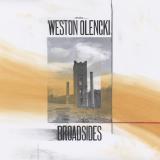
'In 2023, sound artist and composer Weston Olencki toured across the American South. Beginning in their hometown in South Carolina, they snaked a circuitous path from the mountains of West Virginia to the banks of the Mississippi River. As the miles accumulated, so did the initial seeds of new work.
'Instruments and artifacts they acquired hitched a ride in the backseat, while songs and sounds filled their portable recorder: water in its various states, the familiar insectoid buzz of those summer nights, trains cutting through the landscape, the traditional music that lived alongside the communities that kept it. Olencki took it all in, and over time, found ways that these experiences coalesced into a bramble-like perspective of time, where past, present, and future intersect in ways both barbed and beautiful.
'Broadsides, Olencki’s newest solo full-length is the multilayered result of this journey. The album follows their landmark release Old Time Music from 2022, which presented radical interpretations of traditional tunes from Appalachia and throughout the South alongside original compositions that drew significantly on archival recordings. On Broadsides, Olencki rejects delineations between the unmoored avant-garde and the rootedness of one’s cultural heritage, revealing their porous and intertwined nature. “My mother was a quilter. Her mother before that,” they write in the album’s liner notes. “Quilting, like music, is a practice of embedding knowledge and remembrance into the very core of the thing you are making. It’s not just about the materials, but how they’re reassembled, recontextualized, stitched, woven to form new patterns - the minutiae of craft holding significance to those looking to find it. Stories woven from stories, never told the same way twice.”
'Like all great road trips, Broadsides unfolds slowly and continuously, with moments of dramatic reverie punctuating the endless melt of highway in the rearview. We’re immediately confronted by the uncanniness of revisiting old haunts, as Southern storms break through the initial churn of the freight locomotives of Alabama. Olencki’s interpretation of the bluegrass standard “Foggy Mountain Breakdown” captures the euphoria of melancholy in motion. The permutational plucks of banjo are bounced around the frame by a computer, its pitches determined within algorithmic sequences and transcriptions of classic three-finger licks. The tonalities of old-time are smeared and stretched until all that’s audible is the insistence that Heaven might be real.
'In the album’s second half, “Omie Wise,” a murder ballad made famous by Doc Watson, follows an interlude recorded on the river in North Carolina in which the titular character’s body was laid. Ghostly echoes of a dozen other renditions float through the substrata as Tongue Depressor’s Henry Birdsey accompanies them on the pedal steel guitar. The album’s central composition, “all my father’s clocks,” is a profound meditation on entropy and impermanence. The sound of their father’s extensive clock collection ticks away as Olencki pulls a bow across the length of an autoharp sourced from a rural strip mall. The instrument was left as detuned as it was found, the resonance of its deep bass drone and clanging high-end the result of years of neglect and the warping effects of Southern humidity.
'Historically, broadsides were an early form of broadcasting, an often- musicalized telling of current news pasted in the public square. The name was later taken up by Sis Cunningham and Gordon Friesen in the 1960s, whose Broadside magazine published songs and social commentary when American folk music resurfaced as an urgent way of communicating the multifaceted politics of its time.
'Olencki borrows the phrase to recall both this old form of songmaking and that later prominent reexamination of traditional music’s role in modern life, but also to draw attention to the fragmented and machine- mediated way heritage is diffused in this very different, but no less pivotal, moment.
'As a sanitized past is used as justification for current violence and domination, we can turn to these artifacts to better understand the history of ourselves, but only if they are consciously pushed to evolve. Broadsides represents one personal, striking vision of what far-flung futurisms could be respun from = these high, lonesome sounds: a reflection of the unbridled joy and deep sorrow inherent to living together through time, and a desire to push further into the untold and unknown.'
One of the leading Japanese alternative rock band, GEZAN’s leader, MahitoThePeople’s director debut film, i ai was released in March 2024, and it is an atypical coming-of-age film decorated with tinge of red.
The film takes place in Akashi and Kobe, Hyogo prefecture. This film’s main characters are Ko (Kentaro Tomita), a rookie member of a band and a brother-like figure of his, Hee (Mirai Moriyama) who Ko idolizes and the story of this movie is based on their struggles with life and death. The story is also based on Mahito's real-life experiences and while reality and fiction are duplicated, the boundary between them slowly melts away. The film co-stars Honami Satoh, Kazuki Horike, Mitsuru Fukikoshi, Eita Nagayama, Kyoko Koizumi, K-BOMB, Ichi Omiya and many other unique personalities. It should also be noted that the transparent images filmed by photographer, Masafumi Sanai gives the film, a special emotional quality.
The film is not bound by any film theory but it poses a theme common to GEZAN's recent works and Mahito's writing activities: How can we live in a crumbling society while interacting with others? We can never live alone but living with others is also never easy. How can we overcome this time of extreme division of the world?
What left quite a strong impression in this film that not only Mahito personally directed but also wrote the script and composed the soundtrack as well was the main theme song, entitled “i ai”. This new piece of GEZAN is an extension of the work that this band has continued doing over the last few years. This 12" single, contains the song, “i ai” and it will be the first time released on vinyl.
Led by soft guitar arpeggios, the song gradually builds to a fever pitch, condensing the mood of the film which encompasses both tranquillity and intensity. The chorus of ineffable, multiple voices united together sounds like a lament that has spilled out of society or a cry of joy. GEZAN's collaboration with the 15-member chorus group, Million Wish Collective has been in development of late and the cultivated sensibilities through their activities are put to use in this song.
The song can also be considered a slow, relaxed dance track that lasts 9 minutes and 8 seconds. It has something in common with organic dance tracks from South America and other regions, and it is significant that GLOCAL RECORDS which represents glocal music from around the world in Japan are releasing it as a DJ-friendly 12-inch single.
The B-side features a remix by COMPUMA who is also closely associated with GEZAN. The song starts with an African styled percussion, with a thumb piano in the middle of the song and then returns to that memorable chorus. This song feels like a 18 minutes and 18 seconds long short movie like suite, with some dizzying changes from the beginning to the end. It is remix filled with enormous drama!
The cutting and mastering of this 12” was done by TOREI who is also active as a DJ and the artwork was created by jvnpey, a visual artist and graphic designer based in Tokyo. Their loving work also makes this 12" very special.
When I asked AI to find a synonym for the word, “division,” it displayed in succession, a series of words: “integration,” “consolidation,” “unification,” “unity”, and “reconciliation". All of these phrases are somewhat whitewashed and embarrassing but the mirage-like chorus echoing in the song, “i ai” seems to be trying to find a new word, that is a synonym for the word, "division. In this film, “i ai”, the message, “Let's live together after the end roll” was thrown out but included in this 12-inch, the message, “Let's live together after the music stops”, emerges.
“Twenty-five years into their existence, The Album Leaf are an old comfy sweater. It might not be the most fashionable thing in your collection but it always feels good when you put it on. Jimmy LaValle’s synth textures are warm, nostalgic and steeped in Boards of Canada / Ulrich Schnauss-style soundscapes that are relaxing, otherworldly and melodic” – Brooklyn Vegan
The Album Leaf shares his new ambient LP, Rotations. The record is a mediative experiment into atmospheric sound. Creator Jimmy LaValle explains, “This collection of music is a true reflection of my creative process—rooted in sound exploration, experimentation, and spontaneous response. Each track captures a moment of creative discovery, free from the pressure of achieving a polished result. Throughout my career, I’ve often placed significant weight on what an album should be. With this release, I’ve let go of those expectations to share a body of work that feels genuine and authentic.
The Album Leaf began as the solo project of Jimmy LaValle, who came up in the San Diego music scene playing in hardcore bands and the instrumental rock band Tristeza. He had inked a deal to release his next solo album through the indie label Tigerstyle Records, so he put the modest advance towards a self-recording starter setup, building out the sound with occasional studio access. The music that emerged — vivid, rhythmic, soaring instrumentals guided by lines of Guitar and Rhodes — not only set the path for The Album Leaf over the next two decades of acclaimed releases (for Sub Pop, City Slang, and others), it became a touchstone for the next generation's wave of melodic and meditative electro-organic music.
Berlin’s ZentaSkai returns to his Mask Records with the ‘Billie’ EP, collaborating with Palawan, Jeremy Reinhard, and Thomas Grün for release on vinyl only, 2nd November 2025. He kicks off with the solo cut 'A1', which is quick, sophisticated, raw House with a funky clip to the beats that diffuses heat in the grainy sustained pads. It brings serene emotional release through stylish hypnosis and gorgeous vocals that blend seamlessly into the mix. Next, ZentaSkai collaborates with the mysterious Palawan, as he did on one track of his 2023 album The Architecture Of The Mind, on 'A2.' This one suspends you in backlit synth glows while rounded drums and funky claps tap out the supple rhythm. Cautious hope comes from the quiet chord stabs and soft focus melodies in what is a masterclass in deep Techno minimalism. 'B1' reunites ZentaSkai with Cologne's Jeremy Reinhard following previous cuts on that same 2023 album. Reinhard has long been a pillar of his local Berlin scene as a resident DJ, but also the wider underground with his own label Lekker Record. Their track taps into dub depths but ups the pace and allows radiant synths to piece the surface next to muttered spoken word that keep it intimate and perfectly seductive for body and mind. Last of all is a collab with Austrian Thomas Grün, who has been shaping deep and Tech House with his immaculate grooves for decades. Their 'B2' brings US garage snares to buoyant drums and douses them in layers of fuzzy synth warmth. It's meditative yet direct with an ever-rising sense of hope that makes it all the more indelible. ZentaSkai (aka No Mad Ronin, Matt Nowak, and MASK) is a German DJ and producer active since 1997. Based out of his studio in Berlin, ZentaSkai runs the Zaijenroots label and, since 2017, the Mask sub-label, which houses his stunning 2023 ‘Architecture of the Mind’ LP as well as his Cuddling Monsters project with Laura Merino Allue, who has been significantly involved in the label's work since 2023. - with other credits including a release on Jerome Sydenham’s Ibadan Records and support from the likes of Richie Hawtin, Joseph Capriati, Marcel Dettmann, Luke Slater, Laurent Garnier, DVS1, Ben Sims, and Radio Slave.
Daniele Baldelli
Considered one of the first DJs in Italy, Daniele Baldelli began his career in 1969 mixing vinyl at the Tana Club in Cattolica (his hometown),
predating the birth of the modern DJ by several years. In the following years, he solidified his talent and technique at histor such as the Tabù Club, Baia degli Angeli, and Cosmic. From 1979 to 1984, Baldelli created his unique and eclectic style, blendi ic clubs ng seemingly distant sounds and musical styles, complementing them with tempo adjustments (bpm) and deliberately extreme equalization,
creating a truly distinctive sound, known as "Afro Disco." Soundscapes and tribal percussion blend with early electronic music experiments, and Baldelli's sets become truly mystical experiences, where, for the first time, the temples are replaced by the dance floor.
The documentary film "A Cosmic Life" has just been released, starring Daniele Baldelli alongside other illustrious guests from the nightclub scene, recounting the history and formation of this movement from the 1970s to the present.
Gaudi
A producer/musician among the most highly regarded on the international dub/electronic scene, over the past 30 years Gaudi, from his
London studio, has contributed significantly to expanding the boundaries of musical genres with high-profile releases and innovative
music production techniques. Recently nominated for a Grammy Award with 'Mass Manipulation', the album he produced for the reggae
band Steel Pulse, and also nominated for a World Music Award with his album 'Dub Qawwali' with Pakistani singer Nusrat Fateh Ali
Khan, Gaudi has collected a series of number 1s on the international charts: Billboard - with the album 'Heavy Rain' by Lee "Scratch"
Perry, 'Vessel of Love' by singer Hollie Cook and with 'Mass Manipulation' by Steel Pulse -, UK Chart n.1 with the album 'Prism' by the
band The Orb (with whom he has collaborated as a producer and keyboardist since 2008), with 'Blue Monday' - by Gaudi himself with
the band Dub Pistols -, UK Dance Chart n.1 with 'Jus Come rmx' produced with DJ Angelino for Cool Jack. He also reached no. 41 the UK charts with the album ‘Midnight Rocker’ by reggae singer Horace Andy (known to the general public for his hits with Massive in
Attack), no. 13 with the album ‘Dubwise 2’ by the band Dreadzone and no. 5 in the Italian charts with the song ‘Lasciala Andare’, written
by him for Irene Grandi. With 19 solo albums and 350 remixes and productions under his belt, Gaudi, with his artistic versatility, has
worked with Groove Armada, UB40, Simple Minds, Brian Ferry, Devo, Big Audio Dynamite, Damian Marley, Seun Kuti, Mad Professor,
Trentemøller, Grandmaster Flash ft KRS-One, Lamb, Don Letts, The Beat, Deep Forest, African Head Charge (in which Gaudi is a keyboardist and dubmaster), Elisa, Scientist, Dub FX, Roedelius, Caparezza, Caravan Palace, EMF, Sizzla, Jovanotti, Sly & Robbie, Piero Pelù, Youth of Killing Joke, and Maxi Priest, to name just a few. Capleton,
Daniele Baldelli & Gaudi
DJ Daniele Baldelli and producer Gaudi first met three years ago at the Jazz Cafe in London. Mutual respect and an innate need to
create new stylistic fusions were the catalysts for Baldelli and Gaudi, leading to a series of subsequent meetings that inevitably culminated in the need to create music together. The project began at Gaudi's Metatron Studio in London using analog equipment and later
moved to Baldelli's studio in Cattolica, where the two organically defined their sound, also inspired by Baldelli's precious record collection. The duo consolidated a powerful compositional symbiosis, and the project, born from a simple initial groove, later transformed
into an entire EP consisting of four original tracks and a highly innovative sound, featuring fusions of psychedelic-funk, tribal-dub,
electronic-disco, and, of course, "Afro-Cosmic"! Daniele Baldelli and Gaudi began their sonic collaboration without setting any stylistic
direction and with the intention of not creating pre-established goals to achieve; it is a project of pure artistic freedom guided by their
compositional instinct and their experience. Constantly active with their evenings and live concerts, Baldelli and Gaudi have performed
individually in many of the best international clubs and festivals.
Finding Ways is a new project from Sebastian Rochford (Polar Bear).
Sebastian Rochford is a singular force in British music, an extraordinary drummer, composer, and producer. His work with theiconic group Polar Bear helped redefine the boundaries of jazz and earned multiple Mercury Prize nominations. With a careerspanning collaborations with Patti Smith, Damon Albarn, Brian Eno, Adele and Grace Jones, and his 2023 ECM duo album A ShortDiary with Kit Downes, an album written for his father described as a “ quiet masterpiece” , Rochford has carved out a uniquespace in contemporary music.Finding Ways, his new major project, marks a bold new chapter for Seb Rochford. The first album focuses on the guitar, featuringamong others, the dynamic lineup of Tara Cunningham, David Preston, Adrian Utley (Portishead), and Simon Tong(The Verve,Gorillaz), exploring various combinations and layering up to three guitars at once. The result is a striking blend of jaggedexperimental grooves and raw emotional depth, with an unaffected, pedal-less sound that evokes a timeless, exploratory edge.Rochford’s music, as ever, defies categorisation—a sound that feels alive, fractured, and profoundly human, and all mixed by thesingular talent and master of sound, Tchad Blake.The title Finding Ways refers to a frame of mind he chose to adopt after multiple significant life events happening in a smallamount of time. "It’s about finding ways to keep ourselves moving forward and buoyant, transforming life’s challenges intosomething meaningful, also in a practical, everyday type of way.In Finding Ways, it’s direct, energetic music that refuses to be boxed in, a reflection of Seb Rochford's trailblazing spirit. For fansof his previous work and newcomers alike, this album is a testament to his ongoing quest to find emotional truth in sound.
- A1: Art-I-Ficial
- A2: Obsessed With You
- A3: Warrior In Woolworths
- A4: Let's Submerge
- A5: I Can't Do Anything
- A6: Identity
- B1: Genetic Engineering
- B2: I Live Off You
- B3: I Am A Poseur
- B4: Germ Free Adolescents
- B5: Plastic Bag
- B6: The Day The World Turned Dayglo
X-Ray Spex was a British punk rock band that emerged in the late 1970s, known for their distinctive sound, socially conscious lyrics, and the dynamic frontwoman Poly Styrene. The band was active during the first wave of punk rock and played a significant role in the punk movement.
Lead vocalist and songwriter Poly Styrene was known for her unique vocal style and often cited as an influential figure in the punk scene.
Other band members on ‘Germfree Adolescents are Jak Airport: Guitarist / Paul Dean: Bassist / Rudi Thompson: Sax / B P Hurding: Drummer.
X-Ray Spex released their debut album, "Germfree Adolescents," in 1978, featuring the title track, "Germfree Adolescents." The album is considered a classic of the punk era.
Poly Styrene's lyrics often addressed social and consumerist issues, and her unconventional fashion sense and energetic stage presence added to the band's overall identity.
- A1: This Is A Never Ending Story (You Just Need To Close It)
- A2: Hidden Road (For Yoo Jae-Ha)
- A3: It Must've Been The Sunset (That Altered My Memory From That Day)
- A4: Good Morning, Harrison, It's Time To Go
- A5: Let's Walk Down To The Swamp Together
- B1: Rainy Night Ride With Roy
- B2: Crows Over My Shoulder (Take Me)
- B3: Spiral Dance (Up Or Down, I'm Not Too Sure)
- B4: Dear Oddie, Today Rainbows Are Falling From The Sky
- B5: Lying Here Half Awake, I Hear Kids Outside Laughing With Their Hearts
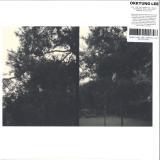
Unlike anything we have heard from her before, Okkyung Lee returns to Shelter Press with "Just Like Any Other Day: Background Music For Your Mundane Activities", a deeply intimate body of recordings at the juncture of ambient music, minimalism, and the baroque, that stands as radical intervention with what experimental music can be, and the place that organisations of sound occupy in our lives. For more than two decades, Okkyung Lee has stood at the forefront of the most radical trajectories of experimental music: a virtuosic cellist and improviser, renowned for her creative rigour and emotive depth. Particularly noteworthy for her range, dexterity, and adaptability, over the last five years Lee's output has revealed unexpected shifts and developments that move far afield from the realms of free improvisation for which she is most well known. 2020's "Yeo - Neun", a heart-wrenching, ambient chamber work - drawing inspiration from the Korean popular music of her youth - was issued by Shelter Press to great critical response, followed closely by "Teum (The Silvery Slit)" - one of a series engrossing electroacoustic works created at Groupe de Recherches Musicales in Paris - on Portraits GRM, and then "Na-Reul" in 2021, regarded by Lee as a closing statement of more than two decades living in New York, which set the precedent of her allowing her emotions to fully occupy the forefront of the music for the first time. Marking her return to Shelter press, "Just Like Any Other Day": Background Music For Your Mundane Activities", encounters Lee upturning the apple cart once again, weaving a profoundly intimate artistic statement on completely unexpected terms. Like its three aforementioned predecessors, "Just Like Any Other Day" belongs to broadening shift in Lee's approach to composing that roughly aligns with her return to her native South Korea, having lived in the United States since her late teens. Infused with a deep reengagement with her own culture and relationship to memory, it is equally a response to those critical challenges and questions provoked by significant life change. Worked on in isolation, and continuously returned to, over the course of four years, the album's nine pieces began with a simple recognition that experimental music is not always what we imagine it to be. It is a practice and a pursuit - a music for which, at its inception, the outcome is unknown - rather than an idiom defined by certain syntaxes, approaches, and qualities of structure and sound. From this departure point, Lee began to inquire after the utility of music itself: what is it for, what does it do, and what place does it (or can it) occupy in our lives? This solitary and durational journey, each composition gradually moving through different phases and evolutions over years, led Lee toward uncharted ground: a music that is not only playful, introspective, and seductive, but also intended to provoke a relationship to experimental music beyond its normative expectations. Rather active or deep listening, it pursues passive listening. Rather than a grand statement, it is discreet. Rather than virtuosity, it embraces the elegant and direct. Even more strikingly, for the first time, the music of "Just Like Any Other Day" encounters Lee leaving the cello entirely behind. Created at home on keyboard, computer, and an inexpensive cassette recorder, "Just Like Any Other Day" presents a remarkable form of ambient music - organisations of sound that become their own environment, to be occupied - intended, as the album's subheading infers, as Background Music For Your Mundane Activities. An expansion of the creative pathways opened by the Korean pop imbued compositions of Yeo - Neun, aspects of electronic process explored by "Teum (The Silvery Slit)", and the emotive foregrounding of "Na-Reul", each of the pieces presented across the two sides of "Just Like Any Other Day" implies something far greater than the limits of its own temporarily: a mood, provocations of memory and place, mirrors for the solitude within which it was made, and palpable emotion lingering just out of grasp. For Lee, each of the album's compositions could be continued or looped for an indeterminate duration: straddling a ground between the minimal and the baroque, enveloping the listener in endless cycles of appreciating, repetitive and rhythmical notes, flirting with the melodic and implying a disembodied imagism that borders on the profound. Remarkably beautiful and direct, Okkyung Lee's "Just Like Any Other Day: Background Music For Your Mundane Activities" - issued by Shelter Press on vinyl - represents a radical reconfiguration of experiential music, stripped to its bare essence in defiance of the widely presumed aesthetic signifiers. Unlike anything we've heard from her before, this immersive body of intimate recordings not only reveals new dimensions of Lee's striking range as an artist, but also of how we might regard and occupy music itself: an ambience to lived and felt like a second skin.
- A1: Cadux Plectere I
- A2: Lacinia Off Axis
- A3: Maris Stella Plectere Ii
- A4: Ere
- B1: Arborea Plectere Iii
- B2: Eve
- B3: Sidereus Plectere Iv
- B4: Lacinia In Axis
- C1: Veris Plectere V
- C2: Nova Pt I
- C3: Eve For String Orchestra
- C4: Nova Pt Ii
- D1: Matrix Plectere Vi
- D2: Maris Stella Plectere Vii
- D3: Lacinia Off Axis
- D4: Cycle Plectere Viii
Returning to Die Schachtel with his fourth full-length with the label, the Genoa born, Bologna based, guitarist and electroacoustic composer, Stefano Pilia, delivers “Lacinia”, a new, immersive cycle of compositions, delving deeper into the realm of metaphysical, spiritual, and divine meaning, weaving astounding arrangements of sonority from a palette of synths, strings, brass, organ, various electroacoustic instruments, and percussion. Resting at a refined intersection of the acoustic and electroacoustic, drone, and chamber music - overwhelmingly beautiful, delicate, and bold, - “Lacinia” stands as a high-water mark in Pilia’s already remarkable and forward-looking career.
Since its founding in Milan during the early years of the new millennium, Die Schachtel has occupied a singular place in the landscape of experimental music, issuing a carefully curated body of reissues and archival releases by historically significant figures and projects like Christina Kubisch, Luciano Cilio, Marino Zuccheri, Prima Materia, Claudio Rocchi, Lino Capra Vaccina, Gruppo di Improvvisazione Nuova Consonanza, Roland Kayn, and numerous others, balanced against bristling contemporary counterparts by the likes of Jim O'Rourke, Giovanni Di Domenico, Nicola Ratti, Luigi ArchettI, Valerio Tricoli, etc. Running like a spine through the label’s output is a deep dedication to the work of the Italian guitarist and electroacoustic composer Stefano Pilia. Now Die Schachtel returns with “Lacinia”, Pilia’s forth full-length with the label and their first release of 2024. Building on the ground of deeply personal engagement with metaphysical, spiritual, and divine meaning, explored within his previous LP with Die Schachtel, 2022’s “Spiralis Aurea”, “Lacinia” encounters the composer working in close calibration with various ensembles, including the Bologna based Ensemble Concordanze and Comunale di Bologna String Orchestra, weaving synths, strings, brass, organ, various electroacoustic instruments, and percussion into an astounding reconfiguration of immersive, contemporary minimalism that stands among Pilia’s most noteworthy releases to date. Issued by Die Schachtel in two special double vinyl editions and a CD edition, “Lacinia” features artwork by Bruno Stucchi/Dinamomilano, and is an absolute marvel that draws you in and doesn’t let go.
First emerging during the early 2000s, over the past two decades – via solo releases and numerous collations with artists like Oren Ambarchi, Valerio Tricoli, Alessandra Novaga, Z'EV, Andrea Belfi, David Grubbs, and numerous others - the Genoa born, Bologna based, guitarist and electroacoustic composer, Stefano Pilia has presented a singular voice within Italian experimental music, harnessing visceral energy and hands-on immediacy within delicately woven tapestries of sonority, each investigating the sculptural properties of sound and illuminating its relationship to space, memory, and the suspension of time. “Lacinia”, Pilia’s forth solo venture with Die Schachtel, encounters the composer reentering his longstanding practice of collaboration with various ensemble forms, including the Bologna based Ensemble Concordanze, for the albums central piece, “Lacinia Off Axis”, spinning stunning string confirmations by Pietro David Carami and Elena Maury on violin, Alessandro Savio on viola, and Mattia Cipolli on cello.
A new, important cycle of compositions by Pilia, “Lacinia” (meaning "lace" in Latin) builds upon the exploration of the metaphysical, spiritual, and divine dimensions through numbers, geometry, and the creation of tonal forms explored by 2022’s “Spiralis Aurea”, mirroring archetypal, immutable forms at the juncture of the abstract realm of mathematics and architectural structures in the physical world, expands the poetics and compositional ideas featured in its predecessor. Regraded by Pilia as both a series of individual compositions and a single work, “Lacinia” was conceived to “define a circular path (a sort of "rhizomatic lace") where the beginning and end touch, suggesting the concept of time not only as linear but also cyclical and ritualistic—an eternal return, a process of transformation where matter changes, its state changes, but without altering the invisible internal principle of mutation”, embarking upon a a series of “steps, degrees, and energetic quanta in a progression of archetypal whole numbers and transcendent creation.”
The resulting 16 tracks unfold as a series of complex sonic meditations. While deeply resonant with the minimalism of composers like Arvo Pärt, LaMonte Young, Pauline Oliveros, and Eliane Radigue, Pilia digs deep and moves far beyond the predictable tonal relationships and structures of that idiom, echoing the ancient liturgical and devotional music of composers like Gesualdo da Venosa, Monteverdi, and John Dowland, at a refined intersection of the acoustic and electroacoustic, drone, and chamber music.
Fascinatingly structured as a whole to include a number of motif returns, across which we encounter works like “Lacinia Off Axis” appearing in slightly different rendering, states, or evolutions three times, and compositions like “Eve” appearing twice in subtly different forms and arrangements - first for four oscillators, guitar and voice and then for string orchestra - as well “Maris Stella”, which similarly makes two appearances, first for horn trio, organ and percussion, and then for string orchestra, with “Lacinia” Pilia delves further into the world of chamber music than ever before, creating a deeply inward, mediative body of work the totality of which, guided by its rich string arrangements of arching, sorrowful tone, feels almost like a mass for some unproclaimed loss; simultaneously locked in the nuances of a moment, while managing to suspend time.
Perhaps most remarkable is Pilia's ability to create a remarkable sense of sonic cohesion while using such a varied number of ensembles and instrumentation. From the sprawling string arrangements delivered by Comunale di Bologna String Orchestra, under the direction of Paolo Mancini, and Ensemble Concordanze, and a flute trio (Cadux / Plectere) brilliantly played by Manuel Zurria, to pieces for sax, organ and percussion, violin duo and percussion, organ and percussion, Pilia manages to create a sense of singular, encompassing world that flows forward like a shifting stream.
Overwhelmingly beautiful, delicate, and bold, “Lacinia” is unquestionably a high-water mark in Stefano Pilia’s already remarkable, forward-looking career. Nothing short of a marvel of contemporary Minimalism that, through its shifting arrangements of harmonics, tonality, and texture draws flickering images of ancient forms of music into the present day, “Lacinia” is Issued by Die Schachtel in two special editions on double vinyl and a CD edition, featuring artwork by Bruno Stucchi/Dinamomilano. This is an immersive all-consuming listen that can’t be missed.
Jackie Mittoo’s ‘Reggae Magic’ is a new collection from the great Jackie Mittoo. The album features a mixture of classic tunes and rarities from the period 1967-74, when Mittoo was at the height of his musical powers. Mittoo’s solo career began after the end of The Skatalites in 1965. He began pushing new musical boundaries, creating a uniquely identifiable organ-led funky reggae sound that owed as much to Booker T and The MGs, Jimmy Smith, Stax and Motown as to the post-ska and emergent rocksteady island rhythms of Kingston, Jamaica. His solo work at the legendary Studio One spanned seven albums and hundreds of singles.
Aside from producer and founder Clement ‘Sir Coxsone’ Dodd, it’s hard to think of anyone more central to the sound and success of Studio One than Mittoo; keyboard player extraordinaire, songwriter, arranger, musician, truly the Keyboard King at Studio One. Jackie Mittoo had been the youngest founding member of The Skatalites (at age 16), probably the most important group in Jamaican music. After they split, he became leader of the three pivotal groups at Studio One – The Soul Brothers, The Soul Vendors and Sound Dimension. He also became musical director for Studio One, helping create countless hits for singers Ken Boothe, Bob Andy, The Wailers, John Holt, Delroy Wilson and more – unforgettable tunes like Alton Ellis’ ‘I’m Still in Love with You’, Marcia Griffiths’ ‘Feel Like Jumping’, The Heptones’ ‘Baby Why’ and others. Between 1965 and 1968, many of the tunes created at Studio One can be attributed to Mittoo – timeless instrumental tracks, recorded either under his own name or those of The Soul Brothers, Soul Vendors and Sound Dimension, that have become the basis for literally 1000s and 1000s of Jamaican songs over many decades, giving the music an unsurpassed longevity.
The endurance of his music was as a direct result of significant developments in Jamaican music in the 1970s, namely the creation of three important new styles: Dub, Deejay and Dancehall. In the early 1970s Mittoo’s instrumental tracks were used as the musical source for a series of classic Studio One dub albums. At the same time Deejays at Studio One, including Dillinger, Prince Jazzbo and Dennis Alcapone, began toasting over these same popular rhythms to create their own new songs. In the mid-70s, a new generation of Studio One singers and deejays, including Sugar Minott, Freddie McGregor, Johnny Osbourne, Michigan & Smiley and others, began once again creating new melodies over these original instrumentals, signalling the birth of a new Jamaican style that became known as ‘dancehall’.
As dancehall swept across the island, rival producers copied these now classic rhythms. These original Jackie Mittoo-driven tunes spread like a virus throughout Jamaican music; be they the instrumental cuts to tunes such as Alton Ellis’ ‘Mad Mad’ , ‘I’m Just A Guy’, Larry Marshall’s ‘Mean Girl’, Slim Smith’s ‘Rougher Yet’, and instrumentals such as Mittoo’s classic ‘Hot Milk’ or ‘One Step Beyond’, The Sound Dimension’s ‘Real Rock’, ‘Heavy Rock’, ‘Full Up’, ‘Drum Song’, ‘Rockfort Rock’ … and the list goes on. These tracks became a constant soundtrack to the island, emitting from the ever-present sound of speaker boxes strung up around dancehalls. This recycling travelled even farther afield; The Sound Dimension’s instrumental ‘Real Rock’, updated by Willie Williams on his classic ‘Armageddon Time’ was in turn covered by The Clash. Lily Allen sampled Mittoo’s debut solo single ‘Free Soul’ for number one hit ‘Smile’; Dawn Penn’s ‘You Don’t Love Me (No, No, No)’, accompanied by The Soul Vendors, was revived by Penn and producers Steely & Cleevie in 1994, since covered by Rihanna, Ghostface Killah, Stephen Marley, Damian Marley and Beyonce. And so it goes; an endless time-leaping, continent-hopping diasporic musical map of the world with all roads essentially leading back to one man – Jackie Mittoo.
Back from the undead in the fresh (because we believe in upgrades & afterlifes!) is this new pressing of the first of all Gastr del Sol records, The Serpentine Similar. It is one of several distinct initiators of a definitive musical drift in the 1990s, and a drift all of its own, to boot! At the time, this album was largely heard within an underground whose boundaries were clearly defined - but if today"s sound-pool of "commercial" music is deeper and wider than it was back then, it is without a doubt due to the cracking open of certain doors of perception by Gastr del Sol, alongside their esteemed others. The year was 1992. After a bruising run of tour dates the year before, the final lineup of Bastro, a power-trio of David Grubbs, Ken (Bundy) Brown and John McEntire, retired, exhausted. Shortly thereafter, they were rebirthed, sans drums, via a new set of ideas composed in the cut-down configuration of Grubbs on guitars, keyboards and vocals and Brown on bass. Playing in duo format opened up sound and intention, leaving the need for speed (and the stock in rock) out, while letting in an expanse of brooding, droning acoustic space that highlighted the songs" serpentine shapes. This was something so radically different as to require a new calling card: henceforth, Gastr del Sol. Signing to Teen Beat, Gastr del Sol completed The Serpentine Similar in late 1992 for release the following year (the DC reissue came in "97). In the final rendering, Serpentine"s roof-rent, white-sky execution was attenuated with several percussion appearances from the prodigal John McEntire. Over the next five years, his cameo presence was a constant in Gastr del Sol"s steadily-evolving tradition of significant breaks from tradition at every turn. There would be an even more significant tradition-breaker onboard for all this; following the release of The Serpentine Similar, Jim O"Rourke joined Grubbs in Gastr as Brown exited (to focus on Tortoise, with McEntire et al). For the new Gastr duo, a world of new directions in music awaited, the future became the past, and the music of Gastr del Sol emerged from the thin air, then returned there. Now, The Serpentine Similar has been returned to vinyl from the temporal streams of contemporary music listening, a glorious rematerializing of all its spatial details on LP for the first time in 20 years.
The Vestige is the first fruit of a new intergenerational collaboration between Giuseppe Ielasi, a quietly prolific key contributor to the European experimental music scene for over twenty years, and Jack Sheen, a young composer-conductor-sound artist from Manchester whose recent projects have seen him moving seamlessly from enigmatic chamber music composition and installations to conducting the London Symphony Orchestra. Their materials and working methods differ significantly, with Ielasi having focussed for many years on electro-acoustic techniques alongside his ongoing commitment to the guitar, and Sheen primarily composing for traditional instruments. More important, though, is what they share: a fascination with what Sheen calls “mysterious, liminal musical material,” using irregular repetition and cyclical forms to create structures at once alive with activity and almost static, as well as a rigorous exploration of spatial diffusion and the interaction of sound event and environment. Working individually with a library of acoustic instrument sounds from Sheen’s recent projects and Ielasi’s guitar, the pair eventually met for several days at Ielasi’s home studio in Monza, sculpting the fourteen pieces that make up The Vestige. Like Ielasi and Sheen’s solo works, the record shows an exquisite attention to details of sequencing and pacing, the sound palette and compositional approach consistent throughout while each piece asserts its own identity. The twenty-five seconds of the opening piece serve as an entrée into the record’s distinctive world of sound: repeated chirps fluctuate in volume as they move across the stereo spectrum, woven between strangled snatches of string glissando against a backdrop of percussive ticks, long tones, and white noise. Across the remaining thirteen pieces, Ielasi and Sheen sketch further dimensions of the ambiguous space, where distinctions between pitch and noise, repetition and irregularity, electronic and acoustic remain pointedly unclear. As the record’s title suggests, the origins of the sounds we hear have become remote: while at moments we get flashes of timbres and attacks that could come from wind instruments, bowed strings, or prepared guitar, these remain vestigial traces, glimpsed through a veil of shifting white noise textures. These textures are themselves difficult to trace, suggesting artefacts of the recording process, electronic synthesis, amplified room sound, rubbed instruments or objects. The Vestige shows an unusual degree of attention to frequency range as a compositional tool, something it shares with the hyper-subtle variations of Ielasi’s electroacoustic works and the deliberately ‘unbalanced’ midrange-heavy ensemble of Sheen’s Sub. Here, movement between episodes is as much about adding or removing a frequency band as it is about changes in density, harmonic content, or instrumental texture. Tracks are marked by the sudden appearance of subbass or exaggeration of high frequencies in otherwise similar material, contributing to our sense that these fourteen pieces are like different views on a scene that we can never quite see clearly. While calling up a range of past music, from the early works of Rolf Julius to Simha Arom’s recordings of layered polyrhythms embedded in the background sounds of central African villages to the temporal distortions and layered hiss of DJ Screw, the alluring and disconcerting world of The Vestige is entirely its own.
In order to launch Brazil’s newest record label, we gathered tracks from some of the country’s most significant names in the scene at the moment.
The first press of Whatever Records starts up with Trajano’s violent “Rock Baby’
Following up, will find Simas’ dirty sounds with “RatoeiraMax”.
On the other side of the record, we will find Criminal Issue’s deeply satisfying “Criminal Weapon For Ber”.
And there is no better way to end the EP other then with Villaça’s, perfect for closing, “Bye Bye Track”
- I'm | Getting Sick
- Evicted | 05 24
- We've | Made It This Far
- Undercurrent
- King | Of Swords
- Omw
- Happy | Is Hard
- Tired
- Keep | Driving
- I'll | Be Here 03 56
Vines, the solo project of New York-based multi-instrumentalist and composer Cassie Wieland, offers a window into her inner world through expansive swaths of sound. She pieces together a celestial mix of synths, percussion, strings, and vocoded voice, making music that is at once deeply personal and cinematic in scope. This diaristic approach first took shape with her 2023 EP Birthday Party, and is crystallized on her debut LP, I’ll be here. With the sweeping and vulnerable I’ll be here, Vines arrives fully formed as an artist who crafts deeply resonant and open music–the kind that invites listeners in to listen, reflect, and share in the journey of learning through living.
“It was through making music that I was able to meet myself,” Wieland said. “Anything I’m going through or feeling is something that somebody else out there can relate to, and that’s really special to me.”
I’ll be here is both a culmination of years spent creating gossamer soundscapes and an opening to a new journey for Wieland as an artist. The album grew out of her years as a composer and songwriter, and builds on the language she developed on Birthday Party, which transformed the tumultuous feelings of the passing of time into minimalist meditations. It was just a start, though–a prologue, a development of the kind of language and ideas she wanted to express. With I’ll be here, she digs deeper and writes music that feels more sprawling, further solidifying her singular voice.
Wieland’s musical composition process is similar to journaling, lending itself to the music’s honesty. When she writes, she makes room for all the ideas she has; in these sessions, there are no wrong ideas, and she allows the music to be attuned to the experiences she’s having at the time. With I’ll be here, Wieland zeroes in on themes of anxiety, loneliness, navigating human connection, and having to grow up from a young age, ultimately coming to a place of acceptance. And though it began as a journal written in solitude, her collaborators shape the music with her.
Working with friends, in fact, was a crucial part of bringing the record to life. “Everything that was supposed to happen came together so easily because of the people involved,” Wieland said. I’ll be here was co-produced and recorded with Wieland’s longtime collaborator Mike Tierney, a four time Grammy-nominated engineer who has worked with artists across the contemporary classical and experimental scene like minimalist pioneer Steve Reich, LA’s preeminent classical ensemble Wild Up, and various bands on Bang on a Can’s Cantaloupe Music label. Percussionist and composer Adam Holmes and violinist Adrianne Munden-Dixon are two other longtime collaborators who are frequent fixtures of her live show. Holmes plays synths, drums, and banjo; in live settings, his kit is loaded with elements of the songs that are then triggered by MIDI, making the music an interactive, evolving experience. The album’s gentle, filamented edges are colored by Munden-Dixon, whose poignant string melodies elevate Wieland’s introspective compositions, as well as cellist Helen Newby, saxophonists Julian Velasco and Jordan Lulloff, and bassist Pat Swoboda.
Wieland takes an economic approach to writing music, building the swirling and immersive landscapes of Vines through short melodies, lyrics, and phrases. As each element layers and interweaves, they grow into sprawling webs of ghostly sound. Prior to Vines, Wieland composed pieces for other people to play using a minimalist’s sensibility, writing slowly unfolding melodies for instruments like violin and saxophone. In recent years, she sharpened her solo style across a variety of singles and covers which have garnered significant attention on social media for their emotional resonance (“being loved isn't the same as being understood” in particular went massively viral on TikTok in 2024). Birthday Party, her debut as Vines, brought her writing to a much more intimate space, centering on her vocoded voice cloaked in feathery reverb. A series of recent singles, meanwhile, including “I am my home,” showcase the way that Wieland’s music is born from the story of her innermost feelings, extending far beyond just the self.
Though Wieland’s music often deals with dark themes, it unfolds with tender melancholy, the kind that feels like a warm embrace. On “Evicted,” Wieland wonders if she’s getting sick or moving on, if she’s lost or found. Her vocals expand with each lyrical repetition, as the instrumentals slowly encircle and the music’s rhythm grows and bursts into a heart-wrenching, yet radiant wave reminiscent of post-rock bands like Explosions in the Sky. “Tired” follows a similar trajectory, building from a looping, melancholy rhythm and floating lyrics into a solemn resignation. Elsewhere, Wieland takes a more ruminative approach: “Omw” begins with twinkling piano and melancholy strings that gradually transform into an undulating mass. It is a song born out of the warm feeling of reminiscence, the slight return of hope that comes with nostalgia.
With any searching journey, there is also a point of understanding. The title track closes the album with the freedom of acceptance. A marching drum beats steadily beneath Wieland’s open vocals, moving forward, ever onward as it flies into the ether. In Wieland’s delicately textured music, there is room to come into yourself, and learn to love whomever that is. I’ll be here is a special space that can be all your own, one in which to feel what needs to be felt. “This is music for your story,” Wieland said. “I want you to use it how you need it.”
This new "Experimental Chapter" by DJ Narciso comes as no surprise, really. Autonomous in the motorization of his music, pushing for progress within the framework of an undeniable (inescapable?) heritage. Twisting and bending sound every step of the way, Narciso definitely keeps in touch with the dancefloor, offering the always much needed transcendence through distinctive, non-linear melodies and patterns. The artist pursues a direct link with bodies in motion but seldom in the expected, institutionalized way club culture is being largely promoted.
This is challenging dance music, proud statements of difference. Narciso's previous record was named "Diferenciado". Now we get "Dificuldades", a track that simultaneously carries the weight of being somewhat odd and the difficulties of life. Check how the piano is venting, freestyle, communicating a feeling, and then lets itself get stuck in a loop, but that's exactly when the groove really starts flowing. And then another layer. It's like direct speech.
A common assertion of pride is found in the origin of the artists. The ghetto as a place where any transformation projects more power precisely because of... inherent difficulties. As others (including himself) did in more or less obvious ways, Narciso clearly states "I come from the ghetto" ( "Não Sabes" ). Twice the value. At least. Almost every segment of music in this album ends up sounding heavily emotional, reaffirming what may be - perversely - a well-known characteristic of Portuguese music: melancholy.
"Não Quero" begins side B as a march maybe more significant than a thousand words, such is the ominous tone of its texture. Next track is another lunar tarraxo, pulling down the shades. Then, "Dor de Barriga" lets things loose again, steering clearly off road, shouting this way and that until a peaceful resolution comes. In "Livra-me Desta", vocal snippets blend into synth snippets, disembodied voices abandon all traces of humanity and finally mutate into different entities that, towards the end, again sound vaguely human but now we find ourselves doubting. Closer "Bob" is a rather classic percussion track with plenty of echo, reverb and an unconscious nod to dodecaphonic music. Unlikely? No, the structural ADN of this music is made up of elements western and eastern, southern and northern. To say all-over-the-place is usually not flattering but in this case the expression translates as wonder, surprise, The Unexpected, and reveals Narciso perfectly at ease inside the nucleus of creation.
- A1: Jamming
- A2: Waiting In Vain
- B1: Turn Your Lights Down Low
- B2: Three Little Birds
- B3: *One Love / People Get Ready
- C1: Natural Mystic
- C2: So Much Things To Say
- C3: Guiltiness
- D1: The Heathen
- D2: Exodus
Analogue Productions' UHQR, the pinnacle of high-quality vinyl! 45 RPM Ultra High Quality Record release limited to 5,000 copies Mastered from the original tapes by Ryan K. Smith at Sterling Sound Pressed at Quality Record Pressings using Clarity Vinyl® Purest possible pressing and most visually stunning presentation and packaging!
By the time Bob Marley died, he was one of the world's first global superstars, famous and lauded from Europe through Africa and the Americas. Some even saw him as not just a reggae singer but as a folk hero, a sort of freedom fighter, and to this day his enduring image feels greater than the music he made, writes Pitchfork. In the 21st century, Bob Marley is a global cultural icon and the first Jamaican inducted into the Rock & Roll Hall of Fame. 1977's Exodus — recorded in London exile after a failed attempt on his life — turned out to be Marley's biggest-selling studio album.
Time magazine named it the greatest LP of the 20th century. Other Marley discs had bigger hits and still others had better album tracks, but the balance Marley strikes between politics, religion, and romance on Exodus — compare and contrast the urgent title track and the laid-back "Jamming" — shows a pop star at the peak of his powers.
Now, Analogue Productions presents perfection — Exodus in UHQR 45 RPM format on Clarity Vinyl. This Ultra High Quality Record release will be limited to 4,500 copies, with gold foil individually numbered jackets. After the success of 1974's Natty Dread and 1976's Rastaman Vibration, Bob Marley was not only the most successful reggae musician in the world, he was one of the most powerful men in Jamaica. Powerful enough, in fact, that he was shot by gunmen who broke into his home in December 1976, days before he was to play a massive free concert intended to ease tensions days before a contentious election for Jamaican Prime Minister.
In the wake of the assassination attempt, Marley and his band left Jamaica and settled in London for two years, where he recorded Exodus. Exodus represented a subtle but significant shift for Marley; while he continued to speak out against political corruption and for freedom and equality for Third World people, his skill as a songwriter was as strong as ever, and Exodus boasted more than a few classics, "including the title song, 'Three Little Birds,' 'Waiting in Vain,' and 'Turn Your Lights Down Low,' tunes that defined Marley's gift for sounding laid-back and incisive at once," writes AllMusic. This UHQR is remastered at 45 RPM by Sterling Sound's Ryan K. Smith from the original analog master tapes. Each UHQR will be pressed on 180-gram vinyl at Acoustic Sounds' industry-leading pressing plant Quality Record Pressings (QRP) using hand-selected Clarity Vinyl® with attention paid to every single detail. These records will feature the same flat profile that helped to make the original UHQR so desirable. From the lead-in groove to the run-out groove, there is no pitch to the profile, allowing the customer's stylus to play truly perpendicular to the grooves from edge to center. Clarity Vinyl allows for the purest possible pressing and the most visually stunning presentation. Every UHQR will be hand inspected upon pressing completion, and only the truly flawless will be allowed to go to market. Each UHQR will be packaged in a custom clamshell box and will include a booklet detailing the entire process of making a UHQR along with a hand-signed certificate of inspection. This will be a truly deluxe, collectible product.
2025 Repress!
South London favourites Chaos in the CBD come back to Rhythm Section International one year after their breakthrough EP 'Midnight in Peckham'. The original EP captured a moment in time in a way few songs can manage. It was hailed as a masterpiece, capturing the attention of all who listened, as evidenced by the unquenchable demand for the 12'.
This follow up EP is an equally sublime collection of tracks that revel in the late night soulful feel that Chaos in The CBD have been honing over the past two years. The music's strength lies in it's subtlety - the tracks demand your attention in an effortless fashion and hold it, right 'till the last beat. Another unbelievably powerful record from RS INTL, who are proving to be unstoppable of late. BUY ON SIGHT!
Pioneering British electronic musician Mark Van Hoen is set to release his latest solo album, The Eternal Present, on 23 May 2025 via Dell'Orso, a remarkable collection of tracks spanning nearly three decades of recordings from 1998 to 2024.
The Eternal Present embodies its philosophical title, inspired by Joseph Campbell's concept that "Eternity isn't some later time... Eternity is that dimension of here and now that all thinking in temporal terms cuts off." The album explores music as the ultimate expression of existing in the present moment, transcending time and creating a sonic experience that is simultaneously "spectral, ghostly, melodic, harmonic, and decayed."
An influential contemporary of Aphex Twin, Autechre, LFO and Boards of Canada, Van Hoen is best known for his solo work as Locust in the mid-'90s, which helped push post-rave electronic music into newly challenging realms. His extensive discography spans releases on influential labels including R&S, Touch, and Editions Mego. Van Hoen has worked on numerous collaborations throughout his career, including with Nick Holton and Neil Halstead of Slowdive under the moniker Black Hearted Brother—their album Stars Are Our Home was released in 2013.
The Eternal Present continues the lineage of Van Hoen's most significant works, with artwork by Ian Anderson (Designers Republic) reflecting the album's "eternal present" concept with a mysterious visual approach, allowing listeners to form their own imaginary landscapes. The mastering by Stefan Betke (Pole) enhances this document of the evolution of the artist over the years as he continues to hone his signature sound. Using a host of instruments including analogue synthesisers and employing various recording approaches, Van Hoen's equipment changed dramatically over the years—from early DSP processing used on his first solo record on Apollo ‘Playing With Time’ to various synthesisers, modular systems, tape machines, and digital workstations—contributing to the album's rich sonic diversity.
Throughout The Eternal Present, ideas are woven together through spoken word quotations and abstract vocals featuring notable collaborations from Rachel Goswell on the Slowdive cover "Shine" (from 1998), Megan Mitchell (Cruel Diagonals) on "Somewhere", and session vocalists Clare Dove and Dorothy Takev on "No-One Leave" and "It's Not You (In A Way)" respectively. The use of cleverly assembled vocal samples from an "undisclosed but very famous female vocalist" on "Multiplex" (2016) and the indistinct vocalisations on the Cabaret Voltaire-influenced "Only Me" (2017), constantly challenges and disorientates the listener through fluctuating, ever-changing musical elements.
The album was recorded across multiple locations including Somerset, London, Los Angeles, and New York—even beginning compositions during flights and in airport lounges—reflecting Van Hoen's changing personal circumstances, environments, and situations throughout the years.
Of Indian-Jamaican descent, Van Hoen was born and raised in England, absorbing diverse musical influences from his neighbors—African-Jamaican on one side and Punjabi Indian on the other. "Each family played their own music frequently, and I absorbed it." His musical foundations include Brian Eno, Kraftwerk, OMD, Tangerine Dream, Japan, Cabaret Voltaire, and Cocteau Twins, later finding inspiration in My Bloody Valentine, LFO, and '90s producers Robert Leiner and CJ Bolland.
These eclectic influences are evident on The Eternal Present, which contains snapshots of different periods in his life, with changing circumstances across decades creating a variety of textures and sounds. As Mark explains: "It holds the same sonic signature as many of my solo releases and early Locust albums. It's a natural development that has taken place in the last few decades. It's even related to the earliest music I made as a teenager, although perhaps more sophisticated."
“What a remarkably affecting, majestically broad and captivating work it is..what strikes you most is the album’s myriad diversity. Outstanding” (Electronic Sound)
“Whether channelling mid- 70’s Eno, early Aphex Twin or Neu! his vivid sounds shimmer with emotional weight” (Mojo 4*)
"Musically, Van Hoen belongs to a distinguished family tree. Originally influenced by the likes of Brian Eno and Tangerine Dream, and later presaging both Autechre's glitch and Boards of Canada's pastoral IDM." (Pitchfork)
- A1: How About You
- A2: Once In A While
- A3: Chekeetah
- A4: Alone Together
- A5: Chet
- B1: Dinah
- B2: Tasty Pudding
- B3: Anticipated Blues
- B4: V Line
- B5: Exitus
This album released in 1957 showcases Chet Baker's trumpet skills alongside Bobby Jaspar on tenorsaxophone. The recordings for the album took place between October 25, 1955, and February 10, 1956, at Studio Pathe-Magellan in Paris and features a mix of cool jazz and bop styles with tracks like "How About You," "Once in a While," and "Alone Together." The ensemble of musicians on this album includes notable names such as Jean-Louis Viale on drums, and Benoit Quersin on bass; the album highlighting Baker's distinctive trumpet tone and his collaboration with talented European musicians: "I Get Chet" is a significant work in his discography and reflect his mastery in the cool jazz and bop genres. The tracks are characterized by its relaxed tempos and lighter tone, and bop, known for its complex rhythms and harmonies, it is praised for its lyrical and cool jazz elements. For this and other reasons and considered a gem from Chet Baker's Paris sessions, showcasing his talent during a pivotal time in his career.
- A1: I'm Sorry
- A2: Don't Go
- A3: Forgiven
- A4: It'll Be Easier In The Morning
- A5: Hallelujah Jordan
- A6: If You Go
- B1: The Older We Get
- B2: Yes I Was
- B3: Love Don't Work This Way
- B4: Ballad Of Katie
- B5: Feet On The Ground
"PEOPLE" (original release year : 1988)
Hothouse Flowers' debut album People (1988) was a remarkable fusion of rock, folk, and soulful blues, spearheaded by the charismatic vocals of Liam Ó Maonlaí. The album was anchored by the hit single 'Don't Go', which propelled the band to international recognition.
With rich instrumentation and passionate performances, People stood out for its refreshing blend of Irish musical roots with contemporary rock influences.
The album was the fastest-selling debut in Irish history at the time. It topped the Irish Albums Chart and peaked at No. 2 on the UK Albums Chart, while also making significant impact in the U.S. and other markets. People was certified Platinum in the UK and Double Platinum in Ireland. Backed by strong singles like 'I'm Sorry' and 'Feet on the Ground,' the album sustained impressive momentum, further fuelled by the band's dynamic live performances.
People solidified Hothouse Flowers as one of the most exciting Irish bands of the late '80s, demonstrating the band's ability to bridge genres while delivering powerful, heartfelt music.
For 2025 Hothouse Flowers celebrate both People and its follow up album Home with a UK national tour revisiting both albums in full.
London Records celebrate the tour with represses of People and Home on vinyl, with restored artwork faithful to the original editions.
It has been almost seven years since the release of Alpestres, the impressive debut by Matthias Puech on Hands in the Dark. While that first experience took us on a mystical journey through fascinating fictional landscapes, 'Cabanes' lets its narrative unfold in a confined space: eight pieces each resembling small structures or makeshift shelters that, while enveloping and isolating the listener, remain open to their surroundings. These are not merely interiors; they are handcrafted spaces through which we gain insights into the world. Yet they allow the light from the outside to seep in, reminding us of reality.
According to Puech, each composition has a distinctive two-part story that are both clear and intriguingly interconnected. The first one often revolves around the anecdotal and tangible aspects of instrumental "play," showcasing a technical exploration with his tools, the discovery of sounds in a library, and the serendipitous encounters that inspired them. The second part, however, delves into the more elusive yet profound state of existence that the French artist experienced while engaging with these sounds, reflecting on the moments he listened and re-listened to them, ultimately deeming them worthy life companions. These two narratives, perhaps reshaped over time like distant memories, interact in ways that can either clash or complement each other, creating a lasting impact on the listening experience.
A significant aspect of the compositional process involves distancing oneself from these connections to creation, allowing for the rediscovery of a state of listening that is free from prior emotional influences—what one might call "pure" listening. This method enables the transformation of a sequence of events into a narrative that is independent of its original intent, resulting in a universal object. After spending considerable time with the attached pieces and attempting to induce a form of amnesia to reconstruct an artificial narrative, Matthias Puech has ultimately chosen to relinquish this pursuit. Thus, the album is aptly termed “Cabanes” (“Huts”): fragile structures whose design clearly reflects the intention behind their creation, showcasing all the signs of considerate craftsmanship.
- 1: Brace For Impact
- 2: Swerve
- 3: Á Bruit Secret
- 4: Afk
- 5: Piping
Hampus Lindwall’s Brace for Impact might just be the first album of post-internet pipe organ music. It’s an album of five new contemporary classical compositions, all performed by the composer himself on the 78-stop grand organ at St. Antonius church in Düsseldorf, Germany. Featuring the electric guitar of SUNN O)’s Stephen O’Malley on the title track. A highly visceral forty-five minutes of music with undeniable elemental power.
As 2024 came to a close, in New York and Paris chords rang out from thirty-two-foot pipes for the first time in half a decade. Following twin fires in 2019, the grand organs at the cathedrals of St John the Divine and Notre-Dame, amongst the largest instruments in their respective countries, had finally been restored. The news was justly celebrated in the international press, but the incidents were far from isolated. In England, the city of Norwich hailed the return of its cathedral’s five manual organ in 2023 and just two years earlier York Minster heralded a “once-in-a-century” refurbishment of its own 5,000-plus pipe instrument. Meanwhile, further organ restoration projects are ongoing at churches in Liverpool, Bradford, Bristol, Winchester, and Washington DC. Significant as they are to their respective communities, they’re also emblematic of a wider rebirth for one of humanity’s oldest musical instruments.
The organ is having a moment. Over the last few years, albums by the likes of Kali Malone, Ellen Arkbro, Anna von Hausswolff, FUJI|||||||||||TA, and Áine O’Dwyer, as well as projects in the visual arts by Sollmann Sprenger, Cory Arcangel, Massimo Bartolini and many other talented artists, have given a new prominence to the old ecclesiastical stalwart. The pipe organ bears historical traces which stretch back to the third century BC. But that doesn’t mean it can’t speak to a contemporary moment haunted by algorithms and networked culture. Hampus Lindwall’s Brace for Impact is an album of organ music for today.
- A1: Scene 1: Welcome 2 Collegrove; Narrator – 50 Cent
- A2: G6
- A3: Big Diamonds; Featuring – 21 Savage
- A4: Presha
- A5: Long Story Short
- B1: Scene 2: Duffle Bag Boys; Narrator – 50 Cent
- B2: Millions From Now
- B3: Crazy Thick
- B4: Transparency; Featuring – Usher
- B5: Significant Other
- C1: Scene 3: Ladies Man; Narrator – 50 Cent
- C2: P.p.a.; Featuring – Fabolous
- C3: Oprah & Gayle; Featuring – Benny The Butcher*
- C4: Shame
- C5: Bars
- D1: Scene 4: No Fent; Narrator – 50 Cent
- D2: Godzilla; Featuring – Vory (2)
- D3: Crown Snatcher 2:36
- D4: Can’t Believe You; Featuring – Rick Ross
- D5: Scene 5: Never Was Lost; Narrator – 50 Cent
- D6: Moonlight; Featuring – Marsha Ambrosius
- 1: Overture
- 2: Illusions Of Polyphony
- 3: Echos Et Fantasies
- 4: In Simplicity We Trust
- 5: Octus
- 6: Volatiles
- 7: Resonances
- 8: 224 Steps
- 9: Subtracting The Superflous
Crafted entirely on an analog monophonic synthesizer with no overdubs, Pièces Monophoniques is a tribute to simplicity in an era of limitless digital possibilities. Since his debut album, Music For Prophet (Les Disques du Festival Permanent, 2017), Majorca-born composer Marc Melià, now a long-time resident of Brussels, has been redefining the contours of electronic music through a minimalist, reductionist approach. Much like a solitary hike through the vastness of mountains, where one carries only the essentials, Melià’s work invites listeners on a journey stripped of excess, focusing instead on the purity of sound and intention.
While some have dismissed monophonic music as overly simplistic, others have embraced its distinct charm. Historical records, such as those by Johannes Quasten, reveal that early Church leaders were drawn to monophonic music because it resonated with the era's cosmological beliefs, highlighting the harmony and unity of all creation. In an age of digital abundance, Marc Melià deliberately embraces constraint, crafting an album that thrives within a limited palette of choices. Yet, from these self-imposed boundaries emerges a stunning universe, brimming with rich textures and elegant harmonies. For his debut album, Melià worked exclusively with a Sequential Prophet. With Pièces Monophoniques, his third LP, he returns armed solely with an analog monophonic synthesizer and handcrafted MIDI sequences etched directly onto a single stereo track. These recordings seek to uncover beauty within the boundaries of limitations and simplicity, rejecting any embellishments that are not essential. Melià presents the bare skeleton of music, highlighting the power of absence and silence as creative forces. Like the hidden mass of an iceberg, what is not heard becomes as significant as what is heard.
The album navigates the boundary where the quest for an uninhibited emotional response intersects with the mechanical sounds generated by synthesizer circuitry. Despite being a collection of beatless tracks, a pulse occasionally surfaces, like in the closing piece, "224 Steps. A sharp sequence blended with multiple delays and reverbs creates the vaporous celestial specter of multiple voices in "Illusions of Polyphony", while "Échoes et Fantasies" conjures the illusion of dual harmony. The expansive reverbs and silences between the euphoric synth phrases in "Overture" transport us to an imaginary magestic landscape shaped out of an electric field. "Resonances," a one-note drone-like sequence, embodies the album's aims as a series of resonances created with the synth filter emerge from the fundamental note.
"Pièces Monophoniques," aims to contribute to a tradition that dates back to the dawn of humanity. After all, there is no denying that the earliest music crafted by humanity was monophonic, from the soothing lullabies sung to newborns to Gregorian chants, traditional labor songs, and the repertoire of solo compositions by countless composers.
With their EP triptych "Thee Church Ov Acid House Volume 1–3," Oliver Bradford and Jörn Elling Wuttke created a holy trinity of diverse dancefloor variations, a self-contained circle of rave history.
In itself already a heavyweight statement, which they now crowned with “Bells & Whistles - Thee Remixes”. So to speak the quadrature of the circle And as with their original material, this release also reveals a profound knowledge of dance history in the selection of remixers - combined with the best of the here and now.
A1:
The trip begins with Jamie Hodges' ( Born Under A Rhyming Planet ) version of “Acid House Planet”. Hodge was responsible for a number of legendary EPs on Richie Hawtin's Plus 8 label in the early 90s, which explored the deep poetry of techno music. In this sense his remix is also a delicate affair of rarely heard beauty.
A2:
There's Thee Church Ov Acid House themselves, who stretch the swinging groove of Tyson's “G Phunk”, far too short in the original, to almost six minutes. A groove that won't stop.
B1:
And that brings us to the next two legends, this time from the local area. D-Man and Move-D have had a significant influence on dancefloor culture between Heidelberg and Mannheim since its inception. Their lysergic “Theme” remix, with Terrence McKenna vocals and acid twist in the middle, is an epic open air classic to come.
B2:
Lennard Poschmann's aka O-Wells' version of “Rave Mantra”, on the other hand, is deep, digging bass techno for the darkest moments of the night.
Vinyl EP2 featuring remixes of Man Power, As One ( Kirk Degiorgio ), HRDVSION ( Nathan Jonson ), Cosmic Cars ( Pudel Produkte, Smallville, Bureau B )
- 1: I.s. 23
- 2: I Scream This Into The Mirror Before I Interact With Anyone
- 3: Protect The Cross
- 4: Sin Miedo
- 5: I’ll Be Right There
- 6: Jordan Rules
- 7: Its Dark And Hell Is Hot
- 8: New Black History (Feat. Vince Staples)
- 9: Cult Status
- 10: Don’t Rely On Other Men
- 11: Coke Or Dope?
- 12: Vulgar Of Display Of Power
- 13: Exmilitary
- 14: Jpegultra! (Feat. Denzel Curry)
- 15: I Lay Down My Life For You (Feat. Buzzy Lee)
- 16: Boy You Should Know!
- 17: Either On Or O The Drugs
- 18: Loop It And Leave It
- 19: Don’t Put Anything On The Bible (Feat. Buzzy Lee)
- 20: I Recovered From This
- 21: Allah
- 22: What The Hip Hop Hell Is This?
- 23: Come & Get Me
- 24: Bloodline Freestyle (2
- 27: Don’t Rely On Other Men (Single)
- 28: Jihad Joe
- 29: Protect The Cross (Single)
- 25: Hate (Feat. Freakymafiacult)
- 26: Take An (Instrumental)
Black[43,66 €]
"JPEGMAFIA, a trailblazing force in experimental hip hop, releases his latest solo project, I LAY DOWN MY LIFE FOR YOU. This album, his first since 2021, is a complex and innovative work that showcases his meticulous production skills. Featuring collaborations with Denzel Curry, Vince Staples, and Buzzy Lee, the album explores themes like capitalism, conscription, and propaganda through some of JPEGMAFIA’s most anarchic raps to date. The release is accompanied by an extensive global tour, reinforcing his status as one of the genre’s most incendiary talents. Since his last solo release, JPEGMAFIA has continued to push boundaries in the music industry, most notably with his 2023 collaboration with Danny Brown on Scaring the Hoes, which garnered critical acclaim and chart success. With I Lay Down My Life for You, JPEGMAFIA cements his reputation as a visionary artist, delivering a powerful commentary on the world through his unique lens. The album’s release is set to make a significant impact, both in stores and on stages worldwide."
- A1: I Scream This In The Mirror Before I Interact With Anyone
- A2: Sin Miedo
- A3: I'll Be Right There
- A4: It's Dark And Hell Is Hot
- A5: New Black History Feat Vince Staples
- A6: Don't Rely On Other Men (Album)
- A7: Vulgar Display Of Power
- B1: Exmilitary
- B2: Jihad Joe
- B3: Jpegultra! Feat Denzel Curry
- B4: Either On Or Off The Drugs
- B5: Loop It And Leave It
- B6: Don't Put Anything On The Bible Feat Buzzy Lee
- B7: I Recovered From This
Black[43,66 €]
"JPEGMAFIA, a trailblazing force in experimental hip hop, releases his latest solo project, I LAY DOWN MY LIFE FOR YOU. This album, his first since 2021, is a complex and innovative work that showcases his meticulous production skills. Featuring collaborations with Denzel Curry, Vince Staples, and Buzzy Lee, the album explores themes like capitalism, conscription, and propaganda through some of JPEGMAFIA’s most anarchic raps to date. The release is accompanied by an extensive global tour, reinforcing his status as one of the genre’s most incendiary talents. Since his last solo release, JPEGMAFIA has continued to push boundaries in the music industry, most notably with his 2023 collaboration with Danny Brown on Scaring the Hoes, which garnered critical acclaim and chart success. With I Lay Down My Life for You, JPEGMAFIA cements his reputation as a visionary artist, delivering a powerful commentary on the world through his unique lens. The album’s release is set to make a significant impact, both in stores and on stages worldwide."
The Ottawa composer/performer and head of Black Bough Records plays every instrument on his CST debut: an accessibly avant-garde work of dark/ambient modern chamber music. Mark Molnar has been a linchpin of the Ottawa experimental music scene for over two decades, spanning contemporary classical, electroacoustic, industrial/noise, and improv. As a string player in a wide range of projects, an organizer and curator of innumerable shows, and via his own avantgarde label Black Bough Records, Molnar's unflagging contributions to independent music culture in Canada's capital city have been significant. EXO is his Constellation debut: a remarkable and bracing suite of post-classical composition on which Molnar plays every instrument. Meticulously self-recorded, primarily with strings, harp, and piano, EXO balances thematic melodicism, polytonality, and dissonance across three elegiac pieces of exquisitely expressive dynamism. This is exacting modern chamber music that blends formal and harmonic complexity with a solemn emotive sensibility accessible to a broad audience. Listeners that yearn for some edge and disquietude in a landscape of often all-too-approachable post-classical music should find EXO eminently worth their time and attention. While Molnar is a highly trained string player, and studied music under Aubrey Wolfe, microtonality with James Tenney, and composition with R. Murray Schafer, his trajectory has been entirely and intentionally outside the academy, signalling a socio-artistic commitment to DIY culture, forged from an early passion for the sonic worlds of post-hardcore, post-punk, no-wave, free improv, power electronics, and other independent/underground musics. His classically-informed works have been described as "tense currents of musical modernism invigorated with punk's raw vitality." EXO carries an undercurrent influenced by dark industrial and ambient metal in particular, with microphones purposely placed to pick up the low-end frequencies of the piano body, and of a bass drum positioned as a resonant skin in the acoustic space; an electroacoustic strategy organically meshed to the crisply defined and pristinely recorded pointillisms and polychords of strings, harp, and piano, which feed into this noisefloor of crepuscular sub-bass disquietude and decay. It's a production aesthetic that lends EXO a distinct undertow of tension and feeling, a sort of roiling maximalism where the chamber instrumentation traces arcs and waves of form and flow as if drawn from a dark, impervious ocean below. It also reinforces the profound hermeticism of Molnar's process, as a forbiddingly solitary creative act of immersion and navigation. The album artwork, featuring semiabstract stills of the sea by British photographer Ed Allen, further reifies this metaphor. The album's opening piece 'Sub Luna' (and its shortest at 8 minutes) showcases Molnar's adeptness at naturalistic and flowing complexity: tight cascades of climbing and descending chordal clusters hold their polytonal densities for various durations, yielding to more clarified harmonic suspensions and motifs, as melodic themes led primarily by violins in the higher registers provide a fractured lyricism. Molnar says: "the opening and closing figures of this piece act as opposing shorelines; the shorelines provide a reliable expression of range and key signature, and the tides come in and swallow them up, the motion of a body that addresses the relationship between states of lucidity and melodic figures." On 'Terre Sacer' everything happens in soupier waters, as a slow and doleful theme, anchored by grinding bass notes, circles in a gyre of dark resonances, until glistening strings gradually ascend to enrobe a plaintive and gently harrowing single-voiced ostinato over the composition's final third. Molnar's drone, ambient, minimalist, and goth-industrial influences are on display here. Side Two of EXO features the 18-minute multi-movement 'pallida Mors' (pale death): a waterfall of heterophony introduces dense chordal movements where strings are recorded and mixed to evoke pipe organ, in the album's most overtly dissonant and (anti)liturgical sequence. This gives way to ever more open and fragile spaces, before a resurgence of dark clusters and noise treatments introduces a final repeating piano coda, shrouded in devastated bass resonance, settling into what Molnar calls "a meditative hollow." Constellation is honoured to release this work by Mark Molnar, a longtime fellow-traveler whose selfless and boundlessly generous activities as an independent arts enabler sometimes obscure his own accomplished and uncompromising artistry. We trust EXO can help shed some much deserved light on this fine composer. Thanks for listening.
The Understated Debut That Launched a Peerless Career: Bob Dylan Is the Clearest Connection to the Singer-Songwriter's Folk Roots
Pressed on MoFi SuperVinyl for Reference Playback: Mobile Fidelity 33RPM SuperVinyl Mono LP Features the Direct Sound Dylan Intended
1/4" / 15 IPS analogue mono master to DSD 256 to analogue console to lathe
Bob Dylan's self-titled 1962 debut is as understated of an entrance as any significant musician as ever made. Well-versed in American roots music, Dylan simultaneously pays homage to tradition and extends it by putting his own stamp on classic material that metaphorically functions as the soil of contemporary songs and styles. Free of ego, and performed with masterful conviction, Bob Dylan ranks with the initial efforts of giants like Elvis Presley and the Rolling Stones.
Nodding to Woody Guthrie and re-imagining Blind Lemon Jefferson's "See That My Grave Is Kept Clean," Dylan straddles the past and future. He authoritatively displays the ability to handle weighty topics such as death, sorrow, and lamentation with the vaudeville flair, bluesy mannerisms, and poignant command of an artist three times his then-20-year-old age.
Sourced from the original master tapes, housed in a Stoughton jacket, and pressed on MoFi SuperVinyl at Fidelity Record Pressing, Mobile Fidelity's numbered-edition 180g 33RPM mono SuperVinyl LP brings the contents of this seminal release as close as they've ever come to live-in-the-studio quality. Transparent to the source, Dylan's voice, acoustic guitar, and harmonica come across with exceptional realism — the "husk and bark" to which Robert Shelton referred in his legendary New York Times review of a Dylan appearance at Gerde's Folk City — courtesy of the format’s nearly non-existent noise floor, groove definition, and quiet surfaces.
Heard in the original mono configuration, Dylan’s vocals are in the heart of the musical action and as one with the accompaniment. This reissue paints an incredibly accurate portrait of the concrete mass of sound that features no artificial panning and offers a straight-ahead immersion into the music producer John Hammond recorded in just two days in November 1961.
Though much has been made of the commercial indifference that greeted the album upon its low-key release, focusing on sales figures and the reaction of a public not yet hip to Dylan's name miss the forest for the trees. Distinguished from the era's other folk efforts by way of the singer-songwriter’s determination, brazenness, and lived-through-this worldliness, Bob Dylan lays the groundwork for the path he'd soon trailblaze and everyone else would follow.
As Dylan scholar and pop-culture critic Greil Marcus observed in 2010: "Everybody knew Joan Baez and the Kingston Trio; if you knew Bob Dylan, you knew something other people didn't, something that soon enough everybody had to know. Within a year, an album could put an adjective in front of the singer's name as if it were already common coin."
Mono is how almost everyone first heard Dylan’s opening salvo. A career like none other starts here.
MoFi SuperVinyl:
Developed by NEOTECH and RTI, MoFi SuperVinyl is the most exacting-to-specification vinyl compound ever devised. Analog lovers have never seen (or heard) anything like it. Extraordinarily expensive and extremely painstaking to produce, the special proprietary compound addresses two specific areas of improvement: noise floor reduction and enhanced groove definition. The vinyl composition features a new carbonless dye (hold the disc up to the light and see) and produces the world's quietest surfaces. This high-definition formula also allows for the creation of cleaner grooves that are virtually indistinguishable from the original lacquer. MoFi SuperVinyl provides the closest approximation of what the label's engineers hear in the mastering lab.
Carwyn Ellis & Rio 18 release their new album "Fontana Rosa". Possibly the world's only musical group to fuse Latin music of all kinds with the Welsh language, this time Rio 18 draw inspiration from slightly different musical corners, including Chicano Soul, Nuyorican pop, and Salsoul disco plus Latin sounds filtered through the cultural spectrum of the USA.
Most significantly though, the album was among the last ever to be recorded by the acclaimed producer Liam Watson at his legendary studio and shrine to all things analogue, Toerag Studios - a huge inspiration and influence on Rio 18's Carwyn Ellis. The "Fontana Rosa" sessions saw Ellis draw together an all-star band at the fabled studio which is perhaps best known through its place in the White Stripes history.
Talking about the story and gestation of the album, Carwyn said:
"I was in Mexico City with Baldo Verdú when I heard that Toerag Studios in London was going to close. It came as a shock - Toerag and Liam Watson, its owner and resident producer had been a massive influence on me. Liam, along with Edwyn Collins, had taught me much of what I know about recording, had hired me as an instrumentalist on countless sessions and had helped me to get started when I began my own solo career. And over the years, I'd still go in to record with Liam whenever the opportunity arose. When I heard that Liam was shutting up shop, I took it upon myself to try and ensure he went out with a musical bang. I rounded up the best band I could get: the aforementioned Venezuelan percussion wiz and singer, Baldo Verdú: American drummer, multi-instrumentalist and producer Shawn Lee: the Isle of Wight's finest drum and percussion master, producer and composer Rupert Brown (whom I'd originally met at Toerag many moons ago): Elan Rhys, one of Wales's finest voices and long term collaborator with Rio 18, as well as being one third of the wonderful folk group, Plu: and Kassin - my Brazilian brother from Rio de Janeiro, bassist and producer with artists such as Jorge Ben, Caetano Veloso, Gilberto Gil and a multitude of others, including Carwyn Ellis & Rio 18.
So this was my dream team, assembled to make beautiful music one more time at Toerag (I have to add at this point that Shawn and Rupert hit it off so well at our sessions that they booked their own session shortly afterwards! Look out for the brilliant Shawn Lee's Toerag Orchestra 'Percussion Discussion' album). Toerag, if you're not familiar with the place, made its name as London's foremost analogue studio for some 30 years, recording directly to tape which in essence means musicians playing live, together in a room until they get it right. And the sound? Oh the SOUND!! And this is all Liam Watson's doing, his sonic aesthetic - a real master engineer. The studio is perhaps best known as the place where the White Stripes recorded their monster hit album 'Elephant' but for me it's where I got to record with James Hunter, Lay Low (from Iceland), Quruli (from Japan), Fabienne Delsol (from France) and made many lasting friendships, learnt a great deal about popular music, as well as making a bunch of my own best recordings with Colorama.
Over the course of five days we laid down as much music as we could. We had some visitors too: guitar slinger Little Barrie (Primal Scream, The The and Liam Gallagher among other things, but also my dear bandmate in Edwyn Collins's band): sax and flute maestro Jim Hunt (Amy Winehouse, Primal Scream, Duffy and very many others): and Diego Laverde Rojas, the Colombian Latin harp virtuoso.
This time the music had a slightly different edge - although we still maintained our Brazilian/Welsh connection on 'Deffro'r Dydd' (written with and sung by Elan Rhys), our Cumbia vibe and some Merengue ('Mariposa' and 'Te Adoro', sung by Baldo Verdú) and even a traditional Afro-Venezuelan tune ('La Quichimba', again sung by Baldo) - the main influence for me this time was Latin music as recorded in the USA, both new and old. 'No More Secrets' is a straight up slice of Salsoul disco, while 'Hei Ti' is a punky funky but of Nu Yorican pop somewhere between ESG and the Beastie Boys. But one of my main influences in the last couple of years has been the current wave of Chicano Soul coming from California, particularly via the Penrose and Big Crown labels. I was turned on to this music when I was in Japan in early 2023 - Takashi-san at Pleased To Meet Me Records in Nara played me the Altons' 'Float' and I was hooked!
And that music has a similar aesthetic to Toerag: music recorded live to tape by excellent engineers, performed by fine musicians and singers. So our songs 'Impossible', 'Heartbreaker' and 'Lovesick' are very much in this vein. And that just leaves the title track, 'Fontana Rosa'."
Steve Bicknell returns to KR3, once again unleashing his mastery of power electronics!
Following his two reinterpretations of last year's "JK Flesh Remixes" and four years after his solo EP "A Day In The Life" in 2021, Bicknell takes us deep into the realms of his sonic mysticism, marking a significant milestone in the fifth anniversary of the label.
Several Streams of Thought LP - is an unrelenting and immersive odyssey, presented through nine tracks, seven of which will be available on a double 12-inch vinyl, with two exclusive cuts in a limited 7-inch format.
The album hits hard, straight to the brain, with no warning, across sides A, B, and C. Each side is a raw, untamed techno experience, with Bicknell's unmistakable signature dominating throughout, delivering unwavering intensity and relentless impact.
However, on side D, a transformation takes place: a 15-minute soundscape that turns the embedded waves into breath - a blinding light emerging from the darkness. It's a moment of tribalism and evocative magic, offering a refreshing pause, a return to balance after the intensity of the shadows.
The 7-inch, available in a limited edition under the title "the eye of the invisible world", contains two tracks - one on side E and the other on side F.
The mystical sounds complete this dual experience: one part filled with dark, untamed energy, while the other brings a sense of mental lightness, emphasizing breathwork and emotional self-
healing.
S | B is back, stronger than ever!
3024 is excited to announce "Panta Rei", the long-awaited debut album by London-based, Italian artist Ehua. This album, which comprises a collection of songs crafted over the span of a year and a half, is not just an exploration through sound but also a significant milestone in Ehua's personal and artistic development. For the first time, she explores her vocal expression while also incorporating a range of percussive and other analog and acoustic instruments, resulting in a distinctive set traversing various corners of the bass music continuum.
Accompanied by unique artwork created out of concrete by Jeroen Erosie, a booklet with background and photography and a short eponymous film, 'Panta Rei' represents an intricate 'gesamtkunstwerk'. An exciting blend of various media with contributions from a range of artists, of course all centered around Ehua's beautiful and intimate music.
"Panta Rei" will be released in May, available on vinyl, as well as digitally and in booklet format. 3024 X Planet Wax are hosting a launch event on April 24th in South London.
- A1: Voices Inside (Everything Is Everything)
- A2: Je Vous Aime (I Love You)
- A3: I Believe To My Soul
- B1: Misty
- B2: Sugar Lee
- B3: Tryin' Times
- C1: Thank You Master (For My Soul)
- C2: The Ghetto
- D1: To Be Young, Gifted And Black
Donny Hathaway's first studio album Everything is Everything is a significant work in the realm of soul and R&B music, released in 1970. It marked an important point in Hathaway's career and showcased his exceptional talent as a singer, songwriter, and pianist.
The album was Hathaway's first release after being signed to Atlantic in 1969. Hathaway had already built a reputation early in his life, first as a gospel singer as a child under the name Donny Pitts. Raised in St. Louis, with religious influences, his grandmother Martha Crumwell was herself an accomplished gospel singer and guitarist. After dropping out of Howard University in 1967, Hathaway moved to Chicago, his birthplace, and started working on music for Curtis Mayfield's Curtom Records label where he was a songwriter, producer, arranger, composer, conductor and session player.
Everything Is Everything was produced by Hathaway and Ric Powell, who plays drums and percussion on the album; Hathaway wrote or co-wrote five of the album's nine songs. Hathaway had met Powell while at Howard University, as well as the future Impressions lead singer, Leroy Hutson, who jointly wrote the hit song that would eventually make it on the album, "The Ghetto."
The track was mostly an instrumental, except for Hathaway's vocal ad-libs and his singing of the chorus. Hathaway and Hutson composed another socially conscious song for the album, titled "Tryin' Times." Other songs were split between covers (Ray Charles's "I Believe to My Soul" and Nina Simone's "To Be Young, Gifted and Black"), spiritual affairs ("Thank You Master for My Soul") and love songs ("Je Vous Aime (I Love You)").
Released in July 1970, the album peaked at No. 73 on the Billboard Top 200 Albums chart and No. 33 on the Billboard R&B Albums chart.
This timeless classic is now reissued in the definitive deluxe 180-gram 45 RPM 2LP Analogue Productions (Atlantic 75 Series) format.