Mourn The Light kehren mit einem beeindruckenden neuen Album zurück, das epischen Heavy Metal mit einer düsteren, doomlastigen Atmosphäre verbindet und mit gewaltigen Vocals, emotional aufgeladenen Melodien und massiven Riffs überzeugt.
„Sorrow Feeds the Silence“ hebt den charakteristischen Stil der Band mit dramatischem Songwriting, dynamischen Arrangements und einem Sound, der an die Glanzzeiten des klassischen Metal erinnert und gleichzeitig mit moderner Intensität voranschreitet, auf ein neues Niveau. Von herzlichen, langsameren Passagen bis hin zu triumphalen Metal-Hymnen ist dieses Album das stärkste und vollständigste Statement in der Karriere der Band.
Unverzichtbar für alle, die kraftvollen, melodischen und atmosphärischen Heavy Metal suchen.
Für Fans von Candlemass, Dio, Grand Magus, Solitude Aeturnus, Savatage.
San Francisco–born singer-songwriter Ben Kweller returns with Cover The Mirrors, his seventh studio album — and perhaps his most personal work to date. Known in the late ’90s as a member of post-grunge outfit Radish, who were signed to Mercury Records and even counted Nils Lofgren among their fans, Kweller has since carved out a long and prolific solo career rooted in melodic indie rock and unfiltered emotion. Cover The Mirrors is a deeply poignant record, written in honour of what would have been Kweller’s late son Dorian Zev’s 19th birthday. It also marks Kweller’s first release since Dorian’s tragic passing in 2023 — an event that reshaped both his life and his music. Far from retreating into silence, Kweller channels his grief into a collection of songs that explore loss, love, and renewal with raw honesty. “This is the most personal, emotionally raw project I've ever worked on,” he reflects, and every track bears that truth. The album features an impressive roster of collaborators from across the indie landscape: Waxahatchee joins on “Dollar Store,” a sparse and arresting song built on two vocals and a guitar that eventually erupts into a distorted, soaring finale; MJ Lenderman lends his touch to “Oh Dorian,” a tender tribute steeped in warmth and melancholy; Jason Schwartzman resurrects his mid-aughts project Coconut Records for the haunting “Depression”; and psych-rock icons The Flaming Lips appear on the shimmering, otherworldly “Killer Bee.” Musically, Kweller’s craft is as sharp and sincere as ever — intimate yet expansive, stripped-down yet powerful. Cover The Mirrors captures an artist walking through grief with purpose, turning heartbreak into something both fragile and transcendent. It’s the sound of Ben Kweller looking loss directly in the eye — and finding beauty, courage, and connection reflected back. - “One of the great American songwriters” – Jack Antonoff TRACKLIST: A1. Going Insane A2. Dollar Store (feat. Waxahatchee) A3. Trapped A4. Park Harvey Fire Drill A5. Depression (feat. Coconut Records) A6. Don't Cave B1. Optimystic B2. Brakes B3. Killer Bee (feat. The Flaming Lips) B4. Letter To Agony B5. Save Yourself B6. Oh Dorian (feat. MJ Lenderman) Clear Vinyl LP
Schneller, technischer und politisch aufgeladener Punkrock mit scharfen Riffs, detailreicher und intensiver Schlagzeugarbeit und starken Melodien - angetrieben von der unverwechselbaren Stimme der Sängerin. Mit ihrem neuen Album Take Care präsentieren sich Melonball vielseitiger, schneller und emotionaler denn je. Die Band aus Nürnberg verbindet gesellschafts- und politisch relevante Themen mit sehr persönlichen Momenten. Musikalisch präsentiert sich die Band direkt und zugleich instrumental ausgefeilt: facettenreiche Arrangements treffen auf Melodien, die sich einprägen. Die Produktion bleibt bewusst roh - ohne Schnickschnack, unmittelbar und greifbar. Dadurch treten die Stärken von Melonball klarer denn je hervor: der charakteristische, ehrliche Gesang, aufgenommen ohne große Nachbearbeitung, die eingängigen Hooks und die präzise Balance aus spielerischer Technik und Melodie.
Global music superstar Jade announces the deluxe edition of her debut album, 'THAT'S SHOWBIZ BABY! THE ENCORE'.
The deluxe album features 8 new songs including the powerful single 'Church', the generational anthem 'This Is What We Dance For' and JADE's highly praised cover of the Madonna classic 'Frozen'. The Encore, also includes previously released singles ‘Angel Of My Dreams’, ‘Fantasy’, ‘FUFN (Fuck You For Now)’, ‘IT girl' and ‘Midnight Cowboy’.
This is the grand finale of the THAT'S SHOWBIZ BABY! era!
Steeped in nocturnal, death rock adventurism, riven with a post-punk anxiety that feels increasingly like the twitching heart of our modern age, and driven by hardcore punk intensity, the second studio album from Boston’s FINAL GASP, titled New Day Symptoms, does what all great rock records do - not only does it place itself within a lineage, summoning up and amplifying a spectrum of powers from Rock n' Roll lore, it makes them resonate in the here and now. It gives voice to those fears and frustrations lurking just under the surface of waking consciousness and turns them into a rallying cry. Throughout New Day Symptoms, FINAL GASP create a potent reaction from the furious and the forlorn, frontman Jake Murphy’s vocalizes both a supercharged howl into the void and a remorseful echo back. But where the band’s 2023 debut, Mourning Moon, was a concentrated shot of acrid, underground death rock, its propulsion tanks largely filled with references to Samhain and Killing Joke, New Day Symptoms keeps all the core urgent energy while vastly broadening its scope. Through the anthemic, acid-corroded vistas of "Look Away" and gothic tub-thumping beat of "Gifted Shame" to "No Hand To Lead" channelling "Don’t Fear The Reaper" and its loping groove, New Day Symptoms takes the familiar into uncharted territory and makes the unfamiliar instantly, internally recognisable. With new space to explore, this is an album that feels a mapping of personal trials and dark recesses. Short: Boston's FINAL GASP return with New Day Symptoms - the new album steeped in nocturnal, death rock adventurism, riven with a post-punk anxiety that feels increasingly like the twitching heart of our modern age, and driven by hardcore punk intensity! FFO: Danzig, Killing Joke, TSOL, Lathe of Heaven, Poison Ruin, Gouge Away, Tribulation
"deathcrash’s third album, Somersaults, glimmers with an everyday euphoria. The London-based slowcore/ post-rock quartet has always had an affinity for building worlds only to crush them. From their breakout EP, People thought my windows were stars (2021), through two critically acclaimed studio albums, Return (2022) and Less (2023), they have been both the architects and the destroyers, the creationists and the ones manning the flood barrier. But, recorded between Black Box Studio in the Loire Valley and Haggerston’s Holy Mountain, Somersaults is almost joyful.
Its ten tracks are more vocal heavy than any of the band’s catalogue – think Mark Linkous via The Kinks – but lyrically, Somersaults resists revelation. For all its abrasion, phrases appear half-swallowed, broken off at the edge of meaning, consumed by the smaller textures of living. “Thirty, no career, it fucking worries me / And doing the band doesn’t help,” Banks sings in ‘NYC’. But, “This life is the best life,” he finishes in ‘CMC’ on top of the ambient white noise of an office printer, thankful that the band is still there, “still making noise in the doorway.”
Their role as caretakers of Duster, Low and Codeine’s slowcore lineage is all across Somersaults – songs scud to a narcotic crawl, sound monolithic and inwards before spotlighting a crystalline nothing. Cathartic builds are muddied with tenderness, the bass a heavy grounding, the drums an exhausted heartbeat grasping for air. But more so than ever, even the silence feels collaborative – a gesture of communal trust – friends celebrating the room they’ve made for each other’s ghosts, and some of the biggest, brightest songs they’ve made to date."
Shall Not Fade welcomes Pugilist for SNF140 "Maternal".
If you don't already know (and love!) Pugilist's prolific output, you need to get to know! The Naarm/Melbourne based DJ, producer and Rinse resident has released on Martyn's 3024, Melbourne's killer Modern Hypnosis, Silent Era's Of Paradise, Samurai, Rupture, ZamZam, J:Kenzo's Artikal, Sub Basics' Temple of Sound, Whities/AD93, Al Wooton's Trule, Banoffee Pies, Best Intentions and now his own buy on sight Ruff Kutz imprint.
'Maternal' is four blissey dubwise house blurring cuts. Embracing, medicinal, lush & corrective. Vibrations for heads and feet.
'Title track 'Maternal' is deep grooving infectious and honeyed house. Hypnotic, pulsating with head-meltingly warm padwork. 'Bona Fide' sees Pugilist team up with UK duo Mystic State. Drums sidestep with jazz swing while graceful piano and an ensemble of pads are topped with an introspective vocal sample dialing for your subconscious. The B1 'Anomaly' is a stepper - FWD charging drums backed with sub low pulses all brought together by trumpet echoes and woozy melodics. Finally comes 'Marigold', a soulful jungle excursion > early hours business, caressed nostalgic percussion, brushed rhythms, fleeting guitar licks and undulating vibes.
out of Stock
Last delivered 5 months ago available to reorder, subject to availability
Do You Want More?!!!??! Is the second studio album and the major-label debut from The Legendary Roots Crew. The album, recorded with the original crew, including Scott Storch, was released January 17th, 1995, and was immediately welcomed with open arms by critics, the Chicago Tribune wrote, “This is an impressive display of skills, intelligently arranged and performed.” Do You Want More?!!!??! prepped fans for what The Roots were capable of, and would later show on their magnum opus, Things Fall Apart.
Nach dem 2023 erschienenen „Are You Lost Here?“ betritt der junge belgische Singer-Songwriter mit diesem Album neues Terrain – ein Werk, das gleichermaßen weitläufig wie zutiefst persönlich klingt. „Salt Moon City“ verwebt die bekenntnishafte Songwriting- Intensität von Künstlern wie Sufjan Stevens und Paolo Nutini mit der majestätischen Klangfülle von Coldplay – und deutet zugleich subtil auf die harmonische Raffinesse von Bach und Debussy hin.
Dieses Album wirkt wie eine Verfilmung in Breitbildformat. Nach zwei Jahren gemeinsamen Spielens mit seiner Band hat sich Moon´s Sound geöffnet: Streicher und Bläser durchziehen die
Arrangements, verwandeln stille Selbstbeobachtung in etwas Strahlendes und Gemeinschaftliches.
Im Mittelpunkt steht Moon´s Stimme – leise, rau und ungeschützt – und sein Gespür für Songs, die Zerbrechlichkeit und Selbstbewusstsein gleichermaßen in sich tragen. Auf „Salt Moon City“ zeigt sich Moon als Produzent, Arrangeur und Multiinstrumentalist, der seinen Sound vollständig im Griff hat. Er spielt Schlagzeug, Bass, Gitarre und alle Klavierparts selbst und erschafft eine Atmosphäre, die zeitlos und lebendig zugleich wirkt – eine Stadt aus Salz und Erinnerung, irgendwo zwischen Traum und Tageslicht leuchtend.
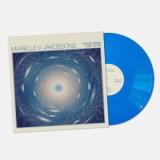
Marielle V Jakobsons has cultivated a signature voice molded by minimalist, ambient and spiritual traditions. Her recordings, from her early work with Date Palms, to the ongoing work with Chuck Johnson in Saariselka, and most definitively with The Patterns Lost to Air, show Jakobsons to be an exceptionally skillful sound sculptor, a musician who knows the value of patience and control. An artist able to derive maximum impact from her chosen sound elements, the album"s layout is shaped by three primary voices of violin, Fender Rhodes, and Moog Matriarch and was recorded in 2024 in the studio Jakobsons built in Oakland, California.
Marielle V Jakobsons has cultivated a signature voice molded by minimalist, ambient and spiritual traditions. Her recordings, from her early work with Date Palms, to the ongoing work with Chuck Johnson in Saariselka, and most definitively with The Patterns Lost to Air, show Jakobsons to be an exceptionally skillful sound sculptor, a musician who knows the value of patience and control. An artist able to derive maximum impact from her chosen sound elements, the album"s layout is shaped by three primary voices of violin, Fender Rhodes, and Moog Matriarch and was recorded in 2024 in the studio Jakobsons built in Oakland, California.
The artistry of Midori Hirano lives in the resonance between sonic and visual worlds. Over her distinguished career the Berlin-based, Kyoto-born composer, pianist, and synthesist has crafted a distinctive voice straddling the spheres of classical music and harmonies with abstraction and invention. In addition to works under her own name, Hirano has released dynamic experiments under her MimiCof moniker as well as composed for film, television, art exhibitions and architectural expos. Hirano has also been a prolific collaborator, working with CoH, Brueder Selke, Nils Mosh, Teodor Wolgers, Ben Lukas Boysen & Paul Emmerich, SPECIMENS, Mami Sakurai, Atsuko Hatano, and more, contributing to dozens of releases. Hirano is acclaimed for crafting emotive works that stimulate all the senses with impressionism, or painting with sound. OTONOMA is the culmination of her work synthesizing these elements and highlights her acumen as a practiced and intuitive artist. The album infuses Hirano"s more classical sense of harmony on the piano with the endless textural possibilities of synthesizers.
In February 2025, more than 1,000 musicians came together to release a silent album protesting the UK government’s planned changes to copyright law, which would make it easier to train AI models on copyrighted work without a licence. The album, titled Is This What We Want?, featured recordings of empty studios and performance spaces, representing the impact on artists’ and music professionals’ livelihoods that is expected if the government does not change course.
The digital release in February 2025 reached no. 38 in the UK album charts. Now, it is being released on vinyl, with a bonus track - a recording of an empty studio - from Paul McCartney. The vinyl is being released by state51.
Under the heavily criticised proposals, UK copyright law would be upended to benefit global tech giants. AI companies would be free to use an artist’s work to train their AI models without permission or remuneration. The government’s proposed changes would require artists to proactively ‘opt-out’ from the theft of their work – reversing the very principle of copyright law. ‘Opt-out’ models are near impossible to enforce, have yet to be proven effective anywhere else in the world, and place enormous burdens on artists, particularly emerging talent.
Facing major backlash from the creative sector and beyond, the government has said its previous proposal is no longer its preferred option. However, it has not proposed an alternative, simply recommitting to its plan to “modernise the copyright legislation”. In the meantime, it has sent creatives a worrying signal, five times rejecting House of Lords amendments to the data bill that would have given rights holders visibility over when their work was being used against their wishes by AI companies.
The album’s track listing spells out a simple message: “The British government must not legalise music theft to benefit AI companies.”
Ed Newton-Rex, the organiser of the album, said:
“The government must commit to not handing the life’s work of the country’s musicians to AI companies for free. Doing so would be hugely damaging to our world-leading creative industries, and is totally unnecessary, only benefiting overseas."
Paul Sanders, founder of The state51 Conspiracy, said:
"When tech companies lobby governments to give them songs for free, it’s not so they can cure diseases, feed the hungry, or provide clean water where it is needed. It’s simply so they can make millions of fake songs and keep all the profits for themselves. As a company with a lifelong commitment to musicians The state51 Conspiracy was honoured to be asked to help get this message out on vinyl. All profits go to Help Musicians, which is what our politicians should be doing instead of sucking up to tech bros."
DIESECT fearlessly navigates the turbulent realms of both internal struggles and external chaos, refusing to sugarcoat the complexities of life. From humble beginnings as Brisbane locals to their current status as national contenders, DIESECT has garnered over 2 million streams across various platforms all by themselves, showcasing their undeniable appeal to a growing audience. They've toured across the nation selling out their own shows and supporting the likes of Fit For A King (US), ERRA (US), Silent Planet (US), Currents (US), August Burns Red (US), While She Sleeps (UK), Spite (US), To The Grave and more.
Danish bassist and composer Jesper Thorn has become one of Scandinavia s most distinctive musical voices, known for blending introspective storytelling with the understated lyricism of Nordic jazz. His award award-winning albums Boy and Dragor earned international praise for their emotional honesty and cinematic depth, establishing a sound world where fragility, melancholy, and quiet beauty intertwine. A deeply personal meditation on the search for calm, connection, and meaning in a world that often feels overwhelming, the album continues his exploration of sound as refuge, a place to pause, reflect, and breathe. Joined by long long-term collaborators Marc Méan (piano), Andreas Bernitt (violin), Cecilie Strange (saxophone), and Maj Berit Guassora (trumpet), Thorn reunites with producer Mette Damm and engineer August Wanngren to craft an atmosphere both intimate and expansive. Where 2023" s Dragor confronted the ghosts of Thorn s past, STILLE (meaning quiet " or silent " in Danish) looks outward - and inward - toward reflection. For me, music has always been a refuge, Thorn writes. It s a place where I can reflect and immerse myself - both as a listener and, maybe even more, as a composer. Each composition functions as a kind of musical still image : fragments of emotion captured in time, responding to both the chaos and fragile beauty of the modern world. From the flickering calm of Fragmentarium , to the urgent, primal fear of Run (written as wildfires swept through California) to the tender domestic peace of Stilleben , these pieces balance melancholy and hope in equal measure. Thorn s writing continues to thrive on collaboration and trust. Such is Fate emerged from a discarded melodic fragment, reimagined through the expressive playing of Bernitt on violin. Recover and Rebuild form a quiet hymn to resilience, with Guassora and Strange lending understated, breath breath-like power to the ensemble. The closing track, Shimmering (for MM) MM), is dedicated to pianist Marc Méan, a constant presence in Thorn s projects since 2014 and, as Thorn puts it, the touch and sound I hear in my head when I compose ". I wanted to create a space that feels like silence, peace and quiet in a noisy world that often moves faster than it feels possible to keep up with. says Thorn.
Zürich-based musician Angelo Repetto returns with his new album Between Worlds: Interference, released on Subject to Restrictions Discs. The record is the result of a unique collaboration with Argentinian visual artist Clara Grabowiecki, extending their immersive live project Between Worlds into a sonic and tangible form.
«This album is a continuation of the deep conversations Clara and I had about concepts of perception that led us to question silence, time, transcendence, and the future», says Repetto. «It’s not about finding answers, but about opening spaces where sound, image, and emotion can flow freely.»
Between Worlds: Interference oscillates between hypnotic rhythms, kraut-inspired synth layers, and psychedelic atmospheres – hallmarks of Repetto’s style that listeners may recognize from earlier releases such as Sundown Explosion and Kamiokande. At its core it is an invitation into an open dimension where disciplines, experiences, and realities dissolve into one another. It is both a deeply personal statement and a collective journey into new perceptual spaces.
out of Stock
Last delivered 8 months ago available to reorder, subject to availability
Minority Records is releasing a unique boxset Politique du silence with three early albums from Sylvain Chauveau, French composer of minimalist neoclassical music.
“When I made my first albums as a composer, I was obsessed with minimalism, and this quote from the film director Robert Bresson summed up my state of mind. I set myself three principles: 1) Use silence as a starting point, 2) Only add sound when it's absolutely essential, 3) Don't imitate the Anglo-Saxon musicians I admired, but draw on the musical culture of my country, France which lead me to listen intensively to Satie, Debussy and Ravel.” Chauveau explains the background to his work.
The collection Politique du silence contains the recordings of Des plumes dans la tête (2004), Un autre Décembre (2003) and Nocturne impalpable (2001) on coloured 180 gram vinyls. The cover features artwork by French photographer Valéry Lorenzo.
“When I discovered the simple and powerful black and white pictures by Valéry Lorenzo, in the 90s, I immediately fell in love with them. We became good friends and since then I ask him to let me use one of his photos for most of my album covers, or to make my portrait for press shots. It has become a real collaboration, music and images, for more than 25 years. It was then logical to ask him again for the cover of this boxset, like a gentle reflection on my piano and strings era. It's a true honour for me to see my early music recollected, repackaged, remastered after all this time. Which gives me hope that this music, in which I've put all my soul and heart during the years 2001 to 2003, is maybe not forgotten yet.” Chauveau himself adds of his collaboration with Valéry Lorenzo.
Nocturne impalpable and Un autre Décembre were re-issued by Minority Records in 2014 and 2015 and both titles completely sold out. This year’s release also includes the album Des plumes dans la tête in its world premiere on vinyl.
Nocturne Impalpable is a world of minimalism, abstraction, and contemporary rendition of classical music with variations for the piano, clarinet, strings, and accordion which are often compared to the compositions of composers Harold Budd and Claude Debussy. Here, Chauveau partially reveals his versatility as a composer by connecting electronic elements, noises, and ambient planes with monumental strings and piano preludes. The
album of piano variations Un autre Décembre is interspersed with field recordings and electronic noises. The inspiration for the recording of the album and for its name was the song Jaurès by the Belgian singer and composer Jacques Brel. This song tells the story of the grandparents’ generation who toiled in the mines. “Comfort and health won’t protect our generation from sadness and discontent. We also live through winter times, even if these are slightly warmer due to the current climate.” An album of 20 short instrumental sketches with several delicate intermezzos for the piano, string quartet, and the clarinet, Des plumes dans la tête, was composed for the eponymous film by director Thomas de Thier.
Sylvain Chauveau was born in 1971 in the French town of Bayonne and currently lives in Barcelona. His extensive discography of mainly meditative neo-classical recordings for the music labels FatCat, Sub Rosa, Sonic Pieces, and Flau is enriched by several collaborations and his participation in the Ensemble 0, Arca, and On projects. Chauveau has also composed many film soundtracks as well as music for the theatre. He has presented his works in Prague several times, most recently in the spring of 2024 at the Spectaculare festival. His compositions get tens of millions of streams on streaming services, and he’s been called the French king of minimalism.
Inspired by witnessing the broken tension and renewed possibilities of a laptop breaking down at a gig – not to mention the void left behind by the sudden end of a relationship – Pentu’s latest release is a jump-cut menagerie of musical moments. Sewn together into ‘And I Saw My Devil And I Saw My Deep Blue Sea’, these fifteen tracks continue the London-based producer’s active departure from the soundscapes and song structures that dominated their previous writing style. These disparate pieces slice themselves off into sudden silence, or veer into unpredictable sidebars, hopping from hyperactive instrumentals to beautifully deconstructed YouTube samples. Described by Pentu as “emotionally intuitive to write”, this is music by and for the endlessly scrolling modern mind – “navigating the world alongside the splintered, interruptive emotional hyper realities of social media.”
The sudden silences, drones, and interruptions are perhaps less surprising than the guitar-based textures of metal & shoegaze woven into several vital passages by Pentu. The result is a collage that encapsulates the erratic feeling, not only of a relationship’s end, but simply of navigating online mediascapes.”I found myself realising that my phone, the constant interrupter of nothingness and silence, was both a cause of depression (reliving memories, dating apps) and a relief from it (creating new friendships, distractions, also dating apps)”, says Pentu.
Pentu’s attempt to overcome content overload by actively curbing his setup of laptop-guitar--synth does little to reduce the scope of this album’s sonic palette. YouTube vlog samples (from videos with next-to-no views) are an attempt to recontextualise and dramatise material that “would have otherwise been throwaway moments lost in the internet”, adding staccato moments of reality to Pentu’s beautiful and jarring album-length paean to overstimulation.
out of Stock
Last delivered 7 months ago available to reorder, subject to availability
A chance meeting in Mexico City set Points of Inaccessibility into motion. When Ibero-American composer Rafael Anton Irisarri crossed paths with Dutch media artist Jaco Schilp at MUTEK in 2024, a conversation about how technology shapes perception revealed an unexpected common ground. Schilp invited Irisarri to a spring 2025 residency at Uncloud, the Utrecht-based collective he co-founded, where Irisarri's sound began to take form amid an environment shaped by Schilp’s visual research.
The Uncloud studio was located inside the former Pieter Baan Centre, a forensic psychiatric prison where suspects of violent crimes were once confined. Its long history of silence and containment shaped the atmosphere in which the project developed. Within this setting, Irisarri coaxed long bowed-guitar tones through a network of pedals and looping systems. The raw gestures thickened into a vaporous and architectural field of sound. Schilp processed the material through a custom point-cloud software patch that produced images in continuous flux. The visuals flickered, dissolved and reformed like memories that resist coherence, functioning as a digital Rorschach that reflected the observer’s own perception.
Amid these spectral echoes, the project evolved into an examination of how the past persists within present signals. Memory endures as residue and interference, continually shaping perception even when its source has faded.
Schilp’s visual process required a continuous stream of sound in real time. Irisarri improvised throughout the residency, generating material that allowed the visuals to develop in parallel. Once back in his New York studio, he began shaping the recordings by carving pathways through the improvisations and mapping selected passages into MIDI. This process allowed him to build outward from the bowed-guitar material with minimal overdubs, adding Prophet 5 textures, Moog bass and strings that expanded the harmonic field while keeping the original performances at the center. To refine the structure, Abul Mogard provided editorial input, working with Irisarri’s stems to guide transitions and strengthen the overall pacing. The material, originally created under conditions of immediacy and constraint, evolved into a fully realized work through careful revision, patience and sustained reworking.
The title engages the geographic concept of the Poles of Inaccessibility, locations defined solely by their distance from all surrounding points. Irisarri adapts this idea to the conditions of digital life, where new forms of inaccessibility arise through the informational enclosures that structure perception. What appears to be a fully connected network often produces a deeper kind of separation, one shaped by the filtering logic of the systems that mediate experience. In this sense, the digital sphere mirrors its geographic counterpart. We inhabit spaces saturated with signals, yet the possibility of genuine contact becomes increasingly remote.
At its core, Points of Inaccessibility considers what can be understood as the new rituals of capitalist realism. Irisarri uses the term digital shamanism to describe the forms of simulated connection that organize contemporary life. These systems promise comfort through algorithms, influencers and AI interlocutors, yet they often reproduce the same conditions that generate loneliness in the first place. What appears as connection becomes the echo of connection, a sequence of gestures that imitate solidarity while withholding it. Like the geographic poles, these rituals are defined by distance. They pull us into environments where everything is illuminated, yet meaningful proximity becomes increasingly rare. In this sense, the work approaches a hauntology of the present, a reflection on futures that have stalled and intimacies that have been thinned by the algorithmic infrastructures that surround us.
This thematic tension unfolds across the album’s four movements. Faded Ghosts of Clouds introduces the work with textures that rise and dissipate in slow cycles, creating an atmosphere that resists clear definition. Breaking the Unison occupies a pivotal position in the sequence and focuses on the moment when the individual and the system fall out of alignment. Its shifting patterns trace the scattering of signals that once suggested connection, revealing the instability at the heart of contemporary perception. Signals from a Distant Afterglow forms the center of the album and features vocals by Karen Vogt, whose presence enters the sound field like a fragile transmission shaped by distance and delay. The closing piece, Memory Strands, follows motifs that appear, recede and briefly intersect before returning to quiet. Across these movements, the album outlines a landscape in which emergence and disappearance continually inform one another.
Listening to Points of Inaccessibility is an encounter with a sound field that is constantly in flux. Elements surface briefly, shift position and recede, creating a sense of motion that resists stable interpretation. The music moves between closeness and vastness, carrying traces of memory while withholding a clear point of resolution.
The album’s visual identity completes the project’s conceptual arc. In Mexico City, where Irisarri and Schilp first met, Daniel Castrejón transformed stills from Schilp’s point-cloud visuals into the cover image. The final artwork captures a single suspended frame of the digital material, a moment extracted from a field that is normally in constant motion. Its surface recalls the texture and abstraction found in the work of Catalan artist Antoni Tàpies, where material presence and erasure coexist within the same plane.
What emerges is a work that examines the tension between technological systems and human presence. Points of Inaccessibility asks whether connection is still possible within environments shaped by mediation and delay, or whether we have become isolated points within the very networks that promise proximity. What possibilities for relation persist within environments organized by algorithms and interruption? And how are we meant to understand presence when so much of it is constructed at a distance?
Points of Inaccessibility will be released on BioVinyl on February 6, 2026, with audiovisual performances planned throughout 2026.
Mastered by Stephan Mathieu
Artwork by Jaco Schilp
Design and layout by Daniel Castrejón
Artist photo by Iulia Alexandra Magheru.
out of Stock
Last delivered 7 months ago available to reorder, subject to availability
Born to Dominican and Brazilian parents, xavi grew up bouncing from place to place, picking up inspiration wherever he landed. His first love was baile funk, but he was raised on classic hip-hop, eventually notching up production and songwriting credits for Vince Staples, Demi Lovato and Ariana Grande. But the major label life wasn’t giving; sick of the industry, he headed back to São Paulo to soak up the atmosphere and connect with artists on the ground. Before long, he started uploading quickfire bangers to SoundCloud – at this point there are over 350 of them on his feed – an »evolutionary playlist« in his own words, bursting with ideas.
»balança e paixão« is his debut release, proper, a 12-cut snapshot of chaotic, trailblazing, turbulent genius – bending thrashed rhythms into relentless vocal chops from a laundry list of young brazillian MCs. Built on ear-zizzing »tuin« hits and razor’s edge cuts, he creates hypnotic ripples that wedge themselves between São Paulo’s weirdo fringe (artists like JLZ and Iguana) and the percussive, MC-heavy sound of funk ritmado, one of the contemporary scene’s most vital and recognisable strains. Crucially, you can hear a Photek-like approach to space in his productions too, filling the gaps with metallic clangs to lend his rhythms their own unique dimension. The flipside takes it slower, deeper. On »sei q tu gosta« (I know you like it), DJ Leal Original and MC Vuk Vuk’s voices are transformed into ghosted sibilances next to xavi’s sonar pings and woodblock hits with an almost avant-dancehall slant, like some choice Equiknoxx dub, while on »cuidado bandida« (be careful bandit), he deploys bone-rattling trills that bite down on atmospherics that wouldn’t be out of place on Akira Yamaoka’s »Silent Hill« OST.
out of Stock
Last delivered 6 months ago available to reorder, subject to availability
Portland, Oregon dark rock trio HOAXED return with their stunning new album Death Knocks. Three years in the making, the group—featuring vocalist/guitarist Kat Keo, drummer Kim Coffel, and new bassist/vocalist April Dimmick—have honed their stygian craft to perfection. "We've added another element to the writing and collaboration process," says the band. "April comes from a classic heavy metal background, and her influence is in these songs. We've also had experiences on tour that have helped shape these songs. You can hear influence from the bands we toured with and learned from. We played together for three years as we wrote this album, and we learned a lot about our styles, and our sound evolved naturally together on stage. So, when we sat down to write this album, it didn't feel like a departure or a change." Anchored by the witchy spell of opener "Where the Seas Fall Silent," the rock-hardened groove of "Kill Switch," and the dimly lit power pop of "The Family," HOAXED upped the tempo, sawed the edges (Dimmick's raspy menace intimidates), and strengthened their ties to the golden gods of heavy metal. Indeed, cyclical riffs, dynamic rhythms, and bottom-heavy bass propel Death Knocks through its filmic, hard-nosed gloom, but Keo's sorcerous vocal hooks seal the deal. Often smartly paired with Dimmick's angels' n' demons, her performance effuses fragility and potency across the album's alluring expanse. HOAXED recorded Death Knocks at Falcon Recording Studios with producer/engineer Gabe Johnston (Unto Others, Vintersea) and enlisted Arthur Rizk (Power Trip, Kreator, and more,) for mixing and mastering. In total, the group spent eight days in February and March tracking Death Knocks. While most bands spend months ironing their metallic mettle, Hoaxed's expeditious time at Falcon engendered a polished, big-sounding force befitting their larger-than-life songs. Short: Portland, Oregon dark rock trio HOAXED return with their stunning new album Death Knocks. Three years in the making, the group—featuring vocalist/guitarist Kat Keo, drummer Kim Coffel, and new bassist/vocalist April Dimmick—have honed their stygian craft to perfection. FFO: Ghost, Tribulation, Bloody Hammers, Khemmis, Unto Others, GGGOLDDD, Katatonia. Pallbearer
2LP-Erstauflage auf farbigem Loser-Vinyl: "BIO PETROL" Disk 1 und "MAGENTA" Disk 2. "¡Simpatico! (Remastered and Expanded)" bringt das lange vergriffene zweite Album von Velocity Girl aus dem Jahr 1994, "¡Simpatico!", mit einem superfrischen Mastering und einer Menge Bonus-Tracks aus der "¡Simpatico!"-Zeit endlich wieder raus. Das Originalalbum klingt besser als je zuvor und wird durch ein komplettes Album mit B-Seiten und Raritäten ergänzt. Velocity Girl wurde um 1989 an der University of Maryland außerhalb von Washington DC gegründet, mit dem Gitarristen Archie Moore (Black Tambourine), dem Gitarristen Brian Nelson (Black Tambourine), dem Schlagzeuger Jim Spellman (Starry Eyes, Foxhall Stacks, High Back Chairs, Julie Ocean, Piper Club), dem Bassisten Kelly Riles (Starry Eyes) und der Sängerin Sarah Shannon (Starry Eyes, The Not Its). Die Band kombinierte englisch inspirierten, lauten Shoegaze-Fuzz mit rauem US-Indie-Rock und klassischem Pop-Songwriting im Stil der 60er Jahre. Eine Killer-Single auf Slumberland und ununterbrochene Tourneen erregten die Aufmerksamkeit der Indie-Rock-Kenner, und bald darauf unterschrieb Velocity Girl einen Vertrag mit Sub Pop auf einer Motorhaube in Hoboken, New Jersey. Nach der Tournee zur Unterstützung ihres Debüts ,Copacetic" verbrachte die Band den größten Teil des Jahres damit, eine Reihe von Songs für ein zweites Album zu schreiben. So hatten sie noch nie gearbeitet - es war eine neue Erfahrung, Zeit und Budget (vom Label!) darauf zu verwenden, ein Album zu produzieren, das kein selbst produziertes Punkrock-Studioalbum war. Nachdem sie ihr neues Material monatelang im lauten Stil von ,Copacetic" gespielt hatten, waren die Bandmitglieder von den Songs begeistert, wollten sich aber von der rauen, amateurhaften Atmosphäre ihrer früheren Alben lösen. Und ihre Einflüsse waren diesmal etwas anders: weniger My Bloody Valentine und Wedding Present, mehr New Order. Jemand bei Sub Pop brachte die Band mit John Porter zusammen, dem ehemaligen Mitglied von Roxy Music, der The Smiths, Billy Bragg, The Alarm und eine Reihe anderer Acts der 80er Jahre produziert hatte. Sie trafen sich während einer Tournee in Los Angeles. Er erklärte sich bereit, das Album in einer dreiwöchigen Session in den Cue Studios in Falls Church, Virginia, zu produzieren. Er war genau das, was die Band brauchte: ein Redakteur, Arrangeur und Zuchtmeister. Als er gnadenlos jeden unnötig wiederholten Takt herausschnitt, merkte die Band, dass sie sich zu einem klareren Sound hingezogen fühlte und fast komplett auf die laute Gitarre verzichtete, zweifellos beeinflusst durch Porters Präsenz. Velocity Girl waren super zufrieden mit dem Ergebnis, und ,¡Simpatico!" kam im Juni 1994 raus. Diese erweiterte Neuauflage enthält eine Reihe von Songs, die einige Monate nach den Albumaufnahmen in den Inner Ear Studios in Arlington, Virginia, aufgenommen wurden. Die Sessions lieferten spielerisch-experimentelle B-Seiten für die Singles des Albums, zwei Cover-Songs (das New-Order-Cover ,Your Silent Face" und ein Beach-Boys-Cover) für eine Single auf Merge Records und einen Compilation-Track.
For over a decade, Hyunhye Seo a core member of Xiu Xiu, in her solo work navigates the precarious edges where composition dissolves into pure gesture. Through ecstatic piano improvisations, restless percussive attacks and an expansive use of acoustic space, she constructs layered sonic environments that move across the boundaries of noise, avant-garde jazz, ambient and contemporary classical music. Her performances reveal an unfiltered process of listening and creation - a practice in which thinking becomes the enemy, and surrender the only viable strategy.
Continuation captures one such surrender. Recorded live at MAO - Museo d'Arte Orientale in Turin during the exhibition Rabbit Inhabits the Moon – The Art of Nam June Paik in the Mirror of Time, this cascading piano improvisation unfolds as a dialogue between performer, space and the particular acoustics of a museum built to house contemplative objects. Jamie Stewart processes the sound in real time; Giuseppe Ielasi shapes the final mix. What emerges is a work of charged immediacy - restless gestures giving way to passages of unexpected tenderness, noise and silence trading places in continuous exchange. The title is precise: this is music that refuses conclusion, that exists in a state of perpetual becoming. On Side B, Continuous Extension offers an unprecedented response. Phew - the pioneering figure of Japanese avant-garde music since the late 1970s - was invited by curators Chiara Lee and Freddie Murphy to reinterpret Seo's performance. Working with synthesizer and subtle processing, Phew distills the resonances of Continuation into a new electronic landscape - waves of abstraction that echo like reflections in sound, tracing the harmonic tensions of Seo's playing into territories she herself did not visit.
The accompanying booklet includes an essay by Bruno Lo Turco exploring the deep connections between improvisation and Buddhist thought, and a written reflection by Seo on her own practice of surrender and listening.
Continuation is released on Ubi Kū, the record label of the Unione Buddhista Italiana. The cover reproduces Avalokitesvara "Water and Moon" from the Museo d'Arte Orientale "E. Chiossone" in Genoa - the bodhisattva of compassion gazing at the reflection of the moon in water. Like that reflection, this music exists fully in the present, complete and unrepeatable.
For the first time, all the 1978 recording sessions of Lino Capra Vaccina's legendary Antico Adagio - including Frammenti da Antico Adagio and Echi Armonici da Antico Adagio - collected in one definitive deluxe edition. Minimalism, and so much more. Sheets of resonance, stunning harmonic interplay, intricate rhythms rising as one. Sidelong works of pulsing, hypnotic, ritualistic drone built from vibraphones, marimbas, gongs, bells, and cymbals, threaded by the sustained vocal tones of Juri Camisasca and Dana Matus. A trance-inducing, meditative, cosmic world of sonic interplay - the world beyond, joined with that which lays within.
Before an aberrant idea of progress ludicrously sped up our daily lives, even in hectic Milan it was possible to "play slowly" - with no pressure, simply following the path your art was showing you. This music moves between modal fascinations, ritual evocations, and states of hypnotic trance, evoking the acoustic environment of Tibetan and Zen Buddhist ceremonies and the temporal structures of Noh theatre, from which Vaccina took the name of his original label, Nō. Now, fittingly, this complete collection appears on Ubi Kū, the label of the Italian Buddhist Union.
Lino Vaccina (1953) first gained note as a member of Aktuala, creating a hybrid of rock, avant-garde, and ancient musics while incorporating sonic traditions from across the globe. After leaving in 1974, he studied at Milano's Civica Scuola di Musica, collaborating with Franco Battiato and Juri Camisasca, and forming Telaio Magnetico in 1975. In 1978 he self-released Antico Adagio in a tiny edition and wouldn't be heard from again until 1992. From 1979 to 1985 he was percussionist with the Orchestra of Teatro alla Scala under maestros such as Abbado and Ozawa. His career has been marked by an incredibly high bar of quality and a tragically slim recorded output - a rigorous and sensual language fusing Oriental, Mediterranean, and African influences with ritual elements and a cosmic sense of time.
As Massimo Torrigiani writes: "Lino Vaccina's music captivates through its internal coherence and its ability to generate states of suspension and deep listening - through undulations, small melodic fragments, dialogues between acoustic instruments and resonances that seem to evoke a phantom orchestra. An example of personal exploration, discipline and openness that speaks across time to anyone willing to be drawn into its sound."
Frammenti da Antico Adagio and Echi Armonici da Antico Adagio contain material from the original sessions, restored and issued by Die Schachtel in 2014 and 2017. The new masters, prepared by Giuseppe Ielasi, are based on those restorations and the original material. The package includes previously unpublished photographs from the May 1978 sessions and liner notes by Mauro Radice in Italian, English, and French. Cover art by Dana Matus. Printed by Legno, Milano & Mother Tongue, Verona.
Personnel: Lino Capra Vaccina (vibraphone, marimba, tablas, wooden drums, darbuka, cymbals, gong, metal sheets, bells, bass drum, tom, snare drum, piano, voice), Dana Matus (voice, percussion, cetra), Juri Camisasca (voice), Mario Garuti (violin), Roberto Mazza (oboe). Original production by Massimo Villa & Lino Vaccina with Piero Cannizzaro. Recorded May 1978 at Circle Studios, Milano.
The heights of the Italian avant-garde, at their very best.
Rhiza Semar presents its fourth chapter with Yildizlara, a four-track odyssey shaped from shadow, rhythm, and elemental texture. Crafted as both visceral tools and introspective journeys, the record navigates between ominous density and luminous release, guided by a deep awareness of space, myth, and matter. As an artist, Hitam paves the way for a new sound emerging from his burrows to build bridges between electronic subgenres while shaping a landscape unmistakably his own. Orb Weaver opens the cycle with jagged IDM rhythms that coil and release like threads of a web pulled taut. Originally composed for the graduation project of fashion designer Tim van der Plas, who's collection was inspired on climbing out of depression, its atmosphere is dark and ceremonial, with textures scraping against silence until catharsis emerges from the tension. A confrontation between inner turmoil and release. On Vanishing of the Anasazi, cavernous reverbs carry traces of lost structures, percussion echoing as if across ruins. A relentless drive holds the ghost of ritual processions, summoning a spectral energy that feels at once monumental and hollowed-out. The track suspends itself between presence and absence, architecture and collapse, leaving the listener in a space where echoes become the only surviving form of memory. Mesh Grip plunges downward into subterranean force. A thundering groove rumbles like minerals being unearthed, goblin-like figures at work in hidden shafts, chiseling away at stone in endless rhythm. From this pressure, a sudden swell of melancholy pads rises, reframing the heaviness with emotional resonance as if the whispers of angelic guardians seep into the caverns, transforming extraction into elegy. What begins as pure drive of endurance evolves into an introspective meditation. Closing the release, Yildizlara unfolds as an epic ascent. Layered rhythms rush forward with urgency, intricate yet propulsive, while chopped vocals bring back a sensual human element, scattering like signals across the night sky. Animalistic atmospheres dart through the mix as spectral cries and furtive movements, adding a primal dimension to the drive. What begins as erratic and untamed slowly converges into warmth and ultimate catharsis: a cosmic tale inscribed in sound, both intimate and monumental, familiar yet born of hidden memory. Yildizlara is both innovative and ancestral; a release where turbulence becomes ritual, and where rhythmic complexity unearths fragments of hidden memory. Beneath its dark and erratic surfaces lies a strange familiarity, like echoes of a primal past resurfacing through sound, reminding us of worlds once known but long concealed. Words by A. Veyra
out of Stock
Last delivered 6 months ago available to reorder, subject to availability
NINJAZZY" unfolds as a deep, subtle, and versatile narrative. The title is no coincidence: like sonic ninjas, the producers act with silent precision, delivering a work of elegant sobriety and creative audacity, blending deep house, atmospheric dub, and introspective minimalism.
out of Stock
Last delivered 7 months ago available to reorder, subject to availability
Following her compelling debut EP Mending, Frida Touray returns with Homebody, a work of raw emotional clarity, crafted duringa time when her voice was literally fighting back. Diagnosed mid-process with a rare condition that forced her into silence andstillness, Touray chose not retreat, but rebuild. From the quiet corners of domestic life, she’s shaped a collection of songs thatradiate warmth, vulnerability and quiet endurance.Musically, Homebody expands on Touray’s jazz-soul foundations with sparse, atmospheric production that amplifies her voiceand message. There’s a newfound looseness in her phrasing, a deeper sense of presence in every word she sings. You can hearthe letting go, of perfection, of control, and the deepening of purpose in its place. Each track lands with unfiltered intimacy andemotional architecture, a subtle act of defiance wrapped in softness.This is music built on stillness and shaped by resilience. A reflection on self-worth, illness, femininity, community and healing.Songs that speak to the unseen parts of recovery and the small rooms we build ourselves back up in. Homebody is a record foranyone rebuilding from the inside.
out of Stock
Last delivered 8 months ago available to reorder, subject to availability
Suburban Architecture are pleased to announce the second release in their 'New Town Dubs' series, following in the footsteps of the now Sold Out 'Architecture Dubs' series. Whereas 'Architecture Dubs' enlisted remixers from Drum & Bass's mid 90s golden era (among them the likes of Peshay, Blame, 4Hero and Ray Keith), 'New Town Dubs' turns its attention to the new breed of producers inspired by the sounds of Drum & Bass and Jungle's foundations.
On the A-Side, a rinsing Amen rework of 2022 roller 'Distant Response' comes courtesy of Law, the name behind the prolific Repertoire imprint. With releases on labels including Silent Force, Rupture and of course Repertoire, Law has been a major player in the Jungle revival sound for over a decade.
Over on the flip, Melbourne based producer Kloke delivers a stripped back rework of 'Rising', taken from this year's 'Vivid' EP. With releases on Future Retro, Hyperdub and Diamond Life, Kloke is a frequent collaborator with Tim Reaper and has collaborated with many of the notable producers and labels representing Jungle's new wave.
Pressed on 10" vinyl and housed in brown Kraft paper sleeves, the series makes visual reference to the exclusive dubplate pressings which introduced so many classic cuts to the UK's dancefloors in the 90s.
out of Stock
Last delivered 86 days ago available to reorder, subject to availability
Merzbild Schwet, the second album opus released in 1980, is considered one of Nurse With Wound's major releases, and is part of the famous "Silver Edition" on Rotorelief Records, with a luxurious chrome-plated cover in double Gatefold sleeves, and sumptuous 200g vinyl discs issued in 300 copies on silver and black vinyl, and 700 copies on black vinyl.
The first track, Futurismo, begins with clanking rhythms, record skip clicks, and horn riffs before veering off into a crazed quilt of women singing, laughing, and talking in French. About halfway through, wild screeches of distortion disrupt the piece, and then more bizarre sounds take over before the piece ends with a collage of over modulated electronic hum and rambling piano. The other cut, Dada X, goes further into weirdness with lots of silences, creepy creaking noises, tones that build up and collapse, and scattered spoken word in French and English from Eve Libertine from the political punk band Crass, and the piece certainly lives up to the Dada of its title.
Jaime Fennelly, as Mind Over Mirrors, makes music that pushes the known to the lip of the unknown, where it rocks precariously and in exhilaration. He scrambles the familiar and tweaks the comfortable, not through aggression, but a throbbing estrangement. When placed at a distance, these require longer reaches to grasp. The reward for this effort is an enlarged field of perspective, experience, and also of feeling. This is deeply feeling music to feel deeply.
In all of Jaime’s records—and, arguably, especially in Particles, Peds, & Pores—there’s a seed of the pastoral, some ancient shepherd’s song ringing through nearby hills and groves, but one also yearning to plumb the uncanny and the creative possibilities of disintegration. “Farewell to woods,” the grieving Damon sings in Virgil’s eighth Eclogue. “Let all be ocean now.” Fennelly sounds vast, enveloping wildernesses and the thrilling disquiet of their echoless grandeur. (Maybe Burroughs speaks to the borders of these zones: “Pulsing mineral silence as word dust falls from demagnetized patterns.”) There’s something of the heroic at work here, too, although the hero’s instinct has been suitably tempered—or awed—to know not to fly too close to the sun.
Guitars On Life solves a nagging mystery about the fate of a musician who stood out as a singularly spectacular bloom even in the verdant creative fields of the San Francisco Bay Area at the turn of the century. After more than two decades of recording silence and about a dozen years away from the bandstand, Jack West is back, still immediately recognizable as a guitarist and composer but miles from the last stop on his ongoing musical journey. There’s poetic symmetry in discovering that his detour from life as a performing musician involved fruitful work devising innovative solar technologies, as he had similarly distinguished himself as an inveterately inventive musician. When we last heard from West he’d carved out a vibrant niche as a guitarist with a percussive attack and lustrous group sound. Wielding a custom-built eight-string acoustic guitar with uncommon rhythmic dexterity, he released six albums featuring his original tunes, mostly recording with his band Curvature (though he also played mesmerizing solo recitals). West’s knack for crafting glistening, minutely detailed soundscapes full of surprising twists and oddly inviting textures prompted NPR to describe his work as “a whole new sub- genre of jazz.” Drawn back to performing in recent years, West saw guitarist Walter Strauss at Berkeley’s Freight & Salvage in 2022 and suspected he’d found a kindred spirit. Intrigued by Strauss’s unusual approach to guitar, West “wondered what a musical conversation might sound like between two guitarists who had developed such uniquely different ways of playing the instrument.” An invitation to play together led to them writing the tune ‘More Guitar,’ the bravura opening track that launches Guitars On Life. Several months later they spent a week in Florida together writing intensively, resulting in most of the material for this consistently thrilling project.
The news arrives in tandem with the release of two powerful new singles, "The Toughening" and "The Softening", shared in recognition of World Mental Health week At its core, 'Everythinglessness' is a record about masculinity and the mental health crisis facing young men, a subject Wolfe has lived through and now gives voice to with unflinching honesty. Turning his own experiences of depression, anxiety and ADHD into something raw, intimate and cinematic, Wolfe invites listeners into a world where vulnerability is not weakness, but a form of survival. Written after a period of intense personal reckoning, including time spent in a mental health rehab facility in 2023, 'Everythinglessness' is Wolfe's most emotionally resonant work to date, an album that unpacks what it means to be a man in a society that often demands silence and stoicism instead of softness and support.
Wolfe's voice channels the emotional resonance of Justin Vernon of Bon Iver and Nick Cave, while his songwriting explores everything from grief and generational trauma to love, loss and survival. The singles have been getting loadsa positive press. Radio support includes interviews and live performance on BBC London, Times Radio & 5 Live. More to come. Album launch show in Hastings, followed by UK and Europe tour supporting Alice Merton.
Emerging from the Ukrainian darkness in 2011, Kaosophia blend the raw energy of black metal with dissonant tones and emotionally resonant melodics. Their music is a sonic tapestry woven with intricate guitar riffs, powerful vocals, and haunting arrangements.
The band recorded their first demo “Towards The End” which was self-released by them in 2012 on a limited edition cassette.
2013 saw their first album “The Origins of Extinction” released on CD and cassette and the band followed up with many shows across Europe. 2017 saw Kaosophia expand and deepen their abyssal sounds even further with the monumental “Serpenti Vortex”, with lavish cover art produced by occult master artist Dávid Glomba, it rose Kaosophia to the upper echelons and forged their name as one the best and most formidable black metal acts in the scene at the time.
After a long period of silence, bloodletting and transformation, Kaosophia return with their darkest, most mature and powerful work to date. 2025 sees the return of Kaosophia with their new album “Beyond The Black Horizon”.
A dark and malevolent opus that explores themes of darkness, existentialism and the human condition. Delving deep into the complexities of the mind, the fragility of existence and Death itself.
Kaosophia preach orthodox ideas of Satanism in the most straightforward and ruthless form - total unconditional worship. Self-destruction as the overcoming of human essence and the cognition of pain to gain access to another level of reality's perception.
It is time to enter the end of days and venture beyond the Black Horizon…
Following the reissue of The Pocket of Fever, Ambient Sans presents the second chapter in Masahiro Sugaya’s visionary work for the avant-garde performing arts company Pappa TARAHUMARA.
Founded by Hiroshi Koike in 1982, Pappa TARAHUMARA blended dance, theater, music, and visual art into abstract, immersive stage worlds. Sugaya’s compositions became the sonic counterpart to this radical aesthetic—minimal yet deeply evocative, combining electronics, ambient textures, and delicate melodic gestures into a sound language both intimate and expansive.
Music From Alejo marks his first original stage score for the company: a work where repetition and silence intertwine with shimmering synthesizers and dreamlike motifs, conjuring atmospheres that feel suspended between reality and reverie. More structured than The Pocket of Fever yet equally poetic, the album reveals Sugaya’s gift for translating movement into sound, balancing modern composition with subtle echoes of Japanese tradition.
Reissued for the first time on vinyl, Music From Alejo includes a printed insert featuring an exclusive interview with the artist, alongside photographs from our visit to his home in Japan. Essential listening for anyone drawn to the ambient minimalism of Hiroshi Yoshimura, Midori Takada, or Brian Eno—reimagined here through the lens of Tokyo’s experimental scene of the 1980s.
out of Stock
Last delivered 7 months ago available to reorder, subject to availability