Ziúr lines up with The Tapeworm for an exclusive cassette-only release featuring Kenichi Iwasa, exploring the electroacoustic realms.
Invited to perform solo at Tarek Atoui's performance series at Kunsthaus Bregenz in October 2024, Ziúr decided to write a new piece for the occasion. This composition, 'Turn Liquid Into Dust', was then performed within the framework of Tarek Atoui's 'Waters' Witness' exhibition as an 8-channel spacial audio piece, transmitting sounds through the installation's structure – metal bars, stones, compost piles… Composed in London in autumn 2024, its principal source of sonic material is recordings of Atoui's instruments which Ziúr had recorded in his studio in Paris during the summer of 2024. In addition, she invited the Japanese woodwind player and virtuoso Kenichi Iwasa to join on all pieces, his contribution providing a binding element, tying the pieces together.
Opener 'A Cold Drip' consists solely of Iwasa's spectral squalls. The tense noir drone of 'Long Call' features a string instrument built by Atoui. For the airy yet dense title track, Ziúr recorded an organ named The Reed Box, with Iwasa floating atop its smoggy soundbed. Closer 'Chips 'n' Crumbles' echos and reverberates with the rattles of household items Ziúr found around her home.
Driven by a relentless appetite for boundless experimentation, Ziúr has been subverting expectations since she was a teenager, corkscrewing through hardcore, metal and punk before veering towards electronic music's turbulent fringes. She produces just like she DJs, gathering a wide variety of ingredients and figuring out the most intriguing, unexpected ways to simmer them into a coherent narrative that helps listeners synchronize the conflicting messages that surround them. Genre isn't a fixed point for Ziúr, but a colour in a vast palette that stretches across history and borders, helping illustrate music that's powerfully subversive. Her The Tapeworm edition follows acclaimed recordings for Planet Mu, PAN, Objects Limited and Hakuna Kulala.
Kenichi Iwasa is a London-based improviser and multidisciplinary artist from Japan, also known for his legendary Krautrock Karaoke night as well as collaborations with visual artists and musicians such as Beatrice Dillon, Maxwell Sterling and Linder Sterling. He currently performs with Naima Karlsson under the name Exotic Sin.
Suche:sim 2
- Dogs
- Magic Again
- Never Been
- Sight Of Sound
- Lilac Whiskey Noise
- Warbird
- Company Of Punishment
- Dead Dogs
- Motion
- Nothing's Good Anymore
Nothing is lost on Cash Langdon. It’s something you can hear in the observational lyrics of his last record, 2022’s Sinister Feeling; but on its follow-up, Dogs, you can also hear it in the camaraderie he cultivates playing live with his band Meadow Dust, a sonic energy that gives off the heat of his native Birmingham. The trio’s fuzzy take on heavy country rock has a worn-in no-fussiness that recalls Neil Young & Crazy
Horse – nothing overthought, nothing understated. And like Young, Langdon’s voice is simultaneously earnest and world-weary – but there’s a sense of humor, too, and a resignation to keeping on (“Dogs,” “Magic Again”). Recorded at Portside Studios (the former location of the legendary Muscle Shoals Sound) in just two days, engineer Brad Timko (Dan Sartain, St. Paul and The Broken Bones) captured Langdon and Meadow Dust at their fiercest yet. The title track “Dogs” and side B heater “Dead Dogs” both take inspiration from the wild dogs Langdon encountered in his neighborhood at the time of writing the record, where he wondered about the sick twist of fate that renders one dog a pet and another a threat. Across songs, he examines how oppressive cycles overlap, intersecting the personal and the societal at all times. The heavy yet melodic “Lilac Whiskey Noise” is the heartbeat of the record, written following an active shooter event that Langdon witnessed at work in 2016. It’s an indictment – not of the perpetrator – but of the systems of power that enable such an act. It’s a microcosm for all of the themes on the album, too: the ongoing violence of simply being awake to the world around you, and the resolve to stay awake anyway.
On the crunchy album-closer “Nothing’s Good Anymore,” Langdon sings about overhearing someone say just that – and you can tell he’s tempted to agree. He’s going to find what kernel of beauty he can. Dogs is a sonic map for finding that beauty in just about anything.
Dateline: April 10, 1970. Setting: The storied Fillmore West in San Francisco, CA. Context: Miles Davis, three days removed from his first session for Jack Johnson and, with newly recruited soprano saxophonist Steve Grossman in tow, opening shows for countercultural heroes the Grateful Dead on the latter’s home turf. Result: The initial rumblings of a thrilling era in which Davis and his cohorts would again upend jazz and popular conceptions of the genre with music steeped in groove, improvisation, and hang-on-for-your-life adventurousness. All captured on Black Beauty: Miles Davis at Fillmore West.
Mastered at MoFi’s California studio, pressed at Fidelity Record Pressing in California, and housed in a Stoughton gatefold jacket, Mobile Fidelity's numbered-edition 180g 33RPM 2LP set helps bring what went down that spring evening in Bill Graham’s venue to your listening room with exceptional clarity, balance, and presence. Originally only released in Japan in 1973 and unavailable in the United States until the late ‘90s on compact disc, this marks the first time Black Beauty has been issued on domestic vinyl. The wait is worth it.
Benefitting from quiet surfaces and excellent definition, these LPs present the band’s livewire energy and torrential storm of notes with captivating dynamics, pacing, and fullness. At its core, this audiophile reissue takes you into the walls of sound erected by a band learning on-the-fly the sheer power, will, and breadth of the electric jazz Davis was orchestrating and realizing, on the spot, would reach rock audiences that until that point had only a faint awareness of his mad-scientist experimentation. The sense of release and reach conveyed by these carefully restored records make it clear the veteran bandleader was in the process of a permanent shift that he’d chase for the next five years.
Given Davis was only a few months away from releasing the pioneering double album Bitches Brew, it shouldn’t come as a surprise that much of the fare here adheres to similar explorative approaches. Turbulent rhythms, provocative trumpet passages, and rich, saturated tonal colors that seemingly splash against a blank canvas take precedence over any traditional attempts at organization and melody. Davis and Co. intentionally play everything on a line with the bandleader signaling changes with his horn via coded phrases. The group speaks a common language — with each member having gone to achieve iconic status for their career contributions and technical prowess.
In the company of Grossman, Chick Corea (piano), Dave Holland (bass), Jack DeJohnette (drums), and Airto Moreira (percussion), Davis constructs themes around “Directions,” “Miles Runs the Voodoo Down,” “It’s About That Time,” the title track to Bitches Brew, and more from his then most-recent studio works and the in-progress Jack Johnson. His farewell to the popular standards that for nearly two decades remained a part of his repertoire arrive via a brief dalliance with “I Fall in Love Too Easily,” a shortened albeit aggressive “Masqualero,” and the “Theme” finale of “Spanish Key.” Initially, Black Beauty lacked specific track listings due to Davis’ increasing frustration with listeners over-analyzing his music.
In retrospect, it’s difficult to blame anyone for wanting to view what’s on display here with the aural equivalent of a magnifying glass. Leaning in rock directions, yet maintaining an ear for spaciousness and solos, Black Beauty survives as a snapshot of a thrilling moment amid a transitory period in which evolution came fast and furious. Just two months later, Davis would add another instrumentalist to the lineup in the form of organist Keith Jarrett, and the perpetually restless visionary would blast off to a more atmospheric and arguably more chaotic universe.
Consider, then, this live document a bridge to that galaxy and a breathtaking example of the possibilities of jazz itself.
Where's Joao Donato? It's a frequently asked question, referring simultaneously to the physical location and the musical moment he inhabits. A sampling of some of his more descriptive song titles suggests Donato's comfort with musical hybrids: "Bluchanga," "Sambolero," and "Sambongo," to name just a few. Lacking a formal genre for his style of music, Donato's is a distinct sound, immediately recognizable from the first few bars of any of his compositions. He was funky back when "funk" was a bad word (listen to either of his 1960s Brazilian LPs, Sambou, Sambou and The New Sound if Brasil, for proof). His compositions are deceptively simple, while his arrangements are harmonically complex, revealing their intricate details upon repeat listening. Today, Donato brings this flavor, now near synonymous with his name, to a new album in the Jazz Is Dead series with Adrian Younge and Ali Shaheed Muhammad: Joao Donato JID007. "Donato is one of the greatest Brazilian composers from that golden era. His signature style, simple melodies combined with colorful chordal progressions, establishes a new lane for Jazz Is Dead," explains Younge. "Joao is one of the most innovative Brazilian jazz composers of the last century. Creating with and learning from this maestro was one of the greatest experiences of my career."
Emerging from the suburbs of North London in the early 1990s, Hulusi was an experimental electronic music collective formed by four friends of multi-ethnic origin: Cypriot, Caribbean, Indian and English heritage. Cultivating their musical practice within very specific parameters of time and space, Hulusi instills the essence and spirit of the acid house movement (and its aftermath) that had taken much of England by storm from 1988 onwards. The ‘Dream’ EP was the collective's first release of their self-funded and limited output, offering up a categorically elusive record that could soundtrack the most esoteric and life affirming club moments, whilst simultaneously satisfying the ears and obscure desires of those found dwelling in the heavily occupied ‘chill out’ rooms and nocturnal after parties. As the emerging UK rave scene aligned with newfound accessibility of music production, the late 80s and early 90s became a fertile ground for experimental electronic music, spawning a generation of bedroom and basement producers interacting with and creating music for often the very first time. Like many, Hulusi was a musical project that connected the dots between DIY spirit, technological advancements and the burgeoning cultural phenomenon of acid house. The project operated outside of the then perceived, traditional band conventions, instead developing their sound and exchanging ideas through the format of demo tapes and floppy disks, nurturing their work through individual bedroom studios and feedback sessions. Considered a crucial and possibly defining element of the record, is Hulusi’s unconscious exploration of the groups hybrid cultural identity. Rooted in a shared desire for self-invention, the Dream EPreflects Hulusi's response to a world of rapid musical and technological change. Each track on the record draws inspiration from both Western and Eastern musical frameworks, symbolized through the record’s structure. The ‘Western Side’, featuring "Dream," echoes the ambient techno and acid house influences of early rave culture and bands like 808 State and Orbital. In contrast, the ‘Eastern Side’ of the record is highly decorated with samples, yet stripped back, through its purposeful use of organic sounds, reflecting the group's fascination with blending Western modernism with imagined Eastern themes. Despite operating in near obscurity, Hulusi - The Dream EP acts as an audible catalyst to transport the listener to a different time and place, offering a lucid snapshot into the musical and cultural explorations of the past whilst simultaneously remaining a timeless piece of music.
- A1: Look Away
- B1: It’s Just Love
This is a previously unheard, Kent Records exclusive release from the great singer/songwriter Valerie Simpson. ‘Look Away’ by the Shirelles on Sceptre was a big 100 Club play in the 80s. Now we have found the original version by the song’s writer - complete with a sensitive girl backing group, no doubt featuring some of those legendary NYC studio vocalists.
The flip is possibly even more relevant. There has never been a known US production of ‘It’s Just Love’ which is adored by collectors and dancers through the UK’s John Andrews’ super-rare and expensive 1966 Parlophone release. To have a female version by the song’s co-writer is exciting and advance DJ plays of this have already built big demand.
Bestselling second album from 2009 with eleven songs recorded in Mexiko, no overdubs, no effects ! - "Rules" followed the successful debut album "Dreams" from 2006. The song "1517" was used in the video game FIFA 10.
C r e d i t s
Bass: Marcin Öz
Drums: Sebastian Maschat
Electric Piano, Synthesizer: Daniel Nentwig
Vocals, Guitar: Erlend Øye
Vocals (A2): Denitza Todorova, Marcin Öz, Simone Rubi
Mixed by Norman Nitzsche
Recorded by and written-by The Whitest Boy Alive
Lyrics by Erlend Øye
Recorded at Glass Cube Studio and Funkhaus Nalepastraße, Berlin
Mixed at Villa Qrella
Artwork by Geoff McFetridge
Mastered by Bo Kondren
- No One Leaves This Discotheque Alive
- I Want You
- Neon And Ghost Signs
- Taking The Edge Off Me
- Remembering To Forget
- Car That Never Comes
- Sandpaper Kisses
- Cherry
- Put You On Hold
- Gone
Einst waren Rialto unverletzlich ("Untouchable"), sind aber bereits Ende der 90er erst morgens nach fünf heimgekommen ("Monday Morning 5.19"), nun kündigen die britischen Kult-Britpopper ihr erstes neues Album seit 24 Jahren an: "Neon & Ghost Signs" wird im April 2025 über Fierce Panda Records veröffentlicht. Es ist eine Reunion, die nicht so sehr von der Sehnsucht nach der Vergangenheit angetrieben wird, sondern vielmehr von der Dringlichkeit, das Beste aus dem Jetzt zu genießen. Vor sechs Jahren wurde Sänger und Songschreiber Louis Eliot während eines Spanienurlaubs für eine Notoperation ins Krankenhaus gebracht und ist dabei kurz dem Tode nah gewesen. Seine vollständige Genesung war eine Epiphanie. "Man könnte meinen, wenn man dem Tod sehr nahe ist, sollte man anfangen, sich um sich selbst zu kümmern", sagt er. ,Aber ich bin einfach mit Vollgas meiner Jugend hinterhergejagt. Ich dachte mir nur: Egal, vielleicht bin ich nächste Woche nicht mehr da, ich stürze mich einfach rein." Ein Teil von Eliots Wiedergeburt bestand darin, dass er eine langjährige Beziehung hinter sich ließ, um erneut in die Londoner Club-Szene einzutauchen. Ein bedeutender Teil davon waren die Romantik und die Verwundbarkeit, die er dort fand. Ein anderer Teil davon war die Erkenntnis, dass die Songs, die in dieser Zeit entstanden - Lieder über Liebe und Verlust, Hedonismus und Reue, die in wehmütigen Geisterstunden spielen - ein Ruf aus der (eigenen) Vergangenheit waren. Neon and Ghost Signs eröffnet in gewollt simpler und eingängiger Dancefloor-Ästhetik mit der ersten Single "No One Leaves This Discoteque Alive". Eliot, mit einem lasziven Brel-Knurren, vergießt Tränen in der Discotheque, ist "der Hund der Londoner Stadt", wo "die Laken mit Gold befleckt sind", der darauf aus ist, "seinen Kopf zu verlieren" und Liebe als perfekten Sturm zu erleben. Es ist der Auftakt zu einem "Durch die Nacht mit...", den das gesamte Album mit der von Rialto bekannten Widescreen-Pop Leidenschaft verfolgt. Rialto waren in Südostasien Superstars mit Doppel-Platin und in Großbritannien immer ein hochgelobter Kult, aber zweifellos eine Band, die ihrer ästhetischen Zeit voraus war. Nach dem zweiten Album Night on Earth im Jahr 2001 löste sich die Band auf und Eliot arbeitete regelmäßig mit Grace Jones und Danny Goffey von Supergrass zusammen; als Songwriter schrieb er u. a. das mit dem Ivor Novello ausgezeichnete "Leave Right Now" für Will Young; er veröffentlichte 2004 ein Soloalbum und 2010 eine sehr ländlich klingende Platte als Louis Eliot And The Embers und veranstaltet das Port Eliot Festival in Cornwall mit 8.000 Besuchern. Als col. LP, CD oder MC!
Red Vinyl[25,84 €]
One of the UK’s most exciting breakout stars of the past decade, Rebecca Lucy Taylor AKA Self Esteem emerged from cult favourite status to mainstream hero following the huge success of her empowering, truth-telling 2021 single ‘I Do This All The Time’. The song resonated intensely as a perfect example of Taylor’s affectionately termed ‘trojan horse’ or ‘salad and chips’ approach, fearlessly packing important, emotive messages into witty, resonant pop music.
Self Esteem’s wildly acclaimed second album Prioritise Pleasure quickly followed, tackling the hypocrisies and joys found in her experiences of modern day womanhood across dating, friendship, comparison culture, self love, women’s safety and sexual assault and much more. Prioritise Pleasure received Mercury Prize, BRIT Award, Sky Arts and NME Award nominations, was crowned The Guardian and Sunday Times Culture’s Album of the Year, and ‘I Do This All The Time’ was also named The Guardian’s #1 song of 2021.
Quite the opposite of an overnight success, Taylor spent a decade as one half of indie duo Slow Club before adopting the pop star persona she’d always dreamed of. She released her first Self Esteem album Compliments Please in 2019, featuring fan favourite singles ‘The Best’, ‘Girl Crush’ and more.
Gathering a passionate and vast legion of fans ever since, Taylor has appeared on The Graham Norton Show, Celebrity Gogglebox, Friday Night Live & Taskmaster, performed three times on Jools Holland including the NYE Hootenanny, graced the covers of magazines from Grazia to NME to Sunday Times Style, and is one of a handful of artists to have been playlisted across BBC Radio 1, 2 and 6 Music simultaneously.
Having reached new heights of acclaim, Taylor continued to grow, diversify, and create in 2024. Branching out into the world of acting, Taylor starred in a regular role in the Sky series SMOTHERED before completing a run playing Sally Bowles in the multiple Olivier Award-winning production of 'Cabaret at the Kit Kat Club' in London's West End. Starring alongside Jake Shears (Scissor Sisters) as Emcee, the pair’s time on stage was extended due to popular demand and showcased the sheer range of talent in Taylor’s repertoire. Last year’s releases ‘Big Man’ and ‘Love Second Music First’ followed a collaboration with Becky Hill on her song ‘True Colours’.
- A1: Into The Burning Lands
- A2: The Truth
- A3: Blind
- A4: Storm Of Resistance
- A5: Embrace The Void
- B1: Rise And Fight
- B2: At The End Of Our Reign
- B3: Echoes In The Silence
- B4: We Are One
- B5: Veins Of Fire
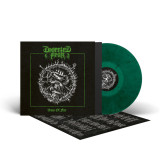
Green Marble Vinyl[37,40 €]
DESERTED FEAR haben sowohl ihr Songwriting als auch den Sound und das musikalische Können mit "Veins of Fire" erneut auf eine neue Stufe gehoben. Die Ostdeutschen sind ihrer Marke zwar wie gewohnt treu geblieben, aber sie haben ihren ausgefeilten Melodien und dem Schlagzeugspiel ein hörbares Upgrade verpasst. Obendrein konnte Frontmann Manuel "Mahne" Glatter seine stimmliche Spannweite noch einmal vergrößern. In den Texten von "Veins of Fire" reflektieren DESERTED FEAR über die aktuellen Themen unserer Gesellschaft, doch ohne jegliche Predigt oder Forderung nach Konformität. In ihren Songs spiegelt sich eine Welt voller Unsicherheit, Ungerechtigkeit und wachsenden Spaltungen. Der Aufstieg von DESERTED FEAR ist ebenso bemerkenswert wie spannend. Als sich das Death Metal Trio im thüringischen Eisenberg gründete, konnten Gitarrist und Vocalist Mahne, Gitarrist, Hauptsongwriter und Produzent Fabian Hildebrandt sowie Schlagzeuger Simon Mengs kaum ahnen, dass sie an der Spitze der deutschen Szene landen würden. Bereits das Debütalbum "My Empire", das die schwedische Legende Dan Swanö produzierte, schlug im Jahr 2012 beim Death Metal Publikum wie eine Bombe ein. DESERTED FEAR brachten neben brachialer Kraft, donnernden Riffs, einem hämmernden Schlagzeug und heftigem Gesang von Anfang an auch ein intensives Gespür für packende Melodien mit. Daher war es nur folgerichtig, dass sich das Gewicht mit jedem folgenden Album weiter auf die melodische Seite verlagerte - ohne dass dabei der nötige Biss verloren ging. Sämtliche Studioalben, "Kingdom of Worms" (2014), "Dead Shores Rising" (2017), "Drowned by Humanity' (2019) und "Doomsday" (2022), erwiesen sich als beeindruckende Meilensteine einer steilen Karriere.
- A1: Di Ma Dangwa
- A2: Di Ma Sesa
- A3: Elie
- A4: Moussina
- A5: Nsi Sim Nti
- B1: Elongi
- B2: Mouna Maria
- B3: Edubé Na Loba
- B4: L’hymne À L’amour
- B5: Nobody Knows
This project by Manu Dibango, the legendary saxophonist and pioneer of Afro-fusion jazz, delves into a musical universe where the saxophone becomes the voice of a spiritual and introspective quest. Sax & Spirituals Lamastabastani merges jazz, gospel, and African influences to weave a dialogue between sacred traditions and modern expressions.
With this work, Dibango pays tribute to the spiritual roots of music while reaffirming his commitment to sonic innovation. The project's minimalist and meditative approach speaks to both the soul and the senses, offering a musical experience imbued with depth and humanity.
- Ishi
- Many
- Tonbo
- Horo Horo
- Mushi Dance
- Spells
- Nami
- Wakaranai
- Dottsu
- Kodama
- Tent
- Metallic Gold
- Omajinai
- Ghost
Taba voices a subtle yet surprising shift for the Japanese musician and producer Satomimagae. Observing and absorbing the fleeting scenes and sounds of life flowing outside of her home studio, Taba unfolds as a series of vignettes that document the personal and the universal. Satomi sings beyond herself in an orbit of souls and systems known and unknown, seen and unseen, in the present and in the strange flux of memory, leaving linear songwriting to rest for circuitous stories expanded and expansive in tone and texture. Following the logic of taba, a Japanese term for a bunch, bundle or grouping together of different things, the album is assembled as a loose collection of short stories. Shapeshifting into something like a poet-narrator, Satomi casts her writer's eye to the often perplexing shapes that form from quotidian events and exchanges defining our increasingly alienated age. Where Satomi's last full-length, 2021's Hanazono, bloomed from the lush soil of a private inner sphere, the bird's eye of Taba searches to place the artist_somewhere, somehow_within a wider, wilder world. Collaborations with other artists and musicians close to Satomi's universe further elevate the album's sweeping sonics. Synthesizer lines from Norio, who also helps define the album's visual identity through photo and video, enliven the tender ballad "Kodama." The bell-like Rhodes piano ringing in and around Satomi's guitar on "Dottsu" is played by Akhira Sano, who created the cover art for her 2021 Colloid EP. Yuya Shito's clarinet was the missing puzzle piece that completed "Spells," and it was also Yuya who mixed Taba with an ear for its organic textures and elegantly frayed edges, giving utterance to a distinctly different energy than Satomi's earlier expressions. The tonal and rhythmic play that lay the foundation of these songs also animates a colorful palette of melodic gestures, noisy resonances and pointed moments captured by Satomi's close-at-hand recorder. While Taba is still carried by the innate intimacy that has defined Satomi's music to date, these songs channel her newly spacious and inquisitive songwriting approach, unlocking unusual layers in the process. Some are subsumed in the speculative poetics of sound design, while others peer through the window of bedroom pop. Gathering imagistic reflections, tracing vast ideations and quietly lingering in humble moments, Taba connects vivid lines between the individual and the collective, the constructed and the cosmic, the articulated and the felt. Satomi's sonic tales gain an eloquent coherence by the simple fact of existing in conversation, humming a harmony of parts that buzzes with the tangled circuitry of a life in motion. Taba is the fifth album from Japanese musician, songwriter and dream traveler Satomimagae, following her 2021 album Hanazono and the 2023 reissue of her debut album Awa, both for RVNG Intl. On Taba, Satomimagae leaves linear songwriting to rest for circuitous stories expanded and expansive in tone and texture, unfolding as a series of vignettes that document both the personal and the universal. Some of the songs on Taba feature intimate moments captured on Satomi's hand recorder, poetic moments of sound design animated by tonal and rhythmic bedroom pop foundations. As with Hanazono, Taba's album artwork features a wooden block print by Satomi's sister, the artist Natsumi Magae.
Norman Westberg (guitar), Giridhar Udupa (ghatam, konnakol, khanjira, percussion) and Jacek Mazurkiewicz (double bass, electronics)An extraordinary meeting of three artists from three different musical worlds and three different continents. Norman Westberg (ex-Swans) and Jacek Mazurkiewicz have already released one album together "First Man In The Moon" in 2021 (published by the Swiss label Hallow Ground).In the new project, they are accompanied by Giridhar Udupa, an Indian master of ghatam (a clay percussion instrument that looks like a jug). The album will feature 3 long trance compositions, referring to ambient, krautrock, free jazz and Indian music.Jacek Mazurkiewicz describes the creation of this album as follows:"I met Norman Westberg while supporting the Swans tour in Poland as 3FoNIA. A few years later, during Norman's tour with Gira, we recorded a duet.The trio session took place similarly to the previous duet session during Norman's solo concert in Warsaw on the Swans tour.Recorded with Adam Toczko, a quick meeting on a day off from work.I invited Giridhar Udupa to the trio, whom I had met earlier during the period when I co-founded the band Limboski. I once invited Wacek Zimpel to play a few concerts with Giridhar. Wacek later created Saagara and I was wondering about some unusual musical context in which I would find myself with Giridhar. I was looking for an interesting sound configuration, but also a cultural one, with a different approach to creating music. I got the impression that for both Norman and Giridhar it was a fairly fresh meeting, not obvious. And on the other hand, ordinary - everyone did their own thing."Detroit guitarist Norman Westberg moved to New York in 1980 and became a part of the experimental music scene that was experiencing its golden age. Westberg himself became a permanent fixture when he joined the iconic avant-rock band Swans in 1983, and was the only member other than frontman Michael Gira to play with them for most of the band's run, both until their 1997 disbandment and his return in 2010. Westberg has also been involved with other legendary New York noise-rock acts, including Jim Thirlwell's Foetus and the post-Swans Heroine Sheiks, in which he played with Cows frontman Shannon Selberg; and in 2014, he joined the noise-rock supergroup Hidden Rifles, whose members included Mike Watt of Minutemen and Mark Shippy of U.S. Maple. Westberg's solo compositions, most often for solo guitar and a set of effects, draw on drone and post-minimalism, bringing to mind dark ambient passages from Swans albums.Giridhar Udupa is an extremely valued teacher and world-renowned artist, an Indian master of ghatam (a clay percussion instrument that looks like a jug). He was born into a family with long musical traditions. He began learning to play at the age of four, guided by his father. At the age of twelve, he already had his first performances behind him. He currently gives concerts alongside the greatest masters. He has received many prestigious awards. He performs in the USA, Spain, Canada, France, Switzerland, Germany, Oman and Kuwait. Giridhar Udupa is a member of the band of the Indian vocalist Bombay Jayashri, nominated for an Oscar for the best song for the film Life of Pi. He is one of the founders of the Layatharanga band. He also plays virtuoso other traditional instruments of South India, such as mridangam and kanjira, and is excellent at using the konnakol technique (a type of rhythmic vocalization).For three decades, the artist has been a global ambassador and icon of Carnatic music. He is the founder of The Udupa Foundation, a charity organization established in 2015 to promote Indian music, performing arts and culture. He has participated in recording dozens of albums. He is also well-known in our country thanks to his cooperation with Polish performers, which resulted in excellent artistic effects, such as the famous Indialucia - Michał Czachowski's group / project or the Saagara formation, led by Wacław Zimpel. Udupa also played on the album Lechoechoplexita, released by Leszek Hefi Wiśniewski, and on the album of the band Layatharanga, released in our country.Jacek Mazurkiewicz is interested in music in the broad sense. He puts his sounds together based on emotional impressions and pulse. Combining acoustics with electronics, he is constantly looking for a new sound. Solo as 3FoNIA, in a duet with Mikołaj Trzaska or Tomek Dąbrowski, the JMB trio with Wojtek Jachna and Jacek Buhl, in the Modular String Trio quartet, the Afrobeat quintet Faso Tamala are just some of his musical incarnations. With Patryk Zakrocki, as part of an audio mission, he massaged hundreds of pairs of ears in the Inner Ear Massage Office. He also deals with sound design, composing and producing music for films and theatre performances. He collaborated with many Polish and foreign artists.
- A1: Wandering Woman
- A2: Movingup
- A3: I Believe In Music
- A4: Samfie Lover
- A5: Poor & Simple
- B1: Come On Over
- B2: Mister Man
- B3: Chant Out
- B4: Do Me Baby
- B5: Sitting In Limbo
- B6: Show You How To Love
Remastered Reissue von Lucianos Album "Moving Up" (1993), das im gleichen Jahr wie sein Debüt "Shake It Up Tonight" erschien und den jungen Künstler direkt in den Mainstream katapultierte. Produziert von Philipp "Fatis" Burrell (XTERMINATOR), wartete "Moving Up" mit einer erstklassigen Besetzung mit u.a. Dean Frazer, Winston-Bo Pee Bowen, Christopher "Lurch" Birch, Fire House Crew, Michael Fletcher und Sly & Robbie auf. Wie alle neu aufgelegten Klassikeralben des RAS-Katalogs wurden auch diese LP/CD-Formate remastert, um diese ersten Neuauflagen seit 1993 zu einem echten Leckerbissen für alle Reggae-Fans zu machen. Die Original-LP erschien damals nur auf Jamaika und war extrem rar.
Vilhelm Hasselgren is a Gothenburg-based producer and DJ with a focus on Jungle and productions that move between 160-170 bpm. Vilhelm focuses a lot on complex rhythms and ambient soundscapes and takes inspiration from both older and modern Jungle, as well as other electronic acts such as Basic Channel, Mala, Skee Mask and Arkajo. Vilhelm tries to create soundscapes that move between different musical starting points.
He has previously released on Rezonant Body, Canape Records, Bukva Sound and Of Paradise Records. Also has an upcoming EP releasing on Bukva as well as a V.A on Western Lore. In 2025, Vilhelm also has a residency at London-based Subtle Radio.
Vilhelms words:
Central Line EP is an EP that I'd myself consider to be my debut EP. The tracks were created within a two-and a half year span, with some tracks being re-worked and replaced. Later ending up with the final track-list, which I am very happy in how it ended up in the end. One of the tracks that were later added onto the EP being 1000 a co-production with my brother Einar (Local Arms), which we spontaneously recorded at our parents house over a weekend.
I mostly start from percussion, onto bass and later melody in my productions. The title track "Central Line" was started when I lived in Brighton for half a year, together with Theo Soderlund (Theomega). The Eski sample is a bit tricky one, but wanted to experiment with it, further I chopped an Amen and a Think break with an idea to create a pretty simple rhythm that could leave the riff to speak for itself. Even though the tracks were created within a pretty long span of time, I feel like they portray a sound that I want to further explore and produce at this point. Also Arcne adding a monster remix of Central Line that has been getting lot of love. Could not be happier to release it on Bukva Sound which prior releases I think really captivate a sound that has been really inspiring throughout the process.
Legendary New Zealand-born experimental composer and sound art pioneer Annea Lockwood returns to Black Truffle with On Fractured Ground / Skin Resonance, her third release for the label. Having recently celebrated her 85th birthday, Lockwood shows no sign of slowing down in her exploration of new sound sources and collaborations with an ever-growing intergenerational pool of performers – here with Vanessa Tomlinson. Her creative vibrancy is alive as ever on the two recent works presented here, which demonstrate both her engagement with the social dimensions of sound and the deeply reflective, meditative aspect of her art.
On Fractured Ground derives from material recorded with Pedro Rebelo and Georgios Varoutsos for the soundtrack of Maria Fusco and Margaret Salmon’s opera-film, History of the Present (2023). Working together in Belfast, Lockwood, Rebelo and Varoutsos made extensive recordings of the city’s ‘peace lines’, the dozens of walls erected since the beginning of the Troubles in the late 1960s to separate Catholic and Protestant areas of the city. Struck by the immensity of these barriers, ‘the brutal way they sever neighbourhoods’, Lockwood and her collaborators focused not on the sound environment of the city, but on the walls themselves, playing them as gigantic resonant instruments, using their hands and objects such as stones and leaves. Continuing to work in her studio with the material collected for the soundtrack after its completion, Lockwood composed the work presented here, occupying a space somewhere between her own extended-technique percussion music and the Cagean tradition of hyper-amplified small sounds. From deep, gong-like metallic tolling to dry scrapes and uneasy groans, the piece’s sustained attention to single sounds derived from unorthodox sources draws a line all the way back to Lockwood’s classic Glass World (1967-1970). Its spaciousness and delicacy are at odds with the dark historical background of the Troubles, creating a moving listening experience somehow haunted by the shadow of violence and conflict.
Skin Resonance is a collaboration with Australian composer and percussionist Vanessa Tomlinson. Developed through conversations in which the two discussed the idea of ‘sonic attraction’, the piece focuses on Tomlinson’s relationship to the bass drum, reflecting on the complex web of connections embodied in this seemingly simply instrument, which is at once ‘animal, wood, and metal’. Approaching the instrument in a suitably elemental fashion, Tomlinson’s performance strips away conventional technique to explore the resonance and timbral properties of skin, drum, and metal hardware, producing overlapping waves of texture that at times seem closer to wind swishing through leaves or the ocean than anything usually associated with a drum. Emphasising the symbiotic relationship between performer and instrument, Tomlinson’s voice is heard at times, exploring the field of associations and connections the bass drum suggests to her: ‘Maybe the bass drum skin is an ear as well?’
Accompanied by insightful liner notes on both pieces and photographs documenting the recording of On Fractured Ground and a performance of Skin Resonance, this LP is a moving testament to the engagement, generosity, and openness that sustain Annea Lockwood’s work, still finding new directions after more than fifty years of activity.
- Ome See About Me
- Don T Let Me Slide
- Midnight In Harlem
- Bound For Glory
- Simple Things
- Until You Remember
- Ball And Chain
- These Walls
- Learn How To Love
- Shrimp And Grits Interlude
- Love Has Something Else To Say
- Shelter
"Released in 2011, Revelator is the debut studio album by the Tedeschi Trucks Band, a powerhouse blues-rock ensemble led by Susan Tedeschi and Derek Trucks. The album blends blues, rock, soul, and jazz, showcasing the band's rich, full-bodied sound. Standout tracks like ""Midnight in Harlem,"" ""Come See About Me,"" and ""Bound for Glory"" highlight Tedeschi’s soulful vocals and Trucks’ masterful slide guitar work. Produced by Jim Scott and Derek Trucks, Revelator received critical acclaim for its organic musicianship, heartfelt songwriting, and dynamic arrangements. The album won the Grammy Award for Best Blues Album in 2012, solidifying the band’s reputation as one of the finest acts in contemporary blues and rock. For fans of blues-infused rock with deep soul influences, Revelator is an essential listen, capturing the magic of a band that seamlessly blends technical brilliance with emotional depth. Revelator is available as a limited edition of 1500 individually numbered copies on red coloured vinyl."
"Oh! Gunquit Are a British band known for their energetic blend of rock, surf, and garage music, with a touch of psychobilly and punk influences. Formed in the mid-2010s, the band is recognized for their vibrant, high-octane performances and a distinctive sound that mixes vintage rock 'n' roll with modern edge. Their music typically features catchy melodies, reverb-drenched guitars, and a retro aesthetic that appeals to fans of both classic and contemporary garage rock.
The band's lineup has changed over time, but the central core of the group created by Tina Swasey (Vocals) & Simon Wild (Guitar) have remained a constant & they've maintained a reputation for being a fun and electrifying act on stage. Their tracks often tell stories with a quirky, humorous touch while keeping a raw, rebellious vibe. Their most notable releases include songs like ""Dance like F*ck"" and ""So Long Sucker"", and they’ve earned a solid following for their ability to merge catchy pop hooks with a gritty, lo-fi sound. Oh! Gunquit has performed in various venues, European Tours and major Festivals, building a loyal fan base in the UK, Europe and beyond."
Johnny Mathis (born September 30, 1935) is an American singer. He is one of the best-selling recording artists of the 20th century. Starting his career with singles of standard music,
Mathis became highly popular as an album artist, with several of his albums achieving gold or platinum status and 73 making the Billboard charts. Mathis has received the Grammy Lifetime Achievement Award and has been inducted into the Grammy Hall of Fame for the single “It’s Not For Me To Say”. Although frequently described as a romantic singer, his discography includes traditional pop, Latin American, soul, rhythm and blues, soft rock, blues and country music.
On this compilation some of his greatest hits like “Wonderful, Wonderful”, “Chances Are”. Johnny’s voice & music has been used in countless Hollywood movies, TV shows, and even video games for theme songs & background music to enhance a particular setting or segment. Just to name a few: Family Ties, Gremlins, Criminal Minds, Soul Train, Goodfellas, The Simpsons, Desperate Housewives, EastEnders, Mad Men, and Close Encounters of the Third Kind.