
Buscar:sim 2

13
Liz Phair announces ‘Soberish’, her highly-anticipated new album and first collection of original
material in eleven years. Produced by Phair’s longtime collaborator Brad Wood - known for helming
Phair’s seminal albums ‘Exile In Guyville’, ‘Whip-Smart’ and ‘whitechocolatespaceegg’ - ‘Soberish’ is
released via Chrysalis Records.
Almost thirty years since her peerless debut album ‘Exile In Guyville’ was released (voted #56 in
Rolling Stone’s 2020 list of the 500 Greatest albums Of All Time), Phair returns with a new record that
will both intrigue and satisfy her long-standing fans and introduce her to a smart young audience
whose contemporary heroes have been reading from Phair’s playbook since they first picked up a
guitar.
Liz Phair has achieved the kind of status in her industry rarely bestowed on recording artists. Her
albums in the 1990s were central to the indie rock canon of the day. Her image was featured in
countless magazines, early Apple commercials and Gap ads. Her eponymous album for Capitol
Records in 2003 took Phair in a pop direction that ruffled some critics’ feathers but nonetheless went
gold, galvanizing a host of new fans, particularly among young women who fell in love with hits like
‘Why Can’t I’ and ‘Extraordinary’, tracks that were featured in several major films and TV shows,
including 13 Going On 30, Raising Helen and How To Deal. Liz has picked up two Grammy
nominations and a spot in Pitchfork’s Greatest Albums Of The 90s, with over five million record sales
to date (including three US gold albums). She sang ‘God Bless America’ at the opening game of the
Chicago White Sox World Series victory in her hometown in 2005.
‘Soberish’ is a portrait of Phair in the present tense, taking all of the facets of her melodic output over
the years and synthesizing them into a beautiful, perfect whole. She’s at the top of her game in the
recording studio, drawing upon years of experience in television composition to weave through the
songs daring and unexpected sound design. With Brad Wood’s exquisite engineering and masterful
production, the result is a wholly fresh yet satisfyingly familiar sound that challenges on the first listen
and seduces with each subsequent play through. The earworms are strong with this one.
Phair says, “I found my inspiration for ‘Soberish’ by delving into an early era of my music development,
my art school years spent listening to Art Rock and New Wave music non-stop on my Walkman. The
English Beat, The Specials, Madness, R.E.M.s Automatic for the People, Yazoo, The Psychedelic
Furs, Talking Heads, Velvet Underground, Laurie Anderson, and the Cars. The city came alive for me
as a young person, the bands in my headphones lending me the courage to explore.”
None of the arrangements on Soberish are traditional songwriting standards but the hooks are so
catchy, the imagery so compelling, that the listener is drawn effortlessly along with the music. There
are the off-kilter, unexpected guitar chords listeners will recognize as her signature style, a mainstay
from her earliest work; the instantly knowable choruses of her most pop-friendly songs of the early
2000s; the frank lyricism and storytelling that has opened doors for countless women picking up
guitars and attempting to speak about their experiences.
Phair shares insight into the meaning of her title: “‘Soberish’ can be about partying. It can be about
self-delusion. It can be a about chasing that first flush of love or, in fact, any state of mind that allows
you to escape reality for a while and exist on a happier plane. It’s not self-destructive or out of control;
it’s as simple as the cycle of dreaming and waking up. That’s why I chose to symbolize ‘Soberish’ with
a crossroads, with a street sign. It’s best described as a simple pivot of perspective. When you meet
your ‘ish’ self again after a period of sobriety, there’s a deep recognition and emotional relief that
floods you, reminding you that there is more to life, more to reality and to your own soul than you are
consciously aware of. But if you reach for too much of a good thing, or starve yourself with too little,
you’ll lose that critical balance.”

Cardinal Fuzz (Europe) and Feeding Tube Records (N.America) present to you - A vinyl issue of the killer CD comp that SS Records released way back in 2004 with a couple of added treats. Brace yourself for some steller hair singeing full throttle wipe outs across 4 slabs of heavy black vinyl. Comes with a folded A3 double sided insert.
Monoshock was one of THE best bands of the 90s and if they were from Seattle and not Illa Vista & Oakland, California you would already know that. During their six years they released a handful of 7"s, served as a backing band for Von Lmo, and created one of the classic psych albums of all time, Walk to the Fire. In the last few years they received praise from around the globe, raved up by Julian Cope as one of the great unknown bands of the 90s and cited as an influence by current heavy faves, Comets on Fire, as well as a whole slew of Japanese psych bands. Monoshock is fuzz-fuel, wah-wah damaged, riff-crazed punk rock which draws in Hawkwind, the Stooges, Simply Saucer, and other psych-punk gods. This double LP collects all their 7"s and comp tracks together with 7 previously unreleased tunes and two songs from their ultra-rare 1989 demo tape and 2 added digi bonus Live tracks from their reunion shows. Fans will be overjoyed. Virgins will become fans.
The band's stellar Walk to the Fire has been acknowledged as one of the classic psych albums of all time.

11
A unique new album of poetry and music featuring Marianne Faithfull set to the music of Warren Ellis, and featuring Nick Cave, Brian Eno and Vincent Ségal
With She Walks in Beauty, Marianne Faithfull with composer and multi-instrumentalist Warren Ellis releases one of the most distinctive and singular albums of her long, extraordinary life and career. It was recorded just before and during the first Covid-19 lockdown – during which the singer herself became infected and almost died of the disease – with musical friends and family including not only composer Warren Ellis but Nick Cave, Brian Eno, cellist Vincent Ségal and producer-engineer Head. She Walks in Beauty fulfils Faithfull’s long-held ambition to record an album of poetry with music.
It’s a record that draws on her passion for the English Romantic poets, a passion she fostered in her A Level studies with one Mrs Simpson at St Joseph's Convent School in Reading. From there she entered the world of As Tears Go By, of Mick Jagger and the Rolling Stones, Top of the Pops and the left-hand path of pop and stage stardom. Sixties iconography and outrage followed, as did her subsequent battles with addiction before her 1979 return to powerful female and artistic autonomy with Broken English, an album which featured her setting to music Heathcote Williams’ poem of eviscerating rage, Why D’Ya Do It?
Drawing deep on the poetry of Shelley, Keats, Byron, Wordsworth, Tennyson and Thomas Hood, Faithfull’s vocal performances set to Ellis’s subtle collages of sound draw out the heart, the quick, the vibrant living matter in all these great poems, making them fresh, renewing them with the complex, lived-in timbres of her voice, and set to a subtle palette of ambient musical settings. It’s both a radical departure and a return to her original inspirations as an artist and performer.
The greatest poetry is best heard, and Faithfull’s accounts of some of the greatest lyric poetry in our language – Keats’ Ode To A Nightingale and Ode To Autumn – are spine-tingling in their deep understanding of the poetry’s powerful currents of meaning and identification. On Nightingale, her voice opens up like an epic landscape, while in Shelley’s miniature masterpiece, To The Moon, she sounds otherworldly, as if calling down from another medium, and the atonal, otherworldly sound textures provided by Eno on Bridge of Sighs and La Belle Dame Sans Merci become a compelling foil for Faithfull’s haunting interpretations of these rich, dark poems.
“They’ve have been with her her whole life,” says Ellis. “She believes in these texts. That world, she inhabits it, embodies it, and that really comes through. There’s just something about the way she can deliver that is incredibly affecting.”
“Eventually I always end up where I was meant to be,” says Faithfull. “I’ve noticed that. It may take a long time, but I get there. I never forget these things. After all these years, I’ve drawn the strands back and they still mean something and they resonate more, actually, because I now have life experience. Life and near-death experience. Many times! Not just once.” She Walks in Beauty is scheduled for release April 30th, with artwork created for the album by British artist and lifelong friend, Colin Self, and with the full texts of the poems, and commentary, included in the liner notes. While Faithfull continues to recover from the after-effects of Covid-19, and the world around us continues to struggle with the impact of the worldwide pandemic, these are poems and performances to steady and lift the spirit.

17
With Bending the Golden Hour, the third album from Memphis, Tennessee’s Aquarian Blood, husband and wife team J.B. Horrell (Ex-Cult) and Laurel Horrell (formerly of the Nots) continue the gorgeously stripped-down and atmospheric direction set on their critically acclaimed previous effort A Love That Leads to War.
While Aquarian Blood has roots as a chaotic punk rock six-piece, the band shifted gears after two raucous cassette-only releases on ZAP Cassettes, a pair of seven-inches, and 2017’s Last Nite in Paradise, released on Goner Records. After drummer Bill Curry broke his arm, the Horrells redefined
Aquarian Blood, reemerging in early 2018 as the more intimate, mostly acoustic balladeers behind the staccato, fever dream sound of A Love That Leads to War. Like its immediate predecessor, Bending the Golden Hour was recorded at the Horrell's Midtown Memphis home. The band turned over 43 tracks to Goner co-owner Zac Ives, who handpicked 17 songs for the album.
The final result is shimmering and hopeful; as beautiful and sparse as a Rockwell Kent snowscape. Bending the Golden Hour begins ominously with “Channeling,” which sounds like an outtake from Paul Giovanni’s soundtrack to 1973’s pagan nightmare The Wicker Man. Then the band upshifts for “Time in the Rain,” a sweet duet set to a rigid snare beat. From there, Aquarian Blood zigs to country and zags to psychedelic folk, brooding on one song and soothing listeners with the next. And while the music, feel, and experience is different, Aquarian Blood naturally brings to mind some legendary musical partnerships: Richard and Linda Thompson, Lee Hazlewood and Nancy Sinatra, Johnny and June Carter Cash, Gram Parsons and Emmylou Harris; not to mention similarly-bent-but-beautiful luminaries like Roy Harper, Pentangle circa 1967 -1973, and Jackson C. Frank.
There’s a big middle ground, like folk-psych, or weirder country music,” he says, reeling off names like Skip Spence and Syd Barrett as stepping stones between the genres of punk and folk.
Inspirations for Bending the Golden Hour come from myriad sources that document the milestones and minutiae in a family’s full life. Some lyrics name a time or a place; others reflect the fleeting moments that elapse unnoticed. “Come Home,” which is sung by J.B. and his daughter Ava, was written the day Ava got her driver’s license. “Ava took the car out by herself afterwards, and I wrote the song immediately—she sang her part when she got home that evening,” J.B. recalls. Whether or not the listener knows the backstory, the song rings sentimental, with subtle, supportive instrumentation that underscores guitar and vocals. The bewitching “Rope and Hair,” on the other hand, is less sketched out, with lyrics that are simply a recitation of the talismen found on a silver sabertooth charm that J.B. purchased for Laurel at a Latin strip mall in southeast Memphis. That’s all to be said. “Sometimes when you know too much about what the song is about, it takes away the magic,” says J.B. “Alabama Daughter,” says Laurel, is about a place where a childhood friend lived called Castleberry Holler. “It was really rural, just a lot of shacks without electricity—the kind of place you didn’t go to unless you were invited,” she says. “Probable Gods” is a hazy reflection on the struggle of such a strange year. “It’s been very cathartic to put all of this into words and not have it live

7
Marcus Schmickler's music is designed for multi-channel sound projections and references German electronic music tradition, spectral music, experimentalism as well as 1990s club music. His artistic practice explores avant-garde trajectories in electronic music composition, formal systems, sonification and psychoacoustics. EMEGO 296 features two new major works from this audacious sound explorer.
Sky Dice / Mapping the Studio premiered at Donaueschinger Tage fur Neue Musik 10.20.2018 having being commissioned by SWR and realized at the Experimentalstudio (EXP) in Freiburg. This is a work for ARP 2500, Publison DHM89B, Publison Infernal Machine and Computer. Taking cues from Bruce Nauman's Mapping the Studio I (Fat Chance John Cage) (2001) the piece draws a fragmented acoustic map of the SWR facility itself; the studio serves as a source-model for the sonic display of historical signal flow graphs. Various acoustic and psychoacoustic effects come into play including the Larsen effect, as well as Style Transfer and Topological Sonification. The result is a daring and dizzying display of disorientating audio. Sound moves in most unusual ways, rising and falling simultaneously, appearing and disappearing like apparitions, nothing here behaves in expected ways. To paraphrase Albert Einstein's now famous quote regarding quantum mechanics, this is spooky audio at a distance.
Fortuna Ribbon is a selection of sonic material that emerged from a research based on how DPOAEs (Distortion Product Otoacoustic Emission) can be designed in the context of musical frameworks, augmenting the compositional pallets in regard to spatial hearing. In this manifestation, the materials are presented without context. The resulting emissions from the ear that are excited in varying ways from the 6 examples on display here. Playback in undisturbed acoustic environments is recommended at >82 dB/A.
Schmickler's ongoing investigation of sound matter conjures impossible audio that delight's in the extremity of form and resulting effects on the listener. Schmickler's audio invocations explore the capabilities of contemporary technology resulting in dizzying new worlds of sound.
Thanks to the Experimentalstudio crew, Detlef Heusinger, Björn Gottstein, Julian Rohrhuber and Peter Rehberg.

“In some respects, Trust is a simultaneous documentation of progression and regression. A homecoming of sorts, influenced by the interim where we developed our skills as producers and our skills as artists. Armlock, as a vehicle, seems like returning full circle to where we started.”
Trust, out June 2, 2021, is the debut release of Australian duo, Armlock. It’s a nuanced record that explores trials felt in personal growth, from resentment to submission to complacency. A quiet, thrashing gem of songcraft, the record makes as much use of the intimate, empty space as it does of its layered, heavy instrumentals. Each one of these songs conjures a summer storm of internal conflict, with the angst and uncertainty that comes with realizing that you’re finished growing, and rather than feeling a sense of ease you’re left restless and discontented.
Multi-instrumentalists Simon Lam and Hamish Mitchell met studying jazz together at Monash University in Melbourne. While rehearsing standards for a small ensemble in 2010, the two discovered their mutual hatred of the genre, opting to explore experimental, song-based electronic music. Alongside Solitaire Recordings owner, Dan Rutman, they went on to form the group I’lls, releasing four records in five years, and, later, the two went on to form Couture. Simultaneously, Lam (along with his cousin Chloe Kaul) found success with the synthpop group Kllo, amassing over 100 million streams on Spotify and critical acclaim from Pitchfork, The Guardian, GQ, NME, NYLON, and Stereogum. Lam’s solo project Nearly Oratorio (also on Solitaire Recordings) has achieved acclaim in its own right, as has Mitchell’s work as a producer and designer for artists like Jack Grace.
With their first release as Armlock, the duo maintains the depths of I’lls’ electronic soundscapes but brings the warmth of analogue instruments with Lam’s clear, disillusioned singing up front. He sounds both heartfelt and dejected in equal measure, with a dispassionate coolness that synergizes with the vulnerability of his lyrics. Live, the duo are backed by a reel-to-reel tape, with Mitchell on guitar and Lam singing, bridging their electronic past and indie present.

What future? What futures? When fear substitutes truth / Misinformation obscures reality / And speculation prevails on experience / Brutality seems necessary / And empathy appears naïve.
One. Simple. Direct. Question. Quale Futuro? What Future? Obliterated by a tumultuous year with lingering anxiety, uncertainty and a city ready to break any strand of hope, Qlowski, resorted to what they know best, turning frustration into dreams, stockpiling possibilities, fabricating desire and simply, living. This is Quale Futuro? their debut LP for Maple Death Records
London based twee-punks Qlowski entered the studio in late January 2020, basically before everything. Crammed in a small studio room in Tottenham Hale with producer Lindsay A. Corstorphine (Sauna Youth, Cold Pumas, Middex) they created a striking, full blown manifesto, where their early post-punk nuances are heightened by an extremely poetic and compelling vision that encapsulates words, imagery and noise. Propulsive rhythms, a modern spin on kiwi-pop and a weird combination of dark punk, noise rock and flower pop are still the foundation of their sound but it’s the combination of bandleaders Mickey and Cecilia’s voices that creates an eerie effortless sense of familiarity. It’s no wonder they’ve known each other since they were young kids. ‘A Woman’ shines bright with Cecilia’s intimate and prismatic approach that unites Poly Styrene’s fierce delivery with the ethereal vocal melodramas produced by Joe Meek in the 60s. Mikey’s howl is confrontational and direct, moving from the motto-induced style of Italian new wave art-punks CCCP on ‘Lentil Soup’ to a deep commanding calm steadiness on ‘Lotta Continua’ and frenetic frenzy on ‘To Be True’. The stabilizing presence of Danny and Christian’s rhythm section has freed the band to develop and expand furious kraut-punk assaults like on deep cut ‘The Wanderer’. Les Miserable from London punks Italia 90 lends his snarl on the sci-fi 50s tinged romantic closer ‘In A Cab To Work’.

What future? What futures? When fear substitutes truth / Misinformation obscures reality / And speculation prevails on experience / Brutality seems necessary / And empathy appears naïve.
One. Simple. Direct. Question. Quale Futuro? What Future? Obliterated by a tumultuous year with lingering anxiety, uncertainty and a city ready to break any strand of hope, Qlowski, resorted to what they know best, turning frustration into dreams, stockpiling possibilities, fabricating desire and simply, living. This is Quale Futuro? their debut LP for Maple Death Records
London based twee-punks Qlowski entered the studio in late January 2020, basically before everything. Crammed in a small studio room in Tottenham Hale with producer Lindsay A. Corstorphine (Sauna Youth, Cold Pumas, Middex) they created a striking, full blown manifesto, where their early post-punk nuances are heightened by an extremely poetic and compelling vision that encapsulates words, imagery and noise. Propulsive rhythms, a modern spin on kiwi-pop and a weird combination of dark punk, noise rock and flower pop are still the foundation of their sound but it’s the combination of bandleaders Mickey and Cecilia’s voices that creates an eerie effortless sense of familiarity. It’s no wonder they’ve known each other since they were young kids. ‘A Woman’ shines bright with Cecilia’s intimate and prismatic approach that unites Poly Styrene’s fierce delivery with the ethereal vocal melodramas produced by Joe Meek in the 60s. Mikey’s howl is confrontational and direct, moving from the motto-induced style of Italian new wave art-punks CCCP on ‘Lentil Soup’ to a deep commanding calm steadiness on ‘Lotta Continua’ and frenetic frenzy on ‘To Be True’. The stabilizing presence of Danny and Christian’s rhythm section has freed the band to develop and expand furious kraut-punk assaults like on deep cut ‘The Wanderer’. Les Miserable from London punks Italia 90 lends his snarl on the sci-fi 50s tinged romantic closer ‘In A Cab To Work’.

13
RED FANG return with their highly anticipated new album, Arrows! Their first album in five years, everyone's favorite beer-crushing, zombie-killing, air-guitar-contest-judging metal heroes are back in action, doing what they do best- AND MORE. “This record feels more like Murder The Mountains to me than any record we’ve done before or since,” bassist/vocalist Aaron Beam ventures. “It doesn’t sound like that record, but Murder the Mountains was us doing whatever the fuck we wanted, and that’s what this is, too.” Arrows was recorded at Halfling Studios in the band’s hometown of Portland, OR, with longtime collaborator Chris Funk, producer of Murder The Mountains and 2013’s Whales and Leeches. “Chris is a major influencer as far as the weird ambient stuff in between the songs and the creepy incidental noises within the songs,“ guitarist Bryan Giles points out. “I think he definitely creates an added layer of atmosphere that we wouldn’t have otherwise.” Arrows is also a proper title track, which is new territory for the band. “This is the first time we’ve named an album after a song that’s actually on the album,” Beam explains. “We have other albums that are named after songs of ours that are not on those albums. So this time we’re really fucking with you because we didn’t fuck with you.” Similarly, fans might not believe what the song “Arrows” is partially about. “If you’re confused by some of the lyrics to the song, that makes sense,” Beam explains. “But it makes reference to meditation. I started meditating six years ago, but I can only do it when I’m not feeling too anxious. So, when I don’t need it, that’s when I can do it.” Elsewhere, “Fonzi Scheme” was named after legendary Happy Days cool guy Arthur Fonzarelli—if only because it’s in the key of his famous catchphrase, “Aaay.” Producer Chris Funk came up with the idea of bringing in string players from the Portland Cello Project to class up the track. Meanwhile, the opening riff of closer “Funeral Coach” was written 11 years ago. But it took until recently for the song to blossom into its full double-entendre glory. “I was driving around and I saw a hearse that said ‘funeral coach services’ on the back,” Beam explains. “So the first thing that popped into my head was a dude with a headset and a clipboard going, ‘Alright, dudes—more tears! Five minutes in is when the tears are critical, or no one’s gonna believe that anyone cares that this person died.’” In a nod to tradition, Arrows will be available in formats that include all the drums, bass, guitars and vocals. But it could’ve gone another way. “Our original idea was to release the album with no vocals or guitar solos,” Beam explains. “If you want the guitar solos, it’s an extra five bucks. If you want the vocals, it’s an extra ten bucks. So basically people should feel lucky that we didn’t do that. You get to buy the whole thing altogether.” RED FANG think of it as a generous display of gratitude toward their fans. “Yeah,” says Sherman, “Thank you for buying our album, you lucky bastards.”

11
Since 1989 Germany’s Desaster have been churning out their unique and unholy blend of extreme metal, and in 2021 they return with perhaps their most powerful album to date, the towering Churches Without Saints. “It’s a typical Desaster old school black-death-thrash metal album, with a lot of aggression, but also great atmosphere and epic tunes!” enthuses guitarist and founder member Infernal. With a simple remit of making an album full of “neck-breaking songs” the quartet have once again proven themselves leaders in their chosen genres, giving their faithful and newcomers alike plenty to salivate over.

11
Since 1989 Germany’s Desaster have been churning out their unique and unholy blend of extreme metal, and in 2021 they return with perhaps their most powerful album to date, the towering Churches Without Saints. “It’s a typical Desaster old school black-death-thrash metal album, with a lot of aggression, but also great atmosphere and epic tunes!” enthuses guitarist and founder member Infernal. With a simple remit of making an album full of “neck-breaking songs” the quartet have once again proven themselves leaders in their chosen genres, giving their faithful and newcomers alike plenty to salivate over.

15
Moonlit Train’ is the debut album from up-and-coming singer-songwriter/ MC Tiawa(pronounced tea-ah-wa) aka Brightonian Tia-Awa Blackhorse.
Meandering between neo-soul, hip-hop and jazz ‘Moonlit Train’ is a conceptual record that journeys through relationships, heartache, and healing. Produced by collaborator and multi-instrumentalist Jack-Chi aka Jack Kingslake -a Bristolveteran who cut his teeth as a producer in the city - the album sets the stage for a new chapter in Tiawa’s career on hometown label Tru Thoughts.
Fusing soulful vocals with the jagged edge of a rap-styled flow, Tiawa lays the foundation for her timeless yet graceful sound and lyrical maturity that confutes her youth. Themes of healing are at the core of Tiawa’s creative output, while simultaneously exploring her Portuguese heritage.
In the artists’ words: “Each song on the album is an emotion. I hope it helps to heal people in serious situations and make them feel better when they listen.
“Saudade” is the introduction to ‘Moonlit Train’ and opens with a Portuguese poem that translates to ‘don’t be sad now, I’m going to play a song for you.”
Described by the artsdesk as “pure trip-hop”, Tiawa has been championed by the likes of legendary DJ David Rodigan (BBC Radio 1Xtra), broadcaster royalty Cerys Matthews (BBC 6Music), and underground purveyors Off Licence Magazine.’ - Previous support Youth (Killing Joke), David Rodigan (BBC 1Xtra), Cerys Matthews (BBC 6Music), Off License Magazine. - Featured on WheelUP’s single “Take Me Higher” and the album “Good Love”.

- Episode One Broadcast 11Th November 1967
- Episode Two Broadcast 18Th November 1967
- Episode Three Broadcast 18Th November 1967
- Episode Four Broadcast 2Nd December 1967
- Episode Five Broadcast 9Th December 1967
- Episode Six Broadcast 16Th December 1967
Demon Records presents the narrated TV soundtrack of a partially ‘lost’ six-part adventure set in a
future Ice Age, starring Patrick Troughton as the Doctor.
The Doctor and his friends land on Earth in the future, and find it in the grip of a new Ice Age.
They join a team of scientists struggling to hold back the huge glaciers that threaten all human
life. A giant creature is discovered inside the ice and quickly comes to monstrous life – it’s an Ice
Warriors from Mars! It intends to find its crashed spaceship, where a whole crew of Warriors is
waiting to be revived…
Presented across a trio of 140g Molten Ice vinyl discs, this 1967 TV soundtrack – only four
episodes of which survive as film recordings - is narrated by Frazer Hines, who co-stars as the
Doctor’s companion Jamie, with Deborah Watling as Victoria. The guest cast includes Bernard
Bresslaw as the Ice Warrior Varga, Peter Barkworth as Leader Clent, and Peter Sallis as Penley.
Incidental music is by Dudley Simpson, and the familiar strains of the Doctor Who theme are
courtesy of the BBC Radiophonic Workshop.
The coloured LPs are presented in fully illustrated sleeves which, when assembled together, form
the cover image. Original episode billings, and full cast and credits, are included.
Dummedy-dum, Dummedy-dum, Dummedy-dum, Dum-dum…

10
Returning with their first new music in 8 years, Stubborn Heart have announced their anticipated new album 'Made Of Static'. Luca Santucci and Ben Fitzgerald, who have spent the last few years developing the ten brooding electro-soul tracks that make up the successor to their lauded 2012 self-titled debut, have once again struck a fine balance between ominous synth-soundscapes and introspective songwriting. Balance is the key theme here. With Fitzgerald leading the production and manning the machines, the sound is rawer than on their previous album. Left-field pop with dark, icy edges, it finds a home somewhere in between r&b and cold wave. Santucci brings the heart and with it his aching, obsessive lyrics and a desire for something grittier in its presentation. The duo's talents complement each other perfectly throughout. Santucci has amassed an impressive list of writing and vocal credits in his time, with the likes of XL and Warp signee Leila Arab, Plaid, Riton and Soulwax amongst them. Fitzgerald has also been hard at work at his home studio programming various styles of music for artists and producers from around the world. As Stubborn Heart, they come armed with some serious experience and a wealth of influences. There's an honest simplicity in the way they create, with lyrics written in an immediate, direct fashion with the aim to catch a feeling rather than emulate one. On their first album Stubborn Heart garnered praise from the likes of Pitchfork, NME and the UK broadsheets. It was named album of 2012 at Gilles Peterson's Worldwide Awards and Rough Trade placed it in their top 20 best albums the same year. However, it's now that we're presented with an album they feel better represents their dynamic - an album born from the duos combined creative static - as such, 'Made Of Static' is the first fruit of their reunion, aiming to step on from where they left off, and with the promise of much more to follow.

May 28 will see prolific Japanese vibraphonist, multi-percussionist and composer Masayoshi Fujita mark a new sonic direction with his forthcoming album Bird Ambience on Erased Tapes.
Bird Ambience brings several fresh changes for the artist. Until now, Fujita would separate his acoustic solo recordings from the electronic dub under his El Fog alias and experimental improvisations with contemporaries such as Jan Jelinek, Bird Ambience sees him unite all of these different sides to his work for the first time, into one singular vision. He also makes a lateral leap from his signature instrument the vibraphone, on which he created his acclaimed triptych Stories (2012), Apologues (2015) and Book of Life (2018), to the marimba, which takes centre stage on his new album alongside drums, percussion, synths, effectors and tape recorder.
“The way of playing the marimba is similar to the vibraphone, so it was kind of a natural development for me and easier to start with, yet it sounds very different”, explains Masayoshi. “The marimba bars are made with wood and it has a wider range than the vibraphone, which gives me a bigger sound palette with more possibilities. I play the instrument with bows and mallets, and sometimes manipulate it with effects.”
Bird Ambience also marks his liberation from fastidious preparation for past solo releases to new endeavours in improvisation. “I prioritised trying to capture the wonder which happens during those occasional magic improv moments. Sometimes the mic-ing and placement of instruments was pretty rough; things weren’t perfect and everything was done quickly, but it turned out as the final recording. Overall when I
couldn’t decide between two takes, I told myself to go with the first”, Masayoshi recalls.
Arranged with a perfect Kanso-like balance, the unhurried pace of Bird Ambience allows each sound and phrase enough time to be mindfully absorbed and savoured. This subtle but affective work carries ethereal remnants of Midori Takada’s minimalism, the static atmospheres of Mika Vainio, To Rococo Rot’s organics and the bucolic electronics of Minotaur Shock. Fujita vaporises contemporary and classical, ambient and dismantled dub, controlled noise and fragments of jazz into an atmospheric, static mist, which he skilfully coerces into new forms.
After 13 years in Berlin, Masayoshi recently relocated to a new home and studio in the rural Japanese mountain village of Kami-cho, Hyogo, following his life-long dream of creating music in nature. Even though the album was entirely recorded in Germany before he left, it has this palpable sense of reverie found in the natural world. From there we can only imagine the kind of impact his new life in rural West Japan will have on future works.

- A1: James Brown & The Famous Flames - Please, Please, Please
- A2: Little Willie John - Fever
- A3: Barrett Strong - Money (That's What I Want) (That's What I Want)
- A4: Ben E King - Stand By Me
- A5: Sam Cooke - (What A) Wonderful World (What A)
- A6: Ray Charles - Unchain My Heart
- A7: Solomon Burke - Cry To Me
- A8: James Ray - I've Got My Mind Set On You (Part 1 & 2)
- B1: Otis Redding - These Arms Of Mine
- B2: Marvin Gaye & The Vandellas - Stubborn Kind Of Fellow
- B3: Stevie Wonder - Hallelujah (I Love Her So) (I Love Her So)
- B4: Gene Chandler - Duke Of Earl
- B5: The Isley Brothers - Right Now
- B6: Bob & Earl - Harlem Shuffle
- B7: Timmy Thomas - Why Can't We Live Together
- C1: Gil Scott Heron - Lady Day & John Coltrane
- C2: Aaron Neville - Aaron Neville
- C3: Darondo - Didn't I
- C4: Lonnie Liston Smith & The Cosmic Echoes - Expansions
- C5: Joe Simon - Drowning In The Sea Of Love
- D1: Al Jarreau - Ain't No Sunshine
- D2: Barry White - Ghetto Letto
- D3: Curtis Mayfield - You Mean Everything To Me
- D4: Syl Johnson - They Can't See Your Good Side
- D5: Terry Callier - Running Around (Fug City Mix)
25

7
NYC legend Pal Joey is back, offering up new versions of some classic tracks alongside fresh material on his revered Loop D’Loop label.
Seven deep house grooves that capture the essence of the NYC scene blending jazz pianos, hypnotic trumpet riffs and lush strings over the top of driving basslines, crunchy drum machine hits and soulful vocals written by Joseph Longo himself.

- A1: Sarah Vaughan - Summertime
- A2: Billie Holiday - God Bless The Child
- A3: Betty Carter - I Could Write A Book
- A4: Julie London - Cry Me A River
- A5: Chris Connor - Lullaby Of Birdland
- A6: Peggy Lee - Black Coffee
- A7: Lena Horne - Stormy Weather
- A8: Nancy Wilson - I Wish You Love
- B1: Anita O 'Day - Sing, Sing, Sing
- B2: Shirley Bassey - I've Got You Under My Skin
- B3: Dinah Washington - What A Difference A Day Makes
- B4: Etta James - At Last
- B5: Ella Fitzgerald - My Funny Valentine
- B6: Della Reese - Whatever Lola Wants
- B7: Rosemary Clooney & Perez Prado - Sway (Quien Sera) (Quien Sera)
- C1: Doris Day - Keep Smilin', Keep Laughin', Be Happy
- C2: Nina Simone - My Baby Just Cares For Me
- C3: Carmen Mcrae & The Dave Brubeck Quartet - Take Five
- C4: Aretha Franklin - Try A Little Tenderness
- C5: Shirley Horn - And I Love Him
- C6: Diana Krall - Straighten Up & Gly Right
- C7: Cassandra Wilson - Fragile
- D1: Terez Montcalm - Sweet Dreams
- D2: Melody Gardot - Baby I'm A Fool
- D5: Madeleine Peyroux - He's Got Me Goin
- D3: Youn Sun Nah - My Favorite Things
- D4: Stacey Kent - Quiet Nights Of Quiet Stars (Live)
27
Geschmackvolles Doppelalbum mit herausragenden Sängerinnen. Wenn es allein um die Vokalkunst geht, dann ist die Jazz-Welt fest in weiblicher Hand. Man denke nur an Billie Holiday, Ella Fitzgerald oder Nina Simone. Aber auch Sängerinnen jüngerer Tage, zum Beispiel Sarah Vaughan oder Diana Krall, beeindrucken nicht minder mit ihren verzaubernden Stimmen. Grund genug für das französische Label Wagram, die renommiertesten Sängerinnen der letzten Jahrzehnte mit auf einem Doppelalbum zu vereinen.

Sinéad O’Connor marks a long-awaited return with a stunning version
of ‘Trouble Of The World’, a traditional song made famous by exalted gospel singer Mahalia Jackson, available as a 7” single backed with an a cappella version on Heavenly Recordings.
It follows somewhat belatedly the-ever-more pertinent ‘Trouble Soon Be Over’, her contribution to 2015’s ‘Tribute To Blind Willie Johnson’ compilation and once more exudes the heart and soul of this extraordinary performer.
Sympathetic to its origins, the heartfelt, evocative tones propel this impassioned rendition to the present its poignancy highlighted by a remarkable artist who leaves her own indelible mark on this topical realisation whilst realigning with a positive viewpoint.
In her own words, she explains; “for me the song isn’t about death or dying. More akin, a message of certainty that the human race is on a journey toward making this world paradise and that we will get there.”
The inspirational lyrical narrative that underpins ‘Trouble Of The World’ bears more relevance than ever today in the context of the death of George Floyd and the highlighting of the persistent racist undercurrents that trouble mixed societies across the globe.
The song sees Sinead joining forces with renowned producer David Holmes and, recorded in Belfast, Northern Ireland at the easing of the lockdown, it shares an uncanny albeit eerie symmetry with our new trouble of the world backdrop and once again Sinéad awakes our souls to the ironies and similarities of our collective past and present. The pair have created a sonic tonic and shout out to the powers that be as a voice of the people still questioning all-toofrequent events such as witnessed over the past few months that ensue decades since the nascent birth of the civil rights movement in the United States.
Embodying a voice with beauty and innocence, a spirit part punk, part mystic with a combined fearlessness and gentle authenticity - unique, uncompromising, a pioneer, a visionary, just some of the descriptions that perhaps merely touch the surface of Sinéad O’Connor.

It all starts with a great song and “You Baby” has it all! Penned by husband and wife team Barry Mann and Cynthia Weil with the magic touch of Phil Spector – what an awesome trio – and the bedrock of a future classic.
The song was originally produced by Spector for the Ronettes, signed to his Philles label, and appeared on their 1964 breakthrough album ‘Presenting The Fabulous Ronettes’ featuring, of course, his wife to be Veronica Bennett. The song was also recorded in the U.S. by pop/rock band the Lovin’ Spoonful for their 1965 debut album ‘Do You Believe In Magic’.
However, in January 1966 Pye Records unleashed JACKIE TRENT’s epic Northern Soul version produced by her husband Tony Hatch. Heralded by a pounding drum beat and trumpet blast it is no wonder that Jackie’s definitive cover shook the walls at Wigan Casino a decade later. And its popularity has never gone away, hence its current price tag of £300-400! Check out Jackie’s performance on the Morecambe and Wise Show on YouTube, what an intro!
“You Baby” was also recorded in May ’66 by Cameo Parkway’s Lovenotes in a very similar vein and in November ’66 by the legendary Len Barry. Other notable cover’s include Sonny & Cher, the Bubblegum pop group Salt Water Taffy and, in 1975, John Holt’s reggae version.
“Lost Summer Love” was originally recorded in 1964 by U.S. actress Shelley Fabares known for her long-running role as Mary Stone in the sitcom ‘The Donna Reed Show’ and as Elvis Presley’s leading lady in ‘Girl Happy’, ‘Spinout’ and ‘Clambake’. She also scored a No.1 pop hit in 1962 with the teen anthem “Johnny Angel”. But, as with our ‘A-side’, it was reborn as a Northern Soul classic when Pye Records picked the song up in 1965 and recorded it on their latest signing, teenager LORRIANE SILVER. Once again the stomping drum track, percussion and handclaps propel you to the dancefloor where you’re greated with an unforgettably catchy tune, a bevvy of backing vocals and Lorraine’s effervescent vocal.
Two fabulous reasons to make this one of the top reissue 45s of 2020!

- A1: There Is No End
- A2: Rich Black (Feat Koreatown Oddity)
- A3: Coonta Kinte (Feat Zelooperz)
- A4: One Inna Million (Feat Lava La Rue)
- B1: Stumbling Down (Feat Sampa The Great)
- B2: Crushed Grapes (Feat Lord Jah-Monte Ogbon)
- B3: Gang On Holiday (Em I Go We?)
- C1: Mau Mau (Feat Nah Eeto)
- C2: Tres Magnifique (Feat Tsunami)
- C3: Hurt Your Soul (Feat Nate Bone)
- D1: Cosmosis (Feat Okri & Skepta)
- D2: My Own (Feat Marlowe)
12
The wisdom of Tony Allen's words was as deep as his grooves, and these two sentences, which announce the dozen songs that follow, truly capture the spirit of There is No End. Tony’s motivating concept and desire was to work with younger artists, and especially the new generation of rappers, and give them voice in a time of global turmoil when music has never been more important – not necessarily as a "weapon" for the future in the manner of Fela's violently political songs, but also as medicine to heal a fractured world today.
For all those who knew him, he was a deeply spiritual man whose life's mission was not just to create a new musical language, but to pass it on to subsequent generations. In thinking back on the incredible process of creating this album without Tony physically present to guide him, producer Vincent Taeger remarked that his friend and mentor "was a teacher without speaking... a drummer and a guardian, with a great artistic vision and that vision filled the songs even after he had left us." Ben Okri, like everyone else involved in this valedictory album, had a very similar experience, declaring in awe that "this man could have lived another 150 years and kept creating new worlds. He had become the master shaman of his art. He knew himself and his mind. He wanted the album to be open to the energies of a new generation... but like a great mathematician or scientist who found a code of for a new world, with just a few beats, he created this extraordinary canvas." Featured artists include Skepta, Sampa The Great, Lava La Rue, Danny Brown, Damon Albarn and many others

81355 (pronounced `bless') is a meeting of the minds between three pillars of the Indianapolis music scene; Sirius Blvck, Oreo Jones, and Sedcairn Archives. While the three have worked together in the past, this is their first start-to-finish collaboration, and the result is the stunning and distinctive debut Time I'll Be of Use. Simultaneously mystical and stark, somber and danceable, the project grapples with hard-wired truths and imagines alternate realities with better futures. These lucid wanderings amongst the street fires sound like a cross between the ghost of progressive electronic music of the 70s with its innovative eccentricities, and acrobatic wordplay delivered with sharp resolve. While surrealist in its metaphors and abstraction, it doesn't betray a present awareness. Reflecting on Black struggle in the pandemicridden and democracy faltering landscape of 2020, each member arrived from a synchronistic space, and the recording process ended up being largely intuitive. On "Capstone," the opening track on the album, Sirius Blvck offers a look from inside his space, "This is what we've come to. Generational curses I still can't undo. Just taught my lil girl to tie her shoes now she running to. Holy smokes lungs made of leather like it's comfortable. Climbing up this infinite ladder to get a better view." These three musical vagabonds have met up to find even themselves surprised with the results. Drawing inspiration from the likes of biting poetic commentary of the late Naptown residents, Etheridge Knight and Kurt Vonnegut, OJ summons a golden-era flow and paints a picture of the group's influences, surroundings, and trajectory in one fell swoop in "Thumbs Up." "Alright, in my feelings tonight, Honda Civic overturned as it burns through the night. Bone Thugs in these streets no Surender in sight. I'm writing poems from a jail cell, Etheridge Knight. I throw a fit when I flip it, it's all vintage. A pearl white Bronco like OJ you done did it. The sunshine shatters the rock painted so vivid. Two-hundred fifty pounds of gifted we so lifted_ wassup?" Sirius, with poetry present even in his speaking voice, adds, "It's a way to carve our story in the sky before we're gone. This is us choosing to believe that this time, things will be different. It is an affirmation to the universe. This time I'll see the whole blessing. This time I'll be of use."

12
When most musicians reach a career milestone they take it on tour. Texas, whose debut album turned 30 last year, had bigger ambitions. Rather than simply perform their old songs, the Scots set out to meet their old selves – the wide-eyed kids who made Southside, their two million-selling, Top 3 debut, and the band who bounced back eight years later with the six times platinum White On Blonde.
The vaults at Universal were raided for recording sessions for both albums, stored on tape and DAT and never digitised. Top of Texas’ list was their first, failed attempt at I Don’t Want A Lover, scuppered by Chic bassist Bernard Edwards.
“Just after we signed, we were in the studio with Bernard and Chic’s drummer Tony Thompson,” recalls guitarist Johnny McElhone. “Bernard got coked up and ended up running away to Mexico before Sharleen even started her vocals. But that’s a whole other story.”
Late in 2018, the aborted version was found, alongside several songs recorded during different sessions which didn’t make their debut. The biggest revelation, however, was a 15-strong batch of tracks from the White On Blonde sessions which both Johnny and Sharleen Spiteri had forgotten existed.
“When we made that album, no one in Britain gave a shit about Texas,” says Sharleen. “We were still doing really well in Europe, but here we couldn’t get arrested.
“No one at our label was asking to hear any music or pushing us, so we just kept writing and recording and trying out new stuff until we felt the record was ready. Hence we ended up with a lot more material than usual.”
So good were the songs that Texas initially planned to release them as a ‘lost’ album, possibly to be called Blonde On White. But working with their old recordings inspired them to start writing new songs.
“Tweaking the old stuff was so much fun,” says Sharleen. “It felt like us, now, collaborating with ourselves of 25 years ago. It was amazing to go back there – my voice was so young! – and to hear how much energy and passion we had. We were fighting for our careers at the time, trying to prove that Texas were still relevant.
“Our excitement at finding this treasure trove of songs collided with our excitement from back then and, unplanned, new songs started coming. You could say we were inspired by ourselves, if that didn’t make us sound insanely big-headed.”
Hi, Texas’ tenth album, is the result of that bonkers journey back but has its eyes firmly fixed on the future. The title track and sensational first single aptly fuses the two. A brand new collaboration with Wu Tang Clan, it finds a soulful Sharleen nestled next to boisterous raps from RZA and Ghostface Killah over a cinematic backdrop of lush beats and acoustic guitar.

White Vinyl
The record opens out with clamouring field recordings taken on Vernon's travels in Japan; the cacophony melts effortlessly into the muted beauty of "Amber Fade", its cold synths and sombre chords striking a perfect emotional balance. "Tilted" similarly plays with ambient elements, lush pads easing their way out of the sounds of a waterfall but the natural sounds are contrasted by a touch of acidic 303. This hint of the club is forefronted in "Late Nights", which dials up the energy with chunky big room drum loops, a stirring piano section showing Vernon can turn up the heat without losing the emotional side.
On the B-side, "This Moment (I Feel)" toys with a muzak sound palette and dazed poolside beats. "Disappear" lean heavily on an electro beat; but for a hazy elongated drop it's a heady dancefloor number, before easing off again into the closing track. "Start Again" is full of texture and character, cleverly arpeggiated synths cascading over a soft house jam.

Following the success of the limited edition of 700 copies for the Record Store Day, we're offering you the chance to pre-order a new unnumbered edition of this unique project. Hot release alert! An unpublished version of Amsterdam, discovered in the archives of French radio. Recorded in front of an audience at «La Maison de la radio» for the show «Jam Sessions» in July 1965, this version offers a new arrangement: without accordion, only accompanied by Gérard Jouannest (piano) and Pierre Sim (double bass), Jacques Brel interprets Amsterdam with deep emotion.
Notice to collectors!
Also on the program that night: Ne me quitte pas, Au suivant and Le Plat Pays.

Chicago soul girl group the Opals released three exquisite singles on the Okeh label between January 1964 and February 1965, all of them produced by Carl Davis, in addition to which they also recorded background vocals for other artists. When Tony Rounce compiled Kent’s CD of Billy Butler’s Okeh recordings in 2007, unexpectedly found on the master tape transfer of Billy’s ‘Right Track’ were two unidentified female tracks we eventually ascertained were by the Opals.
The uptempo ‘Can’t Give It Up’ is taken at a perfect dance beat for Northern Soul discos. It was written by Billy Butler and Gerald Sims, and likely recorded around the time of the ‘Right Track’ session in 1966. On the flip is the beautiful, mid-tempo ‘End My Suffering’, which bears a resemblance to Marvin Smith’s ‘Time Stopped’, also from 1966 and produced by Carl Davis. This is the first release for both tracks and will appeal to fans of many genres of vintage soul music.

Since 1990, Esa Holopainen has been the lead guitarist of the progressively-minded heavy metal innovators AMORPHIS. Thanks to the metallic and melodic beauty of such classic albums as "Tales from the Thousand Lakes", "Elegy" and "Skyforger", Holopainen's magnificent abilities to create enchanting atmospheres and innovative riffs have become widely known within the worldwide heavy metal circuit.
But how would Esa describe SILVER LAKE's material in the bigger picture? "First of all, the record's very diverse. Silver Lake can't really be compared to Amorphis, but then again, there is my fingerprint on both AMORPHIS’ and SILVER LAKE’s material... So I wouldn't be surprised if some fans hear some distant similarities here and there", ponders Holopainen. "I want to underline the fact that when we were working on Silver Lake's material, there were no limits. Not at all. As a result, a few of the songs are really poppy and some other tracks are pretty damn heavy."

Since 1990, Esa Holopainen has been the lead guitarist of the progressively-minded heavy metal innovators AMORPHIS. Thanks to the metallic and melodic beauty of such classic albums as "Tales from the Thousand Lakes", "Elegy" and "Skyforger", Holopainen's magnificent abilities to create enchanting atmospheres and innovative riffs have become widely known within the worldwide heavy metal circuit.
But how would Esa describe SILVER LAKE's material in the bigger picture? "First of all, the record's very diverse. Silver Lake can't really be compared to Amorphis, but then again, there is my fingerprint on both AMORPHIS’ and SILVER LAKE’s material... So I wouldn't be surprised if some fans hear some distant similarities here and there", ponders Holopainen. "I want to underline the fact that when we were working on Silver Lake's material, there were no limits. Not at all. As a result, a few of the songs are really poppy and some other tracks are pretty damn heavy."

10
Double red vinyl in standard 5mm spine sleeve with printed inserts
for each vinyl.
“When BO NINGEN decided to re-issue their first album on vinyl for the first time ever. Originally it was only out on CD, they didn’t want to do the usual ‘remastering’ or ‘re-takes’. No. They “re-built” their our own debut album from a decade ago, using exactly the same material/sounds, “re-mixing”” with their new interpretation and perception.. Taigen says
“we simply wanna listen to our 1st album again with fresh ears and mind” and we invite you to do the same. 10 Years on, BO NINGEN’S debut is more fresh and relevant than it ever has been. “

10
The venerable composer and keyboardist Stale Storlokken follows up his previous Hubro release (and solo debut recording), The Haze of
Sleeplessness, with a second solo album performed entirely on pipe organ and recorded at Steinkjer Church by Stian Westerhus.
He describes the album as “a cavernous cathedral of sound”. While the Norwegian Grammy-nominated ‘The Haze of Sleeplessness’ used a whole keyboardmuseum’s worth of antique synths and contemporary digital software to create
its vast array of sounds, everything on ‘Ghost Caravan’ is the product of one organ’s pedals, pipes and sonic plumbing.
“There’s not so much of a relationship to ‘Haze’, says Stale Storlokken of the new album. “That album was more based on improvised ideas that were tweaked and arranged , while this one is all improvised with almost no editing at all. Everything you hear is from the church organ, with no additional instruments.
The basic concept of the record, and the arrangement of the titles and pieces, is done in such a way that they alternate between a fluent, “on the move”, abstract mood and a more recognisable, concrete and grounded mood. At the same time it should be so open that listeners will hopefully have their own unique experience. The organ at Steinkjer is not a big organ but it has some really nice sounds, with a number of quirks and mechanical eccentricities that suit my music.”
The organ is partly a reconstruction based on a Wagner organ in Nidarosdomen built originally in 1741, the organ is housed in the strikingly modernistic Steinkjer kirke, designed by Olav S. Platou in 1965, and featuring glass panels by the artist Annar Millidahl. What Ghost Caravan does share with its predecessor is a seemingly limitless acoustic space for the listener’s imagination to roam in, with Storlokken creating a cavernous cathedral of sound.
The audio dynamics span an enormous range, capable of stretching from the quietest breathy whisper to a basso profundo squawk or scream, sometimes within seconds of each other. Similarly, the incredible variety of sounds that Storlokken coaxes from the organ can defy rational analysis, with the resolutely analogue instrument appearing to echo the industrial, found-sounds of clanking machinery or buzzing electronics that one might expect to encounter through digital sampling or the tape-based experiments of musique concrete.
Over ten separate improvised pieces which connect into an informal suite through the repetition of key elements and sequential titles (with four ‘Spheres’ and four ‘Cloudlands’, plus ‘Ghost Caravan’ and ‘Drifting on Wasteland Ocean’), Storlokken has made a strikingly unified, self-referential aesthetic world that can stand as a true work of art.

8
Silent Room, the duo formed by Enzo Carniel and Filippo Vignato is a conversation.
Between the piano of the first and the trombone of the second, two living forces of the
European jazz scene; between France and Italy; between acoustics and electronics. A
patient dialogue initiated on the benches of the conservatory in Paris, which was nourished
by the music of German trombonist Albert Mangelsdorff (to whom the duo paid homage for a
concert at the Cité des Arts in 2014), musical moments shared as a group (Enzo Carniel's
sextet at the Jazz à la Villette festival in particular) and in pairs - for numerous concerts
given on both sides of the Alps - before perfecting their common grammar, giving birth to
their own repertoire, creating their own space.
This first album, Aria, released on the Franco-Japanese label MENACE, was recorded in the
setting of the Villa Cicaletto in Tuscany, whose Silent Room the duo made their own in
September 2019. Carniel had just released Wallsdown, the third elegiac disc of his House of
Echo project (Jazz & People, 2020) and Vignato of an intense live duo recorded with
American cellist Hank Roberts (Ghost Dance, on CamJazz in 2019).
The album is carried by simple melodies, tenuous threads on which the two improvisers who
have slowly got to know each other crisscross and let their voices express themselves. Aria
can refer to the opening of Bach's Goldberg variations, to sung opera arias, but above all to
any expressive melody that develops the imagination. Aria is also the air in Italian: the air
that comes from the breath, the air that fills the room, the air that vibrates and is transformed
into sound. The repertoire is therefore this collection of Arias composed by Enzo Carniel and
Filippo Vignato.
If the duo advocates with this album its jazz heritage - that of improvisation and
conversation, of freedom and virtuosity - and claims to be Carla and Paul Bley, Keith Jarrett,
Gary Valente, Albert Mangelsdorff, Ornette Coleman or John Surman; it also explores the
contemporary colors of electronic music, ambient and Japanese minimalism. The use of the
prepared piano, Fender Rhodes and synthesizers colors the sound space of the acoustic
piano and trombone. The eponymous composition that opens the album in acoustic, closes
it in an electronic version, illuminating the path of the duo between the two universes.
In the almost plant-like composition "In All Nilautpaula", Enzo Carniel evokes the water lily
(in Sanskrit) coming to purify the water around him. On "Babele", Filippo Vignato invokes the
great question of language: thanks to Arias, and therefore melodies, language becomes
universal through music, and only the sensory experience counts.
Born from Carniel and Vignato's desire to create a sound space that would be filled with as
many melodies as silence, a place for listening, dialogue and meditation, Aria is one of those
rare records that contain entire worlds.

12
After severals EPs on labels such as Lumière Noir, Kill the DJs or Bahnsteig 23, here is the first album of french duo Il Est Vilaine, infused with a "Yellow Magic Orchestra-ish" touch, rooted in the french musical landscape.
A road trip in Brittany as a red thread, the two hooligans of Il Est Vilaine revisit Kawaii pop, crazy rock like DEVO and Detroit techno with a surprising coherence. An album long matured and awaited by the band's fans.
Il Est Vilaine aren’t Bretons, but they sure are tricksters. The Francophiles among you might have caught on to the corny pun in their name (beating a certain presidential candidate to the punch all while turning the name of the pastoral Ille-et-Vilaine region into, literally, “he’s a nasty woman,”) but the real takeaway is that these born-and-bred Parisians don’t take themselves too seriously – especially in an era in which there is much too much of that happening.
It was in 2014 (and on Dialect Recordings) that Florent and Simon tossed their debut 12” into the ring, the rightfully named Scandale – a tight little bombshell released that roused the electronic music scene out of its complacent little catnap.
So there we had it, two outcasts refusing to eat at the same table as the tech-house scene queens, serving up three whiplash-on-the-dancefloor cuts drenched in sweaty hedonistic disco and wrapped in a battered motorcycle jacket (with a gooey post-punk-pop core for good measure.) A clear mission statement right out of the gates, watermarked with mystical incantations and throbbing with rock ’n’ roll’s primitive drive. Everything and the kitchen sink, and a bag of chips – an invitation to just let lose that’s even better than the sum of its parts.
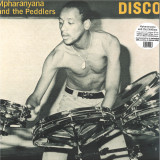
Kalita are proud to announce the first ever official re-release of Mpharanyana & The Peddler's 1979 South African disco and funk recordings 'Disco' and 'Freak Out With Botsotso', backed by a devastating extended edit of 'Disco' courtesy of Amsterdam-based DJ and producer Jamie 3:26. Cut on a loud 12" single and accompanied by an extended edit of 'Disco' courtesy of Jamie 3:26, this truly is another no-brainer from the Kalita camp.
Born on 15th November 1949 in Kattlehong, South Africa, Jacob ‘Mpharanyana’ Radebe was one of South Africa’s greatest ever musicians, releasing a canon of legendary soul, jazz and disco albums before his untimely death in August 1979 at the age of just twenty-nine.
Here, Kalita select his highly sought-after disco and funk recordings ‘Disco’ and ‘Freak Out With Botsotso’, both selected from his 1979 invisible final album, ‘Hela Ngwanana’, re-releasing them for the first time in forty years. Including Paul Simon and Herbie Hancock session musician Bakithi Kumalo on bass and Themba Mokena of Dick Khoza ‘Chapita’ fame on lead guitar, the recordings feature some of the country’s top contemporary musicians joining forces to glorious effect.
With the original album currently fetching eye-watering prices on the rare occasion that they turn up for sale, the time is now ripe to share this masterpiece with the world once more.

8
Chronos is the new album by Rostock´s composer Johann Pätzold aka Secret of Elements - a heartfelt, richly visual journey through which the German composer channels personal struggles alongside the social upheavals to which he has dedicated himself as a 'music activist'.
Textextext - (add your write up)
Chronos charts an eventful period during which Pätzold learned to deal with mental illness, travelled to the Mediterranean to save lives during the refugee crisis, fell in love and lost love - ten years is a long time. The album tells of people, moments or phases from the musician's life. It opens with the ominous melodies and immersive choral ambience of 'Grace', which reflects on a friend's suicide attempt, before riding the euphoria of Pätzold's wedding and the birth of his children in 'A Last Waltz.'
Third track 'Memento' narrates the epic journey of a refugee Syrian mother whom Pätzold accompanied from Greece to Germany, its emotive swells and subtle crescendo evoking simultaneously the dawning of a new world and the melancholy of what has been left behind. 'Vinculum', built around an Indian mantra, also dates from the same period and was written as a last tribute to a small child who drowned in the Mediterranean. The piece combines church organ - renown as part of Christian music, and indeed recorded in the Marienkirche in Gnoien on an original 18th century Lütkemüller organ - with a mantra, seeking to unite various religious symbols in an attempt at reconciliation in the face of unimaginable tragedy.
Propelled by mechanical percussion, 'Rage' uses the Shepard scale, a musical phenomenon in which two cyclically rising octaves are played on top of each other in a staggered fashion to create the illusion of an infinitely swelling scale, perfectly mirroring the image of blind spiralling, hysterical anger. When we arrive at 'Aurora, we feel Pätzold musing about the end of the world, but also the end of the self. What remains when humanity is wiped out by a pandemic or something similar? In Johann Pätzold's case, what remains is, among other things, a monumental album, a musical chronicle of his life: Chronos.

9
With a fundamental emphasis on the encouragement of genre hybridization, Evar Records, the Los Angeles-based imprint co-founded by Trickfinger (John Frusciante) and Aura T-09 (Marcia Pinna), continues its momentum with an expansive 9-track collection from Netherlands-based luminary, Limewax.
After making a strong first impression with its 2020 debut offerings, Evar Records has recruited Limewax to carry forward its mission of blurring boundaries and challenging conventions in electronic music. The Ukranian hard drum and bass hero happily obliged, referring to signing with Evar as a breaking point which allowed him, finally, to take full stock of his background in classical and electronic music simultaneously. Although Maxim Anokhin is widely known for his hard-edged breakbeats, releasing on labels such as Tech Itch Recordings, Position Chrome, Freak Recordings, and PRSPCT, the full scope of his artistry shines through on Untitled.
The opening cut, "Porcelaineworm," is a futuristic electro cut recalling IDM classics like AFX's "XMD5A." Of course, the virtuosic drum programming and hectic D&B sound which Limewax has built his reputation upon is here in spades on tracks like "Stay Lackey. Cuts like "Ushio" and "Whay1" are fascinating studies in contrasts—the former balances bludgeoning techno of the Ansome and Perc variety with a resolve that recalls Fennesz's pastoral glitch abstractions. "Whay1," meanwhile, is sub-rattling drum and bass nuanced by cinematic string themes. "Getupa" is an experimental beat track that truly bangs, its layers of texture and field recordings placing Limewax in the company of bleeding-edge acts like SVBKVLT's breakout star Hyph11E. The very next track, "19NB," is a subtle update to the original minimal technical template established by Detroit icons Robert Hood & Jeff Mills.
While most of the album hurtles forward at hard techno and D&B tempos, "Maleisae" is a sensual 70 BPM track mixing ghostly R&B and acid. That spectacular cut heralds Untitled's intricate denouement. The brief "Wernmqbram" effortlessly reconciles a baroque minor-key piano theme with the renegade snares of classic jungle. "Hasan" is a true "closing credits" master stroke, half-time acid giving way to gorgeous IDM-meets-Blade Runner synth leads.
Far from a genre-jumping hodgepodge, Untitled is a remarkably coherent full-length by a virtuosic artist free to explore the entirety of their creative influences. The Tilburg-based artist cites the poets Marina Tsvetaeva and David Whyte as influential on Untitled and also listened to works by 1771-1862 works by organ builders when crafting the album. The end result reveals Limewax as a masterful, diverse artist, capable of any style he pursues. It's a clear indicator of the boundless promise of Evar's core principle—a staunch refusal to put artists in boxes.

También disponible
Red Vinyl[31,30 €]
ALL THEIR LEGENDARY RECORDINGS, PLUS LOADS OF UNRELEASED STUFF!
“The Lipstick Killers were easily one of the greatest live bands I've witnessed in my 65 yrs. on this planet” – Keith Morris (Black Flag/Circle Jerks/Off!!)
HINDU GODS ARE CALLING YOU!!! Grown Up Wrong! Records is thrilled beyond belief to present the LONG-AWAITED anthology of material by the legendary Lipstick Killers, who blazed a trail in late ‘70s post-Radio Birdman Sydney before gigging with the likes of the Gun Club and the Flesh Eaters in Los Angeles where they crashed and burned in 1981.
The Lipstick Killers released just one single in their life time – the perfect ’79 Deniz Tek-produced pairing of “Hindu Gods of Love” and ”Shakedown USA” on their own Lost in Space Records and Greg Shaw’s Voxx Records - but a posthumous live album and a couple of archival releases followed. It was all incredible. All that material is included here, as is a plethora of additional stuff, all from the best-available sources (mostly original tapes).
The Lipstick Killers’ enigmatic and high-energy sound – heavily inspired by the Stooges and the ‘60s psychedelic punk sounds of bands like the Thirteenth Floor Elevators and the Chocolate Watchband – bridged the gap between Radio Birdman and subsequent Sydney groups like the Sunnyboys (whose first-ever show was opening for the Lipstick Killers), Lime Spiders, Hoodoo Gurus, the Screaming Tribesmen and the Psychotic Turnbuckles. And of course they anticipated generation after generation of other bands with similar things in mind, right up to today’s ‘60s-inspired freaks like The Straight Arrows, The Living Eyes and Thee Oh Sees.

ALL THEIR LEGENDARY RECORDINGS, PLUS LOADS OF UNRELEASED STUFF!
“The Lipstick Killers were easily one of the greatest live bands I've witnessed in my 65 yrs. on this planet” – Keith Morris (Black Flag/Circle Jerks/Off!!)
HINDU GODS ARE CALLING YOU!!! Grown Up Wrong! Records is thrilled beyond belief to present the LONG-AWAITED anthology of material by the legendary Lipstick Killers, who blazed a trail in late ‘70s post-Radio Birdman Sydney before gigging with the likes of the Gun Club and the Flesh Eaters in Los Angeles where they crashed and burned in 1981.
The Lipstick Killers released just one single in their life time – the perfect ’79 Deniz Tek-produced pairing of “Hindu Gods of Love” and ”Shakedown USA” on their own Lost in Space Records and Greg Shaw’s Voxx Records - but a posthumous live album and a couple of archival releases followed. It was all incredible. All that material is included here, as is a plethora of additional stuff, all from the best-available sources (mostly original tapes).
The Lipstick Killers’ enigmatic and high-energy sound – heavily inspired by the Stooges and the ‘60s psychedelic punk sounds of bands like the Thirteenth Floor Elevators and the Chocolate Watchband – bridged the gap between Radio Birdman and subsequent Sydney groups like the Sunnyboys (whose first-ever show was opening for the Lipstick Killers), Lime Spiders, Hoodoo Gurus, the Screaming Tribesmen and the Psychotic Turnbuckles. And of course they anticipated generation after generation of other bands with similar things in mind, right up to today’s ‘60s-inspired freaks like The Straight Arrows, The Living Eyes and Thee Oh Sees.

- A1: Compared To What – Roberta Flack
- A2: Out Of The Garage
- A3: His Name Is Napoleon Solo
- A4: Escape From East Berlin
- A5: Jimmy, Renda Se – Tom Zé And Valdez
- B1: Mission: Rome
- B2: The Vinciguerra Affair
- B3: Bugs, Beats And Bowties
- B4: Cry To Me - Solomon Burke
- B5: Five Months, Two Weeks, Two Days - Louis Prima
- B6: Signori Toileto Italiano
- B7: Breaking In (Searching The Factory)
- C1: Breaking Out (The Cowboy Escapes)
- C2: Che Vuole Questa Musica Stasera - Peppino Gagliardi
- C3: Into The Lair (Betrayal Part I)
- C4: Laced Drinks (Betrayal Part Ii)
- C5: Il Mio Regno - Luigi Tenco
- C6: Circular Story
- D1: The Drums Of War
- D2: Take You Down
- D3: We Have Location
- D4: A Last Drink
- D5: Take Care Of Business - Nina Simone
- D6: The Unfinished Kiss
24
Henry Cavill (Man of Steel) stars as Napoleon Solo opposite Armie Hammer (The Social Network) as Illya Kuryakin in director Guy Ritchie’s The Man From U.N.C.L.E., a fresh take on the hugely popular 1960s television series.
Ivor Novello-winning and multi-BAFTA nominated composer Daniel Pemberton (known for “The Awakening” and the Sundance Jury winning “Enemies Of The People”) created an exciting soundtrack with relaxing lounge instrumentals full of Jazz and Swing elements. Moreover, the soundtrack contains seven original classics like “Compared To What” by Roberta Flack and “Take Care Of Business” by Nina Simone. Pemberton has also scored countless Emmy, BAFTA, Grierson and RTS winning comedies, documentaries and lifestyle shows and worked with Oscar winning directors and editors.
The Man from U.N.C.L.E. also stars Alicia Vikander (“Anna Karenina”), Elisabeth Debicki (“The Great Gatsby”), with Jared Harris (“Sherlock Holmes: Game of Shadows”) and Hugh Grant as Waverly.

7
With relationships, as with music, timing is everything. When the elements sit together in the pocket, it just feels right - and that groove can’t be forced. Lovers and players can fall in and out of time, depending on the rhythms of their lives, and how they react in the moment. In the end, we’re simply either in sync or not - because Time plays its beat on all our hearts without exception.

Stiletti Ana, part of the dreamy sunbathed electronic duo “Jesse” and top tier in Finnish music production is releasing a new solo album, “I’m an arpeggiator” on Höga Nord Rekords. This album carries similarities to Jesse in both production and sounds but hides more ancient wisdom. A refined sound but with more edges left sharp and more of a mysterious vibe.
As the sound professor he is, Stiletti Ana takes you in a tour of his vast collection of vintage synthesisers and in centre of attention sits the arpeggiator (hence the album title) which gives the sound much of its repetitive character. Recorded in the legendary Haista II-studio outside Helsinki, “I’m an arpeggiator” channels the energies from the waters and forest surrounding the studio, giving the music its’s escapistic and romantic character.
This record is a transcendental trip down the paths of Boards of Canada and Manuel Göttsching, dedicated to the ancient Babylonian fishing god, Dagan.

14
Domino are immensely proud to announce the signing of my bloody
valentine, with new physical editions of the band’s seminal catalogue
being made available. ‘Isn’t Anything’ and ‘loveless’ have been
mastered fully analogue for deluxe LPs and also mastered from new
hi-res uncompressed digital sources for standard LPs, with each
being made available widely for the first time ever. Fully analogue
cuts of ‘m b v’ will also be available on deluxe and standard LPs
globally for the first time.
my bloody valentine, the quartet of Bilinda Butcher, Kevin Shields,
Deb Googe and Colm Ó Cíosóig, are widely revered as one of the
most ground-breaking and influential groups of the past forty years.
During an era in which guitar bands denoted, at best, a retroclassicism, not only did my bloody valentine sound unlike any of their
contemporaries, the band achieved the rare feat of sounding like the
future.
With their debut album, ‘Isn’t Anything’ (originally released in 1988),
my bloody valentine revolutionised alternative music and heralded a
new approach to guitar music for generations to come. The album
birthed a sound which became a template for thousands of new
subgenres, heralding a new approach to guitar music and studio
production. Not only was it a new type of music, it paved the way for a
new type of journalism; inciting comparisons to elemental
phenomenon, tapping into how the music affected the psyche.
Shields and Butcher frequently sang in a similar vocal range that
allowed their voices to blend together. This had the effect of making
their gender indistinguishable, to the point where their voices could
be used as another melodic layer to complement the vertigo-inducing
sounds made by Shields’ guitars. It is a record characterised by the
ominous sense of space that inhabits many of its songs, which
veered between the harried and propulsive, to the subdued and eerie.

9
It took German metalcore vets, CALIBAN recording a cover of Rammstein’s “Sonne” to realize that their native tongue was a seamless fit with their time tempered collision of punishing riffs and Andreas Dörner’s urgent vocals. With fans hungry for the Essen-borne quintet to record an album exclusively in German, the band simply said: “Why not?” and “Zeitgeister” was born. 11 genre-defining LPs deep into their career, the band’s vision for the album came naturally – a career retrospective and deep-dive into CALIBAN favorites that haven’t had a live airing in some time. “It wasn’t an easy decision, but once we allowed us to make them as different from the originals as we felt it was needed it came fairly naturally”, explains guitarist and main songwriter Marc Görtz. Of course, some updating was necessary when it came to translating the songs to German. “It turned out to be surprisingly tricky,” says Dörner. “While I feel more at home with my native German it made it a lot more complicated, as I had more options to phrase something.” Formed in 1997, CALIBAN’s legacy has been a tireless one, touring the globe and sharing stages with the likes of Slayer, Kreator, Killswitch Engage and many more, “Zeitgeister” was a welcome homecoming. With the help of long-running producer Benjamin Richter (Moonspell, Emil Bulls and more) CALIBAN hand-picked seven tracks to bring new life to: “Trauma“ (feat. Matthi from Nasty, “Arena Of Concealment”), “Herz” (“I Will Never Let You Down”), “Ausbruch nach Innen“ (“Tyranny Of Small Misery”), “Feuer, zieh mit mir“ (“Between The Worlds”), “Nichts ist für immer“ (“All I Gave”), “Intoleranz“ (“Intolerance”). “Mein Inferno” (“My Little Secret”). “Zeitgeister” also boasts a new track, “nICHts”. “It’s a song about feeling disoriented and hopeless, about depression and feeling powerless. Feelings that many of us can probably relate to during these days”, says Dörner.

9
** 12” LP edition of 300 copies with cover artwork and booklet featuring illustrations by Ettore Tripodi ** In September 2019 Alessandro Bosetti was invited by fellow composer and curator Riccardo La Foresta to create a new work for a newly created ensemble as part of a residency program hosted by Centro Musica in Modena, Italy. The very first encounter took place on Skype – kind of a prediction of the forthcoming physically distanced pandemic times. The first, straight-to-the-point question Bosetti posed to each musician was to tell him the history of their life. The materials collected in the interviews subsequently underwent a process of anonymization, selection and cut-up in order to create the imaginary autobiography of Didone, a genderless character on whom Bosetti composed a combinatory poem in 84 aphorisms, six of which have been translated into music. The ensemble consists of extremely different musical profiles: the contemporary soprano Giulia Zaniboni, minimalist banjo and acoustic guitar player Glauco Salvo, and four musicians with a jazz background such as guitarist Luca Perciballi, drummers Andrea Grillini and Simone Sferruzza, and saxophonist Dan Kinzelman (also part of Hobby Horse trio and long-time collaborator of Enrico Rava). Some of the stylistic features of Bosetti’s project Trophies (along with Kenta Nagai and Tony Buck) can be detected here and there. Persistent repetitions, mesmerizing sonic masses and extended, oblique melodic lines are here led by the clear and precise voice of soprano Giulia Zaniboni.
The voice is at the heart of this work: the textual fragments of the autobiographies are filtered through Zaniboni’s contemporary vocality, while informing the instrumental writing as well. Themes and textures unveil traces of words or sentences; fragments of biographies are embedded in the intricate instrumental dialogue between the two drummers. A final layer was added by Ettore Tripodi, a unique and out-of-time visual artist who imagined Didone in a series of illustrations accompanying the poem. "Didone" is a work about the reconfiguration and recombination of identities, where every specific sense of belonging melts into an indistinct swarming of possibilities.
Alessandro Bosetti is a Marseille-based composer and sound artist with a particular interest in the musicality of language and in the voice, conceived as an autonomous object and an instrument of expression. His works enact a dialogue between language, voice and sound within complex tonal and formal constructions, often crossed by oblique irony. He builds surprising devices, often linked to the radio medium and to a tireless reflection on the relationships between music and language, questioning aesthetic categories and listening postures.
His work has been shown in reference venues such as the GRM / Présences Electronique festival in Paris, Roulette and The Stone in New York, Café OTO in London, the Liquid Architecture Festival in Melbourne and Sydney, the Serralves Museum in Porto and the San Francisco Electronic Music Festival. His music is released by labels such as Errant Bodies Press, Holidays Records, Rossbin, Sedimental, Unsounds, Monotype, Weird Ear Records.

Kurt Wagner's signature brittle baritone is back, but that doesn't mean we're going to get a nostalgic Alt Country album. Showtunes is a continuation of Lambchop's explorations of new sound worlds and opens up another chapter. Each track is an exciting journey with an uncertain destination.
With Showtunes, as he has done so many times throughout his varied and fascinating career, Kurt in late 2019 was experimenting with something new. He took simple guitar tracks and converted them into midi piano tracks. It was a revelation that from those
conversions he was able to manipulate each note and add, subtract, arrange the chords and melody into a form that didn't have any of the limitations he had with his previous methods of writing with a guitar.
Removing these limitations led to a surprising new sound, something akin to showtunes but with edges sanded down and viewed through Kurt's own specific lens. it's a genre he was none too fond of with the exceptions of a few Great American Songbook type of stuff or some of the works of artists like Tom Waits, early Randy Newman or even Gershwin or Carmichael. “I’d always wanted to make songs with a similar feel but my skills were limited until now” says Wagner.

Label Text "Dekmantel once again teams up with RE:VIVE, the cultural initiative setup by the The Netherlands Institute for Sound and Vision, to pair modern electronic talent with Dutch archival footage. The third EP in the Scores series sees Interstellar Funk and Italian producer Guenter Råler create innovative, modular soundscapes to the graceful visual arts unearthed from the EYE Filmmuseum archives.
As Interstellar Funk, Olf van Elden uses his production competency to craft a heavenly arpeggiated, synth composition to the amateur aquarium movies by J.L. Clement which are edited for this project by Sjoerd Martens. Filmed in the 1940’s, the video’s turn-of-the-century black-and-white style aquatic footage is reanimated through van Elden’s tacit polyphonic, modular sonic soundtrack. Layering together multiple sequences, van Elden pieces together the music as a whole, to mimic the way in which the film was created.
On the B-Side, Italian abstract artist and Dutch native Guenter Raler concocts a deeply introspective, and perfectly choreographed, ambient soundtrack to a select series of pieced together clips from the Collectie Natuurbeelden, the Institute’s Collection of Natural Images. The music plays against the depiction of multiple biological communities in transition; what is referred to as an ecotone. The title itself not only recalls that of a musical tone, but represents the ever-evolving aspect of life and nature as similar colours, along with movements of animals and plants pass on from one image to the next.
Within their own right, the new scores not only give the age-old films new context and sonic character, but exist as creative works as their own, full of resonance and individualism that highlight the retrospective artists’ voices to their fullest."

12
BLK JKS are a seminal force in the South African underground.
After an extended hiatus the Johannesburg foursome, championed by The Mars
Volta and TV On The Radio (amongst many others), return with a groundbreaking
new album.
Monster grooves meet guitar and brass driven afro-rock. Echoes of spiritual jazz, postapocalyptic funk, renegade dub and kwaito.
Features Malian guitarist Vieux Farka Tour and Beastie Boys accomplice Money Mark
on the track “Maiga.”
”This South African art-rock band traffics in complexity, cross-hatching not only rhythms
and textures but also the signifiers of genre”- The New York Times
“A prequel to 2009’s amazing After Robots … What occurs when you listen to Abantu is
that it is an Old Testament support to After Robots – where that album prophesied Afropunk, this album suggests the roots to that moment, an engrossing journey of Afrobeat,
fuzzy yet hugely suggestive drone and psych textures, and a bristling sense of both pride
and critique that sings through.” The Wire
“A dark and brooding number that simmers and smoulders as it goes, fueled by a driving
rhythm section and mournful horns.” - Brooklyn Vegan about single “Human Hearts”
“BLK JKS, an awe-inspiring exemplar of modern Africa’s indigenous sound, make a victorious return after an extended hiatus … They create something unique on this album.”
***** Morning Star

- A1: Little Girl Blue
- A2: It Don't Mean A Thing
- A3: I Loves You, Porgy
- A4: Come On Back, Jack
- A5: Plain Gold Ring
- A6: Work Song
- A7: Children Go Where I Send You
- B1: Forbidden Fruit
- B2: Cotton-Eyed Joe (Live At Town Hall)
- B3: My Baby Just Cares For Me
- B4: African Mailman
- B5: Love Me Or Leave Me
- B6: He's Got The Whole World In His Hands
- B7: Exactly Like You (Live At Town Hall)
14

3
Every now and then a release comes along which is destined to unite, bring down the walls and basically, be a force for good. Your Kissing by Belcampo does just that, and with a style and panache which defies it’s lo-fi, handstamped limited white label aesthetic. The beauty of Your Kissing is in the way it successfully melds together elements of deep house, disco and the French Touch sound to form a track which will appeal to anyone who simply likes decent music. Belcampo keeps things stripped back just enough to give that beautiful, rolling, hypnotic atmosphere, whilst remaining lush, warm and uplifting, constantly teasing us with the repeated filtering guitar and string hook. Legendary British singer and songwriter Elisabeth Troy provides the cherry on top with her sweet vocal line giving us the hook which will get under your skin in all the right ways.
In addition to the main vocal mix we have a Belcampo Remix going heavier on the filters and pumping groove, calling to mind the glory days of Cassius, Motorbass and Super Discount with that distinctive feel-good French sound of the 90’s.
Closing out the EP we find Delisei which cranks up the jackometer for a peak time slice of looped-up heads down filter madness guaranteed to nice up the dance.

5
Be With is delighted to present Jorge López Ruiz’s El Grito (Suite Para Orquesta De Jazz), eternal Argentinian magic released on CBS in 1967 that must be one of the most sought-after South American jazz LPs.
Living in Buenos Aires in the 60s, driven by creative impulse and rage Jorge López Ruiz used music as his platform to protest the Argentine military dictatorship: “I could never stand dictatorships, to be told how you have to think, what you have to do. Nor did I endure discrimination”.
A young López Ruiz had appeared on a television panel alongside writer, politician and philosopher Arturo Jauretche, criticising the Onganía dictatorship. Jauretche told López Ruiz “Now say it with music”. This was the deep inhale that lead to El Grito, literally “The Scream”. As López Ruiz later explained “Jauretche urged me that my protests should not remain in words and acquire the consistency of a work… but it was not so much what he told me but how he told me, what prompted me to make the work take shape, first in a live concert and then in a recording”.
As the police and military began resorting to kidnapping, torture and summary executions to quiet dissent, with depressing inevitability the artist community and their work were a particular target of the increasingly brutal regime. El Grito was banned not long after it was released and the majority of original copies were unceremoniously destroyed.
The work of a genius artist living under an opressive dictatorship, erased by the government of the time, this is buried treasure in every sense and it’s been a rare record for over 50 years. But it isn’t just being hard to find that has pushed up the prices of those few original copies that survived, this is a foundational record in the development of jazz in South America.
El Grito (Suite Para Orquesta De Jazz) is a showcase for Jorge López Ruiz’s skills as a composer and arranger as he leads a virtuoso orchestra of the likes of Mario Cosentino (alto sax), Baby López Furst (piano), Pichi Mazzei (drums), Gustavo Bergalli (trumpet), Oscar López Ruiz (guitar), Arturo Schneider (flute) and Jorge López Ruiz himself plays double bass on the fourth and fifth movements.
As the album’s sub-title explains, The album is a Jazz orchestra concept suite. Five movements, to be heard as a whole, that end where they begin.
“When I wrote it there was no history of a cyclical work in jazz. But I didn't notice that, I needed to express something and I did it. At that time they told me I was crazy, that such a thing was very difficult to do. But hey, I like challenges”.
Yet this is not challenging jazz. There are certainly avant garde, free jazz flourishes, but the hard bop characteristics make this a very accessible album: easy to listen to without being easy listening. López Ruiz’s love of film brings a definite cinematic feel.
The title movement opens the album in bombastic style. “El Grito” grabs you by the lapels and refuses to let go. Raw then controlled, it’s by turns stabbing then soothing, with rage weaved in and out of the elegant styles. “M.A.B. = Amor” is our favourite here. With a tense introduction and a patient build, a gentle sax sweeps in to lift everything up to meet the serene piano and soft drums. Elegantly paced, it moves back and forth between deep contemplation and a more urgent call and response between strings and horns. A near-eight-minute, slow motion marvel.
The second side eases in with the beautifully-titled “Hasta El Cielo, Sin Nubes, Con Todas Las Estrellas” (“Up To The Sky, No Clouds, With All The Stars”) a relatively brief mid-tempo piece featuring López Ruiz’s insistent bass notes high in the mix, and again blending the sublime with the emotive with its wild horns and tight rhythm section.
It’s followed by “Tendré El Mundo” (“I Will Have The World”) which also leads with hypnotic bass, but this time swifter, driven by crashing drums, rapid horn conversations and effortlessly cool piano flourishes. Rounding out the suite, “De Nuevo El Grito” (something like “The Next Scream” or “The Scream Renewed”) is a stylish closer. Whilst López Ruiz’s bass shifts the track along, the horns and piano are more restrained, yet no less stunning.
This Be With edition of El Grito sounds sensational, if we do say so ourselves. Working with audio from the original analogue tapes, the vinyl mastering chops of Simon Francis are on full show here in what he considers to be some of his best ever work for Be With. Pete Norman’s cutting skills have made sure nothing is lost. The tortured artwork has been restored here at Be With HQ as the finishing touch to helping this revered work find a rightful place in every protest art collection.

10
Backed by members of the David Nance Group, Rosali (Long Hots, Wandering Shade, Monocot) wades through the emotional mire with infectious, earworm melodies led by her luminous voice. With their rich, raw instrumentation, these rock ballads sound like the resilience discovered in facing one’s darkest moments, the assurance of the calm and clarity that comes after the storm. As she sings on the second track, “Bones,” “Through the darkness of the field / I walk through without yielding / To the rest of the feelings / I’m carrying.” With her confident song craft, Rosali illustrates the ability to push through, moving toward something greater without being destroyed by the weight of trauma.
Engineered by James Shroeder and featuring Kevin Donahue (Simon Joyner), James Shroeder (Simon Joyner, DNG, Connor Oberst), David Nance, Noah Sterba, Colin Duckworth, and Daniel Knapp, the album was recorded in ten days and the raw immediacy of the music is palpable across these ten tracks. Added adornment was contributed by Philadelphia's Robbie Bennett (War on Drugs) on organ and keys, and Matt Barrick (The Walkmen, Jonathan Fire Eater, Muzz) makes a percussion cameo on “Whisper,”which was tracked at Philly’s Silent Partner Studio, where No Medium was mixed by Quentin Stoltzfus (Mazarin, Light Heat). The open creative collaboration elevated the songs, resulting in the exciting, vibrant sound of the album.
Rosali wrote the bulk of these songs in January of 2019 while on a self-imposed two week residency in the hills of South Carolina. Alone in an old farmhouse, she experienced supernatural events and faced her own demons in the deepest darkness. Perhaps as a result, there is a boldness that permeates the album, a daring vulnerability in both the lyrical themes and their musical accompaniment. Rosali says, “I approach guitar playing the same intuitive way I sing, which is profoundly spiritual for me. Where words fail, the guitar becomes the conduit for raw feelings, providing a direct connection to them. I’m constantly working on being fearless in my work, which means showing the rough side, the mistakes along with the triumphs.”
While writing No Medium, Rosali was inspired by harmonographs—swinging pendulums that create beautiful illustrations of the mathematics of music—considering how the mind, too, creates images through song. She imagined herself as the swinging pendulum—“a body suspended from a fixed point” (Encyclopedia Britannica), governed by the forces surrounding her. She thought about the pendulum’s relationship to time, movement, and even its use in divination practices. The album’s title, lifted from Charlotte Brontë’s, Jane Eyre, resonated with this vision: “I know no medium: I never in my life have known any medium in my dealings with positive, hard characters, antagonistic to my own, between absolute submission and determined revolt. I have always faithfully observed the one, up to the very moment of bursting, sometimes with volcanic vehemence, into the other.” With the multiple meanings of “medium”—as middle ground, a term for psychics, and as the material of artistic expression—No Medium felt like the appropriate name, describing how the self is shaped by the patterns of life .
The influences for the sound of No Medium reflect this pairing of assured vulnerability, in the stylistic coherence of Bob Dylan’s Desire, the tender delivery in Iain Matthews’ Journey From Gospel Oak, the strut and swagger of Bowie’s Hunky Dory, the ambition and beauty of Gene Clark’s No Other, and the playful catharsis of Harry Nilsson’s Nilsson Schmilsson. The Richard and Linda Thompson-esque album opener “Mouth,” places Rosali within both a physical and emotional space. “East of the river I was travelling on / watch me lie, undone / rest me in a forest, overgrown / until I am free of all that I’ve known,” she sings. There is movement, both within a cityscape, and in her outlook on love. Speaking of her thought process when writing the song, she says, “I imagine confidently walking away from the past, toward a new approach to love and intimacy to achieve a closer relationship with myself.”
In “Pour Over Ice,” Rosali explores her relationship with alcohol and her former reliance upon it as a social lubricant to quell her social anxiety, an energizer to keep moving, a means to cope and self-medicate, and most addictively, to lure out her wild side as a free flowing, good time girl. While drinking helped her through some shitty times, it eventually got the upper hand and became an insatiable hole within. She says, “The ‘you’ in the song is really me, talking to that component of myself struggling with drinking and self-sabotage, caught up in the cycle, and all the bad choices I made.” She sings, “Maybe I didn’t care enough / or can’t remember / chasing small pleasures / making fire from embers.” Rosali wanted her lead guitar on this track to simultaneously sound like a slow motion car crash propelling her through the day, and the sound of a gnawing hunger for something more.
Rosali’s alliance with the Omaha musicians that orbit David Nance Group (including Nance himself) came about while on a Long Hots / DNG tour in the summer of 2019. Great friendships formed and one night after playing in Detroit, Dave suggested they be her backing band. The pairing was effortless and natural, and in November of the same year, they were recording No Medium in a basement in Omaha.

Montener The Menaceft.Masta Ace/Rah Digga/Wordsworth/Fatlip/El Da Sensei/Guilty Simpson/
High Noon’ / ‘The Struggle’ 7"
Certain Sound Records and Montener the Menace are proud to finally release the first single from his highly anticipated second album "Anyone Home?"
Montener has recruited Wounded Buffalo Beats on production duties who’s looped a fantastically pitched vocal-sample over some hard, head nodding drums to set the scene for the wonderfully enlisted, all-star line-up to go berserk over.
The world-renowned guests include - Wordsworth, Rah Digga, Masta Ace & Fatlip as "High Noon" sees the gang of notorious outlaws trading smoking hot verses, swaggering into your local saloon, oozing with finesse as six-shooters still smolder in their holsters and their Stetsons pulled low.
This is one of the best cross-Atlantic collaborations Hip Hop has seen to date and is a fantastic choice for the initial lead single from the upcoming album.
"High Noon" is out April 2nd via Certain Sound Records and is accompanied by a fantastic Western influenced, animated video by the super-talented animator - Taylor Bowen which can be found below:
The Struggle - the 2nd single taken from his highly anticipated album -
Anyone Home?
Once again Montener enlists a heavy ensemble of guests featuring
Stones Throw alumni, Guilty Simpson, UKHH veteran, Micall Parknsun
& Artifacts emcee, El Da Sensei.
The Struggle sees the four emcees
perform their vocal acrobatics in unrivalled style as their rhymes
reverberate over a smooth, neck-snapping slab of vintage Boom Bap -
eerily reminiscent of the rich, classic sound of the Mid-90’s. JL Beats has
created a timeless beat here with DJ JabbaThaKut providing the world-
class cuts to round the track off in superb style.
“Its gonna make a great impact on the scene, just what we need, when we need it most” - Skinnyman

- A1: If Your Poison Gets You
- A2: Johnny Barleycorn
- A3: Fast Man
- A4: You Can’t Crucify Yourself
- A5: Dirty Old Town
- A6: Wanderlust
- B1: Seven Days
- B2: Raider Man
- B3: The End Of The Summer
- B4: Dog Sleep
- B5: When The Paint Grows Darker Still
- B6: I’m Not Dead (I’m In Pittsburgh)
- B7: Golden Shore
- C1: In The Time Of My Ruin
- C2: Down To You
- C3: Highway To Lowdown
- C4: Kiss My Ring
- C5: My Terrible Ways
- C6: Fitzgerald
- C7: Elijah
- D1: It’s Just Not Your Moment
- D2: The Real ‘El Rey
- D3: Where The Wind Is Going
- D4: Holland Town
- D5: Sad Old World
- D6: Don’t Cry That Way
- D7: Fare Thee Well
27
Demon Records is proud to present a new series of vinyl reissues from American singer-songwriter Black Francis / Frank Black
• First released in 2006, Fast Man Raider Man is the eleventh studio album by Frank Black. Recorded as a follow up to 2005’s
Honeycomb, Black returned to Nashville to work with a team of all star musicians including Al Kooper, Bob Babbitt, Levon Helm,
Lyle Workman, Steve Cropper, Jim Keltner, Rich Gilbert, Simon Kirke, Ian McClagan, Chester Thomspon, Dave Phillips and
Spooner Oldham.
• Album highlights include ‘Johnny Barleycorn’, ‘In The Time Of My Ruin’ and ‘If Your Poison Gets You’.
• Now available on vinyl for the very first time, this reissue features the complete album pressed on two 140g translucent vinyl.

10
“John Andrews is picking flowers from each corner of his life and
presenting you with an unusual bouquet. His imaginary band ‘The
Yawns’ are back! Third time’s a charm. In hockey terms, they call it a
‘hat trick’ and you know who’s always wearing a ratty old hat? John
Andrews. Three years in the making and we have Cookbook, the third,
and most colorful record from your favorite New Hampshire based
craftsman.
“Unknowing folks usually assume he lives in New York City or
Los Angeles but confer with John for five minutes and if he’s in the
right mood he’ll talk your ear off about the granite state and the old,
seedy colonial barn where he’s tracked his records with his weird and
wonderful friends.
“Take a listen to his previous effort, 2017’s Bad Posture. It was the
grassroot slacker’s pie in the sky. His head was stuck in the past. He
probably excessively listened to ‘Cripple Creek Ferry’ and he most
likely wasn’t keeping up with household chores. Time moves on,
but just look at him now! All grown up yet likely still feeling those
growing pains. After a few more years of traveling we now have
Cookbook, fresh out the oven…phew! About nine or ten new tracks,
but who’s really counting?
“The lyrics are simple and endearing, inspired by mid-century love
songs. His inspirations are all across the board. If his subconscious
was a bootleg taper, life would be the show.
“At any rate, it doesn’t sound like a record made in New
Hampshire, but make no mistake, this is a dyed-in-the-wool Yawns
record, refreshingly straightforward yet full of character. It’s less of a
crowded honky tonk, and more of an empty, poignant speakeasy. You
can finally relax indoors after a weary day out in the cold. Have you
ever seen that painting of dogs playing poker? It might as well be what
they were listening to as the bulldog pushed his chips forward.”

Throughout his vast career, the New York based Australian composer JG Thirlwell has adopted many masks as a means of infiltrating and subsequently subverting a wide range of pop cultural forms. His work under the Foetus moniker has taken on everything from big band to opera to noise-rock. Steroid Maximus embraced exotica and the world of soundtracks, while his Manorexia project continued his quest to the outer limits of contemporary composition and musique concrete. Thirlwell has also carved out a significant output in the field of the soundtrack via the large body of work created for the animated television shows Archer and The Venture Bros. In addition he has been commissioned to create compositions by such notables as Kronos Quartet, Bang On A Can, Alarm Will Sound, String Orchestra of Brooklyn and many others.
Now we have ‘Omniverse’, the second release under the moniker Xordox. Xordox is a synthesizer-based project, and on this evocative album we see the project branch into many new avenues. The science fiction element brushes up against crime noir, even veering into areas that could well fit in the video game soundtrack genre. With an audacious attitude and an arsenal of machines Thirlwell serves up a selection of thrilling retro-future mind capsules. This is music made from a life saturated in culture, both underground and mainstream, high and low. Tense sequencing and noir tinged keyboard lines invoke a powerful visual image of films and memory, of screens and speakers, of sound and space, all entering the cosmos and the subsequent galactic race. Thirlwell’s decades long exploration of sampling and sequencing, composing and ingesting a daunting amount of audio and visual artworks speaks volumes for the bold assimilations exposed here. ‘Between Dimensions’ lays out a tense theme which starts off like a score to a a crime thriller before morphing into a simulacra of Kraftwerk scoring a video game. The living ghosts of Giorgio Moroder and John Carpenter haunt ‘Oil Slick’ as it permeates wormholes, updating lifeforms with its stealth sequencing and tense momentum.
‘Omniverse' is a synthesised soundtrack journey, one which embraces past forms whilst reshaping them for the new unknown. ‘Omniverse' is a thrilling liquid ride through fear and hope, and like all the best of Thirlwell’s output, is simply one hell of an enjoyable journey to take.

16
‘Voyager’, the seventh album from Current Joys, rattles with the
live-wire feeling that’s thrummed through all of Rattigan’s previous
releases: quavering, scream-itself-hoarse vocals and selfinterrogation via song. But here, that bristling, sentimental rock ‘n’
roll cacophony is overlaid with a soundtrack orchestra guiding it
along. It’s an odyssey, a grand-sounding journey of self-discovery
spread across sixteen tracks.
Part ekphrasis, part personal, it’s Rattigan learning new ways to
understand his own feelings and identity while inspired by the
highly-stylized, striking storytelling of filmmakers like Alfred
Hitchcock, Terrence Malick, Agnès Varda and Andrei Tarkovsky.
‘Voyager’ is unlike anything Current Joys has released before.
On his new album, Rattigan eschews lo-fi home recordings for a
full band and recording sessions at Stinson Beach Studios. As a
vocalist/drummer in his other band Surf Curse, Rattigan had finally
opened up to the possibility of working in a professional studio.
It’s all held together by the fervour of Rattigan’s creative process.
He believes in the premonitory power of music and he latches onto
the song ideas that strike him in the moment, propelled by an
abstract existentialism or burst of feeling more than anything else.
It imbues ‘Voyager’ with an intensity and intimacy - with the sense
that you’re getting to hear, all at once, the disparate parts that
make a project - or person - into a sprawling, cinematic whole.
Similar to Tame Impala or Mac Demarco in their early days,
Current Joys is singular and with a fanbase that extends far
outside of traditional indie fans. The band managed to establish an
indie and mainstream audience while flying under the radar of
DSPs and nearly all other industry levers. They are one of the first
indie bands to have their place fully created and cemented by
TikTok.
Double LP packaged in a gatefold sleeve

12
Riley Downing (The Deslondes) sat down one day and decided he wanted to record a song or two for a simple 45. The Deslondes had been on a hiatus for a while and Downing had the creative itch to put something down on record. He had been in contact with his bandmate John James Tourville and they decided to work on a split 7” with a friend.
The recording session felt like a breath of fresh air and the communion of talented musicians produced more songs than expected. Downing left the session energized and continued to record and trade demos with Tourville. Downing and Tourville decided that there were enough ideas to make an album. There were not going to be any rules and nothing would be discarded. All notes and lyrics would be considered. ‘Start It Over’ is the result of that creative effort. An album where each song was crafted with a different idea in mind. Some of the songs are more nostalgic than others and some were just written for good oldfashioned fun. There is a romantic quality in each song. One song might help someone get through a hard time while one song might contribute to a good time. One song might bring up memories of a better time or just get you far enough down the road to start over.
LP pressed on Sea Glass & Turquoise coloured vinyl

LEVARA's union merged in Los Angeles. Singer Jules Galli emigrated from France, while drummer Josh Devine chose L.A. as home versus his native United Kingdom following success behind the kit with One Direction. There they found common vision with Trev Lukather (guitar), son of Toto’s Steve Lukather.
Every tune on the band’s debut emanates from inspiration culled from their lives, and their mission is to rally the globe to connect and groove with the band. These songs display a larger than life sound. A realised vision. Anthemic tunes written and recorded visualising a mass audience becoming one with the body of work. Integrating their personal voices to the live experience. Or simply as a personal soundscape cruising the asphalt with the car stereo cranking.

19
The music of Marriage Material draws from a world of influences and hits with the
force of a sledgehammer.
It is driven by the powerful, precise drumming of Felix Lehrmann, grounded by the unerring pulse of bassist Thomas Stieger and ignited by the “pyrotechnic” solos of vibraphonist/keyboardist Raphael Meinhart and guitarist Arto Makela. The four musicians
belong to the cream of the German music scene. Now they have decided to record an
album together.
And this album has it all: powerful fusion music, reminiscent of Weather Report mixed
with strong rock elements.
The guests include Simon Oslender, Kurt Rosenwinkel, Julian and Roman Wasserfuhr
and many more.

4
* This series of remixes, stretching all the way back to 1993, continues to astound with its breadth of talent and epic scope, never repeating a remixer and always bringing new talent to the fore. In this case, the headline remix comes courtesy of the legendary NRG, one of the longest running acts in the scene. And on the very same vinyl, we have newcomer Simon Holmes remixing KFs original Future Primitive. Throw in a Dj Revive and a Sunny & Deck Hussy remix, and you have an EP for the ages….
Club / DJ Support
Billy Bunter, the Fat Controller, Juy Cunningham, Glowkid, Slipmatt, Dj Jedi, Dj Luna-C, Dj Brisk, Acen, Jimni Cricket, Bustin, Sc@r, Doughboy, Saiyan, Dave Skywalker, Ponder and many others

Cuernavaca / Stateville / Frankincense And Myrrh / Apsara / Ancestral / Spin / Zincali
Approaching his eighty-fifth birthday, sharp and lean, Phil Cohran lives a couple of blocks from the lake on the north side of Chicago. His modest apartment is filled with a palpable richness. His cornet and trumpets, zithers, French horn, harp and frankiphones (an electric kalimba of his own invention); his beloved telescope; African art; a mural of the Chinese monastery where Muslim monks bestowed on him the name Kelan ('holy scripture'); hand-printed posters from the culture wars of 1960s Chicago; all reflect a life dedicated not just to music, but also to science and astronomy, to history and activism. In its range of subject matter the track-list of Kelan Philip Cohran & The Hypnotic Brass Ensemble embodies this invigorating and all-embracing curiosity: a Mexican hill-town filled with perfume and flowers... an Illinois state prison where Cohran taught inmates in the 1960s... heavenly dancers in the temples of Cambodia... a tribute to a sixteenth-century Venetian musicologist. Welcome to the musical world of Kelan Philip Cohran.
Cohran was born in Mississippi and grew up in St Louis. In the immediate post-war years St Louis was a jazz heartland, home of stalwarts like Clark Terry and Oliver Nelson (both of whom he played with), not to mention a genius called Miles Davis. In 1950 Cohran moved to another heartland, Kansas City, where he played trumpet in one of the hardest swinging swing-groups, led by Jay McShann (who famously had given Charlie Parker his first job). With McShann he spent 'the best year of my life', touring as far as Mexico and playing proto-rock'n'roll in Texas with the likes of Big Mama Thornton on vocals. Back in St Louis Cohran led his own group, the Rajas Of Swing, whose show involved wearing red jackets, grey slacks, blue suede shoes and turbans.
Then in the mid-50s he moved to Chicago. He had a small group with a friend, the legendary tenor saxophonist John Gilmore, whose regular gig was to play at Sarah Vaughan's weekly 'birthday' parties, an excuse for the Sassy One to splash the cash and have some fun. ('What, Sarah Vaughan would sing with you and John Gilmore' 'No way, Sarah didn't sing, she was too busy partying.') And in 1959, through Gilmore, he was invited to join Sun Ra's Arkestra, at a crucial period in the evolution of that extraordinary group. Effortlessly wrapping traditions as divergent as boogie-woogie and electronica in an Afro-centric, intergalactic mythology of his own making, Sun Ra casts a huge shadow across conventional narratives of jazz history. 'With Sunny', Cohran simply says, 'I found my own voice'.
You can hear the emergence of this voice on the LP Angels And Demons At Play, recorded in 1960 - Sun Ra's masterpiece from the period. On the track Music From The World Tomorrow, against the urgent whipped and chopped percussion of the Arkestra, it is Cohran's zither, initially bowed and then plucked and strummed, which is the track's magic ingredient. More profoundly it was Sun Ra's example - his defiant self-confidence and sense of purpose - that set Cohran on his own (to quote another Ra composition) 'pathway to unknown worlds'. Indeed this spirit of self-belief led Cohran to turn down the invitation to accompany the Arkestra when Sun Ra moved east in 1961.
Staying in Chicago, Cohran founded the Affro-Arts Theater and performed with the Artistic Heritage Ensemble, recording the group for his own Zulu Records imprint. (Co-members went on to become Earth Wind & Fire; Cohran taught the group's leader Maurice White the mysteries of the frankiphone). The AACM, a musicians' collective of immense influence and importance, had its first meeting in Cohran's front room. With Oscar Brown Jr and Gene Page he wrote and performed in a show celebrating the nineteenth-century Afro-American poet Paul Lawrence Dunbar. He taught music tirelessly in schools and prisons. His studies into music theory and history led him to the discovery of a key book in his life, Gioseffo Zarlino's treatise on harmony, published in Venice in1558. Astronomy is another passion and another area of expertise. One of the gems of the Cohran discography is African Skies, with its lovely harp playing, commissioned by the Chicago Planetarium in 1993.
In Chicago he also raised a large family. Many of his children have gone on to become professional musicians; eight of them are the Hypnotic Brass Ensemble. For each of them, their first teacher was their father, who famously insisted on giving them music lessons not just for several hours after school, but for several hours before school as well. Their father's music was all around them as children; they all vividly remember lying in bed at night not being able to sleep because their father was rehearsing with the Jazz Workshop downstairs.
For the Hypnotic Brass Ensemble, the voyage to where they are now - whether tearing up festivals from Glastonbury to Melbourne, or touring with Gorillaz, or recording their first album on Honest Jon's - has involved a necessary stepping away from their father's shadow. Phil Cohran is the first to recognise this, happily allowing their sound - heavy on the funk, with the urgency of hip hop never far away - to blossom.
But likewise this album is for all of them a natural step. Recorded in Chicago in June 2011, the idea was beautifully simple - 'my music and their band' as Phil puts it, 'we don't have to rattle on more than that'. Only to point out perhaps that here - in the majestic surge of Zincali, for instance, or in the sheer verve and bounce of Cuernevaca - is music not just filled with the warmth of home. This is music that plumbs the depths and rings with joy.
'Cuernevaca is a town in the mountains south of Mexico City. I was there in 1950 when I was on the road with Jay McShann's band. It's a place close to paradise, a city filled with the fragrance of flowers. I always wanted to go back... In 1974 I taught workshops at the prison in Stateville, the Big House where Al Capone spent time. There's a huge wall around the prison, and once I took Hypnotic there - ha - to see what the future holds for them... Makeda, the Queen of Sheba, sent a caravan of gifts to King Solomon - a caravan that took more than a day to pass one point - and the main gifts were Frankincense And Myrrh... I wrote Apsara in 1967, when Jackie Kennedy was in the news with her visit to the temple of Angkor Wat in Cambodia. Apsara were celestial beings, dancers who brought forth the civilization of ancient Cambodia, by dancing in the holy nectar called Amrita... Ancestral is a meditation drone written for my Friday-night residence at the Ethiopian Diamond Restaurant in Chicago's Rogers Park... Spin is the latest of these compositions. Everything in the cosmos spins, from the smallest objects we can see in a microscope to the largest galaxies. Spin is the motion of all things whether it looks like it or not... Zincali is a name Spanish gypsies call themselves. 'Zin', East Africa; 'cali', the people. One of the offshoots in my research into Moorish Spain has led me to Gioseffo Zarlino, the sixteenth-century master of music at St Mark's in Venice. It's said that Bach lost his sight reading Zarlino's treatise on counterpoint. His greatest composition is his setting of the Song of Songs - 'Nigra Sum', 'I am black'. This is my tribute to Zarlino and to the zincali.'

6
“Some of the most extraordinary songs I’ve heard in years.” Brian Eno
Les Disques du Crepuscule presents The Salt Garden (Landscaped), an album of extended pieces by acclaimed quiet music ensemble Fovea Hex, featuring longform remixes by British songwriter and producer Steven Wilson and Serbian soundscape artist Abul Mogard, as well as a previously unreleased mix by Peter Chilvers.
Formed in 2005 by Irish musician Clodagh Simonds, Fovea Hex have since released 3 albums (Neither Speak Nor Remain Silent, Here Is Where We Used to Sing and The Salt Garden), drawing favourable comparisons with Nico, This Mortal Coil, Ligeti and even Schubert.
The Salt Garden (Landscaped) is pressed on crystal clear vinyl, and comes packaged with a CD version featuring 4 tracks in total. The outer sleeve is printed in white reverse board and features an image taken by Crepuscule designer Joel Van Audenhaege during a recent trip to Greenland. The inner bag offers detailed liner notes as well as an interview with Clodagh.
As well as Steven Wilson and Abul Mogard, other high-profile admirers include film director David Lynch, who invited the group to play at his Cartier Foundation exhibition in Paris in 2007, and Brian Eno, who has described Clodagh’s work as “some of the most extraordinary songs I’ve heard in years.”
The Salt Garden (Landscaped) gathers together 3 long ambient remixes of tracks from the Salt Garden EP trilogy, originally released between 2016 and 2019. The core album is pressed on crystal clear vinyl and showcases ‘Solace’ and ‘Is Lanza Light & Given’, both re-worked by musical polymath Steven Wilson. “I’ve long been a fan of Fovea Hex,” explains Steven, “which for me is some of the most sublimely beautiful music ever recorded. It’s a mix of electronic and acoustic sounds played on instruments ranging from state-of-the-art to ancient and arcane.”
As well as the two tracks reworked by Steven, the bonus CD enclosed with the vinyl album also finds room for ‘We Dream All the Dark Away’, the widely-acclaimed re-interpretation by Abul Mogard of ‘All Those Signs’ from the Salt Garden II EP. By turns haunting and sinister, but always beautiful, the piece features vocals by both Clodagh and Brian Eno, as well as cello by Kate Ellis, and modular synth and effects by mysterious soundscaper Mogard.
An additional special bonus track on the CD is an unreleased remix of lesser -known 2015 digital single ‘By the Glacial Lake’ made by musician Peter Chilvers, best known for his collaborations with Brian Eno, Karl Hyde, Chris Martin and Tim Bowness.
“I feel truly honoured!” says Clodagh Simons, who began her career in cult folk-psyche band Mellow Candle, and since then has guested on albums by Mike Oldfield, Thin Lizzy, Russell Mills, Matmos, Current 93 and Steven Wilson. “It’s been fascinating to witness how these pieces have been so imaginatively and skilfully revisioned in the hands of Steven, Abul and Peter. Each piece has emerged into a completely fresh new light, with a different vibrancy, yet remains grounded in what was there before.”

- A1: For Pauline
- A2: Tomorrow
- A3: Dance Ii
- A4: For Hilary
- A5: Street Fight
- B1: Royal Infirmary
- B2: Black Horses
- B3: Dance I
- C1: Blind Elevator Girl – Osaka
- C2: The Aftermath
- C3: Our Lady Of The Angels (Stu ‘Jammer’ James Mix)
- D1: Florence Sunset
- D2: All That Love And Maths Can Do
- D3: San Giovanni Dawn
- D4: For Friends In Italy
15
Clear / Orange Vinyl
Factory Benelux presents a remastered 2xLP coloured vinyl edition of Circuses and Bread, the seventh studio album by Manchester ensemble The Durutti Column. Originally released by Factory Benelux and Factory in 1986, the original 9 tracks have now been expanded with 6 bonus pieces.
The cover art retains the original design by 8vo. The remastered limited edition CLEAR+ORANGE vinyl set is housed in gatefold sleeve, with liner notes and rare band images. A CD version is also available (FBN 154 CD).
Self-produced by Vini Reilly at Strawberry and Revolution studios, the album saw Durutti playing as a quartet, with Reilly on guitar, vocals and keyboards, Bruce Mitchell in drums and percussion, John Metcalfe (viola) and Tim Kellett (trumpet).
‘The music ends up being very simple,’ Vini told NME. ‘People can dismiss it as being very simplistic, easy listening or whatever. It’s very honest, it’s very personal. People say it’s ambient, and it’s like Eno. I don’t like that, because the music’s made to be listened to, it’s not wallpaper.’
Of extended piece Blind Elevator Girl – Osaka, Vini adds: ‘The music really writes itself. For example, we’re in Osaka, in Japan, getting in this elevator. It’s very crowded with all these Japanese businessmen talking about distribution deals, and going on and on. On this lift was a beautiful Japanese girl, in an immaculate uniform. Each floor we arrived at, she’s starting talking Japanese, obviously saying what was on each floor. We went higher and higher, and finally we get to the top. And then, sort of walking out of the elevator, I suddenly realised she was blind... It got to me, this girl. It was incredible. So maybe a day later, I was thinking about that, and the whole tune came out. And every single piece of music is like that.’
Bonus tracks include Italian-only EP Greetings Three, scarce compilation track The Aftermath, and a previously unreleased working version of 1987 single Our Lady of the Angels produced by the late Stuart ‘Jammer’ James.

Paperback: 256 pages
Product Dimensions: 12.9 cm x 19.8 cm x 2 cm
• The first book to detail exactly what DJing is like for the 99% of DJs who never make it big.
• Covering electro, hip hop, rare groove, acid house, rave and the UK underground club scene, it’s a 30-odd year tale of a life lived in dance music.
• ‘Long Relationships’ is full of tales of clubs, raves, warehouses, DJing, music, record production, record deals, low-level international travel, shady promoters, dodgy club security, magical dance floor moments and much more.
Written by former DJ/producer Harold Heath, ‘Long Relationships: My Incredible Journey From
Unknown DJ to Small-time DJ’ is a biographical account of a DJ career defined by a deep love of music and a shallow amount of success.
‘Long Relationships’ is a love letter to DJing and to every small-town DJ who never made it to the big time but whose life was enriched and improved by DJing anyway. It’s packed with tales of gigs, clubs, raves, warehouses, music, record production and record deals, low-rent international travel, shady promoters, dodgy club security, magical dance floor moments and much more.
If you ever DJed, if you ever lost yourself on a dance floor, or if you ever simply fell in love with the potential contained within a dark basement, a strobe and a sound system, then this story is your story.
"Like with footballers, there are a plethora of lower-tier DJs who are just as gifted as their superstar compatriots, but for one reason or another don’t make it beyond the Vauxhall Conference league. Harold Heath is one of them. Full of highs and lows, his journey as a DJ who didn’t quite ‘make it’ is a compelling tale."
Carl Loben, DJ Mag Editor in Chief
“Excellent, well-written book which looks at the scene from a perspective we don’t usually get. Filled with great stories and anecdotes that had me hooked from beginning to end. A recommended read both for newbies and old veterans alike.”
DJ Colin Dale

Mastered by Stephan ZMK and cut by Simon The EXchange : 1 tune per side... Excpect a crazy sound !!!!

10
Mother Freedom Band’s Cutting The Chord is a funky modern soul classic. It’s both a criminally under-appreciated album and a hard-to-find record so we’re delighted to be giving this sweet disco-funk groover the reissue treatment it deserves.
Produced by the great Al Goodman from The Moments and originally released in 1977, Cutting The Chord seems to be one of the lesser known releases on the curious, and often great “All Platinum” label. Other than a 7" of a couple of these tracks, the only thing that the band seem to have released is this album, and what an album it is. Unbeatable soul-funk of the highest quality.
The album bursts open with “Love Will Stay In Your Corner”. It’s a soulful dancer that reliably slays any funk set you care to drop it in. It’s followed by the lithe disco funk “Flick Of The Wrist” that’s all bubbling baselines and elegant horns. The groovy, horn-enhanced sweet soul of “Gotta Get It Back” is equal parts heartbreaker/hip-shaker and the acidic organs on “Mr Brother” are an experiment in synth soul.
Perhaps the group’s best known track, “Beautiful Summer’s Day” might well be worth the price of an original copy alone. It’s pure piano-driven paradise soul. A tropical birdsong intro sets the scene of a warm, perfect sunshine day and the lead vocal soars over the lush, clean production. The tempo oscillates between contemplative and stomping. Essential.
The brilliantly-named “(Assistants Rag) When You’re Hot, You’re Hot” opens side two. Another huge highlight, its title refrain repeated over this laid-back, power-funk workout. It still sounds incredibly modern, like something off the last D’Angelo record, and if Public Enemy and Diamond D both sampled it you know it knocks hard.
The horn-heavy, clav-stabbing-stomper “We Like To Boogie” keeps things fast and funky before the airy, heavenly harmony soul of “Come On Home” mellows us all out. Things pick up again with “Touch Me”, and you might recognise its addictive elements sampled in Jay-Z’s Kanye West-produced “A Star Was Born”. The magical, reggae-tinged, gospel-influenced “Sweet Love” closes out this assured, classy set.
We dare to say that Cutting The Chord is a rare example of a funk-soul LP which is killer from start-to-finish. Sure, there are the stand-out bombs, but the whole thing is a complete and varied album of feel-good vibes held together by its fluid horns, tight, tight rhythm section and beautiful vocals.
Mastered for vinyl from the original analogue tapes by Simon Francis, cut by Pete Norman and artwork restored at Be With HQ, this new edition should hopefully stop this album slipping any further into obscurity. It’s just too good to be forgotten.

8
For a good number of Spanish musicians, attracting attention from somewhere outside of Madrid was a mission impossible for several decades. While the Movida Madrileña, commonly referred to as the “Madrid scene” in English, stirred things up and made front page news on the basis of new wave music, musicians that were on the fringe or directly beyond it had few platforms from which to be heard.
Although Javier Segura has been recording music in his studio almost continuously since the 70's, his relevance and recognition as a musician has been limited to underground music circles. The fact
that he worked outside of the country's spotlight of power kept his name relatively unknown for years, something which even the arrival of the internet could not illuminate. Only the appreciation of a few collectors and disc jockeys kept the light on.
Passat Continu delivers here the first ever compilation by the spanish musician Javier Segura (born 1955), who worked as an isolated cell from his home studio in San Cristóbal de La Laguna, in the Canary Islands. Working for decades from the underground, Segura build up some brilliant ideas producing dozens of richly textured songs, stretching borders on ambient, experimental rock, dreamy folk or concrete music. Using guitars, rhythm boxes, trumpets synths or simply pedals, Segura managed his own career and produced while published a handful of albums by himself: El ser y el tiempo (1976), No mires atrás (1983), Nostalgia de lo humano (1986), Lamento bereber (1989), El ángel caído vol I, la lluvia azul (2004), Levántate (2005) and El orden y el caos (2006).
He also teamed up with Juan Belda on only impro project Arte Moderno (1981-1982), using the Roland TR-808 rhythm box as a main actor for the first time in the post-Franco’s Spain era.
'El sol desde oriente' uses three of that songs and add six more previously unreleased productions from 1980 to 1990, probably his most active period of time. Available on vinyl and digital through
Bandcamp. Digital version includes two extra tracks. Vinyl comes with insert with unseen photos and liner notes by Javier Segura and Passat Continu’s curator David G. Balasch.
All music written by Javier Segura except Jardín marroquí, written by Javier Segura and Juan Belda
under the name of Arte Moderno.
Prolific digi-dub recording artist Jackson Bailey heads up the new year for Research, debuting with a two track 7" of slow and melodic synth cuts. At once playful and naïve yet masterfully constructed, the pieces unravel in unison to create the drowsy headspace associated with pitched down G-funk beats or vintage Italian library. Sharing a similarly visual immediacy to Amedeo Tomassi's compositions for Biologia Marina, both 'Sauna Research' and 'Aquarium Trousers' conjure up subaquatic atmospheres of macrophytes and crill, wetsuits and snorkels. Tropical flora and fauna float by in the distance. Fittingly soundtracking the Australian summer, the new release follows on from recent daydream-like stoned outings for EM and Good Morning Tapes.

IZIPHO SOUL are thrilled to announce their next release: Early 80s music from New Jersey of the highest order and a first time re-release on a 45.
IF YOU WANT MY LOVIN’ is a synth-soul boogie bomb that we’ve taken to another level. The ‘Sunshine Mix’ by Philip Ward - miraculously restructured - giving it the feel of a 12” but keeping it under 5 minutes, the instrumental break in the latter stages is simply stunning. The sublime flip ‘HARDLY NEED TO SAY’, hardly needs an introduction. Whilst the Rhodes and intricate guitars weave their way throughout the track, June’s vocals shine with passion and power.

5
También disponible
Color Vinyl[17,61 €]
Formed in 1977 by Tomata du Plenty (vocals), Tommy Gear (synthesizers, vocals), David Brown (electric piano) and KK Barrett (drums), the Screamers were deeply linked to Los Angeles' first wave punk scene, yet their music and high-energy performances stood apart – defying classification and evoking intense audience reactions.
"These songs were recorded a few months after the Los Angeles punk scene began. These five statements of intent transcend Punk and project forward into the future: to the analog synth wave of the late '70s and beyond, to the present day, four decades later, when they finally receive an official release. Sourced from the original reel-to-reels, they are a revelation compared to the countless copies that have been circulating by multiple generations of tape-traders. Here, for the first time, is the Screamers' initial and legendary manifesto.
The Screamers concept was simple, yet audacious: take the spirit and the look of Punk – the pseudo-psychotic aggression, the spiky hair, vacant stares and barely concealed sadomasochism – and match it to a different configuration than the typical '60s rock template. As launched, the Screamers featured two keyboard players (Tommy Gear and David Brown), a drummer (KK Barrett) and an intensely charismatic singer (Tomata du Plenty). The idea was to be confrontational – to evoke (as Tomata described in an early interview) a state of anxiety.
Forty years later, this release builds on the groundswell of interest in the Screamers that has been occurring in the early 21st century. There are web sites with detailed histories of the group and several bootlegs of demos and live material from 1977-79. The video of '122 Hours of Fear' – perhaps their peak moment, recorded at Target Video in August 1978 – has now passed over 650,000 views online. This is the Screamers' time, and the time is now."
– Jon Savage (excerpt from the liner notes)

11
LIMITED 180GM OPAQUE ORANGE VINYL.
BUFFET LUNCH are a Scottish group who make it their mission to craft satisfyingly imperfect pop songs filled with imagery and humour.The group’s elementary parts are Perry O’Bray (Vocals/Keys/Guitar), Neil Robinson (Bass), John Muir (Lead Guitar) & Luke Moran (Drums), united by a shared love of music on the ABBA-to-Beefheart axis.
These four ricochet between Glasgow and Edinburgh, creating music that bristles with DIY spirit and upbeat wonkiness. Their tracks are vigorous excursions, meandering into clattersome terrain as often as hiking up into the breezy, melodious foothills.The desire to lead the listener along a curious tale helps tie things together, showcasing a lyrical playfulness that pins down their puzzle of sound.
Having been an active band for a few years, playing regularly north of the border with like-minds such as Irma Vep, Robert Sotelo and Kaputt, Buffet Lunch spent early 2020 working on the follow-up to their two EPs on Permanent Slump.The fruits from such labour bore out as the band’s debut album ‘ThePower of Rocks’, out may 7th on UpsetTheRhythm.
‘ThePower of Rocks’ was recorded in a Crofters cottage/studio on the banks of Upper Loch Fyne in Argyll, over four nights and five days at the beginning of March 2020, before Covid-19 made itself such an ongoing concern. Back then four people could occupy the same space and make music, lunch and dinner together. Days fell into a pattern of long sessions and long meals.The album came together as a luminous mix of Buffet Lunch’s live chestnuts, some sparky recent songs and some new material entirely written and recorded in situ. All tracks were recorded by Neil Robinson acting as the in-house engineer.
As the seriousness of the virus and talk of national lockdowns developed - there was a feeling of anticipation more than fear in the air, but being holed up in cottage in a wild corner of Scotland surrounded by snowy mountains still took on an apocalyptic feel, albeit an apocalypse where the band were safe and overdubbing vocals. After leaving the cottage, reality (as it must) set in and finishing the album became a more remote task.
Over the following months, an extended period of listening awarded the recordings a deeper realisation, as they bounced between band members computers. Perry also started writing on his Casio keyboard and collaborated on a couple of songs (‘Ten Times’ & ‘Ashley’s New Haircut’) with Jayne Dent (of electronic music project Me Lost Me), drawing on her ethereal singing voice as a counterpoint to his own more ‘spoken’ vocals on the album. These gauzy, dreamlike tracks were then sent to other members of Buffet Lunch to add their respective parts, creating evocative new dimensions to close each half ofthealbum with.
The Power of Rocks’ rattles along like a short-story collection, exploring a variety of narratives. When it comes to the music itself, Perry describes their approach as “see what happens” but admits to a preference for simple synth melodies, plenty of percussion, and prickly guitar-parts. ‘Red Apple’ opens the album with a dizzy swagger, guitars and keyboard notes swirling in forays whilst its lyric tackles notions of social bravado. ‘Orange Peel’ follows equally serpentine with its blattering tune and jagged, yet jolly melodic twists.The themes across the album are wide-ranging and personal, from irritation with out of touch politicians (‘Pebbledash’), to love letters to seaside living (‘Bladderwrack’), to even the frailty and confusion of old age (‘Said Bernie’, ‘It Helps to Know’). Title track ‘ThePower of Rocks’ is an ode to the power of nature sunk within a rolling wave of cheery jangle. “Do you believe in the power of rocks when the sun is too hot on your face?” sings Perry as the song zigzags with consequence. ‘He Wore Two Hats’ sports similarly bop-worthy riffs and addictive nods as it deals with its story of savvy man who’d bitten off more than he could chew.
Buffet Lunch’s debut album accomplishes a lot in its brief 38 minutes. It stuns and startles, intrigues and entwines, drawing the listener further into its characterful world. When asked about any intent posed with this debut record Perry confides that “we hope people can hear the joy the band had making the album and the curiosity and frustration that went into the writing. There was no process or design, but there is detail, and deliberateness in our wish to explore and create.” It’s this attentive focus alongside a keen sense of humour that really sets Buffet Lunch apart, with ideas darting wilfully to and from the poignant truths at hand.


- A1: Fruity Loops Music 1
- A2: Abc Für Anglophone
- A3: Aughntone Brooheene
- A4: 1St Poem
- A5: 2Nd Poem
- A6: 3Rd Poem
- A7: 4Th Poem
- A8: 5Th Poem
- A9: Bastei Mit Strohdach
- A10: 99Neeneenee99
- A11: A A A A Oo Oo
- A12: Go Plus Coda
- A13: Troll
- A14: Coffee Kremkream
- A15: Lieber Markus
- B1: Guete Rutsch Und Guets Nüüs
- B2: Muy Knew Poem
- B3: Voo Poo Poo Pott F M Z
- B4: Tchakk
- B5: Nadder Nodder Nooder
- B6: Thrupht
- B7: Furanda
- B8: Mahwquabba
- B9: Poolpoolpoolpool
- B10: Down The River
- B11: Sonntagsgruft
26
Black Truffle is delighted to offer up a rare serving of unheard works by legendary Swiss artist Anton Bruhin. Active as a visual artist, poet, and musician since the 1960s, Bruhin has created important work in forms as varied as concrete poetry and landscape painting, imbuing everything he does with wit, humility, and absurdist humour. A recognised master of the jew’s harp (or Trümpi, as this ancient folk instrument is known in Swiss German), Bruhin’s sound work also encompasses tape collage, sound poetry, and manipulated bird song. On Speech Poems/Fruity Music we are treated to 26 short pieces made between 2006 and 2008 using the audio software Fruity Loops. These pieces carry on Bruhin’s long-running project of exploring the creative use and misuse of cheap, accessible technologies. In many of his analogue works, Bruhin explored the possibilities of simple cassette equipment. He invented DIY approaches to layering sounds by using multiple tape machines, experimented with distortion and tape speed, or, in his classic Inout (1981) created a maniacally single-minded audio monument to the pause button. Like the computer pixel drawings the artist produced around the same time as these recordings, Speech Poems/Fruity Music extends this approach to consumer software, presenting two parallel sequences of works that make use of Fruity Loops’ inbuilt synthetic instruments and its speech synthesis function. The instrumental works play like a twisted take on the aesthetics of 1980s video game soundtracks, using synthetic accordion and harpsichord sounds to realise jaunty little ditties that exploit their machine-realisation by making use of improbable pitch-bends and humanly impossible tempos and articulations. Between these samples of Fruity Music, we are treated to the Speech Poems, a series of recitations by a lone computer-generated voice. Many of them are in fact songs, as the synthetic voice crudely and hilariously changes pitch as it moves through its fragmented syllables and odes to cream in coffee. Carrying on Bruhin’s interest in the creative misuse of technology, many of the Speech Poems attempt to force Fruity Loops’ voice synthesis, designed only to speak English, to speak German. By entering phonetic text into the program, Bruhin gets it to produce a passable German alphabet and a series of approximations to a proper pronunciation of his name. Hilarious while strangely austere, entertaining but bizarre, Speech Poems/Fruity Music is classic Anton Bruhin, arriving in a beautiful mosaic cover by the artist, with the text of the ‘abc für anglophone’ on the back cover.

Peter's third solo album saw him break wide open with the his biggest hit "Cuts You Up" which is often included in lists of the greatest alternative singles. Propelling him into mainstream stardom, Deep also had two additional fantastic charting singles - "The Line Between the Devil's Teeth (And That Which Cannot Be Repeat)", "Cuts You Up" and "A Strange Kind of Love". Again produced by Simon Rogers, the critically acclaimed album is still a fan favorite.

10
Straight Outta Caledonia is the first commercially available “Greatest Hits” of the outsider songwriter Jackie Leven, an artist
who has largely remained in obscurity in his native Scotland despite being one of the greatest wordsmiths – and singers – it ever
produced. A well-travelled musician who began making psychedelic, progressive music in the late 60s before emerging as an
epic storyteller full of pathos, humour and humanity in the 90s, Leven lived and wrote like many of the fragile, gregarious
characters of his songs; large, full of life and empathy. Leven passed away in 2011 after recording 30+ albums under different
guises or with his briefly successful New Wave band Doll by Doll. Straight Outta Caledonia is a compilation collated by Night
School Records on its Archival label School Daze that seeks to introduce Leven’s music to new generations.
In an age of isolation, alienation and loss of visceral experience, Jackie Leven’s music can be massive and welcoming. It feels
connected to some universal humanity and vibrates with vitality. His songs are often full of tragedy and comedy simultaneously,
cutting straight to the heart, often plugging directly into the nervous system of the listener. His lyrics are rich, dense with imagery
that can veer from apocalyptic to the comically banal in a sentence, with a songwriting panache that can be heavy handed to
almost bursting point before skewering the song with a clownish, warm punchline. His productions ranged from Bob Dylan’s
Rolling Thunder Revue style rock band orchestrations with strings and organ as on the epic Ancient Misty Morning or they could
be pared down to the purest form of folk song as on Poortoun: Leven on stage alone with an acoustic guitar, albeit played with a
mastery of the instrument that he often only hinted at. Musically his sound can bend traditional structures or stay completely
confined within them yet still forever push towards an ecstatic release, as on the cinematic Snow In Central Park.
The most exciting, jaw-droppingly effective tool at Leven’s disposal was his voice. A multi-octave instrument that, though
damaged during a savage assault in Fife, he used with flair; he had both a brazen disregard for the rules and a deep humility, all
of which is evidenced with every phrasing. A baritone that could flit up through the register – always touched by his gentle
Kirkcaldy accent – it’s the prime delivery method for his songs. Leven’s voice enabled him to inhabit the characters in his songs to
an uncanny degree, a skill that in turn enables the listener to empathise with them and, subsequently, the singer. It’s most evident
in stand out song The Sexual Loneliness Of Jesus Christ, a breathtaking re-telling of the life of its protagonist, not as a pure,
sinless messiah but as a sexually frustrated, solitary man condemned to an existential loneliness no one else will ever feel. In
many ways the track is the archetypal Jackie Leven song. Produced by Pere Ubu’s David Thomas, what strikes the ear first –
after the samples of unemployed workers in Glasgow following the closing of the Clyde shipyards – is the audacious, rhythmic
tremolo effect Leven employs through the verses before the production opens up to allow Leven’s vocal to lift into a soar, a
freeing glide powered both by the force of the singer’s chutzpah and the inherent, doomed destiny of the protagonist. With any
other singer such subject matter could come across as gauche or worse, pretentiously sonorous, but Jackie Leven’s genius was
such that he could be this cinematic and brazen while touching something elemental and true in the beholder. It’s a skill evident in
every song on Straight Outta Caledonia, the trademark of a songwriter who revelled and excelled in intensity with a lightness of
touch.
In his lifetime, Jackie Leven toured, wrote and recorded at a ferocious rate. He recorded under aliases to avoid record contract
restrictions, played house shows in Europe after or instead of official concerts, events which were often spoken word story telling
masterclasses as well as performances of his often bewilderingly dense songbook. His music has traditionally been catalogued
as “folk” music and has been largely banished to a small, dedicated group of international fans and apostles both private and well
known, like author Ian Rankin or Glenn Matlock. Since his passing in 2011 however, there has been a growing recognition
amongst a newer generation, with artists like James Yorkston or Molly Nilsson publicly stating the influence of the unsung
troubadour on their own craft. Jackie Leven’s fairytales for hard men are often forensic deconstructions of masculinity, sad and
ecstatic, light and shadow, always endlessly rich, a resource as bountiful as Leven himself’s human spirit undoubtedly was.

- Lark
- All Mirrors
- Too Easy
- New Love Cassette
- Spring
- What It Is
- Impasse
- Tonight
- Summer
- Endgame
- Chance
- Whole New Mess
- Too Easy (Bigger Than Us)
- (New Love) Cassette
- (We Are All Mirrors)
- (Summer Song)
- Waving, Smiling
- Tonight (Without You)
- Lark Song
- Impasse (Workin’ For The Name)
- Chance (Forever Love)
- What It Is (What It Is)
- All Mirrors (Johnny Jewel Remix)
- New Love Cassette (Mark Ronson Remix)
- Smaller
- It’s Every Season (Whole New Mess)
- Alive And Dying (Waving, Smiling)
- More Than This
28
4LP box set including Angel Olsen’s latest two albums, ‘All
Mirrors’ and ‘Whole New Mess’, as well as an LP of bonus
audio. Also includes 40-page book including photo shoot
outtakes, pictures from the recording of these albums,
handwritten lyrics and items of meaning to Angel.
Originally conceived as a double album, ‘All Mirrors’ and
‘Whole New Mess’ were distinct parts of a larger whole, twin
stars that each expressed something bigger and bolder than
Angel Olsen had ever made. Released in 2019, ‘All Mirrors’
is massive in scope and sound, tracing Olsen’s ascent into
the unknown, to a place of true self-acceptance, no matter
how dark, or difficult, or seemingly lonely. ‘All Mirrors’ is
colossal, moving, dramatic in an Old Hollywood manner.
Recorded before ‘All Mirrors’ but released after, ‘Whole New
Mess’ is the bones and beginnings of the songs that would
rewrite Olsen’s story. This is Angel Olsen in her classic style:
stark solo performances, echoes and open spaces, her voice
both whispered and enormous. ‘All Mirrors’ and ‘Whole New
Mess’ presented the two glorious extremes of an artist who,
in these songs, became new by embracing herself entirely.
Now, with ‘Song of the Lark… And Other Far Memories’,
these twin stars become a constellation with the full extent of
the songs’ iterations: all the alternate takes, B-sides, remixes
and re-imaginings are here, together. Alongside, a 40-page
book collection tells a similar story, not just through outtakes
and unseen photos but through the smaller, evocative
details: handwritten lyrics, a favourite necklace, a beaded
chandelier. As if it could be more plainly stated (there’s
nothing more), Angel adds one cover here: a loving,
assertive rendition of Roxy Music’s ‘More Than This’.
It is a definitive collection, not just of these songs but of their
revelations and their writer, from their simplest origins to their
mightiest realizations.

4
The Süddeutsche Zeitung hailed Johanna Summer’s performance
at the Young Munich Jazz Prize in 2018 as “a small sensation.”
The pianist, born in Plauen in Saxony in 1995, had encompassed
the whole gamut, from jazz freedom to classical rigour. The critic
from this respected newspaper marvelled at her “amazing gift to
make well-known melodies sound so convincingly her own, they
develop a real sense of creative urgency.” Summer’s winning of
the prize itself became almost incidental; far more significant was
the fact that this competition heralded the arrival of one of the
most interesting new pianists in European jazz.
For her debut album, Summer has chosen to make compositions
by Robert Schumann the point of departure for her journeys into
pianistic fantasy. Schumann’s cycles of piano pieces
‘Kinderszenen’ (scenes from childhood) and ‘Album für die
Jugend’ (album for the young) had been familiar to her since
childhood, not just as player and listener but also - because
Schumann was from nearby Zwickau - as works by someone from
her region of Germany. From an early age she was enchanted by
both the melodic and the pictorial aspects of these short pieces.
And yet, to make her own adaptations of seven of the pieces was
a far from a simple task: “I worked for a long time on re-casting
them, trying out all of the pieces in all keys and in a lot of different
time signatures, creating several miniature interpretations and
finally arrived at this selection, which I shaped into a cohesive
sequence with a single arc.”
The depth of her involvement with the original Schumann pieces
comes across strongly on the album. As does her impressive and
complex personality as a jazz musician with a very wide range of
expression: romantic passages and an instinct for melody but also
powerful grooves and exciting innovations. And all imbued with a
sense of how to tell stories through music, a mature and clear
vision of dramaturgy, dynamics, tension and atmosphere. A
sentence written by Schumann seems to predict exactly the kind
of new life that Johanna Summer has breathed into these pieces:
“How infinite is the realm of forms, with everything that can be
used and worked on for centuries to come.”

9
Beggars Arkive announce vinyl reissues for all five Peter
Murphy solo releases on Beggars Banquet, plus the release of
a brand-new rarities album titled ‘The Last And Only Star’. Each
album is pressed on coloured vinyl. The albums will be released
in three batches of two.
Peter’s third solo album saw him break wide open with his
biggest hit, ‘Cuts You Up’, which is often included in lists of the
greatest alternative singles. Propelling him into mainstream
stardom, ‘Deep’ also had two additional fantastic charting
singles - ‘The Line Between the Devil’s Teeth (And That Which
Cannot Be Repeat)’, ‘Cuts You Up’ and ‘A Strange Kind Of
Love’. Again produced by Simon Rogers, the critically
acclaimed album is still a fan favourite. Pressed on clear vinyl.
The fourth Peter Murphy album, ‘Holy Smoke’, contained the
single ‘The Sweetest Drop’, which made it onto the modern rock
charts. It was an elegant follow up to ‘Deep’ with crisp
production by Mike Thorne. As written in the original press
release for the album, “You can’t pin down ‘Holy Smoke’, it curls
and eddies in white and blue swirls, drawing a series of patterns
on the brain, but just when an image begins to come into focus,
the music mutates into something hypnotically new.” Pressed
on smoky vinyl.
Peter Murphy’s solo career began in 1986 with the release of
‘Should The World Fail To Fall Apart’ and continues to this day.
In addition to his work as the frontman of the legendary and
ground breaking Bauhaus, he has released ten solo albums, in
addition to several live releases. Over the last few years, he
staged several multi-night residencies where he performed a
different album each night. He also recently reunited with his
Bauhaus bandmates for shows.

9
Beggars Arkive announce vinyl reissues for all five Peter
Murphy solo releases on Beggars Banquet, plus the release of
a brand-new rarities album titled ‘The Last And Only Star’. Each
album is pressed on coloured vinyl. The albums will be released
in three batches of two.
Peter’s third solo album saw him break wide open with his
biggest hit, ‘Cuts You Up’, which is often included in lists of the
greatest alternative singles. Propelling him into mainstream
stardom, ‘Deep’ also had two additional fantastic charting
singles - ‘The Line Between the Devil’s Teeth (And That Which
Cannot Be Repeat)’, ‘Cuts You Up’ and ‘A Strange Kind Of
Love’. Again produced by Simon Rogers, the critically
acclaimed album is still a fan favourite. Pressed on clear vinyl.
The fourth Peter Murphy album, ‘Holy Smoke’, contained the
single ‘The Sweetest Drop’, which made it onto the modern rock
charts. It was an elegant follow up to ‘Deep’ with crisp
production by Mike Thorne. As written in the original press
release for the album, “You can’t pin down ‘Holy Smoke’, it curls
and eddies in white and blue swirls, drawing a series of patterns
on the brain, but just when an image begins to come into focus,
the music mutates into something hypnotically new.” Pressed
on smoky vinyl.
Peter Murphy’s solo career began in 1986 with the release of
‘Should The World Fail To Fall Apart’ and continues to this day.
In addition to his work as the frontman of the legendary and
ground breaking Bauhaus, he has released ten solo albums, in
addition to several live releases. Over the last few years, he
staged several multi-night residencies where he performed a
different album each night. He also recently reunited with his
Bauhaus bandmates for shows.

The most famous musical themes from Tim Burton’s movies. Most of them are composed by Tim Burton’s favourite composer (Danny Elfman), and some by Howard Shore and Stephen Sondheim.
The songs are drawn from the cult film that launched Johnny Depp’s career: “Edward Scissorhands”, to his latest masterpiece: “Alice’s Adventures in Wonderland”.
The collaboration between Tim Burton and Danny Elfman is one of the most successful of Hollywood. This duo has allowed to convey this distinctive imagery created by the former Walt Disney cartoonist, who has become, today, the undisputed master of fantasy and strangeness.
Danny Elfman (also known for the famous Simpsons’ generic/film credits) remains the composer who, better than anyone, has been able to transcribe the universe both dark and fairy of his favourite director. His music draws its inspiration from Edgar Allan Poe’s novel, German expressionism and from the Hammer’s cult movies.
This vinyl offers an hour of music to immerse yourself into Tim Burton’s phantasmagoric universe: from the hypnotic and quirky theme of Willy Wonka (Charlie and the Chocolate Factory) to the disturbing atmosphere of Gotham City (Batman). This album pays tribute to both Tim Burton’s cinematographic work and Danny Elfman’s musical genius.

11
Two bodies dancing hot in the New York City winter before being pushed inside for the rest of 2020. Two hearts that, in the span of 6 months, faced the loss of both of their mothers, the matriarchs that bore them to this planet full of wonder. They held on tight to the beauty of living, together. With this shared language and the confines of quarantine they lost and loved even harder. Battling packed boxes and lost jobs, the two celebrated their tragic journey with broad shoulders forcing power chords and the harmonized chants of utter release. They huddled together for the future while leaking their hearts into pop melodies that collide effortlessly with both a shared melancholy and simultaneous hope. MAN ON MAN (also M.O.M.) is a new gay lover band made up of Joey Holman (HOLMAN) and Roddy Bottum (Faith No More, Imperial Teen, CRICKETS, Nastie Band). Their upcoming self-titled record, MAN ON MAN, is infused with indie-rock distortion and soaked in gay pop confidence while still maintaining the dry acerbic sense of humor they both share. M.O.M.'s music videos take their magical collaboration to another level with otherworldly cinematographic dimension, and of course, the subversive playfulness of two gay lovers unmistakably flirting with their audience and each other. Upon the release of their debut single, “Daddy”, their video (chock full of the pair dancing seductively in their white briefs) was removed from YouTube for violating their “sex and nudity policy.” At this moment, the band solidified their political visibility as queer artists who are not ok with being silenced or removed from history because of their age or size. Bottum told Rolling Stone, “There’s enough representation in the gay community of young, hairless pretty men." Roddy and Joey’s love for each other and their own bodies, histories, and truths are what make this project so tender and lovable. MAN ON MAN’s music transcends both genre or decade, creating a timeless appeal for so many kinds of listening. The varied influences and textures of the record are a meditation on the myriad of emotions of lockdown, as well as this particular moment in their own lives, collectively and independently. The shoegaze whirlpools of “Stohner” transition into the square wave synths of “1983” with ease, while tracks like “It’s So Fun (To Be Gay)” open us up to a new type of queer anthem for the 2020s.

"What's The Rush?" is the second full-length album from Cold Moon - the Bay Area based band consisting of members of The Story So Far and Set Your Goals. "What's The Rush?" is the follow up to their 2019 debut "Rising". Cold Moon's sound has been described as raw and artistic as Stiched Sound describes, "...there is a rawness felt in the music. Jack Sullivan’s voice adds a dynamic aspect, instead of vocals being a driving force behind the tracks, the lyrics accent each individual track giving us a complete and balanced sound that rises and falls with each individual track".

Clear Vinyl
Post-minimalist American composer Rafael Anton Irisarri makes his Umor Rex debut with his new album, The Shameless Years. Inspired by a troubled socio-political climate, buried melodies punch their way through a bleak cover of noisy drones, periodically veering into some of Irisarri's most eerily pertinent music to date.
One of Rafael Anton Irisarri's most thematically and sonically cohesive records to date The Shameless Years came together in a relatively short burst of creativity starting at the end of 2016. Rediscovering some relatively older tools - namely Native Instruments' Reaktor, Absynth, and Kontakt software - Irisarri combined them with his collection of guitars, pedals, amps, and analogue processing gear, turning his Black Knoll Studio north of NYC into a powerful writing tool. Completed quickly by Irisarri's standards, let alone during a period of social upheaval in American society, the record faces down several key personal themes. The title, suggests Irisarri, could in fact be seen as a reflection of the era of shamelessness we're currently living in, a time of fake news and alternative facts.
Two tracks were completely remotely between Irisarri in New York and Umor Rex veteran Siavash Amini from his home in Tehran, Iran. This music came together at the peak of all the anti-Muslim and anti-immigrant rhetoric happening in the USA, not to mention the banning of Iranians from entering the country, explains Irisarri. The diptych with Amini, 'Karma Krama' and 'The Faithless', seems bathed in additional waves of sorrow and dread. The wash of symphonic stormclouds of synth drones and processed notes on the latter gradually appears and disappears over the course of thirteen mournful minutes.
'Rh Negative' marches gigantic guitars through towering valleys of scarred ambient noise dealing with Irisarri's own heritage, many of his ancestors having come to America to escape poverty and oppression. The refusal of modern America to extend similar sanctuary to refugees escaping turmoil weighs heavily on the composer. Elsewhere an emotional onslaught of notes buried in mounds of greyscale noise on 'Sky Burial' aims to deal with Irisarri's very own mortality - something he was recently confronted with following health scares, an accident, and a near-death experience in 2016. Pushing 40 as this album was being made, the composer is constantly aware that he's already outlived his own father, who died at the age of 32. Facing down both intolerance and the void, the epic soundscapes of The Shameless Years are a vast cry of emotion from Irisarri. The clock is ticking - gotta make the most out of it while you still can.
All songs written and performed by Rafael Anton Irisarri, except #5 & #6 written and performed with Siavash Amini. Design by Daniel Castrejón, photos by Camilo Christen. Mastered by James Plotkin.

- A1: Shocking You
- A2: Velvet Heaven
- A3: Love Sweet Love
- A4: I Saw Your Face
- A5: Simon Lee And The Gang (Instrumental)
- A6: Serenade
- A7: Never Marry A Railroad Man
- A8: Roll Engine Roll
- A9: Waterloo
- B1: Don’t You See
- B2: The Bird Of Paradise
- B3: Moonlight Night
- B4: Sleepless At Midnight
- B5: I’ll Follow The Sun
- B6: Blossom Lady *
- B7: Is This A Dream*
- B8: Poor Boy (Long Version) *
17
Shocking Blue was a Dutch rockband from The Hague that was at their peak in the sixties and seventies and gained major cross-Atlantic success. The band was founded in 1967 and after recruiting vocalist Mariska Veres, they soon became huge. With their single “Venus” they became the first Dutch band ever to reach the first spot on the American Billboard Hot 100. The band had a series of subsequent hits but decided to call it a day in 1975. Their influence reached well beyond their generation: even bands like Nirvana and The Prodigy used Shocking Blue’s ‘Love Buzz’.
3rd Album is, strangely enough, not their third full-length album but their fourth. It was originally released in 1971. This reissue comes with six bonus tracks consisting of singles and b-sides.
This release is available as a limited edition of 1500 individually numbered copies on turquoise coloured vinyl.

5
También disponible
Black Vinyl[16,77 €]
Color Vinyl
Formed in 1977 by Tomata du Plenty (vocals), Tommy Gear (synthesizers, vocals), David Brown (electric piano) and KK Barrett (drums), the Screamers were deeply linked to Los Angeles' first wave punk scene, yet their music and high-energy performances stood apart – defying classification and evoking intense audience reactions.
"These songs were recorded a few months after the Los Angeles punk scene began. These five statements of intent transcend Punk and project forward into the future: to the analog synth wave of the late '70s and beyond, to the present day, four decades later, when they finally receive an official release. Sourced from the original reel-to-reels, they are a revelation compared to the countless copies that have been circulating by multiple generations of tape-traders. Here, for the first time, is the Screamers' initial and legendary manifesto.
The Screamers concept was simple, yet audacious: take the spirit and the look of Punk – the pseudo-psychotic aggression, the spiky hair, vacant stares and barely concealed sadomasochism – and match it to a different configuration than the typical '60s rock template. As launched, the Screamers featured two keyboard players (Tommy Gear and David Brown), a drummer (KK Barrett) and an intensely charismatic singer (Tomata du Plenty). The idea was to be confrontational – to evoke (as Tomata described in an early interview) a state of anxiety.
Forty years later, this release builds on the groundswell of interest in the Screamers that has been occurring in the early 21st century. There are web sites with detailed histories of the group and several bootlegs of demos and live material from 1977-79. The video of '122 Hours of Fear' – perhaps their peak moment, recorded at Target Video in August 1978 – has now passed over 650,000 views online. This is the Screamers' time, and the time is now."
– Jon Savage (excerpt from the liner notes)

12
Satomimagae is a songwriter, singer, producer and composer residing in the environs of Tokyo, Japan. Hanazano is Satomimagae's fourth album and first for RVNG Intl. Her last albums Kemri (2017), and Koko (2014), were released on Chihei Hatakeyama's White Paddy Mountain. A tribute to everyday mysticism, Hanazono (translated as "flower garden") is an ecology of simple, cyclical refrains and elegiac entreaties cross-pollinating with ludic and layered folk vibrations. Each song on Hanazono is dedicated to a simple theme, object or image, out of which grows uncomplicated melodies wrapped in layers of textural warmth, like a flower subtly moving in sway with its environment. Accompaniments of avian calls and electric guitar strata, added by Hideki Urawa, who also mixed Hanazono, suggest a spacious firmament above this burgeoning bed of earth. An ecology of simple, cyclical refrains are bathed in humming ethers, elegiac entreaties cross-pollinating with ludic and layered folk vibrations. These are songs, lyrically light footed and tunefully mellow. Every element has its place, blooming in synchronicity with its sphere. Hanazono realizes a shift in the artist's habitually intimate and introspective tendencies. Though there are perceptible shades to this space_suggestions of isolation and vulnerability_there is a balance of light which resonates outwards. There is a sense of seeing the world around with wide-eyes, and belonging to it. This way of looking and being is reflected in the folktale relief print illustration which covers the album, setting a scene of sanctuary and insight for this green, growing patch of sound.

24
Basil Kirchin, a forgotten genius of post-war British music, was an influential jazz drummer, creative free-spirit and pioneer of Musique Concrète. Kirchin wrote a lot of albums, Mind on the run is one of the most representative Library record he wrote with fellow John Coleman. A milestone in british avantgarde.

*Repress*
Robert Rental is an artist as influential as he is overlooked. An anchor of the early British DIY and post-punk scene, his name is most frequently uttered alongside illustrious collaborators such as Thomas Leer and Daniel Miller. Dark Entries and Optimo ally to illuminate some of Rental’s early solo works with an expanded reissue of his debut 7” Paralysis /A.C.C.. Both labels have previously excavated Rental’s catalog; we reissued the collaborative LP with Glenn Wallis in 2017, and Optimo released a collection of demos in 2018.
The double A-side Paralysis /A.C.C. 7” was self-released on Regular Records in 1978, around the same time as Leer’s Private Plane/International 7”. The record is a perfect document of the DIY ethos. It was recorded with the assistance of Leer in the council flat that Robert lived in, using an assortment of budget electronics: a Roland drum machine, a Stylophone, an Electroharmonix DrQ, and a TEAC A3440 4-track recorder. The record’s sleeves were surreptitiously photocopied after hours at the offices of Virgin Records by Robert's partner Hilary Farrow, and the labels were hand-stamped The initial print run was a scant 650 copies. With its prominent notes of Krautrock, prog, dub, and ambient, Paralysis /A.C.C. points to a then-emergent musical form. “Paralysis” makes its four and a half minute runtime feel like an eon, an endless morass of processed vocals and mournful melodies underpinned by the static whirrings of synthesizers. “A.C.C.” is an angular pop song that is at once both fractured and droning, like a skipping record that sounds incrementally more warped with each iteration. The original 7” material is joined here by three previously unreleased tracks. Instrumentals “G.B.D.” and “Ugly Talk” evidence Rental’s outre-prog and melodic electronic sides, respectively. Sitting between the instrumentals is “Untitled”, a sparse gem that layers Rental’s gently processed vox with guitar and drum machine, beautiful in its simplicity.
The Paralysis EP has been remastered for vinyl by George Horn at Fantasy studios. The record comes in a sleeve with the original xeroxed 7” artwork. Also included is a four page booklet with lyrics, photos, and archival press material.

Dynamite Cuts are proud to have the opportunity of presenting this amazing Dj dance floor diamond, by the legendary funk n soul band S.O.U.L. “Burning Spear” is an upbeat Drum and Bass groove with a super funky flute and all time classic sample. Sampled by hip greats like Pete rock & C.L Smooth & Organized Konfusion to name a few, a pure rare-groove club anthem, I remember those nights, funky-ing down to this awesome rhythm.
Dynamite Cuts’ issue of this monster, is a double-sider of the ultimate versions of “Burning Spear”. The A side cut is taken from the superb “What it is?” LP. On the B-side is the rare and more collectable version; slightly different, more percussive recording which was released on 7” in 1971 on the Musicor record label, but sadly on the hissing, breakable styrene, and not on the lovely VINYL. You’d be lucky to find a copy that doesn’t hiss, pop and crackle. But with thanks to; Mr Simon Watson, who had a mint stock copy almost un-played; and to the A-Lister Dynamite Cuts’ mastering magicians - Andy Pearce (de-noises) and Stuart Hawkes (remastering to get that full-on funk effect). Now what are the chances of that!!!
The name S.O.U.L means Sounds Of Unity and Love, consists of four men from Cleveland, Ohio USA, the band was formed around 1970.
Lee Lovett, a Libra - Lead singer, Bass and Baritone;
Gus Hawkins, a Scorpio - Vocals, Saxophone, Flute
Paul Stubblefield, an Aquarius - Vocals, Drums
Walter Winston, a Pisces - Guitar.

"Matasuna" brings together two important pioneers of funk on its latest release: "The Meters" from "New Orleans"and "The Watts 103rd Street Rhythm Band" from "Los Angeles". The song "Giggin' Down 103rd" by "The Watts 103rd Street Rhythm Band" was first released as a single in 1968 (as Misspress) and is now available again for the first time. The song "Sing A Simple Song" by "The Meters" even premieres as a 45! Both tracks have been remastered to offer the best possible sound.
The A-side opens with "Sing A Simple Song" by "The Meters", a cover version of a song by "Sly & Family Stone" written by "Sly Stone". In direct comparison, "The Meters" cover sounds much more energetic and powerful. The ingredients are simple but effective: heavy drum breaks, funky guitar riffs, deepe bassline and a lively organ. A killer instrumental joint that exudes roughness & funkyness from the first second to the last!
On the flipside "The Watts 103rd Street Rhythm Band" follows up in similar fashion with the song "Giggin' Down 103rd". Instead of an organ like "The Meters", the band offers a super thight horn section backed by killer drums, guitars & bass. A special spicy recipe that thematically fits perfectly for this Funk45!
"The Watts 103rd Street Rhythm Band" was formed by "Charles Wright". Charles, a musician & composer born in 1940 in "Clarksdale, Mississippi", moved to "Los Angeles" in the 1950s. There he played as a singer & guitarist in various doo-wop groups. Beginning in 1962, he formed his own band, "Charles Wright & The Wright Sounds", which was joined in the following years by other musicians who would become known in the future band. The name "The Watts 103rd Street Band" was established in 1967. That same year they signed a record deal with "Warner Bros. Records" and released their first album. More LPs were released in the following years.
The band played mainly cover versions of popular R&B hits in the early years, but began to create their own songs and form their own sound in the late 1960s, which would have a strong influence on other musicians at the time.
Starting in 1969, the first members left the band to work on other projects. Charles also left the band in 1972 to further his solo career and release various albums.
In 1965, the group "The Meters"was founded by "Art Neville"with three other musicians in the musical epicenter of "New Orleans". They quickly made a name for themselves in the local scene. The musician "Allen Toussaint", who was to become one of the most influential record producers of the 1960s, discovered the band and signed them to his label "Sansu Enterprises". They first played as a backing band at live and studio performances of artists of the New Orleans scene, before getting their own record deal with "Josie Records". On this label they released three albums, before releasing more in the following years on "Reprise Records" and "Warner Bros. Records". The band officially disbanded in 1977 and reunited a few years later in 1989.
Since then they have been on stage in different formations as "The Meters", "The Funky Meters" or "The Meter Man".
Their innovative musical style, which was influenced by traditional New Orleans second line music, West African rhythms, Soul and rReggae, set a standard that would influence many musicians. Also, their music had a significant impact on the Hip Hop community, which sampled their songs hundreds of times.

8
Womack updates his material for the 80s, creating grown-up sensual soul.
The passion for earthy R&B seemed to have dimmed as the 80s began.
Synthesised confections abounded and veteran Bobby Womack, the Midnight Mover, was at a crossroads. His peers were either in the wilderness (Marvin Gaye, James Brown and Isaac Hayes) or otherwise indisposed (Sam Cooke, Jackie Wilson, Sly Stone), so it was left to Womack to fly the flag for down-to-earth, quality soul.
Womack had been a recording artist for best part of two decades when he made The Poet. After making his name with The Valentinos in the 60s, he cut a string of heartfelt, emotional albums for Minit, United Artists and Columbia throughout the 70s. The Poet was written with great optimism; Womack was out of contract and was approached by agent Otis Smith to set up on his new label, Beverly Glen.
Working with Patrick Moten, Womack crafted eight songs that sounded breathlessly contemporary. If this material had been put in the hands of a soul crooner, it could have sounded perfunctory. The Poet works because of the juxtaposition of Womack’s feral growl with the album’s sweet, smooth, urbane soundtrack. This is grown-up, sensual music; from So Many Sides of You to its epic closer Where Do We Go From Here, this is a luscious collision of Womack’s soul mastery and slick musicianship. It rises and falls, with Womack sidestepping cliché thanks to his preaching, heartfelt delivery. For example, when he cries “I wanna dedicate this song to all the lovers tonight / And I expect that might be the whole world,” on If You Think You’re Lonely, it sounds honest, simple and sincere.
The Poet put Womack back on the map, and gave him his first US R&B chart-topper and first mainstream top 30 album. It was adored in the UK, and sent many back to investigate his grittier 70s heyday as an albums artist. The album became the best-selling record of Womack’s career
Womack cut the equally sublime follow-up The Poet II, released in 1984.
Daryl Easlea – BBC

- 1: Love Has Finally Come At Last
- 2: It Takes A Lot Of Strength To Say Goodbye
- 3: Through The Eyes Of A Child
- 4: Surprise, Surprise
- 5: Tryin’ To Get Over You
- 6: Tell Me Why
- 7: Who’s Foolin’ Who
- 8: I Wish I Had Someone To Go Home To
- 9: American Dream
Womack updates his material for the 80s, creating grown-up sensual soul.
The passion for earthy R&B seemed to have dimmed as the 80s began.
Synthesised confections abounded and veteran Bobby Womack, the Midnight Mover, was at a crossroads. His peers were either in the wilderness (Marvin Gaye, James Brown and Isaac Hayes) or otherwise indisposed (Sam Cooke, Jackie Wilson, Sly Stone), so it was left to Womack to fly the flag for down-to-earth, quality soul.
Womack had been a recording artist for best part of two decades when he made The Poet. After making his name with The Valentinos in the 60s, he cut a string of heartfelt, emotional albums for Minit, United Artists and Columbia throughout the 70s. The Poet was written with great optimism; Womack was out of contract and was approached by agent Otis Smith to set up on his new label, Beverly Glen.
Working with Patrick Moten, Womack crafted eight songs that sounded breathlessly contemporary. If this material had been put in the hands of a soul crooner, it could have sounded perfunctory. The Poet works because of the juxtaposition of Womack’s feral growl with the album’s sweet, smooth, urbane soundtrack. This is grown-up, sensual music; from So Many Sides of You to its epic closer Where Do We Go From Here, this is a luscious collision of Womack’s soul mastery and slick musicianship. It rises and falls, with Womack sidestepping cliché thanks to his preaching, heartfelt delivery. For example, when he cries “I wanna dedicate this song to all the lovers tonight / And I expect that might be the whole world,” on If You Think You’re Lonely, it sounds honest, simple and sincere.
The Poet put Womack back on the map, and gave him his first US R&B chart-topper and first mainstream top 30 album. It was adored in the UK, and sent many back to investigate his grittier 70s heyday as an albums artist. The album became the best-selling record of Womack’s career
Womack cut the equally sublime follow-up The Poet II, released in 1984.
Daryl Easlea – BBC

4
Wah Wah 45s make a welcome return to the world of re-issues. Having started out over two decades ago releasing dance floor funk from Benny Poole, Cheyenne Fowler and The Googie Rene Combo, and later re-releasing obscure Kompa-funk from Haitian pianist Henri Pierre Noel, they now turn their attention to an overlooked early 90s acoustic soul gem.
About thirty years ago, music teacher and budding producer Alex Boyesen found himself working as part of the Haringey Music Workshop - a community programme and outreach project funded by the local council in Haringey, North London (coincidentally the area in which the Wah Wah head office is now based!).
"Anyone could come and get lessons for free - ranging from piano, sax, guitar, drums, bass, singing and workshops including choral, jazz band and more." Alex Boyesen
It was during that time that Alex came across a young Sam Edwards.
"One day I went into one of the rehearsal rooms and there, by herself, was this girl playing a piano and singing. It was the most incredible voice I had ever heard."
Before long, the pair were playing all over London as a duo with Alex on guitar and Sam on vocals.
"Sam had never had professional training, she was simply an utter natural."
The Haringey Music workshop was connected with other projects in the borough, in particular a community project called the Selby Centre. Here they ran training programs for young people and one of these was a music business course. The idea was that they found an artist, recorded them and then promoted them. One way or the other they ended up picking Alex and Sam to be on their roster.
"My good friend Nixon Rosembert was brought in to oversee the recordings and they hired the Islington Music Workshop to do the recording. We got musicians from the Haringey Music Workshop to play on the sessions and spent a day recording two songs -American CarsandLife. The training workshop had created a label called Progression Music and out the record went."
Three decades later and out of the blue Alex started to get interest again in the record he'd almost forgotten about all those years ago. It had become something of a sought after gem on Discogs, and there seemed to be an interest in that 'acoustic soul' sound once again.
"I got three people asking if they could re-release it and finally here we are with Wah Wah 45s doing the business after all these years."
It was Hospital Records and Wah Wah 45s founder, Chris Goss, who first brought the idea of releasing this record to the table.
"This is a really special record for me, picked up 30 years ago, from a young James Lavelle at Honest Jon's in Ladbroke Grove. Sam Edwards would go on to perform and write songs with North London's Izit, the acid jazz collective fronted by Tony Colman - with whom I have built a music company, these past 25 years. Alex Boyeson worked with Tony at the Haringey Arts Project, who produced a one-off vinyl release of Alex's two compositions back in 1991. Thanks to Alex and Tony, we have been able to clean-up the original audio, uncover photos and lyric sheets to present, with real love and affection, these two lost gems from a bygone era." Chris Goss, Feb 2021.
The project was then expanded by Dom Servini, who got heavy disco legend Ashley Beedle and co-label owner and erstwhile producer Adam Scrimshire in to take on remix duties.
"When approached by Dom Servini to reworkAmerican CarsI had no idea about the history of the original song. After a good listen myself and studio partner Darren Morris set to work and all I can say that it was a lovely experience keeping the vibe of the original but giving it a spaced out feel in true Afrikanz On Marz fashion." Ashley Beedle, Feb 2021.
"Remixing without multi-tracks always brings a bunch of challenges, getting the balance between the bass and drums in the original and what you want to do with your own version. The song really dictates certain things to you.
But it was such a pleasure to explore that with this beautiful song and vocal performance. So many ways to approach it. I just wanted to draw out more of the melancholy in the original and make it an absorbing experience." Adam Scrimshire, Feb 2021.
Perhaps the last word should be given to Alex himself, who's very much enjoying the new lease of life that his music with Sam is getting.
"As I write this we are trying to locate her, she's somewhere singing something, that's all she ever did. Thanks for being part of my life Sam and I am so glad that this small bit of that time is being remembered." Alex Boyesen, Feb 2021.

7
Ryley Walker currently resides in New York City. But his latest LP is a Chicago record in spirit. The masterful Course In Fable, the songwriter’s fi@h solo effort,
draws from the deep well of that city’s ferCle 1990s scene, when bands like Tortoise, The Sea and Cake and Gastr del Sol were reshaping the underground,
mixing and matching indie rock, jazz, prog and beyond.
Walker spent his formaCve years in Chicago, absorbing those heady sounds and finding ways to make them his own. Even though he emerged at first in folkrock
troubadour mode, it makes sense that he’s arrived at this point; each LP has grown more intricate and assured, his influences disClling into something
original and unusual. To put it simply: Course In Fable is Walker’s best record yet, full of acCve imaginaCon and endless possibiliCes.
Last October, Ryley went straight to one of the primary architects of the Chicago sound to make the LP. John McEn:re, Course In Fable’s producer/engineer/
mixer, can rightly be called a legend for his work with Tortoise, Stereolab, The Red Krayola, Jim O’Rourke and countless others over a prolific career that now
spans more than three decades. Seeing his name in an album’s liners is preVy much a trademark of quality.
Another Windy City exile, McEnCre is based on the west coast these days, working out of the Portland, OR studio he’s dubbed Soma West. On the seven songs
here, he delivers the signature shimmering and prisCne sonics he’s become known for over the years. But McEnCre was also inCmately involved with Course
In Fable’s overall creaCve process. “I told him to take the mixes and have at it,” Walker says.
The result is a rich, immersive affair — a headphones record if ever there was one. Course In Fable’s songs are twisty, labyrinthine things, stuffed full of ideas
(Walker half-jokingly calls it his “prog record”). But no maVer how complex it gets, the album is never overwhelmingly busy. Wiry guitars melt into gorgeous
string secCons (arranged by Douglas Jenkins of the Portland Cello Project). Tricky Cme signatures abound but feel as natural as can be. Melodies o@en dri@ in
unexpected direcCons but remain downright hummable. Like Walker’s beloved Genesis, the pop element is never too far from the surface even when shit
gets weird. (And speaking of weird, Ryley says that in addiCon to Genesis, much of the album’s inspiraCon comes from “Australian extreme scooter riders on
YouTube and balding gear heads on Craigslist.” Go figure.)
To help put together these various puzzle pieces, Ryley assembled a band made up of several longCme collaborators. Bill MacKay (another Chicago mainstay)
and Walker have made two excellent instrumental duo records of interlocking guitars and warm give-and-take — a rapport very much in evidence
throughout Course In Fable. The freakishly talented drummer Ryan Jewell has performed with Walker for years now in a variety of seangs, from
straighborward song-centric sets to blown-out improv extravaganzas. Bassist Andrew ScoJ Young (Tiger Hatchery, Health&Beauty) has logged many miles on
tour with Walker; he and Jewell are frequently astonishing, a buoyant-but-always-locked-in rhythm secCon, able to navigate someCmes dizzying turnarounds
with apparent ease. Listening to the interplay between Walker and these musicians and you might be fooled into thinking they’d spent a year roadtesCng
Course In Fable’s songs. But it all came together relaCvely fast, thanks to demos, rehearsals and the kind of musical empathy that comes from years of
playing together.
Beneath the wondrous interplay, you’ll find some of Walker’s most personal – if sCll typically crypCc — lyrics, hinCng at some of the trials the songwriter has
been dealing with in recent years. Balanced with necessary doses of dark humor and oddball poetry, Course In Fable feels most of all like a life-affirming
record, fresh air in the lungs, sun on your skin. “Fuck me, I’m alive,” Ryley sings at one point, a moment of both disbelief and pure joy.
Walker has released his albums on a who’s-who of independent labels over the past decade — Tompkins Square, Dead Oceans, Thrill Jockey and Drag City
among them. This Cme around, he’s doing it DIY-style, puang Course In Fable out on his own Husky Pants imprint. You’re in good hands. This is an album that
sounds great (mastered by Greg Calbi), looks great (artwork by Jenny Nelson and design by Michael Vallera). It probably even smells great. Whether you’ve
been onboard since the beginning or are new to the Ryley Walker universe, you’re in for a treat.

12
Over the past several years, the recorded output of Carl Stone has been turned on its head. In previous decades, Stone perennially toured new work but kept a harboring gulf of time between the live performances and their recorded release. This not only reflected the careful consideration of the pieces and technical innovations that went into the music but also the largely academic-minded audience that was themselves invested in the history and context of the work. The time span of Stone's recorded output in both sheer musical duration and year range was generously expansive. Following multiple historical overviews of Stone's work on Unseen Worlds and a re-connection with a wider audience, the time between Stone's new work in concert and on record has grown shorter and shorter until there is now almost no distance at all. Stone's work has often at its core explored new potential within popular cultural musics, simultaneously unspooling and satisfying a pop craving. On Stol en Car, the forms of Carl Stone's pieces have also become more compact, making for a progressive new stage in Stone's career where he is not only creating out of pop forms but challenging them. Stolen Car is the gleeful, heart racing sound of hijack, hotwire, and escape. Stone carries the easy smirk and confidence of a car thief just out of the can, a magician in a new town setting up a game of balls and cups. With each track he reaches under the steering wheel and yanks a fistful of wires. Boom, the engine roars to life, the car speeds off into the sunset, the cups are tipped over, the balls, like the car, are gone. "These tracks were all made in late 2019 and 2020, much of when I was in pandemic isolation about 5000 miles from my home base of Tokyo. All are made using my favorite programming language MAX. However distinct these two groupings might be they share some common and long-held musical concerns. I seek to explore the inner workings of the music we listen to using techniques of magnification, dissection, granulation,, anagramization, and others. I like to hijack the surface values of commercial music and re-purpose them offer a newer, different meaning, via irony and subversion." - Carl Stone, Los Angeles, September 2020

Pixey grew up in the sleepy but picturesque village Parbold, Lancashire before moving to Liverpool for school and remaining there to this day. Now signed to Chess Club - a label famed for breaking new talent, where recent exciting signings include AlfieTempleman and Phoebe Green, and past successes include Jungle, Wolf Alice and Easy Life - Pixey is making more waves than ever before. ‘Just Move’ drew attention from BBC Radio 1 DJs Jack Saunders (who made Pixey one of his Next Wave artists) and Huw Stephens amongst many other admirers like Radio X’s John Kennedy who added the band to the X-Posure playlist at the station in October. Pixey has also featured as the cover artist of Spotify’s Indie Brandneu (GER) and Peach editorial playlists, and wasamongst the artists named in major annual tips lists, the Dork HYPE List and the NME 100.
New single ‘Electric Dream’ - with its accompanying video by Thomas Davies - combines cavernous drum machines and dreamy pop melodies with a signature dance stomp. Speaking about new single, Pixey explains: “‘Electric Dream’ was originally written as a piano ballad but after finishing the lyrics I felt the song worked as a dance track. I wrote it to make sense ofbeing locked in with nothing to rely on but technology. The verses are all of my anxieties that come with that - like trying to simulate humanity digitally and what kind of a future that would be - but the choruses are about the imperfections of real life that technology and AI can’t give us.”
Debut EP Free To Live In Colour was written, recorded and produced in Pixey’s bedroom in Liverpool - with additional production added by frequent Gorillaz and Jamie T collaborator James Dring - and draws inspiration from genres like hardcore breakbeat and
dream pop. Pixey says: “I wanted a collection of tracks which gave a quick snapshot into me and my brain - where I’m from, where I want to be and what I’m thinking about. I hope people can take something meaningful from it or simply have a dance.”
Pixey first discovered music as a toddler - she remembers not even being able to walk yet but desperate to sing and dance to Queen - before discovering the likes of Kate Bush, Björk, and George Harrison, whose classic songwriting struck a chord with her in her youth. The catalyst for Pixey’s musical coming of age however, was a near fatal viral illness suffered in early 2016 which hospitalised her, she says: “When I thought I was going to die I thought of all the things I wish I’d done and music was the first thing I thought of. As soon as I started recovering I started learning to record and produce.” She taught herself Ableton production software before mastering guitar and eventually drums and bass after her previous (and current) boyfriend(s) left their instruments lying around to prove she could learn it quicker and play it better.
Once able to carve out her own sound, Pixey turned to The Verve, The Prodigy and De La Soul for sonic inspiration, adding: “I particularly like the idea of using samples/making my own riffs sound like samples which was heavily inspired by the De La Soul album 3 Feet High and Rising. Starting out initially though Grimes was a huge catalyst when I realized she wrote, recorded &produced herself.” Her prolific and unusual songwriting style stems from an original riff or beat, with further layers added as she records and produces, and lyrics being added last - the process taking only a day or two.
With Free To Live In Colour and a whole arsenal of further material being readied on her new label home, Chess Club, Pixey is primed for big things in 2021 and beyond.

Strapping Young Lad was a Canadian extreme metal band formed by Devin Townsend in Vancouver in 1994. The band started as a one-man studio project; Devin Townsend played most of the instruments on the 1995 debut album, Heavy as a Really Heavy Thing. By 1997, he had recruited permanent members; this line-up, which consisted of Townsend on vocals and guitar, Jed Simon on guitar, Byron Stroud on bass, and Gene Hoglan on drums, lasted until the band's dissolution. Strapping Young Lad's music was characterized by the use of polyrhythmic guitar riffing and drumming, blast beats and wall of sound production. band leader Devin Townsend was also noted for his eccentric appearance and on-stage behaviour, which greatly contributed to the band's intense live performances. The band gained critical success and a growing underground fan base from their 1997 album City. After a hiatus between 1999 and 2002, the band released three more albums, reaching their commercial peak with the 2006 effort, The New Black. Townsend disbanded Strapping Young Lad in May 2007, announcing his decision to retreat from public view while continuing to record solo albums. Listenable is now extremely delighted to be releasing All Strapping Young Lad beyond Legendary studio albums on De Luxe Limited Edition Vinyls. A brand new vinyl master has been made for each album. All albums include bonus tracks . Grab them now !.

Strapping Young Lad was a Canadian extreme metal band formed by Devin Townsend in Vancouver in 1994. The band started as a one-man studio project; Devin Townsend played most of the instruments on the 1995 debut album, Heavy as a Really Heavy Thing. By 1997, he had recruited permanent members; this line-up, which consisted of Townsend on vocals and guitar, Jed Simon on guitar, Byron Stroud on bass, and Gene Hoglan on drums, lasted until the band's dissolution. Strapping Young Lad's music was characterized by the use of polyrhythmic guitar riffing and drumming, blast beats and wall of sound production. band leader Devin Townsend was also noted for his eccentric appearance and on-stage behaviour, which greatly contributed to the band's intense live performances. The band gained critical success and a growing underground fan base from their 1997 album City. After a hiatus between 1999 and 2002, the band released three more albums, reaching their commercial peak with the 2006 effort, The New Black. Townsend disbanded Strapping Young Lad in May 2007, announcing his decision to retreat from public view while continuing to record solo albums. Listenable is now extremely delighted to be releasing All Strapping Young Lad beyond Legendary studio albums on De Luxe Limited Edition Vinyls. A brand new vinyl master has been made for each album. All albums include bonus tracks . Grab them now !.
________________________________________

Sometimes, savagery is the most effective form of communication. For that, there are the Dueling Experts, the dark ninjas behind one of 2020’s most filthy, cohesive, and authentic hip-hop records. A masterclass of verbal carnage and bell-ringing beats that reminds you that if ain’t raw, it’s worthless. You may know Verbal Kent, the battle-scarred Chicago sensei, who has proven his mettle time and time again on wax -- both in his solo albums and in Ugly Heroes. But you’ve never heard him as serrated as he sounds alongside the Ghanian MC, Recognize Ali. Spitting pyroclastic flows over a treasure trove of lo-fi beats excavated from the legendary and mysterious producer, Lord Beatjitzu, the two craftsmen attack with meticulous rhyme schemes and hardbody vocals to spark melees. The beats are so adamantine that they could crush diamonds. Meanwhile, Kent and Ali exhibit a chemistry reminiscent of all-time greats like Billy Danze and Lil Fame of M.O.P., Raekwon and Ghostface, and Rock (Sean Price) and Ruck of the Boot Camp Click. This is the sound of war. Hip-hop to slap the proverbial taste of your mouth. The soundtrack to bloody knuckle brawls and broken glass. Beats that sound like they were dropped on the floor and coated in filth, boasting an almost Beta-like quality while simultaneously exemplifying sampling and chopping in a 90’s RZA-like fashion. This is the second installment "DE2: Sand the Floor

12
Over the past several years, the recorded output of Carl Stone has been turned on its head. In previous decades, Stone perennially toured new work but kept a harboring gulf of time between the live performances and their recorded release. This not only reflected the careful consideration of the pieces and technical innovations that went into the music but also the largely academic-minded audience that was themselves invested in the history and context of the work.
The time span of Stone's recorded output in both sheer musical duration and year range was generously expansive. Following multiple historical overviews of Stone's work on Unseen Worlds and a re-connection with a wider audience, the time between Stone's new work in concert and on record has grown shorter and shorter until there is now almost no distance at all. Stone's work has often at its core explored new potential within popular cultural musics, simultaneously unspooling and satisfying a pop craving.
On Stolen Car, the forms of Carl Stone's pieces have also become more compact, making for a progressive new stage in Stone's career where he is not only creating out of pop forms but challenging them. Stolen Car is the gleeful, heart racing sound of hijack, hotwire, and escape. Stone carries the easy smirk and confidence of a car thief just out of the can, a magician in a new town setting up a game of balls and cups. With each track he reaches under the steering wheel and yanks a fistful of wires. Boom, the engine roars to life, the car speeds off into the sunset, the cups are tipped over, the balls, like the car, are gone.
“At times it feels like Stone’s music is a secret decoder ring unlocking the in¬nite possibilities hidden within other recordings... deft manipulation and recreation of pop music’s emotional impact out of apparent chaos is a substantial part of what makes much of the music on Stolen Car the most fully realized of Stone’s career." - Jonathan Williger, Pitchfork, 7.8 Scored Review
"'Stolen Car,' by the sample-driven American composer Carl Stone — presents up-tempo found-melodies, pristinely rendered into fresh guises." - Seth Colter Walls, The New York Times

11
After two UK #1 albums, 2 million album sales and an array of international acclaim, you might’ve thought you knew what to expect from Royal Blood. Those preconceptions were shattered when they released ‘Trouble’s Coming’ last summer. Hitting a melting pot of fiery rock riffs and danceable beats, they delivered something fresh, unexpected and yet entirely in tune with what they’d forged their reputation with.
The reaction was phenomenal, with highlights including 20 million streams, a premiere as Annie Mac’s Hottest Record and a run on Radio 1’s A-list and earned alternative radio support and media attention across the globe. In short, Royal Blood are primed to be bigger than ever before. That feat is set to be realised when they release their eagerly anticipated third album ‘Typhoons’ on April 30th via Warner Records.
When Mike Kerr and Ben Thatcher sat down to talk about making a new album, they knew what they wanted to achieve. It involved a conscious return to their roots, back when they had made music that was influenced by Daft Punk, Justice, and Philippe Zdar of Cassius. It also called for a similar back-to-basics approach to what had made their self-titled debut album so thrilling, visceral and original.
“We sort of stumbled on this sound, and it was immediately fun to play,” recalls Kerr. “That’s what sparked the creativity on the new album, the chasing of that feeling. It’s weird, though - if you think back to ‘Figure it Out’, it kind of contains the embryo of this album. We realised that we didn’t have to completely destroy what we’d created so far; we just had to shift it, change it. On paper, it’s a small reinvention. But when you hear it, it sounds so fresh.”
Those traits pulsate throughout the new single and title track. Kerr’s spiralling bass riff casts an hypnotic allure as it grows in intensity, while his vocals switch at will between a raw rock roar and a soulful falsetto. It’s underpinned by Thatcher’s thundering beats, his taut rhythms infused with groove-laden hi-hats.
After setting the tone with ‘Trouble’s Coming’, the album opens in breathless, take-no-prisoners style with the fierce metallic grooves of ‘Who Needs Friends’ hitting an early visceral peak. Royal Blood further reference their fresh array of influences by deploying vocodered vocals on ‘Million & One’ before dynamically switching between the biggest contrasts of their sound with ‘Limbo’. Already a fan favourite having been a regular during the duo’s 2019 shows, ‘Boilermaker’ lives up to its reputation and is more than matched by ‘Mad Visions’, which evokes a hyper-aggressive Prince. It ends with a final surprise in the shape of the stark piano ballad ‘All We Have Is Now’, a vulnerable and revealing reminder to live in the moment.
That song’s unguarded sentiments gives the album a redemptive finale. Whether directly or allusively, the album focuses on exploring the flipside of success that they’ve experienced. It comes from the realisation that success is much more complicated than it seems and that having the time to regain perspective is a precious commodity which becomes ever more elusive. The situation called for reflection and change, which Kerr addressed in Las Vegas. He downed an espresso martini and declared it to be his last drink, and soon discovered that his new-found sobriety would have a positive impact upon his creativity and life as a whole.
That new approach manifested itself in the duo’s decision to produce the majority of ‘Typhoons’ themselves. ‘Boilermaker’ was produced by Queens of the Stone Age frontman Josh Homme, the two bands having first connected when Royal Blood supported them on a huge North American tour. Meanwhile, the multiple Grammy Award winner Paul Epworth produced ‘Who Needs Friends’ and contributed additional production to ‘Trouble’s Coming’.

11
After two UK #1 albums, 2 million album sales and an array of international acclaim, you might’ve thought you knew what to expect from Royal Blood. Those preconceptions were shattered when they released ‘Trouble’s Coming’ last summer. Hitting a melting pot of fiery rock riffs and danceable beats, they delivered something fresh, unexpected and yet entirely in tune with what they’d forged their reputation with.
The reaction was phenomenal, with highlights including 20 million streams, a premiere as Annie Mac’s Hottest Record and a run on Radio 1’s A-list and earned alternative radio support and media attention across the globe. In short, Royal Blood are primed to be bigger than ever before. That feat is set to be realised when they release their eagerly anticipated third album ‘Typhoons’ on April 30th via Warner Records.
When Mike Kerr and Ben Thatcher sat down to talk about making a new album, they knew what they wanted to achieve. It involved a conscious return to their roots, back when they had made music that was influenced by Daft Punk, Justice, and Philippe Zdar of Cassius. It also called for a similar back-to-basics approach to what had made their self-titled debut album so thrilling, visceral and original.
“We sort of stumbled on this sound, and it was immediately fun to play,” recalls Kerr. “That’s what sparked the creativity on the new album, the chasing of that feeling. It’s weird, though - if you think back to ‘Figure it Out’, it kind of contains the embryo of this album. We realised that we didn’t have to completely destroy what we’d created so far; we just had to shift it, change it. On paper, it’s a small reinvention. But when you hear it, it sounds so fresh.”
Those traits pulsate throughout the new single and title track. Kerr’s spiralling bass riff casts an hypnotic allure as it grows in intensity, while his vocals switch at will between a raw rock roar and a soulful falsetto. It’s underpinned by Thatcher’s thundering beats, his taut rhythms infused with groove-laden hi-hats.
After setting the tone with ‘Trouble’s Coming’, the album opens in breathless, take-no-prisoners style with the fierce metallic grooves of ‘Who Needs Friends’ hitting an early visceral peak. Royal Blood further reference their fresh array of influences by deploying vocodered vocals on ‘Million & One’ before dynamically switching between the biggest contrasts of their sound with ‘Limbo’. Already a fan favourite having been a regular during the duo’s 2019 shows, ‘Boilermaker’ lives up to its reputation and is more than matched by ‘Mad Visions’, which evokes a hyper-aggressive Prince. It ends with a final surprise in the shape of the stark piano ballad ‘All We Have Is Now’, a vulnerable and revealing reminder to live in the moment.
That song’s unguarded sentiments gives the album a redemptive finale. Whether directly or allusively, the album focuses on exploring the flipside of success that they’ve experienced. It comes from the realisation that success is much more complicated than it seems and that having the time to regain perspective is a precious commodity which becomes ever more elusive. The situation called for reflection and change, which Kerr addressed in Las Vegas. He downed an espresso martini and declared it to be his last drink, and soon discovered that his new-found sobriety would have a positive impact upon his creativity and life as a whole.
That new approach manifested itself in the duo’s decision to produce the majority of ‘Typhoons’ themselves. ‘Boilermaker’ was produced by Queens of the Stone Age frontman Josh Homme, the two bands having first connected when Royal Blood supported them on a huge North American tour. Meanwhile, the multiple Grammy Award winner Paul Epworth produced ‘Who Needs Friends’ and contributed additional production to ‘Trouble’s Coming’.

15

The 'Abroad EP' catalogues a period of time spent travelling Japan in the spring of 2019. Throughout the course of the month-long trip, Rudy carried around a portable recorder, capturing various sounds that caught his ear. That collection of found sounds would eventually become the foundation for the EP, each track utilizing a handful of different recordings ranging from bird calls in Tokyo's Yoyogi Park, to windchimes in the coastal town of Kawazu. The EP took a full year of patient, daily work to complete, during which time Rudy invited a diverse group of collaborators in to help finish the songs. Throughout the recording process, harp, saxophone, and violin parts were added to create a unique blend of organic and electronic sounds.
POSY is the recording name of Rudy Klobas, Portland-based producer and multi-instrumentalist with a unique sound that intersects jazz, R&B, and electronic music. Originally trained on classical guitar, POSY gradually taught himself piano, bass, and drums and began writing and recording his first songs on a four-track cassette recorder. POSY's music is lush and densely layered, but maintains an element of simplicity that ultimately leaves one feeling relaxed, nostalgic, and hopeful all at the same time.


8
Behind the finest and most moving pieces of contemporary-classical music lie deeply personal and poignant stories, and Simon Goff's new album Vale is no exception. The British violinist and composer's dazzling exploration of the interface between violin and technology and between the poles of intimacy and grandeur, as rich and deep and wide as the landscape that lies its heart, named after the Vale of York where Goff grew up. The album encapsulates not just a landscape but a place in time and an identity forged through youth and adulthood, all viewed from his current base in Berlin. Goff's artistic project is one which has been informed by his previous collaborations as both a performer and recording engineer, performing with artists such as Thor Harris (Swans, Amanda Palmer) and Federico Albanese, playing in concert halls across Europe. On his very first day working at the legendary Vox-Ton studios, Goff was introduced to Adam Wiltzie (half of the venerated post-classical/ ambient duo Stars Of The Lid/A Winged Victory for the Sullen), and over the next two years, he worked with post-classical and post-rock visionaries such as the late Jóhann Jóhannsson, Hildur Gudnadóttir (notably on the film soundtracks for Chernobyl and Joker), Dustin O'Halloran and Yair Elazar Glotman.

10
Sdban Records will reissue parts of the library serie 'A Special Radio ~ TV Record' released on the Belgian based Selection Records between 1976 and 1981 on vinyl. Sdban Records teams up with publisher Hans Kusters wo recently bought this catalog. Nonetheless, the first release will be a contemporary adaptation of the original concept by composer Reinhard Vanbergen (Das Pop, Rheinzand).
When Hans Kusters heard some music of Reinhard Vanbergen on the radio, he started dreaming of a new chapter. When asking Reinhard if he would be interested, Reinhard gladly accepted after finding out that one of the original composers from the Selection series, Rene Costy, had a very similar background, being a Belgian violinist and composer. It seemed like a perfect fit.
While respecting the concept of the past, Reinhard tried to give the record a modern touch, by simulating 10 geometric shapes, using immersive audio. With headphones on, you can detect the geometric shapes that move around your head in a little dance of their own. The mix of vintage and modern synths are an homage to the past while trying to give it something new and bring the concept into modern times. The new album, Selection 19 - Geometric Shapes opens the door to a new special radio and TV-records series, to continue in the same spirit from the past, but with an eye for the future.

On February 27, 2018, Chris Forsyth & The Solar Motel Band (comprised, in this iteration, of long-time SMB bassist Peter Kerlin and Kerlin’s Sunwatchers battery mate Jason Robira on drums) were close to wrapping up an 18-date tour of the EU and UK with a two-set, one hour and 45 minute show at Cafe OTO, London’s premier venue for adventurous music. Highlights of that show are included in this live release, RARE DREAMS: SOLAR LIVE 2.27.18, recorded before a packed house seated mere feet from the band’s amplifiers. These recordings reveal a band that is clearly in high spirits and high gear, operating with an expansive, improvisatory fleetness that allows them to stretch the material to almost ludicrous extremes and then let it to snap back to some semblance of form while somehow seemingly never wasting a note, a beat, a gesture. The four tracks included here comprise material culled from (at the time) the two most recent Solar Motel Band records DREAMING IN THE NON-DREAM (No Quarter, 2017) and THE RARITY OF EXPERIENCE (No Quarter, 2016) plus covers of two Neil Young songs - the autobiographical plaint “Don’t Be Denied,” lyrically relocated by Forsyth from Young's Canada and Hollywood to the more personally relevant geography of New Jersey and Philadelphia, and encore “Barstool Blues” (they’d run out of material to play, so another Neil Young tune it was). While the covers establish Forsyth’s basis, serving as an homage to Young and the quest for self-realization, the long tracks’ jams showcase the trance-inducing power of the Solar Motel Band as a performing entity. Kerlin’s gymnastically propulsive bass playing locks in with Robira’s relentless thud, each serving as counterpoint to some of the most blistering guitar work of Forsyth’s career. The telepathically dynamic interplay of the trio explodes with whiplash intensity across the 15-plus minute takes of “Dreaming In The Non-Dream” and “The First 10 Minutes of Cocksucker Blues,” each song’s structure serving as a framework for extended lava flows of energy. At one point late in the “Dreaming” jam, Forsyth unplugs the jack from his guitar, dragging it across the strings and lashing the body of his single-pickup “parts" Esquire, producing a desiccated barrage of percussive static. This is music beyond the notes; it is an expression of pure electric ecstasy, a simultaneous negation and celebration of rock music’s (indeed all musics’) essential energy. In contrast to the expansive but meticulously detailed guitar arrangements of his recordings, here Forsyth’s unhinged live guitar sound positively roars with a barely restrained vocal intensity, from liquid melodic lines to gnarled blasts of free jazz scree, to pulsating lead/rhythm vamping. I’ve had the pleasure of witnessing this band up close for a number of years now and I can authoritatively attest that while every show is different, when the SMB is running down a steep hill at full speed (as on these takes), they become a single leaderless vibrating sonic tornado, possibly beyond the control and logic of the players themselves, picking up listeners along the way and taking them along for the ride straight into a solar furnace of sound. - Jerome Onfront, Philadelphia

Wicca Phase Springs Eternal is the creative persona of Scranton, PA singer, songwriter, producer, and multi-instrumentalist Adam McIlwee. Since 2010, he has simultaneously established himself as a singular voice, adeptly combining his natural songwriting instincts with the digital culture enveloping his world. Through an extensive catalog of collaborations, singles, EPs and 2016’s Secret Boy LP, McIlwee has become a celebrated pioneer in this vital new direction of underground music. Along the way, he assembled
what would become his 2019 Run For Cover Records debut, Suffer On, with the sonic bedrock evolving yet again as he re-embraces an initial vision.
Suffer On is an exploration of familiar forms through the lens of something new and extraordinary. It is the first Wicca Phase record fully written by McIlwee, utilizing guitars and keyboards to create each song’s core and building upwards from there. Themes of longing, entrapment and sacrifice permeate the album - the notion of wanting more and not getting it. Production and lyrics are both intentionally sparse and bleak, reinforcing such feelings and allowing room for the weighty moods to fill the sonic void.
“It’s about making a deal with the devil,” he says. “It’s saying I can pursue this artistic thing as a career, but the consequence is I’m going to put myself out there in an emotional state for everybody to consume.” But it was never really a choice which path to follow - like all great songwriters, McIlwee is driven by the innate urge to express himself through song. And in the end, Suffer On emanates its own magic stemming from its creator.
Run For Cover & Wicca Phase Springs Eternal have partnerted to celebrate the anniversary of this release with a Deluxe Collectors Edition double album of Suffer On. The completely redesigned new version features a companion disc of each song performed acoustically, a new gatefold jacket, updated poster and a photo zine with over 40 photos and Suffer on Lyrics from Adam Mcilwee.

10
HIGHLIGHTS 180g vinyl reissue of the mega rare Mexican-only Luiz Eça album from 1970 in facsimile artwork and remastered sound. The Brazilian pianist and founder member of Tamba Trio is accompanied here by a large group of top-notch Brazilian musicians including Joyce, Nana Vasdoncelos, Wilson Simonal and Claudio Roditi delivering an outstanding mix of energetic arrangements and delicate vocal harmonies. A samba jazz masterpiece. Exclusive RSD 2020 release. DESCRIPTION Tamba Trio (Helcio Milito, Bebeto Castilho and Luiz Eça) released their first LP in 1962 and quickly became one of the most popular bossa jazz combos out of Brazil. By the mid 60s the band would expand becoming Tamba 4 and Luiz Eça would record his first albums as a leader. Trained as a classical pianist, Eça's style was a mix of jazz and pop then blended into bossa resulting in a fresh and unique sound that evolved over the years towards an even more eclectic blend. "La Nueva Onda del Brasil" was recorded in 1970 by Luiz Eça accompanied here by " La Familia Sagrada", a large group of top-notch Brazilian musicians including Joyce, Nana Vasdoncelos, Zeca do Trombone, Mauricio Maestro, Claudio Roditi_ even Wilson Simonal joins the group on Jorge Ben's 'Pais Tropical'. The album was released years later on the tiny Mexican label RVV, run by Rogelio Villareal, also home to the very rare LPs by Primo Quinteto or Rozana in a similar vein. Villareal was the owner of the Camino Real hotels group and the RVV records were exclusively available for sale at the hotels premises, as souvenirs for visitors. The band spent some periods of time touring Mexico, performing at different Camino Real locations. The album distribution was very limited and never got a local release in their native Brazil (or anywhere else) making this LP a very sought-after record that has reached cult status among Brazilian music collectors Worldwide. "La Nueva Onda del Brasil" includes both standards and originals, all performed in a very free style, an outstanding mix of energetic arrangements and delicate vocal harmonies, a sort of very late and evolved bossa mixed with jazz, emphasizing the rhythmic elements with an afrosamba twist. A samba jazz masterpiece.

7
Veteran NYC based Scottish electronic musician Drew McDowall's latest work is his loftiest, most liturgical, and least industrial outing to date —and potentially the apex of his recent discography.Named after an ancient Greek word for votive offering, Agalmaexudes a hooded, devotional aura, creaking and keeling under vast rafters of stone, stained glass, and shredded wires. It's a music of majesty and mystery but also modernity, McDowall's refined modular system shape-shifting strings, piano, pipe organ, and choral masses into disorienting synthetic mirages of the sacred. He cites the intersection of “joy, terror, and the elegiac” as a centering inspiration –or, phrased more bluntly, “that 'what the fuck is going on' feeling.”
As a career collaborator himself, with stints in Coil, Psychic TV, and countless other shorter-lived partnerships, it's telling that McDowall chose this project to gather such an impressive spectrum of peers. Italian synthesist Caterina Barbieri, American drone organist Kali Malone, prolific multi-instrumentalistRobert Aiki Aubrey Lowe, operatic Humanbeast vocalist Maralie Armstrong-Rial, Saudi producer MSYLMA, and warped futurist beat-makers Bashar Suleiman and Elvin Brandhi cameo across the album's 42 minutes, contouring McDowall's nuanced negative spaces with shudders, shadows, and shivering flickers of serenity. Each of them shines in their spotlight, elevating these elusive alchemical states into surreal revelations of texture and transcendence.
McDowall's original working title for the record is revealing: Ritual Music.He speaks of his creative practice in ceremonial terms, negating binaries by seeking the middle path to anuminousequilibrium that erases the distinction between the inner and outer worlds.These compositions feel similarly processional and intuitive, at the crossroads of holiness and hallucination, the sacred vertigo of yawning naves rising into untouchable night skies. It's a vision of industrial music as enigma and invocation, cryptic hymnals of shroudedbeautysummoned in catacombs and crumbling cathedrals.
Despite its depths, Agalmais also an album of immediacy and emotion. Celestial laments of and for times of unrest and suffering. McDowall characterizes his initial intention for this music as an to attempt to convey experiences he felt incapable of putting into words: “To try and approach sublimity, or at least acknowledge it in some way.”Agalmamore than acknowledges the ineffable –it embodies it.

- A1: Thanatos (Dubfire Remix)
- A2: Mother Wading In The River (Evs Remix)
- B1: Heathen (Vril Remix)
- B2: Mother Wading In The River (Flug Broken Remix)
- C1: Mother Wading In The River (Cassegrain Remix)
- C2: Heathen (Steve Rachmad Remix)
- D1: Wolfman’s Dream (Yotam Avni Remix)
- D2: Heathen (Intercity Express Remix)
- E1: Wolfman’s Dream (Markus Suckut Remix)
- F1: Mother Wading In The River (Flug Trip Remix)
- F2: Mother Wading In The River (Yagya Remix)
11
Out last year via SCI+TEC, Nagaya's 'Dream Interpretation' was an immersive masterclass inritualistic simplicity. Floating in a cloud of billowing ambiance, it's nine tracks inviting thelistener to traverse a broad spectrum of spirit. Now, almost exactly a year later, the Tokyo master returns, this time drafting in an impressivearray of names to reinterpret the very same tracks. First up SCI+TEC head honcho Dubfiredelivers a wonderfully atmospheric and glitchy rework of 'Thanatos,' before EVS (the designerand owner of LA jewelry brand Parts of Four,) brings things down a level with a dark andhypnotic version of 'Mother Wading In The River.' Elsewhere German producer VRIL presents adistorted techno remix of 'Heathen,' the prolific Steve Rachmad puts his own unique spin on onthe same track, and Argentinian master Flug showcases his magic with two sublime offerings.

9ms is the duo of Simon Popp and Florian König.
On their wide ranging debut album ‚Pleats' the tech-savvy drummers offer grooves from the dubbier realms of World Music and Krautrock - some meditative and light, some thick as wall and steady as a clock.
The album was recorded live in a large wooden hall in the Bavarian Alps with only three microphones. Using various infrared and magnetic field sensors, Popp and König were able to translate their movements into control voltage, which they then used to trigger and tweak synthesizers and a myriad of effects. A way for two humans to become one with their mystic machinery.

4
A chirp, a wine and a gurgle are the sounds that make the song of swallow. You won't find any of them on here though. The third installment of this sampler series features well-rounded dance and prance material instead. Four artists, four hits. Berlin duo Cyrk pay tribute to their favorite Sunday parties with Italo Blade. Barely hidden by its name, it cuts right through any heart of stone with aural infatuation and elation. Portraying the best moment in someone's life after a gig at the infamous Papaya Playa Project, Smallville records associate Snad, delivers a skippy and irresistible MPC jam that makes one want to whistle along. The baroque effect and element of Voon's music is a given. The Italian duo made that clear with Rose in Japan and is able to repeat the trick with Brando. Like Rondo Veneziano at a rave, it's larger than life and happily jumping over the inhibition gate of restraint. Finally, Lukas Lehmann takes the boiling pot off the stove. Juno Cuts A Caper is an ode to synthesizer number six of the renowned Roland series and a masterclass in simmering down. All in all: fun, fun, fun.-

- 1: Jfet
- 2: Dor
- 3: Xem W/ Gazelle Twin
- 4: Oct W/ Simon Fisher Turner
- 5: Uvu
- 6: Iln W/ Nik Void
- 7: Abii W/ Astrud Steehouder
- 8: Veq
También disponible
Coloured[19,54 €]
MICROCORPS is the new project by artist and musician Alex Tucker (Grumbling Fur, Alexander Tucker, Imbogodom) exploring electronics, cello and voice. The debut release XMIT, an eight-track album featuring collaborations with Gazelle Twin, Nik Void, Simon Fisher Turner and Astrud Steehouder, is out on 16 April 2021. Tucker's ever-evolving soundworld continues to unfold with this collection of harsh realms centred around processed electronic systems, strings and vocal manipulations. On the new album, MICROCORPS employs altered voices, sound synthesis and atomised beat constructions. In a move away from previous projects XMIT investigates erasing the self, removing obvious traits of the hand and voice, and allowing a focus on the humanoid rather than the human. Instead of recognisable lyrics and coherent imagery, MICROCORPS evolved synthesised voices to generate alternate characters. He expands, "I was investigating how language brings our world into being and how manipulating the actual grain of the voice could open up momentary shifts in perception." Each track is born from a balance between composition and improvisation within set parameters. At each stage audio is heavily processed and then reconfigured. Setting up systems that are non-repeatable, where decisions can be premeditated and intuitive but never the same with each performance, using hardware and instruments outside of the computer to make live stereo takes that have limited room for editing and mixing. "I'd been looking into combining dream music with machine rhythms, but there are so many great examples out there of both music forms, so I started to cut up the drones and really filter the drum patterns to create a hybrid space." The album artwork features manipulated ink drawings by Tucker that originally featured in his recent comic ENTITY REUNION 2. XMIT refers to a time in which information both physical and nonphysical transfers at an alarming rate beyond human comprehension into an age which is at once banal and terrifyingly alien.

MICROCORPS is the new project by artist and musician Alex Tucker (Grumbling Fur, Alexander Tucker, Imbogodom) exploring electronics, cello and voice. The debut release XMIT, an eight-track album featuring collaborations with Gazelle Twin, Nik Void, Simon Fisher Turner and Astrud Steehouder, is out on 16 April 2021. Tucker's ever-evolving soundworld continues to unfold with this collection of harsh realms centred around processed electronic systems, strings and vocal manipulations. On the new album, MICROCORPS employs altered voices, sound synthesis and atomised beat constructions. In a move away from previous projects XMIT investigates erasing the self, removing obvious traits of the hand and voice, and allowing a focus on the humanoid rather than the human. Instead of recognisable lyrics and coherent imagery, MICROCORPS evolved synthesised voices to generate alternate characters. He expands, "I was investigating how language brings our world into being and how manipulating the actual grain of the voice could open up momentary shifts in perception." Each track is born from a balance between composition and improvisation within set parameters. At each stage audio is heavily processed and then reconfigured. Setting up systems that are non-repeatable, where decisions can be premeditated and intuitive but never the same with each performance, using hardware and instruments outside of the computer to make live stereo takes that have limited room for editing and mixing. "I'd been looking into combining dream music with machine rhythms, but there are so many great examples out there of both music forms, so I started to cut up the drones and really filter the drum patterns to create a hybrid space." The album artwork features manipulated ink drawings by Tucker that originally featured in his recent comic ENTITY REUNION 2. XMIT refers to a time in which information both physical and nonphysical transfers at an alarming rate beyond human comprehension into an age which is at once banal and terrifyingly alien.

- A1: Need Somebody To Love
- A2: Quarter Moon
- A3: One More Chance
- A4: Things Aren’t What They Used To Be
- A5: Love Is A Golden Word
- A6: Causing Complications
- A7: Just Can’t Let You Go
- A8: Hippy Hippy Shake
- A9: I’m Perfect
- B1: I Thought You Were My Friend
- B2: Stuttgart Special
- B3: Run Run Belinda
- B4: Who Knows
- B5: Janine
- B6: I Believe
- B7: Boy Of The City
- B8: Can’t4Lieve It’s True
17
17 Track compilation of all of their studio recordings, remastered and pressed on Electric Blue Vinyl. Presented in gatefold sleeve with never seen before photographs ,a printed lyric inner sleeve and poster.
The VIP’s were formed in 1978 while at Warwick University. Within weeks they were gigging at clubs in the Midlands, often on the same bill as THE SPECIALS in Coventry. Soon they found a manager, Clive Solomon, who with Timmy Mallet (now a TV and Radio presenter) and both students at the university, financed the group’s first single the EP ‘Music For Funsters. In the summer of 1978 they built up a loyal following in London. The single was picked up by John Peel, who played it constantly on his BBC radio show through the year. The 3 track EP, featuring ‘I’m Perfect’, ‘I Believe’ and ‘Boys of the City’ was released on Clive Solomon’s own ‘Bust’ label.
In 1979 the VIP’s could be found playing all over the country, frequently on the same bill as Squire, stablemates on Clive Solomon’s label.
In early 1980 they went into Olympic Studios in Chiswick to record some tracks with ex-THE ANIMALS bass player and SLADE/Jimi Hendrix manager Chas Chandler. The track ‘I Thought You Were My Friend’ was recorded at these sessions A few weeks later a major record deal was agreed with Gem Records/RCA and ‘Causing Complications’ came out in March. To coincide with the release the VIP’s went on tour supporting SECRET AFFAIR.
After the tour the single ‘The Quarter Moon’ was released, another track produced by Mike Leander. It received extensive airplay around the UK and beyond, and was also picked as BBC Radio 1’s Record of The Week by DJ Mike Reid on his Morning Show, as well as being Radio Luxembourg’s ‘Power Play’ for two weeks. The constant touring, recording and radio play had earned them a spot on Top of The Pops but they were suddenly told -on the afternoon that they were due to appear - that an industrial dispute at the BBC had resulted in the show being cancelled. Disappointed, they continued to record and tour, this time with MADNESS, THE BEAT and DEXYS MIDNIGHT RUNNERS amongst others. This time Bob Seargent (of The BEAT and HAIRCUT 100 fame) was recruited to give ‘Need Somebody To Love’ that sparkle and edge to capture The VIP’s live sound on vinyl. Although perhaps the most representative of the band’s sound, Top of The Pops again eluded them.
By the end of 1980 the VIP’s were selling in Spain, Germany, Italy and France through the RCA label but they seemed to be losing heart with the business. Illness -Jed had been touring with a collapsed lung - and tensions saw the band play their last concert at Leicester University. A fourth and final GEM single, ‘Things Aren’t What They Used To Be’ (a song taken from their earlier Mike Leander recording sessions) proved to be their last. With several songs still to be recorded, it was a frustrating time for all.
Paul Shurey and Guy Morley has already made alternative plans for THE NEW VIP’s and recruited Simon Smith from THE MERTON PARKAS to play drums while Paul returned to his native keyboards. With Tony Conway on guitar and Andy Godfrey on bass they became MOOD SIX.
Paul Shurey played a central part in the birth and proliferation of the Rave movement in the 80’s, 90’s and 2,000’s, initiating a great a great many DANCE RAVES all around the world. Very sadly he died in 2017. He was also a gifted artist/cartoonist, and it’s his picture which graces the album’s sleeve. He is a brother very greatly missed.
Guy Morley works in film editing and Andrew Price is involved in developing community projects in and around his native Bristol.
“We became lifelong friends and shared a great and very exciting rock and roll dream.”

7
In 2019, Parisian cinema composer Jean-Gabriel Becker and Japanese composer and multi- instrumentalist Susumu Mukai embarked on the making of an album that was ultimately going to become ‘Time Very Near’.
The album was finally released to great acclaim in April 2020 through the strangest time in history for its singularity and originality. Prompted by a few unsolicited offers for remixes, Becker & Mukai saw an occasion to invite their community of musician and producer friends to re-invent, deconstruct and rebuild the songs on ‘Time Very Near’.
Joe Goddard (Hot Chip), who, from his studio next door, had witnessed the birth of the project from day one, was kind enough to unleash his killer beats on Spice War. Old friend Jas Shaw (Simian Mobile Disco) transformed the tropical sounds of Dark Fields Of The Republic into a dance-floor ready techno workout.
Long-time collaborator and friend Sasa Crnobrnja (In Flagranti, Mytron & Ofofo, Auf Togo) took Time Very Near on a trip to Jamaica. Label mate AMA//MIZU stripped Tout Azimuth down to its core to rebuild it with his unique production skills. Dreems delivered a sweltering 19 minute version of Dark Fields Of The Republic and a shorter version more suited for a vinyl listen. And finally Becker & Mukai chose to don their alternative monikers (Zongamin and Lux Prima) to re-interpret the duo’s own compositions.
Like the original album, this remix project gathers sounds and inspiration from an ever-expanding palette of influences, assembled into something amorphously intangible that’s simultaneously refreshing and sharp, meandering and cosmic, futuristic but timelessly vintage and manages to expand where the original album left off.

9
Conceived at the heel of Italy's boot-shaped peninsula in Apulia, Patrick Belaga's Blutt makes music for the unruly imagination. The title is an old German word for 'naked', 'bare', but it can also mean 'blood' when spelt blut. Take away another letter and it makes 'butt'. None of these definitions and adaptations were what prompted the classically-trained composer and cellist to name his second album with a word simulating the sound of a punctured artery. That came later. Blutt's nine woozy compositions are inspired by a contemplative road trip with a friend, and the mysterious muffled music heard from an unidentified source. It was a combination of jazz and classical music that haunted Belaga's wanderings through the Byzantine town Gallipoli, and soon infected his dreams of long-gone civilizations. This record is its outcome, where organic instrumentals and electronic production merge into a sound that's both contemporary and ancient. Samples of mewing incantations and tape hiss sway atop the waltzing thud of piano chords on "Sigh". Composite layers of Belaga's cello play in downcast harmony on "Rust". There's a wistful sense for the romantic, in the eerie rhythm of a piece like "Momentum". The quarter tones of an Eastern European and Middle Eastern folk scale probe a profound melancholy via Kai Knight's violin. Its notes are haunted by a field recording of running water on "Unsoft", echoes of panpipes and a Jew's harp on opener "Lilt". As a consummate composer and performer known for his work with artists Wu Tsang, boychild, Josh Johnson and Asma Maroof, Belaga's Blutt is itself marked by flawless collaborations. Vocalist and instrumentalist Jazmin Romero sings and composes the surreal melodies of "Grey Eye". Multidisciplinary dance artist and producer Riley Watts contributes to the muted, motorik movement of "The Tunnel is a Tower". Together, the record plays as a stunning soundtrack to the strangeness of sleeping, and the heartbreaking transience of time. Like an intense dream half-remembered, the emotions persist after waking but for the sharp machinations just outside of the mind's reach. The album is mastered by Rashad Becker, featuring artwork by Giovanni Furlino & design by N MRE 08.

6
Elusive UK producer Kilig brings a six-track EP spanning the British sound palette - forward, complex, with inflections of jungle and garage - to the new Shall Not Fade Classic Cuts imprint. Off the back of releases for Scuffed and Origins in 2020, kilig pairs their intimate knowledge of London's rave scene with more minimalist tinges for What My Mind Needs EP, a simmering club record soaked deep in ambience.
Taking sombre organic vocal samples and delicately placing them over a sharp two-step rhythm, opening track "Closer" is intangible, fantasy-like - the memory of music in your ears after you've left the club. There are echoes of Burial's seminal Untrue across the EP. Kilig aptly reflects the certain melancholy of British club music in the gritty "Overthinking" and mournful "Without You", an ensemble of distorted vocals and dramatic droning synth.
The rest of the record pushes into a more euphoric atmosphere - the title track is a soaring rave number while "Clocking In", a wild beast of a track, glitches and confuses. "I Wanted To Call & Tell You" swells in waves of breakbeat, bringing together the emotional core of the record, fading to gentle keys, the dream of raves to come in 2021.

Zaumne's new album titled Élévation is a multifaceted yet subtle work, an abstract collage that is equally entrancing and immersive. Quoting passages from Baudelaire’s “Flowers of Evil”, the Polish musician promises to elevate the soul and consciousness “Beyond the sun / Beyond the ether”. Yet simultaneously, the artist wants us to stay where we are and focus on the immediate surroundings in search of our personal attachment to the world.
Initially recorded for the WET (Weird Erotic Tension) online community the four pieces are an exploration of erotic aspects of the environment and uncanny intimacy with other beings and objects that dwell in our nearest proximity. Just like on previous releases for labels like Czaszka Rec. or Perfect Aesthetics, on Élévation Zaumne maintains his interest in emotional aspects of sound and internet culture – he builds his compositions from fragments of ASMR-whispered poetry, samples of natural phenomena and field recordings from his family home and its environ.
What starts as an escapist exercise driven by uneasiness and ennui becomes an individual healing process, in which the subject rediscovers the strangely intimate relationship with the world and opens up to almost magical methods of communicating with other beings. ASMR samples and sounds of the artist touching, playing with and exciting different objects are an experiment in establishing contact with the non-human realm and a method of attuning the body and the mind to the reality in which everything is interconnected.
Zaumne tests Einstein’s “spooky action at a distance” through radical, sensual intimacy with what’s near, finding a glimpse of the absolute in his own room, again quoting Baudelaire: “To a child who is fond of maps and engravings / The universe is the size of his immense hunger”.
Zaumne is the moniker of Polish musician Mateusz Olszewski. In the past few years, he has released music on labels like Magia, Perfect Aesthetics, BAS or Czaszka Rec. Élévation, released by Mondoj and initially commissioned by WET, is his first vinyl release. Blending elements of genres like ambient, dub, minimalism and tape music with ASMR samples, field recordings and spoken word, he creates work with deep emotional focus and impact.

- A1: Wishing Well
- A2: See A Little Light
- A3: Black Sheets Of Rain
- A4: A Good Idea - Sugar
- A5: If I Can’t Change Your Mind - Sugar
- B1: Hoover Dam – Sugar
- B2: Tilted – Sugar
- B3: Gift – Sugar
- B4: Your Favorite Thing – Sugar
- B5: Egøverride
- B6: Moving Trucks
- C1: 180 Rain
- C2: I Cannot Reverse You - Loudbomb
- C3: Circles
- C4: Paralyzed
- C5: The Silence Between Us
- C6: City Lights (Days Go By)
- D1: Star Machine
- D2: The Descent
- D3: I Don’t Know You Anymore
- D4: The War
- D5: Voices In My Head
- D6: Daddy’s Favorite
- D7: Sunshine Rock
Demon Records presents Distortion: The Best Of 1989-2019, the first career spanning
compilation of solo recordings by legendary American musician Bob Mould.
• Bob Mould’s career began in 1979 with the iconic underground punk group Hüsker Dü before forming
the beloved alternative rock band Sugar and releasing numerous critically acclaimed solo albums. At
the vanguard of his field for over four decades, Mould’s music has inspired generations of musicians.
• Compiled by Bob Mould himself, this new collection gathers together 24 essential recordings across
two LPs. Highlights include classic recordings such as ‘See A Little Light’, ‘If I Can’t Change Your Mind’,
‘A Good Idea’, and ‘The Descent.
• Mastered by Jeff Lipton and Maria Rice at Peerless Mastering and pressed on two 140g vinyl. Housed in
printed inner sleeves and a deluxe gatefold sleeve with artwork from illustrator Simon Marchner.

Teenage Fanclub release a limited-edition double A side 7” ahead of their tenth studio album, Endless Arcade, released via their own label PeMa in the UK/Europe and Merge in the US.
The 7” vinyl features an edit of current single ‘Home’ (version only available on vinyl on this release) and previous single ‘Everything is Falling Apart’
Endless Arcade follows the band’s ninth album “Here”, released in 2016 to universal acclaim and notably their first Top 10 album since 1997; a mark of how much they’re treasured. The new record is quintessential TFC: melodies are equal parts heart-warming and heart-aching; guitars chime and distort; keyboard lines mesh and spiral; harmony-coated choruses burst out like sun on a stormy day.
Endless Arcade was virtually finished by the time lockdown was announced, bar the odd tinker under the engine hood. For the track ‘Home' It seems timely, given how everyone has had to stay home under lockdown, the track typifies TFC’s relaxed groove, culminating in Raymond’s peach of a guitar solo. Norman’s search for ‘home’ could be literal: after all, he’s been living in Canada for the last 10 years. But it’s also figurative.
In the 1990s, the band crafted a magnetically heavy yet harmony-rich sound on classic albums such as “Bandwagonesque” and “Grand Prix”. This century, albums such as “Shadows” and “Here” have documented a more relaxed, less ‘teenage’ Fanclub, reflecting the band’s stage in life and state of mind, which Endless Arcade slots perfectly alongside. The album walks a beautifully poised line between melancholic and uplifting, infused with simple truths. The importance of home, community and hope is entwined with more bittersweet, sometimes darker thoughts - insecurity, anxiety, loss.

9
November 13, 2020 – Beneath the simplicity of the title of the latest single from HEADACHE – “mike’s back” – you can find the story of Mike Duce, putting his ghosts to rest – PRESS HERE to listen. The former frontman of Lower Than Atlantis – a band proclaimed as the future of British alternative-rock – the artist, producer, and multi-instrumentalist wondered if he “might have already seen the best days of his life.” Fighting his doubts, Mike approached his new EP, Get Off The Internet, as an opportunity to create change in himself and his outlook. As a result, each song on the release leans into a more positive and imaginative aura, signaling a return of confident artistry. By taking a broader, more organic approach to songwriting, he found inspiration in his current music diet, using everything from boom bap to jazz to help curate his neo-soul sound which Mike describes as "a regurgitation of an amalgamation of music I’ve been into all my life." While Get Off The Internet’s title rallies against our overreliance on social media and online personas, its lead single, “mike’s back”, is a surefooted, motormouthed burst of positivity. “I feel like I’m back to myself,” says Mike. “I was depressed and didn’t really know what I was doing before, but now I’m back in the game and back on the form, personally and musically.” HEADACHE, who has already garnered attention from BBC Radio One, DORK Magazine, and Kerrang! with the release of his first EP Food For Thwart, is enthusiastic that his expanding audience will be drawn to his the positivity of Get Off The Internet.

14
ollowing the demise of emo band Mineral in 1997, singer/guitarist Chris Simpson (Mineral/ Zookeeper/ Mountain Time) and bassist Jeremy Gomez reunited to form The Gloria Record. Taking an acoustic and more organic approach than their previous work, The Gloria Record (with the addition of guitarist Brian Hubbard, drummer Matt Hammon, later replaced by Brian Malone and Ben Houtman on the keys, organs and synthesisers) were unarguably the logical progression from Mineral’s emo throes - quieter, delicate and fervently impassioned. Heralded as a “band with big visions and bombastic sounds”, the quintet fostered their admiration for artists with similar arena sized visions ( Radiohead, REM, U2) to produce a sound that was reminiscent of their British contemporaries and American indies. In 1998 the band released their self-titled EP, followed by the intricate offering of 2000’s A Lull In Traffic and 2002’s full length effort Start Here, before disbanding after extensive US tours in 2004. Start Here, the brilliant debut album from The Gloria Record is back on vinyl at long last. Originally released in April 2002, the ten songs are bolstered with four bonus tracks including rarity The Dead Brother, a live version of L’Anniversaire Triste and demos of I Was Born In Omaha and My Funeral Party. Start Here will be released on black double vinyl in a gatefold sleeve on April 16th. The Gloria Record in the press: “…stacked to the gills with nuances that pay back repeat listens in a big way.” - Austin Chronicle “Where their earlier works were true emotional explorations -- singer Chris Simpson's heart fully on sleeve -- The Gloria Record abandons their emo roots for an indie rock growl” - Popmatters “Simpson’s work in Mineral and the dream-pop act The Gloria Record had long established him as a formidable songwriter…”

- 1: Invocation Summoning
- 2: Heart Of The Mind World
- 3: Scarlet Cassocks
- 4: The Death Knell Tolls
- 5: A Cabalist Under The Gallows
- 6: I Am The Ritual
- 7: Radiant Transcendent
- 8: Wayward Confessor 9. Diamonds
- 10: A Stranger's Grave
- 11: Conversations With Rosa
- 12: The Tunnel At The End Of The Light
- 13: Solomon's Song
- 14: Wychwood Shrine
- 15: Oracle Of The Starlit Dawn
14
Hexvessel and Svart Records celebrate the 10 year anniversary of Hexvessel’s debut album Dawnbearer with a set of reissues, including CD, double vinyl. “Dawnbearer is a very important album for us, being our first album but also the first original album release for Svart Records. It’s also a very special record for our fans, and one that’s particularly close to my heart, in a world of its own when compared to the other records we have made. Considering that it’s been out of print now for some time, I’m delighted to be able to oversee a reissue of this album, together with original demos and out-takes, and liner notes showing the making of this album which carries the initial DNA of Hexvessel’s musical and spiritual journey”, says band leader Mat McNerney, “We haven’t touched a thing on the original layout, but added some bonus material for the limited edition, should you wish to own a luxury edition of this, our now classic debut.” Hexvessel band was founded by English singer/songwriter Mat McNerney (Beastmilk, Grave Pleasures, Carpenter Brut etc) after he moved to Finland in 2009. Their style of music has been referred to as “forest folk” or as Noisey/Vice puts it: “Weaving English folk, lilting Americana, and mushroom-induced psychedelia”. Their debut album 'Dawnbearer' was released worldwide in 2011 on Svart Records and is considered to be an influential classic record of the modern Occult Rock revival. Highly popular with Hexvessel fans and unique in their catalogue, featuring guitars by Andrew McIvor (Code), violin work of Daniel Pioro (who works on Paul Thomas Anderson’s soundtracks with Jonny Greenwood from Radiohead), the early production work of Jaime Gomez Arellano (Ghost, Paradise Lost), and guest vocals from Carl Michael Eide (Virus, Ved Buens Ende, Aura Noir). “Think Woven Hand, haunted ’60s/’70s pastoral folk, or a darker riff on Midlake. McNerney covers Clive Palmer’s post-Incredible String Band crew C.O.B. and successfully transforms and darkens Paul Simon’s “Diamonds On The Soles Of Her Shoes.” He quotes Crowley, Truman Capote, Isaac Babel, etc. Unlike black metal-ready folk, this is folk by a talented, ambitious black metal musician. But the energy’s there. As is the atmosphere.” - Stereogum “(Part of) a new wave of bands who share many of the original occult bands' musical and philosophical characteristics, spearheaded by Ghost, from Sweden, and the Devil's Blood, from Holland – have begun to lure in a new generation of fans, predominantly from the metal scene, their names alone – Ancient VVisdom, Hexvessel, Blood Ceremony– point to a focused step back to the age of Wheatley and Hammer. ” - The Guardian (2011)

Holy Hive is back with a new set of songs while they are still enjoying the growing success of their 2020 debut album, Float Back To You. Their signature "Folk Soul" sound has earned them a diverse group of fans around the globe and sets them apart from fellow groups lumped into the indie/folk algorithm. These two songs were written and recorded at a small house in the desert of the Yucca Valley. Both of them are stripped down to Holy Hive's core instrumentation of bass, drums, guitar and vocals. The A side "I Don't Envy Yesterdays" is a tune that deals with the role time plays in the human experience. Spring's falsetto vocals wax poetic about futility and acceptance while Homer Steinweiss' drumming in itself creates a subplot about the boundaries of time. In true Holy Hive fashion, they take on these deep philosophical and abstract concepts yet come out sounding as light and easy as a Summer day. The B side is a story of lost love. Paul paints a beautiful picture for the listener. But this time, instead of committing to not living in the past, he is overcome by the memories that the rain conjures up. The title "Color It Easy" aptly describes Holy Hive's ability to capture emotion with simple songs and arrangements. While these songs might not paint the most detailed and intricate picture, the simplicity of the colors and brush strokes are filled with longing and love. This 7" should hold everyone over while they put the finishing touches on their sophomore full length record due out in Fall of 2021.

The first Azu Tiwaline's album, after been acclaimed by DJs like Lena Willikens, upsammy, Shanti Celeste and a bunch of electronic medias (Bandcamp, RA, Crack), is now remixed by a Lyon-Bristol-Berlin trifecta of similarly minded rhythmic innovators - twisting and warping her work into new shapes, featuring Don't DJ, Laksa & Flore reinterpretations.
Nothing happens overnight. Behind every emergence, there’s years of work, thought and preparation - both intentional and unconscious - that’s gone unseen.
So the past year might have been a ‘breakout’ year for Azu Tiwaline, but it was really built over two decades of experimentation, soul-searching - both creative and personal - and exploration. “A new name for a new spirit” as she likes to say, but with an unmistakable identity rooted in her history and ancestry.
On her debut album as Azu Tiwaline, Draw Me A Silence, a record released in two parts with her family at I.O.T. , she fused together two halves of her own heritage, inspired by a new home in the desert. Personal history collided with family heritage: half step rhythms from a career in bass music met the warm winds and wide open silence of El Djerid in Tunisia.
When music is sincere and honest, it tends to reverberate more widely, and deeply. The tracks written for the Magnetic Service EP were sent to one label and one label only, Livity Sound, who picked it up instantly. Something about the spacious, yet dense sonics - crafted with the help of percussionist Cinna Peyghamy - resonated with listeners starved of both the community of the dancefloor and the space of the outside world. The EP became one of the Bristol label’s most heralded releases of 2020, featuring in end of year coverage from Bandcamp to Resident Advisor.
Beneath the calm of her productions, a restless spirit inhabits Azu, born out of months and years spent on the road. In 2020, it was her music that took her places. She put together a series of podcast mixes that echoed the percussive, rhythmic curves of her own productions, for Boiler Room, Dekmantel and Crack Mag. She distilled Fazer Drums’ percussive experiments into dubby downtempo with a remix, and contributed her most rooted track yet - Violet Curves with Cinna Peyghamy - to On the Corner’s Door to The Cosmos compilation.
This will be followed by the Extended version of the album with a gorgeous ambient bonus track “Eyes of the Wind”, accompanied by a video clip directed by Azu Tiwaline, shot in her desert lands. This track will be appearing in a digital reupload reunifying Draw Me A Silence Part.I and II. As a sort of final chapter of this debut album.
As for the rest? We’ll see what 2021 has to offer for both the world and Azu Tiwaline. In the meantime, take inspiration from her music: keep the tempo steady, let some light in, and listen for the silence.

- A1: Nina Simone - My Baby Just Cares For Me
- A2: Aretha Franklin - God Bless The Child
- A3: Billie Holiday - I'm A Fool To Want You
- A4: Dinah Washington - What A Difference A Day Makes
- A5: Ella Fitzgerald & Louis Armstrong - Dream A Little Dream Of Me
- A6: Frank Sinatra - The Lady Is A Tramp
- A7: Sarah Vaughan - Lulllaby Of Birdland
- B1: The Dave Brubeck Quartet & Carmen Mcrae - Take Five
- B2: Chet Baker - I Fall In Love Too Easily
- B3: Dean Martin - Sway (Quien Sera) (Quien Sera)
- B4: Duke Ellington & John Coltrane - In A Sentimental Mood
- B5: Miles Davis - Summertime
- B6: Nat King Cole - Unforgettable
- B7: Quincy Jones & His Orchestra - Soul Bossa Nova
14

8
“This is the time. And this is the record of the time.”
Laurie Anderson’s 1982 debut album, Big Science, will return to vinyl for the first time in 30 years with a new red vinyl edition on Nonesuch Records. The release includes the re-mastered original album first released on CD for the 25thanniversary in 2007.
In the early 1980s, Laurie Anderson was already respected as a conceptual artist and composer, adept at employing gear both high-tech and homemade in her often violin-based pieces, and she was a familiar figure in the cross-pollinating, Lower Manhattan music-visual art-performance circles from which Philip Glass and David Byrne also emerged. While working on her now-legendary seven-hour performance art/theater piece United States, Part I–IV, she cut the spare ‘O Superman (For Massenet)’, an electronic-age update of 19th century French operatic composer Jules Massenet’s aria ‘O Souverain’, for the tiny New York City indie label 110 Records. In the UK, DJ John Peel picked up a copy of this very limited-edition 33⅓ RPM 7” and spun the eight-minute-plus track on BBC Radio 1. The exposure resulted in an unlikely #2 hit, lots of attention in the press, and a worldwide deal with Warner Bros. Records.
’Cause when love is gone, there's always justice.
And when justice is gone, there's always force.
And when force is gone, there's always Mom. Hi Mom!
At the time of its original release, the NME wrote of Big Science, ‘There’s a dream-like, subconscious quality about her songs which helps them work at deeper, secret levels of the psyche.’ With instrumentation ranging from tape loops to found sounds to bag pipes, Big Science anticipated the tech-savvy beats, anything-goes instrumentation and sample-based nature of much contemporary electronic and dance music. On the album’s 25th anniversary, Uncut noted, ‘The broader themes of alienation and disconnection still resonate, while Anderson’s use of loops and traditional/synthesized instrumentation is prescient.’
“In the ’70s I travelled a lot,” Anderson recounts. “I worked on a tobacco farm in Kentucky, hitchhiked to the North Pole, lived in a yurt in Chiapas, and worked on a media commune. I had my own romantic vision of the road. My plan was to make a portrait of the country. Big Science, the first part of the puzzle, eventually became part two of United States I–IV (Transportation, Politics, Money, Love). My goal was to be not just the narrator but also the outsider, the stranger. Although I wasfascinated by the United States, this portrait was also about how the country looked from a distance. I was performing a lot in Europe, where American culture was simultaneously booed and cheered. But the portrait was also a picture of a culture inventing a digital world and learning to live in it. Big Science was about technology, size, industrialization,shifting attitudes toward authority, and individuality. It was sometimes alarmist, picturing the country as a burning building, a plane crash. Alongside the techno was the apocalyptic. The absurd. The everyday. It was also a series of short stories about odd characters – hatcheck clerks and pilots, preachers, drifters and strangers. There was something about Massenet’s aria ‘O Souverain’ – which inspired ‘O Superman’ – that almost stopped my heart. The pauses, the melody. “O souverain, ô juge, ô père” (O Lord, o judge, o father). A prayer about empire, ambition, and loss.”
Laurie Anderson is one of America's most renowned – and daring – creative pioneers. Her work, which encompasses music, visual art, poetry, film, and photography, has challenged and delighted audiences around the world for over 40 years. Anderson released her first album with Nonesuch Records in 2001, the critically lauded Life on a String. Her subsequent releases on the label include Live in New York (2002), Homeland (2010), the soundtrack to Anderson’s acclaimed film Heart of a Dog (2015), and her Grammy-winning collaboration with Kronos Quartet, Landfall (2018). Additionally, Anderson’s virtual-reality film La Camera Insabbiata, with Hsin-Chien Huang, won the 2017 Venice Film Festival Award for Best VR Experience, and, in 2018, Skira Rizzoli published her book All the Things I Lost in the Flood: Essays on Pictures, Language and Code, the most comprehensive collection of her artwork to date.

Recline Music founder Nicco (N.D) returns on the label this April, delivering his grooving single 'Lost Universe', accompanied by a remix from Javonntte. Florence native Nicco (N.D) is a long-standing player within the house music scene. Producing since the late 90s, he has previously performed as a singer and guitarist before joining forces alongside Ivano Coppola to launch their Recline Music imprint. He has worked with DJ T., Oxia, Clarian and many others, whilst releasing over one-hundred tracks and gaining support from Marco Carola, Joris Voorn and Steve Bug.
The remixer of this package is Detroit-based Javonntte. Since the early nineties, he has been producing music and has collaborated with legendary producers including Blake Baxter, Amp Fiddler and Andres in his formative years, whilst his solo releases have landed on Quintessentials, Traxx Underground and Kai Alce's NDATL.
'Lost Universe' is a glistening deep house track that effortlessly combines luscious chords with rising pads and blissful keys to transport listeners on a hypnotic journey. Javonntte's interpretation reveals a feel-good affair, as fathomless bassline sequences fuse with kinetic drum programming and dubby chords - wrapping up this enchanting offering in style.
BEN SIMS: Sweet remix from Javonntte!
DJ BONE: Funky! I love it
STACEY PULLEN: Solid Tracks
SHUR-I-KAN: Javonntte remix is nice and summery!
FRED P: Nice one..
KAI ALCE: Javonntte remix hard, deep & HOT!
PHIL DAIRMOUNT: Javontte remix for me
SPATIAL AWARENESS: Love the OG
TELFORT: Real nice ! :)
BILL BREWSTER: Original's nice.
CRAIG SMITH: Real nice Javonette remix
DIZ: Really Nice!!
FRED EVERYTHING: Very nice Javonntte Remix!

- 1: Cat Scratch
- 2: Psychic Horizon
- 3: Saturn's Child
- 4: Aguirre
- 5: More Alive
- 6: Mystery Of Mars
- 7: Love In A Way
- 8: Journeys
KingUnderground releases Other Mirror’s debut record. The album is mixed by legendary engineer ‘No Sleep’ Nigel, who has worked with a plethora of the UK Hip-Hop scene since the late ‘80s.
Other Mirror are James Tilley, Amelie Chevalier and Jonny Cuba. The 3 formed the band in 2018. They had talked for many years about starting a project together and after several years of pursuing their own creative endeavors, the school friends found themselves reunited and finally creating music with one another. Although the Self Titled LP is Other Mirror’s band debut, they’re far from newcomers. Jonny Cuba has been an active musician since the late 90s, with other collaborative highlights including The Herbaliser, Mike James Kirkland, and production for legendary British Library labels KPM, Bruton, and Cavendish. Tilley has had multiple releases with his first band, Fabric, from the early, to late 90s, and has collaborations with DJ Food, and recording sessions with John Peel. Chevalier is an accomplished vocal coach, dancer, and choreographer with various session work, including live shows at Glastonbury Festival, and Bestival. Rounding out the trio with her mystical vocal delivery and groovy bass lines.
The results of the band’s initial collaborations feel reminiscent of a Quintin Taratino movie, cinematic and groovy in nature. Other Mirror are particularly drawn to the power of music within film and TV. It’s ability to support and affect the narrative is similar to how the band taps into direct emotions.
“The music can be partially improvised with unexpected sections. Like films are made in the edit, we follow a similar approach when we are composing.” - Amelie Chevalier
The Other Mirror debut reflects the bands long standing rapport together. It often feels like there is a conversation happening within the music between the old friends. Their unconventional approach to composing adds a familiar flavor in each track on their self-titled LP.

6
Perth’s DJ/producer Charlie Bucket drops his second EP "One Life". It is a melting pot of sounds and Influences featuring guest appearances from all over the globe such as SLIMKID3 (The Pharcyde), Detroit natives Guilty Simpson and Boog Brown, UK Hip Hop artist TY, Raashan Ahmad (Crown City Rockers), Ghanian MC Blitz The Ambassador and Australia’s own NFA Jones.
Fusing together the sounds of Afrobeat, Samba, Jazz, Soul and Funk music "One Life" presents a more organic approach to Hip Hop.

First released in 2013, Build Me Up From Bones—Sarah Jarosz’ third Sugar Hill Records release—finds the singer, songwriter and multi-instrumentalist exhibiting an assured and striking musical voice, proving the promise of her early acclaim. Upon initial release, the album reached #1 in the Americana Chart. It features the title track “Build Me Up From Bones,” GRAMMY®-nominated for Best American Roots Song, as well as covers of Joanna Newsom’s “The Book Of Right-On” and Bob Dylan’s “Simple Twist of Fate” which reflect the breadth of Jarosz’ evolving influences. HIGHLIGHTS •#1 Americana Chart-topping album •From multi-Grammy Award® winning artist (seven nominations, and three wins to date) • Includes title track “Build Me Up From Bones” – top streamer for Jarosz and nominated best American Roots Song •Also features covers of Joanna Newsom’s “The Book Of Right-On” and Bob Dylan’s “Simple Twist of Fate”

10
For Böser Herbst, Thomas Fehlmann returns to the sediment of ages, drawing from a similar lexicon of sounds to that used on 2018’s ‘1929 – Das Jahr Babylon’. Like that album, Böser Herbst was produced as the soundtrack to a documentary made by Volker Heise, ‘Herbst 1929, Schatten Über Babylon’, which offers historical insight to the third season of the television series Babylon Berlin. It adds yet another string to the bow of this most forward-thinking and creative artist, whose history takes in NDW (Palais Schaumburg), techno (3MB) and psychedelic ambience (The Orb), plus a clutch of gorgeous solo albums that explore wide terrain, from the dancefloor through supine home listening to compelling soundtrack work. Fehlmann’s approach here was to ‘capture’ samples of contemporaneous music, “picking up the dirt and dust of original 1920s archive sound and music excerpts and shaping the essence into this selection of tunes,” he recalls. After delivering the material to the editing room, Fehlmann “threw all the pieces up in the air, deliberately lost the overview in consequence, researched the atmospheric thread and assembled it for this album.” That explains the singular nature of the material here, and its ability to sit together so neatly and discretely, as its own entity. For Böser Herbst is a music box of possibilities, shadowed by its historical provenance, but never crudely beholden to it, rather “keeping the references only as a distant nod, a scent.”
It’s certainly an evocative listen, a cornucopia of textural pleasure and sensual, tactile assemblage. The spiralling, psychedelic cycle of “Karnickel” winds its way between the ears like thread to the needle; “Mit Ausblick” immerses the listener in deep, gaseous tones, only to be lifted into the air by the glassy drones of “Umarmt”. “Wunschwechsler” crackles with the unpredictability of weather systems while a guitar-like loop unspools across the horizon. Throughout, you can catch tiny tastes of the source material, but they’re pressed into greater service, Fehlmann using these sources for their evocative capacity and then saturating them with grain and rumble, abstracting outwards. It’s a music of temporal disjuncture and clairvoyant resonance, “speaking with the past – alert, distant and quixotic.”
Für “Böser Herbst“ schürft Thomas Fehlmann tief in den Sedimenten der Zeit und schöpft dabei aus ganz ähnlichen Klangquellen wie auf dem 2018 erschienenen Album “1929 - Das Jahr Babylon“. Auch “Böser Herbst“ wurde als Soundtrack zu der von Volker Heise gedrehten Dokumentation “Herbst 1929, Schatten über Babylon“ produziert, die den historischen Background der dritte Staffel der deutschen Fernsehserie “Babylon Berlin“ beleuchtet und dabei Archivmaterial mit Stimmen unterschiedlichster Zeitzeugen verknüpft. Das neue Album fügt eine weitere Saite zum Bogen dieses überaus voraus denkenden und kreativen Künstlers hinzu, dessen Geschichte NDW (Palais Schaumburg), Techno (3MB) und psychedelischen Ambient (The Orb) umfasst, plus eine Reihe von großartigen Soloalben, die ein weites Terrain erkunden, von der Tanzfläche über entspanntes Hören bis hin zu Soundtracks.
Fehlmanns Herangehensweise auf diesem Album war es, Samples aus jener Zeit "einzufangen", "den Schmutz und Staub der originalen 1920er Archiv-, Sound- und Musikaufnahmen zu sammeln und als Essenz in die einzelnen Tracks einfließen zu lassen", erinnert er sich. Nachdem Fehlmann das Material im Schnittraum abgegeben hatte, "warf er alle Teile in die Luft, verlor dabei absichtlich den Überblick, suchte sich dann einen atmosphärischen roten Faden und setzte alles wieder zusammen." Das erklärt die Einzigartigkeit des vorliegenden Materials und dessen Eigenschaft, sich fein säuberlich und gänzlich unangestrengt zu einer Einheit zusammenzufügen. “Böser Herbst“ ist eine Spieldose voll unbegrenzter musikalischer Möglichkeiten, umspielt von düsteren historischen Quellen ohne darin zu ertrinken – Fehlmann ging es stattdessen darum, "die Referenzen nur wie eine flüchtige Geste, wie eine Ahnung von etwas zu behandeln."
“Böser Herbst“ löst eine Vielzahl an unterschiedlichen Vorstellungen beim Hörer aus, es ist ein wahres Füllhorn an lustvollen Texturen und sinnlicher, taktiler Assemblage. Der spiralförmige, psychedelische Kreisel von "Karnickel" dreht sich in die Ohren wie ein Faden ins Nadelöhr; "Mit Ausblick" lässt den Hörer in tiefe, gasförmige Töne eintauchen, um anschließend von den transparenten Drones von "Umarmt" in die Luft gehoben zu werden. "Wunschwechsler" knistert mit der Unberechenbarkeit eines aufziehenden Unwetters, während sich ein gitarrenartiger Loop am Horizont abzeichnet. Überall kann man winzige Spurenelemente des Ausgangsmaterials erhaschen, aber sie werden in einen größeren Kontext gesetzt; Fehlmann benutzt seine Quellen nur als Mittel zum Zweck, um eine bestimmte Wirkung hervorzurufen, die einzelnen Teilchen werden angereichert mit Struktur und Körper und schließlich abstrahiert wieder ins Außen gesendet. Es ist Musik, an der die Zeit sich bricht und in die Zukunft schaut wie in einen Resonanzraum: Musik, "die mit der Vergangenheit spricht - hellwach, mit aller gebotenen Distanz und voller Rätsel".

Sed Blava is the Barcelona-based solo project of Daniel Boix, well known as Dj.Simplexia or also Ciutat Solitud, his ambient-industrial project. “Nit Sublim” is his first album as producer and without a doubt, this release is a mind-blowing and genuine composition which at first listen, may evoke the dark sounds from Valencia in the 80’s. But if you dive deeper, you will uncover a trove of intricate details elaborated with Sed’s touch. Ranging from catchy tunes and emotive passages to powerful dance-floor tracks, his vast music background and his long-time membership to the underground music scene should be highlighted. Both of these elements give rise to a broad spectrum of genres and influences in his music, bringing together a timeless mixture of old-school Electronic Body Music, New-Beat, Electro, Synth-Wave and even Ambient.

5
PRIMAL FEAR's ferocious new record “Metal Commando” has been an undisputed highlight of 2020. The German power metal band's 13th full length detonated in the midst of a raging pandemic, leaving no stone unturned in its path. The whole world got stuck in, achieving the 6 piece some of their highest chart positions in their 20+ year career, which included; a top ten in Switzerland (6), Germany (7), Japan (7), Finland (9) and Sweden (9) next to multiple high entries in countries such as Austria, Spain, France and the USA.
PRIMAL FEAR are Germany’s metal band of the hour, again. Right now however, they want to show us something new, a different side to them - after releasing a string of heavy and hard-hitting singles from “Metal Commando”, mastermind Mat Sinner and vocal force Ralf Scheepers have something extraordinary up their sleeves; a 5-track single, built around an exclusive new rendition of their achingly beautiful ballad ‘I Will Be Gone’, re-recorded with none other than Finnish metal diva extraordinaire, Tarja Turunen.
“There were three famous vocalists on our final wish list,” Mat Sinner comments. “That it was Tarja who got involved in this song is a matter of pure joy for all of us. Working together on the song and video was totally relaxed and professional – a great experience also because Tarja’s and Ralf’s voices go together incredibly well. Now, we can expand the ‘Metal Commando’ saga with a unique chapter. We’re all really proud of this single.”
The Finnish icon can only agree: “I was very happy to receive the invitation to take part in PRIMAL FEAR’s beautiful song ‘I Will Be Gone’. We started our careers nearly at the same time many years ago, and finally got a chance to work together. I love the song and personally it helped me to stay connected and rock again, even if at the studio this time. I really hope that people will like this collaboration and that it will bring them joy especially during these difficult times we are living through at the moment.”
The song, fragile and touching, gets an altogether new and deeply melancholic vibe with Tarja’s unbelievably emotional performance, showcasing a different facet of PRIMAL FEAR. Yet, it’s not the only gift they deliver on this 5-track sensation - just take ‘Vote Of No Confidence’ for example, an all-new, previously unreleased beast of a song. Clocking in at over six minutes, this storming, furious anthem gives a brilliant glimpse of things to come. Previously only available as bonus tracks on the limited “Metal Commando” digipack, three more tracks complete this release; enchanting guitar instrumental ‘Rising Fear’, massive mid-tempo smasher ‘Leave Me Alone’, and heavy metal monument ‘Second To None’, making ‘I Will Be Gone’ so much more than just another off shoot of a successful album.
“Metal Commando” is so much more than just another album by a veteran band. The songs are too strong, the hooks too merciless, the refrains too huge, and their trademark phalanx of three guitars too indomitable for any meek kind of listener response. “We’re simply an awesome team,” Sinner laughs. The “we” he’s talking about are of course himself on bass guitar and vocals, fierce vocalist Ralf Scheepers, guitarists Tom Naumann, Alex Beyrodt and Magnus Karlsson as well as that brand-new whirlwind of a drummer, Michael Ehré.
After six albums “abroad”, “Metal Commando” saw the band return to their first home Nuclear Blast. Where some bands would give in under such pressure, changing labels for PRIMAL FEAR has unleashed a huge amount of sublime heavy metal energy. Heck, we bet this seismic shock was visible on the Richter scale! “We wrote and wrote and realised quite early on that we had a lot of good ideas going”. Good ideas? The songs are bangers as only PRIMAL FEAR anthems can be – a sound that’s long become a trademark just got new, shiny alloys.
New track ‘I Will Be Gone’ showcases PRIMAL FEAR’s mellow, bittersweet side – available on multi coloured vinyl, shaped vinyl, CD digipack or digitally. Let’s all take a deep breath now; soon enough it’ll get loud again on stages around the globe.

5
PRIMAL FEAR's ferocious new record “Metal Commando” has been an undisputed highlight of 2020. The German power metal band's 13th full length detonated in the midst of a raging pandemic, leaving no stone unturned in its path. The whole world got stuck in, achieving the 6 piece some of their highest chart positions in their 20+ year career, which included; a top ten in Switzerland (6), Germany (7), Japan (7), Finland (9) and Sweden (9) next to multiple high entries in countries such as Austria, Spain, France and the USA.
PRIMAL FEAR are Germany’s metal band of the hour, again. Right now however, they want to show us something new, a different side to them - after releasing a string of heavy and hard-hitting singles from “Metal Commando”, mastermind Mat Sinner and vocal force Ralf Scheepers have something extraordinary up their sleeves; a 5-track single, built around an exclusive new rendition of their achingly beautiful ballad ‘I Will Be Gone’, re-recorded with none other than Finnish metal diva extraordinaire, Tarja Turunen.
“There were three famous vocalists on our final wish list,” Mat Sinner comments. “That it was Tarja who got involved in this song is a matter of pure joy for all of us. Working together on the song and video was totally relaxed and professional – a great experience also because Tarja’s and Ralf’s voices go together incredibly well. Now, we can expand the ‘Metal Commando’ saga with a unique chapter. We’re all really proud of this single.”
The Finnish icon can only agree: “I was very happy to receive the invitation to take part in PRIMAL FEAR’s beautiful song ‘I Will Be Gone’. We started our careers nearly at the same time many years ago, and finally got a chance to work together. I love the song and personally it helped me to stay connected and rock again, even if at the studio this time. I really hope that people will like this collaboration and that it will bring them joy especially during these difficult times we are living through at the moment.”
The song, fragile and touching, gets an altogether new and deeply melancholic vibe with Tarja’s unbelievably emotional performance, showcasing a different facet of PRIMAL FEAR. Yet, it’s not the only gift they deliver on this 5-track sensation - just take ‘Vote Of No Confidence’ for example, an all-new, previously unreleased beast of a song. Clocking in at over six minutes, this storming, furious anthem gives a brilliant glimpse of things to come. Previously only available as bonus tracks on the limited “Metal Commando” digipack, three more tracks complete this release; enchanting guitar instrumental ‘Rising Fear’, massive mid-tempo smasher ‘Leave Me Alone’, and heavy metal monument ‘Second To None’, making ‘I Will Be Gone’ so much more than just another off shoot of a successful album.
“Metal Commando” is so much more than just another album by a veteran band. The songs are too strong, the hooks too merciless, the refrains too huge, and their trademark phalanx of three guitars too indomitable for any meek kind of listener response. “We’re simply an awesome team,” Sinner laughs. The “we” he’s talking about are of course himself on bass guitar and vocals, fierce vocalist Ralf Scheepers, guitarists Tom Naumann, Alex Beyrodt and Magnus Karlsson as well as that brand-new whirlwind of a drummer, Michael Ehré.
After six albums “abroad”, “Metal Commando” saw the band return to their first home Nuclear Blast. Where some bands would give in under such pressure, changing labels for PRIMAL FEAR has unleashed a huge amount of sublime heavy metal energy. Heck, we bet this seismic shock was visible on the Richter scale! “We wrote and wrote and realised quite early on that we had a lot of good ideas going”. Good ideas? The songs are bangers as only PRIMAL FEAR anthems can be – a sound that’s long become a trademark just got new, shiny alloys.
New track ‘I Will Be Gone’ showcases PRIMAL FEAR’s mellow, bittersweet side – available on multi coloured vinyl, shaped vinyl, CD digipack or digitally. Let’s all take a deep breath now; soon enough it’ll get loud again on stages around the globe.

11
Bill MacKay and Nathan Bowles’ debut is well titled: keys are what they play
and keys unlock things too. Their trad bonafides are balanced with
inquisitive playing that adds surprise as a formal songwriting and arranging
tool. Spirited 21st Century folk music made of equal parts bluegrass,
classical, country, gospel and improv.
‘Keys’ is, on first blush, a collection of guitar and banjo duets - but from the
opening moment, it is clear that Bill and Nathan’s agreed-upon duo is a
living organism, growing as it goes. Behind the stately figures of ‘Idumea’, a
19th Century southern hymnal played out on their stringed instruments, a
low organ drone hums persistently, signalling that this music, while coming
from traditional places, is asking more of itself, seeking sparks of inspiration
to light the path forward.
Bill and Nathan met a few years back, if time has any meaning. It didn’t
seem to at the time - after the first night they hung out, it seemed as if
they’d known each other for a while already. A year later, in 2018, they
were booked as a duo at Cropped Out. Preparing for the show involved a
correspondence exchanging lots of provisional ideas, thoughts and music
back and forth from Chicago to Durham NC, then dashing through the ideas
again on the festival grounds an hour before the show. From this seemingly
hectic preparation, their playing that night was remarkably serene, a
spiritual treatise clothed in the casual and natural manner of the proverbial
porch, or in this case, riverside-jam, as the stage literally straddled the edge
of the Ohio River. It was a stellar, simpatico first moment that asked for
more moments like it.
After several more sets the following year, they felt ready to roll tape (as the
saying goes) and chose to do so in Chicago, with Nick Broste at The Shape
Shoppe. Again, an easy rapport prevailed, allowing them to work through
their collected ideas quickly and freely, with the moments of spontaneous
decision that can come only with comfort and trust in each other’s presence.
Throughout ‘Keys’, Bill and Nathan propel their power-folk engine with intent
and feeling, joy and solemnity, as images of wariness, wonder, anger,
deliberation, forgiveness, trust and devotion rise up from the music and roll
it forward into the unknown, a place we can sense both players are happy
to go.
Eight of the ten songs featured are originals, with the other two coming
from different centuries to this one. The diversity of song is matched by the
instrumentation: in addition to Bill’s guitar and Nathan’s banjo, they add
voice, piano, percussion, pump organ, requinto and electric organ to the
richness and rusticity, the traditionalism and open space of the
compositions.

11
Available again on vinyl for the first time in seven years, ‘The Fact Facer’ is
now pressed on jaundice vinyl (clear with hi-melt green and yellow).
Holy Sons is Emil Amos, a musician whose chameleonic tendencies and
technical versatility has lead to him becoming an in demand multiinstrumentalist as a founding member of Grails and Lilacs & Champagne, as
well as a member of Om and a hired gun for Jandek, to name a few.
Holy Sons is at the centre of his many musical personalities and is his
longest standing project, acting as an outlet for some of his most personal
and direct songs. In Holy Sons, Amos puts his restless imagination to work
using a variety of inventive home recording methods to turn melodic slowburners into multi-layered, atmospheric missives.
While his methods and prolificacy provide a kinship with Sebadoh, Ariel Pink
and other musicians who have offered countless transmissions from their
bedroom floor, Holy Sons comes from the mind of someone who has
internalized the minutia of 70s rock music and eschews the stereotypical lofi sound for a much deeper and more varied palate.
‘The Fact Facer’, his Thrill Jockey debut, bathes Amos’ thoughtful and even
at times philosophical, songs in Technicolor darkness and reinforces Holy
Sons as his musical centrepiece. The album is a collection of home recorded
atmospheric slow-burners steeped in 70s rock with an experimentalist edge.
The songs on ‘The Fact Facer’ creep up on the listener, their fiercely
addictive melodies unravelling slowly and purposefully. Jumping smoothly
between many facets of Amos’ songwriting, the album does much to
establish him as a talented multi-instrumentalist.
From the lysergic leads of ‘Selfish Thoughts’ to the Danny Kirwan
referencing solos of ‘Transparent Powers’ and the skilful acoustic flourishes
of ‘The Fact Facer’, Amos proves himself as adept and creative a guitarist as
he is a drummer.
It is telling that Amos has built up two Holy Sons bands simultaneously: one
based in Portland and one based in New York. Wherever the wind takes
him, there are musicians willing to pick up their instruments and follow his
lead.
“The most admirable thing about Amos’s songwriting is his willingness to
leave empty space in his songs, even though multiple tracks of vocals and
instruments go into each composition” - Pop Matters
“‘The Fact Facer’ is easily Amos’ most focused offering yet, and a perfect
entry point into a back catalogue that’s sure to have listeners drinking the
Kool-Aid again and again.” - Exclaim

4
Across The Globe is the new series of releases from Low Key Source which sees established producers team up with vocalists and MC’s from Australia, New Zealand and beyond.
Volume 1 showcases the beats of Detroit’s Apollo Brown known for his production through Mello Music Group which has seen him work with the likes of Oddisee, Guilty Simpson, Skyzoo, Ras Kass, OC, Sean Price, Boog Brown, Big Pooh and most recently Planet Asia on their new album “Anchoives”.
“Reminiscing” sees the UK’s Jehst team up with Children Of Zeus vocalist Tyler Daley and has them reflecting about back in the day and giving a special mention to the passing of UK Producer Mark B. It’s special boom-bap throwback sound with sweeping strings captures perfectly the message of what life was once like being free from responsibilities.
The English city of Nottingham is represented on the posse cut “Time’s Different” showcasing the lyrical skills of up and comers Juga-Naut and Vandal Savage alongside veteran Cappo. It’s hard hitting snare snaps into a crispy beat which instantly takes you into headnod mode.
Apollo Brown never fails to execute his signature robust Hip Hop production as heard on "World Revolves" where Dialectrix spits fire with a rhythmical flow that resembles the way a sparrow would slice across the air - in short bursts left and right, up and down with ease. Rounding out the EP is Brisbane’s Lazy Grey with “First Come First Served”. Another sharp serving of distinct Apollo Brown production paired with Grey's own verbal dexterity.
With the renowned illustrator and designer Dan Lish holding down the artwork for each volume in this series, “Across The Globe” is a limited edition release every good music lover needs in their collection.

16
On July 4th Kase Avila is set to raise the bar even higher with his latest effort ‘Minerva’ via Low Key Source. The Filipino-Australian producer is set to delve deeper into his artistry and penchant for the experimental with 14 new tracks.
When Covid-19 turned the world upside down, Kase sent himself into self-isolation. Confined to the studio, the Sydney beatmaker faced this tumultuous time with his love for producing music. Kase explored his love of 90’s boom bap, neo-soul, and the Soulquarians, while playing with the crisp sounds of electronic music to strengthen his perseverance and resolve. Taking its name from the Roman goddess of music, poetry, medicine and wisdom, ‘Minerva’ is a celebration of the resilience found in creativity when faced with uncertainty. The record envisions a sonic landscape that is as intimate as it is expansive. Lush chords pervade Kase’s signature hard hitting drum lines and smooth melodies like an evergreen being traced with graceful footsteps. The result is a sound that is regal in its confidence and joyous in it’s expressiveness. The lead single ‘Magic Birds’ strikes a harmonious balance between the sample-driven beats that have made Kase a fan favourite amongst the lo-fi hip-hop community, and ethereal synth flourishes that give the track a seamless fluidity.
Kase has long been a cornerstone of the Sydney music scene; his brand of ebullient and soulful beats have been filling dancefloors and bedrooms of hip-hop heads for the better part of a decade. In 2019 he released his first ever LP ‘Soul Calibre’, a project that also marked his debut on renowned label Low Key Source. ‘Minerva’ signifies Kase’s continuing ambition to preserve the purism of hip-hop while simultaneously pushing its boundaries with one kick, snare, and key at a time.

Australian award winning producer Plutonic Lab returns with a sophisticated, genre defying Double A Side Single ‘Blind Eyes’ and ‘Give It Up.’
Pluto brings together a strong list of talented artists: The soulful, smoky voice of Natalie Slade, New Zealand based Rwandan rapper Raiza Biza, and multi instrumentalist 8H.
The two tracks mark an intoxicating return for the producer, showcasing how he is able to bring together artists’ of diverse backgrounds and styles to display skills, restraint and synergy in a moment in time.
Plutonic Lab says, “I feel the sound of these two pieces have a great balance between electronic textures, acoustic instrumentation, jazz, tough beats and clout.”
The two songs are an example of Plutonic Lab’s collaborative, versatile nature and his ability to cross genres without limitations.
Plutonic Lab
Plutonic Lab has provided the backdrop for countless artists over a mammoth career spanning over two decades, collaborating with artists locally and internationally including Black Milk, Drapht, Hilltop Hoods, G-Love (US), Lanks, Guilty Simpson (US) and Wiley (UK).
Plutonic Lab’s 2016 LP “Deep Above The Noise” attained feature album status on Double J and Won “Best Hip-Hop Album’ at the AGE Music Victoria Awards 2016. Notably he produced Dialectrix’s 2013 album, “The Cold Light of Day” which was shortlisted for the Australian Music Prize, won the 2009 UK Mercury Prize for his work with Speech Debelle, and was nominated for ‘Best Urban Release’ at the 2008 ARIA Awards as half of the hip-hop duo Muph & Plutonic, who also placed 2 songs in the Triple J’s “Hottest 100.”
Pluto has toured across extensively across Australia, internationally and as tour drummer for Hilltop Hoods in the U.S, Canada, UK & Europe.

8
With his new solo album Djourou, Malian composer Ballake Sissoko
connects with artists from distant horizons.
“Djourou is the cord that connects me to other people,” says Ballake Sissoko with characteristic simplicity. It is a magnificent distillation of that same art: the art of being yourself and being with others. It combines pieces in which Ballake converses, all alone, with his kora, and others in which he takes palpable pleasure in dialoguing with musicians whose contributions come across like declarations of love.
Ballake links with the singer Camille, the band Feu!Chatterton, famous French MC Oxmo Puccino, the clarinetist Patrick Messina, the singer Piers Faccini, Salif Ke ta’s sacred voice, the gifted kora-player Sona Jobarteh, alongside cellist and longtime musical partner, Vincent Segal.
Ballake is an improviser and prodigy who is still reinventing himself and who takes his art to explore other worlds. Djourou presents the Malian kora player’s music in all its multi-faceted forms: intimate and universal, singular and plural, solo or in conversation.
Ballake Sissoko on the Cover of Songlines in February 2021

14
Limited edition audiophile pressing, 180g premium vinyl.
The magic of Nina’s voice and piano in an intimate small group live setting.
Her first album for Philips, it consists of selected performances recorded live at Carnegie Hall in March and April 1964.
“Here, the singer and pianist is backed by a spare, jazzy quartet, and some of the songs rank among her most socially conscious declarations of AfricanAmerican pride: ‘Old Jim Crow,’ ‘Pirate Jenny,’ ‘Go Limp,’ and, especially, ‘Mississippi Goddam’ were some of the most forthright musical reflections of the Civil Rights movement to be found at the time. In a more traditional vein, she also reprises her hit ‘I Loves You, Porgy’ and the jazz ballad ‘Don’t Smoke in Bed’.” - Richie Unterberger, AllMusic

Compilation of all the recordings by this legendary punk band prior to their LPs: the sessions for their single 'Mucha Policía', taken for the first time in 27 years from the original tapes, which has unearthed two studio recordings unissued until now; plus rehearsals, demos and live recordings. Completely remastered. A furious, noholds-barred sonic account of a period of immense changes for Spain and the Basque Country. The origins of the most important Spanish punk group, regarded as one of the essential bands of the genre all over the Spanish speaking world.It was a time when the walls were teeming with socio-political proclamations, where the hammer and sickle - alongside the illegal Ikurriña (the flag of the Basque Country) - were the most widely used symbols. A time of general strikes and protests on the streets that often ended in an ugly manner. A time also of smoky joints, where huge speakers played loud rock and there were dreams of strawberry fields. In Santurtzi, on the left bank of the Nervión estuary, a unique band was born: ESKORBUTO. Iosu Expósito and Jualma Suarez lived in working class neighbourhoods that had grown fast. Both Kabiezes and Mamariga were, in the 50s, mainly rural areas of Santurtzi. In the 60s, industrialization and rampant development transformed them into urban areas without any investment in urbanism. Some elements for the alchemy led to the explosion: intelligent young guys who were nevertheless incapable of adhering to school discipline, a country in full swing towards freedom after 40 years of dictatorship. It was a context very familiar with the turbulence of the "Basque conflict", with neighbours seduced by the "armed fight" and the "liberation of Euskal Herria", with the question of "identity" constantly present, traumatic episodes of killings, tortures and imprisonments .One day at the end of the 70s they decided to start a band. The first period of Eskorbuto's life, before the damage done by the needle became noticeable, was incredibly fruitful. They soon found a rehearsal space, thanks to their first drummer ("Gu"), and there the first songs were born: 'Enterrado vivo', 'Busco en la basura', 'Éste es el porvenir', 'Mucha policía, poca diversión'. It was a period of line-up changes. Iñaki Laiseka played bass for them, and that role was also taken by "Seni" and "Garlopa", two precursors of "left bank" punk. Later on they found Paco Galán, who also came from a similar neighbourhood to theirs (Repélega, in Portugalete). Paco always was the necessary engine, the piece around which the rest revolved, which guaranteed continuity. His drumming also added an apparently chaotic element to the already unbridled guitar melodies and visionary texts, halfway between dirty realism and Edgar Allan Poe's nightmares. These recordings are taken from those early times of excitement and vertigo, of journeys to Madrid under a train's seat and endless trips up and down the left bank looking for "someone that I've heard is selling an amp". Now the Reina Sofía Museum exhibits their "Impuesto Revolucionario" LP and there's no Spanish speaking country without legions of fans.

11
Les Disques du Crepuscule presents Subway, a collection of singles by cult NYC duo Thick Pigeon, originally released on Crepuscule, Factory and Factory Benelux between 1981 and 1991.
Comprised of vocalist Stanton Miranda and instrumentalist Carter Burwell, Thick Pigeon emerged from the downtown New York artrock scene which also spawned Glenn Branca, Bush Tetras, DNA, Arthur Russell and Sonic Youth. Like their chosen name, the duo were typically atypical: Miranda was previously a dancer with the Marthe Graham ballet company, and Carter a film animator and Harvard fine arts/architecture graduate. Very much a studio project, the ‘group’ hardly ever performed live.
Poised and subtle debut single Subway appeared on Crepuscule in January 1981, a connection forged by Miranda’s partner Michael Shamberg. Dog followed a year later, along with wry Christmas single Jingle Bell Rock, before the duo switched to Factory Records, recording debut album Too Crazy Cowboys in Manchester with Stephen Morris and Gillian Gilbert of New Order producing. Released simultaneously on Factory and Factory US in 1984, the album was billed as “a walk through the civilisation of you soul”.
Having now embarked on a career scoring movies (becoming the Coen brothers’ composer of choice), Carter was absent from the next TP project, 1986 dance single Wheels Over Indian Trails, although Morris and Gilbert remained on board as guest musicians. However Miranda and Carter would reunite for a second (and final) leftfield pop album, Miranda Dali, issued by Crepuscule in 1991.
As well as singles Subway, Dog, Jingle Bell Rock, Jess + Bart and Wheels Over Indian Trails, TWI 351 also includes b-sides (Sudan, Tracy + Pansy), album highlights (Crime, Riding) and a second festive track, Blue Christmas, previously issued only on cassette as part of a Factory Christmas card in 1986.
Alongside Stephen Morris and Gillian Gilbert, the stellar cast of guests include Fred Szymanski (of Ike Yard), Ikue Mori (DNA), remixer John Robie, and even artist and event designer Jean-Paul Goude on backing vocals.
Limited to just 500 copies, Subway (Singles) is newly remastered and pressed on transparent violet vinyl, reflecting the original 1981 sleeve artwork by legendary Crepuscule designer Benoit Hennebert. The album includes a free digital copy (MP3).

New York ravers' family favorite Club Night Club announce their inaugural release as a record label. The first offering comes courtesy of Manchester heavyweight Herron. The meandyou founder and Soup Kitchen owner follows up last year's 'Box Of Swords' EP for Peder Mannerfelt with a gritty four tracker aimed squarely at the dance floor. On 'Lowflow' we see him develop similar sludgy Uk techno mutations to his 2016 CO/R collaboration with Joy Orbison, but this time with more explicit peak time intent. The Hi-Fi, sleazy chug core is ever present, but particularly on the A side, a freneticism of breaks pressure and pummeling sound design is let loose. In keeping with the name of A2's Velcro Spider, the record weaves a complex blend of the synthetic and heartfelt. Stumbling, low slung grooves mutate over the course of each track, quietly building and sustaining a tension the listener is unaware of until all hell breaks loose at the last minute in true drug chug fashion.

Ian K’s debut EP on Kniteforce is simply amazing. With a mature, clean sound that has echoes of The Prodigy and the heavy beats and bass of any modern producer, he somehow manages to combine an authentic, 1991 rave feel with a forward looking EP to perfect results. Not to be missed, this one is destined to be much sought after in years to come….
Club / DJ Support
Billy Bunter, the Fat Controller, Glowkid, Slipmatt, Dj Jedi, Dj Luna-C, Dj Brisk, Jimni Cricket, Bustin, Sc@r, Doughboy, Saiyan, Dave Skywalker, Ponder and many others

The first single from the Mathlovsky album Yassssin, “ The Heat” i s EXACTLY what is said on the label: PURE FIRE! Featuring the talents of album collaborator and live drummer Gregory Simons, and vocalist duo Jason and Rhonda, this single is the maximum hype pressure coming off the LP. Label boss and global octopus extraordinaire Submerged does the B Side honors with a tasty drum n bass tempo acceleration version. It’s important to rewind and understand how we got here in the first place…
Belgian electronic music giant Mathlovsky has continued his constant evolution, with new live performance with a live drummer. Celebrating and promoting this new partnership, the album Yassssin (4 S’s if you want to make it easy on yourself) is being released on double vinyl by Ohm Resistance this Spring. With 3 video singles, we decided to make a special one-off, limited Fire Red 7” to go along with the first single.
Since 2019, Mathlovsky has invited drummer Gregory Simons to perform at his live shows, to add another layer of punk & funk fueled acoustic drums.
Not replacing the electronic heavy hitting beats but by looking at his drumset as another instrument, Mathlovsky’s music has entered another realm.
As such, a new era has begun. Yassssin, the first album with Simons’ acoustic drums as an added weapon of dancefloor destruction, is the perfect representation of what Mathlovsky live is all about. After ten years of dwelling in the rave scene and band scene alike, Mathlovsky has fused all his influences and tastes into one cohesive album. Inviting his talented Belgian music friends to contribute a voice, an instrument and overall energy, this album is a ride to never forget.
For both ravers and moshers, Mathlovsky has crossed boundaries between worlds and begins this decade with a massive bang.

8
There’s something new under the sun. If you look at it closely,
something new is only (and always) created at crossroads –
when different and signi¦cant traditions are connected and
combined. On their own, these traditions have often existed
for a while. However, in this new form they have never
appeared together. The latest manifestation of something
new can now be found on the album “No Future Dubs”, the
interpretations of “No Future Days” – the most recent album
by German band Messer – by Finnish producer and old
friend of the group Kimmo Saastamoinen aka Toto Belmont.
The intentional traditions that merge on this grand and
digni¦ed album are post-punk, dub and techno. A new
chapter in the culturally constant narrative of dub is written
here. Through their past and parallel activities in hardcore
and post-punk bands, Messer drummer Philipp Wulf met and
befriended Kimmo, originally a drummer too. In their
continuous dialogue discussing their musical journey, Philipp
and Kimmo over the years more and more immersed
themselves in the aesthetic possibilities of dub and reggae.
Indeed, lots of musicians do not listen to the type of music at
home that they write and play in their respective projects
(Take me as an example: House is the music that I produce
and put on as a DJ. On my own, I listen to various stuff,
music by Monk and Messer for example). The same applies
to the protagonists involved here. By discussing dub und
through Toto Belmont’s steadily increasing producingexpertise, the idea of creating dub versions of selected
Messer tracks was born. The Messer album “No Future
Days”, released in 2020, proved to contain the perfect raw
material as the songs on this album are already produced in
a much more transparent way than on previous LPs – and
are hence more suitable for dub. Still, it’s a giant leap from
the originals to the dubs. These add a third dimension to the
described character of the post-punk/dub amalgam: techno.
The result is a sound that hasn’t existed before, especially
not with German lyrics (which scarcely, however, carry
meaning or messages here. Hendrik Otremba’s voice is used
more like an instrument, as if he was the ghostly ¦gure which
he often sings about and which now §oats and screams
through the sound space). The history of mutual contact and
in§uence of (post-)punk and dub (reggae), which Messer
have kept on writing, is glorious and reaches back far in
musical history. Still, it has always been a rather marginal
chapter not only in punk but also in dub history. But already
in the beginnings of punk (the British version, less the
American one), the presence and in§uence of reggae was
obvious in many places as both are united in their resolute
attitude as rebel music. This is how the two genres
recognized each other – especially the punks regarded
reggae as rebellious. As is known, already Johnny Rotten
mainly listened to dub in private. By using the name John
Lydon, he then – together with bass player Jah Wobble –
established the group PiL as one of the most exemplary
bands at the crossroads of dub and punk. The Slits, Pop
Group, Killing Joke, The Ruts and last but not least The Clash
along with the Mick Jones offshoot Big Audio Dynamite –
the thriving British music scene in the early 80s was full of
dub-in§uenced acts. The echoes meandered everywhere. In
the USA, it took longer until the in§uence of dub became
noticeable and it has never been as distinctive as in the UK.
The history of US hardcore, however, cannot be told without
bands like Bad Brains from Washington D.C. who on their
albums occasionally inserted conscious reggae and dub
tracks between breakneck hardcore tracks. Another
important group is Blind Idiot God who similarly included
dub tracks on their LPs – the contrast between densely
droning rock tunes and widely breathing dub versions can be
experienced very vividly here. In the 90s, dub’s in§uence on
post-punk decreased while turning up even more distinctively
somewhere else: Techno was in many respects susceptible
to dub, to say nothing of the music from the so-called British
hardcore continuum (jungle, drum & bass etc.), which directlydeveloped from dub and reggae. But also “pure” techno –
meaning techno without breakbeats – discovered its a¨nity
for the possibilities of dub at an early stage, in England for
instance in projects like Left¦eld or The Orb. In addition, the
project Rhythm & Sound was established in Berlin with close
ties to the Hardwax record store. With regard to this project,
you can’t really say where dub ends and where techno begins
(or vice versa) because of the interconnection of the two
genres here – everything is based on the steppers pulse
which links the two styles like a common DNA. With dub
techno a new genre was created. Until the present day, there
are producers who don’t produce anything else and DJs who
don’t put on any other music. The Messer dubs are
characterized by a grand majestic manner and force that
presumably someone like Mad Professor is able to produce
and that is also inherent in many Scandinavian productions
of the last 15 years; a crystal-clear aesthetic which locates
itself far away from Kingston or Brixton, but features a pulse
referring clearly to Berlin and Helsinki. The songs appear in a
completely new and deconstructed form, the instruments are
exclusively used as particles and raw material, not as riffs;
merely glaring guitar textures ¦ll the wide dub space. There
are many new elements that were added by Toto Belmont,
especially synthesizer sounds and drums. The ¦nal result
creates an enormous aesthetic power and dignity, and an
atmosphere you don’t want to leave anymore. “No Future” is
a well-chosen title as a reference to the protagonists’ punk
association; as a main thrust of the album, however, a
comma between these two words is imaginable as well.

10
“Maestro melodist Christophe Petchanatz (aka Klimperei) and all around music fanatic David Fenech engage remotely in a repetitive exchange of recordings and overdubs on their debut album titled ‘Rainbow de Nuit’, sporadically spanning over the last decade. Evocations of experimental and improvised jazz, chansonesque songs, bluesy folk, and outsider music undulate harmoniously across the record. From music boxes and walkie-talkies down to plastic straws, plucking various stringed instruments such as the charrango and banjo, kazoos and snake-charmer ocarina and flutes, all the way through the sweet accordion and melodica, found and traditional tuned percussion - there is far from a shortage of sound sources on this freakishly inviting record. What germinates as an imaginative and emotional chord progression played by Klimperei, evolves with Fenech layering additional recordings, which would then find their way back home to Klimperei yet again, and so on, and so forth. This recursive compositional and improvisational loop, combined with Fenech’s musique-concrete-like mixing and editing techniques, transforms the acoustic recordings by way of compression, saturation, and reverberation or simple pitch changes - resulting in the duo’s recordings seemingly sound like they may very well be an octet in real time. While the majority of the recordings have been ping-ponged remotely, David and Christophe unite under one roof to record the closing track of the album.
The pieces presented on ‘Rainbow de Nuit’ treat the ears to a carousel ride waltzing through a multiverse made up of surrealist puppet theaters, dramatic film noir act changes, and a mosaic of polyphonic instruments and toys alike. In other words, a score to a fable brought to life with haunting yet charming melodies and occasional hallucinatory voices reminiscent of laughter and infantile epiphanies which we hear on Tarzan en Tasmanie and Madrigal for Lola. This is taken a step further by Fenech, to a brief libretto of incomprehensible tongues on Pocarina. Amid the mysterious and dark (Septième Ciel and Rugit Le Coeur) also lies tender and simple compositions (Rainbow de Nuit and Chevalier Gambette), murky suspenseful melancholy (Levy Attend and Eno Ennio), and casually slipping into pensive psychedelic backdrops (Un Cercueil à Deux Places) - forming a colorful blend of sounds. A world of echoes. A tale of tales. One persistent earworm that you’ll likely be whistling and humming along to on a first listen.”

First-ever official re-issue of the Ecuadorian composer's stunning electroacoustic composition "Oeldorf 8" on vinyl and CD. Remastered by KASSIAN TROYER at D&M, Berlin.
MESÍAS MAIGUASHCA (b. December 24th, 1938 in Quito / Ecuador) is a composer of Neue Musik, especially electroacoustic music, who studied at the Conservatorio Nacional de Quito, at the Eastman School of Music in Rochester, NY (1958–65), with ALBERTO GINASTERA at the Instituto di Tella in Buenos Aires, at the Hochschule für Musik in Cologne and, after a short return to Ecuador, attended the Internationale Ferienkurse für Neue Musik in Darmstadt and the Fourth Cologne Courses for New Music in 1966–67 where he studied with KARLHEINZ STOCKHAUSEN. From 1968 to 1972, MAIGUASHCA worked closely with STOCKHAUSEN in the Electronic Music Studio of the Westdeutscher Rundfunk in Cologne and joined STOCKHAUSEN's ensemble for performances at the German Pavilion at the Expo '70 in Osaka. In 1971 he became a founding member of the OELDORF GROUP of composers and performers, and began work at the Centre Européen pour la Recherche Musicale in Metz, at IRCAM in Paris, and at the ZKM in Karlsruhe. From 1990 – 2004 MAIGUASHCA was Professor of Electronic Music at the Musikhochschule of Freiburg im Breisgau where he still lives today.
The OELDORF GROUP, named after the small village 40 km away from Cologne where they lived and worked in a rented farmhouse where they set up their own studio for electronic music and studio productions, was a musicians' collective active during the 1970s. In the adjacent barn, the group held concerts for audiences up to 300 people with an emphasis on live-electronic music and other kinds of new and avant-garde music. Thanks to a long-standing contact with the Westdeutscher Rundfund, the core members of the OELDORF GROUP (PETER EÖTVÖS - electronics and keyboards, the violinist/violist and composer JOACHIM KRIST, electronics specialist and composer MESÍAS MAIGUASHCA, who also played keyboards, and his wife GABY SCHUMACHER – cello) received commissions for compositions, invitations to perform in the Musik der Zeit concert series, as well as having many of their summer concerts recorded for the late-night broadcasts of WDR3.
One of these commissioned compositions is "Oeldorf 8": a retrospective portrait of the OELDORF GROUP consisting of a series of ten short pieces for four instrumentalists (clarinet, violin, cello, electric organ/synthesizer) and tape which may be played either simultaneously or continuously without a break. It premiered in 1974 at the Darmstädter Ferienkurse and was released on LP two years later and turned into a sought-after, but not very well-known rarity achieving collector's prices., and was later unofficially reissued on KEITH FULLERTON-WHITMAN's Creep Pone CDr label.
Conceived as a sonic diary with an edge to encompass radical electronic synthesis, the 48 minute composition proves " … a thing of wonder; from the outset, MAIGUASHCA's spoken introduction of the players & concept gets slowly eroded by errant, pointillist electronic sound … which then lets loose for a good 10 minutes before a swarm of slowly rising held tones c/o the players acoustic arsenal slowly comes to the fore. On the second side, the acoustic sounds - patiently, elegantly state their cases across a good half of the segment until a rising pulse-wave drone essentially annihilates the more nuanced phrasing & slowly builds to an almost ROLAND KAYN-esque climax of raw oscillator gristle" (Soundohm).
44 years after its original release, MAIGUASHCA's stunning album finally sees its deserved and overdue re-release on CD and LP, carefully remastered by KASSIAN TROYER at D&M, Berlin.
"Maiguashca … is part of the first generation of South American maverick sound explorers that in the 1960s paved the way for a tradition of innovation that persists in the present noise and psychedelic scenes of the continent. Along with Edgar Valcárcel, César Bolaños, Beatriz Ferreyra, Mauricio Kagel or José Vicente Asuar, he contributed to expand the possibilities of musical language beyond the dominant Western canon …"
David Jarrin / Kraak Festival

Seminal UK-Rave act Altern 8 drop first single in 27 years.
Entitled ‘Hard Crew’, the release has been a fixture of Altern 8’s live sets for the past five years and is the first release since 1993’s ‘Everybody’ on the legendary Network Records imprint.
Accompanied by remixes from Denham Audio, Samurai Breaks feat DJM and Mechanizm & Kin, the unabashed UK hardcore track is being released to help fund the WeAreViable campaign which seeks to pressure the UK Government into supporting the arts and events industry during the Coronavirus pandemic.
Altern 8’s impact on electronic music cannot be overstated with Mark Archer and former member Chris Peat first pairing up as Nexus 21 before donning their trademark dust masks and shaping the nascent UK rave sound while simultaneously achieving international commercial and critical success.
Altern 8’s ‘Hardcrew’ is released on Stafford North with a percentage of profits going to the WeAreViable campaign.

10
Fortunately for us, Dmytro Nikolaienko agreed to open up the jewellery boxes of his tape-loop archive for his debut album on Faitiche. What came to light was a collection of dreamy glittering gems, masterfully presented using the compositional possibilities of analogue tape machines. Some may consider a tape machine to be limited as a musical instrument, but Rings makes a convincing case with its sure-handed use of the available parameters – moving tape over the tape head mechanically and manually, cutting loops, manipulating timbre and creating noise by means of saturation. The results are eleven blurred, repetitive, rhythmic patterns that can be understood as an intervention against digital precision, as mechanical irregularities and background noise become musical events.
For those familiar with Nikolaienko’s work, his nostalgic approach here will come as no surprise: born in Ukraine and now based in Estonia, he has chosen a historical medium (that has been enjoying a renaissance for some years now) to record historical-sounding sequences. The way he manages his own back catalogue is similarly archival, documenting the chronology of his tape loops in such a way as to leave no doubt as to their advanced age. And then there are his two wonderful labels Muscut and Shukai, the latter being an archival project releasing electroacoustic obscurities from the Soviet past. Which brings us back full circle …

Repress
The Vanguard Project is the brainchild of Steve BCee & Andrew 'Villem' Wilson. Both already being established producers this new project sees them truly going from strength to strength with every release. For the Daredevil EP they deliver four soul-soaked slices of deep spaced drum & bass with rolling drums. To keep things short and simple, this is dope.

Black Yukon Sucker Punch returns with a bare-knuckled follow-up to his 2020 debut. "Buried" is a bulldozing reese-bass monster with all the mettle and simplicity of its classic neurofunk influences. The flipside harbors a fearsome, high energy remix by Vegas of Bad Company UK / Bad Taste Recordings.
Buried is pressed on 12" black vinyl / sleeve includes a download code.

The sensation was perfect – Helloween, who have sold more than 10 million records worldwide, being one of the most respected German metal bands since 1984, announced their PUMPKINS UNITED WORLD TOUR in 2016. The media was raving about the TOUR OF THE YEAR, playing 69 shows in 32 countries all over the world. More than one million fans on three continents were ecstatic because it was not only a reunion of the original band, it was the summit of seven ultimate HELLOWEEN heroes: Andi Deris, Michael Kiske, Michael Weikath, Kai Hansen, Markus Grosskopf, Sascha Gerstner & Dani Löble. Or to put it simple: it was a dream come true for fans around the world, the band received five times more spectators and all of them had only one wish: »Please stay together!«
Following the excitement, one of the biggest magazines in this genre ‘BURRN!’ (Japan) honored the band with four unbelievable cover stories, this was followed by the thunderstorm of the century within the social media universe, a celebrated PUMPKINS UNITED single and the quenchless hunger for more – much more! And yes, the musicians tasted blood and it was clear: there is no way back – the future of HELLOWEEN will be written in unity. It marked the beginning of a new era and the re-birth of a metal legend with exceptional artists.
Their first new album will be released in summer 2021. Flatten the runway with a loud drumbeat: in April 2021 the spectacular single SKYFALL will be released. The 12 minute epic, written by Kai Hansen has the long yearned ‘Keeper-Vibe’ but it isn’t telling the story of the whole album. SKYFALL has a musical arch which will be loved by fans of every era: from unforgettable times to glorious adventures all the way to the upcoming first album of the HELLOWEEN new age. The epic track tells about an alien landing on earth and a dramatic chase while Hansen, Kiske and Deris duel with each other in a breathtaking manner and create a broadband adventure - with a lyric sheet with colored blocks identifying the singers as well as a video that is formidable. Produced by Martin Häusler, it will be the most elaborate clip in the history of the band, the story to be shown with 3-D animation and looking cinematic – in these times almost a dinosaur in implementation.
The base of the upcoming milestone album was already erected in the studio: using the original Ingo Schwichtenberg drum kit, the recording was done with the same modulators at the Hamburg HOME studios where back then ‘Master of The Rings’, ‘Time of the Oath’ and ‘Better than Raw’ was recorded. Back to the roots and completely analog is the UNITED impact - another great work by well-known producer Charlie Bauerfeind and Co-producer Dennis Ward before the album traveled to New York and got the final mastering polish in the Valhalla Studios of Ronald Prent (Iron Maiden, Depeche Mode, Rammstein).
With all this brand new material an album has been created, an album that is set apart from the digital mainstream and showing that the essence of the band was never more solid.
The artwork of Eliran Kantor (Berlin) is clear: SKYFALL is the beginning of something big – here comes HELLOWEEN.

12
A year characterised by a pandemic, lockdowns, political ineptitude and oh, so much staying the fuck at home is enough to make anyone want to blow off a little steam. One overused piece of glib idiocy at the start of the Trump era was 'at least punk will be good', as though punk can only be good when it flips the bird to right-wing, authritarian shit-headery rather than amplifying anything else. Sure, there've been plenty of great records over the last four years, but sometimes (across the whole of 2020, for instance) the levels of anger, fear and frustration can be overwhelming and you need a little space to goof around. For some of us, though, goofing around is serious business - and here's a record to illustrate that perfectly. Smirk is the solo project of Public Eye's Nick Vicario, and while you'll hear similarities to his main outfit across these 12 excellent tracks (from the off, you can imagine how PE might refine garage-carved nuggets like 'S Construction'), here there's less sang-froid and more_ well, fun. The reference points you might expect are still there (Killed By Death comps and Wire, especially their 80s period, to name a couple), but with added scuzz and something even approaching joy - the whirling synths of 'Eyes Conversing' feel ominous, but they also convey a sense of delirious excitement. And dammit, it's all fucking cool too. With a name like Smirk, your first instinct might well be to wonder whether Vicario is laughing at us. The first line of the album (a defiant 'it's not funny') should tell you that this isn't the case, but the album certainly finds him in playful mood. The tasteful acoustic instrumental 'Lude 2' descends deliberately into farce as it speeds up and slows down like a turntable alternating speeds, or a record warping in real time.

12
After an almost 6 year hiatus, and the break up of the audio-visual trio it had evolved into, Origamibiro returns with Miscellany, a body of work amassed during the years since the release of 2014’s Odham’s Standard.
Though the group never officially disbanded, a number of life-changing events meant it simply became impossible to continue together. As such, the project organically reverted back to the solo pursuits of composer Tom Hill. Fellow multi-instrumentalist Andy Tytherleigh, however, remains a strong collaborator.
Miscellany comprises a varied mixture of work, ranging from electroacoustic to orchestral chamber music. Drawing upon much of the found-sound style for which Origamibiro became known, the DIY approach to sampling and composing continues to play a central role in the process.
Exploration into the tangible nature of everyday objects and textures - both in and outside of the home - is a theme relished in much of Origamibiro’s work. Forest brambles and plastic toy Easter eggs are examined in surgical detail alongside the debris of demolished piano parts, to be repurposed into whatever sonic potential they offer up.
However, new additions to the instrumental palette - viola da gamba, piano, zither, singing bowl, glockenspiel, drum machines and gongs - contribute to an even broader timbre.
