Is Cory Okay? Opening on pads that sounds like a warm LA sunrise and bubbling with the characteristic dorky, oddball mawkishness that is Tungz 101, ‘Is Cory Okay?’ blossoms into a sugar-glass 80s pop ballad for the masculine mental health crisis. Quincy Jones guitars chip away at the soft underbelly of synth, shaping and modelling until sleek lines are established and the entire track becomes effortlessly aerodynamic. The lyric explores male anxiety disorder from the point of view of friends looking to alleviate the psychological distress of a protagonist who outwardly rejects the value of the support but internally begs for it to continue as he can see the light at the end of the tunnel. It’s yet another example of Tungz multi-dimensional approach to song writing, asserting theirs as an essential voice in 2023. Album: Dripping with licks so richly sophisticated they ought to have their own Beverly Hills postcode, Tungz debut album ‘A Good Dream’ mixes the emotional downer of chillwave with the rhapsody of disco and hits perfection. Across 11 tracks, Tungz access a dancefloor utopia, where a French house aesthetic lives out an opulent psych-pop fantasy; beautifully simple yet sneakily complex. Brimming with confidence, the collection not only fulfils the promise of Tungz early EPs, but asserts their multidimensional approach to song writing, confirming them as an idiosyncratic prospect within alternative music.
quête:sim one
Death fucking Metal from Peru! A nuclear detonation of shredding and unbridled aggression! Spectral Souls was born in the beginning of 2019 in Lima, Peru, and from the beginning the idea was to work within the Old School Death Metal genre, going back and being inspired by the late 80’s and early 90’s bands and classic albums. During 2019 the band continued with the composition process and did it the first concert in mid 2019. At the beginning of 2020 and during the pandemic, the recording process of the first album “Towards Extinction” began at the Giovani Lama Studios. Because of the pandemic situation with government lockdowns and other obstacles, the recording took longer than expected, but luckily, after almost a year and a half of hard work, it was completed. The album contains 11 songs, in which different aspects within the old school Death Metal sound are explored, thus giving a sensation of interesting dynamics. The theme of the album is inspired by the humanity’s capacity for self-destruction, exploring the misery of man and his great enemies, such as religion, politics and social networks. When Hammerheart Records heard “Towards Extinction” they could not resist offering Spectral Souls a worldwide deal. “Towards Extinction” simply is a killer Death Metal album that brings to mind “Leprosy”, “From Beyond” and “Consuming Impulse”.
- A1: Jb Banfi - Gang (For Rock Industry) (For Rock Industry)
- A2: Michael Garrison - To The Other Side Of The Sky
- B1: Iasos - Lueena Coast
- B2: Carl Matthews - As Above, So Below
- B3: Tim Blake - Midnight
- C1: Stratis - By Water
- C2: Steven Halpern - Starborn Suite (Part 1)
- C3: Laurie Spiegel - Improvisation On A 'Concerto Generator
- D1: Mother Mallard's Portable Masterpiece Company - Ceres Motion
- E1: Michael Stearns - In The Beginning
- E2: Beverly Glenn-Copeland - Ever New
- F1: Richard Pinhas - Variations Vii Sur Le Theme Des Bene Gesserit
- F2: Tod Dockstader - Piece #1
- F3: Kevin Braheny - Ancient Stars
New edition of this Soul Jazz Records out-of-print classic album available now as a new limited-edition one-off pressing triple yellow vinyl album (plus download code), and limited-edition one-off pressing special yellow CD edition.
Soul Jazz Records’ Space, Energy and Light is a collection of music by early electronic and synthesizer pioneers (from the 1960s through the 1970s), mid-1970s proto-new age gurus and 1980s guerrilla D-I-Y cassette-era electronic artists, spanning in total over a near 30-year time frame. All of these artists used electronic advancements in music technology as a means of exploring not only space and the idea of the future, but also of looking inwards to the soul and of creating music in harmony with the natural world.
From computer software and hardware experimentalists and sound pioneers such as Laurie Spiegel and Kevin Braheny, as well as Mother Mallard’s Portable Masterpiece Company – the first synthesizer ensemble created in collaboration with Robert Moog – through to musique concrète experimentation, the album shows how technological advancements and creative artistic expression often went hand in hand.
In the mid-1970s artists Steven Halpern and Iaxos were instrumental in creating proto-new age music, experimenting in both the healing properties of sound and its relationship with the natural world. These artists also pioneered a new self-contained and underground D-I-Y approach to music, creating their own record labels, forming new distribution networks (with albums sold in meditation centres, health food stores and ashrams) far away from the commercialism of the mainstream music industry. In the early 1980s after the revolution of punk, these D-I-Y attitudes and ideas appeared once more in the growth of the distinctly anti-commercial and underground cassette-only careers of artists such as Germany’s Stratis and Carl Matthews in Britain.
Artwork includes some of the earliest photography of the Plieades star cluster dating from the 1880s.
"Listening to Space, Energy & Light in one sitting is a bit like experiencing constellations exploding within constellations inside your brain." Record Collector
"Incredible collection of spacey electronics and meditative soundscapes dating from the early 60s to the late 80s here, lovingly assembled by the Soul Jazz team. This compilation has it all if you like your music deep. Big names such as Iasos and Laurie Spiegel feature, but even if you think yourself a bit of a nerd in this field, there are some lesser known pearls to be found." Bleep
"Quite simply an amazing mix of some quite bizarre and interesting pieces of music, no way to describe it other than to buy it, put on some headphones and drift off to inner space.” Amazon
"New compilation charting almost three decades of experimental
electronic and synthesizer music from the most influential and often
unsung composers of their generation. Beginning and 1961 and
following the story until 1988, Space, Energy and Light connects
proto-new age gurus and DIY tape vigilantes who were equally
inspired by the advancements of new technology and its potential to
unlock utopian futures in both the music and the soul." Vinyl Factory
Following up last year's orchestral album opus “Overtones For The Omniverse", Mocky has been releasing a number of upbeat and uplifting instrumental tracks and now collects them as "Goosebumps Per Minute, Volume 1" on classic vinyl and digital. Putting his vocals and songwriting to the side for this project, Mocky employs harps, horns, and 70’s analogue synths to provide a funky soundtrack that spreads a little of that California sunshine in the listeners direction. Built around Mocky's signature basslines and ensemble vocal arrangements that include his son Telly and his daughter Lulu, all recorded to his vintage ampex tape machine, Mocky did away with the normal metronomic BPM calculations in modern production and instead measured his music in "GPM" (the tempo at which music transmits Goosebumps) - and on top of a multitude of summery bass, drums & strings perfection, Vicky Farewell drops a blistering Rhodes solo on "Flutter" and Carlos Niño lends a percussive hand on the sublime "Iridescence”. Todd M. Simon handles the horn duties, and Liza Wallace infuses the dance tracks with live harp which recalls the floating approach of Alice Coltrane. Titles like "Refractions", "Wavelengths" or "Conduction" are hinting at a scientific approach to creating the conditions for "Goosebumps Per Minute" - his own calculus for the timing of how and when to hit and strum the things in his studio to make it raw & funky.
The songs were also inspired by his time hanging out at the Goldline bar in LA’s Highland Park. “Throughout the pandemic it was the one place I could go and sit outside and hear incredible music as I listened to my friend DJ Phonecalls playing from the Goldline's vinyl collection. He would be dropping these uplifting funk and disco cuts - and at the end of the night I would go home to my studio and make a track and upload it to my Bandcamp and the streaming services immediately … It reminded me of my time in Tokyo's vinyl bars so "Goosebumps Per Minute" owes a lot to that inspiring culture as well“.
About Mocky:
Performer, producer, songwriter, composer and multi-instrumentalist, Dominic "Mocky" Salole came to prominence in the Berlin electronic scene of the mid 2000s, releasing three acclaimed solo albums and co-writing and producing classics like Jamie Lidell's "Multiply" and Feist's "The Reminder". In 2009, his music took a jazz-inflected turn to the acoustic with the release of "Saskamodie" and in 2011 Mocky relocated to Los Angeles, where he quickly established himself as a co-writer with uncommon credentials collaborating with L.A.’s brightest breakthrough artists like Kelela, Joey Dosik, Vulfpeck or Moses Sumney. Mocky channeled those new creative energies into his fifth full length album "Key Change" and four digital mixtapes/EPs "The Moxtapes" Vol. IIV. After co-producing and co-writing Feist's "Pleasure" and Kelela's "Take Me Apart", in 2018 Mocky released two albums: "Music Save Me (One More Time)" and "A Day At United", an instrumental jazz album, recorded in a single day. In 2019 Mocky delved into soundtrack work by collaborating with legendary Anime director Shinichiro Watanabe on the first two seasons of the breakthrough show “Carole and Tuesday” (Netflix) for which he won Best Score at the Anime Awards. In 2020 he started a new Single series with 2 releases featuring the portugese singer Liliana Andrade and in 2021 he released his orchestral album "Overtones For The Omniverse" and started a series of funky instrumentals under "Goosebumps Per Minute".
Forest Jams sticks close to recent original balearic/beach records like the Starving Daughters LP & Expositions EP with a 12″ by Simon Peter. Simon Peter has previously had his work showcased on labels such as Claremont 56, Aficionado, and Archeo Recordings, and now has two intimate, original balearic productions on the Forest Jams label. The B-Side of the record utilizes two remixes both from Japan. One from the duo Coastlines (Flower Records, Be With Records) with their signature down-tempo lush sound filled with beautiful piano work throughout and the other from newcomer Shu Suzuki who takes things on a non-stop psychedelic journey that’s both beautiful & mind-bending. Artwork by Ty Williams.
Ian Haywood aka Ian Sweetness was born in Kingston, Jamaica. Gifted with talent, this versatile singer of culture Reggae music and Lover’s Rock, started at the age of nine with the church choirs. Bob Marley, Dennis Brown, Beres Hammond, Frankie Paul and the old school Reggae foundation artists are his greatest inspiration. His first recording was at the age of nineteen at the Creative Sounds Studio in Kingston. The tune’s title was “Rude Bwoy” feat. Simpleton. After that, he started to work with sound systems in his area, and from there he began to spend time in studios around Jamaica, such as Arrows Studio, King Tubby’s, King Jammy’s, Penthouse, Bobby Digital, and more.
Ian recorded tunes with different producers and labels, for example, Jah Life, and Bobby Digital, and was based at Arrows Studios, but still working with producers in Jamaica & overseas.
Over the years, Washington has recorded sporadically as a solo singer and extensively as a studio drummer and, has laid tracks for various artists. Simultaneously, Washington was a full-time drummer (sometimes singer) in several different bands, such as: The Avengers, The Titans, and Happiness Unlimited. With Happiness Unlimited he migrated to the USA to work with Stevie Wonder. The other Bands he played with are Calabash and Bands that backed Artists such as Leroy Sibbles, Shinehead, Junior Reid, Gregory Isaacs, Sister Carol and the Meditations.
Renoir Of The Toys is a deep dive into the world of Youri Kun, the nom de plume of Japanese guitarist, singer and songwriter Hiroshi Nar. It follows a similar compilation, Unheld Ball, released in 2022 on Japanese label Inundow; like that album, Renoir Of The Toys draws from the rich catalogue of outsider psych-garage and rock recorded by Youri Kun over the past two decades. Deeply wired into the history of Japanese underground music, Nar was a founding member of legendary ‘70s outfit Datetenryu, and a member of both Brain Police (Zuno Keisatsu) and Les Ralllizes Dénudés (Hadaka No Rallizes), appearing on the latter’s ’77 Live.
After going to ground during the 1980s, Nar started making music with Niplets in the mid-90s, and releasing music at a prolific pace in 2000 – an excellent run of (sometimes archival) CD-Rs on the Hello Goodbye Studio label, both solo, and with his groups Molls, Niplets and Port Cuss; an album on P.S.F. by Jokers, where he was joined by fellow Rallizes member Yokai Takahashi, and drummer Toshiaki Ishizuka (Brain Police, Vajra, Cinorama, etc.); and sixteen albums (and counting) as Youri Kun, for labels Gyunne Cassette, Inundow, and Hören. He’s also fallen in with the Acid Mothers Temple crowd, guesting on a few of their albums, and recording a live set with Kawabata Makoto’s Nishinihon trio.
All Nar’s music shares a deceptive primitivism; it moves with the simplicity of the best 1960s garage punk, but its edges are blurred and stretched, allowing for all kinds of weird, elliptical, and psychedelic moves to happen in its margins. His guitar playing on songs like “Kakunin” (from 2011’s Yamaimo Boogie) shimmies and slurs magnificently; “Kurokami”, from 2012’s Su, has clanking six strings scrawling over loose, spaced-out synth; there are clunky psychobilly moves (“Oshiro no Ninjya”), spirited rave-ups for rattling organ and sputtering guitar (“Totsugeki”), and some lovely, drowsy, melancholy moments (“Sora”).
The constant throughout is Nar’s blues-blurred, drawling voice, as unique a tool as the non-idiomatic speak-sing styles of solo Syd Barrett, Jad Fair, or Dave E. McManus. There are also three Les Rallizes Dénudés covers here, where Nar locates the pop genius at the heart of songs like “Shiroi Yoru” and amplifies this with his simple garage-reverential take on things. Renoir Of The Toys is yet more evidence that Hiroshi Nar was, and is, one of Japan’s musical visionaries, a lonesome voice dedicated to a singular, streamlined vision, one that’s in eternal pursuit of the joy and kicks at the heart of rock’n’roll, and a reminder of what a great, unpretentious rock’n’roller truly should be.
Known for their dynamic sound and complex song structures, De Beren Gieren deliver an extravagant blend of polyrhythmic soundscapes and elitist twists, showing an ability to change mood in a way that constantly holds the listener’s attention. They effortlessly shift from more rigidly styled compositions to improvised sections and thus reveal the pulsating and ominous futuristic sound of a new world.
Produced by Dijf Sanders and Frederik Segers, ‘Less Is Endless’ is an ode to a universe teeming with life. Seen as an extension to the critically acclaimed 2017 album ‘Dug Out Skyscrapers’, it searches for vents through which life can emerge and evolve. The secret of communicating creativity can be found in the cultivation of the unfinished; the missing piece of the puzzle tickles the imagination more than the perfect end result.
From the psychotropic opener ‘A Funny Discovery’ and off-kilter piano rhythms of ‘Animalcules’ to the impressionist melodies and harmonic soundscapes of ‘Tuin’, De Beren Gieren give the music the space to breath and grow with every unexpected twist and turn. Elsewhere, ‘Guggenheim House’ is a lesson in the avant-garde, while ‘Gentse Leugentjes’ is a far cry from the traditional piano-bass-drum set-up, before the affecting ‘Moments Never a Moment’ and 18-minute ‘A Random Walk’ is an adventure in improvisation and electronics that defies any logical convention.
Forming in 2009, Fulco Ottervanger (piano, fx, synths), Lieven Van Pée (double bass, electric bass) and Simon Segers (drums, fx) quickly built a reputation across the Benelux region with their ‘must-see’ live shows and have since taken their transcendental live energy across Europe, Morocco and Japan and have performed at North Sea Jazz, Jazz Middelheim, Trondheim Jazzfestival, Ljubljana Jazz Festival, Moers Festival, Gent Jazz, Kanazawa Jazz Street and Eurosonic.
The trio’s breakthrough came with second album ‘A Raveling’ (2013) which received rave reviews, and the following year, a live recording with Portuguese trumpet player Susana Santos Silva was released as ‘The Detour Fish’ (2014) on the Clean Feed label, gaining De Beren Gieren further widespread recognition. Their 2015 release ‘One Mirrors Many’ was lauded by Dutch magazine Jazzism and signalled the beginning of their electronic quest, finding its maturity in ‘Dug Out Skyscrapers’ (2017). In 2019, they celebrated their 10th anniversary, releasing the limited edition ‘Broensgebuzze EP’.
De Beren Gieren have collaborated with renowned jazz artists including Louis Sclavis, Ernst Reijseger, Joachim Badenhorst, Marc Ribot, Jan Klare and Jean-Yves Evrard.
- A1: Forage The Courage (What Could Be)
- A2: Woks & Their Toasted Sesame
- A3: 3S Then A Flour
- B1: Bring It To A Simmer
- B2: Freshened With Seductive Acidity
- B3: It's A Bad Day When The Store Locks Away Detergent
- C1: Fennel & Dill Pollen
- C2: The Rest, In Peas
- C3: Flan De Qoi Choi
- D1: Tikka Luvr
- D2: The Puttanesca Caper
- D3: Every Child's Pots & Pans
- D4: This Game Hen's Game's On
Cosmic Simmering is a very personal new album of unreleased material from Chris Gray on saft. The 13 track album has been composed of previously lost archives, restored DAT tapes and old CDs and it plots the musical evolution of one of house mysic's most underrated artists.
Work on this album started in March 2020 when Chris started digging around in his archives. Some of what he found was sketched in the late 80s, while other tracks were written a few months after Chris moved to Chicago and was living in his uncle's south side attic in early 1993. There are also some cuts from 1995 onwards which have been salvaged from deteriorating DAT tapes after a friend of CHris fixed his player. There is also a selection of early 2000s deep4life material taken from 20-year-old backups on cheap CDs, all brought back to life for this record.
Cosmic Simmering is a beautifully widescreen album that works equally on mind, body and spirit.
Ever dream you're in a spaceship on a never-ending journey to an unknowable destination? That's how Nyles Lannon often thought of life in the early part of the pandemic, when time seemed to stand still, before the vaccines or even knowing when there might be any. But whether that spaceship is a desolate prison or a vessel for escaping to a better world depends on how you use it. With literally nowhere to go, the Film School guitarist and his then-12-year-old son Skye, on drums and modular synths, would jam most evenings in Nyles's home studio, just to have something to focus their minds on and counter the tedium of "remote learning." What started out as a way to keep his talented kid busy became a means to process the anxiety and disorientation of that strange, scary stretch of time. The result is Vanishing, a ten-song album of moody melodies, new wave beats, droney rock, and even an electrogroove instrumental interlude, by the father-son project they named Nyte Skye.
The emotional toll of lockdown, our collective grief, the literal darkness that engulfed the sky thanks to devastating wildfires brought on by climate crisis—these are heavy subjects, but the songs also convey how we managed to keep each other sane, and inspired, through it all. Film School devotees will find plenty to love; so will fans of the Police (Stewart Copeland being one of Skye's major
influences), the Cure, Spiritualized, and Elliott Smith. The album's opener, "Dream State (I'm Vanishing)," is a wistful synth-driven indie gem about disappearing into an alternate universe where worries don't exist. "Doing Time," with its massive washes of 12-string guitar and sophisticated syncopated beat, is a shoegazey meditation on holding onto a child's sanguine outlook in the face of adversity. If dream pop track "Take Me Up Again" is the album's bounciest, its counterpoint is "Faded," whose bittersweet melody and gentle rhythm bely themes of physical and emotional frailty.
Ultimately, not only did working on Vanishing help the duo cope with a uniquely challenging situation, but just being stuck at home helped stoke their creativity. "Music was the only thing I did during the pandemic, besides online school," Skye says. "It gave us all this time we didn't have before to make the album." For Nyles—knowing they might never have that kind of time again—to be able to put out a record with his son is, simply, "a dream come true."
Vanishing was written, recorded, and produced by Nyles Lannon and Skye Lannon and mixed by Dan Long, with additional contributions from Zach Rogue (Rogue Wave), Nichole Kreglow (backup vocals), lyricist Neil Rodenmeyer (Lupa Rosa), and Ian McDonald (FUTRVST).
The venerable Philip Lauer (aka “Lauer”) makes his debut on Public Release this Fall with his latest EP Otto Zero. One half of T&P, another half of Tuff City Kids, and a full two halves of Lauer, we're thrilled to welcome him to the Public Release family. I’ve been rinsing his tracks in my sets over the years; a sound so recognizably his, warm and fleeting emotions — yet simultaneously cold and rigid— he masterfully toes this line. The EP is serious party music for any room, whether it be the dance floor or the kitchen... It hits wherever, whenever.
Over the years, Washington has recorded sporadically as a solo singer and extensively as a studio drummer and, has laid tracks for various artists. Simultaneously, Washington was a full-time drummer (sometimes singer) in several different bands, such as: The Avengers, The Titans, and Happiness Unlimited. With Happiness Unlimited he migrated to the USA to work with Stevie Wonder. The other Bands he played with are Calabash and Bands that backed Artists such as Leroy Sibbles, Shinehead, Junior Reid, Gregory Isaacs, Sister Carol and the Meditations.
Gotts Street Park are a proud bunch of throwbacks. The Leeds-based trio - Josh Crocker (bass, production), Tom Henry (keys) and Joe Harris (guitar) - met through various music studies and friendship networks. Individually their tastes are diverse: from North Indian classical to experimental jazz, soul to alternative hip hop but their vision is united: “The idea of doing things live in one room has always been important,” remarks Josh. “That’s how they used to do it. Our identity evolved from that.”
The inception of the collective goes back to around 2012. There have been minor line up tweaks - they currently record with a rotating list of drummers - but the philosophy has stayed the same: an ongoing pursuit to capture the raw, unparalleled vibe that comes from recording music together, usually as one take, sometimes to analogue tape.
That approach is a deliberate call back to the methods made famous by legendary studios like Sun and Stax in Memphis, or FAME and Muscle Shoals in Alabama and their in-house bands. That’s why for years, GSP set up their own studio in a shared house in a tough (but, crucially, affordable) corner of west Leeds, Armley. Gotts Park (historically the home of industrialist Benjamin Gott) was close by - the group’s name was a nod to their local geography but also the fact it sounded like an area plucked straight out of some of their favourite East Coast hip hop releases.
Their work was quickly noticed, and it was from that base where they began working with an eye catching list of collaborators: Rejjie Snow, Kali Uchis, Cosima, Yellow Days, Chester Watson, Greentea Peng and Benny Mails. Tom also played keys in Mabel’s band. Early on, while performing as a band for hire for those artists, they were simultaneously honing their own sound; a deliberately retro “heavy, saturated” atmosphere that married the languid vibe of traditional soul with the pin sharp clarity of contemporary hip hop. Old leanings, sure, but upcycled with their own modern twist. “We’re constantly trying to build a catalogue,” says Tom. “Writing new stuff and sending it out to people.” That’s why after the release of their debut EP, ‘Volume One’, in 2017 the invitations kept coming; most notably from Brits Rising Star award winner Celeste, with whom they recorded two tracks on her debut EP ‘Lately’.
‘Volume Two’ once again features an impressive raft of vocalists - all female - from established names to fresh talent. This time, musically, the overall tone is lighter; less gritty, more optimistic. “It’s definitely not as gloomy,” says Josh. “Still though, there is this kind of dark, mysterious thing that we do a lot that works,” he continues. “Like the song we’ve done with Grand Pax, for example - it’s got that kind of witchy darkness to it. I think if you do a really straight male soul voice, it can be a bit cheesy and sound like you’ve heard it a million times before.”
Their collaborations might be some of the freshest of 2020 but make no mistake: Gotts Street Park are out there looking to create something timeless.
Just over a decade on from the launch of Leng Records, the Simon Purnell/Paul ‘Mudd’ Murphy-helmed label is set to release its’ 50th 12” single. Fittingly, it’s the first of a series of sampler EPs that form part of the imprint’s belated 10th anniversary celebrations.
Later in 2020, label fans will be treated to a celebratory compilation featuring a mixture of Leng classics, overlooked favourites and previously unheard material. Some of this music will also be released on a series of vinyl EPs, with this first volume focusing on unreleased material from long-time friends of the family Q&A and Lex.
Q&A is a collaboration between Phenomenal Handclap Band founding member,
Quinn Luke, and long-time friend and musical associate Alexis Georgopoulos, formerly of San Francisco dub disco/punk funk heroes Tussle. The pair worked together extensively at the tail end of the 2000s, but only ever released one single: 2009’s “Tumbling Cubes/Trap Door” on celebrated NYC label DFA.
The two tracks showcased on this Leng Records sampler were recorded during the same period as that celebrated single but are only now seeing the light of day. “Revolving Mirrors” is a typically low-slung and percussive affair that sees Luke and Georgopoulos wrap bubbly electronic melodies and glassy-eyed aural textures around a suitably weighty dub disco groove. In contrast, “Pulse” is a deliciously hypnotic, mind-altering affair: a bona-fide late night throb-job in which trippy electronic motifs, chiming melodies and crunchy Clavinet riffs vibrate attractively atop another killer punk-funk bassline and locked-in drums.
- A1: Danny - Maantielta Taloon (Nachts Scheint Die Sonne) (Nachts Scheint Die Sonne)
- A2: Koivistolaiset - On Siita Aikaa (Good Grief Christina) (Good Grief Christina)
- A3: Danny - Muuttokoon Maailma Taa (Cigarettes Women & Wine) (Cigarettes Women & Wine)
- A4: Virve Rosti - Antaudun (Giving Up Giving In) (Giving Up Giving In)
- A5: Mona Carita - Mona Carita Soita Mulle (Call Me - Theme From American Gigolo) (Call Me - Theme From American Gigolo)
- A6: Virve Rosti - Ohari (The Runner) (The Runner)
- B1: Markku Aro - Lady Lady Lady (Lady Lady Lady) (Lady Lady Lady)
- B2: Eini - Pista Valot Pois (Vamos A Bailar) (Vamos A Bailar)
- B3: Mona Carita - Mika Fiilis (Flashdance... What A Feeling) (Flashdance... What A Feeling)
- B4: Tarja Jykyla - Jos Valot Sammuttaisit (Turn Out The Night) (Turn Out The Night)
- B5: Seija Simola - Luotan Rakkauteen (Thief Of Hearts) (Thief Of Hearts)
- B6: Tauski Peltonen & Meiju Suvas - Kay Mun Vierellain (Hand In Hand) (Hand In Hand)
The pioneer of electric pop music, Giorgio Moroder (born April 26, 1940 in Ortisei, Italy) is an internationally acclaimed songwriter and producer who left his trace also in Finnish popular music. Several Moroder’s compositions and productions were released in Finland with Finnish lyrics in the 1970s and 1980s, when Moroder had his most creative peak. This compilation includes twelve Finnish Moroder covers from early bubblegum pop to electronic disco. Giorgio Moroder began his musical career as a singer. He gained success performing bubblegum pop in the late 1960s. He wrote some of his hits himself, but he also sang songs written by others. During his singer years he succeeded with songs Looky Looky (1969) and Son of My Father (1971). The latter became well known also in Finland, where it was covered by one of the most famous Finnish singers in 1960s and early 1970s, Ilkka Lipsanen alias Danny. The song found its way to Finland via Britain, where British band Chicory Tip had covered it first and made it to the charts with the song. Danny was not the only Finnish singer in the early 1970s who looked at Moroder’s repertoire when searching for good songs. Koivistolaiset was a singing and dancing duo of sisters Anja and Anneli Koivisto who were well-known celebrities in 1970s Finland. They released Moroder’s composition Good Grief Christina as On siitä aikaa in 1973. This song was also discovered from Chicory Tip’s repertoire. Cheerful and danceable bubblegum pop was an early 1970s phenomenon and in Finland it was the most popular music played in discos during those years.
Landing on Cosmocities right on cue for the summer season ahead, Japanese producer Masumi Nishimura alias Inner Science deals out a new entry into his shimmering, shape-shifting mindset. Flying us off to a soothingly dreamy and colourful headspace, bristling with vibrant sound design minutiae to wrap your ears around, Inner Science exhibits the elevating power of his music through three original joints, complemented by two exquisite remixes from multi-faceted British genius Joe Goddard and Giegling staple, Map.ache. The acid-infused glitter of “Unfold” paves the way with understated bravura; a piece of squelchy yet dazzling nature, organically making the rounds between propulsive club music territories and exotica-laced cascades of sound. “Quiet Track 3” follows a similar course with its phantasmagoric landslides of chimey melodies and driving bass traction on stealth mode, all scudding and mingling with haiku-esque spiritual balance, while “Never Fade Away” blows the winds of poetic transcendence through a finely engineered mix of forward-racing groove and a honey-dripping, rainbow-like shower of elementally lush textures and envelopes.
Flip it over and here’s Joe Goddard taking “End of the Beginning" for a slower, slightly less sign-busy jaunt across sun-soaked clearings and pastures. Laying further focus and emphasis on the synth work and build-up here, Goddard channels Inner Science's many facets and wildland-like exuberance through a more directed, further orchestrated pathway. Tackling “Momentary Spread”, map.ache treats us to a further dynamic, floor-friendly approach, routing its listener onto proper functional, gridlocked tracks. Bleached-out pads evaporating into aether as the bass etches into your mind with durable effect, it’s a proper oneiric roller that engulfs you down its gushing throat of faded escapism and brittle, post-discoid melancholy
After a year and a half writing and recording rock music, I needed to clear my head. I listened to and made music where things generally happen gradually rather than suddenly. I would set up patches on a Monomachine or Analog Four and listen to them, hearing one sound morph into others, making changes to a patch only after having listened for quite a while, gradually adding elements, and finally manipulating the sounds on the fly. All tracks were recorded live to CD burner, with no overdubs, and executed on one or two machines.
While I was almost exclusively listening to artists such as Chris Watson, Peter Rehberg, Bernard Parmegiani, CM Von Hausswolff, Jana Winderen, Oren Ambarchi, Hazard, Bruce Gilbert, Klara Lewis, Ryoji Ikeda, and so on, I was also inspired by my mental image of John Lennon's tape and mellotron experiments he made at home during his time in the Beatles, as well as events like the first minute of Bowie's Station To Station, ...And The Gods Made Love by Jimi Hendrix, the synths in the song Mass Production by Iggy Pop, and the general idea of Eno's initial concept of Ambient music.
Music being a solitary sculpture in sonic space was the main motivating thought. I was looking at pictures of sculptures and trying to make music that simultaneously conveyed both movement and stillness. I refrained from sudden musical changes, especially avoiding sequences of notes and rhythms. In fact, this music was made from sequences which never exceed a single note, many of these pieces being made on a single pattern. The movement which a good sculptor conveys when the shape of his medium meets the eyes of the viewer who walks around the piece, or the sun changes its position, are the kinds of movement which it was the role of the synth patches to communicate.
I've been listening to music like this since I was 13 or so, but I felt that making it was out of my reach because of the amount of restraint I imagined it required. Once I found myself making this music, it did not feel like a matter of restraint at all. I wanted to build a certain type of building, and hear certain types of movement, and I knew when it was complete. There was no place for sequences of notes and rhythms in my plans.
I also cannot overstate the role that being in my band played. I had previously spent 12 years programming and engineering my own music, and then spent a year and a half making music where my role was basically to write songs and play guitar. When the band's recording phase was completed, I needed to go back to my adopted language. I had done enough with chords, rhythms, notes, defined sections, sharp transitions, etc.. What I needed was to create music from the ground up with nothing but sound, and have that music reflect "being" rather than "doing". It was a therapeutic way of re-balancing myself, before and during my band's mixing process.
This music seeks to just exist, and is not attempting to manipulate or grab the listener in any way. I believe it works well if one listens loud and focuses on it, but also works well at soft volumes and in the background. It can compete with silence on silence's own terms, and it can also happily wipe silence out.
There are two versions of this album. The CD version is pronounced "two" and called : I I . This is the longer version. The vinyl version is pronounced "one", and called . I : This version is shorter, but contains one vinyl-only track. The reason the vinyl is shorter is that some of the tracks have sounds that can not be pressed on vinyl.
John Frusciante
- A1: Logic System - Unit
- A2: Kraftwerk - Computerwelt (2009 Remastered
- B1: Whodini - Magic's Wand
- B2: Rocker's Revenger - Walking On Sunshine (Feat Donnie Calvin
- C1: Klein & Mbo - Dirty Talk (European Connection
- D1: Liaisons Dangereuses - Los Niños Del Parque
- D2: Yello - Bostich
- E1: The The - Giant
- F1: The Residents - Kaw-Liga
- G1: Clan Of Xymox - Stranger
- G2: A Split - Second - Flesh
- H1: Severed Heads - Dead Eyes Opened
- H2: The Weathermen - Poison!
- I1: New Order - Blue Monday
- J1: Anne Clark - Our Darkness
- J2: 16 Bit - Where Are You?
- K1: Phuture - We Are Phuture
- K2: Model 500 - No Ufo's (Vocal
- L1: Frankie Knuckles Feat Jamie Principle - Your Love
- L2: Quest - Mind Games (Street Mix
- M1: Jasper Van't Hof - Pili Pili
- N1: Guem Et Zaka Percussion - Le Serpent
- N2: Hugh Masekela - Don't Go Lose It Baby
- O1: Sly & Robbie - Make 'Em Move
- Q1: The Ecstasy Club - Jesus Loves The Acid
- R1: Foremost Poets - Reason To Be Dismal?
- S1: Lhasa - The Attic
- S2: A Guy Called Gerald - Voodoo Ray
- T1: M/A/R/R/S - Pump Up The Volume - Usa 12" Mix
- T2: Bobby Konders - Nervous Acid
- U1: Meat Beat Manifesto - Helter Skelter
- V1: Raze - Break 4 Love
- W1: Sueño Latino With Manuel Goettsching Performing E2-E4 - Sueño Latino (Paradise Version
- X1: Off - Electrica Salsa
- O2: Brian Eno - David Byrne - Help Me Somebody
- P1: Primal Scream - Loaded (Andy Weatherall Mix
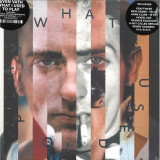
For this uniquely personal retrospective spread over twelve vinyl discs, Sven Väth takes us back to the early days of his DJ career. On What I Used To Play we meet great pioneers of electronic music, gifted percussionists, obscure wave bands, and innovative producers of a bygone 'new electronic' era. Rough beats and irresistible grooves from the identification stage of house, techno, and acid remind us not just how far electronic music has evolved over the past four decades, but how great it was to dance to EBM, techno, and house for the very first time.
If there is one protagonist of the electronic music scene who has remained curious, innovative and at the very cutting edge of music for over four decades, it's Sven Väth. His multi-layered artist albums and Sound of the Season mix compilations have been defining the genre for over two decades, and even today, he is constantly on the lookout for the next top tune to add to the highlights of his next set. At least, that's the case when he's not producing them himself as an artist or remixer. "Actually, it's always been part of my DNA to think ahead," and nothing had been further from his mind than looking back at his past, but when in spring of 2020 the international DJ circuit had to be scaled down to virtually zero, the 'restless traveler' suddenly had time. Time to stop and reflect on "how it actually was back then, at the very beginning of my career..."
"It was a great trip and with every track, beautiful memories came flooding back".
In the London apartment, he had just moved into, Sven has set up a "little music room", where he cocooned himself for several days, "to look way back for the first time and review my musical journey through the eighties, so to speak."
The interim result was six thematically oriented playlists with a grand total of 120 tracks from 'early 80s' to 'Balearic late 80s', together with excursions into afrobeat, European new wave, and EBM sounds and a few epochal techno/house tracks from the USA in between. From these 'Best of Sven Väth's favorites', the project What I Used To Play crystallized. Sven remembers how the Cocoon team reacted to his proposal: "They found the idea of making a compilation out of it MEGA from the beginning and everyone said 'Sven, go for it', but then, of course, the work really started, namely, to clear the rights and to get clean sounding masters of the up to 40-year-old tracks. There was also disappointment, of course. We couldn't clear certain titles because the rights holders in the USA had fallen out with each other or simply disappeared from the scene. In short, it wasn't easy, but now I can safely say we got the most important tracks."
Finally, after two years of research, curation, design, and administrative fine-tuning, the "little retrospective" from 1981 to 1990 is available. The exquisitely packaged, and three-kilo heavy box set is not only physically impressive, WIUTP is also the definitive record of Sven Väth's musical development. On each of the twenty-four sides of vinyl, you can trace track by track, what influenced him during which phase, and how he took off as a DJ from his parents' Queen's Pub straight into the spotlight at Dorian Gray. There and at Vogue (later OMEN), Sven became the style-defining player in the DJ booth that he still is today.
1981 - 1990: Future Sounds of Now
In the early eighties, the crowd in clubs like Vogue and Dorian Gray danced to what nowadays we call 'dance classics' - mainly disco, funk, soul, and chart pop. It was up to a new generation of DJs, including Sven Väth, the youngest protagonist in the Rhine-Main area at the time, to create their own club-ready music mix. Good new tracks and potential floor-fillers were rarities that had to be sought out and found, in order to prove oneself worthy.
Without MP3s, internet streaming, or other digital download possibilities, music didn't just gravitate to the DJ, instead, it had to be tracked down. In well-stocked record stores in Frankfurt and Wiesbaden or even in Amsterdam, London, or New York, Sven and friends sourced the material for countless magical nights. On WIUTP we can follow Sven's very personal journey through this wild, innovative era in which synth-pop, funk, hip-hop, and disco were successively replaced as 'club music' by house, techno, acid, and breakbeat. By the end of the decade, it was clear to see that these once exotic 'fringe' phenomena would soon become 'mass' phenomena.
Early 80s
Dirty Talk by the Italian-American duo Klein & M.B.O. represents the most innovative phase of the Italo-disco genre in the early eighties like no other track. Mario Boncaldo (I) and Tony Carrasco relied entirely on the original synthetic drum and percussion sounds of the Roland TR-808, coupled with the raunchy vocals of Rossana Casale and guitar accents of Davide Piatto. Of course, other tracks from this period were also influential in style, most notably Unit by Logic System, which worked as the perfect soundtrack to the laser lighting system at the legendary Dorian Gray club. With stomping beats and robotic rap interludes, Bostich by Yello also belongs on Sven's eternal playlist - after all, it caught the attention of Afrikaa Bambaataa, who invited the Swiss duo to perform at the Roxy in New York in 1983.
EBM Wave - Mid 80s
From today's point of view, the almost ten-minute-long, downtempo track Giant by Matt Johnson's band project The The, would probably not be considered an obvious club classic. However, a closer (re)listen reveals the rhythmic intricacies of the percussion overdubs by JG Thirlwell (aka Foetus) on Johnson's composition, and it becomes clear why this exceptional piece of music is one of Sven's absolute favorites. Other classics from this phase include Kaw-Liga by the mysterious The Residents, the hypnotic-synthetic Our Darkness by Anne Clark (and David Harrow), and last but not least, the somber, monotonous anthem Where Are You? by 16Bit, one of Sven Väth's projects together with Michael Münzing, Luca Anzilotti from 1986.
US House - Late 80s
You certainly can't talk about Chicago house without mentioning Frankie Knuckles. The resident DJ at the Warehouse not only gave the name to an entire genre, but also produced epochal floor fillers on the Trax label like the timeless Your Love, sung (and moaned) by Jamie Principle. Acid house protagonists Phuture also hail from Chicago, and on We Are Phuture (also released on Trax) we hear the chirping acid sounds of the legendary Roland TB-303 in full effect. Another featured classic is No UFO's by Detroit's Model 500 aka Juan Atkins, who is rightly considered the 'Godfather of Techno' even if the genre-defining track from 1985 still breathes with the spirit of hip-hop and electro from the first breakdance era.
Afrobeat
Le Serpent, by Algerian-born Abdelmadjid Guemguem, is a track that sounds completely different from everything else on WIUTP. Made in 1978, it's a monumental, rousing groove created without bass or synths, just with five congas! Even though Guem sadly passed away in 2021, his immortal, acoustic beats are understood all over the world and will continue to enrich many thousands of DJ sets for years to come. Another classic that not only Sven appreciates beyond measure is Hugh Masekela's Don't Go Lose it, Baby. In addition to being one of the most important jazz pioneers, the trumpeter and freedom fighter from Johannesburg was very experimental, integrating electronic sounds into his music in later years, in a similar vein to Miles Davis and Herbie Hancock. Dutch jazz pianist Jasper van't Hof's afrobeat project Pili Pili has also aged well. The trance-like, almost sixteen-minute-long track of the same name, manages to fill a whole side on the seventh of twelve vinyl discs in the WIUTP box.
UK-US-Euro - Late 80s
Time for a change of scene, in the truest sense of the word, and from a musical perspective, this section is like landing on another planet. First up is Andrew Weatherall's classic remix of Primal Scream's Loaded, featuring the iconic Peter Fonda sample (lifted from the 1966 biker film Wild Angels) that came to personify the mood triggered by the British Second Summer of Love in the late eighties: "We wanna be free to do what we wanna do, and we wanna get loaded...". This period also saw the emergence of M/A/R/R/S whose only single, 1987's Pump Up The Volume, became a club classic with support from DJ legend CJ Mackintosh. In this most eclectic of sections, we also encounter New York house and reggae producer Bobby Konders and his seminal Nervous Acid.
Balearic - Late 80s
Those who know him, know that Sven had already lost his heart to the 'magic island' of Ibiza as a teenager, so with that in mind, the WIUTP project couldn't end without a Balearic chapter. Inspired by Manuel Göttsching's E2-E4, the immortal, eponymously titled Sueño Latino belongs in there without question. Equally popular on the island was, and still is Break 4 Love by Raze, which thinking about it, would also fit perfectly into the house chapter. Last, but not least, there's an overdue reunion with Sven Väth himself, in his role as frontman of the successful Frankfurt trio OFF. Together with Michael Münzing and Luca Anzilotti (later of Snap!) this 'Organization For Fun' created the off-the-wall club hit Electric Salsa in 1986 which incidentally turned into an international chart smash, putting Sven in the enviable position of having to decide between pop stardom and a DJ career. Well, we all know how that decision turned out and the rest, as they say, is history. A not insignificant part of his story is What I Used To Play. Enjoy!
- A1: Hardy's Jet Band – Sorry, Doc! (3 12)
- A2: Hardy's Jet Band – Wind It Up (2 52)
- A3: Hardy's Jet Band – Safari Track (2 58)
- A4: Hardy's Jet Band – Look At Me (2 27)
- A5: Hardy's Jet Band – Blue Butterfly (2 44)
- A6: Hardy's Jet Band – What You Call To Be Free (3 03)
- B1: Orchestra Klaus Wuesthoff – Lady In Space (2 26)
- B2: Orchestra Klaus Wuesthoff – Big Beat (2 45)
- B3: Jan Troysen Band – A Blue Message (3 31)
- B4: Jan Troysen Band – Pop Happening (2 29)
- B5: Orchestra Gary Pacific – Ghetto Gap (2 43)
- B6: Orchestra Gary Pacific – Soft Wind (2 07)
- B7: Orchestra Gary Pacific – So Far (1 38)
Behold! Yes, Blue Butterfly, one of the absolute stunners on the revered Selected Sound, is finally available for all the beat-heads. Heavyweight library funk with a psychedelic touch, the super in-demand Blue Butterfly from *deep breath* Hardy's Jet Band, Orchestra Klaus Wuesthoff, Jan Troysen Band and Orchestra Gary Pacific - was originally released in 1971. Incredibly ahead of its time, it's been rare and sought-after for decades.
For many aficionados, this is the best Selected Sound release. Loaded with fuzzy wah-wah guitar, deep flute-lines atop soulful psych-rock breakbeats and huge organ action, its uncompromising funk will blow you away. Sampled for many hip hop beats and dropped by well known rare groove DJs around the world, one jewel in particular from this glorious German vault needs little introduction. The intro to Orchestra Gary Pacific's mesmeric "Soft Wind" rides the illest, crispest drum break you've perhaps never heard - like, the drum break to end them all - alongside a smooth, deep bass line from the heavens. It featured notoriously on the beloved Dusty Fingers comps of the 90s and was brilliantly sampled by Pacewon for his eternal "Sunroof Top". Just listen and be dazzled.
Beyond this mini-masterpiece, the other killer tracks offer brilliance in abundance. Hardy's Jet Band take control of the full A side, and it's full of dynamic psych-funk bombs. Hard, "big city" industrial groovers. In particular, the initial one-two of "Sorry, Doc!" and "Wind It Up" provide thrilling funky-blues rock instrumentals showcasing relentless guitars, flutes, sax and organ, the latter containing gorgeous, hypnotic breakdowns; these tracks just slay. The title track, "Blue Butterfly" is a real deep strut of a track with fantastic soloing from guitar and flute over crisp drums whilst the highway banger "What You Call To Be Free" certainly sounds a lot like unbridled, rhythmical liberty.
On the flip, the ghost-riding "Lady In Space" is a string-drenched acid-western foxtrot. Yep. “Pop Happening” by Jan Troysen Band is a heavy, druggy psych-fuzz organ groover whilst their slow beat-organ-flute gem "A Blue Message" is a gorgeous psych floater conjuring deeply strange frontier lands. Preceding their monster "Soft Wind", the soulful, uptempo groover “Ghetto Gap” by Orchestra Gary Pacific contains solo piano and flute whilst closing out the set is the free-and-easy samba beat of "So Far".
Founded in the late 60s by German composer and musician Klaus Netzle (who recorded under the alias Claude Larson for Sonoton) Selected Sound began as a production music company specialising in jazz, orchestral and electronic recordings. You can’t miss those early LPs in their iconic glossy metallic copper sleeves with minimal German typography. Serious, classy stuff.
The audio for Blue Butterfly has been remastered for vinyl by Be With regular Simon Francis whilst Richard Robinson has handled reproducing the glossy metallic (iconic) original Selected Sound sleeve. Essential.