“Out of Our Hands” brings together Alvin Lucier and Jordan Dykstra who, through the hands of Ordinary Affects, have created debut recordings of two new compositions.
These companion pieces have similar orbits as they were not only both composed in Middletown, CT (where Alvin and Jordan lived for a number of years), but are about Middletown, at least from a starting point. Alvin’s piece — a homage to the location of the house in which he recorded “I am sitting in a room” back in 1969 — continues his study into slow-moving glissandi and carefully crafted beating patters by interweaving three string players within a minor third (voiced by two vibraphonists). The result is entrancing, almost psychedelic, and opens space where one didn’t expect. Like much of his previous work, it is conceptual and process-based; once the wheels get turning they go on and on, giving the listener time to approach the piece, sit with it, and then move back inward.
On the other hand, Dykstra’s piece “32 Middle Tones” (a pun on his Middletown street address and the harmonic microtonality utilized in the composition) is a very textural work. His piece asks the cellist to sustain pitches for extended durations — at times quietly singing in close proximity to the stopped pitch coming from the cello — while the rest of the ensemble (violin, viola, and 2 percussion) voice a sequence of chords separated by notated silences. The cello voice is sometimes alone, but never for too long as it finds itself supported from both the top and bottom in a harmonic embrace. This supportive structure involves a percussion section which colors the seemingly simple chords (major 6th, inverted minor 7th, inverted minor 2nd, etc.) with a non-traditional toolkit of bowed singing bowls, stone sheets, harmonicas, and even leaves.
This is music that gently gives the listener a sense of predictability but always in an unexpected (and subtly indeterminate) shade. Speaking of shade, the album’s cover photo was taken in 2019 in Alvin’s backyard in Middletown. Alvin and Jordan sit with similar demeanors in front of his favorite tree — a crooked aspen which early on looked to be doomed — but which he would often saunter over to spend time with, giving it whispers of blessings and encouraging words.The world was blessed with Alvin’s presence and hopefully this album will whisper to you and yours.
Artist statement:
“With Alvin’s recent passing I was overwhelmed with messages and calls from friends, collaborators, and his former students. Everyone had a heavy heart, no doubt, but were grateful for the memories and their gift to be around Alvin during his lifetime of prolific dedication to the arts, his fascination with poetic storytelling through scientifically-inspired minimalism, and his calm and warmhearted spirit. In his last few years on earth, Alvin was busier than ever — brainstorming new ideas, creating new pieces, and planning big things. While he was here, he was alive, and may his music — and spirit — live on forever, spreading from his corner of Church and High (where he recorded his seminal piece I am sitting in a room) to every corner, concert hall, and loudspeaker in the world.”
Поиск:simi
Все
Danger Danger is an American Hard Rock and hair metal band from Queens, New York, formed in 1987. Danger Danger is the self titled debut album of the band, released in 1989. Included is the group’s best-known track, the album-opening anthem “Naughty Naughty”, as well as the similarly styled “Bang Bang”. The album also includes the Bon Jovi-esque “Under the Gun”, and the power ballad, “One Step from Paradise.”
Danger Danger 30th anniversary edition is available as 666 individually numbered copies on transparent blue vinyl.
A collection of Elvis Presley covers recorded by the duet David Fenech & Pierre Bastien. The idea of "Suspicious Moon" started at a party around the topic of blue color. David Fenech had chosen to play "Blue Moon" and Pierre Bastien asked to join in. It was a very enjoyable party and then they recorded the song and decided to plan an album exclusively based on covers of the King. Not that we were absolute fans of Elvis... but as a starting point to go somewhere else. And this is what we reached: in many aspects a premiere for the two musicians. Pierre focuses on (prepared) trumpet for the very first time, while David is heard extensively as a vocalist and is more than ever responsible for all arrangements and textures. Playing other people's material is also a premiere for both of them. 11 tracks around very well known standards. Like familiar places that are changed when seen in a different light. Please enjoy. "Our choice of the Elvis Presley song book for this record may seem strange to many. It seems strange to me as well. Not that I dislike the original music, but before our sessions it had never been a direct source of inspiration. Paradoxically, this distance gave me freedom and flowing ideas. I hear similar qualities in David's parts too. We hope that our relaxed attitude and its positive outcome will be reflected in this album" - Pierre Bastien "The strange thing about these recordings is that the creative process was so fluid and natural_ that it seems that through playing other people's music, we almost reveal something of ourselves. As if these tracks were our creation, as if they were our own children!" - David Fenech
Back in print, now on clear vinyl! Tingling tartness of jingle perfection! In addition to being a pioneer of early electronic music, Raymond Scott generated hymns to hunger, odes to pudding and pilsner, and crafted carols for countless other products, elevating the form of advertisement to an art
If Zappa had written music for commercials, it's not hard to think his approach would have been similar! Pressed on clear vinyl at Third Man Pressing and containing varied styles in both instrumentation and vocalization plus previously unavailable electronic works! Products may contain soy, wheat, dairy, or Mel Tormé.
Following the demise of emo band Mineral in 1997, singer/guitarist Chris Simpson (Mineral/ Zookeeper/ Mountain Time) and bassist Jeremy Gomez reunited to form The Gloria Record. Taking an acoustic and more organic approach than their previous work, The Gloria Record (with the addition of guitarist Brian Hubbard, drummer Matt Hammon, later replaced by Brian Malone and Ben Houtman on the keys, organs and synthesisers) were unarguably the logical progression from Mineral’s emo throes - quieter, delicate and fervently impassioned. Heralded as a “band with big visions and bombastic sounds”, the quintet fostered their admiration for artists with similar arena sized visions ( Radiohead, REM, U2) to produce a sound that was reminiscent of their British contemporaries and American indies. In 1998 the band released their self-titled EP, followed by the intricate offering of 2000’s A Lull In Traffic and 2002’s full length effort Start Here, before disbanding after extensive US tours in 2004.
Via tape loops and synth motifs sent from LA to NY, sound artist Christopher Royal King has teamed with violinist and composer Christopher Tignor toward richly timbral, emotionally gripping works of spontaneity that unfurl immense details with each replay while marrying west coast outboard-ambient to studied east coast modern classical. The resulting debut album, A Wave From A Shore, exhibits both artists' sonic identifiers falling in and out of cooperation before binding into a new entity distinct from either's solitary palettes. A visual artist whose work includes album covers for Thrice and Deftones in addition to video bumps for Adult Swim, Christopher Royal King spent his teenage years cutting his teeth on heavy metal and punk before gravitating, quickly and perhaps unexpectedly, toward experimental composers like Philip Glass and Terry Riley. This unlikely seesaw of influences led directly to King forming the post-rock pillar This Will Destroy You with fellow San Antonio native Jeremy Galindo. Similar to his former band's output, King's solo meanderings impart a mood of buoyancy and contemplation while hinting at darker, more shadowy hues beneath the glimmer, making his music stand apart from the glut of New Age droners and modular-synth influencers.
Bristol based band Cousin Kula announce their debut album Double Dinners. With co-signs from the likes of BADBADNOTGOOD and newly signed to Rhythm Section, Cousin Kula have created their own musical universe of otherworldly pop serenity with vastly distinct, but complementary elements: “the possibilities of jazz, the emphatic energy of club culture, and the sonic tapestries of psychedelia” CLASH Magazine remark.
Living and recording together, nestled in the sun-drenched hills on the outskirts of Bristol, Cousin Kula are masters of their craft, and also of restraint; widely regarded by their fans for their superior live show. Having performed live in various bands for the past 10 years since their early teens, not being able to hit the stage during lockdown took its toll on these musicians. Ever resourceful, however, Cousin Kula began a series of their own home-made live sessions, which lead in turn to a Boiler Room Session and further a request from XL signees BADBADNOTGOOD to record a live adaptation of their new single.
Now, Cousin Kula flutter into the collective consciousness with a timeless slice of psychedelic soul on debut album Double Dinners. The latest band to emerge out of the buoyant Bristol music scene,
they have stripped back all excess baggage for their most accomplished recordings to date. Existing on a similar plane to contemporaries such as Connan Mockasin, Mildlife, Toro Y Moi, Mac DeMarco and HOMESHAKE, the band caught the attention of renowned tastemaker Bradley Zero with their 'Casa Kula Cassette' EP at the end of 2020, with the Rhythm Section founder swiftly taking the 5 piece under his wing, with him commenting:
“The band balance an outsider approach with more hooks than you can shake a stick at... the result being a gently beguiling sound that effortlessly draws you in, revealing more character with each listen.”
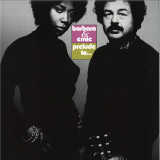
Barbara & Ernie’s only release is a complex combination of soul, folk rock, and late 60’s psychedelia. The constant use of electric sitars, funk leaning bass e multi-layered vocals offers a different take on contemporary pop music, approaching several jazz and world influence. oul singer Barbara Massey and jazz guitarist Ernie Calabria paired up for this rare 1971 album. With Calabria having worked with Nina Simone and Harry Belafonte, among others, and Massey having sung backup for artists including Jimi Hendrix, Cat Stevens, and Herbie Hancock, the pairing was an inspired one and resulted in this superb soul-jazz outing. Massey has a dry yet passionate and evocative vocal quality that often brings to mind Grace Slick. Fittingly, the duo takes on Jefferson Airplane's "Somebody to Love," turning the Summer of Love anthem into a steamy and hypnotic soul-funk jam. Elsewhere, the duo touches upon such varying styles as folk, Latin, and psychedelic rock with cuts like "For You" and "Do You Know?," bringing to mind such similarly inclined acts as the Free Design and Bill Withers.
The Coral is the eponymous debut studio album by British rock band the Coral. It was released on 29 July 2002, through the Deltasonic record label. After finalising their line-up, the band had a residency at The Cavern Club, where they were spotted and signed by Alan Willis of Deltasonic. Following the release of a single and an EP, and two UK tours, the band began recording their debut album. Sessions were held at Linford Manor Studios, Milton Keynes in early 2002, and were produced by the Lightning Seeds frontman Ian Broudie and the Coral. Described as a psychedelia and folk rock album, frontman James Skelly's voice was compared to Eric Burdon of the Animals and Jim Morrison of the Doors.
The Coral toured the United Kingdom twice (one stint as a co-headliner with the Music), and supported Pulp and Oasis for a few shows, leading up to the release of The Coral's lead single "Goodbye" on 15 July 2002. Following an appearance at that year's V Festival, the band toured the UK again in October 2002 to coincide with the album's second single "Dreaming of You" on 7 October 2002. The Coral was released in the United States on 4 March 2003, through Columbia Records.
The Coral received universal acclaim reviews from music critics, many of whom praised the high quality musicianship. The album peaked at number five in the UK, while also charting in France, Ireland, Japan, Scotland, and the US. It, alongside "Dreaming of You", would later be certified platinum in the UK. "Goodbye" charted at number 21 in the UK, and number 28 in Scotland, while "Dreaming of You" peaked at number 13 in the UK, and number 14 in Scotland. The album was nominated for the Mercury Music Prize, and a Brit Award.
The Coral is the eponymous debut studio album by British rock band the Coral. It was released on 29 July 2002, through the Deltasonic record label. After finalising their line-up, the band had a residency at The Cavern Club, where they were spotted and signed by Alan Willis of Deltasonic. Following the release of a single and an EP, and two UK tours, the band began recording their debut album. Sessions were held at Linford Manor Studios, Milton Keynes in early 2002, and were produced by the Lightning Seeds frontman Ian Broudie and the Coral. Described as a psychedelia and folk rock album, frontman James Skelly's voice was compared to Eric Burdon of the Animals and Jim Morrison of the Doors.
The Coral toured the United Kingdom twice (one stint as a co-headliner with the Music), and supported Pulp and Oasis for a few shows, leading up to the release of The Coral's lead single "Goodbye" on 15 July 2002. Following an appearance at that year's V Festival, the band toured the UK again in October 2002 to coincide with the album's second single "Dreaming of You" on 7 October 2002. The Coral was released in the United States on 4 March 2003, through Columbia Records.
The Coral received universal acclaim reviews from music critics, many of whom praised the high quality musicianship. The album peaked at number five in the UK, while also charting in France, Ireland, Japan, Scotland, and the US. It, alongside "Dreaming of You", would later be certified platinum in the UK. "Goodbye" charted at number 21 in the UK, and number 28 in Scotland, while "Dreaming of You" peaked at number 13 in the UK, and number 14 in Scotland. The album was nominated for the Mercury Music Prize, and a Brit Award.
Stereo's debut album ‘Together’: Deep Ethereal and Drone Beats with early 2000s TripHop reminiscences.
With the found sounds, raw samples and distorted drums, the author invites to follow his melancholic and sometimes heartbroken journey through different and yet similar emotional states: from recovering from an injury to contemplating about the human role in the universe.
Much is made of Detroit techno progenitors proximity to the auto plants. Similarly, overlooked electronic pioneer Jeff Phelps was raised just blocks from a Western Pennsylvania steel mill_close enough to smell the sulphur and hear the roaring blast furnace. When Tascam released their ground breaking Portastudio in 1984_allowing multi tracking on the far more financially inclusive cassette tape_Phelps purchased one immediately, and quickly added a Roland SH-101 monophonic synthesizer, Fender Rhodes suitcase piano, Roland drum machine, and a basic Radio Shack stereo mic. Those basic tools were employed on his first commercial productions for his own Engineered For Sound label: 1985's "Magnetic Eyes" LP and Antoinette's "Now You're Gone" 45. These DIY sketches generated few profits, and Phelps kept his day job in the energy business. Jeff Phelps eventually found his way back into performance and recording, starting with The Next Level Band near the end of the decade. Houston gourmands might have caught them at the opening of Texas's first Cheesecake Factory. "Magnetic Eyes" has already had a few lives, between TomLab's 2010 replica pressing and inclusion on Dante Carfagna's genre-defying Personal Space compilation. This 2021 edition features the heretofore un-re-released second mix, completed after discovering flaws in the initial 1985 pressing. Enjoy this technically perfect, artist-approved version of a visionary techno-adjacent masterwork.
Lemonheads’ seminal album ‘It’s A Shame About Ray’, lovingly reissued for it’s 30th Anniversary. The long overdue reissue includes a slew of extra material, including an unreleased ‘My Drug Buddy’ KCRW session track from 1992 featuring Juliana Hatfield, B-sides from singles ‘It’s A Shame About Ray’ and ‘Confetti’, a track from the ‘Mrs. Robinson/Being Round’ EP, alongside demos that will be released for the first time on vinyl. This reissue celebrates their prestigious fifth album, these deluxe bookback editions feature new liner notes and unseen photos.
Described by music journalist and author Everett True as “A 30-minute insight into what it’s like to live hard and fast and loose and happy with like-minded buddies, fuelled by a shared love for similar bands and drugs and booze and freedom.”. ‘It's A Shame About Ray’ had a considerable impact back in those heady, carefree days of '92, the record perfectly captures Dando’s ability to effortlessly encapsulate teenage longing and lust over the course of a two-minute pop song.
Singles such as 'My Drug Buddy' and the breezy perfect pop of the title track might stand out (plus the add-on of 'Mrs. Robinson' which later copies included), but the album's real strength lies in the tracks in-between; the truly fantastic 'Confetti' (written about Evan's parents' divorce), and the eye-wateringly casual acoustic cover of 'Frank Mills' (from the "hippie" musical Hair), a version that seems to resonate with every ounce of pathos and emotion felt for the lost 1960s generation. To hear Evan Dando sing lines like 'I love him/but it embarrasses me/To walk down the street with him/He lives in Brooklyn somewhere/And he wears his white crash helmet' is to truly appreciate how wonderful and tantalising pop music can be. Then, there's the rush of insurgency and brattishness on the wonderfully truncated 'Bit Part'; the topsy-turvy 'Ceiling Fan In My Spoon'... this was male teenage skinny-tie pop music on a level of brilliance with The Kinks, early Undertones, Wipers.
- A1: The Exceptions - So Much In Love
- A2: Lee Williams & The Cymbals - Please Say It Isn't So
- A3: The Vanguards - Somebody Please
- A4: The Manhattans - Follow Your Heart
- A5: The Lovers - Someone
- A6: The Superbs - It Hurts So Much
- A7: Little Ben & The Cheers - (I'm Not Ready To) Settle Down (I'm Not Ready To)
- B1: The Radiations - That's The Way Our Love Is
- B2: Reuben Bell - It's Not That Easy (With The Casanovas)
- B3: The Esquires - No Doubt About It
- B4: Bobby Burn - I'm A Lonely Man
- B5: The Persians - Here It Comes
- B6: Melvin Hicks & The Versatiles - I'm Just Passing Time
- B7: Houston Outlaws - What Am I Gonna Do
Our Lowriders album is an amalgam of the two “This Is Lowrider Soul” CDs. We have chosen 14 tracks that represent the sounds loved by Los Angelenos, often of Mexican descent, that emanate from their fabulously designed motors while cruising Whittier Boulevard in East LA or, say, Van Nuys Boulevard in the northwest of the city.
The classic Los Angeles vocal group the Superbs are featured here on their glorious ‘It Hurts So Much’, but it is mainly the records discovered by sweet soul collectors that dominate. The Carnival label has a great reputation on this scene; Lee Williams & the Cymbals’ ‘Please Say It Isn’t So’ and ‘Follow Your Heart’ by the Manhattans are a pair of killer ballads perfect in tempo and harmony for the cruisers. Other East Coast offerings include the Persians’ captivating ‘Here It Comes’ and two gems which were only on master tape prior to their Kent releases – Melvin Hicks & The Versatiles’ ‘I’m Just Passing Time’ and the similarly unknown outfit the Exceptions, with the wailing ‘So Much In Love’.
Chicago has always been a breeding ground for black harmony groups. The Esquires saw much success at Bunky; ‘No Doubt About It’ was their equally great first release at Wand. Little Ben & The Cheers hailed from the same city; their ‘I’m Not Ready To Settle Down’ fetches big bucks due to Lowrider demand, as does ‘What Am I Gonna Do’ by the mysterious Houston Outlaws – their origins are uncertain, but must be Midwestern. The Vanguards hailed from Indianapolis and deservedly charted with ‘Somebody Please’, licensed to LA’s Whiz label. All of their seven singles on Lamp are also fine, harmonic soul tracks. The Lovers were a Bay Area group who recorded in Los Angeles with the maestro Arthur Wright; their ‘Someone’ was tipped for the charts when licensed to Philips, but flopped, leaving it ripe for revival by the soul connoisseurs. Like the Lovers, the reputation of Reuben Bell’s ‘It’s Not That Easy’ has grown over the decades and a record once considered common can now fetch hundreds of dollars – class will out.
- 1: Fate Of Man
- 2: 8 Days (Till The End Of Time)
- 3: Prescient
- 4: Back From The Past
- 5: Revel In Time
- 6: The Year Of '41
- 7: Bridge Of Life
- 8: Today Is Yesterday
- 9: A Hand On The Clock
- 10: Beyond The Edge Of It All
- 11: Lost Children Of The Universe
- 12: Fate Of Man (Alternate Version)
- 13: 28 Days (Till The End Of Time) (Alternate Version)
- 14: Prescient (Alternate Version)
- 15: Back From The Past (Alternate Version)
- 16: Revel In Time (Alternate Version)
- 17: The Year Of '41 (Alternate Version)
- 18: Bridge Of Life (Alternate Version)
- 19: Today Is Yesterday (Alternate Version)
- 20: A Hand On The Clock (Alternate Version)
- 21: Beyond The Edge Of It All (Alternate Version)
- 22: Lost Children Of The Universe (Alternate Version)
“Revel in Time”, the third album from ARJEN ANTHONY LUCASSEN'S STAR ONE, is as much of a reaction as it is a contrast to Arjen Lucassen’s previous album, “Transitus” from Ayreon. While “Transitus” is a cinematic experience that you may almost call a musical, “Revel in Time” is a heavy album that is very riff driven and there is more focus on virtuoso musicianship. Similar to its predecessors, “Revel In Time” works as a concept album. All tracks are inspired by different movies that deal with some kind of manipulation of time. There is one thing this time around that is quite different compared to the earlier STAR ONE albums: The first two had the same cast of four singers: Floor Jansen, Russell Allen, Damian Wilson and Dan Swano. However, this time Arjen decided to generally have mainly one singer per track, and a different for almost each track. This shows especially on CD 2, the “Same Songs, Different Singers”-CD as Arjen likes to call it. The guide vocals that were recorded (for the other singers) were way too good to just be guide vocals. Thus, Arjen decided to release a second version of the songs with the guide vocals on them as CD2. At some point he started spontaneously inviting other singers to sing some of these tracks, because he was curious how the songs would sound with their voices. Ultimately CD2 ended up with no less than 9 different singers, all equally as good as the ones on CD1. A total of about 30 different musicians contributed to the new album, not all of them being singers though. The core of STAR ONE remains Ed Warby’s powerful drums as well as Arjen’s guitar and bass work that hold it all together and give it that typical STAR ONE sound. The icing on the cake is the front cover art that was created by Arjen’s trusted favorite artist Jef Bertels.
First and foremost, deathcrash approached the task of putting together their debut album as music lovers. To all four members, a good album seemed to stamp out periods of their life, capturing a time, a feeling, a mood. This was their approach when trying to make whole two-years-worth of fragmented songwriting. Their songs may differ from each other in certain ways, but they manage to conjure similar feelings. ‘Return’ captures many of the difficult moments of the last couple years in the band members’ personal lives and yet, as a whole its complexity emerges as a beautiful and hopeful message. Amongst other things, writing the album was a cathartic process for the band, and so it can be for the listener too. The first parts of ‘Return’ came from quite a dark and jaded place. To get better can be a path marred by self-sabotage and a desire to hide. It can be easier to have no faith in something new, and rely on the comfort of an old feeling, even if it hurts. There is a reassurance in pain, a familiarity in its narrative. Return asks when things heal, where does the wound go? deathcrash recorded Return with their close friend and producer Ric James, who they’ve worked with since their early recordings. The album was recorded live, with an emphasis on dynamics, bringing together tense intimacy with atmospheric vastness. The members brought things to light they previously hadn’t, and shared words, riffs, ideas and thoughts for the first time. Each band member is able to see something that the others can’t, and write something unique. For deathcrash that is where the magic of making the album happens, when it clicks for everyone. As the album took form, a lot went on, and in many ways deathcrash got back in touch with a newer, more open feeling, sometimes happy, sometimes fearful. Something good returned that had previously been lost, and this is captured on the album. The album aims not to romanticise a dark place however, being equally about hope and renewal.
Pink Vinyl
Austin-based DJ and producer riding a tide of success, dj poolboi, makes his return to Shall Not Fade's Classic Cuts with the sequel to his Rarities EP which kicked off the series. Like its first installment, Vol. 2 is a blissful and warm listen with tinges of party experimentation set to get feet moving.
Easing in with fuzzy, crackling chords and house rhythms, 'i know you tried' is a stylish start to the record. It's straight lo-fi house sound palette fades into buoyant pads and a trance-like use of spaced out vocals in 'with you', which is full of texture and production skill.
'yesterday' uses stunning organic instrumentation and hyper-glitched vocal samples to great effect, to which the final track 'early you' feels like the perfect match with similar muted and melancholy chords. The B-side comes to an end with the romantic atmosphere this track builds.
The Nonesuch debut of Hurray for the Riff Raff (aka Alynda Segarra), LIFE ON EARTH, is a departure for the Bronx-born, New Orleans-based singer/songwriter. Its eleven new “nature punk” tracks on the theme of survival are music for a world in flux – songs about thriving, not just surviving, while disaster is happening. Hurray for the Riff Raff tours North America this spring, beginning March 19 in Atlanta and continuing through April 20 in Nashville, with stops in Austin, Chicago, Los Angeles, and New York, among others. International tour dates will be announced shortly.
For her eighth full-length album, Segarra (they/she) drew inspiration from The Clash, Beverly Glenn-Copeland, Bad Bunny, and the author of Emergent Strategy, adrienne maree brown. Recorded during the pandemic, Life on Earth was produced by Brad Cook (Waxahatchee, Bon Iver, Kevin Morby).
Life on Earth’s first single, ‘RHODODENDRON’, is about “finding rebellion in plant life. Being called by the natural world and seeing the life that surrounds you in a way you never have. A mind expansion. A psychedelic trip. A spiritual breakthrough. Learning to adapt, and being open to the wisdom of your landscape. Being called to fix things in your own backyard, your own community,” says Segarra.
Of the ‘Rhododendron’ video, which was directed by New Orleans-based artist Lucia Honey, Segarra says: “It is really far out and fun. I got this bodysuit that just looks like the inside of the human body. It looks like you’re skinless. It’s in a scene where I’m playing to an audience of plants. Just really absurd, but I put that suit on and I was like man, this feels really good. It feels like, ‘This is who I am. Let’s just take the skin off.’
“It reminds me a little bit of Kids in the Hall,” they continue. “With this ‘Rhododendron’ shoot, something clicked in me where I was like, ‘All I have to do is be myself.’ I had been thinking that I had to be something bigger than myself. I felt like I was just never quite making the mark and then something clicked where I was like, ‘I just gotta be me. I could do that. I could show up and be me. And if people don’t like it, then I don’t know what to fucking tell them.’ It was like a brain shift of, ‘Oh, this can be fun. It doesn’t have to be suffering.’ With so many videos and photo shoots before, it really felt like suffering. I felt so uncomfortable being perceived. I didn’t know who I was.”
Honey adds: “We wanted to create something surreal, playful, and saturated that indulged heavily in the aesthetic of the early ‘90s. Alynda and I had many overlapping visual and philosophical references which sparked the initial collaboration. We wanted to make this video an homage to Gregg Araki’s Teenage Apocalypse trilogy but as a nature documentary crossover. I came across Araki’s work as a queer teenager, and he’s always been a big inspiration. Sex, blood, punk rock, camp, etc.
“We live in a moment where the future is bleaker and more unknown than ever, so there becomes a deep comfort in nostalgia and reliving the past. Through our talks, I realised Alynda’s new album touches on many of these same subjects, but perhaps in reverse; running from a past that is always haunting you. Shifting into a more refined self/identity through confronting one’s trauma and baggage. It was easy to reach collaborative synergy for this video project because we’re both interested in tackling similar issues.”
Alynda Segarra was born and raised in the Bronx, which they left at the age of seventeen, running away from everything and everyone they knew, hopping freight trains or hitchhiking across the country in the company of a band of street urchins. Segarra moved to New Orleans in 2007 and formed two bands: Dead Man’s Street Orchestra and Hurray for the Riff Raff. In 2015, Segarra decamped to Nashville, then to New York, to make her most recent album, 2016’s critically praised The Navigator, an ambitious and fully realized concept album that was her quest to reclaim her Puerto Rican identity. Segarra’s previous records as Hurray for the Riff Raff are Crossing the Rubicon (EP, 2007), It Don’t Mean I Don’t Love You (2008), Young Blood Blues (2010), Hurray for the Riff Raff (2011), Look Out Mama (2012), My Dearest Darkest Neighbor (2013), and Small Town Heroes (2014).
Kapingbdi came together in Liberia, West Africa, during the late 1970’s and had their own unique style. This six to seven-piece band played original compositions in a vibrant mix of African Rhythms, Soul, Spiritual Jazz, Funk and Rock. Led by Kojo Samuels on sax, flute and vocals “Born in The Night” presents the essential tracks from their rare studio LPs produced between 1978-1981. The work has been carefully edited and remastered in 2019 for vinyl LP and a 6-Page Digipack CD, which includes two additional recordings. Kapingbdi toured through Europe and the U.S. and were the only Afro funk band to ever come out of Liberia.
Kapingbdi hail from Liberia, West Africa and have their own imitable style. They effortlessly combine traditional African music in a modern mix of Jazz, Funk, Soul and Rock. The band is a fusion of the old and the new.
The word "Kapingbdi" is taken from the Sierra Leone language Mende and means "born in the night". Kojo Samuels was given the name by his Latin teacher whilst attending high school in Freetown, They often meet and debate at night in the city and soon after Kojo is called Kapingbdi. The name serves as a description of his origin. Born In Lagos, Nigeria in 1943. The son of slave children. His mother from Nigeria and father from Sierra Leone who moved the family to Liberia, during the 1950’s.
Kojo has played music for as long as he can remember. He starts with the harmonica and later becomes a drummer and percussionist in his first band at school. During his art studies 1965-1972, he tours Germany and works as an art teacher in the USA. His band Kapingbdi is reorganized five times and consists of up to seven musicians. In a VW-Bulli he drives the group from concert to concert and if the drummer fails, he jumps in himself. Between 1978 and 1981 three Kapingbdi LPs are produced for the independent label Trikont, recorded in Hamburg and Munich. During this creative period, the band plays at festivals in Africa and Europe. In 1984, the band tours the United States and shortly after, they came to an end.
At their best, Kapingbdi would rouse the audience with original compositions like "Human Rights", justice for all, especially for South Africans, and "You Go Go You Go Come". The officials and employees in the government departments have no time for the common man, for any questions such as job search, scholarship or similar, he receives the answer "go, come back tomorrow" and the same thing the following day. Or "Now Is The Time For Cry For Love." Now it is time to scream for love and finally, time for humanity and justice. Despite immense difficulties, the musicians consciously live and work in Africa and are at home in Liberia.
On April 12, 1980, ordinary soldiers and non-commissioned officers organize a coup against the government. This is an attempt to put an end to a policy of exploitation of the Liberian people. Whilst efforts to eradicate poverty, lawlessness and illiteracy are obvious throughout the country, Liberia is still Americanized to a high degree. This is evident, as the radio programs of that time almost exclusively played American disco music. Under these conditions, the people seek a reconnection to their folk music, and Kapingbdi were aware of this. Kojo tried many times to come together with traditional Liberian musicians. This passion takes him north of the country. Meeting and playing with the old hornblowers and playing music on traditional instruments, such as the elephant tusk.
Kapingbdi make high quality tape copies of their own vinyl LPs and patiently try to displace all unauthorized tapes from the domestic "market". Nevertheless, it is hard to make a living through music in Liberia. Kapingbdi, is now celebrated. The radio plays are in abundance, but royalties are not forthcoming. Their musical link is the feeling of Afrobeat and Highlife, which is found in each of the many Kapingbdi pieces. They embody Jazz, which is understood to be the most refined example of black music outside of Africa. In Liberia, Jazz is virtually impossible to hear. Bright shining names such as John Coltrane, Charlie Parker or Miles Davis were widely unknown. Thus, the Black Jazz, including its Back-To-Africa movement of the 60’s and 70‘s, passes by without leaving a trace in Africa itself.
Kojo's claim at the time, was to make African music with the depth, sensitivity and the freedom of the technical level of Jazz. This makes Kapingbdi the torchbeares. The underpaid prophets in small Liberia. It is the passion with which the founder of the band continues to work on their music for years. Tirelessly, stimulating and encouraging his fellow musicians. This is ultimately responsible for the success of Kapingbdi in Liberia itself. The local audience seems to listen to the band in fascinated astonishment. One wonders about the ability to develop as demonstrated by Kapingbdi on the basis of their music. It is African and unusually jazzy, danceable and better than the American disco music heard on the radio.
Rather than chase the money and the job opportunities in Europe, Kapingbdi are firmly rooted in Africa. The musicians live in Monrovia, the capital of Liberia, at the Kabingbdi workshop, located in the Congotown area on the eastern edge of the sprawling city. Kojo works here as a sculptor, painter, batik artist and musician. The sales revenue that his activities generate, gives him the opportunity to support the development of African Jazz music. The highest percentage of funds are from Germany and Kojo’s work ethic is “to work on your own thing“. The stance taken aims to support the welfare of Liberians and Africans. The other musicians of the group live in a second house that is nearby.
For the sake of consistency, Kapingbdi is a full-time band. However, the revenue, from all of the sources, could not keep them afloat. Equally, as important to the group are Kojos's knowledge of traditional African music and his sculpting skills. His knowledge is shared with others at the afternoon workshops. It is here that they discuss new lyrics, engage in political debate and the self-imposed task of improving conditions in Africa. At times the debate became heated, especially during rehearsals. This was regarded as good and integrative, sowing the seeds of innitiative to keep the band together.
From 1980 to 1985 Kojo also opened and ran the club "Panjebota", located on the grounds of the U.S. Consulate in Monrovia. Almost every evening Kapingbdi perform the song "Wrong Curfew Walk", whose lyrics lament the killing of citizens during the curfew imposed by the Liberian government. When the head of state Samuel Doe hears the song, he behaves agressively and forces Kojo to close the "Panjebota". Kojo had already moved on. Soonafter he meets Fela Kuti at the Africa-Festival and plays concerts in Germany with Cecil Taylor's workshop band.
Kapingbdi is for thinking, dreaming, dancing. What they sing about is what they have experienced. Kojo Samuels is 76 years old today and still follows his vocation as a critical musician, artist and activist.
Ekkehart Fleischhammer / Sonorama 2019 (with the help of original press sheets and the memories of Kojo Samuels)