With his new album, Year Of The Living Dead, Vienna-born and LA-based producer John Tejada finds a blissful extended moment of balance between the new and the familiar. Anyone who’s followed his career to date, which has included four previous albums for Kompakt, outings for storied labels like Plug Research, Playhouse and Cocoon, and numerous remixes and collaborations – most recently, his Wajatta duo with actor and musician Reggie Watts – will immediately sense the warmth and eloquence that Tejada brings to his gilded, pliant techno and electro hybrids. But there’s more here, too; an explorer’s glimmer in the producer’s eye, as he gets to grips with new ways of working and being, while offering a reflective opening for the listener, something echoed in artwork by graphic designer and ‘contemplative artist’ David Grey.
“The album was started using tools I was unfamiliar with, which became an interesting exploratory process,” Tejada says. “Staying away from the obvious and having to re-learn simple things was a fun challenge.” You can hear these new creative pulsions pushing the eight tracks on Year Of The Living Dead ever-forward; the album has an unique cast, and though there are trace elements of the genres Tejada has indulged previously, he’s never quite put them together this way before. There’s the dubwise glitter sprinkled across the moody opener “The Haunting Of Earth”, the kind caresses found amongst the deftly woven textures of “Sheltered”, and the churchy melancholy, all hymnal and golden, of “Echoes Of Life”.
Year Of The Living Dead also speaks obliquely to its moment, though Tejada works this implicitly, allowing the strange circumstances of 2020 to cast their inevitable shadow without being obvious or didactic. “The production process began right before lockdown and continued through what felt like a very serious time for all of us,” he recalls. “Not being able to see or touch our loved ones made me feel we are all like ghosts. We can observe from a distance but cannot really be there. We are isolated and alone.” And yet, Year Of The Living Dead’s tenderness offers an out for that anxiety and loneliness, its intimate immensities gifting the album a redemptive and compassionate core. Compact and glistening, Year Of The Living Dead sculpts unassuming beauty.
Mit seinem neuen Album “Year Of The Living Dead“ findet der in Wien geborene und in Los Angeles lebende Produzent John Tejada die richtige Balance zwischen Neuem und Vertrautem. Wer seine bisherige Karriere verfolgt hat, seine vier Alben für Kompakt, Beiträge für Labels wie Plug Research, Playhouse und Cocoon, zahlreiche Remixe und Kollaborationen wie zuletzt das Projekt Wajatta zusammen mit dem Schauspieler und Musiker Reggie Watts, spürt sofort wieder die Wärme und Eloquenz, die Tejada in seine geschmeidigen Techno-Elektro-Hybride einbringt. Doch es geht auch noch einen Schritt weiter. Da ist dieses Aufblitzen des Entdeckers im Auge eines Produzenten, der sich mit neuen Arbeits- und Seinsweisen auseinandersetzt und dem Zuhörer gleichzeitig etwas sehr Offenes und Nachdenkliches anbietet, etwas, das im Artwork des Grafikdesigners und "kontemplativen Künstlers" David Grey nachklingt.
"Ich hatte angefangen, das Album mit mir noch unbekannten Tools zu produzieren, was sich zu einem interessanten Forschungsprozess für mich entwickelte", sagt Tejada. "Sich vom allzu Offensichtlichen zu trennen und einfache mal Dinge neu lernen zu müssen, war eine recht spaßige Herausforderung.“ Man kann diese neuen kreativen Impulse hören, die “Year Of The Living Dead“ auf einer Länge von 8 Tracks nach vorne treiben; das Album hat einen einzigartigen Ansatz, denn obwohl es Elemente der Genres gibt, denen Tejada zuvor gefrönt hat, hatte er sie doch noch nie zuvor so zusammengefügt wie hier. Da ist dieses dubbige Glitzern im atmosphärischen Opener "The Haunting Of Earth", die freundlichen Zärtlichkeiten, die man in den Texturen von "Sheltered" findet, und schließlich die heilige Melancholie im hymnischen "Echoes Of Life".
Auch “Year Of The Living Dead“ enthält Andeutungen auf die momentane Situation und erlaubt es, den seltsamen Umständen des Jahres 2020, ihren unvermeidlichen Schatten zu werfen, ohne dabei zu offensichtlich oder gar belehrend zu sein. "Der Produktionsprozess begann kurz vor dem (ersten) Lockdown und setzte sich in einer Zeit fort, die sich für uns alle als eine sehr ernste Zeit anfühlte", erinnert er sich. "Da wir nicht in der Lage waren, unsere Lieben zu sehen oder zu berühren, hatte ich das Gefühl, dass wir alle wie Geister sind. Wir können nur distanzierte Beobachter sein, aber wir können nicht wirklich anwesend sein. Wir sind isoliert und allein." Und doch scheint die Zärtlichkeit von "Year Of The Living Dead" einen Ausweg aus dieser Angst und Einsamkeit anzubieten, die grenzenlose Intimität des Albums enthält einen erlösenden und mitfühlenden Kern. Derart konsistent und schillernd formt "Year Of The Living Dead" eine unprätentiöse Schönheit.
Cerca:simple elements
We last heard from Radeckt on the Spektrum 2 compilation, now he’s back with his debut solo EP. The Danish producer specialises in emotionally-driven club music, designed to spark inspiration and moments of contemplation. The dance floor is a safe space for free expression, human interaction and catharsis… Radeckt’s music is the perfect accompaniment to these channels of connection, while encouraging you to dance. On the Corroded Mind EP we get four original cuts, all of which encapsulate Radeckt’s penchant for music that moves the soul… It all begins with the title track. ‘Corroded Mind’ has a subdued intro, gently guiding us into a mesmerising sonic landscape. Soft pads massage the mind while siren-esque effects and metallic beats encourage the body to move to their hypnotic rhythm. Radeckt imbues the second half with drama and energy, while still keeping the mood sombre. ‘Narrative Lie’ utilises layers of emotive synth and serene sounds, along with a meandering melody that lures you into its rhythmic flow. The glum low end counteracts the brighter elements of the track creating a neat juxtaposition. As the track progresses, the intensity of the main motif increases, sending temperatures rising. Next up is ‘Invisible Guard’ with its oscillating bass and simple, yet highly effective riff. Radeckt confidently applies the pressure, carefully increasing the tension until we reach a scintillating breakdown which takes us into the glorious second half.
‘Silver Lining’ closes the EP, bringing a little bounce to the release. Radeckt gives us stuttered beats with great use of percussion to provide the energetic allure of this cut. As it builds, he incorporates an earworm melody along with neon laser synth lines and the whole thing feels like an eighties TV show theme with 21st Century sheen.
This is the first ever archival collection of material from the Italian Minimalist Tiziano Popoli, featuring fourteen previously unreleased recordings for installations, theater, and radio broadcasts spanning from 1983 to 1989. Featuring extensive use of the Yamaha DX7 synthesizer, TR909 drum machine, and early sampling techniques, these recordings trace the organic, hybridized elements of Italian experimental music as it convened in the hands of Tiziano Popoli and his friends, uniting elements of pop music, minimalism, and manipulations of found sound. Popoli's first album, Scorie, recorded with Marco Dalpane, is a highly sought after LP, and was finally repressed in 2018 by Italian label Soave. "Burn the Night / Bruciare la Notte: Original Recordings, 1983-1989" is a joint release between RVNG Intl. and Freedom To Spend, and was compiled from hours of material unearthed by Tiziano Popoli from his archives, and then meticulously remastered from original sources by Rashad Becker. The 2xLP and CD include printed inner sleeves and booklets with extensive liner notes written by Bradford Bailey, archival photographs, and ephemeral enrichment. RIYL: Philip Glass, Franco Battiato, Lino Capra Vaccina, Oren Ambarchi, RAMZi, Roberto Musci, Faust, CAN, Art of Noise, Durutti Column, Roberto Cacciapaglia.
Main Source’s paean to the simple pleasures of relaxing with friends is built over two tried-and-tested samples. The dreamy, swoony sounds of Vanessa Kendrick’s timeless ‘90% of Me is You’ is ever-present during this stone-cold classic, while Sister Nancy’s unmistakeable ‘Bam Bam’ lends several elements to the mix. Throw in some Skull Snaps and Sweet Charles and you’ve got the perfect soundtrack for a roll call of Large Professor’s nearest and dearest.
There are plenty of reasons why so many regard ‘Breaking Atoms’ as an all-time classic album, and the sheer variety of singles lifted from it is chief among them. Large Professor was happy to roam over varied topics at a time when many rappers had a manic focus on one thing.
And where better to hang out with friends than at a barbecue? ‘Live at the Barbecue’ is rightly regarded as one of the best posse cuts of all time, and famous for showcasing the debut of one Nasty Nas. While he delivers a dope verse full of quotables over drums from Bob James’ oft-plundered ‘Nautilus’, credit is also due to the other guests. Fatal and Akinyele aren’t disgraced in this company, and Large Professor tops it off with a rare verse of pure brag-rap.
An undisputed entry in the pantheon of head-nod hip-hop, this is its first official UK release, and another debut on 7”.
• Samples Sister Nancy’s unmistakeable ‘Bam Bam’
• Taken from the all-time classic album ‘Breaking Atoms’
• Features the debut of Nas
• Limited Edition Purple vinyl
Early summer 2019, João Lobo started recording his compositions at les Ateliers Claus in Brussels, with guitarist Norberto Lobo, bassist Soet Kempeneer and recording engineer Christophe Albertijn. The recording sessions were planned over the course of one week, however the job was mostly done in just a few takes. With the addition of some overdubs, the whole process was finalised in a spontaneous wave. It is too simplistic to define Joao Lobo’s compositions with one term, and the association of the album “Simorgh” with this ingenious partnership’s new creations, is inevitable.
While the mix of genres and styles may be easy to distinguish, the focus centres on the result of the mixing: a highly grooving and an occasionally paused and introspective music that seems out of time and out of space. It is difficult to grasp or define a specific period in time or a geographic origin in this fusion of references, as what you listen to is a bold creation of original and surprising elements. Drummers – such as João Lobo – employ a multi-layered concept in their music, weaving the different tracks into a linear wash of sound. He plays the song with the drum set while the other members fly in and out of the compositions, always gathering around their phoenix in order to attain enlightenment.
What João Lobo and many of his contemporaries are up to, can be explained through simple terms as a future exploration of the emotionally expressive possibilities of sound. It breaks away from the conventional order providing space for the discovery of a new order. Simultaneously it allows a more profound and broader expression of what the current reality of music is and represents. It was instantly clear for me that we had to share his music with our audience and create this medium for happiness.
This release is the trio’s debut record, which is the impetus for their personal development in the realisation that features João as a mentor in the creation process. The featured compositions highlight the musicians’ unique physical aspect to control their instruments and their hidden techniques that underlying these tracks. The result is an ongoing aural interplay. It was love at first sound.
This album is a co-release between Les Albums Claus and Shhpuma.
Without warning, a group of young girls from a remote region of Benin is shaking up the world of garage rock with breathtaking freshness, ingenuity and energy, playing spot-on, loud and clear.
A musician named André Baleguemon decided to form an exclusively female band rooted in the concerns of its time. He puts the spotlight on the guitar, drums and keyboard, instruments he has admired since his childhood, symbols of modernity in this remote region. His observation is simple: “In the North, girls have no room to advance and women are put aside. I simply wanted to show the importance of women in the societies of North Benin by forming a female orchestra “.
On July 25th, 2016, with the support of the city of Natitingou, André launched a press release on Nanto FM offering to help train girls in music for free. A few days later, dozens of aspiring musicians showed up at the Youth Center. “The girls who came didn’t know anything about music. We selected seven girls of the Waama and Nabo ethnic groups from the surrounding villages, some had never even seen these types of instruments before. “
The girls quickly became passionate about their new musical activities, learning how to play drums, guitar, piano and sing vocal harmonies. Their progress was astounding. An intense work of musical training took place, starting with drum workshops, their favorite instrument. Angelique and Urrice on drums and vocals, assisted by Marguerite, the third drummer. Sandrine is on keyboards, as is Grace, who also sings vocals. Julienne is on bass and Anne on guitar.
André’s determination is one of the key elements of this human and artistic success. The girls have already performed dozens of concerts in the region, forging and expanding an already solid repertoire, while attracting an ever-increasing local audience. In addition to musical progress, he has been personally involved with each family, showing them the importance of his project, both musically and humanly and in particular the fact that each girl must remain in school and not be forced into marriage.
At the end of 2018, their encounter with the young French sound engineer Jérémie Verdier accelerated the course of things. On a mission in the region, he called on his Spanish friends Juan Toran and Juan Serra who showed up with their recording equipment in order to record the band’s first songs in the annex of the local museum. Random encounters and fate led Jean-Baptiste Guillot to hear the tapes. He decided to go meet them at the end of 2019. This short but memorable journey sealed the fate of the record you are now holding in your hands.
Flaming Tunes' sole release is perhaps the finest elegy to the '80s home recording ethos that you've never heard. Originally released in 1985 on cassette (with individually hand-colored covers), this self-titled album grew out of the collaboration between childhood friends Gareth Williams and Mary Currie.
Williams is best known as a member of English art-rock band This Heat. After leaving the group in the early '80s, he travelled to India where he studied classical Kathakali dance – an experience that would profoundly shape the music of Flaming Tunes.
In an old Victorian house in South London, the duo recorded during the day while Currie's young son attended school and Williams conducted tape treatments at night. They were joined by various guests including This Heat guitarist Charles Bullen as well as long-term collaborators Martin Harrison and Rick Wilson.
Using whatever instruments they had on hand (clarinet, piano, bells, etc.), Flaming Tunes create lo-fi melodies around simple arrangements, oblique rhythms and densely layered natural sounds. The results are a mesmeric collage of instrumental daydreams and sideways pop songs, floating into one another in a hazy confluence of late '60s Canterbury psych-folk and early Residents experimentation.
All of these beguiling elements converge in a personal manner, quietly insistent in listeners' ears like the blood pulsing in one's veins on a warm summer day.
Metal is a collaborative endeavor between Bristol and London artists Jamie Paton and Mike Bourne of Cage & Aviary and Teeth Of The Sea, respectively. A shared love for modular synthesis brought the two together in 2018 for a series of improvised live performances and the tracks featured on this EP were born from rehearsals for those sessions. What draws ESP to this music is its paradigmatic nature. The tracks are exercises in improvisation yet there is a level of control in which the performance slowly comes alive. Jam sessions allow for artistic gratification, a freedom of form often at the expense of the listener, but when artists set forth exacting parameters, there grows an opportunity for alternate forms of fulfillment on both sides of the experience. As is typical among stylistic prototypes, a reduction of tools frees the artist to narrow their focus and explore more singular modes of performance.
Jamie and Mike chose texture as a concept, namely Metal, and following the aforementioned methods, minimized their instrumentation toward the aesthetic representation of that element. Operating in a void without the convenience and advantages of the infinite tools we’re now accustomed to, they exhausted a short list of granular details, honing their concept to a fine point. Throughout these three iterations on the theme, we hear timbres that depict metal literally, but moreover we gain a view into the duo’s visceral attachment to its materiality, abstractions of its surfaces, and an overall transgression from conventional constructs of beauty. The idea is simple, designed with discipline to romanticize both the crudeness and elegance in one of Earth’s most industrious and enigmatic elements. Metal.
Wah Wah 45s are proud to present a unique collaboration between the U.K.'s very own Afrobeat Ambassador, Dele Sosimi, and a producer who's been at the forefront of the South London electronic music scene for a decade now, Medlar.
The pair first joined forces five years ago, when Medlar was asked by Dele's label to remix the title track from his last album,You No Fit Touch Am. The result was possibly one of the most popular and cherished remixes to appear on the imprint. The producer's respect for the history of Afrobeat shined through in the mix of course, but it was his ability to finely balance that with his house music instincts whilst adding an infectious groove and classic 80s analogue synths that really stood out.
The track was an instant classic, and it soon became clear that the Afrobeat Ambassador and Peckham producer needed to make some music together. Having never actually met during the remix process, the dating began, and luckily the two were clearly a perfect match.
After some weeks of pinging ideas back and forth, and spending time in the studio together, it became obvious that this project was also something they could take out live. As so it has been, from their modest debut performance in East London last spring, to playing festivals across the UK and beyond. Never the same show twice, their shows are based around a bank of rhythms on MPC which come alive when combined with Dele's vocals and improvisational keyboard explorations, all of which are dubbed out live by Medlar. Their musical journey is always unpredictable, vibrant and often quite surprising!
With this in mind, when picking tracks they'd developed on the road over the last year to take into the studio,Full Moonevolved into what might be best described as a bossa nova meets country & western lounge track, suitable for sipping cocktails to on a beach, or perhaps in your back garden in the current situation!
"This is really great this track. Really great!" Gilles Peterson
The original version of the song dropped earlier this summer and has been championed by both Gilles Peterson and Moses Boyd on BBC 6Music. When it came to remix duties, there was only one production outfit who fitted the bill, and one who the label had been trying to coax a remix out of for a couple of years.
Lars Dales and Maarten Smeets, otherwise known as Detroit Swindle, have been turning out musical, soulful, tropical and always party starting house music for almost a decade now. Wah Wah label boss Dom Servini hooked up with the pair at a European festival a couple of years ago, and ever since has been waiting for the right project to come along that would spark their imagination.
"When we heard the original of 'Full Moon' for the first time, we really felt the retro style with the cr78 drum, the dreamy pads and that almost overly simple synth flute. For us, that really defined the direction of the remix and we looked for a hook that could make those elements pop in a more energetic way. The vocal is also super laid back so we chopped it up a bit to give it some more spice. I think it was when we wrote the chords for our remix that the dubbed out 80's synth vibe really started to take form. It turned out to be a really nice remix for this time of year and hopefully it'll warm some hearts when people hear it." Detroit Swindle
The follow up single,Gúdú Gúdú Kan,in turn received support from Tom Ravenscroft and Gideon Coe on BBC 6Music. It's Dele and Medlar's own take on an Afro-disco stomper. The title refers to the role the snare drum plays and its relationship with Ìyá Ìlù kan, or the kick drum. It's a simple but very effective metaphor for this unique musical collaboration where once again the pair forged a sound that's all their own.
Taking things back to The Shrine by way of a little Bugz style bruk magic, Daz-I-Kue's remix ofGúdú Gúdú Kanrestructures the tune more in the style of a Fela classic, albeit with a broken flavour and layers upon layers of keys galore! In doing so, Daz creates what we think is a sure fire future club classic.
For the first time you can enjoy the full length versions of both of these top class remixes on a single slab of gorgeous wax!
Linda “Babe” Majika’s insanely brilliant Don’t Treat Me So Bad is a tight six tracks of blistering electro-flavoured bubblegum and synth-drizzled solar-powered machine-funk. It has become increasingly hard to find, with copies currently moving for over £200. But this is definitely a case of eye-watering price equalling heart-thumping quality.
Once of the Hot Soul Singers, Don’t Treat Me So Bad was Linda’s debut LP as a solo artist. It was produced by Ace Mbuyisa of boogie-funk maestros Freeway and was originally released on Umkhonto Records in South Africa in 1988.
The enormous “Let’s Make A Deal” is probably the best known track here, and it’s definitely the best one if you ask us. Linda’s vocals drip with attitude over warm, breezy synths and an urgent, edgy electro beat to create a timeless club-ready bomb that sounds as fresh as ever. But the rest of the album is far from filler.
Opening track “Kunzima (Tabalaza Mjita)” instantly brings the sunshine vibes, strutting out the gate with that unmistakable South African steppers groove. It’s a deceptively simple song, with multiple instrumental elements arriving and taking leave with admirable restraint.
“It’s Our Home” is a powerful showcase for Linda’s vocals, enhanced by some life-affirming call and response backing vocals throughout. In fact they’re a joyous presence on the whole album. The insistent pipes and swirling, bubbling synths of title track “Don’t Treat Me So Bad” follow. A spacious proto-piano house banger that closes out the first side in phenomenal fashion.
Arriving as track two on the second side, “Unga B’Omthemba Umuntu” has the unenviable task of following the huge “Let’s Make A Deal”. It does the job with class, bringing the tempo down to a mid-paced tropical bounce with lilting harmonies and welcome traces of hi-life guitar. Wonderful stuff. “Playboy” is is another unbeatable head-nod groover rounds out the set wonderfully. That bassline high in the mix is to die for, and the chorus will make any dancefloor smile.
As ever, Simon Francis on mastering duties elevates this release, adding heft and elegance in all the right places with his customary deft touch. The memorable cover art, in which Linda appears straight out of the 1950s with her polka dot skirt and butter-wouldn't-melt pose, has been faithfully restored. But don’t let the innocent styling fool you - Don’t Treat Me So Bad is the work of one badass woman who can hold her own, and then some.
Axel Larsen is one of those prolific bedroom artists who spend their day composing nuggets music with improbable set-up, it can be home made synth, cheap rhythm box, 4 tracks tape recorders, delays or whatever is possible to find to create the weirdest tunes. Axel is from the Simple Music Experience crew, member as Haydée of Radiante Pourpre, Violent Quand On Aime, Simplists, etc.. representing the modern electronic DIY punkish french scene.
We are really excited to welcome him on board and release his first solo record as a 10 inch on our « Special series » MMS.10 inch - Limited to 200 copies only.
Tyyni is the third album by Finnish-born sound artist and musician Cucina Povera aka Maria Rossi. The second album recorded using a more studio-based scenario – as opposed to last year’s Zoom, a collection of in-situ, spontaneous recordings – Tyyni feels like a slowly unfurling mediation on the clash between nature and mechanical living, a rumination on the complexities of modern life that begin to unveil more about the inner landscape of the artist as it progresses. A Finnish word referring to still, serene weather, the title belies a new note of turmoil in Cucina Povera’s soundworld. Tyyni represents a more detailed focus on the sculpting of sounds that curl around Rossi’s hymnal vocal performances. It’s a more adventurous work than Rossi’s previous output that goes further into noise elements and vocal abstraction while maintaining the balance and ecclesiastical ecstasy of her debut Hilja.
While tension at the core of Cucina Povera is always prevalent, previously it was organic sounds that were used to counterpoint Rossi’s singing but on Tyyni these are often replaced with aggressive synths and distortion, profane clashes with the seemingly sacred hymns. Whether close mic’d and intoning in a loop or in full flight, Maria Rossi’s voice remains in the foreground, set here against a more synthetic backdrop. This development builds new worlds for Cucina Povera, a digital environment which brings in a sense of the alien for Rossi’s vocal to duel. The effect is often dazzling. On Salvia Salvatrix, an ode to the medicinal plant used to ward off evil spirits, Rossi’s invocation is encircled by a distorted synth sound tearing at the fabric of the composition. It’s an inspired juxtaposition, leaving the listener to appreciate both sounds as separate and as a duet. Anarkian kuvajainen embraces a sense of chaos, an accidental transmitting mobile phone’s pulse is swept up gently with looped synth swells as Rossi’s prayer-like vocal rhythmically teases the composition into loops that embrace and then drift apart. Teerenpeli flirts with a minimal beat rendered by sampler and processed, layered field recordings of capercaillies, while Side A ends with one of Rossi’s most beautiful, simple tracks yet recorded. Varjokuvatanssi is an a cappela recording built on top of a wordless glossolalia, a shadowy interplay which foregrounds the solo vocal.
Pölytön nurkka is the most melodic song yet recorded by Cucina Povera. While it still maintains an off-the-cuff performance style, the synthesized chimes and 4/4 beat are smothered by a distorted synthesizer which almost replicates the bravado of an electric guitar feedbacking into the night. Rossi’s subject matter talks of trying to start anew, getting rid of extraneous material, perhaps still feeling powerless to affect positive change. On Haaksirikkoutunut, the protagonist vocal is lost, a vessel rudderless on the ocean, buffeted by waves metaphorical or real, digital, atonal chords gurgling and splashing against the bow, a storm forever brewing on the horizon. Saniaiset recalls Coil in its eldritch, nocturnal tone and digital-bell like synth, Rossi’s half-spoken/half-sung voice attaining a creepy tone before flipping into flight. Album closer Jolkottelureitti uses an escalating, sequenced synth that splinters into both abrasive tones and harmonising chords creating a kosmische effect, reminding the listener of Kluster or synth-era Popol Vuh, all the while elevated by Rossi’s searching vocalising.
For an artist with such a singularly unique musical language, Cucina Povera is continually teasing new strands and emotive tones from an evolving palette. Most importantly, Tyyni appears to be pulling back the veil to uncover an artist finding a synergy between her own emotional inner world and practice. As such, on her third album, Maria Rossi has found a third way between abstraction and extraneous emotion, personal experience turned inside out to reveal more about the listener.
Dom (and his Roland s760 sampler) was once described by seminal magazine NME as the “Ridley Scott” of drum and bass. His epic early records helped form the blueprint of the scene today.
Originally releasing on No-U-Turn in 1994 and credited as one of architects of “Tech-step”. Dom was signed by the legendary Moving Shadow label in 1996 where he released 3 solo albums and a plethora of singles becoming their most prolific and influential artist in the history of the label.
Well known for his early alliances with school friends “Optical” and “Matrix”, Dom started his own label DRP (Dom & Roland Productions) in 2006 to collaborate with like-minded artists. Now 15 years in with an enviable roster from “Noisia” to “Amon Tobin” it is now the main home of Dom’s work.
Lost in the Moment is Doms 7th Album. In his own words “I wanted to make an album that gets back to the core of the elements I love about drum and bass. The timelessness of simple tracks! A sense of being lost in the subtlety of evolving soundscapes, rhythms and loops which hint at more complex detail and emotions. These are the things I find harder to find in this era of instant gratification and easily consumable music.”
Dom’s previous album Last refuge of a Scoundrel was signed to Metalheadz in 2016. It sold out on its first day. Mixmag gave it 10/10 and named it album of the year. It was runner up in DJ Magazines “Best of British” category across all genres.
Bastard Jazz is proud to present the sophmore solo album by one of the gems of the New Zealand underground soul scene, Isaac Aesili. Woven through electronic soul, with threads of jazz, funk, R&B and house music, Isaac's 'Hidden Truths' is the stylistic unification of all his previous projects (Karl Marx, Funkommunity, Sorceress) into a dazzling and diverse body of work. Three years in the making, its depth is clear from the first listen, and is peppered with some of New Zealand's finest soul and jazz musical talent, including two stunning female feature vocalists from New Zealand; Ladi6 and Rachel Fraser.
The album opens with an ominous instrumental 'Mirror' setting a dark a tone for the album the start, shimmering with shades of Dilla swing snapping over metallic chords and a graceful trumpet solo that enters midway through. Wild feat. Ladi6' is a heavy downbeat future soul joint with stratospheric synths layered over driving beats that build alongside the elegant vocal weavings of New Zealand's first lady of soul, Ladi6, while 'Player' sees Isaac's unique vocals tell a tale of dangerous seduction within a synth funk-driven dancehall cum house music that feels like the Gap Band on a tropical vacation. 'Jungles' is a deep, native and ocean-like soundscape that begins with syncopated synths and beats that collide dramatically into a frantic, sweeping synth outro, followed up by'Realms' , an intricately crafted song that has sonic elements from techno-house that are other-worldly accompanied by live drums that flip after the breakdown into a swinging conclusion of the album's first half.
'Run Every Way' is an epic percussion-driven electronic blues that begins with a vocal chorus from Isaac that could just as easily be interpreted lyrically as a warning about climate change as it could an expression of the inner-self, while "Refugee" is also a heavily percussion orientated joint that fuses romantic classical strings with otherworldly synth stabs and Isaac's haunting vocals moving climactically into a tender coda conclusion. "Rain Gods" feat. Rachel Fraser is a heavenly pathway into Rachel's luxurious vocals with clever lyrics merging the soaring synths and looped bassline into a short yet memorable chorus'and 'Steps' is classic Isaac Aesili production including deep Rhodes chord changes, a knocking beat with layers of percussion, synths and horns providing a warm emotive accompaniment to Isaac's vocals. 'Last Minute' is a simple yet sophisticated jewel of space and time that concludes the vocal tracks of the album in a proper soulful style, and 'Maureen' rounds out the album as an expressive instrumental outrolude that features Isaac's trumpet.
Isaac Aesili is an Internationally acclaimed solo artist and the producer and creative force behind Funkommunity, Sorceress and Karlmarx. Isaac's original productions have been supported internationally by DJs such as Gilles Peterson (BBC Radio 6 Music), Benji B (BBC 1), and Lefto (Belgium, Worldwide FM). His trumpet playing features on many collaborations including 'Layer' by Julien Dyne (Wonderful Noise/BBE) and 'Midnight in Peckham' by Chaos in the CBD (Rhythm Section). A world-renowned musician on both trumpet and percussion, Isaac is a member of the Lord Echo band. His music fuses Soul, Funk, Jazz, Afro and Latin styles with R&B, Hip Hop and Electronic music. Isaac's much anticipated sophomore solo album "Hidden Truths" is out on Bastard Jazz (NYC) in 2020.
Danny Krivit's fine re-edit of Gary's Gang classic "Let's Lovedance Tonight" first surfaced on Nervous Records back in 2007, and has been something of an in-demand item with disco DJs ever since. This, then, is a more than welcome reissue. The genius of Krivit's scalpel job is that it merely emphasizes the sections of the original that dancefloors want to hear; specifically, the acoustic guitar and organ-heavy groove, killer drum breaks and winding saxophone lines. It's simple but devilishly effective.
"Let’s Do It" by Convertion is another era defining soul-infused disco classic from the Sam Records catalogue. Danny Krivit similarly works his magic bringing out those elements that make the track – originally produced by Greg Carmichael and featuring the legendary Leroy Burgess on vocals – such a must-have item for all collectors.
At home, in the islands of Cabo Verde, there was grog, or grogu, a strong sugarcane moonshine not dissimilar to Colombian aguardiente, copiously consumed at Funaná parties. In the diaspora, in Europe, there was leite quente (hot milk). "I can still remember the taste of the first leite quente I drank in Lisbon," says Antonino Furtado Gomes, Pilon's drummer and current band leader.
Synthesize the Soul, Ostinato Records' second compilation, revealed chapter one of the Cabo Verde cultural story in Europe, zooming in on visionaries like Paulino Vieira who made Lisbon the headquarters spearheading the musical revolution taking place within Cape Verdean emigre communities across Europe in the 1980's. Musicians from across the diaspora would eagerly travel to the Portuguese capital to record.
Grupo Pilon represents the second chapter of the Krioulu diaspora story. In smaller pockets, second generation musicians were independently contributing to one of the most lush periods of cultural innovation by immigrants in Europe. In Luxembourg, in 1986, a group of teenagers formed the largely unknown (outside of Cape Verdean circles) but consistently brilliant band named after the blunt instrument used in the islands to pound corn for Cabo Verde's national dish, cachupa.
With only five members, Pilon combined searing estilo Krioulu drumming and the hybrid ColaZouk style with blissful synth work and rugged guitar licks, creating a stripped-down, addictive sound that masterfully straddled two worlds, a seductive electro-Funaná carnival born from the first few sips of hot milk.
The band drew from the inspiring political changes of the day: the release of Nelson Mandela in South Africa and the fall of the Berlin Wall. The right to democracy became a constant theme in Pilon's songs.
With access to better opportunities than their parents' generation, Pilon's roster were part time musicians. Music was not part of their academic upbringing nor a full-time gig. Their rhythm and style were wonderfully imperfect, made out of rawer skills and inexperience. Pilon did not follow the templates established by revered Cabo Verde bands. Keyboard player Emilio Borges played off beat and the band preferred arranging their songs to start from the beat normally heard in the middle of a composition rather than the beginning.
These two elements made Pilon's music simple, unique, and inimitable. From 1997-2015, a lack of concerts and professional musicians proved near fatal. Today, Antonino and what remain of the original quintet are slowly piecing back together the puzzle of their once mighty outfit from an unlikely pocket of Europe. In it's heyday in the 90's, Pilon serenaded audiences in Paris, Lyon, Marseille, Lisbon, Rotterdam and Frankfurt, securing their reputation as a respected and unifying cultural force.
This LP, drawing from the six most powerful songs from Pilon's three-album catalog, is the serving of still fresh leite quente to spice the summer and maybe even fuel the next generation of musicians in the Krioulu corners of Europe.
Venezuela born, Barcelona based Cardopusher's career goes back over 12 years- the proverbial 10,000 hours to master a skill long fulfilled. His forthcoming LP "New Cult Fear" on Boysnoize Records proves it through disciplined, focused craftsmanship. It's the type of no-frills production that deceives the amateur listener with it's simplicity, while the seasoned listener knows that the simpler the elements, the harder it is to make a track that moves the dancefloor. Moving dancefloors it does, although there's few smiles to be had. This is music for dark rooms, for Nitzer Ebb's famous pairing of "muscle and hate." This is being electrocuted by a broken TB-303- only you find the feeling erotic, your exclamations recorded on a haunted reel-to-reel. And it's never sounded so good.
- A1: Five Synthesizers
- A2: Two Bonangs Coated Spheres Piano Two Synthesizers Natural Objects
- A3: Three Synthesizers
- A4: Vibraphone Marimbaphone Malleted Wood Two Synthesizers
- A5: Synthesizer Two Idiophones Rin Gong
- B1: Two Bells
- B2: Carbon Steel Four Spheres Four Drums Three Synthesizers
- B3: Two Vibraphones Two Bowed Marimbaphones_ Wooden Xylophone Two Bells Handheld Wo
- B4: Four Synthesizers Two Bells On Tuned Wood
We’ve got something a bit different from usual for our next release: Meeting of Waters by Josiah Steinbrick.
Back in 2017 the unassuming Los Angeles-based multi-instrumentalist and producer released his first collection of solo pieces and we’ve been listening to it compulsively since then. Given that its initial release was only in North America, both on cassette with Leaving records and in an extremely limited vinyl self-release via BANANA editions, we felt that this meticulously crafted, essential work righteously deserved to get a proper spin in Europe too!
The album is composed of what you could call nine sculptural environments, each a mixture of organic sketches and improvisations, recorded rapidly and more or less free of any processing. Each piece is based on up to five simple elements - electronic and/or (tonal) percussions - used to create subtle evolving patterns and harmonies. The sounds explore the wilderness of jazz in a concrete setting, devotional in nature, creating a timeless cartography.
Warehouse Find!
Danish producer Paxton Fettel joins Delusions for his debut EP for the label entitled Night Waves. Despite his youth, he has notched up an enviable catalogue of original, eclectic releases including two LP's for Greta Cottage Workshop as well as EP's for Plumage, Kolour LTD and Apersonal. Paxton's unique sound and audiophile approach to production has led to remixes for Uffe on Tartelet, Chocky on Secret Reels and most recently Sunrom on edgling vinyl-only label The Bricks.
For his Night Waves EP we get a snapshot of the mans diversity across three original tracks. The opener sees Paxton in his most raw, jacking, dance oor focussed mood to date and the result is a high energy house track which punches hard on a big system. Featuring his own bass playing, snipped and squeezed through the sonic mangle, Night Waves steams along with big bold pianos, swinging hats and just the right amount of oating synths. Simple elements which combine to be so much more than the sum of its parts and one of those stand-out cuts that will be stuck in your head long after you've left the danceoor.
Flipping over we have Paxton going full-on jazz mode in Pacica 399 To Freedom. A track which once again has his beloved Sandberg California live bass part pushed to the fore, pianos, strings and synths building around the driving disco groove. Feel-good sunshine vibes oozing from the speakers as little melodies dance around the sizzling hi hats and encompassing pulse of the kick drum.
Finally we have a deeper note to close on with It's Clear. A repeating vocal hook runs throughout the intro while intricate drum programming gives a nod to the sounds of broken beat and live jazz sensibilities. The end result is a warm, loose and dubby jam which completes the package in ne style and leaves us looking forward to hearing more from this talented young producer from Copenhagen.
For the label's second release, Amsterdam imprint yeyeh has brought together two musicians from vastly different backgrounds to celebrate the far-sighted musical potential of the Theremin on the 100-year anniversary of the instrument's invention.
'Waves' is the product of two weeks of studio collaborations between award-winning composer and Theremin soloist Carolina Eyck and Eversines, an electronic music producer who has previously released music on yeyeh's sister label ninih. It builds on Eyck's work composing for 'Theremin & Voice', with both artists playing a part in processing, modulating, layering and arranging vocal and Theremin sounds to create six breathtaking electronic compositions.
Varied in tone and execution, the album's six tracks are arguably closer to instrumental pop than academic electronic music. Some tracks bear comparison to the cyclical melodic movements associated with the greats of American minimalism, while others recall the alien, otherworldly futurism of the Radiophonic Workshop, classic ambient music and the sun-bright bliss of early '90s IDM. Yet despite these possible perceived parallels, 'Waves' sits on its own as a stunning work crafted from the simplest of musical elements.
On March 15th Erased Tapes presents the invigorating and powerful debut solo album Lines of Sight by Australian-born, Liverpool-based composer, saxophonist and founder of Immix Ensemble, Daniel Thorne. Deeply moving, full of otherworldly beauty and rapture, the album is alive, throbbing like a circulatory system, colourful and glowing. It literally dazzles - effectively capturing what the birth (or death) of a planet might sound like.
In Daniel's own words, 'Thematically, this music was inspired by birds-eye aerial images and the idea of perspective - how something incredibly complex like a river or the surface of the ocean is reduced to a simple line or shape when viewed from the heavens. The line between natural and man-made becomes increasingly blurred.'
Every strand is fresh, vital and purposeful. The description 'seamless' might suggest a smooth, bland fusion, but here elements overlap in intermittent, undulating layers of mesh. Avant-garde, noise, electronics, ecclesiastical, classical, a touch of jazz and traces of Wyatt-style contemporary folk come together, each occupying their own space while acquiescing with the whole.
'Several compositions are derived from ratios and processes, and are highly calculated, while others evolved in a much more organic way. I wanted to create music that blurred lines between acoustic and electronic, organic and synthetic, composition and improvisation.
I've long been a fan of studio-based composition, but have always found the infinite possibilities on offer daunting and, often, a stumbling block. To get around this I set myself a challenge of limiting myself to the physical instruments in my possession - a few different saxophones and a bass synth, with no more than four tracks to record them,' he adds.
Lines of Sight follows Thorne's work as artistic director of the acclaimed, collaboration-focussed group Immix Ensemble. Together with experimental electronic artist Vessel, he co-wrote Transition released on Erased Tapes in 2016, described by BBC Radio 6's Mary Anne Hobbs as 'a remarkable new piece of music'. More recently, he worked with acclaimed modular synth wizard Luke Abbott, to create a four-part suite, which was premiered live in June 2017. Immix Ensemble have also performed special live commissions with Kelly Lee Owens, Dialect, Jane Weaver and Bill Ryder-Jones, among others.
Prior to leaving Australia, Daniel was fortunate to work with some of the country's leading new music ensembles as both a composer and performer, receiving commissions from the TURA New Music Festival and the Australia Council, as well as being appointed as Composer in Residence at the Western Australian Academy of Performing Arts. In the UK he was the recipient of the prestigious Dankworth Prize for Jazz Composition, and also undertook a residency at Metal Liverpool, which provided him with the time and space to create Immix.
As the first track under Thorne's own name, 'Iroise' was recorded for the Erased Tapes 10th anniversary release 1+1=X, alongside works by Nils Frahm, Penguin Cafe, A Winged Victory For The Sullen and Rival Consoles. He also recently remixed Manu Delago, known as the live percussionist for Björk and Ólafur Arnalds. After a first solo performance at Sea Change Festival 2018, the new year will see Daniel tour across Europe, promoting the forthcoming release of Lines of Sight.
* Walton kicks off 2019 for Tectonic with 4 cuts of pirate radio infused dancefloor orientated DJ tools. 'Inside EP' follows on from Walton's exceptional 'Black Lotus' LP, which dropped on Tectonic last summer, gaining widespread acclaim - even rated as The Guardian's 'Contemporay Album Of The Month'!
* What we have here is 4 tracks that all sit around the 130bpm mark, providing grime sonics to a techno compatible form. Built for those who don't really give a f**k if you call it techno, grime or bass blah blah so long as it bangs in the dance and moves those feet.
* Sampling snippets of MC's chatting between tracks, each track takes a mostly functional approach, building raw elements in a simple but effective fashion. 'Bullet #2' sets the scene, kicking off with a radio style wheel up - before dropping into rolling 4/4 square wave power moves. 'Inside' follows the mood, building towards a more rolling technoid construct. 'More Cowbell' bangs out like an old 4/4 grime anthem with a contemporary production sonic, while 'Gunshot Clap'
closes out the EP, with its swooping square wave stabs and background shouts from behind the mic.
- A1: Ohne Titel
- A2: Ländliches Kouzert
- A3: Vier Brüder Auf Der Bank
- A4: Blaue Dominante, Öl Auf Kupfer
- A5: Susanna Im Bade
- A6: Marktfrau Mit Gemüse
- B1: Halbakt Im Gegenlicht
- B2: Aargauische Kleinlandschaft
- B3: Van Der Rande, Massstäblich
- B4: Goffersberg Mit Traktor
- B5: Selbstbildnis Mit Frau Und Söhnen
- B6: Ohne Titel
Black Truffle is excited to announce the release of the first-ever vinyl reissue of Ruedi Häusermann's Galerie Randolph, a masterpiece of solo multi-tracking originally released on CD by Unit Records in 1995. Born in 1948 and residing in the medieval Swiss town of Lenzburg, and virtually unknown outside of the German-speaking world, Häusermann is a multi-instrumentalist and enormously prolific composer who works primarily in the medium of absurdist music-theatre. A virtuoso wind player and free improviser who also composes for traditional classical instrumentation, his work is characterised by subtly surreal humour and the unlikely combination of extended technique and simple, at times almost child-like, melodic ideas. Named after his rehearsal room in Lenzburg, Galerie Randolph uses an enormous array of instruments to craft a work of singular compositional vision. Each of the twelve pieces begins from the same two elements: a woozy, sliding scatter of tones played on a home-made contraption stretching two guitar strings between the top of Häusermann's alto saxophone and an amplified cup, and a series of uneasy block chords sounded on accordion and reeds. On each piece these two elements (whose pitch gradually raises throughout the record) are complemented by entirely different material, all of it played by Häusermann. Ranging from layered flutes to one-finger piano melodies to unintelligible vocals to musique concrete interjections to free jazz saxophone explosions, these additional layers combine with the endlessly returning idée fixe of the foundational elements to create a truly dream-like listening experience, a gently deranged realm in which we lose all sense of linear time. Calling up the most unlikely combinations of possible predecessors - Erik Satie, Gerry Mulligan, and Helmut Lachenmann perhaps -Galerie Randolph ultimately defies comparison. Almost unknown except to a select group of cognoscenti such as Jim O'Rourke, yet destined to become a cult classic, Galerie Randolph is an instance of that most rare thing: music the likes of which you have never heard before.
Presented in a deluxe gatefold sleeve with gorgeous archival images by the composer. Design by Stephen O'Malley. Mastered and cut by Rashad Becker at D&M, Berlin
Key selling points: - Black Truffle is excited to announce the release of the first-ever vinyl reissue of Ruedi Häusermann's Galerie Randolph, a masterpiece of solo multi-tracking originally released in 1995, the album utilises an enormous array of instruments to craft a work of singular compositional vision.
- Calling up the most unlikely combinations of possible predecessors - Erik Satie, Gerry Mulligan, and Helmut Lachenmann perhaps -Galerie Randolph ultimately defies comparison.
- Each of the twelve pieces begins from the same two elements: a woozy, sliding scatter of tones and a series of uneasy block chords sounded on accordion and reeds. On each piece these two elements are complemented by entirely different material, ranging from layered flutes to one-finger piano melodies to unintelligible vocals to musique concrete interjections to free jazz saxophone explosions, these additional layers combine with the endlessly returning idée fixe of the foundational elements to create a truly dream-like listening experience, a gently deranged realm in which we lose all sense of linear time.
- Almost unknown except to a select group of cognoscenti such as Jim O'Rourke, yet destined to become a cult classic, Galerie Randolph is an instance of that most rare thing: music the likes of which you have never heard before.
- Galerie Randolph is presented in a deluxe gatefold sleeve with gorgeous archival images by the composer with design by Stephen O'Malley. Mastered and cut by Rashad Becker at D&M, Berlin
Our Favourite Bothy Botherers Mac-talla Nan Creag (comprised Of Hoch Ma Toch, Other Lands And Lord Of The Isles) Return To Firecracker Recordings, Channeling Ancient Rites, The Mysteries Of The Scottish Landscape And Its Elements Through Technologies Both Old And New For Your Listening Pleasure.
This Time Round The Archaeological Work Of Forestry Commission Scotland At Dun Deardail In Glen Nevis, And The Links Between That Site And The Ancient Celtic Myth 'the Sorrow Of Derdriu' Provided Fertile Ground For New Exploration And Response. Accompanying The Music Once Again Will Be A Lush Booklet Containing Some Of The Stunning Imagery That Results From The Work Fcs Have Done There, All Packaged And Silk-screened With The Usual Finesse We've Come To Expect From Firecracker Recordings And Their Chief Visionary House Of Traps, In Conjunction With 12th Isle's Al White.
Captured In Part In A High Vaulted Medieval Church, Then In Home Studios, Bouncing Ideas Back And Forth Over The Internet, Mtnc Have Once Again Drawn On Field Recordings, Traditional Instrumentation, Analogue Electronics And The Simple Power Of The Human Voice To Create A Shimmering And Expansive Song Cycle.
Whereas The First Album Was Borne Out Of An Intense Period Of Field Trips And Whisky Fuelled Jam Sessions In Brochs And Had A Loose Approach Overall, The Second Is Perhaps More Focussed In Its Themes Relating To The Ancient Tale - Love, War, Beauty And Tragedy All Intertwined - And They Arguably Go Deeper This Time, Conjuring Up Something Of The Fourth World Feel, By Way Of The Firth Of Forth.
With Additional Contributions From Professor John Kenny - Whose Primal Zummoesque Playing On A Range Of Horns Including A Giant Conch Shell And A Replica Of The Ancient Deskford Carynx Underpins Several Tracks On The Album - And Eva Sutherland (daughter Of Other Lands) Who Provides A Reading From The Myth At The Very Beginning, This Is An Album That Not Only Carries The Heaviness Of History But Also Looks To The Light Of The Future.'
The journey continues... deeper into the unknown universe, stretching the seams of time and space.
The maiden voyage for this new label out of Birmingham was a success. The second release is a collaborative effort from Nicky B (Simple Elements/HOG) and fellow Brummie, Anthony Ellis - working together as Koheziv Mindz.
The tracks are the result of years of tuning in to the sounds seeping out of the speakers in choice local clubs and buying the latest imports on vinyl from Europe, Chicago and Detroit.
The day-to-day living in Birmingham has certainly etched into their creative consciousness, the hustle, bustle and alien like chorus of a vibrant environment resonates through their work, from a city that never sleeps.
Emotive, incredibly lush and shot through with the kind of romanticism displayed in the work of second generation Detroit pioneers Kenny Larkin and Carl Craig. This is a glimpse through a keyhole, a snapshot of two producers taking steps into a bigger world, a whole galaxy.
There are two remixers on board, hand picked to see how the artists would interpret the originals - Darren Nye (Firescope/polarity) and Mihail P (Verdant Recordings/Distant Worlds)- both artists add weight to their already impressive back catalogue of work and display why they are hot and tipped for the top.
Submerge your mind into the rich celestial tapestry of sound, safe in the knowledge you're among good company.
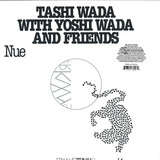
Composer Tashi Wada has performed for years with his father Yoshi Wada—artist, composer, and early member of the Fluxus movement. However, they have rarely appeared together in studio settings. Nue, the fourteenth entry in RVNG Intl.'s intergenerational FRKWYS series, finally brings Tashi and Yoshi, along with an eclectic group of close friends and extended family, together on tape.
Nue draws on aspects of Tashi's background for his widest vision to date—among them the minimalist bagpipe music of Yoshi, who co-composed three of the tracks, the psychoacoustic and perceptual explorations of his mentor, composer James Tenney, and reimagined forms of ancient and devotional music. The album, however, is not a tribute to the past or a recapitulation of familiar sounds. Instead, Nue is an intertwining of people and ideas as a means of growing, of looking inward to move outward, and of looking back to move forward.
To achieve this growth, Tashi assembled a core group of fellow travelers, including Yoshi, composer Julia Holter, producer Cole MGN, and percussionist Corey Fogel, to give life to this multifaceted suite. As an experience, Nue subtly navigates the interactions, intimacy and spaciousness of this group.
The album's title itself is a nod to Tashi's abiding interest in duality and the unknown: nue is a mythological Japanese chimera with the face of a monkey, the legs of a tiger, and a snake for a tail, a composite form, at once disturbing and otherworldly. But, as the composer points out, nue is also French for naked—stripped of complexity, bare and exposed, but also raw and essential.
From the doubling of tones—and the world of harmonic nuances such an action produces—to the rich interplay between individual musicians, all baring their own personalities and experiences through shared performance, Tashi's compositions allow space for these elements to join and grow. The multipartite creature that is an ensemble melds in the simplicity and purity of the music itself.
As explained by Tashi, each part was written with an individual in mind, not simply an instrument. And each individual performer makes their mark, from Holter's vocal performances on the cresting, oceanic 'Mutable Signs' and 'Ondine' with guest vocalists Simone Forti, Jessika Kenney and Laura Steenberge, to Fogel's resonant, precise percussion on 'Bottom of the Sky.' Producer Cole MGN, who has worked extensively with artists like Beck and Ariel Pink, helped to create a world of sound with minimal yet multi-dimensional materials. Like many of its influences, Nue uses deceivingly simple means to create complex, coherent worlds and narratives.
Tashi notes the influence of legendary Brazilian writer Clarice Lispector, whose work looked inward, investigating memory and emotion and dream, to understand the often overwhelming world outside the self. Like Lispector's classic novel Near to the Wild Heart, Nue cleaves these archetypal dualities—world/self, old/new, complex/simple—to create a work that allows them to coalesce into something singular.
As Tashi states in his liner notes: 'My desire was to create something both old and new sounding—ancient and futuristic—and ultimately something of its own world and other. Nue is a vision, an endless night of dreams, and a personal history of sorts, full of joys and demons.'
Standards & Practices is proud to present the inaugural release on its new sister imprint, Double Standards, from NYC-based producer Jake Reif (Device Control). His third release working under this alias, Reif manages to amalgamate his dance music obsessions (EBM, bleep techno, Chicago house) in a totally unique way that feels fresh and idiosyncratic, avoiding simple genre exercises or nostalgia for the sake of it.
Lead track 'Spirit Module' is perhaps the finest summation of Reif's aesthetic yet: a mixture of bleepy, raw techno that, with its wild vocal samples and wide, 808-driven groove, comes across like a tougher, more modern take on the classic Sheffield/Richard H. Kirk/Robert Gordon sound. Label partner Ken Meier's first outing here as a remixer is a smashing success his version strips things down, keeping most elements of the original intact, but adds a driving, almost double-time metronomic machine rhythm that's aimed squarely at the dancefloor. On the flip, 'Tension' and 'Symmetry Obsession' row the boat further out, with their synapse-frying tones and jagged, randomized sequences reminiscent of Freddy Fresh at his best. All in all, a future classic destined to find favor with adventurous house and techno DJs alike.
Cryovac Recordings is proud to release its' 20th edition on random colored vinyl. Cryovac is a gathering of minds that work together to create a physical record of their sound in this time. We go our own way in production and arrangement for our personal vision to endure. Our goal is to add a new layer to the Detroit soundscape.
D.J. Roach is a techno activist with a rhythm agenda of percussive techno. His banging and clanging romps rock through breakdowns and back again. Conga and claps work together to form a shaky funk. what is needed for a healthy dancefloor.
A.Garcia's subtle drone rides waves of synth in an offering of minimal ease. His moody atmosphere turns tone in soulful harmony; while simple drumming builds to a nonchalant bop. The rise and fall of the elements allow you to examine the track on all sides. Garcia smoothes out an early morning gem that is taylormade for a smoke.
At long last! We're delighted to present a hypnotic time-capsule courtesy of Dissmentado aka Ismael Pinkler from Carisma and Kompakt collaborator, Máximo Graesse Bondino.
Recorded during summer trips in Buenos Aires and spending autumn in Tromso, Norway between 2006 - 2010, Maximo and Ismael met several times during that period and used friends houses and studios to produce a long list of material, selecting later the best of it for this compilation.
The tracks are long and slow, with deep and moving beats and long background sounds dedicated to warm up dreamers and after hour survivors.
The elements develop their movements in a relaxed way through the tracks creating a loose feel. Every beat was played with their hands and there is no arpeggiated melodies to remind you where the ground is.
The release is complemented by a beautiful artwork by the supremely talented Glasgow-based artist, Rosie McGurn
* "Of all the dubplates in my bag from this last few years, the ones I've selected most often have Walton's name scribbled on the sleeve. 'Black Lotus' is a unique creative statement; I'm very proud to release it on Tectonic and to support Walton, who I believe is a true talent." Pinch
* On July 6th Tectonic recordings presents the game-changing second album by 26 year old Mancunian Sam Walton, better known as simply Walton.
* 'Black Lotus' follows his inclusion on Tectonic's landmark 100th release - Riko Dan's 'Hard Food' EP, plus the 'Praying Mantis'/ 'Koto Riddim' 12' (also on Tectonic) and the 'Taiko' EP on Kaizen - the latter two of which hinted at the album's sound, but didn't fully prepare us for the brilliance to come.
* Abstract electronics, grime, dubstep and new styles that don't even have a name yet coalesce perfectly on this classic in the making. It finds Walton at peak power, reaching just as far (if not more so) than anything on the Pan, Different Circles, Boxed or Tectonic catalogues for pure futurism and new-terrain-traversing brilliance.
* Spacious and modern sounding, with just the right amount of grit, on 'Black Lotus' Walton has taken things the next level - setting an impressive new high bar. This is the best music to take inspiration from far eastern culture since Photek's seminal 'Ni - Ten - Ichi - Ryu' and 'The Water Margin'.
* Cinematic may be a term bandied about too often, but on this record it unquestionably applies, with the whole thing playing out like an epic movie, full of highs, lows, action, reflection and changing scenes.
* The album kicks off with 'Black Lotus', which makes it quickly evident that this isn't just another generic longplayer; a weightless/sino style intro segues into a mystical kalimba line, which is then is enveloped by huge waves of synthesized, pitched-down brass.
* 'Point Blank' offers locked, harsh mechanical funk, full of aggravated excitement, before sleek, spacious grime and disguised pop garage achieve twisted anthem status, on the hugely satisfying 'Koto Riddim'.
* 'No Mercy''s Yakuza crime riff is perfect for Riko Dan's threatening menace, especially at the point his voice gets distorted into a guttral and unsettling, demon-like wretch.
* 'Mad Zapper' is abstract, comprised of simple yet challenging beats, tones and stutters, whilst 'Angry Drummer''s taiko/kumi-daiko style percussion has a rousing, heavy thump.
* 'Pan' sounds equally enthralling whether soundtracking a dark movie scene of impending danger, or carying enratptured ravers on a danceflor journey, especially one suited to the synapse-prodding drama of a high production, lazer-heavy festival set.
* Choppy drums and bouncy bass tones are laced with the georgeos melody of 'Ehru', and 'Vectors' is sleek 'n' deep breakbeat-garage-meets-IDM.
* Although already known for elements of musicality, Walton raises his game even higher with the beautiful closing track 'White Lotus', which has a wow factor akin to hearing Aphex's Twin's 'Jynweythek Ylow' for the first time.
* 'The title came from the idea that I wanted it to be sweet and melodic in areas, but dark and grimey at the same time', recalls Walton. 'I never really listened to much Japanese and Chinese music before working on this, and that element originally came from listening to a lot of Sino grime stuff. It wasn't until I was deep into the process of making the album that I started listening to loads of traditional stuff on YouTube for melodic ideas, which changed how it turned out. The whole dubstep techno crossover thing was also a big influence.'
* 'I'm really happy to have Riko Dan & Wen on there', he adds. 'I've done a few remixes of Riko tunes which have had a great response, so it's been wicked to get some original material done together. The track with Wen was first started a while back, so I'm glad it was finally finished and will see a release.'
* Walton has been steadily gaining serious clout through releases since 2011 on Hyperdub, Keysound, Tectonic and Kaizen, with supporters including Mumdance, Logos, Slimzee, Laurel Halo, Wen, Hodge, Mary Anne Hobbs, Giles Peterson, Paleman, Teki Latex, Commodo, Loefah and Kode9. Key club, festival and radio shows include FWD at Plastic People, Fabric, Outlook, NTS, Rinse and BBC 1xtra.
Tachyon Audio is a vinyl label that's focused on sounds in the techno realm targeting sweaty, dark dance floors, with large, high-quality sound systems.
Inhabitants come back strong in Mutations Volume II, Tachyon Audio's second offering. These two primates are often found inhabiting dark spaces, forging ahead on complex math equations. Their distinct, driving, mathematical, and drumming techno is a result. Expect more solid work and performances from these two mysterious beings on Tachyon Audio as the label continues its progression.
Tachyon Audio's second release follows a similar format to the first, in that, TAC002 is a diverse EP that touches on techno sounds that are helping to lead the march forward into the future of sound production and style. The second Tachyon Audio release also comes from the mysterious dark studio of Inhabitants, who build off their first, and display their precise, technical forms of production.
The A-side track, Mut11 (A1) is a sci-fi exploration that pleases the ear with thick sub and low basses, along with a pitch-twisted melodic element, and the Inhabitants distinct sound effects and automation. The track has a strong impact immediately, as you can feel the intensity of elements being added, manipulated, and combined, and a sturdy, grimy feel pervades the piece with an interesting driving rhythmic percussion.
Side A ends with two separate open-source NASA samples. The first, Sounds of Enceladus - Radar Echoes from Titan's Surface (A2), is a locked groove and according to NASA, 'was produced by converting into audible sounds some of the radar echoes received by Huygens during the last few kilometers of its descent onto Saturn's moon, Titan. As the probe approaches the ground, both the pitch and intensity increase. Scientists will use intensity of the echoes to speculate about the nature of the surface.'
The second sample, Cassini - Saturn Radio Emissions #2 (A3), is another locked groove. The sound as described by NASA, 'Saturn is a source of intense radio emissions, which were monitored by our Cassini spacecraft. The radio waves are closely related to the auroras near the poles of the planet. These auroras are similar to Earth's northern and southern lights. This is an audio file of radio emissions from Saturn.' These samples are poised for reuse in production and make for good intro and looping material during performances.
The second side of the EP starts with Mut1 (B1), a track that is well-rounded percussively, with a strong kick drum driving the track forward. A simple looping and effected tom drum also helps keep a good movement to the track. An ominously melodic pad that evolves subtly throughout the track helps to keep the Inhabitants err present throughout the track.
Mut8 (B2), is another acidic venture with solid percussion. The looping and other melodic elements provide a solid stricture, with the more adventurous sounds being placed and effected incrementally with distinct Inhabitants flare throughout the track.
* The Russian maestro strikes again. Following his widely praised debut EP, this second outing on Knitebreed should really cement Ant To Bes reputation as a man who can, and a man who does. Adding distinct jungle and dub elements to his already diverse sound, this EP once again runs through various styles of hardcore. Each track is beautifully crafted, sounding deceptively simple when, on closer examination, they are far from it. Any of these 4 tracks could have been the lead on the EP, as all 4 are perfectly balanced slices of true hardcore style.
b / DJ Support
Billy Bunter, the Fat Controller, Glowkid, Slipmatt, Dj Jedi, Dj Luna-C, Dj Brisk, Clayfighter, Jimni Cricket, Bustin, Sc@r, Doughboy, Saiyan, Dave Skywalker, Ponder and many others
On this new EP, DJJ's trademark jagged take on filtered French house is still present, but with Chicago bump, techno and more random elements thrown in for good measure.I Keep Trying To Convince Myself is the tougher, more rugged and even funkier cousin to DJJ's hotly-hyped 2016 summer anthem just a lil. Chi house meets soca in this carnivalesque new classic, which hits the perfect spot between sweetness and dirt.Yn Y Ty is fast, jerky funk and almost a new genre in itself. Both melancholy and pumping, think DJ Rush meets the Tetris theme in an oddball, groovy-as-hell work of genius.The cut-up, loopy loops and tough, tribal beats on Apilli are deranged in a good way and - as with the rest of the EP - demonstrate a quirkiness and subtle humour akin to Basement Jaxx's early golden period.A big sample drives the jacking, sweaty, glitz of Upsqwar's warped take on handbag, which channels the spirit of Modjo and features a ponderous, almost chiptune melody drifting subtly over the top.The EP closes with the Greek flavoured stomper Glas, which wouldn't sound out of place on Richie Hawtin's 1999 mix album Decks, EFX & 909. This new EP is first release since jus a lil for Crazylegs, which gained high praise from NPR, Resident Advisor, Indie Shuffle, Mixmag, Dummy, Hyponik and FACT - who commissioned a video and coined the tongue-in-cheek genre name 'outsider Ibiza'. Comparisons have been made to Thomas Bangalter, Alan Braxe, Todd Edwards and David Morales - albeit a skewed reinterpretation. Like the punks' assimilation of rock and roll, DJJ's fresh and irreverent take on highlights from dance music history make for some of the most exciting sounds since Daft Punk's first forays.Although distorted and with lowered bit-rates, to call theses tracks 'low fi' is to do them a disservice, as DJJ's manipulation of frequencies, distortion and samples is deceptively simple yet not easily matched. There's a mastery of sonics and leftfield sensibility at play, akin to fellow EQ tweakers Heiroglyphic Being, Aphex Twin and Adrian Sherwood.DJJ is a member of the Bristol-based label/collective Crazylegs, alongside artists including Gage, Sudanim, Finn (all of whom remixed just a lil). He's also one half of ISLAND, whose grime-flavoured Nokia EP was release in 2015 - also on Crazylegs.
Circus Company and The Mole have long been making eyes at each other across the same crowded dancefloor. Colin de la Plantes primary project is synonymous with the off-kilter corner of house music we like to spend our time dancing in, and the labels he releases on are close cousins of the Circus troupe. From Wagon Repair to Philpot, Musique Risquee to Perlon, its a wonder that we havent worked together previously, but finally thats been put right with Little Sunshine. Stripped back, understated disco grooves have always been the bread and butter of The Moles sound, while infectious, cyclical melodic patterns are equally important in making his unique version of house music. On the title track, those elements are presented with full force, but in between the driving rhythms linger the most gorgeous keys, bringing a mellow introspection to the track as a neat counterpoint to the energy of the drums and arpeggios. Compared to the clean lines and peppy tempo of Little Sunshine, Discotheque Airplane is an audacious swerve into low and slow territory, where dusty samples rule the day and the bass swells in and out of earshot with a truly mesmerizing effect. Its a moody affair loaded with tension, mystery and funk in abundance. As if that wasnt enough proof of the variety in The Moles repertoire, on his collaboration with Dutch hero Tom Trago for Down The Hallway we find the pair exploring lean, focused techno, where the simplest of rhythms propel a haunting, distant vocal lick. Its the drum sounds that make this a special cut, championing warm, natural percussion instead of the methodical drum machine hits found in most contemporary techno. Rounding the EP off in a beautifully mysterious style is Aardvarck, whose remix of Down The Hallway take
lvin Toffler was overwhelmed. When in the morning of October 4th, 1988-it was his 60th birthday-he was starring with a still somewhat absent look into a bowl of cornflakes, he thought that in the surface structure of the yellowish shimmering milk which was making an emulsion with the maple syrup and slowly but irreversibly corroding the crunchy crystals on the flakes, he could see through a window into a timeless dimension. Toffler, who at that time had reached the peak of his fames as a future scientist, was sustainably disturbed from his peek into this extra temporary peephole. In none of his books-'Future Shock' had just been released with yet another edition featuring a proud printed note on the book cover stating 'more than 5 million copies in print'-did he ever mention this occurrence. Even after his death in June 2016, no note on this incident could ever be found in his estate. The 'flake dimension' as Toffler called it in notes which were later shredded remains a secret of opaque, hard-to-grasp radiant power.
Maybe it's too simple to describe 'Pneumatics' as a creation coming from this cornflake world Without doubt. Are there any more precise terms or instruments to determine the multifacetedness and beyond-timeliness of the 'Pneumatics' soundscape There are still unknown. 'Pneumatics' is, after releases at Innervisions, Die Orakel und his own label Sound Mirror, the debut album of Orson Wells (as long as you don't count in 'Jupiter' - Wells's first LP which was released in 2014 with 48 copies on cassette-have fun digging for rarities and bargains!).
Perhaps Wells, known in Frankfurt under his real name Lennard Poschmann and as an employee at the record store Tactile, is only a messenger. Or a psychic. The sound manifesto that he apparently transmits from Toffler's secret dimension tells of a city of upside down pyramids ('Tianon'), of passes into the land of the five elements ('Multipass') and dead straight four-to-the-floor lines which appear bended within the spherical dimension (''Geodesic'). These beats are right on the heels of the ones of Intersteller Fugitives; the strings sound like that at any moment a vocal sample edited by Moodyman could warp over through the Cornflake wormhole. Pneumatics is the science of all technological applications powered by condensed and often by quite heated air. It is a matter of mechanics, compression, jackhammer, ramblings, high pressure levels, valves for blowing of steam. On 'Pneumatics' it's all about this. And more. Orson Wells's album gets to the point of the post-retro futuristic state of the dancefloors of the house and techno clubs of this planet. It is like a peek into another dimension, right on the golden cut of spacetime geometry.
Black Truffle is honored to present a new issue of Annea Lockwood's classic 1970 tape piece Tiger Balm, unavailable on vinyl for over thirty years, accompanied by two exquisite unreleased works for percussion and voice.
Created while Lockwood was living in the UK, the side-long Tiger Balm is a singular work within the cannon of tape music. Inspired by research into the ritual function of music, the piece explores the possibility of evoking ancient communal memories through sound. Breaking entirely with the dynamic language of the musique concrète tradition, Lockwood uses a select palette of mainly unprocessed sonic elements chosen for their mysterious and erotic characteristics (a purring cat, a heartbeat, gongs, slowed down jaw harp, a tiger, a woman's breath, a plane passing overhead), presenting at most two sounds at once. As one sound flows organically into the next, their shared characteristics are highlighted, opening a space of dream logic and mysterious associations between nature and culture, the ancient and the modern.
The B-side presents two pieces for percussion recorded here for the first time. Amazonia Dreaming (1987), performed by Dominic Donato, uses unaccompanied snare drum and voice to evoke the nocturnal soundscape of the Amazon rainforest. Unorthodox techniques and materials (marbles, chopsticks, a plastic jar lid) transform the snare into a resonant field of sensual textures.
Immersion (1998), performed by Donato and Frank Cassara, is a slow-moving exploration of gentle beating tones, performed on marimba, tam tams and gong. Like the other two works presented on this LP, it provides captivating proof of Lockwood's belief in the complexity that deep listening can reveal within seemingly simple sounds.
Francis Plagne
Presented in a stunning deluxe gatefold sleeve with archival pics and liner notes by Annea Lockwood including the score to Amazonia Dreaming.
LP design via Stephen O'Malley
Mastered and cut by Rashad Becker at D&M, Berlin February 2017
Acclaimed Russian producer, DJ and live musician Kito Jempere is back with a stunning second album, this time on Italian label Hell Yeah. Entitled Sea Monster and due for release in early 2017, the nine track album is a fantastic fusion of live instrumentation and electronic production.
Kito Jempere is a musical polymath. The Russian artist, producer, multi-instrumentalist and band leader has been involved in many projects over the last ten years plus. These range from rock to acid jazz to electronic bands and often call upon a rotating cast of other members who are all equally talented.
From playing in small bars to headlining big shows for thousands of people in Saint Petersburg, he has put out a number of albums and singles on labels like Freerange, Room With A View and Hell Yeah and DJs around Europe.
Jempere plays live as the Kito Jempere Band, and here he calls upon his bandmates for their many skills to lend the album a richly musical feel.
Mixed and co-produced by band member Roman Urazov, the album features Artemiy Gunbin aka Noteless, the voice of the Kito Jempere Band and front man of his own rock band Videatape, as well as Ruslan Gadzhimuradov, a long time drummer on many projects, plus Matvey Averin, the bassist but also co-producer for cult group Manizha and finally Sergey Lipsky who here plays guitar and is also half of Simple Symmetry as well as having played for Kito's other project Saint Petersburg Disco Spin Club group.
Sea Monster kicks off with Lifetime Theme, a heavenly groove with loose drums and percussion and gorgeous keys. Form there, Artemiy Gunbin's ethereal and crystal clear vocals take centre stage amongst balearic guitars on album single 'Ampa', and then 'To Talk' is a deeper cut with bumpy drums, long tailed pads and shiny synths all making for a curious and whimsical atmosphere.
'Grid Cells' is a lush instrumental track with clever revel and echo adding a sense of grandeur to the freeform jazz drums and frazzled synths, 'Uohha' is as sunny and laid back as an afternoon on the beach and 'Puzzled' then layers up scuzzy basslines, popping hits and suspenseful synths into something smooth and seductive.
The final third of the album closes out with blissful guitar licks, lazy broken beats and brilliant drum playing that all have you wishing it was summer again.
This is an album with elements of jazz, house, disco, balearic and many more sounds all smoothly blended into one coherent and captivating album full of soul and musical skill.
To begin the year with, Antinote summoned Panoptique and JC Satan's Paula to release a badass two-tracker, paying a pared-down tribute to a very overlooked period in recent musical history: the accursed electroclash-era.
.
At a time when 'Balearic' has become the new musical gospel, the holiest adjective one can use to describe one's music (and therefore, electroclash has become the musical antichrist - to keep going with the biblical comparison)... while everyone seems to glorify stuff like Ibiza's 'endless sunsets', the duo happily kicks over the anthill with a song, a record and a band soberly called Succhiamo (first person plural of 'to suck' in Italian). The title-track straightforwardly announces what the main elements of Succhiamo's music are: over-saturated simple patterns of drum machines and EBM-infused lines of synths backing overtly sexual vocals in Italian. Nothing more, nothing less.
On the flip side, Succhiamo deals with the same formula in depth, engaging this time in detailing a meaningless list of products available in the 'supermercato'. The song conveys a nihilist - but fun - attitude, and it just sounds as if the band was crashing a car in a commercial zone in high spirits... As a kind of inheritor to Ich Bin, Succhiamo offers to bring some stupidity in the club and gives serious dance music producers the finger, like some irreverent Franco-Italian Beavis & Butthead.
Jam Money is the shared musical vision of Kevin Cormack and Mathew Fowler. Mathew (Bons) and Kevin (Half Cousin, Harry Deerness) first began collaborating as part of the Blank Tape Spillage Fete, an ongoing collective project of art and music which focuses on the creation and perpetuation of small DIY exhibitions, related events and limited releases that celebrates the hobbyist nature of home recording.
Jam Money revolves around a passion for the simple and sometimes restrictive nature of four-track cassette recording. Using old half-broken guitars, clarinets, charity shop keyboards, toys, family heirlooms, zithers, home-made percussion, and household objects a shared dialogue appears, involving both mark making and musical mishaps, allowing the makers to be carried along as the music finds its own way.
Genre definitions melt away in Jam Money's music as ambient dissolves into lo-fi rock, noise into fragile naive classroom melodies. Creativity beyond easy categorisation.The first recordings titled 'Blowing Stones' were self-released in 2014. The cover and insert artwork for this record featured abstract paintings by the artist Aimée Henderson whose work and process is a great influence on their music. Having played gigs alongside kindred spirits National Bedtime and Plinth, the tail end of 2015 saw the the band travel to Germany to play with the Notwist and Le Millipede for a series of 'Alien Disko' nights organised by Alien Transistor, a label with a shared kinship of both the weird and wonderful.
'A Gathering Kind' is the second album by Jam Money: a journey of sound and colour, subliminal images and narrative. The roots of this collection found Fowler and Cormack using an earthier, more instinctive language, making it a rougher-edged sibling to their other recordings, with parallels to the home-spun worlds of Flaming Tunes, Pumice, Maher Shalal Hash Baz and World Standard. Aimée's artwork features again, both paintings and music forming a collective language of dream-like adventure.
"Poignant and exploratory. Melting together acoustic and electronic elements, the narrative throughout is one of a ghostly world heading for winter. A firm fan favourite Stephen Pastel (The Pastels & Monorail Music) on Blowing Stones.
"Created in question and answer form, their songs exist like little sculptures - wayward and peaceful, sometimes whirring into automatic life under the pair's combined attention."
Chances are you've already danced to one of his sets at Panorama Bar - Matthew Styles has been a regular guest DJ at the club for several years -, but you've probably also come across at least one record with music that went through the Englishman's meticulous hands. While Matthew has released great but small numbers of 12"es on various labels since 2007, his credits in mixing, engineering and mastering exceed his solo discography by far.
With the Metro EP we're finally offering a full solo release by Matthew Styles on Ostgut Ton, accounting for his consistent productional finesse, especially with his original track "Liquid Sky" (on Nick Höppner's Panorama Bar 04, 2012) and his 'Dub Mix' of Dinky's "Planes" (on Ostgut Ton / Zehn, 2015).
"I've never worked on a sequential set of songs that came out on the same record," Matthew commented on this 12". As with his productional approach in general, the Metro EP has a certain timelessness: "One piece is from 8 years ago, one from 3 years ago and another from around the time of the recent birth of my second son. I'll leave it up to the listener to guess which is which."
The eponymous "Metro" on A is an elated seven-minute, trippy, meandering analogue synth exploration in House and Cosmic Disco. "Wave 6" opens the flipside with a simple yet beguiling melody: 6 notes dancing completely beatless in 5/4 time, meandering repetitively and escalating towards a blissful - yet only anticipated - climax. "Border" on B2 is a solid addition to the long history of Dub Techno - smooth, steady, super layed back, but also offering many colorful melodic elements.
(de) Gut möglich, dass du schon einmal zu einem seiner DJ-Sets in der Panorama Bar getanzt hast - Matthew Styles spielt seit Jahren regelmäßig am Wriezener Bahnhof -, aber sicherlich hast du wenigstens eine Platte gehört, die vorher durch die akribischen Hände des Engländers gegangen ist. Obwohl Matthew seit 2007 tolle aber wenige 12"es auf verschiedenen Labels veröffentlicht hat, übertreffen seine Credits als Mixer, Engineer und in Mastering seine Solodiskografie bei weitem.
Mit der Metro EP hat Ostgut Ton nun endlich ein volles Solorelease von Matthew Styles im Angebot, das seiner konsistenten Produktionfinesse - besonders bei seinem Track "Liquid Sky" (auf Nick Höppners Panorama Bar 04, 2012) und seinem 'Dub Mix' von Dinkys "Planes" (auf Ostgut Ton / Zehn, 2015) - Rechnung trägt.
"Ich habe noch nie aufeinanderfolgend Stücke produziert, die dann auf derselben Platte erschienen wären", kommentierte Matthew diese 12". Wie generell bei seinen Produktionen besticht die Metro EP durch eine gewisse Zeitlosigkeit: "Ein Stück ist acht Jahre alt, eines von vor drei Jahren, ein anderes von kurz nach der Geburt meines zweiten Sohnes. Die zeitliche Einordnung möchte ich dem Hörer überlassen."
Das gleichbetitelte "Metro" auf A ist eine beschwingte 7-minütige, trippige, mäandernde Analog-Synth-Erkundung in House und Cosmic Disco. "Wave 6" beginnt die B-Seite mit einer einfachen aber betörenden Melodie: 6 Noten tanzen beatbefreit im 5/4-Takt, treiben repetitiv und ansteigend auf einen beseelten - aber nur erhofften - Höhepunkt zu. "Border" auf B2 ist eine solide Dreingabe zur langen Geschichte von Dub Techno: sanft, stetig, super entspannt, aber mit vielen melodischen Elementen.
The incomparable Mark Henning blasts back on Soma with yet another dose of machine funk as he drops the Jaguar EP. Mark has consistently been one of Soma's top artists due to his amazing sound design and keen knowledge of exactly what make a top dance floor track and this latest EP really shows him operating at his highest level.
Mark doesn't waste anytime in getting down business with the elastic funk of title tack Jaguar. Classic drums and one catchy synth hook does the absolute damage on this opener. Ink brings a bit of Chicago style jack to the EP with Henning really working the percussive elements before letting loose with some screaming synth work. On Yes yes, Mark delivers the most melodic sounds of the EP so far, simple and effect percussion backs a extremely well crafted, bouncing hook. Closing of the EP is Atomic and Mark really picks up the pace with this one, definitely heading down a more Techno path. More direct and intensive drums keep the stride whilst subtle vocals, sequenced tones and raw sythn stab delivers the groove.
Henning has once again delivered a very diverse EP that straddles the boundaries between House and Techno perfectly, all brought together with his unique and altogether striking production
It's time for the third owner of Taapion records to make it on the spaceship. For the fifth release but mainly his first EP, AWB presents two original tracks both remixed by young producers well known on the label... Fisrt come Celestial Longitude or the first days of a star. The track starts with breaked drums, simples Hihats lines, textured background. Then the pads come slowly, they bring small lignhts and makes the atmsophere innocent till the main pad theme arrives like the birth of a sun and lead to the second part with percussive rides, organic element meaning a kind of ife around the star. For the second original track standing on A2 called Ecliptic AWB made it more like a tool meaning the rotation of a celestial body orbiting a star with more background effects. Drums are more on top of the mix, a bit streched and saturated for some of them making a stressfull atmosphere like cold nights on this high-strung planet. But day-lights comes with the pad arriving twice during track untill it stops and obscutiry strikes again. Remixes are standing on side B, with the first one made by Taapion records' shadow PVNV. He strongly reworked pads of Clestial Longitude, making melody with it, leading to a track with a lot emotion, dynamic drums and those little elements that made the track unmistakable from his own sound. Antigone made a collaboration with Shlomo remixing Ecliptic and closing the Ep with a powerfull drums contruction and rythm elements. The track keeps the tension from the begining to the end, few breaks, not so far from the original atmosphere, their collaborative work on this remix is truly effective.
The debut album of contemporary British band LINEA ASPERA. Linea Aspera is the London duo of RYAN AMBRIDGE (Synths/Programming) and ALISON LEWIS (Vocals/Synths). They began the project in November 2011, technically drawing inspiration from electronic music from the early 1980s. Within the duo, Alison writes and performs all vocal elements, while Ryan is responsible for the writing and performing of the electronics, as well as recording and mixing of the final recordings. For their debut album they utilized small, simple analog synthesizer set up: Roland SH-09, Roland Juno 6, Vermona DRM MKiii, Korg Poly 800 and Analogue Solutions Semblance. Linea Aspera's sound includes clear influences from early electronic body music, classic synth-pop and, in some instances, industrial and noise. Lyrically the band incorporates the sciences of osteology, neuroscience, and anthropology weaving a new medical language around themes of desire, despair and renewal. Linea Aspera serve up an icebox of dark doom riding on Alison's powerful vocals with a soft but sharp touch. All songs have been mastered for vinyl by GEORGE HORN at Fantasy Studios in Berkeley. Each LP is housed in a specially designed jacket by DOVILE SHURPO and includes a full sized insert of all lyrics.
Mark Henning returns to Soma with yet more jacked up machine funk in Titan. Mark has firmly established him self within the Soma mainstays and continues to further his sound on the label. This latest EP sees him take to the street with two energetic drum workouts laden with his unique flavour.
Title track Titan is very typical Henning, keeping the ingredients simple yet effect and created live. A solid groove from his trusty 909 that just oozes dance floor compatibility hooked up with a quirky synth stab, weird vocals and a eerie organ-like riff all rounded off with a fantastic arrangement makes for one seriously infectious track
Roots gives of a real ghetto-tech feel, as once again a 909 groove is enough to get things going while squelchy synth hits bounce of rimshots working up to a subtle rolling bass line. Mark's skill in the arrangement process take hold as he allows the tracks to develop into a full drum workout with mutes here and there and the simple addition of more stuttering percussion help to pick up the pace.
Henning as the enviable talent of being able to create dance floor burners with the simplest of elements, a task he delivers of with blinding result on this EP.
We welcome back one of our favorite artists, Brendon
Moeller. This time as Beat Pharmacy. Brenson has
been releasing several records for us before, on
Echocord and Echocord Colour.
On all these tracks, one thing becomes apparent, with
a few simple elements and a dub approach to mixing,
one can create space, movement and groove without
the need to change keys. magic maybe.
Thank you dub manipulators of the past and present
for the music and lessons.
Brendon has been releasing music in many years on
many labels, also running his own famous Steadfast
label.