*Re-release of Holy Fuck’s 5th album originally released in 2020, now on clear vinyl limited to 500 copies*
Holy Fuck have today announced details of new album 'Deleter', which will be released on January 17th and is further previewed with the video for acclaimed latest single 'Luxe' (ft. Alexis Taylor). Having just concluded a US tour alongside Hot Chip, the seminal Canadian band will play a selection of European headline dates later this month (with a London show at Moth Club on October 23rd selling out immediately).
Arriving at a moment where attention spans are shot and anxieties are going into overdrive, 'Deleter', Holy Fuck’s fifth studio LP, is a defiantly full-bodied affair. Polyrhythmic and pleasure- focused, 'Deleter' sees Brian Borcherdt, Graham Walsh, Matt Schulz, and Matt “Punchy” McQuaid utilises their signature sound - seamlessly fusing the gauzy drive of krautrock and deep house’s dreamy ineffability, expertly blending purring motorik percussion with the sort of fuggy synthetic fizz and tang they are renowned for.
From the thrusting minimalism of opener ‘Luxe’ through to the triumphant chug of closing track ‘Ruby’, via club-ready rollocker ‘Free Gloss’ and the cosmic clatter of ‘San Sebastian’, Deleter is a record that joins the Holy Fuck dots within their widescreen, technicolour, crescendo- heavy sound.
Across a glitching, glimmering constellation of 10 tracks, the record redraws the boundaries of her own subconscious through daring harmonic modulations, glitchy electronica, and frenetic orchestral sequencing. Deeply informed by Nordic folklore, it moves through a journey confronting body dysmorphia, control, and a staccatoing sense of self - reaching toward creative and emotional liberation through ethereal, amorphous avant-pop.
Within the work, the artist made the deliberate choice to take the focus away from her physical self - a protest, but also a tribute to the countless versions that form one person. "It's not about disappearing or being anonymous," she says, "more about loosening the grip of appearance, and letting the work exist without being defined by it."
Named for Bach's Inventions - played on piano growing up - Inventio carries a Baroque sensibility: trilling polyphonic textures and lush vocal harmonies rising above it all. Sonic touchstones include Björk, Elizabeth Fraser, and the kulning-style singing of Lena Willemark. Made across three years in Sweden, the album was built without Murex knowing it would become one. Collaborators including Pelle Westlin, Isak Hedtjärn, and Elvira Anderfjärd gave the work what Murex calls "extra arms." All music videos are directed by Murex herself.
"Making this album gave me back authority and power. I hope it's just as freeing to listen to."
The Veils' first three albums are returning to vinyl thanks to Rough Trade Records.
The Runaway Found (2004), Nux Vomica (2006) and 2009's Sun Gangs established the New Zealand band as purveyors of lush, romantic indie, able to sweep through cinematic vistas into intimate emotional corners, via gothic orchestration and atmospheric driving rhythms.
Founded and fronted by singer-songwriter Finn Andrews while still a teenager, over their first three albums, The Veils carved out a musical landscape of their own that was in turn deep and enveloping yet emotionally raw and direct.
Having only enjoyed a limited vinyl run on their releases, due to the format's neglected commercial status during the 2000s, the repressing of The Runaway Found, Nux Vomica and Sun Gangs, offers audiences a fresh opportunity to enjoy these records with the full depth, fidelity and artwork they deserve, and reminding listeners of the musical secrets The Veils revealed to the world.
“It is a sincere joy to see these records that are so important to us and to so many others reissued on vinyl by the label that nurtured us right from the start. I remain hugely grateful to them and to all the songs on these searching, impassioned, and magnificently youthful first attempts.” - Finn Andrews, The Veils
Courant Zéro is the new moniker of Montréal multi-media installation artist and Kohlenstoff label co-founder Maxime Corbeil-Perron, signalling his return to purely recording-based electronic music production following several years focused on award-winning experimental film and audio-visual works. Solari channels his cinematic sensibility and decade-long exploration of sound art and electroacoustic counterpoint into deep cuts of maximalist ambient electronica. Drawing on his early background as a pianist and jazz drummer, Corbeil-Perron weaves a fabric of melodic and rhythmic vectors with his unique timbral palette, intersecting modern composition, IDM, ambient, glitch, and noise on a debut album brimming with sonic detail and emotive resonance. A fixture of Montréal’s sound art community as both creator and curator since the early 2010s, Corbeil-Perron’s work has ranged from “hypnotic A/V onslaught” (FACT Magazine) to the “richly nuanced acousmatic journey” of his 2018 EP Polychrome (Bandcamp Best Contemporary Classical Of The Month), with earlier electronic and techno-adjacent projects like Political Ritual, Dresden, and Le poisson d’argent garnering accolades from avant-music outlets A Closer Listen, Silence and Sound, and Musicworks, among others. Courant Zéro mobilizes this cumulative wealth of explorative sonic experience in the service of distinctive compositional architectures and electronic music pathways that fans of Floating Points, Jan Jelinek, Squarepusher, Tim Hecker, and Oneohtrix Point Never should find compelling.
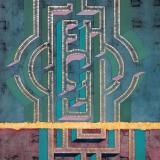
Courant Zéro’s debut is a vibrant sonic rebus at the junction of electronic, electroacoustic, noise and ambient music that resists easy categorisation. Solari strikes a compelling balance of unsettled disorientation and hospitable warmth, teeming with real feeling throughout. The album’s cover art painting Cryptography I by Yen-Chao Lin represents this prevailing sensibility, its mazelike circuitry distinctly carved and crisply rendered, while filigreed with handmade detail and artisanal patina. Thanks for listening.
Courant Zéro is the new moniker of Montréal multi-media installation artist and Kohlenstoff label co-founder Maxime Corbeil-Perron, signalling his return to purely recording-based electronic music production following several years focused on award-winning experimental film and audio-visual works. Solari channels his cinematic sensibility and decade-long exploration of sound art and electroacoustic counterpoint into deep cuts of maximalist ambient electronica. Drawing on his early background as a pianist and jazz drummer, Corbeil-Perron weaves a fabric of melodic and rhythmic vectors with his unique timbral palette, intersecting modern composition, IDM, ambient, glitch, and noise on a debut album brimming with sonic detail and emotive resonance. A fixture of Montréal's sound art community as both creator and curator since the early 2010s, Corbeil-Perron's work has ranged from "hypnotic A/V onslaught" (FACT Magazine) to the "richly nuanced acousmatic journey" of his 2018 EP Polychrome (Bandcamp Best Contemporary Classical Of The Month), with earlier electronic and techno-adjacent projects like Political Ritual, Dresden, and Le poisson d'argent garnering accolades from avant-music outlets A Closer Listen, Silence and Sound, and Musicworks, among others. Courant Zéro mobilizes this cumulative wealth of explorative sonic experience in the service of distinctive compositional architectures and electronic music pathways that fans of Floating Points, Jan Jelinek, Squarepusher, Tim Hecker, and Oneohtrix Point Never should find compelling. Title track "Solari" opens the album with a cavernous ambient glitch-drone soundscape that envelops ever-shifting timbres of modular arpeggiation, serving as introduction to the clarion call of "En deçà du réel", an homage to video artist Manon Labrecque, where layers of interweaving melodic counterpoint played on Buchla and other synths slowly build to widescreen immersive intensities; "I have this vision of Labreque vibrating eternally between two frames of magnetic VHS tape_ the slow pace of the piece also inspired by Tarkovsky's approach to scenography" says Corbeil-Perron. "Strange Aorta" is ectoplasmic ambient with wistful melody lines transmuting along a central filament, awash in shifting waves of low-end and ricocheting tonal glitch, the title a reference to "the thumping rhythm beating around the main melody_and the heavy remnants of grief related to my father's passing and a brutal confrontation with my own mortality a few years back." Tracks like "La peau des dents" and "Eroding Us" are more firmly rooted in electroacoustic and aleatory systems music, where colliding loops are shaped into unstable flows of deconstructed slippage and reconvergence. Those two pieces bookend the album's pivotal center: the gorgeous piano digitalia of "Horizon n'arrête" and the skittering electronica of 9-minute opus "Unyeldd", its loping broken beat and cascading melodic glitter like a cluster of wind-up music boxes in a dappled forest _ and for Corbeil- Perron also partly inspired by now fellow Constellation labelmates Do Make Say Think: "I spent a lot of time rediscovering their records after seeing them last September 2024 which definitely influenced this piece." Courant Zéro's debut is a vibrant sonic rebus at the junction of electronic, electroacoustic, noise and ambient music that resists easy categorisation. Solari strikes a compelling balance of unsettled disorientation and hospitable warmth, teeming with real feeling throughout. The album's cover art painting Cryptography I by Yen-Chao Lin represents this prevailing sensibility, its mazelike circuitry distinctly carved and crisply rendered, while filigreed with handmade detail and artisanal patina. Thanks for listening.
2026 RE-Release
Beat machine freak duo Bill Converse and Patricia (Max Ravitz) present 380/750, a new EP on Acid Test that blends the two producers’ singular styles to form an emotive “introspection on the dance floor” experience over the course of 4 tracks.
Recorded at Ravitz’s Brooklyn studio over the course of two days, 380/750 features raw, no-multitrack, no-edit live recordings that showcase the duo’s intuition for expressive rhythm tracks. Considering Converse’s roots in the 90’s Michigan rave scene, and Ravitz’s Chicago upbringing, the midwestern strains really shine through. With rhythm-composer mutations, acid dripping over atmospheric synth textures, and the ever-present jack throughout, 380/750 offers a deep sound to get lost in that feels both new and classic at the same time.
out of Stock
Last delivered 15 days ago available to reorder, subject to availability
The third album from Max McNown, Leave On A Light, reveals a rare artist whose breakout success has brought him even closer to his truest instincts. Amid an explosive ascent that solidified his status as one of his generation’s most compelling singer/songwriters, the Oregon native came to a deeper conviction in music’s power to honor what matters most, such as the people and values who anchor his life. Born from a year of extraordinary momentum—including completing his sold-out, continent-hopping headline tour—Leave On A Light ultimately finds McNown more grounded than ever in his artistic vision, arriving as the fullest expression yet of his singular songwriting voice.
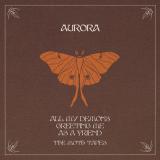
Ten years after All My Demons Greeting Me As A Friend introduced AURORA’s extraordinary musical universe to a global audience, The Moth Tapes takes listeners back to where it all began.
Built from intimate early recordings, demos and previously unreleased material from the original era, ‘All My Demons Greeting Me As A Friend (The Moth Tapes)’ opens AURORA’s archive to offer a new perspective on the creative foundations of her landmark debut and on the beginnings of an artistic journey that has since taken her around the world.
Unrefined and deeply personal, The Moth Tapes is both a celebration of where AURORA began and a bridge to the artist she has become.
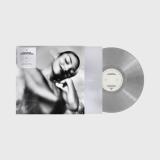
‘The Art Of Loving’ is a tender, intentional deep dive into the many dimensions of love – romantic, platonic, self, and everything in between. The album features the singles, ‘Nice To Each Other’, 'Man I Need' and ' Baby Steps'
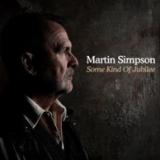
For acclaimed folk artist Martin Simpson, this release reflects not just a remarkable 50-year recording career, but over six decades shaped by song, tradition, and continual artistic growth. Yet this is not a retrospective, it's a forward-looking work, carrying the depth, skill, and passion of a lifetime into the present. Marking 50 years since his debut album Golden Vanity, Simpson describes Some Kind of Jubilee as "my best work to date." To realise this landmark project, he brings together an exceptional group of collaborators drawn from across his long and distinguished career. Among them are renowned pedal steel guitarist Greg Leisz, guitarist Zac Hobbs, cellist Liz Hanks, guitarist Louis Campbell, and double bassist Ben Nicholls. Together, they create a rich and textured soundscape that honours tradition while embracing fresh perspectives. Recorded at Groovemaster Studio in Santa Monica and completed in Yorkshire, the album blends newly written songs with reimagined traditional material and inspired reinterpretations from Simpson's own catalogue. The result is a deeply rooted yet vibrant collection that reflects both heritage and innovation. As Greg Leisz puts it, "This music has some profoundly deep roots - so dig in." With Some Kind of Jubilee, Martin Simpson honours his past while continuing to shape the future of folk music, reaffirming his place as one of the genre's most respected and enduring voices.
A powerful new track arrives on 7-inch, marking a collaboration between MAJOR FORCE PRODUCTIONS and DJ KRUSH, featuring the gentle, soothing vocals of guest singer Kyoko Koizumi.
This joint production by MAJOR FORCE PRODUCTIONS-comprised of K.U.D.O and Kan Takagi, two key figures who have helped shape Japan’s music scene-and the internationally acclaimed DJ KRUSH results in a single that vividly captures everyday scenes and the deeper layers of human emotion through diverse beats and floating electronic textures.
Conceived as a sequel to Kan Takagi’s 1997 release “LOVE THEME,” the track unfolds with a memorable melody expressing a sincere longing for love and freedom. Refined yet warm, it stands as a timeless piece of electric folk blues.
For this 7-inch edition, the track has been given a single edit, making it a special and essential release.
DC Salas doesn’t do things by halves. Fresh off a June release on Enrica Falqui’s Plexus4, the Brussels-based producer wastes no time returning to his own Higher Hopes imprint and he’s brought a party with him.
Fiesta EP is a four-tracker with a split personality and zero apologies for it. The A-side is all business: Darkest Dream, already doing damage in Roza Terenzi’s sets and Consciousness lock in deep, hypnotic, and faster paced. Then the B-side happens. Fiesta Fiesta and Lost In My Memories raid the wreckage of new beat, proto-whatever and early 2000s electrohouse like they own the place. Fiesta Fiesta also marks fifteen years of DC Salas making music, celebrated, naturally, by vocodering his own voice and singing in Spanish.
HIGH005 follows Pixelated Dream Theory, which pulled support from DJ Masda, Ivan Smagghe, Evan Baggs, Enrica Falqui, Binh and many more. Back on home turf, no features, no compromises. Just DC Salas, in full.
out of Stock
Last delivered 20 days ago available to reorder, subject to availability
After regular appearances at Berghain since his debut two years ago, Altinbas now presents his contribution to Ostgut Ton, tying together five tracks that outline an expedition through celestial bodies in ‘Beyond the Veil’. Deepening his research on intricately crafted ambiance, the EP strikes a balance between commanding rhythm and blossoming synth work that reaffirm his inimitable style. ‘Beyond the Veil’ is a conceptual collaboration between an artist and a room; describing the dancefloor as an organism and the architecture of its surroundings.
Over the years, harmony has become synonymous with the Belgian artist’s sound. Deeply tuned and cohesive, Altinbas’s productions walk the boundary between insistent anticipation and unparalleled warmth. Although dancefloor effect remains a central theme for him, ‘Beyond the Veil’ is the latest chapter in a long study of obscurity in music that qualifies almost as ritualistic. Tracks like ‘Beyond the Veil’ and ‘Charming the Cosmic Snake’create tension in the keys that resonates like an expedition into new soundscapes. With weight and stability in the percussion, airy textures and hypnotic synth lines roll off the rhythm to mesmerize the listener. Sculpting his arrangements around the development of rich, dubby and atmospheric tones, Altinbas capitalises on the natural flow of his elements to provide an organic touch to tracks that are tuned especially for high pressure sound systems. ‘Entanglement’ and ‘Winter’ are both examples of this : soulful techno that ebbs and flows with each transition. Dimension is pushed dramatically into each of the five pieces of the EP as a direct response to the current climate of tool oriented techno. Keeping a safe distance from this approach, Altinbas invites listeners to explore the shape of his sound in an embrace rather than submit to its abrasion. The project concludes with ‘Antichamber’ - the fifth track of the EP that announces a departure from strict club codes. Dampening the rhythm from a pulse to a sway, a dreamlike landscape rises from deep within the record, smoothing over any of the rougher residuals from the preceding tracks. The descent that is ‘Antichamber’ is the result of an accumulated euphoria, gently guiding the listener back to consciousness.
‘Beyond the Veil’ represents a checkpoint for Altinbas in his research of moving a dancefloor not only physically, but emotionally. Carving out his own space in dancefloor-oriented music, he offers highly expressive compositions in defiance of the status quo. Altinbas offers this EP as a personal statement of where he stands; five tracks of carefully tended tone and harmonic glow create an emotional urgency for the collective experience.
out of Stock
Last delivered 8 days ago available to reorder, subject to availability
Since launching the edit and remix focused Brooklyn Lathe Cuts imprint last year, Patrick Sullivan aka P-Sol has not put a foot wrong. He's already released a swathe of superb two-trackers this year and here returns with another notable entry to the label's growing catalogue. A-side 'Canvas' is simply superb, with effects-laden Godfather of Soul vocal samples rising above a slipped beatdown-house groove, dreamy deep house sonics and jazzy, sun-baked instrumentation. He once more reaches for Brown vocal snippets on the even stronger 'Circles', a languid, break-powered slab of summery and shuffling deep house excellence.
The late sixties and early seventies spectacle of Jamaican Deejays taking their live performances out of the dance halls and translating them into hit records, not only marked the beginning of forty years of dance hall driven music on the island but also provided the original inspiration and template for the global dominance of rap and hip hop.
The art of deejay was now rightly recognised and the toasters or talk over artists advanced from introductions and interjections to stringing complete sets of lyrics together and riding the rhythm for the entire length of the song.
Deejays including U Roy, I Roy, Dennis Alcapone, Big Joe ,Little Joe and Prince Jazzbo who built their reputations working live on sound systems,now went one step beyond and moved on to become recording deejays with entire catalogues of hit singles and albums to their credit.
Throughout the seventies a whole host of mic men followed in their wake including Dillinger,Dr.Alimando,Clint Eastwood and Jah Stitch.
Talking records were not new, but 'talk over' records were...the repercussions of this uniquely Jamaican phenomenon would go on to reverberate worldwide...
For over 11 years, Nowadays Records has been shaping the French electronic music scene with boundless energy and total artistic freedom. Much more than a label, Nowadays is a big musical family where every release, meeting and event becomes a real celebration. With over a hundred albums and nearly a thousand titles to its credit, Nowadays Records embodies musical diversity across a variety of genres: abstract hip-hop, house, electronica and alternative pop.
It's in this festive spirit that the Club Nowadays project is born, a true embodiment of the collective's vision. Through its club compilations and evenings featuring label artists and outside guests.
Today, the label continues to chart its course with the release of Club Nowadays Vol. 6, a new opus in its series of compilations, which fully embodies its vision of club music. This sixth volume brings together emblematic figures of the label and emerging artists around the following dance tracks.
Don't Lie, the first single from the compilation, is a heartfelt track born of a broken heart, but turned towards the light. Mira Ló composed this track as an act of resilience, following a break-up in love. She transforms her pain into positive energy, hoping that everyone can recognize themselves in it and find a little sweetness to soothe their own grief.
R1D1 brings together his groovy house and garage influences to create the track Marsupilami around a hand-crafted synth, sharp drums and deep bass. Influenced by hip-hop beatmaking, he incorporates vocals from radio and interviews, transformed into rhythmic elements. The name, a nod to the famous character, comes naturally through the sampled “houba houba”. Between offbeat textures and assertive groove, the track embodies R1D1's singular, hybrid universe.
OOGO & Blanka, two pioneers of the label, offer us Phô Real, a hybrid track between soulful deep house and hip-hop groove, mixing organic and digital textures. A track to get the dancefloor moving, with a delicious nod to La Fine Équipe's culinary universe.
With Tracksuit & Loafers, Yambow creates a bridge between groovy French Touch elegance and the effervescent energy of UK house, in the tradition of producers like Salute and Oppidan. The track is conceived like an acid cocktail: funky, euphoric and dancefloor-friendly. The title is a nod to cultural contrasts - between English tracksuits and French loafers - which translate into a musical interplay between sophistication and fervor.
Finally, Laaanky, the Parisian producer, breaks codes and gives free rein to his passion for raw sound, efficiency and groove on the track Bloom. Between textured house, dub echoes and Afro-tinged post-dubstep rhythms, he explores a danceable, minimalist and percussive electronica. Less is more.
out of Stock
Last delivered 24 days ago available to reorder, subject to availability
For her new and most radical album »Electroacoustic Works for Halldorophone«, Martina Bertoni used the electronic instrument at EMS Stockholm to create four pieces that are massive in scale and incredibly intimate, sonically restrained and emotionally overwhelming—almost ambient and always demanding your full attention.
Martina Bertoni returns to Karlrecords with »Electroacoustic Works for Halldorophone,« her most radical album yet. The foundation for the four electroacoustic pieces was laid during a residency at Stockholm’s legendary Elektronmusikstudion (EMS) that the Berlin-based cellist and composer used to explore the curious instrument, originally designed by Halldór Úlfarsson in 2008, as an algorithmic system in order to examine tunings and the mathematical relationships between Aiming to analyse and understand their interaction beyond the composer’s control, Bertoni sought to engage more deeply with the concepts of time, tuning, and, most importantly, control. Accordingly, her four »Electroacoustic Works for Halldorophone« seem both massive in scale and incredibly intimate, sonically restrained and emotionally overwhelming— almost ambient and always demanding your full attention.
While the halldorophone—famously used by Hildur Guðnadóttir for her »Joker« score—roughly resembles a cello and can be played like one, it is an electronic instrument. The vibration of its strings is being picked up, amplified, and then routed through a speaker. This creates a feedback loop that becomes increasingly complex depending on how much gain is added to individual strings. Úlfarsson gave Bertoni a carte blanche for how to handle the instrument, but she stresses that she relied on »minimal interventions—some string strumming and plucking« that set the interactions of different sounds and frequencies into motion. »I decided to not approach it like a cellist would,« she explains. »Instead I used it as a kind of generative organ by turning it into a feedback machine, with tuned feedback triggering more feedback depending on the tuning, which was based on tetraphonic scales that I could apply on the four main strings as well as the sympathetic group of strings.«
Bertoni recorded the material in the EMS studio, later composing and arranging the four complex pieces in her home in Berlin, after which they were mixed and mastered by Ciaran O’Shea. While this can be considered a compositional abstraction process, traces of her concrete work as a performer are firmly ingrained in the music. »The halldorophone doesn’t have a line output, just a double set of speakers, which is why I recorded all sounds with two microphones in the EMS studio,« she explains. »That’s why there’s plenty of breathing sounds here and there—label owner Thomas Herbst and I jokingly refer to the album as my ›chamber music record‹.« And indeed, there is a striking sense of intimacy to these four pieces throughout which individual sounds, harmonic frequencies, and even subtle rhythmic figures seem to move both on their own accord but also according to a underlying vision that steers their interplay.
Indeed, »Electroacoustic Works for Halldorophone« is an album built on and marked by contrasts. The soothing polylogue of single sounds in the higher register on opener »Omen in G« is counterpointed by massive bass drones, while the second piece, »Nominal in D,« plays a cunning game of repetition and difference by combining thick textures with all kinds of rhythmic elements. »Fades in C«—the longest of the four pieces, clocking in at 17 minutes—unlocks the emotional potentials of the sonic qualities of the halldorophone, sounding at once serene and anthemic, and »Organon in D« closes the album by underscoring how Bertoni’s unconventional approach allows her to seamlessly transform simple, quiet tones into complex, towering walls of sound.
»Cosmogonical Ears« is Amosphère's first album for Hallow Ground. Following her contribution to the Swiss label’s »Epiphanies« compilation and her 2021 full-length debut »More Die of Heartbreak« on 33-33, it features three expansive pieces. The Paris-based composer and multidisciplinary artist delves deeper into themes of time, space, cosmology, human perception, and psycho-physical effects, crafting profound sonic meditations. Drawing on a minimalist approach while blending electronic and acoustic elements, Amosphère’s long-form compositions are living, breathing entities whose sonic richness and evocative power unfold gradually over time, putting »Cosmogonical Ears« in direct kinship with previous Hallow Ground releases by artists such as Kali Malone and FUJI|||||||||||TA.
The album opens with its longest piece, »Land of eternal delight,« composed for the Buddha10 exhibition at the Museo d'Arte Orientale in Turin. Written during three years of isolation—a period in which Amosphère explored meditation practices and diverse belief systems—it merges mythology with personal transcendental experiences, reflecting on a challenging time for humanity. »By blending Buddhist philosophy and sculpture with my own meditation practices, I sought to explore a way for people to transcend the boundaries of space and time—not as a believer, but as an observer,« she explains. Featuring handmade ceramic instruments and recorded by Thomas Lefevre, the piece combines Amosphère’s electronic organ with Marc Lochner’s flute contributions, creating a sound that is simultaneously minimalist and expansive.
The concept of teleportation and how it challenges traditional notions of time and space serves as the foundation for the second piece. »Recent advances in quantum physics suggest that teleportation might be possible through quantum entanglement,« Amosphère notes. »What if science fiction is becoming reality—or has already existed in ancient times?« Drawing inspiration from theories proposed by physicists such as Roger Penrose, Amosphère again worked together with flutist Lochner, this time using her VCS 3 synthesizer. »Teleportation« weaves single notes into intricate, non-linear patterns that defy conventional logic, creating a complex auditory tapestry. The last piece »Black hole in, white hole out« was recorded on Corsica and features Miao Zhao’s bass clarinet drones alongside Amosphère’s church organ. It imagines the possible sound of crossing a black hole while also suggesting the study of its theoretical exit and its potential applications for large-scale time and space travel.
The questions posed by »Cosmogonical Ears« do not yield straightforward answers. Instead, Amosphère’s restrained yet intricately layered compositions require full immersion and concentration from the listener. As expressed by the album’s title—which envisions the birth of a new universe through listening—»Cosmogonical Ears« offers an experimental approach to auditory perception as a tool for seeking truth, freedom, and harmony between the outer world and the inner self.
Mr. K turns his attention to his hometown with a couple of deep underground NYC disco cuts that have never appeared on 7-inch before: the stomping ‘Hey Roots’ by Black Rock and Ahzz’s sought-after ‘New York’s Movin’’. Black Rock’s ‘Hey Roots’ was the band’s follow-up to their 1975 proto-disco single ‘New York City Bump’ and takes a similar four-on-the-floor approach while raising the tempo to match the energy of a standard 1977 dancefloor cut. Mr. K’s edit builds the track methodically, using a sparse sprinkling of the original vocals and focusing on the hypnotic, Bohannon-esque beat. On the flip, he tackles the Peter Brown-adjacent classic ‘New York’s Movin’’, this time dropping the vocals entirely in favour of working with the wicked instrumental take, a wild jam that layers handclaps, tambourine, slicing rhythm-guitar and perfectly cheesy synth strings to make an irresistible dancefloor banger. Adding a dubby breakdown and arranging the parts to get the maximum out of the limited 7-inch real estate (both cuts here top the five-minute mark), Mr. K has given us another powerful tool in an ever-growing arsenal of dancefloor weapons.
out of Stock
Last delivered 24 days ago available to reorder, subject to availability
Portugal's Dextro returns for second EP of stylish deep techno on Mutual Rytm with ‘Planets And Stars’. Dextro’s tunes have long been a staple of Mutual Rytm label head SHDW's sets, with the esteemed veteran previously landing on the label with his ‘Covil Dos Abutres’ EP last year. His return with ‘Planets And Stars’ features a selection of his most requested IDs from recent times, with the Portuguese DJ/producers featuring as a longstanding favourite within the European underground since the 90s through his stripped-back, economical sound that is rooted in masterful design and intuitive grooves. He is a true studio craftsman, whether going deep or more destructive, and that range is on show here as he makes a splash for his sophomore outing. SHDW notes, “‘Planets And Stars’ feels like his most refined and focused work to date. It also further strengthens our relationship, rooted in a shared vision and values around music and how it should be presented.” The EP kicks off with the heavyweight ‘1000 Places’, a track that will rattle walls as eerie synth whispers and sonar blips snake through the mix. ‘Industria Acéfala’ is just as hypnotic with a deep blend of rolling bass and rooted kicks, while unsettling tension comes in the one-note synth loops and scratchy texture. ‘Planets and Stars’ provides an intergalactic trip with cosmic dust, conscious spoken words and an infinite horizon that has you gazing off into the distance. The all-consuming ‘Perpendicular’ is shadowy with impish motifs darting about the mix as watery droplets fall into cavernous kicks. ‘Winter Letter’ is the final 12”cut and is perfectly deep, linear techno with gorgeous ambient details that turn your thoughts inwards. Three digital bonuses expand the trip: ‘Torresmos com Pão’ is unsettling and sparse, ‘Historia da Vida’ ramps up the tension with oversized hi-hats and rising synth turbulence and finally ‘Ghost Particles’ has shimmering bell sounds evoking a spooky moon-lit church in the dead of night.
out of Stock
Last delivered 8 days ago available to reorder, subject to availability
Two years after his breakthrough debut Drifter established him as one of the most authentic new voices in modern blues, Jovin Webb returns with Son of a Sinner, a raw and powerful follow-up on Blind Pig Records. Produced once again by multi-Grammy winner Tom Hambridge and recorded in Nashville, the 11-track collection finds the Baton Rouge native digging deeper into his Southern roots, where swampy blues, gospel fire, and gritty Southern rock collide. Across songs of temptation, consequence, and hard-won redemption, Webb confronts his past, owns his vices, and reaches for salvation even when he knows he might fall short—capturing the tension between Saturday night and Sunday morning. Son of a Sinner is Jovin Webb at his most revealing: blues music that doesn’t just tell the stories, but lives them.
Futaishitsu Souzou is the first vinyl album released by Japanese duo la scène 裸身, a duo of Saya on vocals and bass, and Eiji on guitar. They’ve been an understated but deeply impressive presence on the Japanese underground for the best part of a decade now, having self-released a debut album, Ten No Sekido, in 2018, which saw them co-producing by Atsuo of Boris, who also worked with them on the following year’s Corridor EP. The mystery and magic of their songs, which vibrate in a curious space between psychedelic rock, acid folk and slowcore, is at its strongest on Futaishitsu Souzou.
la scène 裸身 have long been interested in art that’s stripped back to its simplest, most elemental form, much as their name represents the Japanese word ‘rashin’, which means naked body. There is something unadorned about the three songs on Futaishitsu Souzou; Saya’s becalmed, unhurried vocal delivery reflects the gentle intensity of the simple, gem-like chord changes strewn through songs like “Futaishitsu Souzou” itself, and the bittersweet, folkish lament of “Reiyou”, a song inspired by the loss of the band’s friend, Gazelle.
Futaishitsu Souzou is steeped in melancholy, but it is not resigned to this emotional state; there are threads of rebirth and transcendence woven through the album’s three lovely, slowly enveloping, and deeply moving songs. Often, you can hear that transcendence in the soaring, sky- burning guitar playing that cleaves these songs in twain, from guest guitarist Hiroshi Kurosawa (of Asylum). At times, the music here recalls the drift-like psych-rock of the Paisley Underground; elsewhere, it explodes with vibrant intensity, swarming with noise and feedback, that runs alongside similarly delirious examples from the Japanese underground.
And yet, la scène 裸身 is entirely its own thing, a unique, singular vibration, a oneiric manifestation of hermetic visionary art.
Set sail for the next leg of the journey! Diggers Factory is thrilled to present the One Piece: Into the Grand Line (Soundtrack from the Netflix Series) Deluxe Vinyl Boxset.
Following the Straw Hat Crew as they finally move Into the Grand Line, the soundtrack captures the epic, high-seas energy of the hit series. Composed by the powerhouse duo Sonya Belousova & Giona Ostinelli, the score blends orchestral scale with pirate folk-rock grit, now pressed on stunning colored wax.
Whether you're dodging Baroque Works or looking for a giant whale, this box set is the ultimate treasure for any Straw Hat at heart.
2LP Black Audiophile Vinyl: Two black vinyl representing the fiery spirit of adventure and the deep mysteries of the Grand Line.
Custom Die-Cut Jackets: Two single jackets featuring a central die-cut hole that reveals the beautiful map-work of the inner labels.
16-Page Booklet: A deep dive into the production with exclusive set stills and behind-the-scenes imagery from Season 2.
Double-Sided Poster (20" x 27"): Choose your vibe with the cinematic group shot of the crew or the iconic "Grand Adventure Awaits" sunset art.
6 Exclusive Postcards: Vintage-style travel postcards from legendary stops like Loguetown, Little Garden, and Drum Island.
Sticker Board: A collection of high-quality stickers including Laboon, the Going Merry, and Luffy's legendary $30,000,000 Wanted Poster.
Collector's Box: All contents are housed in a premium, wooden-textured outer box.
Netflix's epic high-seas pirate adventure, ONE PIECE, returns for Season 2-unleashing fiercer adversaries and the most perilous quests yet. Luffy and the Straw Hats set sail for the extraordinary Grand Line-a legendary stretch of sea where danger and wonder await at every turn. As they journey through this unpredictable realm in search of the world's greatest treasure, they'll encounter bizarre islands and a host of formidable new enemies.
Archimboldos have clawed their way out of the starcaves of their primordial past and into the tranquil light of a coral garden on their third full length album, Crusta Arcana, a gumbo stewpot of transcendent electronica suffused with tribal rhythms and liquid ambience. Across a stereo field smeared with tolling bells, post-industrial folk percussion, and tinkling keys, Archimboldos soundtrack a science fictional journey, not into the depths of space, but deep beneath the waves.
In the past the Chilean duo of Nicolás Carcavilla and Felipe Crocco have described their music as “liminal shrimp folk.” Here they continue this strange exploration when they visit the court of the prawns, producing stately electronic chamber orchestrations. Perhaps these are the frequencies used for ritual dream initiation into the mystery schools of drowned Atlantis. Weaving an ancient sacred science, Archimboldos take listeners on a mystic vovage into their singular crustacean mythology, the crusta of their hidden arcana.
Archimbolodos are masters of conjoining cyclonic and centrifugal lines of electricity into spellbinding incantations. These deep-sea transmissions envelope the listener into aquamarine forcefields that are as hallucinatory as they are hypnotic. Navigating these strange fantasias could lead one to getting lost at sea, but the work is buoyed by the somnolent melodies of lonely harpsichords and swelling synth pads whose sustained tones reach towards distant shores. Sailing across a vast expanse of oceanic harmonies and percolating percussion, these pieces are as precise as the hand of a sailor on the rudder, moving with the tide.
Casting their net wide across eight pieces, Archimboldos have made a big catch. From the emotive electronic counterpoint found on “Bursting Armor” to the blocks of seaweed tangled sonic sculpture trawled up from the ocean floor on “Aphelion IX.” Other songs are like samples of biological ambience collected from luminous tide pools: resplendent tones placed into a Petri dish of sound, swirled, cultured and fermented until it undulates with the rhythmic movement of microscopic lifeforms. Alternating between rippling minimalist sonority and pounding, progressive, synth-heavy entrancement, Crusta Arcana charts its own idiosyncratic itinerary of instrumental invention.
All the while light is down streaming from the heavens to pierce the waters, here calm, there choppy. The intrepid musical captains commanding Archimboldos have laid a course for new archipelagos of the imagination, guided by heavenly constellations.
-Justin Patrick Moore, author of The Radio Phonics Laboratory, Telecommunications, Speech Synthesis and the Birth of Electronic Music
Spiral code is the second album released on An’archives by the Japanese trio archeus, after 2023’s Kusōzu: Nine Death Stages, and their seventh release altogether. It’s also the most staggering evidence yet of the single-minded pursuit of group-sound explored by Keiko Higuchi (voice, drums, percussion, trombone), Shizuo Uchida (4 strings), and TOMO (hurdy gurdy). For two tracks, “awakening, beyond recurrence” and “where points and lines intersect”, they’re joined by Kiyotaka Moriuchi, an improviser who’s played with the likes of Shoko Numao and Ensemble Shippolly, on percussion and darbuka (a goblet-shaped drum played widely across South East Asia).
Always able to scour magic from both their relationships with their instruments, and their non-idiomatic interplay, on spiral code they’ve widened their net further; the results oscillate from humid and claustrophobic blocks of noise to rivulets of tone coursing across post-volcanic landscapes, and on into simple gestures suspended in arctic space. Spiral code was recorded in a single day, on March 20 th 2025, at a studio in Koenji, Tokyo, the morning session with the original trio, and afternoon and evening session with Moriuchi – the first time archeus have played with a guest musician.
When asked about the music archeus makes together, TOMO is quick to isolate the singular characteristics of their collaboration: “we are trying to explore some new, unknown musical vocabulary every time we play. And what we are trying to achieve from every session is something unique, an interesting chemistry or, I should say, alchemical reaction among the three of us.” You can certainly hear that alchemy in the dynamic arc of their performances, the way they seem to be able to switch on a dime and push the music into unexpected terrain, all while sounding intimately archeus. “We have been playing for many years,” TOMO continues, “so I think that among three of us, we can telepathically sense, feel and understand what each of us is trying to express while we are playing.” It’s telling that guest musician Moriuchi fits so effortlessly into the archeus soundworld, able to hitch a ride on the intimate telepathy of Higuchi, Shizuo and TOMO; “I think he gave us some fresh air to our music,” the latter smiles. But that telepathy extends, even, to the name of the album itself, with all members pointing toward spiral imagery when naming the title track, whether TOMO’s evocation of Kundalini serpent imagery and Caduceus, to the spiral shape of DNA, what TOMO calls “the code of life.” It’s certainly deeply entwined music: spiral code is a helix of sound, a cylindrical coiling of possibility.
Bryan Adams celebrates Canada Day with the release of '51st State', a powerful new rock anthem celebrating Canadian pride and identity, released digitally and now as an exclusive limited edition, coloured vinyl 7" single. Driven by Adams' signature blend of memorable melodies and heartfelt songwriting, "51st State" is a tribute to the people, communities, and values that have shaped the country from coast to coast to coast. The song reflects a deep appreciation for Canada's identity and the connections that unite Canadians across regions, cultures, and generations. A tongue in cheek response to the ridiculous narrative around Canada being better off becoming anything other than Canadian, the message of "51st State" is ultimately one of unity and optimism, and rooted in Adams' own connection to home. This 7" single is on red/white vinyl housed in a white inner bag, presented in a spined sleeve, with bellyband and shrink wrapped. The B side will feature also feature a solo acoustic version of '51st State'.
Houston’s premier street griot is stepping into his most profound chapter yet with his highly anticipated upcoming album, O.Y.N. Throughout a decorated career that spans over 1.2 billion global streams and a fiercely loyal fanbase, Maxo Kream—born Emekwane Ogugua Biosah, Jr.—has established himself as one of rap’s most authentic, uncompromising storytellers. From the raw trenches of Alief to the critically acclaimed triumphs of Punken, Brandon Banks, Weight of the World, and his triumphant 2024 independent pivot Personification, Maxo has long been celebrated by Pitchfork, NPR, and Complex for his cinematic, hyper-detailed world-building. Now, O.Y.N. finds the Houston icon turning his gaze inward, pairing his signature Texas grit with an expansive, global perspective that redefines his artistic boundaries.
If his previous work was about Maxo taking full creative control as an independent force, O.Y.N. is about him uncovering who he is at his core. Following the passing of his father, Maxo found himself searching deeper for his family origins, leading to a pivotal moment of artistic and personal rebirth. For the first time in his life, Maxo traveled to Lagos, Nigeria, anchoring his new music in a profound celebration of his Nigerian heritage. The emotional centerpiece of this journey is the JPEGMAFIA-produced single “Time Out,” an introspective track that moves away from the frantic energy of his past releases to offer a stripped-back look at love, loss, and legacy. Featuring a heavy, resonant drum presence on the outro, the song’s accompanying music video was filmed on location in Lagos, capturing Maxo navigating his ancestral roots in real-time.
While O.Y.N. reaches new emotional depths, it doesn't sacrifice the hard-hitting, volatile street persona that made Maxo a star. The album expertly balances soul-baring vulnerability with cutting-edge hip-hop experimentation, showcasing elite chemistry with some of the genre's most forward-thinking visionaries. Look no further than “Fake Jeezy,” a collaborative explosion featuring Denzel Curry and masterminded by JPEGMAFIA. The track is a masterclass in industrial chaos, combining sharp lyricism and early-2000s trap imagery with cold, surreal visual aesthetics. This duality highlights Maxo's unique positioning in the culture as a trusted street general who can effortlessly trade bars with rap's avant-garde elite.
From his early days flipping Kendrick Lamar's “Rigamortis” to sharing marquee tracks with the likes of A$AP Rocky, Travis Scott, and Tyler, The Creator on hits like “Big Persona,” “Cracc Era,” and “Cracc At 15,” Maxo Kream has always been a rapper's rapper. O.Y.N. represents the ultimate synthesis of this incredible journey. It is an album born from the soil of Alief but elevated by the spirit of Lagos—a raw, beautiful, and heavy-hitting testament to an artist who has survived his past, honored his losses, and fully embraced his destiny.
Inspired by a now-demolished artists' collective on the outskirts of Copenhagen, 'The House' is the debut album of Belgian-Dutch singer-songwriter Elis Floreen. Written during her years in the Danish capital, the album grew out of a place filled with decades of forgotten objects, artworks and stories. A temporary refuge for artists, dreamers and people caught between chapters of their lives.
As residents came and went, the house became a world of its own, shaped by shared meals, late-night conversations, evolving traditions and the countless stories left behind by those who passed through. When the building was eventually demolished, Floreen found herself holding on to its spirit through song. The result is an album that explores belonging, memory and the strange ways people become part of one another's lives.
Produced by Jo Francken and Pieterjan Maertens, known from their work with Tamino, 'The House' blends intimate folk, adventurous pop and richly layered arrangements into a musical world that feels both playful and deeply moving. Drawing on the storytelling spirit of Paul Simon, Kate Bush and Aldous Harding, Elis Floreen transforms everyday moments into something timeless, introducing a distinctive new voice with a debut album full of warmth, imagination and heart.
There was an immediate buzz surrounding This Is What I Know About Being Gigantic, the 2001 debut EP by Seattle indie phenomenon Minus the Bear. It wasn’t the kind of viral interest that translated into a string of sold-out tour dates, but it meant that the tuned-in crowd eagerly anticipated their next move. To help stir up the excitement for their first proper full-length, the band followed up Gigantic with a promo CD featuring two tracks from their upcoming album, a short instrumental interlude, an exclusive new song, and a demo version of another album track. Packaged in a cardboard slipcase, it was the kind of cheaply manufactured promotional item that could be handed out for free at shows or thrown in as a bonus in online orders—a relic of the final years of the CD age before the advent of the iPod and mp3. The sampler CD was christened Bands Like It When You Yell “YAR!” At Them in a nod to the upcoming album Highly Refined Pirates.
While these kinds of promotional items typically had an ephemeral existence, filed away in some neglected binder of CDs or tossed out during one of the many apartment-to-apartment moves of the band’s principal demographic of urban twentysomethings, Bands Like It When You Yell “YAR!” At Them had a curiously persistent presence. Perhaps it was because it was packaged more like a proper EP than a sampler. It certainly helped that it was a free release, meaning anyone who came to a show likely walked away from the evening with the cardboard slipcase tucked in their jacket pocket. It’s also noteworthy that the EP showcased three songs from the back half of Highly Refined Pirates rather than the album’s live staples and fan favorites from side A. Whatever the combination of factors at play, “YAR!” took on a life of its own and was ultimately re-packaged in a jewel case and sold as a proper EP in 2004 in the wake of Highly Refined Pirates’ success. And now in 2026, it’s getting its first proper release on vinyl.
Opening with the driving beat, chirping guitars, and funky low-end of “Spritz!!! Spritz!!!,” Bands Like It When You Yell “YAR!” At Them quickly cements Minus the Bear’s foundation of sophisticated revelry, a spirit further emphasized in the Highly Refined Pirates title choice. Part of the Bear’s lore involves them playing their first show three days after 9/11, and just as New York City’s indie rock scene took a sharp turn towards nightclub debauchery and a rejection of ‘90s rock’s dour fatalism in the wake of the World Trade Center tragedy, so did the Bear turn away from the Seattle’s scene’s penchant for gloom and angst towards a cerebral after-hours pop sound. The inclusion of “Women We Haven’t Met Yet” helped elevate what could have otherwise been seen as an album deep cut into a lead track. The fact that these first two songs essentially served as preview singles over future Pirates hits like “Monkey!!!Knife!!!Fight!!!” and “Absinthe Party At The Fly Honey Warehouse” speaks to the high quality of every song the band cranked out in their early years. The EP’s exclusive track “Drop It Like It’s Hot” presaged Snoop Dogg’s mega-hit single of the same name by two years, but whereas Snoop leaned into restrained minimalism, the Bear unleashes some of their fiercest work here, building off of interwoven riffs and electronic layers to a climax of stabbing guitars and hollered vocals. Much like Nirvana’s Hormoaning EP, Minus the Bear’s Bands Like It When You Yell “YAR!” At Them was initially more of a marketing gimmick than a proper release, but given the popularity of the pivotal studio albums that stemmed from the same recording sessions, these extended plays serve as compelling companion pieces that have earned a special spot in their respective fanbases’ hearts. Suicide Squeeze is proud to offer Bands Like It When You Yell “YAR!” At Them on vinyl on September 18, 2026, nearly 25 years after the band’s first show.
Remastered for vinyl by Bernie Grundman with lacquers cut at 45rpm, this limited edition pressing of 1000 copies on Puget Sound-colored vinyl helps document and preserve the exciting early years of one of American indie rock’s most beloved acts.
Chelsea Wolfe enters a new era with The Dark, forged in newfound sobriety and deep self-reckoning. Lead single "Cold" is the album's emotional doorway: the ache of being in relationship yet feeling utterly alone, of loving someone and still knowing they are toxic for you. It's about letting go of the person, the path, and the version of yourself that kept returning to the same wound — not dramatic escape, but the quiet terror of finally saying it plainly: "I'm letting you go."
MĀRARA, meaning flying fish, is a musical project born in the heart of a still largely unknown Polynesian island. While Tahiti commands attention and the spotlight, Mārara remains in the shadows, ignored by tourist circuits and dominant cultural narratives. This album aims to put Mārara on the map and give voice to an island that deserves to exist in all its richness.
Through this work, we offer an immersion into our traditions, customs, legends, and myths. These stories, deeply rooted in Polynesian culture, are transformed by the environment: for example, the legends of an atoll differ from those of a mountainous island, shaped by the climate, the terrain, and the elements. MĀRARA captures this diversity and reveals its unique character.
This album is not just a musical creation: it is an act of cultural transmission and visibility. Music becomes a vehicle for identity, a voice for an unknown territory, and a bridge between past and present.
"With MĀRARA, we make our island sing so that its voice resonates beyond its horizon."
"Fuera del cielo" (1975) is an art rock/space jazz masterpiece infused with prog scents from one of the true legends of Argentinian rock. The sounds of floating acoustic pianos, organ and harpsichord, basslines and even bandoneon combine with Litto's own voice and create a unique blend of deep and delicate beauty. 'La Balsa' was the first Argentine massive rock hit. In 1967 Los Gatos became the most famous local rock band with this song. At the front, as composer and singer, was Litto Nebbia. Although this milestone has remained eternally linked to Nebbia's name, almost eclipsing the rest of his work, it is really his solo career that unveils the artist's overwhelming talent and his determination to create music freely, regardless of commercial considerations. It is an album to be filed next to the highly acclaimed "Bazar de los milagros" and "Cosas que no quieren morir", released the following year, creating an outstanding body of work that represents Nebbia's talent at its best. Nebbia's genius transcends beyond the Southern Hemisphere. The international scene of DJs and vinyl collectors shows signs of its taste for Litto Nebbia recordings, now highly sought after in their original editions, probably as part of a rediscovery of little-explored global sounds, within a journey through music always hungry for exciting new sounds. First time vinyl reissue, remastered sound.
"Welcome to THE VAULT for 1986. A collection that digs deeper into the year’s musical landscape – uncovering singles that may not have always reached the highest chart positions but remain essential to the rich and diverse pop story of 1986. Some were overshadowed at the time, some were highlights from albums that had already sold huge amounts, some found greater success internationally – but all deserve their place in this continued celebration of 80s pop. 77 tracks across 4-CDs – NOW Yearbook – The Vault: 1986.
44 tracks across 3-LPs – pressed in gorgeous purple vinyl – NOW Yearbook – The Vault: 1986."
Quaid + Shepherd’s “The Preset” 12” is a multi-mix single/release pushing and evolving the confines of the present funk sound. This London duo, which is composed of producer Quaid and vocalist Shepherd (who have been long-time collaborators), dives especially deep with these four banging club mixes of “The Preset”, channeled through the lens of 80s boogie-funk. Quaid explains that “early 80's boogie funk has always been a massive inspiration and a huge part of my day-to-day listening experience”, and these 4 mixes of “The Preset” serve to honor a “drum machine soul” tradition, while keeping the production and feel fresh for the dance-floor and the context of today. This release is stacked full of epic alternate mixes for listeners and DJs to experience: Most notably, there is a “Sysex” Mix from Atlanta’s elusive abstract boogie-funk producer Moon B (his first new production to release after a multi-year hiatus), which delves into his intangibly unique slanky-funk sound. Also included on the B side are the hypnotic and more uptempo “Wet Dreems” Mix and a “Dirty Dub” Mix from Quaid that truly leans into the quirky synth leads, crispy drum programming and heavy rolling bass.
For more than three decades, this Grammy-winning US bandleader and roots master has outrun genre, classification and comfort zone, journeying between the acclaimed solo work with his own name on the marquee, his storied jam-band Gov't Mule, and America's fabled rock 'n' roll institutions from the Allman Brothers Band to the Grateful Dead. To represent this lifetime of roots and branches in a single project, while tearing down and reimagining his songbook with bold orchestral arrangements, acknowledges Haynes, was a daunting prospect that nonetheless exerted an irresistible pull. Now, the resulting live album - Dreams & Songs, released September 18, 2026 - is a living document of 2019's one- of- a- kind concert at the Thomas Wolfe Auditorium, with a visceral mix by the legendary Bob Clearmountain capturing the thrilling collision between Haynes' lineup of seasoned rock 'n' roll improvisers and the 64- piece Asheville Symphony Orchestra.
When Pouya dropped The South Got Something To Say in the summer of 2019, it wasn’t just a title—it was a definitive statement of growth. Nodding to André 3000’s iconic 1995 Source Awards declaration, the Miami pioneer used his third studio album to prove that his raw, independent formula had mutated into something deeper, more mature, and entirely unmatched in the underground rap landscape. Now, for the first time since its digital release, this pivotal moment in Florida hip-hop history is finally available on wax, offering listeners something tangible they have been anticipating for years.
The South Got Something To Say captures Pouya at a lyrical and sonic turning point. While maintaining the blistering flows, heavy bass, and visceral Florida energy that initially put him on the map, the album opens the door to intense themes of mortality, legacy, and the heavy toll of independent success. It bridges the gap between the frantic energy of the SoundCloud era and a mastery of songwriting, offering fans a remarkably transparent look into the mind of an artist surviving the very chaos that birthed him. Standouts like "Cruisin' in the MIA" and "Florida Thang" showcase his signature rapid-fire delivery, perfectly balancing the record's darker, more introspective moments.
The sonic diversity of the project is anchored by a stellar lineup of collaborators who push Pouya into new creative territory. He enlists Three 6 Mafia royalty Juicy J alongside heavy-hitting underground peers like Ghostemane and City Morgue, while seamlessly pivoting into the melodic, hazy soundscapes of indie-pop artist Cuco and longtime producer Rocci on tracks like "Talk to Me Before I Die" and "Mood Swing Misery." This striking balance of aggressive phonk and melodic vulnerability solidifies the album as a cohesive, genre-bending journey rather than a mere collection of singles.
For years, vinyl collectors and die-hard fans have begged for this underground masterpiece to be immortalized on wax. This first-ever vinyl pressing delivers the booming low-ends and intricate, therapeutic bars exactly how they were meant to be experienced. From the opening nostalgic chords to the final fading beats, this release stands as an essential artifact of the modern underground rap movement, finally giving a landmark Southern album the premium physical presentation it deserves.
Remastered limited edition double vinyl with double-sided screenprinted poster-cover (sleeve folds out to be one huge poster). A real collectors item!
When Off Off came out around June 1984, one couldn’t speak of an independent music scene in Portugal. Warm Records’ vague existence didn’t have any impact and Dansa do Som’s inaugural release appeared only in December. 10 years after the revolution, after two IMF interventions, a lot of political instability (not to say turmoil, in the first couple of years) and the natural excesses of a sudden burst of freedom, the Portuguese consumer had more choices but a generally poor standard of living. There was no entrepreneurial culture and serious second thoughts about investing private money in risky ventures.
After many complaints about the whole music scene (institutions, critics and record label executives, popular and classical music alike), something that would continue well beyond the end of the decade, Telectu decided to finance, record, produce, release and sell an album with complete independence from outside structures. Their karmic reward was profit. According to Vítor Rua, Off Off was the only album fully payed by the duo and the only one that really payed off. Not an easy accomplishment for a double LP housed in a large (also double-sided) screenprint with complicated cuts and folds. The artwork was conceived by António Palolo, a friend and multidisciplinary artist. It was based on a collage of heavily saturated and xeroxed polaroids framed in shocking pink and green. Palolo was considered the third member of Telectu, regularly producing slides, video and other visual support for their shows. The inspiration for the type of cover came from GRM’s Gramme series.
Off Off is divided in four distinct sides, each one corresponding to a “theme” or “function” related to Telectu’s manifold artistic interests and interactions. The titles are also gateways to influences and a small portion of Portuguese cultural life:
- Side 1 / “Diagonale” is dedicated to Egídio Álvaro, art critic and gallery director (he opened Diagonale in Paris). Performance art was arguably his main artistic concern over the years, so the music on this side is suggested for use by one or more performers in live or playback situations. The three tracks segue into each other, linked by a synth arpeggio much in the same way as Telectu’s previous “Belzebu” álbum (1983);
- Side 2 / “Anarké” is dedicated to the composer Filipe Pires, one of Jorge Lima Barreto’s recurring invocations when asked about worthwhile contemporary music in Portugal. It is subtitled “concert music”, proposing «a new form of listening». Three tracks also, and these are separated by “clap interludes”, which basically consisted in the following: JLB and VR each had a pair of headphones on, and they clapped their hands according to the rhythm of the music each one was listening. Both musicians were interacting with a different Steve Reich piece: Vítor with “Music for Mallet Instruments”, Jorge with “Six Pianos”. The result is disjointed clapping, an awkwardly deliberate celebration of their own music. Telectu applauded themselves.
- Side 3 / “Cornucópia” is subtitled “music for theatre” and dedicated to Luís Miguel Cintra and Luís Lima Barreto (JLB’s brother), both connected to the Cornucópia theatre company. The side consists of several short pieces previously used as interludes in the Cornucópia staging of “Mariana Espera Casamento” (1983). Field recordings, mood pieces, ambience and a numeric poem (“Soneto Soma 14x”, by E.M. de Melo e Castro) read by João Perry, a quite well-known stage actor. His voice is treated with a flanger effect;
- Side 4 / “Palolo” is “video music”. It’s a one-take mix recorded from cassette sources (Telectu studio experiences) and done live while watching António Palolo’s Om film (1978) projected on the living room wall. It’s a deep, immersive, quasi-mystical 20-minute piece perfectly suiting the meditative, abstract, fluid images created by Palolo by mixing paint and water inside a bathtub. One imagines the Cosmos, hardly suspecting the technique. The film is 90 minutes long, so the music on the LP is of course edited.
The six titles on sides 1 and 2 evoke demons, all of them with conflicting symbolism, since it varies from culture to culture, religion to religion. No explanation is given and Vítor Rua has no idea where this imagery comes from. During virtually the whole stretch of the 1980s, Jorge was the one in charge of titles and concepts, and Vítor didn’t bother too much even reading the liner notes :) In any case, when you synchronize the listening experience with the imagery, a powerful impression emerges, a feeling of being in the presence of these entities while placing yourself inside the sonic narrative.
Off Off is undoubtedly a seminal album in the history of electronic music, as much Heldon as Fripp & Eno, jazz and American minimalism, cosmic out-thereness, mantric miniatures. Telectu at the height of their powers, still very early on, delivering an album-manifesto advocating intermedia art and the fierce independence of Portuguese musicians «from the scum of capitalist music industry monopolies. It’s a path to follow, albeit one that requires enduring hardships and retaliation from music industry gangsters.» Despite a few journalists deemed «capable of being free», the media are «enslaved by the dominant and fascist imbecility of the speculators of light music.» Off Off is addressed to those journalists «and to an audience angry at the cultural misery imposed upon us ..., certain that this music will open new horizons of musical pleasure in the conception of Portuguese avant-garde music, and in the open consciousness of us all. OFF OFF repeats Freedom.»
Those two words are a direct lift from Alberto Arbasino’s 1968 book Off Off, the basis of which is a critical analysis of Theodor Adorno’s and Dwight MacDonald’s ideas concerning the stratification of culture in different levels (high, mid and low) and the pervasiveness of mass culture in the form of a culture industry. In very simplistic terms, and that is precisely the point that inspired Jorge, Arbasino argued that it was possible and desirable to effect a revolution from below, cultivating alternative circuits completely cut-off from what he termed the in-in reality. Telectu’s record was a deliberate demonstration that it could be done, displaying Freedom in the face of all the gatekeepers and other human obstacles.
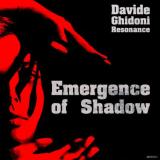
"Emergence of Shadow" (Mint Condition Records / Self Distribuzione)—the new album by Davide
Ghidoni, produced by Gianluca Pighi—is arriving: its digital release is set for Friday, September 11,
while the vinyl will be available starting Friday, September 18.
A trumpeter with a career marked by international collaborations, Ghidoni here signs his most
personal project to date. It is a predominantly instrumental record in which the trumpet becomes a
voice, a narrative, and an emotion. The only vocal track is "Come On Closer," performed by Heidi
Vogel (The Cinematic Orchestra), creating a moment of suspension and intensity within the project.
Davide Ghidoni’s passion for music and the trumpet was born in his childhood around the age of ten,
fueled also by Western films and Ennio Morricone’s soundtracks: those melodies, where the trumpet
played a central role in the duels of The Good, the Bad and the Ugly, deeply shaped the artist's
imagination and sound.
Ghidoni has always maintained an open and curious approach, letting himself be inspired by different
genres, artists, and musical cultures. His projects naturally coexist with influences ranging from rock
to soul, jazz to blues, and other languages that have left a mark on his path. Rather than identifying
with a single genre, he prefers to view music as a guiding thread capable of uniting different styles
through emotion, sensitivity, and respect for artistic identity.
"Emergence of Shadow" represents a new chapter in his journey. After numerous collaborations with
various artists, the musician felt the urge to undertake a completely his own project, giving shape to
ideas he had nurtured for a long time.
The record is inspired by the 1970s soul, rock, and blues sounds, but the goal is not to faithfully
reproduce or imitate those genres: the atmospheres, themes, and arrangements recall that sonic
world, yet are reinterpreted through a personal and original sensibility. The trumpet remains the
primary narrative element, supported by meticulous arrangements and a solid rhythm section that
enhance its character and expressive intensity.
Alongside the sounds that distinguish his path, the album also explores deeper emotional
dimensions. Some tracks are fluid and atmospheric, born from the desire to recount vibrations
without rigid schemes, letting melodies and dynamics guide the listener on an inner journey. The aim
is to offer an engaging listening experience in which music communicates directly, beyond words.
The album encapsulates everything Davide Ghidoni wanted to express and fully represents his
artistic identity: a timeless instrument to communicate emotions and engage in dialogue with different
musical traditions, always keeping the pursuit of musical quality and sharing with the public at its
core.
Pioneering Ghanaian musician King Ayisobareturns September 4, 2026 with his forthcoming seventh album Pure Confusion, recorded and produced by On-U-Sound’s Adrian Sherwood.
Ayisoba is one of Ghana’s most distinctive musical voices. The world’s foremost player of the kologo - a homemade two-string lute fashioned from a calabash and covered in goatskin - he delivers fiercely political and socially observant songs using three different voices, including the voice of his grandfather that possessed him as a child. Sherwood meanwhile is the pioneering British producer and founder of On-U Sound whose hugely influential career has connected dub, post-punk, industrial, hip hop and experimental music through collaborations with artists including Lee “Scratch” Perry, Mark Stewart, Horace Andy, Sinéad O’Connor, Nine Inch Nails and Depeche Mode.
Ayisoba and Sherwood first collaborated during a BBC Radio 3 Late Junction session at Maida Vale in 2017, organised by Ayisoba’s long-time collaborator Arnold de Boer/Zea of The Ex. The pair immediately connected, and during the pandemic, when Adrian’s long-time African Head Charge collaborator Bonjo Iyabinghi Noah was in Ghana looking for musicians to collaborate with Sherwood suggested Ayisoba, who eventually featured on two tracks on African Head Charge’s 2023 album A Trip To Bolgatanga (Bolgantanga is the region Ayisoba is from). Ayisoba then returned to the UK in late 2024 and travelled to Sherwood’s Ramsgate studio where the pair laid down the songs that would become Pure Confusion: “All the songs were already in my head,” says Ayisoba. “This album is all recorded live, over one afternoon. Adrian only plays live, and I like that. And he works hard - he doesn’t sleep. I woke up in the night and he was still working.”
“In my role producing it, I just let it roll to make a good vibe,” says Sherwood. “We recorded it completely live, did some programming and processing on some tracks, using dub techniques live on the mixing desk and adding some slick touches. We wanted the colours on the album to swing off what Ayisoba was doing, so we invited some friends to participate. Doug Wimbish (Sugar Hill Gang) arrived from America and lent his services playing bass on a couple of tracks; the wonderful Ivan Hussey (Celloman) played bass, keyboards and cello - cello is not really featured on African recordings so we thought it would be really cool to try it. I'd been working with Alex White (Fat White Family/Primal Scream) on my album (The Collapse of Everything) and so he added sax to a few tracks and I brought Alan Glenn down especially - Alan was in Little Axe but also Nine Below Zero and played in the Yardbirds – to add some mouth organ; Mark Bandola added a bit of flavour with his Juno, Ayisoba’s long-time Ghanian collaborator Ayuune Sule added some percussion and vocals and Matt Smith did some programming.”
“King Ayisoba is quite amazing, so unique,” Sherwood continues. “He’s got his own handmade instrument and three different voices - when you’re listening you think it’s three different people. He’s a breath of fresh air, full of love for the music which he wants to share with everybody. Some tracks we kept very straight and others we experimented with - adding dubby psychedelic little touches to trip you out a bit. The added production we did at On-U has given it a shine while still keeping it vibrant, live and spontaneous. I’m really proud of this record”.
On Pure Confusion, Ayisoba documents the anxieties, contradictions and changing social realities of contemporary Ghana. “Land is a problem for everyone,” says Ayisoba of the opening track “Property”. “If you don’t build on your land they will take it away. Plenty corruption in Ghana, plenty confusion. They sell the land to two, three, four people and then everybody fights.”
Elsewhere Ayisoba explores illness, spirituality and social stigma on “Bemba”, warning against hiding sickness out of shame or fear of “bad juju”: “People hide their sickness and the sickness kills them.” “Tewigiloge” reflects on cultural difference and open-mindedness encountered through world travel: “We will tour the whole world and we will see many things we may not like or understand… your eyes will see, but don’t talk - you have to be open-minded.”
Spirituality runs deeply throughout the album. Ayisoba’s grandfather was a respected spiritual healer whose presence the musician says still guides him today. “The grandparents’ spirits are the ones you can contact,” he explains of the spiritual chant “Nkaase”. “This song talks about the forefathers.” The closing track “Leeda-Mampanga (It’s Not My Strength)” acts as a statement of humility and gratitude: “You have to be humble, even if you have talent. God gives you the power.”
For more than two decades, King Ayisoba has been one of Africa’s most distinctive musical innovators, transforming northern Ghanaian kologo traditions into a bold contemporary sound rooted in hypnotic rhythms, social commentary and spiritual intensity. Since the breakthrough success of 2006’s Modern Ghanaians, Ayisoba has built an international following through acclaimed albums, relentless touring and collaborations with artists including Lee “Scratch” Perry, Orlando Julius and African Head Charge. Performances at Roskilde, WOMAD, Le Guess Who? and the Barbican have further cemented his reputation as a singular live performer and cultural force.





![MAJOR FORCE PRODUCTIONS - LOVE THEME, Pt. 2 (7inch Edit) [feat. DJ Krush] (7")](https://www.deejay.de/images/l/5/9/1266359.jpg)