quête:six by seven

Genres
Tout
Eva Novoa - Solo (I)

Eva Novoa

Solo (I)

12inch5988-1
577 RECORDS
30.05.2026

'Brooklyn-based pianist and composer Eva Novoa presents Eva Novoa Solo (I), her first solo piano recording and seventh album with 577 Records. Recorded at the legendary Sear Sound Studios in Manhattan, the album captures Novoa alone in the studio, embracing the artistic challenge of vulnerability, introspection, and creative freedom that defines the solo piano format.
'After several years working primarily within piano trio settings and other ensemble configurations, Novoa turned inward, embarking on a deeply personal sonic journey. Solo (I) marks a pivotal moment in her artistic evolution and establishes the foundation for a new series of solo recordings.
'An active and respected member of New York’s experimental and creative music community, Novoa prepared extensively for this session through months of solo performances - mostly in Brooklyn - leading up to the recording. These included a standout solo concert at the Brooklyn edition of the New York Forward Festival, where her approach to the solo format fully crystallized.
'On Solo (I), Novoa expands the traditional piano vocabulary. While the grand piano remains her primary instrument, she also performs on Fender Rhodes and electric harpsichord (the latter to be explored further in upcoming volumes), incorporating Chinese gongs, additional percussion, vocals, and even whistling on select tracks. The result is an intensely intimate and sonorous experience - raw, cinematic, and emotionally charged.
'Eva Novoa Solo (I) is the first installment in a planned trilogy of solo recordings. Across six original pieces, Novoa approaches the solo piano format with boldness, rhythmic fire, and fearless energy. Her percussive use of the instrument, expansive dynamic range, and deep command of tone transform the piano into both an emotional soundscape and a cinematic narrative.
'Recorded in Fall 2024, Eva Novoa Solo (I) captures an intimate session and deeply emotive music shaped by mature technical mastery and a highly compositional approach. Novoa dazzles on piano, Fender Rhodes, electric harpsichord, Chinese gongs, vocals, and whistle, revealing an expansive and deeply personal sonic universe.
'Originally from Barcelona, Spain, Eva Novoa has cultivated her distinctive musical voice since childhood. Now firmly rooted in New York, she has performed internationally and collaborated with some of the most adventurous voices in jazz and beyond.'

pré-commande30.05.2026

il devrait être publié sur 30.05.2026

22,06 €
Upupayāma - Honesty Flowers LP 2x12"
  • 1: Fliiim / Laliīmph
  • 2: Gilded Meditations
  • 3: Mystic Chords of Memory
  • 4: Oyob
  • 5: In the Solstice Sun
  • 6: Sound Mirrors
  • 7: Mokushō
  • 8: Old Sky, Wandering Clouds
  • 9: Yuya
  • 10: Baobab
  • 11: Morning Temple

'Honesty Flowers' is the fourth studio album from Italian multi-instrumentalist Alessio Ferarri under the Upupayāma moniker. An epic double album set due for release May 29th 2026 on Fuzz Club, 'Honesty Flowers' finds Upupayāma's ever mind-blowing brew of organic psychedelic rock meets global grooves at its most percussive, lively and distorted. Equally hedonistic and heady, it courses through rhythmic funk grooves, doubled-down scorched fuzz riffing, winding motorik jams, tranquil drones and pastoral acid-folk across its seventy minute run time. A six-piece band live, where things take a more ever-evolving improvisation-based approach (see their recent 'Live At Fuzz Club Festival '25' LP), on the recordings Ferarri writes, plays and records everything himself – guitars, keys, flute, sitar, and an arsenal of percussion all feature. Never not working on new music, Ferarri started laying down these new tracks in his home barn studio in a small mountain village overlooking the city of Parma before its 2024 predecessor 'Mount Elephant' even hit the racks. The result was mixed by Chris Smith at Kluster Sounds (Kikagaku Moyo, Wax Machine) and mastered by Joseph Carra (King Gizzard, Babe Rainbow, ORB) On the new record, Ferarri says: "Honesty Flowers was born from listening to lots of funk music from all over the world, lots and lots of African music, and from listening to myself as I spent whole nights playing all kinds of percussion instruments. I would fall into a sort of trance and play the same rhythm for hours on congas or on a djembe. It's an album that was born above all from the beauty of being able to narrate the unknown and recognise yourself in it, which could translate into telling stories and bringing them to life.

pré-commande29.05.2026

il devrait être publié sur 29.05.2026

32,35 €
Robert Johnson - King of the Delta Blues Singers Vol.2 LP
  • A1: Kind Hearted Woman Blues
  • A2: I Believe I'll Dust My Broom
  • A3: Sweet Home Chicago
  • A4: Rambling On My Mind
  • A5: Phonograph Blues
  • A6: They're Red Hot
  • A7: Dead Shrimp Blues
  • A8: Preachin' Blues
  • B1: I'm A Steady Rollin' Man
  • B2: From Four Till Late
  • B3: Little Queen Of Spades
  • B4: Malted Milk
  • B5: Drunken Hearted Man
  • B6: Stop Breakin' Down Blues
  • B7: Honeymoon Blues
  • B8: Love In Vain

Robert Johnson was an American blues musician whose 1936 and 1937 recordings heavily influenced many, many future generations of artists. Despite the fact his recording career spanned a mere seven months, he is universally recognized as a master of the Delta blues style, one of the earliest-known styles of blues emerging from the Mississippi delta in the early twentieth century.

This second compilation of the King of the Delta Blues collects sixteen recordings previously available on the 78 rpm format and includes recordings of two Johnson songs that have since become blues standards: "Sweet Home Chicago" and "I Believe I'll Dust My Broom." In contrast to the deeply emotive songs released on the 1961 album, many of the tracks on this volume display Johnson's lighter side. In 2003 the record was ranked #424 on Rolling Stone's list of 500 Greatest Albums of All Time.

Whether he really needed to sell his soul to the devil at the crossroads to reach these great heights, we'll never know...

King Of The Delta Blues Singers, Vol.2 is available as a limited edition of 1000 individually numbered copies on yellow vinyl and includes an insert with liner notes by Pete Welding.

pré-commande22.05.2026

il devrait être publié sur 22.05.2026

31,30 €
Matt Gold & Dustin Laurenzi - Devotional Fade LP
  • A1: Devotional Fade
  • A2: Clown Car
  • A3: Morocco
  • B1: Cool Whip
  • B2: Soft Hold
  • B3: Seven on the Floor
  • B4: Arpeggio
  • B5: End of the Horn

Matt Gold and Dustin Laurenzi present Devotional Fade, a collaborative record of electroacoustic rhythmic improvisations – equal parts meditation and dance, released on We Jazz Records, 24th April. Laurenzi and Gold, key collaborators in the Chicago creative scene and with genre spanning artists such as Bill Callahan and Makaya McCraven, step forward here with a major artistic statement, a product of extended improv sessions capturing the duo's hypnotic interplay. This is the sound of two of Chicago's most vibrant instrumental voices listening deeply, communing in sound.

Recorded in Laurenzi's attic studio, Devotional Fade emerged from a series of weekly sessions over the course of a single month. The duo kept the tape rolling continuously each day and selected a number of immersive sonic worlds to present, oscillating between patient, sacred minimalism and wild, dancefloor-worthy combustion.

The pair set two parameters to heighten the sessions' stakes: editing would be kept to a minimum, and a rule of "no pitched overdubs" was put in place – ensuring that all melodic and harmonic gestures would have to be committed in real time. Laurenzi and Gold held true, only sparingly adding a stray shaker or brush to these already largely complete improvisations. Devotional Fade is imbued with quiet propulsion and ecstatic repetition.

Matt Gold is a guitarist, multi-instrumentalist, songwriter, and producer based in Chicago, IL. His work pulls from diverse traditions of electric and acoustic music. Matt has performed across six continents and contributed to over fifty recordings as a collaborator and instrumentalist, garnering critical praise from Pitchfork for playing "one of the most exhilarating guitar solos of recent memory, in any genre." Gold has several long-running collaborative bands spanning jazz, folk, experimental, and chamber music including Sun Speak, Storm Jameson, and Tin. He performs and records with an array of creative artists including Makaya McCraven, Marquis Hill, Jamila Woods, Natalie Merchant, and Greg Ward. Gold co-curates the record label and concert series Flood Music.

Chicago saxophonist/multi-instrumentalist Dustin Laurenzi has developed a personal approach to improvisation and composition that has garnered the attention of the city's creative music community. Laurenzi's music is inspired and informed by jazz, folk, and improvised music. His inventive improvisational sensibilities have made him a sought-after musician in many circles of Chicago's vibrant music scene and beyond. Laurenzi has toured extensively with songwriter Bill Callahan and is featured on Callahan's 2024 release Resuscitate! He has toured with Grammy award-winning artist Bon Iver and appears on the band's critically lauded 2016 release 22, A Million. Laurenzi has also performed with Jeff Parker & The New Breed, Marquis Hill, Makaya McCraven, Matt Ulery, Japanese Breakfast, and This Is The Kit.

pas en stock

Commandez maintenant et nous commanderons l'article pour vous chez notre fournisseur.

22,65 €
Onna - Onna Last Live 1983 LP 2x12"

Onna

Onna Last Live 1983 LP 2x12"

2x12inchAN56
An'archives
24.04.2026out soon

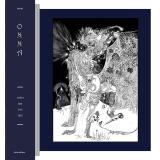
Onna Last Live 1983 includes the final performance by the original line-up of Onna, the psych-rock project of revered Japanese manga artist, Keizo Miyanishi. Onna’s legend has largely rested, until now, on one self-released and self-titled seven-inch from 1983. Reissued by Holy Mountain in 2009, its rediscovery, along with several archival live and studio sets that leaked out across the 2000s, signalled to a wider audience the power of Miyanishi’s strikingly hypnotic songwriting. With Onna Last Live 1983, though, we hear the group’s perfect line-up performing at its peak.

While Miyanishi was the core member and conceptualist of Onna, the other members of the group would also go on to make significant contributions to the Japanese underground. Guitarist Michio Kurihara would eventually be known for his membership of YBO2, Ghost and White Heaven, and collaborations with the likes of Boris and Damon & Naomi. Drummer Ken Matsutani formed Marble Sheep & The Run-Down Sun’s Children and The Mickey Guitar Band, while also running the Captain Trip label. Joined by the late bass player Yasui Yutaka, to whom the album is dedicated, this quartet only performed live in 1983; the live set here was recorded at Silver Elephant.

It’s a different line-up to the Onna duo that’s documented on their single. After Miyanishi and fellow manga artist Mafuyu Hiroki recorded that material, Miyanishi decided he wanted to start playing gigs; Hiroki left, and Kurihara, Matsutani and Yutaka joined soon after. This line-up allowed Miyanishi to significantly expand Onna’s powers, leading to a sound that Kurihara once described to Ptolemaic Terrascope magazine as “repetitive and heavy, yet quite orthodox.”

The songs here are simple yet deeply effective in their repetitive power, generally revolving around two or three simply strummed chords for guitar. Bass and drums repeatedly lock into mantra-like grooves as Kurihara’s guitar scales the walls, with Miyanishi’s consumptive moans and sighs sent torquing through FX. The cumulative effect of the seven songs here is very heavy indeed; if the prologue “Always…” drifts beautifully through five minutes of placid, beseeching melancholy, the epilogue, “Never Seen A Light Like This”, spirals out into sixteen minutes of glazed-over psych-rock, completely monomaniacal and thrilling in its slow-motion tumult.

Throughout, you can hear Miyanishi and co. reaching for something ineffable, something beyond and between the notes. It’s a phenomenal performance; it’s also no surprise that the group disintegrated after this show, given its intensity. Matsutani and Yutaka left after the Silver Elephant show, with Miyanishi and Kurihara continuing through the first half of 1984 firstly as a duo, and then a trio with new drummer Yoshiki Ueonyama. Kurihara left soon after. But Onna Last Live 1983 is proof plenty of the powers of the original Onna quartet, sending their Rallizes/Velvets dream-mantras off into darkened, stormy skies.

pré-commande

Cet article n'a pas encore été publié. Vous pouvez pré-commander le produit maintenant.

50,00 €
GIMMY - Labour of Love

GIMMY

Labour of Love

12inchLPTDES046
Third Eye Stimuli
10.04.2026
également disponible

Recycled Cherry" (Red/Black) Vinyl[28,53 €]


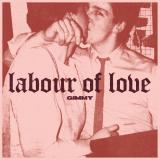
Australian indie and garage-rock firebrand, GIMMY unveils her new EP Labour of Love — a raw, emotionally charged collection that fuses gritty indie rock, post-punk bite and tender poetic expression, all powered by Gemma Owens’ unmistakable vibrato and fiercely honest songwriting.

Where her 2024 debut Things Look Different Now was a slow-burn, two-to-three–year voyage of change and introspection, Labour of Love hits with an entirely new force: intuitive, immediate and deeply connected to Owens’ emotional world. Written over six months and captured in an intense 4–5 day studio burst with producer Sam Joseph (King Gizzard), the EP moves with the urgency of something that needed to be felt and heard, right away.

Across seven compelling tracks, GIMMY dives into social anxiety, grief, falling in love and the chaotic beauty of everyday life, with each song arriving “on its own terms” — born from late-night home writing sessions, snippets of inspiration while travelling and moments of full-band electricity. Sonically, Labour of Love nods to Soft Play, Nick Cave, Fontaines D.C., The Preatures and The Smiths, yet remains unmistakably GIMMY: expressive, gritty, vulnerable, cheeky and alive in every moment.

Ultimately, the EP is an unfiltered snapshot of emotional truth, celebrating life’s highs, lows and everything in between, and showcasing GIMMY at her most dynamic, powerful and compelling to date.

pré-commande10.04.2026

il devrait être publié sur 10.04.2026

27,31 €
GIMMY - Labour of Love

GIMMY

Labour of Love

12inchLPTDES46C
Third Eye Stimuli
10.04.2026
également disponible

Black Vinyl[27,31 €]


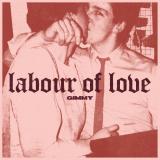
Australian indie and garage-rock firebrand, GIMMY unveils her new EP Labour of Love — a raw, emotionally charged collection that fuses gritty indie rock, post-punk bite and tender poetic expression, all powered by Gemma Owens’ unmistakable vibrato and fiercely honest songwriting.

Where her 2024 debut Things Look Different Now was a slow-burn, two-to-three–year voyage of change and introspection, Labour of Love hits with an entirely new force: intuitive, immediate and deeply connected to Owens’ emotional world. Written over six months and captured in an intense 4–5 day studio burst with producer Sam Joseph (King Gizzard), the EP moves with the urgency of something that needed to be felt and heard, right away.

Across seven compelling tracks, GIMMY dives into social anxiety, grief, falling in love and the chaotic beauty of everyday life, with each song arriving “on its own terms” — born from late-night home writing sessions, snippets of inspiration while travelling and moments of full-band electricity. Sonically, Labour of Love nods to Soft Play, Nick Cave, Fontaines D.C., The Preatures and The Smiths, yet remains unmistakably GIMMY: expressive, gritty, vulnerable, cheeky and alive in every moment.

Ultimately, the EP is an unfiltered snapshot of emotional truth, celebrating life’s highs, lows and everything in between, and showcasing GIMMY at her most dynamic, powerful and compelling to date.

pré-commande10.04.2026

il devrait être publié sur 10.04.2026

28,53 €
Iivana Mišukka & Arja Kastinen - Iivana Mišukka (Tape)
  • 01: Maanitus & Tšiižik
  • 02: Markka
  • 03: Melkutus
  • 04: Letška
  • 05: Kuuen parin hoirola
  • 06: Brišatka
  • 07: Tšiižik
  • 08: Kirkonkellot
  • 09: Kirkonkellot korkea
  • 10: Hoirola, 3 parin
  • 11: Lippa
  • 12: Kyngäkiža
  • 13: Ristakondra
  • 14: Vanha polkka
  • 15: Viistoista
  • 16: Vanha valssi
  • 17: Kiberä
  • 18: Maanitus Kuokan kanteleella
  • 19: Tuuti lasta nukkumahe
également disponible

Vinyl[22,65 €]


Death Is Not The End present a further volume of Arja Kastinen's eerie amalgamations of 110 year old wax cylinders with her own meticulously transcribed takes, this time focussing in on Armas Otto Väisänen's field recordings of kantele player Iivana Mišukka (b. 1861 d.1919).

"Ivana Mišukka (1861–1919) was one of the Karelian kantele players recorded by the folk music researcher Armas Otto Väisänen on wax cylinders in 1916 and 1917. In the early 20th century, the remote areas of Border Karelia were undergoing the final phase of a transformation in musical culture, with the ancient runo song tradition giving way to newer forms of music. This transition is reflected in Mišukka's repertoire and choice of instrument. The ancient small kantele, hollowed out of a single piece of wood, was already rare at the turn of the century. Mišukka's kantele was a new type of instrument with 26 strings, constructed of several parts, but he played it using the traditional plucking technique. Like other Border Karelian kantele players, his repertoire consisted of music rooted in runosong culture, as well as newer dances and songs from the east and west. Most of the recorded material falls into the latter category.

Ivan Bogdanov Mišukka was born out of wedlock in Suursara village, Suistamo, on 1 May 1861. He began playing the kantele at the age of five or six, quickly mastering the instrument. In adulthood, he was considered one of the area's best master players. Mišukka was landless for most of his life and lived in different parts of the Suistamo parish. His first wife, Tekla Markintytär, died in 1897 at the age of 40, and his second wife, Jevdokia Filipintytär Jeminen, died in 1907 at the age of 50. Seven children were born from the first marriage, two of whom died young. The third wife, Maria Ignatintytär Gurnan (Kuurnanen), was a well-known master of lamentations. Together with Maria, Iivana Mišukka worked as a tenant farmer in the village of Suursara. Mišukka suffered from rheumatism, which prevented him from participating in physical work like Maria. This was apparently partly the reason why Iivana Mišukka went to earn extra money by playing the kantele on gig trips. He often had other traditional artists from Suistamo as his travelling companions, such as the runosingers Konstantin Kuokka and Iivana Onoila. Iivana Mišukka died in Leppäsyrjä village, Suistamo, on 18 May 1919 at the age of 58, and his kantele was donated to Teppana Jänis.

Mišukka only used 14 of the 26 strings on his kantele, playing the same tunes either a fourth higher or lower. He tuned his kantele to the major scale using fifths, except for a low seventh scale degree on the upper strings, but not below the fundamental. Since he did not use the seventh note of the scale on the upper strings at all, he could use the major scale both lower and a fourth higher with this tuning. According to Mišukka, the sound of higher, or 'finer', strings is 'more beautiful', while that of lower ones is 'greater'. Among runosingers, the size of the thirds varied, ranging from major to minor to neutral. A similar phenomenon can be observed in kantele tunings, where the third, sixth and seventh scale degrees vary in a comparable way.

During a meeting, Väisänen suggested that Mišukka play the smaller kantele belonging to Konstantin Kuokka. The idea was to bring it closer to the horn to improve the recording quality. However, the kantele was completely out of tune, and now Mišukka tuned it to the Lydian scale (track 18).

Using the old plucking technique, Mišukka placed his right middle finger on the fundamental tone, his right index finger on the second scale degree, his left middle finger on the third scale degree and his left index finger on the fourth scale degree, and his right thumb on the fifth. The thumb also played the notes above the fifth note of the scale. As Mišukka remarked to Väisänen: 'Peigaloll' tuloo enemb ruadoa' (the thumb has to do more work). However, he did not use the seventh note of the scale on the upper strings at all. Below the fundamental note, he played the seventh and sixth notes of the scale with his right middle finger of and the fifth note of the scale with his right ring finger. This fifth scale degree below the fundamental is almost always used as a drone. Sometimes, when the melody required it, Mišukka, like other players, also varied the fingering. He would also occasionally strike the same string with the side of his fingernail after plucking it.

The wax cylinder recordings of Karelian kantele players are kept in the archives of the Finnish Literature Society in Helsinki, Finland. Copies were made of them onto reel-to-reel tapes in both the 1960s and 1980s. The 1960s copies are mono and the 1980s copies are stereo. However, not all kantele recordings from these decades have survived.

The sound of the kantele is difficult to hear in wax cylinder recordings due to its low volume, and it occasionally becomes completely obscured by noise. During the copying process, the cylinder sometimes rotates unevenly, resulting in breaks or jumps in the music. Additionally, the rotation speed of the cylinder in the copies does not correspond to the performance speed of the original music, which alters the pitch. However, since Väisänen's precise notes are available in the archive, it is possible to deduce the melodies, their speed, and the tuning level of the kantele in the recordings. Of the copies of the original recordings from the 1960s and 1980s, I have selected the one that best met the requirements of this publication and adjusted the speed of the recording to align with Väisänen's notes. To enhance the listening experience, I have replayed the songs, which now partly overlap the old recordings on this release."

— Arja Kastinen

pré-commande27.03.2026

il devrait être publié sur 27.03.2026

16,39 €
Iivana Mišukka & Arja Kastinen - Iivana Mišukka LP

Death Is Not The End present a further volume of Arja Kastinen's eerie amalgamations of 110 year old wax cylinders with her own meticulously transcribed takes, this time focussing in on Armas Otto Väisänen's field recordings of kantele player Iivana Mišukka (b. 1861 d.1919).

"Ivana Mišukka (1861–1919) was one of the Karelian kantele players recorded by the folk music researcher Armas Otto Väisänen on wax cylinders in 1916 and 1917. In the early 20th century, the remote areas of Border Karelia were undergoing the final phase of a transformation in musical culture, with the ancient runo song tradition giving way to newer forms of music. This transition is reflected in Mišukka's repertoire and choice of instrument. The ancient small kantele, hollowed out of a single piece of wood, was already rare at the turn of the century. Mišukka's kantele was a new type of instrument with 26 strings, constructed of several parts, but he played it using the traditional plucking technique. Like other Border Karelian kantele players, his repertoire consisted of music rooted in runosong culture, as well as newer dances and songs from the east and west. Most of the recorded material falls into the latter category.

Ivan Bogdanov Mišukka was born out of wedlock in Suursara village, Suistamo, on 1 May 1861. He began playing the kantele at the age of five or six, quickly mastering the instrument. In adulthood, he was considered one of the area's best master players. Mišukka was landless for most of his life and lived in different parts of the Suistamo parish. His first wife, Tekla Markintytär, died in 1897 at the age of 40, and his second wife, Jevdokia Filipintytär Jeminen, died in 1907 at the age of 50. Seven children were born from the first marriage, two of whom died young. The third wife, Maria Ignatintytär Gurnan (Kuurnanen), was a well-known master of lamentations. Together with Maria, Iivana Mišukka worked as a tenant farmer in the village of Suursara. Mišukka suffered from rheumatism, which prevented him from participating in physical work like Maria. This was apparently partly the reason why Iivana Mišukka went to earn extra money by playing the kantele on gig trips. He often had other traditional artists from Suistamo as his travelling companions, such as the runosingers Konstantin Kuokka and Iivana Onoila. Iivana Mišukka died in Leppäsyrjä village, Suistamo, on 18 May 1919 at the age of 58, and his kantele was donated to Teppana Jänis.

Mišukka only used 14 of the 26 strings on his kantele, playing the same tunes either a fourth higher or lower. He tuned his kantele to the major scale using fifths, except for a low seventh scale degree on the upper strings, but not below the fundamental. Since he did not use the seventh note of the scale on the upper strings at all, he could use the major scale both lower and a fourth higher with this tuning. According to Mišukka, the sound of higher, or 'finer', strings is 'more beautiful', while that of lower ones is 'greater'. Among runosingers, the size of the thirds varied, ranging from major to minor to neutral. A similar phenomenon can be observed in kantele tunings, where the third, sixth and seventh scale degrees vary in a comparable way.

During a meeting, Väisänen suggested that Mišukka play the smaller kantele belonging to Konstantin Kuokka. The idea was to bring it closer to the horn to improve the recording quality. However, the kantele was completely out of tune, and now Mišukka tuned it to the Lydian scale (track 18).

Using the old plucking technique, Mišukka placed his right middle finger on the fundamental tone, his right index finger on the second scale degree, his left middle finger on the third scale degree and his left index finger on the fourth scale degree, and his right thumb on the fifth. The thumb also played the notes above the fifth note of the scale. As Mišukka remarked to Väisänen: 'Peigaloll' tuloo enemb ruadoa' (the thumb has to do more work). However, he did not use the seventh note of the scale on the upper strings at all. Below the fundamental note, he played the seventh and sixth notes of the scale with his right middle finger of and the fifth note of the scale with his right ring finger. This fifth scale degree below the fundamental is almost always used as a drone. Sometimes, when the melody required it, Mišukka, like other players, also varied the fingering. He would also occasionally strike the same string with the side of his fingernail after plucking it.

The wax cylinder recordings of Karelian kantele players are kept in the archives of the Finnish Literature Society in Helsinki, Finland. Copies were made of them onto reel-to-reel tapes in both the 1960s and 1980s. The 1960s copies are mono and the 1980s copies are stereo. However, not all kantele recordings from these decades have survived.

The sound of the kantele is difficult to hear in wax cylinder recordings due to its low volume, and it occasionally becomes completely obscured by noise. During the copying process, the cylinder sometimes rotates unevenly, resulting in breaks or jumps in the music. Additionally, the rotation speed of the cylinder in the copies does not correspond to the performance speed of the original music, which alters the pitch. However, since Väisänen's precise notes are available in the archive, it is possible to deduce the melodies, their speed, and the tuning level of the kantele in the recordings. Of the copies of the original recordings from the 1960s and 1980s, I have selected the one that best met the requirements of this publication and adjusted the speed of the recording to align with Väisänen's notes. To enhance the listening experience, I have replayed the songs, which now partly overlap the old recordings on this release."

— Arja Kastinen

pré-commande27.03.2026

il devrait être publié sur 27.03.2026

22,65 €
E the Artist - Six LP

E the Artist

Six LP

12inchNYAHH025LP
Nyahh Records
20.03.2026

E The Artist presents Six, his debut album for Nyahh Records; an incendiary opus of blown-out electronics and daring sonic abstractions, inspired by the seven seals, that posits E as a daring force within the Irish underground.

Garnering a fierce reputation both in Ireland and abroad despite minimal recorded output, the artist known as E instead boasts his infamy on the live circuit. The Nigerian-born, Dublin-based musician impressed over the years with a slew of memorable performances inspired by AfroPunkism, recontextualising contemporary black club genres into their loudest and most intense iterations. Following a brief side quest to Vienna early in 2025, E returned to Dublin relieved by the tangibility in familiarity of his surroundings. This inspired a period of personal reflection on self, mortality and religion in his cramped studio; from these sessions emerged his most substantial body of work to date in Six.
Inspired by the opening of the seven seals in the Book of Revelation, Six acts as a radical departure for E. Opener IDTYEK signals this change, a freak folk oddity that ill-prepares you for the road ahead. From MANTRAS’ obtuse techno through to RISE’s power electronics, E fulfils a listening experience intent on submission rather than interpretation. Dynamic contrasts temper the parameters of its sonic catharsis, a crescendo of geometric flow that challenges convention.

Six also extends the artist’s circle of collaborators. Ruby Eastwood and Mel Keane lend BRIDGE their poetry and creative instability respectively, frequent live collaborator Julia Louise Knifefist douses BLACKOUT with his signature guttural cries while KRAF’s obscured lyrics gives LINT a wayward edge. Bulgarian Umbrella offers the record its most substantial contribution on DROGO, a twenty minute meditation on life and death which forms the core inspiration for the album as a whole.
Six exists as a world obsessed with rationalising finality, a disorienting space between certainty and myth that stands as E The Artist’s most ambitious and strangely beautiful work to date.

pré-commande20.03.2026

il devrait être publié sur 20.03.2026

25,17 €
Manon Meurt - Unravel
  • 1: Timeless
  • 2: Peony Garden
  • 3: Marrow
  • 4: Moonflower
  • 5: Linen
  • 6: Boy Beneath
  • 7: Mirrors

Intricate structures with an intertwining of spontaneity and randomness, meeting the diverse genre influences of the band members from mediaeval music to shoegaze to noise. That is Unravel, the new album, and first in six years, from Czech band Manon Meurt.
"Unravel reflects the different stages of dissociation, a person's thoughts, observations - whether of the environment or of oneself - and admiration for the beauty and cruelty that nature mirrors," multi-instrumentalist and lyricist Kateřina Elznicová says of the album.
Produced by Eddie Stevens (Freakpower, Zero 7, Moloko, Roisin Murphy) the album was pieced together from recorded fragments, meticulously pieced together. The title Unravel refers to the development of the band, unravelling what they are to find the full potential of their music as well as uncovering the layered nature of the songs and emotions.
"Eddie Stevens’ approach to recording was a big surprise. We understood that there was no one right version of the songs. Each of our themes carries a certain energy that can manifest and blossom in many ways. Compared to previous records, the vision of each member was much more evident, while we learned not to cling to our individual ideas of a signifying break or a nu-metal bounce at the end of an ambient song. The main thing was a common concept," adds keyboardist David Tichý on creating the seven songs on the record.
Abum producer Eddie Stevens describes the collaboration, “Each album is an adventure. You do some preparation, check the route over and over, prepare for any eventuality that your packing space and imagination will allow, plan some places to stop and rest en route, places to eat, sleep, then consider the challenges - the ice wall, the summit, even just finding your way in foreign land. But despite all that planning, you can never really say for sure what’s going to happen, what unexpected path you might take, what strangers might invite you in for a cup of tea and to what ends. So it was making Unravel with Manon Meurt and engineer and studio owner Lukas Martinek at Svárov studios and of course back home in the relative safety of my studio. Musicians who quickly became friends showed me more than I showed them, people with ideas, with creativity seeping from their pores. Music making the right way: no blinkers, no walls, no preconceptions, no barriers, no rules. What a pleasure, and what a magical, technicoloured,
kaleidoscopic album we’ve made together, “
The combination of industrial material with plant motifs in the work Untitled_1 by Ukrainian artist Liza Libenko, which adorns the cover of Unravel, strongly attracted the band. After all, floral motifs have always been close to Manon Meurt's music. Libenko, a student of the Academy of Fine Arts and a finalist of the prestigious Austrian Strabag Artaward International Prize, has recently been working on overcoming the narrative boundaries of the canvas, the paintings "attack"the viewer. Sunflowers are a powerful symbol of life and the sun; in Libenko's paintings they are black and burnt, serving as an allegory for contemporary conditions. The work was photographed by photographer and artist Marcel Rozhoň, and the final processing of the Unravel album was done by graphic artist Zuzana Malá.

pré-commande19.02.2026

il devrait être publié sur 19.02.2026

22,65 €
ELIZABETH DAVIS - FLOWERS

ELIZABETH DAVIS

FLOWERS

12inchSON12-006
SOUTH OF NORTH
13.02.2026

'Flowers', the new EP from Elizabeth Davis, finds itself at the cross-section of many factors. In part, it’s the result of Davis’ obsession with a seminal folk song. But it also coincides with her rediscovery of the voice and language as an instrument. It was recorded during an autumn residency at Sternhagen Gut, the cultural refuge run by Gudrun Gut and Thomas Fehlmann, located deep in the Uckermark countryside halfway between Berlin and the Baltic coast.

The six tracks on 'Flowers' all take Pete Seeger’s ‘60s protest-folk song 'Where Have All The Flowers Gone' as their starting point. However, they veer off in different directions, from vocal loops and deconstructed lyrics, to instrumental drones and glitchy, manipulated rhythm tracks. Like many musicians, Davis has learnt composition by a process of disassembly, analyzing musical works piece by piece, and 'Flowers' began as one such forensic exercise. “But sometimes,” says Davis, “a source is so loaded up on meaning that the studies and experiments can become worthwhile and meaningful works in their own right.” 'Flowers' began to take on a life of its own, raising renewed questions about age-old themes such as war, authorship, translation and historical structures.

Davis is no stranger to cover versions. From studying violin to playing in free jazz and punk bands, interpreting other artists’ works has long been a key part of her musical approach. And since her radio show 'Deep Puddle' recently drew to a close after seven years, her experiments with narration and sound collage have found their way into her musical work once again. For 'Flowers', she cut up the source material (with a nod to Gysin and Burroughs), and reassembled the lyrics, the musical notes, and recordings by different performers, to create uncanny new forms.

But perhaps the biggest influence on 'Flowers' was conversations about music, art and pop subcultures with Gut. These dialogues helped Davis find a balance between far-out sound design experiments and catchy melodies, combining a certain avant-garde element and modern day songcraft. And it’s this sense of conversation, this revisiting of topics and renewal of ideas, that will keep us coming back to 'Flowers' long into the future.

pré-commande13.02.2026

il devrait être publié sur 13.02.2026

20,59 €
36 - Threewave LP 3x12"

Threewave is the complete synth trilogy from 36 and it unites three releases into a single, evolving statement shaped over five years. Spanning the Wave Variations, Symmetry Systems and Reality Engine releases, the project is rooted in self-imposed limitations and a carefully refined melodic palette that gave rise to a suite of interconnected transmissions. Minimalist sketches give way to warm, AI-era-inspired nostalgia, but always grounded by a distinctly human sensibility. Melancholic keys and glowing atmospheres balance precision with emotion before expanding into themes of perception, artificial intelligence and imagined realities. Together, these works make for a defining chapter in 36's partnership with the legendary Past Inside the Present.

pas en stock

Commandez maintenant et nous commanderons l'article pour vous chez notre fournisseur.

Last In: 7 months ago
44,96 €
Various - Wizzz! French Psychorama Volume 5 (67-75)

The journey through French-speaking pop archives continues with this fifth volume, packed with fuzz, gimmicks, and dissent. Far from the charts, the selected tracks display a great creative freedom, often backed by corrosive humor. Welcome to the surprising, kaleidoscopic, and colorful world of the late sixties and early seventies, Wizzz!
Born in Montauban, Robert Pico stumbled into music by chance when he met René Vaneste, then artistic director at Pathé-Marconi. René brought him to Paris to record his first 45 RPM EP in 1964. A year later, Pierre Perret introduced him to Vogue, where he recorded his second album with Claude Nougaro’s orchestra. Sylvie Vartan then introduced him to RCA, where he recorded four singles, including the astonishing "Chien Fidèle," a track backed by a hair-rising fuzz guitar. Alongside his solo career, he also composed for other artists like Alain Delon (the song was recorded but remains unreleased), Magali Noël, Bourvil, and Georges Guétary. In the Paris of the sixties, he mingled with Mireille Darc, Elsa Martinelli, Marie Laforêt, France Gall, Françoise Hardy, Petula Clark, Régine, Dani, Serge Gainsbourg, Joe Dassin, Franck Fernandel, Charles Level, and Roland Vincent. Despite his efforts and winning a Grand Prix Sacem for his final record, Robert Pico didn’t achieve the expected success in show business and decided to leave Paris and return to the Southwest, where he devoted himself to writing. He is the author of 23 books (including Delon et Compagnie, Jean-Marc Savary Editions 2025, a memoir about his youth and his many encounters). Today, he is relieved to never have become a celebrity and devotes himself to his work with passion.
In 1969, the Franco-Italian movie Erotissimo was released, directed by Gérard Pirès (who later directed Taxi in 1998, written and produced by Luc Besson). This pop comedy features Annie Girardot, Jean Yanne, Francis Blanche, Serge Gainsbourg, Nicole Croisille, Jacques Martin, and Patrick Topaloff. The soundtrack was written by Michel Polnareff and William Sheller, with lyrics by Jean-Lou Dabadie. "La Femme Faux-cils," performed by Annie Girardot. It recounts the feelings of a rich CEO's wife who seeks to develop her sex appeal under the influence of advertisement and magazines. Groovy, sparkling and light, this track, with ITS lush arrangements humorously critiques consumer society and feminine beauty standards.
“Je suis l’Etat” (1967) is the flagship track of the first EP by singer-songwriter Spauv Georges, aka Georges Larriaga, better known as Jim Larriaga (1941-2022). Born into a family of bakers, the young man was initially planning to become a hairdresser when he discovered English-speaking music through Elvis Presley and the Beatles. After this revelation, he decided he would become a songwriter and gave himself five years to succeed. He recorded his first two EP’s independently for RCA under the pseudonym Spauv Georges; meaning “that poor George”, a nickname given to him by the mother of her friend Jean-Pierre Prévotat (future drummer of the Players, Triangle, or Johnny Hallyday). Portraying a depressed and eccentric young man, Spauv Georges created corrosive and amusing songs that didn’t reach a wide audience, despite a TV appearance with Jean-Christophe Averty.
Supported by his loyal friend and fellow songwriter Jean-Max Rivière, Georges Larriaga met the future singer Carlos in the early '70s, then Sylvie Vartan’s assistant. He wrote songs for Carlos, including the popular "La vie est belle," "Y’a des indiens partout," and "La cantine", which went onto become a huge hit in 1972. He also composed for Claude François (“Anne-Marie”, 1971), Charlotte Julian (“Fleur de province”, 1972), helped launch child singer Roméo (who sold 4 million records), and later wrote the hit "Pas besoin d’éducation sexuelle" (1975) for the young Julie Bataille. In 1971, Jim recorded an album for Disc'Az: “L’univers étrange et fou de Jim Larriaga”, which featured pop gems like “La maison de mon père”.
The story of the song "Zoé" began when Pierre Dorsay, artistic director at Vogue Records, asked Swiss singer and musician Pierre Alain to write a song for a new female singer. The inspiration came when he realized that Zoé (the artist's name) was also the name of France's first atomic battery, created in 1948, which consisted of uranium oxide immersed in heavy water! The lyrics reflect a bubbling energy that must be handled with caution, while the instrumentation echoes this atomic theme, notably with the use of a theremin.
Zoé’s career lasted only as long as a single 45 RPM, but it seems Christine Fontane was the vocalist behind this pseudonym, who is known for several EPs, a good "popcorn" album in 1964, and a handful of children’s singles in the '70s. Regardless, the photograph on the cover is of a different girl entirely.
Later, Pierre Alain continued his career, writing songs for himself, Marie Laforêt, Danièle Licari, Alice Dona, Arlette Zola (3rd place in Eurovision 1982), and achieving multiple gold and platinum records in Canada. Also an inventor with several patents, president of the Romande Academy, and head of the French Alliance in Geneva, he now composes atonal music, books, and poetry. Moreover, he is also the host of "Les Mardis de Pierre Alain" at "Le P'tit Music'Hohl" in Geneva.
Filled with oriental choruses and fuzz guitar, "Fou" is from Jacques Da Sylva's only EP released by Vogue in 1967. Despite the quality of this recording, all traces of this singer disappear after this first effort.
Valentin is a baroque pop singer born in Belgium. He is the songwriter and composer of most of the tracks on his three singles released in the late 60s in Canada. A legend says that he reincarnated himself as Jacky Valentin during the 1970s for a rock'n'roll revival career in Belgium, but his older brother sadly debunked this story. Valentin's first two singles were arranged by Claude Rogen, a Parisian session pianist who had come to Canada to promote the song “Mister A Gogo”, a cover of David Bowie’s “Laughing Gnome”, adapted by singer Delphine, his wife at the time. Far from his usual network, Claude Rogen arranged music for Polydor, including the arrangements for “Je suis un vagabond” in 1969, a jerk tune with string arrangements and a furious optimism.
Jacques Malia wrote, composed, and recorded his only 45 EP for Festival in 1966. “Histoire de gitan” is an incredible beat track with bohemian scat that tells the story of a gypsy musician who came to Paris to make it in the Music-Hall, to no avail. The hero of the song and its author probably shared a similar fate, as Jacques Malia faded into anonymity after this remarkable attempt.
Bernard Jamet recorded two EPs for Barclay in the late sixties and co-wrote several songs with Christine Pilzer, Pascal Danel, and prolific songwriters Michel Delancray and Mya Simile. The track “Raison Légale” (1968), his masterpiece, immerses the listener in a courtroom right when a murderer is being judged, with jerk rhythm and free arrangements. A unique, paranoid, judicial, and psychedelic oddity.
Jean-Pierre Lebrot-Millers started his career in show business in 1967 as a singer and songwriter for the Philips label. After three singles, he wrote several songs of a new kind with his friend Pierre Halioche, in the midst of the sexual liberation movement and the democratization of drugs. With provocative lyrics, “Les filles du hasard” and “Barbara au Chapeau Rose” were released on a Philips singles in 1968. The character of Barbara was inspired by a queen of Parisian nightlife during the psychedelic years: model Charlotte Martin, who dated Eric Clapton from 1965 to 1968, then Jimmy Page from 1970 to 1983. Jean-Claude Petit’s arrangements, with a table-filled intro, soul brass, and Hendrixian guitar, emphasize the flamboyance of a hedonistic and sexy character, whose dog is named Junkie because “Junkie est un nom exquis”! The track was recorded live in three takes with a full orchestra.
Upon its release, the record was censored by Europe 1 and RTL due to its references to drug use. Jean-Pierre Lebrot was then banned from the airwaves and later dismissed by his record label. He changed his artist name to Jean-Pierre Millers, while his companion Pierre Halioche became D. Dolby for a new dreamy composition, “Chilla”, which Jean-Pierre produced himself with arrangements by Jean Musy. Once again, the song was immediately censored everywhere. After this setback, he decided to stop singing and started taking on odd jobs to support his Swedish wife and their son until the day he met Jean-Pierre Martin, then production manager at Decca, who had worked with Manu Dibango. Martin offered Jean-Pierre Lebrot-Millers, then employed at Rank Xerox, the position of artistic director at Decca. He accepted and became, a year later, promotion director (radio, press, TV). He worked on Julio Iglesias’s first album for Decca, which became a massive hit and allowed him to meet Claude Carrère. The latter asked him to write new songs and find their performers, much like a “talent scout.” It’s through him that Jean-Pierre discovered Julie Pietri and Corinne Hermès. He composed “Ma Pompadour” for Ringo, Sheila’s husband, and took the microphone again for the syncope hit “Rendez-Vous” in 1982.
That same year, Jean-Pierre Lebrot-Millers tried to release a track for which he had heavily gone into debt: “Si la vie est un cadeau”. Having recorded it in London, he presented it to numerous professionals, all of whom refused to get involved. The same thing happened with Antenne 2 and the Sacem when he proposed the song as France’s entry for Eurovision. He then met Haïm Saban, who was producing cartoon soundtracks and had just launched the Goldorak theme song. Saban, having listened to the song, declared it had the potential to become a hit. He sent Jean-Pierre and Corinne Hermès to meet the CEO of the Luxembourg radio and television network. The latter received them, asked to hear a verse and chorus a cappella in his office, and immediately hired them to represent Luxembourg at Eurovision 1983. They reworked the arrangements and recorded a new version with Haïm Saban as co-producer. The song ended up winning Eurovision 1983, a great comeback for our hero. He continued producing and hung out with the band Nacash in Belgium when a couple came to introduce their daughter for an impromptu audition in a hotel room. The girl sang “Les démons de minuit” while dancing to a radio cassette. Impressed, he had her take singing lessons for a year and composed a song for her (for which he had the melody and title, but no lyrics). This required him to go on the hunt for a lyricist, who ended up being Guy Carlier. They recorded the song, which was initially a ballad, at Bernard Estardy’s CBE studio, and gave the singer a new name: Melody. They showed the song around their industry network without success. Later, Estardy called Jean-Pierre to suggest changing the rhythm and making it pop-rock. Orlando, Dalida’s brother, liked the result and decided to co-produce the track. “Y’a pas que les grands qui rêvent » became a classic hit. The song has since been covered by Juliette Armanet (as a ballad, like the original) and Valentina.

Born into an aristocratic Breton family, Hervé Mettais-Cartier worked as a DJ at Queen Kiss, a nightclub in Poitiers, where he formed the band Les Concentrés with Michel (an actor) and Christian (a radio technician). Together, they created a repertoire of whimsical songs (“Ma bique est morte”, “J’suis un salaud”, “Fils de dégénéré”...) that they performed on stage dressed in white (in homage to “concentrated milk”). They performed at Bliboquet and Olympia in 1968 for the 10th edition of the “Relais de la chanson Française” organized by L’Humanité-Dimanche and Nous les Garçons et les Filles, sponsored by Pepsi Cola. Winners in the author-composer category, alongside Danish singer Dorte, their visibility allowed them to record a 45, and appear on television in Jean-Christophe Averty’s show. The A-side of the disc features Bruno le ravageur, a casatchok dedicated to Bruno Caquatrix, the director of Olympia, nicknamed in the song “Coq Atroce” or “croque-actrices”. The B-side is dedicated to “Fils de dégénéré”, a quirky tribute to Hervé's aristocratic roots, mixing absurdity with sophisticated vocal harmonies.
After Les Concentrés, Hervé Mettais-Cartier formed the duo La Paire et sa Bêtise with his friend Olivier Robert. They performed in Parisian cabarets and toured with Pierre Vassiliu. In the late 1970s, Hervé began a solo career. He recorded two albums for the Motors label in 1978 and 1979, which did not achieve their anticipated success due to lack of promotion. In 1980, he met Bernadette, with whom he started a family and created a “Chansons à voir” (songs to see) show that he performed until his death at the end of 2024.

Publicité comes from the final EP by the Missiles (Ducretet Thomson, 1966), a disc that also includes “La (nouvelle) guerre de cent ans”, featured on Volume 4 of our Wizzz! series. Please refer to the booklet for the story of the band.

“He’s 1.82 meters tall, 28 years old, weighs 135 kg, is black and Belgian”: this is the description of singer Hegesippe on the back of his sole single (Decca, 1967). He appears on the album cover wearing a Greek toga, like a hippie gag – we are at the end of the year 1967. In “Le crédo d’Hegesippe”, this former bodyguard of Antoine and the Charlots plays the delightful card of the thick brute converted to Flower-Power and non-violence, with arrangements by Jean-Daniel Mercier, aka Paul Mille.
“Ethéro-disco” was released on a promotional record for clients of the Maréchal company (Liège, Belgium) for the New Year 1979. Over a funky rhythm, celebrity impersonations (Brigitte Bardot, Jacques Dutronc, Fernandel…) deliver an enigmatic text about pharmaceutical products like ether, bismuth, and aspartate. The track was composed by Dan Sarravah (responsible for Joanna's “Hold-up inusité” featured on Wizzz! Volume 3) and Tony Talado, who was also a singer (one 45 in 1967), songwriter (with over a dozen credits between 1964 and 1985 in various styles from surf music to disco), author (Devenez Végétarien, Dricot Editions, 1985), ad designer, and psychologist.

Décollez-les is on the A-side of Mamlouk's only single, a pseudonym for Marsel Hurten, who is known for his work on several EPs in the late sixties, as well as composing music for Hervé Vilard’s “Capri, c’est fini”, Claude Channes' “La Haine”, Annie Philippe’s “On m’a toujours dit”, and Nancy Holloway’s “Panne de Cœur”.
This strange song, with Afrobeat horns and absurd dialogues between a chef and his kitchen staff, is the result of a collaboration between Marsel Hurten and one of his neighbors, a photographer from Pavillon-sous-Bois (93), where the musician settled after returning from the Algerian War. A music video was shot to promote the record.
Marsel Hurten was born in Tourcoing (59) into a musical family. At a young age, he joined the brass band founded by his grandfather, playing the piston before studying trumpet at the conservatory, as well as teaching himself how to play the guitar. As an orchestra musician, he toured in France, Belgium, Germany, and England. He released a series of solo 45’s between 1965 and 1968 for the DMF and Az labels before stopping recording to focus on working for other artists (Gilles Olivier, Noëlle Cordier…).
“L’amour nu” (Vogue, 1971) is the work of the short-lived Belgian band Mozaïque. The track, written by singer Jacques Albin, closely resembles another of his compositions, “Carré Blanc”, which he recorded in 1969 for Disc’AZ.
Represented by the Lumi Son micro-label based in Marignane (Côte d'Azur), Jean-Marc Garrigues released two 45 RPMs in the late sixties, defending the French jerk sound. The song “Je dis Non” is a short, joyful ode to youth, pop music, and rebellion.
Songwriter and performer Jacques Penuel released three singles. The first one, “Astronef 328” (Fontana, 1969), features a dizzying series of chords punctuated by sound effects, a sci-fi story, and arrangements by Jean-Claude Vannier.

We would like to sincerely thank Pierre Alain, Moon Blaha, Marsel Hurten, Bastien Larriaga, Jean-Pierre Lebrot-Millers, Bernadette Mettais-Cartier, Robert Pico, Olivier Robert, Claude Rogen, Micky Segura.

pas en stock

Commandez maintenant et nous commanderons l'article pour vous chez notre fournisseur.

Last In: 7 months ago
23,11 €
JACK AREL - KALEIDOSCOPE LP

Farfalla Records presents “Kaleidoscope”, its new compilation dedicated to the composer Jack Arel. His name belongs to a constellation of composers whose writing has hot stamped sixties and seventies pop music. Variety, television, cinema, ballet and theatre have all been touched by Jack Arel’s signature.

Take a trip through a psychedelic pop musical journey featuring 12 tracks recorded during his long and productive collaboration with the Chappell label and with his friends Pierre Dutour and Jean-Claude Petit by his side throughout.

This compilation features tracks such as ‘Psychedelic Portrait’, famously used as a music cue in the avant-garde cult British TV series The Prisoner.
The track ‘Strange Galaxy’ was utilised as the opening and closing theme for the Australian science fiction TV series Phoenix Five.
‘Purpose’, ‘May Be’ and ‘Something Happen’ are taken from the ultra-rare French soundtrack of the musical Je fus cet enfant là.
While the more adventurous may recognise the tracks ‘Picture of Spring’ and ‘Picture of Summer’ from the Danish underground horror film The Sinful Dwarf.

pas en stock

Commandez maintenant et nous commanderons l'article pour vous chez notre fournisseur.

Last In: 6 months ago
23,49 €
Braen / Peymont - Paese Sotto Inchiesta

At the end of the Sixties, the production of soundtracks for small and big classics of Italian cinema is now joined by another business which has proved to be less profitable but more creative and, in best case, free from the constraints imposed by clients on duty: the composition of music libraries. Almost all of the artists for the eighth art have finalized at least one or more music libraries. Names famous and not, old and young composers, real outsiders and meteors, usually hidden behind pseudonyms: this is the case, for example, of Braen and Peymont. The first needs no introduction, it was the one adopted by the former arranger, multi- instrumentalist, singer and composer Alessandro Alessandroni. The second is closely linked to the mysterious American composer, but resident in Italy, David Hoyt Kimball. The two are authors in different measure of an interesting album with an experimental background, “Paese Sotto Inchiesta” (1971), originally published by Flirt Records.

The titles of the tracks appear in connection with the socio-cultural climate of Italy after 1968 and can be relocated as a background for journalistic-like images. The latter is a hypothesis not supported by facts, but some titles seem to be referred to the perception of a subsisting economic backwardness of the southern regions compared to the other ones; to a situation of collective tension, thanks to the global revolutions; in addition to the new concerns with an ecological background. Overall, the seventeen tracks on the album are mostly 'dirty', characterized by an even atonal setting, with long repetitions in a noisy key, more fundamental reverbs and echoes for the different keyboard instruments. In a few words, abstract sounds, some guitar notes, echoes of Gruppo Di Improvvisazione Nuova Consonanza, flute melodies and proto- ambient intuitions. Composers like Alessandro Alessandroni and David Hoyt Kimball deserve to be rediscovered.

*Following the essence of the work, for this press, MPI release a 100% recycled vinyl that reduce waste, minimize environmental impact and support the planet*

pas en stock

Commandez maintenant et nous commanderons l'article pour vous chez notre fournisseur.

Last In: 8 months ago
23,32 €
MULUKEN MELLESSE - MULUKEN MELLESSE WITH THE DAHLAK BAND (ETHIOPIQUES)

Swan Song

The vinyl LP at the heart of this éthiopiques 31 tracks 2 to 11 was one of the very last vinyl records ever released in Ethiopia. But above all it represents, we felt, the absolute masterpiece of the Ethiopian Groove – the Swan Song of Swinging Addis. The album leaves a clear idea for posterity of the level of sophistication and mastery that modern Ethiopian music had achieved, before being crushed under the Stalino-military heel of the Derg – as the bloody revolution that was unfolding came to be called.

Ethiopia1976.

The Revolution that broke out in February 1974 rolled on in a ruthless march. The whole of Ethiopian society was utterly stunned. The bouquets of flowers handed joyfully to the first tanks of the coup d'état were to wilt very rapidly. From September 1976 to February 1978, 18 months of Red Terror (the name given by the junta itself) spilled blood throughout the country. This fratricidal conflict took its heaviest toll among students and youth. The shift from feudalism to a cruel and primitive Stalinism left the country's citizens deeply traumatised, and snuffed out any pretence of activism, whatever the sector of society. This ice age was to last for seventeen long years.

ሙሉቀን፡መለሰ Mulukèn Mellèssè Muluqän Mälläsä

It was three tracks by Muluken that served as the opener for éthiopiques-1 more than 25 years ago. Seven more tracks appeared on éthiopiques-3 and 13, all accompanied by The Equators, which was soon to become the Dahlak Band.

The first track, Hédètch alu, also the very first piece that Muluken ever recorded, left audiences both unsettled and amazed. Reflecting the singer's extremely young age (he was just 17 at the time), this angelic voice mystified many, who thought they were in fact listening to a feminine voice. He was not yet 22 when he released his last vinyl record in 1976 with Kaifa Records (KF 39LP), one of the very last to be issued in Ethiopia, before the cassette tape became the dominant medium for music distribution – and before the new revolutionary regime put a stop to all independent musical life, via an unspeakable barrage of prohibitions and other persecutions.

Mulu qèn, literally, “A well filled day”. This tender maternal intention wasn't enough to ward off the cruelty of fate. His mother's premature death drove Muluken to leave his native Godjam, in northeast Ethiopia, to live with an uncle in Addis Ababa. Born Muluken Tamer, he took his uncle's last name – Mèllèssè.

The spelling Muluken appeared in his administrative records. Transcription of Amharic to the Latin alphabet, both in Ethiopia and for scholars, gives rise to controversies and quibbles that can never be neatly settled. French allows for a closer approximation of the original pronunciation, thanks to its battery of accent marks, confusing as they may be to anglophones.

Between rather accommodating administrative record-keepers and the various versions that pop up in interviews given by the artist, Muluken's year of birth oscillates between 1953 and 1955…

1954? One thing is certain: the artist's talent made itself known very early indeed, because he got his start in 1966-67, at the age of 13 or 14. Photos from the period attest to his extreme youth. It's a strange sort of initiation for a very young teenager to become a sensation in the heart of Addis's nightlife at the time, Woubé Bèrèha – the Wilds of Woubé. And what's more, in the club of the Queen of the Night, the Godjamé Assègèdètch Alamrèw herself, the very same that was portrayed by Sebhat Guèbrè-Egziabhér in his novel-memoir Les Nuits d’Addis Abeba2… The legendary female club owner who is remembered to this day by the capital's ageing boomers.

Muluken first tried his hand at the drums, before he grabbed the microphone. He emigrated briefly to the Zula Club, across the street from the old Addis Post Office, one of the ground-breaking bars of the burgeoning musical scene, before joining the Second Police Band in 1968, for around three years. He spent a few months with the short-lived Blue Nile Band founded by saxophonist Besrat Tammènè. As the musical scene grew increasingly successful, and pulled slowly but decisively away from its institutional ties, Muluken released his first 45rpm single in February 1972 (Amha Records AE 440). It was included in two LP Ethiopian Hit Parade compilation albums in September of the same year. All in all, Muluken released eight two-track 45s and the same number of original cassette tapes between February 1972 and 1984, the year that he departed for permanent exile in the USA. After converting to Pentecostalism in 1980, Muluken gradually abandoned all secular musical activity. In 1985, at the end of a concert in Philadelphia, he decided to quit concerts and recording for good. Mèlakè Gèbré, the historic bass player from the Walias band who was playing with him that night, recalls that everything appeared so irredeemably diabolical in Muluken's eyes, that it was to be the end of his contribution to Ethiopian Groove.

The end of the story, the beginning of a legend.

Dahlak Band, forgotten by History

Aside from his personal history and vocal talents, it must be remembered that Muluken Mèllèssè was one of the biggest names in the musical innovations that marked the end of the imperial period. These éthiopiques aim to convince those who are just discovering this hidden gem... As for Ethiopians themselves, they are to this day captivated by this singular and atypical figure in the Abyssinian pop landscape – even though he withdrew from public life some 40 years ago. Incorrigible devotees of poetic twists, of more or less hidden meanings, Ethiopians appreciate above all the care Muluken took in choosing his lyrics and the writers who penned them, such as Feqerte Haylou, Alemtsehay Wodajo and, here, Shewalul Mengistu (1944-1977). Love songs, written by women, a far cry from the conventional drivel that pleases sappy sentimentalists.

Muluken is equally acclaimed for his perfectionism when it came to music, the opposite of the overly casual approach that is all too common. He remained a faithful partner of musicians who came from a lineage that borrowed from several inventive and pioneering bands (Venus, Equators, Dahlak). Amongst them were certain artists who began their musical lives with Nersès Nalbandian at the Haile Sellassie Theatre and who come of age in around 1973 – at just the wrong time, you might say. Among them were the pillars Shimèlis Bèyènè (trumpet), Dawit Yifru (keyboards) and Tilayé Gèbrè (sax & flute). Most notably Tilayé Gèbrè, certainly one of the most important musicians, composers and arrangers of his generation, of the end of the imperial era, and of the early years of the Derg.

It was only in 1981 that a miraculous opportunity arose for Tilayé to escape the Stalinist paradise of the dictator Menguistou Haylè-Maryam. Once again it was Amha Eshèté (1946-2021) who provided a solution. The spirited and courageous producer, who had been in exile in Washington since 1975, succeeded, thanks to his incredible perseverence, in bringing the Walias Band to the USA. It was, in fact an extended Walias Band comprising ten musicians3, six of whom chose to slip away after a few concerts and the recording of an LP (The Best of Walias, WRS 100). Tilayé Gèbrè was one of these. He has been living in the USA ever since. There he joined the then-nascent Ethiopian diaspora, which lived largely unto itself, and was making only very modest headway in the American musical market. It seems unfair that Tilayé Gèbrè and the Dahlak Band were not able to benefit earlier from the public recognition that they do deserve.

A similar draining away of the top-rate talents would lead to the reorganization of the major groups of the “Derg Time”. The remaining artists spread themselves around between Ibex Band (renamed Roha Band), Ethio Star Band and a remodeled Walias Band. That spelled the end of the Dahlak Band.

With this record, produced by the essential Ali Abdella Kaifa a.k.a. Ali Tango, we can appreciate everything that the Derg not only destroyed, but also prevented from flourishing. This gem of Ethiopian-style afrobeat came out in 1976 (and, by way of a parenthesis, before the FESTAC 1977 in Lagos, which was attended by an impressive delegation of Ethiopian musicians — although Fela was already personna non grata in his own country). Despite everything that might distinguish this ethio-groove from Fela’s music – no colonial axe to grind, no question of political confrontation with the authorities, no claims to negritude or Africanism for the Ethiopian musicians, and less extrovertion! –, this LP fits beautifully into the saga of intense and electrified soul of the new “African” groove that Fela and Manu Dibango embodied so well from that point onwards.

In restoring this record to its place in the afrobeat epic, it can be seen that, if nothing else, the timeline bestows a legitimate pedigree and a historical primacy to works that had no international impact when they were originally released.

Warning! Masterpiece!

pas en stock

Commandez maintenant et nous commanderons l'article pour vous chez notre fournisseur.

Last In: 3 months ago
20,59 €
JACKY COUGAR & THE VAMPYRES FROM AFRICA - JACKY COUGAR & THE VAMPYRES FROM AFRICA LP
  • 1: Mic Czech
  • 2: Fuck the Police
  • 3: Jeighdean (Approximate)
  • 4: Grim Up North
  • 5: Nancy
  • 6: Abok?s Angelika
  • 7: Fuck Life
  • 8: Festival Era Extract
  • 9: Altamont Blues
  • 10: Skinhead Reggae
  • 11: Theodora?s Angelika

Debut solo album from DC polymath Jack Abok. When not making zines and visual art, singing for Des Demonas' or drumming AND singing for SEXFACES, Abok's busied himself by bringing this, his most personal and ferousious vision, to (immortal) life with VAMPYRES FROM AFRICA. 11 tracks of electro punk, melding Abok's massive love for the delta blues, post punk, Krautrock and hip hop. Or, in his own words: VAMPYRES FROM AFRICA MANIFESTО: 1. Ideas > skill 2. Don't be a musician 3. Cool > smart 4. It's not about money or being liked, it's about expressing ourselves. 5. Bands should have an expiration date 6. Fuck originality! 7. Don't stop creating And Syd's Angelika Piper at the Gates of Dawn: "All movements is accomplished in six stages And the seventh brings return The seven is the number of the young light It forms when darkness is increased by one Changel return / success Going and coming without error Action brings good fortune Sunset"

pré-commande12.12.2025

il devrait être publié sur 12.12.2025

28,53 €
Beatrice Dillon - Workaround LP
  • 1: Workaround One
  • 2: Workaround Two
  • 3: Workaround Three
  • 4: Workaround Four
  • 5: Workaround Five
  • 6: Clouds Strum
  • 7: Workaround Six
  • 8: Workaround Seven
  • 9: Workaround Eight
  • 10: Workaround Nine
  • 11: Square Fifths
  • 12: Workaround Bass
  • 13: Pause
  • 14: Workaround Ten

‘Workaround’ is the lucidly playful and ambitious solo debut album by rhythm-obsessive musician and DJ, Beatrice Dillon for PAN. It combines her love of UK club music’s syncopated suss and Afro-Caribbean influences with a gamely experimental approach to modern composition and stylistic fusion, using inventive sampling and luminous mixing techniques adapted from modern pop to express fresh ideas about groove-driven music and perpetuate its form with timeless, future-proofed clarity. Recorded over 2017-19 between studios in London, Berlin and New York, ‘Workaround’ renders a hypnotic series of polymetric permutations at a fixed 150bpm tempo.

Mixing meticulous FM synthesis and harmonics with crisply edited acoustic samples from a wide range of guests including UK Bhangra pioneer Kuljit Bhamra (tabla); Pharoah Sanders Band’s Jonny Lam (pedal steel guitar); techno innovators Laurel Halo (synth/vocal) and Batu (samples); Senegalese Griot Kadialy Kouyaté (Kora), Hemlock’s Untold and new music specialist Lucy Railton (cello); amongst others, Dillon deftly absorbs their distinct instrumental colours and melody into 14 bright and spacious computerised frameworks that suggest immersive, nuanced options for dancers, DJs and domestic play. ‘Workaround’ evolves Dillon’s notions in a coolly unfolding manner that speaks directly to the album’s literary and visual inspirations, ranging from James P. Carse’s book ‘Finite And Infinite Games’ to the abstract drawings of Tomma Abts or Jorinde Voigt as well as painter Bridget Riley’s essays on grids and colour. Operating inside this rooted but mutable theoretical wireframe, Dillon’s ideas come to life as interrelated, efficient patterns in a self-sufficient system.

With a naturally fractal-not-fractional logic, Dillon’s rhythms unfold between unresolved 5/4 tresillo patterns, complex tabla strokes and spark-jumping tics in a fluid, tactile dance of dynamic contrasts between strong/light, sudden/restrained, and bound/free made in reference to the notational instructions of choreographer Rudolf Laban. Working in and around the beat and philosophy, the album’s freehand physics contract and expand between the lissom rolls of Bhamra’s tabla in the first, to a harmonious balance of hard drum angles and swooping FM synth cadence featuring additional synth and vocal from Laurel Halo in ‘Workaround Two’, while the extruded strings of Lucy Railton create a sublime tension at the album’s palatecleansing denouement, triggering a scintillating run of technoid pieces that riff on the kind of swung physics found in Artwork’s seminal ‘Basic G’, or Rian Treanor’s disruptive flux with a singularly tight yet loose motion and infectious joy. Crucially, the album sees Dillon focus on dub music’s pliable emptiness, rather than the moody dematerialisation of reverb and echo. The substance of her music is rematerialised in supple, concise emotional curves
and soberly freed to enact its ideas in balletic plies, rugged parries and sweeping, capoeira-like floor action. Applying deeply canny insight drawn from her years of practice as sound designer, musician and hugely knowledgable/intuitive DJ, ‘Workaround’ can be heard as Dillon’s ingenious solution or key to unlocking to perceptions of stiffness, darkness or grid-locked rigidity in electronic music. And as such it speaks to an ideal of rhythm-based and experimental music ranging from the hypnotic senegalese mbalax of Mark Ernestus’ Ndagga Rhythm Force, through SND and, more currently, the hard drum torque of DJ Plead; to adroitly exert the sensation of weightlessness and freedom in the dance and personal headspace.

pré-commande05.12.2025

il devrait être publié sur 05.12.2025

25,00 €
Super Furry Animals - Love Kraft
  • A1: Zoom!
  • A2: Atomik Lust
  • A3: The Horn A4) Ohio Heat
  • B1: Walk You Home
  • B2: Lazer Beam
  • B3: Frequency
  • B4: Oi Frango
  • C1: Psyclone!
  • C2: Back On A Roll
  • C3: Cloudberries
  • C4: Cabin Fever
  • D1: *surprise*

Originally released on Mon 22 August 2005, the Furries’ third and final album to be recorded by Epic Records, Love Kraft is to be reissued on double vinyl, 2CDs, including the 22-track bonus CD, Kiss Me With Apocalypse and digital formats on Fri 24 October 2025 via the Cardiff-based independent label, Strangetown Records. Four previously unheard tracks are drawn from the vaults, including the squidgy ELO-stomp of drummer, Daf Ieuan-led Rock ‘N’ Roll Flu, plus the distorted space-jam of Cae Marw, the band’s deep-bass sketch of Palo Alto and ghostly, percussive morsel of Bedw Arian.

The album followed six previous albums by the band, including their statement debut album, Fuzzy Logic in 1996, melding an attention-demanding mix of literary, narcotic and musical influences. Maintaining a shape that was ill-fitting in the jigsaw of other 90’s guitar bands, their follow-up, UK Top Ten album, Radiator brought the hooky squelch of the bona fide indie dancefloor classic, The International Language of Screaming. The next decade saw the release of the first Top 20-charting, Welsh language album, Mwng (2000), followed by further experimentation and commercial success with Rings Around The World (2001) and Phantom Power (2003).

Love Kraft’s sense of cohesion, collaboration and free-flow of rich harmony has been credited to the five-piece escaping Wales to record in the shimmering heat of Figueres, Catalunya. Bringing famed Beastie Boys producer, Mario Caldato Jr along with them for the ride, the travelling band’s stay in the Catalonian hometown of Salvador Dali included found sounds, boozy petrol stations, gastronomic revelations and, finally, a rich album of strings, synths and opulent vocal harmonies.

While eventually finding their way to Baha, near to Rio di Janeiro to mix the album Love Kraft’s story began in Wales and Pleasure Foxxx Studios, where the band began to craft the album’s songs. Embracing the landmark of a seventh album, notably coming after the 2004 release of their first ‘best of…’ package, Songbook: The Singles, Vol. 1, Super Furry Animals pooled ideas and affected further democracy in their songwriting, taking a load off traditional lead-writer and front man, Gruff Rhys, and sharing in lead vocal duties (aside from the microphone-averse bassist, Guto Pryce).

Love Kraft was the first Super Furry Animals album recorded to hard disc instead of multi-track tape, and found the band typically explorative and open to happenstance. Zoom’s opening splash into the recording studio’s swimming pool is accompanied by the on-location, pool table samples found elsewhere on the album.

Updated packaging features the original, meticulously built diorama design by long-time collaborator Pete Fowler. Constructed by hand in his studio, complete with bulb-lit illumination, then photographed, the sleeve’s depiction of a monolith-rich desert landscape reflects the sense of other space and time depicted by Love Kraft’s woozy songs. The final sleeve design again comes courtesy of Mark James.

pré-commande24.10.2025

il devrait être publié sur 24.10.2025

22,65 €
Christer Bothén - Christer Bothén Donso n’goni LP

Black Truffle is thrilled to present the first ever solo Donso n’goni recording from octogenarian Swedish multi-instrumentalist Christer Bothén. Active in the Swedish jazz and improvisation scene since the 1970s, often heard on bass clarinet, Bothén travelled to Mali in 1971, eventually making his way to the Wassoulou region in the country’s south where he encountered the Donso n’goni, the sacred harp of the hunter caste of Wassoulou society. Though playing the instrument has traditionally been restricted to those who belong to the hunters’ brotherhood, Bothén found an enthusiastic teacher in Brouema Dobia, who, after many months of intensive one-on-one lessons, gave Bothén his blessing to play the instrument both traditionally and in his own style. Returning to Sweden, he would go on to pass on what he had learned to Don Cherry and play the Donso n’goni in a wide variety of inventive settings, including the driving Afro-jazz-fusion of his Trancedance (reissued as BT118).

The seven pieces of Christer Bothén Donso n’goni offer up a stunning showcase of Bothén’s work on this remarkable instrument, heard entirely unaccompanied, except for the final piece where he is joined on a second Donso n’goni by his student and collaborator, the virtuoso bassist Kansan/Torbjorn Zetterberg, and Marianne N’Lemvo Linden on the metal Karanjang scraper. Recorded in three sessions in Stockholm between 2019 and 2023 in richly detailed high fidelity, the instrument’s buzzing, sonorous bass strings make an immediate, overwhelming sonic impression. Hyper-focused on hypnotically repeating pentatonic patterns, the seven pieces are at once relentlessly single-minded and endlessly rich in subtle variations. The concentrated listening environment turns small details, such as the deployment of the instrument’s segesege rattle on two of the pieces, into major events. Six of the seven pieces are traditional, with Bothén contributing the remaining ‘La Baraka’, but the line between tradition and the individual talent is imaginary here: as Bothén explained in a recent interview with The Wire’s Clive Bell, ‘I play traditional and untraditional, and I play the music forward and backward’. While the traditional Wassoulou pieces provide the rhythmic and harmonic elements, Bothén’s individuality as a performer is alive in every moment, felt acutely in boundless variations of attack, improvisational flourishes, and unexpected accelerations and decelerations. Captured entirely live and bristling with spontaneity, this music is undeniably the product of almost half a decade of Bothén’s devotion to the Donso n’goni and its traditional music.

Accompanied by detailed new liner notes by Bothén and stunning colour photos from his time in Mali, Christer Bothén Donso n’goni is a stunning document of a remarkable instrument, played with an almost spiritual intensity by one of contemporary music’s great explorers.

pas en stock

Commandez maintenant et nous commanderons l'article pour vous chez notre fournisseur.

Last In: 12 months ago
23,11 €
VARIOUS - BELGIAN VAULTS VOL 5 LP
  • A1: Time for a Change (Paul’s Collection)
  • A2: Nobody will ever help you (The Klan)
  • A3: 20th Century (Berry Clan)
  • A4: See My Car (New Inspiration)
  • A5: I Don’t Need you (The Jumpers)
  • A6: Woman Don’t Love me (The Swallows)
  • A7: When I’m Down (Ferre Grignard)
  • B1: Only Lonely Me (The Mec-Op Singers)
  • B2: Lonely Tears (R and the R’s)
  • B3: Mad Jane (François Nico)
  • B4: Tomorrow (The Midgets)
  • B5: Freedom (Les Altesses)
  • B6: Tus es mon enfer (Mosaïque)
  • B7: Cocaine Blues (Patrick)
également disponible

Vol.4[23,95 €]

Vol.3[23,95 €]


Starman Records, the Belgian label renowned for re-releasing Belgian rock from the 60s, 70s, and 80s, has so far released five volumes in the highly anticipated and widely acclaimed Belgian Vaults Series, praised by both press and fans.

These unique albums focus entirely on the sixties and early seventies, compiling many rare and hard-to-find tracks—mainly originally released as singles on small, long-forgotten labels. Covering genres such as pop, beat, rock ’n’ roll, and psych, these gems are well worth rediscovering. Belgian Vaults are not just collector’s items; each album features restored and remastered sound quality and is carefully curated to appeal to all fans of sixties rock.

pré-commande12.09.2025

il devrait être publié sur 12.09.2025

23,95 €
VARIOUS - BELGIAN VAULTS VOL 4 LP

VARIOUS

BELGIAN VAULTS VOL 4 LP

12inchSMR033
STARMAN Records
12.09.2025

Starman Records, the Belgian label also specialized in re-releases of Belgian rock from the 60s, 70s, and 80s, has so far released five volumes in the highly anticipated and widely acclaimed Belgian Vaults Series by the press and fans.

These unique albums focus entirely on the sixties and early seventies, compiling many very hard-to-find tracks, mainly originally released as singles on small, long-forgotten labels. Pop, beat, rock ’n’ roll, psych... gems worth rediscovering. The Belgian Vaults are not just collector’s material; the albums offer restored and remastered sound quality and are specifically curated to appeal to all sixties rock fans.

pré-commande12.09.2025

il devrait être publié sur 12.09.2025

23,95 €
VARIOUS - BELGIAN VAULTS VOL 3 LP

VARIOUS

BELGIAN VAULTS VOL 3 LP

12inchSMR008
STARMAN Records
12.09.2025

Starman Records, the Belgian label also specialized in re-releases of Belgian rock from the 60s, 70s, and 80s, has so far released five volumes in the highly anticipated and widely acclaimed Belgian Vaults Series, praised by both press and fans.

These unique albums focus entirely on the sixties and early seventies, compiling many very hard-to-find tracks—mainly originally released as singles on small, long-forgotten labels. Pop, beat, rock ’n’ roll, psych... gems worth rediscovering. The Belgian Vaults are not just collector’s items; the albums feature restored and remastered sound quality and are carefully curated to appeal to all sixties rock enthusiasts.

Record Collector (4-star review): “Devotees of late 60s/early 70s fuzz will be entranced.” — “All high vaultage stuff.”
Shindig: “True obscurities, long overdue their moment in the sun.”
OOR: “A marvelous piece of rock history.”
De Standaard (4-star review): “An amazing piece of Belgian heritage.”
Cobra.be: “The Belgian equivalent of ‘Nuggets’!

pré-commande12.09.2025

il devrait être publié sur 12.09.2025

23,95 €
Enter Shikari - A Kiss for the Whole World

New colour on Enter Shikari’s 2023 number 1 album.

Enter Shikari are a rock band from St Albans, UK. In 2020, they released their sixth album - Nothing Is True & Everything Is Possible - which also gave them their sixth album to debut in the UK Album Chart top 5. Frequently collecting Best Live Artist awards, Enter Shikari’s seventeen-year career thus far has seen them rise from teenagers touring the UK grassroots venues, to festival main stages and arena headliners worldwide.

It was in the Spring of 2022 that the band descended to the coastal town of Chichester, and a delipidated farmhouse, to rebuild their studio setup and capture their renewed momentum on record. Using only solar power to track the album–in what Reynolds says was to “bring back some sense of naivety” – the life-giving properties and Technicolor palate of A Kiss For The Whole World were made real. Reynolds continues: “Back to basics. This band - my best friends - bundled into an old farmhouse, miles away from anywhere. Off-grid, and ready to rediscover ourselves. This album is powered by the sun, the most powerful object in our solar system. And I think you can tell. It’s a collection of songs that represent an explosive reconnection with what Enter Shikari is. The beginning of our second act”.

pré-commande15.08.2025

il devrait être publié sur 15.08.2025

28,95 €
Seedbed - Stalemate

Seedbed

Stalemate

12inchLPTEC216
Tiny Engines
25.07.2025

Seedbed is a new revolving-door collective project helmed by Atlanta songwriter JJ Posway (Sloping, Scooterbabe). After six years of recording what was to be the ambitious final studio album of Posway’s long-running Athens-based band Scooterbabe, most traces of the group’s scrappy indie pop had been burnished off to reveal something entirely new. What emerged from the ashes was Seedbed.

Largely composed of performances and songwriting contributions by Scooterbabe’s final lineup (Anna Staddon vocals, keyboard, Michael Buice [bass], Zach Spires [drums]), the formation of Seedbed marks the calling in of producer Terence Chiyezhan to help mix and arrange years of piecemealed recordings. The result is an intensely imposing stylistic shift for Posway and company, as tense as the apt title of Seedbed’s growing pains-fueled debut album Stalemate implies.

Stalemate stares straight into an all-consuming whirlpool of a million swirling emotions spanning the past seven years; It’s glistening and reflective on “Unit 4” and “C c c c c c c c c c c,” while cacophonously turbulent for “Fingertips Like Ice” and foreboding album opener “Mouse At Your Feet.” But the entirety of Stalemate is nostalgia-soaked and dripping with the painful necessity of change. It brazenly steeps in the tension and grief that accompanies evolution - even at the risk of drowning in it completely.

pré-commande25.07.2025

il devrait être publié sur 25.07.2025

30,88 €
Rotation Sound System Presents - Everything You’re About To Hear Is True. Vol 1

Leng Records proudly presents Everything You’re About to Hear Is True: Volume 1, a compilation carefully curated by Rotation Soundsystem. Brought together by Rotation founders Dean Meredith and Ben Shenton, alongside the Wrekin Havoc trio of Rob J, Stuart Robinson, and Rich Hall, this debut volume captures the collective’s shared vision – shaped by decades of crate-digging.

Founded in 2013, Rotation has grown from a modest gathering in Staffordshire into a thriving community of like-minded music lovers, attracting heads and partygoers from across the UK – and well beyond. What began as an intimate affair has evolved into a full-scale, three-day celebration, now held in a grand yurt and powered by a bespoke six-way sound system. The rig features four Klipschorns, two JBLs with twin 18” and 15” sub reinforcements, compression horns, and an Isonoe 420 mixer.

Meredith explains: “With the help of my brother, Martin, I’m constantly looking at ways to improve the setup. I love the way Larry Levan did that at The Paradise Garage. We have a few things that are custom-made. I want our system to be unique to us.”

According to regular attendee, DJ and writer Steve KIW: “In the right hands, the sound system at Rotation – very much Dean’s labour of love – is untouchable. The comparisons with Mancuso’s Loft come easily because they are deserved. There isn’t a bad spot in the yurt. Wherever you are, it sounds incredible.”

As the dancing continues through the weekend, the DJ line-up has grown to match the occasion. Guests and headliners have included a roll call of legendary selectors: Bill Brewster, Colleen “Cosmo” Murphy, Phil Mison, Nick The Record, Ruf Dug, Mark Seven, and The Idjut Boys — the latter playing a marathon 10-hour set in 2024. The parties have also featured live performances from Emperor Machine, Quinn Lamont Luke, Reuben Vaun Smith, and Orbs of Light.

Presented on gatefold double vinyl, this lovingly assembled collection is the result of decades spent digging through dusty crates, reflecting the selectors’ deep-rooted passion for uncovering rare gems and overlooked treasures. Decidedly European in spirit, the album brings together 14 rarities with standout selections from Belgium, Sweden, Italy, Germany, and France. The vast majority of tracks are true obscurities, and nearly every one is a mid-tempo bumper.

“This has been a long time coming – something we’ve always dreamed of doing. We’re incredibly thankful to Leng Records, who understand our vision and what we’re trying to build. This compilation pulls together some of our favourite tracks from over the years. It’s not just a playlist – it’s a journey, a window into the sound of Rotation,” says Meredith.

pas en stock

Commandez maintenant et nous commanderons l'article pour vous chez notre fournisseur.

Derniere entrée: 40 jours
28,99 €
Itchy-O - Söm Sâptâlahn
  • 1: Chontaré
  • 2: Entangled | Unbinding
  • 3: Phenex
  • 4: Dues Auditor Gemituum
  • 5: The Expansive Intelligence
  • 6: Ptothing | Soktū Öbū
  • 7: At the Edge of Endings
  • 8: The Last Echo

Itchy-O is an experiential performance ensemble that has mesmerized audiences across the U.S. and beyond since 2009. The beating heart of this fifty-plus-strong performance troupe is a batterie of percussionists accompanied by an orchestral arsenal of avant-instrumentation. Weaving a synergistic spell, the ensemble dismantles assumptions of traditional performance models to break down the barriers between audience and performer, administering a bombast of ceremonial chaos; baptizing the audience—body, mind, and collective spirit—in an elaborate, pan-sensorial ocean of music, mystery, and transcendental spectacle.
Itchy-O has shared the stage with legends such as David Byrne & St. Vincent, while luminaries like JG Thirwell and Dan Deacon have opened for the humbled brigade. Over the years, they have energized crowds as the opening act for a slew of iconic artists including DEVO, Beats Antique, and Wooden Wisdom (Elijah Wood). Their unforgettable private engagements include a legendary performance at Maynard Keenan’s Merkin Vineyards while delighting festival audiences at Riot Fest, Biennial of the Americas, the Underground Music Showcase, and Tasmania’s world-renowned Dark MOFO with enveloping processionals, pop-up performances, and staged spectacles.
In 2024, itchy-O debuted Söm Sâptâlahn, a sold-out collaboration with the Fiske Planetarium. Named for an epic set of custom-crafted gongs cast from six hundred pounds of reclaimed brass at the School of Mines and tuned to a bespoke seven-tone scale, this project birthed this latest double album. Accessible, mysterious, and meditative, it is a bold addition to the itchy-O catalogue, sure to appeal to connoisseurs of the experimental, the contemplative, and the avant-garde.

pré-commande18.07.2025

il devrait être publié sur 18.07.2025

45,00 €
CRYSTALS - THE VERY BEST OF

CRYSTALS

THE VERY BEST OF

12inchCATLP284
Not Now Music
11.07.2025
  • A1: Da Doo Ron Ron (Alt. Ver.)
  • A2: Uptown
  • A3: He's A Rebel
  • A4: There's No Other (Like My Baby)
  • A5: He's Sure The Boy I Love
  • A6: Please Hurt Me
  • A7: Another Country, Another Town
  • A8: Oh, Yeah, Maybe, Baby
  • A9: Gee Whiz Look At His Eyes (Twist)
  • B1: Then He Kissed Me (Alt. Ver.)
  • B2: He Hit Me (It Felt Like A Kiss)
  • B3: Walkin' Along
  • B4: I Love You Eddie
  • B5: Frankenstein Twist
  • B6: What A Nice Way To Turn Seventeen
  • B7: No One Ever Tells You
  • B8: On Broadway

Girl groups have come and gone over the years, but the Crystals’ name, along with the Ronettes, has become synonymous with the groundbreaking early-Sixties wave promoted by producer Phil Spector. As well as including some of their early recordings, the songs featured here on this 180g Vinyl set retain their period charm thanks to what one critic called the Crystals’ ‘sweet-butstreetwise vocal magic.’ File the music under Brill Building, GirlGroup Pop or whatever you choose, it wears its half a century of history lightly

pré-commande11.07.2025

il devrait être publié sur 11.07.2025

15,08 €
AESOP Rock - Daylight EP

Format Details: 12” matte jacket, orange & blue side A/B effect colour vinyl, dust sleeve & marketing sticker.

Originally released in 2002, Daylight EP was the follow-up to Aesop Rock’s critically-acclaimed Labor Days album, a cult classic released only six months prior. The EP was built around its titular opening song, “Daylight,” one of the standout tracks from Labor Days, and continued expanding upon the range and depth of Aesop’s multi-talented gifts for writing and producing. In addition to the title track, Daylight EP also included its counterpoint, “Night Light,” an alternate version in concept whose paraphrased lyrics simultaneously refer back to– and stand in stark opposition to– the original's, over darker, more menacing production. The tracklist for Daylight EP boasted seven songs plus a hidden track for a total of eight, and collectively featured production by Blockhead, El-P, Blueprint and Aesop Rock himself, as well as guest appearances from Vast Aire (Cannibal Ox) and Blueprint.
At the time of its initial release, Daylight EP was only offered in CD and digital formats, while the vinyl was stripped back, available only as a three-song 12” single. Now, Rhymesayers Entertainment is pleased to present the complete EP on vinyl for the first time ever, pressed on two-color side A/B effect orange & blue vinyl to complement the original artwork. Finally, fans and vinyl collectors everywhere can own this integral piece of Aesop Rock’s legacy and enjoy the genius behind this project.

pas en stock

Commandez maintenant et nous commanderons l'article pour vous chez notre fournisseur.

Last In: 14 months ago
21,22 €
JEFFREY ALEXANDER & THE HEAVY LIDDERS - SPACIOUS MINDS VOL: 2 LP

“Extremely highhgrade psych” (MOJO, 2024) “Immaculate sounding new psychedelia“ (Maggot Brain, 2024) “Alexander succeeds in capturing the post-psych grandeur that he’s aiming for while also creating one of his headiest offerings yet” (Raven Sings The Blues) “Psych lifer in a bloozy Americana mode. The whole thing hangs loose like a frayed rope tied to a river tube… essentially, a choogler’s dream.” (Viking’s Choice / NPR Music) “Plug in and space your face” (Aquarium Drunkard) Originally on Tape via Arrowhawk (please go check more releases on this wonderful label) - Now on Vinyl Presented in a high gloss laminated outer sleeve with artwork by Jake Blanchard - Both sets of art joining together to complete the picture. 36 minutes of sonic bliss for your ears and brain. Side 1 - Dark Star Side 2 - Dark Star (continued) "Jeffrey Alexander is a lifer. He has been flirting around the underground for the past thirty years - starting in Baltimore in the mid-90s and later percolating in Providence, Pittsburgh, San Francisco and, now, Philadelphia. Throughout this span, he has run various record labels, worked in a bunch of record shops, organized music festivals, managed live venues, FM deejayed, jammed econo, booked endless tours and performed in a gaggle of groups from Black Forest / Black Sea to Dire Wolves to Jackie-O Motherfucker to The Iditarod and points in-between. And now we have The Heavy Lidders. Jeffrey Alexander + The Heavy Lidders takes the freaked improvisation of Alexander’s instrumental band - DWLVS / Dire Wolves Just Exactly Perfect Sisters Band - into the world of song. Heady songwriting, ethereal jazz and Trad Gras-y blues stomps all feature. Backed by members of Elkhorn and Kohoutek. This vinyl (in 2 volumes) you hold in your hands is a collection of live Lidders that will surely wax your stem, and how! When Record Crates United invited JA+THL to perform at their inaugural garden party, not only did the Lidders show up with a one-off Live/Dead cover as a surprise gift for Keith and Sarah, but they rolled in with the Jesse Sheppard mobile multi-track truck, as well. Fucking pros, mate. Most of the material here was captured that sunny afternoon in suburban New Jersey - and thank the Godz that we have this plastic burner. I missed the set, but Kenneth Higney was there and gave it two thumbs up! I know them Lidders have a deluxe studio LP lined up for September, but til then, this little box will comfortably help you break on through. But don’t be fooled into thinking this is a mere EP. It’s SEVENTY SIX minutes of pure medicated goo. Now dose your capstan and pinch your roller. Shit is about to get Lidded." - Glen Burnout (on Sun Ra’s arrival day 2023)

pré-commande04.07.2025

il devrait être publié sur 04.07.2025

28,53 €
JEREMY SHAW - PHASE SHIFTING INDEX
  • RAMPING
  • CROSS-TEMPORAL SYNC
  • MOSH
  • PARTICLES
  • THE CYCLICAL CULTURE
  • THE VIOLET LUX
  • THE ALIGNMENT MOVEMENT
  • ZERO-ONES
  • COUNTDOWN
  • RECLAIMERS
  • QUANTUM MODERN

PHASE SHIFTING INDEX is a time capsule record of Jeremy Shaw's vast original artwork that includes audio excerpts, voiceover passages and music composed by There in Spirit and Konrad Black. Shaw's seven-channel video, sound and light installation-that premiered at Centre Pompidou in 2020-uses science fiction, documentary, visual effects and synchronisation to induce an ecstatic experience in narrative temporality. Each video details the belief systems of one of seven fictional subcultural groups spread across time that aspire to induce parallel realities that could redirect the evolution of the human species through embodied forms of ritual, ideology and movement. The vinyl release serves as a gathering of the piece's key audio elements, focussing on their importance to the engineering of the artwork and their stand-alone listening qualities. Side A of the record follows the dramaturgy of the artwork in full-swing, including audio segments from four of its five distinct chapters. Written by long time collaborators Konrad Black and Jeremy Shaw together as There in Spirit, "Cross- Temporal Sync" soundtracks the strobing peak of the installation at the moment when all seven disparate videos fall into a unified choreography in which every person on every screen performs the same ecstatic series of slow-motion movements. The pulsing, hypnotic dirge aligns with the locked choreography in mood and action, caught somewhere between ecstatic trance and somatic takeover. A steady sub line, clipped stabs and a swooping choral gasp harmonise with the dancers movements onscreen while restrained filters open slowly to reveal a submerged melody that builds in intensity towards the chaotic rupture of Black's "Mosh". Here the score breaks into digital shards as heard through analog bodies colliding and pixelating into each other. The dancers eventual dissolution into "Particles" sounds like the field recording of a disembodied neural cosmos. The B-side of the record contains a narrative outline edit of the artwork comprised of music, excerpts and pieces of narration from each video. Listeners can follow along in an accompanying thirty-six page booklet of full-bleed film stills documenting each of the seven groups as they move through the five chapter dramaturgy. Composer Konrad Black's authentically backwards-glancing production and sound design is as disparate as the groups represented on screen. From the bespoke-16mm-tribal-techno of "The Cyclical Culture" and retro-cyber-funk of the "Zero-Ones," to the VHSdark- wave of "The Violet Lux" and skewed vocal/piano minimalism of the "Quantum Modern," each group exists in its own custom-made world out-of-time. The record ends where it began, with the full sequence of "Ramping" playing out as each subcultural world begins to lose control, galvanise, sync, rupture, atomise and scatter throughout the universe, only to loop back into another inevitable beginning. Phase Shifting Index premiered at Centre Pompidou, Paris, in 2020 and has since been exhibited in nine international venues including ARoS, Denmark, MONA, Tasmania, MAC, Montreal and Hamburger Bahnhof, Berlin

pré-commande13.06.2025

il devrait être publié sur 13.06.2025

34,87 €
TENNESSEE ERINE FORD - THE VERY BEST OF

Tennessee Ernie Ford, will go down in music history for his bestknown song ‘Sixteen Tons’. Penned by country legend Merle
Travis, it put Ford at the top of the Billboard chart for seven
weeks in late 1955-early 1956, selling a million copies in just
three weeks. It was also Capitol Records’ first Number 1 of the
rock era. He also hosted a Thursday-night variety show, which
ran for nearly five years, and had several big hits in the US and
UK. His music endures, and this vinyl collection of his very best
songs is testament to a unique performer.

pré-commande13.06.2025

il devrait être publié sur 13.06.2025

15,55 €
Stereophonics - Keep Calm and Carry On LP
  • She's Alright (She's With Me)
  • Innocent
  • Beerbottle
  • Trouble
  • Could You Be The One?
  • I Got Your Number
  • Uppercut
  • Live 'N' Love
  • 100: mph
  • Wonder
  • Stuck In A Rut
  • Show Me How

"Keep Calm And Carry On was originally released in November 2009, and written and co-produced by Kelly Jones along with Mercury award winning producer, Jim Abiss Arctic Monkeys, Kasabian. This was their seventh studio album and features the single 'Innocent'.
Pull The Pin, originally released in October 2007, was the sixth studio album by the band, their first in over 2 years, and reached number 1 in the UK charts."

pré-commande06.06.2025

il devrait être publié sur 06.06.2025

30,88 €
TURIN BRAKES - SPACEHOPPER

Turin Brakes

SPACEHOPPER

12inchCOOKLPX942
Cooking Vinyl
23.05.2025
  • The Message
  • Pays to be Paranoid
  • Spacehopper
  • Almost
  • Lullaby
  • Today
  • Horizon
  • Old Habits
  • Silence and Sirens
  • Lazy Bones
  • What's Underneath

With seven top 40 singles, six top 40 albums and over a million record sales worldwide, Turin Brakes return with a brand-new record "Spacehopper", out via Cooking Vinyl. Produced by the band alongside Grammy-winning Guy Massey (with credits such as Kylie Minogue, Ed Sheeran and Spiritualized), "Spacehopper" is their first new music in over three years and marks the 10th studio album from Turin Brakes, a big milestone for a band who released their debut album over 24 years ago, the Mercury Prize nominated "The Optimist LP" which catapulted them into the mainstream. They are a band that understands the art of longevity and "Spacehopper" promises to be a worthy edition to a rich and sonically diverse catalogue of albums, finding the South London 4-piece in a reflective mood.

pré-commande23.05.2025

il devrait être publié sur 23.05.2025

21,39 €
JOHN MCKAY - SIXES AND SEVENS
  • ZEN AND THE ART OF NONSENSE
  • FUN ON THE FLOOR
  • THE BLESSED WEST
  • TAKEN FOR GRANTED
  • LOOKS CAN KILL
  • SACRED MEASURE
  • FLARE
  • BLACK FIVE
  • VIGILANTE
  • ZOR GABOR
  • TIGHTROPE

The Scream, Siouxsie & the Banshees' first album, was released late enough in the punk era to bear some claim as the first post-punk album, with only a minor traces of 'punk' (one lingering early song, "Carcass" comes to mind) and enough hints of what had come even earlier, Andy MacKay-like saxophone flourishes - to feel utterly new. Not to mention the effort producer Steve Lillywhite must have put into the album, his first fully-credited major label production. Siouxsie was clearly the focus of the band, with her unique vocal style and lyrics, but the real star, we've always known, was John McKay, who wrote most of the album's music (as well as singles like "Hong Kong Garden"), creating a wholly new guitar sound - harsh and brittle, yet melodically intoxicating . . . best articulated by a somewhat confounded Steve Albini years later ". . . only now people are trying to copy it, and even now nobody understands how that guitar player got all that pointless noise to stick together as songs". McKay's influence lives on; many of the most influential guitarists of the past four decades credit him as a major influence - Geordie from Killing Joke, Jim Reid of The Jesus And Mary Chain, U2's The Edge, Thurston Moore, Johnny Marr and even the two guitarists - The Cure's Robert Smith and Magazine's John McGeoch - who followed him in The Banshees. McKay's burgeoning status as the anti-guitar hero was halted when he and Banshees drummer Kenny Morris - at odds with Siouxsie and bassist Steve Severin - fled the band just after the start of a tour supporting the group's second album, Join Hands. It was a weekly music paper scandal, later the subject of a BBC documentary, and Siouxsie's vitriol working its way into the lyrics of a later Banshees b-side, "Drop Dead / Celebration". Aside from a solitary single on Marc Riley's In Tape label nearly a decade later, no music was heard from McKay again. So it comes as a major surprise to learn of a pile of excellent recordings made in the years just after he left The Banshees, unheard by all but a very few, some of which feature drummer Kenny Morris, plus Mick Allen from Rema Rema, Matthew Seligman of the Soft Boys and longer-term collaborator Graham Dowdall and John's wife Linda . . . the latter three of whom now all sadly deceased. Sixes And Sevens is an historic lost album. Brazenly genius and bearing fair claim as the lost treasure of the post-punk era, the album collects eleven studio tracks, carefully mastered from original tapes. It's a masterpiece which best speaks for itself.

pré-commande09.05.2025

il devrait être publié sur 09.05.2025

24,79 €
The Wedding Present - Marc Riley Sessions Volume 5

The Scream, Siouxsie & the Banshees' first album, was released late enough in the punk era to bear some claim as the first post-punk album, with only a minor traces of 'punk' (one lingering early song, "Carcass" comes to mind) and enough hints of what had come even earlier, Andy MacKay-like saxophone flourishes - to feel utterly new. Not to mention the effort producer Steve Lillywhite must have put into the album, his first fully-credited major label production.
Siouxsie was clearly the focus of the band, with her unique vocal style and lyrics, but the real star, we've always known, was John McKay, who wrote most of the album's music (as well as singles like "Hong Kong Garden"), creating a wholly new guitar sound - harsh and brittle, yet melodically intoxicating . . . best articulated by a somewhat confounded Steve Albini years later ". . . only now people are trying to copy it, and even now nobody understands how that guitar player got all that pointless noise to stick together as songs". McKay's influence lives on; many of the most influential guitarists of the past four decades credit him as a major influence - Geordie from Killing Joke, Jim Reid of The Jesus And Mary Chain, U2's The Edge, Thurston Moore, Johnny Marr and even the two guitarists - The Cure's Robert Smith and Magazine's John McGeoch - who followed him in The Banshees.
McKay's burgeoning status as the anti-guitar hero was halted when he and Banshees drummer Kenny Morris - at odds with Siouxsie and bassist Steve Severin - fled the band just after the start of a tour supporting the group's second album, Join Hands. It was a weekly music paper scandal, later the subject of a BBC documentary, and Siouxsie's vitriol working its way into the lyrics of a later Banshees b-side, "Drop Dead / Celebration". Aside from a solitary single on Marc Riley's In Tape label nearly a decade later, no music was heard from McKay again. So it comes as a major surprise to learn of a pile of excellent recordings made in the years just after he left The Banshees, unheard by all but a very few, some of which feature drummer Kenny Morris, plus Mick Allen from Rema Rema, Matthew Seligman of the Soft Boys and longer-term collaborator Graham Dowdall and John's wife Linda . . . the latter three of whom now all sadly deceased.
Sixes And Sevens is an historic lost album. Brazenly genius and bearing fair claim as the lost treasure of the post-punk era, the album collects eleven studio tracks, carefully mastered from original tapes. It's a masterpiece which best speaks for itself. John McKay will be made available for a limited number of interviews . . . and yes, there are surprises in store.

pré-commande09.05.2025

il devrait être publié sur 09.05.2025

21,81 €
DAVID JANEWAY - ENTRY POINT LP
  • Entry Point (9:10)
  • Remembrance (6:35)
  • Only So Far (8:47)
  • A Blues (4:40)
  • MT’s Mood (7:11)
  • After Listening (4:47)
  • Jasi (5:31)

David Janeway’s 1986 independent release Entry Point is a gathered and stylish offering of fusion jazz, flitting between Latin, modal and spiritual themes. Featuring desirable cameos from the likes of Bob Berg, Steve Berrios and Marcus Belgrave, the album comprises seven tracks, six of which are original Janeway compositions.

Self-released in 1986, Entry Point didn’t initially make a splash and fell into relative obscurity, only to be discovered by rare jazz collectors and dealers many years later. Upon contacting David with a view to potentially reissue Entry Point, he revealed that he had original sealed copies of the release in his possession – a record which has commanded high prices in jazz dealer circles. We have exclusively imported the last of the original stock: what you’ll get here are original, sealed copies from 1986, pressed up on David’s New Direction label. They are all in mint condition, sealed in their original shrink wrapping, and extremely limited in quantity, with only forty copies in stock.

Entry Point is a beautiful album full of outstanding musicianship, dedication, craft and audible passion, informed by the many diverse musical stylings of its time and gathered by the overarching sonic maturity and discipline of jazz. A true classic of its ilk, and a one-of-a-kind album that is an absolute must for any discerning jazz collector, a newly discovered gem that is long overdue recognition for the outstanding piece of work that it truly is.

David Janeway is an extraordinary pianist with a great facility and wealth of ideas. He exhibits maturity and depth in his playing. He has most definitely “ARRIVED”. ~ Eddie Henderson

pré-commande30.04.2025

il devrait être publié sur 30.04.2025

28,53 €
Stephane Pompougnac - Hotel Costes 7 LP 2x12"

The iconic Hôtel Costes music collection, a veritable benchmark of Parisian luxury and refinement, continues to captivate lovers of sophisticated sounds. Famous for its unique blends of warm vocals, funk, jazzy and pop grooves, fusing electronic sounds and acoustic instruments, this series is a must for connoisseurs of refined music.


This seventh volume, orchestrated by the talented Stéphane Pompougnac, offers light electro soul and racy house, perfect for livening up the most elegant evenings and keeping the most reluctant dancing until the wee hours. The Hôtel Costes series has revealed exceptional talents such as Pink Martini, Flight Facilities, General Elektriks, Angus & Julia Stone and Brigitte, while mixing hidden nuggets with masters such as Gotan Project, Femi Kuti, Trentemøller, Thievery Corporation, Shirley Bassey and Grace Jones.


With over 5 million copies sold worldwide, following the resounding success of the reissue of the first six volumes, this seventh opus is finally available for the first time on vinyl. A true gem that will delight long-time fans and appeal to a new generation of listeners worldwide.

pas en stock

Commandez maintenant et nous commanderons l'article pour vous chez notre fournisseur.

Derniere entrée: 80 jours
28,15 €
Purple Trap - The Stone

Purple Trap

The Stone

12inchKR109
Karlrecords
25.04.2025
  • 01: The Stone, Part I (Live)
  • 02: The Stone, Part II (Live)
  • 03: The Stone, Part III (Live)
  • 04: The Stone, Part IV (Live)
  • 05: The Stone, Part V (Live)
  • 06: The Stone, Part VII (Live)

PURPLE TRAP, the powerful trio of KEIJI HAINO (voice, guitar), BILL LASWELL on bass and RASHIED ALI (drums), recorded live on stage at The Stone.


Recorded in december 2005, this furious live album by what can easily be called a super group remained unreleased till in 2023 BILL LASWELL made it accessible in a rough-mixed digital version for his bandcamp subscribers program exclusively. For this vinyl version, the music has been newly mixed by DIRK DRESSELHAUS (SchneiderTM) and mastered / cut by RUY MARINÉ at Dubplates & Mastering Berlin.


PURPLE TRAP, the trio of LASWELL / HAINO / ALI, reunited for this one-off gig as part of a 5-day-HAINO-festival at John Zorn's venue "The Stone", seven years after its only album Decided ... Already The Motionless Heart Of Tranquility, Tangling The Prayer Called "I" had been recorded (released on Tzadik in 1999).
The six untitled tracks (+ one as digital bonus) deliver what can be expected from such musical masters:
RASHIED ALI, iconic free jazz drummer who played with JOHN and ALICE COLTRANE, PHAROAH SANDERS, SONNY ROLLINS, JAMES BLOOD ULMER and countless more, is all drums, from quiet tiny sounds to high-energy rhythm patterns.
KEIJI HAINO, one of the most prolific artists of the Japanese experimental / noise scene for almost 50 years now, switches between truculent guitar splatters and full-on psychedelic outbursts.
BILL LASWELL, who as producer and musician created a massive body of work in fiields as diverse as ambient, world music, funk, jazz (and often hybrids of these), has proven his mastery in improvisation in projects like MASSACRE, PAINKILLER or (early) MATERIAL and provides the low-end grounding with his signicature bass sound, or adds effect-laden ornaments to the whole.
An overdue addition to a very small body of work by a clearly under-documented supergroup!

Credits:
KEIJI HAINO: voice, guitar BILL LASWELL: bass RASHIED ALI: drums

Recorded at The Stone, New York, december 15th, 2005. Edited by James Dellatacoma at Orange Music, West Orange, NJ. Mixed by Dirk Dresselhaus at the Zone, Berlin. Mastered & cut by Ruy Mariné at D&M, Berlin.

Layout & design by kaidoh. Cover photography by Jasmin Bär.

pré-commande25.04.2025

il devrait être publié sur 25.04.2025

22,90 €
Articles par page:

Language

N/ABPM
Vinyl