Rich Brown bought his first six-string bass in 1999, "Everyone made fun of me" he recalls with a characteristically warm smile - since then he"s established a reputation as first-call player for the leaders of an impressive variety of adventurous projects, from Steve Coleman to Rudresh Mahanthappa to James "Blood" Ulmer. Over the past two years, whenever time allows, he"s been paying regular visits to the studio of his friend, the guitarist and producer Elmer Ferrer. Away from the pressures of the commercial industry, Rich seized the opportunity to explore and expand the vocabulary of his instrument. "NYAEBA" took shape: written and performed entirely on the bass guitar, it"s the story of an imagined griot who journeys around the world and returns to relate his tales in song.
Around the end of the 1980s and the first years of the 1990s bands like PUNGENT STENCH, DISHARMONIC ORCHESTRA, DISASTROUS MURMUR or MIASMA made a name for themselves by putting out some classic albums. "Been Caught Buttering", "Changes" or "Expositionsprophylaxe" were records spawned by Austrian hordes which were globally hailed by devotees of Death Metal. As fertile a soil Austria once seemed to be, throughout the last 30 years not one single Death Metal album was put out that would match the quality of the pioneers.
Apparently, it took Brenton, an Australian settling in Vienna, to eventually put Austria on the map again. After having founded FESSUS with 3 other members in 2023, the quartet put out their first demo "Pilgrims of Morbidity" in the same year.
Now, two years after the very promising demo, FESSUS return with their first full-length. Cryptically entitled "Subcutaneous Tomb" the album's six lengthy songs stylistically continue where the demo left off. Whereas other bands focus on hyper-speed, over-technicality and brutality, FESSUS' brand of Death Metal is mostly played in moderate tempi with outbursts of speed and aggression scattered throughout the album. The songs are foremost characterized by memorable compositions and groove. Every song literally oozes with morbidity and conjures a dense macabre atmosphere. Brenton's vocals which are partly reminiscent of NECROPHAGIA's Killjoy are one of the highlights of the album. With his performance being equal parts versatile and deranged, Brenton spews vile bile and brimstone like not many lunatics before him. Although there are hints of other bands like AUTOPSY or PURTENANCE found on the album, FESSUS actually managed to come up with a sound that’s distinctly their own.
"Subcutaneous Tomb" is a perfectly produced album that those worshipping at the altar of morbid, rotten Death Metal can't afford to miss out on.
Recording, mixing, mastering: Thomas Taube (Five Lakes Studio)
For his last solo record ‘Through a Room’, Bill Nace shifted his usual saturated guitar sound and added tapes, hurdy gurdy, doughnut pipe, bird calls and the mysterious Japanese taishōgoto. Setting up for the final night of his three day residency at OTO with only the taishōgoto soundchecked, Nace hoped that Parker would arrive with his small soprano as its opposite. “I’ve been interested in state change, you know, playing until there’s a shift in time.” Known for his development of multiphonics to produce a constantly shifting pattern, Evan Parker has evolved an instantly recognizable sound - his work the soprano most distinct. Happily, it was the soprano Evan brought with him and as soon as the two start to play they entwine - taking off in a double helix of keys and reed primed for endless reconfiguration. Space warps under the velocity of playing, the pitch rising unrelentingly. It felt like unending lift off in the room, sheer energy until the last note makes remember your feet have been on the floor the whole time. Total time bending shredding.
–
"They had never played together before. They had never even met each other before this springtime 2024 concert at London’s Café Oto.
Evan Parker, circular breathing maestro of the saxophone, a legend in the universe that is Free Improvisation since the late 1960s and Bill Nace, one of the most intriguing experimental “noise” guitarists of the 1990s/2000s underground scene.
For those of us who have been enamored by the live and documented work of both these gents, this Café Oto duo was a must-hear event. It could have gone anywhere musically and that would have been totally fine. Particularly with Evan having a history of being thrown into a variety of challenging collaborations throughout his career, employing the learned elegance of trust in his own sensitivity to listening, responding, leading, following, sparring, intertwining, dialoguing, creating in the instant and, essentially, dignifying the non-hierarchical grace of chance.
The aesthetics of socialist consideration in Evan Parker’s playing, in his community of expanded and personal technique, for a younger player such as Bill Nace, strikes an exemplary model. This notion of respect would be entirely the reason Nace, when offered a residency at the most critical “new music” room in England, would request to play in duo with Parker.
Bill Nace came to prominence mostly during the apex of experimental music activity in and around Western Massachusetts in the early days of the aughts, with a focus on visual art and free improvisation guitar action. He could be found in the daytime hours, his head hanging down over a notepad, penning fine-tuned illustrations and abstract line drawings, while in the evenings he’d be attending any number of basement noise gigs, many of which he’d be participating in. His guitar style came across as being informed as much as by the physicality of his writing utensils in friction to the page as it was to his hearing and redefining of radical recordings ranging anywhere from the Black Unity Group to Black Flag.
Utilizing various metal files and other small cylindrical objects Bill would allow his guitar and amplifier to be in tandem with the improvisatory movements of his body as the instrument balanced, intentionally and, at times, precariously, upon his lap. The performances came across thrilling and daring and they would be mostly in the context of venues nothing more than a low-ceilinged damp and dank New England basement, a clutch of people hanging onto rusty pipes or sitting up on dilapidated washer/dryer machines, the shards of Bill’s “file guitar” sounds ringing out like the most alive music on Earth.
By the time Bill reached Café Oto in early 2024 he had relocated to Philadelphia all the while releasing a succession of collaborative LPs on his Open Mouth label to present his developing progression of solo and collaborative work. He also would find himself considerably engaged with playing the electric taishōgoto, a keyboard-activated string instrument from Japan which can exist as a one, two, four, five, or six string oblong sound object. Bill’s approach to the taishōgoto would not be too unlike his approach to the traditional electric guitar, though no outboard implements such as files, sticks, and rocks are utilized. The similarity would lie wholly with Bill’s full immersion of high velocity action-playing where, with the taishōgoto, an electric drone beauty occurs. The flurry of sonics and resultant harmonics emanating from the amplifier (which Bill opts to dial into with borderline loud-as fuck volume settings) furthers the meta-mantra properties of the instrument in an astounding display of drone dynamism.
This sound world of Bill’s two-stringed taishōgoto on this Café Oto night worked beautifully with Evan Parker’s improvisatory saxophone conceptions. The duology achieved instant lift off at ground zero only to find it’s eventual finale as if it were organically ordained. Time seemingly morphed from its ancient human construct of control, rendered inconsequential to the torrential transcendence of the room wildly activated by the magic resonance of the multi-directional pan-spatial sonance of the music as if it were some beatific blessing. It was one of those nights where art as a liberating force of spirit gifted the listeners with an offering of exaltation and joy. It was entirely mystical and mind blowing. A night of Total Music."
On Beacon Hill: at twilight we find Anthony Moore, roots winding backwards to the halcyon days of Slapp Happy and the "70s progressive art rock scene, at guitar and piano. With the atmospheres and accompaniments of AKA & Friends, he breathes infernal new life into songs from his six decades of multivarious music making. This new delivery system is unto a séance, a communal incantation, twining Anthony"s avant and pop traditions together in a darkly radiant coil of folky chamber music; a rope to lower the listener through cobwebs and murk, unveiling new life beneath Anthony"s mad old lines. AKA are Anthony Moore, Keith Rodway and Amanda Thompson. A pagan family of sound worshipers hailing from that unholiest of all places: Hastings UK, home of Crowley and Turing. Like their sinister forbears in that infamous tradition, this latest trinity shares a passion for subverting pattern and number, factoring unlikely permutations arising from sea and horizon, greensward, the southerly aspect, and the planisphere as half-world. Their equatorial shore speaks of a planet of water and earth, fire and air. AKA"s humble tools of choice for this endeavor are guitar, piano, organ, synthesizer and vocals. The Friends of AKA are Tullis Rennie, trombone and electronics; Olie Brice, double bass; Richard Moore, violin; and Haydn Ackerley, guitar. They too navigate the shoreline of the south coast, haunt the same taverns and regularly play together in whatever combinations fit the bill. Leaving the drums (and their drummer) at home to realize anew these dreamladen songs, AKA & Friends ensure that the notes fall around the beat and not on it, so as to define the pulse with absence. As such, time is liberated, prised free from the merciless clock; a rhythm of waves, passing through a steady-state universe of no beginnings and no endings. Discontinuities are dissolved, all is transition.
2005...it"s 20 years since already? We can still feel the sensuous tickle of the wind at our back during that marvelous time. It was, as the Scorps promised, a wind of change, and we were drawn to a number of like-minded birds floating in that breeze! Today, we salute Six Organs of Admittance; their School of the Flower was just the record we"d never dreamed of when we asked them if they wanted to do one with us. Turned out their pronoun of choice was "him." "He" was Ben Chasny and we"ve been happy collaborating with him ever since. Coming on the heels of records like Dark Noontide and Compathia, School of the Flower found Six Organs riding high. Having achieved much in his traditional home-recorded kingdom, he too was looking for something different. What our Ben recalls: "It was the first time Six Organs was in a studio, so that"s cool. I wanted to play with Chris Corsano to expand on some of the rhythms in my playing, to kind of suggest some different forms for the way the folk-psych/folk music were being played at the time. The title track was inspired by John Cale and Terry Riley"s Church of Anthrax - I remember we had a big tape loop stretched around the whole studio to form the basis of that. I was taking a lot of cold medicine that week - not the coolest drugs to be on, but, you know..." School of the Flower was indeed a whole new thing - containing enduring fan favorites like "All You"ve Left," "Words for Two," Ben"s revelatory take on Gary Higgins" "Thicker Than a Smokey" (pointing the way for our reissue of Red Hash later that year) and a deep vibe of spiritual folk-jazz throughout. And best of all? It was just the beginning of twenty years of sending the inspiration of Six Organs of Admittance out into the world! But today, we"re happy to send you back to School of the Flower. There"s nothing like it.
Acclaimed experimental hip-hop artists Pink Siifu and Turich Benjy are thrilled to announce the release of a limited edition vinyl of their groundbreaking 2023 collaborative album, IT’S TOO QUIET..’!!. This exclusive pressing includes six previously unreleased bonus tracks, offering fans an expanded auditory journey through the duo's innovative soundscape.
Originally released on October 31, 2023, IT’S TOO QUIET..’!! was lauded for its genre-defying fusion of underground hip-hop, alternative trap, and electronic influences. The album showcases Pink Siifu's visionary artistry and Turich Benjy's dynamic versatility, creating a sonic experience that is both immersive and boundary-pushing. The project fea-tures collaborations with notable artists such as Nick Hakim, WiFiGawd, Vayda, Lance Skiiiwalker, and Kamilah, among others.
Critics praised the album's eclectic production and cohesive vision. HipHopDX noted that "IT’S TOO QUIET..’!! is a grab bag of deliriously joyful rap songs that span all sorts of popular subgenres," highlighting the album's ability to blend diverse musical elements seamlessly. In Search of Media commended the album's high energy and eclectic sound, stating that it "combines both their skills as emcees poignantly."
In addition to the original 17 tracks, this special release includes six unreleased bonus tracks, providing listeners with new material that delves deeper into the duo's creative synergy. All packaged in a beautiful 2LP vinyl in gatefold sleeve — don't miss out!
[d] A4. lookin..’!![gorgeous] featuring WifiGawd, Vayda produced by Tony Seltzer, iiye
"The Bad Seeds and Zakary Thaks were mid ‘60s Texas garage rock bands formed in the wake of the British Invasion, influenced by The Rolling Stones, Kinks, Yardbirds and others, becoming top local live attractions at a time when the 13th Floor Elevators and Moving Sidewalks were leading the way into psychedelia. In late 1966 Rod Prince on guitar and Roy Cox on bass from Bad Seeds joined up with David Fore from Zakary Thaks on drums to create a new band out of San Antonio featuring two lead guitarists. Todd Potter filled out the quartet on second guitar and they chose the name Bubble Puppy, taken from Aldous Huxley’s 1932 dystopian novel Brave New World. Huxley was an early advocate of LSD, appropriately. In 1969 Bubble Puppy scored a top 20 hit single with “Hot Smoke & Sasafrass” which led to their LP “A Gathering Of Promises”. International Artists, the legendary Texas label that previously had unleashed mind expanding classics by the Elevators, Red Crayola, Golden Dawn and others was a perfect fit. After the LP and additional 45s didn’t repeat the success of “Hot Smoke & Sasafrass” the band hooked up with Nick St. Nicholas of Steppenwolf as their new manager and moved to Los Angeles. A new band name was in order, Nick St. Nicholas chose Demian, title of the 1919 novel by Herman Hesse. His books were popular with the counterculture at the time and had provided Steppenwolf with their new name after they changed it from the Sparrow and hit it big. Demian recorded the LP live in the studio at the Record Plant in one midnight to six session. They had their arrangements fully realized, allowing them to combine live show energy and economy with to-the-point delivery suitable for repeated listening. No doubt they were aiming for pop hit success, using proto hard rock skills in a radio friendly way without compromising the heavy guitar moves. The vocals have echoes of the earlier Bubble Puppy style in spots but are more melodic with vibrant harmonies reminiscent of Moby Grape, Buffalo Springfield, James Gang… at times flashing on Steve Stills/Richie Furay westcoast without being too sweet about it. It works terrifically when the radio friendly voices top off killer hard guitar ensemble action. Early hard rock that is too bluesy flashy can get tiresome with repeat listening, especially if overdosing on guitar solos with the band relegated to the background… Demian keep it interesting with inventive song structures allowing all four players to integrate constantly into an ever changing but focused whole. This LP is a grower, despite the basic two guitars, bass and drums lineup and no frills production you reach a lot of different places during the ride. Demian is deadly hard rock, a perfectly organized vibe straddling live energy and crafted itinerary, amongst the first obscure major label killers that commanded premium $$ with collectors even way back in the late ‘70s. It gets you there every time, even half a century later!"
Different Class (originally released October 30, 1995) is Pulp's most successful album, achieving multi-platinum sales and international acclaim, winning the 1996 Mercury Music Prize and debuting at #1 on the UK Album Chart. It also produced four Top Ten singles, including ‘Common People’. Four months prior to the release of the album, the band headlined the Pyramid Stage at Glastonbury Festival on Saturday 24 June. To celebrate the 30th anniversary of what is widely regarded as one of the best records of the era, this legendary Glastonbury performance, the audio wholly restored and released here for the first time, has been paired with the remastered album (each cut over 2 LPs) and is released as a deluxe 4LP boxset.
The audio has been remastered/mastered by Geoff Pesche at Abbey Road, overseen by Jarvis Cocker and Mark Webber, and is presented in a sturdy slipcase with a comprehensive, 28-page booklet featuring extensive notes from new interviews with the band members, plus previously unseen images from photographers Rankin and Donald Milne (who took the photos for the original release) and the band’s own archives. The original ‘aperture’ sleeve design, which invited purchasers to “Choose your own front cover”, came with six double- sided inserts/art cards of alternative cover images depicting cardboard cutouts of the band members in a variety of situations.
This has been fully recreated and a 12” by 12” poster featuring miniatures of the cutouts themselves is also included.
out of Stock
Last delivered 11 months ago available to reorder, subject to availability
“Tubby did three original dub albums, ‘Dub From The Roots’. ‘The Roots of Dub’ and the third is ‘Brass Rockers’ with Tommy McCook ‘pon the flying cymbals. Where he mixed it with the horn going in and out in a dub way and one named ‘Shalom Dub’ you can call Tubby’s too because he mixed the versions as they were off forty fives’’
Bunny ‘Striker‘ Lee
King Tubby and Producer Bunny ‘Striker’ Lee are intertwined in the birth of Dub Music. After discovering a mistake that made a ‘serious joke’ ( more of which later...) they went on to release the first pressings of this new musical genre namely ‘Dub Music’. Tubby’s vast knowledge of electronics and Bunny’s vast catalogue of rhythms would lay the foundations of what today is taken as a standard... the Remix / Version cuts to an existing vocal tune.
Osbourne ‘King Tubby’ Ruddock was born in Kingston, Jamaica on 28th January 1941 and grew up in the High Holborn Street area of downtown Kingston. He studied electronics at Kingston’s National Technical College and also on two correspondence courses from the U.S.A... When he had qualified Tubby began repairing radios and other electrical appliances in a shack in the back yard of his mother’s home. His work in the early days included winding transformers and building amplifiers for Kingston’s Sound Systems. Tubby built his first Sound System in 1957 playing jazz and Rhythm & Blues at local weddings and birthday parties. His reputation as a man who knew and understood both electronics and music grew steadily and as the sixties drew to a close. Tubby purchased his own basic two track equipment. He installed this alongside his dub cutting machine, a home made mixing console and his impressive collection of Jazz albums in the back bedroom of his home at 18 Dromilly Avenue which he christened his music room.
Tubby and Striker were at Treasure Isle Studio’s one day while Ruddy from Spanish Town was working with the engineer Byron Smith....
“Tubby and myself was talking when Ruddy was cutting some dub but Smithy (engineer) made a mistake through we were talking and forgot to put in the voice. It was two track recording in those days. Ruddy said ‘No Man! Make it stay! and so they cut the rhythm. When I went over to Ruddy’s that Saturday night a dance was in progress and when they played the vocal to the tune... then he said we’re going to play ‘Part Two’. They never called it ‘Version’..and then he played the rhythm track. The song was a catchy song and everybody started to sing along and the deejay started to toast so everything went down well. On Monday morning I went up and I said ‘Tubbs the mistake we made was a serious joke.It mash up Spanish Town! The people went wild. So you have to start to do that now ‘cause when the man put on the ‘Part Two’ everyone start singing this song. It played about twenty times. I said you try Tubbs!’...Well the next Saturday night now when Tubby strung up down the farm U Roy said he’s going to play ‘Part Two’ but Tubby did it different now. He started with the voice then dropped it out and let the rhythm run and then he brought in the voice in the middle and from there Tubby started to get really popular.’’
Bunny ‘Striker’ Lee
Dynamic Sounds upgraded to sixteen track recording in 1972 and Tubby purchased, again with the help of a deal brokered by Bunny Lee. The old four track equipment and the MCI console from their Studio B. The four tracks now gave him far wider scope to work with and he began to create a new musical form where the bass and drum parts were brought up while the faders allowed Tubby to ease the vocal and rhythm in and out of the mix. It was only a matter of time before Tubby’s dub plate experiments began to make it on to vinyl and the first ever long playing King Tubby releases would feature a collection of his mixes to a selection of Strikers rhythms. So please sit back and enjoy this historic set of sounds. Lovingly restored and with a few extra gems added to the CD Editions. These releases were the first to carry the name of King Tubby and the first to credit the great musicians that contributed so much to the rhythms that made these albums possible.
out of Stock
Last delivered 11 months ago available to reorder, subject to availability
Limited edition PLUTONIUM vinyl 1000 copies worldwide. Remastered by Bob Weston at Chicago Mastering Service. Originally released in 1986 vinyl reissue includes 2 bonus tracks. "This is a bit different than previous records in that there's only a couple of songs with their distinctive bass licks and chunky melodies. So instead of bordering on redundancy, they prove their diversity by being more melodic, rockin', and even pop. This LP is more challenging than before and really great." - MaximumRockNRoll, April 1986 - // Naked Raygun were an extraordinary staple in the Chicago music scene - beginning in the early 80's and continuing until their quiet demise in the early 90's. Their music showed the world that punk rockers could play and be really good at it. Founded in Chicago in 1980, by Marco Pezzati, Jeff Pezzati and Santiago Durango, Naked Raygun released six albums during their eleven year career that would change the sound of punk rock indefinitely. The band is widely recognized as being one of the most influential punk bands of the 80's. Their anthemic style incorporated politics in a uniquely accessible way, melding pop and hardcore into one cohesive sound, that would later be dubbed, "The Chicago Sound". Shortly after their first release, Basement Screams, Durango left to join Big Black permanently, and was replaced by John Haggerty, whose unique style of buzzsaw guitar would define Raygun's sound for their next four albums. Additionally, Pierre Kezdy replaced Camilo Gonzalez and Eric Spicer took over drums for Jim Colao. In 1990, Haggerty left the band to start Pegboy. Bill Stephens joined the band for their final studio release entitled, Raygun...Naked Raygun.
Limited edition DARK TEAL vinyl 1000 copies worldwide. Remastered by Bob Weston at Chicago Mastering Service. Originally released as a 6-song ep in 1983 vinyl reissue includes 8 bonus tracks. "The long- awaited NAKED RAYGUN EP has finally been released, and musically it's a beauty. The songwriting is extremely imaginative, the vocals are unbelievably catchy, and the unique fuzzed-out guitar work sounds wonderful." - MaximumRockNRoll, October/November 1983 - // Naked Raygun were an extraordinary staple in the Chicago music scene - beginning in the early 80's and continuing until their quiet demise in the early 90's. Their music showed the world that punk rockers could play and be really good at it. Founded in Chicago in 1980, by Marco Pezzati, Jeff Pezzati and Santiago Durango, Naked Raygun released six albums during their eleven year career that would change the sound of punk rock indefinitely. The band is widely recognized as being one of the most influential punk bands of the 80's. Their anthemic style incorporated politics in a uniquely accessible way, melding pop and hardcore into one cohesive sound, that would later be dubbed, "The Chicago Sound". Shortly after their first release, Basement Screams, Durango left to join Big Black permanently, and was replaced by John Haggerty, whose unique style of buzzsaw guitar would define Raygun's sound for their next four albums. Additionally, Pierre Kezdy replaced Camilo Gonzalez and Eric Spicer took over drums for Jim Colao. In 1990, Haggerty left the band to start Pegboy. Bill Stephens joined the band for their final studio release entitled, Raygun...Naked Raygun.
Limited edition GRAPE CRUSH vinyl 1000 copies worldwide. Remastered by Bob Weston at Chicago Mastering Service. Originally released in 1988 vinyl reissue includes 4 bonus tracks. "Plenty of bands can claim Naked Raygun as an influence, from post-punkers to hardcore acts. All of them could learn a thing or two or three by studying the whoas. With Jettison... Naked Raygun achieved creative bliss. Here is an album that successfully combines dissonant instrumentation with supremely catchy vocals." - Punknews.org - // Naked Raygun were an extraordinary staple in the Chicago music scene - beginning in the early 80's and continuing until their quiet demise in the early 90's. Their music showed the world that punk rockers could play and be really good at it. Founded in Chicago in 1980, by Marco Pezzati, Jeff Pezzati and Santiago Durango, Naked Raygun released six albums during their eleven year career that would change the sound of punk rock indefinitely. The band is widely recognized as being one of the most influential punk bands of the 80's. Their anthemic style incorporated politics in a uniquely accessible way, melding pop and hardcore into one cohesive sound, that would later be dubbed, "The Chicago Sound". Shortly after their first release, Basement Screams, Durango left to join Big Black permanently, and was replaced by John Haggerty, whose unique style of buzzsaw guitar would define Raygun's sound for their next four albums. Additionally, Pierre Kezdy replaced Camilo Gonzalez and Eric Spicer took over drums for Jim Colao. In 1990, Haggerty left the band to start Pegboy. Bill Stephens joined the band for their final studio release entitled, Raygun...Naked Raygun.
Limited edition ORANGE SWIRL vinyl 1000 copies worldwide. Remastered by Bob Weston at Chicago Mastering Service. Originally released in 1990 vinyl reissue includes 3 bonus tracks. "We drove up there and my cousin Tracy had turned punk rock. And she said, 'I'm going to this show tonight. Come with me.' And so I went to this club called The Cubby Bear - it's right across the street from the baseball stadium - and a band called Naked Raygun were playing, and they're this legendary Chicago punk rock band. But I'd never seen live music. So my introduction to rock and roll was in a club that held about 150 people that was half full and I was belly up against the stage watching this incredible live band, like, sweat and spit and bleed in front of me." - Dave Grohl interview, The Record, 2011- // Naked Raygun were an extraordinary staple in the Chicago music scene - beginning in the early 80's and continuing until their quiet demise in the early 90's. Their music showed the world that punk rockers could play and be really good at it. Founded in Chicago in 1980, by Marco Pezzati, Jeff Pezzati and Santiago Durango, Naked Raygun released six albums during their eleven year career that would change the sound of punk rock indefinitely. The band is widely recognized as being one of the most influential punk bands of the 80's. Their anthemic style incorporated politics in a uniquely accessible way, melding pop and hardcore into one cohesive sound, that would later be dubbed, "The Chicago Sound". Shortly after their first release, Basement Screams, Durango left to join Big Black permanently, and was replaced by John Haggerty, whose unique style of buzzsaw guitar would define Raygun's sound for their next four albums. Additionally, Pierre Kezdy replaced Camilo Gonzalez and Eric Spicer took over drums for Jim Colao. In 1990, Haggerty left the band to start Pegboy. Bill Stephens joined the band for their final studio release entitled, Raygun...Naked Raygun.
Limited edition GREEN SWIRL vinyl, 1000 copies worldwide. Remastered by Bob Weston at Chicago Mastering Service. Originally released in 1985 vinyl reissue includes bonus track. "This band consistently defies categories. More than hardcore. More than rock. More than experimental. And this LP blazes out with a fury that's sharp, clean, and loud as fuck. The sound on this release is more concise and focused than earlier stuff but doesn't sacrifice any of their drive. Possibly one of America's most important bands." - MaximumRockNRoll, March 1985 - // Naked Raygun were an extraordinary staple in the Chicago music scene - beginning in the early 80's and continuing until their quiet demise in the early 90's. Their music showed the world that punk rockers could play and be really good at it. Founded in Chicago in 1980, by Marco Pezzati, Jeff Pezzati and Santiago Durango, Naked Raygun released six albums during their eleven year career that would change the sound of punk rock indefinitely. The band is widely recognized as being one of the most influential punk bands of the 80's. Their anthemic style incorporated politics in a uniquely accessible way, melding pop and hardcore into one cohesive sound, that would later be dubbed, "The Chicago Sound". Shortly after their first release, Basement Screams, Durango left to join Big Black permanently, and was replaced by John Haggerty, whose unique style of buzzsaw guitar would define Raygun's sound for their next four albums. Additionally, Pierre Kezdy replaced Camilo Gonzalez and Eric Spicer took over drums for Jim Colao. In 1990, Haggerty left the band to start Pegboy. Bill Stephens joined the band for their final studio release entitled, Raygun...Naked Raygun.
Limited edition BROWN & BLACK SWIRL vinyl 1000 copies worldwide. Remastered by Bob Weston at Chicago Mastering Service. Originally released in 1989 vinyl reissue includes 2 bonus tracks. "...one of the best examples of melodic hardcore just a step away from emo. The album is excellently played and is full of breathtaking anthems that, from time to time, even wink at metal soundscapes." - Debaser - // Naked Raygun were an extraordinary staple in the Chicago music scene - beginning in the early 80's and continuing until their quiet demise in the early 90's. Their music showed the world that punk rockers could play and be really good at it. Founded in Chicago in 1980, by Marco Pezzati, Jeff Pezzati and Santiago Durango, Naked Raygun released six albums during their eleven year career that would change the sound of punk rock indefinitely. The band is widely recognized as being one of the most influential punk bands of the 80's. Their anthemic style incorporated politics in a uniquely accessible way, melding pop and hardcore into one cohesive sound, that would later be dubbed, "The Chicago Sound". Shortly after their first release, Basement Screams, Durango left to join Big Black permanently, and was replaced by John Haggerty, whose unique style of buzzsaw guitar would define Raygun's sound for their next four albums. Additionally, Pierre Kezdy replaced Camilo Gonzalez and Eric Spicer took over drums for Jim Colao. In 1990, Haggerty left the band to start Pegboy. Bill Stephens joined the band for their final studio release entitled, Raygun...Naked Raygun.
Los Angeles-based duo LUCKYANDLOVE are back with their third album, evoking a new sense of art school originality, following their critically acclaimed “Transitions” album. The duo defines 'Humaura' as the atmosphere that emanates from the feelings of the human spirit void of technological control.
Blending raw analog synth sounds with driving punctuated percussion and punchy analogue bass, LUCKYANDLOVE’s music is shaped by the embers of Siouxsie and The Banshees and Bauhaus, resonant spectres carry over from synth-laden galaxies, where the needle hits the vinyl groove and Doc Martens marched to basement dance floors.
LUCKYANDLOVE is the raw sonic experiment of Loren Luck and April Love, whose music transcends genres. Their live analogue synth beats, Moog instrumentation and beautiful, harmonic vocals trigger an immediate download of fuzzy sunset synthgaze, blue-black neon darkwave, and tigerprint electro punk.
“‘Humaura’ is an action-packed, cinematic, entertaining and soulful electro-dance record full of fresh air and wide-open roads where there is more freedom to party, to be in nature, and to be our wild selves,” says April Love.
Fusing together pulsating molten kicks, abrasive fuzz-laden analog synths and sensual vocals, the anti-tech angst anthem ‘I Am Human’ is a call to take back our lives, underlining the need to reconnect with being Human before it’s too late. ‘Lonely at Night’ is a "last call" bar track about the desperate, frantic desire for human connection, building from a haunting sense of isolation to a fast-paced, climactic reunion with a crush. Elsewhere, this album features enchanting lyrics rooted in emotions from melancholy and sorrowful glom to a state of blissful trance.
This album was recorded, mixed and mastered for digital release by Grammy award-winning engineer Be Hussey (Modern English, Twin Tribes, Boy Harsher) at Balboa Studio and Catwater for the digital music, and mastered for vinyl and lathe-cut by Grammy-nominated engineer Nicholas Townsend (Weezer, Grimes) at Townsend Mastering.
Their 'Lucky + Love' and 'Transitions' albums having earning them a global fan following, US and UK tours, multiple tracks featured in the indie hit film 'Tiger Within' (Ed Asner's final performance), and wide acclaim, noting their “soulful, synthesized sound" (LA Weekly), “spectral synths and dazed-dreamy feeling” (Big Takeover Magazine), not to mention their "uncompromising and inventive sonic experiment” (The Spill Magazine) and sound that “oscillates between the asphalt synth streets & interstellar outer realms” (Impose Magazine).
LUCKYANDLOVE’s visceral, dark electro-pop appeal continues to stretch through time and space. Praise for the album’s lead track ‘I am Human’ have poured in from over a dozen countries. ‘Humaura’ promises to cement the duo’s reputation as one of America’s most vivacious electronic / synthwave acts, positioning them firmly within the lineage of artists like Phantogram, Ladytron, The Soft Moon, Twin Tribes and ACTORS.
‘Humaura’ Press:
“...In contrast to its synth-laden darkwave and electropunk sound, the song presents lyrical themes of championing the human spirit and emotions over the technological void" ~ Regen Magazine
“Moog textures and distorted synth tones weaving together like electric currents. An industrial edge that carries a dreamy undercurrent, nodding to darkwave, punk rock and post-punk influences without sounding dated" ~ Myth of Rock
"Every second and note is a meld of lava-esque incitement and beguiling melodic fixation and a breath to unpredictability and stirring fuzz hued uniqueness… a thrilling encounter" ~ The Ringmaster Review
"Layers fall into place and give rise to soaring vocals. The beautiful timbre of her voice sits over the landscapes of sound and reveal poignant lines that hit home." ~ Sound Read Six
Fresh techno from the Lowlands by two veterans of the Utrecht scene. Quince made his debut 20 years ago on the renowned Delsin label, while Sayne is the latest alias of DJ, producer and label owner Nuno Dos Santos. All three tracks are built around a single initial idea. Both producers expanded the idea independently, before coming together to forge the final result. The title track Orange has a nice Detroit vibe with its shuffle rhythms and bouncing rimshots, while Klonneplein 1 (an Amsterdam square all too familiar to visitors of a populair techno party) navigates the wobbly bridge between Sterac and Andy Stott. The closing track Work is one for sweaty basements, where bass lines tug viciously at your trouser legs. Raw, distorted jakbeat in a frayed techno jacket. If you like to lose yourself, this sixth EP on the Nowhere label is a good place to start.
out of Stock
Last delivered 7 months ago available to reorder, subject to availability
On his sixth studio release Roulette, the prolific producer, songwriter, pianist and MC Alfa Mist has created his own sci-fi universe - a vast dystopia where themes of revenge, forgiveness and redemption loom large.
Alfa Mist’s albums have always tackled big themes. This time, however, he explores an imagined near-future in which reincarnation is discovered to be a potent tool linking dreams and past lives. But with this discovery comes consequences: ethical, moral and philosophical. “If reincarnation is real, how does that shape society?” he explains. “If reincarnation means accumulation of knowledge, would you share it and enable everyone to understand more about the world? Or do you struggle for power? And do some people want to stop others from remembering who they were?”
Over 15 tracks, Alfa explores these ideas with heady potency. Each song is a spin of the wheel – a different song and character. The musician’s signature is still there – lambent keys, intuitive groove, free-flowing jazz improvisation – but Roulette is imbued with a smoky psychedelia. An immersive listen, this album is designed “to feel” on every level, says Alfa. It also contains some of his most impressive arrangements yet - see the eight-minute title track that effortlessly flips through time signatures – “because life’s like that,” says Mist; it’s not always linear.
Roulette underlines Alfa Mist as one of the most forward-thinking composers in UK music, with poignant, plaintive melodies that lodge deep in your psyche. “I’m exploring different parts of myself,” he says. “But obviously, as I grow, all of those parts change. Music is a constant; it’s my state of mind that I constantly chisel and work on and make sure that’s always growing and staying interested in new things. As long as I do that, it’ll come out in the music.”
out of Stock
Last delivered 9 months ago available to reorder, subject to availability
Tribute album to a lost brillant artist, gone too soon...
This double LP delivers his timeless classics, all remastered, eight stunning remixes by six artists, and a exclusive unreleased track.
A must-have for collectors and Hardcore fans.
out of Stock
Last delivered 12 months ago available to reorder, subject to availability
Tribute album to a lost brillant artist, gone too soon...
This double LP delivers his timeless classics, all remastered, eight stunning remixes by six artists, and a exclusive unreleased track.
A must-have for collectors and Hardcore fans.
out of Stock
Last delivered 12 months ago available to reorder, subject to availability
Before the release of “The Mexican” (produced by RYUHEI THE MAN), Q.A.S.B.'s self-titled debut album "Q.A.S.B" was originally released in 2009 on CD only, during the late Deep Funk movement. Now, in 2025, as the band celebrates its 20th anniversary, the album is finally available on vinyl for the first time!
Recorded in a single take with no edits using analog tape to recreate the sound of the 1970s, the raw and vivid energy of the album remains intact even after 16 years.
This album captures the essence of Q.A.S.B., featuring passionate performances by the original members, including the first vocalist amy-A (at the time). Most of the tracks were composed by Rob.T, who is now known as the sound producer for Hannah Warm. The 7-inch single “The Key” received high praise both domestically and internationally. Its explosive power on the dance floor was undeniable. I was really looking forward to the full album release from Q.A.S.B., and honestly, it blew me away. This is not imitation or homage—this is authentic, homegrown Japanese soul and funk music.
— Yusuke Ogawa (universounds / Deep Jazz Reality)
Japan’s proud funk band Q.A.S.B. finally releases their long-awaited debut album! About six months after their sensational debut single “The Key” took the world by storm, this much-anticipated album is here! With uptempo danceable tracks, heavy mid-tempo grooves, and soulful tunes that evoke the golden era, the album showcases both musical depth and confidence. Vocalist amy-A’s passionate singing and the band’s rock-solid performance come together in a stunning fusion of future funk. This is the crystallization of music sung and played from the heart!
— Ryuhei The Man (universounds)
It’s finally coming out! I’ve been waiting!
Sometimes gentle, sometimes powerful—amy’s voice breathes life into each track. Singing really is a wonderful thing.
By the way, does Q.A.S.B. stand for something? Whisper it in my ear next time.
François and Sylvain Rabbath have turned six years of touring into a joint album that patiently and intensely distills a variety of musical flavors gathered from around the world.
Since the early 1960s, François Rabbath's double bass has resonated through enough landmark recordings to fill several shelves in a record collection. As an arranger, composer, and musician, his imprint on music goes far beyond his collaborations with Barbara, Paco Ibáñez, Charles Aznavour, or Édith Piaf. Aspiring double bassists owe him a groundbreaking method for learning the instrument. Born into a lush musical universe that quickly became his own, his son Sylvain first accompanied him on his travels before settling at the piano and sharing stages around the world at his side.
Those years of accumulating visas in their passports were put to good use by father and son. The continents, countries, and cities they passed through became a rich source of inspiration for composing Amall, the album by the Rabbath Electric Orchestra.
Long hours spent in the air or on the road, watching passing landscapes that never stayed the same, were transformed into compositions imbued with the atmospheres of the places they crossed or visited. Inspiration sometimes struck with force, like a green oasis appearing in a desert of stone—unexpectedly, as glowing red rocks suddenly dominated an otherwise open landscape with an endless horizon, while the mind wandered into a state between meditation and introspection.
Born from these travels, the pieces took on their final colors once brought into the studio, refined, and finally arranged to welcome the guitars of Keziah Jones and Matthieu Chedid, the piano of Laurent de Wilde, the bass of Victor Wooten, the saxophone of Raphaël Imbert, and the percussion of Minino Garay. Enhanced by the scale of the jazz-soul orchestrations, by the richness of arrangements bursting from strings, brass, rhythms, or keyboards, the epic breath of vast plains became ingrained. The urban tension of funk, echoing their movements, found its place—alongside more electric expressions or the ambience of a darkened room.
Melancholic and melodious, expressive and edgy, the bowed double bass—played in the high register where few dare to go—emerged as the musical guide. One that draws a path between Seville and Minneapolis, connects François Rabbath's native Syria to France, and bridges South America to Europe. It sets the tone to follow—the emotion that will carry the piece, and if not filled with light, will carry it there nonetheless.
Musical visions packed in luggage, transported in cargo holds, or imprinted in their minds just long enough to cover the distances to the next stop—father and son deepened their bond, beyond family and art. And their hands have never held each other more tightly.
François et Sylvain Rabbath ont fait fructifier six ans de tournées pour un album commun distillant patiemment et intensément la variété de parfums musicaux récoltés autour du monde.
Depuis le début des 60’s, la contrebasse de François Rabbath résonne dans assez de références pour combler plusieurs étagères d’une collection de disques. Arrangeur, compositeur, musicien, l'empreinte laissée dans la musique va bien au-delà de ses collaborations avec Barbara, Paco Ibanez, Charles Aznavour, ou Edith Piaf. C’est à lui que les
apprentis contrebassistes doivent une méthode novatrice pour apprendre l’instrument.
Né dans un univers musical luxuriant qui est vite devenu aussi le sien, c’est d’abord dans ses voyages que son fils Sylvain l’a accompagné, avant de s’installer au piano, et parcourir les scènes du monde à ses côtés. Ces années où les visas se sont entassés sur leurs passeports, père et fils les ont mises à profit. Continents, pays, et villes qui se sont succédés sont devenues un gisement pour composer Amall, l’album du Rabbath Electric Orchestra.
Les longs moments passés dans les airs ou sur la route à contempler un paysage qui défile sans pour autant rester le même, se sont convertis en compositions habitées par les ambiances de ces endroits traversés ou visités. Là où l’inspiration s’est imposée parfois brutalement, sous
la forme d’un oasis de verdure surgissant au milieu d’un désert de pierres. Au hasard d’imposantes roches rougeoyantes s’invitant dans un paysage jusqu’alors dégagé sur un horizon sans fin, quand l’esprit se laisse aller à un mélange de méditation et d'introspection.
Nés de ces pérégrinations, les titres ont pris leurs couleurs définitives une fois ramenés en studio, peaufinés puis, enfin, pensés pour y inviter les guitares de Keziah Jones et de Matthieu Chedid, le piano de Laurent de Wilde, la basse de Victor Wooten, le saxophone de Raphaël Imbert, les percussions de Minino Garay. Sublimé par la dimension des orchestrations jazz-soul, par la richesse des arrangements jaillissant des cordes, des cuivres, des rythmiques ou des claviers, le souffle épique des plaines immenses s’est imprimé.
La nervosité citadine du funk rythmant les déplacements a trouvé sa place, non loin d’une expression plus électrique ou d’une atmosphère de salle obscure.
Mélancolique et mélodieuse, expressive et nerveuse, la contrebasse jouée à l’archet, dans les notes hautes du manche où peu s’aventurent, s’est érigée en guide musical. Celui qui trace le chemin entre Séville et Minneapolis, relie la Syrie natale de François Rabbath à la France,
réduit la distance entre l’Amérique du Sud et l’Europe. Donne la note à suivre, l’émotion qui traversera le morceau qui, s’il n’est pas habité par la lumière, le portera néanmoins jusque là.
Visions musicales mises dans le coffre, transportées en soute ou imprimées dans l’esprit le temps de couvrir les distances qui les mèneront aux prochaines, c’est côte à côte que père et fils ont prolongé leur lien par delà des seules limites familiales et artistiques. Et leurs mains ne se sont jamais serrées aussi fort.
credits
The Delines "Scenic Sessions" 10th anniversary Coke Bottle Green Colored LP reissue. Originally issued in 2015 as a Rough Trade and Tour exclusive The Delines album, Scenic Sessions sold out in a period of weeks with their End of the Road Festival appearance that Sept. It was time for a reissue as it is one of the fans favourites and never available outside of the UK at retail with only 1000 copies printed. The band always thinks of this one as The Delines at summer camp. We recorded it during a minor heat wave, it"s loose and a bit rawer than most of our other records, and there"s a no pressure easy going feel to the session that really comes across. It"s a band favorite, too, because while recording it I think we all knew we were becoming a real band.
Satisfaction comes in many forms. When the magical word Motown is uttered, most people are hard-wired to The Four Tops, the Temptations and The Supremes. But to reduce Motown to the effervescent sixties is only part of the label’s remarkable legacy.
By the 1970s, a different sound was gathering. America was on the verge of a nervous breakdown. The Vietnam War had been a disaster, urban street crime was epidemic and the nation’s college campuses were alive with political resistance. The joyful hope that had inspired “Baby Love” now felt anachronistic and out of time.
The music industry was changing too. The vinyl pop single on 45rpm which had been the staple of Motown’s success was being challenged by concept albums. This was the era of Edwin Starr’s anti-war album War and Peace (1970), The Temptations mind-bending Psychedelic Shack (1970) and Marvin Gaye’s state-of-the-nation classic What’s Going On (1971).
By the early 1970s Motown had a stable of male vocalists that was arguably the best in the world, among them former lead singers from The Temptations - David Ruffin, Dennis Edwards and Eddie Kendricks. Alongside them singer-producers like Leon Ware and Frank Wilson were asserting their presence.
David Ruffin’s “Crime in the Street” captured the epidemic of violence in Detroit allowing his exquisite voice to quietly rage against gun crime. Recorded a few years before his underground classic “Rode by the Place”, both sound more modern today than when they were recorded.
If there is a common thread here, it’s the mid-tempo shifting soul soon to be christened as “quiet storm” including groups on the margins of Motown such as The Originals and The Fantastic Four led by the impassioned “Sweet” James Epps.
Just to keep you satisfied, immerse yourself in the overlooked creativity of Detroit’s male voices in the early 1970s.
Bodhi, the Cardiff-based production team, return to Hotflush Recordings with a follow-up to last year’s standout Laurus Ascending extended play.
Having emerged in 2012 with a slew of breathlessly-received edits and subsequent releases on labels including Future Classic and Rinse, the pair took a 4-year hiatus in 2017, returning with an invigorated sound in 2022. Recent releases on Hotflush and dh2 have brought the duo back to the forefront of the UK’s cutting edge music scene.
‘Corrupta’ is six tracks of bass-inflected, garage-influenced beat science. Opener ‘dwndwn’ sets the stage with a genuine wtf beat-drop moment. That vibe is continued on the shuffling ‘Silian Rail’.
Dancefloor smasher ‘Okinobi’ is a hat-tip to the recent Speed Garage revival, while T.O.P. is a classic slice of 2-step bassline pressure. Bodhi’s techno influences are also present with electro breaks hybrid of ‘Without You’ and the 8am Berghain vibes of ‘Bellcurve’.
This is another long-form statement of intent from some of the most inventive club producers in the game right now.
Support from Jamie xx, Lee Gamble, I.Jordan, dBridge, Machinedrum, DJ Haus +++
out of Stock
Last delivered 9 months ago available to reorder, subject to availability
David Bowie 6. I Can’t Give Everything Away (2002 - 2016) is the sixth in a series of box sets spanning Bowie’s career from 1969. The eighteen-piece vinyl box set is named after the closing track on ★ (BLACKSTAR), Bowie’s final studio album. The box sets include newly remastered versions (except ★ and No Plan), with input from David’s co-producer Tony Visconti.
Exclusive to each of the box sets are Montreux Jazz Festival and Re:Call 6. The former was recorded on the 18th of July 2002 at the prestigious Montreux Jazz Festival and among the 31 tracks features a full performance bar one song of one of Bowie’s most revered albums, Low.
Re:Call 6 features 41 non-album / alternative versions / b-sides and soundtrack songs, including tracks never previously available on vinyl.
An accompanying 84 page book features previously unseen notes, drawings and handwritten lyrics from Bowie and photos by Sukita (who took the set’s cover shot), Jimmy King, Frank W. Ockenfels 3, Markus Klinko, Mark ‘Blammo’ Adams and more as well as memorabilia, technical notes about the albums from co-producer Tony Visconti and design notes from Jonathan Barnbrook.
18 LP Box Set:
84-page hardback book
Heathen (Remastered) (1LP)
Montreux Jazz Festival (4LP) (Previously unreleased)*
Reality (Remastered) (1LP)
A Reality Tour (Remastered & Re-sequenced) (3LP)
The Next Day (Remastered) (2LP)
The Next Day Extra (Remastered) (1LP)
★ (Blackstar) (1LP)
No Plan (1LP)
Re:Call 6 (Non-album singles, edits, single versions, b-sides and soundtrack music) (Remastered) (4LP)*
In a history that stretches back some 25 years, Faithless have long occupied a pivotal position in the world of British electronica. Marrying elements of house, trip-hop, dub and a songwriting flair into arena-filling, explosive, euphoric dance floor classics. Their accomplishments tell their own story: seven Top 10 singles, six Top 10 albums (three at Number 1), a Mercury Prize nomination for their brilliant sophomore album, 1998’s ‘Sunday 8PM’ and their impressive four times Platinum certified ‘Forever Faithless -The Greatest Hits’ adding to a career total in excess of 15 million sales worldwide
out of Stock
Last delivered 10 months ago available to reorder, subject to availability
In a history that stretches back some 25 years, Faithless have long occupied a pivotal position in the world of British electronica. Marrying elements of house, trip-hop, dub and a songwriting flair into arena-filling, explosive, euphoric dance floor classics. Their accomplishments tell their own story: seven Top 10 singles, six Top 10 albums (three at Number 1), a Mercury Prize nomination for their brilliant sophomore album, 1998’s ‘Sunday 8PM’ and their impressive four times Platinum certified ‘Forever Faithless -The Greatest Hits’ adding to a career total in excess of 15 million sales worldwide
out of Stock
Last delivered 9 months ago available to reorder, subject to availability
In truth, singing is not all that different from acting. Performing a song is very similar to playing a role in a theatrical production. A singer's delivery — the way they interpret and emphasize certain parts of a song — is much like what an actor does with their character.
That's why we often find singers who go on to gain popularity as performers — some on stage, but more often on the silver screen (film).
These are called 'singing stars' — vocalists who are also featured actors, usually given roles specially created to suit their primary strength: singing.
Among them, a few have become even more famous for their acting talents, which sometimes surpass their singing ability. However, the number who manage to do this successfully is very small. Oslan Husein is lucky enough to be counted among that small number. As his fame as a singer began to rise sharply, he also began his film career as an actor. It's true that he had previously appeared in a film, but only as an extra, alongside the orchestra he performed with.
Following that, he appeared in several other films, including Detik-detik Berbahaya, 1000 Langkah, Kasih Tak Sampai, Hadiah 2.000.000,-, Maut Menjelang Magrib, and Antara Timur dan Barat. Six films over a span of just about 2.5 years — quite an impressive achievement.
Over time, a number of songs that Oslan had performed in his films began to accumulate. Together with a few additional songs — also from films — there were eventually enough to compile into one long-playing (LP) record.
And so, accompanied by Jack Lemmers — who, for this project, created special arrangements and musical treatments unlike the usual (for example, the use of four guitars at once) — Oslan carried out the recordings at Irama studios.
By releasing this LP of songs from the silver screen, Irama took an exciting step forward and opened many new possibilities in its history. Because the world of recorded music and the world of film, wherever they are in the world, are like siblings — and they work best when they collaborate, shoulder to shoulder, in harmony.
Miles Davis' Final Collaboration with Arranger Gil Evans Yields Watershed Innovations: Flamenco-Themed Sketches of Spain Spins Graceful Webs of Sound and Emotion Mobile Fidelity's UltraDisc One-Step 180g 33RPM LP Set Brings Out the Record's Full Spectrum of Color: 65th Anniversary Edition Pressed at Fidelity Record Pressing and Strictly Limited to 5,000 Numbered Copies 1/4" / 15 IPS analogue master to DSD 64 to analogue console to lathe Miles Davis and Gil Evans bridged styles and collaborated on high-concept projects three different times during their celebrated careers. For their final act, they created Sketches of Spain, a peak moment in each luminary's legacy.
The transformative album weds Spanish themes, lush orchestrations, romantic timbres, and Davis' lyrical methods in a tender ceremony that resonates more than six decades after its original release. Part of Mobile Fidelity's Miles Davis restoration series, this 1960 landmark has been afforded the ultimate white-gloves treatment for its 65th anniversary. Sourced from the original master tapes, strictly limited to 5,000 numbered copies, and pressed at Fidelity Record Pressing, this UltraDisc One-Step 33RPM 180g LP set dramatically expands the soundstages and eradicates a dryness that many critics found inhibitive to the record's enjoyment. You can now hear the full-range responsiveness of the woodwinds, strings, and percussion, all of which come alive with superior definition and detail.
The beautiful presentation of this UD1S set befits the record's historical importance. Housed in a deluxe slipcase, it features a special foil-stamped jacket and faithful-to-the-original graphics that illuminate the splendor of the 1960 LP. This reissue is made for discerning listeners who desire to fully immerse themselves with the album. And who wouldn't want to go deep with Sketches of Spain? Whether it is the somber mood piece "Concierto de Aranjuez," renowned for Davis' flugelhorn performance, or the folktale-based "Solea," Sketches of Spain transfixes with playing, ideas, and innovations exclusive to this incomparable effort. It's one reason why Mobile Fidelity's engineers took all available measures to insert listeners into the space originally occupied by Davis, bassist Paul Chambers, drummer Jimmy Cobb, percussionist Elvin Jones, and an 18-piece orchestra. The results are as breathtaking as the music.
Multi-note motifs, brief improvisational solos, fanfare sweeps, and contrapuntal exchanges inform flamenco-spiced pieces. Davis' famous Harmon-muted trumpet is complemented by an assortment of bassoons and French horns. Heard together, they create pleasing contrasts and sounds (pp, mf, ppp) that get to what resides at the heart of Sketches of Spain: color. Seldom, if ever, did Davis ever so expressively and liberally paint with color. And in Evans, he has a likewise-minded partner to help draw out tones, shades, layers, and textures. What they achieved continues to draw praise from the global music community in the 21st century. Ranked #358 on Rolling Stone's 500 Greatest Albums of All Time, deemed "a work of unparalleled grace and lyricism" by noted scribe J.D. Considine, bestowed a five-star review from DownBeat, and noted by Q to have taken "jazz in a new direction," the Grammy Award-winning effort has never been better.Miles Davis' Final Collaboration with Arranger Gil Evans Yields Watershed Innovations: Flamenco-Themed Sketches of Spain Spins Graceful Webs of Sound and Emotion Mobile Fidelity's UltraDisc One-Step 180g 33RPM LP Set Brings Out the Record's Full Spectrum of Color: 65th Anniversary Edition Pressed at Fidelity Record Pressing and Strictly Limited to 5,000 Numbered Copies 1/4" / 15 IPS analogue master to DSD 64 to analogue console to lathe Miles Davis and Gil Evans bridged styles and collaborated on high-concept projects three different times during their celebrated careers.
For their final act, they created Sketches of Spain, a peak moment in each luminary's legacy. The transformative album weds Spanish themes, lush orchestrations, romantic timbres, and Davis' lyrical methods in a tender ceremony that resonates more than six decades after its original release. Part of Mobile Fidelity's Miles Davis restoration series, this 1960 landmark has been afforded the ultimate white-gloves treatment for its 65th anniversary. Sourced from the original master tapes, strictly limited to 5,000 numbered copies, and pressed at Fidelity Record Pressing, this UltraDisc One-Step 33RPM 180g LP set dramatically expands the soundstages and eradicates a dryness that many critics found inhibitive to the record's enjoyment. You can now hear the full-range responsiveness of the woodwinds, strings, and percussion, all of which come alive with superior definition and detail. The beautiful presentation of this UD1S set befits the record's historical importance. Housed in a deluxe slipcase, it features a special foil-stamped jacket and faithful-to-the-original graphics that illuminate the splendor of the 1960 LP.
This reissue is made for discerning listeners who desire to fully immerse themselves with the album. And who wouldn't want to go deep with Sketches of Spain? Whether it is the somber mood piece "Concierto de Aranjuez," renowned for Davis' flugelhorn performance, or the folktale-based "Solea," Sketches of Spain transfixes with playing, ideas, and innovations exclusive to this incomparable effort. It's one reason why Mobile Fidelity's engineers took all available measures to insert listeners into the space originally occupied by Davis, bassist Paul Chambers, drummer Jimmy Cobb, percussionist Elvin Jones, and an 18-piece orchestra. The results are as breathtaking as the music. Multi-note motifs, brief improvisational solos, fanfare sweeps, and contrapuntal exchanges inform flamenco-spiced pieces. Davis' famous Harmon-muted trumpet is complemented by an assortment of bassoons and French horns. Heard together, they create pleasing contrasts and sounds (pp, mf, ppp) that get to what resides at the heart of Sketches of Spain: color. Seldom, if ever, did Davis ever so expressively and liberally paint with color. And in Evans, he has a likewise-minded partner to help draw out tones, shades, layers, and textures. What they achieved continues to draw praise from the global music community in the 21st century. Ranked #358 on Rolling Stone's 500 Greatest Albums of All Time, deemed "a work of unparalleled grace and lyricism" by noted scribe J.D. Considine, bestowed a five-star review from DownBeat, and noted by Q to have taken "jazz in a new direction," the Grammy Award-winning effort has never been better.
It’s very difficult to describe someone as prolific as Misha Panfilov. So, I feel the best way to define him is to think of a “Trivial Pursuit Playing Piece,” where each pie piece represents one of the bands he heads up, and each band has its own distinct style and genre. Yet, when looked at all together, create the whole musical persona of Misha. This is the lens I would like to view his latest endeavor, Days As Echoes.
The vibe on this sophomore release channels Krautrock philosophy and Library music, peppered with elements of jazz, Ethiopian, cinema, ambient and bits of everything between. This atmosphere is created from all the instruments Misha uses and the resulting compositions are heard as repetitive patterns that are forged from the multiple layering of melodies. Thus, creating six unique songs with emotional granularity, yet collectively encompass a genuinely positive “feel good” vibe…with a hint of nostalgia.
Moods of the day, moods like echoes say, A future of hope is yours, by following the Sun’s ray.
The opening track, “Days As Echoes,” is a dedication to a much simpler time when the sky was bluer and the snow was whiter…just like how you remember it when you were a child. A time when people honestly cared more about everything as a given, and not as a selfish accolade. A time when optimism seemed within reach. In other words, nostalgia marred by awareness.
…Leading to a path where the skies are not gray. Where dreams of castles in the air are the mainstay.
“In A Dream” has a style that pays homage to both spiritual jazz and ambient music. A simple theme is introduced and leads to the climax of this stormy dream, putting it all in perspective. That pivotal point when one realizes the truth by re-tracing the events, which led to the epiphany of how to find the answer while traveling within this airy soundscape.
…Diurnal or nocturnal, day or night, Traveling the path of truth must be done without fright.
One can’t help but feel a definite traveling vibe that comes from “Moonscape Waltz” To me, it has a dual-characteristic that can be visualized as a train trip, either at sunrise or sunset. Regardless, the time is not of major relevance, but the actual pursuit is. Lao Tzu said, “The journey of a thousand miles begins with that first step.” This track takes you beyond that initial step into this vast world toward your destination as you search for the truth.
…The unknown is real, but you know the deal. People need people to show which direction you point the wheel.
“Together” is the most peaceful and solo oriented compositions of this album. It shows how one cannot achieve happiness alone, but the importance of having someone special or a group of others to help along the way. Not only to help seek your goal, but also the ability to enjoy the scenery while on your journey
…The end of this tunnel has a light that’s so bright. Illuminating the trodden way, your destination, now in sight.
One is free from the chains of the unknown as you listen to a “Few Layers For Smith”, a dedication to a friend. A song that draws energy from the ECM works of Steve Reich, thats married with a primitive lo-fi basement setting. Its positive force breaks those encumbrances and gives you a glimpse of your prize. But you ruminate on this and come to the conclusion that the path that led you there is equally important as the goal itself. Question is, how do you share your realizations and experiences?
…The route was cast, the trials have passed. The glittering treasure you sought is yours now, at last.
“Ocean Song” meanders from the ritual rhythms of its shoreline to the crashing riptides of unbridled guitar feedback, creating this raging ocean atmosphere. However, its message is quite clear and states that people’s goals and experiences are not just meant for personal growth, but to be shared with
others, so that they too can live vicariously thru your story and somehow utilize it for their own.
…The prize has been won, but the journey is never done. You now have the responsibility to share everything under the Sun.
These six songs, each with its own sound, collectively comprise the vibe of this album. One cannot help but feel a sense of joy and fulfillment when listening to it. Each song has its own unique mood, yet together create an atmosphere of hope and happiness that has no choice but to spill out of the listener. I feel this was the ultimate goal of Misha’s on this record. Quite a challenge for the man who never sleeps, but is always searching for the perfect beat. One may not fully grasp his musical mind, but this album does give you a gateway into the moods and magic of Misha!
- Brent Sawicki
out of Stock
Last delivered 80 days ago available to reorder, subject to availability
Vel launches PURR with an infectious first VA: P:\URR(V1)_pleaseinsert_ILOVEYOU
On April 18, 2025, Vel unveils the first-ever VA on her new label, PURR, marking a significant milestone in her rising career.
Titled P:\URR(V1)_pleaseinsert_ILOVEYOU, this six-track compilation, featuring six cutting-edge artists, is ready to infiltrate and corrupt the electronic scene.
An infected transmission of club energy, ASMR, and mental overload With P:\URR(V1)_pleaseinsert_ILOVEYOU, Vel curates a lineup of fearless programmers. Each track is engineered to execute in the club environment, embedding ASMR-like frequencies and intricate sonic patterns that phish the listener’s senses. This release encrypts a new strain of fast, introspective, cerebral electronic music.
A paradox in code: when love mutates into chaos. This VA draws its core inspiration from the infamous ILOVEYOU virus, a digital plague born from obsessive passion, proof that an emotion too powerful can spiral into devastation. Much like the virus that once spread uncontrollably, P:\URR(V1)_pleaseinsert_ILOVEYOU infiltrates the mind, its hypnotic intensity spreading through each beat.
With mastering entrusted to In Aeternam Vale and visual identity crafted by Yann Rachon, this release is set to deploy worldwide, embedding its signature into the circuitry of contemporary electronic music.
out of Stock
Last delivered 6 months ago available to reorder, subject to availability
Formed in 2012 by long-time musical companions Oyvind Holm and Hogne Galaen,
the band quickly grew into the six- piece musical force they are today. Their unique
sound fuses cosmic Americana and rich vocal harmonies with catchy melodies, highspirited improvisation, and contagious musical energy that will leave you craving
more.
The six members come from diverse musical backgrounds but are united by their
shared love of psychedelia and cosmic Americana. They draw particular inspiration
from the California sound of the late '60s, with bands like The Byrds, Crosby, Stills,
Nash & Young, and the Grateful Dead as key infuences.
Between 2012 and 2019, the band recorded and released fve critically acclaimed
albums, two of which were recorded in the California desert at the legendary Rancho
De La Luna, nestled among the Joshua trees. Like many other artists, the pandemic
shook their foundations, forcing the band into an involuntary hiatus. In the aftermath
of lockdowns and other imposed restrictions, the backlash from other projects kept
them from picking up where they had left off.
However, the fall of 2024 brought new opportunities. An unexpected email from Mike
Scott of The Waterboys reignited their spirit and motivation. While on tour in Norway,
Scott discovered one of their albums and was so taken by their sound that he invited
them to contribute vocal harmonies to 'The Tourist,' a track off The Waterboys' new
album Life, Death & Dennis Hopper.
Soon after, an even greater opportunity arose--an invitation to join The Waterboys on
tour in the UK and Scandinavia. To accompany the upcoming tour, we've put together
a beginner's guide to Sugarfoot.
The compilation album Cosmic Norse Americana features nine highlights from
Sugarfoot's career so far, along with a newly recorded cover of Emitt Rhodes' 1967
track "Time Will Show The Wiser."
Sugarfoot:
Hogne Galaen - guitars, vocals
Even Granas - drums
Thomas Henriksen - keyboards
Oyvind Holm - guitars, vocals
Bent Saether - bass
Roar Oien - pedal steel
THOUGHTS AND WORDS
The Sugarfoot story begins back in 2011. But before there was Sugarfoot, there were
the Dipsomaniacs, Kulta Beats, Motorpsycho, Too Far Gone, and Deleted Waveform
Gatherings--bands that, in one way or another, featured future members of what would
eventually become Sugarfoot. Six musicians from diverse musical backgrounds,
united by a shared love of psychedelia and cosmic Americana. Drawing deep
inspiration from the California sound of the late '60s, their musical compass points
toward The Byrds, Crosby, Stills, Nash & Young, and the Grateful Dead.
I say eventually, because Sugarfoot didn't start as a band--it began as a duo. Hogne
Galaen and Oyvind Holm had previously played together in Deleted Waveform
Gatherings. But when their drummer moved out of town, the group was put on ice. Not
ones to sit still, the two of them launched a side project to keep the creative wheels
turning.
Throughout the winter of 2011, they holed up in their rehearsal space, writing and
recording rough sketches of what would soon grow into a full album. And that's when
things got interesting. They drew up a wish list--a dream lineup of musicians they'd
love to bring into the fold.
Among the names on that list were Even Granas, Thomas Henriksen, Bent Saether,
and Roar Oien, all soon to be permanent Sugarfooters. Each was invited to contribute
to the project, adding their parts to the pre-recorded tracks--without knowing what the
others were doing. Like assembling a giant musical puzzle, Galaen and Holm later
pieced the album together from these blindfolded contributions. The result was This
Love That We Outwore, released in the fall of 2012.
From there, things escalated quickly. By the following year, Sugarfoot had become a
proper band. Big Sky Country-- written and recorded collectively-- landed in 2014,
solidifying the group's evolving sound, including favourites such as Dolphins Hotel and
Ego In A Bag. When it came time to record a third album, the band felt the itch for
something new. They wanted a change of scenery--somewhere that could spark fresh
inspiration and leave its own sonic fngerprint on the production. So they asked
themselves: where could they go that carried the spirit, the legacy, the stardust of their
musical heroes?
That search led them to the California desert, to the legendary Rancho De La Luna,
nestled among the Joshua trees. Their next two albums, Different Stars (2016) and
The Santa Ana (2017), were both recorded at the Rancho. In fact, The Santa Ana was
both recorded and mixed during a two- week stay in 2015, making it a true time
capsule in the band's discography.
We’re thrilled to announce the ultimate collection for fans of Raz Fresco’s groundbreaking “Pocket Operations” album series! For the first time, all three volumes of this critically acclaimed series have been brought together into one seamless release. Featuring over 40 meticulously crafted tracks, this collection showcases Raz Fresco’s unique production skills, with every beat and sound created on the PO-33 – the world’s smallest sampler, designed by the innovative minds at Teenage Engineering.
This special release comes packaged in a stunning trifold jacket, making it a must-have for collectors and audiophiles alike. Available in your choice of vibrant colored vinyl or classic black vinyl, this exclusive edition is now open for pre-order. Don’t miss your chance to own this iconic compilation – secure your copy today!
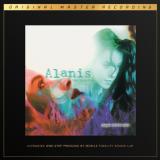
When Alanis Morissette took direct aim at an ex who wronged her on the eviscerating “You Oughta Know” in 1995, everything about the Top 10 song communicated it wasn’t the usual narrative about love gone south. Or the typical wounded singer wallowing in self pity. Morissette, and both the lead single from and her entire American major-label debut — the profoundly personal Jagged Little Pill — represented a sea change. They kickstarted a movement, one whose impact continues to echo throughout the mainstream nearly three decades later.
Ranked the 69th Greatest Album of All Time by Rolling Stone, included on the Rock and Roll Hall of Fame’s list of 200 Definitive Albums, and featured in several books about essential albums, Jagged Little Pill remains more than a blockbuster that has sold more than 17 million copies in the U.S. and 33 million units worldwide. It’s a statement, an attitude, a soundtrack for anyone seeking inspiration, an outlet, or permission to be themselves.
Sourced from the original master tapes, pressed at Fidelity Record Pressing on MoFi SuperVinyl, and strictly limited to 4,000 numbered copies, Mobile Fidelity’s UltraDisc One-Step 180g 45RPM 2LP box set of Jagged Little Pill presents the landmark effort in audiophile-grade sound for the first time. A key part of the record’s appeal and accessibility — Glen Ballard’s smooth production, touches that help Morissette’s exposed-nerve fare seem more accessible and melodic — comes through on this special 30th anniversary edition with an openness, presence, and dynamic explosiveness that make the vocalist’s songs that much more real and visceral.
The singer’s distinctive mezzo-soprano deliveries — the octave-rippling highs, dark-hued lows, dramatic crescendos, belted choruses, wispy reflections, occasional yodels — resonate with full-range ardor and depth. As crucial as anything on the record, Morissette’s confessional words take center stage like never before. Ditto the instrumentation and atmospherics that form the magnetic backgrounds of the songs. Key in on the contributions from Red Hot Chili Peppers Dave Navarro and Flea on “You Oughta Know” to Tom Petty & the Heartbreakers' co-founder Benmont Tench’s organ playing on six tracks.
The deluxe packaging of Mobile Fidelity’s Jagged Little Pill UD1S set underscores the work’s distinguished status. Housed in a slipcase, the LPs come in special foil-stamped jackets with faithful-to-the-original graphics that illuminate the splendor of the recording. Benefitting from an ultra-low noise floor, superior groove definition, and dead-quiet surfaces, this UD1S reissue is for listeners who prize sound quality and desire to engage themselves in everything involved with the album, including the now-iconic cover art that juxtaposes two portraits of the then-21-year-old singer-songwriter and features typewriter font.
That script — which suggests a raw, blood-on-the-floor document created without modern aids like spell check or language correction — hints at the heightened level of unvarnished intimacy, honesty, and catharsis Morissette offers throughout Jagged Little Pill. Named after a phrase uttered on the astute “You Learn,” the album explores the frank emotions, inherent contradictions, and wishful desires people feel everyday but are often too afraid to express. Morissette displays no such fear or shyness.
Akin to a woman reading from a diary, Morissette leaves nothing to the imagination as she skewers hypocrisy during the poignant “Forgiven,” seeks recompense on the vengeful “You Oughta Know,” and spills her guts on the soul-purging “All I Really Want.” For all the anger and bile ascribed to the singer and record, Jagged Little Pill is incredibly healthy and upbeat. Morissette uses the catchy pop-rock frameworks and moody ambience to suss out situations, to learn, to give hope. There’s the clever yearning of “Hand in My Pocket”; wry contrarianism of “Ironic”; kind-heartedness of “Hand over Feet”; the live-and-let-live spirit of “You Learn” – all positive and amiable.
Throughout Jagged Little Pill, the ever-approachable Morissette connects with listeners who recognize themselves in her — and has an intelligent conversation with anyone who wants to participate. It seemed almost everyone did. In addition to the mammoth sales that make the effort the 17th-best-selling album in American history, Jagged Little Pill collected four Grammy Awards, two American Music Awards, three Billboard Music Awards, and eight Juno Awards. In 2018, the record became the basis for a musical that netted 15 Tony nominations on Broadway.
Ironic? Anything but. Jagged Little Pill transcends generations, gender, and trends. As Morissette sings on the opening “All I Really Want,”, the album represents “deliverance” — “a place to find common ground.”
A decade has passed since Infinity Night graced Bordello A Parigi with his wonderful Winter and Summer EPs. After too long a wait, the French producer returns with the aptly titled Le Temps Qui Passe. Six slices of select synthesizer music make up the 12”, tracks lovingly crafted with Frederic Bergamaschi’s trademark analogue warmth. A melancholic melody meanders through brightness in “Tu Ne Me Réponds Pas”, dulcet words hidden under the machine gauze of a vocoder. Skittish percussion gives way to the refrain of “It’s Full of Stars”. Hazy keys appear as an arpeggiator rumbles below a shimmering sky. “Les Souvenirs De Valerie” picks up where its predecessor left off. Astral notes are beamed into the heavens, echoing into the while crisp cymbals tether the piece. Infinity Night has always sought that point of balance in his music, a bittersweetness he accentuates and explores. This is true in the darker shades of “Nymphomania”. Beats are bolstered, key stabs piercing the tenderness of analogue trills. The title track is a rich patchwork. A burbling undercurrent supports forays into diverse tangents with lyrics surfacing through key shifts and sliding scales. Marching to militaristic rhythms, “I Comme Icare” is the curtain call. The stringent drums are broken by sailing synthlines, vocals masked in a familiar mesh to close. Le Temps Qui Passe, well worth the wait.
out of Stock
Last delivered 11 months ago available to reorder, subject to availability
“We go through life. We shed our skins. We become ourselves.”
This line from Patti Smith was going round and round Felix Manuel’s head as he gradually constructed Under Tangled Silence, his first album in six years and a record of a literal creative rebirth. Felix originally began it in earnest in 2020 Covid lockdown, but a catastrophic hard-drive meltdown destroyed almost all his work and sent him close to psychic collapse himself. However, ultimately this pushed him to rebuild from scratch and in so doing to confront and reassess every part of his musical and psychological processes.
The result is utterly extraordinary. Felix was a child prodigy as an instrumentalist and his advanced musicality has always been prominent in his music, but here he has put himself front and centre as pianist, harpist and more. And this sense of exposure as a performer interweaves with an unflinching emotional openness too. Where sometimes electronic production as advanced as this can use intellect and techniques as shields from soul-baring, this is the sound of someone who can boldly say “I feel things, I cry all the time, and I'm not afraid to say it or show it in the music.”
But this doesn’t mean there’s a move away from the soundsystems and dancefloors where Felix made his name as a uniquely innovative vinyl DJ. Even just in the opening track “A Tune for Us”, minimalist piano ripples and jazz drumming flow into the breaks of vintage jungle – and as the structure of the LP unfolds, a deep ambient meditation like “Hold” can sit very naturally in between the futurist dancehall of “L’Ancienne” and the high-definition acid house mind movie of “Galaxy in Silence”. In fact, as with the hands-on musicianship, that gutsy big-speaker electronic impact is delivered with more certainty, more expertise, more personal flourishes than ever. And all of those elements are more integrated than ever too: the sound of a total musical personality emerging afresh is truly something to behold. An already remarkable talent has been refreshed, reborn and is making the music of his life.
out of Stock
Last delivered 51 days ago available to reorder, subject to availability
She had small, square hands. She was 1.52 m tall. As a child, she banged her head on the floor to be allowed to play the piano. She was Catalan. She was a pianist—one of the greatest. Her mission? To spread the Spanish repertoire. Her name was Alicia de Larrocha.
When she passed away in 2009 at age 89, Nelson Freire wrote, "I truly loved her; she was a modest woman, and her playing shone like the sun." Acclaimed worldwide, she stood alongside Victoria de Los Angeles as one of Spain’s finest artists.
Larrocha’s journey began at three, seated at a piano. At four, she studied under Frank Marshall, a student of Granados. By six, she was performing publicly; by eleven, she played Mozart’s Coronation Concerto with Madrid’s Symphony Orchestra, astonishing audiences. Despite her small hands, she developed an airy, precise touch, even daring to record Rachmaninov’s Third Concerto. But beyond technical mastery, her playing held a profound sense of life and imagination.
Though trained in Bach, Mozart, and Chopin, Larrocha fought to bring Spanish composers to global audiences. Albéniz and Granados owe much of their fame to her. Her international breakthrough came in the 1950s when an American impresario heard her Spanish recordings and invited her to the U.S., where she triumphed.
Her performances honored Spain’s musical heritage. From Soler’s sonatas to Granados' Goyescas, she infused each note with nuance. She brought Goya’s paintings to life in El Pelele and mastered the dark contrasts of Surinach’s Canción y Danza. Albéniz’s Iberia demanded both power and delicacy—qualities she commanded effortlessly.
Her final tribute was to her friend Francis Poulenc, performing his Toccata—a soaring farewell.
As one admirer put it in 1982, "She walked toward a piano too big for her, sat, placed her hands on the keys… and became the queen."
Imagine having a song go viral for 17 years - without even knowing it. That's exactly what happened to the German 1980s band FEX. And this isn't just any song - it's The Most Mysterious Song on the Internet, a track that puzzled music detectives for decades before finally being identified in November 2024. Now, it has been officially released - twice.
The Story in Brief:
Sometime around 1984, a song was broadcasted on NDR Radio. The name of the song was Subways Of Your Mind - only found out 40 years later in November 2024. Back then, a listener recorded the NDR show on cassette, a common practice at the time. Decades later, the tape resurfaced, but while most songs from the recording were identified, one remained an enigma. On March 18, 2007, the track was uploaded to the internet in an attempt to uncover its origins. Due to its now-iconic opening lyric, it was tentatively titled Like The Wind. Over time, the mystery deepened, and the song was given a nickname: The Most Mysterious Song - or simply TMMS.
Starting in 2019, a dedicated Reddit group, TheMysteriousSong, now boasting over 63,000 members, took up the search. They meticulously documented every lead, hoping to solve the riddle of the song's origins. Then, in 2024, the breakthrough: Reddit user marjin1412 reached out to musician Michael Hädrich after discovering a reference to his band FEX in an old newspaper article. Hädrich, FEX's keyboardist, provided a recording from an old demo cassette which included an alternative version of the song. On November 4, 2024, the mystery was officially solved: FEX was the band, Subways Of Your Mind was the title.
What Happened Next:
Since then, FEX has released two singles - both featuring Subways Of Your Mind - through the Berlin-based independent label The Outer Edge. First, the demo cassette version was pressed onto vinyl, as the original NDR radio recording remained lost (see EDGE-028). The Remastered Demo Mix single instantly topped Bandcamp's global charts, holding the #1 spot for several days. By then, it was clear: this was more than just an internet curiosity. A real fanbase had formed. Enthusiastic comments on the sales page ranged from "best post-punk song to ever exist" to "FEX themselves (are) perhaps the most underrated musicians of all time."
But the story didn't end there. A higher-quality version of the NDR radio recording was rediscovered in late december, remastered, and now sent for a second vinyl pressing: the TMMS Version. This new vinyl 7" is backed with Talking Hands another great and unissued song that was found on the demo cassette.
Fame Comes with a Price
Suddenly, time isn't standing still for FEX. The band had to come to terms with the fact that they had become Lostwave super stars. A FEX fan club quickly formed on Reddit, fan-hosted FEX parties are popping up, and the internet is demanding more - an album, merchandise, live performances. But how does a band prepare for a comeback after a 40-year hiatus?
For now, FEX is carefully considering their next steps. Their demo cassette contains six songs - and a few other recordings have resurfaced which probably could be restored and compiled. But foremost, a brand new re-recording of Subways Of Your Mind is in progress.
One thing is certain: The Most Mysterious Song will continue its unstoppable journey around the world. Don't miss this (second) chance to own a piece of music history!
out of Stock
Last delivered 74 days ago available to reorder, subject to availability
Civilistjävel! x Mayssa Jallad’s ‘Marjaa: The Battle of the Hotels (Versions)’ is a radical response to Mayssa Jallad’s 2023 original LP, a lyrical account of epochal events in Beirut at the dawn of Lebanon's civil war. ‘…(Versions)’ sees Civilistjävel! (aka Swedish producer Tomas Bodén) apply a stripped, dub methodology to Mayssa's rich stems, refracting the Arabic source through the hazy prism of Northern European electronica. Retaining ‘Marjaa…’s deep spatial framing and vaporous, shifting nature, traces are lifted and set down in a new landscape: a ghost of a ghost. Informed by Tomas' singular strand of ambient, minimalist, dub techno, ‘… (Versions)’ recalls the reductive, shimmering pulse of pioneering Berlin-based practitioners Basic Channel/Chain Reaction, but with the parameters stretched into the ether. Where versions typically focus on a rhythm, here the anchor is the tone and texture of Mayssa’s voice, around which a new world has been constructed. Disembodied and liminal, it conjures an eerie panorama that feels like a postscript to the original, further emphasizing the geopolitical events that have had such devastating effect in Mayssa’s homeland of Lebanon since that record’s release. ‘Marjaa…’ (tr. ‘reference’) combined Mayssa Jallad’s two main vocations: music and urban research/architectural history. The album was co-written with Fadi Tabbal and based on Mayssa's Historic Preservation master's thesis (‘Beirut’s Civil War Hotel District: Preserving the World’s First High-Rise Urban Battlefield’). The thesis examined a 5-month conflict that took place within Beirut's skyscraper-laden luxury hotel district of Minet El Husn near the start of the Lebanese Civil War. Addressing a post-war generation who have never been taught this difficult history, ‘Marjaa…’ was an attempt to process trauma, and “a call to protest for the renewal, rather than the recycling of the political class that once destroyed the country and holds us, to this day, hostage of its violence.” Often perceived as a mysterious, shadowy presence, Civilistjävel! has come increasingly to the fore in recent years through a consistently dazzling stream of records, released both anonymously and via Fergus Jones’ FELT imprint, often appearing with scant information and tracks for the most part untitled. Having featured tracks from ‘Marjaa…’ on mixes, and included the album in his picks of 2023, in early 2024 Tomas asked Mayssa to provide vocals for a track on his album ‘Brödföda’. Mayssa remembers, “Tomas asked me to choose one of the tracks he was working on. I was in Boston at the time, so I took a walk and chose a track. I wrote the lyrics at the public park, wondering if I was the only one around that was losing sleep over the genocide in Palestine and the war in South Lebanon. I went back to the apartment and recorded the vocals on my phone, while listening to the track on headphones. Tomas reworked it with the voice and sent it back. I liked it immediately.” Despite the geographical distance from Beirut to Uppsala, Sweden, where Tomas resides, Mayssa’s contribution sounds very much at home in Civilistjävel!’s atmospheric, contemplative sound-world. Tomas’ request was reciprocated by Mayssa soon after, resulting in the spectral, glassy ambience of ‘Etel, Kharita (Version)’. This was followed by an invitation to work on more tracks, which Tomas immediately embraced, intensively jamming out versions live to two-track tape in downtime between travelling. If not entirely dissimilar to his regular working practice, the immediacy of it was unusual. Much was improvised live with just a keyboard (not tethered to a grid), and a restricted set-up that largely forbade later edits - only the rhythm tracks are programmed. A sharp conceptual thinker and composer, Tomas takes creative liberties with Mayssa’s songs in a way that is deeply felt and sympathetically aligned, whilst unashamedly outside of the original context of the record. The voice is leaned into as an instrument, without the clear, specific details of language, and this axis provides an uncertain, amorphous footing - structure is often suggested or hinted at, before disappearing or collapsing into fog, and folding back into the message within the song. A somewhat unprecedented source for an album of versions, even those familiar with ‘Marjaa: The Battle of the Hotels’ may at points struggle to hear the songs these versions are rebuilt from, despite the vocal narratives remaining virtually intact. The light has shifted; eroded buildings are foregrounded; fragments of memories appear in chiaroscuro. Signs and signifiers have been replaced. Shorn of the original's warm guitar, ‘Baynana (Version)’ feels like an ominous visitation, the sun no longer visible. ‘Holiday Inn (March 21 to 29) (Version)’ is a molten, clattering invocation. The beat-less tracks nod towards the cold, otherworldly sound-scaping of late '90s isolationism. More propulsive and embodied, ‘Holiday Inn (January to March) (Version)’ and ‘Kharita (Dub)’ are strobing, iridescent techno - lithe, shifting and mutating with almost implausible finesse. A stunning addition to Civilistjävel!’s growing catalogue, ‘…(Versions)’ is a luminous counterpoint to ‘Marjaa…’, and a welcome reminder of how incredible that record remains.
out of Stock
Last delivered 15 months ago available to reorder, subject to availability