Fresh in from the powerhouse that is Bokeh Versions, we have a first time vinyl issue of two (future)classic Dancehall EPs from Kingston - RDL Shellah's 'Showcase' on one side, and G Sudden's 'Bunout Boss' on the other, with the elusive / productive SEEKERSINTERNATIONAL on production on both sides.
Buscar:ski king
- A1: Intro
- A2: Best Kept Secret
- A3: Sally Got A One Track Mind
- A4: Step To Me
- B1: Shut The "*!*!" Up
- B2: *!*!" What U Heard
- B3: I'm Outta Here
- B4: A Day In The Life
- C1: Comments From Big "L" And Showbiz
- C2: Check One, Two
- C3: What You Seek
- C4: Lunchroom Chatter
- D5: Confused
- D1: Pass Dat S**T
- D2: Freestyle (Yo, That's The Sh ..)
- D3: K I.s.s. (Keep It Simple Stupid)
- D4: Stunts, | Blunts, & Hip-Hop
- D5: Best Kept Secret (Radio Edit)
Repress! Long out of print, and even impossible to find on vinyl at the time of its release, Get on Down presents the classic Diamond D debut Stunts, Blunts and Hip Hop. As the album title states, this album is one long party from beginning to end. Diamond shines both on the mic and behind the boards creating one of the greatest Hip Hop albums ever made. Coming in at over an hour long Stunts never has a dull moment, Diamond along with the Psychotic Neurotic's and his D.I.T.C brethren are able to make each song or interlude stand out and play through without any skip worthy moments. Literally each track has such uniqueness to it, each song fits like a piece to the puzzle. Stand out tracks like "Step To Me", "Pass that S#*t" or "Check One, Two" are perfect examples of Diamonds ability to create a different mood from song to song, the rhymes mirror the music almost perfectly. Singles such as "Best Kept Secret" and "Sally Got A One Track Mind" were perfect choices in showcasing the overall feel of the album. Although Diamond D handles the majority of the album's production, others such as Large Professor, Q-Tip, Jazzy Jay, Showbiz, and DJ Mark the 45 King co-produce on several tracks. The music he was making in 1992 cemented Diamond as one of the best producers in the game. This record is true to his heart, and because of the immense quality of its contents, it should be remembered fondly by all lovers of this music. As he puts it "Diamond is Dope Nuff Said"! //
SIDE A
SIDE B
SIDE C
SIDE D
Acclaimed L.A. rapper Blu has crafted a remarkable discography, partnering with a series of exceptional producers to deliver cohesive collections showcasing his vivid lyricism and effortless flows. Now, Blu is turning to talented SoCal beatsmith Sirplus, a protégé of famed producer Exile who has worked with the likes of Planet Asia, Edo G, MED, Cali Agents, and more. "Sirplus is my guy," says Blu. "He is the newest member of the Dirty Science crew, and I could tell he had talent and skill. I knew I had to work with him." Now available worldwide, "For Sale" is a new EP from Blu entirely produced by Sirplus, featuring appearances by Nolan The Ninja, Johaz of Dag Savage, Scienze, Noveliss, and more.
Soul departure time. Drowning in a dreamlike state where drifting with the current is free movement. Driven by echoes of serious intentions and playfulness. The order of music takes you further. In time, on the floor, under the skin, melting measures and dimensions. On a way back to where the future of your comfort has dawned. Through zones of whispers and expanding beauty. On a memory lane while passing all your favourite things and sentiments. On a straight, gently quantized line through tunnels of love and liberation. To a vanishing point where the soul is exposed to a scattered radiation of joy, content, revival, liveliness, melancholia. Feels like an arrival, no detour or deviation. Soul: its vulnerability becomes a superpower.
- A1: The Release
- A2: Too Long (Feat Apocalypse)
- A3: Block Episode (Feat Punch & Words)
- A4: Commercial
- A5: Don't Understand (Feat Greg Nice)
- A6: Goodbye Lisa
- A7: Hold U (Feat Jean Grae)
- B1: Every Other Day
- B2: Roommates Meet
- B3: Take A Walk (Feat Apocalypse)
- B4: Something's Wrong (Feat Strick & Young Zee From Outsidaz)
- B5: The Classes
- B6: Acknowledge
- C1: Enuff (Feat Mr Lee Gee)
- C2: Watching The Game
- C3: Unfriendly Game (Feat Strick)
- C4: Alphabet Soup
- C5: Dear Yvette (Feat Jane Doe)
- D1: I Like Dat (Feat Punch & Words)
- D2: P T A (Feat J-Ro & King Tee Of Tha Liks)
- D3: Type I Hate (Feat Leschea & Rah Digga)
- D4: Dear Diary
- D5: Last Rights
- D6: No Regrets
Disposable Arts is a concept album by Masta Ace, originally released in 2001. It follows the Brooklyn MC as he is being released from prison and returns home, joining 'The Institute of Disposable Arts', a school in which Ace enrolls after realizing how bad the situation in Brooklyn has become. The songs and skits combine to complete one full story, and they feature guest contributions from Strick, Punchline & Wordsworth, Apocalypse, Greg Nice, Rah Digga, J-Ro, King Tee, Jean Grae and more, plus production by Ayatollah, Paul Nice, Domingo, and more, including tracks from Ace himself.
- A1: Chamber Spins Three
- A2: Punishment
- A3: Shades Of Grey
- A4: Business
- A5: Black And White And Red All Over
- B1: Man With A Promise
- B2: Disease
- B3: Urban Discipline
- B4: Loss
- C1: Wrong Side Of The Tracks
- C2: Mistaken Identity 4
- C3: We’re Only Gonna Die (From Our Own Arrogance)
- C4: Tears Of Blood
- C5: Hold My Own
- D1: Business (Demo)
- D2: Urban Discipline (Demo)
- D3: Loss (Demo)
- D4: Black And White And Red All Over (Demo)
BIOHAZARD formed in Brooklyn in 1988 and soon after released their first demo. The band consisted of founding members Billy Graziadei (vocals, guitar), Bobby Hambel (lead guitar) and Evan Seinfeld (vocals, bass). After the release of their second demo in 1989, drummer Anthony Meo left the band and drummer Danny Schuler replaced him. BIOHAZARD released their combined the urban sounds of hard-core, metal and rap with scorching lyrics describing the forces at work in our modern urban lives. With an impressive career spanning over 20 years with 10 albums (on both indie and major labels), the band sold over 5 million records. In 1990, Biohazard signed a recording contract with Maze Records. The band's self-titled debut album was poorly promoted by the label and sold approximately 40,000 copies. The album's subject matter revolved around Brooklyn, gang-wars, drugs, and violence.
In 1992, Biohazard signed with Roadrunner Records and released Urban Discipline, which gave the band national and worldwide attention in both the heavy metal and hardcore communities. The video for the song "Punishment" became the most played video in the history of MTV's Headbanger's Ball, and the album sold over one million copies. The band also began opening for larger acts such as Pantera, Suicidal Tendencies, House of Pain, Fishbone, and The Cro-Mags. In 1993, the hardcore rap group Onyx brought on Billy Graziadei for an alternate "Bionyx" version of their hit single "Slam" with Biohazard as their backup band. This led to a collaboration on the title track of the Judgment Night soundtrack. The soundtrack would go on to sell over two million copies in the United States. Months later, the band left Roadrunner Records and signed with Warner Bros. Records Inc. who released their third studio LP, State of the World Address. The album was produced by Ed Stasium in Los Angeles and contained the single "How It Is" featuring Sen Dog of Cypress Hill, for which a video was also shot. During their 1994 tour, the band made an appearance on the second stage at the Monsters of Rock festival held at Castle Donington. State of the World Address went on to sell over one million copies, and Rolling Stone magazine selected the Biohazard logo as the best logo of the year.
This was the last Biohazard album with Bobby Hambel, who left due to differences with the rest of the band. The band recorded their fourth studio album, Mata Leao, as a three piece in 1996. It was produced with the help of Dave Jerden. For the 1996-97 Mata Leao Tour, former Helmet guitarist Rob Echeverria joined the band. The band also played on the Ozzfest mainstage alongside Ozzy Osbourne, Slayer, Danzig, Fear Factory, and Sepultura. While touring Europe in support of the Mata Leao album, the band recorded their Hamburg, Germany, show for their first live album, No Holds Barred (Live in Europe), which was released in 1997 through their former label, Roadrunner Records. The band signed to Mercury Records and released their fifth studio album, New World Disorder, in 1999, once again with Ed Stasium as a producer.
The relationship with Mercury Records soured quickly as the band felt betrayed and misunderstood by the label. They severed their ties with the label amidst the merger of Mercury Records, Island Records, Def Jam Records, and Polygram into the Universal Music Group. The following year, Biohazard signed two new record deals with SPV/Steamhammer in Europe and Sanctuary Records for the remainder of the world. Despite the new record deals, the band took some personal time in order to work on other projects. Graziadei and Schuler also collaborated in transforming the band's rehearsal Brooklyn studio into a digital recording studio, known as Rat Piss Studios and soon after changed the name to Underground Sound Studios. Re-investing into the band, Graziadei and Schuler honed their engineering and productions skills while recording and producing local acts and new Biohazard demos. The band then undertook the process of writing, recording, and producing their own music. Their studio work led to the band's sixth studio album, Uncivilization, released in September 2001.
The album featured several guest appearances by members of bands such as Agnostic Front, Hatebreed, Pantera, Slipknot, Sepultura, Cypress Hill, Skarhead, and Type O Negative. Shortly after the release of Uncivilization, guitarist Leo Curley left the band and was replaced by former Nucleus member Carmine Vincent, who had previously toured with Biohazard as part of their road crew. The band had to cancel scheduled European festival dates when Carmine Vincent underwent major surgery. The band did manage to find a temporary guitarist, Scott Roberts, formerly of the Cro-Mags and the Spudmonsters, in time to join the Eastpak Resistance Tour with Agnostic Front, Hatebreed, Discipline, Death Threat, Born From Pain and All Boro Kings. Biohazard completed their seventh studio album in seventeen days; Kill Or Be Killed was released in 2003. While touring North America with Kittie, Brand New Sin and Eighteen Visions, Biohazard announced that Roberts would remain as their permanent lead guitarist. The tour was curtailed when it was announced that Seinfeld had fallen ill. With more downtime due to Seinfeld's illness, Graziadei and Schuler collaborated to mix Life of Agony's live comeback album, River Runs Again: Live 2003. Once Seinfeld was healthy again, the band toured Japan and North America, headlining over bands such as Hatebreed, Agnostic Front, Throwdown, and Full Blown Chaos.
By the end of 2003, the band had begun recording its eighth studio album, Means To An End. The completed album was lost in a studio disaster, forcing the band to completely re-record the album, which was finally released in August 2005. In October 2004, Graziadei announced that Means To An End had been the final Biohazard album and that he would continue playing with his new band Suicide City as his main focus. One month later, on the Biohazard website, it was announced that there would in fact be a 2005 Biohazard tour. On December 15, 2005, Seinfeld and Graziadei participated in the Roadrunner United conglomerate event at the Nokia Theater in New York for an all-star event. The show opened with Biohazard's "Punishment," performed by Seinfeld, Graziadei, Sepultura's Andreas Kisser, former Fear Factory member Dino Cazares, and Slipknot's Joey Jordison. Graziadei and Schuler relocated their recording studio to South Amboy, New Jersey and renamed it Underground Sound Studios. The studio was renovated to include a live room with 20-foot (6.1 m) ceilings and 4,000 square feet (370 m2) of studio space. After Schuler's departure from the studio business, Graziadei relocated the studio to Los Angeles and changed the name to Firewater Studios. In January 2008, the classic lineup of Evan Seinfeld, Billy Graziadei, Danny Schuler and Bobby Hambel made the announcement that rehearsals had begun for a 2008 summer tour to commemorate the band's 20th anniversary. They toured Australia and New Zealand in April with Chimaira, Throwdown, Bloodsimple and headliners Korn to celebrate their newly declared reunion. The band also took part in Persistence Tour 2009, and announced at one of their shows that they were working on a new record. Biohazard brought in producer Toby Wright to work on the album and after several months at Graziadei's Firewater Studios in Los Angeles, the band completed their recording sessions. In June 2011, Biohazard announced that Evan Seinfeld had quit the band and Scott Roberts returned to replace Seinfeld for two UK dates but no decision regarding a permanent replacement was made. In January 2012, the band decided that Scott Roberts would remain with the band as a permanent member. The new album, Reborn In Defiance, was released worldwide, with the exception of North America, on January 20, 2012 through the Nuclear Blast label. In support of the album, Biohazard embarked on a short co-headlining tour of Europe with Suicidal Tendencies in the latter half of January 2012. After touring the world in support of Reborn in Defiance, the band entered the studio to work on a new release and after a falling out, Roberts departed the band.
Biohazard remains as it’s core founding members of Graziadei, Shuler and Hambel. Graziadei has since ventured off onto a solo career as BillyBio and teamed up with Cypress Hill frontman Sendog to start Powerflo. Both groups are working on their second releases due out late 2021 and early 2022.
Joseph Carvell returns to Karaoke Kalk with his sophomore album under the Pink Shabab moniker. »Never Stopped Loving You« was for the most part written between Spring and late Summer 2020 in his Camberwell home and like his 2019 debut »Ema by the Sea« recorded in the South of France together with Emmanuel Mario, better known as Astrobal. It’s a record informed by feelings of nostalgia, love, longing, romance and loss and, much like his previous album, displays Carvell's knack for making introversion sound extroverted. As a bassist, his approach to songwriting is both rhythmic and melodic, making the resulting music just as visceral as it is emotive. Much like the record’s title can be understood as both a lament or an expression of joyful dedication, the music on »Never Stopped Loving You« is profoundly ambiguous.
»I was lucky with the timing for this record,« says Carvell and at first that may sound counterintuitive: managing to play only one show in Zurich in early 2020, he had to cancel his planned European tour and go back to the United Kingdom, which soon went into lockdown. He made the best out of the situation, recording electric and upright bass for Nick Krgovich, Daniel O’Sullivan and Zooey’s new records while also working on tracks and demos by himself. »The world seemed to have stopped and I had more time to think about the past and find the best grooves, the suitable keyboard touches and the right words,« says Carvell. Everything came together slowly before he boarded a train to France with his keyboard: »The pace of life completely dropped and between takes Ema and I were going swimming and taking walks,« he says of the sessions.
»Never Stopped Loving You« is notably more electronic than its predecessor, but also full of the small melodic and harmonic details that made »Ema by the Sea« such an outstanding record. »I was listening to more 1990s dance and house music and 1980s pop and also a healthy amount of ambient music,« explains Carvell. These influences are clearly audible on songs like the Chicago House-esque beats of »Show Your Love« or »Why Did I Leave You that Morning«, the skittish rhythms on »Let Go« and the near-Balearic »San Junipero«. Especially the latter makes it clear that Carvell spent much time devoting himself to movies and TV shows, but also incorporated more piano sounds in his songs—he learnt the instrument by playing along to classic Beatles and Beach Boys songs.
Despite being more upbeat on a rhythmic level than before, Carvell’s use of texture and his peculiar voice add another note to the music. Even an anthemic song like »Run Away«, his first composition to follow a classic verse/chorus structure, is profoundly ambivalent, both overjoyed and deeply melancholic. By the same token however, even a torch song like »You Stepped Out of My Life« is enormously consoling. This, after all, has always been Carvell’s strength: creating music that will cheer you up when you’re down while also injecting a sense of futility into every moment of euphoria. It never shone more brightly than on »Never Stopped Loving You.«
Philadelphia based quintet, Grayscale, continue to break away from their punk roots & establish themselves firmly in pop leaning alternative rock with their third Fearless Records offering. After racking up 50 million streams and receiving praise from Forbes, Alternative Press, Billboard, and more, the quintet have opened up themselves and their sound throughout these 11 tracks. For Grayscale, Umbra is the end of the beginning. All previous records served as stepping stones accumulating and shaping the band's course and leading them down an artistic and aesthetic path to this point. Umbra is more of a feeling than a concept; it is an energy. It is all the things we keep underneath or to ourselves. It is the cold feeling of internal conflict, the bargaining, and the wickedness that exists within a space otherwise covered in light. The sounds don't necessarily match the stories; the energy doesn’t always match the intent. It's not about the light or the dark. It's about the light and the dark
Westcountry folk singer, songwriter and multi-instrumentalist Seth Lakeman was nominated for the Mercury Music Prize in 2005 for 'Kitty Jay'. It catapulted Lakeman into the forefront of the new British folk movement and his follow up was the gold-selling ‘Freedom Fields’ which was released twice in 2006. Produced by his brother Sean Lakeman it came out on iScream and was then re-released by Relentless (EMI) where it went on to become Seth’s first of 6 UK Top 40 albums.
To celebrate the 15th anniversary, Seth has announced a Deluxe Reissue of the album on CD & Vinyl plus a huge tour in November playing the album, which includes ‘Lady of the Sea’, ‘King and Country’ and ‘White Hare’, plus other favourites.
Freedom Fields helped Seth build on his traditional cult following but found him a whole new audience for his rhythmic, captivating brand of indie-folk song writing. He was named Folk Singer of the Year, and ‘Freedom Fields’ awarded Album Of The Year at the BBC Radio 2 Folk Awards in 2007.
Available to order on CD and double vinyl - Limited Edition Coloured & Black – all with exclusive bonus content including unreleased tracks and rare demos.
“Delicious harmonies and the occasional fiery fiddle are the order of the day, with his impressive song-writing skills shining out of every tune.” BBC Music (Freedom Fields)
* Limited edition Vinyl release presented in the classic Philly Blunt Housebag
* Multiple award-winning DJ & producer Voltage returns to Philly Blunt for his first release on the imprint since 2017.
* A hefty schedule of releases on progressively more prestigious labels, coupled with an insomniac quantity of deejay gigs pushed Voltage rapidly to headliner level. Garnering awards for both his production and selection skills, every passing year has seen him hit greater heights.
* ‘Gang Music’ and ‘Hornz’ are fine examples of Voltage’s understanding the labels roots, which Voltage and his Kings Of The Rollers co-stars Serum and Bladerunner have taken great influence from.
- 1: Unidentified Members Of The Royal Drums Ensemble (Mujaguzo) - Mujaguzo
- 2: Erusana Lutwana & Budo African Music Club - Ffe Basajja Ba Kabaka
- 3: Albert Bisaso Ssempeke & Band As The Lyres, Fiddles, And Drums Ensemble (Abadongo) - Akasozi Bamunanika Keyagaza
- 4: Kopolyano Kyobe & Band As The Xylophone And Drums Ensemble (Abantamiivu) Ssematimba Ne Kikwabanga
- 5: Unidentified Members Of The Royal Flutes And Drums Ensemble (Abalere) - Akwana Omwami Tagayala
- 6: Evaristo Muyinda - Sewaswa Kazala Balongo
- 7: Maria Nanemba Muyinda - Twaliraana Mayumba Emmeeme Tezaalirana
- 8: Evaristo Muyinda - Twabonabona
- 9: Unidentified Members Of The Royal Trumpets Band (Abakondere) - Bagabye Mukwenda Owange Talina Nnaku
- 10: Kalema Hassan Katipa & Band - Byananyinimu
- 11: Unidentified Members Of The Royal Big Xylophone Ensemble (Abakadinda) - Bandaba Okulya Etoke Bampita Mulamu Dala
- 12: Temutewo Mukasa, Royal Harpist (Omulanga) - Okwagala Omulungi Kwesengereza
- 13: Unidentified Members Of The Royal Drum-Chime Ensemble (Abatenga) - Kifwe Kze Kya
- 14: Semuwemba George William - Kubikira Amadinda
- 15: Semuwemba George William & Sekindi John - Emirembe Ngalo
- 16: Albert Ssempeke - Omusango Gw’abalere
- 17: John Ssempeke & Sebuufu Steven - Osiibye Otyano
From its founding in the late 14th century, the kingdom of Buganda has been celebrated through sound and nurtured a rich musical tradition in its royal court. Coming from across the kingdom, musicians would take turns in the palace to sound drums, xylophones, flutes, lyres, and more to praise and honour the existence of the kingship. In recent years however, the tradition has been more difficult to maintain, especially since 1966 where there was a violent attack on the palace that abruptly abolished the kingdom and during which royal musicians fled or were killed. And while the kingdom was re-established in 1993 as a cultural institution, many of the remaining musicians had since chosen to sideline their skills to deal with the issues of their day to day lives, the practice of the royal tradition waning in popularity, especially with younger listeners and players. But all is not lost. Scattered across the kingdom, a motivated team of older veterans and attentive young players are still keeping the tradition alive. Offering a transversal glimpse into the past and the present, "Buganda Royal Music Revival" collects recordings made in between the late 1940s and 1966 illustrating the older generation's skills, and presents them alongside recent recordings featuring old and young musicians who still carry on this musical tradition, some even performing for the current king, Muwenda Mutebi II. The later were made during the shooting of the 2019 documentary "Buganda Royal Music Revival" that presents through a film what this album conveys through sounds: a packed dive into a century-old tradition. The music displayed here is diverse and vibrant, presenting a variety of styles and highlighting instruments that illustrate the depth and sophistication that stemmed from the royal court experience of Buganda. As a starter, the album opens with 'Mujaguzo'. Often translated as 'The Drums of the Kingship', the mujaguzo is a crucial ensemble for the cultural tradition, made from drums collected by the kingdom throughout its long history and numbering around 100 drums (historical records suggest there were at some point over 300). They are the vitality of the kingship packaged into sound. From here, we're introduced deeper to an array of instruments and textures, like the buzzing Bugandan lyre (endongo) by contemporary royal player Albert Bisaso Ssempeke, the resonant akadinda xylophone with its 21 large wooden keys, Temutewo Mukasa's restless praise sung with his harp (ennanga), the hand-made gourd trumpet (amakondere), the entenga "drum-chime" and its core set of 12 drums tuned like the amadinda xylophone, or the tightly intertwined melodies of the flutes ensemble (abalere). With the music, the hissing and swishing sounds of old tapes reminds at times the listener of the long process, from the original recording to its archival digitization, that allows the talent of past musicians to still vibrate nowadays. This rousing selection of music and moods is a unique and all too rare exploration of sounds that celebrates the common history of generations of musicians, and the question remains open as to how this rich cultural tradition will shape and be shaped by the upcoming Bugandan future, and what engagement it will trigger among audiences within, but also beyond, the kingdom of Buganda.
To celebrate the 20-year anniversary of our label Jamaican Recordings and to mark the
sad one year passing of the musical maestro reggae producer Bunny `Striker’ Lee, we
have pulled together a brand new collection of some great Bunny Lee rhythms.
Our label started way back with initial meetings with Bunny Lee and a promise to keep his music available, out on the streets. He will be sorely missed but will live on through his extraordinary musical legacy and we hope to add to this by including this release to the stable of an unbeatable catalogue.
Legendary record producer Bunny `Striker’ Lee’s vast selection of rhythms were ever present at any Sound Clash or Dance worth talking about in the early to mid-1970’s.
Where the version found on the b-side of a single or special dub cut on acetates, would be played to win over the people and conquer the dance. Bunny Lee was the undisputed rhythm master and on this special release he is also the MC telling the crowd how it is and that any rival sound system should watch out as he has the rhythms that can reign supreme. The band cutting these timeless rhythms were a group of top Jamaican musicians Bunny had put together called The Aggrovators.
The Aggrovators were a group of reggae musicians that usually featured Carlton `Santa’ Davis on drums playing alongside Robbie Shakespeare on bass, with other musicians added like Earl `Chinna’ Smith on guitar and Tommy McCook and Vin Gordon and Lennox Brown added for horn arrangements. Keyboards and organ duties normally fell
to musicians Ansel Collins and Bernard ‘Touter’ Harvey. The band was named after singer Eddie Grant had repeated the phrase to Bunny Lee on one of his many trips to England, that such and such artist was giving him `Aggro’. This was a term used in England in the 1970’s by the Skinhead followers of reggae music. A term shortened
from the word `Aggrovation’, meaning trouble, fighting or making the situation worse. Bunny Lee was so taken with this term that on returning to Jamaica, not only did he name his group of musicians the `Aggrovators’ but he also named his record shop situated at 101 Orange Street `Agro Records’.
We have compiled some great tracks recorded by this fantastic group of musicians. With the added extra magic of Mr Bunny Lee calling it out as only he can on the microphone.
Yes Run Sound Boy Run the version master is here…Respect
"One turntable, one microphone, a mek we skank it til a morning!" Taking you back to the roots of sound-system culture: when entertainers rocked the dance until morning, with the most basic equipment. The skill and the vibe were all that mattered. "One turntable, One microphone" captures that essence. Sweet, lilting saxophone licks from Jazz futurist Marcus Joseph (Jazz re:freshed) set the scene for the gathering. Ranking Joe bawls out, "forward rub-a-dub style!" as clean, crisp piano chops out the backbeat. A rock-hard rhythm section drops in to put the bassline in your waistline. As the crowd swells, so too does the energy of the performers, with spaced out echoes creating a lush soundscape for the deejay to ride over joyfully. Ranking Joe is a foundation reggae artist from Kingston Jamaica. His first recording was on Coxsone Dodd's legendary Studio One label in 1974. He has cut hits with Sly and Robbie and Easy Star All Stars, enlivening any production with his fast, intricate and sometimes humorous lyrical flows. This latest release shows the endurance of his musical gift and reactivates the essence of golden-era Jamaican dancehall for modern ears.
Green Vinyl
Have you ever wondered what would happen if the Spice Girls smoked crack and joined forces with the Power Rangers on acid? Meet BĘÃTFÓØT. These punk-infused electronic poltergeists and big-beat acid trio are Udi Naor, drummer and founding member of electronic duo Red Axes, Adi Bronicki (who also fronts Israeli garage-punk-folk band Deaf Chonky) and ace of all trades guitarist Nimrod Goldfarb.
The band have been launching warped stoner-acid-pop out of Tel Aviv with maniacal intent and are producing post-punk rave bangers that will scorch every dance floor with a huge lethal smile. BĘÃTFÓØT
are a DIY supergroup who describe themselves as sitting somewhere between Aqua, Beastie Boys and The Prodigy.
Their music endeavours feel akin to being hurtled through a kaleidoscopic waterslide, overflowing with the spirit of 90’s youth culture. The radioactive trio are DJ’s, musicians, songwriters and producers with a diverse range of individual projects and talents, their combined sonics map your journey across the hazy astral spectrum of hip-hop, big beat and rave music. Morph these radioactive pieces with the no New Release Informationnonsense attitude of punk-rock and the venomous spitting flow of golden-era rap and you might just come close to fabricating the freakish sound of BĘÃTFÓØT.
The band’s self-titled debut is set for release on 17th September on Manfredi Romano aka DJ Tennis’ Life and Death. Founded in 2010, the imprint curates soulful dance music with a post-rock aesthetic.
This refreshingly original and experimental LP from BĘÃTFÓØT marks a new direction for Life and Death this year and beyond.
“BĘÃTFÓØT” takes unsuspecting listeners on a wild ride of unprecedented musical madness (firmly without seatbelts). Fizzy synthesiser programming stimulates you effervescently through the album like the welcomed sting of sour sweets, surprising accompaniments appear in the form of manipulated vocal lines and quirky samples, all jovially mixed together in a gummy melting pot of wild conceptualisation and starry eyed rhythms.
Thirteen tracks of unprecedented dancefloor mutations send us triumphantly into the candy-covered kingdom of BĘÃTFÓØT with open arms and infinite imagery of fanciful gutter-glam escapades. This project fulfills the role of a musical bulldozer, flattening all previous conceptions of what it means to belong to a genre and leaving behind a hot mess trail of anarchic musical fragments in its wake. The undying spirit of the nineties.
With fans that include legendary Irish born singer, songwriter and producer Roisin Murphy, BĘÃTFÓØT are a breath of fresh air set to be igniting dancefloors this summer.
"How that time has gone, vanished beneath night’s cover, just as if it never had been! The wall, wondrous high, decorated with snake-likenesses, stands now over traces of the beloved company. The ash-spears’ might has borne the earls away—weapons greedy for slaughter, Fate the mighty; and storms beat on the stone walls, snow, the herald of winter, falling thick binds the earth when darkness comes and the night-shadow falls, sends harsh hailstones from the north in hatred of men.
All earth’s kingdom is wretched, the world beneath the skies is changed by the work of the fates. Here wealth is fleeting, here friend is fleeting, here man is fleeting, here woman is fleeting—all this earthly habitation shall be emptied."
— Exeter Book (1072)
- A1: Garry Johnson - United
- A2: Jj All Stars - Dambusters March
- A3: The Business - Suburban Rebels
- A4: Infa Riot - Each Dawn I Die
- A5: The Partisans - Arms Race
- A6: The Ejected - East End Kids
- A7: Peter And The Test Tube Babies - Transvestite
- A8: Blitz - Nation On Fire
- A9: The Last Resort - King Of The Jungle
- B1: The Gonads - Tuckers Ruckers Ain't No Suckers
- B2: 4 Skins - Evil
- B3: The Business - Product
- B4: Red Alert - Spg
- B5: Oi The Comrade - Guvnors Man
- B6: Peter And The Test Tube Babies - Maniac
- B7: The Ejected - What Am I Gonna Do
- B8: The Partisans - No U Turns
- B9: Blitz - Youth
- B10: Oi The Choir - Walk On
Vinyl reissue of this classic Oi! compilation originally released on Secret Records in 1981.
It features tracks by the biggest bands of the genre like: 4 Skins, Blitz, Red Alert, Peter & The Test Tube
Babies, Infa-Riot or The Business. This album went straight to number four of the independent charts and became probably the best Oi!
compilation ever issued. Includes original artwork inner bag.
- A1: Dubbing In The Front Yard
- A2: Judgement Dub
- A3: Gates Of Dub
- A4: Babylon Dub
- A5: Somewhere Dub
- B1: Carry On Dubwise
- B2: Crab In A Barrel Dub
- B3: Hold Them Dub
- 4: Lowdown Dub
- B5: Overdue Dub
- C1: Jumping Dub
- C2: Skilful Dub
- C3: Ethiopian Dub
- C4: Still In Love Dub
- C5: A Rootsy Dub
- D1: I Cant Go On Without Dub
- D2: A Steppin Dub
- D3: A Rocking Dub
- D4: A Mighty Dub
- D5: The Best Dub
Bunny Lee as producer. Prince Jammy as engineer. The Aggrovators making the tracks. A Holy Trinity of Jamaican Music. Throughout the years, recorded music has been shaped by some enduring partnerships between producer and engineer, such as Teo Macero and Fred Plautt for Miles Davis, Jerry Wexler and Tom Dowd for Atlantic Records, and George Martin and Geoff Emerick for the Beatles. But possibly none were as prolific as the collaboration between Bunny 'Striker' Lee and Prince Jammy at King Tubby's Studio between 1976 and 1982.
In 1977 and 1982 respectively, Conflict Dub and Dubbing In The Front Yard were released in London as white labels in extremely limited quantities. The two LPs found the triumvirate of Lee, Jammy and The Aggrovators on perfect form, with driving instrumentals, flashes of vocal beauty, and mixes that ripped apart and rebuilt traditional notions of sonic structure. Due to the nature of their limited release (not to mention the lack of artwork and even titles) the two dub LPs quickly disappeared into that mythic realm of records whispered about by only the most hard-core reggae collectors. This release is the first-ever reissue of these sought after LPs, and contains all the original songs in both vinyl form (double LP set with both albums on the original labels) and a lush double pack cd with 3 extra bonus tracks. The sleeve notes are by Diggory Kenrick with amazing photos by Howard Johnson, director of the influential Channel 4 documentary 'Deep Roots Music'.
The 3 CD bonus tracks are all remixes. Two from Paolo 'Dubfiles' Baldini for the Dubbing in the Front Yard set. One for Conflict Dub by Diggory Kenrick.
In 2018, Pressure Sounds celebrated its 100th album release since it's founding in 1995. In that time, the label has been responsible for unearthing and celebrating some of the rarest, most influential and unique Jamaican records ever cut.
- A1: Ain't Nobody
- A2: Reach Out (Feat Charlotte Haining)
- A3: Smile & Wave
- A4: Listen Up
- A5: Sanctuary
- B1: Pressure (Feat Cleveland Watkiss)
- B2: Underdog (Feat Dj Marky)
- B3: Piano Skit
- B4: Baby Angel Face (Feat Eva Lazarus)
- C1: Explode
- C2: Soul Silhouette (Feat Singing Fats)
- C3: Hands, Lights, Flames, Phones (Feat Drs & Fox)
- C4: Problems Skit
- D1: Take Me Home
- D2: Stranger
- D3: Smile More
Hospital Records are extremely proud to present ‘Smile & Wave’, the
second studio album from drum & bass’ friendliest MC, Inja.
With the biggest smile on his face, the lyricist, vocalist, poet, artist and storyteller delivers
16 tracks, seamlessly weaved together through Inja’s infectiously feel-good flow and sincere
wordsmithery. The entire album was produced by Whiney, further cementing their relationship as one of the most untestable dance music pairings. Also featuring Charlotte Haining,
Eva Lazarus, DRS, Fox, Cleveland Watkiss, Singing Fats, and DJ Marky.
Album title track ‘Smile & Wave’ is the musical embodiment of Inja’s playful demeanour.
Known for being the world’s smiliest artist, Inja wrote and recorded this feel-good bouncer
alongside his daughter who is “pretty much the first person to hear anything” he’s up to
musically. Expect a rude bassline and infectious wordplay.
Teaming up with superstar singer-songwriter Charlotte Haining, ‘Reach Out’ sees two of the
most distinct voices in dance music come together over a bittersweet wobbler written about
times when you feel “so out of place, out of reach” in the words of Inja. Having worked
alongside an impressive array of electronic artists including Hybrid Minds, Sub Focus, My Nu
Leng and Friction, Charlotte’s delicately powerful hooks are the perfect counterpart to Inja’s
heartfelt flows.
Luscious pads and dubbed out pianos and guitars set the scene on ‘Baby Angel’ featuring the
worldwide wave-maker Eva Lazarus who returns to Hospital Records for the first time since
featuring on Etherwood’s ‘Light My Way Home’ back in 2015. Having worked alongside staple
figures including Mungo’s Hi-Fi, Zed Bias and Gentlemen’s Dub Club, Eva infuses her reggae,
hip-hop and jungle flavours alongside Inja’s humbling storytellings.
Inja’s “personal favourite to perform live as it smashes every and any system”, ‘Explode’, is a
140BPM anthem featuring flows that will ignite any room and a killer instrumental that will
have you bobbing no questions asked. Proving himself to be a versatile and skillful microphone controller, Inja’s ability to shell down any tempo is ever more apparent on this upfront
banger.
Three legendary MCs unite on ‘Hands, Lights, Flames, Phones’ where Inja joins forces with
two of Manchester’s very finest - DRS and Fox. Sharp lyricism is rife as the triple threat of
three titan wordsmiths link up, seeing energetic bars bouncing off each other over a cold-cut
drum & bass roller. This is a combination not to be tested.
Inja has established himself as a pinnacle figure within the realms of drum & bass. Loved for
his ability to express his thoughts into honest, relatable lyrics in ‘She Just Wanna Dance’, a
spoken word piece for Amnesty International that was a viral online hit in 2017, and more
recently switching it up to ‘We Just Wanna Dance’ during the UK lockdown, expressing his
desire to be reconnected with ravers again. Then picked up by BBC News and Sky News.
On top of being the MC of choice for drum & bass powerhouse group Kings Of The Rollers,
Inja is no stranger to tearing things up on the airwaves with support from the likes of DJ
Target, Rene LaVice and Danny Byrd on BBC Radio 1 over the years. Since his debut ‘Blank
Pages’ album on Hospital Records in 2018, Inja has flourished as a multi-talented MC, vocalist, singer and songwriter with a series of singles including the Beatport Drum & Bass charttopper ‘Game Face (Stay Alert)’ alongside Whiney, as well as the infamous ‘Lumberjackin’’ on
Serum’s Souped Up.
"To all the supporters that enjoy anything I’m a part of, I would never have had the opportunities to see as much of the world as I have without you. My gratitude has no bounds and I’d
love to share a smile with you all one day.” - Inja
- A1: Bangarang- Lester Sterling & Stranger Cole
- A2: Seven Letters-Derrick Morgan
- A3: Without You-Donnie Elbert
- A4: Everybody Needs Love-Slim Smith
- A5: Cool Operator-Delroy Wilson
- A6: King Of The Road-U Roy &Lennox Brown
- A7: Moon Hop-Derrick Morgan
- B1: Ten Thousand Tons Of Dollar Bills-Bunny Lee Allstars
- B2: If It Dont Work Out-Pat Kelly
- B3: Hold You Jack-Derrick Morgan
- B4: Who Cares-Delroy Wilson
- B5: Wet Dream-Max Romeo
- B6: Joe Razor-Roy Shirley
- B7: D.j.choice-Winston Williams
Countless incredible records were made in Kingston between 1968 and 1971 that has never been able to lose the stigma of being described as 'Skinhead Reggae' but in Jamaica the term never meant anything. However Bunny Lee's Aggro Sound's both at home and away.
They were tougher then tough ,rougher then rough ,kicked like a 'bovver' boot and were sharper then a razor cut trim.
Raw, pure and undiluted every time...some even troubled the UK national charts..
To say the man and his music dominated at the time would be a complete understatement.
'Striker' was everywhere...travelling between Kingston, where he opened his Agro Sounds record shop at 101 Orange Street and London where he set up his Unity label with the Palmer Brothers for the exclusive release of his productions and his Jackpot subsidiaries with both Trojan and Pama records.
Ubiquitous does not start to come into it.
We sincerely hope that this compilation helps to point you in the direction of some of the best music from this often overlooked period from one of the greatest producers EVER!
'The Aggro Man' himself Bunny Lee
A little over a year ago, Nathan Williams found himself back in San Diego, writing what would eventually become Hideaway, his seventh album as Wavves, in a little shed behind his parents’ house. It was also the place where he made some of his earliest albums, before he became known for his uncanny ability to write songs that sneered at the world while evoking pathos, sympathy, and a deep understanding of how sometimes we’re our own worst enemies, and that can be okay. Williams’ return to his childhood home was not just a symbolic attempt at jumpstarting creativity. It came as a result of a series of major life changes. A decade ago, Williams released King of the Beach on the maverick indie label Fat Possum. The album was a cocky collection of pop punk gems that catapulted him into the public consciousness, eventually prompting a jump from Fat Possum into the major label system, where he released two albums before becoming disillusioned by the lack of creative agency available to him. In 2017, Williams self-released You’re Welcome on his label, Ghost Ramp. Now, Williams has returned to Fat Possum with a barbed collection of anxious anthems that grapple with the looming sense of doom and despair that comes with getting older in an increasingly chaotic world. “He’ll always skew toward the Bart Simpson character,” says Matthew Johnson, founder of Fat Possum. “But that does not mean that he doesn’t have some commentary, and once in awhile, it’s totally spot on.” Across its brief but impactful nine tracks, Hideaway is about what happens when you get old enough to take stock of the world around you and realize that no one is going to save you but yourself, and even that might be a tall order. The album features Williams’ most universal and urgent songs yet. “Honeycomb” lopes along sunnily, as Williams sings affecting lines like “I feel like I’m dying, it’s cool, it’s great, just pretend I’m okay.” His directness is shocking, and proof that Williams is the kind of songwriter who can capture pain and uncertainty with resonant brutal force. “It’s real peaks and valleys with me,” Williams says. “I can be super optimistic and I can feel really good, and then I can hit a skid and it’s like an earthquake hits my life, and everything just falls apart. Some of it is my own doing, of course.” It’s this self awareness that permeates each of Hideaway’s songs, marking them each as mature reckonings with who he is. After realizing the material he’d been working on in the hideaway was starting to take shape, Williams, along with bandmates Stephen Pope and Alex Gates workshopped the songs in a series of now-abandoned studio sessions, before linking up with musician and producer Dave Sitek of TV on the Radio to help fully realize their new songs.
Jackie Mittoo is one of Jamaica’s musical giants, a towering figure in the development of reggae whose skills as a keyboardist and musical arranger led to indelible changes in the evolution of Jamaican popular music, helping it to reach international prominence. An exceptionally-expressive player whose mastery of the organ was truly outstanding, Mittoo was also a gifted arranger with an intrinsic feel for what would work best, his key instruction giving shape to ska at Studio One and roots reggae at Channel One and other Kingston studios, as well as lover’s rock at Wackies in New York and with Sugar Minott and UB40 in Britain, Jackie’s own productions later incorporating far-out synthesizer experiments and vocoder techniques. Reggae as we know it would never have existed without Mittoo’s essential input, making him an under-sung icon of Jamaican song. Jackie Mittoo went on to make all kinds of other incredible music in Jamaica, the UK, USA, and Canada before dying of cancer in 1990 at the tragically young age of 42; the dramatic send-off he received at the National Arena in Kingston gives some indication of the stellar status he achieved in his lifetime and the universal respect with which he was regarded. In an exemplary career full of exceptional music, 'Showcase', originally released on Bunny Lee's own imprint Jackpot in 1977, remains one of his greatest, an enthralling collection of stunners that shows why he will always be regarded as Jamaica’s keyboard king.
- A1: Sunspots
- A2: Wishing Well
- A3: Compositions For The Young And Old
- A4: Heartbreak A Stranger
- A5: Dreaming, I Am
- B1: If You're True
- B2: Poison Years
- B3: Sinners And Their Repentances
- B4: Lonely Afternoon
- C1: Brasilia Crossed With Trenton
- C2: See A Little Light
- C3: Whichever Way The Wind Blows
- C4: All Those People Know
- D1: Shoot Out The Lights
- D2: Hardly Getting Over It
- D3: Celebrated Summer
- D4: Makes No Sense At All
- E1: Gift
- E2: Company Book
- E3: Hoover Dam
- E4: After All The Roads Have Led To Nowhere
- F1: Where Diamonds Are Halos
- F2: Slick
- F3: Going Home
- G1: Changes
- G2: Can't Help You Any More
- G3: Helpless
- G4: If I Can't Change Your Mind
- G5: In The Eyes Of My Friends
- H1: Clownmaster
- H2: Gee Angel
- H3: Explode And Make Up
- H4: The Slimlp 5 & 6
- I1: Moving Trucks
- I2: Taking Everything
- I3: First Drag Of The Day
- I4: I Hate Alternative Rock
- I5: Stand Guard
- J1: Classifieds
- J2: Hear Me Calling
- J3: Art Crisis
- J4: Anymore Time Between
- K1: Skintrade
- K2: Eternally Fried
- K3: Roll Over And Die
- K4: Lonely Afternoon
- L1: Egoverride
- L2: Reflecting Pool
- L3: Disappointed
- L4: Hanging Tree
- F4: Running Out Of Time
- L5: Man On The Moon
- M1: The Act We Act
- M2: A Good Idea
- M3: I Hate Alternative Rock
- M4: See A Little Light
- M5: Hoover Dam
- M6: Circles
- N1: Paralyzed
- N2: I Apologize
- N3: Chartered Trips
- N4: Celebrated Summer
- N5: Makes No Sense At All
- N6: New Day Rising
- O1: Fort Knox, King Solomon
- O2: I Hate Alternative Rock
- P1: Could You Be The One?
- P2: I Apologize
- P3: Chartered Trips
- F5: Frustration
Demon Records presents Distortion: Live, the fourth and final edition in a series of expansive vinyl box sets chronicling the solo career of legendary American musician Bob Mould.
Bob Mould’s career began in 1979 with the iconic underground punk group Hüsker Dü before forming the beloved alternative rock band Sugar and releasing numerous critically acclaimed solo albums. The final volume in the series features 8LPs of live recordings from across Mould’s solo career.
8 LPs including –
• 4 live albums – Live At The Cabaret Metro, 1989 (first time on vinyl), The Joke Is Always On Us, Sometimes, LiveDog98 (first time on vinyl), and Live At ATP 2008 (first time on vinyl)
• Each album is presented with brand new artwork designed by illustrator Simon Marchner and pressed on 140g clear vinyl
with unique splatter effects
• Bonus LP Distortion Plus: Live which features live rarities including B-sides and stand-out tracks from the Circle Of Friends concert film
• Mastered by Jeff Lipton and Maria Rice at Peerless Mastering in Boston Plus -
• A 28-page companion booklet featuring: a new and exclusive foreword by Bob Mould; an interview conducted by journalist Keith
Cameron; an exclusive testimonial from Bully’s Alicia Bognanno; rare photographs and memorabilia
- A1: Africa Is My Root - Osayomore Joseph And The Creative Seven
- A2: Ta Gha Hunsimwen - Akaba Man The Nigie Rokets
- A3: Popular Side - Akaba Man And The African Pride
- B1: Iranm Iran - Victor Uwaifo And His Titibitis
- B2: Sakpaide No 2 - Victor Uwaifo And His Titibitis
- B3: Ta Ghi Rare - Akaba Man The Nigie Rokets
- C1: My Name Is Money - Osayomore Joseph
- C2: Ogbov Omwan - Akaba Man The Nigie Rokets
- C3: Aibalegbe - Victor Uwaifo And His Titibitis
- D1: Who Know Man - Osayomore Joseph And The Ulele Power Sound
- D2: Obviemama - Victor Uwaifo And His Titibitis
- D3: Ororo No De Fade - Osayomore Joseph And The Ulele Power Sound
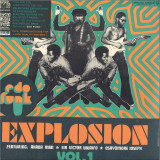
Analog Africa Presents Edo Funk Explosion Vol. 1, available on
2xLP/Gatefold LP with 20-page booklet / CD with 36-page booklet. It was
in Benin City, in the heart of Nigeria, that a new hybrid of intoxicating
highlife music known as Edo Funk was born.
It first emerged in the late 1970s when a group of musicians began to experiment with different ways of integrating elements from their native Edo culture
and fusing them with new sound effects coming from West Africa s night-clubs.
Unlike the rather polished 1980 s Nigerian disco productions coming out of the
international metropolis of Lagos Edo Funk was raw and reduced to its bare
minimum.
Someone was needed to channel this energy into a distinctive sound and Sir
Victor Uwaifo appeared like a mad professor with his Joromi studio. Uwaifo
took the skeletal structure of Edo music and relentless began fusing them with
synthesizers, electric guitars and 80 s effect racks which resulted in some of the
most outstanding Edo recordings ever made. An explosive spiced up brew with
an odd psychedelic note known as Edo Funk.
That’s the sound you’ll be discovering in the first volume of the Edo Funk Explosion series which focusses on the genre’s greatest originators; Osayomore
Joseph, Akaba Man, and Sir Victor Uwaifo: Osayomore Joseph was one of the
first musicians to bring the sound of the flute into the horn-dominated world
of highlife, and his skills as a performer made him a fixture on the Lagos scene.
When he returned to settle in Benin City in the mid 1970s - at the invitation of
the royal family - he devoted himself to the modernisation and electrification
of Edo music, using funk and Afro-beat as the building blocks for songs that
weren’t afraid to call out government corruption or confront the dark legacy of
Nigeria’s colonial past.
Akaba Man was the philosopher king of Edo funk. Less overtly political than Osayomore Joseph and less psychedelic than Victor Uwaifo, he found the perfect
medium for his message in the trance-like grooves of Edo funk. With pulsating
rhythms awash in cosmic synth-fields and lyrics that express a deep personal
vision, he found great success at the dawn of the 1980s as one of Benin City’s
most persuasive ambassadors of funky highlife.
Victor Uwaifo was already a star in Nigeria when he built the legendary Joromi
studios in his hometown of Benin City in 1978. Using his unique guitar style as
the mediating force between West-African highlife and the traditional rhythms
and melodies of Edo music, he had scored several hits in the early seventies,
but once he had his own sixteen-track facility he was able to pursue his obsession with the synesthetic possibilities of pure sound, adding squelchy synths,
swirling organs and studio effects to hypnotic basslines and raw grooves. Between his own records and his production for other musicians, he quickly established himself as the godfather of Edo funk.
What unites these diverse musicians is their ability to strip funk down to its
primal essence and use it as the foundation for their own excursions inward to
the heart of Edo culture and outward to the furthest limits of sonic alchemy.
The twelve tracks on Edo Funk Explosion Volume 1 pulse with raw inspiration,
mixing highlife horns, driving rhythms, day-glo keyboards and tripped-out guitars into a funk experience unlike any other.
Ohne Übertreibung kann man SKYEYE aus Slowenien als DAS Heavy-Metal-Wunderkind bezeichnen.
Gegründet im Jahr 2014 von Gitarrist Grega Stalowsky, Bassist Primož Lovšin und Sänger Jan Leščanec
überzeugt die Band durch einzigartiger und kraftvoller Gesang, kombiniert mit rauen und melodischen
Gitarrenriffs, die der Band ihren charakteristischen Heavy-Metal-Sound verleihen. Damit müssen sie sich
vor den großen Vertretern des Genres, wie Iron Maiden, Saxon oder Judas Priest, nicht verstecken. Die
Band hatte ihren ersten Auftritt im Juni 2017 und brachte nur vier Monate später ihre erste EP unter
dem Titel ”Run for Your Life” heraus. Die überwältigend positive Resonanz und der starke Support bei
ihren Auftritten trieb SkyEye zurück ins Studio, um ihr Debütalbum ”Digital God” aufzunehmen, das am
9. November 2018 veröffentlicht wurde.
Durch den Auftritt beim EMFA-Streaming-Festival im Sommer 2020 sorgte die Band erstmals auf internationaler Bühne für Aufsehen und galt für viele Besucher als DIE Entdeckung des Festivals. Daraus
resultierte der erste Plattenvertrag mit Reaper Entertainment und die nun weltweite Veröffentlichung ihres
zweiten Studioalbums ”Soldiers Of Light”. Das Album steckt voller wahrer Heavy Metal Hymnen, nach
denen man sich bereits jahrelang gesehnt hatte
Lee 'Scratch' Perry's Black Ark Studio opened its doors in 1974. Situated in his backyard at 5 Washington Gardens, Kingston, Jamaica. Using only basic
equipment, a Teac Four-Track Recorder, a Sound craft mixing desk, an Echoplex delay unit and later adding a Phaser effects unit that he used in conjunction with his Roland RE201 Space Echo. He managed mixing down the tracks from Four track to Two track to make his distinctive whirling sound that sets apart the Black Ark Sound from the other Jamaican Studios.
Born Rainford Hugh Perry, 28 March 1936, Hanover, Jamaica. He began his career at the grand age of 16, working for Clement ‘Coxsone’ Dodd’s sound
system, rising quickly to the position of record scout and organising recording sessions during his 3-year period 1963-1966. Restlessness and unsatisfied with credit he felt due to him he moved on to work with Producers J.J. Johnson and Clancy Eccles, the latter of which would help him set up his ‘Upsetter’ label in 1968, which would see his first of many recordings telling the injustices done to him by previous employers. ‘The Upsetter’ track itself pointed at Mr Dodd but reflected to Perry when he inherited it as a nick name alongside many others during the course of his career, including ‘Scratch’, again taken from one of his recordings ‘Chicken Scratch’ recorded in 1965/1966. Perrys work in 1968 with producer Joe Gibbs was fruitful and resulted in many successful releases, but again feeling a lack of credit and itchy feet, it was time to move on. Still not having a studio of his own, Perry recorded at the various Kingston establishments at the time, Randy’s Studio 17 on North Parade, Dynamics on Bell Road and Harry J’s on Roosevelt Avenue where the bulk of the aforementioned recordings with The Wailers were carried out. His dream was always to build his own studio and not to have to work to the constraints of the other studios and producers.
On opening the Black Ark studios, the hits seemed to come immediately. Firstly with Junior Byles' 'Curly Locks' and in 1975 the massive crossover hit Susan Cadogans' 'Hurt So Good' that reached No 4 in the UK charts.1976 saw Island Records releasing Perrys vast output, timeless material like the Heptones 'Party Time', Max Romeo's 'War Inna Babylon' Bob Marley and the Wailers 'Jah Live', 'Punky Reggae Party' and Junior Murvins 'Police and Thieves' to name but a few.But sometimes missing out on a few classics like Perrys own 'Roast Fish, Collie Weed & Corn Bread' and possibly one of the best reggae albums of all time The Congos 'Heart of the Congos'. Dub releases like 'Revolution Dub' (1975) showed a way forward for his production skills in this formidable arena. Having his own studio allowed him to build up a vast catalogue of tracks to work on. We have culled together some lost productions that Lee Perry carried out with singer Mike Brookes, a fine singer, arranger from that special time in the Black Arks history. Sounding like Junior Marvin in parts and Max Romeo in others but still carrying a distinctive Falsetto voice. Some classic tracks as you can see recorded with the cream of musicians at Lee Perrys disposal. Mr Perry works his magic that gives these songs that distinctive feel that his output.
carried around the mid 1970's.
So we hope you enjoy some more lost treasures from the Black Ark that we feel should be added to that mighty cannon of material that still sound so fresh and strong today.
- A1: Fred Astaire - Cheek To Cheek
- A2: Louis Armstrong & His Orchestra - When You're Smiling
- A3: Nat King Cole - My Baby Just Cares For Me
- A4: Vic Damone - Let's Fall In Love
- A5: Tony Bennett - I'm A Fool To Want You
- A6: Gene Kelly - Singin' In The Rain
- A7: Chet Baker - I Fall In Love Too Easily
- B1: Frank Sinatra - I've Got You Under My Skin
- B2: Perry Como - Papa Loves Mambo
- B3: Sammy Davis Jr - Something's Gotta Give
- B4: Frankie Laine - I Can't Give You Anything But Love, Baby
- B5: Johnny Mathis - Wonderful! Wonderful!
- B6: Cab Calloway - Minnie The Moocher (Theme Song)
- B7: Bing Crosby - Autumn Leaves
- C1: Dean Martin - Sway (Quien Sera) (Quien Sera)
- C2: Harry Belafonte - Day O (The Banana Boat Song) (The Banana Boat Song)
- C3: Bob Mcfadden & Dor - The Beat Generation
- C4: Paul Anka - Put Your Head On My Shoulder
- C5: Bobby Darin - Beyond The Sea
- C6: Joao Gilberto - Chega De Saudade
- C7: Mark Murphy - Firefly
- C8: Oscar Brown Jr - Dat Dere
- D1: Louis Prima, Sam Butera, Gia Malone & The Witnesses - Shadrack
- D2: Mel Torme - Comin' Home Baby
- D3: Andy Williams - Moon River
- D4: Leon Thomas - Song For My Father
- D5: Brook Benton - Love Me Or Leave Me
- D6: Bobby Cole - A Perfect Day
Hella Love, the Hardly Art debut from Marinero, is an album about closing a chapter. It’s Jess Sylvester’s grand farewell, and love letter to his hometown and the place he grew up, The San Francisco Bay Area, before relocating to Los Angeles after finishing his debut release. Using the moniker Marinero (which means “sailor” in Spanish), Jess Sylvester was drawn to this name as a means to honor his parent’s stories -- his father, a sailor, and mother, a Mexican-American who grew up in San Francisco. This record blends many worlds from beginning to end, and as you go deeper it hits harder. It’s his goodbye to The Bay. Pulling sonic influences from classic Latin American groups and international composers from the 60’s & 70’s: Los Terricolas, Ennio Morricone, Esquivel, Carole King and, Serge Gainsbourg Hella Love finds Sylvester fusing classical arrangements with a variety of different genres, evoking a sonic nostalgia blended with other contemporary artists like Chicano Batman, Connan Mockasin, and Chris Cohen. The album was written, played, and produced by Jess Sylvester with help from Bay Area engineer Jason Kick (Mild High Club’s Skiptracing) at Tunnel Vision and Santo Recording in Oakland, California. On the standout single “Nuestra Victoria,” Sylvester shares “It’s my way of talking about gentrification in SF, or specifically the Mission where my mom and family grew up. The song is about a bakery, or panaderia called La Victoria, and was a place where my mother and tias went growing up, a place I also went to that is no longer there.” It was one of the oldest Mexican-American businesses in SF and I wanted to honor it”. “Through the Fog” highlights Sylvester’s exploration of his influences from the Tropicalia movement, weaving bossa rhythms with lush percussion and orchestration. Using SF’s infamous fog as a metaphor for “tough times”, Sylvester expands that it is a dedication to his friends and family who have helped him get through substance abuse issues, heartbreak, and other painful experiences. “There are a few easter eggs in the lyrics for Bay Area folks or people who have followed my music in the past but it’s mostly about getting through something difficult with the love and support from the homies and fam.” The album’s title track, “Hella Love,” summarizes both of his parent’s stories of how they ended up in the bay. The first verse is about his father’s voyage out west as a sailor during the late ’60s while the second verse follows his mother’s experience moving to The Mission District when she was a young girl.
It’s difficult to classify or generalize about Marinero’s music or identity. To him, it’s important to let his music do the talking. “I’m Chicanx, a bay native, biracial, and I’ve luckily gotten to travel and spend time in Mexico and I feel like my personality and specific musical tastes come through on this album. More than these generalizations we often make, I’m just a human who can both fear and love, and I’m just hoping to connect with others to share optimism and experience joy and laughter, even if for a moment.” Lean your ear to the ground because Jess Sylvester has been many things and will continue to share his journey. It is clear this gifted creator has more to say.
-Luz Elena Mendoza
Cuernavaca / Stateville / Frankincense And Myrrh / Apsara / Ancestral / Spin / Zincali
Approaching his eighty-fifth birthday, sharp and lean, Phil Cohran lives a couple of blocks from the lake on the north side of Chicago. His modest apartment is filled with a palpable richness. His cornet and trumpets, zithers, French horn, harp and frankiphones (an electric kalimba of his own invention); his beloved telescope; African art; a mural of the Chinese monastery where Muslim monks bestowed on him the name Kelan ('holy scripture'); hand-printed posters from the culture wars of 1960s Chicago; all reflect a life dedicated not just to music, but also to science and astronomy, to history and activism. In its range of subject matter the track-list of Kelan Philip Cohran & The Hypnotic Brass Ensemble embodies this invigorating and all-embracing curiosity: a Mexican hill-town filled with perfume and flowers... an Illinois state prison where Cohran taught inmates in the 1960s... heavenly dancers in the temples of Cambodia... a tribute to a sixteenth-century Venetian musicologist. Welcome to the musical world of Kelan Philip Cohran.
Cohran was born in Mississippi and grew up in St Louis. In the immediate post-war years St Louis was a jazz heartland, home of stalwarts like Clark Terry and Oliver Nelson (both of whom he played with), not to mention a genius called Miles Davis. In 1950 Cohran moved to another heartland, Kansas City, where he played trumpet in one of the hardest swinging swing-groups, led by Jay McShann (who famously had given Charlie Parker his first job). With McShann he spent 'the best year of my life', touring as far as Mexico and playing proto-rock'n'roll in Texas with the likes of Big Mama Thornton on vocals. Back in St Louis Cohran led his own group, the Rajas Of Swing, whose show involved wearing red jackets, grey slacks, blue suede shoes and turbans.
Then in the mid-50s he moved to Chicago. He had a small group with a friend, the legendary tenor saxophonist John Gilmore, whose regular gig was to play at Sarah Vaughan's weekly 'birthday' parties, an excuse for the Sassy One to splash the cash and have some fun. ('What, Sarah Vaughan would sing with you and John Gilmore' 'No way, Sarah didn't sing, she was too busy partying.') And in 1959, through Gilmore, he was invited to join Sun Ra's Arkestra, at a crucial period in the evolution of that extraordinary group. Effortlessly wrapping traditions as divergent as boogie-woogie and electronica in an Afro-centric, intergalactic mythology of his own making, Sun Ra casts a huge shadow across conventional narratives of jazz history. 'With Sunny', Cohran simply says, 'I found my own voice'.
You can hear the emergence of this voice on the LP Angels And Demons At Play, recorded in 1960 - Sun Ra's masterpiece from the period. On the track Music From The World Tomorrow, against the urgent whipped and chopped percussion of the Arkestra, it is Cohran's zither, initially bowed and then plucked and strummed, which is the track's magic ingredient. More profoundly it was Sun Ra's example - his defiant self-confidence and sense of purpose - that set Cohran on his own (to quote another Ra composition) 'pathway to unknown worlds'. Indeed this spirit of self-belief led Cohran to turn down the invitation to accompany the Arkestra when Sun Ra moved east in 1961.
Staying in Chicago, Cohran founded the Affro-Arts Theater and performed with the Artistic Heritage Ensemble, recording the group for his own Zulu Records imprint. (Co-members went on to become Earth Wind & Fire; Cohran taught the group's leader Maurice White the mysteries of the frankiphone). The AACM, a musicians' collective of immense influence and importance, had its first meeting in Cohran's front room. With Oscar Brown Jr and Gene Page he wrote and performed in a show celebrating the nineteenth-century Afro-American poet Paul Lawrence Dunbar. He taught music tirelessly in schools and prisons. His studies into music theory and history led him to the discovery of a key book in his life, Gioseffo Zarlino's treatise on harmony, published in Venice in1558. Astronomy is another passion and another area of expertise. One of the gems of the Cohran discography is African Skies, with its lovely harp playing, commissioned by the Chicago Planetarium in 1993.
In Chicago he also raised a large family. Many of his children have gone on to become professional musicians; eight of them are the Hypnotic Brass Ensemble. For each of them, their first teacher was their father, who famously insisted on giving them music lessons not just for several hours after school, but for several hours before school as well. Their father's music was all around them as children; they all vividly remember lying in bed at night not being able to sleep because their father was rehearsing with the Jazz Workshop downstairs.
For the Hypnotic Brass Ensemble, the voyage to where they are now - whether tearing up festivals from Glastonbury to Melbourne, or touring with Gorillaz, or recording their first album on Honest Jon's - has involved a necessary stepping away from their father's shadow. Phil Cohran is the first to recognise this, happily allowing their sound - heavy on the funk, with the urgency of hip hop never far away - to blossom.
But likewise this album is for all of them a natural step. Recorded in Chicago in June 2011, the idea was beautifully simple - 'my music and their band' as Phil puts it, 'we don't have to rattle on more than that'. Only to point out perhaps that here - in the majestic surge of Zincali, for instance, or in the sheer verve and bounce of Cuernevaca - is music not just filled with the warmth of home. This is music that plumbs the depths and rings with joy.
'Cuernevaca is a town in the mountains south of Mexico City. I was there in 1950 when I was on the road with Jay McShann's band. It's a place close to paradise, a city filled with the fragrance of flowers. I always wanted to go back... In 1974 I taught workshops at the prison in Stateville, the Big House where Al Capone spent time. There's a huge wall around the prison, and once I took Hypnotic there - ha - to see what the future holds for them... Makeda, the Queen of Sheba, sent a caravan of gifts to King Solomon - a caravan that took more than a day to pass one point - and the main gifts were Frankincense And Myrrh... I wrote Apsara in 1967, when Jackie Kennedy was in the news with her visit to the temple of Angkor Wat in Cambodia. Apsara were celestial beings, dancers who brought forth the civilization of ancient Cambodia, by dancing in the holy nectar called Amrita... Ancestral is a meditation drone written for my Friday-night residence at the Ethiopian Diamond Restaurant in Chicago's Rogers Park... Spin is the latest of these compositions. Everything in the cosmos spins, from the smallest objects we can see in a microscope to the largest galaxies. Spin is the motion of all things whether it looks like it or not... Zincali is a name Spanish gypsies call themselves. 'Zin', East Africa; 'cali', the people. One of the offshoots in my research into Moorish Spain has led me to Gioseffo Zarlino, the sixteenth-century master of music at St Mark's in Venice. It's said that Bach lost his sight reading Zarlino's treatise on counterpoint. His greatest composition is his setting of the Song of Songs - 'Nigra Sum', 'I am black'. This is my tribute to Zarlino and to the zincali.'
- 01: Il Vuoto - Seq. 1 (Night Jazz Per Vibrafono)
- 02: Il Vuoto - Seq. 2 (Night Jazz Per Sax Baritono)
- 03: Il Vuoto - Seq. 3 (Swing Per Sax Baritono)
- 04: Estasi
- 05: Il Vuoto - Seq. 4 (Cordovox In 6/8)
- 06: Evasione
- 07: Il Vuoto - Seq. 5 (Sud-America - Ritmico Per Voce Maschile)
- 08: Frenesia
- 09: Il Vuoto - Seq. 6 (Twist)
- 10: Il Vuoto - Seq. 7 (Blues Per Organo)
Four Flies is proud and excited to present the first full-album release of the long-forgotten soundtrack composed by Armando Trovajoli for Piero Vivarelli's 1964 movie Il Vuoto.
Rightly considered by many to be a key figure, if not the key figure, in the history of Italian jazz, Trovajoli was responsible for fostering an appreciation and understanding of jazz among the generation of music listeners and musicians raised under Mussolini and Fascist nationalism. His outstanding work as a pianist, composer and conductor contributed immensely to the popularization of the genre among the general public and to the reduction of institutional bias against it.
The collaboration between Trovajoli and Vivarelli did not happen by chance. The latter, now regarded as one of Italy's "kings of the B's" for his work in the 'exotic-erotic' genre (Il dio serpente, Codice d'amore orientale, etc.), was a great music expert, a skilled talent scout for the Italian music industry, and a true lover of jazz.
Most of Trovajoli's score for Il vuoto has a refined smoothness that is clearly reminiscent of cool jazz – many tracks on the soundtrack are performed by a sextet featuring Trovajoli himself on piano, Carlo Zoffoli on vibraphone, Gino Marinacci on baritone sax and flute, Enzo Grillini on electric guitar, Berto Pisano on double bass, and Sergio Conti on drums and percussion. At the same time, Trovajoli explores other jazz styles or sub-styles in faster, more rhythm-oriented tracks influenced by bossa nova, samba, and even rock'n'roll, where instruments like drums and percussion, electric guitar, or flute take center stage.
This stylistic variety demonstrates both the maestro's versatility as a composer and the fine skills of the musicians who performed on the soundtrack. Like Trovajoli, they were all pioneers of Italian jazz and played in Italy's very first 'institutional' jazz orchestra: the Orchestra di Musica Leggera of the RAI (the Italian public broadcasting company), formed under Trovajoli's leadership in 1956 and credited as "his orchestra" in public performances and in the album The Beat Generation (RCA Italiana, 1960).
By making available for the first time ever almost all of the music recorded by Trovajoli for Il vuoto, this LP fills an important gap in the maestro's discography. Most importantly, it offers further insight not only into the history of Italian jazz, but also into the penetration of the genre into Italian film music, which was possible thanks to Trovajoli's mastery as a composer and to the virtuosity of the pioneering musicians who performed in his orchestra.
LTD. NEON PINK & NEON GREEN VINYL
The Impossible Kid, released in 2016 on Rhymesayers Entertainment, marked Indie-rap mainstay Aesop Rock's first solo venture since 2012's Skelethon. Aesop continued finding new ways to improve on the skills that have made him one of the kings of indie hip-hop. His creative process now includes a newfound willingness to open up about his personal life, going deep on topics like depression, his sometimes rocky relationship with his family, and the turbulent handful of years that culminated in Aesop leaving his adopted home of San Francisco to live in a barn out in the woods, where he recorded the foundations of The Impossible Kid. There's also moments of levity though, as Aesop taps into the funny side of his persona that he suppressed during the period where being taken as a serious lyricist was more of a priority. Like Skelethon, Aesop exercised complete creative control over every aspect of the album, from the production (which he handled himself, with instrumental help from Philly's Grimace Foundation) to conceptualizing the cover art by his friend Alex Pardee.
- A Just Message (Intro) W/ Just Blaze
- Welcome To Planet X (We're Coming 4 You) W/Jonny Rice Eminem & The Observer - Produced By Lavi$H
- Dem People W/ Xzibit - Produced By Beat Busta Beats
- Robocop Went Pop - Produced By Young Jordan
- Rebel Party W/ Commentary By The Observer - Produced By Lavi$H
- I Want 2 Kill You W/ Astray & The Observer - Produced By Lavi$H
- Crazypsycholoco - Produced By Aktive
- Intergalactic Hustling W/ Boroc - Produced By Claudio Audio
- Revolutionary Funk W/ P-Funk Pavarotti - Produced By Ynot Of Soundsmith Beats
- Shoot Back (Dear Officer) W/ Tech N9Ne - Produced By Deborahs Son
- Obey/Kxngs Speech - Produced By Klasiq
- The Oath - Produced By Klasiq
- Kxng Tut - Produced By Lew Jay
- Puppet Master W/ King! Rza & The Observer - Produced By Lavi$H
Good vs. Evil is the third studio album by American rapper KXNG CROOKED (formerly known as Crooked I). The album was released on November 11, 2016 and features cameo appearances from notable rappers such as Eminem, RZA, Xzibit, Tech N9ne among other guests The album was well received by critics, who praised its direction, dark beats and narrative skills.
After the most controversial Presidential election in this country’s history, one that has not only created further divisiveness amongst the people residing in it, but one that now includes handful of cities across our nation protesting in the streets it has become evident we are living in a complicated and dangerous time. The societal divide widens so deeply with every passing day that it seems as if at any moment the pendulum could shift. KXNG CROOKED's Good Vs Evil could not appear at a more needed time.
After the conclusion of the successful “Vampirate” trilogy (2015’s Courting the Widow, 2017’s The Bride Said No, and 2019’s The Regal Bastard), vocalist Nad Sylvan was considering a different approach for his next project. The new album, “Spiritus Mundi”, centers around the poems coming from Nobel Prize winning William Butler Yeats (1865-1939), who Sylvan calls ‘one of the finest poets to come out of Ireland.’ Not having to write the lyrics himself this time gave Nad the opportunity to solely focus on the music. And being off the road due to the pandemic allowed for more time to mix and perfect every aspect. The result is a collection that Sylvan calls his best work. The album marks a shift musically from Sylvan’s previous outing focusing more on the lyrics and vocals in tandem with gorgeous orchestration and timely melodies. Sylvan has always managed to cull together a notable cast of guest musicians for his album and this album follows suit. Tony Levin contributes his unique skills on bass to 4 tracks, while Jonas Reingold is also present on bass for one track. For drums, Sylvan targeted The Flower Kings drummer Mirkko DeMaio. And of course, Steve Hackett makes an appearance on one track titled “To a Child Dancing in the Wind.” Nad himself concludes: “I'm so excited about this release. Anyone whio has heard it just loves it. They think that this is my best album and I tend to agree. It’s a bit different than what I’ve done before and that’s a good thing.”
* The Menahan Street Band includes members of The Roots, Budos Band, Lee Fields and The Expressions and The Dap-Kings...an all star Brooklyn line up!
* First album in 9 years.
*LPs are In gatefold sleeve and contain download code.
* MSB tracks have been the foundation for some of modern hip-hop's most successful beats; their music has been sampled by the likes of Eminem, Jay-Z, Kendrick Lamar, Travis Scott, 50 Cent, Curren$y, to name a few.
Menahan Street Band, a veritable supergroup of some of today's most prolific songwriters, arrangers, and producers return with this beat-forward, cinematic masterpiece.
Their unique brand of instrumental soul has not only been the foundation for some of modern hip-hop's most successful beats, it has also become the perennial soundtrack and veritable vibe-generator for countless parties, art shows, and restaurants throughout NYC and abroad.
While this album carries the aesthetic torch that MSB has skillfully woven into the tapestry of their DNA, it also delves deeper into the experimental, exotic sounds that fill many of the coveted Sound Library and Soundtrack LPs of the late sixties and early seventies - an amalgamation of moog synths, electric pianos, drum machines, and a bevy of analog instrumentation, that ebb and flow in lush swells of Morriconian grandeur.
DJ HELLFISH NULTIMATE ALBUM !!!
A Very 70's Rap/funk ressourced, with massive High Raw Kicks and bloody Cuts.
As usually the PUNK style stand before all, with unexpected ruptures and changes. All tune starts with some Skip Proof high time before running hordes of beats over the dancefloor...
A year of creation !
! 3xLP !
Azumah was the coming together of a group of talented young dancer-musicians from Soweto (South Africa) with musician and instrument-maker Smiles Mandla Makama of eSwatini (formerly Swaziland). Long Time Ago is the surprising and enticing, resultant album from 1985, recorded in the house of theatre stalwarts Des and Dawn Lindberg in Johannesburg.
Produced by David Marks (3rd Ear Music, Hidden Years Music Archive Project), Des Lindberg and Smiles Makama, this album takes us back to a priceless musical moment in the dark and wild eighties of apartheid South Africa. Smiles Makama is a gifted and visionary music-maker. He was born in South Africa but grew up in eSwatini, the small kingdom enveloped by South Africa and Mozambique on each side. He tells the story of the process leading to the recording of this remarkable album: “I was invited from Swaziland by a Soweto-based group, Azumah. … One of the members knew that there was a wizard in the mountains in Swaziland, building instruments. As I was in the mountains in my hut and then I saw people arrive. They found me. It all started there.”
Instead of simplistic images of a generic ‘Africanness’ or ‘South Africanness’ and pictures of constructed and exotic ethnic identity, a contemporary, fresh listen to this album encourages an appreciation of the composition and musical skill at play in this music. Few people speak about the individual innovation and experimentation involved in the creation of this music (or the music of Amampondo for instance). “Woza Moya” sticks out as a dark and melancholy creation, different tonally to what has come before, evoking the work of Naná Vasconelos or Don Cherry. One thing that remains the same decades later is that encouraging deeper listening to the sounds of the mbira, the nyunga-nyunga, the uhadi or makhoyane bows is still challenging. Discouraging the superficial, short-lived acknowledgement of this ‘unchanging’, ‘African cultural expression’ is the everlasting hurdle. This is made so much easier by albums like Long Time Ago: when artists create music to be loved and entangled with, to be challenged by, derived from the musical roots and structures of these instruments and then expanded upon with creative freedom, risk, humour and funk.
Azumah did this in 1985 and we have this album again today, newly released, to remind us of that moment and the moments since when musicians have urned inward and done similar. As Smiles has it: “Indigenous music doesn’t fade out. It’s just waiting to be discovered, all the time.”
After their two acclaimed edits EPs, Mister T. Records are now joining forces with LA based producer DJ Duckcomb, to deliver a groovy selection of leftfield italo-disco cuts reworked for dancefloors. One year after the release of their 2nd EP, a tribute to Brazilian music, Mister T. records are now back with a 12” EP showcasing their love for obscure disco and Duckcomb’s amazing digging skills. This record aims to be a tribute to the very special sound of the late 80s electronic music and to both the artist’s and label’s lifelong passion for obscure italo disco.
Famous as a record collector, Duckcomb has also made himself a name by editing forgotten jewels from classic disco to islands reggae. Part of both duos Sharegroove and Trap.Avoid, he’s been
sharing his work and latest discoveries on his bandcamp and soundcloud for years and he has already released two EPs on Universal Cave and Pleasure of Love as well as edits on Cultures of
Soul and Emotional Rescue.
He’s now joining Mister T. Records with a 3-track EP compilation of hard to classify, slow-tempo, disco edits. On the A-side, Duckcomb partnered up with his longtime friend and DJ partner Dino
Soccio, boss of California label Pleasure of Love, for a powerful rework of the German protohouse tune “Holidays”, with a new dancefloor oriented beat and emphasized tropical influences.
On the B-side, he showed his editing skills working on two obscure downtempo tracks with that recognizable late 80s melancholic atmosphere. By removing not danceable parts, building DJfriendly grooves and removing unnecessary vocal parts, he managed to come up with a smooth italo ballad with acid accents on “S.O.S.” and a beautiful balearic new-beat jam on “King (of) a Beat”.