Поиск:small word disco

Стили
Все
  • 1
Andrea Giordano / Kalle Moberg / Jo David Meyer Lysne - Radis LP

Black Truffle is pleased to present Radis, the first recording by the Oslo-based trio of Andrea Giordano (voice and organetto), Kalle Moberg (accordion) and Jo David Meyer Lysne (guitar and snare drum). Now based in Norway, Giordano is a native of Cuneo, in the Piedmont region in the north-west of Italy and her exploration of the Piedmontese language provides the starting point and conceptual anchor of the trio improvisations heard on Radis, which make use of the words of 20th century Piedmontese poets Nino Costa, Bianca Dorato and Oreste Gallina. As the musicians explain, the project is an attempt to preserve the beauty and singularity of a language at risk of extinction.

Fittingly, the first sound we hear on the opening piece ‘Fiorìa’ is Giordano’s unaccompanied voice. She sings a poem from Oreste Gallina as a kind of floating cadenza, the accompanying silence sensitizing the listener to the pellucid quality of Giordano’s voice and the unique sound of the Piedmontese language. The voice dies away and into the silence swells a single tone, sounded by Moberg’s accordion and—special guest on this opening piece—the alto saxophone of Mario Gabola. Extended techniques and preparations create unexpected timbres from the acoustic instruments: Gabola’s saxophone is augmented with tin cans and springs and Moberg’s unorthodox techniques allow the accordion to generate wheezing, buzzing textures and patterns of microtonal beating. Giordano’s voice returns, picking up the thread of the languorous opening melody, coexisting for a while with the shifting drone before the piece takes an unexpected yet organic left-turn into a delicate saxophone solo of sorts.

Recorded in several locations across Italy and Norway over the course of three years, Radis documents an ensemble who have developed both a distinctive sound-world and a remarkably sensitive group dynamic. Moving from folkish duets between accordion and Giordano’s organetto (the small accordion used in Italian folk music) to episodes of metallic guitar scraping from Meyer Lysne, the music is both quietly contemplative and gently chaotic. Ensemble roles shift with disarming ease. If on ‘Profij dëspers’ Meyer Lysne’s prepared guitar adds a haywire noise element to a lyrical episode of organetto and accordion, the next piece, ‘D’antorn a lor’, is grounded in chiming guitar chords of stunning beauty; once Giordano’s joins, the result calls up the most spacious moments of Maria Monti’s Il Bestiario. Throughout the seven pieces, the trio explore countless possibilities of group interaction and the margin between conventional euphony and pure abstraction: at times the voice floats against silence or seems almost disconnected from the gentle clatter of the instruments (sometimes reminiscent of Nikiforas Rotas’ haunting settings of Cavafy), while at other points the instruments touch on conventional harmonic accompaniment. What is perhaps most striking of all is the way that voice and instruments relate to each other, the extended technique reframing the voice as a kind of abstract sound object, while the melodic beauty of Giordano’s voice lends a contemplative, almost melancholic air to the wheezing and scraping of accordion and guitar.

Captured in gorgeously intimate recordings, Jim O’Rourke’s careful and beautifully spacious mix highlights the wealth of textural detail in each element. Accompanied by notes, session photos and the text of the Piedmontese poems, Radis is a work of stunning beauty that demonstrates the vitality of exploratory music in Norway today.

В наличии на складе

Есть у нас в наличии и готов к отправке

22,27
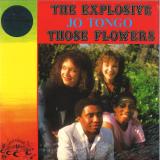
Jo Tongo - Those Flowers LP

Following the acclaimed reissue of Sa Discossa earlier this year, Jo Tongo's third solo album Those Flowers returns to the spotlight.

Originally released just a year and a half after Sa Discossa, this 1982 gem came out on the small Context label and, in Tongo's own words, the two records are "like twins." Recorded with many of the same musicians, Those Flowers continues the vibrant fusion of disco-funk and reggae - this time dedicating one side to each, leaning slightly more into his Western influences.

But there's more than groove beneath the surface. Tracks like "People Need Peace" and "We Human Beings" channel his enduring themes of resistance, identity, and freedom. The synthesizer at the beginning of the song mimics the ominous drone of warplanes, and lyrics speak directly to global struggles - reminders that his music is both deeply personal and powerfully political. "I paid for these ideals in my career," Tongo reflects, alluding to the personal costs of his outspoken stance against colonialism and injustice.

Still, Those Flowers carries joy at its heart. Songs like "Ain't No Man Like A Real Friend" celebrate trust and loyalty, while the title track offers a tender ode to love and kindness - "picking flowers from the soul," as Tongo puts it. These songs reveal the inner world of a man who has always viewed music as a mirror of life.

This reissue marks the second installment in the African Edge series from The Outer Edge label. Fully restored and remastered, Those Flowers is now set to bloom again - another vital chapter in the legacy of Jo Tongo.

В наличии на складе

Есть у нас в наличии и готов к отправке

21,81
Obeka - A World No More LP

Obeka

A World No More LP

12inchYUKU048
YUKU
Release unknown

"After being praised as one of the best releases of 2025 by multiple platforms, the highly praised debut album from Obeka lands on vinyl via YUKU.

The rhythmic dynamics and emotive attitudes of A World No More captures the density of soundsystem culture in Obeka's ancestral roots. YUKU presents the Bermudians debut album capturing a Neo-Colonial dystopia, protest and Afro-Futurism hyperextended through decaying sonic structures of a dark past and its grievances which very much exist today.

Growing into adulthood within the walls of British and European Colonial systems meant the disconnection and lostness in a new country hid me from the world at a young age. Unlike London's vast and culturally engaging migrant communities, the industrial milling town of Stockport introduced a coldness towards people from other countries I experienced in my first year after relocating from Bermuda. I couldn't understand why. Whether cold words thrown towards me or actions upon other people who look like me, it has shown to be a dooming societal virus with no cure. The most comfort was found through what was familiar - drums and rhythmic spirituality of my homeland. It was a safe-haven, a place to empty the anger and confusion. It's been 15 years since relocating and as my sound evolved, it seems classism, racism, oppression and civil control of ethnic peoples has become worse - even now more legalised and normalised. Ogun (a powerful Yoruba deity associated with anger, justice and war) acts as the opening sequence of the record and its symbolism. Using distorted bass frequencies and dissected Regga-Dub immersed in live-sampled ghostly voices of the lost ones. This sonic exercising is also applied in Drillaman - a stampede of industrial framework and metallic instruments wielded over moody Dancehall MC'ing, magnifying two parallel worlds in cocooned evolution. The resurrection of Transatlantic African cultures and identity have never been silenced, rather carried elsewhere through trade routes of enslavement, which was pivotal when composing and completing the album upon returning home to the Caribbean for the first time ever. After reconnecting with my heritage my blurred vision of what's wrong in the world became so clear. Guidance in empty plains seek truth throughout the pain - A statement of finding oneself expressed on the poetic closing track A World No More.

On Fawohodie (A West African Adinkra symbol that represents independence, freedom, and emancipation stamped on the album cover) the motive and atmosphere begins to change. Afro-Caribbean idealism which refers to the philosophical concept that emphasizes the interconnectedness of individuals and the importance of community, often contrasting with Western individualism, begins to take shape in a new universe. We can co-exist. The track framework uses machine-led software forming frequencies we have no control over, then manipulated through decomposing soundscapes, scattered hand-drums and human-made weapons of control - exposing the hidden disparity that's been carried over generations whilst balancing hopeful and musical foundations towards equality and peace. On Pressure and Kuduro! the writing direction attempts to wake people up. Not settling for a composed approach like in past projects, quite the opposite. A call for native sonic awareness, dismantled vocals of protests, eroded percussion using chains, gears and motorised harmonies sculpted in challenging abstract behaviors far outside my comfort zone. A direct abrasiveness and weight I want people to feel, whilst finding hope and solace through enchanting choirs and hypnotic basslines in complete synchrony.

"Purity in sound manifests when you least expect it. The smallest memory or feeling grows from a seed into a sonic language that you, and only you can interpret and release back into the world." "

Сделать предзаказ

Этот продукт еще не вышел. Ты можешь сделать предзаказ, как только он появится на складе, продукт будет подготовлен к пересылке.

21,64
Various - ECHOES OF ITALY – THE BIRDS OF PARADISE – EARLY 90S HOUSE VIBES VOL.2 (2x12")

Googling “paradise house”, the first results to pop up are an endless list of European b&b’s with whitewashed lime façades, all of them promising “…an unmatched travel experience a few steps from the sea”. Next, a little further down, are the institutional websites of a few select semi-luxury retirement homes (no photos shown, but lots of stock images of smiling nurses with reassuring looks). To find the “paradise house” we’re after, we have to scroll even further down. Much further down.

It feels like yesterday, and at the same time it seems like a million years ago. The Eighties had just ended, and it was still unclear what to expect from the Nineties. Mobile phones that were not the size of a briefcase and did not cost as much as a car? A frightening economic crisis? The guitar-rock revival?! Certainly, the best place to observe that moment of transition was the dancefloor. Truly epochal transformations were happening there. From America, within a short distance one from the other, two revolutionary new musical styles had arrived: the first one sounded a bit like an “on a budget” version of the best Seventies disco-music – Philly sound made with a set of piano-bar keyboards! – the other was even more sparse, futuristic and extraterrestrial. It was a music with a quite distinct “physical” component, which at the same time, to be fully grasped, seemed to call for the knotty theories of certain French post-modern philosophers: Gilles Deleuze, Félix Guattari, Paul Virilio... Both those genres – we would learn shortly after – were born in the black communities of Chicago and Detroit, although listening to those vinyl 12” (often wrapped in generic white covers, and with little indication in the label) you could not easily guess whether behind them there was a black boy from somewhere in the Usa, or a girl from Berlin, or a pale kid from a Cornish coastal town.

Quickly, similar sounds began to show up from all corners of Europe. A thousand variations of the same intuition: leaner, less lean, happier, slightly less intoxicated, more broken, slower, faster, much faster... Boom! From the dancefloors – the London ones at least, whose chronicles we eagerly read every month in the pages of The Face and i-D – came tales of a new generation of clubbers who had completely stopped “dressing up” to go dancing; of hot tempered hooligans bursting into tears and hugging everyone under the strobe lights as the notes of Strings of Life rose up through the fumes of dry ice (certain “smiling” pills were also involved, sure). At this point, however, we must move on to Switzerland.

In Switzerland, in the quiet and diligent town of Lugano, between the 1980s and 1990s there was a club called “Morandi”. Its hot night was on Wednesdays, when the audience also came from Milan, Como, Varese and Zurich. Legend goes that, one night, none less than Prince and Sheila E were spotted hiding among the sofas, on a day-off of the Italian dates of the Nude Tour… The Wednesday resident and superstar was an Italian dj with an exotic name: Don Carlos. The soundtrack he devised was a mixture of Chicago, Detroit, the most progressive R&B and certain forgotten classics of old disco music: practically, what the Paradise Garage in New York might have sounded like had it not closed in 1987. In between, Don Carlos also managed to squeeze in some tracks he had worked on in his studio on Lago Maggiore. One in particular: a track that was rather slow compared to the BPM in fashion at the time, but which was a perfect bridge between house and R&B. The title was Alone: Don Carlos would explain years later that it had to be intended both in the English meaning of “by itself” and like the Italian word meaning “halo”. That wasn’t the only double entendre about the song, anyway. Its own very deep nature was, indeed, double. On the one hand, Alone was built around an angelic keyboard pattern and a romantic piano riff that took you straight to heaven; on the other, it showcased enough electronic squelches (plus a sax part that sounded like it had been dissolved by acid rain) to pigeonhole the tune into the “junk modernity” section, aka the hallmark of all the most innovative sounds of the time: music that sounded like it was hand-crafted from the scraps of glittering overground pop.

No one knows who was the first to call it “paradise house”, nor when it happened. Alternative definitions on the same topic one happened to hear included “ambient house”, “dream house”, “Mediterranean progressive”… but of course none were as good (and alluring) as “paradise house”. What is certain is that such inclination for sounds that were in equal measure angelic and neurotic, romantic and unaffective, quickly became the trademark of the second generation of Italian house. Music that seemed shyly equidistant from all the rhythmic and electronic revolutions that had happened up to that moment (“Music perfectly adept at going nowhere slowly” as noted by English journalist Craig McLean in a legendary field report for Blah Blah Blah magazine). Music that to a inattentive ear might have sounded as anonymous as a snapshot of a random group of passers-by at 10AM in the centre of any major city, but perfectly described the (slow) awakening in the real world after the universal love binge of the so-called Second Summer of Love.

For a brief but unforgettable season, in Italy “paradise house” was the official soundtrack of interminable weekends spent inside the car, darting from one club to another, cutting the peninsula from North to centre, from East to West coast in pursuit of the latest after-hours disco, trading kilometres per hour with beats per minute: practically, a new New Year’s Eve every Friday and Saturday night. This too was no small transformation, as well as a shock for an adult Italy that was encountering for the first time – thanks to its sons and daughters – the wild side of industrial modernity. The clubbers of the so-called “fuoriorario” scene were the balls gone mad in the pinball machine most feared by newspapers, magazines and TV pundits. What they did each and every weekend, apart from going crazy to the sound of the current white labels, was linking distant geographical points and non-places (thank you Marc Augé!) – old dance halls, farmhouses and business centres – transformed for one night into house music heaven. As Marco D’Eramo wrote in his 1995 essay on Chicago, Il maiale e il grattacielo: “Four-wheeled capitalism distorts our age-old image of the city, it allows the suburbs to be connected to each other, whereas before they were connected only by the centre (…) It makes possible a metropolitan area without a metropolis, without a city centre, without downtown. The periphery is no longer a periphery of any centre, but is self-centred”.

“Paradise house” perfectly understood all of this and turned it into a sort of cyber-blues that didn’t even need words, and unexpectedly brought back a drop of melancholic (post?)-humanity within a world that by then – as we would wholly realise in the decades to come – was fully inhuman and heartless. A world where we were all alone, and surrounded by a sinister yellowish halo, like a neon at the end of its life cycle. But, for one night at least, happy."

В наличии на складе

Есть у нас в наличии и готов к отправке

28,99
Various - SOCA JAMS

Words from the label:

Re-issue label Sentinel Island Disco returns to the stage with their long-awaited soca compilation featuring highly sought after soca cuts, raw 90’s soca house and deep blends of reggae, calypso and disco.

Structured by a PARTY and a SOUL side, the compilation offers a snapshot of the 90s electronic soca scene in all its multifaceted glory. The party side serves up a selection of pulsating, feel-good party tracks that encapsulate the carefree spirit that is the very heartbeat of soca parties. While the soul side explores a more introspective soundscape, where soulful vocals and deep electronic beats merge to create a powerful emotional experience and where melodies linger long after the music stops.

Label owners Barney Graman and Coco Vink have spent the past 3 years on bringing these lost and obscured recordings back into the limelight, some of which now pressed on vinyl for the very first time. All tracks are carefully remastered and some have been edited or remixed for the modern dancefloor, while staying as close as possible to the original brilliance.

The result is more than just a collection of songs; it’s a celebration of soca’s rich heritage and its ability to unite both different cultures as well as divergent musical themes, from joyous celebration to soulful reflection. All in all, a must-have compilation for all the collectors and aficionados of the rich and uplifting music of the African diaspora, as well as DJ's, dancers and music lovers looking to spice up their collection with some incredible soca music!

Comes as a transparent colored vinyl, featuring a small booklet with artist and label pictures as well as full liner notes on the genre's history and introduction of the tracks.

Limited to 500 copies.

В наличии на складе

Есть у нас в наличии и готов к отправке

22,65
The Blessed Madonna - Godspeed LP 2x12"

The Blessed Madonna

Godspeed LP 2x12"

2x12inch5054197441950
FFRR
18.10.2024
 
24

The Blessed Madonna began with three magic words, scrawled in shoe polish on a broken - down box and hung on the wall at a small sweaty party: We Still Believe. “I think you have to give up completely to really understand what hope is. It was like 2011? I had spectacularly, monumentally failed. I left the label. I wasn’t DJing. I wasn’t putting out records. I was divorced and living on my Dad’s couch so naturally my friends and I decided to throw an illegal rave. We didn’t have any decorations, so I took a box and wrote, ‘We Still Believe’ on it. I needed to believe that something better was possible and that’s how it all started.” After years of $50 gigs, strung together by gas money and surfed couches, The Blessed Madonna cemented her reputation as a sublime technician behind the decks with a legacy of fluent and dynamic sets, spanning from disco to techno to house and back. One room sweatboxes, circus tents, theatres, massive festival stages and entire city blocks have all served as the canvas for her shows. After a jam packed 2023, from Glastonbury to Sonar to Boiler Room Bali, The Blessed Madonna has been filling the dance floor everywhere she goes and is now releasing her debut album.

В наличии на складе

Есть у нас в наличии и готов к отправке

40,97
22 Beaches - Dust: Recordings 1980-1984 LP

Glasgow based Seated Records return with more 1980s Scottish Post-Punk / New Wave material. In this 8-track mini compilation the label introduces the work of Stirling band 22 Beaches, offering a deep dive into music recorded between 1980-1984 - the majority of which has never seen the light of day!

22 Beaches formed in Stirling in the late 1970s as an evolution of the short lived group ‘Alone at Last’ - drummer Fred Parson’s and guitarist Stephen Hunter being the two who spanned the divide. Out of the six members of 22 Beaches, many were school friends, and the rest naturally fell together. The band toured extensively and played at a truly diverse set of venues across the UK: from a local swimming pool boiler room, to small nightclubs and university parties, to several fundraisers for the miners strike. Maybe most notably of all, drummer Fred Parsons described playing at what he calls “the Grangemouth International”, organised by local promoter Brian Guthrie and which featured an all-star lineup of 22 Beaches, The Exploited and the first incarnation of The Cocteau Twins. A coach was hired to ship the audience to Grangemouth from Stirling, the cost of which was included in the ticket. The gig then paused halfway through for a 'help yourself' buffet. Young promoters take heed. This is how it's done!

Over the course of the 80s the band released music on three different, and now sought after, various artists compilation cassettes. “What Day Is It?” and “Sadie When She Died” were released on a compilation of local Stirling artists 'The A.N.K.L.E File'. The track from which the current record takes its namesake - “Dust” - was initially released on a compilation-tape for the fanzine 'Another Spark'. And ‘‘Zoo” (also featured on this record) was first released on Glasgow label Pleasantly Surprised via compilation, 'An Hour Of Eloquent Sounds', where 22 Beaches rubbed shoulders with early music from Scottish names Primal Scream, Cocteau Twins, The Wake and Sunset Gun. Unfortunately, 22 Beaches never met the same level of commercial success as these others and decided to retire the project in 1984 - leaving their recordings and demos to gather dust (hehe)…until now!

This compilation, “Dust: recordings 1980-1984” follows the band's journey and the changes in their sound over the years. It moves from the raw, punk energy of early DIY recordings through to the A Certain Ratio style Balearica of their later pieces. The record's opener and title track “Dust” is perhaps the most shining example of the latter. Characterised by the plenitude of sonic space in the mix, “Dust” has an almost dub sensibility that is communicated through centrality of Parsons’ drums, McChord’s percussion, and Fildes’ Bass while the harmonising vocals of Sharkey and McGregor chant over the top to give the track its distinctive psychedelic edge. This is an atmosphere only exacerbated by the lofi quality of the recording which sits the vocals in the same aural realm as much 1960s psych-folk. On “Cartoon Boy”, the band strips things down further. A droning bass line persists through the tape fuzz and is accompanied by the sounds of a sole looping guitar chord sequence and McGregor and Sharkey’s vocals - respectively and carefully dancing around one another before harmonising in the most beautiful way. The result is a haunting and abstract Marine Girls style heartbreaker. ‘That Girl’ again delivers a dub adjacent rhythm section similar to that of “Dust”. However, on this instance crisp guitar chords, a distant, phased organ and blue-eyed soul vocal delivery, produce a track that could easily have been a lost Orange Juice recording from their sessions with Dennis Bovel. On “Somebody Got It Wrong” and “One Of Us” the band employ a more macro approach where a jangling guitar with an almost highlife-influenced tone, vocal ad-libs and syncopated percussion give the music a Talking Heads-esque swagger.

Taken together these tracks illustrate a clear trajectory in the band's sound, moving from from the high energy no-wave quality of early recordings towards a more dub influenced, and stripped-back sound - a sonic trajectory followed by so many bands of the time, not least those emerging from the diaspora of Manchester’s Factory Records.

On “Breathing’’ we hear the beginning of this transition, with the strong influence of the oddball NYC disco styles of Was (Not Was) and ZE records. All of this is meshed together with the residual punk rock energy of 1980s UK. This combination is employed to excellent effect with the addition of the distinctly Scottish (and what the band confirmed to me to be spontaneous) vocal delivery of: “Do you love me? Do you want me?” “Aye!” “Do you love me? Do you need me?” “Naw!”.

On the record’s closing tracks, “Zoo” and “Talent Show”, we hear early examples of the band’s work, playing with their rawest all-in-one-take live energy where Hunter’s spiralling guitar riffs and McGregor's distorted vocal exclamations lead the charge. The band recalls that these initial-forays did not always translate so well into multitrack recording and overdubbing: “the deconstruction took away some of the band's natural feel”. On “Talent Show” the record ends with Sharkey delivering an almost unintelligible spoken word section over the top of the track, making for one final, disorientating, almost manic slice of post-punk.

These tracks from 1980-1984 chart the progress of a unique contribution to the world of Scottish Post-Punk and New Wave, encapsulating not only the musical trajectory of 22 Beaches but also echoing the broader sonic landscape of 1980s UK, a testament to the adaptability and creativity of the UK’s underground music of the time.

В наличии на складе

Есть у нас в наличии и готов к отправке

18,91
EXTREME - SIX LP 2x12"

Extreme

SIX LP 2x12"

2x12inch0218576EMU
earMUSIC
12.06.2023

EXTREME return in 2023 with their brand new studio album “SIX”. The multi-million selling hard rockers present 12 tracks ranging from funk-tinged bangers to soaring ballads as only EXTREME can deliver. Spearheaded by the songwriting team of vocalist Gary Cherone and guitarist Nuno Bettencourt (who blessed the world with chart toppers like “More Than Words” and “Hole Hearted”), “SIX“ is an essential addition to EXTREME’s discography. The album opener and first single “RISE” will immediately fire up legions of anxious fans with its signature riff. Elsewhere, “OTHER SIDE OF THE RAINBOW” showcases EXTREME’s gift for passionate acoustic magic. EXTREME are back with “SIX“ – everything the fans have been waiting for. Formats; CD, 2LP Black, 2LP Ltd Transparent, 2LP Ltd Red & Black Marble.

В наличии на складе

Есть у нас в наличии и готов к отправке

35,71
Guilty Razors - Complete Recordings 1977 - 1978

UILTY RAZORS, BONA FIDE PUNKS.


Writings on the topic that go off in all directions, mind-numbing lectures given by academics, and testimonies, most of them heavily doctored, from those who “lived through that era”: so many people today fantasize about the early days of punk in our country… This blessed moment when no one had yet thought of flaunting a ridiculous green mohawk, taking Sid Vicious as a hero, or – even worse – making the so-called alternative scene both festive and boorish. There was no such thing in 1976 or 1977, when it wasn’t easy to get hold of the first 45s by the Pistols or the Clash. Few people were aware of what was happening on the fringes of the fringes at the time. Malcolm McLaren was virtually unknown, and having short hair made you seem strange. Who knew then that rock music, which had taken a very bad turn since the early 1970s, would once again become an essential element of liberation? That, thanks to short and fast songs, it would once again rediscover that primitive, social side that was so hated by older generations? Who knew that, besides a few loners who read the music press (it was even better if they read it in English) and frequented the right record stores? Many of these formed bands, because it was impossible to do otherwise. We quickly went from listening to the Velvet Underground to trying to play the Stooges’ intros. It’s a somewhat collective story, even though there weren’t many people to start it.
The Guilty Razors were among those who took part in this initial upheaval in Paris. They were far from being the worst. They had something special and even released a single that was well above the national average. They also had enough songs to fill an album, the one you’re holding. In everyone’s opinion, they were definitely not among the punk impostors that followed in their wake. They were, at least, genuine and credible.

Guilty Razors, Parisian punk band (1975-1978). To understand something about their somewhat linear but very energetic sound, we might need to talk about the context in which it was born and, more broadly, recall the boredom (a theme that would become capital in punk songs) coupled with the desire to blow everything off, which were the basis for the formation of bands playing a rejuvenated rock music ; about the passion for a few records by the Kinks or the early Who, by the Stooges, by the Velvet mostly, which set you apart from the crowd.
And of course, we should remember this new wave, which was promoted by a few articles in the specialized press and some cutting-edge record stores, coming from New York or London, whose small but powerful influence could be felt in Paris and in a handful of isolated places in the provinces, lulled to sleep by so many appalling things, from Tangerine Dream to President Giscard d’Estaing...
In 1975-76, French music was, as almost always, in a sorry state ; it was still dominated by Johnny Hallyday and Sylvie Vartan. Local rock music was also rather bleak, apart from Bijou and Little Bob who tried to revive this small scene with poorly sound-engineered gigs played to almost no one.
In the working class suburbs at the time, it was mainly hard rock music played to 11 that helped people forget about their gruelling shifts at the factory. Here and there, on the outskirts of major cities, you still could find a few rockers with sideburns wearing black armbands since the death of Gene Vincent, but it wasn’t a proper mass movement, just a source of real danger to anyone they came across who wasn't like them. In August 1976, a festival unlike any other took place in Mont-de-Marsan – the First European Punk Festival as the poster said – with almost as many people on stage as in the audience. Yet, on that day, a quasi historical event happened, when, under the blazing afternoon sun, a band of unknowns called The Damned made an unprecedented noise in the arena, reminiscent of the chaotic Stooges in their early adolescence. They were the first genuine punk band to perform in our country: from then on, anything was possible, almost anything seemed permissible.

It makes sense that the four+1 members of Guilty Razors, who initially amplified acoustic guitars with crappy tape recorder microphones, would adopt punk music (pronounced paink in French) naturally and instinctively, since it combines liberating noise with speed of execution and – crucially – a very healthy sense of rebellion (the protesters of May 1968 proclaimed, and it was even a slogan, that they weren’t against old people, but against what had made them grow old. In the mid-1970s, it seemed normal and obvious that old people should now ALSO be targeted!!!).
At the time, the desire to fight back, and break down authority and apathy, was either red or black, often taking the form of leafleting, tumultuous general assemblies in the schoolyard, and massive or shabby demonstrations, most of the time overflowing with an exciting vitality that sometimes turned into fights with the riot police. Indeed, soon after the end of the Vietnam War and following Pinochet’s coup in Chile, all over France, Trotskyist and anarcho-libertarian fervour was firmly entrenched among parts of the educated youth population, who were equally rebellious and troublemakers whenever they had the chance. It should also be noted that when the single "Anarchy in the UK" was first heard, even though not many of us had access to it, both the title and its explosive sound immediately resonated with some of those troublemakers crying out for ANARCHY!!! Meanwhile, the left-wing majority still equated punks with reckless young neo-Nazis. Of course, the widely circulated photos in the mainstream press of Siouxsie Sioux with her swastikas didn’t necessarily help to win over the theorists of the Great Revolution. It took Joe Strummer to introduce The Clash as an anti-racist, anti-fascist and anti-ignorance band for the rejection of old-school revolutionaries to fade a little.

The Lycée Jean-Baptiste Say at Porte d’Auteuil, despite being located in the very posh and very exclusive 16th arrondissement of Paris, didn’t escape these "committed" upheavals, which doubled as the perfect outlet for the less timid members of this generation.
“Back then, politics were fun,” says Tristam Nada, who studied there and went on to become Guilty Razors’ frontman. “Jean-Baptiste was the leftist high-school in the neighbourhood. When the far right guys from the GUD came down there, the Communist League guys from elsewhere helped us fight them off.”
Anything that could challenge authority was fair game and of course, strikes for just about any reason would lead to increasingly frequent truancy (with a definitive farewell to education that would soon follow). Tristam Nada spent his 10th and 11th unfinished grades with José Perez, who had come from Spain, where his father, a janitor, had been sentenced to death by Franco. “José steered my tastes towards solid acts such as The Who. Like most teenagers, I had previously absorbed just about everything that came my way, from Yes to Led Zeppelin to Genesis. I was exploring… And then one day, he told me that he and his brother Carlos wanted to start a rock band.” The Perez brothers already played guitar. “Of course, they were Spanish!”, jokes their singer. “Then, somewhat reluctantly, José took up the bass and we were soon joined by Jano – who called himself Jano Homicid – who took up the rhythm guitar.” Several drummers would later join this core of not easily intimidated young guys who didn’t let adversity get the better of them.

The first rehearsals of the newly named Guilty Razors took place in the bedroom of a Perez aunt. There, the three rookies tried to cover a few standards, songs that often were an integral part of their lives. During a first, short gig, in front of a bewildered audience of tough old-school rockers, they launched into a clunky version of the Velvet Underground's “Heroin”. Challenge or recklessness? A bit of both, probably… And then, step by step, their limited repertoire expanded as they decided to write their own songs, sung in a not always very accurate or academic English, but who cared about proper grammar or the right vocabulary, since what truly mattered was to make the words sound as good as possible while playing very, very fast music? And spitting out those words in a language that left no doubt as to what it conveyed mattered as well.
Trying their hand a the kind of rock music disliked by most of the neighbourhood, making noise, being fiercely provocative: they still belonged to a tiny clique who, at this very moment, had chosen to impose this difference. And there were very few places in France or elsewhere, where one could witness the first stirrings of something that wasn’t a trend yet, let alone a movement.

In the provinces, in late 1976 or early 1977, there couldn’t be more than thirty record stores that were a bit more discerning than average, where you could hear this new kind of short-haired rock music called “punk”. The old clientele, who previously had no problem coming in to buy the latest McCartney or Aerosmith LP, now felt a little less comfortable there…
In Paris, these enlightened places were quite rare and often located nex to what would become the Forum des Halles, a big shopping mall. Between three aging sex workers, a couple of second-hand clothes shops, sellers of hippie paraphernalia and small fashion designers, the good word was loudly spread in two pioneering places – propagators of what was still only a new underground movement. Historically, the first one was the Open Market, a kind of poorly, but tastefully stocked cave. Speakers blasted out the sound of sixties garage bands from the Nuggets compilation (a crucial reference for José Perez) or the badly dressed English kids of Eddie and the Hot Rods. This black-painted den was opened a few years earlier by Marc Zermati, a character who wasn’t always in a sunny disposition, but always quite radical in his (good) choices and his opinions. He founded the independent label Skydog and was one of the promoters of the Mont-de-Marsan punk festivals. Not far from there was Harry Cover, another store more in tune with the new New York scene, which was amply covered in the house fanzine, Rock News (even though it was in it that the photos of the Sex Pistols were first published in France).
It was a favorite hang-out of the Perez brothers and Tristam Nada, as the latter explained. “It’s at Harry Cover’s that we first heard the Pistols and Clash’s 45s, and after that, we decided to start writing our first songs. If they could do it, so could we!”
The sonic shocks that were “Anarchy in the UK”, “White Riot” or the Buzzcocks’s EP, “Spiral Scratch” – which Guilty Razors' sound is reminiscent of – were soon to be amplified by an unparalleled visual shock. In April 1977, right after the release of their first LP, The Clash performed at the Palais des Glaces in Paris, during a punk night organised by Marc Zermati. For many who were there, it was the gig of a lifetime…
Of course, Guilty Razors and Tristam were in the audience: “That concert was fabulous… We Parisian punks were almost all dressed in black and white, with white shirts, skinny leather ties, bikers jackets or light jackets, etc. The Clash, on the other hand, wore colourful clothes. Well, the next day, at the Gibus, you’d spot everyone who had been at this concert, but they weren’t wearing anything black, they were all wearing colours.”

It makes sense to mention the Gibus club, as Guilty Razors often played there (sometimes in front of a hostile audience). It was also the only place in Paris that regularly scheduled new Parisian or Anglo-Saxon acts, such as Generation X, Siouxsie and the Banshees, the Slits, and Johnny Thunders who would become a kind of messed-up mascot for the venue. A little later, in 1978, the Rose Bonbon – formerly the Nashville – also attracted nightly owls in search of electric thrills… In 1977, the iconic but not necessarily excellent Asphalt Jungle often played at the Gibus, sometimes sharing the bill with Metal Urbain, the only band whose aura would later transcend the French borders (“I saw them as the French Sex Pistols,” said Geoff Travis, head of their British label Rough Trade). Already established in this small scene, Metal Urbain helped the young and restless Guilty Razors who had just arrived. Guitarist for Metal Urbain Hermann Schwartz remembers it: “They were younger than us, we were a bit like their mentors even if it’s too strong a word… At least they were credible. We thought they were good, and they had good songs which reminded of the Buzzcocks that I liked a lot. But at some point, they started hanging out with the Hells Angels. That’s when we stopped following them.”

The break-up was mutual, since, Guilty Razors, for their part, were shocked when they saw a fringe element of the audience at Metal Urbain concerts who repeatedly shouted “Sieg Heil” and gave Nazi salutes. These provocations, even still minor (the bulk of the skinhead crowd would later make their presence felt during concerts), weren’t really to the liking of the Perez brothers, whose anti-fascist convictions were firmly rooted. Some things are non-negotiable.
A few months earlier (in July 1978), Guilty Razors had nevertheless opened very successfully for Metal Urbain at the Bus Palladium, a more traditonally old-school rock night-club. But, as was sometimes the case back then, the night turned into a mass brawl when suburban rockers came to “beat up punks”.

Back then, Parisian nights weren’t always sweet and serene.

So, after opening as best as they could for The Jam (their sound having been ruined by the PA system), our local heroes were – once again – met outside by a horde of greasers out to get them. “Thankfully,” says Tristam, “we were with our roadies, motorless bikers who acted as a protective barrier. We were chased in the neighbouring streets and the whole thing ended in front of a bar, with the owner coming out with a rifle…”
Although Tristam and the Perez brothers narrowly escaped various, potentially bloody, incidents, they weren’t completely innocent of wrongdoing either. They still find amusing their mugging of two strangers in the street for example (“We were broke and we simply wanted to buy tickets for the Heartbreakers concert that night,” says Tristam). It so happened that their victims were two key figures in the rock business at the time: radio presenter Alain Manneval and music publisher Philippe Constantin. They filed a complaint and sought monetary compensation, but somehow the band’s manager, the skilful but very controversial Alexis, managed to get the complaint withdrawn and Guilty Razors ended up signing with Constantin with a substantial advance.

They also signed with Polydor and the label released in 1978 their only three-track 45, featuring “I Don't Wanna be A Rich”, “Hurts and Noises” and “Provocate” (songs that exuded perpetual rebellion and an unquenchable desire for “class” confrontation). It was a very good record, but due to a lack of promotion (radio stations didn’t play French artists singing in English), it didn’t sell very well. Only 800 copies were allegedly sold and the rest of the stock was pulped… Initially, the three tracks were to be included on a LP that never came to be, since they were dropped by Polydor (“Let’s say we sometimes caused a ruckus in their offices!” laughs Tristam.) In order to perfect the long-awaited LP, the band recorded demos of other tracks. There was a cover of Pink Floyd's “Lucifer Sam” from the Syd Barrett era – proof of an enduring love for the sixties’ greats –, “Wake Up” a hangover tale and “Bad Heart” about the Baader-Meinhof gang, whose actions had a profound impact on the era and on a generation seeking extreme dissent... On the album you’re now discovering, you can also hear five previously unreleased tracks recorded a bit later during an extended and freezing stay in Madrid, in a makeshift studio with the invaluable help of a drummer also acting as sound engineer. He was both an enthusiastic old hippie and a proper whizz at sound engineering. Here too, certain influences from the fifties and sixties (Link Wray, the Troggs) are more than obvious in the band’s music.

Shortly after a final stormy and rather barbaric (on the audience’s side) “Punk night” at the Olympia in June 1978, Tristam left the band ; his bandmates continued without him for a short while.

But like most pioneering punk bands of the era, Guilty Razors eventually split up for good after three years (besides once in Spain, they’d only played in Paris). The reason for ceasing business activities were more or less the same for everyone: there were no venues outside one’s small circuit to play this kind of rock music, which was still frightening, unknown, or of little interest to most people. The chances of recording an LP were virtually null, since major labels were only signing unoriginal but reassuring sub-Téléphone clones, and the smaller ones were only interested in progressive rock or French chanson for youth clubs. And what about self-production? No one in our small safety-pinned world had thought about it yet. There wasn’t enough money to embark on that sort of venture anyway.

So yes, the early days of punk in France were truly No Future!

нет на складе

Закажите сейчас, и мы закажем товар для вас у нашего поставщика.

21,43

Последний логин: 6 дн. назад
FRQNCY LDN - The White Edition LP
  • 1: And In 02:50
  • 2: Pouring Elixir 08:0
  • 3: Imbrication 04:41
  • 4: Skin Contact 08:21
  • 5: Unwitches 09:42
  • 6: Everything I Never Asked Him Ft. Nikita Gill 08:29
  • 7: Incandescent Strings 0:00
  • 8: Icarus And Lucifer 03:31
  • 9: Matthias' Wajd 04:55
  • 10: Circles 05:12
  • 11: Soaring Above The Nave 06:45
  • 12: And Out 01:50

FRQNCY LDN, the new project from Alex Lavery and James Ford (producer du jour and one half of Simian Mobile Disco), are releasing their debut album ‘The White Edition’ on 5 September via PRAH Recordings. Alongside the news of their debut album, the duo are sharing the first taste in ‘Matthias’ Wajd’, which they describe as “a rousing, instrumental piece from the middle of the set where the whole ensemble became balanced providing moments where Raven played violin with haunting yet uplifting melodies within the cavernous reverb of the church. Interestingly, at this moment, most of the audience who had been laying down rose to watch the performance like a gig, like an awakening.”

Initially conceived as a live project with earlier performances at churches in London and at Glastonbury, FRQNCY LDN’s music is a mix of strings, gongs, oscillators, FX, and spoken word, and the result is a musical experience unlike any other. Now that immersive magic has been captured on their debut release through Prah Recordings.

The music that FRQNCY LDN are releasing as their debut album is from an extraordinary live take from a performance at St Matthias Church in Stoke Newington last year, and thanks in no small part to the serendipitous bunch of musicians they assembled: composer and violinist Raven Bush, clarinettist Arun Ghosh, cellist Satin Beige Chousmer, and harpist Chloe Chousmer-Kerr. Alongside Lavery and Ford and assisted by engineer Animesh Ravel, they were able to capture the music to a world class level.

FRQNCY LDN has its roots in a supermoon that occurred three summers ago, after the hottest day of the year. Two of Lavery’s friends gave a sound bath that evening. “I’m not overly into astronomy or anything but the experience was nuts,” he says. “I had to find out what had just happened. What felt like forty minutes was actually two and a half hours. We were all out. It was so profound that I was hooked.”

He immediately signed up for a sound therapy course where he learned about what he calls a “brain hack” to meditation. “The thing about sound therapy is there’s a lot that’s meditation-based, and I find meditation really difficult. I’ve got a very busy brain. What was alluring about this process of sound immersion, a sound bath, whatever you want to call it, is it’s basically a hack to making your brain get into a meditative state.”

FRQNCY LDN’s early shows crystallised their ideas into a project, and Lavery brought poet Nikita Gill on board as a vocalist. “One of the first poems she gave to me, ‘Unwitches’ was in response to me explaining that I’d love this project to be perceived as something anyone could access. It’s not just for the sound meditation or the yoga, or the mushroom crowd. No one should be turned off by connotations from where the music comes from, I love music but I’d never be into that because it’s too woo-woo. Nikita said she’d had this poem for a long time but she’d never found the right home for it.”

And in an increasingly busy and fraught world, the need to tune out for an hour or so, and maybe tune in to something more profound, is only going to get bigger.

Сделать предзаказ20.02.2026

он должен быть опубликован на 20.02.2026

27,69
ohayoumadayarou - Sokoni Naimono LP
  • A1: Crawl
  • A2: Tamanegi
  • A3: Nishisumiji
  • B1: Paper Airplane
  • B2: Planet
  • B3: Mo Osoi

Rachel of chelmico's solo project “ohayoumadayarou” releases her first LP, 『Sokoni Naimono』
Featuring six tracks created alongside sound producer ESME MORI, relying on “the feeling of the moment” without a clear theme.
The drifting sound and the rhythm of words that make you pause momentarily bring to light the small discomforts and tenderness found within everyday life.

Сделать предзаказ26.12.2025

он должен быть опубликован на 26.12.2025

45,59
Various - Dolores: Salsa & Guaracha From 70's French West Indies

In Guadeloupe, many people think that jazz and ka music are like a ring and a finger. To some extent, the same could be said about so called Latin music and the music played in the French West Indies.

Both aesthetics were born in the Caribbean and bear so many connections that they can easily be considered cousins. In constant dialogue, there are lots of examples of their fruitful alliance and have been for a while. The English country dance that used to be practiced in European lounges came to be called kadrille in Martinique and contradanza in Cuba. They both featured additional percussion instruments inherited from the transatlantic deportation. Drawing from shared feelings about the same traumatized identity – later to be creolized – it would be hard not to assume that they were meant to inspire each other. The golden age of the orchestras that graced the Pigalle nights during the interwar period further proves the point. As soon as the 1930s, Havana-born Don Barreto naturally mixed danzón and biguine music in a combo based at Melody's Bar. In the following decade, Félix Valvert, a conductor who was born and raised in Basse-Terre in Guadelupe, also worked wonders in Montparnasse with La Coupole, which was an orchestra made up of eclectic musicians. Afro- Caribbean performers of various origins were often hired on rhythm and brass sections in jazz bands, which used to enliven the typical French balls of the capital. In the 1930s and onwards, Rico’s Creole Band was one of them.


Martinican violinist-clarinettist Ernest Léardée, who would become the king of biguine music as well as the main figure of French Uncle Ben's TV commercials (a dark stigma of post-colonial stereotypes), had musicians from the whole Caribbean sphere play at his Bal Blomet – and they all enchanted "ces Zazous-là" (according the words of Léardée's biguine-calypso piece). In les Antilles (French for French West Indies), music history started to speed up in the 1950s, when trade expanded and radio stations grew bigger. The Guadelupean and Martiniquais youth tuned in their old galena radio sets to South American and Caribbean music. As for the women traders, les pacotilleuses, they bought and sold goods across different islands (the "passing of items through various hands" was thought to be most pleasurable) and brought back countless sounds in their luggage. Such was the case of Madame Balthazar, who once returned from Puerto Rico with the first 45rpm and 33rpm to ever enter Martinique.

Out of this adventure was created the famous Martinican label La Maison des Merengues, a music business she opened and undertook with her husband and which proved to be a major landmark. At the end of the 1950s, in Puerto Rico, Marius Cultier competed in the Piano International Contest playing a version of Monk's Round 'Midnight. He won the first prize and this distinction foreshadowed everything that was to come. Cultier, the heretic Monk of jazz, was quickly praised for writing superb melodies, always tinged with a twist that conferred a unique sound to his music. It didn't take long for the gifted self-taught musician to get to play with Los Cubanos, making a name for himself thanks to his impressive maestria on merengues.

The rest is history. Besides, in the late 1950s, Frantz Charles-Denis, born into the upper middle class in Saint-Pierre and better known by his first name Francisco, went back home after working at La Cabane Cubaine – a club located rue Fontaine where he had caught the Latin fever. Francisco's music was therefore heavily marked by his Cuban cousins' influence, which gave the combos he led a specific style and also led to renewal. Things were swinging hard in La Savane, located in the main square in Fort-de-France. He set up the Shango club close by and tested out the biguine lélé there, a new music formula spiced up with Latin rhythms. Soon afterwards, fate had him fly to Puerto Rico and Venezuela.

As for percussionist Henri Guédon (percussions were only a part of his many talents), he was born in Fort-de-France in May 22nd 1944, the day marking the celebration of the abolition of slavery. As an old man, he could remember that in " his father's Teppaz, a lot of hectic 6/8 music was constantly playing...". In the opening lines of his Lettre à Dizzy, a small illustrated collection of writings published by Del Arco, he highlighted the huge impact that cubop had on him as a teenage boy, around 1960. He eventually turned out to be the lider maximo in La Contesta, a big band steeped in Latin jazz. He was also the one who originated the word zouk to describe music which brought the sound of the New York barrio to Paris. It was the culmination of a journey that started in Sainte-Marie: "a mythical place for bélé, the equivalent of Cuban guaguancó". In the early 1960s, the tertiary economy developed to the detriment of agriculture. Yet rural life was where roots music emerged in Martinique and in Guadeloupe.

Record companies played a major part in the process of Latin versions sweeping across the islands – before reaching everywhere else. Producer Célini, boss of the great Aux Ondes label, and Marcel Mavounzy, both the head of Émeraude records - a firm which was founded in 1953 - as well as the brother of famous saxophonist Robert Mavounzy, were big names to bear in mind. Although there were many of them - all of whom are featured on this record - Henri Debs was definitely the major figure in the recording adventure. He proved to be so influential that he even got compared to Berry Gordy. In the mid 1950s, when he acquired his first Teppaz, he worked on his first compositions: a bolero and a chachacha. Then, he became the one man who made people discover Caribbean music, from calypso to merengue. He was among the first ones to rush out to San Juan, Puerto Rico, to buy records and distribute them through a store run by one of his brothers in Fort-de-France. He had members of the Fania All Star come and perform there, which he was madly proud about. He was also the first one to pay attention to Haitian music, such as compas direct and various other rhythms which would soon flood the market. As a result, many of the combos hitting his legendary studio would end up boosted by widespread "Afro-Latin" rhythms. However, he never denied his identity: gwo ka drums were given a major role, although they were instruments which had long been banned from the "official" music spheres. The present selection bears witness to such a creative swarming. Here are fourteen tracks of untimely yet unprecedented cross-fertilization: all types of music rooted in the Creole archipelago have found their way, whatsoever, to the tracklisting. Whether originating from the city or being more rural, they all go back to what Edouard Glissant, in an interview about the place of West Indian music in the Afro-American scope, called "the trace of singing, the one which got erased by slavery." "It is so in jazz, but also in reggae, calypso, biguine, salsa... This trace also manifests through the drums, whether Guadelupean, Dominican, Jamaican or Cuban... None of them being quite the same. They all point to the idea of a trace, seeking it out and connecting to each other through it. This is the hallmark of the African diaspora: its ability to create something new, in relation to itself, out of a trace. It may be the memory of a rhythm, the crafting of a drum, a means of expression which doesn't resort to an old language but to the modalities of it." The opening track features one of the emblematic orchestras of this aesthetic identity, criscrossing many music types from the archipelago. The 1974 Ray Barretto guajira – Ray Barretto was a major New York drummer influenced by Charlie Parker and Chano Pozzo – is magnificently performed by Malavoi, a legendary Fayolais group (i.e from Fort-de-France). Additionally, the compilation ends on a piece by Los Martiniqueños de Francisco. It symbolically closes the circle as it is a genuine potomitan of Martinique culture which also functions as a tireless campaigner for Afro-Caribbean music. Practicing the danmyé rounds (a kind of capoeiria) to the rhythm of the bèlè drum, it delivers a terrific Caterete, a kind of champeta of Afro- Colombian obedience which was originally composed by Colombian Fabián Ramón Veloz Fernández for the group Wgenda Kenya. The icing on the cake is Brazilian Marku Ribas, who found refuge in Martinique in the early 1970s, bringing his singing to the last trance-inducing track. These two "versions" convey the whole tone of a selection composed of rarities and classics of the tropicalized genre, swarming with tonic accents and convoluted rhythms. It is the sort of cocktail that the West Indians never failed to spice up with their own ingredients. For instance, the Los Caraïbes cover of Dónde, a famous Cuban theme composed by producer Ernesto Duarte Brito, has a typical violin and features renowned Martinique singer Joby Valente and his piquant voice.


The track used to be – or so we think – their only existing 45rpm. The meaningful Amor en chachachá by L'Ensemble Tropicana, a band which included Haitian musicians among whom was composer and leader Michel Desgrotte, also recalls how Latin music was pervasive in the tropics in the mid-1960s. They were the ones keeping people dancing at Le Cocoteraie in Guadelupe and La Bananeraie in Martinique. Around the same time, another "foreign" band, Congolese Freddy Mars N'Kounkou's Ryco Jazz, achieved some success on both islands by covering Latin jazz classics – such as their adaptation of Wachi Wara, a "soul sauce" by Dizzy Gillespie and Chano Pozo whose interweaving of strings and percussions can have anyone hit the dancefloor. How can you resist Dap Pinian indeed, a powerful guaguancó by Eugene Balthazar, performed by the Tropicana Orchestra and published by the Martinique-founded La Maison des Merengues? It also acts as a symbol of the maelstrom at work. Going by the name Paco et L'orchestre Cachunga, Roger Jaffory used to play guaguancó too: his Fania-inspired Oye mi consejo is one example of his style. Baila!!!!! Dancing was also one of the Kings' focus points. Oriza is a Puerto Rican bomba and a "classic" originally composed by Nuevayorquino trumpeter Ernie Agosto, which reserves major space for brasses, giving it a special sheen.

Emerging from the New York barrios crucible was also La Perfecta, a Martinique group originating from Trinidad, whose name directly references the totemic Eddie Palmieri figure as well as his own band, also called La Perfecta. Here they borrow Toumbadora from Colombian producer and composer Efraín Lancheros and interpret it by emphasizing percussions, which set fire to the track even more than the wind instruments. The same goes for Martinique's Super Jaguars, who use Tatalibaba – a composition by Cuban guitarist Florencio "Picolo" Santana which was made famous by Celia Cruz & La Sonora Matencera – as a pretext for sending their cadences into a frenzy. In a more typically salsa vein, the Super Combo, a famous Guadelupean orchestra from Pointe-Noire that was formed around the Desplan family and had Roger Plonquitte and Elie Bianay on board, adapt Serana, a theme by Roberto Angleró Pepín, a Puerto Rican composer, singer and musician also known for his song Soy Boricua. Here again, their vision comes close to surpassing the original. In the 1970s, L'Ensemble Abricot provided a handful of tracks of different syles, hence reaching the pinnacle of the art of achieving variety and giving pleasure. They played boleros, biguines, compas direct, guaguancó and even a good old boogaloo - the type they wanted to keep close to their hearts for ever, "pour toujours", as they sang along together in one of their songs. Léon Bertide's Martinican ensemble excelled at the boogaloo which had been composed by Puerto Rican saxophonist Hector Santos for the legendary El Gran Combo.


Three years later, in 1972, Henri Guédon, with the help of Paul Rosine on the vibraphone, tackled the Bilongo made famous by Eddie Palmieri. Such a classic!!!!! And so were the Aiglons, the band from Guadelupe: choosing to execute Pensando en tí, a composition by Dominican Aniceto Batista, on a cooler tempo than the original, they noticeably used a wonderfully (un)tuned keyboard in place of the accordion. On the high-value collectible single – the first one released by Les Aiglons under the Duli Disc label – there is a sticker classifying the track under the generic name "Afro". Now that is what we call a symbol. Jacques Denis

нет на складе

Закажите сейчас, и мы закажем товар для вас у нашего поставщика.

21,43

Последний логин: 29 дн. назад
Winterlight - Winterlight LP

Emerging from the shadows of a small apartment in Chicago’s South Side Pilsen neighborhood in 1999, Winterlight was produced and mixed by Daniel Thompson over the course of three years, from 1999 to 2002. It’s an intimate and evocative album that captures a pivotal chapter in Thompson’s life and echoes the spirit of a formative era in the underground music scene.
Thompson’s journey began in the heat of Houston, Texas, where his love for sound quickly became an obsession. By the late ’90s, he was among the first DJs in Houston to champion the sound of Chicago house, often driving long distances from Texas to Chicago in search of records, inspiration, and connection. These trips—equal parts pilgrimage and education—eventually led him to relocate to Chicago, where his artistic vision would fully take shape. Winterlight is the direct result of that move. Crafted over several years, the album embodies a raw, hands-on approach to production, built from analog synths, outboard gear, and hours of meticulous layering. Thompson leaned on tools like the Kurzweil K2000, SE-1, Juno-106, and classic processors such as the DP4 and TC Electronic units, shaping each track with
care and intention.
Blending atmospheric textures with hypnotic rhythm and subtle experimental flourishes, Winterlight captures the sound of an artist deeply engaged with his tools and surroundings. His extensive vinyl collection—over 3,000 records—served as both palette and inspiration, with carefully chosen samples lending further depth and narrative to the music. Now set for release across all digital platforms and as a limited double 12" vinyl edition through Berlin’s Word & Sound, Winterlight invites listeners into a soundscape that is both immersive and personal. More than just an album, it is a sonic document of a moment in time—rich in tone, memory, and intent. For those willing to listen deeply, Winterlight offers a rare window into the underground spirit of the early 2000s and the inner world of a producer finding his voice.

Сделать предзаказ05.09.2025

он должен быть опубликован на 05.09.2025

28,99
Me Lost Me - This Material Moment

FOLLOW UP TO THE CRITICALLY ACCLAIMED 2023 ALBUM ‘RPB’ (UTR151):

- #4 MOJO FOLK ALBUMS OF THE YEAR+ FOLK ALBUM OF THE MONTH:
“ IT MELTS TRAD TECHNIQUES AND MINECRAFT BURBLE INTO ‘A MASSIVE, MULTI-PLAYER ONLINE DREAM’ . INCOMPREHENSIBLE/IRRESISTIBLE’

‘ME LOST ME’S RPG (UPSET THE RHYTHM) IS AN EXCITING, IMAGINATIVE ALBUM EXPLORING THE LINKS BETWEEN TRADITIONAL INFLUENCES AND ELECTRONICS IN FERTILE WAYS.’ THE GUARDIAN - FOLK ALBUMS OF THE MONTH.

'FROM NEWCASTLE, VIA UPSET THE RHYTHM, JAYNE DENT EXPLORES FOLK ART AND FUTURISM TO SPELLBINDING EFFECT' THE QUIETUS

FULL PAGE REVIEW IN WIRE MAGAZINE:"ME LOST ME'S NEW ALBUM RPG IS FILLED WITH STORIES OF ADVENTURE AND SELF-DISCOVERY IN VERDANT NATURAL LANDSCAPES, SUNG WITH FEELING AND CLARITY"

Me Lost Me - the project of Newcastle-based artist Jayne Dent - delights in experimenting with songwriting, creating a beguiling mix of soaring vocals and atmospheric electronics that playfully push the boundaries of genre.

On Me Lost Me’s fourth full-length, This Material Moment - arriving on Upset the Rhythm on 27th June - she has created an “emotionally raw” album, her most honest and vulnerable yet.

Concerned with physicality, interpretations, and, yes, materiality, This Material Moment is an album akin to rummaging through a box of long-forgotten trinkets. With each song, Me Lost Me extracts something from the box and asks us to consider it from every angle. "This is an album which uses words as a material, a playful tool for experimentation, full of metaphor, abstraction and analogies.” Jayne says, “it has softness and anger, humour, hope and despair, intensity of feeling in all directions expressed as textures, objects, places."

With the release of This Material Moment Me Lost Me puts into practice the automatic writing techniques she developed during a workshop with Julia Holter, and in the process has spun her music in different directions that draws on poetry, psalms and using mesostic poems and phonetic translations to generate words. “Despite the chance-based writing strategies throughout, it feels like the most emotionally raw album I've ever made,” she says, likening the process to a Rorschah test which revealed things to her she wasn’t expecting to express. “I wanted to hide in stories, but I saw things plainly when I tried to write.” Having finished the writing process, Jayne realised that she had an unexpectedly personal album on her hands, into which her feelings of burnout and overwhelm had crept unconsciously. “Several of the songs for me express a kind of inner conflict, where you’re trying to keep hope and desire and beauty and art near to your heart, to live a meaningful life, but finding that increasingly hard to hold onto in a world that’s so fucked up.”

Whilst Jayne Dent’s music as Me Lost Me has previously presented time stretching back and forwards in opposition (noticeably on 2023’s album RPG), on This Material Moment she does away with linearity altogether, evoking rather than narrating, and presenting feelings, happenings and moods with no clear beginning or end point - “like experiencing a vista, trying to capture a moment that is unfolding all at once”. Instead, each track on This Material Moment exists entirely in media res, adjacent to past and future, and instead sprawling across the endless now.

This Material Moment was written and arranged solo, but played with a core band of John Pope on electric/double bass, Faye MacCalman on clarinet, and now with the addition of Ewan Mackenzie (Dextro/Pigs x7) on drums - bringing in live drums and electric bass for the first time. The album was recorded by Sam Grant at Blank Studios in Newcastle, who also worked on RPG.

нет на складе

Закажите сейчас, и мы закажем товар для вас у нашего поставщика.

15,92

Последний логин: 9 мес. назад
Georgie Sweet - I Swear To You LP

First Word Records are incredibly proud to bring you ‘I Swear To You’; the stunning sophomore album from Georgie Sweet.

Georgie is a singer / songwriter currently based in Brighton, with a uniquely smooth, soulful vocal tone.

Whilst working on her debut record (‘Misunderstood’), Georgie began a songwriting partnership with multi-instrumentalist Marc Rapson, who is on the boards throughout this project. The duo discovered a natural musical connection instantly, and began working on an abundance of beautiful new material shortly after the release of the first album; writing and creating at Rapson’s home in Hertfordshire at various sessions from 2021 onwards, culminating in this new 12-track album, ‘I Swear To You’.

Despite being one of the UK’s best kept secrets, Georgie’s already been pricking the ears of some highly-respected selectors. The first single from this record (‘Smaller / All That We Were’) received love from tastemakers such as BBC 6 Music's Gilles Peterson (“this one melts”), Jazz FM's Tony Minvielle ("supremely talented”) and Clash Magazine (“exudes soulful grace”), whilst previous material found itself in the crates of legendary luminaries like DJ Jazzy Jeff & DJ Spinna amongst others.

At the end of 2024, Georgie signed to Worldwide Award-winning independent London-based label, First Word Records; although she previously featured before on the label, via the title track of the highly-acclaimed 2021 sophomore album by Children of Zeus, 'Balance', along with Akemi Fox. Prior to this her debut album 'Misunderstood' dropped back in 2020 on Futuristica Music; an independent imprint run by Deborah Jordan & Simon S, on which Georgie also collaborated with acclaimed producers like K15 and Mecca:83.

An all-round creative soul, away from creating music, Georgie also works as an illustrator and animator. However, her lifelong love of music is unquestionable. She’s been a vocalist from a young age, initially working with her musical parents (a producer and professional singer respectively).

With a hugely diverse set of inspirations ranging from Stevie Wonder to Michael McDonald, Hiatus Kaiyote to Chappell Roan, Mac Miller to Sampha, and George Duke to EW&F, Georgie's respect, love and admiration for a wide range of music is clear; from jazz to soul to pop to hip hop.

нет на складе

Закажите сейчас, и мы закажем товар для вас у нашего поставщика.

20,97

Последний логин: 9 мес. назад
Peter Cat Recording Co. - Bismillah LP 2x12"

REPRESS

New Delhi-based Peter Cat Recording Co. will release their debut album, ‘Bismillah’ on June 14, 2019 via French independent label Panache Records. Debut UK live shows are soon also to be announced by the band.


Peter Cat Recording Co. could almost have a question mark on the end of its name. Not least as founder & frontman Suryakant Sawhney refuses to explain where that name really comes from or what it means (perhaps a reference to the Tokyo jazz club owned by Haruki Murakami), but also since the very existence of the band itself raises a raft of questions. When was the last time we fell for an indie rock band for the right reasons? Not because the band in question nostalgically imitate a perceived ‘golden age’ but because they innately embody the fundamentals of such music: fantasy, sincerity and the freedom to make music without rules or career aspi- rations. And when was the last time this kind of band sounded like Sinatra, Barry White, the sweetest doo-wop, humid fanfares and a psychedelic wedding band, all at once? And all of this coming from India?
In truth, the story of Peter Cat Recording Co. was written within the triangle of San Francisco, Delhi and Paris.
In the first of these cities, Sawhney (a native of Delhi) pitched up to study film-making. More distracted by the city’s peaking live scene of the early noughties, this is where he started to make music and to sketch out an idea for the band.“
The people I lived with supported my idea of writing music, they introduced me to great mu-
sic. There used to be a great garage scene in San Francisco, like The Oh Sees also Ty Seagall, Mikal Conin, all those bands. This is a world I had never seen in my entire life. A big inspiration from San Francisco was that you could record yourself. You don’t need to be in a studio and spend a lot of money to make an album. You can do it”.


At the end of the 2000s, Suryakant returned home to New Delhi, and started his band for real, more or less the same band that plays today. “I wasn’t so concerned about will we be performing, will we be the greatest band, will we be trendy. I just wanted to make something that was consequential and important for us, I think. Something which would last, something people could listen to and be like « this is life changing ». It was for the sake of beauty”.


For the first few years and in India alone, this is exactly what Peter Cat Recording Co. did, in total indifference to the rest of the world. This was until young Parisian label Panache stumbled across the band online via Vice’s THUMP subsidiary, stupefied by the band’s cosmic video for seven-minutes-and-counting track, ‘Love De- mons’. And so in spring of 2018, ‘Portrait Of A Time: 2010-2016’ was released on Panache - making the first international release from Peter Cat Recording Co., bizarrely enough, an anthology of re-mastered, hidden gems from the band’s ramshackle back catalogue, previously recorded in Suryakant’s own living room. With Peter Cat’s off-kilter charm hitherto unheard of beyond the fringes of India, the release provided a gateway op-
Whilst the title track found its way onto Tracks Of The Year lists at the Guardian & NME, it was tricky for new PCRC enthusiasts to get a firm grip on the startling push/pull between the immediate, uncanny music this release gathered, and the cultural backdrop of New Delhi at which it was so startlingly at odds.


Opportunity for a wider fanbase to fall in love with their cloud-like, drunken songs for the first time.
If discovering your favourite new band via a ‘Best Of’ feels a curious premise, then ‘Bismillah’ does more than hint towards the promise of Peter Cat Recording Co’s future. Blending gypsy jazz, psychedelic cabaret, space disco, bossa supernova, Bollywood and uneasy listening with kaleidoscopic ease, in many senses, the band’s knack hasn’t altered. Always different, paradoxical, unpredictable yet somehow familiar. The new album opens to the strains of bird chatter, the whisper of a city’s soundscape and the first few notes from an instrument which seem to be calling us to the departure lounge, a fore-shadow of the flight ‘Bismillah’ launches its listener
on. Suryakant sings with the detached, rueful elegance of Sinatra marooned on a desert island, whilst his band create small space-time capsules which navigate their way through genres and eras – including the future – and between nostalgia and eccentricity.


Peter Cat recently trailed ‘Bismillah’ with the release of ‘Floated By’, an appositely titled musing on failure & missed opportunities, punctuated by the fulsome brass section which weaves through so much of the album.


The languid, blue quality to the track is offset by the attendant music video, created with footage shot, implau- sibly enough, at Suryakant’s own marriage ceremony (needless to say, the wedding band hired for the day was of course, Peter Cat Recording Co.) Sawhney dryly notes; “Hopefully it’s not a many-a-times-in-a-lifetime event. You can’t fake that set, those people actually having a good time, being really emotional and intense.” ‘Bismillah’’s colour-drenched album cover also captures Suryakant’s father-in-law making his wedding toast on that same day - a nod back towards the cover of ‘Portrait Of A Time’, itself a black & white image taken at the wedding ceremony of Suryakant’s own father.


A stumbling but gracious collection of songs rooted in a kind of drunken soul music, the melancholy nature of some of the songs on ‘Bismillah’ renders them almost liquid, before they develop into more dance-like shapes. Suryakant’s rangy voice swoops from the falsetto glide of ‘I’m This’ to the beat-up baritone blown along by the warm breeze of ‘Soulless Friends’. The elliptical structure of album opener ‘Where The Money Flows’ also al-
lows for the use of brief bursts of autotune effect on his vocal without feeling incongruous, whilst the desultory lyrics of ‘Heera’ (a Hindi word for diamond) - sharing something with the Morricone school of grand storytelling - have an emotional weight that would impress even coming from a native English speaker. Perhaps the most gleefully unpredictable moment on ‘Bismillah’ comes with the illusory, vocal loops on the intro to ‘Memory Box’, errupting into 8 exhilarating minutes worth of unbridled, string-backed disco joy. A cat might have nine lives, but on ‘Bismillah’ and beyond, Peter Cat Recording Co. are hinting towards an un- knowable multitude of dimensions. Throw them all together, and it equates less to a listening experience and more to an out-of-body experience.


Peter Cat Recording Co. are: Suryakant Sawhney (vocals/guitar/organ), Dhruv Bhola (bass), Kartik S Pillai (organ/guitar/electronics), Rohit Gupta (horns), Karan Singh (drums)

нет на складе

Закажите сейчас, и мы закажем товар для вас у нашего поставщика.

26,26

Последний логин: 24 дн. назад
Djeuhdjoah and Lieutenant Nicholson - Danses Divines

Divine Dances. In plural form.
The fourth album from DjeuhDjoah & Lieutenant Nicholson couldn't have a more explicit title.


Masters of emotions and feelings, the duo has always known how to express melancholy and nostalgia with precision. Yet this time, all their efforts have concentrated on a single goal: taking listeners by the hand—no, by the ear, obviously!—to bring everyone back to the dance floor and explore a variety of atmospheres together.


And naturally, a variety of styles. Funk, ndombolo, electro, hip hop or zouk, each new vibration discovered carries away the previous one to form a dancefloor where all eventually come together.
Divinely light.


The body, surrendered to this call to dance in all its forms, has been so caught up in the whirlwind of groove that the mind has fallen in behind it to continue as one. Words explode into syllables that metamorphose into notes, then perfectly align with those from the score.


One second. A bit of attention. Caught by an irrepressible groove, then comes the moment to slalom through melodies to discover, at the turn of a rhyme, a new meaning. Approached head-on, certain overly serious themes would empty the room and bring the atmosphere down to lead levels. The diagonal approach, humor, and apparent nonchalance of the two men are the best weapons at their disposal. Their Trojan horse to put substance into their form(s). To evoke transidentity, consent, economic malaise as well as the spiritual, or to tell little stories of frustrated loves, seemingly insoluble but which will end well.


Anthony Hilaire for Creole words, Sarah Solo for hip-swiveling soukous, Patrick Bebey for pygmy flute notes, and Grégoire Mahé to bring electricity to DjeuhDjoah & Lieutenant Nicholson's songs; styles blend in a musicality worked into its smallest interstices.


Gathered on this dance floor illuminated with 80s disco brilliance, you observe brassy notes slithering under the electronic veneer, synthesizer keys splashed by furious hip movements. To raise your eyes to connect with the spiritual is to watch the sky become constellated with crystalline Fender Rhodes notes, destined to fall like rain on the heavy bass of afrobeat groove.
Smiles attached to faces, no one should think they can get through the ten tracks of Divine Dances while remaining seated : he's doomed to fail.


OUT MAY 2025 DELUXE WHITE VINYL 180 G /CD / DIGITAL

нет на складе

Закажите сейчас, и мы закажем товар для вас у нашего поставщика.

23,32

Последний логин: 45 дн. назад
BIG|BRAVE - A CHAOS OF FLOWERS LP

A Chaos Of Flowers is an album that builds on their ferocious 2023 album nature morte. BIG|BRAVE"s music has been described as massive minimalism. Their fusillades of textural distortion and feedback emphasize their music"s frayed edges as much as its all-encompassing weight. The potency of the trio"s work is their singular artistry combining elements of traditional folk techniques and a modern deconstruction of guitar music. Gain, feedback, and amplitude are essential. For A Chaos Of Flowers guitarist/vocalist Robin Wattie drew heavily on the poems of artists whom Wattie found kinship in, their words resonant with experiences of those often sidelined by cultural norms. "I discovered that most poems from folk traditions or in the public domain seem to be by men - to which I could not quite relate. In my search, I rediscovered some of my favorite works and poets," says Wattie. Guitarist Mathieu Ball and drummer Tasy Hudson help Wattie shape poetry into pieces as dense and impenetrable as they are vulnerable. BIG|BRAVE achieve their colossal sound through minimalist approaches, a deft understanding of dynamics and an inventive employment of percussion and distortion. The trio reconceptualize what it is to be heavy or minimal, challenging perceptions with their illumination of painfully overlooked perspectives. Guest guitarist Marisa Anderson lends earthen, blues-inflected atmospheres to the album, where guitarist Tashi Dorji and saxophonist Patrick Shiroishi amplify the squall. Working closely with frequent collaborator and producer/engineer Seth Manchester, the internal tumult of Wattie"s voice rings out in warbles, haunting echoes, and unearthly harmonies across bold immense walls of distortion. BIG|BRAVE have collaborated with metal monsters The Body on a previous Thrill Jockey release, Leaving None But Small Birds, and have toured internationally with bands like SUMAC, Godspeed You! Black Emperor, SUNN O))), and Lingua Ignota. As they continue to ascend in their journey as pioneers in the contemporary metal scene, it"s safe to say that BIG|BRAVE are here to stay.

нет на складе

Закажите сейчас, и мы закажем товар для вас у нашего поставщика.

27,52

Последний логин: 11 мес. назад
Andreas O. Hirsch - The Salamander Treaty LP

ver the years, Andreas O. Hirsch has shaped a distinctive sound, exploring the possibilities of the electro-acoustic instruments he const- ructs. The Carbophone as well as the Electrified Palm Leaf are plucked instruments akin to the African Kalimba or Mbira. In combination with effects and loops, Hirsch creates an experimen- tal space, influenced by early electronics, Asian and African music as well as the possibilities of editing and collage. The majority of the pieces on The Salamander Treaty were made using the Carbophone Jr., a small traveling version of his original Carbophone which was the basis of the previously released Early Carbophonics. Shaped by the joy of discovery, the eight tracks traverse peculiar worlds of sound, carried by a warm downbeat and analogue vibe. Alongside the Car- bophone Jr., other instruments come into play: a vibrato-soaked guitar leads through the slowly evolving ‘Rise’, marked by a recurring Shepard tone and sounds made by striking the bars of an antique wall clock. In the straightforward yet sub-aquatic ‘Te- atime Unlimited’, a pitch-shifted Morse key wanders erratically in the background. Tape-delayed har- monicas serve as a flying carpet for ‘Drifting Newts’, and rubber bands make their melodic-rhythmical appearance through ‘Back Door Minimal’.

The Salamander Treaty refers to War with the Newts, a prophetic and black-humoured science fiction novel by Karel Čapek from 1936, which tells the story of the rise of the salamanders, who become in- creasingly intelligent and eventually begin to compete with mankind. The album is a pacifist response to this dark scenario: Hirsch’s salamanders prefer to hang out under the stars (‘Drifting Newts’), drink tea (‘Tea Time Unlimited’) and — as illustrated on the back cover — write conspiratorial-pacifist demands instead of calling for war (e.g., ‘Teaoism International’, ‘White Lilies’, ‘For Congress’). In image and word, the album invites looking at the term ‘treaty’, which phonetically contains the words ‘tree’ and ‘tea’, as a friendly reminder that the drafting of every treaty and agreement on this planet should be accompanied by a peaceful spirit.

Music, mix and artwork by Andreas Oskar Hirsch. Mastered by Volker Hennes. Pressed on BioVinyl by Optimal, who state that their manufacturing process reduces CO2 emissions by approximately 90% for the PVC component. 12“ LP, coloured sleeve, download code included,

LIMITED TO 100 COPIES!.

Сделать предзаказ11.04.2025

он должен быть опубликован на 11.04.2025

21,43
Joe McPhee - I’m Just Say’n

Free jazz poetry by a spry, 85 year old Joe McPhee, adapting his renowned improvised practice to words - juxtaposed with Mats Gustafson’s sparing brass and electric gestures. It’s an utterly timeless and transfixing salvo, another shiny notch for Smalltown Supersound’s Le Jazz Non Series.

As a common ligature to the OG free jazz scene of ‘60s NYC, with formative binds to its European offshoots and the experimental avant garde, Joe McPhee is a true force of nature who has represented jazz at its freest over a remarkable lifetime. In duo with Swedish free jazz and noise standard bearer Mats Gustafson, he upends expectations with an astonishingly vivid and upfront example of his enduring contribution to freely improvised music. In 11 parts he variously reflects on everything from the neon sleaze and scuzz of NYC to contemporary US politicians and laugh out loud imitations of his previous sparring partners such as Peter Brötzmann, with a head-slapping immediacy that leaves you reeling, spellbound.

McPhee’s flow of rare, organic cadence, ranging from urgent to contemplative and dreamlike, is blessed with a unique turn-of-phrase that surely mirrors his decades of instrumental work. Gustafsson, meanwhile, dextrously takes up the mantle with a multi-instrumental spectrum of sounds, leaving McPhee unbound and able to float and sting on the mic. There’s obvious wisdom in his perceptively penetrative observations, as derived from a rich cultural life well spent, but also a playful naivety and levity in his ability to veer from almost melodic speech to explosive aggression and a knowing, bathetic wit. It’s perhaps hard to believe that McPhee only started incorporating and performing spoken word in his work in the past ten years, a half century since his declaration of “What Time Is It‽” announced his arrival on a legendary debut ‘Nation Time’ (1971), ushering in one of free jazz’s most singular characters in the process.

Oscillating between discordant reflections on life as a touring musician, set to Gustafsson’s skronk and culminating in a snort-worthy imitation of Peter Brötzmann’s gruff German accent, on ‘Short Pieces’ or the glowering growl and noise exhortations of ‘Guitar’, he evokes a more sweetly consonant calm in ‘When I Grow Up’ and eerie threat of ‘The Dreams Book’, and viscerality of ‘Disco Death’, where Gustafson’s tonal versatility comes into hugely mutable play, whilst McPhee’s extraordinary, unaffected voice is a constant. It’s perhaps McPhee’s balance of cool measuredness and wellspring of barbed energies that allows us, at least, to get the most out of this one; not stifling with mannered or manicured enunciation that can trigger certain icks; keeping close to the nature of spoken word in a way that avoids cliche and becomes inherently critical of it within his purposeful, non-hesitant clarity and unflinching approach.

Сделать предзаказ14.02.2025

он должен быть опубликован на 14.02.2025

31,89
Various - ECHOES OF ITALY - ARTISTS IN WONDERLAND – EARLY 90S HOUSE VIBES VOL.1 LP 2x12"

Volume 1 of this expertly curated project of 90s Italian House - put together by Don Carlos.

If Paradise was half as nice… by Fabio De Luca.

Googling “paradise house”, the first results to pop up are an endless list of European b&b’s with whitewashed lime façades, all of them promising “…an unmatched travel experience a few steps from the sea”. Next, a little further down, are the institutional websites of a few select semi-luxury retirement homes (no photos shown, but lots of stock images of smiling nurses with reassuring looks). To find the “paradise house” we’re after, we have to scroll even further down. Much further down.

It feels like yesterday, and at the same time it seems like a million years ago. The Eighties had just ended, and it was still unclear what to expect from the Nineties. Mobile phones that were not the size of a briefcase and did not cost as much as a car? A frightening economic crisis? The guitar-rock revival?! Certainly, the best place to observe that moment of transition was the dancefloor. Truly epochal transformations were happening there. From America, within a short distance one from the other, two revolutionary new musical styles had arrived: the first one sounded a bit like an “on a budget” version of the best Seventies disco-music – Philly sound made with a set of piano-bar keyboards! – the other was even more sparse, futuristic and extraterrestrial. It was a music with a quite distinct “physical” component, which at the same time, to be fully grasped, seemed to call for the knotty theories of certain French post-modern philosophers: Gilles Deleuze, Félix Guattari, Paul Virilio... Both those genres – we would learn shortly after – were born in the black communities of Chicago and Detroit, although listening to those vinyl 12” (often wrapped in generic white covers, and with little indication in the label) you could not easily guess whether behind them there was a black boy from somewhere in the Usa, or a girl from Berlin, or a pale kid from a Cornish coastal town.

Quickly, similar sounds began to show up from all corners of Europe. A thousand variations of the same intuition: leaner, less lean, happier, slightly less intoxicated, more broken, slower, faster, much faster... Boom! From the dancefloors – the London ones at least, whose chronicles we eagerly read every month in the pages of The Face and i-D – came tales of a new generation of clubbers who had completely stopped “dressing up” to go dancing; of hot tempered hooligans bursting into tears and hugging everyone under the strobe lights as the notes of Strings of Life rose up through the fumes of dry ice (certain “smiling” pills were also involved, sure). At this point, however, we must move on to Switzerland.

In Switzerland, in the quiet and diligent town of Lugano, between the 1980s and 1990s there was a club called “Morandi”. Its hot night was on Wednesdays, when the audience also came from Milan, Como, Varese and Zurich. Legend goes that, one night, none less than Prince and Sheila E were spotted hiding among the sofas, on a day-off of the Italian dates of the Nude Tour… The Wednesday resident and superstar was an Italian dj with an exotic name: Don Carlos. The soundtrack he devised was a mixture of Chicago, Detroit, the most progressive R&B and certain forgotten classics of old disco music: practically, what the Paradise Garage in New York might have sounded like had it not closed in 1987. In between, Don Carlos also managed to squeeze in some tracks he had worked on in his studio on Lago Maggiore. One in particular: a track that was rather slow compared to the BPM in fashion at the time, but which was a perfect bridge between house and R&B. The title was Alone: Don Carlos would explain years later that it had to be intended both in the English meaning of “by itself” and like the Italian word meaning “halo”. That wasn’t the only double entendre about the song, anyway. Its own very deep nature was, indeed, double. On the one hand, Alone was built around an angelic keyboard pattern and a romantic piano riff that took you straight to heaven; on the other, it showcased enough electronic squelches (plus a sax part that sounded like it had been dissolved by acid rain) to pigeonhole the tune into the “junk modernity” section, aka the hallmark of all the most innovative sounds of the time: music that sounded like it was hand-crafted from the scraps of glittering overground pop.

No one knows who was the first to call it “paradise house”, nor when it happened. Alternative definitions on the same topic one happened to hear included “ambient house”, “dream house”, “Mediterranean progressive”… but of course none were as good (and alluring) as “paradise house”. What is certain is that such inclination for sounds that were in equal measure angelic and neurotic, romantic and unaffective, quickly became the trademark of the second generation of Italian house. Music that seemed shyly equidistant from all the rhythmic and electronic revolutions that had happened up to that moment (“Music perfectly adept at going nowhere slowly” as noted by English journalist Craig McLean in a legendary field report for Blah Blah Blah magazine). Music that to a inattentive ear might have sounded as anonymous as a snapshot of a random group of passers-by at 10AM in the centre of any major city, but perfectly described the (slow) awakening in the real world after the universal love binge of the so-called Second Summer of Love.

For a brief but unforgettable season, in Italy “paradise house” was the official soundtrack of interminable weekends spent inside the car, darting from one club to another, cutting the peninsula from North to centre, from East to West coast in pursuit of the latest after-hours disco, trading kilometres per hour with beats per minute: practically, a new New Year’s Eve every Friday and Saturday night. This too was no small transformation, as well as a shock for an adult Italy that was encountering for the first time – thanks to its sons and daughters – the wild side of industrial modernity. The clubbers of the so-called “fuoriorario” scene were the balls gone mad in the pinball machine most feared by newspapers, magazines and TV pundits. What they did each and every weekend, apart from going crazy to the sound of the current white labels, was linking distant geographical points and non-places (thank you Marc Augé!) – old dance halls, farmhouses and business centres – transformed for one night into house music heaven. As Marco D’Eramo wrote in his 1995 essay on Chicago, Il maiale e il grattacielo: “Four-wheeled capitalism distorts our age-old image of the city, it allows the suburbs to be connected to each other, whereas before they were connected only by the centre (…) It makes possible a metropolitan area without a metropolis, without a city centre, without downtown. The periphery is no longer a periphery of any centre, but is self-centred”.

“Paradise house” perfectly understood all of this and turned it into a sort of cyber-blues that didn’t even need words, and unexpectedly brought back a drop of melancholic (post?)-humanity within a world that by then – as we would wholly realise in the decades to come – was fully inhuman and heartless. A world where we were all alone, and surrounded by a sinister yellowish halo, like a neon at the end of its life cycle. But, for one night at least, happy.

нет на складе

Закажите сейчас, и мы закажем товар для вас у нашего поставщика.

28,99

Последний логин: 6 мес. назад
Cameron Winter - Cosmic Waves Volume 1

A few years ago, Angel Olsen quietly formed somethingscosmic, a new imprint and a home for Olsen to have “the flexibility to release when and how I want to with the help from my longtime partners at Jagjaguwar.” Somethingscosmic’s second release, ‘Cosmic Waves Volume 1’ is a compilation reimagined as a dialogue; side A features artists chosen by Olsen, with each artist choosing their own song for the collection. Side B is a collection of songs from the same artists, but chosen by Olsen and recorded by her. Each song, unsurprisingly, illuminates a new artist Olsen finds spectacular. Hearing Olsen refract the artists’ songs back to them reveals the depth of Olsen’s imagination, while spotlighting multiple exciting artists at work.

“As someone that emerged into the music scene through a small tape label,” says Olsen, “I’ve wanted to continue the spirit of discovery and of my debut release, ‘Strange Cacti’, while supporting and collaborating with artists and friends whose music I have been moved by. I feel there is something unique and special about covering another artist's song,” she continues. “We all make it our own, or we try to, but I personally always learn something new about the process when I’m engaging someone else’s words and melodies in such a close way. Time and again I find that putting myself into various different styles of songs can lead to new ways of thinking and creating.”

The artists on “Cosmic Waves Volume 1” draw from a sprawling, myriad sounds, eras and inspirations. Poppy Jean Crawford’s magnetic growl and guitar-god heaviness; Coffin Prick’s reckless, psychedelic fuzz; Sarah Grace White’s hypnotic voice and melody; Maxim Ludwig’s expert minimalism; and Camp Saint Helene’s beautiful, big sky folk. “Thank you for listening and supporting this experiment,” Olsen says. “If you like what you hear, please support these artists by buying some of their music, merch, a ticket to their show, or telling your friends about them. It goes a long way. Love, Angel”

нет на складе

Закажите сейчас, и мы закажем товар для вас у нашего поставщика.

28,36

Последний логин: 15 мес. назад
The Blessed Madonna - Godspeed LP 2x12"

The Blessed Madonna

Godspeed LP 2x12"

2x12inch5054197441950
FFRR
18.10.2024
 
24

The Blessed Madonna began with three magic words, scrawled in shoe polish on a broken - down box and hung on the wall at a small sweaty party: We Still Believe. “I think you have to give up completely to really understand what hope is. It was like 2011? I had spectacularly, monumentally failed. I left the label. I wasn’t DJing. I wasn’t putting out records. I was divorced and living on my Dad’s couch so naturally my friends and I decided to throw an illegal rave. We didn’t have any decorations, so I took a box and wrote, ‘We Still Believe’ on it. I needed to believe that something better was possible and that’s how it all started.” After years of $50 gigs, strung together by gas money and surfed couches, The Blessed Madonna cemented her reputation as a sublime technician behind the decks with a legacy of fluent and dynamic sets, spanning from disco to techno to house and back. One room sweatboxes, circus tents, theatres, massive festival stages and entire city blocks have all served as the canvas for her shows. After a jam packed 2023, from Glastonbury to Sonar to Boiler Room Bali, The Blessed Madonna has been filling the dance floor everywhere she goes and is now releasing her debut album.

Сделать предзаказ18.10.2024

он должен быть опубликован на 18.10.2024

40,38
ZENANA - WITCHES

Zenana

WITCHES

12inchRHRSS37
Rush Hour
12.09.2024

2024 repress

Rush Hour’s RSS series excels in unearthing buried treasure, offering a second chance for artists and releases that have long been overlooked. That’s certainly the case with ‘Witches’, the superb sole single by British 1980s wave trio Zenana.

Originally released on seven-inch by the tiny PRM label in 1986, ‘Witches’ was the product of a sister-brother songwriting team whose music was mostly recorded in the front room of a terraced house in Nanpean, a small industrial village in Cornwall, England’s most south-westerly county. While the single was infectious, impeccably produced and dancefloor-ready, it sold in limited quantities at the time.

Zenana’s story can be traced back to the early 1980s, when singer-songwriter Anita Tedder founded the all-female trio as a vehicle for her musical ambitions. To bring her songs to life, she joined voices with her brother Mike, an early adopter of electronic music who had built a studio – nicknamed MFR, short for ‘Mike’s Front Room’ – in his Cornish home.

Countless Zenana tracks were recorded at ‘MFR’ between 1984 and ’86, with the resultant demo cassette securing the band a management contract, a slew of live bookings, a video shoot and even a television appearance. Buoyed by this underground success, they headed to the remote Sawmills Studio in Cornwall – famously only accessible by boat – to re-record ‘Witches’, a song inspired by local folk tales of witches gathering near Mike’s home.

While this version of ‘Witches’ failed to make an impact at the time, it has become something of a cult classic following its’ rediscovery by crate digger Kiernan Abbott – and subsequent championing by other dusty-fingered DJs including Antal, Skyrager, Trevor Jackson and Luke Una – in early 2023. The buzz inspired Zenana to perform live again for the first time in decades, with the story of their surprise comeback being covered by British media outlets including the BBC and (more surprisingly) the Daily Mail.

Now presented in re-mastered form, ‘Witches’ is a genuinely slept-on gem. Propelled forwards by punchy drum machine beats, a killer synth bassline and fizzing keyboard sounds, the song benefits greatly from strong vocals and an extra-percussive middle eight layered with vocalisations, cosmic spoken word sections and swirling noises.

It comes backed by a brand-new extended ‘spell of love’ courtesy of Bristol duo Bedmo Disco, AKA music journalist Matt Anniss (author of Join The Future: Bleep Techno and the Birth of British Bass Music) and DJ/production partner Gareth Morgan. Anniss is a long-time friend of Mike and Anita Tedder who has fond memories of visiting Mike’s home studio with his family around the time that ‘Witches’ was recorded.

Working from Zenana’s original MFR eight-track recording (tapes of the single version were lost years ago), Anniss and Morgan have turned in the extended ‘dance mix’ the track never had first time around. More atmospheric, clandestine and dancefloor-focused, it offers authentic nods to New York proto-house, mid-80s Shep Pettibone dubs, and the pioneering synth-pop productions and dub mixes of Factory Records regular Martin Rushent.

нет на складе

Закажите сейчас, и мы закажем товар для вас у нашего поставщика.

15,92

Последний логин: 8 мес. назад
COIL - MOON'S MILK (IN FOUR PHASES) LP 3x12"

Red in Clear Vinyl. First compiled as a double CD in 2002, Moon's Milk (in Four Phases) is a suite of four EPs that Coil released seasonally via their in-house Eskaton imprint across 1998. The line-up for these sessions were John Balance, Peter "Sleazy" Christopherson, Drew McDowall, and William Breeze. Recorded primarily at their home studio in Chiswick, London on the eve of a permanent relocation to the small seaside town of Weston-super-Mare, the collection has long loomed as a pivotal and pinnacle work in the group's discography, but has never been officially reissued, or repressed on vinyl. Time has only ripened its tapestry of regal strangeness.Arranged sequentially in tribute to the equinoxes and solstices, Moon's Milk captures Coil at a revelatory crossroads, leaning deeper into improvisation, spontaneity, and sound design. "Moon's Milk or Under an Unquiet Skull" initiates the proceedings on Spring Equinox, a two-part netherworld organ séance woven from vocal drones, cathedral keys, seasick strings, and opiated undertow. From there, Summer Solstice skews lighter but no less incantational, with Balance embracing his voice-as-instrument across lucid dream torch songs ("Bee Stings"), purgatorial spoken word ("Glowworms/Waveforms"), sultry chamber pieces ("Summer Substructures"), and falsetto ravings ("A Warning From The Sun (For Fritz)").Autumn Equinox exudes more of a pensive and twilit mood, from the Rose McDowall-sung folk ballad "Rosa Decidua" ("I hear your voice sing near to me / I've put away the poisoned chalice (for now) / And lie down amongst the flowerbeds") to hall-of-lords hallucination "The Auto-Asphyxiating Hierophant" to the liminal string-plucked classic "Amethyst Deceivers," featuring excellent alien guitar by Breeze layered with Balance's oft-quoted couplet: "Pay your respects to the vultures / For they are your future."The album's final chapter, Winter Solstice, is its most swooning, remote, and ceremonial. Opener "A White Rainbow" stirs strings, layered choral vocals, and shivering rhythm into an imploding burial hymn. "North" oscillates bleakly, a ghost in the machine murmuring opaque prophecy ("This black dog has no owner / This black dog has no odour"), while "Magnetic North" is its inverse, a guided meditation of gently flickering software and surreal chakra poetics ("Red rose filling the skull / Yellow cube in the lower pelvis / Silver moon crescent below the navel"). The suite fades to grey with a traditional English carol ("Christmas Is Now Drawing Near"), rendered like an executioner's song by Rose McDowall's doomed, beautiful voice.The Dais box set includes the entirety of the rare Moon's Milk Bonus Disc CD-R / 2019 Threshold Archives CD, which includes three collaborations with Thighpaulsandra. This material is as rich and intoxicating as the previous four phases, ranging from electro-acoustic singing bowl rituals ("Copal") to dissonant electronic recitations of visionary Angus MacLise poetry ("The Coppice Meat") to ominous classical melancholia ("Bankside"). Once again, Coil confirm the vastness of their confounding, infinite alchemy, explored and refined across decades of experimentation - both sonic and bodily. From post-industrial to post-everything, theirs is an art untethered, in the wilds of its own design.

нет на складе

Закажите сейчас, и мы закажем товар для вас у нашего поставщика.

57,35

Последний логин: 8 мес. назад
YOUBET - WAY TO BE LP

Youbet

WAY TO BE LP

12inchHARLP176
Hardly Art
10.05.2024

Nick Llobet (they/them) was ready to throw in the towel. Llobet, who grew up in South Florida, learned to play guitar at a very young age, dabbling in everything from classical, blues, classic rock, and flamenco. They'd spent much of their early 20s searching for their voice as an artist and as an individual, as well as for a musical community Llobet would eventually move to Brooklyn, but after three years of looking for a hopeful artistic breakthrough, they spent much of their time in seclusion, consumed by social anxiety and imposter syndrome-and they were considering abandoning songwriting completely. One day, while commuting through Penn Station en route to their partner's family home in Virginia (that would also lead to the crucial purchase of a secondhand Tascam cassette recorder), they noticed Patti Smith sitting alone, waiting for a train. The typically shy Llobet decided to approach the icon, who was, in turn, delighted to see that Llobet was carrying a guitar. At the end of their interaction, Smith offered some parting wisdom: "She wished me luck and said, 'Practice hard, Nick.'" Llobet took her advice to heart, and this chance encounter kicked off a personal and artistic rebirth. They started performing as youbet, a play on their last name, and began "changing their vision for what a song could be." youbet's debut, Compare & Despair, a delightful gem of a record that showcases Llobet's propensity for freewheeling whimsy and emotional intensity. In May 2019, inspired by a song-a-week writing group that produced Compare & Despair, Llobet started a second club in which contributors would upload that week's song to a private Bandcamp. Invigorated by this small musical collaboration, the feedback, and the accountability, Llobet wrote 18 songs throughout the duration of the club, twelve of which became Way To Be. After this songwriting marathon, Llobet spent 2020 focusing on instrumental guitar work and political engagement. By the summer of 2021, they were ready to revisit the Way To Be tracks. Over the next year-and-a-half, Llobet worked on the record relentlessly, refining the lyrics, recording, and arrangements from their apartment. Llobet self-produced Way To Be and describes the process as an enormous, labor-intensive undertaking that felt akin to "making a whole film." Along the way, Llobet was joined by collaborators, including Julian Fader (Ava Luna), Adam Brisbin (Buck Meek), and Daniel Siles. Across Way To Be's 12 delightfully off-kilter tunes, Llobet uses wordplay and tongue-in-cheek humor to obliquely explore dysfunctional relationships, regret, self-confidence or the lack thereof, queerness, and self-discovery. Fuzzy at the edges and filled with playful, kinetic arrangements, Way To Be is a bridge into the entrancing world of youbet. You won't want to leave.

Сделать предзаказ10.05.2024

он должен быть опубликован на 10.05.2024

27,52
YOUBET - WAY TO BE LP

Youbet

WAY TO BE LP

12inchHAR176
Hardly Art
10.05.2024

Nick Llobet (they/them) was ready to throw in the towel. Llobet, who grew up in South Florida, learned to play guitar at a very young age, dabbling in everything from classical, blues, classic rock, and flamenco. They’d spent much of their early 20s searching for their voice as an artist and as an individual, as well as for a musical community. Llobet would eventually move to Brooklyn, but after three years of looking for a hopeful artistic breakthrough, they spent much of their time in seclusion, consumed by social anxiety and imposter syndrome—and they were considering abandoning songwriting completely. One day, while commuting through Penn Station en route to their partner’s family home in Virginia (that would also lead to the crucial purchase of a secondhand Tascam cassette recorder), they noticed Patti Smith sitting alone, waiting for a train. The typically shy Llobet decided to approach the icon, who was, in turn, delighted to see that Llobet was carrying a guitar. At the end of their interaction, Smith offered some parting wisdom: “She wished me luck and said, ‘Practice hard, Nick.’” Llobet took her advice to heart, and this chance encounter kicked off a personal and artistic rebirth. They started performing as youbet, a play on their last name, and began “changing their vision for what a song could be.” youbet’s debut, Compare & Despair, a delightful gem of a record that showcases Llobet’s propensity for freewheeling whimsy and emotional intensity. In May 2019, inspired by a song-a-week writing group that produced Compare & Despair, Llobet started a second club in which contributors would upload that week’s song to a private Bandcamp. Invigorated by this small musical collaboration, the feedback, and the accountability, Llobet wrote 18 songs throughout the duration of the club, twelve of which became Way To Be. After this songwriting marathon, Llobet spent 2020 focusing on instrumental guitar work and political engagement. By the summer of 2021, they were ready to revisit the Way To Be tracks. Over the next year-and-a-half, Llobet worked on the record relentlessly, refining the lyrics, recording, and arrangements from their apartment. Llobet self-produced Way To Be and describes the process as an enormous, labor-intensive undertaking that felt akin to “making a whole film.” Along the way, Llobet was joined by collaborators, including Julian Fader (Ava Luna), Adam Brisbin (Buck Meek), and Daniel Siles. Across Way To Be’s 12 delightfully off-kilter tunes, Llobet uses wordplay and tongue-in-cheek humor to obliquely explore dysfunctional relationships, regret, self-confidence or the lack thereof, queerness, and self-discovery. Fuzzy at the edges and filled with playful, kinetic arrangements, Way To Be is a bridge into the entrancing world of youbet. You won’t want to leave.

Сделать предзаказ10.05.2024

он должен быть опубликован на 10.05.2024

26,68
BIG|BRAVE - A CHAOS OF FLOWERS LP

A Chaos Of Flowers is an album that builds on their ferocious 2023 album nature morte. BIG|BRAVE"s music has been described as massive minimalism. Their fusillades of textural distortion and feedback emphasize their music"s frayed edges as much as its all-encompassing weight. The potency of the trio"s work is their singular artistry combining elements of traditional folk techniques and a modern deconstruction of guitar music. Gain, feedback, and amplitude are essential. For A Chaos Of Flowers guitarist/vocalist Robin Wattie drew heavily on the poems of artists whom Wattie found kinship in, their words resonant with experiences of those often sidelined by cultural norms. "I discovered that most poems from folk traditions or in the public domain seem to be by men - to which I could not quite relate. In my search, I rediscovered some of my favorite works and poets," says Wattie. Guitarist Mathieu Ball and drummer Tasy Hudson help Wattie shape poetry into pieces as dense and impenetrable as they are vulnerable. BIG|BRAVE achieve their colossal sound through minimalist approaches, a deft understanding of dynamics and an inventive employment of percussion and distortion. The trio reconceptualize what it is to be heavy or minimal, challenging perceptions with their illumination of painfully overlooked perspectives. Guest guitarist Marisa Anderson lends earthen, blues-inflected atmospheres to the album, where guitarist Tashi Dorji and saxophonist Patrick Shiroishi amplify the squall. Working closely with frequent collaborator and producer/engineer Seth Manchester, the internal tumult of Wattie"s voice rings out in warbles, haunting echoes, and unearthly harmonies across bold immense walls of distortion. BIG|BRAVE have collaborated with metal monsters The Body on a previous Thrill Jockey release, Leaving None But Small Birds, and have toured internationally with bands like SUMAC, Godspeed You! Black Emperor, SUNN O))), and Lingua Ignota. As they continue to ascend in their journey as pioneers in the contemporary metal scene, it"s safe to say that BIG|BRAVE are here to stay.

Сделать предзаказ19.04.2024

он должен быть опубликован на 19.04.2024

30,21
COIL - MOON'S MILK (IN FOUR PHASES) LP 3x12"

First compiled as a double CD in 2002, Moon's Milk (in Four Phases) is a suite of four EPs that Coil released seasonally via their in-house Eskaton imprint across 1998. The line-up for these sessions were John Balance, Peter "Sleazy" Christopherson, Drew McDowall, and William Breeze. Recorded primarily at their home studio in Chiswick, London on the eve of a permanent relocation to the small seaside town of Weston-Super-Mare, the collection has long loomed as a pivotal and pinnacle work in the group's discography, but has never been officially reissued, or repressed on vinyl. Time has only ripened its tapestry of regal strangeness. Arranged sequentially in tribute to the equinoxes and solstices, Moon's Milk captures Coil at a revelatory crossroads, leaning deeper into improvisation, spontaneity, and sound design. "Moon's Milk or Under an Unquiet Skull" initiates the proceedings on Spring Equinox, a two-part netherworld organ séance woven from vocal drones, cathedral keys, seasick strings, and opiated undertow. From there, Summer Solstice skews lighter but no less incantational, with Balance embracing his voice-as-instrument across lucid dream torch songs ("Bee Stings"), purgatorial spoken word ("Glowworms/Waveforms"), sultry chamber pieces ("Summer Substructures"), and falsetto ravings ("A Warning From The Sun (For Fritz)"). Autumn Equinox exudes more of a pensive and twilit mood, from the Rose McDowall-sung folk ballad "Rosa Decidua" ("I hear your voice sing near to me / I've put away the poisoned chalice (for now) / And lie down amongst the flowerbeds") to hall-of-lords hallucination "The Auto-Asphyxiating Hierophant" to the liminal string-plucked classic "Amethyst Deceivers," featuring excellent alien guitar by Breeze layered with Balance's oft-quoted couplet: "Pay your respects to the vultures / For they are your future." The album's final chapter, Winter Solstice, is its most swooning, remote, and ceremonial. Opener "A White Rainbow" stirs strings, layered choral vocals, and shivering rhythm into an imploding burial hymn. "North" oscillates bleakly, a ghost in the machine murmuring opaque prophecy ("This black dog has no owner / This black dog has no odour"), while "Magnetic North" is its inverse, a guided meditation of gently flickering software and surreal chakra poetics ("Red rose filling the skull / Yellow cube in the lower pelvis / Silver moon crescent below the navel"). The suite fades to grey with a traditional English carol ("Christmas Is Now Drawing Near"), rendered like an executioner's song by Rose McDowall's doomed, beautiful voice. The Dais box set includes the entirety of the rare Moon's Milk Bonus Disc CD-R / 2019 Threshold Archives Copal CD, which includes three collaborations with Thighpaulsandra. This material is as rich and intoxicating as the previous four phases, ranging from electro-acoustic singing bowl rituals ("Copal") to dissonant electronic recitations of visionary Angus MacLise poetry ("The Coppice Meat") to ominous classical melancholia ("Bankside"). Once again, Coil confirm the vastness of their confounding, infinite alchemy, explored and refined across decades of experimentation - both sonic and bodily. From postindustrial to post-everything, theirs is an art untethered, in the wilds of its own design.

нет на складе

Закажите сейчас, и мы закажем товар для вас у нашего поставщика.

54,58

Последний логин: 2 г. назад
Dazzle - Explain

Dazzle rolled deep. Very deep. In the 1980s, it wasn't unusual for the Milwaukee-based group to show up at various Midwest night clubs in a caravan of 30-40 cars and vans. Their live following was hard won over a career that spanned 20+ years, many line up changes, and a handful of project names. Friends, family, and fans made the journey with them weekend after weekend, a testimony to both the musical prowess of the group and the tight-knit community that they emerged from.

Donald Smith, band leader, was there the whole time - joined by many of his siblings and friends - first as founder of the Ghetto Players, a early 70's nine-piece which also included siblings Michael, Ronald, and Charles. They played hard funk in the style of early Kool and the Gang, and although they sadly left no recordings, the strength of their live act managed to catch the eye of local Milwaukee R&B music entrepreneur Cobie Joe Payne. Cobie had made a couple of records locally in the early/mid 70s as a singer, including the impossibly weird and amazing rare afro-blues-funk 45 "Sweet Thing", but had never enjoyed national success. When the Ghetto Players disbanded in the early-mid 70s, Donald soon put together a new group, C on the Funk (the 'C' referring to lead vocalist and sibling Charles), under Payne's tutelage. Sister Lorrie Smith came in as the drummer, the line-up being fleshed out by brothers David and Melvin Johnson, and friend Robert Mitchell. After a few years as a strictly live attraction, they drove to Chicago and produced a single, "In the Disco" / "A Place" for Payne's small record label Sweet Thang Records in 1980. Lacking the financial backing needed to supply the local R&B disk jockey's "promotional fees" , this single sadly languished in obscurity, gathering dust inside the local tavern jukeboxes and manilla promo envelopes that comprised Payne's DIY distribution network.

C on the Funk were traveling the Mid West extensively at this point, and making some important friends on the road. Ike Wiley Jr. of the Dazz Band/Kinsman Dazz took particular interest and the band was re-christened Dazzle, partially as a tie-in with Dazz, partially to embrace the new sounds that would distinguish the 70s disco scene from what record collectors and DJs would now refer to as the "Boogie" era. There no doubt was a stigma attached to the word "Disco" as the eighties began, and as we see in this collection C On the Funk's "In the Disco" is remixed and transformed into the psychedelic synth instrumental of Dazzle's "Disco's Out", a title which embodies both the next-step approach Smith and company were pushing for, and humorously comments on the state of black dance music in the early 1980s. The Dazzle recording, done in Chicago in 1982, updated the sound and featured an expanded line up, most notably a second synth player (Charles Washington), and a percussionist/second lead vocalist (Greg McDonald). The added synth textures and deep percussive grooves give the Dazzle recordings an elegant late night vibe that resonate just as well in a good pair of headphones as they do on the dance floor. The trance inducing cough syrup-warble of "Explain" may best exemplify this here. Sadly, a pressing flaw in the 12" halted production and promotion, and the EP and the songs within were lost to the ages. The group, having done a much better line in the live music business, followed that path instead all the way to the early 90s. --bio provided by andy noble

нет на складе

Закажите сейчас, и мы закажем товар для вас у нашего поставщика.

15,34

Последний логин: 2 г. назад
Black Devil Disco Club - Étincelles LP

“I wrote these six new pieces with simple French words that a student learning French can understand. It is always intended for fanciful dances and musical fantasies” - Bernard Fevre

Legendary Parisian disco pioneer and producer, Black Devil Disco Club is back and has announced the release of a new album via UK independent imprint Lo Recordings on the 1st December.

‘Etincelles’, which translates as ‘sparks’ in English, is the follow up to 2020’s ‘Lucifer Is A Flower’ and will be digitally available and released on limited edition coloured vinyl wrapped in screen printed sleeves with lazer cut triangles designed by the award winning Non Format team. A truly future perfect and infectious collection of electronic sounds and beats, the new album features six brand new tracks including the lead single ‘L Mer Sur L’enfer’ which was inspired by Salvador Dali and will be available from the 3rd of November.

With a story as deep and strange as the music itself, Black Devil is the alter ego of Bernard Fevre, a French composer of electronic library music with a highly sought after back catalogue that includes the magnificent ‘Strange World Of Bernard Fevre’.

Having grown up and worked in Paris, it was the African clubs and rhythms in the city that inspired him to make his celebrated debut album ‘Black Devil Disco Club’ with only a small arsenal of electronic keyboards, a vocoder and looped conga drums. One of the most enigmatic electronic masterpieces ever made, the record was so ahead of it’s time that no one could believe it was made in 1977 on it’s release in ‘78. When it was re- issued in 2004 on the Rephlex label many thought it was a hoax and that the music was made by Aphex Twin or Luke Vibert but when Lo Recordings put out the ‘28 After’ album in 2006, the truth was finally revealed.

нет на складе

Закажите сейчас, и мы закажем товар для вас у нашего поставщика.

26,01

Последний логин: 2 г. назад
Lost Girls - Selvutsletter LP

After collaborating together for more than a decade, Jenny Hval and Håvard Volden released their first album under the Lost Girls moniker in 2021: Menneskekollektivet. The record received rave reviews, including a Best New Music mark at Pitchfork. On October 20th, 2023, the duo will release their second album Selvutsletter.


Like its predecessor, the album title is a made up Norwegian word, a word that almost exists. The band’s own translation of Selvutsletter is «self-effacer»: Someone who tries to erase themselves. Someone who is cleaning out themselves. Performing exorcism. Or perhaps just getting older, less interested in their own present self.


In 2022, Lost Girls were booked to perform a concert at Les Subsistances in Lyon, together with a few Norwegian performing arts groups performing their pieces. The band decided to use the opportunity to create all new material, and think of it as a coherent piece. Working in tandem, with Volden creating beats and wild sets of guitar chords and Hval restructuring the parts, creating melodies, words and adding more sounds, they started spiraling into unchartered territory of shorter, more concise and melodic songs than their debut LP Menneskekollektivet.


As the material developed, words already embedded in the chords, guitar sounds and rhythms began to dance around. Lyrics about cities after dark, music rituals and band practices of the 90s, and the early days of the internet began to take shape. These were Hval's own memories of her hometown and her obsession with creating music as a way of leaving it behind or even setting it on fire. Selvutsletter is, in that sense, about retracing Hval and Volden's steps back to how it felt to discover music, the intensely physical and communal experience of creating something. Certain tracks even go back further, to discover possible happenings in Norwegian towns and cities before any of us were born, using elements of faux folk singing.


Where Menneskekollektivet was about exploring club beats, and expanding and trying out structures, Selvutsletter is about disappearing in experiences. It combines the intuitive, late night feel of Lost Girls’ previous work with experimental rock music as its object. The result is more adventurous than nostalgic: A fiery, bilingual whirl of colors, words, vegetation and electricity.

Сделать предзаказ20.10.2023

он должен быть опубликован на 20.10.2023

23,49
Mal-One - Punk Rock Is Back! LP

‘Hey don’t touch that dial, good news Punk Rock Is Back!’ Mal-One

Mal-One’s new album starts with running through the radio dial, looking for some suitable music to listen to. These snippets are actually samples of songs from his previous album ‘It’s All Punk Rock’. Leading the listener nicely into a new set of songs to get their Punk Rock teeth into.

Songs that cover… the great New York punk scene of the 1970’s that grew out of a little bar in the Bowery District of New York City called CBGB’s ‘New York City Punk’. The Clash’s first album discussed in ‘When The Two 77’s Clashed’. The excitement of London’s Roxy Club revisited with its one line chant ‘Down The Roxy’. Those great ‘Punk Rock Fanzines‘, that kept us all so well informed. An early Sex Pistols gig at the Chelsea School of Art, ‘Machine Bubble Disco’. So named after what was to be the main event of that nights entertainment!!!.’45 Random Punk Memories’ sprang from Mal-One’s own reminisces. Talking of memories ‘Looking At The Decals On Steve Jones Guitar’, the recollection of Steve Jones, future guitarist of the Sex Pistols, stealing Mal-One’s bike when he was the tender age of seven years old. An incident that might have triggered this whole road of discovery in the first place.

A reflection on London’s harsh setting in those heady Punk times in ‘Corrugated London’ alongside a call and response to remember that ‘London’s Turning’ all the time for better or worse and that we can’t always pick and choose the bits we want to keep. The self-explanatory, ‘We Will All Lose Some Good Friends Along The Way’. ‘Shakespeare Meets Chuck Berry On Shepherds Bush Green’, a great story when Joe Strummer was asked by a reporter what he was up to and what he might call The Clash’s next album, which would turn out to be the timeless ‘London Calling’. Joe’s rather
tongue in cheek answer was “Shakespeare Meets Chuck Berry On Shepherds Bush Green’’.
A place close to Mal-One’s heart and a great title, that was crying out to be reused. Which Mal-One does via what he calls his Punk Art Poetry. Sometimes these lines are turned into lyrics and reworked into songs.

The album ends with such a call, ‘An Open Letter To…’ all those people who helped influence us all along the way. As the lyric states often without thought of financial gain, but done so, quiet simply because it had to be done.Maybe some young guns might in some small way, be inspired and find in Mal-One’s current efforts that ‘anything is possible’ and the true meaning of Punk was in fact, ‘Do It Yourself’.

The vinyl version of this release includes a poster that is part of Mal-Ones continuing Street Art project that involves putting up posters around London. This time declaring the news ‘Punk Rock Is Back!’. Included in the album packaging also is a signed and blind stamped limited print of one of Mal-One’s works ‘What Is It About Punk That’s So Different So Appealing’. A punk collage that just carries one word in among its multiple punk images and that word is PUNK. We hope you enjoy the indulgence.

Сделать предзаказ20.10.2023

он должен быть опубликован на 20.10.2023

14,24
Vagabon - Sorry I Haven’t Called LP

Vagabon

Sorry I Haven’t Called LP

12inch0075597911633
Nonesuch
15.09.2023
  • A1: Can I Talk My Shit?
  • A2: Carpenter
  • A3: You Know How
  • A4: Lexicon
  • A5: Passing Me By
  • A6: Autobahn
  • B1: Nothing To Lose
  • B2: It’s A Crisis
  • B3: Do Your Worst
  • B4: Interlude
  • B5: Made Out With Your Best Friend
  • B6: Anti-Fuck

Nonesuch releases Sorry I Haven’t Called, the new album by Vagabon, the moniker of Lætitia Tamko. Co-produced by Tamko and Rostam (Vampire Weekend, Haim, Clairo), it finds Tamko reinventing herself once again and features the most playful and adventurous music of her career, as evidenced by its lead track and opening song ‘Can I Talk My Shit?’. Vagabon has also announced an autumn tour that includes a headline run in the US, as well as European dates with Weyes Blood.


“I didn’t feel like being introspective,” says Tamko of her new album. “I just wanted to have fun.” Following her intimate 2017 debut Infinite Worlds, the New York artist favoured expansive and evocative electronic textures in her breakthrough 2019 self-titled follow-up. But her latest album feels like a wholly new era for Tamko, one that’s transformational and uncompromising. Across 12 vibrant tracks she wrote and produced primarily in Germany, she channels dance music and effervescent pop through her own confident sensibilities. These conversational songs are alive and unselfconscious, a document of an artist fully embracing her vision and reclaiming her joy.


The first words she sings on the album are, “Can I talk my shit? / I got way too high for this.” It’s a statement of purpose for the rest of the album that this is an unapologetic artist. “This whole record is how I talk to my friends and how to talk to my lovers,” says Tamko. “I think honesty and conversational songwriting can become poetry. There’s beauty in plainly speaking without metaphors and without flowery imagery.”


The story of Sorry I Haven’t Called started in grief after Tamko’s best friend died in 2021. This devastating and unexpected loss unmoored Tamko but also gave her a newfound clarity. “The things that I thought I cared about, I no longer cared about,” she says. “I had a realization that I need to make sure to feel everything that comes my way.” She decided to sell her things and move to a small lakeside village a few hours north of Hamburg in northern Germany to process everything. “There's no linear path to grief, and everyone handles it differently, but uprooting my life just felt like exactly what I had to do,” says Tamko. “I needed a place to think and go through my discomfort privately but to also explore the newness and urgency I was feeling in my life.” In the village, her phone didn’t work and there were no close grocery stores or restaurants, so she spent her time alone working on music.


Despite the palpable absence in her life, her new songs were her most disarming and ebullient yet. The first one she wrote was ‘Carpenter’, a mesmerizing track anchored by a tangible bass groove, where she sings, “I wasn’t ready to move on out / but I'm more ready now.” It’s a fully-realised track and feels like the culmination of her catalogue so far. “A lot of the music that I was making there had nothing to do with my grief at all,” says Tamko. “Once I gave myself permission to make a record that's full of life and energy, I realized that’s the point of this album. In the midst of going through all of these tough things, it became a record because of the vitality that these songs had.” For Tamko, there’s power in pursuing happiness.


While writing in Germany, Tamko nurtured her love for dance music and let it seep into her new songs. “The only things that were giving me access to a feeling were dance music and going to a rave in an extremely dark club where if I wanted to cry, I could do it and be around other people,” she says.


After a few months in Germany that included marathon writing sessions and a whirlwind romance, Tamko decided to stay with friends in Los Angeles and finish her record. She enlisted co-producer Rostam to help her unify her vision.


Sorry I Haven’t Called is a warm and resilient album about embracing the ecstatic moments wherever you can by knowing how you love and how you mourn. It’s an album born of both communal dancefloor revelations and the clarifying peace from solitude, an emotional rebirth as well as an artistic one. “This record feels like what I've been working towards,” says Tamko. “When I think of this album, I think of playfulness. It's completely euphoric. It's because things were dark that this record is so full of life and energy. It’s a reaction to what I was experiencing at the time, not a document of it.”

Сделать предзаказ15.09.2023

он должен быть опубликован на 15.09.2023

32,73
A.R. Kane - A.R. Kive LP 4x12"

A.r. Kane

A.R. Kive LP 4x12"

4x12inchRGIRL133
ROCKET GIRL
08.09.2023

A.R. Kive collates the three most astonishing works from that most miraculous of duos - A.R. Kane - comprising the ‘Up Home’ EP from 1988 that signified the band’s dawning realisation of their own powers and possibilities, their legendary debut LP ‘sixty nine’ (1988) and its kaleidoscopic, prophetic double-LP follow up ‘i’ (1989).

In founder-member Rudy Tambala’s new remastering, the music on these pivotal transmissions from the birth of dream pop, have been reinvigorated and re-infused with a new power, a new depth and intimacy, a new height and immensity. Vivid, timeless and yet always timely whenever they’re recalled, these records still force any listener to realise that despite the habits of retrospective myth-making and the
safe neutering effects of ‘genre’, thirty years have in no way dimmed how resistant and dissident to critical habits of categorisation A.R. Kane always were. Never quite ‘avant-pop’ or ‘shoegaze’ or ‘post-rock’ or any of those sobriquets designed to file and categorise, A.R. Kive is a reminder that those genres had to be coined, had to be invented precisely to contain the astonishing sound of A.R. Kane, because
previous formulations couldn’t come close to their sui generis sound and suggestiveness. This is music that pointed towards futures which a whole generation of artists and sonic explorers would map out. Now beautifully repackaged, remastered and fleshed out with extensive sleeve notes and accompanying materials, ‘A.R. Kive’ reveals that 35 years on it’s still a struggle to defuse the revolutionary and inspirational possibility of A.R. Kane’s music.

A.R. Kane were formed in 1986 by Rudy Tambala and Alex Ayuli, two second-generation immigrants who grew up together in Stratford, East London. From the off the pair were outsiders in the culturally mixed (cockney/Irish/West Indian/Asian) milieu of the East End, with Alex and Rudy’s folks first generation immigrants from Nigeria and Malawi, respectively. The two of them quickly developed and fostered an innate and near-telepathic mutual understanding forged in musical, literary and artistic exploration. Like a lot of second-generation immigrants, they were ferocious autodidacts in all kinds of areas, especially around music and literature. Diving deep into the music of afro-futurist luminaries such as Sun Ra, Miles Davis, Lee Perry and
Hendrix, as well as devouring the explorations of lysergic noise and feedback from contemporaries like Sonic Youth and Butthole Surfers, they also thoroughly immersed themselves in the alternate literary realities of sci-fi and ancient history (the fascination with the arcane that gave the band their name), all to feed their voracious cultural thirsts and intellectual curiosity.

It was seeing the Cocteau Twins performing on Channel 4 show the Tube that spurred A.R. Kane into being - “They had no drummer. They used tapes and technology and Liz Fraser looked completely otherworldly with those big eyes. And the noise coming out of Robin’s guitar! That was the ‘Fuck! We could do that! We could express ourselves like that!’ moment”, recalls Tambala - and through a mix of
confidence, chutzpah, ad hoc almost-mythical live shows and sheer innocent will the duo debuted with the astonishing ‘When You’re Sad’ single for One Little Indian in 1986. Immediately dubbed a ‘black Jesus & Mary Chain’ by a press unsure of WHERE to put a black band clearly immersed in feedback and noise, what was immediately apparent for listeners was just how much more was going on here - a
tapping of dub’s stealth and guile, a resonant umbilicus back to fusion and jazz, the music less a conjuration of past highs than a re-summoning of lost spirits.
The run of singles and EPs that followed picked up increasingly rapt reviews in the press, but it was the ‘Up Home EP’ released in 1988 on their new home, Rough Trade that really suggested something immense was about to break. Simon Reynolds noted the EP was: Their most concentrated slab of iridescent awesomeness and a true pinnacle of an era that abounded with astounding landmarks of guitar-reinvention, A.R. Kane at their most elixir-like.

If anything, the remastered ‘Up Home’ that forms the first part of ‘A.R. Kive’ is even more dazzling, even more startling than it was when it first emerged, and listening now you again wonder not just about how many bands christened ‘shoegaze’ tried to emulate it, but how all of them fell so far short of its lambent, pellucid wonder. This remains intrinsically experimental music but with none of the frowning orthodoxy those words imply. A.R. Kane, thanks to that second generation auto-didacticism were always supremely aware about the interstices of music and magic, but at the same time gloriously free in the way they explored that connection within their own sound, fascinated always with the creation of ‘perfect mistakes’ and the possibilities inherent in informed play.

‘sixty nine’ the group’s debut LP that emerged in 1988 had
critics and listeners struggling to fit language around A.R. Kane’s sound. As a title it was telling - the year of ‘Bitches Brew’, the year of ‘In A Silent Way’, the erotic möbius between two lovers - and as originally coined by the band themselves, ‘dream pop’ (before it became a free-floating signifier of vague import) was entirely apposite for the music A.R. Kane were making. Crafted in a dark small basement studio in which Tambala recalls the duo had “complete freedom - We wanted to go as far out as we could, and in doing so we discovered the point where it stops being music”. There was an irresistibly dreamy, somnambulant, sensual and almost surreal flow to ‘sixty nine’s sound, but also real darkness/dankness, the ruptures of the primordial and the reverberations of the subconscious, within the grooves of remarkable songs like ‘Dizzy’ and ‘Crazy Blue’. Alex’s plangent vocals floated and surged amidst exquisite peals of refracted feedback but crucially there was BASS here, lugubrious and funky and full of dread, sonic pleasure and sonic disturbance crushed together to make music with a center so deep it felt subcutaneous, music constructed from both the accidental and the deliberate, generous enough to dance with both serendipity and chaos. ‘sixty nine’ remains - especially in this remastered iteration - ravishing, revolutionary.

The final part of this ‘A.R. Kive’ contains 1989’s astonishing double-LP ‘i’ which followed up on ‘sixty nine’s promise and saw the duo fully unleash their experimental pop sensibilities over 26 tracks, plunging the A.R. Kane sound into a dazzlingly kaleidoscopic vision of pop experiment and play. Suffused with new digital technologies and combining searingly sweet and danceable pop with perhaps the duo’s strangest and boundary-pushing compositions, the album did exactly what a great double-set should do - indulge the artists sprawling pursuit of their own imaginations but always with a concision and an ear for those moments where pop both transcends and toys with the listeners expectations. Jason Ankeny has noted that “In retrospect, ‘i’ now seems like a crystal ball prophesying virtually every major musical development of the 1990s; from the shimmering techno of ‘A Love from Outer Space’ to the liquid dub of ‘What’s All This Then?’, from the alien drone-pop of ‘Conundrum’ to the sinister shoegazer miasma of ‘Supervixens’ — it’s all here, an underground road map for countless bands to follow.” Perhaps the most overwhelmingly all-encompassing transmission from A.R. Kane, ‘i’ bookended a three year period in which the duo had made some of the most prophetic and revelatory music of the entire decade.

After ‘i’ the duo’s output became more sporadic with Tambala and Ayuli moving in different directions both geographically and musically, with only 1994’s ‘New Clear Child’ a crystalline re-fraction of future and past echoes of jazz, folk and soul, before the duo went their separate ways. Since then, A.R. Kane’s music has endured, not thanks to the usual sepia’d false memories that seem to maintain interest in so much of the musical past, but because those who hear A.R. Kane music and are changed irrevocably, have to share that universe which A.R. Kane opened up, with anyone else who will listen. Far more than other lauded documents of the late 80s it still sounds astonishingly fresh, astonishingly livid and vivid and necessary and NOW.

Сделать предзаказ08.09.2023

он должен быть опубликован на 08.09.2023

105,84
Bjarte Eike & Barokksolistene - The Playhouse Sessions LP 2x12"

From Alehouse to Playhouse Bjarte Eike and his barnstorming Barokksolistene capture the vital spark of Restoration London’s entertainment scene with a captivating new recording for Rubicon Classics! The Playhouse Sessions will be released on 23 September 2022 to coincide with Barokksolistene’s concert double-bill at London’s Southbank Centre.

‘A smattering of Purcell, dances from Playford’s Dancing Master, shanties, reels and ballads succumb to a nine-piece ensemble drawing on Baroque, jazz and folk styles for a no holds barred hooley of riotous improvisatory give and take,’ (BBC Music Magazine review of The Alehouse Sessions, August 2019)

London’s musicians, pushed in the 1650s, to the margins of society by order of Oliver Cromwell, found room for new forms of entertainment in city-centre taverns and alehouses. They remained there long after the restoration of the monarchy, performing sets of dances, theatre songs and bawdy ballads to audiences glad to be free from Puritan constraints on pleasure.

Norwegian violinist Bjarte Eike and his Barokksolistene have restored the spirit and substance of those long-forgotten performances with their Alehouse Sessions, hailed by The Times as ‘irresistible’ and ‘fabulously unrestrained’ by The Guardian. Five years ago the Norwegian violinist and his band scored a best-selling album with The Alehouse Sessions on Rubicon Classics. They return to the label with another compelling collection of music and words of the kind on offer more than three centuries ago at Henry Purcell’s favourite Westminster watering holes. The Playhouse Sessions, set for release on Rubicon Classics on 23 September 2022, reflects the uplifting energy and engaging emotional contrasts of Barokksolistene’s Alehouse performances.

“The album contains a sort of inner narrative that runs through the recording,” says Bjarte Eike. “It has become like a play in its own right, with each track being a small tale within a larger story.” The recording’s tracklist includes Eike’s beguiling arrangements of music from Purcell’s semi-opera The Fairy Queen and his own original compositions on words from the play on which it is based, Shakespeare’s A Midsummer Night’s Dream; popular songs and ballads such as ‘The Irish Washerwoman’, ‘I often for my Jenny strove’ and ‘The Three Ravens’; tunes from Purcell’s welcome odes and stage shows, Come ye sons of art and Dido and Aeneas among them; the ‘Willow Song’ from Shakespeare’s Othello; Eike’s own voice in Puck’s monologue from Act 5 of A Midsummer Night’s Dream; and John Dowland’s sublime air ‘Can she excuse my wrongs’.

London’s theatres were closed at the start of the English Civil War in 1642 and remained shut until the Restoration. Alehouses offered redundant musicians, actors and dancers a place to scrape a precarious living and soon became their creative refuge. “Although a few surviving theatres reopened in 1660 with the return of Charles II, there was little money around to rebuild those that had been demolished,” observes Bjarte Eike. “And a generation of musicians had already found an audience in places like the Black Horse in Aldersgate Street. So popular were their alehouse sessions that Cromwell tried to abolish them! But they outlived him and became part of Restoration musical life.” The form of a Barokksolistene Alehouse, he adds, is like a creative room. “Within its framework I can frequently refurbish the show with new contents. The Playhouse project is likewise an extension of the ever-evolving Alehouse Sessions. Together they tell the story of music and theatre in London during Cromwell’s time and after the Restoration. Of course there’s an historical context to what we do. But there’s also the practical context – which is even more important to me – of connecting with a contemporary twenty-first century audience. An Alehouse / Playhouse performance is not something for the museum; it's about music made in the present moment, just as it was in the London alehouses of Purcell’s day -- with their playhouses annexed to the rear of the beer-drinking saloons. The encounter of musicians onstage and the audience in the hall is the real magic of it. We have to fuse the audience into the action of our performance!”

The Playhouse Sessions will be launched on Friday 23 September with a late-night concert at the Purcell Room and a post-concert Alehouse Session in the foyer of the Queen Elizabeth Hall. Soprano Mary Bevan is set to join Eike and his Alehouse Boys for the first half of their Southbank Centre double-bill, offering unique interpretations of songs from Purcell shows and other hits from the late seventeenth-century London stage. “The Southbank Centre is a direct descendant of concerts given in the 1650s in the alehouses of London,” notes Eike. “These alehouses after all staged some of the world’s first public concerts. Later, after the Restoration, it became common for promoters to advertise alehouse concerts in the press and offer subscription tickets. Purcell and his fellow musicians were thus just as at home performing there as they were in the chambers of the royal court or in London’s new theatres.”

Bjarte Eike launched his Alehouse Sessions in company with like-minded musicians 15 years ago. The ensemble comprises a core of regular performers, all of whom have committed to memory a huge setlist of up to four hours of music. Typically they meet a day or so before a concert tour to share a meal and make music together; then next day, re-grouping thirty minutes before the show, they discover Eike’s select-menu for the evening. “That ensures that every show is fresh,” he notes. “I make sure we never repeat the same programme twice. It’s therefore essential to work with people who share my outlook and dare to adventure. We’re into a high-risk sport, with lots of traps and places where the unexpected appears - for good or for ill. And so the audience knows we’re vulnerable. But our skill is seen in how we re-act on the hoof to the unpredictable. That’s authenticity and honesty - and above all it’s a performance that’s genuine.”

Armed with a classical training and a background in folk music and improvisation, Bjarte Eike was drawn naturally to Early Music in all its stylistic variety. “I never really felt at home with only one genre,” he recalls. “Early Music allowed me to study profound, complicated compositions, but performing it has also opened up the chance of rebellion and uproar! Early music offers wide, multi-faceted areas of musical exploration for me. You find, for instance, links to different types of music wherever you look in seventeenth-century English repertoire. And I am fascinated by all these connections. They offer a foundation for the Alehouse Sessions and for all Barokksolistene performance more generally. Every member of the group plays, sings, dances and improvises without limitation. We’re all interested in the many different fields of being a stage performer and pushing hard at the ‘normal’ boundaries of what it means to be a classical musician.”

Сделать предзаказ30.06.2023

он должен быть опубликован на 30.06.2023

32,98
EXTREME - SIX LP 2x12"

Extreme

SIX LP 2x12"

2x12inch0218611EMU
earMUSIC
09.06.2023

EXTREME return in 2023 with their brand new studio album “SIX”. The multi-million selling hard rockers present 12 tracks ranging from funk-tinged bangers to soaring ballads as only EXTREME can deliver. Spearheaded by the songwriting team of vocalist Gary Cherone and guitarist Nuno Bettencourt (who blessed the world with chart toppers like “More Than Words” and “Hole Hearted”), “SIX“ is an essential addition to EXTREME’s discography. The album opener and first single “RISE” will immediately fire up legions of anxious fans with its signature riff. Elsewhere, “OTHER SIDE OF THE RAINBOW” showcases EXTREME’s gift for passionate acoustic magic. EXTREME are back with “SIX“ – everything the fans have been waiting for. Formats; CD, 2LP Black, 2LP Ltd Transparent, 2LP Ltd Red & Black Marble.

Сделать предзаказ09.06.2023

он должен быть опубликован на 09.06.2023

41,60
Mark Fry - Dreaming With Alice

Mark Fry

Dreaming With Alice

12inchNA5241LP
NOW AGAIN
09.06.2023

The definitive reissue of one of rock’s rarest and most sought-after albums – “acid-folk” – equal parts pastoral folk and contemplative psychedelic. The rst time since 1971 that this album has been pressed from the original master tapes, recently discovered in Italy. Lacquered directly from tape in an all-analog transfer by Bernie Grundman. This is the single LP version that we issued after the Now-Again Reserve Edition sold out. Mark Fry was 19 – recently graduated from high school and in Italy studying painting – when he walked barefooted into RCA’s Italian subsidiary, played some songs he’d written on his guitar and was signed to record the album that would become legend. The first recordings he made proved stuff, so he was paired with members of the Scottish band Middle of the Road, who were in Rome while under contract to RCA Italiana. Convening in a basement home studio with two 4-track reel-to-reel record- ers, Mark’s visions coalesced in a dreamy, airy manner – “Nick Drake meets Dr. Strangely Strange with a touch of Lewis Carroll” The Word Magazine would later write. Pressed in small amounts for Vincenzo Micocci’s RCA sub-label It, Alice remained an out of reach masterpiece for many but its creator, who returned to England in 1971 and subsequently traveled the world, playing music, sometimes recording and painting. By the time of its rediscovery, its master tapes were assumed lost. Their rediscovery allows this pristine transfer to reveal nuances not heard on anything but original It pressings.

Сделать предзаказ09.06.2023

он должен быть опубликован на 09.06.2023

29,83
EXTREME - SIX LP 2x12"

Extreme

SIX LP 2x12"

2x12inch0218576EMU
earMUSIC
09.06.2023

EXTREME return in 2023 with their brand new studio album “SIX”. The multi-million selling hard rockers present 12 tracks ranging from funk-tinged bangers to soaring ballads as only EXTREME can deliver. Spearheaded by the songwriting team of vocalist Gary Cherone and guitarist Nuno Bettencourt (who blessed the world with chart toppers like “More Than Words” and “Hole Hearted”), “SIX“ is an essential addition to EXTREME’s discography. The album opener and first single “RISE” will immediately fire up legions of anxious fans with its signature riff. Elsewhere, “OTHER SIDE OF THE RAINBOW” showcases EXTREME’s gift for passionate acoustic magic. EXTREME are back with “SIX“ – everything the fans have been waiting for. Formats; CD, 2LP Black, 2LP Ltd Transparent, 2LP Ltd Red & Black Marble.

Сделать предзаказ09.06.2023

он должен быть опубликован на 09.06.2023

48,32
Hannah Jadagu - APERTURE

Hannah Jadagu

APERTURE

CassetteSPCS1544
Sub Pop
19.05.2023

Tape

Fresh out of high school, Hannah Jadagu released her debut EP, What Is Going On?, a collection of intimate bedroom pop tracks recorded entirely on an iPhone 7, which was, at the time, Jadagu's most accessible mode of production. An off-the-cuff approach to music making and instinctive ability to write unforgettable hooks belied the intensity of Jadagu's subject matter. What Is Going On? confronted some of the nation's most urgent struggles through Jadagu's compassionate perspective. What Is Going On? built on the small online fanbase Jadagu had developed by releasing music on SoundCloud for years as she realized her growing passion for songwriting. Now, Jadagu is releasing Aperture, her first LP and most ambitious work to date. Written in the years between graduating from high school in Mesquite, TX and her sophomore year of college in New York, Aperture finds Jadagu in a state of transition. "Where I grew up, everyone is Christian; even if you don't go to church, you're still practicing in some form," Jadagu says, laughing. "Moving out of my small hometown has made me reflect on how embedded Christianity is in the culture down there, and though I've been questioning my relationship to the church since high school, it's definitely a theme on this album, but so is family." As a kid, Jadagu followed her older sister - a major source of inspiration - to a local children's chorus, where she received choral training. "I hated it," Jadagu admits. "But it taught me how to harmonize, how to discover my tone, how to recognize and write melody." The aching single "Admit It" is dedicated to Jadagu's sister, whose love and impeccable taste have been a constant since Jadagu was a kid. The siblings were raised on mom's Young Money mixtapes and the Black Eyed Peas (to whom Hannah credits her love of vocoder) but it was in the sanctity of her sister's car that Jadagu discovered the indie artists who inspire her work. With Aperture, Jadagu faced the challenge of finding a co-producer capable of complementing her work without dominating it. Enter Max Robert Baby, a French songwriter and producer who captured Jadagu's attention with his take on Aperture's lead single "Say It Now." The duo worked remotely, sending stems to one another via email, before meeting in-person for the first time at Greasy Studios on the outskirts of Paris. "When I recorded my EP, it was all MIDI, but in the studio Max and I worked with a ton of analog instruments," Jadagu says. "Every track on this album, except for 'Admit It,' was written first on guitar. But the blanket of synths throughout helps me move between sensibilities. There's rock Hannah, there's hip-hop Hannah, and so on. I didn't want any of the songs to sound too alike." An aperture is defined as an opening, a hole, a gap. On a camera, it's the mechanism that light passes through, allowing a photographer to immortalize a moment in time. For Jadagu, the word perfectly encapsulates the mood of her debut album. In the years it took her to complete, she faced moments of darkness, sure, but the process of making it was ultimately a cathartic experience, one she now shares with you. Let the light in.

Сделать предзаказ19.05.2023

он должен быть опубликован на 19.05.2023

11,72
Hannah Jadagu - APERTURE LP

Hannah Jadagu

APERTURE LP

12inchSPLPX1544
Sub Pop
19.05.2023

Fresh out of high school, Hannah Jadagu released her debut EP, What Is Going On?, a collection of intimate bedroom pop tracks recorded entirely on an iPhone 7, which was, at the time, Jadagu's most accessible mode of production. An off-the-cuff approach to music making and instinctive ability to write unforgettable hooks belied the intensity of Jadagu's subject matter. What Is Going On? confronted some of the nation's most urgent struggles through Jadagu's compassionate perspective. What Is Going On? built on the small online fanbase Jadagu had developed by releasing music on SoundCloud for years as she realized her growing passion for songwriting. Now, Jadagu is releasing Aperture, her first LP and most ambitious work to date. Written in the years between graduating from high school in Mesquite, TX and her sophomore year of college in New York, Aperture finds Jadagu in a state of transition. "Where I grew up, everyone is Christian; even if you don't go to church, you're still practicing in some form," Jadagu says, laughing. "Moving out of my small hometown has made me reflect on how embedded Christianity is in the culture down there, and though I've been questioning my relationship to the church since high school, it's definitely a theme on this album, but so is family." As a kid, Jadagu followed her older sister - a major source of inspiration - to a local children's chorus, where she received choral training. "I hated it," Jadagu admits. "But it taught me how to harmonize, how to discover my tone, how to recognize and write melody." The aching single "Admit It" is dedicated to Jadagu's sister, whose love and impeccable taste have been a constant since Jadagu was a kid. The siblings were raised on mom's Young Money mixtapes and the Black Eyed Peas (to whom Hannah credits her love of vocoder) but it was in the sanctity of her sister's car that Jadagu discovered the indie artists who inspire her work. With Aperture, Jadagu faced the challenge of finding a co-producer capable of complementing her work without dominating it. Enter Max Robert Baby, a French songwriter and producer who captured Jadagu's attention with his take on Aperture's lead single "Say It Now." The duo worked remotely, sending stems to one another via email, before meeting in-person for the first time at Greasy Studios on the outskirts of Paris. "When I recorded my EP, it was all MIDI, but in the studio Max and I worked with a ton of analog instruments," Jadagu says. "Every track on this album, except for 'Admit It,' was written first on guitar. But the blanket of synths throughout helps me move between sensibilities. There's rock Hannah, there's hip-hop Hannah, and so on. I didn't want any of the songs to sound too alike." An aperture is defined as an opening, a hole, a gap. On a camera, it's the mechanism that light passes through, allowing a photographer to immortalize a moment in time. For Jadagu, the word perfectly encapsulates the mood of her debut album. In the years it took her to complete, she faced moments of darkness, sure, but the process of making it was ultimately a cathartic experience, one she now shares with you. Let the light in.

Сделать предзаказ19.05.2023

он должен быть опубликован на 19.05.2023

24,79
The Natural Lines - The Natural Lines LP

Sometimes, a change of view can transform a person’s world. On ‘Don’t Come Down’, the artist formerly known as Matt Pond PA can be found with his “shoulder on the concrete” of a pavement, scoping out the world anew. This granular realignment of perspective serves as an open door to the debut album from The Natural Lines. At once clearly Pond’s work yet a huge leap forward in its measured songcraft, melodic immediacy, collaborative detail and wryly questioning lyrics, the result is a gorgeous album of intimate reflections from a relocated, renamed, revivified talent.

Recorded with close collaborators and friends over a period that saw Pond make vital adjustments to his life, its stealth emergence reflects his desire to set a fresh pace for himself and come from somewhere new, somewhere more open.

Now based in Kingston, New York, with his partner and wild dog Willa, Matt explains the album’s gestation thus. “It was something different from the start. I wanted to write as purely as I could. Instead of getting stuck in the ‘tour, write an album, release an album, tour’ cycle, which is not a natural way of writing or living, I wanted to write an album and when it was done I wanted to make sure it was done. I didn’t want this feeling of, ‘Oh, we didn’t have time’, or, ‘I don’t know whether I believe in the songs but it’s coming out anyway.’ I used to be always racing to the finish line, but I’m not anymore.”

For Matt, the call to ring the changes came with the recognition of “a certain nihilism or narcissism” involved in making music. “In some ways, you have to get in your own head and I think I went too far with that, with drinking and shutting people out. In something that I believe is collaborative, it’s not helpful.”

“I quit lying,” he adds. “I checked my harsher tones. I cut my drinking down. I went to therapy and figured out how to stop shouting at cars.”

Car troubles inspire ‘No More Tragedies’, the album’s standout second track, where he wryly details his desire to dampen his twinned impulses to take pictures of license plates blocking his parking space or take bricks to said car windshields. Warming melodies and harmonies soothe his rage, a balance maintained elsewhere on the album.

A need for connection underpins the lilting ‘Alex Bell’, where Matt’s lyrics playfully reference the inventor of the telephone over a plaintive cello and bubbling keyboards – evidence of the album’s carefully nurtured arrangements. With nimble sequencing, ‘My Answer’ follows with a question: do artists really need to get messed-up to create? Matt may not have the answer, he admits, but he articulates the question beautifully, channelling the influence of Blue Öyster Cult’s ‘Don’t Fear The Reaper’ into a song of fleet, melodic electric-folk drive.

Featuring 17-year-old MJ Murphy on misty backing vocals, the softly insistent ‘Don’t Come Down’ is an album centrepiece, detailing a need to see things anew. Like The Flaming Lips writing a classicist piano ballad, the twinkling ‘Artificial Moonlight’ finds Matt writing late at night, illuminated by the lights from streetlamps. Finally, ‘Mahwah’ closes the album on a note of arrival. While Matt Pond PA’s albums emerged from the disconnection of touring and living in vans, Pond is now happily – cruel winters aside – ensconced in Kingston. “I have found a place I love. Mercury Rev lives near here. It is a cool place to be, an artistic, mountainous, wild place to live. So – maybe this is it.”

In the case of The Natural Lines, a sense of arrival suggests itself. For Matt, the album follows two decades’ worth of Matt Pond PA records and soundtrack works. In a career he once described as “a series of benign mistakes,” Matt travelled far, moving from his band’s starting point in Philadelphia to Florida, Oakland and beyond while releasing 14 well-received albums. In 2017, he declared his intent to retire the Matt Pond PA name, though it lived on briefly in the reissue of The State Of Gold and EPs such as Free Fall, a tribute to Philadelphia.

Now, the name change honours his collaborators. Among a revolving cast, one constant presence in his work has been Chris Hansen, who plays guitar, bass, keys, saxophone and vocals on The Natural Lines’ debut. Matt’s partner, Anya Marina, contributes vocals. Other band members number Hilary James (cello/vocals), Kyle Kelly-Yahner (drums), Louie Lino (keys), Sarah Hansen (horns), Sean Hansen (drums/bass), Kat Murphy (vocals) and, also on vocals, MJ Murphy, for whom Matt brims with praise: “She can do anything she wants to musically.”

A heartening rebirth for Pond and his friends, the result also pays warming, witty, reflective and infectious testimony to the value of reconfiguring one’s outlook. “Once I took control of my mind, I could see what I wanted to say more clearly,” says Matt. “Instead of random floods of mania and panic, I felt like I was composed and composing. It has become as simple as reading the words of a sentence in the right order. As small as the pause before I hit ‘send’.” A development, you might say, conducted along the most natural of lines.

Сделать предзаказ24.03.2023

он должен быть опубликован на 24.03.2023

35,25
Various - ANTIPODEAN ANOMALIES 2 LP 2x12"

Antipodean Anomalies 2 is Left Ear Records' most ambitious project to date, a compilation that took over 4 years to license and includes 17 artists across a double LP. AA2 picks up where the first iteration left off, with co-compilers Chris Bonato and& Bridget Small continuing to dig through the music of the geographically isolating and maverick landscapes of Australia and& New Zealand.

As with the first iteration, Left Ear continues its to excavation ofe the music from these vast micro-scenes that evolved out of a number of small community-focused domains, creating their own unique reinterpretation of musical influences from near and far, spanning the years 1980 – 1992.

The compilation scopes an overlooked epoch from Adelaide, presenting acts such as the DNA Lounge, TCH & Will Kuiper. A close-knit community of like-minded mates that made distinctive electronic music together throughout the 80’s, all of which remained unreleased until now. Holbrook Buchanan capture the ambiance of Perth’s heat prodded afternoon’s perfectly with their track Hunger, a breezy 9-minute minimal-jazz jam that includes kalimba, water samples & conga. Furthermore, artists like David Watson & Colin Offord use samplers and handmade instruments to offer a more abrasive and experimental aesthetic.

To round out the compilation, artists such as Jane Stevenson, discovered a 7” at an op-shop and found the needle stuck on the word, ‘Aloha’. Using tape loops, she chose to highlight imperfections rather than hide them and in unison managed to cross boundaries of time; the 60s (album voice) and the 80s (my voice), of location; Hawaii and Australia, and of language; “Aloha and Hi”. This ethos echoes the compilation's vision, to champion artists that implement impromptu creativity, and who have a desire to create regardless of their surroundings and resources. AA2 signs off with the Back to Back Zithers, drawing inspiration from the haiku poems of Basho. To illustrate this, Kari set a Kacapi improvisation to the backdrop of the cicada chorus of summertime in outer Melbourne.

нет на складе

Закажите сейчас, и мы закажем товар для вас у нашего поставщика.

33,40

Последний логин: 3 г. назад
Utlandet - Grandfather of Yucca

Utlandet

Grandfather of Yucca

12inchJANSEN142LP
Jansen Records
10.02.2023

The gang that make up Utlandet aren't strangers to exotic rhythms and untamed saxophones. They have been playing parties and filling clubs around Norway for years, and are now readying the concept album Grandfather of Yucca, due in 2023 on Jansen Records. Having a yucca plant on the windowsill can’t replace traveling to an exciting destination. But still, it allows you to dream, and to wonder how things might be out there in the unknown. That alone is reason enough for Utlandet to pay tribute to this modest, sun-loving and exotic plant that through the ages has learnt to live with us northerners. Utlandet – the Norwegian word for ‘abroad’ – is a result of a surplus of energy emerging from a collective depression, where learning to appreciate the smaller things became a necessity for self-preservation. As crossing borders became a distant dream, the band members met for weekly rehearsals to – at least musically and mentally – reach new destinations. Accompanied by some good brew, Utlandet tore away from everyday life by creating music from a world filled with voodoo, deserts and tropical heat. The instrumental ensemble discovered how rewarding it was to be working with melodic structures without having to put words to them and that they preferred an off-key sax to off-key vocals. Adding words to music can limit were the music takes you, as it often becomes more specific, but melody alone has no boundaries and can transport you to any galaxy. So just let go, close your eyes, and go where the groove and melody takes you.

Сделать предзаказ10.02.2023

он должен быть опубликован на 10.02.2023

26,85
Sean Price & Small Professor - 86 Witness (Deluxe Edition) 2x12"
 
20

Side C/D / Disc 2: Instrumentals

Coalmine Records, in partnership with Duck Down Music, is excited to announce the upcoming release of the deluxe edition of Sean Price & Small Professor’s collaborative classic, 86 Witness.

Released as a limited edition gatefold 2XLP with both the main and instrumental versions, the album boasts several packaging accoutrements that involve an artwork overhaul designed with metallic inks.

For those unfamiliar with 86 Witness, the album is a testament to both Hip-Hop's Golden Era and the unbelievable talents of Sean Price, one of the genre's biggest and best voices who was taken from us far, far too soon. His hilarious, tack-sharp rhymes are complemented by the imaginative and dusty production of Small Pro, who may just be rap's best kept secret.

Like his previous projects, 86 Witness is brimming with classic lines and lyrical barbs from P. What's different here, however, is the depth of his references in addition to his incredible chemistry with Small Pro. From the verses to the beats, they have provided so many musical Easter eggs that each listen tips off something you've yet to discover. And that's not even mentioning the ambitious lineup of guests featuring Your Old Droog, Guilty Simpson, Rockness Monsta, Elucid, Castel, Reef the Lost Cauze, Curly Castro, Zilla Rocca, and more.

a 1 Bear Witness (Intro) feat. DJ Revolution


i 9 John Gotti (feat. Reef the Lost Cauze, Curly Castro & Zilla Rocca) Philly Blunt Remix
j 10 Refrigerator P (feat. Rob Kelly) Peaky Blinders Remix

нет на складе

Закажите сейчас, и мы закажем товар для вас у нашего поставщика.

38,61

Последний логин: 3 г. назад
GALCHER LUSTWERK - 100% GALCHER 2x12"

MILK GREY VINYL

100% GALCHER was by all accounts a game-changer when it landed in 2013 as an hour of original music from a relatively unknown producer ushered in by the beloved mix series Blowing Up The Workshop. Galcher Lustwerk's signature sound _ a smoky stream-of-consciousness baritone shadow-boxing with beats, informed by funk, rap, rhythm, and blues _ felt like an epiphany, impossibly hypnotic and complete. Resident Advisor writes, "100% GALCHER laid out a louche, lysergic and resolutely black take on deep house." Pitchfork remembers the music's immediate impact: "It's the sort of gem you felt inclined to pass around" _ and by year-end list time, word-of-mouth intensified. It was Resident Advisor and Juno's mix of the year, and earned a top-ten placement in FACT Magazine's albums list, as well as Philip Sherburne's personal rundown for Spin." Since then, select songs from 100% GALCHER have seen small-run pressings, while the album has lived primarily on SoundCloud and YouTube as a low-key cult legend. The gateway into Lustwerk's now well-established catalog, known for its reliability as a late-night listen and its prophetic vision for the near future of underground dance music. RA would later name it a mix of the decade, citing its influence and imagination: "Original in every sense _ unknown, unheard and unbelievably good." In late 2022, marking ten years since he first recorded the material, Lustwerk returns to Ghostly International to release 100% GALCHER as a remastered limited-edition double LP. Lustwerk is a product of the Midwest. Growing up in Cleveland, he'd tape over his parents' cassettes and spend hours at his family computer recording loops and designing artwork for the jewel cases of burned CDs. In high school, he turned to Ableton Live and absorbed every electronic music magazine he could find at the local Borders Books store. As a college student at RISD, he played in noise bands, plugged into Providence's DIY scene via Myspace, and started DJing weeknights at bars downtown. There he connected with Young Male and DJ Richard, who would go on to found White Material Records and offer their third release to Galcher Lustwerk, an alias realized via CAPTCHA test, a perfect artifact of its internet age. By 2012, Lustwerk had drifted to New York City and settled into a graphic design job, quickly growing disenfranchised by office culture. "Some days I felt like a token, other days I felt invisible." At night, he and his friends were carving out their own space, throwing parties in small basements, office buildings, and off-beat karaoke bars in Manhattan, influenced by series such as Mr. Sunday in Gowanus and The Bunker at Public Assembly. The lifestyle started to bleed into Lustwerk's musical vision. He remembers the night it clicked in Providence, partying and listening to tunes with Morgan Louis and Alvin Aronson. He went back to New York and pieced together his bedroom setup: a Dave Smith Tempest drum machine, a Waldorf Blofeld synthesizer, and a TEAC cassette recorder. Early snippets went straight to SoundCloud, where Lustwerk tested the crowd. Comments and messages offered instant feedback. One DM proved to be the greenlight: from Matthew Kent, an invitation to his burgeoning mix series Blowing Up The Workshop. 100% GALCHER traveled fast and far. A phenomenon he could only enjoy for a short period before discovering that nearly all the masters of the tracks got wiped by water damage to his computer. "The only copies were now on the 192kbs mp3 mix I sent Matt." Until now, after Lustwerk revived the lost tracks and handed them to Josh Bonati for remastering. "The original mix was never mastered so I hope older fans can find something new here." Hearing the enhanced set for the first time delineated by tracklist reveals this was a proper album all along. Sly synth interludes (all titled "Stem") clear the air for raspy house anthems like "Fifty" and "Parlay," the set's original breakout. Themes present across Lustwerk's catalog first materialize in this iconic run _ the link between the meditative state of Midwest driving and the solitary comedowns of nightlife. Lust- werk, the narrator, is an elusive character, a secret agent of the club, embodied by the hooks: "One minute I'm on / next minute I'm gone," he reminds us on cult-favor- ite "Put On." These narcotic, one-line refrains stick with you; look no further than the original YouTube upload of "Kaint" to know that fans can't let these phrases go. While recorded alone, 100% GALCHER was a collective moment. A decade later, Lustwerk sees the legacy as shared: "Making music can be an alienating experience, especially for DJs who travel a lot, it's all super isolating. It's easy to express lone- liness in the music itself, but when it comes down to getting things done, putting music out, you def should go on that journey w other people, friends, or maybe just a group of people online, build things with your friends then they can build to help you."

нет на складе

Закажите сейчас, и мы закажем товар для вас у нашего поставщика.

28,61

Последний логин: 3 г. назад
Miquela E Lei Chapacans - Miquela E Lei Chapacans LP

The first progressive girl group of the French Occitan language
pop scene bring you folk funk, sun-baked bossa, Coltrane jazz and
their own brand of punky ‘Dizco Rural’ against an untouched
French Balearic backdrop spanning the late 70s and 80s.
If even the most assiduous of European record collectors consider
the Occitan language music scene to be France’s best-kept secret
then it’s as fair to say that the incredible multifaceted recordings of
langue d’oc prog girl group Lei Chapacans have spent the last four
decades hiding in plain sight. In all fairness this overlooked
treasure chest of minority language excursions into folk funk,
Balearic, bossa, John Coltrane-penned jazz, baroque psych,
Palestinian poetry, comedic synth skits (and even the rawest form
of femme-fronted multilingual punky disco) has been stowed away
in inconspicuous photographic record sleeves, falsely evoking
something closer to contemporary C&W while oft-misplaced in
record shop cassette racks alongside ‘traditional’ spoken-word and
scholastic albums.
So, for the uninitiated, don’t be too hard on yourself. The fun starts
here. For those who are familiar with the rare and sought-after
one-off solo album by Occitan singer Miquela and have craved for
more, then you’ve come to exactly the right place. Lei Chapacans
(a name that roughly translates to The Vagabonds) is the all-girl
vocal group assembled by Miquela herself just two years after her
debut release, having toured the word and snubbed major label
record deal offers with a steadfast allegiance to the protection of
the Occitan language in which this album is primarily penned and
performed (minus a small amount of German and sarcastic
English in one rebellious instance).
For European collectors with a penchant for French savoir faire,
but have further yearnings for folkloric femme funk, then it’s time
to look towards the Occitan sunset where you will meet Lolo,
Miquela, Sophie, Irena and Denise.
These amazing, and undeniably culturally important recordings
might have taken some time to find a wider audience, but for
music lovers, crate diggers and vinyl vultures alike there are still a
lot of tasty morsels out there to be scavenged and devoured, ask
any self-respecting Chapacan and they’ll concur wholeheartedly.

Сделать предзаказ14.10.2022

он должен быть опубликован на 14.10.2022

13,07
Rachael Dadd - Kaleidoscope

Wildly creative free-form songwriter Rachael Dadd is set to release
her brand new studio album, ‘Kaleidoscope’, via Memphis Industries.
The album follows 2019’s ‘Flux’, which was released to much
acclaim, and was the album she was touring when the pandemic
struck. Like so many people disconnected from their communities and
struggling through the lockdowns, Rachael Dadd turned inwards,
seeking escape through music and connection through songwriting,
and her hope is that when people listen to ‘Kaleidoscope’, “they will
feel held and find space to breathe, grieve and celebrate.”
“This album is a lot more honest and personal than ‘Flux’” she shares,
“but I feel the songs are universal as they are largely rooted in truth
and love. If I had to pick a favourite album it would be this one
because of the magical rekindling of human connection when me and
my band got back in a room together again. All that magic went into
these songs.”
Co-produced “intuitively, boldly, and playfully” by Rachael and Rob
Pemberton (The Staves, Emily Barker, Maja Lena), ‘Kaleidoscope’
includes musical collaborators such as Maja Lena (Low Chimes),
longtime collaborator Emma Gatrill (Willy Mason), Alex Heane (bass),
Charlotte West (synths), Alex Garden (strings) and ‘Flux’ producer
Marcus Hamblett (Villagers, James Holden, The Staves), giving the
record “just the right colour combination, just the right pattern of
shapes, plenty of space where needed and finally landing in a sound
world that feels fresh and open and true,” reflects Rachael.
Japanese aesthetics absorbed from her time spent living there are
subconsciously woven into Rachael’s songs. “I first stepped foot in
Tokyo in 2008, sparked by the adventure of such a rich and different
culture and later on I lived on a small island and experienced an
appealing and balanced way of life: the aesthetics, the art and the
traditions,” she recalls. “There was a lot of caring for each other, a lot
of gentleness, and a lot of simple living in harmony with nature. Japan
left its cultural mark on me and is now part of my inner world and I’m
sure this comes out with the words and music I write.”
“But overall,” Rachael explains, “this is an album of homecoming and
reconnecting to my own truth, to my community here, to the earthy
land that I love and to the sky that I know.”

Сделать предзаказ14.10.2022

он должен быть опубликован на 14.10.2022

23,49
Zanshin - In Any Case By Any Chance LP 2x12"

"What took you so long?" might be a valid question concerning the ten year gap between Zanshin's new album "In Any Case By Any Chance" and his first album "Rain Are In Clouds".

Of course it is a question that the Viennese musician has asked himself quite startled in his usual self-critical manner, just to realize at a closer look that it has not been a lack of creativity or laziness at least. He used the Zanshin moniker on four EP releases and several remixes, plus a game soundtrack. Not to forget all his output as one half of producer duo Ogris Debris (the album "Constant Spring" from 2016 and roughly two dozen singles and remixes) and the many, partly award-winning audiovisual installations and performances with Leonhard Lass as DEPART (depart.at). Furthermore he has also built two sound installations in 2021, "I Gong" at Elevate Festival and "Cymatic Sands" at Ars Electronica. In addition, Zanshin performs with the Max-Brand-Synthesizer from time to time as part of the compositions by Elisabeth Schimana, and together with label mate Dorian Concept he has also composed and performed the piece "Half Chance/Music for Moogtonium" for this unique instrument, built by Bob Moog himself.

Not spared by certain global developments of recent years, but rather invigorated by exploring his own resilience, Zanshin had a talk with Affine Records Operator Jamal in the beginning of 2021, speaking of future ideas and releases. And what was initially a single release spawned into a whole album in seemingly no time. An old skit ("Polar Polychrome") on the Roland MC-505 groove-box that had never really been forgotten, but was rather waiting patiently somewhere in the back of his mind, suddenly proved to be the initial spark for the album.

The term "Zanshin", roughly translated as un-focussed attention, is in fact more than just a pseudonym but rather a directive in the artists life. Zanshin really likes to go in several directions at once, kind of according to Wittgenstein's claim that "The world is everything that is the case.", to find out where his love for music might lead him this time. He also somehow went back to his roots with this album. Not necessarily in the sense of certain musical influences or genres, because then the album would be even more eclectic than it already is. More like a focus on the core values in the fabrication process of the music itself, the freedom to rather follow the structures and sounds than to shape them in a completely predetermined way. Somebody once called it, "to weave what the music demands."

In this regard, Zanshin often feels more like a sculptor and tries not toadhereto strongly to the rules of specific sub-genres of electronic music. Searching for sounds and designing them is one of the energies that fuels his interest the most, thus at the beginning of a lot of tracks there are small skits and ideas that have the freedom to grow in whatever direction.

Hence this album has no elaborate story to tell, there is no extensive "narrative" or big time "storytelling" at work. "In Any Case By Any Chance" is not a novel but rather a collection of short stories (which are certainly dense and have complex plots nonetheless). The result is a long-player where playful electronica, skillful songwriting, extrovert dance music and symphonic film music enter into a symbiotic relationship. Returning to another Wittgenstein quote, "Whereof one cannot speak, thereof one must be silent", the emotional impact of music is the main focus and the results can be quite solemn at times, but around the corner always lurks the next bone-breaking rhythm pattern and gnarly sound design.

The infamous saying, "writing about music is like dancing about architecture", is another brick in the wall of sound in Zanshin's approach to music. He rarely roots himself in traditions or uses them too overtly, he really likes to agglomerate sounds, to challenge the listeners. It seems like he tries to avoid classification on purpose, because he knows that everyone has their own perception anyway. The only thing that this music demands implicitly is a willingness to listen attentively.

Very dense, at times really heavy and massive, then again airy and playful. "Music for clubs that don't exist.", might be another fitting caption to describe this album, which lasts for a little more than an hour.

The opener "Heatseeker" rushes to a sudden head start with its steel pan extravaganza, tropical vibes meet a bass line drenched in electro funk, and electrified synth stabs support the declaration of love in the lyrics. Kind of Jamie XX meets Electro meets Diva House. The monster that is "Bronteroc Brawl" is up next, a serious test for the speakers and a wild ride with metallic, growling sounds. The aggressive sound design reminds of suspense ridden shark chases, vicious dogs and cunning dinosaurs, in any case a track for people who love a proper bass stomper.

A new approach for the "indie discotheque" brings the emotional roller-coaster "In Gloom" with snappy drums and hypnotic synth motives á la Alessandro Cortini, creating an epic atmosphere together with the multi-layered vocals. A psycho-acoustic treat is position 4, the crisp instrumental "Polar Polychrome", you could even go as far as calling this a Zanshin signature track. Like mentioned before, the roots of this track go back to 2002 and you can hear the unmistakable influence of beat wizards like Photek, a piercing bass line is supported by poly-rhythmic drums, while dense pads try to escape the claustrophobic lockdown mood of winter 2020/21.

Another round of intense pathos waits for the listeners in the ensuing track "In Search Of". Moderat say "Hello", a melancholy piano melody is rushed to a climax by a wild bass arpeggio and forceful drums, the desire for a perfect sunrise at the next after-hour to the max. Initially just an appendix to the preceding track, "Time After Thought" swiftly developed from a mere improvisation to an ambient epic with a croaking alien piano, as if Keith Jarrett were on his way to Alpha Centauri.

Up next is the first single "Because Why", a breakbeat driven, synth-heavy track with winged vocals and a popular film quote. The title refers to the movie "Alphaville" by Jean-Luc Godard, a dystopian science fiction film noir, in which an omniscient computer system named Alpha 60 is ruling society and humans can only say "because" but never "why". As if the gears of a galactic mechanism were spinning into motion sounds "Identity Slices". A raspy chord structure finds its counterbalance in a kind of stumbling, wonky beat, and Zanshin would never deny the huge influence that Autechre's sounds and structures always have had on his music. Micro- and macrocosm meet on the same level and this friction is also a metaphor for questions of identity and self-awareness, without using voices or lyrics.

Off we go into the IDM bubble bath of "Enzyme Enigma", the bass drum is stomping and a fizzy acid-line is twisting in all directions behind rolling dub-techno chords. "Corrosion Creak" is a kind of acoustic degradation process, the rave dogs are finally let loose and everything happens at once, funky synths shred, string sounds wail and then there is this bass that sounds like smashing a rusty metal plate in the junk yard with a vengeance.

Towards the end everything slows down a bit, the beat in "Whatever Words" is Warp school cerebral hop at its best and therefore loads of glittery, creaky sounds swarm out until the synapses are overloaded, cumulating in a mighty bass ending. Last but never least, "Rebus Redux" guides us into the limitless night sky, with long indulgent pads dotted by an aimlessly wandering piano, while a compact net of tamed resonances and meandering sub frequencies unfolds in the background, enticing navel-gazing imagination.

нет на складе

Закажите сейчас, и мы закажем товар для вас у нашего поставщика.

25,17

Последний логин: 3 г. назад
Terrence Dixon - Other Dimensions LP

'Other Dimensions Lp', Terrence Dixon's latest work and the new adventure in 30D's ExoPlanets sublabel, comes for the very first time released in full length format, split in two sides, showing Terrence's two faces. As everyone knows, words can not describe the music of this Detroit visionary, but we'll try. Futuristic, avant-garde-esque, mesmerizing, trippy and minimalistic / reduced techno funk as expected in A side, but highly emotional and evocative, as only he can do. On the flip side, Terrence redefines and takes to another level the concept of dark, experimental, abstract, atmospheric, alienated and dystopian music, a true musical trip (perhaps a nightmare???) to dive into. An extremely personal and intimate album.

нет на складе

Закажите сейчас, и мы закажем товар для вас у нашего поставщика.

21,85

Последний логин: 4 г. назад
WIDOWSPEAK - THE JACKET LP

Widowspeak

THE JACKET LP

12inchCT347LPC1
Captured Tracks
01.04.2022

With Plum, the songwriting partnership rooted in the creative rapport between bandleader Molly Hamilton and guitarist Robert Earl Thomas continues to expand on shared visions, delving deeper into what was always there: dusty guitars, ear-worm melodies, warm expansive arrangements. Each entry to their catalog has marked a subtle reimagining of Widowspeak's sound, though perennial points of reference remain the same: 90's dream pop, 60's psych rock, a certain unshakeable Pacific-Northwestness. Speaking to the timeless feeling of each, the albums continue to be discovered well beyond their respective PR cycles, made beloved by new listeners through word of mouth. The band's fifth album feels comfortable and lived-in: humble in structure, heavy on mood. Perhaps that came taking time off from the touring grind, instead working full-time jobs and settling into the rhythm of daily life in a small upstate New York town. Plum was recorded over a handful of weekends last winter by Sam Evian (Cass McCombs, Kazu Makino, Hannah Cohen) at his Flying Cloud studio in the Catskills, and was mixed by Ali Chant (PJ Harvey, Aldous Harding, Perfume Genius). In addition to Hamilton (vocals, guitar) and Thomas (guitars, bass, synth), it features instrumental contributions by Andy Weaver (drums), Michael Hess (piano), and Sam himself (bass, synth). Plum nestles into the band's canon like it was always there, but with new textures coming to the fore, like the polyrhythmic pulse of "Amy" and "The Good Ones", or the watery, Terry Riley-influenced track "Jeanie" Plum navigates the spaces between the lesser emotions of modern life. Hamilton's lyrics speak to the unique turmoil of anyone who creates as their work, who must somehow survive off such "fruits of their labor." Yet, Widowspeak have always made a bitter pill much easier to swallow. The majestic "Breadwinner", the luminous "Even True Love" - these songs here were made to be listened to, enjoyed. "Money" is particularly hypnotic, built around a repeating, cyclical motif that serves as both skeleton and body. "Will you get back what you put in?" Hamilton asks over an insistent guitar riff. The line is delivered with a knowingness that transcends its surface critiques of late-stage capitalism, asking both herself and the listener whether this is, in fact, the world we want to live in. Through Plum, Widowspeak have brought something into the world that seems to know its own worth, even as it wonders aloud about what is to come. What value and meaning do we assign ourselves, our time, and how do we spend it?

нет на складе

Закажите сейчас, и мы закажем товар для вас у нашего поставщика.

28,15

Последний логин: 4 г. назад
en creux - The Liberated Mind

Tape

Lucia H. Chung is a Taiwanese experimental artist based in London. She performs and releases music under the alias 'en creux'.

Under this alias, Lucia is interested in the underlying structures of what we call noise and is examining the effects of human interventions into its complex web of tones. Repetition and chance operations are fundamental to Lucia‘s music. It is not built on the dionysian maximalism and symbolic harshness of lots of noise artists; catharsis is not reached via an explosion of sound, but via concentration on sound phenomena and small changes, which, not unlike some minimal disco night your usual mind-altering drone ritual, sucks you in more with every tiny alteration. This music is as intense as it is sensitive.

„The Liberated Mind“, in Lucia‘s own words, „is a sort of split release between two no-input configurations“. For „Wyldside“, she tuned two different feedback mixers with identical routings as close possible, as much as tuning is possible at all on these highly volatile instruments. „The two channels naturally phased in and out from each other. I guess the process was actually akin to Steve Reich's tape techniques on Come Out and It's Gonna Rain. The whole release extrapolated from that point onwards...“ Finding and replicating similar routings/settings on no input mixing desks is the nightmare of every control freak and a task doomed to failure, but in letting go and embracing these failures, patterns emerge. And thanks to Lucia‘s careful work, these patterns become hypnotic as she carves out the essence of each feedback loop, or, as she puts it: „Actually, I did remember the setting for the final track „Earthrise“, but for whatever reasons, I just cannot reproduce the sounds and it's forever lost (at least for this point in time, maybe when the conditions are primed again for the machine, the same sounds will emerge again...). I guess that's really the essences of improvised NIMB setup. Every single sound was the effect of the previous iteration and the cause of the next iteration... (Wait... isn't it just like a Blockchain? Ha!)“

A collection of no-input studio sessions improvised with Mackie 1202-VLZ Pro, TAPCO MIX260FX, MXR Phase 90 and Electro-Harmonix Bad Stone Phase Shifter. All tracks recorded live, no overdubs. Recorded in London in February 2020. Mastered by causeandcondition

Lucia also works as independent curator, producer and broadcaster at Happened. Check out Lucia‘s other albums on Hard Return, Falt and SM-LL.

Сделать предзаказ25.03.2022

он должен быть опубликован на 25.03.2022

9,20
Kapingbdi - Born In The Night LP

Kapingbdi came together in Liberia, West Africa, during the late 1970’s and had their own unique style. This six to seven-piece band played original compositions in a vibrant mix of African Rhythms, Soul, Spiritual Jazz, Funk and Rock. Led by Kojo Samuels on sax, flute and vocals “Born in The Night” presents the essential tracks from their rare studio LPs produced between 1978-1981. The work has been carefully edited and remastered in 2019 for vinyl LP and a 6-Page Digipack CD, which includes two additional recordings. Kapingbdi toured through Europe and the U.S. and were the only Afro funk band to ever come out of Liberia.

Kapingbdi hail from Liberia, West Africa and have their own imitable style. They effortlessly combine traditional African music in a modern mix of Jazz, Funk, Soul and Rock. The band is a fusion of the old and the new.

The word "Kapingbdi" is taken from the Sierra Leone language Mende and means "born in the night". Kojo Samuels was given the name by his Latin teacher whilst attending high school in Freetown, They often meet and debate at night in the city and soon after Kojo is called Kapingbdi. The name serves as a description of his origin. Born In Lagos, Nigeria in 1943. The son of slave children. His mother from Nigeria and father from Sierra Leone who moved the family to Liberia, during the 1950’s.

Kojo has played music for as long as he can remember. He starts with the harmonica and later becomes a drummer and percussionist in his first band at school. During his art studies 1965-1972, he tours Germany and works as an art teacher in the USA. His band Kapingbdi is reorganized five times and consists of up to seven musicians. In a VW-Bulli he drives the group from concert to concert and if the drummer fails, he jumps in himself. Between 1978 and 1981 three Kapingbdi LPs are produced for the independent label Trikont, recorded in Hamburg and Munich. During this creative period, the band plays at festivals in Africa and Europe. In 1984, the band tours the United States and shortly after, they came to an end.

At their best, Kapingbdi would rouse the audience with original compositions like "Human Rights", justice for all, especially for South Africans, and "You Go Go You Go Come". The officials and employees in the government departments have no time for the common man, for any questions such as job search, scholarship or similar, he receives the answer "go, come back tomorrow" and the same thing the following day. Or "Now Is The Time For Cry For Love." Now it is time to scream for love and finally, time for humanity and justice. Despite immense difficulties, the musicians consciously live and work in Africa and are at home in Liberia.

On April 12, 1980, ordinary soldiers and non-commissioned officers organize a coup against the government. This is an attempt to put an end to a policy of exploitation of the Liberian people. Whilst efforts to eradicate poverty, lawlessness and illiteracy are obvious throughout the country, Liberia is still Americanized to a high degree. This is evident, as the radio programs of that time almost exclusively played American disco music. Under these conditions, the people seek a reconnection to their folk music, and Kapingbdi were aware of this. Kojo tried many times to come together with traditional Liberian musicians. This passion takes him north of the country. Meeting and playing with the old hornblowers and playing music on traditional instruments, such as the elephant tusk.

Kapingbdi make high quality tape copies of their own vinyl LPs and patiently try to displace all unauthorized tapes from the domestic "market". Nevertheless, it is hard to make a living through music in Liberia. Kapingbdi, is now celebrated. The radio plays are in abundance, but royalties are not forthcoming. Their musical link is the feeling of Afrobeat and Highlife, which is found in each of the many Kapingbdi pieces. They embody Jazz, which is understood to be the most refined example of black music outside of Africa. In Liberia, Jazz is virtually impossible to hear. Bright shining names such as John Coltrane, Charlie Parker or Miles Davis were widely unknown. Thus, the Black Jazz, including its Back-To-Africa movement of the 60’s and 70‘s, passes by without leaving a trace in Africa itself.

Kojo's claim at the time, was to make African music with the depth, sensitivity and the freedom of the technical level of Jazz. This makes Kapingbdi the torchbeares. The underpaid prophets in small Liberia. It is the passion with which the founder of the band continues to work on their music for years. Tirelessly, stimulating and encouraging his fellow musicians. This is ultimately responsible for the success of Kapingbdi in Liberia itself. The local audience seems to listen to the band in fascinated astonishment. One wonders about the ability to develop as demonstrated by Kapingbdi on the basis of their music. It is African and unusually jazzy, danceable and better than the American disco music heard on the radio.

Rather than chase the money and the job opportunities in Europe, Kapingbdi are firmly rooted in Africa. The musicians live in Monrovia, the capital of Liberia, at the Kabingbdi workshop, located in the Congotown area on the eastern edge of the sprawling city. Kojo works here as a sculptor, painter, batik artist and musician. The sales revenue that his activities generate, gives him the opportunity to support the development of African Jazz music. The highest percentage of funds are from Germany and Kojo’s work ethic is “to work on your own thing“. The stance taken aims to support the welfare of Liberians and Africans. The other musicians of the group live in a second house that is nearby.

For the sake of consistency, Kapingbdi is a full-time band. However, the revenue, from all of the sources, could not keep them afloat. Equally, as important to the group are Kojos's knowledge of traditional African music and his sculpting skills. His knowledge is shared with others at the afternoon workshops. It is here that they discuss new lyrics, engage in political debate and the self-imposed task of improving conditions in Africa. At times the debate became heated, especially during rehearsals. This was regarded as good and integrative, sowing the seeds of innitiative to keep the band together.

From 1980 to 1985 Kojo also opened and ran the club "Panjebota", located on the grounds of the U.S. Consulate in Monrovia. Almost every evening Kapingbdi perform the song "Wrong Curfew Walk", whose lyrics lament the killing of citizens during the curfew imposed by the Liberian government. When the head of state Samuel Doe hears the song, he behaves agressively and forces Kojo to close the "Panjebota". Kojo had already moved on. Soonafter he meets Fela Kuti at the Africa-Festival and plays concerts in Germany with Cecil Taylor's workshop band.

Kapingbdi is for thinking, dreaming, dancing. What they sing about is what they have experienced. Kojo Samuels is 76 years old today and still follows his vocation as a critical musician, artist and activist.

Ekkehart Fleischhammer / Sonorama 2019 (with the help of original press sheets and the memories of Kojo Samuels)

нет на складе

Закажите сейчас, и мы закажем товар для вас у нашего поставщика.

18,91

Последний логин: 4 г. назад
PANACHE - EVERY BROTHER AIN’T A BROTHER

Originally released as a 12” single in 1982, ‘Every Brother Ain’t A Brother’ was the final record from Brooklyn multi-instrumentalist and producer Freddie Thompson’s Panaché band. Built around a fully cleared sampled bassline from ‘The Message’ by Grandmaster Flash & The Furious Five, ‘Every Brother Ain’t A Brother’ plays out like a summertime stroll through New York in the early 80s. The streets are full of excitement, but as the lyrics, written by vocalist Denise Williams (not to be confused with Deniece Williams of ‘Let’s Hear It For The Boy’ fame) make it clear, they’re dangerous as well.

Thirty-nine years later, Isle of Jura is proud to present the first official 12” reissue of ‘Every Brother Ain’t A Brother’. A cult classic from the disco-rap era, the reissue includes the original vocal and instrumental versions of ‘Every Brother Ain’t A Brother’ plus a Jura Soundsystem special version with additional live percussion.

Originally made up of Freddie, his wife, the singer Debra Thompson and keyboardist Douglas Glover, Panaché formed at the behest of a local disco DJ, Carl Nelson. In the wake of Chic’s early singles, Carl felt a French name would give Freddie a competitive edge. “He explained it to us that it was a French word for style and elegance. Panaché, a step above chic,” Freddie reflects.

Business minded, Freddie formed his own label, Roché Records and joined SIRMA - The Small Independent Music Manufacturers Association. “It was very hard for the independent manufacturers to get airplay and distribution at the time, so we all came together,” he remembers. Through SIRMA, Freddie met Joe and Sylvia Robinson from Sugar Hill Records, who several years later, let him sample ‘The Message’ for ‘Every Brother Ain’t A Brother’.

In 1979, Panaché scored some radioplay when they covered ‘Not On The Outside’ by ‘60s D.C R&B group The Moments. Emboldened, they brought onboard backing vocalists and recorded their only album. This Is Panache saw the band blurring the boundaries between soul, jazz-funk and disco and become a sought after collectible.

By 1982, Debra had stepped back, and one of Panaché’s backing singers was center stage, Denise Williams. “Denise was good with writing poetry,” says Freddie. "She had one called ‘Every Brother Ain’t A Brother’. It was about the unrest that was going on in the city at the time. I thought I could do something with that.”

After releasing ‘Every Brother Ain’t A Brother’ in 1982, Panaché quietly moved from center stage to behind the scenes. Over the last thirty-nine years, Freddie has continued to work in the music industry as a session musician and producer. “As soon as we stopped trying to become stars as Panaché, we became busy working in the industry,” Freddie laughs.

нет на складе

Закажите сейчас, и мы закажем товар для вас у нашего поставщика.

12,23

Последний логин: 3 г. назад
Rosali - No Medium

Rosali

No Medium

12inchSIS0007LP
Spinster Sounds
14.05.2021

Backed by members of the David Nance Group, Rosali (Long Hots, Wandering Shade, Monocot) wades through the emotional mire with infectious, earworm melodies led by her luminous voice. With their rich, raw instrumentation, these rock ballads sound like the resilience discovered in facing one’s darkest moments, the assurance of the calm and clarity that comes after the storm. As she sings on the second track, “Bones,” “Through the darkness of the field / I walk through without yielding / To the rest of the feelings / I’m carrying.” With her confident song craft, Rosali illustrates the ability to push through, moving toward something greater without being destroyed by the weight of trauma.

Engineered by James Shroeder and featuring Kevin Donahue (Simon Joyner), James Shroeder (Simon Joyner, DNG, Connor Oberst), David Nance, Noah Sterba, Colin Duckworth, and Daniel Knapp, the album was recorded in ten days and the raw immediacy of the music is palpable across these ten tracks. Added adornment was contributed by Philadelphia's Robbie Bennett (War on Drugs) on organ and keys, and Matt Barrick (The Walkmen, Jonathan Fire Eater, Muzz) makes a percussion cameo on “Whisper,”which was tracked at Philly’s Silent Partner Studio, where No Medium was mixed by Quentin Stoltzfus (Mazarin, Light Heat). The open creative collaboration elevated the songs, resulting in the exciting, vibrant sound of the album.

Rosali wrote the bulk of these songs in January of 2019 while on a self-imposed two week residency in the hills of South Carolina. Alone in an old farmhouse, she experienced supernatural events and faced her own demons in the deepest darkness. Perhaps as a result, there is a boldness that permeates the album, a daring vulnerability in both the lyrical themes and their musical accompaniment. Rosali says, “I approach guitar playing the same intuitive way I sing, which is profoundly spiritual for me. Where words fail, the guitar becomes the conduit for raw feelings, providing a direct connection to them. I’m constantly working on being fearless in my work, which means showing the rough side, the mistakes along with the triumphs.”

While writing No Medium, Rosali was inspired by harmonographs—swinging pendulums that create beautiful illustrations of the mathematics of music—considering how the mind, too, creates images through song. She imagined herself as the swinging pendulum—“a body suspended from a fixed point” (Encyclopedia Britannica), governed by the forces surrounding her. She thought about the pendulum’s relationship to time, movement, and even its use in divination practices. The album’s title, lifted from Charlotte Brontë’s, Jane Eyre, resonated with this vision: “I know no medium: I never in my life have known any medium in my dealings with positive, hard characters, antagonistic to my own, between absolute submission and determined revolt. I have always faithfully observed the one, up to the very moment of bursting, sometimes with volcanic vehemence, into the other.” With the multiple meanings of “medium”—as middle ground, a term for psychics, and as the material of artistic expression—No Medium felt like the appropriate name, describing how the self is shaped by the patterns of life .

The influences for the sound of No Medium reflect this pairing of assured vulnerability, in the stylistic coherence of Bob Dylan’s Desire, the tender delivery in Iain Matthews’ Journey From Gospel Oak, the strut and swagger of Bowie’s Hunky Dory, the ambition and beauty of Gene Clark’s No Other, and the playful catharsis of Harry Nilsson’s Nilsson Schmilsson. The Richard and Linda Thompson-esque album opener “Mouth,” places Rosali within both a physical and emotional space. “East of the river I was travelling on / watch me lie, undone / rest me in a forest, overgrown / until I am free of all that I’ve known,” she sings. There is movement, both within a cityscape, and in her outlook on love. Speaking of her thought process when writing the song, she says, “I imagine confidently walking away from the past, toward a new approach to love and intimacy to achieve a closer relationship with myself.”

In “Pour Over Ice,” Rosali explores her relationship with alcohol and her former reliance upon it as a social lubricant to quell her social anxiety, an energizer to keep moving, a means to cope and self-medicate, and most addictively, to lure out her wild side as a free flowing, good time girl. While drinking helped her through some shitty times, it eventually got the upper hand and became an insatiable hole within. She says, “The ‘you’ in the song is really me, talking to that component of myself struggling with drinking and self-sabotage, caught up in the cycle, and all the bad choices I made.” She sings, “Maybe I didn’t care enough / or can’t remember / chasing small pleasures / making fire from embers.” Rosali wanted her lead guitar on this track to simultaneously sound like a slow motion car crash propelling her through the day, and the sound of a gnawing hunger for something more.

Rosali’s alliance with the Omaha musicians that orbit David Nance Group (including Nance himself) came about while on a Long Hots / DNG tour in the summer of 2019. Great friendships formed and one night after playing in Detroit, Dave suggested they be her backing band. The pairing was effortless and natural, and in November of the same year, they were recording No Medium in a basement in Omaha.

Сделать предзаказ14.05.2021

он должен быть опубликован на 14.05.2021

19,29
Sam - American Cars

Sam

American Cars

12inchWAH12044
Wah Wah 45s
30.04.2021

Wah Wah 45s make a welcome return to the world of re-issues. Having started out over two decades ago releasing dance floor funk from Benny Poole, Cheyenne Fowler and The Googie Rene Combo, and later re-releasing obscure Kompa-funk from Haitian pianist Henri Pierre Noel, they now turn their attention to an overlooked early 90s acoustic soul gem.

About thirty years ago, music teacher and budding producer Alex Boyesen found himself working as part of the Haringey Music Workshop - a community programme and outreach project funded by the local council in Haringey, North London (coincidentally the area in which the Wah Wah head office is now based!).

"Anyone could come and get lessons for free - ranging from piano, sax, guitar, drums, bass, singing and workshops including choral, jazz band and more." Alex Boyesen

It was during that time that Alex came across a young Sam Edwards.

"One day I went into one of the rehearsal rooms and there, by herself, was this girl playing a piano and singing. It was the most incredible voice I had ever heard."

Before long, the pair were playing all over London as a duo with Alex on guitar and Sam on vocals.

"Sam had never had professional training, she was simply an utter natural."

The Haringey Music workshop was connected with other projects in the borough, in particular a community project called the Selby Centre. Here they ran training programs for young people and one of these was a music business course. The idea was that they found an artist, recorded them and then promoted them. One way or the other they ended up picking Alex and Sam to be on their roster.

"My good friend Nixon Rosembert was brought in to oversee the recordings and they hired the Islington Music Workshop to do the recording. We got musicians from the Haringey Music Workshop to play on the sessions and spent a day recording two songs -American CarsandLife. The training workshop had created a label called Progression Music and out the record went."

Three decades later and out of the blue Alex started to get interest again in the record he'd almost forgotten about all those years ago. It had become something of a sought after gem on Discogs, and there seemed to be an interest in that 'acoustic soul' sound once again.

"I got three people asking if they could re-release it and finally here we are with Wah Wah 45s doing the business after all these years."

It was Hospital Records and Wah Wah 45s founder, Chris Goss, who first brought the idea of releasing this record to the table.

"This is a really special record for me, picked up 30 years ago, from a young James Lavelle at Honest Jon's in Ladbroke Grove. Sam Edwards would go on to perform and write songs with North London's Izit, the acid jazz collective fronted by Tony Colman - with whom I have built a music company, these past 25 years. Alex Boyeson worked with Tony at the Haringey Arts Project, who produced a one-off vinyl release of Alex's two compositions back in 1991. Thanks to Alex and Tony, we have been able to clean-up the original audio, uncover photos and lyric sheets to present, with real love and affection, these two lost gems from a bygone era." Chris Goss, Feb 2021.

The project was then expanded by Dom Servini, who got heavy disco legend Ashley Beedle and co-label owner and erstwhile producer Adam Scrimshire in to take on remix duties.

"When approached by Dom Servini to reworkAmerican CarsI had no idea about the history of the original song. After a good listen myself and studio partner Darren Morris set to work and all I can say that it was a lovely experience keeping the vibe of the original but giving it a spaced out feel in true Afrikanz On Marz fashion." Ashley Beedle, Feb 2021.

"Remixing without multi-tracks always brings a bunch of challenges, getting the balance between the bass and drums in the original and what you want to do with your own version. The song really dictates certain things to you.

But it was such a pleasure to explore that with this beautiful song and vocal performance. So many ways to approach it. I just wanted to draw out more of the melancholy in the original and make it an absorbing experience." Adam Scrimshire, Feb 2021.

Perhaps the last word should be given to Alex himself, who's very much enjoying the new lease of life that his music with Sam is getting.

"As I write this we are trying to locate her, she's somewhere singing something, that's all she ever did. Thanks for being part of my life Sam and I am so glad that this small bit of that time is being remembered." Alex Boyesen, Feb 2021.

нет на складе

Закажите сейчас, и мы закажем товар для вас у нашего поставщика.

14,24

Последний логин: 4 г. назад
Fruit Bats - The Pet Parade

Fruit Bats

The Pet Parade

12inchMRG750LP
Merge Records
05.03.2021

The Pet Parade,” the title track to Fruit Bats’ newest album, might be a surprising opening track for longtime fans of Eric D. Johnson’s beloved indie folk-rock project. The six-and-a-half-minute tone poem smolders and drones over just two chords, inspired by the strange and silly community events that he saw growing up outside of Chicago, in La Grange, Illinois, in which people dressed up and showed off their pets. Decades later, The Pet Parade emerges in troubled times, living within what Johnson refers to as the beauty and absurdity of existence. While many of the songs on The Pet Parade were actually written before the pandemic, it’s impossible to disassociate the record from the times. As an example, producer Josh Kaufman (Bob Weir, The National, and Bonny Light Horseman, in which he plays with Johnson and Anaïs Mitchell) was brought in for his deep emotional touch and bandleading abilities. However, Johnson, Kaufman, and the other musicians on The Pet Parade drummers Joe Russo and Matt Barrick (The Walkmen, Fleet Foxes), singer-songwriter Johanna Samuels, pianist Thomas Bartlett (Nico Muhly, Sufjan Stevens), and fiddler Jim Becker (Califone, Iron & Wine) were forced to self-record their parts in bedrooms and home studios across America. Still, says Johnson, “The songs have enough intimacy that it doesn’t sound like it was made a million miles away.” Such tension and turmoil also impacted the lyrics of The Pet Parade. While “Cub Pilot” and “Here For Now, For You” began as more traditional love songs from a personal “I” to a specific “you” Johnson quickly realized that these songs needed to comfort broader audiences, changing the words to a more inclusive “we” and “us.” So too in “The Balcony,” a song ostensibly about a particular space in his grandmother’s apartment, but one that evolved into a metaphor on patience. At times upbeat and reassuring (“Eagles Below Us”) and at times quietly contemplative (“On the Avalon Stairs”), The Pet Parade marks a milestone for Johnson, who celebrates 20 years of Fruit Bats in 2021. In some ways still a cult band, in other ways a time-tested act, Fruit Bats has consistently earned enough small victories to carve out a career in a notoriously fickle scene. And Johnson himself who has played in The Shins, composed film scores, gone solo and returned back to the moniker that started it all, and most recently, earned two GRAMMY® nominations with Bonny Light Horseman doesn’t take this long route of life’s pet parade for granted. “I’m still really excited to make records,” he says. “Lucky and happy and maybe happier that things went slower for me. I’m savoring it a lot more.

Сделать предзаказ05.03.2021

он должен быть опубликован на 05.03.2021

23,49
Lost in Rio - Little Piece of Heaven / Little Piece of Heaven (Studio84 remix)

MD Records, a small independent label started in 2018, are pleased to present the debut single from “Lost in Rio” on the new MD Gold series imprint.
Their debut single which will be out in August, ‘Little Piece of Heaven’ is a festival summer feel good slice of Latin pop featuring energetic musicianship and the vocals talents of Highland based Miss T.It is also something the guys are, rightly, very proud of.
The vinyl release of this single is presented as a double A side as both sides are phenomenal, with the remix bringing a NYC disco mix, designed purely for dancefloors with thumping bass, chic style guitars and soaring strings, think Studio 54 and the heady crossover soul of Philly meeting the early disco of New York.
Early plays by several funk and soul radio stations (Totally Wired Radio and FACE radio) has attracted interest from DJs keen to feedback with so many positive vibes and offers to collaborate on future songs.
Who Are Lost In Rio:
The band herald from the Highlands of Scotland. Inverness provides the base for a collection of musicians that have made their home here, whether they originated from Manchester, Melbourne, Malaysia or indeed the Highlands! The band has taken the funk and soul sound from their former incarnation, The Leonard Jones Potential (LJP) who were BBC6 Craig Charles Funk & Soul Show favourites with whom they undertook several live interviews on the show with Craig and also a popular live session as well as a number of joint live dates at Kendal Calling Festival, Inverness and Aberdeen. The guys were also asked to undertake some prestigious live work with world renowned DJ Carl Cox, on the bill at his personal request and alongside other acts such as Brand New Heavies, Danny Rampling, Gilles Peterson and of course, Carl himself.
The songwriting team behind all this - Anthony, Andy, Neil and Ruairi quickly set up Lost in Rio upon the demise of The LJP and began collaborating with a number of singers and a rapper (MC Butterscotch). They developed their sound into a smaller, tighter, groove based soul vibe.
From 2017 the grouped honed their sound with a number of live appearances across the Highlands including festivals and supporting acts such as Smoove and Turrell. Utilising guitars, bass, drums, Hammond and percussion, the guys set about leaning on key influences - Acid Jazz Corduroy and Brand New Heavies, dynamite disco guys Chic, Northern Soul, rare soul and a whole plethora of funky hip hop acts - The Allergies, The Herbaliser and Tribe called Quest to write a lot of new tunes. Latin influence comes to the fore in much of the groups new sound, particularly highlighting the impressive skills of Aussie percussionist Andy Pearce.
Live, the band have a good reputation and have been much sought after by promoters. Audiences have loved the tight rhythmic groove that these guys produce, meaning gigs are full of dancing and long encores. Recently the guys have been concentrating on driving up the already high standard of songwriting and production. This hard working band has plenty of material they are eager to share with those ears who are partial to quality funk, soul and pop and are looking for the right partners to work with and spread the message. Future releases will seek to exploit the wordsmith alacrity of MC Butterscotch who as well as Lost in Rio, also features as part of Scottish award winning hip hop act, Spring Break.
MD Records specialise in Unreleased soul and funk on its Yellow Series, contemporary soul and funk artists on the Gold Series, re-issue soul and funk on the Black Series and Missouri Soul and Blues via its Blue Lotus UK imprint.

нет на складе

Закажите сейчас, и мы закажем товар для вас у нашего поставщика.

12,40

Последний логин: 5 г. назад
SAM MALLET - SAM MALLET

Sam Mallet

SAM MALLET

2x12inchMP006/RD01
Musique Plastique
07.11.2019

Sam went into an almost psychotic state when making music. He wasn’t himself. He was immersed in the creativity to such an extent that it was almost like a psychotic trance. Here’s an example. He found all this giant kelp down at Western Port bay and he would bathe himself in it for weeks. He would replenish the water and put salt in the bath, but leave the kelp in there. I used to ask Julie, his partner and wife, “How’s everything going?” and she’d say, “Just go and have a look at the bath.” - Tony Rogers

Sam Mallet could have pursued a career as a French literature professor in Paris, but decided his true calling was to remain in Australia, dedicate himself to his music and find the plateau; a word he used to describe the sensory worlds residing in music. Under the influence of Eno, Jon Hassell, Arvo Pärt, John Coltrane and Robert Fripp, Sam explored a wide variety of musical styles and put them to service soundtracking the time based works of his peers. He crafted spatial ambience, somber jazz, and drum computer driven rockers for short films and experimental video works, television shows (including the original Australian Wilfred series), feature films and live theatre. The avant garde Anthill Theatre, known for its departure from conventional staging practices and having a keen eye for talent, enlisted Mallet to provide soundtracks for approximately 40 productions throughout the 1980s and early 1990s.

Sadly, Sam passed away in 2014. A crucial piece of his legacy is undoubtedly the body of work he produced during his life, and the archive of recorded works is vast and deep. Sam seemingly saved everything, from fragments to finished pieces; and often repurposed previously released tracks by collaging them into new pieces. He self released a small number of cassettes and CDs from the mid 1980s onward, the contents of which were culled from soundtrack work and original pieces, but the majority of his music was experienced only within the ephemeral live performances.

Wetlands is the product of countless hours spent with this archive by Rowan Mason (Sanpo Disco/Recurring Dream) and Tony Remple (Musique Plastique), offering a dynamic survey of Sam’s work, and housed in a jacket evoking the minimal design and colour palette of his earliest cassette releases. Two selections of Sam Mallet’s music were featured on the compilation Midday Moon (also produced by Rowan), released last year by Bedroom Suck Records. Along with Left Ear Records’ Antipodean Anomalies, Midday Moon has served to highlight outlier musics and scenes from Australia and New Zealand, and Wetlands plunges deeper into the catalog of this obscure yet groundbreaking artist.

нет на складе

Закажите сейчас, и мы закажем товар для вас у нашего поставщика.

23,49

Последний логин: 5 г. назад
Badbadnotgood - Late Night Tales: Badbadnotgood LP 2x12"
 
21

Canadian quartet BADBADNOTGOOD take on creating the ultimate late night' selection of tracks from their record collections, set for release on 28th July 2017. The original trio of Matthew Tavares, Alex Sowinski and Chester Hansen formed while studying music at Toronto's Humber College (they've recently added Leland Whitty to the line-up). A shared appreciation of hip hop and instrumental covers of Gucci Mane and Earl Sweatshirt suggested a worldly outlook and reciprocated love from Tyler The Creator and Ghostface Killah, which whom they made 2015's Sour Soul.

This is an international effort: Velly Joonas' Estonian version of 'Feel Like Makin' Love', Kiki Gyan, Admas and Francis Bebey representing Africa (Ghana, Ethiopia and Cameroon respectively), Les Prospection from France, Scots' Boards Of Canada and fellow Canucks River Tiber and Charlotte Day Wilson.

Finally, there's the no-small-matter of the Late Night Tales cover version, in which BADBADNOTGOOD take on Andy Shauf's 'To You' is turned into a mournful delight. while the Queen Of Siam herself, Lydia Lunch, delivers a sexual sermon involving only you, her and Jim Beam.

We were really excited to have the chance to put together a Late Night Tales compilation, it's a great organisation. We decided to use it as a vehicle to show everyone all the amazing music we have gotten to experience by touring and meeting new people. Every track on this comp was either shown to us by an incredible person or made by one of our friends. We also included a little cover of a song by one of our favourite current musicians, Andy Shauf.

These artists, as well as many, many others, have infuenced us to create and kept our deep love of music alive. This mix will keep you company on a quiet night by yourself or with friends. You can check it out on the plane, the bus, a long walk, or any situation where you want a soundtrack for reflection and meditation.' - BADBADNOTGOOD May 2017

нет на складе

Закажите сейчас, и мы закажем товар для вас у нашего поставщика.

30,97

Последний логин: 15 мес. назад
Aubrey - Clock Funk 2

Aubrey

Clock Funk 2

12inchBAR017
Barba Records
08.11.2018

Return of the UK producer Allen Saei aka Aubrey on the mighty Barba label is another bold statement in the discography of this well-versed artist. Building on the relationship with the Burek/Barba/Pomalo family established through remixes of Information Ghetto's "Inspiration" track (Burek 2013), DJ Stingray's "Communication System" (Barba 2015) and his solo "Clock Funk EP" (Barba 2017), for this record Aubrey presents us with a continuation of his previous Barba release, simplistically titled "Clock Funk 2" EP. As is to be expected from a guy who's been spending time in the studio for better part of the last three decades, this 12" is pure techno, in the best sense of the word. As mature and consistent as the previous record of the series, we have Aubrey building on that ground and expanding the range into more abrasive and rough on one side, and even more subtle and humane on the other. A1, titled "Clock Funk 2" is among the subtle ones. Beautiful cascading keys, glitchy synth bleeps and lead lines intertwine into a gorgeous composition grounded by a driving bassline and counterpinted with distorted ride cymbals. Uniquely sounding track which draws influences from many corners of the planet. A2, titled "Sel Moulo" sets a point for the other side of the spectrum. The heaviest and roughest, it locks the frame in which this EP works. Direct, abstract and firmly aimed towards the dancefloor, this cut is for the peak moment of the night when its combination of jacking beats and trippy leads will just push the craziness off the edge. B1, the most humane and gentle track on the EP, "Triads" is a perfect match for the A1 cut, although slower and calmer. Again, the similar approach is used, where the perfectly tuned combination of small synth and keys elements form a complex image which will stay ingrained into anyone's mind once you play it in the right moment. Again, it's hard not to reach for the word "beautiful" when describing this one. B2, Ghost Mist, is on the other hand a match for the heavy A2, but also not as intense. A repetitive affair, with abstract synth lines and disharmonic pads serving as an emotion injection just when they're needed. Common thread moving through all four cuts is an infectious groove intertwined with synth lines that would not be misplaced amongst the best examples of space-influenced techno music firmly grounded on the floor. All that, pressed onto a heavy duty 180 gram vinyl and beautifully packaged in an original artwork by local artist EmaEmaEma.

нет на складе

Закажите сейчас, и мы закажем товар для вас у нашего поставщика.

9,87

Последний логин: 6 г. назад
Hinosch - Hands

Hinosch

Hands

12inchTAL09LP
TAL
05.10.2018

HINOSCH are a duo of Koshiro Hino from Osaka and Stefan Schneider from Düsseldorf, they first (met and) began their collaborative work of musical interaction and exploring contrasting possibilities in 2017. After a number of concerts in the EU and in Japan a debut EP (HINOSCH EP/TAL05) was released in late 2017. Fully instrumental, their first full-length album HANDS offers a more steeply focussed approach than its largely improvised predecessor.

Encouraged by the momentum generated during a number of on-the-spot recordings in Osaka, where Schneider had held a residency in April 2017, the overall sound of the album has been honed down through meticulous studio engineering. One of the outstanding qualities of HANDS certainly is an unprejudiced approach of sound and song structures. The instrumentation is condently reduced to a small range of analogue and digital machines. Snatches of tape-loops deliver lower-pitched vocal and drum machine samples. This characteristic technical set up soon proved ideal in order to dene a tactile vocabulary of fully unsynchronized rhythm patterns. The word tactile perfectly conjures that quality which is the very essence of HANDS. It is the result of the manner in which interdependent threads of rhythm units are deliberately disconnected to form a cohesive, soulful and exible whole. Most tracks on HANDS are devoid of a central motif and examine an unpredictable dialogue. A fantasy of constant change and a search for musical suggestions is the most vital ingredient in this abstract environment.

The album title HANDS refers to physical aspects of electronic music production. Every live concert of Hinosch usually starts out with a hand shake between Hino and Schneider. The general process of collective music making, programming, button pushing, playing, recording, decision making, all demand utmost concentration. The image on the front of the abum sleeve (designed by Takashi Makabe) reects the general approach of HANDS: layers of tuckled fabrics confronting one another to articulate a form for themselves to no other end than their own orchestration.

After having emerged from the ever thrilling Osaka music scene onto the international playgrounds of electronic music just a few years ago Koshiro Hino's solo activities as YPY and his involvement with the band GOAT have already garnered him a very favourable international reception. Stefan Schneider has over the years produced and collaborated with a.o. Joachim Roedelius (Cluster), Arto Lindsay, Klaus Dinger (NEU!), Dieter Moebius (Cluster), Alexander Balanescu, John McEntire (tortoise), Katharina Grosse, Bill Wells and St.Etienne.

нет на складе

Закажите сейчас, и мы закажем товар для вас у нашего поставщика.

19,29

Последний логин: 7 г. назад
The Unbelievable Two - Power Plant

"Uplifting boogie grooves to set your spirit free." (Paul Kane / Jordan Valley Records)

When The Unbelievable Two appeared on the scene in 2014, their pure underground, analogue boogie and disco sound mirrored what was going on in the vinyl infected bars and small cellar clubs in their hometown of Hamburg/Germany. "The Unbelievable Two" was inspired by the golden age of the genres, played live with skills and insight. Four years later, boogie and disco are all around us. So it is about time that these pioneers release their second album. Honest and authentic, "Power Plant" recalls late 1970s New York Disco and mid 1908s UK Boogie.

The Unbelievable Two still is Mzuzu and Mucka, who lead us through nine new songs of speedy disco, down low boogie and even some smokin' reggae. Recorded in late 2017 and through the spring of 2018, "Power Plant" tells stories beyond the surface level. "Even though our music is purely instrumental, it doesn't mean we haven't got anything to say," explains Mzuzu, a respected and well-travelled vinyl DJ on the Germany funk/disco scene. "Boogie and disco are a universal language. With the influence of Afro, Latin, Reggae, even European electronic music you do not need a lot of words to tell a story which gets everybody connected. These songs are about our friends, our everyday life, how we life and what we feel."

"Power Plant" is available as a limited edition vinyl LP (300 copies).

нет на складе

Закажите сейчас, и мы закажем товар для вас у нашего поставщика.

15,08

Последний логин: 7 г. назад
Places - Thyladomid

Places

Thyladomid

12inchTRAUMV221
Traum Schallplatten
25.05.2018

Here We Are Releasing The Second Album Of Cologne Born Producer Thyladomid Who Is Familiar To Many Through His Work On Hamburg Label Diynamic Which Has Lead Him To Perform Around The World, Together With Artists Such As: Adriatique, Solomun, Kollektiv Turmstraße, Hosh, David August, Stimming, And Many More. More Then 30 Minutes Playing Time, 6 Tracks And Artwork By Florian Kramer Offer A Lot To Discover. Thyladomid Is Famous For His Forward Thinking Deep Melodic Dance Music Which Earned Him Respect And Support From Many People Of The Scene And Evolved Also In Cooperations With Adriatique And The Singer Mahfoud. You Can Find Two Tracks Featuring Mahfoud On The Album. With His First Album "interstellar Destiny" In 2015 Thyladomid Has Already Changed Towards More Introspective Music And You Will Hear He Has Taken That A Step Further Here. In Comparison To His First Album, "places" Refers To Different Places Which Inspired Him To Write The Album And Offers A Higher Level Of Complexity In The Making Of Music Which Has Helped Thyladomid To Enhance The Moody Quality In A Dazzling Way Sometimes Even Spine Tingling When You Let Yourself Go To Explore The Abundance Of The Trax. As He Said In His Own Words: - the Albums Intention Was That Of An Organic Produced Album With Different Moods. Instruments Such As Piano And And Violin As Well As Field Recording Bring Alive A Special Quality. The Bouncing Of Stones On A Frozen Pond Recorded With Multiple Microphones Suggest For Example An Authentic Spacious Quality. The Self Recorded Percussion, Sometimes Quite Exotic Were Included In All Of The Tracks. The Combination Of Synthetic Sounds With Traditionally Instruments Was One Of The Big Challenges For Me. The Piano And Prophet 6 Und The Moog Sub37 Were The Main Instruments Used For The Album'. Thyladomid Started Working On The Album 2 1/2 Years Ago. His Classical Training On The Piano Helped To Quickly Come Up With A Musical Theme Which Is Based On Different Tonalities Which Were Then Linked To Each Other And Which Actually Helped To Structure The Whole Release. The Good Weather In Summer Was A Good Inspiration And Finally Led To The Idea To Dedicate Tracks To A Certain Place, A Place Which Means A Lot For Him. From That Idea The Title Of The Whole Album Derived: "places ". "a Little Church In Amsterdam" As He Says "is Such A Track Encouraged By The City Of Amsterdam I Love And Respects So Much And Actually Have Spend So Much Time In. It Is A Track I Played Outside In My Garden To Friends And Which Works Perfectly For Me.' "a Little Church In Amsterdam" Is A Track Where Melodies Bloom And Flourish. It Feels Like Zooming In On Nature Grasping A Time Lapse Symphony. "blossoming Limburg Ft Mahfoud" Was Born In The Capital Of Limburg Which Is Located In The South Of The Netherlands And Reflects The Summer Of 2017 And Was Recorded In A Warehouse. It Reflects The Intimacy And Synergetic Level Between Mahfoud And Thyladomid. The Fantastic Deep Vocal Track Is Spiced Up With Lots Of Acoustic Details Which All Happen In The Background But Effectively Surface To Pull The Listener Into His World. "night Owl" Is A Lyrical Dreamy Piano Piece With A Melancholic Note And An Ear For Details. Acoustic Finesse Presented On An Episodic Scale. We Guess The Track Was Influenced By The Works Of Four Tet Or Pantha Du Prince. "kollwitzplatz" Is A Small Park In Berlin's Prenzlauer Berg Which Was Thyladomid's Home For 2 Years . - the Cafes And Restaurants Laced By The Alleys Of The Kollwitz District Resemble A Piece Of Home For Me And Represents The Time Of My Stay In Berlin'. Musically "kollwitzplatz" Is Full Of Life. You Can Hear Children Talking While The Piano Attracts Sounds Like Moths Are Attracted To Light. The Track Offers This Richness Of Percussive Elements And Sound Sources Creating A Stunning Complexity Which Does Not Limiting Itself But Rather Creates This Free Flow Of Acoustic Signals. You Instantly Will Feel: There Is A Lot To Discover At "kollwitzplatz". "underwater Rhapsody", The Title Says It All: It Has That Episodic, Free-flowing Structure, Featuring A Range Of Highly Contrasted Moods, Color And Tonality. What It Actually Means To The Listener Is That Grande Chords Meet Dissonances Of Sound That Fly In Like Drones Cross The Big Time Melodies That Gain A Centrifugal Force At Times... And All This Leaves You Dizzy And Creates Another Big Listening Experience As The Whole Album Is Directed To Entertain You In A Smart And Distinguished Way.


[E b2 | Places Ft. Mahfoud

нет на складе

Закажите сейчас, и мы закажем товар для вас у нашего поставщика.

14,50

Последний логин: 4 г. назад
Mary Lattimore - Hundreds of Days

"It was the most beautiful summer of my life."

Memories — places, vacancies, allusions — are fundamental characters in Mary Lattimore's evocative craft. Inside her music, wordless narratives, indenite travelogues, and braided events skew into something enchantingly new. The Los Angeles-based harpist recorded her breakout 2016 album, At The Dam, during stops along a road trip across America, letting the serene landscapes of Joshua Tree and Marfa, Texas color her compositions. In 2017, she presented Collected Pieces, a tape compiling sounds from her past life in Philadelphia: odes to the east coast, burning motels, and beach town convenience stores. In 2018, from a restorative station — a redwood barn, nestled in the hills above San Francisco's Golden Gate Bridge — emanates Hundreds of Days, her second full-length LP with Ghostly International. The record sojourns between silences and speech, between microcosmic daily scenes and macrocosmic universal understandings, between being alien in promising new places and feeling torn from old native havens. It's an expansive new chapter in Lattimore's story, and an expression of mystied gratitude. A study in how ordinary components helix together to create an extraordinary world.

Awarded a residency at the Headlands Center for the Arts, Lattimore spent two summer months living with 15 fellow artists — writers, playwrights, musicians, poets, painters, activists, curators — in a cluster of old Victorian military buildings on the Northern Pacic Coast. Days offered solitude, Lattimore set up in a spacious barn, able to arrange her instruments at will. Nights welcomed new perspectives. "Hanging out with a lot of accomplished artists with poetic ways of looking at the world was really inspiring. My heart was in a bit of a tangle after leaving Philadelphia. I was holding onto things instead of moving forward. My time there was a nostalgia detox, a way to press reset in a healthy way. Also breathing in the freshest air in America, straight off of the ocean, felt good."

Throughout the shifting locales there is one consistent companion Lattimore engages: a 47-string Lyon and Healy harp. The instrument wires directly into her psyche. Pitchfork's Marc Masters posits, "she can practically talk through it at this point, she's created a language." The space and stillness of the Headlands afforded Lattimore freedom to her expand her vocabulary, to stretch out and experiment with layers of keyboard, guitar, theremin, and grand piano. Lattimore's voice sweeps beneath the plucks and washes of opener It Feels Like Floating,' enraptured by the winding current, and reappearing in the second minute of the immense "Never Saw Him Again." The track elevates towards a shimmering apex of static and percussion before organ drone yields to signature halcyon utters. As with much of Lattimore's work, the track titles are telling, "Baltic Birch" is a somber windswept march that sways gracefully out of step, a remembrance of a recent trip to Latvia where she was struck by the abandoned resort towns along the Baltic Sea. Hello From The Edge of The Earth' is an earnest reection of Lattimore's love of the natural world, recognizing the thresholds of varying terrains.

The album's fth track borrows its name from Lattimore's favorite line in Denis Johnson's short story Emergency' from Jesus' Son. A character, lost in a blizzard, reassesses a disjointed universe, a clash between curtains of snow and angels descending out of a brilliant blue summer: it isn't an apocalypse, it is a drive-in movie, with stars hovering above the lot, off the screen, in the throes of the Midwestern storm. This mix-up is disorienting and existentially tragic, Lattimore's darkly strummed piece is a melancholic parallel, mimicking Johnson's elegant suture attaching two remarkably discontinuous spaces.

Micro-revelations, not quite as bright as torn skies but nonetheless enlightening, were everyday occurrences during Lattimore's residency. Living small days with small tasks — feeling little dramas within the arcadian universe of a national park — rendered her the sense that disjointed spaces can be interconnected no matter the enormity that divides them. It's in this elastic scale of perception that something as simultaneously simple and intricate as Hundreds of Days can ourish.

- Second solo album for Ghostly, past releases on Thrill Jockey
- Recently toured w/ Sharon Van Etten, Jarvis Cocker, Kurt Vile, Steve Gunn, Julia Holter, Iceage
- Mary Lattimore has been featured on Pitchfork, NPR, The Wire Magazine, and more

нет на складе

Закажите сейчас, и мы закажем товар для вас у нашего поставщика.

22,65

Последний логин: 7 г. назад
Spirit Fest - Spirit Fest

Spirit Fest

Spirit Fest

12inchMORR155-LPLTD
Morr Music
08.11.2017

Bewitching Avant-Pop album from impromptu supergroup built around acclaimed Japanese duo, Tenniscoats. Featuring members of Notwist, Jam Money and Joasihno.

In these dark and uncertain times, there's an ever-growing collective of peaceful, loving types, bound together by an understanding of one peculiar word: Tenniscoats. Aside from being the name of an influential Tokyo-based duo, it represents fun, artistic freedom, experimentation and - perhaps most important of all - inclusivity.

A Tenniscoats gig is rarely the audience watching the performers. Instead, Saya and Takashi regularly shun the stage in favour of any particular spot that takes their fancy, whether it's an empty seat in the auditorium or the roof of a neighbouring cafe. In the world of Tenniscoats, music can happen anywhere, and everyone is invited to join in.

During the winter of 2016, the music happened in Munich. As a long-time fan, Markus Acher (Notwist) jumped at the chance not only to put Tenniscoats on the bill at the Alien Disko festival he was organising, but also to invite Saya & Takashi to a small apartment studio, together with Mat Fowler (Jam Money) and Cico Beck (Aloa Input, Notwist). This is where Spirit Fest was recorded over the following 14 days.

Tenniscoats are known for their collaborations - some of their finest work was done in conjunction with Tape, The Pastels, Jad Fair and many others - so making good use of the time and friends available was natural to them. For me, timing is important,' Saya said. We met in season, and the song flowers are now blooming!' Mat Fowler recalls the Spirit Fest sessions taking place in an idyllic, festive atmosphere. Every morning we'd all share breakfast, chat and learn about German Christmas customs. We'd catch the bus in the morning and walk home in the evening. The journey ran parallel to the beautiful flowing Isar River that bubbles, ebbs and flows right through the middle of Munich.'

While Tenniscoats sit at the heart of proceedings, it isn't their album alone. Markus, Mat and Cico also brought songs, providing a solid base on top of which the artistry could evolve. Mat explains that, a melody would begin, and slowly, each of us - in our own time - would find our way into the music.

Producer Tadklimp would sensitively set-up around us in this narrow window of time, so as to document that first and intuitive moment of collective discovery.' Nearly everything was recorded live,' agrees Markus, playing and singing together in one room with piano, guitars, percussion and some keyboards.' The collaborators came from Germany, Japan, the UK, Greece and beyond. That sense of inclusivity is palpable.

From the tender beauty of Markus's River River' and Saya's Mikan' to the electro-Merseybeat of Tenniscoat's Nambei' and the half-crazed pianica-reggae of Shuti Man', the resulting album is a testament to the manner of which these musicians are able to channel their songwriting through their spontaneity. It's also a snapshot of a gentle and intuitive moment in time - a beautiful meetup that expands this community, happily, even further.

Jon Willks (Grizzly Folk)

нет на складе

Закажите сейчас, и мы закажем товар для вас у нашего поставщика.

19,62

Последний логин: 7 г. назад
Adesse Versions - Push It Along Ep

For those of you wondering what Adesse Versions was doing at our Heist Boiler Room this summer in London, the answer is here. The "Push it along" EP for Heist is Adesse Versions first appearance on our label and features 4 stunningly raw and warm originals, and an amazing remix by New York's ambassador of funk: Ge-Ology, together with multi-instrumentalist Marc de Clive-Lowe on keys.
After having released numerous records for Jackmaster's Numbers, Local Talk and Toy Tonics, we're happy to welcome Adesse Versions to the Heist family. When he sent us his demo's we had the tough job to choose the right tracks, cause there were just too many. The selection on the "Push it along EP" features what we feel are his purest work up to date. With only a small amount of elements, he manages to create such a big and warm sound, finding a great balance between gritty percussion, rich analog synths and funky sampling work.
Opening track Tout it is built around an ever evolving arpeggiated synth, a dancehall-esque percussive riddim and lovely pad work. It builds up slowly, without ever becoming dull, changing small elements and adding momentum with each step.
E to E is based on a chopped vocal looped to bits (only shouting: (E, E, E, E, E..), dancing hihats and a rolling bassline, whereas Geology flips the high energy original into a classic deephouse tune that fans of Larry Heard will love. The steady bassline and trianglework form a perfect canvas for MdcL's work on various synths, adding layer after layer of melodrama.
The title track goes for the same recipe as Tout it, with fierce snares laying down the rhythm and a far away disco sample adding the right dose of funk. Ebony Roses is the final track of the EP: A beatless groove built around a spoken word vocal with dreamy piano work around it building up suspense as the track evolves.
We've been playing this EP over the course of the last few months and it's been getting great response, so we're happy to finally share it with you.

Sincerely yours, Lars & Maarten

нет на складе

Закажите сейчас, и мы закажем товар для вас у нашего поставщика.

8,87

Последний логин: 5 г. назад
Tonight Will Be Fine - Elephant Island

Gone with the flow - after a little break the German musicians Julius Steinhoff and Abdeslam Hammouda revived their musical adventures and left all electricity untouched this time. For their new acoustic project the duo has chosen the alias Tonight Will Be Fine - a name that is familiar to those who followed their work in the past years. As Steinhoff & Hammouda they used the name for their first 12" on Smallville Records, the worldwide acclaimed house and beyond label and record store that Steinhoff co-runs. Now they reheated the phrase and chose it as the alias for a bittersweet acoustic singer/songwriter project. Their wonderful, captivating new musical venture came into life due to happenstance and old ferventness. After their trips into house music the duo parted geographically. Hammouda moved away from Hamburg while Steinhoff strengthened his label Smallville, built up a global DJ career and produced acclaimed house records on diverse labels - solo" and with his buddy Dionne as Smallpeople. In all the time Steinhoff and Hammouda never stayed out of touch, bound together through deep friendship.

At some point they met again for musical missions and started to record music that had nothing in common with their prior work. Steinhoff re-activated his self-taught guitar abilities and entered the studio of his friend Lawrence in the back of the Smallville record store to capture some steeldrums and vibraphone sounds. Hammouda brought more instruments like a banjo, a violine and tablas and they just started to record sketches and songs. Hammouda's musical backround leads to a widespread range of influences while growing up, before he got into producing hip hop and electronic music. For Steinhoff, the transformation from an electronic music producer into a singer/songwriter wasn't that new too, as his first musical steps have been routed in band music. Until his late teenage years, when he discovered house and techno, he played drums in a local indie group in Freiburg and for Tonight Will Be Fine he now also freed his old drum kit from cellar dust.

After the duo felt that their musical communication elevates into something more profound then a session thing, they provided themselves with additional instruments like new guitars, claves, an accordion, a piano and more. Initially the songs were very rough and sketchy. Musical ideas that did not have a real song structure. Then we started to arrange the tracks and added our voices and lyrics.' both reveal. Their charming singing covers almost the whole album with a characteristic sense of deep winking melancholy. Their lyrics are exercising the possibilities of words and are inspired by life, the world and all the those questions a human can ask in his time on earth. At some point both started to show their new songs to some friends and they liked it and encouraged the duo to move on. Somehow one of the tracks landed in Toshiya Kawasaki's mailbox. He instantly fell in love with it and asked if they would like to do an album for Mule Musiq. They did what was asked and after some reformatting and reinventing Tonight Will Be Fine originated 13 songs full of sweeping acoustic guitars, airy rhythms, piano melodies, gloomy accordion emotions, touching voices and a bunch of other exotic instruments, done without the help of electronics. They all form Elephant Island' - an incredibly inspirational place where impressionistic lyrics dance gently with kinetic acoustic music that comes out of plain jamming fun. The melange of a structured song base and free improvisation injects all songs a loose feeling. And shows two handsome fellas carving out their own musical utopia. It is a warming one, full of hope and musical freedom powered by an unabashed instrumental playfulness.
nstrumental playfulness.


É a5 | soliloquy

нет на складе

Закажите сейчас, и мы закажем товар для вас у нашего поставщика.

14,66

Последний логин: 9 г. назад
  • 1
Продуктов на странице:
N/ABPM
Vinyl