After the well-received digital release of "Blur Archive" on Radial Records in 2025, James Begley returns to the label with his first EP on vinyl. A release that brings a long-hidden body of work into sharper focus.
A Dublin-based producer and DJ with 18 years of experience, Begley is no newcomer. Until recently, his music remained a private pursuit, shaped over years of experimentation, refinement, and reconstruction, away from the demands of visibility. "Blur Archive" was his first step out of the shadows. Since then, a track has also appeared on a Mord compilation, quietly establishing his presence within the underground.
Rooted in techno's raw foundations and the late-2000s resurgence, Begley's sound draws on the uncompromising lineage of artists like Surgeon, Regis, Steve Rachmad, Cari Lekebusch, and Jeroen Liebregts, while remaining distinctly his own. Tightly wound rhythms, shifting structures, and a sense of controlled disintegration define music that moves between mechanical hypnosis and emotional fracture. Nothing is overstated; every element serves a purpose.
This EP marks more than a first vinyl outing. It gives physical form to a practice that has spent years developing outside the frame: music built for depth, detail, and the full attention that a record demands.
For Radial Records, it also marks a return to vinyl after a hiatus. No better place to resume: a release by an artist who has taken his time, arrived fully formed, and has plenty left to reveal.
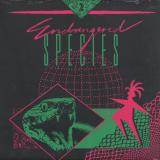
In their countless years of deep digging, Dark Entries has uncovered many curiosities, oddball Italo and synth-wave creatures too rare to live, too funky to die. Dark Entries’s conservationist efforts began with 2020’s Endangered Species Vol 1. Six years later, we are finally treated Endangered Species Vol 2, an even more ambitious effort which features eleven specimens previously deemed extinct, now safely preserved on vinyl. Things kick off with an extended mix of Palazzo di Danza’s “Play That Song For Me,” a lavishly produced German-Italo number propelled by a slinky bassline. Russian Olga Vosconyan’s “Cars” delivers what might be the moodiest song ever produced for a car commercial.
Fuzz Dance maestro Alexander Robotnick appears with a previously unreleased male vocal demo version of “I Wanna Believe,” a legendary track that would later appear under the name Gina & the Flexix. Canadian industrial royalty Dwayne R. Goettel (Psyche) and cEvin Key (Skinny Puppy) team up on the horror-sampling hit-heavy blaster “Bastards.” Belgian EBM progenitors à;GRUMH... report for duty with a slab of machine funk on “The Army.” UK DIY stalwarts Khmer Rouge bring Krautrock-inflected minimalism with “Take Me (Across the Floor Tonight) In Dub.” Endangered Species Vol 2 comes housed in a sleeve designed by Eloise Shir-Juen Leigh, and includes a 16 page booklet featuring liner notes, lyrics, and photographs of each featured project. Please assist Dark Entries in their efforts to preserve the rarest of beasts (and beats).
Vincent Fiore returns to primediv.space with Roller Coaster, a double 12 inch, vinyl only package that transforms the song into multiple identities providing something for everyone. Inspired by the resident DJs of NYC in the late '90s and early 2000's who would "break" records by playing songs alongside their acappella and utilizing specific effects as hooks throughout the night, Roller Coaster provides all of the tools to create such a story in DJ sets ranging from ambient electronic all the way to techno.
Vincent Fiore returns to primediv.space with Roller Coaster, a double 12 inch, vinyl only package that transforms the song into multiple identities providing something for everyone. Inspired by the resident DJs of NYC in the late '90s and early 2000's who would "break" records by playing songs alongside their acappella and utilizing specific effects as hooks throughout the night, Roller Coaster provides all of the tools to create such a story in DJ sets ranging from ambient electronic all the way to techno.
The highly acclaimed U.K post- punk band Joy Division was originally called Warsaw . Formed in Manchester, England in the late 1970s, the group consisted of Ian Curtis on vocals, Bernard Albrecht (aka Sumner, aka Dicken) on guitar, Peter Hook on bass and Stephen Morris on drums. Hook, Albrecht and Curtis hooked up at a local concert and later formed the group Warsaw. The band's name was taken from a David Bowie- Brian Eno composition, "Warszawa". The 5 bonus tracks on this album are demos cut by the group at Pennine Studios in Manchester on July 18, 1977 with Steve Brotherdale on drums. The first eleven tracks presented here were the result of a recording session for that album that took place in early May of 1978. Rehearsals leading up to the session resulted in two new songs being added to the group's existing repertoire: "Interzone" and "Transmission." "Interzone" was based on the backing track of the song "Keep On Keepin' On," to which the band added their own lyrics. The result was a song distinctively their own. "Transmission" was written by the band during the final week of rehearsals. The first verse contains a quotation from Alistair Crowley's The Book Of Thoth. The two recordings are interesting renditions of songs which would later became famous.
Rupert Marnie, co-founder of The Press Group and Remoto Records, makes his debut on Smallville with some serious curveball action.
Once you immerse yourself in the wonderful breadth of Hamburg’s subculture, it is quite likely that you will soon hear about Matthias Schubert also known as Rupert Marnie. Operating in the City's deepest part of the underground, Matthias provides some highlights that you should know about - may it be co-running a vinyl label (The Press Group) and an amazing record-store (remoto records) together with a group of like-minded friends or may it be as a DJ or Liveact, playing house, techno or ambient music at clubs like Golden Pudel, Südpol or Frappant in Hamburg or outside of town (Club der Visionäre/ Berlin, Bassiani/ Tblisi...)- there is quite a lot of things that Matthias has accomplished. And we are very happy to present his latest installment – four raw and gritty tracks, deeply driving yet bouncy, wobbly at times and definitely with a Curveball-appeal and no compromises.
Smallville 77 will be released 4th of September 2026 with a full cover artwork from Stefan Marx.
Landing on the 4th of September via his own imprint Knee Deep In Sound, ‘Obsessions’ is less a traditional dance record and more a reckoning — with where Daley Padley finds himself now, as an artist and as a person. Written across a period of constant movement, touring and introspection, the album holds the push and pull between intensity and stillness that has come to define his world.
This is an artist who started making music in Barnsley — long nights, small rooms, total commitment to sound. Those early marathon sets weren’t a stepping stone to something else. They were the foundation of everything that followed: global tours, chart success, the creation of Knee Deep In Sound, a career built entirely on instinct rather than expectation. Hot Since 82 has never followed a fixed path. He’s carved out a space that sits somewhere between underground credibility and global reach — and it’s that same restless, uncompromising approach that shaped this album.
“Some days feel heavier, some thoughts harder to hold. But music still reaches the places words can’t. It’s therapy and a reset button.”
That sense of release runs through the entire record. While rooted in house music, Obsessions doesn’t sit in one place for long — not to prove a point, but because that’s simply how Padley hears music. It moves between deep house, breakbeat, melodic electronica and full club focus as naturally as a conversation shifts tone. Moments of euphoria give way to reflection and tensions dissolves into release.
The album opens with ‘All That Matters’ — a track that feels immediately both expansive and intimate and sets the emotional register for everything that follows. From there it unfolds like a journey rather than a sequence.
Lead single ‘Shaded’, landing on the 12th June taps directly into classic house lineage while feeling unmistakably current — a bridge between where this music began and where it’s heading. Elsewhere, ‘Life’s Too Short’ and ‘Eternity’ introduce warmth and movement, weaving piano, breakbeat and subtle Afro influences into the album’s wider palette.
As the record progresses, the light changes. ‘Wow’ leans into darker, late-night territory — tension, restraint, a hypnotic centre. The collaborations with Kuuda on ‘State Of Mind’ and ‘Time’ bring the album back into full club focus: driving, physical, built for scale.
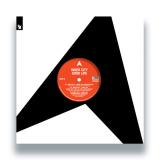
Good Life sees Detroit icons Inner City return on KMS with one of the most celebrated house records of all time, presented here on fresh 12” vinyl.
A defining track of the late 80s and early house movement, Good Life remains a timeless anthem, driven by uplifting melodies, soulful vocals and unmistakable Detroit energy.
This edition features a remastered version of the original alongside an Inner City edit of the Carl Craig remix, plus a Dub Mix, offering both classic playback and updated DJ functionality.
As a cornerstone release from the KMS catalogue, the record continues to resonate across generations of DJs and listeners, maintaining its place as an essential dancefloor staple.
Back on fresh 12" vinyl, this repress offers strong appeal for both collectors and DJs looking to stock a truly iconic house record.
An essential catalogue piece for stores supporting classic house and Detroit heritage releases.
Ever since the release of his first solo album more than 20 years ago, German musician and producer Christian Kleine has experimented with blending and contrasting the varying textures and approaches of post-rave IDM, breakbeats, shoegaze and punk. His latest album offering, Touch & Fuse, shows he's continued to refine and perfect that combination, which is less a conscious concoction and more of a natural outcome of the music he likes. From the edgy Aphex-isms of 'Val 2' and the heavily filtered breaks of 'Reverse Angle' to the slowed down grunge meets pure electronics of 'Return of the Underground', this is unique, accomplished stuff.
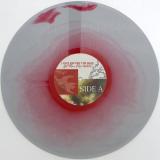
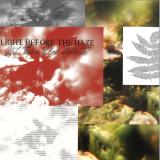
Two voices at the frontier of deep, hypnotic and experimental electronic music converge with four-track split EP that moves between first light and subsurface dark.
Lost Few’s productions inhabit the hazy threshold between ambient and dancefloor music - textured, atmospheric productions built around mood and motion. On the A-side, Broken Dawn opens with a sense of slow emergence: layered pads and rhythmic pulse conjuring beauty before sunrise, when sound feels closer to dream than waking. Light Before The Haze deepens the journey; a longing, weightless piece that traces the diffuse glow that precedes full light — melodic, restrained, and deeply felt.
Dino Sabatini needs no introduction; his productions have bolstered the underground electronic music scene while sculpting a new narrative for deep, modern electronic music. On the B-side, Subsurface Light is characteristically Sabatini: a hypnotic descent into pressurised depths, where rhythm becomes ritual and texture carries the weight of ancient resonance. He then reimagines Lost Few's Light Before The Haze as a closing meditation — pulling it further inward, slowing its pulse, and casting it in the particular deep-techno shadow he has made his own.
Together, the four tracks form a coherent arc from the pre-dawn quiet of Lost Few's introspective electronics to the subterranean intensity of Sabatini's world — a release that rewards both patient listening and late-night movement.
The next WOLF Music EP is here, and once again it comes courtesy of a new addition to the label roster. New York-based DJ and producer DJ Alone Again is a natural fit for what we do at WOLF, delivering a sound that hits that sweet spot where deep meets soulful, with the raw, understated energy of the authentic New York underground running through every track.
With a growing catalogue of original productions and edits, DJ Alone Again has released music through labels including YORE Records, House Salad Music, Dobro, Fantin Zoo Records, and Dealt With Records. His musical roots extend beyond house, too. Earlier work with the band Vain Pursuit, alongside a wealth of SoundCloud mixes and underground edits, reveals an artist with a deep appreciation for melody, songwriting and the emotional side of dance music.
Opening the EP is ‘Freedom of House’, a sublime take on the classic NYC-meets-Chicago deep house sound. Warm, soulful and hypnotic chords sit at the heart of the track, surrounded by intricate, skippy percussion and a deep, driving bassline. Carefully placed female vocal snippets drift in and out of the groove, while a spoken-word ode to the freedom and self-expression that house music offers provides the track with its emotional centre. It’s a celebration of movement, individuality and that unspoken connection forged on the dancefloor.
On the A2, ‘State of Flux’ keeps those warm, evocative chords front and centre, building an infectious groove around an instantly memorable melody courtesy of the vibes. Subtle synth strings add depth and atmosphere, bringing a touch of late-night melancholy to the arrangement, while the rhythm rolls steadily underneath. Everything is expertly layered without ever feeling crowded, giving the chords, melody and percussion room to breathe whilst pulling the listener deeper into the track.
‘Horizontal Patterns’ takes the winning formula of ‘State of Flux’, adding a beautifully understated vocal hook that sums this track up perfectly: deep in the groove.
Closing out the EP is ‘In Your Orbit’, a serene, dream house number with a deeply hypnotic edge. Ethereal flute lines drift through the arrangement, weaving around vocal phrases that seem to lift the consciousness somewhere beyond the dancefloor. There’s a sense of weightlessness and escape in the arrangement, but the dance floor pulse courtesy of the warm chord stabs never lets you float too far away. Dreamy yet deeply rooted, it’s a meeting point between introspection and movement; music to lose yourself in.
If this EP had landed on Guidance 30 years ago, it would probably be changing hands for a small fortune on Discogs by now.
Digwah returns once again, masterfully weaving carefully selected samples into forward-thinking tech house productions built to ignite today's dance floors. Blending precision, groove, and underground energy, this latest installment delivers the signature sound producers have come to expect—fresh, driving, and ready for peak-time sets.
Amsterdam-based Moody Mehran captures the atmosphere of a soft Mediterranean sunset perfectly. Just in time for late summer, the Dutch-Iranian artist debuts on SEVEN with four trance-infused, uplifting cuts, alongside a remix by Maruwa. The EP channels a distinct Balearic-leaning, '90s trance sensibility. Melodic, sun-drenched and emotionally direct. Built for open-air floors and festival moments, these tracks are driven by shimmering synth sequences, rolling basslines, crisp percussion and psychedelic sound design. It’s a sound reminiscent of trance’s golden era reduced to its essence: simple, euphoric, and highly effective.
On a class debut for Biscuit’s choice Good Morning Tapes label, Kyoto’s dub specialist G Version III runs signature fusions of digidub steppers, drill, and holographic, minor-key FM synths.
One up on her 12” for Riddim Chango last year (plus the »Scenery From Double Glazing« tape for Digital Sting in ’24), G Version III’s »Chapter II« most finely chisels her lucidly rugged definition of the late ’80s / early ’90s mystic steppers sound. The OG Caribbean spirit is heard filtered through UK dances and shored up in Japan, where G tessellates its salient points with a palette of glassy Japanese synth tones and chamber music to exquisite effect. If Wendy Carlos was a soundgyal?
Across six cuts she builds the dance around digidub x drill waltz »Livin 4« and a haunted dancehall special in the harpsichord/horn riff of »An Idyll«, impressing her prowess in the fusion of subcontinental scales with a drill-tipped skip in »Queen G Theme Chapter II«, and tucking right into an aerodynamic, flying steppers mode, shades away from Element, in »Motherearth Guidance«. At a slower, wider stride her »Higher Grade« goes eyes-down on massive subs, and »Voice of Mystique Warriyah« adapts the classic-schooled sound like TNT Roots in Tokyo.
For its 24th release, Daydream welcomes rising talent Soha to the label. Across four refined cuts, the Belgian artist explores a deep and understated sound built on lush textures, ethereal pads and dense, rolling grooves. The EP unfolds with patience, balancing dreamy atmospheres and restrained club energy. A timeless collection crafted for both intimate listening and late-night dancefloors.
*Kissa* is an immersive ambient electronic project crafted by Mathias, drawing inspiration from the serene and evocative atmosphere of Japanese jazz kissa cafés. These intimate spaces, known for their deep reverence for music, serve as the foundation for *Kissa’s* sonic landscape—where warm nostalgia and futuristic minimalism intertwine. Consisting of eight expansive compositions, *Kissa* abandons traditional rhythmic structures, allowing sound itself to guide the listener. Ethereal textures, evolving drones, and subtle harmonic shifts create a meditative experience that blurs the lines between memory and imagination. Each track is a portal—an invitation to lose oneself in sound, to explore the spaces between notes, and to embrace stillness as a form of movement. With *Kissa*, Mathias redefines the boundaries of electronic music, crafting an experience that is at once deeply personal and universally resonant. Whether serving as a soundtrack for introspection or a companion for late-night contemplation, *Kissa* embodies the essence of timeless listening—where music is felt, not just heard.
No Drama, the imprint founded and curated by Roy Rosenfeld, continues to expand its artistic vision with a sixth release valuing originality over convention. The label has steadily established a platform for forward-thinking electronic music, inviting artists to challenge familiar structures while remaining grounded in musical substance.
The latest release features two tracks by internationally recognized producer Yuvée, known for seamlessly blending live instrumentation with deep house, melodic elements, and organic percussion. While Yuvée appears solo on one track, the other is a collaboration with Omer Inbar, who performs under the name Oi.
The opening track, Lava Core, presents the sound that has earned Yuvée international recognition. Tribal influences unfold through carefully crafted percussion, while evolving textures occupy every part of the stereo field. Every section advances the narrative, allowing the arrangement to grow naturally while maintaining dancefloor impact from beginning to end.
The second piece, Blue, brings Yuvée together with Oi, an internationally acclaimed DJ, producer, and sound engineer whose work bridges psychedelic vibes and groove-driven electronic music. The collaboration introduces greater club energy. Tonal and atonal elements interact with shifting harmonies and evolving instrumental phrasing, creating constant movement without losing coherence.
Rather than relying on formulas, the duo demonstrates the value of artistic perspective in an era increasingly shaped by technological automation. The result is music that balances intellect with feeling, offering a listening experience that remains equally compelling on a festival sound system, in a club, or through focused listening at home.
With its sixth release, No Drama reinforces its commitment to artists who expand the language of contemporary electronic music through craftsmanship, authenticity, and creative ambition.
Glasgow’s Hot Towel are a DJ & production duo, community dance party organiser and now record label reimagining the balearic spirit far from its original context and sunnier climes.
This debut EP contains 4 dance floor focused tracks tested and developed on the Hot Towel dance floor and beyond. Produced over the last 4 years in grey and rainy Glasgow these 4 tracks reinterpret the joy of warmth, connection and world building in dance music.
Warm in Your Office is a feet on the floor, head in the clouds, bouncing 90’s piano house inspired track with warm driving bass, punchy gated snare, percussion samples and a surprising nostalgic drop for fans of late 90’s and early 00’s Serie A.
The lo-fi beatbox rhythm of Low Pressure in Paradise features a melodic, rumbling bassline, vintage synth string stabs and a warm melancholic synth pad swell reminiscent of the day after the night before, or the thunderous ambience of an oncoming storm and the reflection that brings. Think warm orange and magenta sunset overcast with heavy mauve clouds and possibly a hangover from one too many negronis.
A sunbaked synth flute melody shimmers like heat haze in the latin / balearic inspired beach bar romp Last Minute Staycation. Cowbell and syncopated piano move the hips, while romantic synth strings pine for that magical other world away from the mundane. A shift in tone midway evokes the peril of a balearic dream turned nightmare, capped off with timbale and a shredding electric guitar solo serving Lambada meets Zappa.
Endless Cosmic Procession is a downtempo balearic builder that chugs along with minimal effort. Tuned percussion drives the groove, with bass and synth punctuations that reverberate into space and swirl with delay. A rising arpeggiator gently brings melody to complete the harmonic space of the track that rounds off the EP with a contemplative dance floor moment.
Producer Addalog makes his mark on Memory Believes Before Knowing Remembers with a debut 12" that reads like a journey through desolate, sun-bleached landscapes, somewhere between a spaghetti western and a late-night basement rave.
Black Truffle is pleased to present Even Colder Spring, the latest release from the mysterious and wildly prolific Cities Aviv (a.k.a. Wilbert Gavin Mays, who also records as African-American Sound Recordings), a rare appearance from the artist outside his own D.O.T. Audio Arts label. For over a decade, Cities Aviv has twisted hip-hop conventions into the most skewed and splayed forms, layering and lacerating twitching loops, extreme production techniques and his mercurial vocal stylings into hermetic décollage. Across 16 tracks, Even Colder Spring charts Mays’ restlessly experimental approach: what sound like fully formed productions are interrupted suddenly after seconds; interjections of field recordings cue unexpected shifts; details drown under layers of fuzz. His vocal delivery takes in rhythmically intricate rap, barely articulate murmurs and freely melodic song, the latter often with a disorientating lack of connection to the track’s harmonies. The lyrical shifts are as paratactical as the musical movements. Apocalyptic visions of social and cultural uniformity alternate with reflections on mortality, glimpses of everyday life and head-scratching one-liners: ‘Maybe Mars is bougie?’ His reference points are as surprising as ever, the Dante quotes of previous releases joined here by a track named after Henri Bergson’s idea of the élan vital. Australian listeners, in particular, might be especially taken aback to hear ‘Closing Door’ open with the phrase ‘the tyranny of distance’.
While Mays’ work can sometimes be claustrophobically bleak, the productions here are often sparkling, at times touching on the shimmer of private-issue New Age sounds and the more playful end of krautrock. The instrumental ‘Martine Drift’ could almost be a snatch of Cluster’s Zuckerzeit caught through dial-up internet. The distant echoing drums of ‘L_area’ cross Persona’s Som with lo-fi IDM, while closer ‘Final Heaven’ dissolves a cloud of loops across almost seven minutes into ecstatic, rippling distortion. The graphic design, at the artist’s request closely modelled on the format of Corwood Industries, offers as good a clue as any to what awaits the listener on Even Colder Spring: a world at once impossibly opaque and intensely personal.
Dark Entries helps Suzanne Ciani come out of the closet as Steve! Legendary composer, sound designer, and Buchla maestra Suzanne Ciani has a staggering list of accolades and accomplishments, from scoring Hollywood films to releasing influential new age records to literally designing the Coca-Cola bottle-opening sound. In the late 70s/early 80s, Ciani, while living in New York, acquired an Eventide H 949 harmonizer, which offered high fidelity pitch-shifting. In her words, “When I adjusted the pitch of my voice to 0.80, my natural voice became re-invented as what was clearly a gay man, who I called Steve. I became Steve; and Steve expressed himself as only he could.” Ciani adopted the male persona and collaborated with Peter Baumann of Tangerine Dream on “Steve Goes to a Party.” The track features Ciani-as-Steve adlibbing in decadent and delirious fashion alongside Baumann’s robotically funky beats. Steve would emerge again a few years later at George Louvis’s Stardust Studios in New Jersey, to create “Steve Saves the World,” an absurdist and ecstatic proto-house groover complete with a gospel-esque chorus from the Stardust All-Stars. This EP is rounded out by a birthday wish to Ciani’s then-boyfriend Alfred on “Steve Happy Birthday Wishes” featuring Suzanne. Steve’s Out of the Closet perfectly captures the delirious techno-poptimism of the 1980s downtown avant-garde, with parallels in Robert Ashley’s Perfect Lives or Lynn Goldsmith’s project Will Powers, responsible for the track “Adventures in Success.” The Steve sleeve was designed by Eloise Shir-Juen Leigh, and the record also includes a birthday card with liner notes from Ciani.
180 GR returns with the third and final chapter of Music & Territory from N-Zino, continuing his exploration of groove, rhythm, and deep-rooted dancefloor music through a record balancing organic textures with timeless club sensibilities. The 180 GR Classic Mix of Your X leans towards the label's signature dancefloor language: stripped-back, hypnotic, and groove-driven, built around rolling rhythms and functional energy. In contrast, the 180 GR Organic Mix opens the arrangement into warmer and more textured territories, emphasizing musicality, movement, and a more immersive atmosphere. On remix duties, Trinidadian Deep delivers his signature spiritual approach -- deep, meditative, and richly textured -- stretching the source material into immersive territories built for late-night moments. Meanwhile, Nico Lahs brings his unmistakable blend of raw groove, jazz-infused house aesthetics, and driving rhythm sections, injecting extra energy while preserving the emotional core of the originals.
Cold, Bold & Together (CBT) CBT was founded in Bellingham, Washington in 1971 by percussionist Tony Gable and musicians Solomon Harris, Keith Hooks and twin brothers TC & Jamar Jenkins. It soon became evident that Bellingham was not a particularly welcoming environment for R&B music, so they moved to Seattle to try their luck and plumb the rich supply of venues, which they successfully did until disbanding in 1978. They spent their early Seattle years playing a combination of covers and originals in clubs, later becoming the "go to" opening act for various nationally known artists, such as Ohio Players, Kool and the Gang and Earth, Wind & Fire. While they were paying their club circuit and opening act dues, they squeezed in recording sessions whenever they could and released their own material, which was well-received and got strong regional airplay. However, because of the feudal nature of the music business at the time, they just couldn't break out, and like a lot of Northwest bands with great potential, they inevitably broke up and went their separate ways. Upon disbanding, they left behind a collection of original recordings at Seattle's legendary Kaye-Smith studios.
Unfortunately for CBT, the studio passed through several owners and at some unknown point in time, one of them did the unforgivable and destroyed the storied studio inventory of two-inch tapes and quarter-inch masters. Unknown to the band, a copy of their masters was smuggled out by their producer who added them to his legacy collection of cloned quarter-inch masters. After several years and many moves, he became concerned about the tendency for magnetic tape to deteriorate over time.
He sent the tapes to a Seattle lab to be restored and digitized, with the hope that perhaps, some day, they might be made available for the listening pleasure of R&B fans. The hoped-for day has finally arrived. Russell Paine and Super Disco Edits has pressed two of the Kaye-Smith CBT tracks: "Go For It", a jazz-influenced instrumental, featuring Kenny G, and "Unity", sung by the group en masse with Tony Gable singing lead. The musicians on these tracks are: Tony Gable, leader, vocals and percussion Harry Alexander, drums Kenny Gorelick (now world-renowned "Kenny G"), sax, flute and horn arrangements Chris Ishi, trumpet Michael Young, Trombone Jamar Jenkins guitar, vocals TC Jenkins bass, vocals 1 Philip Woo, keyboards Footnotes: CBT gave legendary saxophonist Kenny G his start in the music business. Kenny was still in high school when he was recruited to play sax and write horn arrangements. Kenny co-wrote, arranged and played sax and flute on the instrumental "Go For It." He rips a smoking tenor sax solo in the middle, which showcases his already masterful technique and solidifies his R&B bona fides. He went on to have a spectacular career recording for Clive Davis and Arista Records. Before his untimely passing in 2016, Tony Gable went on to found contemporary Jazz group, "Tony Gable and 206" (206 being Seattle's then only area code). With songwriting, performance and production help from Kenny G.
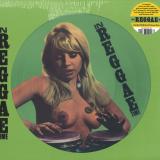
1st repress of the rare UK compilation “In Reggae Time”.
Originally released in 1970, it brings together a series of very rare tracks issued only on 7" singles around 1967 by Ember Records and its sub-labels.
The sound is not just Reggae—it’s only marginally so—offering a vibrant mix of 1960s UK mod, R&B, Ska, and Northern soul.
A cassette-only collection of scratchy one-away dubplates and 45s from the vaults of Jah Massagan Sound, featuring plates cut at the studios of legendary producers and engineers such as King Tubby, Lee Perry, JoJo Hoo Kim, and Joe Gibbs among others during the peak of the roots sound in the mid 1970s through to the early 1980s.
Beginning in Leyton in 1972, owner-operator Lloyd alongside childhood friend and amp builder Tony Mass were part of a wave of reggae soundsystems formed in London and across the UK immediately after the Windrush generation. Focused on preserving and promoting the authentic Jamaican roots, Jah Massagan has remained a small but steadfast cornerstone in the East London scene more than 50 years later. Eljay Mass, the son of owner Lloyd, takes the reins for this cassette-only document, as the torch is passed on inter-generationally to continue the sound’s work.
COEO are back on Toy Tonics! After uninterrupted touring around the globe, followed by a short creative break the guys come back with an even stronger sound. With the new EP they go more underground again. Its addressed to the clubs and night owls out there, who turn night into day and won't stop dancing!
The sound is based on classic house patterns and includes a lot of cool saxophones, big piano stabs & rhythmic piano solos. They even go tribal, use arpeggios and switch into breakbeat heaven. The four Originals are a great next step in the COEO evolution. The unique warm, catchy atmosphere of the tracks can create that special COEO euphoria which made them a lot of fans. From Moodymann to Disclosure, Mall Grab to Kenny Dope, the list is long.
It’s fantastic to see how popular they became over the last couple of years. The last COEO vinyl sold over 2500 copies and some of their tracks have millions of Spotify plays. It’s DJ FOOD. Pure bliss!
Sincere yet uninhibited. Powerful yet vibrant. This remarkable debut album captures the breakthrough moment of rising pianist Mikio Masuda.
Mikio Masuda first came to prominence as a member of the Terumasa Hino Group, and this is his debut album as a leader. The musicians are essentially the same lineup that was performing with the Hino Group in 1974, but with Masuda at the helm, the music takes on an especially fresh and energetic character. He plays with remarkable freedom and confidence, as if completely at home in the spotlight.
Four of the album’s six tracks are Masuda originals. At times he moves forward with a light, agile touch; at others, he unfolds beautiful themes with lyrical sensitivity. The variety of the compositions and the freshness of the performances are consistently striking.
Among the highlights is “Prayer”, a powerful, Afrocentric piece that stands as an outstanding example of the post-Coltrane approach. Both compositionally and performance-wise, it ranks among the album’s defining achievements.
This album marks the starting point of Masuda’s career and remains one of his signature works, documenting the emergence of an artist who would later become one of the leading figures of the fusion era.
Victoryland is the Brooklyn-based project of musician Julian McCamman and Dan Howard.. Their 2026 album, My Heart Is A Room With No Cameras In It, is a triumphant, despondent, and ultimately fun experimental pop-rock album. A year on, the record receives the deluxe treatment from new label home Dead Oceans. My Heart Is A Room With No Cameras In It (Deluxe) arrives December
11th 2026, on exclusive crystal clear vinyl, complete with new song “The Ugliest Girl On The Beach” and a new music video for album standout “I got god.” The sound of the album, recorded between Julian’s Bed-Stuy basement and Dan’s Williamsburg studio, is that of a bright and beaming collaboration. Blending lo-fi and hi-fi production, the songs have the glossiness of a radio-friendly hit mixed with the distortion and rough edges of a home demo. Every song keeps at least one element of the initial recording, while building around the loops and half-songs Julian scraped together. The lyrics on the record span from humorous self-aware popisms (“‘you and I’ will soon be, used to be ‘us’”) to crushing realities of bitterness (“i’ll never forgive you, that’s how I keep you close”) and abstract imagery (“mothers wave from doorways, in ostinato”), all delivered with such an immediacy and fervor that in the middle of singing along, you wonder if this guy slept much last night. Much to their surprise, My Heart’s release ushered Victoryland into a whirlwind of a year. Pitchfork praised the album’s “bright, madcap approach reminiscent of the New Pornographers’ Twin Cinema or Clap Your Hands Say Yeah’s Some Loud Thunder.” Stereogum named it their Album of the Week and proclaimed it “a surprisingly cohesive scrapbook of sounds from seemingly every corner of the indie pop umbrella.” The album also received support from Steve Lamacq at BBC 6 Music and Sian Eleri at Radio 1. After a string of sold-out shows in NYC, Victoryland later joined LCD Soundsystem on their North American tour and performed at Pitchfork London, Pitchfork Paris, among other festivals across Europe
MTMS2 - Mystica Tribe Meets Scopeotaku 2 Following the duos first release - Mystica Tribe Meets Scopeotaku on 13/Silentes. Mystica Tribe and Scopeotaku push their collaborative adventures further with MTMS2. Creating psychedelic dubs with rich textures, tape saturation and echo chambers. Utilising acid synths combined with deep dub rhythms and melodic electronics evolving into a new dimension of dub. Deep psychedelic electronic steppers blend with bass pressure and heavyweight rhythms drifting into techno, ambient and mutant dub. Creating a sonic adventure where tradition is often pushed into unfamiliar territory. Two distant worlds, one frequency. Nine tracks for the mind and body. Deep dub frequencies. Psychedelic textures. Heavyweight rhythms. —————————
Mystica Tribe is the musical alias of Tokyo, Japan based producer Taka Noda. Drawing on a wide range of influences from dub, soul, bass and rhythm & blues. Mystica Tribe has been developing a very distinctive sound that exists in a weird freaked out zone, between dub and techno. Noda is especially interested in deep psychedelic music and this is reflected in his productions. Which are equally suited for late night listening sessions or on bent broken dancefloors.
Scopeotaku is the alter ego of Scott Prentice, a Glasgow, Scotland based artist. Scopeotaku has experimented with audio since purchasing a sampler and a four track cassette deck many many moons ago. His love for left-field dub and eccentric sounds have led him to create a variety of output, from industrial ambient, illbent electronics to mutant dub.
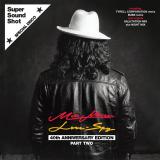
The first chapter of our 40th Anniversary celebration brought “Love Spy” back to vinyl and invited a new generation of producers to look at Mike Mareen’s 1986 classic from their own perspective.
Part 2 continues the story, but there is no reason to tell the same tale twice.
This time we reach once again into the original 1986 package and bring back the “Salutation Mix”, pairing it with two completely new remixes created by two remarkably colourful personalities from today’s European electronic underground.
And colourful is definitely the right word.
The first comes from Tyrell Corporation.
Behind that name stands Martijn Hoogendijk, better known to most electronic music heads as Alden Tyrell.
For almost three decades, Tyrell has been one of the most distinctive characters of the Dutch electronic scene. His musical world has moved freely between Italo Disco, electro, techno, acid, house and EBM, always with an obvious fascination for machines, analogue synthesis and the raw energy of early electronic dance music.
His relationship with Italo is certainly not a recent fashion. One of his earliest Alden Tyrell releases, “Love Explosion”, appeared on I-F’s Viewlexx label back in 1999, at a time when only a relatively small group of Dutch fanatics were already rediscovering and reinterpreting the forgotten European electronic sounds of the previous decade.
Since the early 2000s he has also been deeply connected with Rotterdam’s legendary Clone Records, not only as a producer and collaborator, but as one of its most important mastering engineers. His fingerprints can be found on an enormous number of Clone releases, including the label’s celebrated work restoring and reissuing the Drexciya catalogue. His studio tells much the same story. Synthesizers, drum machines and hardware collected over decades surround a producer whose fascination with electronic instruments started when he bought his first synthesizer in the 1980s.
For “Love Spy” he appears as Tyrell Corporation and delivers exactly what one might hope for from someone with that history: a remix that understands the original language of Italo and Hi-NRG, but speaks it with the experience of nearly three decades spent inside Dutch electro, techno and machine music.
The second new interpretation comes from France. Bubs, real name Maxime Bunel, followed a very different route.
His earlier productions grew from house, disco and French-touch influences, but over the last few years his attention has increasingly shifted toward Italo Disco, Hi-NRG and the rapidly expanding contemporary italowave scene.
In 2025 he made that commitment official by launching Filter Phaser, his own label dedicated specifically to the new generation of Italo Disco and Hi-NRG. And his “Love Spy” remix shows exactly why his name has been appearing more and more often in this scene. This one is pure dancefloor ammunition.
Bubs keeps the elements that make “Love Spy” instantly recognisable, but raises the temperature considerably. The energy is harder, the dynamics are bigger and the production has been pushed towards the sound of contemporary italowave without sacrificing the melody, drama and personality of Mike Mareen’s original. Old DNA, new blood.
The result is not an attempt to drag “Love Spy” away from 1986. Quite the opposite.
Both remixers clearly understand why the record still works forty years later. They simply approach that DNA from two different generations and two different corners of European electronic music, but with the same respect and adoration to Mike Mareen’s legacy.
The 40th Anniversary Edition Part 2 comes pressed on classic black vinyl and a special ruby-red vinyl edition.
It is also the final Vintage Pleasure Boutique release of 2026.
And somehow it feels like the right record to close the year.
Rick Silver returns with “Value Pack,” a fast-paced house/techno release built around heavy grooves, acid-driven synths, lo-fi textures and distorted production. Raw and energetic, the tracks combines warehouse-ready intensity with gritty, analogue-inspired sounds, delivering a hard-hitting cut designed for late-night dance floors.
TVPCO has always been a label created by DJs, for DJs. The best proof of this was their sampler series tailored for eclectic sets, where floor-filling dance tracks were consistently contrasted with slower, more atmospheric cuts. Although the catalog gradually expanded to include more listening-oriented music, reissues, and artist albums, the label is returning to its roots for its 16th anniversary.
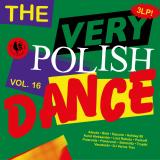
THE VERY POLISH DANCE VOL. 16 delivers 100% dancefloor bangers from the 70s, 80s, and 90s. The tracklist features gems like "Daj mi", "Serce to jest tancerz", "Zabawa", and "Graj dla nas, graj", along with a stack of delightfully cheesy, slightly cringe-worthy, but undeniable anthems sung in Polish. You'll definitely recognize some from the labels late-night parties (if you ever attended one) or the depths of the internet, while others will be complete surprises.
Both musically and visually, the release pays homage to the iconic Polish compilation tapes that flooded local open-air markets in the 90s, as well as the 80s promotional vinyl sent directly to radio and club DJs.
The brilliant, era-accurate artwork was crafted by the one and only Bartek Szymkiewicz.
Cécille Summer 2026 Compilation
Summer and Cécille have always gone hand in hand.
For 2026, we’re back with another carefully selected collection of records that perfectly capture where house music feels today. Eleven tracks from artists we’ve admired for years, longtime friends of the label, exciting
newcomers, and fresh faces joining the Cécille family for the very first time.
Piem opens the journey with his long-awaited Cécille debut. A respected name in the scene for many years, his unmistakable groove has been on our radar for a long time, and we’re proud to finally welcome him to the label with Give Me The Rhythm.
Leon returns to where it all began. Since his very first Cécille release back in 2009, he’s been an important part of the label’s story. Let Bass Kick is classic Leon—timeless, understated and effortlessly effective.
UK duo Late Replies continue their incredible rise with Moment 4 U. Their fresh take on house music has been impossible to ignore, and we’re thrilled to have them on this year’s compilation.
Dutch mainstay Jesse Maas delivers Voices In My Head, another classy slice of groove from one of the most consistent names in the Netherlands’ house scene.
Buenos Aires’ Manu Desrets impressed us so much that one track simply wasn’t enough. His two contributions, Get GG and Voy No Kako, showcase two different shades of his sound and perfectly reflect why he’s become
one of the most exciting producers coming out of Argentina.
Andrew Azara has become a true part of the Cécille family over the years. This time he teams up with Traumer, who makes his label debut with a beautifully understated deep house record. Need You is one of those tracks
that quietly sticks with you.
We’re also excited to welcome Jay de Lys to the family. Together with Simon Kidzoo and Monölitio, the trio delivers Into The Light—a warm, feel-good house record that instantly became one of our favourites. Three
artists from Argentina, the Netherlands and Barcelona coming together exactly the way house music should.
After turning heads on last year’s Costa compilation, Brazil’s Classmatic returns alongside fellow Florianópolis producer Marian. Brazilian Madness is exactly what you’d expect: infectious groove, irresistible swing and that
unmistakable Brazilian sense of rhythm.
One of the hottest young names coming out of the Netherlands right now, Stefan Meser delivers Don’t Hesitate—one of those records that gets stuck in your head after the very first listen.
Closing the compilation is someone who’s been part of the Cécille story since the very beginning. Christian Burkhardt has been a longtime friend of the label and one of Frankfurt’s finest. Specialo lived in our vault for almost two years while we waited for the right moment to release it. This felt like the perfect place for it, and the perfect way to close another Cécille summer.
Eleven tunes. Eleven different stories. One soundtrack for Summer 2026. Welcome to the next chapter of Cécille.
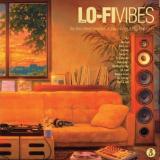
Diese Doppel-Vinyl-Compilation lädt ein in die warme, entspannte Welt des Lo-Fi-Sounds - eine Musik, die entschleunigt, Atmosphäre schafft und Nähe erzeugt. Versammelt sind prägende Künstler des Genres, die Lo-Fi, Downtempo, Jazz-Einflüsse und elektronische Gelassenheit miteinander verbinden. Mit Beiträgen von FKJ, Darius, Kid Loco, St Germain, The Mighty Bop, DJ Cam, DJ Spinna und weiteren wichtigen Namen entsteht ein vielschichtiges Panorama zwischen organischen Grooves, sanften Beats und subtilen Melodien. Die Auswahl richtet sich gleichermaßen an langjährige Liebhaber wie an neue Hörer, die Lo-Fi als eigenständige, zeitlose Form elektronischer Musik entdecken möchten. Ein stimmiger, sorgfältig kuratierter Sampler für entspannte Hörsituationen, stilbewusste Sets und alle, die elektronische Musik lieber fühlen als konsumieren. ENGThis double-vinyl compilation invites listeners into the warm, comforting world of lo-fi music - a sound defined by relaxed rhythms, organic textures and understated emotion. Featuring leading artists of the genre, the collection blends downtempo beats, jazz influences and laid-back electronic production. With tracks by FKJ, Darius, Kid Loco, St Germain, The Mighty Bop, DJ Cam, DJ Spinna and others, the album offers a broad yet coherent overview of lo-fi aesthetics. It appeals both to seasoned listeners and newcomers seeking a timeless, atmosphere-driven listening experience. A carefully curated selection designed for calm moments, focused listening and stylish musical environments
Turbo was a part of Joe Robinson and Sylvia Robinson’s All-Platinum Records set up in New Jersey which operated from 1967 to 1979. At one stage the fiercely independent and proudly black owned label threatened to become another Motown or Philadelphia International. That never happened, but the Robinson’s dream of worldwide success came later when Sylvia discovered Rap, recorded Rappers Delight by The Sugarhill Gang and Sugar Hill records was born.
Music historian Steve Guarnori describes All Platinum as "probably the most unusual record company there ever was. Dysfunctional, but at the same time wonderful."
The All-Platinum chaos extended to Turbo. But despite anarchy - some superb albums went straight from manufacture to be deleted and sold as cut-outs - sublime music was created. This 10" 6-track release collects together some of the most hallowed Turbo releases which between them have become cherished by collectors.
Brother to Brother "The Bottle" captures the label at its most astute. Gil Scott-Heron and Brian Jackson’s original version was an album only track on Strata-East so Turbo seized the opportunity to quickly make a worthy cover version and rush release it a single which enjoyed success.
"Ton Of Dynamite" by Frankie "Love Man" Crocker was Turbo’s debut release in 1968 (it actually sounds a later recording). At the time Frankie was a DJ on WWRL radio station in New York and the release was essentially a reward for his previous support of All-Platinum releases. The record (a b-side) is actually made Willie & The Mighty Magnificent who went on to re-record it as
"Funky 8 Corners". It took until 1975 for "Ton Of Dynamite" to get recognition when it became an anthem as the UK Northern Soul scene adopted it as part of the movement away from old skool 1960’s Soul. Whatever its’ provenance, "Ton Of Dynamite" is now revered by the Rare Soul and Funk communities.
The Optimistics "Man" from 1971 is another b side single. The group specialised in smooth harmony Soul but "Man" is a funkier affair which won support from Rare Soul aficionados and will cost you £600 plus if you are lucky enough to locate a copy of the hard to find 45.
Willie & West "Attica Massacre", also from 1971, is an even more elusive single. It is a powerful protest against the killing of 29 prisoners, many black, following a riot at a prison - Attica Correctional Facility in New York. The deaths and a subsequently discredited cover up caused outrage. John Lennon was amongst the first musicans to make a recording about the bloodbath, but the most emotional protest is this Willie & West track. Only 300 copies were manufactured of one of the most powerful civil rights recordings ever made. The vocal sounds like anti-War Edwin Starr at his most bristlingly aggressive.
Perhaps the strangeness of All-Platinum is best illustrated by the later success of Lonnie Youngblood "Sweet Sweet Tootie" which is essentially the backing track of "Attica Massacre" plus exquisite sax playing by Lonnie. Despite it selling 100,000 plus copies the label did not see this as a reason to reissue "Attica Massacre". Strange. Or as Marvin asked "What’s Going On"?
The New Sounds "Don’t Take Your Love From Me" was only issued by Turbo as an album track. Despite good music on it the LP was poorly (it at all)/ promoted and flopped. The superb "Don’t Take Your Love From Me" is a long time Northern Soul / X-Over favourite.
Larry Saunders mesmerising "On The Real Side" made no impact when released on Turbo in 1974 but was nevertheless issued in the UK by London Records. The Northern Soul discerning dancers instantly latched on to its combination of uplifting lyrics, heartfelt vocal and clomping beat and since then its’ appeal has extended across the whole of the Soul community. Without doubt an all time classic.
So six treasures from a label that despite frequently advocating cash out of chaos frequently conjured up awesome music.
ANORAX is grateful to have the opportunity to present this very special Soul selection.
Often credited as the father of multi-media theatre, Alwin Nikolais (1910-1993) took complete creative control over his productions - including cutting-edge approaches to lighting and costume that transformed human bodies into shifting sculptural shapes, while also composing wildly innovative electro-acoustic and synth-based audio as accompaniment.
After initially experimenting with musique concrète and tape manipulation (as demonstrated on the 1959 LP Choreosonic Music of the New Dance Theatre of Alwin Nikolais) Nikolais became the first owner of Robert Moog's synthesizer at the Audio Engineering Society convention in New York in late 1964. Relying heavily on the Moog and later the Synclavier synth/sampler, these 21 tracks document Nikolais' highly-prescient compositions across the mid 1960s through to the late 1980s - existing not only as extensions of his other-worldly choreographic productions, but standalone pieces of foundational mid-century American electronic and experimental music.
"Born in Southington, Connecticut in 1910, Nikolais’s early years and early career were in acting, music and puppetry. It was not until the late 1930s that he began his work as dancer/choreographer in Hartford, Connecticut, where he was commissioned by the Avery Memorial Theatre, a part of the Wadsworth Atheneum, to create an evening-length work to the music of Ernst Krenek. Previously his work and study as a pianist-organist found him accompanying silent films. This sort of accompaniment required from the musician not only a playing skill but also a versatility in improvisation, matching movement to sound, and evoking mood to situation.
Nik was drawn initially to dance by his involvement with the percussion scores used by the illustrious early twentieth century German dancer Mary Wigman. In trying to learn more about percussion, he was lured into dance class and thus his career began. His development of music and dance occurred simultaneously. His introduction to the twelve-tone technique opened his mind to the expanding areas of atonal music, and his dealing with music as sound per se. In 1948, after being appointed director of the Henry Street Playhouse in New York, Nikolais formed the Playhouse Dance Company, later known as the Nikolais Dance Theater, and began his aesthetic orientation toward dance as a study of motion. By the 1950s, he had ceased creating literal dances and began his explorations and eventual milieu as an abstractionist.
Sound became an important part of his abstract theatre. For his first dances, which involved his new thinking of dance as both a visual and kinetic art, he used live percussion scores in which he directed his dancers to play instruments of all nature. There was a combination of children’s toy instruments as well as harsh and resonant automobile brake drums, and other pitched auto parts which he also used to accompany classes. Once he installed his own tape recording machines, he quickly used the limited range these instruments provided in a new way, slowing and increasing speed and reversing sound. He also made the sounds adhere to the choreographic structure (not the other way around), thereby giving the dance its independence from the musical phrasing. But the real need remained: the search for new sound. Nik made a sound library, recording noises and percussion and vocal sounds, which the French aptly called musique concrète. Needless to say, he became a master at splicing bits and pieces.
From 1956 to 1962 Nikolais composed eleven major scores for his theatre pieces using such techniques. In 1963, James Seawright, who at the time was assisting Nik in his productions and also working at the Columbia-Princeton Center for Electronic Music, recorded a sound bank for the production Imago (1963). With this material, Nikolais created his first synthesizer score. Imago won the Paris Grand Prix in 1968 and launched the Nikolais Dance Theatre towards its national and primarily international acclaim.
During the same period, Seawright came to Nik and told him of a young man who had invented and constructed a simplified synthesizer and insisted that Nik visit the electronic fair currently being held in New York. Nik did so and met Robert Moog. He was completely taken by the new machine and after making some suggestions to Moog, (which Moog made), Nik bought the inventor’s first machine with the aid of a Guggenheim Fellowship. Moog himself was astonished by what his machine could produce for Nik. This machine was later acquired by the Museum of Musical Instruments at the University of Michigan at Ann Arbor as the first Moog synthesizer. The Synclavier was Nik’s next source of sound and since the mid-1970s remained the major instrument in the Nikolais soundroom.
Alwin Nikolais has been honored and awarded throughout the world. He has received the French Legion of Honor, the Kennedy Center Honors, National Medal of the Arts, two Guggenheim Fellowships, as well as Mellon, Ford, and Rockefeller grants. He has been a recipient of NEA grants since 1966, been awarded five honorary doctorates, all for his remarkable achievements in Dance Theater. His genius has influenced several generations of artists."
—Murray Louis
Some records never really disappear. They wait for the right moment to be rediscovered.
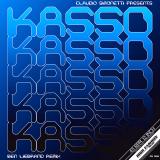
Originally created in 1981 by legendary Italian composer and keyboardist Claudio Simonetti alongside producer Giancarlo Meo, Kasso emerged at a pivotal moment when disco, jazz-funk and electronic music were beginning to collide, and a distinctly Italian dance sound was taking shape.
Built around Simonetti’s unmistakable piano and keyboard work, Kasso developed a significant following across Europe, particularly in France and Italy. The project would produce cult favourites including “Kasso”, “Key West”, “One More Round” and “Walkman”, the latter becoming a major French success, reportedly selling around 500,000 copies.
Kasso’s influence travelled considerably further. Finding its way into the underground clubs of New York and Chicago, with original material receiving the remix and edit treatment from John “Jellybean” Benitez and, later, house music pioneer Frankie Knuckles.
Behind it all is Claudio Simonetti, a musician whose extraordinary career stretches from European disco to some of cinema’s most iconic soundtracks as keyboardist and composer with Goblin, including Deep Red, Suspiria and Dawn of the Dead. Now, more than four decades later, Claudio Simonetti’s Kasso returns.
Unlocking key elements from the original production, including Simonetti’s distinctive piano, the music has been placed in the hands of another European dance music pioneer: Ben Liebrand.
A hugely influential DJ, producer and remixer, Liebrand’s groundbreaking In The Mix radio shows and legendary Grandmix series have helped shape European DJ culture, while his extensive remix catalogue stretches across artists including Bill Withers, Phil Collins, Sting, Salt-N-Pepa and countless others.
His new interpretations of Kasso respect the musicianship and unmistakable character of Simonetti’s original while giving it a fresh, contemporary dancefloor life.
And this is only the beginning.
Kasso launches a series of four new singles, culminating in Kassologie, a definitive collection bringing together the essential Claudio Simonetti recordings alongside new remixes and updates. And all vinyl will be released in a colored-vinyl edition also!
Over forty years after it first emerged from Italy’s extraordinary early-’80s dance scene, Kasso is ready for another round.
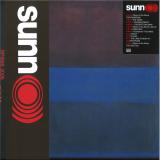
For nearly 30 years, SUNN O))) – Stephen O’Malley and Greg Anderson – have pushed the boundaries of heavy music, straddling the worlds of the avant-garde and rock to forge a style instantly recognisable as their own. Now, SUNN O))) return with their first album of new material since 2019’s acclaimed Pyroclasts. Their tenth album – their debut for Sub Pop – demonstrates the duo’s mastery of time and space, light and dark, and their willingness to evolve their unmistakable sound into bold new forms.
The eponymously titled SUNN O))) was tracked at Bear Creek Studios, Woodinville, Washington with Brad Wood (HuM, Tar, Sunny Day Real Estate, Liz Phair). This location proved crucial to the recording process. “The vast tracking room had big windows looking out on trees,” says O’Malley. “We could go hiking and be out in the woods, spend time outdoors. That became a big part of it.”
SUNN O))) have long welcomed collaborators into their self-contained world: past work has featured, Attila Csihar (Mayhem), composer Hildur Guðnadóttir, multi-instrumentalist Steve Moore, polymath Mark Deutrom, Silkworm’s Tim Midyett and legendary singer-songwriter Scott Walker. But on this album O’Malley and Anderson found fresh possibilities in the primal territory of the duo format, performing all the instrumentation themselves. “What’s been happening with our performances over the last couple years with the two of us and no other collaborators has been really fresh and exciting,” says Anderson.
The compositions on SUNN O))) are expansive and panoramic yet finely detailed, reflecting the arboreal setting in which they were recorded. Amidst howling feedback and glacial crunch, one finds surprisingly delicate moments: a field recording of water trickles beneath, piano interludes lend a hushed, solemn feel. All while the duo attains fresh heights of telepathic intensity as they shape music that breathes the bracing, earthy air of the Pacific Northwest.
Framing the album visually are two paintings by the late American artist Mark Rothko. Liner notes are by award-winning British writer Robert Macfarlane, famed for his works concerning landscape and the relationship between humanity and nature. Through the work of the band, Macfarlane, and Rothko, sound, word and visual combine into a fully immersive experience that is undeniably, completely SUNN O))).
On the occasion of the 40th anniversary of the release of Remek Depo, the very first electronic record from the former Yugoslavia, the group Beograd has decided to unveil eight previously unreleased tracks in the context originally intended. The band initially planned to title their first album as Mrak ( eng. Dark). Recorded with Du Du A and other collaborators, this album serves as a manifesto of resistance—not only in Belgrade and Yugoslavia but everywhere else.
The A-side opens with the track 1984, named after George Orwell’s seminal novel. This piece was recorded in a single night in the same year, featuring Zoran Zagorcic (Du Du A) and one of the first Yamaha DX7 synthesizers. It encapsulates the dark and tense atmosphere of Belgrade during a period marked by economic crisis, characterized by shortages of essential products like coffee and oil, as well as electricity restrictions. This oppressive environment also impacted personal relationships, leading to unconventional expressions of passion and desire, as exemplified by the subsequent track from 1985, Mracni Predjet Zelja (eng: That Obscure Object of Desire). However, the primary source of frustration was political, stemming from the abuse of nationalism and the incitement of inter-ethnic conflicts within the complex Yugoslav society. This sentiment is vividly illustrated in the songs Hare Krishna and Belgrade Beat, recorded just before the country’s collapse in 1991. Remarkably, despite their protest, these songs convey messages of strong optimism and hope. In “Belgrade Beat Dejan Kostic (Du Du A) raps and Dejan Stanisavljevic sings. ”Od Studija B do Amerike, Beograd širi svoje talase, mi nismo sami u nama je svet, dolazi veliki preokret” (eng. “From Studio B to the USA, Belgrade spreads its waves, we are not alone, the whole world is with us, a great change comes!”). It is no surprise that this song was frequently broadcast on student Radio Index during the student and anti-war protests in 1992.
The B-side features contemporary songs produced by Beograd, which reflect protests against the current societal conditions in post-war Belgrade. Crafted with musical clarity and irony, these tracks satirize figures of repression, hitting their mark with an almost childlike purity, reminiscent of Hans Christian Andersen’s fairy tale, “The Emperor’s New Clothes.” The collaboration between Dejan Stanisavljevic, the leader of the Beograd and the Du Du A group not only influenced his musical expression but also laid the groundwork for the group’s socially engaged music in their later career.
As we remember the two late leaders of the Du Du A group, Dejan Kostic and Zoran Zagorcic, alongside the recently departed member of the Beograd, Milan Bubalo, this gramophone record stands as an important testament to the contributions of previous generations of artists in the fight for a fairer society. We hope it will inspire the younger generation in their current struggles, especially at a time when such inspiration is needed more than ever.