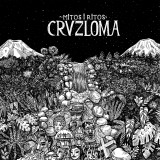
Mitos & Ritos, the debut EP by the Ecuadorian group Cruzloma, consolidates in its six songs a spirit of promoting traditional rhythms in contemporary styles, a process of reinvention and self-discovery in homage to the indigenous peoples of the Ecuadorian jungle and the riches of ceremonial music all in a mix featuring electronica, global bass and dembow. The hostile times humanity is going through have awoken a need to get back to our roots, reclaim ancestral knowledge, and question where the excessive exploitation of natural resources has led us. We have heeded that urgent call to care for everything that seems unlimited but which is increasingly scarce. And so we have looked to the past to understand our relationship with what surrounds us and establish a dialogue between the past, the present and the uncertain idea of the future. Applied to music, this has aroused the interest of artists and producers who use the rich folklore and traditions of Latin America to replicate that dialogue between what was and what will be. With this in mind, Mitos & Ritos ("Myths and Rites"), the debut EP by the Ecuadorian group Cruzloma, consolidates in its six songs a spirit of promoting traditional rhythms in contemporary styles, a process of reinvention and self-discovery in homage to the indigenous peoples of the Ecuadorian jungle and the riches of ceremonial music, based around the bambuco style from Esmeraldas on the northern coast, and the bomba del chota and the san juanito from Imbabura province. On this EP there are also sacred prayers of the Shuar nation, called Ujaj and Anets, including ceremonies like the taking of ayahuasca and of the tzan tza, all in a mix featuring electronica, global bass and dembow. It is a journey into mysticism, the jungle and the dancefloor, reflecting a search for musical identity that is at once contemporary and futurist.
Search:so what music
A home, a house, has countless frequencies. Each room, each corner feels different. Swings differently. And as you grow older, you realize which corner is yours. But yeah, it takes time…
It certainly marks the end of an era when the house one called home as a kid no longer exists. This home, it was the starting point of so many journeys. Of one big, ongoing journey. And so it feels good, soothing, reassuring to at least return to a spot nearby – to that (proverbial) hill from where you can see it. Feel the vibe that made you.
Andi Haberl’s debut solo album as Sun is sort of dedicated to that house. It’s a journey leading to that hill overlooking everything that made him. It’s not about nostalgia, not about actually returning to a specific place. Instead, it’s about finding a personal frequency, an overlapping of sounds and samples, an open space that mirrors and extends whatever frequencies felt right at different points in time.
“To me, the results feel like Gold Panda/Four Tet meets Steve Reich meets Krautrock meets film scores. I just really wanted to create moods that touch me – and ideally others, too.”
Talking about his first solo album, Haberl recalls many stages: early compositions that ended up on Alien Ensemble’s albums, early DIY/home studio/multi-instrumentalist inspirations (Le Millipede), new technologies that came and went, even a set of wildly convincing arrangements (done with Cico Beck’s crucial input) that ultimately became stepping stones for yet another round of DIY takes. “It was a long, recurring process, and the songs went through so many different versions,” he says, talking about phases of growth (“I added more and more equipment over time”) and pruning, “cleaning up my music a bit.” Tending towards instruments that open up space, and slowly falling in love with sampling, he certainly didn’t rush things once it was time for interior design decisions ;)
“During this whole process I got to learn so much about my own taste, how I prefer to listen to the pieces, which musical elements really matter to me… and what my own voice is. For example, that acoustic elements are most important to me: the banjo, piano, drums, my voice, glockenspiel, trumpet, melodica. Anything that opens up some space.”
Every journey begins with a search: “Missing” with its plucked chords opens like a sunrise over pastoral plains, gently leading the way towards the intricate, playful explosion that occurs once a certain amount of energy (“Sun”) hits dirt and other surfaces: things grow, clot and curdle into new shapes, like new buds; layers of sound move forward, drenched in Spring’s new light. Relying on samples to ask for precipitation (“Rain On Me”), robotic “Low” goes from barren to bass-heavy after its midway shift in pace, full of loops plucked from the shade.
Towards the album’s midpoint, things are suddenly reversed: “Cluster” has that backwards pull, you can’t tell what’s what, yet everything is perfectly locked in, as the pace increases once again. And before the title song shimmers with densified cheering (to eventually stand tall like early Lymbyc Systym), “Beside Me” swipes you off your feet with its booming bass drum. The beat returns once again (“Daydream”), full of searching voices underneath, and at “Dawnday,” we can finally catch a melancholy view of the house. Voices hum. It’s the score moment of the album. Everything makes sense now. A happy end of sorts?
“I want to take people on a journey. A personal journey, too, because when my parents split up and sold the house I grew up in, I felt a bit like the ground had fallen out from under my feet. But I have dedicated the album title and the accompanying piece to this house… so I can keep it in good memory.”
“I Can See Our House From Here” has been a long time coming. It’s been a long journey. Homeward-bound. Leading to a place that’s really Haberl’s – his sound. His frequencies.
Known as a long-time member of The Notwist and various other bands/projects (Alien Ensemble, AMEO, jersey, Ditty etc.), Berlin-based drummer/composer Andi Haberl has also worked with My Brightest Diamond, Till Brönner, Owen Pallet, and Kurt Rosenwinkel, to name a few. “I Can See Our House From Here” is his first solo offering.
Plasma Color Vinyl. 'The way Bloomsday's Iris James Garrison writes songs feels like somewhere between a mirror and a memory. Spacious, full-bodied folk songs, they are an ode to things that are good no matter how small; they sometimes feel like the ghost of a Mary Oliver poem. Bloomsday's new record, 'Heart of the Artichoke', is a relic of unfettered creativity and community. They recount the miracles of the mundane, the memories that become sacred, an ode to all that is holy: nightswimming, songs plucked from the ether, the ways friendship can endure. Like earlier Bloomsday songs, the work here is threaded with warmth; it's simmering, crisp and deeply human, an encapsulation of the present moment. Recorded across 10 days in June 2023 in upstate New York at duo Babehoven's studio and co-produced by Babehoven's Ryan Albert, with mixing by Henry Stoehr of Slow Pulp. The record was built out with a wideranging group of collaborators, including inventive drumming from Andrew Stevens (Lomelda, Hovvdy), Alex Harwood, Richard Orofino, Babehoven's Maya Bon, Hannah Pruzinsky (h.pruz, Sister.), and Chris Daley. It was an insulated and collaborative experience: all family dinners on the back porch, bonfires, feeling a full sense of joy, of friendship, of purity in the artistic self. Collaboration is an integral part of Bloomsday's musical process. Garrison is malleable in the studio, their songwriting generous and spacious. But in listening to the record, there's a sense that Garrison leaves room for the players, for the listener; for songs to find the shapes they're meant to take. Garrison's role as maestro is crucial, singular - it's a collaborative, exploratory spirit harnessed by Garrison's intuition, and by an honest commitment to carve out creative space for play, to delve into what's known - or pushing past that, into unknown. "The ghosts of the past still come up and haunt me," Garrison says, "but I sit in what I have and see it. All of these songs are about loved ones, about personal struggles with getting out of my head and being present." Heart of the Artichoke was written from a healed, matured place - written in a moment of safety from chaos. It's a prayer for the present, an appreciation of tenderness and what happens once we give ourselves the space to really see, and really feel - becoming free and whole - an ode to the way healing allows us to bloom.
'The way Bloomsday's Iris James Garrison writes songs feels like somewhere between a mirror and a memory. Spacious, full-bodied folk songs, they are an ode to things that are good no matter how small; they sometimes feel like the ghost of a Mary Oliver poem. Bloomsday's new record, 'Heart of the Artichoke', is a relic of unfettered creativity and community. They recount the miracles of the mundane, the memories that become sacred, an ode to all that is holy: nightswimming, songs plucked from the ether, the ways friendship can endure. Like earlier Bloomsday songs, the work here is threaded with warmth; it's simmering, crisp and deeply human, an encapsulation of the present moment. Recorded across 10 days in June 2023 in upstate New York at duo Babehoven's studio and co-produced by Babehoven's Ryan Albert, with mixing by Henry Stoehr of Slow Pulp. The record was built out with a wideranging group of collaborators, including inventive drumming from Andrew Stevens (Lomelda, Hovvdy), Alex Harwood, Richard Orofino, Babehoven's Maya Bon, Hannah Pruzinsky (h.pruz, Sister.), and Chris Daley. It was an insulated and collaborative experience: all family dinners on the back porch, bonfires, feeling a full sense of joy, of friendship, of purity in the artistic self. Collaboration is an integral part of Bloomsday's musical process. Garrison is malleable in the studio, their songwriting generous and spacious. But in listening to the record, there's a sense that Garrison leaves room for the players, for the listener; for songs to find the shapes they're meant to take. Garrison's role as maestro is crucial, singular - it's a collaborative, exploratory spirit harnessed by Garrison's intuition, and by an honest commitment to carve out creative space for play, to delve into what's known - or pushing past that, into unknown. "The ghosts of the past still come up and haunt me," Garrison says, "but I sit in what I have and see it. All of these songs are about loved ones, about personal struggles with getting out of my head and being present." Heart of the Artichoke was written from a healed, matured place - written in a moment of safety from chaos. It's a prayer for the present, an appreciation of tenderness and what happens once we give ourselves the space to really see, and really feel - becoming free and whole - an ode to the way healing allows us to bloom.
- A1: I Love What You Do To Me
- A2: Baby (What You Want Me To Do)
- A3: Sweet Flustrations
- A4: What You Don’t See (Is Better Yet)
- A5: Nuff Said (Part I)
- B1: Tell The Truth
- B2: Pick Me Up (Take Me Where Your Home Is)
- B3: Moving Into Hip Style-A Trip Child!
- B4: I Love Baby
- B5: Can’t You Hear Me Callin’
- B6: Nuff Said (Part Ii)
‘Nuff Said was the third album recorded by husband-and- wife duo Ike and Tina Turner in 1971, following up the 1970 hit album Workin’ Together. All tracks were recorded at Ike & Tina’s recording studio Bolic Sound, Inglewood, California.
The album features compositions by Leon Ware, Philip Reese, Aillene Bullock, Ike & Tina and the funky two-part instrumental track “’Nuff Said”.
Known for her powerful vocals, dynamic stage presence, and diverse musical influences, LA-based soul and funk singer Nikka Costa returns from a musical career break with future-forward disco-inspired sounds on ‘Dirty Disco’.
The lyric “Everyone is welcome, everyone’s an Avatar” denotes a place where anyone can go to be themselves and let their freak flag fly! and sets the tone for her disco and soul fused, progressive album, which is recorded with and produced by Justin Stanley (Prince, Jamie Lidell, Beck etc). Along with the talents of versatile musicians such as Brandon Coleman (Kamasi Washington, Thundercat, Donald Glover, Flying Lotus), Greg Phillinganes (Michael Jackson, Stevie Wonder) and Kaveh Rastegar (John Legend, Beck), Nikka Costa invites you to immerse yourself in her “Dirty Disco” world.
“Dirty Disco is about a place anyone can go to be themselves and let their freak flag fly! It’s about a place where no one is looking, no one cares what you're doing or what you're into. It could be a disco, but it could also be another planet or headspace or vibe. It's dark and sparkly, blue and purple. Gritty, raw and sexy. Whatever you want it to be.” - Nikka Costa
Cher and Christina Aguilera, together? On the same soundtrack? Who cares that the Burlesque film garnered mixed reviews at best (though a lot of folks now regard the 2010 feature as a camp classic)? The soundtrack had no such difficulties; the album release went Top 20 on the charts, won a Grammy nomination, and Cher’s performance of “You Haven’t Seen the Last of Me” won a Golden Globe Award for Best Original Song. Aguilera’s star turn was something of a coming-out party, too; not only did she enjoy critical acclaim for her first leading role in a film, but her musical contributions—featuring a couple of Etta James songs and a cover of Marlene Dietrich’s “A Guy What Takes His Time’’—were sassy, jazzy, and brassy, not unlike her work on her #1 album from 2006, Back to Basics. In short, this one’s a must for fans of either artist, and for this pressing, we at Real Gone Music have created a bling-y metallic gold vinyl edition housed inside a gatefold cover boasting some sensational production stills!
"Known for her powerful vocals, dynamic stage presence, and diverse musical influences, LA-based soul and funk singer Nikka Costa returns from a musical career break with future-forward disco-inspired sounds on ‘Dirty Disco’.
The lyric “Everyone is welcome, everyone’s an Avatar” denotes a place where anyone can go to be themselves and let their freak flag fly! and sets the tone for her disco and soul fused, progressive album, which is recorded with and produced by Justin Stanley (Prince, Jamie Lidell, Beck etc). Along with the talents of versatile musicians such as Brandon Coleman (Kamasi Washington, Thundercat, Donald Glover, Flying Lotus), Greg Phillinganes (Michael Jackson, Stevie Wonder) and Kaveh Rastegar (John Legend, Beck), Nikka Costa invites you to immerse yourself in her “Dirty Disco” world.
“Dirty Disco is about a place anyone can go to be themselves and let their freak flag fly! It’s about a place where no one is looking, no one cares what you're doing or what you're into. It could be a disco, but it could also be another planet or headspace or vibe. It's dark and sparkly, blue and purple. Gritty, raw and sexy. Whatever you want it to be.” - Nikka Costa"
On Pedro The Lion’s new album Santa Cruz, critically acclaimed musician David Bazan returns with a new chapter in his ambitious and ongoing recording project - 5 albums devoted to places he lived in throughout his life. Santa Cruz is Bazan’s third album in the series and follows up where 2022’s Havasu and 2019’s Phoenix left off. Tracks like "Modesto" and "Little Help" foreshadow Bazan's exposure and ultimate love of classic rock n' roll records, while songs like "It'll All Work Out" showcase his unique approach to synthesizers, something he introduced with the 2005 self-titled Headphones album. The stories on Santa Cruz highlight Bazan’s teenage years and solidifies what he sees as an exposition in a traditional three-act structure. After 25 years refining and building what he calls his “garden of songs,” David Bazan has sold hundreds of thousands of albums, performed in sold-out venues and living rooms around the globe, and played high-profile live sessions with the likes of NPR’s Tiny Desk, KEXP, WNYC’s Soundcheck, WXPN’s World Cafe and many others. His music has been featured in outlets such as The New York Times, Pitchfork, Rolling Stone, SPIN, Vox, Paste, Aquarium Drunkard and others.
Rockpile was a short-lived yet highly influential quartet, composed of Nick Lowe, Dave Edmunds, Billy Bremner and Terry Williams. Though Rockpile played together throughout the 1970s, the original 1980 release of Seconds of Pleasure was the only time the band was able to capture their magic on tape. Meshing the sounds of pub rock, power pop and rockabilly all through a blossoming new wave lens, Rockpile were renowned for their blistering live performances, which were brought to national attention on tours supporting Blondie, Bad Company, Van Morrison and Elvis Costello. Seconds of Pleasure has stood the test of time and cemented Rockpile as a one-album-wonder, but what a wonder it is! Featuring classics like Lowe’s pop-perfect “When I Write the Book” and “Play That Fast Thing (One More Time)” and Rockpile’s sole Billboard hit “Teacher Teacher,” Seconds of Pleasure remains a classic that should be found on the turntable of every music collector. Yep Roc is proud to announce a long overdue vinyl reissue of Seconds of Pleasure, pressed on yellow color vinyl and limited to 1,000 copies worldwide. The reissue was pressed at the state-of-the-art facilities of Citizen Vinyl in Asheville, North Carolina and the lacquer was cut by renowned mastering engineer Kevin Gray at Cohearent Audio. Over four decades later, Seconds of Pleasure has brought years of enjoyment and now has never sounded better!
Red Vinyl - In the Pines seemed, at the time, an eccentric career move. The Triffids were widely believed, by their modest but fervent fanbase and a legion of crusading critics, to be but one determined, faithful leap from ascent to the stratospheres. wandering off into the outback, much like one of the deranged characters that had inhabited Born Sandy Devotional, did not seem calculated to redeem the tantalising promise of that astounding album. The Triffids knew what they were doing, though: In the Pines is a thing of modest majesty, at once haunted by the desolation of its circumstances (the gothic folk waltz of the title track, the knelling, intense Kathy Knows) and suffused with the infectious camaraderie of people making music for the joy of it (a rowdy singalong of Bill Anderson's country standard Once a Day, led by Graham Lee, at what one can only suspect was the end of a very, very long day). In the Pines has often been likened, in terms of both songwriting quality and spirit, to Bob Dylan and the Band's The Basement Tapes, and it is not unduly flattered by the comparison.
The Madlib Invazion Music Library Series Entry #12: DJ Muggs takes the Soul Assassins approach to source music - deep, dark, dank.
The Madlib Invazion Music Library Series was created by Madlib and Egon to give their creative friends a chance to stretch out and indulge in whatever type of music they wanted. This music was created for easy, one-stop clearance in film and television synchronization usage and for sampling. You can also enjoy these albums in the way that many do with the best of the best vintage library catalogs – listen, ponder, repeat.
Needle Mythology, the label founded by music writer, author and broadcaster Pete Paphides, is thrilled to announce the signing of the eagerly anticipated debut album by London singer-songwriter and renowned DJ Iraina Mancini. Iraina’s singular pop vision will be known to regular listeners of 6 Music, where her singles ‘Undo The Blue’, ‘Deep End’, ‘Shotgun’ and ‘Do It (You Stole The Rhythm)’ have all been enthusiastically embraced. Iraina's obsession with music stretches back into her early childhood, much of which was spent absorbing her parents’ collection of old 45s, in particular her dad’s Northern Soul records – an alternative education which meant that, by her early 20s, she was a familiar presence in the DJ booth at many discerning London club nights. Her love of French ye-ye, British freakbeat, Brazilian bossa nova, soul, and Turkish psych will be well-known to regular listeners of her Soho Radio show. Having always sung from a young age, Iraina embarked on a string of collaborators such as Jagz Kooner (Sabres Of Paradise), Sunglasses For Jaws (Miles Kane) and Simon Dine (Paul Weller, Noonday Underground) which truly saw her find her metier as a songwriter, conjuring melodies that stand shoulder to shoulder alongside her impeccable influences. Iraina describes her first single for Needle Mythology ‘Cannonball’ as “a celebration of that moment when you meet someone you really fall for and it knocks you for six. It can be a bit scary, but you’ve just got to go with what your intuition is telling you.” Written with Simon Dine, the vertiginous heart-in-mouth abandon of the song perfectly mirrors the circumstances that brought it into being. Iraina cites Jacqueline Taïeb’s 1967 single 7h du Matin as an early inspiration for the song: “There’s such a great energy about that song. Her vocal is amazing and all those stops and starts that grab your attention.” “This is an artist I absolutely love, one of our rising stars at 6Music.“ Lauren Laverne BBC 6Music “Iraina seizes on the best aspects of the past, blurring those impeccable 60s and 70s influences with a touch of modernity.” Clash “Full of femme fatale poise and swooning chanteuse flourishes.” The Times
- If I Lose
- You Promised
- The Wise Man
- The Morning After
- Moon Ride
- More Understanding Than A Man
- More Understanding Than A Man (Instrumental)
- There I Was
- Kiss & Tell
- Half-Way In Love
- Goodbye July
- Four Letter Words
- Hurry On Home
- I Ought To Stay Away From You
- I Love
- Under My Umbrella
- I Don't Intend To Spend Christmas Without You
- Sunday Morning
- Thoughts
- Love Songs
- Don't Go Away
- Take A Picture
- Sun
- What Can I Give You
- Something's Wrong With The Morning
- Think Of Rain
- Can You Tell
- Someone I Know
- Love
- Why Do I Cry
- Spanky And Our Gang
- Most Of My Life
- It's Alright Now
- Timothy Gone
- The Hum
- Please Believe Me
- Yes I Am
- I Think A Lot About You
- I'd Like To See The Bad Guys Win
- Values
- California Shake
- Hold Me Dancin
- Shine
- Goodbye July
- Come To Me Slowly
- The 8.17 Northbound Success Merry-Go-Round
THINK OF RAIN VINYL[72,69 €]
Words And Music" ist eine 3xLP-Box mit dem Werk der im Jahr 2021 verstorbenen Sängerin und Songwriterin MARGO GURYAN. Als Zeugin von Revolutionen in Jazz und Pop hat sich GURYAN ihren Platz im Pantheon der Songwriter verdient. Dass sie jahrzehntelang weitgehend unbekannt war, liegt nicht an zerstörten Träumen, sondern an ihren eigenen Entscheidungen und Prioritäten. Von den bescheidenen Anfängen über die Höhepunkte ihres barocken Pop-Meisterwerks "Take A Picture" von 1968 und die gesammelten Demos bis hin zur jüngsten viralen Verbreitung von "Why Do I Cry" - das Boxset "Words And Music" fängt die gesamte Karriere von GURYAN ein, einschließlich 16 bisher unveröffentlichter Aufnahmen und einem 32-seitigen Booklet, das ihre ganze Geschichte erzählt. Produziert wurde die Box von ihrem Stiefsohn Jonathan Rosner, ihrem Freund und Historiker Geoffrey Weiss und den Numero Group-Mitarbeitern Douglas Mcgowan, Rob Sevier und Ken Shipley. Alle Tracks wurden von Jessica Thompson neu gemastert. In ihrer Blütezeit veröffentlichte GURYAN nur ein einziges Album: "Take A Picture" von 1968. Da MARGO jedoch kein Interesse daran hatte, aufzutreten, zu touren und für ihr Werk zu werben, wurde das Album damals kaum beachtet. Dennoch wurde die Platte in den 1990er Jahren zu einem begehrten Kultobjekt. Eine neue Generation von Hörer*innen lernte ihre Arbeit kennen, als "Take A Picture" im Jahr 2000 neu aufgelegt wurde. Kurz darauf folgten die gesammelten Demos, eine unglaubliche Zusammenstellung von ausgegrabenen alternativen Aufnahmen und neu veröffentlichten Songs, die MARGO selbst betreut hat. GURYANs Leben war in den dazwischen liegenden Jahren weiterhin von Musik erfüllt; sie wurde Musiklehrerin, schrieb weiterhin Songs und pflegte Freundschaften mit einem wachsenden Kreis von Anhängern. Die Geschichte von MARGO GURYAN ist die einer Frau, die von klein auf in die Tiefe ging und nie Angst vor Veränderungen hatte. Ihr Gespür für Ton, Phrasierungen, Spannung, Präsenz und Texte, die treffen, machen ihren Namen heute zu einem Synonym für ausgefeiltes Songhandwerk und die unnachahmliche Coolness der 1960er Jahre. Ihr Einfallsreichtum und ihre Technik stellen sie in die Tradition von Kammer-Pop-Ikonen wie Brian Wilson und Burt Bacharach, während die bittersüße Offenheit in ihren Beschreibungen des Frauseins einen Mittelweg zwischen Carole Kings Pop-Fabrik und der Singer-Songwriter-Ära aufzeigt. Aber die unaufdringliche Strenge von MARGOs künstlerischer Stimme ist ganz ihre eigene.
"Grand Slam’s new album Wheel Of Fortune is set for release on June 7th via Silver Lining Music. The four-piece band formed in 1984 by Phil Lynott and guitarist Laurence Archer before being forced to break up in 1986, have finally formed the appropriate return with a top-drawer of hard rocking songs which resonate with clear and present verve and energy.
Wheel of Fortune is the fully-realised modern Grand Slam sound, striding confidently back into the conscience of classic-rock fuelled devotees who didn’t know what they were missing. There are no more shoes to fill only boots`being worn on the ground, with Dyer’s style and swagger at the forefront of spirited leaders such as “There Goes My Heart”, while Archer’s fiery fretboard forays on the likes of the riffy “Spitfire” are a vital part of the Grand Slam architecture. With the lock-solid rhythm section of Newton and Reid underpinning affairs, Grand Slam not only stand on their own eight feet, they’re also able to directly engage with their talismanic, legendary founding energy with “Come Together (In Harlem)”, a moody, strutter of a song from the Phil Lynott days with (mostly) Phil Lynott’s lyrics.
But make absolutely no mistake: Grand Slam are not a band returning from their past, but a band firing intentions regarding their future, as the epic, multi-layered, steamy swing of “Pirate Song” suggests… Let the music do the talking."
- A1: Playing It Cool 00 01:59
- A2: Playing It Right Dub 00 01:53
- A3: Trust & Believe 00 03:37
- A4: In I Dub 00 02:53
- A5: California 00 02:59
- A6: By Night Dub 00 02:53
- B1: Not Good For Us 00 02:52
- B2: Formula Dub 00 02:56
- B3: Be What You Want To Be 00 02:39
- B4: Be Good Dub 00 02:25
- B5: I Can't Do Without You 00 01:59
- B6: Still Need You Dub 00 02:01
Keith Hudson was a one-of-a-kind musical innovator with an impeccable track record from the start: his first studio recording involved former Skatalites, and his earliest releases provided solid-gold hits for Ken Boothe (“Old Fashioned Way”, 1967), John Holt, Delroy Wilson, U-Roy and the others.
With Pick A Dub Hudson produced one of the best dub albums ever, and with The Black Breast Has Produced Her Best, Flesh Of My Skin, Blood Of My Blood he released the first concept album in reggae history, bringing his all-around talents to full fruition as early as 1974. Thematically dedicated entirely to Black history, the latter of these two albums is a masterpiece that captivates with an atmosphere that is as dark as it is deeply spiritual, charged by Hudson's eccentric vocals. Like Lloyd Bullwackie Barnes, his splitting from tradition was dynamic and all his own.
As his career moved on, Hudson found himself working outside of Jamaica, more frequently in London and New York studios and for transatlantic audiences, his dark experimentalism becoming increasingly better suited to the LP than the cardinal 7” reggae format.
Playing It Cool & Playing It Right was released in 1981 on the Joint International label, in NYC, with Lloyd Bullwackie Barnes as the executive producer. The Love Joys and Wayne Jarrett, stalwarts of Barnes' record label, Wackies, would also inimitably feature Hudson at the microphone. Like Bullwackie, Hudson was a devotee of Coxsone Dodd’s Studio One and Playing It Cool & Playing It Right follows Dodd’s then strategy of overdubbing his signature rhythms. The Studio One sides were aimed at the dancefloor and Hudson’s reworkings of tracks like “Melody Maker” are more psychological. Here, deep Barrett Brothers rhythms are made deeper with reverb, filters and distortion; everything pitched down and overlaid with new recordings of guitar, percussion, keyboard, and voice, often heavily treated.
Playing It Cool & Playing It Right continues Hudson’s psycho-acoustic journey into the abysses of existence, and overwhelms with the beauty of artistic self-empowerment. "Too much formula," sings Hudson, whose voice is occasionally reminiscent of Sly Stone or even Tom Waits. "Darkest night," answers an echoing background choir elsewhere. Even more fascinating is Hudson's production, which reflects Black history in even the smallest sound detail, the flashing whip of the slave driver still echoes in the sound of the snare drum. Rarely has a roots sound been made so electrifying, so expansive in all directions, so crystal clear, so bass-warm and echophonic as on these 30 minutes of music.
Playing It Cool & Playing It Right is legendary, strange, utterly compelling music that has possibly never been more topical than it is today.
Are you ready to hear the best live band of the early ‘70s? We at Real Gone Music have been privileged and proud to release Fanny’s four classic Reprise albums, each a tuneful testament as to why they were the first all- female band signed to a major label. But there has always been a piece missing from the Fanny fable; for while the band hooked up with big-time producers and engineers like Richard Perry, Todd Rundgren, and Geoff Emerick, their studio albums never really were able to capture the sheer excitement they could generate in concert. However, buried away in a vault thousands of miles away from their Los Angeles base there long lay a recording that could make the Fanny myth a reality, one that could provide the emphatic answer as to why these four ladies were the hottest ticket on the Sunset Strip during the early ‘70s. Now, over 50 years later, its time—and their time—has come. Live on Beat-Club ’71-’72 presents the two sets Fanny recorded for the German TV show, mastered by Mike Milchner of Sonic Vision from hi-res mono files taken from the original videotape. Aside from the incendiary and incredibly tight performances, what immediately becomes apparent is that all four of these women were powerhouses in her own right. June Millington’s stringbending Les Paul wizardry, her sister Jean’s driving, melodic bass lines and Janis Joplin-esque vocals, Nickey Barclay’s intricate yet somehow rocking keyboard work, and Alice de Buhr’s precise, piston-like drumming punctuated by ferocious fills—put together Fanny was an overwhelming display of talent, Yet somehow, as these shows reveal, live they were greater than the sum of their parts. That’s why getting these recordings released has long been a crusade for Alice, and why June tells the story in the accompanying liner notes (which feature contributions from June, Jean, and Alice) that the engineer who was assigned to do the transfers of all the Beat-Club material told her that their material was the best in the vault, better even than Hendrix. We are releasing this invaluable archival recording on juicy peach vinyl and on CD with a bonus track of the soundcheck to boot. Essential for a full understanding of ‘70s rock!
A kaleidoscopic sonic riot, Nandakke? is the hotly anticipated debut album from Japanese-Belgian duo Aili. Featuring 10 tracks of surreal electro-pop, joyful electronica, house music and more, Nandakke? is a euphoric album that sees Aili Maruyama and Orson Wouters more than fulfil the promise of their acclaimed debut EP.
Recorded over the course of six months in Orson's studio, packed full of vintage synths, Nandakke? captures the spontaneous spirit and creativity of those sessions. Exchanging riffs and rhythms, bouncing sounds and samples off each other, Aili and Orson would let the music take them where it wanted. The result,an album full of wild ideas and bold, playful experimentation.
More than anything an exhilarating feeling of discovery courses through Nandakke?, leaving you never sure where it will go next. One minute a pulsing electro-pop number featuring Aili's dad discussing his takoyaki (battered octopus) recipe, the next an explosive high energy workout song like Up & Down.
Certainly Aili was surprised to find herself singing in her own unique version of Japanese again.
"I thought that I was done with that after our debut EP, but apparently not as I speak even more Japanese on the album!" said Maruyama. "Every time we were in the studio these words would just tumble out. It's a complicated language but I just love to play with it.
"In many ways I'm an outsider, I left Tokyo aged 7, so there's a lot I notice as someone who is not a native speaker and it doesn't always make sense, there's a lot of mistakes in it.But in a way that sums up the whole philosophy of the album and how Orson and I work together."
That notion of duality, a sense of belonging but feeling apart, of being between two worlds and inventing your own captures the spirit of Nandakke?, itself a Japanese word that roughly translates to "Well, what was it?".
"It's something you say when you're looking for a word, like you know it but have forgotten how to say it. That's literally how I communicate with my dad the whole time," Maruyama explains. "The main feeling I have when I go to Japan is that I know the language, I can speak it, but part of me still feels like it doesn't have all the vocabulary. There's a gap there that nandakke has always filled for me. All the lyrics come from that place, that seven-year old trying to speak Japanese."
Whether Aili's singing about the language she invented with her father over the years to bridge the gap between them (Nandakke?), the idiosyncratic Japanese relationship to fashion (Fashion) or riffing on children's playground songs (Yubikiri) the result is a remarkable album that defies easy categorisation.
Bursting onto the Belgian scene in 2021 with their acclaimed debut EP, Dansu, its lead track spent 8 consecutive weeks at the #1 spot of Radio 1's VOX list and saw the band nominated for Studio Brussel's De Nieuwe Lichting ('New Generation') award. Since then Aili have appeared playing live on the Belgian TV show Roomies, been tipped by the likes of Rolling Stone, become regulars on tastemaker stations like KEXP and KCRW in the US and Nova in France, toured across Europe and, just recently, played their first sell out shows in Japan.
Luther Vandross was more than just a great singer. An elegant and warmhearted New Yorker who became one of popular music's most beloved performers, from his solo breakthrough in the early '80s to his untimely death in 2005, Vandross was a vocalist whose understanding of singing as an art form was so profound, he changed notions of what it could be. On March 23, 1977, Vandross's album 'This Close to You', with his group Luther, enchanted listeners with soulful tunes and deep lyrics, further cementing his status in the music industry. This is a x12 trk, standard Black LP vinyl & CD. Marketing activity.
What Mom Jeans have proved themselves capable of in the past 2 years is nothing short of fantastic. Growing from ordinary college students to national touring artists in a matter of months, the indie rock quartet has been on a trajectory most bands could only dream of. The DIY touring route quickly had to fall by the wayside, as 200, sometimes 300, kids were showing up to house shows in basements across the country. Often, the band wouldn’t make it through more than a few songs before police had to come shut it down. Now, you can find them in venues of increasing size around the states, as one of the most sought after acts in their genre. On a constant stream of buzz, pressing after pressing of their debut hit “Best Buds” (2016) has sold out and the fans cannot get enough of the music they have been putting out. Music that takes influence from predecessors such as Modern Baseball and The Front Bottoms, but adds that new flavor that sets them into a league of their own, The Mom Jeans craze is just beginning.




