In ,Library Copy Do Not Remove" präsentiert JJ Weihl von Discovery Zone eine digitale Verzauberung der Realität, in der er das Materielle und das Immaterielle miteinander verwebt, um zu zeigen, dass es sich dabei tatsächlich um zwei Aspekte ein und desselben handelt. In Weihls Welt sind Natur und Technologie keine Feinde, sondern erschaffen sich gegenseitig in einem unendlichen Tanz aus Bedeutung und Reflexion. Ursprünglich als Raumsound für das Zeiss-Groß-Planetarium in Berlin geschaffen, ist ,Library Copy Do Not Remove" eine Schöpfungsmythologie für das simulierte Universum. Dabei handelt es sich jedoch nicht um eine trockene, bostromische, maskuline Fantasie einer digitalen Realität, der die Geheimnisse der Natur fehlen. Stattdessen fordert Weihl den Zuhörer auf, im Rahmen einer Simulation Raum für die beeindruckende Realität der natürlichen Welt zu lassen. Wenn unsere Welt simuliert ist, dann muss die Simulation in der Lage sein, die Schönheit und Pracht der Natur zu erschaffen. Auf diese Weise betreibt Weihl eine ambient-artige Alchemie, die eine große Versöhnung von Natur und Technologie fordert, während sie uns auffordert, darüber nachzudenken, wie und wo die Erfahrung transzendenten menschlichen Bewusstseins zwischen ihnen existieren könnte. Die Songs auf ,Library Copy Do Not Remove" entstanden, während Weihl gleichzeitig ihr zweites Album ,Quantum Web" fertigstellte, und spiegeln einen weitreichenden, inspirierenden Zustand aus Aufregung und Angst wider, der mit der Aufgabe einherging, Musik für einen so einzigartigen Raum zu komponieren. Die Songs selbst wurden durch Ambisonics geformt, ein spezielles Format für räumliches Audio, das direktional ist, anstatt auf Kanälen zu basieren (wie Stereo), und wurden über ein Mosaik aus 49 Lautsprechern übertragen. Da es für Live-Auftritte geschrieben wurde, war ,Library Copy Do Not Remove" nie als Album im eigentlichen Sinne gedacht, sondern als dreidimensionales Ereignis. Auf diese Weise spiegelte die Klanginszenierung wider, wie wir Klang in unserem Alltag wahrnehmen: uns aus allen Richtungen umgebend. Für diese Albumveröffentlichung hat Weihl alle Songs gemeinsam mit ihrem langjährigen Produzenten E/T von Grund auf neu abgemischt und die Konstellation der Tracks für ein Stereoerlebnis neu konzipiert und überarbeitet. Inspiriert von den Werken von James Gleick, LD Deutsch, Johannes Kepler und Jorge Luis Borges, erforscht ,Library Copy Do Not Remove" die kreative Spannung zwischen Realität und Wahrnehmung, Information und Mythologie, Harmonie und Unordnung. Im gesamten Album fragt Weihl, wie wir als Menschen das Universum um uns herum und den zugrunde liegenden Code, der es belebt, verstehen lernen. Was dabei entsteht, ist ein klanglicher Mythos, der von spiralförmigen digitalen Universen erzählt, die ineinander verschachtelt sind und in denen jeder teilnehmende Akteur gleichzeitig sowohl Teil als auch das Ganze der Realität ist. Auf diese Weise ist ,Library Copy Do Not Remove" ein cyber-Ausdruck zeitloser Weisheit: Anstelle von ,wie oben, so unten" könnte Weihl vorschlagen: ,wie der Input, so der Output".
Random vinyl, ReVINYL Edition. The Tallest Man on Earth released The Wild Hunt this past April, and the album found its way into the hearts of fans everywhere. The connection that the Tallest Man on Earth (aka songwriter Kristian Matsson) has with his fans is a sight to behold - he has performed around the world, at clubs and festivals, and the bond between Matsson and his audience is breathtaking. Matsson is the rarest of performers, charismatic and captivating, and his passion for performance bleeds through every single time he takes the stage.At many of the Tallest Man on Earth shows this year, Matsson closed his set with a new song titled "Like the Wheel." It quickly became a fan favorite, with YouTube videos spreading virally, and the sets closing on a high note night after night."Like the Wheel," along with four other new songs, make up Sometimes The Blues Is Just a Passing Bird, an EP written entirely after The Wild Hunt. Recorded during a quick break from touring in the summer of 2010, "Like the Wheel" is joined by "The Dreamer," a soon-to-be-classic that Matsson performs on electric guitar. Sometimes The Blues Is Just a Passing Bird is an open and shut chapter in the Tallest Man on Earth's songbook - five new additions to those magical performances.
Nachdem es Produzent Norman Granz 1956 gelungen war, die Sängerin Ella Fitzgerald aus ihrem Plattenvertrag mit Decca loszueisen, hob er eigens für seinen neuen Star das Label Verve Records aus der Taufe.
Das erste Album, das noch im selben Jahr dort erschien, war “Ella Fitzgerald Sings the Cole Porter Song
Book”. Es markierte einen wichtigen Wendepunkt in Ellas Karriere und war zugleich der Auftakt zu ihrer
bahnbrechenden “Song Book”-Reihe, die viele andere Künstler inspirierte. Für das Doppelalbum sang sie,
begleitet von einem Orchester unter der Leitung von Buddy Bregman, auf ihre einzigartig swingende Weise
32 zeitlose Klassiker aus der Feder von Cole Porter ein.
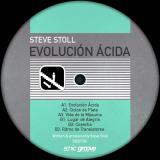
Steve Stoll - Acida Evolucion - Sonic Groove
Two pillars of New York techno finally collide as Steve Stoll makes his debut on Sonic Groove.
Stepping out from a recent low-profile streak, the NYC veteran delivers a superacideferocious 6-track mini-LP. This is Stoll at his rawest: deep, hardware-heavy 303 minimalism designed to melt minds and dancefloors alike.
Pure analog 303 intensity.
out of Stock
Last delivered 5 days ago available to reorder, subject to availability
Another haul of hard hitting house gems from Duster Valentine’s debut album pressed to vinyl for the first time.
A love note to formative years in the ‘80s and early ‘90s, off his chops at The Haçienda and other legendary Manchester clubs, it’s a masterclass in demonstrating the flavours-within-a-theme that emerged from the Chi, 313, and NYC during that pivotal era, and would light the touch paper of a UK club revolution.
In Duster Valentine’s hands the sound is presented stripped to salient fundamentals, prizing the sound before it went commercial, ranging from sampler-knuckling garage-house stabbers thru haughty canter and plushest, pendulous grooves. He homes in hard on that point when hip hop and electro gave way to house in the Todd Terry-via-Pal Joey style jam »Getting’ Dub«, and gives a big salute to Chez N Trent’s rugged, chord-riding haughtiness via Levon Vincent in »Hit Me From Behind«.
»Strobelight Honnies« leans into the sound’s deepest ends with perfectly weighted bassline, cold drums and sublime string tension dubbed with hypnotic elegance, where »The KatG Chord« follows with shimmers of Anthony Shakir via Michael J Blood. Suffice it to say they’re all perlers and bang on the £ if you know what’s good.
out of Stock
Last delivered 42 days ago available to reorder, subject to availability
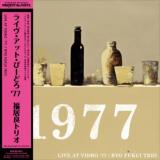
Who could have imagined that Ryo Fukui had left behind a recording like this? Captured on June 8, 1977, this previously unreleased live session was recorded at the Sapporo jazz club Vidro by Masataka Ito, the producer behind Fukui’s albums Scenery and Mellow Dream. It is unmistakably the Ryo Fukui Trio of that era, yet the performance possesses an overwhelming intensity and freshness that far surpass any studio recording—excitement in its purest form.
The 16-minute, searing performance of “Mellow Dream” is just the beginning. The propulsive energy of “Speak Low”, the beautifully woven lyricism of “Body & Soul,” the blistering drive of “Love For Sale”, the weighty depth of “Mr. P.C.”, and the crystalline fragility of “My Foolish Heart”—each track is delivered with feverish brilliance. It was this very live recording, excerpts of which were evaluated at the Trio Records headquarters at the time, that ultimately led to the production of Fukui’s second album Mellow Dream. In every sense, this is an extraordinarily precious document.
Ryo Fukui, the renowned pianist from Hokkaido who sadly passed away in 2016, has earned global recognition among jazz listeners through his highly praised early works Scenery and Mellow Dream. A Letter From Slowboat, recorded in 2015, marked his first leader album in sixteen years. The sessions took place at Slowboat his musical home together with two young musicians whose talent Fukui himself deeply trusted. The lyricism that seeps through “Sonora”, the poetic warmth enveloping “Stella By Starlight,” the vibrant energy coursing through “Speak Low” each performance is filled with life. His touch grew more forceful, his emotions more profound, his musical fragrance even more luxuriant.
Talk-Mo-Band mit Frontfrau aus der verfluchten Szene von Elgin, Illinois. ,Something Good Has Got To Come From All These Goodbyes" versammelt die gesamten Aufnahmen von The Lazarus Plot - ihr Debüt-Doppel-7"-Single von 1998, die EP ,The End", eine Split-Veröffentlichung mit Long Live Nothing, eine vereinzelte Compilation sowie zwei bisher unveröffentlichte Songs - zusammen mit einem 24-seitigen Booklet mit Texten und Fotos, gestaltet von Laura Laurent. Ein geheimes Teenager-Tagebuch voller Trauer und Sehnsucht, vertont mit Musik, die vom Louisville und Chicago der Vor-Internet-Zeit inspiriert ist. Keine Reue.
Leopard DaVinci is the official keyboardist of Dabeull's Band.
“Casual Conversation” pairs Leopard DaVinci’s high-gloss funk production with Moniquea’s signature vocal charisma for an instantly addictive modern funk single. Flirty, confident and groove-heavy, the track balances retro-inspired synth textures with a contemporary boogie pulse, making it a strong fit for editorial playlists centered around funk-forward, danceable and soulful music.
Moniquea already holds a respected position in the global modern funk community, and this release delivers exactly what that audience wants: attitude, melody, replay value and undeniable groove. “Casual Conversation” has crossover potential between dedicated funk listeners, nu-disco audiences and feel-good R&B selectors.
“Flaws” pairs Leopard DaVinci’s signature synth-led funk production with Helena’s fresh and expressive vocal presence for a release that feels both timeless and relevant. Built around a message of self-acceptance and inner strength, the track transforms vulnerability into groove, offering a refined mix of modern funk, boogie and soulful pop energy.
Its lyrical theme makes it especially effective beyond niche funk circles, opening space for playlisting tied not only to groove and retro-funk aesthetics, but also to confidence, empowerment and uplifting mood. “Flaws” is melodic, elegant and emotionally direct — a strong crossover track with both artistic identity and listener accessibility.
- Die allererste Vinyl-Neuauflage und definitive Ausgabe von Nancys Album ,Movin' with Nancy" aus dem Jahr 1967 - Wunderschön gestaltete und erweiterte Gatefold-LP mit 20-seitigem Booklet sowie eine CD-Ausgabe mit 32-seitigem Booklet - beide enthalten ein neues Interview mit Nancy und dem GRAMMYr-nominierten Co-Produzenten Hunter Lea sowie bisher unveröffentlichte Fotos aus Nancy Sinatras persönlichem Archiv - Mit Audio, das vom GRAMMYr-nominierten Toningenieur John Baldwin frisch von den originalen Analogbändern remastert wurde - Enthält 4 bisher unveröffentlichte Bonustracks: ,It's Such A Pretty World Today" (Movin'-Version), ,Let's Get Movin'", ,This Town" (Film Intro) und ,RC Cola" (It's A Mad Mad Cola) - Mit Gastauftritten von Frank Sinatra und Dean Martin - LP gepresst auf violettem ,Some Velvet Morning"-Vinyl Beschreibung: Light in the Attic präsentiert stolz Nancy Sinatras Album ,Movin' With Nancy" aus dem Jahr 1967. Diese definitive Neuauflage und erste Vinyl-Wiederveröffentlichung überhaupt feiert Nancy auf dem Höhepunkt ihres 60er-Jahre-Coolness. ,Movin' with Nancy" ist eines der ambitioniertesten kreativen Projekte in Nancy Sinatras Karriere. Das einstündige Fernseh-Special von 1967 und das dazugehörige Soundtrack-Album fangen die kreativen, groovigen und schönen Zeiten der 1960er Jahre ein. Das Projekt wurde von RC Cola finanziert, aber das war kein reiner Geldsegen. Es war ein Herzensprojekt für Nancy, die ihren Vater, Dean Martin, Sammy Davis Jr. und andere Familienmitglieder und Freunde bat, im Film mitzuwirken. Sie nutzte auch ihre eigenen Autos, Kleider und ihr Haus und schminkte sich selbst. Eine echte DIY-Produktion. Auf dem Album ist Frank Sinatra mit ,Younger Than Springtime" zu hören und Dean Martin im Duett mit Nancy bei ,Things". Produzent Lee Hazlewood singt mit Nancy im Duett bei ,Some Velvet Morning" und ,Jackson"; außerdem steuert er die Songs ,I Gotta Get Out Of This Town", ,Friday's Child", ,This Town" und ,See The Little Children" bei. Zu den Bonustracks gehören der bisher unveröffentlichte Outtake ,It's Such A Pretty World Today (Movin' Version)", zwei unveröffentlichte Musikstücke aus dem Film und der unglaublich eingängige Werbespot ,RC Cola (It's A Mad Mad Cola)".
[m] 13IT'S SUCH A PRETTY WORLD TODAY (MOVIN' VERSION) [PREVIOUSLY UNRELEASED] LET'S
[n] 14GET MOVIN' [PREVIOUSLY UNRELEASED]
[o] 15THIS TOWN (FILM INTRO) [PREVIOUSLY UNRELEASED]
[p] 16RC COLA (IT'S A MAD MAD COLA) [PREVIOUSLY UNRELEASED]
Antal, founder of the Amsterdam-based Rush Hour Records & Store and renowned for his global DJ touring and eclectic sets spanning house, techno, rare funk, soul, and jazz, curates a personal selection from the historic label Timeless Records.
For Timeless Presents From The Archives, he handpicked highlights from 1974–1994 by jazz luminaries such as Art Blakey and the Jazz Messengers, Pharoah Sanders, Carter Jefferson, Gary Bartz, Woody Shaw, and more. “I want to thank the Wigt family for allowing me to dig deeper into their catalog to compile a selection of personal jazz favorites. Their passion for jazz and independent labels has inspired me as a DJ and record store owner. A great song is a great song, no matter when or where it was made,” Antal reflects. For this double album, Antal shares his love for modal and spiritual jazz, celebrating a pivotal era in jazz and creating a must-have for collectors, selectors, and new explorers.
Timeless Presents From The Archives 1974-1994 is packed in a gatefold sleeve, featuring notes by Antal and artwork by Dirk-Jan Deckwitz. Affixed on the protective sleeve is the 50th Anniversary Timeless Jazz sticker.
Fenomenon are a trio hailing from Stavanger, on the west coast of Norway. Throughout their career they have released four full-length records, effortlessly moving between future jazz, downtempo, soul, and broken beat.
Their lush debut 12" Pacific Memories on Nuphonic made considerate waves and made the ears of many DJs perk up. As a result, the tracks "Pacific Memories" and "Solara" were featured on many big-name compilations and mix CDs such as Tom Middleton's The Sound Of The Cosmos, Hed Kandi, and MTV Summer Lounge. The latter was also featured in Michael Bay's sci-fi thriller The Island, featuring Scarlett Johansson. The follow-up single visjon.nord was only released as a white label promo due to the unfortunate demise of Nuphonic in 2002.
Pacific Memories: The Early Tapes collects tunes from both these EPs complemented by songs recorded around the same time. Originally released on CD only in 2006 by the Norwegian label Beatservice, it's now available on vinyl for the first time for its 20th anniversary. If you're a fan of Jazzanova, The Cinematic Orchestra, Kinobe, and Blue States, you can't miss this.
Pacific Memories: The Early Tapes is available as a 20th anniversary edition of 250 copies on turquoise and yellow vinyl.
‘Cécile McLorin Salvant ... sings standards, show tunes and old novelties in a taut, flinty, elusively beautiful voice, erring toward material with difficult lyrics and tough places in history. Salvant wins over her audiences by tweaking them slightly: daring them to go there with her—not just into the archive, but toward the darkness of the past.’ – New York Times
‘Although Salvant is known as a jazz musician, her approach to music is defined by her instinct for experimentation ... Her music is beloved for ... embracing theatre and subverting classics with playful renditions.’ – Guardian
Salvant, who has performed with orchestras regularly over the last decade-and-a-half and intended to make an album with one sooner in her career, but logistics and her abundant creative ideas led to other new projects intervening. Having finally found time to make this album, With Every Breath I Take is a different sort of record than it might have been even ten years ago.
“It is a rare opportunity to be able to make an album at this scale, which has been a dream of mine for many years,” Salvant says. “Darcy James Argue wrote stunning arrangements and the Metropole Orkest, conducted by the extraordinary Jules Buckley, gave these stories a cinematic dimension. We overcame quite a few obstacles to even get into the recording studio for this project; it took almost four years for us to do so, and I am so incredibly proud to share it.
“I did not choose these songs because they are beautiful, but because they are crucial to me,” she adds.
Cécile McLorin Salvant, a 2020 MacArthur Fellow and three-time Grammy Award winner, is a singer and composer bringing historical perspective, a renewed sense of drama, and an enlightened musical understanding to both jazz standards and her own original compositions. Classically trained, steeped in jazz, blues, and folk, and drawing from musical theater and vaudeville, Salvant embraces a wide-ranging repertoire that broadens the possibilities for live performance.
Salvant’s performances range from spare duets for voice and piano to instrumental trios to orchestral ensembles. Her unreleased work Ogresse is an ambitious long-form musical fairy tale that is being made into a feature length animated film. She has performed at national and international venues and festivals such as the Newport Jazz Festival, the Monterey Jazz Festival, the Village Vanguard, and the North Sea Jazz Festival. Her previous Nonesuch albums, Ghost Song (2022) Mélusine (2023), and Oh Snap (2025) received critical accolades; the former two were both nominated for Grammy Awards. Salvant is also a visual artist, and Oh Snap was named a best album of 2025 by the Guardian, Jazzwise, JazzTimes, and the Francis Davis Jazz Critics Poll.
All songs written & arranged by Ora Cogan with the exception of Is Anything Wrong by Lhasa De Sela. High Noon & Holy Hells were written by Ora Cogan and arranged by Finn Smith, Ora Cogan and David Proctor. Katie Cruel is a traditional, arranged by Ora Cogan. Engineered by David Parry at Risque Disque September 2022 Mastered by Tom Deis at Pineapple Room Studio All songs mixed by Tom Deis except for Cowgirl, Dyed, Is Anything Wrong mixed by David Parry
Somewhere between krautrock, noise rock, decaying psychedelia, and pagan proto-punk, Dééfait makes music like one performs a ritual: in trance, on repeat, and without a safety net. From the chaotic arteries of Mexico City to the basement venues of the Paris suburbs, Dééfait sculpts noise rock in apnea. Their self-titled debut EP is a noise rite: a wall of guitars, incantatory percussion, and possessed voices. With Dééfait, sound twists, repeats, stretches, until exhaustion and ecstasy. Formed in 2023, Dééfait brings together the Valero brothers (Lucas on guitar / Pablo, ex-Pays P, on drums), Enir Da (bass - Temir Alcy, Dali Muru & the Polyphonic Swarm), Grégoire Couvert (guitar), and Riki Lara, a Mexican-born vocalist and performer whose lyrics _ chanted, whispered, shouted _ alternate in three languages: English, Spanish, and French. Active on the Paris underground scene since 2024 (La Mécanique Ondulatoire, Le Cirque Électrique, Nouveaux Sauvages_), Dééfait imposes a ritual tension, physical, almost hallucinatory. No choruses to hum along to, no comforting melodies _ just a dense sonic flow that seeps and vibrates. This debut EP, set for release in December 2025 on Ici, d'ailleurs (Zëro, Matt Elliott, Bruit Noir_), lines up six long tracks resembling pagan litanies. Six extended pieces forming a possessed monologue, as if a camera had been slipped inside a burning body. Everything pants. Everything overflows. From We Love Each Other So Much That We Won't Belong To Any Species Anymore, love exceeds expected forms and becomes an organic pact, a ritual of species departure: "Cut me like you want, in bloom your fire," "We scratch consanguinity / We don't belong to any species anymore." It quickly suggests a call to ecstasy, to trance. The EP as a whole navigates unstable zones where desire, sacrifice, and alienation entwine like serpents on acid. Molokh 8 chants an offering to a carnivorous deity, between severed tongue and chemical body. In Bondbondbond, voices entangle, seek each other in a delirious, sensual chiaroscuro where pleasure derails into compulsion. It's a dogma-free ceremony, a game of inverted masks. Alether _ a live-explosive track and perhaps the most powerful of this first project _ shatters frameworks: convulsive dancing, possessed rhythms drowned by waves of guitar. Finally, Ferreri, cook for us closes the EP as a dark farce: a deviant homage to Italian filmmaker Marco Ferreri, the track chews and regurgitates words as if digesting an overfed world. Recorded in the chaos of DIY and mixed as a raw work, the record captures Dééfait's electric discharge in its purest state. The sound is dirty, visceral, possessed. Think Terminal Cheesecake, Boredoms, Nick Cave-era Birthday Party on acid, but also CAN impaled on an autopsy table, or a Giallo under a strobe light_ Yet it emerges as a singular work.
Shady Nasty subvert expectations. In a world bound by modded cars, immigrant heritage and digital obsessions, Kevin Stathis, Haydn Green and Luca Watson craft a left-field breed of punk that pushes their formal training in jazz and classical music to its most uncustomary extremes. Influences like King Krule and Low Life surface not as reference points, but as undercurrents absorbed and reconfigured into something unmistakably their own. Debut album TREK has surpassed 2M streams - named one of Rolling Stone Australia's 50 Best Australian Albums of 2025. Fred again.. co-sign ("literally my favourite band in the world right now") drove a major viral surge, leading to collaborative singles "Air Maxes" and "HARDSTYLE 2" (with Fred again.. & KETTAMA), BBC Radio 1 Hottest Record. Sold-out UK debut at The Windmill, London; sold-out album shows across Australia; national support for The Streets (Sydney Opera House Forecourt, Palace Foreshore Melbourne, Fremantle Arts Centre).
Live dates continue into 2026 with Shady Nasty returning to the UK/EU as part of their TREK Tour, hitting up venues in London (Moth Club), Bristol (Strange Brew), Leeds (Hyde Park Book Club), Glasgow (SWG3 Poetry Club), Dublin (Whelan's), Cologne (Garagen), and Berlin (Mikropol), as well as Marrapalooza in Newcastle, Best Kept Secret Festival (NL), and Outbreak Festival in Manchester, before heading to Australia for shows in Brisbane (The Tivoli), Newcastle (King Street Bandroom), Wollongong (UOW Unibar), and Canberra (Fun Time Pony), then back to the UK for All Points East festival, curated by Tyler, the Creator, in August, and a full North American run supporting Militarie Gun (Sept-Oct 2026).
Recognised as the first release to showcase the distinctive sound that would become synonymous with The Stone Roses, Sally Cinnamon remains a pivotal moment in the band’s early catalogue. This EP brings together the 12” single mix, the full collection of B-sides, and additional live recordings, presenting these tracks in a definitive configuration for collectors and fans. The vinyl edition is pressed on heavyweight 180g cream vinyl and produced to the highest audiophile standards. It has been half-speed mastered for enhanced clarity and depth, and Direct Metal Mastered (DMM) to deliver exceptional sound quality. Each record is housed in a protective polypropylene inner sleeve, creating a premium collector-focused physical release. Alongside the vinyl edition, this release also marks the first ever CD pressing featuring this complete track configuration. The CD is manufactured using a black polycarbonate “vinyl effect” disc, giving it a distinctive appearance that complements the collectible nature of the release. Combining high-spec production with a historically significant recording, this package offers a premium catalogue release centred around one of the earliest and most recognisable recordings from The Stone Roses.
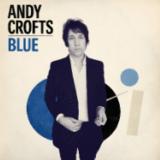
Andy Crofts announces the release of his debut solo single “Blue”, arriving 17th April on all digital platforms and Ltd edition 7” coloured vinyl to follow in June. Known for a lifetime immersed in music, from leading The Moons to fifteen years playing and contributing to number 1 records as part of the Paul Weller band. Andy now steps forward with a song that signals a new chapter with quiet confidence and melodic clarity.
“Blue” is an uplifting, vibrant track that captures a sense of personal return. Upbeat yet reflective, the song carries the feeling of triumph, not in grand gestures, but in the quiet understanding that the most meaningful victories are often the ones experienced within. With its warm arrangement, memorable hook, and cinematic sense of movement, “Blue” encapsulates the spirit of an artist reconnecting with instinct, melody, and purpose.
The single is taken from Andy’s forthcoming solo album, soon to be announced, a collection shaped by years of experience, observation, and dedication to classic songwriting craft.
Due to the desire to release the single digitally without delay, the limited edition 7” vinyl will follow a few weeks later while it moves through the pressing process. These pressings are strictly limited, and demand is expected to be high.
NOW is the time to secure your copy before they all go. “Blue” is released 17th April on all digital platforms and limited edition 7” coloured vinyl in June. Don’t miss out!
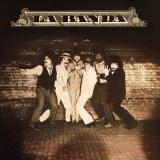
Soul, jazz-rock, candombe and funk blend in the cocktail of La Banda's first and sole album. Often regarded as Argentina's first supergroup, the ensemble built a reputation on their explosive live performances during a time of political repression. Short-lived but unforgettable, the six-piece brought together top-tier jazz musicians—five Argentinians alongside Uruguayan icon Rubén Rada—to deliver a deep, hard-hitting sound that resonates far beyond its era.
Rada arrived in Buenos Aires bruised — a romantic disaster and a string of empty concert halls back in Montevideo had pushed him to start over at 35. Behind him lay a remarkable journey: from inventing candombe beat with El Kinto, to leading the Latin rock powerhouse Tótem, to recording cosmic jazz with Opa alongside the Fattoruso brothers. Trumpeter Benny Izaguirre, the band's architect, gathered around him a cast of heavyweights: pianist Jorge Navarro, an essential figure in the Buenos Aires jazz scene since the 1950s; saxophonist Bernardo Baraj, forged in Alma y Vida, Argentina's jazz-rock champions; and the irresistible rhythm section of bassist Ricardo Sanz and drummer Luis Ceravolo, both veterans of Astor Piazzolla's quintet. All three — Baraj, Sanz and Ceravolo — were simultaneously part of Banda Spinetta, the jazz-oriented project of Argentine legend Luis Alberto Spinetta.
The sessions also drew in two guests who needed no introduction: guitarist David Lebón — veteran of Pappo's Blues, Pescado Rabioso, Color Humano and Serú Girán, one of Argentine rock's true giants — and guitarist and producer Daniel Homer, a quietly indispensable figure across Buenos Aires' jazz and rock scenes.
Recorded in 1979 and gone almost as soon as it arrived — La Banda's brief existence and this sole album are what Buenos Aires sounded like when it was allowed to breathe. Between raids, between disappearances, in the stolen hours when music was louder than fear.
Vacation. A backpack trip through Australia, a campfire in the Schrebergarten. Cruising in the car with friends through the Lüneburger Heide or just a short holiday in the mind, during a rainy lunch break or with a glass of Sprizz on the balcony. And this all includes music, music, music! Grooves which roll like an intercity train into the horizon, Rhodes chords as soft as sand on the beach and synthesizers that sparkle like the reflections on the ocean. Music as colourful as a Hawaiian shirt and as warm as the morning sun.
Welcome to Erobique’s second album “Erobique No. 2”. Here even the song titles are in a holiday mood: “Ahoj!” greets the young “Springinsfeld”. The “Mantas” glide elegantly around the “Acquamarina”. “Salut Les Copines!” we shout to the yacht next to us. “Come on the ‘Ravedave!’” they echo cheerfully. “Riding Low” is the motto while the “Arpeggiator” beautifully condenses the “Synaesthesia” of our dazed senses. The “Italotape” in the cassette deck plays the “Hitsong Von uns Beiden”. It’s all so beautiful “Verkackt”, it sounds like “Zukunftsmusik”!
Carsten Meyer released his debut album “Erosound” in 1998 under the name “Erobique”. Exactly 25 years later, the now 50-year-old releases his second Erobique album on his own label A-sexy. Thirteen diverse tracks ranging from holiday disco to rhythm box rave, recorded and produced with many of his friends and companions. Twenty-five years, that's pretty much the time it took disco to evolve from the legendary loft parties of pioneer David Mancuso to the impressive mass spectacles of Daft Punk's performances, or from Meyer's birth to his first full-length record. So why only now a second album as “Erobique”?
Fenomenon are a trio hailing from Stavanger, on the west coast of Norway. Throughout their career they have released four full-length records, effortlessly moving between future jazz, downtempo, soul, and broken beat.
Their lush debut 12" Pacific Memories on Nuphonic made considerate waves and made the ears of many DJs perk up. As a result, the tracks "Pacific Memories" and "Solara" were featured on many big-name compilations and mix CDs such as Tom Middleton's The Sound Of The Cosmos, Hed Kandi, and MTV Summer Lounge. The latter was also featured in Michael Bay's sci-fi thriller The Island, featuring Scarlett Johansson. The follow-up single visjon.nord was only released as a white label promo due to the unfortunate demise of Nuphonic in 2002.
Pacific Memories: The Early Tapes collects tunes from both these EPs complemented by songs recorded around the same time. Originally released on CD only in 2006 by the Norwegian label Beatservice, it's now available on vinyl for the first time for its 20th anniversary. If you're a fan of Jazzanova, The Cinematic Orchestra, Kinobe, and Blue States, you can't miss this.
Pacific Memories: The Early Tapes is available as a 20th anniversary edition on black vinyl.
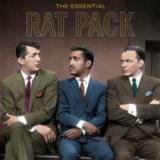
A legendary group of entertainers who dominated the nightlife of Las Vegas in the late 1950s and 1960s, The Rat Pack blended music, film, and comedy with effortless charisma and style. Its principal figures - Frank Sinatra , Dean Martin , and Sammy Davis Jr. - were widely regarded as the group's leaders. They not only headlined the shows but also supplied much of the music that defined their performances, embodying the spirit of swing and sophistication through their exceptional on-stage and studio chemistry. This special gatefold edition LP brings together 21 outstanding performances, and includes the only two studio duets they ever recorded for release as singles; 'Sam's Song' (Sammy Davis Jr. & Dean Martin) and 'Me And My Shadow' (Frank Sinatra & Sammy Davis Jr.)
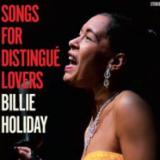
Contains new specially prepared liner notes by Penguin Guide to Jazz 's writer Brian Morton and by Paris' prestigious Jazz Magazine. The first popular jazz singer to move audiences with the intense, personal feeling of classic blues, Billie Holiday (1915-1959) changed the art of American pop vocals forever. Songs for Distingue Lovers is one of the best albums from her late period and finds her surrounded by important instrumentalists, including Ben Webster and Harry "Sweets" Edison. The album received a four-star rating in Down Beat upon its release. Bonus tracks: 'We'll Be Together Again' and 'April In Paris'
Streetlight’s third album (following the Keasbey Nights re-recording) refined and expanded on the sound of their debut, delivering a tighter, more polished collection of songs. The record opens with "We Will Fall Together," one of the band’s most beloved tracks, and maintains a relentless energy throughout its ten songs. Lyrically, Kalnoky continued exploring themes of cynicism, faith, and perseverance, wrapped in the band’s signature wall of horns and propulsive rhythms. It cemented Streetlight’s reputation and remains many fans’ pick for the band’s best work.
Originally conceived as a massive multi-band, multi-volume covers project, this album saw Streetlight tackle eleven songs that influenced Kalnoky’s musical development. The tracklist is a genuinely eclectic mix, ranging from Radiohead and Bad Religion to Paul Simon and a 1950s Louis Jordan number. Rather than simple recreations, the band fully transforms each song through their own lens, making the covers feel like natural extensions of their catalog. Only one volume was ever released, leaving the larger 99-song concept permanently unfinished.
They disbanded in 2015, much to the chagrin of their dedicated fanbase, leaving behind a highly influential body of work, including two gold- selling albums (United Paper People and Hymns for the Nonbeliever) and a slew of hit singles such as "Opinions Won't Keep You Warm at Night," "Do-Do's and Whoa-Ohs," and "Dinosaur." In mid-2025, alongside the vinyl reissue of Hymns for the Nonbeliever-- which reentered the Australian Album and Vinyl charts at #1-- Kisschasy released their first new music in sixteen years. "Lie to Me" and follow- up single "Parasite" both offer a modern edge to the band's trademark sound: blistering guitars, hammering drums, razor-sharp lyrics and, of course, irresistible hooks. It can now be revealed that these two songs form part of a larger body of work: a long-awaited fourth album.
Titled The Terrors of Comfort, the collection of ten brand-new songs finds Kisschasy at the peak of their creative powers. Band member Daz Cordeux describes the album as "raw, alive and commanding" and "the closest you're ever going to get to the true essence of our band." The Terrors of Comfort, Kisschasy's first new album since 2009, will be released on February 13, 2026
For nearly four decades, since its founding during the mid 1980s, the Belgian imprint, Sub Rosa, has continuously plumbed the depths of numerous, radical creative histories, assembling a catalog of releases that has almost no equivalent, while remaining nearly impossible to nail down. That said, for most of its run, Sub Rosa has been primarily recognized for its rigorous explorations of the lesser explored shadows of experimental sound practice (sound-art, sound-poetry, early electronic and electroacoustic music, free-improvisation, etc.), delivering a remarkable body of artifacts that have collectively helped to rewrite history in their wake. While it's always been impossible to anticipate where the label might take us next, threading their catalog are plenty of releases that throw further wrenches in the cogs, expanding our understanding of what they pursue, as in the case of a handful of titles, appearing as early as the 1980s, dedicated to ethnographic field-recordings from various parts of the world. Among the most striking and celebrated of these was 2017's Ethiopian Urban And Tribal Music: Mindanoo Mistiru / Gold From Wax, comprising an astounding body of recordings made by Ragnar Johnson and Ralph Harrisson in Ethiopia during 1971, reissuing material originally released by Lyrichord the following year. Now, Sub Rosa returns to the incredible work embarked upon by the pair and captured on that same trip with Ethiopian Musics 1971, comprising the recordings originally released by Ocora shortly after their completion, expanded in this edition to include an entire disc of never before released music. Widely regarded as some of the most important field-recordings ever made of indigenous Ethiopian folk music (as captivating and intoxicating as they are revelatory: providing insights into the roots of the country's singular traditions of popular music and jazz that have come to be celebrated the world over), this incredible collection is issued by Sub Rosa in a beautifully produced 2LP edition, complemented by a four page insert providing detailed descriptions of each song, as well as notes by the ethnomusicologists and recordists, as well as a 2CD edition, with a twelve page booklet. Insanely good and absolutely essential for any fan of field-recording, ethnomusicology, the music of Ethiopia, or the label's mission at large. Once again, Sub Rosa has defied our expectations and delivered a remarkably important intervention in the history of recorded sound.
Located in the Horn of Africa region of East Africa, few cultures are distinctly singular, while being so diverse (containing 80 distinct ethnic groups who speak 70 languages and 200 dialects) as that of Ethiopia. The home to some of the oldest surviving sects of Judaism, Christianity, and Islam (each contributing important aspects of its collective cultural body), particularly the country's culinary and musical traditions have become celebrated the world over, and (generally speaking) feel entirely independent of those of its neighbors. Given this, it's unsurprising that, during the summer of 1971, the young ethnographer, Ragnar Johnson, accompanied by Ralph Harrisson, traveled to Ethiopia to begin his brief career as a field recording ethnomusicologist, capturing material on reels of magnetic tape that would be subsequently released across three LPs for Lyrichord and Ocora, respectively, coming to form a cornerstone of documentation and study of the country's many indigenous musical traditions, as well as providing wide, global access to them for the first time. While Johnson's recording career was relatively brief, ending toward the end of the decade when he began to focus more on teaching in UK universities, with a focus on the anthropology of art and social anthropology, his impact on the field was lasting. Between 1971 and 1979, in addition to those he made in Ethiopia, he made hugely significant recordings in Yemen (also issued by Lyrichord before being reissued by Sub Rosa) and Papua New Guinea, which were originally released by David Toop's Quartz Publications to wide celebration, before being revisited by Ideologic Organ in 2023.
While it's worth noting that commercial releases of ethnomusicological recordings by labels like Folkways, Lyrichord, and Ocora were still in their relatively early days when he entered the field, Johnson's recordings quickly stood apart for their vivid qualities and clarity of space, allowing them to stand the test of time. As he later stated: "I used a Uher Report L stereo tape recorder, BASF quarter inch tapes at a recording speed of seven and a half inches per second with two directional microphones mounted to record an isosceles triangle of stereo sound," he reveals. "The location of the microphones and musicians was critical. The musicians were fully informed of all aspects of the recording process."
Johnson's recordings are extremely vivid, there is a clear sense of space and the cries of the flutes exist across the entire stereo field. It's a reflection of Johnson's skill as a field recordist that his recordings continue to be reissued over forty years later. "I used a Uher Report L stereo tape recorder, BASF quarter inch tapes at a recording speed of seven and a half inches per second with two directional microphones mounted to record an isosceles triangle of stereo sound," he reveals. "The location of the microphones and musicians was critical. The musicians were fully informed of all aspects of the recording process… I used to enjoy being in the moment and hearing something wonderful despite the stress of the vigilance required to ensure that the recordings were accomplished according to plan. The responsibility is to record and document the music as effectively as possible so that it has been preserved for posterity. It is better to actually record music than to sit in a seminar room debating the ethics of recording music." It is this very ethos and sense of clarity that can be encountered across the length of Ethiopian Musics 1971.
For the sake of clarity, the two LPs of material that comprise Ethiopian Musics 1971 should be regarded as a single body of recordings alongside those made in Ethiopia by Ragnar Johnson and Ralph Harrisson during the summer of 1971 (previously issued by Lyrichord and reissued by Sub Rosa), and as two that have, until now, remained historically distinct. The first LP gathers that material released by Ocora during the early 1970s on Musiques Ethiopiennes, while the second comprises (as far as we can tell) twelve never before issued recordings, expanding the journey and making this the definitive edition of the release with its incredible total of 23 recordings of songs, allowing it ever greater scope to achieve the recordists' modus operandi of capturing the broadest and most diverse cross section of Ethiopia's many musical cultures, ranging from different forms of urban music captured in Addis Ababa, documenting largely orally transmitted idioms within which lyrical content is given greater emphasis than the instrumental components (played on masenko fiddles, craar and bagana lyres, washint flutes and kabaro drums), to folk idioms hailing from the Danakil desert and the border regions with Sudan and Kenya. There are songs sung and played in bars, divination chants, laments, dances, Christian songs, and Amharic sung poetry, to only begin to scratch the surface.
Ethiopian Musics 1971 is one of those rare albums where each musical moment is pure, intoxicating gold, while also being greater through the sum of its parts. There are the many songs, forming a rich tapestry of remarkable range across the respective two LPs/CDs (moments that wondrously flirt with sonic abstraction; hypnotic rhythms; pulsing chant; melodies that, in structural arrangement and tonal combination, help us reframe how such a thing might be understood, and a great deal more), each imbued with a remarkable directness and emotive sensibility, and there is the stunning quality of these recordings themselves, transporting each sound to our ears as though we intimately share its creator's space, while being imbued with the pure heart and remarkable spirit with which they were made. As we said before, it's little wonder, once heard, why these recordings and this music feels as fresh and relevant (enduring more than 50 years) today as when they were made. Once again, Sub Rosa has raised the bar with this essential addition to the incredible work that Ragnar Johnson and Ralph Harrisson did back in Ethiopia during 1971, radically expanding our access to the sounds that they captured with these stunning, beautifully produced 2LP and 2CD editions. Absolutely engrossing from the first sounding to the last, this one can't be missed.
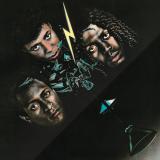
WRWTFWW Records unleashes the first ever release of legendary post-disco, funk, soul and electronic UK trio Imagination's cult album Night Dubbing in (well deserved) double LP format. The limited edition full-length comes with pristine audiophile treatment and luxurious packaging : a 45rpm and Half Speed Mastered DLP housed in heavyweight silver cardboard sleeve.
Imagination's singular 1983 album Night Dubbing is a refined deconstruction of black British soul and club pop, filtered through the deep studio and mixing techniques of dub music. Elegant, restrained, and, in its very own subtle way, radical, the record reshapes choice selections from the group's stellar catalogue into an immersive and out-of-this-world listening experience.
The special mixes on Night Dubbing are built on time and space. Basslines elongate and dissolve. Vocals appear, vanish, and reappear like ghosts. Drums fall away into vast silences, while echoes, tape edits, and precise engineering manoeuvres smoothly slide across the stereo field, revealing themselves like magic over repeated listens. Far from simple extensions or 12" versions, Night Dubbing treats the studio itself as an instrument, opening new dimensions of sound.
Often cited as a foundational record in the genesis of the house genre, the album also features the historic Larry Levan remix of "Changes", a Paradise Garage anthem that helped shape the direction of club music for decades to come.
More than 40 years on, Night Dubbing remains a seminal work. Its influence continues to echo through contemporary dance music, offering a blueprint for how pop could be transformed into something darker, stranger, more physical - a timeless sound that drifts effortlessly from the dancefloor into space.
Important note : it sounds amazing played on 33rpm too !
out of Stock
Last delivered 3 months ago available to reorder, subject to availability
For several decades Norway has had a healthy tradition for prog, psych and jazz fusion – yet, there's something very different about the ensemble that is Fra Det Onde (”From Evil”). The group is comprised of one of Europe's finest jazz drummers Olaf Olsen (Needlepoint, Motorpsycho, Bigbang and others), bassist Rune Neergaard (Bushman's Revenge, Exoterm) and trumpeter Erik Kimestad – one of the brightest young stars in current Scandinavian jazz. And they have a secret weapon in the form of sonic wizard Emil Nikolaisen, known for his pioneering noise rock in Serena Maneesh, as well as a collaborative album with Todd Rundgren. He's currently a member of The Brian Jonestown Massacre. Emil not only contributes Farfisa and weird electronics to the group's free flowing streams of sound, he's also responsible for the innovative album mix that expands the ensemble's vision into new and astonishing territory.
Smilet Er En Flyktig Tilstand is one of those rare records that manage to absorb the spirit of the past and transform it into something new and exciting. Listening to the suite that makes up most of the album, one can sense the cosmic energy of 1970s Don Cherry, or the sonic adventurism of Can in their prime – but Fra Det Onde pushes these aesthetics into the extreme. Labels such as ”fusion” or ”psychedelic jazz” don't really come close to describing the rush of energy and kaleidoscopic sonics that's taking place on this record.
Vinyl-only, limited to 500 copies, no digital release.
File next to: electric Miles Davis, Can, Don Cherry.
THE M.V.P.'s burst into life on the Northern Soul scene back in 1975 courtesy of Blackpool Mecca DJ Ian Levine and has long since divided opinion. Is it pop, is it soul, are they black, are they white, etc etc. Well, it's a rock record from 1971 and has nothing to do with soul... but everything to do with Northern Soul! It packed the floor at the Highland Room and was adopted as a Wigan Casino anthem and immortalized by Tony Palmer in his 1977 Granada TV documentary This England. It was reissued by UK Buddah, due to popular demand, driven in no small part by the TV show and its 20 million viewers. Now, some 40 years on, we present the iconic track, both stereo and mono mixes, as mastered at the time by Bell Sound's senior engineer Joe Breschie.
SALES POINTS:
All time Northern Soul Classics - Two fabulous sides
Massive appeal to ALL Northern Soul fans
As featured in the film Northern Soul
Faellesskab reveals their most critical and emotionally charged work to date, a deeply personal voyage into the heart of Nordic black metal, where raw emotion and melodic depth keep reveling in sorrow and longing beauty. Translating to "Community", Faellesskab's six tracks weave a strong musical oeuvre within the Afsky canon; their walls of haunting melancholia, interwoven with vital intensity, have never been more powerful. Yet, this new work also sees the band at its sharpest in social criticism, as Ole Luk of Afsky notes: Faellesskab - Overture to the Downfall. Here, community is praised like herd animals fleeing responsibility.
A parade of moral superiority, where truth is trampled in the name of consensus. Where unity means silence, and doubt is a crime. Six songs of shame disguised as care, of freedom suffocated, and of the solitary few who still dare to question. A chorus of hollow words, where silence screams the loudest. Welcome to the celebration - the curtain hasn't just risen, it's been torn away! Afsky will mark the release with a special show in Copenhagen on October 17, graced by a full European album release tour kicking off the following week. Two singles are set to be unveiled in the lead-up to the release. While Afsky continues to refine their signature sound, this release is set to be another landmark in the band's uncompromising discography.
With "Una Lama D'Argento", TENEBRO take their most extreme and visionary step yet: an entire album conceived as a tribute to Dario Argento, the undisputed master of horror, giallo, and thriller cinema. Eleven tracks that are not just songs, but episodes of a single nightmare, a journey through the dark and obsessive atmospheres of the films that shaped cinema history: Deep Red (1975), Suspiria (1977), Inferno (1980), Tenebre (1982), Phenomena (1985), and Opera (1987). TENEBRO translate Argento's universe into sound: riffs sharp as blades, guttural vocals emerging from the darkness, relentless drumming, and atmospheres shifting between pure violence and suffocating tension. Iconic scenes such as the mirror revealing the killer in Deep Red, the brutal mutilation in Tenebre, or the larva-filled bathtub finale in Phenomena are transformed into brutal, immersive sonic attacks, capturing the full horror and tension of the films. As with every album, TENEBRO continue to evolve, introducing new symphonies, styles, and melodies, while remaining distinctly separate from the wider underground scene. Their music explores new horizons without ever betraying the pulsating heart that has always defined their sound: extreme, theatrical, and viscerally horror-driven.
The monumental 2006 live recording of mama!milk, which laid the foundation for their current performance style, is now available on CD and LP!
mama!milk, hailed worldwide as “Japanese New Exotica,” praised for their “music that entices you on a journey” and “soundtracks to unseen films.”
This site-specific, one-day-only performance, unique to the 21st Century Museum of Contemporary Art, Kanazawa, is packaged here.
This third album by Ryo Fukui arrived a full 17 years after Mellow Dream, marking his first and only solo piano recording. Alongside signature pieces like “Scenery” and “Mellow Dream”, the album includes “Voyage” and “Nord”, both written during a trip toward the northern regions, as well as “Nobody’s”, a piece imbued with Fukui’s deep respect for his mentor Barry Harris. The selection is nothing short of a delight for fans.
Here, the depth and weight Fukui cultivated as a bebop pianist blend seamlessly with the profound “Hokkaido sensibility” that had always resided within him. It is a masterpiece that truly deserves to be passed down through time.
The album Greatest Hits - Wonder is more than a collection - it is a musical journey, bringing together the 10 most treasured songs Invisible Hands Music releases that have touched hearts worldwide. Invisible Hands Music is proud to have enjoyed a dynamic and enduring partnership with Libera, spanning six acclaimed studio albums distributed across more than 200 territories. Each song on embodies the passion, artistry, and collaboration that have driven remarkable achievements - from multiple No.1 chart positions to "Album of the Week" features in major markets including the UK, Japan, and the USA. This definitive collection celebrates Libera's most beloved recordings and offers longtime fans and new listeners a memorable one-stop experience.
PNØ is the duo project of experimental vocalist Agnes Hvizdalek and techno innovator Jakob Schneidewind on electronics. They combine minimalistic musical structures with organic improvisations, pure vocal sounds with drum machines, synthesizers and effects
that trigger and manipulate each other’s output. Their vision for the future of music makes them explore crossing points between experimental and electronic dance music. Their first album, «Zakeri», was released in 2015. Since then, they have performed, among others, at ORF Musikprotokoll, Wiener Festwochen, Jazzwerkstatt Wien, Ottosonics, and de/semble.
The album «Hypatia» will be released on June 26th by Palazzo Recordings.
Muse are a culturally-attuned, genre-defying band who channel the anxieties of each era—technology, power, rebellion, and identity—into maximalist, stadium-ready rock that evolves with the times while staying unmistakably Muse.
Kicking off with new single “Be With You,” this next era of Muse is rooted in electronic experimentation and an insatiable curiosity. ‘The WOW! Signal’ represents a world of cosmic mystery, existential hope, and the exhilarating possibility of contact with something far greater than ourselves.

![THE TALLEST MAN ON EARTH - SOMETIMES THE BLUES IS (...) [REVINYL]](https://www.deejay.de/images/l/0/7/1243807.jpg)