The fourth AF Trax release is a three-track EP from our long time ally The Fantastic Twins, who has the following to say about her EP:
This EP is a small collection of works I crafted over the past couple of years in the process of working on my live show. I have been performing versions of these tracks countless times and yet never played them twice the same way. To me, they have been material in constant motion, so shaping them into a 'finished' form was a risky challenge. Something I was also wary of - would it mean they would become set in stone Would it mean I'd have to somehow 'rationalise" the music - via the mind - as opposed to letting it run into the wildness of its physical live experiences
Whilst editing these tracks into a format that could be released, I realised that instead of shaping them into the mould my mind first intended to give them, I could in fact use the power they revealed each time I performed them to an audience and inject some of that energy - as much as it is possible to capture and recreate it in the studio - back into this EP. Then of course, it meant letting go on things I usually like to control more, and better.
But isn't it the power of music to let it take you where you didn't plan to go And how incomplete would the music be if our inspiration didn't feed off the collective experience of dancing to music together I've lost myself (and my twins) many times throughout the process - not only on German soil - I have sometimes landed in the wrong place, but I may have found one answer yet in the form of another question. Why are we here if we can't dance
That reminds me of the words of Pina Bausch 'Dance, dance or we are lost'. Lost in our internal struggles as individuals (or imaginary twins). Lost in a society where our relation to the other is often marked by fear, power or violence. We feel the need to resist. Yet nowadays, taking a political stance as an artist is too often being instrumentalised as another tactics or accessory to gather more popularity, reducing the political message to nothing else but a branding attempt. Isn't it anyway the power of capitalism to assimilate everything, even contradictory or once-upon-a-time subversive voices All to end up on a 'Rave' or 'Feminist' H&M t-shirt. Slogans that have been emptied of their initial force and substance, now replaced by their commercial value. I strongly doubt that more empty words poured in vain on social media will help us much. But, like Pina Bausch, like JD Twitch, I have always firmly believed in dancing as a physical, social and fundamental act that leads us to share a common space with others and embrace otherness. Standing together, dancing together when everything else forces us to divide.
out of Stock
Last delivered 5 years ago available to reorder, subject to availability
Gregorio Gomez aka Gladkazuka is a mythical figure from Medelli´n's underground nightlife, contributing since pre - smartphone ages with energetic live sets to the celebration of life in the convulsive surrounding of the Colombian city. After playing and touring alongside Matias Aguayo with 'The Desdemonas' and contributing with the club smash hits 'Ihr Euer' and 'Futuro Chaos' to the 'Solidarity Forever' series on Co´meme - Gladkazuka is back with a full EP in which highly emotive and sensual electro dance fantasies culminate to 'The Drop'. Gomez' creations are nocturnal and lush, utopian and melancholic - underground dance pop that would be mainstream in a better world.
However these songs were created in a place where an unseen destruction of nature is taking place, and - in mids of times of supposed peace agreements - social leaders are being assassinated under the eyes of a new right wing government. Meanwhile the societies are fragmented towards a growing individualism and competition, exchanging dignity for an ideal of consumerism.
In this chaos, music becomes the celebration of life.
'Naturalia', the first track of the EP reflects this with its lushness and its jungle - like humid warmth, 'Flancing' with its happy flying fishes and 'El Coral' with its jittering electric eels.
'The Drop' is decontextualized Electro and New Wave - echoes of The Cure and The Other People Place dissolving into utopian dreaming, longing for better times, like vampire bats, hanging in their caves, waiting for the night to come.
Mana Can Be Understood As A Powerful, Often Magical, Force Contained Within Objects. As These Objects Get Passed From One To Another, In A Cycle Of Gifting, They Retain The Spirit Of The Giver And Propel Themselves Onto The Next Recipient, Weaving A Network Of Social Bonds. In This Light, Mana Describes The Coming Together Of This Mixtape. The Exchanging Of Avant-garde, Traditional And Electronic Music--old And New--between Andrea Zarza, Curator At The British Library Sound Archive, And Matthew Kent, Founder Of Blowing Up The Workshop, Is What Makes Up The Language And Landscape Of Mana The Record Label, And Its Subsequent Arrival On A Cassette Tape For Queeste, Before Being Sent Onwards, As Our Gift To Listeners. Limited Edition Cassette Tape. Jelly Yellow Colorway. Comes In Resealable Bag With A5 Postcard Designed By Fallon Does And Mana X Queeste Sticker.
Rich, Deep, Percussive Soulful Folk Album From Master Togolese Singer, Akofa Akoussah.
The Album Moves Through Uptempo Afro-folk-funk On 'tango' To Deep Ballads Of 'ramer Sans Rame' And 'i Tcho Tchass' And Lighter Moments On 'g Blem Di' And 'mitso Aseye'. Akofas Exceptional Songs And Soaring Vocals Are Decorated With Percussion, Guitar Lines, Subtle Backing Vocals And Horns To Create A Unique, Rich Sonic. The Album Was Recorded For Release By French Label Sonafric In 1976. Produced By Gérard Akueson; Founder & Owner Of African Record Label, 'akue', Based In Paris.
Music Was Truly In The Blood Of Julie Akofa Akoussah. She Began Singing At The Age Of Three, Inspired And Led By Her Mother And Older Sister And Became Principal Soloist In Her School Choir, St. Peter & Paul Choir Of Our Immaculate Conception Parish Of Nyékonakpoé, At The Age Of 8. From There Her Career Blossomed, And Singing Often Took Precedence Over Her Studies. In Order To Master Her Art She Spent Time Studying And Working Closely With Local Groups Including Mélo Togo, Rocka Mambo, Rio Romamcero, Ok Fiesta, Eryco Jazz, Afro Cubano, Los Muchacho, Elégance Jazz And Togo Star Amongst Others. In Her Own Words: 'luck Opened The Door In January 1966 Where I Had The Honour Of Being Selected To Share The Stage With Bella Below - One Of The Best Voices Of
Africa - At The 1st 'negro Arts Festival' In Dakar. On My Return, I Was Approached By Ambroise Ouyi, The Highly Respected Singer & Poet, And We Wrote 'tu Ne M'écris Plus', My Very First Opus.'
The Popularity Of Her Work Led To An Increased Exposure For Togolese Music Outside Of The Country, In Neighbouring Ghana And Benin Most Notably. During Her Career She Collaborated And Performed With Greats Including Manou Djibango, Queen Pelagie, Abeti Massikini, Aycha Koné And Myriam Makeba. Akoussah Was Also Dedicated To, And Widely Recognised For, Her Work For Social Causes, Championing And Nurturing Young Musical Talent, And The Fight Against Aids. She Was President Of The National Union Of Artists Musicians Of Togo (unam) Before Sadly Passing Away In April 2007 After A Long Illness, At The Age Of 57.
out of Stock
Last delivered 2 years ago available to reorder, subject to availability
After the release of their playful debut album "Worldstyle" the Budapest duo are now returning with their 2nd album "Brotherhood" and this time their message is more serious. The music if often summons blues elements but also influenced by dub, funk and a little hip-hop while the lyrics are mainly about the social and personal problems of our time interpreted by talented guest vocalists from all over the world. The guest performance of KRSA puts the point on the letter 'i' in 'Brotherhood' and in the other reggae-inspired song 'Pass It On'. Being one of the dominant figures of the Hungarian ska movement he is an
important guest on the album. As the main driving force behind the 90's very popular and recently revived British band Freak Power Ashely Slater needs no introduction. He has worked with Dub Pistols, Dublex Inc., or Fort Knox Five, and his
talents and professional performances are turbocharges three
completely different songs. 'Revolution!' has previously released in 2016 as a 7' single and features dazzling electro blues and Ashley's food for thought lyrics. In 'Life Is Love' he proves that his talent has no barriers whether he sings lonely doo-woptempo or the dub-ska of 'People Kill People' which is a unique cover of Éric Serra's seminal 80's cult classic 'Guns & People'.
Denise M'Baye known as the MC/singer of Mo'Horizons is featured in two downtempo tracks. 'Wings' is a laidback song about love while and 'All My Life Is In This Bag' smuggles back a little bit of the mood of 'Worldstyle'.Fedora is the best-known female MC/singer of the Hungarian bass music life. She made her own solo album in 2017. With 'Come Away With Me'
she proves that she's not only an bass music MC, but a great singer with deep emotions. Another guest from Hungary is the lead singer of the downtempo-funk band Mystical Plants. Bryant Goodman contributes to the album in two different tracks with his gravelly voice. 'Bad Man's Ballad is bittersweet song about the average politician of our age while 'Keep Going On' on
the other hand is full of playfulness and delivers a short but positive message.
At last but not least we have the Ghanaian M3NSA on the board from Fokn Bois and RedRed. His lyrics in 'It Works' is very motivating for everyone and spreads the message of not giving up even if the world is seemingly against you.
Savages Y Suefo's new album 'Brotherhood' is a lot different from their previous one in many ways but it remained just as eclectic as its predecessor 'Worldstyle' and still proves Savages Y Suefo's wide interest and openness in music that is needed today... and not just in music.
Lost Futures is a new label that explores experimental and often radical approaches to dance music from the past. In a musical landscape that increasingly claims to seek and reward new forms and ideas, Lost Futures delves into the recent past to revisit forward-thinking, optimistic projects that, owing to the social, musical or outright political climate, perhaps struggled to find an audience. Allowing only time to re-contextualise these leftfield, sometimes misunderstood and ultimately human bodies of work, Lost Futures taps into the inherent idealism of rave.
LF001 trips back until the early nineties to revisit the alternative scene emerging from the Dutch city of Utrecht. Here, three young men - DJ Zero One (Sander Friedeman), TJ Tape TV (Arno Peeters) and DJ White Delight (Richard van der Giessen) - joined forces to form 'The Awax Foundation'. Inspired by the transcendent and revolutionary electronic music arriving on their shores imported from Chicago and Detroit, combining their knowledge, gear and ever-expanding vinyl collection allowed additional freedom in paying sincere tribute to these intoxicating sounds, while also developing their tastes in a more personal, eclectic direction.
The musical flavours of Awax initially leaned toward acid house and the roots of techno. However, with three different mindsets in the mix, their tastes were rarely fixed. One thing each shared in common was a devotion to collecting rare sounds, specifically more adventurous and international samples than those emanating from the increasingly-hard, masculine dance music emerging from the Netherlands during the period. Inspired by the cross-over global sound of bands like Suns of Arqa, or 'World Music', as it was perhaps patronisingly termed at the time, the trio became interested in the idea of making techno with 'ethnic instruments'.
Of course, this being 1992, none of The Awax Foundation had access to such instruments, instead, they had a vast, collective library of samples from all over the world. There were no collaborations and no clear plan. Instead, they set to work using a Yamaha TX16W sampler, the legendary Atari 1040ST computer, a cheap mixing desk and a couple of low-end synths and FX machines. When Richard mentioned the project to his friend, Akin Fernandez, the London DJ and owner of cult label Irdial Discs, Fernandez was intrigued enough to invite the trio to record a one-hour show for his 'Monster Music Radio' series on London's then-burgeoning Kiss FM.
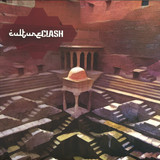
Forced to come up with a name, 'CultureClash' seemed like the obvious choice, even if the members of Awax were only creatively sparring among themselves. Along with the term 'ethno-techno', slightly dubious to a hopefully more conscious Western audience in 2017, these were the only guiding principles to the quietly ambitious project that soon combined cutting-edge machine rhythms with samples sourced from everywhere from Bolivia to Togo, and inspired by everything from Ravi Shankar's epic soundtrack to the Oscar-winning movie Ghandi, to the technical limits of their own setup requiring a dazzling degree of cut-and-paste work. Some tracks even emerged out of academic studies within the ethnomusicology department at The University of Amsterdam.
The show aired on October 2nd, 1992, recorded in one blistering take and without any rehearsals, traversing a huge variety of tempos and styles. If the performance wasn't seamless, it was undeniably thrilling, fresh and ambitious. As such, several labels, including Fernandez's aforementioned Irdial Discs expressed an interesting in commercially releasing CultureClash, while another imprint proposed a series of twelve-inches and an album. But the sheer complexity of the project meant that it never saw the light of day, while the trio embarked on different journeys ahead, both creative and personal.
Twenty five years later, and the original CultureClash lineup and founding members of The Awax Foundation provide the sound of the first release from Lost Futures. An otherworldly, ambitious and optimistic compilation, accompanied by extensive sleeve notes from the trio, CultureClash is a timeless ode to experimentation in dance music's ever-overlapping culture.
Jack Black and Kyle Glass release a 6 part series of animated videos, with one being released each Friday from September 28th. Each episode was hand drawn by Jack Black and every character voiced by Black/Glass. This new 21 track album is released by Columbia Records to accompany the animated videos and all tracks feature across the series. Formats are a single translucent green LP (initial pressing) and standard CD. Produced by John Spiker and features Dave Grohl on drums. Satellite TV ads. Online/social media activity. Ads, features and reviews across all press. Video plays across MTV/Vevo. Radio support across Kerrang and other rock music specialist shows. Poster campaign and database mailout.
If you check the credits of The Rolling Stones' Goats Head Soup LP from 1973 you'll find a certain "Pascal" listed on the percussion section. That is none other than Los Angeles based artist Nicolas Pascal Raicevik (1933-1994), aka 107-34-8933, aka Head, aka Nik Pascal, aka Nik Raicevic. Besides his hitting the bongoes on the Stones album, Nik was a great artist on his own, both as a painter and as a musician. As a musician, he was a pioneer in the use of synthesizers, preceeding the Berlin school by some years when his Head LP was released on on Buddah in 1970. Buddah probably saw in Head the opportunity to cash in some money from the remains of the psychedelic scene - the three tracks on the LP are named after drugs used in the late sixties. The sounds, however, are accomplished works that show Raicevic as one of the most interesting pioneers in the use of synths. The album probably didn't do too well, since Buddah didn't renew the contract with Raicevic, who instead took his own way releasing his works on his very own Narco Records and Tapes label. Between 1968 and 1975 Narco would issue 4 LPs credited either to Nik Raicevic (Beyond The End... Eternity) or Nik Pascal (The Sixth Ear, Magnetic Web and Zero Gravity) plus one credited to 107-34-8933 (Numbers, which is in fact the same LP as Buddah's Head, albeit with different cover art). Copies of these LPs came with an ironic sticker over the shrinkwrap that read "Do not listen to this LP if you are stoned".
Magnetic Web was released in 1973. It appeared under the Nik Pascal monicker and showed a clear evolution in sound, favoured by the addition of an Arp 2600 and some rhythm boxes. It also included percussions and cymbals. The Two Headed Dog site thinks "this is his masterpiece in all of its acid-laced glory."
Besides his musical explorations, Nik was also an interesting painter. His paintings are auctioned from time to time, and are consciousness expanding works influenced by abstract cubism and surrealism, some kind of Salvador Dalí on drugs exploring the outter and inner space. All the artwork on the sleeves of his LPs is done by himself. Spacey landscapes and psychedelic colours that fit perfectly to the music they contain.
"Nik Raicevic's music is at the intersection of radical psycho-electronic weirdness and kraut kosmische music (in particular the scifi-hypno-minimal modules of Conrad Schnitzler in Grun, Rot and Blau). It presents mega epic & tripped out electronic improvisations.
"This is an absolute must for collectors and fans of visceral, neurotic soundscapes."
"As far as late-60s / early-70s American Bedroom' Electronic Music goes, these LPS have to be among the first transmissions from this sector, made all the more attractive when coupled with Raicevic's alien topographIes - the covers are high-color portrayals of Venusian lanes, knotted growths, & future-past architecture in a style you might equate with Vintage' sci-fi pulp-novel covers - & copious Downer' sentiment. This music is imbued with a sort of lonely, anti-social sensibility that's about as far as you can get from the Academic' Early Electronic vector. I will say that if the Steve Birchall, Cellutron & the Invisible, and/or Pythagoron™ seed your garden, this will likely do the same."
Never reissued before on vinyl format, the Wah Wah reissue features original sleeve artwork made of paintings and drawings by Nik himself, and reproduction of the famous ironic "Do not listen if you are stoned" sticker. Limited edition, 500 copies only.
LPost-Heretic Dracula X Chronicles is Nicola Kazimir's debut album. It features 30min full of diverse, rough, evil, melancholic electronic music compositions either partly sampled out of important melodies in his life or fully produced by him. Post-Heretic Dracula X Chronicles LP draws from contemporary and past cultural references evolving around institutional-critique, occultism and dividualism and manifests those via metatags or sonic compositions.
Nicola Kazimir is a part of the collective Les Points based in Zürich, Switzerland.
His art/music draws from 90's rave utopias, decentralized & dividual thought, institutional-critique, occultism, progressive & accessible frameworks as showcased at their offspace Mikro -
a physical room which has no doors and opening times during exhibitions and raves - making an institution available to all social layers.
His recordlabels "Les Points" and the newly founded "Gentrified Underground" appropriate those ideas and transfer them to the distribution channels of electronic music.
Nicola refuses genre-stigmas and explores a vast number of genres in his dj-sets and productions - his newest LP "Post-Heretic Dracula X Chronicles" being an example of that diversity.
Marquis Hawkes is an alter ego adopted by long time electronic music producer Mark Hawkins, founded for his house music focussed activities. Hawkins decided it was time for a reboot after being head-hunted by old friends Dan Monox and Kenny Wasp, who had just founded Dixon Avenue Basement Jams in 2012, particularly as the material differed from what he'd previously released.
Hawkins solidified his sound during this period, taking influence from house music's Chicago, Detroit and New York home bases alongside the UK's deep house sound. Fusing these styles with contemporary production values, he developed a style synonymous with his Marquis Hawkes alias.
Whilst branching out to release on other labels like Clone and Cremé Organisation, he caught the attention of London club fabric's artist-led label, Houndstooth. They signed him on a long term deal, giving visibility to his DJ profile that meant he could play music full-time.
In 2016 his debut album 'Social Housing' was released to critical acclaim, and the following year, a stellar string of releases on Will Saul's AUS Music label culminated in the ubiquitous club and festival hit, 'The Basement Is Burning'. A track inspired by Hawkins' own shocking experience of a fire in his apartment block, it was played heavily on radio across the summer of 2018.
Looking forward, this new 12' EP for Houndstooth under the Hawkes alias is scheduled for release on June 29th, and features a vocal collaboration withUrsula Rucker, Hawkins is also pursuing other music projects and identities, some known, like his Juxta Position project, which he uses for more industrial but groove based techno material, but others which are more incognito, and may well remain as such.
Joe Powers is from Edinburgh, far outside the network of the Grime capital of London. His caffeinated productions as Proc Fiskal are faster than usual, with many clocking in at 160bpm. 'The Highland Mob', his 2017 debut EP, opened up his music to open-eared footwork and drum'n'bass fans as well as the grime crowd. After following that up with a jungle-inflected EP on Cosmic Bridge, 'Insula' switches the feel and intention towards a personal, and melodic music with one foot in Grime, infused with often comic, often wistful recorded moments from his environment. He says 'I wanted to be aware of where the music is coming from, referencing things I'm presently experiencing, like making Grime, my Radar radio show, phone addiction, alcohol, my surroundings, girls, depression, positivity, being unemployed, being employed and hating it, my friends etc. Trying to be true to myself instead of relying on other peoples' nostalgia, and focusing on now.'
The record is a huge leap in vision, with delicate, pointillist melodies and intricate edits reminiscent of Grime producers such as Terror Danjah. It also resonates with Japanese video game music like that recently explored on the 'Diggin' In The Carts' compilation.
'I think I probably make tunes to get out emotions I don't express in day-to-day life. I used clips of my friends talking, drunk folk, and general Scottish life to preserve and represent what my experience is like right now, like a time capsule. Social media notification sounds are designed to release serotonin, which is what I'd like my music to do, to make me, and other people happy, and in using these manipulative noises in a positive way, I like to think I'm taking back the power of the manipulation.'
Proc Fiskal is adventurous and thoughtful as a producer, and at the young age of 21, his debut album is very advanced in its ideas and execution.
It's A Funny Old World, And Yet Again, The Black Dog Have Provided The Soundtrack. Our Fast-approaching Dystopia Has Been Envisioned And Documented By The Band For Decades. Now, The Black Dog's Two New Albums, Post -truth And Black Daisy Wheel, Translate Their Growing Horror Into Some Of Their Most Accessible And Impactful Music, Translating Our Manufactured Reality Into High Energy Dancefloor Constructions On Post -truth, And Reflective Ambient Excursions On Black Daisy Wheel.
Long Familiar With The Tropes And Pitfalls Of Esoteric Undergrounds, In Both The Pre- And Post Internet Eras, The Black Dog Have Ventured Deep Into Contemporary Conspiratorial Cultures With A Trenchantly Critical Eye. In The 80s, Conspiracy Theories Were A Tonic For A Sceptical Mind, A Stimulant To Agile Thinking. Today, They Have Become The Stock In Trade Of Mainstream Political Influence. The Scene Has Morphed Into A Rabbit Hole Where Nothing Is 'really' Real, Everything Is A Hoax, And Everyone Is Out To Get You. The Mindset Is Beyond Paranoid, The Discourse So Far Post-fact That Only Opinion And Assumed Identity Matter. Arguing Against Proven Science Is A Part Of The Entry Criteria, And Wilful Pedantry Its Standard Currency. The Impact On Mental Health Is Corrosive: Fear, Uncertainty And Doubt Multiply And Replicate Until The Most Ridiculous Theories Are Invented To Explain The Most Basic Things: Tarmac, Banana Skins, Duvets. Auto-suggestion Is Rife, Where Willing Victims Drink Bleach (mms) At The Behest Of Youtube Videos, Flat-earthers Are Taken Seriously, And The Manufactured Fearful Believe They Are Being Gang-stalked For Finding Monsters On Pixelated Screens. The Distinction Between The Real World And The World Of An Auto-hoaxer Is So Blurred That Reality Melts Away; You're Only Ever One Personal Detail Away From Being Doxxed, At Which Point Reality Bites Back, Hard.
You Couldn't Make It Up, Even Though That Is Exactly What The Conspiratorial Fringe (now One Sharp Corner From The Mainstream) Always Do. The Fact That There Are Real People Involved In This Scene Creates A Real Sense Of Pathos And Anger Which Is Deeply Embedded In The Music On These Two Albums. As Soon As You Start Engaging With People In The So-called 'truth Movement', One Minute It's Painful, But The Next Can Be Genuinely Funny; These Are People Who Are Both On Edge And Upon The Edge Of A Larger Social And Political Reality That, For Worse And For (even) Worse, Defines Our Times. Hence These Two Very Different Albums. Black Daisy Wheel Is Reflective, Often Intense, Frequently Compassionate; While Post -truth Was Written While The Black Dog Was Fully Engaged With People Whose Paranoia Was In Full Swing.
It's A Funny Old World, And Yet Again, The Black Dog Have Provided The Soundtrack. Our Fast-approaching Dystopia Has Been Envisioned And Documented By The Band For Decades. Now, The Black Dog's Two New Albums, Post -truth And Black Daisy Wheel, Translate Their Growing Horror Into Some Of Their Most Accessible And Impactful Music, Translating Our Manufactured Reality Into High Energy Dancefloor Constructions On Post -truth, And Reflective Ambient Excursions On Black Daisy Wheel. Long Familiar With The Tropes And Pitfalls Of Esoteric Undergrounds, In Both The Pre- And Post Internet Eras, The Black Dog Have Ventured Deep Into Contemporary Conspiratorial Cultures With A Trenchantly Critical Eye. In The 80s, Conspiracy Theories Were A Tonic For A Sceptical Mind, A Stimulant To Agile Thinking. Today, They Have Become The Stock In Trade Of Mainstream Political Influence. The Scene Has Morphed Into A Rabbit Hole Where Nothing Is 'really' Real, Everything Is A Hoax, And Everyone Is Out To Get You. The Mindset Is Beyond Paranoid, The Discourse So Far Post-fact That Only Opinion And Assumed Identity Matter. Arguing Against Proven Science Is A Part Of The Entry Criteria, And Wilful Pedantry Its Standard Currency. The Impact On Mental Health Is Corrosive: Fear, Uncertainty And Doubt Multiply And Replicate Until The Most Ridiculous Theories Are Invented To Explain The Most Basic Things: Tarmac, Banana Skins, Duvets. Auto-suggestion Is Rife, Where Willing Victims Drink Bleach (mms) At The Behest Of Youtube Videos, Flat-earthers Are Taken Seriously, And The Manufactured Fearful Believe They Are Being Gang-stalked For Finding Monsters On Pixelated Screens. The Distinction Between The Real World And The World Of An Auto-hoaxer Is So Blurred That Reality Melts Away; You're Only Ever One Personal Detail Away From Being Doxxed, At Which Point Reality Bites Back, Hard. You Couldn't Make It Up, Even Though That Is Exactly What The Conspiratorial Fringe (now One Sharp Corner From The Mainstream) Always Do. The Fact That There Are Real People Involved In This Scene Creates A Real Sense Of Pathos And Anger Which Is Deeply Embedded In The Music On These Two Albums. As Soon As You Start Engaging With People In The So-called 'truth Movement', One Minute It's Painful, But The Next Can Be Genuinely Funny; These Are People Who Are Both On Edge And Upon The Edge Of A Larger Social And Political Reality That, For Worse And For (even) Worse, Defines Our Times. Hence These Two Very Different Albums. Black Daisy Wheel Is Reflective, Often Intense, Frequently Compassionate; While Post -truth Was Written While The Black Dog Was Fully Engaged With People Whose Paranoia Was In Full Swing. Welcome To Our Disinformation.
On The 50th Anniversary Of The Band's Inception At An Event In Harlem, Ny To Commemorate Malcolm X's Birthday On 19 May 1968, Influential Spoken Word Artists, Poets And Commentators The Last Poets Are Set To Make A Glorious And Relevant Return With Their First Album In Over 20 Years, 'understand What Black Is'.
Produced By Ben Lamdin (nostaglia 77) And Brighton Legend Prince Fatty, Whose Speciality Is Traditional Reggae And Dub Production's, 'understand What Black Is' Is A Ten-track Album Which Speaks Of A Revolutionary Struggle Defined By Both Race And Identity, That Has Never Sounded More Relevant. Released On Studio Rockers, There Will Also Be An Accompanying Single Featuring Remixes Of The Title Track "understand What Black Is" By Mala (south London Collective Digital Mystikz) And Uk Dance Music Innovators Dego And Kaidi.
Since The Initial Line-up Of Dahveed Nelson, Gylan Kain And Felipe Luciano Formed In East Harlem's Marcus Garvey Park, The Last Poets Have Produced Under Various Guises Over The Subsequent Years. However, It Was Their Seminal Output, Namely 1970's 'the Last Poets' Under Both Umar Bin Hassan And Abiodun Oyewole That Secured Their Legacy, Becoming One Of The Most Important Influences In Early Hip Hop.
Throughout The Last 20 Years, The Band Have Remained Largely On Hiatus. But Their Influence Could Still Be Felt With Their Tracks Being Sampled By The Notorious B.i.g, Nwa, A Tribe Called Quest, Dr.dre And Snoop Dogg. Umar Has Recorded Various Solo Albums And Featured On Common And Kanye West's Grammy Nominated 'the Corner'. Abiodun Appeared On The Red Hot Organization's Album, Stolen Moments Which Was Named "album Of The Year" By Time. He Also Conducts Weekly Open House Poetry Readings, Where He Constructively Critiques Upcoming Poets, Helping To Nurture Them. He Has Also Conducted Classes At Columbia University, Where He Teaches Creative Writing.
The Inauguration Of Donald Trump As Us President In 2016 Inspired Hassan And Oyewole To Resurrect The Group To Create A Brand New Record, Modern And Edgy, And Deeply Relevant And Reflective Of Our Times.
Tracks On 'understand What Black Is' Include 'how Many Bullets', Which Bridles With Defiance As Oyewole Works Through A Litany Of Injustices Suffered By Black People In The Us: " You've Tried
To Blow My Brains Out With Bigotry, Chopped Off My Wings, So I Couldn't Fly Free, And Dared Me To Be Me, Took My Drum, Broke My Hands, Yanked My Roots Right Up Out Of The Land, And Riddled My Soul With Jesus" 'what I Want To See' Describes A Utopia - A Refuge From Hurt And Those Who'd Make "our Vision Blurred, And Our Faith Obscure", Whilst The Title Track 'understand What Black Is' Aims To Transcend Ethnicity: "understand What Black Is....it's The Source From Which All Things Come...black Is A Hero, Not A Villain."
The Album Even Takes Reference From Prince's 2003 Album Of Instrumentals, 'news', Which Hassan Drew Comparisons From With His Own Childhood Experiences: "that Poem Took Me About A Year To Write....i Just Kept Writing And Writing But Not Getting Too Far And Then I Heard That Album And The Musicianship Was Amazing. I Was Left Wondering If It Was Jazz, Classical, Rock Or Maybe Something New But All Those Images That I Write About Came To Me From Listening To That Album. I Loved Prince In That Movie Purple Rain Because My Father Was A Talented Musician But He Was Into Brutalising Mama At Times And In The Movie There's A Jerome And My Name Is Jerome, So It Was Like He Was Telling My Life Story As Well."
The Album Acts As A Body Of Work Between Individual Members Each Speaking Of Their Own Personal Journeys, But Feeding Into The Much Larger Narrative Of Struggle And Oppression, Alongside A Fervent Hunger For Social Change. These Are Struggles And Tests Of Personal Resolve That Have Directly Shaped And Moulded The Bands' Unique Sound Over The Course Of An Impressive 50 Years, And Their Powerful And Influential Commentary Remains As Relevant As Ever.
Do you like Love songs After spending a lifetime spent avoiding this subject in song, Joel Sarakula finally admits that he does. On his new album "Love Club" Sarakula relives the golden age of Soulful and Romantic Pop music and connects it with a modern aesthetic. While a deeper message of love and peace flows through the record, Joel Sarakula is no old fashioned hippie: ",Love Club' is about connecting to reality and re-framing the idea of romantic love and loss in the present, loveless age ". Featuring eleven songs touching all genres from disco to blues, from soul to soft-rock, Joel Sarakula's "Love Club" is a profound pop statement.
Joel Sarakula has travelled the world in search of his muse, experiencing everything from being a victim of Caribbean carjackings to performing in the remote fishing villages of Norway, via the dive bars of Europe and the US. It was the hodge-podge musical tapestry of England's capital that finally drew him to a settling point, in the wake of seemingly never ending run of shows. With personal tastes that span from the more avant-garde to soul and pop greats like Sly Stone, Todd Rundgren and Hall & Oates, there are clear nods to contemporaries like Unkown Mortal Orchestra, Erlend Oye and Toro Y Moi in terms of ambition and style.
With his last two albums "The Golden Age" and "The Imposter" collecting strong radio plays at BBC Radio 2, BBC 6, BBC London, XFM Joel Sarakula has been play-listed nationally in Europe including Flux FM, WDR 5, Radioeins, Bayern 2, Deutschlandfunk and Deutschland Kultur Radio in Germany as well as in Benelux and Italy and Spain. He is a regular fixture on the live festival and club circuit in the UK, Europe and internationally including appearances at SXSW, Primavera Sound, Glastonbury, The Great Escape, Liverpool Sound City, Scala London, Tallinn Music Week, V-ROX (Vladivostok) and Reeperbahnfestival Hamburg.
"Love Club" is Sarakula's bold and unashamedly emotional next step. In essence the album is a homage to the soulful singer & songwriter artistry of the Seventies filtered through a darker contemporary lens - fitting for these uncertain times. "I always shied away from generic love songs," the Sydney, Australia born songwriter admits, "but on this record I embraced the subject wholeheartedly... and intellectually, looking at themes of love, lust, loneliness and everything in-between." Take the first single "In Trouble", co-written with Michele Stodart of The Magic Numbers, as the best example for Joel Sarakula's unique, and honest approach to making music. "We Used To Connect" questions the changing nature of relationships in our social-media addicted world: 'We used to connect in the real world too, now the touch of your hand is a digital cue'.
"Coldharbour Man", on the other hand, examines the identity of the song's narrator and the artist vs. fan dynamic all wrapped up in a disco love song: "There's a lot going on in this particular track. I feel my writing has grown emotionally...", explains Joel Sarakula. "Just best to listen yourself and make up your own interpretation!: 'We met in a song come to life like some fantasy cliché, though I'm known for my moves in the dark you flooded sunshine on my day'. Then there's "Baltic Jam", capturing romantic love and loss in authentic 70s confessional singer & songwriter style and of course "Dead Heat", a song about how there is struggle in the most perfect relationship pairings as the match is so even: "I recall an ex-girlfriend of mine... when we first met, we thought we hated each other but we eventually flipped that emotion and realised we had a deep passion and love for each other, there just was a lot of underlying sexual tension!" : 'It's a battle we could only win, if we lose. We'd be stronger if these lonely ones became two'.
More than a year in the making, Joel Sarakula recorded "Love Club" in various studios around London and Berlin capturing soulful performances from his many musical comrades on vintage analogue equipment. "This record has truly been a labour of love. Recording and privately sharing these performances amongst my collaborators started to feel like a bit like a club - I guess that lead to the album title! I was surprised how much I actually enjoyed the 'love-making process' and I look so much forward to playing these new songs on stage with my band." We can't wait, Joel Sarakula.
Roots In Heaven is a Berlin-based act that could very easily capitalize on his past accomplishments within the world of intrepid electronic music. As a label owner, resident DJ at cutting-edge clubs, and accomplished solo artist behind a number of conceptually unique full-length albums, the conceiver of this project won't likely need any introduction to the intrepid fans of electronic music. As an extension of this artist's already solid commitment to deep sound, Roots in Heaven represents a new voyage without the help of biographical cues to his listeners: hidden behind an evocative mesh mask lined with obsidian feathers, Roots in Heaven ignores the need to provide 'social proof' or self-justification. He communicates purely through the language of concentrated sensory impression, for which reason he has titled his debut, 'Petites Madeleines,' after one of the most memorable descriptive sequences in literary history (the famous meditation on the madeleine from Proust's À la recherche du temps perdu). As a prelude to the first full-length, Roots In Heaven has issued an untitled EP as a resounding 'shot across the bow'. However, this record is no half-conceived experiment to see what works and what doesn't, nor does it even feel like an 'EP' (in the traditional meaning of being a précis whose full report is available elsewhere). Attentive listening to its contents can cause a kind of time dilation, and a mysterious feeling of entering a world where familiar dualities (nature vs. technology, action vs. contemplation) are replaced by a feeling of total immanence. The A-side, 'Sang des Betes", accomplishes this with cascading, viscous layers of electronic tones that narrow and widen, rise and fall like the breath of some ancient entity. Periodically, bright flashes of tone arc across the horizon of the sound space, emphatically present but also elusive.
THE ASSISTENZ is the culmination of a four year creative hot streak as vivid as any part of CRISTAN VOGEL's long career. The trio of dance oor-oriented records formed by 2012's The Inertials, 2014's Polyphonic Beings and now THE ASSISTENZ are sensual pleasures rst and foremost: a lifetime of study of frequencies and rhythms on the frontline of the world's clubs has been put into the creation of sounds that interface with the nervous system and emotional re- sponses with extraordinary immediacy. But there's much more too: together with the more ab- stracted album Eselsbru¨cke, these form an enticing sonic narrative, encoded themes running through them, each part revealing more about the whole. THE ASSISTENZ, then, is many things: a personal document, a tribute to Copenhagen where it was recorded and after whose famous cemetery it is named - but also the nal piece in this bigger puzzle, which unlocks untold secrets from the previous three records.
There's a deeper history, of course. CRISTIAN's productions going back to the start of the 1990s have woven their way into the fabric of underground culture. His own recent remasters of his early albums, and the Sub Rosa Classics 1993-1998 collections have shown just how potent his early work remains. But his new work exists in a very different world to those past works, and is far removed from the recent electronic generations who he has in uenced too. In fact, as you listen to THE ASSISTENZ, you realise that there's no point making comparisons with other elec- tronic producers at all. While you will certainly hear some of the most fundamental and enduring vectors of underground music - dub, electro, acid, funk - owing through the tracks, even those things are rebuilt from the molecular level, created completely afresh with new, precise, but some- what skewed vision.
CRISTIAN's understanding of music now is spectral. That is to say, with every step through his exploration of sound over the years, he has made more and more detailed analyses of the specif- ic frequencies that make up speci c sounds and produce speci c effects on the human mind and body. And as a result, his own sound synthesis - increasingly done via the Kyma programming platform - is more and more able to reach beyond the 'synthetic' and impact in uncanny and wonderful ways. The most obvious sense of this is the way his sounds touch on the human voice: not just in the chattering, shimmering, singing tones of THE ASSISTENZ's ghostly centrepiece 'Barefoot Agnete', in the alien radio signals of 'The Merman's Dream' or even in the subliminal 'aaah's hiding in the background of the noisy 'Vessels', but in the way any sound, anywhere in any track can sound peculiarly vocal, heard from the right angle.
And it's not just the boundary between human and non-human, or that between acoustic and synthetic, that get blurred to the point of non-existence. CRISTAN's creative methodology now is all about leaving you so uncertain about where anything came from, or what scale the sounds are operating on, that you have no choice but to let go of preconceptions and standardised criti- cal faculties and go with it. Sometimes that can take you to places where darkness and physical- ity close in on you as on 'Vessels' or 'Telemorphosis', or into haunted spaces on the edge of the void like those of 'Snowcrunch' and 'Barefoot Agnete', but even in those, there is euphoria. And in the voluptuousness of 'Hold' or the body-rocking funk of 'Cubic Haze', all the abstraction is grounded in the sheer pleasure of your own bodily responses to the sound.
So many of the science ction dreams of the 1990s are now (virtual) reality. We live in a time when social networks consciously manipulate our emotions, where data is money, where ma- chines learn, where images can't be trusted, and where the synthetic can feel more real than real. Over some 25 years, CRISTIAN's experiments have traced much of this weirdness and evolved with it, and his understanding of synthesis and algorithmic processes to create structure makes him one of the most important composers working today. But THE ASSISTENZ doesn't just ex- periment with the interfaces between mind, body and machine: it expresses those relationships in ways that are beautiful, troubling, moving and scary, and which even make you want to dance. Together with the preceding three albums it enacts a glorious, endlessly-explorable mapping of just what electronic music can do.
This EP was made during a period where my whole outlook on everything was transforming. The Voidloss project started as an investigation, I was conducting a lot of research and study on the mind, the occult, on different thought modes, and the Voidloss project represented this. The idea was about a leap in to the void. A leap of abandonment into the dark, with total acceptance, total commitment. The idea was to lose myself to the void. This was mainly a spiritual journey for me, and could be best explained by 3 things, the void of Miyamoto Musashi from Go Rin No Sho, The concept of the Tao from the writings of Lao Tzu, and the concept of the abyss from the works of Aleister Crowley. Part of this journey deep inside the self was frightening and horrific, the total loss of self, of all identity and ego, and part of it was beautiful and enlightening. I wanted the music to reflect this, and I wanted the music to change as I changed, as I went to and through all these interesting places. In essence this was about freedom. So fast forward some years and I felt I had sharpened my mind quite effectively, the music had twisted and changed and flowed with me. At the point I began making the music for this EP, I had grown quite angry with the amount of conformity I was perceiving in life. Politically, socially, musically, there was this drive of conformity in the world. I think part of it, and only a part, comes from the prevalence of social media, the need to belong and to be liked, the idea of judging yourself and your works through the perception of others. Musically I felt that within techno there was a tendency for the music to fit within a set of confines dictated by fashion and hype, and this was reducing the diversity of the music, it seemed also that the practices of commercial music were seeping in to techno as the music became more popular. Hype and business driven decisions, brand building and so on. I always felt techno was more about art, and I began to get frustrated. Equally I felt that politically there was less and less choice, as all decisions seemed to lead to the same outcomes. I became more interested in the concept of anarchism, of the idea that government was no longer needed. I have always in my life had a drive to question everything. I've always been 'naughty' and rebellious and done things my way, to my advantage or my disadvantage, I could never accept being anything other than myself all the way. If everyone walks in one direction, I will walk the other way, even if it takes me over the edge of a precipice, just to see what is there. All this stuff influences my music, and during the period of making this EP I was angry, kicking against the things I no longer liked or wanted, screaming dissent. There is a lot of anger and rage, and of course rebellion. I wanted the music to capture that unbridled fury you have when you are in your late teens, when you just start learning about yourself and you start rebelling and questioning things around the time the world is really pushing you to conform. I was soundtracking my own philosophical riot. Previous to this my Voidloss stuff had been more introverted, more pensive and melancholy, more self destructive, more cerebral. For this new music I wanted something more immediate but without being too obvious. In terms of the choices I made I still leaned more towards broken rhythms for beat structure. I find it very difficult to do anything interesting with 4x4 kicks any more, it's too rigid for me, it limits my freedom. I like the looseness you get from more 'drummer' like beats, I guess probably because I have been playing drums all my life. The challenge is to get the same rolling power from broken rhythms as you get from 4 to the floor. It's not easy, there is a ridiculous amount of trial and error and the rejection percentage is high. I also was trying to use less 'synthy' sounds. I wanted to try to take a more acousmatic approach to sound design. With the current modular synth revival in techno I was hearing a lot of 'old' synth sounds re-emerging, and this didn't seem like a progression to me. I wanted to make sounds that were hard to source for the listener, where they weren't sure if it was synth or real world sample, digital or analogue. This involved a lot of experimentation. My process involved a lot of field recording, especially with contact microphones, which open up a whole new world of interesting sounds. You are effectively recording sounds through objects in the environment, 'hearing' the world as these objects hear them, I was using guitars, feedback loops, handmade instruments as well. So I was combining this with different synthesis, granular synthesis, sample synthesis, physical modelling, FM synthesis and of course analogue. Everything was reprocessed and re-synthesised, I tried hard to obscure the source and make something new as much as possible. The stuff on this EP was part of my live PA for some time, so as I learned how the music worked live I could go back and make changes, sometimes the environment I was playing in transformed the sound as well, and so I would try to go back an incorporate this in to the music. For remixes I wanted to choose artists that I respected for their vision as well as for their output, so my list of people I wanted was extremely short. Inigo Kennedy has always been an artist I have respected greatly. His music has always been unique to himself, he remains outside of fashions and trends even though his name has become very big recently. He takes risks with his work, experimenting and exploring, yet remaining relevant to the club, and just tirelessly forging ahead, seemingly for the sake of art above all else. And he's just a really nice guy to deal with. His remix is everything I expected it to be in that it is the unexpected. Regis is another artist who forges his own path in music, you cant really even begin to discuss the avantgarde in techno without including his name, he is one of the foundation stones for artistry and the outsider mentality in techno. His music is always unique to his own vision, and along with it comes an interesting artistic philosophy taking in situationism, post punk and industrial ideology and a good dose of tricksterism ala PT Barnum, all of which comes out in his music and the way it is presented. The man is a truly singular force and it is an honour to have him on this record. Overall the concept here is that of rebellion and dissent. Of asking questions, following your own path, of maintaining some place in yourself that burns like a forest fire.
Whether or not I have succeeded I guess is down to the listener, I'm never happy with my music, I keep wanting to move forwards, or somewhere else, and am constantly trying and failing to capture some essence of perfection. But like Bukowski said
'It's the only good fight there is'
#3 Live Act of 2013 at Resident Advisor, one of the most in demand remixers around, a total of 156 gigs in 2013, releases for Rush Hour, Ovum, Macro; booked out months in advance from Berghain to Ibiza to the main electronic festivals ... KiNK: Arguably the world of dance music has not witnessed anyone else rising so clearly from bottom to top just by the centrifugal force of sheer talent. Being based in Sofia, Bulgaria, without a support network, a campaign or any media hype, his music alone - live and in the studio - created a momentum whose end we have yet to see. Lenin said: 'Communism is Soviet power + electrification of the whole country.' Hardly did Lenin suspect what an inspired take on these words could do: post-socialist techno. A child of 80's late socialism, KiNK grew up on the home computers Bulgaria's IT scientists had created by backwards-engineering Western technology. Fueled by nuclear energy on the edge of desaster, a whole generation of kids was trained to hack. Dance music gradually dripping in through early dial-up internet connections, the acoustic fingerprints of distant parties put Eastern producers from KiNK to Nina Kraviz to Vakula under a spell. Yet KiNK spent years of backwards-engineering the sounds of Detroit, Chicago and early Warp.