Frankey & Sandrino come back to Rekids with the ‘Please’ EP, landing 10th October 2025 alongside a remix from Echonomist.
They follow their 2022 ‘Brainscan’ EP on Radio Slave’s label, as well as a remix for Denney in 2023. With an irresistible bassline, smooth melody, and a nostalgia-fuelled vocal, ‘Please’ is the kind of track you hear as you walk into a busy tent at a festival, hands in the air, energy abundant. Frankey & Sandrino are masters at crafting emotional dancefloor bangers, going a little deeper on the progressive ‘Genie’, building up to busy stabs and mind-melting, futuristic sound design. Completing the EP, the pair call in Greek DJ and producer Echonomist to remix ‘Please’. The Innervisions and Exit Strategy artist strips the original back, transforming it into a dark, hypnotic groover built for smoke-lit dance floors.
Frankey & Sandrino are a German duo that has been shaping dance floors since 2009 with their distinct, trend-defying sound. With releases on Kompakt, Diynamic, and their own Sum Over Histories, and regular appearances at clubs like fabric and Stereo, they now return to Rekids with the ‘Please’ EP.Founded in 2006, Radio Slave’s Rekids has since launched the Techno-focused Rekids Special Projects in 2017 and its latest sublabel, REK’D, in 2024. With Matt Edwards as the sole A&R, Rekids has been instrumental in developing emerging artists and remains a trusted home for House and adjacent sounds, recently featuring names such as Harry Romero, Tal Fussman, Tiger Striipes, William Kiss, Oliver Dollar, The Hacker, and more.
quête:sole
There's no denying that 3 Chairs sole self-titled album, first released in 2004 and now reissued in a fresh 2025 edition, is a high watermark in Detroit electronic music culture: a decidedly dusty and ultra-deep collective endeavour from Motor City heavyweights Kenny Dixon Jr (AKA Moodymann), Malik Pittman, Rick Wilhite and Theo Parrish that somehow managed to sound even better than their respective solo productions. Highlights include the chugging, Rhodes-laden beatdown sweetness of '3 Chairs Theme' (featuring Norma Jean Bell), the ultra-deep and gently jazzy dustiness of 17-minute epic 'Blackbone Waltz', the organic deep house excellence of 'Dance of Nubia' (which sounds like it could have featured on the St Germain album Boulevard) and the sample-rich, slow-motion shuffle of 'Underwater People'.
- Chocolate Piano
- Gallows Hill
'HEAVY DJ' Split 7" ON Splatter Vinyl. Orang-Utan were in fact a London based band called Hunter, featuring vocalist Terry "Nobby" Clarke (of psych-pop legends Jason Crest), guitar players Mick Clarke and Sid Fairman, drummer and songwriter Jeff Seopardi and bass player Paul Roberts. They recorded their sole album in 1971 at DeLane Lea studios. In a bizarre twist of events, their producers / managers ran with the tapes to the US, where they placed the album on Bell Records under a new band name: Orang-Utan, without telling any of the band members. A lost classic of blazing, early hard rock with minor psychedelic hangover vibes, a twin-guitar attack, and waves of fuzz/wah, along with powerful vocals. Formed in 1971, Bulldozer was a London-based heavy rock band. The roots of the band are those of a jam session on Blandford Street. That's where Isaacs, formerly of The Land of Green Ginger and Asylum, and Derek Carter, ex-Shades of Time, decided they wanted to have themselves a band. Following intense rehearsals, Bulldozer recorded a demo at TW Studios, which led to management under Ric Lee and IMA, a company co-owned by Tony Iommi and Norman Hood. Bulldozer disbanded in 1973 leaving behind a brief but notable legacy in the early '70s heavy rock scene.
"I stood on top of the mountain and looked out over the landscape. It was so beautiful that my chest hurt. The light vibrated, time stood still, and the contours dissolved for a moment. Everything had changed; I felt it then. I took their little hands so as not to lose contact with the ground. Then we ran down the mountain, scraping our knees. Still, we didn't make it. You had already put away all the nautical charts, loosened the moorings and steered out among the skerries. Mum stood waving from the jetty. You were alone, you wanted it that way. It was to be just you in the boat this time. I called out to you. I think you heard me and felt less lonely. We couldn't carry each other anymore, no matter how hard we tried. We washed our wounds on the shore and scattered tears and rose petals in the bay. The children laughed and searched for treasures under water. We called to them that it was time to come up. They were cold, and we hugged them to warmth. One ran ahead, the other up on our shoulders. Up the mountain, our mountain."
In 2020 Anna Högberg put her widely celebrated band Anna Högberg Attack on hold, retraining as a nurse whilst continuing a solo practice and playing in other groups. With Ensamseglaren she makes a spectacular return with her own ensemble — this time a double sextet — performing an album length suite of new music written in dedication to her late father — the titular ‘ensamseglaren’ pictured on the LP cover as a young boy.
(ensam in Swedish can mean both alone and lonely, seglaren = the sailor).
Shot through with renewed energy and a brutally affective emotional punch, Högberg’s formal experimentation opens up vibrant possibilities for the assembled musicians to let loose with some of their wildest and most ecstatic playing on record.
Högberg’s contention with grief leans into collective joy as method of mourning — the big band as extended family; where bonds are made through a shared experience of being together. Where everyone gets to be themselves without expectations of who they should be or what they can do. It’s a radical commitment to care — of her self and others — that animates and unifies this suite of music’s radical dynamics and variations in colour: from whisper-quiet textural intensity to harrowing distortion and double drum chaos; raucous and solemn song.
"Throughout history, humans have had different images of the transition between life and death. Imagine standing on the seashore on a summer evening and seeing a beautiful vessel being prepared for departure. The sails are hoisted. The evening breeze comes, the sails fill and the boat glides out onto the open sea. You follow it with your eyes as it heads towards the sunset. It gets smaller and smaller, until it finally disappears as a tiny dot on the horizon. Then you hear someone next to you say, ‘Now they have left us.’ Left us for what? The fact that they got smaller and smaller and finally disappeared is only how we see it. In reality, they are just as big and beautiful as when they were here, lying on the beach by our side. Just as you hear that voice say ‘Now they have left us’, there may be someone on another beach who sees them appear on the horizon, someone waiting to welcome them when they reaches their new port."
At the dawn of the 80’s Osaka based band DENDÖ MARIONETTE were part of Japan’s legendary early Synth-Wave explosion. This essential album consists of their sole 7” release from 1981, plus a previously unreleased EP from 1982, plus lots of extra tracks from various demos. A double LP full of glorious, intoxicating, sounds from one of the most fascinating acts of the Japanese Post-Punk era.
- A1: Fragments (Extraits)
- A2: Park Güell
- A3: Disque Raye?
- A4: Valse De L'aiguille Creuse
- A5 4: Rroses Pour Marie
- A6: La Catedral D'escuradents
- A7: Your Labios As Tulips
- A8: Souvenirs De Vernet Les Bains
- B1: Arthur Cravan Was A Flor Fina
- B2: The Skatalan Logicofobism
- B3: Sardana Dels Desemparats
- B4: A Glass Of Gaz
- B5: Les Places De Gra?Cia (1)
- B6: Les Places De Gra?Cia (2)
- B7: Patafisiskal Polska
- C1: I Put A Barbara Steele On You
- C2: Chanson De Charme Pour Faux-Nez
- C3: The Lollobrigidada Fox-Trot
- C4: Third Eye Of A Cubist Guitar
- C5: Le Fakir De La Chapelle
- C6: On Se L'hegel En Enfer
- C7: Un Train Direct Pour Charenton
- C8: Love Too Soon
- D1: L'argot Du Bruit
- D4: Back To Schizo
- E1: To Be Dammit Ornette To Be
- E2: The Blank Invasion Of Schizofonics Bikinis
- E3: Sardana Dels Desemparats
- E4: Sense El Resso? Del Dring
- E5: Contre Le Style
- E6: A Figueres
- F1: The Hallucinogenic Espontex Sinfonia
- F2: La Societat Del Piano-Obstacle
- F3: Ge?Ge?Ne
- F4: Petite Escena Nocturna
- F5: A Farrutx
- F6: Le Soir Du Grand Soir
- F7: Souviens-Toi De Ces Douces Soire?Es
- G1: Stranger In Paradigm
- G2: La Vedette Del Molino
- G3: Jopo De Pojo Not Dead
- G4: The Indian Of The Group
- G5: Il Luna-Park Galactico
- G6: Don't Touch My Blue Oyster Shoes
- G7: Sans Les Mains ! (Zappambarretina)
- H1: El Misteri Del Triangle Del Vermut
- H2: Two Maniaco-Depressive Beatnicks Squabbling Over A Jane Russell Mozzarela's Bikini
- H3: Vals Burlesco
- H4: Flan Sin Nata Inzenight
- H5: Despintura (A) Fo?Nica
- D2: To The Last Of Imaginary Solutions
- H6: Europe Change Bad
- I1: El Bolero Del Raval
- I2: O Dancing Del Gran Fumisme
- I3: Hydropathes Marchant Sur Les Os
- I4: Spinoza Was A Soul Garagist
- I5: El Pianista Del Antifaz (Born In Candolle)
- I6: Portrait De L'artiste Avec Des Lunettes Pour Voir Les Femmes À Poil
- I7: La Bella Dorita
- J1: Deviationist Muzak
- J2: Dancing Le Mômo
- J3: Roll Over Fuzmanchu
- J4: Stigmates De La Ligne Crade
- J5: Evaporisme Sonor
- J6: L'horizon Perdu Du Cornet À Gidouille
- J7: La Filosofia Del Plat Combinat
- K1: Coucher De Soleil Sur L'adriatique
- K2: Unicazzz
- K3: Des Rails En Mou De Veau
- K4: E?Le?Vation De Marie-Madeleine
- K5: No Sympathy For Symphony
- K6: Sardana Meca?Nica
- K7: Ha Passat Un Angel
- L1: Skin Saxo Derivato
- L2: Apparition Du Visage De Bela Lugosi Sur Une Tranche De Salami
- L3: Musique Hypertrophique Des Remontoirs
- L4: Cimetie?Re De La Photographie
- D3: Toti Al Soler
- L5: Alzina Muntanera
his ultimate 6LP Boxset presents the works of Pascal Comelade from 1984 to 2024 and his 40 years producing instrumental music. Each vinyl has been thought as an album in itself , with its own identity, that could be listened as it is. According to the artist, "Improperies- compositions et enregistrements magnétiques (1984-2024)" is a music puzzle which doesn't obey to any rule with the exception of Pascal Comelade's creation and art thoughts that kept moving over the years.
Limited numbered to 500 copies - 6 x Black Vinyl in spineless sleeve, heawyweight cardboard slipcase/custod numbered at the back, includes an insert-photo signed by the artist. The boxset artwork is an original creation by Miquel Barceló.
WRWTFWW Records is extremely happy to present the official reissue of Safari's self-titled album from 1984. The Japanese jazz-fusion super gem is available now as a limited-edition transparent vinyl LP housed in a heavyweight sleeve with obi.
Originally released on fabled label VAP, Safari is a one-of-a-kind city pop-adjacent summer blend of AOR, smooth jazz, and sun-drenched boogie. The sole album from the all-star outfit was the brainchild of keyboardist Toshiyuki Daitoku and Japan-based Californian jazz-funk-latin-fusion bassist Gregg Lee. Together with a large team of experienced musicians, they created a lush, immaculately-arranged 8-track cruise filled with poolside grooves, breezy rhythms, and feel-good vocal harmonies.
Safari features the well-known title track which acted as the theme song for an 80s sports program on Fuji Television, the night-swim chill music tune "All Right in The Night", and the fan-favorite buoyant vacation hit "The Morning After".
The official reissue is fully licensed and sourced from the original masters, with an audiophile cut by Sidney Meyer at Emil Berliner Studios, ensuring the warm, pristine sound this lost treasure deserves.
Safari is the second release from WRWTFWW's City Pop Series, following Momoko Kikuchi's beach classic Ocean Side, also available on transparent vinyl LP. The series, complete with a visual identity designed by Lopetz/Büro Destruct, also comes with a limited merch capsule, and more sun-soaked gems lined up for the future.
- A1: Hosanna (Meridian)
- A2: First Born (Redeemed)
- A3: When Angels Speak Of Love
- A4: Doubleupptown (Larocque)
- A5: W-I-S (Above Every Other)
- A6: Pistol Poem (Leadbelly)
- A7: Whip Appeal (Pipn8Ez)
- A8: Seven Trumpets
- A9: Giz'aard ($Uckets)
- A10: Helpmeet (Iyadunni)
- B1: Flir2A
- B2: U&Me (Decemberseventeen)
- B3: Illbethere, 4Everandever
- B4: Alàáfía (Cita's World)
ALTERNATE COVER[27,52 €]
Honour's debut album is a ligament stretching from Lagos to London and to New York, curling across the diaspora and brushing the darker hues of blues, hip-hop, free jazz, ambient, gospel with Christian mythology and Yoruba folklore. As cinematic as it is painterly, Alàáfíà is a meditation on themes of life, death and love that pulls inspiration from the unexpected poetic profundity of casual conversations, field recordings, literature, ephemera, or personal archives. The result is an impressionistic vision in Black and Blur that both exhausts and implicates language_substantiating a mythos proposed by Fred Moten that sublimates boundaries between everywhere and nowhere; history and the present; the individual and the universal. Alàáfíà delineates a gothic landscape cut by overdriven beats, swooping orchestral blasts, choral bursts and ear- splitting fuzz, where the fleshly and spiritual realms commune. Dedicated to Honour's late grandmother, the title track began to take form after their last embrace and remains steeped in her influence and spirit_a tape-saturated composition that starts in Lagos and ends in London's smoke-stained cityscape, the song's dream-like quality developed out of the artist's grief and PTSD coping with this loss. Beneath the stretched guitar drones and stuttering loops, their grandmother's shared faith bubbles to the surface. "When Angels Speak of Love," borrows its title from two works by Sun Ra and bell hooks, respectively. Sculpting echoes of praise music into disorienting spirals perforated with syrupy DJ Screw-inspired breaks and sharp splinters of melancholic guitar, "When Angels Speak of Love" engages a conceptual dialogue with the spirits of both late thinkers, folding them into Honour's pantheon of ancestral guides. The album's ninth track, "Giz Aard ($uckets)," is a dirge of regimented drums which anchor this somber melody as it whirls into a blizzard of heartache, uncertain if its consequence will be death or eternal joy. The album's sole lyrical offering, "Pistol Poem (Lead Belly)," begins with a darkly humorous bar, "He went thru hell and back/ came back/ 2 get the strap," that swells into a haunting allegory based on the life of Philip "Hot Sauce" Champion. A modern take on the Blues, Honour's lyrics reify the artist's status as a student of both literature and popular culture, crossbreeding the artist's clever wordplay with additional references to Richard Pryor, Robert Johnson, Kelly Rowland & Bryon Gysin. Setting core principles of hip-hop, R&B, jazz and gospel music to atemporal soundscapes and compositions, Honour crafts a record that marinates in its own knotty contradictions. The ghosts that sit on the artist's shoulders have never been more tangible than with this emotive debut.
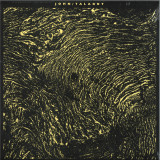
If there is one person, who has been causing a stir on the international club circuit recently, it is Barcelona's John Talabot. Already his debut “My Old School“ (which is meant literally by the way) on Permanent Vacation in 2009 and shortly after that the single “ Sunshine”, which he put out on his own Hivern Disc imprint, made him one of the most promising musicians of the Spanish electronic scene. And those two releases also already set the mark for John Talabot’s unparalleled music: raw, loopy, heavy on the kick drum, sample based, moderate on the tempo, distorted on the drums and light years away from the clean and ever revolving house sound of today. This unique style which also blends influences from afro beat, Detroit techno, Chicago house and cosmic disco, but also northern soul or the energy of Flamenco, immediately turned some heads around. James Murphy, Âme and Aeroplane started including Talabot music in their sets like it was the most natural thing. However - and this is quite rare - he not only gained legions of fans in the house and disco community, but also amongst the leftfield pop and indie rock followers. NME and Resident Advisor both had “Breakthrough“ features on John Talabot and he can be proud of a “Best New Music“ dubbing on
Pitchfork. (Being rather elusive on showing his face in magazines or the web it also came to some funny rumors that John Talabot was the alter ego of a well-known techno producer from Detroit).
At the same time he drew the attention of like-minded artists like James Holden and Luke Abott from Border Community, Blondes or Delorean, which lead to a bunch of fertile collaborations: Luke Abbott and Blondes remixed Talabot’s “Sunshine“ single , John Talabot remixed a track by Delorean and vice versa Delorean’s Ekhi contributed vocals to the track “Journeys “ on John’s album). Another example is the Young Turks Label (home of Jamie XX, Holy Fuck, El Guincho or SBTRKT ) on which he released the “Families“ EP in 2010. It was praised beyond limits. Pitchfork for
instance hailed: “… where pop and house influences sweetly buffer up against one another to provide an unyielding sense of elation“ and even brought Talabot a comparison with artists like Four Tet or Caribou.
While staying true to his sound, John Talabot has nevertheless shown a constant evolution as a producer since his first release. He has traced a solid musical path that has turned him into one of the big references of European House and has made him also a highly in demand Remixer (for the likes of The XX, Francesco Tristano’s “Aufgang” project, Shit Robot on DFA, Thaiti 80, Joakim or Teengirl Fantasy to name just a few ).
A progression that now crystallizes in “ƒin”, his first full-length album for Permanent Vacation. A record, in which the Barcelona mastermind sets aside the danceable immediacy to expand his stylistic palette more than ever. For that purpose, Talabot melts all the elements that have constructed his distinctive sound until now and makes them emerge from a new perspective, in which the construction of complex song structures, intricate rhythms and superpositions of ever-evolving melodies and atmospheres pick up the baton of the “a kick-drum and a sampler” philosophy of his initial productions. The result brings us 11 tracks (we should call them songs really!) dominated by dark ambiances, gaseous textures and bittersweet moods that, above all, reveal a kind of vivacity that’s really hard to find in contemporary electronics. “Fin” is far from being a track collection. From the majestic opener “Depak Ine“ to it’s solemn ending with
“So Will Be Now“ , one of the two tracks that features Talabot’s soul and label mate Pional, each song traces an overall dialogue with the rest, culminating a highly emotional journey through Talabot’s always compelling and unique musical vision.
Russell Haswell and Florian Hecker have both a long history with Mego/Editions Mego. Individual releases have peppered the Mego catalogue since Haswell’s Live Salvage 1997->2000 cd release (MEGO 012) in 2001 and the debut Hecker release IT ISO161975 (MEGO 014) in 1998.
The individual exploration of sonic phenomena by these two practitioners has resulted in both being highly regarded for their uncompromising approach to sound as matter. Russell Haswell and Florian Hecker came together as a collaborative duo with the now-legendary record Blackest Ever Black, somewhat inexplicably, on the classical imprint of Warner Brothers.
In 2025, Hecker and Haswell return with a new album featuring the two-channel edit produced initially for their UPIC DIFFUSION SESSION #23, performed as a live diffusion across 8-channels at the X100 Festival, Berlin, 2023, celebrating the 100th anniversary of Xenakis' birth.
This record furthers the duo's exploration of Xenakis's UPIC system as the sole instrument. The UPIC is a computer music system that generates sound from visual input. The original intention of the system developed by Xenakis was to make a utopian tool for producing new sounds accessible to all, independent of formal training. One can locate footage of Xenakis and a group of children making drawings for the system in the 70's.
The duo set off experimenting with a diverse array of hand-drawn images to feed the UPIC system including news photographs of disasters and atrocities, "food porn" through to depictions of the natural world and microscopic images of molecular structures (including 'the blackest ever black'). The resulting eccentric audio from these images is claimed by the artists to heighten synaesthesia and is as mysterious as it is baffling.
Throughout UPIC DIFFUSION SESSION #23 frequency clusters move and morph in the most unusual manner, shifting and stretching into shapes that hint at some kind of magical process. What starts out deceptively simple soon unravels into a large array of sonic mayhem. Symbolic jet planes are shredded by a swarm of insects, a metal bowl howls into the void, a tiny tin toy crawls into a thicket with the resolute aura of a black hole. A burning geyser of laser forms liquid shrapnel. This is sound as an alchemical process, a constant chimerical flow into the netherworld and is the net result of the decades long radical investigations by the two artists involved. UPIC DIFFUSION SESSION #23 is a direct, rich and rewarding listen for those willing to invest time into the outer limits.
- A1: Concierto De Aranjuez
- A2: Will O’ The Wisp
- B1: The Pan Piper
- B2: Saeta
- B3: Solea
Miles Davis' Final Collaboration with Arranger Gil Evans Yields Watershed Innovations: Flamenco-Themed Sketches of Spain Spins Graceful Webs of Sound and Emotion Mobile Fidelity's UltraDisc One-Step 180g 33RPM LP Set Brings Out the Record's Full Spectrum of Color: 65th Anniversary Edition Pressed at Fidelity Record Pressing and Strictly Limited to 5,000 Numbered Copies 1/4" / 15 IPS analogue master to DSD 64 to analogue console to lathe Miles Davis and Gil Evans bridged styles and collaborated on high-concept projects three different times during their celebrated careers. For their final act, they created Sketches of Spain, a peak moment in each luminary's legacy.
The transformative album weds Spanish themes, lush orchestrations, romantic timbres, and Davis' lyrical methods in a tender ceremony that resonates more than six decades after its original release. Part of Mobile Fidelity's Miles Davis restoration series, this 1960 landmark has been afforded the ultimate white-gloves treatment for its 65th anniversary. Sourced from the original master tapes, strictly limited to 5,000 numbered copies, and pressed at Fidelity Record Pressing, this UltraDisc One-Step 33RPM 180g LP set dramatically expands the soundstages and eradicates a dryness that many critics found inhibitive to the record's enjoyment. You can now hear the full-range responsiveness of the woodwinds, strings, and percussion, all of which come alive with superior definition and detail.
The beautiful presentation of this UD1S set befits the record's historical importance. Housed in a deluxe slipcase, it features a special foil-stamped jacket and faithful-to-the-original graphics that illuminate the splendor of the 1960 LP. This reissue is made for discerning listeners who desire to fully immerse themselves with the album. And who wouldn't want to go deep with Sketches of Spain? Whether it is the somber mood piece "Concierto de Aranjuez," renowned for Davis' flugelhorn performance, or the folktale-based "Solea," Sketches of Spain transfixes with playing, ideas, and innovations exclusive to this incomparable effort. It's one reason why Mobile Fidelity's engineers took all available measures to insert listeners into the space originally occupied by Davis, bassist Paul Chambers, drummer Jimmy Cobb, percussionist Elvin Jones, and an 18-piece orchestra. The results are as breathtaking as the music.
Multi-note motifs, brief improvisational solos, fanfare sweeps, and contrapuntal exchanges inform flamenco-spiced pieces. Davis' famous Harmon-muted trumpet is complemented by an assortment of bassoons and French horns. Heard together, they create pleasing contrasts and sounds (pp, mf, ppp) that get to what resides at the heart of Sketches of Spain: color. Seldom, if ever, did Davis ever so expressively and liberally paint with color. And in Evans, he has a likewise-minded partner to help draw out tones, shades, layers, and textures. What they achieved continues to draw praise from the global music community in the 21st century. Ranked #358 on Rolling Stone's 500 Greatest Albums of All Time, deemed "a work of unparalleled grace and lyricism" by noted scribe J.D. Considine, bestowed a five-star review from DownBeat, and noted by Q to have taken "jazz in a new direction," the Grammy Award-winning effort has never been better.Miles Davis' Final Collaboration with Arranger Gil Evans Yields Watershed Innovations: Flamenco-Themed Sketches of Spain Spins Graceful Webs of Sound and Emotion Mobile Fidelity's UltraDisc One-Step 180g 33RPM LP Set Brings Out the Record's Full Spectrum of Color: 65th Anniversary Edition Pressed at Fidelity Record Pressing and Strictly Limited to 5,000 Numbered Copies 1/4" / 15 IPS analogue master to DSD 64 to analogue console to lathe Miles Davis and Gil Evans bridged styles and collaborated on high-concept projects three different times during their celebrated careers.
For their final act, they created Sketches of Spain, a peak moment in each luminary's legacy. The transformative album weds Spanish themes, lush orchestrations, romantic timbres, and Davis' lyrical methods in a tender ceremony that resonates more than six decades after its original release. Part of Mobile Fidelity's Miles Davis restoration series, this 1960 landmark has been afforded the ultimate white-gloves treatment for its 65th anniversary. Sourced from the original master tapes, strictly limited to 5,000 numbered copies, and pressed at Fidelity Record Pressing, this UltraDisc One-Step 33RPM 180g LP set dramatically expands the soundstages and eradicates a dryness that many critics found inhibitive to the record's enjoyment. You can now hear the full-range responsiveness of the woodwinds, strings, and percussion, all of which come alive with superior definition and detail. The beautiful presentation of this UD1S set befits the record's historical importance. Housed in a deluxe slipcase, it features a special foil-stamped jacket and faithful-to-the-original graphics that illuminate the splendor of the 1960 LP.
This reissue is made for discerning listeners who desire to fully immerse themselves with the album. And who wouldn't want to go deep with Sketches of Spain? Whether it is the somber mood piece "Concierto de Aranjuez," renowned for Davis' flugelhorn performance, or the folktale-based "Solea," Sketches of Spain transfixes with playing, ideas, and innovations exclusive to this incomparable effort. It's one reason why Mobile Fidelity's engineers took all available measures to insert listeners into the space originally occupied by Davis, bassist Paul Chambers, drummer Jimmy Cobb, percussionist Elvin Jones, and an 18-piece orchestra. The results are as breathtaking as the music. Multi-note motifs, brief improvisational solos, fanfare sweeps, and contrapuntal exchanges inform flamenco-spiced pieces. Davis' famous Harmon-muted trumpet is complemented by an assortment of bassoons and French horns. Heard together, they create pleasing contrasts and sounds (pp, mf, ppp) that get to what resides at the heart of Sketches of Spain: color. Seldom, if ever, did Davis ever so expressively and liberally paint with color. And in Evans, he has a likewise-minded partner to help draw out tones, shades, layers, and textures. What they achieved continues to draw praise from the global music community in the 21st century. Ranked #358 on Rolling Stone's 500 Greatest Albums of All Time, deemed "a work of unparalleled grace and lyricism" by noted scribe J.D. Considine, bestowed a five-star review from DownBeat, and noted by Q to have taken "jazz in a new direction," the Grammy Award-winning effort has never been better.

Ihr erstes Live-Album "Live At The Valley Of The Temples" hat das weltweit erfolgreiche italienische Trio IL VOLO vor der beeindruckenden Kulisse des Tempels der Concordia aufgenommen - einem der bedeutendsten Monumente im berühmten Tal der Tempel in Agrigento, der italienischen Kulturhauptstadt 2025. Musikalisch haben sich die drei Tenöre Piero Barone, Ignazio Boschetto und Gianluca Ginoble dabei vom Lebensgefühl ihres Heimatlandes Italien inspirieren lassen Mit der Verbindung von neapolitanischen Liedern wie "'O Sole Mio" oder "Vida de Mi Vida" und Opernhits wie "Nessun Dorma" und Klassikern aus Pop und Filmmusik, gelang ihnen eine mitreißende Konzertnacht voller magischer Momente. Ein besonderes Highlight ist das berühmte, wie mitreißende "Libiamo ne'lieti valici" aus Verdis "La Traviata" mit Star-Sopranistin Pretty Yende. Auch neue Versionen von Hits aus ihrer bisherigen Karriere finden auf "Live At The Valley Of The Temples" ihren Platz. Darunter auch "Capolavoro" aus ihrem letzten Studioalbum "Ad Astra", das 2024 beim Sanremo-Festival präsentiert wurde und die Herzen ihres weltweiten Publikums eroberte.
- A1: All Of Everything
- A2: Saturday Love (Cherry)
- A3: Sweet N Sour
- A4: Donahoo’s Chicken
- A5: Human ?
'it’s his loosest, dreamiest dispatch yet, an enveloping and atmospheric collection that constantly comes together and breaks apart.'
Maxo releases his new album Mars Is Electric. Earlier this week, Maxo released a third haunting video, directed by Vincent Haycock, from the visual world of ‘Mars’ for the title track. Maxo previewed the album with the release of singles “Human?” and “Donahoo’s Chicken” this spring, which arrived with equally raw, inventive, and unnerving music videos.
Mars Is Electric is Maxo’s first official release since he dropped two critically acclaimed albums in 2023 with Even God Has A Sense of Humor and Debbie’s Son. His fifth full-length album finds the Southern Californian artist self-aware and mature. Having lived the last decade of his musical life intentionally creating specific bodies of work rooted in imagery, observation, and capturing moments, Maxo spent this previous year freely creating without a specific plan, relieved from all obligations and restrictions.
“This is the first time that I really didn’t care, I didn’t approach things so seriously,” the artist shrugs off, meaning that without expectations or specific goals, his creativity flourished. This opening finds the artist having conversations he’s been avoiding, having lived silently in the pain of those topics for the past few years. Exploring uncomfortable themes about personal life, relationships, and family fractures, life before and after the loss of innocence, and an abundance of existential spirals.
The exploration was not only thematic but also musical in nature. During the creation process, Maxo was immersed in a wide array of music from past to present - France Joli, $amaad, Steve Spacek, Cherelle, DJ Quik, Lisha G - influences that seeped their way into these songs. The album opens in a loose, dreamlike state—experimental and searching, mirroring the emotional fog of someone looking for something real to hold onto. But as it progresses, so does Maxo’s energy as he fiercely rides and weaves on songs with a contagious confidence, producing some of his most kinetic and lyrically impressive music to date.
As the work and vision coalesced into a body of work, Maxo found that he was unlocking a creative language with his collaborators that felt wholly new - a new understanding of why and how he was making art for this world. What emerged from this year-long process was a new musical journey and a future where Maxo refuses to be another bad example of what could be, refusing to mind the blueprint set down. Maxo is the sole voice on the album featuring production by lastnamedavid, Quelle Chris, Baird, Groove, and more.
Listen to Mars Is Electric above, see full album details below, and stay tuned for more from Maxo very soon.
- Monk Time
- Shut Up
- Boys Are Boys And Girls Are Choice
- Higgle-Dy Piggle-Dy
- I Hate You
- Oh, How To Do Now
- Complication
- We Do Wie Du
- Drunken Maria
- Love Came Tumblin' Down
- Blast Off!
- That's My Girl
Released exclusively in Germany in March 1966, "Black Monk Time" by The Monks has become a cult classic -praised as a groundbreaking forerunner to punk and krautrock. Though the album was overlooked at the time, its bold sound and sharp lyrics have earned it lasting influence and critical acclaim. The Monks were five American G.I.s stationed near Heidelberg, West Germany. Originally performing as a typical beat group under the name the 5 Torquays, they evolved into something far more radical. After discovering guitar feedback by accident and embracing a raw, percussive approach, they caught the attention of two German ad men-Walther Niemann and Karl Remy-who became their managers and helped reinvent their identity. Dressed in monks' robes with tonsured hair and noose neckties, the band developed a confrontational, rhythm heavy sound. Nowhere is this clearer than in the album's opening track, 'Monk Time,' which captures their entire aesthetic in under three minutes. A pounding, repetitive groove of bass and drums anchors the track, layered with distorted guitar bursts, percussive electric banjo, chaotic organ stabs, and unrestrained, shouted vocals. It's a declaration of intent-urgent, jarring, and unforgettable. Their sole studio album, produced by Jimmy Bowien and recorded in Cologne in late 1965, defied musical norms. From the explosive opener 'Monk Time' to the fierce 'Complication,' "Black Monk Time" rejected flower power for something more urgent-anger, humor, and innovation. At the time, Polydor Records deemed the music too radical for American audiences, delaying its U.S. release. Despite its initial commercial failure, the album is now seen as a pivotal moment in rock history-loud, strange, and unapologetically ahead of its time. The Monks' story is as unlikely as their sound: five ex-soldiers and two ad executives creating one of the most daring records of the '60s. The band never sparked the revolution they hinted at, but decades later, "Black Monk Time" still resonates. This is your chance to experience the album that dared to be different - don't miss it. Remastered sound from the tapes, pressed on 180g vinyl.
Torn traverses the charnel realms of the grey area on his debut EP for DNO, ‘Taiga’. Steely beats and stony bass coalesce into chimeric rhythms across four enthralling constructions; techno and drum & bass seeping into each other like liquids in a solution, changing the very nature of both.
Opening with a solemn march shrouded in swathes of noise and jitter that blur the soundscape like the death throes of some unlucky video game character, ‘Wreak Havoc’ is an incessant builder. When it finally lets loose the chaos promised by its title, reinforced breakbeats rain down like great factory apparatus hammering out metal plates.
‘Whalebone’ is of a similarly industrial bent. Like a head full of rotor blades, it ripples with densely packed polyrhythms that rattle and whirr, new layers emerging from the churn to grab the consciousness before sinking back into the melee.
‘Taiga’, meanwhile, channelling the cold, ancient immensity of its boreal forest namesake, progresses at a plant-like pace — unhurried and purposeful. It's droning low-end seems to mask secrets, while a canopy of tangled percussion cuts angular shapes through the shadowy undergrowth.
And on ‘Stay’, the complex drumwork vibrates so rapidly around the track’s irradiated pads as to almost merge with them completely, rhythm and ambience becoming a singular hypnotic form.
A natural fit for DNO, Torn’s mystic machine music opens new pathways for the label’s darkling voyage through sound.
Rhythms of postmodern realism at the very bottom of the DNO.
Ranil is undoubtedly the most unconventional figure among the greats of Amazonian cumbia, earning a well-deserved place alongside iconic bands like Los Mirlos, Los Wembler's, and Juaneco y su Combo. This compilation offers a glimpse into the vast musical output Ranil created in the late 1970s and early 1980s. Psychedelia, rock fusion, cumbia, salsa, mambo, Amazonian folk_ you'll find all these flavors blended into the vibrant, jungle-rich sound Ranil crafted. DESCRIPTION Ranil is undoubtedly the most unconventional figure among the greats of Amazonian cumbia, earning a well-deserved place alongside all the better-known iconic bands. He worked as a teacher, criollo guitarist, radio host, TV entrepreneur, and politician, but gained lasting fame as the founder of Ranil y Su Conjunto Tropical in the 1970s. By 1968, around the same time Los Destellos were making waves in Lima, groups like Los Wembler's de Iquitos and Juaneco y su Combo began electrifying cumbia in Iquitos. This new genre, dubbed Amazonian cumbia, exploded nationwide in 1973, thanks to hits by Juaneco y su Combo, Los Mirlos, and Los Wembler's. The success these bands achieved spawned dozens of other groups from the Amazon. Ranil, always a visionary, recognized the movement's potential and joined forces through his first single recorded on the Dinsa label in 1974. Unhappy with the contractual terms, he went on to found Producciones Llerena, the label on which he would release the rest of his discography. Over the years, Ranil y su Conjunto Tropical featured guitarists like Límber Zumba and Luis Nigro, while Ranil remained the lead vocalist and bassist for group. Zumba and Nigro had already played with other regional bands and written songs for groups like Los Destellos and Los Mirlos. This compilation offers a glimpse into the vast musical output Ranil created in the late 1970s and early 1980s, bringing together 14 tracks from the band's 10 LPs. These records have always been hard to come by as, despite being recorded in Lima, they were distributed by Ranil from Iquitos. Psychedelia, rock fusion, cumbia, salsa, mambo, Amazonian folk_ you'll find all these flavors blended into the vibrant, jungle-rich sound Ranil crafted.
- Watch The Water
- The Way Of The World
- Coombe House
- Wash What You Eat
- Like When
- Basic Everyday Life
- Hold Onto I.d
Recorded from late 1996 through early 1997, Hold Onto I.D., The Shadow Ring's fourth album, marks the apogee of the trio's experimental rock epoch - their last record clinging to their factitious bandness before they let all song and structure go awash in sonic malaise for their final run of releases on Swill Radio. The surrealist dreams of City Lights and Put the Music in Its Coffin give way to pseudo-expressionistic lyrics mired in the banality and bleakness of the everyday, set against the backdrop of the Coombe House (as pictured on the album's cover). While Hold Onto I.D. is the group's most overtly autobiographical release to date, Lambkin's lyrics obfuscate his expressionist tendencies filtering them through the codes and languages of officialdom, linking the "inner self" with documents of the state_identification cards, National Insurance numbers, and British passport numbers. Having moved out of their parents' homes and into the top floor of the famed Coombe House, Graham Lambkin and Darren Harris set out to rework material drafted over the previous year, aided by Tim Goss, still safely in residence at the "Valebrook Inn." While the familiar sounds of Harris's deadpan recitation and Lambkin's electric guitar, amateurishly strummed, dominate the album, the emotive interludes of Goss's keyboards populate the record along with of home-cooked tape experiments and dime-store concrète. Originally released on CD and supported by a US tour with friends Scott Foust and Karla Borecky's Idea Fire Company, Hold Onto I.D. is perhaps the band's best-known and most accessible album. (The Shadow Ring's sole representative on a streaming platform, it was once acknowledged by the Guardian as one of "the 101 strangest records on Spotify.") Offered here for the first time on vinyl, Hold Onto I.D. is an essential album for both completists and the uninitiated alike. Throughout their legendary, decade-long run, the Shadow Ring were an enigmatic force on the international musical sub-underground. Before their disbandment in 2002, this shambolic rock outfit, formed by a group of rowdy teenagers in southeast England, left behind a mighty run of eight LPs, a handful of 7"s, and a spate of raucous live shows and cryptic zine appearances on both sides of the Atlantic, all which have bolstered their enduring word-of-mouth mystique. Beginning in 2023 with the first-ever vinyl pressing of the self-released pre-Shadow Ring tape The Cat & Bells Club (1992), Blank Forms Editions has been conducting a systematic retrospective of the storied group. Wax-Work Echoes and Hold Onto I.D. are the latest releases in a multiyear reissue effort that includes several LPs, a comprehensive CD box set, and a nearly five-hundred-page book.
For many bands, having all their gear stolen would be catastrophic. For Third Ear Band, this unfortunate 1968 incident opened a portal to beneficial change. Leader/percussionist Glen Sweeney viewed the heist as a sign to alter Third Ear Band's approach, and they switched to exclusively using acoustic instruments. With electrified psychedelia in full bloom, Sweeney, Paul Minns (oboe, recorder, whistles, flutes) and Richard Coff (violin, viola) struck out on an individualistic path, blending Indian raga with chamber music – without plugging in.
Third Ear Band's 1969 debut album, Alchemy, established them as a solemn, powerful force in the global underground. On Alchemy, Sweeney laid down a steady pulse on hand drums, while Minns and Coff wove in melismatic patterns on oboe, recorder, violin and viola. This approach carried over to Third Ear Band's self-titled sophomore album, often called Elements due to its track titles being named after the four basic components of medieval European alchemists' doctrines.
On this 1970 LP, Third Ear Band sounded at once ancient and contemporary, yet they turned on the hippies with their epic, trance-inducing jams that suggested secret knowledge of infinity. Although Third Ear Band flourished during the West's countercultural zenith, they were peculiarly estranged from it on a sonic level. Even outré contemporaries such as Comus and Jan Dukes De Grey sounded like pop groups compared to TEB. Having no traditional front person or electric instruments, Third Ear Band forged a singular path that flowered most vividly on Elements.
The long songs here stream forth from their skilled hands, evoking a communal transcendence in sound – a hypnotic swirl that doesn't swing, but rather wafts and undulates with cloistered beauty. TEB's music exists in an eternal now, a perpetual wow. It is an ouroboros of organic textures, seemingly magicked into the air spontaneously, yet possessing a rigor that suggests long hours in the lab. Without electricity, it somehow burrowed deeper into your consciousness.
– Dave Segal (excerpt from the liner notes)