Introducing Cutcross, created to champion the melting pot of basscentric sounds teetering around 140 bpm. Heading up the concept are Sicaria & Mia Koden, two DJs who have set out to explore and expand on the possibilities of these sounds whilst spotlighting underground artists.Cutcross is therefore their next step in supporting the forwardthinking music that they've drawn for when curating sets.
CXT007 brings forth the final release on the label: linking up two UKbased favourites in the 140-sphere. With a heavy-weight solo track each - longtime Sicaria Sound set staple 'Gruffa' by Nova alongside Taiko's punchy 'Pastorius' - the flip of the record then introduces two dynamic collaborative efforts which perfectly interlace melody and bass.
Search:solo sounds
Hatıralar was Anadol's second album, originally composed between Berlin and Istanbul around 2012 and released years later only in digital form on the Istanbul based label Inverted Spectrum. The title Hatıralar ("Memories") turns out to be a self-fulfilling prophecy. Anadol recalled and revisited the music in 2023, gently editing and mixing the compositions for the newly mastered LP format in which they now see the light of day. Hatıralar represents an early version of the melodic, instrumental synth-pop that Anadol refined on her album Uzun Havalar (2019) before exploring the more free, krautrock-inspired musique concrète of her last album Felicita (2021). Here is the text that accompanied the original 2017 release:
Anadol, named after an old-fashioned Turkish automobile brand, is an instrumental synth-pop project by Gözen Atila, an artist, dj and keyboard player. She records with mini organs manufactured during the 70s and 80s, the built-in rhythms and arpeggios of these machines provide the backbone of her sound, and her melodies are influenced by pop music and soundtracks from France, Italy and Turkey from the same period. The music is awash with allusions to the moods of old Turkish and European cinema, from the erotic to the melodramatic, and with a reminiscence of the sound and spirit of so-called "tavern music" popular in Turkey's urban nightlife in the 1980s, a flexible pop style usually performed by a solo keyboardist-singer. Anadol is a continuation of the tradition of lone synth experimentalists like Bruce Haack and The Space Lady with their childlike curiosity for electronic sounds, and of the keyboardists pushing the boundaries of minimal equipment to entertain middle aged drunk couples in pubs and wedding parties of Istanbul.
Repress!
It can take a while for an artist to find their musical voice. For Alex Andrikopoulos, it’s been a journey that’s taken the best part of two decades. Now he’s set to mark a major milestone in his transition from record store owner, label co-founder and DJ to producer with the release of his long-promised first solo album for Leng, Waving. The Greek artist first joined the Leng Records roster in the autumn of 2020 and has since gone in to release the acclaimed ‘Punta Allen’ EP for the imprint. Before that, he spent the first decade of the century running the popular Radical Sounds record shop in Athens, before refocusing on running Quantized Music with fellow DJ/producer Tolis Q and developing his DJ career, where his unique blends of disco, house and techno tracks earned him bookings at some of Europe’s most storied clubs.
Waving, which appears on the back of a handful of fine EPs for a variety of labels, is his boldest and strongest statement yet as a musician and producer. Created with a little help from guest musicians and collaborators including keyboardist Artis Boriss, bassist Brotha Gilla, percussionists Ilario Arnel and Harold Perez, pianist Luciano Ledesma and guitarist Alex Searle, the album brilliantly blurs the boundary between 21st century disco, afternoon-ready downtempo grooves, and the kind of dancefloor-minded Balearic fare that’s devilishly difficult to pigeonhole.
Fittingly, the set begins with previous single ‘Punta Allen’, an eight-minute chunk of organic dancefloor goodness which slowly unfurls before rising towards and gorgeous and joyous conclusion, and ends with the squelchy, slo-mo cosmic funk of ‘Patrol Di Caribe’, where trippy synthesizer lines, layered percussion and more tuneful style pan style lead ins catch the ear.
In between, highlights are plentiful, from the driving, piano solo-laden dub disco brilliance of ‘Down My Soul’ and the languid, sun-kissed, beach-ready downtempo grooves of ‘The Jamail Pass’, to the rubbery, pitched-down electrofunk of ‘Window Spells’ (featuring a fine lead vocal from Max Giovara, the flash-friend, dubwise Balearic funk of ‘Waving’, and the throbbing brilliance of ‘La Di Da Di’, whose crunchy Clavinet lines, fluid electric piano solos, snappy drums and pulsating, arpeggio-style bass encapsulate all that is good about the album.
The digital edition of the album also comes bundled with eight more tracks not featured on the double-vinyl LP. Featuring the same blend of expansive musicality, organic drums and dancefloor nous, this octet effectively extends the album via a string of similarly playable, club-ready and sofa-friendly tracks. Standouts include the non-stop, nu-disco-meets-house excellence of ‘Large Stacks’, Hammond-laced head-nodder ‘Take The High Road’, horizontal Balearic funk shuffler ‘Prezend’ and hazy, vocal-sporting dub disco roller ‘Angels of Rhythm’, which previously appeared on the flipside of Lex’s ‘Punta Allen’ 12”.
A famous anthem once begged: “Don’t Make Me Wait.” Sometimes, though, it’s good to make ‘em wait—even just a little bit. Case in point: The production duo of Fabrizio Mammarella and Phillip Lauer, known to clubbers, DJs and music heads as Black Spuma.
Three years after their last EP—and nearly a decade into their production existence—the duo have finally given us a full-length manifesto. Sure, there have been a smattering of remixes and EPs over the years on labels like Futureboogie, International Feel and Live At Robert Johnson. But on their new LP “No No No,” the Spumas at last get to stretch out and give us their full-meal-deal.
The pair birthed the tracks at Lauer’s famed Pyramide III studio, with 10 tunes finalised and selected remotely, thanks to the wonders of high-speed Internet. While the Spumas are well-known (both together and as solo acts) for their melodic, 80s-tinged club workouts, the album format has allowed the guys to push their sound into parts unknown. The album drops at the end of May on Permanent Vacation, and it distils all the things we love about the duo: The melody, the playfulness and the musicianship of two veterans in full command of their powers.
Take the tune “Obereggen,” which expands a punchy, staccato bassline into that sweet spot where trance and italo can play next to each other. Or the cut “Fracture,” which is built on a Detroit-like chassis but makes room for gorgeous pads, subby bass and a nimble breakbeat.
For the established fans, there’ll be plenty to latch onto, including the title cut (and first single), which sounds like something Robocop may have produced if he’d taught a violence diversion program.
Meanwhile, cuts like “Dillingen” remind us of one of those lost Eurythmics B-sides that show up in the dark corners of MixesDB. The album was mixed and mastered by Lopazz, and boasts a colourful cover from Berlin-based artist Ilja Karilampi.
So, 17 years after initially meeting, we finally have a full album from these Spuma Men. And in the end, it was worth the wait.
Gladstone Deluxe is a New York based artist, producer and percussionist whose work takes form in recorded music, installations and live performances. Stone has performed as a soloist at the Kennedy Center, worked as a technical audio engineer, a software engineer and as an installation artist addressing concepts of rhythm, geometry, the black body and technology. “Spherical Intelligence” is Stone’s first appearance on vinyl. The crux of the record is three live performances recorded at his studio in West Harlem. These sprawling improvisations wove acoustic and electronic percussion, ambience and melody into forms that span the chasm from soundscape to advanced and intelligent club music. The stems were captured and then arranged into club-oriented tracks aimed directly at DJ and dancer. The result is an EP of cerebral, percussion-intensive music for the mind and body that reclaims and re-envisions the term “Intelligent Dance Music” from the Afrofuturist’s perspective.
Siamese Twins Records presents Temple Rat, known offstage as Mei Yuxin, and her highly anticipated debut EP, "The Composition of Air." This album signifies her first solo release with Siamese Twins, following her contribution to the Kāthā V.A. (ST-๐๐ห้า), which Higher Intelligence Agency later reworked on ST-๐๐๘. Each track gracefully transitions, creating a harmonious blend of ethereal haze yet grounded echogenic brushstrokes. Despite the otherworldly ambiance, the EP remains deeply rooted in an ancient mystique, which Mei has skillfully crafted.
Hailing from Chengdu, Mei is a master of the traditional Chinese Erhu, a two-stringed folk instrument made of wood and snakeskin. The soulful resonance of this time-honored instrument intertwines with Mei's productions and live performances.
The opening track, "Dreaming of Electric Sheep," immerses listeners in a dystopian sci-fi atmosphere, masterfully merging rustic ambiance with hissing field recordings and IDM-inspired elements. Hypnotic rhythms envelop and wash over meditative alchemy.
"Rooted in the Soil of Your Heritage" features a captivating collaboration with Portuguese vocalist Meta_, taking on a contemporary darkwave approach. This track spirals into the horizon, offering solace through interlacing oscillations, and perfectly illustrates Mei's ability to facilitate interethnic dialogue with her distinct and enthralling Erhu sound.
The true story unfolds in the title track, "The Composition of Air," as Mei expertly employs organic synths to create absorbing arpeggios and sequences.
The final piece, "东风," feels familiar and otherworldly, as drums pirouette beneath melodies that balance delicately, culminating in an intriguing and welcoming soundscape—the ideal conclusion to a captivating EP.
Powder Blue Vinyl. In den letzten fünfzehn Jahren haben Beach Fossils ihren Status als eine der definitivsten und beständigsten Bands des New Yorker Undergrounds der 2010er Jahre stetig ausgebaut und neue Hörer erreicht, während sich ihr Sound vom DIY-Soloprojekt von Dustin Payseur zu einer einflussreichen vierköpfigen Dream-Pop-Band entwickelt hat, die selbst produziert, selbst gemanagt und selbst veröffentlicht wird. Bunny steht für Stärke durch Verletzlichkeit. "Bunny" setzt die atemberaubende Entwicklung des Beach Fossils-Sounds fort, indem es Elemente aus der jangligen Melancholie der "What a Pleasure" EP (2011), den düsteren, Post-Punk-inspirierten Tracks von "Clash the Truth" (2013) und den üppigen Arrangements von "Somersault" (2017) aufgreift und ihren "Dream-Pop-Instinkt mit jeder weiteren Veröffentlichung schärft" (INTERVIEW). Inspiriert vom Psych-Pop der frühen Verve- und Spiritualized-Alben sowie von Einflüssen wie The Cure, Wire, den Byrds und Velvet Underground wurde "Bunny" von Payseur selbst produziert und aufgenommen, wobei Lars Stalfors (St. Vincent, Soccer Mommy, Lil Peep) als Mixer fungierte. Payseur merkt an, dass bei der Entstehung dieses Albums mehr Wert auf eine stärkere Ausrichtung auf Popstrukturen gelegt wurde. "Als ich die erste Platte schrieb, gab es keine Refrains, sondern nur instrumentale Gitarrenparts zwischen den Strophen. Dies ist die erste Platte, bei der ich bewusst darüber nachgedacht habe, einen Refrain zu schreiben." Unterstützt wird er dabei von den Bandmitgliedern Tommy Davidson (Gitarre), Jack Doyle Smith (Bass) und Anton Hochheim (Schlagzeug). "Bunny" ist das bisher lebendigste und persönlichste Werk der Band. Die Songs handeln von Depressionen, Liebe, Abenteuern, Verlusten, Fehlern, New York City, Freundschaften, die kommen und gehen - eine Melange aus körnigen Stücken im Prozess der Selbstfindung. Payseurs collageartige Texte kommunizieren durch Ton und Stimmung ebenso wie durch Erzählungen; New Yorker Dichter wie Frank O'Hara, Ted Berrigan und Anne Waldman sind Einflüsse, ebenso wie das Tao Te Ching.
Limited to 1000 copies on Sea Blue vinyl! There's freedom to be found in consistency. Until recently, Juan Wauters may not have agreed with this statement. As a touring musician and multinational citizen, transience had always come naturally to him. Circumstance, however, recently prompted him to reconsider the benefits of staying in one place. His most introspective work to date, Wauters' sixth solo album Wandering Rebel finds the artist taking stock of how he's changed, how the world sees him, and what he wants out of life. Written mostly during an extended break from touring, the songs on Wandering Rebel are candid reflections on subjects like career ("Wandering Rebel"), romantic commitment ("Amor Amor"), mental health ("Nube Negra") and the personal toll of touring ("Let Loose"). On "Modus Operandi," he voices his frustration with New York's fairweather residents, who fled the city at the onset of the COVID-19 lockdown. Vocal contributions from fellow New Yorker Greta Kline (Frankie Cosmos) add to the chorus of playful disapproval. On the singalong-worthy "Millionaire," he turns his eye to the west coast: "It's hard to get around Los Angeles / If you don't have a car / I'm staying in a privileged part of town / It's suspicious for me to be walking." The clarity with which Wauters approaches these subjects lyrically is reflected in the music as well. His trademark eclecticism is still present (fans of Real Life Situations' spirited hip-hop should look to track 6, "Bolero"), but it's more refined this time, anchored in his signature Latin-influenced indie folk. Wandering Rebel is peppered with delicate additions that add depth throughout: rain sounds and hand drums on "Nube Negra," a strings section on "Modus Operandi," a gentle vibraphone on "Amor, Amor." Some of these are classic Wauters touches, but others are owed to outside influences, like production from Brooklyn-based Carlos Hernandez (Ava Luna, Carlos Truly) and Brazilian indie artist Sessa, as well as vocal contributions from Kline, Luz Elena Mendoza (Y La Bamba), Zoe Gotusso, and Super Willy K. Throughout Wandering Rebel, Wauters attempts to reconcile the stability he's come to enjoy with the nomadic restlessness that's characterized his life thus far. In the end, though, it's the interplay of both of these elements that makes the album so strong.
Miles in the Sky reflects the intriguing curiosities and rainbow possibilities suggested by the album cover. Miles Davis' fifth and final album with his classic second quintet is kaleidoscopic in sound, forward-looking in structure, and contextually grounded in approach. As the legendary leader's first venture into what would become fusion, it's historical for containing the premier appearances of electric piano, bass, and guitar on a Davis effort.
The album's wide-open soundscapes soar. As do the fluid contributions of Davis' mates. Tony Williams' percussion, central to every composition here, transpires before your eyes. Herbie Hancock's piano hovers and fades with sublime purity. And George Benson, who sits on "Paraphernalia," blows the equivalent of smoke rings with his bluesy guitar, which here takes on brilliant tonality and definition. The acoustic material that occupies the second half of the record is equally transparent and full-bodied.
Granted enhanced production and a greater field of audible information, Miles in the Sky can finally be perceived as belonging to the same upper echelon as Davis' ubiquitously acclaimed Nefertiti and Filles de Kilimanjaro – the albums that precede and follow, respectively, this watershed title. Commonly branded a "transitional" work, Miles in the Sky showcases Davis already at ease with electric instruments and eager to venture into uncharted territories. Doubling as organized jams and bridges between jazz and rock, both the rhythmically challenging "Stuff" and frisky "Paraphernalia" glancing toward the future while keeping solid footing in the past.
Similarly, so do "Country Son" and "Black Comedy." In his original review for jazz authority Down-Beat, Larry Kart observes: "Davis takes material from his earlier days and darkens its emotional tone. His opening phrase on 'Country Son' recalls a fragment from his 'Summertime' solo on the Porgy and Bess album, but here it is delivered with a vehemence that rejects the poignancy of the earlier performance. Even on 'Black Comedy,' his most straight-ahead solo here, the orderly pattern of the past is displaced and fragmented."
Flavoured with humuor, bossa nova, country, and even ballroom phrases, the compositions on Miles in the Sky explode with creativity, purpose, and color.
Fellow violinist Stuff Smith marveled, "He plays violin like Coltrane plays saxophone." Born in 1942, the French violinist Jean- Luc Ponty transported jazz violin playing into the world of modern jazz. On Frank Zappa's urging, Ponty moved to the States in 1970. Over the next years he toured with Zappa, the Mahavishnu Orchestra, and Chick Corea's "Return to Forever".If Ponty's 1983 album Individual Choice was the sketchbook of his decision to take his music in a new direction, Open Mind (1984), released the following year, was a deeper
exploration of the emerging world of synthesizers and sequencers and their impact on live and studio performance. Here, complex rhythmic patterns shift in the background while new sounds appear and disappear on the surface in colorful bursts, and outstanding jazz improvisors create familiar music in new settings. It's almost an audio version of a kinetic wind sculpture.
Ponty chose to use a Roland rhythm machine instead of faking real drum and percussion sounds and played all the keyboard parts himself in order to further explore the concept he had introduced in Individual Choice. He additionally asked two longtime friends to solo on various tracks: George Benson, whom JLP had met and played with when they were both 21 years old, and Chick Corea, who
excels on two tracks with his Moog synthesizer. Open Mind has been re-mastered by 2023 Grammy Nominee Christoph Stickeland includes new liner notes.
What a record! The outstanding Solar Plexus, the much-loved third album from Ian Carr and Nucleus, was first released on Vertigo in 1971. Inevitably, original copies are now very tricky to score and, like all the Nucleus records, it’s aged ridiculously well. This Be With re-issue, re-mastered from the original analogue tapes, shows off just why this deserves to be back in press.
Genius trumpeter and visionary composer Ian Carr was one of the most respected British musicians of his era. He was a true pioneer and saw the potential in fusing the worlds of jazz with rock, just as Miles Davis and The Tony Williams Lifetime did in the US. In late 1969, following the demise of the Rendell-Carr quintet, and tiring of British jazz, Carr assembled the legendary Nucleus. Regarding music as a continuous process, Nucleus refused to “recognise rigid boundaries” and worked on delivering what they saw as a “total musical experience”. We can get behind that.
Under bandleader Carr, Nucleus existed as a fluid line-up of inventive, skilled musicians. This constant evolution and revolution was all part of the continuous musical exploration and discovery that took jazz to new levels. And the music has kept relevant. To steal a line from a review of our re-issue of Roots, when it comes to anything Nucleus “it’s basically already hip-hop”.
We'll let Ian describe this one: "I wrote Solar Plexus' last year with the help of an Arts Council grant. It is based on two short themes which are stated at the beginning (Elements I & I1). The first theme is angular and has a slow, crab-like movement: the second theme is direct, simple and diatonic. CHANGING TIME and SPIRIT LEVEL explore the first theme and BEDROCK DEADLOCK and TORSO explore the second one. SNAKEHIPS DREAM tries to fuse both themes. (The title is a reference to the famous dancer 'Snakehips' Johnson)."
Solar Plexus features the same lineup as Elastic Rock and We'll Talk About It Later, but they're augmented by six guests, three of which play brass. Carr himself had almost full control of the writing and it does feel very different to the previous albums. It's more of a jazz record loosely based on a rock foundation rather than jazz fusion jamming.
The haunting synth-and-bass soundscape "Elements I and II" opens the album in dramatic, experimental fashion. It gives way to the bright, funky feel-good jazz of "Changing Times". An elegant onslaught of horns, courtesy of guests Kenny Wheeler and Harry Beckett, ride a solid groove for the duration. How the brass refrains have eluded samplers is beyond us. The melancholic "Bedrock Deadlock" features the brooding majesty of Jenkins' oboe and Clyne's mournful, skittering double bass. Wah wah guitar, drums and funky percussion then take over before the horns ride us out over frenetic beats. The dark, angular "Spirit Level" is a real highlight, by turns harmonic and beautiful then dissonant and wayward. Wonky jazz with no apparent structure or melodic bones. Regardless, it represents a great showcase for each virtuoso performer.
The breezy soul of "Torso" feels like a breath of fresh air, skipping along in the uptempo style with guitar, horns, drums and bass. A track which truly sounds scintillating, featuring sax solos, fantastic propulsive interplay from all the group around the halfway stage before Marshall gets his chance to really shine in closing out with a polyrhythmic drum solo. Final track "Snakehips' Dream" stretches cooly out over 15 minutes to round out a spellbinding album. An epic, suave groove, it's a relaxing piece with warm electric keys, laconic guitar and languorous horns. Truly sophisticated soulful jazz. An absolute masterclass. We could easily listen to this all day long.
This Be With edition of Solar Plexus has been re-mastered from the original Vertigo master tapes, Simon Francis’ mastering working together with Cicely Balston's cut at AIR Studios to weave their usual magic with these wonderful recordings. The stunning gatefold sleeve has been restored to complete this sensational package.
Romano, bassist Jean-François Jenny-Clark and pianist Joachim Kühn.
They hadn’t rehearsed anything, as if entering the studio to record an
album without any plan was something normal. The musicians were
obviously very used to playing with each other, as the five tracks on
Our Meanings And Our Feelings seem to flow perfectly without any
hint of improvisation. The zokra, an oriental clarinet that Michel Portal
plays on “Walking through the land” and “Dear old Morocco” brings a
singular touch to this album. This singularity is transcended by
Joachim Kühn’s ability to easily go from the piano to the saxophone
alto, from supporting to soloing, before playing the bells, then the
tambourine, opening the soundscape. Our Meanings And Our
Feelings may not be the first French free jazz record – as it was
preceded by the fantastic Free Jazz by François Tusques, released in
1965 and on which Michel Portal plays as well - but it remains one of
the most important. Its incredible outburst of sounds and melodies is
completely free yet never turns into cacophony. 44 years after its
release, it is still urgent to listen to Our Meanings And Our Feelings
and what these five talented musicians had to tell us.
On June 27th, 1969, Michel Portal pushed the door of the Pathé
Marconi studios. With him were drummers Jacques Thollot and Aldo
Jimmy LaValle’s The Album Leaf has spun from solo outlet to full band and back in its nearly 25 years. His acclaimed catalog spans releases for labels such as Sub Pop, City Slang, Relapse, and others. He also composes music for film and television, scoring over 20 projects (narrative features, documentaries, and TV series) since 2009. The cinematic sensibilities of The Album Leaf were present from the beginning. His 1999 debut introduced the start of a signature sound: melodic and meditative electro-organic soundscapes constructed with guitar, percussion, Rhodes, and field recordings.
His seventh full-length LP, and first since 2016, arrives in 2023 via Vancouver’s Nettwerk Records. FUTURE FALLING finds LaValle working with an array of musicians, shaping slightly darker, more spacious, and synth-driven songs with contributions from Bat For Lashes, Kimbra, and many others.
The music registers a shade darker and more synth-driven than most moments in his acclaimed catalog, a bridge between shadowy, cerebral terrain and dreamy precision pop, where softly percussive frameworks meet shimmering sound design and emotive instrumentation.
LaValle sees the construction of FUTURE FALLING as less conventional than past work. Contributions were done remotely with a “throw everything at it” mindset, making LaValle the arranger of layers from all over: drums, synths, horns, violins, voice, and more. LaValle created a pastiche of these layers and elements; in some cases even moving vocal takes to new tracks entirely. Without the in-the-room dynamics, he had more time to experiment, adding and subtracting ad infinitum.
The album opens on “PROLOGUE,” an evocative, slow-building instrumental that rides a pattern into a symphonic sea of static. Keys and horns glide atop the rhythmic pulse of “DUST COLLECTS,” setting the contemplative scene for “AFTERGLOW,” the record’s most pop-minded performance. Here Kimbra, the Grammy-winning New Zealand singer-songwriter, renders a striking recollection of past love as percussive elements shimmer and swirl.
A plaintive piano line moves throughout “Cycles 19.9” encircled by light ambient washes, both a valley between two peaks and a powerful composition in its own right. “Future Falling” follows; with origins tracing back to 2015, the track embodies the full sonic journey LaValle has taken. All the hallmarks of The Album Leaf — melodic builds, vivid sprawl, tonal shape-shifting — assemble to a blissful finish.
For the next stretch, “Cycles” begins with a uneasy Rhodes loop that builds and erupts into a wall of texture paving its way into “Give In,” where LaValle models a movement that begins subtle and measured before curving up with skyward, percussive bursts (“Stride”) and settling back down to the album’s back-half centerpiece, “Near” featuring the acclaimed English artist Natasha Khan aka Bat For Lashes. “Do you feel me near?” she sings into a mist of widescreen synths and soothing, distant drum beats as if searching through the dark.
Autokinetic’s techno roots reach back to 1993 when Mike McClure and John Golden formed Auto K in Minneapolis, forming the vibrant MPLS rave scene alongside Freddy Fresh, Woody McBride, and DVS1. Auto K then changed their name to Auto Kinetic, and now Mike McClure is ripping hypnotic modular techno in hyperspace solo as Autokinetic. These tracks have been secret weapons in DVS1 sets for the past couple years.
“great stuff as always” - Decoder
“Very cool” - Justin Cudmore
“It bangs!” - CMD
“Really good” - 2Lanes
“Great release!” - PlayPlay
“Sounds great!!” - Golden Medusa
“Big blend potential with these trax!” - Escaflowne
The A side consists of “Sidewinder” and the cheekily titled “Didgeradont”. Both of these are bonafide heady techno hits. I mean, the production on these…higher consciousness inducing dancefloor rolling mania. For the old ears and fresh feet alike.
The B side opens up with “File003”, which has a robotic restraint and up-beat bassline to keep you locked in for the never ending tunnel ride of a track. “Wakeword” ends the EP with a proper, slightly acidic challenger to meet all late night crowds with taste. But no chin scratching here. This is techno at its tastiest. Mike is a pro who knows how to kick and punch with full peak euphoric power. He’s been in the game for three decades at this point, and is still pushing his craft and himself to new heights.
300 copies pressed worldwide. Not to be missed out on.
Produced and performed by Mike McClure in MPLS, MN USA
Mastered by Dietrich Schoenemann.
Design by Nick Owen.
Distributed by One Eye Witness.
As NuNorthern Soul eases into its second decade, the label welcomes back a familiar face: Benjamin J Smith, a multi-instrumentalist, songwriter, and pro-ducer whose emotive, colourful and atmospheric compositions are the very definition of ‘Balearic’.
Famously, it was Smith’s The Movedrill Projects album that kicked off the NuNorthern Soul story way back in 2012, and he’s periodically returned to the imprint on numerous occasions since. It’s fitting, then, that Smith is stepping up once more, with NuNorthern Soul found-er Phil Cooper selecting to showcase two overlooked gems from his bulging back catalogue.
Both tracks are taken from Smith’s digital-only album Mojave (Vintage Californian Dreams), a set of thor-oughly gorgeous, West Coast-inspired library music compositions smothered in sumptuous strings and in-formed by the artist’s love of jazz-funk, languid jazz-rock and the kind of luscious, sunset-ready soundscapes that defy neat categorization.
Opening proceedings, and sitting on side A of the vinyl release, is the breath-taking ‘Marina Del Rey’, where layered, reverb-laden harmonic vocalisations, twin-kling electric piano improvisations, lazy guitar licks, spacey synth flourishes and sultry strings slowly rise above a toasty bassline and gentle, Latin-tinged beats. Smith cannily adds layers of sound throughout while moving the musical story forwards, leading to a mem-orable, awe-inspiring conclusion.
In contrast, ‘Big Sur’ sees Smith take an imaginary road trip through the driest, dustiest parts of the Cali-fornian countryside. Psychedelic rock style organ mo-tifs, sustained Hammond B-3 chords and glistening West Coast rock guitar solos dance atop a rubbery bassline and intoxicated, loose-limbed drums, with Smith’s eyes-closed vocalisations – drenched in reverb and delay – adding extra layers of aural loveliness. Like ‘Marina Del Rey’, ‘Big Sur’ is a vivid, widescreen con-coction tailor-made for soundtracking films that have yet to be made.
- A1: N.y's Finest - Do You Feel Me (Club Mix)
- B1: Groove Committee - Dirty Games (Victor Simonelli Club Mix)
- B2: Street Players Vol. 1 - Make It Thru The Night
- C1: Sound Of One - I Know A Place (118 Bpm Mix)
- D1: Inner Faith - I've Been Changed (Club Mix)
- D2: International Connection - I Can't Help Myself (Previously Unreleased Instrumental Mix)
Vol.1[31,05 €]
In the words of Bill Brewster - DJ History
‘At the turn of the 1990s, there were few more successful New York house producers than Victor Simonelli. Under a dizzying array of aliases – Solution, NY’s Finest, Groove Committee, Critical Rhythm and Cloud 9 being amongst the better-known – the Brooklyn-born DJ/producer delivered a string of underground club hits during the city’s early ’90s house boom.’
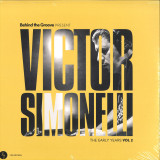
BTG presents “Victor Simonelli: The Early Years Vol 1” a collectors edition double Vinyl release - 2 X 12’s in each Vol
Launching the first Behind The Groove collectors edition vinyl series is New York’s finest Victor Simonelli with ‘The Early Years Vol 1 & 2’ double Vinyl releases. Featuring seminal house tracks such as Cloud 9’s ‘Do You Want Me’, Solution’s ‘Feel So Right’, Instant Exposure’s ‘Wanna Be With You’ and rare mixes of Raiana Page and EZ-AL, this collection brings together classic and rare Victor Simonelli cuts that reflect the early raw energy and buzz of the New York House scene. With ‘Vol 2” scheduled to follow shortly after, this is the most comprehensive collection of rare Simonelli cuts that firmly establishes his esteemed role in 90s House Music as well as introducing new fans to his inimitable sound.
Victor Simonelli is one of the early kings of NYC sampling In house music. The real deal - Victor danced at the legendary David Mancuso’s Loft sessions and developed a serious appreciation for good music. He interned for Arthur Baker at his renown Shakedown Studios (where Arthur worked with the iconic Afrika Bambatta on the seminal dance floor ’Planet Rock’ track) and went on to release hugely influential releases on seminal NYC labels 4th Floor and Nu Groove. Victor’s music was championed by the hugely celebrated iconic House Music DJ pioneers, Larry Levan and Tony Humphries at Paradise Garage & Zanzibar/WBLS/Kiss FM respectively.
Revered as a New York house heavyweight and prolific producer since the turn of the 1990s, Victor Simonelli grew up in Brooklyn, NYC, nurtured by a music loving family, with an avid record collecting father who also worked as a local party DJ. He took music lessons in piano, drums, guitar and bass, before discovering his first love, tuning into NY’s Radio Mix Shows on WBLS, WKTU and WRKS,98.7 Kiss FM) where he discovered the art of mixing and in his own words, ’I just simply got lost in the music’.
Graduating from NYC’s Centre For Media Arts, Victor got an internship in the legendary producer, Arthur Baker’s Shakedown Studios. Soon graduating to editing, mixing and then producing he worked for artists David Bowie, Quincy Jones, Debbie Harry, Sinead O’Connor and Talking Heads. Teaming up with fellow NYC producer Lenny Dee to become the Brooklyn Funk Essentials, they released records ‘Critical Rhythm’ and ‘Subliminal Aurra’ on 4th Floor before Victor went solo as Groove Committee releasing the classic ‘I Want You To Know’ on the legendary Nu Groove Records. Paradise Garage legend, Larry Levan broke ‘I Want You To Know’ rocking 2 copies on his last tour of Japan whilst King of NY House Music,Tony Humphries broke Victor’s new ‘Feels So Right’ across New York on his WBLS/Kiss FM Mastermix show and at his legendary Zanzibar club sessions. It was only a matter of time before Victor’s name became synonymous with quality House music ensuring a worldwide platform for his productions.
In the early 90s alongside his own productions, Victor Simonelli worked on high profile projects, including James Brown’s album, “Love Overdue” BeBe and CeCe Winans single featuring Mavis Staples “I’ll Take You There” and Quincy Jones’ “I’ll Be Good To You” featuring Chaka Khan and the legendary Ray Charles. Never straying too far from his clubland roots, Victor worked with Danny Tenaglia on his classic “The Harmonica Track”.
DJ gigs across the world started flooding in and Victor found himself recording for a dizzying array of labels including Tribal America, Sub-Urban, Bassline, King Street Sounds and Vibe, under a wide range of aliases. He also produced, wrote and remixed for artists such Nile Rodgers (Chic), Afrika Baambata, Hall & Oates, Frankie Knuckles, Kerri Chandler, Madonna and Michael Jackson. Famed for his own productions “It’s So Good” by Creative Force, “I Know A Place” as Sound Of One - the first release on Roger Sanchez One Records -, “Dirty Games” as well as the “Street Players Vol 1 EP”, Victor went on to set up Suburban Records with Tommy Musto and Bassline Records with two other partners. Notable releases on this label include “Do You Feel Me”, Connie Harvey’s gospel inspired, “Thank You Lord”, Urban Blues Project’s “Deliver Me”, Colonel Abrams “Not Gonna Let”, and Mone’s “Better Way”. Never ceasing to produce, DJ, run his own label and host radio shows like Groove Lift, Victor has worked with virtually every NYC producer and has nurtured a next generation talents including Angel Moraes, Jazz ‘N’ Groove, Urban Blues Project, Harlem Hustlers, Jay Jay and Julius Papp. Victor’s releases have also been used on M&S’s “Salsoul Nuggett” hit and Eddie Amador’s underground smash ‘House Music’.
In the late 90’s Victor launched his new Westside Productions, notable for the “Latin Impressions 1 & 2” releases, opened up a studio in Italy as he found himself increasingly working in Europe and now divides his time between New York and Italy. Suffice to say his unique sound of uplifting and spiritual music has kept him at the forefront of House Music and he is credited as one of its leading exponents with his string of classic releases and remixes.
Behind the Groove, branches out from its digital platform to embark on a programme of releases from the iconic pioneer producers of House Music. Esteemed for their high quality features and mixes that continue to explore, celebrate and venerate the contributions of highly respected, scene-shaping Labels, Artists, DJs and Special Events, BTG seeks to bring these talents and tales to the attention of the wider community. Unlocking the stories surrounding the pivotal roles they played and continue to play today in shaping the underground music scene we have come to know and love.
BTG presents “Victor Simonelli: The Early Years Vol 1” a collectors edition double Vinyl release, released on May 12th 2023. ‘Vol 2” follows on May 26th 2023 . These releases are the most comprehensive collection of rare Victor Simonelli cuts that firmly establish his esteemed role in 90s House Music and introduces new fans to his carefree sound.
buen clima is the solo project of producer, composer and DJ Felipe Castro (Santiago, 1993). Under that alias, he makes a sometimes clean, sometimes dirty mix of techno, house and electro, among other styles, with a soft spot for high BPMs, big, glossy pad sounds and interlocking rhythms. With a background in classical music and free improvisation, his productions and live performances often bring into them unexpected moments of noise, unusual influences and, above all, humour.
« This EP is comprised of five tracks written between 2020 and 2022, and it's got quite a bit of contrast among them, as well as some common threads. Some are gritty and noisy, some are a bit more amiable. However, they all show signs of recurring obsessions with certain rhythms, certain synth sounds, and share a sense of fun and humour. Each is an exploration of different production and synthesis techniques.
Big Butibit Chess Master Pro v.3.5 is on the lighter side, with some big warm pads and jazzy drum sound. It's kind of a sunny ghettotech cut, if that makes any sense. The synth part has a spontaneous feel, it was recorded pretty much in one take.
>:) Is a heavier club track, made to go a little evil, a little mischievous. It's full of squelchy sounds and has a drum part that sounds like a never ending Street Fighter combo, or a bunch of beer bottles being opened one after the other.
Forma/Contenido is also on the darker side, with a droning, oppressive mass of sound that accumulates and evolves all throughout the track. It's very much inspired by the piece "I am sitting in a room" by Alvin Lucier, and is, in fact, a sort of live version of the same premise, a long feedback loop of the voice and the beat recorded and played in the studio.
Arturito is how we call R2D2 in Latin America (or at least in Chile), and it's also my father's name. We both love the original Star Wars and this is a little tribute to that. I had a lot of fun making this track, using only Ableton's Operator synth to make 90% of the sounds. It's a bouncy, evolving electro cut with a lot of quirky bleeps and bloops.
Pequeña midi is definitely the heart of the EP, a slower track made for my cat, who's sitting in my lap as I'm writing this. The rhythms and the sounds are a musical representation of how I imagine her life is like, and of her little games, running around the house. In terms of style I feel like this is what it would sound like if Yellow Magic Orchestra did a slowed down footwork track (play it at 160 BPM if you don't believe me!). »
Alison Goldfrapp has set a towering bar for British synth-pop in the 21st century and she’s only just getting started. The magnetic London-born singer, songwriter and producer’s seven albums with Goldfrapp were fuelled by an unfailing modernity and a sixth sense for sounds that were more timeless than any trend. With the release of her debut solo album The Love Invention—an electrifying dance-pop suite—her multi-faceted musicianship reaches a new peak.
The Love Invention marks Alison’s reawakening as a dancefloor priestess, in an intoxicating showcase of the disco and house influences that have always been at the heart of her musical DNA. “So Hard So Hot” bottles the ephemeral joy of a dancefloor with its anthemic house beat, disco handclaps, and an exquisitely alluring vocal from Alison. The sense of uninhibited liberation courses through album highlights like “In Electric Blue,” a yearning synth-pop confection with a chorus as blissful as love’s first butterflies. On “Never Stop,” she is flooded with the rush of an all-encompassing love over a buoyant, rubberised beat; the sublime synth-pop of “Fever” is an ode to the intoxicating majesty of the dancefloor, with a chorus that explodes as if setting off a glitter cannon.
Here comes something unapologetically goth.
Male Tears is the dark electro group consisting of vocalist, James Edward and synthesist, Frank Shark. Hailing from Los Angeles, what began as a solo project re-established itself as a duo in 2021, simultaneously moving from the breezy sounds of the first self-titled album to darker realms with their sophomore Trauma Club.
Krypt is their third full-length recording and it shows a fully grown ensemble capable of pushing everything over the top; blending elements of darkwave, goth rock, EBM and futurepop into a sound they call Dark Rave.
Naturally drawing inspiration from the Californian goth tradition (45 Grave, Christian Death) and the Canadian post-industrial brood (Skinny Puppy, FLA), as well as the best UK synthpop (Depeche Mode, The Human League), Male Tears emphasizes the most glamourous, and at once, gruesome aspects of the whole gothic subculture, bringing everything to the next level, resulting in a contemporary and cutting edge album.
Eight new cuts that alternate rarefied synthwave (Krypt), dark eurodance (Slay) with goth techno-pop (Sleep 4Ever) and pounding electro-industrial (I Expire) to create something we may call New Romantic Body Music. It’s no wonder we wanted the scene’s top studio, La Distilleria, run by Maurizio Baggio, to master this for the most bombastic outcome.
And yet Krypt is not just about the music, it’s about one up with the times attitude that can review aggressive EBM in the light of an extravagant pop sensibility and a theatrical grandeur worthy of the Blitz Kids from London circa 1979-80.
You may think it takes quite a bit of nonchalance to do so but the L.A. duo easily succeeds at this. Akin to their aesthetics, they may seem spooky from the outside but their approach is nothing stuffy. Quite the contrary, everything regarding Male Tears is a celebration of life’s most bizzare shades, driven by some of the best dark humor you’ll find around.
So Dance with me, my dear, on a dancefloor of bones and skulls / The music is our master The devil controls our souls.