The project of Trimolo was setup more or less in 1984. The group won a price at a band contest 1987 where they stepped up from a basement band to a highly asked live band in the upcoming years between 1987 and 1992.
After winning the price they earned their first studio experience and the first two songs published on an LP – the Rock Feierwerk 1987 Sampler. The year after they released their debut LP that is a master piece.
The sound of Trimolo is a melting pot of all 4 musicians that is not divisible from each other. All of them giving a unique sound that blends different styles together to one. Trimolo sometimes sounds like a jazz record but with influences that can sound like a Caribbean or an oriental or a classical record.
The original press of the debut album is nowadays high in demand and a collectors item that has been sold recently for more than 200€. Back in the days it was pressed in a tiny number and was only sold on concerts around the Bavarian capital Munich.
Suche:som sam
Helsinki´s own underground powerhouse duo Trevor Deep jr. collaborates with young Berlin based and Korean born producer Wewerka. Flavourfull four-track ep is titled “KINDRED”.
Opening track “4 The Ladies” is paying homage to warehouse parties. Raving stabs and vocal samples screaming to start a riot. Followed by the second track Namu, pure deep house music inspired by breakbeats. B-side opener ”Nuna” displays the soulfull side of the producers, where African singer Nanghiti provides beautiful vocal foundation for Magic Manfred´s funk on the live bass. I guess you can call it Detroit soul.
Last track ”Spirits” is driven by soul sampled breakbeats and heavenly synths, transcending you to new hights.
A kindred spirit: ”Someone who you share a mutual meaningful connection with. Kindred spirits will encourage each other to develop as people and offer positive energy to each other.” That´s exactly what this record is all about.
limited 300 copies
- A1: Graham Dee - Another Night Alone
- A2: Graham Dee - Sampaguita
- A3: Maxine - A Love I Believe In (Horn Version)
- A4: Mike Berry - Soul Ride (Ascete Mix)
- A5: Graham Dee - Carrie
- A6: Graham Dee - Cheatin' On Love
- B1: Graham Dee - As Long As I'm Close To You
- B2: Lenny White - Can't Stop Thinking About Girls
- B3: Mick’s Bunch - I Just Wanna Be Your Friend
- B4: Tony Rivers - Tomorrow's Children
- B5: Razor - It's A Hard Way But It's My Way
- B6: Graham Dee - Somethin' Else
This album is Acid Jazz’s tribute to an eccentric, a charmer, an unsung Sixties hero who still has soul. The character that is Graham Dee has lived one heck of a life, from surviving the blitzing of East London during WW2 to playing with Pink Floyd and Jimmy Page - Graham has done it all and this compilation hopes to look back at the story of his life through music.
Dee was the A&R at Atlantic Records, signing artists and producing their songs plus playing on sessions that included pre-Led Zeppelin Jimmy Page and John Paul Jones. One of his tracks, ‘A Love I Believe In’, narrowly missed being a Number 1 after Tony Blackburn proclaimed the single as his Record Of The Week, only for Blackburn to be playing the flip side, ‘The Bitter With The Sweet’.
Around this period Graham was working with the likes of Georgie Fame, Elkie Brooks and Mike Berry to name just a few and even filled in for the absent Syd Barrett on some Pink Floyd shows.
He eventually parted company with Atlantic after he damaged studio equipment whilst practising pistol fast draws and purchasing a hunting bow and accidentally firing it, flooding the office and terrifying the staff.
A lot of the tracks signal specific moments in Graham’s life that involve a lot of these stories. The stories provide the context for the tracks and this spreads a certain spirit throughout the compilation. Now in his seventies, Graham Dee is still writing, recording, performing and releasing solo records.
Nebula is De La Groove 5th Vinyl compilation, gathering its every residents. Style ranging almost across the house music spectrum, this third of its type following "Late Psalms "and "In Motion" delivers organic groove, house tracks, deep house vibes and warm relaxing songs.
It opens up on Knuckle G - Late Night Walk, a smooth lounge goes house track, aloud and soothing ambiance that brings you along with him. Then drops in Le Hutin - Al Dente, a resolutely club friendly track pacing on a slow house beat, filtered vocals and some warm synth patterns. A face closes on Chinau - I've Been Doing My Own Thing, a patchworked sample based track conveying some pure and raw joy, a solid deep house take.
on the other side, Vanderkraft - Ça Pointe embrace a vocal and math-rock approach of house developping throughout the track with an Epic finish. B.K Mik - Since She's Mine follow by with a much cosier approach, from samples to layered synths, this track is coated in smoothness. Nebula's final track Thirsty Guys - Deep Sensations is a confortable outro beared by a slow-yet-groovy bassline and some rich space environment
- A1: Get Funky 1933 (Feat The Color Grey, Pomrad)
- A2: Oh Baby 1939
- A3: Royale With G's 2013 With Gramatik
- A4: Roller Disco 1980 (Feat Hi Levelz)
- A5: Overview Effect 1972 With Møme (Feat M I.l.k.)
- A6: Kanagawa Waves 1831 With Fakear, Balkan Bump
- B1: Payeng's Ark 1979
- B2: Cloud Nine 2000 (Feat The Color Grey)
- B3: Time Machine 1985
- B4: Electric City 2015
- B5: Keep Moving Up 1978
- B6: Paris Jazz Club 1920 (Feat Anomalie)
For The Geek and VRV, everything is a matter of time. Since they first met six years ago, the two beatmakers have been broadcasting their music to the four corners of the world, and their collaboration is as strong as ever after the years. Vanguards of the French instrumental hip-hop scene, they’re coming out today with their first album, Time Machine, a synthesis of the sounds and the ideas they’ve been working on from the very beginning of their careers. A trip back through time, as its name suggests, demonstrating the range of sound possibilities that they created in previous projects and on their international tours.
The release of their hit “It’s Because” in 2013 launched them on the scene as French producers who managed to break into the United States, with sampling as their musical base. Closer to home, the Coachella, Osheaga, and Solidays music festivals were won over by the pair’s complementarity, which made the success of their BTOS beat tapes and their EPs, Electric City and Origami.
But since everything is a matter of time, it was sometimes necessary to just let things go, take a break and think things over before coming back even stronger. A year and a half ago, The Geek and VRV started to slow things down, in order to take a step back and concentrate on this new album. With one overriding idea: to explore different eras and time periods, and transpose them into our modernity. Each track is associated with a pivotal year in music. With “Paris Jazz Club 1920”, the first single on the album, we're plunged into the cozy atmosphere of the cabarets, featuring the virtuoso Montreal pianist Anomalie. A meeting made possible thanks to the famous beatmaker Gramatik, who was a fundamental inspiration for their music, and who is also present on the album, as well as the flagship producers Fakear and Møme.
On Time Machine, The Geek and VRV have turned on their time machine to bring us to the year of James Brown’s birth, and find the unstoppable groove of “Get Funky 1933”. Always with hip hop in sight. The explosion of disco inspired them to record “Roller Disco Party 1980”, and the film Back to the Future was behind “Time Machine 1985”. The mixing of different time periods means that the styles, genres and atmospheres are channeled to perfection. The Geek and VRV have been preparing for this trip for five years now. With Time Machine, the time has come for them to begin their exploration, and to take us along for the ride.
Ô Paradis was created by Demian Nada in Barcelona during the 1990’s. Ever since then he has perfected his post-industrial minded free spirited folk-pop sound. The music of Ô Paradis is based on repetitive loops and samples on top of which instrumentation is added. The vocals and lyrics are very recognisable and are an important aspect of the melancholy songs and dark tunes.
Among his 20-something albums are some classics that have attracted an audience in the field of post-industrial music. “Cuando el Tiempo Sopla” is one of the classic albums by Ô Paradis …
Originally this record was released on compact disc in 2007 on the now defunct but legendary post-industrial label Punch Records.
This album represents the style and sound of Ô Paradis in a very striking way. After all those years it still sounds fresh and relevant
and has lost nothing of its power and charm … Also it features collaboration with like minded artists Jürgen Weber from Novy Svet and Tairy Ceron from Ait!/Punch Records.
Now “Cuando el Tiempo Sopla” is available for the first time on vinyl and serves both as a collector piece for the fans as well as an introduction to a new audience…
- 1: Frusciante
- 2: Funky As Me Feat. Nico The Beast & Dj Mysterons
- 3: Status Quote Feat. S Squair Blaq & Dj Hypercutz
- 4: Cruisin’ Through The City Feat. 1989Tre & Lisa Spykers
- 5: Blue Gardenia
- 6: On Fire Feat. Amira Lacrima
- 7: Instant Feat. Mantique
- 8: Cat With A Box Feat. Lady Emz
- 9: Skg Landing
- 10: Thrilled Feat. Mic Bles & Dj Moya
- 11: For Sale
Mr. Collage’s debut solo album “Layers” takes a traditional Hip-Hop approach, utilizing samples as well as recorded instruments. “Layers” is a sonic painting consisting of dusty vinyl memories and future plane tickets. Funky beats and basslines, afro percussions and a second-hand synth are layered to complete the musical background of the album.
Is that all? Def not! The album features some very talented artists from the USA, Australia, Spain, Greece and Belgium. The rappers Nico The Beast, S Squair Blaq, Mic Bles and 1989TRE get funky on Collage’s beats and lady MC Amira Lacrima with her mellow raps gets into a story telling.
Soul comes strong in the album too with Lady EMZ cherishing life over a Northern Soul-inspired beat and Mantique spicing up the funkiness with her deep voice. Not to mention vocalist Lisa Spykers adding an extra R&B/Soul vibe by joining forces with 1989TRE.
On the wheels of steel, the IDA World Finalists - Fly Immigrants (DJ Mysterons and DJ Hypercutz) and the heavy artillery of scratching of Mind The Wax, DJ Moya take care of the scratches in the album.
Layers will be released on vinyl by label Mind The Wax in December 2019, and includes 11 tracks.
This time we'll treat you with a very special branded practical bag.
A small bag, to put inside small things, important things. Once you'll open it that little vinyl smell contained inside ("Air De Wax") will forever evaporate but you'll know that the bag will be forever useful!
Apparel Wax comes back after a long summer with another EP, the 7th of its catalogue and yet again another display of four different musical approaches brought together as one. The EP is, indeed, a 4 tracks one and starts off with a groovy execution of a classic house track, an archetypical and simple house tune with a defined personality and the perfect start, from square one. With 007A2 we start to shift the perspective to a more funky and tribal vibe with the help of the percussions, piano chords and simple bass and guitar lines to close an A side which is a modern view on something classical.
007B1 breaks in bringing an energetic overload since the first seconds with a heavy rhythmic section and keeps up the same pace throughout the whole track even when slowing down. Its insistent and slightly distorted hi hats, along with decisive piano chords helped by some well crafted vocal samples, take us all round this journey through a packed imaginary dance floor. Let's take the foot off the pedal for 007B2 which is instead the most desirable closing with it's smooth yet impactful sounds which create an ideal sunset mood to plunge into. So the sun sets on APLWAX007 and we hope you dig once more what the masked hero brought us this time around.
Chicago's modular master is back, this time with some heady, heavy tripping tunes for the dancefloor. On the A side, 126_Marginal bounces on with timeless cosmic electro; 126_Never The Same takes a slightly more reflective approach to melody, but continues to propel with weighty sub-bass heat.
Ansatz der Maschine is back with a new record! For the album "Burial Songs", Frontman Mathijs Bertel went to the Greenhouse Studio's in Reykjavik, Iceland. He worked together with Producer Valgeir Sigurdsson (Bjork, Feist, Bonnie 'prince' Billie, Coco rosie,...) . The result is a poetic and fairylike record, a mindblowing trip where neo classical harp and cello meets organic click 'n cut electronics, but just as well there are some warm folktronica songs where singer Sophia Ammann (Be/Ca) takes the lead. Every record Ansatz der Maschine likes to collaborate with other musicians. For the song "Invisible" they worked together with AMEN RA frontman Colin H. Van Eeckhout. The video was shot in the wild nature of Iceland with both of them. The Britisch born ambient/folk musician Will Samson (who just released an album on Wichita) lents his voice to the song ‘Untold’.
For this record, Mathijs worked together with musicians Nicolas Rombouts (ex-Dez mona/ Stef Kamiel Carlens...), Seraphine Stragier ( Laïs, SunSunSun Orchestra,....) Gianni Marzo (Isbells, Marble Sounds,...)
Releasing his first ever vinyl release 'El Sunset' on James Holden's, Border Community back in 2007, Chilean producer Ricardo Tobar has since been held in high regard by the seminal UK producer. Intricately constructing his way around the parameters of emotionally-lead, highly atmospheric electronic music, Ricardo has brought his sound forward to grace the rosters of Jennifer Cardini's, Correspondant, ESP Institute and MUSAR Recordings. Continuing to extend his already significant discography, he now returns to MUSAR Recordings for a third time with the 'After The Movie' EP.
Ricardo's 'After The Movie' EP forms a selection of cuts that have been held in his locker for quite some time. Uncovered by MUSAR Recordings label head, David on a podcast from way back, it seemed only natural that this unreleased music from Ricardo would find its home on the Amsterdam-Tel-Aviv label.
"This EP is quite special to me because it reflects a long timeline in my work. The 'After The Movie' track had been in the vault for ages until David from MUSAR found it in an old podcast; it really takes me back to those first steps in recording music." Ricardo Tobar
Across his EP, Ricardo plays with varying textures and arrangements that in turn provide a cross-section of his sound that has expanded and developed over time. 'After The Movie' presents the experimental ambience synonymous with his early works, whilst 'Parques' brings an idyllic, cinematic feel with strictly crafted synth arrangements riding high, post-rock influences also show through. 'Regain Your Power' represents a change of course, whilst also channeling a political message punctuated by social unrest taking place in Ricardo's home country, Chile. He abandons experimentalism in favour of tougher 4x4 elements, allowing his machines to run riot.
"The mixture of ideas and feelings on this EP have a politically charged spirit, as electronic music always does. A few weeks after I finished 'Regain Your Power' the whole Chilean social explosion took place with the same ideals I had in mind when recording the track." Ricardo Tobar
Stepping up on the remix is a pair whose names are etched into the history of UK electronic music, Andy Turner and Ed Handley a.k.a. Plaid. Reworking title track 'After The Movie', they produce an emotive, soundscape complete with droning basslines and ex-terrestrial flourishes.
Borneo Records welcomes Swedish made, Berlin based DJ City to the family!
As a fairly fresh face to the European dance music scene, involved with renowned musical outlets like Cocktail d’Amore and Born Free, DJ City has been turning heads with his playful and energetic style.
For Borneo’s ninth release DJ City delivers two deep dance floor cuts, referencing and paying hommage to his childhood idols, craftily combining well known building blocks into future classics.
”Sierra Madre” is a warm and deep dive into the aesthetics of the late 90s electronic music scene, balancing between lush pads and low bit rates. Steadily it progresses as the loops unfold and evolve into an ambient landscape of clear peaks and valleys. Dreamy and suggestive without becoming too literal or camp, it invites its listener to let the mind wander during the course of the dance.
On the flip side, “5426261” is a more playful feature as its percussion and somewhat off tune melodies roll out. The texture is light and invites its listener to venture in thought to an imaginary Mediterranean location right before dawn. The enigmatic title is repeated in a sample towards the end, implicating it is a phone number. Who are you trying to reach?
Written & produced by J. Norling, 2016-2018, Örebro/Berlin. Artwork by Nicole Martens. Borneo Records Rotterdam 2020.
"I'm always looking for ways to be surprised," says composer and multi instrumentalist Jeff Parker as he explains the process, and the thinking, behind his new album Suite for Max Brown, released via a new partnership between International Anthem and Nonesuch Records.
"If I sit down at the piano or with my guitar, with staff paper and a pencil, I'm eventually going to fall into writing patterns, into things I already know. So, when I make music, that's what I'm trying to get away from-the things that I know." Despite its musical departures, in presentation Suite for Max Brown is an informal companion piece to The New Breed, Parker's debut release on International Anthem, which was honored as one of the "Best Albums of 2016" by New York Times, Observer, and Los Angeles Times.
"I made The New Breed based off these old sample-based compositions and mixed them with improvising," Parker says. "That's in a nutshell how I make a lot of my music; it's a combination of sampling, editing, retriggering audio, and recording it, moving it around and trying to make it into something cohesive... With Max Brown, it's evolved." Though Parker collaborates with a coterie of musicians under the group name The New Breed, theirs is by no means a conventional "band" relationship.
Parker is very much a solo artist on Suite for Max Brown. His accompanists are often working alone with Parker, reacting to what Parker has provided them, and then Parker uses those individual parts to layer and assemble into his final tracks. The process may be relatively solitary and cerebral, but the results feel like in-the-moment jams-warm-hearted, human, alive. Suite for Max Brown brims with personality, boasting the rhythmic flow of hip hop and the soulful swing of jazz.
unning Back Incantations present Yogtze!
A joint venture of Daniel Helmer - musician, producer (Mantra Mantra, Gudrun von Laxenburg)and filmmaker from Vienna and Daniel Meuzard - (Feater, Skymax, Vallay) and a headstrong trip deep into the tune-in-turn-on-drop-out-mentality of European minds outside of their natural environment. Helmer and Meuzard met around 2005 in Peru where they both participated in an ayahuasca ceremony.
After this experience they decided to travel and discover South America together for some weeks. During that journey, the idea of a musical project (Yogtze) was born.
Two years and many miles later, Helmer and Meuzard saw Alejandro Jodorowsky’s „Montana Sacra“ at a small film festival in Paris. The movie inspired them to create a musical composition that reflects its spirit and atmosphere. In order to do so, they decided to travel Morocco and record music on a small 8-track tape machine at a friend’s home studio in Essaouira. "The artistic process felt very natural. All we had to do was to open up to the cosmos and let the music flow through our bodies“, said Meuzard. Neither Meuzard nor Helmers intented to release those recordings, since the sessions were more of a personal nature and meant to create a musical experience for themselves.
A decade later, their moroccan friend, who stumbled upon the tapes while cleaning his storage, urged them to release their recordings so everyone could experience the same musical journey as they had back in 2007. "It would be a grand act of selfishness not to share this work of art with others“ he told them. Luckily for thew world, Helmer and Meuzard decided to finally edit, mix and master the rest of the material in 2018/2019 and named their project „YOGTZE“. Expect a record full of wondrous soundscapes, haunting melodies and capturing themes that would fit in many categories or definitions and none at the same time. Music from and for memories, tangerine dreams and chessboards.
Black Truffle is pleased to present Realejo, the first vinyl release from Brazilian sound artist and composer Manuel Pessoa de Lima. Having composed works for diverse contexts including cinema, contemporary dance, theatre and television, Lima’s live appearances often take the form of self-reflexive lecture performances that combine electro-acoustic sound, red light, video and spoken text, moving unpredictably from the hilarious to the distressing.
Realejo consists of two side-long pieces of highly idiosyncratic electro-acoustic collage, beginning with recordings Lima made of himself playing the organ in the Schloss Solitude Chapel in Stuttgart. Exploring the peculiarities of the instrument’s mechanics, Lima made hours of recordings with the organ stops half-way open, moving from haunting gliding tones to oddly tuned fair-ground melodies reminiscent of the record’s namesake realejo, a hand-cranked organ traditionally found in Brazil as the musical accompaniment to the work of fortune-telling parrots.
To these organ sounds, Lima added recordings of a security guard made in São Paulo: ‘Just before coming to Stuttgart, I started making field recordings of a security guard in São Paulo. It's something pretty common in residential areas: they sit in a chair with a whistle, and use that to signal when people arrive, leave or pass by in the street. This particular security guard, Miguel Viana, works on the same street my parents live, and where I had my childhood, and he has worked there since I was a small child. He has watched the street at night, from 8PM to 6AM, every single day, except Sundays, for over 30 years’.
The poignant sounds of the security guard’s whistles punctuate Lima’s electro-acoustic environment, which also includes raw digital synthesis, recordings of his friends’ infant child, audio lifted from Youtube, and, on the LP’s second side, elements taken from an earlier work, ‘36 English to Portuguese Lessons’. Finely chiselled from dozens of hours of source material into a detail-rich, mercurial structure, Realejo is alternately jarring and seductive, introducing listeners to a young composer with a powerfully individual voice.
Raw Culture is back to torment your lives. This time we have the regret of having in our roster the ex ice skater Wosto.
Based In Hamburg he is putted his sign on some label such as Sign Bit Zero and he give is effort to some groups such as Fallbeil and Sauerstofff (with the duo Nostalgie Eternelle). Teerpappe is his own vinyl label where he released also solo records. This release Das letzte Nasenhaar EP is a collection of Kraut Break Beats with a strongly German and weird imprint. Borderline with noise.
Raw Ambassador had the task of cooking his version of Party Animal with the collaboration of the vocal cords of the same Wosto for a really original result, a dance floor killa.
The release will be available form 13th December in a limited series of 300 hand stamped vinyl.
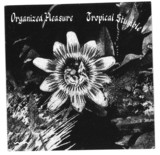
"In popular imagination, the early 80s were dreadful. Thatcher and Reagan led the world on a diet of austerity, unemployment and depression. The Berlin Wall separated East from West. The Sex Pistols had broken up. In sum, the future was unsure. Belgium was no exception. While Punk had been declared dead by some, its spirit was still roaming in country parishes and city alleyways. As the Catholic bourgeoisie provided young people with few opportunities, music was an obvious pastime. Teenage hopes of starting a band and putting out a record were everywhere. Organized Pleasure and Satin Wall were two bands living the dream. In contrast to a thousand others, they left us sounding evidence. This split 7” gathers two tracks originally recorded in 1981. It was the first and only studio excursion for both groups. After some local gigs, the people involved moved on to other projects. While their music is illustrative for the era, their story is distinct. Same but different."
For it’s second-release, Planisphere returns once more to the Berlin studio of Swiss-Turkish producer Mehmet Aslan, who has fast become one of the most fiercely individual and increasingly prolific emerging artists in some time.
This three-track EP is arguably Aslan’s most-refined work to date, aiming squarely at heads-down dancefloors, riding on sophisticated and hypnotic grooves. On ‘Comme II Faut’, a minimal beat unravels Aslan’s textural, traditional samples, delivering a woozy and intoxicating atmosphere.
Meanwhile, ‘Lobster Is Coincidence’ christens the EP with its title and a stop-start slice of unpredictable, cut-up psychedelia, utilizing obscure samples to generate esoteric funk. On the contrary, Aslan executes a tapestry of tightly-wound and no less entrancing rhythms on ‘Kakusui’, which evolves intriguingly with a subtle half-step and further echoes of Aslan’s unique musical heritage.
Roman Rauch is back with another outing on his Life Is For
Living imprint. On the A-side he’s joined by his studio partner
Peletronic for a jazzy banger heavily influenced by some tasty
pizze before the session. The flip side offers a dancefloor
oriented, infectious tune named “Lawless”. Could this be a
reference to himself, a clue to the original sample or both? You
take the guess
iven Jones’ rather slack approach to track titles (both being consistent with and sometimes even just supplying them), it’s a bit of a relief to realize that two tracks with the same name are indeed related. In the case of “Arab Jerusalem”, which makes up nearly half of the newly-released Lalique Gadaffi Handgrenade, that kinship is immediately apparent even though both tracks are clearly their own experiences.
Released as the first track on the Minaret-Spearker picture disc 7” in 1996, “Arab Jeruzalem” (spelling also sometimes being fairly slack) is 5:42 of effectively shifting dark ambience, wordless female vocals drifting over the hand percussion, chimes, and static of the track, with eventual conversational loops discussing... something underneath. The end of that version is especially striking for the way the woman’s wordless singing starts being sampled in such a way that it overlays the whole track (and, slightly, itself). The almost 24-minute “Arab Jerusalem” here might be called the Deer Hunter version of the same story, building with great patience and many more abstract detours towards what now seems like simultaneously an excerpt and, now, a climax. As with many of Jones’ more ambient tracks, the great length just lets it cast its spell more thoroughly and entrancingly.
The other three tracks, meanwhile, suggest some of Jones’ other work but never evoke them as directly as “Arab Jerusalem”. “Jordan River” is nearly as long (a second shy of 20 minutes) but strips out the vocal elements in its predecessor, focusing instead on a more active percussive workout (analogue and digital both) and a river of hiss running down the center of the track. The title track of Lalique Gadaffi Handgrenade might bring to mind the title of “Lalique Gadaffi Jar” from Libya Tour Guide (last reissued by Staalplaat in 2015), but if they’re sonically related Jones must have practically melted the other track to get this one. And the closing “Desert Gulag” (like the title track, a much more manageable length than the first two epic tracks here) bears a slight resemblance to “Negev Gulag” from 1996’s Fatah Guerrilla, here what was a piercing, repetitive drone is softened and looped over more of Jones’ percussion. The result is a well-rounded release that shows off many aspects of Jones’ sound as Muslimgauze, while existing (like many of these DAT tapes do) in conversation with much of his previously released work.
After their successful cooperation in the band Arbeit Adelt! Dani Klein and Willy Lambregt started Vaya Con Dios, together with contrabass player 'Dirk Schoufs'. All three musicians shared the same passion for jazz, opera & gypsy/Balkan music, a combination of music styles that was hardly known in Belgium at the time.
Vaya Con Dios (Spanish for Go with God!') stood out for its mixing of these styles, as well as the distinctive voice of lead singer Dani Klein. He's one of the most successful Belgian music acts ever, having sold more than 7 million albums and more than 3 million singles.
Night Owls is the second studio album by Vaya Con Dios, originally released in 1990. The album was certified platinum in several countries, including Germany, France, The Netherlands and Belgium.
The album spawned several international hit singles like Nah Neh
Nah', What's A Woman' and Night Owls'.
As part of the Brewed In Belgium campaign, Night Owls is available as a limited, numbered transparent vinyl edition.
"When You Died" is the first single that anticipates The Dining Room's next full-length album, four years after "Do Hipsters Love Sun (Ra)?".
Side A contains the original version of the song, a funk cut with a 70's psychedelic taste, featuring Sean Martin on some vocals. On the flip-side (Side B), the same track has been reworked by 'Massimo Martellotta' (Calibro '35) to become an compelling disco soul midtempo tune.
This release from New Zealand based label “Headwound Recordingz” shows how the UKs influence spread around the world. These tunes sound like they are straight out of the 90s with loads of samples that “tip a hat” to the UK old skool. The massive “Dread Tune” takes samples from mid-nineties Stalone version of Judge Dredd and whips up a frenzy with some serious amens on steroids. 3 absolute belters on this EP that show off the style and production of this very special antipodean label!
Originally slated for release in 1993 by Super Doppler Communications. It was primitively programed on 8-track sequencer then recorded on a 4-track tape machine in Hani's spare bedroom studio in Denver, Colorado. 26 years later, now Hani's name became internationally known & till this day he continues to produce & remix under many aliases while running his own label Soterios Records. In 2017 Hani started receiving several purchase requests from seekers of this nameless track from Jeep Warehouse Beats Vol:1 on B-side called 'Vector Selector'. During the search for the master DAT, Hani found this extended version now available for the first time on Jeep Warehouse Beats Vol:1.5. Included on the B-side is a track never before released from the same year 1993 that was slated for a single release. We are happy to make both tracks available with some help from Synchrophon in France.
Limited Edition 200 units with Unreleased Veggi Grooves from 90's & Extended Version of Vector Selector. Be quick !
o
The hyper talneted Stellar Om Source (NOT NOT FUN, RVNG, NO 'LABEL) blowing up new styles on this one!
"If there is one thing that leaps out from Stellar OM Source’s music, it is the sense of a highly active mind at work. There is an indivisible feeling that a real person is behind this dynamic flurry of tones, waves, vibrations and modulations. On I See Through You, the first full Stellar OM Source release in over four years, the spark that first LP piqued the interest of so many listeners is glowing stronger than ever.
In the 2010's, Christelle Gualdi carved a name as one of the most essential live electronic musicians around, dazzling dancers and home listeners in kind with her bombastic, acidic hardware jams. Circumstances outside her control forced a stop for the Stellar OM Source project. It was touring, including two shows in the summer of 2019 at Dekmantel Festival and Listen! that Gualdi credits as year highlights, which proved to be the integral jump-start to the engine.
Inspiration came rushing back thanks to the human connection of performing. Seeing a younger generation connect with her put fresh charge into the circuitry of her gear. All this accrued into new material on the road, and thus I See Through You was born.
The spirit of 2013’s cult favourite Joy One Mile is alive and well on I See Through You. There is once again immediacy, urgency and lust. But Stellar OM Source stepping into a comparatively more poppy and playful mode on these four tracks could also throw some. Fundamentally she says, it comes from a similar place, and ends with an enmeshed and positive outcome. Gualdi credits both “1995 rave” and “the clarity, bass and breath” of hi-def hip-hop productions as being twin northern stars for her to follow.
The artwork comes from friend and highly respected photographer & director Pierre Debusschere, whose work similarly flits between arresting close-ups and, well, the widescreen luxe of Beyoncé videos. “I’m definitely not a purist anymore,” Gualdi laughs – and with club-ready impact meeting human warmth, this shows in abundance.
“Night Alone” wastes no time in getting the listener up to speed. Is that an LFO sample running through “Night Alone”? Is this a lost Metro Area classic? Is that Stellar OM Source taking a diversion into searching Ibiza-rousing vocal for a moment, or did we imagine that in a heat haze? Where are the kicks? Oh there they are. How many elements are buried and revived within just over five minutes?
It’s hard to tell. Before we know it, “Lost Codes” is up and away, keeping pulses racing. A pitter-patter of baby kicks feel like a pre-tremor before a welting electro-Italo lead crashes into play. With fizzing energy, rasping synths and a frisson of danger, fans of Unit Moebius and The Hacker will be doing somersaults of joy.
“White Echoes” wastes kicks off the flip side with low gurgles descending briefly like a UFO reverse parking into the spot SOS had vacated. Soon, 303s are twisting like Chinese burns while warm chords offer a salve. The mood maintains on “Wild Palms”, the only song on this record not to feature additional mixing work from Peaking Lights’ dub-wise sensei Aaron Coyes.
True to form, the B2 is all Stellar: elements switching up and out, with all the fun and frenzy of capital-L Live action. Kick drums and bassline darting back and forth like a synchronised swimming routine, all elements in concert. The momentum of a runaway mine cart that you can’t help but strap yourself to. I See Through You is one for the dancers who have given Stellar OM Source the motive to move forward once again."
Two years after an acclaimed first album, Al Sunny and Favorite Recordings proudly present Planets, carrying on their collaboration and bringing it to another level.
Al Sunny is a young and talented singer/musician/composer emerging from the French soul music scene. During his conservatory studies, he refined his knowledge and confirmed his desire to write and compose. He quickly matured the music that he truly loves, inspired by artists such as Tim Maia, America, Al Green, and Al Jarreau. Giving birth to the majority of his compositions through his guitar, he always seeks to bring his songs’ melody to the forefront. During his studies he kept experiencing live performing on different scenes and confirmed his choice for a musical career, while also meeting many brilliant musicians, including Florian Pellissier, who later introduced him to Pascal Rioux and Favorite Recordings.
It resulted in 2017 in Time to Decide release, a dazzling first album establishing Al Sunny’s music and writing style, looking towards the 70s and 80s Westcoast movement, infused with Blue-Eyed-Soul, Pop and Folk flavors. Built on the same influences, Planets is made of 8 new compositions (including a CD and digital bonus), and is clearly a continuation of its cadet, asserting Al Sunny’s talent and singing skills.
Fully recorded live and analogic in Paris, this new album also stands out by an impressive level of production, faithful to some classics of the genre. Mixing catchy melodies, soulful vocals, warm and heavy bass, strong beat and beautiful guitars and keyboards harmonies, Planets just perfectly meets the AOR and Modern-Soul golden era standards.
- A1: Theme For A Hunter (2:12)
- A2: The Hunter (Link 1) (0:11)
- A3: The Hunter (Link 2) (0:09)
- A4: The Hunter (Link 3) (0:09)
- A5: Heavy Lead (1:43)
- A6: Uneasy Silence (2:05)
- A7: Hideout (1:56)
- A8: Hideout (Shock) (0:08)
- A9: Hideout (Let Down) (0:16)
- A10: Approach (2:00)
- A11: Approach (Shock) (0:08)
- A12: Approach (Sting) (0:08)
- A13: Approach (Exclamation) (0:07)
- A14: Flashing Knives (1:18)
- A15: Solid Pursuit (1:04)
- A16: Flying Squad (1:08)
- A17: Nightwatch (2:44)
- B1: Adventure Story (1:23)
- B2: Adventure Story (Link 1) (0:11)
- B3: Adventure Story (Link 2) (0:10)
- B4: The Investigator (2:48)
- B5: Passing Hours Suite (4:21)
- B6: The Set Up (2:01)
- B7: Stake Out (2:17)
- B10: Speed Trap (Link) (0:13)
- B11: Battle (1:00)
- B12: Battle (Link 1) (0:06)
- B13: Battle (Link 2) (0:17)
- B14: Attack (0:51)
- B15: Casing The Joint (1:33)
- B16: The Foil (1:31)
- B17: Scream (0:11)
- B18: Meanwhile (0:12)
- B8: Knife Edge (1:33)
- B9: Speed Trap (0:55)
They Say: “Composite themes and incidental cues for dramatic application”.
We say: Well, it’s definitely dramatic. No wonder this LP was mined by a multitude of 70s and 80s crime shows. Much like Beat Incidental, this true gem includes a raft of enjoyable sub-ten second incidental cues alongside satisfyingly stretched out, hard-knocking sleuth-funk.
The Hunter (Drama Suite) / Adventure Story is a real library-head’s library album. We’re treated to some of the best works of no less than five different heavyweights of the genre: drummer Brian Bennett, guitarist Clive Hicks (of The Gentle Rain), saxophonist Duncan Lamont, rock bassist Dave Richmond and keyboard session giant Steve Gary! Something of a dream line-up, they each contributed stellar efforts to create one of the most sought-after of the legendary KPM albums.
Both sides of this LP are dripping with insidious grooves and dramatic spy-score themes, bursting with heavy guitars, swirling flutes, creeping piano-funk and drum breaks galore. Originally released in 1975, it’s clear that these library heroes were heavily influenced by the tough funk and street soul sonics emerging from the cutting edge Blaxploitation soundtracks.
Dave Richmond’s taut swagger and wah-wah guitar licks of “Nightwatch”, Steve Gray’s sleazy horn and clav-funk on the A-side opener “Theme For A Hunter” and Brian Bennett’s rolling strut of “The Investigator” are just three of the highlights here. That last one being sampled by Jeff Jank under his Captain Funkaho guise on “My 2600” for Stones Throw back in 1999.
As with all of our KPM re-issues, the audio for The Hunter (Drama Suite) / Adventure Story comes from the original analogue tapes and has been remastered for vinyl by Be With regular Simon Francis. We’ve taken the same care with the sleeves, handing the reproduction duties over to Richard Robinson, the current custodian of KPM’s brand identity.
And don’t worry! Those KPM stickers aren’t stuck directly on the sleeves!
Remastered and reissued for the first time since their original release, AOTN are proud to present three classic cover versions from the lovers rock era. Al Charles' take on the Gap Band's 'Outstanding' is a full of swagger outing that takes all the sweetest of their melodies and gives it some added bass pressure for the dancefloor.
Tough to track down previously, the Sonia version of 'Easier To Love' was always a favourite amongst lovers fans. After getting a spin on Sam Floating Point's NTS show, its popularity soared and any remaining copies were quickly hoovered up. The final release brings together two of the finest lovers singers to ever duet, the late Jean Adebambo and Trevor Walters, covering Roberta Flack & Donny Hathaway's 'Back Together Again'.
The first press of the 12 comes in a printed AOTN sleeve which is a respectful tip of the hat to the OG dub vendor disco sleeve that many of these original 12s were distributed in.
2024 Backstock
After having released several solo works of both artists, Dauw announce the first collaborative full album by The Humble Bee & Benoît Pioulard; 'I suppose I'm your future'.
Both artists hold a very special place in the history of the label. The Humble Bee was already present from the very beginning and, in hindsight, definitely has put an important mark on the musical aesthetics we've been developing throughout the years. On the other hand, we crossed paths with Benoît Pioulard several years ago through our ongoing Living Room Concert Series in which he offered one of the most magical evenings to date. Given their mutual love for the tape medium and melancholic compositions, we only had to connect the dots as we were pretty sure that some magic was up in the air.
It goes without saying that we were uttermost happy when they both accepted our invitation to work on a collab album. Even though we didn't know where their efforts would end, it already felt like a victory that we, as a label, were able to link these artists. Above all, the art of curating can be considered as an essential feature of running a label but for us it is also the most wonderful part about it. Linking artists to each other, like we also did in our Dialog Tapes or Illuminine Reworks series, even goes a step further as it makes new connections, pushes boundaries and ultimately can result in an unexpected enrichment of the musical field.
"I always look forward to the Dauw collaboration releases. Most of the creativity for these lays within their curation: it brings together artists that, although arc in the same orbit but somehow never cross paths. The beauty of collaborating is that we learn from having to give space to another creative force, working alone we fall back on what we know and what we have already done. Although I wasn't paired with Tom for earlier projects, the guys at Dauw thought (and rightly so) that it was about time we crossed our musical paths for an lp." (The Humble Bee)
- A1: Dur Dur Band - Daraadaa Muxibo
- A2: Omar Shoolil - Hab Isii
- A3: Mukhtar Ramadan Idii - Check Up My Head
- B1: Bakaka Band - Geesiyada Halgamayow
- B2: Fadumo Qassim & Waaberi Band - Waa Kaa Helaa
- B3: Iftin Band - Sirmaqabe
- C1: Mukhtar Ramadan Idii - Baayo
- C2: Ahmed Shimaali & Ahmed Sharif "Killer" - Hoobeya
- C3: Dur Dur Band - Shaleedayaa
- D1: Dur Dur Band - Ladaney
- D2: Bakaka Band - Gobonimada Jira
- D3: Iftin Band - Ii Ooy Aniga
After being blown away by a few tunes - probably just as you will be after listening to this - Samy Ben Redjeb travelled to the infamous capital city of Somalia in November of 2016, making Analog Africa the first music label to set foot in Mogadishu.
On his arrival in Somalia Samy began rifling through piles of cassettes and listening to reel-to-reel tapes in the dusty archives of Radio Mogadishu, looking for music that ‘swam against the current’.
The stars were aligned: an uncovered and unmarked pile
of discarded recordings was discovered in a cluttered corner of the building. Colonel Abshir - the senior employee and protector of Radio Mogadishu’s archives - clarified that the pile consisted mostly of music nobody had manage to identify, or music he described as being ‘mainly instrumental and strange music’.
At the words ‘strange music’ Samy was hooked, the return flight to Tunisia was cancelled. The pile turned out to be a cornucopia of different sounds: radio jingles, background music and interludes for radio programmes, television shows and theatre plays. There were also a good number of disco tunes, some had been stripped of their lyrics, the interesting parts had been recorded multiple times then cut, taped together and spliced into a long groovy instrumental loop.
Like everywhere in Africa during the 1970s, both men and women sported huge afros, bell-bottom trousers and platform shoes.
James Brown, Stevie Wonder, Marvin Gaye and The Temptations’ funk were the talk of the town. In 1977, Iftin Band were invited to perform at the Festac festival in Lagos where they represented Somalia at the Second World Black and African Festival of Arts and Culture.
Not only did they come back with an award but they also returned with Afrobeat. While Fela Kuti’s ‘Shakara’ had taken over the continent and was spreading like wildfire throughout Latin America, it was the track ‘Lady’ that would become the hit in Mogadishu.
"The first series comprises six related movements, usually organised in pairs, electronic sounds with instrumental and more rarely, concrete sounds: Incidences/resonances brings into play controlled resonances akin to sounds of concrete origin in a process that helps to expand the variable electronic sound sources.
Here, 'incidents' are opposed to one-off 'accidents' in the second movement: Accidents/Harmoniques (Accidents/Harmonics). In the second movement, very short events of instrumental origin change the harmonic tone of the continuum they interrupt or overlap.
Moreover, the high notes are underplayed, which stimulates the attention given to other phenomena generally hidden by the melodic form applied to the instrumental play. Géologie sonore (Sound Geology) is similar to a flight over an area where different 'sound' layers come to the surface one after the other.
When seen from high above, instrumental and electronic sounds seem to fuse ... Dynamique de la resonance (Dynamics of Resonance) is a microphonic exploration of a single sound resonating through different forms of percussion. L'Etude élastique (Elastic Study) places together various sounds produced by 'touching' elastic or instrumental skins (baloons, doumbeks) or vibrating strings and a number of instrumental gestures close to this 'touch', using electronic processes to generate white noise.
Conjugaison du timbre (Conjugated Tone), the last movement in the series, uses the same substance to apply rhythmic forms onto a perpetually varying tone continuum. "The second series of movements draws its inspiration from concrete and electronic sources rather than instrumental ones. Incidences/battements (Incidences/Beatings) is a reminder of the first movement in the first series which then quickly moves into Natures éphémères (Ephemeral Natures): ephemeral play on instrumental and electronic sounds, singled out by their internal trajectory rather than by the material itself. Matières induites (Induced Matters): just as molecular effervescence triggers a changes of state, it seems that the different states of these sound materials can be generated by each other or through induction processes.
In Ondes croisées (Crossed Waves), the pizz vibrations interfere with somehow 'visible' water drops on the surface of a similar material. Pleins et déliés (Downstrokes and Upstrokes) can be listened to as the energies absorbed in the motion of bouncing bodies, while hollow 'bubbles' and points bring together some people's gravity and others' downwards movements. The work finishes with Points contre champs (Reverse Angle Points).
Here, the notion of perspective of the different sound threads weaving a kind of network, or field, traps the occasional iterative elements in the foreground and progressively absorbs them, giving more space for the angle - and the chanted sound - to grow." (B.P.).
RAVE026 is a double hammer of blitzkrieg gabber and seething acid trance/schranz from Service
Animal (Vereker) and Crime Unit, featuring material previously issued on impossible-to-find
tapes by the cult, DIY label; Live Adult Entertainment
The punkish reputation of Live Adult Entertainment precedes them as one of the underground’s
keenest yet elusive operations to emerge in recent years. Based in Thessaloniki, a port city in
northern Greece, they’ve released some 28 tapes, CDR’s and lathe cut vinyl of musick ranging from
psy-trance to industrial noise and concrète since 2017, and always in editions ranging from zero
to 20 tops, leading to feverish and frustrated reactions from those listeners who’ve chanced upon
their YouTube videos before they get taken down. Finally, this 12” features the first readily available
and properly mastered LAE material on a physical format.
On the A-side, Endangered Species label boss Oliver Vereker adopts his gabber alias Service
Animal for his first outing proper since appearing as Renoir on his label’s 2017 CD, ‘Death Always
Follows’. Revolving material originally available on tape in edition of 20 copies, it boots off with
the 12-hp hoof and dive-bombing drones of ‘Core Of Reality’ next to the evil Arcardipane styles of
‘F.T.W’, which are both produced with the same, powerful conviction in charred black metal, noise
and hardcore techno that made his 2015 releases as Restraint and Grace so vital, only with added
acceleration and syncopation.
The B-side follows with a pair of seething workouts from the ‘Cyber Afterbirth Vol.1’ mix by
LAE co-owner, Crime Unit. Hearkening back to a sound that was ubiquitous between Hackney
Warehouses and small-town UK/European techno clubs in the late ’90s/early ‘00s, they are
ravenous examples of the LAE aesthetic, applying scuzzy DIY principles to gnashing German
schranz and adrenalising acid trance with ruthlessly direct results that pack one of the meanest
breakdowns you’ll hear this year. Trust they will mercilessly sort the dancers from the posers.
Since forming in 2006 post-punk experimentalists Sebastian Melmoth have been on a thoughtful and adventurous musical journey. In a constant state of aural evolution, the London-based four-piece has a delivered a string of albums and EPs that variously touch on everything from garage-rock, grunge and lo-fi pop, to electro, new wave, dark ambient and music concrete, all the while drawing on a myriad of literary and artistic influences.
The band’s first release for Artificial Dance digs deep into their admirable and eye-opening catalogue and draws together some of the Amsterdam-based label’s favourites from the more electronic end of the band’s output. Entitled “The Dynamics of Vanity” – a comment on Western culture’s obsession with rehashing the past and the band’s own in-built distrust of artistic naval-gazing – the set is not a ‘best of’ retrospective but rather a ‘sort of’ selection of stylistically interconnected cuts that gives a very specific snapshot of the band’s work.
Check for example “Icarus”, a drowsy, hypnotic and sample-laden soundscape that effortlessly joins the dots between post-rock, pitched-down electronica and early morning ambient, or the slowly unfurling throb of thought-provoking opener “The Engineering of Consent”, a swelling, melancholic post-jazz meditation on propaganda and governmental mind control featuring spoken word samples from William S Burroughs in conversation with Brion Gysin, Timothy Leary, Les Levine and Robert Anton Wilson.
The showcased songs are typically hard-to-pin-down, too, with the re-imagined gothic horror break-up cut “Prosopagnosia’ and slow-burn audio addition of “Waiting For Godot” being joined by the wide-eyed morning dream-pop hallucinations of “Seeds (Descent Into Decadence)”. It all adds up to a collection that expertly showcases one engaging thread – of many – running through Sebastian Melmoth’s esoteric body of work.
Yes, at last! Kinky keyboard porn! Whisper porn! Vinyl Porn! And all at the same time.! And what an ASMR treat we have for you here.
Recordings of 12 incredible bespoke mechanical keyboards made and recorded by the master of this modern art, Taeha Types. Yes, this is actual typing sounds on amazing future/retro/cutting edge keyboards. Every track different. Every keyboard different. Listen and weep - Or sleep - Or something ... An INCREDIBLE & UNIQUE listening experience. The first mechanical keyboard album EVER !!!
For the last few years a small scene has been growing. The mechanical keyboard scene. It’s now quite a big scene actually.
It makes total sense as most of us use keyboards everyday, so why not have an amazing keyboard to use instead of the total crap one you have. I mean just look down. It’s shit isn’t it. So, some people worked out that things could be improved - A lot. - So they started to make incredible, kinky keyboards, using both old and new tech: and the possibilities and options in construction are endless.
There are key cap options (GMK ABS, PBT etc etc), spring options (Cherry MX, Pandas, Alps etc etc) and even backplate options (steel, aluminum, copper etc etc), and of course case options too. And all these options make a big or little difference. And once made these keyboards are carefully lubricated spring by spring to give them that little extra smoothness and “ping”.
The results are beautiful, fetishistic, futuristic in an odd retro style, and they sound AMAZING when they are typed on. This is classic ASMR / whisper porn, the gentle click and rattle of carefully lubed springy keyboards make the hairs on the back of your neck rise. Either that or they gently woo you into a peaceful, sublime state. This is a classic and groundbreaking new Trunk album for our modern stressful times.
The recordings on this album are the first ever release of mechanical keyboard sounds. They are from a selection of (enhanced) keyboards from the 80s, 90s and now. They were recorded by the master maker of the modern mechanical keyboard, Nathan from Taeha Types.
He has a large following on Instagram, YouTube (videos of his hands typing on his keyboards hit 10K in just a couple of days after upload), and he now has over half a million views on his Twitch channel where he constructs keyboards live.
Sleevenotes on the album have been put together by Jonny Trunk and Stu London (AKA Futurecrime) from the London mechanical Keyboard scene. He knows what the fuck he is talking about. And you might not understand it, but you can catch up real quick - like I did.
- Album mastered by Jon Brooks, who also really understand these
sounds. And if you don’t, don’t worry - lots of others will.
- A1: Breaking The Silence
- A2: Creature
- A3: Two Days Of Horror
- A4: Bells
- A5: The Golden Arm
- A6: Motel Transilvania
- A7: Psycho
- A8: Nosferatu
- A9: Up From The Depths (Feat. Hubert Daviz)
- B1: Halloween Party
- B2: Black Cat
- B3: Cinema Of The Death
- B4: Voodoo Woman
- B5: Wayne Tower
- B6: R.i.p
- B7: Mustard Gas (Feat. Crimeapple)
- B8: Midnight Hour
- B9: Memorabilia
Wun Two remains one of the most envied lo-fi hip-hop producers on the planet. Consistently pumping out thematic releases from last summer’s Pirata to his ever-consistent Snow series, his first vinyl release through Fat Beats since his 2016 Baker’s Dozen was spawned by a horror movie binge watch. “Nosferatu represents the atmosphere of Halloween and cold and darker days. I plugged the SP into my TV and recorded movie dialogs and sound samples while watching. At the end I had a lot of material/sound sources...I liked the outcome of it and decided to release it for Halloween.” Wun Two said.
Inspired in part by composers Maurice Jarre and Bernard Herrmann, Wun Two wanted to create a project that didn’t emote the somewhat-depressive feelings of certain scores, but an atmosphere of tension and suspense so often associated with Hitchcock and Stephen King novels. This deluxe picture disc LP not only includes 2 bonus beats not included on the original digital release, but an additional track featuring vocals from CRIMEAPPLE. “My feature list is very short as I prefer to release instrumental tracks.
But CRIMEAPPLE is definitely one of the most interesting MC´s now and it´s really great that we could win him for a contribution,” added Wun Two on the rare appearance from an MC over his beats. Releasing this Halloween in a strict one-time vinyl pressing, Nosferatu is a perfect accompaniment as the weather gets colder and the nights darker.
When acclaimed South African musician Guy Buttery first sought out Dr. Kanada Narahari in late 2016, it was as his patient.
“It was a dark time.” Buttery recalls, “I had been bedridden for months and had been suffering from debilitating bouts of fatigue which no diagnosis or medication could help me get to the bottom of. When I first met Kanada, I was at the stage where even picking up my guitar to make music had become a joyless and taxing exercise.”
As Buttery’s searched for a cure, a family member recommended he see Kanada an Ayurvedic doctor who had relocated to South Africa from India and set up a practice in Durban. It was during this consultation, that the musician first experienced how Narahari infused the healing properties of Indian Classical music into his practice. Rather than treating him with a smorgasbord of pharmaceuticals, Narahari played his sitar and set Buttery on a strict daily diet of Raga’s to fast track his recovery.
Buttery was not only struck by his doctor’s musical talents but by the powerful healing properties inherent in his sitar compositions. When he left Narahari’s doctors room that afternoon, he asserts he was feeling decidedly clearer, lighter and stronger.
“Diving into Kanada’s music was definitely one of the reasons I'm still here today.” he admits. “The consistent tonal centre at the heart of Indian Classical Music, literally became my support pillar over this period. A central core of sorts in which to fall back on, strengthen and discover.”
Narahari as it turned out, was not only a prominent music therapist (and one of the only Ayurvedic doctors practicing in South Africa) but like Buttery, a highly accomplished musician with a devoted following back in his homeland.
Born in a small village along the Western Ghats in Karnataka, India, Narahari, at the age of nine, had enrolled to study Carnatic classical vocal and developed an interest in Hindustani Classical music with a particular passion for the sitar. While Buttery had secured his reputation as one of South Africa’s musical treasures, a multi-instrumentalist who commands sold-out performances both locally and internationally and more recently had been awarded the prestigious 2018 Standard Bank Young Artist for Music.
From this consultation, a friendship developed between the two musicians with Buttery soon inviting Narahari to join him in his studio. But it wasn’t all plain sailing in the beginning. While Buttery and Narahari’s sensibilities were very much aligned, there were a range of cultural and musical influences, nuances and inflections that first needed to be navigated and understood.
“I suppose we had to find a common ground.” Buttery says, before adding, “Which in the end turned out to be pretty "uncommon ground" for the both of us.”
It was after a few intensive sessions together that something exhilarating began to emerge. What began as a few idle improvisations soon evolved into feverish and lengthier jams. Whenever time permitted, the musicians would meet, descending deeper into the emerging sounds, while reimagining the realms that existed between their African and Indian heritages.
Over the next few months, the duo would rack up over fifteen hours of recordings in studio, and it was up to Buttery to shape the material into an album which they collectively titled Nāḍī, which Narahari translates from the Sanskrit as "The Channel" or "An Internal River".
During this period, Narahari bestowed upon Buttery, the moniker Guruji while Guy would refer to him, in affectionate return, as Panditji. Each time the musicians would meet, the studio space would be cleared by an impromptu ritual, with Guruji burning African Imphepho while Panditji would chant a Sanskrit mantra dusting Indian Agarbatti clouds over their instruments.
Once the room had been made hazy with this aromatic alchemy (with the ancestors welcomed in) the musicians would pick up their instruments and plunge into shimmering tides of sound. Reflecting on these sessions, Narahari recalls the immense creative freedom he felt throughout: “Guy and I tried to wander as much as possible, without any speculative, preoccupied ideologies or limitations. Love remained at the forefront of our journey together.”
“Those evenings we spent together in the studio” adds Buttery, “felt incredibly rich with purpose and a profound sense of freedom. While improvising, anything could happen and mostly did.”
On a first listen, the tracks on Nāḍī emerge as salty, humid invocations to the inscrutable depths and misty myths of the Indian ocean-- that vast body of water that stretches between, and laps the shorelines, of the artists’ respective homelands.
When asked to describe the sound him and Narahari refined, Buttery prefers to relay a series of evocative images.
“For me” he explains, “Nāḍī is a lighthouse, a beacon that resides at the bottom of the ocean.” As Buttery envisions it, “what once offered light to guide ships to safety, has been submerged and re-purposed by marine life as a coral-reef temple. Similarly, this sunken lighthouse exists as a concealed cenotaph, memorializing the ancient sea-routes and passages that once connected the two distant lands.”
On paper this may sound obscure but listening to the songs, it serves as an apt metaphor.
Across each meditative movement, listeners are able to relive the journey, immersing themselves in a series of incantations, replete with high dynamics, delicate African-Indian inflections and virtuoso string playing of an entirely new order. Further complimenting the fusion of musical dialects are a range of guest artists including Shane Cooper on bass, Thandi Ntuli on vocals, Chris Letcher on organ, Ronan Skillen on tabla and percussion and Julian Redpath on guitar, synth and backing vocals.
Now like the submerged lighthouse, the recordings stand as a monument, a marker and snapshot of this fortuitous meeting, a tribute to the healing gifts of Guruji and Panditji in performance. It’s a process that already, both musicians look back on with reverence and nostalgia.
Buttery ruminates in closing, that when he first met Kanada his illness correlated with the biggest drought South Africa had experienced in many years “…for whatever reason, whenever we would connect and make music together, the sky would tend to open. Even if it was just a few drops. This went on for months, until finally the drought dissipated and my health had been restored.”
By the time the heavens did open across the East Coast, a deep friendship had been forged and with it abundant musical offerings poured down. A treasured sample of which we able to share in every time we press play and immerse ourselves in the sacrosanct musical universe that is Nāḍī.
I remember the first time I read W.E.B. DuBois eclectic masterpiece The Souls of Black Folk. The way in which this Weberian scholar flowed from personal account to prose to sociological analysis to music and even political intervention has had a lasting impact on my own work as a cultural anthropologist. It made me understand that as scholars we must use different means in order to give expression to the totality of the lived experience: There is only so much in an academic text.
The experience of alienation has always been at the heart of my scholarly and artistic practice. I have used academic writing, lecturing, theatre performance and electronic improvisation to understand and represent it as a theoretical concept, postcolonial condition and lived experience. I believe, some issues need to be told like a story, some analyzed in most abstract terms and others need to be sung like a gospel. The medium changes the message.
In this sense, I guess, I’m a singing cultural anthropologist.
For some time now I have been engaged in the use of dystopian themes and sounds to paint a sonic picture of structural racism and whiteness of our present. But recently I have grown weary of this Ballardian idea of Future Now and the resulting phantasmagorian aesthetics myself and others have been invested in. The widespread availability of Digital Audio Workstations, sequencers, loopers and delay pedals has lead us into a futuristic cul de sac best described by Mark Fisher as the very absence of future.
Likewise, I am most skeptical of the “naturalist” countermovement, the return of folk. Especially in Germany, I am convinced there is no such thing as an innocent or progressive folk musical expression as it is always connected to the idea of the homeland (“Heimat”) which in turn produces the colony. It seems to me, the current zeitgeist is stuck between a “museum of a dystopian future” and a “museum of an idealized past”, but I wanted to sing about the present.
So, I involuntarily returned to pop music in its two-folded meaning of something popular and addressing not an essentialist notion of “Volk” or its woke cousin “communities”, but society as a whole.
I entered the studio just with a few lo-fi sounding melodies and rhythms from my circuit bent CASIO synthesizer. I had no clue what the finished product would sound like. But as soon as Markus started drumming, in a way strangely reminding me of CAN’s Ethnographic Forgery Series, my uptight sounds were suddenly embedded within a warmer global sound spectrum. The alien at home and abroad and the strange overlapped: We were seeing one and the same sound differently but were gently held together by Tobias’ producing.
Making music is about building coalitions. It’s about suggesting an articulation of styles, sounds and people, that hasn’t materialized, yet, but may help us in the current crisis: I wanted Amon Düül II to send their drug induced archangel thunderbird to rescue the refugees, that had tried to escape the police by climbing up a tree in Munich in 2016. I wanted Sun Ra to taunt far-right protesters in Chemnitz in 2018. And I wanted to mourn the loss of a former kebab shop cum discotheque that served as proof that there is such a thing as a minoritarian universalism.
SCHLAND IS THE PLACE FOR ME is a pop album featuring songs of alienation, not only as a tragic experience, but as a pop-cultural promise. Maybe Bill Callahan sung it best, “I am Star Wars today, I am no longer English grey”. I want those who suffer from alienation to stand in alliance with those who seek alienation, and vice-versa. A coalition, that tolerates the possibility that we are moved by the same groove for contrary reasons.
Fehler Kuti
Munich, Autumn 2019
Music by Julian Warner, Markus Acher & Tobias Siegert
Saxophone on RINDERMARKT by Franz Brunner
Trombone on RINDERMARKT and IL by Matthias Götz
Recorded and mixed by Tobias Siegert in Munich.
SONTAGSFAVORIT mixed by Dario Albiez in Dusseldorf.
Mastered by Duphonic in Augsburg.
Artwork by Atelier Grande, Munich.
My Music is a stellar spiritual soul / jazz-funk gem, recorded by keyboardist-singer Samuel Jonathan Johnson in 1978. The epitome of a cult classic, it didn't do much upon its release but steadily found an audience over the decades that followed. It eventually worked its way into the culture, and latterly the wantlists, of wave after wave of soul aficionados.
This is music that shares the jazzy R&B DNA of contemporaries like Roy Ayers and is an intoxicating blend of mellow moments and more groove-heavy tracks. Spacey keys and lush production give it a luxurious, enveloping warmth.
My Music opens with the gorgeous title track: an indulgent slow jam opus. Introducing us to Johnson’s compelling musical vision, it features a rich mélange of production techniques. Dripping in strings, horns, backing singers, popping funk bass lines and swooshing synth waves, it’s an unusually structured cosmic two stepper that has an irrepressible groove. Accordingly, it’s been a favourite with the diggers and it was sampled by The Alchemist for Jadakiss’s “We Gonna Make It” (and it was also used on Ras Kass’s “Home Sweet Home”… but that’s a story for another time).
The up-tempo “Sweet Love” bubbles over with joy, its uplifting lyrics backed by infectious bass and jazzy Fender Rhodes lines. It follows a cover of “What the World Need’s Now Is Love”, taken at a funereal pace that transforms it into a heartfelt plea for love and understanding. Essential in these dark days.
After a full-minute-long opening of lush cinematic strings and horns, “Because I Love You” makes space for Samuel’s voice, accompanied by some keys and just a sprinkle of guitar. It builds back up and then mellows its way out to a jazz lounge finish (in all the right ways). The feel-good ebullience of the Stevie Wonder-esque “It Ain’t Easy” closes out the LP’s first side.
The second side bursts open with the heavy bounce and disco-funk basslines of “You”, a slightly off-beat string-laden dancer with insistent horns and a piano-assisted groove. Next up is “Just Us”, a legendary steppers track that could be heard oozing out of deep soul radios and funk sound systems back in the late 80s.
“Yesterdays and Tomorrow” is a moving original ballad that is followed by an exquisite high-stepping paean to mom in the form of “Thank You Mother Dear”. The thumping easy-glide of “Reason For The Reason” brings the album to a close.
Respectfully mastered by Simon Francis and cut by the master Pete Norman, this reissue of Samuel Jonathan Johnson’s sole LP sounds as sumptuous as that scarlet gown on the front cover. The sleeve artwork was lovingly restored by the Be With team. My Music is a luxurious and rare collection of songs that now has an opportunity to reach beyond its cult audience.
THE WRAITH's Gloom Ballet delivers twelve infectious tracks drenched in the band's '80s UK post-punk (Death Cult, Killing Joke, Sisters Of Mercy) and SoCal deathrock (T.S.O.L., Samhain) influences.
THE WRAITH was founded by imposing frontman Davey Bales, formerly of Virginia peace-punks Lost Tribe, and Kaz Alvis shortly after they separately washed up in Los Angeles. Their irresistibly distinctive sound - skeletal basslines and tribal beats propelling Alvis' textured swathes beneath Bales' poetic, anguished bark - immediately gained a following, with homemade demo Comatic Romance racking-up thousands of YouTube views.
Convulsive, chaotic West Coast shows honed the songs that became THE WRAITH's lauded 2017 EP, Shadow Flag. A couple of videos and line-up changes later - the band is now completed by Belgian drummer Jef Pauly and Brit bassist Paul Rogers - their evocative songwriting and pure-punk authenticity earned the ear of Mat Mitchell, who has worked with Love And Rockets, The Flaming Lips, Meat Puppets, King Crimson, and more. Mitchell recorded the band's debut LP, Gloom Ballet, and earlier this year, the band signed to Southern Lord Recordings for the worldwide release of the album.
Recorded by Pucifer guitarist/producer Mat Mitchell, Gloom Ballet was mastered at Audiosiege by Brad Boatright (From Ashes Rise, Tragedy, Alaric) and the artwork was handled by Rebecca Sauve.
Skyf Connection (pronounced skAyf) was a short lived project by long time friends Anthony Mthembu and Enoch Nondala. At the time they were working for Annic Music, an independent label run by married couple Anne and Nic Blignaut. Although the label was known mostly for Zulu, Sotho, Tsonga and other traditional styles, they had a few Disco releases on the label including groups like Keith Hutchinson’s Focus and Enoch’s discovery Lena, who went on to have huge success under the name Ebony a few years later.
In 1984, when an artist didn’t show up for a booked session they decided to make use of the studio time and began working on a demo. At the time Anthony and Enoch had been playing for a year at a new club called Gamsho, located on a farm on the outskirts of Kliptown Soweto. Along with Blackie Sibisi, Sepate Mokoena and Elijah “chippa” Khumalo they made up the resident house band. Due to cultural boycotts and American artists refusing to perform in the country, locals took it upon themselves to fill the market with the American sound the crowds demanded. The demo they recorded at Blue Tree Studios was going to be their product they could use to promote their brand of the American sound. They then took the demo to Universal Studios where their friend and trusted engineer Jan “fast fingers” Smit was working. It would be here that they would polish their demo into something they could take to their bosses and have pressed. Equipped with a DX 7, Linn Drum and some Juno synthesizers they were on their way. Jan lived up to his name and programmed the drums, it is rumoured he could program in almost real time, a skill that translated to the local arcade where he held high scores on many machines. Enoch would be singing and playing guitar while Anthony would do all the Bass and Keyboards. The result was 4 funky party anthems with synth work like no other recording at the time. Their take on what they believed the crowd would want to hear at the beloved club they called home.
From start to finish the 4 tracks portray what would have been a standard night at the Gamshu. Although the club would open earlier and the standard hours of most clubs was 6 to 6 , the band would start playing at 10pm. With their standard set time and Anthony and Enoch unique view on what a Disco should be, they chose the motto Ten to Ten as the album title because those were the hours when they were the stars and Disco ruled the dance floor. To get to the club was a bit difficult, you needed to drive along an empty road where thieves waited for any patrons trying their luck walking after dark. Since there was no transport during the night, the safest way to get home was to wait till the next morning to walk home. Even though in the summer months of Johannesburg light begins to peek in just after 4am, crowds refused to leave and stayed enjoying good music and company until 10am. The lead off track “Let’s Freak Together” has powerful lyrics encouraging people to let go of their worries, put aside any differences and let the music bring everyone to freak and dance together. The whole album is about the joy we can all feel when we share the same moments and how music can bring people together in a unique way, a philosophy shared with the original nightclubs of 70s New York. This approach to music is where the name Skyf Connection comes from, translating from slang to mean the connection we create through sharing, in this case Music and good times.
Skyf Connection would go on to play at Gamsho till the club’s closure in 1986. In those years their popularity lead to being booked for private events like weddings and birthday parties, as well as gigs in some other venues like Mofolo Hall. They would share the stage with many artists through the years learning artist’s songs and providing support as a backing band. After the club closed Anthony would go on to join the house band at The Pelican, another famous club located in Orlando East, as well as dabbling with songwriting for artists like Phumi Maduna and helping Enoch on many projects through the years. Enoch would ditch live music altogether and immerse himself in studio work, starting full time as a house producer and A&R for the recently formed Ream Music. He would go on to produce hit albums for pop artists like Percy Kay and Makwerhu but made his mark discovering countless artists that would become stars in the traditional market. They would remain friends until Anthony’s passing in 2016 and although Anthony is no longer with us his spirit lives in the grooves he left on this one of a kind record. His wife Vinolia will be accepting his portion of the profits on his behalf.
On the hunt for timelessness we travel far and wide and realise only the wisest and stupidest of men never change. Brilliance borders lunacy. Extreme wisdom and extreme stupidity are the same. When u know everything u know nothing. Just as minus infinity reaches plus infinity and forms a circle. Just as extreme right wing and extreme left wing are basically the same but arrived from a different angle. Extremely bad taste becomes good, and extremely good taste is contrived. The truth is in the middle (yes i have come at an age where i can say that) so we have to embrace change to be the only constant. Everything and everyone always changes. So what does it mean “to be timeless”?
A very special thanks to Efdemin.
The story goes like this:
He gave us the strong winds remix. We told him its a bomb. We also said its a little sad maybe perhaps that it contains so little of the original. “Oh let me try something” was his answer. And the very next day we got sent the good winds mix. Of course we asked if we could include both mixes. How could we choose?
Rebekah’s Elements label welcomes Storb who delivers two vigorous cuts, while the label boss herself and Scalameriya provide remixes.
Something of a mystery, Storb may be elusive but his driving music speaks volumes. The industrial techno producer has released on labels like Diffuse Reality and Emetic, but now he is invited to join Birmingham’s pivotal techno tastemaker Rebekah’s imprint accompanied by a remix from the esteemed artist herself, not to mention Serbian techno purveyor and live performer Scalameriya who’s recently released on THEM and Genesa Records.
Taking a haunted and brutal route from the off, ‘The Donut Theory’ is built on contorted synths and sewed pads that together generate a twisting and turning aural experience, followed by ‘Gasp’ which thunders forward using hyperdrive drums, frazzled effects, overdriven machine sounds and caustic textures.
On the flip, Scalameriya remixes ‘The Donut Theory’ incorporating hammering broken beats, urgent alarm samples, industrial components and fizzing stabs. Tying it all together, Elements boss Rebekah reinterprets ‘Gasp’ by stripping things back to focus on colossal kicks and firing sirens that permeate a relentless groove to generate a pure warehouse inclined energy.
Remastered[10,88 €]
The late composer, arranger, musician and record producer Nonato Buzar is a lesser known great (outside of Brazil). His legacy leaves behind a rich body of recordings, working with some of the cream of the Brazilian 60s and 70s music scene, such as Evinha, Elis Regina, Wilson Das Neves to name a few as well as Reggae legend Jimmy Cliff. The awesome organ driven dancer of ‘Cafuá’ is taken from Nonato & Seu Conjunto’s 'O Som E O Balanço De Nonato’ album from 1975 on Som records.
Mr Bongo re-issued José Roberto’s (aka Ze Roberto) ultra rare 'Lotus 72 D' 7” earlier in 2019. 'Crioula Multicolorida’ though not as scarce as ‘Lotus' is still a hard record to find and is equally as great. This anthemic ‘samba rock’ gem, with its amazing breakdown, originally appeared as the B-side of a 7” in 1974 on RCA Victor. It has since been a favourite amongst Brazilian DJs and collectors, featuring on the influential ‘Via Brazil’ compilation series and 'Brazilian Beats Brooklyn' collection on Mr Bongo.
Club Internacional dig deep to launch their new global reissue series in style with two long lost cuts from Rio-based label Top Tape. First up is Jose da Silva aka Zeca Do Trombone.
A massively respected instrumentalist, he has worked his trade over the years with many of Brazil's leading artists such as Tim Maia, Milton Nascimento, Elizeth Cardoso, Beth Carvalo, Martino Da Vila, Gonzaguinha and Carlos Dafe amongst others.
He also produced a very much sought after LP in 1976 alongside Roberto Sax which was finally re-released this year on Mad About Records. Tema Do Brisa dates from a few years later in 1978 and is Zeca's only solo 45 single. Never released on digital and never reissued on vinyl before, it is with great pleasure that Club Internacional re-launch this psychedelic jazz and heavily funk influenced gem with its still stunningly fresh sounding drum patterns to a new generation of listeners. Fans of jazz, funk, rare groove and Brazilian music in general will appreciate the strong vibes of this original track and be delighted to finally have this record in their hands. The track represents a unique moment in the career of a great musician fully in control of his instrument and more than willing to test its musical boundaries. Zeca continues to play out as an artist regularly in Brasil right up to the present time.
On the flip side, Sambacanas, or Os Sambacanas as they were sometimes also known, were a group of Samba musicians recorded by the Sao Paulo based producer Julio Nagib.
Although they were mostly known for a samba covers LP entitled 'Sucessos Da Juventude Em Tempo De Samba' (re-released in the UK under the title 'Fly Me To Brazil'), this song, Panga, Danga, Panga, was the A side of their only 45 single release for Top Tape which came out in 1976. Again this track has never been re-released before in its 45 single version, and has not been made available digitally. A beautiful example of raw and simple Batucada-style Brazilian samba music infused with Latin funk vibes, it features excellent vocals and percussion including the berimbau and cuica. Club Internacional hopes you enjoy this journey back to rediscover these very different, but wonderful, long lost sounds of Brazil on this limited edition vinyl 45 pressing to add to your record collection. Each Club Internacional edition may take some time, but it will be worth the wait!
- A1: Chicks That Are Into Beefheart (& Jandek) (& Jandek)
- A2: Florida Bat Salad
- A3: Nightmare On Drucker Street
- A4: I Took Too Much Acid In 7Th Grade
- A5: Island Of Tragedy
- A6: Follow Me Down On Instagram
- A7: Seafood Special
- B1: My Mom Was A Hebrew School Teacher
- B2: Massachusetts Is A Magical Place
- B3: The Ridgewood Ripper
- B4: I Don't Want To Listen To Your Tape (Cellar Dweller) (Cellar Dweller)
All Music Written & Recorded by David Drucker at The Skinny Apartment in Ridgewood, Queens, 2017
Featuring Mike Green (Mezzanine Swimmers) on guitars on "I Took Too Much Acid in 7th Grade," Cop Funeral on
electronics on "Seafood Special," Chris “Mr Transylvania” Shields on background vocals on "Massachusetts Is a Magical
Place," Eva “Nighttime” Goodman on violin & backing vocals on "The Ridgewood Ripper"
Painted Faces is the long (strange/trip) running voyage of weirdo David Drucker, began in Florida in 2009 and decamped
to NYC in 2011. It has sometimes been a loose band in the past with a revolving lineup of outsiders and interlopers
(known as The Freak Band), but is usually a solo endeavor, and the bulk of the recordings have been done as such. PF
has always been a home recording solo project, one-man-band style heavy on psychOdelic/outsider
folk/noise/experimental vibes. He started self releasing CD-Rs in the early days and quickly jumped to tapes on a variety
of labels including Already Dead, Lava Church, J&C, Null Zone, Tall Tapes. A "legendary" CD compilation on Gulcher
Records and an LP from Already Dead and Almost Halloween Time in Italy brings us to the here and now. Tales from the
Skinny Apartment is somewhere around the 20th or so Painted Faces release...he has long lost count.
Drucker runs/curates gigs (and records at) the Skinny Apartment, his dwelling place in Ridgewood Queens,
which some folks have called the "realest DIY zone in NYC." He also rips in Dead River Company, Big Hiatus, Shecky,
Canyon River Blues and countless other unknown subterranean improv zoner outfits. "Ripping" involves keeping it
freaky and weird and ripping sets wherever/whenever, i.e. always being down to perform whether in a kitchen or a
packed ballroom....no diva bullshit, just plugging in (or going sans electricity) and playing...always giving it your
all...Ridgewood Rippers are the crew of artists that populate Ridgewood and the loose "scene" around the Skinny
Apartment...much of it is in jest, a self-inflated mythology of nonsense which is pervasive in all rock and roll "scene"
histories. As a student of rock/pop history, Drucker is fascinated by the loose associations that connect folks from
various zones together...i.e. Miles Davis and The Grateful Dead...it's all the same though, the labels and genre
distinctions are completely arbitrary. We're all in this together, now more than ever...to be a "ripper" is simply to
"rip"...no nonsense!
Painted Faces has toured all over the USA and Canada numerous times, spreading the ripper gospels, and is
gearing up for their second European tour. He is known for falling apart on "stage," with performances heavy on humor,
horror, stoned digressions, and cathartic bouts of therapy, part performance art/part standup comedy, eradicating the
lines between performer, performance, and audience one show at a time
With their third album ‘Fluid Motion’, Melbourne’s 30/70 are set to soar into higher territory as the face of Australia’s newest wave of soul-influenced brilliance.
From the swirling opening pads of “Brunswick Hustle” all the way through to the sax-laden shimmer of “Flowers” at its close, ‘Fluid Motion’ is an instant classic, effortlessly shifting between neo-soul and languid, Dilla-esque tendencies, astral-facing jazz textures and authentic vignettes of UK club music history.
It’s a formula that those already caught in 30/70’s celestial web are fully aware of; first defined on the local heat of their 2015 debut ‘Cold Radish Coma’ and majestically expanded upon with their critically acclaimed 2017 release ‘Elevate’ on Bradley Zero’s Rhythm Section INTL (mixed by Hiatus Kaiyote’s Paul Bender). ‘Elevate’ did exactly that - elevating both the scope of the band’s sound as well as their standing in the local and international community.
Since the last record was released, the music has brought the band on world tours and to the attention of the wider public and key tastemakers alike. Strongly supported by the likes of Gilles Peterson, Tom Ravenscroft, Jamie Cullum, Matthew Halsall and Bradley Zero, the UK has become something of a second home for 30/70.
London in particular has openly embraced the soulful sounds of Melbourne, as evidenced by Gilles’ latest Brownswood compilation ‘Sunny Side Up’ which features three tracks from 30/70 members: Ziggy Zeitgeist, Horatio Luna and Allysha Joy. The record is a follow up to his era-defining survey of the UK Jazz scene ‘We Out Here’, the compilation that kickstarted a whole generation of London’s under-the-radar Jazz kids to global headlining heights. It would appear we’re about to witness this same effect take place for the Melbourne contingent, of which 30/70 lead the charge. The city’s invasion is well and truly upon us.
While London is undoubtedly in love with what’s happening in Melbourne right now, this is no one way love affair. The 30/70 collective have had their ears to the ground and plugged into the sound of the UK underground. This new album takes inspiration from the syncopation of Broken-Beat, the immediacy of Grime’s and Dub’s sonic aesthetic to create something that is a truly global amalgamation of local sounds, finessed by Allysha Joy’s instantly recognisable vocals; the rawest and realest of voices.
Beyond Space And Time is the new record label from Japanese music festival, Rainbow Disco Club (RDC). RDC has been welcoming music loving people to Japan for over a decade. Throughout the festival's history, the organisers have been fortunate to collaborate with amazing performers and DJs who’ve provided a beautiful dancefloor year in, year out. These relationships have lead RDC to start their own label, and they are now given the opportunity to reveal one of the best-kept secrets: What is in a DJ's record bag?
This time around, festival regular DJ Nobu kindly opens up his collection, and shares the music he loves with us all. On visual duty we welcome Senekt - his representational yet contemporary drawing illustrates the emotion we feel from DJ Nobu.
DJ Nobu selects Pan Sonic's epic Lähetys /Transmission, for this limited one sided 7". It is the first time this track has been released on vinyl. The release is meant as a preview to his forthcoming vinyl compilation from DJ Nobu - a 2LP voyage that navigates much of his musical background, and includes all time favorites.
DJ Nobu describes the track this way…
"Electronic music has existed for decades, and if you are to choose some of the best from all scattered & hidden pieces, Pan Sonic's 'Lähetys / Transmission' must be considered. The track emerges beautifully - breaking structures and transcending the past. Every layer of the piece is produced with such delicacy and care, that as a whole it magically drags you into the world of the unknown."
We have much more music to come in future from artists and DJs that we trust and respect.
Limited Edition Vinyl
Vinyl + Digital Ep
Vinyl includes a Bandcamp download
released Oct 25, 2019
The new release of Dusk & Waves is starring by Vicky Montefusco, Dj and producer from Italy, resident in Berlin for a few years. This EP is presented as his first work on vinyl with great force and originality. Whit a style, synthetic, analog, crude and influenced by the legacy of the 80s, has allowed him collaborating on labels such as Ninefont, Clouded Vision or Items & Things.
The EP begins with 'Justice', a low revolution techno track that with its line of acid bass and Martian sounds, added to the speech sampler of JFK, leads us to a state of deeply hypnosis. On the other hand, 'Roar' goes deeper into EBM territory. Above the starting of the arpeggio, it is built a dark track full of synthetic sounds and a nightmare atmosphere (somber, gloomy, baleful). 'During' keeps the darkness of the other two tracks; however in this case, the rhythmic guitar at the beginning adds a more 'funk' touch to the track. It is “a funk” with a narcotic and somber flavor thanks to the vocal and the synth sounds that accompany it. On the B side of the vinyl we find Blacknob's remix to 'Justice', which gives him a re-interpretation more club raising the bpms and creating a perfect track for dance in the late night. Finally, Jamie Braid´s remix offers a reconstruction of the track 'During' with electro beat, generating an odyssey of textures with a development that goes beyond the standard structures of dance music. Timeless!
Following on from the release of a spilt EP from rising stars Gramrcy and Gaunt late last year, GlassTalk Records returns in 2019 with the sophomore EP from Bristol's Henry Greenleaf, "Patent".
The unassuming producer has been making waves with his bassy 130bpm productions which seem almost custom-made for the later hours of dark club settings.
Since his debut release on Par Avion last November, Greenleaf has been focused on increasing the sonic scale and clarity of his work; something that's apparent on the whole of "Patent" but especially on the opener, "Inch". A true 'creeper' of a track, the groove and harmonic arrangement of the 3-minute build-up is somewhat
entrancing but then gives way to a head-wringing breakdown.
True to his previous output, Henry doesn't sit still stylistically on "Patent". The EP's second track, "Tare", moves away from the 4x4 structures of "Inch" and into more syncopated territory previously occupied by producers like Mickey Peace or Paleman. "Tare" is a masterclass in polyrhythms with all manner of kicks, claps and vox samples skittering over each other. This deft use of drum programming is complemented by serene and uplifting synth sections, cleansing the tonal pallet before the beat forcefully drops back in.
On the B-Side, "Caved" keeps the energy and the tempos high with supremely processed high hats and a rumbling low-end landscape. Here Henry Greenleaf's adoration of Paula Temple's music shines through more than ever. Much like her output, it's kind of hard to know which way is up in "Caved" with its ever-shifting
palette of sounds and grooves.
Closer and EP title track "Patent" is probably the vastest song Greenleaf has created during his recent mission to grow his productions in scale. It's a mammoth techno track with a pulsing low-end juxtaposed against some sporadic & icey synth pads.
This release solidifies Henry Greenleaf's already hard-to-dispute status as one of the leading lights of the 'Bristol sound'. Almost impossible to define; his work sits in that amorphous sweet spot where techno, dubstep, garage and a load of other UK influences bleed into each other to form something unique. Put your headphones on and let the grooves swallow you up.
Seefeel, Peel Session, 27/05/94: Eine Liveband-Session von Seefeel aus der Phase ihres "Succour" Albums (1995) mit den exklusiven Tracks "Rough For Radio" und "Phazemaze", die nirgendwo sonst zu finden sind.
Zur Sommersonnenwende 2019 nahm Warp den Onlineradiosender NTS für ein ganzes Wochenende in Beschlag, um die Feiern zu seinem 30-jährigen Jubiläum zu eröffnen. Über 100 Stunden Programm mit Mixsets, Dokus, Live-Performances und Sessions des gesamten Warp-Artistrosters von Aphex Twin über Brian Eno bis Kelela samt Gästen wie Ryuichi Sakamoto wurden von hunderttausenden Fans weltweit live verfolgt. Jetzt knüpft Warp mit der Veröffentlichung der "WXAXRXP Sessions" an diesen Event an, einer Serie aus zehn 12" Vinylen mit Radiosessions aus 30 Jahren Labelgeschichte, von frühen Peel Sessions bis zum diesjährigen WXAXRXP x NTS Wochenende, allesamt in höchster Audio- und Design-Qualität. Feat. Boards Of Canada, Aphex Twin, Flying Lotus, Bibio, Oneohtrix Point Never, Mount Kimbie, u.v.a.
Recital publish the newest record by Canadian composer Sarah Davachi. Currently working on her PhD in Musicology at UCLA, her trajectory has been unorthodox. Hailing from Calgary, Alberta, which, if you've never been there, doesn't really scream "Avant-Garde" (Calgary is the rodeo capital of the world). From a young age, Sarah was a driven pianist (and figure-skater, although that's a story for a different time). It is important and interesting that she chose to study esoteric music; as Sarah could have easily been a cowgirl or a concert pianist had her ingrained love of synthesis and sonic phenomenology not taken the wheel.
Sarah is a considered person. I find few people that have the diligence and resolve to take their time with music... especially in a live context. I respect that about her. The first time I saw Sarah perform, I presumptuously told her that her music reminded me of my favorite Mirror albums (the exceptional project of Andrew Chalk and Christoph Heemann). Sarah was not familiar with Mirror, so the compliment was initially lost on her. Years back I was in the same situation when a review compared my music to Andrew Chalk, who was unknown to me at the time. So I felt a kinship in our magnetic drift towards unspoken and clustered beauty.
Let Night Come On Bells End The Day follows the release of her "sound-wheel" LP All My Circles Run, which examines the isolation of different instruments. Let Night Come On..., recorded mainly with a Mellotron and electronic organ, feels like a return to the nest. Burrowed in the studio, Davachi was the only performer on this album. She both splays her compositional architecture and re-contextualizes the essence of her early output. She chiseled careful and shadowed hymns; anchors of emotion.
Two pillars of this album are "Mordents", which to my ears drops hints of her love for Progressive rock music - and "Buhrstone," comparable to a sombre funeral march of piano and flutes. These two examine punctuations of early music, gently plucking melodies and movements. The three other compositions are tonal works, blowing slow jets of lapping harmonics.
Writing this description now, I find it hard to separate "At Hand" from filmmaker Paul Clipson, who made a melancholic film for this piece of Sarah's. A fitting title for Sarah and Paul's relationship - frequently working in orbit of each other, meticulous and tactile. I cherish this track as a memory of Paul.
This is a lovely album to fill an evening living room with. A blanket, a cup of wine, a dim bulb, a wide window.
Three beautiful photo-prints by Davachi are included with Let Night Come On Bells End The Day. Frames are not included.
- Sean McCann
- A1: Music To My Ears
- A2: Little Journey
- A3: Birds Of A Feather
- A4: Golden Dream
- A5: Chubby Cheeks
- A6: Guiding Light
- B1: Saskamodie
- B2: Somehow Someway
- B3: Jiinti
- B4: Music To My Ears (Reprise)
- B5: Sleepy Time
- B6: For Pepecito
- A1: Birds Of A Feather (Single Edit) 7
- A2: Guiding Light (Gonzales Solo Piano Version) 7
- B1: Birds Of A Feather (Vulfpeck Version) 7
- B2: Birds Of A Feather (Remix Feat Gza) 7
12" + 7"
In 2009 Mocky made a radical decision: after having become one of the cult figures of the leftfield Berlin electronic music scene of the early 2000s, Mocky retired his sampler and travelled to Paris to embark on an all acoustic journey with the producer Renaud Letang in the vintage Studio Ferber, previously inhabited by the likes of Nina Simone and Serge Gainsbourg.
Named after a song he made up when he was 7, using imaginary words, "Saskamodie" was an instant new future/retro classic: a return to pure musical expression by a cutting edge artist who was no longer bound by the electronic music scene. "Saskamodie" was a brave step into unchartered waters, the sound of a musician exploring where his talent can take him with rare confidence and authority. At different points you could hear a vintage soundtrack suite, a debonair jazz record (minus the solos) or a golden era '60s soul ballad recording ... yet, as if all these charming stylistic sorties weren't loveable enough, cut "Saskamodie" through the middle and you'll find that sweet, inescapably infectious melody is the lifeblood trickling through its core.
Mocky is listed as playing drums, bass, rhodes, piano, guitar, percussion, bells, recorder, vocals, whistle, organ and toys as well as writing string arrangements. Taylor Savvy, Gonzales, Jamie Lidell and Feist contribute additional instrumental and backing vocal performances that make this record sound more like a live performance than a studio creation.
"Saskamodie" has definitely stood the test of time and Mocky still successfully follows the path he started with this recording - be it on his series of digital Moxtapes, his album "Key Change", his recent "recorded-in-one-day" jazz album "A Day At United", his score for the japanese Netflix anime "Carole & Tuesday" or his writing and production work for the likes of Feist or Kelela.
Originally only released as CD/Digital Download, this 10 years anniversary limited vinyl edition brings us "Saskamodie" in it's original form, re-mastered for deluxe 180g vinyl and accompanied by an exclusive bonus 7" with a new single edit of the album's hit "Birds Of A Feather", a solo piano version of "Guiding Light" by Chilly Gonzales, the recent coverversion of "Birds Of A Feather" by LA's underground funk sensation Vulfpeck and a remix featuring a collaboration with noone less than the Wu Tang's GZA.
"An exceptionally musical album – there’s no other word for it – that could fail to seduce only the hardest of hearing, or the hardest of hearts" (Pitchfork, 8.0 review)
"An amazing record…a big hit for me" (Gilles Peterson)
"If Saskamodie was a film, it would undoubtedly be The Science of Sleep by Michel Gondry. Please take that as a wholehearted endorsement" (BBC)
‘Green & Gold’ is the second collaborative release from Mr Key & Greenwood Sharps, the long awaited follow up to their
critically acclaimed 2015 album ‘Yesterday’s Futures’. The record was written and recorded between Greenwood Sharps’
cottage in the verdant English countryside and the off grid Finca in the foothills of the Andalusian Sierra Nevada, Spain where
Key is based.
The title has multiple meanings none of which are anything to do with weed or money. First and foremost, green and gold are
the colours which synesthete (a person who sees sound) Greenwood Sharps, composed the record in. It also alludes to the
dialogue between the green of the UK and the dusty gold of Andalucia which created the project. Finally green and gold speaks
of the dynamic between the sun and photosynthesising organisms, the driving force of life on earth.
‘Yesterday’s Futures’ took the listener on a meandering journey through a vast landscape of moods, sounds and ideas,
leading ultimately to redemption and the possibility of resolution. Thematically, ‘Green & Gold’ picks up where ‘Yesterday’s
Futures’ left off, but structurally it takes the opposite tack; an extended exploration of a single ubiquitous idea: universal love for
all things and all people and the challenge of maintaining these shiny ideals in day to day life, as our cynical side reasserts itself.
Key’s first output after an extended hiatus from releasing music makes it obvious that during this time he continued honing his
craft. The unique perspectives and disarming honesty which set him apart from his peers remain, but his technical prowess and
capacity to convey sentiment are notably enhanced. The same applies to Greenwood Sharps, who’s masterful production has
risen to new heights yet still maintains the rich and subtle sonic palette he has become known for.
Dropping alongside the EP is a short film featuring the works of long time collaborator Jamie Johnson, the man behind the
artwork for both ‘Green & Gold’ & ‘Yesterday’s Futures’. The short film is the visual counterpart to the EP and serves as the
perfect introduction to the world of ‘Green & Gold’ as it visually explores all the themes present in the music & provides a snap
shot of the incredible tracks on offer.
In a troubled and busy world, marred with anxieties and uncertainties, ‘Green & Gold’ comes as a breath of fresh air and offers some valuable food for thought for those searching for real heart felt substance rather than the sanitised, individualised &
commodified norm we have all become accustomed to.
We at Antinote are proud to make our first French-Russian connection. Olga is from Moscow. She came to us after Dominique Dumont's show in Paris, winter 2018. We checked her music and immediately fell in love with the song 'Mojno'. Step by step we built a nice collection of tracks that now make up the 1905 LP! Very active in the electronic music scene, she’s spent the last ten years releasing music, performing, recording & DJing as well as being busy with her tech-project Playtronica (with them she's created 3 controllers that you allow to play scales on people, objects and colors). Across the "1905" LP she utilises some DIY devices such as Yamaha sampler vss-33, voice glitcher from the Russian company “Naked Boards” and organelle synth that creates this synesthetic tone in “ready when you are”. Besides dreamy pads and dancy beats Olga is ironically singing on Russian about her daily routine, in a positive way. There's no sadness and melancholy in the dark snowy days, where even the full moon or retrograde-mercury don’t even bother you ...if you are in harmony with mother nature's 5 elements.
Mount Kimbie, WXAXRXP Session, 21/06/2019: Das erweiterte Live-Lineup von Mount Kimbie demonstriert hier hervorragend, wie sehr sich ihr Material 'on the road' weiter entwickelt hat. Aufgenommen für den WXAXRXP x NTS Event. Inklusive eines Gastauftritts von Mica Levi.
Zur Sommersonnenwende 2019 nahm Warp den Onlineradiosender NTS für ein ganzes Wochenende in Beschlag, um die Feiern zu seinem 30-jährigen Jubiläum zu eröffnen. Über 100 Stunden Programm mit Mixsets, Dokus, Live-Performances und Sessions des gesamten Warp-Artistrosters von Aphex Twin über Brian Eno bis Kelela samt Gästen wie Ryuichi Sakamoto wurden von hunderttausenden Fans weltweit live verfolgt. Jetzt knüpft Warp mit der Veröffentlichung der "WXAXRXP Sessions" an diesen Event an, einer Serie aus zehn 12" Vinylen mit Radiosessions aus 30 Jahren Labelgeschichte, von frühen Peel Sessions bis zum diesjährigen WXAXRXP x NTS Wochenende, allesamt in höchster Audio- und Design-Qualität. Feat. Boards Of Canada, Aphex Twin, Flying Lotus, Bibio, Oneohtrix Point Never, Mount Kimbie, u.v.a.
This is some serious top shelf material out of Baltimore and a certified masterclass in sweet symphonic soul. Optimistics was originally released in 1970 on Turbo and it’s every bit as essential as The Chi-Lites, The Delfonics and The Moments yet nowhere near as known. Those original copies are ridiculously rare and, of course, the prices are equally ridiculous.
Optimistics is a killer LP throughout, beloved of discerning hip-hop producers worldwide and routinely championed by the legendary Pete Rock. The genius George Kerr has handled the production on what is an album of beautiful, naïve soul for mind and body. It’s bursting with goodness and, like the best of its genre, it radiates a heart-breaking ambience that cuts right to the core.
The band of Billy, Harold, James, Charles and Jerome are described on the back cover as “five young, black knights who have embarked on a musical crusade and they're gonna slay a lot of dragons along the way”. We’re not entirely sure how many mythical serpents were dispatched during the making of this album but we can certainly attest to the sense of evangelical drive.
Evergreen opener “You Put Something New In My Life” is a heart-stopping ode to a transformative love. A ballad with spine-tingling chord changes and melodic switch-ups to spare, its sweeping strings and precise drums complement the falsetto delivery perfectly.
It’s followed by the equally beguiling “Let’s Love”. Another string-drenched harmony ballad, it revolves around delicate piano and distinctive guitar lines, crying out to be recontextualised by the best sampling technicians. Closing out the A side, the wonderfully restrained “Love Is God Almighty” is harp and horn-driven, barely-there soul from a higher plain. Heavenly.
Ushering in the flipside, “Should I Let Myself Go”, sampled recently by Knxwledge, is sensational guitar-soul with a yearning that could bring the most hardened soul to tears. It’s followed by the uptempo, Temptations-funk of “Man” and quietly-great “If I Could Influence Man”, where the competing vocals ride a chugging, funky breakbeat and delicious guitar licks. The refreshing, groovy “Say It Baby” is an appropriately positive, upward looking closer. Its sentiment and feel speaks directly to both the band name and the title of this, their only album. Truly optimistic.
The whole LP is a winning blend of slow, spine-tingling ballads and joyously upbeat tracks. It’s a case of A+ vocals, melodies and harmonies over beautiful playing and arrangements. It deserves to be canonical.
This fresh reissue has been mastered with the usual care by Simon Francis and cut by the legendary Pete Norman. The artwork has been lovingly reproduced by the Be With team.
Optimistics should be known to a much wider audience. We’ve hopefully gone some way towards rectifying that.
It’s been a busy eight months since Dampé’s debut on Dirt Crew Recordings. That time has seen the producer hold down monthly slots on Rinse FM, contribute a downtempo electronica/jazz edit to the S3A ‘Pages Remixes” EP as well as open big rooms for the likes of Surgeon and Blawan.
The intervening months have also seen the producer set up camp in the Rhythm Section studio in South East London, and the result of new access to studio gear can be heard all across ‘Garden’. Compared to the debut ‘Peach Shuffle’ this is a far more machine-led and darker listening experience. Snatches of acoustic instruments and space remain, but it’s never long before the disembodied vocals and oversaturated classic drum kits return reminding you this is music best enjoyed in the club.
‘A Basement, 10 Years Ago’ started just there. A bass line dimly recalled from a long-lost 6am jam is sequenced on a weighty analogue keyboard, while syrupy R&B vocals dance around mbira and gangsa, all slowly building and building together. ‘727 and Arp Breaks’ is a love letter to two of the producer’s favourite instruments from the studio. A TR-727 and an Arp Odyssey collide across dubbed out stabs to form some very rolling breaks.
Sunday Night Machines’ sees Dampé tame the box-of-physics that is the Arp Odyssey again with a sprawling meditation on two repeating arpeggios.
‘Garden’ is the one for the dancers. Four variations play with the same melodic theme in distinct sections, with the second variation being the deepest and most floor-ready the whole record gets. ‘France’ is a warped dub-come-hip hop beat that manages to conjure both Lil Jon and Yusef Lateef. We approached Liverpool’s finest ASOK (Lobster Theremin, M>O>S Delsin) for remix duties and to close out the record with a twisted bang. He turned in a propelling weapon that brings a whole new texture to the track listing. It’s very 90’s, very ravey and very raw, in a true IDM style.
With this eclectic mix of sounds we are entering another chapter of the Dirt Crew story and we hope you dig it as much as we do!
KiNK presents Home! This aptly titled EP is the debut release on the newborn label Sofia. Founded by Strahil Velchev and Konstantin Petrov, Sofia is not only the physical location where this music was made, the city where they met and developed as artists, but also a paradox that is reflected in the art and music that comes from the place. Beautiful and ugly at the same time, clean and dirty, brutal as well as romantic, it’s a place where aesthetically seemingly incompatible styles come together in a twisted, yet unifying form. The photographs for the sleeves are made by influential local selector DJ Valentine, effortlessly capturing the local reality.
Those pieces of a paradox also are reflected in the music. The typical fine-grit of KiNK’s production skills meets his love for the elements of surprise and the classic building blocks and plaster of house and techno to create something that is very much his own, while breathing the spirit of early days and pioneering times. Hinged just before and after peak time, the tracks on this EP are cohesive, made to last and rounded off by the contemplativeness of yet another collaboration with Rachel Row called „The Beauty“. The first of many to come. And as always: Remember the future!
There must be something in the air just now over in Italy with a steady stream of brilliant disco and house releases emanating from the country. Of all artists doing the business recently DJ Rocca has definitely stood out as being behind more than his fair share of incredible music.
Rocca is a veteran of the scene producing since the 1990’s. Recently he has had stand out tracks working with some of the key artists of the scene including Dimitri From Paris and Daniele Baldelli. There have also been a huge number of solo projects and remixes for everyone from Blaze to Andrew Weatherall to Soul Clap. It’s a varied and expansive list which shows the depth of his production skills.
His latest release a three track EP ‘Journey to Kizimkazi’ comes courtesy of one of the stand-out labels of 2019 in Samosa Records. This one is heavy on the Afro Disco feels with Combo Rox, Ju Ju Jackie and Kuma Rox all coming from slightly different angles of the genre.
Lead track ‘Combo Rox’ is peak-time hands-in-the-air disco goodness. Huge brass hooks cruise next to a bounce of a bassline, ever so funky guitars, smooth keys and a monster vocal hook. This is a track with everything in needs to cause a serious dancefloor commotion.
On the flip ‘Ju Ju Jackie’ combines a much heavier percussive drum line with multiple percussive motifs, it’s a track which will take no prisoners. Yet more off the wall vocal hooks merge perfectly with the carnival atmosphere of the percussion and some crazy brass licks. A unique and exciting track.
Last up is Kuma Rox a deeper hypnotic groove of a track, warm tribal vocals, smooth keys, a sparse but hooky bassline and brilliant percussion give this one a real timeless class.
Another top of the class release from Samosa.
Rory St John returns to Voitax with "Excommunication", a hyper-deep, futurist take on classic dub techno. Skillfully assembled, each of the four tracks hypnotically morph and evolve, forgoing the cheap tropes of today's 'rise and drop' techno for a more immersive listen - one gets the feeling that each and every sound is wielded with precision, and exists exactly where and for as long as it should. Reacting to the increasingly harder-edge sound that proliferates today's techno, Rory St John strove to push his sound in the opposite direction. The result is sombre and introspective - a slick, reverberating antidote to mainstream anthems. This release is markedly different to the abrasive stylings of his previous "Run Your Mouth" EP and reveals yet another side to the producer's sonic palette.
Early support by Dax J, Eomac, Etapp Kyle, Inigo Kenndy, Marcel Dettmann, Samuel Kerridge, Slam and many more....
Sam went into an almost psychotic state when making music. He wasn’t himself. He was immersed in the creativity to such an extent that it was almost like a psychotic trance. Here’s an example. He found all this giant kelp down at Western Port bay and he would bathe himself in it for weeks. He would replenish the water and put salt in the bath, but leave the kelp in there. I used to ask Julie, his partner and wife, “How’s everything going?” and she’d say, “Just go and have a look at the bath.” - Tony Rogers
Sam Mallet could have pursued a career as a French literature professor in Paris, but decided his true calling was to remain in Australia, dedicate himself to his music and find the plateau; a word he used to describe the sensory worlds residing in music. Under the influence of Eno, Jon Hassell, Arvo Pärt, John Coltrane and Robert Fripp, Sam explored a wide variety of musical styles and put them to service soundtracking the time based works of his peers. He crafted spatial ambience, somber jazz, and drum computer driven rockers for short films and experimental video works, television shows (including the original Australian Wilfred series), feature films and live theatre. The avant garde Anthill Theatre, known for its departure from conventional staging practices and having a keen eye for talent, enlisted Mallet to provide soundtracks for approximately 40 productions throughout the 1980s and early 1990s.
Sadly, Sam passed away in 2014. A crucial piece of his legacy is undoubtedly the body of work he produced during his life, and the archive of recorded works is vast and deep. Sam seemingly saved everything, from fragments to finished pieces; and often repurposed previously released tracks by collaging them into new pieces. He self released a small number of cassettes and CDs from the mid 1980s onward, the contents of which were culled from soundtrack work and original pieces, but the majority of his music was experienced only within the ephemeral live performances.
Wetlands is the product of countless hours spent with this archive by Rowan Mason (Sanpo Disco/Recurring Dream) and Tony Remple (Musique Plastique), offering a dynamic survey of Sam’s work, and housed in a jacket evoking the minimal design and colour palette of his earliest cassette releases. Two selections of Sam Mallet’s music were featured on the compilation Midday Moon (also produced by Rowan), released last year by Bedroom Suck Records. Along with Left Ear Records’ Antipodean Anomalies, Midday Moon has served to highlight outlier musics and scenes from Australia and New Zealand, and Wetlands plunges deeper into the catalog of this obscure yet groundbreaking artist.
How could we describe multi-instrumentalist Penelope Antena ? From her Lo-Fi sounding EP ‘Down the Habit Hole “, to her soul infused duo “Honey Drips” with Swiss producer Deheb, to the fragile and tormented melodies of “33-1 Oak” her first single out on the new Parisian label Kowtow Records.
Penelope can proudly say she takes from her mother Isabelle Antena when it comes to cross musical genre. Though the commun thread between all the worlds she cleverly navigates, would definitely be her vocals. Experimenting instinctively with different techniques, Antena uses her voice as a harmonic lab of emotions. Sometimes intimate, sometimes haunted. Always Original.
Her first LP Antelope - entirely self-produced - comes as proof that the music she makes changes and evolves to perfectly match her personal story. After a painful heartache, Antena settles alone in her parents house, lost in the woods somewhere in the south of France. Surrounded by her grand father’s instrument (Marc Moulin- great Belgian Composer from the 70’s ) she writes this 10 tracks album field with melancholia and broken love. Like on the branches of the Cedars around her house, It’s a folky electronic breeze that hallows onto this record.
New sound, same familiar feeling when listening to Antena (be it Mother or Daughter) : acoustic and electronic have rarely been so intertwined, beautifully combined. And if Bandcamp placed her song “Abuse” as one of the best of 2018, 2019 is sure set out to be a good year for this multi-facetted artist with narrative propension.
This record reflects some tracks which are currently performed by Florian Meindl in his full hardware liveact consisting of a modular synth, 303 and sampler.
As a bonus there is "One Step Ahead" on the record, which was previously released digital and found its way into many DJ sets on festivals last summer.
Yes, dear customers, your favourite instrumental-experimental-tropical quintet Satanique Samba Trio, known for its iconoclastic research on Brazilian traditional rhythms, is pushing the envelope on the low fidelity field once again! Friday September 13th 2019 will be remembered in Music History for the release of their new 10" vinyl Mais Bad, a conceptual sequel of the 2015 release Mó Bad. Mais Bad is a new collection of low fidelity bagatelles, forged into existence by Satanique Samba Trio's thirst for aesthetical deconstruction. All instruments in this 10-track vinyl have been recorded with the same cheap cell phone from the early 2000’s. It is meant to sound desperate, harsh and absolutely surreal. A little over the top, maybe? Yeah, but hey: that’s just how a country in crisis should look and sound like. Right? Greetings from Brasília, Brazil!
The boys from Satanique Samba Trio: Munha da 7 (electric bass and regency), Gustavo “Don Chavez” Elias (acoustic guitar), Jota Dale (cavaco), Lucas “Sombrio” Muniz (bass clarinet) and Lupa Marques (drums).
After their brilliant label debut with "Grow Yes Yes" in 2017, Professor Wouassa now returns with their brand new third album on Matasuna Records.
The Swiss band's career spans more than 15 years, where they have played at many major festivals in Switzerland and abroad. The 11 members of the band have perfected their musical qualities over the years and captivate as a well-rehearsed live band with their energetic and rousing shows. So it isn't surprising that they supported concerts of Afrobeat legends like Ebo Taylor or Seun 'Anikulapo' Kuti.
Their still exuberant creativity can also be heard on their new work entitled Yobale Ma!, which in Wolof's language can be translated as "take me" or "get me". With their new album they take the listener to their musical island to explore the borders of Afrobeat and beyond.
The song Fallou Fall opens the album in a jazzy & big band way, and quickly switches to an afrobeat theme and solo. In the middle the song breaks into an Afro-style pattern, which is performed by Thaïs Diarra in Bambara (Malian dialect) in a traditional Mandingo way of singing. The track ends with a Sabar percussion part - a traditional Senegalese drum.
Yobale Ma is the single of the album, which is inspired by the funky guitars of a Nile Rodger and some typical fast Ghanaian highlife of Ebo Taylor.
The track Thiaroye Gare is about the Tirailleurs sénégalais, a unit of the French army who fought for France in WWII. After returning from captivity they were taken in Camp Thiaroye northeast of Dakar. Corrupt and racist colonial officials led to a revolt, which was bloodily suppressed by French troops.
From the musical point of view the song shows a link between afrobeat and funky James Brown rhythms, which ends in a fast afrobeat style with baritone saxophone and trombone solos.
Beguente Len in the middle of the album is a kind of interlude that represents Wouassa's own way of interpreting traditional afro beats and rhythms.
With the two songs Djongoma and Sama Yone Professor Wouassa leaves his usual afrobeat path to explore the "sound of the islands" (Mauritius, La Réunion, Cape Verde or Cuba) and blend it with their personal and unmistakable style.
With Iba Niawoulo the professors investigate a kind of Ghanaian highlife medium tempo with a chord progression from Serge Gainsbourg's song "Initial BB". The tracks change in the middle to a fast Rhythm'n'Blues beat, which is accompanied by afro guitars. The singer "Mamadou Diagne" talks about his alter ego in Dakar.
In Djougoudja typical afro rhythms are mixed with pure Ethiopian 70's brass sounds and funk guitars. As heard several times in other songs, the track breaks into a very personal and hard to describe Wouassa beat in it's middle. At this time, Mamadou Diagne recites a big slam about the spiritual ideas and the history of the famous senegalese theologian and poet Serigne Touba (Cheikh Ahmadou Bamba). Under his flow some sabar percussions (typical senegalese percussions) build a strong and intense musical rug.
We love pop music. You’ve probably noticed. Witness our vinyl love-ins with Kylie, Róisín and Cassie if this has somehow passed you by. So when Lou Hayter (London-based musician, style-DJ to the stars, one of our besties) asked us to put her sumptuous funk-lite hit “Cherry On Top” on vinyl it felt like a neat fit. But this isn’t just any old Be With record. We decided such a monumental track would make the perfect inaugural release on Be Pop, our new, most likely sporadically active, side-label.
For those not paying attention in 2005, Lou Hayter was the keyboardist in Mercury nominated electro-pop outfit New Young Pony Club (who were a really good band, beyond the hype, and arguably a little ahead of their time) and she is currently one half of electronic duo Tomorrow’s World, a project with Air’s Jean-Benoît Dunckel. Her comeback single “Cherry On Top” originally appeared in late October 2018, but as a digital only concern. Unsurprisingly it caused a blog stir (Gorilla vs Bear correctly gushed) and what seemed like 6 Music’s entire roster of DJs had it on repeat.
But it’s not a proper single unless you can buy it in a record shop. So accordingly we’ve issued it as a full picture sleeve 12", pressed on white vinyl. And just to make certain, the instrumental and a cappella are on the flip. This is our homage to the classic dance/pop 12" singles of the late 80s and early 90s.
Riding an infectious sample of Marc Jordan’s yacht-rock classic “Generalities”, it’s a glistening, sun-soaked daydreamy jam, perfect for convertibles, pool parties, and roller-discos. It’s quite delicious. Whilst it’s pop without question, it wouldn’t be a Lou Hayter track without ice-cool nods to other magical genres; with Italo flecks and dream-pop vocals, this is cherry coloured funk indeed.
“Cherry On Top” screams “Mighty Summer Pop Radio Anthem”. We might have just missed the end of Summer 2019, but this 12" comes out just in time for every summer from now until the end of time.
- A1: Look What You Are Doing To Me (Feat Phonte)
- A2: Let Me Show Ya (Feat Paul Randolph)
- A3: I Can See (Feat Ben Westbeech)
- B1: Lie (Feat Thief)
- B2: Little Bird (Feat Jose James)
- B3: Rockin' You Eternally (Feat Leon Ware & Dwele)
- C1: So Far From Home (Feat Phonte)
- C2: What Do You Want? (Feat Joe Dukie)
- C3: Lucky Girl (Feat Paul Randolph)
- D1: Gafiera (Feat Pedro Martins & Azymuth)
- D2: Morning Scapes (Feat Bembe Segue)
- D3: Dial A Cliche (Feat Paul Randolph)
- E1: Little Bird (Instrumental)
- E2: Lucky Girl (Instrumental)
- E3: Gafiera (Instrumental)
- E4: Look What You're Doing To Me (Instrumental)
- F1: Lie (Instrumental Edit 2019)
- F2: Morning Scapes (Instrumental)
- F3: So Far From Home (Instrumental)
- F4: Rockin' You Eternally (Instrumental)
Very few albums manage to unveil their roots so honestly and at the same time succeed in creating something utterly distinct. "Of All The Things" from Jazzanova is one of these albums.
Originally released in 2008 on Universal, it now gets a luxurious reissue on Sonar Kollektiv as a 3LP with pop-up gatefold cover including previously unreleased instrumentals.
This format corresponds perfectly with the elegant opulence of the music that shines even brighter eleven years after its initial release. At no time is it unclear that this album is a deep bow to soul from the 1960s and 70s as well as genres like jazz, brazil and pop music in the vein of the early Beatles.
Along these lines, "Of All The Things" is meant to be perceived as a tribute to the music that Jazzanova has been honoring affectionately in their DJ sets and which has always had a decisive influence on their own productions.
At the same time, the Jazzanova guys have been successful in casually creating elaborate musical pieces which convey a deeply contemporary vibe - not least because of the multifarious references to electronic productions.
The path to this sophomore long player, which features the contribution of over 50 studio musicians, had been laid out beginning with Jazzanova's first album "In Between" from 2002.
- A1: Pleasure Centre
- A2: In Plain Sight (Feat Ivar)
- A3: Soul Liberator (Feat Sanguita)
- B1: Don't Want This To Be Over (Feat Satchmode)
- B2: Sommeron (Feat Imugi)
- B3: Twilight (Feat Izo Fitzroy)
- B4: Echo Park
- C1: Same Blood (Feat The Palms)
- C2: Say The Word (Feat Nic Hanson)
- C3: 24Hr Fling (Feat Wolfgang Valbrun)
- C4: Sweet Time (Feat Izo Fitzroy)
- D1: Guilty Discomforts (Feat Wolfgang Valbrun)
- D2: Out In The Daylight (Feat Gavin Turek)
- D3: I Think (Feat Berenice Van Leer)
- D4: Naked (Feat Ivar & Berenice Van Leer)
Kraak & Smaak's 6th studio album - 'Pleasure Centre' is the culmination of two years hard work since their critically acclaimed 'Juicy Fruit' LP and their first Kraak & Smaak LP released on their own label – Boogie Angst. As expected it's a glorious record packed with future classics, flitting between funky dancefloor focused jams and more relaxed downtempo affairs.
The album has a definite US West Coast vibe to it and sees them fuse classic 70's and 80's yacht rock, dream pop, and indie influences in with their signature electronic funk sound. And this result is no mere accident or emulation… Working on the demos in their own studio before travelling to LA for a month last year to meet and work with featured artists, they stayed in Echo Park and recorded in local studios and sometimes even in the homes or backyards garages of their collaborators.
Hand- picking the best of the local talent: dance diva - Gavin Turek, indie upstarts - The Palms and dream pop dealer – Satchmode all contribute their talents to the cause.
The Dutchmen have earned a deserved reputation in particular for the A&R side of the industry, with both the discovery and collaboration of new rising acts high on their agenda. Previous successes include working with Parcels, Alxndr London (championed by Annie Mac) Eric Biddines (6Music playlisted) and Cleopold (signed to Nick Murphy fka Chet Faker's own label). And they continue to uncover hidden gems outside of LA on this record too...
Moon Boots collaborator – Nic Hanson, Jalapeno Records' gospel/soul powerhouse - Izo FitzRoy and soul man Wolfgang Valbrun (Ephemerals/Kungs), New Zealand's imugi and previous collaborator and soul songstress - Sanguita are accompanied by regular members of the Kraak & Smaak live band - IVAR and Berenice Van Leer across 15 fantastic new tracks.
'Pleasure Centre' is everything you'd want in an album and everything we've come to expect from these dance stalwarts – innovative, relevant, and modern tracks with great production and exciting guest features that are guaranteed to fire up your own pleasure centre!
k 11 Sweet Time (feat. Izo FitzRoy) clip
Casino Times? aka Nicholas Church and Joseph Spencer
from London have been betting against the house for
close to 10 years already, winning big with releases on
Wolf Music, Needwant, Omena and their own Casino
Edits label. The pair also hosts the radio Show “What’s
My Derivative?” on Bloop Radio.
Since Mireia Record’s big cheeses RSS Disco have been keen to gamble with the Time’s
music, routinely lighting up dancefloors with it, a loose connection and mutual admiration
formed over the years and eventually lead to this fine record here.
RUSH & KAWAI
Casino Times demonstrate their cunning yet natural and flowing sound with two originals:
“Rush” and “Kawai”. Both tracks are a proper trip of its own, psychedelic pinball machines
that’ll catapult you to the further edges of the known sphere.
An arpeggiated melody line leads the “Rush”, while a rock solid foundation of hard hitting
drums keep you steady. The melody filters into acidic fringes and a strange voice guides the
traveler to the core of this outer-body experience.
By intertwining a pulsating E-Bass with sharp percussions and a brazen guitar chords,
“Kawai” steers the travels even further out of world’s reach. A whole ensemble of sirens and
vocal fragments warn of imminent rapture. After this, it’ll be hard to return to the mundane.New Release Information
KAWAI (Conga Fever’s Belgian Fries Remix)
Leading the string of three remixes is Mireia’s Conga Fever. Known by now for impeccable
and inspired productions he might just have outdone himself again with this interpretation
of “Kawai”.
Taking cues from Belgian New Beat while sounding unconditionally modern at the same
time, Conga Fever has crafted a bona fide festival anthem. After confidently building up
tension and taking his time in the breakdown, the remix manages to release an incredible
amount of energy. We’ve seen people out of their minds and literally stage dive to this one.
KAWAI (Rigopolar Remix)
A new face and dream cast to the label: Rigopolar aka Menio Brown. The Brooklyn-based
producer and DJ has been on our radar for some years with a string of captivating releases
for Tom Tom Disco, Nazca Records and an upcoming EP on Duro. Especially “Sun Of
Lemuria’s” hypnotic brittleness turned our heads.
Adding a new high point to his repertoire, Rigopolar’s take on “Kawai” is an expansive, dark
journey into the void. Powerful lasers and strobe lights appear to lead the way, emergency
broadcast voices beckon the dancers to the floor. The clobbering bassline and twitching
melody help to reach previously unseen heights.
RUSH (Filburt Remix)
Working his signature slow-burn magic on his remix of “Rush” is Filburt. More than happy to
welcome him back to the label. The O*RS label head, DJ and producer is responsible for
some of our favorite material in the past and does not disappoint with this remix either.
Lush pad sounds oppose salient drumming, slowly tightening the atmosphere while a robotic
voice evokes a melancholic mood. The whole night’s rooted on this fervid bassline and it’ll
carry you into next Monday
It's a strange new post-everything musical landscape we occupy.
The machines - you could argue - have been playing the humans for some time, and the conversation became pretty one-sided.
But you know, not everyone is singing from that hymn sheet. That Man Monkz enjoyed the apprenticeship at House PLC more than the opportunity to progress to middle management. Itchy musical feet meant extended exploration of fertile avenues of interest like the Madison Washington & Pan Amsterdam Hip Hop projects, meanwhile the pull of the 4/4 was never far from the studio door, and all accomplished with an assured versatility that shines.
Musical alliances formed in the disparate but related playgrounds of Detroit, Sheffield, Berkeley and Atlanta, all underpinned by an emphasis on seeking out collaborations and gigs, which represented a real exchange of energies, rather than a bank raid.
Letting things percolate in this more measured way means we've arrived here, a follow up of sorts to 2016's 'Columbusing'
This is Monkz allowing the ear ringing of gigs to feedback organically into bright dance floor flashes, which by virtue of their careful crafting are destined to last much longer.
On Zero Sum, we get a much greater economy of elements on the pared down dance floor ammo like 'Freaks N Prophets' & 'Chai Tea', a perfect counterpoint to beautifully realised pieces like 'Them Thangs feat Ms Fae' & 'After Dark with Nikki O' interspersed with funk-heavy workouts and sample jams like 'Easy Still', 'LvnLmtd' & the unashamedly KDJ influenced shamanism of 'WhatUthinkIDo'
It's a pick 'em and stick 'em ride of individual gems and a cohesive whole too. The opposite of thrown together, this has been worked and weathered, naturally. The House always wins, but sometimes...just sometimes.
Kusht surfaces with a playful release full of tottery synths, crisp percussions and mind-bending samples. On this 6-track LP released on almost occult YNFND from Germany's ever rainy baltic coast, the Scottish producer easily blends bluesy guitar riffs with wailing electronic pads. Shuffled backbeats melt with ominous samples into a sticky glue, trapping every listener into a bouncy dance. Kusht can already look back on a vivid and versatile back-catalogue but still manages to top it off with a many-sided and thought-out work of art in his signature style. This 12" full of folkloristic beats has what it needs to become one of this year's secret weapons, with early support of some of Germany's acknowledged tastemakers.
We are proud to bring you Random Movement's latest musical works in a new album - "Lost On Purpose". This vinyl pressing contains four tracks from the full-length 15-track album (available for download upon purchase), drawn together with collaborative efforts of fellow producers Anthony Kasper, Jaybee, Dave Owen, and an inspirational vocal performance and lyrics by T.R.A.C. A philosophical journey of personal enlightenment, self-discovery and introspection, this album serves as a defining statement of Random Movement's artistry as a musician. The albums style varies across the board, from ambient soundscapes to heavy bangers, and from soulful, melodic tunes to dark, brooding tracks. Through the heavy influence of jazz, soul, funk and dub styles, Random Movement's sophomore album guides us deep along the yet-to-be-defined path of his ever-maturing and changing sound, with complex melodies, creative sound design, intricate sampling, acute production details and a heavy reliance on instrumental performance. This marks the Flight Pattern imprint's first release of an LP, and we are excited for all of you to hear it, take the journey, and get lost-on purpose.
incl. dl code for full album
- Nothing Is Safe
- He Dead (Feat. Ed Balloon)
- La Mala Ordina (With The Rita) (Feat. Elcamino & Benny The Butcher)
- Club Down (With Sarah Bernat)
- Run For Your Life (Feat. La Chat)
- The Show
- All In Your Head (Feat. Counterfeit Madison & Robyn Hood)
- Blood Of The Fang
- Story 7
- Attunement (With Pedestrian Deposit)
- Piano Burning
There Existed An Addiction To Blood" ist das insgesamt vierte Album von Clipping und ihr drittes für Sub Pop. Es ist der Nachfolger des von Kritikern und Publikum gleichermaßen gefeiertes Album ,Splendor And Misery" aus dem Jahr 2016. ,There Existed An Addiction To Blood" enthält die Singles ,Nothing Is Safe", ,Blood Of The Fang" und ,La Mala Ordina" (Feat. Benny The Butcher, Elcamino, The Rita), die von Clipping produziert, von Steve Kaplan gemischt und von Dave Cooley bei Elysium Masters in Los Angeles gemastert wurden. Das Album enthält auch Gastbeiträge von Ed Balloon, La Chat, Counterfeit Madison und Pedestrian Deposit. ,There Existed An Addiction To Blood" ist Clippings Interpretation eines neuen Rap-Splitter-Genres unter Zuhilfenahme ihrer einzigartigen Lupe. Clipping wenden sich auf dem neuen Werk intensiv dem Horrorcore zu, eines bewusst absurden und kreativ bedeutsamen Subgenres, das Mitte der 90er Jahre blühte. Einige der bemerkenswertesten Pioniere hießen Brotha Lynch Hung und Gravediggaz, aber es umfasst auch bahnbrechende Werke der Geto Boys, Bone Thugs-N-Harmony und die nahezu vollständigen Veröffentlichungen des klassischen ,Memphis cassette tape rap". Der wahrscheinlich subversivste und experimentellste Rap hat sich oft als ,Alternative" zu konventionellen Sounds präsentiert, aber Clipping verzerren das Ganze respektvoll in neue Konstellationen. ,There Existed An Addiction To Blood" absorbiert die hyper-gewaltigen Horror-Symboliken der Murder Dog-Ära, stellt sie aber in einem neuen Licht dar: immer noch dunkel getönt und düster, aber in einem seltsameren und lebendigeren Farbton. Wenn der traditionelle Horrorcore mit ,Blacula", dem populären Blaxploitationsfilm-Klassiker aus den frühen 70er Jahren, verwandt war, so ist das neue Output von Clipping analog zu ,Ganja & Hess", dem blutrünstigen Kultklassiker von 1973, der als unbesungenes Wahrzeichen des schwarzen Independent-Kinos gilt, dessen Score von Sam Waymon, Clipping als Inspiration zum Titel des Albums diente und auch Samples auf dem Track ,Blood Of The Fang" lieferte.ENG The science-fiction visionary Octavia Butler once declared that "there is nothing new under the sun, but there are new suns." The aphorism could apply to any art form where the basic contours are fixed, but the appetite for innovation remains infinite. Enter Clipping, flash fiction genre masters in a hip-hop world firmly rooted in memoir. If first person confessionals historically reign, the mid-city Los Angeles trio of rapper Daveed Diggs and producers William Hutson and Jonathan Snipes have spent the last half-decade terraforming their own patch of soil, replete with conceptual labyrinths and industrial chaos. They have conjured a mutant emanation of the future, built at odd angles atop the hallowed foundation of the past. Their third album for Sub Pop, There Existed an Addiction to Blood, finds them interpreting another rap splinter sect through their singular lens. This is Clipping's transmutation of horrorcore, a purposefully absurdist sub-genre that flourished in the mid-90s. If some of its most notable pioneers included Brotha Lynch Hung and Gravediggaz, it also encompasses seminal works from the Geto Boys, Bone Thugs-N-Harmony, and the near-entirety of classic Memphis cassette tape rap. The most subversive and experimental rap has often presented itself as an "alternative" to conventional sounds, but Clipping respectfully warp them into new constellations. There Existed an Addiction to Blood absorbs the hyper-violent horror tropes of the Murder Dog era, but re-imagines them in a new light: still darkly-tinted and somber, but in a weirder and more vivid hue. The album contains interludes with hissing recordings of demonic invasions, and guest appearances from Griselda Gang's Benny the Butcher and Hypnotize Minds horror queen La Chat. Other tracks feature contributions from noise music legends The Rita and Pedestrian Deposit. It all ends with "Piano Burning," a performance of a piece written by the avant-garde composer Annea Lockwood. Yes, it is the sound of a piano burning. There Existed an Addiction to Blood fits neatly into the broader scope of the band's career, which has seen them expand from insular experimentalists into globally recognized artists. Since the release of their first album in 2013, Diggs has won a Tony and a Grammy (both for his acting/rapping work as Thomas Jefferson and Marquis de Lafayette in Hamilton), as well as co-written and starred in 2018's critically hailed Blindspotting, while Snipes and Hutson have scored numerous films and television shows. Clipping's last album, the 2016 afro-futurist dystopian space opus Splendor & Misery was recently named one of Pitchfork's Best Industrial Albums of All-Time. Commissioned for an episode of This American Life, their 2017 single "The Deep" became the inspiration for a novel of the same name, written by Rivers Solomon and published by Saga Press. But their latest masterwork embodies what the band had been building towards - a work that finds them without peer. This is experimental hip-hop built to bang in a post-apocalyptic club bursting with radiation. It's horrorcore that soaks up past blood and replants it into a different organism, undead but dangerously alive. It is a new sun, blindingly bright and built to burn your retinas.
“This is my 1st solo rocket.
Tracks presented here were matured at the museum for few years and actually some of them came to
me at my very first attempt on solo music, being myself only involved with bands till then.
Everything was recorded at home exposed to machines i didn't know, using older and newer gear. At
some point midi samples were also used, taking advantage of my computer promises #anythingoes.
Turns out that cold meat lights no fire so attached to this music are ghosts of my life transcribing their
emotions into techno. First half of this rocket is more on a negative tip, the second half is more
positive, like we all should take it. Either way you should listen to both sides cause they complement
each other, so try to relax and enjoy the ride, or get off your ass and jam…"
Tiago’s (LUX/DFA) seminal solo album.
Kanot is Jesper Jarold and Anton Kolbe. With their wide open ears and sharp sense of adaptation they have been involved in some of the last year’s most interesting Swedish musical acts - Fontän, Tross, Uran Gbg, Ultra Satan among others. With the help of Lindha Kallerdahl’s expressive vocals, Jarold and Kolbe weave an eclectic yet durable sonic textile. Call it music for psychadelic hiking, primitive dance beats or speculative folk music - most of all, it is unrestrained music, for the smartest and the dumbest kid in the classroom. In the dense, and at the same time airy production, some drums anchor themselves steadily into the ground while others lash out like reverberating rhythmic gunshots. The tones from Jesper’s guitar and fretless bass float like leaves on the Drangme Chhu River, at times almost drowning in effects only to resurface in surprising and skillfully chiseled melodies that could play forever. This Höga Nord Rekords 7” is just a teaser of an exciting collaboration of which we have yet only seen the opening credits!
O'Girl aka Ellinor Jackson is back once again on Borft! Her debut left me wanting for more. Like label boss Villa Abo said 'Sometimes you just feel right about it'. Although this 4-tracker is her second record out there the music is fully matured house goodness. Stabs and chords builds up a funky groove on a solid beat foundation in Corners Couch. Proper sunset/sundown dance music. Snap Happy dives right into filtered loopy loops and voice samples. It takes its time so you can get snug and cosy and then unleashes a percussion party right at the end so you'll be smile-dancing and sipping fizzy in no time. Shoddy Shoes is a straight up club joint. Dark wobbly techno bass moves dubby stabs forward while a mysterious mist floats on top. Some strong clap action keeps everything moving from side to side! The last track is a lush French Riviera happy moment. Warm pads, classic house piano and bass action all day long. Smiles everywhere and not a cloud in sight! - Sahpo Ripasso
- A1: Sarah Davachi - Untitled (Live In Portland - Excerpt)
- A2: Carlos Walker - Via Lactea
- A3: The Rationals - Glowin
- A4: William S Fischer - Chains
- B1: Max Roach - Equipoise
- B2: Abu Talib - Blood Of An American
- B3: Sweet & Innocent - Express Your Love
- B4: Robert Vanderbilt & The Foundation Of Souls - A Message Especially From God
- C1: A Message Especially From God - A Message Especially From God
- C2: Alain Bellaiche - Sun Blues
- C3: Alain Bellaiche - Sea Fluorescent
- C4: Kara-Lis Coverdale - Moments In Love (Excerpt)
- D1: Azimuth - The Tunnel
- D2: Kaitlyn Aurelia Smith - Milk (Excerpt)
- D3: Toshimaru Nakamura - Nimb#59
- D4: Floating Points - The Sweet Time Suite (Part 1 - Opening - Exclusive Kenny Wheeler Cover Version)
- D5: Lauren Laverne - Ah! Why, Because The Dazzling Sun (Exclusive Spoken Word Piece)
Floating Points' personal collection of global soul, ambient, jazz and folk treasures form the latest in the warmly revered Late Night Tales series.
Sam Shepherd aka Floating Points' music taste is notoriously tricky to define, ranging from ethereal classical at one end to coruscating techno at the other, united only in a firm belief in the transcendental power of music to move hearts, minds and - yes - feet. Similarly, his production career has ranged from early experiments in dance music with breakout records such as the 'Shadows EP' and collaborating with legendary Gnawa master Mahmoud Guinia to his expansive album 'Elaenia', which met with critical acclaim upon its release in 2015.
This Late Night Tales excursion into the depths of the evening reflects his broad tastes. The globally-travelled producer has collected untold treasures on his travels from dusty stores in Brazil to market stalls near his hometown. There's the gorgeous 'Via Làctea', culled from Carlos Walker's debut album, Abu Talib's (Bobby Wright) plaintive 'Blood Of An American' and Robert Vanderbilt's gospel reworking of Manchild's 'Especially For You'. Raw soul and feeling oozing from each song's pores.
At the other end of the music scale are the modernists, such as Québécoise Kara-Lis Coverdale who weighs in with the indelible 'Moments In Love', Kaitlyn Aurelia Smith whose 'Milk' is an exercise in tranquility, while Sarah Davachi's meditative mix-opener offers respite from a weary world.
We have some exclusive tracks for Late Night Tales; alongside Davachi's offerings there is also Toshimaru Nakamura's 'Nimb #59', as well as the now traditional cover version. hepherd delved into his childhood
memory for this one, a track taken from the first album his parents bought him, Kenny Wheeler's 'Music For Large & Small Ensembles': Sam offers up his interpretation of 'Opening Part 1'. Wheeler also contributes horns to Azimuth
track The Tunnel, written and performed by Norma Winstone and John Taylor who, coincidentally, are the parents of Floating Points' drummer Leo Taylor. Closing the album, Lauren Laverne reads the suitably nocturnal poem 'Ah! Why, Because The Dazzling Sun' by Emily Brontë.
'I tried to find music that reflects the stillness of night. And because my musical interests lie all over the place, it's quite difficult to distil that notion down to just a few songs. I was quite keen to have some electronic music in there but I also really wanted to have some soul music mixed in, so I had to try and find a pathway between all of this different music.' - Sam Shepherd (Floating Points) March 2019
This 4 track EP comes out of Ibiza Records archive vault's called Archives Vol 5 produced by Low Block Noise in 1991 & EOAD in 1993. Each of these tracks represents hardcore and merging of jungle breaks starting to come through in the early 90s.
A. Rave in the Bedroom - This track produced by L.N.B made in 1991 has some great piano stabs and had a sample taken from 'The Young Ones' bbc2 sitcom as back then it was all about the big samples being used.
AA. Its Not Big & Its Not Clever - This track from L.B.N made in 1992 and has a classic sample taken from Robin Williams 'Good Morning Vietnam' film. The track has strong jungle breaks that were now a dominating presence at that time in the scene.
AAA. Love The Feeling - This track produced by E.O.A.D made in 1993 is more hardcore with the piano stabs offering a ravey anthem feel representing the warehouse scene. Which was dying out and Jungle was becoming the more dominant force.
AAAA. This track produced by E.O.A.D also made in 1993 and is a remix of the original with the hardcore elements offering a more raving anthem feel representing the warehouse scene back then.
Apparel Tronic comes back after the heat of summer introducing the first V/A on the catalogue as well as its 10th release overall (Varioustronic 1). This 3 tracks V/A is an ambitious project that unites 3 great artists with diverse approaches to music production, 3 different minds and visions, 3 declination of the same verb brought together under the same roof, our roof. We always like to experiment, to try and push our boundaries over again in everything we do and surely this is an organic evolution to the so-called "Bliss-Beat": the identificative concept behind our ideas. The 3 producers we chose, Anton Kubikov, Artizhan & Tommy Vicari Jr. need no introduction so we're simply grateful to them for their availability to huddle up and create some great music for one cause and it's surprising how the three tracks, colliding, offer different but likeminded perspectives, like fragmenting planets creating new ones. This release is the result of 2 years of research, ending up choosing Anton's "Freak Out Little Bit", Artizhan's "Birthday" and Tommy's "Conceal" amongst many others. APLTRONIC010 V/A is clear for the take-off, on vinyl and digital versions, and we hope you'll like it!
Inland is Vanessa Wagner’s continuation of the exploration of the minimalist composers register to complete the solo continuum of the Statea released in 2016 with the Mexican producer Murcof. Inland highlights a set of pieces, mostly rare or unavailable to date (Moondog, Nico Muhly, William Susman, Bryce Dessner, Gavin Bryars...) and some other well known (Philip Glass, Wim Mertens, Michael Nyman) that Vanessa Wagner performs with her classic pianist background and velvet sound.
Lucie Antunes is a French classically trained drummer and percussionist, inspired by the pioneers of minimalism. Her debut album SERGEÏ is a tour de force of eclectic music that leaves the listener amazed, almost hooked up in Lucie’s magnetic spiral of sounds. The eclecticism that pervades SERGEÏ is shown by Lucie ability to create labyrinths of sounds through the use of unconventional instruments such as marimba, vibraphones, celesta, tubular balls, glockenspiel and ondes Martenot.
Sergei is a statement of freedom. The same childish freedom that we run behind and that we desperately seek. Lucie, with SERGEÏ, achieves her freedom and builds on it, the artist that she is with no compromises but only with the determined ambition to break the boundaries, to shake genres and to make the eyes smile.
Having spent the past few years quietly building up a dedicated crowd of followers and dancers as a club night, Scenic Route step out for their first offering as a label with three expertly crafted club cuts from Desert Sound Colony, an artist whose pumping productions have provided some of the parties’ most memorable moments. Since his debut release in 2014 on New York’s Scissor & Thread, Desert Sound Colony (real name Liam Wachs) has been refining a deeply personal club sound with releases for the likes of Futureboogie, Me Me Me, his own Holding Hands imprint and most notably of late, Nick Höppner’s Touch From A Distance. In addition to his productions garnering support from the likes of Midland, Raresh, Andrew Weatherall and Lena Willikens, Wachs himself is also a highly sought after DJ whose skills have seen him land bookings at some of the world’s most well respected clubs and festivals, including two stints at Berlin’s Panorama Bar already this year.
His prowess as a DJ has undoubtedly informed the music featured on the Cartographer EP. All three tracks are primarily designed for club use yet their intricate arrangements and undulating instrumentation ensure they remain captivating, despite the effectiveness of their functionality. The EP’s opener, “The Cartographer”, is a sleazy machine-driven odyssey, continuously building and evolving until snapping back into its original groove with a vengeance. “Gypsy Moth” sees Wachs team up with fellow Holding Hands affiliate Guava (real name Bradley Hutchings) for a dangerously syncopated drum workout doused in warped agogo bells, spliced vocals and a two-note bassline with a distinctly London flavor. Rounding the release off is “Budapest”. The combined power of the track’s interlocking kick and bass provide a solid stage for Desert Sound Colony to unleash an eerie arp and pads combo alongside a flurry of stuttering percussion and twisted samples while intermittently sprinkled with an unintelligible and downright ominous pitched down voice.
UK duo Wayward continue to turn heads after a big 2018 and return with a fresh new EP that features a remix from cult minimal man, Voigtmann.
For their latest offering, they turn once more to Silver Bear Recordings as newly announced co managers of the label and in the process remind us of the depth and talent that remains a hallmark of their output. Opener 'The Energy' is a driving cut with lush drum layers carrying you along as distant pads flesh out the groove. Soft female whispers add layers of soul and the whole thing will make close-knit floors go off. 'Space Marines' then gets more edgy, with techno-leaning drums and freaky samples that make for a pumping but classy groove, finished in style by some heavenly sounding, uplifting pads. Voigtmann is a long time underground figure, releasing on a range of vital labels and has a superbly reduced sound, showcased here on his druggy, infectious remix. Notable for its swirling pads and zoned out vibes, it rounds off another expert Wayward release.
Matasuna Records is thrilled to reissue another musical jewel from Peru on vinyl for the first time. The songs were recorded by the band Bossa 70 and released on a 7inch EP and the self-titled album in 1970. Both are much sought-after collector's items and impossible to find. The songs were transferred from the original master tapes and got a new mastering.
Nilo Espinoza Vascones or better known under his artist name Nilo Espinosa is without doubt a Peruvian saxophone and flute legend. After a classical musical education he entered the music scene in the early 1960s. In 1966 he founded the band Los Hilton's with some of the best Peruvian musicians including the gifted piano player Otto de Rojas. In 1967 they recorded the first and only LP of the group, which was released in a small edition in Peru.
Their concerts were more and more influenced by Jazz and Bossa Nova, so in 1968 they changed the band's name to Bossa 70. In the record label's office Nilo met the Afro-Peruvian Carmen Rosa Basurco, who also loved Bossa Nova and could sing in Portuguese and English. From then on she was the main singer of the band.
Bossa 70 recorded four songs for a 7-inch EP in an edition of only 100 copies, which was given away for promotional purposes at concerts and to friends & family. In 1970 they recorded their self-titled LP which reflected a mixture of Bossa Nova, Latin Jazz and Funk. The label pressed only 300 copies, which were sold out very quickly. This LP was the band's only album and is a rare piece of Peruvian music history.
Si Voce Pensa on the A-side is a great cover version of the same named song by famous Brazilian musician Roberto Carlos from 1968. Bossa 70 adapted the song for the dancefloor, which is driven by an uplifting rhythm and the expressive voice of the singer. Of course, the great interplay of the other musicians must not go unmentioned. A fantastic track that will heat up everywhere!
Birimbao on the flipside is another fantastic Brazilian cover version. The song was written in the 1960s by Baden Powell, one of the most important Brazilian guitarists and one of the pioneers of Bossa Nova. Bossa 70 set their own stamp with a new instrumentation with brass, wah wah guitars, piano, flute parts and trumpet solos. The percussion section is also a brilliant backup for this one. Another winner!
Are you ready for fresh blood! Some time ago, Tomorrow Is Now Kid! head honcho Alex Salvador and Jelle Meeuwsen aka "Pokopoko" met while spinning records and talking music at a party in Tilburg, The Netherlands. A big stack of demos got sent over to the TINK! headquarters and eventually a debut EP named "Petrichor" was created. A powerful four-tracker with a dusty and melancholic take on today's House music. It's raw and funky but changes vibes throughout, keeping it fresh. That said, "Petrichor EP" is an emotional rollercoaster and a tribute to the ever-changing and unpredictable Dutch weather.
DJ Feedback
Harry Avers:
"A solid EP."
Colin Dale:
"Great sound and a solid EP."
Jeff Barker:
"Iglozbub and Stipperflip are cool. Will support, cheers!"
Simon Huxtable:
"There's a distinct 90s UK house vibe to this EP. Good stuff."
Michael Serafini:
"Excellent! Petrichor and Hurdy Gurdy solid."
Jacques Renault:
"Always dig a new release from Tomorrow is Now Kid!"
Tim Haze:
"Very nice EP, will definitely play out. Soulful, funky, deep and energetic all at the same time. "
Mirco Violi:
"Very nice tracks."
Robert Monk:
"Quality proper Deep House cuts - love em all."
Eric Downer:
"Love the slowly unfurling start to the ep, 'Hurdy Gurdy', introducing things with floaty keys and jaunty percussion. this leads into the smart, sunny and upbeat 'Iglozub' which is snappy, bringing the mood up a little and spilling into the deep, meandering but no less uplifting 'Stipperflip' and a driven hi-hat dripping over a thick bass pump. Pokopoko saves the best for last, however, with all tracks leading to the majestic 'Petrichor', deep, dynamic and evolving with sweet, aching chords laced up with a crispy shaker and syrup-smooth bassline. Perfection."
Agus Arbol:
"House music at its best."
Severino Panzetta:
"Cool vibe."
Tunde Adams (DJ Caspa):
"Really nice ep here, will be supporting. "
Ben Gomori:
"Iglozub is stunning."
Al Bradley:
"Cool EP right here, saving the best to last with Petrichor doing the business!"
Timos:
"Nice work, I like it thanks!"
Paul Hazendonk:
"Lovely lovely vibe in Iglozub."
Times are Ruff:
"Nice work! Cool tracks."
Nathan Goode:
"Another fine release by TINK! Can't wait to play this one on air! "
MEAT:
"Great tunes!"
Robert Colon:
"This Is Some Beautiful Sexy, Dirty & Filthy House & I Am Loving It! I Will Be Smashing This Out."
Will Saul is a key figure in UK dance music. Approaching his twentieth anniversary as a DJ, producer and label founder, Saul has helped break the career of key artists such as Leon Vynehall, Midland and Dusky via his Aus Music label, has himself played some of the world’s finest nightclubs and contributed to !K7’s storied ‘DJ Kicks’ mix series, which he also curates.
Finally returning to the production fold himself with his first full-length album in thirteen years, ‘Open Too Close’ is a condensed trip through the influences, discovery and sense of history that have helped shape his career and drive a forward-facing, unblinking passion for new music. The record’s concept reflects Will’s enormous skill and knowledge as a DJ, and as it’s title suggests, “"represents what I play in a club if an 8 hour set was condensed into 10 tracks.”
Having held residencies and made regular appearances at some of the world’s finest clubs including The End and Fabric in London, Panorama Bar in Berlin, Trouw in Amsterdam and Robert Johnson in Offenbach, Saul is uniquely qualified but this refreshingly straightforward approach. Eschewing the lingering, almost cliched expectations for a dance artist to create an album “that sounds good at home, as well as in the club”, ‘Open Too Close’ instead draws on the timeless futurism at the heart of the music that drew Saul into electronic music culture. Simply put, futuristic, melancholic sci-fi soundscapes meets stripped back raw sample driven house music, all executed with the precision and panache of an artist who truly understands how to move a dancefloor.
It seems KPM have long been fans of Smith and Mudd and, after being introduced to each other by mutual friend Andy Allday, the peerless Balearic maestros were invited to contribute to the library label’s digital-only “Album Shorts” project. The results are predictably wonderful.
With past projects under our belt working with everyone involved so far it made perfect sense for Be With to take on the vinyl release of this instant library classic. But why is it called “Tea With Holger”?
“Holger” is of course Holger Czukay and the whole LP is dedicated to Smith and Mudd’s time spent with him and Ursa Major at Can’s famous Inner Space Studio in Weilerswist, near Cologne.
When not recording it seems they spent a great deal of time sat around being entertained by Holger’s stories and drinking many cups of different sorts of tea from all over the world. These moments provide some their fondest memories of their visits:
“Looking back, it was pretty incredible that we spent part of our lives with Holger in one of the most magical places we’ve ever known, Inner Space Studio. We have our memories and, of course, the Bison album we made with him. But to honour the time we spent with him, we wanted to dedicate an album to him called ‘Tea With Holger’. The names of the tracks are about that time.”
The album was recorded over several years in London, Margate and Gorthleck, a small hamlet in the Scottish Highlands. Mike Piggott, who played with Bert Jansch, handled the strings and played violin whilst Sam Creer lent his virtuoso cello work to the proceedings. The sessions employed a key recording technique from their time with Holger: hit record and play. They wanted to capture magical improvisational moments live and not do the work later on in editing.
In their own words (and in classic library record sleeve style) these tracks are collectively described as “Balearic themes including breezy soul, sun-dappled melodies, warm pianos and sweeping strings”. You want to hear this, right?
The album is vintage Smith and Mudd. The gentle piano ushering in opening track “The Gardener” is soon joined by low, bubbling drums. When the time is just right, lush guitars glisten above a Welsh language vocal that floats like silk. Easy as a sea breeze. “Innerspace” is of course a nod to Can’s aforementioned studio. Dark, heavy piano meets rolling drums before warm chords and luscious strings take over, gliding over moody grooves to drive you home. Closing out side A, “Weilerswist” delivers more beautifully rolling piano and guitars over thumping cellos and building drums.
Side B opens with the full, string-enhanced version of “Away From Me”. This is Smith and Mudd’s prefered version and it’s only available here on this vinyl issue. For us it’s the standout on this all-highlight album. Tribal tones, piano and cello set a melodic staccato for violin to soar over while rolling piano lines and gospel organ chords descend into a drum drop that leads to a glorious vocal lead finale.
Distant synths introduce sun-drenched guitars and uplifting strings in “Kölner Street”, before a spacey Moog solo leads to a spellbinding, sci-fi drop. The sunshine returns before the track ends. The album closes with “Tea With Holger”. Airy vocal swells are punctuated by plucked cellos and picked guitars, all wonderfully warmed by a soulful piano.
Cut by Pete Norman and pressed in the Netherlands by Record Industry, “Tea With Holger” comes in a classic KPM green sleeve complete with track descriptions from Smith and Mudd themselves. The finishing visual touches come courtesy of Richard Robinson. We’ve given this record the same care and attention as we give to each our KPM re-issues, and it’s just as essential.
Microdosing is a series of compilation 12”s selected by Julienne Dessagne aka Fantastic Twins, and designed in collaboration with French visual artist Geff Pellet. Microdosing is a collective experiment aimed at helping you fighting back your modern obsession with happiness. You may deserve a nice day but the day does not need a nice you, nothing should be forced, everything is permitted. Microdosing will provide you with sonic healing weapons on regular basis and at irregular dosage. Those doses will favour psychedelic social techniques against self help tyranny, creation over soma, provoking over numbing, our outer-selves over our inner-selves. Microdosing refuses the fatality of the pleasure principle. Life is a struggle, time to embrace it. —— "My battery is low and it’s getting dark” We at Microdosing will make Opportunity’s famous last words fully ours. Some would see these as an epitaph on a black screen, we embrace them as a reclaimed fragility. Are we grains of sand wandering in space, hoping for a goal? No. We are the cosmos, the cosmos is us, unafraid of the end, unafraid of the void. Before the rise of the infinite silence, Microdosing brings you new guiding lights, white sun or black hole being a simple permutation of the kinetic rainbow. Oceanic’s “Parallel Lines Of Stripes” is a meandering mantra, an synthesised Moebius ring, a mission to your heart, that furthest star in the sky. Gilb’R’s “Cosmogonie” simply reminds us of the profound relation between spatial systems and the holy act of birth (cosmo, world and gon, conceive). The universe is a body, your body is your universe. Lucas Croon’s “Threshold Stimulus” is the soundtrack of a never ending voyage, the man is on a trip to the core sanctum. Imagine Space as a reverberation room cladded with bakelite. Losing yourself in delay repeats sometimes is the shortest way. Neuzeitliche Bodenbeläge & Sam Irl’s “Faeden” is another hymn to the umbilical chords joining us to the outer world, a black monolith of kraut acid, a pagan dance as portal to a destination only you can choose. Microdosing will be back soon with more enablers, helping to turn your petty struggles into a search for a meaning of life. The Quest lives on.
Wanubalé - nine guys from Berlin, inspired by the city's fresh Jazz scene and distinct club culture. Wanubalé met at school. Five of the nine in the band went to the same musical high school in Berlin.
Heavy influences from Jazz, Neo Soul and Funk shape their compositions. However, electronic sounds are just as important to Wanubalé. All of the nine are in their early twenties. All of them are into Dub, Bass Music and Broken Beats. And several members are DJs, as well. The Wanubalés are first rate musicians. They tend to take their time writing arrangements, yet they are careful not to overly emphasize their Jazz skills. Songwriting is a collaborative affaire, everything is developed organically.
Just like the band name, which dates back to the days of fooling around in the schoolyard, playing with syllables ("nuba" came first). Sound was crucial. Some say "Wanubalé" means "brother" in Swahili. Wanubalé: four horns, two drummers, guitar, bass, keyboards. Nine musicians with a knack for funky breaks, mighty brass sounds and great melodies. The musicians don't hide their influences: Snarky Puppy, Fat Freddy's Drop, plus younger acts like Hiatus Kaiyote. But Wanubalé do their own thing.
Wanubalé: four horns, two drummers, guitar, bass, keyboards. Nine musicians with a knack for funky breaks, mighty brass sounds and great melodies. All songs are written, produced and arranged by Wanubalé. Recorded at Jazzanova Studio, Berlin.
Koralle is the new moniker of Lorenzo Nada, a musician, beatmaker and producer from Bologna, Italy. Nada is best known for his project Godblesscomputers, which kicked off a couple of years ago while he was living in Berlin. After releasing four albums / EPs and touring Europe with a four piece band Nada is heading into a new direction as Koralle. Firmly rooted in hip-hop Koralle is taking his jazz crates and field recordings to the studio. Equipped with an array of synths, rhodes and bass he creates deeply textures tracks that touch mind, body and soul. Early 2019 Koralle signed with Melting Pot Music where he released his first first project “Collecting Vol.1”. The 6-track EP was an instant success amongst beatlovers worldwide and has accumulated more than 2 million streams to date. “Collecting Vol.2” Koralle is a seamless continuation of Vol.1 only better! “Collecting Vol.2” will be available on all digital platforms. We are also releasing a limited edition LP, simply titled
“Collecting” which summarizes both EP's on one record.
„Collecting it’s an eyes closed journey throughout memories, a collection of some everyday little stories, still paying a tribute to my hip hop musical background. Every beat is like an object found at the bottom of the sea, every sample emerges from my record collection, turning into something new, like corals of the Ocean.“ as Koralle writes in the linernotes.
With the release of their first two albums and live shows supporting Snarky Puppy, Roy Ayers, Marcus Miller, Larry Mizell & the Blackbyrds, Butcher Brown, Yellowjackets and more, Resolution 88 have already established themselves as one of the UK's leading exponents of funk jazz. Their music is synonymous with the silky, buttery sound of the Fender Rhodes. They're also a bona fide band, a refreshing change in a musical world increasingly occupied by online collaborations and viral videos. They're best mates who love to hang out, play together and make their own music - that sincerity is evident in their songs and their chemistry on stage.
'Revolutions' represents a lot of firsts - the first time Resolution 88 have recorded to multi-track tape, the first time that they've included a real string and brass section, the first time they've included special guests on record and the first time they've pressed an album on vinyl. Imagine a combination of an undiscovered Herbie Hancock album from the mid' 70's, rare-groove samples from the golden era of hip hop (ATCQ, Pharcyde etc) and the new London sound of bands like Yussef Kamaal.
Every track on'Revolutions'represents an aspect of music on vinyl. On'Pitching Up'you hear the DJ pitch the record up from 33rpm to 45rpm.'Out Of Sync'simulates a clumsy attempt at beat-matching. The hypnotic, circling sax line that opens the title track'Revolutions'(echoed by the strings at the end) evokes the mesmerizing sensation of watching the record label artwork whirling as it spins on the platter.'Runout Groove'fades in and out; the drum beat mimics the distinctive, perpetual rhythm tapped out by the stylus as it reaches the runout groove. On the second side,'Sample Hunter'unexpectedly deviates from the main section into Rhodes-drenched interludes; the type of moment that producers searched high and low for back when hip hop was great.Marcus Tenney's (Butcher Brown) lyrics on 'Dig Deep'are all about the thrill of digging for records and'Matrix'is inspired by the hidden messages sometimes left in the matrix markings on record pressings. On'Tracking Force', you can hear the beat twist and morph as the stylus skates over the record. Finally,'Warped Memories'closes out the album with a wistful, melancholy melody. Sit back with a glass of Japanese whisky and a Cuban cigar (or whatever your chosen poison is), stick the album on and enjoy it from start to finish - although if you're listening to it on vinyl, you'll need to get up to turn it over to the B-side ;)
A limited edition 7” release by Roy Ayers – taken for the first time from the Change up the groove LP.
DYNAMITE CUTS give you a super fresh loud 45 cuts of these wonderful jazz and funk dancer First time on 45, don’t miss out x500 only.
A) “Fikisha” (to help some one arrive) another monster from the Roy ayers Ubiquity camp, vibe tastic - BANGER!!!!
B) Boogie back (breaks and samples, Djs tools) deep vibes groove, classic
Keiji Haino,Jim O'rourke,Oren Ambarchi
In the past only geniuses were capable of staging the perfect...
- A1: In The Past Only Geniuses Were Capable Of Staging The Perfect Crime (Also Known As A Revolution) Today Anybody Can Accomplish Their Aims With The Push Of The Button Part 1
- B1: Decorously Decorously Decorously Decorously Decorously Decorously Decorously Decorously Decorously Decorously To Make Something Beautiful And Then To Smash It Decorously
- C1: Head-On Collision If It Still Has Bones It Shall Move Forward (Which Is Different To Progress)
- D1: In The Past Only Geniuses Were Capable Of Staging The Perfect Crime (Also Known As A Revolution) Today Anybody Can Accomplish Their Aims With The Push Of The Button Part 2
For its 50th release, Black Truffle presents the 9th album from one of the label’s core ensembles, the power trio of Keiji Haino, Jim O’Rourke and Oren Ambarchi. Drawn from a November 2015 performance at Tokyo’s now-defunct SuperDeluxe, the record’s opening piece drops us immediately into the maelstrom, abruptly cutting into an extended episode of Ambarchi’s pummelling drums, O’Rourke’s fuzzed-out 6 string bass and Haino’s roaring guitar and electronics. Eventually settling into a hypnotic bass and drum groove over which Haino unleashes some almost Ray Russell-eque skittering atonal screech, these opening 13 minutes act as a potent reminder of the trio’s power. Alongside showcasing the steady development of a unique language for the guitar-bass-drums power trio, the group’s succession of releases over the last decade has demonstrated a constant experimentation with new instruments, which continues here with O’Rourke use of Hammond organ (played at the same time as his roaming, sometimes knotty basslines). On the album’s second piece, the organ plays a key role, furnishing a harmonically rich shimmer over O’Rourke’s angular 6 string bass chords, Haino’s distant, chirping electronics and Ambarchi’s crisp cymbal work; arriving somewhere halfway between Albert Marcoeur and Terje Rypdal, this piece is undoubtedly a highlight in the trio’s catalogue so far. Sides two and three are given over to slow-burning, multi-part epics that range from spacious reflection to furious tumult. Where the trio’s previous 2LP set (This Dazzling, Genuine “Difference” Now Where Shall It Go?, 2017) was primarily instrumental in focus, here we find Haino’s voice taking the spotlight on the expansive third side, intoning, wailing and exhorting in Japanese and English over a backdrop that moves from hushed bass and organ atmospherics to rolling toms and cymbal crashes before arriving at an ecstatic finale of searing guitar, tumbling drums and reverb-saturated bass. The fourth side returns to the hypnotic grooves of the opening piece, fixing on an relentless riff and riding it into oblivion under Haino’s roaming psychedelic soloing and jagged chordal slashes.
The second full-length LP from Jungle Brown, ‘Full Circle’, drops on Mr Bongo in September 2019. Featuring collaborations with Sampa The Great, Fliptrix (High Focus) and Terri Walker amongst other super-talents.
The trio – Ric Flo, MAEAR & Tony Bones – have spent the last two years redefining soulful hip-hop – the sound is bigger, more thought-provoking, and it has matured with a rich soulful underpinning. They have also entered territories fans are yet to hear from them as they glide effortlessly over Tony Bones’ productions that introduce trap and house into their repertoire. The
project is an eclectic array of their influences, twisted and blended together to create a ground-breaking release for UK music.
Jungle Brown’s debut album ‘Flight 314’ has achieved more than a million streams without any budget for marketing or promotion. They spent much of 2016 in Apple Music’s ‘Best of 2016 category, featuring on Spotify and SB.TV, were requested to curate an exclusive playlist for Tidal and attracted attention from New York with Beats 1’s very own, Ebro.
They’ve shared the stage with the likes of De La Soul, Ghostface Killah, Lowkey, Akala and Donaeo, played major festivals including Glastonbury, Boomtown and Lovebox as well as a huge number of clubs shows across the UK.
2019 marks the 20th anniversary of ‘Low Birth Weight,’ the second album by Piano Magic, then a loose collective of musicians centred around founder songwriter, Glen Johnson. Though a year later, the collective would take shape as a bona fide internationally touring group, in 1999, Johnson had one foot in his native Nottingham and the other in his new home of London where, finding himself label manager at Rough Trade Records, also became highly prolific, releasing his own records across a myriad of micro-labels (Che, Wurtlitzer Jukebox, Darla, Rocket Girl, etc).
By his own admission, ‘Low Birth Weight,’ owes much to the East London experimental group, Disco Inferno who, embracing sampling technology, attempted to turn pop music inside out. By 1995, the Inferno had burnt out but Johnson remained inspired by their playful, subversive manifesto and thus, the album here, partly produced by “Nottingham’s own Martin Hannett,” Martin Cooper, is difficult to pigeonhole either at the end of the millennium or even now. Drum kit signals are fed through a tiny amp literally inside a cardboard box; breathing is employed for rhythms; kick drums are replaced with broken glass; there’s a ragbag of tablas, huge slap back delay and phase, theremin, shortwave radio, and more.
Aside from the DI benchmarks, ‘Low Birth Weight’ bears the marks of an infatuation with the dreampop of the time – the guitar saturated in delay and overdrive – inspired by the likes of AR Kane and Kitchens Of Distinction and not the more languid “shoegaze,” which has oft been levelled at LBW.
There’s a revolving door of guests on the album, including Pete Astor (The Loft/The Weather Prophets) on a cover of Disco Inferno’s ‘Waking Up’; Simon Rivers of The Bitter Springs supplies lyrics and voice to ‘Crown Estate’ and ‘Dark Secrets Look For Light’; Jen Adam, then an American art student on a year’s placement in London, writes and sings ‘The Fun Of The Century,’ a personal account of being pushed off a roof at a party by someone she thought a close friend.
‘Low Birth Weight’ is undoubtedly of its time, though undoubtedly more playful and literary than much of the music made during the late 90’s and a fascinating bridge between dream pop and experimental electronic music.
- A1: Rainbow Deux (6 57)
- A2: Let Love In (6 14)
- A3: Sigh (4 08)
- B1: The Darkest Night (7 32)
- B2: Surrender Now (6 08)
- B3: Summer Is Her Name (4 37)
- C1: Are You Ready (3 18)
- C2: Streets (Keep Me Runnin’) (7 00)
- C3: Samba Dreams (3 20)
- D1: Let’s Go Deep (5 27)
- D2: We Should Be Laughin’ (3 45)
- D3: Wishful Thinking (4 00)
TThe melodically adventurous soul of Leon Ware continues its expression in his final opus Rainbow Deux, released on double vinyl on September 13th. The album features new songs recorded and performed by Leon before his health turned, leading to his transition on February 23rd 2017. Co-produced by Taylor Graves, it has stellar musical contributions from the likes of Kamasi Washington, Thundercat, Ronald Bruner Jr, Rob Bacon and Wayne Linsey.
Taylor Graves came into Leon’s musical family in 2002 when he, his brother Cameron and the Bruner brothers Ronald Jr and Stephen (Thundercat) were playing along with their schoolmate Kamasi at an L.A. jazz club. Taylor, Cameron, Ronald and Stephen became Leon’s band for his debut shows in Japan in 2002 and Taylor continued to work with Leon as his mentor and collaborator over the next 15 years.
“Leon was ALWAYS writing something or developing his musical palette” his wife Carol Ware tells us, so it’s impossible to pinpoint any single moment of Rainbow Deux’s genesis. Six of the songs go back to 2012/2013 and were released in 2014 as part of Sigh, a Japan-only CD collection heavy with Rob Bacon’s tasteful licks and Wayne Linsey’s piano vibes. The rest of the material comes from Leon’s sessions with Taylor.
Describing Leon’s and his process, here’s Taylor: “We’d start by having some great homemade food! Then a glass of wine ‘to slow down time’. After we’d have our fill and smoked our joints we’d go into his studio room to listen and create.”
The album was finished-up around August of 2016 in a back-and-forth between Leon and his go-to mastering engineer Toni Economides in the UK.
Leon worked on Rainbow Deux with life’s greatest challenge looming over him, yet it is one of his most focused and cohesive solo offerings since the 1980s. The entire record is a vibe: mellow, deep and smooth as silk. The lyrical themes are eternal, and the music is elegant, soulful and sensual.
The album opens with the hypnotic throb of “For The Rainbow”, coming on like a percussive, slow-mo house shuffle. Gilles Peterson is a fan. The exotic “Let Love In” follows, with its gradual-build Island Funk, intricate guitar picks and sassy female vocals. It explodes when it hits its stride. “Sigh” is the stylish slow jam close-out to side A. Serene guitars and polished drums create neck snapping funk, with a swaggering finger-snap strut.
Side B opens with the easy-burning broken-beaty “The Darkest Night”, the centrepiece of the album. Kamasi Washington’s lurking sax, restrained and beautiful, unfurls into the dank, sticky atmosphere of Thundercat’s signature creeping bass laid over his brother’s in-the-pocket drums. Leon’s vocals are perfect, a masterclass in seductive sax-soul.
“Surrender Now” conjures waves of vocals to swell and wash over the glossy piano, subtly bumping hip-hop drums and bubbling synth-bass stabs. It’s got the trademark Leon layers. “Summer Is Her Name” has Kamasi’s effortless, melancholic sunshine sax give way to rising tempos and propulsive rhythms.
“Are You Ready” is a total highlight (and we’ve been playing it out for ages). It’s a nimble groove of piano and synth rolling around Theo Croker’s sensual trumpet playing. Digi-soul at its finest. With lush G-Funk sensibilities “Streets (Keep Me Runnin’)” sounds like a lost Dam-Funk produced gem. All tough kicks and snares and street sounds. Leon’s hood pass will be forever intact.
“Samba Dreams” is the first of two tracks that bring a little Rio magic to Rainbow Deux. Leon created a whole body of work in partnership with Brazilian legend Marcos Valle that includes “Rockin’ You Eternally” - a hit for Leon - and “Estrelar” – a hit for Marcos. Leon channels his obvious love of Brazilian music here through more of Croker’s sumptuous trumpet, played over loose percussion. “Let’s Go Deep” is next up. A dreamy between-the-sheets quiet storm anthem and a real showcase for Leon’s vocals.
The dripping, honeyed harp-funk of “We Should Be Laughin’” marks the star turn of the brilliant Kimbra. Leon first met her on-stage to do an impromptu duet of “Inside My Love” during an open-air celebration of Minnie Riperton in July of 2014. Kimbra was working with Taylor on her music and he brought her to Leon’s house to do some writing. This was the result.
Warm synths radiate shuffling samba soul on “Wishful Thinking” as those Brazilian rhythms return to bring Rainbow Deux to a close.
During an apartment move Leon and Carol rediscovered some watercolours Leon had done years ago. One of these paintings had been dubbed “Deux Hearts” and Leon decided it should be on the cover of Rainbow Deux, getting as far as approving a draft concept for the artwork.
Carol has overseen developing that draft into the final gatefold sleeve. It brings together quotes, photographs and tributes in what is a reflection on the music, relationships and philosophy of the sensual minister.
Gerry “the gov” Brown, Leon’s long-time sound engineer, was by his side throughout the project, recording and mixing. The album was mastered by Toni Economides and Simon Francis’ additional sensitive work makes sure this double LP sounds like it should on vinyl.
Be With’s first ever release was Leon’s eponymous LP. Re-issuing that album planted the seed of a relationship that has grown to grant us the privilege of presenting his crowning achievement. We know that Leon’s fans all over the Earth will love Rainbow Deux. But we also hope that this album, the final entry in a phenomenal body of work, will reach new fans and find fresh conduits for the spirit of this oft-unsung hero of Soul.
Leon always said “they will get it when I'm gone.”
He also said that “the spirit never dies”…
Will Saul is a key figure in UK dance music. Approaching his twentieth anniversary as a DJ, producer and label founder, Saul has helped break the career of key artists such as Leon Vynehall, Midland and Dusky via his Aus Music label, has himself played some of the world’s finest nightclubs and contributed to !K7’s storied ‘DJ Kicks’ mix series, which he also curates. Finally returning to the production fold himself with his first full-length album in thirteen years, ‘Open Too Close’ is a condensed trip through the influences, discovery and sense of history that have helped shape his career and drive a forward-facing, unblinking passion for new music. The record’s concept reflects Will’s enormous skill and knowledge as a DJ, and as it’s title suggests, “"represents what I play in a club if an 8 hour set was condensed into 10 tracks.” Having held residencies and made regular appearances at some of the world’s finest clubs including The End and Fabric in London, Panorama Bar in Berlin, Trouw in Amsterdam and Robert Johnson in Offenbach, Saul is uniquely qualified but this refreshingly straightforward approach. Eschewing the lingering, almost cliched expectations for a dance artist to create an album “that sounds good at home, as well as in the club”, ‘Open Too Close’ instead draws on the timeless futurism at the heart of the music that drew Saul into electronic music culture. Simply put, futuristic, melancholic sci-fi soundscapes meets stripped back raw sample driven house music, all executed with the precision and panache of an artist who truly understands how to move a dancefloor.
After last year’s excellent ‘Insula’ album, Proc Fiskal returns to Hyperdub with the six track EP ‘Shleekit Doss’; in his own words, “a kind of representation of the time I was running the club night of the same name in Edinburgh. These tunes represent the night’s ethos of genre-defiance and high-energy futuristic sets, ecstatic and transcendent while still being fun and stupid. I was getting my friends to play and I made all the posters on my phone - like this EP’s artwork. I also started hoarding old FM synths which crop up a lot on the EP, and was reading a lot of sci-fi like Isaac Asimov’s ‘Foundation’, and ‘2001’. The night ran until last November when the bouncers and some punters got in a fight, the club got damaged, and unfortunately I got banned too.”
Through this mayhem and misdemeanour, ‘Shleekit Doss’ feels like an oasis of calm; light, bouncy and melodic, the EP sees Proc developing the depth and range of his music in satisfying ways. The beatless, processed male voice choirs of ‘Satan’ open the set, breaking into glitchy drums before the melodies are time-stretched into a pretty drone and gentle rolling piano. Clouds of bittersweet synths waft across cut-up voices and clattering drums on ‘Smith’s Deli’, while ‘Pico’ is a driving mix of tight, tiny micro-edits that feel like micro-house crossbred with jungle breaks. ‘2 Moros’ takes the Sinogrime developed on ‘Insula’ deeper into dense rhythmic abstraction, and on ‘4 minutes’, charming synth melodies and 8-bit bass lines are threaded through skeletal drum machine kicks and snares. ‘Prop-O-Deed’ finishes the EP, Proc Fiskal displaying his inimitable gift for heart-wrenching anthemic melody, built around tuned Asian percussion and scratchy synth violin.
The legendary Blade is back on vinyl with this limited edition 7" and digital release from Boot Records! These are 2 killer tracks from the archives, "Dark Friends" and "Make it Connect", both with cuts from Boots Jazz T. The cover art is by Stilts cementing this as a record not to be missed!
General Information
Title: DARK FRIENDS
Lyrics Written & Performed by: Blade
Produced by: The Manos
Recorded @: The Lion's Den
Mastered by: N/A
Label: 691 Influential
Catalogue Number: N/A
Recorded: 2003
Blade had met a couple of young guys whilst selling his records on the streets around 1991 and kept in touch on a regular basis as they both had a love for the creative side of music making. At this time the guys were just fans of Blade's music but one day turned up at Blade's flat to produce a beat with Blade's help and ever since then have been good friends and later went on to be called THE MANOS
12 years later and with the release of Blade's "STORMS ARE BREWING" album, his distribution company had declared bankruptcy and left him on the verge of losing his house. Not being able to provide for his family, he called up on his close friends THE MANOS to produce a couple tracks while he focussed more on just writing and performing the lyrics while doing what he needed to do to make sure the bills were paid and his house saved from repossession
The first helping of their production skills was showcased on Blade's "SOLDIERS" track which also featured LIFE MC & RESPEK BA. "SOLDIERS" was officially released in 2003 and around the same time Blade & THE MANOS hit the studio again and recorded "DARK FRIENDS"
Due to constant unexpected and sudden unpredictable changes in Blade's personal life, "DARK FRIENDS" never got to see an official release and was shelved as an incomplete demo until years later when it saw an underground release on "BOOT RECORDS". At this point the track was still missing the scratching and now again almost 10 years later and with Blade's very close friendship with DJ JAZZ T and with the addition of the scratching by the one and same, "DARK FRIENDS" now complete with sharp and to the point cutting finally sees the light of day.
Blade retired in 2006 and has been off the radar since until December 2018 when he became a little more active on Facebook and has reconnected with a lot of the fans and friends, with which obvious conversations about unreleased material was bound to surface and as a result "DARK FRIENDS" now is finally released on a limited edition 7" vinyl
General Information
Title: MAKE IT CONNECT
Lyrics Written & Performed by: Blade
Produced by: Blade
Recorded @: The Lion's Den
Mastered by: N/A
Label: 691 Influential
Catalogue Number: N/A
Recorded: 1997
"MAKE IT CONNECT" is one of those rare demos that Blade just threw together in about an hour to pass time and over the years turned out to be one of his favourite tracks, but at the time being completely broke and homeless, living in the basement of a local equipment store in New Cross, releasing this was simply not possible. This track has been sat on a cassette tape for over 20 years and having been played over and over again the quality has completely worn down. Unfortunately the version on the cassette tape was the only version available so separating the channels to get a proper mix is not possible either
However, thanks again to DJ JAZZ T that only made it more interesting to make something of this gem of a track. Blade having been retired now for 13 years, it would only really take one of two things to see Blade on tracks again for public consumption
Death & Leisure is proud to announce the sophomore album from the very special Autumns.
6 tracks of raw sneering electronics. Coming out in spring.
Autumns is the solo project of Christian Donaghey, From Derry, Ireland, an outlet for electronic post-punk with a lethal pulse. After a brace of rough demos without preliminary hype, the project emerged fully formed on Karl O’Connor’s (aka Regis) illustrious label Downwards back in 2014, the youngest act in a new vanguard of artists that included the likes of Tropic of Cancer, DVA DAMAS and The Kvb.
– Extended Autumns biography here-
Autumns is the solo project of Christian Donaghey, From Derry, Ireland, an outlet for electronic post-punk with a lethal pulse. After a brace of rough demos without preliminary hype, the project emerged fully formed on Karl O’Connor’s (aka Regis) illustrious label Downwards back in 2014, the youngest act in a new vanguard of artists that included the likes of Tropic of Cancer, DVA DAMAS and The Kvb.
Preceding releases for Clan Destine Records, iDEAL Recordings and DKA Records have seen the project engaged in a rough trade of transgressive noise, dysfunctional metal dance and DIY punk angst, yet each of these milestones has represented a different proposition. 2016’s ‘A Product of 30 Years of Violence’ saw the project moving into vast glacial spaces after propulsive post-punk discord of 2015’s ‘Das Nichts’. 2017 presented a further progression into Autumns’ journey from his post-punk beginnings to producing some of the tautest and no bullshite electronic music around with the release of his debut album ‘Suffocating Brothers’ on Clan Destine Records. Gaining radio play from selectors like Trevor Jackson, Regis, Debonair and Giant Swan.
Alongside progressive appearances on cult labels the project has developed a notorious high-intensity live show, having played and toured with artists such as Silent Servant, Veronica Vasicka and Wire, performing to audiences from Los Angeles to Beirut, and Moscow to Berlin. Autumns’ has also ventured outside the typical music world by taking up projects such as performing alongside Samuel Kerridge at the 2016 edition of Paris Fashion Week for Downwards, creating a sound installation at Void Gallery, and improvising a desolate live score to David Lynch’s ‘Twin Peaks: Fire Walk With Me’. Earning Autumns a fierce reputation not only as a live act, but as a multi-disciplinary artist.
Following contributions to labels such as Amok Tapes, Touch Sensitive, Veyl (Maenad Veyl) and Earwiggle (Sunil Sharpe), as well as remixes for Strange Therapy, Infidel Bodies, and Clan Destine Records. 2019 see’s Autumns’ experimentation in the studio go much deeper, with the release of his sophomore album ‘Shortly After Nothing’ on Oliver Ho’s (aka Broken English Club) innovative ‘Death & Leisure’ label, alongside a heavy touring schedule, a collaboration with post-punk legend Eric Random, the launch of his radio show ‘Dyslexia Tracks’ on Dublin Digital Radio and more upcoming releases to surface throughout the year.
- A1: Jacques Thollot - Cécile
- A2: Philippe Besombes - La Plage
- A3: Igor Wakhévitch - Materia-Prima
- A4: Mahjun - Les Enfants Sauvages
- B1: Lard Free - Warinobaril
- B2: Etron Fou Leloublan - Le Désastreux Voyage Du Piteux Python
- B3: Jean Cohen-Solal - Captain Tarthopom
- C1: Z. N. R. - Solo Un Dia
- C2: Red Noise - Sarcelles C’est L’avenir
- D1: Pierre Henry - Générique (Thème De Myriam)
- D2: Horrific Child - Freyeur
- D3: Dashiell Hedayat - Fille De L’ombre
- D4: Jean Guérin - Triptik 2
After years of mythology, misinterpretation and procrastination Nurse With Wound’s Steven Stapleton finally chooses Finders Keepers Records as the ideal collaborators to release “the right tracks” from his uber-legendary psych/prog/punk peculiarity shopping list known as The Nurse With Wound List, commencing with a French specific Volume One of this authentically titled Strain Crack Break series. Featuring some Finders Keepers’ regulars amongst galactic Gallic rarities (previously presumed to be imaginary red herrings) this deluxe double vinyl dossier demystifies some of the essential French feee jazz and Parisian prog inclusions from the alphabetical “dedication” inventory as printed the anti-bands 1979 industrial milestone debut.
When Steven Stapleton, Heman Pathak and John Fothergill’s anti-band Nurse With Wound decided to include an alphabetical dedication to all their favourite bands on the back of their inaugural LP the notion of creating a future record dealers’ trophy list couldn’t have been further from their minds. By adding a list of untravelled European mythical musicians and noise makers to their own debut release of unchartered industrial art rock they were merely providing a suggestive support system of existing potential likeminded bands, establishing safety in numbers should anyone require sonic subtitles for Nurse With Wound’s own mutant musical language. Luckily for them, the record landed in record shops in the midst of 1979’s memorable summer of abject apathy and its sound became a hit amongst disillusioned agit-pop pickers and artsy post-punks, thus playing a key role in the bourgeoning “Industrial” genre that ensued. On the most part, however, the list , like most instruction manuals, remained unreadable, syntactic and suspiciously sarcastic... As potential “real musicians” Nurse WIth Wound became an Industrial music fan’s household name, but in contrast many of the names on The Nurse With Wound List were considered to be imaginary musicians, made-up bands or booby traps for hacks and smart-arses. It took a while for the rest of the record collecting community to catch on or finally catch u
Since then, many of the rare, obscure and unpronounceable genre-free records on The Nurse With Wound List have slowly found their own feet and stumbled in to the homes of open-minded outernational vinyl junkies, D’s and sample hungry producers, self-propelled and judged on their own merit, mostly without consultation of the enigmatic NWW map. But, to the inspective competitive collector’s chagrin, one resounding fact recurs, NWW got there first! Via vinyl vacations, on cheap flights and Interrail tickets, buying bargain bin LPs on a shoestring while oblivious to the pending pension worthy price tags after their 40 year vintage, Stapleton and Fothergill, even if you’ve never heard of them, were at the bottom of the pit before “digging” became paydirt. And NOW at huge international record fairs that occur in massive exhibition halls (or within the confines of your one-touch palm pilot) amongst jive talk acronyms such as SS, PP, BIN, DNAP and BCWHES the coded letters NWW have begun to appear on stickers in the corner of original copies of the same premium progressive records accompanied by a customary 50% price hike to titillate/coerce the initiated as dealers extort the taught. Like “psych” “PINA” or “Krautrock” did before, “NWW” has become a buzzword and in the passed decades since its first publication The List has been mythologised, misunderstood and misconstrued. It’s also been overlooked, overestimated and under-appreciated in equal measures, but with a growing interest it has also come to represent a maligned genre in itself, something that all members of the original line-up would have deemed sacrilegious. Bolstered by the subtitle “Categories strain, crack and sometimes break, under their burden,” all bands on the inventory (many chosen on the strength of just one track alone) were chosen for their genre-defying qualities... A check-list for the unchart
Forty years after Nurse With Wound’s first record, Finders Keepers Records, in close collaboration with Steve Stapleton remind fans of THIS kind of “lost” music, that there once existed a feint path which was worn away decades before major label pop property developers built over this psychedelic underground. As long-running fans and liberators of some of the same records, arriving at the same axis from different-but-the-same planets, Finders Keepers and Nurse WIth Wound finally sing from the same hymn sheet resulting in a collaborative attempt to officially, authentically and legally compile the best tracks from the list, succeeding where many overzealous nerds have deferred (or simply, got the wrong end of the stick). Naturally our lavish metallic gatefold double vinyl compendium would only scratch the surface of this DIY dossier of elongated punk-prog peculiarities hence out decision to release volume one in a series which, in accordance with Steve’s wishes, focusses exclusively on individual tracks of French origin, the country that unsurprisingly hosted the highest content of bands on the list. Comprising of musique concrète, free jazz, Rock In Opposition, Zeuhl School space rock, macabre ballet music, lo-fi sci-fi, and classic horror literature inspired prog, this first volume of the series entitled Strain Crack And Break throws us in at the deep end, where the Seine meets the in-sane, introducing the space cadets that found Mars in Marseilles.
Like the Swedish flat-pack record shelves that attempt to house the vast amounts of vintage vinyl that goes into a multi-volume compilation like this, its time to prepare your own musical penchants and preconceived ideas about DIY music and hear them slowly strain, crack and b
Philippe Cam is the Thomas Pynchon of the electronic music world. Little is known about him and only a couple of pictures have been put online since he emerged on this planet to write his first and only album18 years ago. We know he worked as a sailor and that’s it. If you dig deeper you might find out that he worked as a DJ in the beginning of the 90ies in Brussels and began to study electronic music there and also began to write music for theaters and ballets.
The American distributor Forced Exposure once wrote that about him: „Philipe Cam is a star in his own field. He is among the few people who have succeeded to write hypnotic dance music without a conventional beat still conveying a thrilling, dramatic feel. Cam has developed an accurate, intense and complex formula of modulation-techno. Starting with music similar to Pan Sonic in 1996, his music turned towards a more elegant form of minimal music. Abstract soundtracks lead to an organic form of music, which was equally influenced by modern techno as Wolfgang Voigt's Studio 1/Gas or Basic Channel/Maurizio. Cam's music corresponds heavily to the Cologne scene, where his music is appreciated and played throughout the clubs by the likes of Michael Mayer, Tobias Thomas and various other DJs as well as experimental djs from the A-musik corner.“
So what’s new with his music? Basically the art of filtering is still his passion. Maybe he can be less associated with techno and the themes of his new tracks emerge in a more distinctive pattern? Well that’s hard to say, we would comment the energy of his early techno days in Brussels have returned here in a fierce way with some oft he tracks. The rhythmic movements are classy and stick with you. Whereas other tracks look for a distinctive relaxation of some kind.
We are releasing the album as a double clear vinyl with cover art by Yvette Klein who also designed the cover for his Philippe Cam’s album 18 years ago. Graphics for "Rotterdam" come from Cologne designer Daniela Thiel. We also would like to thank the cultural department of Cologne for supporting us to finance the album and to see the artistic value in this piece of minimalism.
The album kicks off with the mellow and soothing "Cocoa Beach". A Gentle beat that moves like bodies swaying in the hot summer sun. The clock moves a step forward and then a step backward as evolution takes a rest.
"Manga" feels like an acceleration to the moon, the contemplative moments come in spurts and hide in the intervals of the chords which are on the loose. Philippe Cam is the most energetic person in the world when it comes to core activity, this is head banging stuff for the ambient lounge.
"Short Summer" is a heavy and violent recognition. As intensive as it is it knows when to stop and disappear. In the ear and brain of the listeners it leaves an indisputable echo which lingers on for minutes. We suggest not to make a pause but jump directly into "Vermillions Sands".
What can be said about into "Vermillions Sands"? Be prepared some Terry Riley might lure around the corner to offer you some oranges on a silver plate, but don’t eat them. This is luring and beautiful at the same time. Maybe the best ambient track ever written and yet who can ever venture to say that without making a fool of himself. "Vermillions Sands" comes in waves and they could be longer we think.
"Rotterdam" the home of Philippe Cam for a long time but not anymore. He moved away. So that changes the perspective. But when was the track written? "Rotterdam" seems mechanical and rusty and spooky and divided. This arrangement is very different to all the other tracks so far and is almost dub in style but way more fractured. A steady stop and go emerges. But the longer it runs the better it gets. At minute 6 the brain resets itself and tries to grasp what has happened so far, reconstruction as a result of its own phantasmic imagination and hardly true at all, wonderful. Applause included!
Here comes "Bis", a short episode of a track and before we can comment on it, it is already over.
"The Game" is a mule of a track. It has a quiet stubborn sequence that bites and kicks you in the back without any change in near sight. We can hear a voice whispering, which sounds like a miniature vocoder featuring the voice of a child calling out - never stopping. This is treadmill to some extend but starts to breathe towards the middle of the track and slowly changes perspective. In fact there are some changes taking place here which go beyond a sound design that works heavily on the stereo image. Stick with it and the experience will be a great one.
"Ultimate Fly For Halloway" somehow orchestrates how you might feel after you climbed a 8000 meter high mountain and reached the top. A rejoicing off a special kind. Lava for the ears. No cheerleader murder plot sorry.
"Last Track" is a perfect example of a true minimalistic pice of music that manages to make contact with other genres and does this with elegance, determination and a lot of soul.
key selling points: The key selling point is the fact that Philippe Cam once was referred to as one of the main protagonists of the minimal music scene along with Wolfgang Voigt's Studio 1/Gas and Basic Channel/Maurizio. A true artist with a vision which is very rare.
Philippe Cam has picked up the sound he was famous for but has developed it further without selling out to any genre and expectation that rules our daily business.
Exactly this is the strength of the album to create a vivid world of impressions by using instruments in a whole different way than all software developers would suggest.
"Rotterdam" is a piece of art that can set off a firework when you listen to it and it owes nothing to anyone.
Gilles Aiken is not short of space in which to express his distinctive ideas about fusing dancefloor minimalism with a global palette. While his more streamlined house and techno fare is generally released under his Edward alias, Desert Sky has carried some of his wilder ideas with stunning results. The first few releases came shrouded in mystery on a self-titled label, but since then Desert Sky has landed on Assemble Music and Baby Ford's iconic PAL SL. Aiken returns to the latter now with a hefty album project that gives Desert Sky the appropriate room to breathe, and Aiken sounds free spirited and expressive through every inch of tumbling percussion, deft handclaps, spooked out textures and more besides. It's a heady trip through dusty samples configured in fresh, invigorating ways, ranking among the strongest artistic statements Aiken has made to date thanks to its worldly inspiration and otherworldly end results.
It’s no secret that the Irish know how to party. That energy is epitomised in the bubbling scene of homegrown talent rising through the ranks all over the island. House of Disco, having recently moved back to the Irish shores, let loose their first 4 track sampler EP in 7 years, ‘Home Turf’, showcasing the best in under-represented young Irish producers.
Taking the first slot, Dublin’s LPM hones in on that signature HoD sound with some expertly interlaced late ‘70s samples, reworked and repackaged into a bomb of a filtered, disco house, hand-raiser that’s got sunshine stamped into it’s very core. Newbridge locals, Mix & Fairbanks then offer up a deep, synth-laden gem, drenched in weighty stabs, analogue melodies and squiggling top lines.
On the flipside, the young gun from Killarney, Shee gets soulful for ‘Me You Us’ with low-slung vocal samples and hazy pads layered over the top of swirling disco loops. Lastly, Wicklow native Purple Ice signs off this killer Irish EP with a blissful, piano infused groover that’s eyes closed ecstasy from start to finish.
Bang on!
Master of ambient spaces and far out places, long-time Finnish producer Sasu Ripatti (aka Vladislav Delay) blesses us once again with another release, this from his 'Visa' period of unreleased tracks.
The first track out of the gate is a recognizable Vladislav Delay piece, but instead of gently flowing rivers of sound, instead we have a series of stiff, machine-like rhythms applied to his classic infinitely deep pads and ambient environmental sounds.
It just continues to pile in more elements until becoming almost indistinguishable from his natural, organic flow.
From there we move into somewhat more familiar territory but still unusually stripped down and mechanical for a Vladislav Delay joint.
It’s fascinating to see such an intricate songwriting process laid bare in such a way, often exposing each individual, nearly bottomless sound in isolation.
Deeper into the album, things veer into decidedly more abrasive and synthetic territory, at times becoming an almost unrecognizable artist for a moment, only to be eventually subsumed under layers of shifting ambience that could only be Sasu.
This austere minimalism makes these tracks some of the most hypnotic since the early 90s excursions, but at the same time seems to have left its organic, analog roots and melded with the harsh gridlocked modern sequencer. ~Clint Anderson
'For his first EP in two years, and second release on Leicester's Grade 10, Forever returns with a six track exploration of hazy, dub-inflected sounds entitled 'In Your Own Time'.
On the A-side, the tense atmospherics of 'Depth Charge' give way to the sun-kissed chords and dancehall-esque rhythms of 'Watch This', finally being rounded off with the record's title track - a sub-driven 7 and a half minute roller, where percussive patterns and dusty chords drift and weave amongst each other.
Side B continues on to more dub-leaning tracks, with 'Alpine' picking up the pace and echoing pulsing synths in to the abyss, followed by a drugged out 'Opioid mix' of the title track - a drum and bass combo sat somewhere between Memphis rap and classic soundsystem rumblers. Closing out the record is 'UR', plunging in to the depths with sonar-like samples and echoing vocals like ghosts trapped in the machines.'
- A2: Jitterbug Love
- A3: Dishing Fish Wop
- A4: Telegram Sam
- A5: Laser Love
- A6: 20Th Century Boy
- B1: Silver Lady
- B2: Metal Guru
- B3: Fast Blues (Easy Action)
- B4: Light Of Love
- B5: The Soul Of My Suit
- B6: Thunderwing
- A1: The Groover
This release contains twelve of the tracks from the 2000 CD release, a collection of working and master
versions of some of T. Rex’s biggest hits, including “Telegram Sam”, “20th Century Boy”, “Metal Guru” and
“Solid Gold Easy Action”. Mastered from the original tapes, this is a debut vinyl release for these tracks.
a A1. The Groover [master version with false start]
[b] A2. Jitterbug Love [working version]
[c] A3. Dishing Fish Wop [master version]
[d] A4. Telegram Sam [working version]
[e] A5. Laser Love [rough mix]
[f] A6. 20th Century Boy [master version with false start]
[g] B1. Silver Lady [working version]
[h] B2. Metal Guru [master version]
[i] B3. Fast Blues (Easy Action) [working version]
[j] B4. Light Of Love [master version]
[k] B5. The Soul Of My Suit [working version]
[l] B6. Thunderwing [alternate master mix]
[a] A1. The Groover [master version with false start]
[b] A2. Jitterbug Love [working version]
[c] A3. Dishing Fish Wop [master version]
[d] A4. Telegram Sam [working version]
[e] A5. Laser Love [rough mix]
[f] A6. 20th Century Boy [master version with false start]
[g] B1. Silver Lady [working version]
[h] B2. Metal Guru [master version]
[i] B3. Fast Blues (Easy Action) [working version]
[j] B4. Light Of Love [master version]
[k] B5. The Soul Of My Suit [working version]
[l] B6. Thunderwing [alternate master mix]
Untameable Anatolian feline fuzzy folk funk finally uncaged. A spontaneous Turkish-Norwegian-Dutch expedition, where seafaring jazz cats entangled with fugitive roadies and Tee-Set mods, makes the story of Durul Gence’s highly anticipated/ill-fated Asia Minor Mission group the stuff of lost-rock legend and remains one of Turkish music’s great “what ifs?” The black cat is finally out of the bag...
Having forged a celebrity status as one of Turkey’s premier percussionists and bandleaders, Durul Gence assembled the underground fusion group known as Asia Minor Mission (AMM) in early 1972 (with Irfan Sumer, Oguz Durukan and Ugur Dikmen) while trying to escape the constant daze of paparazzi camera flashes that followed him across Turkey. During a far-fetched post-gig brainstorm the group pondered relocating to Norway (based on fact that none of them had ever visited the country) when a local seaman who claimed to have recording studio connections in Oslo overheard them. Enlisting the roadie services of a streetwise Istanbul taxi driver friend on the run from the police AMM took the plunge, accepting the sailor’s offer of passage on his next sailing.
In these new idyllic surroundings, the same region that played host to fellow Turkish percussionist Okay Temiz, Durul found the peace he desired discovering a muse in Norway’s welcoming creative climate. Much like Barıs Manço and Mogollar in France, Cem Karaca and Gökçen Kaynatan in Germany, Gence’s relationship with Norway rekindled a passion for composition in ways he couldn’t have imagined in his homeland, opening doors thought previously unreachable. As a potential prodigal son for Anadolu pop Durul joined a wider pop-cultural diaspora alongside electronic pioneer Ilhan Mimaroglu, Tülay German (aka Tuly Sand) Kardasllar’s “Alex” Wiska (collaborator with Krautrockers Can) and Maffy Falay from the band Sevda.
Despite a blooming fan base and original repertoire the Nordic dream was not to be and after two years without a studio session, AMM called it quits during a tour of Holland after which Durukan and Dikmen went home to join Cem Karaca’s band Dervisan - Dikmen’s keyboards feature on Finders Keepers releases by Turkish singer Selda (FKR011). Retreating to the city of Delft to ponder his next move, Durul met Peter Tetteroo, former vocalist from successful Dutch psych-pop combo Tee-Set, who also found himself in a lonely boat after the demise of his long-running group. As an AMM fan, Tetteroo suggested they record two Gence penned AMM demos for Dutch Philips signed exotic songbird Sasi Naz at Peter’s home studio. A session was hastily arranged and a talented, yet unconfirmed, guitarist was enlisted. Durul maintains it was the work of Ferry Lever from Tee-Set/After Tea, something Ferry has denied, and with Tetteroo having died in 2002 the question remains. Upon entering the humble studio Durul stumbled upon a skeletal drum kit. Lacking hi-hat, toms or even a snare he cobbled together a bongo and a tambourine and set to work. Together, under the watchful eye of Tetteroo, the pair jammed stripped back versions of the AMM live staples Black Cat and Boo Song, with an added freak factor otherwise missing from their jazzier approach. Laid down in just 30 minutes, with Gence’s accomplished guide vocals and fuzzy overdubs, the rudimentary but professional recordings never made it to Philips execs and the tapes returned to Turkey under Durul’s arm as one of only two documented AMM recordings (the other being a live performance in Oslo’s Hennie-Onstad Art Centre in May 1973).
Unintended for commercial release, curiouser and curiouser, Finders Keepers proudly present these previously unheard tracks sourced directly from original tapes, which stand as a testament to the inimitable talent of Gence and the only studio document of the mythical AMM Turk jazz funk troubadours, representing a pop-psych Hollandaise holiday postcard which has taken five decades to be delivered. 45 revolutions later... The cat’s got the cream.
- A1: Theme For Us Feat Joshua Idehen & Chip Wickham
- A2: The Socials Feat Soothsayers
- A3: Life Is Valuable Feat James Alexander Bright
- A4: Before
- A5: After Feat And Is Phi
- B1: I Never Feat Madison Mcferrin
- B2: Won’t Get Better Feat Emma-Jean Thackray
- B3: Don’t Stop Here Feat Ego Ella May
- B4: Thru You Feat Georgia Anne Muldrow
Albert’s Favourites co-founder Adam Scrimshire is set to release his fourth album 'Listeners'. Musically, 'Listeners' draws from Scrimshire's passion for jazz, soul and electronic music of all styles; from an energetic combination of Afrobeat and garage on 'Won't Get Better', to the lushly orchestrated neo-soul of 'Thru You', and the harmonious jazz experimentations of 'I Never'. The album features a host of esteemed guest vocalists and musicians telling their own personal stories, including Georgia Anne Muldrow, Emma-Jean Thackray, Joshua Idehen, Madison McFerrin, Chip Wickham, and James Alexander Bright.
"With this album I wanted to get a more focused sound after six years of relearning and development in the studio. But I also struggled to find my own words, to speak about where I/we are now. So I allowed my collaborators total freedom to tell their own story and as they came back to me, they were telling the same stories I wanted to. It's resulted in some deeply personal confessional pieces: mourning family, collapsing relationships, extremes of self doubt and analysis, trying to balance public and inner persona, and a reminder that life in all forms is important.
It’s called 'Listeners' as I am a listener here, I feel like I've been given these very personal experiences to care for. Listeners because, the travesty of the last few years is that we stopped listening to each other, everyone is shouting at each other and no one is learning. And Listeners because I hope I've made something that is for other people more than I have before. I've tried to craft something warmer and more enjoyable, made for those who give me their time in listening to my music."
- Adam Scrimshire
Since joining the Wah Wah 45s label in 2007, Scrimshire has released three albums of experimental cinematic jazz, and electronic sounds. Following his 2009 debut ‘Along Came The Devil One Night’, his second album ‘The Hollow’ (2011) was a BBC 6 Music Album of the Week, with Gilles Peterson calling it “A late contender for album of the year”.
In the time since the release of his last album ‘Bight’ (“An eclectic range of influences ranging from disco to fusion to more contemporary electronic styles” XLR8R) in 2013, Adam has worked with long-time musical accomplice Dave Koor on new project Modified Man, and launched Albert’s Favourites releasing projects by The Expansions, Hector Plimmer and Jonny Drop. He has continued to gain radio and DJ support for his successful “Scrimshire Edits” series and has produced and mixed records for artist including Stac, Daudi Matsiko, Bastien Keb, Ronin Arkestra, Jonny Drop. He has also continued to develop the Wah Wah 45s label, where he is now a co-owner and director.
Preceded by singles 'Thru You' featuring Georgia Anne Muldrow and 'Life Is Valuable' featuring James Alexander Bright; 'Listeners' is set for release on LP and digital formats via Albert’s Favourites on 19th July 2019.
DJ Support / Press:
Huey Morgan (BBC Radio 6 Music)
Jamie Cullum support on BBC Radio 2
Jamz Supernova on BBC Radio 1Xtra
Thru You Premiered By Mary Anne Hobbs on BBC 6 Music “So Beautiful
This summer fortunea head Klaus Benedek returns with a 2 track single!
The A-side features the title track „At The Shore“ and is not only a fitting piece for sunset and afterhour sessions. It brings back nostalgic memories of a simpler, laid-back and peaceful time on the beach. A smoove guitar is the key element in this track. It builds up to a break that dives into the waves of the ocean. Almost siren sounding vocal cut ups splash threw this journey and a beautiful haunting pad is giving it the icing on the cake.
The B-side -- although in a similar vibe as the title track -- has a more somber feeling to it. „South Bronx Depression“ reflects the mood of the troubled New York neighbourhood during the 70s and 80s. A pompous jazz fanfare has been sampled, filtered, chopped and transformed as the track’s hookline. Eerie synthesizer stings make their entrance, while the narrator tells his story.
Limited to 300 copies. Mastering by Patrick Pulsinger.
Support by Tensnake, Iron Curtis, Loz Goddard, Alkalino, Roman Rauch, Peletronic
- A1: Woman You Made Me (Instrumental)
- A2: Love Our Love Affair (Instrumental)
- A3: Remember Me (Instrumental)
- A4: Help Me (Save Me From Myself)
- A5: Ain't That Love (Instrumental)
- B1: This Is What Love Looks Like! (Instrumental)
- B2: You Gonna Need Me (Instrumental)
- B3: I'd Better (Instrumental)
- B4: We're All We Got (Instrumental)
- B5: I Can't Love You Anymore (Instrumental)
Around the year, the sturdy red brick walls of an old Cable Factory stand there like a mountain, facing weathers of all kinds rising from the Gulf of Finland. It might be freezing winter winds whipping the whole shore line into submission, fog heavy as concrete, or the relentless sun of the summer months, softening the asphalt to a boiling point. Whatever the weather may be, the narrow courtyard of the old factory embraces those musicians, who are looking to get down. They gather from all directions, making their way towards a pair of doors that lead towards a flight of stairs, again through a few doors all the way to the last portal, where an open padlock and a loosely hangin crossbar signal that Cold Diamond & Mink are inside, locked in a groove.
Who could it be with them this time, perhaps the jazz prophet Jimi Tenor beaming out of his space ship, maybe it's the golden voiced knight of soul Tuomo "Pratt" Prättälä, the number one trumpet wielding dandy Jukka Eskola or the saxman Pope Puolitaival, who loses nothing in coolness compared to the former? The reel to reel is always there in the monitoring room, catching each analog layer of sound, even the silences and banter between takes. Seppo lays down the guitar and tries to catch the riff on organ instead, Jukka throws a rare tune on the turntable, hoping to guide their unit through that wobbly chorus, Sami waits there bass in hand, maybe already thinking about the next production.
After a whole lot of playing instruments, arranging and taking care of business, after the moon has travelled around the old industrial building for some rotations, Carlton Jumel Smith comes waltzing through those same doors. There's a handful of unnamed tracks waiting for him. He sits there listening and then starts writing, maybe echoes of soul classics from his own record collection in New York projecting inside his mind. Then the tape is rolling again. Starting with a short intro rap Carlton lets it out, singing on the edge of shouting "Woman you made me...". After the vocals are in the can, Carlton ascends out of the basement and heads out to entertain an audience somewhere. Some months later, after the mix is said and done, there's the question of the instrumentals. It seems they're pretty good as they are. And here they are.
d 4 Help Me (Save Me From Myself) [Instrumental]
- A1: Motherland
- A2: Roots Mural Theme
- A3: Main Title: Mama Aifambeni (Premiere Episode)
- A4: Behold, The Only Thing Greater Than Yourself (Birth)
- A5: Oluwa (Many Rains Ago) (African Theme)
- A6: Boyhood To Manhood
- A7: The Toubob Is Here! (The Capture)
- A8: Middle Passage (Slaveship Crossing)
- A9: You In Americuh' Now, African
- B1: Roots Mural Theme Intro (Slave Auction)
- B2: Ole Fiddler
- B3: Jumpin' De Broom (Marriage Ceremony)
- B4: What Can I Do (Hush, Hush, Somebody's Calling My Name)
- B5: Roots Mural Theme Bridge (Plantation Life)
- B6: Oh Lord, Come By Here
- B7: Free At Last (The Civil War)
- B8: Many Rains Ago (Oluwa) (African Theme: English Version)
30th anniversary pressing limited to 1000 copies. With the 2016 Roots
mini-series such a success, there is new interest in Quincy Jones’ original
soundtrack to the ground-breaking 1977 mini-series.
Highlights include the “Roots Mural Theme,” composed by Gerald Fried, and
the 28 minute, ‘Roots Suite,’ with Letta Mbulu as the featured vocalist. Plus
the stunning “Main Title: Mama Aifambeni” as sampled by Moodymann and Andrés.
Also included are snippets of dialogue from Roots actor Lou Gossett. Featured
players include: Shelly Manne, Victor Feldman, Ernie Watts and Lee Ritenour.
2025 Repress
2019 marks the year that Music for Freaks has officially been running for over 20 whole years. Two decades of topsy turvy, downright Freakish behaviour. How the hell did that happen?
So, what better time to delve deep into the labels vaults again and uncover more of its hidden treasures. Back in 2015, we approached some of today's most discerning producers, those who truly "get" the label's ethos from old, to let them loose on tracks old and new. It brought to the fore the "Freaks - Let's Do It Again" series of releases and we're super chuffed to bring you the 3rd in the series to kick off the label's 20th anniversary celebrations; a new collaboration with likeminded artists and we think you'll agree it's another testament to the divergent & insouciant house music that has always been the beating heart of this label.
First up, we welcome back the Chilean anti-hero Ricardo Villalobos.
When we sent Ricardo the parts to the Freaks album, "The Man Who Lived Underground" a few years ago, he sent back 5 interpretations which blew our collective minds. This is the 3rd of his journeys. Edited by head Freak, Justin Harris, it delivers a tripped out, discordant tech mix of the Freaks track, 'He's Angry' and is a wonderfully warped and highly hypnotic jam, that drives deep down into the subconscious.
The 20th anniversary wouldn't feel right without some brand spanking new music from Freaks themselves.
This track was properly hidden in the Freaks DAT vaults from the 1990's and Justin & Luke have dusted it off, mixed it down and "Unbeknown To Us" will finally see the light of day. It's safe to say Freaks have always had a timeless feel to their music and this track, despite being 20 years old as an original production, is no exception.
Next up, The Martinez Brothers make their MFF debut and to say we're chuffed to be releasing this one after 3 years of it being in the vault, is a huge understatement. There's nothing but good vibes, cranked to eleven, on this cut and the brothers have cooked up a true rip snorting tech house remix of "Time", that will charm the roof off any self-respecting club or festival tent.
And last but by no means least, fellow previous collaborators on Let's Do It Again, Part 1, Gerd Jansen and Phillip Lauer, aka Tuff City Kids, have graced us with another superb remix of a firm Freaks favourite from back in the day, "Turning Orange". The duo have whipped up an excellent stripped 808, electro-hop mix with low slung electro beats, minor key atmospherics and nostalgic 80s vocal pitch-shifts. Villalobos, Martinez Brothers, Tuff City Kidz and Freaks all on the same record? This is the type of house music madness that dreams are made of.
A fitting start to the celebrations - we reckon you'll agree!
Renate Schallplatten's eighth release comes from Michal Zietara with Olympia Europa. The four-track EP, the Polish-born, Bavaria-raised, Berlin-based Renate resident's solo debut features three originals plus a remix from Ian Pooley.
Opener "Mr. Joy" is a late-night uptempo jam with a punchy bassline and warm pads. Chopped vocal samples come to the fore around the breakdown, raising the tension for maximum euphoria upon the beats' return. Ian Pooley's flowing remix on the A2 is in the signature '90s filter house style. The vocals lead the way, adding some warmth to a rather stripped-back affair. It's another peak-time cut that makes you want to close your eyes and move to the music. The punchy beats and upbeat melodies return on "Euro Robot," this time paired with intricate drums, fluttering vocals, and high-pitched keys. Closer "Pink Seal" is more downtempo and pensive, centered around coherent vocals and smooth pads. The beats feature less prominently, even fading away after a brief midsection. It's a cerebral track; a moment of self-reflection in an otherwise upbeat, high-energy EP.
The EP is Renate Schallplatten's second of 2019, following Longhair's label debut. Earlier EPs have landed from Moscoman, Sebastian Voigt, Wareika, and more.
MiguelA.Ruiz is a veteran experimental/electronic musician from Madrid, Spain that has worked under numerous monikers since the early 80s as Técnica Material, Orfeón Gargarín, Codachrom, Dekatron II, Michel Des Airlines,Funeral Souvenir, etc. Some of these projects still active today.
Entering the world of Ruiz is a wonder to the mind and ears, each project yields authentic masterpieces of experimental electronic music. "Climatery" was originally recorded in the summer of 1986 and was published by the Madrid label Proceso Uvegraf and later again by Esplendor's Geométrico label (EGK 017). Its Ethnic Industrial sound of mantric loops and futuristic soundtracks draw similarities to Muslimgauze, O Yuki Conjugate, Cabaret Voltaire, and the avantgarde world rhythms of John Hassell.
"Six long environmental themes with ethnic and exotic touches, within a repetitive minimalism and layers of Korg Polysix synthesizer, combined with loops created with a sampler. Sequenced tribal rhythms, leathery and dragging, remind us of the origins of Techno and Industrial music. To the mix we only need to add the connective tissue of experimentation and the avant-garde, which make each theme acquire its own distinctive body" - La muerta tenía un blog
This is the first time this record is released on vinyl. Remastered by Miguel A.Ruiz and Sountess studio. Limited edition of 300 copies.
- 1: ) | Written Words
- 2: ) | Self Inflicted
- 3: ) | Looking After You
Hammered Hulls are a brand new band from Washington D.C. made up of some very old connections.
Mary Timony (bass) and Alec MacKaye (vocals) grew up in the same Washington neighborhood and have spent the better part of their lives in each other’s somewhat distant orbit. Always aware of each other, but never able to play together.
Mark Cisneros (Guitar) has been in D.C. for more than a decade. He cut his teeth in Los Angeles listening to both Mary and Alec’s bands, but also a healthy dose of free jazz and garage. He is the man who plays every- thing with everyone, but this is his band.
Hammered Hulls are rounded out by Chris Wilson (drums), a monstrous drummer with no shortage of love for all three of his bandmates. Every person in this band is a fan of every other person in this band. Mutual respect drives this train. But to say they are an odd collection of influences is to understate the point. If you tried you couldn’t imagine what this band might sound like.
This single was recorded and mixed in a single day at Inner Ear studios, appropriate home to everyone in the DC scene.
mark Cisneros - guitar Alec macKaye - vocals mary Timony - bass Chris Wilson - drums
“Following on from Homenagem, Lugar Alto’s first critically acclaimed project, the São Paulo label's new endeavour is the reissue of another neglected masterpiece. This time, it’s “Poema da Gota Serena” turn by Zé Eduardo Nazário from 1982. This unique work gathers elements of free jazz, Brazilian Northeastern rhythms, Asian percussive instruments and electronics.
Zé Eduardo is a virtuoso drummer and percussionist with a prolific career as a musician and teacher. He was introduced to music in his youth and started playing professionally at the age of thirteen. In the late 60’s he was a regular at the famous Totem night club in São Paulo, where he performed alongside the pianist Tenório Jr. and other exceptional instrumentalists. It was there that he met Guilherme Franco, and together they formed the Grupo Experimental de Percussão. This period defined Nazário’s interest in different sonorities involving percussion, and he broke away from the more traditional genres, such as bossa nova and jazz. Over time, this distinctiveness in sound and playing allowed him to create his own path which culminated in an extensive number of remarkable works, including the colorful and psychedelic “M andala”, which examines Indian and hippie themes. He also played with Hermeto Pascoal’s group and joined him and Jaques Morelenbaum for the recording of the cult classic “Imyra, Tayra, Ypy” by Taiguara. For Egberto Gismonti’s “Nó Caipira”, Nazário performed with the khene, a mouth organ from Laos, a present from Gismonti himself.
But it is Nazário’s work with the 1976 collective Grupo Um which is his most well-known, who, during their 6-year legacy recorded, amongst movie and ballet soundtracks, 3 albums: “Marcha Sobre a Cidade”, “Reflexões Sobre a Crise do Desejo” and “Flor de Plástico Incinerada”. The combo is considered one of the most innovative formations of its time, unusually combining electro-acoustic elements, jazz and Brazilian traditional music.
Poema da Gota Serena was Zé Eduardo's first solo project and it was financed by the legendary Lira Instrumental, a collaboration between the ground-breaking venue, label and publisher for the São Paulo avant-garde, Lira Paulistana, along with the always interesting Continental Records, home to such luminaries as Tom Zé. The album was offered as a package deal simultaneously with the production of “Flor de Plástico Incinerada”, ensuring 2 studio sessions at JV studios in October 1982.
Each side of the album explores different duets which, with its suite formated tracks, give the album the feel of a cohesive whole. The first half of the A side, “Energia dos Três Mundos”, is shared with the improvised saxophone of Cacau. Nazário delves into free jazz rhythms and plays his drums with a rolling and tumbling swing, using the kit in full, demonstrating the power of Brazilian jazz fusion. The second half of the suite takes us into a more tranquil mode. “Só Prá Ouvir”, demonstrates Zé’s mastery on the glockenspiel, and Indian percussion instruments, such as the tabla and mridangam. Cacau, on his side, switches his saxophone for more delicate dancing flute driven passages, equal parts northeastern rhythms and deep Amazonian indigenous influences. The B side, with “Prá Pensar / Prá Sentir e Prá Contar”, contrasts heavily with the A side’s more organic and natural feel. In Prá Pensar Lelo Nazários’s synth clusters and electronic blasts strangely interact with the exploring, wandering percussion. This track leads into the sublime “Prá Sentir e Prá Contar” where South Indian inspired vocals, performed by Zé Eduardo, accompany the graceful synth chords and fluttering percussion. The result is a hypnotic, otherworldly feel to the music that is infectious and takes the listener on an extraordinary journey.
With Poema da Gota Serena, it is possible to hear music that extrapolates the lines of the avant-garde and popular music. It is an album the demonstrates that Brazilian jazz fusion can be both spiritual and challenging at the same time.
All the tracks were expertly remastered by Lelo Nazário, directly from the original tapes, maintaining the high quality of production that Lugar Alto are becoming renowned for. All the artwork was reinterpreted by the São Paulo design studio Sometimes Always, including an exclusive insert and unpublished images.
It seems that Lugar Alto have managed to excavate yet another gem from the seemingly bottomless Brazilian mines. Long may they continue to do what they do so well.”
Primarily based in Leeds, The Lewis Express is comprised of many of the musicians that have graced previous ATA releases: George Cooper, Piano (Abstract Orchestra) Neil Innes, Bass (The Sorcerers, The Magnificent Tape Band, Tony Burkill), Sam Hobbs, Drums (Dread Supreme, Tony Burkill, Matthew Bourne) and Pete Williams, Percussion (The Sorcerers, The Magnificent Tape Band, Tony Burkill).Recorded over an intense two-day session, 'Clap Your Hands' is heavily influenced by the classic soul jazz recordings of The Young Holt Trio / Young Holt Unlimited, and Ramsey Lewis, from who this group take their name. As with many of the classic Ramsey Lewis cuts this album was recorded live, capturing the rich inter-relationship between the players and leaving in some of that chunky room noise.
'Clap your hands' builds on the template set by their eponymous debut album and further explores the 60's soul-jazz of Ramsey lewis, Young-Holt and Ray Charles as well as the latin boogaloo of Eddie Cano and Pete Terrace. The band's intention was to produce an album of dancefloor friendly, uplifting, funky soul-jazz with a stripped back line up of Piano, Bass, Drums and Percussion. Ranging from the mod-jazz of 'Stomp Your Feet' (a Ramsey-esque groover that's just made-to-measure for dancers) and 'Out From The Rock' (Funky drums and plenty of blues-dipped soul from the Piano) to the driving boogaloo of title track 'Clap Your Hands' and the Ellignton-esque 'Moola Umemo' (Remeniscent of Ellington's 'Money Jungle'). Each track is, in it's own way, aimed squarley at the dancefloor and sure to go down well with both DJs and listeners alike.
"Clap Your Hands" is certainly a more contained album from The Lewis Express, whose debut moved around different camps. It's a tighter, more focussed record that wears it's inspiration proudly on it's sleeve.
Radio support expected from Gilles Peterson (BBC6 Music, Worldwide Fm), Craig Charles (BBC6 Music, Radio 2), Jamie Cullum (Radio 2) and Huey Morgan (BBC6 Music).
- A1: Dengue Dengue Dengue - Semillero (Nicola Cruz Remix)
- A2: James Stewart - Nolias
- A3: Blood, Wine Or Honey - The Forest Is Expecting You (Hieroglyphic Being Remix)
- B1: Mnanda - Pambana / Shouts (Sam Jones Construct)
- B2: Khalab - Dense (Maghreban Remix)
- B3: Planet Battagon - Lord Battagon's Rhumba Party
- B4: Penya Ft Sarathy Korwar - Why So Angry (Live)
The must have DJ tool is back for a third chapter
Label boss Pete OntheCorner has dipped into his secret stash of firelighters from around the globe.
On the Corner’s backroom and basement workout ‘Versus’ is brimming with heat and is once again the essential tool for discerning DJs.
The very latest productions, new signees, dubs and remixes bring a future taste of the action On the Corner. This uncompromising and unrivalled collection brings the label’s global family together on wax.
Versus III features tracks from Dengue Dengue Dengue, Khalab, Penya, Planet Battagon, Blood, Wine or Honey, James Stewart and the uncompromising street sounds of Mnanda from Dar es Salaam. Flexing their remix might for this 12”: Nicola Cruz, Mahgreban, Hieroglyphic Being and Sarathy Korwar goin’ in live.
There are some familiar faces occupying this tasty wax and some new comers.
Get your atlases out again as OtC criss-crosses the globe introducing you to artists from afar-afield as Dar es Saalam, Chicago, Hong Kong, Lyon, South London, Peru and Rome.
Black Truffle is pleased to announce the release of this genuine head-scratcher, the first collaboration between DJ/mixtape-compiler Kayo Makino and underground legend Tori Kudo. Originally created to be played between acts at the launch of Eiko Ishibashi’s acclaimed The Dreams My Bones Dream and then reworked and refined for LP release, the two side-long pieces are sonic environments constructed by Makino for Kudo’s piano to inhabit, or, as the LP’s credits suggest, a cinéma pour l’oreille in which Kudo’s piano plays the starring role. Beginning with a soothing field recording of crickets dramatically punctuated by smashing glass, the first side finds Kudo playing his way repeatedly through one of Satie’s 1897 Pièces froides. Best known to many listeners for his role as leader of the ecstatically shambolic rock unit Maher Shalal Hash Baz, Kudo’s performance of Satie’s whimsical yet haunting melody is alternately halting and fluid, delighting in the hesitations of unstudied technique and the subtle variations between repeated attempts. While the combination of Kudo’s piano and the background of crickets initially suggests a documentary approach to recording – as if the we are simply hearing incidental sounds creeping through an open window – things take an unexpected turn a few minutes in when Kudo’s piano is suddenly doubled. Layering two separate attempts at the same piece of top of each other, Makino’s unorthodox mixing blurs Satie’s original into a fog of stumbling echoes that becomes increasingly dreamlike as the chirping crickets are overtaken by pattering rain, German dialogue and traffic sounds. The second side begins in a similarly inscrutable vein, with snatches of birds and film music providing a gentle backdrop for Kudo’s improvisational variations on a chord progression that, as his performance builds over its twenty-minute duration, somehow begins to suggest the sadly swaggering grandeur of Mick Taylor-era Rolling Stones. Makino accompanies and eventually overwhelms Kudo’s piano with a bizarre layer of digitally processed voice and drums, stretched out into a disorienting haze before suddenly retreating to leave Kudo’s piano accompanied only by a barking dog. Seemingly unrelated to anything else being produced in the world of contemporary music, this is a striking collaboration between two unique musical personalities that bridges the mundane and the surreal, opening up a dream-space both haunted and hospitable.
French lifeguard and sonic artist Roméo Poirier’s long sold out debut tape finally gets a vinyl reissue. “Plage Arrière” is a deep sea meditation on a constellation of Greek beaches across three islands. Trumpets, echo-clicks and Harold Budd-esque shimmer piano whirl together on these seductive scapes, which recall the sub-aqeaous ambitions of Jürgen Müller or Jan Jelinek inspecting a coral reef.
Like sand-caked postcards, or pieces of seaglass tumbled and re-engineered by their surroundings, each piece exists a keepsake from the song's namesake beach.
These missives glide in and out of earshot, bustling like miniature engines, finely tuned and rhythmically confounding. They echo the factory sampling work of YMO on Technodelic: industrial but somehow good-natured, a symbiosis of machinery and wildlife - like an artificial reef or propeller blades smothered in algae.
Plage Arrière is Roméo’s second album this year following “Kystwerk”, where he joined forces with the Norwegian poet Lars Haga Raavand. “Plage” also marks the inaugural release for SWIMS, a new experimental-focused imprint of Cold Blow, who are releasing the LP alongside London label and NTS residents Kit Records.
The album has been remastered for vinyl by Sam Annand of Esk. Building on its original artwork, the vinyl edition features new photography by Roméo himself.
Same Speed Edits return with the third instalment of their (almost) annual foray into the world of the lesser spotted samba. Having already scoured California, Norway, Denmark and the UK they turn their attention Poland for two edits primed for the more discerning of dance floors. Urszula's Samba re-works a much loved version of a jazz classic in some style with vocal scatting leading the way; Jerzy's samba, on the other hand, is all about the piano and haunting vocal chants that make it a more alternative club banger.
With previous support from Gilles Peterson, the UK's king of all things jazz and samba, this latest edition of the Same Speed series is sure to tickle the eardrums of the more daring and forward thinking soulful DJs across the globe.
Having broken a decade's silence with 2016's 'System', LA-based electronic musician Joseph Fraioli, a.k.a. Datach’i, returns this summer with his eighth album 'Bones'.
Released on Venetian Snares' Timesig imprint, 'Bones' features 12 tracks of mind expanding electronica, once again recorded on his custom-built Eurorack modular system. Much like its predecessor, 'Bones' manages to make the most of the possibilities modular systems offer, whilst avoiding their many pitfalls that can often turn such music into little more than a dry academic exercise. Indeed 'Bones' is a remarkably intimate album, written and recorded in the time following his father's death, and reflects this intense period of personal change in Joseph's life.
"Creating this music was a therapy of sorts," Joseph recalls. "It was almost like a close friend being there for me, and it's something that I hope others can perhaps utilize in the same way."
The connection to his father is something that is reflected not just in the emotional intensity of 'Bones', but in the actual production itself. "My father and I were very close," he explains. "Whilst he was sick with cancer I bought him a guitar as he wanted to learn how to play, just to have something to do while he was getting treated. After he passed away my mother gave me the guitar to have as a sort of memory of him. I had the idea to record some sounds and music on the guitar and load it onto granular sample players on the modular synth so I could make new music from those sounds as a sort of tribute to my dad. You can hear some of those sounds on a few of the tracks here like 'Arrivals', 'Motion in the Living Room' and 'Undimension'."
The resulting album grapples with the intensity of these emotions. But for all their weight, tracks like 'Saugerties Road', ‘Rockledge 3A’ and ‘Antumalal’ transform that heaviness into something warm and comforting whilst the aforementioned 'Arrivals' or ‘Wand’ ultimately achieve some kind of escape velocity and soar. Even though 'Bones' is about endings and finding closure, it also looks forward to new beginnings.
"It was something very much on my mind throughout recording this album," he relates, "ends being beginnings and beginnings being the end. Cycles of time and how time works, it's all reflected throughout the album right down to how the tracks are ordered."
Ranging from blissful ambience and guileless, starry eyed melodies, to intricate claustrophobic rhythms that forever sound close to collapsing in on themselves before expanding into bold new patterns, 'Bones' is the work of a producer who, twenty years on from his debut, continues to push the boundaries of electronic music.
On July 26th the top-ranking leftfield star Clark will release ‘Kiri Variations’, via his own label Throttle Records – and as always, he has musically metamorphosized into something fresh and new.
This album of plaintive beauty, eerie wyrd arcadian horror and childlike outsider music epitomises his constant ability to flip-the-script and coherently organise an abundance of new ideas.
Mysterious and morbidly beautiful pieces driven by piano, harpsichord, clarinet, strings, electronics and voice are interspersed with fabulously unusual and highly original curveballs:
Odd-in-a-brilliant-way, the faux naïve ‘Kiri’s Glee’, evokes traveling minstrels of yore accidentally eating the wrong ‘shrooms, and ‘Coffin Knocker’ has diffracted psych feel, like David Axelrod’s work with the Electric Prunes, but chopped, screwed and scorched.
‘Forebode Knocker’ is darkly funky, like the kind of lost diggers’ nugget unearthed and sampled by RZA, whilst the sonically-perfect ‘Primary Pluck’ unfurls exquisitely, swaying slowly ever forward like a funeral march.
‘Cannibal Homecoming’ is nothing short of Clark’s most song-based composition ever, featuring augmented human voice as evident elsewhere and also a fully-fledged vocal sung by him.
‘Kiri Variations’ started life as the score to the BAFTA-nominated TV program ‘Kiri’, but only a small (and highly effective) portion of the music recorded was used – intentionally sparingly – by director Euros Lyn. That first incarnation has since grown and morphed intosomething entirely of its own being; a proper artist album.
“In addition to my usual methods of controlled randomness and tangential ideas, the TV commission was a prominent spark for new approaches. It’s a great balancing contrast with the solipsistic studio album”, Clark explains.
The record allows simplicity and playfulness to shine through: “It’s a skeleton of an album, reduced to bare essentials, although it started out rather dense - the thing that takes time is making it succinct."explains Clark. “Certain parts are also what you could call anti muso – for example the recorder on ‘Kiri’s Glee’ is totally out of tune – but it sounds so colourful. I can’t resist the primary paint of acoustic instruments; it’s an antidote to frictionless digital music.
Debütalbum des Bristoler Electro-Singer/Songwriters Tamu Massif alias Dave Dixon, der als Meister der Samples diese mit intelligenten Lyrics und wundervoll-harmonischen Vocals kombiniert und so an seelenverwandte Künstler wie z.B. James Blake erinnert. Tamu Massif veröffentlichte bislang zwei EPs, tourte mit Japanese House, C Duncan und Shakey Graves, und co-produzierte das Debütalbum von Fenne Lily. Bei der Abmischung von "Little Death Summer" stand ihm sein Langzeitkollege Ali Chant (Youth Lagoon, Perfume Genius, Aldous Harding) zur Seite.
Yeketelale is the third album from Franco-Ethiopian group uKanDanz, combining a heady brew of rock energy, saxophone zigzags and Ethiopian melodies, all fronted by veteran singer Asnake Gebreyes grooving harder than ever.
In Ethiopia, sons follow fathers and, together, their names tell a story. Some discographies are the same way. After Yechelal (''It's Possible''), Awo (''Yes!''),here's Yeketelale (''It Continues''), the third album from Ukandanz.
The adventure that links Damien Cluzel (guitars) and Lionel Martin (tenor sax), the two founders of the group, with the Ethiopian singer Asnake Guebreyes continues and, with this album, takes on new colors and a new dimension. It is a polished synthesis that keeps the rock energy of their first recordings and gives even more space to the subtle vocal ornamentations that mark great Ethiopian singers. Add to that a groove that is more danceable than ever, carried by Adrien Spirti's synth bass and Yann Lemeunier's drums, and you have the magic formula of Yeketelale.
This came about slowly over the course of a dialogue that began in the early 2000s when Damien Cluzel, arriving with a circus in Ethiopia, met up with the occupant of the next room in their hotel. A stroke of luck: this was Francis Falceto, high priest of the Ethiopiques collection (Buda, 30 volumes to date) which had introduced to the West the treasures of swinging Addis, the capital that vibrates to the sound of big brass orchestras. With him, he dives into the capital's nightlife and meets a galaxy of musicians. The singer Asnake Guebreyes is among them.
Recruited by the famous Police Orchestra at the tender age of 16, he already had all the power, energy and class of his role model, Tlahoun Guessessé ''the Ethiopian James Brown''. He began his solo career at the beginning of the 1990s with several major successes, most famously an explosive duo with the singer Fekker Addis.
This experience made a big impact on the French guitarist. Having learned how to blend in with a uniquely Ethiopian groove, he was now ready to take it to other places and in other directions. In his old friend Lionel Martin, he found an ideal partner to engage in such experiences. But they needed a singer. The idea of Asnake Guebreyes was mentioned. Then Francis Falceto called and suggested going to see him at the Addis Music Festival. Ukandanz, a rock version of Ethiopian groove, was born.
Some pieces, like the disturbing Yene Hassab, call to mind Herbie Hancock's experiments in the seventies, as well as the Juju guitars of the Gulf of Guinea. Others, like the dark Fetsum Deng Ledj Nesh, allow Asnake's voice to soar above the synthetic waves, like a siren song for a freighter in distress. Dance and trance are not left out, with inspiration from the inexhaustible Ethiopian traditional repertoire. In a nod towards Asnaké's first album (Ahadu, also reissued by Buda) Ukandanz returns to its track Ajiré, transfigured by the guitar, claps and synthetic bass and takes us back to the glory days of breakdancing. Listening to the two versions gives the key to understanding the unique touch of Ukandanz and of the rich musical colours of Yeketelale (''It Goes On''), a fusion musical journey that brings the electric spark of the Frendj (Westerners) to Ethiopian lyricism.
- A1: Phil Stroud - Banksia
- A2: Dufresne - Pick Up / Galaxy
- B1: Kuzich - There Is No Time
- B2: Audrey Powne - Bleeding Hearts
- D1: Zeitgeist Freedom Energy Exchange - Powers 2 (The People)
- C2: Laneous - Nice To See You
- D3: Silentjay - Eternal / Internal Peace
- E1: Horatio Luna -The Wake-Up
- E2: Allysha Joy – Orbit
A heavy new compilation from Brownswood shines a light on the independent underground in Melbourne, where a close-knit collection of artists have taken cues from soul, jazz and club culture to carve out a fresh Melbournian sound. Featuring nine different groups, many of them sharing members and studios, the record surveys the musical contours of this bubbling scene, nodding to house, broken beat, samba, p-funk and soul.
Recorded over a week at The Grove, a fabled house-cum-studio in the North Melbourne suburb of Coburg, it’s home to the record’s engineer, Nick Herrera, and two members of Hiatus Kaiyote, the city’s breakout gangster-soul dons with whom many of the record’s personnel have collaborated. Silentjay was musical director, the Rhythm Section-affiliated multi-instrumentalist and producer (who’s played with Joey Bada$$ and Flying Lotus) marshalling together the album’s different players, many of them part of influential collectives 30/70 and Mandarin Dreams.
Nurtured in the city’s collaborative, close-knit confines, the scene has been bubbling up under the radar of Australian music institutions, in the garages and makeshift studios of Melbourne’s suburban sprawl. Sunny Side Up is a colourful portrait of the scene’s potential, exploring the story behind this flourishing period and shining light on some of its most compelling figures.
It had taken him almost three years to record, but in 1985 Jake Hottell finally finished his debut solo album, Break The Chains. Inspired by his opposition to fracking, anger at government corruption and a series of profound spiritual experiences, a hundred copies of the album were pressed and given away to radio stations, friends and local business interests in Hottell’s home state of New Mexico.
The album would have remained an obscure footnote in musical history had it not been for the efforts of DJs Danny McLewin and Jeremy Spellacey. Between them, they tracked down Hottell to hear his story, offering the former electronics engineer and Nashville-based music producer the chance to get his music to a whole new audience. Now, some 34 years after the private press edition was produced, Spacetalk is giving Break The Chains a full release for the very first time. Hottell began recording the album in 1982 after reading Your Body’s Many Cries For Water, a best-selling book by Dr Fereydoon Batmanghelidj about the health benefits of clean, purified water. Remembering the poisonous, methane-laden water that came out of his mother’s taps in the 1970s – a by-product of extensive fracking activity in the area around the family farm – Hottell wanted to create a set of tracks that registered his concerns, reflected his recent spiritual experiences (many of which he still finds it difficult to discuss today) and offered a meditative listening experience.
The resultant set is suitably cosmic and emotive, with Hottell cannily fusing gentle drum machine rhythms and dreamy synthesizer motifs – influenced, he says, by a love of the contemporaneous new age output of former jazz label Windham Hill Records – with his own glistening guitar passages, which sit somewhere between the homespun riffs of country music and the classical guitar solos that have long been a sonic staple of Spanish styles such as Flamenco. Many of the tracks have stories attached. “Horizon” features a profound spoken word vocal from local man Darald McCabe – whose homemade purified water helped Hottell recover from serious illness – while “El Rio dos les Delores” was composed after discovering that fracking was taking place on a local Native American reservation. “The Truth Is All I Want”, meanwhile, reflects Hottell’s growing exasperation at the extent of corporate greed and government corruption in the United States.
This new edition of Break The Chains has been painstakingly re-mastered from the original master tapes, while extensive new liner notes shed light on the remarkable musical and personal experiences that inspired Hottell to create an obscure, overlooked classic.
Following on from the deranged machine mulch of the Cru Servers we proudly announce the second record on the label to emerge from our native south side of Glasgow. Lo Kindre is the solo project of Irish/Luxembourgish bedroom producer, amateur footballer and award-winning bartender Daniel Magee. Crawling out from the undergrowth at the speed of a snail with dreadlocks this six track EP builds upon his previous venture for Optimo Music and manages to enchant in many of the same ways. Chlorophytum ticks all of the right boxes, sitting somewhere between a budding sci-fi homage, drum machine escapism and a fascination with the motorik styles of West Germany and the wider On-U continuum. Lo Kindre's sound has recently developed by way of countless hours spent twiddling with delay units alongside vintage Italian football commentary and murky casks of Tennents, and has culminated here in the following six tracks. The seventh 12th Isle now ecstatically morphs from our galaxy into yours.
The tail end of 2018 saw the release of Oberman Knocks’ third album on aperture records, Trilate Shift, which was included in The Moderns Vol.2 written by Kevin Press (a book dedicated to the world’s great, currently active, avant-garde artists).
2019 sees the release of Remhex Coyles EP – neither companion piece, nor follow-up to Trilate Shift, but a standalone set of tracks with a different collective energy to them. Knocks steps out from the experimental room and heads towards a different kind of space, one that's less claustrophobic and subterranean – a place that’s more structured and in places more melodic than his usual output, but one where he still brings his own distinctive sound.
Before heading into the sound production for a new film, his first theatre piece and next album, this five track EP shows an electronic musician in total control of every last detail. The surprising shift of focus in these tracks displays an alternative approach to his output whilst retaining the usual attention to sampling and manipulating sounds, combining them with a more regimented logic and groove than is usually apparent.
These undeniably enjoyable tracks show a desire to have a more playful immediacy, with a different sound palette and a drive to forge Oberman Knocks’ sounds into something that would be as likely to be played out as listened to at home.
Roman Poncet's 2018 debut LP stands an impressive work in its own right. Now Figure has invited a group of artists to contribute new takes on standout album cuts. Some clearly for the floor, some nestling on its verges. But all adding to the unique Gypsophila-vibe.
Antigone turns in dust shaking flurry of tribal drumming, ceaselessly pounding and rattling away for an exhilarating and at the same time grounding rhythmic experience.
Wiggling and squelching, Efdemin blends a bunch of lively elements into one wildly roaming remix, which despite all its inner momentum retains an orderly structure, testament to the artist's extraordinary production skills.
On the flipside, Margaret Dygas adventurously goes on a trip of finely tuned acoustics, patiently letting each sound grow into what becomes an enthralling piece of enchanted electronica. Evocative, emotional and of serene beauty, Echoplex closes the collection with an epic track, led by grand strings and flute-like synths, begging to be dropped at the break of dawn.
Primarily based in Leeds, The Lewis Express is comprised of many of the musicians that have graced previous ATA releases: George Cooper, Piano (Abstract Orchestra) Neil Innes, Bass (The Sorcerers, The Magnificent Tape Band, Tony Burkill), Sam Hobbs, Drums (Dread Supreme, Tony Burkill, Matthew Bourne) and Pete Williams, Percussion (The Sorcerers, The Magnificent Tape Band, Tony Burkill).Recorded over an intense two-day session, 'Clap Your Hands' is heavily influenced by the classic soul jazz recordings of The Young Holt Trio / Young Holt Unlimited, and Ramsey Lewis, from who this group take their name. As with many of the classic Ramsey Lewis cuts this album was recorded live, capturing the rich inter-relationship between the players and leaving in some of that chunky room noise.
Claps your hands/Stomp Your feet was recorded during the sessions for the upcoming Album 'Clap Your Hands'. building on the template set by their eponymous debut album these tracks further explore the 60's soul-jazz of Ramsey lewis and Young-Holt and the latin boogaloo of Eddie Cano and Pete terrace. A-side 'Clap your Hands' opens with cowbell, handclaps and bass before drums and electric piano enter to carry the track onto the dancefloor. This is one for the Djs and it'll do the business in the clubs for sure, but, also perfect for a late night, sweaty house party - shoes off and beer in the sink. B-side 'Stomp Your Feet' is much more in the classic mod-jazz frame with a faster pace and funkier drums, but still with handclaps and electric piano to the foreground. Drummer Hobbs opens up 'Stomp Your Feet' in fine style, and The Lewis Express start to swing with a Ramsey-esque groover that's just made-to-measure for dancers. Everything comes together here, with a mid-60s Cadet record feel throughout. Both tracks were recorded live to tape and were recorded and mastered for a tougher sound perfectly suited for djs to fill a dancefloor.
Velvet May returns on “ Tears On Waves” with the 4-
tracker EP “Unknown Bodies”.
This time he is joined by the live duo Years of Denial
and the northern-irish artist Autumns who delivered
their own interpretation and vision of the tracks in the B
side.
"Unknown Bodies" tell us a story, a contorted story of
lust and infernal gazes, yet divine that spread infamy
and glory, grief and bliss. A story of lost inhibitions and
sensations. A story of burning breasts. Now is the time
when each flower fades away like incense and sounds
and scents turn in the evening air.
“Bodies entwined
Hearts resounding
The shivers of sweat
Coming and going”
The artist wants to show something. A natural desire
which finds its fulfillment in the body, but that instantaneously dies at the end of the sensations.
Sensations too much strong to last so much time. That’s
exactly why he doesn’t never renounce to let go his
inhibitions completely, having fear to be burnt, devoured
and thrown in the deep end.
On the B side, the original tracks find a completely
different vision, but especially a new light, leading the
listener to a different path of the same perverse and
twisted nature.
Years of Denial is the alter-face of French musician/DJ/
producer Jerome Tcherneyan and Czech performance
artist/DJ Barkosina Hanusova. With the use of hardware
combined with vocals and a plethora of dub devices,
YOD are re-visiting the dark corner of Post Punk,
Industrial music movement and rave culture. Its remix
fully distorts the mood, introducing a new color and
identity, juxtaposing acid sounds and sharp groove
elements. The vocal has a new touch, and processed in
another way, drags everything to it creating a vortex.
Autumns is the solo project of Christian Donaghey, from
Derry, Northern Ireland, an outlet for electronic post-
punk with a lethal pulse. He delivered a train-shaped
remix, making the bass line a key element for the whole
track and finding the perfect “carpet” where to express in
a powerful and straight groove, based on his beloved
Roland 707.
Label copy-credits
Written, produced and performed by Andrea Davide
This summer, Samuel van Dijk (also known as Mohlao and VC-118A) takes up his Multicast Dynamics alias for his fifth album on Denovali. Once again this storytelling artist sets out to remove you from reality and sink you deep into his Lost World. You arrive long after humans have left, but why? That is for you to find out. Multicast Dynamics albums are always absorbing and journeying affairs that are as immersive as a film or evocative as an audio book. Since 2015, long players like Aquatic System, Outer Envelopes and Continental Ruins have explored forgotten utopias and unexplored oceanic abysses with a documentary maker’s attention to detail and narrative, and Lost World continues in this fine tradition. This is a mysterious album that wants you to engage not only with the music, but with what it means. Where it takes you. What happened before it started and what will happen long after it ends. How did you get here? Where will you go? Listening to it is like tuning into a world that already exists, somewhere, like some distant sci-fi reality turned underwater ruin that has a million stories to tell if only you can find them. It’s an isolated world that is somehow alive with microbial life, crumbling architecture and radioactive energy that leaves you with a thousand questions as you descend ever deeper in search of some form of truth. Track titles are subtle signposts along the way, while the music is like sonic poetry: expressive and beautiful, yet open to wide interpretation and always rather mysterious. It is music that fits perfectly with our visual world in the way the artist places sounds in specific places in the sonic field. You are the central character as the action moves, pans and unfolds around you in a 360 degree spatial field rather than on a linear plane. Lost World, then, is a voyage to a distant reality that awaits your own endless exploration.
Following the reissue of ZiadRahbani's "Abu Ali" album, Wewantsounds is pursue its exploration of great Lebanese music with the reissue of "Wahdon," released in 1978 by legendary Middle Eastern diva Fairuz and recorded during the Abu Ali sessions and including the Lebanese dancefloor cult classic “Al Bostah“. 1978 is a turning point for the Lebanese Diva. The 70s had seen her rise as an international star, playing sold out concerts in the US and in Europe, and appearing on national TV in France. She had had a long-lasting artistic collaboration with her husband AssiRahbani and his brother Elias (aka The Rahbani Brothers) who, together, had penned most of the singer's classics. In 1978, Assi who had suffered a brain haemorrhage in 1972 got weaker and the collaboration finally ended (together with their personal relationship). Their 22 year old son Ziad took over Fairuz's musical reins and set to work on their first album together, "Wahdon" ("Alone"), serving as her mother's producer, composer and musicaldirector. Wahdon typifies this key moment in Fairuz's career when she switched from traditional to more modern arrangements. The first side of the album encapsulates the more traditional side of the singer with such mesmerising songs as "Habaitak Ta Neseet Al Naoum" ("I loved you so much i forgot to sleep") or "Ana Indi Haneen" ("I'm Nostalgic"), filled with gorgeous arabic strings and percussion. The Second side though is a whole different affair. Recorded in Athens at the EMI Greece studio at the same time as the Abu Ali sessions, the two long tracksbrings a hipper, contemporary funk and disco feel that has made the album such a collector's item with DJs and diggers around the world. Clocking at almost nine minutes "Al Bostah" ("The Bus") tells the story a woman in love remembering a bus journey with her lover under a scorching heat, enhanced by an hypnotic uptempofunkified disco beat, while "Wahdon" brings a slower and jazzier underlay to Fairuz's superb singing. These tracks shocked some of the diva's fans at the time but they've since passed the test of time and have become highly sought after. Whadon has since become both aclassic Fairuz album and a cult ZiadRahbani production that Wewantsounds isdelighted to bring to a wider audience for the first time.
Where To Now? Records present the debut release from Akiko Haruna. Akiko’s world is one where cacophonic distress lingers, shuffling itself over scapes of percussive damage and driven groove. Akiko presents a fresh take on the current Technoid function through her use of emotive and intentionally disruptive vocal chops and a dizzying ‘wall of sound’ approach to the dancefloor, consuming all yet somehow keeping vibes alive.
Akiko’s artistic background is primarily in Dance, and undoubtedly this performance led background has had an acute impact on her approach to melodic detail & storytelling. Akiko’s tracks rapidly shift & morph states, always restless and searching with fluidity and intent. From the ever present Micro Electronic details to sweeping swathes of Bass flutter the notion of progressive movement remains at the forefront of her sound, minute elements of detail become briefly isolated, intentionally directing the listener to their subtle presence.
‘Delusions’ Leads with ‘A Mother’s Love’ and begins a theme of resentment and dissonance. The Japanase vocal cuts throughout the track roughly translate to “you should die”, here obviously flipping assumed and supposed relationship rules and roles and exposing an inner turmoil, reflected through a continuous anxiety ridden, almost panicked siren detail which pulses over Akiko’s heads down, deep and uniform forward march.
‘Husband Established’ and the opens with the emotive vocal line “I just hate your Voice”. This is the sound of a poisonous & damaging relationship hurtling towards combustion, where Akiko’s elements gather momentum and impact as layer upon layer of detail pummel and puncture this heightened state, pausing and spiralling to evoke a standoff of aggression and imminent outburst. ‘Husband Established’ stands as a frankly stunning piece of sound design, which manages to capture a raw human emotion, and provide release for the associated junk, stress, and occasional banality of Relationship angst.
‘Hetero’ picks up where ‘Husband Established’ finished, further exploring societal character types and submissive gender tropes that are thrust into our sub consciousness from day to day. The concept of Hyperreality and its themes are continuously explored within Akiko’s practice and It would perhaps be fair to say that these themic explorations within her Music are Akiko’s own outlet for traversing human relationships within a complex, heightened, & layered reality, and it is certainly Akiko’s intention for her audience to feel some kind of relief and release within her sound world. Sonically ‘Hetero’ is a much sparser, subtler affair, where swathes of sampled voice & machine swing in and out of focus, against a weightless backdrop of affecting isolated electronics.
The EP closes with ‘Ripehus Alley’, seemingly void of any deeper meaning or message this serves more as a dreamlike parting song to what is otherwise a highly charged collection. Floating itself away from a frantic & incomprehensible world into a calmer space for final thought and reflection. ‘Delusions’ is a complex, exploratory trip, one which fans of Logos, Fis, Alva Noto, Jlin, Jesse Osborne-Lanthier etc will relish exploring.
rendon Moeller is an artist that needs no introduction. The South African born living in the US, like few of his generation constantly challenges himself with new concepts and ideas, has incorporated techno, dub, jazz, ambient, sound design, to his works throughout the years. Never chased the limelight, but instead the work, one idea after the next, one project after the other, restless. He has collaborated with labels like Echocord, Third Ear, Electric Deluxe, Prologue, Mord to name some. "Materialize" is his first work for Vibrant Music.
From his early days in various bands in the 80's and 90's, Brendon liked indie, shoegaze, ambient, moody, cinematic scapes.
With Materialize he came full circle, reaching out to his early influences, but with the knowledge and experience of many years of exploration of modular synths, to create a concept space that feels intimate, and at the same time vivid evoking visual imaging.
It explores the time space through a minimalist, stoic approach.
It tells the story of how we are all linked into this tree of music we call electronic music, wherever each one is coming from.
A celebration of life through the mind of one of today's scholars of electronic music.
A liberation from the strictness of tempo and metronomes, to reach to a more creative state.
Vibrant Music continuous the quest, to bring to you unique collaborations and sides of artists that we like.
As with the first SchleiBen series, Emotional Response follows the success of the second set of split releases with a stand-alone album by one of the highlights, in Neil Tolliday.
Recorded over a 17-year period, the ambient, drone and noise pieces collected here offer a glimpse in to the depth of a supremely talented, thoughtful and at times, troubled musical mind.
As his love for house music and the success of his Nail moniker grew and waned during the ascent 90s boom, there followed his somewhat surprising success as one half of Balearic-pop combo Bent, propelling Tolliday in to a world of indie-charts and endless touring. The eventual unhappiness of this 'music career' and increasing need for personal escapism led him start experiment new musical forms of expression.
A thinker and oft-over drinker, success was viewed with a deep suspicion and introspection, drug use and later, depression. As his other music projects slowly imploded, this new, personal music was for many years, made purely for Tolliday's own absorption and comedowns.
Taken from an initial 4 track recording in Nottingham in 2000, more pieces were subsequently recorded around the globe on numerous devices - old portable cassette recorders, hand held digital stereos and even mobile phones. These heavily manipulated samples were slowed down, reversed, smudged and stretched before analog and modular patching, Mellotron, editing, programming and post production were added to the melting pot.
With hundreds of tracks collated, in the last few years Tolliday began putting them out via Bandcamp using different aliases, on made up record labels, with no press or mention to anyone. This would happen every 6-9 months - a new label was created with logo, band/artist names and a few albums worth of music, leaving it there for a few weeks before then deleting the lot.
Here then is a snapshot of those recordings, chosen to represent the depth of music, while trying not to think too much about in to the emotions that were used in making them. With special hand painted artwork by Sam Purcell, commissioned from the artist's own photographs taken from a adjournment at Homerton hospital, the hope is to do justice to such wonderful music and present Neil Tolliday, finally an artist, shorn of pseudonyms, in a broader light.
Transversales Disques is very glad to announce the release of Nuits Blanches au
Studio 116, unreleased rarities from Ariel Kalma’s personal archives recorded in the
legendary GRM’s Studio 116 during the 70’s.
Born and raised in Paris, Ariel Kalma started playing the recorder and saxophone as a
youth. After successive studies of Computer Science, Music and Art in Paris he performed
in various concerts from middle-age music to free jazz duo. Ariel performed and recorded
with several bands (J. Higelin, R. Pinhas, NYL, G. Scornic, Baden Powell…).
After learning circular breathing on soprano sax, Ariel could include those endless notes
into his own long-delay-effect system, dual Revox set-up and two tape machines “chained”
together to form a long delay system.
In France during the mid-1970s, Kalma was staffed as a recording assistant at legendary
Groupe de Recherches Musicales (INA GRM) studios, where Ariel recorded some of his
compositions in the Studio 116; the same music “concrete” laboratory that spawned
masterpieces by members Luc Ferrari, Bernard Parmegiani…
FSL008 “Excerpts From Layers Of Identity” brings you a piece of the pie that shows you the deeper and eclectic look into the producer and dj Lee Kelly’s musical styling Chosen from Kelly’s album last year of the same name on the excellent Where The Time Goes, we have picked some more eclectic rhythms and ambient numbers that is a slight change from his well received 12″ on Chicago’s Tasteful Nudes in 2017 but fits right at home with us as it will you. Also includes a beautiful DJ OK remix all the way from Berlin to your ears aswell as bonus beats.
The Soulpop Continuum – by Arno Raffeiner
Six songs, one sound signature, one vision. Supreme Beats Series by Drei Farben House is an album
that firmly stands in the tradition of the big records of the disco era: a vinyl disc full of kicks and licks,
just as much as two sides in amazing sound quality can hold.
The album is the latest work of Michael Siegle, the Berlin-based producer and owner of Tenderpark
Records. 13 years after Drei Farben House's first full-length on the acclaimed Force Tracks label, it
features contributions by singer and songwriter Mavin and none other than Robert Owens who's voice
shaped house music forever. The trademark sonic elegance of Drei Farben House blends perfectly
with the timbre of the man behind Fingers Inc.'s Mysteries Of Love. Siegle's work as a producer is not
so much about turning this rich heritage upside down, but about refining it and creating a space within
that realm that's very much his own.
The title of the opening song with Owens states it: I’m Remaining Here. And Supreme Beats Series
invites you to come over and stay there, too, in a refuge of class and funkiness. The record offers
dense layers of rhythm, vintage keyboard sounds, chucking guitar, and vocal samples that indulge in a
many-voiced conversation. Not to forget the prominent, singing rather than walking bass lines
performed by the hands of Michael Siegle himself with his bass guitar.
New Release Information
You could think of Supreme Beats Series as a cross-section in time and space. It allows you to take a
closer look at the here and now of a much bigger picture, both aesthetically and socially. Siegle uses
the vocabulary of house music in a way that transcends its conception as merely a genre and speaks
of the historic evolution and the profound roots of this music as a movement. His record takes
inspiration from 60s Motown hits as well as the blue eyed soul of the 80s, you can discover influences
ranging from Philly's pre-disco craze to new jack swing and on to the heyday when house-pop divas
stormed the charts. By drawing these lines, Siegle deliberately opens up the space of a visionary
Soulpop Continuum.
In the 1950s, the American issue of Vogue magazine had their say about Coco Chanel's work and its
ever-lasting impression on fashion and design. They claimed it was all about “infinite variety within
narrow limits,“ and meant that as a compliment, of course. Michael Siegle likes to think about Drei
Farben House in a similar way. And you should, too.
Info about the artwork:
As far as the cover artwork of 'Supreme Beats Series‘ is concerned, the release of Drei Farben
House’s new album shows the second part of an image series which has been started with TDPR
release # 021 and which revolves around architectural photos taken by Achim Valbracht. Tenderpark
art director Till Sperrle and photographer Achim Valbracht like these pictures of various commercial
buildings erected in Berlin in the 1990s to be seen as a critique of investor-driven architecture which
has been dominating Berlin for several decades now.
The fascination of these pictures lies in their ambivalence of staging a normalised and globally
standardised kind of beauty, but at the same time revealing a strong sense of isolation - noticeable not
only but also in the absence of human beings. This new series of images is to some extent a
continuation of art director Till Sperrle's and label manager Michael Siegle’s interest in architectural
photography. However, at the same time the photo series also embodies a new angle on the subject
since all previous picture series on Tenderpark had been an affirmation of socially progressive
architecture which expressed a longing for socio-cultural utopia.
WRWTFWW Records is blissful to announce the expanded reissue of one of the most fascinating Japanese ambient/environmental albums ever made, NOVA + 4 by Yutaka Hirose. The double LP includes the album known as Soundscape 2: Nova, sourced from its original masters, as well as 50 minutes of never-released-before recordings. It comes in a beautiful gatefold sleeve, packed with liner notes from the artist in English and Japanese. NOVA + 4 is also available on double digipack CD.
Initially released in 1986 as part of the Soundscape series* commissioned by Misawa Home Corporation for use in their prefabricated houses, Yutaka Hirose's NOVA has grown to become a mythical piece of the Japanese minimalist/ambient/environmental scene of the eighties. Initiated around the enchanting landscapes of the two first tracks recorded for the project, "Nova" and "Epilogue", Yutaka Hirose's magnum opus serenely blends vintage synth with nature sounds, exploring soothing palettes and organic backdrops. For "Slow Sky", Hirose explains he "went for a pointillism-like sound, and tried to express a scenery of awakening, where the portal of a heart is opening up", while on "Humming The Sea", he "tried to compose a kind of music that expresses the daily, lazy life of child-like innocence in a summer vacation in some small town."
The bonus LP gathers four long unreleased pieces created around the same period of time for installations, described by Yutaka Hirose as "not music per se but rather sound sculptures", and including the haunting "Shadow Of A Water Droplet" which was recorded for an Ikebana exhibition.
All in all, NOVA + 4 is a transcendent experience of nature in the urban context, an oeuvre which, much like Midori Takada's Through The Looking Glass or Satoshi Ashikawa's Still Way, holds the power to appease the soul in turbulent times. As one inspired YouTube commenter once said when describing Yutaka Hirose's masterstroke: "I can't tell if the birds are singing inside or outside! Thank you!"
*The Soundscape series also includes Hiroshi Yoshimura's Surround album.
“The year is 1982. Rita Mitsouko has not yet recorded its eponymous debut album. The pile of ashes that once was Disco is still smoking on the field of Comiskey Park. New Wave is a phrase, Post-Punk Rock a thing. In France, young musicians dream of New York City – some with more devotion than others. Lapassenkoff are to early 1980’s downtown New-York what seminal New Wave act Marie Et Les Garçons (who met John Cale on their way to CBGB) are to the city’s musical scene in the late 1970’s: an unexpected cousin from Lyon.
Indeed, going through Shing ‘n’ Tsé! sometimes feel like an impromptu meeting between John Lurie and Tom Tom Club in the basement of some French record store. If we press pause for a minute, a question comes to mind: how on earth such a unique blend of funk, post-punk, jazz fusion & hip hop (!) – more easily associated with, say, The Mudd Club, than with Les pentes de la Croix-Rousse – made its way to the brains of three French musicians?
The answer probably lies in a Swiss chalet, some 40 kilometers away from Zurich. Sent there by the wise people from Mosquito (the label which also gave Ramuntcho Matta and Carte de Séjour the opportunity to record their first album), the band experiences Alpine ennui and mysterious neighbours (a certain Carlos Peron, for instance). That is probably during this stay in Swiss meadows that they opened a Pandora’s box called experimental music, leading them into recording the mind-blowing sample-based – and accidentally proto-everything – M Le Maudit,, that would later grace Belgian airwaves via the famous Liaisons Dangereuses radio show.
But if we’re looking for a bigger picture, M Le Maudit is just an example of how inventive their approach to music was. This compilation is a testimony of a decade-long feverish flirt between the Lyon trio and dance music. From the infectious electric boogie cuts Shing A Ling and Roadie to the somehow euro-house-fuelled Ma Poubelle Angelina, via many unclassifiable yet iconic songs like Bossi Le Bosseman or Fièvres, Frissons, the compilation demonstrates one thing: Lapassenkoff took the road less traveled by and contributed to a different history of French Pop music.”
Pierre-Arthur Michau.
repressed !
SNTS presents the last part of his double trilogy, this time called SCENE III. SNTS wanted to obtain a different view of one of the tracks of this release, and, in order to achieve that, he introduced a big star of the techno scene to this story, that artist is SHIFTED. Anonymity remains the centerpiece of SNTS. To convey feelings and sensations without a face reference or a name is the key point of this mysterious artist. This time the titles of the tracks refer to dates. You may never discover what events those dates belong to, but perhaps we can decipher something through sounds and their path. 20.01.1944 It reminds us of a battle in an eerie and desolate terrain in which each sound makes you move, observing what is happening around you. 20.01.1944 The version from SHIFTED is the story told from the outside of the bipolar world where is SNTS. 07.09.1981 It is a step in the course of a life that accompanies an atmosphere that breathes, but is not noticeable by other senses. 15.04.1946 Destruction, desolation and despair is reflected in this track. It definitely meets all the conditions to describe SNTS' sound.
Played & Supported by:
Planetary Assault Systems, Paula Temple, Svreca, Takaaki Itoh, James Ruskin, Tommy Four Seven, Ryuj Takeuchi, Giorgio Gligli, Speedy J, Ancient Methods, Terence Fixmer, Cio D'or , Eomac, Milton Bradley, Samuli Kemppi, Dj Emerson, Chris Liebing, Par Grindvik, Ø Phase, Kr!z Token, Zadig, Marcel Dettmann, Answer Code Request, Slam, Norman Nodge, Dave Miller, Deepbass, Nihad Tule, Truncate, Dj Hyperactive, Angel Molina, Ben Gibson, Juho Kusti, Claudio PRC, Bas Mooy, J. Tijn, Manni Dee, Donor, Rebekah, Go Hiyama, Francois X, Adriana Lopez, Electric Indigo, Bleak, Inigo Kennedy, Pfirter, Alex.Do, Eric Cloutier.
"In these times of dawless jamming JBS from Karlskrona brings you a release where the A-side is entirely made with samples on a ensoniq eps, while the B-side is entirely made on a computer. Which also means this record is the perfect gift the analogue hardware purist that despises all use of digital equipment. All tracks are somehow on the classic new york house vein with a distant homage to the nearly disturbing sample use heard in stuff from labels such as nu groove, but with the B?rft twist! Worth noting is that the first track on the B-side is a re-edit of a track made a long time ago by Pean Romael where his little sisters friend was the unlikely guest vocalist. Blasphemy Release! Get it now before its banned!" -DJ Joakim Cosmo
Hier kommt endlich das lang erwartet Vinyl Debut des Leipzigers
Marcel von Vogel.
Die Philosophie hinter den Tracks bezieht sich auf Marcel`s Faible für
Astronomie und den Kosmos an sich. Er möchte den Hörer und Tänzer somit auf eine Reise entführen, eine Reise im „Orbit“ der Erde auf dem Weg zum „Crystal Moon“ und alles am „the same Day“ mit einem großen „Homecoming“ auf der Erde.
The Austrian electronic music label fortunea records is back with a new 12“. Viennese label-member "Peletronic" is the key figure on this record.
His intention was to limit himself in the use of external samples, without loosing on his own signature style. He tried to achieve this by recording all essential parts by himself and by flipping those snippets later on in a sample-jam manner.
The opening track "Blyss" is an infectious deep house groover.
Shredded filtered vocals, a bouncing bassline and a sun rising pad are the main characters of this piece.
Salzburg’s globetrotter Demuja is also present on this release by contributing a remix. He did a classic NY style house music treatment of the title track. It peaks with stunning strings and stabs and has a lot of potential for being heard during this years open air season.
The B-side of Peletronic's EP also features the original track "Wrapped In Silk". A gently calm down tune for afterhours. The slow tempo supports the vibe of silky pads and dreamy vocals.
And to wrap it all up, this track has been remixed by a second well-known Austrian artist. LeSale brings the mood of the original perfectly over to the dancefloor and adds some acid flavor to it.
Overall a great selection of music for this summer, made up by all Austrian artists. Check it out!
Limited to 300 copies! There will be no repress!
Mastering by Patrick Pulsinger.
Support by Cinthie, Jacques Renault, Soul Clap, Roman Rauch, Siggatunez
Georgian artist Sophia Saze releases her debut two-part album 'Self' on Francis Harris' Kingdoms imprint, with part one dropping on cassette this June. "The record embodies my story of duality within the context of identity, insomuch as the idea that every person has a deeper layer we don't show on the surface."
Born in Tbilisi, Sophia Saze is the daughter of political refugees who's spent her life living in numerous different countries before eventually finding home in Brooklyn. Finding it difficult to find her own identity due to living a nomadic lifestyle, the classically trained musician became entangled with electronic music before becoming a key player within New York's nightlife scene and launching her Dusk & Haze imprint in 2017.
A reflection of her struggles throughout life, 'Self' is very much a memoir of the many different places she's lived during her journey, including Georgia, Russia, USA, France and Canada. Contrasting to her recent productions, which are geared more towards the dancefloor, her debut longplayer is downtempo and features a medley of musical influences - mixed in two parts and released as a concept album on cassette. Maintaining a sonically raw feel throughout, 'Self' draws the analogy of analog to modern day digital culture whilst also taking a stance against perfection, whether integrating the distance crackle of her machines or intentional off-beat piano notes in minor. Part One was conceived, for the most part, during a sleepless yet inspired 48-hour studio session. Processed field recordings accompany samples from her childhood, such as soviet cartoons and intimate VHS recordings of her family. The result is a well-seasoned and personal story portrayed in fourteen tracks mixed together.
"I feel the element of patience is somewhat of a lost commodity in our generation, particularly for albums. We're consumed by track to track interpretations and constantly searching for the next instant stimulation. With this record, I wanted to reiterate the idea that if you don't have the willingness to sit through the whole thing, then you're not stepping into it with the right mindset to begin with."
Every artist who collaborated on the record is handpicked, such as vocalist Ricardo Rivera. The final production was also mixed by Francis Harris himself. All of their involvement means they share a fragment of the concept.
Like a homage to smoke-filled vaults, aging billiard rooms and crumby packets of pork scratchings in the Working Men's Clubs of days gone by, Todmorden-by-way of-Europe trio Syd, Jake and Giulia are about to fling open the doors of their own millennial social hub with the fresh post-punk of infectious debut single, 'Bad Blood' / 'Suburban Heights.'
'We grew up in northern towns trying to get in to pubs in social clubs because that's all we had. The name is an ode to that,' explains Working Men's Club's 17-year-old singer and guitarist, Sydney Minsky-Sargeant. 'Our surroundings and their differences has influenced us a lot on these tracks.'
Joined by guitarist-vocalist Giulia Bonometti, 23 and drummer Jake Bogacki, 18, the trio have always had a clear sense of their whereabouts; quite simply, they wouldn't even exist without multi-nationalism. Meeting at college in Manchester, Syd and Jake are from Todmorden and Hebden Bridge, but their families hail from Poland whilst Giulia moved to the UK from Lake Garda, Italy. 'The songs are based on the culture of walking round Manchester every day then going back to the countryside each night and how the contrast of going back into the hills made us sane,' Syd tells.
Working Men's Club are wise beyond their years as they seemingly offer words of wisdom, to be repeated like some kind of break-up mantra, until everything's ok; 'Be happy when the sun shines / Be happy when the sun rains / You know you should do the same.'
If 'Bad Blood' is the day, 'Suburban Heights' is the night. Recorded with Alex Greave at The Nave in Leeds, steady riffs from Syd's fingers tap-dance on the strings alongside Jake's skill in working a jagged snare. Meanwhile Giulia's heavenly disco 'ooohs' recall Donna Summer feeling the love whilst cutting right to the contentious subject of gentrification. 'Suburban Heights refers to how apparent it is that cities are expanding to hold more people and buildings are rising, they're morphing into these dystopian party towns,' tells Syd.
Already with shows supporting The Wedding Present and Brian Jonestown Massacre behind them, Syd says it's only the beginning; 'Those shows were great experiences and ones we'll have for life. We love making music and we're so grateful for what we've achieved so far; hopefully there'll be plenty more to come.'
Greetings and welcome from Axces. We're a small local Copenhagen community of friends and curious souls. This is our very first record. Alfredo92 and Kasper Marrot run the label, and they've produced two tracks with help from our good friends Carl Emil and Lauge.
The record was created in 2017 at the professional facilities we've come to know as Nordvest Auto. On both tracks, you'll hear a lot of drums, some bass, effects, samples, vocals and sounds from beyond, we don't know how to describe. They've been tested on various sound systems during the past year, and we can ensure you that a flat EQ and max volume will suit the tracks almost anywhere.
We really hope you enjoy our effort. If you should ever find yourself in Copenhagen Axces will provide counselling and guidance at own risk.
- A1: Airto – Samba De Flora
- A2: Duke Pearson And Flora Purim – Sandalia Dela
- A3: Sérgio Mendes & Brasil '66 – Batucada (The Beat)
- A4: Deodato – Skyscrapers
- B1: Milton Nascimento – Catavento
- B2: Airto – Tombo In 7/4
- B3: Luiz Bonfá – Bahia Soul
- B4: Dom Um Romao – Braun-Blek-Blu
- C1: Moacir Santos – Kathy
- C2: João Donato – Almas Irmãs
- C3: Sivuca – Ain't No Sunshine
- C4: Milton Nascimento – Rio Vermelho
- D1: Tamba 4 – Consolation (Consolação)
- D2: Flora Purim – Moon Dreams
- D3: Dom Um Romao – Escravos De Jo
- D4: Airto – Andei (I Walked)
All of the music featured here on this new Soul Jazz Records collection was created by Brazilian
artists in the USA in the 1970s.
In the early 1970s North American jazz musicians were eager to work with upcoming Brazilian
musicians. Miles Davis invited Airto Moreira to join his new ‘electric’ band, Dom Um Romao (part of
Sérgio Mendes’ legen
dary Brazil ‘66 in the 1960s) joined the fusion group Weather Report, Flora
Purim and Airto both became a part of Chick Corea’s new project Light As A Feather, Wayne Shorter
collaborated with Milton Nascimento, George Duke recorded Brazilian Love Affair, and so on.
With all the attention placed on them from these important jazz artists, North America became the
new musical playground for a large number of these Brazilian artists – Airto Moreira, Flora Purim,
Sérgio Mendes, Luiz Bonfá, Eumir Deodato, João Donato and many others.
Most of these musicians had already experienced success through the earlier popularity of bossa
nova in the 1960s, either at home in Brazil or in the USA. But by the end of the 1960s many
Brazilian artists had left their own country, as the military dictatorship became progressively more
authoritarian and repressive. In the USA, through their critically acclaimed work for Miles Davis,
Weather Report, Lightj As A Feather etc., all of these artists were now given reign to explore new
musical terrains away from the restrictions of both a musical genre and a state censor back in Brazil.
This collection brings together some of these finest works and comes complete with extensive notes
that explains the path these musicians took from Brazil to the USA and shows the political and
musical links between Brazil and the USA that created the conditions for this unique fusion of these
two distinct cultures, North American Jazz and Brazilian music, that occurred in the 1970s.
The album comes as a deluxe gatefold double vinyl LP, complete with download code, full sleeve
notes, exclusive photography, double inner sleeves.
Aggelos Baltas is a veteran of the global electronic music scene, responsible for a handful of celebrated EBM 12”s as Dream Weapons, and a particularly heady and open-ended brand of krautrock as Fantastikoi Hxoi. His newest project, Anatolian Weapons, was conceived as a way to bring together these two seemingly mismatched concepts, with the polyrhythmic percussion and wailing tones of Greek folk music serving as their unlikely bonding agent. His output garners praise particularly around the Golden Pudel scene, such as Vladimir Ivkovic, and Phuong Dan. Lena Willikens, from the same circle, included Baltas’ track “Disillusioned” on her Dekmantel Selectors compilation in 2018.
But where much of what Baltas has released as Anatolian Weapons is instantly recognizable as dance music, To The Mother Of Gods—Baltas’ debut album for Beats In Space—is something else entirely. Created in tandem with Greek folk musician Seirios Savvaidis, it is a work of simultaneous collaboration and subtraction whose meticulous construction becomes more apparent with every listen. An album-length exploration of what happens when the principles of dance music are applied to pre-digital musical modalities. It is a record of psychedelic folk music that has more in common with Kikagaku Moyo, Minami Deutsch, and the Habibi Funk label than it does with anything else Baltas has produced under any alias. It’s difficult to imagine this music in any kind of club setting.
And yet, it’s very much the work of a DJ. Baltas initially heard Savvaidis’ music through a friend, and was absolutely amazed. “It was his very esoteric, pagan [music and] beautiful lyrics that grabbed me,” he writes. Seirios is a composer and performer of traditional Greek folk music with a growing discography of regional psych-rock gems. Baltas reached out to collaborate and the seeds of To The Mother Of Gods were sown.
Savvidis contributed stems of ten songs, which Baltas deconstructs and rearranges with appreciation of the ancestry of their lineage and of the deceptively ancient eerie, droning qualities inherent in the style. Occasionally augmenting Savvaidis’ recordings with his own, Baltas treats these elements as if raw materials for an architectural process.
To The Mother Of Gods showcases Baltas’ arrangement skills. He treats Savvaidis’ songs as landscapes, filling them with slanted, droning light and setting the singer’s vocals in dead center. His years behind the decks have given him an intuitive understanding of dynamics—drums crest and recede like tides, snippets of bassline repeat and swirl. He knows how to entrance, and when to push the music from the head to the body. Opener “Taratchi Katarratchi” (“Stormy Cataract”) is sung as a spell to ward off the fear of death, but Baltas’ orchestration demonstrates that dancing is an equally effective way of dispelling the darkness. The beat he assembles from Savvaidis’ playing recalls the late-night ecstasies of Primal Scream circa Screamadelica.
To The Mother Of Gods is a reminder that folk music and dance music are both powered by their audience as much as the musicians themselves. Savvaidis’ lyrics echo pagan Greek themes, touching on what Baltas calls “the magic of nature.” At times, as on “Kalesma” (“Invitation”), this can feel incantatory. Savvaidis chisels his vocal melodies into hard, clipped syllables, their cadence recalling Gregorian chant, and yet Baltas cloaks these details in washes of distortion. “Ston Stavraito” (“In Stavraithos”) is delivered with a lamentive tenderness that Baltas swells into a prideful stomp, immersing Savvaidis in marching drums and distant vocals that form a resilient protest-song. To The Mother Of Gods is a testament to the ongoing and innate truth that music can take us beyond ourselves. That repetition and drone can shepherd us to a liminal space beyond thought and rationality, where the wall between perception and reality does not exist. Call it spirit, if you want, and watch as it courses its way through modern-day dance music, mid-century psych, and the ancient sounds of the anatol.
Anatolian Weapons’ To The Mother Of Gods will be available from Beats In Space on June 14, 2019 in limited vinyl and unlimited digital forms.
Artist Highlights
• Aggelos Baltas is an Athenian music producer creating and Djing under the monikers of Anatolian Weapons, Fantastikoi Hxoi, and Dream Weapons.
• The Anatolian Weapons moniker is an outlet for Baltas to explore global music—from African to Anatolian and Middle Eastern, while also incorporating sounds from his home country of Greece.
Over the last decade, we’ve come accustomed to Jason Letkiewicz releasing material under a dizzying array of aliases, each utilized to explore a different side of his multi-faceted musical persona. Now, some 14 years after he made his recording debut alongside Ari Goldman as Manhunter, Letkiewicz has joined forces with Into The Light Records to release his first album under his real name.
The Reflecting Pool sees Letkiewicz exploring the uncomplicated and uncluttered in the pursuit of pure aural beauty. While his recent album as Opposing Currents was dense, dark, urban and industrial, The Reflecting Pool is stripped back, quiet and melodious. The contrast between the two projects is marked, with The Reflecting Pool drawing more on Letkiewicz’s love of crystalline ambient, slow burn synthesizer soundscapes, early ’80s library music and the kind of obscure electronic new age music that has been a hallmark of Into The Light’s releases to date.
The set’s 12 tracks gently ebb and flow, with Letkiewicz making great use of dusty old drum machines, effects units and a range of vintage analogue and digital synthesizers. It’s a set-up that results in a range of complimentary mood pieces and interludes, from the delay-laden military drums and lilting lead lines of “Out of Body Experiences”, to the drowsy, sunrise bliss of “Sunspot”, the bubbling Tangerine Dream style shuffle of “Mind Awake Body Asleep” and the outer-space atmosphere of “The Kill Fee”.
Throughout, Letkiewicz showcases his seemingly intrinsic grasp of mood, atmosphere and melody. It can be heard within the glacial guitar motifs, occasional beats and elongated chords of “The Reflecting Pool”, the rhythmic bustle of “Numb Drums”, the glassy-eyed melancholia of “Arhythmia” and the cinematic paranoia of “Burning Off The Morning Fog”. It’s also evident amongst the classically beat-less ambient of closing cut “Weightless”, whose alien electronics, effects-laden pulses and opaque chords recall established masters of the genre.
With The Reflecting Pool, Letkiewicz has provided us with a much-needed dose of stress-free musical escapism, at the same time offering hope that in these troubling times, love may still save the day.
Pre-Order. Releases June 21.
Unsurprisingly for a creator as prolific as Muslimgauze’s Bryn Jones was, when he was asked for a contribution for any sort of group project, he would tend to provide more options than necessary. In the case of longtime label Staalplaat’s 1996 compilation Sonderangebot, where Jones would find himself in the company of everyone from Charlemagne Palestine to Reptilicus, the selected track was the characteristically headspinning “Kaliskinazure”, nine minutes of insistent digital percussion bouncing the listener back and forth between samples of wailing women’s voices and a trebly, blurry little whirr that traces the percussion. It’s distinctive enough even among the vast Muslimgauze corpus, but as the continued excavation of DATs Jones submitted to his labels continues, sure enough there’s more to that track’s story, too.
An extended “Kaliskinazure” makes up the second of four tracks on Babylon Is Iraq, although it’s been lost to the mists of time whether an outside editor excised the more drifting, less needling coda that makes up the extra six minutes found here, or whether Jones simply submitted both versions of the track at different times. This more complete version of “Kaliskinazure” is surrounded by shorter tracks, with the opening “Kaliskinazure — Momada” sounding not very much like either track it references (instead being a barely-there wisp of far-away sampled wind instruments and what sounds like treated cymbal sounds) and the title track constantly coming to a full, roiling digital boil. The lengthy “Momada” closes out the album with a different, more tersely internal arrangement surrounding the same percussion pattern that will be familiar to any Sonderangebot fans, although the way the quieter atmosphere transforms the feeling of that rhythm indicates once more than Jones’ way of reconfiguring his pieces over and over was perhaps more purposive and even more effective than he’s sometimes given credit for. The result is a fascinating expansion on one of Muslimgauze’s strongest stand-alone moments.
This Ltd edition vinyl release see’s a 50 track digital album whittled down to an 8 track sampler encompassing what label bosses Vinyl Junkie and Rachael E.C have determined to be the tracks that represent them best. The selection is predominantly on the junglist tip with a sprinkling of Drum & Bass here and there, which is basically what their label Ghetto Dub is all about.
The proceedings are kicked off by Birmingham born but Bristol based jungle overlord, the man they call Aries, who comes in with a real deep and bass heavy roller called Pre-Rolled, guaranteed to get everyone on their feet and feelin’ the vibes. This is followed by a rising star of the UK jungle scene; Java, who brings in the amens with a ragga style vocal lick for his track Screwface, which has been slaying dancefloors on dub for the last couple of months. Another artist that is really making a BIG name for himself lately is Veak. He comes in HARD with his first offering Lawd A Mercy which is a definite pull up track with a filthy bassline that will nail your head to the dancefloor. X-E-Dos concludes the first vinyl with Feel For Me which is a hard hitting but atmospheric drum fuelled workout, keeping the vibes rolling and maintaining the energy levels perfectly.
Enter the second vinyl and Veak is back, this time teaming up with another UK jungle don; Kumarachi. The combination of these two production masterminds has manifested something quite special in this awesome track Chrome Siren. Punchy in your face amens laced with more killer bass riffs and a mesmerising female vocal make this a definite for the front of your box. Sypmtom steps up next and adds that dark techy vibe like only he knows how; Come Mash Up maintains the jungle vibe but goes on a journey into the realms of drum & bass. Galvatrons track, Buss Up Shot is pure jungle, no doubt about that. Chopped up amens and a deep rumbling bassline are complemented with a beautifully melodic piano section. Last but by no means least, the man like SR takes the limelight with another wicked amen workout. Special Ops VIP gives a nod to the mid 90’s for sure… Wicked oldskool vibes and a sure fire hit with all the junglists that remember those times.
- A1: Turning Invisible In An Imaginary Rose Garden One Evening
- A2: Amhrán An Dreoilín
- A3: Jonny Tries To Catch A Pomegranate
- A4: The Road To Your Door
- A5: Requiem For Joe Dillon / Light A Penny Candle
- B1: Somebody Else\'S Blues
- B2: God Bless Little Peter
- B3: That Go To Sleep Rag
- B4: Mad Sweeney’s Day Off
- B5: Again, But With Feeling This Time
- B6: Start Again (Carry On)
"I love it. SO beautiful"
Josh Rosenthal [Tompkins Square]
Songs For A One-String Guitar is the debut instrumental acoustic guitar LP from Jonny Dillon. Better known for his analogue electronic music productions and all-hardware live sets under the ‘Automatic Tasty’ moniker [Lunar Disko, CPU, Wrong Island], Jonny’s records (bearing heavy acid and electro influences), along with live appearances at venues like Berlin’s Panorama Bar and Kiev’s Closer belie the fact that he has been quietly exploring the musical landscape of the guitar for nearly twenty years.
Recorded as a series of sketches over the last 10 years, Songs For A One-String Guitar represents a snapshot taken over a long exposure; one individual’s private response to a variety of currents and inspirations both musical and emotional. While informed in large measure by the world of Irish traditional music and song (of Sweeney’s Men, Planxty and Seán Garvey) along with that of primitivism and the American Spiritual (of John Fahey, Hank Williams and Mississippi John Hurt) these songs are equally a personal attempt to give expression to an inner landscape, from the experience of sorrow and loss to the promise of redemption and renewal.
The LP opens with ‘Turning Invisible In An Imaginary Rose Garden One-Evening’ a contemplative piece played in free-time; “I’ve been playing this piece for years, and it’s gone by so many different names in that time. It’s a sort of shoe-staring daydream, to my mind at least. I want people to disappear when they hear it, and think it suits the LP to open up slowly and reflectively”. While a contemplative strain underpins some of these songs, others are informed more directly by the experience of grief; “I wrote ‘A Requiem For Joe Dillon’ at the death of my uncle. He used play lots of wonderful songs of his own at family gatherings when I was a child, and while a very gifted and sensitive soul, was also troubled by his own demons. The last time I saw him alive was at my family home with my father; I was going out to see some friends and Joe called me back, gave me a hug and made the sign of the cross with his thumb on my forehead, to bless me. It still chokes me up when I think about it. A song of his ‘Light A Penny Candle’ I included to finish the piece in his honour.” A sense of longing and hope is present in other pieces; “Songs like ‘Again But With Feeling This Time’ and ‘Start Again (Carry On)’ come from a sort of hopeful yearning feeling which is always within me; a melancholic sort of joy in search of redemption. For me, music has the strange capacity to express contrary positions simultaneously; to console, redeem and offer transcendence while also expressing suffering and pain. I don’t know what any of this means, but feel as though I’m trying to find my way home by writing the same song over and over again.”
Songs For A One-String Guitar may seem to represent a departure for those who know Dillon for his electronic productions alone, though the reality is that these songs merely represent a new opening onto an old landscape; they are an invitation to more fully share in one individual’s yearning to find meaning through creative expression. “These songs are very personal to me, so there’s a certain nervousness in my seeing them released. I hope that they prove of some use, and that they do some small good to those who hear them.”
Sergii Galan, the Ukrainian producer also known as Haze, makes his debut on the Kyiv-based Rhythm Buro imprint. The artist who released his first ever EP just two years ago (the excellent "Somewhere In Time" EP on Anagram Records) is now joining the roster of the label affiliated with the event series of the same name. While the Rhythm Buro events are best known for keeping the Ukrainian capital's dance floors busy, the Rhythm Buro label is set to hit its fifth release with Haze's RB005. As is evident with the EP's artwork, RB005 marks the beginning of a new era for the label, breaking the ties with what was previously its signature visual mark.
The record's opening tune is the heaviest on the EP, good reason as to why it was chosen as the title track. "Aimless" is bottom-heavy and bass-rich, done in the true "acid eiffel" face-melting fashion. However, its successor on A2, "Inner Voice", takes a completely different route sound-wise, referencing timeless old-school breaks and vocal samples, which showcase the diversity of Haze's palate. To further confirm this notion, "Prism" on A3 appears as the EP's "slow burner", the acidic-psychedelic-downtempo tune you wouldn't often come across on a record filed under "techno" in 2019.
In line with Rhythm Buro tradition of sorts, the B-side of the record is dedicated to the deeper tunes, which blur the lines between techno and house. "Majula Sunset" on B1 is both trippy and melodic; with a groovy rolling bass line only a quality sound system could handle properly. Closing the record is Ben Buitendijk's remix and combination of two of Haze's tracks from the EP: "Prism" and "Aimless". As indicated by the title, this track "Natura" is not only a rework of Haze's tunes, but also homage to one of Rhythm Buro's most original events of the same name, which Buitendijk has played, an event which is held in the forest outside Kyiv every summer.
Performing throughout the 1980s as Art Carnage to the gloomy hipsters of Portland, Attilio Panissidi III decided he needed a vacation. The result of his creative escape became Art Takes A Holiday, an album of fabricated FM synthscapes and MIDI environments that embrace elements of smooth jazz, new age, and pop.
Attilio had been playing in bands since he was thirteen, and had opened live shows for countless acts, from The Shangri-Las to Bruce Hornsby. The experience of producing, performing, as well as years spent writing for local music magazine The Downtowner, earned Attilio a gig to score a commercial film for a home security systems company. The opportunity allowed him to explore softer elements in his writing, and he created a suite of songs much deeper than the commission warranted. These instrumentals caught the attention of Marlon McClain (Gap Band, Shock), who invited Attilio to produce and release the music on his fledgling Nu-Vision label. Thus Art Takes A Holiday found its commercial release on cassette and CD in 1989. Although originally intended as soundtrack music, the album retains its own momentum, narrative and evocative imagery that betrays Attilio's years of crafting songs. Attilio found a perfect ambience on this mythic retreat, somewhere between William Aura's summer cottage on Half Moon Bay and DJ Alfredo's Balearic island getaway.