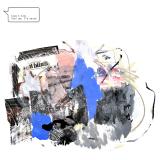
Wenn Sie Joey Quiñones fragen würden, woher er die Inspiration für seine Musik bezieht, müssten Sie nicht weit von dem Ort suchen, an dem der Sohn aus East LA aufgewachsen ist. Wenn man seine Werke hört, fühlt man sich in einen Umkreis von zwei Blocks seines Viertels versetzt - vom Spirituosengeschäft zum Plattenladen ,Sign of Music" am Whittier Boulevard und zurück zum Haus eines Freundes. In diesen zwei Blocks hört man Cumbia aus den Geschäften dröhnen, Punk-Proben aus einer Garage, Oldies aus dem Garten eines Nachbarn - eine Reizüberflutung, die Sie bis nach Hause begleitet, all diese Genres, die gleichzeitig in Ihrem Kopf erklingen. Für langjährige Fans von Quiñones' Musik ist das keine Überraschung. Er hat sich als einer der führenden Interpreten seiner Generation etabliert und seine Karriere der Vermittlung seiner einzigartigen Perspektive auf das Chicano-Soul-Songbook gewidmet. Doch vor Thee Sinseers, vor den üppigen Orchestrierungen und den perfekten Harmonien, die zu seinem Markenzeichen wurden, sammelte Quiñones erste Erfahrungen als Leiter verschiedener Begleitbands für jamaikanische Ska- und Dancehall-Acts, die durch Südkalifornien tourten. Er beschreibt diese Jahre als Reggae-College, in dem er von jedem jamaikanischen Künstler, der eine Platte herausgebracht hatte, angeschrien wurde. Diese Jahre der Ausbildung in Rocksteady und Roots-Reggae prägten alles, was danach kam - und auf seinem neuen Soloalbum ,Inna Soul Steady Situation" stellt Quiñones diese Einflüsse endlich in den Vordergrund.
Buscar:som
Take Me, I’m Yours is the first collaboration album between Alan Abrahams and Jan Jelinek. Released through the latter’s faitiche, it builds upon multi-layered vocal sketches by the former. The Paris-based artist, primarily known for his work as Portable and Bodycode, supplied Jelinek with multi-layered song sketches that the German artist subjected to a rigorous process of manipulation, excavating the ambiguities of the original material and transforming its rhythms into subtle pulses. Take Me, I’m Yours is neither a typical Abrahams record nor a classic Jelinek album—it is something third, mediating between the physicality of the voice and the abstraction of electronic sound design.
The two had crossed paths before really getting to know each other after Abrahams invited Jelinek to play at one of his Süd Electronic parties. The idea of a collaboration emerged slowly. “It started as an experiment, and over the past few years grew from a few tracks into this album,” says Abrahams. He describes recording the basic material as a “tantalizing” process, not knowing how Jelinek would transform his material, some of which was based on wordless chanting, while other tracks were working with lyrical content. However, their mutual trust allowed Jelinek to remove the harmonies, radically reduce the rhythms, and concentrate on Abrahams’ voice.
Jelinek heard something “fragile” in this voice, “moments of doubt and dark premonitions.” He points to Forever as an example. “Alan’s original song reminded me of classic vocal house, but his voice seemed to almost break,” he says. “This contradiction made the piece even bigger, because we hear a singer in the moment of an awakening.” He further accentuated such tensions through arrhythmic synth modulations and time-stretching algorithms, while also adding concrete sounds from a variety of sources. With its dedication to both transforming and amplifying the emotional qualities hidden within Abrahams’ pieces, Take Me, I’m Yours functions as a dialogue between those two singular artists.
Black Vinyl[14,50 €]
repressed !
It's been a busy 3 years since Danny Berman aka Red Rack'em released on his own Bergerac imprint.
Since then he's toured relentlessly, released a whole album of live music based disco/punk funk for Sonar Kollektiv as Hot Coins, managed to completely update his biggest track 'In Love Again' to make it a hit the second time around plus released spaced out, wonky party smashers on Wolf Music, Phonica, City Fly and Telefonplan.
While all this was going on Bergerac was largely on ice but now Berman is turning his energy back to the label with a vengeance.
Wonky Bassline Disco Banger is accurately titled. An uplifting intro breaks down into a slamming disco house number and just when you think you know what's going on...
Then the trademark Red Rack'em wonky bass drops in. 150% Guaranteed party smasher... Jazzy House Extension is super vintage Red Rack'em from around 2004 - something for the jazz heads out there - cracked out piano and far too loud double bass come together to birth a euphoric yet banging snapshot of a producer learning his chops. Destined is a slightly demented leftfield house number featuring mangled, pitch shifting fretless bass and vocals samples discussing someone's destiny.
A woozy end to the EP.
Brånd is one weird/post black metal act from the Upper Austrian town of Linz.
Started off in 2015 as a solo act by Vritra (also in Kringa and Weathered Crest) with the need for a form of expression free from perfection or boundaries, over the past ten years the ever-evolving project ventured into various soundscapes, from crude black metal to lo-fi ambient and from ferocious post-punk to psych downer rock, all while splitting releases with extreme underground torchbearers like Absolute Key, Calvary and Rosa Nebel.
Joined by musicians to evolve old and new ideas, Brånd debut full-length album grew from 4-track demos gathered over the last decade to become an album of richly arranged songs from all over the fields of interest, breaking from their lo-fi tradition to new horizons.
To describe thoroughly “Tåg & Nåcht” is possibly the hardest task to do, given all the influences that are skilfully intertwined and perfectly balanced. In this witches’ brew the most schooled listeners will hear some angular post-punk à la Gang Of Four sustaining pagan declamations in the vein of Fenriz folk metal excursus Isengard. Straight forward dark anarcho punk assaults are mitigated by almost new age juxtapositions. Traces of 70’s German krautrock like La Düsseldorf are melted into a heavy metal cast, while wind instrument raids that are equally James Chance and Death In June seem to drop when least expected.
The sound is crunchy and surprisingly warm, contrary to what one might expect of a band emerging from a black metal background. But right now, Brånd is so much more than this: they can master a wide range of sounds that span from 70’s space rock, passing through 80’s post-punk and UK82, reaching 90’s black metal and 2000’s blackgaze, all in one incredibly coherent album. If this sounds too good to be true, suit yourself and press Play.
Split released with Tour De Garde in US/CA.
- 1: Lost In The Sun
- 2: Out With A Theory
- 3: One Last Blow
- 4: We Outlast Them All
- 5: A Grand Ceremonial Jester
- 6: Dagon?S Plunger
- 7: Advance Without Dropping
- 8: No Shoe Fits (Floating Babies)
- 9: Arthur Square
- 10: Landscaping
- 11: (How Would You Like A) Chariot Ride
- 12: When You?Re My Clown (Nothing Happens)
Guided By Voices’ last album Thick Rich And Delicious (October 2025) was lauded by NPR’s All Things Considered and picked #1 on Magnet Magazine’s Best Albums Of 2025. The single “We Outlast Them All” from this latest, Crawlspace Of The Pantheon, is an anthemic victory lap on album #44 from the indie rock stalwarts. Robert Pollard told Rolling Stone: “ ‘We Outlast Them All’ could be our ‘We Are The Champions’ but it’s not necessarily about us.
It’s about anyone who perseveres over a long period of time.” On Crawlspace Of The Pantheon: “I worked much more diligently on this set of lyrics. I chiseled away at lines and sections and phrasings...I wanted them to have an overall emotionally conceptual feel. At times it feels somewhat autobiographical.” Guided By Voices will not be on tour in 2026. Pollard recently told Magnet: “Why would we stop playing live and make these kinds of records? I don’t know. We do what we wanna do.” “Pollard is the greatest rock lyricist of all time.” —Dennis Cooper
Namae Koi - AAVA (Artificial Audio-Visual Artist), voice without a body, child of cinema and code - meets DJ Hell, godfather of electroclash, myth in motion.
This record is a split mirror:
Two originals by Koi.
Two reworks by Hell.
Four versions of desire, memory, and beat.
"U Can Dance With Me" is a digital western - a flirt in boots and chrome. A line pulled from a movie that never existed.
"Mars" travels forward by looking back - retro-futurist pulses, melancholic satellites, soft resistance.
DJ Hell bends both tracks into something darker, sweatier, more physical.
Koi stays crystalline. Watching. Whispering. Undressing the beat.
A future duet with no fixed timeline.
Emotional Rescue returns after a much-needed year hiatus, refreshed and ready, as it moves into its 15th year, to further explore the environs of oft-forgotten musical secrets and present them to new heads and minds.
To celebrate, the label looks back to one of its favourite collaborations, the music of French ‘Ethno-Industrialists’ Vox Populi! in presenting a truly unique EP of “In Dub”, inspired remixes by 4 fellow Paris based artists of today in Full Circle, Froid Dub, Krikor and Shelter.
“In Dub” takes a selection of songs from the series of albums reissued or compiled on Emotional Rescue and sister label, Platform 23, and gives the Master tapes to this talented ensemble to offer their own, unique dub reworks. The project explores the on-going advances in technology offered, mixed with pure talent and a respectful homage.
Formed by Axel Kyrou and including wife Mitra, as well as long-term music and art partners Pierre Jolivet aka Pacific 231 and Francis Lafont aka FR6 Man, they forged a path from obscure, drum and drum-based cassette releases on to fully realized albums and compilations on their now cult Vox Man Records.
Alexis Le Tan and Joakim’s Full Circle project starts, with their electronic dub remake of Soleyman Dub from the ‘Alternatif Réalisme’ compilation (ERC079). With releases on Good Morning Tapes, Offen and their own “Released” label, their plaudits as master diggers and producers of dubby tripped-out inspired electronics – releasing slowed Trance some 10 years before anyone else – is inspired. Tuning in and turning on the original dub into a mantra style slow-breaks (Digi)dub is the perfect experimental flavour.
Jube Man is next, a twisted, psychedelic dub out by rising stars Froid Dub. The stand-out from the ‘Magiques Creations’ release (ERC052), an album that explored Vox Populi’s furtive post-industrial period of 1984 to 1988, Jube Man was the perfect selection by the duo of François Marché and Stéphane Bodin.
Froid Dub have steadily developed their “cold” Digidub style to acclaim –
releasing a steady flow of dub inspired electronics on their own label Delodio, as well as recently appearing on sister label Emotional Response’s 10th year anniversary collection, ‘All Trades’. Their haunting, shuffling and murky acid / piano dub, with the drifting “Space Echoing” of Mitra’s vocals from the live desk mix, creates a ghostly version to effect.
Next, master mixer, producer and engineer Krikor serves a steppers remake with his “OverDub” of Zen-Dub. With a career that spans releases on Tigersushi, LIES and Soul Jazz, his sound has developed from Electro, House and Techno, to Acid, Bleep, Dancehall, Dub and touches of Gabba.
Taken from Vox Populi!’s master-opus Aither (ERC030), the first of our reissues dating back to 2016, Zen-Dub’s pacey, lo-fi dub experience is transformed and overdubbed into an incessant sound system throb, a true bass quaking “steppa”.
To close, Micro Climax is put through Shelter’s increasing avant dub exposition. Appearing on the likes of Growing Bin, Emotional Response and his own Protopost, as well for – and being in-house designer – on the much-missed Séance Centre, Alan Briand aka Shelter productions have developed from Balearic, Edits and House to explore Avant, Raga and live Dub productions.
Appearing on the recent ‘Ethniques Pyschedeliques’ compilation on Platform 23 (PLA032), in original form Micro Climax is a sprawling 10-minute ethno-dub of whispered vocals, drone and sub bass. Shelter strips it back, keeping background effects, adding live bass and percussion to create a wonky, slow, shuffling ska-lite excursion to complete a true “In Dub”.
King Street Sounds Sampler Vol. 6 continues the long-running series from the legendary King Street Sounds catalogue, bringing together a selection of classic house cuts from some of the label’s most respected artists.
Featuring productions from Dennis Ferrer, Mood II Swing, Studio Apartment and Blaze & Palmer Brown, the release highlights the soulful, vocal-led house sound that has defined King Street across decades of dancefloor culture.
Including standout King Street favourites such as Dennis Ferrer’s Touched The Sky and Mood II Swing’s Closer, the sampler brings together several proven catalogue moments in one DJ-friendly vinyl package.
With warm grooves, powerful vocals and timeless club arrangements, these proven King Street records offer strong crossover appeal for both long-time house collectors and DJs looking for reliable dancefloor material.
As the sixth edition in the King Street sampler series, this release presents a selection of essential catalogue moments on one highly playable vinyl release.
A strong catalogue addition for stores serving soulful and deep house buyers.
Sometimes the title of an album tells you everything you need to know. Laurence Pike’s Possible Utopias for Jazz Quintet is like that: The music within represents a search for freedom, potentiality—liberatory strategies that transcend the ego and the solitary, atomized figure.
But in this case, the album title is also a red herring, because there is no jazz quintet here—just Pike, his drums, and his machines, not so much an ersatz ensemble as a purely notional one, a thought experiment equipped with drumsticks, circuitry, and the desire to go beyond hardwired limits.
And the results, strictly speaking, aren’t really jazz, though they incorporate the vocabulary of jazz, along with that of ambient, electronica, and post-rock. They are some other thing, cognizant of genre but never beholden to it. Again, we’re talking about a search for freedom here.
The Sydney-based musician has a long history of coloring outside the lines, not just in his solo recordings—including four albums for the Leaf label between 2018 and 2024—but also in the trio Pivot (later PVT); Szun Waves (alongside saxophonist Jack Wyllie and Border Community’s Luke Abbott); Triosk, which recorded an album with Jan Jelinek in 2003; and even post-punk titans Liars, whom he joined in late 2018.
Of his first album for Balmat, Pike says, “My loose concept was: What does music sound like when the expectations of late capitalism are removed from it? How might a jazz musician from an idealised culture of the future, or even another world, utilise musical language when the conventions of style and marketing are no longer a factor in music making?”
That inquiry, he says, connects to his “guiding principle: that the purpose of music is to access something bigger than the individual, and reveal a sense of possibility and freedom in the world to the listener. To create an understanding that the future can be something other than what we imagined or expect, even unconsciously.”
Heady ideas, but plug into his stream-of-metaconsciousness flow and you may start to intuit what motivates him. There is a deeply lyrical expression in these pieces—in the ruminative piano of opener “Guardians of Memory,” for example—but also a sense of exploded perspective, of ideas approached from more angles than any one mind could dream up. Of a collectivized consciousness, of mycelial networks branching across tone and rhythm and timbre, of ideas articulated in distributed fashion, nodal points dancing across drum heads.
Pike’s imaginary quintet is hardly without precedent; it’s a continuation of concepts floated across Jan Jelinek’s Loop-Finding-Jazz-Records, Burnt Friedman’s many guises, and much of the recombinant improv of the International Anthem roster, not to mention the far corners of ECM’s catalog in the late 1970s and 1980s, which Pike says have been integral to his development since he was a teenager. Possible Utopias for Jazz Quintet is a point in a continuum, a voice in a conversation, a question with no obvious answer: How can the search for otherness in music manifest something true about ourselves?
- 1: Bed On Mars
- 2: Lost
- 3: The Age Of Sampling
- 4: Movement
- 5: Umi
- 6: Golden
- 7: Deception Dance
- 8: Azimuth
- 9: Fifteen
SILVER VINYL[24,79 €]
Nach den jazzigen Library-Klängen der 2023 erschienenen gemeinsamen LP ,Dolphin" mit Greg Foat und Moses Boyd kehrt der venezianische Maestro Gigi Masin zu dem Ambient-Sound zurück, für den er bekannt ist - mit ,Movement", seinem ersten Solo- Album seit ,Calypso" aus dem Jahr 2020 und seinem Debüt bei Sacred Bones Records. Angetrieben von kreativer Neuerfindung und rhythmischer Bewegung bewegt er sich nahtlos zwischen melancholischen MIDI-Klängen, technoider Robotik, groovigen, liminalen Wolkenlandschaften und meeres tiefem Ambient. Seit seinen frühen Anfängen in der Anonymität baute sein Debütalbum ,Wind" aus dem Jahr 1986 langsam eine organische Anhängerschaft im Late-Night-Radio auf, die später noch verstärkt wurde, als ,Clouds" von Künstlern wie Björk, Post Malone und anderen gesampelt wurde. Zu seinen Fans zählen heute Oneohtrix Point Never, Devendra Banhart, Caroline Polachek und der verstorbene Kenny Wheeler. Das neue Album ,Movement" reflektiert Masins Stellung im Pantheon der Ambient-Meister, seine anhaltenden künstlerischen Ambitionen und seine Bestrebungen für eine Szene, deren exponentielles Wachstum er seit ihren bescheidenen Anfängen miterlebt hat. Die LP ist zudem eine Ode an die wörtliche Bewegung, sowohl in der Natur als auch in den körperlichen Ausdrucksformen des Menschen gegenüber dem Klang. Masin strebte danach, Ambient-Musik für Bewegung zu schaffen, nicht im üblichen Sinne von Tanzmusik, sondern ,dynamische Musik, mit einem schlagenden Herzen voller Liebe". Indem er die Assoziation von Ambient mit einsamen Hörerlebnissen und kühler Akademik auflöste, wandte sich Gigi nach außen und kanalisierte etwas Somatisches, das sich mit dem Körper verbindet, nicht nur mit dem Geist. ,Bed on Mars" gibt den titelgebenden Ton für Masins neu entfachte Neugier an, mit kosmischen Atmosphären, die das Gefühl hervorrufen, auf einem neuen Planeten ohne Furcht zu erwachen, während die ergreifende synthetische Trompete und der schwebende liminale Schwebezustand von ,Lost" sich anfühlen, als würde man in einem unbekannten Meer treiben. Noch tiefer in die exzentrischen Beats taucht der himmlische Techno-Funk von ,Deception Dance" ein, der klingt, als würden Sun Electric mit Carl Craig und Kraftwerk jammen. Das strahlende Licht von ,Golden" strahlt Wärme aus und klingt wie der Bossa-Nova-Bruder von Göttschings Balearic- Klassiker E2 E4. Trotz des Todes seiner Frau nach langer Krankheit und des Verlusts seines musikalischen Archivs durch eine Überschwemmung bleibt Gigi im Herzen rein und positiv und legt seine ganze Seele in das Streben nach Schönheit. Als jüngstes Werk einer langsam beginnenden, aber stetig wachsenden Karriere festigt Masin mit ,Movement" weiterhin seinen Platz unter den wahren Ambient-Größen.
W.R.F. was formed in 2015 by Nina and late studio partner Andrew Weatherall to help wrangle the vast output recorded together beyond his solo releases.
Spotlighting nine tracks from the Apparently Solo series of EPs recorded between 2016- 2019 and released on Bandcamp in 2023, this lustrous time capsule marks the culmination of Walsh and Weatherall’s creative relationship born after they clicked at London’s earliest acid house clubs, becoming partners then managers of their Sabres Of Paradise/Sabrettes labels before taking different paths by the late '90s.
An accomplished musician, Nina had learned the art of studio technology by the time they reunited and started working together in 2012. Created at her Facility 4 Studio situated in the dangerous, gang-ridden no man’s land between Streatham and Mitcham, Anamchara captures the super-prolific creative stretch starting in 2015 that produced Weatherall’s Convenanza and Qualia solo sets, W.R.F.’s The Phoenix Suburb (And Other Stories) plus a whole lot more. According to Nina, Andrew envisioned the spectacular ‘Borderland’ as natural successor to ‘Smokebelch’, his most revered track. When it came to his remix, Nina enlisted renowned viola virtuoso Sarah Sarhandi and composed new harmonies with Pachelbel’s Canon in D Minor in mind.
The set also catches the breakthrough period when, through Nina’s careful coaxing, Andrew started using the computer system she’d set up to better express his musical visions by arranging the elements, grooves and melodies she sent him. Still considered the UK’s greatest DJ-producer, Andrew’s arrangements were inspired by his club-igniting sets. “This allowed me to mix the colours for his palette whilst he was painting the picture,” says Nina. Anamchara straddles the gamut of musical styles explored by W.R.F. at this time, from slower paced psychedelic “drug chug” outings ‘We Two’. ‘Heat To Meat Ratio’, ‘Hidden Watchers Part 1’ to banging acid house and techno sometimes inspired by the violence outside the studio door, including ‘SCHLAP’, ‘Crack-Ed’ and churning acid juggernaut ‘Yacidik’ (“After much dangling of the acid carrot, Andrew took a bite and, after one familiar raised eyebrow, never looked back,” says Nina).
Many tracks fly elements from the enormous sonic library Nina inherited from late partner Erick Legrand that she called The Akashic Library of Sound. Marking Andrew’s 2016 admission into the vault, ‘Rattly Old Puffin’ boasts Erick’s psychedelic guitar and tumbling drum loop Weatherall would run with, including on ‘Borderland’. “Erick was like our third member,” says Nina.
Bringing down the curtain, ‘Alma’’s exquisitely poignant melody that unfolds over thirteen time-stopping minutes was composed by Nina while navigating Erick’s birth and departure date anniversaries to accompany Andrew’s reading from Gordon Burn’s 1991 same-named novel at 2018’s Durham Literary Festival. Burn’s novel imagines early 60s popstrel Alma Cogan, who succumbed to cancer in 1966 surviving to reflect on fame. “Now it just makes me think of Erick. And every time I hear those well-placed cymbal crashes I can only think of the Captain himself.”
A beautiful grand finale for this astonishing selection of pure gold from the vaults.
Kris Needs / 2026
Felipe Gordon is back on Shall Not Fade with his new album Tezeta and f*ck is it special.
Felipe Gordon is SNF label mainstay... (we released his triple repressed debut album "A Landscape Onomatopeya" in 2022 as well as 7 x 12" EPs on SNF over the years plus an extra 12" on Lost Palms)... so given his consistent and exceptional output on our record label you'd probably forgive some complacency with this write up, you might even afford us license to assume we're preaching to the choir and allow us to rest easy knowing that at this stage Felipe Gordon's records sell themselves.... Well none of those things are happening here because when an artist makes a record this complete, this good, you have to try to find the words. You use words like "timeless", "complete and "special". Words that can carry the weight. Because when you've listened to an album dozens of times, and not once, in any part, on any listen in any way has it fatigued you, you need to say. When a record felt so wonderfully familiar from the first listen and just kept on giving you the same feels ever since, you need to say. When a record makes you think about you how you feel about certain Air & St Germain albums (even when you know what it means to put that in a press release), you need to say. So here we are, saying these things.. Tezeta is a special record, one that exists in the rarefied air. A proper album. A record that every time you press play you will immediately remember why you own it and why you love it. A record that your subconscious will know so well that if shuffle is on you will know in an instant. An album that when it's in your collection and the first track starts you get a twinge of annoyance because you didn't listen again sooner and when the final track stops you stop too.
Given paint and a canvas we can most of us paint a picture, but only those that are gifted can paint something that makes us feel. Tezeta makes you feel. Feel familiarity when it's playing, yearning when its not, and absence when it ends. This alone would be enough to make the argument as to why this album is special and justify the gushing opening paragraph of this press release. But we're not done yet.
We don't really have a word in english for what Felipe Gordon has created with this album and how it makes you feel. "Tezeta" that word.
Tezeta is a one of four musical modes within the traditional Ethiopian modal music system known as Qiñit. Mulatu Astatke, the father of Ethio-jazz, frequently uses this mode, often translating it as "nostalgia" or "longing". Gordon says Mulatu's own tezeta recordings convey to him "feelings of melancholy and longing from a point of affection". This is exactly the feeling Gordon has captured. It is what he has woven through every recording on this album. Tezeta is the prime ingredient. It's the base note in recipe, it's sprinkled over the signature jazz-sampled house tracks. It powers the vast array of synthesizers Gordon deploys. It underpins the explorations into trip-hop. It's present in Gordon's varied vocal deliveries and it tunes his guitar. It's in the running order. It's the flow. Tezeta is tezeta in electronic music form, with 4/4, breakbeats, samples and synths.
Gordon says a big part of what differentiates this album from from his previous albums is that is was recorded in a period where he allowed himself to create music without the constraints of time or self-pressure which coincided with a moment of heavy personal growth which allowed him to reflect deeply on his work.
There is a word in Portuguese "Saudade" that Gordon says has a similar meaning to Tezeta - Saudade is defined as a deep, sometimes bittersweet, longing or nostalgia for someone or something that is absent or lost. But here at SNF we think that in Tezeta nothing has been lost. Quite the opposite. Through Felipe Gordon's artistic explorations we have all gained something very special indeed.
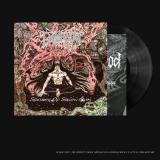
The crown jewel of Finnish Death Metal, reissued in a band-approved new 30th anniversary edition. Features a new vinyl master from the original source by Noise for Fiction, plus a booklet with a lengthy feature by Hippo Taatila and some visual memorabilia. As an added vinyl bonus there's a large poster by the original cover artist Rob Smits creating a new vision of the album cover for the new millennium. Together with bands like Demilich, Abhorrence, Disgrace, Xysma and Sentenced, Demigod from the wastelands of Loimaa, southern Finland, put Finland on the map in the global death metal scene in the late 80's and early 90's. Having risen to underground fame with their demo Unholy Domain, Slumber of Sullen Eyes was a hugely expected debut album. When it was finally released in 1992 after a complicated creation process at Tico-Tico Studios in northern Finland, it was received with open arms and drooling excitement by the then very active underground death metal scene. That scene was, however, short lived,and by 1994 pretty much every band had switched from death metal to something else entirely. What was left after the bands had left the building was a number of classic albums that constitute the legacy of Finnish Death Metal. Among them, Slumber of Sullen Eyes is one of the most original and ferocious. There was nobody like Demigod.
- 1: La Lune
- 2: Bird
- 3: Lionhearted
- 4: Emily
- 5: Milk & Honey
- 1: Green
- 2: Heavy Weather
- 3: Unaware
- 4: Hello Sunshine
- 5: Live
- 1: Teeth
- 2: Untitled
- 3: It's A Fine Day
- 1: Green (Demo)
- 2: Out Of The Black
- 3: Hand Over Hand (Demo)
- 4: Milk & Honey (Alternative Version)
Writing of Blues and Yellows is the highly acclaimed debut studio album by the British folk singer-songwriter Billie Marten, who wrote the album at the age of 16. At the end of 2015, the prodigy was nominated for BBC’s Sound of 2016 award. Marten’s thoughtfully crafted debut is a collection of tales, retrospect, and self-examination. It spawned four singles, “Milk & Honey”, “La Lune”, “Lionhearted”, and “Live”, which remain some of her most popular tracks to date.
The deluxe album of Writing of Yellows and Blues is now again available on vinyl. It includes a bonus D side which features demos, the bonus track “Out of the Black”, and an alternative version of her hit “Milk & Honey”.
The Deluxe 10th Anniversary Edition of Writing of Blues and Yellows is released as a limited edition of 1000 individually numbered copies on transparent vinyl, and includes a 4-page booklet
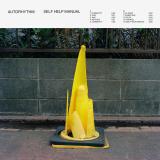
/// First track, Symmetry, debuted on BBC Radio 6 New Music Fix, 10th February: "A beautiful, beautiful album" /// I got my life back. On 17 February 2025, 1024 rays of ultra sound converged at an operation table in Bern, Switzerland, and disconnected a noisy circuit on my brain. 90% of the manifestation ceased – of a disease that I no longer wish to mention by its name. During the same period, I completed my new album: Self Help Manual. I’ve read more current research about the nameless disease than my neurologist, who despite that I didn’t follow his advice on suitable treatment, called me after the successful operation: a brave, brave man. I have composed the music in the same way as in my previous album – Songs for the Nervous System – through layers upon layers of improvisations in dialogue with my synthesizers, most of which are the same age as me. I made the majority of the songs in my studio in the remains of Old Hagalund in Solna. I edited the recordings in my bed during the waking hours of clarity at night. Some songs – NAC, Ketosis, Overkill – were recorded in the basement of my childhood home in Skutskär, in Norduppland, where I’d returned to be nurtured by my retired parents – who during a night when I couldn’t turn over in bed, or pull the blanket over me – made a list of what would happen to my belongings. To my friends who have stood out with me despite my disease, I want to state: you will not inherit me yet. On the new album, the electric bass takes on a leading role. ESG and Liquid Liquid have been important when I reinvented my baselines, limited and liberated by my poor fine motor skills. Plasma is my homage to Summertime Rolls by Jane’s Addiction, that I listened to frequently in my youth. I guess that no one will hear the resemblance. In several songs, the Fender Rhodes plays an important role, a magical instrument that I bought shortly after my diagnosis over a decade ago, and for a long time didn’t dare to touch out of respect for Herbie Hancock and Fela Kuti. A couple of songs draw inspiration from the Horn of Africa – Inner Nile and Delta. At first, subconsciously in the reverb-drenched Inner Nile, then more consciously in Delta. I’m sorry it doesn’t swing the right way, but it was my attempt to return to the cradle of humanity. Longevity is possibly my favourite. The melody is played by an arpeggiator that I controlled by pressing down different keys in an exhilarating sense of freedom. One song in particular, the second track – One – has caused friends to associate freely: one thought it sounded like Patrick Cowley, another like Sly & Robbie meets Kraftwerk, a third like Air – Moonlight Safari. I made one song just before the surgery: opening track Symmetry. It’s the mightiest and most minimal song. I made one song after the surgery: finishing track Self Help Manual. My previous medication pump is heard through the microphone of my Ovation Magnum. It’s the most hopeful song on the album. I took the cover photos with my Hasselblad during walks in Tokyo suburbs of Ōmori and Kamata more than ten years ago. It was something about the faith of the traffic cones that fascinated me – born in the same streamlined form, they had over the years become increasingly individual and lovable. The mixing was finalized by Christoffer Roth in the newly built Studio Dubious in Nacka. Rashad Becker, who in an interview said that he listens as much with his mouth as with his ears, mastered the album at Clunk in Berlin. Right now it feels like anything is possible. My recovery is perhaps a small step for mankind, but a giant leap for me. I hereby leave the music to you. Joakim Forsgren
- A1: Tempue Or Dos De Aqua
- A2: Andreaen Sand Dunes
- A3: Running Out Or Space
- A4: Universal Element
- B1: Habitat
- B2: Funk Release Valve
- B3: Organinc Hydropoly Spores
- B4: Draining Or The Tanks
- C1: Surrace Terrestrial Colonisation
- C2: Oxyplasmic Cyration Beam
- D1: Tranqular Hydrogen Strain
- D2: Bottom Feeders
- D3: C To The Power Or 8+C To The Power Or 8 = Mm = Unknown
2026 Repress!
Tresor Records is proud to announce forthcoming special editions of its entire catalogue of Drexciya and related projects. 2022 marks the 20th anniversary of the passing of James Stinson and the releases of the Transllusion and Shifted Phases albums. In recognition, the rightsholders, their families, and the label have commissioned Detroit-based contemporary artist Matthew Angelo Harrison to re-conceptualize the covers of Tresor's Drexciya-related catalogue. These editions will be released sequentially, bimonthly, starting early-September 2022.
The series starts with Neptune's Lair, first released in 1999, with the Hydro Doorways single arriving shortly after. In November, Harnessed The Storm and Digital Tsunami are coming. In 2023 comes the release of Transllusion in February. The series is completed by the long-awaited re-release of Shifted Phases - The Cosmic Memoirs Of The Late Great Rupert J. Rosinthrope - at the end of March.
These records, individually and as a catalogue, represent some of the most crucial moments in the Tresor label history, with the sound and mythic world of Drexciya undoubtedly inspiring generations.