Edwin Birdsong’s self titled album was released in 1978 on Philadelphia International Records at the height of the Disco craze. By this time, Edwin was a major player at PIR and a talented songwriter and producer as well. Birdsong’s vision hits the mark as the album boasts several gems that became dance floor classics, especially in New York, Philadelphia, Chicago, LA and San Francisco. “Cola Bottle Baby”, “Kunta Dance” and “Goldmine” are all hard hitting funks gems that kick in hard and are ready for partying. Daft Punk sampled the hitsong "Cola Bottle Baby" in "Harder, Better, Faster, Stronger". The sexy “Lollipop” is years ahead of its time and the irresistible “Freaky Deaky Sities” and “Phiss-Phizz” both became huge club hits, despite not having charted on any of the Billboard charts. Even though the album missed the charts, it became something of a hot item for disco/soul music collectors. Edwin Birdsong is available as a 45th anniversary limited edition of 750 copies on crystal clear and transparant green marbled vinyl.
Buscar:some freak
Abstrack Records is back with a new EP, putting the emphasis on instrumental music. Angers based band Auroboros, whose paths crossed on numerous time with Abstracks, largely on the occasion of infamous Freaks Pop festival, delivers twenty minutes of a progressive and cosmic, rocky jam.
«Camel» feels like a pursuit, a chase after an uncatchable vanishing point. The relentless acceleration of the tempo and the increasing power of the instruments feel like they’re leading us to an inconcei- vable paroxysm.
During the breakdown, everything strangely feels faster and calmer at the same time, we think we’re catching a glance at this horizon, even believing we’re reaching it as drums are fading away. But the ascent starts again and the trance is non negotiable. The power stream of the instrumental energies washes over the immobiles and the sceptics.
On the B side, two very different reworks complete the picture. Romain FX distills the dancefloor essence of «Camel». With a cosmic, almost oriental approach. The original piece gives birth to a proper peak-time banger, pure leg shaking material.
Mytron gives us a more playful and trippy remix. Seven minutes of a vibe that seems to be spinning and drifting, without ever breaking the patiently settled groove, filled with tribal spirit and sometimes even humour.
The Circus is a place of lights and colors, but also of shadows, even darkness. Admittedly, it delights children and makes adults laugh. But you only need one rainy autumn evening near a circus tent and the smell of fodder to think of the sadness of the clowns, the endless training of the animals and the freaks who are hidden in some caravan... cinema, the essence of the circus – movement, light, danger and burlesque – will have been admirably rendered in Notes on the circus by Jonas Mekas (1966), one of the inventors of the filmed diary. With Cirque, Michèle Bokanowski does similar work, entirely dedicated to spinning, in the musical field.
She distinguished herself in particular in the composition of musique concrète, among others Tabou and Trois chambres d'inquiétudes, after having studied with Pierre Schaeffer and Éliane Radigue. The latter, great lady of drone and minimalism, fell under the spell of Cirque and wrote the booklet for the piece as a poem.
The piece, divided into five movements, is based on the handling and editing of recordings captured within one or more circuses (this is not specified and is of no importance) between 1988 and 1993. The initial allegro reveals the gallop of a horse joined gradually by other images. The idea of the circular space of the circus tent is immediatly and magnificently rendered and will be constantly recalled by an insistent use of the loop technique. Children's laughter, applause and drum rolls are thus sheared, repeated before being brutally interrupted. Accordion interludes and the distortion of sounds create a dreamlike atmosphere. This beautiful nightmare reminds us, to quote Éliane Radigue, the "Magic of childhood still living in the heart of man even beyond its abrupt end."
Words by Alexandre Galand, from the book “Field Recording – L’usage sonore du monde en 100 albums” (ed. Le mot et le reste, 2012)
Major member of the french musique concrète scene, Michèle Bokanowski was born on August 9, 1943 in Cannes, FR, to a musician mother and a writer father. She now lives and works in Paris.
Music lover since adolescence, it was relatively late, at the age of 22, that Michèle Bokanowski decided to study composition. Reading In Search of a Concrete Music by Pierre Schaeffer was decisive. After classical training on harmony, she met Michel Puig, a student of René Leibowitz, who taught her writing and analysis based on the Treatise of Schönberg. In September 1970 she began a two-year internship in the ORTF Research Department under the direction of Pierre Schaeffer. She takes part in the same time in a research group on sound synthesis, studies musical computing at the Faculty of Vincennes and electronic music with Éliane Radigue.
Her main works are intended for concert: Pour un pianiste, Trois chambres d’inquiétude, Tabou, Phone Variations, Cirque, L’étoile Absinthe, Chant d’Ombre, Enfance, Rhapsodia, Cadence, Elsewhere. She has also composed for theater (with Catherine Dasté), dance (with choreographers Hideyuki Yano, Marceline Lartigue, Bernardo Montet) and cinema: music for the short films of Patrick Bokanowski and his two feature films L'Ange ( 1982) and A Solar Dream (2016).
2024 Repress
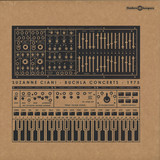
Finders Keepers invite you to witness the incredible first ever Buchla synthesiser concerts/demonstrations providing a distinctive feminine alternative to The Silver Apples Of The Moon if they had ever been presented in phonographic form. This is history in the remaking.
This spring Finders Keepers Records are proud to release an archival project that not only redefines musical history but boasts genuine claim to the overused buzzwords such as pioneering, maverick, experimental, groundbreaking and esoteric, while questioning social politics and the evolution of music technology as we've come to understand it. To describe this records as a game-changer is an understatement. This record represents a musical revolution, a scientific benchmark and a trophy in the cabinet of counter culture creativity. This record is a triumphant yardstick in the synthesiser space race and the untold story of the first woman on the proverbial moon. While pondering the early accolades of this record it's daunting to learn that this record was in fact not a record at all... It was a manifesto and a gateway to a new world, that somehow never quite opened. If the unfamiliar, modernistic, melodic, pulses, tones and harmonics found on this 1975 live presentation/grant application/educational demonstration had been placed in a phonographic context alongside the promoted work of Morton Subotnick, Walter Carlos or Tomita then the name Suzanne Ciani and her influence would have already radically changed the shape, sound and gender of our record collections. Hopefully there is still chance.
In short, Suzanne was a self-imposed twenty-year-old employee of the Buchla modular synthesiser company, San Francisco's neck and neck contender to New York's Moog. Buchla was run by a community of festival freaks and academic acid eaters whose roots in new age lifestyles and the reinvention of art and music replaced the business acumen enjoyed by its likeminded East Coasters. In the eyes of the consumer the creative refusal to adopt rudimentary facets like a piano keyboard controller rendered the Buchla synthesiser the more obscure stubborn sister of the synth marathon, steering these incredible units away from the mainstream into the homes and studios of free music aficionados, art house composers and die-hard revolutionaries. Championed and semi-showcased by composer Morton Subotnick on his albums The Bull and Silver Apples Of The Moon, Buchla's versatility began to open the minds of a new generation, but the high-end design features and no-compromise modus operandi was often confused with incompatibility and, in the pulsating shadow of Moog's marketing, the revolution would not be televised nor patronised. Suzanne Ciani, as one of the very few female composers on the frontline (and also providing the back line) did not lose faith.
These concerts' are the epitome of rare music technology historic documents, performed by a real musician whose skills and academic education in classical composition already outweighed her male synthesiser contemporaries of twice her age. At the very start of her fragile career these recordings are nothing short of sacrificial ode to her mentor and machine, sonic pickets of the revolution and love letters to an absolutely genuine vision of and 'alternative' musical future. In denouncing her own precocious polymathmatic past in a bid to persuade the world to sing from a new hymn sheet, Suzanne Ciani created a bi-product of never before heard music that would render the pigeon holes ambient' and futuristic' utterly inadequate. Providing nothing short of an entirely different feminine take on the experimental records' of Morton Subotnick and proving to a small, judgmental audience and jury the true versatility of one of the most radical and idiosyncratic musical instruments of the 20th century. These recordings have not been heard since then.
The importance of these genuinely lost pieces of electronic musics puzzle almost eclipses the glaring detail of Suzanne's gender as a distinct minority in an almost exclusively male dominated, faceless, coldly scientific landscape. Those familiar with Suzanne's work, a vast vault of previously unpublished non-records', will already know how the creative politics in her art of being' simultaneously reshaped the worlds of synth design, advertising and film composition before anyone had even dropped a stylus in her groove. Needless to say this record, finally commanding the archival format of choice, courtesy of the Ciani and Finders Keepers longstanding unison, was not the last first' with which this hugely important composer would gift society, and the future of a wide range of exciting evolving creative disciplines.
You have found a holy grail of electronic music and a female musical pioneer who was too proactive to take the trophies. With the light of Buchla and Ciani's initial flame Finders Keepers continues to take a torch through the vaults of this lesser-celebrated music legacy shining a beam on these non-records' that evaded the limelight for almost half a century. You can't write history when you are too busy making it. With fresh ink in the bottomless well, let's start at the beginning. Again. You, are invited!
Lucta from Milan finally unleash their debut album ‘Eterna Lotta’ which follows the demo 'Black Magic Punk’ from way back in 2018. The 9 track album takes you by the throat and never lets go. The music rages with a fierce atonal guitar tone and drums that push each track to its limits but it’s the vocals that really make this special. They are passionate and enraged and spat out in Italian. The band mixes the furious years of Italian hardcore from the 80’s, Rudimentary Peni and some classic pogo punk with a sense of paranoia to the overall sound. ‘Eterna Lotta represents the continuous internal and external struggle with life: from social interactions to self expectations and how everyone deals with it in eternal conflict. Lucta is the Latin word for "fight" and Lotta fully embraces every aspect of their lives. The band are outcasts, freaks, queers and punks and will forever fight for rights for those that need a voice and push towards a better future.' Limited to 500 copies on pink vinyl.
“Come my lady/Come-Come my lady/ You’re my butterfly, sugar baby”…If there was a song-track to the turn of the millennium, Crazy Town’s “Butterfly” was it, starting with its appearance on the 1999 album Gift of Game and winding up with its reign at #1 in the charts in February 2001. Anchored by a sample of Red Hot Chili Peppers’ “Pretty Little Ditty,” it forever defined the term “nu-metal power ballad,” and was a rare-for-the-genre love song to boot! But the album from whence it came didn’t fly as high as it did, with over 2.5 million copies sold, just because of “Butterfly.” The Gift of Game brings the noise with an all-out alternative metal assault, and the band’s rappers—bolstered by guest appearances from KRS-One and Mad Lion—are markedly better than their rap/metal contemporaries. And then there’s the album art, created by member Shifty Shellshock’s father and uncle, which lends a vivid rendering to the fantasies of every teenage boy listening to “Lollipop Porn.” In short, this was a freakin’ HUGE record that somehow…somehow!...has NEVER been on vinyl. So how to handle its momentous debut on its 25th anniversary? Well, first, we’ve created an inner sleeve with all of the lyrics (and there are a lot of ‘em). Our sources also tell us that the very explicit hidden bonus track on the CD release has mysteriously made it on here. But when it comes to the vinyl, given what we anticipate is going to be, ahem, crazy demand, we have pressed the record in two different colors, one in “Red Devil Velvet” vinyl and the other in “Yellow Butterfly” vinyl. Come dance with us and Crazy Town…twice!
The Mighty Monarch of Exploitation Cinema! These audacious adults-only radio adverts and trailers showcase all original counter-culture compositions from Friedman’s freaky frontal lobe! Includes a DVD!
Always a carny at heart, Friedman gravitated towards the sleazy independent film world, where he started a new company and ushered in a decade of his greatest films. Always brimming with bodaciously bare beauties and copious carnality – which became his tawdry trademark. From 1964-1975, he wrote and produced roughies, historical costume dramas (based on literary classics), counter culture time capsules, wild wanton westerns, various soft-X sizzlers, an elaborate jungle epic and perhaps the worst sci-fi movie ever committed to celluloid.
But what ties all of these films together is the ballyhoo. Friedman sure knew how to craft an auditory advertising campaign to got ‘em in the theatres. He was the king of alliteration and catchy taglines and his coming attractions were among the best and most entertaining of their time. Many of the trailers and radio spots utilized all-original compositions and scores from Billy Allen – a composer/conductor Friedman enlisted to set his films apart from all the other smut peddlers.
As “adults only” films were getting more explicit in the ‘70s, Friedman longed for the good old days of sin and skin. He only dabbled in the XXX world for a short time before retiring. So, listen up and get ready to have your ears spanked hard!
DJ Support: Gilles Peterson (BBC Radio 6 Music), Tom Ravenscroft/Deb Grant – New Music Fix (BBC Radio 6 Music), Huey Morgan (BBC Radio 6 Music)
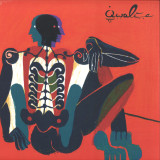
Cut from material recorded in April 2021 at Fish Factory studios in London, the album’s title Abbreviations nods to the editing and post-production processes that trimmed the original recordings into seven succinct and intricate tracks. Making space for collaborators Ernesto Marichales (percussion), Miryam Solomon (vocals) and Valeria Pozzo (Violin, viola), it builds on the critically-acclaimed success of Sound & Reason (supported by Gilles Peterson and Mary Anne Hobbs) to bring out different shades of the group’s shape-shifting sound.
‘Elevator Company’ condenses twenty-minutes of jamming around Tal Janes’ hypnotic guitar line into a low-lit lounge groove that subverts the tropes of elevator music associated with some forms of easy listening jazz. Featuring Solomon’s wordless vocals, the piece blurs the lines between ambient and improvised music, creating a warm and intimate atmosphere reminiscent of classic RnB recordings.
On a different tip, ‘The Spin’ is a trance-like freak-out drawing on the final reserves of energy at the tail end of two days of solid recording. Reflecting guitarist Janes’ idea that "music really starts happening after a while, once you feel like you have nothing left to offer," the hypnotic rhythm section sets the tone for an fraught and frazzled guitar solo that seems to dissolve the very edges of time and space in the process.
An album that speaks to Qwalia’s endless capacity for self-renewal and uninhibited expression, Abbreviations takes its cue from the group’s name to communicate something ineffable about the nature of music, rhythm and sound that must be experienced to be truly understood.
LTD 200 copies / Printed sleeve
Somehow between speed Hardtek, Speedcore fairway : a straigth spaceship ! Fresh from the Nederlands !
- Cooking Up Something Good
- Dreamin
- Freaking Out The Neighborhood
- Annie
- Ode To Viceroy
- Robson Girl
- The Stars Keep On Calling My Name
- My Kind Of Woman
- Boe Zaah
- Sherrill
- Still Together
- Cooking Up Something Good
- Stars Keep Calling My Name
- Dreamin' Slow
- Lonely Shredder
- Robson Girl
- Annie
- Harrison Ford Escort
- Sherrill
- My Kind Of Woman (Instrumental)
- Dreamin' Fast
Cassette[14,08 €]
Grey White & Orange Vinyl. Mac DeMarco's debut full length, 2, released in 2012, cleaned up the songwriter's warped take on soft rock and brought it to a broader audience. Given DeMarco's affinity for keeping things lo-fi _ 2 was the first time he'd bothered to record demos _ it's revealing to hear these songs in their most embryonic form. The performances here are a little looser and the sound a little hazier than on the actual LP, lending an atmosphere of dreamy vulnerability, especially to ballads like "Annie" and the Lennon-esque "Sherrill."
LP, 2024 Repress - half speed mastering
"The 50 best IDM albums of all time"
Pitchfork
"A liquidy headbox of aural shapes, whose forms hardly change yet seem to encompass infinite viscosity within them, like rainbow pools of oil on water"
Wire
"Before IDM became a nation of Aphex and Autechre cosplayers, the genre was less defined by aesthetics than by a shared ideology. Here was a loosely connected axis of post-rave kids, united by little more than a shared willingness to subvert the tools of their techno idols and create sounds that hadn't previously been imagined. No record of the era better embodies this find-a-machine-and-freak-it ethos than Islets in Pink Polypropylene, the otherworldly debut by British producer Anthony Manning."
Pitchfork
"It’s refreshing to hear an all-electronic album that sounds so organic yet so totally alien."
Fact
"One of the UK’s first post-rave ambient records proper; sharing much more in common with Autechre’s Amber or AFX’s Selected Ambient Works Vol. II - which were both released in that same year - than anything else before or around it."
Boomkat
For fans of avant everything innovative and experimental music.
About The Album>>>>
The whole album was composed and realized on the Roland R8 drum machine. It followed the same process as the Elastic Variations pieces, with the major addition of many, many hours of editing.
Each piece was composed as a series of patterns, of varying lengths ( 5,6,7 bars long ). The stock R8 sounds were embellished with one of several ROM sound library cards ( mostly the Dance card, number 10 ).
These patterns were created by tapping out a rhythm, then, in real time, using the Pitch slider as the pattern looped, to create improvised melodies for each of the pattern's voices.
The rough version of each piece was built by stitching the patterns together as a song, listening to each addition over and over, to make sure the melodies flowed into each other in a vaguely coherent manner.
Once this initial rough structure was in place I set about fine tuning every single note.
The R8 doesn't allow you to assign a pitch to a note in the conventional sense. It's not possible to assign a pitch of Middle C to the first note of the first bar. Instead, it assigns a numerical value to a note's pitch, between -4800 and +4800 ( I think those numbers are correct - that little screen is seared into my memory ).
If you restrict all notes within a piece to a multiple of, say, 400, you therefore create the possibility of a sort of scale. For multiples of 400, you have a total number of 24 permissable notes. However, most of the percussive sounds, when pitch shifted, only sounded 'good' over a reduced range.
The first editing step was to go through the entire piece, and change every note's pitch to its nearest multiple of 400.
The second step was to draw out the entire piece on graph paper, the Y axis being pitch, X being time. This drawing gave me a visual sense of a melody's flow. It was easy to see too many notes clustering around too tight a pitch range for instance, or a single note straying way down into the lower register while all others at that point in the melody were in the upper.
Once these first 'clearing-up' edits were complete I could set about re-writing elements that didn't sound right melodically. Often this meant stripping out whole chunks of superfluous notes, to reveal a cleaner melody line, then shifting its shape slightly. If the flow of the line of dots on the graph 'looked' balanced and sweetly sinuous, then often it sounded so.
This entire process took many weeks per piece. Weeks of doing almost nothing else. Listening. Re-drawing. Re-writing. Listening. Round and round and round. When I could hear the whole thing in my head, from beginning to end, and nothing seemed to jar ( too excessively ), I knew it was done, time to move on.
I imagine it's very similar to the process of stop animation. Your days are filled with painfully tiny incremental changes that seem to be getting nowhere. Then, slowly, a shape, narrative, starts to appear. Then, all of a sudden, somehow, it's done.
When all the pieces were complete the R8 was taken into Irdial's studio where some simple effects were added, each voice recorded individually for clarity onto 8-track tape and mastered onto an ex-BBC half-inch tape deck.
Then I slept. And vowed never to do it again.
*****
And the title ?
Soon after finishing the pieces I happened to read a magazine article about Christo's "Surrounded Islands" installation with the music playing in the background.
There was something about a particular cluster of words within a random sentence that seemed pleasing and somehow appropriate.
"Islets in Pink Polypropylene" seemed to make as much sense as anything else.
At the frayed bottom-edge of Indiana - just a moderate bike ride north of Louisville, Kentucky - multi-instrumentalist, artist and songwriter Ryan Davis' Americana-noir soundwaves have been emanating for years in a myriad of forms. As driving force for the lauded State Champion, long-running member of Tropical Trash, administrator of the esoteric and excellent Cropped Out festival, and lone proprietor of the Sophomore Lounge label, Davis lays down his first proper 'solo' release with Dancing On The Edge, a rich, 2LP tapestry of tunes that absolutely glows over seven expansive cuts. It's a pure collage of modernity and heritage. Recorded in early 2023 with help both in-studio and remotely from peers like Joan Shelley, Catherine Irwin (Freakwater), Will Lawrence (Felice Brothers, Gun Outfit, John Early), Jenny Rose (Giving Up), Christopher May (Mail the Horse), Elisabeth Fuchsia (Footings, Bonnie "Prince" Billy), and Aaron Rosenblum (Son of Earth, Sapat), the results herein are melancholic, gentle, minimal yet colorful in mood: a lilting highway accompaniment of crisp instrumentation and a relaxed, amiable approach to vocals with rhapsodic wordsmithery. Fans of the aforementioned artists as well as those of Souled American, David Berman, Kurt Vile and 'Comes A Time'-era Neil should all easily find bounty. While bare-boned and uncluttered in presentation, many of these pieces track over 6 minutes allowing a fair amount of expansiveness. Dancing On The Edge stares down into the navel of the American Experience underbelly with a fair amount of outward reach. Besides the Kosmische-synth and violin stabs reaching into a European element, stately organ swells build a musical bridge between 1969 Southern California and Felt's latter era smooth moves, with layers of intelligent gesture taking this well beyond the realm of its archetypal indie troubadour/acoustic songwriter tag. Music and mint juleps never went down so well together." Originally released via Ryan's own label, Sophomore Lounge, in the US late 2023, it picked up some incredible reviews: best of 2023 in both Pitchfork and Rolling Stone, 9/10 lead review in Uncut, and a raft of other notable publications. "This is the sound of someone bearing a torch." - Bill Callahan (Smog) - RIYL Silver Jews, BPB, Lambchop, Cass McCoombs, Sparklehorse.
London producer Keplrr debuts on Midgar with ‘Plumes’. Known for his productions on trendsetting outlets like Control Freak Recordings and Pressure Dome where he showed his excellent take on forward thinking broken techno music, right here for Midgar he uses a more straight forward approach with two versions of title track ‘Plumes’. The original is a subtle, percussive and playful techno groover, where the ‘Meditation Mix’ flips this impeccable groove into an airy atmospheric after-house mood. Second track ‘Pulse’ continues on this breezy atmosphere, it’s a floaty eyes-closed deep trip, with carefully arranged drums creating the perfect breakdown. Keplrr’s creative process delves into the profound, seeking to encapsulate the sensation of falling or morphing, blurring the lines between reality and reverie. His aim is to transport listeners to a state somewhere between a dream and a trip, where the boundaries of perception dissolve, and the subconscious takes flight. This EP embodies that quest, each track a sonic voyage into the depths of consciousness.
Needle Mythology, the label founded by music writer, author and broadcaster Pete Paphides, is thrilled to announce the signing of the eagerly anticipated debut album by London singer-songwriter and renowned DJ Iraina Mancini. Iraina’s singular pop vision will be known to regular listeners of 6 Music, where her singles ‘Undo The Blue’, ‘Deep End’, ‘Shotgun’ and ‘Do It (You Stole The Rhythm)’ have all been enthusiastically embraced. Iraina's obsession with music stretches back into her early childhood, much of which was spent absorbing her parents’ collection of old 45s, in particular her dad’s Northern Soul records – an alternative education which meant that, by her early 20s, she was a familiar presence in the DJ booth at many discerning London club nights. Her love of French ye-ye, British freakbeat, Brazilian bossa nova, soul, and Turkish psych will be well-known to regular listeners of her Soho Radio show. Having always sung from a young age, Iraina embarked on a string of collaborators such as Jagz Kooner (Sabres Of Paradise), Sunglasses For Jaws (Miles Kane) and Simon Dine (Paul Weller, Noonday Underground) which truly saw her find her metier as a songwriter, conjuring melodies that stand shoulder to shoulder alongside her impeccable influences. Iraina describes her first single for Needle Mythology ‘Cannonball’ as “a celebration of that moment when you meet someone you really fall for and it knocks you for six. It can be a bit scary, but you’ve just got to go with what your intuition is telling you.” Written with Simon Dine, the vertiginous heart-in-mouth abandon of the song perfectly mirrors the circumstances that brought it into being. Iraina cites Jacqueline Taïeb’s 1967 single 7h du Matin as an early inspiration for the song: “There’s such a great energy about that song. Her vocal is amazing and all those stops and starts that grab your attention.” “This is an artist I absolutely love, one of our rising stars at 6Music.“ Lauren Laverne BBC 6Music “Iraina seizes on the best aspects of the past, blurring those impeccable 60s and 70s influences with a touch of modernity.” Clash “Full of femme fatale poise and swooning chanteuse flourishes.” The Times
Trailblazing a new wave of House hero, from the heart of Techno-dominated, Berlin - LOVEFOXY here delivers a dynamite 3 tracker for NYC's Nervous.
Opening up proceedings, with a defiant, smile-inducing, soliloquy - is ˙Sluthouse˙; a track that truly wears the artist's roots on its sleeve. With it being a pure celebration of heyday, US House music at its material core; whilst at the surface - a proud embrace of that inimitable Berlin attitude, atmosphere and desire to always be pushing things forward.
With its stripped back garb and distinct sense of purpose - ˙Freakfest˙ is pure club-born fire... its booming kicks, skating rides and racing hats delivering an invigorating sense of urgency that's hard to resist.
Summed up beautifully by her latest bio - LOVEFOXY's sound is often epitomised by its 'warm punch'; something that EP closer ˙Buisness First˙ showcases brilliantly. It's muted stabs, reverberating chords and hazy strings providing an almost palatial level of warmth; whilst the resonant bass, galloping kicks and incisive snares pack an almighty, sucker-punch.
- A1: Flameout
- A2: Re-Entry To Mog (That's How It Is)
- A3: Space Odyssey (Sure Listic)
- A4: Astral Freakout (A Love Built On Sand)
- A5: Orbit Fantasy (Inside Looking Out)
- A6: Blues For The Guru
- A7: Strings For Ravi
- B1: Barrier X-69 (Slippin' & Trippin')
- B2: A Dissappointed Love With A Desensitized Robot
- B3: Where Were You In 1982?
- B4: Trippin' On Lunar 07
- B5: A Bad Trip Back In '69
- B6: Karma Sitar
- B7: Whiplash
- B8: Instant Nirvana
When first released Astro-Sounds From Beyond The Year 2000 promised an uncharted trip beyond the now generation! And it certainly delivered, as soon as the needle drops onto the opening track ‘Flameout’
we are in astral freak-out territory with cosmic strings phased beats & displaced fuzz guitars... Despite being released as a budget label’s take on the burgeoning psychedelic scene Astro Sounds, delivers the real deal.
This is thanks in no small part to the central role played by Wrecking Crew guitarist Jerry Cole. Cole had previously been the involved some L.A. session colleagues and cut his own psychedelic
album: The Inner Sounds of the Id by 'The Id' and was the perfect choice to front Astro Sounds which can be considered a development from the seminal sounds of the Id.
Astro Sounds has suffered from some unofficial releases that offer poor audio quality. This Vinyl Exotica re-issue is remastered from the original tapes and is presented on coloured vinyl
Storytelling was released on 3rd June 2002 as the soundtrack to the Todd Solondz movie of the same name.It was recorded and produced in 2001 at the famous The Magic Shop Recording Studio in New York which closed in 2016. Some tracks were also recorded at Water Music Recording Studios in Hoboken, New Jersey and CaVa Studios, Glasgow.
Bill MacKay and Drag City are delirious with pride to announce the discovery of a new territory: Locust Land, a record which seeks to reflect the nerve-shredding consciousness run amok in our world today - and somehow allay it with sound. Bill"s music is a visceral crackling where it meets the air, and Locust Land can"t help but reflect its era more than any other in his discography. It"s been five years since the release of Fountain Fire - but in the interim, Bill has barely stopped moving, collaborating with artists across the spectrum, including cellist Katinka Kleijn, banjo player Nathan Bowles and keyboardist Cooper Crain. He"s also contributed to recordings by Steve Gunn, Ryley Walker, Bill Callahan & Bonnie Prince Billy (Blind Date Party), and Black Duck (on their self-titled record featuring Douglas McCombs and Charles Rumback). Forget five years - how"d he even get Locust Land squeezed out of his temporal lobes? Bill"s sense of music as art is constantly modulating - lifting off from where it is found and naturally migrating to some other place. Sometimes, that"s elsewhere - others, it"s simply to be found deeper inside the starting point. And so, the action of moving on informs the landscape of Locust Land. This manifests in several different ways. A restless energy and urgency is repeatedly felt - in the driving momentum of "Keeping in Time," "Glow Drift," and "When I Was Here" - while a dogged persistence radiates from the tone colors and percussion of "Oh, Pearl." Mating a dirge-like desolation with sparkling guitars, "Radiator" adds darkness and depth. The sense of searching, displacement and longing in vocal tracks "Keeping in Time," "Half of You," and "When I Was Here" speak literally to the tumult of current vibrations. Within the arrangements, there"s also departure from previous norms - in addition to the brilliant guitar work for which he is known, Bill plays a variety of keyboards, from piano to organ to synth, extending his music with the available voicings, while enriching the sound field without abandoning his signature brevity. For fans of his singing, and following in the recent tradition of Fountain Fire as well as his collaboration with Nathan Bowles, Keys, Locust Land expresses with an increased vocal presence - and heightened engagement, with Bill"s words and melodies drawing us closer. Also different: on his previous solo recordings, Bill played every sound. Here, he has invited other illustrious Chicagoans to join him: Sam Wagster (The Father Costume, Mute Duo) plays bass on three songs, two of which feature the percussion playing of Mikel Patrick Avery (Natural Information Society, Jeff Parker, etc.). Additionally, Janet Beveridge Bean (Eleventh Dream Day, Freakwater) adds otherworldly vocal textures to the elegiac "Neil"s Field." Whether played alone or with companions, this music projects the strength of a universal collective. Even with a piece that might earlier have passed for blissful pastorale, Bill displays some declamatory motives. The reverie which opens the album, "Phantasmic Fairy," embodies both transcendent and desperate moods, with Bill"s ineffable slide guitar playing afloat, with organs and synths, in a dream state suffused with a sense of foreboding - a requiem, perhaps for the days of unencumbered bandwidth? On the other side of the album, the strength to continue to hope appears in the lifting melodicism/exoticism of the album-closing title track, leaving the listener with the sense of having achieved a hard-won space - a place of personal contemplation and dissent, one that everyone on the planet deserves to visit every single day on earth. With cover art also by Bill MacKay (the third of his albums on Drag City to feature his work), Locust Land stands as a thoroughly personal statement from Bill to everyone everywhere.
Members of The Chats, second LP in anticipation of their debut Euro Tour, FFO Cosmic Psychos, The Saints, Stiff Richards. Australia never misses. European release of The Unknowns second LP, released on Bargain Bin Records in Australia. "There have already been some monster LPs released in 2023, and the sophomore album from The Unknowns just might be the best of the lot. The Brisbane-based then-trio released one of the greatest punk albums of the roaring twenties (so far) with Nothing Will Ever Stop back in late 2020. Now a foursome following the addition of The Chats' Eamon Sandwich on guitar, The Unknowns have returned with an even better follow-up. East Coast Low manages to take most of the musical genres I hold dear and mash them together in the most delightful way. Basically the sound is classic punk rock with a ton of energy and catchy tunes (what else would you expect from Australia?). Yet at the same time, this album aligns beautifully with modern-day garage punk, power pop, and straight-up rock n' roll. East Coast Low packs ten tracks of punchy sing-along punk rock into 23 and a half minutes of pure fun. Songs like "Dianne," "Rid of You," "Thinking About You," and "I Don't Know" prove once again that there's a certain kind of itch that only old school punk rock n' roll can scratch. These guys are doing nothing new. But man, they do it so freaking well! If we're talking about the cream of the contemporary Aussie punk crop, The Unknowns have earned a place in the conversation." Josh/ Faster and Loude.