This album was recorded during Thollem's 2017 residency at Brooklyn-based multi-discipline mecca Pioneer Works. It's the second by Radical Empathy, which combines three uncategorizable improvisors. Michael Wimberly has been astonishing folks since his days in Charles Gayle bands and Steve Coleman & Five Elements in the early '90s, and has gone on become a composer and educator of note. Nels Cline has spent decades changing people's ideas about the role of the electric guitar in multiple contexts, ranging from Wilco to Anthony Braxton (think about that!) as well as many projects as a leader; this is his fourth album in trio with Thollem, and a fifth will follow next year, also on ESP. Some people have given ESP-Disk' flak (and "flak" was not the first word choice here) about putting out Thollem McDonas albums. "He's not in the jazz tradition," they say, and even though their idea of the jazz tradition includes Albert Ayler, we like to think that this album will make their little, closed minds explode.
quête:some other people
Helsinki´s own underground powerhouse duo Trevor Deep jr. collaborates with young Berlin based and Korean born producer Wewerka. Flavourfull four-track ep is titled “KINDRED”.
Opening track “4 The Ladies” is paying homage to warehouse parties. Raving stabs and vocal samples screaming to start a riot. Followed by the second track Namu, pure deep house music inspired by breakbeats. B-side opener ”Nuna” displays the soulfull side of the producers, where African singer Nanghiti provides beautiful vocal foundation for Magic Manfred´s funk on the live bass. I guess you can call it Detroit soul.
Last track ”Spirits” is driven by soul sampled breakbeats and heavenly synths, transcending you to new hights.
A kindred spirit: ”Someone who you share a mutual meaningful connection with. Kindred spirits will encourage each other to develop as people and offer positive energy to each other.” That´s exactly what this record is all about.
limited 300 copies
A record to be enjoyed to its very last second AM Jazz is set to place this songwriter where he just might, finally, receive the recognition he deserves; from unsung hero to a truly worthy candidate for being called up to join the City of Manchester’s ranks of great musical icons. Whether you prefer to know him as Mr. Roberts or simply call him Al, it’s time to become acquainted with the real Jim Noir.
Tossing his bowler onto the hat stand and sliding on his slippers, AM Jazz sees ‘Jim’ putting his feet up whilst Alan Roberts takes the lead. A creative masterpiece for the record player and the mantlepiece, it’s a multi-layered album that features close friends including those dearly departed, and is his truest record to date, by a songwriter painting his own hypnotic Portrait of the Artist as a Young Man.
“I haven’t 'felt' like Jim Noir for a long time. I’m not sure I ever did; it was a construct of other people’s imaginations,” reveals Al. “AM Jazz is definitely the kind of music I make generally. It harks back to when I started making music years ago and didn’t worry about capturing a particular style. It will be nice to show people more of that.
It's the best album I've written; real hypnotic minimalism, the good stuff!” 15 years since he recorded the first ever 'Jim Noir' EP, AM
Jazz is the record all Noirheads won’t be surprised Al had inside him.
Letting the Beatlesesque stylings of his most recent album Finnish Line be (5 years ago no less), AM Jazz suits the Noir repertoire of his catalogue so far and is another homegrown offering which sees the Daveyhulme composer tinkering in his suburban Manchester studio once more, with the magic of his computer work sorcery, analog and tape recordings.
“For this I went back to the slightly more haphazard way I wrote my first album, Tower Of Love, wherein I’d use things in front of me, or a bit wrong like headphones for a microphone, to make the most Hi-Fi Lo-fi album ever.”
Whilst a brief disappearance of Jim’s online persona may have provoked bleak theories as to his whereabouts, Al had little time for digital distraction. Whilst writing and creating with friends, he has worked on electronic pet project, FAX with former Alfie guitarist, Ian Smith, and the vintage analogue house meets electro sound of his own solo EP Granada Personnel Recovery, as well as producing local band, Shaking Chainsor, and helping long-time musical colleague, Aidan Smith with his long-awaited 'The Planets' project; “I’ve been writing in dribs and drabs when I feel like it,” Al says. “I used to write all day everyday but it’s a lot harder now I’m (feeling) over 100 years old.” Never not sonically exploring or being inspired by the sounds around him, there was even a red-carpet moment when he appeared as a film premier guest after a couple of his songs were selected for the OST of director Jason Wingard’s film Eaten By Lions.
Performing all AM Jazz’s instrumental parts himself but also, at the right moment, bringing in present and past pals along the way, sexy lounge song, ‘Hexagons’ features 'Phil Anderson' and Mark Williamson singing and playing “legendary OTT guitar solo” respectively. Meanwhile the orchestration of ‘Peppergone’ waltzes like a beautifully romantic ode to Beethoven’s Moonlight Sonata – a tribute to dearly departed best friend 'Batfinks' who originally wrote the chords in his song 'Peppercorn.' “I hope he doesn’t think it’s shit,” Al jests. Listen closely and you may even find a few unsuspecting celebrity guest appearances as, perhaps, it could be the very first album to feature soundbites of podcasts sneaking onto the recordings. “I will have a podcast on if I’m recording; Adam Buxton, Athletico Mince, Frank Skinner or Richard Herring… I’m sure some mics will have picked them up, like in the old Tower of Love days,” he says referring to his breakout debut.
Culled from around 50 tunes AM Jazz moves like the time of the day, from dawn to night, stirring from the pop of ‘Good Mood’ and ‘Upside Down’s Beta Band groove. “As the album was playing, I imagined this smoky backstreet with all those neon signs outside clubs at about 4am,” Al says. Mellow ‘TOL Circle’ is like Percy Faith’s Theme From A Summer Place synthesized, capturing the style of TV library music or movie soundtrack obscurity that has always stirred Al’s curiosity, and the album plunges into a vast chasm of instrumental exploration with ‘Mystermoods,’ visiting Japan’s funky synth whiz duo Testpattern and Hakabashi Sakamoto. Darkening and deepening in intensity, ‘Eggshell’ is like an undiscovered gem from Angelo Badalamenti’s cutting room floor, the Panda Bear shimmer of ‘Lander’ is where blissful positivity and sadness meet, about another of his friends who left the world too young. “By the album’s close, its nearly time to let go and enter the ether,” he says of the album’s story. “Like one would do when they take their final sigh on this earth.”
Medicine used to be, we expected, good for us. Albeit with added sugar. Now medicine is a huge problem in itself, with vast companies caught mis-selling dangerous drugs. It’s one of the biggest scandals ever. How on earth did we get here? Who did this?
The Imbeciles are on the case.
“It’s about the dark side of prescription ‘medicines’. Oxy, Xanax, Ambien, all that. Big pharma is pushing these addictive ‘medicines’ that we don’t actually need, to desensitise / numb / kill. All for profit,” says Butch Dante.
A new classic from The Imbeciles. They know. And they made a video. Watch it here.
Now they’ve been remixed. By these people:
C.A.R.:
Impossible to categorise, and all the better for it - London based, Franco-Canadian, C.A.R., flirts with elements of new wave, cold wave, synth-pop, post punk and off-kilter disco; and without doubt wields some of the most satisfyingly other-worldly melodies and synth lines around.
Ryan James Ford:
One of the most exciting underground techno producers on the block - Ryan doesn’t constrain himself to any one rhythm, aesthetic and motif, but can always be found to be hitting the listener with thick atmosphere, dark melodies and an upfront, experimental attitude.
Legowelt:
A true pioneer of left field house and disco, this Dutch master draws from disco, italo, dub, dancehall, techno and many more sonic pools to create his wonderfully engaging, but always envelope pushing sound.
Andy Ash has been quietly sneaking out seriously good analogue-driven electronic music on some of the best underground labels for over a decade.
The Liverpool-based producer, DJ and visual artist (the artwork for this re- lease is Andy’s own oil on canvas) has graced the likes of Chicago’s Stilove4music, NYC’s On The Prowl, Sydney’s People Must Jam and has remixed Fantastic Man for Detroit label Kolour LTD amongst many others.
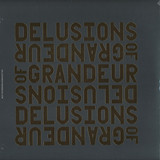
The bottom line is that he’s definitely one of the UK’s unsung heroes when it comes to deep, raw, Chicago and Detroit-influenced house music and we’re proud to welcome him to Delusions Of Grandeur with an amazing three tracker entitled the Bottleneck EP.
The title track opens with snappy hats, flappy congas and sloppy baseline all sitting perfectly in the mix and with a looseness that is much harder to achieve that it may seem. A simple synth melody doubles up the bassline while an extra square wave lead adds that little extra hook without distracting us from the bouncing groove. With Bottleneck, less is definitely more.
Flipping over we have Hump, an altogether darker affair with a twisting acid line joining distorted 808 drums and tripped-out snippets of spoken word coming in and out of focus. The low-slung bumpy groove and spacey synth parts make this a compelling warehouse track which will draw everyone into it’s seductive confines.
Closing the release we have Actual Price, a shuffling, deep groover with rumbling low end and machine-like analogue synth part skipping around the crunchy beats. A cerebral yet punchy and dynamic closer to an excellent release!
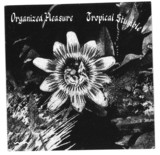
"In popular imagination, the early 80s were dreadful. Thatcher and Reagan led the world on a diet of austerity, unemployment and depression. The Berlin Wall separated East from West. The Sex Pistols had broken up. In sum, the future was unsure. Belgium was no exception. While Punk had been declared dead by some, its spirit was still roaming in country parishes and city alleyways. As the Catholic bourgeoisie provided young people with few opportunities, music was an obvious pastime. Teenage hopes of starting a band and putting out a record were everywhere. Organized Pleasure and Satin Wall were two bands living the dream. In contrast to a thousand others, they left us sounding evidence. This split 7” gathers two tracks originally recorded in 1981. It was the first and only studio excursion for both groups. After some local gigs, the people involved moved on to other projects. While their music is illustrative for the era, their story is distinct. Same but different."
"The first series comprises six related movements, usually organised in pairs, electronic sounds with instrumental and more rarely, concrete sounds: Incidences/resonances brings into play controlled resonances akin to sounds of concrete origin in a process that helps to expand the variable electronic sound sources.
Here, 'incidents' are opposed to one-off 'accidents' in the second movement: Accidents/Harmoniques (Accidents/Harmonics). In the second movement, very short events of instrumental origin change the harmonic tone of the continuum they interrupt or overlap.
Moreover, the high notes are underplayed, which stimulates the attention given to other phenomena generally hidden by the melodic form applied to the instrumental play. Géologie sonore (Sound Geology) is similar to a flight over an area where different 'sound' layers come to the surface one after the other.
When seen from high above, instrumental and electronic sounds seem to fuse ... Dynamique de la resonance (Dynamics of Resonance) is a microphonic exploration of a single sound resonating through different forms of percussion. L'Etude élastique (Elastic Study) places together various sounds produced by 'touching' elastic or instrumental skins (baloons, doumbeks) or vibrating strings and a number of instrumental gestures close to this 'touch', using electronic processes to generate white noise.
Conjugaison du timbre (Conjugated Tone), the last movement in the series, uses the same substance to apply rhythmic forms onto a perpetually varying tone continuum. "The second series of movements draws its inspiration from concrete and electronic sources rather than instrumental ones. Incidences/battements (Incidences/Beatings) is a reminder of the first movement in the first series which then quickly moves into Natures éphémères (Ephemeral Natures): ephemeral play on instrumental and electronic sounds, singled out by their internal trajectory rather than by the material itself. Matières induites (Induced Matters): just as molecular effervescence triggers a changes of state, it seems that the different states of these sound materials can be generated by each other or through induction processes.
In Ondes croisées (Crossed Waves), the pizz vibrations interfere with somehow 'visible' water drops on the surface of a similar material. Pleins et déliés (Downstrokes and Upstrokes) can be listened to as the energies absorbed in the motion of bouncing bodies, while hollow 'bubbles' and points bring together some people's gravity and others' downwards movements. The work finishes with Points contre champs (Reverse Angle Points).
Here, the notion of perspective of the different sound threads weaving a kind of network, or field, traps the occasional iterative elements in the foreground and progressively absorbs them, giving more space for the angle - and the chanted sound - to grow." (B.P.).
We're very happy and proud to represent with the first release the
first ep which came out on legendary Dance Mania Records!
"Hardcore Jazz" by Duane & Co. was done as a hommage to James Brown. Special thanks to Ray Barney!
Here are some words by Duane Buford. Some yers ago my friend and Mentor Ray Barney started a record label and we sat down and talked about his 1st release, I sat down in my basement and put something together little did I know years later it will be reissued, a little while later we did our second release which was really successful. I really give thanks to Dancemania records a label Ray Barney and I started, many others have tried to claim that they started this record label but all of them are totally full of s*** ...
A little while later ended up getting signed to a major record label which actually served no purpose for me what so ever, it was'nt the label it was the people i was involved with at the time, I was making more money with Ray Barney and Dancemania.
Moral to this, take care of your paper work when you release your music, don't sign away your publishing, you never know where your song will end up.
Yes, at last! Kinky keyboard porn! Whisper porn! Vinyl Porn! And all at the same time.! And what an ASMR treat we have for you here.
Recordings of 12 incredible bespoke mechanical keyboards made and recorded by the master of this modern art, Taeha Types. Yes, this is actual typing sounds on amazing future/retro/cutting edge keyboards. Every track different. Every keyboard different. Listen and weep - Or sleep - Or something ... An INCREDIBLE & UNIQUE listening experience. The first mechanical keyboard album EVER !!!
For the last few years a small scene has been growing. The mechanical keyboard scene. It’s now quite a big scene actually.
It makes total sense as most of us use keyboards everyday, so why not have an amazing keyboard to use instead of the total crap one you have. I mean just look down. It’s shit isn’t it. So, some people worked out that things could be improved - A lot. - So they started to make incredible, kinky keyboards, using both old and new tech: and the possibilities and options in construction are endless.
There are key cap options (GMK ABS, PBT etc etc), spring options (Cherry MX, Pandas, Alps etc etc) and even backplate options (steel, aluminum, copper etc etc), and of course case options too. And all these options make a big or little difference. And once made these keyboards are carefully lubricated spring by spring to give them that little extra smoothness and “ping”.
The results are beautiful, fetishistic, futuristic in an odd retro style, and they sound AMAZING when they are typed on. This is classic ASMR / whisper porn, the gentle click and rattle of carefully lubed springy keyboards make the hairs on the back of your neck rise. Either that or they gently woo you into a peaceful, sublime state. This is a classic and groundbreaking new Trunk album for our modern stressful times.
The recordings on this album are the first ever release of mechanical keyboard sounds. They are from a selection of (enhanced) keyboards from the 80s, 90s and now. They were recorded by the master maker of the modern mechanical keyboard, Nathan from Taeha Types.
He has a large following on Instagram, YouTube (videos of his hands typing on his keyboards hit 10K in just a couple of days after upload), and he now has over half a million views on his Twitch channel where he constructs keyboards live.
Sleevenotes on the album have been put together by Jonny Trunk and Stu London (AKA Futurecrime) from the London mechanical Keyboard scene. He knows what the fuck he is talking about. And you might not understand it, but you can catch up real quick - like I did.
- Album mastered by Jon Brooks, who also really understand these
sounds. And if you don’t, don’t worry - lots of others will.
I remember the first time I read W.E.B. DuBois eclectic masterpiece The Souls of Black Folk. The way in which this Weberian scholar flowed from personal account to prose to sociological analysis to music and even political intervention has had a lasting impact on my own work as a cultural anthropologist. It made me understand that as scholars we must use different means in order to give expression to the totality of the lived experience: There is only so much in an academic text.
The experience of alienation has always been at the heart of my scholarly and artistic practice. I have used academic writing, lecturing, theatre performance and electronic improvisation to understand and represent it as a theoretical concept, postcolonial condition and lived experience. I believe, some issues need to be told like a story, some analyzed in most abstract terms and others need to be sung like a gospel. The medium changes the message.
In this sense, I guess, I’m a singing cultural anthropologist.
For some time now I have been engaged in the use of dystopian themes and sounds to paint a sonic picture of structural racism and whiteness of our present. But recently I have grown weary of this Ballardian idea of Future Now and the resulting phantasmagorian aesthetics myself and others have been invested in. The widespread availability of Digital Audio Workstations, sequencers, loopers and delay pedals has lead us into a futuristic cul de sac best described by Mark Fisher as the very absence of future.
Likewise, I am most skeptical of the “naturalist” countermovement, the return of folk. Especially in Germany, I am convinced there is no such thing as an innocent or progressive folk musical expression as it is always connected to the idea of the homeland (“Heimat”) which in turn produces the colony. It seems to me, the current zeitgeist is stuck between a “museum of a dystopian future” and a “museum of an idealized past”, but I wanted to sing about the present.
So, I involuntarily returned to pop music in its two-folded meaning of something popular and addressing not an essentialist notion of “Volk” or its woke cousin “communities”, but society as a whole.
I entered the studio just with a few lo-fi sounding melodies and rhythms from my circuit bent CASIO synthesizer. I had no clue what the finished product would sound like. But as soon as Markus started drumming, in a way strangely reminding me of CAN’s Ethnographic Forgery Series, my uptight sounds were suddenly embedded within a warmer global sound spectrum. The alien at home and abroad and the strange overlapped: We were seeing one and the same sound differently but were gently held together by Tobias’ producing.
Making music is about building coalitions. It’s about suggesting an articulation of styles, sounds and people, that hasn’t materialized, yet, but may help us in the current crisis: I wanted Amon Düül II to send their drug induced archangel thunderbird to rescue the refugees, that had tried to escape the police by climbing up a tree in Munich in 2016. I wanted Sun Ra to taunt far-right protesters in Chemnitz in 2018. And I wanted to mourn the loss of a former kebab shop cum discotheque that served as proof that there is such a thing as a minoritarian universalism.
SCHLAND IS THE PLACE FOR ME is a pop album featuring songs of alienation, not only as a tragic experience, but as a pop-cultural promise. Maybe Bill Callahan sung it best, “I am Star Wars today, I am no longer English grey”. I want those who suffer from alienation to stand in alliance with those who seek alienation, and vice-versa. A coalition, that tolerates the possibility that we are moved by the same groove for contrary reasons.
Fehler Kuti
Munich, Autumn 2019
Music by Julian Warner, Markus Acher & Tobias Siegert
Saxophone on RINDERMARKT by Franz Brunner
Trombone on RINDERMARKT and IL by Matthias Götz
Recorded and mixed by Tobias Siegert in Munich.
SONTAGSFAVORIT mixed by Dario Albiez in Dusseldorf.
Mastered by Duphonic in Augsburg.
Artwork by Atelier Grande, Munich.
From the people who brought you Disques Sinthomme and Ghost Town comes a new imprint LESDK.
Bringing back that NYC Lower East Side grime, LESDK will feature edits as well as new work from Dennis Kane and his circle of proper low-lifes...
Ghost Town and Disques Sinthomme featured contributions from Brennan Green, Richard Sen, The Beat Broker, Bicep, Jose Manuel, and Cosmic Metal Mother, as well as edit monsters like Jeff 'The Drunk' Overton and Cazbee. Kane will be helming this label, curating work and providing his own productions and remixes.
LESDK
Starts off side A with 'Real' - A soulful disco romp that has a gospel force as well as a powerful vocal performance. The song grooves from its first beat, and pushes the energy as it builds. "Now it's time to be real..." Edit as manifesto - Pure heat! The edit work here comes from one of the OG's of serious digging, Senior Reyes aka Jersey Pete.
Side B brings 'Action' as its first track, complementing the A Side, this is some dirty late night Philadelphia bar nastiness, mentholated disco with a humid female vocal, "I like to party, I like to flirt..."
Side B closes out with 'Motion', a slice of cosmic funkiness that laments a love that is not happening while a thick bassline moves the proceedings along.
This song has heartbreak and the haze of an early morning on the dancefloor.
Three essential edits for the DJ to bless the party people with.
Dennis Kane is a DJ and producer based in NYC, he has run the Disques Sinthomme and Ghost Town labels and is also a partner in the recording group SIREN, (with Darshan Jesrani) on Compost records.
Kane has produced numerous tracks and done remix work for Cantoma, Liz Torres, The Phenomenal Handclap Band, and Hokis Pokis among others.
He has been a DJ in NYC since the mid 90's holding down numerous residencies and touring worldwide.
Skyf Connection (pronounced skAyf) was a short lived project by long time friends Anthony Mthembu and Enoch Nondala. At the time they were working for Annic Music, an independent label run by married couple Anne and Nic Blignaut. Although the label was known mostly for Zulu, Sotho, Tsonga and other traditional styles, they had a few Disco releases on the label including groups like Keith Hutchinson’s Focus and Enoch’s discovery Lena, who went on to have huge success under the name Ebony a few years later.
In 1984, when an artist didn’t show up for a booked session they decided to make use of the studio time and began working on a demo. At the time Anthony and Enoch had been playing for a year at a new club called Gamsho, located on a farm on the outskirts of Kliptown Soweto. Along with Blackie Sibisi, Sepate Mokoena and Elijah “chippa” Khumalo they made up the resident house band. Due to cultural boycotts and American artists refusing to perform in the country, locals took it upon themselves to fill the market with the American sound the crowds demanded. The demo they recorded at Blue Tree Studios was going to be their product they could use to promote their brand of the American sound. They then took the demo to Universal Studios where their friend and trusted engineer Jan “fast fingers” Smit was working. It would be here that they would polish their demo into something they could take to their bosses and have pressed. Equipped with a DX 7, Linn Drum and some Juno synthesizers they were on their way. Jan lived up to his name and programmed the drums, it is rumoured he could program in almost real time, a skill that translated to the local arcade where he held high scores on many machines. Enoch would be singing and playing guitar while Anthony would do all the Bass and Keyboards. The result was 4 funky party anthems with synth work like no other recording at the time. Their take on what they believed the crowd would want to hear at the beloved club they called home.
From start to finish the 4 tracks portray what would have been a standard night at the Gamshu. Although the club would open earlier and the standard hours of most clubs was 6 to 6 , the band would start playing at 10pm. With their standard set time and Anthony and Enoch unique view on what a Disco should be, they chose the motto Ten to Ten as the album title because those were the hours when they were the stars and Disco ruled the dance floor. To get to the club was a bit difficult, you needed to drive along an empty road where thieves waited for any patrons trying their luck walking after dark. Since there was no transport during the night, the safest way to get home was to wait till the next morning to walk home. Even though in the summer months of Johannesburg light begins to peek in just after 4am, crowds refused to leave and stayed enjoying good music and company until 10am. The lead off track “Let’s Freak Together” has powerful lyrics encouraging people to let go of their worries, put aside any differences and let the music bring everyone to freak and dance together. The whole album is about the joy we can all feel when we share the same moments and how music can bring people together in a unique way, a philosophy shared with the original nightclubs of 70s New York. This approach to music is where the name Skyf Connection comes from, translating from slang to mean the connection we create through sharing, in this case Music and good times.
Skyf Connection would go on to play at Gamsho till the club’s closure in 1986. In those years their popularity lead to being booked for private events like weddings and birthday parties, as well as gigs in some other venues like Mofolo Hall. They would share the stage with many artists through the years learning artist’s songs and providing support as a backing band. After the club closed Anthony would go on to join the house band at The Pelican, another famous club located in Orlando East, as well as dabbling with songwriting for artists like Phumi Maduna and helping Enoch on many projects through the years. Enoch would ditch live music altogether and immerse himself in studio work, starting full time as a house producer and A&R for the recently formed Ream Music. He would go on to produce hit albums for pop artists like Percy Kay and Makwerhu but made his mark discovering countless artists that would become stars in the traditional market. They would remain friends until Anthony’s passing in 2016 and although Anthony is no longer with us his spirit lives in the grooves he left on this one of a kind record. His wife Vinolia will be accepting his portion of the profits on his behalf.
The new album 'Aesthesis' from Shapednoise aka Sicilian artist Nino Pedone is out in November 2019 on Numbers.
Over the nine tracks and thirty seven minutes, there’s a controlled collision of noise and metal with rave and hardcore. Pedone’s penchant for the peak energies of gritty techno and modern rap/trap bleed through, with earth-shattering blocks of bass and beats conveyed within his practice of sonic sculpture. ‘Aesthesis’ melts these sounds down, evolving them into something new of his own - a complex, hybrid being designed to be played loud. The first listen, CRx Aureal, is one of the most arresting cuts from the record: a nightmarish thrill embracing a sense of constant movement, with intense shards of sound ricocheting and morphing, forged together through a series of metallic refrains. This flirtation with the extremes of sound has engulfed Shapednoise’s entire creative output and lifestyle - from his albums and EPs over the last decade, to his two labels Cosmo Rhythmatic and REPITCH, having recently dropped critically acclaimed releases by King Midas Sound, Shackleton & VTSS. Pedone describes ‘Aesthesis’ as “informed by a set of key elements that intwine all the tracks together, like steps in a long research process. It is intended as a sensory experience where the senses act as an interface, sound as space.” His experimentation with unorthodox rhythmic structures and radical cinematic design reveals actions grounded in direct experience, but “inspired by a kind of speculative realism”. In seeking to master the wild heights of noise and the weight of subsonic frequencies, Shapednoise aims to “generate a sense of unreal-yet-tangible space and time, where the physicality of the music builds up a place that exists between people and objects, rather than the other way around.”
A series of artistic collaborations are heard throughout the album - from the caustic R&B of album opener 'Intriguing (In The End)' which features vocals from multimedia artist E. Jane's alter ego MHYSA (of NON & Halcyon Veil), to Justin K Broadrick (founding member of Godflesh and ZONAL) on 'Blaze', and album closer 'Moby Dick'; a collaboration with Scottish legend Drew McDowall (ex-Coil and Psychic TV member), and Rabit (founder of Halcyon Veil).
The first set of remixes of Calm’s By Your Side got plenty of props for sound quality as well as their ability to get people grooving. Now the label serves up some more remixes, this time from legendary figures Mark Barrott (International Feel) and My Friend Dario.
Up first is Barrott, the long time slow motion master whose downtempo, ambient, new age and electronic fusions very much set out the Balearic template way back in the nineties. ‘Space Is My Place’ (Mark’s Re Imagination to the Sacred Heart Center) is an enchanting and tropical reworking with exotic percussion and liquid drums that gentle sway to and fro like a raft at sea. It’s another escapist, transportive track from Barrott that takes you to the other side of the world.
My Friend Dario returns to Hell Yeah after his exquisite Calamari Fritti EP late last year with more of his worldly infused sounds. His Etna Vision of ‘Shadows and Lights’ is a glistening affair with loosely jumbled drums and romantic keys that ring out into a balmy night sky. It’s musical and blissful as always with this artist.
Once again here Hell Yeah have come through with your most essential summer sounds.
Supported by Leo Mas, Chris Coco, Pete Gooding, Bobby Beige, Soft Rocks, Calm, Balearic Gabba Sound System, Phat Phil Cooper…
Adapted Vinyl was a UK based techno label active in the late 90’s that picked up regular DJ support from taste makers of the time ranging from Jeff Mills to Mr C.
This, the label’s 7th record disappeared before a public release when the Integrale Muzique distribution company went out of business in 2008, but now gets its first official release date after years of very limited availability
Label founder Suade is the artist behind this release and these days he is best known as a highly-sought-after mastering engineer working for artists like Dense & Pika, Paranoid London, Jamie Jones and Vitalic.
Focusing his energies into family life and the fine tuning of other peoples music it’s rare to see Suade’s own music on a new release, but this hasn’t stopped him from collaborating on original tracks with the likes of Magda and Radioactive Man in recent years.
The EP has four contrasting tracks all with different moods and tempos all blended with Techno’s classic motoric drive.
With it’s absence from the usual music marketplaces creating something of a mystery this record ended up receiving a new, unofficial name on Discogs - The Citadel EP which is a title taken from the broken-beat second track on the B side of the record.
The Citadel is just one of the highlights on this eclectic EP, as it’s a Latronic Notron sequencer workout that patiently deploys layered synths in ever-shifting cross-rhythms for a languid 5 minutes before its deep, underpinning bass arrives evoking desert travel and arrival.
Baikal, named after the huge freshwater lake in Russia, is another stretched out meditation on tone and harmony acting as a foil to the delicate and vibrant Latin American percussion that filters in and out through a massive stereo Moog Modular system creating an energetic yet static, ritualistic atmosphere.
Trajan - the most driving track on the EP, gives a nod to the Probe era Richie Hawtin sound with a touch of Drexciyan melodics with shuffled percussion and bleeps over a snaking TB303 shaped bassline where the classic Acid box is given the role of control sequencer only commanding the thick, dirty oscillators of the big Moog.
A1 track Felix is a contrast yet again. A big room melodic Techno piece with another massive bassline and an almost orchestral level of layering, building to nine counter-melodies in total before letting rip with a classic TB303 acid line that builds from the heart of the track.
- A1: Next To Nothing Feat Ego Ella May And Emma-Jean Thackray
- A2: Sonnet 17 Feat Ego Ella May
- A3: Still Here
- A4: Somebody Else Feat Andrew Ashong
- A5: Tape Loop
- A6: Stack Feat Pie Eye Collective
- A7: Before The Sun Feat Ego Ella May
- B1: Step
- B2: Joyfulness Feat Alexa Harley
- B3: Circle
- B4 2: Minute Switch
- B5: Wall Street
- B6: Communication Control
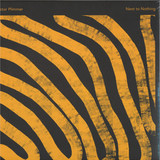
Born and raised in South London, Hector Plimmer is a multi-faceted producer, composer and DJ whose sound is drenched in tribal rhythms and beautifully crafted bass. Influenced by beat-makers like Flying Lotus and Theo Parrish, but with the subtleties of the classic Metalheadz era drum and bass, his second album 'Next To Nothing' is released on 25th October 2019. The album features guests Ego Ella May, Emma-Jean Thackray, Andrew Ashong, Pie Eye Collective and Alexa Harley.
After featuring on Brownswood Bubblers 11, curated by Gilles Peterson, Hector proved his talent when he was selected as a winner of the PRS Steve Reid InNOVAtion award. At a performance at ‘Sounds Of The Universe’ Record store, Hector caught the attention of Albert's Favourites' label heads Adam Scrimshire & Dave Koor. A conversation was started which led to the transfer of almost a whole album's worth of material and resulted in his debut full length record ‘Sunshine’.
'Sunshine' was met with rapturous acclaim. The record went on to be awarded Gilles Peterson’s album of the week on his BBC 6 Music show and was championed by both Lauren Laverne and Tom Ravenscroft on the station as well as Jamie Cullum on BBC Radio 2. Its success on the airwaves transcended to streaming with the inclusion in the top 50 viral US chart on Spotify.
"This album has been a real labour of love. I spent the most part of a year trying to make music I thought would be fitting to follow my last album, whilst not actually knowing what that might sound like. 'Sunshine' had been received way more positively than I had anticipated and although praise is a lovely thing, it was the cause of much anxiety when the time came to start on this record. I put a lot of pressure on myself to produce music and kept going down routes that felt forced or just didn’t click for me, in hindsight I realise this was me making music not for myself, but for what I imagined other people might want to hear. In a way 'Next to Nothing' is my first real album, 'Sunshine' was more like a collection of four to five years worth of music compiled into the shape of one. This is my first dedicated attempt at creating a cohesive project, something that shows who I am right now and what got me here."
- Hector Plimmer
As a DJ Hector has a monthly slot on NTS radio. He has played alongside the likes of Gilles Peterson, Kutmah, Alexander Nut, MNDSGN, Onra, Dego, Kaidi, Max Graef & Glenn Astro; Hector finds himself in the good company of those talented selectors who play genres across the spectrum of Hip-hop, Beats, Funk, Soul, Disco, Afro-beat, House and Jazz.
Humans is the new album from sought after international touring band the London Afrobeat Collective. From Europe to Africa, Glastonbury to Nigeria’s annual ‘Felabration’ festival, LAC
deliver party music born of their truly global DNA. The nine-strong collective from England, Congo, Italy, France, Argentina and New Zealand combine diverse influences such as Fela, Parliament Funkadelic and Frank Zappa to create an eclectic sound drawing on funk, jazz, rock, and dub to create something addictive and unique.
Their 2015 album Food Chain, received widespread radio support on stations such as BBC 6 Music, Radio X and BBC Radio 2, as well as glowing reviews in The Sunday Times, London Evening Standard, Blues & Soul and Songlines Magazine to name just a few. The new album Humans, (featuring artwork by Ben Hito, renowned for his designs for Parliament / Funkadelic), is a collection of anthemic songs with socially conscious lyrics, set to bold brass lines and hypnotic danceable grooves. In 2015 the London Afrobeat Collective toured Nigeria, appearing several times on national TV and performing in front of ten thousand people at the New Afrika Shrine during ‘Felebration’. They are no less respected in their home town, having collaborated with the likes of Dele
Sosimi and supporting legends such as Ebo Taylor, Fred Wesley And The New JB’s, Tony Allen, and Fela’s son, Femi Kuti.
LAC are now globally recognised for what they really are: not a tribute, but an ever evolving, international band of expert musicians, continuously inspiring each other as they create distinct, sincere and powerful music. Humans is an accomplished work with international flair and cultural relevance from London to Lagos.
Neurot Recordings are proud to reissue the landmark collaboration Neurosis & Jarboe, which was originally released in 2003. This latest version is fully remastered and with entirely new artwork from Aaron Turner.
Very limited silver metallic and black swirl 2LP - Non-Returnable
Steve Von Till explains the idea behind the remastering; "Bob Weston (Chicago Mastering Service, and member of Shellac) worked closely with Noah on making these new versions sound as good as the possibly can. Noah has the most trained critical ear for fidelity out of all of us being an engineer himself. We recorded this ourselves with consumer level Pro Tools back then, in order to be able to experiment at home in getting different sounds and writing spontaneously. The technology has come a long way since then and we thought we could run it through better digital to analog conversion and trusted Bob Weston to be able to bring out the best in it....This new mastered version is a bit more open, with a better stereo image, and better final eq treatment."
He continues about the original artwork..."Aaron felt he could create something that would unify the energy of both Jarboe and Neurosis in an elegant manner. We let him do his thing and I think it definitely adds to mystery of the album and sets it apart from the rest of our catalog."
When two independent and distinct spheres overlap, the resulting ellipse tends to emphasise the most striking and powerful characteristics of each body. Such is the case with this particular collaboration between heavy music pioneers Neurosis and the multi-faceted performer Jarboe (who performed in Swans and who has collaborated with an array of people from Blixa Bargeld, J.G. Thirlwell, Attila Csihar, Bill Laswell, Merzbow, Justin K. Broadrick, Helen Money, Father Murphy, the list goes on...) The musicians pull from one another some of the most harrowing and unusual sounds ever heard from either artist at the time - a sentiment which also rings true to some 15 years later.
Neurosis & Jarboe opens with a high-pitched whirring sound winding up as Jason Roeder's ominous tom-drum beat and Noah Landis' slinking synth line writhe in unison until Jarboe drops in, drawling in her characteristic, corrupted Southern belle voice, "I tell ya, if God wants to take me, He will." From there on in, the album is a series of abrupt shifts and cleverly juxtaposed themes that flows in a rhythm of its own. The sinister and ethereal sounds, vocal coos and electro-pulses of "His Last Words" seem like the perfect soundtrack to a David Lynch film. On "Erase," song parts are dissected and grafted one atop the other, continually building tension as Jarboe wails and yelps with Banshee fervor.
The project began with the artists working in seclusion, recording the elements that would best highlight their own characteristic integrity and personality, rather than either attempting to mimic one another's familiar elements. As recorded ideas were passed back and forth, the collaboration proved to bring out the most unhinged and urgent talents of all those involved.
Throughout the album, that signature "Neurosis note" - the sound of something simultaneously recoiling and erupting, the apocalyptic tone announcing the birth of a new world - reaches its apex and becomes evermore icy and eviscerating. Guitarists Steve Von Till and Scott Kelly trim their tones for cleaner, chorus-drenched effects layered between the thunderous distortion blasts of bassist Dave Edwardson. Likewise, Jarboe's operatic wail and other vocal contortions sound perfectly suited to the eruptive emotional fray of the music.
The collaboration is a deeply textured mosaic that is a culmination of merged aesthetics from two major influences on free-thinking sounds. It unlocked the hidden potential of electronic music as a new force in heavy rock. At a time when groups like Oneida, Wolf Eyes and Black Dice were beginning to experiment with technology in making mind-numbing leaden electro-drone freed from any essence of "dance music," Neurosis & Jarboe redefined all notions of their past - and outlined the course of heavy music to come. It's interesting to look back through the lens of this release, and think about these ideas and concepts in the present.
Neurosis & Jarboe remains the meeting point of all art that takes us beyond ourselves.
Previously released on CD accompanied by “Gone, Gone Beyond”, “The Mirror” is the
dreamy soundtrack of an a/v project from collage artist extraordinaire Vicki Bennett aka
People Like Us.
With ‘’The Mirror’’ Bennett continues her eternal disassembling of popular music by
exploring how the narrative of familiar sounds/songs can change dramatically under a
new context, with that context always changing, in a never-ending flow.
Each song is singular. And each song is a collage of and undefined number of other
songs from other artists. It sounds familiar because that has been the modus operandi of
People Like Us since the early 1990s. But “The Mirror” plays with the notion of familiar,
driving around a collection of famous pop songs/artists, messing around with the memory
of the listener and, of course, his unique comprehension of those specific songs applied
in a new context.
Because of the use of familiar pop sounds, “The Mirror” is often grandiose. Like an epic
film only with highs, never letting the listener down or letting him doubt the power of pop.
Even, of course, when the coordinates are twisted, mixed, over or underrepresented.
Each moment feels like something that could only happen in a parallel universe.
Although that may sound naïve, it’s just a lost thought of reaction to the beautiful collages
of People Like Us in “The Mirror”. This mirror doesn’t reflect an image of ourselves or an
image of pop. But an image on the way memories drift and are being constant rebuilt. An
unfinished collage.
Mastered by Mark Gergis
Vinyl Cut by Rashad Becker
“Bandiera Di Carta” represents the ongoing collaboration between instrument builder and composer Pierre Bastien and the
London based experimental duo Tomaga (Valentina Magaletti and Tom Relleen).
Bastien has been called a “mad musical scientist with a celebrity following” by The Guardian (UK) having collaborated with the
likes of filmmaker Pierrick Sorin, fashion designer Issey Miyake, singer and composer Robert Wyatt as well as Aphex Twin,
who released three of his albums on his label Rephlex.
Tomaga have made more than a dozen records since forming in 2014, pursuing a path of fearless experimentation and sonic
brinksmanship that has won them fans and plaudits from far and wide, including Thurston Moore, with whom they collaborated
on the CAN Project with Malcolm Mooney, Deb Goodge and others in 2017, as well as Wire, Silver Apples and Stereolab, with
whom they toured extensively in summer 2019.
The artistic collaboration between Pierre and Tomaga began with two commissions: from Fructose Festival in Dunkirk and the
revered underground festival Supersonic in Birmingham UK. Recording initially at a studio in the industrial port of Dunkirk, the
uneasy bond between borders and states seems to have been a theoretical motor to the collaborative sessions, as well as the
bleak landscape of the seaport frontier. This inspiration found further manifestation in the cover image for ‘Bandiera Di Carta’.
Resembling a white paper flag, it is, in fact, a photograph of Bastien’s paper and air sound machine installed on stage at
Teatro Carignano in Turin as part of the trio’s performance there. This charged, ambivalent image of a blank flag evokes the
transcendence of the national, a prescient visual motif that meditates on the contemporary uncertainty around notions of
national identity and borders but perhaps also a ‘carte blanche’ for the artists involved, in which they can deviate from the
confines of their usual practice into new and strange territories.
For each piece, Bastien’s unique sonic style: by turns his kinetic mechanoid motors, capriciously arrhythmic pipes, or the
peculiar susurrus of paper, creates a world in which Tomaga introduce their musical palette. Magaletti’s percussion anchors
these sometimes chaotic forces into beguiling syncopations, with Relleen’s synthesizer and organ work creating harmonic
counterpoints and interruptive provocations, to which Bastien responds with lyrical turns on prepared trumpet, rubber band, tin
foil and bass ocarina.
The results are curiously evocative of free jazz by the likes of Sun Ra or Art Ensemble of Chicago paired with the percussive
sound worlds of artists like Francis Bebey or Muslimgauze along with unique and sometimes bizarrely exotic tonal landscapes
of composers like Catherine Christer Hennix, Carl Stone, or Egisto Macchi. All three musicians seem to find space to bloom in
ways that are markedly different from their individual work and the resulting album is a strikingly original and powerfully bold
affirmation of what can happen when venturing beyond the normal in pursuit of the other.All tracks written & produced by Tomaga (Tom Relleen & Valentina Magaletti) & Pierre Bastien.
Mixed and mastered by Rashad Becker.