On her deeply moving debut album At Weddings, Sarah Beth Tomberlin writes with the clarity and wisdom of an artist well beyond her years. Immeasurable space circulates within the album's ten songs, which set Tomberlin's searching voice against lush backdrops of piano and guitar. Like Julien Baker and Sufjan Stevens, she has a knack for transforming the personal into parable. Like Grouper, she has a feel for the transcendent within the ordinary.
Born in Jacksonville, Florida, and now based in Louisville, Kentucky, Tomberlin wrote most of At Weddings while living with her family in southern Illinois during her late teens and early twenties. At 16, she finished her homeschooling curriculum and went to college at a private Christian school she describes, only half-jokingly, as a "cult." By 17, she had dropped out of school, returned home, and begun to face a period of difficult transition in her life. The daughter of a Baptist pastor, Tomberlin found herself questioning not only her faith, but her identity, her purpose, and her place in the world.
"I was working, going to school, and experiencing heavy isolation," Tomberlin says of the time when she first began writing the songs on At Weddings. "It felt monotonous, like endless nothingness. It was a means to get through to the next step of life." In songwriting, Tomberlin found relief and lucidity she had trouble articulating otherwise. When she was 19, she wrote "Tornado" on her parents' piano, and began to develop confidence in her music. A year later, she had written enough songs to fill an album.
Throughout At Weddings, Tomberlin's lyrics yearn for stability and belonging, a near-universal desire among young people learning to define themselves on their own terms for the first time. "I am a tornado with big green eyes and a heartbeat," she sings on "Tornado," her voice stretching to the top of her range. Rich, idiosyncratic imagery — a fly killed with a self-help book, brown paper bags slashed violently open, clouds that weep over a lost love — sidle up to profound realizations about learning to be alive in this world. "To be a woman is to be in pain," Tomberlin notes on "I'm Not Scared." On "A Video Game," she muses, "I wish I was a hero with something beautiful to say."
Tomberlin cites the hymns she grew up singing in church as her greatest musical influence, and while At Weddings in many ways documents the unlearning of her childhood faith, it's easy to hear the reverential quality of sacred music in her songs. "A lot of hymns talk about really crazy stuff — being saved from the depths and the mire, judgment. When you actually realize what you're singing, it becomes really overwhelming," Tomberlin says. "I grew up singing in church. I was still helping to lead worship when I started coming to terms with the realization that I didn't know if I believed. I felt nauseous and shaky reading these words I was singing and feeling their intensity. If I did believe this, how could I sing these words without being scared out of my mind That's what's influenced how I write."
At Weddings is laden with reverence for music itself, for the power it has to heal others and help people navigate their lives. It is a record about learning to love oneself and others without reservation, from a place of deep sincerity — a lifelong challenge whose tribulations Tomberlin articulates beautifully. "My number one goal with my music is for honesty and transparency that helps other people find ways to exist," she says. With At Weddings, this remarkable young songwriter offers up comfort and wonder in equal measure.
a1 | Any Other Way
a2 | Untitled 1
a3 | Tornado
a4 | You Are Here
a5 | A Video Game
b1 | I'm Not Scared
b2 | Seventeen
b3 | Self Help
b4 | Untitled 2
b5 | February
Поиск:some other people
Все
- A1: Keith Mansfield - Tycoon
- A2: Keith Mansfield - Hot Property
- A3: Keith Mansfield - Whistle Stop Tour
- A4: Keith Mansfield - Power Complex
- A5: Keith Mansfield - Research Establishment
- A6: Keith Mansfield - Clean Air
- A7: Keith Mansfield - Fatal Error
- A8: Keith Mansfield - Sleeping Giant 1
- A9: Keith Mansfield - Sleeping Giant 2
- B1: Keith Mansfield - World In Action
- B2: Keith Mansfield - World In Action (Composite)
- B3: Keith Mansfield - Balance Of Power
- B4: Keith Mansfield - Motorail Express
- B5: Alan Hawkshaw - Road And Rail
- B6: David Snell (2) - International Flight
- B7: Keith Mansfield - Quality Fair
- B8: Keith Mansfield - Summer Location
LP,180, 2018 REISSUE - REMASTERED FROM ORIGINAL TAPES, CAREFULLY REPRODUCED ORIGINAL ART
The two sides of 1973's Big Business / Wind of Change are mainly the work of thegreat Keith Mansfeld but there's a killer cameo each from Alan Hawkshaw and David Snell to help deliver a thematic suite, diverse in mood, applicable to dramatic and environmental situations'. A Be With favourite and truly one for the heads.
The Big Business of side A is all the work of Keith Mansfeld. It's heavy on the suspense and features the vital Hot Property', an insistent groove so good that Madlib sampled it to lace the ace Long Awaited' by Lootpack with Dilated Peoples.
Sleeping Giant 1' is a more feshed out version of the equally-dazzling Fatal Error', evoking the orchestral magic of David Axelrod. Indeed, it conjures images of Diamond D falling over himself in the early-to-mid 90s to loop its intoxicatingly
eerie soundscape. Complete with guitar flls that recall Paris, Texas-era Ry Cooder, you need this record for this piece alone.
The horn-and-fute-led "Tycoon" is a head-nodder and "Power Complex" has some fantastic percussion. Other highlights include the breezy glide of Whistle Stop Tour' and its sister groove Clean Air.'
Over on Side B is the more expansive Wind Of Change, which includes the David Snell and the Alan Hawkshaw contributions. But these ain't no fller. Snell's shufing International Flight' sounds like a smooth Dorothy Ashby track tossed from the heavens. Hawkshaw's Road And Rail' is about as luxurious and strung-
out as the great man gets and it might just be the highlight of this whole set.
Not to be outdone, if Mansfeld's Balance Of Power' doesn't make you feel like king of the world then you must be playing it wrong. Oh, and did we mention World In Action'!
As with all ten re-issues, the audio for Big Business / Wind of Change comes from the original analogue tapes and has been remastered for vinyl by Be With regularSimon Francis. We've taken the same care with the sleeves, handing the reproduction duties over to Richard Robinson, the current custodian of KPM's
brand identity.
The new album from Danish electronic trio System is a special kind of collaborative effort with piano magician Nils Frahm. His purpose-built improvisations on synth, organ and piano served as source material for the members of System (Thomas Knak, Anders Remmer & Jesper Skaaning), who merged his warm acoustic tones with their minimalist digitalism and set out to translate their distinctive clicks 'n' cuts electronics into vivid soundscapes. Over two years in the making, the resulting nine tracks are as sonically intriguing as they are touching. Ranging from the mellow bliss of the title track to echoes of 90's and 2000's electronica and ambient sequences frequented by mesmerizing movements and sounds. The blending of piano and digital tones and noises into emotive pieces might instantly recall the work of Alva Noto and Ryuichi Sakamoto, though System and Frahm come to quite different results.
Thomas Knak met Nils Frahm at one of his concerts in Copenhagen. They stayed in touch, exchanging thoughts and ideas. Two years later, Anders Remmer was also introduced to Nils. From then serious ideas for a collaboration formed. As Nils was a fan of System's self-titled debut album (released in 2002 via Pole's Scape label) their talks centred around Dub and minimalism, elements that constitute most of System's music as well as their side and solo projects. This in mind, System began producing sketches and brought them to Nils´ Durton Studio in Berlin in December 2015, where they recorded ten hours of him playing keys and effects to their drafts. Back in Copenhagen, they decided to change direction. - As Nils had told us about his fascination with our debut album, we tried to rediscover this minimal clicks 'n' cuts era. But hearing Nils playing to our rhythmic beds, we felt the need to scrap those beats and instead head in a more cinematic direction.'
So they started building new pieces from the Durton recordings, maintaining some of the minimal and static quality while new layers of synth sounds and noises created a richer and more organic quality compared to older System albums. The solo projects of Thomas (Opiate), Anders (Dub Tractor) and Jesper (Acustic) always relied on steady beats or rhythmic material, so the productions of 'Plus' with their focus on acoustic and melodic elements, ambient layers and cinematic moods, sees them pushing forward into new areas.
This way, the trio avoided copying what they had already done years ago, when they built a reputation as Denmark's prime originators within electronic music in the 90's and 2000's. 'Plus' is a triumphant example of collaborative experimentation and may be the dawn of a new era for System: - For us it was really satisfying to focus more on actual sound rather than rhythmic aspects. There is a lot of potential in this field, so it would only be natural for us to pursue this, maybe as a series of collaborations with other people who's music we admire.'
Bastard Jazz is proud to present the next installment of our long running Tempo Dreams compilation series. As with previous volumes of the compilation, we've tapped an established artist that we're big fans of to shine a light on their personal favorite producers, and compile an album up of all unreleased music from emerging & underrated young talent. And with Volume 5, we're happy to welcome in the Los Angeles based but globetrotting selection of Free The Robots.
Rooted in Santa Ana, CA, Chris Alfaro aka Free the Robots has spent over a decade taking his craft to audiences around the globe. Known as one of the pioneering artists to come out of LA's infamous beat movement, the energy and technical skill behind his live performances have landed him among the greats, sharing stages with Dj Shadow, Prefuse 73, Flying Lotus, to Afrika Bambaataa. Crafting stories to tell with his ever-evolving solo project Free the Robots, he has always had the ability to jump in and out of other worlds inspiring a unique signature sound that hints at jazz, psych, electronic, and hip hop, while remaining un-genre-fiable.
Staying almost permanently on the road, Chris has come across an array of artists and scenes around the world. Different tours and temporary living situations have landed him in the middle of both the DIY underground and more mainstream clubs and stages. Some artists he's connected with have either kept it proudly local or breached international borders. Underrated, unknown, or already on the brink; these are just a few of the people that have crossed paths with Free The Robots. He's chosen these songs as a representation of some of the vibes that inspire his music: Jazz, Psychedelia, Dirtwave, Beats, and a little bit of Future Funk make up Volume 5 of his Tempo Dreams series.
As with all previous volumes, the compiler has produced a track exclusively for the album, which Chris delivers in the bass heavy, South East Asian vibes of "Nasi Goreng" (also available on a limited edition 7" with another unreleased FTR track). Other producers included on the album include Mophono, Never Ending Echo, Kuromoji, RSI-MSK, The Breathing Effect, Cazal Organism, Lefto, Chubby Boss, Caliph8, TITLE, Nois IV, The Heavy Twelves, Mu. and Markey Funk.
- A1: The Mirror (Feat. Kirk Lake)
- A2: Two Sisters (Feat. Anton Newcombe)
- A3: Maria's Theme
- A4: La Cavalerie
- B1: Russian Roulette
- B2: The Inventor
- B3: The Train Creep A-Loopin (Live)
- C1: Nuit Fantôme
- C2: The Gift (Anton Mix)
- C3: Angels And Devils
- C4: Witches Valley
- D1: Curse Of Santa Klaus
- D2: Time Will Tell
- D3: Wunderbar
- D4: The Woods
- D5: Lord Of Flashington
- D6: Silent Night
The Limiñanas are a couple and a band. They have produced records in their own garage in Cabestany located in the south of France for about ten years. They played in Australia, the US and toured Europe regularly. United Kingdom included. The first opus of the now series 'I have trouble in mind' was released on the initiative of Bill and Lisa Roe (iconic label 'trouble in mind") in the US in 2014. It combines all the 45t , unreleased songs recorded by the couple for 'Mojo magazine", tribute to Beach Boys, fanzines, micro labels. All the titles which were difficult to find and that fans were looking for. And now, here it is: I ve got trouble in mind vol 2. The Limiñanas now work mainly with the European label 'Because music". Thanks to their common forces, 3 albums were released. «Traité de guitarre Triolectique» with Pascal Comelade, 'Malamore", which was a tribute to Dino Risi and in 2018 'Shadow People' in the company of the American psychedelic pope Anton Newcombe. Marie and Lio work a lot, they record all the time and love 45t, maxi's and still collaborate with small labels from around the world for specific projects like the traditional song of Christmas 'Convenanza 'from Andrew Weatherall. In this second opus some covers of their favorite titles will be available. The lords of the new church 'Russia"n roulette", 'two sisters' from the Kinks which is the first song recorded with Anton and remixed by the American producer of the first White Stripes album Jim Diamond. 'Live will Tell' from Polnareff, a tribute to 'Suicide' recorded in Australia from the live version of the band and many others. The artwork was designed by Elric Duffau, as for the first volume. Small bonus: the two album covers placed side by side complement each other for a single piece.
To put it simply, 'True Meanings', the fourteenth Paul Weller solo album, the twenty sixth studio album of his entire career, is a record unlike any he has ever made before.
'True Meanings', is released on September 14th and is an album characterised by grandiose-yet-delicate, lush orchestration: an aesthetic to which Paul's better-than-ever voice, singing some of his most nakedly honest words, is perfectly suited. A dreamy, peaceful, pastoral set of songs to get lost in, it is both an album that a lot of his faithful audience have been wanting him to make for a long time, and an album that many new people outside of that audience will relate to.
On the 25th May this year, Paul Weller turned 60: a milestone that has unquestionably had an impact on the feel, both lyrically and musically, of 'True Meanings' which comes across being the most singer-songwriter-style album he has ever made. However, it is also the most collaborative: with more guests than any record he's been involved in before.
As well as all the members of Weller's band, Rod Argent of the Zombies provides Hammond organ on 'The Soul Searchers' and piano and Mellotron on 'White Horses'; folk legends Martin Carthy and Danny Thompson add picked guitar and double bass respectively to 'Come Along'; Little Barrie plays lead guitar on 'Old Castles'; Lucy Rose sings backup on 'Books'; and 'Movin On' is the result of a 'scratchy demo'on Paul's phone that was sent to Tom Doyle of the White Label project. Even Noel Gallagher makes a sneaky appearance.
Perhaps most surprisingly of all, especially given how personal and introspective 'True Meanings' feels, lyrics for four of the fourteen songs here were written, to Weller's melodies, by others. Connor O'Brien from Villagers came up with the words to opener 'The Soul Searchers', while 'Bowie', 'Wishing Well' and the closing 'White Horses' are all the work, lyrically, of Erland Cooper from Erland & The Carnival.
'True Meanings' was produced by Paul Weller except 'The Soul Searchers', which was co-produced by Paul and Conor O'Brien and 'Movin On' which was co-produced by Weller and White Label. The album was engineered and recorded by Charles Rees and mixed by Jan Stan Kybert.
The album was recorded in just over 3 weeks at Paul's own Black Barn Studio, with the aforementioned, revolving cast of characters dropping in for a day here and there. The orchestration was added soon after, and that was that. It is always a good sign when the recording of an album is swift, and here you can just hear that the man at the centre of these songs is as focused and inspired - more inspired, even - than he has ever been.
To be released on World Mental Health Day, part of the album's proceeds will be donated to a UK-based mental health charity. 'I often wonder how sadness moves through people,' Emika says, 'through time, through stories and history, and if it's something that becomes us rather than coming from us.'
% of album sales will be donated to charity Help Musicians UK
emikarecords. com Invites fans to anonymously share their experiences of depression and create a waterfall of comments inspired by the song Wash It All Away
Studio video promoting the album via Soundcloud, Autumn
Live / DJ video, promoting the album with Beatport, Autumn
Live streaming of the album from Emika's studio via FB, Insta, YT, September.
Bookings by Christopher at Melt Bookings. Team chose to give fans time to listen to the album first, shows starting early 2019, special album show with live band and dome visuals planned in the Berlin Planetarium Feb 2019. A few promo shows summer / fall 2018.
Boiler Room live show as part of Open Dance Floor series tbc
* Given its years of manifestation behind the scenes of other projects, Falling In Love With Sadness reflects a renewed understanding of Emika's own genealogy, kindred lineage and its connection to modernity. Marking a drastic departure from the menacing, stripped-down qualities of albums past, Dva and Drei, Emika has surfaced with a new upwelling of sound gracing the bittersweet, melancholic and sanguine.
* With the interplay of myriad genres both rhythmically and melodically intertwining between spacey, dub tinged Promises, lush synth pop hooks on Escape and the title track's soulful electro, a full spectrum of musicology remains primary to the ever-evolving chroma of Emika's umbrous sound.
* Further characterised by the breathy sibilance and sultry tones of Emika's noirish, vocal aesthetic, the album navigates through the morose and trappings of misanthropy by illuminating a narrative of emotional resilience and recovery.
* Co-produced with Robert Witschakowski of The Exaltics, and continuing her collaboration with guitarist Chris Lockington (as heard on Drei and Dva), Falling In Love With Sadness provides a fifth solo album for Emika, but moreover, defines itself as an overture for her future works.
Bill Brown and Al Hall jr met around 1971, they were both in south central L.A and shared the same apartment building, also in the same building was Doug Carn and brownstone singer billy Wilson.
These studio sessions were don't at Paramount studios Hollywood where Al Hall jr was working for producer Art Smith a&c music.
The main distributor for A&C was Accent records. So the Soul Injections very first single "Stay off the moon" was released via Accent, as was Bill Browns "Bip Bam" The group wasn't that pleased with how Accent handle the releases so Bill took it upon himself to set up his own label called Brownstone records. Many musicians were called in for studio sessions these included
Doug Carn, organ; Kirk Lightsey, keyboards; Mel Bolton,
guitars; Mel Lee, drums; Al Hall jr (trombones), Willaim 'Bill'Henderson strings.
The label was met with some confrontation from other Hollywood labels and many of the Brownstone releases were told not to hit the shops by Mafia run labels. Later around 1975 Brownstone released a track by Everyday people feat Alexis "world full of people"....A now cult soul 45 ....But wait, we at Super disco edits have unearthed the original tapes with the very first incarnation of that song and music, different lyric content and sung by Bill Brown. Not just this you get the instrumental on the b side!!
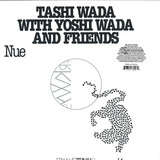
Composer Tashi Wada has performed for years with his father Yoshi Wada—artist, composer, and early member of the Fluxus movement. However, they have rarely appeared together in studio settings. Nue, the fourteenth entry in RVNG Intl.'s intergenerational FRKWYS series, finally brings Tashi and Yoshi, along with an eclectic group of close friends and extended family, together on tape.
Nue draws on aspects of Tashi's background for his widest vision to date—among them the minimalist bagpipe music of Yoshi, who co-composed three of the tracks, the psychoacoustic and perceptual explorations of his mentor, composer James Tenney, and reimagined forms of ancient and devotional music. The album, however, is not a tribute to the past or a recapitulation of familiar sounds. Instead, Nue is an intertwining of people and ideas as a means of growing, of looking inward to move outward, and of looking back to move forward.
To achieve this growth, Tashi assembled a core group of fellow travelers, including Yoshi, composer Julia Holter, producer Cole MGN, and percussionist Corey Fogel, to give life to this multifaceted suite. As an experience, Nue subtly navigates the interactions, intimacy and spaciousness of this group.
The album's title itself is a nod to Tashi's abiding interest in duality and the unknown: nue is a mythological Japanese chimera with the face of a monkey, the legs of a tiger, and a snake for a tail, a composite form, at once disturbing and otherworldly. But, as the composer points out, nue is also French for naked—stripped of complexity, bare and exposed, but also raw and essential.
From the doubling of tones—and the world of harmonic nuances such an action produces—to the rich interplay between individual musicians, all baring their own personalities and experiences through shared performance, Tashi's compositions allow space for these elements to join and grow. The multipartite creature that is an ensemble melds in the simplicity and purity of the music itself.
As explained by Tashi, each part was written with an individual in mind, not simply an instrument. And each individual performer makes their mark, from Holter's vocal performances on the cresting, oceanic 'Mutable Signs' and 'Ondine' with guest vocalists Simone Forti, Jessika Kenney and Laura Steenberge, to Fogel's resonant, precise percussion on 'Bottom of the Sky.' Producer Cole MGN, who has worked extensively with artists like Beck and Ariel Pink, helped to create a world of sound with minimal yet multi-dimensional materials. Like many of its influences, Nue uses deceivingly simple means to create complex, coherent worlds and narratives.
Tashi notes the influence of legendary Brazilian writer Clarice Lispector, whose work looked inward, investigating memory and emotion and dream, to understand the often overwhelming world outside the self. Like Lispector's classic novel Near to the Wild Heart, Nue cleaves these archetypal dualities—world/self, old/new, complex/simple—to create a work that allows them to coalesce into something singular.
As Tashi states in his liner notes: 'My desire was to create something both old and new sounding—ancient and futuristic—and ultimately something of its own world and other. Nue is a vision, an endless night of dreams, and a personal history of sorts, full of joys and demons.'
You May Not Have Heard The Name Jackson Almond Before, But You Will Have Likely Heard Some Of His Music. Having Released On Wotnot Back In 2013 Under The Name Real, With A Flurry Of Eps, Remixes And Bootlegs Under This Name And As Part Of Duo Boean (on Bbe, Warner, Xvi & Slowfoot Among Others), Jackson Has Been Delighting Ears For A While Now, With A Particular Knack For Balancing Hooks And Earworms With Original Ideas And Creative Production.
This Ep Began Life As A Series Of Headphone Jams Written When Jackson Was Living Outside Of The City In Self-imposed Exile, Tuning Into The Goings On In Dance Music From An External Position. It Was Then Polished Into Dancefloor Gems At The Wotnot Studio At The Total Refreshment Centre. The Music Reflects This, With The Sonic Palette Reflecting Lo-fi And Outsider House, But With A Warmth, Depth And Musicality Specific To His Own Personal Situation.
The Music Embodies The Hook Of The Title Track - Open Your Head - A Mix Of Influences And Sounds From World, Soul, Jazz, House And Techno Sources. In Oyh, A Child's Voice Floats Over Percussive Drum And Mbira Layers With African Flavours, While Soulful Guitar Stabs Widen The Palette. Ee Ye Follows A Similar Idea With Overseas Sounds Opening To Infectious House Organ Stabs. People, Places, Things In Spaces Is An Immersive Roller With Warming Wurlitzer Chords Providing An Almost Gospel-like Inflection.
The Attention To Detail Throughout The Ep Is Astonishing, The Best Example Being The Arrangement Of Our Personal Favourite Common, With The Irresistible Chord Progression Working Its Way Around Instruments, Patiently Building To Hit Its Peak Halfway Through The Track For The Ultimate Screwface Moment.
Ultimately This Rebirth Of Jackson Almond Sits Nicely With A Label Finding Their Stride Again, With Widely-praised Releases From Danvers And K15 Already This Year, Wotnot Are Staking Their Claim On People's Ears Once Again.
Early Dj Support:
Atjazz, Jimpster, Dave Harvey Futureboogie, &me, Robert Luis (tru Thoughts), Severino Panzetta (horsemeat Disco)
Le Matin, always rare and uncategorised, following the reissue of his early synthwavepop tunes on « poussière d'époque » and a track on the good Lena Wilikens' Dekmantel Selectors 005 comp, this new EP on Lost Dogs Ent. let you hear some of his last works. Expect an ultra-cold-minimal-electro riddim, a less-mental-nearly-good-for-the-dancefloor tune with depitched haunted r&b vocals, an analog and bassy arpeggio ride ... On the flip side, Oh My God ! This is the peak-time-for-weirdo-nearly-techno tune, a blast, only for craziest DJs that like broken-frustrated-uncomfortable dandefloors and to finish this well balanced 5 trackers : the « are you depressed that much It's the 10th time you're listening to this OST of a dying world, this won't get any better but at least this is good music ! » tune. Le Matin is a good kept secret that prefer to take care of his kids than to travel the world of nightclubbing with drunk teens (ok that's how it is in France, that looks better in some other countries), but sometime you can hear his music on decks of some wise people and DJs like Call Super, Lena Wilikens, House of Traps, Charles Drakeford, Jon K, Bergsonist, Body Motion...
One afternoon in 1975, friend and fellow music traveler, Harold Schroeder, showed up at Poo-Bah Record Shop where Tom Recchion worked selling records and experimental music to people, forcing them to buy albums that he swore would change their lives. Harold asked if Tom wanted to share in a studio space close to the shop. After seeing it Tom immediately said "YES!". They moved in and divided the space in half. On Tom's half he made drawings, paintings, performances, video, sculptures, installations, and music. Harold had his all set up for music with his newly acquired Steiner-Parker synth and guitars and things. At the beginning they played under the name The Two Who Do Duets. Soon the late-night jam sessions that took place in the back of Poo-Bah moved over to the fourth floor of 35 South Raymond. It was pretty beat up and derelict, the way one imagines an artist's studio to look. They could make all the noise they wanted. No one else was on their floor. The music heard on this LP has remained unheard since it was recorded and was created just before and right after the inaugural concert by the Los Angeles Free Music Society (LAFMS) groups Le Forte Four, Doo-Doettes, and Ace & Duce. That concert took place in late January 1976. The sessions on this release feature members of the newly formed and expanded Doo-Doettes, which now included Dennis Duck, Juan Gomez, Harold Schroeder, and Tom Recchion, as well as Ju Suk Reet Meate from Smegma and Ace, of Ace & Duce. 35 S. Raymond eventually became a sort of LAFMS headquarters, with Chip Chapman of Le Forte Four, artist and future Extended Organ vocalist/guitarist Paul McCarthy, and soon to become singer for Nervous Gender, punk/folk artist Phranc, who along with many other artists and musicians, moved into the building. 35 S. Raymond allowed for free expression and explorations of all sorts. Some wild parties ensued, not to mention the luxury of endless hours of experimentation. Parking was free and so was the art and music. Ace found the tapes for side one ("Tom's Studio") in his archive and Ju Suk Reet Meate found the tapes for side two ("50 Of Every American Are Machines") and edited them both for this release. No overdubs or remixing was emplo
Apollo is proud to welcome Paul Frick to the fold. Frick is a Berlin-born music composer primarily known as one part of the group Brandt Brauer Frick. Stunningly despite a 20+ year history of making music 'Second Yard Botanicals' is his debut album. With BBF keeping Frick inspired and busy since 2009, other ideas had piled up until a temporary break allowed him to fully dive into them - "While it took so long until I made my first album, it took about two months once I started.Exploring a vast number of instruments, field recording and deconstructed breakbeats woven with undulating filters and gossamer melodies, the album sees Frick drawing on the world around him in a free associative style ; "A word I sometimes had in mind was - Alltagspoesie', the poetry of everyday life," he explains. "The thought that however small and unimportant things and people are, they - or we - all hint towards each other, if not to say towards the whole. The fact that half of the pieces on the record are short miniatures has to do with that. Throwing something in and hearing what it tells.
- 1: Intro
- 2: Octopussies - Don't Skip That
- 3: Octopussies - Future Classic (Feat. Mista Min)
- 4: Blockboy - World Against Us (Feat. Mista Min)
- 5: Primatune - King Kong Rap (Feat. Masta Ace)
- 6: Blockboy - Bunnybreak
- 7: John Pussner - Riesen Himbeer Bonbon
- 8: Big Mama's Boys - Müncheeen (Feat. Epi.kur)
- 9: Epi.kur - Bis Wann
- 10: Mike Sense - Grown As Man
- 11: Danny Decock - Mosca
- 12: Blockboy - The Renaissance
- 13: Blockboy - Runaway (Feat. Ethic)
- 14: Primatune - Primat City Radio
- 15: Primatune - Oleg, Oleg (Feat. Gasreiz & Thk)
- 16: Primatune - Primat City Radio Werbepause
- 17: Dharmabums - Wassn Dassn!!
- 18: Primatune - So Sieht's Aus (Feat. Wordsworth)
- 19: Epi.kur - Wohin Die Reise Geht
- 20: Mikzn70 - Keinsommertrack (Feat. E.p.eazy & Pat Riot)
- 21: Blockboy - Blasdudler
- 22: Octopussies - Slidin
- 23: Mike Sense - Green Gold (Feat. Declaime)
- 24: Blockboy - Well Wicked
- 25: Blockboy - Woodbox Sonata No. 4
- 26: Blockboy - E E E (Jon Kennedy Remix / Pussner Edit)
- 27: Blockboy - Apache Walk (Asagaya Remix / Pussner Edit) (Feat. Nahawa Doumbia)
- 28: Lippovic - C.u
At a time when on every street corner, adolescent wannabe gangstas believed they had to tell everyone and their dog about their greatness and the inferiority of all others, there was a cadre of Munich-based Hip-Hop artists producing incredibly fresh and imaginative music, inspired, of course, by the golden era of the 90s. They played gigs in small clubs in front of some dozens of people, spread mixtapes and Eps and were celebrated by their friends and the rest of the scene. The world took no notice - until now ! Tramp Records, specializing in unearthing forgotten pearls of musical art, documents with "Golden Hits", an era of Munich underground Hip Hop which flew completely under the radar, spanning ten years from 2005 to 2015. The musical bandwidth and quality of the tracks is astonishing, but so much more could have been possible. Much of this music remained fragmented or unreleased for a host of reasons, families, stressful jobs, musical reorientation, and even lost hard disks... but one story has a happy ending! When Masta Ace had a live show at the legendary Atomic Cafe, Primatune's Fid Rizz was able to hand over a CD with demo beats. Unfortunately the CD was blank by mistake! But the curiosity of Masta Ace had been piqued, and he got back to him, the rest is history. Features of other stateside rap heroes like Wordsworth or Declaime followed.
The very best of this era, including tracks never before heard and ideas remaining fragmented, has now been compiled by Tramp Records to take you for a fascinating listening journey.
Hip Hop, as it was since it's inception in the Bronx, fresh and real, and made with passion by neighborhood kids spitting truth about life and the struggle!
Key selling points:
- including many unreleased songs
- the vinyl LP comes with a full album download code
"it Sounded All Right Through Two Walls, So What's The Problem" The Final Words Of 'two Walls', The Fast And Very Catchy Leading Track Of Dj Marcelle's New Record, Sum Up An Aesthetic Almost Lost In Today's Musical Climate, Where Often A Pleasing Attitude And Overproduced Music Sadly Rule, Even In So-called 'alternative' Circles.The Quote Comes From The Late Mark E. Smith (1957 - 2018), Legendary Frontman Of The Fall, And Is Taken From Some Of The Conversations Marcelle Had With Smith Over The Years. Smith Is Referring To A Recording Process But For Marcelle His Words Stand For Something Bigger.Although The Fall Have Been With Marcelle During Her Whole Musical Life (which More Or Less Started In 1977 During The Punk Wars) And She Has A Deep Love For Their Music, It Was Especially Smith's Attitude That Inspired Marcelle.Smith Was An Iconoclast, A Surrealist Dadaist Breaker Of Conventions In Music And Art More Generally. A Magically Creative Individual, A Brain-twisting Wordsmith. An Attacker Of The Pretentious And Dishonest Elements In Society And Music Scenes. An Autodidact Whose Singular Vision, Fired By Both Humour And Sharp Observation, Found A Voice In A Body Of Work Unlike Anything Else.The Day After Marcelle Heard Of Smith's Passing She Created A New Track, Lauding Smith, Whose Name Was An Institution In Itself: Mark E. Smith! Therefore, The Repetitious Use Of A John Peel Sample Pronouncing Smith's Name Celebrates The Life Of This Totally Unique Artist.This Track Opens With Another Smith Quote: "you're Probably Right, Marcelle". And Indeed, The Dutch Producer / Dj Shares Many Of Smith's Attitudes In That She Tries To Stay True To Herself, Doesn't Think Too Much About Audience Expectations And Always Tries To Stay Ahead Of The Public. 'punky' Energy Combined With The Avant-garde And Always Going Forward With Fresh Productions And Dj Sets. To Make And Play Music Which Reflects The Present And Doesn't Rest In The Comfort Zone Of One Dimensional Party Music.There Are Five More Versions Of 'two Walls' On This Ep, But They Differ So Much From The Original That You Can Count Them As Different Tracks. 'dubai Muezzin Dub' Was Partly Recorded In The United Emirates When Marcelle Played There Earlier In 2018. 'problematic Dub' Is Pure Industrial Techno Torn Apart By The Wildest Dub Effects, Its Coming And Going Of Sounds Equals A Ride In A Calypso. 'studio Door Dub' Celebrates The Repetition Of The Fall And The 'emerson, Lake & Palmer Symphony Dub' Is Both Pure Avant-garde And Hilarious Fun. And Belp, Who Owns The Jahmoni Label, Comes With A Wicked Abstract Noise Remix. The 'for' Ep Is The Fourth (get It) Vinyl Release Of Marcelle On The Munich Label Jahmoni Since 2016. As Always, Sleeve And Label Are Very Colourful. Both Labels Show Special Photos: On One Side We See An Old Picture Of Smith Embracing Marcelle, The Other Side Depicts The Label Of A 1985 The Fall Test Pressing That Once Belonged To John Peel But Which Was Stolen Out Of His Car In Amsterdam. Later Marcelle Found The Record On A Flea Market, Recognising Peel's Handwriting. "when I'm Dead And Gone" Smith Sang In The 1979 Song 'psychik Dancehall', "my Vibrations Will Live On, In Vibes On Vinyl Through The Years. People Will Dance To My Waves."Now We Can Listen And Dance To A Vinyl 'for' The Incomparable Mes, Made With Total Commitment And Which - Like The Fall - Defies Comparison.
WHITE RING mark a triumphant return with a brand new full-length Gate Of Grief, due out on Rocket Girl on 22 June 2018. Their debut album arrives a full eight years since their benchmark EP, Black Earth That Made Me, which sold out almost instantly, making their records some of the most highly sought after on the underground scene and earning them a cult following across the globe. Swerving from aggressively abrasive to beautifully ethereal, musically they draw from varied and challenging palette, whilst tackling themes of loss and acceptance due to struggles with drug addiction and existential dread on a broader scope.
WHITE RING were originally formed by Bryan Kurkimilis and Kendra Malia, before they were joined by Adina Viarengo, with Bryan and Adina currently touring as a duo. One of the most acclaimed proponents of the "Witch House" movement, WHITE RING blend heavy, distorted electronics with eerie, unsettling vocals. However, their new material, created over the course of seven years, pushes the boundaries further, subverting genre ideas and mashing them all together, with industrial, metal, rave, chopped and screwed, rap, grunge, neo folk, post punk and new wave all in the mix. As Bryan Kurkimilis explains; 'We treat our influences like tools to create a certain feeling. We are interested in covering more ground than sticking to a certain formula.'
Bryan and Kendra originally met on Myspace in 2006. At the time Bryan lived in New Orleans and Kendra was in New York, and they didn't even meet face-to-face until 2008 after they had already released a few singles. In 2010 they released the EP Black Earth That Made Me, which was a collection of songs that they mostly recorded before they met in person. The record confounded expectations by selling out immediately on pre-order, making it very rare and highly sought after, with copies going on Ebay for large sums. It was reissued by Rocket Girl in 2011 and still continues to sell in voluminous amounts.
They started playing live in 2009 and rapidly grew a reputation for their captivating performances, usually bringing their own lighting equipment and putting on a spectacular laser show. They have played for large crowds in their hometown of NYC and toured the UK in 2010 in support of their sold out split 7" with oOoOO, playing InTheCity and SWN festivals - which were their first shows outside of New York. They have since shared the stage with the likes of Cold Cave, araabMUZIK, Liturgy, Blank Dogs, Gatekeeper, Blondes, oOoOO, Clams Casino, and others.
They started recording Gate Of Grief in 2010, with the hope of exploring new musical territory, however they took a while to find their path. Bryan and Kendra had some tough personal battles to fight, a sense that pervades the whole album. Thematically it delves in to some pretty dark places whilst exploring the concept of time and what it does to people, relationships and society. As Bryan explains; 'There is a lot of tragedy in this album but there is also hope at the end of it.'
By 2016 pressure was building to finish recording, however due to Kendra's ill health, they needed to bring in someone new to assist with vocals. Fortunately they found Adina Viarengo, who had played in various bands and gave them the impetus needed to complete the album. Shortly after meeting in Brooklyn, Bryan and Adina moved to Joshua Tree, California to finish recording the album, before settling in Massachusetts. Her vocal style fitted in seamlessly with what Kendra had been doing, and although she sang on half the songs, it's almost impossible to tell who is singing on which track, thus making her the perfect addition to the band.
Gate of Grief can be considered the second part of Black Earth That Made Me, or rather, they are the first two chapters in an overarching trilogy about evolution. As Bryan explains; 'First you are born but then you realize what you are and what is against you and it's a flood of emotion that you can only hope to hold on for and let it pass.'
The album title, Gate of Grief, refers to the real gate between Africa and Saudi Arabia that is believed to be the spot where the first humans migrated out of Africa and went on to populate the rest of the world. The album art ties in with this concept, with an image depicting a group of settlers in the USA in early 1900 during a parade. They were actually from a cult in the early 1900s in Bryan's hometown of Fort Myers, Florida.
M 13) Burn It Down
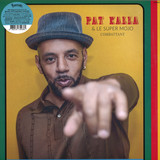
Favorite Recordings proudly presents Combattant, first EP by Pat Kalla produced by Bruno Patchworks' Hovart (aka VOILAAA).
PAT KALLA is a musician, singer and storyteller. Patrice of his birth name, in tribute to the great Lumumba! Lover of words, French language, and music of course. Born in Lyon, from a Cameroonian father, musician and political activist, and a French and literary mother, he explores from his childhood the Soul, the Slam, the Funk ... and the art of telling stories, life being a great one...
After years of touring alongside many bands (Conte & Soul, Legend of Eboa King, Mento Cloub, Voilaaa Sound System), and several acclaimed titles on the two albums by Voilaaa, he comes back with this project to put a bit of primordial lightness in a rainy world: A tribute to the African culture in honor of a father with "Sawa" origins, the tribe from the people of Makossa.
Jojo Ngallé, Moni Bilé, Pain, Manu Dibango, Franco, Rochereau, Kabaselé, Fela, François Nkotti & The Black Style, all these legends' vinyls have turned on the family turntable and the collection has whetted the child's appetite. Through this new trip, he revisits styles that are sometimes little known to Western audiences, such as High-Life, Makossa, Angolan Music, Afrobeat, Afro-Disco and others. We could talk about Franc CFA', we could talk about Jacques Foccart, but we will rather dance, because "the dancer seems naive, but his feet must be connected with earth to understand history..."
Backed by the "Super Mojo Disco", a hyperactive band from Lyon with deep groove and positive energy, Pat Kalla offers us an anti-crisis project, where swaying and feel-good humor is mandatory! An album soon in the crates, beware « c'est médicament » (it's medicine)!!
- A1: Heron Dance
- A2: Twilight Song
- A3: Yes—Singing
- A4: Dragonfly Song
- A5: A Homesick Song
- A6: The Willows
- A7: Lullaby—Lahel
- B1: Long Singing
- B2: The Quail Song
- B3: A Teaching Poem
- B4: A River Song
- B5: Sun Dance Poem
- B6: A Music Of The Eighth House
Music and Poetry of the Kesh is the documentation of an invented Pacific Coast peoples from a far distant time, and the soundtrack of famed science fiction author, Ursula K. Le Guin's Always Coming Home In the novel, the story of Stone Telling, a young woman of the Kesh, is woven within a larger anthropological folklore and fantasy. The ways of the Kesh were originally presented in 1985 as a five hundred plus page book accompanied with illustrations of instruments and tools, maps, a glossary of terms, recipes, poems, an alphabet (Le Guin's conlang, so she could write non-English lyrics), and with early editions, a cassette of field recordings' and indigenous song. Le Guin wanted to hear the people she'd imagined, she embarked on an elaborate process with her friend Todd Barton to invoke their spirit and tradition.
For Music and Poetry of the Kesh, the words and lyrics are attributed to Le Guin as composed by Barton, an Oregon-based musician, composer and Buchla synthesist (the two worked together previously on public radio projects). But the cassette notes credit the sounds and voices to the world of the Kesh, making origins ambiguous. For instance, The River Song' description reads, The prominent rhythm instrument is the doubure binga, a set of nine brass bowls struck with cloth-covered wooden mallets, here played by Ready.' According to writer and long-time friend of LeGuin, Moe Bowstern (who pens the liners for the Freedom To Spend edition of Kesh), Barton built and then taught himself to play several instruments of Le Guin's design, among them the seven-foot horn known to the Kesh as the Houmbúta and the Wéosai Medoud Teyahi bone flute.' Barton's crafting of original instruments lends an other-worldly texture to the recordings of the Kesh, not unlike fellow builders Bobby Brown and Lonnie Holley. Bowstern notes, Other musician / makers have crafted their own Kesh instruments after encountering the earlier cassette recordings that accompanied some editions of the book.' Both Barton and Le Guin are sensitive to the sovereignty of indigenous Californians and were careful not to trample the traditions of the Tolowa people who lived in the valley long before the Kesh. You research deeply, and then you bring your own voice to the table,' said Barton. Within the Kesh culture, the numbers four and five shape the lives, society and rituals. Barton composed loosely around these numbers, patiently listening to the land of Napa Valley for signs and audio signals from the natural elements. Todd incorporated ambient sounds of the creek by Le Guin's house and a campfire they built together. The songs of Kesh are joyful, soothing and meditative, while the instrumental works drift far past the imaginary lands. Heron Dance' is an uplifting first track, featuring a Wéosai Medoud Teyahi (made from a deer or lamb thigh bone with a cattail reed) and the great Houmbúta (used for theatre and ceremony). A Music of the Eighth House' sends gossamer waves of the faintest sounds to float on the wind.' Like the languages invented in the vocal work of Anna Homler, Meredith Monk, and Elizabeth Fraser, the Kesh songs and poems play with the shape of voice.
The Music and Poetry of the Kesh cassette was meant to accompany and enhance the experience of reading Always Coming Home. Presented in this edition as a long-playing album, where only traces of the book linger (the jacket offers some of Le Guin's illustration, and a letterpressed bookmark featuring the the narrative modes of western civilization and the Kesh valley is included), the music alone breaking the silence of what might be. It can transport—offering a landscape for imagining a future homecoming. One in which we are balanced, peaceful, and tend to the earth and its creatures. A line from the Sun Dance poem reminds us, We are nothing much without one another.' Freedom To Spend gives new life to the recordings of the Kesh people in the first ever vinyl edition of Music and Poetry of the Kesh, out on LP, and digital formats on March 23, 2018. The LP will include a deluxe spot printed jacket with illustrations from Always Coming Home, a facsimile of the original lyric sheet, liner notes by Moe Bowstern, multi-format digital download code and a limited edition bookmark letter pressed by Stumptown Printers in Portland, OR.
This past Monday, January 22, Ursula passed from this realm to another leaving a life spent building and exploring other worlds while challenging social concepts of the real word she inhabited.
Freedom To Spend had been working under Ursula's enthusiastic endorsement and with Todd Barton, her musical collaborator on Kesh, to give the music that accompanied her 1985 epoch a new life. With the Le Guin family's encouragement to move forward with our planned release, we are humbled to play this small role in sharing Ursula's work.
As Pete Swanson, one third of Freedom To Spend, stated, Ursula's legacy is her work which transformed the world, and this is another piece of the universe that her imagination birthed becoming real.' Listen to A Teaching Poem / Heron Dance' below.
Twenty-eight Years Ago, Pissed-off Twelve-year-olds Around The Universe Discovered A New Planet, A Black Planet. Public Enemy's Aggressive, Benihana Beats And Incendiary Lyrics Instilled Fear Among Parents And Teachers Everywhere, Even In The Border Town Of Laredo, Texas, Home Of The Future Founders Of The Latin-funk-soul-breaks Super Group, Brownout. The Band's Sixth Full-length Album (out May 25th) Fear Of A Brown Planet Is A Musical Manifesto Inspired By Public Enemy's Music And Revolutionary Spirit.
Chuck D., The Bomb Squad, Flava Flav And The Rest Of The P.e. Posse Couldn't Possibly Have Expected That Their Golden-era Hip Hop Albums Would Sow The Seeds For Countless Public Enemy Sleeper Cells, One That Would Emerge Nearly Three Decades Later In Austin, Texas. Greg Gonzalez (bass) Remembers A Kid Back In Junior High Hipped Him To The Fact That Public Enemy's bring The Noise' Is Built On James Brown Samples, While A Teenaged Beto Martinez (guitar) Alternated Between Metal And Hip-hop In His Walk-man, And Adrian Quesada (guitar/keys) Remembers Falling In Love With Public Enemy's Sound At An Early Age. when I Got Into Hip Hop, I Was Looking For This Aggressive Outlet . . . And I Didn't Even Understand What They Were Pissed Off About, Because I Was Twelve And Lived In Laredo . . . But I Loved It And I Felt Angry Along With Them.'
Joseph Abajian (fat Beats' Owner) Must Have Sensed The Deep Hip-hop Well Lying Beneath The Versatile Band's Latin-funk Veneer. i Thought Their Sound Would Work Covering Public Enemy Songs,' Abajian Says, And, it Was Good To Know They Were P.e. Fans . . . We Came Up With A Track Listing And They Went To Work.' Despite The Band's Eagerness To Work On New Original Material (an Album Of Original Songs Is Slated For Next Year), They Couldn't Pass Up The Opportunity To Pay Homage To This Iconic And Influential Posse.
Translating Sample-based Music To A Live Band Turned Out To Be More Of A Challenge Than They Anticipated. Adrian Tried To Get Inside The Bomb Squad's (public Enemy's Producers/beat-making Team) Head In Order To Find The Inspiration To Reinterpret P.e.'s Songs: imagine The Bomb Squad Going Back In Time And Getting The J.b.s (james Brown's Funky Backing Band) In The Studio And Setting Up A Couple Analog Synths And Then Playing Those Songs.' While Some Songs Closely Follow The Original Musical Blueprint, Others Use The Source Breakbeats As Jumping-off Points Later Sweetened By Trombonist Mark speedy' Gonzales' Horn Arrangements, Synth Wizardry Courtesy Of Friend-of-the-band Peter Stopschinski, And Dj Trackstar's Turntable Scratches. But Don't Listen Expecting To Hear Paint-by-numbers Recreations Of Classic Public Enemy Jams. our Approach Is Never In The Tribute Sense,' Adrian Explains. we've Always Taken It And Made It Our Own, Whether It's The Brown Sabbath Thing Or This Public Enemy Thing.' Coming Off Numerous Tours As Brown Sabbath And Even A Stint Backing The Late Legend Prince, Brownout Is Arguably The Tightest And Funkiest Band On The Road Today And They're Psyched To Bring This Revolutionary Music To The People. For A Band Without An Overt Political Agenda, They Collectively Couldn't Resist The Opportunity To Play This Music Live, Especially Now. if There's Any Way That We Can Use The Already Political And Protest Nature (of P.e.'s Music), We Would Like To Try,' Beto Says. the Album's Title, Fear Of Brown Planet Is Definitely A Relevant Idea Today And We're Not Afraid To Put It Out There, Because We Want To Speak Out.' By Reinterpreting These Hip Hop Classics In Their Unique Style And Channeling The Spirit Of Public Enemy That First Echoed Around The World And Captured Their Imaginations All Those Years Ago, Brownout Is Doing Exactly That.
- A1: A Min We Vo Nou We - Les Sympathics De Porto Novo
- A2: Asaw Fofor - Ignace De Souza & The Melody Aces
- A3: Dja Dja Dja - Stanislas Tohon
- B1: L´enfance - Elias Akadiri & Sunny Black´s Band
- B2: Mé Adomina - Picoby Band D´abomey
- B3: Nounignon Ma Klon Midji - Antoine Dougbé
- B4: Moulon Devia - Orch. Poly-Rythmo De Cotonou
- C1: Paulina - Black Santiago
- C2: Glenon Ho Akue - Lokonon André Et Les Volcans
- C3: Sadé - Sebastien Pynasco And L´orchestre Black Santiago
- C4: Baba L´oke Ba´wagbe - Super Borgou De Parakou
- D1: Gangnidodo - Cornaire Salifou Michel Et L´orchestre El Rego & Ses Commandos
- D2: How Much Love Naturally Cost - Gnonnas Pedro And His Dadjes Band
- D3: Idavi - Orchestre Poly-Rythmo De Cotonou
African Scream Contest 2
A great compilation can open the gate to another world. Who knew that some of the most exciting Afro-funk records of all time were actually made in the small West African country of Benin Once Analog Africa released the first African Scream Contest in 2008, the proof was there for all to hear, gut-busting yelps, lethally well- drilled horn sections and irresistibly insistent rhythms added up to a record that took you into its own space with the same electrifying sureness as any favourite blues or soul or funk or punk sampler you might care to mention.
Ten years on, intrepid crate-digger Samy Ben Redjeb unveils a new treasure- trove of Vodoun-inspired Afrobeat heavy funk crossover greatness. Right from the laceratingly raw guitar fanfare which kicks o Les Sympathics' pile-driving opener, it's clear that African Scream Contest II is going to be every bit as joyous a voyage of discovery as its predecessor. And just as you're trying to get o the canvas after this one-punch knock out, an irresistible Afro-ska romp with a more than subliminal echo of the Batman theme puts you right back there. Ignace De Souza and the Melody Aces' Asaw Fofor" would've been a killer instrumental but once you've factored in the improbably-rich-to-the-point-of-being-Nat-King-Cole-influenced lead vocal, it's a total revelation.
The screaming does not stop there, in fact it's only just beginning. But the
strange thing about African Scream Contest II's celebration of unfettered Beninese creativity is that it would not have been possible without the assistance of a musician who had been trained by the Russian secret services to "search and destroy" enemies of the country's (then) Marxist-Leninist president Mathieu Kerekou.
Already familiar to fans of the first African Scream Contest as a mainstay of ruthlessly disciplined military band Les Volcans de la Capitale, Lokonon André vanished in a cloud of dust at Ben Redjeb's behest with a list of names and some petrol money, only to return a few days later having miraculously tracked down every single name he'd been given. The source of this Afrobeat bounty-hunter's impressive people-finding skills - his training with the KGB - highlights the tension between encroaching authoritarian politics and fearless expressions of personal creative freedom which is the back-story of so much great African music of the 60s and 70s. Happily, in this instance, Lokonon was tracking the artists down to oer them licensing deals, rather than to arrest them.
Where some purveyors of vintage African sounds seem to be strip-mining the
continent's musical heritage with no less rapacious intent than the mining companies and colonial authorities who previously extracted its mineral wealth, Samy Ben Redjeb's determination to track this amazing music to its human sources pays huge karmic dividends.
Like every other Analog Africa release, African Scream Contest II is illuminated by meticulously researched text and eortlessly fashion-forward photography supplied by the artists themselves. Looming large - alongside Lokonon André - in the cast of biopic-worthy characters to emerge from this seductive tropical miasma is visionary space-nerd Bernard Dohounso, who laid the foundations for Benin's vinyl predominance by importing and assembling the turntables that would play the products of his Bond villain-acronymed pressing plant SATEL, a factory that would revolutionise the music industry in the whole region.
The scene documented here couldn't have been born anywhere else but in the Benin Republic , and the prime reason for that is Vodoun. It's one of the world's most complex religions, involving the worship of some 250 divinities, where each divinity has its own specific set of rhythms, and the bands introduced on the African Scream Contest series and other compilations from that country were no less diverse than that army of dierent Gods. At once restless pioneers and masters of the art of modernising their own folklore, the mystic sound of Vodoun was their prime source of inspiration.
One especially irascible Vodoun-adept was Antoine Dougbe, who styled himself The devil's prime minister' while turning ancestral rhythms into satanically alluring modern beats. As Orchestre Poly-Rythmo songwriter Pynasco has observed sagely, Evil is not elsewhere, evil extends into the house'. And African Scream Contest II is a gloriously cinematic road-trip through an undiscovered realm of music lore whose familiarity is every bit as thrilling as its otherness.
Written by Ben Thomson, March 2018