South African Mbaqanga And Bubblegum Instrumentals For The Dance-floor. First Time Available Outside South Africa. Cult Favorite Among Collectors. Follows The Successful Reissue Of bafana Bafana' Last Year. Professor Rhythm's 1991 Recording Professor 3 Is A Vivid Reflection Of Urban South Africa As Apartheid Was Ending. Thami Mdluli's Production Project Had Young And Old Dancing To A Sound That Sought To Unite Blacks Within Southern Africa. our Music Gave Hope To The Hopeless,' He Says. Mdluli's Third Instrumental Album (which Contains Some Background Vocals, To Be Exact), Portrays The Moment When The Dominant Mbaqanga And American R&b-based Bubblegum Sounds Being Produced In Johannesburg And Other Urban Centers Were Transforming Into House And Hip-hop-inspired Kwaito. The Pop Of The 80's And All That Went With It—from The Models Of Synths And Drum Machines To The Lyrical Style—gave Way To A Changing Melodic Emphasis And New, Much Slower Tempi Using A Completely Different Rhythmic Skeleton. Upbeat, Chipper Bubblegum, Often With Double-time Breakdowns And Upstroke Syncopations, Faded And The Sounds Began To More Closely Resemble Those Of Contemporary Black America—where Hip-hop Was Slowing Down And The Bass-lines And Melodies Were Getting Moodier, Darker In General. At The Same Time House Music Had Briefly Reached Mainstream Acceptance In The States And That Popularity Continued To Feed Into Awareness Overseas. These Two Influences Blended With The Burgeoning House Music Scenes In Johannesburg And Pretoria As Professor Rhythm 3 Was Being Produced In March 1991 (the Same Year Apartheid Ended). Mdluli Explains, we Were Influenced By Foreign Bands And So People Updated Their Sound.' According To Mdluli, The Evolving Sound Was Bolstered By Widening Availability Of House And Rap Records From Abroad While, Most Importantly, An Increasing Sense That Apartheid Might Soon Be Finished Was Met With A New Positivity Vibe Society. 1991, '92, '93... Mandela Was Released. People Were Upbeat, They Were Happy, The Music Was Good.' Professor 3 Came Out On Vinyl As The Lp Business Was Dying In South Africa And Sold Around 20,000 Copies. It Was Mainly Distributed On Tape, Which Sold Closer To 100,000. With The Help Of Engineer Fab Rosso, The Recording Features Backing Vocalists From Mango Groove. After Making A Half-dozen Records As Professor Rhythm, Mdluli Once Again Shifted His Focus Musically. By The Mid-90's He Had Veered Off Gospel Music— And Left Playing In Bands And Started Making His Own Solo Recordings. His Enormous Success In The Gospel Realm In The Years Since Is A Remarkable Story In Its Own Right, But For Now We Are Only Dancing.
Buscar:some other people
Mgun, Or Manuel Gonzales To His Friends, Has Long Been A Fixture Artist For Dba. Since Making His Uk Debut On The Label In 2012, Having Already Featured On Detroit's Celebrated Wild Oats Imprint, He Has Smoothly Yet Slowly Progressed Through The Presses Of Fellow Dance Music Tastemakers Third Ear Recordings And Kiev's Wicked Bass. Following 2016's Warmly Received 'gentium', 'axiom' Finds Manuel Gonzales Back On Dba With An Index Of Offbeat Jams That Couldn't Have Emerged From The Mind Or Studio Of Any Other Producer.
Once More Envisioned And Engineered In His Native City Of Detroit, The Record Finds Mgun In More Auspicious And Domestic Circumstances. Now Firmly A Father And A Homeowner, 'axiom' Allows Gonzales To Flex His Party Muscle, While Further Pushing The Elastic Boundaries Of His Notoriously Unpredictable And Brilliantly Raw Production Style. Across Twelve Tracks, Listeners Are Offered An Unpredictable Trip Into The Restlessly Experimental Snatches Of Studio Time Gonzales Is Afforded Away From His Day Job At The Legendary People's Records Store. It's Here That Gonzales Absorbs Endless Releases And Rediscoveries Passing Through The Stock, Trading The Occasional Tip With Some Of Detroit's Best Known Producers.
Beginning With The Off-kilter Funk Of 'you Inside Me', 'axiom' Expertly Toes The Line Between Full-bodied, Soulful Club Weapons ('you're Never Home', 'nichrome'), And The Sort Of Lo-fi Tinged Jams That Enable Gonzales's Unusual Weirder Hooks And Rhythms To Extend Into Something Altogether More Hypnotic And Psychedelic ('kartwheel', 'sil').
There Are New Sounds And Approaches Throughout. Centrepiece Track 'see It For Myself' Finds Gonzales On Vocal Duties For The First Time, And The Dystopian Tinted 'vap' Finds His Sound Expanding Into Weightless, Dreamlike Electro. And While Certain Tracks Date Back Years, Having Slowly Matured To Full Funk, Others, Such As The Gloriously Unhinged '359' Were Rapidly Produced To Capture The Inspiring Energy Of A Late-night Glaswegian Rave.
Simply Put, 'axiom' Does The Work Of Representing Mgun At His Musical Best, An Analogue Celebration Of Pure Party Potential.
Here We Are Releasing The Second Album Of Cologne Born Producer Thyladomid Who Is Familiar To Many Through His Work On Hamburg Label Diynamic Which Has Lead Him To Perform Around The World, Together With Artists Such As: Adriatique, Solomun, Kollektiv Turmstraße, Hosh, David August, Stimming, And Many More. More Then 30 Minutes Playing Time, 6 Tracks And Artwork By Florian Kramer Offer A Lot To Discover. Thyladomid Is Famous For His Forward Thinking Deep Melodic Dance Music Which Earned Him Respect And Support From Many People Of The Scene And Evolved Also In Cooperations With Adriatique And The Singer Mahfoud. You Can Find Two Tracks Featuring Mahfoud On The Album. With His First Album "interstellar Destiny" In 2015 Thyladomid Has Already Changed Towards More Introspective Music And You Will Hear He Has Taken That A Step Further Here. In Comparison To His First Album, "places" Refers To Different Places Which Inspired Him To Write The Album And Offers A Higher Level Of Complexity In The Making Of Music Which Has Helped Thyladomid To Enhance The Moody Quality In A Dazzling Way Sometimes Even Spine Tingling When You Let Yourself Go To Explore The Abundance Of The Trax. As He Said In His Own Words: - the Albums Intention Was That Of An Organic Produced Album With Different Moods. Instruments Such As Piano And And Violin As Well As Field Recording Bring Alive A Special Quality. The Bouncing Of Stones On A Frozen Pond Recorded With Multiple Microphones Suggest For Example An Authentic Spacious Quality. The Self Recorded Percussion, Sometimes Quite Exotic Were Included In All Of The Tracks. The Combination Of Synthetic Sounds With Traditionally Instruments Was One Of The Big Challenges For Me. The Piano And Prophet 6 Und The Moog Sub37 Were The Main Instruments Used For The Album'. Thyladomid Started Working On The Album 2 1/2 Years Ago. His Classical Training On The Piano Helped To Quickly Come Up With A Musical Theme Which Is Based On Different Tonalities Which Were Then Linked To Each Other And Which Actually Helped To Structure The Whole Release. The Good Weather In Summer Was A Good Inspiration And Finally Led To The Idea To Dedicate Tracks To A Certain Place, A Place Which Means A Lot For Him. From That Idea The Title Of The Whole Album Derived: "places ". "a Little Church In Amsterdam" As He Says "is Such A Track Encouraged By The City Of Amsterdam I Love And Respects So Much And Actually Have Spend So Much Time In. It Is A Track I Played Outside In My Garden To Friends And Which Works Perfectly For Me.' "a Little Church In Amsterdam" Is A Track Where Melodies Bloom And Flourish. It Feels Like Zooming In On Nature Grasping A Time Lapse Symphony. "blossoming Limburg Ft Mahfoud" Was Born In The Capital Of Limburg Which Is Located In The South Of The Netherlands And Reflects The Summer Of 2017 And Was Recorded In A Warehouse. It Reflects The Intimacy And Synergetic Level Between Mahfoud And Thyladomid. The Fantastic Deep Vocal Track Is Spiced Up With Lots Of Acoustic Details Which All Happen In The Background But Effectively Surface To Pull The Listener Into His World. "night Owl" Is A Lyrical Dreamy Piano Piece With A Melancholic Note And An Ear For Details. Acoustic Finesse Presented On An Episodic Scale. We Guess The Track Was Influenced By The Works Of Four Tet Or Pantha Du Prince. "kollwitzplatz" Is A Small Park In Berlin's Prenzlauer Berg Which Was Thyladomid's Home For 2 Years . - the Cafes And Restaurants Laced By The Alleys Of The Kollwitz District Resemble A Piece Of Home For Me And Represents The Time Of My Stay In Berlin'. Musically "kollwitzplatz" Is Full Of Life. You Can Hear Children Talking While The Piano Attracts Sounds Like Moths Are Attracted To Light. The Track Offers This Richness Of Percussive Elements And Sound Sources Creating A Stunning Complexity Which Does Not Limiting Itself But Rather Creates This Free Flow Of Acoustic Signals. You Instantly Will Feel: There Is A Lot To Discover At "kollwitzplatz". "underwater Rhapsody", The Title Says It All: It Has That Episodic, Free-flowing Structure, Featuring A Range Of Highly Contrasted Moods, Color And Tonality. What It Actually Means To The Listener Is That Grande Chords Meet Dissonances Of Sound That Fly In Like Drones Cross The Big Time Melodies That Gain A Centrifugal Force At Times... And All This Leaves You Dizzy And Creates Another Big Listening Experience As The Whole Album Is Directed To Entertain You In A Smart And Distinguished Way.
[E b2 | Places Ft. Mahfoud
originally released in 1990-with Liz Lamere - Never released on vinyl-
Born in Brooklyn, Alan Vega was reared on the rock 'n' roll sound of Elvis Presley and Roy Orbison, but originally struck out on a career as a visual artist and light sculptor, making pieces out of electronic debris. But on the occasion of seeing Iggy Pop fronting the Stooges at The Stooges at the New York State Pavilion in 1969 was an epiphany for Vega. It showed me you didn't have to do static artworks, you could create situations,' he said. That show was the first time in my life the audience and the stage merged into one." It was that eradication of barriers between the two that Vega took to heart.
Their first two albums, 1977's Suicide and their 1980 follow-up, remain two of the era's greatest touchstones, beacons for others seeking to transform their worlds with sound. And even during the group's hiatus through the 1980s, Vega continued to pursue his singular vision across an individualistic solo output. From his 1980 self-titled debut and rockabilly-infused albums like Saturn Strip, through bracing albums like Power On to Zero Hour and IT, Vega forged his own singular path.
For all the darkness and despair that encompasses this moment in our world - and despite his work being depicted as bleak and nihilistic - for Vega there was always a sense of hope and a place for dreams to become reality. People have always told me that my music is angry,' he said. To me, it was always just an energy. It was the way I perceived the world. The key Suicide song was 'Dream Baby Dream,' which was about the need to keep our dreams alive. I knew back then that something poisonous was encroaching on our lives, on all our freedoms.' He fought to his very last breath for that freedom.
originally released in 1993 - with Ric Ocasek & Liz Lamere-Never released on vinyl-
Born in Brooklyn, Alan Vega was reared on the rock 'n' roll sound of Elvis Presley and Roy Orbison, but originally struck out on a career as a visual artist and light sculptor, making pieces out of electronic debris. But on the occasion of seeing Iggy Pop fronting the Stooges at The Stooges at the New York State Pavilion in 1969 was an epiphany for Vega. It showed me you didn't have to do static artworks, you could create situations,' he said. That show was the first time in my life the audience and the stage merged into one." It was that eradication of barriers between the two that Vega took to heart.
Their first two albums, 1977's Suicide and their 1980 follow-up, remain two of the era's greatest touchstones, beacons for others seeking to transform their worlds with sound. And even during the group's hiatus through the 1980s, Vega continued to pursue his singular vision across an individualistic solo output. From his 1980 self-titled debut and rockabilly-infused albums like Saturn Strip, through bracing albums like Power On to Zero Hour and IT, Vega forged his own singular path.
For all the darkness and despair that encompasses this moment in our world - and despite his work being depicted as bleak and nihilistic - for Vega there was always a sense of hope and a place for dreams to become reality. People have always told me that my music is angry,' he said. To me, it was always just an energy. It was the way I perceived the world. The key Suicide song was 'Dream Baby Dream,' which was about the need to keep our dreams alive. I knew back then that something poisonous was encroaching on our lives, on all our freedoms.' He fought to his very last breath for that freedom.
Strut presents the brand new album from cosmic jazz travellers The Pyramids, led by saxophonist Idris Ackamoor, 'An Angel Fell'. I wanted to use folklore, fantasy and drama as a warning bell,' explains Ackamoor. The songs explore global themes that are important to me and to us all: the rise of catastrophic climate change and our lack of concern for our planet, loss of innocence and separation... but positive themes too, the healing power of music, collective action and the simple beauty of nature.' Produced by Malcolm Catto of The Heliocentrics, the album was recorded during an intense week at Quatermass studios in London and is one of the deepest, richest works yet from a band reaching their highest creative peak since the early '70s. Some of the many highlights include the poignant title track depicting a fallen angel in purgatory, outrage and grief on the powerful, hard hitting 'Soliloquy For Michael Brown' and the lilting, beautiful album closer, 'Sunset'.
The Pyramids originally came together in 1972 at Antioch College, Yellow Springs, Ohio where teachers included renowned pianist, Cecil Taylor. After forming in Paris and embarking on a cultural odyssey' across Africa, the group recorded three independent albums, 'Lalibela' (1973), 'King Of Kings' (1974) and 'Birth / Speed / Merging' (1976) and became renowned for their striking live shows, mixing percussive, spiritual and space-age jazz with performance theatre and dance. After migrating to San Francisco, they disbanded in 1977. 35 years later, the band reunited in 2012 following growing demand for their music from vinyl collectors. German label Disko B released the freeform album 'Otherwordly' and in 2016, they released their first album for Strut, the acclaimed 'We Be All Africans'.
'An Angel Fell' is released on Strut on 11th May 2018 and features full hand-painted artwork by Lewis Heriz.
New concept album by leading cosmic jazz collective exploring global apocalypse, climate change and the healing power of music
Produced by Malcolm Catto of The Heliocentrics - Superb cover painting by Lewis Heriz
Full priority worldwide PR campaign and marketing
Release supported by major European tour dates in May and key Summer festivals
Wave Stu might just be the Platonic ideal of icy, emotionally fraught synth-pop. On his debut release for Origin Peoples, Stockholm-based musician Michel Isorinne puts paragons of this style like Orchestral Manoeuvres In e Dark in his slipstream. Laced with spoken-word passages from films and television shows, Wave Stu weaves a loose tale about the nature of time, physics, and mortality that can be summarized by the key phrase, uttered by a woman scientist somewhere throughout the album, 'magic is in the molecules...'
Isorinne essentially creates introverted minimalist symphonies in which sprightly synth leads peacefully coexist with melancholy, drone-y undercurrents. Throughout the record, Isorinne's melodies bear a fruitful contrast between the morose and the jubilant. He repeatedly places exceptionally delicate and beautiful tunes amid subliminal waves of pensiveness. It truly is a masterly balancing act. e zenith of this approach is Side A's closing track, in which gorgeous countermelodies intertwine like lovers on a tropical beach while a pistoning rhythm pumps up the libido. It's instant paradisiacal bliss.
Side B contains Wave Stu 's most cheerful, uptempo track yet it never bursts into full-on euphoria. Elsewhere, Isorinne reverts back to more somber moods: an eerie, methodical chiller full of quiet wonderment and subdued sparkle reminiscent of Casino Versus Japan, Plone, and others of their gnomic ilk; a low-key anthem in which '70s Vangelis grandiosi meets the workmanlike bass-synth chug of Ulrich Schnauss; an elegiac piece that conjures an intimate majes ; a bass-heavy dirge festooned with forlorn wisps of melodiousness.
The complex, paradoxical happy/sad pendulum at the heart of Isorinne's music lends Wave Stu a tingly resonance that will reward repeat listens. Please welcome an extravagantly rich synth-pop classic.
- A1: Coco Feat. Lilja Bloom
- A2: Hurt
- A3: For Rose
- A4: True Romance Feat. Lilja Bloom
- A5: Distance Feat. Lylith
- A6: Wake Up Sister Feat. Max The Sax
- A7: Let's Roll Feat. Blaktroniks
- B1: Sunny Bunny Blues Feat Veda 36
- B2: Dandy Feat. Yola B
- B3: Your Man
- B4: Promises Feat. Klaus Hainy
- B5: Letoile Feat. Max The Sax
- B6: You And Me Feat. Lilja Bloom
- B7: The Mojo Radio Gang (Radio Version)
- C1: Ragtime Cat Feat. Lilja Bloom
- C2: Silent Snow Feat. Max The Sax
- C3: Libella Swing
- C4: Catgroove
- C5: Matilda
- C6: The Flame
- D1: Fleur De Lille
- D2: Hotel Axos
- D3: Monster
Coco finally available on double vinyl for the first time. With his unmistakable sound-mix of Jazzand Swing samples and electronic music, Parov Stelar has secured his own unique position in the world of music.
The double vinyl starts off where his former successful LP's ended. On the other hand he is consequently developing his established jazzy sound, by adding new stylistic elements to his tunes. Also his dancefloor-productions, which
have been published only as singles, now find a debut to a greater extent on this album. They meet with Stelar's melancholic-melodious trademark-sound, which is well known from his earlier albums, but now also spiced up with Hip-
Hop beats and synthpads. An electrifying album to fall for. The two vinyls are originally thought of as one with tracks that can be danced to and one with tracks just for listening. Nevertheless the line between those two approaches becomes blurred in Parov Stelar's newer compositions. The
album makes your feet tap more and more with every track. The musician himself sees the LP as a 'book for musical readers' which is classically defined in introduction, middle part and end. Because of streaming hit singles the
consumer behaviour changed, people don't listen to albums the same way they used to. The whole experience that includes refelecting on less prominent tracks somehow got lost. Parov Stelar sets 'Coco' as a statement against this habit.
"The kind of melancholia I'm talking about, by contrast, consists not in giving up on desire, but in refusing to yield. It consists, that is to say, in a refusal to adjust to what current conditions call 'reality' - even if the cost of that refusal is that you feel like an outcast in your own time." (Mark Fisher, Ghosts Of My Life, Zero Books 2014, p. 24) In Ghosts of My Life: Writings on Depression, Hauntology and Lost Futures', the author Mark Fisher outlines - to put it in a big way - a resistant melancholy. This stands in contrast to leftist melancholy resignation', as well as something which Fisher does not talk about: its common masculine counterpart, habitual post-left cynicism - as in seen it all before'. Fisher calls this hauntological melancholy. Haunting, spooks, ghosts and apparitions are an almost constant presence on I Started Wearing Black', the second album by the Cologne-based artist Sonae (pronounced so-nah'). The term hauntology shares a fate with retro-futurism when it comes to inflationary overuse and abuse. It's a conceptual container that looks good and can hold a lot, indeed, too much. Furthermore, hauntology has its peak season behind it, a term on the threshold of its expiration date. Nevertheless, I would like to rehabilitate hauntology and use it properly to characterize I Started Wearing Black', because the term is rarely as compelling to describe music as is the case here. The most recent other example could be Asiatisch' by Fatma Al Qadiri, but with a completely different frame of reference. What are the ghosts of this music It rustles, crackles, ruffles, crunches, rattles, scrapes, sometimes a beat emerges from the constant noise, sometimes an obscure voice mumbles incomprehensibly, sometimes a melancholy piano figure is prevented by this noise from coming too much to the foreground. It definitely is eerie - to bring into play another term used by Fisher in the title of his latest book, The Weird and the Eerie'. In British pop-jargon, eerie first occurred to me more often when referring to particularly leftfield, spooky and... well... ghostly dub, a bass-heavy, echoing noise, from Augustus Pablo to Creation Rebel to Burial. Unlike the Wald & Wagner records by Wolfgang Voigt, Sonae is not a kind of neo-romantic veiling with a tendency for escapist nebula. It is more a noise of latency. The noise signals a latent - not necessarily acute - threat, a latent uneasiness about... yes... about what About a System Immanent Value Defect' That's the name of a track on I Started Wearing Black' where something that sounds like a French Horn (or a foghorn) battles for attention through or against the background noise. An email from Sonae: The piece 'System Immanent Value Defect' should actually be called 'I See Turkey'. I wrote it for my fellow student Elif - she is a pianist and Gezi Park activist from Istanbul. Through her I witnessed the inner conflict and agitation that political circumstances can create: her feelings of guilt when there was an attack, with her safe in Germany as a student, watching the events from afar. It was horrible. When her mother begged her not to come home because she feared for her safety, I felt a cold shiver run down my spine. I started with the piece from this mood, beginning with the piano, then the noise (modulated sinusoidal curves), which reminded me of waves and the then heatedly discussed Mediterranean sea: atmospheric, melancholy motifs. In contrast is the anger, the pressure, represented in corresponding sounds - hopefully audible! - During this time I started to think about world views as they can be found around the globe, in how far they held by societies and their political representation. I realized that I know of no political system that is actually about the people and what would do them good. It's always about positions, power, money. I thought that was a lot more frightening on a global scale than merely viewing Turkey in isolation. That's why the piece is called "System Immanent Value Defect", because our world suffers from precisely that. Everywhere, it's all about the wrong things.' Between the wrong things there are happy moments. In the title track, after 184 seconds of rattling and hissing, a beat is unleashed, like an arrow released from a spanned bow, a beatific relief, if there is such a thing. White Trash Rouge Noir' first meanders along spookily, then after 144 seconds it transforms itself into a distant cousin of Einstu¨rzende Neubauten's Yu¨ Gung', but there is no Big Male Ego to be fed here, and the black in the album title is a completely different type of black from that of the Neubauten. Furthermore, I Started Wearing Black' was finished long before the black dresses were worn at the Golden Globes as a sign of protest against sexual violence. Sonae writes that she herself started wearing black some time ago. Her reasons are so-called personal ones: ... resulting from an individual situation (lovesickness), I started to wear black (gaining weight and feeling ugly).' The political dimension of gaining weight, feeling ugly and therefore dressing in black in I Started Wearing Black' lurks within the noise and never becomes explicit and only rarely manifest - or a manifesto. Sonae writes about the track We Are Here': A piece for minorities... in this case, considering the current pop-feminist discourse, explicitly for women. Female artists have long been saying loud and clear that 'we are here' and 'electronic music is not a boys club!' But this pop-feminist moment should only be seen as one part of the dedication of the piece. It is for minorities, for the oppressed, who didn't belong enough.'
Klaus Walter
- A1: Gee Gee Shinn & Boogie Kings - Fever
- A2: Connie Kaye Trio - I'm A Woman
- A3: Bus Brown - Mr. L.b.j
- A4: Earl Demus Band - Her Spare
- A5: Chuck Finney Combo - I Want A Man Like You
- B1: Chick Willis - Sometimes Soon
- B2: Australia - Wide Awake
- B3: J.r. - Any Time Now
- B4: Joe Akens - Nice
- C1: Hummingbird 4 - Cho Cho San
- C2: Evangeline Made - Burnt Flesh
- C3: Dario & The Inferno - Brother, Where Are You
- C4: Swoop - Upside Down
- D1: You - You Got It
- D2: Hot Cakes - Harlem Shuffle Theme
- D3: Reunion - When The Well Runs Dry
- D4: The Counts - Get Up, Get Dancin
2x LP + 7"[22,65 €]
IT'S TIME TO PAAAARTY! Why The Universe knows that Tramp is celebrating their 40th trip around the sun in 2018. And what about planet Earth Well... it is as blind as it is in so many other situations. Therefore, it is time to shine the light on Tramp for all of its unremitting efforts. As musical diversity is vanishing, especially in the field of African American music from the 1960s/70s, it is our duty to stop the extinction of threatened species of music in the same way an animal welfare activist would do anything to save a gorilla's life. Tramp Records keeps this beautiful heritage alive, every single day, again and again and again. So we are here wondering why Earth people and especially to those from our beloved home country, why why are you just sitting there, going about your life unaware of this historic event What a pity!
The announcement is especially striking when it comes to the prestigious "Movements" series. Like all its predecessors, this ninth volume contains Rare Groove nuggets recorded between the early 1960s and the late 1970s. The fact that only one of the songs appear anywhere else is a jaw-dropping phenomenon! The chronological track listing starts with two amazing cover versions: "Fever" by Gee Gee Shinn & the Boogie Kings and "I'm A Woman" by Connie Kaye Trio. Bus Brown, Earl Demus and Chuck Finney remain in the same direction although their contributions are slightly jazzier. Chick Willis' gut-wrenching "Sometime Soon" easily rivals James Brown's "It's A Man's World" and the recordings by Australia, J.R. and Joe Akens are beautiful examples of privately produced soul from the 1970s. The latin-soul of "Cho Cho San" by Hummingbird 4 heads the sound in another direction for the next three tunes, highlighted by one more stunning cover version, Oscar Brown Jr.'s "Brother, Where Are You". The album closes with some pre-disco tracks from The Counts, Reunion and Hot Cakes' dance floor bomb cover of "Harlem Shuffle".
Over a hundred great unknown songs have been re-released on the first eight volumes in the "Movements" series, the majority of which can not be found elsewhere, and Vol. 9 is no exception. The work of Germany's tiniest but grooviest record label is still incomprehensibly underestimated. We know you diggers, collectors, mavens, aficionados, fanatics, completists, enthusiasts, and just plain record geeks know what's up and we heartily salute you! Without your support there would be no Tramp Records. But now it's time for a broader cultural shift for good music and a sweeping move to uphold the legacy of the unsung heroes of funk and soul. Therefore, we humbly petition you: in 2018, Don't keep all this glory to yourself! Turn your friends and neighbors on! Thank you!
- the double vinyl LP comes with a full album download code
- deluxe double-gatefold LP with detailed liner notes, label scans & unseen photographs
- all but one song appear on vinyl-LP for the very first-time
- A1: Microglass Shaken
- A2: Glass Rod Vibrating
- A3: Turning Gong
- A4: Mini Mobile
- A5: Wine Glass
- A6: Water Gong
- A7: Two Ribbed Discs
- A8: Rod Across Edge Of Pane
- A9: Glass Bulb
- A10: Glissandi
- A11: Spinning Discs
- A12: Dialogue - Bottles And Jars
- B1: Vibrating Pane
- B2: Bubbling
- B3: Breathing Machine
- B4: Water Jars
- B5: Rod Roll
- B6: Micro Grass On Goblet
- B7: Micro Glass Along Pane
- B8: Cullet - Two Glass Rocks
- B9: Medium Mobile
- B10: Bottle Tree Showered With Fragments
- B11: Deep Water Gong
Ltd. edition of 500 numbered copies on clear vinyl New Zealand-born sound artist and composer Annea Lockwood received formal training at various institutions before exploring the sonorous potential of glass in a series of performances in the late 1960s. With plates of wired glass, glass discs, chunks of green cullet glass, glass tubing, sheets of micro-glass, glass jars and other incarnations of the material, Lockwood elicited a staggering array of sounds, some subtly uncanny and others as outlandish and alien as anything emitted from the era's early synthesizers. Lockwood's glass concerts yielded a text-score published in Northern California new-music journal Source: Music of the Avant-Garde and attracted the attention of South African producer Michael Steyn, who encouraged her to record the glass pieces for his label Tangent. They worked for two years in a small, resonant church in London to document a veritable catalogue of the materials' tone and timbre; Lockwood wished to present each sound as if it were a piece of music in and of itself. Glass World originally appeared on Tangent in 1970.
"I wanted to entice people into really listening intensively," Lockwood once reflected. "Into really listening. I wanted a deep immersion in the sounds of themselves, for the audience."
First-time vinyl reissue. Limited edition of 500 numbered copies on clear vinyl.
Mannik has already blown peoples minds with his debut track on Death To Digital (KF70). And his first full EP delivers on that promise. Pure, original hardcore, as it was meant to be. Unusual in concept, sonically devastating, and showing a rare confidence and power for a relatively new artist. This EP sounds like it is 1992 again. It fits somewhere between Sublove, Automation, Hyper On Experience and all NRG without sounding like any of them. Along side Idealz's 'Run The Tune' EP (KF72) they are showing how this renaissance of old skool hardcore can grow and develop without being a simple copy of what came before. This is forward thinking yet rooted in the ethics of the past. This is what Kniteforce is about.
Club / DJ Support
Billy Bunter, the Fat Controller, Glowkid, Slipmatt, Dj Jedi, Dj Luna-C, Dj Brisk, Clayfighter, Jimni Cricket, Bustin, Sc@r, Doughboy, Saiyan, Dave Skywalker, Ponder and many others
Limited Edition Clear Vinyl
Includes 12' Vinyl and Deluxe CD album, 30 page hard back book
Now that I've been to Nashville,' Kylie Minogue says with audible affection, I understand. It's like some sort of musical ley-line...'
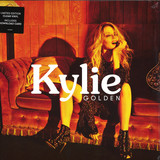
Golden, Kylie's fourteenth studio album, is the result of an intensive working trip to the home of Country music, a city whose influence lingered on long after the pop legend and her team returned to London to finish the record: We definitely brought a bit of Nashville back with us,' she states. The album is a vibrant hybrid, blending Kylie's familiar pop-dance sound with an unmistakeable Tennessee twang. It was Jamie Nelson, Kylie's long-serving A&R man, who first came up with the concept of incorporating a Country element' into Kylie's tried-and-trusted style. That idea sat there for a little while, with Minogue and her team initially unsure about how to bring it to life. Then, when Grammy-winning songwriter Amy Wadge's publisher suggested Kylie should come over to collaborate in Nashville, a city Kylie had previously never visited, something clicked. You know when you're so excited about something,' she recalls, that you repeat it an octave higher and double the decibels I was like that. 'Nashville! Yes! Of course I would!'. I hoped it would help the album to reveal itself. I thought 'If I don't get it in Nashville, I'm not going to get it anywhere.''
Kylie's Nashville trip involved working alongside two key writers, both with homes in the city. One was British-born songwriter Steve McEwan (whose credits include huge Country hits for Keith Urban, Kenny Chesney and Carrie Underwood), and the other was the aforementioned Amy Wadge, another Brit (best known for her mega-selling work with Ed Sheeran). It was then a truly international project: Golden was mainly created with African-German producer Sky Adams and a list of contributors including Jesse Frasure, Eg White, Jon Green, Biff Stannard, Samuel Dixon, Danny Shah and Lindsay Rimes, and there's a duet with English singer Jack Savoretti.
However, the album's agenda-setting lead single Dancing was, significantly, first demoed with Nathan Chapman, the man who guided Taylor Swift's transition from Country starlet to Pop megastar. If anyone knows how to mix those two genres, Chapman does. Nathan was the only actual Nashvillean I worked with. He's got a huge studio in his house, which is probably due to his success with Taylor... there's plenty of platinum discs of her, and others on his walls.' There's something of the spirit of Peggy Lee's Is That All There Is, of Dylan Thomas' Do Not Go Gentle Into That Good Night, even of Liza Minnelli's Cabaret about Dancing, a song which not only opens the album but sets out its stall, providing a microcosm of what is to come. You've got the lyrical edge, that Country feel, mixed with some sampling of the voice and electronic elements, so it does what it says on the label. And I love that it's called 'Dancing', it's immediately accessible and seemingly so obvious, but there's depth within the song.'
The experience of simply being in Nashville was an overwhelming one, before Kylie had even arrived. Once I knew I was going to Nashville, people talked about the place with such enthusiasm. They said without doubt I would love it and, I would come back with songs. They were sending lists of restaurants, coffee shops and bars. It really was a beautiful and genuine response and it felt like I was about to have a life changing experience and in a way, I did.' The reality came as something of a surprise, when she found a far more modern metropolis than the vintage one she'd envisaged. I thought it would be like New Orleans: little houses and bars, with music spilling out onto the street. It reminded me more of Melbourne: apartment blocks going up everywhere! The main strip, Broadway, where the honky tonk bars are, that's where the street was filled with music and it was just amazing.' Mainly, Minogue remembers the heat and humidity. It was 100 degrees. It was like it was raining with no rain.' She also relished the chance to wander around unrecognised, visit a few venerable music bars and soak in the atmosphere. I didn't get to the Grand Ole Opry or the music museums but I managed to go to a couple of the institutions there like The Bluebird Cafe and The Listening Room, and just by being there, through some kind of osmosis, you get this rejuvenated respect for The Song, and the writing of The Song. There's no hoo-hah around it. There's a singer-songwriter there, talking about the song and singing the song, to an audience who are there to listen. Although, I have to confess I was guilty of starting to clap too soon during a long pause at the end of one of the songs. The guy made a bit of a joke out of it and got a laugh from it, but I thought 'Of all people in the audience, no...''
It's probably no coincidence, therefore, that every track on Golden is a Kylie co-write, making it arguably her most personal album to date. The end of 2016 was not a good time for me,' she says, referring to well-documented personal upheavals, so when I started working on the album in 2017, it was, in many ways, a great escape. Making this album was a kind of saviour. I'd been through some turmoil and was quite fragile when I started work on it, but being able to express myself in the studio made quick work of regaining my sense of self. Writing about various aspects of my life, the highs and lows, with a real sense of knowing and of truth. And irony. And joy!'
The songwriting process allowed Kylie to get a few things out of her system. Initially, she admits, it was cathartic, but it also wasn't very good. I think I was writing too literally. But I reached a point where I was writing about the bigger-picture, and that was a breakthrough. It made way for songs like Stop Me From Falling and One Last Kiss. It also meant I had enough distance to write an autobiographical song, like A Lifetime To Repair, with a certain amount of humour. The countdown in that song: 'Six-five-four-three, too many times...'. I don't know if that will be a single, but I can just imagine a girl with framed pictures of past boyfriends, and kind of going 'Oh god, when am I going to get this right'' When she listens back to Golden, Kylie can vividly hear the Nashville in it. It is, she'll agree, probably the first time that a Kylie album has sounded like the place it was made. You wouldn't normally relate my songs to the cities. Can't Get You Out Of My Head sounds more like Outer Space than London. But Shelby '68, for example, was written in London but it was done with Nashville in mind. It's about my Dad's car, and my brother recorded Dad driving it! I don't think I'd have written a number of the songs, including Shelby '68 and Radio On without having had that Nashville experience.'
The latter, she says, is about music being the one to save you.' Throwing herself into the making of the record, she says, crystallised that idea. If there's one love that will always be there for you, it's music. Well, it is for me, anyway.' That song, in particular, carries nostalgic echoes of the golden age of Country, as heard through Medium Wave transistors and tinny home stereos in the distant past. Like any child of the Seventies, Kylie had a basic grounding in Country music, mainly absorbed from older family members. My Step-Grandfather was born in Kentucky and though he lived most of his adult life in Australia, he never stopped listening to his beloved Country artists.' If there's any classic Country singer whose imprint can be heard on Golden, it's Dolly Parton.
Kylie saw Dolly live for the first time at the end of 2016, at the Hollywood Bowl. It was like seeing the light,' she beams. It was incredible. Everyone, whether they know it or not, is a Dolly Parton fan. When I was in Nashville, I did pick up a T-shirt that said 'What Would Dolly Do' Maybe that should be my mantra.' And, whether consciously or otherwise, there's a timbre and trill to Kylie's vocals on Radio On that is distinctly Parton-esque. My delivery is quite different on this album,' she says. A lot of things are 'sung' less. The first time I did that was with Where The Wild Roses Grow. On the day I met Nick Cave, when I recorded my vocals, he said 'Just sing it less. Talk it through, tell the story.' This album wasn't quite to that extreme, but a lot of the songs were done in fewer takes, to just capture the moment and keep imperfections that add to the song. I remember on my last album, a lot of producers were trying to take out literally every vibrato they heard. And that's not natural to my voice. I mean, I can make myself sound like a robot, but it's nice to sound like a human!' Working within the Country genre also gave Kylie permission to write in the Nashville vernacular. Because we were going there, I wasn't afraid to have lines like 'When he's fallen off the wagon we'd still dance to our favourite slow song', 'Ten sheets to the wind, I was all confused', 'I'll take the ride if it's your rodeo'. The challenge of bringing a Country element to the album made the process feel very fresh to me, kind of like starting over. I started to look at writing a different way, singing a different way.'
If ever Kylie lost confidence in the Country-Pop concept, and found herself pondering This is great, but back in the real world - my real world - how will this work', Jamie Nelson was there to badger her into sticking to the path. We found a way to make it a hybrid with what we'll call my 'usual' sound. It had to stay 'pop' enough to stay authentic to me, but country enough to be a new sound for this album. The closer we zoomed in, and the more we honed it, I knew Jamie was right. We sacrificed good songs that weren't right for this album, because we wanted it to be as cohesive as possible. The songs that were hitting the mark were these ones, so we decided to be strong, and that's how we wrapped up the album. What he said, that stuck with me, was that 'I'd hate to get to the end of this and really wish we'd gone for it.'' Having worked with Kylie for so long, Nelson was able to put this latest shift of direction into perspective. He said 'You've traditionally done it throughout your career. You had your PWL time, then you did a complete turn when you went to deConstruction, then another complete turn with Spinning Around, and R&B dance-pop, and then another turn with Can't Get You Out Of My Head, icy synth-pop, and this is another one.' He was right. It felt like the right time to have a change sonically. New label, new stories to tell, and a new decade almost upon me.'
Kylie Minogue will, it's scarcely believable, turn 50 this year. This looming milestone is partly behind the album's title, and title track. I had this line that I wanted to use: 'We're not young, we're not old, we're golden' because I'm asked so often about being my age in this industry. This year, I'll be 50. And I get it, I get the interest, but I don't know how to answer it. And that line, for my personal satisfaction, says it as succinctly as possible. We can't be anyone else, we can't be younger or older than we are, we can only be ourselves. We're golden. And the album title, Golden, reflects all of this. I liked the idea of everyone being golden, shining in their own way. The sun shines in daylight, the moon shines in darkness. Wherever we are in life, we are still golden.' One of the album's shiniest moments is Raining Glitter, an exuberant banger which ventures closest to Kylie's traditional dance-pop comfort zone. Eg White, who is one of the producers and writers and a great character, was talking about disco one day. I said 'I love disco, but you know the brief.' We needed to be going down the Country lane, so to speak. But we managed to bring them both together. When I wrote it, I was thinking about the Jacksons video for Can You Feel It where they're sprinkling glitter over everyone. And I think there's a Donna Summer record that's got that feel to it. I think that's my job: I basically leave a trail of glitter after every show I do anyway.'
Kylie is looking forward to the challenge of incorporating the Golden material into her live shows. Mixing these songs in with my existing catalogue is going to be fun. And it could be fun to do some of those songs with just a guitar. It'll make my acoustic set interesting...'Her incredibly loyal fans - to whom one Golden song, Sincerely Yours, is intended as a love letter' - will, she believes, have no problem with her latest stylistic shift. My audience have been with me on the journey, so I shouldn't be afraid that they won't come with me on this part. I've had fun with it, and I'm sure they will too.'
The time spent making Golden has, Kylie says, been a time of creative and personal renewal. I've met some amazing people, truly inspiring writers and musicians. My passion for music has never gone away, but it's got bigger and stronger.' And if there's an overriding theme to the record, it is one of acceptance. We're all human and it's OK to make mistakes, get it wrong, to want to run, to want to belong, to love, to dream. To be ourselves.'
I was able to both lose and find myself whilst making this album.'
There are some records that manage to sound both of a time and utterly timeless and Bon Voyage Organisation's Jungle Quelle Jungle (a nod to Supertramp's Crisis What Crisis) is one of those albums. Its silken-smooth production, irresistible grooves, funk-tinged guitars, lush soundscapes and general glowing presence could easily lead one to believe that have dug up a lost disco gem from the 1970s. However, behind the disco-pop gleam lies eerie dystopian sci-fi ruminations of a futuristic bent and tones that can often feel as French as they do Asian or African.
This sort of cross-continental exploration is an expansion on BVO's previous two EPs, the man behind the Organisation, Adrien Durand, says. 'I tried to continue the musical expedition between dystopian Science-Fiction Haunted Africa - plus Haitian Vaudou on 'Soleil Dieu' - and futuristic Asia. Addressing, in a double entendre manner, some of the political issues that I am sensitive to.' In fact the jungle in question in the album's title is a metaphorical one and one that creates a vast series of environments for Durand to explore such subjects as world trade, utopian ideals and themes of idols, as well as of time and communication. However, one will need to speak French to decipher such explorations, as well as shake off the natural impulse to move with every glorious beat on its 13 tracks, of which are moved along by Maud Nadal and Agathe Bonitzer's golden vocals.
Durand is a full-time producer based in Paris, working with the likes of Amadou & Mariam, so it makes sense that this record would absolutely sparkle in this department. Durand feeds off the variety of musicians coming and going during recording sessions as well as the rotating members and numbers of people involved with the band but fundamentally he writes all songs on piano first before bringing them to record live. 'We recorded a rhythm section of five - drums, percussion, guitar and myself on bass/synth bass and keyboards - at La Frette which is a studio located in a mansion outside of Paris and fitted with a beautiful 1973 NEVE desk. We only used analogue gear, by taste really, and found it a pretty reliable way of doing things. This simply consists of putting good players together in a room and waiting for the right take to happen.' Two four-day sessions and a 'cooling off' period (to let the recordings settle) soon followed before Durand picked the material back up to give it a final polish.
The resulting album is one loaded with intricacies and idiosyncrasies, something that Durand puts down to his own unique approach. 'I don't consider myself much of a songwriter but I love arranging rhythm sections and I'm pretty proud of the ones on this record.' This applies when it comes to working with such musicians as Inor Sotolongo Zapata, who with Durand used traditional Cuban percussive instruments and explored Haitian rhythms. When Durand expands on some of the ideas and influences that were funnelled into the record, you begin to get a sense of the vastness of the sounds that fill his world, from Trevor Horn's production work on ABC's Lexicon of Love, to the literary work of JG Ballard to the visual flair of the original Blade Runner and even the Tuareg sounds of Tinariwen, due to the fact that his studio neighbours their manager's and he would hear their rhythms bleeding through the walls. You therefore end up with an album that offers tracks such as 'GOMA' that fuses Chinese and African rhythms as well as 'SI D'Adventure' a piece of pop music that is dazzlingly hook-laden.
As a result of this cooking pot of sounds, influences, thoughts and creations, Durand has more of a gumbo approach to making this music than a set-out scientific formula. 'There is no definite recipe for me to like the production of a record,' he says. 'Of course it really sticks out that my work is really influenced by the 1978-1983 period, the golden age and last stand of analogue studios and session musicians.' Whilst Durand adores the traditional and conventional music, he really views this as something bigger and wider. 'I have a taste for the otherworldly vibe from records coming from less sought-after musical scenes, particularly Poland, Haiti, Ethiopia, Somalia, Congo and early Cantonese pop. Languages and the rapport of the people involved in the making of those records really inspires me. I particularly hate the use of the word 'World Music' as a potpourri for everything that doesn't sound quite western enough.'
Montreal electronic duo Essaie Pas are back with their fifth album (their second on DFA Records).
Essaie pas always seek out fresh challenges. After all, there's a whole universe of sounds, sights, and new ideas to explore. Emerging from Montreal's sprawling electronic scene, the duo - Marie Davidson and Pierre Guerineau- feel completely free to express themselves, to sketch out hitherto unmapped musical regions.
Forthcoming album New Path takes this one step further. The duo's fifth album to date - and second on powerhouse label DFA Records -is loosely based on Philip K. Dick's A Scanner Darkly', a classic of dystopian science fiction.
I read the book a long time ago, maybe 15 years ago, and it had a strong impression on me,' explains Pierre. In our previous work we always looked to music as inspiration in our lives, but this time we felt the desire to try something different, that's not based on ourselves but on someone else's universe. It was going to be more conceptual, more political.'
New Path touches on personal ground, on addiction, loss, and the lingering strength of identity within late capitalism's mass media paranoia. It pins down the central character's destructive addiction, using this as a metaphor to explore the dichotomous rupture between our inner lives and our social environment, one that is often fed and soothed by drug abuse, social media, or any kind of dependence.
I think it touches us on many levels,' Pierre continues. We can talk about drug addiction issues, we can talk about the mass surveillance world we live in, but there's also the experience of loss, of grief. I was surprised by how the book felt so modern and accurate to the time we live in right now. Dick's visions of surveillance are the reality of social control today.'
It's a record that continually ties itself in knots, a puzzle that is outwardly beguiling while the solutions remain inherently allusive. As Pierre points out, it's even present in the title. I like the fact that it sounds optimistic, but in the book it's actually an illusion,' he explains.
But it's a challenge met with humour, picking up on the wry elements of Philip K. Dick's own writing - witness the subtle wit of songs such as 'Complet Brouillé', 'Les Agents Des Stups' or as in 'Futur Parlé's tripped-out lyrics, offsetting intense themes with something a little more playful.
The conceptual nature of New Path belies the subtle personal shifts within the band. A husband and wife duo, Essaie pas thrive on freedom, on parting to focus on outside projects in Montreal and Berlin before returning renewed, flushed with fresh inspiration.
Both personally and for Essaie pas it's good that both of us have separate projects,' he explains. Marie has been constantly touring solo for the last year. On my side I've been producing other people's music (Bernardino Femminielli, Pelada or Sleazy to name a few). Collaborating in the studio with talented people with unique aesthetics and different creative processes is really refreshing as an artist.'
The complexity of the project mirrors the complexities within Essaie pas' career to date - forever unpredictable, their wiry, individual sound offers a tangled vision of tomorrow's aesthetics. I think this was the main challenge,' muses Pierre. To adapt what we've been doing live, which before was always changing, and corner it, make it cohesive'.
Ultimately, what the duo want is a challenge, to be forced to raise their expectations again and again, to look continually to the future. This is cold music for cold times, yet beneath this lies a continual search for the humane.
Alien Ensemble's trombone man Mathias Goetz caused quite a splash when he released his eponymous debut LP under his Le Millipede moniker back in 2015: The multi-instrumentalist's initial offering was clearly something else, impossible to grasp, a musical vessel beyond genre, beyond style or era, seemingly beyond space and time even, a vessel that carried an almost cosmic kind of song-craft - music with no fixed stamp of origin, though it did somehow feel like an Alien Transistor release. Followed by remix album Mirror Mirror, which comprised reworks by 1115, Protein, LeRoy, Olaf Opal, and Saroos, to name a few, it's now time for album #2: The Sun Has No Money.Let's face it: There's nothing as majestic as the sun. At least not in our world. If it runs out of juice one day, it's game over: The End. Light's out. For everyone. At that point, it wouldn't even matter if you're rich or poor. We're all equal under the sun. Same level. And yeah, this might not be major news, but then again... we're talking about the sun. The sun! Guess it's about time to acknowledge its power and superiority, right In fact, you can feel it on your bicycle: pedaling at night, when it's on duty in other hemispheres, and you're working hard at the dynamo, sweating, you can actually feel how powerful it is. In the end you get off the bike all recharged, a tune on your lips - and somehow feeling like a miniature version of the sun yourself. And whenever you feel like that, that's exactly the right moment to grab a melodica and get to work.Following an initial warm-up round sans electricity, this new album soon begins to glow: Mathias Goetz aka Le Millipede doesn't need pedals, he boosts circulation by single-handedly* playing tons and tons of different instruments - it actually feels like thousands, easily. And thus begins a show that has countless levels to it: There are various sonic illusions... and yet Le Millipede doesn't hide anything: He's also willing to show the inner workings, the actual recording process and everything else. In short: he goes meta. Makes songs about making songs. That's right: why not use all these beautiful means to address the issue of money It's not the sun that casts shadows, all it does is recharge, fuel: growth & thriving, that's the sun's area of responsibility. And yet there came a man whose plan was simple: steal the fruit from your garden, only to sell it right back to you, for money. We can hear the sea gulls crying in the distance, as somebody is throwing breadcrumbs up into the wind that carries their voices...It's not the sun that casts shadows - all it does is radiate light. And yet there came a time when someone blocked those rays of light. Now if you're some kind of Diogenes, you'll simply say, Move at least a little out of the sun.' But if you're a teacher, you'll maybe light up your pipe and use that to lighten up. What matters is that the percussion parts, in this case, resemble some serious musique concréte. The sun doesn't know shadows - all it knows, is itself. And yet somebody entered the picture and built an entire city. A city full of streets, so that houses can cast shadows into these avenues. Plus, there's music in the streets, music originally written inside the walls of said houses.One of those streets is known as the Tin Pan Alley: a place that got its name from a music writer who compared the sound of so many pianos to the banging of tin pans. That sound: that's one side of the road that is this album. Some of these melodies appear to be shadows of earlier tunes, dating back to, say, 1898 or even before that, melodies that were first registered in the Tin Pan Alley publishers' offices back in 1912 or 1917. We actually get to see this Alley at that point in time. We see the ropes, the workings. How things come together, the actual act of creation. Suddenly, we can hear the shadows!
Okay, so one side of this street is America. The US of A. The opposite side: Russia. And smack dab in the middle: Europe. A pothole in the center. All the back-and-forth that occurs between these two poles ultimately depends on the movement of the sun. Night and day, taking turns, commuting in and out of sight. We get to meet Prokofiew's and Scriabin's ghost, among other spirits, reframed and published by Le Millipede's own imaginary label imprint on the historic Tin Pan Alley. Indeed there are moments on this album when Le Millipede seems to be playing Scriabin's clavier a` lumie`res (tastiera per luce), when his performance seems to be based on synesthesia, a wild cross-pollination of colors and sounds. In case you didn't know this: In the States, Prokofiew goes by the name Brian Wilson, and Scriabin's also known as Sun Ra - yet another guy who's usually broke, but gets to spend a lot of time out in the sun. Together, these assorted protagonists ask the people of the Antilles for Mutabor dance-tokens and send postcards to Moondog in Germany, right back into the darkness. On the postcards you can see people dancing the Biguine...Firing foreign fossil fuels from all pipes (Brennelementsteuer!), Le Millipede controls the very center of this hustle and bustle: going as far as to employ some southern Chopped & Screwed styles, he's 100% current and zeitgeisty! Houston, we've got a problem: there's some kind of myriapod, centi- or millipede on the loose! Well, give me another sip of lean, sizzurp, dirty Sprite, and on goes the journey in the Pullman coach. Let's follow the sun! Keep on moving, keep things motorik! Here comes the Trans-Eureka-Express. Cherish the backpacking days! A piercing rhapsody of sound (bohrende Rhapsodie), we'll remember them fondly! And thus things move on, the sun, the days, the earth: rise, set, action, round and round... onwards eternally. The sun: the biggest loop known to mankind. As if it was some kind of sonic Rube Goldberg contraption, time seems to be stretching out while listening to that hmmm. After all: time is a lot (a lot!) more than just money. And yeah, the sun is the real big shot on (or rather: above) Planet Earth. Le Millipede's live line-up also includes Markus & Micha Acher (The Notwist etc.), Nico Sierig (Joasihno), and Manuela Rzytki (G. Rag & die Landlergschwister, Kamerakino etc.).
*sole exception: Evi Keglmaier (Zwirbeldirn, Hochzeitskapelle) plays the viola. Words/sun worship: Pico Be
- A1: Mundo - Algo Mas (Sansibar´s Tanz-Sane Mix)
- A2: Good Joe - No More Dreaming
- A3: Mirage Man - Amygdala Hijack
- B1: Trevor Deep Jr. - Transpose Believer
- B2: Lil' Tony - Drm
- B3: Byman/Stennabb - Modern Dynamic Lounge Music
- B4: Tdj - For The People (Skit)
- C1: Inbetween Nights - Other Place
- C2: Dj Rubio - The Domicile Of Endless Heartache
- C3: Bongo Rock - Love Theme From Siltanen
- D1: V_T_X - #9Rl
- D2: Shuffles - Ratina
- D3: Tdj - All I Have Is My Memoirs
As music continuously evolves, times change and new ideas and movements come & go. All of this functions in tandem with scientific, technological, social and political advancements in our society. The biggest component to that evolution is the people. There are creators and consumers. One cannot exist without the other. Throughout art, the audience defines quality, but artist has the power to introduce change and shift perception. Execution is key. The masses are always hungry for something fresh. Sometimes we're at the forefront of new trends and sometimes we find comfort innovating the past. No matter what, musicians have a responsibility to bridge the gap. Raw Poetic and Damu the Fudgemunk meet all of the above. Produced entirely by the artists, the new album "The Reflecting Sea" revisits sonic textures of yesteryear and combined with their own distinct ears for music, have created something uniquely foreign for the music world in our time. Speaking of the times, Raw Poetic's lyrical subject matter is nothing short of relevancy. Speaking from an observatory perspective in addition to his own personal experiences, the album's content is infinitely relatable. Although known primarily as hip hop acts, both Damu and Raw P stretched out to expand what the genre is known for. The combination of elements from the mix of live instrumentation, improvisation and sampling to the range of styles including jazz, fusion, rock, electronic and soul make The Reflecting Sea unlike anything else. Captured and recorded in it's rawest form, the album is honest expression. Masterminding the festival sounds is Damu the Fudgemunk. His voice is absent from the recordings, but his presence is immediately noticed throughout the 40 minute exhibition. Packed with tons of beats, tons of scratching, original compositions, upbeat and signature atmosphere, there's no question who's behind the boards. With the average tempo of over 100bpm, this is one of the most energetic releases in Redefinition's catalog. Raw P and the Fudgemunk aim to revitalize listeners of all types with their original sound. They call it "The Reflecting Sea: Welcome to a New Philosophy." Raw Poetic (MC), hails from the DMV area by way of Philadelphia. In addition to several collaborations with Damu the Fudgemunk, he's recorded 6 albums as a member of Panacea, 1 album with K-def, 1 album with Kev Brown and recent features with Brous One in which all have been met with critical acclaim. Damu the Fudgemunk (producer/DJ) is a DC native who co-owns and operates Redefinition Records. With several successful releases as a solo artist, his music has garnered a reputation in the last decade for it's consistent quality and conceptual structure.
- A1: Gee Gee Shinn & Boogie Kings - Fever
- A2: Connie Kaye Trio - I'm A Woman
- A3: Bus Brown - Mr. L.b.j
- A4: Earl Demus Band - Her Spare
- A5: Chuck Finney Combo - I Want A Man Like You
- B1: Chick Willis - Sometimes Soon
- B2: Australia - Wide Awake
- B3: J.r. - Any Time Now
- B4: Joe Akens - Nice
- C1: Hummingbird 4 - Cho Cho San
- C2: Evangeline Made - Burnt Flesh
- C3: Dario & The Inferno - Brother, Where Are You
- C4: Swoop - Upside Down
- D1: You - You Got It
- D2: Hot Cakes - Harlem Shuffle Theme
- D3: Reunion - When The Well Runs Dry
- D4: The Counts - Get Up, Get Dancin
2x LP[17,61 €]
**INITIAL 400 LPs CONTAIN A BONUS 7" BY MEL-O-MADNEZZ**
IT'S TIME TO PAAAARTY! Why The Universe knows that Tramp is celebrating their 40th trip around the sun in 2018. And what about planet Earth Well... it is as blind as it is in so many other situations. Therefore, it is time to shine the light on Tramp for all of its unremitting efforts. As musical diversity is vanishing, especially in the field of African American music from the 1960s/70s, it is our duty to stop the extinction of threatened species of music in the same way an animal welfare activist would do anything to save a gorilla's life. Tramp Records keeps this beautiful heritage alive, every single day, again and again and again. So we are here wondering why Earth people and especially to those from our beloved home country, why why are you just sitting there, going about your life unaware of this historic event What a pity!
The announcement is especially striking when it comes to the prestigious "Movements" series. Like all its predecessors, this ninth volume contains Rare Groove nuggets recorded between the early 1960s and the late 1970s. The fact that only one of the songs appear anywhere else is a jaw-dropping phenomenon! The chronological track listing starts with two amazing cover versions: "Fever" by Gee Gee Shinn & the Boogie Kings and "I'm A Woman" by Connie Kaye Trio. Bus Brown, Earl Demus and Chuck Finney remain in the same direction although their contributions are slightly jazzier. Chick Willis' gut-wrenching "Sometime Soon" easily rivals James Brown's "It's A Man's World" and the recordings by Australia, J.R. and Joe Akens are beautiful examples of privately produced soul from the 1970s. The latin-soul of "Cho Cho San" by Hummingbird 4 heads the sound in another direction for the next three tunes, highlighted by one more stunning cover version, Oscar Brown Jr.'s "Brother, Where Are You". The album closes with some pre-disco tracks from the mid-to-late 1970s. Funk 7" collectors will freak out to finally get a chance to listen to Mel-O-Madnezz' superheavy "What You Getting High On" but will certainly also enjoy The Counts, Reunion and Hot Cakes' dance floor bomb cover of "Harlem Shuffle".
Over a hundred great unknown songs have been re-released on the first eight volumes in the "Movements" series, the majority of which can not be found elsewhere, and Vol. 9 is no exception. The work of Germany's tiniest but grooviest record label is still incomprehensibly underestimated. We know you diggers, collectors, mavens, aficionados, fanatics, completists, enthusiasts, and just plain record geeks know what's up and we heartily salute you! Without your support there would be no Tramp Records. But now it's time for a broader cultural shift for good music and a sweeping move to uphold the legacy of the unsung heroes of funk and soul. Therefore, we humbly petition you: in 2018, Don't keep all this glory to yourself! Turn your friends and neighbors on! Thank you!
- initial 400 LPs contain a bonus 7" by Mel-O-Madnezz ("What You Getting High On")
- the double vinyl LP comes with a full album download code
- deluxe double-gatefold LP with detailed liner notes, label scans & unseen photographs
- all but one song appear on vinyl-LP for the very first-time