For our second vinyl release, the idea was to bring together two artists from the same scene with strong and distinctive identities, and create a project where their individual worlds can coexist. Beyond featuring a solo track from each artist, we wanted them to collaborate and explore a shared territory that draws from their respective influences while pushing towards something new.
Gäste: Oli Rubow, Sandie Wollasch, Jona Heckmann, Alex Weis, Ulf Kleiner, Marcus Bartelt, Bernd Windisch,
Andrew Murphy
Reviews und Features in den relevanten Medien
Die „Rudies“ stehen hier als Synonym für die Verbreitung und Vermengung ursprünglicher karibischer Rhythmen
(inklusive „Dubbing") mit westlichen Beats. Vor Jahrzehnten über England eingereist und von dort weiter ins restliche
Europa getrommelt.
The first new material from Krash Slaughta since last autumn finds our man dropping a tuff 45 featuring two dope ATCQ remixes. And what else to call that but ATCK a.k.a. ‘A Tribe Called Krash’! First up is Scenario which gets a gritty guitar-led new beat making it sound closer to something by Gravediggaz at their noisiest (or even DMX) than the Afro-centric jazz-hope vibes of Native Tongues. Over on the flip, a co-production with, and tribute to, the now sadly departed Del the Soul Condor, takes Low End Theory’s Buggin’ Out and sticks with the jazzy vibes but swaps Buggin’s minimal double-bass dominated shenanigans for something rather more Latinate and Bonita Applebum-esque. Naturally these are as cheeky as they come so it’s a strickly limited affair. Don’t sleep…
Flowgeist emerges from a shared inquiry into sound and aesthetics. Genre remains peripheral; meaning stays tethered to sensation. The self-titled debut, released on Evighet Records (EVIGHET007), follows that logic across a full record, moving from matter to memory and giving passing states somewhere to stay. Trip Hop, Drum and Bass, post-punk, breakbeat, EBM, Techno and modular electronics all surface within it, summoned only where a feeling demands them, with acoustic instruments retaining their grain inside the electronic frame. The A side keeps its instruments close and its focus intimate, opening on "Molecules," where Zainab J Lascandri's voice and Arthur Boudet's guitar set the album's tone before it moves through cycles that won't break: a life stuck in place, a trust already gone bu14t still being tended, an attraction whose charm thins out under repetition. That inward attention eventually turns outward, closing the side on a colder note about how influence gets performed and mistaken for substance. The B side works through broken rhythm and cinematic scale. It examines political language for the seams in its polish, follows a relationship reduced to proximity without real contact, and rises to the record's most forceful club passage before settling into "Crystal Muse," where Massimo Capobianco's guitar moves alongside an extended modular passage, luminous and unhurried. The album closes by turning its attention to composition itself, treating the act of writing music as a way of holding onto experience before it disappears. Across both sides, the record travels from immediate, bodily feeling toward something more contemplative, carrying the same emotional attention from private entanglement into wider systems and finally into the quiet work of making the record itself.
Active Systems' debut EP, The Red EP (Split Lip Records), finds beauty in chaos and strangeness in the familiar: drawing from 90s/00s experimental grooves and stark electro (Underground Resistance, Boards of Canada, μ-ziq, Aphex Twin's Rephlex label) to create something rooted in the "dust, dirt and nostalgia" of underground electronica, Detroit techno and weirdcore. A genuine debut rather than an established alias, the four-track release moves from familiar patterns into unexpected new emotions, from the glacial hip-hop beat and starlit melancholia of "Gabbol" to the skippy rhythms of "Itsover" and the clock-shop funk of "Avoid”. This year, Active Systems has been invited to perform at Superbooth Berlin by Sequentix, played a debut show in Lost's much-hyped Club Room and closed Houghton Festival's The Warehouse stage on theopening night.
Kraak & Smaak formed in Leiden in pursuit of a particular blend of funk, disco and electronic soul, and over two decades and seven albums, Oscar de Jong, Wim Plug and Mark Kneppers have sharpened a sound that's unmistakably their own: warm, analogue, and always twisting old soul into something new. That sound has carried them from small European clubs to Coachella and American late night TV.
Their 2025 album Velvet Seas was written between Leiden and Los Angeles, and it shows: Californian light and a touch of psychedelia sit easily alongside deep funk and a cinematic reach. The record leaned on a wide circle of guests, among them IVAR, Berenice van Leer, Izo FitzRoy, Butter Bath, The Undercover Dream Lovers, iogi, Kosta G and Kainalu.
Velvet Seas Remixed hands the album's best moments to a curated set of international producers. British disco heritage, classic French touch, Brazilian disco funk, Melbourne club music and homegrown Dutch groove all take a turn, with each producer bending a familiar song toward their own instincts while keeping the album's character intact. Longer, extended versions and alternate mixes round out the full release, letting several of these tracks land in more than one form.
Planet Trip Records presents Sydney underground heroes Hugh B & Setwun’s first album, 2020’s Yeah Definitely, and its long-awaited follow-up, 2026’s Nah Maybe, as a deluxe vinyl LP package. Underpinned by the low-end heft of dub and soundsystem culture, their albums draw deeply from an expansive array of sensibilities: tones, textures and patterns shaped by post-punk and ambient music dovetail with abstract, sampledelic hip-hop drum loops. Meanwhile, Setwun’s mysterious neo-soul/modern R&B vocals glide on the beat. Punctuated by dialogue snippets, these songs feel like exploring the multiverse with an interdimensional boombox.
Yeah Definitely began as a batch of instrumentals. Having previously worked with an MPC, drum machines, instruments and Logic Audio, Hugh used a borrowed PC and Renoise, a tracker DAW associated with 21st-century jungle/drum & bass production. Afterwards, he sent them over to Setwun, who sketched vocals on top with ease.
If Yeah Definitely came together quickly, Nah Maybe was a longer process. Still inspired, Hugh B knocked out a second folder of beats with neon-lit city-pop references, slow-jam grooves, and elegant guitar figures. This time, however, something wasn’t clicking for Setwun. The only cure here would be the passage of time.
Over the next six years, Hugh and Setwun continued to collaborate while pursuing solo projects. Hugh released jungle, ambient house, dub and post-punk records through Planet Trip Records, Not Not Fun, and his OTIS Records label, while performing live, DJ, and leading the Modern Pop Ensemble. Similarly, Setwun, also a multi-instrumentalist, producer, and DJ, released a series of records that explore jazz, soul, house, and broken-beat electronica, forming a loose constellation for Mandarin Dreams and Extra Soul Perception. Alongside these efforts, he played shows and began performing with his backing band, The Soulstranauts.
Early in 2026, something clicked, and Setwun drafted vocals for the second batch of beats over an evening. Not long after, he invited Hugh to mix Nah Maybe, every bit as special as Yeah Definitely. By waiting for the right moment and putting themselves outside of their comfort zone, Hugh B and Setwun have bottled lightning twice. We’re very pleased to be able to share Yeah Definitely and Nah Maybe with you.
Here, two house-style originals meet a pair of remixes that couldn't be more different, and that is precisely what makes this record so exciting. An all-around excellent EP that blends a modern house feel with classic club DNA, offering something for fans of contemporary grooves and old-school vibes alike.
With Parallel Worlds, RFLX opens a new chapter for Eight of Cups Records, delivering a raw and focused statement built around tension and transformation.
“I wanted to avoid any form of release. With Parallel Worlds, tension becomes the language itself. I was drawn to this constant escalation, something that dissolves linear time and locks me into a different state of perception… where the drop never comes. And that’s exactly the point.”
“By removing resolution, I wanted to keep everything open: a space where perception expands and multiple realities can coexist. Parallel Worlds is not about choosing a direction, but about becoming aware that more than one is always there.”
A four-track immersive EP refusing the conventional payoff, Parallel Worlds unfolds as a continuous escalation, creating a suspended space where perception shifts and different realities begin to overlap.
The release features two original cuts alongside exclusive remixes by JOEY BELTRAM and AT-XYA.
Techno pioneer Joey Beltram strips the title track down to its raw essence, transforming it into a relentless dancefloor weapon driven by physical energy, hypnotic grooves and his unmistakable signature sound.
AT-XYA takes the opposite route, deconstructing and reshaping the original into an ethereal, cinematic journey for those fragile moments when night dissolves into morning and everything suddenly makes sense ;)
Completing the EP is Danxome, a deeper tribal-inspired cut reconnecting with the origin of the concept. In the Fon language, Danxomɛ means “in the belly of Dan”, the cosmic serpent and the origin of the world. Before parallel worlds, there was one.
Parallel Worlds started from a simple thought:
Every day, all versions of you exist. You just don’t see them all. You can stay the same, or you can shift.
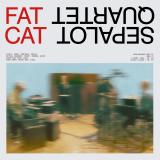
FatCat was recorded in a single session-live, with all four musicians together in the same place. What you hear on the record isn't a polished production, but a one-of-a-kind recording of four people playing at the same time in the same room.
This is not a nostalgic gesture. It's a stance. As music is increasingly understood as the output of a prompt, the question of what actually makes music becomes urgent again. Not flawless, efficient production, but the imperfect moment and its context. Not the result, but the process in which four people listen to each other, react to each other, misjudge, and find one another. This fallibility - the hesitation before an entrance, the slight pull in the timing, the glance between musicians that signals a turn - is not a weakness but the substance itself. It cannot be synthesized, because it isn't a data point but a lived relationship: between the instruments, between the people, between their shared history and what emerges new in this one take. The album is thus also a statement on the question of where, in the age of generative music, authorship and art can still be located: not in the result alone, but in the shared risk taken in creating it.
"The question was always: how do I bring my work as a producer and beatmaker onto the stage? How can something that usually happens alone behind closed studio doors become a live experience?" With the album FatCat, Sepalot pursues this question to its logical conclusion: what began as a live performance now becomes the recording itself - the studio becomes a stage for a day, and the stage becomes the definitive version of the album.
The love for electronic music remains, the raw pressure of hip hop is still palpable - and yet everything on FatCat sounds like a fresh start, captured in the very breath in which it was played.
On stage as in the studio, the four characters fit together like a puzzle. Sepalot's signature as producer and mastermind is unmistakable. On drums, Fabian Füss, longtime partner behind the kit and the voice that makes Sepalot's radio hit "Rainbows" so unforgettable. On bass, Robin Jermer. On trumpet, Matthias Lindermayr, multiple award-winning jazz virtuoso with his own albums on Enja Records. And then there's Sepalot himself, who turns it all into more than just the sum of its parts.
The eclectic beats, the pulsing bass, Sepalot's passion for atmospheric sound design - all of it remains, now joined by an element of jazz and captured in its most immediate, unpolished form. The album shows what four people in one room are capable of: a sound born of shared experience, and precisely for that reason, unique.
Truths and secrets often reveal themselves at night, under the freedom of shadowy darkness, away from prying eyes. In creating Given to the Night, sisters Valentine and Clementine Nixon have crafted a world that drifts through the in-between: between dream and reality, between day and night and the undefined, and ultimately a world that embraces the discomfort of being untethered. A process that follows simplicity and intuition rather than pre-determined narratives. “We recorded songs as they appeared, which sometimes felt like catching light. Before we realised it we had a record”, the duo explain.
While making the record Valentine and Clementine gently pushed away from the world- deleted social media, retreated into the trees of their native New Zealand - and only invited a couple of people in during the recording process. From that space, the album came together in an eerily easeful way.
There is a dream-like drift and sonic timelessness to the the record, as reflected in its nocturnal title, which can be read in two ways:
“Being taken by, or being inclined towards nighttime, preferring its blurry cloak of shadows to the harsh light of day; or giving oneself up to night, in sacrifice, letting go of fear and melting into the darkness.”
Written during a time of personal transition there was “a sense of finding the light in the shadow” they add. Guitar lines float, synth lines entwine, tapes hiss and vocals stream creating a kaleidoscopic montage of transient memories and emotions. A spectrum of feelings arise - isolation and joy, insomnia and manic highs, confusion and fleeting clarity, grief and healings. In the record, these feelings all merge and fade into one another in a nonlinear manner, as life tends to do; creating something deeply human that simultaneously gestures towards the transcendental.
Consummate selector DJ Sundae returns to Efficient Space with Nothing Ever Was, an immaculate compendium of phantom independent melancholia spanning '60s/'70s village green folk, outsider shoegaze and new millennium domestic pop. Each recording an emotional exorcism, Sundae breathes oxygen into music that was barely there in its own time, made in quiet places and crawl spaces, shared only with a precious few via private presses, hobby labels and now-decaying CD-Rs.
Free of any prescribed epoch, continent, scene or rarity, Noughties homemade indie pop opens both sides with the 4-track wonders of The Motifs and Betelmire, unlinked contemporaries finding their place alongside Andrew Jay's Crazy Horse rust, the regional-garage adolescence of Pauline Scribner and the anaesthetised Mancunian guitar-poetry of the late Quigley.
The remaining coordinates zigzag between the UK and US. Folk wayfarers John Strang & Valentine Lewis Lloyd, Virgin Insanity, Kusudo & Worth and Penny Wager's spartan Garden of Eden acoustica find their mirror in Empress and Slumber's close-quarters indie pangs. Chicago power pop fixture Phil Angotti is caught at his most tender, while Teri Rini takes the final bow with her universe-stopping hotel lounge torch song.
A deeper, more personal exploration of Sky Girl's sentimental songwriting, Sundae found himself amassing a cache of tracks too undeniable to remain confined to his anonymous mixtapes for TTT, P.A.M. and Good Morning Tapes, or bi-monthly hour on NTS Radio. Again his emotional sorcery draws together an unlikely cast, their unwritten narrative assembled from fragmented memories of past lives left behind by future horse trainers, ketamine therapists and Fab Four cover band careerists.
With not a second squandered across 1LP, it took a village to bring this new companion into being, with David Bergot's forensic audio restoration, dreamlike imagery from Matthieu Crozier, Ivan Liechti's elegant design and a perceptive foreword by kindred spirit Jessica Pratt.
Infusing his cinematic, psychedelic musical vision into cutting-edge, bass-heavy electronics, Kutiman presents a euphoric club journey through UK garage, D&B, post-dubstep, and futuristic dance music.
With syncopated drums, deep basslines, and R&B-soaked vocals from standout artists like Jenny Penkin, Misha Sutherland and Odelya Illouz, the project bridges the gap between the indie electronica of Four Tet, Caribou, and Jamie xx and classic alternative club sounds.
Club music is emotional at its heart, and this release captures its essence perfectly; the peak-time euphoria, the moments of introspection & the times spent lost in the music.
Terramar is the confluence of Causa Sui and SoCal guitar genius Isaiah Mitchell. Recorded during a week-long immersion in the El Paraiso studio in Odense, Denmark, the group manifests deep currents of psychedelia and kosmische, riding them into a heavy, uncharted swell of sonic exploration.
On the group's self-titled debut album, Isaiah Mitchell – best known for expansive, high-powered guitar solos in Earthless – brings previously unrecognized sides of his musical personality to the surface. And what better assemblage for this endeavor than the El Paraiso Records crew – known for their genre-defying deep dives that explore krautrock, spiritual jazz and even electronic minimalism? The result is exactly what one could have hoped for in a trans-atlantic session like this: a collaboration where each party reveals new angles in the other's musicianship. A joint venture that manages to bring something new to light by paying homage to traditions of the past: Californian psychedelia, German kosmische and Scandinavian commune rock.
The group flies high on tracks such as ”Swell” and the scorching ”Melted Mountain”, but pushes into deeper experimental territory on ”Ritual De Fantasmas”, ”Caterpillar” and ”Borrego”, weaving synthesizers and studio manipulation into the fabric of their sound. Terramar is a true psychedelic delight.
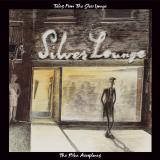
The Blue Aeroplanes have been delivering their distinctive brand of rackety sprechgesang for four decades now, and they are showing no signs of slowing down. Their new studio album, ‘Tales From The Silver Lounge’ is based on overheard conversations between the clientele of The Silver Lounge, a rather louche café/bar in an unnamed city on an unknown planet much like ours, and in an unknown time, though the decor tends to the late 50’s, early 60’s.
The identities of the members of the Silver Lounge are, of course, confidential.
This is the 14th Blue Aeroplanes studio album and the third with the current line-up, which is:
Gerard Langley: vocals
Bec Jevons: guitar, vocal and backing vocals
Mike Youé: guitar, vocal and backing vocals
Rita Lynch: guitar, vocal and backing vocals
Chris Sharp: bass and backing vocals
John Langley: drums and percussion
Ed Taylor: many different instruments and backing vocals
Wojtek Dmochowski: dance
Alexander Dmochowski guests on saxophone and clarinet, Will Diamond on violin and Steve Bush adds backing vocals.
After two best-of compilation albums were released by Chrysalis Records in 2025 (‘Magical Realism’: The Best Of The Blue Aeroplanes’ and ‘Outsider Art’: The Other Best Of The Blue Aeroplanes’), the band are now back firmly in a sort of present with a new album that features all the guitar-band flavours that anyone could need, with poems that cover name-doppelgangers, falconry terms, Don Marquis, postcards, Greek mythology, abandoned Teslas, the First World War and the surreal nature of music-hall jokes.
“The Blue Aeroplanes? Not my cup of tea, but I can see what people see in them.” Mark E. Smith
*Limited edition (500) reissue of The Orchids second album – originally released on Sarah Records in 1991- remastered with the 7” and E.P tracks from the time. Translucent pink*
“The Orchids have a lightness of touch, an autumnal and mellow fruitfulness, a clear-eyed pop nous. Imagine some nexus that takes in Felt, Orange Juice, The Beach Boys and The Go-Betweens”
-Stuart Maconie
“The Orchids can come on like esoteric angels high on Felt and Massive Attack”
– John Mulvey, NME
The early summer bloom of 1992 felt like it had been pollinated by a lot of sunshine-loving records from the year before, optimistic headrushes that embraced hedonistic bliss or at least a sweeter ride. There was still an element of bedroom wistfulness to singles like Higher Than The Sun, Nothing Can Stop Us and even Paris Angels’ Perfume but there was no denying the appeal that techno, rave and Bleep held, especially when it was microdosed. Bands were more willing to experiment with technology and producers, if not necessarily going for all whistles-blazing club bangers.
The Orchids, hailing from the suburbs of Glasgow were unlikely to ever emerge from their hood as contenders for a deal on Soma Records (which had begun in 1991 in that city) but they evidently wanted to stretch their boundaries beyond their introverted debut. Unholy Soul is somewhat breezier than Lyceum. It’s still laced with a Scottish melancholy but there’s more breathing space within the production. They’d hinted as much on their 12” ‘Penetration’ EP from 1991 and lovelorn songs such as Waiting For The Storm and Peaches are now spiked by absent-minded cherubs with an ear for the 3.a.m comedown.
As lead singer James Hackett says today: “Unholy Soul was the first time we had spent more than a couple of days in the studio, doing so after work. It was a thrilling period of creativity and we had most of the songs written but not enough. We didn’t worry about that too much though because with Ian Carmichael there was a new opportunity for studio generation. Also this was the first time we had heard Pauline (Hynds) singing with One Dove so we asked her to sing on some of the songs. We were obviously influenced by a lot of the music of the time but you can still hear it’s The Orchids at heart”.
The next year of course One Dove (with Carmichael programming) released their debut album - produced by Andrew Weatherall - on the Boy’s Own label. It felt like there was a lot of ideas being spun back and forth between artists and producers in the early 90s. If some of the records also sound very much of that time that’s no bad thing either. There was a lot of loved-up nostalgia for the 60s then so it’s no surprise that many of the records have a youthful exuberance coupled to a technological innocence, that’s the charm.
Sometimes the most interesting stories in 80s dance music are hidden on the B-sides.
This one begins in Munich with two men: Manfred Alois Segieth, better known as Fancy („Slice Me Nice” and „Flames Of Love”), in the production credits he frequently appeared as Tess; Alfons Weindorf, musician, composer and producer, member of Zara-Thustra and part of the Munich studio environment surrounding the Weindorf family and Weryton Studios. For his electronic dance productions he used the names Elvin and Elvine. In the second half of the 1980s, Tess and Weindorf became part of an extremely productive Munich circle that also involved names such as Linda Jo Rizzo, Grant Miller, Sabrina Lorenz or Charlie Glass. Together in various combinations, they created original productions, songs and remixes that today form an unmistakable chapter of German Euro Disco. ZYX Records regularly called on this production world for new mixes and additional material and this is where our story becomes particularly interesting.
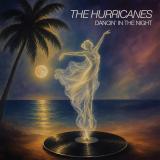
In 1986 ZYX decided to release „Tribal Stomp (Cherokee Nation)” by Psychic Interface in Germany. Psychic Interface was actually an American project by Jim Callon. But turn the German 12-inch over and things suddenly become much more German. The B-side, „Dancin’ In The Night”, was credited to Psychic Interface as well, yet the music itself came from an entirely different world. Written and produced by Elvine and Tess it was essentially a Munich production. The synths, the bassline, the melodies, the arrangement and that unmistakable mid-80s German Euro Disco character all point directly towards the creative partnership that would become associated with The Hurricanes.Around the same period another piece of the puzzle appeared. ZYX decided to bring back Den Harrow’s 1983 debut single „To Meet Me”, taking advantage of the enormous popularity Den Harrow had achieved by 1986. The new German release featured the „Hurricane Hit Mix”. And on the other side was something completely different – „Tropical Nights”. An instrumental written and produced by Elvine and Tess and this time officially credited to The Hurricanes. There was a logical reason for that. Putting an original composition on the reverse of a licensed or remixed single meant that the creators were not only remixers or producers. Their own composition was now part of the record as well, generating its own publishing and mechanical rights. It was a clever piece of 1980s record business. Two years later, in 1988, The Hurricanes would return with the much better known „Only One Night”, one of the finest examples of the Elvine & Tess Euro Disco sound.
Now Vintage Pleasure Boutique goes back to that earlier chapter. We bring together „Tropical Nights” and „Dancin’ In The Night”, two productions born from the same Munich team, and give each of them a new DJ-friendly interpretation. The originals retain everything that makes them special: crisp electronic drums, driving sequencers, huge synth melodies and that wonderfully unmistakable German take on Italo Disco. The new remixes take the same DNA onto today’s dancefloor. Longer builds, stronger transitions, more room for mixing and a subtle touch of contemporary italowave production, without losing the melodies, atmosphere or character of the originals.
Two hidden pieces of Munich Euro Disco history, taken out of the B-side shadows and finally given the dancefloor space they deserve. Two originals. Two new remixes. One fascinating piece of The Hurricanes story.
Some records are forgotten. Others become legends before they even get released. Back in 1985, two pioneers of the Dutch electronic dance scene, Michiel van der Kuy and Peter Slaghuis, joined forces to create Space Dream during the sessions for the now-cult Hot Dance Party compilation. The track was destined for its own 12-inch release on Hotsound Records, even receiving a catalogue number, 850122. But somehow, the record never happened. The music remained an unfinished demo, locked away for over four decades. Until now!
More than 40 years later, Space Dream finally gets the vinyl release it always deserved. A.P. Mono has carefully completed the original recording, preserving its authentic 1985 sound and bringing this long-lost piece of Dutch electronic history back to life. But the story doesn’t end there. When Michiel van der Kuy heard about the project, he decided to jump back into the spaceship himself, producing a brand-new, contemporary interpretation of his own creation. Joining forces with A.P. Mono and Orbital Force, the result is a four-track journey through the universe of spacesynth: the original version that arrived over 40 years late, plus three fresh, high-voltage reworks.
For the die-hard Hotsound collectors, the Laserdance devotees, the admirers of Michiel van der Kuy and those who still cherish the legacy of Peter Slaghuis, this is something special. A missing chapter of Dutch electronic dance music finally finds its way onto wax. Four cuts packed with cosmic synth lines, driving electronic rhythms and that unmistakable 80s DNA. Made for vinyl junkies, Italo-wave selectors and DJs who love their dancefloors somewhere between vintage space disco and modern electro. 1985 called. The future finally answered. Space Dream has landed. Forty years late. Right on time.
Bonobo alias Simon Green returns with "Distance In Static", his new album, which will be released on September 11, 2026, by Ninja Tune.
On "Distance In Static", Bonobo collaborates with a characteristically impressive lineup of artists, including Arooj Aftab, Joy Crookes, Nilüfer Yanya, Ichiko Aoba, Nicole Miglis (Hundred Waters), and Aanya Martin. The lyrics are written in English, Urdu, and Japanese, while historical Iranian samples and guzheng recordings stand alongside Bonobo's carefully crafted instrumental sounds. These were created during recording sessions in Los Angeles, Tokyo, London, and beyond: a significant part of the album was completed at Neil Young's legendary Broken Arrow Ranch in California, where he had retreated for several weeks earlier this year.
The album's title - "Distance In Static" - aptly describes Bonobo's current situation: it evokes images of distorted transmissions and fleeting frequencies, memory fragments and glimmers of meaning that echo through more than two decades at the forefront of electronic music. He sees the traces of his work reflected in a younger generation rediscovering trip-hop, downtempo, and experimental electronic music of the 1990s from a contemporary perspective. "I think the beginning of my work is relevant to younger people today," he says. "I liked the idea of listening for a distant signal - finding something in the noise," he continues. The entire album conveys the feeling of a search for transcendence: music that hovers between intimacy and vastness, the familiar and the unknown.
Within the universe of "Distance In Static", there is also a sense that this album marks something truly monumental. It is a moment of transition, a celebration of Bonobo's 25th anniversary, but perhaps also his last album in the traditional sense: with numerous guest contributions and a multi-year world tour with a full live band.
Whatever comes next, one thing is certain: "Distance In Static" is arguably Bonobo's best album to date; as ambitious and forward-thinking as ever and a reminder of why he has influenced so many people so strongly for so long.
Daybreakers reaches a milestone with DBR010, and it felt right to mark the occasion with something truly special.
Fred Everything is one of those producers whose influence runs deep. From his early releases on 20:20 Vision through to decades of essential records on Lazy Days and beyond, the Montreal based producer has quietly become one of the most respected names in deep house. A producer's producer, a DJ's DJ, and someone whose records seem to reveal a little more with every listen.
The story behind this release starts in Hackney. A few beers at the BBE Store, a conversation about old DAT tapes and eventually enough persuasion to get Fred digging through his archives. What came back was pure gold: three previously unheard tracks recorded between 1998 and 2004, sitting untouched for over twenty years.
There's something special about hearing these recordings now. Made during a period that saw Fred establish himself as one of deep house's leading voices, they capture that unmistakable blend of musicality, groove and craftsmanship that made his records stand out in the first place. This isn't nostalgia or a history lesson. These tracks still sound fresh, still sound relevant, and most importantly, still sound like they belong on a dancefloor.
Ezra Collective's Here Because Of Hope is the most ambitious and personal record of their career - conceived as a body of work split into three spiritual and geographical movements, the album traces the movement of Black people across continents and decades, from the music of Africa to the rhythms of the Caribbean, and home to the streets of London. Formed in the youth clubs of London, Mercury Prize and BRIT Award-winners Femi Koleoso, TJ Koleoso, Joe Armon-Jones, James Mollison and Ife Ogunjobi have now spent over a decade making jazz joyful, urgent and undeniable. On Here Because Of Hope, they push that vision further than ever, asking a simple but profound question: why does so much Black music born out of pain sound so joyful? Their answer is hope: the belief, carried across generations and oceans, that something better is possible. Anchored by collaborations with Pa Salieu, Lila Iké, Leona Lewis, and reaching across the full breadth of the global African diaspora (including America, where those same African and Caribbean roots gave birth to jazz itself) Here Because Of Hope is a record of remarkable warmth, ambition and humanity, and the sound of Britain's most vital band at the peak of their powers.
Ezra Collective's Here Because Of Hope is the most ambitious and personal record of their career - conceived as a body of work split into three spiritual and geographical movements, the album traces the movement of Black people across continents and decades, from the music of Africa to the rhythms of the Caribbean, and home to the streets of London. Formed in the youth clubs of London, Mercury Prize and BRIT Award-winners Femi Koleoso, TJ Koleoso, Joe Armon-Jones, James Mollison and Ife Ogunjobi have now spent over a decade making jazz joyful, urgent and undeniable. On Here Because Of Hope, they push that vision further than ever, asking a simple but profound question: why does so much Black music born out of pain sound so joyful? Their answer is hope: the belief, carried across generations and oceans, that something better is possible. Anchored by collaborations with Pa Salieu, Lila Iké, Leona Lewis, and reaching across the full breadth of the global African diaspora (including America, where those same African and Caribbean roots gave birth to jazz itself) Here Because Of Hope is a record of remarkable warmth, ambition and humanity, and the sound of Britain's most vital band at the peak of their powers.
alex wilcox releases his second solo ep on трип: ‘rumpelstiltskin’ alex wilcox possesses a rare quality of transforming simplicity of a known form into something that sounds as fresh and modern as contemporary music should in 2026. his glassy, chiptune heavy, razor sharp production combined with quite some synth warmth, sounds like classic IDM created in detroit in 2050. if that wasn't enough, add a bit romanticism, a fairy tale like atmosphere and wonder "who is rumpelstiltskin?" spin to win.
Few producers embody the soulful heart of House Music quite like Move D. Being a mentor of the label since day one, All That Jelly brings together two defining and desirable cuts from David Moufang’s recent history to one record.
'To The Disco ’77' 2013 original version for the A-side and the 2017 live rework finds its way to the B-side, both freshly remastered by the amazing and sought after Andreas Kauffelt. 'To The Disco ’77', opens with a clean, electro-styled beat that has a restrained power and a controlled tension that gradually blooms as the keys start to lift the mood into something lighter. When the iconic 'to the disco' vocal sample cuts through, it’s like a wink
from the past, threading disco’s golden exuberance through the disciplined swing of classic house. The track is a seamless blend of Funk, Disco, House and Electro with each element raw yet playful, woven into a groove that never stops urging you forward. It’s a masterclass in balance: sleek but deeply human, nostalgic but alive in the moment. It's like listening to the history of dance music in one special track.
'To The Disco ’77 (Move D Live Rework)' stretches the idea out into something even more fluid. The groove loosens, the funk rises to the surface and the extended runtime gives space for guitar and bass lines to share center stage, riffing around each other with organic warmth. The 'to the disco' mantra remains, grounding the track in its celebratory intent. It’s the kind of tune that closes a night perfectly and makes you not want to leave the dancefloor. Reissued together, these versions show Move D’s masterful ability to bridge eras and genres, reminding listeners that the dancefloor is as much about emotion as it is about motion.
Rebolledo is back. And this time, he's bringing his own label: Rated R. What began as a party series — with chapters like Rated R and Wax Upon A Time — now mutates into a record label. Long overdue, if you ask us. Surrounded by talented friends from all corners of the globe, this is the new home for bringing everything back into focus. And yes, on wax too.
Naturally. For the first release, we're kicking things off with something equally overdue: Rub N Tug are back. The track? A certified underground wanderer. Loved, played, and passed around dance floors worldwide for well over a decade, yet somehow never properly released. Or maybe it was. Sort of. It's complicated. Now it returns with a remix of a remix, giving the whole thing a fresh coat of cosmic polish. As if that wasn't enough, Paulor takes things one step further with a particularly special jam of his own. Which means we're now dealing with a remix of a remix of a remix.
Confusing? Maybe.
Necessary? Absolutely.
Makes perfect sense to us.
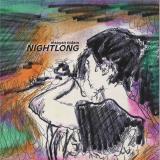
The roots of Nightlong can be traced back to Havana in early 2008, where a series of recordings captured some of the most compelling contemporary Cuban singers and musicians. These sessions yielded a striking collection of voices, woodwinds, and brass, all imbued with a distinctive warmth and vitality—material that called for a careful and inspired reinterpretation.
That reinterpretation came from Maayan Nidam. With remarkable intuition and precision, she distilled the essence of these performances and reshaped them into a work that feels both organic and forward-looking. Moving beyond her signature dance floor framework, Nidam explores a wider range of rhythms, textures, and tonal depth, crafting an album that unfolds with subtle complexity and emotional resonance.
The result is a fluid and immersive record—one that transforms its source into something entirely new, while preserving its expressive core.
Toka Project was a collective from Nottingham's fertile 90s party scene, including members Andrew Macari, Andy Riley and Steve Walker amongst others, and they dropped their 'One Day' EP in 1999 on Filter Flow, which now revisits the title cut with a new set of remixes. The original is a deep house sound with a rough metallic edge and humid pads infused with whispered vocals. Di Saronno remixes it into something more light and airy, with a subtle skip in the drums that recalls the best of Melchior LTD. Andrew Macari's version has a little cheeky wiggle and sunny synth work, then Latenight Society remixes it into a slower sound with a swirling backdrop of pastoral melodic colours. A dreamy close to a fine set of new versions.
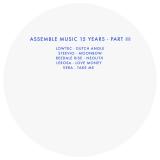
"ASSEMBLE MUSIC 15 YEARS - Part III : Founded in Lisbon in 2011, Assemble Music celebrates its 15th anniversary with a three-part vinyl compilation, bringing together fifteen artists who, in different ways, reflect the label's past, present and future. Released simultaneously in November 2026 and distributed worldwide by Clone Distribution, the three records are less a retrospective than a continuation of what Assemble has been building since the beginning: music with character, made by artists with their own language, away from trends and easy categorisation. Across fifteen years, Assemble has moved freely between house, techno, electro, dub and more experimental forms of electronic music. The catalogue has never been defined by one particular sound, but rather by a certain approach, personal, uncompromising and built to last. Part III brings together another five artists particularly close to Assemble's musical universe. Lowtec has spent decades developing one of the most distinctive languages in European house and techno, both through his own productions and his own label Workshop. His music shares something fundamental with Assemble, restraint, depth and an unwillingness to follow obvious paths and thats exactly what he delivers with "Dutch Angle" exploring the more ambient and abstract side of house. Welsh modular artist Steevio, co-founder of Freerotation, approaches electronic music through improvisation and live interaction with machines. His contribution to the compilation reflects the human, unpredictable side of electronic music that has always fascinated the label. Reedale Rise returns after becoming an important part of Assemble's recent chapter. Moving naturally between electro, techno and house, his music combines precision with an unmistakable melodic and emotional quality. With his track he explores a slightly darker path here, with deeper, more shadowy melodies revealing a different side of his distinctive sound. Lerosa's "Love Money" and Vera's "Take Me" are two very special tracks in our back catalogue, and we felt it was time to bring them back to life for our 15th anniversary. Vera was one of the first artists to collaborate with Assemble, with Lerosa joining not long after. Over the years, both have become an important part of the label's story, through releases, many shared showcases, and above all, a great friendship that has grown along the way."
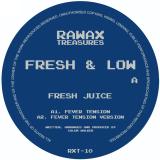
We are very happy to announce the 10th release by Fresh & Low on their own “TREASURES” series on RAWAX! This time, we have the honour of presenting something very special. It’s a split EP featuring Fever Tension—originally released on Black Vinyl Records in 1999—and Fresh Juice II, also first released on Black Vinyl Records in 2000.
An explorer from Earth is pulled through a malformed black hole and crash-lands on a distant
water-covered planet. Her ship lies in ruins, its systems failing, lights flickering through smoke. Then it
begins to rain.
As water enters the machinery, the opposite of what might be expected occurs. The ship starts to recover.
Its interface reorganises itself into legible glyphs; damaged systems begin to hum back to life; the
surrounding terrain slowly assimilates with its structure. Everything is washed in pastel blues, greens and
purples, and a landscape that should feel entirely alien produces an inexplicable sensation of home.
This is the world NikNak imagines for Azul, an album built around water and our increasing desire to
become more integrated with technology. Yet the relationship she proposes is not one of technological
domination over nature. Here, nature repairs the machine. Water nourishes the human body and its
extensions alike, dissolving the perceived boundary between biological and technological systems. The
cyborg at the centre of Azul is fluid rather than metallic: copper capillaries, nanotechnology and water
circulating through the same body.
Part of this imagined world has a very real source. Much of Azul was developed during a residency at Casa Ilhabela in Brazil, where NikNak collected underwater recordings specifically for the project. These
recordings give the album's fiction a physical foundation: its imagined waters begin with real ones. Field
recordings become material for an environment that is simultaneously otherworldly and rooted in direct
experience.
It is a natural evolution for an artist whose practice has long resisted a single mode of listening. An
award-winning turntablist, composer and improviser, NikNak has built a language around manipulating
sound in real time and treating recorded material as something fluid rather than fixed. On Azul, that instinct expands into more immersive world-building: sound becomes environment, organism and narrative at once.
Following 2024's Ireti, Azul marks NikNak's arrival on Lapsus Records. Beneath its science-fiction
architecture lies a quieter and more personal transformation. Back on Earth, the explorer was afraid of
water. Here, she eventually kneels beside a small rock pool and drinks the rainwater collecting within it. For the first time in a long while, she feels completely at ease. What once inspired fear has become
nourishment; what should feel foreign feels like home.
The feeling doesn't last. The ship's distress beacon was activated when it lost course, and somewhere
beyond the atmosphere its signal has been received. The explorer looks towards the point where she first
tore through the sky and sees another vessel beginning to emerge. For now, she calls this place Azul.
There are streets we know by heart, every wall and every crack etched into memory.
That kind of intimacy can only be earned over time, through repetition and a deep
attachment to the things we hold closest.
“Can You Feel It” belongs to that rare category of records that time has made sacred. Yet
even after all these years, it still has more to reveal.
The New York Dub revisits the original through the haze of a nearly forgotten era, when
the hypnotic pull of the night was all that mattered. Elsewhere, the Underground
Resistance remixes offer a tougher, uncompromising reinterpretation, stripping the
record back to its raw dancefloor essence while preserving its soul.
These remixes reveal the record from an almost forgotten angle. A rare opportunity to
rediscover something cherished without diminishing the memories it carries...
Mensch & Maschine. A concept. 13 tracks. One system. No coincidence. No compromise. Everything follows a logic. We live in a time where progress is no longer a goal, but a reflex. We accelerate without knowing the destination. We develop without questioning. We trust without understanding. We are driven by the idea that technology produces solutions. Without calculating the risks. Meanwhile, something new is emerging. A form of intelligence. Not human. Not emotional. Unstoppable. Consistent. Precise. Superior. Maybe not today. But eventually. Mensch & Maschine exists exactly there. Between what we create and what replaces us. This work does not provide answers. But it may ask the right questions. What happens when we are no longer the most intelligent entity? What remains of the human when systems begin to replace them? And who makes the decisions when we no longer decide for ourselves?
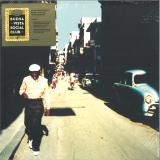
Celebrating 30 years since ‘Buena Vista Social Club’ was released, this classic will be made available on limited edition pearl vinyl and features the remastered audio and bonus tracks released as part of the album’s 25th Anniversary in 2021.
Masterminded by the trio of Cuban bandleader Juan de Marcos González, American producer and guitarist Ry Cooder, and British producer and label owner Nick Gold, 'Buena Vista Social Club’ is both the name given to this extraordinary group of musicians and the album they recorded in just seven days in 1996 in Havana’s 1950s vintage EGREM studios. It was clear from the atmosphere of the recording sessions that something very special was taking place. However, no one could have predicted that Buena Vista Social Club would become a worldwide phenomenon – awarded a Grammy in 1997 and, at over 8 million copies, outselling any other record in the same genre.
The acclaim of the original album elevated the artists (including Ibrahim Ferrer, Rubén González, Eliades Ochoa, Compay Segundo and Omara Portuondo) to superstar status, inspired an award-winning film by Wim Wenders, a Tony Award-Winning Broadway Musical and contributed to popularising Cuba’s rich musical heritage. Produced by Ry Cooder and Executive Produced by Nick Gold for World Circuit, the timeless quality of the music and the sheer verve of the veteran performers have ensured that this album will go down as one of the landmark recordings of the 20th century.
Duality Trax reaches its tenth release with a defining moment for the label, as label boss Holly Lester steps forward with her debut EP. A personal milestone as much as a catalogue marker, the record channels sounds that have shaped her sound to date - early tech house, the low-end swing of UK garage and breakbeat, the rolling pulse of mid- 2000s European dancefloors, and the emotional lift of ’90s progressive house - all refracted through a distinctly personal lens. Open Your Mind sets the tone with a sense of lift and release: a wide, expansive bassline carries skippy, garage-tinged percussion, while bright piano stabs cut through guided by playful, restless FX. Big Fill pivots into tougher territory, a driving cut built on a rolling sub that pulls you into the groove - equal parts pressure and introspection, with moments of dreamlike suspension between the weight.
On the flip, Tanit drifts into more atmospheric space —an ode to Ibiza that still carries a distinctly UK undercurrent. A squelching, elastic bassline and cheeky, garage-leaning wubs provide a foundational groove but everything around it drifts: gated synths shimmer, drums sparkle, half-heard vocals dissolve into the mix and the track unfolds with a blissed-out, cruising energy. It feels just as natural in a dark room as it does out on open water, coasting past Formentera. For the remix, Holly turns to one of her favourite producers of the moment, DJ Life, who draws Open Your Mind into deeper waters. The Berlin via Australia producer stretches the groove into something more hypnotic and submerged, a patient 5am burner that lingers in the air,equally at home in basements, afterhours, and those inbetween moments as night slips quietly into day
After years of steadily building momentum within the deeper side of drum & bass, Monika now delivers his long-awaited debut album, How We Saw Forever, landing this August on Spearhead Records.
UK-born and now based in New Zealand, Monika has developed a sound that blends deep rolling grooves, soulful textures, delicate musicality and moments of genuine emotional weight. Across the album he moves effortlessly between late-night introspection, euphoric warmth and darker, more experimental territory, showcasing an artist fully confident in his own sonic identity.
Having already made a strong impression through previous releases on Spearhead and appearances across the label’s 20-year anniversary campaign, How We Saw Forever feels like a major step forward creatively. From the haunting beauty of “What Turns Your World” featuring Oktae, through to the nostalgic rave energy of “Mango Pop” and the weightier pressure of “Syndicate”, the album captures Monika’s ability to balance emotion, atmosphere and dancefloor impact without ever feeling formulaic.
At its core, How We Saw Forever is an album about atmosphere, memory and emotion, music designed equally for solitary headphone moments and packed dancefloors at sunrise. There’s a cinematic thread running throughout the project, but also a raw honesty that gives the album its real depth.
Speaking about the album, Monika says:
“This project became a reflection of so many different seasons of life over the last few years. Some tracks came from really emotional places, others were written purely from joy and escapism, but together they tell the story of where I’ve been creatively and personally. I wanted the album to feel immersive, something people could disappear into.”
Released via BCee’s Spearhead Records — a label long celebrated for championing soulful and emotionally rich drum & bass. How We Saw Forever marks another exciting chapter for both Monika and the wider Spearhead family.
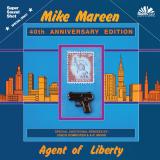
1986 was a very good year for Mike Mareen. It was the moment when something changed in his music. After years of searching for the right sound, Mike decided to change his production team and it turned out to be exactly the right decision. The first major result was “Love Spy”, with Lutz Rahn playing a crucial role in shaping its sound. The record simply exploded. Even without the kind of massive promotion normally associated with an international hit, “Love Spy” became one of the defining records of that peculiar German intersection between synth-pop, electro, Hi-NRG and Italo Disco. But Mike and Lutz were only getting started. Soon afterwards they wrote and recorded “Agent Of Liberty”. And once again, everything worked. The single travelled far beyond Germany, appearing in places as distant as Mexico, Australia, Sweden, Denmark, Norway, Venezuela and South Africa. It was another demonstration of how sophisticated Euro Disco could be when it was treated as serious electronic music rather than disposable dance-pop. The sound was simply dope. Sharp digital synthesizers, metallic FM textures, punchy electronic drums, dramatic arrangement changes and the kind of bright, futuristic timbres that made the Yamaha DX7 era so instantly recognizable. But the biggest change… was Mike himself. This was no longer the romantic lover of “Dancing In The Dark”. On “Agent Of Liberty” he sounds tougher, sharper and more confrontational. His half-spoken, half-rapped delivery cuts through the production with almost streetwise confidence, while huge uplifting backing vocals and highly melodic synth lines keep pulling the track back towards the dancefloor. And beneath the attitude there was something much more interesting going on. “Agent Of Liberty” announced a new chapter in Mike Mareen’s music, a direction that would later be developed much further on the “Let’s Start Now” album. Mike wanted to belong to the intelligent side of the electronic scene. And, just as importantly, he wanted to help shape where that scene was going next. “Agent Of Liberty” is probably one of the clearest examples of that ambition. It has all the ingredients of a huge club record, but there is tension in it, drama, attitude and a sense that something bigger is happening behind the beat. Four decades later, it still sounds completely distinctive. Not merely like a record made in 1986, but like a record that captures what was exciting about 1986 in the first place.
For its 40th anniversary, Vintage Pleasure Boutique brings “Agent Of Liberty” back to vinyl in newly remastered form. The release will be available on classic black vinyl and in a striking bright orange edition. And because this is not meant to be just another archival reissue, we have added two brand-new interpretations. Disco Computer takes the track into more adventurous territory. His remix is the more unconventional of the two, approaching the original from a slightly more modern and experimental angle while keeping its unmistakable melodic identity. A.P. Mono takes almost the opposite approach. Rather than trying to reinvent “Agent Of Liberty”, his version works more like a contemporary DJ edit. The original character remains intact, but the structure has been reshaped for the modern dancefloor, with stronger build-ups, clearer mixing points, carefully controlled changes in dynamics and moments designed to let the tension rise before the track hits again. The idea was simply to give DJs two new ways of playing it.
Forty years after its first release, “Agent Of Liberty” remains one of the most characteristic records not only of Mike Mareen’s career, but of the entire German electronic dance scene of the 1980s. Powerful, melodic, intelligent and wonderfully excessive. The Agent is back.
By Most Bands' Fifth Album, The Sound Is Pretty Set. Parameters
Established. Refinement Dissipated In Favour Of Formulaic Execution Of
What's Worked In The Past. Fair Enough. All Them Witches Take A
Harder Route. In 2017, The Nashville Four-piece Offered What Might've
Otherwise Become Their Own Template In Their Fourth Album, 'sleeping
Through The War'. Their Second For New West Records Following
2015's Mellow-vibing 'dying Surfer Meets His Maker', 'sleeping
Through The War' Brought Larger Production Values To Dug-in Heavy
Psych Blues Jamming With Oversight From Producer Dave Cobb (jason
Isbell, Sturgill Simpson). After Exploring New Ground On 2013's
'lightning At The Door' And 2012's 'our Mother Electricity' As Well As
'dying Surfer Meets His Maker', With 'sleeping Through The War' The
Band Had Arrived At Something New, Something Sprawling, And
Grander-feeling Than Anything Before It.
So Naturally, In A Year's Time They've Thrown That All To The
Appalachian Wind, Turned The Process Completely On Its Head And
Reversed Paths - Recording In A Cabin In Kingston Springs, About 20
Miles Outside Of Nashville On I-40, With Guitarist Ben Mcleod At The
Helm. The Result, Mixed By Rob Schnapf (beck, Elliott Smith, Kurt
Vile), Is The Most Intimate, Human-sounding Album All Them Witches
Have Ever Recorded And Another Redefinition Of The Band. Introducing
Keyboardist / Percussionist Jonathan Draper To The Fold With Mcleod,
Bassist / Vocalist Charles Michael Parks, Jr., And Drummer / Graphic
Artist Robby Staebler, The New Eponymous Record Isn't Self-titled By
Mistake. It's The Band Confirming And Continuing To Develop Their
Approach, In The Shuffle Of 'fishbelly 86 Onions', The Organ-laced
Groove Of 'half-tongue', The Tense Build Of 'hjtc' And The Fluid Jam In
Closer 'rob's Dream'.
From The Sustained Consonants In Parks' Vocals To Mcleod's
Commanding Slide In 'workhorse' And Drifting Melancholy At The
Outset Of 'harvest Feast', All Them Witches Are Laying Claim To The
Essential Facets Of Their Identity.
Lp Format Pressed On Red Transparent 140g Double Vinyl In A Gatefold
Sleeve.
For Fans Of The Oh Sees, Baroness, Mastadon.