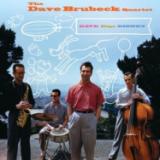
The album Brubeck Digs Disney features the classic Dave Brubeck Quartet with Paul Desmond , Norman Bates , and Joe Morello performing a set of songs from Walt Disney movies. This special edition includes two songs from the same sessions not included on the original LP. This was Norman Bates' last album as the bassist with the quartet before his replacement Eugene Wright took on the role. "Inspired by a trip with his family to Disneyland, Dave Brubeck recorded eight songs taken from Disney movies. The funny part is that while all of these songs were already in the Brubeck Quartet's repertoire, the results are still pleasing." - **** Scott Yanow, AllMusic
[a] Alice In Wonderland [from Alice In Wonderland]
[b] Give A Little Whistle [from Pinocchio]
[c] Heigh-Ho [from Snow White]
[d] So This Is Love [from Cinderella]
[e] When You Wish Upon A Star [from Pinocchio]
[f] Someday My Prince Will Come [from Snow White]
[g] One Song [from Snow White]
[h] Very Good Advice [from Alice In Wonderland]
The upcoming album is sharp, cohesive, and rooted in who she's always been. Growing up in North London, she absorbed the chaos and hooks of the indie sleaze scene, and now she channels that restless energy into songs that feel alive, pulsing like a sweaty gig in Camden or Shoreditch. It's classic girli alt-pop -- nostalgic, chaotic, and fearless, but sharpened with a bold new edge. girli has been teasing the new era since the end of 2025, sharing 'Better Undressed' and the powerful recent single 'Slap on the Wrist'. Known for her shimmering, highconcept production and fearless commentary, girli now pivots toward a more grounded, girl- next- door energy, trading gloss for grit, and polish for raw, intimate expression. Since emerging with her breakthrough sophomore album, 'Matriarchy', girli has carved a space in the alternative scene for bold, boundary-pushing storytelling. Her ability to merge pop essence with underground energy has earned her a tight- knit and dedicated fanbase.
A hushed and intimate reimagining of a landmark indie classic, Grandaddy’s The Sophtware Slump… On a Wooden Piano—originally released in 2011—returns in a limited Eco-Mix “Tangelo” vinyl pressing. On this version, Jason Lytle transforms the album’s lush, synth-driven arrangements into stark piano meditations, highlighting the fragile humanity at the core of the songs.
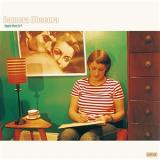
Camera Obscura feiern das 25-jährige Jubiläum ihres Debütalbums ,Biggest Bluest Hi-Fi" mit einer Vinyl-Neuauflage bei Merge Records. Seit der ursprünglichen Veröffentlichung in Großbritannien bei Andmoresound im Jahr 2001 ist das Album in diesem Format vergriffen. Die Jubiläumsausgabe kommt als die definitivste Version von ,Biggest Bluest Hi-Fi", die je auf Vinyl gepresst wurde, und enthält beide B-Seiten der Single ,Eighties Fan" - ,Shine Like a New Pin" und ,Let's Go Bowling" -, die später den erweiterten CD-Neuauflagen des Albums hinzugefügt wurden. ,Biggest Bluest Hi-Fi" wurde nach seinem Erscheinen wiederholt von John Peel in seinen BBC-Radiosendungen gespielt. Das Album ist ein bemerkenswert selbstbewusstes Debüt, ein voll ausgereifter Ausdruck eines Sounds, der die Fans der Band seit ihrem ersten Durchlauf des von Stuart Murdoch (Belle & Sebastian) produzierten ,Eighties Fan" bis zum letzten Hören des 2024 erschienenen Studio-Comebacks von Camera Obscura ,Look to the East, Look to the West" in seinen Bann gezogen hat. Diese Fans haben lautstark gefordert, dass ,Biggest Bluest Hi-Fi" die Vinyl-Neuauflage erhält, die es schon lange verdient hat. Wenn man die Nadel auf Tracks wie ,Swimming Pool", ,Pen and Notebook" und ,Happy New Year" setzt, ist leicht zu hören, warum: Jeder der 12 Songs des Albums ist ein perfekt beobachteter Ausschnitt aus dem Leben, der durch opulent detaillierte Arrangements filmisch inszeniert wird. Es ist zeitlose, grundsolide Popmusik, wie sie nur Camera Obscura machen kann, geeignet für die Hi-Fi-Anlagen von 1966 und 2026 gleichermaßen.
Die Power-Punk Band ERECTION aus Regensburg steht für das, was moderne Musik oft nicht mehr zu bieten wagt: kompromisslose Ehrlichkeit, rohe Emotionen und eine Klangwelt, die sich irgendwo zwischen Hoffnung, Überforderung und purem elektrischen Aufbruch bewegt. Mit ihrem neuen Album präsentieren sie eine Sammlung von Songs, die das Lebensgefühl einer Generation einfangen, die zwischen Burnout und Selbstentdeckung, zwischen Existenzkampf und Freiheitsdrang ihren Platz sucht. Ihre Musik verbindet moderne Pop- und Elektro-Elemente mit rockiger Direktheit und einer lyrischen Offenheit, die man selten findet. Die neue Platte zeigt diese Ambivalenz deutlicher denn je: laut und leise, hart und zerbrechlich, düster und gleichzeitig voller Sehnsucht nach Licht.
Verve Vault ist die preisgünstigere LP-Serie des legendären Verve-Labels. Alle Titel werden von Ryan K.
Smith bei Sterling Sound von den analogen Originalbändern geschnitten und gemastert, bei Optimal auf
180-Gramm-Vinyl gepresst. Faksimiles der ikonischen Artworks, je nach Original in Gatefold- oder SingleSleeve-Hüllen.
Marcos Valle - Samba ’68
Obwohl der brasilianische Sänger, Songwriter, Pianist und Gitarrist Marcos Valle oft der zweiten Generation der Bossa Nova zugerechnet wird, hat er sich auch einen Namen als einer der besten modernen
Samba-Komponisten gemacht. Internationale Bekanntheit erlangte Valle 1968 durch sein einziges VerveAlbum “Samba ‘68”, auf dem er elf seiner groovenden Songs präsentierte, darunter natürlich auch sein wohl
bekanntestes Stück “Samba de Verão” aka “So Nice (Summer Samba)”. Das Album ist längst ein RareGroove-Klassiker und laut AllMusic “eines der besten brasilianischen Crossover-Alben der 1960er Jahre”.
Die luftigen Arrangements schrieb der ebenfalls aus Brasilien stammende legendäre Eumir Deodato.
Während wir auf ihr zweites Album ,Di Hotel Malibu" warten, verwöhnen uns Thee Marloes mit einer atemberaubenden Doppel-A-Seite. Die A-Seite, ,Under the Silver Moon", ist ein knallharter Two-Stepper, der sowohl die bitteren als auch die süßen Seiten einer Fernbeziehung einfängt, vor einem luftigen musikalischen Hintergrund. Die musikalische Leistung und die Produktion ziehen dich vom ersten Snare-Schlag an in ihren Bann, während Frontfrau Natassya Sianturis honigsüße Stimme durch Metaphern und Prosa lebhafte Bilder heraufbeschwört. Auf der B-Seite offenbart ,Through the Changes" die zarteste Seite des Sounds der Band. Kraftvoll und zart zugleich reflektiert der Song darüber, wie wir uns vorstellen - und damit ringen -, was nach dem Tod kommt. Natassya sehnt sich nach Gesellschaft und Gesprächen mit einem geliebten Menschen, der verstorben ist, mal erinnert sie sich an gemeinsame Momente, mal hinterfragt sie, ob es Sinn macht, weiterhin mit ihm zu sprechen und an ihn zu denken. Ihr Gesang ist so intim, dass es unmöglich ist, nicht jedes Wort zu spüren, während die Band die perfekte, zurückhaltende Begleitung liefert.
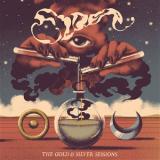
2026er Nachpressung ist Nebula Blue Vinyl! Ein krautrockiges Mini-Album ist THE GOLD & SILVER SESSIONS geworden - eingespielt während ihrer letztjährigen Europatour - welches den ELDER-Sound und seine Stoner/Doom-Wurzeln in neue Sphären schießt! Zwei experimentierfreudige Tracks zusammen mit einer langen, psychedelischen Jam formen dies EP von LP-Länge, welche ELDERs expressive Kreativität und nuancierte Entwicklung auf eine Art und Weise einfängt, wie es eine "normale" Studio-Veröffentlichung wohl nicht könnte. Metalischen Härte wird mit krautrockiger Improvisationskunst zusammengebracht, die Referenz zeigt sich u.a. auch in den Songtiteln "Im Morgengrauen" und "Weißensee". Sicherlich ein Experiment oder eine Art Übergang, aber dies ist immer noch die Band, die 2017 das unglaubliche "Reflections of a Floating World" herausgebracht hat und mit dieser Veröffentlichung auf neuen und unerforschten Pfaden zu wandern beginn. Oder sich selbst und seinen Fans nur mal das Hirn freibläst, bevor die nächste Ebene im Stoner/Psychrock-Kosmos aufgemacht wird.
Northern Electronics presents NE112, a collaborative work by Anthony Linell and Evigt Mörker, entitled ’Ett anständigt liv’.
Marking the first alignment between the two artists, the record unfolds as a study in continuity, pressure, and sustained focus. Across four pieces, a steady and tensile sonic language develops, immersive in its repetition and controlled in its ascent. Subtle psychedelic inflections — recalling early trance states — surface within a darker, more restrained framework. The result is neither nostalgic nor decorative, but reduced, deliberate, and directed forward.
All tracks written and produced by AL & KL in Sofia, Sweden, during the winter of 2024 Mixed and mastered by Giuseppe Tillieci at EnissLab, Rome
out of Stock
Last delivered 43 days ago available to reorder, subject to availability
Budapest-based concept label, Blue Sun is launching their new line of vinyl focused releases, aimed primarily on DJs and collectors: the Blue Series. A counterpart to the Orange Series launched last year that showcases a more upbeat side of the label, the new collection presents a darker, more experimental, and introspective musical vision.
The first release in the Blue Series is a six-track EP by Budapest based multimedia artist, Virág Réti. Choosing her legal name as her artist persona (“Flower of the Meadow" in Hungarian) also with the track titles capturing the folk names of local fauna, Peremidő evokes the artist's innate connection to nature as a place of refuge from the noise of Eastern European urban life.
The EP’s motifs point back to early memories of sitting by a river, simply observing time flowing by. The arc of the songs follow the passage of a day, beginning with the hesitant sounds of early morning, gradually moving on toward more defined, rhythm-driven forms. As the airy textures slowly give way to structure and percussion comes to the forefront, the sense of direction becomes clearer, letting moments of gentle disorder and unexpected sounds to surface.
Virág previously appeared on the label’s Blue Sun VA II compilation with her track Bíbic. Since launching her ambient music project in the fall of 2024, she has become one of the promising newcomers in the Hungarian experimental electronic music scene. Her debut EP, Minden Ami Megmaradt (All That Remains), was released last November as the final offering of temporary nites label (2023–2025). She is also the founder and organizer of the Budapest-based experimental electronic event series Still Places.
The third release on Children of the Sun welcomes Argentinian mastermind Dani Labb.
We are delighted to present this EP, a body of work that perfectly captures Dani Labb’s sonic wizardry. Through a collection of versatile tracks that engage the mind while retaining a deep emotional undercurrent, the record resonates deeply with the ethos behind the COTS aesthetic.
Each piece unfolds with its own character, blending hypnotic rhythms and emotive textures into a journey that reflects both the artist’s vision and the spirit of the label.
out of Stock
Last delivered 19 days ago available to reorder, subject to availability
Caterina Barbieri & Bendik Giske's At Source resounds music as wellspring, that which is essential and unknowable, and yet utterly primary. It finds two acclaimed composer-musicians building a world together in self-contained collaboration between analogue synthesis and an extended approach to the saxophone that conjures its own universe of sound. It is at once intimate and cosmic, drawing on the challenges and possibilities of their artistic exchange, tearing down technique to access all the expansive possibilities of their sonic meeting point.
At Source is a document of the world of sound to be conjured when two artists strive for something together, discovering the expansions and limitations of performance by bodies and machines. It is not an exercise in assimilation, but in productive exchange and creative confrontation. It does not draw on outside energies or influences, but grapples with what there is to find in their respective playing. "It also reflects how natural the collaboration was," says Barbieri, "a meeting at the source which was spontaneous, graceful and natural".
Barbieri and Giske first met and were enthralled by one another's performances at Kunsthaus Glarus in 2019, a meeting that spurred conversations on the power of transitions as a compositional force. Giske later contributed a rework of Fantas for Fantas Variations (Editions Mego, 2021), an ambitious undertaking to rescore Barbieri’s work for his saxophone and voice, a challenge Giske had started undertaking two years prior as an ongoing practice of transcription. “The request came as a proof of aligned ideas”, says Giske.
Their new collaborative project then started during an artistic residency in Milan’s ICA in 2021, by invitation of swiss artist and curator Jan Vorisek, as the world was emerging from lockdown. This meeting, and the preceding closure of sites for cultural exchange, made their work together 'feel like springtime' says Barbieri. Giske, who was on the brink of releasing his sophomore album, Cracks, then joined Barbieri's light-years tour, which functioned as an inaugural incarnation of her newborn label and platform through a series of multi-artist curated shows with appearances of Lyra Pramuk, Nkisi, MFO, among other artists.
Through the tour, they continued to develop material live, and this release, laid down in the studio, is true to that ever-evolving process of creation, where live feedback stays essential to the vitality of this collaborative effort. The tracks are each named with two evocative words that contain the two poles of their sound. Theirs is both abstract and cosmic, in the synth as machine undermined by Barbieri's naturalistic playing, and in Giske's continuous exploration of the symbiosis between his instrument, voice, and body. These binaries, of body and machine, posed various challenges, notably in how the stepped patterns Barbieri uses were near-impossible to translate for Giske's body to perform, and other times where mathematical resolutions were needed to sync their playing. Explains Giske: "It forced me to go to the core of what I am and what I have to offer”. Barbieri says that it "explores the liminality between the machine and the human, and the vulnerability in this process".
At Source is testament to two divergent practices finding a whole cosmos in which to convene; music is crystalised and made utterly enveloping through the focused and critical work of two musicians working at their peak. The versions here are, temptingly, "just one of many versions" of this abundant source material Giske explains. Like the best collaborations, At Source is more than the sum of its parts – bringing more to the feast than the simple combination of two musicians, promising versions upon versions of the exquisite material captured here.
out of Stock
Last delivered 18 days ago available to reorder, subject to availability
In 2023, Wood secretly worked with producer Kevin Antreassian on a new mix of his top-selling release "The Normal Album." Digging into the original 2019 recordings for more muscular takes, smoother edits, and a more nuanced and balanced mix, Antreassian and Wood created a version of the fan favorite that is one of the rare cases where a new mix is widely considered to improve on the original noticeably. "The Normal Album" is yet another turn in Wood's discography, sardonically playing with Americana and doo-wop sounds, strategically restrained but still highly emotive vocals, and lyrics densely packed with scientific and philosophical references. The dark mania of Wood's prior 2016 release, "SELF-iSH," continues on some tracks but is arranged with greater precision with a new band at his command. Like his 2015 debut "Everything is a Lot," the songs whiplash tonally but are brought together through intertwined themes and recurrent musical motifs and an undercurrent of simultaneous obtuseness and vulnerability. After the original mix of "The Normal Album" was released, a live version of the 4th track on the LP, "I/Me/Myself," had an unexpected viral moment, which brought attention to many other songs on the LP. Songs like "2econd 2ight 2eer" and "Laplace's Angel" continued to attract new fans with their dense wordplay and high-energy attitude, and the album became Wood's first major break into larger notoriety, proving that his sudden burst of popularity was not just a fleeting trend. After taking some time away from the public, Wood began to revisit the album with the intent of giving it the production that he had originally envisioned for it. Wood's top-selling album re-edited for a fuller sound and clearer instrumentation, bringing the album to a new level: new Modern Stereo Mix - 2023 Edit
out of Stock
Last delivered 5 months ago available to reorder, subject to availability
Laurel Halo returns with an album of original soundtrack music, composed for the film Midnight Zone by visual artist Julian Charrière. Following the path of a drifting Fresnel lighthouse lens as it descends through the Clarion-Clipperton Fracture Zone — a remote abyssal plain in the Pacific Ocean, rich in rare metals and increasingly targeted for deep-sea mining — the film traces a descent into one of Earth’s last untouched ecosystems.
Charrière’s film reveals the deep not as void, but as a luminous biome teeming with fragile life: bioluminescent creatures, swirling schools of fish, and elusive predators. The suspended lens becomes an abyssal campfire, attracting species caught in the tides of uncertainty, their futures hanging in the balance.
Echoing this tension, Halo’s compositions evoke a sensory freefall, where gravity falters and light and sound flicker in uncertain rhythms. Midnight Zone is a sonic drift through the space between what we seek to extract, fail to understand, and must protect.
Halo’s score evokes the life that exists beyond our physical airbound capacity. The material features long, subtle passages of electro-acoustic ambient, drone and sound design, slowly flowing and unfolding with rich detail. The music, composed largely on a Montage 8 synthesizer and Yamaha TransAcoustic piano at the Yamaha studios in New York City, possesses an uncanny quality: that of synthetic waveforms being amplified and sung through the stringboard of the physical body of the TransAcoustic piano. Combined with stacks of violin and viol da gamba, the music on Midnight Zone possesses trace elements of a human hand in an otherwise sunken landscape. Patient, submerged, and alive. The album will be the third on Halo’s imprint, Awe.
The film is central to Charrière’s current solo exhibition Midnight Zone. The exhibition engages with underwater ecologies, exploring the complexity of water as an elemental medium affected by anthropogenic degradation. Reflecting upon its flow and materiality, profundity and politics, its mundane and sacral dimensions, the solo show acts as a kaleidoscope, inviting us to dive deep.
out of Stock
Last delivered 5 months ago available to reorder, subject to availability
Jexy's back! After conquering post-pando dance floors with his celebrated Bad Timin' label, the Jexter is getting back to basics and bringing things home to his Good Timin' label. This time, the Balearic Bad Boy slams the breaks on the BPMs and delivers an album full of downtempo groovers, angelic diamondry and more hooks than a pirate convention! Get into it!
out of Stock
Last delivered 33 days ago available to reorder, subject to availability
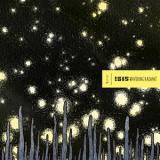
Weiter geht's mit den Ipecac ISIS-Neuauflagen: ,Wavering Radiant" ist das letzte Album der Band aus dem Jahr 2009, neu gemastert von James Plotkin. Die 2LP 140gr-Vinyl kommt in einer Tip-On-Gatefold-Hülle in zwei Versionen: Standard-Schwarzvinyl und eine Indie-Exklusivausgabe in Ultra Transparent. Das Album wurde von Joe Barresi produziert, und die Band hat sich knapp ein Jahr nach der Veröffentlichung getrennt. Das Album setzt die Tradition von Isis fort, lange Songs zu schreiben, weicht aber ein bisschen von der Soft-Loud-Dynamik und der Post-Metal-Ästhetik ab, die frühere Veröffentlichungen geprägt haben. Es wird allgemein als das zugänglichste Album der Band angesehen. Obwohl die Band seit über einem Jahrzehnt nicht mehr existiert, ist ihr Einfluss auf den Metal immer noch spürbar, und die Verkaufszahlen machen sie weiterhin zu einem der Top-Künstler von Ipecac. Continuing in our series of ISIS reissues, Wavering Radiant is the band's final 2009 release, remastered by James Plotkin. The 2LP 140gr Vinyl packaged in a tip-on gatefold jacket in two retail variants. Standard Black Vinyl and an Indie Exclusive Clear The album was produced by Joe Barresi, and the band split just over a year after its release. The album continues Isis' history of lengthy songwriting, yet presents a slight departure from the soft-loud dynamics and post-metal aesthetic which characterized previous releases. It is widely considered the band's most accessible release in their catalog. Although the band has been defunct for over a decade, their impact on metal is still reverberating, and sales continue to make it one of Ipecac's top artists.
out of Stock
Last delivered 5 months ago available to reorder, subject to availability
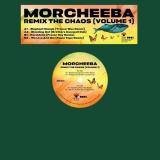
Morcheeba unveil Remix The Chaos: Volume 1, the first instalment in a three-part remix series drawn from their 11th studio album, Escape The Chaos (2025).
Spanning four tracks per volume, the project brings together an eclectic, global roster of electronic producers, each offering a distinct reimagining of Morcheeba’s unmistakable sound. Multi-genre and far-reaching, the series expands further into the rich sonic world the band have built over the past few decades, pushing their music into bold, contemporary electronic territory. Volume 1 features remixes from Paula Tape, the Chilean superstar producer, recent Mixmag cover star and one of electronic music’s most exciting names heading into 2026; Trance Wax (a.k.a. Ejeca), the prolific Belfast producer specialising in high-energy breakbeat and trance-leaning remixes; Frazer Ray, the London-based underground force known for UK bass, breaks and garage; and Brothers Counsell, a side project from the formidable Joy Anonymous.
Together, the tracks form a journey of dancefloor-ready hard hitters, powered by Morcheeba’s iconic vocals and signature guitar lines. Pressed on limited edition traffic light red vinyl, Remix The Chaos: Volume 1 comes with deep-cut grooves designed to hit just as hard on a club sound system as they do from the comfort of your living room.
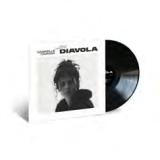
Die Traumstimme von Joshua Redmans Album „where are we“ mit ihrem Blue-Note-Solo-Debüt!
Als Saxofonist Joshua Redman 2023 sein Album „where are we“ veröffentlichte, ließ nicht nur er damit
aufhorchen, sondern auch die Sängerin auf allen Tracks: Gabrielle Cavassa. Das weltweite Echo war imposant, in Deutschland hieß es “Top-Sängerin“ (Stereoplay) und “bringen die Luft im Studio zum Flirren“
(Süddeutsche Zeitung). Bei der darauffolgenden Welttournee des Redman Quartet begeisterte die Sängerin
erneut das Publikum auch in Deutschland.
Mit ”Diavola“ gibt Gabrielle Cavassa jetzt ihren Einstand bei Blue Note. Dort kann sie erstmals auf
großer Bühne ihr Können als Sängerin und Songwriterin zeigen, sowie als Interpretin von Jazz-Standards
(z.B. “Prisoner of Love“) und klassischem Pop (“Could It Be Magic“) bis hin zu brasilianischen Songs (“To
Say Goodbye“ von Edu Lobo). Cavassas Stimme ist sinnlich und intensiv, obwohl sie mit den Melodien
und Tempi spielt, bleiben Seele und Aussage der Songs intakt.
“Diavola“ wurde koproduziert von Joshua Redman und Don Was und überzeugt auch durch brillante
Arrangements und exquisite Musiker: Jeff Parker an der Gitarre, Paul Cornish am Klavier, Larry Grenadier
am Bass, Brian Blade am Schlagzeug und Joshua Redman bei zwei Titeln am Tenorsaxofon.
out of Stock
Last delivered 5 months ago available to reorder, subject to availability
The Story — From the Streets of Rome to the Male Productions Label
In the early 1990s, Rome lived in a kind of suspended moment. The city was still tied to its historic clubs, yet in the outskirts—inside abandoned warehouses, quarries along the coastline, and the wooded parks north of the capital—something new was beginning to stir. A nocturnal, constantly shifting movement fuelled by a hunger for freedom and a sonic curiosity that reached far beyond the mainstream.
Moving through this ferment was Francesco “Chicco” Furlotti. First an organizer of unconventional parties and underground nights, he soon became one of the driving forces behind Rome’s itinerant rave scene. Furlotti sensed that a wave of change was about to sweep across the city. It wasn’t just about parties: it was the rise of a culture, a new way of thinking about music, community, and belonging.
It was within those nights—later held with official permits, properly built sound systems, and an ever-growing crowd—that Furlotti recognized the existence of a distinctly Roman sound, and the need to capture it, preserve it, and give it tangible form.
So, in 1991, he decided to take a bolder step: to found an independent record label—small, determined, and far removed from the commercial logic that dominated at the time.
That was the birth of Male Productions.
Male was not a label like any other: it was a workshop, a gathering point, a creative hub where DJs, producers, friends, and wanderers converged. Within that environment, an artistic core took shape—Stefano Di Carlo, Leo Young, and Mauro Tannino, along with other collaborators orbiting around Furlotti. From their synergy emerged a project whose very name declared its mission:
The True Underground Sound of Rome.
The collective did not simply aim to release music; it sought to tell a story of Rome through sounds that defied categorization: house, techno, ambient, electronic mysticism, psychedelic visions… a unique blend, instantly recognizable, emotional, and experimental. The sessions unfolded using essential yet razor-sharp gear: Roland drum machines, analogue synthesizers, Akai samplers, stripped-down mixers. Few tools, endless imagination.
The first result of this work was the 12” Secret Doctrine, released in 1991 in an extremely limited run—around 500 promotional copies, according to accounts. The record captured something that until then had floated only in the air of Roman raves: enveloping atmospheres, deep rhythms, melodies built to make the mind travel far beyond the dancefloor. A sound that did not imitate what was happening in Detroit, London, or Berlin, but absorbed those influences and re-sculpted them with a distinctly Roman sensibility.
Yet, precisely because it was independent and detached from commercial circuits, Male’s output remained sparse: few EPs, few copies, irregular distribution. Over time, those records became rare artifacts—almost mythical objects within the Italian electronic scene. The legacy of Male Productions seemed destined to survive only in the memories of those early years, in the stories told after raves, and in the private archives of a handful of collectors.
Many years later, thanks to the almost accidental rediscovery of a few original copies of the first two releases issued by Male Productions, it became possible to undertake a meticulous process of recovery and restoration of the audio etched into those grooves, with the aim of preserving as fully as possible the quality and character of that unrepeatable sound.
We are therefore able today to present — at last in a complete and faithful form — the first two mixes created for Male Productions, now released on a double vinyl that brings back into the present the exact moment when it all began: the nomadic nights of the raves, Furlotti’s vision, the creativity of Di Carlo, Young and Tannino, and the sonic identity of a Rome in the midst of transformation.
This is not merely a reissue.
It is a historical document.
A fragment of a culture that changed the city.
The authentic sound of the Roman underground, finally returned to the world.
out of Stock
Last delivered 47 days ago available to reorder, subject to availability
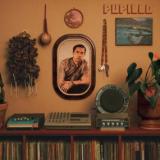
Latin Grammy-Winning Producer Pupillo Unites Global
Artists on his new album
Co-produced by Mario Caldato Jr. (Beastie Boys), featuring collaborations with Rodrigo
Amarante, Carminho, Adrian Younge, Gaslamp Killer, Cut Chemist, Hervé Salters, and more
Drummer, percussionist and producer Pupillo, one of the most influential figures in Brazilian
music and a four-time Latin Grammy winner, releases his first original album through the Los
Angeles–based label Amor in Sound. The record brings together an impressive and diverse
group of collaborators from Brazil and abroad. Amor in Sound is run by Samantha Caldato,
the project’s executive producer and creative director, and Mario Caldato Jr. (Beastie Boys),
who co-produced the album alongside Pupillo. The project was developed in a free,
experimental environment, allowing the artist to explore the many rhythmic and sonic
territories that have shaped his career — from Northeastern Brazilian traditions to jazz, hip
hop, and cinematic soundscapes. Listen here.
The album features special appearances by Brazilian artists such as Céu, Rodrigo Amarante,
Agnes Nunes, Amaro Freitas, Davi Moraes, Alberto Continentino and Pedro Martins,
alongside a strong roster of international collaborators, including Carminho, Gaslamp Killer,
Loren Oden, Adrian Younge, Cut Chemist and Hervé Salters (known for his work with
General Elektriks). The album’s 12 tracks were further enriched by contributions from
Jeremy Gustin, Roberto Schilling, and other musicians who make Amor in Sound Studios in
Los Angeles a place of creative exchange.
Beyond his work as the drummer of Nação Zumbi, Pupillo has built a prolific career as a
producer and collaborator with some of the most important names in Brazilian music,
including Gal Costa, Nando Reis, Erasmo Carlos, Céu, and Otto, helping to shape the sound
of multiple generations. This trajectory has earned him four Latin Grammy Awards.
From Pernambuco, Pupillo is also an acclaimed composer for cinema, having written
soundtracks for films such as Arido Movie and Blue Blood (directed by Lirio Ferreira), The
Assailant (directed by João Daniel Tikhomiroff), among others. This cinematic sensibility
permeates the album, which unfolds like a film, moving through richly textured soundscapes
that cross continents and musical traditions.
out of Stock
Last delivered 61 days ago available to reorder, subject to availability
This isn’t a compilation—it’s a vinyl conversation between cities, generations, and musical bloodlines. This inaugural release embodies the spirit of collaboration, community, and cross-generational artistry that defines each artist’s deep musical legacy.
A statement on wax bringing together Glenn Underground, Coflo, Jon Dixon, Kevin Reynolds and sillygirlcarmen, this four-song project documents the shared language of five Artists through deep house, jazz roots, and forward-looking soul. Though these artists have shared DJ booths and dance floors around the world, this release marks a rare moment where their creative voices intertwine on wax. Each track stands on its own, but together they form a continuum—past, present, and future etched into wax. Pressed with intention and made for real systems, this release exists for the heads, the selectors, and anyone who still believes vinyl is where the story lives. Meant to be played—not archived. The kind of tracks that feel alive in the room and grow every time you hear them.
‘Ease’ EP tracks:
Glenn Underground ‘Dive (Into The Deep)’; the Chicago legend & Strictly Jaz Unit co-founder combines deep house, freeform jazz & soul, here in a jazz-infused, laid-back, hypnotic melange of house beat, synth chord riff, rippling arps, with a whisper of disco in the bassline and 80’s electro in the high, singing strings.
Coflo x sillygirlcarmen ‘Never Forget (That Feelin’)’; East Bay CA-based Coflo combines Hawaiian & Portugese roots with a global reach. A collaborative skipping house beat, pattering percussion & melodic jazz synth piano embrace sillygirlcarmen’s soulful voice and heartfelt lyrics. This collaboration marks a merging of emotional storytelling and percussive sophistication.
Jon Dixon ‘Saturday At Northland’; Detroit’s modern jazz & techno fusionist, rooted in long study and prestigious performance of classical & jazz piano both in orchestral and electronic contexts, employs his keyboard virtuosity in a thrilling wave of melodic piano improvisation & complex lively percussion, combining sheer craft with spiritual heft.
Kevin Reynolds ‘I Got Music’; from an Irish/US Detroit family, producer/live artist Reynolds blends techno, jazz, soul, from influences as diverse as 90s underground techno, Kraftwerk & John Coltrane, and roles/performances in multiple prestigious venues & positions. Here, a stealthy beat & Kraftwerk-evoking robotic electro synth theme are joined by a dual vocal used as a riff, while clusters of piano chords flower into jazz motifs.
out of Stock
Last delivered 67 days ago available to reorder, subject to availability
It’s a properly transcendent Kalahari debut as S.A.M. makes nods to ’90s Eurodance and deeper, spiritual invocations.
At the helm of multiple labels, but this marks a Kalahari debut for the Danish artist. Sometimes anthemic, sometimes operating from a more meditative space, but always serving as an outlet for ecstatic release. Rapturous big room ascension into more contemplative territory.
Channelling some divine NRG in the vocal hooks, like much of their work, an air of blissed intent cloaks the whole thing. This is a suite of tech and deep house that strikes a balance between the introspective and direct, the metaphysical and corporeal.
Pitting sonic immersion against forward momentum has almost become a blueprint for any Kalahari release, and here, we bear witness to a prime example. Heady stuff.
Show less
out of Stock
Last delivered 5 months ago available to reorder, subject to availability
Imogen’s Lament is the amalgamation of a slow-burning musical correspondence between Cypriot musician and lyricist Maria Spivak and Swedish composer and producer Emanuel Sundin, recorded over two years between Malmö and Limassol.
Imbued with a rectified balearic pop sentiment, these songs drift between myrrh-washed church pop and restrained machine dub—piercing through a veil of gothic haze as they trace the dimmer edges of an imagined Balto-Mediterranean continuum.
out of Stock
Last delivered 4 months ago available to reorder, subject to availability
Presenting the remarkable second album by the Chinese musician, DJ and creative chef Yu Su. An evolution from her 2021 debut LP and two track single released last year, Foundry radiates a fresh, fully-fledged and far-reaching sound.
The nucleus of Foundry began with material penned for live performance at MUTEK in 2025, alongside a move to London which brought about new shifts in perspective. Searching for a style that was true both to her roots and progression as an artist, Yu ventured in a post-orientalist direction, and came upon a language of ‘in-between music’.
Mixing the eclectic influence of her DJ sets with genre-defying collaborators and newfound taste for minimal and ambient techno, a dusky, dub-inflected character began to emerge. This broad palette reiterates Yu’s prior form in making connections across disciplines, which have not only consisted of music, but also multisensory endeavors which incorporate taste and smell.
With cover art featuring hammered metalwork by the artist Brendan Ratzlaff, for Yu the foundry represents a nexus of creation; a shared workspace where collaborators combined their materials and skills. With the input of Seefeel, Dip In The Pool, and Memotone, together their broad spectrum of aural elements underwent a chemical transformation, and were forged into something new.
Well-designed, ergonomic yet occasionally amorphous, the effect is that of meticulous freedom, both controlled and free flowing. Using immersive sound design, Yu creates inspiring spaces to revel in, which are warm yet steeped in shadow, with flashes of silvery light.
Featuring Yu in with duet Miyako Koda of cult Japanese art pop duo Dip In The Pool, the record kicks off in swirling but poised fashion with ‘A Jewel’. The dusky, reverberant underwater minimalism of ‘Sunless’ follows, which features British composer Memotone, and was influenced by Chris Marker’s 1983 film Sans Soleil.
The dubby, sunkissed affirmation on ‘Cul De Sac’ leads to the thumping acid stomp of ‘Foundry’, and onto the hazy glow of ‘One Place After Another’, featuring lauded soundheads Seefeel, where Yu’s voice is joined by Sarah Peacock’s, alongside Mark Clifford’s seductively gauzy fuzz guitar.
Venturing into more ominous territory is the liminal ambient dub of ‘Wanli’, followed by the rich textured flutter of ‘Os Cionn’, which translates from Gaelic as ‘above’. The album ends with the reflective, processional pulse of ‘Ripe Fruits’, which was inspired by Frederic Leighton’s 1892 oil painting The Garden of the Hesperides.
The LP’s visual was art directed by Lucas Dupuy, whose approach perfectly encapsulates Yu’s spatial sonics: “We both think in layers”, she comments. “Not linear layering, but horizontal layering, like weaving metallic threads, where a bigger picture of a grainy sphere will occur at the end.”
Katz Mulk's ''All the mess'' is a collection of songs about playing and play-work, recorded between 2023-25 in Glasgow and Tokyo. Developed from performances across the UK and during a residency at Xevarion Institute in Hong Kong, with dancers, costume design by Mary Hurrell, and mobile speaker design by Chris Ball. Slithering breath, crackling synths, dented gongs, and dub loops pull songs into unexpected, unsettling patterns, like being a kid again but with more electronics.
The eternally prolific duo PSYCHEMAGIK are back once again (already?!) with yet another mind blowing edits package.
This latest offering from the Cosmic Forest is their reworking of Chillys, Yardbirds classic, For Your Love think epic 10 minute cosmic dancefloor monster complete with guitars, violins and soaring vocals.
And then there’s more… the flip “Aldeia De Ogum”, a reworking of the Joyce original, has Ibiza sunset written all over it, transporting you immediately to the beach within the first few bars.
Latin percussion blends with beautiful guitars, flutes and horns to create a truly breathtaking sonic vista .
This is sure to be included in many a summer playlist over the coming months
They Came Like Swallows is the first album-length collaboration between Thurston Moore and Kramer (now officially Bonner Kramer), two giants of alternative/ experimental music. The accomplishments and influence of these two artists in the world of independent music cannot be overstated and the result of their artistic union is a startlingly cohesive statement that burns through landscapes of primitive outsider rock, avant-garde composition, progressive ambient and further locales boldly and beautifully unnamable. “Kramer and I reconnected in Miami, Florida, a few years back, many many years after each of us had departed NYC on separate life adventures. It was only a matter of time before Kramer and I started making plans to record together and with his irrepressible due diligence he quickly set up a mobile recording contraption in the pad I was decamped in, the Florida sunshine flowing through the palm leaves, lithe lizards skittering across the windowsills, and we just went for it.
Kramer had the idea to cover a Joy Division tune, a left turn from the improvisations we had been tracking, though wholly in keeping with both our sensibilities of light and dark unifying in transcendent songwriting, both of us devotees of 'the song' as well as 'the freedom.’ What transpired is They Came Like Swallows, a session we immediately felt should exist as a prayer to the war-torn souls of the families of Palestine continually decimated by the brutality of genocide. We agreed beyond words to offer our music as a sonic activism and as a beneficent energy. This album is our duo exchange for human dignity, it is our soul music for any semblance of a peaceful planet.” ~ Thurston Moore “For the first time in our nearly 45 years of friendship, we had identical time windows open to make a record together,” recounts Kramer. After all this time not a moment is wasted as the duo immediately taps into the heightened core of improvisational tension across these seven offerings. Volcanic opener “Urn Burial” notches a similar historic union (John Cale and Terry Riley) to meet the circumstances of the moment, with swirling mists of organ and pounding toms over guitar that thickens the atmosphere with jagged, grimy dissonance.
Solemn strings open the second track, “The Redness In The West,” with Kramer’s cello and viola in dueling bow beneath the high tension drive and sustain of Thurston’s electric guitar, tapping out a Morse code of tension that mounts endlessly into a fog of inevitable war by the end. Moore and Kramer’s sense of experimentalism is in free and full grandeur throughout They Came Like Swallows, though the duo keep a strong and constant sideways eye on melody, composition and architecture, to the ends that any strict lines between song and improvisation are blurred beyond qualification.
As if to punctuate this point, Swallows closes with a nightwork cover of Joy Division’s “Insight,” a doleful coda that breathes out with a solemn inner grace under Thurston’s instantly stylistically recognizable guitar melodies as they weave into he and Kramer’s unison voices. As the lone vocal piece and only traditional ‘song’ form on the album, “Insight” is unique to this set and as a closing statement draws connective lines back to the kind of dynamic, electrified melodicism that wove deep, melancholy patterns into the untamed fire of Sonic Youth’s Sister and Daydream Nation. In the album’s final moments, the two voices repeat the lyric “I’m not afraid anymore” as mantra, underscoring the heavy, unsettled themes and methods that preceded it. Kramer describes the creative process of They Came Like Swallows: “I had composed and recorded a few pieces at my home studio over the course of a couple weeks. Thurston was spending the winter in South Florida, so I flew down and spent a few days recording his guitar parts in his home there. Watching him spontaneously compose his parts was pretty astonishing, to say the least. Once we'd finished working on those pieces, we began improvising and following wherever the music pointed us, and another few pieces were born. We got straight to it, without anything driving us other than the joy of finally working together.
My personal goal was to remain present and catch as many surprises as I could from Thurston's guitar work, and there were plenty during those few days. We had a fucking blast.” Thurston’s contributions here will be readily familiar to any acolytes of his other works, the through-line between his inspired playing, cradled in Kramer’s meticulous, solid arrangements. “If I had to make this record again, I'd do it all exactly the same way,” Kramer says. “It’s like jazz, you don't think about it. You just do it. It was miraculous, and you don't fuck with a miracle.”
They Came Like Swallows is the first album-length collaboration between Thurston Moore and Kramer (now officially Bonner Kramer), two giants of alternative/ experimental music. The accomplishments and influence of these two artists in the world of independent music cannot be overstated and the result of their artistic union is a startlingly cohesive statement that burns through landscapes of primitive outsider rock, avant-garde composition, progressive ambient and further locales boldly and beautifully unnamable. “Kramer and I reconnected in Miami, Florida, a few years back, many many years after each of us had departed NYC on separate life adventures. It was only a matter of time before Kramer and I started making plans to record together and with his irrepressible due diligence he quickly set up a mobile recording contraption in the pad I was decamped in, the Florida sunshine flowing through the palm leaves, lithe lizards skittering across the windowsills, and we just went for it.
Kramer had the idea to cover a Joy Division tune, a left turn from the improvisations we had been tracking, though wholly in keeping with both our sensibilities of light and dark unifying in transcendent songwriting, both of us devotees of 'the song' as well as 'the freedom.’ What transpired is They Came Like Swallows, a session we immediately felt should exist as a prayer to the war-torn souls of the families of Palestine continually decimated by the brutality of genocide. We agreed beyond words to offer our music as a sonic activism and as a beneficent energy. This album is our duo exchange for human dignity, it is our soul music for any semblance of a peaceful planet.” ~ Thurston Moore “For the first time in our nearly 45 years of friendship, we had identical time windows open to make a record together,” recounts Kramer. After all this time not a moment is wasted as the duo immediately taps into the heightened core of improvisational tension across these seven offerings. Volcanic opener “Urn Burial” notches a similar historic union (John Cale and Terry Riley) to meet the circumstances of the moment, with swirling mists of organ and pounding toms over guitar that thickens the atmosphere with jagged, grimy dissonance.
Solemn strings open the second track, “The Redness In The West,” with Kramer’s cello and viola in dueling bow beneath the high tension drive and sustain of Thurston’s electric guitar, tapping out a Morse code of tension that mounts endlessly into a fog of inevitable war by the end. Moore and Kramer’s sense of experimentalism is in free and full grandeur throughout They Came Like Swallows, though the duo keep a strong and constant sideways eye on melody, composition and architecture, to the ends that any strict lines between song and improvisation are blurred beyond qualification.
As if to punctuate this point, Swallows closes with a nightwork cover of Joy Division’s “Insight,” a doleful coda that breathes out with a solemn inner grace under Thurston’s instantly stylistically recognizable guitar melodies as they weave into he and Kramer’s unison voices. As the lone vocal piece and only traditional ‘song’ form on the album, “Insight” is unique to this set and as a closing statement draws connective lines back to the kind of dynamic, electrified melodicism that wove deep, melancholy patterns into the untamed fire of Sonic Youth’s Sister and Daydream Nation. In the album’s final moments, the two voices repeat the lyric “I’m not afraid anymore” as mantra, underscoring the heavy, unsettled themes and methods that preceded it. Kramer describes the creative process of They Came Like Swallows: “I had composed and recorded a few pieces at my home studio over the course of a couple weeks. Thurston was spending the winter in South Florida, so I flew down and spent a few days recording his guitar parts in his home there. Watching him spontaneously compose his parts was pretty astonishing, to say the least. Once we'd finished working on those pieces, we began improvising and following wherever the music pointed us, and another few pieces were born. We got straight to it, without anything driving us other than the joy of finally working together.
My personal goal was to remain present and catch as many surprises as I could from Thurston's guitar work, and there were plenty during those few days. We had a fucking blast.” Thurston’s contributions here will be readily familiar to any acolytes of his other works, the through-line between his inspired playing, cradled in Kramer’s meticulous, solid arrangements. “If I had to make this record again, I'd do it all exactly the same way,” Kramer says. “It’s like jazz, you don't think about it. You just do it. It was miraculous, and you don't fuck with a miracle.”
The Eagles’ 1975 studio album, One Of These Nights, was a milestone album for the band, earning them their first GRAMMY® Award and becoming the first of four consecutive #1 albums. Rhino will release a Deluxe Edition of the album on April 10 as the band returns for the final weekend of their historic Sphere residency in Las Vegas.
One Of These Nights (Deluxe Edition) will be available as a a 3LP version, released the same day, will include the new album mix and the full concert recording. The lacquers were cut by Chris Bellman at Bernie Grundman Mastering.
Produced by Don Henley, the CD and vinyl editions include a new mix of the album by Rob Jacobs. Originally produced by Bill Szymczyk and recorded at Criteria Studios in Miami and the Record Plant in Los Angeles, One Of These Nights achieved quadruple Platinum certification and the single “Lyin’ Eyes” won the GRAMMY® Award for Best Pop Performance by a Duo or Group with Vocals.
The unreleased live recording captures the Eagles’ performance at the Sunshine Festival in Anaheim on September 28, 1975. Recorded at the end of the tour for One Of These Nights, it features Henley, Glenn Frey, Randy Meisner, Bernie Leadon, and Don Felder. Their set blends songs from that album (“Lyin’ Eyes,” “Take It To The Limit”) with hits from the group’s first three albums: “Take It Easy,” “Witchy Woman,” “Already Gone,” and “The Best Of My Love.” Joe Walsh also joins the group for the encore, performing his song “Rocky Mountain Way,” a few months before becoming an official member of the band.
The penultimate song is a rosing cover of Chuck Berry’s “Carol,” a live staple of the band at the time, marking the first time a recording of the song has ever been included on an Eagles album.
The Blu-ray that accompanies the CD set presents the album and the live performance in Dolby Atmos and high-resolution stereo. One Of These Nights (Deluxe Edition) and the Atmos mix of the original album will also be available digitally.
Wasteland is a record that is unafraid to plunge into the darkness of the modern world and embrace the weirder, edgier and more unnerving moments that come from doing so. It is an album that captures all the enormity of life from the micro to the macro, zooming in on the personal as well reflecting on broader societal issues.
“Wasteland is about the idea of a place once known or familiar that is now broken down and unrecognisable,” says Ghedi. “It’s about exploring the process of watching someone’s surroundings and environment collapse.” And within that you have a lot going on. “It also explores death, personal loss, grief, mental health and how the natural world provides solace and meaning for that loss and how these worlds blur into one another.”
Ghedi has always been an artist that in many ways perfectly encompasses folk music in its purest form but he is also someone that frequently pushes the boundaries of that label and no more so is that apparent than on this record. As like previous albums, such as 2018’s A Hymn for Ancient Land and 2021’s In the Furrows of Common Place, Ghedi uses traditional folk songs as a means to explore contemporary issues via modern and experimentally-leaning music. “With the traditional material on this album I wanted to find songs with content that resonated with me,” says Ghedi. “But also that were based roughly around the north of England.” This is a central underlying theme to the album for Ghedi. The feelings of loss, erosion, and degradation are often most pronounced in working class communities and this was something he wanted to weave in. “It was important to voice and choose material that represented or expressed issues that correlated with things going on around me.”
However, as remarkable as some of the traditional material is, some of the most arresting work on the album is Ghedi’s entirely original compositions. Lead single ‘Wasteland’ is a stunning piece of work that while rooted in an environment being corrupted and broken – “there’s violence on these hills” Ghedi sorrowfully sings, before claiming this is no longer somewhere that can be called home – it is also a stirringly beautiful composition that soars and glides as it opens up, as sweeping strings swoop and in and out of Ghedi’s twangy electric guitar.
The decision to incorporate more fuller sounds, such as electric guitar and huge drums, results in a notable shift and evolution in tone for Ghedi. “The lyrical content needed something more band-driven and loud to deliver them,” he explains. “Incorporating the electric guitar in my songwriting was also a big part of opening the sound up, using drop tunings pushed me to use my voice in a wider range, which forced me to use falsetto a lot which I haven’t previously done before. That then opened the sound up and gave me creative ideas for bigger arrangements and to sonically really push things.”
What Ghedi has done in creating his masterpiece is construct a remarkable space where deeply intimate and personal feelings coexist with reflections on environment, place and society, while also interweaving historical context via traditional songs. Wasteland is as much of a world to explore and exist in as much as it is an album, with Ghedi carving out his distinctly unique sonic language and voice to explore that singular environment.
Wasteland is a record that is unafraid to plunge into the darkness of the modern world and embrace the weirder, edgier and more unnerving moments that come from doing so. It is an album that captures all the enormity of life from the micro to the macro, zooming in on the personal as well reflecting on broader societal issues.
“Wasteland is about the idea of a place once known or familiar that is now broken down and unrecognisable,” says Ghedi. “It’s about exploring the process of watching someone’s surroundings and environment collapse.” And within that you have a lot going on. “It also explores death, personal loss, grief, mental health and how the natural world provides solace and meaning for that loss and how these worlds blur into one another.”
Ghedi has always been an artist that in many ways perfectly encompasses folk music in its purest form but he is also someone that frequently pushes the boundaries of that label and no more so is that apparent than on this record. As like previous albums, such as 2018’s A Hymn for Ancient Land and 2021’s In the Furrows of Common Place, Ghedi uses traditional folk songs as a means to explore contemporary issues via modern and experimentally-leaning music. “With the traditional material on this album I wanted to find songs with content that resonated with me,” says Ghedi. “But also that were based roughly around the north of England.” This is a central underlying theme to the album for Ghedi. The feelings of loss, erosion, and degradation are often most pronounced in working class communities and this was something he wanted to weave in. “It was important to voice and choose material that represented or expressed issues that correlated with things going on around me.”
However, as remarkable as some of the traditional material is, some of the most arresting work on the album is Ghedi’s entirely original compositions. Lead single ‘Wasteland’ is a stunning piece of work that while rooted in an environment being corrupted and broken – “there’s violence on these hills” Ghedi sorrowfully sings, before claiming this is no longer somewhere that can be called home – it is also a stirringly beautiful composition that soars and glides as it opens up, as sweeping strings swoop and in and out of Ghedi’s twangy electric guitar.
The decision to incorporate more fuller sounds, such as electric guitar and huge drums, results in a notable shift and evolution in tone for Ghedi. “The lyrical content needed something more band-driven and loud to deliver them,” he explains. “Incorporating the electric guitar in my songwriting was also a big part of opening the sound up, using drop tunings pushed me to use my voice in a wider range, which forced me to use falsetto a lot which I haven’t previously done before. That then opened the sound up and gave me creative ideas for bigger arrangements and to sonically really push things.”
What Ghedi has done in creating his masterpiece is construct a remarkable space where deeply intimate and personal feelings coexist with reflections on environment, place and society, while also interweaving historical context via traditional songs. Wasteland is as much of a world to explore and exist in as much as it is an album, with Ghedi carving out his distinctly unique sonic language and voice to explore that singular environment.
Oceanine, Jolanda Moletta’s third album and her first for Beacon Sound, is a powerful and ethereal statement of artistic community. Expanding on her previous work, each track represents a collaboration with a different female vocalist, with the foundational elements being generated entirely by her own voice. By turns haunting, enchanting, and inspiring, you won’t want to come up for air once you’ve been pulled under. Representing a musical practice that is distinctly feminist, this is an album with a longer view in mind, to an age when the altars were to goddesses and women were centered as powerful beings representing the earth’s cycles of regeneration and renewal. Oceanine then, in all its beauty, can be viewed as an album of survival. It is deeply transportive, accessing something that lies within all of us. As the late, great Lithuanian folklorist and archaeologist Marija Gimbutas noted, “We must refocus our collective memory. The necessity for this has never been greater as we discover that the path of 'progress' is extinguishing the very conditions for life on earth.”
Jolanda Moletta is a multimedia artist and one-woman electronic choir. She creates wordless compositions through extended vocal techniques, integrating wearable-controlled live processing, alongside symbolic visuals. Moletta considers her performances to be a collective ritual and creates her Sonic & Visual Spells following the cycles of nature and the moon. Jolanda's 2022 critically acclaimed album Nine Spells was released on the Ambientologist label, followed by Night Caves on Whitelabrecs in 2025. Moletta’s artistic practice is a radical and spiritual journey through sound art, ritual, and the symbolic archaeology of the feminine.
Oceanine is inspired by sirens, water nymphs, and the timeless call of the sea. At its core lies Jolanda’s deep, lifelong connection to the Mediterranean Sea and to the ancient and modern myths and folklore that have emerged from its waters. Growing up by the Mar Ligure, Jolanda was surrounded by stories carried by salt, wind, and waves: legends of sirens, echoes of ancient voices, and the sea as both origin and oracle. This intimate relationship with the Mediterranean is not merely a backdrop, but a living source that shapes Oceanine’s emotional, symbolic, and sonic world.
Each track features a different female vocalist, creating a rich tapestry of voices, styles, and perspectives. This artistic choice not only broadens the album’s sonic palette, but also deepens its narrative core: celebrating the power, beauty, and mystique of feminine energy through myth, history, and sound.
The entire album is built exclusively from the human voice, processed and layered, yet always remaining voice, and nothing else. For each piece, Jolanda invited every vocalist involved to contribute a raw stem: a short, unedited melodic fragment of just a few seconds, inspired by the album’s themes. These intimate vocal seeds became the foundation of each track: the guest artists’ voices appear as brief, melodic stems, while the entire surrounding “orchestral” fabric is created solely from Jolanda’s own layered and processed voice. In this way, Jolanda’s voice becomes the Ocean itself, embracing, absorbing, and carrying the sirens’ calls within a vast, immersive soundscape. Every song is a unique expression of the feminine experience, revealing its depth, complexity, and emotional range, echoing the call of the sea and the many faces of the siren archetype.
The figure of the siren has transformed across centuries. In myths of Ancient Greece and Rome, sirens were hybrid beings, part woman, part bird, whose irresistible songs lured sailors to their doom. During the Middle Ages, the image shifted toward the half-woman, half-fish figure, often associated with temptation and danger. Historically, the voice of women has often been feared. Sirens were considered harbingers of misfortune not simply because they seduced or destroyed, but because they were powerful liminal beings.
In Ancient Greek, sirens functioned as psychopomps: figures who existed between worlds and guided souls, especially between life and death. Their songs were believed to carry forbidden knowledge, including prophetic insight and the ability to reveal truths about fate and the future. The danger of the sirens lay in what they revealed: knowledge that humans were not meant, or ready, to hear.
Oceanine confronts this legacy head-on. The voices heard throughout the album are not merely beautiful: they are dark and luminous, wild and enchanting, magical, soothing, dreamy, and at times fractured or distorted. They whisper, lament, beckon, and enchant. Like sirens, they skim the surface of the water and sink into its depths, hovering on the edge between tenderness and danger, vulnerability and power. They rise toward the sky, dissolve into mist, and return as echoes charged with raw, elemental emotion: voices that seduce, warn, mourn, and remember. They refuse to be reduced to decoration.
Alongside the album’s release in May, Oceanine will also unfold as a visual and performative work through a short art film. The film includes a live session recorded inside a sea cave facing the Mar Ligure, the very coastline where Jolanda spent her childhood, dreaming of sirens and listening to the sea as if it were speaking directly to her. This site-specific performance reconnects the music to its place of origin, allowing the voice to resonate within stone, water, and air, and transforming the cave into both a sanctuary and a threshold between myth and reality.
What if the sirens’ songs were considered dangerous because they carried another truth, an ancient truth long forgotten?
Oceanine embraces the idea that we are still deeply woven into myth. Though we may see ourselves as rational and modern beings, our world is saturated with ancient symbols and archetypes, often distorted, simplified, or stripped of their original meaning. And if those symbols are allowed to shift, if the mirror once held by the siren becomes an invitation to look beyond appearances and into what has been obscured, then we may finally uncover a deeper truth and reclaim the voice that was always ours.
Oceanine is not just an album. It is a reclamation, a spell, and a call from the depths.
In this context Jeroen Swinnen and David Martijn needed to find a musical concept to go hand in hand with the story. They opted for a string quartet and an arsenal of old analogue synths (of the series’ era). Thé perfect match as it turned out. Emphasize the beauty, hope and respect on one hand. Translate the elusive, unjust feeling that is addressed in the series on the other. Apart from these 2 central instruments, an old muted upright piano, played by Jeroen, and a guitar, played by David, were also used to express emotion even more.
Preston duo White Flowers announce new album, Dreams For Somebody Else - due for release 1st May 2026 via The state51 Conspiracy.
White Flowers, the long-running collaboration between Joey Cobb and Katie Drew, exists within what they call “the realm” – a shared creative space, wherein time, rather than being a restrictive force, is fluid and boundless, and music exists as an endless conversation with their past and present selves. Adopting what the band describe as a “sketchbook” approach to writing, White Flowers is the product of a decade’s worth of recordings - snippets nestled away on hard drives, only to truly make sense years later.
On Dreams For Somebody Else, the band expand upon the dark-hued dream pop of their debut, channeling the catharsis of dance music via repetitive structures and “sad, euphoric sounds”. Working alongside LCD Soundsystem and Hot Chip’s Al Doyle on production, the album maps out a mosaic of soaring choruses that swirl around imposing arrays of synths, guitars, and percussion.
Through this new lens, the band explore themes of isolation, dissociation and identity - drawing inspiration from Annie Ernaux’s The Years. “Whilst recording the songs for ‘Dreams For Somebody Else’, we really connected with the concept of Annie Ernaux’s book, ‘The Years’ - a ‘collective autobiography’ pieced together from mismatched fragments from her past, conjuring the effect that she’s merely an observer of her own life. This concept merges into the White Flowers world, where time, rather than being restrictive, is fluid and boundless, with our music existing as an endless conversation with versions of ourselves at different stages of our lives.”
“The album has that same feeling of disassociating from your own life, because you’re just blending into everyone else”, the band explains. “There’s a sadness there, because it’s as if you’re looking back on things that happened to you, and they feel like they don’t belong to you anymore”. It’s the dull ache of nostalgia intertwined with a sense of wonder at what could lie ahead - the hopeful optimism and endless loss that defines the human experience. “It’s this idea of identity not being a fixed thing, but something that’s always changing. It’s a fluid thing, similar to time. Things aren’t really fixed, but rather in a constant state of change. It’s important to remember that we’re all going through that.”
On the day of Eid al-Fitr (Sugar Feast), Sonhouse Records released Grond, a brand new record, produced by Faisal Chatar and 'Yong' Yello Staelens.
Grond (soil) tells the tragicomic story of a Moroccan brother and sister who take over their father's funeral business and want to modernise it. Instead of repatriating Belgian Muslims to their country of origin and burying them there according to Muslim traditions, they decide to import the holy soil.
Western and Arabic sounds, combined with hip-hop beats are mixed in a refined way. Faisal and Yello produced twenty songs that immediately make you long for summer. In Brussels, Tangier or simply elsewhere.
Faisal Chatar and Yello Staelens:
"Grond is about the clash between traditional Moroccan values and Brussels city culture. We tried to translate that by combining Moroccan instruments like Krakebs and Qanuns with thick hip-hop beats. It sounds as if Timbaland is eating a merguez sandwich in a Molenbeek snack bar while Aznavour sounds through a distorted FM radio."
The series, written and directed by Flo Van Deuren and Kato De Boeck, tells the story of Bibi and Ama, two lesbian girlfriends in their twenties.
Hoping to become a better version of themselves, they move in together at a flat in Brussels. Each in their own way, but under the same roof, they come to new insights: life has no manual, love even less and themselves even less so. The result is an intimate series full of humour and familiarity.
Musically the series is coloured by an exclusive soundtrack and homegrown songs: 7 female or non-binary artists from Belgium were asked to write a song. Lara Chedraoui & Patrix, Juicy, Miss Angel, Tessa Dixson, Oriana Ikoma, Ana Diaz, SPACEBABYMADCHA and Mick Lemaire crept into their musical pen. The series also features existing songs by artists such as Martha Da’ro, Aili, B1980 and Fatal Error to showcase a maximum of local musical talent.
After releasing their third album, Maintenant Jamais, and touring in Europe, the United States, Canada, and Mexico in 2025, Population II now announces Gimmicks, a new synthedelic rock EP.
Blending vocal and instrumental tracks, Gimmicks is a companion piece to the Montreal band's latest full-length. It's an extension of the electronic sounds we explored on Maintenant Jamais, with tracks like “13 1 3 1” and “Poudreuse Blues, explains Pierre-Luc Gratton. Even though we added upright piano and fuzz bass to some of the songs, our number one rule for this project was: keyboards and synthesizers, first and foremost! This is why they decided to ditch the guitar completely on these new songs, once again demonstrating the extent of their versatility.
Rhythm-wise, the use of a drum machine allowed the musicians to push their own boundaries and take this exercise in style to a higher level. It made us rethink our rhythmic habits and add bursts of intensity by experimenting with timbres and sound dynamics. The result is an EP at times unsettling, at times dreamy, but perfectly calibrated, where constraint gives way to ingenuity, freedom, and friendship. Although prog and krautrock fans will recognize the influence of Syrinx, Tangerine Dream, and Cluster, Gimmicks is, above all, the affirmation of a band capable of looking back to move forward.