Over the course of eight thrilling tracks, ‘Royal’ leads listeners on a topsy-turvy journey from Middle Eastern exotica to Spaghetti Western style scores, via scorching Mediterranean beaches.
Highlights of the album include the surf-meets-Western delights of “Silver Lining”, where irresistible guitar lines are piled high and topped with euphoric synths and rock drums, resulting in a timeless soundtrack for both headless nights in dive bars and heedless days at the funfair.
“Juda” follows, a deadly combination of Zepellin and Middle Eastern rock with subtle hints of synth funk. The track is named after living legend and Middle Eastern guitar hero, Yehuda Keisar, who also joins the band for this song, contributing a scorching solo. The thunderous guitar riffs are matched pound-for-pound by the irresistible percussive groove.
Boom Pam, widely renowned for their spellbinding Middle Eastern guitar music, have unveiled their highly anticipated fifth album, 'Royal'. Celebrating their twentieth anniversary, the Tel Aviv based band combine cinematic atmospherics and high-powered surf rock on
their first album for international ambassadors of Middle Eastern grooves, Batov Records.
Boom Pam “Rock the Casbah” on title track “Royal”, revealing another card up their sleeve, as they transform a famous 80's Israeli radio theme into a discoinspired super jam with a punk edge.
The band maintain their reputation for first-rate and distinctive surf rock on the fast paced “Daber Yafé” and “Monsour”.
The sonic imprint is both warmed and widened by the rare addition of a tuba supplying the lower frequencies.
Meanwhile, opener “Lava Tongue”, and “Golden” emphasize the melodic side to the band, conjuring dreamy sunset mirages to hypnotize the listener.
Boom Pam have established themselves as pioneers of modern Middle Eastern surf rock, combining sophisticated yet catchy guitar riffs, with roaring tuba basslines and fiery drums. In the past decade the band have frequently collaborated with and backed legendary Turkish folk singer-songwriter, Selda Bagcan, on stage and record, and performed at some of the world's most renowned festivals, including Primavera Sound, Lollapalooza, Fuji Rock, the Montreal Jazz Festival and many more.
An engaging listen from beginning to end, ‘Royal’ is the perfect representation of Boom Pam’s incredible 20-year journey, showcasing their superior skills in pushing the boundaries of their genre.
Поиск:son of sun
Все
Superb 45 featuring two Hammond-led instrumentals. The A-side is taken from The Guy HamperTrio's second long player due out on Hangman Records. The B-side is exclusive to this release. 'Man in the Mouth of a Cave' - I have painted St. Cuthbert's Cave, Northumberland on many occasions and decided that it was imperative that I write a great jazz /beat theme all about it. (Important info: After Viking raids monks from Lindisfarne wandered the north-east carrying the body of St. Cuthbert. Legend has it that they took refuge in 'St. Cuthbert's Cave.') I wrote the song with my friend Jamie Taylor in mind to have his way with it, which he does to thunderous applause - I should imagine. '107 Sleepless' is a tune I wrote in the early 1980s when me and Mick Hampshire would stay up the entire weekend writing songs for our group The Milkshakes. (We lived at 107 Rochester Street, Chatham.) About 3am Sunday morning we would be flagging and sitting there senseless. I would play this jazz riff over and over for some unknown reason. Meanwhile it should make a nice theme tune to some yet to be written HBO series and make me a millionaire - I should imagine. GUY HAMPER - APRIL 2023
Jason Mraz is living full spiral. It’s not full circle, exactly, because he’s changed and his experiences have changed, but on his eighth album, Mystical Magical Rhythmical Radical Ride, the musician has found himself returning to a familiar junction in space. The new songs, which are unabashedly pop, see Mraz reuniting with numerous collaborators, including Los Angeles band Raining Jane and producer Martin Terefe, who helmed 2008’s We Sing. We Dance. We Steal Things. In fact, as Mraz looked at the number eight, he instead saw an infinity sign.
OUTLANDERS ist ein Projekt der finnischen Sopranlegende Tarja Turunen und dem EDM Pionier Torsten Stenzel. Über 10 Jahre haben die beiden an dem Album gearbeitet und hatten dabei Unterstützung von einigen der einflussreichsten Gitarristen unserer Zeit. Bei jedem Song wirkt ein besonderer Gitarrist als Gast mit: u.a. Al Di Meola, Trevor Rabin, Joe Satriani, Jennifer Batten, Steve Rothery, Mike
Oldfield, Walter Giardino, Ron “Bumblefoot” Thal, Vernon Reid und Marty Friedman. 7 Tracks wurden bereits digital vorab veröffentlicht und nun erscheint das langersehnte gleichnamige Album am 23. Juni auf CD-Digipak und Ltd. Blue Curacao 2LP.
Label boss Carlo rallies the troops again. This time for his own new collaborative EP, ‘VERSUS’.
Aterral regular, firm family favourite and one of the labels founding artists, Black Loops, steps up on the gorgeously groovy ‘Hungover’. No cloudy heads or slow steps on this collab. Woozy keys yes, but these are kept true by the spritely xylophone melody and warm rolling bass. A perfect opener from this pairing.
Following his popular DOS despatch, ‘Be Pe Em’, much was expected of Emanuele Barilli’s new adventure alongside Carlo. ‘Lelazo’ doesn’t disappoint. Sharp shuffle, filtered keys and popping bassline, all make for a perfect beach-bound soundtrack. Close your eyes, feel the sun on your skin.
From Hungover to another victim of the session, as Carlo teams up with German producer Hauke Freer on ‘Maison.’ Deep, low slung vibes on this ode to the sound we all love. Beautifully constructed, from its patient creamy bassline to its bright rimshots and tender vocal. This is our house. Our home. Come on in.
The most personal of Carlo’s new tracks brings things to a close as he teams up with his young son on ‘Einhorn Poops’. The sun’s warmth is felt again on this beautifully crafted slice of balearic house that matches O's vocals to the equally innocent chimes and bird song to create a fitting and sublime finale.
A native of Los Angeles, Henry Franklin came of age while the city was producing a crop of exciting jazz talent. Frankin’s lasting impact on jazz can be evidenced by the long list of legends who sought him out for tours and recording sessions, Stevie Wonder, Bobby Humphrey, Freddy Hubbard, & Pharaoh Sanders to name a few. Franklin’s solo output is best remembered for his two solo outings with the Black Jazz label- “The Skipper” & “The Skipper At Home”. Together, they form one of the most compelling diptychs in the entire post-bop canon. Recognised by his peers and contemporaries, Franklin’s entry for Jazz Is Dead gives the living legend his flowers and recognises the contributions The Skipper has made as one of jazz’s most influential heartbeats.
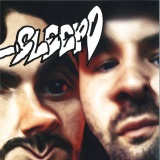
Naarm alchemists Sleep D's revelatory new synthetic 'Electronic Arts' is ready for circulation.
Having released 4 EPs of mind-altering club tackle since 2019's 'Rebel Force', the duo overcome second album syndrome, boiling down their chaos with a more developed sense of songwriting. Never banging one drum, 'Electronic Arts' mirrors the anything goes mania of their DJ sets, tactfully shifting through different sounds and styles. Tempos intensify and decelerate, at times pushing the threshold to 150 bpm from docile canine dreamscapes to full tilt Space Invaders in AR mind games.
Largely built on road tested material from their live performances, the album is a tangible Butter Sessions gathering, busting out the gate with Martian rave initiation Planet Waves, Outdoor System's polyrhythmic beatdown and the Orb-like hero dose affirmations of Sunrise In The Crater (I Exist). While 'Electronic Arts' is otherwise a self-dependent effort, Punch Drunk is brewed ever more potent by the hypnagogic vocals and lucid trumpet cycles of former futsal team member YL Hooi. Their unified energy incidentally manifests a profound matrix of ambient techno, motorik, Don Cherry and Everything But the Girl.
Also touching on apocalyptic doof and minimal, the album is not exclusively peak time with Maryos Syawish and Corey Kikos' specialty curveballs also playing their part. From Village To Empire finds the duo rooting down in Syawish's heritage with a tapestry of purposefully deployed Iraqi and Syrian ethnographic samples and field recordings, dubbed within range of Muslimgauze and On-U Sound. As minimal techno finale Textile trails off into footsteps wandering back to base camp with a satisfied exhale, one wonders where Sleep D's existential pathfinding could possibly take us next?
On the eve of her 80th birthday, Dona Onete - ‘the grande dame of Amazonian song’ - returns with Rebujo, a love letter to her hometown of Belém, situated deep in the Amazon.
Rebujo brims with two music styles born in Belém: carimbós, influenced by African grooves, and bangues, a ska-type rhythm, plus there’s a cumbia, brega (‘romantic’ music) and samba.
Since the release of her 2017 album Banzeiro, Onete has become a superstar in Brazil – she composed and sung the theme song for one of Brazil’s biggest soap operas (A Força do Querer), been awarded the Brazilian Ordem do Mérito Cultural in recognition for her contribution to Brazilian culture + her video for ‘No Meio do Pitiu’ has an impressive 9.2m views on Youtube.
Outside of Brazil she’s performed at Roskilde, Womad (UK, NZ & AUS), Gilles Peterson’s Worldwide Festival and TFF Rudolstadt and is a global spokesperson for indigenous cultures.
- 3rd album of funky Brazilian/Amazonian grooves from the ‘Diva of the Amazon’, mastered @ The Carvery
- David Byrne, Caetano Veloso, Gilles Peterson, Cerys Matthews all big supporters
Blue Marbled Vinyl
Opening the EP we have a serious sensory treat from Aural Imbalance, as he ditches his own rulebook unleashing a myriad of rapidly combining elements synergising over glorious echoed intro-beats, before an uncharacteristically heavy slice of breaks punches its way into the track, electrifying the atmosphere while the trademark melodies dance above like fireflies in the night.
A2 - Luminosity
An airy intro slowly welcomes in snappy snares, staunch forthright bass tones and those delicious airy pads we know Aural
Imbalance so well for, gradually enveloping the listener in a luscious web of glorious serenity. Layers of intricate textures and rhythms build upon one another, creating a mesmerizing and hypnotic sonic journey inviting repeated listens.
AA1 - Moonscape
Aural Imbalance crafts a true gem here as Moonscape opens with a serene hit of soothing pads before the wonderfully analogue breakbeats join the party, laden with hi hats and subtle poise. The backdrop exudes whimsical birdsong until halfway we are treated to a true earworm melody carrying us through to the clean ritualistic outro.
AA2 - Sunlight Through Clouds
Simon closes the EP with Sunlight Through Clouds, opening with wistful muffled grooves before the bubbly apache break reveals itself and whisks us on a synthful audio feast, built on the immersive, meditative soundscapes he is so well known for. The track has a soothing, reflective vibe and fits perfectly as a curtain call for his latest extended player.
Words by Chris Hayes (Spatial / Red Mist)
Merging a dynamic curio of melodic guitars, disconcerting monologues and a rhythm section both technical and unruly, London’s Legss create a wholly unique and mesmerising sound. New EP Fester is a literary and disarmingly lyrical collection of art-rock songs laden with ideas and sun-licked beneath the bus smog of anxious skies.
Even when leaning into more melodic territory, there’s a pervasive uneasiness that underpins both the vocals and instrumentation. Just as you drift into the relaxing arpeggio flow, vocalist Ned Green’s soft soliloquy accelerates to an exasperated yelp and we’re jolted by discordant noise-rock stabs dragging us into Legss’ deliciously feverish and poetic world.
“The lyrics were written in the summer, when you’re sun-drunk and romantic, and the buses look like they’re kissing as they cross each other, and everyone’s got a cold sore. But beneath all the sunny games there’s a bittersweet desire to be someone or something else.” - Legss
Fresh from supporting the likes of Pom Poko and Hotel Lux, Legss release Fester via The State51 Conspiracy on 16th June. Pressed on 12” black vinyl in a sealed polybag liner.
Stoned Part I was the first self-released album from lost soul phenomenon Lewis Taylor. His third album proper, it was initially released on his own label Slow Reality in 2002 and it's been licensed to Be With for this long-awaited double LP release, its first ever vinyl edition. The songs are varied, hook filled and outstanding. Beloved by his legions of diehard fans, it's nothing short of a masterpiece.
After parting ways with Island, and without a label deal, Lewis went back to his home studio and began to record Stoned Part I in 2001. Co-written and co-produced with longtime collaborator Sabina Smyth, Lewis sings and plays all the instruments on this beautiful, emotional and very human album. It represents Lewis at his most accessible and finds him in the middle ground between his two Island releases. In some ways, Stoned Part I distills the best of his musical sensibilities. The flawless production is dense, layered and very early-2000s slick. The bottom end is thick, funky and sexy.
The complex, proggy-soul of title track "Stoned" opens the album and instantly captivates. Deep swinging funk with truly sweet soulful vocals, complemented by wah-wah guitar and swelling acidic synths. As Lewis himself told us, the ad libs at the end of the track were a nod to Paul McCartney at the end of "Hey Jude". Fan favourite "Positively Beautiful" has shades of Curtis and Marvin; its richly layered harmonies propelled by a simple, metronomic click-track that gives way to a more fully fleshed beat for the magnificent coda.
The slow, sweeping majesty of "Lewis IV" is all moody atmosphere, featuring dense, richly textured music and heavenly multi-tracked harmonies. The stop-you-in-your-tracks incredible "Send Me An Angel" could have been a huge AM radio hit, beautifully crafted sophisticated soul-pop songwriting in the vein of the very best Sade records. Yep! *That good* The smooth, psychedelia-lite "Til The Morning Light" is a gorgeous, sun-dappled love song, layered with Lewis' distinctive honey drenched vocals and, again, the type of record you could've easily heard all over the radio at the time of initial release.
The remarkable, wide-eyed "Shame" packs so many shifting styles into one song, it has to be heard to be believed. Opening in a laconic, breezy style, not unlike a Dallas Austin or Rodney Jerkins produced R&B hit of the day, it morphs into a heavy psych-soul Soulaquarians wig-out (the solo bearing an uncanny resemblance to Carlos Santana’s on "She’s Not There") before elegantly sliding into string-assisted symphonic soul and then back around again. And again. Sheer brilliance. The sublime, gentle head-nod funk-soul of "When Will I Ever Learn" (Part 1) is a strikingly well-turned-out tune, a neat, sweet bass-driven guitar-soul jam that ensures our jaw won't be leaving the floor anytime soon. "Lovin’ U More" sounds like a classic turn-of-the-century Neptunes production, the likes of which they'd lay on for JT BITD. A Latin-tinged groover with more than a little Nile Rodgers-driven slick funk stylings, it's yet another instant Lewis bomb with those gorgeous harmonies and chart-friendly irresistible key-changes to boot. Another indisputable (non-)HIT!
The funky seductive swagger of "From The Day We Met - Part II" opens the final side of wax, giving way to the gigantic buzzing synth-funk beast "Lovelight", a track so insouciantly mighty it should have been a massive hit for someone. Wait, what's that? Robbie Williams covered it? Ah, OK, well, I guess that says something about the effortless pop genius contained within. Containing a seemingly unnoticed nod to Kraftwerk’s "Computer World", it's Lewis's favourite song on the album. It's easy to hear why: "Sabina’s production totally nails it. I love the restraint and the subtlety, and that mixture of warmth and sweetness from the singing against the slightly cold, yet beautiful airy-ness of the backing track." To close this phenomenal album, the twisted electronic soul of "Sheneverdid" marries Lewis's beautiful falsetto to his virtuoso playing and an easy-cum-ominous musical backdrop. Stunning.
Simon Francis’s vinyl mastering, approved by Lewis himself, presents the eleven tracks over a double LP so, as ever, it sounds sensational. The records have been cut by Cicely Balston at Air Studios and pressed at Record Industry. Allow Lewis Taylor to get you Stoned.
Brazilian soul, psych, bossa and jazz, reimagined from Berlin, via the Dead Sea, on Moriah Plaza’s dreamy first album for Batov Records.
Moriah Plaza co-founders Tamir Chen and Moosh Lahav first encountered and fell in love with the beautiful and hypnotic sounds of Brazilian bossa nova and samba as children in Tel Aviv in the nineties, via the many local bands and tribute groups that had sprung up since the first wave of bossa had hit swept across the world. Likewise
they developed a fascination with elevator muzak, film soundtracks, and even the hotel pianist performing day-by-day in the lobby of the Sheraton Moriah where Tamir’s mother worked, overlooking the Dead Sea.
Relocating years later to the vastly different environment of Berlin, capital of a country that enjoyed its own Brazilian moment, Tamir and Moosh’s shared passion for Brazilian music would encourage them to create their own songs inspired by the warm pulse of Brazil, albeit a world apart, through a vastly different lens.
Whilst the initial inspiration for Moriah Plaza can be traced back to Tel Aviv and the Dead Sea, the band itself was conceived by Tamir and Moosh in Solarium Studio, Berlin, from the broken fragments of their former shoegaze band, Soda Fabric, who had the honour of backing outsider legend Daniel Johnston. They would go on to write and record their debut album in close collaboration with two Brazilians and fellow Berlin residents,, poet and singer Cecília Erisman, and singer, songwriter, synth operator and Tropical Disco Club founder Flavia Annechini.
The album opens with “Desendereçada”. Dirty drum machine beats thud away under flutes and extraneous noises and a spoken word commentary. The oddness and allure of the intro is a perfect introduction to the world of Moriah Plaza.
The pace picks up on “Mais Amor”. A beautiful Brazilian soul jazz number with a sublime vocal from Flavia Annechini that will surely appeal to the global dancefloor jazz scene. “Te Peço” daws us in deeper with sweetest jazz vocal over an irresistible bassline and bossa drums that transforms halfway through into a modern soul rhythm crowned by flute and horns. A flute solo from Moosh Lahav leads us into the final uplifting refrain.
The Pharoah Sanders meets Ravi Shankar in Rio grooves of “Estelar”
have that fresh feeling that will certainly appeal to fans of modern favourites Rebecca Vasment and Ruby Rushton. Next up, the mysterious “Lagoon de Merim” is practically two songs in one, the first half an atmospheric string-topped number somewhere between Arthur Verocai and Cinematic Orchestra, before snappy drums beats and playful organ chords introduce a slow brassy samba that fills the whole sonic room.
“Teu Porto” is a must for all DJs, mixing calypso, highlife and house, lilting guitars and smooth vocals by Cecilia Erismann.. The deep samba house grooves of “Samba Moosh” close us out. The rich blend of sweet vocals, soaring flute and gritty synths carry us off into the sunset.
Moriah Plaza’s self-titled debut album is a major addition to the global soul and jazz scene. providing the perfect summer soundtrack for music lovers around the world.
Marco Vella and Anth Wendt step up to International Feel with a five-track EP of Balearic-tinged bliss for their first collaborative release as Other Mother.
There’s definitely something in the air round the Adelaide Hills. Longtime friends Marco (aka Body Corp) and Anth (aka Oisima) finally got together in Anth’s studio after the pandemic and the result is Numero Uno an EP of laidback synth guitar and drum machine workouts mixing 303 riffs and sunsets for a supremely low-slung vibe.
After cruising around the Hills in the day the pair worked on tracks by night and their carefree days soaking up the sun shines through. Opening track About Time sets a steady pace with its lush delayed guitars slow-rising acid melody and hefty sub perfect for Sunday pub garden appreciation. A side closer Zwang! drops the tempo but brings the percussion into focus for another masterclass in tension and release with interwoven 303s and dub feedback.
Side B keeps the beach-side atmos flowing with guitar licks working around sumptuous synth chords for Anyway Music - a song that’s the ultimate soundtrack understated parts fitting together seamlessly in service to the feeling and belying the technique required. Lost In The Forest makes use of expansive ambient pads synth riffs and shakers to evoke a sense of wonder sunlight coming through the trees.
The EP concludes with Where’s The Fifty a dreamy piece of drum synth phrases and 303 interplay that perfectly characterizes Marco and Anth’s collaboration - two musicians and producers playing to serve the song. They write elements that combine for a harmonious whole greater than the sum of its parts. This is the underlying feel of Other Mother and Numero Uno - we’re all in this together - and by working collaboratively a brighter future might just be around the corner.
Long out-of-print release available digitally for the first time. Extensive notes by a local writer in English and French. Previously unpublished family photos. Urbanized traditional music at a dance-floor-friendly tempo. The very definition of an "Awesome Tape From Africa". Roger Bekono made a deep mark in the contemporary history of Cameroonian music through the four-on-the-floor, ribald intensity of bikutsi. The Ewondo-language dance-pop style that forms an undulating tapestry of interlocking triplet rhythmic interplay came to international prominence in the European "world music" scene as the 90s began. But the relentless sound of bikutsi developed in Yaoundé at the hands of Bekono and many others, as it developed from a village-based singing style performed mostly by women into a cosmopolitan music force that rivaled the popularity of established musics like Congolese rhumba, merengue and makossa. With his unique—some say suave—voice, Bekono contributed much over a period of more than 10 years as part of the evolution of this traditional rhythm-turned-urban dance movement. Bekono worked with legendary producer Mystic Jim, who had built a prolific home studio along with a crack team of musicians. They joined as part of the production of his self-titled album, which became known locally as "Jolie Poupée," the name of the album's lead single and most popular song. For "Jolie Poupée" Mystic Jim programmed the kick or bass drum, adding effects to have a heavier bass. Overall the album represented a new level of finesse and professionalism for his second release. In the middle of 1989, Jolie Poupée was released by the label Inter Diffusion System and aggressively hit the radio, discos and national television. The music video for the title track was on loop on TV. It felt like everyone was talking about it, even artists in adjacent music scenes like makossa. The album came out on vinyl and cassette and remains Bekono's best-selling recording to this day. With Jolie Poupée Bekono finally made an impact outside Cameroon as the record captured listeners in some Central African countries like Equatorial Guinea, Gabon, Republic of Congo and Sao Tome & Principe. In these countries, we find the Fang or Mfan people (also known as Ekang), Bantu-speaking ethnic groups that are also found in Cameroon. This umbrella language group includes the language in which bikutsi is mainly sung. Most of Bekono's songs are in French, Ewondo (of which Beti is a dialect) and Pidgin. The four songs on Jolie Poupée are all considered bikutsi classics. On September 15, 2016, Bekono died of a long illness at the age of 62. In the wake of his passing the media published a wave of tributes, thanking him for what he did for Cameroonian music. He was an admired musician, songwriter and guitarist, and some of his old colleagues and some of the new generation of performers showered Bekono with vibrant tributes via social media, many of which noting something to the effect of: "The artist dies but his works remain."
- A1: La Sagesse (Women, I'm Calling You) 04:29
- A2: Speaking In Tongues Iii 02:14
- A3: Waiting 06:03
- A4: Shehnai Song 02:04
- A5: Love It Is A Killing Thing 04:49
- A6: Speaking In Tongues Iv 04:58
- B1: Woman And Child 03:37
- B2: En Mireal Del Penal 03:36
- B3: A Sailor's Life 04:21
- B4: Abbess Hildegard 03:26
- B5: Kafi Noir 06:45
An extraordinary exploration of pure vocal power and sensual expression, The Zen Kiss is a highly personal vision of a woman working on the boundaries of convention.
credits
released May 3, 1994
Produced by Steve Coe. Mixed at Real World Studios, Wiltshire, England, November 1993. Mixing engineer Stuart Bruce. Assistant mixing engineer James Cadsky. Recorded at the Coachhouse, Clifton, Bristol. Recorded by Andy Allen and Rik Dowding in the two weeks around the Neptune/ Uranus conjuction of October 1993.
Mastered by Ian Cooper at Metropolis, London.
All drones played or sung by Steve Coe and Sheila Chandra.
All songs written and arranged by Steve Coe and Sheila Chandra except ‘En Mireal del Penal’ by Arroyo/Benito.
Art Direction by Michael Coulson, Real World. Designed by Tony Stiles, Real World. Design Consultation Assorted Images. Series identity Garry Mouat. Photography by Sheila Rock.
Interview by Martha Ladly and Tatiana Spencer.
‘Y Dydd Olaf’, which is sung entirely in Welsh,
apart from one song penned in Cornish, draws
inspiration from Owain Owain’s 1976 novel of the
same name. The book is set in a dystopian future
where robots enslave the human race through the
use of medication, while Gwenno’s album covers
such themes as patriarchal society, governmentfunded media propaganda, cultural control,
technology, isolation and the importance of
minority languages.
‘Y Dydd Olaf’ was initially released by Peski
Records in October 2014, before being released
worldwide in 2015 by Heavenly Recordings.
Now available on crystal clear vinyl. Includes
digital download of ‘Y Dydd Olad’ plus nine bonus
tracks of remixes and rarities.
“This record demands what’s left of your time.” - Q
(★★★★)
“Blissful, dreamy psychedelia, full of twinkling
electronics and metronomic drums.” - Evening
Standard (★★★★)
“Language as a metaphor for political defiance…
floats beautifully over the krautrock/space-rock
soundscape, a Goldfrappian album you should
hear.” - The Sunday Times (★★★★)
Much anticipated debut album from this Leeds-based electronic duo, following high-profile UK festival slots, and shows alongside luminaries The Brian Jonestown Massacre, Warmduscher, Sea Power, Moonlandingz, The KVB, with multiple plays across BBC6/BBC Introducing and Amazing Radio, jellyskin are finally ready to unleash ‘In Brine’, their first full length release. The result of four years spent writing, recording, and refining the album between Leeds, Liverpool, Bristol, Palamos, and Berlin, ‘In Brine’ showcases the many talents of Will Ainsley and Zia Larty-Healy in a work straddling iridescent electronica, tungsten-tipped techno, art pop, and queasy, brown acid folk. The songs are pieced together with themes of longing, misadventure by the sea, desire and aquatic apparitions that showcase Larty-Healy’s warm but urgent vocal range, as at home around the campfire as it is in the club. The pair’s meticulous arrangement and rearrangement, sculpting, recording, and mixing was a glacially slow process of adaptation, mutation, cooperation, growth, and, yes, natural selection. First single ‘Bringer of Brine’ thumps from the speaker anthemically and forcefully, pitched somewhere beautiful and uncanny; Larty-Healy’s vocals soar and skim off the production like a smooth stone across choppy waves. The radio-ready pop electronica of ‘I Was The First Tetrapod’ bursts into the world with an urgency in line with the lyrics. An aquatic tale of crawling onto land for the first time, desperate to make new life forms, it’s also a positive, joyful rebuke to the despair of the world around us. “Growing my legs...”. The fuzzed-out psychedelic keys and forward-moving, Knife-like structure echo throughout while beautiful lyrics detail visions of where this would all lead life as we know it-“I can run freely, white horse behind me. Flexing my bones and artery twine, find human tone and reach for the vine.” ‘Fox Again’ opens with chopped alarm clocks segueing into a lurching rhythm, before exploding into skittering beats and a soaring chorus. The effect is like waking up drowsily, going over to the window in your room and yanking open the curtains to be blasted by searing sunshine. The pair brought in Berlin based co-producer, mixer and masterer Lewis D-t to help finesse the tracks into fat-free hunks of ecstasy and sonic exploration, their rich depths marking ‘In Brine’ as an album everyone should be talking about this summer and beyond-all nine tracks will have feet moving and hearts swelling in equal measure. As opening track ‘Lift (Come In)’ positively opines “Going up!/Just want to keep going up!”. It’s time to get in on the ground floor
- A1: Jpye & E11E - Freedom Ain't Free
- A2: Jpye & Da Roc - You Freak Out
- A3: Jpye & E11E - Shiver
- B1: Jpye & Da Roc - Xcuse My French
- B2: Jpye & Renato - Va La-Bas (Feat Michael T)
- B3: Jpye & Renato - Tutto Ok
- C1: Jpye & Leonidas - Lazyjack
- C2: Jpye & Renato - Take Off
- C3: Jpye & Da Roc - Spinnaker
- D1: Jpye & Iamrobd - Fingers Crossed
- D2: Jpye - Freedom Ain't Free (Instrumental)
- D3: Jpye & Da Roc - Spinnaker (Instrumental)
Jean-Philippe Altier’s first full-length excursion as Jpye, 2021’s Samba With You, was heralded a contemporary Balearic pop gem – a superbly summery, sun-kissed set full of atmospheric instrumentation, colourful synth sounds, strong songs and star turns from a wide variety of musical friends and guest performers.
Bleu Your Mind, his hotly anticipated follow-up, takes a similar sonic approach to its predecessor, with Altier being joined in the studio by friends old (vocalist e11e, keyboardist Michael T and fellow Twonk members Leonidas and Renato Tonini all reprise their roles from ‘Samba With You’) and new (Da Roc and Iamrobd) on a set that effortlessly mixes and matches elements of nu-disco, jazz-funk, laidback synth-pop, Italo-disco and Balearic beats.
Those who savoured ‘Samba With You’ will feel at home right away, as e11e sings softly and sweetly atop the gentle Latin infused shuffle, dusk-ready instrumentation and chiming vibraphone solos of ‘Freedom Ain’t Free’. French composer and keyboardist Da Roc make’s his first appearance on the following track, the duelling electric pianos and synths of sun-splashed instrumental Balearic pop gem ‘You Freak Out’, before e11e returns on the throbbing and suspenseful ‘Shiver’– a re-imagined and genuinely glassy-eyed cover of Marie Laure Sachs’ sleazy 1978 Italian disco jam of the same name. So, it continues, with Altier and his collaborators painting scintillating sonic pictures in kaleidoscopic colours.
Impeccable arrangements and pin-sharp instrumentation work in perfect harmony with seductive grooves that pack plenty of subtle swing. Even more impressively, ‘Bleu Your Mind’ is an album that genuinely rewards repeat listens, with each successive spin revealing more musical touches and cannily crafted melodic motifs. As a result, highlights come thick and fast throughout, from the delay-laden jazz-funk-goes-electrofunk fizz of ‘Xcuse My French’ (with Da Roc), and the humid afternoon heat of ‘Va Là-Bas’ – a gorgeous and immersive, sunset-ready affair produced alongside Renato and featuring dazzling kets from Michael T) – to the slow-motion Gallic/Italian reggae-pop of ‘Tutto OK’ (a nod to the tropical-tinged reggae sounds created in France during the 1980s), and the slap-bass sporting, smoothed-out (but low-down) grooves of Renato hook-up ‘Take Off’.
As ‘Bleu Your Mind’ progresses, the musical details become more refined, the grooves drowsier and the mood more horizontal. This subtle shift can be heard in Leonidas co-production ‘Lazyjack’ – all chiming lead lines, languid bass guitar, snappy drum machine beats and glistening guitar motifs – the vocoder-sporting stoner funk of ‘Spinnaker’, and the yearning brilliance of ‘Fingers Crossed’. The album’s most emotive and immersive moment by some distance, ‘Fingers Crossed’ sees Altier and collaborator Iamrobd (also a fellow Twonk member) tease out a slow-motion groove in combination with lilting Spanish guitar solos, ultra-dreamy chords, twinkling pianos and delay-laden drum machine hits. Bittersweet and brilliant, it’s a track guaranteed to send shivers down your spine. By the time it fades out, via a sustained piano chord, you’ll be sat or stood in wide-eyed, open-mouthed wonder.
- A1: Carlos Picklin - La Charanga Del Espacio
- A2: Tito Chicoma - Cumbia A Go Go
- A3: Choche Merida - El Rock De Los Chinos
- A4: Benny Del Solar, Melochita, Ita Branda - Rumba Espanola
- A5: Lucho Macedo - Rock & Roll Mambo
- A6: Nallye Fernandez - Batijugando
- A7: Nelson Ferreyra - Twist En Guaracha
- B1: Los Kintos - Kintos Boogaloo
- B2: Patty Pastel - Computador Electronico
- B3: Luciano Luciani - A Bailar Bump
- B4: Willy Marambio - Trompeta A Go Go
- B5: Los Vikingos - Go Go En Patines
- B6: Edgar Zamudio - Dia De Pago
- B7: Lucha Macedo - El Maestro Del Rock & Roll
Exotica, ye-yé cumbia, guaracha infused twist, rock’n roll mambo, Spanish rumba, boogaloo beat, tropical garage and other unexpected bastard genres are featured in this festive compilation of bizarre hits taken from the glorious catalog of records released during the 60s and 70s on the Peruvian label Discos MAG. Some clearly unite genres, others are projects with creative names, but all are bold musical initiatives that got and will always get people onto the dance floor. “Sabroso Go Go” brings together fourteen musical mixes created in the recording studios of Manuel Antonio Guerrero (MAG), in which music directors combine rhythm with alchemy in a quest to find the philosopher's stone of the dance. Exotica, ye-yé cumbia, guaracha infused twist, rock’n roll mambo, Spanish rumba, boogaloo beat, tropical garage and other unexpected bastard genres are featured in this festive compilation. Although this compilation begins in 1957, experiments like this (some more memorable than others) were not new in Peru. The songs on this album were however much more successful hybrids. Some clearly unite genres, others are projects with creative names, but all are bold musical initiatives that got and will always get people onto the dance floor. At the end of the fifties, rock music shook the foundations of Peru, and orchestras rushed to cover hit songs and explore the possibilities of mixing them with tropical music. Lucho Macedo's orchestra took up the mantle and reinterpreted a well-known guaracha by Celia Cruz ('Rock and Roll') in mambo style, renaming it 'Rock and roll Mambo'. 'Maestro de Rock and Roll', a hit by the Cuban Conjunto Casino, received similar treatment. Another mix in this vein is the rock tune 'El Rock de los Chinos' by the Mexican Manolo Muñoz (author of 'Speedy González') recorded by the Chilean Choche Mérida for MAG in 1961. The following year, Chubby Checker’s 'The Twist' hit the scene and was immediately fused with guaracha by maestro Nelson Ferreyra. A legendary MAG musician, Carlos Pickling, composed 'La Charanga del Espacio' in 1963. The space sounds are produced by Pickling and his inseparable Hammond. He himself is the one who leads the orchestra that accompanies Benny Del Solar, Lita Branda and Pablo "Melcochita" Villanueva in the tropicalized version of Spanish Rumba, when the beats of the Iberian rumba were still exotic in South America. Around that time, the Chilean Willy Marambio was already living in Lima. In the track included on this album, the go-go style showcases his virtuosity on the trumpet. Another outstanding trumpet player, Roberto "Tito" Chicoma from Chiclayo, played as a session musician with MAG from 1959. A few years later, he became one of the most popular Colombian cumbia players, a talent he demonstrates in the song on this compilation, which blends the fun of go-go with yé-yé beats. 'Batijugando' was a hit from Mexico and was played in all the rhythms played across the Hispanic world since 1967. Inspired by the "Batman" series, it was performed at MAG by the Betico Salas orchestra, with vocals by the Panamanian lady crooner Nallye Fernández. 'Computador Electrónico' is another surprise on this album, performed by Panamanian vocalist Patty Pastel, it is the only known version in Spanish of 'Der Computer Nr. 3', originally sung in German by France Gall. Two other songs feature Edgar Zamudio. The versatility of Zamudio y Los Vikingos (originally a Chilean group) is demonstrated in the guitar-heavy song composed specifically for the late sixties skate fashion ('Go Go en Patines') and in his idiosyncratic protest song ('Día de Pago') performed in beat style. In the mid-seventies, Los Kintos, led by guitarist Francisco Acosta, developed different harmonic ideas in an instrumental track that veers from boogaloo to salsa, the fashionable rhythm of the day. Finally, in 1976, when the bumping hips dance craze swept the continent, Manuel Guerrero was quick to jump onto the bandwagon, composing a Bump song, together with his son Carlos. The Italian musician based in Lima, Luciano Luciani performed the song 'A Bailar Bump' backed by his band of local musicians Los Mulatos.