Stijn Hosman and Hessel Stuut are the minds behind the exciting new live/electronica act Polynation. Based in Amsterdam, the
guys are fusing moods of drums and analog basses with techno, ambient and world music. Beside a hand full of strong productions shared on this debut EP 'Allogamy', Polynation is foremost an energetic live-act. With their set up, consisting of acoustic drums and lots of analog gear, they are always trying to start a musical conversation based on interaction with the crowd and improvisation via their live-approach.
Early 2015, Polynation released their first single 'Dew' on the XXV anniversary compilation of Atomnation. In August, new track
'Anther' appeared via SoHaSo, the rising label of the legendary DJ Nuno Dos Santos. The best of all is yet to come: this November Polynation this six-songs EP that shows all the vibes of what the guys are capable of. "Damp" is a downtempo house track with a very strong base groove and a track like 'Why You' is more uplifting, produced for the peak time moments of their live performance.
This is France in the Mitterrand years: fashions fleet as fast as governments. In the early eighties, the happy-go-lucky gather the nectar of each and every new release.
Believing in a bright future for videotex, and loosened up by the sexy talks broadcasted on the budding pirate radios, the new generation dreams of dance floors and holiday clubs. French Boogie, which preserves the spirit of these years of boodle and bunkum, is the ideal soundtrack to their dreams.
What the web now refers to as French Boogie is some synthetic funk reflecting the spirit of those days when nothing was impossible, or so it seemed. Its syncopated flow heralded the dawning of French rap. Often considered as some kind of post-disco, inspired as much by black music as by new wave, this carefree pop music with bawdy lyrics indulged in simple pleasures: holidays, swank and sun were recurrent themes. Totally in tune with its time, it incidentally glorified luxury, success, and a certain consumerism embodied, for instance, in Bernard Tapie.
In popular clubs such as La Main Bleue in Montreuil, or L'Echappatoire in Clichy-sous-Bois - where Micky Milan could be seen behind the decks - an enthusiastic audience discovered this new sonic wave, influenced as much by French pop as by Sugar Hill Gang or Kurtis Blow. The artists who first launched the movement engaged in it wholeheartedly, but as often the case with new music trends in France, humour and casualness quickly became a decoy to impose a new style. This explosive mixture, in which startling and typically Frenchy French lyrics go along New-York-style tunes, is sometimes reminiscent of the kinky comedies directed by Max Pécas or Claude Zidi. On this prolific scene, partly originating from the Jewish community, everybody was looking for success, trying to hit the jackpot with what was to hand. Famous media personalities, one-hit wonders or John Does in quest of fame, all had a go at French Boogie - more or less successfully. Apart from « Vacances j'oublie tout » by Elégance, « Un fait divers et rien de plus » by Le Club, or « Chacun fait ce qui lui plaît » by Chagrin d'amour (produced by Patrick Bruel), very few songs became hits: the story of funk in France is that of a half-baked robbery.
In this myriad of new musicians, the very young François Feldman and Phil Barney pioneered a fresh and hybrid style. Other well-known artists like Gérard Blanc from Martin Circus (Attaché Case), Richard de Bordeaux (Ich), or Jean-Pierre Massiera (Anisette, Pirate Scratch Band, Mandrake, Scratch Man...) added an eccentric touch to this sound-wave, making it often entertaining, and sometimes showy.
Capture d'écran 2015-10-26 à 12.55.43Singers like Agathe (the author of 'La Fourmi' and of the hit song 'Je ne veux pas rentrer chez moi seule') were far more than just window dressing. They even tried to give an ironic and subversive twist to this rather harmless genre. The very vindictive rebel Gérard Vincent shared in this spirit, but as a whole, French Boogie became associated with nonchalance and sauciness. Thus, Stéphane Collaro, Gérard Jugnot, Alain Gillot Pétré and other TV clowns would clumsily contribute to this French variation on funky sounds. In a few but intense years, French Boogie gave all the tips to party with style.
If some hits made it possible for the happy few to get a real house under truly exotic palm trees, the wave actually ebbed away very quickly, leaving quite a few musicians stranded on the shore. Whether they were sincerely motivated, or simply opportunistic, they had failed. In 1984, French Boogie was already breathless, and got merged with other genres: on the one hand, rap and breakdance adapted its flow to a more urban world, especially with Sydney's show, H.I.P.H.O.P, and Dee Nasty's broadcasts on Radio Nova; on the other, italo, new beat and house began to rule over dance floors, even more strongly asserting the will to develop music for clubs.
Squeezed in between the age of disco and that of modern electronic music, French Boogie was a transitional phase, but it remains an amazingly refreshing testimony to the intermingling of pop and underground cultures. The genre was hastily categorized as anecdotal in spite of its pioneering synthetic groove and matchless bass lines. An attentive ear will discover the poetry of the ephemeral beyond the eccentricities of the genre, as well as a certain unexpected avant-gardism. At the origin of major music trends, always cheerful and catchy, French Boogie is what you need to party.
Mini Album Thingy Wingy are 7 brand new & exclusive tracks recorded by Anton Newcombe in is his studio in Berlin in 2014 & 2015. Running at over 34 minutes.,the mini album is co produced , engineered & mixed by Fabien Leseure . This release contains four self written songs by Anton Newcombe ,a co write of the band's first Slovakian song (Prší Prší) with Vladimir Nosal , another co write (Pish) with Tess Parks and a cover of the 13th Floor Elevator's track 'Dust' which features Alex Maas from the Black Angels on jug
Originally, Anton Newcombe was heavily influenced by The Rolling Stones' psychedelic phase, but his work in the 2000s has expanded into aesthetic dimensions approximating the UK Shoegazing genre of the 1990s and incorporating influences from world music, especially Middle Eastern and Brazilian music.
This album brings the traditional Brian Jonestown Massacre sound mixed with eastern influences & bringing it up to date with the benefit of all the additional weirdness that's been discovered in the past 40 years.
out of Stock
Last delivered 7 years ago available to reorder, subject to availability
Drew McDowall's back story reads like a primer of psychedelic fiction woven into statements of the unbelievable, superhuman and outright insane. Somewhere in the chaotic madness, comes an artist such as McDowall with total control and absolute calm within his songs and artistic method.
Growing up in the gangs of 1970's Scotland, Drew McDowall started to shy away from the daily violence once punk took hold of the counterculture youth. Drew McDowall quickly scrambled to form his own punk band in 1978 with his then wife, Rose McDowall, called The Poems. Shortly lived, the Poems released a single and various tracks but more importantly, the band allowed McDowall to network with other local musicians in Glasgow, such as Orange Juice, and allowed him to travel down to London thus forming friendships with Genesis P-Orridge, David Tibet and countless others, bringing Drew into the fold of the experimental revolution happening in the UK brought upon by Throbbing Gristle and executed by bands such as Psychic TV and Current 93.
During the 1980's, McDowall found himself in the ranks of P-Orridge's Psychic TV and collaborating with the mysterious duo comprised of former Throbbing Gristle creator Peter 'Sleazy' Christopherson and the enigmatic John Balance who had been creating esoteric and progressive electronic music under the title of Coil. It was during his formative collaborations with Coil that McDowall saw himself shift from occasional contributor to austere full-time member of the arcane outfit. McDowall's impact on the band's sound was apparent as the releases transformed from their previous avant pop signature to a more complex and methodic electronic imprint accompanied by even more abstruse subject matter than previous years. McDowall would continue honing his compositional skills with Coil until the release of the band's two most broad-minded albums, Astral Disaster and Musick to Play in the Dark.
The past decade, Drew McDowall found himself living in New York City and re-appropriating himself within the local music scenes he found himself contributing to. In 2011, alongside his friend and collaborator, Tres Warren (Psychic Ills), McDowall found himself exploring his passion of meditative drone and abstract sound patterns in their project Compound Eye. In recent times, McDowall's production work has provided the music world with some of the most outstanding remixes for bands such as Nine Inch Nails, Azar Swan and Long Distance Poison as well as his well-received scores he composed alongside artist Tamaryn for the works of Bret Easton Ellis. Outside of his collaborative duties, McDowall formed an audience as a solo artist, playing countless performances and showcases around New York's electronic music haunts.
Dais Records approached Drew to solidify his standing as a leading electronic musician with the recording of new material neatly wrapped up in his debut album entitled 'Collapse'. Recorded in 2015 in Brooklyn, NY, McDowall's synonymous modular synthesizer compositions are augmented by obtuse sampling cut-ups and contributions from Nicky Mao (Hiro Kone / Effi Briest) rounding out the lumbering sequential knot work that has become synonymous with McDowall and craft.
Toby Tobias has been responsible for some fine quality music over the past 10 years with labels such as Rekids, Nang, Let's Play House and Quintessentials all dropping his unique brand of raw, analogue house and techno. A DJ's DJ who always seems to pull out a lesser known gem and make it sound like a classic, Toby knows his music as well as his studio, inside out. We've been proud to deliver three EP's from him on Delusions but we all felt the time was right for a full length, especially considering that 7 years have passed since his debut LP Space Shuffle on Rekids. Toby fully embraced the scope and breadth that an LP affords a producer, holing up in his Hackney studio and losing himself in his machines. Rising Son is the result of those sessions and it's brilliant!
From the opening machine funk of The Wonder featuring vocals from Atwell we can hear that Toby is quite sure about the direction he's taken for the LP. 808 beats bring vintage electro vibes whilst Atwell's vocal hints at the golden era of Chicago house, adding a soulful touch to the rigid groove. Love Affair continues the theme of off-world utopia where the droids have a heart and soul and sing torch songs of love lost, the Moroder-esque influences bringing a retro sheen to the LP. As we continue through tracks such as Sloflava and Sending Signals we find blissful, downtempo jams which perfectly soundtrack this imagined night time world which Toby seems so happy to immerse himself and his listeners in.
I Robot follows, providing the one cover version on the LP from the Alan Parsons Project as well as being an LP defining focal point. A track which shows that when the machines are working for you, it could just be a perfect world. But Broken Computer soon shows us what can happen when things go wrong. Incidentally, this is from a genuine computer crash which Toby managed to capture using his phone. A beautiful glitch in the system which spewed out such a mournful noise and a very happy accident that would be completely impossible to create if you set out to try.
As we continue we're treated to the likes of Friday Analogue Jam, Whisper It and Weird Danger, all echoing bleeps, squelching bass notes, heavenly pads and precision beats. In some ways we get a feeling of a land that time forgot, in others something of sublime beauty and futurism. That Toby can paint pictures with his music in this way speaks volumes, knowing instinctively when to draw out a mood or feeling or flip things on their head to command your attention and beg another listen. And another.....
Something is looming on the horizon, a flickering presence, a sparkle in the twilight, hardly visible at first, then slowly taking shape and finally coming into view: "I will depart/I see, I will, I won't go far," Stefanie Boehm (Couch) sings on "Sirens", one of 10 tracks Ms. John Soda have recorded for "Loom", their first album in eight years – and it's true: It's a return that often feels like yet another departure, like it's time to say farewell once again, one last hug and off it goes into the valley, where life is already waiting.
A lot has changed since Ms. John Soda released the first 7" back in 1998, since Micha Acher (The Notwist, Tied & Tickled Trio, Alien Ensemble) joined Stefanie Boehm and completed the creative nucleus of this band around the turn of the millennium; day-to-day life indeed feels different some 16 years later (and half as many since the release of their sophomore album, "Notes and the Like"), but the basic chemistry, the intricate balance of electronic and analog molecules that orbit this nucleus – and thus, the resulting mood and vibe -, they're still recognizable, still undeniably Ms. John Soda: Whether it's the dense, intensely rushing soundscapes of "Hero Whales", numerous layers pushing and taking off into the same direction, the propelled clatter of "Sirens", a track like "Millions" that blows off more and more steam, a glistening, wheezing sort of madness even (though there is a tender side to it as well), the perpetual, magic lantern-like motions of "Name It" (think Trish Keenan and Broadcast) or the gradually descending melodies of opening track "In My Arms" – they're all lined with a certain tension, underpinned by a certain atmosphere, a unique brand of melancholy that never quite gives in, keeps searching for new outlets and answers.
The album title Ms. John Soda have chosen for their third full-length, "Loom", obviously hints at this feeling of re-emergence, gathering and looming, but according to the singer, it also refers to a weaving loom: It's about "weaving and combining a vast number of influences, ideas, instruments, melodies, rhythms, and layers to create a whole," says Boehm, whose vocals span these new tracks like thick, reliable ropes that glow with marine luminescence. "It's about weaving individuals into a group ('Millions'), weaving and merging former ideals and hopes with reality ('The Light'), combining 'hi' and 'bye', beginning and end ('Hi Fool'), interweaving opposite or contradicting concepts, such as pushing forward vs. being pushed ('In My Arms')." And while the weaving, just like life itself, can easily get out of hands, "because you lose track, and yet life goes on ('Name It')," a lot of these songs – e.g. "Hero Whales", the billowing "Sodawaltz", "Fall Away" – revolve around a shimmering sense of something we can't quite grasp or put a finger on just yet: "Intuitions, hopes, dreams, wishes, affinities, distances, temptations…"
Whereas Cico Beck aka Joasihno (drums, electronics), also part of Aloa Input and the latest addition to Ms. John Soda's live band, and drummer Thomas Geltinger helped out on various tracks they recorded with Oliver Zülch in Weilheim, Boehm and Acher were also joined by Karl-Ivar Refseth (percussions) and Matthias Götz (trombone). Together, they keep feeding the loom with countless spools of yarn, until epic piano closer "Fall Away" seems to offer a temporary respite: "find your way/take the dry suit off/for a night". Time to rest, to take a deep breath. Or is it already the first rays of dawn looming on the horizon?
Introverted Dancefloor is Bevan Smith, a New Zealander who has released music under names like Signer and Aspen, and who has played in the Ruby Suns and Skallander throughout the last decade. His prior output has been spread over many international labels and has touched on sundry genres (like techno, IDM, folk, ambient) while featuring restraint and sophistication as compositional hallmarks.
As Introverted Dancefloor, Smith has kept those features as guiding principles while allowing a more propulsive low end to dominate the construction of this music, winding up with understated but energetic dance tracks. Gestation, too, is a prominent attribute of this music, though not necessarily an obvious one. Smith started these songs with hundreds of layers, which he then pared down to a few core elements before rebuilding again.
For Introverted Dancefloor, Smith limited himself to the use of two synthesizers, one mic, one filter, and one effects processer. This constraint is not obvious upon listening as the album works across the idioms of electro, Detroit techno, pop house, and leftfield disco, playing with the line between fluid melody and drum machine programming. Each track has a playlist as its scaffolding, Smith's goal being to filter a certain set of varied influences through just a couple of instruments. Metro Area's Miura' (Original Mix) turned into Introverted Dancefloor's Happiness is such a mess/Pipedream.' If there can be such a thing as a subtle banger, then Smith may have earned that distinction here. Take it high' seems to be a constant ascent with its climbing bass and layers of chords, relying on no hackneyed drops or releases for its crescendo. Smith's layering practices show their precision on tracks like Even if you try' and Tiger bones,' in which disparate elements contribute to pointed melodies, an unidentifiable percussive part entering the same expressive plane as a sung line.
One of the record's most striking features is Smith's inclusion of certain elements of a song in a neighboring one (vocals from Pipedream' in Happiness is such a mess,' a synth line from Even if you try' in Always turn your head') to lend a phantasmagorical effect to the procession, blurring the distinction between a track and its reprise. The result is a song cycle wrought from painstaking labor, while nonetheless retaining core values of amorphousness and motion.
This new series on Expansion explores classic and exceptional 70s and 80s 'modern soul room' tracks making them available on 7' single for the very first time.
The Moments were a prolific sweet soul group in the 70s, signed up by Stang Records and regularly in the charts. They comprised vocalists who would later become Ray, Goodman & Brown. As The Moments their first US R&B No.1 was Love On A Two-Way Street' in 1970 and in the UK were best known for Nine Times', Dolly My Love' and Girls'. When they changed labels, a handful of songs were left unissued including the incredible Sleep Won't Come', first released as a CD bonus tracks on a 2CD Moments anthology Moments To Remember'. Interest in the songs has become high since that time resulting in an inevitable debut release on vinyl here on Expansion.
The B side is one of the group's most underrated gems.
Originally released as a strictly limited 10-inch vinyl record exclusive on Record Store Day 2012, this long sold-out must-have for fans of these two artists will finally be re-issued - this time in 12-inch format!
Erased Tapes label mates Ólafur Arnalds and Nils Frahm recorded and mixed their first collaborative record between Reyjkjavík and Berlin as a surprise release for label founder Robert Raths.
The ambient/electronic work 'Stare' is a true family effort with long-time collaborator Anne Müller joining in on cello and all graphics created by close label-friend and designer Torsten Posselt of FELD Studios.
Words by Nils Frahm: 'I heard 'Eulogy For Evolution' for the first time six years ago and I was totally captivated. Impossible to know back then that I was supposed to meet Ólafur many years later as my label mate. Later when he took me along a tour of his we also noted that we kind of like hanging out together, doing important things like cover versions of long forgotten songs or eating veggie pizza. Also he would join my live set for a jam and I would return the favour by playing along with his set.
All in all, I fell for Óli and after one memorable jam session we had in Berlin at Roter Salon in 2011, he finally proposed the idea to visit me in my studio in Berlin to work on 'some music'. I was happy and delighted about that idea, so we got together in April 2011 and after having a big pizza, I plugged in some old analogue synths and we played for four days until late in the night. Also queen Anne Müller stopped by after a show with Agnes Obel to record some cello at 5 am in the morning for 'b1'. Making music together with people is lovely!
The time I spent with Óli in Berlin made me very happy and the music wasn't like anything I have heard before. It was all very reduced and minimal and I felt like I couldn't have done this alone. So we decided to do another 4-day jam at Óli´s E7 studio in Reykjavik. So I flew there in the end of October 2011 to repeat the trick and record some out of this world ambient music. It didn't take us too long to write 'a1' and 'a2'. I can't wait for the follow up!'
Von Carl Bown und Colin Richardson (Slipknot, Machine Head, Trivium) in den Metropolis Studio in London produziert, entpuppt sich VENOM als kompromissloser, erbitterter Schritt für Bullet For My Valentine. Ihr heftigstes Album bislang packt den Hörer sofort an der Kehle, wofür die mächtige Performance von Sänger / Gitarrist Matt Tuck, die bissigen Riffs von Gitarrist Michael "Padge" Paget und das Drumming-Sperrfeuer von Michael "Moose" Thomas sorgen. Auf VENOM hält das Trio perfekt seine ureigene Balance zwischen Heaviness und dringlichen Melodien und schraubt sich so auf das nächste Level.
"Es ist schwierig, ein komplettes Album zusammenzufassen, nachdem wir soviel Zeit mit dem Songschreiben und Aufnehmen verbracht haben und Blut, Schweiß und Tränen flossen," erzählt Frontmann Matt Tuck. "Es war hart, für die Texte wieder an einige äußerst dunkle Orte zurückzukehren, aber sobald ich Fährte aufgenommen hatte, war es OK für mich, gewisse Themen einfach rauszulassen - und die Hölle brach los. Dieses Album ist ganz klar das aggressivste, das wir je eingespielt haben, und textlich wird es sicherlich Viele aufhorchen lassen.
Over the past few decades, there has been a seismic shift in Brazil's musical landscape. A plethora of varying musical undergrounds has developed across the nation. While Rio and São Paulo have been overwhelmed with networks of talented musicians for a long time, creative life is now bursting all over the country. Amplificador exists to document and propagate the wonderfully diverse music currently blossoming from Brazil's vivacious and geographically varied musical undergrounds. Presenting an up-to date insight into Brazilian music, this compilation draws together some of the components of 'Novíssima Música Brasileira' (brand new Brazilian music), ranging from afro-grooves to rock, to modern samba and MPB. The music reaches back across Brazil's incredibly rich musical and cultural traditions, while also taking in influence from other movements around the globe.
Having begun life in 2012 as a Brazilian music blog run by Marcelo Monteiro, Eduardo Rodrigues, Mateus Campos, and Ricardo Calazans, the aim of Amplificador is to document and propel to wider audiences, Brazilian music of the '00s and '10s generation. This is a task made more significant by obvious changes in the way music is consumed. 'People are no longer obliged to listen to what the radio and TV are presenting. There is a whole new generation that wants to listen to new bands and new sounds and we try to connect those bands with other bands, producers, fans and even the mainstream.' These changes in technology and the way music is discovered and shared have developed parallel to the proliferation of these emerging scenes. The ostensible decentralization of the music industry means the promoting and filtering work of journalists and blogs, like Amplificador, have become increasingly important, as people try to keep up with the tsunami of new music and media flooding the country on a daily basis.
Marcelo uses the example of the Mangue Beat movement to explain a trend in contemporary Brazilian music that looks both inwards, to Brazil's own musical traditions and outwards, to movements around the world to create a novel, localised identity: 'The 90's Pernambuco art-social movement was inspired by Coco, Maracatu and Forró all mixed with modern riffs and grooves. The mythical
revolutionary Chico Science, his Nação Zumbi, Mundo Livre, Siba, and many others do this blend perfectly. There are also the references to the older generations and masters - Gil, Caetano, Luiz Gonzaga, João Gilberto, Tim Maia, Jorge Benjor - as a constant inspiration for all bands.' This is very much the case for the Brazilian artists of today.
Music is unquestionably informed by place. Brazil has always been famed for its regional differences in this sense. Indeed there are still pronounced variations between the scenes of Rio, Sao Paulo, Natal, Goiânia, Belo Horizonte and Belém for example, there are also great divergences within cities and while technology has brought changes to the way musical influences are shared, there are cultural differences, rooted in folkloric traditions, that aren't going away. Expressing his appreciation for this fact, while highlighting the potential of Brazil's spread of musical flavours, Marcelo explains that 'what we have now is new ingredients to make an even better mixture.'
This compilation heavily features music from a scene in Brazil's current musical make-up, which draws inspiration from African music, particularly Afro-beat music. Abayomy Afrobeat Orchestra from Rio formed because of their shared love of the music of Fela Kuti, uniting initially in 2009 for a jam session in his honour. But what sets Abayomy apart from other groups of a similar nature, is the fact that their sound also brings with it the songs and rhythms of candomblé. In this sense, Abayomy was the first band of its kind. The thirteen members of the orchestra have a palpable current of Rio's musical heritage - its rhythms and culture - running through them. So while their sound is distinctly African, it is also inherently Brazilian. Similarly, Zebrabeat Afro-Amazônia Orquestra draw upon traditional guitarradas and carimbos from the state of Pará and fuse these with the poly-rhythms of Afrobeat to create another regional hybrid, which stays true to both its Amazonian and African roots, yet which results in a very fresh, Brazilian sound. From Belo Horizonte (capital of Minas Gerais), Iconilli are another key band on Brazil's Afro-groove scene. With influences as varied as funk, jazz and psychedelic rock, congado, mining harmonies, maracatu, coco, ijexá, carimbó, Iconilli somehow manage to balance all of these sounds in such a way that makes it impossible to pin them down. From the Northeastern city of Joao Pessao, Parayba, Burro Morto's pshychadelic afro sound leans more towards rock and funk influences, with hint of regional Brazilian rhythms such as frevo and forro. They add another flavour to the Brazilian afro-groove scene: just one of the many exciting facets of Novíssima Música Brasileira.
While African-inspired music features heavily on the compilation, it is just one of the many styles within. Ive Seixas has a fresh approach to MPB, based on traditional rhythms and instrumentation, punctuated by a pop sensibility, coupled with a powerful female vocal. As an artist she is a product of a 'Do It Yourself' outlook to creativity, taken from her love of rock growing up. In 2013 she embarked on a project of street performance: wandering, like a lonely troubadour with just her guitar. Ive and her project began to gain notoriety and shortly after, her first EP was recorded, featuring some important names of South Rio's underground scene. 'Cervejas Populares' taken from the EP, is a beautiful, sombre piece of modern Brazilian pop, with a traditional samba rhythm. Another artist of the new MPB scene is Fabricio, from the city of Vitoria, who's 'Feito Tamborim' melds rock and funk and is also clearly reminiscent of the old Brazilian masters. It's an appreciation for the national musical heritage, alongside a keen ear for melody and an acceptance of foreign influences that results in these promising new sounds of Brazilian MPB.
Sao Paulo's super group of the underground 'Passo Torto' have been at the helm of an emerging scene in the city: an innovative approach to samba which draws in and experiments with afro grooves, jazz melodies and rock structures. Their sound is naturally very Brazilian, but the nylon twang of Faira Lima Pra Ca, interspersed with ominous strings and light rolling percussion, seems reminiscent of Captain Beefheart or Tom Waits, as the band lament their frustrations with their native city through their music.
The Future of Novíssima Música Brasileira looks very bright. The main challenge (and purpose of this album) is to get the music beyond Brazil's underground and into view of international audiences. In the last 10 years this goal has become somewhat more attainable, as the Brazilian government has begun to see the internationalisation of the nation's culture as a strategic objective, with public projects gaining increased investment and backing. The continuing project of Amplificador is to reinforce this international bridge by writing, filtering and promoting the scene as a whole. There is a wealth of great music currently blooming in Brazil and using new media tools, Marcelo and the team, alongside many others, will passionately continue to get the voices of Brazil's underground heard.
The enigmatic Amara Touré from Guinée Conakry finally getting a well deserved compilation showcasing all of the 10 songs ever released between 1973 and 1980. Cuban influenced music of a different kind featuring amazing spaced-out guitar works!! Analog Africa compiles a complete collection of Amara Touré's Afro-Cuban compositions, originally released between 1973 and 1980."Lamento Cubana and Temedy are the two finest Afro-Cuban compositions ever recorded. As if they were played in a smokey, poorly lit ballroom where dark rum was sipped ever so slowly" - Vikram Sohonie - Ostinato Records
Analog Africa to release a compilation by Amara Toure, the enigmatic Afro-Cuban musician from Guinea-Conakry, showcasing all of the 10 songs he ever released between 1973 and 1980.
"Latin music, is it really foreign to us Africans I don't think so. Listen to the drums, to the rhythm. It all seems very close to us - it feels like it's our own culture," declared enigmatic singer Amara Toure. It is the late 50s, and Senegal is going crazy to the groove of Son Montuno and Patchanga. Brought to West Africa by Cuban sailors in the early 40s, these styles were immediately adopted by a flourishing music scene that did not hesitate to embrace the Caribbean sound, mixed it with their own Folklore, and, in the process, created something new. Through the unique cultural fusion of West African and Caribbean influences, Latin music took on a new and unique sound - the format was reinvented. Producer Ibra Kasseì and his Miami nightclub acted as the spearheads of this movement. They brought a breath of fresh air into Dakar's nightlife, further energising one of West Africa's most exciting cities. The demand for ballroom parties and live acts exploded, attracting numerous musicians from surrounding countries. One of the musicians who answered this call was percussionist and singer Amara Toureì, from Guinea-Conakry. Spotted by Kasseì while performing with Dexter Johnson, Toureì was asked if he would like to be part of a new project. Little did he know that this project would become a phenomenon.Immensely important for the development of Senegalese modern music, Le Star Band de Dakar, led by Mady Konate, became a sort of musical incubator and workshop, where many musicians learned and practiced their trade before moving on to become stars in their own right. Toureì's talent on percussion was undeniable, but it was his powerful and raw voice that captivated the producer. The fascinating way Toure interpreted Cuban music was unparalleled, and it was this feature that encouraged Kasse to recruit the unknown artist.
Although already brimming with incredible talent, Amara Toure's joining of Le Star Band de Dakar in 1958 began the band's meteoric rise to the top. The band quickly became Dakar's number one orchestra, and it cemented the reputation of the Miami nightclub as the hottest spot in the country. The place was packed nightly, and Dakar was boiling.
Amara Toure's Senegalese adventure lasted for ten years when he received an irrefutable offer and in 1968, joined by a few talented Senegalese musicians, headed to Cameroon and immediately formed the Black and White ensemble. Many live gigs later and it was time for the first songs to be recorded. A total of three singles were produced between 1973 and 1976. These singles, representing the first six songs on this compilation, fully epitomise and distill the essence of what Toureì had learned during his career. His Mandingue roots fused with the Senegalese sound that he had mastered - the perfect foundation for the Toureì's Cuban interpretations.
If Toure's intention was to create the most sensual music ever recorded in Africa, he might very well have reached this goal. The musicians on the recording sound like they are playing in a smokey, poorly lit juke joint, where dark rum was sipped ever so slowly, and the pulse of the music took up a life of its own. How many couples have danced, swayed, and melted together to the distinct sound of Amara Toure Nobody can say for sure ...
Amara Toureì's success poured across the borders of Cameroon, and in 1980 he went to Libreville, Gabon, to team up with the powerful Orchestre Massako. Toureì recorded an LP at that time which is hailed by many music aficionados as one of the very best African albums. The songs from that LP are the last four on this compilation. It took only ten songs for Amara Toureì to become a legend. These ten treasures, representing Toure ìs complete discography, have been carefully re-mastered from original session tapes and vinyl records, and will be released by Analog Africa on 22 June 2015. After the release of his LP in 1980, Toureì seems to have disappeared. Apparently he was last seen in Cameroon but it is unknown if he is still alive today. His music though is definitely alive.
To coincide with Expansion's release of Leon's two iconic Elektra albums, back to back on one CD, two signature tracks have been brought together here on 7' single. Outside of all the great work Leon contributed to other artists, notably Marvin Gaye, both 'Why I Came To California' and 'Rockin' You Eternally' are songs he is best remembered for as a solo artist. The love of Leon and both these songs keep Leon performing through to this dates, including nights at Ronnie Scotts in London last year. Leon continues to record beyind these 80s records, and Expansion have been honoure d to represent his music over the years with reissues, compilations and new recordings.
Vor eineinhalb Jahren war er noch Tellerwäscher in einem Restaurant in Fort Worth, vor drei Monaten jagten vierzig Plattenfirmen nach seiner Unterschrift. Nun, im Frühling 2015, steht Leon Bridges vor der Veröffentlichung eines DER Alben, die mit Spannung erwartet werden. So musste zuletzt beim diesjährigen SXSW Festival in Austin beim seinem Konzert hunderten Besuchern wegen Überfüllung der St. David's Episcopal Church der Eintritt verwehrt werden. Doch wie war dem extrem schüchternen, 25-jährigen Texaner, der mit seinem Look und Sound den Soul der Prä-Beatles-Ära aufleben lässt, in der kurzen Zeit dieses Kunststück nur geglückt Leons große Liebe war eigentlich das Tanzen und so absolvierte er zunächst eine Ausbildung als Choreograph. Auf die Idee, irgendwann einmal selbst Musik zu machen, wäre er damals nie gekommen. Seine eigene Musikerkarriere begann Leon Bridges mit dem Schreiben einfacher Songs und trat bei "Open Mic"-Abenden im Großraum seiner Heimatstadt auf. Im Laufe der Zeit entwickelte der junge Texaner dann ein Faible für perfekt nuancierten Retro-Soul und -Gospel, der ihm Vergleiche mit seinen Helden Sam Cooke, Percy Sledge und Otis Redding bescherte.
out of Stock
Last delivered 4 years ago available to reorder, subject to availability
Reissue of the first 3 song 7" + 1 unreleased from 1990. These were songs that were a transformation from their hardcore/punk band - Virulence, that started in 1985. we were listening to a lot of Melvins , laughing hyenas, TAD, GORE, Swans early White Zombie' - Scott Hill. The song "blowtorch" was recorded at that same 1990 session but never released. ....Extra track featured on download card " flashin' " was recorded as a demo a few months after the self titled recording in 1990...and is also unreleased.
1. Kept Between Trees
2. Bouillabaisse
3. Jr High School Ring (7 karat)
4. Blowtorch
Four years since they released Dring, Nôze are making a very welcome return to Circus Company with their fifth album Come With Us, and once again the pairing of Nicolas Sfintescu and Ezechiel Pailhes has yielded a collection of captivating and curious songs that could only come from the unique sound world they inhabit. As has been evident throughout their career from their early experimental house days through to the more recent song-based material for Get Physical, the Parisian duo have always moved on from album to album, maturing their sound to deliver a new experience for themselves and their listeners every time. On this occasion, Come With Us finds Nicolas and Ezechiel in a particularly introspective mood. Even as their work has naturally turned more to home-listening craft over the years, here they revel even more in personal reflection both musically and lyrically. Tracks such as Saint' conjure up the romanticism of dustbowl blues with its vagabond guitar tones (played by long time collaborator Thibault Frisoni), while Nicolas's voice reaches new distinctive heights in spellbinding tales like Apache". Emiliano Turi also lends a new sense of natural groove to the Nôze sound with his live drumming, and as ever, Nicolas and Ezechiel are keen to bring their friends into the fold for guest vocal spots. Dani Siciliano spars beautifully with Nicolas on the disco-inflected album opener I Need To Know". dOP vocalist JAW, fresh from his Midtown project, joins in for the bittersweet balladry of Come With Me".
Balbinas Welt liegt etwas versteckt gleich hinter der Realität. Wie ein fernes Echo kreisen ihre Geschichten um die Magie des Alltags. Daraus entsteht ein buntes Potpourri voller Referenzen, das mit den Erwartungen bricht, dafür aber die Tür in eine andere Welt öffnet. In die Welt von Über das Grübeln, das neue Album von Balbina. Mit ihrer EP Nichtstun offerierte die Berliner Texterin und Sängerin bereits eine erste Kostprobe ihres Sammelsuriums kleiner Geschichten und faszinierender Beobachtungen. Im November 2014 folgte Nichtstun mit Band, die Live-Interpretation ihrer Songs, also die magische Lebenswelt ihrer Texte in einer neuen Facette, so eigen und faszinierend gesungen wie kaum jemand anderes aus der aktuellen Pop-Landschaft hierzulande. Daraufhin durfte sie für den Bundespräsidenten auf seinem Sommerfest im Schloss Belevue und für die angesagtesten Modedesigner auf der Fashion Week spielen. Die hiesigen Medien schrieben dazu, Balbina sei das Aufregendste, was deutsche Popmusik gerade zu bieten hat. Ab Mai begleitet Balbina Herbert Grönemeyer auf seiner Stadion-Tour.
Der international gefragte DJ und Produzent George Fitzgerald veröffentlicht sein lang erwartetes Debütalbum auf Domino! "Fading Love" ist das Debütalbum des britischen DJs und Produzenten George FitzGerald. Die zehn Songs wurden in London und in Georges Wahlheimat Berlin aufgenommen und produziert. George hat mit seiner Kombination aus House, Garage, Techno und Dub seinen eigenen Sound gefunden und sich in den letzen Jahren in der internationalen DJ- und Produzenten-Szene einen Namen gemacht. Seit zwei Jahren hat er eine Residency bei BBC Radio 1 inne. 2013 begann er an den Albumtracks zu arbeiten.
Speedy Ortiz is proud to announce their sophomore album, Foil Deer, which will be released via Carpark Records on April 20th.
'Major Arcana' released in 2013 won them glowing reviews , features and several UK tours (highlights below):
- 4 PAGE NME FEATURE
- 9/10 LEAD REVIEW IN NME: 'One of the reasons 'Major Arcana' works so well is because it's addictive and fun. The guitars and bass sound incredible, like the last Deerhunter album without the Yankee Doodle Dandy'
8/10 Drowned In Sound : ' Speedy Ortiz are way too euphoric and glorious to suffer for their artfulness. Stripping away the frills, at heart Major Arcana is a mournful treasure that asks to be celebrated.'
*NME RADAR FEATURE: 'What's miraculous, though, is that Major Arcana doesn't sound at all self-pitying; it's torrid Slint-meets-Pavement rattle bolsters Sadie's relished words so that yelling along is an exercise in gleefully exorcising your own demons'
8.4 ON PITCHFORK: : 'There's the squalling, guitar-on-guitar carnage of Archers of Loaf, the grungy mysticism of Helium (Dupuis lifted the title Major Arcana from a book she was reading on black magic), and of course the deadpan wit of vintage Liz Phair ('I was never the witch that you made me to be,' Dupuis tells a burnt-out old flame on 'Plough', 'Still you picked a virgin over me').
Standard LP is gatefold, single black LP with chapbook, plus digital download card.
Deluxe LP Is as above but with metallic gold coloured vinyl, and sticker.(200 ONLY FOR UK)
CD comes in digipak with a folded poster approximating the chapbook in the LP.
Speedy Ortiz said they would get the flowers themselves. What a lark! What a plunge!
When considering Massachusetts' Speedy Ortiz, that line from Virginia Woolf comes to mind. Not only for the obvious echoes to DIY, a form and function that's characterized the band's nascency, but in the proto-feminist undertones driving much of their sophomore album, Foil Deer. "I'm not bossy, I'm the boss," Sadie Dupuis sings on "Raising the Skate," invoking in spirit one half of the Carter-Knowles clan and echoing the other's wordplay. And wordplay makes sense, considering Dupuis-the band's songwriter, guitarist, and frontwoman-spent the band's first few years teaching writing at UMass Amherst. She's drawn to the dense complexity of Pynchon, the dreamlike geometry of Bolaño, the confounded yearning of Plath-all attributes you could easily apply to the band's 2013 debut Major Arcana, which fans and press alike have invested with a sense of purpose and merit uncommon in contemporary guitar rock.
The group, including Mike Falcone on drums, Darl Ferm on bass, and new addition Devin McKnight of Grass is Green on guitar, have spent the last year on an almost endless cross-continental touring jag, tagging along with the likes of The Breeders, Stephen Malkmus & the Jicks, and Thurston Moore. That shift into full-time musicianship brought with it an attendant reordering of priorities when it came to songwriting, and the band members' lives in general. They would get the damn flowers themselves.
Dupuis wrote much of Foil Deer at her mother's home in the Connecticut woods, where the songwriter imposed a self-regulated exile and physical cleansing of sorts, finding that many of the songs came to her while running or swimming alone. "I gave up wasting mental energy on people who didn't have my back," she says. "Listening to our old records, I get the sense I was putting myself in horrible situations just to write sad songs. This music isn't coming from a dark place, and without slipping into self-empowerment jargon, it feels stronger." Many of the songs deal with a similar sense of starting over, editing out the unnecessary drama. "Boys be sensitive and girls be, be aggressive," she sings on "Mister Difficult."
And while their debut album was recorded on the fly, Speedy Ortiz spent almost a month in the studio on Foil Deer. Falcone's drums are taut, mechanistic; Ferm's bass ranges from the aggressive rattle of an AmRep classic to smoother, hip-hop inspired lines. McKnight, meanwhile, lends spacier, textural riffs to complement Dupuis' wiry, melody-driven guitar style. "The demos for our songs have always had tons of small details and production experimentation, but we never had any money to pay for more than a couple days in the studio, so the songs came out very live-sounding and guitar heavy," Dupuis says. It was recorded and mixed at Brooklyn's Rare Book Room with Nicolas Vernhes (Silver Jews, Enon, Deerhunter), with the record mastered by Emily Lazar (Sia, Haim, Beauty Pill), lending a more polished sound and a pop sensibility that will stand out to existing fans and new converts alike. For all the lyrical complexity and guitar-based excursions Speedy Ortiz have built their reputation on to this point, Foil Deer has a sense of light-footed fun. What's the point of doing things yourself if you're not going to enjoy the trip
Standard LP is gatefold, single black LP with chapbook, plus digital download card.
CD comes in digipak with a folded poster approximating the chapbook in the LP.
Erlend Øye is a skinny nerd, but maybe that's what makes him a pop star. His huge thick spectacle-lenses act as an interface between his inner life and his numerous collaborators and fans. Erlend Øye is a travelling singer-songwriter, who has been making music in various constellations since the late nineties. He sang for Röyksopp, while his own bands are Kings of Convenience and The Whitest Boy Alive, who recently split up. A laid back, everyday vibe runs through Erlend Øye's music. Erlend is not larger than life, at the most his songs may be. The pop star from next-door doesn't make any drama, but leaves that to life itself. His relaxed, laid back sound opens your eyes and ears for places, situations and encounters. A certain mournfulness runs through the songs, although they deal with a longing for self-fulfilment. Erlend sings of loneliness, and in doing so, he creates a 'we'. Until now Erlend's projects have often been based on simple concepts - two guitars and two vocals with Kings of Convenience, and four instruments with The Whitest Boy Alive. With his new solo album he frees himself of these parameters; for the first time everything is possible, for the first time Erlend Øye stands alone. The songs on 'Legao' were arranged and recorded with the Icelandic reggae band Hjálmar.
The magic of 'Legao' lies in the fact that Erlend's vulnerable vocals and his sincere lyrics are supported by the elegance and consistency of the band. Today roughness is often used to counterbalance roughness, whereas on Legao a equilibrium is sought - and found. A simplicity, clarity and minimalism is created that is rarely found in pop music. Erlend Øye has grown up. He accomplishes nothing less than the step towards an independent, free-standing solo musician, who can perform in any constellation - with a band, orchestra or alone with a guitar.
PAULINE MURRAY , LEGENDARY VOCALIST OF MUCH LOVED PUNK BAND PENETRATION.
GUEST MUSICIANS JOHN MAHER (BUZZCOCKS) and VINI REILLY (DURUTTI COLUMN).
PRODUCED BY THE GOD-LIKE MARTIN HANNETT.
ARTWORK BY PETER SAVILLE AND TREVOR KEY
LINER NOTES BY JON SAVAGE
The double vinyl edition also includes a bonus CD featuring instrumental versions of all the album tracks (a must for students of Hannett's unique production sound), along with alternate takes of key singles.
Les Disques du Crepuscule presents a deluxe remastered edition of Pauline Murray and the Invisible Girls, the debut album by post/punk icon Pauline Murray, produced by revered sonic architect Martin 'Zero' Hannett.
Recorded at the famous Strawberry Studios in July 1980, the album offered epic electronic pop written by Pauline and partner Robert Blamire and marked a radical departure from their shared past in pioneering punk band Penetration. 'This is sophistication,' enthused Paul Morley in NME. 'Lovely songs of anxiety, malaise and self-doubt.' According to Melody Maker the album was 'unquestionably a musical highpoint of this year or any other.'
As well producer/arrangers Martin Hannett and Steve Hopkins (aka the Invisible Girls), the album features a stellar cast of guest musicians including John Maher (Buzzcocks) and Vini Reilly (Durutti Column). Indeed Pauline Murray and the Invisible Girls presents almost a Factory record, exquisitely sleeved by Peter Saville and Trevor Key. Stand-out tracks include the popular singles Dream Sequence and Mr X, with the newly remastered Hannett tracks now augmented on CD by a wealth of bonus material including non-album singles, live recordings (from tours in 1980 and 1981) and a John Peel session (1980). The liner note is by Jon Savage.
'It's a bit of a missing link album,' says Pauline today. 'Written and recorded after punk, but before Martin Rushent and the Human League made airy pop respectable again. We chose the other Martin in 1980 because we wanted the incredible sounds he achieved for Joy Division and Magazine. Thundertunes, basically.'
My Panda Shall Fly AKA musician and visual artist Suren Seneviratne, is set to release 'Tropical' It's a brand new 6 track vinyl release.
A kaleidoscope of rainbow textures and rhythms disperse into the exotic soundscape of 'Tropical'. Electronics, real folk instruments and noise-making objects feature here generously on this six-track concept album, blending together a sonic palette influenced by a rich variety of music, people and places.
The material was initially written over the course of a few months during what Seneviratne called "a beautiful burst of inspiration". Working with veteran producer Asier Leatxe Ibanez d'Opakoa (Electric Lady Studios, NYC), Seneviratne then set about disassembling all the songs and re-working them meticulously, enriching the sounds by adding a huge range of live instrumentation, before processing the audio through vintage analogue studio gear.
Suren Seneviratne, born in Sri Lanka before settling in London in 1996, first caught the attention of the music world with a remix that featured on Pitchfork back in 2010. Since then he has released a plethora of diverse records, gaining support from the likes of Clash Magazine, The Fader, Mixmag and Dazed Digital, as well as regularly touring internationally. He has also remixed the likes of The Weeknd, Stay Positive & Little Boots as well as appearing at festivals like BBC Hackney Weekender, Outlook Croatia & Glade as well as performing at prestigious venues such as The Design Museum, Tate Modern & Barbican.
With the release of 'Tropical', My Panda Shall Fly has yet again set himself apart as one of the most unique contemporary electronic musicians around today.
The Jamaican Reggae duo Dave and Ansell Collins hit big time in 1970 when they topped the UK Charts with one of the all time classic reggae singles 'Double Barrel'.
It also became one of the first Reggae hits in the USA.
The distinctive chant of singer Dave Barker calling out the intro to songs letting the listener know what about to hit them is timeless.
He also carries a great soul voice that has added magic to many a great reggae tune.
Dave and Ansell are two talented artists that on their own have added so much to the reggae sounds we know and love.
But together they have made a name that will go down in history as one of the great duo's that came out of Jamaica and onto the world's stage.
We have compiled a set of songs that show the wide ranging talents of Dave Barker and Ansell Collins..
Time to Double Up...one more time........
Soul Deep has established itself as one of the hottest labels bringing quality Drum & Bass to all D&B lovers. The label features a number of talented artists and a diverse sound, with songs from many different styles of Drum & Bass. Whether it's deep, liquid, jazzy, or atmospheric, Soul Deep is committed to releasing timeless songs that satisfy the Soul.
dRamatic (V RECORDS / LIQUID V / CHRONIC / GOOD LOOKING / INNERGROUND / INGREDIENTS / FOKUZ and many more) brings the funk on this latest vinyl release. Signature amen breaks laced with pure funk and heavy basslines. Cool and effective on the dancefloor, summertime fav!
Malaky & MsdoS (FOKUZ / PRESTIGE, and more) step in for the flip. Reminiscent of the wellknown Goodlooking sound, this one is another perfect anthem for the summer festival spirit. Pure funk!
out of Stock
Last delivered 4 years ago available to reorder, subject to availability
Rick Wilhite delivers a super strong collection of songs & tracks made by producers coming from either New York, Chicago or Detroit. This is part 2 in a 2 volume album.
Optimo Music is usually known as a 12" label, but occasionally something rare and dangerous comes our way that compels us to release a full length album...
It's not exactly a dance album, although there is music you can dance to on it. It's more filmic in nature, with gads of references to wonderful directors like Kubrick and Carpenter that will enthrall a film buff, particularly if they're interested in electronic and dance music. There's a sleazy and unsettling feel to much of the tracks ("Tina Weymouth" is a sleaze-floor monster groove...), but we hope it will intrigue and delight!
The film references are directly relevant as Felizol and The Boy are film directors Yiannis Veslemes and Alexandros Voulgaris, who live in Athens, Greece and have composed music for numerous feature films. They also perform live in house clubs, heavy metal dungeons and hippy-friendly festivals...
They have this to say about their release: "We had a loose concept for this album and we compiled tracks that we've recorded the last 3 years that have to do with the cannibalism. Literally but also as a metaphor for the blessing and the tyranny of paying homage and influenced from music and films (and directors and musicians).
So these are songs about the agony of creating something new and personal when so much information and influences are fused in them."
Trek With Quintronic are the duo, formed from the ashes of prog rock band Masque in 1979. They recorded two pioneering albums of unique electronic rock. 'Landing Plus' compiles the complete discography of Trek With Quintronic on a double vinyl for the first time in over 30 years. Trek With Quintronic wrote songs with a powerful sound, myriads of compositional ideas, synthetic noises and catchy melodies. Paul's rather unique vocals lie somewhere between David Bowie and Richard Butler of the Psychedelic Furs.nThis collection highlights a lost duo with a big sound on par with Ultravox, Human League, OMD or Devo
During the '70s, work days at Umiliani's Sound Workshop Studios were hectic; thousands of sessions were held in order to keep up with a very busy Italian movie industry: Hundreds of soundtracks alongside with music library were recorded and released on vinyl in very limited quantities for TV and film production use only. Those LPs are now proper collectors' items, extremely hard to find.
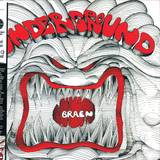
Filled with hypnotic bass lines, heavy drums and screaming fuzz guitars "Underground", the first LP of the fictitious group known as Braen's Machine, is one of the rarest and the most expensive of them all, always "reaching" sky high prices throughout the second hand vinyl market. A fast-beat jam with hammond scales and a twin lead guitar theme ("Flying") opens the A Side soon followed by "Imphormal", a classicfunk-beat-meetsfender- rhodes-and-psychedelic-guitar number. The music then switch to "thriller territories" with "Murder" which is based on prepared piano swells and a deeply hypnotic walking bass, reminiscent of the best Morricone's soundtracks for Dario Argento's movies. Two highly percussive songs complete the A Side: "Gap" is an improvised song with guitar and keyboards dwelling over an infectious drum rhythm while a marching snare and a vibraslap effect are the special features on "Militar Police".
The mood relaxes slightly on the opening of the B Side with a lazy jazz groove on "New Experience" but the rock influences are soon brought back on the following track "Fall Out". "Obstinacy" is all about keyboards with syncopated rhodes themes and distorted hammond sustained notes whilst the fuzz guitar is back again screaming through the left channel on the last song of the album, "Description". We could happly say that that was the golden age of the Italian music library. But who's behind the name "Braen's Machine" On the original cover the songs are credited to the composers Braen and Gisteri. Braen was a pseudonym often used by Alessandro Alessandroni, an extremely skilled and versatile musician, and one of Umiliani's closestcollaborators. He could write, conduct and arrange, he could sing (ever heard "Mah Na Mah Na"), he could whistle (ever heard Morricone's "For a fistful of dollars") and he could play almost anything: guitar, bass tuba, accordion, sitar and the list grows..... His first album "Alessandro Alessandroni e il suo complesso" (Sermi, 1969), had transformed the Italian library music from orchestral sound beds into the psychedelia we all love; the extremely fuzzy guitars are very "present" on "Underground" too. For a long time Gisteri's real identity was rather mysterious; often wrongly attributed to Umiliani. Gisteri was the pseudonym of Oronzo De Filippi, art name of Rino De Filippi, music supervisor to the Italian public broadcast company (RAI) between the '60s and the '70s. De Filippi composed other notable pieces such as "Riflessi" (Edipan, 1975) and "Nel mondo del lavoro" (Sermi, 1972).
De Filippi passed away few years ago but we were able to contact Alessandroni to talk about this LP. Remembering "Underground" recording session as one of the thousands he took part of, Alessandroni told us that this record was produced very quickly, in two days maximum. This was made possible by a team of wonderfully capable session musicians and the creative genius behind the mixing desk; this incredible combination helped to focus on the mood of each track even more. Unfortunately there are no liner notes but Alessandroni's memories and speculations, based on other music tracked in the same period at Soundworkshop by resident engineer Claudio Batussi, led us to identify this as the most probable lineup: Munari on drums, Majorana on bass, Vannucchi on keyboards and Alessandroni himself on guitar. For this reissue the sound has been restored and the cover art reproduced exactly as it was.
Big Strick and Generation Next follow up their highly successful CD album " Like Father Like Son" with a vinyl double album. It features 7 songs from the album along with a bonus track from Generation Next. With vocals tracks featuring Don Q and Tony Coates, Next and Strick bring us flavor and funk. ' The Ride' features Tony Coates, bringing lyrics for the soul. Along with the warm vocals is a warm bass and moving percussion. 'Ypree' is the bonus track produced by Generation Next. It is a mellow, hard hitting underground track. Hard drums and loud claps. Reverbed high hats and repeating congas.
out of Stock
Last delivered 4 years ago available to reorder, subject to availability
Wiederveröffentlichung des Longplayers aus dem Jahr 1980 mit dem markanten Tony McDermott Albumcover Design. Der Klassiker wurde im Channel One Studio eingespielt und abgemischt, am Mischpult saß der legendäre Barnabas (Stanley Bryan). Also Produzent fungierte Henry 'Junjo' Lawes, als Musiker die Roots Radics in Bestbesetzung (Bass: Errol 'Flabba' Holt, Drums: Style Scott, Santa Davis, Organ: Winston Wright, Guitars: Bo Pee Bowen, Andy Bassford, Piano: Gladdie Anderson, Percussion: Sky Juice & Skully). Mit den bekannten Songs "You Are A No Good" (kam auch auf dem Scientist-Album "Rids The World Of The Evil Curse Of The Vampires" zum Einsatz) sowie "Cassandra".
The last time Fennesz released an album on Austrian label Mego it was 2001 and the name of that release was 'Endless Summer'. Now, in 2014 Editions Mego is extremely proud to release the conceptual follow up that landmark of abstract pop. Eschewing the more drone orientated works of 'Black Sea', 'Bécs' returns to the more florid pop mechanisms as deployed on Endless Summer. ' Bécs is not just an album or a series of songs, it's a world to inhabit, a landscape ripe with sounds, songs and that esteemed Fennesz signature. A singular work by a singular artist.
Following the release of virtuoso new singles Mr. Cover Up and No-Operative across January and February, seminal DnB duo State Of Mind are to present their fourth album, Eat The Rich, on March 31st. To be released by Black Sun Empire s Blackout imprint, the album celebrates some of the best work of their career to date, underlining their remarkable pedigree and with it, their ability to fuse darker, hard-edged sounds with genuine dance floor mcredibility. Famed for their rugged basslines, steely percussion and huge, driving synth lines, State Of Mind also showcase different sides to their craftsmanship on Eat The Rich, with a number of vocal features taking centre stage. As well as NZ
rapper PercIEve s appearance on the storming, tear-out anthem Mr. Cover Up, the duo also join forces with promising songstress Sacha Vee on the wonderfully eerie Black Raven; although still bullish in style, it highlights a softer, more thoughtful side to State Of Mind. Heavyweight second single No-Operative is also an album highlight, as are further future dance floor anthems like Where You At and Put It On, as well as two unique collaborations with fellow revered DnB figureheads Black Sun Empire. To compliment the rich diversity of sound on offer, the idiosyncratic, breaks-driven heat of Fast Life and the outer-worldly, synth-laden intro on U Control Me complete what is a stunning, career-defining album.
With a European tour in support of the album set to commence in March, ahead of further headline dates in Australia and New Zealand throughout April, Eat The Rich is set to cast State Of Mind into the spotlight like never before.
Wallis Bird ist der leibhaftige Gegenentwurf zu den zahllosen Gesichtern, die von der - 15-Minuten-des-Ruhms'-Welle an den Charts-Strand gespült werden, ohne uns wirklich zu berühren. Mit dem neuen Album "Architect", dass die 31-jährige irische Künstlerin und 2-fache irische Musikpreisgewinnerin veröffentlicht ist ihr etwas gelungen, das allem bisher Erreichten die Krone aufsetzt. Denn der eigentliche Triumph von "Architect" besteht weder darin, dass Wallis Bird mit ihrem viertem Album erfrischend selbstbewusst auf Genregrenzen pfeift, oder darin, dass es ihr gelingt, dabei nicht einen Deut an Originalität einzubüßen, sondern ihr Profil sogar noch zu schärfen. Nein, "Architect" ist deshalb Wallis Birds größter Triumph, weil ihr mit diesem Album ein Werk gelungen ist, das sich noch entschiedener im Hier und Jetzt positioniert, als alles, was sie bisher geschrieben und aufgenommen hat - vielleicht, weil sie dabei noch nie so sehr bei sich selbst war, wie diesmal. "Architect" feiert den Moment, den Augenblick des Überwindens und Loslassens, des Aufbruchs. Es ist ein in Songs gegossener Triumph über die langen Schatten der Vergangenheit und die vermeintlichen Verpflichtungen gegenüber der Zukunft zugleich.
Jetzt erhältlich als exklusive Deluxe-Vinyl-Edition! Die Deluxe-Vinyl-Edition enthält das Album "Architect" und die Bonus-LP "I Did A Cover Of Your Song" mit insgesamt 10 Cover-Songs. Schwarze Doppelvinyl (180g) im wertigen Gatefoldcover inklusive 2CD!
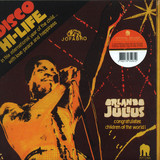
Hot Casa Records reissues Disco Hi-Life, a real treasure album composed and interpreted by Afro-Soul maestro, Orlando Julius. Comes as delux 180 gramms vinyl with tip on jacket & inserts with interviews & photos. Check!
Following up to the 12inch release (HC07 / 2009), here comes the remastered version of a real mindblower piece from 1976 including four unreleased tracks, all recorded with the best Nigerian musicians, between Ginger Baker' Studio in Lagos and the American Star Studio in West Virginia, USA.
Orlando Julius Aremu Olusanya Ekemode was born in 1943 in Ikole-Ekiti, Nigeria and can be considered as a main figure of the Afro-Soul music history. One of the first African musician to get signed on a 'Major' label (Polydor), he delivered many hit single as a composer and effortlessly performed live as a tenor sax and singer. He worked and met with some of the 'greatest', such as Louis Armstrong, James Brown (for his Nigerian tour with Bootsy Collins), The Crusaders, Gil Scott Heron, or Hugh Masekela.
In the middle of 1975, just after they finished the recording of The Boys Doing It' album with Hugh Masekela, they all flew to Ghana and Lagos. It was holyday and Orlando had also plenty of time to focus on his own songs. He wrote 'Disco Hi-Life' in Yoruba and 'Children of the World' in English. And he immediately planned a recording session including 12 finest musicians, such as the great singer Dora Ifudu Avery, Adelaja Gboyega on keys, Kenneth Okulolo on Bass guitar, Butley Moore on drums, Fela's collaborator Tunde William on Trumpet, and also Ade, who helped sang 'Love Peace & Happiness'.
Originally released by Nigerian label Jofabro in partnership with the UNICEF association for the 'International year of the Child', it was only available in few promotional quantity... here comes the very first official reissue of this dancefloor masterpiece!
Maricopa returns to Back To The Balearics to complete his stunning opus, Pastel Love.
And he continues where he left off building deeply textured songs packed full of simple melodies that really shine.
His music opts for subtle feelings and passing vibes over the more obvious structures of 'dance music'. The release of Part One led to a number of comparisons with the early work of Aphex Twin as well as more contemporary producers such as Four Tet.
Such comparisons don't come lightly, but Pastel Love demonstrates that a rare musical talent has arrived.
The release again has beautiful printed covers and looks as good as it sounds. Viva Maricopa!
Tapper Zukie's 'Man from Bosrah' album still stands up today many years after its initial release, as only great music seems to do.
Tapper was one of the few Jamaican artists in the late 1970's that crossed over with the emerging punk/new wave audience.
Punk poet Patti Smith had practised her poetry over the rhythms from Tapper Zukies 'Man Ah Warrior' album, before reworking them as songs with her band.
Acknowledging this influence she brought Tapper on stage with her at the Hammersmith Odeon 23 October 1976 and introduced Tapper to a whole new audience. An audience that accepted Reggae as a music that also dealt with struggle and oppression.
The great cover shot shows Tapper standing at the back gates of the school yard in Trench town which was opposite his own yard...so sit back and hear what was happening back then that made this such a time defining album....
On Speedy Ortiz's Real Hair, the band sets a course between the knotty discord of debut album Major Arcana and the pop bonafides of the preceding Sports EP. Recorded and mixed by Paul Q. Kolderie (Pixies Radiohead), the new EP finds them subtly adding new techniques to their songbook. Guitarists Sadie Dupuis and Matt Robidoux bring on additional guitar effects to color the roundabout feel of 'Oxygal,' while bassist Darl Ferm and drummer Mike Falcone hit hard to deliver the jump-in-the-pit urgency of 'American Horror'.From the vocal melodies to the no-nonsense guitar turns, this is Speedy's catchiest outing yet, drawing inspiration from contemporary Top 40 and R&B radio in addition to their regular arsenal of guitar rock. Dupuis' lyrics continue to address concerns about identity, representation, and their misalignment, this time from a new angle: 'While the last album was kind of a breakup jam, these songs are a lot more introspective—myself dealing with and talking to and making sense of myself,' she says.With Real Hair, Speedy Ortiz once again taps into the four-part chemistry that brought their prior outings praise. They're still equal parts noisy and poetic, and now merge those channels more seamlessly than ever.
Traversing with an understated technical assuredness, the ambitious shapes of Steely Dan, the popping lounge funk of McDonald era Doobie Brothers, the sweet mourning of the Stylistics and Delfonics, and the exquisite song-craft and flawless harmonising of CSNY, Daniel Collas (The Phenomenal Handclap Band), Bart Davenport and Quinn Luke aka Bing Ji Ling have recorded an absolute darling of an album under the name Incarnations. They are three friends with enough musical guises, side-projects, collaborations and production jobs to fill the annual itinerary of your average musician twice over. When three CVs like these get together on a regular basis, it's only logical they speculate and hypothecate on the possibility of an album together. But, how to make those congested diaries synchronise? Bart lives in Oakland and Quinn and Daniel are in New York, all three of them are on tour for the better part of the year. One sunny day in Madrid, Spain, a plan was hatched and a proposal was made. Lovemonk, a small, eclectic and affable Spanish label, dangled the carrot that clinched the deal; 'find two weeks between gigs/productions/recordings and head down to this little place we know in Tarifa, Southern Spain'. A family-run studio, in a house 5 minutes from a wild beach and a short ferry ride from the coast of Africa; the perfect ambience for the fleeting melody and sultry grooves of the Incarnations debut album, "With All Due Respect". Arriving with bits and bobs of half-songs, grooves and melodies, Daniel, Quinn and Bart, sketched and improvised their way to the most intensely evocative songs you'll hear this year. Punctuated by a day trip across the water to Tangiers, all 9 songs were written and recorded inside a fortnight in October 2009 and laid to rest while our protagonists jetted off to their respective diary appointments. Whether it was the beach, the soft weather, the fact that you can smell Africa from the studio, the home cooked Spanish food or the relaxed environment of the recording room, when the band returned to the songs at a New York studio earlier this year, they found an album as fresh and resonant as the moment it came into being. Quickly mixed down with no over-dubs or re-records, "With All Due Respect" captures the combined gifts of Tarifa and the three very talented friends that paid a visit. Incarnations are: Daniel Collas: DJ, drummer, organist, and one half of production team Embassy Sound Productions, the minds behind The Phenomenal Handclap Band. Plays - drums, percussion, organ and synthesizers. Bart Davenport: Collaborator with Greyboy, General Elektriks and The Phenomenal Handclap Band; Singer-songwriter with The Loved Ones, The Kinetics and Honeycut, and most recently a touring member of the Kings Of Convenience. Plays - guitar, bass and vocals. Quinn Luke a.ka. Bing Ji Ling: Part of The Phenomenal Handclap Band, one half of DFA recording artists Q&A and long time member of Tommy Guerrero's band; Solo artist on labels Ubiquity and Lovemonk among others. Plays - guitars, keyboards, vocals The band are named after Encarnacion "Nini" Sagrista, owner of the recording studio in Tarifa, who housed and fed them during their stay.
Struments Records opens 2014 presenting ''Fire to the Empire'', third record in 12'' format from this Barcelona label. Following the special dedication referred to the local talent shown by the label in its two previous releases, in this occasion the reference is signed by Clip!, relevant artist in the Spanish electronic scene that, after a versatile and prolific 2013, shows in this publication a new coordinate of their chameleonic sound. Thereby opening the door to more visceral coordinates, opaque and less intense dance that exudes less kindness and infects the club atmosphere with light and dark. The set, consisting of three original songs (Fire, Ash and Bitch), and a remix of ''Ash'' by the British artist Kommune1, discovers on side A two descriptive and powerful snapshots of translucent clubber atmosphere, winding and unfiltered. Proper of the dance hours closer to twilight in the shadows and lights mergers into sensations. While on the B side, the artists pays tribute to the most evasive and escapist concept that music can evoke, forged between the rage of techno and the subtlety of house, when instinct takes control over any convention and presents itself as a purely physical experience between the listener and the sound. Closing the total minutes of the reference, Kommune1 prints cosmic and expansive notes to ''Ash'', as well as he brightens the original version. ''Fire'', the central tune that starts and gives name to this third reference of Struments Records responds to six minutes that shapes a direct and powerful presentation letter. In which you can acknowledge progressive melodic phases and raw vocals that serve as a growing force of initial contact. ''Ash'' continues the incursion between hard and chiaroscuro dynamic, printing analog rhythm coordinations. ''Bitch'' represents the exact balance and highlight of ''Fire Your Empire'' EP, sobriety in enviromental nuances, vocal flare and power high-flying shape a depth completely orientated to the dance floor that condenses much intention in a speech coherently aligned with the sound. Kommune1 sets ''Ash'' with an eye towards fantasy and space, using resources in the original maximalist melodies and rhythmic accelerating phases provide the remix to get faster.
DJ Support:
Alizzz (Mad Decent)
The EP is so well balanced. Loving that analog feeling. 'Fire' makes me
dream, I get in trance with the bass and those pads on 'Ash' and I want
to listen to 'Bitch' really loud in the Berghain. Much support.
Jorge Caiado (Balance/Groovement)
"Excellent and fresh EP!! All tracks are powerful and effective, can't
wait to play them. My favorite is "Bitch" but Kommune1 also did a good
alternative mix to "Ash". Keep them coming Struments!
Kresy (Hivern Discs)
"Great EP. Bitch is my favourite"
Broke One (RBMA/Magic Wire Recordings)
"Aweome EP"