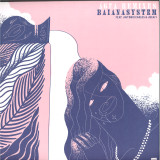
Slave To Society (ex AnD) returns to Natural Selection with a white-hot industrial Techno EP, entitled 'Ai Invasion', accompanied by an IDM-infused remix from hard electronica duo; Somatic Responses.
Format : 12" Vinyl / Digital
Mastered by Dadub Studios, Berlin. Cut by Simon at The Exchange Vinyl.
After a decade of redefining techno dance floors as AnD, Andrew Bowen returned to his experimental, hardware-focused roots as Slave To Society in October 2019. Since then he has seen his music released by highly revered institutions in the world of hard techno, noise, breakcore, IDM and industrial electronica, such as PRSPCT, Pure Hate, Ohm Resistance and BANK Records NYC. After forming a close connection to Natural Selection in recent years, Slave To Society returns to the London based imprint after releasing via their VA compilation 'NSUKR' with his track 'Tundra', followed by his remix of Kamikaze Space Programme's 'Dust To Dust' from his physical EP entitled, "Ashes to Ashes, Dust To Dust", released on Natural Selection in 2022.
In the form of a 4-track physical and digital EP, 'Ai Invasion' is a sonic exploration of the symbiotic relationship between humanity and technology.
Slave To Society uses carefully designed futuristic soundscapes and atmospheric textures, layered with AI generated vocals, combined with heavy and fiercely unpredictable drum elements.
Expect advanced, experimental hard techno and noise, fused with powerful low-end muscle, raging hi-hats, fragmented percussion and augmented amens.
The release also features a razor sharp and well-placed remix of track B1 - 'Robot Dementia', courtesy of legendary hard industrial electronica duo; Somatic Responses.
In true Slave To Society fashion, all rules and boundaries are smashed to pieces and all tracks are equally suitable for blasting through the world's biggest club systems and rigs as they are for home listening.
'Ai Invasion' challenges listeners to question the impact of artificial intelligence on our society and the implications of our relentless pursuit of technological advancement.
Search:sonic element
- A1: Everything Forgotten Flows
- A2: Silicate Tusks
- A3: Learn To Fly (Feat Sabola)
- A4: Segue
- B1: Ruins
- B2: Like It Shouldn’t
- B3: Thick Air
- B4: Eternal (Feat Ex-Terrestrial)
- C1: Wake (Feat James K)
- C2: Grimoire
- C3: Basalt Tones (Feat Jesse Osborne-Lanthier)
- C4: Moonstone (Feat Ben Bondy)
- D1: Frayed
- D2: To See Our Secret Die (Feat Sabola)
Acclaimed Canadian electronic producer Francis Latreille, known as Priori, unveils his new singles "Learn To Fly" and “Segue” today, marking the first releases from his upcoming third album, This But More. "Learn To Fly" offers a taste of the album's lush, dubby techno soundscapes, while "Segue" showcases the album's ambient side. Arriving May 24th via NAFF, This But More marks a sonic departure for the artist, exploring a richly textured landscape of electroacoustic compositions inspired by literature, cinema, and the transformative power of nature.
Priori delved into This But More from September 2023 to March 2024, drawing upon archival recordings and fresh ideas. "This album is about healing," Priori explains. "Not necessarily 'music that heals', but about the process in its ups and downs, its beauty and uncertainty." Themes of protection, healing, sleep, and decay naturally emerged during the creative journey.
To craft this immersive world, Priori collaborated extensively. Writer and musician Devon Hansen penned a series of "Suggested Stories" to accompany the album, adding depth to its lore. Musically, Priori teamed up with James K, Ben Bondy, Sabola, Adam Feingold, and Jesse Osborne-Lanthier, infusing the album with diverse instrumentation, including violin, guitar, software instruments, and field recordings.
This collaborative spirit extends to the album's striking visuals. Jesse Orsborne Lanthier designed the main and single artworks, while Ulysse De Lezenne crafted a unique jewel, both pieces seamlessly connected to the album's narrative.
The intricate world-building sets This But More apart. "It's the biggest collaborative project I have tackled so far," Priori notes. This spirit of exploration extends to the second single, “Wake”, featuring Priori's first vocal collaboration with close friend Jamie Krasner (James K).
Priori's artistic process is grounded in self-awareness and intuition, asking vital questions about how each element serves the greater purpose of the music. Swimming sessions between studio work provided clarity and focus throughout the album's creation. These meditative moments reflect in the music, inviting listeners into a contemplative, dreamlike state.
Beyond music, Priori draws inspiration from the literary worlds of Gene Wolfe, Ursula K LeGuin, China Mieville, Brian Caitlin, the evocative games of Hidetaka Miyazaki and Yoko Taro, as well as the ever-evolving beauty of myths and nature.
Ruby Red - Transparent - Galaxy effect vinyl in dub style jacket (jacket sleeve with center hole cut out so label of LP shows through) a black paper inner sleeve and poly bag.
PART ONE’ METAL HAMMER - 8/10 review. FOR FANS OF : Lustmord, Om, Sunn O))) . “An exercise in freeform ambience, ritualistic repetition and the rapturous, womb-like power of bass…strange and affecting. We remain lucky to share in the great man’s vision.”
At its heart, music has always been a questioning of inheritance – a dialogue with predecessors and forebears, the forging of one’s own perspective in relation to what has come before, and for some, a plunge into the boundless realms between. For Steve Von Till, that process has always taken on an added dimension to become the most sacred of tasks. Whether through the apocalyptic uprising of Neurosis, the sonic deconstructions of their sister project, Tribes of Neurot, the invocatory intimacy of his eponymous solo albums or his instrumental psychedelic reveries in the guise of Harvestman, that dialogue has never just been with musical influences, but with what underpins them: the primordial, elemental forces now banished to the peripheries of our contemporary consciousness, yet still broadcasting a signal for all who will listen.
Drawn to the megaliths, ruins and ancient sites mapped out along the British and European mainland’s geographical and psychic landscapes, the folklore and apocrypha forever resurfacing as portals from a rational world, “Triptych” is a meditation forged from traces and residues, and an hallucinatory recollection of artists who have tapped into that enduring otherworldliness embedded within us all. It’s a dream diary narrating a passage through Summer Isle where Flying Saucer Attack are wafting out of a window, a distant Fairport Convention are being remixed by dub master Adrian Sherwood, celestial scanners Tangerine Dream are trying to drown out Bert Jansch and Hawkwind are playing Steeleye Span covers, all prised out of time yet bound to its singularity.
Woven together from home studio recordings that span two decades, this latest outing as Harvestman finds parallels with nature’s cycles not just in its release dates but in the repeated structure that binds each album, like an imprint refracted through three separate strata. As with April’s “Part One” and the forthcoming “Part Three”, “Part Two”, starts on a collaboration with Om bassist and long-term friend of Steve’s, Al Cisneros, with a dub take opening the B-Side. Here, the opening track, “The Hag Of Beara Vs The Poet”’s languid, tribal groove expands into a chromatic wash, like an endless drip of oil spreading out under a midsummer haze.
A filtering of the alpha-state travelogues of its predecessor, “Part Two” reaches even deeper into primal yet pristine states. It journeys from the undulating drone and slow-thawing wonder of “The Falconer”, as if the Myst soundtrack were being broadcast from outer space, through “Damascus”’s perpetual-motion, dreamtime bazaar and “Vapour Phase”s seismograph frequencies measuring supernatural tremors to “The Unjust Incarceration”s distorted bagpipes, sounding a noise-frayed lament
If “Triptych” is a multi- and extra-sensory experience, it extends to the remarkable glyph-style artwork of Henry Hablak, a map of correspondences from a long-forgotten ancient and advanced civilization. As with “Triptych” itself, it’s an echo from another time, an act of binding, a guide to be endlessly reinterpreted, and a signpost to the sacred that might not indicate where to look, but how.
Contra009. Embark on an auditory voyage through the heart of Detroit's finest dusty crates with "The Vault Vol. 1," a compilation of beats and melodies meticulously crafted by esteemed producer Reggie Dokes.
Dokes unveils a treasure trove of his finest deep house creations, never before released on vinyl. Delve into the hypnotic rhythms, lush harmonies, and pulsating basslines that define Dokes' signature sound, as he seamlessly blends elements of house and soul to create an immersive sonic experience. With "The Vault Vol. 1," Reggie Dokes invites listeners to rediscover the essence of soulful electronic music.
This anthology also features two mesmerizing tracks from his acclaimed 'Napi Hedz' collaboration with Pirahnahead, adding an extra layer of depth and complexity to an already stellar collection.
GEMiNii Family is grooving and is very happy to welcome new internationals members like OHM HOURANI, Luc Ringeisen & GEMiNii LTD.
Ohm Hourani is a boundary-pushing artist known for weaving intricate sonic landscapes that defy genre conventions. With a background in both classical and electronic music, Hourani's soundscapes transport listeners to otherworldly realms where organic and synthetic elements intertwine harmoniously.
Luc Ringeisen, known for his groundbreaking contributions to the legendary Club der Visionär, skill-fully navigates the realms of electronic music with his innovative sounds. Immerse yourself in his latest work to witness the mesmerising fusion of beats and textures that characterise his distinctive sonic landscape.
GEMiNii LTD, also known as BioN and Berten De Beukelaer, along with Arisha, are visionary artists whose work transcends boundaries. Their creations, rooted in the depths of imagination, blend intricate patterns with vivid colors to evoke emotions and spark contemplation. They deliver a very sophisticated and ambient piece, intertwining analog pad voices and flute, taking us on a journey in celebration for music lovers.
- A1: Let's Live It Up (Feat. Harm Franklin)
- A2: Fatalistic Groove (Feat. Barney Bones)
- A3: Cheap Thrills (Feat. Barney Bones)
- B1: Get Down Down (Feat. Reggie Watts)
- B2: I Don't Remember (Feat. Vnssa)
- C1: Tha Tea
- C2: Might Just (Feat. James Patterson)
- C3: Motivashun (Feat. Reggie Watts)
- D1: Stop Time (Feat. Glass Petals & Elohim)
- D2: Did You Mean It (Feat. Zof)
Walker & Royce have released their highly-anticipated sophomore album No Big Deal out now via Dirtybird Records.
Embarking on a four-part mission to bring the party back to dance music, Walker & Royce have embraced the boisterous, unruly nature of their over-the-top signature to deliver 10 non-stop anthems. A highly collaborative body of work, No Big Deal features a colorful collection of characters including comedian/ musician Reggie Watts, Grammy-nominated and multi-platinum selling artist James Patterson (and 1/2 of the electronic duo The Knocks), peak-time queen VNSSA, Grammy-nominated vocalist Barney Bones, and more.
From the tongue-in-cheek lyricism of ‘I Don’t Remember’ and ‘Might Just’ to the overzealous charisma imparted on tracks like ‘Motivashun’ and ‘Fatalistic Groove’, No Big Deal boasts the sense of humor and lightheartedness that Walker & Royce have brought to countless dance floors throughout their career. The album is hallmarked by the kaleidoscopic elements of their dance music roots: catchy vocals, playful melodies, thumping basslines, and relentless four-on-the-floor percussion.
No Big Deal is a wondrous homage to the weird and wacky tropes that have distinguished Walker & Royce’s no-holds-barred style for more than a decade. An auditory yearbook cataloging Walker & Royce’s sonic inspirations from their early days in New York City’s 90s underground raves to the Dirtybird BBQs and Campouts where they found their home, No Big Deal is a victory lap for Walker & Royce as they cement their status as headliners and hitmakers.
No Big Deal is a reminder to enjoy the ‘Cheap Thrills’ that life presents, to ‘Get Down Down’ and adopt a motto like ‘Let’s Live It Up’.
2xLP, Gatefold Jacket, Picture Disc, cut at 45rpm. First pressing limited to 500 copies.
Introducing the inaugural release from "Vorm", "Vorm Series: One," a compelling compilation showcasing five tracks from a lineup of esteemed and emerging producers. This release marks the beginning for the young record label "Vorm", setting a high standard with its diverse and dynamic sounds.
From the producer and "Newrhythmic Records" founder, "Joton", comes "Neon Dystopia." This opener track of the release plunges into a hard hitting soundscape, blending pulsating basslines with highly pitched atmo surfaces. "Mineral" by Kon Janson dives into a mineral-rich sonic experience, where intricate rhythms meet hypnotic textures. This subterranean grooves is exactly the addition that the A-side needs and rounds off the whole thing as powerfully as possible.
"Ricardo Garduno" delivers "They're Between Us." This starter track on the B-side is a dark, spacious force of cavernous beats and atmospheres, perfect for those moments of peak-time intensity. Founder "Maasym" presents "Raeder," a sophisticated blend of a industrial trippy synth line and highly dense effective elements.
The track evolves with mechanical precision, emphasizing and focusing on the minimalist effects, percussions and drums. Closing out the release is Berlin-based rising producer & live artist "Peryl" with "Melting Room." This track is a melting pot of raw-high energy and experimental tones, pushing boundaries with its innovative, detailed sound design.
Pleasure Planet's kaleidoscopic debut album has been a long
time coming, but good things come to those who wait.
Developed over years of late-night studio improvisations,
'Pleasure Planet' is an affectionate and colorful patchwork of
the New York City-based trio's knotted in§uences that's
suspended between the rave and the chill-out room, weaving
glistening pads and chunky basslines into vocal earworms
and warm, saturated rhythmic cycles. Bandmates Andrew
Potter, Kim Ann Foxman and Brian Hersey enter into a
lysergic dialog with their discrete personal musical histories,
drawing inspiration from vintage EBM, ambient music and
heady early '90s West Coast rave sounds and launching
these classic elements into a transcendent new sonic
universe.
Contains a third track that remains secret :p.
Dive into the electrifying world of Jellyfish with the latest release from BUD Records,"Je Series 5." Prepare to be transported to the neon-lit dance floors of the 80s with this infectious Italo Disco anthem. With pulsating rhythms and catchy melodies, "Musikman" is a testament to Jellyfish's mastery of the genre.
The party continues on the B-side with "Musik," a modern take on disco infused with elements of nu- disco. Groove-inducing basslines and funky guitar riffs converge to create a sonic landscape that is both nostalgic and fresh. Prepare to be amazed as Jellyfish takes you on an unexpected sonic journey.
But be careful, it may not end there...you might even find a special surprise, a hidden gem, an incredible track that defies expectations and pushes the boundaries of conventional disco.
Pitch Dark is a new VA series brought to you by Berlins Pure Hate Trax. For this the 1st in the series they invite 3 new Artists to the label but by no means new to the scene in Codex Empire, Maedon & 7CIRCLE. Also making a welcome return after his debut on VHXX1 is STRISC. Codex Empire – Since 2014, British born, Vienna based Codex Empire has built an international reputation for dark and intense techno productions and live shows. Combining this background in dark electronic music with heavy rhythmic elements makes Codex Empire an intense and simultaneously danceable experience both live and on record. Codex Empire has performed over 100 live shows across Europe, Japan, Korea and Canada, as well as numerous appearances in Berlin at Berghain, Tresor, Arena Club, Suicide Circus and BoilerRoom. Maedon – A native of notoriously grimy Baltimore who spent some seasons in filthy Philadelphia learning the craft, her arrival in New York City circa 2018 signalled a shift in development, one confirmed by the emergence of her Maedon moniker and her partnership with Brooklyn/Berlin techno powerhouse Sonic Groove and its head Adam X. Fast forward three years to Berlin, two albums, a residency at Tresor and an entire world later, Maedon forges ahead to the next phase of a rapidly building career. Assuring her future as the world falls apart, Maedon’s bracing sound and undeniable skills are a story now unfolding, with its beginnings already written in grit.
7CIRCLE – At the helm of Destroy to Rebuild, 7CIRCLE is a musical project without boundaries. Drawing from post punk and metal roots, 7CIRCLE navigates across all genres including Techno and Industrial without compromise or frills. The journey through the discography of 7CIRCLE is a fascinating path filled with darkness and aggressive sounds which are sometimes embellished with a melancholy touch to satisfy lovers of strong emotions. STRISC. – Hailing from the East Midlands, UK and residing in Berlin for the last 8 years, STRISC. is an Artist, DJ & Label Owner who has been making waves due to a relentless output of no-compromise productions that have garnered him the respect and attention of Techno aficionados and peers alike.
Toronto-based artist and co-boss of Parallel Minds, Ciel, known for her distinctive, precise, playful, and intricately crafted electronic productions, delivers a vibrant new EP on SUZI titled "Sada’s Dream". Originally performed during a live set at MUTEK Montreal, Ciel has refined these initial ideas into a five-track journey that showcases her unique sound palette, marked by meticulous attention to rhythmic and melodic interplay.
The EP opens with "Be That As It May," setting a contemplative tone with complex rhythms and a haunting flute-like melody that gradually unfolds into a brighter, expansive atmosphere.
Following this, the second track "Viral Load" shifts towards a tougher sound, featuring digital bleeps and arpeggiators that swirl around modern dubstep elements, creating a dense auditory texture.
The third piece, "Divide and Conquer," blends airy textures with a robust, infectious bassline and glitchy, compelling melodies, demonstrating Ciel's ability to balance delicacy with power.
Moving forward, "Bubble Gum Pop," the fourth track, adopts a clubbier vibe with its vigorous house vocals and lively breakbeat drums, offering a sharp contrast to the preceding tracks.
Concluding the EP is "Sada's Dream," the title track. This fast-paced, playful composition marries minimalist rhythms with whimsical bleeps and snippets of vocals, ending the EP on a note that feels both conclusive and invitingly open-ended. "Sada's Dream" is a sonic tapestry that weaves together the subtle complexities of Ciel's signature style with a narrative that is both intimate and expansive, capturing the essence of her artistic vision.
Rosati launches his new imprint, Global Pulse. The label embraces a futuristic development of Techno, exploring unknown sonic territories while always staying true to its original essence.
The inaugural release, 'Automatic Response EP', features five original tracks that are pulsating with powerful dynamics and detailed textures.
In the first track, A1 'Automatic Response', the vibe is established by a steady bass line and hypnotic bleep sequences that are ensuring high pressure energy.
Continuing with A2 'Way Out', where a wide landscape is created through the use of well crafted sound design elements, juxtaposed to a minimalistic 909 groove.
With B1 'Ufo Memory', Rosati is diving into alien realms, blending atmospheric UFO textures with heavily saturated drum patterns, creating a dark, pumping, and futuristic mood.
In B2 'Feeling', the focus shifts to the late 90s era, where a story of freedom is told through the appearance of percussive loops, funky bass lines and pad melodies.
Inside the record there is also a digital bonus 'Time Tunnel': a melodic electro journey that transports the listener into a robo-dystopic, yet hopeful, future.
With this first release, Global Pulse lays the ground for a promising series that will push the envelopes of Techno, promising a platform focused on sustainability and authenticity of Electronic Music.
That true beauty lies in the essentiality and meticulous combination of a few elements is sometimes not just a cliché. The delicate blend of Roland CR-78, acoustic guitar and dissonant organs that intertwine in Open Windows is a vivid demonstration of this. It is these few elements, now distant and hinted at and now close and deafening, that paint the backdrop of melancholic nostalgia where laconic whispers move the listener within the paintings that bear the sonic signature of Human Figures. To Daniel Lewis’ new project, which has seen its springboard through releases on the label of his friends at Frigio Records, perhaps the adjective “new” is already quite tight. He has built a very recognizable sonic tibre, an influence of producers and listeners at different latitudes of the post-punk and wave scene.
In the 8 canvases of Open Windows the folk tradition is repainted in a more contemporary guise: the sweet and sad litanies are alternated with fast and frenetic stornelli in which the combination of tradition and experimentation constitutes the stylistic signature. The open window through which the listener has the opportunity to look out in this album does not, however, give onto a natural external panorama. It projects into an inner world where introspection and silence are the only chance to grasp its sublime beauty.
‘Unknown Fate’ is the debut release from UF - the collaborative live project between German experimental techno artist OAKE and British producer and live performer Samuel Kerridge.
Self-described as the ‘power metal techno’ duo, the project was initially born from an Atonal commission. Now, OAKE & Kerridge present two EPs ‘Unknown’ and ‘Fate’, culminating in 9 tracks of unadulterated sonic warfare for their LP release.
Of the project UF say "Forged through friendship, addiction, and debauchery, UF is the sum of our parts. It’s taken over a decade to formulate these ideas and the noise is palpable. Pack your end of world survival bags and prepare yourselves for the ensuing riot.”
Samuel Kerridge and OAKE started creating music together when they shared a studio in Berlin and have been making music together for a decade. This is the first time that they have released music as a duo and it’s been a long time in the making.
• Limited LP 180g White Vinyl – 300 copies only
• UK marketing and global PR teams engaged - recent coverage: Hypnotic Groove, Expansion Radio, Metal Junkbox and Skreen B
• Samuel Kerridge is a pioneering & well-respected British electronic music producer and DJ recently featured as Resident Advisor’s ‘Mix of The Day’.
• Berlin based OAKE aka Eric Goldstein is recognized for his dark, atmospheric soundscapes that blend elements of techno, industrial, and ambient music
black vinyl[11,72 €]
Pure Dub techno driven 5 tracker. Hydergine is back on Ranges with a new sonic journey that delves deep into dub techno while infusing it with innovative broken beat structures.
The EP showcases the artists signature style in a captivating and refreshing way. Four tracks take the listener on a diverse and evocative journey, ranging from futuristic and dark sci-fi vibes to immersive and emotionally resonant soundscapes, with a rich tapestry of sonic elements that engage the mind and stimulate the senses.
Resoe provides a reinterpretation of “Perception” that reveals new layers of complexity and emotion. A captivating exploration that results in a hypnotic and addictive masterpiece, further enriching the overall package.
Adiel's "Il Significato Delle Parole Remixes" EP Returns with Captivating Remix Package includes Donato Dozzy & Pinch
In the ever-evolving landscape of electronic music, where sonic landscapes morph and intertwine, Adiel's "Il Significato Delle Parole" EP stands as a testament to the power of artistic collaboration and sonic exploration. Now, this boundary-pushing release returns with a mesmerizing remix package, featuring reinterpretations by acclaimed artists Donato Dozzy, Pinch and Adihell.
Originally conceived as a collaborative effort between Adiel and musician Flavio Accorinti, "Il Significato Delle Parole" delves deep into the intersection of techno and experimental sounds. Its tracks serve as conduits for a journey through fragmented realities, weaving together elements of cyberpunk futurism and introspective dreamscapes.
Leading the remix charge is none other than Donato Dozzy, whose masterful touch breathes new life into the EP's ethereal atmospheres. His reimagining of "Nulla Resta" takes listeners on a hypnotic voyage, layering intricate textures over a pulsating rhythm, while maintaining the track's emotive core.
Joining him is Pinch, a visionary producer known for his genre-defying approach to bass music. His Remix of "Sospesa" injects the track with a sense of urgency, blending dark trip-hop aesthetics with futuristic sound design to create a truly immersive sonic experience.
The EP also includes Adihells' captivating remix of "Nulla Resta," returning after leaving an indelible mark on the original release. This rendition adds another layer of depth and intrigue to the already mesmerizing collection. It's worthnoting that Adihells isn't merely an alias but rather a darker iteration of Adiel, embodying a distinct sonic persona.
Adiel is a visionary artist whose sonic explorations defy conventions and push boundaries. With a keen ear for intricate soundscapes and a fearless approach to experimentation, she continues to captivate audiences worldwide.
With these remixes, Adiel's "Il Significato Delle Parole" EP transcends its original boundaries, inviting listeners to explore new dimensions of sound and emotion. As words continue to shape our understanding of the world, this release serves as a reminder of the transformative power of music to unite and inspire.
Embrace the journey and let the music speak for itself.
Up next on Renegade Methodz is label head Endlec. Following last year's "Cycle of Doom" EP, the Greek producer returns to the label for his first release of 2024.
Dry loopy techno, composed with classic techniques, yet designed for the modern dancefloor...the 'Futur Akustik' release finds Endlec returning to a sound that has defined him earlier in his career and showcases the producer's knack for memorable sonic designs and admirable studio prowess.
Minimal in its components and pristine in the sound processing, the listener is presented with a cohesive collection of classic techno tracks that blend a mix of raw, percussive, driving elements and powerful kick drums with ever-dominant synth lines, providing a sense of intensity and raw emotion to all cuts, while straightforward techno rhythms keep the record dancefloor-regulated.
2024 repress
Melody As Truth founder Jonny Nash returns to action with his first solo album in four years.
Over the course of eleven mesmerising tracks, Nash points the compass gently inwards, casting aside any conceptual frameworks in favour of exploring an imaginative and idealised “personal folk music” that combines elements of traditional acoustic music with the producer’s richly immersive interpretation of ambient, a sound he has been developing for well over a decade.
From the smudged acid-folk bliss of ‘Theories’ and ‘Eternal Life’, to the layered acoustic guitars of ‘All I Ever Needed’ and the delay-soaked, Durutti Column-esque ‘Light From Three Sides’, a wide variety of musical textures weave their way throughout the album.
Point of Entry is much more than a mere ‘guitar album’ – it draws on a rich and diverse palette to achieve its purpose. The delicate saxophone work of ambient-jazz contemporary Joseph Shabason swells on ‘Ditto’ and ‘Light From Three Sides’. Cascading piano lines ripple through the crystal clear sonic waters of ‘Face of Another’, whilst echoes of Nash’s work with Gigi Masin and Young Marco as Gaussian Curve appear in the dancing synth sequences of ‘Ditto’ and ‘Golden Hour’. Nash’s reverb-laden voice also appears for the first time since 2016’s critically acclaimed Exit Strategies, used delicately throughout the album to conjure up a world of dusk and golden light.
Combining the delicate human touch and naivety of earlier Melody As Truth releases with widened scope and vision, Point Of Entry is arguably Nash’s most complete work to date – an album that’s as much a statement of his “personal folk” vision as a future ambient classic.
For those seeking a musical experience reminiscent of the iconic LARRY HEARD, RON TRENT & KERRI CHANDLER, delving into the enchanting sounds of A VISION OF PANORAMA is a journey well worth taking. A VISION OF PANORAMA, much like MR. FINGERS, has mastered the art of crafting immersive and soulful electronic compositions. This latest release invites you into a sonic realm where lush melodies, dreamy textures, and intricate rhythms coalesce to create an atmosphere of pure musical bliss. In a landscape where electronic music continually evolves, A VISION OF PANORAMA stands out as an artist who skillfully pays homage to the timeless vibes of classic deep house while adding a contemporary touches of forward thinking smooth and Balearic jazz. The fusion of classic house elements with a futuristic flair makes A Vision Of Panorama the closest thing available to the legends that precede.
Delving deep into the shadowy realms of filmic soundscapes, Pheeks latest EP is a masterful blend of darkness and texture. Drawing heavy inspiration from moody cinema and the raw, gritty undertones of lofi elements, this collection manages to capture and amplify fond sound textures, seamlessly integrating them within techno structures. At its core, there is an unmistakable cinematic ambiance, an aura that paints a picture of suspense and mystery. But don’t let the atmospheric subtleties fool you. Beneath the misty veneer lies a pulsating heart of energy, with layers that rhythmically surge and ebb. It is a sonic journey that is as intricate as it is evocative, showcasing Pheeks prowess in both craft and creativity. Prepare to immerse yourself in a world where each track tells its own enigmatic tale.
Knotweed is proud to welcome Coefficient on board. While continuing to develop his own vision of stripped-down minimalistic techno, Coefficient takes us down a cosmic and hypnotic trip to outer space. He incorporates each sonic element with precision to optimise our musical experience. Finally, he makes sure that less is more for the listener to delve into his dreamy soundscapes.
2026 Update: while stock last, this coloured vinyl now comes with a coloured cover “Exploring Different Shades of Techno since 2011”
San Francisco dub techno magician is in the game, but wait a minute.. Does anybody know What Robot Says?
Vinyl Only
Introducing the debut EP from the visionary electronic artist Federsen, What Robot Says Records proudly presents a mesmerizing journey into the depths of dub-infused electronic music. Hailing from the vibrant city of San Francisco, Federsen, also known as Chris Kelly, brings forth a sonic landscape rich with the influence of dub reggae recording techniques.
Within this inaugural release, Federsen masterfully melds vintage tape delays and analog equipment to craft a sonic experience unlike any other. Each track within the EP is a testament to Federsen's meticulous attention to detail and his ability to weave intricate melodies with hypnotic rhythms.
Opening the EP is "High Pressure," a seamless blend of precise minimalistic percussion and ethereal melodies, effortlessly drawing listeners into a world of hazy dub textures. Following suit is "Sono," where deeper melodic layers intertwine with Federsen's signature sophistication, creating a timeless elegance that permeates every note.
As the EP unfolds, "Fazed" emerges as a standout track, delivering a powerful groove destined to ignite dancefloors while still maintaining the immersive simplicity of dub soundscapes. Finally, "Quadrata" serves as the perfect conclusion to the journey, offering a sublime fusion of atmospheric elements that evoke a sense of introspection and tranquility.
With this EP, Federsen invites listeners to immerse themselves in a sonic tapestry where tradition meets innovation, where every beat pulses with intention, and where the boundaries between genres blur into oblivion. What Robot Says Records proudly presents Federsen's debut EP, a testament to the boundless creativity and artistry of one of electronic music's most promising talents.
Voodoos and Taboos unveil their highly anticipated new series with ‘Human Aventura,’ the debut album from promising Corsican producer.
Right from the start, his talent captivates listeners. The record boasts exciting collaborations with fellow artists and friends, including Noiro and Blinkduus Dischetto (Solid State).
With its esoteric and melancholic atmospheres, interwoven with nods to the Chiptune scene, the album seamlessly blends elements of electro and house music. “Defined as ‘libidinous Mediterranean spoken disco,’ the album promises an immersive journey into a unique sonic landscape, where sultry rhythms meet hypnotic melodies.
Vinyl Only. Limited
Introducing the latest vinyl gem from Adlibitum Tum Tunes, it's the highly anticipated release number 004 by the dynamic duo, Goose & Hosca. These two maestros aren't just DJs and producers, they're true sonic artisans, crafting mesmerizing soundscapes that resonate with the soul.
Their collaborative project emerged organically, sparked by countless sessions of impromptu jams fueled solely by hardware. From these creative depths sprung a unique sound, one that seamlessly blends elements of acid, electro, and dub into a tapestry of sonic delights. With each track, Goose & Hosca invite listeners on a journey through their musical universe, a realm where the boundaries between genres blur and the energy is palpable.
Track A1, "Gently Weeps," sets the tone with its hypnotic acid groove, while "Lost Hera" on A2 delves deeper into introspective territories with its mesmerizing breaks.
On the B side, "Rinkuuddo" (B2) brings the EP to a crescendo with its infectious energy and intricate rhythms.
And nestled between these originals lies the crown jewel of the EP, the B1 track, "Rinkuuddo (Havantepe Remix)." Renowned dub techno artist Havantepe lends his expert touch to the duo's work, transforming it into a mesmerizing sonic journey that will leave listeners spellbound.
Prepare to be enchanted, dear vinyl enthusiasts, as Goose & Hosca invite you to immerse yourself in their sonic world. This EP is not just a collection of tracks—it's a journey, a testament to the power of music to transcend boundaries and unite souls on the dancefloor.
Adlibitum Tum Tunes is a division of MixCult Records.
Blessing the 13th vinyl imprint on Suena Hermosa’s classic series is Italian powerhouse, Vithz, who presents 4 original addictively smooth stomping grooves to mesmerise any dance floor, including a stunning collaborative project with his close friend; Emanuele Barilli.
The artist is a truly welcome new force to the label, offering a plethora of fiercely emotive and beautifully energetic sonic stories to the table, driven through breaks, tech, minimal and garage elements of house, as per our historical promise, something for everyone!
"Urban EP" is the compelling debut from Mark Maretta in the deep house landscape. This album is a sonic exploration characterized by deep, sinuous beats and ethereal synthesizers, "Urban EP" offers a continuous journey through vibrant streets and oscure city corners.
Each track in the album flows seamlessly into the next, creating an auditory experience that is both reflective and electrifying. Mark Maretta skillfully mixes classic deep house elements with an innovative electronic twist, crafting a unique sound experience.
Veruh's vision for "Adventure" was born out of a desire to push the boundaries of sound experimentation. This vinyl masterpiece showcases a minimal, percussion-driven club sound that seamlessly weaves together a diverse array of elements – from ethereal voices and intricate percussions to skillfully incorporated instruments and synth layers that add a mesmerizing depth to the tracks.
Live touches of the bass line contribute to the creation of a captivating melody that resonates throughout the EP. Veruh, known for consistently challenging the norms of electronic music, brings his signature microhouse sound to the forefront in this EP. The tracks are a fusion of tight rhythms, deep basslines, and emotive melodies, offering listeners a truly immersive and unforgettable sonic experience.
As an exciting addition to the Adventure EP, Enzo Leep's remix infuses a smooth minimal house, a fresh and thrilling dimension to the original tracks. Closing the vinyl with finesse, Enzo Leep's remix infuses a smooth deep house vibe while maintaining the essence of the original elements. The tempo is elevated, and a mellow yet powerful bassline adds an extra layer of intensity, leaving an indelible mark on the overall journey.
Hizou Deep Rooted Music is thrilled to introduce its latest vinyl release, featuring a carefully curated selection of top-notch electronic music that's destined to delight audiophiles.
On the A-side of this vinyl gem, you'll be enchanted by the sonic artistry of Huerta, as his track takes you on a mesmerizing musical journey that embodies his distinctive vision. Following suit on the same side, you'll encounter Jacksonville, whose music effortlessly immerses you in a captivating world of entrancing rhythms and enveloping melodies.
Flipping the record over to the B-side, prepare to be captivated by the talents of Nico Lahs, operating under his NLXLB alias. His production is nothing short of a sonic masterpiece, seamlessly melding eclectic elements into a mesmerizing sonic tapestry.
To round off this sonic odyssey, we bring you a track from 100 Hz that's guaranteed to elevate the energy on any dance floor with its potent and infectious rhythms.
This vinyl is an essential addition to any discerning music collection, offering a chance to own these remarkable tracks in a physical format. Reach out to us for more information and secure your order before these limited-edition gems disappear from the shelves!
Our newest Savor EP comes from Alexis Cabrera. Who shows us on this record his unique skills, sonic brilliance and versatility. This one is composed of 4 tracks with each one showing different musical colours and Alexis' wide palette.
A1: Funkhouser
A funky, playful, and classy track that sets the tone for the EP. Funkhouser combines groovy beats with infectious melodies, creating an irresistible dancefloor experience.
A2: The Next Tomorrow
Prepare for a trippy, eerie, and hypnotic journey with The Next Tomorrow. Alexis Cabrera explores otherworldly soundscapes, delivering a unique sonic experience that captivates the listener from start to finish.
B1: Guitars on The 5th Cloud
Embark on an epic musical journey with Guitars on The 5th Cloud. Delightful guitars take center stage, weaving a sonic tapestry that transcends genres. This track is a testament to Cabrera's skill in crafting immersive and emotive compositions.
B2: Don't Give Yourself Away
Closing the records with finesse, Don't Give Yourself Away is a breaky, hypnotic number. Alexis Cabrera showcases his versatility by blending atmospheric elements with a captivating rhythm, leaving the listener with a lingering sense of euphoria.
'Primavera Cabriolet,' the inaugural album by the talented Italian artist, Fibonnacci, presented by LOT Records.
Prepare to be swept away by a quartet of mesmerizing tracks that intricately weave together a tapestry of rich, minimal sounds and atmospheric layers, reflecting the diverse influences that have shaped Fibonnacci's music.
This captivating release is a fusion of classic rominimal house beats with industrial undertones, adorned with resounding noises, expansive pads, and uplifting chords. 'Primavera' paints a sonic canvas that encapsulates the vibrant spirit of summer, tailor-made for those euphoric after-party moments.
Anticipate enthralling rhythms, immersive soundscapes, and innovative musical crescendos across each unique composition.
Step into the journey with 'Panorama 1986,' the album's opening masterpiece. It's a powerhouse track that boasts a compelling bassline, enigmatic pads, and hints of hip-hop vocals, setting the stage for an electrifying sonic adventure.
Next, 'il Viaggiatore,' the second track, emerges as a dancefloor anthem. Its pulsating bassline, driving beats, and harmonious fusion of vocals with retro piano and pads form an irresistible groove, perfectly suited for peak-time revelry or after-party indulgence. 'Hôtel Casablanca' exudes a delightful, feel-good aura. A delightful blend of industrial elements, crisp rominimal beats, and a deep, melodious tune creates an irresistible fusion that is sure to set feet in motion and spread smiles. This track has already earned high praise and is a must-listen for all.
Rounding off the album with finesse, 'Discoteca Paradiso' delivers an iconic rominimal experience. With classic kicks, hats, and industrial nuances, combined with nostalgic pads and vocals, it invokes the essence of the end of the night or the dawn of a new adventure embracing diverse perspectives within the dance music realm.
Fibonnacci's 'Primavera Cabriolet' promises a spellbinding and deeply immersive experience. Let this musical expedition captivate your senses and transport you.
Oceanvs Orientalis reveals the second single from his forthcoming album on Crosstown Rebels with ‘Heart Pieces’ feat. Idil Mese, accompanied by remixes from Mustafa Ismaeel and Nightmares On Wax.
A producer, live performer and solo act whose productions merge influences spanning Turkish, Kurdish, Armenian and Arabic sonics and beyond, Safak Oz Kutle, aka Oceanvs Orientalis, has crafted a sound that is entirely his own ever since making his debut back in 2014. Following on from his impressive debut appearance on the imprint with ‘Il Lupo’ alongside Italian talent Tooker, revealing the first single from his forthcoming album, the Istanbul-based talent is back on Crosstown Rebels with another gem taken from the project as he reunites with singer-songwriter Idil Mese for the excellent ‘Heart Pieces’ - with remixes from Crosstown and Rebellion regular Mustafa Ismaael, and legendary house talent and Warp favourite Nightmares On Wax.
Slow-blooming and resonant throughout, guided by Mese’s soulful and emotive vocals, vibrant sax melodies and trippy background samples, ‘Heart Pieces’ is a dazzling slice of laid-back, jazz-infused house music full of subtle elements. Remixing the record, Mustafa Ismaeel leans towards late-night hours with a remix drenched in rolling percussion and sweeping leads, while Nightmares On Wax takes the track in two directions - opting for loose drums, hazy tones and chugging grooves across his first take before laying the focus solely on the musical elements with his ‘Club Dub’.
AI-36 comes from Ear to Ear - the debut collaboration between label regular Samuel van Dijk (Multicast Dynamics) and Ukrainian artist Yevgen Chebotarenko. Taken from a series of live recording sessions, the album explores in four parts a markedly darker realm of soundscape music. A cornucopia of abstract morphing scenes and heady synesthesia, the album brims with rich sonic detail and evocative gestures. Deftly blending organic sound textures with an experimental austerity, ‘Live Recordings’ displays potent and accomplished storytelling.
The album opens to a grey overcast vista, a natural landscape that slowly melts into a descending chasmic dysphoria. The mood transitions to a drone-based piece on the B-side, characterised by a more psychologically suspenseful framework and exotic blend of sound design. The atmosphere lightens, yet equally pensive as side C takes on a more elemental form, invoking water and its array of microbial and metabolic ecosystems. Brief cathartic moments in the final section pave the way for deeper wayfaring on the D-side. Stray signals and unknowable artefacts skitter across a vast subaqueous domain, a fathomless womb of potentialities that ebbs into eternity.
Juan Manuel Cidrón, hailing from Almeria (Andalusia), is a legendary Spanish synthesist who embarked on his musical journey in 1976. A veteran of analog electronic sounds, his early influences come from the Berlin School of the seventies (Tangerine Dream, Klaus Schulze, etc.) and American Minimal music.
Cidrón has independently released 16 albums on his label, Extrarradio, with very limited distribution. ‘Juan Manuel Cidrón has always been immersed in music. As a child, he fell in love with a radio adorned with flashing lights – radio is now one of his professions. He was equally captivated by the music that enveloped him. With whatever little money he had as a child and during his youth, he would spend all his money on records and analog machines. Music is everything to him, and that’s why we understand his compositions as a celebration of life. The vastness that his electronic keyboards offer us is akin to the immensity of the desert, snow, and wind. Albums like ‘Tau’ or ‘Sonido Para Acciones’ belong to the realm of Spanish electronic music and are cherished by enthusiasts of sonic poetry. This vinyl edition holds a special place as it marks a return to analog, a medium Cidrón reveres and continues to embrace. In this way, it becomes a classic, a testament to his unwavering commitment to the quality that arises from the harmonious blend of natural and artificial rhythms. The result is always him: a tangible presence that brings us closer to dreams and the unadorned face of the world.’ (F. Labordeta Blanco)
‘SLG3’ is a long-awaited double album with four lengthy tracks (one per side), available in a limited edition of 300 copies. It’s the first release exclusively on vinyl in over a decade (since ‘Patagón’ on Geometrik in 2012), considering that Cidrón has mainly released his recent works on CD.’The tracks S, L, and G evoke the personal perceptions that I could imagine for each of the three elements comprising our planet in all its forms, manifestations, and presences. The track ‘3’ evokes my unique interpretation of how an imaginary being from another world might perceive Earth – its discovery, journey to it, exploration filled with admiration, bewilderment, hope, and respect. However, all of this is open to free interpretation and imagination for those who listen.’ (Juan Manuel Cidrón, 2023)
All tracks were written, produced, and mixed by J.M. Cidrón between 2017-2019 at the Extrarradio Studio in Almeria.
The Key Of The Future” takes you on a thrilling sonic journey that seamlessly blends electro, breaks, and acid elements with influences of synthwave and wave music. With tracks ranging from the pulsating intensity of “Acid Train” to the mysterious darkness of “Hasta La Mañana”, the album immerses you in a spacey and energetic atmosphere that leaves you craving more. Each song offers a unique experience, from the euphoria of “Fiesta Pesada” to the introspection of “We Are Lovers”, all tied together by a sense of discovery and evolution.
This musical masterpiece opens the door to a new chapter and reflects the artist’s expertly crafted mix of influences. Get lost in the sound and let “Key To The Future” be your guide.
- A1: Alberta Balsam - Anthem
- A2: Alden Tyrell - Lockstate
- B1: Aleksi Perala - 74R1721101
- B2: Alex Ranzino - Confessions
- C1: Anthony Rother - Blown Fuse
- C2: Dexter - Pumapunku
- D1: Detroit In Effect - Get To It (Dutchman Mix)
- D2: Dim Garden - Flot Marlot
- D3: Dj Sotofett - Bachi
- E1: Dj K - Detroit (313)
- E2: Dopplereffekt - Dyson Sphere
- F1: Dpx - Memorymode
- F2: E-Gzr - Acidic Metalurgics (Dj Sotofetts 909 Deep Mix)
- G1: Edo8 - Acidkadootje
- G2: E R.p. - Ugly Pretty June
- H1: The Exaltics - The Fierce Fighting
- H2: Frequency - Darkheart Energy
- I1: Gen-Y - Moon Soon
- I2: John Heckle - Dxxxiii
- J1: Head Front Panel - Jocco
- J2: Kreggo - Sonar Juggler
- K1: Legowelt - La Nuit Invisible
- K2: Lenson - Warehouse Memories
- L1: Mr Ho Medicine Ft Gedvile Bunikyte
- M2: Ovuca - Fi3Ac2142060 (Chris Callahan Edit)
- N1: Privacy - Starcrash
- N2: Prz - This Time
- O1: Acid Freq - Empty Streets
- O2: Ryan James Ford - Eendrachtsplein (Ret Mix)
- P1: Sansibar - Connect
- P2: Steffi | - 50 Heads
- L2: Ngoni Egan - Mvuma
- M1: Ocb - Clone Corp
Sonic Transmutations is an extended compilation album celebrating over three decades of Clone Records. Marking the 31 years - which is coincidentally the national Dutch telephone code - the 8x12 inch box set draws together veteran talent and emerging iconoclasts, transmitting a frequency rooted the imprint's signature blend of essential dance music while journeying off into territories unknown. In a constant state of unfolding, morphing across phases of matter, Sonic Transmutations purveys an elemental energy that stands in testament to Clone's enduring legacy and explorations of sounds and structures.
Mood Child label owners Sirus Hood and Manda Moor curate a sonic journey featuring global talent as they proudly present their latest compilation, ‘Various Moods’. A kaleidoscope of experiences, the release showcases six tracks from diverse artists, each contributing their unique vibe to this eclectic musical package.
Hailing from Brazil, Wayne Le’s ‘This is How’ pays homage to the origins of electronic music with a rolling bassline and a vocal tribute to classic Roland machines, the 808 and the 303. The track’s energy crescendos, making it a highly sought-after ID. Spanish duo Fourth Phase brings ‘WTF’ to the compilation, a groovy masterpiece characterized by 909 drums, a massive bassline, and a playful vocal, reminiscent of the 90s. From Curitiba, Brazil, guerrA. presents ‘Storno’, a fast-paced old-school beat that weaves chopped vocals from a rap DJ tool into a groove enriched with analog drums and a powerful bass sound.
A fusion of French and Taiwanese influences, Nathan Alzon’s ‘Flashback’ captures the essence of a new beginning. The track features a vocal saying “take me away”, blending seamlessly with the groovy sound characteristic of Alzon’s productions. Representing Mexico, Gama delivers ‘Tatata’, an explosion of Latin percussive elements blended with a hypnotizing groove. Inspired by his hometown Cancún, Gama experiments with new rhythms and sounds, infusing a significant Latin influence into the track. Marseille’s Malikk, known for his releases on Hot Creations and Hottrax, collaborates with Palermo-based Side B. The duo draws inspiration from '80s disco, funky, soul, and retro movies, crafting ‘How I Feel’ with punchy drums, a heavy bassline, and unique grooves.
OOO002 - second, vinyl-only release debuts dark, galactic grooves featuring heavy bass lines and experimental elements from artists Chad Andrew and Len Lewis.
A1: “Battle 303”
Inspired by the soundscape of the 90’s techno scene, Battle 303’s punchy bass drums hold you captive as its sine wave bounce lures you into hypnosis with a progressive rhythmic beat. The track’s rolling 303, pyramid’s a myriad of elements before awakening you to the crisp subliminal vocal, just shy of the midway point. Battle 303’s multidimensional fury of movement refuses to slow its pace, inducing pure cardio for both the mind and body, inspiring peak dance performance.
A2: “Area 15”
Area 15 intros the swirling ambiance of dark, atmospheric, easy listening as it gradually accelerates into a journey of the unknown. Utilizing distortion effects, eerie drones and chimes, coupled with the rhythmic pattern of arpeggiated synths brings about a sense of intrigue that lends the listener the flexibility to determine their personal musical trajectory and experience.
B1: Battle 303 (Len Lewis S!th Remix)
Battle 303 (Len Lewis S!th Remix) is an introspective, sonic journey that slings you through a brooding origin story of tribal, galactic funk that echoes iconic samplings spanning over 5 decades seamlessly merged into one futuristic bop. Maintaining it’s old school, breakbeat roots with a driven, heavy bassline, claps and snares, Lewis remains true to his S!th style, by altering path and speed with his signature, unexpected musical transitions, highlighted by timely breaks and experimental elements. Be prepared to move and groove as this track reaches hyperspeed early on, stimulating intense movement and journey from start to finish.
B2: Battle 303 (Len Lewis G.H.M. Remix)
Battle 303 (Len Lewis G.H.M. Remix) leads with traditional, minimal components and a suspenseful bassline, laced with piercing elements and garbled synth vocals, creating a sense of awareness and urgency that gradually builds in intensity before throwing you into punchy, sinister darkness.
This groove, set against the backdrop of deep space and all its musical element oddities, mimics the drive of the original 303’s rolling bass line while seamlessly exploring Lewis’ S!thstylings of metallic synth scales and spooky drone effects, keeping you captivated as you strut the dance floor
When Cicadas appear in the area they cause a huge uproar. It’s hard to escape the distinctive noise these critters make, reaching up to 120 decibels. The hypnotic, trance-inducing sound disappears with the insects. A few months after Cykada's explosive debut, the world was hit by turbulence and from Cykada there was silence - fortunately only seemingly, because the next cycle began underground, in the privacy of the studio. It was there that the cicadas matured, waiting for a metamorphosis.
The year 2019 was very successful for Cykada, with a brilliantly received debut album, concerts at numerous festivals in the UK and Europe such as Glastonbury, Wilderness, London Jazz Festival, BAM Festival, La Defense Jazz Festival or Love Supreme Festival, along with constantly composing and preparing material for the second album. As the musicians entered the studio, the coronavirus pandemic was already in full swing across the globe. It was clear then that the world would never be the same. With increasing restrictions Cykada went underground, waiting for changes to surface again. Unfortunately the expected change that was happening seemed only for the worse - Brexit and its socio-economic consequences, worldwide disinformation, accelerating climate catastrophe and Russian invasion of Ukraine. The collapse of the old world order is the perfect moment for metamorphosis and with this message Cykada steps out again into broad daylight, matured and carrying a message with their long-awaited second album “Metamorphosis”.
The meaning behind the title is multifaceted. It refers both to changes taking place in our society and changes to our world as nature defends itself from human stupidity and greed. It is also a reference to the personal and musical development of the band members in that difficult period. It all became a foundation to bravely attempt to make new beginnings.
The metamorphosis is also clear in the musical aspect of Cykada. Their debut album was already difficult to shoehorn into specific genres with their sound that balanced jazz, electronics and elements of global music styles. With the second album their eclectic style has evolved into something distinct and innovative, combining folk/jazz song form and improvisation with heavier sounds inspired by sound system culture and rock. The band grew into a septet thanks to multi-instrumentalist Rob Milne, expanding the horn section to 3 instruments and galvanising its sound. But the biggest change that happened compared to the first album is the singing of Cykada leader Jamie Benzies in singles “So Divided” and “The Crack in the Bricks”. Both songs carry an important message, showing us that the changes in the world are already happening and that only we can make it head in the right direction. This unique sonic mix along with the message unleashes a powerful energy that the musicians want to send to and infect every listener.
Lilas Records Unleashes Third Installment, Featuring Pioneering Talent: Tarek Charbonnier and Krif — Lilas Records, the vanguard of underground house music, proudly announces the release of its highly anticipated third project. The brainchild of label founders and revered "Into the Woods" residents, Tarek Charbonnier and Krif, this latest offering transports listeners on a sonic journey echoing the vibrant essence of their signature London sets. Their distinctive soundscapes have thrived within the enigmatic embrace of warehouses and clandestine party spots.
Hailing from the heart of London but now firmly rooted in Montpellier, Lilas Records' latest release is a testament to the duo's unwavering commitment to shaping the future of electronic music. Drawing inspiration from their illustrious careers, Charbonnier and Krif's original productions are set to captivate audiences, uniting diverse elements into an immersive auditory experience.
In an electrifying collaboration, Lilas Records enlists Romanian DJ luminaries Cristi Cons and Nu Zau to reimagine these cutting-edge compositions. With an illustrious history in shaping the electronic music landscape, these maestros bring their distinctive flair to the table, ensuring a riveting reimagining of Charbonnier and Krif's groundbreaking work.
Limited to an exclusive run of 300 copies, this release has already garnered fervent support from a distinguished roster of industry heavyweights including Raresh, Reiss, Ramona Yacef, NTFO, Enzo Siraguza, Silat Beksi, and more. Lilas Records' third offering stands poised to make an indelible mark on the global underground music scene.
Black Rainbows is a musical project inspired by the objects and artworks collected by Theaster Gates at the Stoney Island Arts Bank in Chicago. Situated at the Great Grand Crossing neighborhoods of Chicago's South Side, Stoney Island Arts Bank is a cathedral to Black Art, a curated collection of Black archives comprising books, sculpture, records, furniture and problematic objects from America's past. As well as being a site for archive, the Arts bank is also a place for convening. Bailey Rae attended The Black Artists Retreat there in 2017 and performed in the space. Wide ranging in it's themes, Black Rainbows' subjects are drawn from encounters with objects in the Arts Bank. Taking us from the rock hewn churces of Ethiopia, to the journeys of Black Pioneers Westward, from Miss New York Transit Queen 1957, to how the sunset appears from Harriet Jacobs' loophole. Black Rainbows explores Black femininity, Spell Work, Inner Space/Outer Space, time collapse and ancestors, the erasure Black childhood and music as a vessel for transcendence. The project will be released in various iterations - live performances, books, visuals, lectures, exhibitions, and more. Sonically, the album is a multi-genre mix of the progressive R&B, neo soul sound that will be familiar to fans but it also contains rock, jazz and electronic elements. The album was produced by S.J. Brown and Corinne Bailey Rae.
The second vinyl release by young, interdisciplinary Dresden label fragmented: is called fragmented:borders (FRAG:002) and features three original productions by fragmented: resident RANDOM DATA accompanied by a remix from WARNING resident Mars Leder. It is composed of experimental breakbeats defined by dubby bass and eclectic drum patterns infused with oriental rhythmic elements, creating a sonically unique atmosphere. The remix by Mars Leder is a dreamy and playful house re-interpretation of the original, which skillfully opens up new perspectives on its various elements by embedding them in a refreshingly uplifting soundscape.
The cover artwork by Lydia Henkel deals with the haptics of memory. Traces of working in the ransacked material are emblematic of gestures of individuals who have to fight their way through water, authorities, everyday life, in order to find a foothold and to be allowed to arrive. The often invisible struggles of those who must fight for perception and treatment as individuals and not as the cause of problems are reflected in the vase and remembered silently and angrily.
A central part of this release is the cooperation with political association “Mission Lifeline'' which mainly focuses on sea rescue missions in the Mediterranean. By drawing attention to their work on the vinyl cover and inner sleeve print, fragmented: aims to provide a platform for this vital cause. To further support their efforts, 50% of the proceeds from this release will be donated to Mission Lifeline.
Alienist Rec is back with its third installment, presenting a special split EP that showcases the diverse talents of two exceptional artists. Each side of the vinyl is dedicated to a different artist, delivering a captivating blend of underground electronic music.
On the A-side, we are thrilled to introduce Chaou B, a promising young producer from Morocco. Known for his distinct style, Chaou B explores the realms of deep Techno Electro House with two mesmerizing cuts that are not for the faint-hearted.
Track A1, titled "Instinct," is a dynamic composition featuring sharp drums that create an irresistible rhythmic foundation. Combined with a mesmerizingly mental and spiritual bassline, as well as a captivating synthline, this track is sure to take the breath away on every dance floor.
Track A2, "Untitled Groove," takes a more straightforward and loopy approach while maintaining the captivating vibe established in the first track. Chaou B incorporates crispy synth leads that elevate the energy and intensity, keeping the listener fully immersed in the groove.
Flipping over to the B-side, we encounter DJ Void, a seasoned veteran of Vienna's best parties and afters. DJ Void brings forth two groovy and uplifting productions that effortlessly traverse the realms of House and Minimal Techno.
Track B1, "Frankfurt Jaam," is a masterful creation that showcases DJ Void's intelligent arrangement skills. Combining pulsating beats with a meticulously crafted blend of melodic elements, this track will undoubtedly keep your ears focused and your feet moving.
Concluding the EP, Track B2, "Transaction," offers a dynamic journey filled with textured layers and intricate soundscapes. DJ Void skillfully builds anticipation, incorporating drops and evolutions that keep the energy levels high throughout the composition.
Stay tuned for the release of Alienist Rec's third installment on 12" vinyl, available at selected record stores and online platforms. Let the music guide you on a sonic journey through the minds of these talented artists, as they push the boundaries of electronic music and ignite dance floors worldwide.
Club U Nite Records presents 'Purple Kush': A Captivating Journey through Energetic House and Reggae Dub Fusion
Named after the renowned cannabis strain, 'Purple Kush' exudes a captivating blend of energetic house tracks and relaxing reggae dub elements.
On the A-side, prepare to be enchanted by the groove of 'Let The Spirit Flow.' This track's driving beats, pulsating rhythms, and deep house organ theme create an irresistible dancefloor anthem that will elevate the energy of any party.
Continuing the sonic journey on the A-side, 'La Bahia' takes us back to the roots of old-school house music. With its addictive organ riff and swing beat, this song instantly transports listeners to a nostalgia-laden dancefloor where the vibe is contagious.
Flipping the record to the B-side, 'Make Your Mind Up' keeps the momentum going with its pumping beats and soulful vocal samples. This track demands to be heard on a club's sound system, as it kickstarts an infectious dance atmosphere that will keep party-goers moving until the early hours.
Rounding off the vinyl, 'Purple Kush Theme' takes us on a mellow yet captivating journey. Seamlessly blending house vocal samples with the laid-back vibes of reggae dub, this track presents a refreshing fusion that invites listeners to let loose and unwind.
After Jamuse Records favourable outcome, the Swiss label is delighted and honored to unveil its latest vinyl release featuring the talented Romanian artist Lumieux.
Titled "Gemini Road," this EP consists of three tracks. The title track presents a captivatingly glitchy and rhythmic style, adorned with warm sub-bass and distinctive vocal elements. The offbeat rhythm adds a unique touch that sets the track apart.The offbeat rhythm adds a unique touch that sets the track apart. "Fuzzy Formats" skilfully blends human and robotic voices with beats, accompanied by inviting warm bass and crisp treble notes.Bringing the EP to a captivating conclusion, "Lemesleep" takes listeners on a hypnotic adventure enriched by evocative pads and skillfull glitches.
In its entirety, "Gemini Road" guides your auditory senses on a mesmerizing journey through the realms of magical minimal house music. This sonic voyage is not solely characterized by its warm sub-bass and glitchy elements but also by its diverse and eclectic textures. Lumieux's inspirational touch is the driving force behind this EP, elevating it to a gem within its genre.
twelve.to.zero is back with its second release, signed by Crihan. "While You Sleep EP" finds Alin shaping three slow-burning and hypnotic pieces of minimal dance music brimming with detail deeply rooted in the early years of organic micro-house.
A-side's 'The Visitor' (A1) opens the EP emersed in engrossing, cinematic textures and heavy doses of syncopated acoustic drum samples. Elements ebb and flow on top of a highly minimalistic 4/4 structure, creating a contemplative locomotive composition reminiscent of the a-rpia-r school.
Flip-side's 'Lust' (B1) feels like a continuation of the previous track - driving, mysterious, mesmerizing - bubbling with vocal samples, orchestral textures, and a distinctly subtle micro-house swing. 'The Chase' (B2) closes the EP with a fresh rhythmic flavour: odd drum arrangements and melodic sequences take centre stage, flowing on top of rolling basslines of deeply enigmatic character. Introspective piano chords razor through its swingy rhythmic patterns, folding the sonic space with elegance, proving Alin's innate talent for avant-guard minimal music.
Duo Drunken Kong step up for their Drumcode debut.
The residents at Tokyo’s legendary Womb have a distinct sound signature, as dreamy melodic and vocal elements rub shoulders with the pair’s trademark groove-orientated rhythms to create hypnotic techno outings that span the breadth of the genre, from heads down rollers to peak-time pleasure.
Their maiden outing on Drumcode is an inspiring four-track work ‘I Want To See’ that lays down this sonic manifesto, with each track built around different vocal samples used to skilful effect.
EP opener ‘It’s Then’ brings atmosphere in spades, mixing up a chugging bottom end, a sleek synth line and a sublime vocal that simmers throughout.
The title track is another late-night dancefloor affair that shifts between function and fun, as a slick mix of polished grooves and hypnotising melodies build towards a thrilling crescendo. ‘That’s It’ brings peak-time energy against a plump electro backbone and ’90-tinged vocal.
The EP rounds out with evocative ‘Need It’, as a stirring vox and metallic drumlines propel the track forward.
Debut full length vinyl from the UK/Italian duo of Ecka Mordecai and Valerio Tricoli, working together as Mordecoli. Individually these two travellers have carved out a path of ghostly musique concrete (Tricoli) and textural cello wandering (Mordecai). Alter is proud to present the album Château Mordécoly a result of two musicians (and friends) coming together to explore the middle ground of their individual investigations.
The results of a red wine induced residency at London’s Cafe Oto, Château Mordécoly is a panoramic audio field exploring both the physicality of sound, informed by the voice, cello and pictish harp of Mordecai, and the artificial manipulations of Tricoli’s revox tape machine. The delicate tension between the physical ‘real’ and the distortive ‘new’ leverages this release far beyond a tipsy residency and shifts it into a top tier electroacoustic take on the zeitgeist. Solo cello and voice appear rooted in the timbre of time. The magnetic tape is both a friend and covert manipulator.
The physical elements open themselves to disfigurement as a means of propagating the fantastical audio that unfolds from the initial enquiry. There’s no witchery or wizardry on part of either player but rather a symbiotic passing of the baton as the line between the real and the non-real flow in and out of themselves. The results are at once sedate, shocking and subversive.
Château Mordécoly is a disembodied sonic landscape; a phantasmagorical world of fantasy unfolds as the delicate beauty of Mordecai’s playing and singing is transformed into a playful and unusual landscape. Epoch’s are evoked as the visual stimuli resulting from these alchemical transformations conjure everything from a haunted house to the Middle Ages.
Blending ambient, drone, krautrock, psychedelic, house music elements into a unique sonic universe... that's what Cloudland Canyon is known for! This American experimental music project led by Kip Uhlhorn comes with the release of their new self-titled LP on the always trustworthy Medical Records! The band continues to explore the boundaries of sound and space, taking the listener on a journey through lush soundscapes and immersive textures. Formed in 2002, Cloudland Canyon has released several critically acclaimed albums, including "Fin Eaves," "Lie In Light," and "An Arabesque."
Their recent releases have been produced by Sonic Boom from Spacemen 3/Spectrum. With each release, Uhlhorn has pushed the envelope of experimental pop music, collaborating with various musicians and producers to create intricate and otherworldly compositions. This time around Uhlhorn collaborated primarily with AI to generate and create a compositions that sound like they are meant for an alternate realm where both beauty and suffering are both present, but not at odds with one another. AI has helped Uhlhorn take one step further into the transfigurative looking glass.
The new LP, marks a new chapter in Cloudland Canyon's journey, expanding their sonic palette to include elements of techno and electronic music while still retaining their signature dreamy atmospheres. The album is a journey through a sonic landscape that is at once futuristic and nostalgic, evoking the feeling of driving down an endless highway into the sunset. Past musical collaborators have included some of the most exciting musicians working today, including Sonic Boom from Spacemen 3, Wayne Coyne & Kliph Scurlock of Flaming Lips, David Scott Stone of the Melvins, Unwound,& LCD Soundsystem, Dean & Britta from Galaxie 500 & Luna, and Jody Stephens from Big Star to name a few. "S/T" is a testament to Cloudland Canyon's ability to collaborate and create music that is both innovative and accessible. Whether you are a longtime fan or a newcomer to Cloudland Canyon's music, "S/T" is a must-listen for anyone interested in the possibilities of experimental music in the 21st century. With its combination of analog and digital textures, hypnotic rhythms, and expansive soundscapes, it is a journey you won't soon forget.
- A1: Extrapolate 01 (Live)
- A2: Meep
- A3: Horn Please (Module)
- A4: Quango
- B1: E S.n
- B2: No Lines (Bodz Mix)
- B3: D R.m 32
- B4: Boot (Live)
- C1: Soaked
- C2: Skint / Soaked / Audio Forensic (Confused Machines Mix)
- C3: D R.m. 32 (Duff Mix)
- C4: Horn Again
- C5: Deep Water
- D1: Soaked (Black Lung Takes A Walk In The Peaceful Valley Mix)
- D2: Skint
- D3: Wasteman
- D4: Extrapolate 02 (Live)
Nice Coordinated Outfit is a journey through history to a time before the internet and social media and before inner city gentrification, when Fitzroy was the beating heart of Australia's avant-garde music and culture. Musically, it showcases the band's incredible range from deep minimal dub to bizarre electronica with elements of shoegaze and experimental noise.
Back then, High Pass Filter were the kings of the Fitzroy underground. Dark, weird improvisers who aimed for something new each performance. Whilst electric guitars and rock n roll dominated Australian airwaves and stages, High Pass Filter were pioneering a sonic revolution in the shadows. The band's indefinable sound saw them sharing lineups with artists from hardcore and punk luminaries like Fugazi and The Boredoms and to dub heavyweights such as Lee Scratch Perry and The Mad Professor.
"We find ourselves venturing into the depths of a rugged terrain. In our hands, we hold stones and minerals, each possessing its own distinct texture, weight, and sonic potential. It is through the artistic touch and through the musical instruments that these earthly treasures, once dormant, are awaken to life." — Sara Oswald + Feldermelder
The 3rd collaboration of prolific cellist Sara Oswald and electronic musician Feldermelder evokes captivating sensations that oscillate between impending doom and hope. The albums' sonic journey is highly immersive, transporting the listener from one cerebral landscape to another. The transformative nature of metallic elements being integrated in sustained orchestral tones weaves the sonic tapestry, resulting in a captivating experience for the listeners. The organic sounding — reminiscent of minerals' timbres — brings a touch of brightness and a distinctive edge, while the orchestral harmonic structures lend a sense of grandeur and continuity. The origins of this music remain enigmatic, while the tracks of the album gradually unveil concealed aspects and the hidden truth.
One can step into a realm where melodies are reborn, as Sara Oswald's cello spins tales and emotions burst forth. Nature's eternal splendor intertwines with the essence of music, as she infuses harmonies with the soul of mountains. Vibrant hues come alive with delicate strokes, and cascading notes resonate with a select few. Feldermelder conjures profound echoes that swirl like ancient whispers of the earth's primordial past. He sculpts textures, from fragmented glitches to expansive atmospheres, that warp the fabric of reality. The two musicians merge together harmoniously, blending the acoustic and electronic worlds into a transcendent unity. This fusion of contrasting elements adds a unique and intriguing quality to the music. The cello's warmth merges with pulsating electronic beats, creating a symphony of contrasts and sonic upheaval. Each composition is woven in intricate layers, combining electroacoustic architecture with delicate precision. A subtle balance of chaos and control permeates the music as it meanders through the labyrinth of the mind. The soundscape unfolds like a grand tapestry, distant echoes murmuring like grains of sand.
Trained in baroque cello and advocating improvised music, Sara Oswald is the perfect match for sound artist and electronic musician Feldermelder. She plays solo, composes for film and theatre and collaborates with musicians like The Young Gods, Pascal Auberson, Sophie Hunger and Julian Sartorius. Feldermelder is a polymathic creative whose artistry spans composition, sound design, installation and code. He is co-founders of -OUS and part of Encor.studio, a collective of artists who specialise in creating immersive audio-visual installations. Through his work, he explores the idea of secrecy and its impact on our lives, using music and sound to create a thought-provoking and immersive experience for his audience.
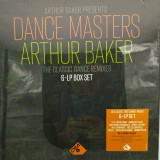
- A1: Daryl Hall & John Oates - Out Of Touch (Club Version)
- A2: Robbie Nevil - C'est La Vie (Extended Version)
- A3: Living In A Box - Living In A Box (Dance Mix)
- B1: Fleetwood Mac - Big Love (Extended Remix)
- B2: Artists United Against Apartheid - Sun City (Last Remix)
- B3: The Cars - Hello Again (Hello Again)
- C1: Fine Young Cannibals - Ever Fallen In Love? (Club Senseless)
- C2: The Colourfield - Running Away (Long Version)
- C3: Deborah Harry - Sweet & Low (Swing Low Mix)
- D1: Daryl Hall - Dreamtime (Extended Remix Version)
- D2: Carly Simon - My New Boyfriend (Remix)
- D3: Bob Dylan - When The Night Comes Falling From The Sky (Full Length Version)
- E1: Neneh Cherry - Buffalo Stance
- E2: Wally Jump Jr & The Criminal Element - Turn Me Loose
- E3: Arthur Baker & The Backbeat Disciples - The Message Is Love (Feat Al Green - Cupid Mix)
- F1: Roberta Flack - Uh-Uh Ooh-Ooh Look Out (Here It Comes) (Here It Comes)
- F2: Will Downing - A Love Supreme (Jazz In The House Remix)
- F3: Al Jarreau - I Must Have Been A Fool (Remix)
- G1: Jeffrey Osborne - Soweto (Remixed Version)
- G2: Jermaine Stewart - Jody (Dance Version)
- G3: Atlantic Starr - One Lover At A Time (Extended Version)
- H1: Junie Morrison - Tease Me (Long Version)
- H2: Jennifer Holliday - No Frills Love (Extended Dance Remix)
- H3: Cindy Mizelle - This Could Be The Night
- J2: Glory - Can You Guess What Groove This Is (Short Version)
- J3: Ritz - I Wanna Get With You
- K1: Afrika Bambaataa & The Soul Sonic Force - Planet Rock
- K2: Tina B - Honey To A Bee (Vocal/Extended Version)
- K3: Arthur Baker - Breaker's Revenge (Extended Vocal Version)
- L1: Rockers Revenge - Walking On Sunshine (Feat Donnie Calvin - 12" Version)
- L2: Freeez - Iou (Mega-Mix)
- I1: Touchdown - Ease Your Mind
- I2: Second Image - Star (Us Remix)
- I3: Central Line - Surprise, Surprise
- J1: Afrika Bambaataa & The Jazzy 5 With The Kryptic Krew - Jazzy Sensation
This latest instalment of ARTHUR BAKER Presents DANCE MASTERS finds the production/ song-writing/ remixing maestro taking the spotlight for a long overdue snapshot of his own classic 12” mixes during a crucial evolution of dance music, club
and pop culture.
“I’ve always felt like I was on a mission to make music from the time I heard Motown, Philly and Sly and the Family Stone. My mission started as a hobby and still feels like one now. You’ve got to keep on pushing and hustling. It can be a drag sometimes but
if you really love what you’re doing, it’s worth the work. I still really love what I do.”
Arthur Baker helped codify the remixer as artist. His genre-fluid approach to projects
has resulted in a joyous myriad of classics that spans many decades. This ’80’s focused DANCE MASTERS collection offers a welcome glimpse at Baker’s illustrious career and many long out-of-print 12” versions and previously unavailable mixes.
This 35-track, six LP expanded edition includes a wide array of selections from the likes of Robbie Nevil’s “C’est La Vie,” Fleetwood Mac’s “Big Love,” Neneh Cherry’s “Buffalo Stance”, Jeffrey Osborne “Soweto”, Freeez “I.O.U”, Rockers Revenge “Walking On Sunshine” and of course the juggernaut “Planet Rock” with Afrika Bambaataa & Soulsonic Force.
Complete with in-depth liner notes by Bill Coleman, track by track notes written by Arthur Baker himself, previously unseen session photos from Arthur’s personal archives and a signed insert.
All tracks remastered by Nick Robbins at Sound Mastering
Crackazat & Heist present: “Senses”. A stunning mini album that sees the artist deliver a heartwarming perspective on contemporary electronic music
On “Senses”, we see the pure talent of Crackazat come to life like never before. We’ve all danced to “Alfa” or his most recent hit on Heist “Demucha” and have heard his venture into the more poppy side of things with his 2022 album ‘Evergreen’ on Freerange. “Senses” however, is on another level. Crackazat takes you on a sonic journey exploring his musical personality with live keys, vocals, bass and production all coming from his studio in Uppsala, Sweden. The
jazzy horns that are featured throughout are recorded by Adeev and Ezra Potash, better known as the Potash twins. The duo took a sidestep from their recordings with John Legend, Robert Glasper and even Diplo to dive into this project with Crackazat and help him deliver arguably his best work to date.
The 6-track album starts off with the low-slung groove of ‘I need to know’. The whole atmosphere is warm, dreamy and seems to be written to lift your spirits, no matter where you are in life. Plucked strings, arpeggios and long horn notes give this song its energy, which is subtly supported by lo-fi drums and sparse bass licks.
“Do you think about me”, keeps the energy tight with a lovely drum groove and a sparse bass section. From the first note of the track, you get the feeling like the energy could change any moment. Halfway through this is exactly what happens, when uplifting keys and a buzzing lead take control of the track. The string arrangement is subtle enough to never overshadow the other instrumentation, but simply adds a beautiful layer to a track that’s already filled with
emotion. It’s all smiles when the energy of this track is set loose!
If “Do you think about me” is Crackazat in pop mode, “Freddie’s Groove” is Crackazat in full-on jazz mode. The nod to Freddie Hubbard is clear, and Crackazat cleverly takes ideas from both the jazz legend and his legendary French sampler, Pepe Bradock for this track. The horns are deep and moody, the groove is jazz-house at its best and Crackazat’s soft vocals have the perfect amount of fragility to fit the groove. The changeover into a stabby synth section
halfway through the track is a subtle reminder from the skilled producer that – even with all these musical elements – he can direct you to the front of the dancefloor with the twist of a note.
“Phantom” sees Crackazat move into a shuffling Latin-dance vibe. Here, the song reaches its full potential through the horn section, so it’s only fitting that this is the feature track for the Potash Twins. The Latin rhythms are lush, the key progression is on point and the energy on this track just keeps on going with layers and layers of horns, powerful vocal chops, and subtle but effective percussion changeovers.
“Endless life” is a track that feels like it’s building up momentum with every repetition. Whether it’s the broken beat groove, the offbeat keys or the sparse horn hits, chord hits or leads, there’s a certain energy in this track that takes a hold of you and simply doesn’t let go.
The outro “When we last met” is built around vibey drunk keys and a downtempo hip-hop groove. There’s a hint of old school D’angelo in this track and you can clearly hear the artist feels at ease with the path he’s taking the listener on. It’s a perfect ending to a record that showcases the beautiful world that Crackazat has crafted through his compositions and one thing is for sure: This is an album we will all keep coming back to for a long time to come.
Yours Sincerely,
Maarten & Lars
We are back with our series CVRD003, this time we uncover two artists for our next split EP from South America.
We are happy to introduce you first: FURZ
He embraces eclecticism and constantly pushes creative boundaries.
Inspired by the club sound of the 90s, he explores a diverse sonic palette, creating music that appeals to both nostalgia and contemporary sensibilities.
As a second not unknown artist: PRODOT
DJ/Producer from Villa Carlos Paz, Córdoba
Enamored with the roots of House music and the intricate nature of Minimal, his style emerges from the fusion and interplay of these elements, along with influences that are part of his regular listening, such as Jazz, Ambient, Trip/Hip Hop, Funk, and Rock among others.
Drawing inspiration from the rich tapestry of Japanese culture, KIOTO has seamlessly integrated elements of tradition and modernity to create a unique auditory experience. The label's commitment to excellence is evident in every aspect, from the music itself to the meticulously designed artwork that adorns the record.
Featuring a carefully curated selection of well renowned artists, this vinyl record showcases their exceptional talent and sonic diversity. Audio Werner, Tommy Vicari Jnr (as V.I.C.A.R.I), Peer Du, and label founder Stevo have come together to craft a release that transcends genres, creating a musical journey that captivates listeners from start to finish.
KIOTO's debut release 裕治郎 - Yujiro 12" is not just a collection of tracks; it is a meticulously crafted work of art. The label's dedication to Japanese aesthetics is evident in the stunning artwork that graces the cover and the labels, transporting listeners to a realm where tradition and futurism intertwine.
On our latest Savor EP, 'Tracks from the Vault Part 2', South American legend Franco Cinelli delivers the goods.
On the A-side he pays homage to a legendary musician with "Tribute To Miles Davis". This track seamlessly blends elements of jazz and electronic music, creating a hypnotic sonic journey that captivates the listener from start to finish. Cinelli's meticulous attention to detail and impeccable production skills shine through, as he masterfully combines intricate drum patterns with mesmerizing melodies and atmospheric textures.
The B-side introduces us to "Electronic Funk," a high-energy dancefloor mover that blends influences of Detroit and funky electronic music. Cinelli's masterful production skills are once again on display as he creates a dynamic and infectious groove that demands movement from its listeners. The track features a pulsating bassline, crisp percussion, and synth melodies that intertwine flawlessly, creating an irresistible atmosphere that is bound to get any crowd grooving.
"Why "Bouncer"?
In Club Culture, the bouncer represents the image of determination, a
fundamental element that characterizes every produced track.
I imagined this album as a virtual club in the metaverse, where my
avatar is a BOUNCER.
Here, the music plays loud, the bar is open, and each track on the
tracklist carries a part of my soul and my influences.
For me, this project represents a meeting point between the roots of my eclecticism and the strength of the artists involved, creating a mix of sounds and styles that reflects my artistic and personal journey.
With this album, I want to celebrate Club Culture and all its influences
on my life and music, offering an authentic and deep sonic experience
for all fans of the genre.
Unic's sub label "apă" presents an exciting release from the up-and-coming producer "Soultape" - apă 004.
Previously one half of Adjustment Bureau, Soultape's solo sound weaves together elements of techno, minimal, and Deep House, creating a captivating and hypnotic musical experience. The result is a unique sonic flow that almost feels spiritual in nature.
Up and next on the releases are Decka & Roseen with "Keynote", introducing their first ever collaborative musical project.
With "Message From The Error System" we dive into an abyss of icy blue vibrations. Just like the alternate rising and falling of the tide, so does this track expand and breathe through a cyclical recurrence of the groove... Cycles and repetition. A cinematic, abrasive polyrhythm will drown all your senses as the
frequencies increase and increase. And so does the tension. Until... all of a sudden.. The frequency is lost... no more life signals... You feel alone in the cold. You are scared. But slowly... Hope grabs your hand from the water... takes you on the shore and slowly dries your tired and wet body.
The storm has passed. Clearing our heads from this apocalyptic sonic journey, B1 jumps in with a distracting and high energy looped cut. A classic, dance-floor oriented percussive and versatile track. Once again, repetition marks a fundamental element of the KEY family.
Last but not least comes B2 "Captivate"- which is a sort of synthesis between the dreamy A1 and the minimalistic composition of B1. A soft and mellow synth line is seduced by playful high hats into a redundant, cyclical game of sounds.
"Drums from heaven, keys from Mars, a bass made from mother earth's soil and guitars from a guy who's time-traveling from German Kraut in the last 60ies into the next 60ies and who happens to gift us today with this funky, dirty, pulsating, delicious music that's everything which music is supposed to be: ALIVE! (Note to self: Always keep a copy of this record in your suitcase!)." (Malakoff Kowalski)
"Afrokraut" is a stylistic expression of Krautrock, primarily associated with Can, and their creative use of time and space in music. "A Guide To Afrokraut III" is David Nesselhauf´s third and last contribution to the dusty shrine of this long forgotten style.
Next to "Afrokraut" (2016) and "Afrokraut II: The Lowbrow Manifesto" (2018), this album completes a humble sonic Trypticon in honour of David Nesselhauf's musical heroes. Experimentation was key in the immersive process of producing this album, which encompasses elements of Funk, Afrobeat and Krautrock as well as otherworldly Drones, early Elektronische Musik and even field recordings.
Inspired by the unfinished manuscript 'History Deletes Itself' by the late science fiction author Joseph Sabiers, Nesselhauf decided to produce a b-movie soundtrack to the original plot, ignoring the fact that there will likely never be a movie to this music.
In the original script, a virus has infected history, the resulting changes of historical facts leading to an unpredictable present and future for mankind. Every attempt to solve the problem – including time travelling – only worsens the situation. But three planets at the end of the known universe seem to be unaffected by the phenomenon, they become a sanctuary known as 'Afrokraut III'. Three brothers arrive there to start new lives. They are introduced to The Guide, their mysterious advisor...
The striking parallels to today's uncertainties, a strong feeling of hope and the idea to never stop exploring (come what may) certainly have encouraged the making of this album, which sees a belated release due to the obstacles everyone faces right now.
David Nesselhauf lives in Hamburg/Germany and appears as a bass player/songwriter in bands like Hamburg Spinners, The Drawbars, Diazpora, and Angels Of Libra.
Guy J is one of the leading artists in the world of underground dance music. However, his artistic appetites are far more diverse. His Malta-based label is a platform for cutting-edge producers, but Guy J rarely releases his production on the label. He has released only one of his musical pieces on Armadillo, an opening track (Aurora AM Mix) on a V.A. Fields Vol.2, until now.
94 Blossom is his twelve-minute showpiece, revealing his skill in the context of the finest electronica. The material is a sonic expedition based on contrasts of a hypnotic arrangement taking a conceptual journey from darkness to light. Guy J fuses arpeggio soundscapes and electronic percussions with improvised elements enabling the balance of mathematical structure and freestyle. The most memorable part of the journey is the Balearic-influenced end theme, thoroughly sticking the landing. Will electronic music be the classical music of the future? J is one of the artists who could make that possibility come true.
- A1: Nandele & A-Tweed - Deserto 05 20
- A2: Nadia Struiwigh – Lovessong 04 38
- B1: E-Saggila - Pr1Nt 04 18
- B2: Nvst - Heatstress (Tunnel Edition) 05 36
- C1: Ryan James Ford - Totes (Bath Mix) 04 42
- C2: Viikatory – Cinema 03 56
- D1: Jean Redondo – Hypersonic 03 52
- D2: Significant Other - Cellar One 04 30
- D3: Willis Anne - Späti System 03 28
- E1: Dj Sotofett Meets Kavadi - Kandhan Karunai 05 10
- E2: Ireen Amnes – No Longer Human 05 12
- F1: Solid Blake – Hexaghost 05 33
- F2: Nit. - Cirrus Virga 06 00
yet is a slippery word in English. Amorphous, these three letters in dierent contexts can define contrast or emphasis, set a place in time, show an expectation that something will occur or, paradoxically, that it is likely to stop.
It is this mercurial nature that makes yet the perfect title for Tresor’s latest compilation: the label follows on from the more explorative sections of 2021’s landmark Tresor 30 boxed set with a compilation, featuring 13 artists making music that resists easy definition.
Every track hints at and borrows from the familiar yet none follow the expected path: halfway through Deserto, Nandele & A-Tweed dramatically reveal a very dierent sonic landscape that was initially suggested; DJ Sotofett collaborates with Sri Lankan artist Kavadi with results that are unlike anything in the Norwegian producer’s catalogue as yet.
Further invention can be found as Jean Redondo’s Hypersonic moves across spaces inhabited by digital hardcore and hyperpop before swerving o-road and into a futuristic hip-hop section; on No Longer Human, Ireen Amnes takes a dierent path at the crossroads melding hyperpop, trance, and sci-fi soundtrack atmospherics, Significant Other heads towards UK Bass and Dubstep, and France’s Willis Anne skims by the outskirts of footwork with a piece that is almost completely uncategorisable.
Yet more sonic experimentation comes from E-Saggila, Nadia Struiwigh, NVST, Solid Blake, and Viikatory who oer unique takes on the well-established electro blueprint, while Ryan James Ford, and Nit. both find ways to blend elements normally found in ambient pieces with those heard on a dancefloor.
The feel of the compilation is yet again reflected in the enigmatic artwork by Malik Arbab, where shapes and colours suggest animals and plants but in a world that appears to be transient and constantly evolving.
Flautist Johanna Orellana teams up with Carmen Villain for a collection of horizontal, pastoral field recordings and close mic-ed flute sounds that zero in on the instrument’s unstable resonance and levitational magic. There’s no cringe virtuoso business or fourth world firewalking here - just sonic purity, sublime minimalism and the precise capture of time, place and poetry.
You might have come across Johanna Orellana before if you’ve listened to Carmen Villain’s music (or seen her perform live), and Villain appears here in a producer’s role, using her engineering expertise to impart a level of restraint and sonic fidelity that’s quite startling. There are only really two central elements to the album: environmental recordings and flute. There’s no psychedelic delay, no cavernous reverb; no audible treatments at all - Orellana and Villain instead force us to consider the flute and its musical lineage.
‘El Jardín I’ introduces the instrument as a physical conduit; Orellana allows her breath to distort the sound - the padded pat pat of the keys forms a kind of rhythm, closely recorded so it’s amplified and jarring, linking to primal wind instruments like conch shells, bamboo flutes and wooden whistles. Recalling the way in which Debit interfaced with the ancient world using AI- assisted tech on last year’s ‘The Long Count’, Orellana uses a comparatively modern contemporary transverse flute, an instrument with roots that stretch back through the baroque era, into Medieval Europe, back to the Byzantine era and into Asia. The component that connects the instruments and eras is breath, and its amplification and modification through differently shaped pipes and vessels.
Orellana lets the environment sing: insects, rushing water and zephyr-like winds form a stage that presents her mortal energy, suggesting a harmony between our use of breath and its environmental ubiquitousness. Her technique is steeped in folk history and decouples itself from expectation by rooting itself in nature. It allows her to bridge the gap between equal temperament and less ordered (less commercially-focused) microtonality without overstating the concept. Other sounds waft in from the sidelines; what might be an Indian bansuri, stray notes, a gust of air.
There’s a link to the foundational new age recordings that Joanna Brouk made with Maggi Payne back in 1980, but Orelanna also absorbs the outdoor folk magic of Fonal or Stroom, and the improvisational grist of Bendik Giske or legendary US horn duo Nmperign.
You Can Can is an echoed affirmation, an album which traces song forms around silence, field recordings, and degraded analog memories. This is folk music transmogrified and mutated, as if recorded and reconstructed in Pierre Schaffer’s GRM studio.
Not your typical Mariposa folk duo, the group is comprised of Toronto avant-music scene stalwarts, vocalist Felicity Williams (Bernice, Bahamas) and bricolage artist and synthesist Andrew Zukerman (Fleshtone Aura, Badge Epoch). The album feels like a somnambulant conversation, fragmented and half-remembered with Williams’ vocals traveling through a landscape of field recordings and Zukerman’s saturated concrète topographies. It is an electro-acoustic assemblage, both analog and digital, comprised of air, electricity, minerals, wood, and water. Although the album nods towards traditional forms of folk and musique concrète (if at this point it can be called a traditional form), it is outwardly and inwardly contemporary; non-linear, citational, opaque, and sui generis. In a way it feels like a sonic index of the narrative experiments found on the infamous Language school-related publisher The Figures, in the work of Lyn Hejinian, Clark Coolidge, and Lydia Davis. In the musical continuum, the album picks up where Linda Perhacs left off in the early 70’s—explored by Gastr Del Sol in the ‘90s—a convergence of rural acoustic idioms and urban avant-electronics. This is country music for the discerning cosmopolitan citizen of the 21st Century.
RIYL: Luc Ferrari, Brannten Schnüre, William Basinski, Oval, Eric Chenaux, Emmanuelle Parrenin About Everything In Time and Failure Figures, Felicity Williams says:
Everything In Time is indebted to the language of Brazilian author Clarice Lispector (as translated by Alison Entrekin). Drawing on insights from psychoanalysis, we trace the roots of melancholy to render them available to consciousness; words from the ghostly realm of the transpersonal filter through dreams and shine a beam of light onto a lone trillium in a forest at night. Other influences include the experience of not knowing, of being subject to a gestation outside of one’s control. This is an ode to the power of naming to obliterate, to set free.
Failure Figures is a meditation on the radical contingency of reality and the vicissitudes of the will. With Slavoj Zizek as my guide (think: “Hegel for dummies” - I’m the dummy in this scenario), I wander through the valley of the shadow of death, and take heart. The last verse refers to an experience I had recording at a studio in Brussels. I was singing in French, with which I have some fluency, and the producer was complaining to the artist whose song it was that my delivery was not convincing. Thinking I was out of ear shot, he said in French, “c’est comme elle n'est pas là”; I was pronouncing the words correctly, but I failed to express anything. So what or whom is responsible for conveying meaning, if not the form of the word itself? And if the connection between meaning and form is broken, how do we fix it?
Gratitude to Thom Gill (guitar) and Daniel Fortin (bass) who joined us on the recording of Failure Figures. Thanks as well to my old roommate Christopher Willes, who unwittingly left behind his hand bells deep in the hall closet. We unearthed them by accident, and the bells became an important sound element. Thanks to other past roomies Robin Dann and Claire Harvie, whose childhood piano and guitar respectively still reside with us, and were used in the recording. Field recordings were made in Toronto, Canada and Celestún, Mexico in 2020.
British musician, multi-instrumentalist, producer and DJ cktrl returns with the release of his new EP ‘Yield’. Born from a desire to change the narrative around contemporary Black British music, the boundary-pushing musician aims with this project to prioritise the art of bonafide musicianship. A stark departure from cktrl’s previous work, ‘Yield’ is a celestial and palpably more inward body of work that harkens back to the pre-electric age of modal jazz while simultaneously pulling in elements from the disciplines of classical and baroque music. Speaking on the project’s sonic identity, cktrl says: “I want to be able to show that you can make things from scratch again that have that feeling and beauty without having to sample an old record. Even though that’s an art-form within itself, I want to show raw orchestration and instrumentation can be the sole source” The origins of the title came from a period where cktrl was looking to find solace in himself after an introspective period of grief and heartbreak. As an intentionally instrumental project with minimal vocals, cktrl wants prospective listeners to see these new songs as guided meditations where they can wholly insert themselves in it. Eliciting and reaping whatever feelings come to the fore. Speaking on what ‘Yield’ means to him as a concept, cktrl explains: “Some people who I've asked to define the word ‘yield’ have looked at it from a harvest point of view, whereas others have seen it as something to submit to, to render, like you're giving up yourself. I see it as a barometer for how you feel - no matter if you're at your lowest or your highest vibration, you still need to show up for yourself. You still have to be present. It’s about getting the best from yourself no matter where you are in life” The new project is the follow up to last year’s ‘Zero’ which featured collaborations with esteemed contemporaries like the GRAMMY-nominated Mereba and anaiis. Upon the project’s release, it was met with a plethora of critical acclaim from highly regarded publications and platform such as British Vogue, Dazed, CRACK Magazine, Resident Advisor, NOTION, Harper's Bazaar and ES Magazine for its sprawling and experimental scope, spanning avant-garde jazz, classical music, alternative R&B and electronica. cktrl has a tune for every occasion: as content making beats by himself at home in Lewisham as he is amongst this generation’s fashion and cultural vanguards. Music has been a part of his life for as long as he can remember: from clarinet lessons throughout his school life to fond memories from his NTS days. Moulded by a unique blend of his West Indian heritage, years of classical training in both the clarinet and saxophone, cktrl strives to do what hasn’t been done before. His approach to creation is decidedly wide-ranging and broad. In fact, where sonic descriptions might fail to encompass the breadth of cktrl’s scope, three words surface when he unpacks his musical aims: freedom, range and feeling. Elsewhere, throughout his career, cktrl has been recognised and heralded by fashion and film VIPs as he firmly embeds himself within the black cultural renaissance emerging here in Britain. Acquiring a global network of creatives that include the late Virgil Abloh, Bianca Saunders, Tremaine Emory, Saul Nash, Maximilian Davis, Ahluwalia, Stephen Isaac Wilson, Sean Frank, Campbell Addy, Ib Kamara and Jenn Nkiru who secured him a cameo in Beyoncé’s ground-breaking film ‘Black Is King’.
Tutto Bene is the new imprint of the North German vinyl digger Hagel. The plan? Release infectious but versatile grooves reminiscent of the nineties with hefty doses of funk - rich in percussion, rolling sub basses, charismatic rhythms, and light-hearted yet odd synths. The first record, 'Too Easy EP', comes signed by AlleyOP, a collaboration project between Hagel and Berlin-based wonder producer Atree, and features two original tracks and two remixes by Lorenzo Chiabotti and Audio Werner.
A side's 'Die Another Day' opens the record with robotic rhythms under mildly paranoid tones proper for dancefloor hypnotization. Lorenzo Chiabotti brings an unexpected melodic touch to the original, completely re-shaping its groove and determinately swapping its freaky tonalities with hopeful scales. B side's 'Too Easy' follows the same path of minimal arrangements and straight-to-the-point drum programming and sampling but opts for warmer sonic tones - making it appropriate for dusk and dawn dancefloor moments. Audio Werner elevates the warmth in scale and ups the vibe by intensifying the breaks and synth atmosphere of the original and shooting it into a stratosphere where melody and detail are elementary.
AI-31 sees the debut release from a new collaboration between Samuel van Dijk (Netherlands) and Rasmus Hedlund (Finland). Both key proponents to the scene in Northern Europe, they come together with mutual understanding and a common vision to sound. Dialog acts as a conversational exchange that sees the interplay of dynamic frequencies, evocative imagery and contemporary sonic art. Spread across four sides, the album as a whole exists as a kind of metaphysical process, eternally growing and contracting — change is the only constant, marked by a continuous progression of sound and space.
Expansive, deep, and at moments arresting, Dialog unfolds with sweeping soundscapes and shimmers with tactile sonic details. A chasmic rift of scintillating drone structures, each layer exposes a series of ever-deeper shades. In a play of dynamic dualities, the pair harnesses both earthly materials as well as access to more ethereal dimensions in the music. Side A begins with sub-terrestrial ruptures, gestating in a process of constant elemental changes. Rattling hits sputter amongst a state of nascent chaos, yet continues to be maintained in self-regulating stasis. Side B sets a more introspective tone, whispering with ghostly artefacts and bubbling synth lines, before building into a driving energy of layered field recordings and mechanistic timbres. The essence of form continues to be contested, until it subsides into momentary calm on side C. A cleansing period of soft drones float into the space and the pace slows, washing away remnants of past. The journey continues with side D’s conclusion - a solemn contour that reaches its internal extent, to then finally return to its source.
Mint Condition - A record label focused on excavating the outer fringes of classic House and Techno. Unreleased mixes, classics, overlooked gems and never heard before material, mined from the last 30+ years of contemporary dance music are the order of the day. From Chicago, Detroit and New York to London, Nottingham and beyond. Mint Condition have got their digging hats on to bring you exclusive heat and those rarer than rare jams that have been in your
wants list for years. Dig in....
Back in 1997, UK house legend Charles Webster, this time under his DJ Profile alias, unleashed these killer tracks. Originally released on the sorely missed London nightclub The End's label, this fine 12" set a benchmark for what would become a very exciting time for the UK's underground scene, both tracks are widely considered to be up there with Charles' most sought after work.
A-side 'Prove It' kicks off with swinging drums that deliver the funk, percussive elements rattle & shake and the low slung bass line keeps the track firmly on the dancefloor. The soothing chords, acid overtones and the evocative vocal hook are mesmerising and soulful.
Over on the flip, 'Realization' is a bumping analogue monster. The kicks are solid, the snares swing and an infectious rolling bass line carries the track throughout. Darker acidic touches sit alongside delicate synth riffs and emotive chords that lift, drift and lose you in a world of wonderfully woozy deep house sonics.
Never has the late night dance floor sounded so good, and this slab of wax is a must have that typifies a halcyon period in underground house history. The tracks themselves have remained exciting and relevant, achieving cult status amongst the most discerning DJs, record collectors and music heads alike. Legitimately re-released with the full involvement of Charles Webster, lovingly remastered by London's Curve Pusher from the original sources especially for Mint Condition. 100% legit, licensed and released. Dug, remastered, repackaged and brought to you by the caring folks at your favourite reissue label - Mint Condition!
Afterhours. continues their journey through the deepest of the realms via their freshly created sub-label Elements., keeping up to their promise of releasing stripped-down music, where hypnotizing palettes float on top of bare yet highly functional sonic bones.
Alsi‘s release did leave a solid statement to defend their motto, and because of this, it deserved a remix EP. Who better for such a task than two local heroes at the forefront of the Romanian scene? Cristi Cons and Priku require little to no introduction. Their remixes elevate everything Elements. had previously envisioned for this project: two very mature interpretations of Alsi’s original work, filling them with an outstanding richness and a straight-to-the-point, functional groove structure that assures both sides of the release are two incredibly deep, minimal techno wonders.
It might seem tongue-in-cheek on the surface, but the fact that the title of Eldritch Priest's sprawling debut vinyl release, Omphaloskepsis, is the Greek translation for “navel-gazing” unlocks something essential to the Vancouver-based composer and writer's singular outlook.
Perhaps even more telling is the title of Priest's 2013 book Boring Formless Nonsense: Experimental Music and the Aesthetics of Failure (Bloomsbury), whose 300-odd pages read as though you've been dosed with potent hallucinogens. Throughout the text Priest addresses—celebrates, even—the titular elements via various musical examples, including that of his peers. What's so bewildering it is that his descriptions of how boredom, formlessness, and nonsense manifest are laced with the very tactics he's depicting. Passages tie themselves in knots, footnotes engulf the “primary text,” he even deliberately misleads the reader.
The restless stasis of Omphaloskepsis could be regarded as an extension of this book's wayward spirit. Things unfold fairly slowly and consistently but it'd be a stretch to describe it as properly contemplative. Like attempting to meditate with a high fever, any sense of tranquility is constantly derailed as one succumbs to queasy agitation. The piece's foundation is a seemingly endless guitar melody; an organic meander that neither seems to repeat or offer any concessions to narrative directionality. Priest unfurls this rambling cantus firmus in a rich, clean, jazz-like tone, but as it's played, it's repeatedly tangled with snarls of dense digital processing and shadowed by stumbling virtual “band.” These strident interjections blatantly contrast with the guitar, yet they aren't so violent as to offer more than a faint itch of distraction. As such, the distinctive amorphousness that this piece asks us to inhabit for its 54-minute duration leaves a strong impression, but also feels utterly intangible.
In addition to his recorded forays, Priest's disorienting music has also been performed by top-tier interpreters such as the Arditti Quartet, Quatuor Bozzini, Philip Thomas, Anton Lukoszevieze, and Continuum. While living in Toronto he co-founded the collective neither/nor with John Mark Sherlock, which featured a cross section of musician-composers playing each other's work including Eric Chenaux, Doug Tielli, Eric KM Clark, Heather Roche, and Rob Clutton. “Though the name refers specifically to a loosely knit group of composers and performers,” remark's the collective's website “neither/nor is also a sensibility that refuses art’s messianic pretensions and the gaping maw of commercialized society, opting instead for art’s right to be esoteric.” In 2021, when Eric Chenaux and Martin Arnold relaunched their neither/nor-adjacent Rat-drifting imprint, an album by Priest, Many Traceries, was among the first to be released. Perhaps unsurprisingly, Priest was a student at the University of Victoria, a school that's come to be known for fostering such staunch individualists as Arnold, Linda Catlin Smith, Allison Cameron, and Anna Höstman.
As a scholar, Priest writes from a 'pataphysical perspective and deals with topics such as sonic culture, experimental aesthetics and the philosophy of experience. Priest brings these interests to his job as an Associate Professor in the School for the Contemporary Arts at Simon Fraser University, interests that also inform his work as a member the experimental theory group The Occulture. In addition to Omphaloskepsis, his new book, Earworm and Event: Music, Daydreams and Other Imaginary Refrains,
- A1: All Werk Is Play
- A2: Move Different
- A3: You Kraft
- B1: Eterno Retorno (Feat Moreiya)
- B2: Battered Mars Bar
- B3: Downtools & Boost
- B4: In Saint-Gilles (Feat Le Motel)
- C1: May Day (Feat Chunky)
- C2: On The Rhythm Of It
- C3: Microwerk
- C4: Beauty & The Bloc
- D1: Pick Up Football
- D2: Count Yer Pace (Feat Kemani Anderson)
- D3: Derive
First Word Records is very pleased to bring you the sophomore album from Werkha, a 14-track double LP entitled 'All Werk Is Play'.
Werkha hails from Manchester and has been releasing music for a decade, collaborating and remixing artists such as Quantic, Bryony Jarman-Pinto, Marcos Valles and Andrew Ashong. Werkha and his live band have been lighting up dancefloors in recent months at venues such as Low Four Studio in Manchester and The Jazz Cafe in London, with festival appearances locked for the Summer at the likes of We Out Here and Moovin. In past years, he has toured extensively with artists like Bonobo, Chet Faker and Mr Scruff.
In 2020, Werkha released 'The Rigour' on First Word, and dropped 'Beat Tapestry' in late 2021 on a limited cassette. 'All Werk Is Play' marks Werkha's first full-length solo project since his debut album 'Colours Of A Red Brick Raft' on Tru Thoughts in 2015, and sees this multi-talented musician produce a delightfully vibrant body of werk.
This album is predominantly a set of uptempo compositions from Werkha (real name Tom Leah), fusing analogue jazz-funk vibes with modern dance music sensibilities. Nestling somewhere between broken beat and breakbeat, Werkha has been nurturing his own unique sonics for some time; incorporating live horns & wind instruments with bass, double-bass, harp and guitar, along with a selection of sweet squelchy synths and deliciously delectable drum programming.
We've had several single releases from this project so far, namely 'Eterno Retorno' (with Portuguese singer Moreiya),'In Saint-Gilles' (with Brussels DJ & producer, Le Motel), 'Move Different' (with Mancunian singer & musician Ellen Beth Abdi), 'Beauty & The Bloc' and 'Battered Mars Bar'. As well as the afore-mentioned collaborations, this album also features bars from legendary MCR MC Chunky (Swamp81 / Levelz) on 'May Day', soulful vocals from Kemani Anderson (Secret Night Gang) on 'Count Yer Pace' and some heavyweight accompaniment from the likes of bassists Nick Blacka (GoGo Penguin) and Tom Driessler (Adele, Tom Misch, Jordan Rakei) amongst others.
'All Werk Is Play' was an opportunity for Werkha to produce a full body of work in the conceptual formation of an album, as opposed to a set of singles strung together. From 'The Rigour' EP to the subsequent releases, this album completes a circle in his current creative curve, from a design perspective and sonically. Werkha has been steadily pushing his own self-production and musicality, embracing mistakes, and challenging himself both creatively and mentally. As a self-edutaining piece, the depth, nuances and examples of work as play are numerous, and whilst each track was thematically inspired by different topics, the fun element of "play" was always forefront in his mind, to ultimately create something powerful, yet positive.
In Werkha's words "this record is dedicated to mixing things up, to walking down that street for once because your feet took you that way, to deciding not to take the bus today, to moments of improv, to breaking with convenience, to challenging structure, to play."
Tracks have received recent spins & support from BBC Radio heavyweights on 1Xtra & 6 Music like Jamz Supernova, Tom Ravenscroft, Huey Morgan and Afrodeutsche, as well as love from selectors such as DJ Paulette, Scratcha DVA, Harvey Sutherland, Zakia Sewell (NTS) & Jyoty (Rinse).
Suns of Arqa is a sonic mission created by luminary Michael Wadada, who began in 1979 after receiving higher guidance in Jamaica while working with roots reggae chanter Prince Far-I. It is a prolific traveling music collective that has seen over 200 collaborators, meant to connect people from all cultures and walks of life through a “deeply spiritual vibration that merges cultures, faiths and musical genres”. Wadada combines ancient Hindustani raga systems with Piobaireachd and Nyabinghi roots drumming, creating ritualistic world music infused with dub and reggae.
The lyrics combine both mystical and sensory elements, often including prayer and referencing a higher power but finding root in experiences common to all people- memory, sight, and physical sensation.
Their first album, Revenge of the Mozabites, was a collaboration between Wadada and On-U Sound creator Adrian Sherwood. Following its 1980 release,Peter Gabriel invited them to perform at the first WOMAD festival. Today, the record is regarded by some as a cult classic. Over the years they have played at many major music festivals including Glastonbury, Big Chill, Telerama Dub Festival, and Transmusicales, and released over 40 albums on Virgin, EMI, Interchill Records, Antler Subway, Red Rhino, and their own label, Arka Sound.
Suns of Arqa has had a seminal influence on the World Beat sound, and continued to make appearances at seasonal festivals and sacred ritual spaces all over the world until 2021. Michael Wadada passed away in the midst of planning their U.S. tour for this release. The record is a compilation of some of Wadada’s and Sleepers Record’s favorite old Sun of Arqa tracks, mixed by Youth and Adrian Sherwood, and mastered by Eroc (drummer of Grobshnitt).
Notable collaborating artists include: Guy Called Gerald, UK producers Youth and John Leckie, Greg Hunter, 808 State's Graham Massey, Finley Quaye, Sounds From the Ground, Bryn Jones aka MuslimGauze, Adrian Sherwood, John Cooper-Clarke, The late great Professor Stanley Unwin, Eric Random, New age guru Tim Wheater, Astralasia, Prince Far-I, The Orb's Alex Patterson, Zion Train, and Gaudi.
"And although the Great Spiritual being Michael Wadada has returned to source and his body to earth at our time, his music is alive and will continue to be a great force for higher spiritual realms and raising vibration through occult frequencies...Suns of Arqa will continue to raise the vibration of the hearts and minds of humanity" – Angela aka Angel-Eye (Wadada's wife and bandmate)
Jamal Moss, Takeshi Kouzuki, FLML and Mituo Shiomi take part in “Tracks From The Alley Vol. II", a Various Artists four-tracker E.P. which follows the imprint of the previous release of the Bologna based underground music label ALLEY VERSION. Here the jackin' and acid house/techno sonic palette is diverted in a raw, immersive and screwy signature.Rough vibes for freaky minds. Limited 12" vinyl.
Baby Buddha is David Javelosa and musical partner Charles Hornaday playing instruments and providing their own whacked-out vocals. Baby Buddha really was less of a band than a project; a side project in fact, for some members of another group, Los Microwaves. Baby Buddha would eventually record and release an album, 1981's provocatively-titled Music for Teenage Sex on Robbie Fields' L.A.-based Posh Boy label.
Happily, the project's guiding creative light, David Javelosa has recently seen to a vinyl reissue of the now-40-year-old record, mystifyingly retitled Music for Teenage Sects. Definitely among the stranger releases of the new wave era, Music for Teenage Sex/Sects could perhaps only have been created when and where it was made. But on the occasion of its 40th anniversary, the music sounds as weirdly wonderful as ever. "We Are Not" sounds like Human League stuck in a car with The Residents. And their cover of "All Shook Up" sounds like a musical kin to those inscrutable eyeball guys too; it wouldn't be out of place on Meet the Residents. "Little Things" is a house-of-mirrors, scary track, with spoken-word vocals by Los Microwaves' Meg Brazill and label head Fields.
The album cover is slightly different as well: it displays a bedroom scene like the original LP, but with the young female model absent. The new release (on Javelosa's own Hyperspace Communications label) is pressed on beautiful translucent blue vinyl and comes in a gatefold sleeve with a lively collage of photos, buttons, gig posters. Limited to 500 copies.This playfully titled release features David Javelosa (on synth and vocals) along with Meg Brazill (on bass and vocals) plus drummer Todd "Rosa" Rosencrans. Side One features five studio tracks, none of which were included on the band's 1981 Posh Boy LP, Life After Breakfast. Three of these tracks were recorded in '82; there's no information regarding the provenance of the other two songs. The records' second side collects five live recordings, capturing Los Microwaves onstage in New York City (The Peppermint Lounge) and Boston as well as at San Francisco's own I-Beam, a venue that often played host to the band. Those tracks date form roughly the same ear, 1980-83. Sonically the songs variously recall Blondie, Flying Lizards, Gang of Four and a far less dour Human League. Importantly, the band rocks, even when it's employing a spare drum kit, solid but elemental bass, and monophonic analog synthesizers. The stripped down aesthetics of the group – necessitated by its minimalist instrumental approach – are nonetheless thrilling. Even if you weren't there in 1980, this'll take you back.
The Tel-Aviv centered Yotam Avni officially joined forces with Stroboscopic Artefacts last year, turning in a sensual an invigorating entry for the Monad series. Thanks to his personalized fusion of esoteric and worldly sound elements, Avni immediately made a case to deliver more work to the label, and now he has done so with 'Perlude to Dybbuk,' the second in a new series of S.A. releases to feature the Oblique Artefacts visual team's distinct, elegant portrayals of scanned foliage. As with Avni's previous Monad contribution, the new Perlude to Dybbuk makes references - both in title and in sonic content - to the ancient Hebrew folklore of his homeland (a 'dybbuk' being a kind of limbonic spirit attaching itself to the body of a living human until it has successfully reached its final destination). However, the atmospheric, rather than overt, use of these references gives this record a level of dignity and quality as well as a premonitory feeling that hovers over the proceedings.The opening 'Avka (New Life)' opens with the twin stimuli of chthonic, rolling percussion and ambience that has become a modern Stroboscopic tradition, but ever so gradually deviates from the realm of the easily anticipated. Some of the surprises to be found here are sharp, organic drum fills and sighing strings that have an uncanny vocal quality to them. By the time a surgically clipped acid synth sample comes into the mix, the track has reached a simmering level of excitement and the listener's imagination will have license to reside in a virtual world seamlessly combining elements both ancient and futuristic.Dybbuk' temporarily situates listeners back in brutal modernity, with the first sounds heard being something like insistently slicing helicopter blades. Avni merely uses this as the foundation, though, for a genuinely unique construction whose shamanic beats, throttled horn and undertow of frenzied electronics combine to give the feeling of being menaced and eventually overtaken by a spirit entity. This piece shows just what Avni is capable when operating in a more aggressive, 'post-industrial' mode, and the result stands up with some of the best exponents of that genre.The finale 'Modern Matters' is the most readily club-friendly selection from the disc. This potent, floor-shaking and perspiration-inducing number superimposes resonant vocals from traditional Middle Eastern folk song onto this alchemical mixture of machine oil and sweat, and provides a romantic flair without resorting to naïve, touristic 'ethno-techno.' Avni's skillful dedication to counterpoint, and determination to make a finished form is more than the sum of its parts, shines through here and throughout the duration of this record.
Revered Danish producer and live performer KÖLSCH follows his 2013 hit album "1977" (KOMPAKT 276 CD 107) with the new full-length "1983", again chaining up heroic techno tracks for a grandiose sonic journey to the vibrant heart of today's dance floor. PRIORITY RELEASE
Coupling contemporary production pizzaz with nostalgia-tinged soundscapes and sweeping melodies, this opus acts as both a skilfully composed portfolio of personal memories and a sublime collection of crowd-charming cuts - a modern classic in the making, coming from a master of his craft.
1983 features collaborations with Gregor Schwellenbach, Waa Industry and WhoMadeWho's Tomas Høffding.
Hot on the heels of SPEICHER 84 (KOMPAKT EXTRA 84), featuring club crackers DERDIEDAS and TWO BIRDS, the latest full-length offering from KÖLSCH is very much a travel album: "When I was a kid in 1983, we used to drive through Europe every summer on the way to the south of France", he explains. "A lot of my early music memories stem from these long travels, as we would listen to all my father's favorite records on the cassette deck. After getting a walkman, I would make up my own soundtrack for travelling, with early electro and hip hop creeping into my life. My father of course did not like it, and it never grace the official cassette deck of the car, obviously"
These trips became a primary source of inspiration to a hungry young mind forced to sit on the backseat of a car for several days: "they were also journeys through the seasons. In Denmark, it would be spring time, so I could nearly see us driving through spring into the summer. The scenery would change, and so would the mood in the car." Informed by the symbolic quality of these slightly gauzy childhood memories, KÖLSCH's unique melange of emotional and functional elements works exceptionally well for the full-length format - a seamless transition of musing introspection and explosve expression, where catharsis never seems far away in dance-ready techno vignettes like MOONFACE, UNTERWEGS or PACER.
From beatless opener and title track 1983 to the filigreed piano banger DIE ANDEREN or the bleep-infused synth-fest E45, each cut operates as its own little time capsule, storing bits and pieces of recollection and then magically transforming them into epic, beat-driven soundscapes. Confronted with other producers' input (and other memories), these traits find themselves extended in the most interesting ways - TALBOT, THE ROAD and CASSIOPEIA (also featured on KOMPAKT EXTRA 79) make excellent use of GREGOR SCHWELLENBACH's emotive orchestral flourishes, while BLOODLINE's lyrics come to life thanks to the distinct timbre of TOMAS HØFFDING of WHOMADEWHO fame. A new powerful take on an earlier collaboration, PAPAGENO 30 YEARS LATER not only rejoins WAA INDUSTRY on vocal duty, but also ends the album on a wonderfully elegiac, yet hopeful note - basically turning water into wine, as we've come to expect from KÖLSCH.
Aestum’s self-titled debut album is an in-depth journey into supreme and tranceformative soundscapes. Oscillating around the apex of spacious power ambient and drone, the compositions recorded during 2020 combine monolithic electronica with decaying fantasies and slow-motion euphoria.
The imagination for the album was inspired by the idea of panortosia (universal reform) as described in old scholar books devoted to inter-communication and sacrosanct harmonies in order to find a way into divine temple and shining lux (eternal light). From sonic perspective Aestum created a juxtaposition between warped atmospheres and distant remnants for a state of trance, a multiverse vision of feeling that was evoked by timeless parties and almost religious peak-time club anthems during end of 90’s and 00’s when Aestum as a duo of young friends were entering dancefloors across Europe. With this attitude every composition - often accompanied with dreamy messages and heavenly choirs of Dutch vocalist Bobbie 0rkid - marks its own emotional landscape and reaches new enigmatic spheres.
Influenced by this concept a New York based multidisciplinary artist Emma Pryde created visuals for the album - not just the cover where the story of panartosia is being told across the front and back cover, but also transformative videos for tracks Panortosia and Himmel. Using pure elements like heaven or meadows on the base, she added layers of imagery from sci-fi effects to more ancient and religious images, warping and blending into each other, leading into a fantasy that represents the past and future, and gives a meaningful hope.
Kurtiss is a shadowy and enigmatic figure working on the boundaries of civilization. A sporadic figure on the House music scene with eccentric habits, Kurtiss’ music is a rarified sonic experience for those who seek it out. The Ameri-can artist is hard to pin down and his music is a tantalizing little secret only for adept diggers who appreciate the style of Hi-Def House music that the artist has cultivated. Although he’s a known Soundcloud fixture, he’s only put out a handful of digital singles as Curtis Vodka in the past, with Mutual Intentions facilitating his latest and immortalizing his music on their next set of releases. A nomadic artist, who’s worked on music ranging from Ghetto Tech to House, his music has spanned the known musical spectrum, forging uncanny relationships with everything from 50 Cent to Mall Grab. Under the pseudonym Kurtiss (or Curtis Vodka), he’s all about HIGH-Fi House, life, aliens, Jazz and no trends. It’s an attitude that he lays bare on this rare contribution to the physical, recorded format for Mutual Intentions on ‘The Curtis Vodka EP’. The EP weaves classic House music influences through a penchant for vintage sound machines and arrangements that evoke a solemn air. Elements of Gospel and New York’s deeper inclinations in House music seep through his sound as archived vocal samples and noisy machines give his work its defining character. Glistening keys and strings that slither through airy textures create dense aural experiences on ‘The Curtis Vodka EP’, calling to mind the musical masterpieces of House music’s golden era when the likes of Kerri Chandler and Mas-ters At Work were producing som
Razor-N-Tape Reserve presents a very special new package of remixes of the band BaianaSystem, bringing together one of Brazil’s most exciting contemporary sounds with modern dancefloor-minded production.
The standout track of their 2018 LP 'O Futura Não Demora', Água is a lyrical poem to the people of their native Bahia, featuring the legendary Antonio Carlos & Jocafi, with orchestral melodies, an incendiary vocal chant, and traditional organic Brazilian rhythmic approach.
On the A side, Freerange boss Jimpster delivers two exceptional takes on the song, augmenting percussion and adding synth layers to create deep and hypnotic tribal house textures within a sublime sonic soundscape.
On the flip side Brazilian producer Diogo Strausz joins forces with RNT boss JKriv to highlight the symphonic and melodic elements with their vocal mix, and then go into dark and driving percussive electronic territory on their fiery dub. With stunning visual art realized by Costa Rican designer The Myno, this package is as essential and smooth as water!
- A1: Terrace - Bewitched
- A2: Glenn Underground - Real Space
- B1: Felix Da Housecat - Temptation (Color Mix)
- B2: China White - Theme From The Underground
- C1: The Operator - The Mind Strike
- C2: Steve Poindexter - Body Jam
- D1: Mike Dearborn - Deviant Behaviour (Instrumental Mix)
- D2: Dj Skull - Don't Stop The Beat
The second edition of Dekmantel’s foray into the era-defining, trans-Atlantic, cult techno label that is Djax-Up-Beats, comes another re-issue of classic 90s cuts.
The label say "The Dutch label was responsible for releasing some of underground’s most foundational dance music, mixing together Chicago and European artists alike, and acting as the launchpad for some of today’s biggest producers. Featuring offerings from luminaries such as Felix Da Housecat, and Glenn Underground, alongside veterans such as Steve Poindexter, and DJ Skull, this second EP highlights the classic label’s old-school’s sound, while showcasing its diverse range, from dubbier, ambient moments, to wall-thumping, body crushing house force. Timeless music, repressed, and re-released for a new generation of DJs who covet the classic machine music.
The second re-issue EPs, offer a more introspective look at the label’s earlier releases. Leading Volume 2 is Terrace’s 'Bewitched', to which DJ Richard has described as being the defining track of the label’s beginnings with its "dreamy, Detroit-style techno mixed with the harder rave elements of Northern Europe”. Glenn Underground’s bass-roller 'Real Space' weaves together soulful passion and Chicago prime beats, while Felix Da Housecat’s Temptation — originally from 1993 — gets a well earned re-release, reminding us of the soulful, deep and lustful energy the producer once had. China White, whose name doesn’t get banded around as much as it should nowadays, see their ethereal hit 'Theme from the Underground' get another opportunity to bliss out the more upbeat rave community.
The energy turns darker with Frank de Groodt’s The Operator, breaking the outer-most barriers of electro-techno, with 'The Mind Strike'. Chicago and Dance Mania’s Steve Poindexter turns out rolling, dance-energy bomb 'Body Jam', while Mike Dearborn’s deliverance of unreal, dry techno in 'Deviant Behaviour' runs aplomb with classic drum-machine pulses, claps, and uncomfortable, yet punishing melodies. DJ Skull’s 'Don’t stop the beat' rides the EP with gushings of hand claps, and gentle, early 90s warm techno color, that transport you back to a time of more informed, and conscious electronic musings, a feeling that embodies Djax’s heyday.
Founded in Eindhoven at the turn of the 90s, Djax-Up-Beats quickly earned an international reputation for being a key source of Chicago house, acid techno, and floor-filling, heavy-hitting, straight up underground 12”s. It’s a sound that spawned the sonic aesthetics of today, and can be heard in the left field techno productions of the likes of Bjarki, Salon des Amateurs and other erstwhile analog junkies."
Infinity is the new release by Melbourne-based Leo James, and the second Patience production. Leo scratches a longstanding itch and delivers two sidelong excursions that inhabit a similar sonic space but spin off in opposite directions on the continuum.
Desert Nightflower hums with vitality in a seemingly lifeless landscape. Impressionistically tracing the lifecycle of a flower’s bloom in the desert night – from the searing afternoon sun through dusk’s chill, the midnight blossoming and symbiotic relationship with travelling bats, through the blue hour comedown to first light – Leo employs vibrant, buzzing electronics, plaintive strings and levitating clarinet to illustrate beauty’s brief conquest of nature’s harshest environment, with vividly evocative and deftly moving results.
After Desert Nighflower floats completely off the grid, an ever-present kickdrum drives Infinity’s near 20-minute trip into timelessness. Sharing Side A’s subliminal synthesised hum and free-form clarinet, Infinity moves fast and firm down a dub techno dirt road towards the end of time. As elements drop in and out of the mix, Infinity builds momentum to a pulsing, cathartic peak of poignant piano, ethereal keys and lucid clarinet expressions.
As an avid nature enthusiast, spatial awareness looms large in Leo’s work. His solo releases on Berceuse Heroique, Neubau and his own label Body Language have been inspired incarnations of techno, EBM, industrial and wave.
Patience is a new outlet for exploring further beyond the break than usual. Inspired by the music perpetually on rotation at HQ – with E2-E4 representing the format’s high tide mark – each release will be one artist’s deep dive down one inspirational wormhole spread across two sides of vinyl, or two side-long sojourns making full use of a round 12” piece of plastic. Set and forget, zone out to tune in.
The sixth release of Form and Function, is the second one of the Function series. This time it's Qindek who provides his debut EP on the label. 'Reach For The Cosmica' is a lovely journey through Qindek's world. It's the perfect combination of both abstract and functional. The weird meets the wonderful. The package is topped of by Setaoc Mass who does an incredible job remixing Takes A pad.
On the A-side, the first track is 'Climate Shift'. A track that tells a story through dubby elements and chords, backed by a powerful and thumping low end. A movement of continuous energy and subtle but noticeable changes which have an impact on the track as a whole can be seen as the precursor for cosmic endeavors.
Next up is 'Reach For The Cosmica', the second track of this release. It's an epitome of the soundtrack of traveling through space. The minimalist build up tells us about how the journey just started outside of the atmosphere, transitioning into more depth that has been inaugurated by a sound that is the sonic equal of the rocket engine. As the beginning journey develops, there are few sudden bursts of power, together with the presence of the perpetual powers that cause the final move to outer space.
The arrival in outer space brings us to the 3rd part of the release and the first track of the B-side. Setaoc Mass gives the EP it's the concluding boost that gives us that last drop of power before the arrival. Elements of the original are still to be found, whilst given a little twist and a lot more of dancefloor energy. All while keeping the pace up to enter the final chapter of the journey.
'Take A Pad' exactly asks us what we need to do. Finding the ultimate balance between speed while preserving the right amount of power, is how sub-bass is working in harmony with the percussive elements.
Space is calling upon us with delicate voices. A beautiful ending of a classy and well crafted EP by Qindek.
Benny Blanco debuts with a five-tracks "Staraya Ep" onto his Valkea Music. Every detail has been taken care, from mixing
to the master from the WHITE 180 GRAMS vinyl press to artwork. Following a short description about "Staraya EP"
STRY 1 by Ricky L Red "Is Not Dead Mix" intense and majestic, the track of rare and profound beauty.
STRY 2 "Original Mix" it's a tribute to Benny Blanco's origins and to the electronic/progressive sound of the mid nineties
that had great influence on him and became his trademark from the very beginning.
STRY 3 by Giammaria Coccoluto & Luca Vera "As Soul Sonic Remix" an ethnic rhythm full of grooves thanks to the addition
of percussive elements and a masterly used organ, which won't keep you still.
STRY 4 "The THC Revenge Remix" an atmosphere that captures and hypnotizes, where it extrapolates and magnificently
enhances the most melodic part.
STRY 5 "Erly Tepshi Dark Vision Mix" an esoteric and astral journey in the furthest and most remote corners of your mind.
This original project to the artwork that will in essence, satisfy your eyes and especially the ears.
Mannequin's 100th - a comp looking forward featuring an international and serious cast... BIG TIP!
The modern synthwave scene would be significantly poorer without the keen ear and tireless efforts of the Mannequin label run by Alessandro Adriani. Geographically situated within the nerve centers of Rome and Berlin, yet with a musical spirit that easily transcends these boundary lines, Mannequin's back catalog has been an important component in the modular assemblage that makes up electronics-based independent music in the 21st century, and an important reference point for those who need to defend against the lazy accusations that this such is purely retro' in its form and content. Recent accolades and accomplishments - being named Resident Advisor's label of the month' for May of this year, starting the 'Death of the Machines' 12' series, and being given the 'green light' for bi-monthly parties at the Säule room in Berghain - have been earned through Mannequin's unflagging commitment to sonic diversity and Adriani's own realization that the anxious and sharp-edged sounds associated with, say, the Cold War of the 1980s can convey a completely different message today. Adriani says it best when claiming that there is no such thing as 'old' or 'new' music...only the music of now'. With this cogent statement of intent, Mannequin continues to go on exploratory missions to find the best and most relevant aspects of genres like acid, industrial, EBM, post-punk, coldwave and still more.
Which brings us to Mannequin's newest project and 100th release overall: the Waves of the Future double LP compilation, which itself is not a conventional retrospective collection. Case in point - none of the artists appearing on this collection have put out their own releases on Mannequin yet, despite acting as Mannequin's unofficial ambassadors (via DJ sets and other means). This makes the set even more compelling rather than less so, since it shows how Mannequin fits into a larger picture that includes other scene leaders and label owners including Beau Wanzer, Willie Burns (WT Records), Silent Servant (Jealous God) and Ron Morelli (L.I.E.S.). Of equal importance is how Waves of the Future projects a sense of aesthetic resilience and continuity, showcasing just how well the current artists allied with Mannequin employ and re-interpret the sonic lexicon that appears on that label's reissues of 'classic' acts such as Nocturnal Emissions, Bourbonese Qualk, Din A Testbild and Doris Norton.
However, none of this would matter as much if the music itself didn't have strong potential for lighting a blaze in the dark corners of the human imagination, and of course for forcing bodies into motion. Each track here pivots around a couple of key sound elements that seem to set the stage for the next track to come: see the sputtering / chopped ghost voices on Morelli's Charges Won't Stick,' which easily informs the slicing drone and authoritarian beat of Shawn O' Sullivan's Ill Fit,' which then lays down the emotional foundation for the sequencer-powered With You' from An-I & Adriani or the glassy landscape of Illum Sphere's Exhaustion'. Elsewhere, the wired mischief of Not Waving intersects easily with the spherical electro-funk and coded commands of Beau Wanzer. When all the disparate parts of Waves of the Future are soldered together, it perfectly illustrates Mannequin's non-linear philosophy and Adriani's suggestion that Mannequin listeners directly engage with the music rather than trying too hard to analyze or dissect it.
- A1: Piry Reis - O Sol Na Janela
- A2: Nando Carneiro - G R.e.s. Luxo Artezanal
- A3: Cinema - Sem Toto
- A4: Os Mulheres Negras - So Quero Um Xodo
- A5: Fernando Falcao - Amanhecer Tabajra
- B1: Anno Luz - Por Que
- B2: Andrea Daltro - Kiua
- B3: Os Mulheres Negras - Maoscolorida
- B4: Bene Fonteles - O M M
- B5: Carlinhos Santos - Giramundo
- C1: Priscilla Ermel - Gestos De Equilibrio
- C2: Carioca - Branca
- C3: Marco Bosco - Sol Da Manha
- C4: Maria Rita - Cantico Brasileiro No 3 (Kamaiura)
- D1: Marco Bosco - Madeira Ii
- D2: Priscilla Ermel - Corpo Do Vento
- D3: Luhli E Lucina - E Foi
2023 repress
For their first multi-artist compilation, Music From Memory take us on a trip to the heart of the Amazon rainforest. Outro Tempo: Electronic and Contemporary Music From Brazil, 1978-1992 is a double LP that explores the outer reaches of Brazilian music, where indigenous rhythms mix with synthesizers and where MPB mingles with drum computers.
As Brazil faced the last years of its military dictatorship and transition to democracy, a generation of forward-thinking musicians developed an alternative vision of Brazilian music and culture. They embraced traditionally shunned electronic production methods and infused their music with elements of ambient, jazz-fusion, and minimalism. At the same time they referenced the musical forms and spirituality of indigenous tribes from the Amazon. The music they produced was a complex and mesmerising tapestry that vividly evoked Brazilian landscapes and simultaneously reached out to the world beyond its borders.
The product of extensive research, this compilation is a unique introduction to this visionary music and features many fresh discoveries in a country well trodden by record diggers. It gathers tracks from obscure albums that have for too long been neglected by even the most avid collectors of Brazilian music. It includes now highly sought after music by Andréa Daltro, Maria Rita, and Fernando Falcão, as well as unknown gems like those of Cinema, Carlinhos Santos, and Anno Luz. This is an essential release that reveals a broader spectrum of Brazilian music, striking a unique sonic signature that is full of innovation, experimentation, and beauty.
Compiled by John Gómez and featuring extensive liner notes, Outro Tempo showcases this overlooked corner in Brazil's rich music history for the first time.
- 1: No Secret Destination
- 2: Show Me
- 3: Eye Of The Storm
- 4: I Remember Your Face
- 5: In The Hall Of The Mountain King
- 6: Bolero
- 7: Checkmate
- 8: Our Little Secret
- 9: Turn Into Love
- 10: Up All Night
- 11: The Angel Song
SRC were no strangers to the Detroit Grande Ballroom live scene (that also featured The Stooges, MC5 & Alice Cooper), but SRC’s anglophile-leaning compositions made their records stand out from that pack. Beloved and championed by GENESIS' PETER GABRIEL & DJ JOHN PEEL, SRC were a band that sonically was a cross-section of the UK pop of The Zombies and the inventive, garage rock leanings of The Pretty Things (with a healthy dose of Blue Cheer thrown in!). For their second album, Milestones, SRC added new, ambitious sonic elements, creating a high-wire act that now encompassed funk, prog, and heavy rock. Anchored, as always, by the stun-ray lead guitar playing of Gary Quackenbush and keyboards of his brother Glenn, the band finds themselves still able to crush the listener with unforgettable hooks, but now with an added healthy side of sonic theatrics. This new re-issue joins our trio of other late 60s Capitol re-issues, including the original SRC S/T LP, the reverb-drenched debut masterpiece from Gandalf, and Europhia’s Abbey Road-produced genre-hopping A Gift From Euphoria. Now reissued from the original analog master tapes with the original cover artwork, exclusively for RSD 2026.
- Last In The Pack
- Breaking
- Repairing
- Beneath The Undertow
- Under We Go
- Losing It
- Dark Again
- Erased
- Just As I Was Told
While both draw their influences from jazz, contemporary classical music, and extended improvisations, they use preparations and extended techniques to bring a sonic vocabulary to their respective instruments that sounds otherworldly. As vocalists, they blend these elements with singer- songwriter and pop influences to create long, flowing sonic arcs encompassing abstract soundscapes, simple songs, angular rhythmic bursts, and more. The result is touching, captivating, and never predictable for the listener. Voices and sounds merge into a unique musical world that is greater than the sum of its parts
2026 Repress
Gaudi’s Jazz Gone Dub is a masterclass in genre fusion, seamlessly blending the improvisational essence of jazz with the heavy atmospheric grooves of dub. Known for his eclectic approach to music production, Gaudi pushes the boundaries yet again, creating a sonic landscape that feels both nostalgic and refreshingly innovative.
Four years in the making, from the opening track it’s clear that Jazz Gone Dub is more than just a mashup of styles—it's a thoughtful exploration of the intersections between two rich musical traditions.
Gaudi’s multi-instrumental talents are on full display, and the presence of reggae royalty is palpable, courtesy of rootsy melodies from David Hinds (Steel Pulse), Jah Wobble’s iconic bass grooves, Ernest Ranglin’s intricate guitar lines and Sly & Robbie’s rhythmic genius. Add Sardinia’s Train to Roots band, Manu Chao collaborator Roy Paci, veteran guitarist Marcus Upbeat, Mr Woodnote and Tim Hutton’s brass work, Gavin Tate-Lovery’s sultry sax and flute, Horseman’s percussive flair plus Colin Edwin and Vlastur’s serious basslines, and the
result is a rhythmic foundation that’s both solid and fluid, allowing the jazz elements to float freely above the dub undercurrents.
Despite this star-studded line-up, Gaudi remains the glue that holds this gem together: his production is meticulous yet organic, allowing each track to breathe and evolve naturally. The use of space, delays and reverb—a hallmark of dub music—is expertly handled, giving the album a dreamy, immersive quality. Tracks like Susceptible and Alabaster Moon showcase Gaudi’s ability to create mood and atmosphere without sacrificing melodic and rhythmic complexity.
In Jazz Gone Dub Gaudi has crafted an album that feels both timeless and forward-thinking, a celebration of musical synergy where the free-spirit of jazz meets the deep resonance of dub. Whether you’re a fan of either genre or simply appreciate masterful musicianship and innovative production, this album is a must-listen.
- 1: Pitch Black
- 2: Btch Pls
- 3: The Fine Art Of Breaking Up
- 4: Why Did It Get So Dark?
- 5: Rebels
- 6: Of Fallen Idols
- 7: As Bad As I Can Be
- 8: Chasing Ghosts
- 9: Safe Word
- 10: Antisocial Club
Made in Hell is Hell Boulevard's new studio album, due for release in 2026. The band remains true to its distinctive style, combining dark gothic rock with cinematic orchestral arrangements and electronic elements to create a powerful, atmospheric sound. For the first time in the band's history, a Hell Boulevard album was mixed by Bengt Jaeschke at Chameleon Studios in Hamburg. The final mastering was done by Stefan Brown at the legendary Abbey Road Studios in London. This high-quality production chain marks an important step in the band's sonic evolution and gives the album a particularly striking and powerful sound aesthetic.
- A1: Phantom
- A2: Y/B
- A3: Aahh
- B1: Utah
- B2: A/R
Molécule is a French artist, musician and sound explorer whose radical approach consists in going on expeditions to record nature in situ and transforming these raw materials into music.
On board a fishing trawler in the Atlantic Ocean, he created 60°43' Nord using the brutal sounds of a raging sea and the daily life of sailors. In Greenland, he composed -22.7°C deep within the ice pack, capturing silence, polar winds and the cracking of the ice itself. In Nazaré, he immersed himself in the world of giant waves, translating the ocean's raw energy into sound.
Positioned at the crossroads of technology, environmental concerns and sonic creation, Molécule embraces an innovative and committed artistic vision. Constantly pushing technical boundaries, he designs and experiments with advanced recording and production systems to expand the possibilities of sound capture.
At a time when many artists are shaped by standardized formats, Molécule stands apart through an authentic, immersive practice rooted in real-life experience. His work is built directly in contact with the elements and the places he inhabits, resulting in a singular body of work shaped by the physical reality of the world. This project presents a selection of studio productions developed in parallel with Molécule's soundfield recording expeditions. Here, he unveils five unreleased tracks, revealing his techno DNA in its most rough and raw form.
Designed for the dancefloor, these high-impact productions feature sharp BPMs and stripped-back energy, released on Lumière Noire, the label founded by Chloé.
Venturing into “a limbo world between medieval tropes and modern-day decay”, New Orleans musician Urq (half of art punk duo Spllit) returns with a new solo offering. Recorded over a single, intense month, This Dismal Village is a homespun document that sits somewhere between jittery punk, dreary psychedelia, and hooky bedroom pop. Recorded to 4-track, the record embraces limitation as a creative engine, resulting in a sound that is raw, unsettled, and deeply atmospheric.
The album is set not in a fixed point in time or geography, but a liminal environment where dystopic visions and archaic fixtures exist side by side. In the dismal village, kings and witches share space with televisions, skyscrapers, and modern enterprise; organ fanfares echo down streets populated by disgruntled townsfolk and whispered gossip. It is simultaneously the dark ages, 1950s suburbia, and a 21st-century metropolis. Embracing anachronism was central to the project’s identity, an attempt to collapse history into a single, uneasy present.
Sonically and philosophically, the album sits firmly in the tradition of rough and raw cassette rock. Guided By Voices’ Bee Thousand looms large as an influence, particularly its ability to build an entire world through unpolished, first-take recordings. Robert Pollard’s idea of the “four P’s” (psych, punk, prog, and pop) serves as a neat summary of the artist’s musical instincts and each element can be traced right through the heart of This Dismal Village. Further inspiration comes from post-punk’s so-called “Calgary Sound,” a loose movement blending psych pop, post-punk, and math/prog elements with a home-recorded, unpretentious ethos.
The result is an album that unrolls like a place wandered through, uneasy, occasionally familiar, and impossible to pin down in time. All captured on tape before it could disappear like an apparition, like a dream only half-remembered.
2025 European press. Originally pressed in limited copies on a Thai LP (2023) - Comes with download code.
‘Araya Lam’ marks the third album from The Paradise Bangkok Molam International Band. Following their releases ‘21st Century Molam’ and ‘Planet Lam’, the band delves even deeper into the roots of Isan music, collaborating with traditional musicians on vocals as well as instruments like the Pong-Lang, Pi, and Sor. Each element adds a fresh dimension to the band’s distinctive reinterpretation of Molam.
The album also sees the band expanding their sonic horizons — nodding to New York post-punk on ‘Zud Rang Ma’, and drawing inspiration from the musical traditions across the Indian Ocean on ‘Psych Lam Kor’.
By looking back to their roots while continuing to push boundaries, ‘Araya Lam’ represents the next chapter in the ever-evolving journey of The Paradise Bangkok Molam International Band.
Wired was an ephemeral improvisational music project formed by Michael Ranta, Karl-Heinz Böttner, and Mike Lewis. On 28 April 1970, the trio recorded an extended studio session of approximately 140 minutes, in collaboration with Conny Plank, who engineered and mixed the recording in real time, incorporating elements of live electronics. This session was subsequently edited to album length and released in 1974 as part of the Free Improvisation 3LP box set issued by Deutsche Grammophon, alongside recordings by Iskra and New Phonic Art.
Owing to its exploratory electric sound world and Plank’s distinctive spatial production techniques, the Wired recording acquired a degree of underground cult status, particularly among listeners associated with krautrock and psychedelic improvisation.
Shortly after the studio session, Ranta and Böttner travelled to Japan, where they spent approximately six months performing with Karlheinz Stockhausen at Expo ’70 in Osaka. In addition to these activities, they engaged in various independent musical projects and performances.
The present release, sourced from the personal archive of Michael Ranta, documents a live duo performance by Ranta and Böttner, recorded on 27 July 1970 in an outdoor setting in Kyoto (the exact location remains unknown), before an audience of approximately 200 music teachers. The recording exhibits sonic and aesthetic characteristics closely aligned with the previously recorded studio material, retaining the distinctive “Wired” sound while situating it within a live, site-specific context.
Michael Ranta: percussion, voice, home-made instruments, tapes, tape delay, effects Karl-Heinz Böttner: guitar, organ, ocarina, voice, effects
- A1: Träumerei 02 31
- A2: Brenne 06 02
- A3: Taxi Driver 04 57
- A4: Sehnsucht 05 30
- B1: Entwurf Einer Ballade 05 06
- B2: Schock 04 17
- B3: Flüchtlingswalzer 05 13
- B4: In Die Disko 03 13
- C1: Der Lärmkrieg 04 46
- C2: Liebe Emmi 05 51
- C3: Im Atelier 03 54
- C4: Take The Red Pill 04 15
- D1: Ashley Smith 04 13
- D2: Zweites Vierteljahr 04 54
- D3: Da Fliegt Die Rakete 02 30
- D4: Die Erde Ist Mir Fremd Geworden 03 16
»Music for Shared Rooms« is B. Fleischmann’s eleventh solo album and his first since 2018. It is also not an album, or at least not in the conventional sense of the word. These 16 instrumental pieces provide a kaleidoscopic glimpse of a forward-thinking musician at home in many different musical worlds, including experimental and abstract music, pop and more classically-minded compositional forms. These pieces were culled from an archive of roughly 600 compositions for theatre pieces and films written throughout the past twelve years. The Österreichischer Filmpreis-awarded composer, however, aimed for more than simply documenting his extensive work in and with different media. To do so, he edited and re-mixed the individual recordings for this release, taking them out of their contexts and reworking them for an audience who can experience them in a different setting. »Music for Shared Rooms« makes it possible for its listeners to engage with the sounds and to fill the spaces they open up with their own imagination.
Roughly speaking, music for theatre or film can serve two functions: it either takes the lead, or underscores what is happening on stage or screen. The marvelous thing about these pieces is that they manage to do both. Fleischmann’s work as a prolific producer has always drawn on contrasts, at times combining pop sentiment with rigid experimentation, the seemingly naive with the intricate and complex. This approach also marks the tracks collected here: bringing together acoustic elements and electronic sounds, at times working with conventional structures but always de- and re-contextualising them, Fleischmann constructs a vivid dramaturgy out of discrete singular compositions, letting them interact across the record.
Take, for example, the opener »Träumerei« and the following »Brenne«: after the soothing acoustic sounds of the former, the latter quickly picks up speed with hard-hitting drum machine rhythms. It’s a stark contrast sonically and stylistically, however both tracks are tied together by a certain harmonic sensibility. This sort of dramaturgical interconnectedness of varied musical materials is the thread that runs through »Music for Shared Rooms«. A droney piece for string instruments like »Sehnsucht« is followed by a trip-hop beat, before »Schock« lives up to its title with skittering beats and piercing high frequencies. The differences between the pieces may be striking, but the progression from one to the other is subtle. It goes on like this through different moods and tempos. There’s soothing-yet-eerie piano pieces like the »Für Elise«-inspired »Der Lärmkrieg«, gentle house grooves, joyful synthesizer excursions and, finally, »Die Erde ist mir fremd geworden«, a collage of abstract textures and concrete sounds.
All these pieces create distinct situations through the juxtaposition of diverse musical elements, but are also bound together by a single vision. Writing music for theatre pieces or film requires a composer and his pieces to engage with people and their movements in space, which is exactly what Fleischmann offers on this record. He breaks down the fourth wall and invites his listeners into his world, a wide-ranging musical panorama. »Music for Shared Rooms« is indeed not an album in the conventional sense of the word, but more like a photo album in which each page opens up a new space to get lost in; recreates different scenes in which you can immerse yourself. These are shared rooms indeed.
UILTY RAZORS, BONA FIDE PUNKS.
Writings on the topic that go off in all directions, mind-numbing lectures given by academics, and testimonies, most of them heavily doctored, from those who “lived through that era”: so many people today fantasize about the early days of punk in our country… This blessed moment when no one had yet thought of flaunting a ridiculous green mohawk, taking Sid Vicious as a hero, or – even worse – making the so-called alternative scene both festive and boorish. There was no such thing in 1976 or 1977, when it wasn’t easy to get hold of the first 45s by the Pistols or the Clash. Few people were aware of what was happening on the fringes of the fringes at the time. Malcolm McLaren was virtually unknown, and having short hair made you seem strange. Who knew then that rock music, which had taken a very bad turn since the early 1970s, would once again become an essential element of liberation? That, thanks to short and fast songs, it would once again rediscover that primitive, social side that was so hated by older generations? Who knew that, besides a few loners who read the music press (it was even better if they read it in English) and frequented the right record stores? Many of these formed bands, because it was impossible to do otherwise. We quickly went from listening to the Velvet Underground to trying to play the Stooges’ intros. It’s a somewhat collective story, even though there weren’t many people to start it.
The Guilty Razors were among those who took part in this initial upheaval in Paris. They were far from being the worst. They had something special and even released a single that was well above the national average. They also had enough songs to fill an album, the one you’re holding. In everyone’s opinion, they were definitely not among the punk impostors that followed in their wake. They were, at least, genuine and credible.
Guilty Razors, Parisian punk band (1975-1978). To understand something about their somewhat linear but very energetic sound, we might need to talk about the context in which it was born and, more broadly, recall the boredom (a theme that would become capital in punk songs) coupled with the desire to blow everything off, which were the basis for the formation of bands playing a rejuvenated rock music ; about the passion for a few records by the Kinks or the early Who, by the Stooges, by the Velvet mostly, which set you apart from the crowd.
And of course, we should remember this new wave, which was promoted by a few articles in the specialized press and some cutting-edge record stores, coming from New York or London, whose small but powerful influence could be felt in Paris and in a handful of isolated places in the provinces, lulled to sleep by so many appalling things, from Tangerine Dream to President Giscard d’Estaing...
In 1975-76, French music was, as almost always, in a sorry state ; it was still dominated by Johnny Hallyday and Sylvie Vartan. Local rock music was also rather bleak, apart from Bijou and Little Bob who tried to revive this small scene with poorly sound-engineered gigs played to almost no one.
In the working class suburbs at the time, it was mainly hard rock music played to 11 that helped people forget about their gruelling shifts at the factory. Here and there, on the outskirts of major cities, you still could find a few rockers with sideburns wearing black armbands since the death of Gene Vincent, but it wasn’t a proper mass movement, just a source of real danger to anyone they came across who wasn't like them. In August 1976, a festival unlike any other took place in Mont-de-Marsan – the First European Punk Festival as the poster said – with almost as many people on stage as in the audience. Yet, on that day, a quasi historical event happened, when, under the blazing afternoon sun, a band of unknowns called The Damned made an unprecedented noise in the arena, reminiscent of the chaotic Stooges in their early adolescence. They were the first genuine punk band to perform in our country: from then on, anything was possible, almost anything seemed permissible.
It makes sense that the four+1 members of Guilty Razors, who initially amplified acoustic guitars with crappy tape recorder microphones, would adopt punk music (pronounced paink in French) naturally and instinctively, since it combines liberating noise with speed of execution and – crucially – a very healthy sense of rebellion (the protesters of May 1968 proclaimed, and it was even a slogan, that they weren’t against old people, but against what had made them grow old. In the mid-1970s, it seemed normal and obvious that old people should now ALSO be targeted!!!).
At the time, the desire to fight back, and break down authority and apathy, was either red or black, often taking the form of leafleting, tumultuous general assemblies in the schoolyard, and massive or shabby demonstrations, most of the time overflowing with an exciting vitality that sometimes turned into fights with the riot police. Indeed, soon after the end of the Vietnam War and following Pinochet’s coup in Chile, all over France, Trotskyist and anarcho-libertarian fervour was firmly entrenched among parts of the educated youth population, who were equally rebellious and troublemakers whenever they had the chance. It should also be noted that when the single "Anarchy in the UK" was first heard, even though not many of us had access to it, both the title and its explosive sound immediately resonated with some of those troublemakers crying out for ANARCHY!!! Meanwhile, the left-wing majority still equated punks with reckless young neo-Nazis. Of course, the widely circulated photos in the mainstream press of Siouxsie Sioux with her swastikas didn’t necessarily help to win over the theorists of the Great Revolution. It took Joe Strummer to introduce The Clash as an anti-racist, anti-fascist and anti-ignorance band for the rejection of old-school revolutionaries to fade a little.
The Lycée Jean-Baptiste Say at Porte d’Auteuil, despite being located in the very posh and very exclusive 16th arrondissement of Paris, didn’t escape these "committed" upheavals, which doubled as the perfect outlet for the less timid members of this generation.
“Back then, politics were fun,” says Tristam Nada, who studied there and went on to become Guilty Razors’ frontman. “Jean-Baptiste was the leftist high-school in the neighbourhood. When the far right guys from the GUD came down there, the Communist League guys from elsewhere helped us fight them off.”
Anything that could challenge authority was fair game and of course, strikes for just about any reason would lead to increasingly frequent truancy (with a definitive farewell to education that would soon follow). Tristam Nada spent his 10th and 11th unfinished grades with José Perez, who had come from Spain, where his father, a janitor, had been sentenced to death by Franco. “José steered my tastes towards solid acts such as The Who. Like most teenagers, I had previously absorbed just about everything that came my way, from Yes to Led Zeppelin to Genesis. I was exploring… And then one day, he told me that he and his brother Carlos wanted to start a rock band.” The Perez brothers already played guitar. “Of course, they were Spanish!”, jokes their singer. “Then, somewhat reluctantly, José took up the bass and we were soon joined by Jano – who called himself Jano Homicid – who took up the rhythm guitar.” Several drummers would later join this core of not easily intimidated young guys who didn’t let adversity get the better of them.
The first rehearsals of the newly named Guilty Razors took place in the bedroom of a Perez aunt. There, the three rookies tried to cover a few standards, songs that often were an integral part of their lives. During a first, short gig, in front of a bewildered audience of tough old-school rockers, they launched into a clunky version of the Velvet Underground's “Heroin”. Challenge or recklessness? A bit of both, probably… And then, step by step, their limited repertoire expanded as they decided to write their own songs, sung in a not always very accurate or academic English, but who cared about proper grammar or the right vocabulary, since what truly mattered was to make the words sound as good as possible while playing very, very fast music? And spitting out those words in a language that left no doubt as to what it conveyed mattered as well.
Trying their hand a the kind of rock music disliked by most of the neighbourhood, making noise, being fiercely provocative: they still belonged to a tiny clique who, at this very moment, had chosen to impose this difference. And there were very few places in France or elsewhere, where one could witness the first stirrings of something that wasn’t a trend yet, let alone a movement.
In the provinces, in late 1976 or early 1977, there couldn’t be more than thirty record stores that were a bit more discerning than average, where you could hear this new kind of short-haired rock music called “punk”. The old clientele, who previously had no problem coming in to buy the latest McCartney or Aerosmith LP, now felt a little less comfortable there…
In Paris, these enlightened places were quite rare and often located nex to what would become the Forum des Halles, a big shopping mall. Between three aging sex workers, a couple of second-hand clothes shops, sellers of hippie paraphernalia and small fashion designers, the good word was loudly spread in two pioneering places – propagators of what was still only a new underground movement. Historically, the first one was the Open Market, a kind of poorly, but tastefully stocked cave. Speakers blasted out the sound of sixties garage bands from the Nuggets compilation (a crucial reference for José Perez) or the badly dressed English kids of Eddie and the Hot Rods. This black-painted den was opened a few years earlier by Marc Zermati, a character who wasn’t always in a sunny disposition, but always quite radical in his (good) choices and his opinions. He founded the independent label Skydog and was one of the promoters of the Mont-de-Marsan punk festivals. Not far from there was Harry Cover, another store more in tune with the new New York scene, which was amply covered in the house fanzine, Rock News (even though it was in it that the photos of the Sex Pistols were first published in France).
It was a favorite hang-out of the Perez brothers and Tristam Nada, as the latter explained. “It’s at Harry Cover’s that we first heard the Pistols and Clash’s 45s, and after that, we decided to start writing our first songs. If they could do it, so could we!”
The sonic shocks that were “Anarchy in the UK”, “White Riot” or the Buzzcocks’s EP, “Spiral Scratch” – which Guilty Razors' sound is reminiscent of – were soon to be amplified by an unparalleled visual shock. In April 1977, right after the release of their first LP, The Clash performed at the Palais des Glaces in Paris, during a punk night organised by Marc Zermati. For many who were there, it was the gig of a lifetime…
Of course, Guilty Razors and Tristam were in the audience: “That concert was fabulous… We Parisian punks were almost all dressed in black and white, with white shirts, skinny leather ties, bikers jackets or light jackets, etc. The Clash, on the other hand, wore colourful clothes. Well, the next day, at the Gibus, you’d spot everyone who had been at this concert, but they weren’t wearing anything black, they were all wearing colours.”
It makes sense to mention the Gibus club, as Guilty Razors often played there (sometimes in front of a hostile audience). It was also the only place in Paris that regularly scheduled new Parisian or Anglo-Saxon acts, such as Generation X, Siouxsie and the Banshees, the Slits, and Johnny Thunders who would become a kind of messed-up mascot for the venue. A little later, in 1978, the Rose Bonbon – formerly the Nashville – also attracted nightly owls in search of electric thrills… In 1977, the iconic but not necessarily excellent Asphalt Jungle often played at the Gibus, sometimes sharing the bill with Metal Urbain, the only band whose aura would later transcend the French borders (“I saw them as the French Sex Pistols,” said Geoff Travis, head of their British label Rough Trade). Already established in this small scene, Metal Urbain helped the young and restless Guilty Razors who had just arrived. Guitarist for Metal Urbain Hermann Schwartz remembers it: “They were younger than us, we were a bit like their mentors even if it’s too strong a word… At least they were credible. We thought they were good, and they had good songs which reminded of the Buzzcocks that I liked a lot. But at some point, they started hanging out with the Hells Angels. That’s when we stopped following them.”
The break-up was mutual, since, Guilty Razors, for their part, were shocked when they saw a fringe element of the audience at Metal Urbain concerts who repeatedly shouted “Sieg Heil” and gave Nazi salutes. These provocations, even still minor (the bulk of the skinhead crowd would later make their presence felt during concerts), weren’t really to the liking of the Perez brothers, whose anti-fascist convictions were firmly rooted. Some things are non-negotiable.
A few months earlier (in July 1978), Guilty Razors had nevertheless opened very successfully for Metal Urbain at the Bus Palladium, a more traditonally old-school rock night-club. But, as was sometimes the case back then, the night turned into a mass brawl when suburban rockers came to “beat up punks”.
Back then, Parisian nights weren’t always sweet and serene.
So, after opening as best as they could for The Jam (their sound having been ruined by the PA system), our local heroes were – once again – met outside by a horde of greasers out to get them. “Thankfully,” says Tristam, “we were with our roadies, motorless bikers who acted as a protective barrier. We were chased in the neighbouring streets and the whole thing ended in front of a bar, with the owner coming out with a rifle…”
Although Tristam and the Perez brothers narrowly escaped various, potentially bloody, incidents, they weren’t completely innocent of wrongdoing either. They still find amusing their mugging of two strangers in the street for example (“We were broke and we simply wanted to buy tickets for the Heartbreakers concert that night,” says Tristam). It so happened that their victims were two key figures in the rock business at the time: radio presenter Alain Manneval and music publisher Philippe Constantin. They filed a complaint and sought monetary compensation, but somehow the band’s manager, the skilful but very controversial Alexis, managed to get the complaint withdrawn and Guilty Razors ended up signing with Constantin with a substantial advance.
They also signed with Polydor and the label released in 1978 their only three-track 45, featuring “I Don't Wanna be A Rich”, “Hurts and Noises” and “Provocate” (songs that exuded perpetual rebellion and an unquenchable desire for “class” confrontation). It was a very good record, but due to a lack of promotion (radio stations didn’t play French artists singing in English), it didn’t sell very well. Only 800 copies were allegedly sold and the rest of the stock was pulped… Initially, the three tracks were to be included on a LP that never came to be, since they were dropped by Polydor (“Let’s say we sometimes caused a ruckus in their offices!” laughs Tristam.) In order to perfect the long-awaited LP, the band recorded demos of other tracks. There was a cover of Pink Floyd's “Lucifer Sam” from the Syd Barrett era – proof of an enduring love for the sixties’ greats –, “Wake Up” a hangover tale and “Bad Heart” about the Baader-Meinhof gang, whose actions had a profound impact on the era and on a generation seeking extreme dissent... On the album you’re now discovering, you can also hear five previously unreleased tracks recorded a bit later during an extended and freezing stay in Madrid, in a makeshift studio with the invaluable help of a drummer also acting as sound engineer. He was both an enthusiastic old hippie and a proper whizz at sound engineering. Here too, certain influences from the fifties and sixties (Link Wray, the Troggs) are more than obvious in the band’s music.
Shortly after a final stormy and rather barbaric (on the audience’s side) “Punk night” at the Olympia in June 1978, Tristam left the band ; his bandmates continued without him for a short while.
But like most pioneering punk bands of the era, Guilty Razors eventually split up for good after three years (besides once in Spain, they’d only played in Paris). The reason for ceasing business activities were more or less the same for everyone: there were no venues outside one’s small circuit to play this kind of rock music, which was still frightening, unknown, or of little interest to most people. The chances of recording an LP were virtually null, since major labels were only signing unoriginal but reassuring sub-Téléphone clones, and the smaller ones were only interested in progressive rock or French chanson for youth clubs. And what about self-production? No one in our small safety-pinned world had thought about it yet. There wasn’t enough money to embark on that sort of venture anyway.
So yes, the early days of punk in France were truly No Future!
Tirakat brings together Jakarta-based trio Ali and Lebanese composer and multi instrumentalist Charif Megarbane in a collaboration rooted in long histories of cultural exchange between Indonesia and the Arab world. Ali are known for blending 1970s Indonesian psychedelic funk with Orkes Melayu, disco grooves, and Arab melodic forms, while Megarbane’s extensive catalogue has consistently explored similar cross-regional currents through jazz, library music, and Mediterranean-influenced arrangements. What connects the two is not genre alone, but a shared musical vocabulary shaped by overlapping histories, references, and lived cultural continuities.
The relationship between Indonesia and the Arab world stretches back over a thousand years, forged through Indian Ocean trade routes that carried not only goods, but languages, belief systems, instruments, and musical ideas. These exchanges were gradually absorbed into local traditions rather than replacing them. In Indonesia, Arabic musical elements entered through devotional practices and ensemble formats such as Gambus, Qasidah, and Orkes Melayu, where maq?m-derived melodic structures were adapted into local tuning systems and performance styles. Over time, these sounds became embedded within Indonesian popular music, shaping genres such as dangdut and informing a wider sonic landscape that remains audible today.
Phonica welcomes Mattias El Mansouri, a Swedish-born DJ and producer of Moroccan/Chilean descent who has been behind some of our favourite releases over the past few years on labels such as Aniara and Nous'klaer.
On the 'Sense Data' 12", El Mansouri expands on his atmospheric House and Techno explorations with three deep yet dancefloor primed pieces that hold personal resonance for him.
El Mansouri, who holds a degree in Theoretical Philosophy, explains:
"'Sense Data' are the immediate elements of perception; what is directly given to the senses before any judgment or interpretation. In vision, these appear as colored, shaped patches; in other senses, as sounds, tastes, smells, or tactile qualities. For example, seeing a brown table with a white coaster involves sense data of a brown patch and a white roundish patch, from which one infers the presence of a table and coaster."
On the record's flip, we have the beautiful "Cielo Vacío' and 'Ouzo Hallon' dub version of 'Sense Data'. El Mansouri continues:
"Cielo Vacío translates to “empty sky” in Spanish. The track serves as a eulogy for my brother, who passed away in December 2023. I chose this title because it resonates with the sonic and emotional atmosphere of the piece. Its ambiguity is intentional, carrying both the weight of grief that lingers after losing someone you love, and a strange, fragile peace you extend toward the departed. It reflects the hope that, wherever they are, whether or not one believes in an afterlife, they have found rest.
Ouzo Hallon translates to Ouzo (the Greek liquor)+Hallon (Raspberry). It’s a long drink that my (Greek) ex came up with last summer, mixing ouzo, raspberry syrup/raspberry juice and ice. It became a thing in our little friend group, consisting of mostly Greeks, and every time we all hang out we would all just drink ouzo hallon until we couldn’t stand straight. I always wanted to name a track Ouzo Hallon, just for the fun of it, and what better way to get the chance than now!"
The album opens with the ominous guitar-driven Hollow Sky, accompanied by its haunting music video's verdant vistas. The song, with Iceglass ghostly vocals, shimmers with that sounds like an Omnichord flittering like sonic firefly lights and brooding bass. This perfectly scores the less traveled wanderings through the dark wooden path of Dante's perdition, leading to the titular well that graces the album cover. The Crater opens with an unsettling riff and bass, with low, repetitive frequencies on the synth create a sense of unease. Here, Iceglass recounts a fatalistic requiem for the king of romance that is cataclysmic and leaves a scar upon the earth. With Fall Industrial Wall, once again, Iceglass channels a silky and Nico-like emotive deadpan; against a dirgelike melody backed by minimal synth, bass, and drum. Almost medieval and plaintive, with its folk droning horns, deep and shallow in their resonance. This song is anachronistic, setting the scene of ruins centuries-old with crumbling edifices strewn about like memories lost in time. With the poetic lyrics of The Chamber do we find the eponymous abyss. Here, dualities are laid bare; besides love, there is heartbreak, and without this sorrow, what meaning would there be to love if one knows not what it is to lose? This song encapsulates the idea that love is heartbreak, and love lost is reaching the deepest chamber of the heart. This is carried through a sombre horn, minimalist drum machine, and deliberate bassline overlaid with Iceglass german and english lyrics. The Well is led in with a softly distorted bassline overlaid with eerie banshee howls give way to Iceglass otherworld vocal refrain, echoing through time as if emanating from a hole in the ground, and encircling that hole is a garden of woe and despair. The sinfully seductive song The Moor features a captivating SAX SOLO courtesy of Perseas; a welcome shift in tone, juxtaposed well with the intensity of Iceglass tenebrous vocal purr. This hitherto unexplored foray into dark sensuality takes the song into sordid mid 80s territory, bringing to mind a dusky drive along a serpentine road, with equally haunting instrumentations straddling time with icy fire. Broken Characters is an acoustic folk interlude featuring Selofan's Dimitris Pavlidis on guitar. Here we find a more gentle approach with its earnest and romantic lyrics. The song's melodic hook is a soft caress along with the forlorn horn elements highlighting Iceglass at her most Nico-sounding vocal yet, singing the sorrowful truth that most artists are indeed broken characters. Chimerical opens with dirgelike synth organs. The chill of winter has befallen the lamentations sung by Iceglass carried by haunting chord progressions and minimal percussion, plaintively beseeching the song's subject to remain elusive, idealistic, and a dreamer. After an album highlighting more Jill than Jack, our male protagonist finally makes his ascent in the sonorous and breathtaking Dark Hill, a masterful march of sweeping synth horns, and trepidatious drum machine with William Maybelline's bellowing voice cracking like thunder, rattling the atmosphere like his heart against his ribs. Spirals swirls in a cautionary knell of cathedral-esque droning synth dirge, with Icarian lyrics shining like a sombre ray of hope; like the sun's rays creeping into the darkest of places. The song, minimalist in its tight percussion, echoes with the solace of Larissa Iceglass vocal litany; invoking elements of the supernatural, almost like a Casio preset sequenced to the beating of an angel's wings.
- A1: Conway The Machine, Goosebytheway, 7Xvethegenius, Sk Da King, Lucky Seven & Kndrx - Hov Numbers
- A2: Jae Skeese, 7Xvethegenius, Sk Da King & Lucky Seven - Lonely
- A3: Conway The Machine & Benny The Butcher - Lalo (Feat. 38 Spesh)
- B1: Jae Skeese, 7Xvethegenius & Goosebytheway - City Grill
- B2: Jae Skeese, 7Xvethegenius & Rory - Rory Joint
- B3: Jae Skeese, Goosebytheway & Shots Almigh - Blue Glass
- B4: Goosebytheway, Sk Da King, 7Xvethegenius & Lucky Seven - Take It Back
- C1: Conway The Machine, Goosebytheway, Sk Da King - Elephant Man (Feat. Heem B$F & Rome Streetz)
- C2: Jae Skeese, Goosebytheway, Kota Savia, Lucky Seven & Sk Da King - This Is War
- C3: 7Xvethegenius & Kota Savia - Crown For Queens
- D1: Conway The Machine, D Smoke & 7Xvethegenius - Andre 3000 (Feat. Bangladesh)
- D2: Conway The Machine, Shots Almigh & Goosebytheway - Sudan (Feat. Lo Profile)
- D3: Conway The Machine, Elcamino & Shaun 2X - Far Away
As a torchbearer of gritty lyricism and unapologetic authenticity, Conway The Machine takes the helm to introduce the world to the burgeoning talents that make up the Drumwork roster, a powerhouse assembly of artists ready to reshape the landscape of rap music.
At the forefront of the album stands Conway The Machine, delivering blistering verses and commanding attention with his trademark grit and authenticity. But "Drumwork Collective" is more than just a solo endeavor; it's a collaborative effort featuring guest appearances by Rome Streetz, Benny The Butcher, 38 Spesh, and others. Each artist brings their unique perspective to the table, adding layers of depth and complexity to the project.
Behind the boards, producers like Beat Butcha, Graymatter, Trizzy Williams, and more craft a sonic landscape that's as gritty as it is innovative. From soulful samples to hard-hitting drums, the production on this compilation sets the stage for the lyrical onslaught that follows, blending traditional boom-bap aesthetics with a modern edge. Together, these elements form a cohesive tapestry that captures the essence of hip-hop's underground renaissance, proving that the beat truly does strike back.
Incl. Remixes by Red Axes, Roman Flügel & Abe Duque
What does it mean to exist in sound?
It does not begin with a beat, but with a choice. With the moment when someone decides not merely to inhabit the space, but to shape it – and in doing so, makes themselves visible.
Roman Flügel stands as a constant in the background. Not as an authority, but as a collective consciousness. Since the 1990s, he has moved through club music like a seeker, never content with the first answer. House, techno, experimentation – these are not genres, but states of being. His remix thinks, hesitates, opens, strikes like a surging acid wave, warping reality and demanding true presence.
New York taught him that club music is never neutral. It is body, friction, attitude. Abe Duque’s remix carries a strangely enchanting relentlessness, a resistance to smoothness – as if the dancefloor were a place where freedom is not claimed, but fought for.
Red Axes do not enter this space; they conjure it. Their sound is raw, repetitive, circular, as if deliberately refusing linearity. House, dub, and acid elements become material for a movement that is more trance than structure. Their remix does not ask where it is going; it asks why one should ever stand still.
And then there is Tim Paris. Not at the center, but as a narrator. As someone who knows that the voice is an attitude. “That Boy” is not a pose, but a mirror, ironic, direct, vulnerable. Paris moves between new wave house and club, always aware that identity is never fixed, but formed in the moment.
This remix record is not a gathering of names. It is a situation, four perspectives on the same question:
What does it mean to exist in sound?
Yet sound alone does not tell the full story: like music, the visual is a space to be shaped, felt, and deciphered. The cover of Tim Paris feat. Foremost Poets – That Boy, created by Konstantin Fürchtegott Kipfmüller, a visual artist at the Hochschule für Gestaltung in Offenbach under Heiner Blum, embodies this principle. Drawing inspiration from the urban environment, Kipfmüller transforms traces of decay, weather, and time into abstract narratives that, like the music of Tim Paris, Roman Flügel, Abe Duque and Red Axes, unfold meaning layer by layer. The result is no mere adornment, but a mirror of the sonic landscape: every line, every surface an echo of the question of what it means to exist – fully, in the moment, in sound.
“Al destino”, the new album by Steve Pepe, began to take shape in 2023 after roughly a year of highly abstract sound research. The original intention was to create a dancefloor-oriented record, moving away from down-tempo structures, built around minimal, percussive compositions and high BPMs, with sound conceived primarily as a functional element.
In 2024, however, the process shifted. Less time was spent producing and more time reflecting. Emotions hovered between the urgencies of the present and unresolved past traumas, and almost without conscious intention, singing returned to the center of the project. It was not a calculated choice, but an inevitable one.
The resulting album does not draw its energy from distant places, nor does it focus on sonic experimentation as an end in itself. Instead, Al destino offers an intimate perspective on how memories and emotions shape the inner self, on the sensation of being simultaneously alone and deeply connected to everything, and on the struggle to reconcile feelings, sensations, love, and desire.
Yellow Vinyl
Blue Lake reveals his most ambitious album yet, which finds its visionary creator Jason Dungan harnessing the collective alchemy of his band, with ten spirited tracks that resonate with a powerful directness, evoking an ecological connection to the wider world.
The solo project (Blue Lake), now on its fifth album, found its name and inspiration via Don Cherry's 1974 live album, sparking a creative epiphany in Dungan, who set off on a path into his own untapped sonic world, guided by what he cited as the emotional potential found within non-lyrical composition. With a newly inspired ethos aimed toward creating direct and simple instrumental music imbued with a deep sense of feeling, Jason began combining an array of musical elements that gave rise to his highly revered album 'Sun Arcs' (2023), with its "ornate, zither-led lattices" (Pitchfork, Best New Music). Conceived in the blissful isolation of a Swedish cabin set in the woods, this was music that soundtracked spring in full bloom. Then, in contrast to the solitary approach of 'Sun Arcs', the highly lauded mini-album 'Weft' (2025) began to set the tone for a more band-oriented approach to delivering the Blue Lake sound. Jason had by this time experienced a special collective energy with his band during a swathe of live performances, which he then sought to harness and distill on 'The Animal', leading him to take the project into a traditional recording studio (The Village) and its limitless potential along with his gifted cohorts.
'The Animal' at its core vividly celebrates human collaboration and is deeply rooted in a sense of community and non-hierarchical connectivity. The group's creative alchemy transcends outwards and beyond the musicians performing together, to summon an inclusive, existential and ecological connection to the wider world and its inhabited spaces. The album contemplates the idea of the human as an animal as Dungan explains: "I'm quite fascinated in thinking about humans more as part of the animal environment and not as something that's so separated into a "human" realm, or sitting on top of a hierarchical pyramid. So the Animal is also me, or us - that we are just living, existing, in the same way as a piece of moss or a sparrow or a cow.
'The Animal' is a form of musical metamorphosis, still acoustic, yet more amplified, elevating it to new dimensions. The Blue Lake project takes on a new lease of life to encompass collaboration with Jason Dungan bound in a universal connectivity, resulting in his most ambitious album to date. A harmonious rejoicing that cements his reputation as a transformative presence in contemporary music.
- 1: Exuvia
- 2: Nagal
- 3: Coil
- 4: Lithos
Ice Blue vinyl[23,49 €]
After that album, in addition to an intense schedule of headlining shows, she was invited to support prestigious artists such as experimental folk paladins Heilung and the historic gothic rock band The Cult on their extensive tours across Europe and the United Kingdom. It was during her performance at the Hammersmith Apollo in London, as part of the tour with Heilung and Eivor, that the album "Live in London" (2024) was recorded -- a testament to her overwhelming performative power, a cathartic ritual capable of transcending genres and styles.
Blending folk metal, dark ambient, pagan ritual, psychedelia and operatic elements, and entirely composed, performed and sung by Lili Refrain, "Nagalite" combines in its title two words: "Naga," from Sanskrit, meaning "serpent," bearer of ancient knowledge; and "Lite," from the Greek lithos, "stone," something that endures beyond space and time, embodying earth, world and family. From this fusion emerges a symbolic being -- a stone- serpent -- the living body of metamorphosis, emblem of an imaginary transformation through four serpentine alchemical states, the four tracks that make up the suite. It is a sonic reflection on an era marked by war and horror, in which the artist traces a possibility of resilience and new life.
After that album, in addition to an intense schedule of headlining shows, she was invited to support prestigious artists such as experimental folk paladins Heilung and the historic gothic rock band The Cult on their extensive tours across Europe and the United Kingdom. It was during her performance at the Hammersmith Apollo in London, as part of the tour with Heilung and Eivor, that the album "Live in London" (2024) was recorded -- a testament to her overwhelming performative power, a cathartic ritual capable of transcending genres and styles.
Blending folk metal, dark ambient, pagan ritual, psychedelia and operatic elements, and entirely composed, performed and sung by Lili Refrain, "Nagalite" combines in its title two words: "Naga," from Sanskrit, meaning "serpent," bearer of ancient knowledge; and "Lite," from the Greek lithos, "stone," something that endures beyond space and time, embodying earth, world and family. From this fusion emerges a symbolic being -- a stone- serpent -- the living body of metamorphosis, emblem of an imaginary transformation through four serpentine alchemical states, the four tracks that make up the suite. It is a sonic reflection on an era marked by war and horror, in which the artist traces a possibility of resilience and new life.
- A1: Warm Slime
- A2: I Was Denied
- A3: Everything Went Black
- B1: Castiatic Tackle
- B2: Flash Bats
- B3: Mega-Feast
- B4: Mt Work
The ridiculously prolific Bay Area band Thee Oh Sees are back with another full-length long-player. Warm Slime is guaranteed to please fans of their whacked-out garage / psych / punk jams. Recorded by Sacramento sultan of sound Chris Woodhouse, Warm Slime carries on in the same tradition as the group's previous In The Red release, Help, showcasing their more electrified and rocking side, in comparison to other recent home-recorded releases. The centerpiece is undoubtedly the mind-bending title track, which clocks in at nearly 14 minutes and takes up the entirety of the album's first side. It's a psychedelic epic of "Inna Gadda Da Vida" proportions! John Dwyer's guitar playing is at its quadraspazzed best here, and the vocal interplay with Brigid Dawson gives it a B-52s-at-their-least-cheesy-crossed-with-the- Troggs vibe. The results are stunning. "Thee Oh Sees incorporate the oft-referenced Nuggets stuff in a way that feels reverential. With grinding guitars and bah-bah-bah vocals, but with the punk and new-wave elements also at play, they don't feel trite or plagiarized. This is like meat and potatoes prepared by a master chef-totally familiar but utterly delicious." -Pitchfork Recorded by Chris Woodhouse (Mayyors' guitarist and producer for The A-Frames, Hospitals, Coachwhips, Erase Errata, etc.) This is one of the best sonic blasts you will trash your speakers with this year....Raw, and real! Opening track is 13 minutes long, yes, we'll take it...
- 1: Cast Adrift
- 2: Voice On The West Wind
- 3: Stair Into The Vortex
- 4: Craven Acts Of Desperate Men
- 5: From The Yawning Crevasse Shrieks A Transmorphic Gale
- 6: Corsairs Of The Daath Gulf
- 7: Nightmare Cartographer
- 8: Six Doors Guard The Original Knowledges
- 9: Servants Of The Second Death
- 10: It Echoes In The Wild
Here we find ourselves, among the Canadian miscreants Egregore whereupon they return from whence the wind howls like a damned choir and the Earth knows no master, to chart a broader sonic wilderness via ‘It Echoes In The Wild’. And much as sea-rogues and freebooters sought fortune upon blackened waters, so too does Egregore venture musically into diabolic and ungoverned lands. Presenting something more expansive, elemental and untamed on ‘It Echoes In The Wild’, the early occult Black Death Metal lunacy embraces atmospheric breadth equally alongside primitive force to delve deep into not only geographic wilds, but the psychological, esoteric and spiritual hinterlands at the edges of complete madness. Dark invocations and secret tongues draw forth echoes from forest and fen, cave and cliff, tempting the temporally tethered to receive the curse, all the while driven by a primal, unknowable sardonic menace. Though the voyage be perilous, to succumb to ‘It Echoes In The Wild’ is to become ensconced in a lawless dominion of the soul in service of a higher call. Mirroring nature’s unbridled forces and the hidden echoes that dwell within, Egregore’s second album takes the band’s mystical insanity and magickal perversion to the edge of the abyss and plunges forward.
- A1: Welcome To The Mood
- A2: Sundown
- A3: Diamonds
- A4: Missing You
- A5: The Colour Of The Sound
- B1: Dominoes
- B2: Beach House
- B3: Tenderness
- B4: Desert Moon Sky
- B5: One In A Million
They also embraced a more organic, live- recording approach on Welcome to the Mood. The group explains, "Off the back of touring the last album, we had played more shows than ever and wanted to bring more of the live element into the process, so we didn't use drum breaks and loops as much as previous records and tracked live." They continued expanding their sound by bringing in specialist musicians -- string sections, brass, pianos, and backing vocalists -- pushing the sonic possibilities beyond their individual skill sets. Yet at its core, the album remains deeply personal. Written in remote hideaways, the songs carry the tranquility of escape while capturing a newfound confidence in emotional vulnerability.
Thematically, Welcome to the Mood is a rich sonic auditory tapestry woven with threads of authenticity, humanity, and creative celebration. Lyrically, the album explores universal experiences -- love, loss, connection, hope, and purpose -- drawn from the everyday yet rendered in LEISURE's distinct palette of lush tones and laidback groove. Tracks are anchored in realness but elevated by a sonic landscape that feels simultaneously nostalgic and futuristic, mirroring the ethos of Frank Lloyd Wright, whose Taliesin West provided literal and symbolic inspiration during the album's visual journey.
- A1: Sunlight Zone
- A2: Clarion-Clipperton Zone
- A3: Oreison
- B1: Twilight Zone
- B2: Fracture
- B3: Abyss
- B4: Polymetallic Nodule
- B5: Hadal
- B6: Sunlight Zone (Strings Version) *
Laurel Halo returns with an album of original soundtrack music, composed for the film Midnight Zone by visual artist Julian Charrière. Following the path of a drifting Fresnel lighthouse lens as it descends through the Clarion-Clipperton Fracture Zone — a remote abyssal plain in the Pacific Ocean, rich in rare metals and increasingly targeted for deep-sea mining — the film traces a descent into one of Earth’s last untouched ecosystems.
Charrière’s film reveals the deep not as void, but as a luminous biome teeming with fragile life: bioluminescent creatures, swirling schools of fish, and elusive predators. The suspended lens becomes an abyssal campfire, attracting species caught in the tides of uncertainty, their futures hanging in the balance.
Echoing this tension, Halo’s compositions evoke a sensory freefall, where gravity falters and light and sound flicker in uncertain rhythms. Midnight Zone is a sonic drift through the space between what we seek to extract, fail to understand, and must protect.
Halo’s score evokes the life that exists beyond our physical airbound capacity. The material features long, subtle passages of electro-acoustic ambient, drone and sound design, slowly flowing and unfolding with rich detail. The music, composed largely on a Montage 8 synthesizer and Yamaha TransAcoustic piano at the Yamaha studios in New York City, possesses an uncanny quality: that of synthetic waveforms being amplified and sung through the stringboard of the physical body of the TransAcoustic piano. Combined with stacks of violin and viol da gamba, the music on Midnight Zone possesses trace elements of a human hand in an otherwise sunken landscape. Patient, submerged, and alive. The album will be the third on Halo’s imprint, Awe.
The film is central to Charrière’s current solo exhibition Midnight Zone. The exhibition engages with underwater ecologies, exploring the complexity of water as an elemental medium affected by anthropogenic degradation. Reflecting upon its flow and materiality, profundity and politics, its mundane and sacral dimensions, the solo show acts as a kaleidoscope, inviting us to dive deep.
ORANGE BLACK SPLIT VERSION! With no compromises on sound quality and an exclusive pressing designed for true vinyl enthusiasts, KRONERT002 is more than just a record—it's a collectible statement of artistry and innovation. Don’t miss your chance to own a piece of this journey.
Pushing sonic exploration even further, KRONERT002 embodies the raw essence of underground house music, capturing its energy, groove, and timeless appeal. This limited Coloured Splatter/Split vinyl is more than just a record—it’s a statement, a collector’s piece for those who live and breathe the rhythm.
Kronert crafts a hypnotic blend of rolling basslines, shuffled drum patterns, and atmospheric pads, seamlessly fusing classic house elements with a forward-thinking approach. The EP’s warm textures and intricate grooves ensure its versatility—whether igniting peak-time dance floors or setting the tone for deep, late-night sessions.
Placid aka Paul Wise is the operator in chief at ‘We’re Going Deep’ – an online community and record label born out of a lifelong love affair with the many shades of electronic rhythm, and an obsession for collecting records since 1988. With a mission to share and release new music via his We’re Going Deep and We’re Going Back imprints, you’ll find only the best in underground Acid, Electro, IDM, Techno and House for the dance floor and your listening pleasure.
Up next in the label series, We’re Going Deep is excited to welcome 4 tracks of fresh material from pivotal electronic music maker Gerard Hanson, under his much prized E.R.P. alias. Renown for keeping his profile below the radar and letting the machines do all the talking for him. Hanson’s work as a producer has been much coveted since his debut back in the mid 90s as Convextion. Hailing from Dallas, Texas, he has become something of a hero in the underground Electro community. His work as E.R.P. has left a huge impression on labels such as Frustrated Funk, Bleep43 and Semantica over the years. Renown for his distinctive shimmering machine funk aesthetic, he ably summons the outer reaches of deep space listening thanks to his innate mastery of brooding, sci-fi soundscapes that few can equal.
Following releases for Apnea and Synchrophone, Hanson lifts off with a heartfelt tribute to our recently departed friend James Baker on ‘One4ReKab’. Ascending with the pulse of a steady kick drum, precision snares take hold as whispered vocals seep in and out of consciousness. Underpinned by trademark angular bass tones, soaring strings inject a deep sense of foreboding as all the parts fuse with a fierce glow. Stepping things a notch back as the sonic trajectory levels out, ‘Onward’ takes a more contemplative stance in a fusion of hypnotic drum programming that leads the fray whilst subtle arpeggios flow, all whilst wistful melodies wind you in.
Over on the flipside, Hanson revisits his 2008 composition “Multipole Vector” to launch yet another interstellar cruise by mission in the shape of “Multipole Vector II”. Leading with the simplest of bass progressions and metronomic beat programming, twinkling synth elements reach across the void as chords sweep to and fro to powerful effect. Ending out on the uplifting yet almost IDM inflected tones of “Self Unemployed”, this low tempo air rounds the EP off on an equally captivating note filled with playful charm, that makes this collection of music all the more pleasing.
Here we have two luminaries of contemporary music, vocalist Audrey Chen and iconoclast guitar player Tashi Dorji, who both have proven themselves as key representatives of idiosyncratic music for the past 20 plus years.
Audrey, born into a family of material scientists, doctors and engineers, channeled those family genes through un-processed hyperextended voice, consequently transmutating her family's DNA into her very own sonic language of equal precision, discipline and creative power as her kins' professions.
Tashi, on the other hand, carries the mountains in his spirit: born in Bhutan, Southeast Asia, now residing in Ashville, North Carolina, close to the Appalachians. That earthly power is unmistakably present in his energetic guitar playing, which also incorporates folkloric elements of both his native country, and his homeland since 2000.
Those two strong musical personalities met on stage in the late summer of 2023 at Morphine Raum, Berlin. The fact that it took place in one of the birthplaces of techno music, seems to have pushed their performance towards an industrial, repetitive aesthetic of, at times, almost dancelike quality. However, as the track titles suggest, that classic forward pulsating rhythm, associated with electronic dance music, is bent at their heart's content, as are its appertaining clean melodies gnashed to smithereens.
Straight outta Gothenburg, DJ Blendah & The Printz blur the lines between remixes, edits and reworks, and “Get Funky in the Heart” is no exception. Taking the finest elements from Teddy Pendergrass, Dee-lite & Q-Tip, and adding fresh live bass and beats, this is a tried and (road)tested floor-filler! 122 BPM
On the flip, Studio 45 gaffer Del Gazeebo has relented to years of public demand to finally release “Know How to Shake?” to the public - a staple of his party sets over the years that has never since a vinyl release until now. Not only that, he's completely rebuilt it, with more sonic twists, turns and "party tricks" than ever before. It's the Young MC/Jacksons blend you never thought you needed, but essential all the same. 118 BPM
Following her acclaimed 2023 release Flood City Trax, a dreamy, lo-fi take on footwork inspired by the crumbling rust-belt city she calls home, Nondi returns to Planet Mu with her second self-titled album, Nondi…While Nondi… retains some of the hazy, nostalgic atmosphere of Flood City Trax, it pushes her sound in bold new directions. “I made this album to capture the sense of freedom I used to get from music when I was first discovering it all,” Nondi says. “It’s meant to be cute, fun, kinda weird and emotional — but most of all, it’s a presentation of some of the prettiest tracks I’ve made.” Though she hasn’t really experienced club culture where she lives, her impressionistic productions evoke the surreal, lingering sounds of a night out — the melodic haze that hums in your ears as you drift off to sleep. Lo-fi and melodic, yet fluid and free, her music carries a sense of flight and intuitive logic. Nondi’s influences range widely — Actress, Aphex Twin, footwork, and the stranger edges of dub techno are all felt, yet she hallucinates them through her own weathered, dreamlike lens. Her tracks often build from clashing loops that evolve and transform organically, or from familiar genre elements reshaped by her instinct for misty, heart-wrenching melody. Some moments stay closer to genre, like Broken Future 175, a drum-and-bass tear-out that dissolves into lush, blurred chords, or Just Hanging Out, a bruised and beautiful take on 2-step. Lead single Tree Festival feels like a blown-out fusion of rave energy and sped-up new-age bliss, while Death Juke drifts through off-beat vocal samples, pulsing drums and 8-bit FX, reminiscent of early Steve Reich reimagined through a Game Boy. Nondi… is a uniquely moving and exploratory album that expands her sonic world even further. Lo-fi yet luminous, playful yet profound.
Aspen Edities is pleased to present Aerial, the third album of the experimental quartet Oker.
Whereas their album debut Husene våre er museer (2018) and its follow-up Susurrus (2021) focused on collective and individual compositions, Aerial features two longform pieces of fully improvised music, sculpted from the recognizable acoustic sound palette that the quartet has developed across a decade of extensive touring. The titles, Aerial, Equinoctial Tide and Crepuscular Rays refer to meteorological and planetary phenomena, and in Oker’s interplay we hear light, wind, clouds, and tidal cycles transpire as shimmering, roaring, rubbing, coalescing and diverging environments of sound. The sonic stoicism and minimalism in their expression is challenged by frictioning micro-chaoses, combining to create calm, winding paths of musical detail and form. Echoing our planet and its meteorological reality, Aerial yields both consistency and perpetual change.
Bringing together some of the most compelling musicians from the Norwegian improvised music scene, Oker operates as an acoustic experimental quartet devoted to the amalgamation of improvised and composed modes of expression. Their music combines fine-tuned tonalities, deconstructed grooves, acoustic noise and other sonic events, taking their rather conventional instrumentation as a point of departure. Textures in gradual change coexisting with responsive and spontaneous gestures create a varied but coherent musical ecosystem which can be airy or dense, dry or blooming. A certain minimalist or stoic approach to sound production is an overarching and recurring element in all of Oker’s music, differentiating their sound from the majority of music in the field of improvised music or free jazz.
Nanook of the North is back with their second album, following the enthusiastically received 2018 debut "Nanook of the North," (Denovali) The duo of a composer and violinist Stefan Wesołowski and electronic producer Piotr Kaliński were acclaimed by Boiler Room, The Wire or NPR. Bob Boilen of Tiny Desk Concerts called Nanook of the North's performance "one of the wow moments of SXSW". Their new material is a raw and minimalist sonic landscape, practically devoid of percussive elements but featuring vocals by an acclaimed mezzo-soprano Margarita Slepakova. As with the debut, the music on "Heide" is rooted in nature and its primordiality. The title of the album alludes to wildness and untamedness, and the material was recorded last winter in a village located in the middle of forests in the northern Poland, which is clearly felt in the atmosphere of the 9 new tracks on "Heide".
Stefan Wesołowski is a Polish composer and violinist, author of critically acclaimed original albums and film music scores. Associated with publisher Mute Song and record labels like Important Records, Lakeshore Records, Ici D'ailleurs and Back Lot Music. He is an author of original soundtrack to „Listen to me Marlon” (Universal) - Oscar-shortlisted and BAFTA-nominated documentary on Marlon Brando directed by Stevan Riley and original soundtrack to Irish feature film by Nathalie Biancheri entitled „Wolf” (Focus Features), starring Lily-Rose Deep and George MacKay, premiered 2021 at Toronto Interational Film Festival.
Piotr Kaliński is na electronic music producer and guitarist. Based in Gdańsk, Poland. Associated with record labels like R&S Records and Instant Classic. Member of Hinode Tapes, Hatti Vatti and JANKA bands. One of the most active figures in Polish alternative scene - in last few years he performed live in many countries across Europe, Japan, Korea and United States. Kaliński is an author of original music for short films, fashion brands campaigns like Calvin Klein or Paul Smith and games (i.e. „Cyberpunk 2077”).
Margarita Slepakova is a coloratura mezzo-soprano specialized in the field of historical practices of early music. Based in Switzerland, she is a renowned opera, concert, and recital singer, collaborating with ensembles and orchestras all over Europe. Slepakova is a founder of Le Sommeil project, specializing in French music of the 17th century. She sang in many concert halls and opera houses including Carnegie Hall and Royal Albert Hall during BBC Proms. Margarita also performs contemporary music and has premiered pieces written especially for her voic
Taroug is the solo project by drummer and electronic music producer Tarek Zarroug with roots in the suburbs of the Tunisian desert and having grown up in Germany. Following the release of his 2020 EP, "Perpetual," as well as a number of notable remixes for artists such as Archive, Taroug has continued to refine his musical aesthetic.
Taroug's debut album Darts & Kites, set to be released on Denovali Records, draws inspiration from the Penrose tiling and explores themes of change and transformation. Fascinated from the pattern's unending possibilities, Taroug incorporated its infinite permutations not only into the album's nine tracks, but also in the cover art design. Darts & Kites showcases a blending of genres and styles, resulting in a sonic landscape, that is both hunting and beautiful. Experimental and abstract soundscapes are enriched by oriental influences, collected field recordings, pulsating dark beats and hypnotic vocals.
The album also features the contributions of other notable artists, including Beate Wolff's cello performance on Jewels I. Benedikt Koch's saxophone adds a sense of controlled chaos with delayed and swelling notes to the track Deguech, while Timo Schieber's piano provides a crucial element of the album's title track, Darts & Kites. Niklas Genschel lends his vocals to Queen of Carthage, which also features the saz playing of Abdallah Abozekry.
Created in collaboration with architect and designer Marie Brosius, the album artwork captures different ornaments reflecting the album's content. Darts & Kites is a mosaic of sound, blending together elements of unfamiliar and familiar.
West Mineral returns with lushly amorphous actions by Shiner, Pontiac Streator & Ben Bondy aka Shinetiac; together fused for an immersive flux of vapoured dub, chopped and droned Billie Eilish, and fidgety algorithmic jams.
There's not a single, specific sound you can peg to the West Mineral axis at this stage in the label’s evolution - it's rather a set of shared aesthetics that freely bend into various interconnected shapes. Shinetiac's contemptuous, critic-baiting gear is the ideal example; on their last album, 2023's 'Not All Who Wander Are Lost', skittery, ketamized IDM sparkled over Spice Girls samples and the Foo Fighters' 'Everlong' was transmuted into Sneaker Pimps-style trip-hop. 'Infiltrating Roku City' might be a little less blatant with its out-and-out poptimism, but it takes a similarly dim view of conservative "big ambient" snobbishness. Just a few minutes of 'Bluemosa' should be enough to let you know what's up; the overall character of the sound is hazed, with frozen pads and garbled, dubbed-out voices smudged into a mess of effects and samples. But it sups up different nuances as it wriggles, absorbing scampering breaks, dizzy acoustic guitar strums and half-heard wordless vocals, flipping in the third act to emerge from its shell as minimalist balearic folk-pop - something like Bon Iver doing 'Electric Counterpoint'.
Brooklyn's Shiner, Philly's Pontiac Streator and Berlin-based Ben Bondy navigate the labyrinthine streaming landscape, guided by their own private experiences of mindless doom-scrolling and cruising the darkest corners of YouTube. They formulated 'Infiltrating Roku City' while they were rehearsing last year and spent the winter stitching together various recordings and jams into a layered, dry-witted commentary on our algorithmic reality. Laden with inside jokes and refried memes, it's surprisingly elegant gear; handling the most unseemly elements like sonic recyclers, earnestly repurposing pop and nostalgia to create an atmospheric echo of contemporary reality.
Screwing Chief Keef's enduring 'Citgo', 'Clublyfe (hulu)' emphasises the original's AFX-pilled euphoria with Robert Miles-style piano hits, replacing Young Ravisu's brittle 128kbps trap rhythm with a glitchy rattle that picks up dembow spikes as it rolls. 'I Hate Being Sober' vaporises the Chicago drill pioneer's 'Hate Bein' Sober', blocking out his voice with glitchy, downsampled interference and elasticated Rhodes. The trio team up with Orange Milk's goo age on the sublime 'Crisis Angel', catching a ray of Malibu's sunshine in the process, and reduce Billie Eilish's voice to a Romance-does-Celine cinder on 'Billie', stretching it to fit next to gassed Future ad-libs and swooping 808 Mafia sub womps. And although the album takes a murky diversion on 'Roku Axes Ultra’, and a cloud-stepping centrepiece ‘Purelink’ in homage to the eponymous dubbed ambient dynamos, it's back on course with 'Jiafei (NETFLIX)', taking aim at TikTok bot videos and welding screams from Florida metal band Underoath to AI-strength vocal curlicues.
- Illuminance
- Ame, Hikari
- In Colours
- Warped In Red
- Rainwalk
- Blue Horizon
- Aurora
- Before The Silence
- Oto, Kioku
- Was It A Dream
The artistry of Midori Hirano lives in the resonance between sonic and visual worlds. Over her distinguished career the Berlin-based, Kyoto-born composer, pianist, and synthesist has crafted a distinctive voice straddling the spheres of classical music and harmonies with abstraction and invention. In addition to works under her own name, Hirano has released dynamic experiments under her MimiCof moniker as well as composed for film, television, art exhibitions and architectural expos. Hirano has also been a prolific collaborator, working with CoH, Brueder Selke, Nils Mosh, Teodor Wolgers, Ben Lukas Boysen & Paul Emmerich, SPECIMENS, Mami Sakurai, Atsuko Hatano, and more, contributing to dozens of releases. Hirano is acclaimed for crafting emotive works that stimulate all the senses with impressionism, or painting with sound. OTONOMA is the culmination of her work synthesizing these elements and highlights her acumen as a practiced and intuitive artist. The album infuses Hirano"s more classical sense of harmony on the piano with the endless textural possibilities of synthesizers.
Included in Rolling Stone’s Most Anticipated Albums of 2020 list, this dynamic collection of Kelsea Ballerini’s latest 13 songs is aptly self-titled – kelsea - not surprising since this is her most authentically, self-aware reflection to date. Writing or co-writing all of the songs on the record, It’s an introspective look into the emotions of the last two years of her life. Using songwriting as therapy, she explores everything from social anxiety to the importance of real friendships to new perspective on old heartbreaks to the realization that even the most independent, stubborn people need someone sometimes. The writing credits on this album are, in her words, “pretty RAD”. In addition to Nashville royalty Shane Macanally, Hillary Lindsay and Ashley Gorley, she wrote with Ed Sheehan, Tayla Parx, and Julia Michaels. This is the first time Ballerini has been in the producer’s chair throughout the project, co-producing each track. She allowed the songs to drive the sonic personality of the record, resulting in a broad range of production elements/styles . Ballerini also set the collaboration bar high with two on this record... Stay tuned.
- A1: Des Plumes Dans La Tête (Variation 1) 1:15
- A2: Situation Initiale 1:20
- A3: Pour Les Oiseaux 1:16
- A4: Feu 0:24
- A5: Le Brasier De Tristesse 3:36
- A6: Ferme Les Yeux 1:08
- A7: Des Plumes Dans La Tête (Variation 2) 1:15
- A8: Les Débutants 1 1:50
- A9: Pour Les Oiseaux (Variation 1) 1:17
- B1: Anthracite 1:28
- B2: Nocturne Urbain 2 0:59
- B3: Pour Les Oiseaux (Variation 2) 0:39
- B4: Sinon Le Vent Qui Passe 0:41
- B5: Noir 1:19
- B6: Ferme Les Yeux (Variation) 0:42
- B7: Les Débutants 2 1:16
- B8: Pour Les Oiseaux (Variation 3) 0:36
- B9: Blanche Comme L'infini 1:58
- B10: Situation Finale 2:02
- B11: Des Plumes Dans La Tête 1:20
- Un Autre Décembre Lp
- C1: Minéral 3:28
- C2: Sous Tes Yeux Probablement 1:16
- C3: Granulation 1 1:38
- C4: Neuf Cents Lunes 3:56
- C5: Alors La Lumière Vacille 1:07
- C6: Granulation 2 0:56
- D1: Il Fait Nuit Noire À Berlin 2:12
- D2: La Lettre Qu'il N'envoya Jamais 2:00
- D3: Granulation 3 1:35
- D4: Un Autre Décembre 2:24
- D5: Granulation 4 1:26
- D6: Du Rève Dans Les Yeux 1:30
- Nocturne Impalpable Lp
- E1: Blanc 2:23
- E2: Cet Enfer Miraculeux 2:59
- E3: Radiophonie N°1 2:54
- E4: Doucement, Le Grain De Sa Peau 3:41
- E5: 0:36
- E6: Ocre 2:47
- E7: 0:35
- E8: Radiophonie N°2 3:15
- E9: Adieu Miséricorde 1:14
- E10: 0:31
- E11: Léger 2:25
- E12: 0:40
- F1: Le Monde Intérieur 4:01
- F2: Arachnéenne Encore 1:29
- F3: 0:27
- F4: Je Me Suis Bâti Sur Une Colonne Absente 4:04
- F5: 0:33
- F6: Radiophonie N°3 2:07
- F7: Nocturne Urbain 4:56
Minority Records is releasing a unique boxset Politique du silence with three early albums from Sylvain Chauveau, French composer of minimalist neoclassical music.
“When I made my first albums as a composer, I was obsessed with minimalism, and this quote from the film director Robert Bresson summed up my state of mind. I set myself three principles: 1) Use silence as a starting point, 2) Only add sound when it's absolutely essential, 3) Don't imitate the Anglo-Saxon musicians I admired, but draw on the musical culture of my country, France which lead me to listen intensively to Satie, Debussy and Ravel.” Chauveau explains the background to his work.
The collection Politique du silence contains the recordings of Des plumes dans la tête (2004), Un autre Décembre (2003) and Nocturne impalpable (2001) on coloured 180 gram vinyls. The cover features artwork by French photographer Valéry Lorenzo.
“When I discovered the simple and powerful black and white pictures by Valéry Lorenzo, in the 90s, I immediately fell in love with them. We became good friends and since then I ask him to let me use one of his photos for most of my album covers, or to make my portrait for press shots. It has become a real collaboration, music and images, for more than 25 years. It was then logical to ask him again for the cover of this boxset, like a gentle reflection on my piano and strings era. It's a true honour for me to see my early music recollected, repackaged, remastered after all this time. Which gives me hope that this music, in which I've put all my soul and heart during the years 2001 to 2003, is maybe not forgotten yet.” Chauveau himself adds of his collaboration with Valéry Lorenzo.
Nocturne impalpable and Un autre Décembre were re-issued by Minority Records in 2014 and 2015 and both titles completely sold out. This year’s release also includes the album Des plumes dans la tête in its world premiere on vinyl.
Nocturne Impalpable is a world of minimalism, abstraction, and contemporary rendition of classical music with variations for the piano, clarinet, strings, and accordion which are often compared to the compositions of composers Harold Budd and Claude Debussy. Here, Chauveau partially reveals his versatility as a composer by connecting electronic elements, noises, and ambient planes with monumental strings and piano preludes. The
album of piano variations Un autre Décembre is interspersed with field recordings and electronic noises. The inspiration for the recording of the album and for its name was the song Jaurès by the Belgian singer and composer Jacques Brel. This song tells the story of the grandparents’ generation who toiled in the mines. “Comfort and health won’t protect our generation from sadness and discontent. We also live through winter times, even if these are slightly warmer due to the current climate.” An album of 20 short instrumental sketches with several delicate intermezzos for the piano, string quartet, and the clarinet, Des plumes dans la tête, was composed for the eponymous film by director Thomas de Thier.
Sylvain Chauveau was born in 1971 in the French town of Bayonne and currently lives in Barcelona. His extensive discography of mainly meditative neo-classical recordings for the music labels FatCat, Sub Rosa, Sonic Pieces, and Flau is enriched by several collaborations and his participation in the Ensemble 0, Arca, and On projects. Chauveau has also composed many film soundtracks as well as music for the theatre. He has presented his works in Prague several times, most recently in the spring of 2024 at the Spectaculare festival. His compositions get tens of millions of streams on streaming services, and he’s been called the French king of minimalism.
2026 Limited Repress
Twisted Utopia is jeku’s first solo release on Harmony. The EP is a funky and eclectic synthesis dedicated to rhythm lovers. Twister Utopia’s progressive roller weaves high-energy elements with a splash of sonic psychedelic textures.
Side A kicks off with “Rhythm Circuit” galactic, drum-driven tunes, followed by “Frantic Antics,” whose rich chord progression is paired with airy vocals and wiggly basslines.
On the B-side, “The Future” delivers prog-infused euphoria beat-matched to perfection. The EP is wrapped up with “Borealia,” a multi-layered symphony of transcendence and tempo shifts.
Explicit isolation is the third album by the international collective E/I, led by composer and percussionist Szymon Pimpon Gąsiorek. The group’s seven core members came together while studying at Copenhagen’s Rhythmic Music Conservatory and the Royal Danish Academy of Music. For this latest release, they are joined by Slovenian musicians Samo Kutin (hurdy-gurdy) and Kaja Draksler (organ), alongside Danish tuba player Rasmus Svale.
The three compositions distill sound down to its essential elements, drifting freely through space. The material is minimal, moving in the geological rhythm of endless cycles of tension and release, formation and dissolution, density and lightness. Pimpon acts here more as a guide than a creator with a master plan. He is a navigator, leading us to the most crucial moments where sonic emissions merge into vibrating drones, building to an inevitable leap—an explosion after which the particles rearrange themselves once again. It feels like futuristic temple music infused with intergalactic spiritual jazz, the extensions of drone music, and acoustic ambient textures, all highlighted by the jolly grin of the navigator.
“I wrote the scores and asked each of the musicians to record their parts individually. What’s interesting for me about doing it this way is that it removes the element of immediate interaction and introduces a factor of randomness. I then edited and mixed it myself, also adding my own parts. Previously, it was strictly acoustic music, and the recordings were ‘live,’ meaning they were captured in one room at the same time, with no subsequent edits.” Pimpon has also incorporated electronics, which make the album even more airy and organically complement the sounds of the hurdy-gurdy and organ, recorded in Trboje, the small Slovenian village.
- Elegia
- Voce In Xy
- Canti Delle Sfere
- Frammenti Di Sonno
- Movimenti E Silenzi Per Spazi Bianchi
- Antico Adagio
- Ondulazione Melodica
- Motus
- Frammenti Di Suono
- Vocis
- E Echi Armonici Part 1
- F Echi Armonici Part 2
For the first time, all the 1978 recording sessions of Lino Capra Vaccina's legendary Antico Adagio - including Frammenti da Antico Adagio and Echi Armonici da Antico Adagio - collected in one definitive deluxe edition. Minimalism, and so much more. Sheets of resonance, stunning harmonic interplay, intricate rhythms rising as one. Sidelong works of pulsing, hypnotic, ritualistic drone built from vibraphones, marimbas, gongs, bells, and cymbals, threaded by the sustained vocal tones of Juri Camisasca and Dana Matus. A trance-inducing, meditative, cosmic world of sonic interplay - the world beyond, joined with that which lays within.
Before an aberrant idea of progress ludicrously sped up our daily lives, even in hectic Milan it was possible to "play slowly" - with no pressure, simply following the path your art was showing you. This music moves between modal fascinations, ritual evocations, and states of hypnotic trance, evoking the acoustic environment of Tibetan and Zen Buddhist ceremonies and the temporal structures of Noh theatre, from which Vaccina took the name of his original label, Nō. Now, fittingly, this complete collection appears on Ubi Kū, the label of the Italian Buddhist Union.
Lino Vaccina (1953) first gained note as a member of Aktuala, creating a hybrid of rock, avant-garde, and ancient musics while incorporating sonic traditions from across the globe. After leaving in 1974, he studied at Milano's Civica Scuola di Musica, collaborating with Franco Battiato and Juri Camisasca, and forming Telaio Magnetico in 1975. In 1978 he self-released Antico Adagio in a tiny edition and wouldn't be heard from again until 1992. From 1979 to 1985 he was percussionist with the Orchestra of Teatro alla Scala under maestros such as Abbado and Ozawa. His career has been marked by an incredibly high bar of quality and a tragically slim recorded output - a rigorous and sensual language fusing Oriental, Mediterranean, and African influences with ritual elements and a cosmic sense of time.
As Massimo Torrigiani writes: "Lino Vaccina's music captivates through its internal coherence and its ability to generate states of suspension and deep listening - through undulations, small melodic fragments, dialogues between acoustic instruments and resonances that seem to evoke a phantom orchestra. An example of personal exploration, discipline and openness that speaks across time to anyone willing to be drawn into its sound."
Frammenti da Antico Adagio and Echi Armonici da Antico Adagio contain material from the original sessions, restored and issued by Die Schachtel in 2014 and 2017. The new masters, prepared by Giuseppe Ielasi, are based on those restorations and the original material. The package includes previously unpublished photographs from the May 1978 sessions and liner notes by Mauro Radice in Italian, English, and French. Cover art by Dana Matus. Printed by Legno, Milano & Mother Tongue, Verona.
Personnel: Lino Capra Vaccina (vibraphone, marimba, tablas, wooden drums, darbuka, cymbals, gong, metal sheets, bells, bass drum, tom, snare drum, piano, voice), Dana Matus (voice, percussion, cetra), Juri Camisasca (voice), Mario Garuti (violin), Roberto Mazza (oboe). Original production by Massimo Villa & Lino Vaccina with Piero Cannizzaro. Recorded May 1978 at Circle Studios, Milano.
The heights of the Italian avant-garde, at their very best.
From the heart of Tamanrasset in South Algeria, Imarhan transcend Tuareg tradition, weaving hypnotic synths into desert blues. The result is a timeless work—deeply respectful of their roots, yet alive with a stirring sense of modernity.
ESSAM is the band’s fourth album, recorded with the same core lineup, but marks a significant shift in their sound and approach. Musically, it marks a departure from the rocky, bluesy, psychedelic Tuareg guitar-driven sound influenced by Tinariwen’s heritage — moving toward something more open, modern, and exploratory.
For the first time, their long-time sound engineer Maxime Kosinetz stepped in as producer. He travelled to Tamanrasset with Emile Papandreou (of the French duo UTO), a multi-instrumentalist who introduced electronic elements by sampling live instruments and reprocessing them in real time with a modular synthesizer — subtly reshaping the band's sonic identity.
The album was recorded mostly live, in one big room at Aboogi Studio — the band’s own rehearsal and recording space in Tamanrasset. The studio, a converted concert hall, has become a kind of cultural hub for the local youth. Friends dropped by during the sessions to contribute handclaps, vocals, and just be part of the energy. It’s a space where people gather, hang out, play dominoes, smoke chicha — a rare communal spot in a city that doesn’t offer many for young people, somewhat like a youth and community center.
This context — the creative shift, the live recording process, the atmosphere around Aboogi — might be interesting threads to explore in the conversation.
Notti Senza Fine is the second album by the post-avant-garde theater company Magazzini Criminali, released in 1983 on the independent label Riviera Records and now reissued for the first time by Soave Records in a very limited edition of 200 copies. This work breaks away from linearity and meaning, creating a dizzying collision of voices and sounds that blend theater, punk, and experimental elements. Through montage and collage techniques inspired by the visual arts and poets such as Antonin Artaud, the album explores a dense and layered soundscape.
Composed by Federico Tiezzi, Sandro Lombardi, and Marion d'Amburgo, “Notti Senza Fine” uses sounds and fragments to create an experience that transcends conventional music. The song titles evoke geographical spaces without clear definition, while the sound textures, which include tribal percussion and synthesizers, intertwine without resolution. The album is a “meaningful object,” a musical vehicle that challenges conventions and rejects institutional distribution channels, remaining a rarity appreciated by collectors for over forty years.
The cover, designed by Mario Schifano, adds another layer of meaning to the work, making it a timeless sonic and visual experience.
- 1: Intro
- 2: You Died
- 3: Legacy Dungeonn
- 4: Skullknight
- 5: Moriredormire
- 6: The Old Blood
- 7: Permadeath
- 8: Respawn
- 9: Outro
Gold Vinyl[23,49 €]
Santa Somnia is an imaginary saint, shaped like a medieval folktale figure, who steals the sleep and childhood creativity of his victims to feed a kingdom of oblivion and torment. The album's lyrics follow the journey of a protagonist stripped of rest and innocence, wandering through a decaying dreamworld reminiscent of Dark Souls, Bloodborne, and Elden Ring. Santa Somnia becomes an allegory of lost hope and the crushing weight of adulthood, drawing further thematic influence from the bleak darkness of Kentaro Miura's Berserk. Santa Somnia is a sonic trip through a crumbling psyche-- drenched in despair and shadows-- ruled by the struggle against madness brought on by sleeplessness, the inner torment of depression, and the inevitable, sometimes merciful, pull of death.
The influence of FromSoftware and Berserk emerges through the album's cryptic, oppressive storytelling, where the line between nightmare and reality barely exists. While rooted in the band's earlier works, the sound of Santa Somnia blends the crushing weight of doom metal with classic and thrash metal elements and injections of punk- rock melody, mirroring the emotional instability and mental agony woven throughout the lyrics.
Santa Somnia is an imaginary saint, shaped like a medieval folktale figure, who steals the sleep and childhood creativity of his victims to feed a kingdom of oblivion and torment. The album's lyrics follow the journey of a protagonist stripped of rest and innocence, wandering through a decaying dreamworld reminiscent of Dark Souls, Bloodborne, and Elden Ring. Santa Somnia becomes an allegory of lost hope and the crushing weight of adulthood, drawing further thematic influence from the bleak darkness of Kentaro Miura's Berserk. Santa Somnia is a sonic trip through a crumbling psyche-- drenched in despair and shadows-- ruled by the struggle against madness brought on by sleeplessness, the inner torment of depression, and the inevitable, sometimes merciful, pull of death.
The influence of FromSoftware and Berserk emerges through the album's cryptic, oppressive storytelling, where the line between nightmare and reality barely exists. While rooted in the band's earlier works, the sound of Santa Somnia blends the crushing weight of doom metal with classic and thrash metal elements and injections of punk- rock melody, mirroring the emotional instability and mental agony woven throughout the lyrics.
Brooklyn based baritone saxophonist Jonah Parzen-Johnson presents his new work "Imagine Giving Up" on Helsinki's We Jazz Records. The album, to be released on 17th January of 2020 sees Parzen-Johnson move into new domains of sound as he uncovers newfound energy and pulse in his music.
In addition to the sonically rich analog synth elements that accompany his earlier solo saxophone work, Jonah has layered heavily sound designed samples of his own saxophone to create truly one of a kind percussive snaps, reverberant basses, and warbling leads. At it's core, the music remains deeply devoted to almost vocal sounding melodic lines and patiently developed compositional ideas.
A compact set of 6 originals, "Imagine Giving Up" is Jonah Parzen-Johnson's most ambitious album yet. While taking a step away from the previous world of "ambient jazz", his new music stems from the use of drone-like sounds for baritone saxophone, a style which is uniquely his own. Electronics are blended in for good measure, creating a coherent vision of abstract jazz with depth. As with all of Parzen-Johnson's releases, the music comes with a deeper narrative which he will continually explore in live performance.
The manifesto for the album reads as follows: "Only a few people can really start over. Everyone else is left to struggle down the path they were assigned. The option to give up, to choose your own path, is power, and, hopefully, a call to action: take a risk to help someone." "Imagine Giving Up" by Jonah Parzen-Johnson, will be available via 'We Jazz Records' on violet and black vinyl versions, CD and digitally.
- Intro
- Picto
- I Could Just Do It
- Build A Box Then Break It
- This Time I’m Present
- Showroom Poetry
- Expo
- Square Root Of None
- Weights & Measures
- A Modern Low
- Incomplete Symphony
If art is to be exhibited, then Ulrika Spacek will ensure that their art is collective; that even as the world becomes inhospitable to community, their intentions are an act of resistance.
Whether it is Oysterland, the self-curated night the band have been Hosting for over ten years to platform artists of other disciplines in live music spaces, or Total Refreshment Centre, the East London studio Syd runs which connects the dots between the jazz scene and like-minded experimental artists of the capital and beyond, or their creative bleed as musicians and producers over the years with the likes of Crack Cloud, caroline, DIIV, Holy Wave and Slowdive, the band’s existence is inseparable from their community.
In a hyper-individual world, the band’s fourth album, ‘EXPO’, offers an antidote. It’s there, in the shared dream logic of the music, the off-kilter melodies, jagged guitars and cirrus cloud atmospherics. It’s there, in all the things that are said and unsaid between them; there in the writing, producing and mixing processes they share in. And even as each of their parts Moves toward a unified vision, it’s never more keenly felt than in the bigger Picture to which Ulrika Spacek belong.
Though their well-established foundations are in the art-rock world - and though they are inspired by electronic elements more than ever - Ulrika Spacek are interested in the glitch that exists between the two. Their Music reckons with human warmth and digital isolation, equal parts welcoming and altogether alienating. “Our music has always been a collage - a bit patchwork, sonically - but what makes this album a landmark for us is that we went one step further and made our own sample bank,” explains singer / guitarist Rhys. They create their own doppelgängers in a world of almostreal, where the band appear as if in a hall of mirrors. Digital drums are sampled layered upon real drums, and the effect is almost like birth in reverse - pulled from the ether and returned back to the tangible world.
“There’s a lot that can be said about writing when there is no aim, there is a freedom and a purity in it which opens a door to more music, and in this case, it set a mood for a new album, one that would be colder, darker and one that would embrace electronics and new instrumentation in a new terrain,” the band share. “The album’s greater theme is isolation and alienation in an online world where it seems everybody around you is constantly exhibiting themselves, living in public wanting to be seen and heard. The age of ‘individuality’ is lonely, it’s a room of concave mirrors, and with this in mind, we set upon making our most collective effort; ‘It’s back to strength in numbers, count in fives.”
For fans of Radiohead, Moin, DIIV, Astrel K, Slowdive.
LP presented on Crystal Clear vinyl.
Liverpool-born, Glasgow-based electronic artist KAVARI announces PLAGUE MUSIC, her debut EP for XL Recordings. Having earned early and enduring support from Aphex Twin, Ethel Cain, Ninajirachi, Flume, and Yeule, the EP marks KAVARI’s most focused and uncompromising body of work to date; a release that sharpens her sonic signature, deepens her world building, and signals her arrival on XL with clarity and intent.
Building on the foundations of her 2022 EP Suture, PLAGUE MUSIC pushes further into darker, more uncompromising territory. Drawing from drum & bass, dubstep, and noise, the EP imagines a world in decay, reflecting a sense of global instability and emotional unease. KAVARI deliberately sidesteps EDM conventions, emphasising the genre’s intensity and impact while stripping away any sense of escapist lightness. Across the four tracks, sound design becomes a narrative tool: traces of human presence - breath, movement, and spatial textures - collide with abrasive electronic elements that blur the line between rhythm and experimental.
With PLAGUE MUSIC, KAVARI announces herself as a bold, visionary force in electronic music, pushing the boundaries of genre while creating work that is as emotionally gripping as it is physically powerful
- 1: Heatsick (Feat. Hilary Jeffery)
- 2: Plastic Fascist
- 3: Praya (Feat. Bendik Giske, Maria W.horn)
- 4: Past Blast
- 5: Mancini Sighs
- 6: Black Metal Rewind (Night Drive Astra, 200)
- 7: Death By Nostalgia, 1688
- 8: Passengers (Feat. Bendik Giske, Maria W Horn, Adam Betts)
Loaded with tension and anchored by bold textural and stylistic contrasts, Sam Slater’s third solo full-length finds the British sound artist, composer, and engineer grappling with his creative contradictions head-on.
Having spent a life time in bands and producing records, Sam transitioned somewhat by accident through his work with Johan Johansson into working as a composer on high profile projects such as his collaboration with Hildur Guðnadóttir on the Grammy Award-winning Joker and Chernobyl, and with Pulitzer Prize-winning journalist Mstyslav Chernov on the soundtrack to the lauded 2000 Meters to Andriivka. Having a vast set of interests and influences is an asset when helping realise a directors vision for a soundtrack, but one's own musical voice can end up being constrained. In Lunng, Slater has gone back to his wildly divergent range of influences and rather than shy away from the extremes, he's used them to create a singular vision.
Take the opening track “Heatsick”: Slater imagines an extravagant fusion of 2000s drone metal and vintage British brass, welding ear-splitting overdriven drones and blown-out choral vocals to stirring trombone swells from veteran player Hilary Jeffery. On paper, it’s hard to imagine—but Slater’s intentionality conducts these polarizing elements into a surreal blur of sonic extremes, with the guitars’ relative harshness softened by Jeffery’s eerily nostalgic colliery echoes.
His last solo album, I do not wish to be known as a Vandal (Bedroom Community, 2022), showcased this breadth by assembling a team of collaborators including Sam Dunscombe and Yair Elazar Glotman. On this record he’s linking up with acclaimed multi-instrumentalist Maria W. Horn, idiosyncratic sax virtuoso Bendik Giske, versatile percussionist Adam Betts, and the aforementioned Jeffery, Slater ushers these players toward a lattice of calculated confutations.
Working to explore the tension between the divergent practices of his collaborators—Lunng was meant to be challenging. On “Praya”, Giske’s familiar overblown horn phrases are almost vaporized, vanishing among Slater’s weightless synths and Horn’s chillingly hoarse vocals. There are traces of Horn’s Funeral Folk project, but Slater shifts the emphasis, letting her voice brush past the other elements like a hallucination.
Slater’s use of extremes isn’t just in the micro; dynamics drive the album’s overall flow. “Praya” sets the stage for the record’s heaviest, most prickly moment: “Passengers”. Here, Horn’s voice cracks, rasps, and gurgles over serrated synths and Betts’ ritualistic drums. Slater turns an industrial symphony into a folk opera—dark, dramatic, and strangely beautiful—etched with Giske’s fluttering phrases.
But the mood soon shifts. Slater careens toward chaos, unleashing double-time rhythms and piercing textures familiar to anyone with a soft spot for classic black metal. These grotesque incongruities are deliberate; Slater surveys years of musical conflict and leans in, using dissent as fuel to build kinetic energy.
The weight of sentimentality bears down on “Black Metal Rewind (Night Drive Astra, 2006)”, melting teenage memories into hypnagogic ambience—shoegaze dreams whirled with angelic choral delusions. On “Death by Nostalgia, 1688”, he ventures further into polarizing territory, distorting AutoTuned voices with cryptic strings and medieval tonalities, unsettling any stable sense of past or present.
In this record Slater focuses on pure energy, color, and mood. Lunng distills years of listening into a bracing brew—boiling each sound down to its essence, then serving it with unflinching intent.
John Twells, 2025
2026 Repress
Dam Swindle's new 'Backyard Galaxy' EP is an ode to house music and the classic Swindle sound.
It's only been a few months since Dam Swindle released their highly acclaimed album "Open" and already the boys are back on Heist with a new release that takes you right back to the dancefloor. Where they've spent the better part of the last 3 years writing their album with all its sonic explorations and collabs, this new EP sees the duo return to their roots of club-ready house music. The 'Backyard Galaxy' EP comes with 4 high-energy house tracks made in their Amsterdam studio that have been road-tested all summer.
EP opener "Feel it much?" has all the ingredients of a classic Swindle heater, with warm pads, rich organic percussion and tons of soul. There's a simple and effective vocal running throughout the track that blends nicely with the classic house elements and electronic textures that are layered throughout the track. There's an effortless flow to this track and it comes as no surprise that it has been a highlight in their sets this summer.
The EP title track 'Backyard Galaxy' is an up-tempo Latin-themed jam with a hint of old school techno. The synth stabs hit you just right and the modulated vocal chops are a lovely boost for the build ups and add a touch of swing to a track that already has a tight groove. Add to that a huge breakdown and drum roll and you've got yourself a track that'll light up any dancefloor.
On the flip, we're moving into garage territory with the shuffling vibes of 'Rhythm Baby'. The current popularity of the genre is not missed on Dam Swindle, but when you look closely, you'll see this track is full of elements that the duo have built their legacy on. The vocal chops, transposed key samples and swing are all on point and work just as well below, as above 130 bpm if speed is your thing.
The EP closes with the NY-style house cut 'What you give', which reminds us of Dam Swindle's remix of Cinthie's Heist hit 'Won't U take me' with its lush organs and moody keys. It's perhaps the most classic house track they've made in a long time and you can hear they had a great time recording this. It's playful, vibey and catchy. Just the way we like it.
Dam Swindle might have delivered one of the standout cross-over albums of 2025, but on this EP the message is clear: Once a househead, always a househead.
As always, enjoy the music and play it loud!
Much love,
Heist HQ
- Hasiera 00:50
- 2: Iratzarri 0:37
- Sarrakio 02:10
- Dantza Bihurritua 03:50
- Desagertu 03:18
- Meditazioa I 02:09
- Besarkatu Ninduzun (Cdr Y Basandere Ahotsak) 03:50
- Meditazioa Ii 02:53
- Ametza Iii 02:06
- Oroipen 04:04
- Fallen Gaza 03:09
- Atseginzale Dantza 02:14
- Sua Eta Heriotza 00:59
- Agur Maria (Cdr Y Basandere Ahotsak) 03:55
- Bukaerako Dantza 04:03
- Amaiera 00:36
Una interpretación de Soinuarenbidea II debería partir de esta premisa: todo es posible, nada es aleatorio, y en sí mismo es un imposible de aleatoriedades. El escenario planteado explora la idea de realidad aumentada desde una percepción sonora, ambiental y colectiva. La obra transita hacia adelante y hacia atrás recreando experiencias extintas de porvenir incierto, tratando de facilitar un fin pacificador. Cada pieza sonora se crea, se despliega, se repliega y se destruye, en una torsión permanente de toda la realidad que hace posible cada fragmento musical, cada identidad acústica, cada espacio sonoro. Lo onírico, la ficción, y el viaje están continuamente presentes, y es en el transitar de cada fragmento donde se produce el diálogo de la exposición musical. Los elementos de esta ficción se recrean continuamente, en un continuum donde se entrelazan y se van contorsionando a medida que crecen o decrecen con cada fragmento de síntesis concreta. Los temas explícitamente musicales son el magma que conduce a dar voluptuosidad al disco, siendo la piel un contexto o límite que en sí mismo fluctúa indefinidamente en texturas y configuraciones posibles. Y la urdimbre del silencio es la síntesis que está continuamente presente y que trata de cohesionar los fragmentos en continua colisión expresiva. Las grabaciones de campo proporcionan el material sonoro concreto, y como un fractal sonoro cada una de ellas ofrece diferentes grados de interpretación que a su vez conduce a nuevos fragmentos y nuevas creaciones. Así que se puede pensar que esta es una síntesis de una posible realidad, pero interpretable en infinidad de maneras. Un movimiento y una estaticidad implícitas que generan estructuras y dinámicas acústicas. Lo que se escucha no es real, pero en sí mismo forma parte de la realidad, creando un escenario expectante. Lo cinematográfico, plástico y teatral, danzante y dinámico cobra importancia en este juego, porque se trata de contar una historia, una experiencia recreada desde los puntos de vista del arte visual. Es a su vez hilo conductor y entretenimiento, discurso político y puro divertimento. Es desde este espacio de convivencia artística que tiene sentido la totalidad y justifica el formato sonoro planteado. La contradicción de la obra es patente en el formato, y es a su vez el planteamiento de una accidentalidad en el devenir vital. Contenedor de Ruido recoge todas estas contradicciones y las manifiesta en la obra Soinuarenbidea II. Es una historia sonora, es un cuento acústico. Es un fragmento de vitalidad en imágenes audibles. Es una invitación a la reflexión, a la crítica, al disfrute, a la meditación, a la celebración. Y sobre todo es esperanzadora apreciación de la realidad como algo maleable que confeccionamos colectivamente, que requiere de una paciente observación y la participación colectiva global, en un mundo finito pleno de diversidades y del que ignoramos prácticamente todo, al que deberíamos volver con respeto y devoción.
Soinuarenbidea II-ren interpretazio batek premisa honetatik abiatu beharko luke: dena da posible, ezer ez da ausazkoa, eta, berez, ausazkotasun ezinezko bat da. Planteatutako agertokiak errealitate areagotuaren ideia aztertzen du, soinu-, ingurumen- eta talde-pertzepzio batetik abiatuta. Lanak aurrera eta atzera egiten du, etorkizun zalantzagarriko esperientzia desagertuak birsortuz eta helburu baketsua lortzen saiatuz. Soinu-pieza bakoitza sortu, hedatu, tolestu eta suntsitu egiten da, musika-zati bakoitza, identitate akustiko bakoitza eta soinu-espazio bakoitza ahalbidetzen dituen errealitate osoaren etengabeko bihurdura batean. Onirikoa, fikzioa eta bidaia etengabe daude presente, eta pasarte bakoitzaren joan-etorrian gertatzen da musika-erakusketaren elkarrizketa. Fikzio honen elementuak etengabe birsortzen dira, continuum batean, non sintesi zati zehatz bakoitzarekin hazi edo txikitu ahala elkar lotzen eta bihurritzen diren. Esplizituki musikalak diren gaiak diskoari atsegintasuna ematera eramaten duen magma dira, azala testuingurua edo muga izanik, testura eta konfigurazio posibleetan mugarik gabe aldatzen dena. Eta isiltasunaren irazkia etengabe presente dagoen sintesia da, zatiak etengabeko adierazpen-talkan kohesionatzen saiatzen dena. Landa-grabazioek soinu-material zehatza ematen dute, eta soinu-fraktal batek bezala, horietako bakoitzak interpretazio-maila desberdinak eskaintzen ditu, eta horrek, aldi berean, zati eta sorkuntza berrietara eramaten du. Beraz, pentsa daiteke errealitate posible baten sintesia dela, baina hamaika modutan interpreta daitekeena. Egitura eta dinamika akustikoak sortzen dituzten mugimendu eta estatikotasun inplizitu bat. Entzuten dena ez da erreala, baina, berez, errealitatearen parte da, eta agertoki espektakularra sortzen du. Zinematografikoak, plastikoak eta antzerkikoak, dantzariak eta dinamikoak garrantzia hartzen dute joko honetan, ikusizko artearen ikuspegitik birsortutako istorio bat, esperientzia bat, kontatzea baita helburua. Aldi berean, hari gidaria eta entretenimendua da, diskurtso politikoa eta dibertimendu hutsa. Elkarbizitzarako espazio artistiko honetatik osotasunak zentzua du eta planteatutako soinu-formatua justifikatzen du. Obraren kontraesana nabarmena da formatuan, eta, aldi berean, bizi-bilakaeran istripu-tasa bat planteatzea da. Zarata-edukiontziak kontraesan horiek guztiak jasotzen ditu eta Soinuarenbidea II obran adierazten ditu. Soinu istorio bat da, ipuin akustiko bat. Bizitasun zati bat da, irudi entzungarrietan. Hausnarketarako, kritikarako, gozamenerako, meditaziorako eta ospakizunerako gonbidapena da. Eta, batez ere, itxaropentsua da errealitatea modu kolektiboan egiten dugun gauza xaflakor gisa hautematea, behaketa pazientea eta partaidetza kolektibo globala eskatzen dituena, dibertsitatez betetako mundu mugatu batean, ia guztia kontuan hartzen ez duguna, eta errespetuz eta debozioz itzuli beharko genukeena.
An interpretation of Soinuarenbidea II should start from this premise: everything is possible, nothing is random, and in itself is an impossible randomness. The proposed scenario explores the idea of augmented reality from a sonic, environmental, and collective perception. The work moves back and forth, recreating extinct experiences of an uncertain future, seeking to facilitate a peaceful end. Each sound piece is created, unfolds, retreats, and is destroyed, in a permanent twisting of all reality that makes each musical fragment, each acoustic identity, each sonic space possible. The dreamlike, the fictional, and the journey are continually present, and it is in the transit of each fragment that the dialogue of the musical exposition takes place. The elements of this fiction are continually recreated, in a continuum where they intertwine and contort as they grow or diminish with each fragment of concrete synthesis. The explicitly musical themes are the magma that leads to the work's voluptuousness, the skin being a context or boundary that in itself fluctuates indefinitely in possible textures and configurations. And the warp of silence is the synthesis that is continually present and seeks to unite the fragments in a continuous expressive collision. The field recordings provide the concrete sound material, and like a sonic fractal, each one offers different degrees of interpretation that in turn lead to new fragments and new creations. So one can think of this as a synthesis of a possible reality, but interpretable in an infinite number of ways. An implicit movement and staticity that generate acoustic structures and dynamics. What is heard is not real, but in itself is part of reality, creating an expectant scenario. The cinematic, plastic and theatrical, dance and dynamic aspects take on importance in this game, because it is about telling a story, an experience recreated from the perspective of visual art. It is at once a common thread and entertainment, political discourse and pure entertainment. It is from this space of artistic coexistence that the whole makes sense and justifies the proposed sound format. The contradiction of the work is evident in its format, and it is, in turn, the presentation of an accidentality in the course of life. Noise Container gathers all these contradictions and manifests them in the work Soinuarenbidea II. It is a sound story, an acoustic tale. It is a fragment of vitality in audible images. It is an invitation to reflection, to critique, to enjoyment, to meditation, to celebration. And above all, it is a hopeful appreciation of reality as something malleable that we collectively craft, requiring patient observation and global collective participation, in a finite world full of diversity and of which we know practically nothing, to which we should return with respect and devotion.
Paisajes sonoros, diseño sonoro, drones y música grabada, realizada y arreglada para Contenedor de Ruido por David Aranaz. Coro: Basandere Ahotsak. Producido y mezclado por David Aranaz. Mástering: Estanis Elorza. Fotografía: David Aranaz. Texto: David Aranaz. Traducción: Saioa Aranaz Oreja. Trabajo y Diseño artístico: Cristina Martinez. Edición: Contenedor de Ruido Producciones y Sarbide Music. Distribución: Contenedor de Ruido.
Contenedor de Ruido agradece el apoyo en la realización de Soinuarenbidea II al coro Basandere Ahotsak y en especial a Eva Orbara Goicoa.
Soinuarenbidea II está dedicado al pueblo palestino.
Paisajes y objetos Sonoros, samplers y otras músicas transformadas para Soinuarenbidea II
Burlada: Paseos sonoros matinales por Merindad de Sangüesa, Calle Mayor, Capuchinas, Parque Uranga y varias iglesias y plazas. Pasajes del cotidiano: basura de papel, cristal y plástico.
Pamplona: Cementerio de San José. CEIP Sanduzelai /// Quinto Real: Fábrica de Armas, Puerto de Urkiaga y alrededores. Suite del silencio, bosques en movimiento /// Fábrica de armas de Orbaiceta: regatas, biosques, paseo sonoro hasta regata /// Belate: Puerto de Belate y alrededores. Vacas en pradera junto a las turberas /// Bardenas Reales: Suite de guitarra y Suite del silencio, estepa desértica /// Austria: Tranvías de Graz y Viena. Muchedumbre del metro de Viena.
Voces cinematográficas de: Matanza en Texas, Robocop, Espíritu Sagrado, Solo los Amantes Sobreviven, Voces de Gaza, Yojimbo, Terciopelo Azul, Los 7 Magníficos.
La pista A2 está dedicada a la memoria de David Lynch.
La pista B4 está dedicada a Eva Orbara Goicoa.
Pista A4: Contiene interpretaciones de piano de Three Piano Pieces Op.11 de Arnold Schoenberg.
Pista A5: Es una interpretación expandida con síntesis FM del Concerto Op. 24 - Etwas lebhaft - de Anton Webern.
Pista A7: Contiene la canción Besarkatu ninduzun (Letra de Josune López y música de Josu Elberdin) en interpretación de Basandere Ahotsak en la iglesia de Burutain bajo la tormenta.
Pista B2: Contiene la canción Recuerdos de la Alhambra (Fernando Tárrega) en interpretación torsionada de David Aranaz Sarasa.
Pista B14: Contiene la canción Agur María (Letra y Música de Estíbaliz Robles “Estitxu” y arreglo exclusivo de Alfonso Ortiz para Basandere Ahotsak) en interpretación de Basandere Ahotsak.
Equipamiento para Soinuarenbidea II.
Micros de condensador SE7, configuración XY y ORTF; Micros de cinta ORTIZ LUTHIER configuración XY y Blumlein; Grabadoras MARANTZ y ZOOM; Sintetizadores y samplers Elektron MONOMACHINE SPS-1, MACHINEDRUM SFX6 y MODEL:SAMPLES. Dave Smith MOPHO. Torso Electronics S-4. Sintetizador Modular 333 DIY; Guitarra clásica ALHAMBRA 6P; Esculturas Sonoras tipo Baschet, cristal y metales; Mesa Soundcraft FX16ii; Interface de Audio RME Babyface Pro FS; DAW Logic Pro; Procesamiento de modelado analógico con Acústica Audio, Waves, Softube, Brainworx, Sonible, Analog Obsesion, Tokio Dawn. Metering de Logic y RME DigiCheck . Amplificación Hafler PRO2400. Monitorización BW DM602 S3. Mezcla digital; Mastering híbrido.
Whitelands' second album Sunlight Echoes builds on their elemental debut - that won them fans from Slowdive to David Jonsson - with a more expansive sound that takes them out of the shoegaze shadows to somewhere bigger, better and brighter. Produced by long-time collaborator Ian Flynn and mixed by double Grammy Award-winner Eduardo De La Paz (New Order, The Horrors, The Charlatans, The KVB, Drug Store Romeos), there are soaring string arrangements (by Iskra Strings) and Lush guest vocals from labelmate Emma Anderson. "We're coming back with a lot more maturity and realness," says singer and guitarist Etienne Quartey-Papafio of their step up. "It shows in how much more emotional our music has become." With maturity comes a newfound confidence, so not only are there stunning melodies everywhere, but Etienne's vocals are front and centre throughout. "It's been really cool to watch Etienne push through boundaries," adds bassist Vanessa Govinden. "I like the direction we've taken on this album. We're taking a risk. It's half and half." She's right - the first half of the album has an almost Britpop breeziness, that belies the serious subject matter that inspired the songs, while the second half gets heavier, in all senses, with added grit and gravitas."This album is one of enduring," says Etienne of the overarching theme. "We had family that were dying, I was broke, there was a shortage of my ADHD medication_ I was suffering, but not just me, everyone around me was too." "The last two years have been challenging," concludes Vanessa. "The universe really fucked with us. That's why there are themes of loss, disconnection, fragmentation and yearning, but on the other side there is also unity and hope." Sunlight Echoes is a poetic, melodic statement of intent from this formidable band. Whitelands have fought back and triumphed in the face of adversity.
A chopped-and-screwed love letter to the sounds of rebajada – half-speed cumbia, pioneered by Sonido Dueñez in the 1990s, and born from an overheated turntable motor that didn’t make the crowd stop dancing. With Debit’s treatment, rebajada becomes an ethereal, at times intense ambient tapestry that’s also a history lesson.
Spend any amount of time pacing the streets of Monterrey, the bustling city in the north of Mexico where Delia Beatriz, aka Debit, grew up, and you’ll be sure to catch traces of cumbia echoing from Bluetooth speakers, DIY soundsystems, or car stereos. An Afro-Latin dance form and »practica cultural« originating in Colombia in the early 19th century, cumbia evolved rapidly in the early 1900s, as a localised sound played on drums and flutes quickly modernised to integrate European instrumentation like the accordion. When it reached Mexico in the 1940s, the sound shifted again, fusing with mariachi styles and integrating further vallenato folk elements. Eventually, cumbia spread across the entirety of Latin America, splintering into a spectrum of different musical styles such as chicha in Peru, and cumbia villera in Argentina. And over in Monterrey, cumbia inadvertently found its own idiosyncratic groove.
From the 1950s to the 1970s, waves of immigrants from across Mexico and Latin America headed to Monterrey to find work, making a home in Colonia Independencia. Colombian cumbia records, shipped in from Mexico City, Houston, and Miami, became the soundtrack of the neighbourhood, relaying familiar stories to a rural working class adjusting to their new industrial reality. The sound struck a chord with locals, and huge street parties hosted by ramshackle soundsystems known as sonideros unified the diverse community. So when cumbia rebajada materialised serendipitously in the 1990s, it emphasised and highlighted the memory distortions at the heart of the immigrant experience. Local record collector, selector, and sonidero Gabriel Dueñez had been playing cumbia for hours one night when disaster struck: his turntable’s motor overheated and slowed down, turning the music into a warped groan, with half-speed voices echoing over wobbly accordion drones and splashy drums. But the crowd kept dancing, and Sonido Dueñez realised he’d struck gold – cumbia rebajada was born.
Over the next few years, he dubbed a popular series of mixtapes, hawking them at the flea market on the dried-up Santa Catarina riverbed beneath El Puente del Papa, the bridge that links downtown Monterrey with Independencia. These woozy archives became the stuff of legend, poetically but subconsciously shadowing DJ Screw’s series of epochal cassettes that appeared over the border in Houston. Beatriz uses Sonido Dueñez’s first two tapes as the starting point for »Desaceleradas«, entering into a dialogue with time, culture, and geography as she recalls the sonic ecosystem that surrounded her decades ago, long before she emigrated to the USA. If 2022’s acclaimed »The Long Count« was an attempt to recover concealed pre-Columbian history in the face of colonisation, »Desaceleradas« jumps forward, figuring out how memory and shared celebration can resist a more contemporary form of cultural erasure. As AI systems scrape, blend, and decontextualise culture around us, leaving vapid slop, »Desaceleradas« proposes a slower, more careful, and ultimately more human kind of engagement. It’s an archive with a pulse.
On »Empty Room,« David Granström works with slow transformations, cyclical and isometric patterns as well as just intonation as a way to create harmonic stability, allowing his long-form pieces to develop their own unique temporal and spatial qualities. A prolific figure in Stockholm’s experimental drone scene and a collaborator of Hallow Ground label mates Maria W Horn and Mats Erlandsson, the Swedish composer navigates through moments of quietude and crushing volume on these five tracks. Sonically and atmospherically, the pieces on »Empty Room« simultaneously call to mind Fennesz’s most meditative work or the physical experience of seeing Sunn O))) live, blending guitar recordings and synthesised sounds with forceful effects similar to those of Mario Díaz de Leon’s Oneirogen project while still being as moving and delicate as Alessandro Cortini’s solo work. The album is marked by melodies and harmonies that are the product of a peculiar working process that turned the composer into an intent listener collaborating with, rather than simply using technology.
Having been invited by the self-organising artist group The Non Existent Center for a residency to Ställbergs Gruva, a defunct iron ore mine in Sweden’s Bergslagen region, Granström took his guitar as a starting point for his compositional work that heavily relies on real-time sound synthesis. »I seldomly use the instrument as a sound source in the final compositions and rather transcribe and orchestrate the harmonic structures using sound synthesis,« he explains. »On this album however, I chose to include the actual recordings of the guitar in order to extend the spectra between non-referential synthetic sounds and embodied referential sounds.« Working with precise tunings in order to blend the timbre of the synthesis with the harmonic structures of the composition, he created composite sound objects in which the harmonic elements blend into each other.
Through the re-amplification of synthetic musical materials from the inside of the abandoned mine, his original compositions were enriched with site-specific sound qualities before he further refined them in a singular working process. Granström works with algorithmic and generative processes, using the SuperCollider programming environment and thus blurring the lines between generative and creative forms of composition. »One of the things that I like about this way of working is that it creates a distance between myself as a composer and myself as a listener of the music that is produced entirely by the system,« he says. Granström’s technologically aided eschewing of the conventions of composing doesn’t make the end result any less personal, however. By listening again and again to the newly generated output, Granström simply took on a different role in the process of finalising the music, with the technology and the sounds becoming his co-authors.
By creating systems that generate music, he gains a new perspective on (musical) time, says Granström. »There doesn't have to be a fixed length to the music at all,« he explains. »And by writing music with this in mind, my focus tends to shift towards writing cyclical structures that gradually change and transform over time.« Simple parts, in other words, that emerge as the five complex wholes that form »Empty Room,« a record that itself seems to take on different forms with every new listen.
“There's a clarity here that feels hard-won. Honing ideas first explored with his Organic Music series, Tiago Sousa unlocks the final puzzle pieces on Sustained Tones Vol 1. This music is enchanted, the way each layer moves in conjunction with the others: complex structures that feel less constructed than discovered, like stumbling upon ancient mechanisms still whirring beneath the earth. "Readily Reliance" opens as an effervescent sea, waves gilded in neon creating an enveloping sense of eternal motion. Bright organ timbres throw silhouettes and cast Sousa as the deft puppeteer keeping everything moving with an effortless precision. These evolving shapes suspend listeners somewhere between the physical and the cosmic, held in place by nothing but intention and sound.
Drones build rippling foundations in other places, using slower tempos to construct immersive, off-kilter sound worlds where minimalism becomes emotive, almost poignant. The fluctuating tones have a gossamer sheen, creating this interesting sonic dichotomy: a solid surface with fragile rotations beneath. It's music that commands attention; it is so much more than simply aural furniture. Sousa writes these beautiful sequences that are all interconnected, intricate sonic architecture that pulls us further into some kind of unknowable ether.
On the piano pieces, "Smooth Flow Into It" and "Swirling Mist and Thin Dust," Sousa shines sunlight through all the cracks. Washes of melody are effervescent, clouds clearing to reveal the day has not gone. Not yet. Positioned in the middle of Sustained Tones Vol 1, these pieces ground the album in something transcendent yet still earthen: moments of breath inside all that cosmic drift. Darkness finds its way through on "Restlessness," where Sousa smears sinuous electronics into a ghostly sonic mesh that seeps through the skin. It feels like a slow inhale, time suspended long enough to take note of where we are and how we feel before moving forward. Expressive, almost sparkling synth arrangements return to send us back into reality on closer "Becoming a Landscape." Its title hints at larger concepts at play throughout this album, where lines between our physical beings and the wider environment are blurred. The tones that echo throughout these six pieces mirror the echoes inside our bodies, from heartbeats and voices to something quieter, something much smaller and more elemental. By immersing us inside these mesmerising, beautiful soundscapes, Sousa immerses us within ourselves.’’
Brad Rose, 2025
- 1: The Cottar
- 2: The Linton Wyrm
- 3: Snodgerss
- 4: Chamber
- 5: Wynne
‘Clyppan’ is an Old English verb meaning “to embrace” or “to clasp.” It also referred to an ancient ritual in which people gathered in a circle, singing together around a sacred shrine. It’s a fitting title for the latest release from Newcastle’s Smote – a visceral document of the band’s electrifying live set, captured within the walls of London’s Bear Bites Horse recording studio.
Following the release of their acclaimed 2024 album ‘A Grand Stream’, Smote embarked on an intensive tour schedule, refining their live performance along the way into something transcendental – a full-spectrum psychic voyage. Anyone who caught them at Supernormal, Supersonic, or this year’s Roadburn Festival can attest: Smote are an unforgettable sonic presence, a near religious experience.
Recognising the urgency and potency of the band’s current live form, Rocket Recordings encouraged Smote’s founder and sonic architect Dan Foggin to document their live set in the studio. It was a sound too powerful to be left undocumented – it was something that needed to be clasped for future generations.
On January 22, 2025 – the day before their thunderous performance at London’s ICA alongside labelmates Teeth Of The Sea – the four members of Smote entered Bear Bites Horse studio. With producer Wayne Adams at the controls, they laid down a live set brimming with raw, elemental power.
What emerged is ‘Clyppan’ – four drone-and-repetition driven incantations, distilled from the primal essence of Smote’s sound. These tracks channel something ancient and urgent, summoning spirits and revelations in their wake. It’s music as ritual, as invocation – pure aural sorcery.
So gather together. Form a circle. Join hands. And embrace the ecstatic, untamed energy of Smote in their most untethered and primal form.
The music of the duo Parajekt is created on electronic instruments. Drum machines, samplers, modular synths, and effects devices all culminate in a tape recorder, whose limitations invite them to work with great musical and sonic precision.
The resulting pieces serve as the first layer and as a sound score, which is then overwritten, mixed, and refined with dub techniques in a subsequent step.
Elements inspired by electronic beat music, musique concrete, and noise merge in a musical performance that brings the studio action onto the stage and places it front and center.
- Heartsick
- Ordinary People
- The Devil We Know
- In The House Of Denial
- Infinite Sadness
- Payback From God
- Yours To Bury
- Perfect Things
- Letters To Insomnia
- Perfect Blue
- Running The Fear Of It Dry
- Ataraxia
NEW MISERABLE EXPERIENCE are a Philadelphia-rooted collective that reshapes heavy-music rigour into expansive, melody-forward songs through alternative synth-rock. What started as a file-trading collaboration between vocalist/bassist David Grossman (ex- ROSETTA) and multi-instrumentalist Joshua Mahesh Kost expanded into a full band that now includes ROSETTA drummer Bruce "B.J." McMurtrie Jr., technical-metal bassist Brett Bamberger (REVOCATION), and guitarist Brody Uttley (RIVERS OF NIHIL). The group forgoes technical exhibitionism in favour of mood and melody, composing introspective songs designed to reward close listening. Across the twelve tightly arranged tracks of 3rd album "Gild The Lily", the band pares its palette to essential elements: clear melodies, precise dynamics, and richly textured production. The album trades overt bombast for craft, building emotional weight through small gestures and patient arrangements rather than moments of spectacle. "We started saying `infinite sadness' as a bit of a catch phrase with the last album. I think that sums up the vibe of the album and project overall. We are very much in the `sadboi' world with Jeff Buckley, Puma Blue, Radiohead, Deftones, The Black Queen", says Grossman. Sonically, `Gild the Lily' combines alternative synth rock with chorus-tinted guitars, and a rhythm section that alternates between taut propulsion and roomy, reverb-soaked space. The arrangements both electronic and instrumental negotiates smooth and slick danceability alongside sinister edges. The band's aesthetic is one of deliberate economy: textures are chosen to serve mood and narrative rather than technical exhibitionism, and arrangements reveal their depth across repeated listens. Slick, sorrowful and cinematic in atmosphere, `Gild the Lily' is an eclectic collection that can not only groove in vibe and inspire movement, but also pierce to the nerve in ethereal lamentation. RIYL Crosses * Black Queen * Ulver * Vowws * Rosetta * Revocation * Rivers of Nihil
Over the past year, No Drama, the label founded by Roy Rosenfeld, has established itself as a space for creative independence and artistic authenticity. Known for his refined fusion of house, techno, and downtempo, Rosenfeld channels the same principles into his imprint, prioritizing artistic freedom, emotional resonance, and sonic exploration.
The label's fourth release, No Drama V.2, delivers a cohesive four-track EP spanning over twenty-six minutes of forward-thinking electronic music.
Opening with Dubi, Rosenfeld crafts a composition built on contrasts and playful percussion set against a wistful melodic backdrop. Over nearly seven minutes, the track unfolds gradually, expanding into a hypnotic crescendo that captures both dance floorintensity and introspective depth.
Next comes Coral by Dulus, a Colombian-born artist, based in Santiago, Dominican Republic. With roots in guitar and vocal performance, his understanding of musical structure permeates the composition. Layers of subtle vocal textures, resonant basslines, and scattered sonic details create a sense of depth and movement. The track's hypnotic progression rewards close listening, revealing intricate nuances beneath its steady groove.
The third track, Pink Hearts, by Sydney-based producer Luka Sambe, draws from his experience in Australia's festival scene. Sambe blends melodic house structures with acid-tinged flourishes and offbeat sonic details. Each element lands with intent, building an infectious energy that feels effortless yet deeply crafted.
Closing the release is Oscar Wave by Darco, a rising artist celebrated for his immersive live performances that blend electronic textureswith organic instrumentation. The track channels early trance influences and Middle Eastern tonalities into an uplifting, psychedelic journey. Its central section bursts into a wave of euphoric release, bringing a fitting conclusion to a compilation that celebrates both diversity and unity in sound.
No Drama V.2 stands as a testament to Rosenfeld's curatorial vision and sincerity. Each track resonates with purpose, offering a glimpse into a global community of artists united by their shared pursuit of creation.
- A1: Skyscraper
- A2: Subways Of Your Mind
- A3: Goldrush
- A4: Heart In Danger
- A5: Dirty Slapstick
- B1: I Got My Eyes On You
- B2: Talking Hands
- B3: Strange Feeling
- B4: Jenny
- B5: Subways Of Your Mind (Tmms Darius Version)
Yellow Vinyl[25,17 €]
The incredible story that began with The Most Mysterious Song on the Internet (TMMS) now enters an exciting new chapter: Skyscraper, the debut album by FEX.
Skyscraper features ten original tracks recorded in the early to mid-1980s-carefully re-transferred, remastered, and brought back to life. The album cover, designed by Darius S., brings the story full circle. Darius is the very person who preserved the now-iconic track Subways of Your Mind by recording it from NDR radio in the mid-80s. Without him, FEX may never have been discovered.
FEX's debut opens with its namesake, Skyscraper-a brooding, previously unreleased track the band once described as part of their "psychedelic phase." With haunting synth-helicopter textures and deep guitar riffs, it immediately sets the tone and raises tension.
The release flows naturally into the energetic and fully remastered studio version of Subways of Your Mind. This version of the TMMS - re-discovered on the "yellow label tape" by Reddit user Marijn-was long believed to be from a smaller home studio, but was actually recorded in November 1984 at Hawkeye Studios in Ganderkesee, near Hamburg.
Goldrush, first teased in raw form on FEX's YouTube channel, bends toward mechanical rhythm and shimmering synths, a snapshot of the band's experiments with programmed drum machine sound. Rückwardt's lyrics point to greed and criticizes materialism, and while the music leans toward pop sensibilities, it carries a raw, fractured edge.
Heart in Danger and I've Got My Eyes On You offer contrasting experiences-one rooted in classic post-punk tension, the other floating in melodic synth layers. The latter in particular feels like a fragment from a parallel radio history: a precise and one of a kind synth pop love song with a progressive touch.
From a rehearsal tape comes Dirty Slapstick, its urgency intact. Missing keyboard parts were later reconstructed by Michael Hädrich using his original DX7 synthesizer-recovering lost elements without rewriting the past. The lyrics take a wry look at forced optimism. Also included are the songs Talking Hands, Jenny and Strange Feeling, the latter being a slower blues-tinged cut, revealing yet another facet of the band's reach and Rückwardt's songwriting diversity.
The album closes where the legend began-with the original radio recording of Subways of Your Mind from Darius' cassette. This version of The Most Mysterious Song features alternate vocal effects, contributing to the track's enigmatic aura. Digitally transferred using a high-end Revox machine and carefully remastered, it now has its long-deserved official release.
The cover features a photo of the Eichenberg Bunker in Kiel-one of FEX's original rehearsal spaces and a symbolic monument to their sonic legacy.
WRWTFWW Records is thrilled to unveil the limited edition vinyl reissue of Natural Sonic, the groundbreaking 1990 environmental percussion album by Japanese composer and performer Yoshiaki Ochi. Long a hidden gem of the kanky? ongaku movement, Natural Sonic finally returns in its full analog glory, housed in a heavyweight sleeve with obi and carefully remastered from the original archives of Wacoal Art Center / Spiral's visionary NEWSIC label.
Originally released only in Japan at the dawn of the 1990s, Natural Sonic is a mesmerizing exploration of earthly sound and rhythm - a sonic tapestry woven from wood, water, and stone, and skin. Ochi, who at the time was the in-house composer and performer for world-renowned designer Issey Miyake, created a series of elemental pieces that blur the line between avant-garde percussion, ritual music, and environmental sound art. The result is both deeply physical and profoundly meditative - an album that breathes with nature itself.
Echoing the organic minimalism of Midori Takada's Through the Looking Glass and the ecological grandeur of Geinoh Yamashirogumi's Ecophony Gaia, Ochi's compositions open portals into primal landscapes, evoking forests, rivers, and stones in flux. Part of NEWSIC's celebrated experimental catalog - alongside Yoshio Ojima's Une Collection des Chaînons, Motohiko Hamase's #Notes of Forestry, and Satsuki Shibano's Rendez-Vous - Natural Sonic now finds new life for contemporary listeners seeking sound that feels both timeless and vital.
A singular album of resonance and restraint, Natural Sonic is a treasure from the golden age of Japanese environmental music, finally available again over three decades later.
- A1: The Crown Is Permanent
- A2: We Should Be Buried Like This
- A3: Royally Done
- A4: Chasing Shadows
- A5: Dance Of The Dandelions
- A6: God Has Favourites
- B1: Mirage
- B2: Frail
- B3: Shun The Limelight
- B4: Vividus
Ltd. Orange Vinyl Finnish powerhouse Bloodred Hourglass (BRHG) return with their seventh studio album “We Should Be Buried Like This”, a bold and unrelenting statement from a band that has steadily evolved into one of the most commanding forces in modern death metal. Hailing from Mikkeli, BRHG have long stood out for their ability to merge the ferocity of thrash and groove metal with the immersive soundscapes of metalcore, alternative metal, and melodic death. Their music is as dynamic and emotionally resonant as it is heavy and entertaining - a mix that has earned them critical acclaim, a devoted international fanbase, and a reputation for explosive live performances. On “We Should Be Buried Like This”, the band takes their darkest, most unfiltered turn yet. Described as “a work of end-time songs,” this album does not aim to comfort or explain. It’s a raw, confrontational piece built around the slow erosion of hope, the fading of love, the repetition of generational mistakes, and a world defined by self-obsession, disconnection, and indifference. “There’s no pleading, no sugarcoating,” the band explains. “We’re not here to prove anything. This is an album born from an urgent drive to rip things open and say them as they are.” Musically, “We Should Be Buried Like This” is the most aggressive and straightforward album BRHG have ever crafted, yet it never loses sight of the unmistakable melodic power that defines their sound. With searing riffs, explosive energy, and sweeping emotional depth, the album pulses with intensity from start to finish. Guest appearances and fresh sonic elements are woven throughout, yet the band remains firmly rooted in the signature style they’ve spent years perfecting.
Editions Mego presents The Psychologist, the sophomore album by the Istanbul born and raised, Berlin based electronic music composer and sound artist Hüma Utku.
As the title suggests, The Psychologist, is a series of sonic essays based around themes of psychological phenomena and can be read as a musical enquiry into the human condition. With Utku’s background as a graduate of Psychology and her current practice as a conceptual music composer we see the two main threads in her professional career intertwine on this unique and ambitious release.
Including recordings of Buchla 200 from Utku’s Elektronmusikstudion residency in October 2020,The Psychologist is a genre aversive work that embodies elements of synthesiser music, electroacoustic, experimental techno, industrial, modern composition and spoken word. Piano, string compositions and vocals hold weight throughout a number of pieces providing a dramatic acoustic edge to the psychological explorations contained within.
The foreboding mood of much of this release is the product of investigation that lends the unsettling theme of anticipatory grief to the mood of the tracks Light of All Lights and Continuing Bonds. Islands of Consciousness refers to Jungian metaphor for consciousness whilst the unnerving Rüya twists around dream analysis in Gestalt psychology. Fuel For The Flames proceeds as a buzzing and swirling representation of alchemy and psychological symbolism. Dissolution of I is haunted by a strange sensation of dissociation whilst defense mechanisms support the sublime Sublimation. The bright shapes of Chironian Wound represent archetypes and analytical psychology whilst the fried soundscapes and rhythms of Ataxia encapture neurological states.
The results unravel with both the clockwork rhythms of the human body and the unpredictable nature of the psyche, the pieces follow arrhythmic patterns in a harmonious way. It tells the raw and intimate story of the human experience with a new work whereby the predictable operates in parallel with the unexpected and like human experience itself, is dark and complex.
Composed, Written & Produced by Hüma Utku
Piano by Hüma Utku
Vocals by Hüma Utku
Double Bass performed by Adam Pultz Melbye
Cello performed by Florina Speth (aka Schloss Mirabell)
Violin performed by Marta Forsberg
Cover photography & art by Gözde Güngör
Design by Eloise Leigh
A meditative, folk-inflected score rooted in improvisation, ‘Dragon’s return’ echoes the soul of A film long buried behind the Iron Curtain
With Dragon’s Return, Australian composer and multi-instrumentalist Oren Ambarchi and Norwegian guitarist Fredrik Rasten present a new, meditative score to Eduard Grecner’s eponymous 1967 Slovak cult film — a stark, black-and-white parable.
The album captures a unique live performance recorded at the Videodroom Festival during Film Fest Ghent in October 2024, where this new score premiered alongside the film in collaboration with the Slovak Film Institute. What began as a fleeting, improvisational encounter between music and image has since taken on a life of its own — an evocative sound world that retains its power even in the absence of visuals.
The album will be available on vinyl and all digital platforms from September 12 via VIERNULVIER Records. The vinyl edition includes an obi strip, a booklet with film stills, and extensive liner notes on the film.
The label is known for shedding new light on forgotten films through reimagined soundtracks — claire rousay’s acclaimed The Bloody Lady being the most recent example.
“Folklore meets avant-garde in an ancient drama - a ballad about love, hate and finding a way out of loneliness” - Rastislav Steranka (Slovak Film Institute)
Ambarchi and Rasten do not accompany the images so much as speak through them. Their interplay — on guitars, flutes, percussion, and voice — unfolds slowly, without a fixed destination, culminating in subtle, entrancing drones. With few breaks or ruptures, this trippy, folk-inflected continuous composition invites surrender.
Rasten’s 12-string guitar and delicate use of voice create layered textures that shimmer and shift. Ambarchi, known for his electro-acoustic work, here explores a radically softer mode — strumming, bowing and coaxing tones from his instrument as though it were a string section unto itself. He blows into shells, adding breath and texture to the sonic palette, touching on something elemental.
Together, they evoke a sound world that feels both ritualistic and strangely familiar — as if echoing from a forgotten ceremony or dreamed into being after hearing an old folk tale. Rooted in improvisation, the music speaks in tones both intimate and expansive, shaped live in dialogue with the film and with each other, with only minimal overdubs added afterward.
- A1: Canvas 11
- A2: Canvas 2
- A3: Speed Table
- A4: More Frog Poems
- A5: Beautiful Holy Jewel Home
- B1: Canvas 8
- B2: Bird Spells
- B3: I See Poseurs Every Day
- B4: The Suite Goes Quiet
“So, how did this band even happen?” That’s the question most often asked of Winged Wheel, a creatively and geographically scattered collective who have somehow congregated to make a noise that’s unexpected but undeniable. The band includes Whitney Johnson (Matchess, Circuit des Yeux), Cory Plump (Spray Paint, co-owner of the dream venue Tubby’s), Matthew J. Rolin (solo guitar wizard and half of the Powers/Rolin Duo), Steve Shelley (Sonic Youth), Lonnie Slack, and Fred Thomas (Idle Ray, Tyvek), each player living in a different city and bringing their own unique element to the group’s chain reactions. Early long distance file-trading between a few members yielded 2022’s No Island, a debut album that was accidentally really good. Good enough for the band to expand their membership and meet in person for the sessions that became 2024’s Big Hotel, a surgically-assembled murk of high energy kosmische rock with jammed-out tendencies.
Fast forward just a little and all of a sudden the band that started out as a passing idea has completed multiple tours, become a taper’s dream with sets that drift through structure and improvisation, and ridden the momentum to places unforeseen on their third album, Desert So Green. After a run of shows across the Midwest in the spring of 2025, the group settled into a studio on the outskirts of Chicago to track their next record. Though the full lineup had only been solidified for a little over a year at this point, time together on stage led to a quickly-expanding sound and a unified vision of always going somewhere new. To this end, Winged Wheel abandoned the play-now-sort-it-out-later approach of Big Hotel and instead spent hours refining flashes of inspiration into coherent songs.
A rhythmic minimal ambient piece played with organic electronic sounds. Elements of electronic, psychedelic, and ethnic music are interwoven. The vinyl debut of Japanese composer / electronic musician NAT000. Mastered by ISAO KUMANO of Phonon, a Japanese audio equipment manufacturer. NAT000 : After performing live as a one-man drone under the name sonic mainly at 20000v in Koenji Tokyo and DOM in Nishi-Shinjuku (now EARTHDOM in Shin-Okubo), he became a band member of the hardcore bands BUTTHEAD SUNGLASS and ABRAHAM CROSS, which gained popularity in the underground scene in Tokyo in the 2000s.The Band has been performing in parks, abandoned buildings, and campgrounds. Since turning solo again, he has been producing electronic music and performing live using analog synths, samplers, drum machines, software, and effectors, and has privately released a CD of self-produced recordings. This album is a compilation of past works from those CDs and newly produced works for the album.
TIMEPOINT is the studio album distilled from Stéphane Bissières’ eponymous audiovisual performance, where modular synthesis meets generative real-time visuals. In the live show, sound and image are intertwined: each musical gesture informs a visual response, creating a dynamic, evolving environment where music and visuals interact organically.
Paris-based composer and new media artist Stéphane Bissières works at the intersection of electronic music, generative art, and cybernetics. He develops algorithmic systems that explore timbre, structure, and the interplay of energies, translating data into immersive sensory experiences.
For TIMEPOINT, Bissières transforms the live, algorithmic energy into a self-contained sonic journey. Using modular synthesis and generative composition, he builds intricate, evolving textures that balance chaos and structure — a sonic ecosystem reflecting movement, pattern, and organic order.
The music explores timbre as a central element, sculpting sounds that resonate with the visual patterns of the performance. Each track functions as a microcosm of the show: algorithmically generated sequences, cybernetic textures, and evolving layers converge to form a lush, immersive soundscape.
TIMEPOINT invites listeners to explore a world where technology, imagination, and organic structure coexist. It’s an intimate translation of a live audiovisual universe, now accessible as a focused listening experience.
- 1: Lexachast I
- 2: Lexachast Ii
- 3: Lexachast Iii
- 4: Lexachast Iv
- 5: Lexachast V
- 6: Lexachast Vi
- 7: Lexachast Vii
- 8: Lexachast Viii
- 9: Lexachast Ix
Lexachast is an ongoing collaborative work by Amnesia Scanner, Bill Kouligas & Harm van den Dorpel.
Initially birthed as a joint, improvised performance between Amnesia Scanner and Kouligas at the ICA, London in 2015, it was later recreated and extended with visual artist van den Dorpel into a 15-minute online-only audiovisual work – known simply as Lexachast. Since then, it has expanded into a live show that has been performed at Transmediale, CTM Festival, Unsound Krakow & Adelaide, Next and LEV Festival and during Paris Fashion Week in collaboration with the brand Ottolinger. Now to be released on PAN, is a new document of Lexachast in its current, full-grown form.
Whilst broadly inspired by the experience derived from and exposure to algorithmic patterns as generated by visual artist Harm van den Dorpel’s specially- devised program, the work is a sonic reference to the fallouts of avant-EDM and cyberdrone. This in turn is simultaneously mirrored by the perturbing visuals, created by a unique algorithm that sources and blends various filtered imagery from DeviantArt and Flickr in real time – with a bias towards the NSFW, extreme banality, and ornamental melancholia. The results were a perfect fit for the deliberate intention of non-intent, an anti-video of sorts, which ended up as a defining element for the project.
Following her impactful debut on Element of Impact, Michelle returns with a new chapter that deepens her sonic exploration. Her next EP pushes further into the shadows between rhythm and emotion, where hypnotic synth work and precise percussion converge with her unmistakable sense of atmosphere.
Striking out in a new creative direction while retaining her trademark dimensionality and shapeshifter styles, Yu Su’s first singles for Short Span set the pace for what's to come in 2026.
Folding together certain elements of minimal, the warm shade of downtempo, and the momentum and horsepower of techno, “Foundry” and “Bonita” highlight the producer and DJ's keen ear for detail and textural variety, carrying the depth and sensitivity which has always made her music so alluring and kaleidoscopic as it twists between genres.
But these are also club tracks and the most dance-forward release from Yu in a minute. The two tunes were engineered as exclamation points and decentered grooves when built for live sets throughout 2025 at festivals like Mutek, and serve as a taste of the bossier, growling end of her forthcoming album’s full range.
In the interim Yu Su's practice has continued to push boundaries. Her Polyphonic Eating series, begun in 2022, has evolved into a transformative approach experimenting with modern culinary environments, applying concepts of Oliveros-inspired deep listening and the heightening of perception through a theatrical marriage of multisensory elements, set in intimate venues. Her relocation from Vancouver to London and immersion in a new location also contributed towards developing perspectives on sounds and sonic inputs that ultimately shaped the direction of these tracks.
Mastered by Miles.
Artwork by Lucas Dupuy.
- 01: Insects Are Next
- 02: Cloud Burrito Pt. 1
- 03: Don't Drill
- 04: Draught
- 05: Cloud Burrito Pt. 2
- 06: Kerngut
- 07: Magnetic Rebounds
- 08: Pass It Sideways
- 09: Radiogram Kreativ
- 10: Resin Dripper
Markus Mattern, a.k.a. Kapillarkraft, lands on Slow Process with ‘Transdermal Patches’, a left-field exploration of vintage electronica.
Mattern, a Bavarian experimental electronic musician and professional drummer, builds this album around a plethora of interesting rhythmic elements. Aquatic timbres ebb and flow around almost-beats from analog drum boxes and Moog synthesizers.
Channeling inspiration from the likes of Kraftwerk, Brian Eno, Morton Subotnik and even early hip hop and electro-funk, some of it could be described as left-field electro, while some is just outright off the wall. An ever-present Roland Space Echo assists in the creation of rattling rhythm patterns and pitch dives, two of the album’s prominent sonic signatures. Atonal droplets and washes of simulated industrial noise yield an abiding sense of foreboding and tension, sitting in contrast to a few brief harmonious moments.
It may not be one for the clubs exactly, but it’s a deftly shaped piece of work, brimming with inventive sounds.
Released November 28th on limited edition “pharmaceutical” boxed cassette and digital formats.
- A1: Night Whisper (Trance - 1992)
- A2: Eliana (Totem - 1985)
- A3: Nomad (Trance - 1992)
- B1: Stefania’s Song (Still Chillin’ - 2005)
- B2: Seducing Hades (Luna - 1994)
- C1: Zone Unknown (Zone Unknown - 1997)
- C2: Silver Desert Cafe (Tongues - 1995)
- C3: Totem (Totem - 1985)
- D1: Dancing Path Chaos (Initiation - 1988)
- D2: Labyrinth (Luna - 1994)
- D3: Shavasana (Still Chillin’ - 2005)
Ground-breaking percussive ambient recordings from Gabrielle Roth & The Mirrors, inducing altered states of consciousness through ecstatic dance. "Selected Works from 1985 to 2005" finally available on Time Capsule
Despite featuring an extraordinary cast of musicians (with credits including Pharoah Sanders, Miles Davis, Sun Ra, Santana and Milton
Nascimento) and selling hundreds of thousands of albums, the music of Gabrielle Roth & The Mirrors remains largely unheard beyond their sphere. Conceived as live, improvised soundtracks to Roth’s transcendental dance workshops, musical acclaim was never on the agenda.Instead, for a passionate dancer and spiritual polyglot like Gabrielle Roth, movement was a means through which to channel a wide spectrum of teaching, from experimental psychology to psychedelic counter-culture. It was from this heady mix that she devised a movement meditation known as 5Rhtyhms, which came to define her life’s work.
As “guide and catalyst”, Roth would dance to inspire the percussion-led instrumentals that would in turn fuel her 5Rhythms workshops, stimulating a secular form of ecstatic dance with roots in Native American shamanic traditions, Afro-Brazilian Candomblé and Yoruba drumming. Using anything from a Sioux pony drum to East African kihembe and Japanese Kabuki drums, Gabrielle’s lawyer-turned-drummer husband Robert Ansell set the foundational rhythms for The Mirrors’ recordings, each of which would then feature a rotating cast of friends and professional musicians.
“The secret of everything we’ve done is that we never told anybody what to play,” Robert shares. “Instead of our albums being a musical vision of one person like me or Gabrielle, they were the musical vision of a whole bunch of people.”At times the recordings have a Middle Eastern flair, at others, West African and spiritual jazz modes come to the fore. Hints of kosmische musik, proto-house and electronic ambience are laced like LSD through the organic rhythmic structures. This was kaleidoscopic ambient music to stir the body and free the mind.
In practice, the task of synthesising these different elements fell to Scott Ansell, Robert’s son and a recording engineer whose credits now include Nile Rogers, Duran Duran, Grace Jones. With meticulous attention to detail he captured and translated the dynamic energy of each drum onto record. Their sessions became legendary, and with access to the best studios in the NYC, The Mirrors sparkled.
Despite being initially overlooked by the burgeoning ‘80s New Age market, which preferred pipes and gongs to The Mirrors’ heavy-grooving drums, Robert Ansell set up Raven Recording to self-release the music, creating a vast sonic archive of sixteen albums over almost forty years. The breadth of Raven’s catalogue is such that curator Pol Valls had to cut an initial selection of sixty-six tracks down to the eleven featured here. What crystallises is a stunning, mind-altering collection which spans, in Pol’s words, “a variety of genres, styles, and vibes within their catalogue, whether it is emotional, esoteric, spiritual, melancholic, hypnotic, dark, or at times a combination of these elements together.”Music for immersive and intimate environments, Gabrielle Roth & The Mirrors were born from the dance. In the hands of the right DJ, at the right time, in the right place, they might just return there.
- Garbage Dream House
- Bugland
- Bits
- Save The Lobsters
- My Crud Princess
- Bather In The Bloodcells
- I Hate That I Forget What You Look
- Jelly Meadow Bright (Feat. Fire-Toolz)
Since first arriving on the scene in 2009 with blistering inversions of shoegaze, Montreal's No Joy has always found formidable ways to reinvent itself. Now solely composed of musician Jasamine White-Gluz, No Joy has evolved over four studio albums and five EPs, defying expectation and genre, and cementing itself as something rare: a band without a category. Clearly sympatico at the time of collaborating, Fire-Toolz and No Joy (Jasamine White-Gluz) had both resituated to secluded woodsy milieus prior to the "Bugland seshies", as I now name the historic pairing. Together, they created an aural equivalent of a late 1980 I-d magazine front and back cover, with a non-problematic National Geographic hiding within. Fire-Toolz sums it up: "The collaboration really felt limitless. I didn't have to adhere to a certain vision in a way that made me feel like I couldn't be Fire-Toolz. I could easily relate to this album because Jasamine and I liked a lot of the same music, and I was able to be creative in ways that were freeing as if I was making my own album. " Both spent days driving through on empty rural highways listening to the mixes, and it reflects in the final product. With an open ear, many "influence eggs" can be detected by the listener. Garbage Dream House is Zooropian without any of U2's ego baggage. Seven-minute closing track Jelly Meadow Bright even manages to meld Stooges' Fun House out of control saxophone with the chill buoyancy of a high-end spa. Touching on respected, familiar genres and sounds while attempting to advance one's own isn't easy but Bugland manages to. What genre is it anyway? Is it even shoegaze when it could live happily on a shelf next to Boards of Canada and Autechre? The right answer is `yes'. What a lovely shelf `twould be as well. A marble shelf, with cyberpunk elements. Bugland`s a testament to White-Gluz's evolution and her ability to channel a wide variety of tastes into something cohesive that can descend into fine-tuned chaos, then out of that chaos with ease.
- A1: Filastrocca (Nursery Rhyme) 1:11
- A2: Scuola Di Retorica (School Of Rethorics) 2:08
- A3: Retarius In Lotta (Retarius' Fight) 2:13
- A4: Scena, Fiaba, Pantomima (Scene, Tale, Pantomime) 5:24
- A5: Quartilla 0:31
- A6: Quartiere Dei Bordelli (Brothels' Quarter) 2:26
- A7: Mercato, Nebbia (Market, Fog) 1:02
- A8: Orgia (Orgy) 2:34
- B1: Bali 7:02
- B2: Epitaffio (Epitaph) 1:09
- B3: La Nave (The Ship) 1:34
- B4: Inizio Tempesta (Storm Begins) 1:04
- B5: Tempesta Violenta (Violent Storm) 1:30
- B6: Succhiata (Sucking) 0:12
- B7: Naufragio (Shipwreck) 1:33
- B8: Giardino Di Circe (Circe's Garden) 0:43
- B9: Proseleno 0:51
- B10: La Maga (The Witch) 1:19
- B11: Mangiando Il Cadavere + L'uccello (Eating The Corpse + The Bird) 2:27
Within the world of theatrical archives, there are the known, the unknown, the forgotten, and the lost. Demetrio Stratos' stage compositions for Teatro dell'Elfo's groundbreaking 1979 production Satyricon - directed by future Oscar winner Gabriele Salvatores - represents one such lost artifact now wondrously returned to life. This radical sonic work, integrating extended vocal techniques, Balinese instruments, and pioneering whale song recordings, stands as the final masterpiece of Italy's most visionary vocal experimenter, lost for over four decades until Die Schachtel's extraordinary recovery. As Stratos himself explained: "The musical operation performed on Satyricon is particular: the composer-musician here does not compose, but borrows ready-made music, vivisects it, melts it, intervenes and recomposes it on magnetic tape. The structure of the signifier, from a morphological point of view, presents itself as a conceptual collage." The music is obtained by utilizing compositions and musical elements from David Behrman, Joan La Barbara, Balinese Ketyak, Turkish Nay flute, Yugoslavian bagpipe, Pan flute, and whale song, with synthesizer interventions by Paolo Tofani. It began as part of something known - a wild, immersive theatrical event that inaugurated Teatro dell'Elfo's historic venue in 1979, was almost entirely forgotten, becoming lost and then unknown. The original production marked a radical departure for the company: no longer popular street theatre, but a dark, immersive, sophisticated spectacle that transformed their space into a rough wooden arena with a sand floor. Demetrio Stratos, working with Paolo Tofani (fellow Area member), created an entire sonic universe that subverted every conventional function of stage music. Their composition wasn't accompaniment, but autonomous sonic dramaturgy that integrated extended vocal techniques, archaic electronic elements, Nay flutes, Balinese instruments, and pioneering whale song recordings. The result was a three-dimensional soundscape that enveloped audiences, creating an otherworldly acoustic dimension. Stratos' score even intervened in the actors' vocal delivery, with the recordings capturing both the performance and his coaching sessions with the cast. The production featured young actors destined for fame - Elio De Capitani, Ferdinando Bruni, Cristina Crippa, Corinna Agustoni, Ida Marinelli - guided by Gabriele Salvatores in this adaptation of Petronius' ancient novel. Shortly after the Satyricon performances, Stratos was hospitalized for the condition that would lead to his death at just 33 years old. This work represents his final composition - a haunting farewell from one of Italy's most innovative sound artists. Die Schachtel presents this recovered work in collaboration with Teatro dell'Elfo, pulled from the original magnetic tape and carefully restored. Satyricon '79 is one of the great artifacts of 1970s Italian avant-garde - a wild, grinding sonic expose which sucks the ear into its depths, made in the spirit of collaboration and creative risk-taking. The edition includes critical apparatus with essays, testimonies from protagonists, and period photographic documentation, documenting an unrepeatable moment where theatre, vocal research and sonic experimentation converged. This release marks a poignant moment in experimental music history - Stratos' final work, now rescued from the archives and restored to its rightful place in the canon of Italian avant-garde masterpieces. A true wonder of towering historical importance. As essential as it gets for any fan of experimental music, or the history of the Italian avant-garde. Fully restored and newly mastered from the original analog tapes. Absolutely essential.
- 1: Be Faster Than Your Own Depression (Roland Alpha Juno-) 03:4
- 2: The Tenderness Of Our Own Autobiography (Roland Alpha Juno-1) 03:8
- 3: Eternal Life Makes Your Past Grow Too Big (Roland Alpha Juno-1) 0:24
- 4: You're Mist To Us (Roland Alpha Juno-1) 02:06
- 5: Blissfully Tired (Roland Alpha Juno-1) 06:28
- 6: Breakfast In A Night Club (Roland Alpha Juno-1) 03:59
- 7: Always Ready To Drop It (Roland Alpha Juno-1) 02:33
- 8: A Visit To The Brion-Vega Tomb (Roland Alpha Juno-1) 03:54
- 9: Don't Ask, Don't Pray (Roland Alpha Juno-1) 04:54
- 10: Keep Your Spirits (Roland Alpha Juno-1) 04:48
One Instrument welcomes Morning Seance, composer and sound artist, originally from Italy and based in Vienna. On this debut LP, Morning Seance traces a drifting narrative composed of unstable harmonies, fluid structures, and ghostlike forms. The album unfolds like a dream told in fragments, oscillating between fluctuating pulses and decaying transmissions, from nocturnal stillness to acoustic mirages. The first half of the record moves through zones of suspended tension and evanescent contours, where tracks like “Be faster than your own depression” and “The tenderness of our own autobiography” sketch fragile architectures of affect. The second half enters a more spectral terrain — “Breakfast in a night club,” “A visit to the Brion-Vega tomb” — not places, but agglomerates of sonic sensation, detached from any personal frame.
With each piece, the music dissolves and reconstitutes itself, resisting finality or form, and doing so with an indestructible joy that hums beneath the wreckage. This is degenerate ambient music: anti-geometric and subject to emotional weather — not a refuge, but a slow collapse of structure and purity, where atmosphere gives way to excess and disobedience.
The album is crafted entirely from a single source: the Roland Alpha Juno-1. Despite this constraint, it achieves a vast sound spectrum, transforming one synthesizer’s voice into a layered landscape of textures and moods.
The electronic music of Morning Seance is built on constant variation and intricate, looping patterns with no clear beginning or end. This variation is not simply applied to an audio element, but enacted as a compositional logic — avoiding mechanical combinations and obvious rhythms. The result is a mutable mass of audio matter and tonal debris, guiding the listener through richly divergent environments.
Natural Element proudly presents the long-awaited album The Paradigm Shift by one of Amsterdam’s finest and most prolific producers, Kid Sublime. Following on from the 12” single ‘You Got Me Runnin’’ which dropped in the summer, this 8 track, double LP offering is a special piece of work crafted during the pandemic years and Turbulence recording sessions with maestros Beka Gochiashvili and Mishulino.
The album showcases the evolution of Kid Sublime’s sound and the influence of London’s vibrant broken beat scene, with him having connected with some of the artists around the time of the passing of the legendary Phil Asher. It touches on house, bruk and even techno, with his signature soulful touch palpable across the whole record. Features include talented London artist Oliver Night, Sydney-based vocalist Natalie Slade and long time collaborator, flautist Han Litz, amongst others.
The Paradigm Shift takes you on a deep sonic journey straight from the heart, celebrating love, connection, spirituality and human evolution. There’s introspective moments with the jazzy house drifter ‘The Awakening’ and the dubbed out bass of ‘Kingz’, as well as joyful moments such as the uplifting ‘Heaven’s Glory’ and the romantic ‘Stay Over’, which is as soulful as it gets. ‘Bring It Come’ brings some minimal bruk flavours reminiscent of Bugz in the Attic, and the title track takes things a bit darker with a club-ready roller.
Sitting somewhere between the living room and the dancefloor, this album is sure to enliven the spirits of many a discerning listener and bring some much needed radiance and hope into people’s lives.
Secretsundaze’s recently minted 9FINITY continues its stellar run of explorations into the outer regions of modern club music with an imprint debut from fast-rising talent Milès Borghese.
Borrowing elements from early Detroit techno, and Perlonized minimal, the ‘Antic Drive’ EP distills the German-born, Austria-based producer’s broad spectrum of influences into a highly functional, club-ready collection of tracks that perfectly fits the imprint’s modus operandi.
The A-side kicks off with ‘Do You Ever Fantasize’, a deep club tool built around the vocal sample of the title and punctuated by building drums, alien sonics at every turn, and a mean, highly danceable bassline to boot. The peak time worthy ‘Sustain’ follows an impressive opening, as an incessant mind-looping hypnotic groover aimed straight at the floor.
The EP’s title track ‘Antic Drive’ opens up the flip. Leaning on subtle textures and almost off kilter percussion, minimal broody deepness is the motive here. Borghese’s impressive first outing wraps up with ‘Mateo Does’, a driving rhythm-heavy track built for late nights and early mornings.
DarkSonicTales is a project by Rolf Gisler and his eponymous album his first for Hallow Ground. Having been granted an artist residency by the label in a 300 year-old farm house in the Swiss countryside in autumn 2019, the Lucerne-based musician and sound artist explored the peculiar sonic environment of the building and its surroundings through the use of field recordings, modular synthesizers, guitar, bass, kalimbas, a singing saw as well as self-built instruments. "DarkSonicTales" starts with kalimba sounds and field recordings, setting the stage for "Sonic Darkness"- a self-referential spoken word piece whose sinister jazz-like sound calls to mind Bohren & der Club of Gore. The following "Spring Feelings" contrasts insect sounds with harsh noise elements, elegiac drones and a throbbing rhythm. It's not quite what you'd expect from a piece with such a title, but the stories that Gisler tells throughout the record are more concerned with uncovering the hidden histories underneath what meets the eyes than (re-)creating idylls. The nine minute-long "I Still Believe" further underlines that by bringing together glistening synthesizer notes with industrial-like drones and field recordings that give it a palpable effect before Gisler unexpectedly changes course and quite literally bursts into song. Towards the end of "DarkSonicTales," the music becomes notably more minimalistic. Gisler experiments with the dynamics of modular drones on "Kind of Restless," juxtaposing birdsong and ominous electronic noises on "Best Buddies" before a mid-tempo beat emerges, making the record close on a decidedly hopeful note. These dark sonic tales, they have a happy ending. "DarkSonicTales" is an organic album in more than one sense of the word. Reacting to and reflecting the world around him as well as expressing his inner one, Gisler gives the sounds at the core of his multifaceted compositions space and lets them breathe. Working along stark contrasts and with surprising twists, he also shines a light on the atmospheric and emotional ambiguity of the world he encountered during his solitary artist residency-unearthing the hidden layers underneath what is perceivable.
Alex Voorhies, known to dance floor connoisseurs as lil_art_hoe, is a multidisciplinary artist based in Louisiana, where they operate the boutique imprint Techno Money Records. lil_art_hoe’s signature sound is raw and unedited, with an array of grooves and melodies endlessly swirling to create truly unique tracks full of big ideas, but completely lacking in regard for normalcy.
For this Studio Barnhus debut, lil_art_hoe delivered two prime examples of their sonic practice, with elements constantly expanding and contracting, resulting in some of the most captivating yet straight-forward club music heard at Studio Barnhus HQ in recent times. A side standard living comes with a special dub mix prepared by the artist themself, while OG rave daddy and long time Studio Barnhus hero Truncate was called in to deliver a high octane techno take on flipside recall.
“standard living and recall were tracks spawned in the springtime when I was yearning for balance and reminiscing on moments that got me to the present. I was exploring a lot of live funk recordings for recall, while standard living was an emulation of going back in the work force and reestablishing a 9-to-5 schedule as a chef”, says lil_art_hoe in a rare communique straight from the swamps of south Louisiana.