As often, it started with discovering a CD, leading to the depths of the Internet Archive. I still remember the excitement of going through B.L. Underwood's recordings for the first time and realising how unique his approach to electronic music was, every track had something powerful yet moving within it, as he could play around with genres and tempos yet carrying a very distinctive touch. After a short detective work to get in touch with the artist, and quite some time curating the content of this compilation (the hardest part by far), System Of Objects is proudly presenting the remastered version of 6 of his tracks that showcast B.L. Underwood talent and uniqueness.
Cerca:soo
Ambient explorers SWIMS unpeel another heady debut, with the maiden effort by Korean artist Soo Kyung Kim, also known as soo:k. The curtain raises on Orchadia with an elysian glow: electro-acoustic compositions painting a golden topography of impossible fruit and uncanny astronomy.
soo:k's utopic brushwork finds obvious comparisons in the work of Hiroshi Yoshimura, and his meditations on the glacial pace of hidden, verdant spaces. Frida Kahlo's portraits of everyday life, intertwined with pain and magic symbology, also resonate in the album's exploration of fleeting moments.
Dissonance and experimentation take hold as the record progresses, Soo's Edenic vision creaking open to reveal ripe, fetid spaces between ribs of earth. Recommended if you like Ulla, Kara-Lis Coverdale, Visible Cloaks, Perila...
Those not familiar with Jones' style will listen slack-jawed at the sheer anticipatory nature of his sound collage. The five extended tracks are based on hypnotic and somewhat menacing grooves: a repetitive dub bass beat, waves of Middle Eastern strings and voices, layers of building hand percussion. The washes of sound and percussion come and go, often creating a sense of motion and change. All of the tracks are similar and even share elements. Mid-East tension is so accurately captured through the use of the region's instrumentation (especially percussion), sinister electronics, samples of men chanting, women crying, sounds culled from the horrors of war, and occasional angry distortion that the listener will be transported to the belly of the beast.
»Mullah Said« displays two aspects of the work of Muslimgauze. Firstly, musically, it is in the delightful drifting ambient vein. The percussion is mainly acoustic hand drums - providing a rhythm of aural features - the trademark shimmering string sound heard on a number of releases is much in evidence, rhythms are generally slower, there are lots of samples of people speaking in conversation, markets wherever. 'Mullah said' opens the disc with the lovely mix of these sounds. »Every Grain of Palestine Sand« continues the mood, with a slightly faster tempo, and more emphasis on the beat. But it soon locks into a mesmeric lassitude as various effects echo or smear the sounds, drums come in for short moments, different string sounds enjoin the play. »Muslims Die India« follows the mood though the voices seem darker, sadder, and then comes »Every Grain of Palestinian Sand« followed by »Muslims Die India«. Yes - not a typo, these tracks are repeated. Muslimgauze trend – to remix himself. Prime Muslimgauze middle eastern ambience - if you like that side you will love this album. The final track is short and different, a crackling ground over which a singer chants a song interrupted by machine-gun percussive bursts - »An End«.
- 1: Intro - Featuring Kiki Hitomi
- 2: Unfinished - Featuring Kiki Hitomi | Franco Franco
- 3: Dandelion Crackers - Featuring Laure Boer | Mc Schlumbo
- 4: My Brothel The Wind - Featuring Rully Shabara
- 5: Botu
- 6: Directions - Featuring Rully Shabara
- 7: Everybody, Shake Your Body, We Chill At Party - Featuring Mc Schlumbo
- 8: The Beginning Of The End - Featuring Mc Schlumbo
- 9: Saq4Ime - Featuring Sara Persico
- 10: Kibotu - Featuring Mc Schlumbo
DJ DIE SOON is the apocalyptic alter-ego Daisuke Imamura, whose performances of masked malice have been a fixture in the Berlin underground for the past decade. His latest record My Brothel The Wind takes inspiration from Sun Ra at his most grotesque, conjuring a distorted phantasmagoria with an eclectic crew of compatriots like Rully Shabara, Sara Persico, and longtime collaborator Kiki Hitomi. Film director Hiroo Tanaka’s visual contributions in the album art, poster, and music video complete the album’s narrative, telling a story not of villainy but of phantom caprice in a dying world.
My Brothel The Wind shows DJ DIE SOON as an alchemist of distortion, transmuting the club-forward beats of his 2020 debut Kappa Slap and the seething horrorscapes of DIEMAJIN, his 2022 collaboration with Tokyo vocalist MA. Imamura’s obsession with noise stems from his upbringing in Tokyo, where he grew up hearing the deafening roar of trains every day. “The buildings were really tall, so the sounds reflected so much and it was so loud that you couldn’t even have a conversation on the phone. Hearing this noise every minute when living in this flat, it became a normal thing,” he says. While most would content themselves with avoiding loudness, DJ DIE SOON seeks to unpack its visceral potential.
DJ DIE SOON’s subterranean productions form a monstrous gestalt with the eclectic contributions of his network of co-conspirators. “Unfinished” and “Directions” are pulsating chimeras that highlight animalistic vocalizations from Hitomi and Shabara; Italian MC Franco Franco’s verses snake underneath the noisy onslaught. The tectonic textures of “Dandelion Crackers” are courtesy of multi-instrumentalist Laure Boer’s handmade stone synth. Sara Persico’s mangled vocables hang as fleshy reminders of human fragility on “SAQ4IME”; in the Hiroo Tanaka-directed music video, the track’s sonic uncanniness is made cinematic, with an ambient dread that references Hiroshi Teshigahara’s 1964 psychological thriller Woman in the Dunes.
While Sun Ra’s intergalactic Moog reached for the stars, DJ DIE SOON plunges into the depths of hell. “Everybody, Shake Your Body, We Chill At Party” feels like the sonic equivalent of a wax museum burning to the ground, rigid smiles melting into the fire. Rather than a vision of the future, My Brothel The Wind is a laugh-cry of despair in the face of a Hadean present. DJ DIE SOON confronts the world with a new hand-made mask, reborn in the ashes.
As a tribute to Vladimir sivc aka FUNKY DESTINATION who sadly passed away in march last year, SOOPASOUL is releasing this limited edition special updated version of the now classic '' The Inside Man- REMIX '' pt.1 has been completely rebuilt from the ground up , on the flip is pt.3 .. which is previously unreleased and features Paul 'Dewey' haywood on Tenor sax and Tony wright on Congas as well as toasting and additional guitars by Soopasoul.
Warehouse Find!
Introducing Red D, the Belgian DJ and producer, one half of FCL (alongside San Soda), long standing club promoter (since 1992), owner of We Play House and general all round good guy. With releases on Ferrispark and Delusions Of Grandeur (with MCDE), remixes on Eskimo, regular sets at the likes of Panorama Bar and an RA Mix under his belt you could say things are falling into place nicely. On top of all this his FCL project continues to go from strength to strength with a new
EP dropping soon on Kai 'KZR' Alce's highly regarded NDATL label. When he sent over two originals for Freerange it was love at first listen as the simple, warm beats and emotive chord stabs of title track Chez oozed from the speakers. This sounded to me like house music in it's purest form, from the days when the focus was on a feeling rather than complex sounds or technological
trickery. And the proof is in the pudding with this one as you can feel the dance floor go into some kind of collective bubble of love whenever you play it. The second original follows drawing you into a false sense of security with familiar 707 beats and gentle pads before taking a left turn. Appropriately titled Into Darkness the blissful vibes of the intro begin to fall away as the
track reaches a breakdown and we're treated to the rudest of Chi-Town basslines taking us down a somewhat less wholesome path. Flipping over we're treated to two Jacob Korn remixes, one of each of the originals and if the A side is the good cop, we can trust the Uncanny Valley regular to deliver some pure badness on the flip. His Remix of Chez is clearly inspired by his studio hardware as you can hear the improvised and 'live'
sounding arrangement, the machines taking on a life of their own as things twist and turn in a spontaneous and unpredictable way. A rattling white noise pulse drives the rhythm whilst bubbling synths add some lightness to the pummeling
kick. Into Darkness gets the Korn treatment next and here he puts it right through the sonic mangler, tape saturation distorting the mix to within an inch of it's life. Jacob puts the focus on the bassline of the original, keeping things simple at
first before winding in layers of Juno chords and the bleepiest of synth lines resulting in the finest of raw, bassment house jams.
- A1: You Came Thru
- B1: Hurry Up Tomorrow
The Nu’rons were a family group consisting of two sets of brothers and cousins, the four young men in question being brothers Daryl Howard and Raymond Gibson (Daryl’s mother registered him under his father’s surname of Howard and Raymond under her maiden name of Gibson) together with Otho Bateman and Charles Bateman. They were all born and raised in Salem, New Jersey and from the age of ten and eleven began singing with a fifth member and Gibson brother Rudolph as a group called The Gospel 5. They eventually decided to crossover to secular music and as a group known for their energetic dance routines they came up with the new performing name of ‘The Nu’rons’ (taken from the word ‘Neuron’ which is a cell that transmits nerve impulses). However Rudolph was soon to leave the group due to physical illness. Also Daryl Howard and Charles Bateman had also been part of a working group known as The Devotions prior to becoming The Nu-Ron’s.Following hours of practice The Nu’rons eventually felt confident enough to put their own shows together and began to perform at local dances and parties around New Jersey and Philadelphia, often being used as a non-paid warm up act for bigger named artists. They moved between several different managers including Jimmy Bishop (Duo Dynamic Productions) until they came under the tutelage of WDAS radio DJ Georgie Woods (his wife Gilda, being the owner of the Philadelphia Gil, Dion and Top & Bottom record Labels). It was Georgie who introduced them to Manny Campbell who in turn invited them to an audition at his and partner Charles Bowen’s Emandolynn Music studio in Chester P.A. The song The Nu’rons chose to audition with was the self penned “I’m A Loner”, the audition went well, as during late January/early February of 1970 Manny and Charles took The Nu’rons into the Sigma Sound Studio’s with Tom Bell and the TSOP musicians to record “I’m A Loner” and “All My Life” which was released on the Nu-Ron label in April of the same year. The two studio takes presente don this release came short after the band moved on from the collaboration with producer Emanuel Campbell to take music matters in their own hands. Beside recording "Disco Hustle" to be part of the disco boom in Philly of the times, they recorded also “You Came Thru”, a rough yet beautiful heavy bassline driven soul funk recording, and the just amazing “Hurry Up Tomorrow”, here presented in one of the original Studio takes.
For her new and most radical album »Electroacoustic Works for Halldorophone«, Martina Bertoni used the electronic instrument at EMS Stockholm to create four pieces that are massive in scale and incredibly intimate, sonically restrained and emotionally overwhelming—almost ambient and always demanding your full attention.
Martina Bertoni returns to Karlrecords with »Electroacoustic Works for Halldorophone,« her most radical album yet. The foundation for the four electroacoustic pieces was laid during a residency at Stockholm’s legendary Elektronmusikstudion (EMS) that the Berlin-based cellist and composer used to explore the curious instrument, originally designed by Halldór Úlfarsson in 2008, as an algorithmic system in order to examine tunings and the mathematical relationships between Aiming to analyse and understand their interaction beyond the composer’s control, Bertoni sought to engage more deeply with the concepts of time, tuning, and, most importantly, control. Accordingly, her four »Electroacoustic Works for Halldorophone« seem both massive in scale and incredibly intimate, sonically restrained and emotionally overwhelming— almost ambient and always demanding your full attention.
While the halldorophone—famously used by Hildur Guðnadóttir for her »Joker« score—roughly resembles a cello and can be played like one, it is an electronic instrument. The vibration of its strings is being picked up, amplified, and then routed through a speaker. This creates a feedback loop that becomes increasingly complex depending on how much gain is added to individual strings. Úlfarsson gave Bertoni a carte blanche for how to handle the instrument, but she stresses that she relied on »minimal interventions—some string strumming and plucking« that set the interactions of different sounds and frequencies into motion. »I decided to not approach it like a cellist would,« she explains. »Instead I used it as a kind of generative organ by turning it into a feedback machine, with tuned feedback triggering more feedback depending on the tuning, which was based on tetraphonic scales that I could apply on the four main strings as well as the sympathetic group of strings.«
Bertoni recorded the material in the EMS studio, later composing and arranging the four complex pieces in her home in Berlin, after which they were mixed and mastered by Ciaran O’Shea. While this can be considered a compositional abstraction process, traces of her concrete work as a performer are firmly ingrained in the music. »The halldorophone doesn’t have a line output, just a double set of speakers, which is why I recorded all sounds with two microphones in the EMS studio,« she explains. »That’s why there’s plenty of breathing sounds here and there—label owner Thomas Herbst and I jokingly refer to the album as my ›chamber music record‹.« And indeed, there is a striking sense of intimacy to these four pieces throughout which individual sounds, harmonic frequencies, and even subtle rhythmic figures seem to move both on their own accord but also according to a underlying vision that steers their interplay.
Indeed, »Electroacoustic Works for Halldorophone« is an album built on and marked by contrasts. The soothing polylogue of single sounds in the higher register on opener »Omen in G« is counterpointed by massive bass drones, while the second piece, »Nominal in D,« plays a cunning game of repetition and difference by combining thick textures with all kinds of rhythmic elements. »Fades in C«—the longest of the four pieces, clocking in at 17 minutes—unlocks the emotional potentials of the sonic qualities of the halldorophone, sounding at once serene and anthemic, and »Organon in D« closes the album by underscoring how Bertoni’s unconventional approach allows her to seamlessly transform simple, quiet tones into complex, towering walls of sound.
There’s no direct English translation for the word “hiraeth”. In the Welsh language, it describes a form of longing for an intangible something, somewhere or someone that no longer exists. Sofie Birch and Antonina Nowacka draw on the concept to guide their second collaborative album, a suite of vulnerable, open-hearted improvisations and reflections that attempt to grasp an image of the past that’s chimeric, dissolving almost as soon as it materializes. The duo’s process follows the same distant beacon; unlike Languoria, their critically acclaimed debut, Hiraeth is, at heart, an acoustic record, informed by in-person improvisations with voices and string instruments that gesture to an era before computers, AI and DAWs. It’s just as lush, but Hiraeth is warmer and more muted than its predecessor.
Nowacka and Birch conceived the album in the wake of a slew of collaborative live concerts, spurred on by serendipitous improvisations and an interest in paring down their setup. Unsound arranged a retreat in Sokołowsko, an idyllic village nestled in the verdant hills of Southern Poland, close to the Czech border. Sokołowsko surrounds a large ruined sanatorium that’s rumored to have inspired Thomas Mann’s 1924 novel The Magic Mountain, and has long been a magnet for artists. The two took the opportunity to rethink their approach completely, arriving with just a guitar, a zither and a portable Nagra reel-to-reel machine. Recording directly to tape, they sketched out ideas with just their voices and instruments, reflecting their surroundings without being distracted or mediated by modern technology.
“We wanted to get away from screens as much as possible,” says Birch, “to bring to the world something vulnerable and honest. Without advance preparation, every day we went out into the open air, finding places to sit, during sunset or the midday sun. We discovered new tunings on our instruments, picked up a melody, and started the machine, playing over
and over till we got a take.” In the autumn, they met again in a Copenhagen studio, sparingly and carefully layering old synths and organs to add more depth without muddying the mix.
Both Nowacka and Birch sing throughout, their voices threading the acoustic instruments and tangling with each other, almost becoming one. But it’s the environment of Sokołowsko, “the birds and the light, even the wind playing against the harps,” that’s woven into the music’s lining. Affected by time spent meditating and in nature, as well as the fact that Birch was pregnant whilst recording, the album feels alive and remarkably present. Even the sound quality of the tape machine gives Hiraeth a tactile, organic quality, as Nowacka puts it, “like being in a warm bath.”
They still have the raw recordings from Sokołowsko on old reels, physical souvenirs of their time spent making music in a “habitat for intuitive songs, a little ecosystem, alive and spirited.” The outmoded gear and remote setting helped the duo disengage from the modern world for a few moments and imagine an existence that’s been lost to time and nominal progress. With digital technology receding into the background, Nowacka and Birch had space to make “intuitive connections with frequencies and people,” as Birch explains. Hiraeth is a testament not to nostalgia, but to the power of kinship.
- A1: Medley
- A2: Plastic Tears
- A3: Thunder Storm
- B1: Soon
- B2: Finger Dancin
- B3: Heartache
- B4: Tropic Birds
OCEAN BREEZE" (originally released June 1, 1982): 180g clear green vinyl Remastered and cut by Alex Wharton (Abbey Road Studios, London)
Described as “the best take from the best concert” (from the original obi).
This live album captures performances from Takanaka’s 1980–81 "POWER PLAY ’80 & ’81" tour, featuring a medley of classics such as "BELEZA PULA,"
"Tokyo Reggae," "TAJ MAHAL," and "MAMBO NO.5 (DISCO DANGO)," as well as selections from "The Rainbow Goblins" and his debut album "SEYCHELLES."
A dynamic showcase of Takanaka’s
live brilliance.
Musicians: Hirokuni Korekata (guitar), Kiyosumi Ishikawa (keyboards), Mimi Kobayashi (keyboards), Akihiro Tanaka (bass), Masahiro Miyazaki (drums), Hiroki Sugawara
(latin percussion), Makoto Kimura (latin percussion)
The long-overdue revival of Bim Sherman’s catalog begins here. These essential recordings will become widely available again for the first time in decades, opening a new chapter in the appreciation of one of Jamaica’s most distinctive voices and representing a major moment for reggae and dub aficionados around the world. This reissue series will not only preserve his legacy but will also offer listeners the chance to experience the depth and timeless resonance of Sherman’s work in its full glory.
Bim Sherman—born Jarret Lloyd Vincent, in Westmoreland, Jamaica—holds a unique place in reggae history. Emerging in the mid 70s, his ethereal, haunting vocal style quickly set him apart from his contemporaries. He was soon collaborating with the top producers and musicians of the era, including Adrian Sherwood and the On-U Sound collective, bridging the gap between roots reggae and experimental dub and laying the groundwork for the fusion of Jamaican sounds with the vibrant underground scene in the UK. His career, from Kingston to London to Mumbai, was marked by an artistic daring and spiritual intensity that has earned him enduring respect across generations.
The centerpiece of this reissue campaign is Ghetto Dub from 1988, a record that distills Sherman’s artistry into its most potent form. Originally released in a limited number, the album embodies the stark yet soulful beauty of dub production. With its reverb-drenched drums, cavernous basslines, and echo-laden atmospherics, Ghetto Dub transforms Sherman’s various tracks into spectral presences that drift in and out of the mix. The arrangement and production—minimal yet profoundly textured—captures both the raw urgency of Jamaican street culture and the forward-looking experimentation of the UK dub scene. Each track unfolds like a meditation, balancing grit with grace, density with space. Ghetto Dub is more than an album; it is an immersive soundscape that reaffirms Bim Sherman as one of reggae’s most otherworldly and visionary figures.
- Majesty And Misery
- Tunderizer
- Out Of Our Bed
- Waiting For The Drugs
- 680:
- Ain't I Worth That
- Whiskey On The Rocks
- Greece Without The Greeks
- Chennai
- Nothome
- Select A Room
- Approaching Ramp
- Money And Blood
Rami Gabriels zweites Album ,Tunderizer" bringt den harten Experimentalismus des Post-Punk-Industrial in die gemütliche Atmosphäre von zu Hause. Wie Schatten, die durch Spiegel huschen, verdeckt ein Mix aus Lo-Fi-Noise-Art und Feldaufnahmen das super abgestimmte Songwriting. ,Tunderizer" rockt in allen Bereichen, von mitreißenden Melodien bis hin zu dekonstruktivem Rauschen, von Country bis Tarab, von Skronk bis Delta Blues. Der in Beirut geborene Rami Gabriel ist Komponist und Songwriter und spielt Oud, Buzuq und Gitarre. Er lernte Blues und Jazz, indem er mit legendären Musikern aus Chicago auftrat und diese Musikstile mit arabischen Traditionen verband. Rami tritt häufig in Nordamerika und international auf, unter anderem in Europa, Indien, der Türkei, dem Libanon und Ghana. Kürzlich spielte er beim Portland Jazz Festival, dem NYC Arab Festival und dem Festival International De Louisiane. Rami leitet die in Chicago beliebten Bands The Arab Blues und das R&B-Quartett Rami & the Reliables. Er stand schon mit Größen wie Buddy Guy, Zakir Hussein, Bela Fleck, Edgar Meyers und Rakesh Chaurasia auf der Bühne. Er war Vorband für den britischen Songwriter Nick Lowe und nimmt regelmäßig mit Mitgliedern der amerikanischen Rocklegenden NRBQ auf. Außerdem stand er schon mit Prostitute, Marvin Tate und anderen Punk- und Noise-Künstlern auf der Bühne. Seine Musik wurde von experimentellen Künstlern wie Fire-Toolz, Beau Wanzer, Sen Morimoto, Lynyn, k-rAd und Alex Hall von Reliable Recorders aus Chicago remixt.
Metal up Your Ass was recorded on November 29, 1982, at the Old Waldorf in San Francisco. The support band was Exodus, featuring Metallica's soon-to-be lead guitarist Kirk Hammett. The band played all their original material (nine songs) that they had written up to that point, which included all the songs from their previous demo No Life 'Til Leather and two new songs (which were later released on the Megaforce demo). Two covers of Diamond Head songs were played: "Am I Evil?" and "The Prince". However, "The Prince" was not recorded as the tape had run out. Both the name and album cover of this demo was to be used as the band's first album name and sleeve. However, Metallica's record company did not let them use the name "Metal up your ass" for an album name. Cliff renamed the album when out of emotion, he said, "I hate the managers. Let's just Kill 'Em All".
Alcides Neto is a Brazilian composer and multi-instrumentalist based in Narrm/Melbourne. Drawing inspiration from the folk traditions of his homeland, Alcides offers a fresh perspective on Brazilian music by blending traditional rhythms with contemporary Brazilian jazz, samba, bossa and more. Known for his distinctive percussive guitar playing and warm, soothing vocals, he brings an authentic Brazilian vibe to every performance. Alcides is set to release his debut album Amú via the Music in Exile label in early 2026, featuring eight original compositions recorded at Head Gap Studios, Melbourne. For fans of Gilberto Gil, Jorge Ben Jor, and all the Brazilian samba greats.
Let's see now – you just love that hugely fertile foundation period of Jamaican pop music from the birth of ska, through the spectacularly brief two year heyday of rocksteady up to and including the arrival of the first incarnation of reggae a.k.a. early or 'boss' reggae. But you're also aware that the pioneers of these sounds (including The Pioneers!) won't be creating music in these styles or touring forever – so what do you do?
Well, if you're Neil Anderson, owner of Original Gravity Records, the creation bit isn't a problem. You put forth period-authentic style material from a 'roster' of acts – such as Junior Dell & The D-Lites - that in reality consist mostly of yourself (you are a multi-instrumentalist and lyricist after all!) and whichever extra musicians and session singer you rope in for a given track. In the case of Junior Dell & The D-Lites that singer was Adrian Dell – soon to be dubbed (no pun intended) 'Junior' - first appearing on 2021's uptempo ska tribute to Salvadoran retro-dancing internet sensation Aranivah, entitled Miss Aranivah. And you keep putting out stuff so profusely and effectively that there are clamours for you to tour 'the band' which - er - doesn't really exist. What a botheration! Still, maybe your session singer could become – well - a permanent singer? Maybe you can rustle up assorted bredren to become the rest of the band and...you know what? That might just work!
And so, in the blink of an eye, Junior Dell & The D-Lites becomes a bona fide actual live band fronted by a young Jamaican singer playing fresh 60s/70s-style Jamaican music with an energy last seen and heard in, well, the 1960s and 70s. And it tours so effectively that there are clamours for 'the band' – or more accurately, now – the band - to release an album. Wait...what now? And, by the way, you've got a European tour coming up in April wouldn't it be great if the album was ready to tour by then? Pressure drop? Pressure rise more like!
Then again, Junior Dell & The D-Lites have done so many sure-shot singles to date that assembling them along with a new cut, an extended version of one of the singles and re-recordings of two of the label's previous singles that were originally by 'label mates' The Regulators should be a cinch. So expect all the hits: bluebeat banger 20 Flight Ska, the euphoric ska bounce of the aforementioned Miss Aranivah and the title track, a de rigueur smattering of covers (opener Jump Around, midway markers Praise You and Just Can't Get Enough, and one of the re-recordings, closer Don't Look Back In Anger), early reggae groovers Cool Right Down, Last Night Reggay, Can't Stop The Reggae (in a new extended form) and crowd-pleasing new one Mi Try along with the other Junior Dell re-recording - the gorgeous Why Why Why which nods to the period of reggae between the sound of '69 and the arrival of roots.
Don't you brag and don't you boast but that's a Whole Lotta Skankin' going on! Do the ska, do the rocksteady, do the reggay, why– it's another scorcher!
- 1: Aries
- 2: B E Elzebub S Tales R E Vise D
- 3: The Forge: Rebellowed
- 4: Analog Ue: Sc A L E D
- 5: Resurrection Of Yarak
- 1: K.k. Maximus
- 2: Yarak: R Eforged
- 3: Elster W E Rda N O Cturno
- 4: Sun Lick Revisited
- 5: Bovist
- 6: Fux
Here comes the first appearance on vinyl of Elf Bagatellen, a 1990 FMP classic from the legendary Schlippenbach Trio where the group achieved fever-dream beauty through self-imposed temporal limitations. The trio deliberately shaped the music, opting for more concise pieces rather than concert-length performances that had become standard practice. Those durational limitations clearly inspired them, bringing a jewel-like, compositional flow to many of the works, although even when the trio seems to be playing a tune in a piece like "Analogue: Scaled" the performance moves so rapidly into the next event any such notion is banished. And yet some of Schlippenbach's older themes resurface in abstracted ways, whether it's Pakistani Pomade's "Sun-Luck Night-Rain" appearing as quicksilver line in "Sun-Luck: Revisited" or Globe Unity's "The Forge" sneaking into "The Forge: Rebellowed." The concision of shorter pieces, including several solo works, arrive as a kind of fever dream in the usual context of free jazz. Schlippenbach Trio soon snapped back into its working methodology on its follow up album, Physics, in 1993, which further elevates the singularity of Elf Bagatellen. The album captured a different side of the trio and helped inform the modern classical tilt in European improvised music. Cien Fuegos is delighted to reissue this undeniable classic, making it available on vinyl for the first time ever, freshly remastered by Martin Siewert. Evan Parker - soprano & tenor saxophone - Alexander von Schlippenbach - piano - Paul Lovens - selected drums and cymbals This album was released as a cd on FMP 1990, remastering for vinyl by Martin Siewert 2025
- A1: The Gaslight - Hard Times Are Coming, Hard Times Are Here (Previously Unissued)
- B1: Just Because Of You (Previously Unissued Mix)
- B2: It’s Just Like Magic
The earliest foundations of the Detroit Harmony group ‘The Gaslight’ came when future lead singer Oliver “Butch” Cheatham via an introduction by his sister Jackie joined a group known as ‘The Young Sirs’ who recorded, “There’s Something The Matter (With Your Heart/African Love” for Magic City during 1969. The group included Oliver’s future brother -in-law Allen Cocker (Jackie’s future husband).
Oliver and Allen went on to form a new vocal quartet with Curtis “Kippy” Anderson and Michael Eatmon. Under the group name of ‘The Gaslight’ they signed to Uptight Productions Incorporated, a local production company founded by local businessmen Marvin Figgins and Arnold Wright. The Gaslight were the only vocal harmony group signed to Uptight Productions and as such, it was they who made the most recordings across two label imprints Grand Junction and Black Rock. The Gaslight’s first single “I Can’t Tell A Lie/Here’s Missing You” was released on Grand Junction (GJ1001) in 1970, For the groups second single Figgin’s placed them under the guidance of legendary producer/songwriter, the late George McGregor under whom they recording “Drifting Away/If You See Her” Grand Junction (GJ1002) released in 1971 For their next release Figgin’s switched the group to his Black Rock label to record “Out Of My Hand/I’m Only A Man” Black Rock (2002) under the pseudonym of Butch & The Newport’s With “Butch” being Oliver’s nickname. A later, second release of “I’m Only A Man” but with a different flip side “I’m Gonna Get You” came out on Grand Junction (GJ1100) in 1973 with the performing artist credits reverting back to ‘The Gaslight’.
Upon leaving Uptight Production’s the group found a new home when George McCregor took them to a new fledgling label T.E.A.I (an abbreviation for “Tellin’ Everybody About It”) owned by ‘The Dramatics’ Road Manager Charles Underwood. ‘The Gaslight’s’ first and only release for T.E.A.I, was the mellifluous 1975 double sider “Just Because Of You/It’s Just Like Magic”. Underwood had precured a working relationship with Polydor Records who picked the release up for national distribution three months later. As good as the record was due to poor promotion it failed to make any notable noise and eventually sank with the group soon after breaking up.
During Soul Junction’s later dealings with the late Oliver Cheatham, respected UK Collector Andy Rix mentioned he owned a three track acetate containing the two mentioned T.E.A.I/Polydor tracks plus a third unissued dance track “Hard Times” which through a licensing deal with Charles Underwood Soul Junction now present to you on a three track 45, released under its full title “Hard Times Are Coming, Hard Times Are Here” backed with a previously unissued mix of “Just Because Of You” alongside the issued 45 version of “It’s Just Like Magic”.
Rob Clouth returns to Mesh with Cicada, a follow-up to his EP earlier this year and a continuation of his ever-curious approach to the outer limits of electronic music.
An artist who has spent much of his career committed to a dialogue between scientific phenomena and music built for big soundsystems, Bichillo signalled a segue into a more free-running idea of creativity - one that didn’t pander to unrealistic expectations and, essentially, brought the fun back to Rob’s production process. A theme also explored in a link-up with long-time collaborator and label boss Max Cooper on their recent joint EP 8 Billion Realities, out now on Mesh.
Cicada, he continues to expand on this universe, prioritising experimentation over concept, and arriving at some of the funnest music he’s ever made.
Like a field of insects, ‘Cicada’ opens with cross-rhythmic layers of animated glitches, soon joined by huge bass swells that gradually build into a maximal tranced out build-up and a swarm of vocal chops. ‘Core’ builds a quietly dramatic symphony of machinist built sound - a soothing polyphony of computers singing. Leaning into an off-kilter 2-step, ‘Gummy Clusters’ swirls into a hazy blur of distorted voices and acoustic rhythms. Closing things off, ‘Grefuser’ puts pedal to the metal with a high BPM storm of pointillist drums and melancholic leads.
Cicada is music that twitches and mutates, but most importantly, breathes fun into the circuitry.
‘Cicada’ lands Friday 20th March via Mesh.
- Svitlana Nianio Phanton - Fake
- Svitlana Nianio Phanton - Manyspace
- Svitlana Nianio Phanton - Quiet Place
- Svitlana Nianio / Phanton - Політ Світляки
- Няньо, Гинерв & Таран - Nianio, Geenerve & Taran - Шепочуть Cтіни - Whispering Walls
- Няньо, Гинерв & Таран - Nianio, Geenerve & Taran - Pічка Bтома - Tired River
- Solar - Your Secret
- Solar - Three Steps
- Solar - August Samba
- Taran - Death And Bachelor
"I got to know visual artist, musician, and producer Guido Erfen and sound engineer, acoustic artist, and percussionist Michael Springer as part of a group of five by the name of SHM1. The members of the group organised concerts at Rhenania, a disused grain silo, where I performed with The Absurd in 1988 and 1989. The band was also featured on one of Erfen's tape releases. Erfen and Springer met when they were still at the same secondary school and soon became close friends and musical allies. With the other members of SHM they built an independent network for creating and distributing music beyond the mainstream in Cologne. Rent at Rhenania was incredibly low, allowing a recording studio to be established there.
The first traces of the Ukrainian Underground arrived at Erfen's door via a cassette tape with three bands from Kharkiv and Kyiv, the package including a long essay which detailed the rock scene in the two cities by Sergey Myasoyedow. In 1986, Myasoyedow, together with Sasha Panchenko, had founded the “Novaya Scena“ rock club in Kharkiv, presenting bands inspired by punk, the avant-garde, dadaism, and even medieval melodies. If Erfen hadn't been part of the independent mail-art scene, he wouldn't have had the chance to discover this unorthodox music. It was the summer of 1990, shortly before the Soviet Union collapsed and Ukraine became an independent state the following year.
In 1991, singer and keyboard player Soloveyka from Kharkiv arrived in Cologne and gave Erfen half a dozen cassettes with underground bands from Ukraine and a handful with bands from the Soviet Union. Intrigued by the original music of many of the acts, he visited Ukraine twice, made friends there, compiled a tape with his favourite tracks and finally succeeded in convincing Hamburg label boss Alfred Hilsberg to present underground music from Ukraine on the CD “Novaya Scena“ via his label What's So Funny About (the original home of Einstürzende Neubauten).
The album compiled 20 tracks recorded between 1986 and 1992 by 14 bands out of Kharkiv and Kyiv– music beyond the usual Perestroika records, often with jarring dissonances over grooves that fans of Captain Beefheart or The Fall would certainly enjoy.
On the other hand, there are tracks featuring flute and trumpet that seem inspired by folk, classical music, and punk. Ghostly chamber prog miniatures by Cukor Belaya Smert (lit. Sugar White Death) from Kyiv featuring, among others, the classically trained pianist and singer Svitlana Nianio (née Ochrimenko) and guitarist, visual artist, and spokesman Yewgeny "Yenia" Taran. Nianio sang in her native Ukrainian, as did two more of the bands. Today, this seems more relevant than ever, more culturally and historically significant from a Ukrainian point of view than it was even in 1993. Young Ukrainians were amazed at that time that rock music sung in their native tongue could work!
It is in the aftermath of the “Novaya Scena“ album that the music on this LP was created. About a year after the release of the CD in August 1993, Nianio and Taran came to Cologne to work on music for the dance production "Transilvania Smile" by the dance theatre ensemble Pentamonia2.
The seeds for the Traces of Ukrainian Underground in Cologne were sown. Starting in 1994, a series of informal recording sessions took place at Michael Springer’s Phanton Studio and at SHM studio in Rhenania. Together, these sessions formed the basis of the four different incarnations of the Ukraine-Cologne connection heard on STROOMS’s compilation.
We present an EP from two house masters Artem Stan & Matpri on Analog Concept records.
This record was born like in the classic 90s from jam sessions in the studio, when musicians caught the groove and connected their deep universes, showing true love for house music. Everything is combined here - the sound of drum machines 909 and not only, atmospheric acid impulses of 303, classic pads that paint these paintings bright and filled with deep meaning, as well as much more. Amazing two sides and four compositions, each with its own story.
The Midnight Seduction track opens the telling of these stories on side A. From the first seconds, immersing in the atmosphere of synthesizer temptation, the analog bass line combined with the default drum section and elements of bright metal claps quickly gain the necessary energy and immerse in the images of a closed nightclub with long corridors and hidden dance floors. The light plume of the classic M1 organ and the accentuating Acid lead maintain balance. Secret nocturnal seduction, light ecstasy and an atmosphere of love.
French Kiss - everything is great here, as soon as you listen to the harmony of accordion-like synthesizers and deeply addictive pads, you are instantly transported to the image of Parisian streets. Elements of bells, a rhythm section filled with unpredictable percussion, acid inclusions and an unexpected immersion into a broken beat in the middle of the composition, a real deep French kiss.
Matpri is known for its sophisticated approach to music and is rightfully the guru of micro and minimal house. Having created the maximum sound quality of the rhythm section and the deep bass that was addictive from the first seconds, mixing old-school vibe, while not losing touch with his minimalistic sound image, he filled the House Template track with the smallest details and percussion, which is confidently based on the B-side.
Four certainly high-quality compositions were created in the studio of Artem Stan in the mountains of Krasnaya Polyana and one of the tracks on the B-side - "Nasha Polyana" - is dedicated to this location, it conveys a certain playful atmosphere of a mountain village with a vibe of complete freedom and daily carefree. A complete release with decent house music.
Deeply rooted in Japanese culture, Tanoshii Crew returns with an extraordinary new musical connection from Yamato, released through Tanoshii Records. In the summer of ’24, the label made its debut with the City Pop 1994 EP by Rukatama — marking Tama-chan’s very first vinyl release outside Japan. Now, the Italian collective presents something truly distinctive: a carefully curated vinyl compilation celebrating a wide spectrum of musical styles, designed to delight devoted record collectors and adventurous listeners alike — perfectly embodied by the Japanese word Tanoshikatta (“it was fun” / “a joyful experience”).
The latest tape from Captured Visions offers up smoky, low-key deepness that is perfectly suited to the imperfections of the format. Arcade, aka Nathan Stephenson, opens up this compact but potent collection with 'Grace 01', a dreamy house sound for calm and reflection with a gentle smattering of toms and smeared chords soothing the soul. 'Grace 02' moves more but remains well below the surface, with liquid pads and cuddly kicks. '03' spins out into electro drum patterns with bleeping digital synths and crunchier hits, and '04' closes with ghostly chords that drift in and out of focus over a cavernous and dubby low end from late 90s Berlin.
There’s a special kind of feeling when everything falls into place - when the drums bounce easy, the bassline rolls steady, and a bright guitar line cuts through the warmth of tape. That feeling became the heart of the FULLNESS, from Marcus I meets aDUBta. The sound of FULLNESS is built on simple, living elements: real drums, deep bass, a warm sound, and melodies that leave space to breathe. It moves between Early Reggae, Rocksteady, and Roots - sometimes straight and solid, sometimes stretching out into Dub and Echo. With its voice, from singer and lyricist Marcus I, FULLNESS carries the message about gratitude, love, freedom, and the small moments of everyday life. While Marcus’s singing style nods to the great singers, he stays grounded in his own experience, which perfectly complements aDUBta’s production, giving him space to shine. This LP is a complete, warm, balanced, and uplifting experience from start to finish.
FULLNESS grew from a steady musical exchange between Marcus I and aDUBta - two people on different sides of the Alps (Marcus I in France and aDUBta in Germany), finding a shared rhythm. What began in early 2022 with a few Riddims sent back and forth soon turned into a regular flow of songs. Every week brought new ideas, new words, and new melodies. When they finally met in person at aDUBta’s Attic Roots Studio in Bavaria, Germany, it all fell naturally into place. Most of the instruments were played by aDUBta, and the whole LP was mixed live on his Tascam 388, keeping that raw, handmade feel. With several friends helping bring even more color into the music, aDUBta brought in Viti Sanchez to lend his expressive saxophone and horn lines, Michael Salvermoser with his warm trombone tones, and members of the Black Oak Roots Allstars - King HuHa and Jannis Klenke on bass and guitars, along with Morry 'Da Baron' (Dub Inc.) on bass. FULLNESS means the fullness of music, of life, of friendship, of gratitude. It’s what happens when music becomes more than a project - when it turns into a shared space where things just flow.
BCUC – Bantu Continua Uhuru Consciousness – have been channeling the spirit of Soweto for over twenty years. Indigenous funk, hip-hop consciousness, and punk rock energy fused into something utterly original and deeply rooted. Their mantra: Music for the people, by the people, with the people. From humble beginnings rehearsing in a shipping container, a stone's throw from the church where Desmond Tutu organized the escape of the most wanted anti-Apartheid activists, they kept believing in their dream of self-empowerment. Today they command festival stages worldwide: Glastonbury West Holts, Roskilde, Afropunk Brooklyn, WOMAD, Fusion, Sziget, FMM Sines, Beaches Brew, Boomtown, Colours of Ostrava, Couleur Café – to name just a few. In 2023, BCUC were honoured with the prestigious WOMEX Artist Award, an accolade usually reserved for more established artists, in recognition of their fearless work and transcendent live performances.
THE ROAD IS NEVER EASY
The Road Is Never Easy is BCUC's fifth album and their debut on Outhere Records. On this new offering, BCUC take listeners on another Afro-psychedelic journey into the soul of Soweto. It feels like a gospel sermon colliding with a punk concert, "guaranteed to touch untapped corners of your soul" (OkayAfrica). BCUC's music is deeply rooted in history and echoes the voices of the ones who came before. The road was never easy for the people of Soweto who originally came to work in the mines of Egoli, the City of Gold, Johannesburg. When apartheid finally ended after a long struggle, it was hoped that life would improve. But more than 30 years later, many of those initial hopes and dreams are still waiting to be fulfilled. This album is about that struggle. The album contains 10 brand new songs – a record for BCUC, whose previous albums featured an average of 3 songs. It represents the culmination of more than two decades of performing together and building a reputation as a powerful live act. These ten songs encapsulate that same live energy, each one building gradually and drawing you into BCUC's Afro-psychedelic stream of consciousness. It's a seismic tour de force through life in Soweto today. Songs like Amakhandela (Breaking All the Chains) connect history to daily life: "How is this precious metal inflicting so much pain in us," sing BCUC, "this government has been telling us we are free, but we don't benefit from being free." The album also talks about all the hopes and dreams that remain: "I have too many wishes and dreams in my head," BCUC sing in Um duma khanda, "I think I am losing my mind". The album ends with the soothing Matla a rona ke Bophelo, "our strength is life", praising the spirits and thanking the elders for protection. The Road Is Never Easy is about the harsh reality of life in Soweto, where "people always carry heavy loads". BCUC are street poets trying to deal with that burden: sometimes revolutionary, sometimes soothing, but always hopeful and compassionate. "When you are from Soweto you can't retreat nor surrender." (Sebenzela)
RECORDING
The album was largely recorded in Munich, Germany during tour breaks over two sessions, each three days long. It took place in a small studio located in a German WW II bunker converted into rehearsal spaces. The songs were recorded in one take altogether in one room, with only a few overdubs added, mainly backing vocals, by BCUC at Fourways studio in Johannesburg. BCUC have created their own distinctive way of writing, or rather, finding and creating their songs. The recording process is like an improvised live performance. They bring their ideas into a zone where the music, the rhythm and the spirits take over until the song starts to form. In this Afro-psychedelic zone BCUC create their unique poetry that feeds on the dreams still dreamt, the hopes, the fears and the temptations lingering everywhere. BCUC's songs need to breathe and time to build. The right take was the one when the song took over, and just like their live performances, no one knew beforehand where the song would take them. During the recording, BCUC just let it all flow out: inner turmoil, cries of rebellion, but also resilience and a search for healing, love, unity and compassion. You don't have to be from Soweto to feel the deep meaning and impact of this music. In these times of so much hate and division, BCUC are like a campfire for people to gather around.
PRODUCTION & ARTWORK
"BCUC have a unique magic," says Outhere's Jay Rutledge, who produced the album. "It blew our minds. It's like punk and pure gospel at the same time. Their music can make you dance and it can make you cry, all at the same time. And when the song is over, you feel you're not alone in this world anymore. We felt compelled to do this." The album cover is based on a matchbox design, matches being a common household item in South Africa even today. "These were the matches people used to burn government buildings and cars," explain BCUC. Little messages, addresses, or phone numbers used to be scribbled on the back of these boxes; each one a reminder of the strength, resilience, and resistance that once drove the struggle for freedom in Soweto. BCUC keep this flame burning. The Road Is Never Easy is a heavy spiritual road trip, a deep dive into the subconscious of Soweto and a quest for truth, justice and sanity in this crazy world. BCUC tackle the harsh realities of the voiceless, guided by the spirit world of their ancestors. Rather than reinforcing stereotypes of poverty, BCUC's portrayal of Africa is one rich in tradition, rituals and beliefs. "We bring fun and Afro-psychedelic fire from the hood," says vocalist Kgomotso Mokone.
- Sounds Of The Beach
- Le Leader Negatif
- Beats For Katie S. Rap Song
- Selection From First Techno Mix
- Love Theme
- Rubber Band Improvisation
- My Days Are Not Over For Me
- Experimental Jazz Piano B Latin (Improvisation)
- A Mixture Of Musical Styles
- The Five Louises (Experimental Opera)
- Dreams Of Being Viola
- Acid Rain
- Distribution
- Instrumental Extension Of Marching To War (Act 1)
- War Of The Martian Ghosts
- Dance In Homage To The Stars Shining At Night
- Foggy, Cloudy And A Little Windy
- Second Movement Of "Jazz Sonata
- Underscore Music Before Dissolution Of Being (Act 2) Instrumental
- Dissolution Of Being - Orchestral Version
- Recapitulation
- Butterfly Study In F# Minor
- Final Descent
- An Unusual Welcoming Parade
- Council Of Elders
- March To War
- War Of The Martian Ghosts
- The Aftermath
- Restoration
- Flourishing Cities Of Undead
- Recapitulation
- Dissonance Of Being
"Collected Works and War of the Martian Ghosts" ist die ultimative Sammlung von Aufnahmen der lebenden Chicagoer DIY-Legende Dr. Charles Joseph Smith. Es ist auch die erste Archivveröffentlichung von Sooper Records aus Chicago. Die Musik hier ist zum ersten Mal überhaupt für alle zugänglich. Diese 90-minütige Sammlung umfasst 30 Jahre von Charles' selbstveröffentlichter Musik, darunter Konzertklavier, elektroakustische Experimente, elektronische Beats, freie Improvisation und zwei Instrumentalversionen seiner sich weiterentwickelnden Science-Fiction-Oper "War of the Martian Ghosts" (eine elektronische Version von 2023 und eine Klavierversion von 2018). Diese Doppel-Vinyl-/Dreifach-CD-Sammleredition enthält ein umfangreiches Booklet mit 9000 Wörtern über das Leben und Werk des Künstlers sowie Gedichten, Interviews, Zitaten und 30 Archivfotos. Dies ist ein Stück Musikgeschichte Chicagos. Die bemerkenswerte Geschichte von Dr. Charles Joseph Smith beginnt mit der musikalischen Begabung eines stummen Kindes und der zielstrebigen Art und Weise, wie er dieses Talent förderte, um es zu seiner Lebensaufgabe und Daseinsberechtigung zu machen. Charles erzählt von dieser künstlerischen Reise in seiner Autobiografie ,The 88 Keys that Opened Doors", einem selbst veröffentlichten Buch, das ein Leben beschreibt, in dem Musik der wichtigste Schlüssel war (und immer noch ist), um die großen Herausforderungen durch Autismus-Spektrum-Störungen (ASD) zu meistern. Seine Karriere als Musiker startet in der Kirche, führt ihn in die internationale Konzertszene und endet schließlich in Chicagos experimenteller Underground-Szene, wo sie seltsame Früchte trägt. Auf diesem Weg hat Charles Joseph Smiths kompositorische Stimme populäre Musik von Pop bis Jazz, den Gospel der Kirche, den Kanon des klassischen Konservatoriums, moderne Tanzmusik und den regelbrechenden Experimentalismus der DIY-Subkultur seiner Stadt, in der er seit über 30 Jahren eine tragende Rolle spielt, aufgenommen und verarbeitet. Seit Mitte der 1990er Jahre tritt Charles auf, tanzt und verkauft seine selbst veröffentlichten Musik- und Schriftwerke persönlich, oft bei lokalen Shows, die er regelmäßig besucht. In Chicago ist er als lebendes Symbol für die Kraft der Musik und den beliebten Gemeinschaftsgeist im Herzen der DIY-Szene bekannt. Dies ist die definitive Sammlung seiner Originalaufnahmen - auch wenn es unmöglich wäre, die ganze Bandbreite der Musik, Poesie und Prosa des produktiven Dr. Charles Joseph Smith zu erfassen.
Collecting Orders For 2025 Repress
Backing it up can mean so many things. According to the urban dictionary, it means to carry on drinking the next day in spite of a rather large one the night before. According to Apple, it means to take your I-phone and attach it to an I-pad or Apple Mac - and copy the information to the cloud. Or the device. But in music.....what we mean is basically this....."Damn......that was a big hit......how the hell are they going to emulate that success on the next one."And it's hard for so many reasons. Was it luck Timing That one in a million sample With all the pressure, soon the artist can start second guessing themselves........and that's when backing it up becomes a real problem.But not for our boy PURPLE DISCO MACHINE. If BODY FUNK, his last outing on CLUB SWEAT, wasn't one of THE biggest songs of last year, from Ibiza to Miami and back again.....played by every single DJ under the sun, from BLACK MADONNA to JAMIE JONES to your mama......then I'm not sitting at my lap top writing this shpeel....which I'm very sure I am. AND I'm going to back myself (see what I did there) - and say that DISHED (MALE STRIPPER) is the best way to back up a hit ever. With another hit. Doesn't sound the same....doesn't worry about what the last one did...just does what it does.....which to be honest - is GO OFF!!!! It builds and builds and builds and......In the same way that BODY FUNK masterly made the sum of 2 disco songs bigger than their parts had ever been, this time PDM takes some Italo Disco from MAN TO MAN MEET MAN PARRISH's MALE STRIPPER and mashes it with the aptly named ELLIS D's DISHAPELLA to create a 12/10. Back it up PDM - you are a legend!!!!
Der 'Bloodborne' Soundtrack wurde in Londons renommierten AIR Studios aufgenommen und in den weltberühmten Abbey Road Studios geschnitten und besteht aus 21 Titeln aus dem mit einem BAFTA-Award ausgezeichneten Spiel. Bloodborne erschien 2015, wurde vom gefeierten japanischen Spielestudio From Software (Dark Souls, Elden Ring) entwickelt und begeistert noch heute die Spielewelt mit seinem herausfordernden Gameplay. - Ltd. 2LP Tracklist 2LP: A-Seite 1. Omen 2. The Night Unfurls 3. Hunter's Dream 4. The Hunter 5. Cleric Beast 6. Blood-Starved Beast B-Seite 1. Watchers 2. Hail the Nightmare 3. Darkbeast 4. The Witch of Hemwick 5. Rom, the Vacuous Spider C-Seite 1. Moonlit Melody 2. The One Reborn 3. Micolash, Nightmare Host 4. Queen of the Vilebloods 5. Soothing Hymn D-Seite 1. Celestial Emissary 2. Ebrietas, Daughter of the Cosmos 3. The First Hunter 4. Moon Presence 5. Bloodborne
2026 REPRESS
Pure, Distilled Dub. Upholding Jamaica's Legacy As Well As Germany's Unequivocally Influential Dub Techno Spirit, Moonshine Recordings Proudly Welcomes Their Next Addition To The Roster. On The Controls For The 9th Full-length Album Release, A True-to-the-roots, All-analogue Musician: Another Channel. Having Put Himself On The Map With Releases On Soukah's Blacksoil Records, Bristol's Transient Audio As Well As On Australian Imprint Modern Hypnosis, It's Now Time For The Album Release, We've All Been Waiting For. No Computer Involved As Impeccable Arrangements And Analogue Reverberations Unfold. Live And Direct In The Original Dub Mixing Fashion, The Augsburg-based Artist Uniquely Transports The Sonic Characteristics Of Rhythm & Sound Into The Present Time.
Subtle Vinyl Crackles Gently Introducing Meditative Beats, 'run Dub' Sets The Pace. Keen Listeners Find Themselves Embedded In Lively Echoes And Reverbs, Left To Bask In Smooth, Sonic Contemplation. Engineered To Soothe The Soul, Timeless Foundation Sound. Intensified Groove Meets Low-frequency Pressure In 'amir Dub' Among Haunting Melodica Fragments. '(yes!) Badness' Unsheathes Its Off-kilter Swing, Vocal And Foley Samples Musing In The Distance - Further Showcasing Another Channel's Technical Prowess. Heavy Chord Stabs And Delicate Overdrive Counterpoint The Immense Scope Of Conjured Space In 'ael Na Dub', Concluding A Beautiful A-side.
Lush Chords Lure Us To The Flip-side - 'solid' Kicks Off With A Staccato Bass-line In The Midst Of Lavish White Noise Surges And Minimal Drums. Rooted In Endless Feedback Trails, Steadily Kept In Check. Previously Teased, The Mighty 'ethiopian Dub' Steps Through In Full Glory, Carried By Militant Drum Motion And Forceful Low-end. On A More Spacious Excursion, 'uranus' Takes A Brightly Lit Stroll Through The Analogue Dub Universe, Led On By Another Channel's Signature Groove Propulsion. Pointing Back Towards A-side, Prolific Dub Proponent Babe Roots Presents His Musical Qualities In A Monumental Remix Of 'run'.
- A1: I Need A Break
- A2: Little Claws
- A3: Kill The Lie
- A4: Set In Motion
- A5: Wrong Shape
- B1: Don’t Gotta Think About U
- B2: No Regular No Chance
- B3: Everything’s Under Control (Feat. Pink Siifu)
- B4: Really Really Right
LA-based producer Real Bad Man and LA musician Genevieve Artadi announce their new collaborative album Everything Is Under Control, out October 3rd via the producer’s own Real Bad Man Records. Alongside the announcement, the duo are sharing two new singles from the forthcoming album, “Don’t Gotta Think About U” and “Little Claws”. The former is an electro pop banger that propels Artadi’s intoxicating vocals to the forefront and arrives with an accompanying visual. With Everything Is Under Control, Real Bad Man is proving his versatility as a producer, crafting intricate and lively electronic-forward foundations for an old friend in Genevieve to explore an eclectic, funky approach to her vocals.
Speaking about the single, Artadi says, "'Don’t Gotta Think About U' is about a person celebrating the explosion of her most recent unhealthy romantic relationship. Her spitefulness and delusion of freedom indicate she’s still inside the pattern she hasn’t yet realized she keeps signing herself up for. The sound is melancholic pop, the thread that has always tied Adam and me together despite our musical differences."
"I love juxtaposing dense drums and a very pretty voice," Real Bad Man says of collaborating with Artadi. "That’s what 'Don’t Wanna Think About U' is. We’re also trying to make something catchy at the same time, that’s what I’ve always been drawn to musically is blending genres and moods and get them to work together. As well as pulling Genevieve away from what she does with Knower and her solo stuff.
Real Bad Man’s collaboration with Artadi is a radical shift in approach for the producer, whose previous full-length projects this year were rooted in the distinct strain of underground hip-hop that he’s amassed an extensive catalog in. Everything Is Under Control marks an entirely different, and unpredictable, sonic approach for the duo, embracing experimentation and synth-led electronica that’s reminiscent of Artadi’s work as part with Pollyn (her former band with Adam/Real Bad Man) as well as current duo KNOWER with Louis Cole. Real Bad Man’s latest project extends his prolific run of collaborations this year, embarking in a new genre and sound entirely after releasing full-length projects with ZelooperZ (Dear Psilocybin), Boldly James (Conversational Pieces) and Willie The Kid (Midnight) in the first half of 2025.
Known for her complex, yet playful writing style, Genevieve Artadi has made a name for herself through four solo albums that stretch the gambit of jazz, dream pop and dance music. The last three albums were released on iconic label Brainfeeder Records and the fourth (Another Leaf) was made as part of her being a composer-in-residence with Sweden’s Norrbotten Big Band. She’s also been an accomplished collaborator with her bands Expensive Magnets, Pollyn and KNOWER, and performing and recording with the likes of Thundercat and Snarky Puppy.
Check out “Don’t Gotta Think About U” and “Little Claws” above, see below for more details on Everything Is Under Control and stay tuned for more from Real Bad Man coming soon.
- Story’s End
- Shades Of Blue
- Sorry I Was Yours (Feat. Conor Oberst)
- Tricky
- Never Thought I’d Feel
- New Powerlines
- Nathaniel
- Be Careful What You Want
- Everything Is Fine (My Loves)
- Change Is Coming Soon (Green Butterfly Sequel)
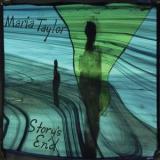
Acclaimed songwriter Maria Taylor, best known for her work with Azure Ray, returns with her forthcoming album ‘Story’s End’, a hushed,
cinematic collection that unfolds like an intimate narrative of loss, healing and quiet transformation.
Featuring contributions from Mike Mogis, Conor Oberst, Nate Walcott and Ben Brodin, the album pairs Taylor’s intimate vocals with widescreen strings, bell-like piano and atmospheric arrangements
Ovatow made quite a stir when he first started dropping deep dubs on his mysterious MySpace page (the main social media at the time). The tracks on the little crappy audio player got hunted down by a flock of DJ's and label heads. From behind a curtain of anonymity he soon started releasing his material on various labels, becoming cult classics in the dub-techno world. It was 2007 when X-dub first appeared on the Dutch imprint SD Records, followed up by his classic release on Frantic Flowers and a string of other projects while keeping his identity secret to everyone. Years later, the rumors proved true... the artist behind these mysterious projects was non other than the Frantic Flowers / Frustrated Funk label head himself. Just testing the waters around him, receiving release offers from close friends and colleagues while he kept his anonymity up. A fun little joke for himself, though the tracks are still relevant and sought after classics today. Both X-dub versions re-appear now, for the first time after almost 20 years, fully retouched and remastered, together with an unknown unreleased jam called Autistic Navigational Spectrum. This is the first in a series of Ovatow work, revived for the heads that appreciate the foggy deep of the Undacurrnt.
- 01: The Ark
- 02: The Masai
- 03: Dream Dance
- 04: Belize
- 05: As You Are
- 06: Danakil Warrior
Our latest Holy Grail reissue is this private press spiritual jazz gem out of California from Rickey Kelly and his vibes & marimba. Features Diane Reeves (vocals) & Adele Sebastian (flute)!
Heavyweight 180g LP with tip-on sleeve, individually numbered 1-1000, card enclosed for liner notes & audio download
"Rickey, I know these are your friends, the guys you went to school with, but if you wanna record an album, you record with musicians who have been playing their whole life; whatever you write, they'll put their whole life into it. You play with your friends; they may not even play in tune."
These are the words of Slave guitarist Kevin Johnson, and they were to change the course of young Rickey Kelly's life.
It was 1978, and music student Kelly had approached Johnson with a tape of rough demos of some songs he'd written. A San Francisco native, Kelly had recently moved the short distance south to study music at LA City College in East Hollywood. He was a member of E.W. Wainwright Jr.'s African Roots of Jazz, and was spending up to 10 hours a day in practice on both vibes and marimba. He also played with Horace Tapscott, and had his own band made up of fellow students, but it was his ambition to make an album that led to the conversation with Johnson. It was a turning point in his education, and a decision was looming.
The next thing Johnson said was "You call the best jazz musicians. How'd you like to play with Billy Higgins?", a line that would seal it for anyone; for a youngster like Rickey just starting out in the business, you just don't turn down the opportunity to play with the likes of highly accomplished musicians, especially those of the calibre of legendary jazz drummer Billy Higgins.
Some calls were made and the date was set to record at Studio Masters on Beverly Blvd, a studio set up just a few years previous in 1973, owned and operated by Dot Records founder Randy Wood with his son John. Some of the other music professionals set to record with Kelley that day were flautist Adele Sebastian, bass player Tony Dumas, saxophonist Charles Owens and vocalist Diane Reeves, none of whom had previously played with Kelly before.
Kelly was impressed with the studio, with the gold records displayed on the walls and the famous musicians hanging out. 'It took a lot of humility for me to record with them, I mean I was nobody, nothing, and for not a lot of money either' remembers Rickey in a later interview with Calvin Lincoln, 'It taught me a lot, to practice hard, and study for the rest of your life, to give your all, and there's a lot of all to give'.
As the recording session took place, John Wood was listening in. He was impressed. Kelly didn't have the funds to manufacture and release the album himself, so Wood suggested it was pressed up on his in-house studio label, Los Angeles Phonograph Records, and thus the LP 'My Kind of Music' was released early in 1979. The album also saw a subsequent pressing soon afterwards on Dennis Sullivan's New Note label.
Kelly remains humble and proud of his debut album to this day. 'I was still a beginner' he says, 'These masters walked in, smiling, and gave me something worth gold'.
When we were thinking about making an EP for Rupture, the first few tracks happened to already be finished, and fit together really nicely - but getting that final track done ended up being a bit more of a challenge!
The vision was to convey our individual styles in collaboration as best as we could - with dance ready tracks that also carry emotion. Rum Runna, as the A1 of the EP, all started from a break we found that had one of the loudest subs cutting through. Instead of looking for something else, we decided to lean into this and maximise the energy, before finally breaking through with the 808s. Drifting Through The Mist is more of a rolling vibe, focussed on vocals and funk to lift spirits in the dance, all the while teasing an amen drop that leans into a ragga fusion.
Northwest Passage is one of the earliest tunes we got finished - being made quite soon into our first meeting I believe. The result is a darker tip that focusses on dissonance and sub pressure that really thrives in the bassbins. Our final tune on the EP, Original Secret, is the most emotionally charged on the EP, again utilising our love for unique percussion and bongo hits along with rolling breaks, carefully chopped snares, atmospheric pads and emotional vox samples.
We are more than proud to release this body of work on one of our all time favourite labels, and have had the utmost pleasure to work with the team every step of the way.
Trinidadian Deep is back with yet another deeply rooted house vibes EP entitled “Dub Nasty” EP!
This powerful collection of three independent tracks starts with the title track, Dub Nasty a seriously deep house excursion with captivating harmonies sonics complimented with a guitar solo which washes over you as you loose yourself to the music.
Track 2 “Sonics and Steel Drums” think sun sea and beach as this one brings up the tempo induced with a groovy bass line and heavily played steel pans that immediately uplifts the vibes which progress into a Caribbean crescendo!!
Head to side b, where Trini brings it back to Native African roots to loose yourself on the dance floor with it’s layered percussion, deep stabs & chords, captivating keys. Along with enchanting and soothing African vocals of serenity that will surely keep you mesmerised !
As always, Trini’s production is infectious, and this EP is no exception! Take a deep breath, listen and enjoy !!
The name Ran is a new one to us and seemingly remains, for now at least, cloaked in secrecy, but when we see their influences range from Loefah, Photek and Carrier to Source Direct, Regis and Mika Vainio, we were instantly hooked. To this new EP on Gelassenheit, then, which speaks to a producer with a rough and tough analogue sound and love of bass-driven techno. 'Violence' is gritty and heavy as it pounds out a groove with eerie pads in the distance, 'Minus' has punchy broken beats that come at you through a murky fog, and 'Closure ' then ducks and dives with a post-dubstep nimbleness as spooky background details suggest there is an oncoming threat. 'Manoeuvres' is a sparse, heavyweight and soot-black dub with crispy hits that demand a physical response. Early support from Carrier!
Absolute banger from french crew RDH originally released in 2019 on our sub label Digipirate, Lutin is really not for everyone's hands : a dull and underground atmosphere, a furious bassline and a wild mix make it truly dangerous!
Long time sold out and finally repressed, it comes this time with blank labels and minimalist stamps. Soooo cute!
- 1: United We Stand
- 2: Fuck The Upper Class
- 3: P.o.l.i.c.e
- 4: Life Through A Stereo
- 5: Kids Of The Street
- 6: Boot Up Your Ass
- 7: Mr Greed
- 8: Passa Dig!
- 9: Comin' Home
- 10: Street Punk Bop
- 11: Praise That Working Man
- 12: Scum
- 13: Guns Of Gothenburg
Ready for 10 Years since "Guns of Gothenburg"? Here's the last collector's reissue of the "rare and sold out since years"-CS albums on vinyl! The Swedish Punkrockers often heard that their 3rd album "Guns of Gothenburg" is still their best release! The combination of riot street punk, pub rock anthems, some high energy glam-elements and melodic rough'n'tough Oi! was considered as an absolute genre-highlight 2016 "Guns of Gothenburg features 12 songs like "Kids from the Streets", "United we stand", "Fuck the Upper Class" or "Street Punk Bop", which is still the encore-highlight at every City Saints show Stefan, singer and bandleader about the new release: "When we released Guns of Gothenburg on CD back in 2016, we felt that the songs were good, but we soon began having doubts about the mix of the album. In 2017, when we were approached to release it on vinyl, we had it remixed and remastered with a new song order. This version never made it onto the streaming services, and the limited edition of the LP has been out of print for a long time. Now we're thrilled to present this re-release of Guns of Gothenburg. The original painting used for the cover has been dusted off and restored and the recording has been remastered once again to bring it closer to our original vision. We sincerely hope you enjoy it. "Guns of Gothenburg" comes on 180gr. strongly limited vinyl in classic black and two multi-colored variants (only 333 copies all in all)