Indonesian City Sound: Panbers’ Psychedelic Rock and Funk 1971-1974
The Pandjaitan Brothers or Panbers came from the North Sumatra minority Christian group, the Bataks, whose ancestry traces back to an island at the center of Lake Toba. As a minority group within Indonesia's Muslim-dominated society, this ethnic minority has produced top military generals, celebrity lawyers, and a legion of pop and rock superstars.
Suffice to say, some of the biggest names in the country's pop history were Bataks. Panbers fit the bill perfectly.
The band's strong Christianity belief looms heavily in the music they produce. The prominent use of the Hammond organ in their early materials is evocative of church music the band members have been around in their whole life. Bandleader Benny Pandjaitan's fills his characteristic wail with existential dread, with many utterances of the word "mengapa" (why).
Guilt is another central theme Pandjaitan repeatedly comes back to in his lyrics. But they balance it with joy, on songs such as "Come on You Dance" "Let's Dance Together" or "Haai" (a play on the word high), where references to recreational substances are plentiful.
Although they modeled themselves after the era's rock bands Beatles and fellow countrymen Koes Plus, Panbers had a unique aversion to the electric guitar. In "Jakarta City Sound," a fiery three-note guitar solo is laid so far down in the mix that they are barely audible. In "Haai" they modify the guitar to sound like a jungle instrument playing traditional North Sumatran music. In "Rock and the Sea," arguably their most well-known song globally, they decided to ditch electric guitar altogether and replace it with a sitar.
In the absence of an electric guitar, Panbers had to rely on Doan's inventive bass playing and Asido's drum works to do the heavy lifting - and boy, do they deliver (Their 1971 debut "Volume 1" saw plenty of drum breaks). In this compilation, listeners will hear recordings from Panbers' fertile four-year period - a time that produced in some of the grooviest and hardest-sounding psychedelic music in Indonesia's rock history.
For those uninitiated on the glory Panbers, consider this compilation an introduction to some of earliest and heaviest rock sound to come out of Indonesia.
out of Stock
Last delivered 3 years ago available to reorder, subject to availability
Brutal Nature Redux is a continuation of Rhys Fulber’s “Brutal Nature” album and art concept, featuring remixes by carefully curated artists. Years of Denial’s take on “Rogue Minority” injects some emotion and humanity into the stark and aggressive original while preserving the driving bass riff and lifting it into the sound of a futuristic tribal gathering. Berlin’s Sarin is up next, leaning into the future EBM style he also shares with Fulber but amping up the intensity and apocalyptic dance floor elements of Central State Institute. Night Render is given a darker and more sinister sheen by up-and-coming Bulgarian producer, Evitceles. The nature elements of the original are replaced by a cinematic dystopia, akin to salvaging lost technology in a ruined city. Orphx add their rhythmic sophistication to “Stare at the Sun, tripping and refining the original down to its base elements while tuning Sara Taylor’s (Youth Code) screams across what appears to be several channels of short wave radio. Qual’s radical re-interpretation of “Pyrrhic Act” brings elements of Fulber’s past history in EBM right to the fore, creating a groove that’s both retro and very modern, slowing it down so the tension hangs heavier in the air. Lastly but certainly not least, Vanity Productions highlights the “nature” of “Fragility”, accentuating it with delicate clouds hanging in an air of contemplation; darkness and light coexisting in thick emotional textures. A fine way to close out this collection of cohesive individualism.
out of Stock
Last delivered 2 years ago available to reorder, subject to availability
Featuring 38 tracks (as opposed to the digital release, which is only 15 tracks), This is the definitive Doom Patrol Season 1 soundtrack featuring music by Clint Mansell and Kevin Kiner. The score is fantastic, mixing electronics and more traditional string-based score elements. The central theme is one of the best in recent years, and the score is moody and magnificent yet also fun and playful. It is the perfect accompaniment to the action on screen.
ME LOST ME led by Newcastle-based artist Jayne Dent announces a new album RPG via Upset The Rhythm on 7th July, and is touring across the UK including support dates with Pigs x7. RPG (recorded in Blank Studios with Sam Grant of Pigs x7) is ME LOST ME’s fourth outing as a collective, having transitioned from an ambitious solo project in 2017, Jayne now regularly collaborating with acclaimed North-East jazz musicians Faye MacCalman and John Pope.
ME LOST ME delights in experimenting with songwriting and storytelling, creating a beguiling mix of soaring vocals and atmospheric electronics that playfully weave together disparate genres, drawing influence from folk, art pop, noise, ambient and improvised music. Hauntological in part, RPG is concerned with tales and with time - are we running out of it? Does insomnia cause a time loop? Do the pressures of masculinity prevent progress? Jayne Dent asks these questions and more on RPG, her homage to worldbuilding and the story as an artform, calling back to those oral traditions around a campfire, as well as modern day video games - bringing folk music into the present day as she does so.
ME LOST ME presents sound reaching in opposite directions, straddling time towards the archaic and timeless traditions of folktales, and towards the possible and potential futures of pastoral Britain and the world at large. Part speculation, part reminiscence, what results on the new album RPG is music that sounds ultimately displaced and yet omnipresent, adjacent to a hapless Vonnegut hero whose life is scattered throughout time and history, but full of wonder and curiosity rather than fear.
On track “The Oldest Trees Hold The Earth”, we see time stretched out between the branches of impossibly old beings in the woods. This track was co-written in Aarhus, Denmark with fellow Newcastle folk musician (with Danish heritage) Ditte Elly. The pair wordlessly passed a sheet of paper between each other to write the lyrics, inspired by Højbjerg and Mosegård, the woods they were sitting in. “How long should I wait/Before the moss grows?/On my skin, on my outstretched arms,” the lyrics are sung in a round, the close harmonies delicate and detailed.
A central thesis of this album is the joy of creation, something which is paid homage to in the album’s final track, “Science And Art” (Not because we need it to last/just because we needed to make it - so we invented the words/this language). It is also reflected in the definition that Jayne gives for “folk” itself. She comments, “To me, folk is quite an expansive idea. I think of it as creative work that's often made ad-hoc, with things that are at hand and more often than not it's born of a DIY ethos. It is songs and stories of the people, as in the traditional sense, but also creative coding, game design etc. Whatever outlet someone has for their creative expression could be described as folk. It's the things we make because humans need to make things, and the stories we tell about ourselves and the world around us.”
Crucially, on latest album RPG, Dent expands her songwriting and looks towards the unreal locations of worldbuilding in video games for inspiration. She comments, “I think the main similarity is the importance of a song's setting/environment to inform its narrative and textures, I'm often most inspired when out walking in the natural landscape, in cities and travelling to places I've never been before - the environment I'm in really impacts the work I make. While writing this album, however, I found myself inspired by imaginary landscapes, those in video games, paintings, etc. I was writing stories into these unreal locations instead. Even the songs inspired by real places, like The Oldest Trees Hold the Earth, have a very surreal quality to them in the songs, like they're being warped and turned into something not of this world. I think that's the main difference for me in terms of the thematic content and inspiration behind this album - I've been getting more and more interested in balancing surreal and fantastical environmental elements with ordinary and everyday settings.”
RPG upends the concept of the eternal return - we may be in the midst of inevitable repetition, but we tell stories whilst awaiting the passage of time.
"Being familiar with, and a fan of Jayne's earlier work, it was great to get the opportunity to work with her on the production of her new record. I had in mind a sense of what the record might be, but what came of the sessions, led by the vision Jayne had for the record, totally exceeded my expectations. As far as albums go, it has a breadth of writing and a sonic depth that made it a truly brilliant record. Having Jayne join us on a leg of the Pigs x7 tour in April is going to be ace. The creative nature, the sincerity and bold strokes of ME LOST ME put it in that space outside of any genre pigeonholes, and between our two sets I imagine the audience is going to have a proper sonic bath..."
Sam Grant, Pigs Pigs Pigs Pigs Pigs Pigs Pigs, 2023
“The music of Me Lost Me is beguiling, idiosyncratic and cinematic - or should that be video-game-omatic? This suite of songscapes often hits the sweet spot between ancient and modern with its masterful blend of stark folk, neon electronic burbling and unusual arrangements. Jayne's singing is refreshingly straightforward and nuanced - it's exquisite! - and perfectly punctures the nebulae of synths and brass which billow around the old wooden frames of the songs. Whilst listening I had images in my mind of what Northumberland might look like through the eyes of Simon Stalenhag - foggy moors, a robot looking across the sea to Lindisfarne, twinkling lights on metal towers.... that sort of thing. It's a really great album.”
Richard Dawson, 2023
"Spirals" goes back to the roots of jazz, funk, and disco and brings elements of these music streams into house music. In the appearance of swing, jazz was originally a dance music genre, which later developed in many directions. Various other genres were born from it. Even electronic music streams like house belong to those genres.
Bearing this in mind, "Spirals" connects different points in the history of these genres. Bringing this fusion to life, the MIMIKOTO project works with electronic elements (analogue synths, drum computers, electronic modulations) as well as acoustic instruments (saxophones, keys, trumpet, bass, drums and percussions).
The MIMIKOTO project was founded in 2019 by Fabio Kumori as a collective of musicians related to jazz, funk, soul and electronic music, after a certain period of composing and playing as duo, trio and quartet. One of the central goals of the MIMIKOTO project is to include people from different backgrounds - to be inclusive regarding the music and the musicians themselves.
May the sound of "Spirals" be a social room in which everyone is invited to participate, and may this idea be spread everywhere where it will be played.
out of Stock
Last delivered 3 years ago available to reorder, subject to availability
Singular Texan musician Craig Clouse hurtles unstoppably towards the 20th birthday of his dancefloor-splintering electronic project Shit And Shine, releasing a landmark LP, his first full-length for The state51 Conspiracy, ‘2222 And AIRPORT’. Acid house, minimal techno, electro, funk, krautrock, hip hop, found sound, spoken word, live percussion and industrial are blown apart stupendously and then reassembled – mad-scientist style, in a way peculiar to Clouse – into 13 hypnotic and transportative tracks.
Lead single SWISS, out 24 March, is a gloriously minimalist funk jam that sounds like the exact point at which someone turns the lights off at a lowkey house party and a wild night for the ages gets under way. An almost scornfully skeletal riff, sounding like a misfiring Cyberdine Systems Model 101 summoning up a Prince circa Sign “O” The Times riff while crashing head first into the hyper-processed early work of Prefuse 73, also featuring a cheeky sample of revered Mancunian DJ Luke Una talking about “existential fucking darkness”.
This is followed on 4 April by INFINITE SHITE, arguably the epic central track to the album, is a Shit And Shine banger for the ages, its dancefloor affect, undeniable. An unforgiving, pulsating Byetone-style bass drone worthy itself of being blasted on a Funktion-One rig, is just the background for a colossal acid b-line, destroying all in its path.
Micro details bristle at the liminal level, threatening to only reveal themselves to those in a club, those listening on headphones or those experiencing a heightened sensory state.
out of Stock
Last delivered 3 years ago available to reorder, subject to availability
N0!zy blighter Russell Haswell returns to Diagonal 5 years after his label debut with a spontaneously combusting follow-up to ’37 Minute Workout’ generated again from a mix of analog/digital synths and modular systems edited on a computer. It was inspired by a visit to CERN, The European Organisation for Nuclear Research, in Geneva; and dinner with Ted Nelson, whose theories of interwingularity and transclusion chimed with the direction recordings took.There are few artists who can genuinely make music that sounds like your needle and/or record is melting, but Russell Haswell is one of them. His 2nd volume of extremely kinky calisthenics is a potent example of daring to be different in a world where exponentially increasing production options are leading producers of all stripes to the exact same conclusions. But, with thanks to Russell’s iconoclastic intent, restless nature and ascetic aesthetics, he still sounds quite like nobody else, and, even better yet, doesn’t give a shit if you like it or not. For the record (this one in particular), we’re all over it like a hot rash.
Since reincorporating his early love of freestyle electro and Industrial dance music into his patented n0!ze matrices circa the 1st volume of ’37 Minute Workout’, Russell has steered that rhythm-driven style into a string of fizzy bangers for Diagonal and even applied it to his production for Consumer Electronics with typically radical results. Russell’s 2nd volume of ’37 Minute Workout’ is cut from similarly (but never the same) ragged material as the first batch, and spits, kicks and claws with equal amounts of eething, pent energy and rambunctiousness ready to jab the ‘floor in the eye or dissolve a party where needed.
Crowbarring cues ranging from the Latin Rascals to Incapacitants and Jeff Mills into 7 wickedly awkward designs, Haswell keeps his avant aerobics radically irregular as he hops from the tendon-twitching angularity of ‘The Wild Horses of the Revolution have arrived Without Knight’ to steel-hoofed clatter in ‘Central Crisis Management Cell’ and the lacquer-eating dynamics of ‘Painful
Memories From The Past Need To Be Acknowledged’, before toning a proper nasty acid special in the UR inversion ‘Dancing on the Head of an Eagle’, and seemingly sucking your brain out thru a straw with ‘Starting Something You’re Not Able To Finish’, with the dry witted, skeletal jazz-funk squirm of ‘Diplomatic Cocktail Circuit’ closing the party down in style.
When I first heard Natalie Rose LeBrecht's time-suspending, air-ionizing music, more than twenty years ago, I thought "this kid is on to something." She's been proving that thought right ever since. Her recordings, from the teenage 4-track tapes she made as Greenpot Bluepot to the recent albums under her own name, have been fascinating dispatches from her progressively deeper dives into her gorgeous, weird, wildly idiomatic aesthetic. Holy Prana Open Game is a jewel of intensely personal cosmic music, created through a remarkable process of openness, craftiness, addition and subtraction. It belongs to a tradition of albums that document a rich, meditative sound as it rises up to join the world outside its creators' minds: Alice Coltrane's Universal Consciousness, Harmonia's Musik von Harmonia, Philip Glass's North Star, Talk Talk's Laughing Stock.
"Meditative" is specifically the idea here: Holy Prana Open Game had its origins in the fourteen days LeBrecht spent silently meditating in her home's small music room in the summer of 2019. "I came out of that bursting with the will to create new music," she says, and she created it sound-first. LeBrecht taught herself to program an analog synthesizer's timbres from scratch, and built a new set of glacial, heady compositions out of them, eventually singing to accompany the keyboard parts she was playing.
Then she closed her eyes at her computer, "let my mind be clear and open, imagined light pouring down through me, and began auto-writing to my memory of the music playing through my mind. Most of the lyrics emerged this way, and then I used my conscious mind to refine them a bit at the end." One other song came along with LeBrecht's new pieces, a cover that seems wildly unlikely from the outside and makes total sense in its context: it's a version of Atoms for Peace's "Amok" (which had been created by improvisation and editing, too), mutated into her own idiolect.
In early March of 2020, LeBrecht recorded Holy Prana Open Game's analog synth parts with Martin Bisi at his studio in Brooklyn--and then the world shut down. As you may have gathered, LeBrecht is very much a spiritual, head-in-the-stars type. She is also extremely hardcore, and if making the art she wants to make means doing things the hard way, she cracks her knuckles and gets down to it. Within weeks, she had taught herself how to record, mix and edit with a digital audio workstation. She recorded her vocal parts (sometimes multi-tracked into a radiant choir) at home, assembled a rough mix of the album, and sent it off to her collaborators.
LeBrecht spent some years studying with and assisting La Monte Young and Marian Zazeela at their legendary sound-and-light installation, the Dream House. As with their work, her singular, precisely focused vision is shored up by its openness to artistic voices beyond her own. For Holy Prana Open Game, she worked with the Australian guitarist Mick Turner and drummer Jim White (both of Dirty Three, the Tren Brothers and innumerable other projects), as well as woodwind player David Lackner, a longtime presence on her recordings.
Turner and White have been playing together in one context or another since 1985; in the summer of 2020, they were only blocks from each other in Melbourne, Australia, whose strict lockdown meant they couldn't meet up to record together. So both of them, as well as Lackner, recorded their improvisational additions to LeBrecht's rough mixes individually, often without hearing each other's contributions. "I had asked them to play as much as they could on each track," she says, "and told them that I would edit it all down in post, so I had a lot of source material of theirs to work with."
LeBrecht arranged and edited the recordings from all four of their homes to flow together like breath across the duration of her suite. Prana, one of the album's central conceits, is in fact the Sanskrit word for breath, with the connotation of the breath of life. Like LeBrecht's music, prana flows at its own pace, and demands stillness to take in fully--but it's also subtly playful and surprising, a force that can be as light as air or as immersive as the atmosphere itself.
After four years, De Lichting is back with a new double album: Drie Nul Drie!
This fresh addition to the infamous compilation series revolves around a central theme: The 303 Acid Bassline.
The double LP format has always been the weapon of choice for the crew when it comes to implementing diversity in their musical story.
Despite the 303 being a rather limited concept, everyone within the collective finds a unique way to approach this classic element that has been rinsed for decades.
From the typical techno bomb of “MJM002” to the sneaky after hours tech gem “5421”, or the Detroit influenced chill-out cut “Tool”, the album bursts with playfulness and creativity, while coming together logically sound wise.
out of Stock
Last delivered 12 months ago available to reorder, subject to availability
„Phyktoria“ is the first album of Stavros Tilkeridis aka Second Tension. Very few projects have managed to develop such an unmistakable signature sound as it is laid out on this album and the two previous EP’s on Persephonic Sirens. Hailing from Central Macedonia, Second Tension influences of Greek cultural and mythological heritage are obvious while the music acquires transcendence through relentless loops of maximal euphoria and hypnotism. Effortlessly Stavros conducts crispy noise experiments without ever sounding academic or nihilistic. Literally uncompromising.
out of Stock
Last delivered 2 years ago available to reorder, subject to availability
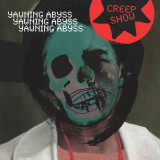
In the five years since Creep Show’s acclaimed Mr Dynamite album was released it’s fair to say that we’ve all been through a fair bit. Sitting here, in 2023, things don’t seem to be getting any better. There’s the cost of living crisis and political meltdowns; we're in deep water with global warming and to top it all there’s a war on our doorstep.
Back in 2018 everything seemed less complicated. Sure, there was stuff to get riled about, but we knew nothing about what was to come. Mr Dynamite was a fairground ride into the dark corners of a world that was on the brink of being blitzed in a blender. It was a record teetering on the edge. Five years down the line you’d expect the follow-up, Yawning Abyss, would double-down and bring the white-knuckled, teeth-gritted fury of the last five years to the boil. And yet….
A quick recap? No problem. Wrangler + John Grant = Creep Show. And Creep Show? “A band of musical misfits who have found a voice or two”, says Wrangler’s Ben “Benge” Edwards, whose Bond villain studio on the edge of a moorland is Creep Show Grand Central as well as home to an analogue synth arsenal that could sink ships.
Wrangler have known each other for a while. Tunng’s electronics wizard Phil Winter and Cabaret Voltaire’s trailblazing, pioneering frontman Stephen Mallinder go way back, while Phil and Benge crossed paths in the 21st century when they seemed to be increasingly in the same venues at the same times. Meanwhile, Mal had been living in Australia since the mid-90s and when, in 2007, he returned to the UK his old pal Phil suggested he meet Benge and the three of them immediately began working together.
Wrangler collectively bumped into Grant at their soundcheck for Sheffield’s Sensoria Festival in 2014 where they were playing with Carter Tutti. A friendship blossomed and when they were invited to perform together for Rough Trade’s 40th anniversary show at London’s Barbican in 2016, well, they jumped at the chance... and Creep Show was born.
Let’s talk about the new album... What is the ‘Yawning Abyss’? You might well ask. According to Mal, it’s “a cosmic event horizon that I can see from my attic window when stand on a chair”. Yeah. Thanks.
“On this album”, offers Benge, feet firmly on the floor, “Wrangler wrangled some vintage synths, mostly Roland, Moog, and the ‘Crystal Machine’ - then John Grant joined in the fun at Memetune Studios where lots of musical experiments were carried out. Then Mal and John ran off to Iceland with the master tapes and recorded a load of madcap vocals. Back at Memetune, me and Phil were left to try and make sense of it all. Which wasn’t hard because what they did in Iceland was totally magnificent.”
Which kind of brings us back to where we began. You’d imagine ‘Yawning Abyss’ would be blowing steam out of its furious ears. Mr Dynamite but kicking a wasps nest. Repeatedly. And yet…
Opener ‘The Bellows’ comes on like a modular ‘Radio Ga Ga’, the singalong ‘Moneyback’ (“You want your money back? / I didn’t think so”) sounds like Godley & Creme’s ‘Snack Attack’ meets Prince Charles And The City Beat Band (“Pennies, pounds, dollar bills, signed agreements, death wills”). ‘Yahtzee!’ is an unhinged electro breakdance party in four minutes and nine seconds.
Where Mr Dynamite was menace, a mélange of mangled voices, with Grant and Mallinder being heavily treated, pitched up or down, rendering their contributions largely indistinguishable, Yawning Abyss takes a more direct approach. You hesitate to say feelgood, but there’s a skip in the step here for sure.
The title track plays John Grant’s vocal straight. Completely. It’s good, so very good. Like ‘Axel F’ covered by Vangelis. The delicious shimmering synths of ‘Bungalow’ also plays those Grant pipes with a straight bat. ‘Matinee’ delves into darker, very funky territory. With Mal upfront it comes on like ‘The Crackdown’. Choice lyric: “You are starting to breakdown / And it’s so fun for me to see / You should have thought of that / You should have come prepared / You can see what’s happening and you look a little scared”.
So, you know, not all feelgood. But it does feel good. It’s probably best to draw your own conclusions... This is Creep Show after all.
Long out-of-print release available digitally for the first time. Extensive notes by a local writer in English and French. Previously unpublished family photos. Urbanized traditional music at a dance-floor-friendly tempo. The very definition of an "Awesome Tape From Africa". Roger Bekono made a deep mark in the contemporary history of Cameroonian music through the four-on-the-floor, ribald intensity of bikutsi. The Ewondo-language dance-pop style that forms an undulating tapestry of interlocking triplet rhythmic interplay came to international prominence in the European "world music" scene as the 90s began. But the relentless sound of bikutsi developed in Yaoundé at the hands of Bekono and many others, as it developed from a village-based singing style performed mostly by women into a cosmopolitan music force that rivaled the popularity of established musics like Congolese rhumba, merengue and makossa. With his unique—some say suave—voice, Bekono contributed much over a period of more than 10 years as part of the evolution of this traditional rhythm-turned-urban dance movement. Bekono worked with legendary producer Mystic Jim, who had built a prolific home studio along with a crack team of musicians. They joined as part of the production of his self-titled album, which became known locally as "Jolie Poupée," the name of the album's lead single and most popular song. For "Jolie Poupée" Mystic Jim programmed the kick or bass drum, adding effects to have a heavier bass. Overall the album represented a new level of finesse and professionalism for his second release. In the middle of 1989, Jolie Poupée was released by the label Inter Diffusion System and aggressively hit the radio, discos and national television. The music video for the title track was on loop on TV. It felt like everyone was talking about it, even artists in adjacent music scenes like makossa. The album came out on vinyl and cassette and remains Bekono's best-selling recording to this day. With Jolie Poupée Bekono finally made an impact outside Cameroon as the record captured listeners in some Central African countries like Equatorial Guinea, Gabon, Republic of Congo and Sao Tome & Principe. In these countries, we find the Fang or Mfan people (also known as Ekang), Bantu-speaking ethnic groups that are also found in Cameroon. This umbrella language group includes the language in which bikutsi is mainly sung. Most of Bekono's songs are in French, Ewondo (of which Beti is a dialect) and Pidgin. The four songs on Jolie Poupée are all considered bikutsi classics. On September 15, 2016, Bekono died of a long illness at the age of 62. In the wake of his passing the media published a wave of tributes, thanking him for what he did for Cameroonian music. He was an admired musician, songwriter and guitarist, and some of his old colleagues and some of the new generation of performers showered Bekono with vibrant tributes via social media, many of which noting something to the effect of: "The artist dies but his works remain."
Laura Poitras’ Oscar-nominated film »All the Beauty and the Bloodshed« is an epic, emotional and interconnected story about internationally renowned artist and activist Nan Goldin. Told through intimate interviews, photography, and footage, central to the story is her personal fight to hold the Sackler family accountable for the opioid crisis. The film cuts to the bone with its incandescent celebration of life and condemnation of those who threaten it. Art and activism are one and the same.
Helping to interweave Goldin’s past and present, multi-disciplinary duo Soundwalk Collective soundtrack her personal and political struggles to sublime effect. The contemporary sonic arts platform of founder and artist Stephan Crasneanscki and producer Simone Merli, the pair work with a rotating constellation of artists and musicians, developing site-and-context-specific sound projects through which to examine conceptual, literary, or artistic themes. And for all the beauty and the bloodshed on show here, the duo strike the balance just right; their compositions in collaboration with Zacharias Falkenberg and Johannes Malfatti producing a trance that oscillates between grace and madness.
Within the score, Crasneanscki draws connections with the life and work of German poet Friedrich Hölderlin, who was removed from society through confinement in institutions. In his last poems, written as fragments while he was plagued by mental illness, Hölderlin renders nature, in all its fragility and ephemerality. Similar themes merge in Laura's portrait of Goldin and serve as an inspiration for the composition of the choral songs and cantus within the soundtrack. Through the repetition of words and the layering of voices, the lyric scansion operates like a language possessed, echoing various styles from sacred music to modern minimalist techniques. The music is characterised by quivering strings and swells, de-tuning and lingering, shifting around the surreal, and creating a spectrum of musical experience. Exerts of Nan’s narration are featured in two of the tracks, her powerful narration offering a more direct approach to the storytelling.
In »All the Beauty and the Bloodshed,« Poitras shows protest is really Goldin’s great artwork: Her entire life had been leading to this moment of passionate expression, an inspired situationist gesture which fused the personal and the political. Art can change the world, which Poitras and Goldin tell us with powerful results. While there are multiple threads in this remarkable portrait which could have carried entire films, the soundtrack provides a sonic identity that helps keep track of proceedings. Utterly unique in their approach, Soundwalk Collective have delivered a gripping and thoughtful score, helping turn Goldin’s personal pain into culture-rattling impact.
Timo Kaukolampi, frontman for Finnish electronic rock group K-X-P and tireless sonic wanderer, is releasing his second solo album, this time on Optimo Music. Exquisitely rendered, shadowy, curiously claustrophobic and even occasionally paranoid, Inside The Sphere is an album wholly deserving of its name.
A sense of paranoia is one of the threads through this glittering, winking electronic maze. Kaukolampi says “I came up with this metaphysical concept of the “sphere”. When you are manipulated you are ‘Inside The Sphere’. It’s like this dome of ‘undue influence’ that you don’t know exists around you. It’s a bit like the inside of a cult.”
Indeed, it’s amazing the effects achieved with a few sparse electronic textures, the odd smattering of studio trickery, and two or three well-placed synthesizer parts. Though the result might sound ostensibly simplistic, Inside The Sphere is an album of reduction rather than addition. The rhythmic and textural scaffolding is based around what’s not there, rather than what is. Take ‘VCS3’. At first listen, it seems forged from a few synth lines and a simple percussion part – so far, so simple. But listen closer, enter the sphere, look behind the mask – notice the slightly detuned drones, the chattering percussive textures, that distant swell of bass, the way the central fugue shifts and mutates somehow statically, like a barber’s pole.
Might we be listening to an album within an album, a more complex song cycle hiding within the folds of an ambient electronic album? This ties in with another of Kaukolampi’s thematic frameworks – that of the mask. He references Oscar Wilde’s quotation that “Man is least himself when he talks in his own person. Give him a mask, and he will tell you the truth.”
Inside The Sphere is not a one-note album. For every moment where a clammy ambient space enters, a buttery analogue bassline is there to fill it. This clash seems to be the album’s engine room, its power supply.
Timo references devotional and choir music as an influence on this album. The paranoia and foreboding is tempered by these headier aspects. Kaukolampi mentions “empty and hollow spaces” in relation to several of the songs. Perhaps this is the very space behind the mask, where outward disguise merges with inner reality. Perhaps inside the sphere is not always such a bad place to be.
out of Stock
Last delivered 3 years ago available to reorder, subject to availability
Long out of print (10 years!), this new edition of Soul Jazz Records' classic Delta Swamp Rock, features a killer all-star line-up of seminal artists who all first blended rock, soul and country together to create a stunning new sound of southern American music in the 1970s.
Featuring the Allman Brothers, Dan Penn, Leon Russell, Tony Joe White, Johnny Cash, Bobbie Gentry, Big Star, Link Wray, Area Code 615 and loads more!
This album comes as a superb limited-edition gold vinyl double vinyl release complete with extensive original sleevenotes, interviews and exclusive photography, all spread over a 12-page full-size magazine and two bespoke inner sleeves. The works!
Delta Swamp Rock is an interstate southern road-trip through the United States of America where country, rock and soul met at the crossroads - an exploration of the musical and cultural links between the cities of Memphis, Muscle Shoals and Nashville in the 1960s and 70s.
At the start of the 1970s, a new type of music emerged out of the southern states of Alabama, Tennessee, Georgia, Mississippi and Florida. Southern rock, the creation of young blue-collar white Americans, blended rock, soul, country and blues music together to present a new vision of the south – a post-civil rights southern identity complete with a celebration of the regions natural landscape and its way of life.
The Allman Brothers and Lynyrd Skynyrd epitomised the definitive southern rock groups – a mixture of blues-rock and country with a southern rebelliousness and attitude. Unfortunately both The Allman Brothers and Lynyrd Skynyrd were to be struck by tragedy, which would affect the movement’s rise and fall.
The backstory to southern rock is the fact that a number of the people involved in its creation had been central to the production of southern soul music in the 1960s mainly in Memphis, Tennessee, and the small town of Muscle Shoals (population around 10,000) deep within the bible-belt, liquor-free, deeply segregated state of Alabama, creating 100s of R&B hits on an almost daily basis.
Here in Muscle Shoals, with its proximity to Memphis and Nashville, an all-white group of in-house musicians, (famously referred to by Lynyrd Skynyrd in the song ‘Sweet Home Alabama’ as the ‘Swampers’), created countless classic soul records for the likes of Aretha Franklin, Wilson Pickett, Etta James, Clarence Carter and more during the 1960s.
This album charts the rise and fall of southern rock from its funky swamp roots in southern soul to its phenomenal success in the first-half of the 1970s, including its influence on Nashville’s ‘outlaw’ country and tracing it right back to the arrival of rock and roll in the 1950s - the first meeting of black and white American music at the crossroads.
The British producer Alex Smalley (aka Olan Mill) has been active for more than a decade building his signature through nature as the central theme across emotional journeys through beautiful ambient melodies. Moments at the Re-engage —his first publication in Umor Rex— was created for a performance in Thüringen, Germany. On the night, while the audience was floating in mineralized neon water, the sound was being diffused across submerged speakers. Multiple synthesizer layers were mixed with processed guitar. Later, additional acoustic sounds, field recordings, voice, and violin were added and processed.
While the recordings were made in the German winter, the mixing took place on the Island of Koh Phangan in Thailand. Nature, plant medicine ceremonies, meditation, and jungle hikes somehow guided the sound-arranging process. Moments at the Re-engage reach an experience when time and reality dissolve into a single point of complete sedation.
Produced and mixed by Alex Smalley.
Maria Smalley: Voice.
Jane Wild: Violin.
Mastered by Porya Hatami. Artwork by Daniel Castrejón.
Carole King’s The Legendary Demos will be released April 24th, 2012 via Hear Music / Concord Music Group. A previously unreleased collection of 13 history-making Carole King recordings of some of her most celebrated songs, The Legendary Demos traces King's journey from her days as an Aldon staff writer in the 1960's, where she crafted hit after hit for other artists, to the dawn of her own triumphant solo career in the 1970's, and contains her original recordings of future standards like "(You Make Me Feel Like) A Natural Woman," "It's Too Late," and "You've Got A Friend." Featuring liner notes by acclaimed author and Rolling Stone contributing editor David Browne, the collection brings to light a heretofore missing link in the chain of King's career. Fittingly, The Legendary Demos serves as a companion to King’s long-awaited memoir, A Natural Woman, which is being released April 10th, 2012 via Grand Central Publishing.
Aldon Music used these demos—short for “demonstration records”—to pitch King's material to other artists, from Gene Pitney and Bobby Vee to Aretha Franklin and the Monkees. While the recordings have long been coveted and collected within the industry, they have never before been released to the public.
Whether it was a potential single for the Monkees or a solo performer like Pitney, King’s demos were remarkable in their completeness. “When she sat down to the piano and played a demo of one of her songs, the whole arrangement appeared right in front of your eyes magically,” recalls Brooks Arthur, who engineered a number of these efficient sessions for King at one of several midtown Manhattan studios. “A lot of the smarter producers would adhere to Carole’s demos. If you stuck to that, you’d come home a winner.”
King and then-husband / songwriting partner Gerry Goffin signed with Aldon Music in 1959, and anyone who listened to the radio during the first half of the ‘60s will recognize the songs of teen passion and devastating heartbreak heard in King’s original recordings. “Take Good Care of My Baby” was a No. 1 hit for Bobby Vee in 1961. Goffin’s gift for tapping into teen anguish—in this case, hiding behind a stoic public face—was never conveyed better than in “Crying in the Rain,” which the Everly Brothers took into the top 10 in early 1962. “Just Once in My Life” was the Righteous Brothers’ follow-up to their still-spine-tingling “You’ve Lost That Lovin’ Feelin’,” and King’s demo reveals how she and Goffin were instantly able to tap into the duo’s (and producer Phil Spector’s) dramatic, impassioned sound.
Like many of their fellow songwriters at the time, King and Goffin wrote songs for Don Kirshner’s TV show about a fictional, Beatles-derived pop band that debuted in September 1966. The Monkees turned out to be more credible singers (and musicians) than anyone initially expected, as their high-charting 1967 version of King and Goffin's “Pleasant Valley Sunday” revealed. The Monkees also cut “So Goes Love,” a dreamier ballad heard here, but the track didn’t make their first album and wasn’t released until long after they’d disbanded.
The Legendary Demos includes early takes of six tracks that formed the basis for King’s world-wide solo breakthrough Tapestry. King and lyricist Toni Stern’s ever-poignant “It’s Too Late” is here, along with King’s own “Way Over Yonder,” “Beautiful” and “Tapestry,” all three bursting with the artistic and spiritual renewal infusing King’s life during this period.
Among the collection’s numerous gems is the original 1967 demo for Goffin, King, and producer Jerry Wexler’s “(You Make Me Feel Like) A Natural Woman,” a song that would later appear on Tapestry and of course be famously cut by Aretha Franklin later that same year. King’s version offers several different takes from the Franklin and Tapestry versions. Her delivery in the opening lines is looser (check out the way she stretches out “Lord” in “Lord, it made me feel so tired”), and the bridge is even more imbued with palpable romantic and sexual heat.
And finally, there’s King’s initial take on “You’ve Got a Friend,” a classic entry in the Great American Rock Songbook. Milling around in the Troubadour balcony during soundcheck, her friend James Taylor heard King perform the song on a bare stage and was immediately taken with it; his own version, a massive hit, would arrive the following year.
Miles in the Sky reflects the intriguing curiosities and rainbow possibilities suggested by the album cover. Miles Davis' fifth and final album with his classic second quintet is kaleidoscopic in sound, forward-looking in structure, and contextually grounded in approach. As the legendary leader's first venture into what would become fusion, it's historical for containing the premier appearances of electric piano, bass, and guitar on a Davis effort.
The album's wide-open soundscapes soar. As do the fluid contributions of Davis' mates. Tony Williams' percussion, central to every composition here, transpires before your eyes. Herbie Hancock's piano hovers and fades with sublime purity. And George Benson, who sits on "Paraphernalia," blows the equivalent of smoke rings with his bluesy guitar, which here takes on brilliant tonality and definition. The acoustic material that occupies the second half of the record is equally transparent and full-bodied.
Granted enhanced production and a greater field of audible information, Miles in the Sky can finally be perceived as belonging to the same upper echelon as Davis' ubiquitously acclaimed Nefertiti and Filles de Kilimanjaro – the albums that precede and follow, respectively, this watershed title. Commonly branded a "transitional" work, Miles in the Sky showcases Davis already at ease with electric instruments and eager to venture into uncharted territories. Doubling as organized jams and bridges between jazz and rock, both the rhythmically challenging "Stuff" and frisky "Paraphernalia" glancing toward the future while keeping solid footing in the past.
Similarly, so do "Country Son" and "Black Comedy." In his original review for jazz authority Down-Beat, Larry Kart observes: "Davis takes material from his earlier days and darkens its emotional tone. His opening phrase on 'Country Son' recalls a fragment from his 'Summertime' solo on the Porgy and Bess album, but here it is delivered with a vehemence that rejects the poignancy of the earlier performance. Even on 'Black Comedy,' his most straight-ahead solo here, the orderly pattern of the past is displaced and fragmented."
Flavoured with humuor, bossa nova, country, and even ballroom phrases, the compositions on Miles in the Sky explode with creativity, purpose, and color.
This album is a soundtrack for an unfinished science fiction film made in the Fylde coast area some time ago. The music is a behind the scenes journey exploring the movie and the central character Phocus, each track an exposition into the duality of actions, on and off screen.
Warped and detached audio set to atomic shot on video era visuals represents the atmosphere to this low budget thriller’s vivid running commentary.
The album arrives on heavy weight vinyl with screen shot artwork from the film. Audio mastering by Bola.
out of Stock
Last delivered 3 years ago available to reorder, subject to availability
Nucleus's Elastic Rock is undisputedly a milestone in Jazz-Rock. A beautiful and vital debut album, it was first released on Vertigo in 1970. Original copies are now very tricky to score and, like all the Nucleus records, it’s aged ridiculously well. This Be With re-issue, re-mastered from the original analogue tapes, shows off just why this deserves to be back in press.
Genius trumpeter and visionary composer Ian Carr was one of the most respected British musicians of his era. He was a true pioneer and saw the potential in fusing the worlds of jazz with rock, just as Miles Davis and The Tony Williams Lifetime did in the US. In late 1969, following the demise of the Rendell-Carr quintet, and tiring of British jazz, Carr assembled the legendary Nucleus. Regarding music as a continuous process, Nucleus refused to “recognise rigid boundaries” and worked on delivering what they saw as a “total musical experience”. We can get behind that.
Under bandleader Carr, Nucleus existed as a fluid line-up of inventive, skilled musicians. This constant evolution and revolution was all part of the continuous musical exploration and discovery that took jazz to new levels. And the music has kept relevant. To steal a line from a review of our re-issue of Roots, when it comes to anything Nucleus “it’s basically already hip-hop”.
The very title Elastic Rock could be regarded as the group's MO, describing a melting point between their rock and jazz impulses. Indeed, housed in a memorable gatefold jacket designed by Roger Dean, the die cut molten teardrop shape on the front sleeve opens to reveal a fiery volcanic crater. On the back, Dean's drawing has Carr with saxophonist Brian Smith, guitarist Chris Spedding, drummer John Marshall, bassist Jeff Clyne and sax, oboe and pianist Karl Jenkins in a circle, the central core of a movement and the basis for its activity.
Recorded over four days in January 1970, Elastic Rock didn't sound like any other British jazz album. Exploding out the gate, "1916" opens with Marshall's frantic pounding before melancholic horns enter. The smooth title track, "Elastic Rock" is just a gorgeous electric blues track. Light drums, gentle melodic horns, piano and a solid bassline serve as the perfect bed for Spedding's graceful bluesy guitar melodies. The serene "Striation", a Clyne and Spedding collaboration, is led by bowed bass and is the epitome of calm before the late night laid back vibe of "Taranaki" breezes along sweetly and smoothly with great trumpet and tenor.
The truly emotional "Twisted Track" is elegant with horns, while guitar is gently played with drums and bass. Initially deeply soothing, it gradually builds with various solos and duets. "Crude Blues (Part 1)" features an excellent oboe part by Jenkins with laconic guitar helping out. "Part 2" is livelier, with a heavy backbeat and great wind parts. "1916 (Battle Of Boogaloo)" features a steady bassline and great call and response parts from the horn section.
The highly-charged centrepiece of the record, the mesmeric epic "Torrid Zone" features an hypnotic bassline and hi-hat with some of the ensemble's best soloing. Brilliantly encapsulating the jazz fusion aesthetic so desired by the group, the rhythm section is rock-influenced but magically retains a laid-back jazz vibe. Just perfection. Spacey jazz in the style of In a Silent Way, the semi-ambient "Stonescape" features smooth, muted brass, warm, smokey keys and a barely-there rhythm section. Heavenly.
The bubbling, fragile restraint of "Earth Mother" partially utilises the "Torrid Zone" bassline but takes the energy in a different direction with Marshall's frenetic drumming and Spedding's unpredictable riffing. Next comes the very idiosyncratic drum solo track by Marshall in the appropriately-titled "Speaking for Myself, Personally, in My Own Opinion, I Think." The album closes with the raucous "Persephones Jive", a track that ends the album frantically, riotously, just as it began.
This Be With edition of Elastic Rock has been re-mastered from the original Vertigo master tapes, Simon Francis’ mastering working together with Cicely Balston's cut at AIR Studios to weave their usual magic with these wonderful recordings. The stunning die-cut gatefold sleeve has been restored in all its molten glory.
out of Stock
Last delivered 3 years ago available to reorder, subject to availability
This time two years ago, Pupil Slicer were preparing for the release of their debut album, Mirrors, with zero expectations of where it could take them. The breakneck speed with which Pupil Slicer were not only accepted but celebrated by the metal scene - both at home and abroad - took the band by surprise. As 2023 starts to unfold, it is a more mature, more considered version of Pupil Slicer that stands before us brandishing their sophomore album: Blossom. Blossom is a hard science fiction/cosmic horror concept album with central themes of abject despair, reincarnation and a fascination of hell. An intense month in the studio with producer Lewis Johns has led to a cohesive and confident sounding album that embraces ethereal singing, electronic breakdowns, and bold experimentation - without ever losing sight of their core tenets. Drawing from influences as diverse as Nine Inch Nails, Deafheaven, Radiohead, and Deftones, Pupil Slicer have moulded an album that is effervescent with passion but doesn’t shy away from a good hook and a catchy chorus. Through darkness and despair, there is always - at the very least - a glimmer of light in all that they do. Blossom is an album that benefits from being digested as a whole, but within this body of work there are gems that stand out, demonstrating that the future is extremely bright for Pupil Slicer. They’re only just getting started.
The »Icol Diston« compilation, released in 2002 on DIN, comprised the three first EPs released by Uwe Zahn under his Arovane moniker. Following up on vinyl reissues of his path-breaking debut album »Atol Scrap« as well as 2000’s »Tides,« the German Keplar label finally makes »Icol Diston« available in its entirety on vinyl for the first time in a remastered version with new artwork. This expansive reissue sheds a new light on Zahn’s first two outings as a producer on the »I.O.« and »Icol Diston« EPs on Torsten ›T++‹ Pröfrock’s legendary label as well as highlighting his radical inventiveness as a remixer with the two renditions of Pröfrock-produced material offered on »AMX.« Taken together, these musically complex and emotionally rich electronic compositions form the prologue to an artistic story like none other while also documenting a very specific era in cultural history.
The energy running through Berlin and its boundaryless electronic music scene at the end of the 1990s is reflected by and refined through these eleven tracks. »There was an overwhelming dynamic of liberation reverberating through the city—through the clubs, the arts, the people,« says Zahn today. At this early stage in his career, he had a head full of ideas and slowly started filling up his studio with samplers, synthesizers, and sequencers to put them into practice. »I would compose percussive structures in my mind during long metro rides and record them once I was back at the studio as well as composing melodies spontaneously on my sequencer.« The Yamaha QY700 would become his sketchbook that allowed him to experiment with different patterns, creating polymetric figures out of discrete musical elements.
Zahn’s sessions, recorded live in stereo and straight to DAT, resulted in two very different EPs of original material. His debut »I.O.« showcases a playful and gentle, albeit dubby and at times moody aesthetic. The four tracks are exercises in sonic worldbuilding, creating vast spaces and filling them with a plethora of intertwining melodies and rhythms. Its successor »Icol Diston« drew on similar parameters, but painted a very different picture in terms of atmosphere and mood. »Berlin’s history felt still so tangible and yet somewhat ghostly during the 1990s, and it is a reflection of all that,« explains Zahn. »The weight of its past, starting with World War II up to the end of the GDR, clashed with an atmosphere of departure, a new zest for life among the people in the city.« It is perhaps no surprise then that the five tracks put a firmer focus on beats, at times even approximating techno or electro grooves despite never eschewing the complexity that is so central to Zahn’s work.
The »AMX« EP features two remixes of tracks originally produced by Pröfrock under two different guises. »Außen vor« had been released under his Dynamo moniker and was reworked by Zahn after having been introduced to his label owner’s Studio 440 sampler, sequencer and drum machine. By leaving the groove at the core of the original track mostly intact but infusing it with more dub as well as anthemic synth drones, Zahn gave it more depth both sonically and emotionally. With his remix of »No. 8,« released under Pröfrock’s tongue-in-cheek pseudonym Various Artists, Zahn followed a more radical approach which led him even deeper into dub territory. »I used a relatively short sample as the tonal foundation and then added an incredibly deep bass and percussive elements,« he explains. Widely different from the original version, it perfectly translated the spirit of this singular masterpiece into another stylistic idiom.
The »Icol Diston« compilation is imbued with a forward-thinking spirit that remains exhilarating until today. It captures the sound of one unique artist, but also electronic music during that time more broadly. This is the sound of opening a new chapter, the willingness to venture into the unknown.
All tracks composed and recorded by Uwe Zahn in 1998/99.
D1 is a remix based on the track by Dynamo. D2 is a remix based on the track by Various Artists.
Originally released on three 12inches by DIN in 1998/99 and on CD in 2002.
Remaster and cut by Kassian Troyer @ D&M.
Cover art by Jim Kühnel based on a photograph by Uwe Zahn.
Text by Kristoffer Cornils.
out of Stock
Last delivered 3 years ago available to reorder, subject to availability
Arovane's acclaimed 2004 album »Lilies« has been out of print on vinyl for nearly 2 decades now. It finally gets a well-deserved reissue through the Berlin based Keplar label. The new version has been remastered by Kassian Troyer at Dubplates & Mastering and comes with a brand new cover artwork.
»Lilies« was a follow-up to »Tides« in every sense, exploring a trip to Japan and drawing on shimmering textures and the sort of melodies that you might need some time to recover from. There's a hugely evocative sense to these tracks, emotionally driven, free of complexity or conceit, piano melodies providing the central focus for a twilight cascade of light that seems perfect for the Tokyo skyline - just as the sun sets. It's an album that radiates warmth and vulnerability, fusing the technological might at the heart of each track (and at the heart of the city) with an age-old understanding that certain echoes of sound, small melodic changes and cushioned lullabies can imprint sounds on your mind like childhood memories - remembered forever. Like a dreamlike score, or maybe even an alternate soundtrack to »Lost in Translation« - the sort of music that intertwines with images and stays in your mind indefinately.
After coming back from Tokyo and completing the production of »Lilies«, Uwe Zahn disassembled his studio in the big flat in an old building in Berlin's Prenzlauerberg district and stored it away in boxes. He needed a break from making music. »Lilies« was the last album prior to a nine-year hiatus for Arovane, ending in 2013 with the release of »Ve Palor«.
out of Stock
Last delivered 2 years ago available to reorder, subject to availability
Tom Trago returns to Rush Hour after 10 years with a wonderfully accomplished mini-album, tip!
During the years he spent living in Amsterdam, when his DJ career seemed to become an unstoppable juggernaut, Tom Trago was a regular visitor to Deco Sauna, a local institution that helped him “decompress” and de-toxify his body. Eventually, a more extended period of “decompression” was needed, with Trago moving to the coast to reassess his priorities and spend more time with his young family.
‘Deco’, his sixth album and first for Rush Hour in a decade, was recorded following an extended absence from club dancefloors, as Trago cut back on DJ commitments to prioritise family life. When he returned to the studio, often with his daughter by his side, Trago initially struggled to get back into the groove. The desire to make dancefloor-focused music had – temporarily, at least – deserted him; instead, he found himself drawn towards a desire to create “electronic lullabies” and music that reflected his more pastoral environment (his home backs on to a patch of woodland in which he would walk every day).
Returning to his most familiar synthesisers – and specifically the first synthesiser he bought, on credit, as a young DJ and wannabe producer – Trago set about navigating different musical routes without the straight-jacket of club-focused dancefloors. Occasionally, old friends from Amsterdam would join him in the studio – Tracey and Maxi Mill, both of whom are part of his Voyage Direct label roster, contributed to tracks on the album – but for the most part the production process was a solo endeavour: musical therapy for an artist determined to do things differently after years spent making club hits and sweat-soaked peak-time workouts.
The results are rarely less than spellbinding. Trago sets his stall out with opener ‘Dark Oak’, a gorgeous, colourful, sun-bright scene-setter co-produced by Tracey that layers tumbling lead lines, chiming melodic motifs and kaleidoscopic chords atop the gentlest of bubbly beat patterns. Maxi Mill lends a hand on ‘Central Park’, a deep and hypnotic excursion marked out by rhythmic bleeps, minimalistic beats and layered melodies, and the summer sun-down rush of ‘Never Peace a Puzzle’, where kaleidoscopic synth sounds, meandering solos and looped electronic stabs rush towards a dancefloor of the mind.
Trago’s desire to create “electronic lullabies” for his young daughter comes to the fore on ‘To Be Left Unlocked’, a hypnotising fusion of spacey electronic motifs, Steve Reich style (synth) marimba melodies and slowly building musical intensity, while the echoing Fender Rhodes riffs, squelchy synth-bass, glistening guitar notes and sparse, snappy post hip-hop beats of ‘When The Sky Is Watching Us’ doff a cap to the producer’s roots as a bedroom beat-maker.
Given the project’s genesis, it’s perhaps fitting that Trago chose to conclude proceedings with ‘It Might Be Forever’ and the digital only ‘Blue Dope’, the album’s most rejuvenating, immersive, and vibrant moments. Both feature sustained chords painted with vivid aural brush strokes and come blessed with the merest hint of a rhythmic pulse – a thread that subtly runs throughout Trago’s most mature and musically rich album to date.
Matt Anniss
out of Stock
Last delivered 63 days ago available to reorder, subject to availability
DJ Seduction's debut release marks the start of an Impact Records Remastered Series. Both "Hardcore Heaven" and the flip side "You & Me" were essential dancefloor pleasers upon release, the total sales hitting 89000 after reissue on ffrr (London Records).
Sourced from Digital Original Masters we have carefully restored and remastered this classic release while retaining all the character of the original. Remastering is by Bob Macc @ Subvert Central Mastering. You can be assured the tracks sound fantastic but do not suffer from the Loudness Wars while still holding their own when mixed with modern productions.
out of Stock
Last delivered 3 years ago available to reorder, subject to availability
One of the most notorious hatemongers in movie history is Captain Ahab from John Huston’s 1956 classic Moby Dick. His manic monologues cast a spell on generations of viewers. Berlin based musician and sound artist Jan Jelinek has now turned the voice of Ahab into a musical instrument.
Faitiche presents Jan Jelinek's soundtrack for SEASCAPE – polyptych, an audio-visual software developed in collaboration with Canadian new media artist Clive Holden in 2022.
SEASCAPE – polyptych is based on image and acoustic source material from Moby Dick. While Holden works on manipulating film sequences, the voice of Ahab plays a central role in Jan Jelinek’s soundtrack. The dynamic volume and tone of the captain's speech control a synthesizer system that turns Ahabs voice into ten abstract soundscapes.
In this production the voice gives the impulse and controls things but is not the sound of spoken word itself that we hear. Only occasionally can snippets of speech be heard so that syllables or sounds are recognisable. Instead we hear compositions made of hissing, soundscapes and eruptive sounds. The atmosphere is dark and sinister. Still every piece has a clear sonic structure and follows an understandable dramatic composition. This music is abstract but not overwhelming. Quite the opposite, SEASCAPE – polyptych is an invitation to listeners to let themselves be carried by the stream of sonic events. Although part of a media art work, the soundtrack can be enjoyed without any of this connecting superstructure. It works with no previous knowledge. But what happens when one does know that it’s the sonic waves of a human voice that is controlling a network of synthesizers?
If you want to hear Ahab, you will hear a choir of Ahabs in every piece of sound. The subliminal threatening as well as the conjuring Ahab. Finally the Ahab who whips up his crew and tears them with him into their downfall. The majestic „on the quay now, waiting and watching“, the oppressive “drawn towards the whirlpools center” - they are all music as well as sonic discourse.
out of Stock
Last delivered 3 years ago available to reorder, subject to availability
»Techno is a genre of electronic dance music (EDM) which is generally produced for use in a continuous DJ set, with tempo often varying between 120 and 150 beats per minute (bpm). The central rhythm is typically in common time (4/4) and often characterized by a repetitive four on the floor beat.«
Well, that's what Wikipedia says about »techno« - but can Laura BCR's music simply be called »techno«? We say it's much more than that. The French DJ and On Board Music label founder who took her name from the much-loved and now closed, Berlin record store, Bass Cadet Records, started to produce her very own music in 2020. Music which could easily fit in her transportive, deep techno and dubby ambient DJ sets. Sets that have brought her to some of Europe’s finest venues.
After her releases on SoHaSo, Semantica, Paloma, RDV Music, Technologia Organica or Sublunar we're happy to present to you her latest work for Live At Robert Johnson: »Human Behavior«.
The four tracks all share a deepness which is typical for a lot of her productions so far. This is repetitive music, yes - but also very atmospheric music. Whether it's the helicopter sound in first track »Farewell« which Laura put on top of layers of whirring synths sounds or the swelling and decaying sounds of »Long Wait«. Sounds which swallow you deep into their core and make you forget about the here and now. Yes, Laura's music is hypnotizing - and it has a certain psychedelic quality attached to it as well. This aspect of her music can be heard quite good in »Post Dynamic« with its electronic blowing wind sounds galore. Or in »Human Behavior«, the title track of Laura BCR's LARJ debut. Yet Laura never forgets the importance (and the power) of the bass drum and its four on the floor beat.
A beat that is the heartbeat of techno. And a beat that defines Laura BCR as well.
Now all hail the bass drum and all hail Laura BCR!
out of Stock
Last delivered 17 months ago available to reorder, subject to availability
This album is a soundtrack for an unfinished science fiction film made in the Fylde coast area some time ago. The music is a behind the scenes journey exploring the movie and the central character Phocus, each track an exposition into the duality of actions, on and off screen.
Warped and detached audio set to atomic shot on video era visuals represents the atmosphere to this low budget thriller’s vivid running commentary.
The album arrives on heavy weight vinyl with screen shot artwork from the film. Audio mastering by Bola.
out of Stock
Last delivered 3 years ago available to reorder, subject to availability
Oceans flow through the center of Cinder Well's music and 'Cadence', the
new album from Amelia Baker's experimental folk project,drifts between
two far-flung seas: the hazy California coast where she grew up, and the
wind-torn swells of Western Ireland that she's come to love
Written soon after the release of 2020's acclaimed 'No Summer', Baker returned
to her hometown in central California to record at Harlan Steinberger's nearby
Hen House Studios in Venice Beach. Inspired by this new setting, Baker expanded
Cinder Well's sound to include percussion, provided by her old friend Phillip
Rogers (Haley Heynderickx), as well as trance electric guitar and expansive string
parts courtesy of Cormac MacDiarmada (Lankum). The doom folk and traditional
Irish influences of 'No Summer' are still present but often give way to a more
optimistic and relaxed atmosphere that nods to LA's mythical Laurel Canyon
years. Across nine epic tracks, Baker treads a sonic and lyrical path between the
two coastal towns she calls home, her transcendental voice given new wings by
the record's sweeping arrangements. "Overgrown" is the first major key Cinder
Well song in nearly a decade while the uneasy and pulsating title track is a love
letter to the self for our darkest days. Fittingly, Baker opens 'Cadence' with a song
about selkies-- seals that turn human on land. More than just a bit of folklore,
shapeshifting selkies are a metaphor for Baker herself: a songwriter tied to the
ebb and flow of the ocean (and humanity's) currents, whether they be half a world
away or a few steps from home.
Eric D. Johnson rarely lingers at one location too long. As a kid growing up in the Midwest, Johnson's family moved around a lot, but it wasn't until he became a touring musician years later that motion became a central part of his identity. That transient lifestyle stoked an enduring reverence for the world he watched pass by through a van window. A sense of place is a unifying theme he's revisited with Fruit Bats throughout its many lives. From the project's origins in the late '90s as a vehicle for Johnson's lo-fi tinkering to the more sonically ambitious work of recent years, Fruit Bats has often showcased love songs where people and locations meld into one. It's a loose song structure that navigates what he calls "the geography of the heart." "The songs exist in a world that you can sort of travel from one to another," says Johnson. "There are roads and rivers between these songs." Those pathways extend straight through the newest Fruit Bats album, aptly titled A River Running to Your Heart . Self-produced by Johnson_a first for Fruit Bats_with Jeremy Harris at Panoramic House just north of San Francisco, it's Fruit Bats' tenth full-length release and one that finds the project in the middle of a creative resurgence. After two decades of making music, hard-earned emotional maturity has seeped into Johnson's songs, resulting in a more complex sound that's connected with audiences like no other previous version of Fruit Bats. A River Running to Your Heart represents the fullest realization of that creative vision to date. It's a sonically diverse effort that largely explores the importance of what it means to be home, both physically and spiritually. And while that might seem like a peculiar focus for an artist who's constantly in motion, for Fruit Bats, home can take many forms_from the obvious to the obscure. Lead single "Rushin' River Valley" is a self-propelled love song written about Johnson's wife that clings to the borrowed imagery of the place where she grew up in northern California. Then, there's the gentle and unfussy acoustic ballad "We Used to Live Here," which looks back to a time of youthful promise and cheap rent. But the wistful "It All Comes Back" is perhaps the most stunning and surprising track on the album, Johnson's production skills on full display. Built upon intricate layers of synths, keyboards, and guitars, it's a pitch-perfect blend of tone and lyricism that taps into our shared apprehensions and hopes for a post-pandemic life. "We lost some time / But we can make it back / Let's take it easy on ourselves, okay?" sings a world-weary but ultimately reassuring Johnson in the song's opening lines. It's the kind of performance that makes you hope Fruit Bats stays in this one place, at least for a little while longer.
Eric D. Johnson rarely lingers at one location too long. As a kid growing up in the Midwest, Johnson's family moved around a lot, but it wasn't until he became a touring musician years later that motion became a central part of his identity. That transient lifestyle stoked an enduring reverence for the world he watched pass by through a van window. A sense of place is a unifying theme he's revisited with Fruit Bats throughout its many lives. From the project's origins in the late '90s as a vehicle for Johnson's lo-fi tinkering to the more sonically ambitious work of recent years, Fruit Bats has often showcased love songs where people and locations meld into one. It's a loose song structure that navigates what he calls "the geography of the heart." "The songs exist in a world that you can sort of travel from one to another," says Johnson. "There are roads and rivers between these songs." Those pathways extend straight through the newest Fruit Bats album, aptly titled A River Running to Your Heart . Self-produced by Johnson_a first for Fruit Bats_with Jeremy Harris at Panoramic House just north of San Francisco, it's Fruit Bats' tenth full-length release and one that finds the project in the middle of a creative resurgence. After two decades of making music, hard-earned emotional maturity has seeped into Johnson's songs, resulting in a more complex sound that's connected with audiences like no other previous version of Fruit Bats. A River Running to Your Heart represents the fullest realization of that creative vision to date. It's a sonically diverse effort that largely explores the importance of what it means to be home, both physically and spiritually. And while that might seem like a peculiar focus for an artist who's constantly in motion, for Fruit Bats, home can take many forms_from the obvious to the obscure. Lead single "Rushin' River Valley" is a self-propelled love song written about Johnson's wife that clings to the borrowed imagery of the place where she grew up in northern California. Then, there's the gentle and unfussy acoustic ballad "We Used to Live Here," which looks back to a time of youthful promise and cheap rent. But the wistful "It All Comes Back" is perhaps the most stunning and surprising track on the album, Johnson's production skills on full display. Built upon intricate layers of synths, keyboards, and guitars, it's a pitch-perfect blend of tone and lyricism that taps into our shared apprehensions and hopes for a post-pandemic life. "We lost some time / But we can make it back / Let's take it easy on ourselves, okay?" sings a world-weary but ultimately reassuring Johnson in the song's opening lines. It's the kind of performance that makes you hope Fruit Bats stays in this one place, at least for a little while longer.
out of Stock
Last delivered 3 years ago available to reorder, subject to availability
SPHERES second release lands with Gilles Renneson's Callisto EP
Gilles Renneson's Callisto EP is the second release on Rua Sound's SPHERES sub-label. The second on the label following a much loved EP by Noroi in March, this EP delivers dark, UK-influenced broken techno for discerning bass music heads.
Gilles Renneson is one half of the highly acclaimed Brussels-based duo GoldFFinch, and he brings his exceptional production skills to the forefront with Callisto. Gilles has released on respected labels including Innervisions, Turbo, Fuse Music, 877, Dirtybird, and Glasgow's Numbers, and has made a major contribution to the post-dubstep and modern Belgian techno scene.
On Callisto, Gilles rolls out superbly creative percussion that moves between satisfying and anxious over the course of the EP, all loaded over broken kick drums. Fans of Livity Sound and Timedance take note.
The release comes packages with original artwork by Josje Bijl aka Yorobi.
Mastering by Bob Macc at Subvert Central.
out of Stock
Last delivered 3 years ago available to reorder, subject to availability
All the best music has a community underneath it. The extended family around London’s Total Refreshment Centre (TRC) connects continents and generations, creating the rich relationships in full effect on Transmissions From Total Refreshment Centre. It’s an eclectic and electric collection that draws from new school jazz, hip hop, dub, soul, funk, and drill: sounds you’ll hear trailing out of cars as they spin up the Kingsland Road or spiraling out of doorways like so much smoke. Turn it up loud to hear the widescreen young cousins of Guru’s landmark Jazzmatazz in full effect: top players from London, Chicago, and Melbourne seeking out new collaborations, new ways of working, or just new tunes, always coming back to that central truth – that we all need each other.
out of Stock
Last delivered 3 years ago available to reorder, subject to availability
Magna Pia, a.k.a seasoned producer, DJ, and composer Hüseyin Evirgen, announces his second full-length album, ‘QUT’, arriving on Inland’s Counterchange label in March on double vinyl.
After 2 steamrolling EPs of club tracks on the label - now entering its tenth year of action - Magna Pia presents his most complete and advanced body of work to date, weaving a dense narrative of drone, figurative synthesis, bass-heavy electronica, and abstract techno.
Over eight tracks each referencing his rich cultural and musical background, we are treated to a unique overview of a producer at the crest of his art. The word ‘Qut’ is an ancient positive affirmation, in one short word encompassing all that is scared, pure and good. The Old Turkic term meaning not only ‘good fortune’ and ‘joy’, but in shamanic circles, the ‘wonder of the heavens’, permeates the roots of Evirgen’s multi-heritage history.
That Evirgen expresses his interpretation of this central theme through the marriage of bewitching melodies with atonal, experimental and rumbling electronics is a conscious comment on the distortions and mutations of our Modern Era. We now exist in the digital age of the Technosphere for better or worse, and must seek beauty where-ever possible.
The opening ‘Prologue’ invites the listener into a futuristic yet organic sound world, where lush stereo processing goes hand in hand with rumbling bass and subtly detuned drone languages. From the echoes of traditional Uyghur folk music, translated via synthesizers into a glistening slow-diving opus (‘Qizil’), to churning dub-techno adorned with a symphony of evolving sine-waves (‘Venus M’), Evirgen then deploys ‘X’ - a haunting experimental piece composed predominantly with his voice and electronic processing.
The interweaving synth lines of ‘Gudanna’ pierce the fog with a radiant and transcendent club-techno bounce before the ode to the ancient Bronze Age goddess ‘Astarte’ unfolds its snare-driven broken-beat formations. The title track ‘Qut’ embodies by far the heaviest club track of the album, in a deadly, stripped-back moment of future-techno hypnotism. Dancing flames of purple-tongued synthesis are held (just) in line by a wonderfully tough throb of drums.
With his ‘Epilogue’, Magna Pia allows the spectral ideas and concepts laid out across the LP to connect and travel full circle, confirming our suspicions that this could be one of the most coherent and exciting works to emerge in the brave new field of introspective, and sensitive techno-electronic language.
out of Stock
Last delivered 6 months ago available to reorder, subject to availability
blueblue is the latest full-length from multi-instrumentalist and all-around vibe wizard, Sam Gendel. The record, out via Leaving Records, is a concise, tightly wound song suite whose 14 tracks each correspond to a pattern within sashiko, a traditional style of Japanese embroidery. This conceit remains playfully ambiguous — to what extent, if at all, is Kagome (woven bamboo) meant to evoke the pattern of the same name, for example? But there is an intuitive sense, throughout blueblue, that Gendel has, in this instance, narrowed his focus. To say that blueblue feels richly textural might be a little on-the-nose, thematically, but alas…it does. There is an intimacy, a humility, and a strength at play here that typifies the work of a master craftsman. Only an artist could make it sound so effortless.
A Los Angeleno by way of Central CA, Gendel is by now an institution. Across a dizzying slate of solo releases and collaborations, he has amassed a reputation for not only virtuosic musicianship (primarily as a saxophonist, though the songs that would become blueblue were all initially composed on guitar), but also for his mercurial and prolific output — a corpus of work, which, while obviously indebted to jazz and hip hop (and the farther flung, experimental corners of both) is, in a word, unpindownable.
The bulk of blueblue was recorded in isolation in a makeshift studio built in a cabin floating atop a tributary of Oregon’s Columbia River. Having sketched out a set of guitar melodies, Gendel recorded the album in five-or-so weeks, during which time he became well-acquainted with the river’s tidal rise and fall. This organic rhythm, which daily lifted the house to meet the horizon, later setting it down gently upon the riverbed, permeates t
The electronic music producer and DJ whose catalogue of collaborations namechecks acts as diverse as Agoria, Green Velvet, Roman Flugel to Nitzer Ebb, Depeche Mode and David Holmes is set to release his 6th studio album The Strand Cinema on the 24th March on his own label PKR.
The last five years have seen an evolutionary shift for the electronic musician, undertaking more soundtrack work, including for film (Nightride on Netflix, Rough), radio (The Northern Bank Job BBC R4) and theatre (East Belfast Boy).
The Strand Cinema album is a tribute to the art deco cinema building , The Strand, where Phil’s recording studio is. A stirring and beautiful record, it seamlessly traverses the worlds of contemporary classical to beautifully elevated dance music with a recognisably cinematic influence. Managing to sound both grand and expansive, as well as minimal and introspective – it’s a record that explores the macro and the micro.
The opening track “Strand Cinema”, begins with a steady, gentle, looping pulse, almost recalling the kosmische ripples of Cluster, before sweeping and enveloping strings enter, resulting in a track that manages to sound both grandiose and tender in one fell swoop.
Lead single “Atlantic” perhaps most perfectly encapsulates the various sonic worlds that Kieran is operating in, merging a bordering on euphoric dance beat layered with infectious melodies, while remaining anchored to organic sounds, as strings and percussion collide with the driving and hypnotic groove of the track.
“Strike the Match” showcases Kieran’s talents for detail, in a track that feels almost palpably textural and rich in complexity but without feeling overly busy or superfluous; while “Elephant in Castle” utilises intense, almost gargling electronics, that drone with a foreboding and ominous tone, but also produces fractured moments of light, beauty and poignancy.
Created during Covid Kieran’s method was “To literally be like a tuning fork and ask: What's in my chest? If I were to describe what's inside me, and what's going on in the outside world, If I had to score that in a film, what would it sound like right now? I guess I sort of soundtracked my own life”
“One positive side of lockdowns was that we spent more time in natural surroundings where I’d make field recordings. I’d also record acoustic sounds: cello, violin, percussion, guitar etc and then create my own sample bank from all these single one-note sounds. So, creating your own loops and drones. The album was created from organic sounds manipulated by machines; melted, mangled and hacked with computers but machines only sound as good as the human spirit put into them.
The idea of nature and humans versus technology is the concept behind the album’s A/V show which debuts in Belfast in March before touring. Featuring works by 11 artists from across the worlds of film, animation, advertising, architecture, computer science and dance such as Scottish BAFTA nominated Simone Smith, LA based director Frederico Marzio Vitetta who is famous for skateboarding films like ‘Wet Dream’ with Spike Jonze, to futuristic CGI from BAFTA nominated Kris Kelly and a video from contemporary dancer Oona Doherty. onscreen visualisations that explores The visuals explore nature and technology along a timeline from past, present to future with cinema as a loose reference point with varying degrees of utopian versus dystopian moods.
out of Stock
Last delivered 3 years ago available to reorder, subject to availability
A central iconic figure in the ever thickening Cairo underground electronic scene, Zuli has crossed borders years ago with a relentless international touring schedule and releases on Lee Gamble's UIQ as well as Haunter Records, now considered as flagship works.
His meticulously crafted sound, located at the crossroads of IDM, Hip-Hop, Jungle and more has never stopped developing. It is characterized by power, precision and very elaborate arrangements.
»Digla Dive - Live« is an additional step further in his extended quest where Studio compositions are constructed in a live setup spirit.
Produced, mixed and recorded live at home in 2022 by Zuli.
Vocals by Elvin Brandhi and Rhythms by Karim El Ghazoly on Alteration Jump.
Zuli logo by Kareem Lotfy.
After last year's musical excursions to Central & South America and South Africa, Berlin-based reissue label "Matasuna Records" is once again making a detour to the USA for its first release in 2023. Two funk milestones by "United 8" and "Tony Alvon & The Belairs" have been selected from the archives of "Atlantic Records". Apart from a release as part of a Funk45's box set by Warner in 2004, the songs have only appeared on various bootlegs in the past.
Matasuna Records is thrilled tofinally release them as an officially licensed reissue with new mastering as a 7-inch vinyl single. This release is an absolute must-have for all funk enthusiasts, DJs and collectors.
"Getting Uptown (To Get Down)" by "United 8" is a funk classic released on Atlantic Records in 1972. The musicians of United 8 created an infectious sound with a combination of horns, guitars, drums and bass. The drums drive the beat and give the track its distinctive rhythm, while the bass provides a powerful, pulsating foundation. The horns add a jazzy note, while the guitar adds a funky touch.
The result is an energetic, danceable sound that still sounds fresh and exciting today. The song is timeless and has lost none of its appeal.It's no wonder that it has been featured on many funk compilations since the 2000s.
"Sexy Coffee Pot" by "Tony Alvon & The Belairs" is an explosive and energetic funk jointfrom 1969that immediately captivates the listener. The rhythm section lays down a steady, infectious groove, while the guitar and horns provide a funky, dynamic sound that complements each other perfectly.
It's no surprise that "Sexy CoffeePot" has been sampled and covered by so many hip-hop artists over the years, such as "Eric B. & Rakim", "Cypress Hill" or "DJ Shadow", to name a few. B-boys and B-girls also appreciate the upbeat vibe of this song, which has become a staple on battles.
out of Stock
Last delivered 3 years ago available to reorder, subject to availability
Death Is Not The End's 333 sub-label follows the reissue of Devon Russell's Darker Than Blue LP late last year with a first-time reissue of a veritable reggae-dancehall holy grail - Robert Ffrench's 1985 LP 'Wondering'.
Pioneering artist and producer (and cousin of the late, great Pat Kelly) Robert Ffrench was born in central Kingston in 1962, recording his first records in 1979 at the age of 17. Coming out off the back of a slew of roots & early dancehall-style 45s cut with a wide range of producers thoughout the early '80s, the Wondering LP followed closely after two acclaimed LP sets ('Showcase' produced with Lord Koos & 'The Favourite' for Ossie Thomas' Black Solidarity label - plus a split showcase LP with Anthony "Gunshot" Johnson for Jah Thomas' Midnight Rock label).
Ffrench would write and produce the Wondering LP himself in it's entirity, laying down the tracks at Herman Chin-Loy's Aquarius & Michael Carroll's Creative Sounds studios with the help of engineer Christopher Daley. Representing the sound of an artist first confidently sriking out on his own, the album elegantly mixes a classic rub-a-dub & lovers rock-inspired sound with nascent digi-esque flourishes. It boasts an enviable list of contributors too, incl. Sly & Robbie, Dwight Pinkney, Robbie Lyn, Nelson Miller (Burning Spear) and Ronald "Nambo" Robinson among others, with Beres Hammond also providing backing vocals in places.
Following the release of Wondering, Ffrench would continue to write and produce, soon after releasing two further self-produced LPs for Edgar White's Parish label - and founded his own 'France' label in the late 80s, through which his productions would start to hit big, most notably alongside Courtney Melody on 'Modern Girl', and with US rapper Heavy D on the track 'More Love'. Robert's productions released through later label 'Ffrench' would go on to boast the cream of the crop of dancehall artists throughout the 90s and early 2000s, and he is often credited with discovering Buju Banton (producing his first single "Ruler" on the Stamina riddim). Ffrench is still actively producing music of his own to this day, having released singles 'Everyday of My Life' and 'Black Is a Colour' in late 2022 and Feb 2023 respectively, available through all digital platforms now.
333, under exclusive license from Robert Ffrench.
out of Stock
Last delivered 2 years ago available to reorder, subject to availability
Death Is Not The End's 333 sub-label follows the reissue of Devon Russell's Darker Than Blue LP late last year with a first-time reissue of a veritable reggae-dancehall holy grail - Robert Ffrench's 1985 LP 'Wondering'.
Pioneering artist and producer (and cousin of the late, great Pat Kelly) Robert Ffrench was born in central Kingston in 1962, recording his first records in 1979 at the age of 17. Coming out off the back of a slew of roots & early dancehall-style 45s cut with a wide range of producers thoughout the early '80s, the Wondering LP followed closely after two acclaimed LP sets ('Showcase' produced with Lord Koos & 'The Favourite' for Ossie Thomas' Black Solidarity label - plus a split showcase LP with Anthony "Gunshot" Johnson for Jah Thomas' Midnight Rock label).
Ffrench would write and produce the Wondering LP himself in it's entirity, laying down the tracks at Herman Chin-Loy's Aquarius & Michael Carroll's Creative Sounds studios with the help of engineer Christopher Daley. Representing the sound of an artist first confidently sriking out on his own, the album elegantly mixes a classic rub-a-dub & lovers rock-inspired sound with nascent digi-esque flourishes. It boasts an enviable list of contributors too, incl. Sly & Robbie, Dwight Pinkney, Robbie Lyn, Nelson Miller (Burning Spear) and Ronald "Nambo" Robinson among others, with Beres Hammond also providing backing vocals in places.
Following the release of Wondering, Ffrench would continue to write and produce, soon after releasing two further self-produced LPs for Edgar White's Parish label - and founded his own 'France' label in the late 80s, through which his productions would start to hit big, most notably alongside Courtney Melody on 'Modern Girl', and with US rapper Heavy D on the track 'More Love'. Robert's productions released through later label 'Ffrench' would go on to boast the cream of the crop of dancehall artists throughout the 90s and early 2000s, and he is often credited with discovering Buju Banton (producing his first single "Ruler" on the Stamina riddim). Ffrench is still actively producing music of his own to this day, having released singles 'Everyday of My Life' and 'Black Is a Colour' in late 2022 and Feb 2023 respectively, available through all digital platforms now.