I remember the first time I read W.E.B. DuBois eclectic masterpiece The Souls of Black Folk. The way in which this Weberian scholar flowed from personal account to prose to sociological analysis to music and even political intervention has had a lasting impact on my own work as a cultural anthropologist. It made me understand that as scholars we must use different means in order to give expression to the totality of the lived experience: There is only so much in an academic text.
The experience of alienation has always been at the heart of my scholarly and artistic practice. I have used academic writing, lecturing, theatre performance and electronic improvisation to understand and represent it as a theoretical concept, postcolonial condition and lived experience. I believe, some issues need to be told like a story, some analyzed in most abstract terms and others need to be sung like a gospel. The medium changes the message.
In this sense, I guess, I’m a singing cultural anthropologist.
For some time now I have been engaged in the use of dystopian themes and sounds to paint a sonic picture of structural racism and whiteness of our present. But recently I have grown weary of this Ballardian idea of Future Now and the resulting phantasmagorian aesthetics myself and others have been invested in. The widespread availability of Digital Audio Workstations, sequencers, loopers and delay pedals has lead us into a futuristic cul de sac best described by Mark Fisher as the very absence of future.
Likewise, I am most skeptical of the “naturalist” countermovement, the return of folk. Especially in Germany, I am convinced there is no such thing as an innocent or progressive folk musical expression as it is always connected to the idea of the homeland (“Heimat”) which in turn produces the colony. It seems to me, the current zeitgeist is stuck between a “museum of a dystopian future” and a “museum of an idealized past”, but I wanted to sing about the present.
So, I involuntarily returned to pop music in its two-folded meaning of something popular and addressing not an essentialist notion of “Volk” or its woke cousin “communities”, but society as a whole.
I entered the studio just with a few lo-fi sounding melodies and rhythms from my circuit bent CASIO synthesizer. I had no clue what the finished product would sound like. But as soon as Markus started drumming, in a way strangely reminding me of CAN’s Ethnographic Forgery Series, my uptight sounds were suddenly embedded within a warmer global sound spectrum. The alien at home and abroad and the strange overlapped: We were seeing one and the same sound differently but were gently held together by Tobias’ producing.
Making music is about building coalitions. It’s about suggesting an articulation of styles, sounds and people, that hasn’t materialized, yet, but may help us in the current crisis: I wanted Amon Düül II to send their drug induced archangel thunderbird to rescue the refugees, that had tried to escape the police by climbing up a tree in Munich in 2016. I wanted Sun Ra to taunt far-right protesters in Chemnitz in 2018. And I wanted to mourn the loss of a former kebab shop cum discotheque that served as proof that there is such a thing as a minoritarian universalism.
SCHLAND IS THE PLACE FOR ME is a pop album featuring songs of alienation, not only as a tragic experience, but as a pop-cultural promise. Maybe Bill Callahan sung it best, “I am Star Wars today, I am no longer English grey”. I want those who suffer from alienation to stand in alliance with those who seek alienation, and vice-versa. A coalition, that tolerates the possibility that we are moved by the same groove for contrary reasons.
Fehler Kuti
Munich, Autumn 2019
Music by Julian Warner, Markus Acher & Tobias Siegert
Saxophone on RINDERMARKT by Franz Brunner
Trombone on RINDERMARKT and IL by Matthias Götz
Recorded and mixed by Tobias Siegert in Munich.
SONTAGSFAVORIT mixed by Dario Albiez in Dusseldorf.
Mastered by Duphonic in Augsburg.
Artwork by Atelier Grande, Munich.
Cerca:sound dig series
Club Internacional dig deep to launch their new global reissue series in style with two long lost cuts from Rio-based label Top Tape. First up is Jose da Silva aka Zeca Do Trombone.
A massively respected instrumentalist, he has worked his trade over the years with many of Brazil's leading artists such as Tim Maia, Milton Nascimento, Elizeth Cardoso, Beth Carvalo, Martino Da Vila, Gonzaguinha and Carlos Dafe amongst others.
He also produced a very much sought after LP in 1976 alongside Roberto Sax which was finally re-released this year on Mad About Records. Tema Do Brisa dates from a few years later in 1978 and is Zeca's only solo 45 single. Never released on digital and never reissued on vinyl before, it is with great pleasure that Club Internacional re-launch this psychedelic jazz and heavily funk influenced gem with its still stunningly fresh sounding drum patterns to a new generation of listeners. Fans of jazz, funk, rare groove and Brazilian music in general will appreciate the strong vibes of this original track and be delighted to finally have this record in their hands. The track represents a unique moment in the career of a great musician fully in control of his instrument and more than willing to test its musical boundaries. Zeca continues to play out as an artist regularly in Brasil right up to the present time.
On the flip side, Sambacanas, or Os Sambacanas as they were sometimes also known, were a group of Samba musicians recorded by the Sao Paulo based producer Julio Nagib.
Although they were mostly known for a samba covers LP entitled 'Sucessos Da Juventude Em Tempo De Samba' (re-released in the UK under the title 'Fly Me To Brazil'), this song, Panga, Danga, Panga, was the A side of their only 45 single release for Top Tape which came out in 1976. Again this track has never been re-released before in its 45 single version, and has not been made available digitally. A beautiful example of raw and simple Batucada-style Brazilian samba music infused with Latin funk vibes, it features excellent vocals and percussion including the berimbau and cuica. Club Internacional hopes you enjoy this journey back to rediscover these very different, but wonderful, long lost sounds of Brazil on this limited edition vinyl 45 pressing to add to your record collection. Each Club Internacional edition may take some time, but it will be worth the wait!
- A1: Music To My Ears
- A2: Little Journey
- A3: Birds Of A Feather
- A4: Golden Dream
- A5: Chubby Cheeks
- A6: Guiding Light
- B1: Saskamodie
- B2: Somehow Someway
- B3: Jiinti
- B4: Music To My Ears (Reprise)
- B5: Sleepy Time
- B6: For Pepecito
- A1: Birds Of A Feather (Single Edit) 7
- A2: Guiding Light (Gonzales Solo Piano Version) 7
- B1: Birds Of A Feather (Vulfpeck Version) 7
- B2: Birds Of A Feather (Remix Feat Gza) 7
12" + 7"
In 2009 Mocky made a radical decision: after having become one of the cult figures of the leftfield Berlin electronic music scene of the early 2000s, Mocky retired his sampler and travelled to Paris to embark on an all acoustic journey with the producer Renaud Letang in the vintage Studio Ferber, previously inhabited by the likes of Nina Simone and Serge Gainsbourg.
Named after a song he made up when he was 7, using imaginary words, "Saskamodie" was an instant new future/retro classic: a return to pure musical expression by a cutting edge artist who was no longer bound by the electronic music scene. "Saskamodie" was a brave step into unchartered waters, the sound of a musician exploring where his talent can take him with rare confidence and authority. At different points you could hear a vintage soundtrack suite, a debonair jazz record (minus the solos) or a golden era '60s soul ballad recording ... yet, as if all these charming stylistic sorties weren't loveable enough, cut "Saskamodie" through the middle and you'll find that sweet, inescapably infectious melody is the lifeblood trickling through its core.
Mocky is listed as playing drums, bass, rhodes, piano, guitar, percussion, bells, recorder, vocals, whistle, organ and toys as well as writing string arrangements. Taylor Savvy, Gonzales, Jamie Lidell and Feist contribute additional instrumental and backing vocal performances that make this record sound more like a live performance than a studio creation.
"Saskamodie" has definitely stood the test of time and Mocky still successfully follows the path he started with this recording - be it on his series of digital Moxtapes, his album "Key Change", his recent "recorded-in-one-day" jazz album "A Day At United", his score for the japanese Netflix anime "Carole & Tuesday" or his writing and production work for the likes of Feist or Kelela.
Originally only released as CD/Digital Download, this 10 years anniversary limited vinyl edition brings us "Saskamodie" in it's original form, re-mastered for deluxe 180g vinyl and accompanied by an exclusive bonus 7" with a new single edit of the album's hit "Birds Of A Feather", a solo piano version of "Guiding Light" by Chilly Gonzales, the recent coverversion of "Birds Of A Feather" by LA's underground funk sensation Vulfpeck and a remix featuring a collaboration with noone less than the Wu Tang's GZA.
"An exceptionally musical album – there’s no other word for it – that could fail to seduce only the hardest of hearing, or the hardest of hearts" (Pitchfork, 8.0 review)
"An amazing record…a big hit for me" (Gilles Peterson)
"If Saskamodie was a film, it would undoubtedly be The Science of Sleep by Michel Gondry. Please take that as a wholehearted endorsement" (BBC)
Yellow Vinyl
Serotonin returns to revenge with Serotonin's Revenge 2, a four track compilation representing the depth and breath of what we live for.
While resting with his camel in the Taklamakan Desert in Xinjiang this summer, bpmf noticed a shiny object. He picked up a DAT labeled "Static Breaker - 1994". It contained some solid electro, including "Transmission Complete”. Who made this? Did it fall out of a UFO? We may never know. Look for more releases from this find coming from Serotonin Records in the future.
Hailing from Biella, Piedmont and now based in Milan, Kreggo is an eclectic and versatile artist. Defined by Juno as part of "the gum-under-the-schooldesk underground", he has been active since 2014. Along with being the brain behind the Art-Aud label and the cult Secret Rave series, he has released collaborations and projects for labels such as Lobster Theremin, Helena Hauff’s Return To Disorders, Super Rhythm Trax, FTP and Melodies Souterraines to name a few. For Serotonin, he delivers evolved, deep breaks with an edge of electro funk.
Siviyex is Toronto duo Castelvi (Bass Guitar, Vocals, Synths, Vocoder) and M. Gomes (Synthguitar, Programming). Their sound combines elements of Shoegaze, Electro, Italo and New Wave, with the conceptual influence of alternate dimensions, space, dreams and out-of-body experiences. The next wave sound of "Dreams in Wannex" is a definitive part of the world Serotonin envisions.
Schooled in dance culture since a young age, with influences and experiences ranging from rock to rave, London based Nexus 23 brings a "Vortex" of his stark, bass-heavy blend of electro and industrial sound to Serotonin records.
Also included on the vinyl version 4 loops from Serotonin in-house artists: John Selway, bpmf, Synapse and Pointsman.
Look for the digital release everywhere November 5th, 2019 and the vinyl wherever cutting edge records are sold.
- A1: Sceechie Dan - We A Don
- A2: Lone Ranger - My Number
- A3: Dennis Alcapone - Riddle I This
- A4: Kentrus - It A Fi Bun
- A5: Lone Ranger - Apprentice Dentist
- B1: King Sporty - Dj Special
- B2: Prince Jazzbo - Little Joe
- B3: Jim Brown - Ragga Muffin
- B4: Mad Roy - Universal Love
- B5: King Sporty - Choice Of Music
- C1: King Stitt - Rhyming Time
- C2: Prince Jazzbo - Fire Coal Version
- C3: Dillinger - Fountain On The Mountain
- C4: Michigan & Smiley - Thank You Jah
- D1: Prince Garthie - Raindrops
- D2: Jah Buzz - Automatic Clapping
- D3: Dennis Alcapone - El Paso
- D4: Big Joe - Nanny Version Skank
Featuring Prince Jazzbo, Dillinger, Dennis Alcapone, Lone Ranger, Michigan & Smiley and many more. Soul Jazz Records’ new Studio One DJ Party is the latest installation from the mighty Studio One Records catalogue, a wicked new collection of the finest DJs and toasters ever to inhabit the world of reggae – seminal Jamaican artists including Prince Jazzbo, Dillinger, Dennis Alcapone, Michigan & Smiley, Lone Ranger as well as a host of lesser known artists and rare cuts from Studio One. From the earliest days when Clement ‘Sir Coxsone’ Dodd ran his Downbeat soundsystem up and down the length of Jamaica, DJs and toasters such as King Stitt and Count Machukie were always a part of the sound of Studio One, introducing new records and exciting audiences with catchphrase lines such as: “No matter what the people say these sounds lead the way It's the order of the day from your boss deejay” King Stitt So when DJ emerged as a distinct reggae style at the start of the 1970s, Studio One was, as always, way ahead of their competitors. Legendary artists of the calibre of Dillinger, Dennis Alcapone and Prince Jazzbo all queued up to record for the equally legendary label. At the end of the 1970s, as dancehall exploded onto the island, Clement Dodd was once again able to maintain Studio One’s position on the throne as the number one sound in the Jamaica, fighting off upstart competitors such as Channel One and Joe Gibbs who tried to replicate Studio One’s unique sound. During this period Clement Dodd released a series of stunning dancehall releases from young DJ/dancehall artists at the label including Lone Ranger and Michigan & Smiley. This selection spans the early 70s up until the mid-1980s, from the earliest days of deejay toasting right up until digital dancehall, ground-breaking tracks over the finest selection of the ultimate Studio One rhythms and tracks. Who could ask for more? Studio One DJ Party includes specially commissioned sleevenotes by Chris Lane, founder of the legendary British reggae label Fashion Records, as well as fantastic original artwork commissioned by the illustrator Ski Williams. The album is released as double heavyweight vinyl (+download code), and distinctive Soul Jazz Records CD with slipcase
Neurot Recordings are proud to reissue the landmark collaboration Neurosis & Jarboe, which was originally released in 2003. This latest version is fully remastered and with entirely new artwork from Aaron Turner.
Very limited silver metallic and black swirl 2LP - Non-Returnable
Steve Von Till explains the idea behind the remastering; "Bob Weston (Chicago Mastering Service, and member of Shellac) worked closely with Noah on making these new versions sound as good as the possibly can. Noah has the most trained critical ear for fidelity out of all of us being an engineer himself. We recorded this ourselves with consumer level Pro Tools back then, in order to be able to experiment at home in getting different sounds and writing spontaneously. The technology has come a long way since then and we thought we could run it through better digital to analog conversion and trusted Bob Weston to be able to bring out the best in it....This new mastered version is a bit more open, with a better stereo image, and better final eq treatment."
He continues about the original artwork..."Aaron felt he could create something that would unify the energy of both Jarboe and Neurosis in an elegant manner. We let him do his thing and I think it definitely adds to mystery of the album and sets it apart from the rest of our catalog."
When two independent and distinct spheres overlap, the resulting ellipse tends to emphasise the most striking and powerful characteristics of each body. Such is the case with this particular collaboration between heavy music pioneers Neurosis and the multi-faceted performer Jarboe (who performed in Swans and who has collaborated with an array of people from Blixa Bargeld, J.G. Thirlwell, Attila Csihar, Bill Laswell, Merzbow, Justin K. Broadrick, Helen Money, Father Murphy, the list goes on...) The musicians pull from one another some of the most harrowing and unusual sounds ever heard from either artist at the time - a sentiment which also rings true to some 15 years later.
Neurosis & Jarboe opens with a high-pitched whirring sound winding up as Jason Roeder's ominous tom-drum beat and Noah Landis' slinking synth line writhe in unison until Jarboe drops in, drawling in her characteristic, corrupted Southern belle voice, "I tell ya, if God wants to take me, He will." From there on in, the album is a series of abrupt shifts and cleverly juxtaposed themes that flows in a rhythm of its own. The sinister and ethereal sounds, vocal coos and electro-pulses of "His Last Words" seem like the perfect soundtrack to a David Lynch film. On "Erase," song parts are dissected and grafted one atop the other, continually building tension as Jarboe wails and yelps with Banshee fervor.
The project began with the artists working in seclusion, recording the elements that would best highlight their own characteristic integrity and personality, rather than either attempting to mimic one another's familiar elements. As recorded ideas were passed back and forth, the collaboration proved to bring out the most unhinged and urgent talents of all those involved.
Throughout the album, that signature "Neurosis note" - the sound of something simultaneously recoiling and erupting, the apocalyptic tone announcing the birth of a new world - reaches its apex and becomes evermore icy and eviscerating. Guitarists Steve Von Till and Scott Kelly trim their tones for cleaner, chorus-drenched effects layered between the thunderous distortion blasts of bassist Dave Edwardson. Likewise, Jarboe's operatic wail and other vocal contortions sound perfectly suited to the eruptive emotional fray of the music.
The collaboration is a deeply textured mosaic that is a culmination of merged aesthetics from two major influences on free-thinking sounds. It unlocked the hidden potential of electronic music as a new force in heavy rock. At a time when groups like Oneida, Wolf Eyes and Black Dice were beginning to experiment with technology in making mind-numbing leaden electro-drone freed from any essence of "dance music," Neurosis & Jarboe redefined all notions of their past - and outlined the course of heavy music to come. It's interesting to look back through the lens of this release, and think about these ideas and concepts in the present.
Neurosis & Jarboe remains the meeting point of all art that takes us beyond ourselves.
ANAMAI is the experimental folk project of Anna Mayberry and David Psutka - soft sounds to dent skin and flesh. The music is naked and exquisitely personal, threatening banality, but mainly an embrace of the commune. Dramatic and confidential anthems of divine insignificance. Across three studio albums the project has explored the nature of intimacy with tiny confessions released into vast lakes of sound. Simple songs punctuated by clusters of detail. The project is built on contradictions: traditional yet modern; miniscule yet infinite; proud but deflated. Something for everyone and nothing to no one. A search for peace?
ANAMAI will release their third album, Dream Baby, on Halocline Trance this fall. Listeners will hear residue from Psutka and Mayberry’s other projects - the scratchy expression of HSY + the functionality of EGYPTRIXX + the baroque digitalia of ACT! but ultimately the record breaks new ground in a long-running series of collaborations.
9 tracks of liquid sonics suggest an antecedent in early Harold Budd or a spiritual homage to the performative intimacy of Bossa Nova artists Joao Gilberto and Gal Costa. Drips of colour across an axis of sound, dimension and human experience.
The new sub-label from WNCL Recordings features 12 short “tools” per release, for use on discotheque sound systems and home stereos alike. Released on 10” vinyl with digital to follow at a later date.
Denham Audio – the next generation of breakbeat scientists from the land of bleep and clonk – take some time out from their world domination plans to grace the Library Tool Kit series with an essential collection of heavy duty miniatures.
360 degrees of freedom is overwhelming in music, and you need not truly begin to find freedom until you put yourself under extremely narrow constraints.” It was with this quote that Don Slepian laid the groundwork for over 40 years of musical output. Slepian’s work draws equally from the harmonic terrain he explored while performing with a Javanese gamelan ensemble, as well as his time spent building and modifying electronic audio equipment for studios and fellow musicians. Gravitating towards improvisation and experimentation, Slepian built a breathtaking sound-world that stretched the briefest of moments into an eternity of detail and depth. In 1980, Slepian self-released a series of cassette albums that built upon and perfected this practice, offering “New Music for Digital Orchestra”.
New Dawn is one of those albums - an enthralling example of New Age euphoria, and early-electronic
experimentation.
New Music For Digital Orchestra? An ironic subtitle for an album without any traces of digital technology found within. The instruments, tools, and recording techniques are entirely analog. A Korg PS3100, Mellotron voices, Mellotron flutes, analog tape echo and analog recorder were used to create both of the pieces found on New Dawn with both tracks being recorded live with no overdubs
“Requiem” is the name of the new Cold Beats Records release. The reference number 14 of the catalan label is written by L´Avenir, the cold synth side project of veteran electronic musician and sound artist Jason Sloan. Known throughout the space and ambient music scenes for his contemplative electronic soundscape work for close to two decades; Sloan founded L’Avenir in 2012 to explore his long time love of synthnpop and dark minimal wave music created purely from analog and vintage equipment. While still retaining the atmosphere of his solo records, the music of L’Avenir is rooted in the tradition of the minimal, analog, synthesizer music of the late 70′s and 80′s ( Fad Gadget, Depeche, Click Click, Chicago’s Wax Trax Records scene etc…). Growing up through the original scene while it was happening, it’s no suprise that Sloan’s music would eventually move in this direction. While releasing over a dozen solo albums and E.P.’s under his own name, Sloan has played live all over the US, Canada and Europe including the influential Live Constructions radio program at Columbia University, STEIM in Amsterdam and Philadelphia’s The Gatherings concert series, one of the country’s oldest continuing ambient and electronic music series. Sloan is a Professor teaching full-time in the Interactive Arts department along with being the founder and program coordinator for the Sound Art concentration at the Maryland Institute College of Art in Baltimore, Maryland. L’Avenir returns with Requiem, the fourth, full-length album for Barcelona’s Cold Beats Records. Requiem finds L’Avenir visiting themes of postmodernity, alienation and spiritualism while expanding the sonic palette far beyond his minimal synth beginnings. The music of L’Avenir has, at times, been compared to 4AD era Clan of Xymox or mid-period Depeche Mode. But while echoes of the former can be heard, L’Avenir brings a uniquely fresh perspective unheard in other bands of the genre. Requiem features eight new songs and is available on limited edition blood red vinyl. Requiem is L’Avenir’s sixth release was written and recorded between February 2018 and January 2019 in a Minimal Space, (Baltimore). Limited edition of 300 copies lacquered pressed on 140 gr. high quality red vinyl and digital album.
Celebrating the 50th release on the Nonplus label, Instra:mental return with their sophomore album Timelines. A long awaited record that finally uncovers the unreleased gems of the legendary Autonomic Podcast series. This eleven track album features five, previously vinyl only cuts, with another six unreleased tracks from the vault. This is an album that will feel nostalgic to some but new to others. Classics like Photograph and Pacific Heights transport the listener back to a time where Instra:mental started to blur the boundaries in a pool of multiple genres, allowing artists to dip their toes with creative freedom. This release is mainly rooted in 170bpm (with the exception of “More Than”) but effortlessly feels like its spanning multiple tempos. With the techno infused Encke Gap to the slow pulsings of Deep Night. Timelines represents the embodiment of the Autonomic “Drum & Bass” movement, a slice of time that sounds modern despite being more than a decade in existence. Timelines is a collectors piece that will sit happily in your physical or digital collection, an essential record that highlights the golden era of Instra:mental’s illustrious career.
- A1: Jacques Thollot - Cécile
- A2: Philippe Besombes - La Plage
- A3: Igor Wakhévitch - Materia-Prima
- A4: Mahjun - Les Enfants Sauvages
- B1: Lard Free - Warinobaril
- B2: Etron Fou Leloublan - Le Désastreux Voyage Du Piteux Python
- B3: Jean Cohen-Solal - Captain Tarthopom
- C1: Z. N. R. - Solo Un Dia
- C2: Red Noise - Sarcelles C’est L’avenir
- D1: Pierre Henry - Générique (Thème De Myriam)
- D2: Horrific Child - Freyeur
- D3: Dashiell Hedayat - Fille De L’ombre
- D4: Jean Guérin - Triptik 2
After years of mythology, misinterpretation and procrastination Nurse With Wound’s Steven Stapleton finally chooses Finders Keepers Records as the ideal collaborators to release “the right tracks” from his uber-legendary psych/prog/punk peculiarity shopping list known as The Nurse With Wound List, commencing with a French specific Volume One of this authentically titled Strain Crack Break series. Featuring some Finders Keepers’ regulars amongst galactic Gallic rarities (previously presumed to be imaginary red herrings) this deluxe double vinyl dossier demystifies some of the essential French feee jazz and Parisian prog inclusions from the alphabetical “dedication” inventory as printed the anti-bands 1979 industrial milestone debut.
When Steven Stapleton, Heman Pathak and John Fothergill’s anti-band Nurse With Wound decided to include an alphabetical dedication to all their favourite bands on the back of their inaugural LP the notion of creating a future record dealers’ trophy list couldn’t have been further from their minds. By adding a list of untravelled European mythical musicians and noise makers to their own debut release of unchartered industrial art rock they were merely providing a suggestive support system of existing potential likeminded bands, establishing safety in numbers should anyone require sonic subtitles for Nurse With Wound’s own mutant musical language. Luckily for them, the record landed in record shops in the midst of 1979’s memorable summer of abject apathy and its sound became a hit amongst disillusioned agit-pop pickers and artsy post-punks, thus playing a key role in the bourgeoning “Industrial” genre that ensued. On the most part, however, the list , like most instruction manuals, remained unreadable, syntactic and suspiciously sarcastic... As potential “real musicians” Nurse WIth Wound became an Industrial music fan’s household name, but in contrast many of the names on The Nurse With Wound List were considered to be imaginary musicians, made-up bands or booby traps for hacks and smart-arses. It took a while for the rest of the record collecting community to catch on or finally catch u
Since then, many of the rare, obscure and unpronounceable genre-free records on The Nurse With Wound List have slowly found their own feet and stumbled in to the homes of open-minded outernational vinyl junkies, D’s and sample hungry producers, self-propelled and judged on their own merit, mostly without consultation of the enigmatic NWW map. But, to the inspective competitive collector’s chagrin, one resounding fact recurs, NWW got there first! Via vinyl vacations, on cheap flights and Interrail tickets, buying bargain bin LPs on a shoestring while oblivious to the pending pension worthy price tags after their 40 year vintage, Stapleton and Fothergill, even if you’ve never heard of them, were at the bottom of the pit before “digging” became paydirt. And NOW at huge international record fairs that occur in massive exhibition halls (or within the confines of your one-touch palm pilot) amongst jive talk acronyms such as SS, PP, BIN, DNAP and BCWHES the coded letters NWW have begun to appear on stickers in the corner of original copies of the same premium progressive records accompanied by a customary 50% price hike to titillate/coerce the initiated as dealers extort the taught. Like “psych” “PINA” or “Krautrock” did before, “NWW” has become a buzzword and in the passed decades since its first publication The List has been mythologised, misunderstood and misconstrued. It’s also been overlooked, overestimated and under-appreciated in equal measures, but with a growing interest it has also come to represent a maligned genre in itself, something that all members of the original line-up would have deemed sacrilegious. Bolstered by the subtitle “Categories strain, crack and sometimes break, under their burden,” all bands on the inventory (many chosen on the strength of just one track alone) were chosen for their genre-defying qualities... A check-list for the unchart
Forty years after Nurse With Wound’s first record, Finders Keepers Records, in close collaboration with Steve Stapleton remind fans of THIS kind of “lost” music, that there once existed a feint path which was worn away decades before major label pop property developers built over this psychedelic underground. As long-running fans and liberators of some of the same records, arriving at the same axis from different-but-the-same planets, Finders Keepers and Nurse WIth Wound finally sing from the same hymn sheet resulting in a collaborative attempt to officially, authentically and legally compile the best tracks from the list, succeeding where many overzealous nerds have deferred (or simply, got the wrong end of the stick). Naturally our lavish metallic gatefold double vinyl compendium would only scratch the surface of this DIY dossier of elongated punk-prog peculiarities hence out decision to release volume one in a series which, in accordance with Steve’s wishes, focusses exclusively on individual tracks of French origin, the country that unsurprisingly hosted the highest content of bands on the list. Comprising of musique concrète, free jazz, Rock In Opposition, Zeuhl School space rock, macabre ballet music, lo-fi sci-fi, and classic horror literature inspired prog, this first volume of the series entitled Strain Crack And Break throws us in at the deep end, where the Seine meets the in-sane, introducing the space cadets that found Mars in Marseilles.
Like the Swedish flat-pack record shelves that attempt to house the vast amounts of vintage vinyl that goes into a multi-volume compilation like this, its time to prepare your own musical penchants and preconceived ideas about DIY music and hear them slowly strain, crack and b
- A1: Theme For Us Feat Joshua Idehen & Chip Wickham
- A2: The Socials Feat Soothsayers
- A3: Life Is Valuable Feat James Alexander Bright
- A4: Before
- A5: After Feat And Is Phi
- B1: I Never Feat Madison Mcferrin
- B2: Won’t Get Better Feat Emma-Jean Thackray
- B3: Don’t Stop Here Feat Ego Ella May
- B4: Thru You Feat Georgia Anne Muldrow
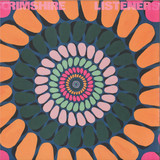
Albert’s Favourites co-founder Adam Scrimshire is set to release his fourth album 'Listeners'. Musically, 'Listeners' draws from Scrimshire's passion for jazz, soul and electronic music of all styles; from an energetic combination of Afrobeat and garage on 'Won't Get Better', to the lushly orchestrated neo-soul of 'Thru You', and the harmonious jazz experimentations of 'I Never'. The album features a host of esteemed guest vocalists and musicians telling their own personal stories, including Georgia Anne Muldrow, Emma-Jean Thackray, Joshua Idehen, Madison McFerrin, Chip Wickham, and James Alexander Bright.
"With this album I wanted to get a more focused sound after six years of relearning and development in the studio. But I also struggled to find my own words, to speak about where I/we are now. So I allowed my collaborators total freedom to tell their own story and as they came back to me, they were telling the same stories I wanted to. It's resulted in some deeply personal confessional pieces: mourning family, collapsing relationships, extremes of self doubt and analysis, trying to balance public and inner persona, and a reminder that life in all forms is important.
It’s called 'Listeners' as I am a listener here, I feel like I've been given these very personal experiences to care for. Listeners because, the travesty of the last few years is that we stopped listening to each other, everyone is shouting at each other and no one is learning. And Listeners because I hope I've made something that is for other people more than I have before. I've tried to craft something warmer and more enjoyable, made for those who give me their time in listening to my music."
- Adam Scrimshire
Since joining the Wah Wah 45s label in 2007, Scrimshire has released three albums of experimental cinematic jazz, and electronic sounds. Following his 2009 debut ‘Along Came The Devil One Night’, his second album ‘The Hollow’ (2011) was a BBC 6 Music Album of the Week, with Gilles Peterson calling it “A late contender for album of the year”.
In the time since the release of his last album ‘Bight’ (“An eclectic range of influences ranging from disco to fusion to more contemporary electronic styles” XLR8R) in 2013, Adam has worked with long-time musical accomplice Dave Koor on new project Modified Man, and launched Albert’s Favourites releasing projects by The Expansions, Hector Plimmer and Jonny Drop. He has continued to gain radio and DJ support for his successful “Scrimshire Edits” series and has produced and mixed records for artist including Stac, Daudi Matsiko, Bastien Keb, Ronin Arkestra, Jonny Drop. He has also continued to develop the Wah Wah 45s label, where he is now a co-owner and director.
Preceded by singles 'Thru You' featuring Georgia Anne Muldrow and 'Life Is Valuable' featuring James Alexander Bright; 'Listeners' is set for release on LP and digital formats via Albert’s Favourites on 19th July 2019.
DJ Support / Press:
Huey Morgan (BBC Radio 6 Music)
Jamie Cullum support on BBC Radio 2
Jamz Supernova on BBC Radio 1Xtra
Thru You Premiered By Mary Anne Hobbs on BBC 6 Music “So Beautiful
WRWTFWW Records is blissful to announce the expanded reissue of one of the most fascinating Japanese ambient/environmental albums ever made, NOVA + 4 by Yutaka Hirose. The double LP includes the album known as Soundscape 2: Nova, sourced from its original masters, as well as 50 minutes of never-released-before recordings. It comes in a beautiful gatefold sleeve, packed with liner notes from the artist in English and Japanese. NOVA + 4 is also available on double digipack CD.
Initially released in 1986 as part of the Soundscape series* commissioned by Misawa Home Corporation for use in their prefabricated houses, Yutaka Hirose's NOVA has grown to become a mythical piece of the Japanese minimalist/ambient/environmental scene of the eighties. Initiated around the enchanting landscapes of the two first tracks recorded for the project, "Nova" and "Epilogue", Yutaka Hirose's magnum opus serenely blends vintage synth with nature sounds, exploring soothing palettes and organic backdrops. For "Slow Sky", Hirose explains he "went for a pointillism-like sound, and tried to express a scenery of awakening, where the portal of a heart is opening up", while on "Humming The Sea", he "tried to compose a kind of music that expresses the daily, lazy life of child-like innocence in a summer vacation in some small town."
The bonus LP gathers four long unreleased pieces created around the same period of time for installations, described by Yutaka Hirose as "not music per se but rather sound sculptures", and including the haunting "Shadow Of A Water Droplet" which was recorded for an Ikebana exhibition.
All in all, NOVA + 4 is a transcendent experience of nature in the urban context, an oeuvre which, much like Midori Takada's Through The Looking Glass or Satoshi Ashikawa's Still Way, holds the power to appease the soul in turbulent times. As one inspired YouTube commenter once said when describing Yutaka Hirose's masterstroke: "I can't tell if the birds are singing inside or outside! Thank you!"
*The Soundscape series also includes Hiroshi Yoshimura's Surround album.
Following on from their recent album on Italian imprint Just This, Hunter/Game present the Silence Remixes out June 7th, featuring contributions from Radio Slave, Inland and Jamaica Suk amongst others.
Silence is a spiralling voyage into the depths of blissful ambience and meditative techno from Milan-based duo Hunter/Game. Arriving after a series of acclaimed EPs on the same label, it is an aesthetic statement of intent, carving out serene spaces of melancholy and upliftment.
For the remixes EP, a carefully chosen selection of artists provide varying interpretations of stand-out tracks from the album. Radio Slave turns ‘Dead Soul’ into a marching ground of melodic techno, whilst Inland breathes robotic life into ‘Crashed Sounds’ and Wrong Assessment levitate ‘Fragments’ over murky waters. Closing off the vinyl is Jamaica Suk’s ominous restructuring of ‘Reaction’.
Owners of the digital release will receive three further remixes. Vessels turns ‘Evolution’ into a broken dreamscape of stepping percussion, whilst Just This affiliate Scissors forges a stripped back, tripped out version of ‘Memories’. Also featured digitally is a second version of Jamaica Suk’s ‘Reaction’ remix.
This is a serious collaboration, two internationally acclaimed artists joining forces on a series of new recordings and live shows showcasing the unending diversity & innovation present in UK Reggae & Dub.
First up is “Sound System Girl” - digging deep into Sandra’s Sound System History on a future sounding re-cut of the Cuss Cuss Riddim , on the flip side ‘Fyah Bun’ is stepping spiritual dub music at it’s best.
Sandra Cross needs no introduction, she is a true legend whose career begun at the age of 14 with a no.1 hit in the UK Reggae charts. Since then she has gone on to be one of THE defining female voices of British Reggae. Sandra’s award winning career has seen her hook up with the likes of Mad Professor and Sly & Robbie for a near endless round of hit singles & albums.
Vibronics, the future sound of dub, have been vibrating the world with bass since 1996. Their music is at the forefront of the UK Dub scene, proven by over 60 releases on their own legendary SCOOPS label as well as a host of albums, singles and remixes for a myriad of other labels such as Jarring Effects, Dubhead and Jah Tubbys. In the studio they have worked with Michael Prophet, Iration Steppas, Macka B, Aba Shanti, Brain Damage, High Tone, Big Youth, Gaudi and an almost endless list of dub & reggae luminaries.
Cut by Rashad Becker at Dubplates & Mastering, Berlin, November 2018
Digital transfer: Jonathan Fitoussi & Diego Losa
Translations: Valérie Vivancos
Layout: Stephen O'Malley
Photos: Jacques Brissot, ARR
Coordination GRM: François Bonnet
Executive Production: Peter Rehberg
Remerciements: Brunhild Ferrari
SIDE A
Music Promenade (1964-1969), 20'29
Electroacoustic Music
World premiere for the Théâtre de la musique, March 16, 1970
" Hétéro-Concert ""
Permanent version for four stand-alone tape recorders. A series of colliding realistic sounds and sonic images. Whilst walking, a man is struck by the violence of his surroundings. Nature has disappeared in a whirlwind of warfare and industry in the midst of which he encounters a dying folklore and a lost young girl.
The "Installation" version is used to sonify a place in which walkers are free to choose their musical itinerary.
SIDE B
Unheimlich Schön (1971), 15'40
Musique concrète made in 1971 in the studios of the Südwestfunk in Baden-Baden.
Voice: Ilse Mengel.
"How does a young woman breathe when thinking about something else "
To be listened to at a low volume.
serenitatem, the fifteenth installment of FRKWYS, RVNG Intl.'s collaboration series pairing intergenerational artists in creative conversation, joins Visible Cloaks with Yoshio Ojima and Satsuki Shibano, two trailblazers of the Japanese avantgarde music and visual arts scenes of the 1980s and 90s.
Yoshio Ojima began his career as a composer of environmental and ambient music, with a particular interest, and optimism, in the possibilities of generative software. His compositional pursuit of human synthesis with computerized forms was realized in its fullest potential alongside Satsuki Shibano, a pianist renowned for her interpretations of Erik Satie and Claude Debussy. Together, they were among a handful of influential Japanese artists whose innovations still resonate, if not more vibrantly than ever, well beyond the tightly-knit scene's original core. In the early 90s, Ojima was among the programmers of the influential satellite radio experiment St. Giga, a constantly-evolving sonic landscape that combined field recordings and sound collage with occasional readings of Japanese poetry. Satsuki was a regular reader for the station. This musical terrarium bloomed out of sight in a small Tokyo studio, a greenhouse of sound with no set start or finish time that audiences could tune into, absorb, and immerse.
The perpetual flow state of St. Giga — recordings of which Ojima shared with Visible Cloaks — would be highly influential to serenitatem's constitution. As Visible Cloaks, the Portland, Oregon duo of Spencer Doran and Ryan Carlile have developed their own set of creative strategies that form an aesthetic fuse point between human intention, aleatoric composition, and improvisation.
These are notions most recently reflected in 2017's Reassemblage and Lex, a respective album and EP in which the duo combined generative software and virtual representations of global instruments into lacy, interlocking patterns. Long time admirers of Ojima's work on albums like 1988's Une Collection Des Chainons, Doran and Carlile discovered after an online introduction that they shared with Yoshio and Satsuki an abiding interest in pre-classical composers, the Lovely Music, Ltd. label, and the British avant-garde, as well as a mutual respect for one another's techniques and processes.
The four musicians met in Tokyo, Japan at Sounduno Studios in December 2017, at the tail end of Visible Cloaks' first Japanese tour, to commence work on serenitatem. Leading up to the studio sessions, Doran and Carlile sent Ojima processed sound sketches recorded while on a European tour, which Yoshio would add to and return. Visible Cloaks would then fold Yoshio's edits back into the original compositions, which Doran and Carlile brought to the exploratory recording session. During that week together in Tokyo, the quartet made use of a number of creative strategies — 'echoing sound together,' as Yoshio puts it. Among the strategies, MIDI randomization gave the quartet melodic lines and what Doran calls 'randomized clouds,' or 'tightly grouped notes that become smeared tonal clusters functioning more like chords in themselves.' Carlile would also feed Ojima and Satsuki's text into Wotja, a generative music software which produced a MIDI language around which the quartet expanded their compositions.
'The aim,' Doran says of serenitatem, 'was to make a work that was not specifically ambient (or environmental), but something more multi-hued, weaving these deconstructive concepts into an album that has a deeper architecture underpinning it.' Accordingly, serenitatem is a marvelously sharp record, its sutures between human and machine virtually impossible to find but suggested everywhere you turn. The collaboration among Ojima, Satsuki, and Visible Cloaks is both musically and conceptually inseparable from the technology that made it possible. Throughout the album, Shibano's playing resonates like Satie's, her rhythms cascading like drops from leaves an hour after the rain. Overtones are stretched and warped like modeling clay, then spun around and shown off from multiple angles.
A single soaring note might seem to be suddenly plunged underwater, its richness of sound made shallow and its sharp edges blunted. Pittering chimes and rapidly warping vocal samples hang in the luxuriously glossy space, water trickles from ear-toear, familiar melodies rise from nothing and dissolve before they can be traced. With the depth of its emotional charge, serenitatem burns away the easy cynicism of the day, presenting itself as the kind of delocalized work of art the internet promised us decades ago — a synthesis of artistic visions, technological sophistication, futurist ambition, and, occasionally, ancient polyphony. Listening to it can feel a bit like tuning in to a 21st Century version of St. Giga: It's a place where the future still grows.
Visible Cloaks, Yoshio Ojima, and Satsuki Shibano's serenitatem, FRKWYS Vol. 15, will be available across LP, CD, and digital formats on April 5, 2019. The quartet will perform select live shows throughout 2019.
Patrick Topping has announced that he will be launching his own record label, TRICK , a home for Patrick to exhibit his versatility as a producer, as well as a platform to showcase the wealth of the emerging talent which he has been pushing in his DJ sets.
Packed with three original tracks from Patrick, the EP-titled 'Watch What Ya Doing ' comes with the launch of his label TRICK and as a much anticipated follow up to the late 2017 Hot Creations smash 'Be Sharp Say Nowt', which continued to dominate throughout 2018. A year which proved another hugely successful one for the UK producer who was called on for the remix duties for Calvin Harris and added Music Radar 's ' Best House Producer/DJ 2018' ' and his third DJ Award for Tech House Artist to his list of accolade that include his DJ Mag ' Best of British ' award and reaching number 11 in Resident Advisor 's 2016 top DJs poll.
This debut release on TRICK showcases a change in sound from the acclaimed artist and an evolution of Patrick 's ever-maturing style. The British DJ displays a new style as a producer, one which has always been a part of his genre-hopping DJ sets, but for the first time as a producer, Patrick delivered an EP packed with darker techno undertones and raw influences.
The imprint's launch follows the British producer's sell-out headline shows at Manchester Academy, two consecutive nights Dublin's District 8, London institution fabric, his very own takeover at The Warehouse Project and as far as Melbourne's huge Shed 14 . Entering a refined and developed chapter of his career, the announcement follows Patrick' s Boxing Day set at Digital, Newcastle , the last ever party in his acclaimed Motion event series, with the UK producer looking to support and nurture emerging talent in future via the launch of ' TRICK.'
White Shadows In The South Seas is the title of a book written in 1919 by Frederick O'Brien as part of a trilogy he wrote based on his experiences living in the Pacific islands in the early part of the 20th century. His book was taken as the starting point for a film to be directed, initially, by Robert Flaherty (famous at the time for his groundbreaking documentary / fiction film Nanook Of The North) with W.S.Van Dyke as his support. The film, ultimately, apart from the title, had little to do with O'Brien's book and Flaherty left the film after a few months leaving Van Dyke to finish it.
I purchased O'Brien's book, along with many others, from Basement Books, a secondhand bookstore in Melbourne/Australia. Part of my 'Islomania' and on going fascination with all things Pacific. When I discovered there was a 1929 silent film based on the book I sought it out and started to present it as part of my 'Live Music/Silent films' repertoire. Tabu by Frederick Murnau, which coincidently also had Flaherty as co-director originally, was the first film I ever wrote / improvised a score for and presented as a live film/music performance. My repertoire extends to over 23 films now.
My eclectic and diverse musical and artistic interests extend into 'Hawaiian', 'Exotica', 'Ambient' and 'Electronic' Music. I have produced several volumes of so called 'Electronic, Ambient, Exotica' on CD and Vinyl, including Kiribati, Globe Notes, Rayon Hula ( on Vinyl, CD and digital format ) and most recently, New Globe Note on Vinyl and White Shadows In The South Seas on CD.
White Shadows In The South Seas features some of the music presented in my live screenings of the 1929 silent film.
The film is the story of Dr. Matthew Lloyd, an alcoholic doctor who is disgusted by the exploitation by white people of the natives on a Polynesian island. The natives dive for pearls, however, numerous accidents occur and one diver dies. In anger, Dr. Lloyd punches Sebastian, the employer. As revenge and to prevent further interruption of his activities, he tricks Dr. Lloyd onto a ship with a diseased crew (thinking they are ill) and his men rough him up and send the ship off into a storm. Dr. Lloyd survives and is washed ashore on an island where none of the natives have ever seen a white man before. Lloyd is rescued and ultimately falls in love with the chief's daughter, who is Taboo, hence Lloyd is prevented from pursuing his love for her. An incident occurs and a young boy is thought to have drowned but Lloyd is able to revive him, earning him points and permission with the chief's daughter. Lloyd begins to realise that the local islanders have no sense of the value of the black pearls which grow in abundance around their island and he starts to dive for them and collect them. One morning the white man Sebastian unexpectedly turns up on a scooner and starts to offer the islanders trade for their pearls. Llloyd tries to interrupt the encounter and is shot and dies. His wife and the islanders morn for his dead body and, symbolically, the passing of a way of life.
Mike Cooper plays - Electric and acoustic lap steel guitars / electronics / Zoom Sampletrack / Kaos Pad / Casio SK1 / Korg Drum Machine / Self Made Instruments.
It also features field recordings made on Pulau Ubin by Mike Cooper during a month as Artist In Residence for The Artist Village / Singapore.
I would like to acknowledge and thank Lawrence English (Room40 Records) for his assistance and encouragement with the original recordings and the CD version of White Shadows In The South Seas.
All music written and played by Mike Cooper PRS/MCPS - except Po Mahina (trad. Arr. Cooper) and Hilo Hanakahi (trad. Arr. Cooper)
Recorded and Mixed at the Steelworks in Rome 2012/2013.
A White Shadow In The South Seas
In February 2014 'A White Shadow In The South Seas' was the title of an audio-visual installation I made at the Teatro In Scatola in Rome, Italy, presented as part of a series of sound installations titled 'Visitazioni' produced by Proposte Sonore.
The essay below, as well as our collection of Hawaiian shirts, Exotica and Hawaiian vinyl records, was an inspiration for this installation.
'..the transformation and reconstitution of the souvenir commodity as an indigenous ethnic art form and a scarce relic of Hawai'i's romanticized past...' from - Clothing and Textile Reasearch Journal - From Kitsch to Chic by Marcia A. Morgado.
And....
Michael Thompson's Rubbish Theory (1979)
' ...a critical aspect of Western culture is the pre-disposition to see objects in terms of two overt categories: the transient and the durable. Objects identified as transient have finite life spans and lose value over time, whereas those identified as durable have infinite lives and over time increae in value....category assignments are arbitrary, but once assigned a category membership determines relative value. Fashion apparel-by defenition-is assigned to the transient category; paintings commonly are designated durables....how is it that transient objects.. ( e.g. Hawaiian shirts and vinyl records ) ..sometimes become durables.
Objects assigned to the rubbish category are largely invisible, have no value and, ideally, no life span. Fashion for example, no longer worn and relegated to the back of the wardrobe has fallen into the covert rubbish category. But rubbish can be rescued and transformed. Thompson says ' What I believe happens is a transient object gradually declining in value and in expected life span may slide across into rubbish. Here it exists in a timeless and valueless limbo where it has a chance to be re-discovered and be successfully transformed to a durable. Such transferes are radical: objects gradually slide from transcience to rubbish, but the transformation from rubbish to durable involves an all-or-nothing leap across two boundaries, that separating the worthless from the valuable and that between the covert and the overt. Things drift into obscurity but they leap into prominence.
The delightful consequence of this hypothesis is that in order to study the social control of value we must study rubbish.
The rubbish-to-durable transformation is accompanied by the development of highly specialized knowledge derived from the discovery of subtle variations and complex details that went unnoticed in the objects transient stage. The discoveries initiate renewed interest in the object and its market value begins to climb. As prices soar beyond the reach of ordinary people, the object becomes available only in high priced collectors' markets. Furthermore, as market values rise, the aesthetic value of the object undergoes a reassessment as well, and it becomes increasingly apparent that the objects intrinsic beauty has been overlooked. Ultimately the object is re -assigned as a durable and becomes recognized as a timeless classic.
Exotica, Ambience and Pacificism - A dialogue with Mike Cooper & Professor Philip Hayward Deputy Pro Vice Chancellor of Research Southern Cross University, Lismore, Australia.