goat (JP) are renowned for two albums released in 2013 and 2015 that took Kraftwerk’s man-machine concept back to its roots with swingeing, inch-tight drums, bass and guitar patterns that needed to be heard to be believed. For their long-in-the-making new album ‘Joy In Fear’, band leader Koshiro Hino (YPY, KAKUHAN) describes the process as “90 percent pain” - and we can well believe it - few other records we can think of transmute DAW-composed rhythmic precision into such an expressive instrumental performance. It really is a feat of determination, skill and execution that seems to defy human dexterity.
Make no mistake - an academic exercise it ain’t - in the most visceral sense, goat (JP) make BODY music, for dancing, flailing, for losing yourself in completely. As usual, Hino plays guitar, backed by bassist Atsumi Tagami, while Akihiko Ando joins on saxophone, while Takafumi Okada and Rai Tateishi step in to handle percussion, with the latter moonlighting on flute. Every sound is sculpted into a fragment of cadence: guitar and bass prangs alternately echo and dance between the drums, and Ando's sax is mutated into a respiratory slobber of guttural smacks and phantom breaths.
In some respects, it's tempting to label it jazz, but the kind of jazz that Miles Davis spearheaded on the game-changing 'On The Corner', the blueprint for so much post-punk, electronic music and avant rock. goat (JP) take that raw alloy and sharpen it like a blade, mangling the template with the knotty metrics of Autechre or Ryoji Ikeda. The accuracy is galvanic; it's almost impossible to comprehend each player keeping a mental note of the mathematical time signatures, and yet they floss them out with trills and icy stutters that seem to evaporate around the thick, taiko-like thuds.
They practically get our teeth gnashing with the bruxist rictus chatter of ‘III I IIII III’ , before ‘Cold Heat’ introduces subtly harmonised, new aspects to their sound with slivers of Hassellian flute and ringing overtones of their percussion, while the winding sensuality of ‘Warped’ slips down very nicely. Their links to OG no-wavers like Glenn Branca & Wharton Tiers’ Theoretical Girls - is manifest in the 8 mins of chipping stop/start pulse and parry to ‘Modal Flower’, while a total left turn into Mark Fell-meets-Ligeti-esque messed up metronomics in ‘GMF’ ties it off with a properly beguiling flourish.
out of Stock
Last delivered 18 months ago available to reorder, subject to availability
Since its founding back in 2014, Blume has carved a unique place in cultural landscape, issuing free-standing works, spanning the historical and contemporary, that represent singular gestures of creativity within the field of experimental sound. Joining their broad efforts in building networks of context and understanding that already includes the works by Werner Durand, Sarah Hennies, Bruce Nauman, John Butcher, Jocy de Oliveira, Mary Jane Leach, Valentina Magaletti, Alvin Curran, Julius Eastman, Alvin Lucier, and shortly after returning with the first ever vinyl release to attend to James Tenney’s legendary “Postal Pieces”, the label is now offering a brand new, ambitious work by the American composer Ben Vida, entitled “Vocal Trio”, conceived, performed, and recorded in Bremen, Germany, during the Spring of 2022. A truly stunning work of compositional conceptualism, combining the ideas of systems based synthesis with real-time vocal collaboration - issued in a highly limited vinyl edition of 200 copies mastered by Stephan Mathieu, featuring specially commissioned liner notes by Bradford Bailey and a leporello insert offering the piece visual score - it’s a landmark in contemporary experimental practice and arguably the most forward-thinking and exciting piece by one of the most exciting American artists working today.
Ben Vida first emerged during the mid 1990s within a loose constellation of experimental musicians, centred around a performance series of improvised workshops at the Myopic Bookstore in Chicago, alongside Jim O'Rourke, Kevin Drumm, Chad Taylor, and the other future members of Town and Country - Jim Dorling, Joshua Abrams, and Liz Payne - the band within which he would gain widespread recognition over the following years. Like many other members of that scene, Vida remains a restless product of a fleeting context - Chicago during the 1990s and early 2000s - continuously undermining concrete notions of idiom and signifier within a practice that witnessed him rendering bristling abstractions within Pillow, glacial melodies with Town and Country, the art-rock mayhem of Bird Show Band, and the angular, driving indie rock of Joan of Arc, before becoming immersed in a practice of systems based synthesis, beginning in the 2010s, that guided much of his first decade of output as a solo performer and composer.
As early as 2013, he began to incorporate acoustic sound sources - specifically the human voice - into his work. It was this shift, evolving and refining itself over the last decade, that underscores radically the leap in his practice represented by “Vocal Trio”, a work that encounters Vida composing for the human voice with the ideas that allow for synthesis - transferring the underlying concepts and structures of both subtractive and additive synthesis to the acoustic realm - without using a synthesiser.
During the Spring of 2022 Vida was in Bremen, Germany, collaborating on a dance piece with the choreographer Fay Driscoll, when the production fell into delays. Finding himself with time on his hands, a space at his disposal, and the company of two dancers - Amy Gernux and Lotte Rudhart - who were also singers, the idea for the piece - to utilising the larynx as audio paths (multi-harmonic or harmonically pure) while conceptualising each person’s mouth as a filter to sculpt the timbre and resonance of a given tone - began to take shape in his mind. Considering how typographical scores might be developed into a non-linguistic social framework, Vida drafted a single page of text - what became the score for “Vocal Trio” - accompanied by a set of harmonic suggestion and loose parameters, seeking a core meaning from each word's phonic make-up by each of the three singers (Vida, Gernux and Rudhart) singing as slowly as possible.
At the core of the pulsing vocal drones - intoxicating, harmonically rich long-tones - that make up the duration abstraction of “Vocal Trio”, is Vida’s regard for music as a social space. It is an experiment that seeks liberation through the act of collective music making, by challenging the terms through which the act of composing is perceived and then relinquishing control. The piece’s rehearsals were simply the three performers hanging out, allowing their knowing each other and natural dynamics to contribute to its form as the score, before recording during a single afternoon at the end of a number of days sharing company and space.
Creatively visionary and groundbreaking on numerous terms, as well as being intoxicatingly beautiful and remarkably listenable, Ben Vida’s “Vocal Trio” represents a striking step forward for one of the most ambitious and outstanding sonic artists working in the United States today. Issued by Blume in a highly limited vinyl edition of 200 copies mastered by Stephan Mathieu, featuring specially commissioned liner notes by Bradford Bailey and a leporello insert offering the piece visual score, this is hands down one of the most important contemporary records we’re likely to encounter in 2024.
out of Stock
Last delivered 2 years ago available to reorder, subject to availability
Brace yourselves for the Rise Of The Raptor! An eruption of rave latino and thunderous grooves with four timeless originals and a future sonic remix by cult dance mastermind Amor Satyr.
This action-packed collection includes, for the very first time on vinyl, DJ Babatr's legendary breakout club anthem "To-K." Additionally, he is unveiling three never-before-released Raptor classics from his vault: "Soundmind," "BUTTA (Piano Mix)," and "DANCE THE SQUAST." These tracks are fully loaded with all the signature trimmings and hallmarks we've come to love from the Venezuelan rave king.
out of Stock
Last delivered 22 months ago available to reorder, subject to availability
Celebrating their 10th anniversary, Slowly Rolling Camera's sixth studio release, 'Silver Shadow,' is inspired by the dynamic interplay of film montages—infused with soul-stirring rhythms, magnetic melodies, and a lush spectrum of emotional tones.
Since bursting onto the scene in 2013, Cardiff's Slowly Rolling Camera has crafted a distinctive niche in the European jazz tapestry, effortlessly weaving together soul-stirring rhythms, magnetic melodies, and a rich palette of emotional hues. Known for alchemical compounds of jazz finesse, cinematic gravitas, and electronic flair, Slowly Rolling Camera fashions sound, perpetually pushing the boundaries of musical creativity.
"This album reflects our fascination with the cinematic approach, not just in sound, but in how we construct our music". SRC’s latest album, 'Silver Shadow,' delves even deeper into that cinematic realm. Inspired by the visual and musical interplay infilm montages, 'Silver Shadow' centers around a fictional protagonist, encapsulated both in the album’s narrative arc and its striking artwork. The tracks, concise and emotionally consistent, mark a departure from earlier long-form composition, aiming instead for more immediate impact.The core trio of Dave Stapleton (keys), Deri Roberts (sound design & production), and Elliot Bennett (drums) drive the band's collective ethos, further ornamented by a vibrant ensemble of collaborators including Jasper Høiby on bass, Josh Arcoleo onsax, Stuart McCallum on guitar, and Verneri Pohjola on trumpet. The band’s genre-defying approach and profound emotional depth has earned comparison with iconic groups The Cinematic Orchestra and GoGo Penguin and captured the hearts ofmany thousands of fans worldwide.
sentiment is a meditation of the poignant emotional terrains of loneliness, nostalgia, sentimentality, guilt, and sex. The album"s narrative arc is guided by delicate musical gestures and artistic vulnerability, audaciously synthesizing disparate and unexpected influences. claire rousay is a singular artist, known for challenging conventions in experimental and ambient music forms. rousay masterfully incorporates textural found sounds, sumptuous drones and candid field recordings into music that celebrates the beauty in life"s banalities. Her music is curatorial and granular in detail, deftly shaped into emotionally affecting pieces. rousay"s vocals and guitar take center stage on sentiment. Her intimate, diaristic lyrics contrast with her mechanical-inflected vocal effects, emphasizing a powerful desire for connection, a deep yearning and a lingering sense of separation. The spare guitar playing and laconic tempo both drive the songs and exude a sense of resignation. Her delicate mastery of nuance draws on her explorative musical past that she, with sincerity and admiration, seamlessly interweaves into her adventurous textures and distinctive compositions. "I want to belong to the worlds and communities I look up to. Same as someone using a Fender guitar or dressing like Kurt Cobain. Emulate your heroes," says rousay. The album balances the poetic soul of her influences with a documentarian heart, rousay capturing moments of her life while living alone in houses across the country, learning to play guitar, and reconnecting with pop music. Her innate ability to conjure pure feeling from sound derives from her delightful embrace of pop forms, the vulnerability found in field recordings, minimalistic arrangements and innovative sound choices. sentiment is blissfully, achingly melancholic, and an undeniably sensual listening experience.
Black Truffle is thrilled to announce a reissue of Chico Mello and Helinho Brandão’s self-titled release from 1984, the first return to vinyl of this classic of Brazilian experimental music with its original cover art and complete track listing. An under-recognised figure whose work inhabits a singular terrain where radical new music techniques and music theatre meet musica popular brasileira, Mello has lived and worked in Berlin since the late 1980s. A student of Dieter Schnebel, Mello played in the 90s iteration of Arnold Dreyblatt’s Orchestra of Excited Strings alongside compatriot Silvia Ocougne, with whom he produced a radical and hilarious deconstruction of MPB classics on Musica Brasileira De(s)composta (an early and rather atypical release on Edition Wandelweiser).
On this release, his only recording predating his move to Europe, Mello works with the alto saxophonist Helinho Brandão, who appears to be otherwise unknown outside Brazil. The record’s six tracks range from solo saxophone improvisation to densely layered ensemble works bridging minimalism, acoustic sound art and a plaintive melodic sensibility that calls up Edu Lobo or Milton Nascimento. Beginning with a dramatic, dissonant wind and string surge from which emerge ominously pounding piano chords, opener ‘Água’ slowly builds in intensity, a halo of clustered vocal harmonies gradually closing in on Brandão’s squealing sax until the piece opens up to reveal a gorgeous passage of melodic singing. The piano accompaniment reduces to tolling bass notes as the voice begins a repeated incantation, suggesting a ritualistic atmosphere reminiscent of parts of Xenakis’ setting of Oresteia. Dissonant, sawing tremolos on the strings climb to a crescendo before disappearing into the sounds of water being poured and splashed into metal vessels, presented not as a field recording but as a percussive element performed by the ensemble. A child’s voice then appears, singing to piano accompaniment the same melody heard earlier in the piece. After a brief solo alto improvisation from Brandão, working with the guttural pops and fleeting melodic gestures of Braxton or Roscoe Mitchell, the remainder of the first side is dedicated to the leisurely unfolding of ‘Baiando’ over the course of twelve minutes. A trio for Brandão on soprano saxophone, Mello on a very period-appropriate phased nylon string guitar and Edu Dequech on bongos, the performance eases its way hypnotically through subtle variations on a set of rhythmic and melodic patterns, almost derailed at points by Brandão’s wild forays into extended technique but held together by Mello’s droning guitar notes.
The second side opens with another multi-part epic for a larger ensemble, ‘Matraca’, which makes use of strings, electric guitars and a wide range of South American percussion instruments. Rasping violin harmonics hover as drum hits, repeated guitar notes and triangle accompany a slowly descending bass glissando. A sudden change in direction introduces a thrumming, incessantly repeated bowed bass tone, beginning a series of episodes of minimalist phasing and pattern variation, the combinations of electric guitars and orchestral instruments giving the ensemble an ad hoc charm like the early Penguin Café Orchestra but with more percussive drive. Eventually the piece is overrun by a cacophony of the titular matracas (a kind of ratchet/cog rattle). Following a lyrical trio improvisation by Mello, Brandão and Gerson Kornin on bass, the final ‘Danca’ focuses entirely on Mello’s layered acoustic guitars and vocals, using this restricted palette to build up a haunting piece of almost orchestral density, reminiscent of the 70s work of Egberto Gismonti in how it thickens a folkish ambience with harmonic sophistication.
Arriving in a starkly beautiful gatefold sleeve and sounding better than ever in its new remaster, one might call the stunning music contained on Chico Mello/Helinho Brandão ahead of its time. But what (other than some of Mello’s own work) produced in the years since its initial release has really touched the organic fusion of minimalism, free improvisation, radical instrumental technique and popular song achieved here? Forty years after its first release, Chico Mello/Helinho Brandão remains music of the future.
out of Stock
Last delivered 2 years ago available to reorder, subject to availability
When we were offered the most welcome opportunity of choosing another “virgin” (as in never released on vinyl before) volume from the Dick’s Picks catalog, we did our Dead diligence, combing through the many chat rooms online to see which one the fans really wanted to see come out on LP. It will come as no surprise that opinions were varied and vehement…but a consensus emerged that Dick’s Picks Vol. 12—Providence Civic Center 6/26/74 & Boston Garden 6/28/74 was the one. Which is interesting, because that Pick is a little different, combining the second sets of two different nights instead of offering a single show. But it’s the exception that proves the rule—the playing is so extraordinary, and the repertoire so unusual, that one can understand why Dick Latvala played more curator than archivist here. Side A picks up the second set from Providence three songs in, featuring a short jam that leads into what many have labeled the most extraordinary live version of “China Cat Sunflower” ever recorded, complete with a sublime transition (“Mud Love Buddy Jam” a.k.a. “Mind Left Body Jam”) into “I Know You Rider.” The revelatory moments continue throughout the Providence set, highlighted by a dazzling, 15-minute “Spanish Jam.” But the second set of the Boston show—which appears here complete, after a superb encore performance of “Eyes of the World” from Providence—is the one that has passed into legend among Dead fans (a performance of Phil Lesh and Ned Lagin’s electronic music piece “Seastones” provides an appropriately adventurous interlude). The set boasts one of the most renowned live jams of the band’s career, a flawless, 14-minute “Weather Report Suite: Prelude/Pt. 1/Pt. 2-Let It Grow” leading into a 27-minute “Jam” that is simply one of the most far- ranging, telepathic improvisations ever played by, well, anybody. That this set also includes a separation of the “Sunshine Daydream” section from “Sugar Magnolia” for only the second time ever is just gravy. This is, of course, a “Wall of Sound” concert, so we’re working with something of a special audio source to begin with. So, we enlisted Jeffrey Norman to master the release for vinyl from the original tapes (pictured on the enclosed insert), and enlisted Clint Holley and Dave Polster over at Well Made Music to cut the lacquers. Gotta Groove Records, our manufacturer of choice, has pressed the 6 LPs on to 180-gram black vinyl housed inside a two-piece hardshell box, and we have a little stencil surprise for ya on Side L. Limited edition of 3000 hand- numbered copies!
Isabell Gustafsson-Ny joins Warm Winters Ltd. with Rosenhagtorn, a suite of short pieces for piano, violin and voice. Absorbing in its profound focus on listening, this collection is a striking exploration of these sound sources; their repetitions, harmonics and oscillations. Conceiving of the release as a house, a different song is playing in each room, Gustafsson-Ny was able to explore the rawness and fragility of each instrument with incredible freedom and sensibility. She describes the album in the following words: "In the music there is both repetition and flow, but also the creak of the pedal organ. Here are Radigue traces and slow slow piano. Here is the violin again, resumed after many years of almost fallow. Here are the overtones and the scratchy strings. Here I dare to open the door to the voice." A unique kind of dusty, intimate folk music.
This led to her immediate recognition as a banjo pioneer and to her win in 1991 of the Banjo Player of the Year award from the International Bluegrass Music Association (the first female to win an Instrumentalist of the Year award). For the 2024 reissue, the original 8- track, 1" multitrack tapes were transferred at a resolution of 192kHz/36- bit, and remixed and mastered by Matt Coles at
Compass Sound Studio in Nashville.
The album was produced in 1989 by acoustic music icon and frequent Jerry Garcia cohort David Grisman (architect of "Dawg Music," the jazz- influenced breakout fringe of the bluegrass genre) and recorded with a cast of all- star musicians at Dawg Studio in Marin, CA. Players on the sessions included Alison Krauss (fiddle), David Grisman (mandolin), Mike Marshall (guitar, fiddle, mandolin), Matt Eakle (flute), Joe Craven (percussion) and Jim Kerwin (bass).
The album's 12 tunes were all written by Alison and include the first recorded versions of some of her most well- known compositions, including "Mambo Banjo," "Leaving Cottondale," and "Weetabix."
REMIXED AND REMASTERED from 192kHz/36-bit transfers of the original multitrack tapes. LP – features LIMITED EDITION BLACK & WHITE SWIRL + album download code with 3 never- before- released bonus tracks Includes a 4- COLOR BOOKLET with liner notes from Alison Brown, Dave Dennison, and Mike Marshall, plus ARCHIVAL PHOTOS and SESSION DOCUMENTS
Specially prepared liner notes by renowned music writer Brian Morton. From his early days as a pioneer of rockabilly and rock & roll in the 1950s, to his decades as an international representative of country music, to his resurgence to fame as both a living legend and an alternative country icon in the 1990s, Johnny Cash has influenced countless artists and left a body of work matched only by the greatest artists of his time. This LP presents some of his greatest hits, including the classic I Walk the Line.
Johnny Cash (1932-2003) developed a unique sound from his early Sun recordings with the Tennessee Two. His unusually deep, resolutely un-decorous voice rode atop the boom- chicka- boom guitar style invented by his right- hand man Luther Perkins and a rockabilly-ish slap bass by Marshall Grant.
Susan moved in a new direction for this album, travelling to Nashville to work with top local session players, and arrangers. The album features songs from the 1940s standard "Over The Rainbow" to the 1990's classic love song "When You Say Nothing At All" and also includes covers of songs from Van Morrison, Buddy Holly, and Burt Bacharach.
This is part of the evosound 20th Anniversary special re-release collection. The album will be available on 180g vinyl transparent green LP.
Debut standalone VHF album by the Elkhorn duo of Drew Gardner and Jesse Sheppard, a tight set of six studio recordings in a variety of moods and featuring a lot of new sound textures. Elkhorn’s prolific stream of releases since 2016 has highlighted their mastery of sprawling long-form, acoustic-driven hypno-jams, with an emphasis on live performance (including on their collaboration with Pelt’s Mike Gangloff on the Shackamaxon Concert album). The Red Valley is a more layered and composed-sounding set, with the duo overdubbing extensively on top of their own dual guitars. Leading off the LP, “Crystal Hummingbird” features one of their signature minor-modal vamps, with layers of fuzz bass, zither, and frame drum providing weight and psychedelic density. “Gray Salt Trail” continues the vibe, with thick fuzz vibraphone supplementing the cinematic palate, leading into the spare side-closer “Black Wind Of Kayenta,” where Sheppard plays electric 12-string and Gardner solos on acoustic guitar. Side two starts with “Road to Chaco Canyon,” a brooding duet that builds momentum with Gardner’s insistent frame drum cadence, dropping down into the quiet string pool of “Inside Spider Rock” (featuring Fern Knight’s Jesse Sparhawk on gloriously swirling lever harp) and the graceful finale “Jackrabbit Hops.”
Record producer, composer, singer, and pioneer of the dub music genre Lee Scratch Perry passed away in August 2021. His influence over popular music since the 1970s is hugely significant, with artists including Bob Marley & The Wailers, The Clash, Beastie Boys, Max Romeo, Junior Murvin and The Orb all enriched by Perry’s legendary touch, innovative studio techniques and production style.
Conceived, written and recorded during the COVID pandemic, ‘King Perry’ was produced by Daniel Boyle, and features guest performances from Greentea Peng, Shaun Ryder, Tricky, Marta, Rose Waite and Fifi Rong. Two tracks were also co-produced with Tricky, who releases Perry’s last recorded performances on his False Idols label.
Over a career spanning six decades, Lee Scratch Perry left the music world with a huge catalogue of albums, productions and appearances that cannot be underestimated. Releases for Island Records, Trojan, Adrian Sherwood’s On-U Sound, Mad Professor’s Ariwa...the list goes on. It was in 2014 that Perry teamed up with UK producer Daniel Boyle, and from this collaboration came the Grammy nominated album ‘Back At The Controls’ and was followed up five years later with the ‘Black Album’.
The ‘King Perry’ album was born out of a request from Perry that he “wanted to do something new, something different but still with a dub framework”. And so, armed with influences as diverse as synthwave, big beat, drum & bass and electronica, Boyle and Perry traded ideas, beats and lyrics in a project that continued to grow as its various guest performers were added, resulting in a kaleidoscopic and engaging melting pot of rhythms, melodies, and voices. Poignantly, closing track ‘Goodbye’ was Perry’s last ever recorded vocal performance.
out of Stock
Last delivered 2 years ago available to reorder, subject to availability
PRZ comes to Sync 24's Cultivated Electronics with his first double Album ''Lost Art''. In the ever-evolving realm of electronic music, where sonic innovation is the currency, PRZ (Gal Perez) emerges as a luminary, crafting sonic landscapes with a distinct style that blends intricate rhythms, ethereal melodies and pulsating beats. As a producer, DJ and co-founder of the Chateau Royal label and Pluto Junkies member, PRZ has spent the last decade shaping his sound and releasing tracks on some of dance music's most respected labels including Clone West Coast Series and Hilltown Disco. With a boundless imagination and unwavering commitment to sonic exploration, his ''Lost Art'' release is a fully-formed album rather than just a collection of tracks, opening with the atmospheric intro of ''Introvert'', before the playful sonic antics of tracks like ''Lazerton'', ''Lost Art'' and ''Voice Over''. Other tracks bring pure Electro darkness like ''Velocity Shift'' alongside the ElectroTechno of ''Time To Decide'', the EBM-esque ''Azaya'' or the retro funk of ''Back From 89'' - all primed for dance floors, before closing on the melancholy ''Miss You''.
out of Stock
Last delivered 17 months ago available to reorder, subject to availability
Marking sixty years of Bossa Nova, and twenty years since Marcos Valle’s first release for Far Out Recordings, what better time to bring back this era-defining classic from the Brazilian master composer?
Throughout his astounding six-decade career, infiltrating pop, bossa nova, samba, delicate psychedelia, jazz and funk, Marcos Valle has consistently shown a dogged determination to transcend the traditions and structures of bossa nova, whilst never veering away from the movement’s inherent, fundamental spirit. To some extent, his epithet ‘the original Rio beach boy’ is a handy one: it reflects the origin and character of his often sun-soaked sound, but expounding his importance in the lineage of Brazilian music, he is more discerningly known as ‘the renaissance man of Brazilian pop’. He is indeed one the very greatest and most important composers, arrangers, writers and performers in Brazil.
Up until Nova Bossa Nova, Marcos Valle hadn’t released an album for well over a decade. After 1983, he resented the way the music industry had changed with commercialisation and new demands curtailing his creative freedom. This was until 1994 when Marcos met Far Out boss Joe Davis and they recorded a track for Far Out’s first Friends From Rio album. This new collaborative partnership resulted in a new solo album, which commenced recording in 1996.
Nova Bossa Nova brought Marcos bouncing back into the 90s, slotting nicely in place alongside the acid jazz movement as well as a voracious new demand for Brazilian music on dancefloors from London to Tokyo. It was witnessing the London club scene’s growing appetite for Brazilian music, as well as a lack of new sounds coming out of Brazil at the time, that a young Joe Davis put in a proposal to record a new album with one of his musical idols. Joe wanted to facilitate an album which would combine the latest technologies and production techniques, with live to analogue tape recording: a Marcos Valle album tailor-made for London’s clubs. Always open to modern influences and possibilities, Marcos agreed to the project, and Joe and his production partner Roc Hunter flew to Rio in ‘96. The record wasn’t released until ’98, as the original ½ inch tapes were stolen from Far Out’s London studio, meaning parts of the album had to be re-recorded.
Nova Bossa Nova was unveiled at the peak of the of the Brazilian movement, the record would also prove to be something of a revolution, inspiring a new generation of artists like Bebel Gilberto, Sabrina Malheiros, Da Lata and Bossacucanova, who continued to fuse Brazilian influences with modern electronic sounds.
out of Stock
Last delivered 2 years ago available to reorder, subject to availability
After releasing their first EP Fuse, Cranes expanded to a four-piece band and recorded their debut full-length album Self-Non-Self in 1989. Their sound has been described as “gothic minimalism” and “dreampop”, and also became part of the shoegazing movement in the early Nineties. This 1989 album showed their progression with the increased textures in sound and drum slams. The album contains a darker sound and is a mixture of industrial and post-punk music. Originally only six tracks, the band’s label Dedicated Records added a further two tracks upon its re-release in 1992: “Reach (Live)” and “Nothing In The Middle, Nothing At The End”. In that same year, Cranes went on a world tour with The Cure, which increased their popularity. Self-Non-Self is available as a 35th anniversary edition of 1000 individually numbered copies on black & white marbled vinyl.
Marking its first decade of activity, Blume returns with the first ever vinyl reissue of the seminal “New Music for Electronic and Recorded Media”, from 1977, the third and final instalment in a suite of releases that includes James Tenney’s “Postal Pieces” and Ben Vida’s “Vocal Trio”. Unquestionably among the most important collections of experimental music to emerge during the 20th Century, “New Music for Electronic and Recorded Media” is the original feminist presentation in its context, releasing the work of Johanna M. Beyer, Annea Lockwood, Pauline Oliveros, Laurie Spiegel, Megan Roberts, Ruth Anderson, and Laurie Anderson under its collective banner. Includes newly commissioned liner notes by Jennifer Lucy Allen and Bradford Bailey.
Since its founding back in 2014, Blume has carved a unique place in cultural landscape, issuing free standing works, spanning the historical and contemporary, that represent singular gestures of creativity within the field of experimental sound. Joining their broad efforts in building networks of context and understanding that already includes the efforts of efforts of Werner Durand, Sarah Hennies, Bruce Nauman, John Butcher, Jocy de Oliveira, Mary Jane Leach, Valentina Magaletti, Alvin Curran, Julius Eastman, Alvin Lucier, and others, Blume delivers their third release in their first suite of releases for 2024, the fist ever vinyl reissue of the seminal “New Music for Electronic and Recorded Media” compilation, originally issued by Thomas Buckner's 1750 Arch Records in 1977. Out of print for decades on vinyl and arguably the most important feminist statement in the history of experimental music, illuminating the work of Johanna M. Beyer, Annea Lockwood, Pauline Oliveros, Laurie Spiegel, Megan Robert, Ruth Anderson, and Laurie Anderson - in a number of cases representing their recording debuts - during a crucial moment in the history of experimental music. Blume’s brand new edition - complete with newly commissioned liner notes by Jennifer Lucy Allen and Bradford Bailey, as well as reproducing Charles Amirkhanian’s original accompanying text - radically shifts perceptions of the past and present day with its truly revolutionary sounds.
Issued by Thomas Buckner's 1750 Arch Records in 1977, and out of print nearly the entire time since, “New Music for Electronic and Recorded Media” can be understood within two simple frameworks. On one hand, it is an astounding document of the landscape of experimental music toward the end of the 1970s. On the other, it is a historically significant feminist statement, being the first collection of experimental music entirely dedicated to female composers, a number of whom were grossly under-celebrated at the time, but have since gone on to be regarded as among the most important composers of their generation.
The eight pieces gathered by “New Music for Electronic and Recorded Media” - Johanna M. Beyer’s “Music of the Spheres”, Annea Lockwood’s “World Rhythms”, Pauline Oliveros’ “Bye Bye Butterfly”, Laurie Spiegel’s “Appalachian Grove I”, Megan Roberts’ “I Could Sit Here All Day”, Ruth Anderson’s “Points”, and Laurie Anderson’s “New York Social Life” and “Time To Go (For Diego)” - might be regarded as the first cohesive vision of alternate proximity or expression of experimental music to what has always been a frustratingly male dominated environment, and to the tropes, temperaments, and sensibilities that have been historically perceived to define it. It is an expanded vision of truth. While the presence of feminine sensibilities and temperaments in experimental music, however they may present themselves, were anything but new in 1977, “New Music for Electronic and Recorded Media” was the first opportunity, beyond the temporal limitations of live performance, to view them collectively, rather than as individualised expressions within a larger body of similar gestures (as was the case of Oliveros’ inclusion in Odyssey’s 1967 “New Sounds In Electronic Music” and “Extended Voices” compilations) where they might be confused for something else; to regard and celebrate a radical notion of feminine sonority for its unique characteristics and through its interrelations.
While its historical significance and groundbreaking nature can not be debated in its totality, nearly half a century on “New Music for Electronic and Recorded Media” remains compelling in both its musicality and the palpable sense of its lasting influence. Every composition across the album’s two sides is not only engrossing and deeply compelling - feeling as fresh and relevant as the day it was laid to tape - but clearly tangible in their lasting influence. Viewed in context, the album’s eight works feel like breath of fresh air when compared to much of what came before, and laid the groundwork for much of what was to come, introducing a new, often more holistic temperament and more sensitive and inclusive sensibility into the landscape of experimental music.
Particularly in the case of Annea Lockwood, Pauline Oliveros, Laurie Spiegel, Ruth Anderson, and Laurie Anderson, it's hard to throw ourselves back in time and imagine a moment when these composers rested in a fairly marginalised corner of the creative landscape. Blume’s brand new edition of “New Music for Electronic and Recorded Media” - complete with newly commissioned liner notes by Jennifer Lucy Allen and Bradford Bailey, as well as reproducing Charles Amirkhanian’s original accompanying text - brings us back to this confounding moment and points us toward a crucial moment of change set forth by these incredible composers and their sounds. Absolutely seminal and not to be missed.
Dauw welcomes Berlin based musician Midori Hirano to the label with her new album Soniscope. Award winning composer Robot Koch provided a rework of the track Patterns under his recently announced new ambient project Foam and Sand.
With releases on acclaimed labels such as Longform Editions, Sonic Pieces and Alien Transistor, Midori Hirano is no stranger within the field of electro-acoustic piano music. While she is more known for her studio-work, it is often forgotten that she also has a long tradition of writing for films and theatre productions. This forms an important part in her work and a constant inspiration for her autonomous work. Soniscope is no exception in that regard. While working on the film Mizuko (Kira Dane, Katelyn Rebelo, 2019), a still of many little Jizo statutes got her attention and came to be the first steps of her new album.
“I was fascinated by the combination of the image and sound which well emphasized the stillness with a slight of emotion.” (Midori Hirano)
With the Jizo statutes on her mind, Midori Hirano wanted to make an album and started envisioning several personal narratives. Soniscope can be considered as the soundtrack of her own personal stories related to these statues of which Mizuko Jizo was the starting point. With Soniscope, Hirano continues in the same vein as her previous albums in which piano and electronic arrangements hold a central place. However, on this record she specifically explored new possibilities in terms of techniques and instruments.
Midori Hirano is a Japanese musician, composer and producer, born in Kyoto and living in Berlin since 2008. She started learning the piano as a child, and this triggered what was to later see her study classical piano at university. Therefore her productions are based on the use of acoustic instruments such as the piano, strings or guitars, but yet experimental and an eclectic mixture of modern digital sounds with subtle electronic processing and field recordings.
Her first two albums were released on noble records, and her second, “klo:yuri”(2008), saw her further develop of her sound, garnering critical acclaim from various media including TIME magazine , BBC radio and FACT Magazine. Over the following years Midori has performed in venues and festivals as diverse as Club Transmediale, Heroines of Sound Festival, Erased Tapes Sound Gallery, L.E.V. Festival, Boiler Room Berlin, and Wonderfruit Festival.
The nine solo albums and numerous single track releases to date include the works of her other moniker MimiCof, in which she explores the realm of experimental music and detailed rhythmic patterns, combined with an idea of drawing melodic shapes and harmonies. Her recent works have been released by labels such as Sonic Pieces, Daisart, Alien Transistor, raster-media, 7k! Music and Longform Editions.
Besides producing her own works, she composes music for films, video installations and dance performances. The films that have commissioned works by Midori have been screened at Berlin International Film Festival, SXSW Film Festival, International Documentary Film Festival Amsterdam and among others.
out of Stock
Last delivered 4 years ago available to reorder, subject to availability
Heaven Born and Ever Bright is the third studio album by British rock band Cardiacs. It was produced by Tim Smith, engineered by David Murder and mixed by both Available on CD Digifile and Single Sleeve Violet coloured vinyl (pressed from the 1991 master) Cardiacs are an English rock band formed in Kingston upon Thames by Tim Smith (guitar and lead vocals) and his brother Jim (bass, backing vocals) in 1977 under the name Cardiac Arrest. One of Britain's leading cult rock bands, Cardiacs' sound folded in genres including art rock, progressive rock, art punk, post-punk, jazz, psychedelia and heavy metal (as well as elements of circus, baroque pop, medieval music, nursery rhymes and sea shanties), all of which was topped by Smith's anarchic vocals and impressionistic lyrics. Their bizarre sound and image made them unpopular with the press, but they amassed a devoted following Tim Smith was the primary lyricist, noted for his complex and innovative compositional style. He and his brother were the only constant members in the band's regularly changing lineup. The band created their own indie label, the Alphabet Business Concern, in 1984 and found mainstream exposure with the single "Is This the Life?" from their debut album A Little Man and a House and the Whole World Window (1988). Their second album, On Land and in the Sea (1989), was followed by Heaven Born and Ever Bright (1992), which displayed a harder edged, metal-leaning sound retained in the subsequent albums Sing to God (1996) and Guns (1999). Tim Smith was hospitalised with dystonia resulting from a cardiac arrest in 2008, which brought increased and belated critical recognition to Cardiacs, with several music outlets calling Sing to God a masterpiece. His death in 2020 saw a raft of tributes on social media
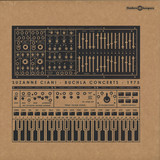
Finders Keepers invite you to witness the incredible first ever Buchla synthesiser concerts/demonstrations providing a distinctive feminine alternative to The Silver Apples Of The Moon if they had ever been presented in phonographic form. This is history in the remaking.
This spring Finders Keepers Records are proud to release an archival project that not only redefines musical history but boasts genuine claim to the overused buzzwords such as pioneering, maverick, experimental, groundbreaking and esoteric, while questioning social politics and the evolution of music technology as we've come to understand it. To describe this records as a game-changer is an understatement. This record represents a musical revolution, a scientific benchmark and a trophy in the cabinet of counter culture creativity. This record is a triumphant yardstick in the synthesiser space race and the untold story of the first woman on the proverbial moon. While pondering the early accolades of this record it's daunting to learn that this record was in fact not a record at all... It was a manifesto and a gateway to a new world, that somehow never quite opened. If the unfamiliar, modernistic, melodic, pulses, tones and harmonics found on this 1975 live presentation/grant application/educational demonstration had been placed in a phonographic context alongside the promoted work of Morton Subotnick, Walter Carlos or Tomita then the name Suzanne Ciani and her influence would have already radically changed the shape, sound and gender of our record collections. Hopefully there is still chance.
In short, Suzanne was a self-imposed twenty-year-old employee of the Buchla modular synthesiser company, San Francisco's neck and neck contender to New York's Moog. Buchla was run by a community of festival freaks and academic acid eaters whose roots in new age lifestyles and the reinvention of art and music replaced the business acumen enjoyed by its likeminded East Coasters. In the eyes of the consumer the creative refusal to adopt rudimentary facets like a piano keyboard controller rendered the Buchla synthesiser the more obscure stubborn sister of the synth marathon, steering these incredible units away from the mainstream into the homes and studios of free music aficionados, art house composers and die-hard revolutionaries. Championed and semi-showcased by composer Morton Subotnick on his albums The Bull and Silver Apples Of The Moon, Buchla's versatility began to open the minds of a new generation, but the high-end design features and no-compromise modus operandi was often confused with incompatibility and, in the pulsating shadow of Moog's marketing, the revolution would not be televised nor patronised. Suzanne Ciani, as one of the very few female composers on the frontline (and also providing the back line) did not lose faith.
These concerts' are the epitome of rare music technology historic documents, performed by a real musician whose skills and academic education in classical composition already outweighed her male synthesiser contemporaries of twice her age. At the very start of her fragile career these recordings are nothing short of sacrificial ode to her mentor and machine, sonic pickets of the revolution and love letters to an absolutely genuine vision of and 'alternative' musical future. In denouncing her own precocious polymathmatic past in a bid to persuade the world to sing from a new hymn sheet, Suzanne Ciani created a bi-product of never before heard music that would render the pigeon holes ambient' and futuristic' utterly inadequate. Providing nothing short of an entirely different feminine take on the experimental records' of Morton Subotnick and proving to a small, judgmental audience and jury the true versatility of one of the most radical and idiosyncratic musical instruments of the 20th century. These recordings have not been heard since then.
The importance of these genuinely lost pieces of electronic musics puzzle almost eclipses the glaring detail of Suzanne's gender as a distinct minority in an almost exclusively male dominated, faceless, coldly scientific landscape. Those familiar with Suzanne's work, a vast vault of previously unpublished non-records', will already know how the creative politics in her art of being' simultaneously reshaped the worlds of synth design, advertising and film composition before anyone had even dropped a stylus in her groove. Needless to say this record, finally commanding the archival format of choice, courtesy of the Ciani and Finders Keepers longstanding unison, was not the last first' with which this hugely important composer would gift society, and the future of a wide range of exciting evolving creative disciplines.
You have found a holy grail of electronic music and a female musical pioneer who was too proactive to take the trophies. With the light of Buchla and Ciani's initial flame Finders Keepers continues to take a torch through the vaults of this lesser-celebrated music legacy shining a beam on these non-records' that evaded the limelight for almost half a century. You can't write history when you are too busy making it. With fresh ink in the bottomless well, let's start at the beginning. Again. You, are invited!
out of Stock
Last delivered 6 years ago available to reorder, subject to availability
To experience Justin R. Cruz Gallego's pulverizing Sub Pop debut is to get burned down to ashes and burst forth, born anew. Grim Iconic...(Sadistic Mantra), the Tacoma-based artist's second album, is driven by opposing forces: noisy abstractions and tightly structured beats, anguish and dissolution at the outside world and empowerment within, apathy and catharsis. Grim Iconic...(Sadistic Mantra) weds scouring electronics to hooky songs and Gallego's powerful drumming in a way that feels visceral and new. It's his most personal statement to date, at once playful and intent, driven and combustible, total fucking chaos mixed into glints of broken-glass beauty. Born in Tucson, Arizona, Gallego experienced culture shock as a child after relocating to the frigid climes of the Pacific Northwest. He found solace in the Seattle punk scene centered around Iron Lung Records and has since remained a fixture in the underground community. "I see this record as first and foremost a musical statement," Gallego says. "I grew up in punk and DIY subcultures, but before that I had Latin music playing in the background through my childhood and every phase of adolescence. It was surprisingly natural to incorporate. I realized I wanted to go deeper into these rhythms. I wanted to make a record that felt as experimental as much as it felt from the perspective of a Latino. When I got a glimmer of that possibility, it felt exciting." Lead single "Dogear" is a face-melting party starter that sounds like someone forced Talking Heads and Rudimentary Peni to share a practice space. "I wanted a song that felt playful in the way it attempted to be dissonant without taking itself too seriously," Gallego says. "Cholla Beat" is even more ambitious, an anthemic mix of WAR and Wire led by unruly synthesizers spiraling down a labyrinth of production. Gallego's influences for the album are vast, ranging from British documentary filmmaker Adam Curtis to electric Miles Davis to audio miscreants like Demdike Stare and Oneohtrix Point Never. But it's Gallego's assured sonic vision that resounds the loudest. And, while J.R.C.G. is a solo project, conceived and executed primarily in Gallego's home studio, he found strength in opening the project to others, starting with Seth Manchester as co-producer. Manchester's penchant for bone-rattling frequencies, as seen in his production work with The Body, Battles, and Mdou Moctar, made him a natural fit for Gallego. Together, they retained the intimacy of Gallego's home recordings while taking advantage of the hi-fi stylings of his Machines With Magnets Studio in Rhode Island. The closing song, "World i," offers a glimpse into the live experience of Grim Iconic...(Sadistic Mantra), with upwards of seven band members blasting off. The album features a fascinating mix of supporting players, many of whom cycle through J.R.C.G.'s live lineup: Morgan Henderson (The Blood Brothers, Fleet Foxes), Jason Clackley (Dreamdecay, The Exquisites), Jon Scheid (Dreamdecay, U Sco), Erica Miller (Casual Hex, Big Bite), Veronica Dye (Terminator) Phil Cleary (U Sco), and Alex Gaziano (Dreamdecay, Kidcrash, Science Amplification). Taken as a whole, G.I.S.M. is a whirlwind of sound, pummeling, and cleansing. It's a sweaty, thrilling aural adventure and, like a great basement show, it'll leave you breathless, exhausted, and wanting to repeat it all over again. As any good mantra should.
In 1995, English rock band Ned’s Atomic Dustbin released their third and final studio album with their original lineup; Brainbloodvolume. It spawned two singles: “All I Ask Of Myself Is That I Hold Together” and “Stuck”. The album embraces a variety of styles, stepping beyond their straight-up thrash/pop roots and creating an exciting new sound. In 1995, after an extensive US tour in support of the new album, Ned’s Atomic Dustbin split up in New York City following what would be their final show. Brainbloodvolume is available on vinyl as a limited edition of 1500 individually numbered copies on silver & black vinyl and includes an insert.
Inhaler is the third studio album by American rock band TAD, originally released on October 19, 1993. It was the band's major label debut after two albums and an EP released by Sub Pop, and it was also their first album with drummer Josh Sinder, formerly of The Accüsed. Producer J. Mascis (Dinosaur Jr.) gave TAD a more focused and driven sound on this record. He can be heard playing the piano on ""Luminol"". The song ""Grease Box"" was played during the end credits of the 1994 movie Brainscan. Inhaler is easily their best and most consistent album to date and obtained positive critical reception upon release. Fortunately, the group has lost none of the grit that marked them as the grungiest of the Seattle scene. In promotion of Inhaler, TAD toured with Soundgarden. Inhaler is available as a limited edition of 1000 individually numbered copies on magenta coloured vinyl and includes an insert.
Singer Zeshan B’s music has always been about building community. His ethos includes building ties with musicians who share his love for timeless R&B and can inform this sound with classical orchestrations and jazz improvisation. His songs detail struggles in American cities today, which he connects to a global consciousness—singing his original lyrics in English and the Urdu language of his grandparents. All of these elements blend for his stunning new album, O Say Can You See?.
Dust & Disquiet is the band’s fourth full-length album and the follow up to 2012’s stellar Waking Season. Recorded at Q Division Studios in Somerville, Massachusetts, Caspian once again tapped Matt Bayles (Isis, Cursive, Screaming Females, The Sword) to produce and mix. On Dust & Disquiet, Caspian again refuses to be confined by genre. Listeners will find those familiar intricately textured soundscapes that the band has become known for. Caspian released, Waking Season, in 2012 to critical acclaim, with Spin proclaiming it as the “Best Post Rock Album of 2012.” The band followed with the release of Hymn For the Greatest Generation in the fall of 2013, an EP that was to serve as Caspian’s epilogue to Waking Season. Hymn for the Greatest Generation was also well received, finding praise everywhere from Pitchfork to Nylon to Alternative Press.
Waking Season is the third full-length album from Beverly, MA post-rock quintet Caspian. The 10-song set was co-produced by Matt Bayles, former keyboard player from Minus the Bear and producer for such seminal albums as Isis’ Oceanic, Botch’s We Are Romans and Mastodon’s Blood Mountain. Waking Season is the follow-up to Caspian’s 2009 album Tertia. 2LP pressing from Triple Crown Records. Guitarist/keyboardist Philip Jamieson on working with Bayles, “We wanted to shake things up and work in a different type of environment, the kind of environment where it wasn’t just us calling the shots all the time. Working with someone who had the credibility to challenge the way we heard the songs outside of our own bubbles was extremely important to us for this record. Matt has a way of pulling the pieces together to make them sound crystal clear, sharp and balanced without removing any raw energy from a track. Working with him was a humbling and enlightening experience and we feel like it really benefited the album.”
Ten bad boy digi riddims from the myspace era by Copenhagen’s Maffi crew, dubbed out into 3D space by disrupt in 2024. Raw, minimalist CyberDancehall at its best, nostalgic and oddly futuristic at the same time, this album is quickly becoming RoboCop’s favorite playlist when going to work.
…………………………………………………………………
Maffi Promotions a.k.a. Maffi Boys come straight outta 1773 Kbh V, Copenhagen, Denmark. Originally founded in 1990 by the two homeboys, lazy body Moog and Junior the Rat, Maffi Promotions have been a steady producer of simple digital riddims for years. Hanging out in the streets of Hummel City Junior & Moog used to entertain their friends with the primitve riddims of the Maffi sound. Not knowing that they would do the exact same thing fifteen years later, they continued to believe that one day they would move up the ladder, break out of the underground and reach for the stars.
Now, after finally adopting a little sense of realism, the two homeboys have realised that stardom is nothing compared to spamming people on myspace. So the two stoners decided to get a couple of friends together and turn up the bass online. Together with their sound crew FIREHOUSE, Maffi deal nuff weed and gyals!
Maffi Boys are very dedicated to the art of playing Sensible World of Soccer, rolling weed joints with Manitou tobacco and keeping it real in a Vesterbro-style. So watch out! And don’t test! We’ll be putting up new riddims on a weekly basis. We have nuff things brewing – including a delicious chicken!
………………………………………………………………
Growing up in the streets of Hummel City, Vesterbro, MOOG learned the pleasures of sleeping late, playing Sensible World Of Soccer and picking up hot gyals at an early age. He has spent most of his life trying to master these crucial skills. Taking a break from the dog race, Moog is currently focused on reaching a higher understanding of reggae-science and weedology.
JUNIOR experienced the necessity of rolling well-made spliffs at an early age. Incorporating the aestethic heritage of Scandinavian design, he has spent most of his life perfectionizing this old and traditional art form. Junior is currently taking his ph.d. in digital reggae by buying crates of 80’s 7″ and selecting for his sound system Firehouse.
out of Stock
Last delivered 23 months ago available to reorder, subject to availability
Sumer Is Icumen In is Quentin Thirionet's (Dhavali Giri, Pairi Daeza) debut album. Still, his musical escapades are vast and varied, based almost entirely on improvisation and live recordings, of which he occasionally distributes tapes without further information. Elusive to categorization and identification, unwilling to fix his musical activity under a stable pseudonym, his projects have ranged from gypsy jazz guitar swings, French traditional songs from Auvergne, and various experimental collaborations. Increasingly closer to electronic instrumentation, he crafted what Belgian label KRAAK presents here as Maibaum, his first ever solo output. As the title goes, this may be a maypole on which his multicolored sonic visions spring about.
Former rope access worker and currently a farmer of organic greens, Thirionet lives up to these lines of work as a musician. He assembles precisely what seems like a subtle balance between high manmade structures and soft fertilized soils; a high voltage pylon placed in a biotic landscape. It's all an even blend, spontaneous and steady, but this contraption comes from profound considerations. "I chose these tracks among many others," says Quentin, "because I heard the melodies all the time in my mind, and because I cried while playing them without really understanding why."
Armed with nothing more than a blackbox, a sequencer, a freeze pedal, and a tape player, Thirionet orchestrates a vivid rite of polished futures. At times reminiscent of Hans-Joachim Roedelius' enveloping arrangements, Maibaum's ambiances rely on mild repetitive patterns subsequently textured by prickling sprouts, mechanic dislocations and revamps that stoke and brighten the stirring motions. Jim O'Rourke's I'm Happy and I'm Singing comes to mind in terms of its detailed and prismatic nature, but Sumer Is Incumen In has its particular narrative. It's a tale of regeneration, of spring's delicate procedures and allure, a celebration of gracious and fortunate junctions between nature and machinery.
The album unfolds like a massive engine being made flesh to drift along the ether of a sultry land. The terrain turns pleasant and fertile in the title track; the colors and melodies of May start to unravel. Chromatic columns rise and define the scenery's depth of field breeding a synesthetic stream between crystal lights and warbling organisms. Grande Albero Buono Magico Uoma's brisk kaleidoscopic arpeggios sound like scanning a tree's litmus foliage. Then Ciguri takes us back to the foggy swamp of the beginning but is suddenly lit by an insect’s labyrinthine roundabout. The Jeweled Grid is a poem Quanta Qualia's lustrous metallic voice recites as a report of the album's phenomena. "Shiny revelations jump out. Pearls of thought flicker about." Images from within that distill to swirl around among us. The thicket dissolves as the album concludes calmly in Le Concept De Chien N'aboie Pas. Swaying under sieved solar light, leaves and branches tingle until the winds grow weak. All the warm creatures gathered along the way, and all those who danced around the maypole's splendid equilibrium now withdraw, folding up small to foster rebirth once again.
Imagine a Latin remake of Back to the Future. The mad scientist is Arsenio Rodriguez (the godfather of salsa) and the young student who travels through time with him is Eblis Alvarez (Meridian Brothers). This album can only be described as the perfect soundtrack for that movie that never was.
After the massive buzz generated by his first solo album, Mentallogenic, Alex Figueira got back in the studio to work in a more collective fashion this time, carefully assembling the second album of his largest project to date, Conjunto Papa Upa; a team of 6 musicians, spanning 3 generations of some of the best talent in the Latin and avant-garde scenes.
In an era where tropical music is dominated by purely electronic and rhythmically uniform sounds, the ten songs encompassed in “Fruta Madura” (“Ripe Fruit”) wander through the most diverse tempos, rhythms, and motifs effortlessly. A real breath of fresh air that gracefully incorporates soul, funk, jazz, psychedelia, and electronics into a solid tropical, irresistibly polyrhythmic foundation, without ever succumbing to the many genre clichés.
The distinctive production and catchy songwriting of Figueira shine in a very distinctive light on this second full-length. Living up to his reputation (Miles Cleret, founder of Soundway Records, called him “one of the scene's truly authentic and eccentric producers”), he takes the opportunity to show he’s not afraid to keep walking his own path.
Taking the band for a wild ride through the traditions of Africa, America, and the Caribbean; contrasting them with a ridiculously wide plethora of vintage, contemporary, and futuristic sounds, and pivoting on the exuberant musicality displayed by his musicians; the result leaves no doubt: this album is destined to be considered a future classic of the exciting tropical psychedelic music of the 21st century.
Addressing the most diverse themes in this new collection of songs, things take on a much more mature tone, as the title clearly suggests.
The opening track “El segundo es más sabroso” (“The second one is tastier”) sets the tone in the most assertive way imaginable, with the band boldly declaring, through multiple metaphorical references (laid upon a crazy mix of Dominican merengue, Detroit techno, classic and free jazz, dub, and electro), that the bar will be set higher with this second album.
The remaining compositions touch upon the most diverse subjects, with a fair dose of humor, sarcasm, and postmodern “magic realism”. “El Algoritmo” (The Algorithm) is a parranda-cumbia hybrid (for lack of a specific term) about the omnipresence of technology in our lives. The sophisticated Latin soul of the titling track “Fruta Madura” makes a case for the beauty of the maturity process. Some key philosophical teachings of Marcus Aurelius (the role of causality, the impositions of “the logos” and the importance of self-control) get a twisted cumbia treatment on “Reos del Deseo” (Prisoners of Desire). “No le pongas Coca-Cola” (“Don’t put Coca Cola in it”) shows us the most satirical side of the band, accusing those who mix Coca Cola with Rum of committing "sacrilege", on a powerful base of Dem Bow (the grandfather of Reggaeton), intertwined with touches of soul, salsa, and Cuban comparsa.
"Háblame Claro" (“Talk to me clearly”) is a story of heartbreak that evokes in its first part the spirit of the erotic salsa of the 80s (a subgenre deeply despised by purists), and after an unexpected samba interlude, leads to the hardest salsa of the 70s (a subgenre adored by purists), to end up in the surprising form of pure Afro-Cuban ceremonial music.
“Tu mamá tenía razón” ("Your Mom Was Right") is an attempt to exalt the spirit of the Latin American soap opera in the key of “acid bachata”, to recount a real-life case, witnessed by the band on countless occasions: the partying woman who arrives at the show accompanied by her bitter husband, who obviously does not like to dance. A very cheeky song to talk about the very serious and pertinent topic of female empowerment.
“La misma vaina” (“The same thing”) with its indescribable blend of bantú, candomblé, and Mozambique rhythms with abstract synthesizers, is an ode to adventure in favor of the aversion to taking risks and seeking predictability.
“Amigas picadas” (“Salty friends”) is another humorous song recounting another real-life case witnessed by the band on countless occasions: a love encounter sabotaged by the girlfriend's friends, who all happen to fancy the same guy. A jazzy take on the ancient Dominican rhythm of pambiche (grandfather of merengue), with generous psychedelic touches, resembling the classy late 60s releases of Guadeloupe's legendary producer / label owner Henri Debs.
“Vinimos a hablar” (“We came to talk”) takes sarcasm to the highest level, to ridicule the absurdity (also experienced by the band firsthand) seen in live music venues where people pay a ticket to go and have conversations that could be carried out much better on any bar, where no band is playing. The music alternates between a delicate melody with loose, sparse percussion and a full-on, pumping Angolan semba, with a techno kick drum included; bringing things to an apotheotic grooving finale, where the peculiar swing of Venezuelan calypso from the Callao region is thrown on top of all the precedent elements; closing the album in the most uplifting, “end of the carnival parade” feel.
The artwork is a delicate and impactful oil painting by Colombian artist Kevin Simón Mancera, who has collaborated many times with the label before (“Maracas, tambourines and other hellish things” tape and the Lola’s Dice LP).
What the experts are saying:
“Alex (Figueira) dove into this work with a brutal cohesion between lyrics and synths. Timbre poetry, sound poetry (you name it). And that, superimposed on his always impeccable percussive base, confirms the title of “avant-garde visionary of our beautiful Latin music”".
EBLIS ALVAREZ (MERIDIAN BROTHERS)
“Papa Upa's infectious quirkiness is a balm against boredom. A mature album, but without an expiration date”.
GLADYS PALMERA
“Here there is a lot of strength, drum, cadence and psychedelia, lost dance rhythms, united in an intercontinental Latin/African/and Caribbean journey, a unique winning combination that we could consider the new “Ritmo Figueira”.
DISCODELIC
All songs written by Alex Figueira.
Arranged and performed by Conjunto Papa Upa.
Recorded, produced, mixed and mastered by Alex Figueira at Heat Too Hot, Amsterdam.
40th anniversary edition of this seminal work by the multi-talented musician and producer Carlos Perón. After the release of “Impersonator” and the score of the film “Die Schwarze Spinne”, “Nothing Is True; Everything Is Permitted” is his third album released in the beginning of 1984. While still being an active member of Yello, it was around the start of the recording of “You Gotta Say Yes To Another Excess” that Carlos met the American musician Chris Lunch in Hamburg. He invited Chris to Zurich and together played with projects such as Romantic Rubber, Heavymetallen and recorded some sessions that become the basis of “Nothing Is True; Everything Is Permitted”. After the release of “You Gotta Say Yes To Another Excess”, Carlos decided to leave Yello and focused to finish the recording and mixing of his new solo album.
“Nothing Is True; Everything Is Permitted” has gone down in music history as a dark soundtrack without a film, influenced many artists and helped to develop diverse genders of electronic experimental and dance music.
Limited edition of 300 copies including all original tracks and new artwork.
This feels deliciously fated. Musical soulmates, Cromby is the only person Sally C will go record shopping with. The duo minted their friendship back in 2016, not long after both migrated to Berlin. A friendship forged through shared dancefloors, long hours at the pair’s beloved Bikini Waxx and impromptu B2B sessions, they have a common passion for good times and serious digging. If you want a sense of the genesis of Sally’s label baby Big Saldo’s Chunkers, just listen to the cult-favourite ‘Big Saldo & Cromby Dusty Hip Haus Mix’ that’s lived on her Soundcloud since 2019.
Cromby knows a Chunker that’s for sure. His contribution to the label is elite. Rinsed by the pair all year, it’s supports also include Job Jobse and Bambounou. In January it highlighted Nachtiville, where it was played all weekend long and became an unofficial hype anthem of the festival. A fiercely hunted track I.D ever since, lock this in as one of those catchy Crombyclassics we all love and can’t stop playing (and singing). ‘Pump It’ is an atmospheric roller, a perfect cut for maintaining the energy after the hands-up vibes of ‘House Flava’. ‘Free’ features Cromby’s own vocal debut – “I didn’t realise at the time of writing how fitting the lyrics would be for our times unfortunately,” he shares. Driven by punchy purring bass, it brings plenty of rugged energy with 303 flourishes, while dreamy keys balance things nicely. One for the after-hours.
The EP is rounded out with the wicked hoover-led ‘Best Not Miss’, that transports us back to a steaming Trade dancefloor circa 1997 and is thrilling in every sense.
out of Stock
Last delivered 19 months ago available to reorder, subject to availability
Following in the footsteps of the legendary Nightclub series, the re-engineered Nightclub MkII boasts numerous sonic improvements in both club and studio settings.
With a new cartridge body, the Nightclub MkII offers increased output voltage for powerful, energetic sound and enhanced performance from integrated phono preamps such as the ones found in DJ mixers. Superb sound quality!
Club DJ and studio workers believe the Nightclub MkII to be an absolute high-end cartridge. It is indeed a no-nonsence performer with fascinating musical resources. Its output is superb with a frequency response rating high enough to compare Nightclub MkII to any audiophile cartridge. The special elliptical stylus guarantees sound with insignificant scratching.
Nightclub MkII Stylus Technical data
Output voltage at 1000Hz, 5cm/sec. - 8 mV
Channel balance at 1kHz - 1.5 dB
Channel separation at 1kHz - 23 dB
Channel separation at 15 kHz - 15 dB
Frequency response - 20-20.000 Hz +/- 1.5 dB
Tracking ability at 315 Hz at recommended tracking force - 80 μm
Compliance, dynamic lateral - 20 μm/m N
Stylus type - Special Elliptical
Stylus tip radius - r/R 13/25 μm
Tracking force range - 2.0-5.0 g (20-50 mN)
Tracking force recommended - 3.0 g (30 mN)
Tracking angle - 20°
Internal impedance, DC resistance - 1.000 Ohm
Internal inductance - 580 mH
Recommended load resistance - 47 kOhm
Recommended load capacitance - 200-600 pF
Concorde cartridge weight - 18.5 g
Filipovich is one of a kind. The Belarus-born, Paris-based artist works in a multitude of media - found footage films, painting, silkscreening and performance to name a few. It's her musical output that has caught the attention of late, though, with Filipovich dropping a run of releases in recent years which began with 2021's Magnificat on Time Released Sound. Filipovich takes as much of a novel approach to her music-making as she does with her other artistic endeavours - Magnificat was centred around treated samples of Sergei Rachmaninov's All-Night Vigil, and she's also combined classical composition with contemporary electronic techniques on her subsequent drops.
For Idealized, Filipovich's debut on Sheffield's Central Processing Unit, she maintains the gothic air which characterised her previous releases and applies it to a record of widescreen contemporary techno joints. These tracks represent something of a gear shift for CPU, a label which has long made its name by delivering top-quality electro and machine-funk jams, but such is the quality of Idealized that these superbly-executed techno productions are sure to win over label fans both old and new.
Idealized is very much schooled in the German tradition of minimal/dub techno. Tracks like 'Physical', 'Wave' and 'Dance Minor' all anchor themselves on single, steady drum pulses and delay-drenched single-chord loops. Filipovich generally lets the central idea of these tracks play out across several minutes while introducing increasingly disorientating elements into the rest of the mix - wiccan atmospherics, clashing chords, spiralling delays and so forth. It's an approach at once respectful of Filipovich's predecessors - Basic Channel, Deepchord, Ellen Allien and so on - but also full of idiosyncrasies and individuality.
Many of the club cuts here hardwire us into the moody, murky environs of the darkest Berlin Basements. 'Ultra Red' rides forward on a crisp drum machine snap, a menacing burble of bassline and an eerie single-note synth whistle in the upper end of the mix; 'Dance Minor' shows off a bit of KiNK in the brain-bending modular loop that waxes and wanes at its centre; the second-half run from 'Wave' to closer 'Small Cave' travels ever-further out into deep space - the kick drums remain insistent, yet the textural elements are delivered with an edge and flair that evidences Filipovich's ability to think outside the box.
Filipovich's unusual methods, and the influence of sound art and electroacoustic composition on her music, are drawn out further when Idealized steps away from the dancefloor. 'Hydra' comes off like a more gothic version of Pole - its central pulse draws from dub techno but never quite settles into a danceable groove, and this beat is combined with the kind of unnerving keyboard work that would make John Carpenter proud. Although closer 'Small Cave' eventually locks into another dark-room techno roller, the opening section of the track delivers a weightless soundscape of bright, tinny chords and a scene-setting field recording.
Idealized, the first drop on Central Processing Unit from Paris-based Belarusian Lina Filpovich, broadens the label's horizons with a selection of finely crafted minimal/dub techno joints.
RIYL: Andy Stott, Deepchord, Ellen Allien, Moritz von Oswald
out of Stock
Last delivered 16 months ago available to reorder, subject to availability
Strut present the first definitive retrospective of an icon of 1970s and ‘80s soul, jazz and disco, Patrice Rushen, covering her peerless 6-year career with Elektra / Asylum from 1978 to 1984. Joining Elektra after three albums with jazz label Prestige, Patrice had shown prodigious talent at an early age and had first broken through after winning a competition to perform at the Monterrey Jazz Festival of 1972. By the time of the recordings on this collection, she had become a prolific and in-demand session musician and arranger on the West coast, appearing on over 80 recordings for other artists. She joined the Elektra / Asylum roster in 1978 as they launched a pop / jazz division alongside visionaries like Donald Byrd and Grover Washington, Jr. “The idea was to create music that was good for commercial radio / R&B,” Patrice explains. “We were all making sophisticated dance music, essentially.”
Drawing on some of the leading musicians in L.A. like saxophonist Gerald Albright, drummer “Ndugu” Chancler and bassman Freddie Washington and keeping an open minded approach from her training in classical, jazz and soundtrack scores, Patrice’s music was a different, more intricate proposition to many of the soul artists of the time. “L.A. musicians were not so locked into tradition,” she continues. “None of us were accustomed to limitation and the record label left us to take our own direction.”
Early classics like ‘Music Of The Earth’ and ‘Let’s Sing A Song Of Love’ were among Patrice’s first as a lead vocalist before her ‘Pizzazz’ album landed in 1979, featuring the unique disco of ‘Haven’t You Heard’ and one of her greatest ballads, ‘Settle For My Love’. “Although ballads make you feel more vulnerable as an artist because they are often personal, I think listeners relate to that sincerity,” she reflects. By now, Patrice’s records were supremely arranged and produced as her confidence as an all-round writer, producer, arranger and performer grew. Slick dancefloor anthem ‘Never Gonna Give You Up’ and the ‘Posh’ album in 1980 led to her landmark album ‘Straight From The Heart’ two years later. Receiving little support from her label, Patrice and her production team personally funded a promo campaign for the first single from it, ‘Forget Me Nots’. It went on to peak at no. 23 on the Billboard Hot 100 and the album was later Grammy-nominated, while the track became a timeless anthem and popular sample, inspiring Will Smith’s theme for the film ‘Men In Black’ and George Michael’s ‘Fastlove’.
Patrice’s final album for Elektra, ‘Now’ kept the bar high with sparse, synth-led songs including ‘Feel So Real’ and ‘To Each His Own’. It concluded a golden era creatively for Patrice which remains revered by soul and disco aficionados the world over.
‘Remind Me’ features all of Patrice Rushen’s chart singles, 12” versions and popular sample sources on one album for the first time. Formats included a 3LP set and 1CD fully remastered by The Carvery from the original tapes. Both formats include an exclusive new interview with Patrice Rushen and rare photos.
• First definitive Patrice Rushen compilation released on vinyl since the ‘80s
• Includes all of her chart hits, DJ favourites and sample sources
• Official release featuring full interview with Patrice Rushen about her career and music • Features rare photos from her personal collection + some of the photographers she has worked with during her career
• Fully remastered by The Carvery from the original ¼” tapes
• Start of full Patrice Rushen reissue programme from her Elektra era
out of Stock
Last delivered 6 years ago available to reorder, subject to availability
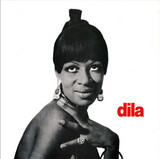
Far Out Recordings proudly presents the first and only album from the mysterious Brazilian vocal sensation Dila (pronounced “Jee-la”). Having reportedly died in a car crash shortly after the album’s release in 1971, there is very little known about the woman behind the voice. But the joyous music Dila left behind, gives us a picture as good as any, of a powerful feminine soul at the top of her game.
The liner notes on the elusive original LP, written by composer Arnoldo Medeiros attest: “Friend, look out! Because when this girl starts to sing, you’re in trouble. Hold the railing so you don’t fall down the stairs, because she’s coming this way and shaking up everything.”
Arranged and produced by Durval Ferreira, alongside his studio band affectionately known as “Os Grillos” (The Crickets), Dila (1971) is a rare glimpse into the authentic soulful Samba sound of Rio’s favelas in the late sixties and early seventies.
A blast of funky, percussive Brazilian breaks, scorching hot brass and swing-laden piano, the music is as iconic as the album’s stark cover, as is clear on opener ‘Inez’, composed by The Crickets’ bassist Romildo. There’s a fantastic interpretation of the Ivan Lins classic ‘Madalena’ (made famous by Elis Regina), a moving version of the Tom Jobim and Vinicius De Moraes classic ‘O Morro Não Tem Vez’, and a number of sunny original compositions by Arnold Madeiros, who’s other writing credits include music for Marcos Valle, Wanderlea, Evinha and Dom Salvador.
With original LPs extremely hard to come by, this rare treasure of Brazilian soul, which fans of Gal Costa, Celia, Evinha and Elis Regina will love, gets a much-deserved official reissue: remastered and pressed to 180g vinyl.
out of Stock
Last delivered 7 years ago available to reorder, subject to availability
Writing music for film and theatre has always been a big part of Hania Rani's musical world. It is also a part of the creative process that can be tantalisingly out of reach for listeners, either the project doesn't come to fruition or the music simply isn't available away from the film or play. From early collaborations with friends, to last year's two scores for full length films (xAbo: Father Boniecki directed by Aleksandra Potoczek and I Never Cry directed by Piotr Domalewski') Rani has been involved in many such projects, each representing an important step in her artistic development and life as a composer and artist:
"Composing for motion picture or theatre is for me a very different kind of work than writing for my own projects. Firstly, I need to collaborate with somebody else who sees the world through the lense of their own art and craft. That's why these kinds of encounters can be so exciting - they are a promise of creating something very new, as a result of creative work of so many people from all walks of life. Secondly, I feel that music in film is an invisible character, a missing emotion that creates a special atmosphere and sensation. It doesn't illustrate, it completes the work of art. I think it is an extremely sensitive matter that rejects banal associations and easy solutions. I feel like composing for film works like an exercise for my imagination."
It is the nature of these collaborations though, that sometimes the composers own preferred compositions don't make the final cut. This is where Music for Film and Theatre comes in as it allows Rani to present a selection of her own personal favourite pieces composed for film and plays. Pieces that made it to the final cut and pieces that were rejected by the director or the producer. Bringing the music together as an album offers a chance for Rani to share her music with her listeners on her own terms and a chance for her fans to hear a different side of her art.
"I put them in one place, as a collection of precious objects that were kept for years in a drawer. Some of them were composed a couple years ago, some are the result of recent research. I am very happy to finally be able to present them as a separate project."
Rani is of course grateful to all of the directors who have entrusted her to create music for their projects, but she professes especially warm feelings for the pieces composed for her first 'real' theatre play, Pradziady, directed by Michał Zdunik. The title comes from 'Dziady' a term in Slavic folklore for the spirits of the ancestors and a collection of pre-Christian rites, rituals and customs that were dedicated to them. The essence of these rituals was the 'communion of the living with the dead', namely, the establishment of relationships with the souls of the ancestors. "I felt this story needed extremely dark and fragile music, and at the same time a sound that could express the mixture of the two worlds - the living and the dead. I decided to compose part of the soundtrack with a string quartet but including two cellos, viola and only one violin. We recorded in a little house, completely built from wood, mostly from Finnish pine. I always felt this space has a very special, warm and natural acoustics - especially when it is combined with string instruments. The track composed for this theatre play is called Ghosts but actually didn't finally make it to the performance, although I like it so much that I thought it would perfectly fit
this compilation". Other highlights include the enchanting Soleil Pâle written for a collaboration with director Neels Castillon, and improvising dancers Alt Take, the beautiful melancholy of In Between (from the film score for xAbo: Father Boniecki) and the magical bliss of The Beach (from I Never Cry) and together they create a beautiful offering from an artist whose every note is worth hearing, but for whom the journey is just beginning:
"I am very happy to see that many artists consider my music as the right soundtrack for their works, because film music was always a huge inspiration for any of my compositions. I find there a lot of life and real emotions, but also a feeling of freedom. Freedom from my own thinking patterns and prejudices. I also believe strongly in collaboration between people, I always feel this is the way to create something really new, based on a mixture of different ways of thinking, feeling, expressing."
This then is Hania Rani, Music for Film and Theatre – enjoy!
out of Stock
Last delivered 2 years ago available to reorder, subject to availability
Strut introduces a pioneering new compilation 'A Dancefloor In Ndola,' curated by revered East African DJ, Kampire. This release marks an evolution in Strut's approach to compilations, showcasing emerging DJ talent from across the world and embracing an innovative approach to musical discovery from the next wave of selectors. Forging her reputation through memorable sets for the Nyege Nyege Festival in Uganda over the last decade, Kampire now tours worldwide and is celebrated for her brilliantly curated sets spanning the full range of African music styles from the ‘70s and ‘80s to the present day.
Although born in Kenya to Ugandan parents, Kampire spent her formative years in Ndola, Zambia. ‘A Dancefloor In Ndola’ is inspired by artists and songs that formed part of her soundtrack during that time. “It is important for me to continually reference Africa’s own musical history,” she explains. “At 17, I didn’t pick up on my Dad’s music but now I love and collect those records. I’m constantly referencing them in my music sets today. I love that feeling of shared nostalgia where people recognise a song they haven’t heard in a long time. It is a touchstone for me when I’m playing.”
The compilation flows through different East African and South African genres from Congolese rumba and soukous to 1980s township bubblegum and the rich guitar-led sounds of Zambian kalindula. “There are styles of music on the compilation which are often considered unsophisticated from rural areas. I and other contemporary African artists and DJs draw inspiration from them; it is part of what makes us ourselves.” Kampire also shines the spotlight on many incredible women in African music from the ‘80s, including Congolese legends like Pembey Sheiro, Feza Shamamba and Princesse Mansia M’bila to V-Mash and Di Groovy Girls from South Africa.
‘A Dancefloor In Ndola’ is released on 2LP and CD and features exclusive new edits by Kampire alongside personal liner notes tracing her links to the music. Cover artwork montage is by Canon Rumanzi and vinyl restoration / mastering by The Carvery
Debut compilation by one of East Africa’s leading new generation DJs, Kampire.
Mix of African classics and rarities spanning 1970s – 1990s from Congolese soukous, South African bubblegum and Zambian kalindula.
Shining the spotlight on women in African music Pembey Sheiro, Feza Shamamba and Princesse Mandisa M’bila.
Exclusive cover artwork collage by Canon Rumanzi.
Worldwide DJ dates supporting release during Summer and Autumn 2024.
out of Stock
Last delivered 2 years ago available to reorder, subject to availability
Experimental black metal from Brooklyn featuring members of Pyrrhon, Krallice, Sigur Rós, The Glen Branca Ensemble, Steve Reich. Recorded by Colin Marston (Dysrhythmia, Krallice, Liturgy). Follow-up to the bands well received 2022 debut Aveilut. The Promise Of Rain, the sophomore album of the experimental black metal band Scarcity, is an embodiment of the hard-to-believe truth that burdens are easier to bear when distributed, a realization Brendon Randall-Myers (conductor of the Glenn Branca Ensemble) grappled with extensively while writing this record. This is a sweat-drenched album about dispersion, about spreading, about the collective relieving of burdens through shared experience: one doesn’t have to go through everything alone. When Scarcity’s debut album Aveilut was written in early 2020, Randall-Myers and vocalist Doug Moore (Pyrrhon, Weeping Sores, Glorious Depravity, and Seputus) never expected to be able to play their songs live. The cathartic experience of playing something that came from a place of isolation out to people in a live setting is the root of the intensity in The Promise Of Rain. The Promise Of Rain begins where the craziest climaxes of Aveilut end, and is the first Scarcity record to include Tristan Kasten-Krause (Sigur Ros, Steve Reich, LEYA) on bass, Dylan Dilella (Pyrrhon) on guitar and Lev Weinstein (Krallice) on drums. Rather than building density with the quasi-orchestral layering on Aveilut, Scarcity challenged themselves to document what five people in a room could do, recording most of The Promise Of Rain in one or two takes, capturing the physical effort and urgency of a live performance. Scarcity forges a completely fresh sound in The Promise Of Rain with their alarming guitar work and melodic arpeggiating, shedding dead skin and breaking ground with sheer vulnerability. The lyrics for The Promise Of Rain were inspired by a trip Moore took to the high deserts of southern Utah in 2023. “To thrive in the desert is an act of abnegation—” he observes, “you do right by the land and receive its gifts, or it does away with you.” The necessity of adaptation is as evident in the desert as it is to the landscape of the human experience. The transformation of ideas and beliefs, the grief of losing relationships that had to end, and the fear involved in forming new ones under the grip of mental illness is conjured over and over again on this panoramic album.
The magic and majesty of Holger Czukay’s late career works for Claremont 56 is being celebrated on a new compilation. The former Can bassist – a musical maverick renowned for his freewheeling approach to composition, recording and promotion – released a string of inspired tracks on Paul Murphy’s label between 2009 and 2012, typically delivering hard-to-pigeonhole workouts, bona-fide epics and radical reinventions of some of his most beloved tracks.
The collection has been a labour of love – fitting given the sonic details and inventive musicality that marked out the late artist’s solo career – for Claremont 56 founder Paul Murphy AKA Mudd, who first reached out to Czukay after witnessing his now legendary live performance at the Roundhouse in 2009. As Murphy details in his introductory liner notes, it led to a productive working relationship between the pair that included collaborative recording sessions with Ben Smith in Czukay’s legendary Innerspace Studio – a former cinema in Cologne in which much of Can’s music was recorded.The impact of that Roundhouse gig on Murphy is reflected in the fact that two of the tracks on the collection are based on that celebrated performance. There’s ‘Ode To Perfume’, a languid and solo-laden version of one of Czukay’s most celebrated solo records that ratchets up the original’s inherent dreaminess, and a jaunty take on quirky kraut-pop number ‘Photosong’ featuring a spoken introduction recorded at the concert in question.
Murphy’s ability to coax Czukay into delving into his archives is evident across the compilation. Opener ‘A Perfect World (Remix)’ is an eccentric, ever-building masterpiece originally recorded in 1984 – but later re-imagined for Claremont 56 – featuring vocalist Sheldon Ancel and former Can band-mates Jaki Leibezeit and Michael Karoli, while ‘Fragrance’ is a subtly re-wired slab of picturesque Balearic kraut-dub which was initially recorded as a coda for ‘Ode To Perfume’ but lay unreleased for decades.
Then there’s ‘Let’s Get Cool’, a bright and breezy, French horn-sporting 2009 take on 1979 avant-disco classic ‘Cool In The Pool’; ‘My Persian Love (Remix)’, a 2010 re-take of one of his earliest solos recordings; and the near 18-minute brilliance of ‘Music Is A Miracle’. Originally recorded for his fans in the 1980s – but only released three decades later – this widescreen epic not only features drums by Jaki Leibezeit and a fine spoken word vocal by Czukay, but also numerous nods to some of his most revered tracks.
It's fitting, too, that two of the most potent cuts feature Czukay’s much-missed wife and musical muse Ursa Major: the dense, trippy and fittingly out-there ambient soundscape ‘In Space’, and the mesmerising ‘Music To be Murdered By’. Partially inspired by hearing painfully out of tune violin practice through his studio windows, the track was originally recorded for an unreleased album but finally found a home on Claremont 56’s 10th anniversary box set ion 2017. A genuinely spaced-out and mind-mangling slab of organic dub in Czukay’s distinctive style, it delivers a fine curtain call to the iconic artist’s endlessly inventive career.
out of Stock
Last delivered 11 months ago available to reorder, subject to availability
Sunny Crypt is incredibly happy to announce its seventh release: a retrospective compilation of six previously CD-only tracks by Nightmare Lodge, a name that might ring the bell to many enthusiasts of Italian experimental music.
It Passed Like A Dream is a selection of some of our favourite tracks they released between 1994 and 2000, aiming to spotlight a small glimpse of the amazing body of music they did throughout the years.
Nightmare Lodge is a musical project by Minus Habens Records / Disturbance founder Ivan Iusco alongside vocalist B. Mazzilli and bass player Gianni Mantelli, when the Bari based trio decided to decided to embark on a path in search of their own dreamlike musical dimension tied to introspective explorations.
Over the years, the group's lineup evolved, eventually solidifying as a duo comprising Iusco and Russolo.
With their first release dated 1987 and staying active till the early 2000s, it is quite challenging to put the Nightmare Lodge discography in a precise musical box. Their first outings flirted with post-industrial music and a more stripped down sound palette marked by a DIY approach to composition, while in later years leaning towards a more horroresque / cinematic feeling and following the development of new technologies but always charactering their output with a ritualistic, trance inducing and mystical approach, whatever if it’s ambient, downtempo, techno not techno, or a whole lotta else...
out of Stock
Last delivered 22 months ago available to reorder, subject to availability