The fourth EP from HOMO-CENTRIC Records presents GIDEÖN's broad musical vision, with tracks that span genres such as house and techno, as well as other influences, and includes his latest offering, “A Road Called Destiny”, his headiest offering yet and hot on the heels of previous anthem “Brighter Day”. This latest gospel belter has been tearing up dancefloors all summer and the track reaches euphoric heights comparable with the Baptist sermons featured in the house classics from the likes of Kerry Chandler and Robert Hood. "Hector’s Revenge" is a dark sleazy queer techno anthem already slaying Berghain’s main floor, "Vasquez Goes East" is a "raw basement cut that tips its hat to Junior Vasquez’s Sound Factory classic "Get Your Hands Off My Man” whilst “Fridays” serves up classic Swing 52 style chopped-up vocal cuts straight from vintage 90s NYC. Scope, range and diversity, but all quintessentially GIDEÖN
out of Stock
Last delivered 2 years ago available to reorder, subject to availability
Nottingham’s hottest prospects, the four piece have been making waves with their definitive, genre-spanning sound that incorporates elements of post-punk, indie and art pop to create something remarkable and unique. 2022 saw the band release their debut EP ‘Soft Soap’ which garnered rapturous praise from BBC Radio 1, NME, Clash and more, cementing their place as an outfit to watch.
Wewantsounds Is Pursuing Its Ambitious Akiko Yano Reissue Program With The Release Of "japanese Girl", Her Landmark Debut Album From 1976. Backed By Little Feat With Lowell George And By The Cream Of Japanese Musicians (including Haruomi Hosono), Japanese Girl Is One Of The Most Important Japanese Albums Of The 70s, Mixing Pop, Rock, Japanese Folk Together With Little Feat's Superb Classic Sound. This Is The Very First Time The Album Is Released Internationally. The Deluxe Lp Edition Includes Remastered Sound, Tip-on Lp Sleeve, Download Card Plus The Original 4-page Insert With Lyrics And Full Line-up!
When Akiko Suzuki Left Her Home Town Of Aomori For Tokyo In The Early 70s Aged Just 15 To Become A Professional Musician, She Quickly Started Making Waves On The Local Music Scene Performing At The Jazz Club Rob Roy. In 1973 She Released A 7" With The Group Zariba And Caught The Attention Of A&r Man Koki Miura. She Then Recorded One Song, "oinaru Shiino-ki" With Haruomi Hosono On Bass And Drummer Tatsuo Hayashi (who Features On Many Hosono Albums And Also Hiroshi Sato's 1979 Album Orient) With A Full Album In Mind.
After A Marriage With Musician/producer Makoto Yano And The Birth Of Her Son (named Fuuta), Yano And Her Team Resumed The Recording Of The Album And Decided To Pitch Little Feat For A Collaboration As She Loved The Group. Against All Odds They Said Yes And Yano Left Tokyo For Los Angeles In March 1976 To Record A Full Side With Them. The Legend Has It They Found It So Difficult To Keep Up With Yano's Compositions They Returned Some Of Their Fee. The Session Was Nevertheless Stunning And Lowell George Even Compared Yano To Stevie Wonder. The Little Feat Blend Of New Orleans Groove Matched Yano's Melodies Perfectly, As Witnessed On "funamachi-uta Part 2." Originally A Traditional Song From The Nebuta Festival In Her Hometown Of Aomori (part I On Side 2 Gives A Good Idea Of What The Original Form Sounds Like), The Little Feat Version Is A Formidable Slow-funk Workout Not Dissimilar To Their Classic, "spanish Moon", Serving Yano's Beautiful Vocals And Sense Of Groove To Perfection. The Whole Side Is A Match Made In Heaven, Showcasing The Classic Little Feat Line Up At Their Funkiest With Yano's Unique Japanese Twist.
The Japanese Side On The Album Gives A Great Snapshot Of The Tokyo Music Scene Of The 70s With Many Musicians Gravitating Around Haruomi Hosono (and Present On His 1973 Classic Album 'hosono House' Including Sound Engineer Kinji Yoshino) And Also Several Musicians From Japanese Band, The Moonriders.
Recorded At The Legendary Onkyo Haus Studio In Tokyo, The Sessions Mix Singer-songwriter Sensitivity And Pop With Traditional Japanese Sounds And Instruments Like The Shinobue Transverse Flute, The Koto String Instrument Or The Tsuzumi Hand Drum As Played On "hekoriputaa" By The Legendary Percussionist Kisaku Katada Who Was Appointed Living National Treasure By The Japanese State In 1999; Together They Create A Beautiful East-meets-west Mix Masterfully Driven By Yano's Creativity And Unique Talent.
A Breathtaking Debut Album That Made Akiko Yano One Of The Most Important Artists To Emerge From The 70s, Japanese Girl Has Since Become A Milestone In Japanese Music With A Recent Documentary On Nhk Tv Telling The Whole Story Behind This Classic. Wewantsounds Is Now Proud To Present This Essential Album To The Rest Of The World.
Innercity Griots is an album with a legendary status among fans of hidden Hip Hop gems of the 90's.
At the heart of Innercity Griots is the unique sound and style of Freestyle Fellowship. This group of four talented MCs (Aceyalone, Myka 9, Self Jupiter, and P.E.A.C.E) and their producer, J-Sumbi, created a sound that was both experimental and deeply rooted in the traditions of hip-hop.
The sound of the group is recognizable with a unique jazz-infused style. What really sets the group apart from other jazz-influenced Hip Hop from that era is their incredible lyricism. The raps are packed with dense wordplay, complex metaphors, and social commentary. This all together makes it a rich and rewarding listen.
Founded in 1971, Matumbi was among the earliest and best British reggae bands. They did, however, also record under different guises, including The 4th Street Orchestra. In their acclaimed Rough Guide to Reggae, Steve Barrow and Peter Dalton rate this album (and its counterpart Leggo! Ah-Fi-We-Dis) as "the best showcase for Matumbi's talents". This release marks the first LP reissue of this genuine UK roots-monument since 1976.
Original member Dennis 'Blackbeard' Bovell (of LKJ and Dub Band fame) knew the local sound system-scene like the back of his hand and most tracks on Ah Who Seh? Go Deh! were initially cut as exclusive 'specials' for his own Jah Sufferer sound system and for fellow soundmen. Hardly anyone hearing these tunes at reggae parties or would have guessed they didn't originate in Kingston but were recorded in London. And neither did many who bought the records when they were released a few years later. That's hardly surprising, as the material Bovell & Co churned out could easily compete with the toughest output of their Jamaican counterparts. A splendid version of the 1970 Kingstonians smash "Singer Man" is the most familiar tune here. But it's the band's own outstanding, heavyweight roots tunes like "Jah Chase Dem" or "Za-Ion", their versions popping up later in true sound system style for maximum impact, that will have reggae fans prick up their ears.
Ah Who Seh? Go-Deh! is available as a limited edition of 750 individually numbered copies on orange coloured vinyl.
Wewantsounds is delighted to reissue Farid el Atrache"s cult album "Nagham Fi Hayati" released in 1974 on Voice of Lebanon. It is the soundtrack of the eponymous film starring El Atrache. Sampled by the Beatles and nicknamed the "King of Oud", El Atrache is one of the giants of Egyptian music together with Oum Kalthoum and Abdel Halim Hafez. The album which showcases El Atrache"s versatility and includes the monster groove "Hebina Hebina", is one of Brian Eno"s favourite albums. Reissued for the first time since the 70s, "Nagham Fi Hayati" also contains an unedited version of "Takassim Oud" highlighting El Atrache superb oud playing. Remastered for vinyl by Colorsound Studio in Paris it includes new.
Matching expansive ambience with environmental sound, Chihei Hatakeyama’s new album continues Field Records’ exploration of Japan and the Netherland’s shared approach to water management. As with Sugai Ken’s 2020 album Tone River, a specific project becomes Hatakeyama’s area of focus - in this case the Hachirōgata Lake in Akita Prefecture.
Previously the second largest body of water in Japan, the government ordered extensive drainage work of Hachirōgata Lake after the second world war with the help of Dutch engineers Pieter Jansen and Adriaan Volker. After the project was completed in 1977, reclaimed land took up eighty percent of Hachirōgata Lake’s total size. As a result, a new ecosystem was established as plants spread from surrounding areas, bringing with them a wider variety of birds and other wildlife.
Hatakeyama’s approach to this unique subject matter took in field recordings from particular locations around the lake - the drainage channels, the Ogata bridge, grassland conservation reserves and other key areas. The aquatic subject matter and sonic material is a natural fit for Hatakeyama’s accomplished sound, which has featured on numerous solo works for labels including Kranky, Room40 and his self-run White Paddy Mountain.
From the intimate intricacies of the sampled material to the glacial expanses of droning synthesis and languid guitar, Hatakeyama creates a tangible environment which at once reflects the settings around Hachirōgata Lake, while offering the listener any number of imagined scenes to observe in their mind’s eye.
out of Stock
Last delivered 2 years ago available to reorder, subject to availability
The Bad Guys is a 2022 animation feature film by DreamWorks Animation. Directed by Pierre Perifel, the film stars Sam Rockwell, Richard Ayoade, Zazie Beetz, Alex Borstein and Awkwafina amongst others. The story follows a notorious fun-loving criminal animal crew. After a heist has gone wrong, the pack agree to become model citizens - or at least try to.
The score was composed by Daniel Pemberton who is known for composing the score to Spider-Man: Into the Spider-Verse (2018) and its sequel Spider-Man: Across the Spider-Verse (2023). He has also composed the soundtrack for King Arthur: Legend of the Sword (2017) and The Man From U.N.C.L.E. (2015). Besides the original score, this soundtrack also features the songs "Good Tonight" feat. Anthony Ramos, "Feelin' Alright" by Elle King and "Brand New Day" by The Heavy.
The Bad Guys is available as a limited edition of 500 individually numbered copies on yellow & orange marbled vinyl and includes a 4-page booklet with liner notes by Daniel Pemberton and Pierre Perifel.
Following the success of Hiroshi Sato's reissue, Wewantsounds is proud to announce an ambitious programme to release Akiko Yano's albums outside of Japan starting with her 1981 synth-pop masterpiece 'Tadaima.', co-produced by Ryuichi Sakamoto and featuring YMO. The reissue includes original artwork by cult illustrator King Terry, a 2 page insert and OBI Strip (LP) plus a new introduction by renowned Electro DJ Joakim. Japan's best kept secret, Akiko Yano is one of the most ground-breaking artists to come out of the 70s Japanese music scene along with HaruomiHosono, Ryuichi Sakamoto. A piano child prodigy, Yano started her solo recording career in 1976 at just 21, recording her debut album "Japanese Girl" with no less than Little Feat as the backing band. This album created a stir on the Japanese scene and Yano was on the map. She went on to record a series of superb albums mixing Funk, Electro and City Pop featuring the cream of Japanese (and sometimes American and English) musicians; The fact she was producing, writing and composing herself made her a true maverick in a very male-dominated industry. These albums, incredibly, have never been released outside of Japan to this day. "Tadaima." ("I'm home" in Japanese) recorded in 1981 is Yano's fith studio album co-produced by her then husband Ryuichi Sakamoto and featuring all the musicians from YMO (HaruomiHosono, Yukihiro Takahashi and Sakamoto), the group she was touring with at the time. "Tadaima." is Yano's first attempt to leave the acoustic piano aside and delve into the synth sounds of the early 80s. The result is a fascinating electro pop masterpiece showcasing her talent as a writer, musician and singer, creating her own unique universe. Mixing Japanese and English lyrics, Yano crafts perfect pop songs such as "Tadaima" "I Sing", "HarusakiKobeni" (which became one of her most famous songs after its use in a Japanese cosmetics ad), while "Taiyo No Onara" is a suite composed of nine short stories written by Children. Contributors on Tadaima also include ShigesatoItoi, one of Japan's most famous copywriters (for Studio Ghibli among others) who wrote two tracks on the album and his friend legendary illustrator TeruhikoYumura - aka King Terry - who revolutionised underground manga in the 70s with his 'heta-uma' (bad-good) style, as showcased on the album's striking artwork. 'Tadaima.' is the perfect entry point to Akiko Yano's unique body or work.
The reissue comes with the original obi strip artwork, extensive liner notes and a new introduction from Joakim
We’ve had a quieter start to 2021 than previous years, but that doesn’t mean we’ve not been busy. In fact, our next physical release marks the first in a run of 9 or more we’ve got booked and ready for the rest of the year... To kick off the first FKOFv release of 2021, we welcome an artist back to the roster we first worked with as FKOF Records in 2013. It’s been great watching Subreachers develop his sound and material over the last ~10yrs, and it’s wicked to have him on a record – with some incredible tunes as well! FKOFv005 also welcomes Congi to the label for the first time, with a sumptuous remix that we know you’ll love as much as we do...
out of Stock
Last delivered 17 months ago available to reorder, subject to availability
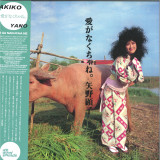
Wewantsounds continues its Akiko Yano series with the reissue of her cult classic 'Ai Ga Nakucha Ne' recorded in 1982 and co-produced by Ryuichi Sakamoto. Featuring Japan, the album includes additional recording in Tokyo with YMO and is mixed by Steve Nye and Shinichi Tanaka. It is the first time the album is released outside of Japan and the deluxe LP features the original artwork with gatefold sleeve and a lavish 24-page colour booklet with sessions photos by Pennie Smith (famous for The Clash's London Calling photo). The reissue also includes a new introduction by Mac DeMarco and a dual interview with Akiko Yano and Steve Jansen by journalist Paul Bowler. The audio remastered from the Original tapes by Mitsuo Koike.
'Ai Ga Nakucha Ne' ('there must be love' in Japanese) is Akiko Yano’s 6th studio album and follows 'Tadaima' in 1981. It continues exploring the electro-pop sound of its predecessor, hot on the heels of her touring with Yellow Magic Orchestra between 1979 and 1980. For this album, Akiko decided to try something new; she enrolled English fellow musicians Mick Karn, Steve Jansen and David Sylvian from Japan and booked the Air Studios in London under the supervision of engineer Steve Nye. Over a couple of weeks, the musicians created a fascinating soundscape full of catchy pop tunes, sung in both Japanese and English. Reminiscing about the studio sessions, Steve Jansen notes "Our music’s different but we maybe had a similar process of working. It was a great environment because the studio was a great place to work. It was very insular. There were four studios and there were always groups working in there 24/7."
The eleven tracks featured on "Ai Ga Nakucha Ne," mostly composed by Akiko - are a great collection of catchy tunes featuring her distinctive vocals and accompanied by the Japan musicians. As Akiko explains about the creative process, "I didn’t think to imitate or to make another Tin Drum. But I had Steve Jansen and Mick Karn, these excellent musicians. They were eager to understand the songs, then they put in everything they had. I knew the material was different from what they usually played in Japan. But it was a great experience working with them.
There are many highlights on the album, from the pop edge of "Aisuru Hito Yo" to the avant groove of "Another Wedding Song", each song is memorable and the album ends with the superb “Good Night” sung by Akiko and David Sylvian.
The original 1982 LP release included a 24 page booklet featuring many photos by Pennie Smith and Japanese photographer Bishin Jumonji. The booklet is reproduced in its entirety here and the album on top of contributions by Mac DeMarco, a longtime fan of the album, Akiko and Steve Jansen making this release of 'Ai Ga Nakucha Ne' a unique testament to Akiko Yano's greatness.
out of Stock
Last delivered 5 years ago available to reorder, subject to availability
Wewantsounds is delighted to announce a special edition of the legendary 1979 Masahiko Togashi album "Song of Soil," recorded in Paris with Don Cherry and Charlie Haden and released on Japanese label Paddle Wheel. Supervised by Parisian producer Martin Meissonnier - then Don Cherry"s right hand man - "Song of Soil" reaches heights of spirituality mixing Eastern influences with jazz and deep ambient soundscapes. The album is reissued here with its original artwork and remastered by King Records in Japan. It includes the original Japanese 2-p insert plus a deluxe 8-page booklet featuring new notes (Eng/Fr) by Martin Meissonnier in conversation with Jacques Denis and also an Togashi Biography by Paul Bowler and never-seen photos by cult French photographer philippe gras who witnessed this unique session.
Made when mono was still king, Bob Dylan's self-titled 1962 debut is as understated of an entrance as any significant musician as ever made. Already well-versed in American roots music, Dylan simultaneously pays homage to tradition and extends it by putting his own stamp on classic material that metaphorically functions as the soil of our contemporary songs and styles. Free of ego, and performed with masterful conviction, Bob Dylan ranks with the debut efforts of similar artistic giants Elvis Presley and the Rolling Stones.
Mastered from the original master tapes, pressed at RTI, and limited to 3,000 copies, Mobile Fidelity's restored 180g mono 45RPM 2LP version brings the contents of this seminal release as closest as they've ever come to master tape-quality in the original mono configuration. Transparent to the source, the simple sounds of Dylan's voice, acoustic guitar, and harmonica take on lifelike perspective and directness – the "husk and bark" to which Robert Shelton referred in his now-legendary New York Times review of a Dylan appearance at Gerde's Folk City. MoFi has made possible an inexpensive time-traveling trip back to the Greenwich Village coffeehouses and folk clubs in which Dylan cut his teeth, albeit in much better fidelity and without any annoying background chatter. Wider grooves mean more information reaches your ears.
As the preferred mix at the time of the recording, the mono version presents Dylan as he and his producers originally intended. Since the separation of the stereo versions isn't as sharp, the mono edition places Dylan's vocals in the heart of the musical action and as one with the accompaniment. It paints listeners an incredibly accurate portrait of the attention-getting, concrete mass of sound that features no artificial panning and straight-ahead immersion into the music. This is how almost everyone first heard this timeless album – making the mono mix all the more historically valuable and truthful.
Much has been made of the commercial indifference that greeted the album upon its low-key release. Yet focusing on sales figures and the reaction of a public not yet hip to Dylan's name or music is to miss the forest for the trees. Distinguished from the era's other folk efforts by way of the determination, brazenness, and lived-through-this worldliness Dylan approaches the material and sings the songs, Dylan lays the groundwork for the path he'd soon trailblaze and everyone else would follow.
By nodding to Woody Guthrie at the same time he completely re-imagines a sobering tune such as Blind Lemon Jefferson's "See That My Grave Is Kept Clean," Dylan straddles the past and future. He also displays, with challenging authority and savant-like expertise, the ability to handle weighty topics such as death, sorrow, and lamentation with the vaudeville flair, bluesy mannerisms, and poignant command of an artist three times his age.
As Dylan scholar and pop-culture critic Greil Marcus observed in 2010, "Everybody knew Joan Baez and the Kingston Trio; if you knew Bob Dylan, you knew something other people didn't, something that soon enough everybody had to know. Within a year, an album could put an adjective in front of the singer's name as if it were already common coin." It all starts here.
A pioneer of bebop, Max Roach went on to work on many other styles of music and is generally considered alongside the most important drummers in history having worked with such musicians as Coleman Hawkins, Dizzy Gillespie, Miles Davis, Duke Ellington, Charlie Parker, Stan Getz and more! A seminal set, stretching out towards the directions Max would explore fully on the Candid, Impulse, and Fantasy labels in the 60s. Group members include Booker Little on trumpet, George Coleman on tenor, Ray Draper on tuba, and Art Davis on bass – and the lack of a piano makes for a very exciting sound!
Pierre Dutour's infamous Top Fiction is the epitome of a 5-tracker. Coming to light in 1979 on Tele Music, its collection of environmental themes are *all astounding*. We're talking all-time heavy hitters, here. They come recommended as tracks you'd choose to elegantly elevate deep selector sets or mixes.
Skip the irritating whistle-laced marching-band funk of "Captain Parade" and head straight to the glistening synths and proud horns of beatless ambient wonder "Mountain Echoes". Arguably worth the price of admission alone. It's that good. The sci-fi atmospherics of "Space Fiction" are definitely sampleable whilst the proud horns of "Mountain Trumpet" definitely contain blasts that could be of creative use. "Tambours Parade" is more marching-band funk, only this time the drums go hard and there's a lot to like about this one.
Truly, it's all about the B-Side. A real B-Side for the ages, in fairness. It opens with the gorgeous "Deer Forest". It's one of the most beautiful songs you'll ever hear. Like something off Brian Bennett's Voyage, it rides dreamily melodic synths, and comes on, as one fan claimed "like something Angelo Badalamenti would have co-written with Final Fantasy composer, ???? Nobuo Uematsu". It's jaw-dropping. Be instantly beguiled by the deep eerie nostalgia and pretty delicate piano of "Magic Lake I" and the whistling-synth-augmented "Magic Lake II". The almost-title-track "Pop Fiction" is another hidden gem, containing dreamy, glistening arpeggios that are just begging to be sampled with a heavy knocking beat behind it. The set closes with "Damnation Space", 2 minutes of spooky Musique concrète.
So, 5 absolutely incredible tracks and 2-3 good ones. An excellent ratio for a library album, I think we can all agree. Trust us when we say that the heavy hitters are just absolute gold, rendering this one an essential, buy-on-sight purchase. Go listen and discover for yourselves...
The audio for Top Fiction has been remastered by Be With regular Simon Francis, ensuring this divisive release sounds better than ever. Cicely Balston's expert skills have made sure nothing is lost in the cut whilst the original space-age sleeve has been restored here at Be With HQ as the finishing touch to this long overdue re-issue.
out of Stock
Last delivered 3 years ago available to reorder, subject to availability
In 1972, a foursome of design students set out to make a record. This was, in many ways, a strictly creative endeavor. The quartet — composed of Dave Pescod, Alan Lewis, Phil Rawle, and Ted Rockley — were all trained, not as musicians, but as creatives. Art school heavyweights, the four were well-versed in the methodology of intentional experimentation, in the delicate balance of pushing the limits without completely unmooring oneself from a guiding creative intention. Emboldened by a high-brow familiarity with thoughtful experimentation and all the non-conviction of non-musicians, Bowes Road Band’s stint in the world of popular music yielded a record that is as much mind-melting as it is a direct product of its time. Their sprawling LP “Back in the HCA” embodies the exigence “art for art’s sake,” but it is for art’s sake that this record, however off the deep end it seems to travel (hear: “Doctor, Doctor”), remains a unified, and stunning, body of work. The LP’s do-ityourself garage rock noisemaking meets highfalutin creative processes. “Back in the HCA” is warbling psychedelic freakout (“Two Fingers,” “Doctor, Doctor”), Donovan-esque English countryside folk stylings (“Inside My Head,” “Goodbye to Rosie”), and avant-garde jazz improvisions (“Grass is Grass,” “Tomorrow’s Truth”) in one luminous release.
Originally an 9-track LP, Jakarta, Uno Loop, and Bowes Road Band decided to mine the six most cohesive tracks for the reissue, though the extras may be released somewhere down the line. Cohesion efforts aside, “Back in the HCA” stands alone in its singular conception of a genre-bending continuum — it evades definition. That said, the LP can easily be situated in the sonic environment in which it was conceived. By the end of the 60s, England was crawling with blues-based rock outfits that were starting to venture into prog rock territory. You can hear this popular dint cast over the folkier side of the LP. But Bowes Road Band was armed with their non-musicianship: they existed completely liberated from the motivating yet ultimately paralyzing lust for stardom. Enjoying this liberation, Bowes Road Band was utterly free to make noise. This freedom meant drawn out sax interludes amidst sweetly folk stylings (“Grass is Grass”) and Shaggs-like fuzzed-out freakouts that spiral into a void (Doctor, Doctor). This freedom also meant straight-forward tuneful cuts like “Goodbye Rosie” that conspicuously introduce heavily distorted auto-organ accompaniment mid-track amidst poignant lyricism. Bowes Road Band crafts a unified sound and then cracks it open.
With a completely off-the-radar status, Bowes Road Band could only press 50 copies of the record — 10 for each of them and 10 for the school. The band’s lifespan was to end there, or so they thought. “Back in the HCA” was the accidental fruit of a Berlin flea market treasure hunt by Jannis Stürtz, DJ and co-founder of Habibi Funk and Jakarta Records. After finding and sharing the LP with a few colleagues, Stürtz managed to get in touch with the band, get ahold of the master tapes collecting dust in Ted Rockley’s attic, and start the reissuing process. The record is still adorned with its original cover art designed by Alan Pescod, both reminiscent of bygone school days and the Zoom calls of yesterday — in short, reunion. Its re-discovery was happenstance and ought to be listened to as such. That is, “Back in the HCA” was not made to be listened to on a broad scale, or, at least, was not made with this goal in mind; it is neither in its time nor of its time. Of course, the group explicitly cites the folk tunes of the English countryside, the distorted rock groups that reigned during the record’s conception, and the fringes of psychedelic music that only the uber-underground might recognize (e.g., “Dreaming of Alice”). Yet still with these obvious influences, “Back in the HCA” always existed beyond the domain of both traditional musicianship and conventional commodification. Bowes Road Band’s DIY musicality beams through in technicolor across “Back in the HCA.” The vinyl includes an 8-page booklet detailing the albums creation and interviews with the band.
Lead single “Grass is Grass,” out July 14 along with album pre-order, encapsulates the record’s range: the track unfurls into a sprawling sax-driven trip following a sundrenched, Donovan-esque intro w/ lyrics “naively about parks and gardens, not marijuana!” The keyed-down folk cut “Goodbye to Rosie” is single 2 and elevates stripped-down acoustics with golden tinges, out August 4th. Focus track “Tomorrow’s Truth” constructs the fuzzed-out underbelly of acid folk. Listen for echoes of late Beatles, Mark Fry, and Donovan (if they were armed by an unshakabele willful naiveté). Like Sgt. Pepper’s on a shoestring budget—take a trip to the underground with LP “Back in the HCA,” available everywhere physically and digitally on September 1st via Jakarta Records and Uno Loop.
Besides online promotion from label profiles, the album will be further promoted by external agencies within the UK and US.
Tracked in 1977, this bundle of never-before-released basement demos throw Harris’ beloved Philadelphia Sound into an unfinished root cellar, pelting it with Clavinet attacks, disco skats, and infectious hooks. Named for the street address of its underground uptown genesis, 1514 Oliver Avenue (Basement) is James “Jimmy Jam” Harris’ first foray into songcraft and an organic Minneapolis-vintage alternative to a late ’70s Prince songbook gone increasingly synthetic.
Tracked in 1977, this bundle of never-before-released basement demos throw Harris’ beloved Philadelphia Sound into an unfinished root cellar, pelting it with Clavinet attacks, disco skats, and infectious hooks. Named for the street address of its underground uptown genesis, 1514 Oliver Avenue (Basement) is James “Jimmy Jam” Harris’ first foray into songcraft and an organic Minneapolis-vintage alternative to a late ’70s Prince songbook gone increasingly synthetic.
Als nächstes erscheint bei BPitch eine neue 4-Track EP mit ungefiltertem Techno und tadellosem Sounddesign des Turiner Duos Boston 168. Nach drei Veröffentlichungen auf dem Label und einem Beitrag auf dem vielversprechenden Sublabel UFO Inc im Jahr 2019 begibt sich das Duo mit der EP Gigantia, die am 14.07.23 digital veröffentlicht wird, in industrielle Gefilde und in lebhafte psychedelische Trips. Sergio Pace und Vincenzo Ferramosca, die seit 2014 gemeinsam Musik produzieren, haben sich mit einer besonders räumlichen Form von Techno einen Namen gemacht, der ihnen bis heute eine illustre Karriere beschert hat. Auf "Gigantia" greift das Duo auf die industriellen Wurzeln ihrer Heimatstadt zurück und verschmilzt eine Reihe von Einflüssen mit einer ausgesprochen melodischen Version von Acid Techno.
out of Stock
Last delivered 2 years ago available to reorder, subject to availability
Recorded in Italy in 1962, 'Chet Is Back!' highlights the iconic trumpeter cutting loose on such bop-oriented workouts as "Pent-Up House" and "Well, You Needn't." Backed skilfully by a young cadre of up- and- coming European musicians, including the stellar saxophonist Bobby Jaspar and guitarist Rene Thomas, Baker sounds marvellous in both ballads and up-tempo tunes. It includes a stellar Baker version of the immortal "Over the Rainbow."
The album is her first featuring all original material since her 2014 debut, Unstoppable, and shows the 29-year-old "Acoustic Songbird" reaching a new level of maturity. It includes twelve new tracks, all self-penned meditations on love and life except for Chlara's uniquely ethereal reframing of David Bowie's iconic "Heroes" track. Highlights include the recent singles "I Is The Loneliest Letter" and "Come To Bed"; also ear-catching is the blissful chillout groove "Sunburn" and the sensual bedroom ballad "747," where Chlara exudes a smouldering eroticism.
"Sky Blue Sky" is Wilco's sixth album, released in 2007. The album features a relaxed and introspective sound with folk and country influences. It includes the title track "Sky Blue Sky" and is known for its mature songwriting. The album was well-received critically and commercially, debuting at number four on the Billboard 200 chart and selling over 87,000 copies in its first week. Pressed on limited-edition Blue Vinyl.
Rare Jazz-Funk album from 1978 by Headhunters founder.
Featuring an all-star line-up including Herbie Hancock.
Originally released in 1978 on Tobisha EMI Japan.
First vinyl reissue outside of Japan released in collab w/Totown Records. Comes with double side insert.
Paul Jackson (born in Oakland, California in 1947) needs little introduction. Paul began playing bass at the age of nine and was considered by many of his teachers to be a musical prodigy. Jackson was known as a “Musician’s Musician” and shaped a sound that launched a new direction in contemporary music: the so-called ‘Pulse Playing’, a trademark sound of close-meshed funk grooves combined with sensational rhythms. With this innovative approach, he influenced entire generations of jazz and funk musicians to come. Paul’s compositions were sampled by big acts from the likes of Prince, TLC, Mobb Deep and NWA…just to name a few.
Paul Jackson was a founding member of the Headhunters under Herbie Hancock (THE group responsible for their ground-breaking fusion and jazz-funk compositions that took the world by storm in the 70’s). The solid union between Hancock and Jackson has been especially evident in the many international tours they have made together…not to mention that he participated on most of the Headhunters albums and Herbie’s solo albums.
Paul has also worked as a producer and as a studio/live musician alongside acts such as Santana, Sonny Rollins and The Pointer Sisters. He was a frequent guest performer at renowned international festivals such as the Montreux and Newport events. Jackson’s composing has not gone without recognition and was nominated for Grammy Awards in 1974, 1975 and 1976. Like other highly talented, creatively motivated engineers of music, Paul has expanded his career to other mediums such as playing on blockbuster movie soundtracks such as “Death wish” and “Dirty Harry”.
Paul Jackson also wrote five solo albums worth listening to – including the monster of an album that is known as “Black Octopus” which is considered to be a kind of lost Headhunters album.
His debut album “Black Octopus” saw the light of day in 1978 and is a total piece of art filled with abstract sticky funky grooves, floating electric piano playing, strong thumping bass lines, raw heavy drums and amazing vocal acrobatics (Jackson himself takes vocals in 3 out of 5 songs, and his soulful singing voice strikes an emotional chord that does not go unnoticed).
On “Black Octopus” you’ll also find some of the best all-star musicians from the likes of Alphonse Mouzon (Roy Ayers, Betty Davis, Azar Lawrence)…and last but not least fellow Headhunters Bennie Maupin and Herbie Hancock himself.
With “Black Octopus” Paul Jackson wrote the book on how a jazz-funk-fusion album should sound like. The fact that the album was only distributed in Japan at the time (Jackson resided in Tokyo since the late 70’s, where he passed away in 2021) continues to increase its reputation as an album that is VERY hard to find. This is a must-have gem…not only for fans of jazz, funk and rare grooves, but also for DJs and collectors around the globe.
Following a greatest hits compilation in the late 90s the Human League signed to the Papillon label. The line-up
of Philip Oakey, Susan Sulley and Joanne Catherall recorded the “Secrets” album, with keyboard player Neil
Sutton, who co-wrote most of the songs with Oakey, and programmer David Beevers providing the trademark
Human League sound.
• The album’s release in 2001 was preceded by the single “All I Ever Wanted”, but both the single and album lost
promotion and sales when Papillon ran into financial difficulties and was closed shortly after the album’s release.
• This 2LP new edition has been expertly mastered by Cicely Balston at AIR Mastering from the original stereo
tapes using precision half-speed mastering. Half-speed mastering is a vinyl cutting technique that improves
groove accuracy and transient information creating an incredibly detailed stereo image with a natural high
frequency response.
• Presented in its original sleeve, pressed on 2 x 180 gram heavyweight black vinyl, featuring an obi strip and
housed in a poly-lined inner sleeve, with all the lyrics and credits on the 4 page insert.
Following up on the incredible success of El Michels & Black Thought's Glorious Game album the duo treat us to another 7" with two of the standouts from the album. The A Side "Hollow Way" is a testament to the chemistry between Leon & Thought. EMA uses his signature sound with a new approach pulling records from his collection and sampling them. The result is a gritty lofi sonic backdrop that Black Thought flexes his lyrical brilliance on weaving a tune about guns and gun violence. The beat change at the end drives the point home, leaving any samples behind and lets the band remind people why they are one of the most in demand acts out there today. The B side "I'm Still Somehow" is a deeply introspective tune that Thought rhymes about vulnerability and overcoming challenges with heavy lines like "a happy black boy is like an alien" and "one crown, who was run down, somehow still standing tall". Michels again takes his ear and sensibility to the sampler, chopping up an old 45 that makes the perfect backdrop for this powerful and timeless song.
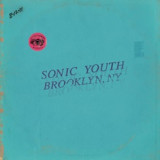
The final U.S. show, a triumphant and blistering bookend to the storied career of one of the most influential bands in rock music, featuring a unique and expansive eighty-five minute set list that spans Sonic Youth’s nearly three decade catalog. Mixed from multitrack by longtime live engineer Aaron Mullan and mastered and cut by Carl Saff. On August 12, 2011 Sonic Youth played their final US show on an outdoor stage overlooking the East River at the Williamsburg Waterfront in Brooklyn. Fitting that their storied career would bookend with a panoramic view of New York City where it all began 30 years before, having left in their wake one of one of the most powerfully influential careers in rock music. Following incredible sets from Kurt Vile and Wild Flag, the band took the stage. As the sun went down over the city, Sonic Youth ripped through a 17 song set that spanned from deep cuts off their first studio album and highlighting many other albums all the way through to their last, like a band with everything to prove. Or as Brooklyn Vegan’s Andrew Sacher said at the time: “While most bands who are thirty years into their career are either fading away or living off of the nostalgia of their older material, Sonic Youth continue to sound and perform as fresh as ever.” Steve Shelley explains the uniquely career spanning set list of Live in Brooklyn 2011 and how it came to be, as well as the importance of outdoor NYC summer shows in Sonic Youth’s legacy: “This show was a culmination of a run of really special outdoor summertime shows in New York City for us, starting in ’92 with Summerstage in Central Park when we played with Sun Ra. For the Williamsburg Waterfront show I wrote out the set list to present to the band and it was a lot of material we hadn’t played in a while, a lot of deep cuts, so I wasn’t sure if everybody would feel like doing it. After worrying about which songs the band might say yes or no to, I threw those concerns out the window and I just made a list of songs that I thought would be a great set. We practiced the week of the show at our space in Hoboken and put the set together. First we’d try and make sure we had a guitar in the song’s tuning, then we’d try to remember the arrangement and try and put it together, sometimes re-learning bar by bar. In the end I think the whole song list made it through. Even as early as ’86 and ’87 we stopped playing ‘Death Valley 69’ and ‘Brave Men Run’ with any regularity. We’d just get excited about new material coming into the set and songs would get ‘retired’ and wouldn’t get played again for years. So on this particular night in Brooklyn a lot of those retired songs and deep cuts got dusted off and played for this show. It turned out to be a pretty special event with a really special song list.” The band would go on to fulfill a contracted festival run in South America a few months later but, by then, the group’s center was severed beyond repair and the festival appearances didn’t hold the same kind of weight. “The stage was facing the East River from the Williamsburg, Brooklyn waterfront, and I recall the sun going down in the west during our set. It was a pretty magical, if kinda weird day. Fitting, somehow, that our ‘last show’ should be in New York City, our home and where it all began…” Lee Ranaldo The Williamsburg Waterfront show would fondly become referred to as ‘The Last Show’ by fans and band alike, equally for its triumphant high energy performance, its unique and expansive set list and locale. Newly remixed and remastered, Live in Brooklyn 2011 is presented for the first time on 2xLP, 2Xcd, August 18, 2023.
Blackball Records presents the 20th anniversary edition of Jawbreaker's beloved 1990 debut album Unfun--twelve groundbreaking tracks (sixteen on the CD) that captured the very inception of emo's big band and launched a galaxy of young, earnest bands and the scenes that love them. Unfun has been remastered by John Golden from the original analog tapes; the increased sampling rate boosts some of the bottom end and mid-range. It sounds fucking awesome. The vinyl version is available for the first time since 1992, and the CD and download versions of the record include the three-song Whack & Blite EP, as well as the 7-inch mix of "Busy" as an unlisted bonus track. This reissue features restored original artwork, and all formats include additional band photos from the time of recording. "Want" and "Fine Day" were in heavy rotation on college radio back in the day, and remained set list staples throughout Jawbreaker's run. Unfun wound up on a lot of fanzine top ten lists, and even the mainstream press took notice. Rolling Stone called it "a feast of heavy melody and righteous braying that roars along with all the spit and spirit of Husker Du's New Day Rising."
This classic album from 1973 saw its creator, Lee ‘Scratch’ Perry exploring synths and starting to develop his Black Ark sound - the enigmatic producer was at the time in the process of building his famous studio and honing his ideas about dub as a musical form.
The LP opens with the eerie “Kentucky Skank”, Perry’s ode to KFC, complete with frying chicken sounds, spliced between winding tapes, a ghostly trumpet, and futuristic moog synthesizer, overdubbed at London’s Chalk Farm studios.
U Roy’s “Double Six” and I Roy’s “High Fashion” & “Hail Stones” illustrate just how strong The Upsetter’s deejay material had become, while versions of the Chi-Lites’ “We Are Neighbours”, Sam & Dave’s “Soul Man” and a re-working of Al Green’s “Love and Happiness” (retitled “Jungle Lion”) all betray the funky soul influence that was increasingly shaping his work.
The backing tracks illustrate the producer at his best; the audio spectrum is fully differentiated while spatial placement an important component - something it would take years for him to achieve at the Black Ark.
Double Seven is available as a limited edition of 750 individually numbered copies on silver coloured vinyl
• “Hearts For Sale” is the fifth and latest in our series of 12-inch vinyl albums spotlighting the US girl group sound of the 1960s. The collection opens with ‘Street Dance’ by Bonnie Jean, a little-known must-have for collectors of the genre, with Darlene Love and the Blossoms clearly audible on background vocals. Issued on Lew Bedell’s Doré label, this exciting faux-live deck in the style of Shirley Ellis’ ‘The Nitty Gritty’ was written by Guy Hemric and Jerry Styner, a hip team known for supplying songs for the soundtracks of B movies such as Muscle Beach Party and Thunder Alley.
• The Hollywood-based Doré imprint is also the source of ‘You Really Never Know Till It’s Over’ by the Vel-Vetts (which shares a backing track with the Superbs’ ‘I Was Born When You Kissed Me’), ‘One Way Street’ by the Swans, a soulful update of the Teddy Bears’ ‘To Know Him Is To Love Him’ by the Darlings and – featuring lead vocals by Sheilah Page, a former member of groups such as the Bermudas, Becky & the Lollipops, the Majorettes, Joanne & the Triangles and Beverly & the Motor Scooters – ‘He’s Groovy’ by the Front Page & Her.
• Other highlights include the Sweethearts’ Supremes-influenced ‘No More Tears’, the sophisticated slowie ‘Lonely Girl’ by the Lovettes (that’s them on the front sleeve), ‘My Heart Tells Me So’ by the Del-Phis (an early incarnation of Martha & the Vandellas) and the Fran-Cettes’ terrific recording of ‘Heart For Sale’. As with the earlier volumes in the series, the album comes with a fully-illustrated inner bag featuring a 2,500-word track commentary by compiler Mick Patrick.
If you dig deep enough into the underground you will find the most precious jewels and it ain't that much of an effort these days to turn on the computer and trip through the colorful World Wide Web. But beware for not all the glitter is gold. I stepped by some dark and dusty back street club in Atlanta / Georgia, USA and some enchanting music tempted me to enter. A powerful raspy voice screaming out the pain of the world no matter if it were big or small affairs. "California dreaming on such a winter's day", wow, when the MAMAS AND PAPAS sang this in a sweet folk manner it was a light and joyful anthem for all hippies and hipsters back in 1966, like a call to love. Lee Moses' version is more of a desperate cry for sunshine and freedom. And it goes on this way. His voice has this special phrase showing determination, pain but also sheer joy of life. His 1971 album is a steady groover with a steaming hot band performing , which includes a brass section of divine greatness. These devoted players build up a massive wall of groove and melody on which Lee Moses can unleash his voice like a volcanic eruption. The groove itself stays quite relaxed but definitely hypnotizing throughout the whole album and clears up your mind for the message of love Lee Moses raves about. The high skills of Lee's backing band gets showcased in a steaming instrumental version of THE FOUR TOPS' "Reach out (I'll be there)", which appeared on an early 7" first and got added here as a bonus track. They don't stop for THE BEATLES' "Day tripper" either and next to "California dreamin'" you can find another heart warming version of "Hey Joe" on the regular album. Not as extraordinary outraging as Hendrix' turn on this classic Lee and his mates make it a slightly more epic effort. All in all this is a soul album with very few covers and even more classic anthems of this genre that should actually be worshipped by lovers of the late 1960s Motown sound. Especially the bonus tracks will drive you wild. Go for it, brothers and sisters.
Audiophile reviews rave about saxophone master John Coltrane's immortal Impulse! records, A Love Supreme (1964) and Ballads (1963). In fact, jazz critics have lauded A Love Supreme as Coltrane's most important recording. The rave reviews which appeared in the magazines Downbeat, Jazz Hot, Jazz Podium and Swing-journal reflected this: critics all over the world, in America, Europe and Japan recognized that Coltrane's deep religious belief had influenced both his approach to life and his music-making.
You're about to experience A Love Supreme at its peak of vinyl perfection — in UHQR format on Clarity Vinyl, with the added bonus of a double 45 RPM cut by Ryan K. Smith at Sterling Sound. Ryan's cut has his characteristic clarity and transparency all set against Quality Record Pressing's usual noiseless backgrounds on 200-gram flawless records. Each UHQR will be packaged in a deluxe box and will include a booklet detailing the entire process of making a UHQR along with a hand-signed certificate of inspection. This will be a truly deluxe, collectible product.
For this 45 RPM 2LP edition you'll also receive a 12" x 12" 12-page booklet featuring liner notes by Ashley Kahn and images from the Coltrane home.
The original master tape is available but it's not in the best shape. This LP was cut from a flat tape copy made by Rudy Van Gelder and used for cutting in the UK in April of 1965. Of course, the original recording was in December '64, so only a handful of months later. This tape was discovered at Abbey Road and had been untouched between 1965 and 2002. So while the original tape is available and while we would always opt for the original whenever we can, in this case this copy was the better choice as the tape has incurred less overall wear and sounds much better than the original.
A Love Supreme was Coltrane's pinnacle studio outing that at once compiled all of his innovations from his past, spoke of his current deep spirituality, and also gave a glimpse into the next two and a half years (sadly, those would be his last). Recorded at the end of 1964, Trane's classic quartet of Elvin Jones, McCoy Tyner, and Jimmy Garrison stepped in and created one of the most thought-provoking albums of their relationship.
The album not only enabled Coltrane to express himself with great intensity but also lent him the necessary inner peace to conceive a work of almost 40 minutes in length and to lead his quartet along the same path as himself.
The story of Existence dates back to 2016 when a group of young Stockholm hardcore heads wanted to get into some good old Cro-Mags worship. After some changes in personnel, the current line-up of deranged idiots has been paving the way for a violent future since early 2017. They currently share members with several other bands, including Blood Sermon and Speedway and are all active in the local DIY community in different ways, for example running Alive and Well Fest. With an EP under their belt in 2018, several tours across Europe and beyond, as well as appearances on such stages as Outbreak, the sound began to evolve leading up to the masterpiece that is the debut LP, ‘Go to Heaven’. Clocking in at nearly 40 minutes we don't think anyone can truly be prepared for this insanely epic body of work. From Slayer, to Merauder, to H8000, to Arkangel to Integrity, this is a masterclass in metallic hardcore songwriting by the strong beating heart of Stockholm HC. Songs that take you on a journey from a classic metallic breakdown riff to acoustic guitar sections to sword samples needed a hand that was not afraid of the complexity, leading to Jonah Falco of Fucked Up on mixing duties giving this the depth that it deserved. At times introspective, and at other times classic brute force, the themes of the lyrics are well summed up with the painted artwork by Nora Löwenberg of a face behind shattered glass, exploring the multifaceted nature of humanity and the ever changing place of the self in today’s global world. So if this all sounds like your kind of hardcore, then listening to this LP will truly be… heaven.
Next on Allchival is a compilation tracing the musical pursuits of Cork’s (via Belfast) Finbarr Donnelly and his trilogy of bands – Nun Attax, Five Go Down To The Sea? and Beethoven - before his untimely death by drowning in London’s Hyde Park in 1989. From the post punk of the first band via the discordant indie of the second to the chaos of Beethoven’s short lived existence this compilation shines some light on one of Irelands most enigmatic frontmen over a ten year period. Released on 18th April Record Store Day on a 15 track LP and an expanded CD version with 24 tracks. Featuring tracks released on Setanta, Creation, Kabuki & Abstract plus previously unreleased Fanning Sessions, the LP also comes with a fanzine with detailed liner notes and ephemera.
Nun Attax, formed in the late 70s, are synonymous with the Downtown Kampus at Cork’s Arcadia Ballroom, the lynchpin of the city’s post-punk music scene. Their live performances being the stuff of Southern legend - unforgettable, incendiary events, examples of which can be heard on the tracks here White Cortina, Reekus Sunfare. In the early-80s the band changed its name to Five Go Down To the Sea? and recorded the Knot A Fish EP 7’’ for London–Irish label Kabuki Records and soon after the band left recession-ridden Cork for the UK capital.
Squatting south of the River, working on building sites and collecting welfare under several aliases recording and gigs were sporadic but by 1984 they had hooked into the early Creation scene, and played gigs at Alan McGee’s Living Room club. Working with The Mekons Jon Langford they release The Glee Club on Edward Christie’s Abstract Sounds label. Following it up with the last of their three releases as Five..on Creation itself the band’s chaotic existence led to its demise only re-emerging in 1988 as Beethoven. Down to two original members – Donnelly and guitarist Ricky Dineen – plus two new additions their only release – a 12” on the fledgling Setanta records – features a cover of “Day Tripper” backed with original tracks and was NME’s Single of the Week in the summer of ‘89 when such things carried weight. The planned second single doesn’t go ahead after Donnelly’s death.
Selected Songs 1997-2003 compiles some of the finest moments in the recording history of Hydroplane, the Melbourne-based indie-pop three-piece that operated alongside The Cat’s Miaow through the second half of the nineties. It’s the third release in what feels, now, like a loosely planned series by World Of Echo, documenting the music made by this group of friends in Melbourne sharehouses (The Cat’s Miaow’s Songs ’94-’98, 2022), or in the case of The Shapiros (Gone By Fall, 2023), while traversing the International Pop Underground.
Hydroplane would be familiar to anyone already following these breadcrumb trails – Andrew Withycombe, Bart Cummings and Kerrie Bolton were the group’s core, all members of The Cat’s Miaow. With Cat’s Miaow drummer Cameron Smith itinerant, having moved to London, the trio used this opportunity to expand their music. It’s a subtle, but important shift. If The Cat’s Miaow was about the perfect, minimalist, two-minute pop song, Hydroplane’s music was far more open-ended, embracing the loops and drones, sampled house-y shuffle beats, the burbling of a Roland Jupiter-4 synth, all of which the trio joined, effortlessly, to their endless capacity for moving, elegant melodicism.
They may have only planned to release one seven-inch single, but the sound Hydroplane created was so bewitching, so compelling, that the project’s lifespan ran for around half a decade, and they ended up releasing three albums, including a self-titled debut recently reissued by Efficient Space, and seven singles. There are all kinds of compelling things happening in the music compiled here – the hazy repetition of the gentler side of Krautrock is in here, somewhere, which also suggests Stereolab at their most intimate and disarmed; the gently drifting guitars, gauzy and oneiric, set the songs adrift and floating, each one lost in its own imagined, distracted world. Songs like “The Love You Bring” set indistinct tonal floats across dance rhythms, in a way not quite heard since My Bloody Valentine’s “Instrumental” – but with the added gift of Bolton’s gorgeous voice.
This loose coalition with dance music, and the quiet experimentalism at the heart of Hydroplane, also gestures towards peers like Hood, Acetate Zero and Other People’s Children, and releases on renegade labels like Wurlitzer Jukebox and Enraptured. Like those groups and labels, The Cat’s Miaow were reconciling independent pop music’s past – sweet melody and melancholy, chiming and droning guitars – with the futures promised by DIY electronics and nascent digitalia, the interface of indie and IDM that led to some of the underground’s most blissful, texturally swoonsome music. All that is here, but also, the poise of the melodies is pure Cat’s Miaow, though, with Bolton’s voice sailing, pacifically, over some of the most pared-down, gorgeous music made during their decade.
It was a time, too, when such music could make waves – “We Crossed The Atlantic”, one of their early singles, was picked up by John Peel, who played it repeatedly on his legendary radio show, the song reaching #13 on his 1997 Festive 50. That the song itself was a cover of a tune by 1960s Australian beatnik-pop-poet Pip Proud felt even more perfect – a group of outsiders paying tribute to another outsider, played on the radio one of the few broadcasters brave and human enough to take a chance on this music. But it was a time where everything was up for grabs, and genres were flowing into each other: folk songs went drone; indie re-discovered noise; ambient pop floated, again, out onto the dancefloor. And while they may have been sequestered away in Melbourne, Australia, Hydroplane felt core to that scene, a quietly driving force.
Compiling material from across their brief but mercurial career, this double album perfectly captures the magic and mystery of Hydroplane’s dreamlike, perfect pop songs.
out of Stock
Last delivered 3 years ago available to reorder, subject to availability
On its’ release in November 2022, Daniel Stenger’s debut mini-album as Flashbaxx, Take Care My Friend, won plenty of plaudits for its’ enticing blend of jazz-funk instrumentation, audible warmth, effortless musicality, and memorable, sun-soaked songs. Now the set returns in remixed and reworked form, with a sextet of artists taking it in turns to put a new spin on the German producer’s carefully crafted and immaculately executed tracks.
The six-cut vinyl version boasts two revisions that have already made waves on digital download: a genuinely life-affirming hip-hop-soul take on ‘Strangers’ courtesy of East Midlands’ maestro Atjazz, where Katherine Kempf’s smouldering lead vocals rise above head-nodding beats, woozy electric piano chords, yearning horn arrangements and smooth bass guitar, and a sublime Moods mix of ‘Love Boat’ that re-frames the track as a languid, groove-fired shuffle through Balearic jazz-funk territory.
The other four reworks, which are exclusive to this EP, are similarly inspired. Chris Pookah collaboration ‘City Lights’ is given the remix treatment not once, but twice. First NuNorthern Soul regulars Mike Salta and Mortale re-imagine the track as a gently breezy, dusk-ready blend of bouncy, samba-influenced grooves and colourful Balearic nu-disco, before BJ Smith – the first artist to release music on Phil Cooper’s imprint way back in 2012 – takes the track into semi-acoustic, blue-eyed-soul-meets-Balearic jazz-funk territory. Gentle, tactile, and vibrant, it’s a stunning, soul-stirring revision.
To round off the EP, two producers renowned for creating atmospheric, sunrise-ready soundscapes deliver their versions of Stenger’s kaleidoscopic, musically rich aural visions. Marshall Watson handles ‘Alright’, smothering a languid, slow-motion drum machine beat in jazzy double bass, delay-laden electric piano motifs, lazy jazz guitars, rising synth strings and the dreamiest of pads.
Then, to round things off in considerable style, Tambores En Benirras reworks title track ‘Take Care My Friend’, teasing out the track’s inherent musical colour and warmth whilst adding his own distinctive spin. Pleasingly hard to pigeonhole, his remix makes extensive use of deep, dubby bass, Latin-style percussion, leisurely beats, blossoming synth sounds and all manner of effects-laden instrumental flourishes – including guitar solos that recall some of Dave Gilmour’s most laidback, eyes-closed moments. It provides a genuinely brilliant conclusion to an effortlessly impressive set of remixes.
out of Stock
Last delivered 22 months ago available to reorder, subject to availability
A truly enigmatic character from the golden era of Jamaican roots music, Icho Candy is an artist that has, to me, always been shrouded in mystery. A devout rastafarian born with a gift for prophetic songwriting, Candy always writes in a way that is true to himself and his deep seated beliefs, regardless of the external pressures he endures as a veteran artist, an incredible feet for an independent artist with a career that spans fifty years.
First recording for the great Joe Gibbs and Jack Ruby in the late seventies, Icho’s big break in the industry came with the hit record “Captain Selassie”, a track that is widely considered to be one of the greatest rastafari anthems in dancehall. During this time Icho also recorded for labels such as Jah Life, Rockers International, Tesfa, Jah Shaka and many more. Like so many of the great artists in the eighties Icho recorded and toured in America for an extended period alongside Sugar Minott, Nicodemus, Nitty Gritty, King Kong before returning to Jamaica to record two amazing albums for the late Jah Shaka.
The A side of this latest seven inch gives us the classic writing style of Icho Candy. Pairing his lyrical depth with an early 70’s Phil Pratt style production. An eerie horns line meets the clean sharp, older school backing vocals provided by The Mighty Viceroys to create something magical, the type of record we thought we may have already heard on some scratchy 45 deep in a soundmans crate.
Yakka once again returns to the label on B side duties, providing another Tubby inspired voyage into dusty fx units and quick draw fades. The bassline increases, the vocal decreases but the vibe never ceases.
Welcome home Icho Candy
out of Stock
Last delivered 3 years ago available to reorder, subject to availability
Whoop whoop, it’s the sound of the inimitable KRS One’s ‘Sound of da Police’ and the mind bogglingly clever ‘Hip Hop vs Rap’, reissued here for the first time ever on 7 inch vinyl, housed in an original artwork picture sleeve this is a must have for anyone in the know.
First up ‘Sound of da Police’. A song that spoke out against the long running history of the Black community experiencing police brutality, violence and racism at the hands of those that were meant to be protecting them. The hard-hitting words from KRS touch on the history of slavery and it’s manifestation into systemic racism throughout the ages since.
“Change your attitude, change your plan
There could never really be justice on stolen land”
Couple that with a rough breakbeat, chopped through the MPC alongside choice funk samples and that legendary police siren ‘Whoop, Whoop’ and you had a certified golden era rap classic that ignited the fire in the belly of many across the globe.
On the flip, ‘Hip Hop Vs Rap’. A bumping hip hop loop lays the foundation for KRS to work his genius melding all manner of classic hip hop lines that are the perfect ammunition to cut up on the decks and results in a flow that certifies that hip hop is the culture that you live and breathe.
“Rap is something you do,
Hip-Hop is something you live!”
It’s a true, headsy b-boy gem which deserves a place in every collection.
out of Stock
Last delivered 3 years ago available to reorder, subject to availability
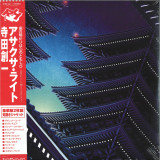
Back in 2015, Japanese DIY house pioneer Soichi Terada stepped back into the limelight courtesy of Rush Hour's 'Sounds From The Far East', a Hunee curated retrospective of material first released on his own Far East Recording label in the 1990s and early 2000s. Buoyed by the positive response and renewed interest in his work, Terada went back into studio to record his first new album of house music for over 25 years, Asakusa Light.
Developed over 18 months, Terada tried to recreate the mental and physical processes that led to the creation of his acclaimed earlier work. Those familiar with Terada’s celebrated, dancefloor-focused sound of the 1990s – a vibrant, atmospheric, and emotive take on deep house powered by the twin attractions of groove and melody – will find much to enjoy on Asakusa Light.
“I tried to recall my feelings 30 years ago, but when I tried it, I found it super difficult,” he explains. “I didn’t even know what I thought about myself five years ago, and the mental metabolic cycle seems to be faster than I thought. I tried different methods, including digging up my old MIDI data and composing by remembering old experiences. With the help of Rush Hour, I found some of the light from my heart that I had 30 years ago. I nicknamed the light I found in my heart, ‘Asakusa Light’.”
Produced using the very same synthesizers and drum machines that powered his 1990s work, the album is a joyous, colourful and life-affirming collection of timeless house music that not only recalls Terada’s own impeccable back catalogue, but also that of similarly celebrated contemporaries such as the Burrell Brothers or Ben Cenac (Dream 2 Science, Sha-Lor).
Terada, who has spent much of the last two decades writing video game music, has always had a gift for combining warm, undulating synthesizer basslines and perfectly programmed machine drums with stirring chords, smile-inducing melodies and mellow musical flourishes. It’s this immersive, sun-kissed and tuneful trademark style that takes centre stage on Asakusa Light, an album for the ages.
The set begins with the alien-sounding chords, soft-touch percussion and dawn-friendly warmth of ‘Silent Chord’ and ends on a high via the bouncing string stabs, starlight chords and thickset grooves of ‘Blinker’; in between, you’ll find a deluge of effortlessly feelgood music that’s the aural equivalent of a dopamine rush at sunrise.
There are subtle variations aplenty throughout the album – see the 8-bit lead lines and pulsing electronic textures of ‘Takusambient’, the vintage Tony Humphries flex of ‘Diving Into Minds’ and the effortlessly funky ‘Marimbau’ – but it’s the uniquely atmospheric, vivid and tactile nature of Terada’s loved-up sound that resonates. After well over 30 years in house music, the light in his heart is shining brighter than ever.
out of Stock
Last delivered 78 days ago available to reorder, subject to availability
The whispers of the underworld told us to give the music of Yakuza: Like a Dragon (Ryū ga Gotoku 7: Hikari to Yami no Yukue) the wax treatment, and so we’re honoured to present this Laced-exclusive Limited Edition vinyl. The complete soundtrack has been specially mastered and will be pressed to heavyweight vinyl.
Yakuza: Like a Dragon’s EDM and rock soundtrack threw up some mighty music moments: few boss battle themes go as hard as dubstep banger “War Maker” (aka “Cold-Blooded”) as your rag-tag team finally get to take on Mabuchi; or “Receive You The Hyperactive” kicking into gear as Majima flips down the stairs with Saejima in tow.
It took an entire family of talent to produce the OST, led by RGG Studio stalwarts Hidenori Shoji and Chihiro Aoki. Other contributors included, among others, Hyd Lunch (YasuyukiMatsuzaki& Hiroaki Watanabe), Yuri Fukuda, 83key (ShunsukeYasaki) and ZENTA; while karaoke songs were created by Shoji-san, Fukuda-san, Kiyo and ZENTA with lyrics by Ryosuke Horii and vocals by Kazuhiro Nakaya, Nobuhiko Okamoto and SumireUesaka (performing as Ichiban, Zhao and Saeko, respectively.)
u D1 Yume Mita Sugata E [ Full Spec Edition]
[v] D2 Akuma No Jigokunabe [ Full Spec Edition]
[w] D3 Harukaze [ Full Spec Edition]
The whispers of the underworld told us to give the music of Yakuza: Like a Dragon (Ryū ga Gotoku 7: Hikari to Yami no Yukue) the wax treatment, and so we’re honoured to present this Laced-exclusive Limited Edition vinyl. The complete soundtrack has been specially mastered and will be pressed to heavyweight vinyl.
Yakuza: Like a Dragon’s EDM and rock soundtrack threw up some mighty music moments: few boss battle themes go as hard as dubstep banger “War Maker” (aka “Cold-Blooded”) as your rag-tag team finally get to take on Mabuchi; or “Receive You The Hyperactive” kicking into gear as Majima flips down the stairs with Saejima in tow.
It took an entire family of talent to produce the OST, led by RGG Studio stalwarts Hidenori Shoji and Chihiro Aoki. Other contributors included, among others, Hyd Lunch (YasuyukiMatsuzaki& Hiroaki Watanabe), Yuri Fukuda, 83key (ShunsukeYasaki) and ZENTA; while karaoke songs were created by Shoji-san, Fukuda-san, Kiyo and ZENTA with lyrics by Ryosuke Horii and vocals by Kazuhiro Nakaya, Nobuhiko Okamoto and SumireUesaka (performing as Ichiban, Zhao and Saeko, respectively.)
u D1 Yume Mita Sugata E Full Spec Edition
[v] D2 Akuma No Jigokunabe [ Full Spec Edition]
[w] D3 Harukaze [ Full Spec Edition]