• Recognised by fans and fellow recording artists, as one of the World’s most influential and best ever guitarists.
• This tribute is frequently confirmed when Hank regularly features high on the polls that determine the greatest guitarists of all time.
• Initially known as the lead guitarist of The Shadows, the band that evolved to become the UK’s biggest ever selling instrumental group,
Hank Marvin defined the sound of a generation.
• Hank was the very first guitarist in the UK to own an iconic Fender Stratocaster – when Cliff Richard imported the guitar from the US
exclusively for Hank to play.
• As a solo Artist, Hank Marvin has released 16 albums, with Top 20 albums spanning almost 50 years; 1969-2017 (to date), in a long and
successful career lasting more than 60 years.
• Hank Marvin, as a solo Artist, as well as part of The Shadows, with and without Cliff Richard, has spent approximately 900 weeks on the
UK Albums Chart.
• This ‘Gold’ 180g Heavyweight Gold Colour Vinyl LP set, covers Hank’s solo career, in this 15-track set.
• ‘Gold’ includes guest appearances/performances from Cliff Richard, Brian May, Duane Eddy and Mark Knopfler.
Dark Entries continues celebrating our 10 year anniversary with ‘Preservation Bias’, a compilation of lost songs and rarities from Linea Aspera out June 28th. The group formed in London in November 2011 by Ryan Ambridge (Synths/Programming) and Alison Lewis (Vocals/Synths). Within the duo, Alison writes and performs all vocal elements, while Ryan is responsible for producing, recording and mixing the electronics. We released their debut self titled album in June 2012 that was followed by a posthumous vinyl reissue of their tour cassette “II” on Weyrd Son Records in 2013. For all recordings Ryan utilizes an analog synthesizer set up: Roland SH-09, Roland Juno 6, Vermona DRM MKiii, Korg Poly 800 and Analogue Solutions Semblance. Linea Aspera's sound includes clear influences from 1980s electronic body music, synth-pop, industrial and noise. Lyrically the band incorporates the sciences of osteology, neuroscience, and anthropology weaving a new medical language around themes of desire, despair and renewal. Linea Aspera is the muscle attachment on the back of the femur and translates to 'rough line' in Latin. ‘Preservation Bias’ features all three songs from the limited ‘II’ tour cassette EP, four songs from the 2012 self-titled limited cassette EP and one song from the Desire Records 2013 compilation ‘And You Will Find Them In The Basement’. All songs have been mastered by George Horn at Fantasy Studios in Berkeley. Each LP is housed in jacket designed by Niall Greaves and includes a double-sided insert with lyrics.
Founded in 1990 in Minneapolis, Minnesota, Cold Front were what you'd call early adaptors, their music at the time of its inception an oddity. This fourpiece, consisting of spouses Ayanna and Cam Muata, Jon Jon Scott and Ron Clark, were far ahead of their time and faded just as rapidly as they entered the stage, only playing a handful of local shows in support of Nine Inch Nails, Meat Beat Manifesto and such, alongside several cameos during early house nights and techno events.
Though short lived, their music nevertheless speaks volumes. It's intriguing stuff, a magical association of sound reminiscent of Ron Hardy and Klein MBO. New Beat-like drum parts, overdubbed by politically engaged raps, basslines that would make The Cure proud, held together by freakout speaking in tongues vocal experiments while also showing an obvious parallel to the rise of triphop at the other side of the ocean.
Beyond the Beat will burst dancefloors soon. In collaboration with Paris' recordshop Dizonord, Knekelhuis will close the summer of 2019 with this amazing gem.
out of Stock
Last delivered 7 years ago available to reorder, subject to availability
Aggelos Baltas is a veteran of the global electronic music scene, responsible for a handful of celebrated EBM 12”s as Dream Weapons, and a particularly heady and open-ended brand of krautrock as Fantastikoi Hxoi. His newest project, Anatolian Weapons, was conceived as a way to bring together these two seemingly mismatched concepts, with the polyrhythmic percussion and wailing tones of Greek folk music serving as their unlikely bonding agent. His output garners praise particularly around the Golden Pudel scene, such as Vladimir Ivkovic, and Phuong Dan. Lena Willikens, from the same circle, included Baltas’ track “Disillusioned” on her Dekmantel Selectors compilation in 2018.
But where much of what Baltas has released as Anatolian Weapons is instantly recognizable as dance music, To The Mother Of Gods—Baltas’ debut album for Beats In Space—is something else entirely. Created in tandem with Greek folk musician Seirios Savvaidis, it is a work of simultaneous collaboration and subtraction whose meticulous construction becomes more apparent with every listen. An album-length exploration of what happens when the principles of dance music are applied to pre-digital musical modalities. It is a record of psychedelic folk music that has more in common with Kikagaku Moyo, Minami Deutsch, and the Habibi Funk label than it does with anything else Baltas has produced under any alias. It’s difficult to imagine this music in any kind of club setting.
And yet, it’s very much the work of a DJ. Baltas initially heard Savvaidis’ music through a friend, and was absolutely amazed. “It was his very esoteric, pagan [music and] beautiful lyrics that grabbed me,” he writes. Seirios is a composer and performer of traditional Greek folk music with a growing discography of regional psych-rock gems. Baltas reached out to collaborate and the seeds of To The Mother Of Gods were sown.
Savvidis contributed stems of ten songs, which Baltas deconstructs and rearranges with appreciation of the ancestry of their lineage and of the deceptively ancient eerie, droning qualities inherent in the style. Occasionally augmenting Savvaidis’ recordings with his own, Baltas treats these elements as if raw materials for an architectural process.
To The Mother Of Gods showcases Baltas’ arrangement skills. He treats Savvaidis’ songs as landscapes, filling them with slanted, droning light and setting the singer’s vocals in dead center. His years behind the decks have given him an intuitive understanding of dynamics—drums crest and recede like tides, snippets of bassline repeat and swirl. He knows how to entrance, and when to push the music from the head to the body. Opener “Taratchi Katarratchi” (“Stormy Cataract”) is sung as a spell to ward off the fear of death, but Baltas’ orchestration demonstrates that dancing is an equally effective way of dispelling the darkness. The beat he assembles from Savvaidis’ playing recalls the late-night ecstasies of Primal Scream circa Screamadelica.
To The Mother Of Gods is a reminder that folk music and dance music are both powered by their audience as much as the musicians themselves. Savvaidis’ lyrics echo pagan Greek themes, touching on what Baltas calls “the magic of nature.” At times, as on “Kalesma” (“Invitation”), this can feel incantatory. Savvaidis chisels his vocal melodies into hard, clipped syllables, their cadence recalling Gregorian chant, and yet Baltas cloaks these details in washes of distortion. “Ston Stavraito” (“In Stavraithos”) is delivered with a lamentive tenderness that Baltas swells into a prideful stomp, immersing Savvaidis in marching drums and distant vocals that form a resilient protest-song. To The Mother Of Gods is a testament to the ongoing and innate truth that music can take us beyond ourselves. That repetition and drone can shepherd us to a liminal space beyond thought and rationality, where the wall between perception and reality does not exist. Call it spirit, if you want, and watch as it courses its way through modern-day dance music, mid-century psych, and the ancient sounds of the anatol.
Anatolian Weapons’ To The Mother Of Gods will be available from Beats In Space on June 14, 2019 in limited vinyl and unlimited digital forms.
Artist Highlights
• Aggelos Baltas is an Athenian music producer creating and Djing under the monikers of Anatolian Weapons, Fantastikoi Hxoi, and Dream Weapons.
• The Anatolian Weapons moniker is an outlet for Baltas to explore global music—from African to Anatolian and Middle Eastern, while also incorporating sounds from his home country of Greece.
out of Stock
Last delivered 7 years ago available to reorder, subject to availability
Soul Jazz Records are releasing this stunning new collection, The World of Keith Haring, featuring
music influential to the artist Keith Haring.
The art of Keith Haring is today one of the most recognisable of any visual artists of his generation,
defining 1980s New York during an intense period when downtown artists and musicians collaborated
like never before. Haring’s musical inspiration took in the punk/dance downtown sounds of clubs like
The Mudd Club, underground disco at Larry Levan’s Paradise Garage, as well the early days of hip-hop
and electro.
The album is released to coincide with the opening of the first major exhibition in the UK of Keith
Haring’s work at Tate Liverpool and which runs for the next six months.
Haring’s many friends included Jean-Michel Basquiat, Andy Warhol, Madonna, Fab Five Freddy,
William Burroughs, Jenny Holzer, Yoko Ono, Grace Jones, Larry Levan, Futura 2000.
If you were looking for a person to guide you through the wide variety of nightclub scenes of
downtown New York in the 1980s, then Keith Haring would have been your man.
This album comes in deluxe artwork and three formats – Double CD + 48-page book, a deluxe 3xLP +
bonus 7” + download code vinyl version, and a standard 3xLP + download standard vinyl version. All
formats of the album feature stunning photography, extensive sleevenotes and interviews.
The music here includes the work of a number of Haring’s close friends, including Jean-Michel
Basquiat, Yoko Ono, Larry Levan, John Sex and George Condo (The Girls), as well as healthy dose of
rare disco, early electro and New York punk/dance tracks.
out of Stock
Last delivered 5 years ago available to reorder, subject to availability
Moodulab presents "X" , the new release from our label will be soon available on vinyl. It contains four cuts from different artists.
On side A "Zero Gravity" by Clash an artist with a strong techno sound definition, presents a grooving & dirty track with acid lines wrapped in dark journey texture. Continuing on this side, V1L one of the most constant artists in our roster, includes "War Insemination", a track including many atmospheres, textures and trippy colors. Hypnotic and amazing sounds that occur in sequence of audio chains.
On the flip, Julixo, one of the best techno producers hailing from Argentina, includes his track "Arcadia". Broken beats with strong sound and vocal samples to make this track a solid techno dancefloor killer. The last track to end up this release, we've got "Geografía Física" by DJ MELEJ & RMDR. This duo from Argentina samples the experimental side of label, with lo-fi sounds, downtempo with deep sounds.
out of Stock
Last delivered 5 years ago available to reorder, subject to availability
Dutch producers Mindmapper & Fre4knc team up to deliver the 'Martial Manners' EP in celebration of Translation Recordings' tenth vinyl release, which comes on a visually stunning piece of crystal & transparent white vinyl! Up first is 'Collessius,' whose heavy-rolling bassline rushes in with the
force of a tsunami, leaving a wake of dancefloor destruction in its path. 'Shutter Angel' is a futuristic track where tight, snappy breakbeats slingshot back and forth between an electrifying bassline that surges across the airwaves like a beam of focused energy. Mindmapper & Fre4knc
delve into darker territories on 'Fenryr,' whose gritty atmospherics and subterranean low
frequencies deliver a unique and immersive listening experience. They close the EP on a deep, meditative note with 'Mind of Steel' (digital only) where drum edits slice through growling bass riffs with blade-like precision. The 'Martial Manners' EP strikes the perfect balance between dancefloor and experimental to carry on Translation Recordings' ongoing mission to bridge audiences with quality music that can be enjoyed in all listening environments.
---
Translation Recordings is proud to unveil its summer 2012 project capturing all moods sublime with the 'Universal Grooves LP'. A limited press on transparent blue vinyl, this special edition 12inch showcases a diverse sampling of Translation's full album that will not disappoint. The A-side brings the thunder showcasing the heavy hitting, rolling and dubby sounds of Loxy and Resound's 'Civil War' and Theory's calculated genius behind the ragga and amen tear-out, 'Final Confrontation.' Flip to a switch in vibe as DBR
Zru Vogue is a two man post punk avant-pop group from Palo Alto, California, combining the talents of Andrew Finkle and Rick Cuevas.
The band began in 1980 as a four member group: Rick, Andy, Tom Sanders and Nancy Miller. Tom and Nancy left the group shortly after the first single, "Nakweda Dream", was released by independent San Francisco label Adolescent Records in February 1981. Inspired by rave reviews and heavy airplay on alternative radio stations, Andy and Rick went back into the studio, now as a duo, to record some new ZRU tracks.
The self-tilted LP was released on the band’s Zero Risk Records in 1982. It contains eight compositions blending African tribal and Middle Eastern rhythms, avant-garde rock, minimal electronics, and funk-rock guitars.
The duo’s sound is inspired by the art and anti-art movements of Dada and Surrealism. All songs have been remastered by George Horn at Fantasy Studios. Each copy is housed in a replica of the original jacket, which features artwork by the group members, and includes the original 2-sided lyric sheet.
out of Stock
Last delivered 7 years ago available to reorder, subject to availability
Hailing from the heartland of British techno, Sheffield’s John Shima is one of the leading lights of UK electronics. His beautifully crafted sounds have graced a host of imprints including Distant Worlds, Exalt Records and, of course, FireScope. It is to the latter that Shima returns with his long awaiting debut album, The Lonely Machine.
John Shima is a master melody weaver, with this first LP attesting to his deftness of touch. Celestial chords and star gazing synthwork permeate this ten track odyssey. The musical heritage of Shima’s hometown, the elegance, majesty and subtlety of British electronics, is invoked from the needle drop. A range of influences come to the fore in this 2LP. Skirting around the edges of astral ambience and tonal texture are nods to industrial history, the rasp and resonance of rhythms in “Empires”, with the inspiration of Detroit surfacing in the future funk of “Phase Distortion” and “Linear.” Dreamscapes are painted in delicate hues, the fragile movements of “Accepting”, with brooding works adopting thicker basslines and ruffled notes as with “Distrust.” Nevertheless, it is the incandescent brightness of Lonely Machine that truly shines. Radiant pieces of elating electronics, complex and joyful compositions that chime with unbridled hope and open-hearted optimism.
out of Stock
Last delivered 3 years ago available to reorder, subject to availability
For Against Fascism Trax 006, Auntie Flo takes us to Brazil, a country that is dealing with having a bona fide fascist president, with an EP recorded in Rio De Janeiro. I’m going to shut up and let Afonso Marcondes from Sao Paolo take it from here -
In a world in which culture policies (incl. music) win nationalist tones, Brazil has lessons to give with the catastrophic failed experience of the last government and the teletubbies talk on Culture from the current one.
As one sometimes feel as if one is on a time-warp from time to time, most often taken there by music, songs like March of The Berimbau here, could easy make for the perfect soundtrack for the political history of Brazil, country in which Auntie Flo got his inspiration and recorded this tracks.
From the military regime that gave Brazil bossa nova in the 60’s, the tropicália sounds of the 70’s to the pop rock era of the 80’s all the way from the rave scene of the 90’s to todays Bahia Bass, music in Brazil has always been instrumental in helping shape the political scene.
One thing about the Brazilian music ’scene’ is that rarely it lends itself to extreme political views, via lyrics or otherwise, after all, carnaval must be kept a happy time! The number of different cultures living in peace, side by side in Brazil has strenghten the country disapproval of hate talk in music since I can remember growing up in the interior of São Paulo state.
As per wiki: Fascism is a form of radical ultranationalism, characterized by dictatorial power, forcible suppression of opposition… Children bedtime reading if you follow the past 15 years in Brazilian politics and the rise and fall of Brazil’s Labour Party, together with its disastrous polices on culture and synergy with de definition above; including the views of a important cultural Party branch that continuously 'preached' that Authors should need no rights over their works. That couldn’t bit music in Brazil.
Fast forward to the first 5 months of government of an unfortunate retired army officer, whose every word sounds like Trump, and whose views on culture is to extinguish the Culture Ministry and cut low the state incentives to the sector, that, so far, is not bitting music in Brasil.
Hope that Auntie Flo’s music inspired everyone as the place where it was made and recorded inspired music in Brazil, as a beacon of light against any hate talk darkness.
out of Stock
Last delivered 6 years ago available to reorder, subject to availability
Blind Delon was founded in 2016 by Mathis Kolkoz—a French artist who draws his energy from coldwave and synthwave references channeled through the use of ancient synthesizers, icy bass lines and black romanticism, all combined with a raw elegance and melancholy.
Discipline - Blind Delon’s first album features a stunning sound design, laced with dark energy and a daring lyricism. The album, although written and composed by the band, is an all star collaboration with Kris Baha, Lapse Of Reason, Incendie, I Hate Models, and others.
out of Stock
Last delivered 20 months ago available to reorder, subject to availability
“Built By Humanoid” is Humanoid's second album, a mere 30 years after the debut, though Brian Dougans claims the first album wasn't really him anyway.
Humanoid's classic acid house single, ‘Stakker Humanoid’, highly regarded as one of the key tracks from the era (Richard James (Aphex Twin) sights the Stakker project as a major influence), enjoyed massive success in 1988. Reaching No.1 for 5 weeks in the UK dance charts, performances on Top of the Pops, a John Peel session for the BBC and European tours eventually led to an album deal.
Whilst all this was happening, Brian Dougans (one half of electronic legends Future Sound of London) claims he was returning to his squat in Kings Cross with no electricity or water. He not only became disillusioned with the business, but also became increasingly ill from the conditions he was living in. Around 6 tracks into the album, he left London and record label, Streetsounds, returning to Manchester to recover and regroup his thoughts. However, Steetsounds pressed ahead with the album and it was finished in Brian’s absence with guest performers.
Brian left Humanoid behind and went on to create FSOL with Gaz Cobain becoming leading lights in the burgeoning ambient scene, scoring a top 10 album "Lifeforms" on Virgin Records.
In 2003 Rephlex (Aphex Twin’s label) released a posthumous album of 1988 out takes compiled by Brian.
Recently Humanoid tracks have been popping up on modern compilation albums (Touched Music / Gasman, etc) signalling a possible return.
“Built by Humanoid” is a brand new nine track album of future acid cuts, breaks and electronics, a lot of which is credited to 2 synthesisers co-designed by Brian Dougans and English Electronics company Digitana. It is this innovation that has helped usher Humanoid back into the limelight and consequently the album has a rather new and unique sound and style.
The track ‘Polymath’ is created using a possibility / probability theory that results in a track which at no point repeats itself - 303 tinged acidic bubbles. Meanwhile ‘Traktion’ is a break beat, pulse laden, bass heavy monster. ‘Fu*k It’ is the future sound of 303. Fast, frantic and beat driven. Whilst ‘Post Humans’ combines thumping 909 and 303 into an acid hallucination.
out of Stock
Last delivered 7 years ago available to reorder, subject to availability
Forty Five is the soundtrack of a life. A revolution in sound played out in stacks of 7' singles; a long player that pulls together the numerous disparate musical strands that have made Boca 45 (aka Bristolian
record selector Scott Hendy) the DJ he is today, in his forty fifth year on Planet Earth. Having previously made records for Grand Central, Jalapeño, Island and Domino, Boca 45 returns with a twelve-track album that's semi-autobiographical and full-time firing on all cylinders.
The first single from Forty Five = "Move A Mountain' featuring the soulful vocals of New Zealander Louis Baker, heavy on the drums, dripping with soul & heavy on the funk "Bryan Munich Theme" - sounds like an incendiary lost '70s library record; the perfect psych funk-flecked walk on music for a team of doughty outsiders destined to lift the cup.
out of Stock
Last delivered 7 years ago available to reorder, subject to availability
fter Liquid Liquid disbanded in 1985 I continued to record electronic music at my home studio inEdison,New Jerseybut I decided to mix the songs for "Concepts" at another studio so I could have another set of ears to help with the mixes. I was lucky when I looked in the local music ads that I to find Gabriel Farm Studios inPrinceton,New Jerseyowned and operated by Andy Gomory. Andy was a true talent, a keyboardist and arranger, we hit it off immediately. After he recorded my mixes we would record songs together. Andy played drum machines and keyboards while I played percussion, keyboards, & guitar and we both sang. When Andy and I parted ways in the late 1980's I decided to add both drums and percussion as well as overdubs from guest musicians many of which are included on this album. The albums timeframe ends in the year 2004. The later recordings have a jazz feel to it yet still had dance music elements mixed in. The title track "Primitive Substance" really sets the tone as you hear the great playing of Michael Gribbrook on Frugel horn/Trumpet and Gerry Carboy on bass. Also, my favorite song on the recording "Forgiveness" has David Axelrod (not the famous one) playing beautiful melodic bass guitar thru out.
Special thanks to Euan Fryer of "Athensof the North" for releasing this album. As I listened to the songs I decided to use for this recording it brought back memories of the hours spent adding the extra sounds and instruments to the point where I wanted to listen to them again and again to see what I missed hearing . Keep a close ear this might happen to you after hearing "Primitive Substance".
Thanks for listening!
Dennis Young/April 2019
out of Stock
Last delivered 7 years ago available to reorder, subject to availability
Counterweight’s first release of 2019 comes by the hands of the Italian duo RVDE and includes a remix by the Spanish gringo Gonzo MDF.
Once again, the RVDE guys show what they can do best, Techno for the dancefloor full of energy with no mercy. The A-side with “Roll & Lick” and “Carousel Rampage” is highly influenced by 90’s rave sound and will bring your mind right onto the dancefloor of your favorite club or warehouse. On the B-Side, “XXX” maintains the rave flavour but this time the approach is deeper and more hypnotic. Finally XXX gets a re-built by Gonzo MDF who adds his characteristic aggressive & fast paced sound.
So, yes, you will hear it at any good warehouse party this year… and don’t forget to call them Rude.
out of Stock
Last delivered 3 years ago available to reorder, subject to availability
A Sagittariun’s third album chronicles the journey back to Telepathic Heights; an expedition that encounters many obstacles along the way. The feuding parties of the two planets make for a journey of determination and self-discovery for our techno lone ranger that will ultimately deliver him to the sacred site on which Telepathic Heights stands. Conceived as a space western soundtrack to the cinematic interpretation of this tale, Return To Telepathic Heights delivers ten chapters that journal the ultimate mission to reach the imposing tower of Telepathic Heights, where dream telepathy has become the primary communicative tool amongst its peaceful and harmonious community who have opted out of the planetary war that continues to rage, seemingly with no armistice anytime soon. The score fittingly winds its way through the trials and tribulations of this journey, blending minimal and harmonic rhythms, industrial funk, dreamy synthwave and transcendental techno into the rich tapestry of music that documents the ‘Return To Telepathic Heights’. The album features original artwork by Johnny Bruck, fully licensed, and taken from the legendary German science fiction novel series, ‘Perry Rhodan’, which ran weekly from the early 1960s, and was the most successful sci-fi book series ever written.
out of Stock
Last delivered 6 years ago available to reorder, subject to availability
2019 vinyl edition with printed inner-sleeve (with the lyrics). Includes a bonus 7" of original track 'Chacun fait (C' qui lui plaît).
Spring 1982: Grégory Ken and Valli aka Chagrin d'Amour bursts into the scene with 'Chacun fait (C'qui lui plaît)'. The track gets 9 airplays a day on the newly created NRJ radio and 35 000 copies of the 7" are sold every day !
In the blink of an eye, a team of experienced musicians is gathered around prominent sound engineer Dominique Blanc-Francard: Slim Pezin (guitars), Bernard Paganotti (bass), Philippe Drai (drums) and Jean-Pierre Sabar (keyboards). After a few days in New-York with Richard Avedon who shot the cover pictures the album is ready and set to become a cult release over more than three decades.
out of Stock
Last delivered 7 years ago available to reorder, subject to availability
Berlin based trio Keller Crackers collective likes to shape haunting esoteric sounds, in which self-built instruments dance with ritualistic synthesised rhythms, field recordings, psychoacoustic drones and poetical spoken silhouettes.
After a self-released MC and a mesmerising tune called “Anem” out in February 2019 on the custom-made Kashual Plastik 007 double-vinyl compilation, now they give birth to their own debut record “KC”, a four track EP resulting from various improvisational studio sessions, a bag full of spontaneous visionary DIY sound fashion that melts meandering serialism, foggy ‘Chris & Cosey’-ness, exoticism and freely expressed emotions. Some pieces are given time to evolve, being dragged through long arrangements and slow transitions, while others are playful and short. To close up the magic circle, the release includes a tripping Tolouse Low Trax signature remix.
The opening tune “Specialised” swings on a trance-like hypnotic bass line, while a self-made kalimba played through a tape delay and overtones from a DIY circuit bended device inject dynamics and colour to the composition. Out of the sonic depth, the spoken words of Sylvana Wickman emerge enchanting and unreal, naming a series of technical terms, assembling a deep notion on the specialised society we live in.
“Cow Tongue” follows, a fleeting composition of crackling electronic clicks jumping off a micro-modular device. They got overdubbed again by Sylvana’s voice, delightfully reciting phrases from a recipe of regional delicacies.
The A side of KC`s first strike finishes with a spaced-out synth bass and the lo-fi beats of a Yamaha RX15 drum machine. They are the gripping foundation of “Aithouses Anamonis“, which means “Waiting Rooms”. It describes the scene of a man sitting in a waiting room observing the consumerist behaviour by the folks around him.
The B-side opens with a Tolouse Low Trax remix of “Specialised”, elevating the original with the bass line of “Aithouses Anamonis“, while melting the all into a dark nebulous Tolouse Low Trax signature stripped down funk for endless nights in neon lights.
For their final track “Colours”, Keller Crackers invited a steady free member of their live shows to record with them: free jazz musician Robert Würz. He tuned his flute enthralling over a suspenseful bass line formed in a whirlwind of synth-sounds. The whole frenzy gets divine through sliding chords that rise from a self-built guitar.
A musical bouquet for open spirits, that value charming minimal wave zones, undefinable post-industrial psychedelics and hallucinogenic poetry reflections on the current state of our mechanical times.
out of Stock
Last delivered 6 years ago available to reorder, subject to availability
In 1981, Alexei Borisov, a history student at the Moscow State University, formed his first band "Prospekt (Avenue)", drawing inspiration from kitchen table talks and new wave music coming from the West. They broke up in 1984 and a year later Borisov joined forces with Ivan Sokolovsky, an electronic music enthusiast and a connaisseur of rare synthesizers, to introduce the new and "updated" version of the band. By becoming Notchnoi Prospekt (Night Avenue), Borisov and Sokolovsky started moving towards industrial music and viscous, psychedelic synth pop.
In 1986, after a few conceptual, revolutionary albums as Notchnoi Prospekt, various solo projects and collaborations, the duo reunited in the studio to record their only instrumental album "Kurorty Kavkaza" (Resorts of the Caucasus). Built around the hypnotic meshing of afro-caribbean drum machine percussion and vintage Soviet and Italian synthesizers' vivid sonic palette, the resulting record was something that was absolutely different from Borisov and Sokolovsky's dark signature sound and wasn't well received both by the public and underground scene.
Until now, these tracks were never released and Notchnoi Prospekt never performed them live. Shortly after the recording session the duo focused on a return to their industrial roots that resulted in a number of monumental albums including "Kisloty" that became an instant underground classic.
"Kurorty Kavkaza" lay dormant and forgotten decades, and thirty three years after its recording, it gets the deserved official release.
out of Stock
Last delivered 3 years ago available to reorder, subject to availability
Pelican, the instrumental quartet whose singular vision of heavy music eschews classification, have announced their first full length in six years, Nighttime Stories, is due June 7th via Southern Lord Recordings.
The eight-song set marks the band’s first release written front to back with guitarist Dallas Thomas, who took over guitar duties upon founding member Laurent Schroeder-Lebec’s departure in 2012. In the process of writing the album the quartet endured a slew of realisations, tragedies, and glimmers of optimism that guided the creative process to the most potent work of their nineteen-year career.
Though the new material veers towards the darker tone characteristic of Pelican’s early songwriting, it’s hard to imagine a previous incarnation of the band writing songs as meticulously crafted and detail-oriented as those within Nighttime Stories, where the compositions recall everything from the triumphant call-to-arms of classic Dischord, to the vicious troglodyte battery of the Melvins, to the dynamic interwoven melodies of bottom-heavy indie cult heroes Chavez.
Nighttime Stories was an album title initially proposed for Tusk, the hallucinatory art-grind band that included Pelican members Trevor Shelley de Brauw, Larry Herweg, and Schroeder-Lebec, in addition to vocalist Jody Minnoch. The writing of Nighttime Stories was instigated shortly after Minnoch’s unexpected death in 2014, and some of the dissonant viscera and dark psychedelic structures that were characteristic of Tusk’s sound began to unconsciously inform the album’s direction. In homage to their departed colleague, Pelican applied the previously discarded title and pulled many of the song titles from notes Minnoch had sent to inspire the direction of the unrealized album. As the writing of Nighttime Stories progressed Thomas also experienced a heavy loss with the passing of his father, to whom the album pays tribute on opening track “W.S.T.” (on which Dallas performed his guitar parts on his father’s Yamaha acoustic).
Pelican have always excelled at vacillating between the savage sounds of various niches of metal underground and the more delicate and nuanced sounds of Midwest’s cerebral indie community, proving that they can make either end of the spectrum more vibrant and compelling through the art of contrast. With Nighttime Stories, the pendulum has swung back to the angst and ire of their younger years while delivering it with the nuance and wisdom that’s come with nearly two decades of writing and performing. Pelican head out on a ten date US tour in June with more dates in the works for later in the year (see dates below).
Black Truffle is honoured to announce the first ever vinyl reissue of David Rosenboom’s legendary Brainwave Music, originally released on A.R.C. Records in 1975 and here expanded to a double LP with the addition of over 40 minutes of contemporaneous material. Pioneer of live electronics, innovator in music education, collaborator with artists as diverse as Jon Hassell, Jacqueline Humbert, Terry Riley and Anthony Braxton, Rosenboom is renowned for his ground-breaking experiments with the use of brain biofeedback to control live electronic systems.
Each of the three pieces that make up the original Brainwave Music LP integrates biofeedback with musical technology in different ways. In the side-long opening piece “Portable Gold and Philosophers’ Stones”, four performers have electrodes and monitoring devices attached to their bodies to receive information about brainwaves, temperature, and galvanic skin response. This information is analysed and fed into a complex set of frequency dividers and filters, manned by Rosenboom, but essentially played by each of the performers through their psychophysiological responses to the situation. The result is a slowly unfolding web of filtered electronic tones over a tanpura-esque fundamental, possessing the unhurried, stately grandeur of an electronic raga. In “Chilean Drought”, three different variations of a text about a drought in Chile, each read by a different voice in a different style, are associated with the Beta, Alpha, and Theta brainwave bands. Alongside an insistent piano accompaniment, we hear a constantly shifting combination of the three vocal recordings controlled by the relative preponderance of each of the brainwave bands in the soloist whose brainwaves are being monitored. “Piano Etude I (Alpha)”, the earliest piece included here, is based on research into the link between Alpha brain wave production and the execution of repetitive motor tasks. As Rosenboom plays a very rapid, incessantly repeated pattern in both hands – deliberately designed to be difficult to execute without being in an alert, non-thinking state similar to that associated with strong Alpha brainwave production – two filters controlled by monitoring his brainwaves process the piano sound, moving gradually higher in frequency as the average Alpha amplitude increases, resulting in a hypnotic, constantly shifting blur of repeated notes reflected through the shimmering, watery lights of the filters. For this reissue, the original LP is supplemented with an additional LP containing an unreleased 1977 live recording of Rosenboom’s “On Being Invisible”, in which the composer himself performs on an array of electronics that are fed information from his brainwaves. Stretching out over 40 minutes, the piece begins in similar territory to “Portable Gold and Philosophers’ Stones” but eventually becomes far wilder, building up to pointillistic bleeps and dense layers of electronic fizz that unexpectedly cut to near-silence. As Rosenboom explains, the piece creates a situation in which the ‘performer’s active imaginative listening became one of the ways to play their instrument, as well as an active agent in how self-organizing musical forms might emerge.’ Enriched with archival images and new notes from the composer, this expanded reissue of Brainwave Music is essential listening for anyone interested in the history of live electronic music and alive to the possibilities it might still contain.
out of Stock
Last delivered 7 years ago available to reorder, subject to availability
U Know Me Records proudly presents a special album showcasing Polish drumming scene - each track was produced by a different drummer - these are their portraits.
official video promo: https://youtu.be/qxuTYjMRUMM
In the 21st century drummers imperceptibly switched from the background to the front line, despite popular music not exactly pandering to them. In the early days of rock culture this joke made the rounds "What's the last thing a drummer says in a band?" "Perhaps we could play one of my songs…?"
In popular music the drummer became the first to compete with machines. They were the first band members that consequently began disappearing, however, as contemporary electronic music took hold, they were also the first to return. First they were incorporated into compositions but gradually - took centre stage. Thanks partly to the ubiquitous culture of Hip Hop recognising the drummer's role as key in any recording, alongside the eclecticism of new music, which demanded fluid transitions between musical forms, a drummer's adaptive skills – as a trained multi instrumentalist – became truly impressive. This new generation of drummers seen on Polish stages today are exceptional even against the backdrop of today's unusually creative and well-educated music scene which rejects narrow minded or genre-centric views.
This album exhibits portraits from the cream of today's Polish drummers. Kovalevo Tone Bank by Michał Bryndal tags the 1980's, the era which began stealing drummers' bread. Incidentally, the heavy groove laid down by the artist references a hit by Wham!, the same hit in which the group decided to cut the drummer's part because he was late and replace him with a LinnDrumm machine. Hubert Zemler in The Life and Death of Ben Bekele and Łukasz Moskal in Father Sparrow show they've found themselves perfectly in close cooperation with electronic instruments.
Multifaceted improvisors - Qba Janicki (Kabina projekcyjna) and Jan Młynarski (Roj) - transform their drums kits into multifunctional devices capable of delivering wildly diverse palettes of sound. Rafał Dutkiewicz (Displaced) showcases drums as the lead instrument on a club track. Marcin Rak (Alpaka) does the same, but with the conventions of Funk and Hip Hop, whereas Krzysztof Dziedzic (Vagabonde) gravitates towards the edges of jazz. Each of them here is a leader and… plays one of their songs.
Bartek Chaciński
(translation: Sean Palmer)
out of Stock
Last delivered 6 years ago available to reorder, subject to availability
'Mallumo' is the introspective and therapeutic works of Nottingham born musician, producer and composer Neil Tolliday.
Known to most simply as Nail, on this his first solo LP under his given name, Tolliday releases four meditative dark ambient pieces recorded between 2010 and 2015 that explore the depths of his psyche.Made as a direct response to a period of clinical depression this self therapy gave birth to soundscapes that branch between hope, tranquility and torment as a man searched for solace through sound and his own creativity resulting in the listener being taken on a heady ride through their own subconscious mind. Limited to 300 copies, this 180 gram double vinyl LP comes with your own Utopia Project incense and a download code for the full hour long versions of each movement.
Cover photography shot and printed by Michael Bradley, Design and curation by Alexander Bradley for Utopia Records, London 2019.
Emotional Rescue returns to the Caribbean with the music of Glen Ricks and his infectious Jamaica meets Boogie goldmine that is I've Been Waiting For You.
A performer since the age of 7, Glen Ricks (born Ricketts), established a reputation for his singing range and ability to seamlessly shift from tenor to soprano, going on to sell over a million records around the world.
Having immigrated to Canada as a child, after teaming up with his first band The Fabulous Flames Ricks returned to Jamaica to create his first records. Moving effortlessly from reggae to lovers, and dancehall to soul, R&B, disco and boogie, Ricks established a successful career and he continues to perform to this day.
I've Been Waiting For You is indicative of that cross-pollination of style and sound. Released on 7" in 1983 on the short lived Seraff label, the mix of Ricks' soul voice with laid back boogie groove creates a sound full of lazy JA swing.
Now highly sought after, this special 12" reissue includes the stand out vocal and is backed with an instrumental that builds on the interplay between bass, drums, piano, guitar, keys and finally, backing vocals. To seal the deal - and in true label style - LA's rising star DJ Duckcomb presents the perfect Discomix, seamlessly cutting between both versions with some respectful dubbing in the mix.
out of Stock
Last delivered 7 years ago available to reorder, subject to availability
As a winemaker hailing from the Palatinate, Florian Hollerith understands a thing or two about vintage. It's something that also comes through when you sample his music - rich, full bodied with just the right level of acidity. 2018 was already a good year with Ohrenzirkus featuring on both Sven Väth's Sound of the 19th Season mix CD as well as this year's Dots and Pearls vol. 5 compilation. Florian certainly announced his arrival on the scene in style, so it's only fair that he gets the chance to demonstrate his full range of skills on his very own Cocoon Recordings release. 2019 however, has a darker, more complex flavour...
Florian certainly knows a hookline when he finds one. On the EP's title track Perlas, he's working from the inside out with complex layers creating a vortex of sound. This dense sonic mesh is playful yet dangerous, with ethereal voices and jagged chants adding to the disorientation of the opening exchanges until the congas and skipping bassline give us something to hold onto. The dance floor melts under our feet as a raw, tripped out groove takes hold before the bass suddenly morphs into a brassy acid line that spreads its wings and soars. It's music for the headstrong, a celebration of the timeless tribal ceremonies that have come to define us.
Love Summer adds a contemporary twist to the melodic joys that drenched the early nineties in pure ecstasy. The soulful vocals soothe the mind as horn stabs punctuate the sensual groove, generating power and passion in equal measures. It's a straightforward approach, revolving around a familiar yet eminently seductive riff that just keeps on rolling, propelled forward by the force of its own momentum. There's no need to fuss when you hit on a winning formula like this.
More retro futurism abounds on Electro Indianer as arpeggiated bleeps usher in another vast, sprawling soundscape designed to induce a collective trance on the dance floor. Whistling, circular effects wash back and forth increasing the tension notch by notch as we're led deeper into the wormhole. Finally, the track deconstructs slightly, creating enough space for classic Casio-style bleeps and percussion to embellish a beautiful blissed out ending that trails off into the sun rise, as ancient Native American pipes pick out a haunting melody in the distance.
out of Stock
Last delivered 3 years ago available to reorder, subject to availability
A year after Floyd Lavine & David Mayer served up the afro house bomb ‘Sondela’ from the EP of the same name, it now gets remixed by a carefully selected list of names including Jimpster, Auntie Flo, Tunnelvisions and Kususa. First up is deep house master and Freerange label boss Jimpster, who serves up the sort of quality you would expect on his remix. His cool and immersive journey brings new soul and feeling to the original with timeless melodies that have a lasting effect. Dutch duo Tunnelvisions are an act on the rise and always bring plenty of Afro, Latin and Caribbean vibes to their sounds. Here they masterfully flip the track ‘Xi’ from the Sondela EP into a percussive groove with psychedelic warmth and melodic bass that goes deep. Kususa are also rising stars of the South African scene who have Black Coffee supporting their work and have mixed the upcoming Africa Gets Physical vol.2 album. Here they pump up the beats: their percussion, arps and big synths will get hands in the air and as the bassline envelops you in warmth you cannot help but feel it deep inside. Highlife artist and recent album man Auntie Flo brings his authentic understanding of worldly groove to a fantastic remix that oozes beauty and quality. It is understated and stripped back with delicate hand percussion and an otherworldly aura that brings real mystery to the EP. An acapella version is also included as an exclusive addition to the vinyl release.
out of Stock
Last delivered 14 months ago available to reorder, subject to availability
Eno Williams, frontwoman of Ibibio Sound Machine, uses both English and the Nigerian language from which her band's name is derived for the dazzling new album Doko Mien. Long lauded for jubilant, explosive live shows, Ibibio Sound Machine fully capture that energy on Doko Mien, the followup to their Merge debut Uyai.
In a glowing piece in the New York Times, those songs were praised for following 'in the tradition of much African music, [making] themselves the conscience of a community.' By pulsing the mystic shapes of Williams' lines through further inventive, glittering collages of genre, Ibibio Sound Machine crack apart the horizon separating cultures, between nature and technology, between joy and pain, between tradition and future. That propensity for duality and paradox seems common in people whose lives span continents.
Williams was born in the UK, but grew up in Nigeria, always steeped in her family heritage. She obsessed over West African electronic music, highlife, and the like, but was equally empowered by Western genres such as post-punk, disco, and funk. The London octet have enveloped themselves in that maximalist quilt proudly since their 2013 formation. Though it can often bring with it news of stress and uncertainty, the modern world further brings all these disparate traditions into connection.
'Everyone has everything now,' says multi-instrumentalist Max Grunhard. 'Everyone has immediate access to every genre, picking things up from everywhere—like magpies.' And while they haven't suddenly left their African roots behind, Doko Mien does find increased representation of English lyrics in the ratio. By sharing more directly with more universal lyrics, the record feels more anthemic, reaching for grander heights.
'We wanted to give people a reason to sing along, to find their soundtrack every day,' Williams says. 'We wanted everyone to feel as if they're part of the music as well.'
Late album highlight 'Guess We Found a Way' addresses the change with a coy smile. 'Guess we found a way to speak to you/ Guess we found a way to say what's true/ To say what's real,' Williams coos over glistening chains of reverberant synth and diamond dust percussion, before returning to Ibibio in the chorus. Perhaps the best example of the group's ability to convey meaning across language and tradition, to blend past and future into a singular present comes on 'She Work Very Hard'. The traditional Ibibio folk tale bobs over the waves of tuned percussion, chunky synth, and pinprick highlife-esque guitar, while Jose Joyette's drums and Derrick McIntyre's bass funk groove bring everyone to the dance floor. 'These stories won't be forgotten. Feel the music: it speaks to everybody,' Williams says. 'We can travel back in time together, while convening on a futuristic, present tense. We hope that we can give people that reason to wake up, that one song to sing and dance and be happy.'
Doko Mien: Tell me everything. On their new album, Ibibio Sound Machine provide the perfect companion, ready to digest as much as possible and then further unfurl beauty and hope. They remember and honor the past and charge forward toward the future, all while intensely expanding the present.
Led by Saxophonist Rob Mitchell, Abstract Orchestra have been a consistent presence on the u.k. music scene, touring constantly in the promotion of their debut LP "Dilla" and follow up 45 "New Day feat. Illa J", steadily building a loyal and supportive fanbase. Inspired by the legendary live performances of The Roots with Jay-Z and the 40 piece orchestral arrangements by Miguel-Atwood Ferguson of the work of J Dilla, classic arranging techniques underpin modern loop-based structures, breathing new life into familiar material.
The band itself is based on the classic jazz big band instrumentation of saxes, trumpets, and trombones and features the cream of the north of England's jazz scene who collectively have played with Jamiroquai, Corinne Bailey Rae, Mark Ronson, Martha Reeves, John Legend & the Roots, Roots Manuva and Amy Winehouse.
"Madvillain Vol. 2" follows on from the 2018 release "Madvillain vol. 1" and further explores the jazz, TV soundtrack and film score aspect of the original work, combining it with classic big band writing and a focus on improvisation. As with vol 1. there is a strong influence of Quincy Jones, Lalo Schifrin and David Shire(Composer of the soundtrack to The Taking of Pelham 123) on the album, and the arranger Rob Mitchell crafts his own sound that inhabits the space between Madlib's production and Quincy Jones' writing.
As a bonus track to the album, Abstract reworks Dabrye's 'Air' and have included the original vocal of MF DOOM. Dabrye's original is heavily soaked in synths and drum machines, with an almost sci-fi, Blade Runner or Tron-esque sound . Mitchell explores this further and is influenced by Bob Brookmeyer's late work 'Electricity', which explores synths and jazz orchestration.
Madvillain Vol. 2 will build on the success of vol. 1 which received enormous support from Gilles Peterson & Huey Morgan on BBC6 Music as well as numerous airplay on Worlwide FM and Jazz FM, and reviews from soulbag in France and ukvibe, qwest.tv, and vinyl district online.
out of Stock
Last delivered 5 years ago available to reorder, subject to availability
Ekin Fil is the solo moniker of Ekin Üzeltüzenci from Istanbul and 'KOMA' is her first release on Stockholm imprint Possible Motive.
'KOMA is an album which is based on the combination of separate songs made in various times in the last two years. Songs that sometimes include unwanted noises caused by my broken sound card, songs that I left unfinished with the intention of finishing later. The sleepy and still mood that's all over the 8 tracks may be the response to the hard times that I was not able to react sober to until recently.'
Ekin has been releasing albums on LP/digital and cassette formats on American and European labels under her moniker Ekin Fil since 2007. She was awarded 'Best Original Film Music' for her first Soundtrack 'Kaygi' at SIYAD, 2017 and 'Best Film Music' for the Soundtrack of 'Korfez - The Gulf' at Turkisches Film Festival in Frankfurt, 2018.
out of Stock
Last delivered 7 years ago available to reorder, subject to availability
Following on from big recent releases from Neue Grafik & Oliver Night, CoOp Presents Sivey, with an all-new double-header of heat, 'Nobody Else' and 'Somebody Samebody'.
For those that don't know, Manchester-based Sivey became a player in the future beats scene a couple years back, releasing music with the LA-based collective Soulection, as a solo artist and via collaborations with Evil Needle, which came to fruition after a series of online beat battles, as well as releases and remixes with labels like Astral Black and Ninja Tune.
His last wave of output was greeted with enthusiasm by fans of soulful beats championed by artist collectives such as HW&W and Darker Than Wax, and saw Sivey subsequently spinning at events across the UK, and perform shows as far afield as Los Angeles and Tokyo.
Rooted in hip hop production, Sivey's largely instrumental tracks have brought together elements of millennial R&B, neo-soul, UK garage, jazz and 80s funk. In the few years since his previous releases, Sivey has continued to experiment with new ways of exploiting his diverse influences in his productions. As his listening habits became increasingly orientated around jazz and obscure 70s fusion records, his own productions began to reflect the shift.
The recent resurgence of the broken beat movement was something that also inspired him, admiring the balance between musicality and danceability of the genre. He made his first experiments with bruk in 2017 and found that it mixed perfectly with what he'd already been creating. Eager to share the results with the world, it made perfect sense for his first offerings of this ilk to find a home here with us at CoOp Presents.
These two tracks exemplify the ever-evolving progression of Sivey's sonics; the familiar deep keys and synth sounds of his previous productions are there, but nestled alongside more uptempo grooves, and the lush rhythmic complexity of bruk. Tied in with his love for jazz fusion, 'Somebody Samebody' sees Sivey reinterpret a late 70's track by Japanese guitarist, Kazumi Watanabe; this one also enlisting the help of Trian Kayhatu on keys. As well as the original tracks, prolific Selectors Assemble crew member Danvers adds in his own tasty heads-down version of 'Nobody Else', and label co-founder IG Culture (who recently received a Worldwide Award for 'lifetime achievement'!) provides a dope bruk-funk flip of 'Somebody Samebody' to close out the set.
out of Stock
Last delivered 4 years ago available to reorder, subject to availability
Crammed Discs present the debut album by innovative, exciting French/ Chilean band Nova Materia. Avaialble as a CD and as a double LP version is housed in a gatefold jacket, plus colour innersleeves and includes a download card. Nova Materia's powerful, hypnotic music incorporates eerie sounds generated by raw and mineral materials (metal, rocks etc.) to create tracks that are in turn hyper-rhythmic and dreamy, poised between postpunk rock and electronic dance music. Nova Materia is a duet consisting of Caroline Chaspoul from France and Eduardo Henriquez from Chile. The band was born three years ago from the ashes of Panico, the Chilean alternative rock group with which Caroline and Eduardo toured around the globe and released several albums. After two Eps produced a.o. in collaboration with French producer Chloé and her Kill The
DJ label, Nova Materia now joins the likes of Acid Arab, Konono N°1, Juana Molina, Yasmine Hamdan and Matias Aguayo on the Crammed Discs roster.
out of Stock
Last delivered 7 years ago available to reorder, subject to availability
Tokyo based DJ/Producer Tsuyoshi Ogawa presents "Seven Samurai". This vinyl-only label has been founded in 2018 and it is operating in Tokyo, Japan. It pays tribute to the Japanese legendary movie director 'Akira Kurosawa'. This 4th EP featuring Foog from Tokyo who is a pioneer of Japanese electronic music since the early 80’s as Yukihiro Fukutomi. The EP includes two tracks inspired by the movie "The Lower Depths" that well know "Donzoko" in Japanese. 1st title track "The Lower Depths" recorded using the sound sample from the movie. The beat influenced by the Japanese Rakugo and impressive Syakuhachi phrase brings us toughness and funniness of those who survive in Edo-Ghetto like that movie. 2nd track "Fourth Wall" asks us about the confusion of the modern world with human negative emotions, evil, anger, poverty and greedy from the movie in 1962 across time and space. It will be a warning message to the modern economically unequal society from the ancient economically unequal society. This EP is dedicated to Kurosawa as a new spiritual soundtrack for The Lower Depths.
out of Stock
Last delivered 7 years ago available to reorder, subject to availability
Terence Fixmer returns to NovaMute with a new EP, The Swarm out on vinyl on 24 May 2019. Terence Fixmer’s career has spanned two decades with releases on many acclaimed labels, most recently releasing his sixth solo album Through The Cortex, on Ostgut Ton. His sound deftly avoids repetition by developing soundscapes which maintain musical depth and integrity and he above all preserves an original style, an increasingly experimental, simultaneously ruthless and instantly recognizable aesthetic. “The title track ‘The Swarm’, I made with the full Roland System 100 [1970s’s vintage semi-modular analogue synth]. I had been collecting all the individual parts of the System 100 and was happy to finally find the sequencer System 100-104. This was the first full track I created with it.”
out of Stock
Last delivered 5 years ago available to reorder, subject to availability
This is the companion to Disco 3000, made on the same classic Italian quartet tour with John Gilmore, Michael Ray (trumpet) and the minimal but perfect Luqman Ali (drums). Ra himself plays piano and electronic keyboards, including the mysterious Crumar Mainman, which Ra describes as 'like a piano, organ, clavichord, cello, violin and brass instruments' and which also, importantly, has a facility for pre-programmed bass-lines and electronic percussion, which Ra uses constantly and to great effect in this small ensemble setting and seldom, if ever, elsewhere. The best of this collection (most of CD1) is luminous: very electronic, often rhythmical and melodic, always economical and making every sound count. These tracks are like no other jazz ensemble and, although recognisable as Ra - who else could think of, and then get away with, this - unlike any other Ra ensemble either. Ra makes the machines do amazing, visionary things while the band exercises restraint, remaining always in focus. In between, there are piano, saxophone, trumpet and drum vignettes, fresh and perfectly judged; this real was a fine band. This places the original vinyl release (and related releases, Sound Mirror and Disco 300) back into the context of the concerts, from which they were drawn. An important addition to the Sun Ra canon, since it is a rare document of an unusual Ra project that produced three classic late '70s LPs. Beautifully packaged and well annotated.
Under the alias Ciel, Xi'an-born/Toronto-based producer, pianist, DJ, and Discwoman affiliate Cindy Li embodies the social conscience of progressive electronic music. She is at once a local and global artist, having flourished at the fringe of cutting-edge club culture since 2015, firmly rooted in her adopted city while reaching increasingly outward, her sets echoing from Berlin’s Berghain to Chicago’s Smartbar to Lisbon’s Lux Fragil. Back in Toronto, she co-runs the label Parallel Minds and event initiative Work In Progress, an extension of her radio show in both name and M.O. to improve female representation in the scene. She’s helped write safe space policies, hosted DJ workshops, and applied activist pressure on promoters through varying methods with a single-minded resolve. Those efforts have evoked responses, which Li has spent time reckoning with over the past two years. Now, manifesting as a self-guided reaction to her experiences as an artist and activist is Ciel’s Spectral Sound debut, Why Me?, a deeply personal and physical work.
Ciel’s stylistic pocket as a producer remains that of “soft-touch slammers,” but fans will note the material on Why Me? hits harder. “I wanted to write something that was heavy,” she says of the title track, the result of processing the noise leveled at her specifically after she amassed a database of female and nonbinary talents to highlight the lack of bookings amongst a subset of clubs in the community. “I was dealing with a lot... anger, despair, paranoia, feeling unjustly targeted.” She channeled these antiphons into her art. The cut’s namesake is sourced from the foregrounded sample, a snippet of dialogue from an old film about a man who believes he’s been abducted by aliens. Pulsing metallic drum patterns steer through the hypnotic passage; permeating beneath the beats are lush pads, washing the rattled urgency with unease.
Hardware-built tracks “Go Fish” and “Uri’s Song” came together over studio time with friend and occasional collaborator Colin Sims aka Wiretapping. Ciel brought her sampler to the sessions, with Sims contributing additional drums, which she’d arrange further at home, adding synth parts and basslines and effects, distilling it all down to its most potent core. The latter track — an effervescent minimal techno exercise both tender and tough — expresses Li’s reflections on today’s cyclical conditions for activism, dissension, and, ultimately, optimism. “These are harsher sounds but they also have elements that are really beautiful about them. I wanted to communicate that nothing is permanent, that there’s always hope for understanding and resolution.”
out of Stock
Last delivered 7 years ago available to reorder, subject to availability
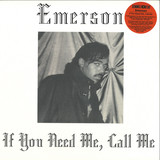
Kalita's obligatory Record Store Day offering is something rather special: synth-funk visionary couple Emerson and Leora Sandidge's mythical unreleased album finally sees the light of day, following Emerson's sole private press seven-inch single release way back in 1988. Those two tunes ("Sending All My Love Out" and "Why Are You So Cold?") make the cut on this belated debut set, alongside six other previously unreleased recordings from the same sessions. Their take on electrofunk, boogie and '80s soul is colourful, soulful and synth-heavy, with the included tracks veering from up-tempo club workouts (see "Raw Deal Cocaine Kills") and fizzing dancefloor pop workouts, to sugary ballads and seductive slow jams. In other words, it's a more than tidy selection of rare and unheard gems.
out of Stock
Last delivered 6 years ago available to reorder, subject to availability
'Buntús Rince' translates from Irish as 'basic rhythms', and this new compilation explores how Irish musicians were influenced by strands of different genres of music from around the world, merging them to create their own unique sounds. The compilation features some of the most innovative and talented figures in the history of Irish music and includes rare Irish jazz, fusion and folk outliers from the 1970s and early 1980s from musicians relatively unknown outside of Ireland.
Often regarded as a musical backwater, the 1970s finally saw Ireland begin to make its mark on international music. The nature of this feat is all the more commendable, considering how isolated and conservative the country still was in the middle of the last century. The emergence of acts like Skid Row, Thin Lizzy and Van Morrison instilled in budding young Irish musicians the belief to dream big.
Unlike many other European countries, Ireland had not benefited from the cultural impact of immigration. Pioneering Irish musicians did not have access to the type of vibrant music scenes ubiquitous to most European cities at that time. With no talented players or even in some cases recordings of the music, they had to cultivate and invent their own small scenes.
A jazz scene had begun to blossom in Dublin in the late 1950s. Self-taught players like Noel Kelehan and Louis Stewart emerged as the Irish standard-bearers. Their level of musicianship saw them play with some of the world's most renowned artists. The 1960s would see the emergence of the 'beat' scene in Ireland, with groups like Granny's Intentions, Taste and Eire Apparent finally challenging the hegemony of Irish Showbands. Change was in the air.
The late 1960s also saw many Irish emigrants returning home, bringing with them inspiration from the new styles and sounds of London and further afield. The arrival in the late 1960s of pirate radio stations like Radio Caroline, new music magazines and the availability of music on vinyl meant that different genres were now becoming more accessible. The musical landscape of the country began to transform and evolve, influencing a new generation of musicians in the process.
The 1970s saw advancements in studio technology. 8-track studios began appearing in Dublin, offering more opportunities for groups to record singles and albums. Synthesizers and other instruments were also becoming easier to acquire as the younger generation turned to electric jazz and fusion music.
While the level of musicianship was high, the levels of opportunities in Ireland were still very limited. Many groups and solo musicians had to emigrate to try and succeed.
Thankfully for those who remained, this new emerging scene didn't go totally unnoticed and local labels began to take a chance on more obscure Irish groups. Labels like Mulligan and also producers like John D'Ardis and Terri Hooley championed and documented music from the Irish underground of the 1970s.
Their valuable work is a common thread which connects many of the tracks on this compilation. From the soaring flute playing of Brian Dunning, to the swinging piano of Noel Kelehan and the sonic force of Jolyon Jackson's synthesizers; 'Buntús Rince' lifts the lid on a vastly underappreciated period of Irish music history.
One for the collectors.
Faitiche releases a new collaboration between the Japanese sound artist ASUNA and Jan Jelinek: the album Signals Bulletin brings together joint improvisations and compositions made over a period of three years in Berlin, Kyoto and Kanazawa. ASUNA’s meandering organ drones merge with Jelinek’s pulsating synthesizer and field recording loops to create dense superclusters that span broad harmonic arcs.
"Watching the Japanese sound artist ASUNA playing the organ, some people might be surprised. ASUNA is no virtuoso flying over the keyboard in a rage. Instead, with the calm gestures of an office worker, he cuts strips of adhesive tape to the correct length before sticking them onto the keys of his instrument. In this way, large clusters of keys are held down, creating a dense and sustained range of frequencies, while the sound artist continually prepares further sets of keys or removes tape again. I have rarely seen a more convincing performance concept, with such a power to fascinate.
I first met ASUNA when we both gave a concert at the 21st Century Museum of Contemporary Art in Kanazawa, his home city. He performed the organ drones as described above and I immediately knew I wanted to collaborate with him. Six years and five meetings later, we completed Signals Bulletin. The album includes both joint improvisations and compositions, recorded in Berlin, Kanazawa and Kyoto.
Whether using prepared organ, Casio keyboards or mechanical plastic toys, ASUNA creates rich textures of sound that barely change over long stretches of time. It is a music without breaks. For a while, I was unsure how my loops made using modular synthesizers and live sampling fitted here – until I realized the role I had to take in this duet: I would provide the rhythmically pulsating foundation over which his dense continuums could unfold.
The result is harmonically drifting superclusters that put us into a meditation-like state. It can perhaps be compared to Automatic Writing – a mode of creative expression floating somewhere between concentration and distraction. Both the structure of our pieces and our approach to our instruments allow a similar “absence”: we let the machines play and repeat themselves – while we, in a mild form of trance, adopt the role of observers, intervening only occasionally.
It is no coincidence that ASUNA owns a collection of Doodle Art – drawings jotted down during conversations or while talking on the phone. It is said that works made like this point to the unconscious and reveal pet motifs – because a doodler always inadvertently returns to his or her favourite themes. The artwork for Signals Bulletin features pictures from the collection, in this case sheets of paper from the pads provided in stationery shops to test out pens. The special quality of such doodles is that the jumble of drawings is the work of a collective whose individual members do not know each other. Layer by layer is added, by someone different each time – until it becomes a dense cluster of lines and symbols ..."
Jan Jelinek, Berlin 2018
out of Stock
Last delivered 7 years ago available to reorder, subject to availability
An LP of tracks, taken from various cassette releases, by Belgian synthwave luminaries The Misz (Jan Van den Broeke and Dries Dekocker)! 600 copies on 180 grams vinyl.
The Misz formed in Gent in 1983 by Jan Van den Broeke and Dries Dekocker at a time when they had both just relocated from the country. They lived on the same street and collaborated freely with the limited equipment they had, which always centered around the Fostex 250 4-track tape recorder. They used an unknown monophonic synthesizer, casio synths, roland drum machines, hand drums and guitars through effects pedals, improvising with their voices and often and included friends for additional voices and sounds. They captured these sonic experiments and sometimes released them on cassette in editions of 100-200. They were also included on numerous cassette compilations throughout the 1980s on labels like Mad In Belgium, The Cassette Factory, 3RIO Tapes, Minimart production, Fraction Studio, Cauchy Productions, Home Product, R.R. products, ZNS Tapes, and Body Records. They described themselves as young, immature and bit strange yet totally bold and fearless. They sang about what surrounded them from world politics and environmental catastrophes to love and lust. The songs on The Lonely Crowd span from various cassette releases and have been remastered from their original reel to reel tapes.