Italian born, London-based soundsmith Andrea Ottomani dons his Big Hands moniker for an excursion in modern dub on the burgeoning Teeth label. Ottomani is the artist behind the label Baroque Sunburst, which he runs with Soreab, and he also forms half of jazz techno unit Ottomani Parker with Abraham Parker.
The Vulgarity Of Snow is Ottomani’s woozy, lilting soundwalk through techno, experimental electronics and scorched earth acid. The untitled tracks are less like distinct entities and give way to a larger, conjoined pair of triptychs spread out over two sides of wax. They feel like a paean to the format, which no doubt comes from Ottomani’s time spent working at one of London’s most revered record shops. As a longer, more probing piece, it’s anathema to talk about The Vulgarity Of Snow in terms of bpms and sub-genres, and arguably it owes as much to free jazz and psych-rock as it does to more leaden styles such as dub and roots. At times it pays tribute to the work of acts like Basic Channel and Random Trio, deploying dub electronics in novel ways, but it is also broader in its choice of sounds. On B2, for example, Mino Carbone, the artist’s uncle and an Italian anarchist from the same lineage as artists like Dario Fo, plays a song from that tradition. It’s not a chaotic piece, but it’s not heavily constrained.
Teeth is an ideal home for Ottomani’s freeform work, following contributions to Beat Machine, Blank Mind and Oscilla. The label is the brainchild of Jojo Mathiszig, who also runs Farringdon record shop and radio station Kindred. Slade graduate and Kindred co-founder, Scarlet Griffiths, supplies the artwork following on from her recent exhibition at Dinner Party Gallery.
Поиск:sound of kindred
Все
- A1: Brainticket - Places Of Light
- A2: T.j. Lawrence - Fireplay
- A3: Robert Rental - Double Heart
- B1: African Head Charge - No, Don't Follow Fashion
- B2: Keith Hudson - Nuh Skin Up Dub
- C1: Smokin' Cheeba - When I Was A Youth
- C2: The Wad - 15 Inches
- D1: Idjut Boys & Laj - Foolin' (Beatin On Dave)
- D2: Jbb Et Soprann - Tibi Lap
Part 2.[29,83 €]
Optimo (Espacio) started life as a weekly club night. It was born at The Sub Club in Glasgow on a wet, windy, wintry November Sunday night in 1997. Run by JD Twitch and partner in crime Jonnie Wilkes. Optimo was a reaction against what felt like an increasingly conservative musical soundtrack in clubs here at that time. Clubland felt as if it had become very bland and a bit too serious; it was the era of the dawn of the Superstar DJ. Clubs often felt like bastions of male energy. It seemed dance music and culture was going somewhere far, far away from where it was meant to be. The notion of fun had got lost.
It was no longer the world they had devoted ten years of their lives to already, and lots of their friends felt the same. When the opportunity came up to do a Sunday night at The Sub Club it felt like the perfect opportunity to rip it all up and start again. So they did. There was nothing in the city (or possibly anywhere) like it. As the club believed wholeheartedly in what they were doing, there was no pressure from The Sub Club to fill the club. So, they embraced the freedom. Groups of people who had never been in the same room at the same time before came together. A community of kindred spirits started to emerge.
Word spread, slowly. Lots of people checked it out. Many loved it, some hated it. The core of the Optimo idea was to embrace music they loved that might work on the dancefloor from whatever era or genre they thought felt right. It might not seem very radical now but at that time it was revolutionary.
After about a year and a half, the club went from having 100 people attending most nights to suddenly one week having 500 people turn up. It was very weird. It was as if a collective light bulb went off in people’s heads in Glasgow. From that week on, until the very last weekly Sunday night at the Sub Club, in 2010, over a decade later, it was packed.
There were 550 Sunday Optimo nights. A LOT of music was played. So, what was the music? People often find it hard to pin down exactly what Optimo is. This has been a positive but also a negative as we live in a world where people want easily defined “brand identities”. The simplest definition of the music played is “music for dancing”, which of course is a very broad definition. Even better than trying to define it in words, we have these 2 volumes of music that give a hint of what that might be.
This is not a “Best of Optimo” or a “Greatest Hits of Optimo” compilation. For people who come to, or used to come to the nights there are of course “Greatest Hits”. But, over such a long timespan they are “hits” belonging to a certain moment in time and space. Someone who came to Optimo in 1997 would have a completely different notion of the big tracks at the club to someone coming in 2003, or 2010, or today. This compilation is just a snap shot missing several genres that might make up the DNA of Optimo. There is though a broad sweep through lots of music Optimo loves, that they believe is amazing. Music that they know will rock a dancefloor, that they have played between 1997 and 2023. Of course Optimo nights were not all about rocking the dancefloor. The first hour was always a time for them to play music they loved that often was far removed from the dance. Side 1, Volume 1 of this compilation is the kind of music one might hear at the very start of an Optimo night.
Optimo have always loved a good slogan. The most long lived, and fitting Optimo slogan is "We Love Your Ears", which is in essence what it is all about to them.
- A1: Chris & Cosey - Take Control
- A2: Isolators - Concentrate On Us
- B1: Mike Dunn - Life Goes On
- B2: Kc Flight - Voices (Original Dub Mix)
- C1: Faze Action - Good Lovin' (Special Disco Mix)
- C2: Hannah Holland - Ekotypic
- D1: Divine - Shake It Up
- D2: Xs-5 - I Need More (Extended Dance Version)
- D3: Liquid Liquid - Optimo
Part 1.[29,83 €]
Optimo (Espacio) started life as a weekly club night. It was born at The Sub Club in Glasgow on a wet, windy, wintry November Sunday night in 1997. Run by JD Twitch and partner in crime Jonnie Wilkes. Optimo was a reaction against what felt like an increasingly conservative musical soundtrack in clubs here at that time. Clubland felt as if it had become very bland and a bit too serious; it was the era of the dawn of the Superstar DJ. Clubs often felt like bastions of male energy. It seemed dance music and culture was going somewhere far, far away from where it was meant to be. The notion of fun had got lost.
It was no longer the world they had devoted ten years of their lives to already, and lots of their friends felt the same. When the opportunity came up to do a Sunday night at The Sub Club it felt like the perfect opportunity to rip it all up and start again. So they did. There was nothing in the city (or possibly anywhere) like it. As the club believed wholeheartedly in what they were doing, there was no pressure from The Sub Club to fill the club. So, they embraced the freedom. Groups of people who had never been in the same room at the same time before came together. A community of kindred spirits started to emerge.
Word spread, slowly. Lots of people checked it out. Many loved it, some hated it. The core of the Optimo idea was to embrace music they loved that might work on the dancefloor from whatever era or genre they thought felt right. It might not seem very radical now but at that time it was revolutionary.
After about a year and a half, the club went from having 100 people attending most nights to suddenly one week having 500 people turn up. It was very weird. It was as if a collective light bulb went off in people’s heads in Glasgow. From that week on, until the very last weekly Sunday night at the Sub Club, in 2010, over a decade later, it was packed.
There were 550 Sunday Optimo nights. A LOT of music was played. So, what was the music? People often find it hard to pin down exactly what Optimo is. This has been a positive but also a negative as we live in a world where people want easily defined “brand identities”. The simplest definition of the music played is “music for dancing”, which of course is a very broad definition. Even better than trying to define it in words, we have these 2 volumes of music that give a hint of what that might be.
This is not a “Best of Optimo” or a “Greatest Hits of Optimo” compilation. For people who come to, or used to come to the nights there are of course “Greatest Hits”. But, over such a long timespan they are “hits” belonging to a certain moment in time and space. Someone who came to Optimo in 1997 would have a completely different notion of the big tracks at the club to someone coming in 2003, or 2010, or today. This compilation is just a snap shot missing several genres that might make up the DNA of Optimo. There is though a broad sweep through lots of music Optimo loves, that they believe is amazing. Music that they know will rock a dancefloor, that they have played between 1997 and 2023. Of course Optimo nights were not all about rocking the dancefloor. The first hour was always a time for them to play music they loved that often was far removed from the dance. Side 1, Volume 1 of this compilation is the kind of music one might hear at the very start of an Optimo night.
Optimo have always loved a good slogan. The most long lived, and fitting Optimo slogan is "We Love Your Ears", which is in essence what it is all about to them.
Emerging from the cold echoes of Reykjavík's underground music scene, ex.girls, previously known as Russian Girls, chart an inspiring journey from inception to international recognition. Founded in 2017 as a personal venture by Guðlaugur Einarsson, the act soon evolved into a vibrant, collaborative platform for kindred spirits bonded by an unyielding passion for music.
The project consists of three: frontman Tatjana Dís on vocals, alongside Guðlaugur Einarsson and Gylfi Sigurðsson. Their kinship took root at their erstwhile studio on Skúlagata in Reykjavík, where this creative sanctum became a melting pot of musical exploration, learning, and leisurely hangouts. Guðlaugur and Tantjana also ride the waves as members of the rock band Skrattar, whose album 'Hellraiser IV' saw Bjarki's experimental bbbbbb recors imprint venture outside strictly electronic music for the first time in 2021.
Despite their penchant for maintaining an enigmatic aura, ex.girls won the ‘Best Icelandic Electronic Music Song’ in 2022 with their anthem, 'Halda Áfram', released during the backdrop of the COVID-19 pandemic on bbbbbb recors, which translates to “keep on going”, became a beacon of hope during tough times in the Icelandic music scene. Their distinctive sound palette paints with broad strokes of lush arrangements cemented with a lo-fi disposition. It's a soundscape where the rumble of a crunchy bass meets a quirky sprinkle of Nordic humour, a signature style they fondly dub as 'SauerLounge'.
While the group has traditionally embraced a leisurely cadence in unveiling new music, anticipation bubbles as they gear up to their debut album, ‘Verk’. A twelve-track exploration of experimental, conceptual and unorthodox textures and sonics, with sounds and influences spanning rock and nu-wave through to electro, drone and ambient. The result? An absorbing and hypnotic trip, with twists and turns across every track, presenting a debut album that keeps you guessing minute by minute.
To be released in both vinyl and digital formats, the album will also welcome engaging remixes from artists native to Iceland and the broader global stage. In a world of ever-evolving music, ex.girls stand out as a testament to authentic collaboration, raw talent, and the art of electronic storytelling.
ex.girls ‘Verk’ LP drops via bbbbbb recors on 24th November 2023, with remixes to follow in the months ahead.
‘Demos/sketches/interludes from the hinterland between records. Drum machines and single take vocal sketches tied together with downtime synth experiments and recordings of local disappearing areas.’ True as it is, Jabu’s strap-line is a somewhat understated take on what also proved to be a transformative experience for them. The follow-up record to their 2020 sophomore LP ‘Sweet Company’ (and the ensuing ‘Versions’), ‘Boiling Wells’ weaves a smudged, group -mind spell. Originally released earlier this year without fanfare as a digital-only release, it now receives the proper release attention it deserves, issued in a neatly packaged vinyl edition of 300 copies. Dreamlike, woozy, raw and in dub, the album documents a blossoming process, and encapsulates a fragment in time - holed up in the country, soaking up the atmosphere in collective isolation, creatively embracing the limitations of a small recording set-up, and finding a new way to work as a band. “My mum had gone away so we’d decided to take the mixing desk and a couple of drum machines out to her house and set it up in the front room. We did it a couple of times to get the bulk of the tunes on 'Boiling Wells' done, one in summer and one boozy one around Christmas. I think we all immediately enjoyed working that way, sat around all together, more of an immediate thing. Jas started to play a lot more guitar, her and Al would write lyrics on the fly or be programming a drum beat in or something. We were all switching around and getting ideas down really quickly, not worrying too much if they were good or not. The music was limited by the stuff we had there, I didn’t bring a big desk so we only had six channels or so, and everything was basically just recorded in as a stereo take so we were more or less stuck with it after we’d laid it down - which was nice too. I don’t think we would’ve changed them anyway; it was the sound of the room and of us doing it together in the moment that was really important.” There has always been a collaborative heart to Jabu, though its nature has shifted and morphed over time. In their earliest incarnation, in after-school jams, Alex Rendall would rap over Amos Childs’ beats, but by the time they began releasing music in 2012, Al had found his singing voice – a sweet, soulful counterpoint to Amos’ increasingly dub-wise, experimental backing. Both are founder members of Bristol’s Young Echo, a collective of friends and musicians first operating loosely together on radio shows, artistic collaborations and events, and later on, running a record label. As expansive as their original remit was, Young Echo has steadily evolved since featuring in The Wire’s 2013 cover feature on Bristol’s new school of post-dubstep bass music. Of late, Seb (aka Vessel) has been working with violinist Rakhi Singh on string arrangements for Jabu, and the upcoming residency at Bermondsey’s MOT will showcase relative newcomers Birthmark and Intel Mercenary alongside the regular crew. Jabu’s debut album proper, ‘Sleep Heavy’, arrived in 2017 courtesy of Blackest Ever Black. A sublime, focused meditation on grief and loss written largely by Amos and Al, it marked the debut of Jasmine Butt (aka Guest), adding a further layer of vocal texture to their palette. ‘Sweet Company’, their first album written as a trio (released via their own do you have peace? label), drifted into lighter, more ethereal introspection. Featuring guest appearances by Sunun and Daniela Dyson, remixes by Equiknoxx’s Time Cow and Young Echo ‘s Ossia teased out the inherent pop and dub sensibilities respectively. Recent times have also seen remixes by kindred spirits Seekers International and Jay Glass Dubs, and a collaboration with the renowned T.S. Eliot Prize-winning dub Poet and musician Roger Robinson on a pair of plaintive, aching 7” singles. Jabu’s broad raft of inspirations can be experienced first -hand on their monthly NTS Radio show ‘Music 4 Lovers’, co -hosted by long-time friend and soul afficionado Andy Payback. A celebration of the endless tapestry of interrelated musical connections, it runs parallel to Jabu’s own reinterpretation of their influences. For ‘Boiling Wells’, Amos remembers a diet of “A.R. Kane, Cocteau Twins, DJ Screw, Southern/Memphis rap mixtapes, early 90’s jungle, Karen Dalton, Sybille Baier, Vashti Bunyan, Svitlana Nianio, a lot of soul, Armand Hammer & Alchemist, Grouper, Bobby Caldwell. Jazz was a constant, Japanese, Polish, Latin, American…”. And from those diverse strands, something new and singular has formed, to line up alongside them. ‘Boiling Wells (Demos ‘19-’22)’ is released by UK newcomer Six of Swords in a limited vinyl edition of 300 copies, pressed on black vinyl housed in full colour 270 gsm matt varnish sleeve and black paper inner, with full download coupon
Carl Finlow keeps on keepin' on. Not only is Finlow one of the most respected names in electro, a producer who boasts a sprawling catalogue that takes in a wide variety of aliases, but he's also spent recent years establishing himself as a mainstay for Sheffield's Central Processing Unit label. Soft Robotics, the new EP from Finlow's Silicon Scally project, is the fifth Silicon Scally release in five years to boast one of CPU's instantly-recognisable black-and-white covers.
The reason that Silicon Scally and CPU keep linking up is simple; they're a perfect fit for one another. Central Processing Unit has established itself as a haven for post-Drexciya producers since launching in 2012, and there are few artists better than Finlow at building on the Detroit group's sound. The union bears fruit once more on Soft Robotics, an EP of lithe machine-funk jams that will both do damage in the dance and also reward more concentrated home listening.
Things begin at a steadier speed than one might expect. Rather than barrelling off with the kind of sinewy roller one associates with the CPU name, Soft Robotics' title-track takes things at mid-pace. The groove reveals itself without hurry, Silicon Scally adding or subtracting elements - twitchy modular loops, pensive pads, the occasional blurt of low-end - atop the chugging bass/drums groove. It's a track which wins you over with guile rather than force.
As the name of subsequent cut 'Jitters' intimates, this one picks things up a little after 'Soft Robotics'. The tempo is higher here, the central beat more nervy. At their cores, though, 'Jitters' and 'Soft Robotics' are kindred spirits. Here, another slyly insistent bit of drum programming comes swirled up with all sorts of extraterrestrial tones, from little nuggets of melody supplied by the keys to electrifying synth stabs and percussive squelches.
Things limber up further still on first B-side 'Spin Ratio'. The track's 808 kicks are punchier than those of the A-side jams, and there's a dizziness to the bass tone which gives 'Spin Ratio' an intriguingly off-kilter feel. Atop the booming beat we find ourselves hypnotised by cells of melody and harmony interlocking or moving apart - particularly the staccato module at the track's heart. Sure enough, 'Spin Ratio' is the Soft Robotics joint which cleaves closest to Drexciya, invoking other Detroit disciples like Jensen Interceptor in the process.
After Soft Robotics picks up speed in the middle, closer 'Super Fluid Tones' brings us back to where we started. This track returns to the more measured delivery of the record's opener - there's a steady pulse to the drums, and once again Silicon Scally packs the mix with so many intriguing whizzes, bangs, blips and blurts that it's impossible not be won over by this tune's construction. 'Soft Robotics' and 'Super Fluid Tones' bookend Soft Robotics very nicely, and Silicon Scally's smart pacing gives the EP a lovely ebb and flow.
The ever-excellent Carl Finlow drops a Silicon Scally release via Central Processing Unit for the fifth year running. Like its predecessors, Soft Robotics is an excellent and deftly-crafted collection of modern machine-funk.
RIYL: Drexciya, Jensen Interceptor, Fleck E.S.C., The Advent
- Moanin’ (Bobby Timmons)
- Superstition (Stevie Wonder)
- Iko Iko (James Crawford)
- Señor Blues (Horace Silver)
- When A Man Loves A Woman
- (C. Lewis & A. Wright)
- Freedom Jazz Dance (Eddie
- Harris)
- Sidewinder (Lee Morgan)
- Brother Where Are You?
- (Oscar Brown)
- Wade In The Water (Traditional)
- Work Song (Nat Adderley)
- Land Of 1.000 Dancers (Chris
- Kenner)
- Gimme Some Lovin’ (S
- Winwood & S. Davis)
- Motherless Child (Traditional)
- New Orleans Strutt (Jack
- Dejohnette)
- La Place Street (Stanley
- Turrentine)
- Amen (Traditional, Arr. By Bob
- Belden)
- Jubilation (Junior Mance)
- Joshua (Traditional)
- Mr. Magic (Ralph Macdonald &
- William Salter)
- Theme From Shaft (Isaac
- Hayes)
- Nobody Knows The Trouble
- I’ve Seen (Traditional)
Who did Aretha Franklin not want to miss out on when she recorded
her most inspiring albums in the early Seventies? Who gave Steely
Dan the beat? Who did Isaac Hayes, Donny Hathaway, BB King,
‘Sweet’ Lou Donaldson and Joe Cocker give the chair behind the
drums? No drummer has seen the inside of a studio as often as
Bernard ‘Pretty’ Purdie.
Not for nothing do colleagues attribute the ‘funkiest soul beat on the
scene’ to the drummer, and consequently, Purdie has never relied on
the genre of jazz alone, but rather curiously looked beyond the
borders. Sessions with The Rolling Stones, James Brown, Jimi
Hendrix or Tom Jones are no problem for him, whose precise and
sensitive playing is synonymous with drive and groove. This is
probably one of the reasons why his rhythms are still sampled by
many DJs today.
Released on CD back in 1996 and 1997 (and now out of print), the
two ‘Soul to Jazz’ recordings have a cult factor today and sound as
fresh as they did back then. Now both albums are released together
for the first time as a 3LP set.
These recordings are peppered with lots of prominent star guests
from jazz and soul, from Eddie Harris, Michael Brecker and Nils
Landgren to Hank Crawford, Stanley Turrentine and Cornell Dupree.
Purdie’s ‘Soul to Jazz’ project takes two different approaches: The
first part focuses on the renowned WDR Big Band led by Gil
Goldstein. Soul classics such as Stevie Wonder’s ‘Superstition’,
‘When a Man Loves a Woman’, Eddie Harris’s ‘Freedom Jazz Dance’
and Lee Morgan’s famous groove tune, ‘Sidewinder’, are interpreted
in large scale sound. One discovery of these recordings amidst all the
renowned guest soloists is the New York-born singer, Martin Moss.
The great success of this first album, released under ‘Soul to Jazz’,
led to ‘Soul to Jazz II’, a more intimate record, but one that picks up
where the first recording left off, by exploring similar themes. Again,
Purdie has called together a notable band of kindred spirits, including
saxophonists Hank Crawford (BB King, Ike and Tina Turner, Ray
Charles), Stanley Turrentine (Jimmy Smith, Shirley Scott) and Vincent
Herring, as well as guitarist Cornell Dupree (King Curtis) to pianists
Benny Green and Junior Mance.
Bernard Purdie’s ‘Soul to Jazz’ is a timeless classic and a blueprint of
the soul jazz genre in all its facets. Above all, it is a portrait of one of
the most influential and best drummers in the world, who made jazz
groove with his inimitable funky soul beat
- A1: Daytime Tv (Rainy Miller Remix)
- A2: It’s Hard To Get To Know You (Space Afrika Ambiv)
- B1: Pigeon Flesh (Mobbs' Butcher Mix)
- B2: Love Like An Abscess (Aho Ssan Remix)
- C1: Nervous Energy (Teresa Winter Remix)
- C2: I Was Born By The Sea (Morgane Polanski Remix)
- D1: I Was Born By The Sea (Fila Brazillia Remix)
- D2: Dream About Yourself (Bonus)
Richie Culver had been waiting his whole life to record I was born by the sea. His debut album immediately and messily inscribed the artist into the canon of outsider music and experimental electronics, serving both as an arresting statement of intent and a painful reckoning with the difficult path that lead up to it, stealing one last glance back at a place he always knew he had to escape. Between grim lamentations, faded memories and anxiety attacks, all told with searing honesty and disarming openness, I was born by the sea excavates a space for hope, finding Culver digging through Humberside silt to find a world weary optimism, the raw material from which his visual and sound art is shaped. For this collection of expansions and inversions, Culver invites a collection of kindred spirits, contemporary inspirations and old heroes to wade into the salt water of his formative years spent living for impromptu raves and afterparties, connecting vivid memories of his birth place of Withernsea to artists hailing from as nearby as Preston and Bridlington, further afield, from Manchester and London, Berlin and Paris, before returning back to Hull, to where it all began.
For some, responding to I was born by the sea means diving even deeper into the record’s furthest reaches. Space Afrika clear away the pummelling loops of noise from ‘It’s hard to get to know you,’ revealing a cool and cavernous expanse in its wake. Distant chatter, previously heard as though through thin, plasterboard walls, now echoes from outside the maddening claustrophobia of the original’s Sisyphean sonics, illuminated as a dense storm cloud suspended amidst a more open scene, washed clean by a lighter rain, allowing the tender heart of the track to beat clear. London producer MOBBS stretches out ‘Pigeon Flesh’ into an epic, 10-minute, cold-sweat spiral, strung-out tension wrung from disconnected phone tones twisted in unexpected directions, snatches of Culver’s voice turned inside-out and deep fried bass threatening to tip the track over into oblivion, the build-and-release of a nervous breakdown experienced in real time. In an act of subversive self-reflection, Morgane Polanski switches one kind of ennui for another in her adaption of ‘I was born by the sea,’ swapping the sea for the city, English seaside towns in January for summer evenings in Paris and flashing lighthouses and sparkling oil rigs for the Eiffel Tower and the traffic around L’Arc de Triomphe. Even Culver finds time to revisit ‘Dream About Yourself,’ a track taken from his EP Post Traumatic Fantasy, breathing new words into its glacial drift, the half-remembered testimony of a shut-in: Woke up in the evening / Pray for me / Don’t trust anyone / Pray for algorithm. Reframed in a more melancholy light, the track’s reverberant keys even more clearly evoke a mournful nostalgia, fresh pain felt in old wounds.
Others find a parallel universe in Culver’s visceral world building. Rainy Miller flips the script with a scorched, avant-drill rework of ‘Daytime TV’, threading puncturing hi-hats and queasy low-end surge through the track’s steady ambient cascade, invoking the irresistible Preston beat magic of Miller’s own essential debut album, Desquamation. Aho Ssan melts away the crystalline textures of ‘Love Like an Abscess’ with the ominous crackle of a nascent fire, building through swathes of organic Max/MSP squelch and brittle, nails-down-chalkboard scrape, swelling and metastasising the original to spill over Culver’s desperate hymn to corporeal desire, at once flesh and not. Teresa Winter transports us an hour up the coast from Withernsea to her native Bridlington, replacing the sea wall of synthesis on ‘Nervous Energy’ with muffled ASMR murk and fever dream whispers, transforming Culver’s unflinching observations into a haunting call-and-response, filling in the blanks with her own eerie utterances, a fleeting conversation with a ghost. In a touching victory lap, Fila Brazillia, eccentric stalwarts of beloved ‘90s trip hop imprint Pork Recordings, whose performances at Hull institution The Lamp convinced a young Culver of the necessity to make his mark on club culture, resurface for their first remix in 20 years. Steve Cobby and David McSherry lead a low-slung, heartfelt stroll back through a suite of tracks from I was born by the sea, tracing a full circle saunter from Culver’s origins to his current musical practice, the sounds of his present repurposed by the sound of his youth. In a gesture that reflects the emotional complexity of the project, Fila Brazillia find joy at the end of Culver’s troubled reflection, picking out an undeniable groove in the stasis of feeling trapped in your hometown. Underlining Hull’s vital musical legacy, from Baby Mammoth to Throbbing Gristle, Cobby and McSherry demonstrate that, though there are certainly storms, by the sea there is also sun and through the fog, if you listen, you can hear a singular sound, a sound now carried by Richie Culver.
Participant is a record label and creative studio run by William Markarian-Martin and Richie Culver
After recently releasing the critically-acclaimed Plains album (I Walked With You A Ways) with Katie Crutchfield of Waxahatchee, Jess Williamson’s Time Ain’t Accidental is the sound of a woman running into her life and art head-on. With a vocal dynamic kindred to Linda Ronstadt and Emmylou Harris, Williamson blends the emotional immediacy and story-telling of traditional country with the artful, wholly honest transmissions of songwriters like Townes Van Zandt and Terry Allen. The album's reckoning with loss, isolation, romance, and personal reclamation signals both a stylistic and tectonic shift for Williamson: from someone who once made herself small to an artist emboldened by her power as an individual.
Remixes by Moodymann, Potatohead People, Moodorama.
Kenny Dixon Jr. acuminates it deep and groovy, well, it’s his holy trademark sound. Potatohead People from Vancouver have been championed by Soulection, Nightmares on Wax, Questlove, Big Boi a.o. and have releases on Jellyfish Recordings, or NY label Bastard Jazz. The duo has worked with artists such as Moka Only, Kaytranada, Pomo, Phife Dawg a.o.
On top Moodorama’s remixes are trippy dubby jams. Moodorama have a long recording history, starting in the 90s on Stereo Deluxe, but even before that Martin Sennebogen was the DJ and co-producer of Knowtoryus, the legendary first hip hop outfit on Compost.
Inkswel & Colonel Red started out writing together more than decade ago & over the time have developed quite a unique sound when recording together,..a chemistry that blends music melody & lyric into every verse chorus & hook. So when Inkswel approached Colonel Red to create the 'Holders of the Sun' album, Redz response was to move his hectic schedule around & start immediately. Inkswel dropped the beats Colonel Red dropped the vocals & some fine musical tuning & 'Holders Of The Sun' Vol1 was born….while they promise a Vol. 2.
The fantastic artwork comes from Our Machine, Netherlands, who designed a lot of sleeves for Kindred Spirit, Tom Trago, Versatile, Build An Arc and m.o.
Colonel Red is a groundbreaking soul singer, musician, producer and performer, often referred to as one of the most powerful voices in the UK soul music community, a champion in equal parts of the original Broken Beat scene, as well as the UK soul scene. Working with and writing for the likes of Teddy Pendergrass, Amp Fiddler, Maurice White, Bugz In The Attic, Tony Allen and countless others. His track 'Belive In Me' was awarded the WORLDWIDE award from Gilles Peterson in 2014.
Colonel Red’s foray into the music industry began when Epic Record company giant Sylvia Rhone signed the then lead singer, Nikki Romillie, of Pride n’ Politix, to Atlantic Records. An accompanying publishing deal with Warner Bros. established the artiste, now known as Colonel Red, as one of the UK’s top cutting edge singer/songwriters.
Inkswel has been heralded as one of the busiest and most prolific beat based producers from Australia, a true master of his craft he has worked with the likes of Talib Kweli, Lee Scratch Perry, Andrew Ashong, Dwight Trible, Amp Fiddler and countless others as well as putting out timeless musical projects on labels such as BBE, Sonar Kollekiv, Rush Hour, Warner Music, Boogie Angst and others. He hovers evenly between Hip Hop and Club sensibilities, blending new age approaches with nostalgic leans. 'Holders of The Sun' is the audio melting pot of two musical aliens, future directive soul music drenched in the nostalgia of what once was.
The Belgian minimal synth band's three releases – a cassette and two vinyl EPs – were all titled »Against The Dark Trees Beyond«. This compilation collects the songs from these records.
"They were interesting times, the early eighties. Against a backdrop of cold war and economic crises, the DIY attitude of the earlier punk movement had spawned near countless new genres where artists and bands broke the three-chord guitar mould and experimented with new content matter, singular song structures and – in many cases – new instruments. Synthesizers became affordable and were no longer the sole privilege of rock millionaires. All around the globe, musical creativity boomed as never before, and Belgium was no exception: Digital Dance, Snowy Red, The Names, Pseudocode, Marine, 1000 Ohm, De Kommeniste, M.Bryo & D.M.T., De Brassers, Struggler, Siglo XX are but a few legendary names of bands and artists who started making a name for themselves.
In Leuven, things were happening as well. Until then, the music scene in this rather provincial town had been dominated by straightforward rock and blues acts. Not for much longer, though: in places like Arno'z and (later) The Gladhouse, where young budding artists met with kindred spirits, bands were often formed on the spot and, more importantly, started to make ripples.
Ludo Camberlin and Karel 'Bam' Saelemaekers already had a certain track record in Leuven's burgeoning music microcosm. But what they shared would become the cornerstone of A Blaze Colour (Against The Dark Trees Beyond): a fascination for new forms and instruments, a penchant for sonic adventure and a profound love for gripping songs. The full band name, by the way, was inspired by a phrase from the Irish-American novelist J.P. Donleavy, a writer who belongs in the definitely-worth-checking-out section.
After appearing on the first No Big Business LP (1981) with the instrumental 'Fisk', A Blaze Colour's first proper release, as was so often the case in those days, was a self-produced cassette. The music – which would later be dubbed 'minimal' – was characterized by the use of basic rhythm machines (Boss Dr. 55, mainly) and analog synthesizers (for the synth geeks: Korg Delta and MS20, Roland SH-2 and Jupiter IV, and the infamous Casio VL-1). Camberlin’s vocals, meanwhile, displayed an aloofness totally in sync with the zeitgeist. Equally important, though: all five tracks on this cassette were bona fide songs with a clear sense of structure, aided by a sonic mastery that demonstrated a high level of experience: 'Means To An End' started out as a proto-industrial track before bursting out into a moroderesque finale. The remix of 'Fisk' was as sprightly as the next river salmon, while 'Or Lie Again' proved the perfect soundtrack to a nightly walk through wet deserted streets. On the other hand, 'Through With Life', rife with disturbing sound effects countered by a slow portamento, could have been a prize track on a post punk 'Lamb Lies Down On Broadway'. And in true dramatic fashion, 'Follow The Signs' was the perfect ending of this five-song cycle: a driving sequencer and gripping chord progression coupled with a simple but powerful vocal line. Considering the limited technical means the duo was working with, this was no less than a triumph.
A few months later, the band released a seven-inch single on its own ABLACO label. 'Dark Trees Beyond', a quirky pop song, was coupled with 'Addict Of Time', a dark and brooding spoken word piece. Not the kind of single to storm hit parades, but it didn't go unnoticed. The Minny Pops' Wally van Middendorp, who had founded the Plurex label in 1978, invited A Blaze Colour to his studio in the Netherlands, to record an EP. It would prove to be a massive step forward: recording in a semi-professional studio offered great possibilities, the recently acquired TR-808 drum machine allowed for a broader rhythm palette, and the three new tracks (next to the re-recording of 'Through With Life') showed a band on the top of their game: 'The New Ones' was a wry and haunting song built around a live drum loop and an ominous bass pattern, while 'Nowhere Else' was a near-pop track with very un-minimal vocal harmonies. And it's a mystery why 'Altitude' – another instrumental – was never used in a stylized, high-profile detective soundtrack.
Another song from these sessions, the revved-up 'Cold As Ever' turned up on the high-profile Plurex "Hours" compilation, where it shone brightly, next to songs of a.o. X-Mal Deutschland, Nasmak, Minny Pops and Section XXV.
Meanwhile, Camberlin had already carved out a bit of a reputation for himself as a producer, while Saelemaekers was a respected graphic designer. It remains uncertain if this played a big part in the end of A Blaze Colour, but the fact remains: as studio recordings go, 'The Ultimate Fight' on the "No Big Business 2" compilation, was to be their swan song. What a way to go, though: maybe their best song ever, this was a synthetic bastard funk groove, complete with shout-out chorus and punch-drunk middle-eight. It shut a door, for sure, but it did so with a resounding bang.
So there it is and there it was. Short, sweet, visionary, pioneering and highly influential. And as anybody listening to this first ever compilation will be able to assess probably one of the most colourful electronic acts of its time.
On a more a personal note, A Blaze Colour proved to be instrumental in my own coming of age as a lyric writer, when Ludo and Bam graciously adopted some of my earlier writings, warts and all. To hear them translated into songs was no less than magic, and it certainly gave me the confidence to start our own band a bit later. And the magic continued when Ludo became our producer and Bam designed our record sleeves. But that’s another story, obviously. Because this is the place and the time to dive back into the wondrous world of A Blaze Colour!"
Bart Azijn (Aimless Device)
Pravda's release of ‘Music For Neighbors’ marks the 40th anniversary of
the formation of The Trypes from New Jersey
Pravda's release of ‘Music for Neighbors’ marks the 40th anniversary of the
formation of The Trypes in the blue- collar New Jersey town of Haledon, which
was the hometown of The Feelies and later spawned kindred bands Yung Wu and
The Willies.
How Haledon became an incubator for these bands, who went on to spread their
sound far and wide, is a matter of speculation. Maybe it was just a place in time
in the early 80s when anything seemed possible to a group of suburban friends.
repress!
ØEN Records is back with a special two track EP from up and coming Copenhagen based producer Fruit. Originally from Iceland, but based in Denmark Fruit has been making waves in the Copenhagen club scene with his eloquent DJ and live-sets. Following up his acclaimed 2019 Drømmeland EP for Coastal Haze he is finally back with two epic, fast-paced and euphoric tracks to light up the summer dance floors.
Drawing inspiration from myths and legends and particularly the Epic of Gilgamesh – a 4000 year old poem from ancient Mesopotamia – “Gilgamesh” is a hypnotic and trancey trip destined for the peak hours of the post-corona parties.
Created during the peak of the pandemic on an old half broken borrowed MacBook, the two distinct but kindred tracks are testament to Fruits unique production style, effortlessly navigating between euphoric fast-paced house, ambient soundcapes, hypnotic percussion and haunting atmospheres. Skillfully crafted and executed “Gilgamesh” is primed for both floor and mind.
Leatherette are, by their own description, “five shy guys who sometimes get off the stage and punch people,” a quintet whose car-crash of jagged noise, twisted love and dark, anguished melody has delivered a remarkable – and eminently combustible – debut album. The group are based in Bologna, but all hail from different towns in Italy. These five young men – singer/guitarist Michele, bassist Marco, drummer Francesco, guitarist Andrea and saxophonist Jacopo – are united by a profound need to make music, to express themselves naturally and honestly. The group bonded over wildly differing influences – everything from midwestern emo gods American Football, to Berlin-era Bowie, to James Chance & The Contortions, to rap and electronic music – to create a dense, passionate, articulate sound of their own. You can file them near fiery post-punk kindreds like Shame and Squid, or unhinged 90s noisers like Unwound or Hoover, or squalling No Wavers like James Chance, but the truth is there are few bands like Leatherette that walk this Earth. Their first full-length, Fiesta follows an EP, Mixed Waste, recorded during lockdown. The songs on Fiesta precede the Covid era, though the group spent the pandemic rewriting and overhauling their maiden batch of songs at leisure. The result is an astonishing and remarkable debut: poetic, caterwauling, broken and beautiful. The album title is “a reference to the bullfights in Pamplona,” the group say. It’s no empty metaphor. “Bullfight is a strange ritual,” they elaborate. “And we’re against bullfights, but they’re fascinating in an iconographic way. And also metaphorically, violence flows on both sides, but in a feastful way. It’s similar to a concert, really – you’re expressing violent things, in a physical way. And people react to that, which is wonderful, which is fantastic.”
Mit ihrem neuen Album "Eos" stellt die belgische Speed-Metal-Band den Sänger Mike Slembrouck und den Schlagzeuger Bert Guillemont vor, die dem Sound der Band eine beeindruckende Dosis an Melodie und Intensität verleihen. Mit "Eos" bestätigen die Gründer Dries Van Damme (Gitarre) und Christophe Depree (Gitarre) zusammen mit dem langjährigen Bassisten Frederik Vanmassenhove einmal mehr ihre Position als eine der besten belgischen Metal-Bands.
After All sind vor allem für ihr originelles Speed-Metal-Songwriting bekannt, bei dem Killer-Riffs die Grundlage für Songs mit Hooks und großen Refrains bilden, die üppig mit Gitarrenleads und Harmonien garniert sind. Nach mehr als 30 Jahren und 10 Alben in ihrer Karriere präsentieren After All ihr bisher bestes Line-Up.
Das neue Album Eos" stellt Sänger Mike Slembrouck und Schlagzeuger Bert Guillemont vor, die dem Sound der Band eine beeindruckende Dosis an Melodie und Intensität verleihen. Mit "Eos" bestätigen die Gründer Dries Van Damme (Gitarre) und Christophe Depree (Gitarre) zusammen mit dem langjährigen Bassisten Frederik Vanmassenhove einmal mehr ihre Position als eine der besten belgischen Metal-Bands.
Tresor Records are proud to reveal the outcome of a new collaboration between two of techno music's most remarkable artists, Maedon and Adam X. The Lion & The Ram is a unique and exciting hybrid of industrial, rave, and hypnotic techno sounds. This LP marks the full debut for both artists on Tresor Records, with Adam X having appeared for a remix of Neil Landstrumm in 1997. Both Berlin-based, Maedon and Adam X have worked tirelessly over the forced Lockdowns, finding a kindred spirit in locating and sculpting the most badass kick. This album is undoubtedly an impressive representation of the range of kick drum synthesis, from thunderous impacts to carefully tuned pulses.
The duo's competitiveness over kick drums has led to a masterpiece of mesmerising techno. Across the thumping drums and sparse, mechanical soundscapes,
every track on the album follows a journey into the dark and unknown.
Tracks grow with increasing power sourced from dystopian samples, such as Human Replacements, "people are being duplicated, there is something missing". It reflects the stifled time we all spent, haunted by uncertainty, cooped up and seeking expression. Corrupt Pigs emphasises this with the refrain, "welcome to the land of fuck". Crunching bass and rusty percussions gather as a herd, like a rallying call to signify that, at last, we may let loose. With its unrepentant rhythms and ruthlessly brutal sound design, The Lion & The Ram discharges Maedon and Adam X into daring new terrain.
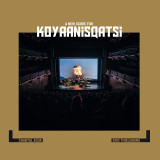
Dark-folk songwriter Chantal Acda and beyond drums-percussion musician extraordinaire Eric Thielemans propose a new score for Koyaanisqatsi, re-actualising the incredibly beautiful, raw, rhythmic and touching images of this 80-ties cinematographic masterpiece. Slow deep electric waves, lonely synths in sonic desert landscapes, rhythmic pulses, transporting drums and bells, and deeply longing sounds and voices make up the audible fundamentals of this imagined, neo shamanic, ritualistic music to accompany the Earth as it keeps on supporting our post human frenetics even today. This release contains a selection of the musical material scored for a live performance together with the screening of the movie. The live performance premiered on Film Festival Gent and Vooruit in the fall of 2022.
Currently based in Belgium, Dutch-born Chantal Acda (b. 1978) has worked under the Sleepingdog moniker since 2006, making three acclaimed albums that closed on the 'With Our Heads in the Clouds and Our Hearts in the Fields' (2010) album for which she collaborated with Adam Wiltzie (Stars of the Lid, A Winged Victory For The Sullen). They toured the UK and Benelux with Low in 2011. After all this, it was time for her first real solo record. Playing in various formations (Isbells, True Bypass, Marble Sounds) had made her conscious of the patterns that we all, as humans, share in. So, she sought out kindred spirits with whom she might record an album filled with freedom and intensity, and who were conscious of the patterns we so often fall back on. Nils Frahm was the first of these to cross her path. The inventive German pianist and producer is an intense and adventurous performer and was a perfect match for it. Acda also experienced a direct bond with Peter Broderick, a multi-instrumentalist known from his solo work (on labels such as Bella Union and Erased Tapes) and from his work with, among others, Efterklang. Cellist extraordinaire Gyda Valtysdottir from Icelandic group Múm had previously worked with Chantal as a member of the Sleepingdog live band. And lastly, Shahzad Ismaily stumbled into this picture by chance, but when Acda and he found themselves in the same room they formed an instant rapport. After this first record, 3 other solorecords followed. Chantal kept on searching for a deeper connection with the outside world and recorded "The Sparkle In Our Flaws" (2015) and "Bounce Back" (2017). She also released some live recordings with her band and also Bill Frisell, a highly respected jazz guitarist.(2018). These records were released on the German label Glitterhouse. Chantal and her band toured with these records in Europe. In 2019 Chantal created her first music/theatre performance P_wawau for Oerol Festival, The Netherlands. She worked with Valgeir Sigurdson (Björk, Bonnie Prince Billy,...) and singers from Het Nederlands Kamerkoor. As a result of this, she released the recorded music: Puwawau (2019). In 2021 Chantal released her most recent album Saturday Moon. (2021) For this album she worked with her band (Eric Thielemans, Alan Gevaert, Gaetan Vandewoude and Niels Van Heertum) but also with Bill Frisell, Shahzad Ismaily and Mimi and Alan Sparhawk (Low). Saturday Moon was very well received, internationally, by the press.
Eric Thielemans is a drummer and percussionist. Travelling across music scenes and disciplines, Thielemans navigates by means of his own compass. Most known for his resonant solo works like a Snare is a Bell, Sprang, Aural Mist and Bata Baba Loka and many collaborations with musicians in the experimental music scene, as well as the Jazz scene, and indie folk/pop/rock scenes Thielemans keeps on pushing the borders and expanding conscious aural spaces and territories. Recently, Thielemans has collaborated with PVT - a trio together with Mika Vainio & Charlemagne Palestine (album released April 2020) , PAT - a new trio together with Oren Ambarchi and Charlemagne Palestine, A new duo together with Oren Ambarchi, Billy Hart ("Talking about the Weather"), Chantal Acda ("The Sparkle in our Flaws", "Bounce Back", "Puwawau", "Saturday Moon"), Marshall Allen (Sun Ra), Tape Cuts Tape, Distance Light & Sky, Jozef Dumoulin, Trevor Dunn, Shahzad Ismaily, Vaast Colson, Nico Dockx, and many more. Currently Thielemans is working on r-e-s-o-n-a-n-c-e , a culminative work that encompasses and brings to the surface the underlying currents within his life in and with music. Withing r-e-s-o-n-a-n-c-e he investigates the everyday magic through conversations, writing and score writing to invite as many souls as possible to experience and co create the magic in the everyday.
- A1: Quad
- A2: Don't Know Yet
- A3: Chipped
- A4: Slow Down
- A5: U33
- B1: Television
- B2: Woke Up
- B3: Widowmaker
- B4: Taken Too Much
- B5: Coogan's Bluff
- C1: Chipped (Peel Session, Maida Vale 10/11/95)
- C2: Widowmaker (Peel Session, Maida Vale 10/11/95)
- C3: Theme (Peel Session, Maida Vale 10/11/95)
- C4: Woke Up (Peel Session, Maida Vale 10/11/95)
- C5: Spliff Riff (Peel Session, Maida Vale 10/11/95)#
- D1: Quad (Live Bbc Radio 1 Rock Show, Glasgow 31/03/96)
- D2: U33 (Live Mark Radcliffe Bbc Radio 1, Manchester 02/05/96)
- D3: Television (Live Mark Radcliffe Bbc Radio 1, Manchester 02/05/96)
- D4: Jellystoned Park ( B-Side Of Television 7")
BLACK VINYL REPRESS
ITS 25 YEARS Since the first Heads album was released.. .so.. for 2021..Rooster has decided to get the album back in print on vinyl.. but changing the artwork. With some silver foiling and bordering, the single sleeve has been boosted to a sweet gatefold, Rooster also got the Radio 1 sessions from the time remastered, and re-cut along with the huge b-side to their Television 7” “Jellystoned Park”.
So there you have it, a double vinyl silver jubilee reissue of a fantastic debut album!
From the original reissue sales notes:
“The Heads had self-released a couple of 7"', and then Cargo Uk's inhouse label Headhunter UK got to release a further 7", and then the Debut album in 1996. Amidst a world suffocating in Britpop smarm, the Heads cut a timely swathe with their unkempt rock psychedelique. The album contained 10 tracks of guitar driven, amp destroying rock, with cues taken straight from the US underground, Stooges, MC5, Mudhoney, Pussy Galore, early Monster Magnet too but with a disitinctly British stamp, some of the drone and fuzz from Loop / Spacemen 3, some of the attitude of the Fall, Pink Fairies and Walking Seeds and overlaid with the spaced rock of early Hawkwind. It was obvious that the four members of the Heads were music obsessives. The debut album was recorded at Foel studios (owned by Dave Anderson from Hawkwind) and engineered by Corin Dingley, it was mastered by John Dent at LOUD.”
We’ve asked for some new appraisal of the Heads for the Silver Jubilee edition from good friends....
Stewart Lee February 2021
“The Halley's Comet victory orbits of historic heavy artefacts from Detroit, like The Stooges or The MC5, leave grateful onlookers aghast. But, hidden away in Bristol, The Heads are still with us now, our homegrown acid-garage godfathers, an ongoing thirty-two year old concern with a back catalogue arguably more consistent than the super-dense psyche-rock groups that inspired them. The Heads arrived fully formed and have spent three decades becoming more like themselves, a musical black hole that sucks in all surrounding matter. I love The Heads “
Phil Alexander February 2021
“The Heads make music for freaks in the know. If you were there in 1996, you’ll know just what that means…
Back then, they were gloriously out of step with the pop-cheese of the time and geezerly lumpiness of Britpop. Theirs was an altogether different take on music – a take inspired by the glorious burn-out of the ‘60s, the sonic overdrive of the ‘70s and the axis of joy created by the combination of excess volume and repetition.
We could name-check some inspirations and kindred spirits: The Stooges, Hawkwind, Floyd, Loop, Sabbath, Amon Düül II, Spacemen 3, Walking Seeds, Mudhoney, Monster Magnet among them... But in all honesty, The Heads have always existed in a world of their own, surfacing as and when the mood takes them, before returning to their subterranean rehearsal room to jam their way through yet more mind-altering riffs and mood-altering rhythms.
Relaxing With The Heads is their first defining statement. It is also possibly their most straight-forward release, the sound of a band attempting to find structure in their playing rather than abandoning themselves to their wildest impulses. That would come later…
And yet, 25 years on, this album blasts forth like few records from that time, its slacker charm welded to super-fuzzed riffs that propel its 10 tracks ever onwards. Righteous is probably the only word for it…”
The Body has been an iconic force in heavy music for over 2 de- cades with a long history of collaborations. Recent collaborators include BUMMER, Full of Hell, Thou, Uniform. Lee Buford from The Body is also in Manslaughter 777 and Sightless Pit. BIG| BRAVE have a singular voice in heavy music, honed over 5 albums The Body and BIG|BRAVE are both bands possessed with an unequaled ability to convey overwhelming weight with simplicity, repetition, and detailed sonic atmospheres; artists who continue to alter the definition of what it means to be a heavy band. The Body are consistently prolific while increasingly ambitious as untethered producers and collaborators. BIG|BRAVE shape sound with dense waves of guitar and feedback, minimalist and hypnotic crashes, and emotionally exacting vocal melodies. In collaboration, The Body and BIG|BRAVE shift the gravity of their compositions to woven layers of percussion and unspooling guitars that sprawl through stark frameworks of earthy folk. Their debut collaborative album Leaving None But Small Birds distills the two ensembles" pioneering approach to heavy music into psalms for the forgotten, threnodies of lost love, and odes to vengeance. Typical to The Body"s creative process, Leaving None But Small Birds was composed almost entirely in the studio at Machine With Magnets with engineer/producer Seth Manchester. The Body and BIG|BRAVE aimed to challenge themselves to craft a fully realized and cohesive work that strayed outside the boundaries of the music they make individually. The Body"s Lee Buford set up the initial challenge: collaborating to make an album that evoked the country and folk roots of The Band. BIG|BRAVE"s Robin Wattie compiled lyrics and melodic lines from across Appalachian, Canadian, and English hymns and folk songs. Select phrases were then reworked and precisely arranged to center the experiences of marginalized characters, victims of hardship, and those yearning for love within each story. The despair and empowerment of these traditional tunes draw remarkable parallels with each group"s focus on championing people often cast aside in history. The Body and BIG|BRAVE, following a folk tradition, make each song their own through shifts in perspective and a synthesis of passages from kindred tales. BIG|BRAVE"s roots as a minimalist folk band and The Body"s love of old-time, country blues, and folk music enable the quintet to strike a formidable balance between sorrowful lamentation and uplifting resolve to weighty effect. Leaving None But Small Birds thatches together two monumental innovative forces that render the emotionally profound with lucid, devastating vitality
“Irreverent and playful” MOJO // “...an utterly distinctive, mental world.” The Financial Times // “From keening ballads to haunting waltzes, Paradise has never seemed stranger” Shindig // “There’s a buoyancy to even the most lacerating lines now, a liberating relief in pressing on” Uncut // Way back when, before the pandemic, and before the release of Alex Rex’s last album Paradise escaped the confines of lockdown, Alex Neilson took a break from the road and set about putting together a record of poems extracted from the collapsed goldmine of his brain. Returning to his experimental roots, Mouthful of Earth’s cutting and oft heart-wrenching stanzas are set to music largely from underground legends Alastair Galbraith, Richard Youngs and Alex’s cult experimental drone record Belsayer Time (originally released on Time Lag Records in 2006. This is the first time that this music has ever been made available digitally). And for one track, Alex reunites with ex-Trembling Bells mucker Lavinia Blackwall for some free-form experimental jazz, reminiscent of the more psychedelically unhinged moments of Cammell/Roeg´s Performance soundtrack. To quote Stuart Maconie’s sleeve notes for the record, “One of the first things I learned about Alex’s musical imagination and modus operandi was a joy in collaboration, and Mouthful Of Earth continues in a tradition that has seen him work with many kindred spirits across many genres; Bonnie ‘Prince’ Billy, Current 93, Jandek, Kan Mikami, Shirley Collins, Six Organs of Admittance, Josephine Foster and Baby Dee. The list is disparate and stellar, the results are always interesting and alive.” Continuing in the spirit of collaboration, Mouthful of Earth’s words and music are accompanied by a digital book of drawings by Kent-based visual artist, musician and art psychotherapist, Benjamin Prosser (Insta: @benjaminprosser). These are not so much literal illustrations as reactions. The combination of poems and visuals works a suite of haunted vignettes, dense with bleak humour and hallucinatory images. “The phantom hand of a lover pressed over the mouth of your mother” / “the whole gurning universe” / “the collapsed farmhouse of my mouth”. Mouthful of Earth is both visceral and corporeal, flecked with blood, sweat and beers. Or as Alex puts it "a continuous project of describing the human spirit pushed to the point of crisis”. Mouthful of Earth finds beauty in scarring and peace in torment. It’s both an assault and a balm of sorts. Life, says Neilson “is not a golden arc / It's a bent aerial / connected to a vast and terrible machine/operated by a child”. But listen hard and you will also hear beauty… “The song of yourself, roaring like a cloud, explicable only by light”. With sleeve notes by BBC Radio presenter and author Stuart Maconie, Mouthful of Earth is released on limited edition vinyl (300 copies only) and digitally via Neolithic Recordings. Reminiscent of his early work with Trembling Bells, and again featuring Lavinia Blackwall on vox, the track is a red herring; a nod towards a lighter shade of darkness.