Discrepant presents Fantarombo, a new album by Giovanni Lami.
While his previous works often moved through memory, residue, degradation, and dialogue with existing materials, Fantarombo takes shape as an unstable, bodily gesture.
Sound is not recalled or reconstructed, but triggered, pushed, and set in motion as an active force. Lami approaches modular synthesis as a physical, hands-on practice rather than a technical exercise or display of system mastery. The modular setup becomes a responsive body: something to be nudged, listened to, and occasionally resisted.
The pieces unfold through slow accumulations, unstable feedback paths, and carefully misaligned sequences. Rather than driving toward resolution, the music lingers in states of suspension, allowing small shifts in voltage, timing, and texture to reshape the whole. Chance and duration play a central role, with structure emerging gradually from repetition and drift.
There is an unmistakably organic quality to the sound: porous, tactile, and quietly resonant. A sensitivity to space, grain, and micro-movement, where subtle changes carry as much weight as overt gestures. On Fantarombo, process takes precedence over control, and the circuitry is allowed to speak back, resulting in music that feels intimate, unstable, and quietly insistent, revealing itself slowly through sustained attention.
A music of unresolved behaviours, suspended somewhere between obsolete digital optimism, imaginary systems and malfunctioning computational folklore.
For Louis Johnstone, making music has never been about waiting for the right equipment, the right environment or the right moment. Across more than a decade of work as both Wanda Group and A Large Sheet Of Muscle, the Huddersfield-based musician has built one of British experimental music's most singular bodies of work by embracing whatever happens to be within reach, allowing instinct, improvisation and circumstance to shape the outcome as much as conscious composition.
"'Chinese Benefits' was made over a year ago on an iPhone that had a broken microphone and was on its way out," he explains. "I have made many records after this with clearer sounds. Sharper ideas. That is never the point, though. You work with what you hold in your hands."
Recorded entirely on a failing iPhone 6 that stopped working shortly afterwards, 'Chinese Benefits' isn't a record about damaged technology. It is a record shaped by it. Rather than resisting the limitations of the device, Johnstone allows them to become part of the music itself, where distortion, interference and deteriorating fidelity are inseparable from the recording process.
Across twenty brief but disquieting pieces, corroded spoken word, environmental recordings, abrasive noise and fractured electronics continually emerge and dissolve. Voices drift in and out of range, reverberation stretches everyday sounds beyond recognition, and bursts of white noise interrupt moments of uneasy calm. There are echoes of radio transmissions, field recordings and musique concrète throughout, yet 'Chinese Benefits' never settles comfortably into any one tradition. Instead, it inhabits a space where accident and intention become almost impossible to separate.
That philosophy has long defined Johnstone's work. Through a vast catalogue of self-released recordings on his Umbro G imprint, alongside releases for labels including The Trilogy Tapes, he has consistently favoured immediacy over refinement, embracing imperfection not as an aesthetic but as a practical reality. His recordings are less concerned with perfection than with capturing the conditions in which they were made.
Looking back on 'Chinese Benefits', however, Johnstone's own assessment is characteristically understated.
"Listening back fully, it's quite a nice record actually. Fair enough, I make them and never really listen again TBH. Even better, it was the last Large Sheet Of Muscle record made on that phone with grit and damaged guts."
Like much of his work, 'Chinese Benefits' offers few fixed meanings. Its titles remain cryptic, its voices partially obscured and its structures deliberately unstable. What emerges instead is a deeply personal document of process over perfection, where the limitations of the tools become inseparable from the music they produce, and where the act of making something matters far more than the conditions in which it was made.
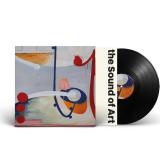
Ferdi bekräftigt seinen Status als innovativer Künstler, der den Jazz und sein Image revolutioniert.
In einer Zeit, in der alles dazu bestimmt scheint, konsumiert und anschließend vergessen zu werden, setzt Ferdi auf die Beständigkeit kreativen Schaffens. Sein Album entstand aus der Überzeugung heraus, dass Kunst ein kostbarer Raum bleibt: ein Ort der Erkundung, der Vermittlung und der Emotion, an dem jedes Detail das Ergebnis eines geduldigen kreativen Prozesses ist.
Mehr als nur eine Abfolge einzelner Tracks versteht sich dieses Projekt als ein in sich geschlossenes Gesamtwerk, in dem die Musik mit anderen Ausdrucksformen in einen Dialog tritt und so eine gemeinsame künstlerische und emotionale Suche weiterführt.
Schon lange fasziniert von der Figur des Malers, wollte Ferdi verstehen, was einem Werk seine Kraft und die Fähigkeit verleiht, einen bleibenden Eindruck zu hinterlassen. Diese Auseinandersetzung führte ihn nach und nach zu einer klaren Erkenntnis: Es ist nicht die Komplexität, die uns berührt, sondern die Aufrichtigkeit, mit der sie einer Form von Einfachheit dient.
Von dieser Suche geprägt, ist das Album zugleich eine Hommage an seine Mutter – eine Möglichkeit, all jene zu würdigen, die im Stillen unsere Sichtweise, unsere Vorstellungskraft und unsere Sensibilität prägen.
Nach dem Erfolg seines Debütalbums „TAKE 01“, das Platz 126 der französischen Top-Album-Charts erreichte, präsentiert Ferdi nun ein unwiderstehliches und mutiges Album und bestätigt damit seinen Status als innovativer Künstler, der den Jazz und sein Image revolutioniert.
Keroxen presents Spandauer Damm 103, a new album by Dancelwerk.
Bringing together modular systems, worn drum machines and digital synthesis, the record nods directly to the first decade of Warp Records and the early logic of bleep culture.
Dancelwerk is a Tenerife-based electronic pioneer and one of the foundational figures of the Canary Islands underground. Active for over 30 years, Spandauer Damm 103 marks both a personal milestone and a renewed point of focus, reaffirming his role in shaping the region’s electronic lineage. The album draws on 1990s electronic futurism, filtering those references through a contemporary production approach rather than nostalgia.
The music moves between places and periods: from the early rave circuits of southern Tenerife, where Dancelwerk built his reputation through DIY releases and warehouse-level experimentation, to his later relocation to Berlin, famously arriving with a shipping container of vintage synthesizers and modular equipment.
Balancing melody and impact, Spandauer Damm 103 sets custom-programmed percussion against detailed sound design. FM, spectral and wavetable synthesis shape its harmonic and textural focus, resulting in music that remains physical without sacrificing clarity.
A long-standing practitioner reconnecting with his roots while pushing the system forward.
SECOND REISSUE ON THIS HEAT’s OWN NEW IMPRINT FOLLOWING ‘THIS HEAT’ (TH01LP) WHICH WAS UNCUT ‘REISSUE OF THE MONTH’ RECENTLY WITH 9/10 REVIEW + 4-PAGE FEATURE WITH Q+A.
*24 bit/96 kHz re-master from original analog tapes.
*Heavyweight 180gm vinyl and heavyweight sleeve with pantone printing to match original 1979 release.
Simon Reynolds on Health and Efficiency:
“For some fans, Health and Efficiency is This Heat’s peak achievement – their most concentrated blast of visceral intensity and wayward experimentalism….Lead track “Health & Efficiency” combines fierce angular rock that fully lives up to Cunningham’s belief that This Heat could become a postpunk King Crimson, with a multi-part babble of vocals, clattering percussive timbres, and found sounds.’’
Flipside “Graphic/Varispeed” is more subdued and hypnotic: a wavering tonescape whose duration depends on whether you play it at 45 rpm or 33 rpm. This reissue reproduces the original release’s striking cover image of a human figure painted in blue by Pete Cobb, along with the cryptic flipside of text in many different languages.
Although widely considered to be Post-Punk’s finest, This Heat actually began performing and recording their music in 1976, the early days of London’s punk era. Within their two albums and an EP they perfected a strange and volatile new strain of avant-garde rock that time has proved to be massively influential, a blueprint for much that would follow: post-rock, math rock, homemade musique concrète, experimental electronica. Numerous critics have recognised the band's influence on the music of Sonic Youth, Glenn Branca, Steven Wilson, Public Image Ltd., Radiohead, Swans, Shellac, Young Knives, Black Dice, Lightning Bolt and numerous other experimental and post-rock bands.
Disbanding in 1982 they have left an undeniable legacy that has only continued to grow in stature and relevance.Having recently passed the 50 year anniversary of their first gig, and the recording of material that appears on their debut album, the group’s surviving members Charles Bullen and Charles Hayward, true to their DIY roots, have set up an imprint to release their recordings for their growing fan base that is increasingly recognising their influential place in music history.
‘They went beyond punk before punk had properly started…the entire album is a controlled explosion of ideas. Nearly fifty years on, This Heat’s debut is something the world has still not completely caught up with.’ - Simon Reynolds
‘Over the years, there have been bands to play as aggressively, or even as strangely, but very few have been able to rise from their collective influences and histories to create music so singularly distinctive and inspiring.’ – Pitchfork 9/10
‘This Heat sounded like the future then ... and still do now.’ - Dan Snaith (Caribou)
‘This Heat had a certain kind of force the post-punk bands were unable to adequately control without falling foul of rawk excess, and which the punk bands—albeit blitzing and rowdy—were too basic in form to build.’ – John Calvert , The Quietus
2026 Repress
Oh yes! First ever official reissue of the positively sublime and very rare Butterfly LP, recorded in Tokyo in 1979 by Japanese songstress Kimiko Kasai and jazz legend Herbie Hancock.
Due to it's super-rare status as a Japan-only release, this exquisite collection of covers never got the recognition it deserved at the time, despite incredibly inspired performances from Kimiko, Herbie and the supremely talented musicians assembled for the project. From heavenly drummer Alphonse Mouzon and renowned organist Webster Lewis to bassist Paul Jackson, reedman Bennie Maupin and the master percussionist Bill Summers, the legendary performers crafted amazingly good vocal versions of Herbie / Headhunters jazz-funk. Unsurprisingly, it has been heavily in demand for many years.
The LP opens with Kimiko's highly desirable version of "I Thought It Was You", an elegant take on Herbie's own anthem. Other superb re-workings include the delicately soulful "Butterfly", jazzy groover "Sunlight", the smooth and sexy "Tell Me A Bedtime Story" and the beautiful ballads "Maiden Voyage" and "Harvest Time". A wonderful example of perfectly understated and masterful jazz-funk soul fusion that shouldn't be missed, the set closes with a jaw-dropping version of Stevie Wonder's "As".
This lovingly curated reissue enables a long overdue reappraisal of this hitherto unavailable masterpiece. The stunning artwork which adorned the original jacket - complete with OBI strip and sumptuous
4 page folded insert - has been faithfully restored. Simon Francis' sensitive mastering elevates the sound throughout and, as ever, it has been pressed at a reassuringly weighty 180g. Essential.
out of Stock
Last delivered 23 months ago available to reorder, subject to availability
Trio Ternura was a true family project, made up of three Brazilian siblings with deep musical roots.
They recorded a couple of albums and quite a few 7”s with exclusive tracks that never made it into the LPs. Lesser known than the highly sought-after ‘A Gira’, yet every bit as perfect for the dancefloor, ‘Razão De Ser’ (1972) blends Brazilian scents, soul music, and stunning vocal harmonies into a timeless masterpiece. On the flip side we find ‘O Mensageiro’, an uptempo and catchy tune that’s sure to set the dance floor ablaze.
These single-only songs are reissued here for the first time and cut at 45 RPM for superior sound quality.
Originally released in 2003, Gravel Muncha became one of the biggest and most recognisable records of the Bassline Breaks era and remains one of DJ Quest’s defining productions.
More than two decades later, this breakbeat classic returns on Cyberfunk as CFUNK 040, pairing a brand-new remix from Datafunk with a fully remastered 2026 version of the original.
Built around everything that made the early Quest sound so distinctive - huge rolling basslines, tough breakbeats, twisted synth work and relentless dancefloor pressure - Gravel Muncha is a record that has never really disappeared. The original continued to surface in DJ sets, mixes and collections around the world, earning genuine classic status within the breakbeat scene.
For 2026, Datafunk takes the track into new territory while respecting the character and attitude of the original, giving one of breaks’ most enduring records a fresh weapon for modern dancefloors.
A piece of breakbeat history, rebuilt and reloaded for a new generation.
Metal is the debut EP from elisanyhm, an electronic and experimental musician who is based in Berlin.
The tracks that constitute Metal draw on a variety of materials and methods, yet they are commonly marked by an attempt to compose music in connection with a logic of refusal. This results in pieces that are both singular and capable of being set together.
A central tendency of the pieces on Metal is to stretch out time. This tendency could also be understood as: sounding time itself, without the rush of determination.
What might initially seem static can also, eventually, and ultimately be encountered as moving through dense layers. The deconstruction of direction leaves one affected by an indeterminate multiplicity of rhythms, voices, field recordings, and electronic sounds that are more than what one is supposed to construct.
David Norland is an Emmy-nominated English composer, known for his scores for drama and documentary, alongside his experimental choral and electronic music. Bringing stories to life through sound, he received critical acclaim for his debut solo album ‘Glam Tear Stain’ (2019) and is set to release follow-up album ‘La Source’ in June 2026 via Denovali Records.
Relocated back to his London home after many years in Los Angeles, and free from years of drug and alcohol problems, recent commissions for two choral works allowed Norland to return to the innocent origin of his musical world, and his experience as a parent prompted a lot of outward reflection. What kind of world are we leaving to our children?
Inspired by his score to the forthcoming silent black and white film ‘Carousel’ (2026), Norland found other music emerging that refused to be ignored. The film’s director opened the door to an entirely free scoring process – no temp music, no expectation, no guidelines, just pure intuitive expression. ‘La Source’ draws on this experience, alongside his childhood as a touring chorister, the honkytonk upright piano in the north-east London bedroom of his early 20s, his early recording experiments with a TASCAM 4-track cassette recorder, and his intense preoccupation with bells, flutes, stone architecture, and mysticism.
From the haunting, choral beauty of ‘E-Car Soul’ to the breezy album title track, Norland blends minimalist classical structures with electronics. A unified tapestry of blended voices, harmonies and textures, ‘La Source’ is a deeply emotional and melancholic journey for Norland. “In the end, I’m looking to find meaning through the music, like when I was a kid singing in choirs. But I get the most sense of meaning through transcendent experiences, rather than anything intellectual or dogmatic. I have to feel it, not think it. I’m trying to make work that’s luminous, wondrous, shimmering and strange, so I can keep having those experiences,” says Norland.
On his inspiration for the album, Norland adds, “I love making patterns in things and finding patterns. That’s why minimalism was so enticing to me, the patterns are so explicit. I love word play and anagrams. The big sadness coming through as I was making the record is this clarity over the future of my kids. Everything else is a complete distraction. This incredible nurturing planet and its ecosystem are being rapidly destroyed, and the forces destroying it are relentless and punitive. And they seem to be fine with consigning our children to live in an ever-more-hostile wasteland. You can’t pretend that’s not coming, if you do I think you’re lying to yourself. And perhaps eventually it will be the fact that people love their kids that will stir wider fear and action. It’s hard to think of anything more connected to the idea of spirit.” The result is the reflective, ecstatic, mystical and sad world of ‘La Source.’
Norland’s screen work includes the award-winning documentary Anvil! The Story Of Anvil (2008), directed by Sacha Gervasi, and since 2010, he has composed much of the music for US broadcasting giant ABC’s primetime news documentaries. His work for ABC is broadcast in the US and around the world on a daily basis.
In 2012, he was the music supervisor for Hitchcock (2012) featuring Anthony Hopkins, Helen Mirren & Scarlett Johansson and in 2017, he teamed up once again with Gervasi for the score to November Criminals starring Chloe Moretz and Ansel Elgort. The following year, he composed the score for the Emmy-nominated HBO film My Dinner With Herve, starring Peter Dinklage and Jamie Dornan.
Norland will be performing the score of Carousel later this year, and the score itself will be a forthcoming release on Denovali. 2026 will also see the release of documentary All Permits Secured, a valentine to the history of EDM, featuring Norland’s score.
Hopsydian are an Italian pop-metalcore outfit from Milan, formed in 2024, combining alluring and sacral atmospheres with modern metalcore power, alt-metal edge, and post-hardcore urgency.
Built on cinematic tension and explosive dynamics, their sound fuses dark, ritualistic undertones with sleek contemporary production and massive, chant-ready choruses
where beauty and brutality collide in equal measure.
The band was formed by vocalist Myles Idolo alongside guitarists Loris Ronchi and Nikolay Deliyski, later completed by bassist Roberto Vezi. The drummer remains anonymous. Their name--Hopsydian--comes from Hope and Obsidian, a ""magic rock"" symbolizing resilience, shadow, and rebirth, perfectly reflecting the duality at the heart of their music.
Hopsydian revolve around worship, love, obsession, sin, and the temptation of becoming God--balancing the holiness of gold with the black of transgression. Hopsydian balance modern heaviness with cinematic elegance--where intimate melodies and shimmering textures collide with crushing riffs and commanding rhythm sections. Their songs move like a ceremony: building atmosphere, sharpening emotion, and detonating into choruses designed to be shouted back from the crowd. Hopsydian explore the most dangerous forms of faith:
worship, love, obsession, sin, and the seduction of becoming God. Their narratives live in extremes:
desire framed as devotion, temptation disguised as salvation, and beauty that burns at the edges. It's an aesthetic of contrast: the holiness of gold set against the darkness that it can't fully conquer.
Benjamin Wilson from band Caskets helped the band develop their album artistic direction
Despite having released only six songs, Hopsydian have already proven their live impact. In 2025, they debuted on the Slam Dunk Italy main stage, sharing the bill with names such as LANDMVRKS, A Day To Remember, and Caskets, before going on to support Caskets in Milan shortly after. Momentum is building fast--and with a fanbase already demanding the next step, Hopsydian are poised to turn their growing catalogue into what it's meant to become: a fully-fledged era, and the tour that brings it to life.
John Diva & The Rockets of Love make a triumphant return with their explosive new album “Your Favorite Drug”, set for release via Frontiers Records. Bursting with attitude, swagger, and unapologetic energy, the band delivers a full-throttle hard rock experience that feels both timeless and electrifyingly fresh. Packed with massive hooks, soaring choruses, and razor-sharp riffs, “Your Favorite Drug” showcases the band at the peak of their songwriting power. Standout tracks like “Bigger Than America” and “The Devil’s Got My Back” emerge as true anthems, destined to ignite stages and thrill every hard rock fan with their infectious energy and sing-along choruses. Produced by Hannes Braun, the album captures a polished yet gritty sound that perfectly amplifies the band’s larger-than-life personality. This is more than a comeback — it’s a statement. John Diva & The Rockets of Love are back, louder, bolder, and more addictive than ever. One of the best hard rock releases of the year!
Plush shag carpeting, jazz flutes, analogue synths, funk grooves, exotica, and sultry, Italian-style vocalising: Erotica 70 is the new album from Larry Manteca, known for their inventive, tongue-in-cheek reimaginings of classic Italian soundtrack aesthetics.
This time around, the Milanese collective sets its sights on the distinct sonic landscape of 1970s commedia sexy—a film genre that, for better or worse, defined an era and fed richly into the cinematic education of Larry Manteca’s members.
Through this lens, Erotica 70 also becomes a way of celebrating Piero Umiliani in his centenary year—a composer whose name is closely linked to the erotic comedies of the time.
The nod to Umiliani is baked right into the details, starting with the choice of vintage gear like the Eminent synth and the Wurlitzer electric piano. These instruments deliver that particular blend of jazz, groove, electronics, and sensual charm that made the golden age of Italian film music so unique.
Standout track “Lando” is a joyful, playful homage to actor Lando Buzzanca, who starred in numerous films scored by Umiliani, including the iconic 1973 comedy La schiava io ce l’ho e tu no (My Darling Slave).
Larry Manteca is spearheaded by multi-instrumentalists Alessandro Paiola and Riccardo Danieli, flanked by the cinematic flute of Carlo Pelsa, the swinging drums of Andrea Quattrini, and the magnetic vocals of Valentina Castelli and Alessandra Maria Manzoni.
Recorded across various studios in Northern Italy, Erotica 70 is the imaginary soundtrack to an Italy that no longer exists, recreating its atmosphere while rendering it in full, vivid colour. It’s a record whose music seems to come straight out of a provincial cinema, a smoky late-night club, or a long-lost 70s film. But while it looks back to a bygone era, it does so only to bring it straight into the present, making the past sound surprisingly fresh and contemporary.
For the last decade and change, Lazarusman has steadily worked his way towards becoming a seminal voice in electronic music. In that time, he has left no genre untouched, bringing his brand of metaphysical, pun-heavy, imagery-driven, uplifting poetry to audiences across the globe.
These exploits have earned him a 2021 Grammy nomination and countless chart-topping records with some of the most remarkable producers in the industry.
His debut album, Skin, is an exploration of identity. Lazarusman questions his place in the world, reflecting on growing up in a now-free South Africa. The album touches on colourism, racism, faith, love and the existential crisis of existing in a divided world.
The album is also a celebration of the many genres that inspire his poetry from deep, tech and Afro house to breakbeats and jazz. But it is equally a celebration of the word, and the power it carries.
“A man is only as good as his word.”This quote epitomises Lazarusman’s honest approach to an album that reflects the last 15 years of his career. With productions from FKA Mash, Stimming, Dwson, Boogie Vice, Zitow Mowa, Axone and Johannes Brecht, Lazarusman presents a kaleidoscope of sounds.
DJ support by Keinemusik, Stimming, Acid Pauli, Xinobi, Stavroz, Xique Xique, Paco Osuna, and many more.
(remastered classic incl DL card) Environ is proud to present the Metro Area 15th Anniversary Edition, Metro Area's eponymous debut album, meticulously remastered using the original source tapes and generously spread across three slabs of vinyl. The12-track triple LP and digital package combines all the songs from both the original US and licensed European releases, and features new commemorative artwork unique to this edition. In the late nineties, the budding producers Morgan Geist and Darshan Jesrani bonded over their shared love of slower tempos and '70s and '80s NYC club culture. Obsessed with record digging and the sounds they heard on late-night "club classics" radio shows—and turned off by current releases they saw as artlessly "updating" sublime disco by sampling, filtering and subjugating them with huge kick drums —the duo set out to discover how their favorite old 12" records were made. They naturally gravitated towards extended dubs of songs—full of strange mistakes and echoing backing tracks—instead of the better-known vocal versions. Lacking the big budgets and gear that made so many of their favorite classic records come together, they were forced to take a guerrilla approach. They reprogrammed their techno-oriented arsenal of secondhand synths and samplers, using novel digital recording technology to capture live instrumentation and prioritizing mood over hooks, and the resulting music was just wrong enough to sound unlike anything else being released at the time.After just four underground 12" releases, the duo—now well-known as Metro Area—released their first and only album, Metro Area, in the fall of 2002. Fifteen years later, it's time to celebrate the culmination of their shared history and inspiration once again. Environ is proud to present the Metro Area 15th Anniversary Edition, Metro Area's eponymous debut album, meticulously remastered using the original source tapes and generously spread across three slabs of vinyl. The 12-track triple LP and digital package combines all the songs from both the original US and licensed European releases, and features new commemorative artwork unique to this edition.
Love or its absence dominates the intimate songs on the new album from ARBORIST – the musical outlet of Mark McCambridge. Looking For Love, Arborist’s fourth album of exquisitely inventive Americana, places us firmly in his hometown of Belfast, allowing it to act as a microcosm of the wider-world, with all its foibles and charms. We find fictional protagonists scouring the dark corners of the city, wiling-away afternoons in strip clubs, wandering the streets in all weather and reflecting on the harsh reality of modern society, all in search of an elusive love – emphasising our need for it now more than ever.
Looking for Love is ARBORIST’s first album to be self-produced by McCambridge, largely from his home studio in Belfast – and at times it feels like we are in the room with him. It’s a different kind of record for him as previously he has always sought collaboration; whether it be with Kim Deal who chose to sing intertwined harmony on his debut single “Twisted Arrow”, or recording in The Curfew Tower owned by The KLF’s Bill Drummond who described Mark’s songwriting as being “riven with more loss than any record since Leonard Cohen quit this world”, and who Matthew E White and his Spacebomb band collaborated with to such astonishing effect on the previous Arborist LP, 2023’s An Endless Sequence of Dead Zeros, winner of the prestigious Northern Ireland Music Prize. This time, with no outside producer steering the way, McCambridge found that the quiet hours were where he felt most at ease, despite periods of trial and error, and, by his own admission, moments of feeling genuinely lost in it all.
Despite playing many of the parts himself, McCambridge still called upon old friends from the community around him; Spacebomb’s resident bassist Cameron Ralston (Bonnie Light Horseman, Hiss Golden Messenger) again features throughout the record, alongside Eamon Ferris (The Waterboys) on drums, with the great and the good from Belfast’s vibrant music scene. Grainne Meyer plays concert harp and Aga Olek plays violin for the quasi-title track “Looking 4 Love” – an off-kilter love-letter to Belfast. Meilana Gillard provides a sleazy saxophone on “Bye Bye Johnny Cash” – a seedy tale of a man obsessively visiting a dancer in a club, and The Larne Community Youth Choir provide backing vocals for “Go Kill The Fatted Calf” – a song Mark wrote about his son growing up, a take on the parable of the prodigal son, with Jonny Ashe’s blistering guitar solo adding an album highlight. The Errigal Ensemble String Quartet and Aisling Agnew’s breathtaking flute solo feature on “What Is It You’re Asking” – a song about love, or its absence, both personally and universally in these times.
McCambridge was recently honoured with a “Fellowship” by the Seamus Heaney Centre at Queen's University Belfast where he collaborated with such illustrious names from the literary world as Nick Laird, Caoilinn Hughes and Conor McPherson. Through the University he was given access to the music department's Steinways and pipe organs, and decided to try one out for the album’s centrepiece “I’ve Been A Flaneur”. As Mark explains, "The drone on the pipe organ — and the sound of it starting and stopping — was so visceral that I decided to try a half-written song against it right there and then, and this came out in one take… The song was a breakthrough artistically - I don't think I'll ever record in the same way again after this."
The album was engineered by longtime collaborator Ben McAuley (Van Morrison) and mixed by Jimmy Robertson (Anna Calvi, Beth Gibbons, Fat Dog). The results are staggering, devastating and uplifting in equal measure, calling to mind albums such as Songs Ohia’s Magnolia Electric Co., The Divine Comedy’s Regeneration, The Blue Nile’s Hats and Wilco’s Ode to Joy, as well as early-70s records from John Cale, John Lennon and Bill Fay.
Belfast native Mark McCambridge played his first show as Arborist supporting James Yorkston. A solo tour followed, and impressive performances led to notable support slots alongside Low, Cat Power, Echo & The Bunnymen and Guy Garvey. Arborist's debut single, the Americana-tinged "Twisted Arrow," caught the attention of the critics with an astonishing duet with Kim Deal of The Breeders. The debut album Home Burial (2016) and its follow-up, A Northern View, both received glowing praise, from The Guardian ("instant classic" ----) to MOJO ("devastatingly bleak… upliftingly beautiful" ----) to Uncut (8/10), with BBC 6 Music play from Cerys Matthews, Cillian Murphy, Lauren Laverne, Radcliffe and Maconie and Gideon Coe — and Steve Lamacq calling single "Taxi" "one of those records that makes you immediately stop what you're doing." He went on to even greater success with the 2023 Northern Irish Music Prize winning third LP, An Endless Sequence of Dead Zeroes, which was recorded at SpaceBomb Studios in Virginia with musician and producer Matthew E White. For his fourth LP, Looking For Love, he has signed with Fika Recordings and with a tour approaching in November, 2026 looks set to be a seminal year for the Irish artist.
More than eighty years ago in southwestern Virginia, Carter and Ralph Stanley (The Stanley Brothers) - forged a sound that became a cornerstone of bluegrass and old-time music yet they remain far less known outside the genre than their influence warrants Where the Soul Never Dies sets out to change that. Producers Alison Brown and Garry West assembled an eclectic cast spanning bluegrass and Americana, pairing the genre's next generation with roots voices who grew up on these songs. Standout contributors include Billy Strings , Dolly Parton , Willie Nelson , Sierra Ferrell , Jamey Johnson, Steve Martin, and Ralph Stanley II, among others. The album arrives October 16th two days before The Stanley Brothers' induction into the Country Music Hall of Fame
Swivel inaugura su nuevo sello Swivel Traxx produciendo cinco tracks originales recién salidos del horno.
Swivel Traxx steps up with ‘Out of Circle EP’, a 5-track trip delivered by label head Swivel. Blending raw 90s vibes with modern hypnotic soundscapes, the EP shifts gears from tense ambient to direct, Birmingham-influenced techno and high-energy cosmic madness. Built for both deep head-trips and pure dancefloor mayhem:
A1. Out of Circle (Prelude): A beatless atmospheric opener setting a mystical vibe for the whole record. A hypnotic, bell-like arpeggio glides over a warm Moog bassline and thick tension, teasing the concept behind the EP.
A2. Out of Circle: The title track drops straight into club territory while keeping things dark and mysterious. Massive cavernous pads, a driving rhythmic base, and a relentless sequenced synth loop pay homage once again to classic Birmingham techno.
A3. The Black Knights: A dark, dystopian trip. Driven by a hypnotic groove and sharp triplet hi-hats, this one brings a combat-ready energy made for peak-time dancefloor moments.
B1. Starlight: The fastest joint on the record (140 BPM). Equal parts melodic and club-focused, it locks TR-909 drums, Moog bass, and lush pads together for an astral trip into the unknown.
B2. Roundtable: A heavy, mental, and dark closer. Packed with raw analog-filtered synths, broken beats, and a relentless interplay of open and closed hi-hats, it delivers pure energy for the floor.
Three decades since Global Underground began defining what a superstar-DJ mix album could sound like, this anniversary release breaks from the format entirely. Instead of just one artist focus, the focus is on the decadal number: here there are 30 artists, 30 new exclusive tracks - and no mixing. Guy J, Rodriguez Jr., Quivver & Dave Seaman and an unexpected Nadia Ali/Frankey & Sandrino pairing headline the tracklist, compiled to represent the current state of the progressive-house lineage. Collector's edition aside, the standard triple-vinyl set on purple, orange and aqua vinyl is the one you wanna own.
Global Underground ist stolz darauf, diese wegweisende Veröffentlichung anlässlich unseres 30-jährigen Jubiläums präsentieren zu dürfen. Dreißig Künstler, dreißig brandneue, exklusive Tracks – zur Feier von dreißig Jahren, in denen wir euch die allerbeste elektronische Musik präsentieren. Auf „THIRTY“ sind einige der dynamischsten Künstler der Dance-Musik vertreten: Guy J, Rodriguez Jr., Quivver & Dave Seaman, Nicky Elisabeth, Yulia Niko, HotLap, Spencer Brown, eine ganz besondere Zusammenarbeit zwischen der legendären Nadia Ali und Frankey & Sandrino sowie viele weitere.
Celebrating the 30th anniversary of its original release, Night Song returns in a special edition on rose leaf green coloured vinyl. A Grammy Award nominee, the album captures the extraordinary meeting of the legendary Nusrat Fateh Ali Khan and Canadian guitarist, producer and composer Michael Brook, whose atmospheric soundscapes provide the perfect setting for Nusrat’s ecstatic, transcendent vocals.
With Nusrat’s legacy continuing to reach new audiences following the landmark 2024 release of the unearthed archive recording Chain of Light, Night Song remains one of the defining cross-cultural collaborations of its era. This anniversary edition includes a printed inner sleeve with updated liner notes and photographs.
Following hot on the heels of the Frequency Damage EP, DJ Quest returns to Cyberfunk with Squeaks / Snake Style— a two-track release that dives deep into the unmistakable sound that made Quest’s productions stand out during the early 2000s.
Rather than simply recreating the past, both tracks tap directly into the DNA of the original Cyberfunk sound: rolling breakbeats, huge basslines, twisted analogue synths and the kind of distinctive production that became synonymous with DJ Quest at the height of the Bassline Breaks era.
Built around original analogue synth work throughout, Squeaks / Snake Style is a deliberate throwback to the raw, futuristic sound of the early 2000s, produced with the weight and clarity needed for today’s sound systems.
It’s classic Quest, strange noises, big bass, rolling drums and plenty of attitude.
A. Squeaks
Everything DJ Quest became known for rolled into one track. Squeaks is an unapologetic throwback to the classic Quest sound of the early 2000s, driven by heavyweight breaks, deep bass and original analogue synth work throughout.
Twisted electronic squeaks and evolving analogue sounds weave their way around the drums, giving the track that instantly recognisable combination of funk, darkness and futuristic weirdness that characterised so many of Quest’s early productions.
Raw, energetic and built firmly for the dancefloor, Squeaks takes the spirit of the original Bassline Breaks era and brings it straight back onto a modern sound system.
AA. Snake Style
On the flip, Snake Style takes the same analogue-driven approach but moves into deeper rolling territory.
A more hypnotic, heads-down breaks roller, the track develops around a heavyweight bass groove, rolling drums and constantly shifting analogue synth lines. There’s less emphasis on the immediate impact of the A-side and more on building a groove that locks into a DJ set and keeps moving.
Still unmistakably Quest, Snake Style combines the rawness and character of early-2000s breakbeat with modern low-end weight and production, proper rolling Cyberfunk business.
Special Vinyl Edition
Making this release particularly special for collectors, the 12” vinyl comes with an exclusive book showcasing the artwork from some of DJ Quest’s biggest and most memorable releases.
The book looks back through Quest’s extensive catalogue and the visual identity that accompanied the records, bringing together a selection of classic release artwork from across his career plus photo collages of memories made across his journey.
It turns Squeaks / Snake Style into more than just a new DJ Quest 12”, it’s also a celebration of the music, artwork and history surrounding one of the original pioneers of the Bassline Breaks sound.
For long-time followers it offers a piece of Quest history alongside two brand-new productions, while newer listeners get an introduction to the catalogue and imagery behind the sound
Madelyn Byrd returns to Glasgow’s Somewhere Press with a hazed set of weightless soundscapes. »Night Rider« opens in widescreen with the chirp of cicadas dancing across a desert landscape, before Shiroishi’s saxophone eventually cuts through the dark like neon. The story Byrd tells is close to their heart: they spent their teenage years in the Sonoran Desert, the vast subtropical expanse spanning parts of Arizona, California, and Mexico. Its seemingly alien landscape — pocked with giant, tree-like cacti and looming rocky outcrops — is lodged in the cultural memory, a quality Byrd draws on as they slowly reveal their poetic narrative.
The album plays like a road movie of sorts, moving through Byrd’s memories and setting them to very different rhythms. Clattering drums emerge on »Of Nature, Of Bodies, Of Dreams«, while Byrd’s soft tones, processed to sound almost otherworldly, glide gently across the metallic clangs. Each track highlights a form of movement: there is the microscopic, insectoid crunch of »Imprint«, where guitar prangs meet Shiroishi’s spirited runs, while »Into Sonoran Pool« creates motion from the atmosphere itself, recreating the thick desert air with shimmering electrical currents and psychedelic processes.
At this point, the album begins to echo Robert Ashley’s late-period theatrical work: compositions that broke with familiar formats, juxtaposing dialogue with knowingly experimental orchestral flourishes. Byrd strikes a similar note through a fusion of poetry, sound design, choral music, and chiming, listless ambient elements that also recall Harold Budd. Budd grew up in the Mojave Desert, which borders the Sonoran, creating an eerie parallel with the moods he conjured throughout his long career.
Byrd finds a similarly aesthetic link to the West Coast landscape, referencing the history of experimental music while establishing their own voice. As the album rides into the sunset with a roar of engines, they offer a distinct vision of pop: »What Is, What Was« integrates a chugging break and ketamised vocal hook, while the finale, »In Perfume, Remember«, lands as a James K-like heartmelter.
The sun sat high above the desert outside Joshua Tree on October 17, 2024, baking the rocks and shrubbery outside the Farrington Observatory as a small group of invited guests ventured up a steep path towards the telescope. Kyle Simon, the artist and printmaker who founded the Observatory, was standing outside the print studio sat below the towering cylindrical building, greeting friends alongside his wife Sarah and lifelong friend Brian Weitz, the musician widely known as Geologist of Animal Collective. Simon and Weitz had spent the previous day testing and retesting a system that would transform the light of the oncoming full moon captured by the gigantic telescope into a signal that would modulate the control voltage of Weitz’s modular synthesizer. As the sun dipped below the horizon line, the audience gathered on a small wooden patio surrounded by speakers while Weitz readied himself behind the array of patches and knobs. Simon addressed the group, presenting the history of The Sirens, the sonic exploration of the night sky’s mystical and scientific significance about to unfold.
The music conjured under the Hunter’s Moon that night is now documented on this first official release of The Sirens, which was conceived by Simon and Weitz as a recurring performance piece and sound installation. Over a decade ago, Simon began immersing himself in literature on humanity’s sonic relationship to the celestial realm, including Homer’s Odyssey, Plato’s “Spindle of Necessity, ” Kepler’s Harmonices Mundi, and the field of astroseismology. He fitted homemade telescopes with photodiodes and optical sensors to make the images audible, finding latent patterns in the noisy sonic signals he began receiving from the stars. With Weitz, the process expanded as the signal was routed through an analog amplifier and set to modulate the pitch, filter, and other elements of his synthesizer. Together they developed a system of improvisation, with Simon adjusting the telescope to change the intensity of the light based on its relationship with the moon’s position (imagine a theremin player moving their hands in subtle, meaningful motion), and Weitz responding to that input in real time: bending it, amplifying it, or letting it stand on its own. The duo debuted the piece at the Integretron in Joshua Tree in 2018, providing a crucial proof of concept for the performance at Farrington featured here.
The first thing the listener hears on The Sirens is the opening of Farrington Observatory, the cranking of motor and metal. As the lens of the telescope is exposed to the evening air, a wavering drone emerges from the synthesizer, flickering at the margins, the tuning of the oscillators adjusting to the rapidly cooling desert air. The piece progresses and the drone becomes a luminous, spherical constant, bathing the listener in pure tone as Weitz draws out harmonically ambiguous melodies that spiral upwards. Electronics crackle and convulse, coalescing into dense dissonance before widening out into an open octave. Just as the moon orbits the Earth and the stars shift as the planet rotates, so each sonic element appears in flux, interrelationships slowly forming and falling away. Divided into two parts, The Sirens flows as a continuous conversation between the artists and the starlight completing its thousand-year journey across the galaxy.
The Sirens belongs primarily to a lineage beyond music: of sea captains navigating by looking skyward, of astrophysicists studying the formation of the Milky Way, of the modern myths of werewolves, of the stories embedded in constellations. As Simon writes in the album’s extensive liner notes, “These stories and explorations reveal a collective yearning to become conscious of our connection to the universe, our deep-seated desire to understand how we fit into it all.” This music underscores the history of the night sky as the place where poetry and science find common ground, where exploration hinges on the imagination. Driven by curiosity and ingenuity, Weitz and Simon look up and wonder.
Soul Ex Machina continues the SEMPLATE series with its third installment, welcoming Sibla for a three-track EP rooted in the foundations of early dubstep and shaped by a strong jazz sensibility. Named after its opening track, "The Seekers" explores spacious arrangements, refined musicianship and carefully sculpted low-end, drawing a natural connection between soundsystem culture and contemporary harmonic language.
"The Seekers" opens the record with rolling jazz-inflected drums, deep dub weight and a dim, immersive atmosphere, unfolding with patience and quiet confidence. "Paper Bags" shifts the mood through harsh textures, subtle dissonance and restrained percussion, building tension without sacrificing space or balance. Closing the release, "Pace" settles into a driving stepper rhythm, where flowing grooves, precise basslines and understated melodies bring the EP to a focused, purposeful finish.
Though Scratch may have at times seemed crazy, it is worth noting that creative
genius appears so because geniuses see things others do not see and inhabit
realities unseen. As the music on this album reveals, Lee Perry's Black Ark creations
re-arrange the familiar into something new and magical.
Lee spent his early days working with legendary producers Coxsone Dodd, Duke Reid,
Joe Gibbs, Clancy Eccles and Prince Buster, and by 1968 he was an independent
producer, naming his studio musicians The Upsetters and scoring instrumental hits
with innovative rhythms that helped forge the new reggae style. In 1970-1971 he
produced what many consider the greatest works by the Wailers; in 1968 one of his
Upsetters productions hit #5 on the UK pop chart and more hits followed. That gave
him the funds to build his own studio and in 1973 the legendary Black Ark was born.
Among the many landmark classics cut at Black Ark are such incisive political
commentaries as Max Romeo's "War Ina Babylon," and Junior Murvin's "Police and
Thieves" (covered by the Clash). The Congos' "Heart of the Congos" album is a roots
classic and there are many wonderful obscure singles such as Carlton and the Shoes'
"Better Days." Many dub creations made innovative use of Scratch's sonic wizardry via
echo, phasing, reverb, fanging, wah-wah and various sound effects.
It all came to an end in 1978 as Lee, besieged by extortionists, freeloaders, religious
fanatics and assorted pilgrims, let the studio lapse. And then he set it on fre, some
say due to frustration, others say from mental collapse. He left Jamaica, collaborated
with musicians around the world, toured as a sort of mystic trickster/ shaman and
prospered. But his work at Black Ark will always stand as his ultimate creative
achievement.
Spiritual Jazz 19" besteht aus zwei Doppel-LP-Sets, die den Einfluss und die Ausdrucksformen jenes Underground-Jazz beleuchten, der sich in der zweiten Hälfte des 20. Jahrhunderts in Kalifornien und den angrenzenden Bundesstaaten entwickelte. Die insgesamt 24 Titel erscheinen in Gatefolds und enthalten Liner Notes, Fotos und Download-Codes.
Die US-Westküste wird oft mit dem Boom des Cool Jazz in den 1950er Jahren in Verbindung gebracht; doch überall dort, wo Jazz gespielt wurde, florierten auch modale, afrozentrische und spirituell geprägte Strömungen – und die Westküste bildete da keine Ausnahme. In der Nachkriegszeit rangierte die Central Avenue in L.A. als bedeutendstes Jazz-Viertel Amerikas direkt hinter Manhattan. Auch wenn Manhattan in jenen Jahren das faktische Zentrum des Jazz-Universums war, übte Kalifornien eine stärkere Anziehungskraft auf die Kultur im Allgemeinen aus und zog Menschen aus dem ganzen Land in den Bann seiner aufkeimenden Gegenkultur der 1960er Jahre.
Hier untersuchen wir die Auswirkungen dieser Gegenkultur auf den Jazz. Wir beleuchten den Einfluss der Black Panthers – der prägendsten Kraft innerhalb der schwarzen politischen Bewegung nach der Ära der Bürgerrechte – und widmen uns den neuartigen spirituellen Praktiken und Religionen des aufkommenden New Age. In Kalifornien waren zahlreiche eigenwillige Independent-Labels wie Arhoolie, Theresa und Nimbus sowie viele weitere private Unternehmungen ansässig; wir präsentieren die Ergebnisse ihres Strebens nach musikalischer Freiheit. All diese Faktoren beeinflussten die Entwicklung und Blütezeit des Jazz und der Jazzmusiker an der Westküste – und die Evolution des Spiritual Jazz in dieser Region wird hier eingehend betrachtet.
out of Stock
Last delivered 3 days ago available to reorder, subject to availability
From the fires and floods of the Australian bush on her debut, Soon, which Phil Elverum reissued via his label, P.W. Elverum & Sun, tiarn now takes us to the shores of the Pacific Ocean where classical and electronic arrangements move with an ever-present longing for connection and nature. Stretton has weaved a new world, set on the brink of night, when the world is soft and suspended in blue. Living in isolation near the ocean, overlooking the winter migration of whales, Stretton would regularly swim during the brief 20-minute period known as the blue hour. Ideas would come to her in the icy salt water, and walking home in the dark, she would carry melodies back to record that night. At its heart, tiarn reflects ecological grief and the search for connection in a changing world. tiarn is also inspired by a piece of home camera footage Stretton found of her family in Japan where they lived in the ‘90s before she was born.
It shows the distant mountains, and Stretton’s young family looking over the valley in the soft static of one summer evening. Decades later, using the untouched synth her parents had bought in Tokyo in 1991, Stretton began recording music directly to that footage, letting the images dictate the melody. Voices, insects, weather, movement, and the ambient sounds of the valley are woven throughout the record itself, blurring the line between documentation and composition. The result is an album that feels less created than uncovered — something remembered rather than made. Stretton’s work continues to carve a singular path in contemporary music, balancing environmental awareness, experimental composition, and deeply personal storytelling.
out of Stock
Last delivered 3 days ago available to reorder, subject to availability
The follow up to her UK number 1 album This Is How Tomorrow Moves, the stark and striking fourth album by beabadoobee is named for the electricity towers that dot every major artery in the world—the strong, spindly structures that reminded Beatrice Laus of her connection to friends and family at home while she was staring down extreme disconnection and isolation on tour over the past few years.
The title can also be read as an allusion to Laus’ spiky, forceful new sound—the waves of distortion that crash and shatter across this record’s 14 songs mirroring the intense crackle you hear when walking under power lines. The pylon is also a fitting symbol for an album that reckons with the repetitive anxieties of your mid-twenties: What if I’m always going to be this way? What if life is just pylon after pylon on the road?
The album’s first single is available to stream and buy from today: “Sun Has Set” introduces Pylon as, in essence, a set of songs that began as diary entries, words that Laus thought she’d never be able to say out loud. “A lot of the songs on this record are things I wish I could have said to someone,” she says. “This song has this petty tunnel vision—it’s like, I hate you. You’re gonna stay here and listen to how much I hate you. Because I never got to say that.” The single comes accompanied by a striking first person video directed by Bea’s partner and longtime visual collaborator Jake Erland.
Ever a devotee of pure rock music—both as something to be cherished and something to be played with—Laus casts these feelings in songs that touch on classic grunge, midwest emo and ‘90s radio rock, zeroing in on a sound that is both harsher and more direct than any of her previous records. She says the music she’s loved has “always been an influence” on her music, and so for B4 she went straight to the source. A fair few of Beabadoobee’s composite influences contributed to Pylon, a fact that speaks to the goodwill and respect Laus has amassed over the course of her relatively brief career.
Hayley Williams sings on “Nothing to Prove,” a deeply anthemic indie-rock song about getting your power back from fairweather friends who just want a bit of your success. The moody “Powerlines” features a verse from Turnstile singer Brendan Yates, a master of matching vocal force with emotional nuance. Elsewhere, you’ll find contributions from Pinegrove’s Evan Stephens Hall, Deftones’ Chino Moreno, and Title Fight’s Shane Moran, as well as, on “Write Me A Letter”, production work from Laus’ longtime friends and collaborators Matty Healy and George Daniel of The 1975.
Beabadoobee will debut songs from the record on the Powerlines Tour, her first ever arena shows and biggest tour to date, taking in shows across North America, the UK and Europe this autumn-winter. The Powerlines Tour kicks off 1 October and includes stops at Madison Square Garden, The Kia Forum, The O2 and more (full routing below). Support comes from Wisp in the US, Canada and UK and Violet Grohl in France, The Netherlands, Belgium and Germany.
Born in the Philippines and raised in London, Beatrice Laus emerged as a British alternative music icon across three acclaimed albums and five EPs. She has garnered multiple BRIT Award and BBC Sound Of nominations, and won NME’s Radar award, whilst amassing over 10 billion streams worldwide and more than 12 million followers across her social channels.
This Is How Tomorrow Moves became her first record to reach number 1 on the UK Official Album Chart in 2024, following her Top 10 albums Fake It Flowers (which reached number 8) in 2020 and 2022’s Beatopia (#4). Earlier this year, beabadoobee released the one-off single ‘‘All I Did Was Dream Of You,” teaming up with Grammy-nominated best New Artist The Marías, the result of a longtime mutual creative admiration between María Zardoya and Bea.
out of Stock
Last delivered 4 days ago available to reorder, subject to availability
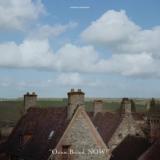
Rome, late afternoon, 1974. The light comes in over the colossal hills, the way it only does for an hour before the city forgives itself for the day's noise. Axefield is on an urgent quest to create cinema in the form of sound as a romantic alternative to disposable tools. He is looking for a sound so effortless he is not sure it can truly exist, but only be felt - somewhere between a film score, a heartbeat and a late night dinner at his favourite trattoria.
Ostuni Bound, NOW! is the debut album from Amsterdam-based electronic artist and composer Axefield, bringing club-heavy bass music together with the drama and romance of 70s Italian cinema. The narrative and emotions within the record stem from a romantic setting in Southern Italy that unexpectedly turned violent, forcing Axefield to flee the city after receiving the death threat "non provocare morte".
At its heart is the belief that romanticising life can lead us towards deeper human meaning, offering a different route from the hyper-capitalist pursuit of efficiency that increasingly shapes how we live and create. Throughout the album, Axefield worked through three characters representing innocence, control and destruction, using each as a framework for decisions in production, composition and mixing.
The album features Amsterdam-based rising UKG talent DANN and Johannesburg-based Kamohelo, frontman of Swedish electronic group Off The Meds. It's all starting to feel like cinematic time travel in which beauty is reintroduced in the realm of contemporary dance.
Released on Intercept alongside a beautifully crafted vinyl edition, Ostuni Bound, NOW! feels like the soundtrack to a film that was never shot. Somewhere behind him, a projector he cannot see begins to turn, playing a film for an audience that has not arrived yet.
As they arrive, he is the one who ultimately presses play.
And just like that, Ostuni Bound, NOW! Begins where Rome has always begun: beyond function and beauty and all that lingers in between.
out of Stock
Last delivered 4 days ago available to reorder, subject to availability
Duality makes his debut on Up Ya Archives with a single rooted in the foundations of 90s jungle but shaped distinctly by contemporary sound design, epitomising his unique take on modern junglism. Intricate breakbeats and classic jungle textures are anchored by weighty 808s that guide the flow of the track, while influences from footwork, hardcore and drum & bass sets the track firmly into the space of progressive junglism. When asked on the single, Duality said
“R U Mine is the lead single from my latest project, Brainstorm. It balances luscious pads and playful synth lines with relentless drum breaks and 808s. Topped with ethereal vocals, this is one to open a set with or close out the night”.
A rising star in Bristol’s underground dance scene, Duality is staking a claim within the new wave of jungle.
“‘Brainstorm’ is exactly what the name suggests. A glimpse into the ideas that occur in my brain as a producer. Each track is a different element of my jungle inspirations, from raregroove sample-based production to 4x4 rave stabs. Ready and waiting for the dancefloor!”
Aside from his own productions, he also runs Bristol-based record label and events crew Intaception, which has hosted parties across the UK with iconic figures including Source Direct, Tim Reaper, Double O, and many more. Moving fluidly across production, promotion and musical direction, Duality continues to push the sound and culture of contemporary junglism forward.
out of Stock
Last delivered 4 days ago available to reorder, subject to availability
The Return of The Vagabond – Revisited! On The New Way
There are figures that do not belong to any single era. They traverse .me, watch the world evolve, and
con.nue their journey guided by a singular compass: music.
Born from a concept by Use Vinyl Records, The Return of The Vagabond – Revisited! On The New Way is a
compila.on that sets the "Vagabond" back in mo.on—an iconic symbol for those who live music as a
journey without boundaries of .me, genre, or genera.on.
His return takes shape through a curated selec.on of .meless interna.onal disco, funk, and rock classics,
reinterpreted with fresh soundscapes while remaining deeply faithful to the spirit of the originals. This
musical odyssey is helmed by Daniele Baldelli & Marco Dionigi, Marco Fra=y, (Ino)2, DJ Mauri, and
Corrado Pres@, proving that great music can transcend .me, reinvent itself, and con.nue to inspire.
More than just a compila.on, The Return of The Vagabond – Revisited! On The New Way is a sonic voyage
that rediscovers legendary tracks through a modern lens. It is a project that demonstrates how authen.c
music never belongs to the past: it evolves, changes its skin, and con.nues to resonate deeply with the
present.
out of Stock
Last delivered 4 days ago available to reorder, subject to availability
he Congos possess what all bands look for, that unique distinctive sound that draws the listener in. Alongside the great songs, lead singer Cedric Myton's singing, phasing and falsetto voice makes that just the case.
The Congos were formed by Cedric Myton (b. 1947, St Catherine, Jamaica) around the mid-Seventies when the
Rasta message was central to the reggae sound coming out of Kingston, Jamaica. But he had started out in the
Rocksteady era, when he formed the vocal group 'Tartans', taking lead vocal duties alongside Devon Russell, Prince Lincoln Thompson and Lindbergh Lewis.They cut 'Dance All Night' (1967) and 'Coming On Strong' (1968). The line-Up became The Royal Rasses and from this Cedric moved on to form the Congos on meeting Roydel Johnson, who had previously sang with Ras Michael and the Sons of Negas. Cedric's Rasta roots were firmly in place when he went to work with producer Lee Perry to cut the seminal album 'Heart Of The Congos' at Perry's just built, Black Ark Studios in 1977. Cedric Myton has carried on the mantle, cutting a set of tunes with the help of his good friend Mr Brent Dowe, who had previously sang lead vocals with the Melodians.This is the Dub set to the vocal album released on the Kingston
Sounds label called 'The Congos Feast'(KS008).With such strong songs, rhythms and vocals it always had the chemistry for a great dub set. Hope you agree and enjoy the dub excursion...
OK, so the original pressing of the Heartstopper vinyl box set sold out in 2.5 hours.... Incredible!
We're making another version available. This is basically the same version, except it's NOT numbered. Also, this pressing will be released on October 9.
Heartstopper is the critically acclaimed Netflix coming-of-age romance that has captured the hearts of millions around the world. Based on the bestselling graphic novels and webcomic by Alice Oseman, the story follows Charlie Spring and Nick Nelson as they navigate friendship, love, identity, and growing up. Praised for its authentic representation and warmth, Heartstopper has become a cultural phenomenon, earning a devoted global fanbase and widespread critical acclaim. The series comprises three seasons, which aired between 2022 and 2024, followed by a feature-length film in 2026.
An essential part of the series’ emotional impact is its music. Across the series and film, Adiescar Chase’s music beautifully underscores the characters’ journeys, capturing the excitement of first love, the uncertainty of growing up, and the quiet intimacy of everyday moments. Her compositions have become an integral part of the Heartstopper experience, adding depth and atmosphere to the story’s most memorable scenes.
In collaboration with Netflix, Music On Vinyl proudly presents the complete Heartstopper soundtrack on vinyl for the very first time. This deluxe box set brings together the original scores from all three seasons of the series and feature film across four releases, pressed on stunning marble-coloured records in blue, pink, yellow, and orange, and housed in a beautifully crafted collector’s box. The set is complemented by an 8-page booklet featuring exclusive liner notes by Alice Oseman, four A4 art cards showcasing the original artwork from each release, and a Heartstopper diary for personal use, inspired by the series. Together, these carefully curated elements make this the definitive collector’s edition, celebrating the music and legacy of Heartstopper in a truly special format.
Composer and multi-instrumentalist Koen Holtkamp has spent more than two decades shaping a body of work at the intersection of ambient, experimental, and electroacoustic music. Known for his role in the influential duo Mountains, as well as a solo catalog defined by texture and spatial awareness, Holtkamp has long explored how sound interacts with environment and perception. With Nightlife, he enters a new phase of that inquiry, one shaped as much by physical relocation as artistic evolution.
After leaving Brooklyn for the relatively rural setting of New York’s Hudson Valley, Holtkamp found himself immersed in nature and embracing a slower way of life, a shift that directly informed the album’s creation. Rather than rushing into a new project, he allowed the space itself to guide him, focusing on experimentation and play instead of a fixed outcome. Over time, a new instrument emerged from his modular system, built around physical modeling techniques that emulate plucked string sounds. Drawing on a deep affinity for acoustic traditions, from guitar soli to the kora and other chordophones, he began translating those influences into an electronic language, creating music that feels tangible, effusive, and even intimate, despite its synthetic nature. As the pieces took shape, Holtkamp expanded the project into a kind of imagined ensemble. Composed with specific collaborators in mind, the album features extensive contributions from drummer Greg Fox and saxophonist and flutist Matt Bauder, whose performances subtly reshape the material and draw it toward more fluid, song-like forms, alongside a guest appearance from Ben Vida on synth bass. Yet even as Nightlife occasionally resembles a band in motion, its construction resists traditional cohesion. Acoustic and electronic sources coexist to create a hyper-dimensional sense of space, with each element deliberately placed in its own distinct environment, yielding a complex yet inviting setting that feels both otherworldly and completely natural.
Much of the album was created during late-night sessions, which became a kind of personal ritual and ultimately inspired its title. Nightlife unfolds as a series of finely detailed environments, where stillness, texture, and subtle interplay take precedence over momentum. Each piece invites close listening while remaining open and unforced, reflecting both a change in pace and a deepening of focus. The result extends Holtkamp’s ongoing interest in how sound can shape, and be shaped by, the spaces we inhabit.
South Asian super-producers Lapgan and Baalti – the former a Madlib-disciple spinning hip-hop grooves out of dusty desi samples, the latter duo purveyors of intricately tapestried dance music – holed up in the California desert in early 2024 for a songwriting session to blend their complimentary styles. They ended up with several albums worth of club material built upon decades of Indian music history – floor fillers that move like early Four Tet meets The Avalanches. They’ve been teasing this material around the world during live sets – from Paris Fashion Week to Glastonbury, London Clubs to BK Warehouse parties, sessions at Lot Radio and Karachi Community Radio, and anywhere else they find an aux. The result has been endless ID requests for unreleased gems like “Ipa Ma” and “Lime Tikka”, calls which should finally be answered with the release of Threads.
Lapgan Bio
Chicago-based archivist and producer Lapgan has become renowned for his signature style: unearthing rare and forgotten Indian & Pakistani sounds and recontextualizing them into hip-hop and dance beats that evoke J Dilla and Madlib. He has cultivated a reputation for quietly revolutionary sample-work across his beloved solo projects History and Duniya Kya Hai, as well as LAFANDAR, his critically acclaimed team up with Heems (of Das Racist / Swet Shop Boys). He has worked with a range of artists from both the West (Your Old Droog, Saul Williams, Cool Calm Pete, Kool Keith, Open Mike Eagle, Blue, Quelle Chris) and the East (EXCISE DEPT, Baalti, Sid Sriram, Sid Vashi, Dynoman), and has been featured in global media including Pitchfork, FADER, Stereogum, Passion of the Weiss, Mixmag, Homegrown, and Vinyl Me, Please. Over the past year he has headlined clubs and performed at festivals across the world from Chicago and New York to London and India, and was personally invited to soundtrack back to back Paris Fashion Week shows for the similarly norm-shifting designer Kartik Research. In 2026 he will soundtrack his third Kartik Research runway show, as well as reissue Duniya Kya Hai for its five-year anniversary alongside a companion EP featuring remixes from peers and supporters Arushi Jain, Loris, Mera Bhai, Malkfunktion, and Maral.
Baalti Bio
Baalti makes electronic music built around rhythm, pressure, and collective release – weaving through leftfield bass, dusty hip hop, tripped out dub and raw house all while maintaining a throughline rooted in South Asian culture seen through the lens of a sweaty dancefloor. In the last year they have experienced a whirlwind rise and growing global recognition: from their EP Mela vividly evoking West Bengal’s sound system culture to their Tamil-cinema-infused filter-house project with Anish Kumar Stunt Doubles, in addition to wide-ranging collabs and remixes alongside DJ ADHD, Naya Beat, and A.R. RahmanThey have also built a reputation for their frenetic live show, with appearances at international festivals like Glastonbury and MELT, headlining shows across Australia and Europe and supporting influences turned peers like Four Tet and Disclosure across North America. Their explosive, percussion-heavy sets have been platformed by Rinse FM, NTS, The Lot Radio, Beats In Space, and Refuge Worldwide, and their music has been renowned by publications including Pitchfork, Bandcamp Daily, RA, and MixMag. Their forward momentum continues into 2026 with slated headline tours in India, Australia, and Asia along with appearances at Coachella, Party in the Paddock, Fvded in the Park, and We Out Here festivals.
A space is often described by its dimensions. The height of the ceiling, the expanse between walls. Division into functional elements of varying density follows. We have ideas of how such dimensions should be balanced to work well for sound — the classical concert hall, a Northward mastering room.
It’s tempting to try and use this idea of space to understand Space the group (Lisa Ullén, Elsa Bergman, Anna Lund). To calculate their cartesian co-ordinates: dynamics that run from whisper soft to punishing, shaking force; Ullén’s piano running the full expanse of the frequency spectrum; the mix of sudden, surprising and suggested variations in density (the space) that generates their musical structures.
But (a) space is a social phenomenon where meaning is accumulated and possibilities created by and through a constantly shifting set of social relations and their histories and entanglement inside and beyond the physical structures of a room or building. Reduced to its raw dimensions, Cafe OTO shouldn’t sound good: the low ceiling, the hollow void underneath the stage-not-stage, the hard glass windows out onto the street. But OTO as a social space — for gathering close to listen; the serious pursuit of a convivial good time (its productive mythology that an OTO audience is both up for it but also expects more); and then the idea of all that has happened before and what will come; that this is also part of ‘the music’ and changes what sounds to the point that none of those cartesian co-ordinates matter.**
It’s less of shock that Space sound good. Lisa Ullén is easily the most singular pianist in Sweden right now and Elsa and Anna’s ability to reroute in realtime reaffirms just how well they function as a group. The trio might have got their shit together holding down the rhythm section for the first incarnation of Anna Högberg Attack — but much like Högberg’s ongoing pursuit of artistic renewal, the trio avoid being shackled to any ideas about what a piano trio should be and there is something that happens (happened) in that room, on that night, with those people that made for something beyond just good.
It’s a gift that the sound of every concert at OTO gets recorded. A choice handful of these transcend their decoupling from that social space and radiate the room’s attendant energies. This record is one of them.
** See Jack Halberstam in Fred Moten & Stefano Harney, The Undercommons (2013): “…we must refuse the idea that music happens only when the musician enters and picks up an instrument; music is also the anticipation of the performance and the noises of appreciation it generates and the speaking that happens through and around it, making it and loving it, being in it while listening."
Almost Starlight is the extraordinary new album by Jem Finer (hurdy-gurdy) and John Matthias (violin). Produced by Jay Auborn and recorded in a Medieval Church, deep in the Devon countryside, in the Summer of 2025, the music is suffused with light, heat and the natural acoustics of the space.
The album defies categorisation; forced to pigeon hole it the nearest approximation would be ‘modern-classical’ but this ignores its myriad influences and explorations which encompass inspiration from Arvo Pärt through Terry Riley to Can via Delius, Alice Coltrane and a subtle reimagining of electronic music played purely with acoustic instruments, bending and shaping their possibilities in surprising and unexpected directions.
Jay Auborn plays cello on a number of the compositions and his production opens up and expands the music through a skilled and imaginative use of space, paying homage to the atmosphere of the church; ‘the sound evolved… chasing the imagined acoustics of that church in my mind; a place for worshipping light with sound.’
Almost Starlight will be released on the 4th September by Touch, available as CD, vinyl, cassette and on streaming platforms.
BIOS OF THE ARTISTS
Jem Finer
Since studying computer science in the 1970s, Jem Finer has worked in various fields, including photography, film, experimental and popular music, sound recording, sculpture and installation.
Much of his work relates to systems, extended processes and extremes of scale and includes Longplayer, a musical composition repeating once every 1000 years, and the Gurdy and Hurdy stones, ancient rocks set upright in fields in East Sussex and Gloucestershire with Jimmy Cauty. Their work together includes a band, The Standing Stones, whose most recent release is Twa Sisters, featuring Iona Zajac and Daragh Lynch.
He was a founder member of The Pogues, with whom he has played, written and recorded since 1981.
Recent music revolves around a fascination with the hurdy-gurdy and includes hrdy-grdy, a cassette released by Benedict Drew’s Thanet Tape Centre. His latest collaboration, with John Matthias, Almost Starlight, will be released by Touch in September 2026.
John Matthias
Since studying Theoretical Physics in the late 1980s and 1990s, John has created music and sound in many forms, including for installation, popular music, music for film, for dance and orchestra.
Much of John’s work plays with the physics of complex systems but he is also greatly influenced by stories and song. John has collaborated with Matthew Herbert, Stanley Donwood, Jay Auborn, Radiohead, Thom Yorke, Nick Ryan and many others to create music with a variety of textures and sonorities. He is particularly interested in simplicity and form and how context informs the way music sounds.
His latest collaboration, with Jem Finer, Almost Starlight, will be released by Touch in September 2026.
The third chapter of The Third Room's curator-led series is shaped by Verraco, one of the key voices behind a new generation of artists reshaping contemporary club music. Through his productions, DJ sets and his work with TraTraTrax, he has helped define a sound where hybrid forms, rhythmic experimentation and cross-cultural influences are pushing the genre into new territory. Structured across two distinct sides, the release draws a clear connection between past and present. The A-side leans into a deeper, more classic space, while the B-side moves towards a more forward-facing, hybrid sound. It opens with Libration (Stone Version) by Substance & Vainqueur, a revisiting of their landmark 2007 release, a track that helped define the language of Dub Techno as it is understood today. Reduced, deep and spatially precise, it established a blueprint for how rhythm, delay and tone could function together. It's presence here acts less as a nod to the past and more as a reminder of a foundation that continues to shape the genre. Skee Mask's Clear Sky 909 continues this thread, softening the edges without losing depth. Warm, enveloping textures and fluid movement give the track a sense of openness, balancing clarity with emotional weight. The B-side shifts perspective. On Untitled (Teamgeist Mix), Verraco, joined by Tils, delivers the record's defining moment - a dense, intricately designed piece built on a driving low-end and evolving rhythmic patterns. Elements from Techno, Bass and Leftfield House converge into a detailed, forward-moving structure that actively bridges cultural contexts. It results in a form of dance music shaped by technical precision, but drive.n by a clear sense of intent, marking a distinct expression of Verraco's current sound. Untitled by 1morning introduces a rolling, tribal-infused groove with a strong sense of depth, while PatumPa by Regal86 closes the record with a bright, loop-driven energy that leans into pure motion. Across both sides, the release moves between reference and progression. Rather than separating old and new, Verraco connects them - tracing a line from foundational Dub Techno to a more fluid, contemporary club language. Copyright 2026 The Third Room A1 Written and Produced by Peter Kuschnereit & Rene Loewe | A2 Written and Produced by Bryan Mueller | B1 Written and Produced by JP Lopez & Jakob Ferdinand Tils and mixed by Lurka | B2 Written and Produced by 1morning | B3 Written and Produced by Regal86 Mastered by Andreas Kauffelt (Schnittstelle Berlin) Artwork by Charlotte Ernst Design by Daniel Bornmann (STUEDIO.XYZ) Distribution by Clone Pressing by Matter Of Fact
out of Stock
Last delivered 7 days ago available to reorder, subject to availability
Come Back Down, the new album by Nashville experimental-pop duo Total Wife, was born from the edge of sleep. When composer and producer Luna Kupper would begin to fall asleep during late-night mixing sessions, the songs would follow her into the halfway place between dream and lucidity. Like Dale Cooper in Twin Peaks, she'd wake with a new perspective on the puzzle she was piecing together. "I'm a psychological mixer - I'm trying to think of how someone's experiencing the sound, versus getting stuck in trying to make all these different tones and using all this gear to make something sound a certain way," Kupper says. And like a spiral from waking life into dream, the songs on Come Back Down are endlessly self-referential, building whole universes from a single point. Kupper sold all of her synths to make rent before she started working on the album, and so every inorganic sound is instead built from samples of the band's own work. A guitar on one song may be reprocessed and used as a synth on the next, while everywhere on the album vocal samples are taken from a single unreleased cover of Elliott Smith's 'Between the Bars.' In tribute to this process, the album was almost named The Julia Set after the mathematical equation which feeds into itself again and again, creating beautiful fractal images. The intention was to create something complex but accessible; experimental, yet precise and without abstraction. In her lyrics, too, lyricist and vocalist Ash Richter is as straightforward as she's ever been. She drew on her experience of pandemic isolation to write about connection and disconnection, using her lyrics as a tool for the communication that was missing in everyday life. On the soaring, shoegazey track 'peaches,' a storm that forced the cancellation of a recording session became a metaphor for emotional distance. 'still asleep' chronicles Richter's euphoria after Total Wife's first tour, and watches it begin to curdle into paranoia. "Thank the full moon, my heart is overflowing," she sings, before: "Is there such a thing as too happy?" The experience of isolation was prompting Richter to think back to her childhood, a time marked for her by solitude and natural play - climbing trees, making mud pies, getting lost in the woods. On tracks like 'in my head' and 'second spring,' she uses the imagery of nature to recall that time and forge a connection with her lonely inner child. "I feel connected with transcendentalist writing and magical realism - trying to convey things in a concrete way, but with that element of psychology and mystery," she says. Richter and Kupper, friends from high school, formed Total Wife in 2016, relocating from Boston to Nashville in 2020. Both are visual artists as well as musicians, which they incorporate into their work with Total Wife via layered and purposeful visuals. A DIY streak underpins everything that they do - from handling their own artwork and music videos to recording their own music, releasing tapes through their label Ivy Eat Home, and hosting house shows in the basement they've christened Ryman 2. In Nashville they've settled into a weirdo scene living under the record industry's floorboards, a hive of collaborative and creative energy that has made them excited to call the city home. They also assembled a live band for the first time shortly after moving to Nashville, consisting of Ryan Bigelow, Sean Booz and Billy Campbell - injecting their creative process with a jolt of spontaneity and aliveness that has fed back into Come Back Down.
Come Back Down, the new album by Nashville experimental-pop duo Total Wife, was born from the edge of sleep. When composer and producer Luna Kupper would begin to fall asleep during late-night mixing sessions, the songs would follow her into the halfway place between dream and lucidity. Like Dale Cooper in Twin Peaks, she'd wake with a new perspective on the puzzle she was piecing together. "I'm a psychological mixer - I'm trying to think of how someone's experiencing the sound, versus getting stuck in trying to make all these different tones and using all this gear to make something sound a certain way," Kupper says. And like a spiral from waking life into dream, the songs on Come Back Down are endlessly self-referential, building whole universes from a single point. Kupper sold all of her synths to make rent before she started working on the album, and so every inorganic sound is instead built from samples of the band's own work. A guitar on one song may be reprocessed and used as a synth on the next, while everywhere on the album vocal samples are taken from a single unreleased cover of Elliott Smith's 'Between the Bars.' In tribute to this process, the album was almost named The Julia Set after the mathematical equation which feeds into itself again and again, creating beautiful fractal images. The intention was to create something complex but accessible; experimental, yet precise and without abstraction. In her lyrics, too, lyricist and vocalist Ash Richter is as straightforward as she's ever been. She drew on her experience of pandemic isolation to write about connection and disconnection, using her lyrics as a tool for the communication that was missing in everyday life. On the soaring, shoegazey track 'peaches,' a storm that forced the cancellation of a recording session became a metaphor for emotional distance. 'still asleep' chronicles Richter's euphoria after Total Wife's first tour, and watches it begin to curdle into paranoia. "Thank the full moon, my heart is overflowing," she sings, before: "Is there such a thing as too happy?" The experience of isolation was prompting Richter to think back to her childhood, a time marked for her by solitude and natural play - climbing trees, making mud pies, getting lost in the woods. On tracks like 'in my head' and 'second spring,' she uses the imagery of nature to recall that time and forge a connection with her lonely inner child. "I feel connected with transcendentalist writing and magical realism - trying to convey things in a concrete way, but with that element of psychology and mystery," she says. Richter and Kupper, friends from high school, formed Total Wife in 2016, relocating from Boston to Nashville in 2020. Both are visual artists as well as musicians, which they incorporate into their work with Total Wife via layered and purposeful visuals. A DIY streak underpins everything that they do - from handling their own artwork and music videos to recording their own music, releasing tapes through their label Ivy Eat Home, and hosting house shows in the basement they've christened Ryman 2. In Nashville they've settled into a weirdo scene living under the record industry's floorboards, a hive of collaborative and creative energy that has made them excited to call the city home. They also assembled a live band for the first time shortly after moving to Nashville, consisting of Ryan Bigelow, Sean Booz and Billy Campbell - injecting their creative process with a jolt of spontaneity and aliveness that has fed back into Come Back Down.